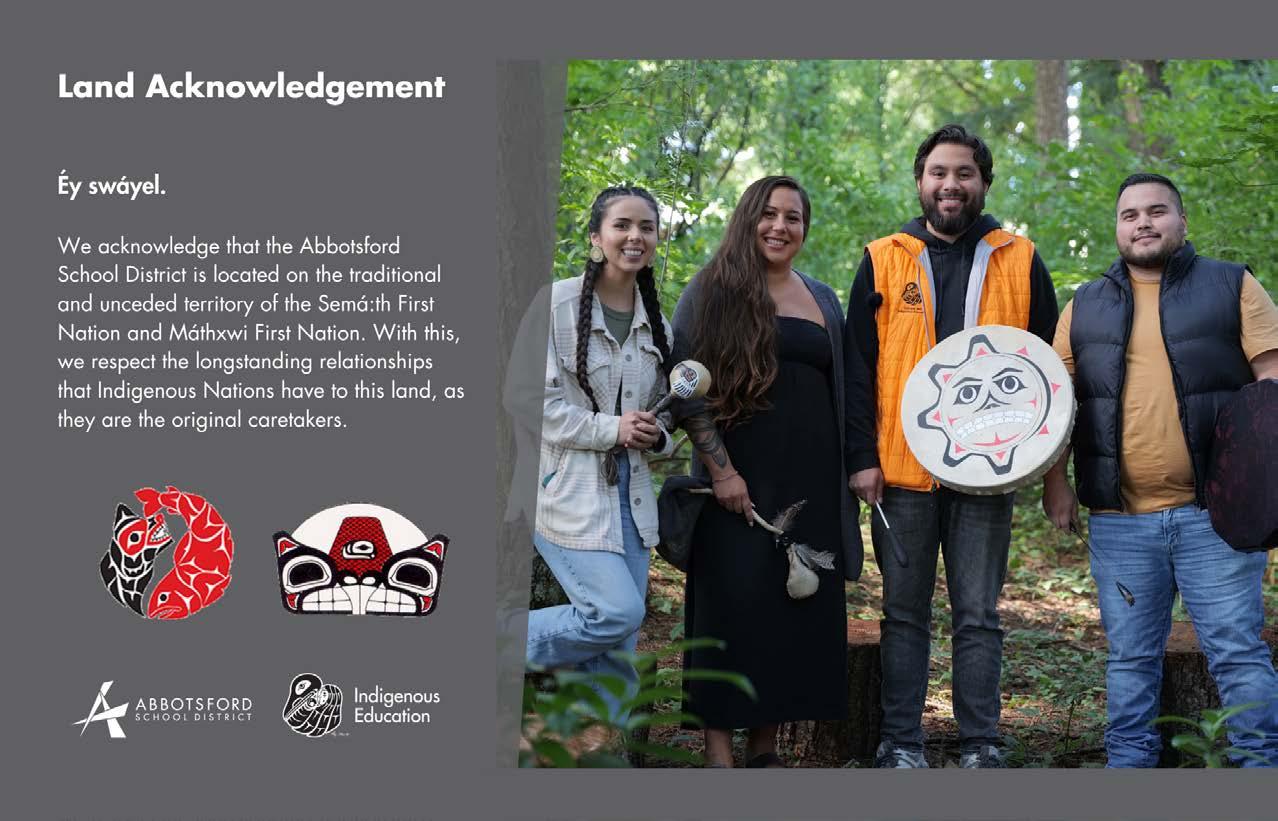
The Abbotsford School District acknowledges historical and ongoing injustices that Indigenous Peoples endure in Canada, and we accept responsibility as a public educational institution to contribute toward revealing and correcting miseducation as well as renewing respectful relationships with Indigenous communities through our teaching and community engagement.
OUR MISSION
Preparing and inspiring our students for a lifetime of success.
OUR VISION
A world-class, innovative, and individualized educational experience for every student.
The Abbotsford School District publishes the Measuring Up report, a key resource through which the Board of Education highlights the achievements of the past school year and reaffirms our commitment to the Ministry of Education and Child Care’s Framework for Enhancing Student Learning. Driven by our core values of respect, trust, integrity, communication, and teamwork, our initiatives align with the goals outlined in our Strategic Plan.
This past year, our schools welcomed over 20,000 students, and their families, eager to learn, grow, and thrive. Guided by the dedication of our staff, we continued to provide enriching and inspiring educational experiences that meet the diverse needs of each of our learners.
At Abbotsford Schools, we remain steadfast in our commitment to a world-class, innovative, and personalized learning journey for every student. Whether through transformative classroom
experiences, academic achievement, or athletic pursuits, we have celebrated student success across the district and witnessed our staff excel in their roles.
Looking ahead, the Board of Education remains focused on our strategic priorities. We are committed to ensuring that every part of our organization contributes to student success, preparing young people for bright futures in an ever-changing world.
Shirley Wilson Chair, Abbotsford Board of Education
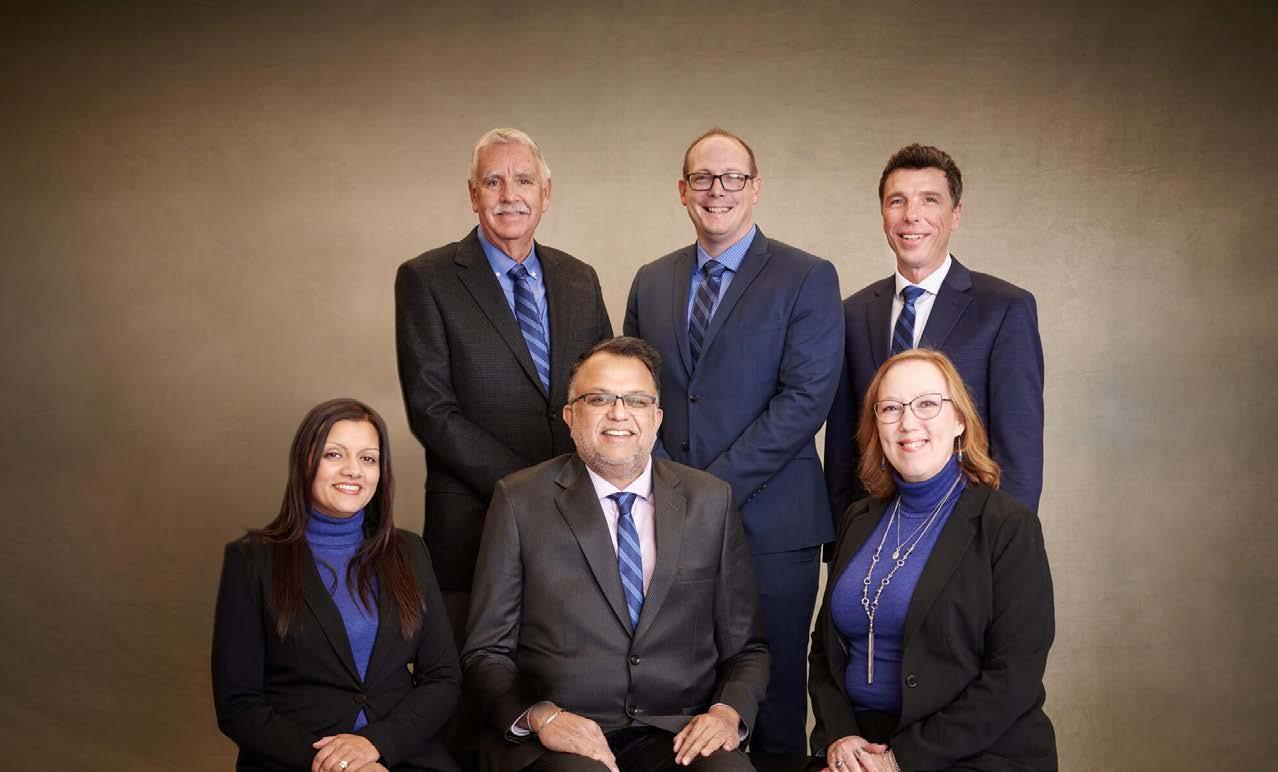
2022-26 Abbotsford Board of Education
Stan Petersen, Jared White, Mike Rauch, Rupi Kanda-Rajwan, Preet Rai, and Shirley Wilson (pictured left to right)
SUPERINTENDENT
The Abbotsford School District is well known as a high-performing system that serves a wonderful and vibrant community. With close to 100 languages spoken across our 46 schools, we are one of the most diverse districts in Canada.
It is an incredible honour to serve as Superintendent of Schools in Abbotsford. Having spent many years in this district, I have seen first-hand the passion, talent, and care our staff, students, and families bring to our schools every day. This past year was filled with achievements that remind us of what is possible when a community comes together around a shared vision for student success.
Our Board’s Strategic Plan is more than a set of goals — it is a living guide that shapes learning and inspires innovation across our district. We see it in the creativity of our classrooms, the resilience of our students, and the commitment of our staff. Whether in academics, athletics, or the arts, our schools continue to provide opportunities for students to grow, thrive, and prepare for bright futures.
As we reflect on this year and look ahead, I am grateful for the strong partnerships that make this work possible — with our staff, families, and community, and with the voices of the Semá:th and Máthxwi First Nations, whose perspectives continue to guide and ground us. Together, we are building safe, inclusive, and inspiring schools where every student feels supported and empowered to succeed.
Dr. Nathan Ngieng Superintendent of Schools
to 2023/2024
OUR STRATEGIC DIRECTION
Aligned with the B.C. Ministry of Education and Child Care’s Framework for Enhancing Student Learning, our district has developed a renewed Strategic Plan that centers on student success with an enhanced focus on family and community engagement.
The 2024-28 Strategic Plan, developed in collaboration with students, staff, parents, and community members, is aligned with our four fundamental pillars: Student Success, Optimized Resources, Engaging Opportunities, and a Progressive Workforce.
STUDENT SUCCESS
Our students are engaged, challenged and prepared for a lifetime of success.
OPTIMIZED RESOURCES
We are creative and responsible in the management of educational resources.
Our Goals:
• Improve student success in literacy
• Improve Early Learning
• Improve student sense of well-being
• Improve student success in numeracy
• Improve core competencies so students can achieve career/life goals
• Improve graduation rates
ENGAGING OPPORTUNITIES
We provide engaging opportunities for every member of our learning community to contribute to student success.
Our Goals:
• Increase the capacity of our school facilities
• Maximize budget allocations for instructional staffing
• Maintain a healthy financial position
• Increase resources available to fund capital equipment
PROGRESSIVE WORKFORCE
We provide a workplace that fosters creativity, inspires excellence, and challenges everyone to embrace growth.
Our Goals:
• Increase parent and community engagement
• Increase student participation in extra-curricular activities
• Improve the use of technology (operationally and pedagogically)
Our Goals:
• Increase employee engagement
• Improve recruitment and retention of staff
• Improve leadership capacity
• Improve employee health, safety and resiliency
SCHOOL DISTRICT
BY THE NUMBERS
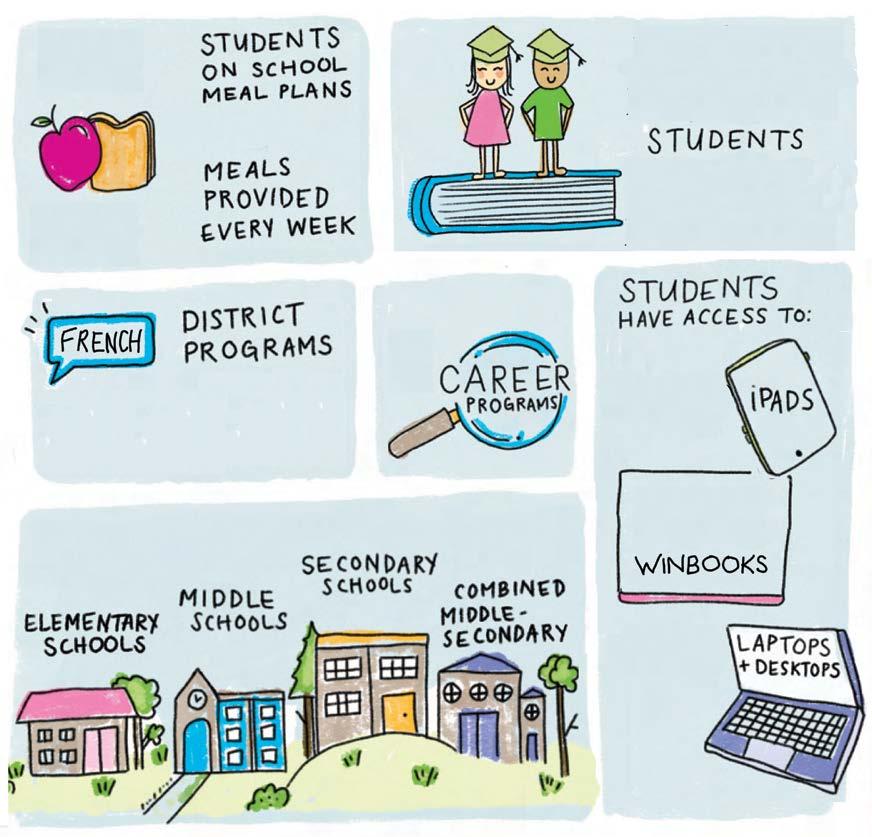
WE HAVE HAD AN INCREASE OF 62% IN OUR SCHOOL-AGED CARE SINCE 2021
1,040
21,160
7,650
16
4 ELEMENTARY SCHOOLS
1MIDDLE SCHOOL
1SECONDARY SCHOOL
31
7
6
2
5,000 4,500 1,400
EQUITABLE & INCLUSIVE SCHOOLS
INDIVIDUAL
Deepening Equity Consciousness
Who am I (identity, privilege and bias)? What kind of leader do I need to be right now?
STRUCTURAL
Dismantling Oppression
EQUITABLE & INCLUSIVE Schools
How will we re-imagine our systems for radical inclusion? How will we redistribute access and opportunity?
INTERPERSONAL
Healing for Equity
How will I build trust across differences? How will I create space for reflection and healing?
PEDAGOGICAL
Embracing Responsive Pedagogy
How will we ensure culturally responsive classroom practices? How will we activate student voice and agency?
We are committed to ensuring that every student receives the support they need to access the high-quality education they deserve. We value the identities that each student embodies and the intersectionality of these identities that construct the fabric of our school district. The diversity of our community is one of our greatest strengths and supports our vision for a world-class, innovative, and individualized educational experience for every student.
Equity is the state that would be achieved if success was not predictable by any social, cultural, or economic factor. It involves celebrating the individual cultures, talents, abilities, languages, and interests of every student, valuing and supporting differences between individuals and groups, and ensuring everyone has the access to the opportunities to fulfill their aspirations. Our school district’s Equity Framework captures how we must act in the service of our students and families, particularly those who are historically underserved.
PROGRESSIVE WORKFORCE
EMPLOYEE RECRUITMENT AND ENGAGEMENT
We provide a workplace that fosters creativity, inspires excellence, and challenges everyone to embrace growth.
Some successes 2024/2025:
Recruiting & Retention:
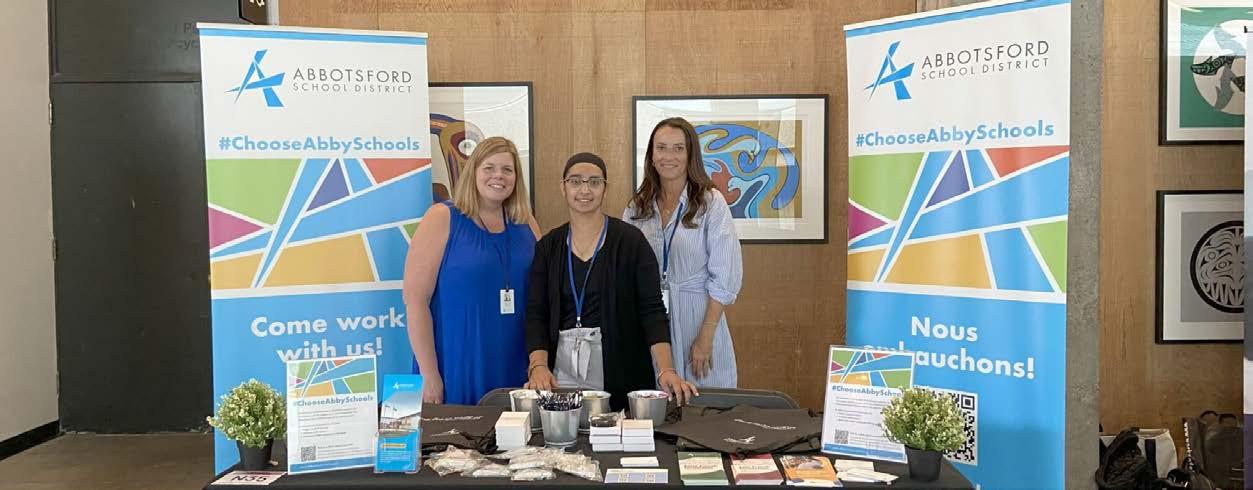
• The district’s first New Employee Welcome Event was held in November
• In collaboration with the ATU, expanded the size and scope of the UETOC program to 50 employees
• Expedited letters of permission process resulting in greater stability in classrooms
Employee Engagement:
• Revised and launched a broader and more comprehensive Employee Recognition Program, the ABC Awards of Excellence
• Conducted a district wide employee pulse survey
Leadership Development:
• Launched revamped Leadership Programs including the Leadership Academy, New Leaders Induction Program, and Mentoring Program
Employee Health & Safety:
• Completed district wide Environmental Risk Assessments at each school and site
• Collaborated with District LSS on protocols that ensure safe classrooms for students and staff
Ongoing engagement with rightsholders continues to be a cornerstone of the Abbotsford School District’s work. The district commits to active listening to the guidance from Semá:th First Nation, Máthxwi First Nation, the Fraser Valley Métis Association, employee groups, families, students, and community members. These conversations take many forms, including the Indigenous Education Council and district Joint Committees (Indigenous Education, Inclusive Education, Workplace Health and Safety, Modern Languages, District Planning Team, Student Voice and Leadership).
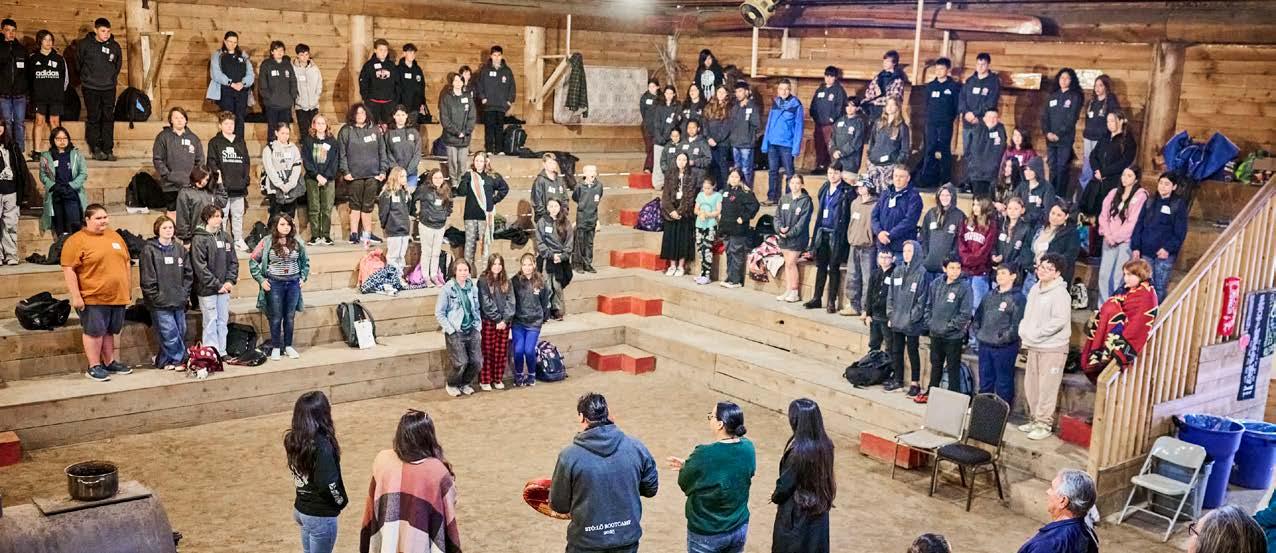
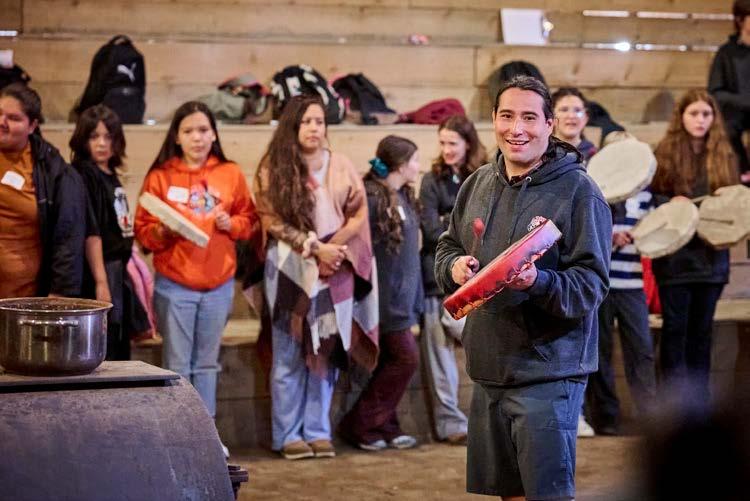
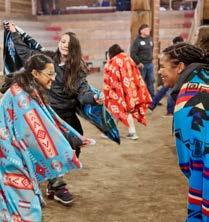
Over the past year, the district has placed a stronger emphasis on joint partnerships that create meaningful opportunities for students and staff. With Semá:th First Nation, the Stó:lō Bootcamp has offered hands-on learning experiences rooted in Indigenous culture
and history. Collaboration with Máthxwi First Nation has led to the development of curriculum resources that bring local perspectives directly into classrooms. The Fraser Valley Métis Association partnered with the district to host Métis Day, celebrating Métis culture and identity with students across Abbotsford.
In addition, our work with VYPER (Vision Youth Peer and Equity Revitalization) has expanded student leadership and equity initiatives, giving youth a greater voice in shaping inclusive school communities.
These collective efforts reflect the district’s commitment to authentic engagement, ensuring that decisions and initiatives are informed by the voices of our communities. Through ongoing consultation and collaboration, we continue to strengthen relationships and create shared opportunities for growth, belonging, and success.
OPTIMIZED RESOURCES
FINANCIAL STEWARDSHIP
Through our optimized resources pillar, financial stewardship guided our decision-making. Our commitment to be creative and responsible in managing our educational assets has allowed our district to focus on improving fiscal transparency while enhancing school services.
In addition to passing our largest student-focused balanced budget of $288,000M this past spring, we finalized the multi-year project of updating the district’s financial Enterprise Resource Planning system, and are starting the implementation for a new payroll and HR ERP solution. We also finalized construction to add additional classroom space at Auguston and Margaret Stenersen Elementary, as well as facilitated modular moves and modular remediations.
Some successes from 2024/2025:
• Continue to build public awareness of the budget and encourage participation through the online engagement portal
• Implemented new financial ERP system
• Continuous improvement of Facilities Department services to schools ensuring facilities are safe, clean, and properly maintained
• Tracking and follow up with all categories of maintenance work order requests to deliver a more streamlined services process
• $1.50 million surplus transferred to local capital to help pay for targeted capital projects
Future Plans:
• Implementation of new ERP system for payroll and HR
• Continue with the Facilities Department’s energy-saving building renewal programs and include refreshing the behaviour/school based energy programs
• Improve service integration with the City of Abbotsford
Emerging Areas of Need:
• Addressing an aging fleet of vehicles, facilities and equipment;
• Rising utility costs
• Recruitment and retention of Facilities Department unionized trade and non-trade staff as well as custodians and bus drivers
• Increasing gaps between costs to maintain services and funding from the BC Government
• Uncertainty due to collective bargaining with both teaching and support staff
OUR
FINANCIAL SNAPSHOT 2024/2025 REVENUE VS EXPENSES:
Guided by our overarching Strategic Plan, horizontal alignment has been established between all operational plans and finance to ensure we are responsible in the management of our educational resources and that this is reflected in a student-focused balanced budget.
Student enrolment accounts for approximately 98% of our revenues and determines the level of spending required throughout the District. Our relatively stable enrolment has contributed to our successful operations and strong financial position.
$290.4 million $240.2 million $38.9 million $10.1 million
OPTIMIZED RESOURCES
INFORMATION TECHNOLOGY
Through our Optimized Resources pillar, the Information Technology team makes technology simple and dependable, allowing students and staff to focus on teaching and learning.
Some successes from 2024/2025:
Rollout 2025 – Successful staff device refresh with minimal issues
• ITC staff along with several casual staff provisioned laptops to replace aging equipment1800 new laptops, 200 new desktops
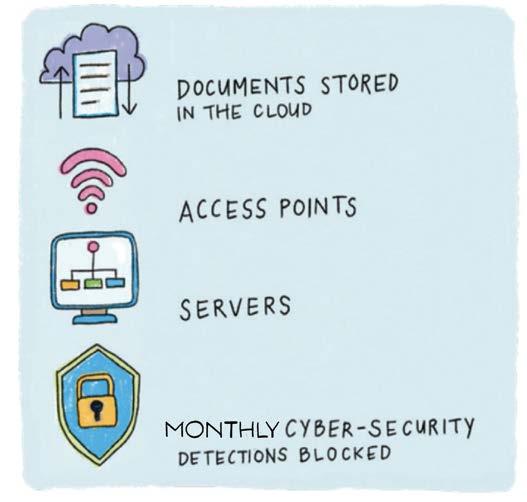
ITC Infrastructure team completed the Zero Trust Network Project on all wired ports district wide providing additional security by eliminating unauthorized connections to the Abbyschools network
Full redundancy achieved for all mission critical systems at our Data Center providing significantly improved reliability and availability of our systems in case of power outages or HVAC failure etc.
• Addition of real-time environmental monitoring of Data Center temperatures, humidity and power loss events enabling ITC to be alerted immediately in the event of issues at our data center.
• Major upgrade of Aruba Central AOS from version 8 to 10. This is our core network management system and prepares us for the new AI based version of the system which will provide significant improvements in security, troubleshooting and administration
Future Plans:
• Expanded use of new enterprise tools to help overall IT Management (Varonis, Lenovo Device Orchestrator and others)
Cybersecurity Initiatives:
• Continued efforts to implement Multifactor Authentication for staff members, expanded to include anyone with VPN access including vendors and contractors
• Vulnerability scanning and annual Penetration Testing performed and remediated
• Continued efforts to reduce attack surface across entire SD34 environments
• Efforts made to improve, update and expand Incident Response Plan & Disaster Recovery Playbooks to cover more potential scenarios
Fun Fact: ITC received over 8,000 Helpdesk requests during the 24/25 school year!
14 million
1,457
252,000 71
STUDENT SUCCESS
Student success is at the heart of our mission, and we strive to ensure that all students are engaged, challenged, and equipped for the future. Our district assessment results show we’re moving in the right direction, inspiring, and preparing students for lifelong success. Still, we recognize there are areas for growth that will help inform our ongoing efforts to support student achievement.
Moving forward, we will prioritize enhancing literacy outcomes for all students, with a particular focus on early literacy skills. Our initiatives will include improving literacy outcomes for Indigenous students, deepening student engagement through inquiry, play, and place-based learning. We will strengthen reading comprehension and numeracy in middle school, promote student well-being, and develop flexible learning models in secondary schools that elevate student voice and choice. By fostering a comprehensive approach to literacy, we aim to ensure that every student has the foundational skills needed for lifelong learning and success.
STUDENT SUCCESS
LITERACY ACHIEVEMENT
The Foundational Skills Assessment (FSA) is an annual province-wide assessment of all B.C. students’ academic skills in grades 4 and 7, and provides parents, schools, school districts and the Ministry of Education and Child Care with important information about how well students are progressing in the foundation skills of reading, writing, and numeracy.
The following data shows the 5-year trend for Grade 4, 7 and 10 literacy assessments (proficient or better).
Grade 4
Grade 7
Grade 10
Emerging Areas of Need:
• Access to Diverse Resources: Ensure that books and resources reflect the diversity of our student population, including cultural identities
• Critical Thinking Development: Foster opportunities for students to engage in critical thinking across all literacy areas, encouraging them to analyze, evaluate, and create meaning through reading, writing, and oral communication
• Literacy for Indigenous Learners: Improve literacy achievement for Indigenous learners through targeted support and resources
• Educator Capacity Building: Strengthen the fluency and understanding of educators and leaders regarding instructional leadership in literacy
• Evidence-Based Resources: Increase access to evidence-based literacy resources that cater to the diverse learning needs of our students
• Professional Development: Enhance the knowledge and skills of educators and leaders in evidence-based literacy instruction
• Literacy Framework Understanding: Foster a deeper understanding of the district’s Literacy Framework among educators and leaders
Future Plans:
• Early Literacy Resources: Refresh early reading materials to reflect the rich personal and cultural identities in our schools
• Personalized Learning: Continue to personalize learning experiences to ensure the success of all students
• Competency-Based Assessments: Implement competency-based literacy assessments for Grades 6-8
• Literacy Framework Implementation: Deepen educators’ and leaders’ understanding of the components of a balanced literacy program and all aspects of the Literacy Framework to ensure that we are providing comprehensive opportunities for students to learn across all areas
• District Literacy Assessments: Refresh and continue the implementation of District Literacy Assessments for K-8 (Reading and Writing)
• Evidence-Based Literacy Resources: Procure and utilize evidence-based literacy resources for K-8 to support diverse learners
• Enhance Oral Language Development: Emphasize oral language development across all languages in the district
STUDENT SUCCESS
NUMERACY ACHIEVEMENT
FSAs are based on the provincial curriculum and are developed by classroom teachers. The main purpose of the assessment is to help the Ministry of Education and Child Care, school districts and schools track how well students are learning core academic skills. The information is used by the Ministry, the district and by schools in planning for improvement. Evidence demonstrates a continued need for numeracy supports.
The following data shows the 3-year trend for Grade 4, 7 and 10 numeracy assessments (proficient or better).
Grade 4
Grade 7
Grade 10
Emerging Areas of Need:
• Competency-Based Approach: Develop and implement a competency-based approach to numeracy instruction and assessment, ensuring that students acquire essential skills and understanding
• Leadership Capacity: Enhance the fluency and understanding of our leaders in instructional leadership for numeracy, enabling them to effectively guide educators
• Educator Development: Strengthen the fluency and understanding of educators in competencybased numeracy instruction through targeted professional development
• Resource Access: Increase access to highquality resources that support effective numeracy instruction in K-8 classrooms
• Understanding Numeracy vs. Mathematics: Foster a clearer understanding of the distinctions between numeracy and mathematics among educators, students, and parents
Future Plans:
• District-Wide Numeracy Framework Implementation: Roll out the Numeracy Framework to promote consistent, high-quality instruction across all grade levels and establish a common language that impacts teaching practices
• Numeracy Assessments: Implement numeracy assessments to enable teachers to make informed decisions about next steps for instruction based on student performance
• Teacher Capacity Building: Focus on enhancing teachers’ content knowledge and pedagogical approaches, particularly through the use of manipulatives and high-yield routines
• Strengthened Assessment Practices: Introduce additional assessment tools that support formative evaluation of students’ number sense, fact fluency, and conceptual understanding
• Learning Progressions Implementation: Utilize Learning Progressions to help educators scaffold instruction in number sense and operations, ensuring a comprehensive approach to numeracy education
STUDENT SUCCESS
GRADUATION & TRANSITION TO POST-SECONDARY
Our ultimate goal is to equip every student with the skills, knowledge, and confidence needed to achieve a lifetime of success. While Abbotsford students consistently graduate at rates above the provincial average, we remain deeply committed to further enhancing outcomes, particularly for Indigenous students.
The five-year completion rate is the percent of students who graduated with a Certificate of Graduation or Adult Graduation Diploma, within five years from the first time they enrol in Grade 8. School District-level results are adjusted for student migration in and out of British Columbia.
5 Year Graduation Rate
Emerging Areas of Need:
• Indigenous Student Completion: Address the decline in five-year completion rates for Indigenous students and improve their transition rates from Grade 11 to Grade 12, which suggest barriers to course completion
• CYIC Transition Rates: Improve the low transition rates for Children and Youth in Care (CYIC), despite a slight improvement in overall completion rates
• Students with Designations: Continue to support students with designations who have shown some improvement in completion rates but still lag behind provincial averages
• Career Pathway Access: Increase access and participation in career programs and dual credit opportunities, particularly for underrepresented groups, including Indigenous students and women in trades
• Alignment of Supports: Ensure better alignment of supports and interventions to keep all students on the correct graduation path, particularly focusing on those at risk of disengagement
Future Plans:
• Grad Verification Meetings: Continue annual grad verification meetings for Indigenous learners to monitor progress and align supports. Expand these meetings to include Grade 10 planning at schools with high Indigenous enrolment
• Career Program Support: Maintain and enhance personalized support for students in career programs, including academic tracking and mentorship, to improve completion rates
• Outreach for Equity: Refine outreach strategies to better engage Indigenous students and women in trades, increasing mentorship and family engagement while closely monitoring participation data
• Expand Dual Credit Programs: Continue the expansion of dual credit programs in highdemand sectors like Early Childhood Education and Health Care, strengthening partnerships with post-secondary institutions
• Academic Monitoring and Mentorship: Sustain weekly academic monitoring and mentorship initiatives to support students at risk of disengagement, ensuring they stay on track for graduation
STUDENT SUCCESS
STUDENT WELL-BEING
Our students are engaged, challenged and prepared for a lifetime of success. When our students feel safe, connected and cared for, they will experience success at school.
Q1: Is school a place where you feel welcome?
Grades 4, 7 &
Q2: Do you feel safe at school?
Q3: Is school a place where you feel like you belong?
Q4: Do you feel there are two or more adults who care about you at school?
Grades
STUDENT SUCCESS
STUDENT WELL-BEING
Our students are engaged, challenged and prepared for a lifetime of success. When our students feel safe, connected and cared for, they will experience success at school.
Emerging Areas of Need
• Mental Health and SEL Capacity: Increase consistent implementation of social-emotional learning (SEL) strategies across classrooms, enhancing staff confidence in supporting student mental health
• Inclusive Practices and EDIA Integration: Deepen the integration of equity, diversity, inclusion, and anti-discrimination practices into daily instruction and school culture
• Family and Community Engagement: Expand outreach to reach more families, ensuring events reflect the diverse needs of the community
• Support for SLIFE and ELL Learners: Develop more targeted instructional strategies and resources for students with limited or interrupted formal education (SLIFE) and English Language Learners (ELL)
• Quality of IEPs and Inclusive Strategies: Improve the consistency and quality of Individualized Education Plans (IEPs) and inclusive strategies across schools
Future Plans:
• Enhanced Professional Development: Continue professional development sessions on mental health, SEL, and inclusive practices, including trauma-informed training for more staff
• Establishment of Equity Diversity Inclusion Accessibility (EDIA) Leads: Create site-based leads for equity, diversity, inclusion, and antidiscrimination to support classroom instruction
• Increased Family Engagement Activities: Host more family events and co-plan with families, focusing on outreach to underrepresented groups
• Development of SLIFE-Specific Resources: Continue training for teachers and develop resources tailored to the needs of SLIFE learners, while monitoring their progress
• Refinement of Inclusive Practices: Provide ongoing support and refine behavior planning resources to enhance collaboration between Learning Support Services (LSS) and school teams