The Smart Homeowner's Guide to Choosing the Right Upholstery Fabric
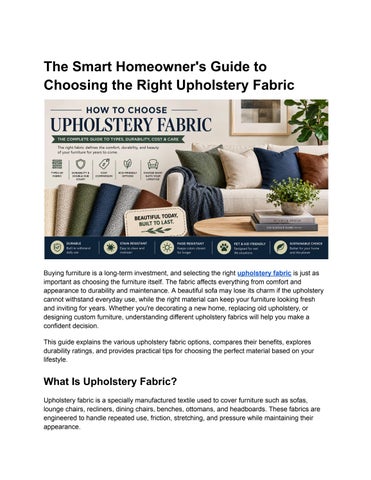
Buying furniture is a long-term investment, and selecting the right upholstery fabric is just as important as choosing the furniture itself The fabric affects everything from comfort and appearance to durability and maintenance. A beautiful sofa may lose its charm if the upholstery cannot withstand everyday use, while the right material can keep your furniture looking fresh and inviting for years Whether you're decorating a new home, replacing old upholstery, or designing custom furniture, understanding different upholstery fabrics will help you make a confident decision
This guide explains the various upholstery fabric options, compares their benefits, explores durability ratings, and provides practical tips for choosing the perfect material based on your lifestyle
What Is Upholstery Fabric?
Upholstery fabric is a specially manufactured textile used to cover furniture such as sofas, lounge chairs, recliners, dining chairs, benches, ottomans, and headboards These fabrics are engineered to handle repeated use, friction, stretching, and pressure while maintaining their appearance
Unlike regular household fabrics, upholstery materials are designed to provide:
● Long-lasting durability
● Comfortable seating
● Resistance to everyday wear
● Attractive finishes
● Easy cleaning
● Better stain protection
The right fabric not only improves the appearance of furniture but also increases its lifespan
Why Your Upholstery Choice Makes a Difference
Furniture is used every day, making the upholstery one of the hardest-working elements in your home Selecting the appropriate fabric helps ensure that your investment continues to look and perform well over time.
A quality upholstery fabric offers several benefits:
● Better resistance to stains and spills
● Improved durability
● Enhanced comfort
● Easier maintenance
● Greater value for money
● Long-lasting visual appeal
Choosing a fabric based only on color or texture may result in higher maintenance and earlier replacement
Popular Upholstery Fabric Materials
Cotton
Cotton is a natural fabric known for its softness, breathability, and versatility It works well in both traditional and contemporary interiors and is available in a wide range of colors and patterns.
Although comfortable, cotton may require stain-resistant treatment if used in high-traffic spaces
Linen
Linen provides a sophisticated appearance with a distinctive woven texture It creates a light and elegant atmosphere, making it a favorite for modern and minimalist interiors.
Since linen wrinkles more easily than synthetic fabrics, it is often recommended for rooms with moderate use.
Leather
Leather is one of the most durable and luxurious upholstery materials available. It develops character over time and offers excellent resistance to daily wear
Its smooth surface also makes it easy to wipe clean, making it suitable for family rooms and home offices
Velvet
Velvet creates an elegant statement with its rich texture and soft finish. It reflects light beautifully, adding warmth and depth to any room
With proper care, velvet remains one of the most luxurious upholstery choices.
Polyester
Polyester is valued for its affordability and durability. It resists wrinkles, fading, and stains while requiring minimal maintenance
This makes it an excellent choice for busy households with children or pets.
Microfiber
Microfiber features tightly woven fibers that naturally resist dirt, pet hair, and spills It combines exceptional durability with a soft, comfortable feel.
Because of its easy maintenance, microfiber is one of the most practical upholstery fabrics available today.
Natural and Synthetic Upholstery Fabrics
Choosing between natural and synthetic materials depends on your priorities
Natural Upholstery Fabrics
These include:
Cotton
Linen
Wool
Leather
Natural materials offer:
● Breathability
● Soft texture
● Premium appearance
● Timeless style
Synthetic Upholstery Fabrics
Popular synthetic options include:
● Polyester
● Nylon
● Acrylic
● Olefin
These materials provide:
● Superior durability
● Better stain resistance
● Easier maintenance
● Affordable pricing
Many manufacturers blend natural and synthetic fibers to create fabrics that combine comfort with long-lasting performance.
Sustainable Upholstery Materials
Eco-conscious homeowners are increasingly choosing environmentally friendly upholstery fabrics.
Popular sustainable materials include:
● Organic cotton
● Hemp
● Bamboo fibers
● Recycled polyester
● Eco-certified performance fabrics
These options help reduce environmental impact without sacrificing quality or durability.
Decorative Upholstery Fabrics
If style is your priority, decorative fabrics can enhance the visual appeal of your furniture
Popular decorative choices include:
● Velvet
● Bouclé
● Chenille
● Jacquard
● Damask
These materials introduce texture, depth, and elegance to accent furniture and formal living spaces
Evaluating Upholstery Durability
Durability is one of the most important considerations when selecting upholstery
Factors affecting durability include:
● Fiber composition
● Fabric weave
● Construction quality
● Protective finishes
● Frequency of use
Choosing durable upholstery reduces long-term maintenance and replacement costs
Understanding Double Rub Ratings
The double rub rating measures a fabric's ability to withstand abrasion.
General guidelines include:
● Below 10,000: Decorative furniture
● 10,000–15,000: Light residential use
● 15,000–25,000: Standard household furniture
● 25,000–40,000: Heavy residential use
● Above 40,000: Commercial applications
The higher the rating, the more suitable the fabric is for frequent use.
Features That Improve Upholstery Performance
Modern upholstery fabrics often include advanced technologies that improve their lifespan
Look for features such as:
● Stain-resistant finishes
● Water-repellent coatings
● Fade resistance
● UV protection
● Pet-friendly construction
● Easy-clean technology
● Antimicrobial protection
These performance features help furniture maintain its appearance with minimal effort
Upholstery Fabric Price Guide
Fabric prices vary according to material, quality, and manufacturing process.
Budget-friendly materials include:
● Polyester
● Cotton blends
● Synthetic woven fabrics
Mid-range options include:
● Linen blends
● Premium cotton
● Performance fabrics
Luxury upholstery includes:
● Genuine leather
● Velvet
● Designer textiles
● Handwoven fabrics
Although premium fabrics have a higher initial cost, they often provide greater durability and long-term value
How to Read Upholstery Labels
Furniture labels contain valuable information that helps you compare products
Look for:
● Fiber composition
● Cleaning instructions
● Abrasion rating
● Colorfastness
● Manufacturer recommendations
Reading these specifications before purchasing helps you choose furniture that matches your expectations.
Selecting Upholstery for Your Lifestyle
Different households require different upholstery solutions
Families with Children
Performance fabrics that resist spills and stains are ideal
Pet Owners
Leather, microfiber, and tightly woven synthetic fabrics are easier to clean and resist scratching
Formal Living Rooms
Velvet, linen, and decorative woven fabrics create a refined appearance in spaces that receive lighter use
High-Traffic Areas
Polyester, nylon blends, and commercial-grade upholstery provide superior durability
Upholstery Care Tips
Proper care helps preserve your furniture for years
To maintain upholstery:
● Vacuum regularly
● Clean spills immediately
● Rotate cushions frequently.
● Keep furniture away from direct sunlight
● Follow manufacturer cleaning instructions
● Schedule professional cleaning when necessary.
Routine maintenance keeps upholstery looking fresh while extending its lifespan