Integrated roofing & solar for public sector estates
Roofing & Solar Solutions
Built for performance, designed for longevity
Plan With Confidence
Budget forecasting and ROI planning for your estate
Complete Asset Management
Condition surveys, lifecycle costing and expert technical guidance
Book a free roof survey and solar ROI report today
Fully Compliant Specs Safe2Torch ready, designed to UK building regs
Dedicated Technical Manager On-site support, from project design to completion
Protected For The Future Up to 30 year Single-Point Guarantee
PUBLISHER: Ralph Scrivens ralph@ energymanagermagazine.co.uk
PRODUCTION: Sarah Daviner sarah@ energymanagermagazine.co.uk
ACCOUNTS: accounts@ energymanagermagazine.co.uk
PRINT: Mixam Print
ENERGY MANAGER MAGAZINE
is published 10 times a year by Energy Manager. www.energymanagermagazine.co.uk
42 Wymington Park, Rushden, Northants, NN10 9JP
Email: mail@energymanagermagazine.co.uk
REGISTRATION: Qualifying readers receive Energy Manager free of charge. The annual subscription rate is £80 in the UK, £95 for mainland Europe and £115 for the rest of the world.
Single copies £10.
Some manufacturers and suppliers have made a contribution toward the cost of reproducing some photographs in Energy Manager.
PAPER USED TO PRODUCE THIS MAGAZINE IS SOURCED FROM SUSTAINABLE FORESTS.
Please Note:
No part of this publication may be reproduced by any means without prior permission from the publishers. The publishers do not accept any responsibility for, or necessarily agree with, any views expressed in articles, letters or supplied advertisements.
The Data Centre Boom: Examining Outdated Energy Thinking See page 8
INSIDE
IRAN CONFLICT DRIVES RISE IN SHORT-TERM PPAS AS BUYERS SEEK PROTECTION FROM ENERGY PRICE SHOCKS
Heightened geopolitical tensions linked to the Iran conflict are driving renewed interest in short-term Power Purchase Agreements (PPAs), as European energy buyers look to shield themselves from price volatility and supply shocks, according to new analysis from Montel.
Rising gas prices and increased volatility across European power markets have prompted off-takers and generators to focus more heavily on shorterduration contracts, where hedging value is greatest and pricing signals react most quickly to geopolitical events.
SHORT-TERM HEDGING RETURNS TO FOCUS
Montel’s analysis shows that activity is increasingly concentrated in shorter contract durations during periods of market stress, reflecting renewed demand for near-term hedging strategies.
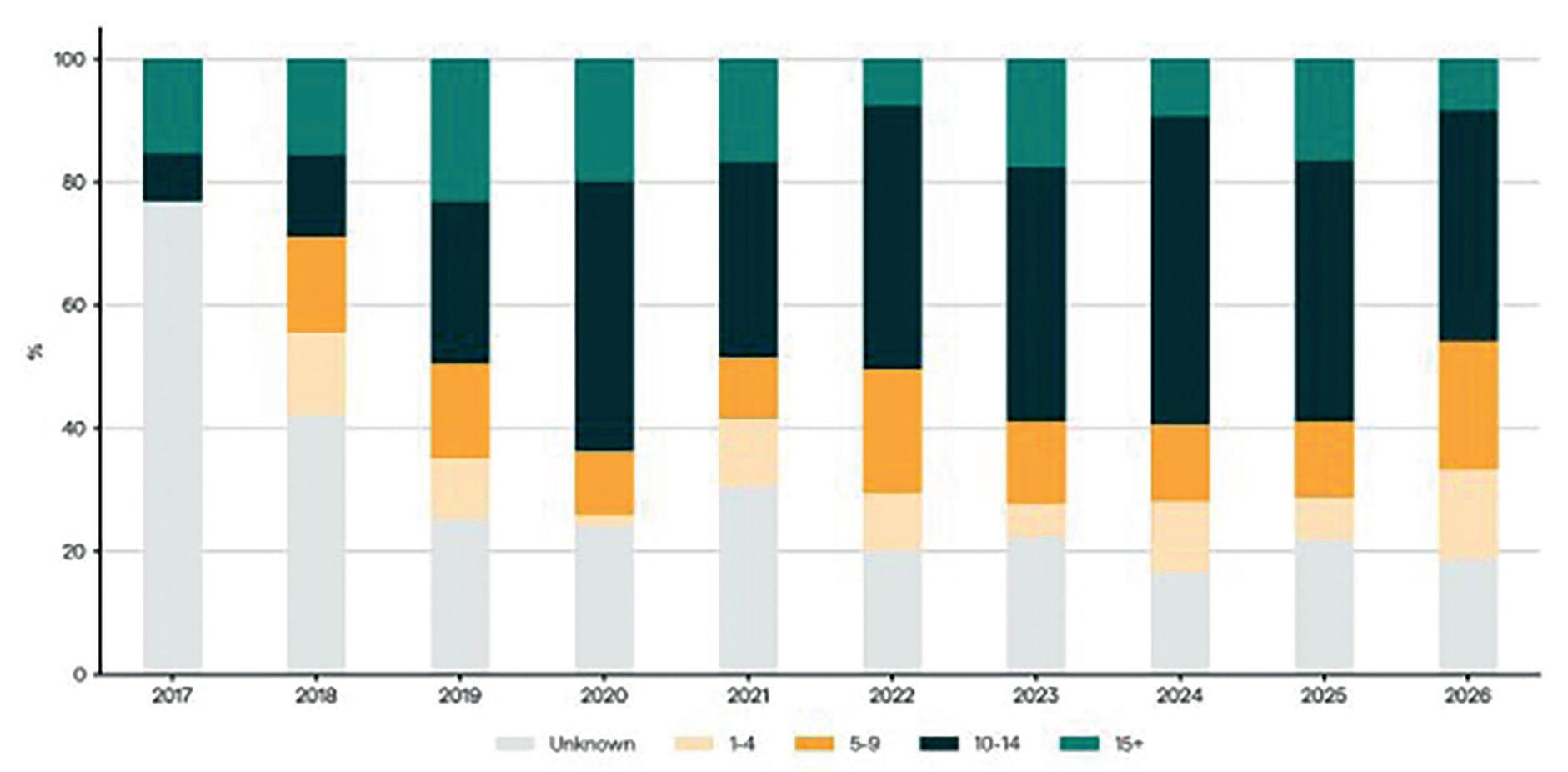
Based on data from Montel’s PPA Deal Tracker, which analyses reported PPA agreements across Europe, a clear increase in shorter-term PPAs can be observed. By grouping PPA deals concluded each year by contract duration, Montel's analysis shows that the share of PPAs with durations of one to four years increased from around
6.8% of PPAs in Europe in 2025 to approximately 14.6% in 2026 (to date).
These percentages reflect the share of PPAs with this contract duration, relative to the total number of PPAs signed each year. The share of PPAs with durations of five to nine years also rose significantly, from 12.3% to 20.8% between 2025 and 2026. A similar pattern was already visible during the energy crisis between 2020 and 2021, where the proportion of PPAs with one- to four-year tenors increased from 1.7% to 10.98%.
“Short-term PPAs are benefitting most directly,” Senior Energy Analyst at Montel, Josephine Steppat said.
“Rising volatility increases the value of locking in nearer-term energy prices, particularly for off-takers seeking budget certainty. For power generators, elevated near-term future prices can also improve achievable revenues,” she added.
LONG-TERM PPA FUNDAMENTALS REMAIN INTACT
Despite the shift towards shorter contracts, Montel said the structural foundations underpinning Europe’s longterm PPA market remain unchanged.
Renewable deployment, electrification and decarbonisation targets continue to support demand for long-dated PPAs,
with future price expectations further along the curve only marginally affected by current geopolitical developments.
Steppat added: “As a result, long-dated PPAs continue to trade more on structural fundamentals than on short-term shocks.
“Short-term PPAs become more attractive as hedging tools, while appetite for long-term contracts remains restrained. The market is becoming more selective rather than more active overall, representing a shift in composition rather than scale.”
RENEWABLE REVENUES UNDER PRESSURE
Montel’s analysis also pointed to deeper structural challenges emerging across European renewable markets.
”Declining capture rates and increasing cannibalisation effects are putting growing pressure on renewable revenues, raising concerns about the long-term value available to renewable generators. The PPA market will not be defined by volatility itself but by whether it can still deliver sufficient and stable value for renewable investment over time,” Steppat said. www.montel.energy
Figure 1: Percentage of PPAs signed in Europe by contract durations. Source: Montel
SALIX INVESTS IN WORKFORCE TRAINING TO ACCELERATE UK RETROFIT CAPABILITY
Organisations across the UK are stepping up efforts to prepare for the transition to cleaner energy and face the energy crisis.
With residential buildings responsible for more than a fifth of the country’s carbon emissions, improving the energy efficiency of existing homes is central to the government’s target to reach net zero by 2050. Buildings overall remain one of the UK’s largest sources of emissions, including residential, public sector and industrial.
In response, Salix who administer government-funded decarbonisation schemes for housing and public sector buildings, has partnered with The Retrofit Academy to build further capability right across its workforce. This will support Salix’ in-depth technical teams who currently assess and deliver significant energy efficiency projects.
All Salix employees have been enrolled on retrofit training to build a shared understanding of the technology, terminology and practices used across the energy efficiency
and decarbonisation sector.
Salix’s chief executive Kevin Holland said the programme reflects a wider organisational commitment to developing skills in line with evolving government priorities.
He said: “Everyone across our business is now offered retrofit training. We’ve been actively supported by the team at The Retrofit Academy, who provide accredited courses at the timescales we need.”
He added: “Every day, Salix is on the ground looking at projects and speaking to people across the UK about the challenges and issues of retrofitting buildings. That includes everything from supply chain capacity to electricity infrastructure and ensuring buildings can be upgraded effectively at scale.”
The Retrofit Academy is a community interest company and has been at the forefront of efforts to address the UK’s retrofit skills gap. Since 2016, it has provided training and guidance to existing and new professionals entering the sector, working closely with industry, education providers and government bodies.
Retrofit Academy chief executive David Pierpoint said: “We are committed to supporting organisations leading the race to the top in retrofit. There is a huge thirst for this knowledge, and it often translates into successful retrofit.”
The organisation’s mission is to help develop 50,000 qualified retrofit professionals by 2030 – a critical step toward scaling up decarbonisation efforts nationwide.
Kevin added: “Net zero will not be delivered by intentions alone, but by the people on the ground who understand how to turn ambition into action –building by building, home by home, across every part of the country.”
“UK greenhouse gas emissions statistics” published on UK Government – https://www.gov.uk/government/ statistics/provisional-uk-greenhousegas-emissions-statistics-2025/2025-ukgreenhouse-gas-emissions-provisionalfigures-methodology-summary www.salixfinance.co.uk
Buildings waste energy without intelligent control.
Our clients gain the control, visibility, and intelligence required to support informed decision-making, delivering measurable energy reduction, improved operational efficiency, simplified compliance reporting, and enhanced asset value
R-DME – AN ENERGY SOURCE FOR THE NEAR FUTURE
Chris Goggin explains the relevance and value of r-DME for sustaining rural businesses. r-DME offers operational and ecological benefits as an alternative fuel source for off-grid businesses that require practical, economical and technically feasibility heating and hot water solutions.
As a new era of energy production, distribution and consumption has emerged multiple governments are working hard to introduce alternative fuels into domestic energy mixes due to the economic and security uncertainty of fossil fuels.
Mainstream media rarely provides information on ratified energy variants that can sustain national demands. This article would like to bring the UK customer’s attention towards Renewable Dimethyl Ether (r-DME) – an off grid, carbon reducing fuel that is a future possibility to support rural decarbonisation.
Renewable DME is a molecule-based fuel that can be produced through a wide range of renewable feedstocks which allows for quick and long-term sustainable production. r-DME contains a similar chemical composition to
Chris Goggin
Butane and propane and can be mixed with LPG in existing appliances in order to continue product operations.
A recent trial at the Delft University of Technology, in the Netherlands was initiated to study the introduction of r-DME into market circulation and to study the feasibility of a 12% blended r-DME and LPG mix. A blended mix of r-DME and LPG was placed into
appliances and infrastructure, both of which continued operations without interruption, whilst also reducing the carbon intensity of the fuel.
r-DME combusts cleanly and releases no “soot” emissions. rDME has properties that make it suitable for use in modified compression ignition engines and dedicated diesel-replacement applications.
r-DME reduces greenhouse gas emissions by up to 85% better improving local air quality. Particulate and sulphur emissions are heavily reduced, with NOx emissions potentially lower depending on combustion control.
Operational plants for r-DME have been mooted including the £150 million commercial site in Teesside, although this project has been affected by time rescheduling issues.
Prior to the development of r-DME, LPG was the lowest carbon emitting source of fuel for the 15% of UK businesses that function off grid. Current energy market conditions could potentially introduce further alternative fuel sources such as renewable biofuel Dimethyl ether (DME) and BioLPG into active circulation.
In this present climate of geopolitical uncertainty, all energy products and appliances should be designed to encourage all aspects of national energy security and international decarbonisation. Domestic energy security alongside reducing emissions possess significance in the global hunt for clean and sustainable energies.
Europe and the wider world have entered a new age in terms of energy provision and security. Coupled with global decarbonisation targets, how separate nations provide domestic power and where fuel is imported from
To find out more about future energies and policy join the free newsletter
www.rinnai-uk.co.uk/contact-us/newsletter-sign
has become a serious issue. BioLPG and other fuels like DME successfully navigate these ethical issues and deliver all suited power requirements.
r-DME can offer efficient operational performance and is capable of fulfilling a role in the fragile international energy market. As fossil fuels are now heavily affected by geopolitical manoeuvrings governments will have to consider alternative energies that can improve domestic energy resilience
when produced from local waste or renewable sources. One such energy that passes this criterion is r-DME.
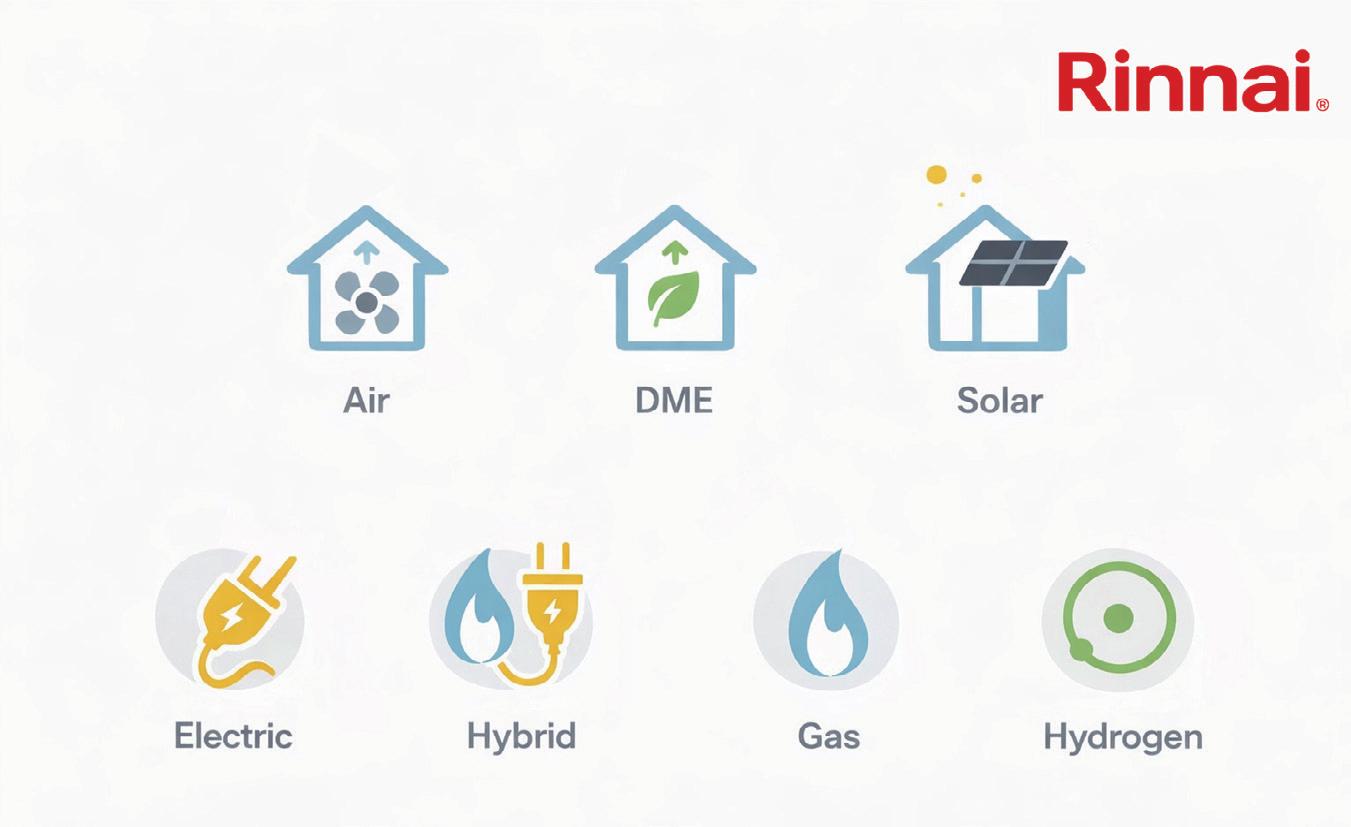
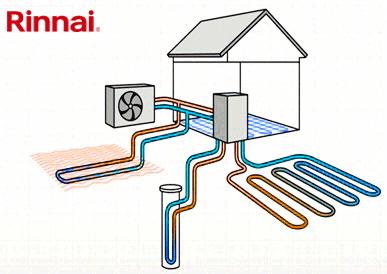
Rinnai UK offer a wide range of Heat pumps, hybrid electrification and advancements in alternative biofuels such as r-DME and BioLPG which the latter performs identically to conventional LPG.
For more information visit www.rinnai-uk.co.uk/products
THE DATA CENTRE BOOM: EXAMINING OUTDATED ENERGY THINKING
Colin Rees, associate director at IES
The growth of digital infrastructure is bringing a wider energy management problem into focus. As AI and digital services become increasingly important to economic growth, the data centre that support them are under pressure to perform efficiently and reliably, and in many cases, that performance is falling short.
Across the built environment, many assets have high levels of energy wastage, relying on legacy controls, static models and systems that only show part of the picture. They can show what a building is using, but not always why, how energy usage is likely to change over time, and how performance can be optimised.
As demand rises and grid capacity tightens, those shortcomings become more pertinent. The growth of digital infrastructure and subsequent heightened demand on the grid is inevitable, but this doesn’t need to mean that energy management systems underperform.
DATA CENTRES ARE EXPOSING THE PERFORMANCE GAP AT SCALE
Global data centre electricity consumption is projected to double by 2030, driven largely by AI and high-density computing. In the UK, data centres already account for about 2.5% of electricity use, with this expected to rise fourfold by 2030.
once it is up and running.
In data centres, this can show up as wasted cooling energy, unnecessary water use or infrastructure that struggles to adapt as workloads increase. In other buildings, it can mean heating and cooling systems working against each other, half-empty spaces being fully conditioned, and facilities teams spending more time firefighting than planning ahead.
The building types may differ, but the issue is the same. Too often, complex assets are still being managed with methods that are too simplistic for the demands placed on them.
REDUCING ENERGY USE AT SCALE USING DYNAMIC SIMULATION
Data centres show how the right approach can significantly reduce energy use at scale.
Because data centres run around the clock, even small inefficiencies can quickly become serious cost, carbon and energy resilience issues. Cooling is a major part of that challenge, with traditional cooling systems accounting for up to 40% of a data centre’s total energy demand. Water use is also rising as many operators look for new ways to manage growing heat loads.
But one of the core problems is that poor performance is often built in from the start.
Across the built environment, many design and retrofit decisions are still based on simplified calculations or static models that do not reflect how buildings actually operate. They can miss seasonal change, part-load performance and shifts in occupancy or use. In practice, that can mean oversized plant, inefficient controls, missed hotspots and systems that look fine on paper but fall short in operation. Too often, systems are designed around peak or notional conditions, rather than the other 99.9% of the year when assets actually operate.
This is what we call the performance gap: the difference between how a building is designed to
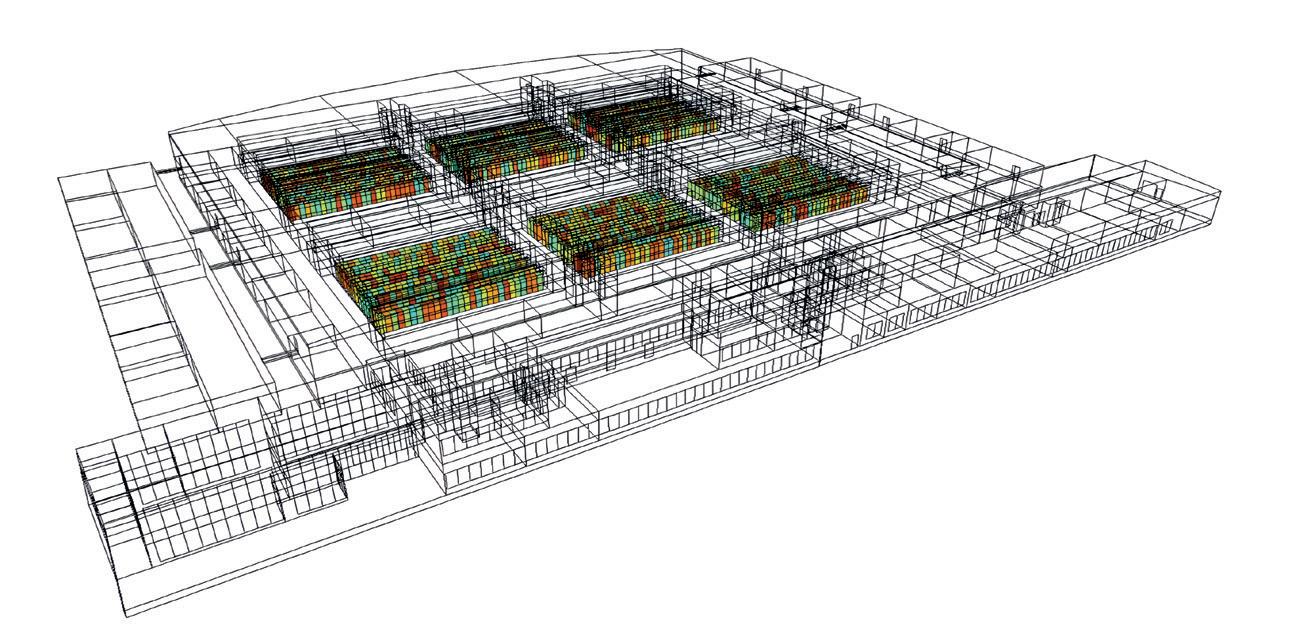
Dynamic, whole-system simulation enables teams to model how a building or facility will perform over time, using real weather data, building fabric, controls, internal loads and different operating scenarios. Put simply, it gives a more realistic picture of how an asset is likely to behave before major decisions are made.
That matters because it lets teams test options before build or upgrade work begins, rather than finding problems only once they are costly and disruptive to fix. It also helps them plan for future conditions, whether that means hotter summers, changing usage patterns, rising IT loads or tighter grid constraints.
One IES project for a hyperscale facility in North America shows the value of this approach. Using dynamic
simulation to assess cooling options for a site in a cool, dry climate, the team found that direct evaporative cooling was the best fit, delivering a projected Power Usage Effectiveness (PUE) of 1.16 and a 95% reduction in water use compared with water-cooled alternatives. PUE measures how efficiently a data centre uses energy by comparing the total power used by the facility with the power used by its IT equipment. The closer the figure is to 1.0, the less energy is being lost on cooling and other supporting systems. While there isn’t one universal solution for every project, whole-system modelling makes it possible to identify the right options for each specific building, climate and operating profile.
THE WIDER LESSON
Energy managers need to understand how buildings perform in practice, how systems work together and which interventions will deliver the biggest gains in energy, carbon and cost. Rising demand doesn’t equate to rising waste, but avoiding that outcome requires a move beyond outdated assumptions and towards a more realistic view of building performance. https://www.iesve.com/ies-live
IT’S TIME TO ACCELERATE THE ROOFTOP REVOLUTION
It’s no secret that business electricity bills are on the rise.
Energy price volatility, combined with rising non-commodity costs are becoming a major concern for organisations across the UK.
The ongoing conflict in the Middle East has only accelerated this, representing a tipping point in an energy crisis that has been building up for a decade. On top of this, the UK continues to face some of the highest industrial electricity costs in Europe.
While UK households are somewhat protected by the energy price cap, businesses remain exposed to a market where price surges are having a serious impact on competitiveness.
This wholesale market volatility, ongoing macroeconomic uncertainty, plus the very real issue of grid constraints, mean that the road to Clean Power 2030 may not be a smooth one. And, for businesses that are facing cost pressures right now, the long implementation time means they are looking for shorter term solutions to give them a degree of predictability in an unpredictable energy environment.
THE UNTAPPED POTENTIAL OF ON-SITE GENERATION
That is why we believe that now is the time to accelerate a rooftop revolution. Recent events mean that installing on-site generation, such as solar PV, has moved from a ‘nice-to-have’, to becoming a key strategy for securing a stable and predictable energy supply.
However, many landlords and owner-occupiers have not yet considered their roofs as potential energy assets, despite the fact that commercial and industrial rooftops are among some of the UK’s largest untapped clean energy resources. Latest estimates suggest that less than 5% of commercial rooftops in the UK have solar installed.
THINKING OUTSIDE THE GRID
A move away from centralised generation and towards a more
Jack
Peck, Head of Sales at Wattstor
flexible, localised energy model makes perfect sense. By bringing generation and storage closer to the point of consumption, businesses can not only benefit from lower energy prices, they can also reduce many of the variable non-commodity charges.
In addition, installing on-site battery storage can help avoid unnecessary grid upgrade costs for your business, whilst freeing up additional grid capacity for new connections and vital network flexibility for a constrained grid.
MOVING BEYOND IMMEDIATE DEMAND
Historically, on-site solar projects were sized for self-consumption. Designers typically recommended the smallest viable installations to ensure a meaningful impact without producing excess energy that couldn’t be used instantly. The development of effective battery energy storage systems (BESS) has changed this, allowing businesses to scale their generation capacity for day and night or 24/7 consumption, future-proof their on-site infrastructure, and increase energy resilience.
In just a couple of years, battery prices have dropped while their energy density has doubled. This, combined with the reduced costs of solar and the improved generation capacity of solar cells, means that solar and BESS are now more attractive than ever and represent the next logical step for businesses eager to cut their energy bills.
AI-powered energy management systems (EMS) have further strengthened the case for commercial rooftop solar. While not all organisations can justify hiring a full-time energy manager, a smart EMS can automatically manage an organisation’s entire energy ecosystem without a trading team, ensuring it runs as efficiently and cost-effectively as possible.
This helps businesses stay on top of energy price volatility by monitoring energy markets in real time, predicting energy trends, and making the best decisions based on reliable data. For example, the EMS could decide to store energy from the grid into an organisation’s BESS when prices are low or even negative, or to export excess solar energy when prices are highest in order to maximise returns.
THE ROOFTOP REVOLUTION HAS ONLY JUST BEGUN
Recent events have shown that energy price volatility is here to stay, and that a model that relies on centralised energy generation will always be susceptible to unpredictable geopolitics.
Current regulations mean the UK is potentially over-investing in new network capability whilst existing capacity is underutilised. So, to remain competitive in a landscape dominated by unpredictability and rising costs, organisations need to consider options that put them back in control of their energy bills.
Fully financed options for on-site renewables and storage mean that organisations can be masters of their own energy destiny, benefiting from immediate savings with zero upfront costs, allowing them to take the first steps to energy independence.
The rooftop revolution is here, and will only accelerate. The technology is tried and tested, finance options exist, and forward-thinking organisations are already gaining a competitive advantage by turning energy from a major concern to a strategic asset. https://wattstor.com/
SMART ENERGY STRATEGIES: HOW EDUCATION INSTITUTIONS CAN SAVE MONEY AND BOOST SUSTAINABILITY
Schools, colleges, and universities across the UK are facing rising electricity bills, which strain budgets that could otherwise be allocated to educational resources. But there are practical strategies that the education sector can put in place to boost savings and environmental responsibility.
WHY ENERGY MATTERS FOR EDUCATION INSTITUTIONS
Energy costs are one of the biggest controllable overheads for UK schools and universities. In recent years, volatility in wholesale energy markets has hit budgets with spikes in electricity and gas prices stretching already limited funds. At the same time, the education sector is under increasing pressure to reduce carbon emissions in line with national targets such as the UK’s Net Zero by 2050 strategy. This creates a dual challenge to cut operational energy costs while meeting sustainability goals.
A tactical energy strategy for UK schools and universities rests on three core pillars: renewable energy generation, battery energy storage systems (BESS), and demand response with smart load management. Together, these technologies reduce grid reliance, lower peak costs, improve resilience, and create long-term financial and environmental sustainability.
GENERATING CLEAN, LOW-COST POWER ON-SITE
Installing on-site renewable energy systems, most commonly solar photovoltaic (PV) panels, lets institutions generate part of their own electricity at very low ongoing cost.
Benefits include:
• lower electricity bills: solar generation reduces reliance on grid power, especially during daytime hours when usage is high
• predictable long-term costs: PV panels have low maintenance and produce electricity for 25+ years
For schools with large roof areas and universities with multiple buildings and campuses, solar arrays can be scaled to match energy demand and campus layout. Additionally, excess generation can sometimes be exported to the grid or used to charge batteries, increasing value.
CAPTURING ENERGY WHEN IT’S CHEAP AND USING IT WHEN IT’S NEEDED
Solar generation is intermittent, strong at midday but absent at night. Battery energy storage bridges this gap.
Battery systems enable institutions to: store surplus solar energy for later use shift energy use away from expensive peak periods
• reduce peak demand charges
• support critical loads during outages
In practice, a school or campus with solar and battery storage can charge batteries during sunny hours, discharge batteries in the evening or on cloudy days and avoid buying grid power during peak Tariff periods when costs are highest. This strategy reduces imported energy costs and maximises the value of on-site renewable generation.
TURNING FLEXIBILITY INTO SAVINGS
While renewables and batteries reduce the amount of energy drawn from the grid, demand response optimises when and how energy is consumed.
Demand response is a system where buildings adjust their energy consumption in response to signals from the grid or energy supplier, typically when electricity prices are high or grid demand peaks. Schools and universities can participate in flexibility markets or agreements with energy suppliers to temporarily reduce or shift load in exchange for financial rewards.
Schools can identify flexible loads such as:
• EV charging stations
• HVAC systems
• non-essential lighting
• large equipment with flexible schedules
By reducing or shifting these loads at the right times, institutions can avoid expensive peak charges, earn income from participating in flexibility programmes and improve overall energy cost efficiency.
Individually, renewable generation, storage, and demand response deliver benefits but the biggest savings come when all three are integrated into a smart energy system:
• renewables generate cheap or free power: solar or wind generation reduces the amount of electricity needed from the grid
• battery storage stores excess generation: batteries retain surplus solar output and release it at higher-cost times, reducing peak imports.
• demand response shifts consumption: smart controls reduce or reschedule flexible loads when wholesale prices spike or peak capacity charges apply. When coordinated by intelligent energy management systems (EMS), these elements can maximise financial returns and minimise grid dependency. With careful planning and integration of renewables, storage, and demand response, educational institutions can turn energy from a cost centre into a strategic asset, powering learning, research, and community resilience. www.gridbeyond.com
Delivering Energy with Certainty.
When the power has to be everywhere, you need access to the largest battery supply and support network in Europe to protect your promises, no matter where you are.
Veloris stock a variety of Energy Storage Solutions to fit your needs, whether you are looking for your home, commercial or for leisure use.
A SMARTER SHIFT FROM OIL TO ELECTRIC: HOW MONITORING DATA GUIDED A SCHOOL’S TRANSITION
Elliot Ajose, Regional Sales and Technical Manager, Chauvin Arnoux UK
Aprimary school secured government funding to transition away from oil heating and move towards a fully electric system as part of its long-term sustainability strategy. The project included installing electric heaters, along with a proposed rooftop solar PV system, aimed at reducing both energy costs and carbon emissions.
Before progressing, the school needed evidencebased confirmation that its existing electrical infrastructure could support the additional load. Two main concerns had to be addressed.
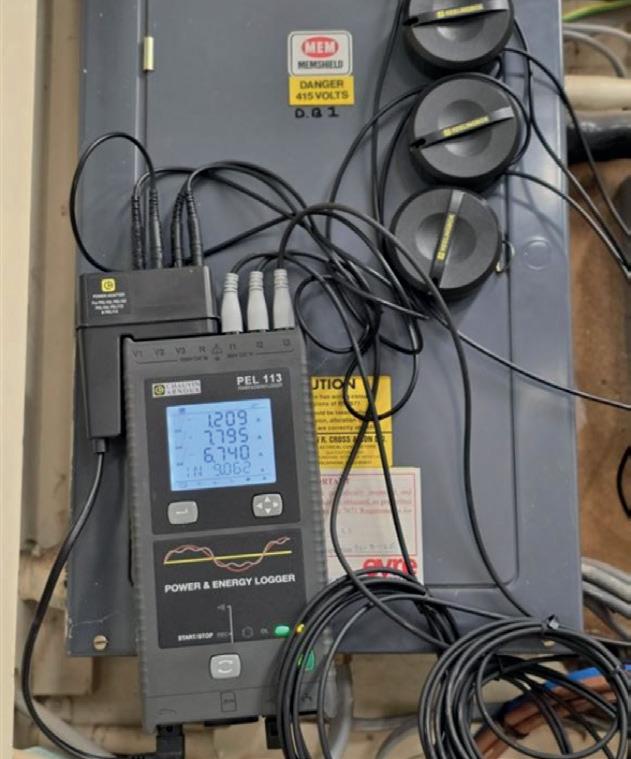
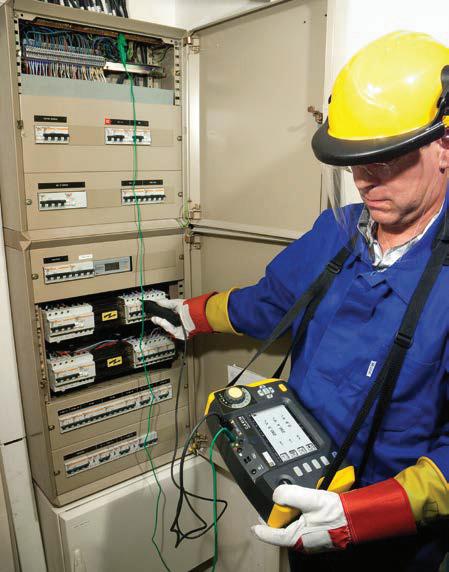
A PEL113 was installed on a single-phase distribution board (60A Fuse)
First, whether there was sufficient headroom capacity at the main fuse to accommodate the new heating system. Second, whether the addition of solar PV could introduce overvoltage risks on the local network, as electric vehicle chargers were already installed on site and in the area.
ENERGY MONITORING APPROACH
Two PEL113 power and energy loggers were installed at the school’s main distribution board. One was installed at the three-phase main incomer, while the other was at a single-phase board. The loggers were deployed to measure maximum demand and current consumption, to check that the phases were balanced, and to keep close watch on voltage levels. Voltage was a particular area of focus, as readings needed to remain within the statutory band of 216V to 253V. Monitoring was conducted over a typical school period to ensure accurate load profiling during heating, cleaning, and classroom usage, providing a reliable and comprehensive dataset.
KEY FINDINGS
The maximum load recorded was 37.55A. This indicates that there was sufficient spare capacity to support the proposed electric heater installation. So, no upgrade was required from a current demand perspective. However, voltage readings told a different story. This was marginally above the DNO’s statutory upper threshold of 253V (230V +10%). While the current capacity was adequate, this elevated voltage presented a constraint. Solar PV inverters and EV chargers are designed to shut down when voltage exceeds 253V, which means both would be at risk of disconnection under existing network conditions when voltage levels exceed safe thresholds.
The three-phase system, protected by 100A fuses per phase, also demonstrated considerable spare capacity. Data from the PEL113 loggers confirmed that the additional electrical heating load could be accommodated without risk of overloading.
The voltage readings, however, told a different story. L1 recorded 256.1V, L2 recorded 256.9V, and L3 recorded 254.2V. All three phases exceeded the statutory upper limit of 253V under the Electricity Safety, Quality and Continuity Regulations (ESQCR).
The implication was clear that installing solar PV would push export voltage further beyond acceptable limits. This would trigger inverter shutdowns and render the system ineffective.
As a result, without intervention from the Distribution Network Operator (DNO) or network reinforcement, the installation of solar PV would not be feasible under current conditions.
CONCLUSION AND RECOMMENDATIONS
The installation of two PEL113 power and energy loggers provided data insight into both maximum demand and voltage stability across the site.
On the question of current headroom, the results were positive. The single-phase and three-phase boards had sufficient capacity to support the transition from oil to electric heating. The school can proceed with confidence on that front.
Regarding solar PV, the picture looks more complex. Existing voltage levels already exceed limits, which present a significant barrier to solar PV integration. Any future PV installation will require consultation with the Distribution Network Operator (DNO) and the potential implementation of voltage mitigation measures before it can proceed.
The school can move ahead with its electric heating infrastructure. However, the integration of solar generation will require network amendments to ensure regulatory compliance and long-term operational viability. It is a reminder, once again, that the limiting factor in renewable energy is often the network rather than the solar resource.
Explore the Chauvin Arnoux power and energy logging range on www.cauk.net
Three-Phase Distribution Board (100A per Phase)
CA 6117 MFT
NOT FOR DOMESTIC ELECTRICIANS
RISING HARMONICS OVERLOAD
NEUTRAL CONDUCTORS.
DETECT RISKS BEFORE THEY CAUSE DOWNTIME!
PROTECTION FOR WHAT’S NEXT.
Harmonic-induced neutral overload
Panel and cable overheating
Voltage imbalance
Equipment damage
Costly reactive maintenance
SMART BUILDING CONTROL UNLOCKS BREEAM CREDITS
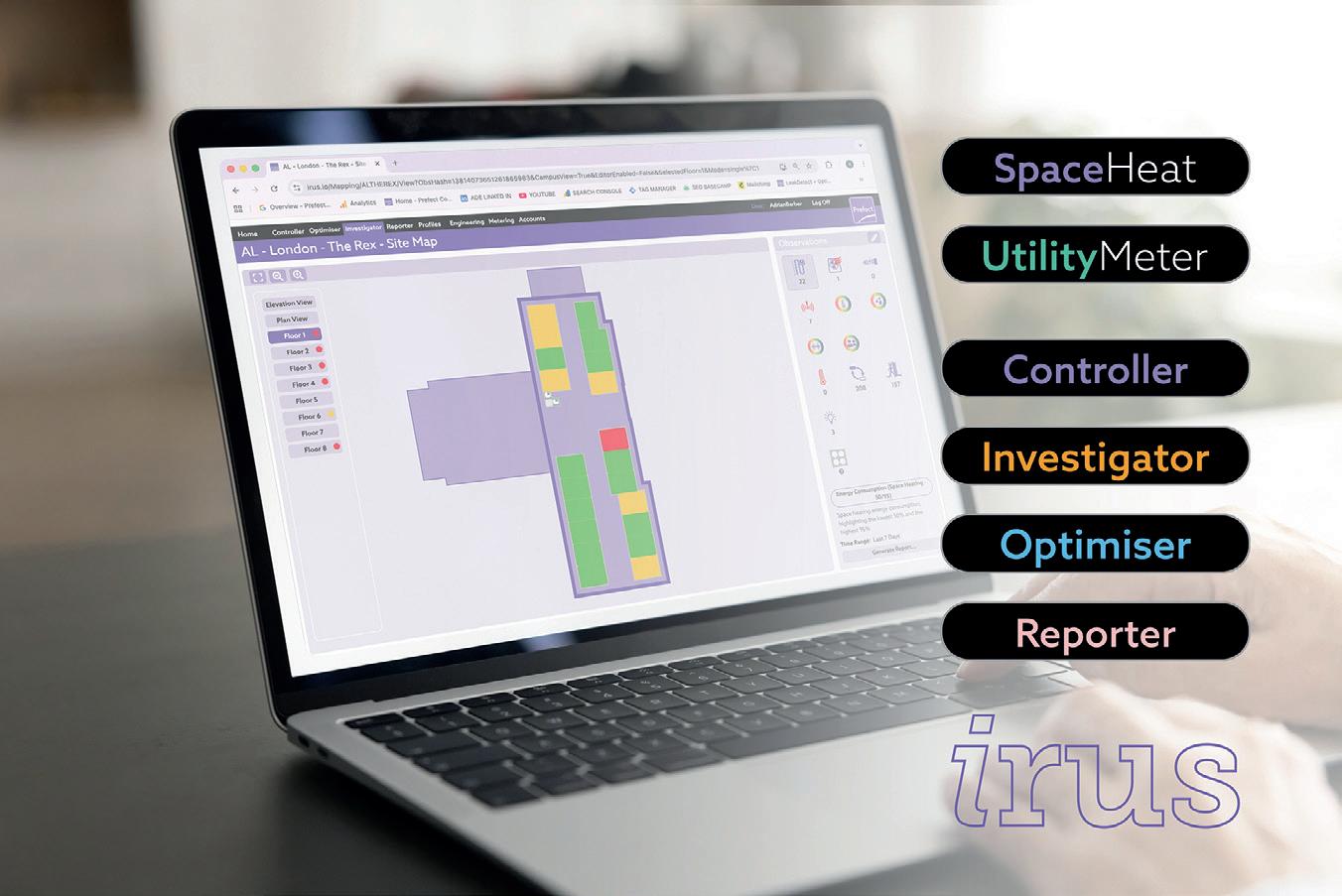
The official opening of AMRO Partners’ flagship co-living scheme, The Rex, marks a major step forward for sustainable urban living in the UK. As the first co-living development in the country to achieve BREEAM Outstanding, The Rex sets a powerful benchmark, one built on design excellence, retrofitfirst thinking, and a deep commitment to measurable environmental performance. A key part of that success lies in the building’s digital backbone: Prefect Controls’ Irus ecoSystem.
Installed throughout 212 apartments and shared spaces, Irus provides integrated monitoring, but more importantly, control of the building’s core utilities. In individual rooms, the system delivers precise heating control, ensuring heat is only delivered when required. This alone contributes significantly to lowering operational energy use, one of the most challenging aspects of achieving higher BREEAM ratings. However, the Irus deployment at The Rex goes far beyond heating. The system also provides real-time metering of electricity consumption, and both hot and cold-water usage in every room. This unprecedented level of visibility gives AMRO’s data team access to a rich, building-wide dataset
that enables continuous performance analysis, early identification of anomalies, and a clear understanding of resident energy behaviour while ensuring compliance with all GDPR requirements.
In addition to controlling the heat source, the control units feed data to the central control portal for humidity, CO2, light, sound, occupancy levels, and of course temperature.
This comprehensive monitoring is essential for achieving high sustainability ratings. It provides AMRO’s team with building-wide insight into building services performance, enabling proactive optimisation and ensuring the building operates as efficiently in practice as it was designed to on paper.
Automatic control fundamentally changes how buildings are managed. Regular manual checks, room-by-room inspections, plant room walk-arounds, or monitoring hard-to-reach locations, are replaced with real-time digital oversight. Enabling technical teams to focus their time on strategic, higher-value tasks.
“We are incredibly proud that IRUS not only features within The Rex but was instrumental in helping the development reach BREEAM Outstanding. By giving operators real-time intelligence across every room, IRUS turns sustainability ambition into measurable performance, and The Rex is a perfect example of what can be achieved when technology and design work hand in hand.” Will Mills, Managing Director at Prefect Controls UtilityMeter, a module within the Irus ecosystem, helps to achieve up to 5 BREEAM credits when used as
part of the building’s energy and water monitoring system. The portal can also link with third-party meters, allowing it to collect and display usage data. Credits 1–2 (Ene 03) are gained by installing electricity sub-meters. These are usually fitted for each flat in the development, so energy is monitored on an individual basis.
• Credit 3 (Wat 02) is gained by installing a water meter on the building’s main incoming water supply, or additional meters for different blocks or floors, to track water consumption.
• Credits 4–5 (Wat 03) are gained by using water meters with the Irus portal’s ‘LeakDetect’ module. The system identifies flow patterns that may indicate leaks or wasted water. Automated isolation of supply and detection of continuous flow/abnormal consumption, not only save on utility cost, but also potential damage and reparation costs from escape of water.
With its retrofit-first approach, retained structure, generous community amenities, and now award-winning sustainability credentials, The Rex represents the future of low-carbon, community-led living. Irus plays a decisive role in that future by ensuring the building continues to operate efficiently, transparently, and responsibly.
In combination, design, engineering, and digital intelligence have created not just a place to live, but a new benchmark for sustainable co-living in the UK. www.prefectcontrols.com
WHY MEASUREMENT AND VERIFICATION IS IMPORTANT TO OUR NET ZERO STORY
How do you know whether an energy efficiency measure is actually delivering savings? As Salix delivers energy efficiency and low carbon heating projects across the UK’s housing and public sectors, measuring realworld performance is essential.
For our public sector programmes, this forms part of our Annual Carbon Reporting process, through which grant recipients submit energy usage data so that savings can be monitored and verified. This process is important because it enables us to assess whether funded projects are achieving the intended carbon and energy savings in practice. By reviewing annual energy data against expected performance, we can evaluate the effectiveness of different measures, strengthen accountability for public funding, and build evidence on what works in reducing emissions across the public sector.
This year we’ve implemented some basic principles of Measurement and Verification (M&V) based on guidelines from the International Performance Measurement and Verification Protocol (IPMVP).
While our focus is on verifying carbon savings, good M&V is also vital for building managers and users. It enables them to see whether upgrades are reducing energy use, identify underperforming equipment, and understand project outcomes more clearly.
Our M&V journey is following a ‘good, better, best’ trajectory. The ‘good’ improvements to our processes we’ve made this year are easy to apply and require minimal additional work.
We’re keen to share our learning. The first key step for ‘good’ M&V is to consider your measurement boundary. What data are you able to collect? One option, what IPMVP calls ‘retrofit isolation’, involves either: 1) a comparison of known values when swapping equipment like-for-like, e.g. a new chiller at a lower rated kW input for the same use case, or 2) installing a submeter on new equipment to directly measure its energy draw. The latter case requires submetering to be installed before the measures are installed, to properly measure the baseline. The other type of M&V, and the one that we expect our public sector grant
Jordan Noffke, Senior Energy and Carbon Analyst, Salix
recipients to adhere to, is the ‘whole facility’ approach, which is more suited for projects where submetering is not installed, and baseline data is limited to entire site values, such as gas or electricity meter readings.
Measuring an accurate baseline before any measures are installed is essential to ensure that post-installation readings are compared against the most accurate use-case of the building. Granular baseline data is essential for being able to weatheradjust energy savings, as each year will have different heating demands based on the external temperature. You don’t want to be comparing the use of heat pumps in a very cold year to gas boilers in a warm one!
Ideally, a building should operate in the same way before and after energy efficiency measures are installed, with the only change being the measures themselves. In practice, however, it is not always possible to identify a baseline year that reflects this. For example, the Covid lockdowns significantly altered building energy use compared with a typical year.
Where the baseline period does not fully reflect changes to the site since installation, good M&V practice requires non-routine adjustments. These account for factors such as changes in heated floor area, occupancy patterns, set point temperatures, or equipment additions and outages.
The impact of these changes on energy use within the measurement boundary should be quantified. While engineering calculations would provide the most robust approach, the limited technical capacity of many public sector bodies meant we instead requested estimated impacts on energy use.
The application of M&V practices is relatively sparse in the building decarbonisation sphere.
A robust M&V approach requires not only establishing and weather-adjusting a baseline but also documenting the process in an M&V plan before measures are installed. These plans are essential for transparency and accountability between
energy users, installers and measurers, particularly in energy performance contracts where payments depend on verified savings.
Plans developed by suppliers generally reflected strong technical expertise but sometimes prioritised reducing supplier risk over transparency of whole-building performance. For example, measuring a heat pump’s efficiency alone reveals little about overall decarbonisation if retained boiler gas use is not also tracked. By contrast, plans developed by grant recipients often took a more wholebuilding, outcome-focused approach, but key adjustments such as weather and occupancy were sometimes overlooked.
Good M&V is essential for a building sector that is racing to reduce both its energy intensity and its carbon footprint.
At Salix, applying robust M&V practices has strengthened the credibility of the carbon savings reported through our schemes, giving stakeholders and partners greater confidence that public funding is delivering measurable, repeatable results.
Of course, effective M&V also provides building managers and users with clear evidence of whether installed measures are performing as intended, where further intervention may be needed, and the confidence to report verified energy and carbon savings.
We’re proud to deliver results for the people and organisations we work with –improving homes in the housing sector and creating better public buildings for everyone.
Salix’s role is to support the UK government in driving the transition to a low carbon future and meet challenging net zero targets. We deliver and administer grant and loan funding on behalf of the Department for Energy Security and Net Zero, and the Scottish and Welsh governments. This is delivered across housing and the public sector. www.salixfinance.co.uk
RELIABLE POWER FOR REMOTE DATA GATHERING, AND THE GROWING NEED FOR FUEL CELLS
As the need for remote monitoring applications grows, the issue of providing reliable, remote power is becoming more acute. Dr Lee Juby, CEO at Fuel Cell Systems, explains how direct methanol fuel cells avoid the struggles of conventional micro-renewable power sources.
The need for remote monitoring technology is growing, driven by legislative, environmental, and operational forces that make continual data collection a critical matter for many organisations. However, while batteries, wind, and solar may be suitable power sources in some cases, far-flung locations, intermittency, and seasonal variation can make microrenewables too unreliable and costly to be viable alone. Fortunately, direct methanol fuel cells (DMFCs) offer a clean and dependable alternative.
THE GROWING NEED FOR REMOTE MONITORING
In some sectors legislation is driving the need for more remote monitoring technology. Water companies, for example, are now subject to Section 82 of the Environment Act, which mandates they must continuously monitor water quality up and downstream of storm and sewage
overflow locations – and make the data publicly available. There are thousands of these sites across the UK, and many are remote. Failed data collections will result in large fines and visible gaps in the data. The changing UK climate is also driving demand for remote monitoring devices. As the UK has become windier and wetter, it experiences more flooding events. Authorities such as the Environment Agency depend on remote flood warning systems that collect and transmit realtime data from rivers and streams across the UK. Any gap in monitoring could mean delayed warnings and increased risk to communities downstream.
Other drivers for the uptake of remote monitoring solutions include operational efficiency, security or safety. Ultimately, if security, monitoring or maintenance teams can be replaced by remote equipment, workers can be kept out of hazardous environments, and data gathering can be accelerated.
THE CHALLENGES OF EXISTING SOLUTIONS
The primary challenge facing any remote monitoring application is maintaining reliable, year-round power far beyond the grid. Small solar arrays, wind turbines and battery packs have often been used together to provide consistent power, replacing polluting and now unpopular diesel generators.
However, the intermittency and seasonal variation of renewables can cause power to cut out. Batteries can compensate when the sun isn't shining or the wind isn't blowing, but they can't be relied on for extended periods. That means data gathering operations will cease unless maintenance teams make routine visits to replace batteries.
Visits like this are an impractical and expensive burden for organisations such as water companies and regulators driven by constrained budgets and operational efficiency. Battery replacement visits to just one remote monitoring site run by Wessex Water cost the operator £3,000 per winter. The expense increases with each location, as they become more remote, or even require specialist teams or vehicles to access.
THE ADVANTAGES OF DIRECT METHANOL FUEL CELLS
But there are alternatives. Direct methanol fuel cells (DMFCs) are effectively a cross between a battery and a generator. Like a traditional generator, they actively produce power and do not simply store it. But, like a battery, they do this by turning chemical energy into electrical energy without any combustion or complex moving parts. This makes them efficient, reliable, low-maintenance, and low-emission –producing only small amounts of exhaust gases other than simply water vapour.
DMFCs provide reliable, continuous power and can be used as a primary power alternative or as back-up power when combined with micro-renewables. As a primary power source, they can operate for very long periods without needing to refuel, reducing the need – and therefore cost – of routine site visits. When combined in a hybrid system, they can achieve runtimes of several months or more, meaning users like utilities companies can eliminate winter site visits, letting maintenance teams focus on other critical tasks.
Integrating DMFCs into a hybrid remote power solution is easy. Whether using a ready-to-go product,
like an EFOY fuel cell, or creating a bespoke solution designed for the unique operational needs of the remote monitoring station. Intelligently designed systems will monitor the battery voltage and automatically engage the fuel cell to charge it, returning to standby when no longer needed. This ensures power for continuous data collection without degrading the battery life.
MEETING DATA MONITORING DEMAND
As demand for remote monitoring continues to grow across multiple sectors, the limitations of certain power solutions become increasingly apparent. Direct methanol fuel cells offer a readily available answer to these challenges, delivering reliable, yearround power while reducing operational costs and maintenance burdens. This proven technology works in some of the most remote and hazardous conditions – from trackside on national railways to mountain tops in Antarctica – and is relied upon by engineers and executives alike to provide continuous power to their mission-critical operations. For organisations dependent on continuous high-quality data collection from remote locations, fuel cells are the alternative power source and enabler for critical infrastructure. Explore Fuel Cell System’s case studies to see them in action. https://www.fuelcellsystems.co.uk/
PROACTIVE PROCUREMENT: WHY VISIBILITY IS ESSENTIAL FOR UNLOCKING DYNAMIC ENERGY STRATEGIES
In May, Rachel Reeves announced the latest in efforts to mitigate the volatility which has become a feature of the energy landscape.
Against a backdrop of the conflict in the Middle East, constraints on our grid capacity and capability, and increasing pressure and necessity to integrate renewables, energy managers can find themselves facing price and supply volatility on several fronts.
Whilst an adjustment in processes is needed to tackle this, it is a fundamental shift in mindset which is first required to underpin any developments.
Strategies for procurement, both at the start and throughout the lifetime of a contract, need to evolve to be able to contend with the intensified pressures energy managers are now facing.
OPERATING WITH PRECISION
The key to navigating today’s difficult market is agility – regarding cost, supply, and carbon. The more detail a manager can gather about their energy usage, and the more flexible they can be to optimise this, the more efficient and secure they can make their operations.
At the core of this is fostering a proactive approach to energy procurement. This needs to be used as a strategic instrument for success, and not be seen as a reactive, cut and paste exercise.
Traditional, fixed price energy contracts can no longer offer the necessary levels of visibility and flexibility which are needed to succeed in today’s conditions. Whereas once their straightforwardness was their selling point, now it is holding customers back. Those locked into these contracts cannot make the most of advances in energy technology or times of lower wholesale prices, or respond to their own operational changes. Whilst the energy industry is characterised by its real-time fluctuations, these fixed models leave users standing still. Instead, energy managers are and should be adopting more flexible procurement models. These incorporate multiple elements, to create a tailored
Tim Foster, Director of Energy for Business, Conrad Energy
and elastic set-up which is characterised throughout by advanced data insights. They can include Flexible Rate Contracts or products which match supply with equivalent levels of renewable generation on a half-hourly basis, alongside Corporate Power Purchase Agreements (PPAs) or behind-the-meter renewable assets (such as roof top solar).
THE VALUE OF VISIBILITY
So, if an energy manager has access to more sophisticated understanding of and command over energy purchase and usage habits – how can this be harnessed to meet budget, renewable, and operational goals?
In short, whereas under traditional contracts a manager might have had an outline of energy habits, now they can leverage a far more intricate picture to use the right energy at the best time: an essential foundation for assessing which procurement approaches are the strongest fit for their business’s priorities and risk appetite. By building a more blended and layered procurement package, managers can react in real time to market and operational changes and carbon demands.
For instance, the detailed half-hourly consumption data can be crunched to allow stronger decision-making around how much energy to secure in advance or how much exposure should be kept to market pricing. Moreover, these are not static conclusions – the granularity of the analytics means managers can account for variability across shifts or seasonal demands, as well as across operational cycles. For managers at businesses considering big changes such as around expansion or electrification, these insights are also valuable for modelling potential impact on consumption patterns and adjusting in response.
Turning to a shorter-term outlook, and the visibility again brings clear advantages by shedding light on pricing
and carbon intensity trends throughout different periods on a day-to-day basis. By tracking these, energy managers can offer guidance to their wider teams around when different business activities could be run to capitalise on lower price times and/or higher renewable availability. By aligning where flexibility is possible in operations, with flexibility in energy management, businesses can adjust energy-intensive processes to fall outside of traditional demand windows to improve cost and carbon performance, and overall resilience.
SUSTAINABLE STRATEGIES
Developing agile and robust procurement strategies has become an imperative for navigating the challenging market conditions. ‘Fix and forget’ approaches can no longer be sustained, with dynamic procurement structures and data insights taking over as the key to combating energy risks, costs, and usage changes.
Crucially, these approaches also help reach renewable goals, too. By developing a multi-layered procurement model, managers can include PPAs, for instance, as a tool to integrate low-carbon, renewable energy into operations. Moreover, by utilising matching products and the half-hourly data which innovative supply arrangements offer, managers can also demonstrate their renewable and low carbon credentials more accurately than otherwise possible to their staff, suppliers, clients and investors.
At a time of such pressure, by deploying a consistently proactive approach to energy procurement and ongoing analysis, energy managers can feel confident in developing financially and renewably sustainable models.
https://conradenergy.co.uk/
We’re creating better places to live and work
Every day our expert teams at Salix are committed to supporting organisations achieve their carbon reduction targets, improving the lives of communities across the country.
We’re committed to working with governments across the UK to reduce our carbon emissions. Our job is to deliver and administer grant and loan funding on behalf of the Department for Energy Security and Net Zero, Scottish and Welsh governments and more. This is delivered across the public sector as well as housing with schemes including the Social Housing Decarbonisation Fund and Public Sector Decarbonisation Scheme.
We’re also proud to be work in partnership with Greater Manchester Combined Authority (GMCA) supporting the new Public Building Retrofit fund.
We are passionate about delivering energy efficiency projects across the UK, making buildings across the public sector as well as our homes better places in which to live, work and enjoy.
We are keen to help create spaces where people can thrive, whether it’s hospitals, schools, leisure centres or homes.
HEAT NETWORK PROCUREMENT: AVOIDING COMMON PITFALLS
As heat networks become a central part of the UK’s decarbonisation strategy, they’re growing increasingly controlled. Ofgem’s new regulatory regime demands high standards of performance and consumer protection across a system’s entire lifecycle.
Procurement decisions therefore carry greater long-term consequences than ever before. It’s no longer enough to focus on capital delivery or lowest cost. Operational performance, compliance, customer outcomes and long-term flexibility are now key considerations.
However, many organisations are still deploying tendering processes better suited to conventional maintenance contracts. This approach is becoming increasingly problematic.
OUTSOURCING RISK
With the introduction of formal regulation, including the detailed technical standards laid out in the Heat Network Technical Assurance Scheme (HNTAS) due to come into force in 2027, compliance can no longer be seen as a one-off exercise. It’s now an ongoing operational responsibility requiring continual monitoring and reporting.
This has led many procuring organisations to focus heavily on risk transfer. Tender documents increasingly attempt to push responsibility for compliance, performance standards and potential penalties onto service providers.
For many housing associations and local authorities in particular, this reflects natural caution. In practice, though, blanket risk displacement is rarely the most effective solution. It can result in rigid contracts, inflated pricing and strained service provider relationships.
Heat networks operate over decades, during which regulations, technologies and operational requirements
Emily McAlindon, Commercial Director at Insite Energy
inevitably evolve. Procurement should therefore be viewed less as buying a fixed service and more as establishing a long-term, flexible partnership.
CHOOSING THE RIGHT DELIVERY MODEL
There is no single optimal commercial structure for heat networks. Full Energy Services Company (ESCo) arrangements allow for the transfer of significant operational responsibility, making them attractive to organisations with limited in-house capability. However, this often comes at the cost of reduced control over customer engagement and operational decision-making.
Conversely, in-house models provide greater autonomy but require specialist expertise across billing, compliance, technical operations and customer service. Hybrid models are increasingly emerging as a pragmatic middle ground, enabling organisations to retain ownership across short 12-month contracts while outsourcing specific technical or operational functions. Key to making the right choice is aligning with the organisation’s appetite for risk, control and long-term involvement.
COMMUNICATING ACROSS FUNCTIONS
Another recurring issue in tendering exercises is the disconnect between teams responsible for development and those tasked with long-term operations. Procurement specifications are often shaped during construction phases, with limited input from energy management, customer service or operational teams. This creates a mismatch between what’s procured and what’s needed in practice. Reporting requirements, billing functionality and resident communication processes may be inadequate or misaligned with operational realities. Bringing all stakeholders into the procurement process earlier helps ensure that service provider contracts reflect the full spectrum of lifecycle requirements, not just capital delivery priorities.
Heat networks should be treated as whole-life assets rather than standalone construction projects. The question should not simply be: “What do we need on day one?” but also: “What will we
need in five, ten or twenty years’ time?”
EARLY CONVERSATIONS
One of the more positive developments emerging within the sector is the growing use of early market engagement before formal tenders are released. Traditionally, service providers might simply receive a procurement document with a fixed specification and a deadline for pricing submissions. Increasingly, however, heat network operators and heat suppliers are opening discussions with prospects early on, through consultation events, workshops and informal dialogue.
This approach helps bridge knowledge gaps on both sides. It reflects growing recognition that heat network regulation remains a developing area, with many organisations still uncertain about what good procurement should look like in practice.
By involving service providers earlier, energy managers gain a better understanding of current market capabilities, likely delivery challenges and realistic compliance expectations. This can lead to more accurate pricing, stronger competition and better-aligned service proposals.
CLARITY OF FOCUS
Effective procurement depends on being clear about priorities. Service providers need to understand what matters most: cost reduction, compliance assurance, operational flexibility or risk reduction. Too often, tender requests attempt to prioritise everything equally, resulting in vague requirements and inconsistent responses.
Clearer specifications allow proposals to be more precisely tailored, which in turn helps energy managers evaluate bids more effectively against genuine operational objectives.
As heat networks continue to expand across the UK, procurement processes will play an ever more critical role in determining whether these complex systems deliver long-term value or neverending problems. Success will depend less on transferring risk and more on building resilient operational partnerships capable of adapting to a rapidly changing regulatory landscape.
https://insite-energy.co.uk/
PUBLIC SECTOR ENERGY PROCUREMENT: TIME TO DITCH THE DEFAULT?
For schools, NHS trusts and local councils, energy sits among the largest controllable costs in any budget. Yet procurement decisions that could run to millions of pounds over a contract term are often delegated to whichever route feels safest. That route, almost without exception, is the Crown Commercial Service (CCS).
That instinct is understandable. CCS is government-backed, politically easy to justify and familiar to procurement teams. But familiarity is not the same as value, and a convergence of regulatory change and market volatility means public sector energy managers have good reason to question whether the default is serving them.
THE BROKER RELATIONSHIP MOST BUYERS DON’T SCRUTINISE
Most public sector organisations don’t buy energy directly. They appoint an energy broker or thirdparty intermediary (TPI), to navigate the market, manage contracts and, in theory, secure the best available terms on their behalf. That broker relationship sits at the heart of every energy procurement decision, which makes the choice of broker as consequential as the choice of framework.
Until recently, that market has been almost entirely unregulated. In October 2025, following evidence of widespread hidden commissions, misselling and poor complaint handling, the government confirmed it would give Ofgem statutory powers to regulate energy brokers for the first time.
Regulation is coming, but it isn’t here yet. In a market that has operated without formal oversight for years, public sector energy managers appointing a broker today must question who they appoint, and what standards the broker holds themselves to.
John Haw, Chair of the Energy Consultants Association
WHY CCS MAY NOT BE THE RIGHT ANSWER
Against that backdrop, defaulting to CCS compounds the problem rather than solving it. CCS is a compliant framework but the structure of CCS’s energy agreements limits the latter significantly.
CCS aggregates public sector buyers into fixed procurement rounds, purchasing energy for April and October delivery dates. The logic is collective buying power and risk management. The practical effect is that contract decisions are driven by a calendar rather than market conditions. In an energy market shaped by sustained geopolitical volatility, the ability to move when conditions are right, rather than when a procurement schedule dictates, is one of the most material levers a public sector energy manager has.
There are service limitations too. A framework designed for central government procurement is not well-suited to managing a complex, dispersed estate – the kind of multisite, multi-meter portfolio that a large NHS trust or local authority typically operates. Meter consolidation, bill validation, carbon reporting and VAT reconciliation sit outside what a centralised framework typically delivers.
A MORE FLEXIBLE, COMPLIANT ALTERNATIVE
The Procurement Act 2023, which came into force in February 2025, created a more flexible vehicle: the dynamic market. Like CCS, a properly constituted dynamic market gives public sector buyers access to pre-approved, compliant suppliers and satisfies procurement law. Unlike CCS, it allows buyers to integrate renewable solutions, adapt contract strategy to live market conditions and access a broader range of services, all without the need to re-tender.
Dynamic markets are not yet commonplace in the UK energy space – the infrastructure required to run one properly means only a small number of providers have built them. That scarcity is worth understanding correctly: it reflects the rigour involved, not a limitation of the model itself.
THE QUESTIONS WORTH ASKING NOW
With Ofgem’s regulatory framework for brokers still in development and full enforcement not expected before 2028, public sector energy managers cannot rely on regulation to sort the market for them. The practical answer is to apply scrutiny at the point of appointment.
Before engaging any broker, it is worth asking directly: do you operate within a compliant framework or dynamic market place, and can you demonstrate that? How do you approach contract timing – are you able to act on market conditions, or are you locked to a procurement calendar? What services do you provide beyond contract placement like meter management, bill validation, carbon reporting? And how are you remunerated: will you disclose that in writing, upfront?
Any broker who is a member of the Energy Consultants Association is bound by a mandatory code of conduct that requires transparent commission disclosure as a baseline. In a market still waiting for statutory regulation to arrive, that kind of voluntary commitment to professional standards is a meaningful signal.
The default has been convenient. Whether it has been good value is a different question. Now is the time to find out. energyconsultantsassociation.co.uk/
25 YEARS SUPPORTING SMARTER ENERGY STRATEGIES
Across the public sector, organisations are investing heavily in decarbonisation strategies, renewable technologies and estate upgrades designed to improve longterm energy performance. Yet one issue continues to undermine those ambitions, the ongoing challenge with managing the ageing building fabric.
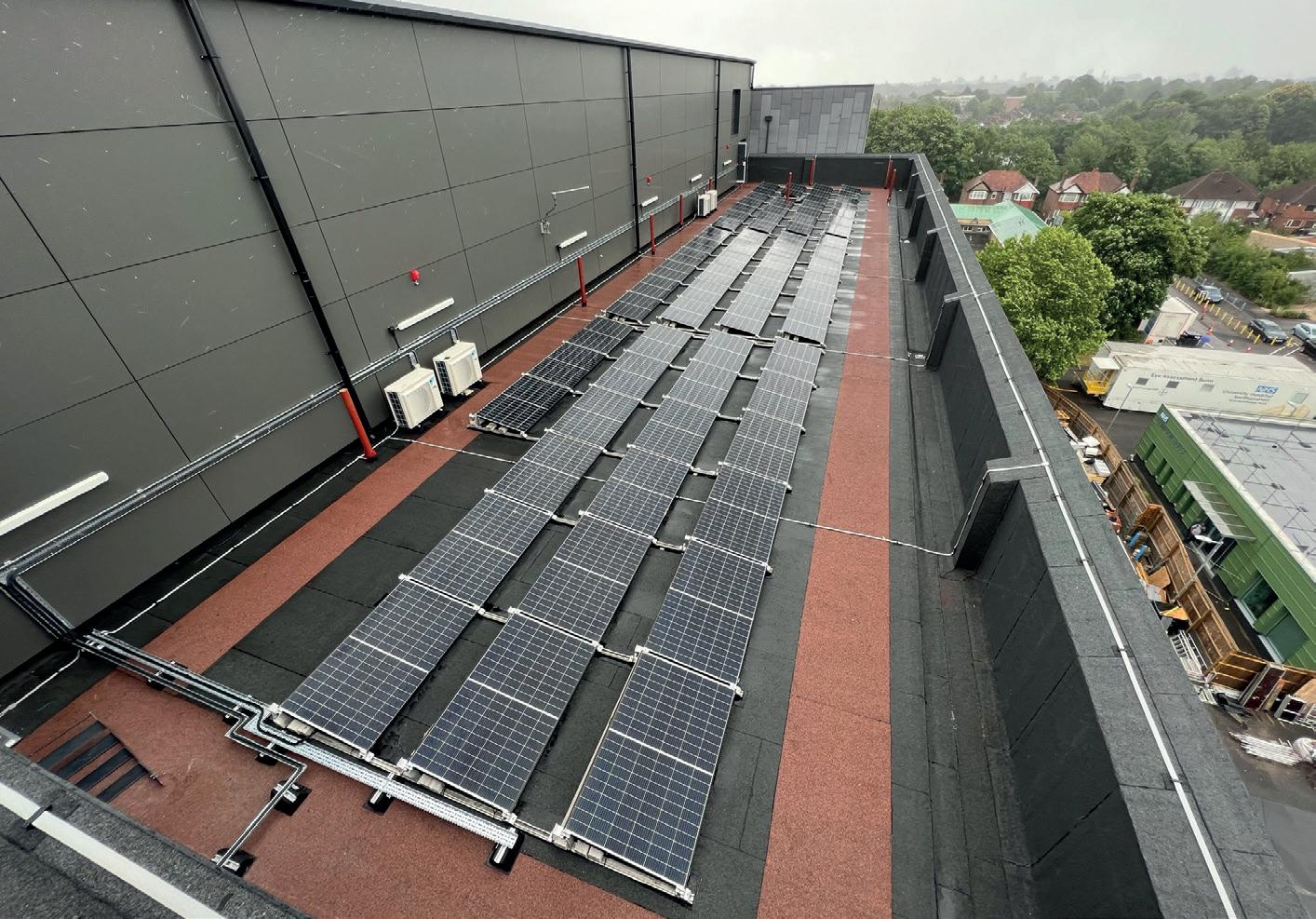
Solar PV systems are increasingly being installed across schools, healthcare buildings and local authority estates, but the condition and expected lifespan of the roof beneath them is not always assessed with the same long-term view. For estates and energy managers, that creates a growing challenge around risk, resilience and whole-life value.
As Garland UK marks 25 years in the UK market, the company is reflecting on how expectations around roofing
systems have changed across public sector estates over the past two decades.
Since its establishment in 2001, Garland UK has supported projects across healthcare, education and the wider public sector, providing roofing and building-envelope systems designed around long-term asset protection and lifecycle performance.
Over that period, one of the clearest shifts has been the growing recognition that energy-efficiency strategies cannot succeed without a reliable building fabric beneath them.
Many public-sector buildings continue to rely on ageing roofing infrastructure that is maintained through repeated short-term repairs. While
these interventions may temporarily address immediate problems, they rarely support wider objectives around operational efficiency, lifecycle cost or long-term decarbonisation.
For estates teams operating under budget pressure, reactive maintenance can often become the default response. However, over time, repeated patch repairs can increase operational expenditure while delaying more strategic investment decisions.
The issue becomes more significant as organisations look to integrate renewable technologies into ageing estates. Solar PV systems are typically expected to perform for decades, but in many cases, the roofing systems beneath them were never designed with the same lifespan in mind.
Over the past 25 years, Garland UK says one of the biggest changes
DECARBONISATION
within public sector estates has been the shift towards whole-life asset planning, with greater emphasis on preventative maintenance, lifecycle performance and long-term resilience.
That approach relies on early condition assessment, robust specification and continuity throughout project delivery. Each project is supported by a dedicated Technical Manager from survey through to completion and aftercare, helping estates teams maintain oversight throughout the asset’s life.
As Managing Director Tim Jones explains, “We’ve always believed that the real value of a roofing system isn’t measured on the day it’s installed. It’s measured over decades of performance.”
That emphasis on longevity is becoming increasingly relevant as public sector organisations look to avoid short-term maintenance decisions that can ultimately undermine wider energy and estate strategies.
IMPORTANCE OF FABRICFIRST DECARBONISATION
The role of roofing systems within public sector estates has evolved significantly over the past decade. Roofs are no longer viewed simply as weatherproofing systems but increasingly as strategic assets that support broader energy, sustainability, and resilience objectives.
In response to these changing requirements, Garland UK has expanded its offering over the past 25 years to include green roofing technologies and integrated solar PV systems alongside traditional waterproofing solutions.
For estates and energy managers, however, decarbonisation is not simply about installing new technologies.
The long-term performance of the building fabric itself is becoming equally important, particularly as public sector organisations seek to maximise the lifespan of existing estates while reducing operational carbon.
This is driving greater interest in fabric-first approaches, where asset condition, thermal performance and lifecycle durability are considered alongside renewable energy generation.
Across sectors such as healthcare and education, where operational disruption can carry significant consequences, longer-term thinking is becoming increasingly important.
LOOKING AHEAD
With public sector organisations under continued pressure to reduce emissions, improve energy efficiency and extend the life of ageing estates,
the need for more strategic approaches to roofing and building-envelope performance is unlikely to diminish.
Looking ahead, Garland UK believes the sector will continue to move away from reactive maintenance towards longer-term lifecycle management of roofing assets, helping organisations reduce operational disruption, improve resilience and make more effective use of limited capital investment.
As Tim Jones states, “Our goal has always been to do the job properly, to support clients with honest technical advice, design systems that outlast their guarantees, and deliver service people can rely on.”
For public sector estates and energy professionals, the challenge is no longer simply to improve energy performance in isolation. Increasingly, it is about ensuring the buildings themselves are capable of supporting long-term decarbonisation goals. www.garlanduk.com
CHARGING AHEAD: WHY FLEXIBILITY WILL DEFINE THE SUCCESS OF EV FLEETS
Jamie Hillis, Flexitricity
Across the UK, fleet electrification is accelerating. Logistics operators are under pressure to decarbonise, reduce exposure to volatile fuel costs and meet ESG commitments.
For cold-chain operators, the challenge is even greater, because electrifying refrigerated transport does not simply replace diesel vehicles with electric ones. It fundamentally changes how energy is consumed across an entire operation. Electric fleets bring significant new demand onto the grid. Add temperature controlled refrigeration into the mix and the complexity increases again.
Vehicles need charging and trailers need cooling. Depots must manage both simultaneously, often during already constrained periods on the network. This is quickly turning logistics hubs into some of the most energy-intensive sites in the supply chain, and while the transition brings opportunity, it also introduces a new commercial reality.
Peak demand charges can rise sharply. Connection upgrades can become expensive and slow. Poorly optimised charging strategies risk eroding the very savings electrification is supposed to deliver. For many operators, the challenge is no longer whether to electrify. It is how to do so economically.
This is where flexibility starts to matter.
Research across the UK cold-chain sector is increasingly pointing towards a new model for fleet depots, one where charging, refrigeration, onsite generation and battery storage work together as part of an integrated energy system.
The Cold Chain Federation, Innovate UK and other organisations have all highlighted the importance of smarter energy management in enabling large scale fleet electrification.
Because while EV fleets increase electricity demand, they also create controllable flexibility,
and at Flexitricity we know that controllable flexibility has value.
FlexGO by Flexitricity is a new product that integrates into existing site controls, seamlessly bringing access to flexible services in existing operations.
With FlexGO, charging can be shifted away from peak pricing periods, not just to reduce costs but to earn revenues from wholesale market trading, or refrigeration loads can earn revenue by responding dynamically to network conditions.
Battery storage and onsite renewables can help smooth demand and reduce exposure to costly imports, while FlexGO further optimises the load profile in the background to ensure operations continue to
be the priority whilst capturing all available revenue potential.
For refrigerated fleets in particular, thermal inertia creates additional opportunities. Much like cold stores, refrigerated assets can maintain temperature safely while energy consumption is optimised. That flexibility is what FlexGO has been created to capture. Ad-hoc availability that can support the wider electricity system while improving operational economics for fleet operators themselves.
Flexibility is becoming increasingly important as more renewable generation connects to the grid; clean power does not always arrive when demand is highest. Flexibility helps bridge that gap.
Expanding clean power, storage and flexibility is Britain’s clearest route towards insulating itself from future energy shocks1. For fleet operators, this reinforces the importance of managing energy demand intelligently as electrification accelerates.
The businesses that can intelligently manage when they consume energy will be better positioned to reduce costs, improve resilience and unlock additional revenue streams.
And this is not theoretical. Across the UK, operators are already trialling electric transport refrigeration units, smart charging infrastructure and integrated depot energy management systems.
The direction of travel is clear. The depot of the future will not simply be a place where vehicles park. It will be an active energy asset, with aggregators like FlexGO being an integral part of that set up.
Demand-side flexibility has a fundamental role to play in delivering improved outcomes for consumers from Net Zero and in delivering a zero carbon, secure, low cost electricity system2
A site that can coordinate EV charging, refrigeration, and other flexible energy use in response to
2 National Energy System Operator (NESO) | National Energy System Operator. https://www.neso.energy/
both operational demands and grid conditions creates a major opportunity for fleet operators. It not only helps decarbonise transport, but also improves the return on electrification investments while supporting a more flexible and resilient energy system.
Flexibility is no longer separate from fleet strategy. Increasingly, it is what will make electrification commercially sustainable, with FlexGO here to support the journey. Flex. Earn. GO https://flexgo.energy/
A NEW ERA FOR HEAT NETWORK REGULATIONS?
Baxi’s Director of External Affairs & Policy
Jeff House identifies the new regulations facing the heat network sector and what operators must do to stay ahead.
Heat networks are a critical pillar in the UK government’s net zero roadmap. In dense urban environments, heat networks are seen as a practical, scalable solution to decarbonising heat where retrofitting individual solutions may be costly, challenging or less efficient. The government has therefore set a target to grow the share of UK heat demand met by heat networks from 3% today to 7% by 2035 and 20% by 2050. It has launched a new regulatory heat network regime that aims to support this growth while improving consumer protection and providing more reliable, consistent performance. From greater consumer protection to tighter regulatory standards to heat network zoning, here’s what heat network operators need to know about the new framework.
1. CONSUMER PROTECTION REGULATION
Historically, heat networks have been largely unregulated, with no full consideration of consumer protection. This has resulted in allegations of legacy communal heat networks operating at just 35 to 45% efficiency, unfair pricing and poor service reliability. To address consumer protection and investor confidence, Ofgem was appointed as the statutory regulator for heat networks in Great Britain in January 2026 under the Energy Act 2023 and implemented through secondary legislation in the Heat Networks (Market Framework) (Great Britain) Regulations.
This marks a significant shift for operators and suppliers of heat networks who will now be treated as regulated suppliers while consumers will benefit from having access to the Energy Ombudsman for dispute resolution. Full regulatory requirements will be phased in from next year with operators obliged to register all relevant heat networks through Ofgem’s new digital portal by 26 January 2027. More information on which heat networks are in scope and detailed consumer protection guidance can be found on the Ofgem website.
2. IMPROVED OPERATING STANDARDS THROUGH HNTAS
The second major area of change is the introduction of new mandatory technical
standards known as the Heat Network Technical Assurance Scheme (HNTAS). The aim of HNTAS is to improve performance and ensure that the heat network framework is built correctly from the start for future flexibility. HNTAS aligns with the CIBSE Code of Practice CPI with auditing to assess all requirements. HNTAS is expected to be introduced for new heat networks from next year. While existing networks will have longer to comply with the higher standards, it’s worth noting that funding to support performance improvements for existing district heating or communal heat networks in England and Wales is available now. Guidance on eligibility criteria and the application process for the Heat Network Efficiency Scheme (HNES) can be found on the government website.
3. HEAT NETWORK ZONING
The third notable area of change, expected to be implemented in 2026, is heat network zoning. The government is working with cities to identify these zones, focusing on London, Leeds, Plymouth, Bristol, Stockport, and Sheffield to pilot the schemes. New and existing buildings within the designated area will be mandated to connect to district heat networks where this is the lowest cost solution for low-carbon heating. New homes and existing communally-heated, high-rise residential buildings as well as new commercial buildings and large non-domestic buildings (with an average annual heat demand of over 100MWh) may be required to connect.
Heat networks can use a range of low-carbon and waste heat sources, including from the air, rivers and ground as well as excess heat from buildings such as data centres. As such, the government believes that zoning will offer local communities the tools to accelerate the development of heat networks and ensure that more homes and businesses can access lower-carbon, cheaper heat.
The government’s response to
the heat network zoning consultation can be found on their website.
4. ACT NOW FOR COMPLIANCE
With significant changes ahead for heat network developers and operators in 2026, early action is advisable to ensure compliance and avoid financial penalties.
Suggested steps are as follow:
• identify the number of heat networks operated
• collect detailed data on the network, including size and performance
• register with the Ofgem digital platform
• ensure full compliance with new regulations relating to billing transparency, full heat metering and service quality assess existing networks alongside the proposed HNTAS standards to understand any required updates and identify funding opportunities
• apply for HNES funding where relevant
The time to act it now. As always, early engagement with expert endto-end solutions providers like Baxi are at hand to make it easier to identify the solutions required to navigate the regulatory changes and support the move to cleaner heat.
Fine out more about Baxi’s heat network solutions here:
HNTAS: INTRODUCING TECHNICAL STANDARDS FOR HEAT NETWORKS
The heat networks sector is undergoing its most significant regulatory transformation in a generation. The Heat Networks (Market Framework) (Great Britain) Regulations 2025, which followed the Energy Act 2023, made heat a regulated utility and introduced an Ofgem-led authorisation regime for heat network operators and suppliers which came into force on 27 January 2026.
Against this backdrop, the Department for Energy Security and Net Zero (DESNZ) has been working with its Technical Author (Fairheat) to develop a technical standards code for heat networks. This code will set out technical requirements (including things like pipe insulation and water flow temperatures) and a scheme of assessment and certification to ensure heat networks comply with and can demonstrate technical compliance. The technical standards (TS1) and assessment/ certification procedures form the Heat Network Technical Assurance Scheme ("HNTAS").
The Government ran a consultation on the HNTAS proposals earlier this year which closed on 15 April 2026. Responses will be published in due course. The expectation is that HNTAS will be phased in over time with a planned launch in 2027.
HOW WILL HNTAS APPLY?
HNTAS will apply to all new and existing heat networks above a certain size. The proposed de-minimus size is a network serving six properties – so it is only the very smallest networks to which HNTAS will not apply. There are also some other proposed exclusions – including for industrial heat networks.
HNTAS will be a performance based scheme which applies to the various elements of a heat network (covering energy centre, distribution network, etc). For each part of the system, assessments against minimum standards will be made. There will be requirements to validate performance standards at design and construction stage and then assessments to verify performance in operation.
NEW BUILD NETWORKS
The HNTAS consultation documents set out the proposed 'pathway' to design and construct a new build network in compliance with HNTAS, achieve the required certification and then maintain those requirements as part of an ongoing regime.
HNTAS introduces an assurance pathway across four project phases: Feasibility, Design, Construction, and Operation (initial two years). The pathway is structured around four gateways, with assessment defined as
Megan Coulton and Ryan Naidoo, Trowers & Hamlins
a preventative peer review process at key stages, designed to support good outcomes and de-risk certification. Gateways 1, 2 and 3 are the three critical pre-certification checkpoints, carried out by Assessment Organisations. Certification is issued by an independent third party Certification Organisation. Certificate 1 is issued after commissioning but before customers are supplied heating and hot water and Certificate 2 is issued after 2 years of operation.
EXISTING NETWORKS
For existing networks, it is acknowledged that existing networks would find it difficult to meet the same standards as New Build networks. On that basis, HNTAS introduces a staged, milestone-based compliance pathway. The pathway involves five Milestones which must be assessed and achieved by specified deadlines. The intention is to allow a significant transition period to allow existing network operators to get the right metering in place in order to be able to prove performance. Key milestones are:
• Milestone 1 (Year 1): All networks must register with the HNTAS Digital Service. This is separate to the wider Ofgem requirement to register existing heat networks.
• Milestone 2 (Year 3): Post-2015 networks must demonstrate metering and monitoring for the energy centre, substations, network and all end-user connections, alongside threshold performance. Older networks face a proportionately lighter requirement at Year 3, with end-user connection metering deferred to a later milestone. Milestone 2 is primarily focused on reliability and lifespan extension, with water quality, resilience and good O&M practice as key priorities, and the performance threshold is deliberately permissive.
• Milestone 3: For Post 2015 networks, this requires submission of a Performance Improvement Plan (to reach certification) while older networks are also required to complete metering and monitoring all end user connections. Milestones 4 and 5 cover the certification stages (which are up to year 10 for older networks (2014 or older)).
PREPARING FOR HNTAS IN 2027
One of the key features of HNTAS is that compliance is evidence-based. For developers and landlords entering newbuild arrangements, design and technical input must be in line with the draft HNTAS technical standards, build programmes need to allow time for assessment and certification, and building contracts and appointments need to flow down responsibility for compliance with the regime requirements.
Tom Burton, Principal Engineer at Fairheat's message to developers and operators of heat networks is to get organised early. His top tips to start preparing in time for the 2027 launch are:
NEW BUILD
• review existing supplier contracts;
• trial assessments using draft HNTAS documents;
• update internal processes to align with new obligations.
EXISTING NETWORKS
• review maintenance contracts and processes;
• understand your current portfolio & undertake a gap analysis against proposed Milestone 2 and 4 requirements;
• build a portfolio-based strategy;
• leverage funding to implement improvements;
• prepare for ongoing monitoring requirements.
On funding, Tom notes that the Government's £5 billion Warm Homes Plan has £3.3 billion still to be allocated, and there is still time to input to the Call for Evidence (open until 1 June) on how those funds will be allocated – including a specific question asking for views on funding to support HNTAS compliance for existing networks. With compliance with HNTAS set to become a prerequisite for lawful network operation, now is the time to understand the requirements. www.trowers.com
Megan Coulton is a senior associate and Ryan Naidoo is an associate in Trowers & Hamlins' Energy and Sustainability team. With thanks to Tom Burton, Principal Engineer at Fairheat for his valuable contributions.
HEAT PUMPS WITHOUT THE HEADACHE: WHY SYSTEM CONGRUITY MATTERS
Once a UK customer of decarbonising technology decides to invest in a heating and hot water system, how do they identify the optimum, correct option? Furthermore, how does the customer also recognise the overall ability of a system to perform at an efficient and high level of performance that also reduces costs?
There are several established methods for expressing the performance of heat pump heating and hot water systems. Seasonal Coefficient of Performance (SCOP) is widely used as a seasonal efficiency rating for the heat pump unit under defined test conditions. However, SCOP may not reflect installed performance because it does not account for site-specific factors such as local climate, the application, controls strategy, distribution losses, or the energy use of auxiliary components.
As a result, published ratings can sometimes appear higher than the efficiency achieved in real operation. SCOP is calculated using standardised seasonal climate profiles and a defined test flow temperature (commonly 35C for space heating). For UK commercial hot water applications, it is often more helpful to evaluate performance using assumptions that match the installation site temperature profile and the higher flow temperatures required for domestic hot water.
A SCOP approach focuses on the heat pump unit’s seasonal efficiency rather than the performance of the complete installed system. Where the overall system includes back-up heaters (for example gas-fired water heaters or electric immersion/cylinders) and auxiliaries such as secondary return pumps, controls, or circulation losses, the realised system efficiency can be significantly lower than the units SCOP.
Coefficient of Performance (COP) is another common way to express efficiency, but it is a single-point value measured at specific test conditions rather than over a whole season. COP does not, by itself, capture weather variation, load variation, or controls behaviour across the year. In
Rinnai Director Chris Goggin establishes the importance of heat pump system congruity and the different methods of measurement that reveal heat pump performance. This article will explain two relevant questions: Why is heat pump system and component harmony vital towards customer understanding of system performance? And what are the separate metrics used to provide an accurate representation of system performance?
Learn more by joining our free heat pump design CPD today https://www.rinnai-uk.co.uk/ training/cibse-cpd-training-enrolment
addition, published COP values are dependent on the test boundaries used: they may exclude some system-wide electrical loads and distribution losses (such as pumps, fans, controls, or circulation losses).
For this reason, COP should not be treated as a complete measure of overall system congruity or real-world running cost.
losses across the wider system.
Another area that can be overlooked in headline efficiency discussions is part-load operation. In practice, heat pumps spend much of their time operating at part load, and efficiency can improve or deteriorate depending on modulation range, control strategy, and whether the unit cycles on and off. Single-point COP values do not describe these behaviours in sufficient detail. Additional influences include temperature lift and system design factors that affect mechanical, thermal, and friction
Finally, a high COP value does not necessarily guarantee low operational costs if the heat pump system is poorly sized, poorly maintained, or required to operate with an unnecessarily high temperature lift. COP is also commonly quoted at a limited number of operating points, so it provides less information about seasonal performance than SCOP or a system performance factor such as SPF.
Both SCOP and SPF can be used to discuss seasonal efficiency and operating cost, but Seasonal Performance Factor
(SPF) is often treated as the more representative metric for an installed heat pump system because it can be calculated using measured or projectspecific assumptions for the whole system. SPF can reflect the installation location temperature profile and, depending on the definition used, can include the energy use of auxiliaries and any back-up heat contribution. It can also be assessed at higher flow temperatures that are more relevant to domestic hot water applications.
The key benefits of SPF are the following:
Accurate performance measurement based upon the DHW application, allowing the user to forecast more precise operational costs.
• Design a specific system allowing customer constraints and requirements to be at the forefront of design.
• Reduced carbon production if a customer works with a manufacturers design team to optimise their system from an SPF perspective.
A high SPF rating indicates strong real-world system efficiency, meaning the system delivers more useful heat than the electricity it consumes over the assessment period. An SPF-based approach therefore offers a more detailed and realistic representation
of in-use performance when compared to SCOP or single-point COP figures. This can translate into reduced running costs and improved system longevity, both of which are attractive to potential customers.
Heat pump component and overall system congruity is vital for customer expectations to be met and satisfied. Avoiding higher outgoing costs over a product lifecycle, increased system sustainability and efficiency are the pivotal areas that appeal to individuals that are considering heating and hot water system purchase. SPF targets these areas of system operation to detail a true account of performance.
Specifiers, contractors, installers and customers should consider technology from manufacturers that use precise, transparent metrics to demonstrate cost and emissions performance. Designers and end users should also choose suppliers that are willing to support design, installation and commissioning so the heating and hot water system is properly matched to the buildings specific requirements. Contact our design team for design support and advice on your next heat pump project https:// www.rinnai-uk.co.uk/contactus/help-me-choose-product
WHY EARLY ENGAGEMENT WITH MANUFACTURERS PAYS WHEN RETROFITTING COMMERCIAL HEAT PUMPS
As organisations look to minimise the environmental impact of their buildings, air source heat pump retrofit is increasingly seen as a priority. But from system compatibility to optimal sizing and design services, early dialogue with heat pump manufacturers is advisable to achieve optimal outcomes says Neville Radford, Specification and Sector Manager at Baxi.
The UK’s legally binding 2050 net zero target will require virtually all heat in UK buildings, including the public sector estate, to be decarbonised. One of the favoured decarbonisation strategies is to replace fossil fuel heating with effective heat pump systems. While this is absolutely achievable in existing non-domestic buildings, it would be naïve to ignore the common issues. Available budget, time, space and electrical capacity, as well as running costs, are just some of the complex variables that may need to be balanced.
Furthermore, each building will likely have its own unique requirements, making it important that energy and estates managers understand at the outset the actionable options across their estate to achieve maximum heat pump performance.
This is where early engagement with manufacturers can help. Gone are the days when manufacturers were just box shippers. Today, solutions providers and manufacturers like Baxi provide expert support throughout the lifetime of the heat pump. From initial feasibility surveys, product selection, system design and technical support to specialist commissioning and tailored maintenance programmes, they help ensure optimal performance at every step. Let’s consider the many benefits this delivers for energy managers.
FEASIBILITY SURVEY
When planning a heat pump retrofit, the first step should be for your chosen manufacturer to carry out a feasibility survey. This will identify any potential challenges and help confirm from the start if a heat pump is considered viable for the building.
One of the key considerations when retrofitting heat pumps into existing non-domestic buildings is that heat
pumps operate most efficiently at lower temperatures from 35 to 55°C. Older systems, however, typically operate at flow and return temperatures of 82/71°C, or potentially 80/60°C, with the emitters sized accordingly.
As part of the survey, manufacturers will assess the size of the existing emitters (radiators) and advise on whether an upgrade is necessary to enable the heat pump to operate at lower flow temperatures.
Accurate heat loss calculations are a key element of the survey to ensure that the heat pump is sized accurately. The building should also be optimised for energy efficiency where possible as draughty buildings make achieving and maintaining optimal temperatures challenging. Implementing fabric upgrades – such as adding or upgrading insulation and/or draught proofing – can help address this. Limiting the amount of heat lost to the environment can dramatically reduce the size or capacity of the solution needed, and in turn lower capital expenditure when refurbishing the system, while improving running costs.
The survey will also determine the available external space to site the heat pumps, the project timeline, budget and the operating costs, all of which will be critical to ensure the project is viable.
ELECTRICAL SUPPLY AND DESIGN CONSIDERATIONS
Commercial heat pump installations can require significant electrical capacity, but early dialogue with heat pump manufacturers can help you navigate the essential electrical design considerations. This includes determining the electrical infrastructure required to support the new ASHPs, identifying if a new supply is necessary, which can impact project timelines and costs, the power supply type, overcurrent and fault protection requirements, and smart grid/tariff integration to take advantage of cheaper energy tariffs.
TECHNICAL DESIGN
The next area where manufacturers can provide value-added support is the system design. Experienced manufacturers will be able to support consultants with pre-sales technical design services, engineering a series of tailored design options.
By simulating the energy, carbon and capital expenditure of each option, energy managers will have a clear understanding of the impact of each. This will allow them to ensure that the best choices can be made within the project requirements. This might include a hybrid heat pump configuration combining heat pumps with existing boilers as an early stage of decarbonisation to manage operating costs and maximise energy efficiency.
EARLY COLLABORATION FOR WHOLE LIFE SUPPORT
The ultimate aim is to achieve a highperforming, efficient system that meets all project and regulatory requirements throughout its lifetime. Early discussions with heat pump manufacturers will help deliver this at every step from early feasibility and technical design support to specialist commissioning for optimal performance, aftersales service and ongoing maintenance programmes.
Experienced manufacturers like Baxi can break down the complexities of the project to help energy managers make the right decision to meet the specific needs of their building. Working together, we can set the public sector estate on the right path towards decarbonisation and improved efficiency.
For more information on Baxi’s heat pump solutions, visit baxi.co.uk/commercial
NUAIRE VENTILATION SYSTEMS NOW WITH PASSIVHAUS CERTIFICATION
Indoor air quality and ventilation manufacturing specialist Nuaire is pleased to announce Passivhaus certification has been achieved on BPS Passivhaus air handling units (AHU) and XBC Passivhaus packaged heat recovery units.
With buildings contributing significantly to harmful carbon emissions, Passivhaus provides proven solutions to deliver net-zero-ready buildings that also provide a high level of occupant health and wellbeing. Passivhaus adopts a whole-building approach with clear, measured targets, focused on high-quality construction, certified through an exacting quality assurance process. For a building to achieve the Passivhaus Standard in the UK, a mechanical ventilation system with highly efficient heat recovery is considered a core principle.
Rigorously independently tested under realistic conditions to ensure they meet the strict Passivhaus efficiency, thermal comfort, and indoor air quality criteria, Nuaire’s BPS Passivhaus AHUs in sizes 12,17, 22, 32 and 42, and XBC Passivhaus packaged heat recovery units in sizes 55 and 65 have now been certified as Passivhaus compliant components.
BPS Passivhaus is a range of high specification packaged AHUs designed and engineered to provide an efficient, high performing, compact solution for a multitude of applications. Efficiency comes from a dual compressor system that uses less energy than one single large compressor, a high efficiency thermal wheel, and minimal air leakage
(it has the top L1 leakage classification). BPS Passivhaus AHUs feature a high quality double lined acoustic end panel insulated with Rockwool for reduced noise breakout and low leakage, ensuring the unit is airtight. BPS Passivhaus AHUs feature M5 extract air filters, enabling pollutants as small as 1 micron to be captured, and G4 and G7 supply air filters which are designed to stop larger pollutant particles from entering.
With a plate heat exchanger with efficiencies of up to 95%, XBC Passivhaus are high performance packaged heat recovery units designed to improve indoor air quality whilst saving energy. High classification F7 and G4 extract filters have been installed to ensure the units meet the high Passivhaus air quality standards, whilst airtight seals prevent heat or air loss up to L2 leakage classification. They have been designed with the lowest possible noise breakout for user acceptance, and are easy to install, commission and maintain. XBC Passivhaus is available with LPHW or electric heating options as standard, with cooling modules also available as an ancillary.
Both BPS Passivhaus and XBC Passivhaus are fitted with high classification class 3 dampers to ensure the units remain airtight, mitigating weak points in a Passivhaus build.
For more information on Nuaire’s BPS Passivhaus and XBC Passivhaus products, go to www.nuaire.co.uk/ commercial/passivhaus
HIGH TEMPERATURE HEAT PUMPS: THE KEY TO NONDISRUPTIVE RETROFITS
Rinnai’s Head of Technical, Pete Seddon, discusses how high temperature heat pumps can be considered a vital innovation in relation to the reduction of on-site disruption to a UK customer. Heat pumps have been identified as a tool of decarbonisation and installations are becoming more common in domestic and commercial applications. Find out how investing in a high temperature heat pump can minimise on-site disruption during installation.
Heat pumps are a key element in the aim of national decarbonisation but can be problematic when installing. If a low temperature heat pump is installed into a domestic or commercial premise a noticeable amount of disruption will occur.
Many changes to the heating system will have to be made including the radiators, pipework and electrical upgrades. The radiators may have to be replaced as heat pumps operate at a lower flow temperature (between 35°C–55°C) than a traditional gas boiler that usually operate in between 60°C–75°C. To provide enough heat for the property new radiators may potentially have to be installed.
Pipework may experience some changes also – low temperature heat pumps require a a higher level of water flow rate than boilers to operate efficiently that smaller pipes do not encourage. Larger pipes transfer heat effectively and efficiently at lower temperatures.
Electrical upgrades will also be required if a normal temperature heat pump is installed. As the main source of power is transitioned from fossil fuels to electricity, a service panel that is only designed to operate at 100-amps will not be sufficient. Heat pumps require high voltage circuits when activated in cold weather.
High temperature heat pumps (HTHPs) do not demand any adaptations to radiators or pipework when retrofitting. Because high temperature heat pumps produce water that is heated at similar levels when compared to a gas boiler, at 55-80°C – no additional requirements exist to rip out radiators or replace pipework. The design of a high temperature heat pump means that an installation will work with existing infrastructure, not against.
When a high temperature heat pump is compared to a standard heat
pump in terms of installation, a HTHP is less problematic, quicker and therefore reduces internal dust and material waste when retrofitting. Radiator and pipework compatibility means the HTHP can glide into operation once installed.
Rinnai R290 40kw and 50kw hightemperature air source heat pumps are the largest of this product range and ideal for DHW and heating projects. The R290 commercial air source heat pumps can be cascaded for greater heating and DHW output and is a market leading LOW-GWP heat pump that offer advanced controls.
The R290 high-temperature heat pumps supply hot water up to 75 degrees ensuring system and design flexibility. The Rinnai range of heat pump technology comes with a smart control system that features demand side response functionality which further future-proofs sustainability.
All R290 models have low noise capability making them suitable for areas with prohibitive sound legislation. The 40kw and 50kw air source heat pumps use R290 natural refrigerant gas which has a GWP (global warming potential) of three, ensuring that the Rinnai R290 hightemperature heat pump range is a sustainable and a future proof heating and DHW solution.
The 40kw and 50kw variants have a SCOP A+++ due to the increased efficiency achievable with the use of R290 refrigerant gas, meaning that the Rinnai range of high-temperature heat pumps is one of the most cost-effective and economical heating solutions available.
Rinnai recognises the importance of design support and system efficiency, to support this observation and customer commitment Rinnai utilise SPF (Seasonal Performance Factor), capital expenditure and operational expenditure to deliver your projects design towards the best possible solution. To take advantage of these services use our “help me choose” service today, by following this link: https://www.rinnai-uk.co.uk/ contact-us/help-me-choose-product
Rinnai also offers a range of products across a number of technological platforms and energies. Rinnai hybrid heat pump systems can accept clean electricity, natural gas and solar thermal. Rinnai Smart Systems can be programmed to switch fuels to maximise overall performance.
EFFECTIVE VENTILATION WITHOUT AN AHU: HOW TO TAKE A DECENTRALISED APPROACH
In the majority of projects, installing an air handling unit (AHU) provides the central plant upon which the site’s ventilation system can be built. But what if it is not feasible, affordable or desirable to install an AHU? Or what if there is already one in place but, in specific zones across the site, the air quality is dropping below the required levels, resulting in complaints from building occupants?
There are many types of building in which high-levels of occupancy increase the risk of poor air quality, such as schools, offices, care homes and gyms. But in many cases it can be difficult to provide good air quality for these sites with traditional ventilation approaches. If air quality is poor, building occupants tend to introduce their own measures, by opening windows or using low-efficiency fans. This leads to energy wastage and makes it impossible for the energy manager to retain control over the building’s environmental performance.
In these ‘problem spaces’, a decentralised approach to ventilation could provide an effective alternative. Decentralised units work by delivering fresh air, heating, cooling, and heat recovery directly within the room –eliminating the need for long duct runs or central air handling plant. A key benefit of these units is that they are self-contained. They operate by delivering fresh air into the space from the perimeter or fascia of the building, or from the ceiling void, using high-efficiency EC fans. In addition, as the units have integrated crossflow or rotary heat exchangers, they enable heat from the room air to be used. Heat is recovered via the heat exchangers as the air passes through the units, providing free heating of the air in winter or free cooling in summer.
Ian Thomas, Product Manager, TROX UK
When deciding whether a decentralised approach is appropriate for the building, the design configurations of the units are an important consideration. As each unit will require access to a fresh air source, it is important to find a range of units offering as many configurations as possible, to ensure that they can be installed in many different physical locations, to suit the site. The TROX range, for example, includes units for vertical or horizontal installation next to windows, for placement under window sills of external walls, or for installation directly under the ceiling or actually fitted into the suspended ceiling.
BENEFITS OF DECENTRALISED VENTILATION
This approach can deliver a number of benefits. Firstly, air quality levels are measured by the unit itself, enabling fresh air supply to adapt automatically to demands, as levels of occupancy, and types of usage of the room, change during the day. An integrated air quality sensor in the TROX units, for example, calculates and adjusts to demand. Filters (of at least ISO ePM1 60%, formerly F7, in the case of TROX units) reduce fine dust, pollen and pathogens in the room air for better health and hygiene.
Secondly, decentralised ventilation units can minimise planning and loss of space, whilst ranges designed for installation in multiple locations within the space offer greater flexibility and design freedom. All components
for filtration, heat recovery, thermal treatment of the air and control are already integrated in the units. Even though the units are perfectly capable of operating independently, the TROX range for example, can also be connected to the central building management system due to the integrated FSL Control III control, for management and monitoring.
Lastly, there could also be valuable energy efficiency advantages of decentralised ventilation. Heat recovery is available all year round, enabling heating to be reduced during the winter, and creating a cooler indoor environment in warmer weather. Bestin-class units are those incorporating rotary heat exchangers which operate regeneratively. The thermal energy is temporarily stored in the storage mass, a solid, slowly rotating wheel, and then, as the wheel comes into contact with the other airflow, is transferred to this other airflow. This process results in much higher efficiency levels.
To conclude, there are many buildings and spaces for which traditional systems involving AHUs are simply not feasible or desirable, but that does not mean that occupants have to suffer (and complain about) poor levels of air quality.
For more information on either centralised or decentralised ventilation options contact TROX on Tel: 01842 754545 or email: sales@troxuk.co.uk
VELORIS INTRODUCES THE CNTE STAR H-PLUS QUICK SET UP AND MAINTENANCE SYSTEM
After beginning the year with the announcement of the inclusion of the Star Q, Star Q-Plus and Star H cabinets and Star T container systems into its growing energy storage system (ESS) range, Veloris, Europe’s largest battery distributor, has now brought another of CTNE’s premium quality solutions into its comprehensive product offering.
Alongside its dedication to offer the best in term of products however, Veloris has also demonstrated its commitment to customers’ support by further boosting its sector expertise, with the recruitment of Russ Troman as its Technical Sales Manager.
Russ has joined at a pivotal moment in Veloris’ journey as it continues to grow under its new name and identity. He brings extensive expertise in battery management technical support, with hands on experience in the design, installation and integration of ESS solutions, which include several large scale battery storage systems for the commercial and industrial markets.
The depth of his technical knowledge and industry insight make
Russ a strategic addition to the Veloris team as it continues to expand its capabilities and strengthen its presence in the rapidly growing ESS market.
That position is further enhanced with addition of the CNTE Star H-Plus, which presents another step forward for off grid and back up ready power, with its simplified operation and maintenance features and App based configuration.
In common with its counterparts, the Star H-Plus incorporates excellent design features, which in addition to a combustible gas detector, independent distribution box and quick connect plugs, include an independent electrical compartment for front
access maintenance and intelligent automated coolant refilling that reduces the need for frequent refills.
However, it’s the App based set up and maintenance that really sets it apart as the whole process can be conducted in just five minutes, making it extremely easy to operate, and producing just 65dB at nominal power, it is also quiet and undisruptive when in operation.
With this new addition in range and the industry specific expertise provided by Russ and his colleagues, Veloris continues to underline its position as the battery partner to the ESS industry.
For further details, please visit: www.veloris.com
WHY WATER CONSUMPTION ANALYSIS IS MORE IMPORTANT THAN EVER FOR UK BUSINESSES
Recent headlines have put the UK’s water infrastructure under intense scrutiny. According to a report covered by The Guardian, raw sewage was discharged into England’s rivers and seas nearly 300,000 times in 2025, even during one of the driest years on record.
While the number of spills has decreased compared to previous years, experts warn this is not necessarily a sign of progress. Instead, it highlights deeper systemic issues: ageing infrastructure, underinvestment, and increasing pressure on water systems.
For businesses, this emphasises the importance of regular, accurate water consumption analysis. Here’s why it matters more than ever.
The UK operates largely on a combined sewer system, where rainwater and wastewater share the same pipes. During periods of heavy rainfall, systems can become overwhelmed, leading to discharges into natural waterways.
However, recent data shows that sewage releases are also happening during dry weather, suggesting that capacity issues, leaks, and inefficiencies are widespread.
This is not just a national infrastructure problem. Many commercial buildings face similar inefficiencies on a smaller scale, including: Undetected leaks
• Outdated plumbing systems
• Excessive consumption due to poor monitoring
• Inefficient appliances or processes Without proper oversight, businesses may be wasting significant volumes of water every day, often without realising it.
WHAT IS WATER CONSUMPTION ANALYSIS?
Water consumption analysis is a detailed assessment of how water is used within a building or organisation. It goes far beyond simply reading a meter.
A professional audit typically involves: Monitoring usage patterns over time Identifying anomalies or spikes in consumption
Detecting leaks or system faults
• Assessing equipment efficiency
• Benchmarking against industry standards
The goal is simple: reduce waste, improve efficiency, and lower costs, while supporting environmental responsibility.
RISING COSTS AND TIGHTER MARGINS
Water bills are expected to rise as investment in infrastructure increases. Reports indicate that billions are being allocated to upgrade ageing systems, with costs ultimately passed on to consumers. For businesses, this means that inefficient water use will become increasingly expensive. A proactive approach through water consumption analysis can identify savings opportunities immediately.
ENVIRONMENTAL RESPONSIBILITY AND BRAND REPUTATION
Public awareness around water pollution has grown significantly. Sewage discharges, environmental damage, and health concerns are now regular topics in the media, and gained a wider audience through Channel 4’s Dirty Business docudrama.
Customers, stakeholders, and regulators are paying closer attention to how organisations manage resources. Demonstrating responsible water use is no longer optional; it’s part of maintaining trust and credibility.
COMPLIANCE AND RISK MANAGEMENT
With increasing scrutiny on water companies and environmental standards, businesses can expect tighter regulations across the board. Poor water management can expose organisations to:
• Compliance risks
• Operational disruptions
• Reputational damage
A thorough water consumption analysis helps ensure systems are efficient, compliant, and fit for purpose.
HOW WATER CONSUMPTION ANALYSIS CAN SAVE MONEY
One of the biggest misconceptions is that water savings require major investment. In reality, many improvements identified through water consumption analysis are simple and cost-effective. Common areas of savings include: Fixing leaks that may go unnoticed for months Installing low-flow fixtures and efficient appliances
• Optimising processes that use high volumes of water
• Adjusting usage patterns to reduce peak demand
In many cases, businesses can reduce water consumption by ten to 30 per cent with minimal disruption.
FROM REACTIVE TO PROACTIVE WATER MANAGEMENT
The sewage crisis highlighted in recent news is, at its core, a failure of proactive management. Systems have been allowed to deteriorate, and issues are often addressed only after they become critical. Businesses have an opportunity to take a different approach. By investing in regular water consumption analysis, organisations can:
• Detect problems early
• Improve operational efficiency
• Reduce long-term costs
• Contribute to wider environmental goals
This approach not only lowers bills, but also builds resilience.
WHY WORK WITH A SPECIALIST WATER CONSULTANT?
A professional water audit provider brings expertise, tools, and insights that go beyond internal monitoring.
A specialist water consultant can help businesses:
• Gain a clear, data-driven understanding of water usage
• Identify inefficiencies that are often overlooked
• Implement practical, measurable improvements
• Future-proof operations against rising costs and regulation
In a landscape where water is becoming an increasingly valuable and scrutinised resource, expert guidance makes a tangible difference.
The fact that sewage was discharged into UK waterways hundreds of thousands of times, even in a dry year, should be a wake-up call.
Water systems, both nationally and within individual buildings, are under strain. The businesses that act now, by understanding and optimising their usage, will be the ones best positioned for the future. www.h2obuildingservices.co.uk
WATER BILL VALIDATION
Do you know precisely what your water supply company charges you for? Would you have any idea if they were billing you correctly based on your actual water use, or whether you were being overcharged?
Commercial water bills can be complex. The more water your business uses, especially across many different processes and multiple sites, the more complex they become. Many charges are hidden or obscure, making it difficult for clients to keep tabs on whether they are being billed accurately or fairly.
Our water bill validation service helps remove the complexity so you get clear sight of what you are actually paying for. With years of experience dealing with water supply companies, our specialist consultants can spot mistakes and discrepancies quickly and have a proven track record1 saving companies thousands of pounds in reduced costs and refunds.
WHAT IS WATER BILL VALIDATION?
Water bill validation is part of our acclaimed water audit process2. By comparing historical billing with water use, we ensure that you pay what you should for your water and no more. Water bill validation can be broken down into three parts: Checking previous bills are accurate and that you have not been overcharged
Identifying ways to save money on future bills
• Ongoing monitoring of bills to ensure you never pay more than you should.
HOW DOES WATER BILL VALIDATION WORK
Should you opt for our water bill validation service, our professional consultants become an interim between you and your water supplier. You don’t need to enter into a long contract.
You will be able to access via email information on any water or waste water issue you may have as well as details of your billing history, past and present. This reduces time and effort spent digging through filings of old paper copies.
Ongoing water bill validation
A crucial part of our water bill validation service is that we will keep monitoring and managing your bills over time. Our consultants will examine your water bills3 before you receive them, checking and validating them before approving payment and passing them on to you. This gives you the peace of mind that the fees you pay are correct every time, while any issues will be dealt with prior to payment authorisation, taking the burden from the client.
Read about how we have saved McDonalds £250,0004 to date through long term monitoring of the surface water charges levied for all of their UK restaurants.
Our track record speaks for itself. Savings of £500,000
Our track record for reducing costs on water bills is second to none. With unrivalled attention to detail and an innovative approach, we give our customers exactly what they want - a fair, flexible, professional service that delivers outstanding results. Here are just a few of our Blue Chip clients who we have collectively saved over £3.5m. We hope you will agree that the results we achieve are staggering! Cost avoidance £600k.
Share:
BENEFITS TO YOU AND YOUR BUSINESS
• Opportunities to save money identified on an ongoing basis
• Refunds arranged for historic overcharging
• Client’s past and present billing history emailed on demand, saving you time, effort and space on billing administration
Billing errors dealt with prior to payment authorisation, ensuring you are confident that the bill is correct
Spikes in water usage can be spotted quickly and efficiently, helping to tackle issues like water leaks and eliminating high water charges
• Clients can access information on any water and waste water issue as and when required.
mcdonalds/
Savings of £900,000
Explore how our event unfolds here
m eet ings
Charge up your energy strategy
21st & 22nd
September 2026
Radisson Hotel & Conference Centre, London Heathrow