


The Water Jetting Association’s new single code of practice and training programme see pages 18-19


















FREE container, collection and recycling for sites collecting 1000+ lamps each quarter.


Our WEEE specialists are on hand to help you with setup, queries, and paperwork


We help you monitor carbon footprint of your recycling –so you can see the di erence you're making
Business Development Director James Scrivens james@abbeypublishing.co.uk
Production Sarah Daviner sarah@abbeypublishing.co.uk
Accounts Manager Katie Brehm accounts@abbeypublishing.co.uk

BFM is published digitally 10 times a year by Abbey Publishing Ltd. To receive a copy free of charge, contact our offices.
Tel: 01933 316931
Email: bfm@abbeypublishing.co.uk www.bfmmagazine.co.uk www.abbeypublishing.co.uk

www.twitter.com/ BFM_Magazine
Subscriptions are available via www.bfmmagazine.co.uk/subscribe





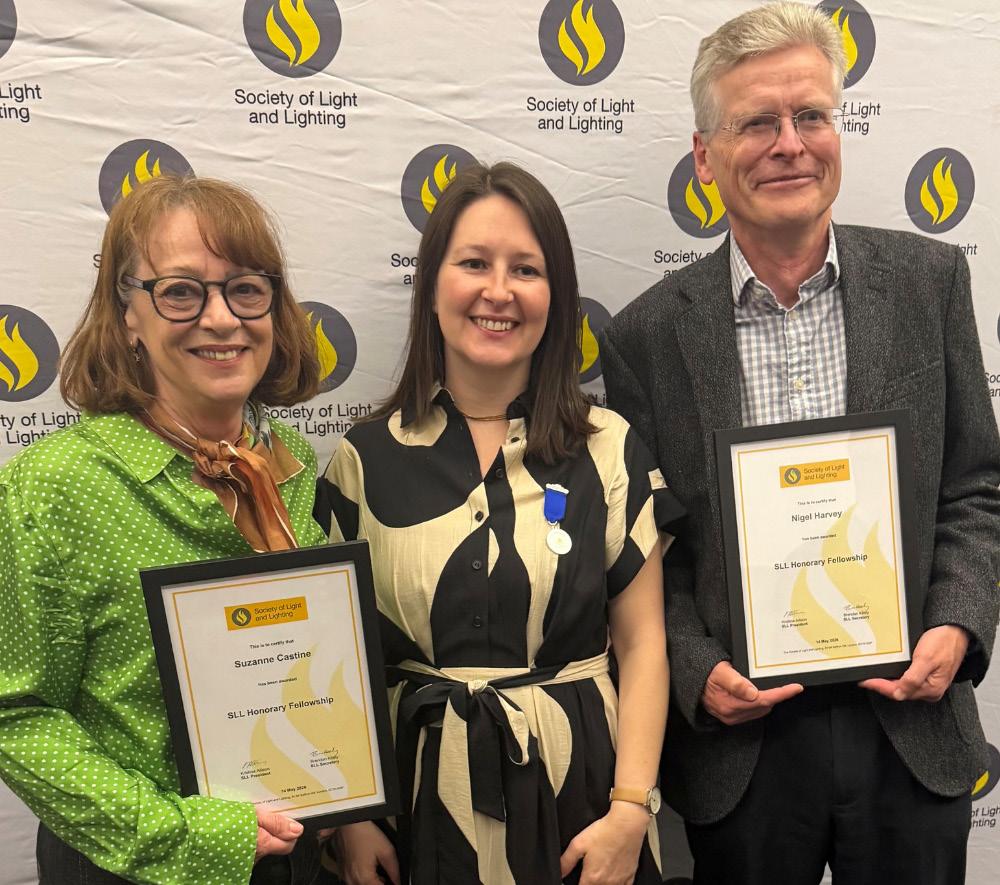
Recolight CEO Nigel Harvey and marketing and communications manager Suzanne Castine received SLL honorary fellowships at the AGM in CIBSE’s headquarters in London last week.
Commenting on the award, the outgoing Society of Light and Lighting president Kristina Allison said
“The honorary fellowship recognises a significant contribution not only of services to the Society but to the wider lighting profession. It’s sanctioned by the Executive Committee of the SLL. The work that both do with Recolight has a positive impact on the industry and is incredible.”
Usually, one award is given each year, but this year an exception was made. Previous recipients have included Kevin McCloud in 2010, Jonathan Speirs in 2003, and Philip, The Duke of Edinburgh back in 1959.
F Mark Ltd founder Simon Fisher FSLL and Circular Lighting Report editor Ray Molony gave the citations for Harvey and Castine respectively.
On accepting his award, Nigel Harvey said:
“I’m absolutely delighted to receive the honorary fellowship of the Society of Light and Lighting. The recognition of professional peers, colleagues and friends is uniquely special. My sincere thanks to the SLL Executive Committee for the award. But I’m only the helmsman at Recolight. We’ve an amazing team, who all play vital roles and this award belongs to us all.”
And Suzanne Castine said:

“Thank you to the SLL executive committee for recognising the work I do. Marketing is an overhead, so we’re constantly looking at ways to reduce cost. And as a not-for-profit funded by our WEEE Scheme Lighting manufacturer Members, it’s even more critical for me to be mindful of spend. Therefore, I keep our work in house and don’t use agencies. We were recognised for going above
and beyond and were in a room full of lighting professionals who do that too. So many have helped Recolight along the way, presenting at webinars and conferences, offering support, guidance and help.”
As a Sustaining Member of the SLL, Recolight are part of a network of businesses who collaborate to give financial, technical and practical support to a wide range of Society initiatives.

Whether you require urgent repairs, specialist cleaning, or infrastructure maintenance, OUTCO is your reliable partner in reactive works. Contact us today to discuss your requirements. 0800 0432 911 enquiries@outco.co.uk
Energy and Net Zero Consultancy, TEAM Energy, is celebrating a significant chapter in its journey as two of the business’ founding directors, CEO, Simon Miles and Solution Delivery Director, Jim Inglis, retire from the Board after decades of service.
The leadership and vision of Simon and Jim have been fundamental in shaping TEAM’s success, leaving a legacy that the business continues to build upon.
As the business looks to the future, it is delighted to announce the appointment of three longstanding colleagues to the Board. Together, they bring over 40 years of combined experience within TEAM. These appointments signal an exciting time for the company while also ensuring continuity, shared expertise, and a commitment to its values as an employeeowned business.
Tom Anderton, Commercial
maintaining a strong focus on risk, compliance and service excellence. Passionate about balancing sustainable growth with employee engagement in an employee-owned business, Tom works closely with stakeholders at all levels to ensure customers consistently receive outstanding value.
Paul has over 15 years’ experience delivering strategic value and long-term partnerships in the energy sector. With deep expertise in the I&C market, he brings strong operational and commercial insight from roles spanning energy supply, customer service leadership and enterprise-scale delivery. Paul plays a key strategic role in shaping customer success initiatives, ensuring customer needs remain at the heart of the organisation’s approach to service excellence.

security and agile delivery, and has guided organisations through major industry changes such as Faster Switching and the Market wide HalfHourly Settlement (MHHS).
TEAM’s new directors will be working alongside Service Delivery Director, Graham Paul, who is responsible for TEAM’s infrastructure and oversees system administration and customer support, with a cross functional role in pre-sales, alliances and marketing.
On these new appointments Graham Paul said
“This is an exciting time for TEAM Energy as Tom, Paul and Edward step into their new roles. By growing leadership from within the business, we have showcased the true power of employee-ownership. We are confident that their experience and insight will help us grow, innovate and deliver our commitments to our customers and colleagues.”

Tom has over a decade of experience across carbon, sustainability, energy management and energy supply. A commercially astute and collaborative leader, he identifies new opportunities, builds strategic partnerships and aligns commercial priorities with effective delivery, while
Edward is a highly experienced technology executive with over 20 years in the energy sector, specialising in delivering IT strategies that align technology with business goals. As IT Director, he leads enterprise architecture, cloud transformation, information

This transition reflects the strength of being an employeeowned business as TEAM promotes their leadership from within to preserve what makes the organisation special, whilst also accelerating their ambitions to support their customers in achieving their net zero and energy management goals. By empowering internal talent, TEAM safeguards the long-term interests of their colleagues, customers, and stakeholders.
As TEAM embarks on this next chapter, the business remains committed to delivering an exceptional service and driving sustainable solutions for UK organisations.
www.teamenergy.com

''After completing a series of tests, Wexiodisk's WD-6 Duplus came in with around 40% less energy consumption than the closest competitor. W hat's more, water and chemical savings were significant too with water consumption being nearly 50% less than the closest competitor! Projected across Butcombe's entire estate and looking at the life cycle of the appliance made the decision very simple. The figures speak for themselves especially when over a million pounds is projected to be saved over 10 years.,,
-Ed Barlow, M and E Manager, Hi-Tee

Ifyou want to get up to speed with some ofthe latest, most sustainable warewashing options, please contact david.glover@wexiodisk.com or visit www.wexiodisk.com/en
Clivet UK is delighted to announce the appointment of Nigel Hillier as General Manager to lead the business and its ambitious expansion in the commercial and residential sectors.
With extensive HVACR experience, Nigel will manage the growth of Clivet applied systems, air conditioning and heat pump solutions and services, and further expand into the consultant specification market.
Nigel Hillier commented:
“I’m excited to join Clivet at such an important time for the business and the wider industry. The UK heat pump and HVAC
market is evolving rapidly and there are huge opportunities ahead. Clivet has an outstanding product portfolio and service offering, strong values and a real commitment to longterm investment and support. I look forward to leading the exceptional UK team and driving the next stage of growth.”
Clivet said Nigel’s appointment reflects the company’s continued commitment to investing in its people, strengthening its UK operation and supporting customers in a fast-moving and increasingly exciting renewable heating and HVAC market.
Congratulations to Nigel on his new role.

Clivet Group UK are delighted to welcome Laith Al Baghdadi to the company’s growing service division.
A graduate of the University of Portsmouth with a background in Human Geography, alongside studies at the University of Malta, Laith brings valuable experience across engineering support, logistics coordination, and customer service. Previous roles within major insurance organisations and public sector contractors have equipped him with strong organisational, communication, and problem-solving skills.
As Clivet continues to expand across the UK HVAC and heat pump market, the company remains firmly committed to
delivering outstanding aftersales service and technical support. Investment into the service division reflects the importance Clivet places on supporting customers and installers throughout every stage of a project — from commissioning and technical assistance through to ongoing customer care.
Laith’s appointment further strengthens the team as Clivet continues to invest in both people and support infrastructure to meet growing demand across the industry.
Everyone at Clivet would like to extend a warm welcome to Laith, who is already proving to be a fantastic addition to the team.

To subscribe to BFM magazine, please visit www.bfmmagazine.co.uk





Contact us for a FREE site survey or online demo to learn more about our industry leading environmental monitoring solutions and how they can help to reduce your energy costs. Scalable, with Ethernet and WiFi connectivity, over 20 sensor options for temperature, humidity, water leakage, airflow, AC and DC power, a 5 year warranty and automated email and SMS text alerts.
be
British catering and hospitality equipment manufacturer, Mechline Developments, is encouraging operators to ‘sweat the small stuff’ when it comes to slashing energy costs. The company’s messaging on this subject is being fuelled by new calculations which reveal that their CaterTTract+ glue board fly killer model is 5 times more efficient than a competitor model*.
This level of efficiency makes Mechline’s CaterTTract+ models one of the cheapest to run on the market, coming in at just £12.58 per year*. This is largely achieved thanks to the use of advanced LED lamps which use 50% less energy and last twice
as long as a typical UV lamp.
Mechline’s Market Development Director, Gary Thacker, shares his perspective on how these savings can make a big impact, quickly:
“When it comes to methods for energy-saving, operators tend to first focus on heavy appliances. Granted, swapping out a combi or grill for a more efficient model can have a tremendous impact on ongoing energy usage ongoing, but it is sometimes unrealistic or financially unattainable for an operator to make such a sizeable investment off-the-cuff. With a fly killer however, it’s far more affordable to swap-out, but still has significant impact on running costs, especially when

you consider that most kitchens will require multiple units for different areas have this be in a food prep area, dining room or the main area of the kitchen.”
Mechline’s electric grid CaterZap+ models also represent leading standards for energy efficiency in the category with a 42% saving against competitor models.
To further support operators that want to reap these energy saving benefits, Mechline is currently running a limitedtime promotional offer that gives customers 60% off the list price when they buy 4 or more CaterTTract+ models. Likewise, operators can receive 50% off CaterZap+ models when 4 or more are purchase.
To redeem this offer, simply visit www.mechline. com , add the products to your basket and enter the code FLYKILLERS26 at the checkout stage. T&C’s apply.
To find out more on Mechline Developments range of Fly Killers, or their current promotion, www. mechline.com/offer-terms/
Savings are based on a 9 hour day, 7 day week, £0.24 cost per kwh against a comparable glueboard model available to the market. To gain access to the spreadsheet of calculations, please email marketing@mechline.com

The Public Sector Sustainability Association (PSSA) provides a professional association and network for all those working in the Public Sector who have a common interest in sustainability.

Specifying CFA members for your flooring projects means you’ll be gaining a wealth of experience from vetted contractors with the knowledge and products to fulfil your specification with a sustainability criteria.
CFA members are part of a supply chain that includes specialist contract flooring contractors, manufacturers and distributors, all of whom promote the highest standards and expertise.


The Contract Flooring Association (CFA) has achieved a significant success for its members and the wider sector, following the publication of the new Future Homes and Building Standards in March 2026.
In the original consultation draft, proposed limits on thermal resistance risked creating an unintended but serious consequence: commonly specified floor coverings such as carpet and timber would no longer have been practical options in new build properties. Recognising the potential impact on the entire supply chain, the CFA worked closely with industry partners and government to challenge this approach. As a result, the final version of Approved Document L, which governs energy efficiency and greenhouse gas emissions in buildings, adopts a far more balanced, holistic, performancebased methodology.
Richard Catt, CEO of the CFA, commented:
“This is a major achievement for our members and the wider sector. In the original draft, an unintended consequence of proposed thermal limits for flooring would have effectively ruled out carpet and timber in many new build applications. By working closely with government and industry partners, we were able to promote a more holistic approach, one that still meets wider energy efficiency targets while maintaining specification flexibility. It is a great example of industry, trade bodies and government working together to deliver a practical outcome.”
At the centre of this success is the updated guidance on
underfloor heating within Approved Document L. Subsection 5.38 (please can you make it so that the text ‘Approved Document L Subsection 5.38’ is linked to that actual part of the actual document) now confirms that underfloor heating systems must be designed with full consideration of the thermal resistance of floor coverings, ensuring required heat output
is achieved. Importantly, the guidance explicitly directs professionals to the CFA’s Beyond Installation: Guidance on Underfloor Heating, (available from www.cfa. org.uk downloads section) alongside supporting material from BEAMA. This marks a decisive shift away from earlier proposals that sought to impose strict maximum thermal resistance thresholds.
Had those limits been adopted, they would have severely restricted the use of many widely used flooring materials. Instead, the final guidance places responsibility on system design, ensuring that floor coverings, heating systems, and heat sources such as heat pumps are considered together to achieve overall building performance.
This outcome safeguards specification choice across the contract flooring industry. Members can continue to offer a full range of materials for new build projects, provided they are integrated into a welldesigned heating system.
Crucially, this avoids what could have been a significant disruption to the sector, preventing potential loss of work and income across multiple product categories.
Equally important is the formal recognition of the CFA within national regulation. Being directly referenced in Approved Document L not only raises the profile of the Association but also reinforces its role as a trusted authority influencing policy and best practice. The inclusion of the CFA’s guidance demonstrates the value of proactive engagement with government and highlights the Association’s ability to deliver meaningful outcomes for its members.
This achievement represents more than a short-term win. It establishes a forward-looking framework that supports innovation in heating systems while reflecting the practical realities of flooring specification. With further work already underway, including additional guidance on flooring over

underfloor heating for members, the CFA remains at the forefront of shaping standards that are both ambitious and workable. Combined with recent progress on wider industry issues such as payment and retention, this success reinforces the CFA’s growing influence and its commitment to delivering tangible benefits for members and the wider sector.
www.cfa.org.uk






The Cleaning & Hygiene Suppliers Association (CHSA) has today published a report on the outlook for environmental regulation in the UK and EU and the impact on cleaning and hygiene manufacturers and distributors.
The report, What’s Coming in Environmental Legislation for UK Cleaning & Hygiene Manufacturers (2026–2028), includes the incoming legislation covering chemicals, packaging, carbon reporting, wastewater and green claims. It warns businesses that sustainability compliance, once a competitive differentiator, is rapidly becoming a baseline requirement for market access.
Prepared by Vikki Morris of
Evans Vanodine and Dr. Maija Pohjakallio of Metsä Group, the report highlights the growing divergence between UK and EU regulation following Brexit and the increasing complexity facing companies trading across both jurisdictions.
Among the key issues identified are tighter controls on PFAS chemicals and microplastics under EU REACH, increasing scrutiny of biocidal products, and significant new obligations linked to packaging reform.
The authors warn that businesses supplying both the UK and EU markets face mounting duplication risks, higher compliance costs and growing administrative
burdens, particularly around chemical registrations, packaging reporting and product sustainability data.
The report encourages manufacturers and distributors to begin preparing now by auditing product portfolios for high-risk substances, reviewing exposure to Extended Producer Responsibility (EPR) fees, strengthening supplier engagement and building robust environmental data systems. The CHSA says companies that view compliance as a strategic investment rather than a reactive cost will be best placed to protect margins, maintain market access and build resilience.
www.chsa.co.uk
Building & Facilities Management editorial content covers all the major FM areas of interest within the workplace and the built environment.
This includes industry developments, company news, case studies and application stories, product news as well as articles from leading authorities within the marketplace.
To find out more information about BFM Magazine or to subscribe, please visit www.bfmmagazine.co.uk



New worldwide air conditioning reveal a 245% increase in demand since 2010, driven by changing demographics, technology shifts, regulatory pressures and the growth of data centres.
BSRIA, a world-leading authority on cooling and building services markets, has released its latest analysis of the global cooling sector. The BSRIA Worldwide Air Conditioning and Heat Pump reports reveal a complex and diverging global cooling market. While overall demand has risen 245% since 2010, the market now has two distinct tracks: a high-value commercial sector driven by specialist applications and a high-volume residential sector
where intense competition is suppressing prices. The new studies, covering 18 key AC markets and 15 heat pump markets, identify the key forces shaping the industry; enhanced technology, tighter regulation and the rapid proliferation of data centre cooling systems.
Residential price pressure contrasts with commercial value growth
The reports show a clear divergence in pricing. In the
commercial sector, average selling prices for products like chillers and air handling units rose by 3.6% and 4.5% respectively in 2025. This contrasts with the residential segment, where the average price for ductless split systems has declined. BSRIA’s analysis attributes this to competition, with the top ten suppliers now accounting for over 85% of global sales in this category.
AI and data centres fuel demand for specialist cooling
A major growth has been the data centre industry, where AI’s expansion is creating demand for more advanced liquid cooling solutions. This

is accelerating the sales of chillers, with some systems, namely oil-free centrifugal chillers, driving more than half of the market in countries like Indonesia, Mexico, Turkey, the UAE or the USA.
From an HVAC and cooling supplier perspective, growth is being driven not only by the increase in data centre numbers, but the increase in higher heat density per facility. AI workloads are pushing racks beyond what traditional air systems can handle, accelerating the adoption of liquid cooling technologies.
A premium for low-carbon/ high-efficiency cooling
Building owners and investors are increasingly focused on lifetime energy performance and the carbon impact of their cooling systems, rather than just the initial capital cost. That is leading to evolution around how AC systems look, how they’re procured, financed and operated. This has resulted in a premium for low-carbon, highefficiency cooling solutions.
The research confirms a rapid shift towards inverterbased systems, particularly in emerging economies. India’s market for inverter split systems is projected to reach 100% by 2029, with Brazil and Saudi Arabia also showing strong growth. This is happening alongside a legislative push to phase down low-energyefficiency AC systems and HFCs, making low-GWP and natural refrigerants mainstream choices for new cooling systems and retrofits.
BSRIA’s research also confirms that 2025 marked the beginning of a recovery for the global heat pump market. While often associated with cooling, air conditioning systems are playing an increasingly important role in heating installations, with reversible single-splits growing 3.3% by volume on a global scale.
Aline Breslauer, Research Manager, BSRIA AC, Refrigeration and Ventilation, commented: “2025 was a year of uncertainty, and in the AC market we saw rising competition with increased M&A activity driving consolidation. However, globally the need for cooling technologies remains high, with demand jumping 245% over the past 15 years. We predict that growth will continue, though it will remain uneven amid ongoing economic and geopolitical volatility.
She added: “HVAC’s next phase will not be won by technology alone. It will be won by organisations that are built to operate in this new environment. Advantage will come from adaptability, not optimisation.”
This global market analysis forms part of BSRIA’s annual global updates on cooling with its World Air Conditioning and World Heat Pumps studies.
To find out more about BSRIA’s World Wide Air Conditioning 2026 report or the Worldwide Heat Pump Market Report 2026, visit, click here.
Building & Facilities Management editorial content covers all the major FM areas of interest within the workplace and the built environment.
This includes industry developments, company news, case studies and application stories, product news as well as articles from leading authorities within the marketplace.
To find out more information about BFM Magazine or to subscribe, please visit www.bfmmagazine.co.uk
The trade body for the UK’s water jetting industry is expanding its training portfolio to fill skills gaps in important services delivered by facilities management specialists.
The Water Jetting Association is already the UK’s largest provider of water jetting courses through its well-established City & Guilds-accredited training programme.
It is now expanding its portfolio, adding courses for a wider range of asset maintenance and cleaning techniques for which, until now, the only option has been product training or learning on the job.
WJA Director Leanne Smith says: “These new courses are a game-changer for contractors, and for companies and public bodies that now have a defined standard when specifying the quality of service they expect.”
The new courses are: Drain CCTV, Electro-Mechanical Cleaning; Gutter Cleaning, Graffiti Removal, Remote Structural Pipe Repair, and First
The WJA’s City & Guilds-accredited water jetting training programme consists of a two-step process to achieve operational certification.
Candidates first pass a one-day class-based Safety Awareness course, then at least one of five one-day practical modules to receive a WJA operational card, renewed every three years with a refresher course.
The practical modules are: surface preparation; drain and sewer; drain, sewer and surface preparation; tube and pipe; and hydrodemolition.
The WJA also offers a stand-alone, one-day pressure washing course.
Aid in Water Jetting. All are accredited by City & Guilds.
The Drain CCTV course is designed for drainage contractors who use pushrod CCTV camera systems, providing coaching on operational safety, faultfinding and sewer coding to WRc standards.
Gutter Cleaning provides training in the use of pole vacuumation cleaning systems.

While the Graffiti Removal course covers the use of water jetting combined with hot water, steam and chemical cleaning.
Each of the new courses will last a day. As with current WJA courses, candidates will undergo an assessment using the CLiKAPAD digital Q&A system, with a pass mark of 80%.
To maintain their certification, operatives will need to then pass a refresher course every three years.
WJA Technical Board Member Darren Hamilton says: “The courses will be delivered with the same rigour, by WJAapproved instructors, that has made our water jetting training programme respected across all industrial sectors.
“They will act as an important stepping stone for companies that want to develop the scope and reputation of the services they deliver, and promote lift wider safety and technical standards, as well.”
Find out more about WJA training
Web: www.waterjetting.org.uk
Email: info@waterjetting.org.uk
Tel: 0208 320 1090
Water jetting procurement managers and service users are being urged to use the WJA’s new single code of practice to help them drive up safety standards across their worksites.
The new code replaces the WJA’s three previous codes, the Blue Code for high and ultra-high pressure jetting, the Red Code for drain and sewer jetting, and the Purple Code for hot and cold pressure washers.
Known as the WJA black code, due to its black cover, the document creates a single standard for water jetting that is much easier to access, understand and use to optimise safety.
Water jetting presents unique hazards often not fully understood by service users, which can result in safety lapses that increase the risk of serious injuries or fatalities.
WJA Chairman Lee O’Callaghan says: “Our new single code of practice represents the biggest step forward in defined water
jetting standards since the WJA introduced its first code in 1982.
“It’s an exciting and important milestone for the WJA, our members and for every organisation that uses water jetting. There is now one code for water jetting across all pressures.
“WJA Black Code has been developed with technical guidance from the Health and Safety Executive, which acknowledges it as defining industry best practice.

“Procurement professionals and users of water jetting services can use it to specify standards for all water jetting techniques, including pressure washing, drain cleaning and hydrodemolition, by requiring suppliers to comply with the WJA code of practice.”
The same single code guidance is also built into all instruction delivered through the WJA’s City & Guilds-accredited water jetting training programme.

The new code includes guidance on water jetting teams – organisation and duties, personal protective equipment (PPE), water jetting units, hose assemblies – inspection and testing, frost precautions, and safe use of equipment.
It also includes, for the first time, publication of a page-by-page version of the WJA’s water jetting injury treatment algorithm.
It provides advice, created for the WJA by medical experts, on the best practice response to water jetting injuries from worksite first aid through to post-hospital rehabilitation.
Connections between different pressures and types of water jetting have been made clearer than ever, aiding its use as a practical operational guide, available on worksites via the WJA app.
WJA Technical Manager Gordon Taylor says: “I’m confident it will be easier for contractors, training providers and service commissioners to use the WJA’s code of practice to work to the highest standards.
“The WJA is the guardian of water jetting safety, and that is the primary purpose of the new Black Code.”
OUTCO considers how FM’s can reduce the cost of unexpected reactive maintenance with External Condition Surveys
In estate and property management, there’s no such thing as the quiet life. Unpredictable events and costs lay siege to even the best laid plans and budgets while facilities teams often find themselves stuck in a cycle of reactive maintenance – playing whack-a-mole with unexpected damage to assets rather than preventing them in the first place. Some firefighting is just part of the job, but when outdoor infrastructure isn’t regularly monitored, even minor wear and tear can quickly escalate into major structural or safety issues, often at the worst possible time.
External Condition Surveys provide a vital, strategic solution to this challenge by offering a clear, data-led view of all outdoor assets. OUTCO delivers surveys that help Facilities Managers anticipate maintenance needs before they turn into critical emergencies - allowing for earlier, more controlled, and highly costeffective interventions. By getting on the front foot, busy FMs can regain control of maintenance budgets while also safeguarding the overall safety, compliance, and reputation of their estates.
One of the most immediate and tangible benefits of External Condition Surveys is their ability to reduce lifecycle costs. When exposed to the elements and put to heavy use, outdoor infrastructure will see inevitable damage and deterioration over time. The important thing is to spot this and address it early enough. For example, a survey can look

for problems such as surface degradation or blocked drains long before they develop into larger, more disruptive failures. By being proactive, small issues can be prevented from snowballing into major repairs. This not only significantly reduces the need for costly emergency interventions - often at a price premium due to urgency, labour demands, and material availability - but it can also help to extend the usable life of outdoor assets. Over time, this shift enables facilities managers to move confidently toward planned maintenance programmes, reserving reactive works for genuinely unavoidable
situations and creating a far more efficient, predictable maintenance strategy.
Unpredictable costs often arise from a simple but critical problem: lack of visibility. Without a clear understanding of an estate’s condition, budgeting can easily become reactive and uncertain. OUTCO’s external condition surveys remove this guesswork by enabling truly data-led decision making. This modern approach to surveys makes use of technology to produce detailed, RAG-rated (Red,

Amber, Green) reports that are easy to interpret and act on. These reports are backed by GPS-tagged photographic evidence and clearly documented findings, creating a reliable snapshot of site conditions at a specific point in time. This digital audit trail not only improves transparency but also supports internal communication and stakeholder reporting. With a clear prioritisation of issues and recommended actions, facilities teams can allocate resources with confidence. This enables smarter budgeting, better longterm planning, and improved asset value without fewer unexpected financial surprises.
Many facilities managers are already stretched thin, juggling multiple sites, coordinating contractors, and managing complex compliance requirements. In reality, finding the time to carry out detailed, ongoing inspections across every external asset is often unrealistic. External condition
surveys help bridge that gap by acting as an extra set of expert eyes on-site, reducing the pressure on internal teams. By consolidating a wide range of findings into one structured, easy-to-digest report, we provide site condition surveys that highlight issues that might otherwise go unnoticed. The result is a single, unified view of the estate’s condition - covering everything from surfaces and drainage to signage, fencing, and other key external assets. This improved visibility simplifies decision-making, strengthens control over large estates, and frees up facilities teams to focus on highervalue strategic priorities rather than constant site checks.
Managing uncertainty isn’t just about ensuring that the costs of repairs stay under control but also about avoiding safety incidents or compliance failures that may bring even greater costs. External Condition Surveys play a crucial role in proactive risk management
by identifying hazards before they escalate into serious issues: from slip and trip risks to structural concerns, early visibility allows facilities teams to act quickly and demonstrate clear due diligence.
Maintaining well-presented outdoor environments also has positive impact on brand perception. Identifying and addressing damaged surfaces, fencing, or signage early ensures that spaces remain safe, functional, and visually appealing. This not only reduces complaints and negative experiences but also reinforces a strong, professional brand image for customers, tenants, and visitors alike.
In essence, External Condition Surveys provide the insight needed to manage risk, prioritise maintenance, and protect both reputation and budgets - without the unwelcome surprises.
For more information about Reactive Maintenance and External Condition Surveys, contact 0800 0432 911 email enquiries@outco.co.uk or visit www.outco.co.uk
Following a competitive open tender process, Fusion21 has appointed 22 suppliers to its £85 million UK-wide Grounds Maintenance Framework, providing public sector members with a fast route to market for grounds maintenance, landscaping and outdoor space services.
The specialist companies have secured a place on the fourth iteration of the framework, with 72% being SMEs. This is also the first Fusion21 framework awarded under the Procurement Act 2023.
Designed to support Fusion21’s public sector members in maintaining and improving a diverse range of outdoor spaces, the framework provides regional and national coverage, and is available to members, including housing providers, local authorities, education, blue light and the NHS.
Services span routine and seasonal maintenance, as well as hard and soft landscaping,
tree works, fencing, and hedge and shrub maintenance.
Peter Francis, Group Executive Director (Operations) at Fusion21, said: “Our renewed Grounds Maintenance Framework gives members a fast, simple and compliant way to access trusted suppliers for grounds maintenance and landscaping services. With regional and national coverage, it supports everything from local requirements to largescale, multi-site portfolios.
“Complementing our Workplace and Facilities Management Framework, this framework offers flexible calloff options while delivering social value and environmental improvements that have a visible impact on communities.”
Over the lifetime of the framework, Fusion21 aims to support the development of a community forest planting trees in every area where the framework is active, helping to create more sustainable communities,

reduce carbon emissions and improve wellbeing.
Successful suppliers appointed to Fusion21’s national Grounds Maintenance Framework:
• Aspire Community Works CIC
• Bidvest Noonan (UK) Limited T/A Just Ask Estate Services
• Blakedown Environment & Leisure Ltd T/A Blakedown Landscapes
• Chequers Contract Services Limited
• Fairways Contracting Limited
• Gould Landscapes Limited
• Great Oaks Tree Services Ltd
• Greentown Environmental Ltd
• Groundscapes Limited
• John O’Conner (Grounds Maintenance) Limited
• Landscaping Centre Limited T/A idverde
• M J Granger Grounds Maintenance Limited
• M&Y Maintenance & Construction Limited
• Majestic Grounds Maintenance Ltd
• Nurture Landscapes Limited
• Oxford Direct Services Trading Limited
• Peter Crosby Landscape Limited
• Pinnacle FM Ltd
• Ramora Limited
• Sherratt Group Ltd
• Sovini Property Services Limited
• UK Landscapes Limited www.fusion21.co.uk

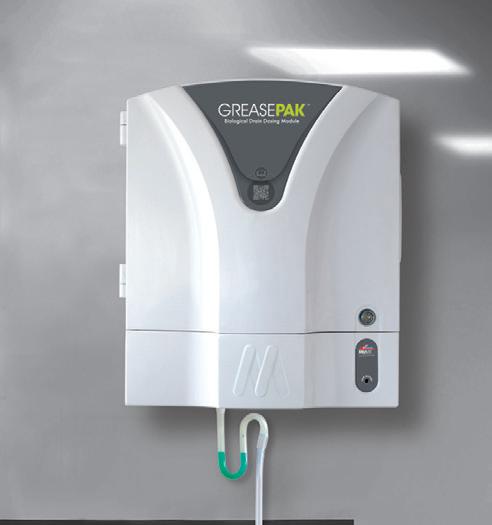
Scan for more information or to order your FREE

This picture was taken 24 months after all the panels had been professionally cleaned, but only one had been treated with Aqua Fend® F after cleaning.
This real-life result shows that Aqua Fend® has been developed to PROTECT your building’s façade and flooring, PREVENT longterm damage caused by water ingress and urban pollution, and PRESERVE the original structure and colour for as long as possible after cleaning.
The Aqua Fend® range helps you to reduce cleaning and maintenance costs while keeping your walls and floors clean.


Industry has the will to evolve, but data infrastructure, skills, and investment needed are lagging behind, study finds
Only 1% of estates leaders across local government and healthcare believe the current facilities management model is fit for purpose. And while AI is still expected to play a big part in FM’s future, 40% of professionals in the sector lack the skills to deploy it, and 65% have received no AI training at all.
These are two of the key findings of a study carried out by property management industry leader Bellrock in partnership with GovNews. The company polled 285 estates professionals across healthcare and local government - and the results expose a widening gap between strategic ambition and operational readiness.
A staggering 99% of estates leaders admitted that their current model is not fit for purpose, while only 3% of local government professionals and 6% of those in healthcare
were very confident that their organisation’s property data is accurate, complete, and standardised enough for AI to be effective. 58% (local government) and 66% (healthcare) said they were “not very confident at all”.
“These findings reflect the very real pressures that estates professionals in local government and healthcare are navigating every day,” said Arunn Ramadoss, Group Director of Marketing at Bellrock. “The ambition is there, but ambition alone can’t bridge the gap between where organisations are today and where they need to be. Along with the ambition, it’s essential to put in place the skills, data infrastructure, and resources required to achieve real change.”
Other highlights from the report include:
• The majority of local government and healthcare

professionals believe legacy systems and outdated technologies are holding back organisations’ ability to deploy AI. 75% (local government) and 80% (healthcare) believe legacy technology is affecting progress “moderately”, “significantly” or “severely”.
• Just 7% of local government workers and 3% of those in healthcare fully agree organisations have the skills in-house to deploy AI effectively in estate management.
• One of the key barriers to increasing AI adoption is the quality of data that estates professionals have at their disposal. Only 3% of respondents in local government and 6% in healthcare say they are very confident in the quality and structure of their data.
• There is also a lack of confidence among senior leaders about using data and AI insights for strategic property decisions. Among local government and healthcare professionals, only 3% said they were “very confident” while 53% (local government) and 59% (healthcare) said they were “not very confident” or “not confident at all”, with 28% (local government) and 18% (healthcare) saying they were “unsure”.
• However, there is broad support for the idea of a standard data taxonomy
across each sector, allowing organisations to share data and insights. Among local government professionals, 68% said they “agree” or “strongly agree” with the idea, while among healthcare professionals, the figure was 80%.
• When asked whether they believe current regulation and standards for AI are adequate for property services, only 1% of local government and 4% of healthcare professionals answered “yes, fully adequate”, while 38% (local government) and 39% (healthcare) answered “not adequate” or “not at all adequate”. 43% in local government and 37% in healthcare said they were “unsure”.
There’s also a lack of agreement on what is holding back the adoption of AI in property services. While cost or investment constraints top the chart, a number of other factors drew a similar level of agreement, including: Cost or investment constraints (29% and 36% in local government and healthcare respectively)
• Skills and capability gaps (14% and 19%)
• Lack of quality data (17% and 13%)
• Legacy systems or infrastructure (17% and 8%)
• Leadership culture or resistance to change (7% and 11%)
• Risk or governance concerns (9% and 5%) Nonetheless, recent
projects point to the increasing feasibility of a joined-up, AIdriven approach, including Manchester City Council’s use of Bellrock’s Concerto platform to consolidate disparate systems into a unified digital view of their estate.
“What gives me confidence is that the sector genuinely wants to move forward, and we’re already seeing what’s possible when the right infrastructure is in place,” said Ramadoss. “Manchester City Council is a great example of that. For FM leaders who feel the path ahead looks daunting, I’d encourage them identify and prioritise one or two high-value quick wins now, to give stakeholders the confidence to invest in more strategic projects in the future.”
Every CHSA member has signed our Code of Practice, which includes the






Fifteen years ago, Iain Fraser-Jones made a wager the cleaning industry thought was naive: that sustainability, honesty and integrity could be a business model, not a footnote to one. B Corp certified, with a robust sustainability and carbon reduction strategy, and now turning over £10 million, it’s becoming harder to argue with him.
There’s a line you hear often in facilities management: sustainability is something you do once you can afford it. It sits at the end of the decision tree, not the beginning. Win the contract. Cut the cost. Then, if the margins allow, think about the planet.
Iain has spent fifteen years building a business that treats that logic in reverse.
When Iain founded Greenzest Limited in September 2011, he was making what looked, to some, like an idealistic bet: that a commercial cleaning company could be built around sustainability, honesty and integrity, and could succeed because of those things, not merely alongside them. He wasn’t guessing. He was drawing on more than three decades inside the industry - Group Sales and Marketing
Director at Servest UK, senior roles at Lynx Security and The Executive Grouplong enough to understand precisely what the sector was getting wrong, and why.
“Iain secures first-class customer relationships by continual attention to detailed customer service,” one former colleague observed. “A true professional with great integrity.”
The bet, it turns out, was well-placed. Today Greenzest employs 470 people, turns over £10 million, holds B Corp certification, is working towards being carbon-neutral, pays the real Living Wage on every contract without exception, and is expanding nationally, entirely self-funded.
Greenzest structures its approach around four principles: Planet, People, Partnership and Productivity. The language is clean. The practice behind it is harder-edged than it sounds.
Planet means genuinely eco-friendly products, energyefficient equipment, and operations that have a clearly defined carbon neutral plan. People means Living Wage Foundation Employer status: every bid, every contract,
no carve-outs. Partnership means working alongside customers - and suppliers - on their own sustainability objectives, not simply fulfilling a spec. Productivity means demonstrating, contract by contract, that ethical data driven operations and cost leadership are not in tension.
The real Living Wage commitment is the one worth pausing on. Greenzest was only the fourth cleaning company in the UK to make the step up from Recognised Service Provider. The effects have been measurable: staff retention sits significantly above the sector average, recruitment costs are lower, and the kind of continuity that customers quietly depend on is visible in the numbers.
“I have been working for Greenzest for eleven years,” one employee has noted.
Eleven years in commercial cleaning. That figure doesn’t need much commentary.
Greenwashing is a genuine and growing concern in commercial services. Claims are easy. Verification is harder.
Greenzest holds B Corp certification, independently assessed, audited, and renewed

every three years. Companies that don’t demonstrate continued improvement risk losing it.
Fewer than 10,000 businesses worldwide hold B Corp status. In commercial cleaning, it remains rare enough to be meaningful. For procurement teams navigating a sector where sustainability language has significantly outrun sustainability practice, it functions as a useful signal: these commitments have been examined by people with no stake in the outcome.
The commercial cleaning market has changed considerably since 2011. Sustainability is now embedded in procurement frameworks. ESG criteria shape supplier selection. Customers who once treated it as a differentiator now treat it as a baseline requirement.
Greenzest didn’t pivot to meet this moment. It was built for it.
Headcount has grown 40% in recent years, driven by both reputation and active business developmentparticularly in the shared office sector, where hybrid working has reshaped demand patterns and where sustainability credentials carry genuine weight with operators and landlords.
The leadership team has grown alongside the business: Iain Fraser-Jones as Founder and Managing Director, Vince Treadgold as Commercial Director, Travers Hathrill as Sales Director, Bruce Herbst as Operations Director, and Andrew Henderson as Transformation and IT Director.
From a single founding belief
in 2011 to a national operation turning over more than £10 million: B Corp certified, CarbonNeutral focused, Living Wage fully accredited, leaders in UhUb staff training and entirely debt-free. The cleaning industry rarely produces businesses with a genuine point of view. Greenzest has one, and the discipline to hold it.
This is not the end of the story. It looks very much like new chapters will be written.
Greenzest Limited is a national commercial cleaning provider. greenzest.co.uk




by Stephen Marsh, Group Head of Technical Operations at Cygnus.
Latest figures out of the Building Safety Regulator (BSR) show significant progress in addressing the backlog of fire safety remediation applications for higher-risk buildings (HRBs). While this marks an important step forward, timelines remain extended and the remediation landscape complex. The BSR data to 1st May 2026 shows an improvement in reviewing of remediation applications, but the median approval
time remains at 46 weeks.
Leading fire safety expert, Cygnus, states that while the BSR has made great strides in shifting through the remediation backlog, the evolving landscape brings continued responsibility for facilities managers and managing agents.
Buildings must remain safe, compliant and operational while remediation progresses, often requiring interim measures
such as waking watch to support resident safety.

In the years following the Grenfell Tower fire, waking watch became an essential reality for many residential buildings where fire safety concerns demanded immediate interim measures. It solved an urgent problem, but in many cases, it was never intended to last as long as it has.
Today, the industry faces
a more complex challenge. Responsible Persons, including facilities managers and managing agents, must now move from a labourintensive temporary control to something more sustainable and reliable while remediation programmes move at a slower-than-expected pace.
That distinction matters because the operational responsibility when waking watch is in place can be significant. Government data has highlighted the financial pressure involved – with the cost per building averaging at more than £17,000 per month (or £137 per dwelling) - but cost is only part of the story.
Behind every waking watch arrangement sits an ongoing management responsibility: overseeing providers, maintaining records, responding to resident concerns, validating procedures and ensuring the building remains safe while larger remediation or compliance issues are resolved. For many duty holders, this can become difficult to sustain over time.
More importantly, waking watch was never intended to become a medium-term operating model for occupied residential buildings. It was designed as an immediate interim response where existing precautions were considered insufficient to mitigate the risk of fire.
The onus is placed on the Responsible Person by a number of external pressures – including the National Fire Chiefs Council (NFCC), Fire Safety Order (FSO) and the BSR.
Compliance to the FSO is essential for the ongoing management of any highrise building – as the need to assess risk and provide
appropriate precautions never stops. In the midst of that, the NFCC guidelines encourage Responsible Persons to transition from waking watch to a more sustainable solution.
Building owners and managing agents experience these external pressures as one practical problem: how do we improve safety now, reduce dependence on prolonged waking watch arrangements and avoid creating further delay or regulatory complications in the process?
That is where interim common alarm systems enter the conversation.
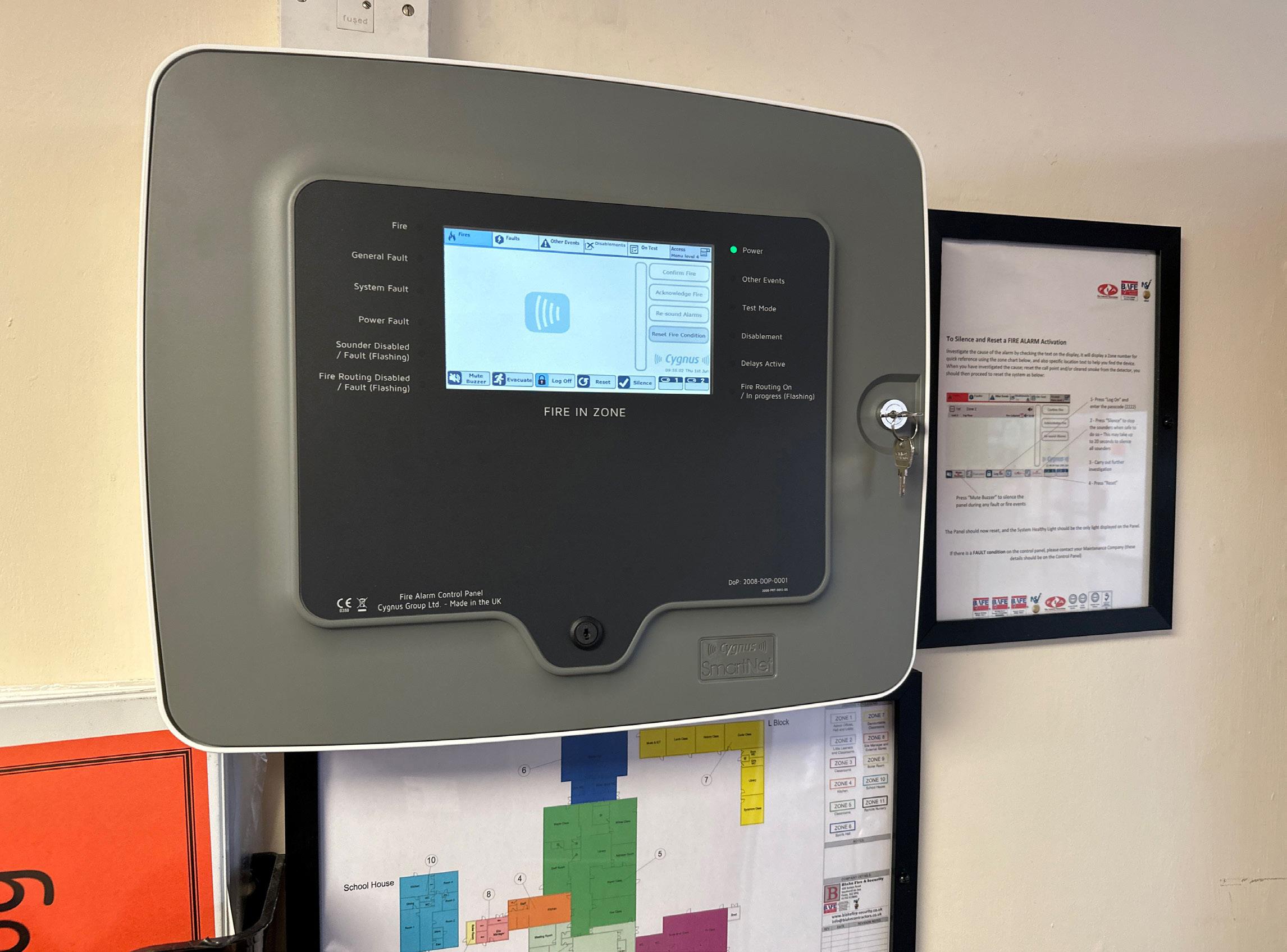
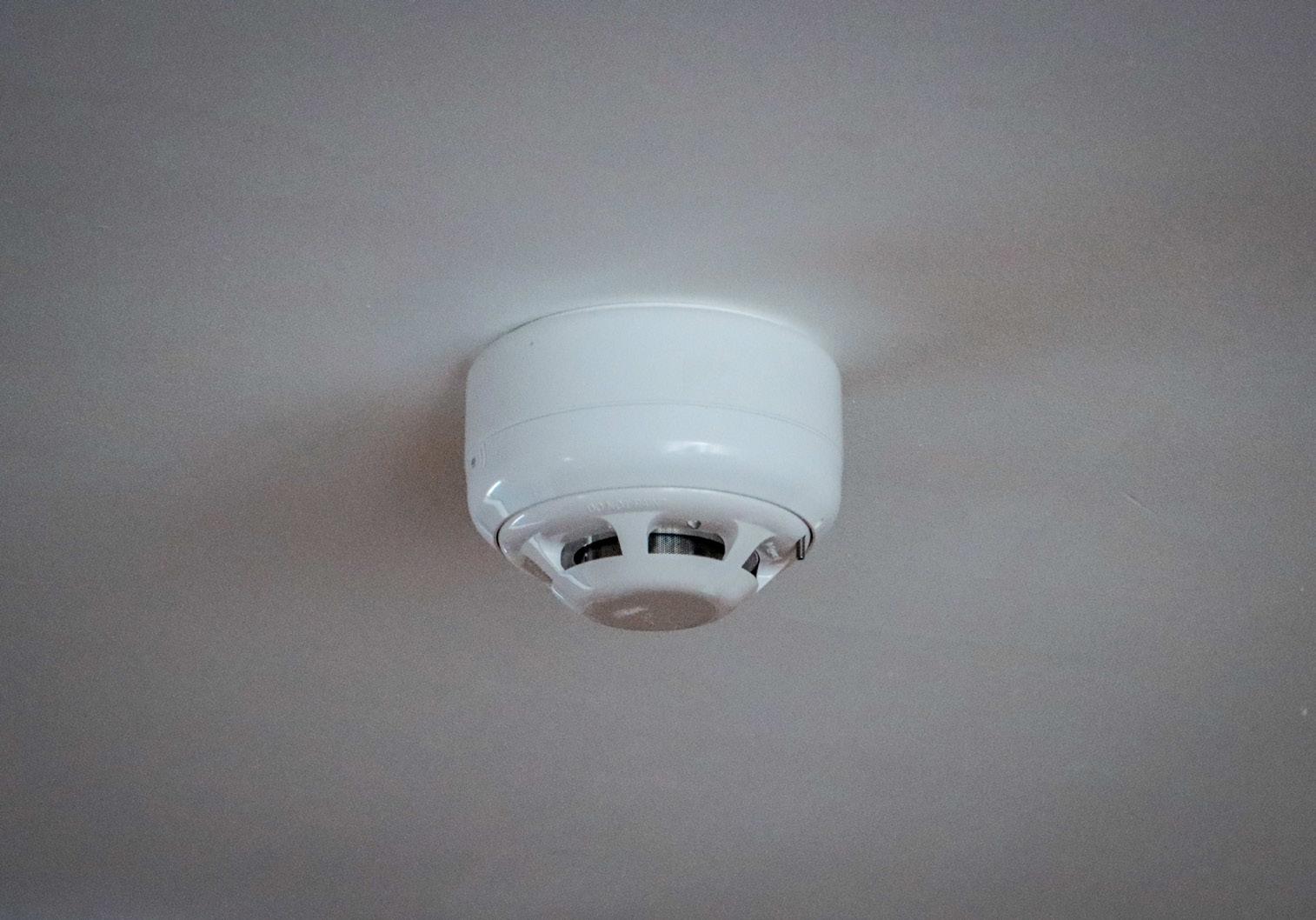
While prioritising and fasttracking remediation should of course be the key focus, early installation of a fire alarm system is increasingly being adopted as an effective solution to waking watch replacement. They enhance fire detection, support compliance and allow facilities managers to reduce reliance on continuous and costly patrols.
Where an interim common alarm is appropriate, wireless technology has become even more relevant for practical reasons.
Occupied residential buildings present realworld constraints: access can be difficult which can disrupt or delay installation. In addition, cabling routes may be problematic and require further third-party approvals, particularly where wider remediation strategies are still evolving.
In those circumstances, Cygnus’ truly wireless system can offer a faster and less disruptive route to improving interim fire safety arrangements.
None of this removes the need for full remediation. Nor does it remove the requirement for robust fire risk assessment, competent implementation and ongoing maintenance. But it does recognise an increasingly unavoidable reality: duty holders cannot simply pause proactive fire safety management while buildings remain in the remediation queue.
For further information on wireless fire alarm systems, please visit https://www. cygnus-systems.com/en-gb/.
Every building project involves the coordination of a huge number of decisions, skills, people and timelines. It can be easy to think of fire safety as just one of a long list of things to tick off. Taking a delayed or inconsistent approach to fire safety can lead to significant problems in property development. And those problems come in the shape of time and money.
From the point of view of property developers, asset owners, contractors and engineers alike, there are clear benefits to including life safety measures from the earliest stages of planning. These span a range of different areas, from commercial to practical, and can make a
big difference in delivering a build on time and on budget.
Brad Crisp, Commercial & Specification Manager at Sertus, the UK’s leading smoke ventilation manufacturer, explores how property developers and contractors can mitigate hidden fire safety costs, by addressing concerns during the early planning stages.
Many strategic design decisions will have an impact on fire safety, including building height, layout, façade systems and structural materials. These are early-stage decisions and will shape many other decisions as the project progresses. But if key design decisions are
taken without considering fire safety and escape strategy, fundamental changes may need to be made once that safety lens is applied at a later point. This can impact every other aspect of the process. For example, if fire compartmentation has not been properly considered, or allowances for the smoke ventilation is not included, key aspects of layout may have to be entirely re-worked.
When it comes to insurances, as well as in the cases where a project requires financing, earlystage fire safety planning can help to reassure lenders and insurers that all precautionary and regulatory measures are in place. This is particularly pertinent for residential

and high-rise schemes.
Construction stage fire risk should also not be ignored, as partially completed buildings can be vulnerable due to temporary electrics and exposed materials. A comprehensive safety strategy could protect developments before completion, as well as after.
The worst offenders for spiralling costs are, of course, late-stage design changes. And the later this happens in the process, the higher those costs usually end up being. Up to, and including, having to disassemble completed work and start again.
When layouts, stair cores, façade materials and services routes don’t meet safety regulations, the knock-on effects to design are widereaching. And, of course, every single change that is required will come with a price tag. For
example, you might need to completely rip out walls that are already installed if they are non-compliant for the services penetrating them.
The cost is not only of having to re-commission work that has already been paid for and rebuild to meet regulations, but it also comes in the guise of significant programme delays. These can also be costly, while also causing secondary consequences for the project supply chain, leading the delayed completion.
Where including fire safety early can enable architects and designers to be creative with solutions that work within regulations, late-stage safety additions can often interfere with planned design features. Having to add fire stopping, compartmentation or smoke control systems can add cost, while also diminishing design impact in some cases.
According to GOV.UK, costs for fire safety remediation work can scale extremely quickly
with the following figures quoted as a rough estimate:
• Minor fire strategy and design tweaks£10,000 - £30,000
• Moderate redesigns, including system or layout changes - £30,000 - £150,000
• Late construction rework - £100,000 - £500,000+
Common fire safety problem areas that cause costs to increase:
Compartmentation and Fire
Stopping: when these areas are ignored, there is clear risk to life from rapid smoke and fire spread. It might be that these are considered thoroughly at one stage of the project, but then ignored at another, for example when pipework, ducts or cabling compromises fire-rated walls and floors.
Façade and External Wall Compliance: this can be an incredibly costly aspect to resolve or change if fire safety has not been central

to decision making about cladding, insulation and cavity barriers. This is not only in the specification phase, but also in the installation phase, where missing cavity barriers or incorrect installation can require significant work to remedy.
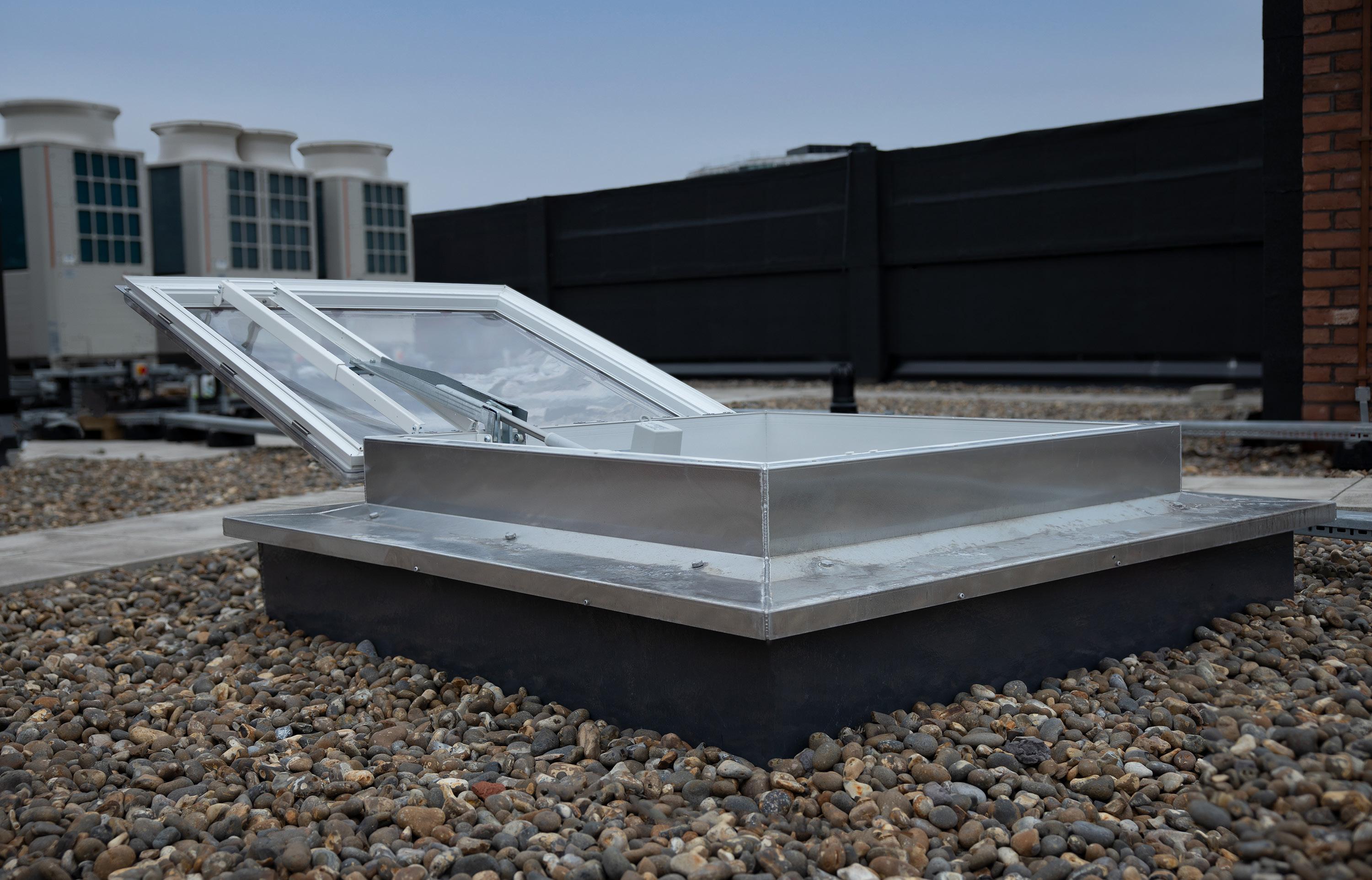
Alarm, detection, smoke control, and suppression systems: when considered early, it is possible to ensure that these are integrated into building services. It is vital that these life safety systems are designed for and installed in the building with longterm safety as a focus, which includes access for regular testing and maintenance.
With ever-increasing scrutiny on meeting safety standards, modern building safety protocols require detailed design evidence before construction can proceed, as well as demonstration of compliance at multiple stages along the way. When design records are vague, or when there are sign-off challenges at any of these gateway approval points, resolving and retrofitting safety measures can cause unwelcome delays. The surefire way to get around these issues is including
fire safety planning from the earliest stages, and maintaining the focus on them throughout the build. This smooths the path to regulatory signoff and safe buildings.
Where projects fail to meet safety regulations at a late stage, incurring costs and causing delays to completion, the parties involved will be aware of potential damage to reputation. With building regulations so fundamental to the process, making sure that fire safety measures are fully integrated, rather than only addressed as an after-thought, is important to demonstrating professionalism and reliability. Beyond reputational risk alone, developers can find themselves liable for safety shortcomings. How to avoid these hidden costs, delays and penalties
By engaging expert fire safety advice early in the design process, including a comprehensive fire strategy for the building, all aspects of the development can comply with regulations, ensure safety and pass inspections to keep the project on track.
• Fire engineers can support with the shaping of building layouts, evacuation strategies, smoke control

and fire resistance from the outset of the project.
• Ongoing collaboration with architects and engineers can help identify risks and remedy issues before costly construction begins.
• Once the build is underway, regular monitoring in advance of gateway site inspections can make sure that regulations are complied with, and no remedial actions are required post inspection.
• Once complete, fire engineers can verify that the life safety systems in use are installed correctly, and perform as they need to before occupancy.
Taking a coherent and planned approach to fire safety will help to ensure the project stays on track, both in terms of completion dates and the all-important budget.
https://sertus.uk







Steve Juson, Managing Director,