Subscriptions are available via www.bfmmagazine.co.uk/subscribe
The future workforce - culture change and skill go under the spotlight at UK Construction Week London
The UK construction industry is facing a severe skills shortage, with over 140,000 job vacancies stalling essential housing and infrastructure projects. This will form a key thread for talks and workshops at UK Construction Week London (Excel, 12-14 May), alongside a deep dive into the ongoing culture change which is needed to attract young talent into the sector.
Wednesday May 13th, 11.30am
The Culture Change & Skills Stage at UK Construction Week (UKCW) is a dedicated hub aimed at addressing the construction industry’s most pressing humancentric challenges, including workforce shortages, the need for new skills, and the adoption of a more inclusive and safer work culture.
New to UKCW London this year, visitors can build their own agenda, tailored to their job role, sector and interests.
The packed schedule of CPD-accredited talks on the Culture Change & Skills Stage includes:
Tuesday May 12th, 12.30pm
Promoting Purpose, Progression and Pride: Bringing the Next Generation into Construction - How stronger storytelling can help construction connect with the next generation by showcasing purpose, clear career progression, and pride in the work the industry delivers. Panellists: Dan Hinsley (Retinue Solutions); Kim Kerr (Hilti Northern Europe); Tim Balcon (CITB)
The Inclusion Newsroom: Breaking News, Breaking Bias - A fast-paced, newsroomstyle live show uncovering the real state of inclusion in construction — using live findings from the industrywide “Inclusive Leadership” survey Panellists: TBC
Thursday May 14th, 11.45am
Building the Future Workforce: closing the construction skills gap - The discussion will focus on practical ways to engage young people, create inclusive and diverse career pathways, and ensure the workforce of the future has the skills needed to deliver a more sustainable built environment. Panellists: Faith Abudu (Diversity & Inclusion in Construction); Fiona Henderson (Mace Group); Jess Hart (Future For All); Prince Sithole (Jackson Civil Engineering); Vicky Cole (Retinue Solutions) What’s more, the stage will also host the announcement of the shortlist for this year’s UKCW Role Models (Thursday May 14th, 12.40pm) across all three categories - Rising Star, Pioneer and Icon - and will
include a glimpse of some of the exceptional work of the individuals shortlisted. Sam Patel, Divisional Director, UK Construction Week London, commented: “Our own research has shown that the construction industry suffers from an image problem, and culture change plays a key part in turning that around - vital if we are to close the skills gap needed to help the industry flourish. Anyone passionate about the sector should make time for at least one of the talks on the Culture Change & Skills Stage at this year’s UK Construction Week London.”
Bringing together construction leaders, innovators and decision makers from across the industry, UKCW London will run alongside both Futurebuild and The Stone & Surfaces Show to create the UK’s Built Environment super event, attracting over 25,000 industry professionals.
Sponsored by Sage, Wyre, HotelPlanner, Zurich Resilience Solutions and Build Warranty, UKCW London will feature over 300 leading brands; over 25 trade bodies and associations, including the Federation of Master Builders, CIBSE, and the National Association Of Air Duct-Cleaners UK.
Visitors can register for free by visiting: https:// forms.reg.buzz/ukcwlondon-2026/cab-campaign.
Following the London show in May 2026, UKCW Birmingham will return to the NEC from 29 September to 1 October 2026.
INVEST IN NATURE , REAP THE REWARDS
Turn biodiversity into a smart investment, enhancing environmental performance, reducing maintenance costs, and unlocking long-term value.
With OUTCO, it’s not just compliance; it’s creating thriving, sustainable landscapes for the future.
0800 0432 911 enquiries@outco.co.uk
New Chair appointed to lead CHSA into next phase
The Cleaning & Hygiene Suppliers Association (CHSA) has appointed a new Chair, Nick Thompson, who will lead the organisation as it moves into the next phase of its development. The appointment marks a step change for the CHSA: it is the first time the Association has committed to a permanent role.
Nick Thompson takes up his post on 1 May 2026.
Nick succeeds Lorcan Mekitarian, who has served as Chair in a voluntary capacity, for the past seven years. During his tenure, Lorcan strengthened the professionalism of the Association, developing its reputation and that of its members for integrity and transparency. He has also helped reinforce the rigour and credibility of the CHSA’s Accreditation Schemes, helping to ensure the Association continues to be trusted as the guardian of standards in the cleaning and hygiene sector.
The appointment follows a comprehensive recruitment process. The Association invited applications from across the market. A panel of experienced industry executives interviewed the shortlist, and the selected candidate was then voted for and confirmed by the CHSA’s Governing Council.
Nick currently acts as an advisor to organisations operating in the FM and business support space, is an Independent non-Executive Director of the IOSH Services Limited, an Advisory Board Member at the London School of Science and Technology, and Chair of a Prison Employment Advisory Board. During his career he been Senior Vice
President Global FM Services at Sodexo, and Group Director of Workplace Services at Royal Mail Group. He will bring expertise, vision and market experience to the CHSA and is well placed to lead the Association through the next phase of its evolution.
Commenting on his appointment, Nick Thompson said:
“I am very pleased to take up the role of Chair of the CHSA. The Association and its Accreditation Schemes are important to maintaining standards in the industry. I am looking forward to meeting members and representing their interests as we evolve the Association and continue to strengthen the rigour of the Schemes and the value of membership.”
The CHSA is run by its members for its members. In his first 100 days as Chair, Nick Thompson will focus on meeting members. His intent is to understand their
priorities and so shape the Association’s future direction to ensure it represents members’ interests effectively.
The CHSA is a strategic organisation and the recognised guardian of standards within the cleaning and hygiene sector. Through its work it ensures members uphold the principle: Our Standards. Your Guarantee.
The CHSA maintains standards through its Accreditation Schemes for Manufacturers of Soft Tissue, Plastic Sacks, Cotton Mops and Cleaning Chemicals, as well as for Distributors of Cleaning & Hygiene Products. These schemes guarantee that “what’s on the box is what’s in the box.” Their validity is underpinned by independent inspection, with members audited annually to ensure continued compliance.
In addition, all members adhere to the CHSA’s rigorous Code of Practice, which includes the Competition and Markets Authority’s Green Claims Code. www.chsa.co.uk
SWEDISH BRILLIANCE FOR FACILITIES
''After completing a series of tests, Wexiodisk's WD-6 Duplus came in with around 40% less energy consumption than the closest competitor. W hat's more, water and chemical savings were significant too with water consumption being nearly 50% less than the closest competitor! Projected across Butcombe's entire estate and looking at the life cycle of the appliance made the decision very simple. The figures speak for themselves especially when over a million pounds is projected to be saved over 10 years.,,
-Ed Barlow, M and E Manager, Hi-Tee
Ifyou want to get up to speed with some ofthe latest, most sustainable warewashing options, please contact david.glover@wexiodisk.com or visit www.wexiodisk.com/en
Sybron to move to new HQ
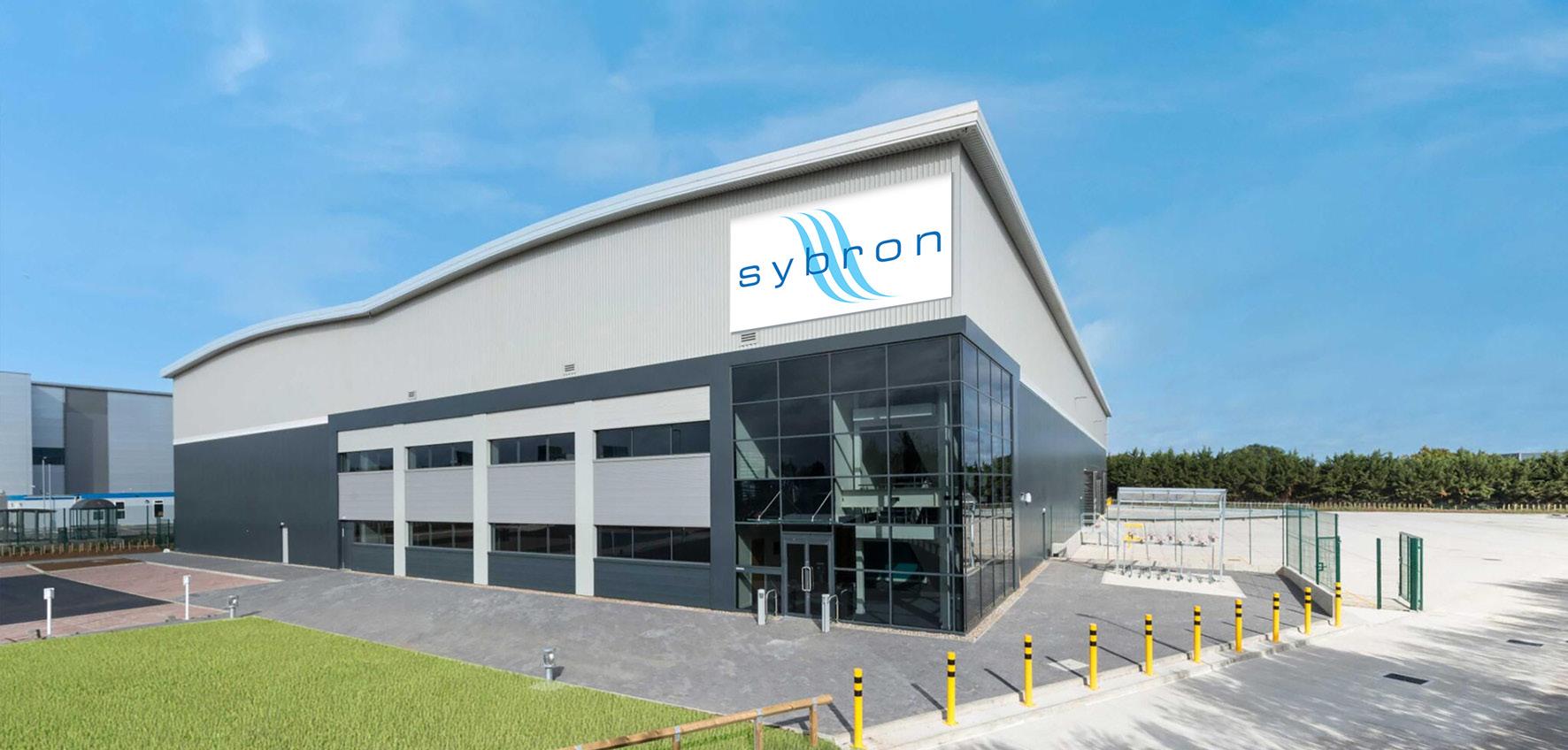
Sybron, a leading supplier of cleaning, hygiene and catering products to some of the largest names in UK hospitality, announces its relocation into a new Head Office and distribution centre at ICON Harlow.
Scheduled for August, this move represents a major step for Sybron, supporting the company’s strategy for growth, improving day to day operations and giving a modern, futureproof space that reflects what Sybron is as a business today.
The brand new facility is over 70,000 sq ft, including a twostorey, Grade A specification office building. There will be six dock-level loading doors, two level access doors, a 50m-deep secure yard, designed for efficient HGV movement, 12.5m height for improved storage capacity and parking for over 40
cars. The HQ and distribution centre has been built in line with the company’s commitment to sustainability, with LED lighting throughout, air-source heat pumps, EV charging and PV solar panel capability.
“We’re delighted to share this very exciting news,” says Sybron operations director, Bradley Henwood. “This is a huge moment for Sybron, reflecting the hard work, commitment and growth achieved by the whole team. We’re genuinely excited about what this next chapter will bring.”
This major development follows Sybron’s management buyout 12 months ago and the opening of a second distribution centre in Stafford in November. The Stafford distribution centre has strengthened service levels by increasing delivery
frequencies to Sybron’s growing number of national customers and offering more efficient support to key areas such as Birmingham, Manchester, Liverpool, Nottingham, Sheffield, Derby and Leeds.
“Our strategy of controlled growth remains on target,” says Sybron’s sales & marketing director, George Mason. “The new facility gives Sybron the space to grow, provides flexibility and allows us to take the business where we want to go in the next 10 to 15 years. From a customer perspective, the new HQ allows increased bulk ordering and the opportunity to explore expanding our products and services. It also signals a great move for staff too, offering scope to develop new skills and for more individual progression.”
https://www.sybron.co.uk/
Building & Facilities Management magazine covers all of the major FM areas of interest within the workplace and the built environment.
To subscribe to BFM magazine, please visit www.bfmmagazine.co.uk
Energy
with AKCP Sensors
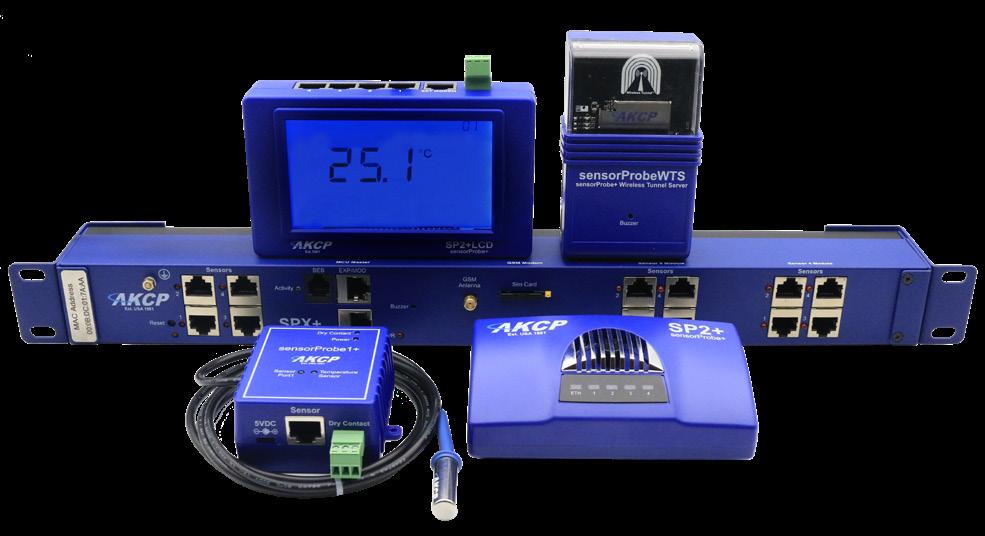
Contact us for a FREE site survey or online demo to learn more about our industry leading environmental monitoring solutions and how they can help to reduce your energy costs. Scalable, with Ethernet and WiFi connectivity, over 20 sensor options for temperature, humidity, water leakage, airflow, AC and DC
and
Environmental monitoring experts and the AKCP partner for the UK & Eire.
Kärcher UK unveils the K-Mop 46, bridging the gap between mop and machine cleaning
· Mop-like agility with machine-level cleaning performance
· Ergonomic, upright design to reduce physical strain
· Compact, efficient cleaning for tight and cluttered spaces
Kärcher UK, the leading cleaning provider, is proud to introduce the K-Mop 46, a lightweight and highly maneuverable scrubber dryer designed to transform floor cleaning in compact, high traffic and heavily cluttered spaces. Bridging the gap between a traditional mop and a professional scrubber dryer, the K-Mop 46 delivers a thoughtfully engineered, high performance solution, providing superior cleaning power with minimal physical effort for operators and market-leading ergonomics. Developed with both efficiency and user wellbeing in mind, the K-Mop 46 features a 46cm cleaning width and an upright ergonomic design, that supports natural posture to help reduce physical strain. Designed by ergonomic experts, the product is complemented by the height adjustable handle, marking an industry first for products of this kind. This key feature helps users work comfortably at their own height without compromising safety: something which is critical in heavy duty cleaning environments where awkward repetitive movements can lead to injury. The K-Mop 46 combines practical engineering with features designed for realworld cleaning environments. Its balanced design ensures even weight distribution, with fresh water flowing from the
4-litre tank located on the handle down into the machine’s system, supporting stable handling and consistent performance during use.
What’s more, the tanks are easy to remove, allowing them to be fully emptied and rinsed. Thanks to the residual emptying function, the inner walls of the tank dry well, which is essential for meeting strict hygiene requirements, especially in the healthcare sector. Additional features allow detergent to be carried in a dedicated holder, so they can be topped up when needed on larger cleaning operations.
Designed for efficiency, the machine features intuitive controls, a clear runtime display, and adjustable settings that allow operators to work quickly and confidently. It includes an LED ring status system with colour-coded indicators to signify information such as eco mode, water levels, and battery status. This supports operational needs through a language-neutral, user-friendly design suitable for all users.
In addition, an optional working light can be used, helping operators maintain visibility in low-lit areas such as warehouses and storage spaces. Powered by a 36V battery from Kärcher’s Battery Universe system, it delivers reliable performance for demanding cleaning tasks. The battery housing protects against impact, dust, and spray water in line with protection class IPX5, making it suitable for even the toughest environments.
James Carroll, Senior Product Manager at Kärcher UK, commented: “With the launch of our new K-Mop, we’re giving operators a smarter, more efficient and more ergonomic way to tackle demanding cleaning environments. It delivers the power needed for industrial settings while making day-to-day use simpler, safer and less physically demanding. Ultimately, it’s about helping our customers maintain high hygiene standards without compromising on ease of use.”
The introduction of the K-Mop 46 forms part of Kärcher’s ongoing commitment to advancing professional cleaning through thoughtful design and engineering. Designed to integrate seamlessly into wider cleaning operations, the machine can be fitted with suitable brackets for use alongside the Kärcher’s Flexomate cleaning trolley. By prioritising usability and environmental responsibility, Kärcher continues to develop solutions that enable businesses to operate more efficiently while supporting healthier working environments.
For more information, visit Kärcher’s website for more details.
MEMBERS SPECIFY CFA
Specifying CFA members for your flooring projects means you’ll be gaining a wealth of experience from vetted contractors with the knowledge and products to fulfil your specification with a sustainability criteria.
CFA members are part of a supply chain that includes specialist contract flooring contractors, manufacturers and distributors, all of whom promote the highest standards and expertise.
London Borough of Harrow cuts maintenance costs with digital twin
The London Borough of Harrow has launched a new digital twin enabling remote building inspections and more immersive online experiences for citizens. High resolution drone imagery is allowing faster and more cost-effective maintenance surveys while 3D maps of parks are helping to increase the use of green space by the public. The council is also piloting the use of drones to help plan and support anti fly-tipping actions.
Using Site Scan drone software from Esri UK, Harrow is capturing and processing drone data to create detailed 3D models of key sites, including leisure centres, parks, arts venues and other council buildings. The new data is adding detail to Harrow’s existing low resolution digital twin where it is needed most, providing a cost-effective hybrid approach to developing a more valuable digital representation of the borough.
The latest imagery has been used to conduct roof surveys of Headstone Manor & Museum, a Grade 1 listed manor house dating back to 1310 and an important part of Harrow’s history. By replacing traditional scaffolding and manual inspections, the new approach saved £12,000 on this project alone.
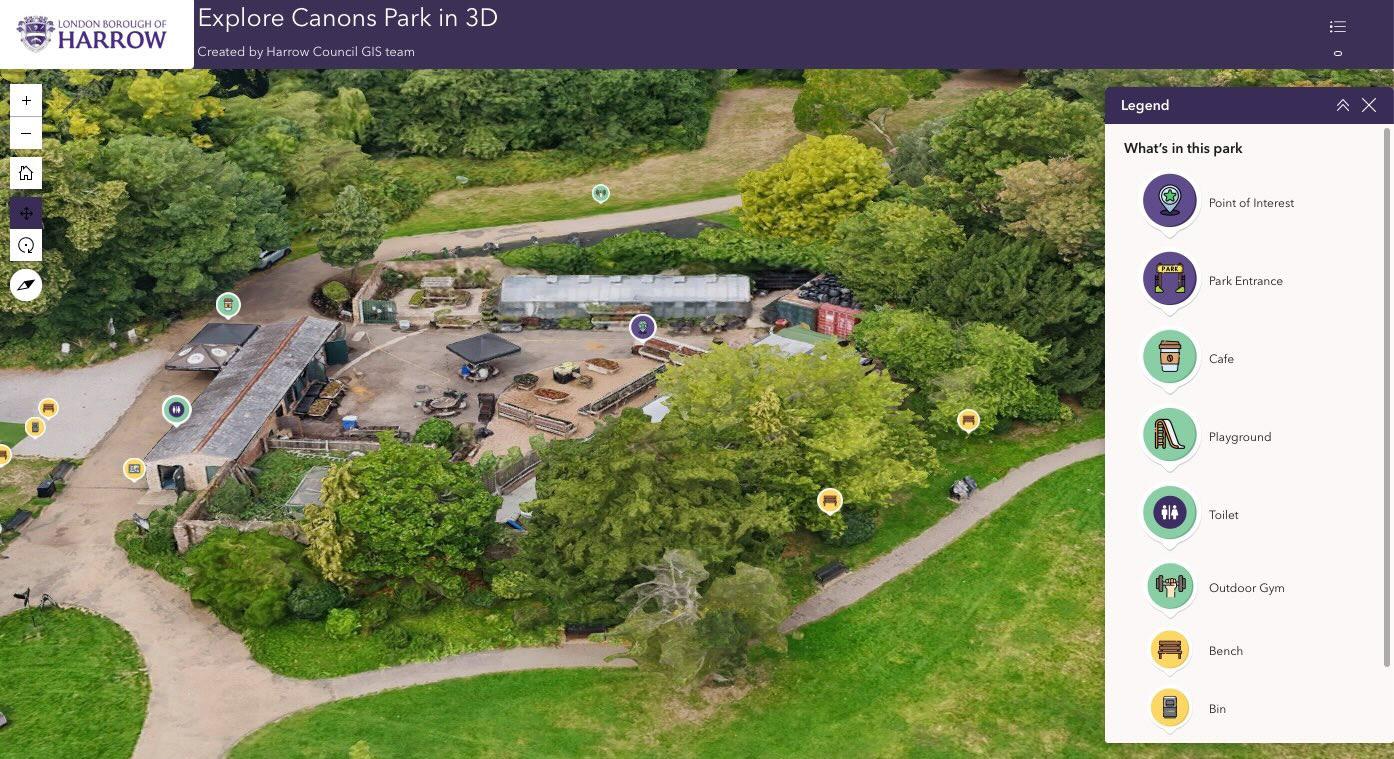
As part of the Healthier Harrow programme, interactive 360-degree imagery of the borough’s parks is being used to encourage greater use of public green space. Canons Park is one of the first examples to go live. Harrow has found that 3D interactive maps are more engaging than 2D visuals when promoting facilities such as parks, leisure centres and libraries. Healthier Harrow is an overarching health and wellbeing strategy, aiming to reduce health inequalities and promote healthier lifestyles.
Ben Jones, Head of Digital at London Borough of
Harrow said: “The new drone approach is already saving time and money and fits our mission to work smarter and more efficiently. With minimal investment, the 3D data has the potential to deliver significant financial benefits over the next few years.”
Harrow is also piloting the use of the new drone technology to tackle fly-tipping. High resolution 3D images of potential dumping sites will enable the Environmental team to better plan preventative measures, including the positioning of signage, fencing and CCTV. By providing the 3D context of sites, more valuable insights are expected as to why certain locations suffer more from illegal dumping of waste than others.
“Using a drone and Site Scan gives us a faster and more cost-effective method of examining our buildings and other assets,” commented Sam Tizzard, Head of GIS and Data
Manager at London Borough of Harrow. “The hybrid approach using high and low resolution data keeps development costs down but delivers detail where it matters most. It’s a low cost, low risk strategy for creating a digital twin to drive significant time and cost savings. The potential for ongoing savings in roof inspections alone is huge.”
Esri’s Site Scan for ArcGIS processes unlimited drone flight data in the cloud to create 2D and 3D outputs including point clouds and high-quality 3D meshes. Distances, surface areas and volumes can be measured, supporting a wide range of planning and maintenance tasks.
This latest development builds on Harrow’s existing low resolution aerial and street-level imagery of the whole borough. Harrow is building its digital twin using Esri’s GIS (Geographic
Information System) system to integrate, visualise and analyse the different data required.
Next steps include automating the integration of Revit BIM models into the digital twin and training additional staff as drone pilots to meet the growing demand for aerial data. Future plans include incorporating real-time data into the digital twin, such as traffic
and weather data and testing the live monitoring of potential fly-tipping sites using drones.
“By making digital twins more affordable with drones and Site Scan, London Borough of Harrow is enabling smarter asset management, better planning and improved services for residents,” commented Paul Clarke, Head of Government at Esri UK.
Recolight announces WEEE Compliant Project Collection Service for Large Scale Luminaire Projects
Recolight, the leading WEEE Compliance Scheme for lighting offers a comprehensive WEEE compliant project collection service, specifically designed to support large scale luminaire projects across the UK.
The service provides an integrated collection and recycling solution for all lighting waste generated during major projects. This includes lamps, luminaires, emergency batteries, and all electricals covered by the WEEE Regulations. By offering a single point of contact for project requirements, Recolight ensures carbon-efficient, compliant management of lighting waste from start to finish. We operate in line with WEEE regulations and ISO standards, guaranteeing consistent quality and environmental responsibility.
“Collection and recycling of luminaires and lamps is free for Recolight Scheme Members, subject to our standard terms and conditions,” said Lyndsey Tweddle, Recolight’s Customer Service Manager.
“We’ve been providing project collections for many years, and due to increasing demand, we are now offering the service to nonmembers as well. We’re seeing strong uptake from organisations who value a compliant, carbonefficient solution delivered by a specialist team.”
Whether upgrading fittings, relighting entire buildings, or managing client projects, Recolight partners with clients and contractors to schedule flexible collections, supply appropriate containers, and guarantee full regulatory compliance throughout. The
service is underpinned by years of experience, efficient logistics, and transparent guidance on WEEE responsibilities. Clients benefit from complete audit trails, supplier licences, along with detailed reports on project tonnages and carbon emissions to support Scope 3 reporting.
“Our streamlined service makes us the go-to supplier for all lighting waste needs on large
projects,” said Nigel Harvey, CEO Recolight, “We take the hassle out of compliance and recycling, so our customers can focus on delivering energy-efficient lighting upgrades with confidence.”
For more information on Recolight’s WEEE compliant project collections for the lighting industry, visit www.recolight.co.uk.
Building & Facilities Management editorial content covers all the major FM areas of interest within the workplace and the built environment.
This includes industry developments, company news, case studies and application stories, product news as well as articles from leading authorities within the marketplace.
To find out more information about BFM Magazine or to subscribe, please visit www.bfmmagazine.co.uk
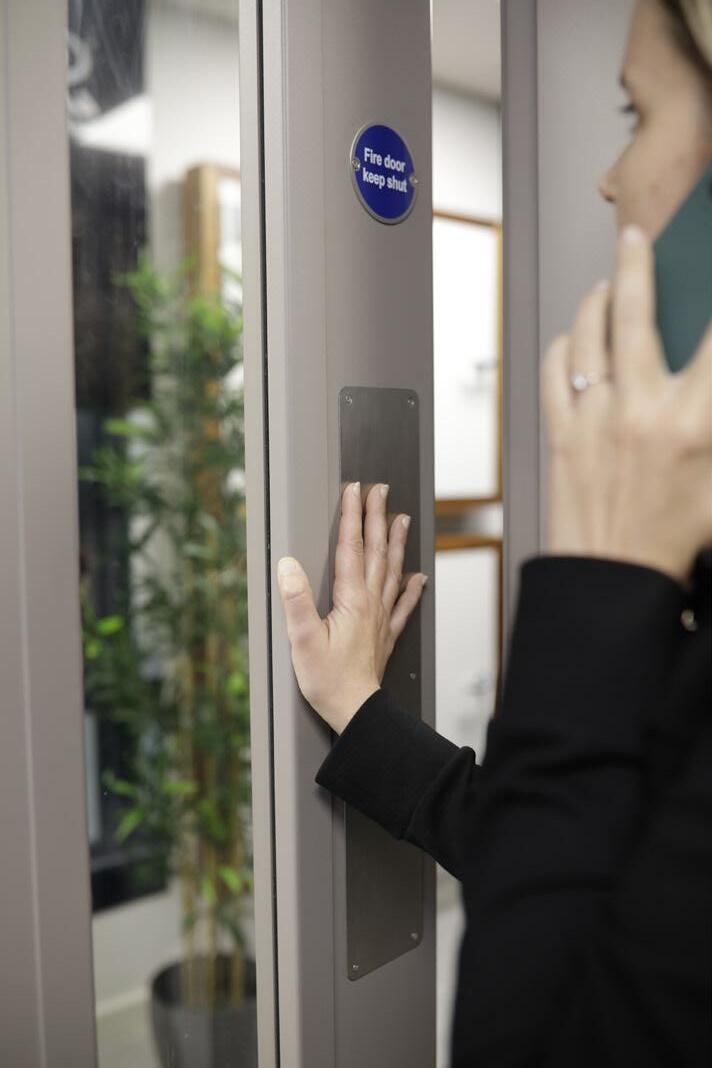
Firemongery: The unsung guardian of building safety
Elliott Dawson, National Accounts Manager at UAP, explains why firemongery is more than a finishing touch. With scrutiny and regulations tightening, he argues that specification, installation and maintenance need to be treated as seriously as the doors themselves because firemongery is frontline safety.
Firemongery rarely makes the headlines. Hinges, closers, latches and seals quietly do their work while the industry debates cladding, alarms and evacuation strategy. When a fire happens, it is often these small components that determine whether a building performs as designed by buying
time, containing smoke and keeping escape routes clear.
Firemongery is the link between a tested fire door and real-world use. People do not use a fire door, they use a handle, a latch or a closer. If these components
are mis-specified, poorly installed or allowed to drift out of adjustment, even the strongest door cannot do its job. Failures are rarely dramatic, but they build up over time. A closer may be disconnected for convenience,
a latch replaced with something smoother but incompatible, a hinge may loosen and a seal can be painted over. Each decision may seem minor, yet together they erode the door’s ability to resist fire and smoke and often only become apparent when it is too late.
Thinking about the door as a system
A fire door is more than a slab of wood or metal. Its frame, glazing, seals, signage and hardware all need to match the test evidence, but hardware is where this thinking often falls apart. Handles wear, closers are adjusted, cylinders are replaced and components are swapped. Without clear discipline, a doorset can appear correct but no longer reflect what was tested.
The challenge for 2026 and beyond is making system integrity practical by designing out ambiguity at the specification stage, setting clear installation standards and keeping maintenance routines simple enough to actually happen without compromising safety.
Specification and installation matters
Good firemongery starts at specification. Hardware must be proven for the intended fire rating and door configuration, and equivalent appearance or cost is not enough. Specifiers need to understand the door’s certification route, the evidence supporting the hardware and whether it is suited to the expected usage and maintenance requirements. The cost of specifying correctly is small compared with the expense of remediation, disruption and reputational damage when failures are discovered.
Even the right products can fail if installed poorly. Misaligned keeps, under-fixed hinges, incorrect intumescent packs and missing components all affect performance in everyday use and in a fire. Competence must go beyond a certificate. Installers need to understand why every detail matters, and firemongery should be treated as a critical trade discipline that is measured, checked, signed off and auditable.
Maintenance wins or loses safety
Buildings evolve, users change and doors get knocked about. Inspection and maintenance are not just admin, they are part of the fire strategy. Facilities teams need clear routines, access to the right parts and the confidence to challenge quick fixes that bypass test evidence. Firemongery should be treated like any life safety asset, monitored, documented and repaired properly.
Recognition is overdue
Firemongery is not about ticking boxes. It ensures the fire doors we rely on every day actually work when it matters. The industry has made real progress in raising awareness of fire doors, and now it is time to raise the bar on the components that make them function.
Hinges, latches, closers and seals are the unsung guardians of building safety, and they deserve recognition. With the insight and experience UAP brings to the sector, the industry has the guidance it needs to get this right, and it is time we start treating these components like they matter.
www.uaplimited.com
Understanding Environmental Metrics for Lighting
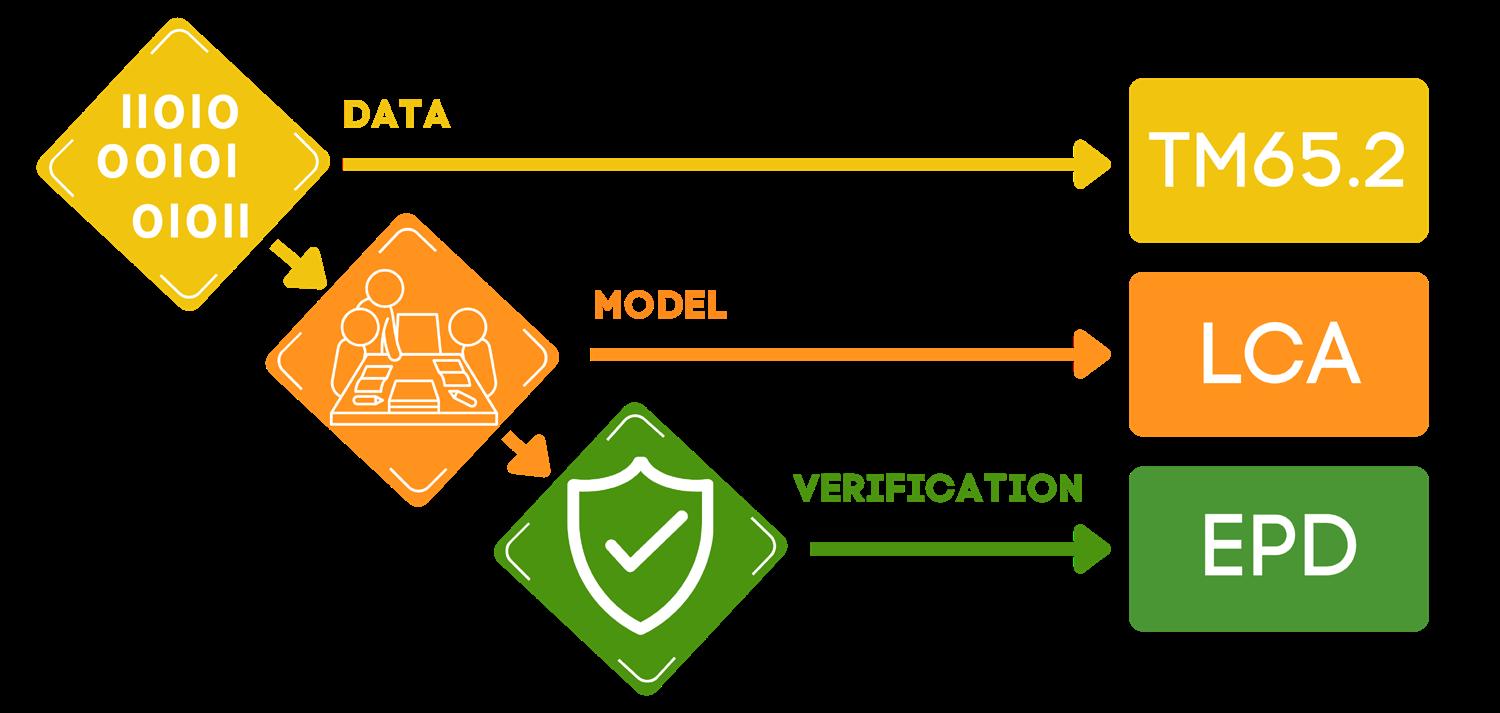
Product sustainability has become a critical focus in the lighting industry, driven by evolving regulations and increasing customer expectations across UK estates. Manufacturers are now tasked with demonstrating their environmental responsibility through various metrics and standards. Understanding these frameworks, TM66, TM65, Life Cycle Assessments (LCAs), and Environmental Product Declarations (EPDs), helps facility managers ask the right questions when specifying, procuring, and maintaining lighting.
Flavie Lowres, Environmental Metrics Manager at Recolight, outlines the environmental metrics for lighting and what they mean in practice for facility management teams.
TM66: Assessing Circularity in Lighting Products
Developed by the Society of Light and Lighting (SLL), TM66 provides a framework for evaluating how well lighting products adhere to circular economy principles. It assigns a score from 0 to 4, reflecting a product’s design for disassembly, use of recycled materials, and potential for repair and remanufacturing; factors that can influence maintenance, upgrades, and end-of-life planning.
Advantages:
• Offers a quick and cost-effective assessment method.
• Encourages manufacturers to consider whole-life value in design.
Limitations:
• Mostly relevant to the UK market. Self-certified.
• A single score may oversimplify complex environmental impacts.
While TM66 serves as a valuable starting point, it should be complemented with more comprehensive assessments when comparing options for major refurbishments or portfolio-wide upgrades.
TM65.2: Calculating Embodied Carbon in Lighting
TM65.2 focuses on estimating the embodied carbon of lighting
products—the emissions associated with raw materials, manufacturing, transportation, and end-of-life processes.
As the UK grid becomes greener, operational carbon footprints decrease, making embodied carbon a more significant factor in a product’s environmental impact and in how projects perform against organisational net zero targets.
Advantages:
• Provides a straightforward calculation using representative conversion factors.
• Facilitates comparison between products based on embodied carbon.
• Utilises real data on materials and component masses.
Limitations:
• Mostly relevant to the UK market.
• Self-certified.
• Focuses solely on carbon, omitting other environmental factors.
• Offers a high-level approximation rather than precise measurements.
TM65 serves as an accessible entry point for organisations beginning to assess environmental impact at the product level, and it can support early-stage options appraisal, procurement conversations, and carbon reporting.
Life Cycle Assessment (LCA): Comprehensive Environmental Analysis
A Life Cycle Assessment (LCA) provides an in-depth evaluation of a product’s potential environmental impact throughout its entire lifecycle, from raw material extraction to disposal. Unlike TM65.2, which focuses on carbon emissions, a LCA encompasses multiple impact categories, including water usage, pollution, and resource depletion.
Advantages:
• Delivers a holistic view of environmental impacts.
• Based on real-world, evidence-based data.
• Recognised internationally, facilitating global applicability.
Limitations:
• Self-certified.
LCAs are considered the most thorough method for assessing a product’s environmental footprint, making them valuable where facility teams need to justify choices across performance, compliance, and sustainability outcomes.
An Environmental Product Declaration (EPD) is a standardised document that is used to communicate the environmental profile of a product, as calculated using LCA. EPDs are verified by a third party to ensure accuracy and compliance with international standards and are increasingly used across the built environment, helping facility managers and procurement teams compare products on a like-for-like basis.
Advantages:
• Provides transparent, comparable data on environmental impacts.
• Enhances credibility through third-party verification.
• Aligns with potential future regulatory requirements in the construction sector.
• Internationally recognised
Limitations:
• Higher cost due to third-party verification
• Standards can vary by geography.
• Data-heavy to the untrained eye.
EPDs offer a reliable way for companies to communicate their products’ environmental performance, aiding informed decision-making for facility managers, asset owners,
and procurement teams.
Industry Trends and Tools
The adoption of TM66 and TM65 has propelled the lighting industry toward greater sustainability, fostering an understanding of life-cycle thinking in product design. While these frameworks offer accessible starting points, the detailed insights provided by LCAs and EPDs are becoming increasingly important, especially when facilities teams are evaluating products for refurbishments, replacements, and long-term maintenance.
To facilitate this transition, platforms like One Click LCA have emerged, streamlining the process of conducting LCAs and generating EPDs. These tools make comprehensive environmental assessments more accessible to manufacturers, enabling them to meet the growing demand for transparency in product sustainability.
In summary, as the lighting industry continues to prioritise sustainability, understanding and implementing frameworks like TM66, TM65, LCAs, and EPDs are vital. These tools not only help manufacturers assess and improve the environmental impact of their products but also provide transparent, credible information to facility managers and procurement teams, supporting informed choices across the estate.
www.recolight.co.uk
New global NEC Contracts research puts built environment professionals on
the record about trust, collaboration and the state of supply chain relationships
• New report draws on views of more than 1,000 construction professionals across five countries
• 61% of respondents globally agree built environment supply chains are inherently adversarial, yet 83% agree trust is critical to successful project outcomes
• Fewer than one in eight professionals in any country surveyed actively drive for the use of collaborative contracts, despite 79% viewing wider adoption positively
NEC Contracts has today published Trust, Contracts and Outcomes: A Global Study of Construction Supply Chain Relationships, a major piece of exclusive research exploring the factors shaping supply chain relationships across the built environment. Drawing on the views of more than 1,000 industry professionals in the UK, Australia, Peru, Singapore and Hong Kong, the report provides a detailed picture of current attitudes to trust, collaboration and contracting, and the gap between where the industry is and where professionals believe it should be.
The state of the industry
The research paints a clear picture of an industry under significant commercial pressure. On average, respondents estimated that only 58% of projects they had worked on in the last three years were delivered on schedule and to budget. Poor estimating and job costing (42%), uncontrolled changes in project scope (39%) and late payment culture (33%) were identified as the biggest causes of business instability, financial stress and disputes across supply chains. Adversarial dynamics are widely recognised as a structural feature rather than an
occasional problem. Globally, 61% of respondents agreed that built environment projects create inherently adversarial supply chains, with just 11% disagreeing. 68% agreed that commercial and contractual pressures make project delivery more difficult, while 75% agreed poor supply chain relationships risk business continuity.
The UK data highlights specific pressure points. 63% of UK architects reported that formal external dispute resolution had been often or very often necessary in the past five years, more than double the global average of 26%. 59% of UK main contractors identified late payment culture as their single biggest source of instability, the highest figure for any sector in any market surveyed.
Trust and collaboration: widely valued, inconsistently practised
Despite these challenges, the research reveals strong and consistent belief in the value of collaboration across all five markets. 83% of respondents agreed that trust between parties is critical to successful project outcomes, 81% agreed that higher levels of collaboration help issues to be resolved more quickly, and 78% agreed the most effective
supply chain relationships are built on trust and cooperation.
When asked what factors matter most in minimising disputes, effective communication (48%), clear boundaries and processes agreed from the start (39%), positive supply chain relationships built on trust and cooperation (34%) and contracts that support transparency and risk-sharing (34%) emerged as the leading responses globally. In the UK, strong client leadership also featured prominently.
A significant knowledge and adoption
gap
One of the most important findings of the report is the scale of the gap between positive attitudes toward collaborative contracting and actual adoption. Globally, 79% of those familiar with collaborative contracts felt positive about their more widespread use, yet fewer than one in eight respondents in any country said they actively drove for their adoption.
Among those familiar with collaborative contracts, the perceived benefits are clear and commercially significant: 76% agreed collaborative contracting helps protect their business, 74% agreed it improves project delivery timescales, 71% agreed it reduces legal disputes and improper risk allocation, and 69% agreed it improves project profitability.
Yet awareness and experience remain uneven. In the UK, one in five respondents (20%) had never heard of collaborative contracts, the
highest figure across all five markets, and only 27% had worked on projects using them, compared with 40% in Hong Kong and 38% in Australia. The predominance of traditional contract forms is driven overwhelmingly by client specification, pointing to the critical role client organisations must play in accelerating change.
Rekha Thawrani OBE, Global Director at NEC Contracts, said: “The findings of this report confirm what many of us working in collaborative contracting have long understood: that the industry knows what better looks like, but has not yet found a consistent way to get there. The connection between collaborative contracts and better outcomes is clearly evidenced in this research, and the appetite for change is real. What is needed now is decisive action from clients, who have the greatest power to shift the dial. NEC Contracts is committed to supporting that change and to helping supply chains build relationships that deliver better projects for everyone.”
The full report, Trust, Contracts and Outcomes: A Global Study of Construction Supply Chain Relationships, is available to download by clicking here.
If you are interested in advertising in Building & Facilities Management magazine, please feel free to get in contact with James Scrivens - james@abbeypublishing.co.uk.
More information can also be found at www.bfmmagazine.co.uk
Chicopee and Sontara bring sustainable wiping innovation to Interclean
Magnera brands Chicopee and Sontara will highlight their combined expertise in wiping technology at Interclean, Europe’s leading cleaning industry exhibition, taking place in Amsterdam from 14–17 April. The brands will exhibit together on stand 01.505, demonstrating how their complementary portfolios deliver sustainable, highperformance wiping solutions across diverse cleaning applications.
Visitors to the stand will discover a shared emphasis on sustainability and innovation, alongside industry-specific solutions tailored to distinct cleaning segments. Chicopee specialises in general cleaning markets such as hospitality and healthcare, while Sontara offers high performance wiping solutions for specialty sectors including industrial, cleanroom and aerospace.
On display will be the brands’ latest sustainable wiping innovations, as well as some of their most renowned highperformance cleaning solutions. All products are manufactured locally in Europe, helping
reduce overall environmental impact while enhancing supply chain reliability and agility for customers.
“Interclean is Europe’s biggest showcase for the cleaning sector, and we can’t wait to show our expanded capabilities under the Magnera banner,” said Lorenzo Vaira, Product Manager for Europe, Chicopee and Sontara. “Our expert team will be there to help visitors identify the right solutions for their cleaning application, answer any technical questions, and demonstrate our products in action.”
Chicopee: rMicrofibre™ Range with 100% Recycled Content
Chicopee will introduce its expanded rMicrofibre™ range, made with 100% recycled microfibre and designed to maximise cleaning power with reduced environmental impact. Delivering a carbon footprint reduction of 50% versus non-recycled alternatives, rMicrofibre™ is at the forefront of fully recycled microfibre disposable
wipes, offering a powerful and sustainable solution for applications that require maximum cleaning effectiveness and efficiency, such as hightraffic areas or areas using touchscreen technology.
Sontara: New Sustainable Wipes Portfolio
Sontara will showcase its recently launched sustainable wipes range that delivers up to 42% less CO2 emissions than standard Sontara wipes. The new range uses exclusively sustainable raw materials including recycled PET from PCR bottles, plastic-free fibres such as viscose, lyocell and cotton, and natural wood pulp. Sontara’s new sustainable wipes portfolio will be front and centre during the show, where their team will be showcasing it along with some of the brands’ renowned solutions, all made with their proprietary advanced fabric technology that creates wipes with exceptional strength, absorbency, and extremely low linting.
Scan for more information or to order your FREE
ONE OF THESE PANELS IS NOT LIKE THE OTHERS...
This picture was taken 24 months after all the panels had been professionally cleaned, but only one had been treated with Aqua Fend® F after cleaning.
This real-life result shows that Aqua Fend® has been developed to PROTECT your building’s façade and flooring, PREVENT longterm damage caused by water ingress and urban pollution, and PRESERVE the original structure and colour for as long as possible after cleaning.
The Aqua Fend® range helps you to reduce cleaning and maintenance costs while keeping your walls and floors clean.
sample of Aqua Fend*
Addressing the gap in escalator cleaning standards: EscaTEQ develops escalator maintenance framework
• EscaTEQ will introduce the EscaTEQ Method™ – a voluntary, structured operating framework designed to introduce clarity, repeatability and controlled application into escalator tread cleaning – at Interclean Amsterdam 2026.
• Research indicates that falls account for ~75% of escalator injuries in the US (93% in the UK), with around 10,000 escalatorrelated injuries (2,000 in the UK) per year requiring emergency care.
EscaTEQ, a global provider of method-based escalator cleaning solutions, is to introduce the EscaTEQ
Method™ at Interclean Amsterdam 2026, the world’s largest professional cleaning and hygiene exhibition.
Despite more than a century of escalator use globally, no widely adopted framework exists for routine escalator cleaning. According to the National Elevator Industry, Inc. (NEII), escalators handle an average of 3,000 passengers per hour under typical conditions – rising significantly in airports, transit hubs and major retail environments.
Escalators are among the most visible, heavily trafficked and mechanically sensitive assets in the built environment, sitting at the intersection of passenger safety, mechanical
reliability and long-term asset value. Yet cleaning practices have historically remained fragmented, inconsistent and dependent on localised approaches rather than documented methods.
The consequences of that gap are visible in the injury data. An NIH-published study estimates around 10,000 escalator-related injuries per year require emergency care in the United States alone, with roughly three quarters of incidents occurring due to falls, according to the U.S. In the UK, of the approximately 2,000 escalator accidents reported per year, 93% involve falls.
Surface contamination is among the environmental
factors identified in escalator fall causation, with legal and safety practitioners noting that cleaning regimes and inspection records are increasingly scrutinised in incident investigations.
The EscaTEQ Method™ is a voluntary, structured operating framework designed to introduce clarity, repeatability and controlled application into escalator tread cleaning, developed over 10 years of field deployment and operational refinement. The method provides a practical, repeatable, low-moisture, surface-controlled approach to escalator tread cleaning, built around a structured ABC condition classification system, defined restoration paths and a standard operating sequence.
The structured, sequential nature of the Method also makes it straightforward to integrate into Computerised
Maintenance Management Systems (CMMS), allowing escalator cleaning to be logged, tracked and audited alongside other planned preventive maintenance activities. For asset managers, facilities teams and cleaning contractors operating under increasing scrutiny around documented maintenance practice, that audit trail has value well beyond the clean itself.
At Interclean Amsterdam, EscaTEQ will present the method through printed and digital reference materials, visual demonstrations and a short explanatory video illustrating the method in practice. Attendees are invited to review the framework, examine supporting field evidence and engage in technical discussion regarding its applicability across different environments
and traffic profiles.
Willem de Roeper, Vice President of Global Sales at EscaTEQ, said: “Whether you are managing an airport, a shopping centre or a transit hub, escalators are among the most visible and most used assets in your portfolio. The consequences of inadequate cleaning practice – moisture ingress, degraded slip resistance, unplanned downtime – are the same across all of them. What has been missing is a consistent, documented framework for addressing it. That is what we are bringing to Interclean.”
EscaTEQ will introduce the EscaTEQ Method™ at Interclean Amsterdam 2026: RAI Amsterdam | 14–17 April 2026 | Stand 02.416.
Every CHSA member has signed our Code
AI reshaping CCTV versus security guard debate in vacant commercial property
The rise of AI is transforming the long-running debate over CCTV versus security guards.
As sectors such as retail, offices and logistics face rising vacancy rates, protecting empty commercial property is becoming more complex and more critical.
Vacant buildings generate no income yet still require protection, so for landlords and property managers the challenge is balancing effective security with tight budgets.
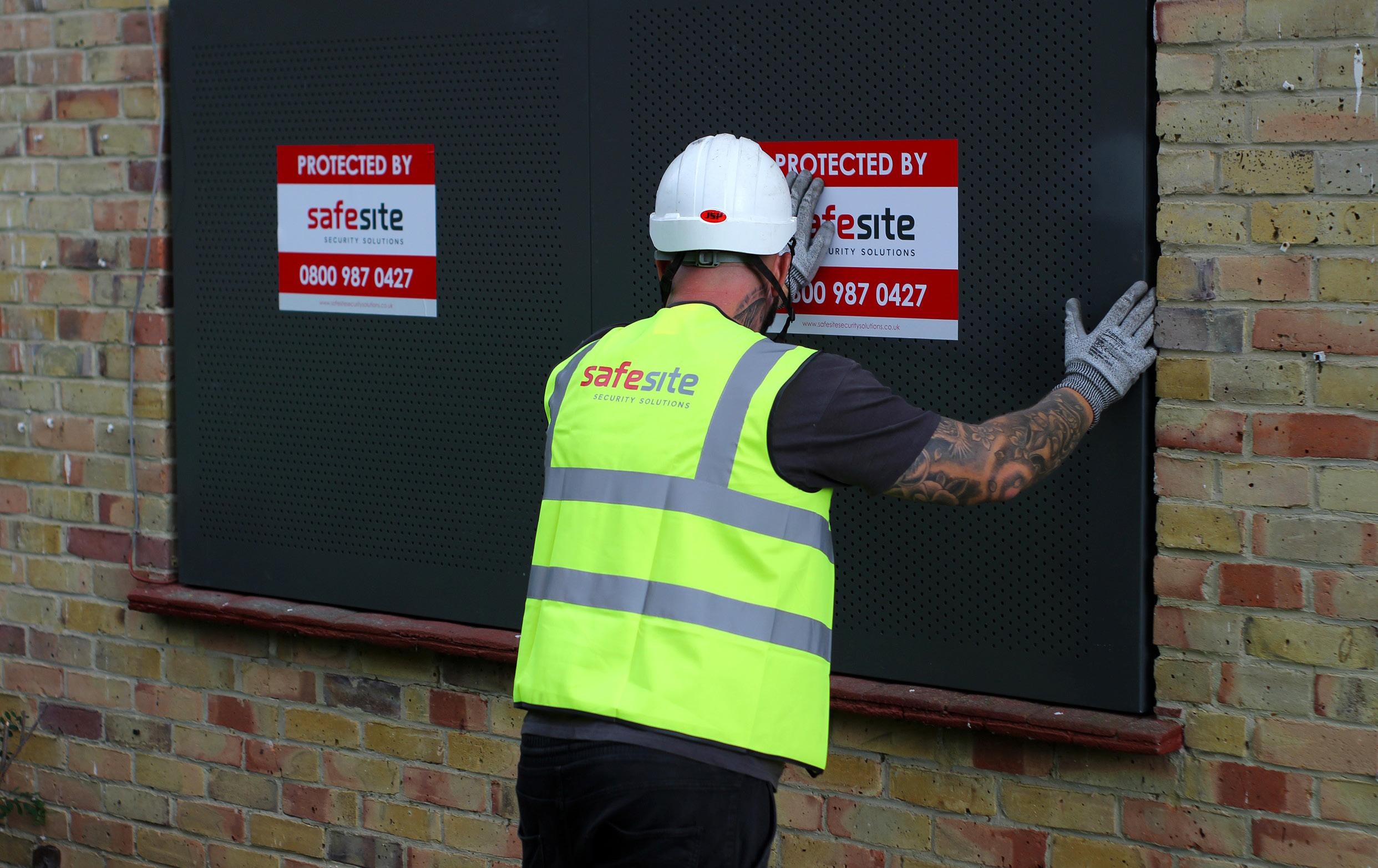
Paul Goossens, operations director at SafeSite Facilities, said: “The question is no longer should I have a security guard or cameras, but how owners of vacant property can deploy the most effective
protection strategies.
“Vacant properties present a unique issue. They’re not generating revenue, so every pound spent on security needs to be justified.
“AI enabled CCTV should today be seen as the first line of defence which can provide intelligent filtering of threats, combined with interventions from security guards where necessary.”
Rising risk and changing technology
Last year AXA UK warned of an alarming rise in the number of vacant commercial buildings across the country being targeted by criminal gangs.
The insurer reported
cases of fly tipping, theft and vandalism, with damage amounting to hundreds of thousands of pounds.
Despite this, many vacant commercial properties remain under-protected, leaving them vulnerable to theft, vandalism and trespassers.
AI powered systems can now distinguish between genuine threats and environmental triggers such as animals or weather, significantly reducing false alerts.
This allows monitoring teams to focus on credible incidents and respond more quickly.
Some systems are even capable of issuing live, tailored audio warnings to intruders, increasing their deterrent
effect and preventing incidents before they escalate.
Cost pressures driving new approaches
Round-the-clock guarding can represent a significant ongoing expense, especially over extended periods.
In contrast, AI-enabled CCTV offers a more flexible and scalable alternative.
Coverage can be adjusted depending on the level of risk, enabling property owners to maintain protection without committing to continuous on-site personnel.
Rather than paying for a permanent presence, security guards can be deployed when required, helping to control costs while maintaining effective protection.
The continued role of security guards
Despite these technological advances, security guards continue to play a vital role.
Their ability to intervene in real time, apply human judgement and de-escalate situations remains difficult to replicate. In higher-risk environments, particularly large commercial sites, a physical presence can also provide reassurance and act as a visible deterrent.
However, guards can only be in one place at a time, are subject to fatigue and represent a significant cost where continuous coverage is needed.
The move towards hybrid security models
Increasingly, the most effective approach is a combination of both CCTV and on-site personnel.
AI-enabled systems act as the first line of defence, providing continuous monitoring, early detection and can escalate threats when needed.
Security personnel can then respond when necessary, focusing their time and expertise where it is most needed.
Goossens added: “For landlords and asset managers, this represents a more strategic way of managing risk.
“The right approach will depend on factors such as how long a property is likely to remain vacant, its location and the level of threat it faces.”
Physical deterrents such as boarding, security doors and fencing still play a crucial role in preventing access, particularly when supported by regular inspections to identify vulnerabilities.
A more strategic security model
Ultimately, the debate is no longer about choosing between CCTV and security guards. As AI continues to evolve, the focus is shifting towards how both can be used together to create a more efficient and cost-effective security model.
For more information, visit: https://www. safesitefacilities.co.uk
HID and Sharry Debut Digital Wallet Student IDs in Europe with H-FARM College
HID and Sharry have taken digital wallet-based student IDs into European higher education for the first time, delivering the capability at H-FARM College and enabling students, faculty and staff to access campus spaces using their smartphones or smartwatches. The deployment marks a significant milestone for European higher education, bringing together Sharry’s smart access and workplace experience platform and HID’s trusted identity solutions to deliver a seamless, digital-first campus experience.
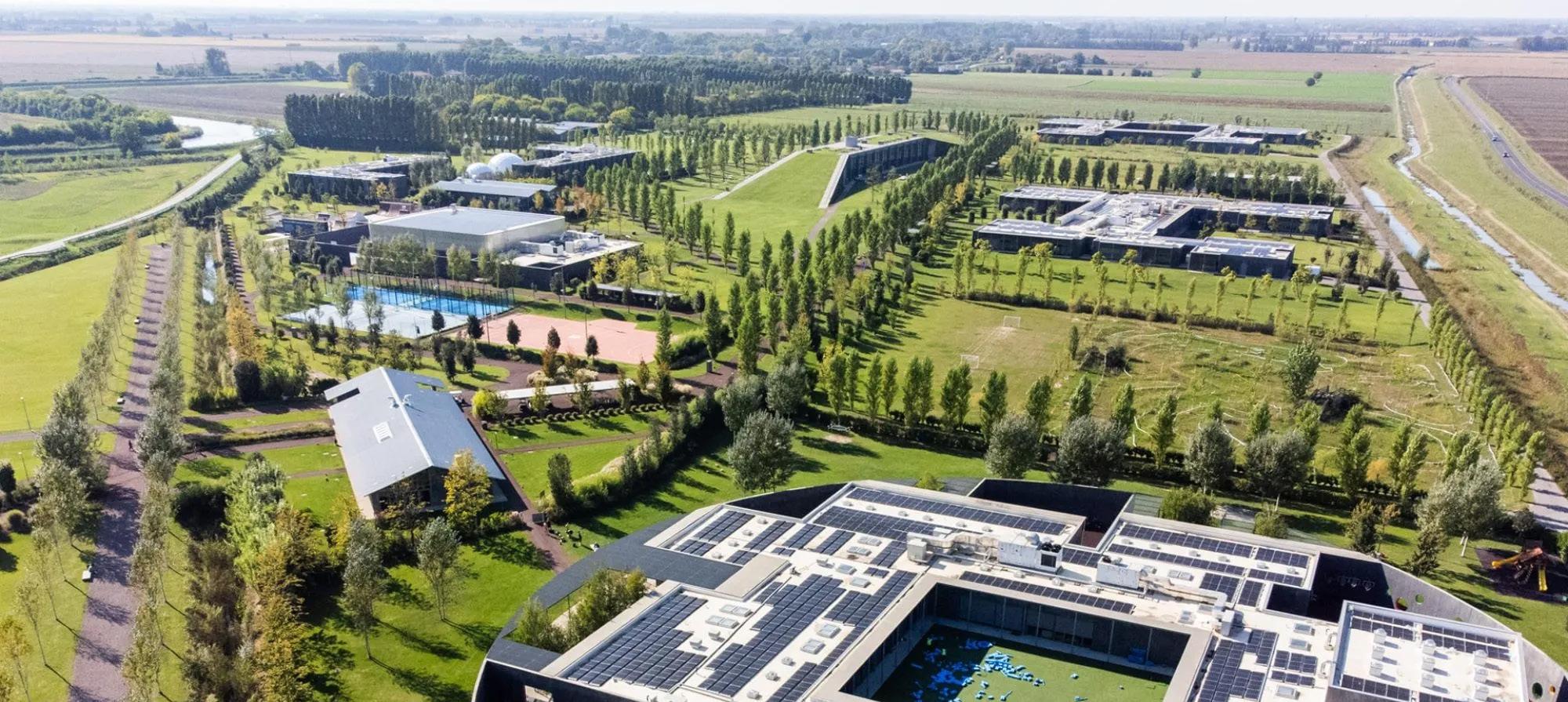
Located on the edge of the Venice lagoon in northern Italy, H-FARM College is a unique innovation ecosystem where education, startups and technology coexist on one integrated campus. Now, the institution is pushing the boundaries of how technology enhances everyday campus life.
With the recent launch of Wallet-based student IDs, undergraduate and postgraduate students, faculty and staff at H-FARM College can access their campus spaces with just a tap of
their phone or smartwatch –from their room to common areas and printer stations.
“From the very beginning, we envisioned a campus where credentials would always be within reach, directly on a smartphone. With HID and Sharry, this vision has become a reality through a solution that is simple, secure and reliable. Student enthusiasm was evident right away: within just three minutes of receiving the notification, 70% had already activated their virtual badge - a clear sign of how much this innovation was anticipated,” said Alberto Aldrigo, CTO at H-FARM.
A Fully Connected Campus Experience
At the core of the campus’ digital experience is the H-FARM app, available on both the App Store and Google Play. The app enables students, professionals, and visitors to explore the campus map, order and pay for food and stay up to date with events and news. The addition of walletbased student IDs extends
that experience by enabling smartphones and smartwatches to function as secure digital credentials, reflecting H-FARM’s commitment to advancing campus technology and the student experience.
HID’s trusted identity infrastructure provides the credential issuance layer, enabling secure digital IDs to be provisioned and managed at the
campus scale. Sharry connects H-FARM’s identity management with HID’s infrastructure, acting as the middleware layer that ties the two together. With a single tap in the H-FARM app, users can add their credentials to their digital wallets. And, thanks to Sharry’s integration with a Genetec access control system, students can move across campus spaces quickly and securely, all without having to open additional apps or carrying physical badges.
“We are proud to join forces with HID to bring the first digital wallet experience to higher education in Europe,” said Matěj Pokorný, Head of Customer Success at Sharry. “Our collaboration with H-FARM has been nothing short of remarkable. What might have taken months was accomplished in just a few weeks, a testament to the shared vision and agility of
everyone involved. H-FARM sets a new benchmark for how campuses can modernize access and identity, without compromising security. And we believe it will become a reference point for higher education deployments across Europe.”
“H-FARM’s deployment is a strong example of what a truly digital campus can be: secure, mobile and frictionless by design. By placing student identity at the heart of the digital wallet experience, this implementation demonstrates how modern identity and access can be delivered seamlessly across the entire campus environment,” said Dominic Bruning, Director of Strategic Alliances for Mobile, EMEA, at HID.
This deployment marks a significant step toward fully digital campuses in Europe, enabling identity, access and services converge in a single mobile-first experience. It also expands the longstanding collaboration between HID and Sharry, who have previously delivered several industry firsts, including early wallet-based office access projects in the United States, European Union, and most recently Latin America. www.hidglobal.com
Security by Design - rethinking public spaces in the era of Martyn’s Law
The introduction of Martyn’s Law, for the first time ever, creates a legal duty for those responsible for publicly accessible premises to consider and prepare for the risk of terrorism. The implications of which start at the design phase, and for architects and specifiers this means proactive design thinking is embedded from RIBA Stage 1 onwards.
Here, Richard Hilson, director of sales and marketing for PFL - Access Management, argues the principles of Crime Prevention Through Environmental Design (CPTED) can help architects use spatial planning, circulation logic, and environmental cues to reduce vulnerability, support risk assessment obligations
and enhance user confidence.
Drawing on statutory guidance and emerging regulation - including the evolving oversight role of the Security Industry Authority (SIA) - there’s an opportunity for security to be reframed as a design-led discipline. Martyn’s Law marks a cultural shift in how we think about safety, responsibility, and the role of design in protecting peopleand there’s nothing stopping good design making places safer without them feeling intimidating or closed off.
This shift also means poorly designed spaces will no longer be neutral, and the difference between compliance and true resilience will increasingly come down to the quality
of design thinking applied at the earliest stages.
Driven by tireless campaigning from individuals such as Martyn’s mother, Figen Murray OBE, the law - Terrorism (Protection of Premises) Act 2025 - is, at its core, “for people, by people.” It is rooted in lived experience and loss - and that human context must remain central to how the industry responds.
Martyn’s Law introduces a tiered “protect duty,” requiring organisations to implement proportionate and “reasonably practicable” measures to reduce vulnerability to terrorist threats. It will evolve through bodies such as the SIA, reinforcing accountability across the sector but compliance alone is not
enough and in my belief, there’s a pressing need for security to become a design-led discipline, seamlessly integrated into the fabric of a space, rather than layered on as visible or intrusive infrastructure.
One thing we can’t do is allow compliance to become a checklist exercise. A poorly considered layout and unclear circulation can undermine even the most robust procedural plan. The challenge now, I believe, is about whether a space has been designed to perform under pressure.
In essence, security should not make places feel hostile or restrictive rather it should enhance confidence and support usability.
The role of CPTED
One of the most effective frameworks for achieving this balance is Crime Prevention Through Environmental Design (CPTED). CPTED is not a new concept, it dates back to the
early 1960s and is based on the simple but powerful idea that the design of a space can influence behaviour, reduce opportunities for harmful activity, and increase the perception, and reality, of safety.
What Martyn’s Law does is bring urgency to these long-established principles turning what was once best practice into something more mandatory. The reason why it is topical now, is because its four core principles align closely with Martyn’s Law:
1. Natural Surveillance
Designing spaces to maximise visibility where people can see and be seen, through open sightlines, lighting, and active frontages. This increases situational awareness and reduces concealment opportunities.
2. Natural Access Control
Carefully considered entry and exit points that
guide movement intuitively, reduces vulnerability while maintaining accessibility.
3. Territorial Reinforcement
Environments that look and feel owned are more likely to be respected. Subtle design cues, such as changes in materials or landscaping, help define public and private space, encouraging a sense of ownership and control. This works well when there’s community art, and landscaping that give it a local identity.
4. Maintenance and Management
Well-maintained environments demonstrate oversight and care, deterring malicious activity and reinforcing public confidence. It sends the message that someone has bought into this, and ensures it’s looked after and monitored.
As we stand here today, under new legislation, design teams must be able to show
Security & Access Control
that security risks have been considered and addressed in a proportionate way. This places significant weight on early-stage decisions - from site layout and circulation strategies to material choices and perimeter definition. As such, security must be embedded from the outset, influencing how spaces are planned, experienced, and managed.
This is where the distinction between good and poor design becomes critical. A well-designed space naturally guides behaviour, reduces ambiguity, and supports response. A poorly designed one creates friction, confusion, and vulnerability - conditions that no amount of retrospective intervention can fully resolve.
This includes designing for intuitive movement and safe crowd flow, minimising hostile vehicle access, and creating environments that are easy to monitor without feeling overly surveilled.
Access, perimeter, and integrated protection
Over the years, one of the toughest considerations in CPTED, is the integration of access control and perimeter protection into the overall design. The most obvious answer is to create fortress-like environments, but that goes against the design ethos of CPTED.
So we find ourselves at a crossroads post Martyn’s Law, but we are still able to embed protective measures into landscape and architectural features, and use tested, security-rated solutions that can detect, deter and delay threats, and which are addressed without compromising aesthetics or usability. The real test is, can protection be embedded so effectively that it is felt, but not seen?
It will also tackle vehicleborne risks - an increasingly common concern, and
highlighted in Liverpool last year when Paul Doyle “used his vehicle deliberately as a weapon” after it was believed he followed an ambulance through a road block during Liverpool FC’s championship parade.
The National Protective Security Authority (NPSA) provides very good guidance on hostile vehicle mitigation (HVM), including a public realm design guide on designing for public spaces with consideration for HVM.
Navigating the challenge
A defining feature of Martyn’s Law implementation is that it prioritises preparedness culture over physical kit. Emerging guidance consistently emphasises the need for organisations to understand the nature of the terrorist threat and, crucially, to plan how they would respond in the event of an incident.
This subtly moves the conversation away from a purely defensive, hardwareled approach and towards operational readiness. CCTV, HVM, and access control are still integral, but they are only part of the picture. Equal weight is being placed on staff training, awareness programmes and the rehearsal of procedures, ensuring that responses are embedded and actionable rather than theoretical.
In this sense, the most secure spaces of the future may not be those with the most visible security, but those where people, processes, and places work seamlessly together under pressure.
This has clear implications at RIBA Stage 1, where early design decisions can either enable or constrain that culture of preparedness. Designing for Martyn’s Law is about creating environments that support clear communication, intuitive movement, and effective incident response. It should be understood less as
a counter-terrorism measure in the traditional sense, and more as an extension of health and safety thinkingembedding resilience into the everyday operation of spaces.
Similarly, responding to the requirements of the legislation demands expertise, innovation, and robust, security-rated solutions. It’s not a ‘one size fits all’ scenario - the tiered system respects a venue’s size, and purpose, and designers and specifiers will no doubt design and plan accordingly. Developing these capabilities responsibly requires sustained investment and specialist knowledge, and the focus from all of us working in this industry needs to be on responsibility, not commercialisation.
We must also ensure we are designing to meet today’s requirements, but also anticipating the risks and expectations of tomorrow? We have a duty to contribute our expertise to safer environments, support clients in meeting their obligations, and help rebuild public confidence in shared spaces. And these public spaces are fundamental to social, cultural, and economic life. Their value lies in their openness, accessibility, and ability to bring people together.
This is not about reaching a fixed destination, but about embedding a mindset - one that challenges the status quo and remains alert to what lies ahead. As future threats evolve over the next three to five years, so too must our approach. As Sun Tzu observed, we cannot rely on past formulas for future success - we must adapt to new realities and those yet to unfold. The question, then, is not whether we can meet the demands of Martyn’s Lawbut whether we are prepared to lead beyond them.
www.parkingfacilities.co.uk
Steve Juson, Managing Director,
Outdoor Estate Maintenance
Biodiversity Net Gain
OUTCO discusses your path to a greener, more sustainable future
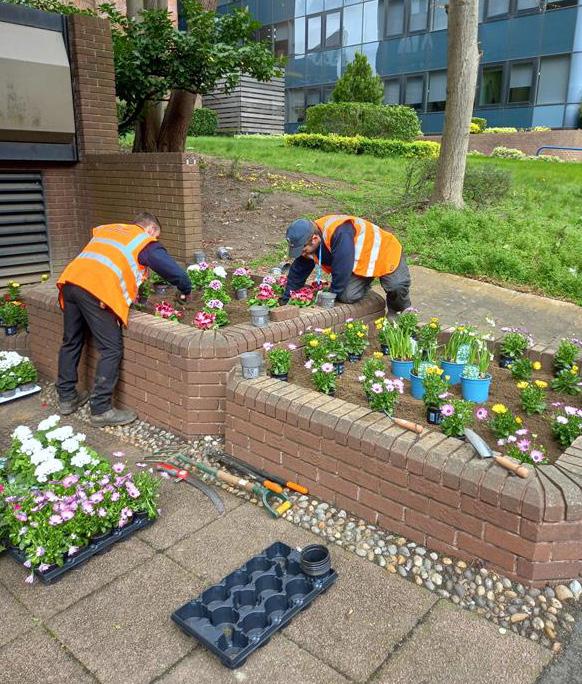
We all share a responsibility to our natural environment, but the creation of Biodiversity Net Gain (BNG) legislation and modern ESG reporting duties have brought this responsibility into sharp focus for many organisations. Rather than being treated as an afterthought, the ability to support business goals and objectives is making good environmental stewardship into a strategic advantage - and changing the game in outdoor FM. Far from being an obligation or a cost, grounds maintenance has gained a new role as an enabler of corporate best practice. At OUTCO we can help your organisation take this step. We are committed to supporting our clients through all their biodiversity projects, with a suite of biodiversity services that not only ensure compliance with BNG requirements, but also enhance the ecological value of your sites.
Understanding Biodiversity Net Gain
In the context of development, the UK government defines BNG as ensuring that “habitats for wildlife are left in a measurably better state than they were before the development”. This duty to improve nature - either in quality or quantity - has become a mandatory obligation for developers under UK law, with a target of a 10% improvement. Alongside this legislation has evolved a framework for defining, quantifying, and benchmarking the biodiversity of sites - and the degree of improvement over many years to ensure the lasting impact of this change. As a result, there are statutory biodiversity
metrics for assessing habitat and a standardised formula for calculating biodiversity units. Given that not every site can support a thriving natural habitat, the UK’s approach to BNG also allows for the use of off-site biodiversity units. Hence, even when habitats can’t be improved at a particular development, other land owned by the developer can be improved in lieu. As a last resort, biodiversity units can be purchased from a third party.
It’s not just a question for developers, however: the law seeks lasting improvement and places a duty to maintain improved habitats for a minimum of 30 years. This makes this a growing priority for many landowners and businesses managing outdoor spaces, whether to maintain the long-term improvement of a site developed under this legislation or as an opportunity to leverage sources of valuable off-site biodiversity. Outside of the specific BNG legislation, the ability to demonstrate environmental best practice is also increasingly valuable
for larger listed companies with Environmental, Social and Governance (ESG) reporting obligations.
How to reach a greener, more sustainable future
Thanks to our expertise in habitat assessment, AIdriven analysis, and long-term natural capital management, OUTCO works with our clients to help them meet regulatory obligations efficiently and sustainably. Through practical and scalable solutions, organisations can take proactive steps to improve biodiversity across their sites - whether or not development is taking place. To better understand how BNG can be achieved, let’s look at the key stages this typically involves:
1. Nature Impact Opportunity Assessment
This process establishes a baseline understanding of a site’s biodiversity value. It includes an on the ground habitat assessment and mapping stage, a desktop/ GIS analysis of the local area
and understanding of local biodiversity action plans and green corridors, leading to a comprehensive report that collates all these sources of data and insight with recommendations. Preliminary surveys can also be conducted that utilise a combination of high-resolution imagery, artificial intelligence (AI) analysis, and expert assessment to evaluate key biodiversity features.
2. Nature impact design strategy
The next stage is to work with you to develop a site-specific nature recovery concept with detailed plans, budgets, and planting schedules. This is key to linking grounds maintenance work to your organisations BNG or ESG objectives - taking the insight from the initial assessments and makes it into a practical roadmap that helps bring clarity to your investment.
3. Habitat Creation and Implementation
This is the implementation and delivery of the proposed biodiversity improvements, involving site preparation and planting suitable native species to ensure resilience and biodiversity. As sustainability is key (remember that 30year BNG duty), there’s also a five-year plant defect period to replace failed plantings and ongoing monitoring and adaptations as needed to ensure the habitat succeeds over the long-term.
4. Natural Capital Asset Management
Combining ongoing habitat maintenance with detailed analysis and reporting, this gives you robust, quantifiable data to demonstrate the success of your nature impact investment and to verify biodiversity gains. To relieve the pressure of ESG reporting burdens, OUTCO can make it all simple by compiling evidence for every site across your portfolio into an annual nature impact report.
Outdoor Estate Maintenance
Making meaningful change
Biodiversity supports ecosystems that provide cleaner air and water, carbon capture, and soil fertility. Protecting these natural assets requires positive action across society to abate habitat loss and environmental degradation - and new regulations place this ball firmly into the court of landowners and businesses managing outdoor spaces. This represents both a challenge and an opportunity. Developing sustainable habitats is an investment, but one that can pay dividends in terms of better environmental performance and material value through BNG credits. In some cases, attractive and biodiverse habitats such as wildflower meadows can actually require less ongoing
maintenance and help to reduce grounds maintenance budgets. However, like any investment, getting it right is all about experience, insight and working to match insight and strategy to effective delivery. At OUTCO we can help you take on this challenge, identifying opportunities for habitat improvements, delivering longterm management plans, and making reporting and monitoring simpler. With OUTCO, investing in biodiversity is more than compliance - it’s about creating healthier, more sustainable landscapes for the future. For more information about Biodiversity Net Gain, contact 0800 0432 911 email enquiries@outco.co.uk or visit www.outco.co.uk