
AATG Board of Directors
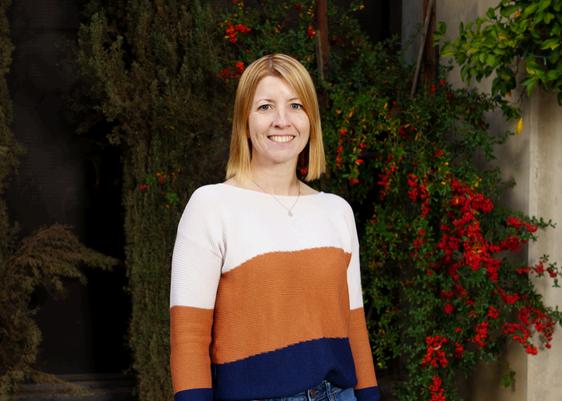
Jennifer Redmann, President
Franklin & Marshall College, PA
Stephanie Zachar, Vice President
Mesa Ridge High School, CO
Blake Peters, Treasurer
German International School, OR
Julia Ruck, Equity Officer
Emory University, GA
Michael R. Shaughnessy, Executive Director
AATG Office, NJ
Melanie Mello, Chapter Officer Representative Arizona German Language School, AZ
Jeffrey M. Dyer, Midwest Region
Oregon High School, WY
Bridget Levine-West, Northeast Region
University of Vermont, VT
Alysha Holmquist Posner, Northwest Region
Enumclaw High School, WA
Stefanie Ohnesorg, Southeast Region
University of Tennessee-Knoxville, TN
Christopher Francis, Southwest Region
Mountain Home Public Schools, AR
Kristie Foell, Central Region
Bowling Green State University, OH
The American Association of Teachers of German supports the teaching of the German language and German-speaking cultures in elementary, secondary and post-secondary education in the United States. The AATG promotes the study of the German-speaking world in all its linguistic, cultural and ethnic diversity and endeavors to prepare students as transnational, transcultural learners and active, multilingual participants in a globalized world.
Veronika Burney, PhD Director of International Programs & Scholarships veronika@aatg.org
John Capasso Director of Finance & Business Operations john@aatg.org
Pamela Murphy Logistics Coordinator & Programs Assistant pam@aatg.org
Michael R Shaughnessy, PhD Executive Director mike@aatg.org
Michaela Wetcholowsky Director of Member Services & the National German Exam michaela@aatg.org
112 Haddontowne Court, #104 Cherry Hill, NJ 08034
Submit content to www.aatg.org/newsletter

New AATG President Jennifer Redmann discusses leadership opportunities and recent grants
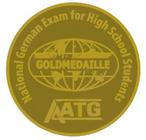
AATG congratulates all 2026 National German Exam medal recipients and NGE Scholarship winners!
The DEI Committee shares teaching activities for multilingual learners
Plus: Updates on the 2026 Summer Programs, Award Nominations, and Chapter & Partner news!
Have regional news to share with the national AATG? Submit an AATG chapter story
Boston, MA July 11-14, 2026

The American Association of Teachers of German (AATG) cannot wait to welcome you at its 100th Anniversary Conference, a landmark event celebrating a century of dedication to German language and culture education.
Join us in Boston, MA, from July 11-14, 2026, at the Westin Copley Place for a conference filled with inspiring sessions, engaging workshops, networking opportunities, and festive celebrations.
This once-in-a-century gathering, held in partnership with our friends from the American Association of Teachers of French (AATF), will bring together German and French educators from across the globe to reflect on our rich histories, explore current trends, and shape the future of language learning. Get ready for an unforgettable experience filled with enriching professional development, exciting cultural events, and the chance to connect with colleagues from around the world.
aatg.org/boston2026


Conference Highlights & Information

The Westin Copley Place is conveniently located across from Back Bay Station, with multiple daily Acela connections between Boston and Washington, DC, and destinations in between.
The conference hotel is just 20–30 minutes from Boston Logan International Airport by taxi, ride share, or public transportation, making arrival and departure seamless for conference attendees.
Make the most of your conference experience by staying at the conference hotel , the Westin Copley Place. The room block is open and will remain available until all rooms in the room block are reserved!
Additionally, we' ve reserved a select number of rooms at the Courtyard Marriott Boston Downtown. A room at our second room block can be booked here: Courtyard Marriott Boston Downtown


Start your mornings with purpose at curated breakfasts focused on leadership, collaboration, and professional growth!
Explore breakfast events here: aatg.org/conference-mealoptions-2026
Join colleagues from across the country for an elegant evening honoring AATG’s 100-year legacy with dinner and special recognitions!
Information is available here: aatg.org/conference-activities2026

President's Letter
Liebe Kolleg*innen,
Warm greetings from spring-like Pennsylvania!
It is both overwhelming and exciting to be leading the AATG board during our centennial year The highlight of 2026 will certainly be our annual conference, to be held July 11-14 in Boston in conjunction with the American Association of Teachers of French. I hope that many, many colleagues, especially those who find it difficult to travel during the school year, will take the opportunity to join us in New England for amazing professional development sessions and once-in-a-century summer celebrations
An important goal for the AATG in the coming years involves cultivating the next generation of leaders in the profession To that end, earlier this year we sent an e-mail to AATG members to solicit volunteers for roles on the AATG’s various external committees. Nearly 50 people answered the call! Now that the academic year is winding down, I will be reaching out to respondents to extend my thanks. We won’t be able to place everyone on a current committee, but having a pool of names for various roles will be a great help in the future.
On that call for volunteers, many colleagues expressed an interest in helping to select recipients of the AATG’s Study Abroad Grant for College Students. Thanks to a donation from a generous supporter, this grant was offered for the first time in 2025 and has been renewed for 2026 I have been involved in selecting the recipients for the first three rounds of grants, and it has been incredibly heartening to read applications from so many college students who are passionate about their German studies.
In the first three rounds, nearly 200 students applied for the grant, and 26 students were awarded $1250 each to support their study abroad experiences in German-speaking Europe. Applications have come from all over the country and from nearly every kind of institution – community colleges and regional universities, as well as highly selective state institutions and liberal arts colleges
President's Letter
The applicants are seeking to improve their German proficiency, undertake research projects, complete internships, and make connections between their disciplinary interests. Along with German, these students are engaged in a remarkably wide range of fields: they are majoring and minoring in molecular biology, music performance, electrical engineering, speech-language pathology, culinary arts, public relations, global affairs, supply chain management, data analytics, and more – while also pursing an interest in German
Many are traveling abroad for the first time; many are planning a study abroad opportunity in spite of significant financial and personal challenges, such as the need to support family members, to care for younger siblings or their own children, or to work multiple jobs to pay their own tuition. Reading their applications gives me hope for the future of German in this country
I want to thank every colleague who has encouraged a student to apply for the grant and who has written a recommendation I am especially grateful to the colleagues who have been involved in reviewing the first three rounds of applications: Michael Powers at Kalamazoo College, Scott Windham at Elon University, Morgan Koerner at the College of Charleston, Amanda Randall at St. Olaf College, and our past AATG board president Angelika Becker. Veronika Burney, Director of International Programs and Scholarships at the AATG, does an amazing job of managing the entire process Herzlichen Dank!
Sending best wishes for the close of the academic year -
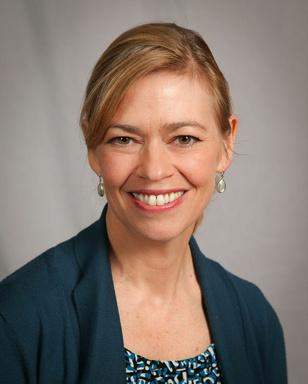
Jennifer Redmann
AATG President
Professor of German and Chair
Department of German, Russian and East Asian Languages
Franklin & Marshall College
jennifer redmann@fandm edu


National German Exam Honor Roll

“In German programs all over the country, students are working hard to develop their language skills, and these outstanding results on the AATG's National German Exam provide clear evidence of success. The AATG congratulates not only these fine students and their teachers, but also their families and school districts Herzlichen Glückwunsch!”
Jennifer Redmann AATG President
1,529
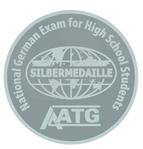
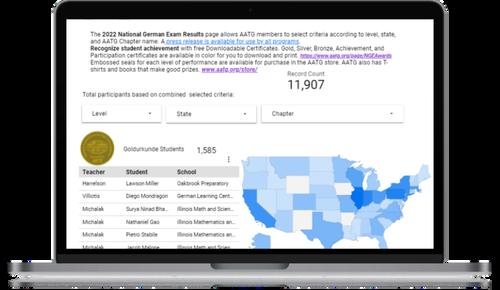

Visit the National German Exam Results and Honor Roll Page aatg.org/nge-results-and-honor-roll to view medal winners for the 2026 National German Exam.
Levels 2-4 AATG members can select criteria according to level, state, and AATG chapter name Embossed seals for each level are available for purchase in the AATG store.
AATG also has t-shirts, stickers and other promotional items for sale that make great prizes store aatg org/

Congratulations to the AATG/PAD National German Exam Scholarship Finalists & Winners

These outstanding German stu participate in the AATG/PAD Nation
The study trip includes round‐trip air host family, and excursions to plac study trip, now in its 66th year, is ma Repub
Natalie Aungst, Skanda Azhagappan Dantal, Debabandya Dash, Sofia Diaz, Gui, Sunil Hegde, Bruin Hubbard, Osc Daniela Miletic, Ellie Morris, Eliza My Susanna Phinney, Alexander Plumey Rajaram, Varsha Ramakrishnan, Anu


fen, Scott Hosler, Alex Howard, Elena oe Kershner-Hammond, Noam er Korent, Anjali Krishna, Julian Krull, an Milev, Evyn Miller, Coranelle Mork, Elizabeth Olivier, Adelaide Paulsen, me, Liam Ricks, Audrey Ridley, Ben rague, Breelyn Tarno, Charlie Vater, varth Wankhede, Kyle Weller, Owen Dirk Winberg s to all!
Congratulations to the 2 026 reci pients of the annual N GE Post-Grad uate Scholarshi p


The National German Exam Post- Graduate Scholarship was created in 2023 and continues annually. Graduating seniors, who take the National German Exam and score in the 90th percentile or higher, can apply for the NGE PostGraduate Scholarship for high school seniors. Eligible students should be 18-years-old or turning 18-years-old in Summer 2026, and are therefore not eligible for the AATG/PAD National German Exam Scholarship for summer study in Germany.

The scholarship is awarded to seniors in the form of a cash prize to further their German studies after high school . This can be at a community college, through employment , apprenticeships, military service, volunteer and service years, fellowships in the German-speaking world, or a traditional four-year degree.
Learn more at nge.aatg.org /seniorscholarship

A Century of Connection:
Shaping the Next 100 Years of German Education
S i n c e 1 9 2 6 , t h e h i s t o r y o f t e a c h i n g G e r m a n h a s b e e n
d e f i n e d b y a d a p t a t i o n , r e s i l i e n c e , a n d a p r o f o u n d
d e d i c a t i o n t o c u l t u r a l e x c h a n g e . T h e g r e a t e s t l e s s o n w e
t a k e f r o m t h e p a s t c e n t u r y i s t h a t s t r o n g , e n d u r i n g
e d u c a t i o n a l n e t w o r k s a r e b u i l t a n d s u s t a i n e d b y t h e
e d u c a t o r s t h e m s e l v e s A s w e l o o k t o t h e f u t u r e , t h e
A A T G i s c o m m i t t e d t o e s t a b l i s h i n g s u s t a i n a b l e s u p p o r t
p r o g r a m s d e s i g n e d t o e m p o w e r o u r p r o f e s s i o n f o r t h e n e x t 1 0 0 y e a r s .
T o m a k e t h i s v i s i o n a r e a l i t y , w e n e e d y o u r a c t i v e e n g a g e m e n t . T h e t r u e s t r e n g t h o f t h e
A A T G l i e s i n o u r d e e p l y i n t e r c o n n e c t e d , m u l t i l a y e r e d e c o s y s t e m :
T h e T e a c h e r : T h e f o u n d a t i o n o f o u r m i s s i o n , b r i n g i n g t h e l a n g u a g e t o l i f e i n t h e
c l a s s r o o m .
T h e L o c a l C h a p t e r : T h e i m m e d i a t e c o m m u n i t y w h e r e r e s o u r c e s , s u p p o r t , a n d i d e a s
a r e s h a r e d .
T h e R e g i o n : T h e b r o a d e r n e t w o r k t h a t b r i d g e s l o c a l e f f o r t s a n d s c a l e s p r o f e s s i o n a l
d e v e l o p m e n t .
T h e N a t i o n a l O f f i c e : T h e u n i f y i n g a d v o c a t e , c h a m p i o n i n g t h e p r o f e s s i o n a c r o s s t h e c o u n t r y a n d i n t e r n a t i o n a l l y .
F o r a c e n t u r y , w e h a v e r e l i e d o n a n d b e n e f i t e d f r o m o n e a n o t h e r a c r o s s e v e r y l e v e l o f
t h i s o r g a n i z a t i o n . N o w , a s w e p r e p a r e t o g r o w i n t o t h e f u t u r e , w e n e e d y o u r s u p p o r t t o b u i l d r o b u s t m e c h a n i s m s a t t h e g r a s s r o o t s l e v e l . J o i n u s i n s h a p i n g t h e f u t u r e o f t h e
A A T G b e c a u s e t h e n e x t 1 0 0 y e a r s o f G e r m a n e d u c a t i o n w i l l b e j u s t a s c o l l a b o r a t i v e , v i b r a n t , a n d e s s e n t i a l a s t h e l a s t .
H e r z l i c h s t ,
M i c h a e l R . S h a u g h n e s s y
E x e c u t i v e D i r e c t o r
A A T G
m i k e @ a a t g . o r g
Summer Study in Germany Aufins Abenteuer!
72 students hailing from 26 different states will be traveling to six different course sites in the summer of 2026. Accompanied by chaperones, students will explore life with a host family and going to school in Germany, as well as a trip to the cities of Bonn and Cologne during their final week. Stay tuned to learn more about their adventures in our upcoming newsletters!
aatg.org/summer-study
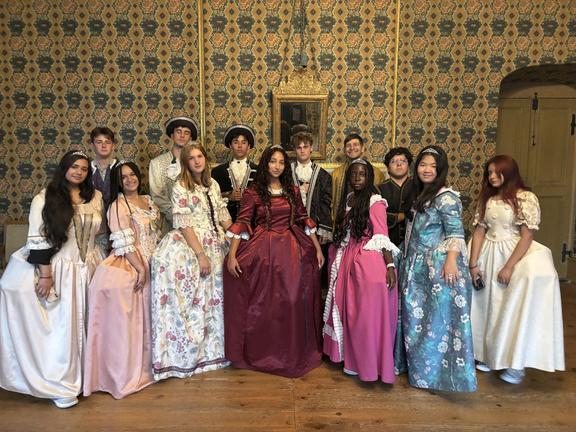
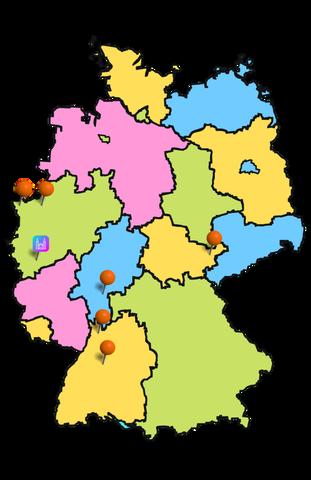
Our College Summer Program is going into it’s fifth year! Once again, AATG is partnering with the Akademie für internationale Bildung (AiB) in Bonn to send a group of 24 college students to the Rhine region this summer - a record number for our program so far! Students take classes for college credit and explore the region's rich history and culture with their academic director, Christina McDade (Diablo Valley College)
In late March, 36 students were awarded the prestigious National German Exam Scholarship, a three-week summer study trip to Germany, sponsored by the German Pedagogical Exchange Service (PAD) Students will live with host families, attend classes at German schools and travel the country with their fellow prizewinners. Congratulations!
News from the National Honor Societies
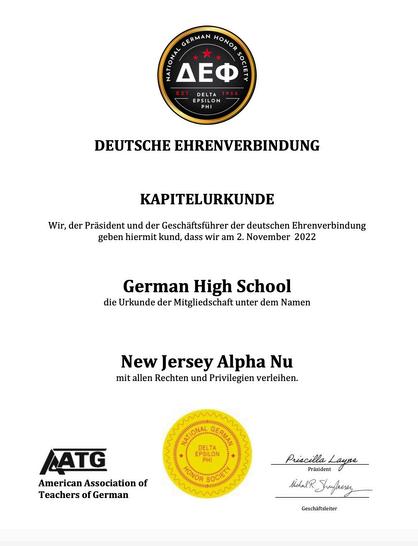
Welcome new chapters! Welcome new chapters!
EEst. January - May 2026 st. January - May 2026
Delta Epsilon Phi
Jefferson County Int'l. Baccalaureate School (Alabama Alpha Psi)
Doherty High School (Colorado Beta Alpha)
Pace High School (Florida Delta Kappa)
Model Laboratory High School (Kentucky Alpha Mu)
Okemos High School (Michigan Beta Alpha)
Glacier High School (Montana Theta)
Waldorf School of Garden City (New York Gamma Tau)
Beaumont School (Ohio Gamma Omega)
St. John's Jesuit High School and Academy (Ohio Delta Alpha)
Dublin Jerome High School (Ohio Delta Beta)
University of San Diego, CA (Lambda Omega)
Williams College, MA (Phi Zeta)
Bryn Mawr College & Haverford College, PA (Phi Delta)
University of Vermont, VT (Phi Epsilon)
Padua Franciscan High School (Ohio Delta Gamma)
Laurel Springs School (Virtual Eta)
Thunder Basin High School (Wyoming Epsilon)
Campbell County High School (Wyoming Zeta)
Interested in starting a chapter at your school?
Learn more and get started online: aatg.org /honor-society-faq

Delta Phi Alpha
Dear Colleagues,
DEI CORNER
Please join us in welcoming our two newest members in our DEI Committee: Sara Lee (Arizona State University) and Seth Hulse (William B. Travis High School, Texas)
Keep an eye out for upcoming events organized by our committee: a webinar on pedagogical strategies for teaching neurodiverse learners hosted by Sara Lee and a new upcoming roundtable series Experiences and Strategies: DEI and German Language Education, which invites our community to share insights and pedagogical practices.
Teaching Activities on Multilingual Identities
In this edition of the AATG Newsletter, the DEI Committee is sharing activities that focus on highlighting learners’ multilingual repertoires and exploring how they make sense of how their languages – including German – shape them. After all, in times of rapid technological advancements, it is more important than ever to think about what role languages have for us as human beings, our identities, our sense of belonging in this world and its diverse communities. But what is important to note: When we speak of languages, we don’t just refer to the official, codified standard varieties that we find in dictionaries and grammar books, we also mean all the regional and social dialects that people use in everyday life in different social settings. These repertoires include a wide range of varieties that learners may not always recognize as “languages” in academic contexts, such as New York City working-class vernaculars, Appalachian English, African American Vernacular English, Spanish-English mixing in Chicano English, LGBTQ+ Lavender Language, video gamer language, or many more When we teach languages, we want to make sure that we highlight all these different repertoires that our learners bring with them and make explicit the social cues that guide us in choosing which linguistic resources from our repertoires to draw on in specific contexts.
Below, we present two activities that have learners engage with their language repertoires in creative ways, which can open up discussions on how these different languages shape who we are and create a sense of belonging in different communities
Activity 1: Language Portraits
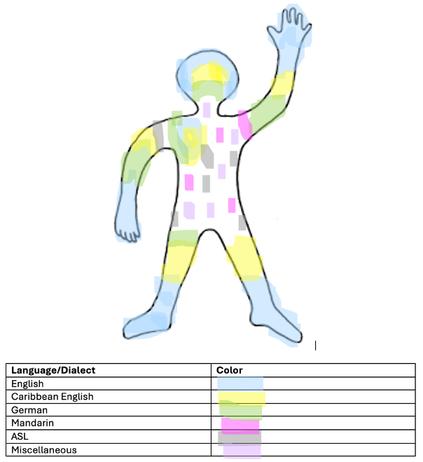
Language portraits or Sprachenportraits have long been used in research on multilingual language biographies and go back to language awareness research in primary education (Krumm & Jenkins, 2001; Busch, 2012) In this activity, students receive a bodily silhouette and are asked to paint all their languages and dialects on it by using a different color for each language/dialect.
Learners then write a short narrative explanation of their language portrait and follow-up discussions can explore how students’ languages are associated with the different communities that they belong to as well as the different functions and emotional attachments that the languages have for them.
Here, you find the instructions and one example from a student who completed their language portrait during a study abroad program.
Download a silhouette for language portraits here.
Think about all the languages and local/social dialects that you know. Every language/dialect counts, even if you feel that you know very little. Consider how each of these languages/dialects are embodied in you. Use a pen/highlighter in different colors and draw your different languages/dialects into the below silhouette to create a language portrait. There is no right or wrong way to go about this. Afterwards, complete the table below and indicate what colors you have used for what languages.
Take a look at your language portrait and write a short narrative to explain it (e.g., what language did you put where and why).
The languages in the head region are languages with which I have been able to comfortably represent thoughts before, and the languages in the hand area are those that I have been able to communicate using. The languages in the foot area are languages whose cultures I have experienced before, and languages in the vicinity of the heart are languages that I associate with my identity. Because I have been using English and German to communicate with others, especially for academics and services, these are in the hand region. I occasionally use phrases from Caribbean English, especially with relatives, so it is also in the hand area. When I was taking an ASL class, I also used ASL to communicate with the Deaf people that I had met, so this is also in the hand region. Most of the life experiences that have shaped me now were in English, so both of the dialects of English that were used in my childhood are in the foot region. However, some may argue that this trip is a landmark event in my life, so there is a small band of German in the foot region. During this trip, I have begun thinking about more abstract concepts for longer durations in German involuntarily in addition to thinking in English. So, these languages and their dialects are in the head region. Next, I consider the German language, along with the two English dialects I grew up with, to be a part of my identity now. Mission accomplished? These are, thus, in the heart region. Finally, I still have not reached my capacity for language learning, so there are still languages, like Mandarin, ASL, and the miscellaneous languages that I am studying floating around in the white space of the figure.
Activity 2: Multilingual Metaphors
Another creative activity that taps into students’ subjective experiences of their language learning and multilingual experiences are multilingual metaphors. In her groundbreaking 2009 book The Multilingual Subject, Claire Kramsch explored, among other things, what metaphors language learners gave their language learning experiences. The highly symbolic images
that these metaphors produced let us get a vivid understanding of how our language learners experience their language learning process and their multilingual identity development. If you’re interested, we highly recommend reading the fascinating analyses in Kramsch’s book (metaphors of language learning: Chapter 2) as well as Rod Ellis’ chapter on the metaphorical constructions of second language learners. Here, we provide an example of what metaphors two of our students have come up with
If you could give a metaphor to your languages, what would it be and why? (e.g., English is like a window, because …)
Hoch Deutsch ist wie als ein Auto, weil it can take me places, specifically into the next steps of my life as per my current plans to spend sometimes abroad after graduation. English is like an Apple iPhone to me because it’s something I’ve used a lot and very comfortable with. Vietnamese is like flipping a light switch because it the action itself is very second nature and something I can do without thinking about and it is also an accent that I can switch on and off Chinese is like chicken for me because it’s something I wish I can like because it’s so universally “used” but I do not eating it too much or am not very good at it, respectively.
Please complete the following sentences. Feel free to be as creative and metaphorical as you’d like.
Learning German is like hiking a not so tall mountain
Speaking German is like … attempting to solve a mathematical problem.
Writing in German is like … drawing a gothic church from scratch.
Hearing German is like … watching a Sci-Fi movie.
Reading in German is like … reading a Shakespearean novel.
These activities invite students to recognize linguistic diversity not only as a resource, but as a deeply human expression of experience, identity, emotion, and belonging If you have any questions or would like to share your students’ experiences with these activities, we’d love to hear from you You can find more information on our committee here: https://www aatg org/deicommittee
Sources
Busch, Brigitta (2012). The Linguistic Repertoire Revisited, Applied Linguistics 33 (5), 503–523, https://doi.org/10.1093/applin/ams056
Ellis, Rod (2014). The metaphorical constructions of second language learners. In: Michael Breen (Ed.) Learner Contributions to Language Learning. New Directions in Research. Routledge, 65-85. https://doi.org/10.4324/9781315838465
Kramsch, Claire (2009). The Multilingual Subject. Oxford University Press.
Krumm, Hans-Jürgen & Eva-Maria Jenkins (2001). Kinder und ihre Sprachen—lebendige Mehrsprachigkeit: Sprachenportraits gesammelt und kommentiert von Hans-Jürgen Krumm. Eviva.
AATG Awards 2026
AATG is also collecting award nominations for the 2026 National AATG Awards! The AATG Awards are a way to award national recognition to those in your chapter, community, or region who go above and beyond for German.
Further information on each award and nomination guidelines can be found on the AATG Awards page. In addition to the individual awards, German programs can receive national recognition with the Center of Excellence designation, which identifies and honors excellence of instruction K-16.
The nomination portal will close on May 31 , 2026!
Get started here: aatg.org /awards


2026 German Embassy Teacher of Excellence Award
If you’re making an impact through innovative teaching and community engagement , this is your opportunity to grow professionally, connect with colleagues nationwide, and gain national recognition!
The 2026 German Embassy Teacher of Excellence Award will provide funding for conference registration, travel , hotel , and tickets for the AATG Gala and Welcome Luncheon to three outstanding early-career German educators.
Learn more about the 2026 AATG conference in Boston here: aatg.org /boston2026
Applications are due by May 15, 2026, and winners will be announced at the end of May!
View full guidelines and apply: aatg.org /german-embassy-teacher-of-excellence-award

Die Unterrichtspraxis / Teaching German
Upcoming special issue in Die Unterrichtspraxis/ Teaching German on project-based learning (PBL)
From the guest editors: Necia Chronister, Janice McGregor, Elliott Schreiber
Engaging with real-world issues. Communicating in a meaningful way in German. Developing critical workplace skills. Learning to work collaboratively Engaging with an audience beyond the language classroom.
These are some of the hallmarks of an approach to second-language instruction called Project-Based Language Learning (PBLL). PBLL was pioneered more than forty years ago. Since then, it has established itself to the point that the National Foreign Language Resource Center has developed a robust collection of online PBLL resources as well as an inperson summer institute (see https://nflrc.hawaii.edu/pbll /).
Given the prominence of this approach, why are Necia Chronister, Janice McGregor, and Elliott Schreiber making PBL the centerpiece of a special issue of Unterrichtspraxis?
There are two main reasons The first is our enthusiasm, p simple. In the immediate aftermath of the global Covid-19 pa Necia and Elliott were looking for ways to boost our s motivation, and we both turned to PBLL with tremendous res work at very different institutions, but found that PBLL lends it to different teaching contexts. Necia , teaching at a large university in Kansas, taught a course in which her students w filmed a modern adaptation of Goethe’s Faust . That same semester, Elliott taught a course in which his students orga exhibition to commemorate the 100th anniversary of Thomas Der Zauberberg. In the months following, we couldn' t stop talkin

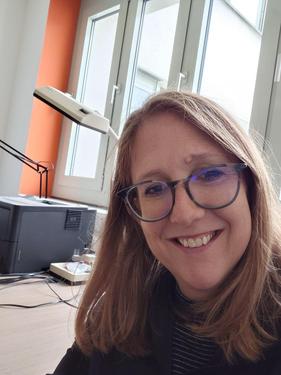
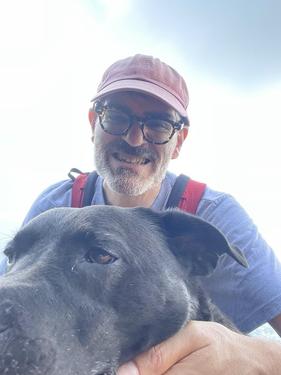
about our students' projects and marveling at the results in language development and student enthusiasm.
Second, PBLL deserved much more attention in the German context . In general , PBLL is prevalent in the fields of ESL and Spanish (where native-speaking partners and audiences are more readily available). We decided that now is the time to focus a special issue of Unterrichtspraxis on PBLL Many other German instructors agreed that this is an opportune moment to consider how PBLL can enrich our field. Just consider the kinds of student projects that our colleagues shared with us in their proposals:
Writing and illustrating children's books and offering them as an online resource for instructors teaching German to younger children.
Building on discussions of Trümmerliteratur to craft short stories that were then published in a multilingual campus literary journal and literary festival .
Taking inspiration from a 1990s audio play (Hörspiel) to curate and annotate audio commentary that investigates a largely forgotten episode of campus history
Drafting the platform for a new political party and crafting policies to better promote the integration of immigrants to Germany.
Putting Brecht 's famous theory of the epic theater into practice by using it to write and stage a play that helped students engage with contemporary social issues.
Learning to use a GenAI interface in German to help create artifacts to commemorate the 150th anniversary of Thomas Mann's birth.
We look forward to sharing thoughtful and lively discussions of these and similar projects in the German-language classroom. And we hope that they inspire you to take the PBLL plunge! If you do, we would love to hear about your experiences.



Die Unterrichtspraxis / Teaching German FREE ACCESS TO JOURNALS for AATG Members
Die Unterrichtspraxis/Teaching German, devoted to the improvement of German teaching in the United States, is published twice a year. The journal publishes pedagogical articles, reports, and other material of interest to teachers of German at all levels of instruction. Die Unterrichtspraxis/Teaching German provides a forum for recent advances in scholarship on German language teaching and learning; practical suggestions for implementing innovative instruction in German classrooms; information concerning relevant teaching and source materials; information about the linguistic, social, political, and cultural landscape of German-speaking countries; and assessments or suggestions regarding the betterment of the German teaching profession.
Co-Editors:
Karin Baumgartner (University of Utah)
Mathias Schulze (San Diego State University)

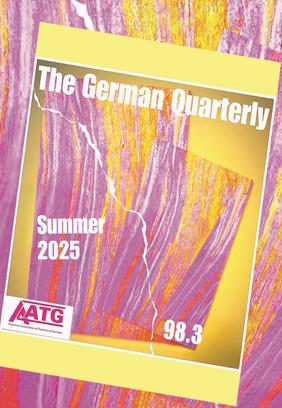
The German Quarterly serves as a forum for a variety of scholarly debates - topical, ideological, methodological, theoretical, as well as debates on recent developments in the profession. We encourage essays addressing new theoretical or methodological approaches, recent developments in the field, and subjects that engage with the diversity of German-speaking societies and the heterogeneity of German cultural history
The German Quarterly is an equal opportunity publication in terms of approaches, topics, epochs and styles in a landscape in which many of the best journals are now specialized We welcome submissions on all topics in German literature, culture and film from the Middle Ages to the present, as well as comparative and interdisciplinary articles that are relevant to the field of German.
Co-Editors:
Muriel Cormican (Texas Christian University)
Jen William (Purdue University)
Chapter & Member News
GROW Immersion Event at Pottsgrove
by Chad Donovan
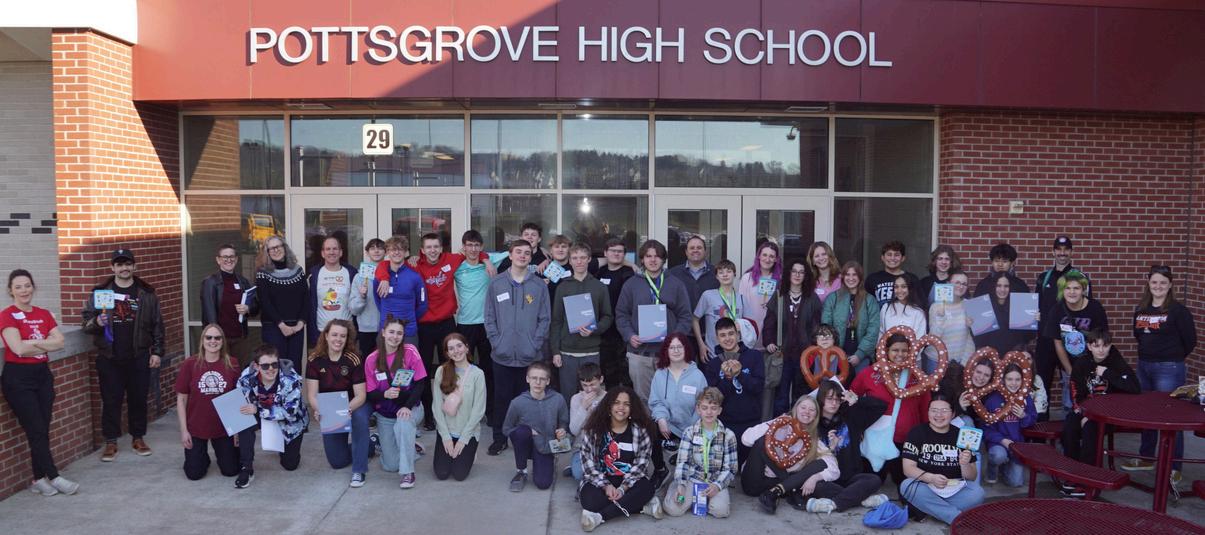
On Saturday, February 28th, more than 60 German teachers, professors, college reps, and students from all over the region came to Pottsgrove
HS for a fun-filled day of German language and cultural immersion,
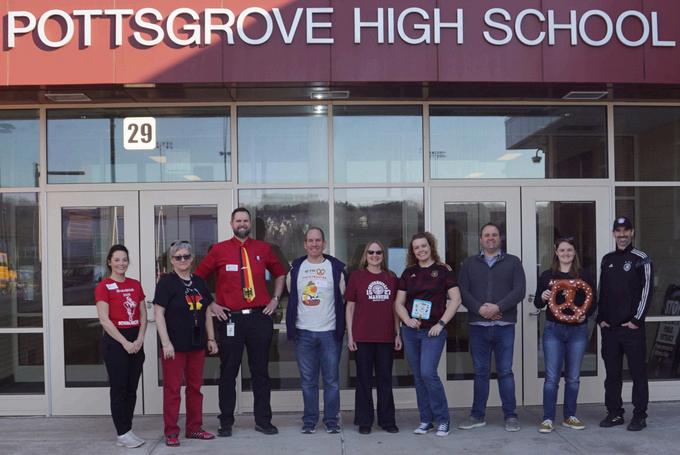
called GROW (German Regional Outreach Workshops), organized by PGHS's own Chad "Herr " Donovan, with assistance from Donna "Frau" Richards, and Susan "Frau" Cash, and a team of other German teachers from schools in the region. Some came from as far away as Cherry Hill , NJ.
Everyone had a fun and educational experience using their German skills while playing sports, table games, doing trivia , crafts, cooking, listening to German Popmusik , signing & playing traditional German music, meeting fellow fans of German, learning about colleges in the region where they can continue studying German, and finally, being awarded prizes of staggeringly large amounts of delicious German & Swiss chocolate and other candy.
Keep an eye out for GROW 2027 announcements starting in September!


A K 16 German Teacher Community


Are you ready to reflect, explore, and connect? Join our new hybrid community of 10 –12 educators grounded in Exploratory Practice/Explorative Praxis (EP). Conducted primarily auf Deutsch , this year-long practitioner research program helps you investigate classroom “puzzles” that matter to you and your learners!
• Collaborate: Connect with other dedicated K –16 colleagues
§ Innovate: Develop tools for exploring questions about classroom life
• Share: Get insights into your puzzles and guidance on disseminating your EP research
No prior research experience needed just curiosity and a willingness to puzzle together!

How to Apply
Submit a short CV (1 -2 pages) and statement of interest (300 -500 words) by May 15, 2026 . Your statement should cover: your current teaching context, your reasons for wanting to join, and classroom “puzzles” or questions that interest you. Please send your application to the program facilitators. Applicants will be notified by May 25, 2026.
EPaD Program Facilitators

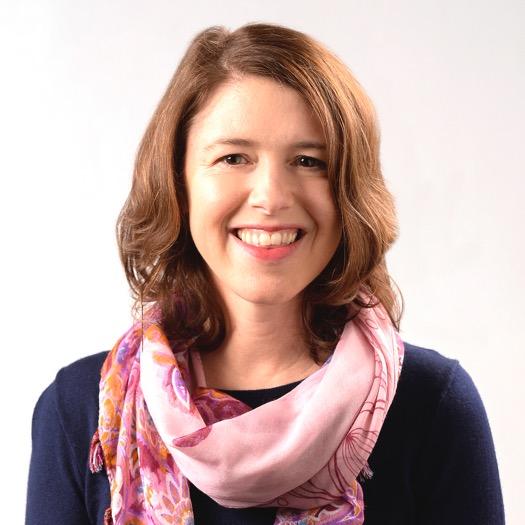
Cori Crane
University of Alabama cpcrane@ua.edu
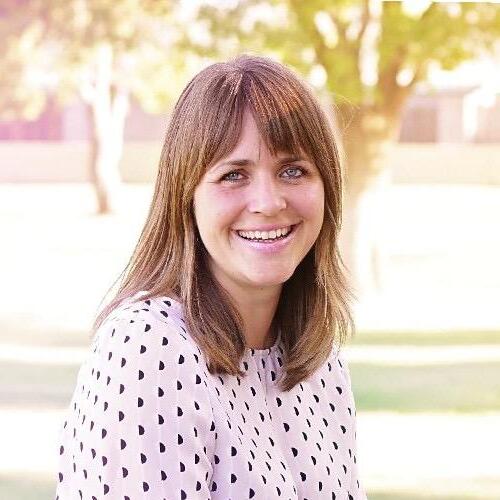
Melanie Mello
Gilbert Public Schools
melanie.mello@gilbertschools.net
EXPLORATIVE PRAXIS auf DEUTSCH
EPaD Program


Structure and Timeline: July 2026 May 2027





• In -person workshop at AATG’s 100th Anniversary Conference in Boston on July 11, 2026
• Virtual meetings from August 2026 to April 2027
• In -person symposium in Spring 2027 to share work, reflect on findings, and prepare future conference presentations and written dissemination of EP projects
Start Planning for 2027!
Let’s bring your German adventure to life
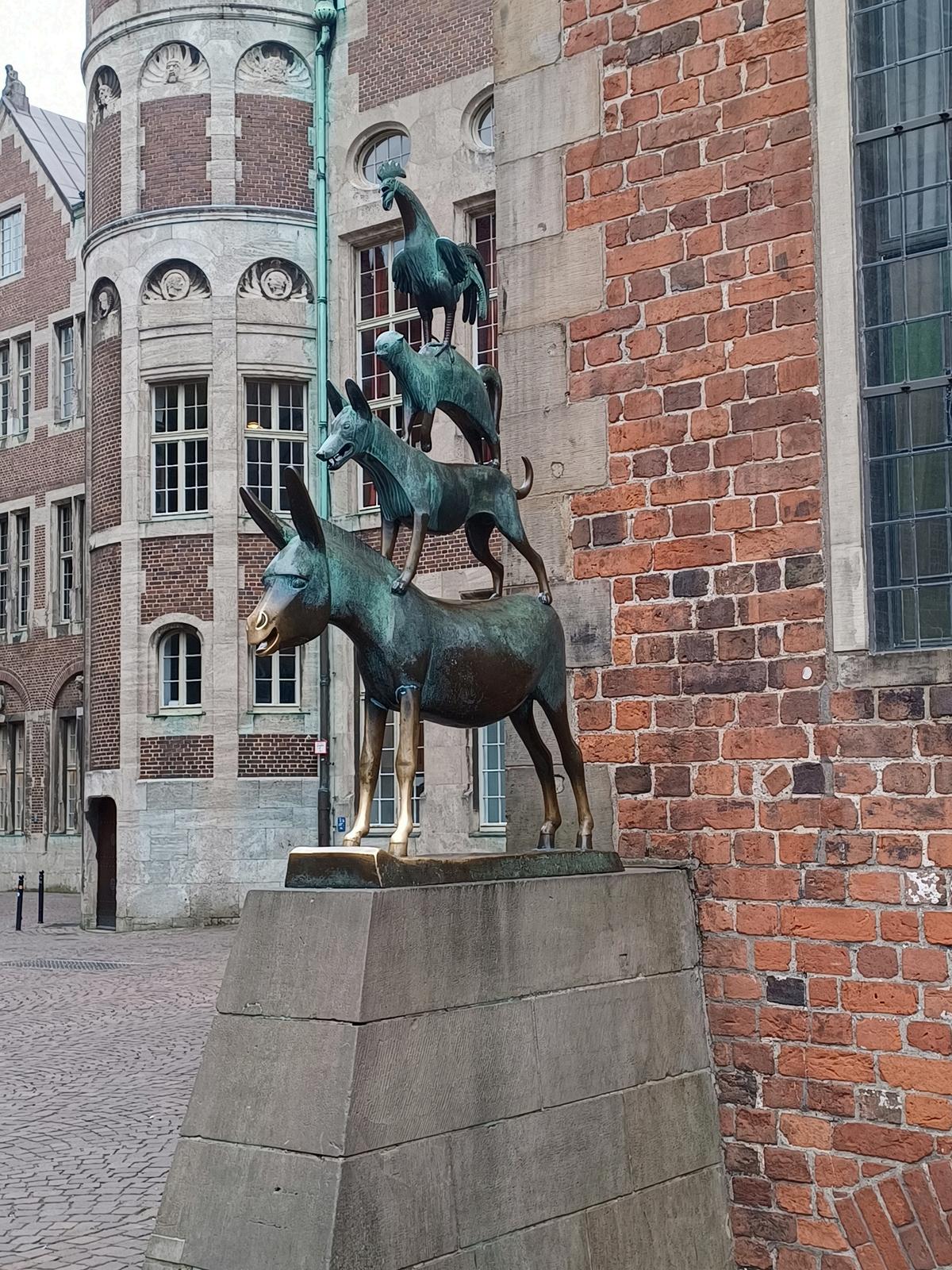
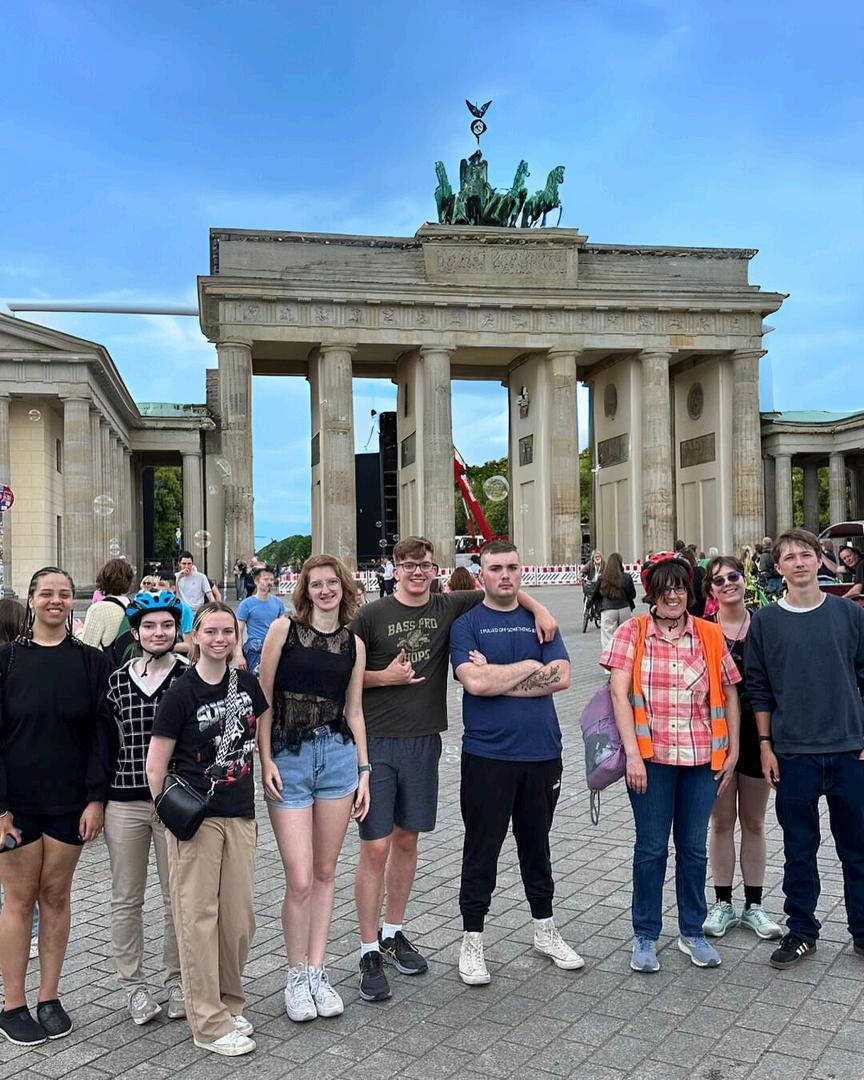
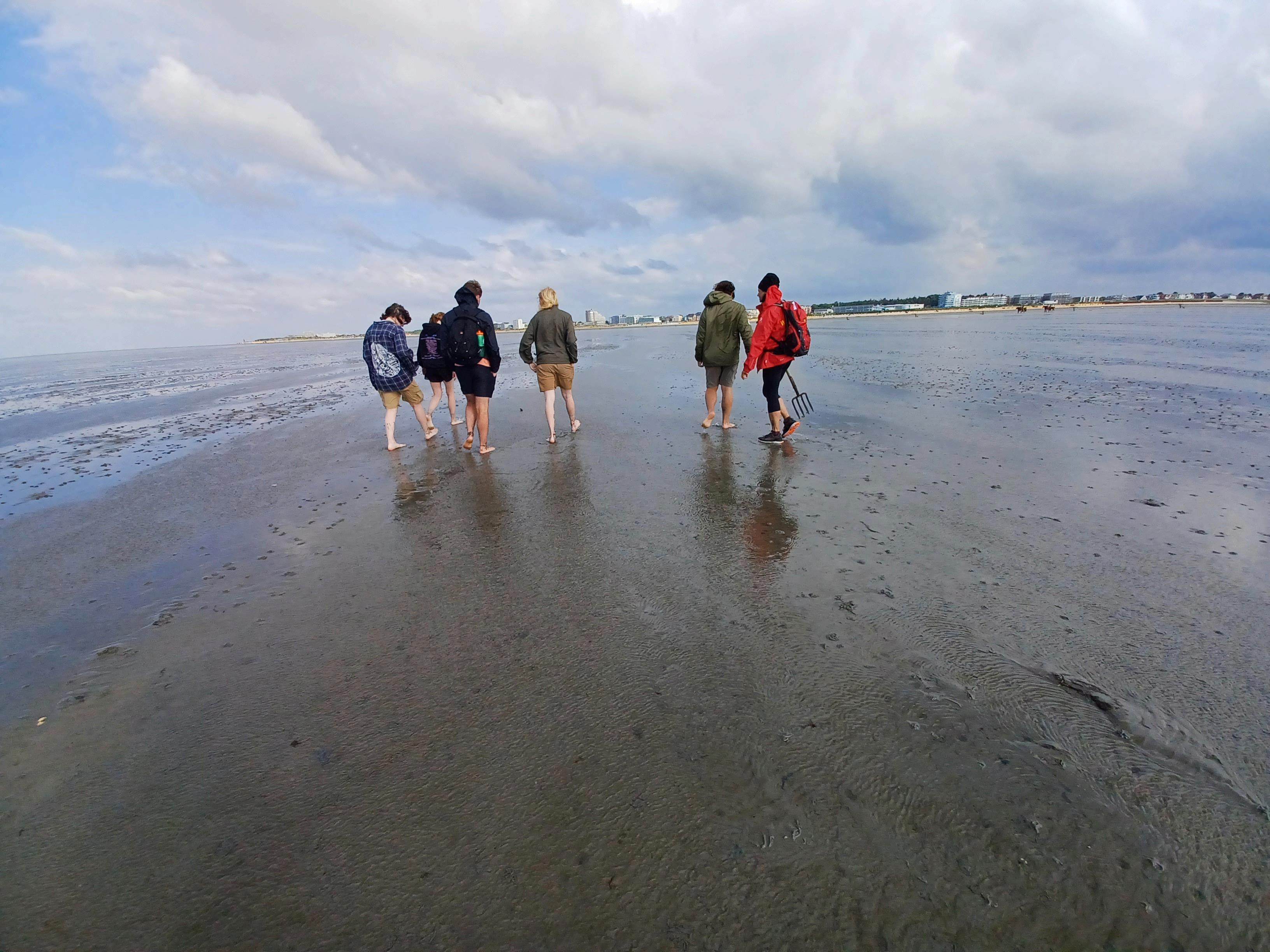
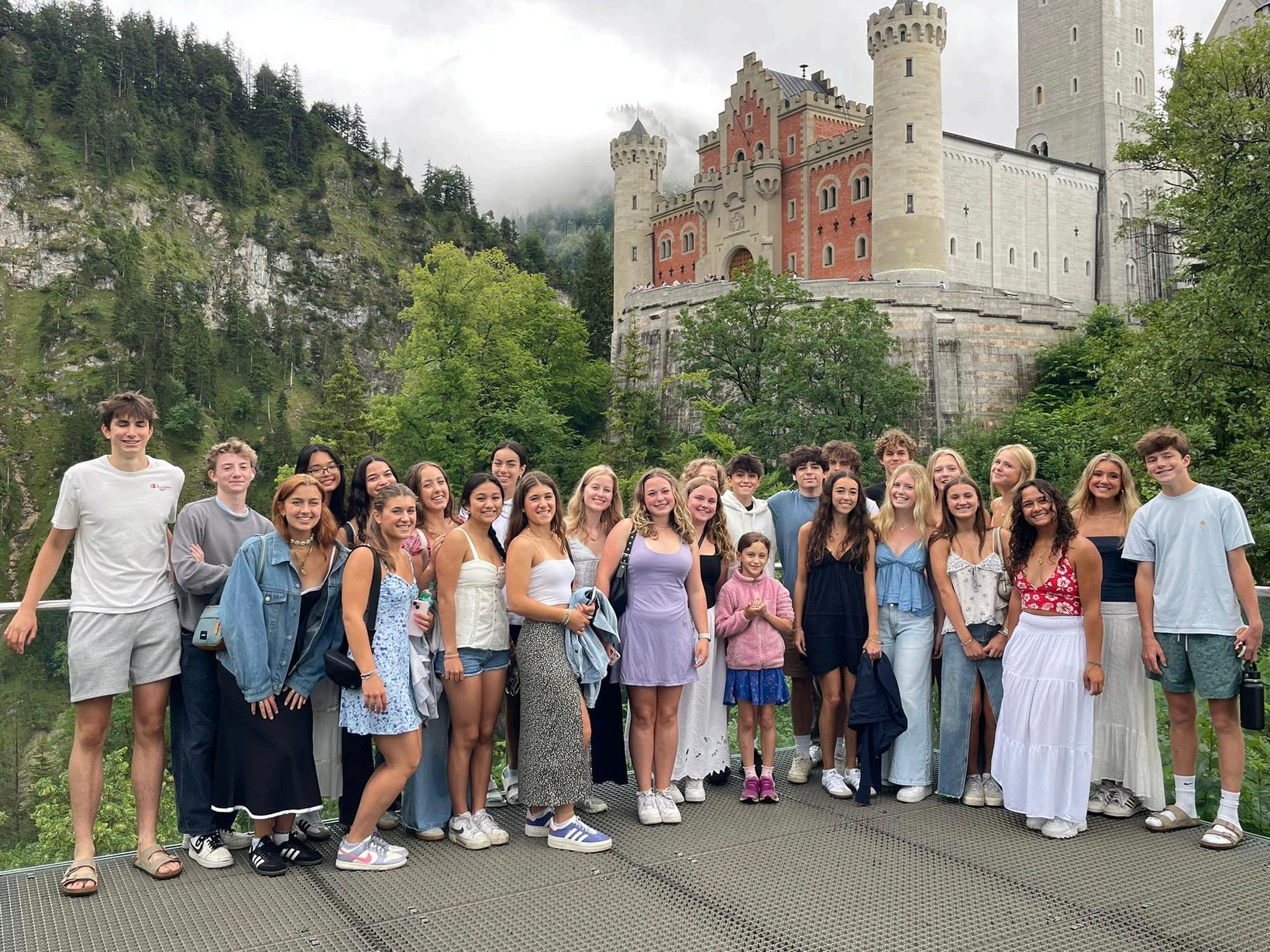
Our German team provides customized logistics planning with flexible itineraries tailored to each group ’ s goals We offer comprehensive support for GAPP exchanges as well as privately arranged partnerships with German schools. For schools without an exchange program, we offer our celebrated Xperitas arranged The Family Stay Experience®.

$1,000 Grant for Exchanges if

Liebe Kolleg*innen,
Der Frühling bringt eine Vielzahl neuer Initiativen, Materialien und Veranstaltungen. In dieser Ausgabe stellen wir eine neue Runde des German American Teacher Exchange (GATE)Programms, Praktikumsmöglichkeiten für angehende Lehrkräfte sowie unsere Teilnahme an zwei wichtigen Fachkonferenzen vor: der German Studies Association Conference in Washington, D.C., und der MLA Convention in Toronto.
Für Ihre Schülerinnen und Schüler haben wir außerdem neue Materialien zusammengestellt, darunter ein neues Fußballheft, aktuelle U-Häppchen, kostenloses deutsches Film-Streaming sowie die neueste Ausgabe des Popcasts mit aktueller Musik aus Deutschland.
Neben GATE, Schulwärts und unserer Teilnahme an den Konferenzen haben wir außerdem drei erfolgreiche Fortbildungsworkshops in Washington, New York und San Francisco zum Thema Integration der diesjährigen Fußball-Weltmeisterschaft in den Unterricht durchgeführt. Weitere Workshops und Veranstaltungen finden Sie in unserem Veranstaltungskalender: https://www.goethe.de/ins/us/de/spr/unt/cal.cfm.
Da die regionalen Sprachkonferenzen in diesem Jahr bereits begonnen haben, freuen wir uns außerdem darauf, viele von Ihnen bei der 100-Jahr-Konferenz der AATG im Juli in Boston sowie bei der ACTFL Convention 2026 im November in San Antonio zu sehen
Wir freuen uns darauf, weiterhin mit Ihnen im Austausch zu bleiben und Ihre Arbeit im und außerhalb des Unterrichts zu unterstützen.
Im Namen aller Kolleg*innen der BKD USA wünscht Ihnen viel Spaß beim Lesen
Sebastian Vötter
Sebastian Vötter Leitung der Spracharbeit Nordamerika
NEUIGKEITEN & MÖGLICHKEITEN
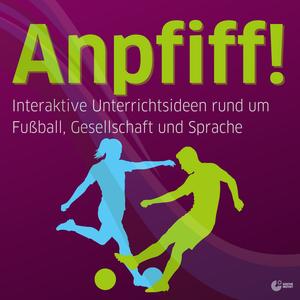
Neues Fußballheft: Anpfiff!
Fußball begeistert Menschen weltweit und bietet viele Anknüpfungspunkte für den Deutschunterricht. Dieses Materialpaket verbindet sprachliches Lernen mit aktuellen gesellschaftlichen Themen und schafft motivierende Sprechanlässe. Acht Einheiten behandeln u. a. Integration, Nachhaltigkeit, Werte, Medien, Fan-Kultur, Gleichberechtigung und wirtschaftliche Aspekte. Die Lernenden arbeiten mit authentischen Texten, Videos und kreativen Aufgaben, erweitern ihren Wortschatz und trainieren Lese-, Hör- und Sehverstehen sowie ihre
mündliche Ausdrucksfähigkeit. Gleichzeitig reflektieren sie die Rolle des Fußballs in der Gesellschaft und Werte wie Respekt, Teamgeist und Vielfalt. Hier klicken
Neues U-Häppchen für Ihren Deutschunterricht
U-Häppchen sind interaktive PDFs, die als Grundlage für einen kulturell bedeutsamen und kompetenzorientierten Sprachunterricht dienen können. Unsere neuesten U-Häppchen widmen sich den Themen „Glückssymbole“ und „das verpflichtende Gesellschaftsjahr” und laden Schülerinnen und Schüler dazu ein,
spannende Experimente, innovative Projekte und die Welt der Forschung zu entdecken. Mit vielfältigen Aufgaben und Impulsen können Jugendliche ihre Neugier wecken, eigene Ideen entwickeln und über wissenschaftliche Themen diskutieren. Hier klicken

Filme streamen - Goethe on Demand
Wir präsentieren euch eine Sammlung ausgewählter deutscher Filme als kostenloses Streaming. Entdeckt mit uns preisgekrönte Festivalhits, junge Stimmen des deutschen Kinos, legendäre Klassiker und findet eure Lieblingsfilme. Macht es euch bequem und: Film ab! hier klicken
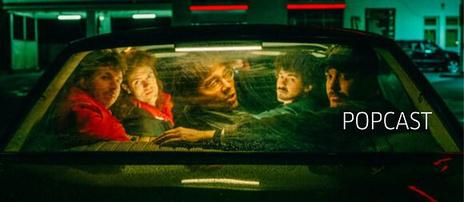
Popcast #2/2026
Jeden Monat richtet Gegenüber den Blick neu auf die Studios und Clubs zwischen Kiel und Weilheim. Gemeinsam mit Zündfunk, dem Szenemagazin des Bayerischen Rundfunks, präsentieren wir die frischesten Tracks aus Deutschlands Musiklandschaft. Im Februar 2026 mit Die Sterne, Extrawelt und vielen anderen. hier klicken
PROGRAMME & INITIATIVEN
Nach erfolgreicher Pilotphase: GATE etabliert sich als regelmäßiges Lehrkräfteaustauschprogramm
Die Pilotphase des Lehrkräfteaustauschprogramms hat sich als außerordentlich erfolgreich erwiesen, sodass beschlossen wurde, das Projekt im Schuljahr 2026–27 fortzuführen und unter dem neuen Namen GATE: German American Teacher Exchange weiterzuentwickeln.
In einer ersten, sehr gelungenen Phase besuchten Lehrkräfte aus Nordrhein-Westfalen im Oktober 2025 ihre jeweiligen Partnerschulen in den USA und kamen zusätzlich als Kohorte zu einem gemeinsamen Präsenztreffen am Goethe-Institut in Washington, DC zusammen. Diese Auftaktphase schuf eine starke Grundlage für fachlichen Austausch, kollegiale Vernetzung und nachhaltige Zusammenarbeit über nationale Bildungssysteme hinweg.
Inzwischen hat das Programm die Phase des Gegenbesuchs erreicht: Die erste USamerikanische Lehrkraft befindet sich bereits in Deutschland und setzt den Austausch an der Partnerschule fort; die weiteren USamerikanischen Teilnehmenden werden ihre Aufenthalte im kommenden Frühjahr und Sommer absolvieren. Alle Teilnehmenden haben durchweg positives Feedback gegeben und berichten von intensivem transatlantischem Austausch, inhaltlich fundierten Gesprächen, gezielter professioneller Weiterentwicklung sowie der gemeinsamen Entwicklung schulnaher Projekte, die sinnvoll in die jeweiligen lokalen Kontexte eingebettet sind.
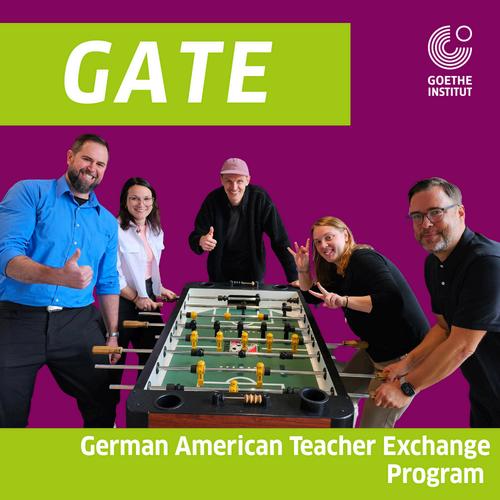
Auf Grundlage dieser erfolgreichen Pilotphase wird GATE weiter ausgebaut. Aktuelle Informationen zum Projekt sowie zu zukünftigen Beteiligungsmöglichkeiten werden fortlaufend über die neu eingerichtete Programmwebsite veröffentlicht, während das Angebot schrittweise für weitere Lehrkräfte aus den USA geöffnet wird
PROGRAMME & INITIATIVEN
Schulwärts! sucht Gastschulen in den USA und Kanada!
SCHULWÄRTS! vermittelt und fördert internationale Praktika an vom Goethe-Institut betreuten Schulen und stärkt damit die Internationalisierung der Lehrer*innenbildung. Bewerben können sich Lehramtsstudierende sowie angehende Lehrkräfte aller Schulformen und Fächer, die in Deutschland studieren
Mit der Teilnahme am Projekt SCHULWÄRTS! hat Ihre Schule eine/n Lehramtsstudierende*n oder eine angehende Lehrkraft aus Deutschland für ein acht- bis sechzehnwöchiges Praktikum zu Gast Während ihres Aufenthaltes an der Schule assistieren die SCHULWÄRTS!-Stipendiat*innen u a in Form von Hospitationen oder Co-Teaching im (DaF-)Unterricht und
gestalten ihn eigenverantwortlich mit. Gleichzeitig vermitteln sie sowohl den Deutschlernenden als auch den Lehrkräften vor Ort ein aktuelles Deutschlandbild und steigern so das Interesse an Deutschland und der deutschen Sprache. Darüber hinaus können die Stipendiat*innen in Absprache mit der Schule auch außercurriculare Projekte/Veranstaltungen mit verschiedenen Schwerpunkten, wie zum Beispiel Nachhaltigkeit, Informatik, Musik, Theater oder Sport, unterstützen bzw. durchführen.
Interessiert? Bitte füllen Sie dieses Formular aus und wir setzen uns mit Ihnen in Verbindung!
SPARK auf den GSA- und MLA-Konferenzen
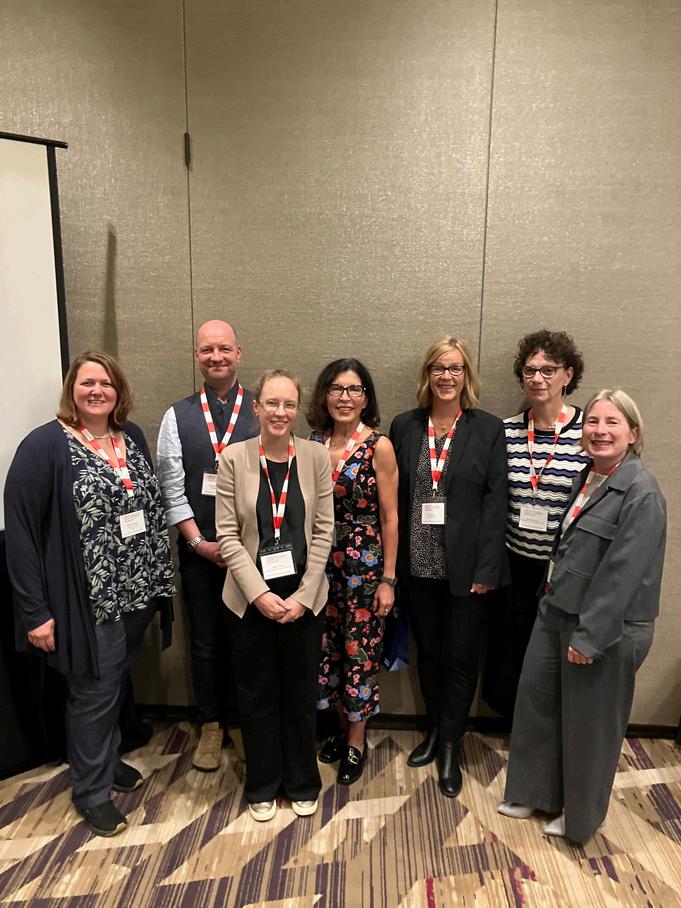
Das Goethe-Institut war im Rahmen von SPARK auf der Konferenz der German Studies Association im Herbst 2025 als auch auf der MLA 2026 in Toronto präsent und setzte dabei wichtige Impulse für die Zukunft der German Studies.
Auf der GSA-Konferenz stand ein Roundtable zum Thema „Language Education in a Multilingual Nation: Challenges and Opportunities for German Studies“ im Mittelpunkt. Die Diskussion zeigte eindrucksvoll, wie engagiert und zukunftsorientiert die German-Studies-Community an Fragen des Lehrens und Lernens im 21 Jahrhundert arbeitet
PROGRAMME & INITIATIVEN
Im Fokus standen zentrale Zukunftskompetenzen wie Kommunikation, Teamarbeit und Leadership sowie Strategien zur gezielten Vorbereitung der nächsten Generation von Deutschlehrkräften. SPARK for German, ein gemeinsames Projekt des Goethe-Instituts und der AATG, bildete den inhaltlichen Schwerpunkt des Roundtables. SPARK baut landesweite Netzwerke auf, stärkt bestehende Programme, entwickelt nachhaltige Wege in den Lehrberuf und fördert den transatlantischen Dialog. Der Austausch machte deutlich, wie groß das Potenzial starker Partnerschaften für die Weiterentwicklung der German Studies ist.
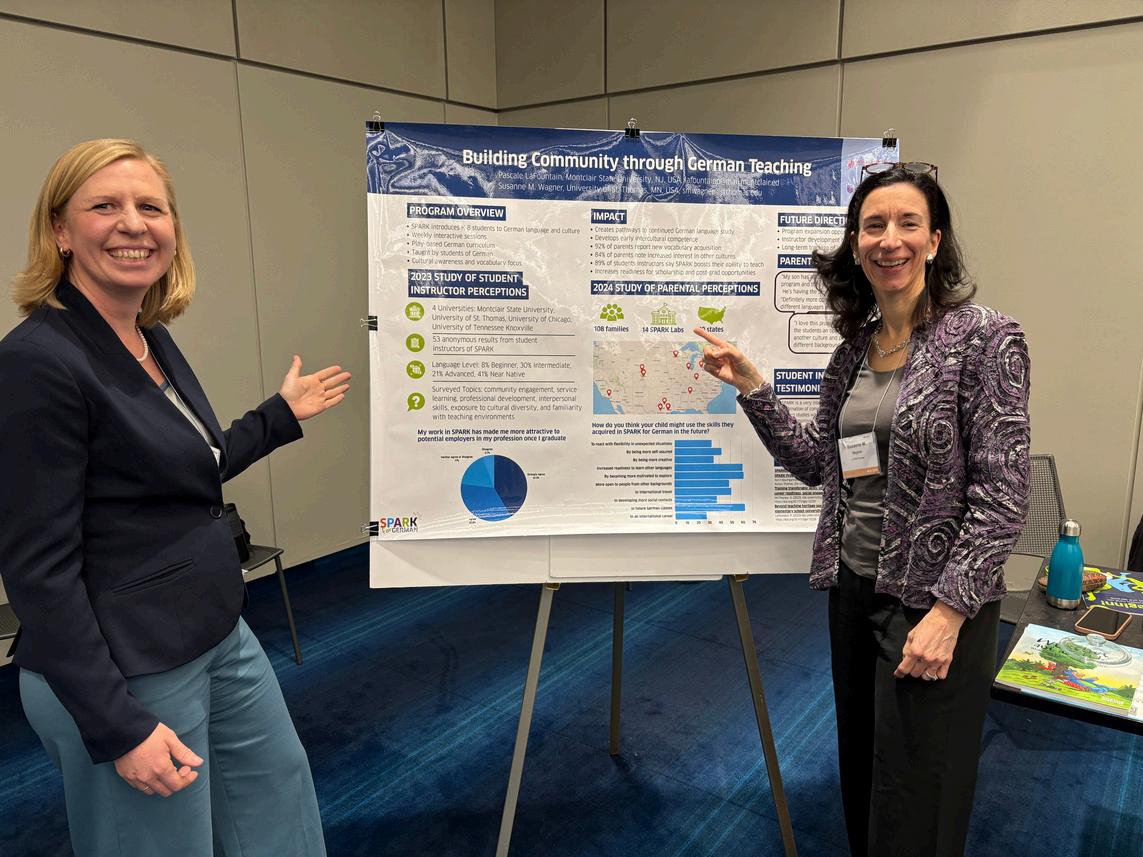
Auf der MLA 2026 in Toronto war SPARK im sogenannten Innovation Room vertreten. Ein herzlicher Dank gilt den Professorinnen Pascale LaFountain (Montclair State University) und Susanne Wagner (University of St. Thomas), die ihre Forschung zu SPARK for German präsentierten. Ihre Studie belegt überzeugend die Wirksamkeit des Programms: Lernende auf allen Niveaustufen profitieren von qualitativ hochwertigen und didaktisch durchdachten Bildungsangeboten. Im Mittelpunkt der Gespräche standen stets die Studierenden und ihre Lernprozesse
Sprachenlernen und -lehren bilden das Herzstück menschlichen Austauschs. Sprache ermöglicht es, Erfahrungen zu teilen, Wissen zu schaffen und Verbindungen aufzubauen. Mit Unterstützung von Berit Bein (Goethe-Institut Toronto) und Eva Ledwig (Goethe-Institut Montreal) baut SPARK seine Zusammenarbeit mit Lehrkräften auch in Kanada aus Durch Materialien, Fortbildungen und kontinuierliche Stärkung des Netzwerks trägt SPARK dazu bei, nachhaltige und lebendige Deutschprogramme zu entwickeln, die den Bedürfnissen ihrer Communities gerecht werden. Dabei steht das Engagement für jede einzelne Schülerin und jeden einzelnen Schüler im Zentrum und damit das Recht, in einer mehrsprachigen Gesellschaft mehr als eine Sprache zu sprechen
Diesen Dialog möchten wir dieses Frühjahr weiterführen und laden herzlich zu unserer „Schlauen halben Stunde“ ein. In diesem kompakten und praxisnahen Format geben unter anderem die Referentinnen der GSA in einem 15-minütigen Impuls Einblicke in ihre Erfahrungen mit SPARK. Im Anschluss folgt eine offene Fragerunde mit Raum für Austausch, Fragen und gemeinsames Lernen. Im Fokus stehen konkrete Beispiele aus der Praxis, ehrliche Einblicke in Herausforderungen sowie übertragbare Lösungsansätze, etwa zur Motivation von Studierenden, zu Materialien und Unterrichtsgestaltung oder zu organisatorischen Fragen.
Hier zu den Veranstaltungen und der Anmeldung: https://www. goethe.de/ins/us/de/spr/unt/cal.cfm und die Notwendigkeit, das Gelernte auch selbst anwenden und umsetzen zu können.
FORTBILDUNG
IM FOKUS
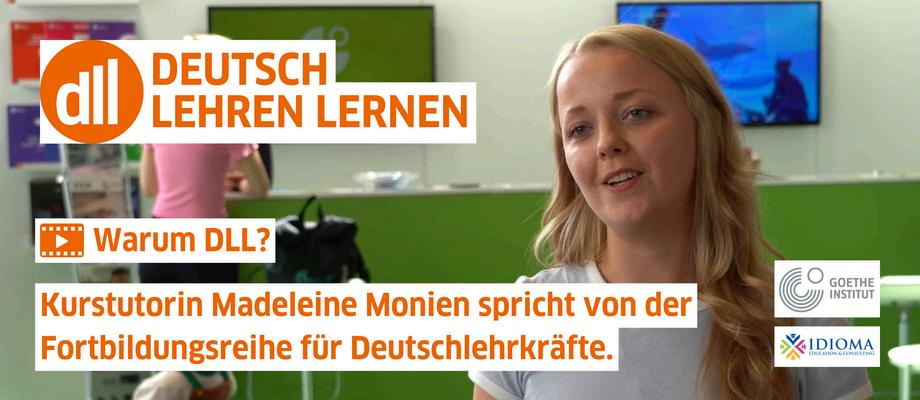
Gehaltserhöhung , Lizenzverlängerung , Graduiertenzertifikat, M.Ed., wie schön!
All dies ist möglich, wenn Sie sich über unseren Partner Idioma Education & Consulting für DLL-Kurse anmelden, um staatlich anerkannte Fortbildungsstunden oder Graduate-Level Credits zu erwerben Sparen Sie 10% mit dem Code GOETHE10IN26
Die praxisorientierte, weltweit anerkannte DLL-Fortbildungsreihe für Deutschlehrkräfte besteht aus neun Online-Kursen zu verschiedenen Themen, die darauf abzielen, Ihre didaktischen Kompetenzen zu entwickeln und zu stärken. Als Teilnehmende profitieren Sie davon, Ihren eigenen Unterricht und den anderer zu beobachten, gemeinsam mit Deutschlehrkräften aus Nordamerika Ihre Unterrichtspraxis zu reflektieren und zu optimieren und unter Anleitung professioneller DLL-Tutor*innen zu lernen
Noch nicht überzeugt? Hören Sie sich an, was Kurstutorin Madeleine Monien über die Besonderheiten von DLL zu sagen hat!
goethe.de/usa/dll goethe.de/usa/idioma

Deutsch entdecken mit kostenlosen Schnupperstunden
Der neue Online-Kurstermin für Deutsch beginnt im April mit einem vielfältigen Programm aus Kursen und Clubs für Erwachsene, Jugendliche und junge Lernende. Wenn Sie schon länger mit uns lernen, können Sie direkt weitermachen und Ihren Lernweg fortsetzen. Wenn Sie neu sind, nehmen Sie doch an einer unserer kostenlosen Schnupperstunden teil! So können Sie unser Online-Format kennenlernen, bevor Sie sich anmelden. Machen Sie mit – viel Spaß beim Deutschlernen! Hier klicken
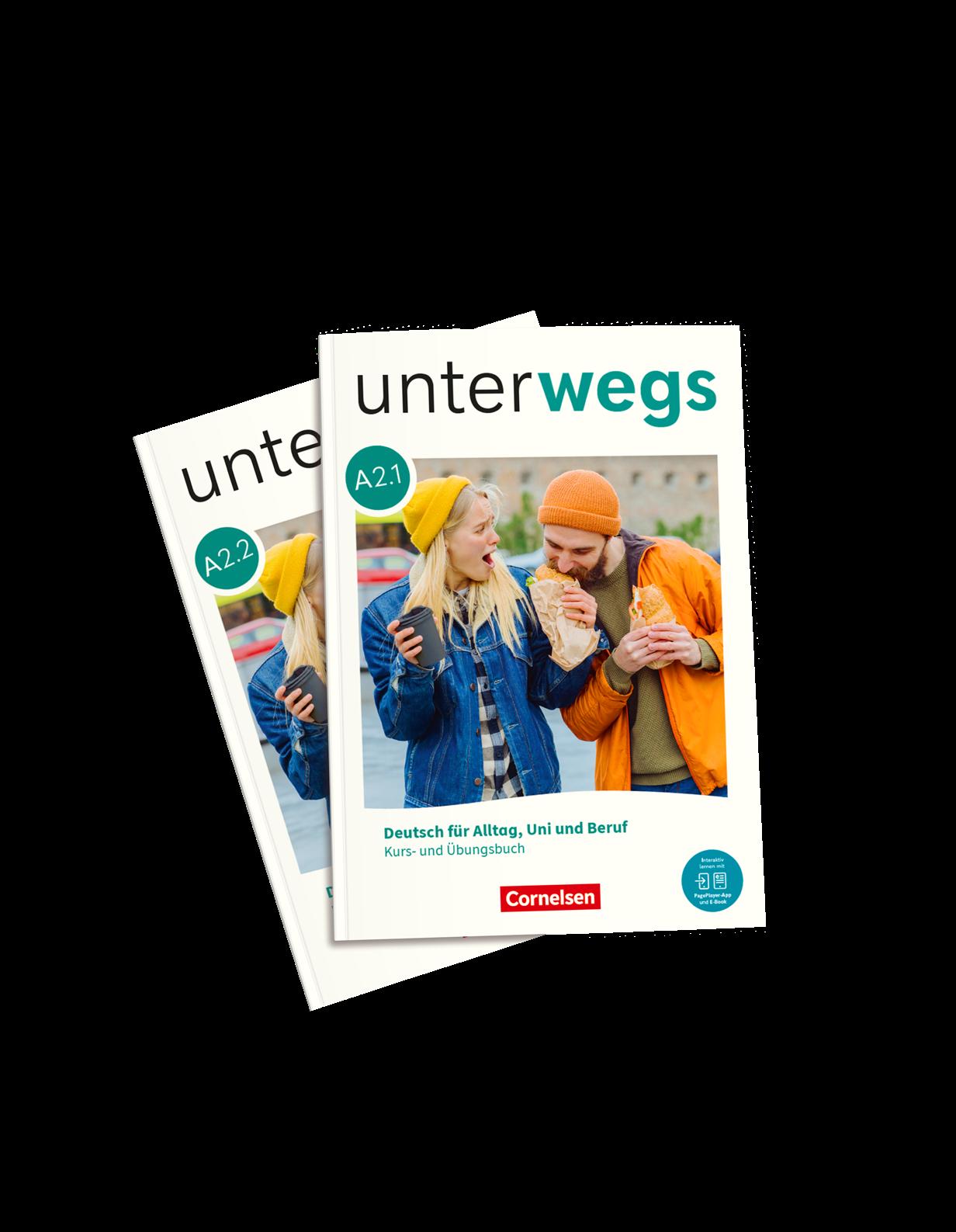
Ihre Vorteile auf einen Blick
Deutsch lernen, lebensnah: unterwegs motiviert mit praxisbezogenen Themen für Alltag, Uni und Beruf, einem plurikulturellen Ansatz und intuitiven
Lernmethoden. Gestalten Sie Ihren DaF-Unterricht lebendig, zeitgemäß und digital – für nachhaltige Lernerfolge.
Klar strukturierte Einheiten für intuitive Nutzung und schnelle Vorbereitung
Plurikultureller Ansatz mit Fokus auf die D-A-CH-L-Region
Praxisnahe Handreichungen mit Tipps für den Einsatz digitaler und KI-Tools im Unterricht
Neue Bände
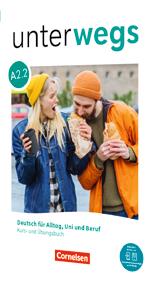
Februar 2026
Jetzt ins Lehrwerk reinlesen
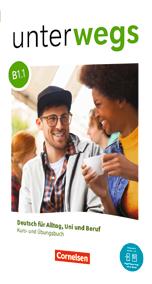
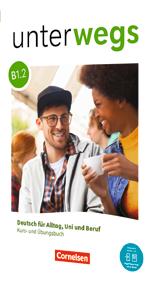
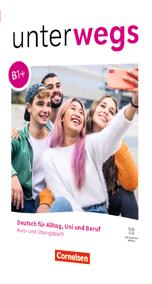
Juli 2026 Neue Bände B1.1, B1.2 und B1+
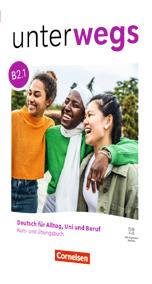
Alle Informationen unter: crnl.sn/unterwegs-aatg-26
Oktober 2026 / Januar 2027 Neue Bände B2.1, B2.2


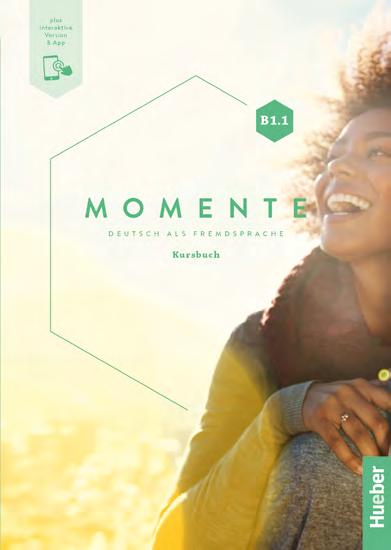
Momente – A1 – B1 für Lernende ab 16 Jahren www.hueber.de/momente Für Schule und Erwachsene:
Immer das richtige Deutschlehrwerk von Hueber!
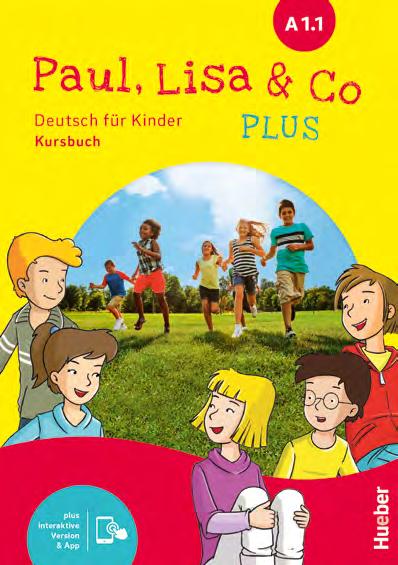
Paul, Lisa & Co PLUS ab 7/8 Jahren (A1) www.hueber.de/paul-lisa-co-plus
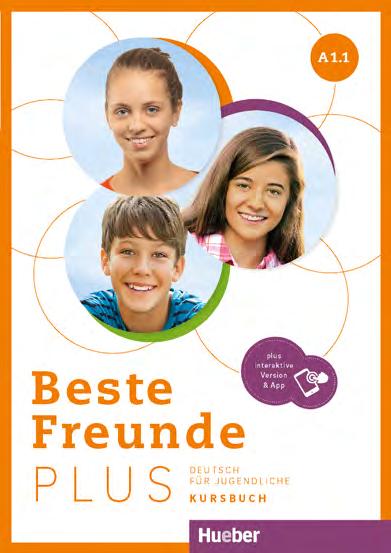
Beste Freunde PLUS ab 11 Jahren (A1 – B1) www.hueber.de/beste-freunde-plus
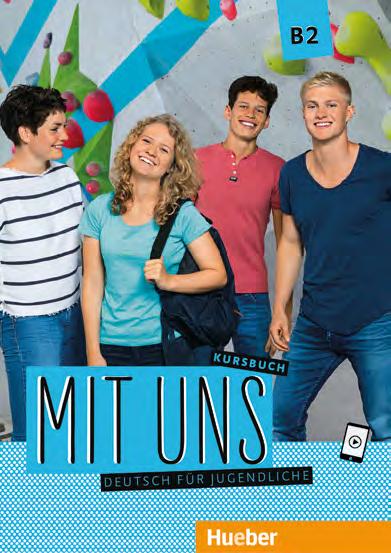
Mit uns ab 13/14 Jahren (B1+, B2, C1) www.hueber.de/mit-uns
In USA erhältlich bei: International Book Import Service www.ibiservice.com
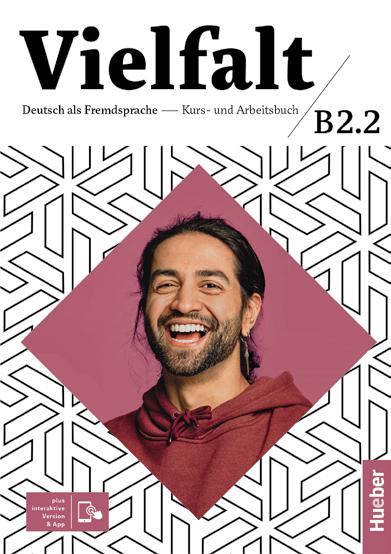
Vielfalt – B1+, B2 und C1 für Lernende ab 16 Jahren www.hueber.de/vielfalt
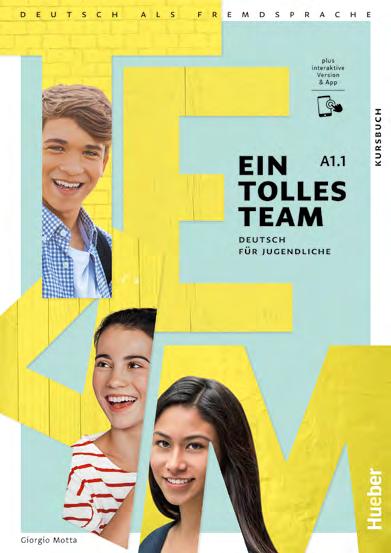
Ein tolles Team ab 12/13 Jahren (A1 – B1) www.hueber.de/ein-tolles-team
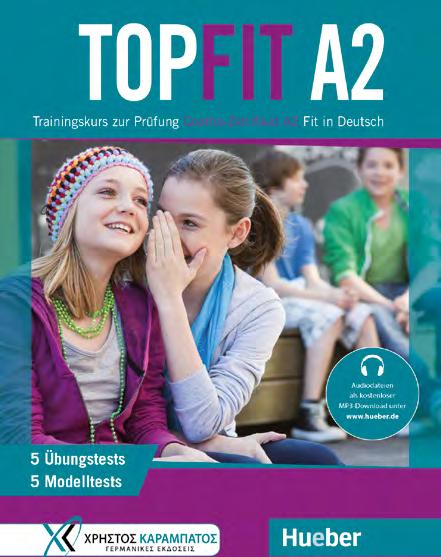
Topfit – Prüfungsvorbereitung A1, A2 und B1 shop.hueber.de
www.hueber.de
Besuchen Sie uns:
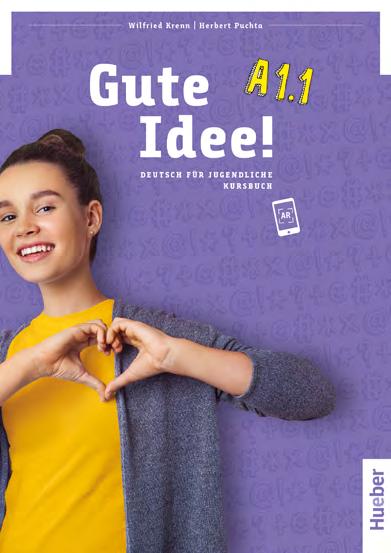
Gute Idee! ab 14 Jahren (A1 – B1) www.hueber.de/gute-idee
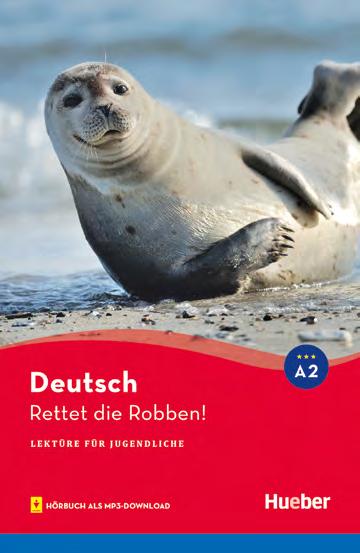
Leküre für Jugendliche für A1, A2 und B1 shop.hueber.de


Introducing:
The Multiliterate Mind
A Ne w Podcast, Powered by Avant
Drawing on 25 years of leadership in language education technology, this podcast pushes the conversation forward shaping the future of how we think about language, literacy, and learning.
Through conversations with educators, researchers, and leaders across languages and continents, the Multiliterate Mind will tackle questions like:
How can cutting edge frameworks and theories become accessible and relevant tools for educators?
How do AI, multiliteracy, and proficiency intersect?
How do we keep international educator insights and perspectives at the heart of education?
Subscribe with the QR code or where ver you listen to podcasts.

Remember - AATG members get discounts on Avant STAMP tests and professional learning. Learn more here:



American Association of Teachers of German, Inc. 112 Haddontowne Court, #104