
HALF YEAR REPORT
January to June 2026

AAR: Consultants to the Marketing Industry 91 Wimpole Street | London | W1G 0EF aargroup.co.uk

HALF YEAR REPORT
January to June 2026
AAR: Consultants to the Marketing Industry 91 Wimpole Street | London | W1G 0EF aargroup.co.uk
By Paul Phillips
Welcome to our 2026 summer edition of Pulse, a mid-year perspective from AAR.
I'm writing this the week after Cannes, or to give it it’s full title, The Cannes Lions International Festival of Creativity, as a reminder that creativity is our industry’s strongest calling card and the driving force of all our businesses.
What continually evolves is our understanding and application of creativity as it extends to every element of the collective services we strive to deliver to our clients.
And it’s this state of permanent transformation - in our own businesses as well our clients’ - that is the normality with which we are all grappling. But, as Paul Stevenson writes in his observations on moving from client to consultant, “The names change. The logos change. The sectors change. The challenges often don't.”
Marketers continue to place a premium on clarity, joined up thinking and execution from their agency partners, all of which is in service of demonstrable effectiveness.

AI is a sophisticated tool that has driven new expectations. But let’s not absolve responsibility, it is still just a tool.
The heritage agency landscape has changed way beyond the industry Jeremy Bullmore (look him up, kids) would recognise and is in real competition with a newer generation of global agency solutions.
And the new business marketplace is enjoying a welcome upturn!
Hopefully, you will find something of interest and even inspiration in this edition of Pulse.
Whenever it comes, enjoy your summer break as the second half of the year is likely to be busy.

By Rebecca Nunneley
At the start of the year, the question was whether the market was properly moving again after a difficult 2025. The H1 2026 figures suggest it is. Activity is up significantly.
Across the total market, completed reviews increased by 49% vs H1 2025, reversing the -28% decline seen this time last year. That is a significant shift and points to a market that is moving again rather than stalling.
There is some context behind that. We only report on completed reviews, so part of the uplift is likely to reflect processes already underway at the end of last year, with decisions landing in Q1.
These figures also show volume, not value. More completed reviews do not automatically mean the same increase in revenue moving through the market.
H1 2025 was also unusually slow. The market picked up in the second half, closing the full year at +15% overall growth, which gives a fairer read on the direction of travel going into 2026.
So, while H1 2026 looks like a step change, the real question is whether this level of activity continues through the rest of the year - and what is driving it.
New business activity H1 ’26 vs H1 ‘25

and Integrated Creative
Advertising and Integrated activity is back in growth, up +18% year-on-year after a -23% decline in H1 2025.
That matters because it remains a useful read on the wider market. When this category moves, the rest of the market often follows.
We do not always have visibility on the revenue attached to each review, but the data suggests there were fewer major reviews in the first half of 2026.
Larger appointments included the Crown Commercial Service confirming its agency lineup, Ogilvy expanding its Coca-Cola relationship, and Heineken completing its global media, creative and production review, with Dentsu
These are not the only examples, but they do show clients making significant decisions about their agency relationships. High-profile accounts are moving, even where (from an outside perspective) the work appeared to be working, as clients look ahead at what they want from their partners of the future.
Wins are still spread across the market rather than concentrated among a small group of agencies, which reinforces how competitive this space remains.
The data also suggests a higher proportion of global and more integrated opportunities than in previous years. That raises a question about how evenly this uplift is being felt, particularly for domestic UK creative agencies compared with agencies built to compete globally or across a


The CRM/CX numbers look dramatic, with activity up +100% year-on-year, but that needs context. It says as much about how quiet last year was, as it does about renewed activity this year. The bigger picture has not really changed. CRM/ CX is still more likely to come to market as part of a broader integrated or full-funnel brief than as a standalone discipline.
That is partly because the category is becoming less clearly defined. There is more crossover with media agencies, more in-house capability across customer, data and performance, and more existing agency relationships being extended without a formal review.
So, while the numbers show more activity, they do not necessarily point to a big rise in standalone CRM/CX opportunities. The better read is that CRM/CX remains important but is increasingly embedded within broader briefs rather than bought as a separate, high-volume category.
Digital shows a similar rebound to CRM/CX, with activity up +100% year-on-year. But, as with CRM/ CX, that says more about how quiet last year was than a real shift in how clients are buying.
The bigger pattern is that digital creative is less often bought as a separate category. In most

Social continues to see strong levels of activity, with reviews up +95% year-on-year, a significant step up from the more modest +5% growth seen in H1 2025.
This reflects sustained demand from clients who see social as a core part of both brand building and performance, with a noticeable increase in both the volume and visibility of opportunities coming to market.
However, as with other categories, the nature of what and how clients are buying is evolving. Social is no longer being treated as a standalone specialism in the way it once was. Increasingly, it is expected to connect into broader brand, content and commercial strategies.
important part of what clients need, but rarely

That shift raises the bar. It is not just about depth of channel expertise, but about how effectively agencies can integrate social into a wider system.
That may also be reflected in the data. In H1 2025, around 10% of social briefs were won by advertising agencies or their social divisions, compared with 19% in H1 2026. This could suggest that clients are placing increasing emphasis on how social connects into a broader, integrated offer, alongside continued investment by advertising agencies in their social capabilities.
While this remains a clear growth area, the nature of competition continues to evolve, with success increasingly connected to how social is positioned within a wider offer, regardless of what the chosen agency model might be.
Media has also seen a strong return in activity, up +59% vs H1 2025, reversing the -25% decline seen this time last year.
That shift points to renewed momentum, but as ever with media, the volume alone only tells part of the story.
It builds off a low base (H1 2025 saw a noticeable drop in volume) but also size and scale of media new business opportunities. We didn’t see the typical swathe of big global accounts last year, but the trend returned this year with the likes of Adidas, Coca-Cola, Dyson, Estée Lauder, IBM, Netflix and Kenvue (amongst others) reviewing their media arrangements.
Clients outside the largest global advertisers were also a lot more active than during the same comparative period last year, contributing to the uplift in both volume and value seen in H1 2026.
In addition, the shape of opportunity continues to evolve. Reviews are increasingly influenced by a broader set of considerations including data, technology, measurement, the relationship with creative, and how media connects into wider marketing and business objectives.
As with other categories, this points to a more
The market is clearly more active than this time last year. More reviews are completing, and there is more evidence of clients coming to market. Set against a stronger H2 2025, that feels like a continuation of a market that had already started to move again.
The bigger question is what happens next.
H1 gives a positive read, but the real test is whether this continues through the second half of the year.

It is also worth looking beyond completed reviews. Anecdotally, we are hearing more agencies talk about new business conversations starting but not concluding, reviews dragging on, or processes going quiet. That is harder to track in the data, but it matters because it shapes how agencies are experiencing the market.
Either way, the pattern is clear. Appointments may be up, but the briefs are more complicated, more integrated and more competitive. Success is less about chasing volume and more about agencies being clear on where they can genuinely compete, and how they articulate that in a way that separates them from the competition.
In a sentence: the market is moving again. The next six months will show whether that movement has real momentum behind it and is here to stay.
By Katrina Law
Marketing doesn’t lack ambition. It struggles with execution. That’s the premise behind ReModel: Tales of Marketing Transformation - a new AAR initiative that pairs a six-part video series with a practical report. The goal is simple: help CMOs turn strategy into real-world impact. For agency leaders, it’s a candid look at how clients are actually coping with change, and where agencies need to adapt if they want to stay useful. At its heart, ReModel explores a simple but often overlooked truth: strategy and creativity alone are no longer enough. Success now depends on the operating model - the interconnected system of people, process, platforms, and partners that bring ideas to life.

The ReModel video series brings together senior marketers for honest conversations about what transformation really feels like in practice.

Not polished case studies. Not success stories with the awkward bits cut out. Just people talking openly about what’s hard, what helps, and what doesn’t - from moments of doubt through to the changes that actually made a difference.
The report takes those conversations and pulls them into something more practical. Built on AAR’s work inside marketing teams, it’s designed to help CMOs make sense of change as it’s happening and decide what to do next.
Across both the series and the report, several themes emerge - each with direct implications for agencies:
• The “how” matters as much as the “what” Even the strongest strategy will fail without the right structures to deliver it.
• Teams are at capacity
Marketing demand has accelerated, but resources haven’t kept pace. Clients are overwhelmed, and agencies need to respond accordingly.
• Transformation is continuous
There is no end state. Agencies must support clients through ongoing evolution, not one-off change programmes.
• Clarity is a competitive advantage
Clear roles, priorities, and governance are now critical - and often missing.
• People and culture drive performance
Capability, mindset, and ways of working matter more than any tool or platform.
• Process enables creativity
Structure is not a constraint - it’s what allows ideas to scale effectively.
• Technology amplifies what exists AI and platforms don’t fix broken systems; they accelerate them.
• Orchestration is everything
Hybrid ecosystems only work with deliberate integration. Increasingly, CMOs expect partners to play a role in making that happen.
For agencies, ReModel is more than a reflection of client challenges. It’s a signal of shifting expectations.
Clients are no longer looking for great thinking or standout creative. They are looking for partners who understand how marketing actually gets done inside complex organisations, and who can help make it work better.
That means engaging not just with brands and campaigns, but with operating models, workflows, decision-making, and integration across partners. It means recognising that execution is the new differentiator.

By Katrina Law
The current market isn’t short of change - but it is short of confidence.
That was the clear takeaway from April’s AAR agency community breakfast, which brought together AAR consultants across creative, media, PR, social, CX and marketing transformation, alongside agency leaders, to compare notes on what clients are thinking - and what they’re asking for next.
What emerged was a picture of a market navigating uncertainty, but one that presents real opportunity for agencies able to respond with clarity, relevance and operational credibility.
A growing confidence gap
Across disciplines, clients are feeling less certain - about the economic environment, about transformation, and increasingly, about the value agencies deliver.
That uncertainty is showing up in more rigorous scrutiny: of agency stability, talent retention and client tenure, as well as a sharper focus on measurable outcomes over purely creative output. Procurement pressure is also intensifying, with greater emphasis on cost control and short-term return.
In this environment, capability alone is not enough. Agencies that can provide reassurancethrough clarity, consistency and evidence - will be better placed to maintain trust.
AI moves from hype to accountability
The conversation around AI has matured fully. Clients are no longer interested in what’s possible in theory - they want to understand what works in practice.
The key questions now are commercial: What problem does this solve? What is the return? How does it scale?
AI is no longer just a creative enhancer; it is an operational and commercial priority. The agencies that stand out will be those that can apply it
meaningfully - connecting capability to business outcomes, not just experimentation.
models are under review
Clients are actively reassessing how their agency ecosystems are structured.
Production is increasingly being unbundled from creative, while media agencies are finding new opportunities to play a more strategic role. At the same time, although integrated briefs are on the rise, wholesale consolidation is not always the preferred route. Many clients are instead looking for better collaboration across existing partners. For agencies, this shifts the opportunity: success is less about replacing others, and more about proving value within a connected system.
After years of relentless “always-on” activity, there are signs of fatigue. Clients are rebalancing towards longer-term brand building, clearer strategic direction, and work that delivers sustained impact.
This plays directly to one of the industry’s enduring strengths. Strategic counsel - grounded in experience and judgment - is not something easily replicated by technology and is emerging as a key differentiator.
A consistent theme throughout the discussion was that strategy is rarely the problem. Execution is.
The agencies creating the most value are those helping clients build effective operating modelsacross people, process, platforms and partners. This includes establishing clear accountability, embedding test-and-learn approaches, and focusing on progress over perfection. Bridging the gap between strategy and delivery is increasingly where agencies can have the greatest impact.

Collaboration as a competitive advantage
As marketing ecosystems become more complex, collaboration is no longer a “nice to have” - it is a core capability.
Better outcomes depend on stronger connections: between strategy and execution, across disciplines, and between agency partners. The ability to “join the dots” across these areas is becoming a critical skillset, and a source of competitive advantage.

What agencies are grappling with
The discussion with agency leaders reinforced a shared set of challenges: how to design operating models that are both innovative and practical; how to respond to increasingly integrated briefs; how to demonstrate stability in uncertain conditions; and how to move clients from AI pilots to scaled implementation.
The direction of travel, however, is clear. Start with the problem, not the solution. Be explicit about outcomes. And prioritise getting work livethen optimise.
The opportunity ahead
For agencies, this moment demands more than adaptation - it requires focus.
Clients are looking for partners who can articulate their value clearly, integrate seamlessly into complex ecosystems, and help turn ambition into execution. Those that can do so will not only navigate the current uncertainty but strengthen their role within it.
In a market defined by disruption and doubt, clarity has become the most valuable currency agencies can offer.

By Kate Donaldson
AAR has worked closely with Asahi in recent years as the business has undergone a global marketing transformation, including a number of agency reviews across its brand portfolio.
Against that backdrop, our recent New Business Forum with Marianne Caicedo, Global Head of Peroni Nastro Azzurro, offered a valuable opportunity to hear directly from a senior marketer about what she looks for in agency partners and what helps those relationships flourish over time.
As is often the case with these conversations, the most useful insights come from how consistently certain themes reappear across different clients and categories. They serve as a timely reminder of the fundamentals that underpin successful client-agency relationships, and the role agencies can play in creating lasting value.
Here are five takeaways that stood out.
1
Thinking in platforms, not campaigns. More clients are moving away from one-off campaign thinking. What they want instead are ideas that can stretch across markets, channels and stages of growth without losing their core.
That shift has real implications for agencies. It means less focus on isolated executions and more attention on shaping ideas that can live and develop over time, with consistency at their centre but flexibility built in from the start.
2
Partnership is about integration, not proximity.
The strongest relationships do not feel external. They feel embedded in the client organisation.

That goes beyond good chemistry or regular contact. It means agencies are expected to understand stakeholder dynamics, help navigate internal alignment, and act as a genuine extension of the team when ideas are being shaped and sold in.
Clients rarely describe their best agency relationships in terms of output alone. They describe them in terms of ease, trust and shared ownership of outcomes.
3
Listening means asking better questions. One of the clearest messages was about the quality of agency curiosity.
Clients are not looking for agencies that simply take down feedback and move on. They value teams that slow the conversation down, test assumptions and ask questions that sharpen the brief rather than simply respond to it.
There is also a practical tension here. Agencies often worry about overburdening clients with too many rounds of clarification. In reality, hesitation to ask questions is more damaging than overasking them. Stronger work almost always comes from deeper interrogation, not faster interpretation.
4
distinctive ideas. The challenge is rarely the idea itself, but how it survives inside the organisation.
Breakthrough work depends on agencies helping clients build confidence internally. That means understanding stakeholder concerns, anticipating friction points and helping ideas travel through organisations, not just through approval stages.
The agencies that do this well are not just creative partners. They are also advocates, translators and, at times, negotiators for the work.
5
all matter. But their impact is determined early, not at the point of evaluation.
The strongest partners are those who think about effectiveness from the start, not the end. That includes being clear about the role of the brand in every execution, and ensuring ideas are designed to deliver commercially as well as creatively.
There is also an important consistency point. The energy, pace and senior attention that characterise a successful pitch process need to continue into delivery. When that drops, relationships lose momentum quickly.

The fundamentals of strong client-agency relationships are well understood. Trust, communication, and shared ambition still sit at the centre.
But what differentiates strong partners today is more specific: how well they integrate into client organisations, how curious they are in shaping the brief, and how actively they help ideas survive beyond approval.
Winning the pitch is only the starting point. Sustaining belief, building internal confidence and maintaining momentum once the work begins is where relationships are really defined.
By Paul Phillips

Every year, courtesy of the AdForum Global Summit I, and other consultants from around the world, spend a week in North America meeting with agency and HoldCo leaders in a rare opportunity to lift our heads from the day-to-day to hear their current thinking, see the latest work and take a temperature check on the agency landscape.
Over five days, we met with 12 agencies in Toronto and 10 in New York, all of which provided a good cross section across global, domestic, network, and owner-managed agencies and HoldCo’s.
Here’s my take on the week, summarised in a list of eight observations (who doesn’t like a list?).
1
Agencies that have a longstanding proposition and POV are better equipped to deliver a more persuasive sense of what they stand for and believe in. The impact of which is that they are able to tell their story with more authenticity, clarity, and conviction. Iris (Participation) and Zulu Alpha Kilo (We Fight Sameness) were two such excellent examples.*
2
Persuasive storytelling has always been a winning approach be it in new business pitches or selling ideas and work to existing clients. But something has changed. Whereas yesterday’s stories focused exclusively on the why and the what, or to put it more eloquently the strategy and the work, today’s stories require the how, the operating system to be more persuasive. How the agency is going to execute its ideas has become as important as the ideas themselves. This is the opportunity for agencies to differentiate more clearly from their competitors and is of particular relevance when considering integrated requirements across multiple aspects of the customer journey (brand, the messy middle, conversion) and multiple agency specialties (creative, media, UX and CX).
3
Consumers and clients are de-sectoring brands in their evaluation and judgement. So, the reference point for the user experience of a digital banking service is no longer just other digital banking services. It’s the brands that deliver the best online experience for users across all their digital engagement. The bar is set by Netflix or Apple or Spotify or Strava.
4
Artificial Intelligence – build, buy, or rent? There’s more than enough energy being invested in what AI can achieve, generally along the lines of the alchemy that promises it all cheaper, faster, and better than before. What enjoys less airtime, but I would suggest is no less important, is consideration of the benefits or otherwise in whether to build AI within the organisation (client or agency), buy AI or rent it from a third party. Agencies would do well to sell the client benefits of the agency’s approach to AI, be it building, buying, or renting. As with so many decisions, there’s no clear right or wrong, and brand owners will consider an agency’s approach in terms of what’s right for their requirements and circumstances.
5
Scott Knox President & CEO of The Institute of Canadian Agencies is on a mission. Under the banner of Brands Need More Canada the ambition is to have agency pitch consultants and the international CMO community consider Canadian agencies for their global agency needs and not defer to New York, Chicago, or LA as the default North American options. While Canada is not as mature or as sophisticated an agency marketplace as New York (not a criticism), there are some real agency gems.
Three that stood out for me are Broken Heart Love Affair who’s people and attitude are reminiscent of a mash-up of Mother, Lucky Generals and Uncommon Creative Studios; Sid Lee who showed us a breadth of craft, innovation and cultural understanding across the widest portfolio of their clients FILA, EA Games and Rona (a home improvement and construction retailer), and Response Innovations, a customer marketing agency for their focus and clarity; they know their superpowers, the marketing challenges for which they are right, and those that other agencies are better placed to service.
6
AI (again). Agencies need to get better at presenting how their AI and other technology works. Much better! Showing a pre-recorded screen shot of the prompts and commands being applied just doesn’t cut it. I sat through too many presentations looking at a cursor moving around a screen that was too busy, too small, and too far away! There’s too much focus on features and not enough on benefits and, as Martin Jones was always fond of saying, ‘I don’t care how the radiator works, just that it’s hot when I touch it.’ The industry is full of smart people, so I’m sure we’ll figure it out.
Not everyone needs or wants a Ferrari.
7
The adoption and integration of an agency’s technology solution into a client’s existing tech stack and ways of working is a delicate undertaking if it’s going to work successfully. The challenges are numerous – technological, operational, compliance requirements, data protocols, training, and behaviour change are all potential obstacles.
At their shiny new NYC offices MSQ shared MSQ Assist, their agentic workflow and integrated delivery system, and MSQ Growth Engine, their integrated Creative and Media proposition. Both were clearly articulated, easily understood and had a plug and play appeal that, if I were a CMO, I’d be wanting to have a test drive rather than being worried about crashing as I drove out of the showroom. MSQ are not alone in making what they have to sell more buyable, but they were a fine example from all our agency meetings.
The enemy is not Networks or Holding Companies or Independents! It’s lazy thinking and execution, the acceptance of mediocrity, an absence of argument, and a lack of collective marketer and agency courage.
8

What we do is not rocket science, but I’ll reference a JFK quote about rocket science that I think is appropriate.
At a speech given in 1962 when committing the United States to landing a man on the moon, he said ‘We choose to go to the Moon in this decade and do the other things, not because they are easy, but because they are hard.’
If we are to continue to prove the value of marketing to business success and the role agencies contribute, whatever their ownership or heritage, we need to strive to master what is hard, what is more difficult to achieve and not settle for anything less. And in doing so, collectively we will achieve greater success.
* Note that all reference are not exclusive examples, they just happen to be agencies with which we met on this year’s summit.
What happens when experienced marketing professionals step into consultancy after years spent on the agency and brand side?
We asked two of the newest members of the AAR team to share their observations on the transition, the perspectives they've gained and what has surprised them most since making the move.
By Paul Stevenson
One of the questions I get asked most often is whether working as a consultant is what I expected it to be. The honest answer is yes and no. After spending more than 30 years working inside organisations, I thought I had a pretty good understanding of the challenges marketing leaders face.
I've led large teams, managed significant budgets, delivered transformation programmes and sat through more planning, budget and governance meetings than I care to remember.
What I hadn't fully appreciated was how similar many organisations are once you step outside and start looking across multiple businesses.
When you're working inside a company, the challenges naturally feel unique. The organisation structure is unique. The technology landscape is unique. The history, politics, culture and personalities are unique. Everything feels highly specific to that business.
Then you start working across different industries, different leadership teams and different operating models, and patterns begin to emerge.
The names change. The logos change. The sectors change. The challenges often don't.
This year I've worked with organisations across professional services, hospitality, banking, risk management, telecoms and the charity sector. On the surface, they couldn't be more different. Yet many of the conversations have centred around remarkably similar themes.
• How do we get more value from our technology investments?
• How do we improve collaboration across teams?
• How do we speed up delivery without compromising quality?
• How do we create clarity when priorities keep changing?
• How do we build an operating model that supports where we're trying to get to, rather than where we've been?






What has surprised me most is that successful transformation rarely comes from a revolutionary new idea. More often, it comes from creating clarity around problems that have been sitting in plain sight for years.
My years working brand side gave me empathy for the realities leaders face every day. I understand why decisions take longer than people would like. I understand competing priorities, limited resources and the challenge of driving change while still delivering business as usual.
Consulting has added something different. It has given me perspective. It allows me to recognise patterns more quickly, challenge assumptions more confidently and help organisations avoid mistakes that I've seen others make before.
Perhaps that's the biggest lesson I've taken from moving to consultancy. The organisations are all different. The challenges are often familiar.
And the fundamentals of good leadership, clear priorities, strong operating models and disciplined execution remain remarkably consistent, regardless of industry, size or sector.
By Tobi Asare
Moving from agency life into consultancy has been fascinating. It’s allowed me to see an industry I love from a different angle. In many ways, it has deepened my appreciation for it.
Agency life gave me incredibly strong foundations. It helped me develop a deep understanding of the market, how agencies position themselves and what truly differentiates them. I learned how agencies stack up in competitive pitches and the importance of building a clear point of view on where an agency can genuinely win.
Most importantly, I developed a real appreciation for the breadth of talent and capability that exists within agencies. There is something special about seeing different disciplines come together to solve complex business challenges.
Moving into consultancy has required a different mindset.
The market knowledge remains valuable, but it is applied through a more independent and objective lens. Rather than representing a single agency perspective, the focus is on what is right for the client, their business and the future operating model they are trying to build.
That shift has given me a real appreciation for strategic decision making and the importance of looking beyond immediate needs to consider longer-term outcomes.
It has also given me a different perspective on pitching. Having spent years viewing pitches from within an agency environment, I now have the opportunity to see them through a much wider lens. If anything, it has made me even more in awe of what these moments represent for both agencies and brands. The ambition, energy and commitment invested on all sides is extraordinary. Seeing the process from a different perspective has only deepened my appreciation

for the role pitches play in shaping the future of businesses, partnerships and people.
One of the things I have enjoyed most is the entrepreneurial nature of consultancy. There is broader ownership across many aspects of the business and a greater need to be adaptable. Success relies heavily on collaboration and a willingness to contribute wherever needed. It has also been an ongoing process of rewiring how I work. That has been both challenging and rewarding, pushing me to think differently and become more comfortable operating across a wider range of issues.
I love being at the forefront of helping to grow and shape a brilliant business. There is something incredibly energising about contributing beyond your immediate role, helping to build for the future and working alongside talented people who share the same ambition and commitment.
I now have the opportunity to see how brands are evolving, how agencies are adapting and how different business models are responding to change. In many ways, it feels like a front-row seat to an industry that is constantly reinventing itself.
A significant part of my work involves helping organisations tackle larger, more structural challenges. That includes thinking about marketing operating models, organisational design and the relationship between in-house capabilities, agency partners and the broader ecosystem.
These conversations feel particularly relevant as AI becomes more embedded in marketing. Businesses are rethinking how work gets done, how teams are structured and where value is created. Agency models are evolving, too. Being part of that evolution is both exciting and important.

Another rewarding aspect of the move has been the opportunity to build relationships across a broader network of clients, agencies and partners. Those connections often lead to better discussions, stronger collaboration and ultimately better outcomes. They also provide a richer understanding of the wider marketing ecosystem. While the role has changed, my enthusiasm for the industry has not.
We are fortunate to work in a sector that helps shape culture, grow businesses and create meaningful impact. That continues to be a huge source of motivation for me.
The difference today is the vantage point. I can look across the market and help organisations navigate change at a time of enormous transformation. It is a privilege to be part of those conversations and one of the reasons I remain so excited about what comes next.
By Paul Phillips
If recent industry data is anything to go by, agencies can expect another busy year of new business activity.
Much has already been said about whether pitching remains the right way to select an agency partner. But AAR’s own research, gathered directly from agencies, suggests that not only are pitches still prevalent, they are increasingly demanding. More processes now require agencies to respond with integrated strategic, executional, technology, operational and commercial proposals; what we describe as a fully loaded pitch.
After 29 years supporting brand teams to identify and appoint agencies, I’ve seen first-hand what distinguishes a well-run pitch from an average one. The best processes not only lead to better decisions, they also make clients more attractive to the agencies – and the people – they most want to work with.
If you’re planning a pitch and want to bring out the very best in competing agencies, here are ten behaviours that consistently lead to stronger outcomes.
Preparation is everything
• Be sure to have internal alignment and buy-in to the project before going to market
• A RACI, DARE or similar will clarify roles and responsibilities, whatever the selection programme
• Have a clear and ideally ambitious brief together with success criteria that will keep you focused, and inspire competing agencies
Balance assurance and insurance
• Be clear about what degree of each you and your organisation needs
• Assurance can be gleaned from what an agency has done on behalf of their other clients that matches the skills and resources you want from an agency
• Insurance is achieved by asking pitching agencies to apply their skills to your specific circumstances and challenges
Choose the team before the work
• Use the pitch to select the team you think will be able to deliver the best work and outcomes
• Work presented in a pitch rarely gets made. The idea may be strong, but the execution requires a lot or refinement or a complete re-work
• You’ve demonstrated your belief in the agency’s creative abilities through your invitation to pitch. Don’t place unreasonable expectations on them or you by placing too much emphasis on the execution shown in the pitch, which will always be improved by you and your team’s involvement
Don’t ignore the plumbing
• How agencies deliver is as important as what they deliver. Make sure sufficient attention is paid to this aspect of the agency’s offering
• Integration between client and agency tech stacks is no longer a nice to have, it’s a must have
• Get the subject matter experts to deep dive into an agency’s capabilities, rather than a superficial reference with a couple of slides in the final pitch presentation
Use subject matter experts, especially for media
• Paid for media will be one of the biggest investments by a brand. It’s technical, complicated, and can be misunderstood
• If you don’t have the expertise in-house, use some external support. It will more than pay for itself
• Any agency can promise cheaper media, and while cost competitiveness is important, it shouldn’t be the sole – or even predominant –judgement criteria
Don’t overly focus on AI
• AI can be a brilliant tool to improve many aspects of comms, but it’s not the answer to everything. Don’t over-index its role in a pitch
• Be clear about what aspects of AI you want agencies to address in the pitch brief
• Think about it in terms of General AI to address decisioning and optimisation, Generative AI to address content optimisations, and Agentic AI for workflow automation
Don’t try to boil the ocean
• The best pitch briefs are tight and focused. The worst are shopping lists
• Identify what’s important and use the best medium to assess and judge, which could be a written response, workshop, technical deep dive, presentation or a combination of those
• Think in terms of what you need to convince you of an agency being the right partner, and not everything you want the agency to do for you
Create commercial equity and equality
• Try not to be prescriptive in the construct of the commercial recommendations from agencies
• Give them the necessary information summarised in a scope of work
• Invite agencies to propose a commercial construct that will get the best from the agency
Remember the pitch doesn’t end at appointment
• The shared ambition of a newly formed relationship is full of promise and expectation, but all healthy relationships need nurturing and attention to thrive
• Commit to regular relationship reviews, particularly after 100 days, before unintended bad habits have become muscle memory
• Think of a relationship reset as a positive rather than some sense of failure. What was right to get the brand to where it is may not be right for what’s needed to get it where it’s going
Keep your promises. Always!
• For agencies, how you behave as a brand team in a pitch is a microcosm of what it will be like to work with you
• Commit to the process, the timetable, the team, and the deadlines, because that’s what you’re asking from the pitching agencies
• Of course, things change, and if they do, communicate with the pitching agencies quickly and openly
Ultimately, a well-run pitch is not just a procurement exercise but the foundation of a long-term partnership. When CMOs invest the time to run a disciplined, fair and thoughtful process, they attract better agencies, make better decisions and build relationships that deliver stronger commercial results over time. The quality of the pitch often predicts the quality of the partnership, and the outcomes that follow.


In March, we expanded our senior leadership team as demand for marketing transformation continued to accelerate.
From our position as consultants to the marketing industry, we’re seeing first-hand how brands and agencies are navigating rapid structural, technological and commercial change. In response, we strengthened our leadership to better support organisations in designing and delivering marketing operating models that drive real impact.
As part of our next phase of growth, we created three new Partner roles. We welcomed Tobi Asare as Growth Partner and promoted Rebecca Nunneley and Hannah Astill to Partner positions, while also expanding our partnership with transformation specialist Paul Stevenson.
Tobi joined us from OMD UK, where she was Managing Partner and Head of Growth, responsible for new business strategy, client partnerships and commercial performance. In her role as Growth Partner, she is focused on growing our client base and developing strategic partnerships, including our partnership with ISBA.
Rebecca and Hannah stepped into Partner roles leading our Partners and Platforms pillars respectively. Their promotions reflect the significant contribution they have already made to AAR. In their expanded roles, they continue to develop our proposition, work closely with clients, and evolve our pitch offering as we move into our next stage of growth.
Our deepened partnership with Paul Stevenson further strengthened our offer. Paul brings more than twelve years of experience leading largescale transformations at O2 and Virgin Media O2, with a practical, collaborative approach that aligns closely with how we work - focusing on co-creation and real-world execution.
Together, this expanded leadership team will drive our next phase of growth, building specialist capability across the four pillars that underpin effective marketing organisations: People, Partners, Process and Platforms.
Our new and promoted leaders join an existing leadership team led by CEO Victoria Fox and COO Maria Farrell, alongside Partner Paul Phillips.
Victoria Fox said: “Marketing is in full transformation mode, and organisations are looking for help that is practical, experienced and delivers genuine impact. Strengthening our leadership team enables us to better support clients in designing and delivering change that works.”
Tobi Asare added: “AAR has a unique position at the intersection of brands and agencies. That blend of practical experience and strategic perspective is exactly what organisations need as they navigate marketing transformation.”
Paul Stevenson said: “Having led transformation from the inside, I know how important it is that change is practical, collaborative and deliverable. I’m excited to continue working with AAR to help organisations turn ambition into action.”
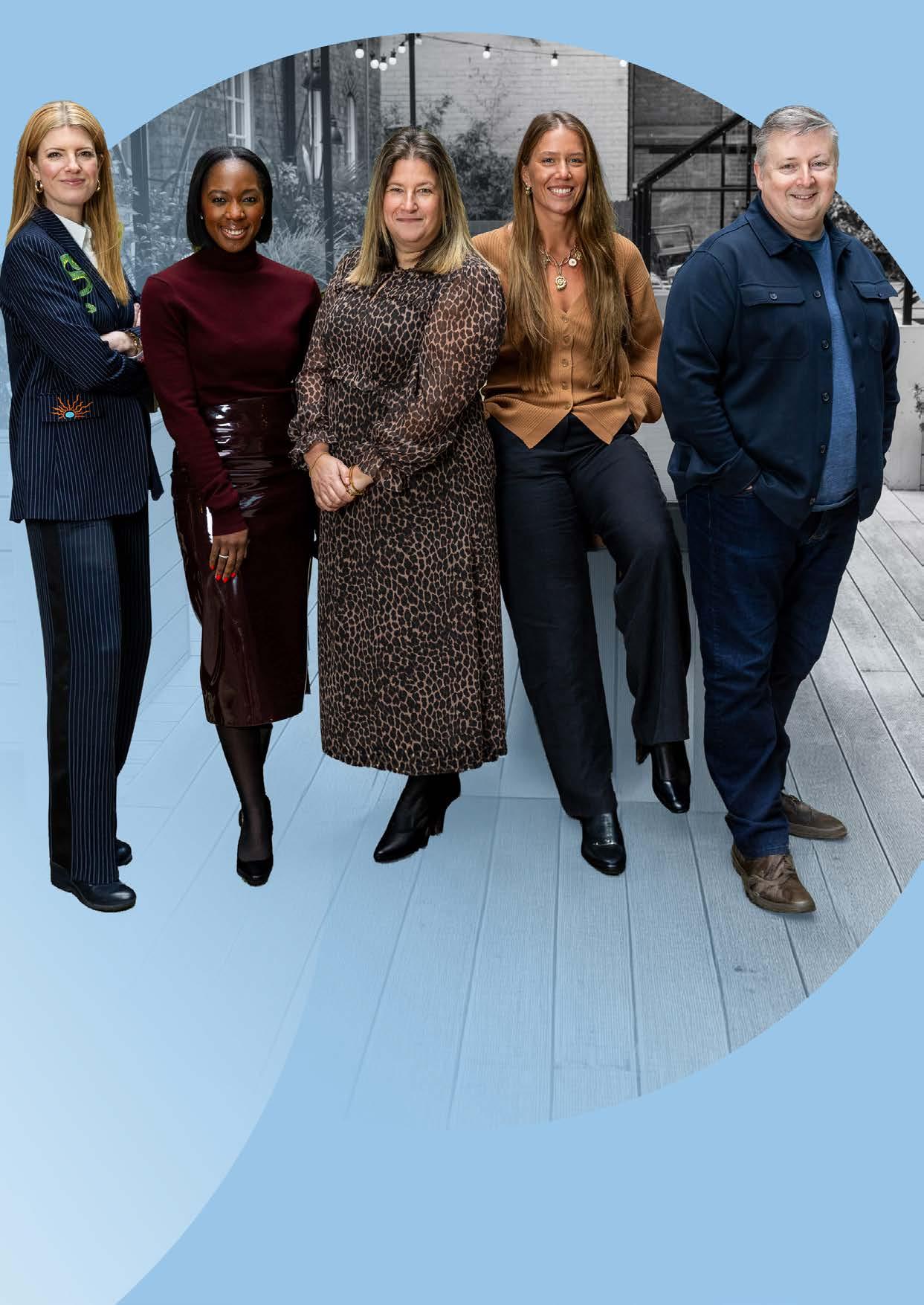
This investment in our leadership marks an important step in AAR’s evolution, reinforcing our commitment to helping brands and agencies build marketing organisations that are fit for the future - and capable of delivering better performance.
By Katrina Law
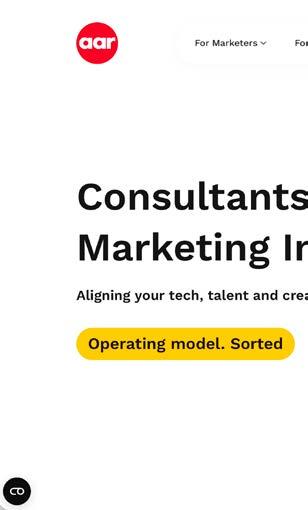
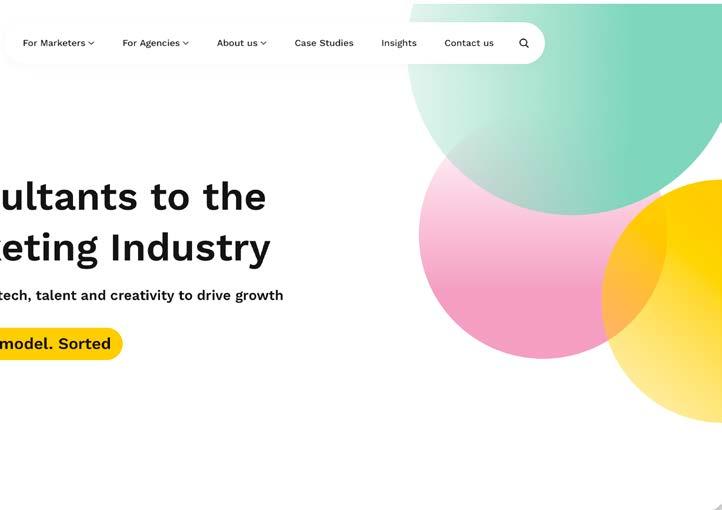
AAR has launched a new website designed to better reflect where the business is today, and to make it easier for agencies to access the insight, tools and services they use most.
While AAR has long been known for its work in agency selection, pitches and relationship management, the business has evolved alongside the changing needs of the industry. Today, AAR works more broadly with organisations on marketing operating models, organisational design and helping marketing teams work more effectively in practice.
The new website has been built to better showcase that evolution, while also creating a cleaner and more straightforward experience for agencies.
A key part of the site is a dedicated Agency section, bringing together content specifically for agency users. This includes a new Events page where agencies can quickly see upcoming events and key dates, alongside easier access to insights and resources.
The site also provides simpler access to sister platforms including NewBizMoves and the Portal, making it smoother for agencies to move between services and stay connected with opportunities and updates across AAR.
Improving navigation and making information easier to find was a major focus of the redesign. The aim is to help agencies get to relevant content more quickly, while also giving a clearer picture of the support and benefits available as part of an AAR subscription.
Victoria Fox, CEO of AAR, said: “The industry has changed a huge amount, and so have the challenges agencies and marketers are dealing with day to day. We wanted the new website to better reflect the work we do now but also make it genuinely easier for people to access the things they value most from AAR.”


By Paul Phillips
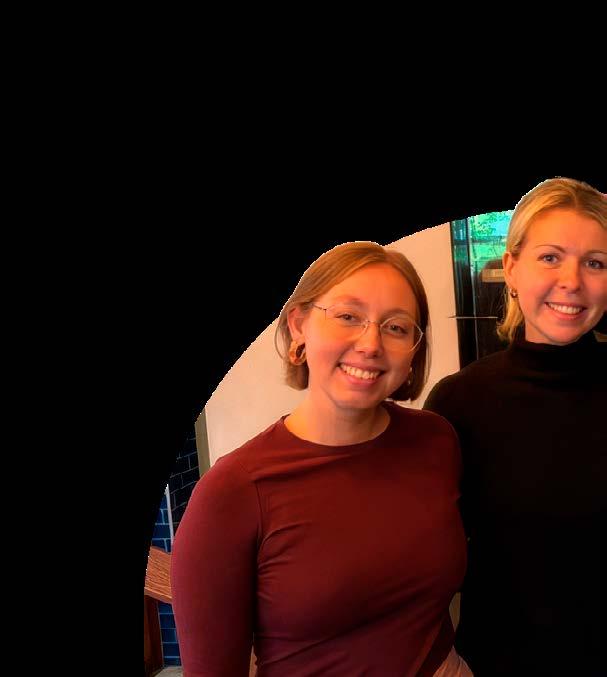
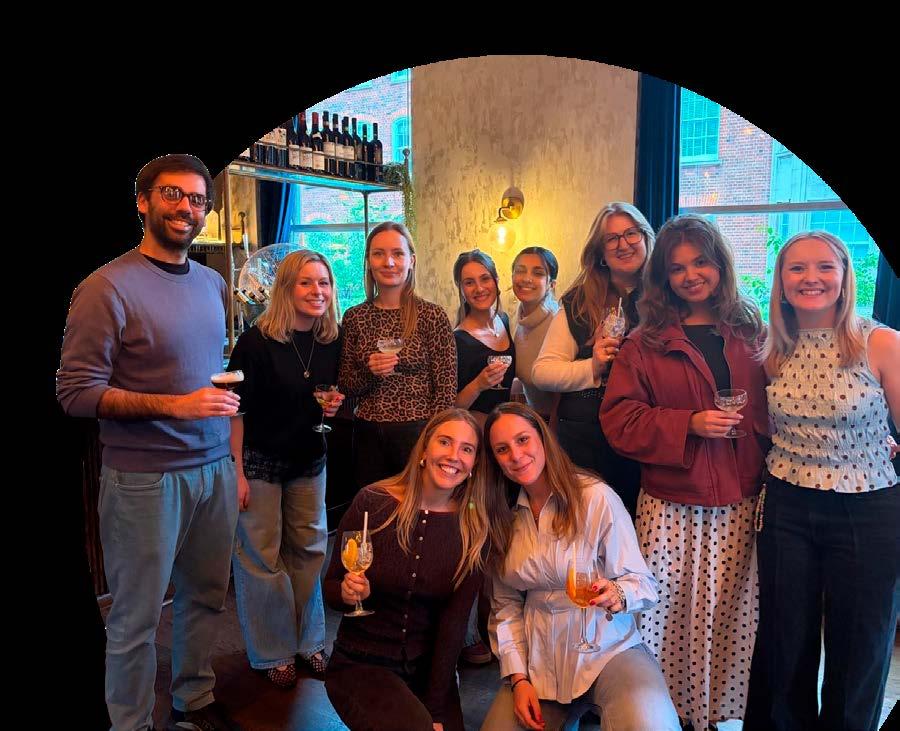
For 20 years, AAR has delivered a training programme with a focus on agency business development. The latest cohort of 34 delegates from creative, media, customer and performance agencies has just completed the 2026 Business Development Academy (BDA) and from my vantage point, the future of the industry is in safe and impressive hands.
The BDA consists of six two-hour sessions spread across eight weeks for those that have recently started in new business or work in other agency disciplines and are interested in how to become a new business ninja. Throughout the course we share the foundational building blocks of what it takes to be great at growth, from both an individual and company perspective. As a testament to the course, current leadership across all agency types is well represented by former BDA alumni.
Alongside learning from AAR consultants Paul Phillips, Rebecca Nunneley and Hannah Astill, this year’s delegates were also offered insight and perspectives from two seasoned and successful agency growth leaders, Oli Richards from Saatchi & Saatchi and Nicki Hare from OMG. Both were generous in sharing their expertise in how to manage internal agency teams, challenging timescales and difficult to navigate portals, all while trying to make involvement in new business personally enjoyable and rewarding. Both were inspiring - for which we offer our appreciation and thanks.
This year, six teams made up of a mix of talent from different agency types, experience and job roles were tasked with creating and naming a ‘new’ agency, preparing a written response to an RFI inviting the agency to share its credentials,
and undertaking a 30-minute chemistry meeting. Delegates were aware of these tasks being undertaken by others in real life but had never held the pen or been in the room in their own agencies.
To make it as realistic as possible, we invited Charlotta Oldham, Marketing Director EMEA at Starbucks, to read the RFI responses and attend the chemistry meetings as though this was an actual opportunity.
The performance of each team can be summarised through five lenses; curiosity, cooperation, creativity, challenge and camaraderie. (This is advertising. Of course there’s going to be some alliteration.)
If you're not curious, it begs the question 'is our industry the right one for you’, but there was no danger of any embarrassing silences from this group! In every session, and the end-of-course drinks celebration, questions were fired at us continually with a genuine eagerness to learn.
As is so often the case in new business, there’s rarely a definitive answer, with the skill being in making a judgement call, and it was encouraging to see delegates undergo some of the mindwrestling and decision-making that they will have to undertake every day in navigating new business opportunities in their agencies.
Every team's success was built on effective cooperation. The challenge is rarely one of intent; it's making collaboration work in practice that makes the difference.
It was impressive to see teams balance the demands of their day jobs with the BDA, navigating competing priorities and inevitable last-minute challenges while still delivering against fixed deadlines. That commitment and teamwork was evident throughout.
Thankfully, our industry over-indexes on creativity, and that was clear throughout the course.
One team named their agency Five Strangers, built around the idea that every famous brand starts as a stranger and that their role is to make brands unforgettable. It was a simple, clear, and compelling proposition.
Bamboo used a coffee tasting as an icebreaker during the chemistry meeting - a creative and relevant touch that reflected Starbucks’ culture and immediately helped build rapport.
Team Zest demonstrated how PowerPoint should be used: to support the storyteller, not replace them. Their strong visual approach helped create a more memorable and distinctive presentation.
The calibre of this year's BDA delegates was exceptional. Hannah, Rebecca and I were particularly struck by the confidence with which they engaged throughout the course.
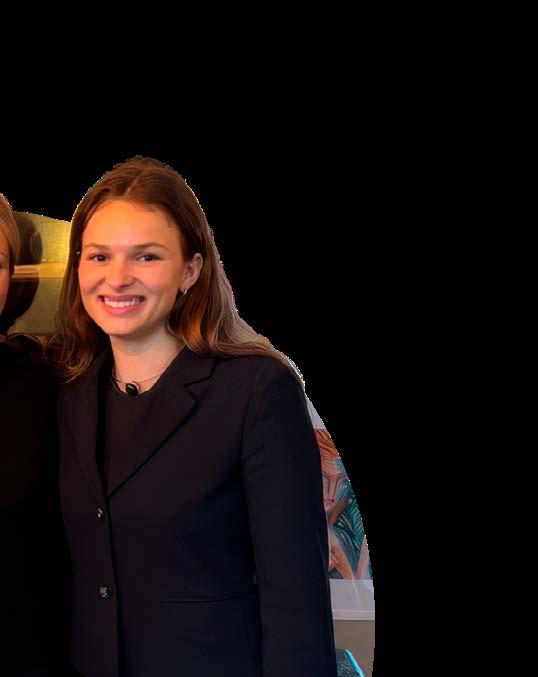
While eager to learn, they were equally prepared to question and challenge our thinking when they disagreed. That self-confidence is a core trait of great new business professionals.
A welcome feature of every Business Development Academy cohort is the camaraderie that develops across the group. Beyond the learning, delegates gain valuable connections and friendships that often endure long after the course ends. I expect the 2026 cohort will be no different.
While the BDA is centred on learning and development, there is also a competitive element, with one team ultimately taking the top spot.
This year's winners were PRSM, who prevailed by the narrowest of margins. The team comprised Patricia Barzotti (Merkle), Renee Berezan (New Commercial Arts), Madeleine Brown (WPP Media) and Sara Murray (Dentsu Creative).
Congratulations and pay rises all round! Until next year.
By Tony Spong
Here at AAR, we have the privilege to sit at the best watercooler in marketing. Brands and agencies are always stopping by for a chat as they fill their metaphorical water bottles.
The ‘privilege’ comes from them feeling that they can take a moment to relax and gain a valuable respite from the relentlessness of today’s marketing challenges to mull things over with us. Our exclusive programme of support is designed to help you win and retain business. From oneon-one agency support, to taking a fresh look at the skills you need today and those of the future, to providing the time and space for you to discuss and share your experiences with your peer group, our aim is to bring you new ideas and perspectives to take away to both sharpen your current success as well as offer the potential to create those new winning formulae that drive our industry forward.
We’ve had a great first half to the year with some lovely feedback on the seminars and events we have run so far - thank you for that.
We have a short break in July and August but wanted to give you a quick heads up on what we have to come after the summer break.
In September, we give you a fresh procurement perspective on how best to approach a client during a period of change - when you can see the value you can add and, equally, how to defend your scope as everything shifts. Nina Chande, formerly of Unilever, PMI, Sony, and Sky, will be sharing her insights.
Talking of insights, they continue to emerge from our latest CMO research, ‘Remodel; Tales of Marketing Transformation’, and we’re keen to share those with you. Our own dynamic duo of Vicky Gillan and Tony Spong have developed some ideas and hypotheses to create an interactive session in October and give you a peek into the client world to see which doors are open, closed or slightly ajar in terms of opportunities for growth.

To help stitch all this change together, we are going to need to develop new skills and give greater focus to the development of our talent. So, we end the year with Vonnie Alexander who will be sharing her ‘Lessons in Leadership’ to help leaders and emerging leaders adapt to this new environment and help you get ready for 2027!
We know that finding time away from dayto-day workloads is difficult and there is always a reason not to do it. To help, we start our sessions at the earlier time of 9.15am and keep running times to 2 hours to help manage your day.
Please review the programme and share with those in your agency who you believe will benefit the most and put holds in diaries now. We officially open bookings 3 weeks in advance of each session.
Finally, we value your feedback enormously so please continue to share that with us.
Wednesday 16 Sept Dealing with procurement
Wednesday 14 Oct
Wednesday 18 Nov
By Tony Spong and Vicky Gillan
Change isn’t something agency leaders are preparing for anymore. They’re in it. That’s why this year’s Walk the Talk focused on one essential question:
‘How do you find growth in change –not just get through it?’
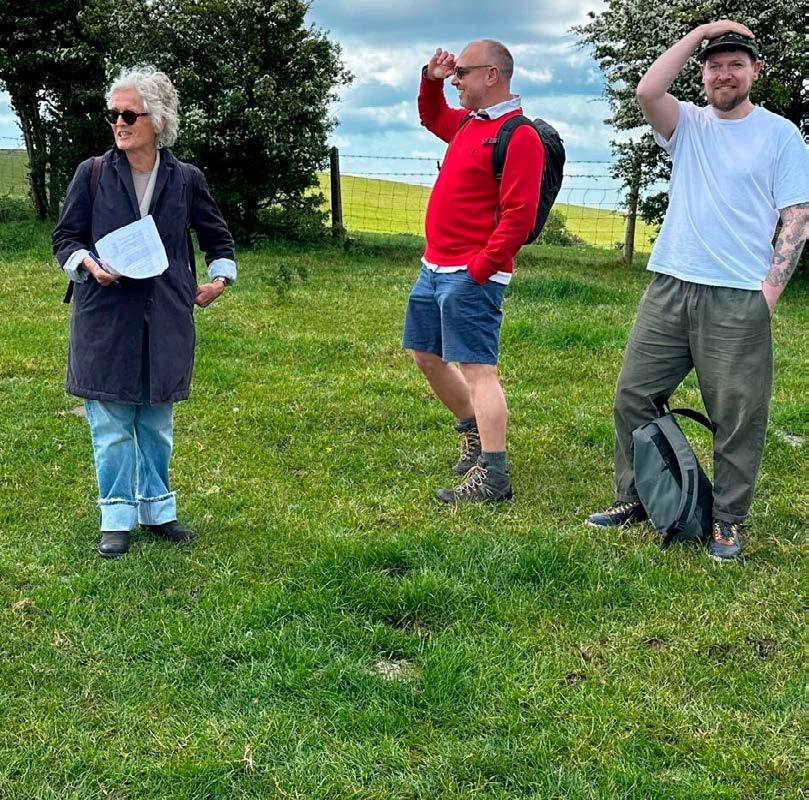
Held in May on the South Downs, the day brought together senior agency leaders who are living change daily. Commercial pressure. Shifting structures. Evolving cultures. Big decisions, often made with imperfect information. This wasn’t a conversation about managing change neatly. It was about how you lead when things feel unfinished, uncertain, or unresolved – and what choices still belong to you in those moments.
Not everyone is in the same place. That was the point.
The agency leaders group came with very different experiences and energy. Some were leaning into growth and opportunity. Others were mid-transition, navigating challenges or redefinition. Most were holding both simultaneously.
Rather than forcing a single interpretation of growth or success, the day allowed those tensions to coexist. That created a much richer conversation – one that reflected real agency life, not idealised models. Because change isn’t linear. And leadership rarely is either.
No slides. No stage. No rushing.
Walk the Talk is designed to feel different –because thinking differently requires different conditions.
Co-created by AAR with executive coaches Anni Townend and James Renwick, the day used movement, landscape and conversation as catalysts for reflection. The South Downs weren’t decorative. They slowed people down.
• Walking side by side softened hierarchies
• Quiet moments sharpened self-awareness
• Space created honesty
The rhythm of the day moved between guided walking, paired dialogue, group discussion, silence and solo reflection. People talked, listened, paused, questioned and noticed –both outwardly and inwardly.
One participant described it as “peace from daily pressure, pace to think properly, and perspective from others and myself.”
The day closed back at The Grain Store, with refreshments and a simple question: What do I want to do differently as a result of today?
The conversations stayed with people and certain themes kept surfacing:
• Where change sharpens commercial judgement – and where it clouds it
• How leaders personally react when certainty disappears
• What needs removing, not adding
• Where bolder decisions are being avoided
• How to lead when change doesn’t neatly align with values or energy
• And what growth really means beyond targets and timelines
I thought it was really great. The day was structured so that you found space, silence and slowness that let you gather your own thoughts before then answering some really open ended and easy to interpret questions. The privilege of listening to other people’s thoughts and perspectives on your world, and the generosity of their thoughts was really quite incredible." - 2026 Delegate

“It’s been a really incredible day, surrounded by motivational and inspiring people. I would recommend it to anyone.”
- 2026 Delegate
These weren’t abstract ideas. They were explored through real stories, lived decisions and shared dilemmas. Leaders challenged one another’s assumptions, compared approaches and tested their own thinking. Crucially, many found reassurance in discovering they weren’t alone in the tension they were carrying.
What people told us afterwards
The word that came up repeatedly was “transformative.”
Not because the day delivered easy answers but because it created the conditions for better questions. Participants spoke about the power of pausing, the value of thoughtful challenge, and the safety created by strong facilitation and a high-calibre peer group.
One attendee reflected on returning to their team with renewed intention: committing to deeper, values-led conversations, and adopting their own version of “walk and talks” to create space for more honest dialogue and genuine buy-in during periods of change.
Others spoke about being challenged by questions they couldn’t immediately answer – particularly around what they might need to let go of personally. Those questions didn’t feel uncomfortable in a negative way; they felt important enough to keep working on.
As one person put it; “everyone walked away with something unexpected – and valuable”.
Walk the Talk: Finding Your Growth in Change worked because three things came together:
• A topic leaders are genuinely wrestling with
• A format that respects how people actually think
• And a peer group willing to be open, curious and real
People didn’t just enjoy the day – they left clearer, more grounded and more confident about how they want to show up next.
In a world obsessed with speed and solutions, sometimes the most powerful thing leaders can do is slow down, step outside, and walk the challenge through. That’s the spirit of Walk the Talk – and why it continues to resonate.
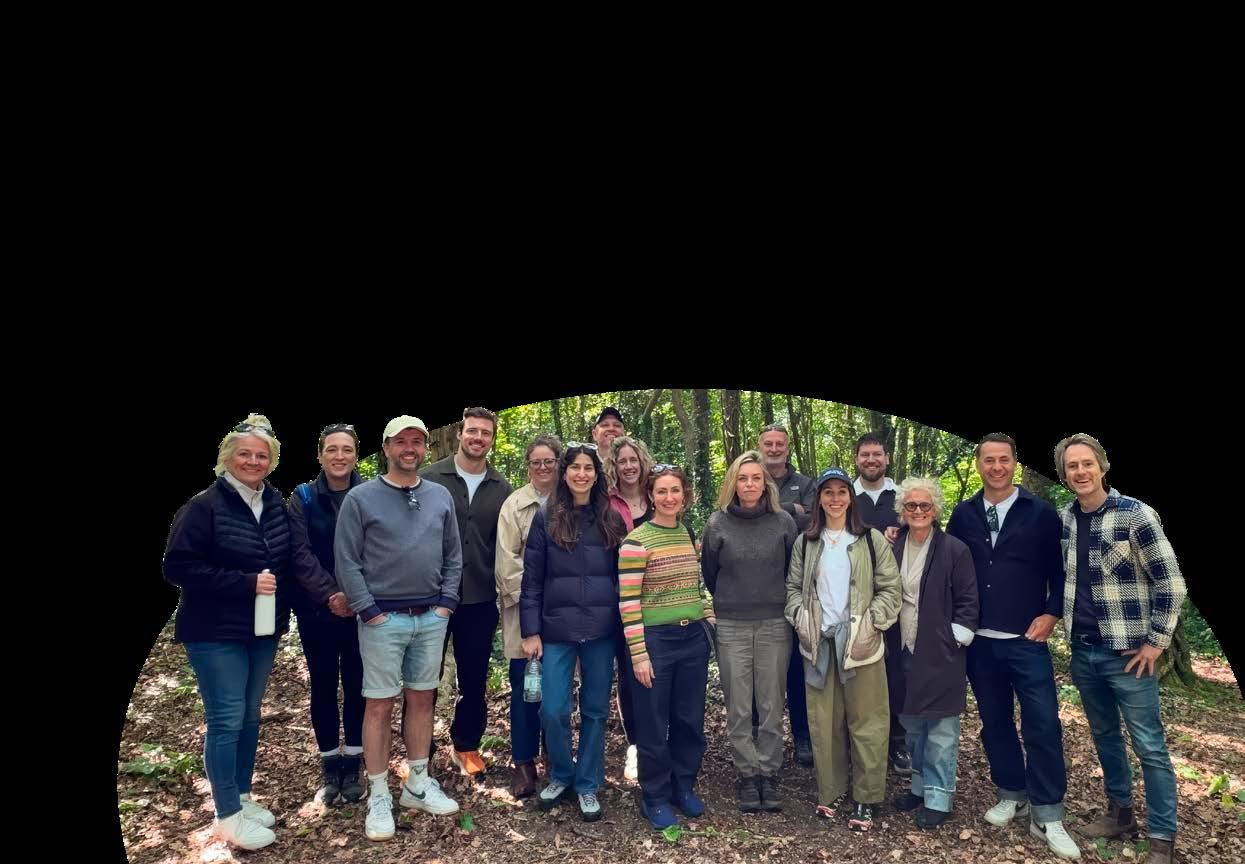
What an amazing, refreshing, unusual day. I think the format was quite radical in today's world where we're moving so fast and trying to get things done. To actually slow down and do some deep thinking in nature was really inspiring.”
- 2026 Delegate

Andrew Bloch Lead Consultant, PR, Social, Content and Influencer abloch@aargroup.co.uk

Emma Regan Business Manager eregan@aargroup.co.uk

Cristiana Spataru Senior Consultant cspataru@aargroup.co.uk

Emily Peacock Business Manager, Growth epeacock@aargroup.co.uk

Hannah Astill Partner hastill@aargroup.co.uk

Katrina Law Marketing Lead klaw@aargroup.co.uk

Kirsty Boyd Business Manager kboyd@aargroup.co.uk

Kate Donaldson Head of Business Management kdonaldson@aargroup.co.uk

Maria Farrell Chief Operating Officer mfarrell@aargroup.co.uk
Photography ©BronacMcNeill

Paul Phillips Partner pphillips@aargroup.co.uk

Paul Stevenson Principal Consultant pstevenson@aargroup.co.uk

Tobi Asare Growth Partner tasare@aargroup.co.uk

Victoria Fox Chief Executive Officer vfox@aargroup.co.uk

Tony Spong Lead Consultant, Brand Strategy tspong@aargroup.co.uk

Vonnie Alexander Lead Consultant, CRM/CX valexander@aargroup.co.uk

Rebecca Nunneley Partner rnunneley@aargroup.co.uk

Vicky Gillan Lead Consultant, Relationship Mgt/Upskill vgillan@aargroup.co.uk

AAR: Consultants to the Marketing Industry 91 Wimpole Street | London W1G 0EF
T: 020 7612 1200 | W: aargroup.co.uk | E: info@aargroup.co.uk