May/June 2022
Bridging the Gap
Celebrating and Recognizing Our Technicians Strain-dependent Behavioral Responses in Mice Euthanasia Sterility of Glass Micropipettes Used in Rodent Surgery The Connection between Human and Animal Welfare
We back each other up for your emergency needs. We are an alliance of proven suppliers to the industry. We are spread out across the country and globe to serve our local markets with LabDiet® and other supplies; and in times of troubles...service yours! • We are positioned to provide feed, bedding, and more like no other supply-chain in the industry • We have clean, organized, and safe facility environments. • We are skilled professionals, trained and focused on your research standards.
ANIMAL SPECIALTIES INC.
W.F. FISHER & SON INC.
CINCINNATI LAB SUPPLY
NEWCO
SCOTTPHARMA SOLUTIONS
FRONTIER DISTRIBUTION
WALDSCHMIDT & SONS
ANIMAL SPECIALTIES & PROVISIONS
TRLAST
ANIMAL SPECIALTIES & PROVISIONS
GATEWAY LAB SUPPLY
LAB SUPPLY
TUSCULUM FEED
NEWCO LAB SUPPLY
LAB SUPPLY
STEWARTS FEED
LAB SUPPLY
©2022 LABDIET. ALL RIGHTS RESERVED.
1 Minute Disinfect in
ALWAYS ON GUARD
*
Protect your research with fast, effective and safer disinfectants.
Peroxigard com * Applicable to Peroxigard™ Ready-to-Use and Wipes only (except C.bovis claim with a 2-minute contact time). Product image altered. Refer to product label for list of claims, specific contact times and use directions. Warning: You must read and follow the instructions on the label for our product and use the product for the particular applications specified on the product label. To the full extent permitted under applicable law, Virox Technologies Inc. shall not be liable for any damages whatsoever, arising out of or otherwise in connection with any failure to follow those instructions or any use of its products which is not specified on the product’s label. The instructions on the product label are not a warranty, express or implied, and Virox Technologies, Inc. expressly disclaims any implied warranties, including any warranty of fitness for a particular purpose. Under applicable law, some of the above waivers or disclaimers of warranty, or exclusions of liability for certain types of damages may not apply to you . In such cases, our liability will be limited to the fullest extent permitted by applicable law.
May/June 2022 Vol. 10 Issue 3
INSIDE THIS ISSUE...
9 10
Carrot, Egg, or Coffee Bean?
14 18 22
Maintaining Wellness
26
Tech Week 2022
6
How to make positive change in leadership.
Blended Learning
How to assess the effectiveness of learning transitions.
Taking care of animals and yourselves.
Environmental Enrichment The impact on red-eared slider turtles.
Displacement Rates
Strain-dependent behavioral responses in mice euthanasia.
26
Photos and excerpts from our technicians.
38 May/June 2022
Bridging the Research Gap
Celebrating and Recognizing Our Technicians
Strain-dependent Behavioral Responses in Mice Euthanasia Sterility of Glass Micropipettes Used in Rodent Surgery The Connection between Human and Animal Welfare
2 Laboratory Animal Science Professional May 2022
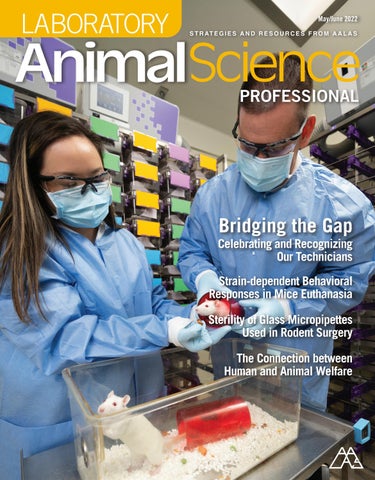
On the cover: David Seiber, BS, RLATG, is a Senior Manager of Technical Operations for Bristol Myers Squibb in San Diego, CA. Amanda Updike, MS, RVT, RLATG, is a Senior Manager of Global Training for Bristol Myers Squibb in San Diego, CA. Photo courtesy of Jeff Rumans Photography
A Research-Ready® IVC System You Can Scale With Ease Innovive provides the only simple, full-cycle clean environment for accelerated science without the stress and complexity of a washroom. Less Washing, More Science innovive.com | (866) 432-2437
42
48
56
DEPARTMENTS 5 Publisher’s Note
44 Tech Tips
6 People & Places
48 AALAS Connection
The Fourth R
New hires, promotions, awards, memorials
8 PROfiles
Meet Ann Murray
34 Inside the IACUC
To Stay Virtual or Not to Stay Virtual?
38 Career & Training Be Better Program
42 DIY
Creative enrichment ideas
4 Laboratory Animal Science Professional May 2022
Insights on techniques and tactics
How Our Secrets Make Us Stronger
52 Crossword – ALAT#3 53 AALAS Foundation Race for Research Contest
55 Ad Index 56 Pet Talk
PUBLISHER’S NOTE Staff
The Fourth R
Publisher Ann Turner Associate Publisher Chris Lyons
There is a high importance placed in laboratory animal science on equitable care of humans and animals. This brings us together: our shared investment in our animals and each other. The 3Rs are crucial in ensuring equitable and responsible interactions with animals. There has been discussion on adding another R. Possibilities offered are responsibility, rehoming, rehabilitation, and others. All these options are essential; however, I'd like to provide my idea of what the fourth R can be, and it is near to my heart. The fourth R, to me, is respect. Let's break down what I mean. The “r” in respect stands for responsibility. One of the first things young students learn in their first science classes is that they must be responsible in the laboratory. This carries the hard work you all do now in exercising care for the animals in research labs. The “e” in respect stands for expertise. You are the subject matter experts in laboratory animal science, and it is evident! You make the right calls and are confident in your choices. Your expertise allows you to lead your teams in the right direction and ensure that the job is done well. The “s” in respect stands for safety. Safety is always a top priority the moment you step into the lab and is especially important when interacting with the animals. We want to keep the animals safe to reduce stress, but humans must remain safe to stay healthy and happy in our professions. The “p” in respect stands for patience. Research with animals that cannot communicate in the same ways humans do requires a lot of patience. It takes time to implement best practices and improve your technique. It also requires patience with yourself as you continue learning and growing. The second “e” in respect stands for enrichment. It is crucial to keep in mind that the goal of our work is to enrich the lives of millions of people every day. Stay motivated by reminding yourself of the end goal, which is the betterment of our lives. The “c” in respect stands for caring. Caring is a fundamental part of doing this job; you care about the animals, yourself, and many others. This compassion allows you to be the very best at your job. The final letter, “t”, in respect stands for team. Every individual who embodies the characteristics above contributes to the team's greatness, and teamwork allows us to continue succeeding. Respect covers many areas in laboratory animal research. It's important to respect the animals, the research process, and each other. For your hard work, I respect each and every one of you. Thank you.
Ann Turner
Publisher Executive Director American Association for Laboratory Animal Science
Managing Editor John Farrar Associate Editor Morgan McCloud Ad Sales John Farrar Design/Production Zara Garza
Editorial Advisory Board Leslie Birke Louisiana State Univ Andrew Burich Benaroya Research Institute Bob Dauchy Tulane Univ School of Medicine David DeOrnellis Champions Oncology Penny Devlin Pennsylvania State Univ College of Med Sonia Doss Duke Univ Medical Center Kelly Ethun Emory University Glenn Jackson Cornell University Richard Marble NAMSA Elizabeth Nunamaker Charles River Laboratories Sara Oglesby AbbVie Inc. Jane Olin Edwards Lifesciences Karuna Patil Seattle Children's Research Institute Amy Pierce Tulane Univ School of Medicine Stacy Pritt UT Southwestern Medical Center Robin Tucker Georgetown Univ
Mission Statement Laboratory Animal Science Professional (LAS Pro) is the official magazine for American Association for Laboratory Animal Science members. LAS Pro provides a wide range of useful resources and knowledge to the association’s 14,000 laboratory animal science professionals who are involved in advancing responsible laboratory animal care and use to benefit people and animals. All signed articles, including, committee reports, news, and commentary, reflect the individual views of the authors and are not official views of AALAS. Authorization to photocopy portions for personal or internal use is granted by the American Association for Laboratory Animal Science. Photocopying for purposes of resale or outside distribution is prohibited unless written approval is obtained from the AALAS Director of Communications. Copyright 2022 by the American Association for Laboratory Animal Science. Laboratory Animal Science Professional (USPS 010-730) is published bimonthly by the American Association for Laboratory Animal Science, 9190 Crestwyn Hills Drive, Memphis, TN 38125. Periodicals Postage paid at Memphis, TN 38101 and additional mailing offices. POSTMASTER: Send address changes to AALAS, 9190 Crestwyn Hills Drive, Memphis, TN 38125-8538.
American Association for Laboratory Animal Science 9190 Crestwyn Hills Drive Memphis, TN 38125-8538 Phone: 901-754-8620 Fax: 901-753-0046 E-mail: info@aalas.org Web: www.aalas.org
May 2022 Laboratory Animal Science Professional 5
PEOPLE & PLACES - NEW HIRES, MEETING UPDATES, AND MEMORIALS
! Executive Committee Visit: Feb 28–March 2
The 2022 AALAS Executive Council arrived at the national headquarters in Memphis, TN on February 28. That day, they had several meetings and enjoyed lunch with the AALAS staff. This was a great opportunity for everyone to mingle and get to know each other. Tuesday March 1 was the day for the first of three board meetings of the year, led by Executive Director, Ann Turner. On Wednesday March 2, current president Marc Hulin gave a robust presentation to the staff on oncology, including a brief introduction of himself. The team at the AALAS Headquarters enjoyed a visit from our Executive Council!
6 Laboratory Animal Science Professional May 2022
IN MEMORIAM William Lillis Obituary Written by Jason Lillis
W
illiam G. Lillis, 89, went on to whatever follows life in late December 2021 after beating back cancer longer than expected. Although rarely one to offer unsolicited advice, Bill did make a few uncharacteristic exceptions, such as: “get your prostate checked.” Born and raised in Brooklyn, NY and northern NJ, Bill was a pretty crappy student who preferred cruising in convertibles and hanging out at the lake in Green Pond, NJ. The oral history of Bill’s youth is a bit thin because he refused to put any detail around the admitted “troubles” he had attempting to graduate from several schools. But, with the Korean War ongoing and having no viable deferment option, Bill enlisted in the Army to train in laboratory sciences. Lucky for him, the ceasefire took effect just before deployment to Okinawa, resulting in a relatively safe service in the Pacific where he learned at least two life-changing things: how to manage a medical laboratory, and how much better life seemed for the officers who had college degrees. Returning stateside with that new-found appreciation, Bill applied himself at school and received a BS from Fairleigh Dickinson University and a Masters from NYU. He then enjoyed a lengthy career in the pharmaceutical industry, starting in research as a parasitologist and ultimately managing laboratory sciences for firms in New Jersey and California. Bill met Pat while they both were at Fairleigh Dickinson. They married and raised five children in Flemington NJ miraculously without major catastrophe. They all survive him, along with six adult grandchildren and six nieces and nephews. Bill was hands-on. He made the local newspaper in the 1970s when, too cash strapped by kids to buy a riding tractor to mow his beloved “acre and a
third” of grass, he converted a VW Bug into a lawn mower so he could cut the lawn at lightning speed, leaving neighbors with puzzled looks. A legacy of Bill’s hands-on approach is that each of his kids learned a very “mature” vocabulary at a young age while listening to him work in the garage on many frustrating projects--those born of necessity rather than choice (and with five kids there were many). Bill also took joy in working the grill when preparing a meal, ideally with his beloved “Muzak” style of “music” playing nonstop (much to the chagrin of those around him). An unusual mix of adventurer and introvert, with a touch of reserved mystery, Bill lived in the San Francisco Bay Area for a dozen years before retiring to tour the country in an RV and later relocating to the Atlanta area, all experiences that helped him evolve as a person. He loved skiing in Lake Tahoe. He went to Burning Man several times, always omitting the specifics about how he spent his days there, other than to say he rode his bicycle around the playa naked because “you have to participate, not just observe” without revealing the real story. He enjoyed being a private pilot and coveted the time he spent flying his Cessna 172. An avid motorcyclist, Bill often biked across the USA solo and sometimes with others, including his kids. He loved to write, too, workshopping his short stories with several creative writing groups until he no longer could, and publishing several of them. Bill made enormous personal sacrifices to open doors for his kids, living a minimalistic lifestyle and, with Pat, repeatedly re-mortgaging their home to help fund part of each child’s education. Bill’s children remain eternally grateful for all that he (and Pat) gave of themselves, and gave up, to make sure their kids could lead safe and fulfilling lives. The family is planning a Spring 2022 memorial service in Flemington. In lieu of flowers, please consider donating a few bucks to the Department of Veterans Affairs which provided Bill with great and compassionate care (https://www.cdceportal.va.gov/ donate_online/).
May 2022 Laboratory Animal Science Professional 7
5
minutes with... Ann Murray
LAS PRO-files
Facility/Employer: Charles River Laboratories Current Job Title: Global Senior Director Business Development
Getting Personal What companion animals do you have? I have a beautiful Fox Red Labrador named Fagan, which means “fiery red.”
Best binge-watching TV series? Money Heist.
What are your favorite hobbies? I love going to the beach.
Where is your favorite vacation spot? Bora Bora
What is your favorite dessert? Ice cream! All kinds of ice cream!
How did you get in this field? My love for
animals and science. In college, I worked for a marine scientist which gave me my first taste of research and I was hooked!
Who were your mentors? There have been
several in my career. In my first position as a Veterinary Technician at Georgetown University, Dr. Joe Newsome did an amazing job preparing me for the future, he provided me opportunities to not only enhance my technical skillset but to expand my operational expertise. When I left Georgetown after 14 years, and started with Pathology Associates as an Operations Specialist, Doug Chandler afforded me opportunities to expand my business acumen and allowed me to gain visibility to all aspects of running a business which exposed me to business development and marketing. And, as they say, the rest is history!
What are your current interests in animal science? I work in Business Development
and in our business area, we work to ensure that customers have the resources and expertise for them to take their drugs and medical devices to market. That involves ensuring the highest quality of animal care which leads to exceptional results for our customers and in turn, brings these critical drugs to market to save lives.
8 Laboratory Animal Science Professional May 2022
Where do you see yourself in 5 years?
I love what I do! I have been so lucky for the past 30+ years, I have been blessed with amazing co-workers who have become family and I see myself continuing to mentor technicians, managers for the next generation.
What is your favorite part of your job? I love mentoring, it brings me great satisfaction.
What advice do you have for others just beginning their animal science career?
Experience it all, get out of your comfort zone and get involved in local and National AALAS and in organizations that support your specific area of work. Volunteer your time with these organizations, it will bring your not only visibility but immense satisfaction of giving back. Do it!!
What is the most rewarding aspect of your career? Watching my staff and colleagues
grow in their roles and expand their horizons. Their success is my success!
What is something unexpectedly interesting about your career? I learn
something new every single day. I have been with Charles River for 22 years and still will find something that I didn’t know about the company. It’s an extraordinary company which has afforded me amazing opportunities.
Be A Coffee Bean: How Pressure Inspires Great Leadership By Morgan McCloud, BA
P
ressure can be described in many ways, but Damon West prefers to consider it hot water. Think about what it means to be in hot water: it’s uncomfortable, foreign, and challenging. West explains that there are three types of reactions to hot water. One is that of a carrot, which grows soft and weak due to fear and worry. The next is an egg, becoming harder the longer it stays in the water, directly opposite the carrot. The final reaction is to be a coffee bean; coffee beans transform their environment despite their circumstances and create something better. West proclaims, “Be a coffee bean,” when faced with pressure. West is no stranger to pressure. He led a life rooted in drugs and crime for many years, winding up in prison at a young age. He received a letter from someone who had never given up on him during his stay: Mr. Jehlen, his favorite teacher. “He said, ‘You’ve always been a leader, and I believe you will bounce back,’” recounts West. “He told me that once I get out, I should speak to his students and give them hope that things can get better after they’ve been worse.” This catalyst motivated West to make changes right then instead of waiting for his release. “The man I want to be outside of prison needs to start in prison,” he said. “I made parole my first time, which shocked me. After that, I made it my mission to share my story.” And that he did. West consistently pursued opportunities to share his message, despite rejections left and right. After a seemingly hopeless visit with several college football coaches, he garnered the attention of Dabo Swinney, head coach of the Clemson Tigers. “He asked me if I could speak to his students about leadership, and that one yes changed my life,” said West fondly. West emphasized that your position determines your perspective. “Today, when you wake up, you did not hit the concrete floor of a prison. No matter what, it’s not as bad as you think it is.” Developing positive self-talk is crucial in dismissing overthinking, which often gets in the way of overcoming your obstacles. Leaders find themselves guiding teams through obstacles regularly, and staying level-headed sets a great example. Word of his message spread, and he was soon approached with an opportunity to write a book. Kevin Phelps, chair of the ILAM committee, heard about West through yearly summit meetings led by best-selling author and keynote speaker Jon Gordon. It was at the Summit that I first heard Damon share
his coffee bean message,” said Phelps. “As soon as I heard him speak, I was hooked. I immediately went out and bought his book The Change Agent.” Months later, Gordon and West collaborated again for The Coffee Bean: A Simple Lesson to Create Positive Change. “Jon Gordon said, ‘Damon, the world needs the coffee bean message right now. This is the perfect message for a perfect time.’” That was in 2019, and when 2020 (and COVID-19)) promptly followed, the world was immersed in hot water. Gordon was right. Leadership proved to be more crucial than ever before, and West’s book rose to the occasion. Millions worldwide found themselves resonating with the message of how to maintain calm and change your environment under pressure. This message resonates with many, especially those in leadership, which made West the perfect keynote speaker for ILAM. Whether you become weak and sad or hard and mean, you still have opportunities to become a coffee bean and lead a positive change in your environment, both for yourself and your teammates. Morgan McCloud, BA, is the Communications Coordinator for AALAS in Memphis, TN.
May 2022 Laboratory Animal Science Professional 9
F E AT U R E - E M P L O Y E E T R A I N I N G
Transitioning to a Blended Learning Classroom to Increase Active Learning and Competencybased Assessment By Katherine Head, BS, M.Ed, RLATg and Shari Hunt, BS, RLATg, CMAR
I
n 2019, an optional training classes, Principles of Aseptic Technique in Rodent Survival Surgery, became a required class for any researcher conducing survival surgery. At the time, two-thirds of the three-hour long class was lecture. In addition, we anticipated the attendance of the class would increase threefold. This combination wasn’t going to make anyone eager for another mandatory class. To decrease the amount of time spent with didactic learning and increase active learning, the blended learning model was applied. Blended learning (or hybrid learning) is an approach to education that reduces the teacher-centered instruction during the in-person class time and incorporates more learner-centered instruction. The portion of instruction that is teacher-centered is placed on an online platform, allowing learners to learn at their own pace on their own time (outside of the class time). This is also helpful for any disadvantaged learners who need more time as well as learners who may have English as a second language. Moving the teacher-centered portion of instruction away from the in-person class time increases the time learners are actively engaged in learning. Although a traditional lecture course may seem effective for disseminating a large amount of information to many learners, passive learning is not the best method for learning enthusiasm or retention.1 Learning is most effective when learners engage in deliberate practice that includes active monitoring and feedback of the learning experience.2,3 In addition, peer assessment has shown to have a considerable impact on learner understanding, as it shows comprehension of the content.4 This blended learning approach allows the learner to spend more time with hands-on simulation and reflection while getting immediate feedback from both peers and the trainer on what worked and what needs improving on their aseptic technique. For the blended classroom transition, the online interactive module covers the lecture portion of the class, containing discussion and video on the basic 10 Laboratory Animal Science Professional May 2022
Figure 1: Principles of Aseptic Technique and Rodent Survival Surgery online Module.
principles of aseptic technique, vocabulary terms, program policies, and standard operating procedures. During the in-person class, learners have the opportunity to ask questions from the material covered in the online module, review specific topics, perform hands-on simulation, and show competency with specific tasks. After incorporating the online module, more class time became available for hands-on simulation and competency assessment, with less time spent on lecture.
Materials and Methods
The online module (Figure 1) was created using several of the Articulate 360® programs, via an aca-
Figure 2: Example of interactive buttons and pop-ups to expand on topics.
demic user license. Storyline 360 was utilized in the designing of the module. This program allows the user to construct interactive buttons, videos, quizzes, and web links (Figure 2). A digital camera was used to record videos, which were edited using Replay 360. Narration for the module was scripted and recorded using a voice recorder application. Quiz questions were added to the end of each section of the module to ensure understanding of the material. The module went through several testing phases with the staff veterinarians to ensure the module was accurate and complete. The completed module was uploaded onto UT Southwestern’s learning management software, where completion can be tracked. The module is a prerequisite for the in-person class and assigned to research staff at the time of enrollment in the Principles of Aseptic Technique in Rodent Survival Surgery (in-person) class through UT Southwestern’s learning management software. Prior to the start of class, trainers verify that the learners completed the module through the learning management software. The in-person class was redesigned to review basic concepts and have the learners work (hands-on) as a team reviewing step-by-step technique from surgical preparation to post-operative monitoring. A trainer is paired for every two or three learners to
Figure 3: Example of student performing simulation for competency assessment.
provide immediate feedback when aseptic technique is incorrect. Learners are asked to correct their technique and show competency before the end of class.
Results
The traditional learning model previously applied to this class was 75% lecture and 25% active learning simulation with little or no time for competency assessment. The blended class transition led to 40% May 2022 Laboratory Animal Science Professional 11
Figure 4: Class time differences between traditional and blended learning models.
of the class reserved for online topic review and questions, allowing 60% of the class to be dedicated to active learning simulation and competency assessment (Figure 3). The class time overall was shortened by 30 – 45 minutes (or more depending on competency). Transitioning to the blended learning model doubled the amount of time available for active learning simulation and competency assessment (Figure 4). By coincidence, the online module was completed just before the COVID-19 pandemic . Switching to a blended learning classroom became a critical component for safety as training and research continued during the pandemic, allowing us to decrease classroom time together, as we had to decrease the attendance of our classes and increase the number of class offerings.
these techniques with a trainer during the in-person class. Having more active learning time in the classroom allows the learners the opportunity to ask specific questions regarding the aseptic technique applied to their procedure, spend time on specific surgical simulations, and get immediate feedback on their technique. Evaluating the overall effectiveness of the class is difficult to determine without receiving compliance data on survival surgeries. In addition, a comparison of learner assessment is an additional challenge since a formative assessment was not collected before the class restructuring. However, feedback from learners has been positive. In the future, we plan to include learner surveys to place metrics on learner feedback and additional ways to improve the class. The addition of the online module also created a valuable online resource for learners to referConclusion ence. With the success of the Principles of Aseptic With the transition to a blended learning classroom, Technique in Rodent Survival Surgery module, new learners are now able to acquire the basic principles modules have been created for aseptic husbandry of aseptic technique online and show competency in techniques in sterile facilities and immunocom12 Laboratory Animal Science Professional May 2022
promised rodent husbandry techniques, which are prerequisites for sterile facility access. Future plans include creating a similar course for the basic suturing class, allowing learners to obtain basic suturing knowledge and information through an online module followed by hands-on practice and competency assessment in person. Acknowledgements: Thank you to Susan Chadbourne, who played a critical role in creating and transitioning to the blended learning model. Thank you to the UT Southwestern’s Veterinary Staff, who helped contribute to the continued success of training and competency assessment of our training courses.
Katherine Head, BS, M.Ed, RLATg, is a Senior Trainer at UT Southwestern Medical Center in Dallas, TX.
Shari Hunt, BS, RLATg, CMAR is a Training Manager at UT Southwestern Medical Center in Dallas, TX. REFERENCES 1. Bransford JD, Brown AL, Cocking RR. 2000. How people learn: brain, mind, experience, and school. Washington, DC: National Academies Press. 2. Ericsson KA, Krampe RT, Tesch-Römer C. 1993. The role of deliberate practice in the acquisition of expert performance. Psychological Review. 100(3):363–406. doi:10.1037/0033295x.100.3.363. 3. Palinscar AS, Brown AL. 1984. Reciprocalt teaching of comprehension-fostering and comprehension-monitoring activities. Cognition and Instruction. 1(2):117–175. doi:10.1207/ s1532690xci0102_1. 4. Li L, Liu X, Steckelberg AL. 2010. Assessor or assessee: How student learning improves by giving and receiving peer feedback. British Journal of Educational Technology. 41(3):525–536. doi:10.1111/j.1467-8535.2009.00968.x.
Customer-focused, quality driven solutions! Handling projects both great and small is our speciality. Facility Management Research Support Animal Care
Customized Training IACUC Administration Data Management
Providing scientific staffing solutions to an ever growing list of clients.
Your Project, Our People, One Priority!
Priority One Services Call today and speak with a project consultant! 703-971-5505 | PriorityOneServices.com
May 2022 Laboratory Animal Science Professional 13
F E AT U R E - E M P L O Y E E T R A I N I N G
Caring for People & Animals: The Intertwined Welfare of Humans and Animals in Research By Megan R. LaFollette, MS, PhD; Sarah Thurston, BS, LAT, CLABP; Sally Thompson-Iritani, DVM, PhD
T
ake a moment, step back, and think about why you do the work you do. What drove you to work with research animals, and what keeps you here? Most people working in this field have an innate drive to help both people (through research) and animals. We care deeply about our work, which can give us a deep sense of meaning – but it can also place us at risk for compassion fatigue. Compassion fatigue is characterized by stress, exhaustion, and sometimes an inability to feel empathy. It includes elements of burnout and perpetration induced traumatic stress or secondary traumatic stress, which is distress related to causing or being exposed to the trauma of others. In laboratory animal science, it can result from seeing animals in pain or distress, euthanizing animals we have cared for, and feeling that our work is undervalued by society.3 To provide the best care possible for those around us – both humans and animals, it is helpful to recognize when we might be experiencing compassion fatigue and identify ways to care for ourselves and others. After all, the welfare of research animals depends on the people who make decisions about their care and use and those who directly interact with them, including animal technicians, managers, review board members, scientists, and more. Workplace stress can increase mistakes, 14 Laboratory Animal Science Professional May 2022
decrease job satisfaction, and increase employee turnover.4 Considering the intertwined nature of human and animal welfare, the North American 3Rs Collaborative (NA3RsC) has created an initiative focused on Compassion Fatigue Resiliency. The first aim of this initiative was to develop a compassion fatigue resiliency program for animal research institutions (Figure 1). We are now in the process of piloting this program, assessing its quality, and quantifying its effectiveness at increasing employee wellness, workplace satisfaction, and retention. Our program promotes a comprehensive approach to resiliency by addressing factors at both the individual and institutional levels. We are hosting presentations for staff to learn about compassion fatigue resiliency, mindfulness, creating positive work relationships, a culture of care, and reconnecting to their meaning for working in the field. Throughout the
Figure 1: NA3RsC’s Compassion Fatigue Resiliency Program includes a longitudinal survey, core materials for setting up a compassion fatigue resiliency committee, live presentations & facilitated discussions, and additional support materials.
program, we encourage staff to connect with others that can appreciate and share the stressors of our field.2 The basic principles of self-care apply to resiliency, such as the foundations of sleep, nutrition, and movement. Certain self-care activities may be better for some individuals than others, so we suggest a range of activities. Self-care can also include relaxation practices such as meditation, breathwork, and mindfulness; those activities promote creativity, hobbies, and a healthy work/life balance. Reconnecting with your meaning for working in the field and creating positive self-talk narratives is also recommended. Beyond these individual strategies, NA3RsC is assisting our pilot institutions in developing compassion fatigue resiliency committees. These committees will receive aggregate results from our longitudinal survey tailored to their specific institution, posters to raise awareness on compassion fatigue, example charters, budgets, timelines, guidance for managers, and tips for receiving leadership support. Institutions will also receive three separate information packets on passive learning resources, promoting a culture of care, and ideas for group activities. A core component of our compassion fatigue resiliency program is encouraging institutions to maintain strong support for the 3Rs of animal research - refinement, reduction, and replacement. Communicating this initiative with the staff helps combat the moral stress and cognitive dissonance that some animal research personnel experience when there is a conflict between their values for animal care and the reality of animal research.1 Two key current research findings also support the connection between human and animal welfare. First, personnel who work with animals that undergo less pain and distress also report less compassion fatigue.2 Second, personnel who report working with animals with higher frequency and diversity of enrichment also report lower compassion fatigue.2 In conclusion, the NA3RsC truly believes that human and animal welfare are intertwined. By promoting better welfare for humans, we also promote better welfare for animals and vice versa. If you are interested in learning more about compassion fatigue resiliency in animal research, visit the NA3RsC
Resource Hub at na3rsc.org/cf. We provide essential background information, critical strategies to promote resiliency, free webinars, research papers, self-care tips, classes & consultants, self-assessments, and more. Acknowledgments: NA3RsC would like to thank the Northwest Center for Occupational Health and Safety for funding our work in this area and the NA3RsC Compassion Fatigue Resiliency Initiative members for their dedication and efforts in designing our compassion fatigue resiliency program. Megan LaFollette, MS, PhD, is Program Manager at the North American 3rs Collaborative in Denver, CO.
Sarah Thurston, BS, LAT, CLABP is the Coordinator of Animal Behavior & Welfare Management Programs at Charles River Laboratories.
Sally Thompson-Iritani, DVM, PhD, is the Assistant Vice Provost, Animal Care, Outreach, & 3Rs at the University of Washington in Seattle, WA. REFERENCES 1. Engel RM, Silver CC, Veeder CL, and Banks RE. 2020. Cognitive dissonance in laboratory animal medicine and implications for animal welfare. J Am Assoc Lab Anim Sci 59:2, 132-138 2. LaFollette MR, Riley MC, Cloutier S, Brady CM, O’Haire ME, Gaskill BN. 2020. Laboratory animal welfare meets human welfare: a cross-sectional study of professional quality of life, including compassion fatigue in laboratory animal personnel. Front Vet Sci 7. 3. Murray J, Bauer C, Vilminot N, Turner PV. 2020. Strengthening workplace well-being in research animal facilities. Front Vet Sci 7:859. 4. Scotney RL, McLaughlin D, Keates HL. 2015. A systematic review of the effects of euthanasia and occupational stress in personnel working with animals in animal shelters, veterinary clinics, and biomedical research facilities. J Am Vet Med Assoc 247:1121–1130 May 2022 Laboratory Animal Science Professional 15
Opioid Analgesic FFor subcutaneous use in mice and rats only. CAUTION: Federal law restricts this drug to use by or on the order of a licensed veterinarian. LEGAL STATUS--In order to be legally marketed, a new animal drug intended for a minor species must be Approved, Conditionally Approved, or Indexed by the Food and Drug Administration. THIS PRODUCT IS INDEXED--MIF # 900-014. Extra-label use is prohibited. This product is not to be used in animals intended for use as food for humans or food-producing animals. WARNING: ABUSE POTENTIAL, LIFE-THREATENING RESPIRATORY DEPRESSION, and ACCIDENTAL EXPOSURE Abuse Potential Ethiqa XR contains buprenorphine, a high concentration (1.3 mg/mL) opioid agonist and Schedule III controlled substance with an abuse potential similar to other Schedule III opioids. The high concentration of Ethiqa XR may be a particular target for human abuse. Buprenorphine has opioid properties that in humans may lead to dependence of the morphine type. Abuse of buprenorphine may lead to low or moderate physical dependence or high psychological dependence. The risk of abuse by humans should be considered when storing, administering, and disposing of Ethiqa XR. Persons at increased risk for opioid abuse include those with a personal or family history of substance abuse (including drug or alcohol abuse or addiction) or mental illness (suicidal depression). Because of human safety risks, this drug should be used only with veterinary supervision. Do not dispense Ethiqa XR. Life-Threatening Respiratory Depression The concentration of buprenorphine in Ethiqa XR is 1.3 mg/mL. Respiratory depression, including fatal cases, may occur with abuse of Ethiqa XR. Ethiqa XR has additive CNS depressant effects when used with alcohol, other opioids, or illicit drugs that cause central nervous system depression. Because of the potential for adverse reactions associated with accidental injection, Ethiqa XR should only be administered by a veterinarian or laboratory staff trained in the handling of potent opioids. DESCRIPTION Ethiqa XR is an injectable suspension of extended-release buprenorphine. Buprenorphine hydrochloride, an opioid analgesic, is the active ingredient in Ethiqa XR. Lipid-bound buprenorphine hydrochloride is suspended in medium chain fatty acid triglyceride (MCT) oil. Lipids encapsulate the buprenorphine limiting diffusion which provides for larger doses and prolonged action.1,2 Ethiqa XR has a slightly yellow to white opaque appearance. Each mL contains approximately 1.3 mg buprenorphine hydrochloride. The sterile product contains cholesterol, gl yceryl tristearate, and buprenorphine hydrochloride suspended in MCT oil. Buprenorphine Formula C29H41NO4
INDICATIONS Ethiqa XR is indicated for the control of post-procedural pain in mice and rats. MOUSE DOSAGE AND ADMINISTRATION Wear protective clothing when administering Ethiqa XR (see Human Safety Warnings). Shake the vial briefly before each use to ensure uniform suspension. If stored refrigerated, bring to room temperature before use. Use aseptic techniques to withdraw the dose into a disposable 0.5 or 1 mL syringe. A 20 to 23 gauge needle should be used for injections due to the viscosity of the drug suspension. The dosage of Ethiqa XR is a single subcutaneous injection of 0.05 mL per 20 gram mouse (3.25 mg/kg body weight). Therapeutic drug concentrations are maintained for 72 hours after the initial dose. If needed, a single repeat dose may be administered 72 hours after the initial dose. Secure the mouse in a scruff-of-the-neck hold. Insert the needle into the dorsal subcutaneous space created by the scruff hold. Inject the entire dose into the dorsal subcutaneous space. An oily sheen may be observed in the dorsal fur of the mouse after injection due to leakage of the oil-based drug suspension from the injection site. The oily sheen may last for 4 to 5 days post-injection. Leakage from the injection site can be minimized by slowly injecting Ethiqa XR into the subcutaneous space. The mouse can be returned to its cage immediately after receiving Ethiqa XR. Do not return any unused drug suspension from the syringe back into the vial. Once the vial is broached, Ethiqa XR can be stored at 15° to 25°C (59° – 77°F) or refrigerated for 28 days. DO NOT FREEZE. Product could change its physical properties if not stored within the specified storage conditions and original vial container. RAT DOSAGE AND ADMINISTRATION Wear protective clothing when administering Ethiqa XR (see Human Safety Warnings). Shake the vial briefly before each use to ensure uniform suspension. If stored refrigerated, bring to room temperature before use. Use aseptic techniques to withdraw the dose into a disposable 0.5 or 1 mL syringe. A 20 to 23 gauge needle should be used for injections due to the viscosity of the drug suspension. The dosage of Ethiqa XR is a single subcutaneous injection of 0.1 mL per 200 gram rat (0.65 mg/kg body weight). Therapeutic drug concentrations are maintained for 72 hours after the initial dose. If needed, a single repeat dose may be administered 72 hours after the initial dose. Secure the rat in a passive restraint tube or by holding with a heavy glove with one person to secure the rat and a second person to administer the drug. Insert the needle in the dorsal subcutaneous space. Inject the entire dose into the dorsal subcutaneous space. An oily sheen may be observed in the dorsal fur after injection due to leakage of the oil-based drug suspension from the injection site. The oily sheen may last for 4 to 5 days post-injection. Leakage from the injection site can be minimized by slowly injecting Ethiqa XR into the subcutaneous space. The rat can be returned to its cage immediately after receiving Ethiqa XR. See CONTRAINDICATIONS and Rat PRECAUTIONS for additional information on bedding. Do not return any unused drug suspension from the syringe back into the vial. Once the vial is broached, Ethiqa XR can be stored at 15° to 25°C (59° – 77°F) or refrigerated for 28 days. DO NOT FREEZE. Product could change its physical properties if not stored within the specified storage conditions and original vial container. CONTRAINDICATIONS Only administer Ethiqa XR by subcutaneous injection. Ethiqa XR is not intended for intravenous, intra-arterial, intrathecal, intramuscular, or intra-peritoneal injection. Do not use on mice or rats with pre-existing respiratory deficiencies. Do not keep rats on wood chip-type bedding after administration of Ethiqa XR. HUMAN SAFETY WARNINGS Not for use in humans. Keep out of the reach of children. Human User Safety while handling Ethiqa XR: Two trained staff for administration: Ethiqa XR should only be handled and administered by a veterinarian, veterinary technician, or laboratory staff trained in the handling of potent opioids. To prevent human adverse reactions or abuse, at least 2 trained administrators should be present during injection of Ethiqa XR. Protective covering: To prevent direct contact of Ethiqa XR with human skin or mucous membranes when handling the suspension, protective clothing is recommended. Mucous membrane or eye contact during administration: Direct contact of Ethiqa XR with the eyes, oral or other mucous membranes of humans could result in absorption of buprenorphine and the potential for adverse reactions. If accidental eye, oral or other mucous membrane contact is made during administration, flush the area with water and contact a physician. Skin contact during administration: If human skin is accidentally exposed to Ethiqa XR, wash the exposed area with soap and water and contact a physician. Accidental exposure could result in absorption of buprenorphine and the potential for adverse reactions.
Drug Abuse, Addiction, and Diversion of Opioids: Controlled Substance: Ethiqa XR contains buprenorphine, a mu opioid partial agonist and Schedule III controlled substance with an abuse potential similar to other Schedule III opioids. Ethiqa XR can be abused and is subject to misuse, abuse, addiction, and criminal diversion. Ethiqa XR should be handled appropriately to minimize the risk of diversion, including restriction of access, the use of accounting procedures, and proper disposal methods, as appropriate to the laboratory setting and as required by law. Abuse: Abuse of Ethiqa XR poses a hazard of overdose and death. This risk is increased with concurrent abuse of alcohol and other substances including other opioids and benzodiazepines. Buprenorphine has been diverted for non-medical use into illicit channels of distribution. All people handling opioids require careful monitoring for signs of abuse. Drug abuse is the intentional non-therapeutic use of a prescription drug for its rewarding psychological or physiological effects. Abuse of opioids can occur in the absence of true addiction. Storage and Discard: Ethiqa XR is a Class III opioid. Store in a locked, substantially constructed cabinet according to DEA and local controlled substance guidelines. Discard broached vials after 28 days. Any unused or expired vials must be destroyed by a DEA registered reverse distributor; for further information, call 1-833-384-4729. Physician information: Ethiqa XR injectable suspension is a mu-opioid partial agonist (1.3 mg buprenorphine/mL). In the case of an emergency, provide the physician with the package insert. Naloxone may not be effective in reversing respiratory depression produced by buprenorphine. The onset of naloxone effect may be delayed by 30 minutes or more. Doxapram hydrochloride has also been used as a respiratory stimulant. PRECAUTIONS Mice The safety of Ethiqa XR has not been evaluated in pregnant, lactating, neonatal, or immune-compromised mice. As with other opioids, buprenorphine may cause sedation, decreased blood pressure, decreased heart rate, decreased gastrointestinal mobility, and respiratory depression. Use caution with concomitant administration of Ethiqa XR with drugs that cause respiratory depression. The use of paper or soft bedding for up to 3 days following administration of Ethiqa XR should be considered. Normal mice may exhibit an obtunded response to stimuli up to 4 hours after receiving Ethiqa XR. Buprenorphine is excreted in the feces (see Clinical Pharmacology section below). Coprophagy may lead to ingestion of buprenorphine or its metabolites by mice treated with Ethiqa XR and untreated cage mates. Rats The safety of Ethiqa XR has not been evaluated in pregnant, lactating, neonatal, or immune-compromised rats. As with other opioids, buprenorphine may cause sedation, decreased blood pressure, decreased heart rate, decreased gastrointestinal mobility, and respiratory depression. Use caution with concomitant administration of Ethiqa XR with drugs that cause respiratory depression. Rats may exhibit signs of nausea including pica up to 3 days post-treatment. Rats should be maintained on paper or soft bedding to avoid ingestion of wood chip-type bedding after administration of Ethiqa XR. Pica involving wood chip-type bedding can be lethal in rats. Buprenorphine is excreted in the feces (see Clinical Pharmacology section below). Coprophagy may lead to ingestion of buprenorphine or its metabolites by rats treated with Ethiqa XR and untreated cage mates. ADVERSE REACTIONS Mice No adverse reactions were observed in 20 to 25 gram young adult male and female mice after a single subcutaneous injection of Ethiqa XR at a dose 5 times the indicated dose. Laboratory parameters evaluated in the study included hematology and clinical chemistry; histopathology was also performed. In a second study, adult male and female mice received Ethiqa XR subcutaneously at 5 times the indicated dose for three doses at four day intervals. A surgical procedure was performed on the study mice prior to receiving each of the three doses of Ethiqa XR. Mortality was seen in two male mice after the third surgical procedure and dose of Ethiqa XR (total dose of 49 mg buprenorphine/ kg body weight in 8 days). Weight loss has been observed in mice treated post-procedurally with Ethiqa XR. Rats Adverse reactions were evaluated in 180 to 200 gram young adult male and female rats after a single injection of Ethiqa XR. A surgical procedure was performed on the rats prior to administration of a single dose at the intended dose of 0.65 mg/kg or a single dose of 2, 6 or 10-fold excess dose. Adverse reactions also were evaluated in male and female rats administered 2, 6 and 10 times the intended dose for three doses at four day intervals. A surgical procedure was performed on the rats prior to administration of the first of three doses. Laboratory parameters evaluated in the study included hematology, clinical chemistry, urinalysis, histopathology, and bodyweight. Signs of nausea were observed at all dose levels within 24 hours of the dose. Signs included self-licking, self-gnawing and efforts to eat wood-chip bedding. Mortality was seen in 1 of 36 rats exposed to wood chip bedding. Necropsy revealed the stomach and esophagus were compacted with bedding, the bladder was abnormally distended and the urine contained blood. Mortality was seen in 3 of 222 rats treated with Ethiqa XR due to technical complications with serial bleeding of the jugular vein. For technical assistance, or to report an adverse drug reaction, please call Fidelis Pharmaceuticals LLC at 1-833-384-4729. For additional information about adverse drug experience reporting for animal drugs, contact FDA at 1-888-FDA-VETS or http:// www.fda.gov/AnimalVeterinary/SafetyHealth. CLINICAL PHARMACOLOGY3 Buprenorphine can act as an agonist and antagonist at different classes of opioid receptors. Agonism at the mu opioid receptor and, in some cases, antagonism at the kappa or delta opioid receptors are possible underlying mechanisms for the ceiling effect and bell-shaped dose-response curve of buprenorphine. Studies with knockout mice have shown that the antinociceptive effect of buprenorphine, which is mediated primarily by the mu opioid receptor, is attenuated by the ability of the drug to activate the opioid receptor like (ORL-1) receptor. The drug can be described as a ‘full’ and a ‘partial’ agonist at the same receptor depending on the specific assay. There appears to be no ceiling effect for analgesia, but there is a ceiling effect for respiratory depression. Pharmacokinetic studies with bolus injections of buprenorphine in mice and rats provide similar models. After bolus intravenous administration, plasma levels decline tri-exponentially. The drug is n-deakylated in the liver to norbuprenorphine (NBN), an active metabolite. Studies have shown that glucuronide metabolites of buprenorphine and NBN are also metabolically active, and can approximate or exceed the concentration of the parent drug. Un-metabolized drug excreted in the urine and feces one week after injection was 1.9 and 22.4% of the dose, respectively, and 92% of the dose was accounted for in one week.3 Mice Pharmacokinetic parameters of Ethiqa XR were studied in 6-8 week old male and female Balb/c mice following a single subcutaneous injection of 3.25 mg/kg bodyweight. Clinically significant blood levels were observed up to 72 hours after subcutaneous injection. Rats Pharmacokinetic parameters of Ethiqa XR were studied in 8 week old male and female Fischer rats following a single subcutaneous injection of 0.65 mg/kg bodyweight. Clinically significant blood levels were observed up to 72 hours after subcutaneous injection. HOW SUPPLIED Ethiqa XR is supplied in a 5 mL glass vial containing 3.0 mL of injectable drug suspension (NDC 86084-100-30). U.S. Patent No. 8,461,173; 10,555,899 STORAGE INFORMATION Store between 15° and 25°C (59° – 77°F) or refrigerated. DO NOT FREEZE. If stored refrigerated, bring to room temperature before use. Once broached, the multi-dose vial should be discarded after 28 days. REFERENCES 1. Mishra et al., Drug Delivery and Transl. Res, 2:238-253; 2012. 2. Bethune et al., The role of drug-lipid interactions on the disposition of liposome-formulated opioid analgesics in vitro and in vivo. Anesth Analg. 93(4):928-33; 2001. 3. Guarnieri et al., Lab Animal, 41(11): 337-343; 2012. Manufactured for: Fidelis Pharmaceuticals 675 Highway One Suite B113 North Brunkswick, NJ 08902 833-384-4729 www.EthiqaXR.com Fidelis Pharmaceuticals® and EthiqaXR® are registered trademarks of Fidelis Pharmaceuticals LLC, a Delaware Corporation. August 2021 FID-ETH-PI007
In long-acting analgesia for mice and rats…
Ethiqa XR . ®
An upgrade in quality that upholds your high standards.
Ethiqa XR® is the first and only pharmaceutical grade extended-release buprenorphine that’s FDA-indexed to control post-procedural pain for mice and rats up to 72 hours with just one injection. WARNING: ABUSE POTENTIAL, LIFE-THREATENING RESPIRATORY DEPRESSION, and ACCIDENTAL EXPOSURE Abuse Potential This formulation contains buprenorphine, a high-concentration (1.3 mg/mL) opioid agonist and Schedule III controlled substance with an abuse potential similar to other Schedule III opioids. The high concentration may be a particular target for human abuse. Buprenorphine has opioid properties that in humans may lead to dependence of the morphine type. Abuse of buprenorphine may lead to low or moderate physical dependence or high psychological dependence. The risk of abuse by humans should be considered when storing, administering, and disposing of Ethiqa XR. Persons at increased risk for opioid abuse include those with a personal or family history of substance abuse (including drug or alcohol abuse or addiction) or mental illness (suicidal depression). Because of human safety risks, this drug should be used only with veterinary supervision. Do not dispense Ethiqa XR.
Order Today
Life-Threatening Respiratory Depression The concentration of buprenorphine in Ethiqa XR is 1.3 mg/mL. Respiratory depression, including fatal cases, may occur with abuse of Ethiqa XR. Ethiqa XR has additive CNS depressant effects when used with alcohol, other opioids, or illicit drugs that cause central nervous system depression. Because of the potential for adverse reactions associated with accidental injection, Ethiqa XR should only be administered by a veterinarian or laboratory staff trained in the handling of potent opioids.
Important Safety Information for Rats and Mice For Rats and Mice: Only administer Ethiqa XR by subcutaneous injection. Ethiqa XR is not intended for intravenous, intra-arterial, intrathecal, intramuscular, or intra-peritoneal injection. Do not use on mice or rats with pre-existing respiratory deficiencies. Do not keep rats on wood chip-type bedding after administration of Ethiqa XR. Use caution with concomitant administration of Ethiqa XR with drugs that cause respiratory depression. For Humans: Ethiqa XR should only be administered by a veterinarian or laboratory staff trained in the handling of potent opioids. Protective clothing is recommended to avoid direct contact with human skin or mucus membranes which could result in absorption of buprenorphine and adverse reactions. Not for use in humans.
For more information, consult the Prescribing Information including the boxed warning located on the next page. ethiqaxr.com 833-EthiqaXR (833-384-4729) © 2022 Fidelis Animal Health, LLC April 2022 FID-ETH-024
All Rights Reserved
F E AT U R E - E M P L O Y E E T R A I N I N G
The Impact of Environmental Enrichment on Red-Eared Slider Turtles (Trachemys elegans) By Shawn Lane, DVM, Wendy Williams, DVM, MS, DACLAM, and Madolyn Mayo
Introduction
Policy is sparse when it comes to using red-eared sliders as laboratory animals; the USDA's Animal Welfare Act does not cover them, and their mention in other laboratory guides outlines the basics of housing, neglecting to discuss enrichment. Additionally, in other reptile species where enrichment has been studied, enrichment that mimicked the animal's natural habitat was shown to increase positive behaviors, such as behavioral thermoregulation.1,2 In nature, red-eared sliders (also known as "sliders") occupy various freshwater habitats, such as lakes, rivers, and marshes throughout the United States.3 This knowledge served as a foundation for building 'natural' enrichment plans. Anecdotal reports from slider owners gave recommendations for enrichment, but none of them had been scientifically tested. However, these recommendations often involved habitats containing soft substrates, focusing on aquatic vegetation, used as a model for the enrichment in this study. This study aimed to determine whether tank enrichment improved positive species-specific behaviors (those that benefit the animals' overall well-being), such as basking, and/ or decreased negative behaviors (those that may indicate stress,
agitation, or discomfort), such as dragging limbs, in red-eared slider turtles. We hypothesized that adding river rock substrates and artificial plants would increase the amount of positive species-specific behaviors, including basking, foraging, and sheltering. Our secondary hypothesis was that these additions would decrease negative behaviors, including lethargy, aggressive behavior, and swimming at the wall.
Animals and Housing
This study initially included ten red-eared slider turtles; however, due to experimental needs, the number of turtles within each time frame varied from 6-10. They were group-housed in open-top tank environments. The tanks were 6'x2'x20", with a 4' long UV light and basking light with a 12:12 light:dark cycle, a maximum of 8 turtles. Light intensity at surface level of the tank was 400 lux during the light cycle and animals were devoid of light during the dark phase. Each tank possessed a stainless-steel mesh ramp and platform to bask on and shade under. All animals were evaluated daily by animal care technicians for health and well-being. Animal Care Technicians were not blinded to experimental groups.
Figure 1: Tank showing “pre-enrichment setup” possessing a single basking platform with light and UV bulb
18 Laboratory Animal Science Professional May 2022
Time Frame
Turtles were video recorded for 1 hour following feeding as this is traditionally the most active period for the turtles. This was based on observations of the animal care staff, who noted that most of the animals seemed quite active for a time following the offering of food. Animals were recorded at three-time points (0, 7d, 10d) for each study phase. These time points were selected to allow the animals to acclimate to the new additions and begin displaying normative behaviors.
Results
Figure 2: Tank following addition of novel enrichment (River rock substrate and artificial plants).
Tanks were maintained at a water depth of at minimum 1.5 times the shell length of the largest animal between 10-20 inches. Water temperatures were continuously monitored and held between 75-82°F. Ambient room temperatures were set between 75-82°F and basking locations were kept between 85-95°F. The tanks were drained and cleaned free of debris every 24-48 hours based on water quality and stocking density. Turtles were dry-docked during the tank draining procedure. Complete tank sanitation was performed weekly to ensure sanitary habitat. Water quality levels were maintained at pH 7.0, alkalinity between 50-200mg/L, ammonia levels < 0.02mg/L, nitrite levels < 0.5mg/L, nitrate levels < 50mg/L and was free of chlorine or chloramine. Animals were fed every 2-3 days, which consisted of 40-50% leafy green vegetables, 10-20% chopped vegetables, and 25-50% commercial aquatic turtle diet (Mazuri Aquatic Turtle Diet, Arden Hills, MN ). There were also additional feedings if they behaved hungrily (active and following researchers). All animals used in this study were part of an IACUC-approved protocol.
Design
For this study, the turtles were recorded on video (Seree Ultra HD Camcorder, USA). There were no changes in their environment for the control data. For the experimental data, the enrichment was placed during the tank's routine cleaning and draining. Enrichment included medium-sized river stones (PetCo, San Diego, CA) and artificial plants (PetCo, San Diego, CA). Distributed river rocks evenly covered the bottom of the tank, while plants were placed in several groups in different tank areas. The groups of artificial plants were set with intentions of being large enough for an individual turtle to swim into and remain covered.
All behaviors were standardized by type and number of behaviors per tank over the 1 hour. To compare the gathered data, a unit of measurement to calculate the rate of observed behavior was developed: number of given behavior/numbers of turtles/ hour (B/T/H), used in Figure 1. Data was compared using a paired t-test and subsequently analyzed for significance, defined as a p-value less than 0.05. (G*Power, Version 3.1.9.6, Germany) On day 0 (D0), the turtles exhibited three instances of foraging behavior which equates to 0.5 cases of behavior per turtle per hour (B/T/hr). There were 1.67 B/T/hr of moving/ floating lethargically, 0.17 B/T/hr of aggressive behavior, and 0.5 B/T/hr of swimming at the wall. On D7, there were 0.33 B/T/hr of foraging behavior, 1.67 B/T/hr of moving/floating lethargically, 0.67 B/T/hr of aggressive behavior, and 1.33 B/T/hr of swimming at the wall. On D10, the tank displayed 0.57 B/T/hr of foraging behavior, 0.14 B/T/hr of sheltering, 0.71 B/T/hr of moving/floating lethargically, 0.71 B/T/hr of aggressive behavior, and 0.57 B/T/hr of swimming at the wall. Overall, there were few positive behaviors for the control group, including foraging (D0, D7, D10) and sheltering (D10). No instances of basking behavior were observed during any of the recordings for the control group. The experimental group displayed more positive behaviors than the control group and less negative behaviors. During D0 the tank exhibited 0.86 B/T/hr foraging behavior, 1.14 B/T/hr of sheltering behavior, 0.29 B/T/hr swimming at the wall. On D7 the tank exhibited 0.86 B/T/hr of basking, 2.43 B/T/hr of foraging, 0.86 B/T/hr of sheltering, 0.43 B/T/hr of moving/floating lethargically, 0.57 B/T/hr of aggressive behavior, and 0.14 B/T/hr of swimming at the wall. On D10 the tank exhibited 1.86 B/T/hr of foraging behavior, 1.14 B/T/hr of sheltering, 0.14 B/T/hr of moving/floating lethargically 0.14 B/T/hr of aggressive behavior, and 0.42 B/T/hr of swimming at the wall. Significant differences in behavior were noted throughout this study: all positive behaviors except basking were observed significantly more in the experimental group compared to the control group, and all negative behaviors, except aggression, were substantially less in the experimental group compared to the control group. Basking behavior was zero in the control group and an average of 0.29 B/T/hr for the experimental group. While this difference was not significant (p = 0.12), increased observation time may have led to increased average basking time in the experimental group. Foraging behavior increased from an average of 0.47 B/T/hr in the control May 2022 Laboratory Animal Science Professional 19
Basking (B/T/hr)
Foraging (B/T/hr) Sheltering (B/T/hr) Aggression (B/T/hr) Lethargy (B/T/hr)
Swimming at wall (B/T/hr)
Control D0
0.0000
0.5000
0.0000
0.1700
1.6700
0.5000
Control D7
0.0000
0.3300
0.0000
0.6700
1.6700
1.3300
Control D10
0.0000
0.5700
0.1400
0.7100
0.7100
0.5700
Mean
0.0000
0.4667
0.0467
0.5167
1.3500
0.8000
SD
0.0000
0.1234
0.0808
0.3009
0.5543
0.4603
Exp D0
0.0000
0.8600
1.1400
0.0000
0.0000
0.2900
Expl D7
0.8600
2.4300
0.8600
0.5700
0.4200
0.1400
Exp D10
0.0000
1.8600
1.1400
0.1400
0.1400
0.4200
Mean
0.2867
1.7167
1.0467
0.2367
0.1867
0.2833
SD
0.4965
0.7948
0.1617
0.2970
0.2139
0.1401
P-value
0.1200
0.0006
0.0001
0.0820
0.0001
0.0088
Table 1: Data comparison of the means of each behavior between the control group and experimental group showing significant difference in categories of Foraging, Sheltering, Lethargy and Swimming at the Wall.
group to 1.72 B/T/hr in the experimental group (p= 0.0006). Likewise, the values for sheltering, lethargy, and swimming at the wall showed significant change between the control and experimental groups (Figure 1). Aggression behavior was observed in both groups; however, there was no significance when comparing the means between groups. This may have been significant with basking behavior with a more extended observation period.
Discussion
This study shows evidence that the use of enrichment for redeared slider turtles increases positive behaviors and decreases negative behaviors. By providing an opportunity for laboratory animals to exhibit species-appropriate behaviors, the addition of enrichment in laboratory red-eared slider turtles improved well-being, which may help to decrease stress as an element that may interfere with research. Further studies could address different forms of enrichment, as this study only supports the use of river rock substrate and artificial plants. Some considerations for future enrichment items are a refined basking platform to simulate a log or a rock, different or live food as treats to simulate natural hunting behaviors, or floating toys to mimic a manipulative environment. Testing enrichment could also be used with other species of turtles or reptiles, but measured behaviors would need to be adjusted for species appropriateness. Alternatively, stress hormone levels such as fecal cortisol could be measured instead of behavior rates, which would provide evidence towards the decrease of stress instead of decreased stress-associated behaviors. Presently, there is limited data on evaluating stress hormones in this species. In conclusion, this study is a novel demonstration that the use of enrichment increases some positive behaviors and decreases some negative behaviors in red-eared slider turtles.
20 Laboratory Animal Science Professional May 2022
Based on this information, we recommend the addition of environmental enrichment to the housing habitat of red-eared slider turtles (T. elegans). Since completing this project, the red-eared slider housing at our institution has been standardized to include the enrichment mentioned within this paper, and all animals have shown notable increases in normative behaviors. Dr. Shawn Lane, DVM is the Senior Clinical Veterinarian for OUHSC’s Division of Comparative Medicine. He also serves as primary mentor for the OSSM externship program.
Dr. Wendy Williams, DVM, DACLAM, MS is the Director and Attending Veterinarian for OUHSC’s Division of Comparative Medicine. She also serves as the Attending Veterinarian for the University of Oklahoma’s academic campus in Norman, OK.
Madolyn Mayo is a former student of the Oklahoma School of Science and Math (OSSM), a STEM academy in Oklahoma City, OK. Since working on this project she has entered into undergraduate studies at Duke University. REFERENCES 1. Bashaw MJ, Gibson MD, Schowe DM, Kucher AS. 2016. Does enrichment improve reptile welfare? Leopard geckos (Eublepharis macularius) respond to five types of environmental enrichment. Applied Animal Be-
haviour Science. 184:150-160. https://doi.org/10.1016/j. applanim.2016.08.003. 2. Burghardt GM. 2013. Environmental enrichment and cognitive complexity in reptiles and amphibians: Concepts, review, and implications for captive population. App Anim Behav Sci. 147(3-4):286-298. 3. Wildlife. [Internet]. 2021. California’s invaders: Red-eared slider. [Cited 15 March 2021]. Available at: https://wildlife. ca.gov/Conservation/Invasives/Species/Redeared-Slider.
SPIRE
AT YOUR SIDE
Solutions for Vivariums and Animal Care Facilities
Effective research studies require uncompromised animal care... ..and equipment you can rely on. SPIRE provides animal care equipment and solutions to facilitate an efficient, productive, and cost-effective vivarium. SPIRE cage washing and sterilization systems are available in standard and custom sizes to meet throughput and cage size requirements. We offer equipment planning support and analysis to ensure the equipment meets application and facility needs for today and future expansion.
SPIRE is your complete Vivarium and Animal Care Equipment Solutions Provider for design, installation, and continued support. Visit SPIRE-is.com today to learn more about our full product line.
Your Healthcare and Life Science Partner www.Spire-is.com |
877 679 7800 | sales@spire-is.com
A Chalmers Group Company
F E AT U R E - E M P L O Y E E T R A I N I N G
Strain-Dependent Behavioral Responses to AVMA-Recommended CO2 Displacement Rates for the Euthanasia of Mice
By David Seiber BS, RLATG, CMAR, Amanda Updike MS, RVT, RLATG, CMAR, Deborah Calantropio-Covington BA, RVT, LATG, VTS-LAM, Britney Rendon AS, RVT, RLAT, Michael-Anne Sowick BS, LAT, Lindsay Bates BS, RLATG, Kathleen Mueller MLAS, LATG, Daniel Garcia PhD, Roberto Guzman DVM, PhD, DACVP, and Kelly Walton DVM, MS, DACLAM
T
he 2020 release of the AVMA Guidelines for the Euthanasia of Animals addressed numerous observations that suggest a gradual displacement of the total chamber volume by CO2 for the euthanasia of laboratory rodents may not be as humane as previously believed. The newly proposed 30 to 70% CO2 displacement rates reflect a more recent understanding that a higher displacement rate causes a more rapid loss of consciousness which results in reduced pain and distress. Following the implementation of the new guidelines at our institution, we observed unexpected and adverse behavioral responses that appeared to be strain-dependent and consistent across multiple vivaria and CO2 euthanasia systems. Study Set-up and Procedure
CO2 displacement rates for rodent euthanasia at our institution were standardized to comply with the previous AVMA Guidelines for the Euthanasia of Animals recommendations of 10-30%/minute. Following the release of the 2020 revision of the Guidelines, we selected the midrange displacement rate of 50%/minute as a starting point. We noted that most of our colony animals responded well to this new practice, achieving rapid loss of consciousness and death without overt signs of pain or distress prior to recumbency. Over time, however, numerous reports of aversive behavioral responses to the increased displacement rate by severe combined immunodeficient disease, or SCID, mice were communicated to Veterinary Sciences leadership. Further investigation confirmed a consistently increased incidence of behaviors such as jumping, circling, and erratic escape attempts across multiple sites and CO2 delivery systems. These observations prompted further trials to titrate the CO2 displacement rate for SCID mice and evaluate other strains' behavioral responses. Prior to the start of the trials, the IACUC conducted a pre-study review and approval was granted. Female NOD SCID/NCrCRL (Charles River Laboratories), FVB/NCrl (Charles River Laboratories), CD-1 Heterozygous (Charles River Laboratories), BALB/cAnNCrl (Charles River Laboratories), and NOD CRISPR Prkdc LL2r Gamma (Charles River Laboratories) mice were purchased for delivery at 7 to 8 weeks of age and allowed to mature to 14 15 weeks of age before the study began. Strains were selected for their frequent use in biomedical research. Their albino color patterns minimized observer bias. All animals were housed 22 Laboratory Animal Science Professional May 2022
Figure 1
in Innovive individually ventilated cages (IVCs) in standard SPF conditions under a 12-hour/12-hour light/dark cycle, were fed a LabDiet 5V75, and were housed on Alpha-Dri bedding. Each cage provided equal nesting enrichment. The Euthanex E-20018 Single Cart System with lid from E-Z Systems® was used as the CO2 delivery system along with an attached flowmeter to allow for easy adjustment between flowrates. Two stationary cameras were positioned on opposite sides of the cage to record the animals for blinded analysis after the CO2 euthanasia process. All animals were placed on a mini transport rack and taken into the procedure room where the euthanasia took place. The mice were acclimated in the room for approximately one hour before the first group was euthanized. The acclimation time was not standardized amongst the different strains. All euthanasia took place on the same day with an estimated three hours passing between the euthanasia of the first group of mice to the euthanasia of the final group of mice. Groups of 3
Figure 2
mice per strain were euthanized in their home cages using one of four different CO2 displacement rates: 30%, 40%, 50%, and 70%. To obtain the appropriate flow rate of CO2, the chamber volume was determined using the following formula: Euthanasia Chamber Height X Width X Length (inches) = Chamber Volume (Liters) 61 Cubic Inches/Liter
To ensure ease of visibility for blinded observers, each mouse was uniquely marked using an animal-safe fur-marking method. In addition, we removed all shelter enrichment to allow for clear and uninterrupted visualization.
Observations and Tissue Collection
Two blinded observers, not present during the live procedure, were identified to score the behaviors for each animal in the videos. Each cage was assigned a study ID number introduced at the beginning of each video. Unblinded personnel created a corresponding key to assign the behavioral scores to the appropriate study group. During the video review, data was collected on a score sheet that highlighted specific behaviors typically associated with adverse reactions to CO2 exposure, including jumping, circling, and erratic escape attempts as well as each behavior's frequency and time points. Additionally, the time points at which ataxia, recumbency, and cessation of breathing occurred were noted for each animal. Observers aligned behavioral definitions to ensure consistency in monitoring. After euthanasia, the brain and lungs were immediately collected from one animal in the group and fixed in 10% neutral buffered formalin. These tissues were then routinely processed to H&E slides and examined by a board-certified veterinary pathologist.
Results and Discussion
Data collected from the blinded observers demonstrated a trend of increased adverse behavior in NOD SCID/ NCrCRL (Charles River Laboratories) and BALB/cAnNCrl (Charles River Laboratories) mice as the CO2 displacement rate increased (Figure 1). The remaining strains demonstrated either no correlation between CO2 displacement rate and negative behavioral responses or trended toward decreased adverse behaviors as the rate of CO2 displacement increased (Figure 2). FVB/NCrl (Charles River Laboratories) mice were observed to have high levels of baseline hyperactivity prior to
Figure 3
Figure 4
CO2 introduction, and this behavior was consistently observed regardless of CO2 displacement rate. Histopathological evaluation of lung samples from the NOD SCID/NCrCRL (Charles River Laboratories) strain and the BALB/cAnNCrl (Charles River Laboratories) strain showed moderate alveolar hemorrhage with fibrin accumulation (Figure 3). There were no significant differences in these findings among the CO2 displacement rates for these two strains. All histopathology for the remaining groups was within normal limits (Figure 4). Brain tissues for all groups May 2022 Laboratory Animal Science Professional 23
were histologically within normal limits. The data collected in this pilot study suggests that some strains of mice may require customized CO2 euthanasia practices to ensure animal welfare standards are maintained. While an association is unidentified at this time, it was noted that the two strains with adverse behavioral responses to increased CO2 displacement (SCID and BALB/c) were also the only strains which demonstrated histopathological lesions in the lungs at all CO2 displacement rates. This could be a purely incidental finding, however further investigation may be warranted to interrogate whether a physical or physiological link exists between the two observations. Future investigations are planned to interrogate this connection further and determine the statistical significance of our current findings through continued controlled observations. The pilot study presented here provides a rationale for continually assessing standard euthanasia practices to address strain-specific variations correctly. David Seiber, BS, RLATG, CMAR, is a Senior Manager, Technical Operations for Bristol Myers Squibb in San Diego, CA Amanda Updike, MS, RVT, RLATG, CMAR, is a Senior Manager, Global Training for Bristol Myers Squibb in San Diego, CA
Deborah Calantropio-Covington, BA, RVT, LATG, VTS-LAM, is a Senior Associate Scientist for Bristol Myers Squibb in Redwood City, CA Britney Rendon, AS, RVT, RLAT, is a Senior Veterinary Sciences Technician II for Bristol Myers Squibb in Redwood City, CA
Michael-Anne Sowick, BS, LAT, is a Vivarium Manager for Bristol Myers Squibb in Brisbane, CA
Lindsay Bates, BS, RLATG, is a Scientist for Bristol Myers Squibb in Redwood City, CA Kathleen Mueller MLAS, LATG, was a Training Coordinator for Bristol Myers Squibb in Princeton, NJ Daniel Garcia, PhD, is a Principal Scientist for Bristol Myers Squibb in San Diego, CA
Roberto Guzman, DVM, PhD, DACVP, was a Director for Bristol Myers Squibb in San Diego, CA Kelly Walton, DVM, MS, DACLAM, is a Scientific Senior Director for Bristol Myers Squibb in Redwood City, CA
RESOURCES 1. American Veterinary Medical Association. [Internet.] 2013. AVMA guidelines for the euthanasia of animals. Cited 7 May 2021. Available at: https://www.avma.org/KB/Policies/Documents/euthanasia.pdf 2. Boivin GP, Bottomly MA, Schiml PA, Gross L, Grobe N. (2017). Physiologic, behavioral, and histologic responses to various euthanasia methods in C57BL/6NTac male mice. J Am Assoc Lab Anim Sci 56(1), 69-78. 3. Boivin GP, Hickman DL, Creamer-Hente MA, Pritchett-Corning KR, Bratcher NA. (2017). Review of CO2 as a euthanasia agent for laboratory rats and mice. J Am Assoc Lab Anim Sci 56(5), 491-499.
CONCEPTION INTERPRETATION PRODUCTION SATISFACTION
Poultry Isolators by PLASLABS The PLASLABS’ Poultry Isolator Units are designed to protect both your fowl and personnel from cross
contamination. They are ideal for either acute or chronic studies.
Features include:
Rodent Restrainers
• • • • •
Match die-molded animal housings. Easy-and-quick HEPA filter changing. Digital temperature controller and thermocouple. Gravity fed stainless steel feeder chute. Gravity fed adjustable “T” watering system with three (3) cups and anti-perch guards. • Metabolism tray with lower “trap” door for removing. • Red heat lamp with adjustable intensity. • Vertical and horizontal configurations are available.
Rabbit Restrainers
Visit us at:
PLASLABS® www.PLAS-LABS.com PLI@PLAS-LABS.com
24 Laboratory Animal Science Professional May 2022
Illuminated Injection Cones
At Ancare, we don’t shy away from custom, from special, or from different. The only thing we insist on is quality. Contact Ancare for all of your stainless steel needs.
May 2022 Laboratory Animal Science Professional 25
TECH WEEK CELEBRATIONS Charles River Laboratories - Spencerville, OH
At CRL SA, Spencerville, OH, departments created bridges connected to the Tech week theme. The most aesthetic bridge was voted for, and the bridges were tested for best weight bearing. They received candy (from Marshall donations) for building the bridge, having the best-looking bridge and the best weight bearing bridge. Donuts were provided through a donation by a vendor (DSI) and were individually distributed. Goody bags (pens, post its, Key chains, bags, water bottles, cookie cutters, and cookies) were supplied by vendors (LabDiet, CRL, Anderson’s, Bio Serv, Marshall, DSI). Submitted by Linda Bryan.
Bristol Myers Squibb
Here are some things BMS did for Tech Week. Due to social distancing requirements, we were not able to do potlucks or offsite group events so instead we had grab and go burrito bowls catered from the café, made gift baggies with a Doordash gift cert, AALAS and various vendor swag, and a sweet treat and the global Culture of Caring team bought phone sanitizer/chargers for all the techs at all sites (NJ, San Diego, Redwood City, Brisbane). Submitted by Deborah Calantropio-Covington.
Mayo Clinic - Arizona
It was a wonderful 2022 International Laboratory Animal Technician week at Mayo Clinic in Arizona. Our appreciation and electronic kudo boards had many wonderful comments, written by our research staff. A bulletin board featured the theme for the week “Technicians Bridge the Gap to Research” and included photos of the DCM staff members. The week started with breakfast burritos and broccoli & cheddar quiche for morning break. Like last year, other breaks included fruit & veggie trays, ice cream, and fruit bars! We had a burger bar catered in from Red Robin and pizza from The Streets of New York for lunches during the week. Drawings were held for a variety of gift cards. Everyone was a winner, receiving a gift card and packet full of “swag” with items from AALAS and our Arizona AALAS branch. Submitted by Naomi M. Gades. 26 Laboratory Animal Science Professional May 2022
Trudeau Institute – Saranac Lake, NY
Tech Week at Trudeau Institute in Saranac Lake, NY included snacks, AALAS swag, and a fun “Lost Stuffed Monkey” scavenger hunt, with rewards! One technician was lucky enough to win $50 on one monkey reward. Technicians also enjoyed tasty individually wrapped laboratory themed cookies. Thank you to Carter2Systems for donating the stuffed monkeys and baker Jennifer Gates, of Sweet Elevation Bakery in Albany, NY for the cookies. Submitted by Amanda Schneck.
Charles River Laboratories – Bethesda, MD
The lab I work in within the National Institute of Child Health and Human Development (NICHD) uses zebrafish as a research model to explore early cell differentiation and specification. Our amazing aquatics husbandry staff go above and beyond to make sure our fish are happy and healthy which, in turn, allows the lab and others to focus directly on progression of their research. I posted these photos on Instagram for some zebrafish inspired sugar cookies I made to show my appreciation for the husbandry staff for International Laboratory Animal Technician Week. Submitted by Paulina Capar.
May 2022 Laboratory Animal Science Professional 27
Miami University – Oxford, OH
Our tech week consisted of daily activities posted in the hallway (crosswords, word search, etc.), a cutest pet contest and a board where all facility users were welcome to share photos of their pets, breakfast to start the week, scavenger hunt, and a thank you board where facility users wrote thank you notes to the staff. Submitted by Jazzminn Hembree.
Taconic Biosciences – Rensselaer, NY
We conducted several activities at Taconic Biosciences for the week, including catered lunches, giveaways, and a mouse house competition. We had a great time celebrating our team, announcing prize winners, and seeing how creative our techs can be! We also posted a thank you to our Animal Care Techs on Twitter and some more pictures on LinkedIn. Submitted by Jocelyn Merlo.
28 Laboratory Animal Science Professional May 2022
IT C N O XC GE MM AA CH UNITY ALAS XCHA MMUN LAS C S CO NITY E CHAN CHANGE TY EX T OMM GE A NITY E AALA AALAS CO S COMMU E AA TY EX MUNI MUNI N I X U G E M A N M E M N U H O Y O G M A T C M I C C N H A O X N M A E L S S E C C C U H A A A O G X Y L L S S E A MM AN LA LA S C NIT EXC E A AA TY EXCH AALA AALAS CO S COMMU E AA E AA MUNI UNITY HANG CHANGE COM HANG CHANGE HANG HANGE A OMM OMMUNITY UNITY EXC X E L S E C C A A G X Y L S E A N T I A A X A ITY UN GE S C EXC MM AAL E A NITY E NITY EXCH OMM XCHA MMUN MMUNITY AALA S CO CHAN EXCHANG CHANGE NITY E MU AALA E AALAS C AALAS CO NGE ITY EX O U X A Y N E C E T M H I U UN Y G S C M N COM T M I U EX M E CO NG ALA HAN OMM OMM MMUN MMUNITY S CO HANG HANGE A ALAS XCHA Y EXC LAS C S E C A T I A A X Y L N E AALA E AALAS C AALAS CO E A T I O A U Y G C MUN NGE UNIT HAN Y EX G GE A GE LAS C AS COMM M A T E C M I N N A H O X G N A M A A E C C N U H H O X A E L S E M C C ITY AN EXCH AALA E AALAS C LAS COM HANG ANGE AA ITY EX UNITY EXCH MMUN UNITY UNITY EXC ANGE AA S CO LAS COMM S COMMUN MMUNITY EXCH CH NG H A X Y A E L E C T H I A G X Y N E M C A N T I O A A U X M A Y L N E C E A T M H I O A U U Y G S C M N C A E T M I U S EX M E CO ALA HAN OMM ANG OMM MMUN MMUNITY S CO HANG HANGE A ALAS Y EXC LAS C EXCH C A T I A A X Y L N E AALA E AALAS C AALAS CO E A T I O A U Y G C N IT U GE S C EX MM AN E A NG OMM MMUN MMUNITY AALA S CO EXCH CHAN EXCHANG NGE G XCHA AALA E AALAS C AALAS CO ITY EX O UNITY XCHA XCHANGE Y CHAN E N C E T M I X U Y G S E M N T M N I A U O Y G L E A M T E C M I C N A H Y O X G N A M A S T E C MUN I C N U H X C MM S CO NITY CHA AALA E AALAS NGE MMUN NITY E TY EX AALA AALAS CO S COMMU M ITY EX ITY EXCHA CHANGE G N M E N AS CO S COMMU COMMUNI U O G A M X M AN E LA S C CH LA MMUN S CO NITY E EXCH L AALA TY EX HANG ANGE AA ALAS E AA AALA AALAS CO S COMMU E AA MUNI NGE UNITY UNITY EXC H GE A G M A E C M N N H O X G A M A E C C N H A O H X Y A E L S E M N T C C H I A A G X M A Y L S N EXC C A N E T H I O A A U X A ITY UN GE S C EXC MM AAL E A ITY E EXCH OMM AALA S CO MMUN MMUNITY EX CHAN EXCHANG CHANGE MMUN MMUNITY AALA E AALAS C ALAS CO NGE ITY EX O UNITY X A Y N E C E T M H I O U Y G S C M N C T A M N I A X U O G L E M A N M E M C N A U H O Y O LAS G M A A S T C M I C C S ALA OM HAN GE XCH S CO MUN TY EX ALAS AALA E AA GE A NITY E UNITY EXC Y EXCHAN AALA E AALAS C LAS COM E MUNI N U GE A G M A E M N H O G G M A IT O XC G AN AN AA S C MM CH MMUN NITY E EXCH EXCH CHAN AALA E AALAS C ALAS CO NGE TY EX HA A ITY EX ITY EXCHA CHANGE AS CO S COMMU COMMUNI UNITY UNITY EXC G L E N M N A U G A M A N M H A O X A N E L S E M C TY E C H U I A A OM G X M Y L S C N E M A N T I X O GE CHA MMU NITY COM AALA AALAS C E AA MUN ITY E N X U O G S N E M A E M C N A U H O Y G L M A S T M C I C C A O M N S S O EX ALA XCH CHAN CHANGE AALA E AALAS C AALAS CO S COMMU MMUNITY AALA E A GE A NITY E E TY EX N I X U G E A N M NGE N A H U O Y G L E M A O MM ANG AA S C EXC CH UNIT CHAN EXCHANG EXCH EXCHA AALA E AALAS C AALAS CO ITY EX OMM UNITY ANGE Y N C E TY EX T M H I U Y G S C M N T I M N A X U O ITY OM GE ANG MM AAL S C TY E MUN CHA MMUN MUNITY EXCH COM COMMUNI CHAN CHANGE AALA E AALAS C AALAS CO ITY EX O X Y N E C E T I U Y G S M N T M N I A S O GE MMU ANG AAL S CO TY EX CHA MUN COM AALA EXCH MUNI CHAN CHANGE AALA E AALAS C TY EX I ALAS AS CO ALAS COM X M Y L N E A E T I O A U Y G N C E A T M N I X U G S E M A N A E E M N A H U O Y G L G ANG M A T E O MM AA AN S C EXC CH UNI CHAN EXCHANG EXCH AALA E AALAS C AALAS CO NGE TY EX H OMM UNITY ITY EX MUNI ITY XCHA CHANGE UNITY UNITY EXC G LAS C AS COMM E N M E M N A U Y O G A M A T M I C N H O X N A E L S E M C T C U H I A A G X M Y L S N E M C A N T COM I O A A M ITY Y EX GE S C CHA MMU AAL E A MUN S CO MMUN OMMUNIT AALA S CO LAS C ITY EX TY EXCHAN EXCHANG CHANGE COM A O N AALA E L S C U A A G L S M A N C EX E AA HA ITY OM UNI E AA AALA E AALAS E HANG CHANGE UNITY Y EXC LAS C AS COMM MMUN HANG CHANGE HANG X Y EXC ANG E AA L S CO LAS COMM OMMUNIT E C T H I A A G X X Y L N E E C A N T I A U X A Y Y C E N C E A T M H I X A U Y G S E C M NIT N A E T M N I A X U O Y G L E OM GE AN MM AA S C CHA UNIT MMUN MMUNITY N EXCH CHAN CHANGE AALA E AALAS C AALAS CO ITY EX OMM U X Y S CO N E C E T M I O U Y G S M N C T M N I A X CO NG UN OM LAS GE MMU AAL TY E CHA ALAS OMM XCHA E AA LAS C LAS S CO MUNI CHAN CHANGE TY EX GE A NITY E E AA AALA E AALAS C LAS COM E AA TY EX MUNI N I X U G G E M A N E M N N H U O Y G A M A T C M I C N A NG H O X G N A M A A S E CH C C N U H H A O X Y A E L S EXC AA ITY E OMM ALA AS C UNIT XCH ANG Y EXC Y EX L E N C E A T M H I A U Y G S C M N A E T M N I A X UNITY U O G L E IT OM GE AN MM AA S C CHA MMUN UNITY MMUN EXCH CHAN AALA E AALAS C AALAS CO NGE TY EX AS CO AS COMM MUNI ITY EX ITY EXCHA CHANGE AS CO S COMMU UNITY G L M N E M N A U O L G M A A M C A N O M LA S EX CH UN HA GE GE A AALA E AALAS C AALAS CO E AA AALA ITY EX OMM UNITY Y EXC Y EXCHAN NGE HANG CHANGE G LAS C AS COMM MMUN OMMUNIT T E C I N A O X G N A A AN E C N U H XCHA X Y A E L S C MM S C NIT EXCH CH AA NG TY E ALA TY EX AALA AALAS CO S COMMU MUNI ITY EX ITY EXCHA CHANGE UNITY UNITY GE A N M E MUNI M N U O G A M M C N H A O X C HA AL GE MM LAS S C MUN TY E COM ITY EX Y EXC Y EXCHAN GE A COM AALA AALAS CO S COMM E AA MUNI ALAS MMUN OMMUNIT CHAN EXCHANG CHANGE IT COM ALAS A O X N A E L S E C U A A G Y E L S M A N T C EX AA E AAL NG HA OM ALA UNI LAS NITY HANG CHANGE UNITY UNITY EXC GE A ANGE E AA E AALAS C LAS COMM S COMMU C M N X G A M A E N H O X Y A EXCH C H G MM S C NIT EXCH AA TY E ALA ITY EX Y EXC Y EXCHAN AALA AALAS CO S COMMU MUNI NGE UNITY GE A T A M E I M N H O N G MMUN OMMUNIT A M T C I U C N H A O X C HA AL GE MM LAS S C MMUN S C NITY E ITY EX S CO Y EXC Y EXCHAN GE A M AALA E AA AALA AALAS CO S COMMU AALA MMUN OMMUNIT S CO CHAN EXCHANG CHANGE IT A O X E N L E C U G A A Y E L S N M A T C I A A A X A M Y L S N E A E A H T I O A A U ANG Y G C L N C E A E T M NG UNI OM GE TY EX Y EXCHAN ANG MMU E AA E AALAS H XCHA LAS C S CO LAS COMM COMMUNI EXCH E CHAN EXCHANG C T I A A G X X Y L N E E A N T I A U A Y Y S GE MM AA E A MUN ITY UNIT UNIT EXCH AALA CHAN EXCHANG CHANGE AS CO ALAS COM AS COMM OMMUNI OMM MMUN MMUNITY ITY EX X ANGE NGE AAL Y L S CO N E C A H T I O A A U Y S C L N C A E T M X I A A U A OM LAS GE TY E ANG AAL S CO CHA MUN OMM E AA LAS C MUNI EXCH CHAN CHANGE AALA E A COM ITY EX X M Y LAS C S N E E T O I A A U Y G L C N A T M HANG ANGE AA N I X A U S G E M A N A E A M N H U L O Y G A M T E C A M A CH CH CO UNI AS C OM Y EX CHAN EXCHANG TY EX ITY EX ALAS ANGE NGE AAL Y EXC LAS C LAS COMM OMMUNIT N A H T TY EX I I A U Y C N N A E T M X I U U E G M HA UN OM GE MM AN AA S C UNITY COM OMM MMUN Y EXC EXCH CHAN AALA E AALAS C AALAS CO NGE LAS C LAS COMM OMMUNIT ITY EX ITY EXCHA CHANGE AS CO S CO UNITY G L N E M N A U G A A M E AA A M C N H C HA ALA OM GE S CO MUN TY EX GE A ALAS ITY EX Y EXC Y EXCHAN GE A AALA E AALAS C LAS COM E MUNI CHAN HANGE A MMUN OMMUNIT T CHAN EXCHANG I COM NGE A O X G N A A S E C C N U H A X Y A E L S E M C T C H I A A G X X M Y L S N E E C A N T ITY I O A A U X A Y Y L N E T S C MM AA E A MU NGE ITY UNIT EXCH MUNI AALA HANG CHANGE AS CO ALAS COM AS COMM OMMU XCHA MMUN MMUNITY E L E C COM A O G X Y E A N T C I X A GE S C CH CO AAL E A TY E MUN ALAS UNITY AALA S C TY EX CHAN EXCHANG CHANGE MUNI GE A GE AALAS ALAS COM AS COMM MUNI AALA E NGE COM ITY EX X A M Y L S N E A E N T H I O A A U A Y G L C N C A E T M H N I X A U G G S E A M N A E M N N A XC H U O Y G L A A M T E C M I C AA EX OM XCH XCH LAS S CO MUN CHAN EXCHANG UNITY ANGE NITY E NITY E AALA E AALAS C LAS COM E AA TY E TY EX M H I I U Y G C M N N E T M N I X U U O G E A M N U O Y G MM AN AA MM S C CH S CO LAS COMM OMMUNIT EXCH CHAN AALA E AALAS C AALAS CO NGE TY EX OMM C MUNI ITY EX ITY EXCHA CHANGE A UNITY G LAS C AS S M N A E M N A A U O G L A A M E M C N A H O X N A M A E L S E C C NG U H A A O G X Y E L S E M C A N T C I A ITY ANG Y EX GE CHA COM AALA E AALAS E A MUN EXCH MMUN OMMUNIT ITY EX TY EXCHAN EXCHANG COM ALAS HANG CHANGE O G N A S C C N U A X A E L S E M C M LA S NI CH AA TY ITY ANG ITY EX AALA AALAS CO S COMMU E AA TY EX MUNI NGE UNITY EXCH MMUN MMUN MUNI HANG CHANGE XCHA E LA S CO LAS COMM OM E C UNITY A A G X Y L E M A N T I A AS CO ALAS COM X A M Y IT O UN GE S C CH AA E A TY E A LAS C AS COMM AALA MMUN TY EX CHAN EXCHANG CHANGE MUNI ANGE ANGE AA MUNI AALA NGE ITY EX AL AS CO ALAS COM X A M Y L N E A E T H I O A U Y G C N C A E T M H N I X U G S E C A M N A E M N N A X H U O Y G L E A M T E C M I C N A Y EX CH OM XCHA ANG E A LAS S CO MUN CHA TY EX UNITY NITY E EXCH EXCHANG ANGE AA AALA E AALAS C LAS COM T TY EX M I I U Y M N N E T MUNI M I U U O G M N AA MU CO HAN AS C OMM O OMM XCH NITY ANG M E L S E C C C U H A A O G X Y L S S E M C A N T C I A A A X A M Y IT AL GE S C LAS CH CO AAL E A TY E MUN AALA MMUN TY EX E AA CHAN EXCHANG CHANGE MUNI COM ALAS MUNI AAL NGE HANG HANGE A ITY EX ALAS AS CO ALAS COM X A M Y L N E A E T H I O A U Y G C N C A E T M N I X C MMU E A CHA MUN ITY E COM ALAS HANG CHANGE HA O X G N M A S TY EX E C C C N U A O X X Y A E L S E M E T C ITY XCH ANG Y EX NITY COM AALA E AALAS E AA MUNI U G S M E M N A U O G L A MMUN OMMUNIT MMUNITY E NITY EXCH M O AA MM N S C CH NG HAN O S C MU AALA E AALAS C AALAS CO ITY EX XCHA XCHANGE Y EXC N E E T I U Y G S C N AALA E AALAS C LAS COM T M N I U G GE MM AN AALA TY E CHA MUN COM G AA MUNI EXCH CHAN CHANGE AA ITY EX ALAS AS CO ALAS COM X M Y L N E CHAN CHANGE A E T O I A U Y G N C A E T M N I X NG X GE MMU E A CHA MUN COM ITY E ALAS O X G N A A M S E C N U H A O NITY E ITY EXCHA Y EXCHAN Y A E L S C M T C M S EX NI AA ALA XCH ANG T UN AALA AALAS CO S COMMU UNITY MUNIT GE A ANGE NITY E NITY EXCH E M MUNI N H U OMM G M M A C M N H O A O X M A E L O S C S C MU EXC CH AA COM ITY E ANG AALA AALA E AALAS C LAS COM NGE ITY EX UNITY ALAS AALAS CO EXCH MMUN XCHA XCHANGE HANGE A G AA S CO LAS COMM S COMMUN MMUNITY E N A E Y A E L T G H I A G C A O A UN XC Y E AN GE A LA HAN
Network. Exchange. Learn.
ACE
AALAS COMMUNITY EXCHANGE
Enter a place where AALAS members can exchange knowledge, curate content, incubate ideas, and network with other professionals. Your AALAS membership provides access to ACE, the AALAS Community Exchange. Log in today!
community.aalas.org
Texas Tech University Health Sciences Center – Lubbock, TX
For Technician Week 2022, all our staff received goodie bags with swag provided by our vendors (pens, markers, highlighters, key chains, coffee mugs, water bottles, stuffed animals, note pads, sticky notes, etc.) and the AALAS Tech Week magnets and keychains. At TTUHSC, we celebrated Tech Week with a Donut Tuesday, Breakfast Burrito Wednesday, Cupcake Thursday, and Chick-Fil-A Friday for lunch. Food treats were provided by some of our researchers and our Vice President of Research. We also held a Tom and Jerry mouse chase scavenger hunt around the facility throughout the week. Those who completed the scavenger hunt got their name put into a drawing for gift cards. And we played a Get to Know the Staff human bingo game, with those participating getting their names put into a drawing for gift cards. All the clues on the bingo cards came from answers to questions that I asked of the entire staff. Velda Gilbert won one of the gift cards for the scavenger hunt. Betty Abigide won one of the gift cards for the bingo game. The gift cards for the games were provided by our Associate Director, Marcie Dorsett. We ended our Tech Week celebration with some door prize drawings for some premium items and gift cards that was provided by our vendors. Submitted by VelvetLee Finckbone.
Explora BioLabs – San Diego, CA
Our animal techs and research assistants were treated to extra appreciation during 2022 International Laboratory Animal Technician Week. Explora's techs put forward some fierce competition in our AALAS and tech trivia games and digital scavenger hunts to be crowned the ‘Tech King/Queen’ and to secure great prizes. All were treated to gift cards for breakfast and lunch delivery and were outfitted with custom branded hoodies, backpacks, and crazy socks. Explora and its clients couldn’t achieve the amazing research discoveries they do without our technicians' talented and dedicated efforts all year long - it was great to give honor in such fun ways during tech week 2022. Submitted by Krystina Feucht.
30 Laboratory Animal Science Professional May 2022
Novartis Institutes for Biomedical Research – Cambridge, MA
The Lunar New Year and Tech Week lined up perfectly this year, which gave us the opportunity to educate each other on both events. The Lunar New Year is celebrated among East and South Asian cultures and symbolizes prosperity, abundance, and togetherness, just like Tech Week! I brought in some Asian sweet snacks for the team to enjoy, and we talked about the different animals represented each year. We also did a raffle content where techs had to guess the correct number from 1-100, and if they got it right, they received their gift-card prize in a traditional red envelope, which symbolizes prosperity and wealth. Submitted by Kimberly Sturge.
University of Tennessee, Knoxville – Knoxville, TN
Knoxville included several boxed lunches and personalized goody bags. Our clinical veterinarians even got crafty to help us fill the goody bags with coasters and koozies! A breakfast get-together with games and laughter was the highlight of the week. The competition in the puzzle-off was steep and everyone had a blast with the saran wrap prize balls. We are very grateful for our wonderful team. Submitted by Kelsey Finnie.
May 2022 Laboratory Animal Science Professional 31
Northwestern University – Chicago, IL
To celebrate tech week, Northwestern provided free 10-minute massages to all the technicians and staff via a trained masseuse. The massage environment was calming and relaxing with soothing music and aromas. It was a great way for the technicians to unwind and de-stress from the hard work that everyone has been providing throughout the pandemic. Northwestern also provided personal pan pizza lunches fit with all the trimmings! Submitted by Christina Marie Gaytan.
Massachusetts General Hospital, Center for Comparative Medicine – Charlestown, MA
We celebrated 2022’s Tech Week using the AALAS promoted theme “Technicians bridge the gap to research.” This year we took more of a low-key approach due to the ongoing pandemic and staffing shortages, but we still managed to have fun. Activities included personalized treat bags, trivia on CCM TV’s, daily raffles, lunch from Boston’s North End, and thank you videos which included messages from our researchers. As always, staff were acknowledged by the CCM Animal Care Director and the Institutional Official of MGH Research, for the role that they play in the advancement of medical breakthroughs specific to the MGH program. Activities are organized by the departments Committee on Appreciation, Recognition and Education (known as the CARE Team), who surveyed the staff after Tech Week. The vast majority felt appreciated, and many offered great suggestions for an even better event next year! Submitted by Laura Vanparys.
DATE
ACTIVITY
• Monday January 31st
Tuesday February 1st Wednesday February 2nd Thursday February 3rd
Friday February 4th
• •
Raffle (5 winners): $20 gift card to café or MGH gift shop
•
Vendor giveaways
•
Raffle (5 winners): Movie day (your choice of 2 tickets to AMC, Landmark, Regal, or Showcase) Pauli's Lunch Bag Choices (all departments except SRC) Anyone not in on that day receives $10 MGH café card
• • •
Raffle (5 winners): : Aquarium/ Zoo day (your choice of 2 tickets to either the aquarium or zoo)
•
Raffle (5 winners): Explore Boston Day (4 people win 2 tickets for duck tours and 1 person wins 2 Boston Harbor Cruise tickets) 30 minutes of time to watch a video User thank you video Donna Jarrell /Harry Orf message Other related short videos SRC Pauli’s Lunch Bag
•
•
32 Laboratory Animal Science Professional May 2022
Raffle (5 winners): Museum Day (your choice of 2 tickets to Boston Children’s, MFA, or Museum of Science) Individual treat bags
INSIDE the IACUC Welcome to our first collaborative article for Inside the IACUC! As we planned for this article, we thought that now, at just over two years into the COVID-19 pandemic, would be an excellent time to check in with IACUC offices to ask how processes that became virtual, virtually overnight, were working and if they were considered sustainable. This article continues the legacy of this column for documenting the shared experiences of IACUC management during this challenging time. To achieve our goal, we distributed four questions to several colleagues across private and public academic institutions to gather qualitative comments on specific IACUC activities that switched to remote formats and how staffing adjusted to the public health crisis. Complete candor was facilitated by anonymizing and collating the responses into a narrative intended to share ideas for IACUC administrators, veterinarians, IACUC members, and regulators alike as we move into post-pandemic work with changed workforces and institutional policies. We hope that others will continue to document how IACUCs successfully coped, flexed, and carried on in the midst of a public health crisis. Indeed, the future of animal research support depends on it. Stacy Pritt, DVM, MS, MBA, CPIA, CHRC, DACAW, is the Associate Vice President of Research Support & Regulatory Management at UT Southwestern Medical Center in Dallas, TX. F. Claire Hankenson, DVM, MS, DACLAM, is the Assistant Vice Provost for Research and Attending Veterinarian and Executive Director, University Laboratory Animal Resources, at the University of Pennsylvania in Philadelphia, PA.
To stay virtual or not to stay virtual? That is the question. By F. Claire Hankenson and Stacy Pritt
O
ver the course of the COVID pandemic, since early 2020, the regulatory agencies that assist in the oversight of animal care programs worked to adjust expectations for in-person semi-annual inspections and convened meetings by Institutional Animal Care and Use Committees (IACUC). As worksites requested many employees to remain at home to socially isolate, teams of animal care personnel and research support staffers remained ‘essential’ and were expected to continue their schedules to care for animals as needed. At the height of the public health crisis, limited groups, often just veterinary, operations and post-approval monitoring staff, conducted facility and laboratory visits and reported back to the IACUCs during virtual convened meetings. With the advent of vaccines and the requirement to be vaccinated against SARS-CoV-2 in many academic, medical, and pharmaceutical sites, individuals returned to work in person and in hybrid arrangements in Fall 2021. For the animal care and regulatory groups in animal programs, this did not represent a change to modus operandi; however, many IACUC members (scientists, non-scientists, community, and public representatives) have recently been asked to resume in-person inspections to fulfill the legal obligations of program oversight. Both the Office of Laboratory Animal Welfare (OLAW) and the U.S. Department of Agriculture (USDA) released guidance about how to conduct inspections during the pandemic; some of their suggestions may be of value to retain as hybrid approaches (virtual and in-person) to inspections that alleviate excess labor, time invested, and burden on employees engaged in these committees and activities, while still ensuring that animal areas are assessed and aligned as needed to meet local, state and national standards. We informally polled several institutional representatives with expertise in IACUC administration to solicit feedback for the AALAS and IACUC communities regarding acclimation to the virtual world of inspections and IACUC business. Responses are anonymized, collated, and summarized below:
34 Laboratory Animal Science Professional May 2022
Virtual Semi-Annual Facility Inspections Advantages
Conducting inspections virtually because of the pandemic was a new process for many researchers and the majority of IACUC staff, members, and animal care teams across the U.S. Institutions took cues from their peers on how to adapt to this ‘online’ process and continue to meet regulatory expectations. Zoom sessions or ‘Face-time’ methods over the phone became popular mechanisms for evaluating off-site locations that were geographically remote from central institutions/ campus/work sites. Several benefits were identified for virtual inspections, including the improved intent and focus of facility inspections. Whether the planned inspection group was large or small, virtual inspections allowed as many members as were interested to be present while limiting extraneous interruptions. IACUC administrators guided the virtual approach to focus on animal-welfare driven, compliance-supported items without excess distractions from convening a large group to walk through various areas (the reported distractions included donning and doffing personal protective equipment and asking repetitive and potentially redundant questions of facility staff ). Overall, our colleagues felt that the time invested in virtual inspections was spent efficiently with decreased efforts toward expended resources, travel, and scheduling efforts. Members and research teams seemed more attentive to animal-based discussions about ongoing research work and results. Virtual tours were inherently more inclusive by allowing all members to ‘participate’ by seeing areas on-screen that perhaps they might not have otherwise been able to tour in person prior to the pandemic. In some ways, as these virtual platforms and inspections became the ‘norm,’ conversations and ‘chats’ became more robust than what was experienced during in-person visits. Convenience is now a buzzword for virtual semi-annual programs, with improved member attendance as an added bonus.
Disadvantages
While effective, the ability to observe the full range of possible animal handling, housing, and procedure areas is challenging to capture by video and interactions with animal care personnel are more disjointed than they typically are when face-to-face. Observing individual animals, with the videographer having to repeatedly change the angle of the camera/phone/device, often wrapped in a protective covering to maintain biosecurity, can be cumbersome when compared to in-person inspections. Some of our colleagues noted that in some circumstances, virtual tours resulted in fewer ‘eyes’ on the program than would have been present for prior in-person tours, depending on program size and complexity. Certain items previously identified by on-site inspectors may not be witnessed during a virtual inspection. Perception of potentially limited virtual inspections as compared to thorough and robust in-person reviews was noted as a concern. Some animal facilities were ill-equipped with reliable internet connections or WiFi boosters, leading to technological disparities during inspections that resulted in time-consuming delays and inconsistent views of facilities. Some institutions attempted virtual inspections only once during the pandemic, citing them as too awkward to continue, before returning to in-person inspections while maintaining social-distancing and institutional personnel safety recommendations.
Staffing the IACUC Administration Office during the Pandemic
Maintaining a productive and successful IACUC program requires a skilled administrative team and strong institutional support. Many administrators and IACUC staff members assumed a greater workload during the pandemic, determining how to be nimble and responsive when working remotely while supporting
emerging research endeavors, resulting in increased numbers of protocol and amendment submissions as research efforts adjusted to pandemic constraints. Training others in IACUC administrative processes while remote can also be a challenge, given the specifics of understanding this unique field of work. In many areas, one of the greatest difficulties was the ever-changing communications and directives for the on-site conduct of research often undertaken to mitigate the next viral wave, all of which were dependent on the type of institution, its location, culture, and granular expectations at individual worksites. With researchers working from home, virtual training (whether in animal procedures or for facility orientations) was deemed a poor substitute for in-person hands-on training. For institutions with staff-retention issues within the IACUC office, working with institutional talent management departments (most of whom were also remote) to post, manage and interview for open positions was sub-optimal and disconnected (often because talent management teams were also understaffed) compared to in-person recruitment activities. The past two years revealed that IACUC offices should consider a scheduled review of their own practices and procedures to implement flexibility for unplanned staffing departures.
Virtual IACUC Meetings – Are they Here to Stay?
Not surprisingly, given the ease of technology and the virtual platforms that allow members to attend remote committee meetings from anywhere in the world, virtual IACUC meetings have been very successful. Across the board, committee members remain engaged, and participation reaches close to perfect attendance. Committee members and IACUC administrators feel the virtual platform creates a more efficient use of members’ time due to the removal of commuting hardships, alleviated complications May 2022 Laboratory Animal Science Professional 35
of scheduling conflicts and heightened ease of access to meetings from the comfort of members’ homes. Some administrators remarked that members may log in early to the meeting to have time to visit and chat before business gets underway. Some feedback indicated that reviewers and members are better prepared to discuss protocols and agenda items than in pre-pandemic times. One big downside to virtual meetings is the inability to share a meal with colleagues, members of the community, and scientists who are all focused on supporting important animal research. Even though strong relationships can be built over meals, virtual meetings can reduce the burden on the IACUC office staff that typically coordinated these food orders and set-up of the concessions before the meeting start time. Some institutions are moving to hybrid options for both in-person and remote attendance. Business has continued to function well within virtual meetings; attendance and participation have been reported to be higher, with a greater number of members present at meetings than prior to 2020. The downside might be that members are more passive in their roles and keep camera screens ‘blank’; further, not having to solicit an audible vote has led to decreased discussion and discourse during the meetings themselves. One of the great benefits of IACUC deliberations is the sharing of multiple perspectives on ethical and regulatory issues; if this conversation is diminished, it may be a significant drawback to the continuation of virtual IACUC meetings.
36 Laboratory Animal Science Professional May 2022
Conclusion
The pandemic has significantly impacted IACUC administrative office and committee operations, but it will be exciting to see which components will remain virtual as we emerge from the pandemic and face the future of regulatory oversight. Compliance can be achieved through a myriad of methods, with training and guidance support provided consistently and with longevity. Lessons learned from the switch to virtual interactions during the pandemic may permit the reallocation of institutional resources (like funds used for travel, parking, and food at meetings) to program-wide improvements in training, education, regulatory support, and improved communications. IACUC teams are encouraged to embrace the benefits of virtual versus in-person activities to identify creative ways to maintain animal program quality and standards. Acknowledgments: We are greatly appreciative to the following individuals for their helpful contributions to this column: Madeline L Budda, DVM, MS, DACLAM (Director, Office of Animal Welfare Assurance at University of Oklahoma Health Sciences Center); Troy Hallman, MS, VMD, DACLAM (Director, Office of Animal Research Support at Yale University); Jo Ann Henry, LATG, CPIA (Assistant Director, Division of IACUC and IBC Administration at NYU Langone Health); Natalie L. Mays, BA, LATG, CPIA (Director, Division of IACUC and IBC Administration at NYU Langone Health); Gregory R. Reinhard, MBA, DVM, DACLAM (Director of Animal Welfare at University of Pennsylvania); Sandy Wilkins LVT, CPIA, LATg (IACUC Administrator at Michigan State University).
L
Abstract submission deadline is June 1st. Visit aalas.org/national-meeting for details!
Join us for the 73rd AALAS National Meeting in Louisville, Kentucky. Each fall since 1950, the American Association for Laboratory Animal Science has held its annual National Meeting. During the five days of the meeting, members and nonmembers come together to enjoy the workshops, lectures, poster sessions, and exhibits. The program is designed to have topics relevant to the entire membership. Exhibitors have an opportunity to interact with AALAS members from the academic community, research institutions, government organizations, and commercial companies. The AALAS National Meeting is the largest gathering in the world of professionals concerned with the production, care, and use of laboratory animals.
V S I LL I U O
E
AALAS HEADS TO LOUISVILLE!
Management/Career & Training
Mass General Hospital, Center for Comparative Medicine’s Be Better Program: A Systemic Approach to Building an Anti-Racist & Inclusive Culture By Donna Matthews Jarrell, DVM, DACLAM and Ivonne Chand O’Neal, PhD
I
n the Preface of Joseph Jaworski’s book Synchronicity: The Inner Path of Leadership, C.G. Jung defines synchronicity as “a meaningful coincidence of two or more events, where something other than the probability of chance is involved.” Jaworski states that these coincidences occur collectively within groups and can create some of the most subtle opportunities for leadership development. Such was the case in the spring of 2020 when the whole world watched a global outcry against police brutality towards people of color, especially black men, and the overall unacceptability of racism both individually and within institutions and systems used in our everyday lives. Having years of diversity, equity, and inclusion (DEI) experience can be valuable as both the parent company of Mass General Brigham (MGB) and Mass General Hospital (MGH) responded by launching a United Against Racism campaign announcing a commitment to become an anti-racist organization. George Floyd’s murder brought to light the undeniable evidence that power structures in our government, institutions, and companies are heavily biased against the natural well-being of people of color in the United States and beyond. We launched the MGB United Against Racism initiative with a clear statement from the MGB President on MGB’s values asso38 Laboratory Animal Science Professional May 2022
ciated with DEI and the commitment to addressing the organization’s failures in this area head-on. The MGH President and the MGH Senior Vice President of Research promoted this priority. While these organizations’ public statements were impressive and the commitment of executive leadership obvious, knowing how to approach such a daunting task was a “synchronicity moment.” The Center for Comparative Medicine (CCM) at MGH is recognized as a “lean organization” dedicated to continuous improvement and innovative solutions.2,4 Organizational management principles applied in lean organizations3 support a culture where observed problems are always brought to the surface so that they can be investigated for root causes using evidence obtained by all stakeholders attached to the problem or system. Applying this same approach used to solve operational challenges, leadership in any organization can create their own public statement committing to fighting racism. The CCM Be Better Program has been in place for more than 20 months with three primary objectives. These include the following: understanding where our policies, procedures, and behavioral expectations negatively impact BIPOC (Black, Indigenous, People of Color) members of our CCM community,
CCM “Be Better Program”: Year 1 Broadcast MGH Message from P. Slavin & T. Ferris George Floyd Murdered
CCM Director’s Statement CCM Corrective Issued Action - Deep Dive
5/25 6/4 6/10 6/11
MGRI Leadership Presentation & Discussion
CCM LT + TLs Participate in 2nd DE&I Training – Understanding Systemic Racism
6/24 7/8
CCM LT + TLs Participate DE&I Training on Racial Injustice
7/14
MGH Lunch & Learn Webinar – Presentation on Be Better Task Force Mtg #2 Be Better Program Be Better Initiatives TBA
Be Better Task Partnered with Force Launched MGB Talent Mgmt
7/21 8/10
8/12
Partnered with MGH HR Be Better Program DE&I Office MGRI/SVP Debrief
8/20 8/25 9/15 10/1 10/12
10/31 12/15
CCM Focus Group Discussions Start CCM LT +TLs participate in unconscious bias training
CCM Focus Group Discussions End
Figure 1: CCM Be Program Timeline of Events
addressing them so that our organizational culture demonstrates through actions what is meant to be an anti-racist culture that embraces diversity and inclusion, and realizing the positive impact on our BIPOC members of full employee engagement where all employees feel safe, respected, and fulfilled. Like the MGB and MGH approach to this problem, CCM started by having candid conversations amongst the predominately white leadership team members about race and the additional life challenges of being a person of color in society. Emmanuel Acho, a Nigerian American former NFL player, developed a video on candid conversations with a black man, a well-received catalyst to developing different perspectives. Two additional monthly DEI trainings did a deep dive into issues of privilege, systemic racism, and implicit or unconscious bias. Dr. Ashley Shelby Rossette, Fuqua School of Business, states that leadership team members gained leadership skills required to lead change, including the following: a complete understanding of the complexity of different racial groups, the importance of demonstrating empathy, and the ability to see different perspectives, the power of allyship, and the reality that anti-racism is about more than the death of George Floyd. All pieces of training were highly interactive, and leadership team members and team leaders were strongly encouraged to participate in these training events. (Figure 1) During the early sessions, the discomfort was palpable and expected. Additional analysis of our demographic data revealed several disparities in recruitment and hiring, career advancement and promotions, work assignment and special project assignments, and performance management through corrective action. Once we observed these conditions, we performed a deep dive into the causes of these conditions with the assistance of a special Be Better Task Force. The team comprised leadership team volunteers who completed the initial leadership team training. Over the next 12 months, this Task Force accumulated the necessary background information, including internal (MGB Talent Management Survey), external culture (MIT Report on CCM
Agility), and staff engagement evaluations (Gallup Q12 Employee Engagement Survey). The Task Force analyzed all the applicable information and presented recommendations on what would be most important to start. They first recommended that an avenue for staff to report discrimination or racial concerns safely should be provided. Second, they recommended that CCM conduct an assessment-based, group-driven, interactive DEI training for all CCM staff. CCM Leadership enthusiastically received this news and prioritized resources to address and pursue both recommendations. Thus, this next year, the Be Better Program will include two training opportunities for all CCM employees. These will also focus on having candid conversations about racism, discrimination, inequities, and associated topics and identifying how implicit bias and systemic racism are present in our everyday lives and how to address and eliminate them when identified. CCM partnered with MGB and MGH diversity programs to engage with BIPOC high school and college programs to help grow a diverse pipeline of laboratory animal professionals and focused on BIPOC recruitment and hiring for all open positions. Additional career paths for frontline staff were created recognizing the on-the-job knowledge obtained through our continuous improvement culture, inclusion of mentoring and flourishing conversations as the first step of performance management, before corrective action, and the incorporation of DEI topics in regular huddles, meetings, and conversations. Overall, DEI themes have been central to more than 200 formal conversations within CCM gatherings, sharing diverse perspectives and offering growth and enlightenment to those involved, whether through sharing or active listening. When it comes to assessing the impact of DEI initiatives, the systematic creation of a sustainable and inclusive workplace culture benefits from mixed research methods. CCM can develop targeted programs and training using qualitative methods to understand team members' experiences, preconceptions, and implicit May 2022 Laboratory Animal Science Professional 39
Figure 2: Model illustrating relationship between employee and organizational constructs, targeted DEI training and measurable shifts to achieve a sustainable, inclusive workplace culture.
biases. Both before and after training is delivered, quantitative research methods can track measurable shifts in attitudes and behaviors. We can then follow these shifts against benchmarks designed to capture nuanced changes in outcomes. Figure 2 demonstrates the relationship between employee and organizational themes, DEI training, and achieving the goal of a sustainable, inclusive culture. The CCM Be Better Program is an excellent example of the commitment, efforts, and expected outcomes resulting from an effective, robust DEI program. Key concepts to underscore as organizations consider building an anti-racist culture include:
work, more recognition for their contribution, and more work-life balance considerations. As eloquently stated by Dr. Brene Brown in her book, Gifts of Imperfection, people feel connected when seen, heard, and valued. An anti-racist environment can ensure that reality will truly exist when everyone has what they need to support their well-being. If we take care of the well-being of our staff, they will take care of the well-being of our animal patients.
1. It must come through systems and organizational structures such as MGB, MGH, and CCM, in our case. 2. Organizations must require that DEI conversations be a part of everyday conversations and provide a safe or brave space for people to be more supported as they can be uncomfortable. Past approaches focused on individual behavior usually associated with legal consequences will not establish the buy-in necessary for a sustained cultural change. 3. Organizations must include opportunities for leadership in the DEI initiative at all staffing levels to encourage buy-in and create sustainability. Other fields have successfully used this strategy, as demonstrated in the case of creative youth development. When youth participate in building an initiative that involves them, their sense of belonging and engagement are measurably changed.1 4. Strategies and tools to address such DEI themes as implicit bias and uncomfortable conversations need to be included in training with feedback, coaching, and troubleshooting opportunities. 5. Evaluation and feedback loops need to be incorporated into each phase of DEI work to provide opportunities to adjust when necessary.
Ivonne Chand O’Neal, PhD, is the Founder and Principal of MUSE Research in Silver Spring, MD.
As organizations recover from more than 20 months of pandemic disruption and separation, it is time to reimagine the future of science and biomedical research. Employees want more meaningful
40 Laboratory Animal Science Professional May 2022
Donna Matthews Jarrell, DVM, DACLAM, is the Director and Attending Veterinarian at the Massachusetts General Hospital in Charlestown, MA.
REFERENCES: 1. Chand O’Neal, I. 2022. A walk in the sun: The awakening of human flourishing in creative youth development, p 286-300. In L. Tay &J. Pawelski (Eds). The handbook of positive psychology on the arts and humanities: theory and research. The oxford handbook of the positive humanities. Oxford University Press. 2. Jarrell, DM, Young S, Niemi, SM. 2005. Managing animal facility operations using the Toyota production system (TPS) approach. Abstract presented at the American Association for Laboratory Animal Science 56th Annual Meeting. St. Louis Missouri, November 8th. 3. Niemi, SM. 2015. Program management, p.1599-1616. In: Fox, Anderson, Otto, Pritchard-Corning, Whary, editors. Laboratory animal medicine, 3rd edition: Academic Press. 4. Niemi, SM. 2018. Is the veterinarian program director a threatened species? p.89-103. In: Notes in the category of C: reflections on laboratory animal care and use, Academic Press. RESOURCES:
https://www.fuqua.duke.edu/duke-fuqua-insights/ashleigh-rosette-five-things-leaders-must-consider-effectively-address-racial
Bio-Serv Provides a Clear Path to Wellness
With Innovative Gelled Diet Products When your animals need a boost, the Bio-Serv line of Gelled Diet products is there for them. We developed Nutra-Gel in 2003 to provide a highly effective way for debilitated animals to get the food and water they need. Now, we are expanding the Gelled diet line to include a Pure-Water source and an Electrolyte-Replenisher.
www.bio-serv.com |
800-996-9908 May 2022 Laboratory Animal Science Professional
ISO 9001:2015 Certified Quality System
41
ENRICHMENT ITEMS - TOYS, TREATS, AND TIPS
Chicken Gummy Dog Treats By Kari Buchanan
H
ere is a simple, fast, and easy recipe for making homemade dog gummies only using 2 ingredients. The main ingredient in gelatin is collagen, a protein found in animal tissues, ligaments, tendons, bones, and skin. For this recipe, organic chicken stock was used, but any type of unsalted stock/broth will work.
Ingredients: • • • •
1 cup unsalted chicken stock/broth 2 Tbsp unflavored Gelatin powder The number of gummies made from this recipe will vary depending on the size of the molds used. This recipe can be doubled to make large batches.
Directions:
1. Bring 1 cup chicken stock to a boil either in a saucepan on a stove top or in a microwave with microwave safe bowl. 2. Once stock begins to boil, immediately remove from heat and set aside to cool for about 4 minutes. 3. Place silicone molds or ice trays on a baking sheet. This will help with transferring to the refrigerator. 4. Once broth has cooled, add 2 tablespoons of unflavored gelatin powder into the broth and whisk until gelatin is completely dissolved with no large clumps. 5. Now carefully pour mixture into silicone molds, then place tray in refrigerator for about 4 hours or until gelatin is set. 6. Pop gummies out of molds and store in airtight container in refrigerator for up to 7 days. Note: any flavored or artificially sweetened gelatin products like Jell-o brand can be potentially toxic to dogs so make sure to only use plain, unflavored varieties of gelatin. To make a less concentrated stock/broth gummies, use 1/2 cup unsalted stock/broth of choice and 1/2 cup of water. The basic gummy recipe is 1 cup liquid of choice and 2 tablespoons of unflavored gelatin. This recipe can be doubled or even tripled to make larger quantities.
42 Laboratory Animal Science Professional May 2022
I N T R O DUC ING
DietGel GEM ®
Purified Dietary Supplement for Genetically Engineered Models
• Supportive care for compromised models of all ages • High fat, protein, and carbohydrates for healthy weight gain • High milk protein and milk fat for weanling support • Soft texture for easy consumption of key nutrients and hydration
HydroGel
®
DietGel
®
MediGel
®
MediDrop
®
LabGel
®
FiberBites
®
To request a sample and learn more about our full line of products, go to clearh2o.com or call today at 1-888-493-7645.
TECH TIPS - HUSBANDRY, ENRICHMENT, NEW TECHNIQUES AND TACTICS
Sterility of Glass Micropipettes Used in Rodent Stereotactic Surgery By: Monika Huss, DVM, MS, DACLAM, Paul Yuan, PhD, Roberta Moorhead, and Megan A. Albertelli, DVM, PhD, DACLAM
I
nvasive surgical procedures involve contact with a surgical instrument to a patient’s sterile tissue. A risk during surgical procedures is the introduction of pathogenic microbes through non-sterile instruments which can lead to infection.4 Micropipettes are commonly used in rodent stereotactic surgery for injection of viral vectors2 or gene delivery.1 They are made to a small tip diameter varying from 0.1-100 µm. Research scientists create micropipettes by stretching glass pipettes over a flame or for additional precision and smaller diameter pipette, a commercial pipette puller can be used. Frequently in-house made pipettes are stored until the time of use inside of a Petri dish on modeling clay. Pre-pulled borosilicate glass micropipettes are also available for purchase from commercial vendors; however, these micropipettes do not come packaged sterilely. Commonly used sterilization techniques such as autoclaving or using a hot bead sterilizer are not used for sterilization of micropipettes because of concern for maintaining the integrity of the micropipette tip. The sterility and suitability of in-house made micropipettes or ability to autoclave for later use for sterile survival surgical procedures is unknown. In this study we sought to evaluate the sterility of micropipette tips after pulling them in house, as well as determine if it is possible to autoclave micropipettes and maintain their integrity.
Micropipette Creation and Sampling Methods
We secured the glass filaments used to make the micropipettes from Sutter Instrument Company (Novato, CA, item # BF-10058-10). We evaluated 45 micropipettes pulled on a commercial Microelectrode Puller (World Precision Instruments, Sarasota, FL) in 5 experimental groups: 1) non-autoclaved immediate sampling, 2) non-autoclaved 1-hour sampling, 3) non-autoclaved 1-day sampling, 4) non-autoclaved 2-day sampling, and 5) autoclaved immediate sampling. Upon pulling, non-autoclaved micropipettes were placed inside sterile 10 cm petri dishes (Nest, San Diego, CA) resting the body of the micropipette on a strip (6 cm x 2 cm x 2cm) of Permoplast Modeling Clay (Amaco,
Somno Low-flow electronic vaporizers kentscientific.com/somnoflo 1 44Ad_Half_LasPro_March22.indd Laboratory Animal Science Professional May 2022
Figure 1. Non-autoclaved micropipettes are rested immediately after making them on Thermoplast modeling clay inside of a sterile Petri Dish.
Indianapolis, IN) (See Figure 1). For autoclaving, micropipettes were placed inside of 10-cm glass petri dishes (Sigma Aldrich, St. Louis, MO) on Permoplast Modeling Clay with a chemical indicator strip (McKesson, Richmond, VA) and then wrapped with steam indicator tape (3M ComplyTM, St. Paul, MN). Petri dishes were stacked in a metal petri dish holder inside of a rat cage (See Figure 2) and then autoclaved inside of a steam autoclave at 127°C for 20 minutes. Sterilization effectiveness was verified by chemical indicator strips and autoclave tape. To evaluate the sterility of the micropipette tips of the different groups, the distal 1-cm of the micropipette tip was sampled in a sterile TSB broth container. For each experimental group, one TSB broth container was also opened and closed to use as a negative control. Antimicrobial efficacy was assessed quantitatively by culturing surface bacteria plated onto Tryptic Soy Agar with 5% Sheep Blood plates (15 X 100mm monoplate, Hardy Diagnostics). Isolates were incubated at 35 °C in 5% CO2 for up to 5 days.
Discussion
We are suspicious that the contamination of 1/9 of the micropipettes sampled 1-hour after pulling may have occurred during closure of the lid during the storage process or during micropipette sampling. Paenibacillus are gram-positive bacilli endospore forming aerobic or facultatively anaerobic bacteria that are isolated from environmental sources including water, soil, food and plants are typically not associated with infection.3 There is one case report of Paenibacillus timonenesis causing a skin infection in a 37-year-old man3 but it otherwise has not been described as a cause of surgical wound contamination in humans or veterinary patients. From these results, we believe that micropipette tips can be used without additional sterilization for stereotactic procedures if they are maintained in a sterile container for 2-days after pulling them with a commercial puller or over a flame. We also determined that it is possible to autoclave the micropipettes for sterilization by placing the micropipettes on modeling clay, in glass petri dishes and inside of a protective container during the autoclave process. Figure 2. Autoclaved micropipette were placed inside of a metal Petri Dish holder inside of a rat cage and autoclaved
Plates were subsequently observed for bacterial growth and basic morphological characteristics, such as colony pigmentation, size, and texture. Gram stains were performed to study microscopic morphology. After an incubation period of 18–24 h, any bacterial growth was identified using Biolog OmniLog Identification System [Biolog (Biolog, Hayward, CA].
Sterility Results
Immediate sampling of non-autoclaved micropipette tips indicated that there were no bacterial colony forming units. For the non-autoclaved micropipette tips sampled at 1-hour after making, 1 of 9 micropipettes sampled formed 1 colony units of Paenibacillus timonensis. In the non-autoclaved micropipettes groups at the 1-day and 2-day timepoint, none of the micropipette tips sampled formed colony forming units. Immediate sampling of the autoclaved micropipette tips indicated that no growth on any of the micropipettes sampled. All control containers for the experimental groups were negative for bacterial growth. Micropipette tip integrity and functionality was confirmed by a research scientist (P.Y.) performing intracranial injections.
Monika Huss, DVM, MS, DACLAM, is a Clinical Assistant Professor in the Department of Comparative Medicine at Stanford University in Stanford, CA.
Paul Yuan, PhD, is an Assistant Professor at the Institute for Translational Brain Research at Fudan University in Shanghai, China.
Roberta Moorhead is the Lab Manager of the Animal Diagnostic Laboratory in the Veterinary Service Center at Stanford University in Stanford, CA.
Megan Albertelli, DVM, PhD, DACLAM, is an Associate Professor in the Department of Comparative Medicine at Stanford University in Stanford, CA. REFERENCES 1. Cetin A, Komai S, Eliava M, Seeburg PH, Osten P. 2007. Stereotaxic gene delivery in the rodent brain. Nat Protoc 1:3166. 2. Correia PA, Matias S, Mainen ZF. 2017. Stereotaxic adeno-associated virus injection and cannula implantation in the dorsal raphe nucleus of mice. Bio Protoc 7:2549. 3. de Salazar A, Ferrer F, Vinuesa D, Chueca N, Luis-Perez C, Garcia F. 2020. Unusual case report of skin infection by Paenibacillus timonensis. Revista Española de Quimioterapia 33. 4. Rutala WA, Weber DJ. 2013. Disinfection and sterilization: An overview. Am Journ of Infect Cont 41:S2-S5.
Features & Benefits of Low-Flow: • Flow rates as low as 50mL/min
Saves money by using less than 1 mL/hr of isoflurane • Built-in air compressor Uses ambient air or compressed gas • No servicing or calibration needed Cost-effective, reliable equipment 3/28/22 9:48 AM May 2022 Laboratory Animal Science Professional 45
TECH TIPS - HUSBANDRY, ENRICHMENT, NEW TECHNIQUES AND TACTICS
Effects of Hair Removal Creams on Mouse Skin By Michelle Reichert, BVetMed MRCVS, Nathan Koewler, DVM, DACLAM, Ann M. Hargis, DVM MS, DACVP, and Lynn Collura Impelluso, DVM, MBA, DACLAM
R
emoving animal hair prior to a procedure is a common requirement to minimize contamination and improve visualization. Human hair removal brands such as Nair™ (Church & Dwight; Ewing, NJ) are sometimes used in research to remove hair from mice before surgery, imaging, and other procedures.1,3 While the use of these depilatory creams in rodent research is relatively widespread, few studies have evaluated their potential to cause tissue injury despite the fact that they contain active ingredients that are known irritants and corrosives.4 A significant concern with depilatory creams in rodents is that their instructions regarding contact time are for usage on human hair. While Nair™ recommends leaving creams on for 3-5 minutes for human use, contact times found in the literature for rodents range from 5 seconds to 10 minutes,1, 5, 2 with 73% of respondents of a recent survey reporting using contact times of 30 seconds to 120 seconds.3 A previous study using body formula Nair™ in rodents for 10 seconds found markers of inflammation, including epidermal hyperplasia, dermal fibroplasia, and infiltration of neutrophils.2 Another study using Nair™ for 15-20 seconds found epidermal hyperplasia and increased dermal immune cells compared to just shaving.1 Both of these rodent studies used relatively short contact times compared to the reported average of 30-120 seconds,3 suggesting that most application protocols may be inducing significant inflammatory changes. We sought to determine how the contact time of Nair™ affects mouse skin to understand better the effects of these creams on animal welfare and research outcomes. We also hope to use this data to provide recommendations for Nair™ contact times to the researchers who use it as a means of hair removal.
Materials and Methods
Two strains of mice (C57BL/6, n = 32 and Crl:CD-1(ICR), n = 32) were used in the study to compare the effects of Nair™ cream on both pigmented and albino skin. Mice had body formula Nair™ applied to one flank for 15, 30, 60, or 120 seconds whereas the contralateral flank was shaved with clippers (WAHL Professional BravMini; Sterling, IL) to serve as a control (Figure 1). Skin samples were collected for histologic evaluation 3 days after Nair™ application (this collection time point was determined to be the point of peak inflammation after Nair™ application during a previous pilot study). All 46 Laboratory Animal Science Professional May 2022
Figure 1: Example diagram of control skin (flanks) (A; shaved with clippers) versus treatment (B; application of Nair). Treatment and control flanks were assigned randomly.
experimental procedures were approved by the IACUC at the University of Minnesota. Skin samples were analyzed by a veterinary pathologist using the scoring system shown in Table 1. The criteria assessed are well-known markers of cutaneous inflammation and proliferation2,3 and the pathologist was blinded to treatment groups. All data were analyzed via nonparametric comparisons using Wilcoxon Method, with P ≤ 0.05 being significant.
Results and Conclusions
In C57BL/6 mice, Nair™ caused an increase in the average histopathologic score at each contact time evaluated compared to skin that had been shaved (Figure 2). However, this increase was statistically significant for contact times of 30 or 60 seconds. The lack of significance seen at 15 and 120 seconds of contact time may be due to the loss of several samples from these groups during the transport of the skin samples; thus, these groups included fewer animals. Conversely, in CD-1 mice, Nair™ caused a statically significant increase in the average histopathologic score at every contact time evaluated (Figure 3). These results support our hypothesis that the use of
Figure 2: The effect of Nair contact time on the average histopathologic skin scores in C57/BL6 mice (n = 6 - 8 per contact time). Shaving the contralateral flank of each animal was used as a control. *Significant differences between the Nair treated skin and control (shaved) skin. Data are means ± SEM.
Figure 3: The effect of Nair contact time on the average histopathologic skin scores in CD-1 mice (n = 7 - 8 per contact time). Shaving the contralateral flank of each animal was used as a control. *Significant differences between the Nair treated skin and control (shaved) skin. Data are means ± SEM.
Nair™ cream on mouse skin is not innocuous but causes pathological changes associated with inflammation and proliferation. Our results also highlight how these pathological changes are not consistent across all of Mus musculus. Although not statistically significant, overall, the histopathologic scores were higher in CD-1 mice when compared to C57BL/6 mice. This may be due to a feature within C57BL/6 mice skin having a protective effect against Nair™ or could be due to an intrinsic quality of CD-1 mice causing increased sensitivity to the cream. Unexpectedly, there was no correlation between contact time and total histopathologic score. There was no significant difference between any of the contact times evaluated for both strains. These results suggest that Nair™ induces tissue injury regardless of how long it is in contact with the skin; therefore, the use of Nair™ on mouse skin for any length of time is not innocuous. As there was no effect of contact time on tissue injury, there is no current recommendation for how long to leave these creams on the skin to minimize injury. If depilatory creams are to be used, the authors strongly advise careful and thorough removal of the cream using a 2-step method: first gently removing the cream with a damp piece of gauze, then gently drying the area with dry gauze. This process is recommended as we noted that the cream could be challenging to remove, therefore creating the potential for residual cream to continue to damage the skin until it is removed by grooming or wear. We recommend researchers consult with their institutional veterinarians to discuss the potential research complications of using Nair™ cream instead of clippers before a mouse procedure. The results from this article will be combined with additional clinical skin scores (erythema, ulceration, and edema) and depilation scores. These additional data
will help determine if certain contact times result in noticeable clinical changes such as erythema, edema, or ulceration. Depilation scores (i.e., how much hair is removed) will provide a way of validating if the contact times evaluated are sufficient to achieve a degree of hair removal that is comparable to using clippers. Michelle Reichert, BVetMed MRCVS, is a third-year laboratory animal medicine resident at the University of Minnesota in Minneapolis, Minnesota. Lynn C Impelluso, DVM, MBA, DACLAM, is the Director of Research Animal Resources and Attending Veterinarian at the University of Minnesota in Minneapolis, Minnesota. Nathan Koewler, DVM, DACLAM, is the Assistant Director of Veterinary Services for Research Animal Resources at the University of Minnesota in Minneapolis, Minnesota.
Ann M. Hargis, DVM, MS, DACVP, is the owner of DermatoDiagnostics, in Edmonds, WA.
REFERENCES 1. Amberg N, Holcmann M, Stulnig G, Glitzner E, Sibilia M. 2017. Effects of depilation methods on imiquimod-induced skin inflammation in mice. J Investig Dermatol 137: 528-531. 2. Kick BL, Gumber S, Wang H, Moore RH, Taylor DK. Evaluation of 4 presurgical skin preparation methods in mice. J Am Assoc Lab Anim Sci 58: 71-77. 3. Liepert LD, Raphel J, Smith VL, Reilly N, Khan S, Dethlefs C, Chapman S, Adusumilli S, Leevy WM. 2019. 3D-printed wash station with integrated anesthesia delivery manifold for high-throughput depilation of laboratory mice. J Am Assoc Lab Anim Sci 58: 65-70. 4. U.S. National Library of Medicine. [Internet] 2022. PubChem compound summary: Sodium hydroxide. [Cited 19 Jan 2022]. Available at: pubchem.ncbi.nlm.nih.gov 5. Woodcock A, Magnus IA. 1976. The sunburn cell in mouse skin: preliminary quantitative studies on its production. Brit J Derm 95: 459-468.
March 2022 Laboratory Animal Science Professional 47
AALAS CONNECTION
How Secrets Made Us Stronger: Giving the Gift of Appreciation By Morgan McCloud, BA
F
or Staff Appreciation Day, the AALAS Social Committee planned an initiative to allow members to spend time getting to know each other and express their appreciation. Instead of making one catch-all appreciation note, a “secret pal” that they had to learn about, both their job and their interests, was assigned to each staff member. This was a weeks-long project that presented staff with the opportunity to get creative in learning more about their “secret pal” and their contributions to AALAS. It was presented to the team two weeks before Staff Appreciation Day, giving everyone plenty of time to plan. The supplies needed to complete this are posterboards, sticky notes, markers, employee names either on paper or digitally, and optional decorations for the posterboards. Once the staff passed around a bucket and drew names randomly, the committee explained that staff members would learn about their secret pal and their work to write encouraging words for them. Optionally, they can even get some treats as an additional surprise. Following that meeting, the committee placed a poster board in the atrium for people to post positive notes for their secret pals. That one posterboard quickly expanded to four as everyone all came together and celebrated each other for their hard work and commitment to AALAS. Many people began to show their more creative sides by including photos of their secret pal on their notes, adding stickers, and creating fun cutouts of their secret pals. “It gave us a chance to learn more about our coworkers that we might not see very often because they are in a different department,” said Heather Lampi. Reading through the sticky notes allowed everyone to learn about each other and their accomplishments. This initiative was beneficial to those who are brand new to AALAS. Alison Brown elaborated, “As a brandnew staff member at AALAS, I really liked that this event helped me learn more about my secret pal as a person and a professional. It was also fun to help others be a bit sneaky in planning and delivering surprises to their secret pals!” Departments worked together by exchanging ideas, organizing gift drop-offs while people were away from their desks, or delivering gifts for each other, saying it was from their secret pal. Friday, March 4, was the culmination of those events: Staff Appreciation Day. As everyone commiserated and 48 Laboratory Animal Science Professional May 2022
ate doughnuts, it was clear that the AALAS staff took the initiative to heart, and formerly secret pals were now real-life pals. Many phrases like, “I thought it was you,” and “Wow, you really tricked me” were heard all day. Towards the end, everyone agreed to take their notes to their work spaces as they headed back to their departments. “The main thing I took away from it was how great it feels to do something kind for another person,” said Heather Lampi. “It brought a smile to my face to really focus on positivity with so much negativity in the world right now.” Chandler Carlisle’s takeaway was, “No matter how close you work with someone, there is always something new to learn about them, whether it be personal or work-related. This experience made me venture out and speak to people I usually do not get the chance to talk with a lot. It was also very nice to have nice things about me said; it made me feel more valued as an individual!” Morgan McCloud, BA, is the Communications Coordinator for AALAS in Memphis, TN.
Quality Diagnostics
ANIMAL HEALTH DIAGNOSTICS
For more than 30 years
Our priority has been to ensure our clients accessibility to the highest level of expertise and customer service in the industry. We are dedicated to providing you non-biased high-quality results with fast turnaround times with unmatched customer service.
THE VRL ADVANTAGE
Reliable Results • Fast Turnaround Times
Fast Turnaround Times
Knowledgeable Scientific Staff Customer Focused
Diagnostic Testing
Client & Technical Service
Independent Laboratory
Animal Health Monitoring
• Virology • Chemistry • Bacteriology • Aquatics • Parasitology • Environmental Testing For a complete range of products and services, request our catalog or view it online at www.vrl.net
Visit our new improved website for your testing needs
www.vrl.net
May 2022 Laboratory Animal Science Professional 49
AALAS CONNECTION
Looking for Leaders in Louisville: What Is the AALAS Emergent Leadership Forum? By Carolyn Malinowski, DACLAM, CMAR, and Drew Martin, DACLAM
A
re you a leader at your local branch level and looking for your next ample opportunity to utilize and hone your leadership skills? Perhaps you've always wanted to learn more about the National AALAS committee and leadership participation – what are these roles, and what do they entail? The AALAS Emergent Leadership Forum (ELF), formerly known as Leadership Academy, may be just your ticket! ELF is a one-day workshop organized by the Leadership Development Subcommittee, a subcommittee of the AALAS Executive Committee. Attendees spend the day learning about a variety of AALAS and leadership-related topics including, but not limited to, association structure and governance, including legal policies, tips on how to be successful as a board or committee member, leadership styles and characteristics, and guidance in dealing with the media and public relations. The Forum is open to branch representatives and other potential leaders at no cost and is held annually on Sunday at the AALAS National Meeting. Registration is open to AALAS members who are interested in getting involved and becoming leaders in the field, whether that be at a branch, district, or national level. It is a chance to learn more about the organization of AALAS, meet the leadership, and network with other like-minded individuals. The agenda for the day includes meals (breakfast and lunch), ice breaker and networking activities, and interactive talks from AALAS leadership. Speaker topics typically cover AALAS volunteering and the path to participating in branch and national leadership, how AALAS operates as an organization and the opportunities available for individual participation, identifying your leadership style, and learning how to coach colleagues to communicate with confidence, and branch resources. Attendees will have the opportunity to network with the AALAS Board of Trustees at lunch, and the AALAS Executive Committee will participate in the program throughout the day. Branch leaders and other AALAS members attend the 50 Laboratory Animal Science Professional May 2022
Emergent Leadership Forum to gain valuable knowledge and experience to incorporate into leadership at their local branches and as they navigate a path to national leadership. Prior attendees shared their feedback on the program: • "It was a great day that definitely left me feeling more prepared to take on a bigger leadership role in my branch and excited about the possibility of getting involved with AALAS on a district and national level. I'm excited to bring back potential ideas to implement in our branch." • "I wanted to take the opportunity to learn more about the AALAS organization and how to get more involved. I also wanted to learn more about what it means to be a leader within the organization." • "I love learning about the opportunities I have and the ways in which I can be a better leader." • "I thoroughly enjoyed my experience at the Leadership Academy. The flow of all events was great, and I would just say keep doing what you are doing-encouraging and educating us. Delighted to have been connected with people near and far in the various parts of the industry."
• "I liked the tips on how to communicate. I really enjoy learning more about what I can do to be a better communicator within this field and about what I do." • "I have been an AALAS member for many years but learned so much more about the organization by attending the AALAS Leadership Academy. I'm excited to share this information with my branch." This year, the ELF will take place at the National Meeting in Louisville, KY, on Sunday, October 23. Registration for the ELF is limited and opens first for priority registration for branch leaders, followed by opportunities for the general membership to register if spots remain available. Please contact ELF@aalas.org if you have questions about the program or how to attend. Stay tuned for AALAS announcements when registration opens! If you are currently in branch leadership or are interested in assuming a leadership role in the future at the branch or national level, don't miss out on this great opportunity to attend the Emergent Leadership Forum!
May 2022 Laboratory Animal Science Professional 51
AALAS Crossword By Kari Buchanan, RLATG
ALAT # 3 1 2
3 4
5
6
7 9
8
10
11 12 13 14 15
16
17 18
19
20 21
22
24
23
25
26
27
28
ACROSS
DOWN
2 What is the normal color of guinea pig urine? 6 What breeding method produces animals with minimal genetic variation? 10 A permanent change in an inherited or genetic factor is called a(n): 11 What is a male castrated horse called? 13 What provides information on the toxicity of chemicals?*use abbreviation 15 _______ is stored in the body mainly as glycogen. 16 To identify a subclinical disease, it is necessary to do what type of testing? 17 The "true stomach" of a ruminant is known as what? 20 Planned or controlled manipulations within a research study are called: 22 The average gestation length in sheep and goats is _____ months. 23 A female cat is called what? 25 What is it called when an animal contains altered DNA designed to turn off a specific gene? 26 What type of work hazard causes musculoskeletal injuries? 27 The common laboratory rat, Rattus norvegicus was developed from the wild brown _____rat. 28 A ____ is the part of the chromosome responsible for expressing a trait.
1 Commercially prepared rabbit diets have a high ___ content. 3 Water _______ refers to the amount of calcium and magnesium ions in the water. 4 What do rabbits produce, and then eat, in order to recycle protein, water, and B vitamins? 5 What is the term used to describe the study of birth defects? 7 When handling gerbils, you must be cautious because they have a tendency to _____. 8 What does the term “hypertension” mean? 9 What is a common rodent parasite detected by a cellophane tape test? 12 The non-functional pendants of skin sometimes hanging on either side of goat necks are called: 14 What type of injury can be prevented by taking frequent short breaks to rest and stretch the body? 18 What type of animals may have digestive problems because they lack bacteria in the intestinal tract? 19 What is the most commonly used metal in laboratory animal caging? 21 The metric system is a called a decimal-based system because it is based on multiples of ____. 24 Strains are considered inbred after being mated for ___ generations.
52 Laboratory Animal Science Professional May 2022
Support the AALAS Foundation! “Racing for Research” Contest T
he “Racing for Research” contest challenges contestants to creatively paint/decorate a wooden 11” horse! The contest includes four categories: Individual, Corporate, Branch, and Institution or Organization. A winner will be selected from each category. Additionally, a “Best of Show” winner will be selected by members of AALAS leadership, and a “Fan Favorite” will be awarded to the entry whose photo receives the most likes in the “Racing for Research” contest photo gallery on the AALAS Foundation’s Facebook page. All winners will be announced and awarded at the AALAS Foundation’s Appreciation Reception, held October 26, 2022, at the AALAS National Meeting in Louisville, Kentucky. Visit our website for more information and to register into the contest. The deadline to enter the contest is August 31, 2022.
“Celebrate the Monkey” Alzheimer’s’ Disease Awareness Lapel Pin! The AALAS Foundation is excited to announce that it has developed a “Celebrate the Monkey” lapel pin this year – recognizing the monkey and its role in Alzheimer’s Disease research. Anyone making a $5.00 or more in-person donation at the AALAS Foundation booth during the National Meeting in Louisville, Kentucky, will receive a “Celebrate the Monkey” Alzheimer’s Disease awareness lapel pin.
Silent & Live Auction
The AALAS Foundation is excited to bring back its in-person Silent Auction, but we need your help! Not sure what to donate? Items that always prove popular are animal-related gifts, event tickets, jewelry, gift baskets, gift certificates, hotel getaways, travel packages, sporting goods & memorabilia, unique items from your area, and of course, the latest electronics. If you would like to donate, go to the AALAS Foundation page on our website to pledge your auction item donation. Auction donation pledges received by August 15th will be recognized in the AALAS National Meeting Final Program. All auction donation items must be shipped to the AALAS Foundation office no later than Friday, September 30th, 2022, at the following address: AALAS FOUNDATION Attn: 2022 Silent Auction 9190 Crestwyn Hills Drive Memphis, TN 38125
Alternatively, you may drop off your auction item donation at the AALAS Foundation Silent Auction Booth in Louisville, KY, beginning Sunday, October 13, 2022. Please email a photo of your auction donation to foundation@aalas.org so it may be included in our Auction photo gallery on our Facebook page. The Appreciation Reception is always a fun and lively event. This year’s Appreciation Reception theme is a “Kentucky Derby Party,” so plan on wearing your favorite big hat and horse race attire and join us for an incredible evening! The money raised through the annual contests and auctions help support the AALAS Foundation and its mission. The Foundation’s mission is to inform the public about the important role of animals in research and to educate the public about all the compassionate professionals that work in the laboratory animal science field.
May 2022 Laboratory Animal Science Professional 53
AALAS Crossword Answers ALAT # 3 1
2
W H I T I S 6
I N B
11
G E L D I 13
M
17
A
F H I 4 5 A B N T 7 8 R E E D I N G E J H 9 10 D R G R P M U T A T I O N N G H A I M G 12 E T T N P H W S D S F O W B A 14 S E L O R L T 15 16 C A R B O H Y D R A T E D I A G N O S T I C E G M P O L B O M A S U M Y S E D E 18 19 A T S P S X I T R 20 E X P E R I M E N T A L V A R I A B L E S 21 N I I S T I V N S E 22 23 C F I V E L Q U E E N M E R 24 25 T K N O C K O U T S E W T S 26 E R G O N O M I C S N O T T N E 27 28 N O R W A Y G E N E L
3
54 Laboratory Animal Science Professional May 2022
TM
STERAMIST
PREMIUM L A B D E C O N TA M I N AT I O N
®
POWERED BY
BINARY IONIZATION TECHNOLOGY®
S CH E D ULED SERV I C E | C USTOM SOLU T ION S | FACILIT Y IN T E G RAT IO N
PROTECT SCIENCE & STAFF WITH DISINFECTION INNOVATION Low-percentage H2O2 enhanced by cold-plasma Non-corrosive with endless material compatibility 4x faster high-log results compared to competitors
Scan to learn more about STERAMIST® TECHNOLOGY! One disinfection technology. Endless laboratory applications. Discover SteraMist ionized Hydrogen Peroxide (iHP®) today!
TOMIMIST.COM 800.525.1698
—Advertising List— COMPANY Allentown LLC Ancare Corp Avidity Science LLC Bio-Serv Clear H2O Inc Fidelis Pharmaceuticals Innovive Kent Scientific Corporation Lomir Biomedical Inc PlasLabs Inc. PMI LabDiet Priority One Services Spire Integrated Solutions Steramist by TOMI Virox Technologies VRL Laboratories-USA
WEBSITE
PAGE
www.allentowninc.com www.ancare.com www.avidityscience.com www.bio-serv.com www.clearh2o.com www.ethiqaxr.com www.innovive.com www.kentscientific.com www.lomir.com www.plas-labs.com www.labdiet.com www.priorityoneservices.com www.spire-is.com www.tomimist.com www.peroxigard.com www.vrlsat.com
Advertise in LAS Pro
Back cover 25 33 41 43 15/16 3 44/45 inside back cover 24 inside front cover 13 21 55 1 49
Contact us for more information. Visit us at aalas.org or call John Farrar at (901) 754-8620.
May 2022 Laboratory Animal Science Professional 55
LAS PRO 's
PET TALK Bear the Beloved Written by Sally Westlake, MPA, CAE Bear is a nine-year-old Golden retriever mutt I adopted from within AALAS. Bear belonged to a colleague’s mom, but Bear had to find a new home when her health started to decline. I had recently lost my 15-year-old cat, so I asked to take him. As we arranged his adoption, we learned he had heartworms. I told them I wanted Bear no matter what, and I would take care of him. So, I picked him up Memorial Weekend, and he has been my devoted “son” ever since. Bear was an outside dog his entire life until I got him, but he took to life in my house right away! He learned how to use a doggie door within 30 minutes and had no problems sleeping on the bed! Bear underwent his heartworm treatment for ten weeks, and I was fortunate that the AALAS Executive Director and staff allowed me to bring him into the office during that time. He quickly won everyone over and loved going to each staff member for attention. Bear is such a loving dog and adores being with people. When he comes into the office, he loves to stop by to say hi and get some scratches and pats from everyone. He loves meeting people and won’t let you get away with ignoring him. When he rides in a car, he demands that you maintain one hand on him for belly scratches or ear rubs. If he knows you are getting his leash to take him out, he gets so excited he starts bouncing like Tigger from Winnie-the-Pooh! My parents recently moved in with me, so Bear now has attention around the clock and a devoted dog walker at his disposal, my dad. Both my parents and Bear love the arrangement. My parents have done such a great job making him feel safe that he now goes to them in the middle of the night if he hears a storm! Of course, he still says I am his favorite, judging by how he shadows me when I am home and climbs into my lap for cuddles when I sit down. We will learn soon if the heartworm treatment worked, but Bear and I will see it through together no matter what the future holds!
PET TALK
Be a part of LAS Pro's column this year! Email us a photo of you with your pet and we will put you in the running for a spot in one of our upcoming issues.
Contact us at laspro@aalas.org. 56 Laboratory Animal Science Professional May 2022
Your Global Solutions Provider ◼ ANIMAL HOUSING ◼ WORKSTATIONS ◼ WASHING
You need reliable solutions for multiple research program areas, from a partner you can trust.
◼ GLASSWARE WASHING ◼ STERILIZATION ◼ CONTAMINATION CONTROL ◼ ENRICHMENT ◼ RESEARCH ANESTHESIA ◼ HOME CAGE MONITORING ◼ COLONY HEALTH MONITORING ◼ VIVARIUM SOLUTIONS
Visit our online store at Store.AllentownInc.com
earn more at www.AllentownInc.com/Anesthesia-Solutions
04-2022
Learn more at www.AllentownInc.com