September 2017
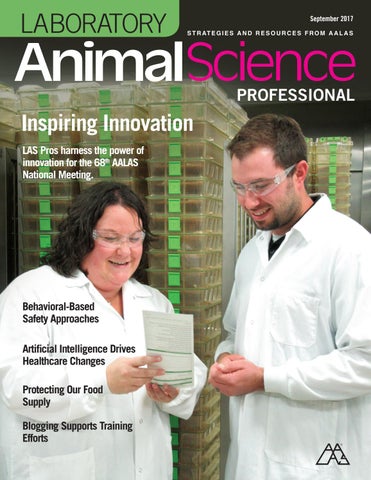
Inspiring Innovation LAS Pros harness the power of innovation for the 68th AALAS National Meeting.
Behavioral-Based Safety Approaches Artificial Intelligence Drives Healthcare Changes Protecting Our Food Supply Blogging Supports Training Efforts
Go Lite
Introducing
Leading technology for smooth-running operations
Exclusively at AALAS BOOTH #1229 www.tecniplastusa.com
September 2017 Vol. 5 Issue 3
FEATURES
18
Ready to Rock Austin
24
Education Takes Center Stage
40
Introducing Our New VP-Elect
41
An LAS Pro to the Rescue
18
The 68th AALAS National Meeting rolls into in a city known for music and technology.
Go inside the meeting to explore previews of select National Meeting seminars, sessions, and lectures.
24
Tracy Lewis begins new leadership role in Austin.
A lost duckling lucked out when he was rescued by a Louisiana Branch member and her family.
41 On the cover: Erin Straley, MS, RLATG, CMAR is a Manager for Laboratory Animal Resources and Jonathan Harris, MS is a Safety Specialist, both at MedImmune. Photo courtesy of Donna Goldsteen, MedImmune.
2 Laboratory Animal Science Professional September 2017
Change doesn’t have to be an arduous process. The Disposable IVC Rodent Caging System is engineered to deliver the highest quality products and services with simplicity and convenience in mind. So whether you’re making a small change like supporting a satellite facility, or a large change like adding meaningful cage capacity without adding infrastructure, Innovive can help you through the entire process. Get started today by visiting www.innovive.com/sampler to request a free InnocageŽ sample kit and see the difference disposable makes.
www.innovive.com
(866) 432-2437
Less Washing, More Science
46 DEPARTMENTS 5 Publisher’s Note
46 AALAS Committee Spotlight
6 Dear Editor
48 Affiliate Access
7 People & Places
51 Career & Training
The AALAS Vision
Comments from our readers
New hires, promotions, awards, and memorials
12 PROfiles in LAS
Meet the ERC
News from AALAS Affiliate members
Reaching for a work-life balance
53 Tech Tips
Insights on new techniques and tactics
Meet Travis Stein
14 Literature Review
58 AALAS Connection ILAM and GLAS updates
The latest from JAALAS and CM
44 AALAS Serves A blogging vet
63 Ad Index 64 Pet Profile
AALAS members talk about their pets
4 Laboratory Animal Science Professional September 2017
53
PUBLISHER’S NOTE Staff Publisher Ann Turner Associate Publisher Chris Lyons
The AALAS Vision
Managing Editor John Farrar
A small brown box arrived at AALAS the other day. Inside were some “blast from the past” documents that Dr. Richard Simmonds was kind enough to pass along to me for our AALAS archives. As I flipped through the yellowed pages from the U.S. Government Printing Office that record Senate and Congressional hearings, I noted one document was dated 1962 and one was dated 1966. I marveled at how far laboratory animal science has come. From the Animal Care Panel to today’s AALAS, our members have continued to work towards improving animal and human wellbeing. Our work is ongoing. Our devotion to education and our openness to learning continue. As we prepare for the 68th AALAS National Meeting in Austin, Texas, we look forward to a full slate of opportunities to learn and grow. Our spotlight topic this year, “Imagine, Invent, Improve, Inspire: Innovations in Laboratory Animal Care,” focuses on our ongoing commitment to doing everything better. As Dr. Simmonds noted, our “founding fathers” had a vision for laboratory animal science. We carry that vision forward each day, and it is on full display each year at our National Meeting. I hope to see many of you in Austin. I know you will enjoy the city, the program, and the time spent learning with friends and colleagues.
Ann Turner
Publisher Executive Director American Association for Laboratory Animal Science
Associate Editor Liz Rozanski Ad Sales Kristin Skinner Design/Production AALAS Art Director Brad Troxel
Editorial Advisory Board David Bienus Pennsylvania State Univ Chris Boehm Texas Tech Univ Health Science Center Andrew Burich Benaroya Research Institute Bob Dauchy Tulane Univ School of Medicine David DeOrnellis Champions Oncology Penny Devlin Pennsylvania State Univ College of Med Sonia Doss Duke Univ Medical Center Jamie Naden Envigo Elizabeth Nunamaker Univ of Florida Karuna Patil Univ of Arizona Danielle Stumbo Quidel
Mission Statement Laboratory Animal Science Professional (LAS Pro) is the official magazine for American Association for Laboratory Animal Science members. LAS Pro provides a wide range of useful resources and knowledge to the association’s 13,000 laboratory animal science professionals who are involved in advancing responsible laboratory animal care and use to benefit people and animals. All signed articles, including, committee reports, news, and commentary, reflect the individual views of the authors and are not official views of AALAS. Authorization to photocopy portions for personal or internal use is granted by the American Association for Laboratory Animal Science. Photocopying for purposes of resale or outside distribution is prohibited unless written approval is obtained from the AALAS Director of Communications. Copyright 2017 by the American Association for Laboratory Animal Science. Laboratory Animal Science Professional (USPS 010-730) is published quarterly by the American Association for Laboratory Animal Science, 9190 Crestwyn Hills Drive, Memphis, TN 38125. Periodicals Postage paid at Memphis, TN 38101 and additional mailing offices. POSTMASTER: Send address changes to AALAS, 9190 Crestwyn Hills Drive, Memphis, TN 38125-8538.
American Association for Laboratory Animal Science 9190 Crestwyn Hills Drive Memphis, TN 38125-8538 Phone: 901-754-8620 Fax: 901-753-0046 E-mail: info@aalas.org Web: www.aalas.org
September 2017 Laboratory Animal Science Professional 5
DEAR EDITOR
Letters to the Editor
Dear LAS Pro Editors,
I found the article in the June 2017 Laboratory Animal Science Professional, “Donating Rodents in a CRO Environment,” to describe a beneficial program of donating rodent carcasses to nature centers to provide food for birds of prey and other carnivorous animals. The authors appropriately commented that for animals to qualify for donation, they should never have been dosed with test material and/or potentially hazardous vehicle, and never housed in BSL 2 or “hot” areas. They also noted that rodents must be euthanized via CO2 only. However, the article failed to note restrictions of using transgenic rodents for food purposes. NIH Guidelines for Research Involving Recombinant or Synthetic Nucleic Acid Molecules (2016), Appendix Q-I-B, states, “When an animal covered by Appendix Q containing recombinant or synthetic nucleic acid molecules or a recombinant or synthetic nucleic acid molecule-derived organism is euthanized or dies, the carcass shall be disposed of to avoid its use as food for human beings or animals unless food use is specifically authorized by an appropriate Federal agency.” With the large increase in the use of transgenic rodents in biomedical research, institutions should ensure that rodents with modified genomes are not allowed to enter the food chain. Sincerely, Richard B. Huneke, DVM, MPH Executive Director, ULAR Professor, Microbiology and Immunology Associate Director, MLAS Drexel University
Dear LAS Pro Editors, We appreciate these comments from the reader regarding the potential restrictions on use of transgenic rodents for this type of donation program. This is an important point for institutions that are developing transgenic models, particularly when using viral vectors for the transfection. A critical clarification is that it is not whether the animals have a modified genome that would exclude them from entering the food chain; it is whether the modified DNA can be transmitted and adversely affect other organisms. Our Institutional Biosafety Committee was consulted in the development of this program and determined that transgenic animals can be donated because our institution only uses commercially available transgenic rodent lines, which are specifically exempted from the NIH Guidelines under Appendix C-VII, as the genome is stable and there is no potential for transmission. Kari Fiala, CMAR, RLATG Project Leader MPI Research Mattawan, MI
6 Laboratory Animal Science Professional September 2017
PEOPLE & PLACES
New hires, promotions, meeting updates, and memorials.
In Memoriam Gregory P. Bolvin
Published on CompMed on August 14, 2017 Gregory (Greg) Paul Boivin 55, lost his courageous fight to pancreatic cancer on Friday, August 11, 2017. Greg was a longtime AALAS member, having served on the ERB, the ERC, and the current BOT. “Greg was greatly admired and liked by AALAS volunteers and staff,” said Ann Turner, AALAS Executive Director. “He was willing to serve wherever needed with diligence and cheerfulness. I am honored to have known him.” He thoroughly enjoyed hiking, music, traveling, attending Reds baseball, and U-Dub and Mizzou football games. Greg leaves behind his two children, Jordan and Kayla and his fiancée, Pam Williams. Greg and Pam often referred to their family as the Brady Bunch consisting of Jordan, Kayla, Keaton, Ginny, and Sam. Greg graduated from University of Washington with a Bachelor of Science in Zoology in 1984 and Washington State University with a Doctor of Veterinary Medicine in 1989. Greg did his residency at University of Missouri n
AALAS on the Road
Pam Grabeel provided AALAS updates at the LAWTE Conference.
AALAS Education Manager, Pam Grabeel, presented “What’s New or Changing at AALAS” during the LAWTE Conference held June 1315 at the Hershey Lodge in Hershey, PA. Pam covered recent AALAS news, including updates on the AALAS Learning Library (ALL) and other education products.
n Texas Members Tour Wolf Sanctuary Texas Branch members located in the Houston/Galveston metro area visited the St. Francis Wolf Sanctuary (SFWS) in Montgomery, TX in April. Over 20 people attended from MD Anderson, UT-Health Science Center, and UTMB-Galveston. Tour guide Gentry Leonard was knowledgeable, friendly, and entertaining. The audience learned the differences between wolves and wolfdogs, their senses, and the meaning of “pack.” Currently, the sanctuary houses 11 wolves and wolfdogs. Gentry explained the back story of each wolf/wolfdog, and how they came to reside at the sanctuary. Attendees saw the pack enjoy a raw meat dinner and enrichment. The sanctuary purchases bulk meat from local food banks and grocery stores to feed these unique animals. The enrichment
from 1989-1992 and moved to Cincinnati in 1992 working for University of Cincinnati until 2008 as Director of the Division of Comparative Pathology. In 2008 Greg accepted his current position at Wright State University as Professor for Department of Pathology, Department of Orthopedic Surgery and Director of Laboratory Animal Resources. Since 1992 Greg worked part time for Cincinnati VA as Veterinary Medical Officer. Greg’s research was focused on colon cancer and tendon repair. He was also a strong advocate for the humane care and use of animals used in research to improve human and animal health. “AALAS had the good fortune to have Greg as part of the AALAS family, most recently as the District 5 Trustee,” said AALAS President Paige Ebert. “His ability to blend his keen intelligence with a wacky sense of humor was legendary.” Greg was known as an outstanding comparative pathologist, veterinary scientist, and collaborator with almost 150 scientific publications. Greg was a member of many professional organizations relating to his industry, and in lieu of flowers, please send memorial contributions to American College of Laboratory Animal Medicine (www. aclam.org) or American Association for Laboratory Animal Science (www.aalas.org). n LBAALAS Announces Award Winners The Louisiana Branch AALAS (LBAALAS) announced their 2017 award winners at their annual meeting this past March in New Orleans, LA. The following branch members were recognized: Jason Cavallaro, Level III Supervisor Award; Courtney Curtis, Level II Technician Award; Amy Pierce, President’s Award; Merlin Johnson, Best Poster Presentation; Latonia Lewis and Hillary Young, Best Platform Presentation. Congratulations! The 2018 meeting has been set for March 7-8, 2018 at the LSU School of Veterinary Medicine in Baton Rouge, LA. program ranges from paper tubes filled with raw meat, dyed goose eggs (for Easter), and gift wrapped boxes filled with newspaper and tennis balls. SFWS provides a loving, caring, and permanent home to their furry rescues. Texas Branch members toured the St. Francis Wolf Sanctuary.
September 2017 Laboratory Animal Science Professional 7
PEOPLE & PLACES
New hires, promotions, meeting updates, and memorials.
n SDAALAS Keeps Busy From attending middle school science nights to participating in the California Future Farmers of America Career Conference, the San Diego Branch AALAS (SDAALAS) has been keeping busy. Also this spring, the branch held a Basic Rodent Techniques Workshop. This workshop was a collaborative effort between the PIMA veterinary technician program in Chula Vista, SDAALAS, and Envigo. The branch’s summer event was held July 26 at the San Diego Mission Bay Boat and Ski Club. Attendees enjoyed sunshine, volleyball, horseshoes, and carne asada tacos. The annual Fall Symposium, planned for September 22 at the Salk Institute, will feature Dr. Cindy Buckmaster as the keynote speaker. The symposium will be an all-day educational event offered to the membership and veterinary or biotech students who are interested in joining the pharmaceutical/biotech industry. One of the planned events will be a presentation covering what SDAALAS can do for members.
n RTB Hosts Trivia Night Research Triangle Branch (RTB) AALAS hosted their annual trivia night at NIEHS on June 13, 2017. Thirty-five members attended, and everyone participated in a trivia contest, Family Feud style. Envigo and Veltek Associates sponsored the event. Members enjoyed Chick-Fil-A box sandwiches for dinner during the social hour before getting started with the fun. This year the RTB AALAS Executive Board came from behind to win the game by only 8 points! First and second place winners received cash prizes while everyone in attendance was entered into a raffle to win one of two registrations to the Aseptic Technique, Suturing, and Anesthesia Dry Lab held July 26 at UNC–Chapel Hill.
The RTB Executive Board team claimed first place by an 8-point margin.
Participants at the La Jolla Institute Tech Week (above) and SDAALAS members at the San Diego Festival of Science and Engineering (below).
Representatives from Mispro earned second place in the trivia contest.
8 Laboratory Animal Science Professional September 2017
PEOPLE & PLACES
New hires, promotions, meeting updates, and memorials.
During a break, symposium attendees viewed posters highlighting different enrichment programs.
n Science of Enrichment Symposium a Success This April, the Michigan Society for Medical Research (MISMR) and the Unit for Laboratory Animal Medicine (ULAM) at the University of Michigan teamed to host the 2nd Annual Science of Enrichment Symposium. This year’s event saw close to 100 attendees from across North America, including Michigan, Minnesota, Ohio, Vermont, Indiana, New Jersey, and Texas, as well as Ontario, Canada. Speakers presented evidence-based enrichment recommendations for laboratory animals with a focus on best practices for rats, pigs, dogs, and nonhuman primates (NHPs). Attendees were invited to sign a memorial board to honor and thank the various animals they have worked with that have left an impact on their lives. Seed paper was provided to attendees to start memorial gardens. The symposium is an initiative resulting from the University of Michigan’s Enrichment Committee’s and the Refinement and Enrichment Advancements Laboratory (REAL) efforts to encourage discussion and showcase animal enrichment practices across different research institutions. Learn more about REAL’s work by visiting http://animalcare.umich.edu/ animal-use/refinement-enrichment-advancements-laboratory. MISMR generously supported the cost of the symposium and provided discounted registration for all attendees.
Planning Means Success for Quad Symposium Committee n
Dr. Jeremy Marchant-Forde presented on the welfare of laboratory pigs at the Science of Enrichment Symposium.
The planning and organizing committee for this year’s Science of Enrichment Symposium, from left to right, Jenny Jones, Jennifer Lofgren, Vanessa Oliver, Tara Martin, and Lisa Burlingame.
Before the Quad Symposium kicked off at the Mohegan Sun Resort and Conference Center in Uncasville, CT, the Quad Committee met to go over any last minute details, enjoy dinner, and to set the theme for 2018’s symposium. Committee members enjoyed a brief pause to express appreciation and gratitude for everyone’s hard work.
Quad Committee says thanks!
September 2017 Laboratory Animal Science Professional 9
PEOPLE & PLACES
New hires, promotions, meeting updates, and memorials.
n Washington Branch Makes an Impact Washington Branch AALAS (WBAALAS) members participated for the second year in a row during the 3rd annual Girls Engineering Math and Science Fair (GEMS) at Western Washington University on May 13, 2017. Over 150 youth participated in the Biomedical Research Careers classroom activities, such as extracting the DNA from strawberries, exploring different research careers, and making origami mice and frogs. WBAALAS members Melinda Young, Sakara Perry, and Andrea Swanson volunteered and had a fantastic time explaining the importance of DNA to biomedical research. The Biomedical Research Careers themed activities were possible thanks to materials donated by the AALAS Foundation, WWU Behavioral Neuroscience Program, and Dr. Jeff Carroll’s lab. The Washington Branch has entered its second year of offering quarterly vivarium manager roundtable meetings. These highly successful roundtable meetings provide a place
for discussions and support for local area vivarium managers and supervisors. Tim Dawe, a lifetime member of the Washington Branch, is the organizer of the roundtables and hosted the first one back in 2015. The location changes as different facilities host the roundtable meetings that include refreshments and lunch. Some host locations may also include a tour of their facility. WBAALAS hosted their annual summer picnic in late August. This event included sunshine, games, and food! The annual event was free for all WBAALAS members and their families, friends, and pets.
WBAALAS members supported the GEMS Fair in May and held their annual picnic in August.
n Virtual 5K Supports Homes for Animal Heroes Research Triangle Branch AALAS and NAIA (National Animal Interest Alliance) worked together to kick off the first annual Virtual 5K fundraiser for Homes for Animal Heroes in May. The money raised will support rehoming of former research dogs and share the truth about biomedical research. AALAS members and branches participated in this event and to date, $59,037 has been raised. The top local AALAS branch will receive a trophy for their fundraising efforts and various other prizes for different fundraising levels will be given out.
10 Laboratory Animal Science Professional September 2017
PRO-files in LAS
minutes with... Travis Stein, RLATG
Facility/Employer: University of Michigan Job Title: Animal Care Supervisor How did you get in this field? I saw a job on a website for a large animal caretaker. I’ve always loved animals so I thought I’d apply for it. Who were your mentors? My mentors were Eileen Howard, currently with Smithers Avanza, and Shawn Roussea, Patricia Foley, and Robin Tucker from Georgetown University. What are your current interests in animal science? My interests include assisting our dedicated researchers in striving to make this world a better place. I’m also interested in creating an environment in which research can thrive and in which the animals that dedicate their lives do not do so in vain. It is my hope that every single animal’s dedication to research helps lead us down the labyrinth of research into a better existence. Where do you see yourself in 5 years? I hope to advance my career and manage a facility. My CMAR is my next goal and following that I plan to network, learn, and better myself so that when I do become a manager of a facility, I’m prepared. What advice do you have for others just beginning their animal science career? This is one of those careers that you can progress through hard work, dedication, and a desire to learn. Network and speak with your peers. Everyone has had an incredibly different experience, but all of these experiences relate to yours. So, get to know them and learn from them. Find yourself a network of mentors who can mold and lead you down a path to make yourself a better person. Constantly learn and get your certifications!
Getting Personal What companion animals do you have? I have a cat named Kaylee and the ghost of a woodchuck who lives in my bathroom. What is your favorite movie? Empire Strikes Back What is the last book you read? Black Powder War by Naomi Novik Where is your favorite vacation spot? Someplace I haven’t been before. What is your favorite dessert? Cannolis
What is the most rewarding aspect of your career? Seeing some breakthrough come out of the research being performed is always rewarding. I know this sounds idiotic, but having one of my employees find another job is rewarding. If I have done a good enough job that they get a promotion or advance their career anywhere, whether at my facility, in a lab, or somewhere else, it means that I did a great job. When an employee gets a certification it feels like I achieved my certification all over again. The fact they are dedicated enough to strive to better themselves makes me feel like I helped to create an environment in which they wished to learn. What has been the most challenging aspect of your career? Going from one of the fellow husbandry technicians to being their boss was a leap that caused some emotional whiplash and was incredibly difficult to wrap my head around at first. Trying to acclimate to the way other facilities think, especially larger older facilities, has been a challenge. Working with others instead of running around solo has been a challenge as well, but it has been well worth it to work with the awesome people I’m surrounded by on a daily basis. What is your favorite AALAS National Meeting memory? Networking and realizing that I am not an island unto myself. There are thousands of people who do what I do and deal with issues that I deal with. The National Meeting helps you realize these people have thought up ways of dealing with issues that hadn’t even occurred to me. The meeting helped me realize I had something to contribute to this industry and reopened my eyes to the fact that this is not just my job but a rewarding career.
12 Laboratory Animal Science Professional September 2017
LITERATURE REVIEW
Recent publications from experts in the field
HIGH IMPACT:
Explore Three Recent Articles in JAALAS Local Anesthesia in Fish, Amphibians, and Reptiles Submitted by Sonia Doss, LAS Pro Editorial Advisory Board
Fish, amphibians, and reptiles frequently undergo painful procedures and could possibly benefit from the use of local anesthetics; however, their use is sparsely reported in the literature. Literature reviews reveal lidocaine is the main local anesthetic used in fish and amphibians, although one article cited the use of novocaine in fish and one article mentioned bupivacaine use in amphibians. The use of local anesthetic drugs in reptiles was more varied and included the use of mepivacaine, tetracaine, EMLA cream, and a mixture of lidocaine-bupivacaine in addition to bupivacaine, procaine, and lidocaine. The authors provide a comprehensive table of local anesthetics, including information about dose, maximum dosage, route, species, and any related comments. Clinicians and researchers using fish, amphibians, and reptiles are encouraged to publish information on the use of local anesthetics in order to provide more references for others who care for and utilize these species. Chatigny F, Kamunde C, Creighton CM, Stevens ED. 2017. Uses and doses of local anesthetics in fish, amphibians, and reptiles. J Am Assoc Lab Anim Sci 56: 244-253.
Comparing Phlebotomy Techniques Submitted by Jamie Naden, LAS Pro Editorial Advisory Board
Nonterminal blood collection is a common procedure in biomedical research, however, methods in rodents vary widely among researchers as do the institutional policies that guide these methods. Ideally, the preferred method would affect physiological parameters of the animal as little as possible. This would include minimal restraint, no anesthesia or analgesia, and a short procedure length. Historically, tail tip amputation methods require anesthesia or analgesia in adult mice, however, research shows that these preparations for the procedure may be more stressful than the procedure itself due to increased handling of the animal. The drugs used may also alter physiology leading to inaccurate results from the blood samples. These authors sought evidence to guide their institutional policy for blood collection by comparing three commonly used methods. Check out the May 2017 edition of JAALAS to see the results! Moore ES, Cleland TA, Williams WO, Peterson CM, Singh B, Southard TL, Pasch B, Labitt RN, Daugherity EK. 2017. Comparing phlebotomy by tail tip amputation, facial vein puncture, and tail vein incision in c57bl/6 mice by using physiologic and behavioral metrics of pain and distress. J Am Assoc Lab Anim Sci 56: 307-317.
Helicobacter Impacts on Breeding Colonies Submitted by Elizabeth Nunamaker, LAS Pro Editorial Advisory Board
Helicobacter infections are common in mouse colonies around the world. Many facilities are now trying to exclude the pathogen due its broad range of effects on experimental models. Bracken, et al, investigated how this pathogen has been affecting the productivity of their breeding colony. Unfortunately, they found that the production from their animals that had naturally been infected with Helicobacter was significantly lower than those animals that were not infected. To learn more about the specific ways that Helicobacter decreases breeding colony productivity, please read their article, “Helicobacter Infection Significantly Alters Pregnancy Success in Laboratory Mice” in the May 2017 edition of JAALAS. Bracken TC, Cooper CA, Ali Z, Truong H, Moore JM. 2017. Helicobacter infection significantly alters pregnancy success in laboratory mice. J Am Assoc Lab Anim Sci 56: 322-329.
14 Laboratory Animal Science Professional September 2017
CM Special Issue
Features Infectious Disease Research By Jason Villano, DVM, MSc, MS, DACLAM
The 2002 World Health Report by the World Health Organization (WHO) indicated that more than a third of the annual worldwide deaths are the result of infectious diseases, such as malaria, tuberculosis, and human immunodeficiency virus (HIV)/AIDS. In 2014, there were almost 12,000 deaths out of around 30,000 cases of Ebola infection in West Africa. Meanwhile, the social and economic cost of the recent Zika virus outbreak in Latin America and the Caribbean is estimated to be up to $18 billion from Figure 1.World map showing vector-borne and zoonotic diseases. Adopted 2015–2017. with permission from One Health Initiative.7 These two recent epidemics mals.2 Research using animal models continues to only highlight the importance advance both the prevention of known infectious of infectious disease research using animal models, diseases and the recognition and control of rare the focus of the June issue of Comparative Medicine. and emerging infectious threats. Can you imagine There are seven overview articles in this issue that discuss risk management for such studies and animal if polio vaccine was not developed, or if there was no treatment for tuberculosis? models of Ebola and Zika virus infections. The artiThe issue begins with a review article by cles provide valuable information on infectious disease research, whether you are a novice or a seasoned Melissa Dyson and colleagues on the institutional oversight for occupational health and safety for veteran in the field, or are interested in it. A number of the articles are also applicable and relatable to the the use of biohazards. This article provides an overview of the regulatory framework that forms general occupational health and safety program of the backbone of responsible use of biohazards in an institution. research.5 Programmatic components like exposure Emerging and reemerging diseases (Figure 1) control, disaster plans, health surveillance, training emphasizes the need for a “one-health” approach and education, and information management are to disease detection and prevention.2 This concept discussed.5 The article concludes by summarizing is a worldwide strategy for expanding interdiscikey items in fulfilling the ethical and regulatoplinary collaborations and communications in all ry responsibilities of an effective Occupational aspects of health care for humans, animals, and the environment.6 This initiative is especially important Health and Safety Program (OHSP). One aspect of an OHSP is the provision of personal protecbecause 6 out of every 10 infectious diseases in tive equipment (PPE), which is the subject of the humans are spread by or contracted from aniSeptember 2017 Laboratory Animal Science Professional 15
second article written by Jason Villano, yours truly, in collaboration with colleagues. The article aims to give readers a knowledge base for evaluating the adequacy and effectiveness of institutional PPE requirements by providing a comprehensive review of risk assessment, common PPE used in laboratory animal research, and PPE standards and regulations.10 Dalis Collins and colleagues wrote the third article, which focuses on viral vector biosafety. The use of viral vectors has become an increasingly popular methodology in laboratory animal research by facilitating targeted approaches to disease treatment and animal model development. The article focuses on literature review and industry practices, including animal containment housing, to mitigate risks associated with viral vector use. Subsections of the article describe the four most commonly used viral vector systems (adenoviruses, adeno-associated viruses, herpesvirsues, and lentiviruses), and findings and recommendations for their use.4 The next two articles are overviews of two general topics on the use of animals in infectious disease research. The first, written by Lesly Colby, Lauriane Quenee, and Lois Zitzow, presents general considerations on the use of animals in research. It begins by addressing one of the three guiding principles of animal research: replacement (as part of the 3Rs). Once an animal model is deemed appropriate, the experimental design considerations should be evaluated. The authors categorized these into three: 1) scientific, including intrinsic animal characteristics like animal size and anatomical limitations; 2) welfare, including medical management and humane endpoints; and 3) regulatory.3 The article emphasizes that infectious disease studies using animal models are best done as a collaborative effort. The other article, authored by Erin Reynolds and colleagues, reviews animal models of arthropod-borne viral (arboviruses) infections, with the discussion on those vectored by mosquitoes, ticks, and midges, and for which vaccines and therapeutics are not readily available. Examples include dengue, Chikungunya, Zika, flaviviruses, African swine fever, and bluetongue. The authors underscore the value of such animal models, indicating that there is no substitute for using them if we are to understand in detail the interactions between the virus, vector, and host, or the interactions between the host cells and tissues involved in response to an arbovirus.8 Finally, animal models of Ebola and Zika virus infections are discussed in separate articles. These two diseases were primarily chosen out of the many communicable diseases because they caused recent outbreaks, which tested science and medicine and global preparedness for a possible pandemic. They highlighted, among other things, the fact that their threats were real because man’s knowledge and understanding of these rare and highly dangerous diseases are lacking and that globalization poses a confounding factor in outbreak man-
16 Laboratory Animal Science Professional September 2017
agement plans. Authored by Marisa St. Claire and colleagues, the first article details various animal models of Ebola virus infection. The discussion compares rodent models to nonhuman primate models, concluding that macaques serve as the model of choice.9 The other article discusses animal models of Zika virus infection and was written by Michael Bradley and Claude Nagamine. Similarly, this article is divided into small and large animal models used to uncover the pathogenesis of this emerging disease and to develop a vaccine and therapeutic strategies.1 The authors also indicate considerations in animal model development. We thank everyone who contributed to this issue – the authors who willingly took on the task of writing and showed tenacity in doing so; the colleague-reviewers whose great feedback strengthened the scientific merit of the articles; and the Comparative Medicine editorial board and production staff. We hope that you find the articles informative and helpful. Jason Villano, DVM, MSc, MS, DACLAM is Clinical Assistant Professor at the Unit for Laboratory Animal Medicine, University of Michigan Medical School. REFERENCES 1. Bradley MP, Nagamine CM. 2017. Animal models of zika virus. Comp Med 67(3):242-252. 2. Centers for Disease Control and Prevention. [Internet] 2017. One-health. [Cited 07 July 2017] Available at: https://www.cdc. gov/onehealth/. 3. Colby LA, Quenee L, Zitzow L. 2017. Animal model selection for infectious disease research. Comp Med 67(3):222-231. 4. Collins DE, Reuter JD, Rush HG, Villano JS. 2017. Viral vector biosafety in laboratory animal research. Comp Med 67(3):215221. 5. Dyson MC, Carpenter CB, Colby LA. 2017. Institutional oversight for occupational health and safety for use of biohazards in research with emphasis on infectious agents, recombinant DNA, and viral vectors. Comp Med 67(3):192-202. 6. Monath TP, Kahn LH, Kaplan B. 2010. Introduction: one health perspective. ILAR J 51:193–198. 7. One Health Initiative. [Internet]. 2017. Emerging and reemerging infections – 70% vector-borne or zoonotic. [Cited 07 July 2017]. Available at: http://www.onehealthinitiative.com/. 8. Reynolds ES, Hart CE, Hermance ME, Brining DL, Thangamani S. 2017. An overview of animal models for Arthropod-Borne Viruses. Comp Med 67(3):232-241. 9. St. Claire M, Ragland D, Bollinger L, Jahrling P. 2017. Animal models of ebolavirus infection. Comp Med 67(3):253-262. 10. Villano JS, Follo JM, Chappell MG, Collins MT Jr. 2017. Personal protective equipment in animal research. Comp Med 67(3):203-214.
Show Them You Care
with Nestlets She knows that Nestlets provide the warmth, shelter, and nurturing environment that she and her pups crave. You know that Nestlets are the most popular form of environmental enrichment used today. Suitable for use with mice, rats and other rodents; they provide hours of activity for only pennies per cage. And they are only available from Ancare.
ancare.com facebook.com/AncareCorp
Better Products. Better Science.
P.O. Box 814, Bellmore, NY, 11710 T: 800.645.6379/516.781.0755, F: 516.781.4937
youtube.com/AncareCorp
linkedin.com/companies/Ancare
18 Laboratory Animal Science Professional September 2017
Austin stands ready to welcome AALAS National Meeting attendees.
T
he 68th AALAS National Meeting heads to the Texas state capital from October 15-18, 2017. Attendees will enjoy experiencing a warm welcome to a city that fully embraces its unique reputation. From its unofficial slogan to “Keep Austin Weird” to its technology and music festivals and businesses, Austin’s eclectic downtown area is ready for exploration. Transportation
If you fly into the Austin-Bergstrom International Airport, you are less than eight miles from downtown Austin. Traveling from the airport to the convention center area will be approximately a $30 cab ride or a $14 super shuttle ride. Once in the city, rail, bus, shuttle, and bikes make transportation around Austin easy and convenient. The Capital Metro Bus Line serves Austin through several routes including limited stop routes, express routes, and University of Texas routes. The Cap Metro App (http://www.capmetro.org/app/), available for download, contains maps and information. This same app may be used to plan trips on the MetroRail. MetroRail runs six days a week until 7:00 p.m. and until midnight on Friday and Saturday. Costs vary. The Red Line services nine stations and stops in front of the Austin Convention Center.
Convention Center
Near the shores of Lady Bird Lake and historic Sixth Street, the Austin Convention Center is close to four entertainment districts, various hotels, and a variety of restaurants. With 246,000 square feet of exhibit space, it has 54 meeting rooms and as well as multiple ballrooms. The building’s facades are constructed of native Texas limestone and granite.
Exploring Austin: Food and Nightlife
Beloved by music lovers of all ages, Austin City Limits Live (310 W. Willie Nelson Blvd.) hosts near 100 concerts each year. The PBS series is taped on location and has broadcast amazing music and performances for 40 years. The Austin City Limits Music Festival will be happening at Zilker Park while AALAS is in town. The festival’s second weekend is October 13-15, 2017. The festival runs daily from 11:00 a.m. to 10:00 p.m. Visit www.aclfestival.com for complete details. If you are looking for a burger, your best bet will be Casino El Camino (501 E. 6th St.). Open Sunday-Saturday from 11:30 a.m. to 2:00 a.m., locals recommend you order a three-quarter pound, local beef burger cooked medium. A full range of toppings and sauces plus some generous sides means this place has something for everyone. Old School Bar and Grill (401 E. Sixth St.) is located in what was once the Cotton Exchange Building. You may have seen this cool spot featured on Food Network’s “On the Road.” Give the wings, brie burgers, and their famous chicken fried steak a try. They are open Monday-Wednesday and Sundays from 11:00 a.m. to 9:00 p.m.; Thursday-Saturday from 11:00 am. to 10:00 p.m. They do serve brunch on Sundays. Moonshine Patio Bar & Grill (303 Red River St.) is on the east side of the convention center and serves what they
Images provided by Visit Austin
September 2017 Laboratory Animal Science Professional 19
call classic American comfort food with a twist. They are open Monday-Thursday from 11:00 a.m. to 10:00 p.m., Friday and Saturday from until 11:00 p.m., and on Sunday from 9:00 a.m. to 2:00 p.m for brunch and from 5:00-10:00 p.m. for dinner. Want to try a good pizza place? Try The Backspace (507 San Jacinto Blvd.). Lunch is offered from 11:00 a.m. to 2:00 p.m. with dinner from 5:00 to 11:00 p.m. Monday through Saturday. They are open Sundays from 5:00 to 10:00 p.m. Reservations are recommended in this 30-seat restaurant. The Backspace started in 2010 and was Austin’s first Neapolitan pizzeria. The 6th Street district has it all. One of the iconic parts of the city, it is a nine-block area containing a full range of entertainment and dining options. This district has great spots like the historic and haunted Driskill Hotel, Buffalo Billiards, and Maggie Mae’s. Be sure to check out Esther’s Follies and Parish for live entertainment.
Seeing the Sights
Visitors to Austin can hike or bike around Lady Bird Lake. Located in downtown Austin, the lake is a reservoir on the Colorado River. The Ann and Roy Butler Trail travels 10 miles along the shoreline and through Austin’s urban center. The boardwalk segment is a 1.3 mile stretch on the south shore and is open daily from 5:00 a.m. to midnight. The Texas State Capitol building was added to the National Register of Historic Places in 1970 and in 1986 was designated a National Historic Landmark. Located at 1100 Congress Avenue, tours are free. Visit http://www.tspb.texas.gov/plan/ tours/tours.html to learn more. Dedicated in 1888, the capitol underwent a massive renovation and expansion that began in 1989 and was completed in 1995. Consider touring the LBJ Presidential Library (2313 Red River St.) View a replica of the Oval Office, see LBJ’s presidential limousine, and explore permanent exhibits on civil rights and the Kennedy assassination. The library is open daily from 9 a.m. to 5 p.m. For more information, visit the library’s website at www.lbjlibrary.org.
Hotels
Where to stay? The only way you can receive the official discounted conference rates is to book through the AALAS housing bureau at https://www.aalas.org/national-meeting/ general-information/housing. AALAS has partnerships in place with specific hotels to provide the best rates and convenience. By staying in the AALAS block of guest rooms, AALAS is able to contract premier facilities and provide a better conference experience for you. All negotiated rates are below standard guest rates quotes at the hotels. Other benefits of booking through the bureau include flexible booking policies and the ability to make easy changes to your reservations. Shuttling is available for hotels not within walking distance of the convention center.
Info to Go! Mobile App Game Debuts
Before you head to Austin, download the National Meeting mobile app. The 2017 AALAS National Meeting Mobile app will provide users the ability to access: • schedules by day, track, session type, and speaker • information on posters and platforms • exhibitor listings by name and category • interactive maps • education program evaluations • social media access and a QR scanner Plus, new this year is the AALAS National Meeting game! Watch AALAS’ Twitter and Facebook accounts for info on this fun way to interact with other attendees and make the most of your time in Austin. The app is a native app. Native apps can be downloaded ahead of time and used on your device without connectivity (data plans or WiFi). Using the app in this fashion will not allow for any updates that may happen once the meeting begins, but the majority of meeting information will be correct and accessible for attendees. Be sure to watch your email for the announcement when the app is available for download and stay tuned to our social media platforms for tips on using the app.
JW Marriott Austin Co-Headquarters Hotel, 110 E 2nd St $219 Single/Double
Austin Marriott South, 4415 S IH 35 Frontage Road $239 Single/Double
Hilton Austin Co-Headquarters Hotel, 500 E 4th St $219 Single - $229 Double
Courtyard by Marriott Austin South, 4533 I-35 $199 or $209 Single/Double
Courtyard by Marriott Austin Downtown, 300 E 4th St $205 Single/Double
Fairfield Inn & Suites by Marriott Austin South, 4525 S IH 35 Frontage Road $189 or $199 Single/Double
Hilton Garden Inn, 500 N Interstate 35 $189 Single/Double
Residence Inn by Marriott Austin South, 4537 S IH-35 $189 or $199 Single/Double
Hyatt Place Austin Downtown, 211 E 3rd St $199 Single/Double
Spring Hill Suites by Marriott Austin South, 4501 I-35 $199 or $209 Single/Double
Residence Inn by Marriott Austin Downtown, 300 E 4th St $210 Single/Double
20 Laboratory Animal Science Professional September 2017
Join us
for the 68 th AALAS National Meeting in Austin Texas! Join us for the 68th AALAS National Meeting in Austin, Texas. Each fall since 1950, the American Association for Laboratory Animal Science has held its annual National Meeting. During the five days of the meeting, members and nonmembers come together to enjoy the workshops, lectures, poster sessions, and exhibits. The program is designed to have topics relevant to the entire membership. Exhibitors have an oppor tunity to interac t with AALAS members from the academic community, research institutions, government organizations, and commercial companies.The AALAS National Meeting is the largest gathering in the world of professionals concerned with the production, care, and use of laboratory animals. This will be an event to remember.
American Association for Laboratory Animal Science Phone: (901) 754-8620 Fax: (901) 753-0046 info@aalas.org • www.aalas.org
September 2017 Laboratory Animal Science Professional 21
Teresa K. Woodruff
Delivers the Opening General Session Keynote Speech Learn about three life-changing breakthroughs we should be watching.
K
eynote speaker, Teresa K. Woodruff, has worked on the leading edge of reproductive science and pioneered the term “oncofertility” to describe the merging of oncology and fertility. Dr. Woodruff will present “What to Watch: Three Breakthroughs that May Change our Lives in the Next 10 Years.” Dr. Woodruff will discuss developments in oncofertility, zinc sparks, and sex inclusion in biomedical research. Oncofertility
2017 AALAS NATIONAL MEETING OPENING GENERAL SESSION & MEMBERSHIP MEETING
Sunday, October 15, 5:00 - 6:30 PM Austin Convention Center Ballroom D
Facing a cancer diagnosis at any age is devastating. However, young cancer patients have the added burden that life-preserving cancer treatments, including surgery, chemotherapy, and radiotherapy, may compromise their future fertility. The possibility of reproductive dysfunction as a consequence of cancer treatment negatively impacts the quality of life of cancer survivors. The field of oncofertility merges the clinical specialties of oncology and reproductive endocrinology, and was developed to explore and expand fertility preservation options and to better manage the reproductive status of cancer patients.
Sorting Egg Quality
In the field of fertility, zinc sparks are one promising discovery. Zinc sparks were discovered six years ago in mice. When a sperm enzyme activates a human egg, a spark is visible. The spark measures egg quality and its ability to develop into an embryo. By identifying the zinc spark at the time of fertilization, it is immediately known which eggs are the good candidates for in vitro fertilization (IVF). Researchers have learned that the more radiant the burst, the better the egg. Zinc content also predicts an egg’s ability to develop into an embryo. Tools are now being developed to help doctors see zinc fireworks in clinics.
Sex as a Variable
In January of 2016, the NIH established a policy which requires the consideration of sex as a biological variable in biomedical and preclinical research. This policy marks a fundamental shift in the way researchers must evaluate sex in their experimental design. The differences in how men and women experience disease encompass not only symptoms and severity but also the diseases themselves. Including females in basic science studies or preclinical research, and analyzing the outcomes, will lead to better and more specialized medicine. To advocate and encourage action, the Women’s Health Research Institute at Northwestern University has developed a sex-inclusion toolbox to support and engage investigators who are interested in conducting sex-inclusive research.
22 Laboratory Animal Science Professional September 2017
The toolbox highlights research that examines sex in the context of health and disease.
Biography
Teresa K. Woodruff, PhD is the Thomas J. Watkins Professor of Obstetrics & Gynecology, the Vice Chair of Research (OB/GYN), the Chief of the Division of Reproductive Science in Medicine, Feinberg School of Medicine, and Professor of Molecular Biosciences at the Weinberg College of Arts and Sciences at Northwestern University. She is also the Director of the Center for Reproductive Science, Founder and Director of the Women’s Health Research Institute, and Director of the Oncofertility Consortium. She is an internationally recognized expert in ovarian biology and, in 2006, coined the term “oncofertility” to describe the merging of two fields, oncology and fertility. She now heads the Oncofertility Consortium, an interdisciplinary team of biomedical and social scientist experts from across the country. She has been active in education not only at the professional level but also with high school students. Widely recognized for her work, Woodruff holds 10 U.S. patents, and in 2013 she was named to
Time magazine’s Most Influential Persons list. Some of her recent awards and honors include a Guggenheim Fellowship (2017), the Society for Endocrinology Transatlantic Medal (2017), and a Leadership Award from the Endocrine Society (2017).
In 2011, President Obama awarded Dr. Woodruff the Presidential Award for Excellence in Science Mentoring in an Oval Office ceremony.
Peterson Brothers Featured at National Meeting Welcome Reception
The Peterson Brothers possess a uniquely modern blend of blues, soul, and funk. Alex, 17, on bass and vocals, and Glenn Jr., 19, on guitar and lead vocals, have grown up playing together since they were young kids. Rising stars in Austin, Texas, the Peterson Brothers hold a standing room only weekly residency at Austin’s famed music hall The Continental Club. They have opened for the likes of Gary Clark Jr., Los Lonely Boys, the late B.B. King, Willie Nelson, and Lisa Marie Presley. They have also played with Buddy Guy, Michael Burks, and many of Austin’s finest musicians. The Peterson Brothers have also gained the attention of the one and only Bootsy Collins, who has become a true mentor. Glenn and Alex are honing their chops daily, and are dazzling audiences playing gigs throughout the United States.
2017 AALAS NATIONAL MEETING WELCOME RECEPTION
“The only thing missing from the Peterson Brothers Band is the word “amazing” at the front of the name.”—San Antonio Express-News
Sunday, October 15, 6:30-8:00 PM Austin Convention Center Ballroom G
September 2017 Laboratory Animal Science Professional 23
#AALAS17: inside the meeting
Squooshy Mice and More:
New Ideas for Your Husbandry Training Program By Kaile Bennett, BS, RLATG; LaJuanda Carter BS, LAT; and Jayson Egeler, MS, LAT
T
raining brand new rodent husbandry technicians can be a challenging task. Every institution has different training needs, depending on the variety of species they work with, the work load, and the number of husbandry technicians they need to hire and train. Also, the process these new technicians undergo to become fully trained members of their team varies considerably between institutions. In some situations, a dedicated training department can handle all new employee training and can deliver a fully trained individual to the intended department. Other institutions might rely on mentors, senior staff, or supervisors to bring new technicians online. Regardless of who is performing the training, some questions commonly arise: 1. What is an adequate amount of time to train a new husbandry employee? 2. Is one-on-one training in the animal room the only acceptable way to train a husbandry employee? 3. Are mentors a good idea to bring into the training process? 4. At what point in the training process do you add in additional species? 5. How many trainees can one trainer train at one time? 6. Is it possible to train husbandry technicians in a group setting?
Workshop 04 Play-Doh Pinkies, Squooshy Mice, and Jeopardy: Techniques for Training Husbandry Technicians in a Classroom Setting Monday, October 16, 2017, 8:00 AM–12:00 PM Room: 4B Leaders: Kaile J Bennett, Jayson L Egeler, LaJuanda M Carter Faculty: Kaile J Bennett, Jayson L Egeler, LaJuanda M Carter, Melissa C Dyson Facilitator: Jennifer M Schmidt Workshop Fee: $140 Workshop Limit: 25
24 Laboratory Animal Science Professional September 2017
These questions and probably more have crossed the minds of anyone who has participated in husbandry training at some time. If you are interested in finding out the answers to these questions, please consider attending our workshop (pre-registration required) at this year’s AALAS conference. We will share what we have learned from our experience in adapting a training program normally used for 1-2 trainees to a group consisting of 8-10 new rodent husbandry technicians. This substantial increase in the number of new husbandry technicians forced us to reconsider our previous training methods. This resulted in some new creative ways to look at husbandry training while also incorporating more of a classroom setting to introduce new topics. To showcase our unique curriculum, we will guide participants through the same hands-on activities and lessons that we developed for students that took part in our training program. You will learn that not only is “Jeopardy” a classic game show it also serves as a great way to review your institutions SOPs. Every trainer knows that it is important to develop a keen eye in detecting rodent health issues. Now you will understand how squooshy mice can play a role in that process. As the saying goes, “the best-laid plans of mice and men often go awry,” we will also discuss the challenges that we en-
countered with developing and implementing this program. Feedback we obtained from all of the stakeholders involved including trainees, mentors, supervisors, and managers led us to make some strategic changes along the way. We will illustrate the evolution of the program from the first class of trainees, what it resembles today, and what the future holds for this program. Finally, how does this apply to you? If you are interested in trying to take some of these ideas back home to use or have some ideas of your own that would like some input on, we can help. If you are a trainer, manager, or supervisor looking to infuse some new ideas into your husbandry training program or just curious on how another institution does it, this workshop is for you. We hope to see you in Austin! Kaile Bennett, BS, RLATG is a Training Specialist at The University of Michigan in Ann Arbor, MI. LaJuanda Carter BS, LAT is a Training Specialist at The University of Michigan in Ann Arbor, MI.
Jayson Egeler, MS, LAT is a Training Specialist at The University of Michigan in Ann Arbor, MI.
September 2017 Laboratory Animal Science Professional 25
#AALAS17: inside the meeting
Leveraging Openness to Increase
Public Understanding about Animal Research By Wendy Jarrett When I first started working in the bioscience sector in 2004, the United Kingdom (UK) was still home to some nasty animal rights extremism. Letters were sent to the neighbors of executives of pharmaceutical companies and contract research organizations, alleging that the person in question was a pedophile; protestors stood outside people’s homes all night shouting and shining torches; buildings and cars were burned; and in one horrible case, a body was stolen from a grave. Thirteen years on and the UK is a very different place when it comes to animal research. We still have organizations that are opposed to research using animals, and there is still a healthy debate within society about whether animals should be used in this way. But people carrying out biomedical research no longer have to look under their cars for explosives every morning or drive through hordes of screaming protestors on their commute into work. Media coverage of animal research is now mainly in the context of medical progress. The public has access to many more sources of information about how and why animals are used in research. How did the change come about? There were two main factors: firstly, a change in the law so that the tactics used by extremists became punishable with long jail sentences, and secondly, a change in attitude by the bioscience community so that it embraced a much more open and transparent communications strategy. The catalyst for this second factor was a drop in public acceptance for animal research, which had stayed high during the years when the news was full of stories of scientists being attacked. But in 2012, when there had been very little public discourse about biomedical research for some years, public opinion polling in the U.K. showed that overall acceptance of medical research using animals had dropped by 10 percentage points from 76% to 66%. The biomedical research sector realized that it needed to do something significant in order to help people to understand more about why and how animals are used in research. The result was the Concordat on Openness on Animal Research in the UK, published in May 2014 with 72 signatory organizations, and now with more than 110. Signing the Concordat commits signatory organizations to being more open about the animal research they carry out or fund. In the three years that the Concordat has been in place, the UK has seen a step-change in the amount and quality of publicly-available
26 Laboratory Animal Science Professional September 2017
information on research using animals. We have seen images and videos on institutional websites, talks for community groups, school visits to animal facilities, open days for local communities, media stories about new research findings: multiple ways in which people can find out for themselves about this issue. It is early days, but it seems as though public acceptance levels are no longer falling and have started to climb back towards their previous levels. Interestingly, despite some fears that institutes that were open would make themselves targets and attract negative attention, we have not seen any return to the extremism that was so prevalent only a few years ago. In fact, it seems as though organizations with open and robust explanations of their research do not get much attention at all from opponents of animal research. We also find that journalists are less likely to write up misleading press releases that animal rights groups feed to them. Instead, they come to us or to the institutions cited in those releases to check their facts. As there are usually very few actual facts in these press releases and institutions are now happy to talk openly about their research, the animal rights groups rarely get the hoped-for publicity. I am looking forward to talking about the UK’s progress on openness at the forthcoming AALAS National Meeting, and presenting some examples of public engagement projects that have worked well with the U.K. public. It will also be interesting to explore whether any of the lessons we have learned on our side of the pond would be applicable to the North American context. Do come and join the conversation! Wendy Jarrett is the Chief Executive at Understanding Animal Research in London, England.
The Proven Benefits of Openness: How the UK is Ridding Itself of Animal Rights Extremism and Helping the Public to Understand Animal Research Monday, October 16, 2017, 11:00 AM–12:00 PM Room: Ballroom F Speaker: Wendy Jarrett Moderator: Paula A Clifford Facilitator: Kirk Leech
#AALAS17: inside the meeting
Exploring Novel Antimicrobial Therapies By Christopher Cheleuitte, DVM, PhD; Chad Euler, PhD; Neil S. Lipman, VMD; and Vincent A. Fischetti, PhD Alternative antimicrobial therapies are being developed as a result of the increase in antibiotic resistant bacteria and the reduction in the development of new antibiotics.6 For example, one of the main agents causing necrotizing fasciitis is methicillin-resistant Staphylococcus aureus (MRSA). This disease is potentially fatal and involves bacterial infection of the skin and deeper tissues, often necessitating surgical intervention. The emergence of MRSA has become a major public health concern thus, novel antimicrobial agents such as lytic enzymes produced by bacteriophages (lysins) and bacteria (bacteriocins) are being developed as anti- MRSA therapies. Lysins are lytic enzymes whose genes are carried by bacteria-specific phages.5,10,6,7,12 Lysins hydrolyze the peptidoglycan bonds of phage-infected hosts to release progeny phage through hypotonic lysis. Applied exogenously, lysins are able to access and degrade the peptidoglycan of gram-positive bacteria. In general, unlike broad spectrum antibiotics, lysins exhibit targeted killing with limited effects on normal flora organisms.6 Lysins have been shown to be effective and safe in animal models of sepsis, endocarditis, pharyngitis, pneumonia, meningitis, and mucosal and skin decolonization and are currently being evaluated for use in veterinary medicine.5,11 As antimicrobial agents, several features distinguish lysins from antibiotics, including: (1) rapid and effective bactericidal activity against both stationary- and exponential-phase bacteria within minutes of contact; (2) lack of bacterial resistance; and, (3) no loss of efficacy or adverse effect after repeated administration. Bacteriocins such as lysostaphin, also function as peptidoglycan hydrolases that are similar to phage endolysins in structure and mechanism of action.16 Lysostaphin is a zinc metalloenzyme secreted by Staphylococcus simulans to inhibit the growth of other bacteria that compete for resources.2 Lysostaphin has been used to treat or prevent mastitis caused by S. aureus in mouse and cow models.8 Furthermore, lysostaphin treatment has been shown to be effective in systemic disease models of endocarditis in rabbits and neonatal sepsis in suckling rats.2,16 We are currently evaluating bacteriophage lysins and bacteriocins to topically treat and ideally eradicate two important diseases that affect laboratory animals in a colony: Corynebacterium-associated hyperkeratosis (CAH) September 2017 Laboratory Animal Science Professional 27
caused by Corynebacterium bovis in mice and MRSA in nonhuman primates. C. bovis is a Gram-positive rod that colonizes the superficial layers of the epidermis of immunocompromised mice (e.g., athymic nude mice) and is highly contagious.3, 15, 9 Infected immunocompromised mice present with yellow–white keratin flakes adherent to the skin, reddened skin, dehydration, and pruritus.3 The severe hyperplasia of the skin and the associated physiologic and immunologic complications are profound and often these animals are considered unsuitable for research.4 While C. bovis is sensitive to a variety of antibiotics, treatment may not be an option as they may affect tumor biology or be clinically ineffective.1, 9 Outbreaks of MRSA infection and colonization in laboratory animals, especially nonhuman primates are common but are rarely reported.13 The mixing of animals, potential antibiotic overuse, the placement of implantable devices, and contact with humans create an opportunity to introduce and transmit MRSA.14 Sporadic cases or outbreaks raise concerns about animal health, the need for implant removal, and the potential for zoonotic transmission. Information gained from research on the use of lytic enzymes could enhance the successful treatment of these important clinical diseases and serve as proof of principle for new approaches to treat antibiotic resistant infections in laboratory animals. Attendees will gain insight into how lytic enzymes work, their advantages over antibiotics and how in vitro and in vivo models are used to validate their efficacy. Potential uses and advantages in treating select bacterial diseases of laboratory animals will also be presented. This seminar is targeted to all personnel involved in laboratory animal care and medicine including clinicians, animal care staff, and breeders. Christopher Cheleuitte, DVM, PhD is a Veterinary Postdoctoral Associate at the Tri-Institutional Training Program in Laboratory Animal Medicine and Science at Memorial Sloan Kettering Cancer Center, Weill Cornell Medicine, and The Rockefeller University. Chad Euler, PhD is an Assistant Professor in the Medical Laboratory Sciences Department at Hunter College . Neil S. Lipman, VMD is Executive Director of the Center of Comparative Medicine and Pathology at Memorial Sloan Kettering Cancer Center and Weill Cornell Medicine. Vincent A. Fischetti, PhD is a Professor and Lab Head at The Rockefeller University in New York, NY.
Lytic Enzymes: Exploring Novel Antimicrobial Therapies and Potential Uses in Laboratory Animal Medicine Monday, October 16, 2017, 2:45 PM–5:00 PM Room: Ballroom F Leader/Moderator: Neil S Lipman Facilitator: Mariya Gugel Speakers: Neil S Lipman, Vincent Fischetti, Chad Euler, David Donovan, Christopher Chelieutte
28 Laboratory Animal Science Professional September 2017
REFERENCES 1. Burr HN, Lipman NS, White JR, Zheng J, Wolf FR. 2011. Strategies to prevent, treat, and provoke Corynebacterium-associated hyperkeratosis in athymic nude mice. J Am Assoc Lab Anim Sci 50(3):378-388. 2. Dajcs JJ, Hume EBH, Moreau JM, Caballero AR, Cannon BM, O’Callaghan RJ. 2000. Lysostaphin treatment of methicillin-resistant Staphylococcus aureus keratitis in the rabbit. Invest Ophthalmol Vis Sci 41(6):1432-1437. 3. Dole VS, Henderson KS, Fister, RD, Pietrowski MT, Maldonado G, Clifford CB. 2013. Pathogenicity and genetic variation of 3 strains of Corynebacterium bovis in immunodeficient mice. J Am Assoc Lab Anim Sci 52(4):458-466. 4. Field G. 2006. An update on scaly skin disease. ACLAM Newsletter 37:5-8. 5. Fischetti VA. 2003. Novel method to control pathogenic bacteria on human mucous membranes. Ann NY Acad Sci 987:207-214. 6. Gilmer DB, Schmitz JE, Thandar M, Euler CW, Fischetti VA. 2017. The phage lysin PlySs2 decolonizes Streptococcus suis from murine intranasal mucosa. PLoS ONE 12(1):1-13. 7. Gilmer DB, Schmitz JE, Euler CW, Fischetti VA. 2013. Novel bacteriophage lysin with broad lytic activity protects against mixed infection by Streptococcus pyogenes and Methicillin-resistant Staphylococcus aureus. Antimicrob Agents and Chemother 57(6):2743-2750. 8. Kokai-Kun JF, Chanturiya T, Mond JJ. 2007. Lysostaphin as a treatment for systemicStaphylococcus aureus infections in a mouse model. J Antimicrob Chemother 60:1051-1059. 9. Manuel CA, Pugazhenthi U, Leszczyniski JK. 2016. Surveillance of a ventilated rack system for Corynebacterium bovis by sampling exhaust-air manifolds. J Am Assoc Lab Anim Sci 55(1):58-65. 10. Pastagia M, Euler C, Chahales P, Fuentes-Duculan J, Krueger JG, Fischetti VA. 2011. A novel chimeric lysin shows superiority to mupirocin for skin decolonization of methicillin-resistant and –sensitive Staphylococcus aureus strains. Antimicrob Agents Chemother 55(2):738-744. 11. Pastagia M, Schuch R, Fischetti VA, Huang DB. 2013. Lysins: the arrival of pathogen directed anti-infectives. J Med Microb 62:1506–1516. 12. Schuch R, Pelzek AJ, Raz A, Euler CW, Ryan PA, Winer BY, Farnsworth A, Bhaskaran SS, Stebbins CE, Xu Y, Clifford A, Bearss DJ, Vankayalapati H, Goldberg AR, Fischetti VA. 2013. Use of bacteriophage lysin to identify a novel target for antimicrobial development. PLOS one 8(4):1-9. 13. Soge OO, No D, Michael KE, Dankoff J, Lane J, Vogel K, Smedley J, Roberts MC. 2016. Transmission of MDR MRSA between primates, their environment and personnel at a United States primate centre. J Antimicrob Chemother 71(10):2798-2803. 14. Weese JS. 2010. Methicillin-resistant Staphylococcus aureus in animals. ILAR 51(3):233-244. 15. Whary MT, Baumgarth N, Fox JG, Barthold SW. 2015. Chapter 3 – Biology and Diseases of Mice In JG Fox, LC Anderson, G Otto , KR Pritchett-Corning, MT Whary, Eds. Laboratory Animal Medicine, 3rd edition (pp. 112). Academic Press: San Diego, CA. 16. Windolf CD, Logters T, Scholz M, Windolf J, Flohe S. 2014. Lysostaphin-coated titan implants preventing localized osteitis by Staphylococcus aureus in a mouse model. PLOS one 9(12):1-16.
CONTAINMENT
ANIMAL
TRANSFER
STATION AllerGard™ model NU-620 from NuAire® is designed after the principles of a Class II Biosafety Cabinet. A dynamic air barrier at the front of the cabinet protects you from allergens while laminar airflow over the work surface maintains animal sterility.
Learn more online: www2.nuaire.com/16112
NuAire, Inc. | 2100 Fernbrook Lane | Plymouth, MN 55447 | U.S.A | ph: 763.553.1270 | www.nuaire.com © Copyright 2017. All Rights Reserved. NuAire, Inc.
September 2017 Laboratory Animal Science Professional 29
#AALAS17: inside the meeting
Exploring Artificial Intelligence’s Impact on Healthcare
A
rtificial intelligence is a hot topic. It seems that every couple of weeks we read another headline about it: “Master of Go Board Game is Walloped by Google Computer Program”9; “Ford to Invest $1 Billion in Artificial Intelligence Start-Up”2; “Toyota Invests $1 Billion in Artificial Intelligence in U.S.”5; “Microsoft Reorganizes Its Research Efforts around A.I.”12; “IBM Buys Truven for $2.6 Billion, Adding to Trove of Patient Data”4; and “Deep Learning Will Soon Give Us Super-Smart Robots.”7
By J. Ross Mitchell, PhD
Artificial Intelligence, Machine Learning, and Deep Learning in Healthcare Tuesday, October 17, 11:00 AM–12:00 PM Room: 18B Speaker: J Ross Mitchell Moderator: Naomi M Gades Facilitator: TBN
For many of us though, these amazing developments, while interesting, are a little opaque. First, the language is confusing. What exactly do the terms artificial intelligence, machine learning, and deep learning mean, and how do they relate to one another? Second, how, when and what impact will this technology have on our day-to-day lives, at home and at work? As it turns out, the field of artificial intelligence is over 60 years old.6 The term refers to a broad area of science that develops computer systems to mimic human intelligence. This might include understanding human speech, language translation, or developing a self-driving car. Machine learning is one particular branch of artificial intelligence that is focused on getting computers to learn various tasks, without programming explicit step-by-step instructions.1 This is accomplished by having computers examine vast collections of data to look for patterns that are correlated with various aspects of the task. For example, a
30 Laboratory Animal Science Professional September 2017
computer may learn to understand speech by identifying particular audio waveform patterns from thousands, or millions, of hours of recordings of people speaking known words, phrases, and sentences. Deep learning is a sub-specialty of machine learning that uses networks of artificial neurons to accomplish the learning.3 The artificial neurons are simple algorithms that mimic the behavior of neurons in animal brains—they collect inputs from multiple other neurons, and perform a simple operation on those inputs (like summing them up). They then optionally pass their result on to further layers of neurons. The term ‘deep’ refers to networks that have many layers of interconnected neurons. The additional layers allow the system to learn more patterns and more complex patterns. A fundamental, enabling, breakthrough in artificial neural network technology arrived in a 1985 publication.8, 11 The paper described a new method to train neural networks. This was accomplished by modifying
weights attached to the inputs of every neuron in the network. The weights, which amplify or decrease the signals transmitted between neurons, were adjusted over many, many, training sessions. The goal was to nudge the network slowly in the direction of better accuracy. Ultimately, the weights came to represent knowledge in the network. However, training deep networks this way was difficult at the time, due to vastly insufficient computing power, and the lack of large, labeled data sets. A lot has changed in 30-plus years. Today, the widespread availability of vast amounts of data, combined with astonishing advances in computational power, allow large networks to be trained quickly. Deep neural networks are now able to learn solutions to complex problems previously reserved for human experts. The resulting applications are beginning to impact our lives and society. This technology will change healthcare too. For healthcare, at its core, is a “data-driven” industry: healthcare workers deal with vast amounts of data recorded from their patients. This data is often incomplete, in conflict, and unorganized. From this, they must synthesize what they hope is the best diagnosis or treatment plan. It is a profoundly difficult task. A task complicated, in part, because humans are inefficient at processing vast amounts of data. This is where new developments in machine learning may help! The potential impact on healthcare is mind-boggling. Recently, Dr. Eric J. Topol, cardiologist and Founder and Director of the Scripps Research Institute, and one of the top-10 most cited medical researchers stated: “The potential [of A.I.] is perhaps the biggest of any type of technology we’ve ever had in the field of medicine. Computing capability can transcend what a human being could ever do in their lifetime…. If this plays out as it could, it would probably be the most transformative impact that we’ve ever seen in the medical profession.”10 The future of healthcare has probably never been filled with so much potential and excitement. Hold on for the ride! J. Ross Mitchell, PhD is a Professor at the Mayo Clinic in Phoenix, AZ.
REFERENCES 1. Alpaydin E. 2014. Introduction to machine learning. MIT press 2. Isaac M, and Boudette NE. [Internet]. 2017. Ford to Invest $1 Billion in Artificial Intelligence Start-Up The New York Times. [Cited June 29 2017]. Available at: https://www.nytimes.com/2017/02/10/technology/ ford-invests-billion-artificial-intelligence.html 3. LeCun Y, Bengio Y, and Hinton G. 2015. Deep learning. Nature 521: 436-444. 4. Lohr S. [Internet]. 2016. IBM Buys Truven for $2.6 Billion, Adding to Trove of Patient Data - The New York Times. [Cited June 29 2017]. Available at: https:// www.nytimes.com/2016/02/19/technology/ibm-buystruven-adding-to-growing-trove-of-patient-data-at-watson-health.html 5. Markoff J. [Internet]. 2015. Toyota Invests $1 Billion in Artificial Intelligence in U.S. - The New York Times. [Cited June 29 2017]. Available at: https:// www.nytimes.com/2015/11/06/technology/toyota-silicon-valley-artificial-intelligence-research-center.html 6. McCarthy J, Minsky ML, Rochester N, and Shannon CE. 2006. A proposal for the dartmouth summer research project on artificial intelligence, August 31, 1955. AI magazine 27: 12. 7. Metz C. [Internet]. 2015. Deep Learning’ Will Soon Give Us Super-Smart Robots. WIRED [Cited June 29 2017]. Available at: https://www.wired.com/2015/05/remaking-google-facebook-deep-learning-tackles-robotics/ 8. Rumelhart DE, Hinton GE, and Williams RJ. 1985. Learning internal representations by error propagation. California Univ San Diego La Jolla Inst for Cognitive Science 9. Sang-Hun C, and Markoff J. [Internet]. 2016. Master of Go Board Game Is Walloped by Google Computer Program - The New York Times. [Cited June 29 2017]. Available at: https://www.nytimes.com/2016/03/10/ world/asia/google-alphago-lee-se-dol.html 10. Terrell M. [Internet]. 2017. From coding to cancer: How AI is changing medicine. [Cited June 29 2017]. Available at: http://www.cnbc. com/2017/05/11/from-coding-to-cancer-how-ai-ischanging-medicine.html 11. Williams D, and Hinton G. 1986. Learning representations by back-propagating errors. Nature 323: 533-538. 12. Wingfield N. [Internet]. 2016. Microsoft Reorganizes Its Research Efforts Around A.I. - The New York Times. [Cited June 29 2017]. Available at: https:// www.nytimes.com/2016/09/30/technology/microsoft-reorganizes-its-research-efforts-around-ai.html
September 2017 Laboratory Animal Science Professional 31
#AALAS17: inside the meeting
Build Your Skills: Exploring Veterinary Technician Tricks of the Trade By Summer M. Boyd, MS, RVT, VTS-LAM, RLATG Want to learn new techniques? Are you ready to gain insight into difficult procedures? Does putting the 3Rs into practice in new and efficient ways interest you? If you answered yes to any of those questions, this is the panel discussion for you. Get ready to learn from four panelists who will each be sharing their specific tricks of the trade in four very different aspects during our panel discussion on Tuesday afternoon in Austin. Ricardo Fernandes knows that when we have a better understanding of nonhuman primate naturalistic behavior, we can provide a framework for implementing better decisions. Identifying these behaviors and responding appropriately to them is extremely challenging because changes from the natural repertoire can be incredibly subtle. However, when we can understand these small changes, we allow for the improvement of animal welfare for these precious animals. Stephanie Rideout also works with nonhuman primates, but in a unique way. She will discuss general anesthesia (induction and maintenance) for multiple imaging systems and MEG recording.
32 Laboratory Animal Science Professional September 2017
Verda Davis and Meri DuRand will discuss tips and techniques with two different species: rabbits and rats. Verda works with rabbits and is proficient at that tricky blind intubation. She uses the Beck Airway Airflow Monitor (BAAM) device to assist with this technique. Meri, on the other hand, uses her skillset by placing rat tail vein catheters to assist with imaging and the delivery of media. Each of these panelists is sure to give attendees something to take home, and the question and answer session will be the moment to ask the panelists for further tricks of the trade. Let’s extend the conversation beyond their talking points. We hope to see you there. Summer Boyd, MS, RVT, VTS-LAM, RLATG is the Senior Training Coordinator at Baylor College of Medicine in Houston, TX.
Veterinary Technician Tricks of the Trade Tuesday, October 17, 2017, 12:30 PM–2:00 PM Room: 16A Leader/Moderator: Summer M Boyd Facilitator: Chrystal L Montgomery Panelists: Verda A Davis, Meri DuRand, Ricardo Fernandes, Stephanie Rideout
#AALAS17: inside the meeting
Cultivating a Better Safety Culture By Larry Shelton, Jr., DVM, MPH, DACLAM, DACVPM; Jonathan Harris, MS; Erin Straley, MS, RLATG, CMAR; Marisa St. Claire, DVM, MS, DACLAM; April M. Clayton, PhD; and George W. Lathrop, Jr., DVM, MS, DACLAM Laboratory animal research presents unique hazards to worker safety. Many times, unsafe conditions are not discovered until an injury occurs. In most cases, the injury could have been prevented had someone informed the staff or safety team of an at-risk condition or a near miss. To cultivate the safety climate in animal facilities and encourage proactive rather than reactive reporting, laboratory animal resource (LAR) groups should partner with the safety, health, and environment (SHE) groups to take a behavioral-based safety (BBS) approach. A primary focus is to measure the performance of culture, rather than the absence of injury. These partnerships focus on promoting safe behaviors within the working environment, increasing the reporting of near misses and at-risk conditions/behaviors, and encouraging employee participation in safety awareness through observation. The speakers on this panel will discuss how a behavior-based approach to safety works in various LAR environments. We will discuss the successes and challenges in our LAR programs as well as methods and tools that can be used for maintaining BBS programs. We will begin by explaining what BBS is and why it works. Once we have introduced
the topic, our speakers will begin to tell their own stories of BBS programs in action. First, we will discuss the introduction of a BBS program from the ground up in a centralized ABSL1/2 animal facility. The timeline and steps for program implementation and shifts in reporting and incident trends since the program’s inception will be reviewed. Also, new initiatives and procedures for the animal facility as a result of data and feedback gathered in the first year of the program will be highlighted. Safety and security in a high containment BSL3/4 facility bring a new set of challenges. Safety considerations in this environment must begin months before staff members enter the facility. These discussions include how safety issues and concerns are monitored through a cross-departmental safety committee and how actual incidents and injuries are handled in a BSL3/4 environment. Our final two speakers will discuss methods and tools that can be used for maintaining BBS programs in various animal facility settings. Part of excellence in animal care is ensuring the humans tasked to provide this care are safe and occupational hazards and risks are minimized. We will discuss key components of
September 2017 Laboratory Animal Science Professional 33
! a comprehensive risk management program including how to calculate risk. Examples of risk assessments performed illustrate the rationale of integrating behavior-based approaches to enhance safety in animal facilities. Finally, a BBS program encouraged in a laboratory animal training environment must depend on the site being ready to implement a program. Steps necessary to bring a site through the readiness process will be detailed, and the model for thinking about factors that drive or influence observed behaviors in the often stressful training environment will be discussed. There will be time for questions and discussion throughout this seminar session. Facility directors, managers, technical staff, and IACUC administrators will leave the seminar with a better sense of how BBS works in a wide variety of animal care programs.
Erin Straley, MS, RLATG, CMAR, is the Manger for Laboratory Animal Resources at MedImmune. Marisa St. Claire, DVM, MS, DACLAM is the Chief Veterinary Medical Officer for the NIH/ NIAID Division of Clinical Research at the Integrated Research Facility at Fort Detrick (IRF-Frederick) in Frederick, MD.
April M. Clayton, PhD is currently a Laboratory Leadership Service (LLS) Fellow at the CDC in the Comparative Medicine Branch. George W. Lathrop, Jr., DVM, MS, DACLAM is currently serving as the Deputy Director of Comparative Medicine at the CDC.
Col Larry Shelton, Jr., DVM, MPH, DACLAM, DACVPM is the Director of the Center for Laboratory Animal Medicine at the Uniformed Services University of the Health Sciences. Jonathan Harris, MS, is a Safety Specialist at MedImmune.
34 Laboratory Animal Science Professional September 2017
A Change in Climate Can Lead to a Better Safety Culture Wednesday, October 18, 2017, 8:00 AM–10:15 AM Room: Ballroom F Leader/Moderator: Larry J Shelton Facilitator: Donna L Goldsteen Speakers: Larry Shelton, Jr., Jonathan Harris, Erin Straley, Marisa St. Claire, April M. Clayton, and George W. Lathrop, Jr.
#AALAS17: inside the meeting
BIOTERRORISM: Confronting Global Threats to Our Food Supply By Maggie Behnke, DVM, DACLAM and Ron Trewyn, PhD Agriculture security is national security. These are the words of former U.S. Senate majority leader Tom Daschle and Kansas State University (KSU) president Richard B. Myers when discussing how and why the United States must protect our agricultural infrastructure. The risk of a foreign animal disease (FAD) devastating America’s agricultural economy is all too real, not only due to an accidental outbreak, but also as an intentional attack by those who seek to do us harm. Although many think of anthrax, Ebola, and plague as the likely tools of bioterrorism, all elements of our agriculture sector—our food supply—are significant and potential targets for bioterrorism. Imagine the catastrophic economic devastation that would face the nation following an intentional introduction of any number of animal-only or zoonotic FADs. Such an event could take decades to recover from and cost hundreds of billions of dollars. The US Department of Homeland Security (DHS) is currently building the National Bio and Agro-defense Facility (NBAF) in Manhattan, Kansas. The mission of the NBAF will be to protect US livestock from FADs and to safeguard both food animal health and public health through research and development of new animal vaccines and diagnostics. FADs on the NBAF research agenda today include animal-only diseases such as African swine fever, classical swine fever, and foot and mouth disease, as well as zoonotic biothreats like Rift Valley fever, Nipah virus, and Ebola virus. This state-of-the-art $1.25 billion biocontainment facility will be the only BSL-4 laboratory in the U.S. capable of safely handling high-consequence pathogens in cattle and other large livestock. The U.S. Department of Agriculture (USDA) Agricultural Research Service (ARS) and Animal and Plant Health Inspection Service (APHIS) will be the primary research and diagnostic tenants. NBAF will replace and expand upon the research mission currently undertaken at the aging Plum Island Animal Disease Center, Plum Island, NY, which is nearing the end of its lifecycle. NBAF is approximately 40% complete, and operations are scheduled to begin in 2022. KSU hosted a hearing by the bipartisan Blue Ribbon Study Panel on Biodefense in 2017 focused on Agrode-
fense: Challenges and Solutions. The purpose was to inform stakeholders and policy makers about the ever-increasing threats to America’s agricultural infrastructure. During that hearing, the area around NBAF was dubbed the “Silicon Valley for biodefense” due to the concentration of bio/agrodefense assets; likely the highest concentration in the U.S. and perhaps the world. KSU already supports BSL-3 and BSL-3Ag containment for FAD research in the university’s Biosecurity Research Institute. The university also collaborates with and provides support for the USDA’s Center for Grain and Animal Health Research, Arthropod-Borne Animal Disease Research Unit (CGHAR-ABADRU). Government, industry, and university FAD collaborations are continuing to grow in Manhattan and the surrounding region while NBAF is under construction. Attendees for the Special Topics Lecture “National Bio and Agro-defense Facility (NBAF): Confronting Global Threats,” will learn about the significance of and potential for agricultural terrorism and the unique set of assets and capabilities supporting the objectives of NBAF. The presentation should be of interest to anyone focused on biocontainment research, large animal research, FADs, bioterrorism, and/or food animal medicine. Join us in Austin to hear more about how KSU, the Manhattan community, the State of Kansas, DHS, and USDA are coming together to protect the U.S. from emerging biological threats. Maggie Struck Behnke, DVM, DACLAM, is the Program Manager in the University Research Compliance Office at Kansas State University.
Ron W. Trewyn, PhD., is the National Bio and Agro-defense Facility Liaison in the Office of the President at Kansas State University. National Bio and Agrodefense Facility (NBAF): Confronting Global Threats Thursday, October 19, 2017, 11:00 AM–12:00 PM Room: 9B Speaker: Ron W Trewyn Moderator: Maggie S Behnke Facilitator: TBN
September 2017 Laboratory Animal Science Professional 35
#AALAS17: inside the meeting
Join the AALAS Foundation’s Educational Outreach Efforts AALAS Foundation supporters harness devotion to education and growth to empower their mission. By Emily Slocum, RLATG, AALAS Foundation Chair
The AALAS National Meeting provides opportunities for attendees to gather and dedicate time to personal education and growth. But, the meeting has a very important group devoted to encouraging learning and growth in others: the AALAS Foundation. If this is your first time hearing about us, let me tell you a little about what we are tasked with. The AALAS Foundation supports educational outreach on the essential role of responsible laboratory animal care and use in science to advance human and animal health. While there are many opportunities throughout the year to assist the Foundation further their mission, nothing beats all the events and activities the Foundation has planned at each AALAS National Meeting. Headed to Austin in October? Consider volunteering some time with the AALAS Foundation during the week. We have different and unique options to get involved. Our Silent Auction booth will be open and running Sunday-Wednesday, so bid on your favorite item(s) or volunteer a few hours here and there to assist taking donations and bids. It’s a wonderful way to catch up with your colleagues that you haven’t seen all year and raise funds to support the Foundation’s educational outreach programs. You can hear some awesome guitar riffs in Austin, but nothing is more awesome than the entries into our Guitar Animal Hero contest. Come take a look at the creative guitars painted and decorated by AALAS Foundation supporters from across the country. Pick a favorite, or two, and place your “vote/donation.” Online voting is also available. Visit the AALAS website to access that portal. No sessions planned on Tuesday? Our AREA Program needs tour guides to promote the benefits and importance of laboratory animal science and bio-
36 Laboratory Animal Science Professional September 2017
medical research to up to 150 high/middle school students and educators from Austin area schools. What’s in it for you? Pride in knowing you have made a positive impact on the lives of children interested in science and medicine. Knowledge that teachers will use information you shared to educate students for years to come. Gratification in knowing you introduced potential, future employees to careers in lab animal science. Clear your schedule for Wednesday night. The AALAS Foundation holds its annual Appreciation Reception and Live Auction sponsored by Charles River to wrap up the whole National Meeting experience. Be sure to join us as we Celebrate Like a Rock Star! Enjoy food and drinks during the live auction while bidding on the amazing donated items. All proceeds will benefit the AALAS Foundation. Plus, don’t miss your chance to win a complimentary registration to the 2018 AALAS National Meeting or the 2018 Charles River Short Course on laboratory animal science. AALAS has always encouraged personal education and growth. When you volunteer with the AALAS Foundation and support our fundraising events, you enable us to provide educational materials and opportunities for growth to your friends, neighbors, and community members. Come join us! Email the AALAS Foundation at foundation@aalas.org. Emily Slocum, RLATG, is a Principal Animal Technician at the University of California, Merced and is the 2017 AALAS Foundation Chair.
Customer-focused, quality driven solutions! Handling projects both great and small is our speciality. Facility Management Research Support Animal Care
Customized Training IACUC Administration Data Management
Providing scientific staffing solutions to an ever growing list of clients.
Your Project, Our People, One Priority!
Priority One Services Call today and speak with a project consultant! 703-971-5505 | PriorityOneServices.com
September 2017 Laboratory Animal Science Professional 37
#AALAS17: inside the meeting
LAS Industry Experts Present New Technologies For the first time, Sunday’s Technical Trade Presentations features two tracks. By John Park, EAC Chair and Carrie Schultz, EAC Vice Chair
T
he 68th AALAS National Meeting is quickly approaching with lots of behind-the-scenes work in progress to make it an excellent meeting for all attendees. One of the responsibilities of the Exhibitor Advisory Council (EAC) is to coordinate Sunday’s Technical Trade Presentations (TTP) that kick off the presentation portion of the meeting. Technical trade presentations are informal talks given by representatives of exhibiting companies within the laboratory animal industry. AALAS began offering TTPs at the 58th Annual Meeting in Charlotte with six presentations. Ten years later, the EAC is excited to announce that we had a record number of submissions. As a result, the AALAS Program Committee and EAC decided to introduce a second track to provide all those interested an opportunity to learn from our vendors. The two tracks are Husbandry/Facility Management and Novel Techniques/Technologies. Each track features approximately nine presentations. The goal of these presentations is to provide a forum for the exchange of tips and information about new technologies and products in the industry that may help to im-
prove animal welfare, research methods, management, production, and facility efficiencies. Because the presentations are technically based and not sales-oriented presentations, they offer scientific evidence and data to support their use within the laboratory animal industry. Thus, attendees can benefit from the presentations by learning about these new technologies, the companies presenting them, and any other potential supporting literature around these products, technologies, and systems. We look forward to seeing everyone at the National Meeting this year knowing it is filled with great speakers, presentations, posters, and workshops.
DOOR PRIZES!
The EAC sponsors 3 Visa® gift card door prizes in each track.
38 Laboratory Animal Science Professional September 2017
Track I: Husbandry/Facility Management / Room 16A Tank Graffiti versus Labels: R Davis.
1:00 PM–1:20 PM
Keep It Clean with Polymer Flooring: G Yee.
1:20 PM–1:40 PM
Animal Watering Myths Exposed: A Markwald.
1:40 PM–2:00 PM
Officialdom and High–Level Disinfection: K Kane.
2:00 PM–2:20 PM
Emergent Technologies Help Improve Research Animal Management: C Donnelly. 2:20 PM–2:40 PM Using Technology to Stamp Out Paper Cage Cards, Printers, and Manual Census in the Vivarium: R VanDewater. 2:40 PM–3:00 PM Using Data Collection Technology for Cage Census: D Kwoka.
canceled
How Cloud Connectivity for Laboratory Equipment Can Revolutionize Lab Productivity: A Gupta. 3:00 PM–3:20 PM Unlocking Novel Insights with the Digital Vivarium: D Hutto.
3:20 PM–3:40 PM
Track II: Novel Techniques/Technologies / Room 17B The Importance of Establishing a Cryopreservation Program in the Laboratory: M Aguirre. 1:00 PM–1:20 PM Breeding Productivity: Using Technology for the Greater Good: R Yanase. 1:20 PM–1:40 PM The Humanizable NCG: CRISPR–Generated Triple Immunodeficient Mouse Model: A McVey. 1:40 PM–2:00 PM Surgery and the 3Rs (Reduction, Refinement, and RFID) How RFID Can Increase the 3Rs while Providing Essential Data to the Researcher: M Ruiter. 2:00 PM–2:20 PM A Different Way to Approach Waste Anesthetic Gas: R Schrock.
2:20 PM–2:40 PM
Rodent Vital Signs Monitoring System: A Reddy.
2:40 PM–3:00 PM
Low–Flow, Digital Anesthesia System for Mice and Rats: E Ide.
3:00 PM–3:20 PM
Micro–Fluoroscopy: A New Imaging Modality in Small Animal Research: G Zweig. 3:20 PM–3:40 PM A Novel Treatment Option for Primates Suffering From Idiopathic Chronic Diarrhea: K Froberg–Fejko. 3:40 PM–4:00 PM
September 2017 Laboratory Animal Science Professional 39
Introducing AALAS’ New Vice President-Elect Tracy Lewis joins the Executive Committee in October.
2017 AALAS National Election Results All terms commence on October 19 at the close of the 2017 National Meeting in Austin. At-Large Trustee Alternate Trustee At-Large District 1 Trustee District 2 Trustee Alternate District 2 Trustee Alternate District 3 Trustee District 4 Trustee Alternate District 4 Trustee Alternate District 6 Trustee District 7 Trustee
LAS Pro: When did you join AALAS and why did you make the decision to join? VPE: I became a national AALAS member in 1998. The CRO I worked for at the time supported AALAS membership. I started using the networking benefits when I became their training coordinator in 1999. I was looking for resources to assist in preparing technicians for certification as well as alternatives to training new techs in basic skills without the use of animals. LAS Pro: What do you think was the most important project you worked on as a BOT/Committee member? VPE: There have been so many important changes in the organization. The restructuring of the BOT, the membership tier changes, and bringing the Animal Resources exam for CMAR online are the pivotal “big” items that come to mind. That said, my most recent work on the Certification & Registry Board (CRB) probably has the most far-reaching impact. That committee is one of the busiest and has a core of hardworking volunteers who impact all of AALAS. LAS Pro: What will you bring to the table in your new role? VPE: One of my strengths is that I’m strategic, so I naturally think beyond the immediate timeframe. My MBA concentrated in global management (remember that global does not just mean international). That should prove very beneficial in leading as AALAS gets ready to enter the next decade. There is so much changing in our field; it is critical to have a strategic thinker looking beyond the tactical day to day operations to ensure the organization is part of leading the change rather than reacting to it. LAS Pro: What would you like to say to the AALAS membership? VPE: I am sincerely humbled by the confidence you have 40 Laboratory Animal Science Professional September 2017
Jim Macy Bob Dauchy Bob Quinn Pam Straeter Erin Vogelsong Carolyn Pellham Mark Sharpless Tim Mandrell Tricia Rump Lindsey Holmes
shown in supporting me. I promise to work hard over the next four years to help AALAS continue to be the voice of lab animal science. I have the benefit of following in the footsteps of so many strong leaders and the guidance of a fantastic executive director and national office staff. At the same time, I hope my contributions further shape our future. LAS Pro: What is your favorite National Meeting memory? VPE: Seeing Scott Mischler and Ann Turner ride out on steers at the opening of the National Meeting in San Antonio is a tough memory to beat. That said, I remember standing in awe as I walked into the vendor exhibit hall at my very first National Meeting (Indianapolis, 1999). That was my first real chance to see this amazing organization in action. LAS Pro: Do you have companion animals? VPE: I am owned by Luther, a pit bull mix (and best Christmas present ever!), Pepper, the Prissy Cocker Spaniel, as well as Houdini (my ancient cat that was abandoned by the previous owners when I bought my house 17 years ago) and her daughter Smidge. LAS Pro: Favorite TV show? VPE: Honestly, I watch so little TV. If I turn it on, it’s usually on History Channel (American Pickers) or HGTV (House Hunters). LAS Pro: Last book you read for fun? VPE: End of Watch by Stephen King LAS Pro: Favorite vacation spot? VPE: Cabo San Lucas, Mexico LAS Pro: Favorite dessert? VPE: Ahh, so many choices! Pumpkin cheesecake if I have to pick one. I do love the tapas approach so that I can get a small taste of several instead of just one.
That’s One
Lucky Ducky! By Amy Pierce, MS, RBP, RLAT
In the case of the latest addition to my household, timing, location, and a lot of luck proved to be everything.
Ducky and Amy pose for their first selfie.
My husband, Jared, rescued a duckling while working at a pumping station in New Orleans. Jared’s company is in the process of performing maintenance work at the Metairie Pumping Station. Pumping stations are necessary to keep the city dry during rainfall by pumping water from drainage canals out of the city. The rainwater passes through debris screens before entering the pumps. Large rakes remove the debris from the screens and dump it on a platform for disposal. The day he rescued the duck, the pumps were turned on because of some recent heavy rainfall in the area.
The Metaire Pumping Station (above) and the debris rakes (left).
September 2017 Laboratory Animal Science Professional 41
A dirty Ducky minutes after being rescued from the debris rake.
The last thing Jared expected while he was walking along the debris-screening platform was to hear an unrelenting chirping sound. He dug through the debris until he found the source of the sound, a duckling estimated to be only a few days old. He searched for the mom and other ducklings, but could not find them. Jared brought the duckling home because he knew it wouldn’t survive the night without its mother. Although my LAS experience does not include duckling care, I knew it needed to eat. So, I sought out the advice of my supervisor, Dr. Georgina Dobek, on what to feed the duckling. Since the feed store had closed for the day, I went to a pet store to buy mealworms. That evening we sat on the kitchen floor trying to figure out the first feeding. The mealworms were big, so I cut them into smaller pieces. The duckling wasn’t seeing the pieces on the floor, so I held one piece up over its head. The duckling instinctively took the piece of worm and ate it. I knew ducks need water with their food or they run the risk of choking. The duckling would not drink water from a bowl, so I dropped the mealworm into the bowl of water. After a few tries, the duckling finally ate the worm from the water and then started to drink. After eating the duckling was placed in a brooder box with a heat lamp we had set up inside our bathroom. The next couple of days we searched for any hen with ducklings to see if they would accept the orphan but were unsuccessful. Louisiana Wildlife and Fisheries provided a list of wildlife rehabilitators that accept birds, but none were located nearby. I tried to limit my contact with the duckling, but to no avail; the duckling had imprinted itself on me. I now knew I must care for the duckling until it could fly away or if it wouldn’t leave, care would be required for the remainder of the duck’s life. As it looked like this duckling would be with us for a while, we chose to name it Ducky.
All cleaned up and ready to go.
Ducky stayed in a brooder box with a heat lamp.
42 Laboratory Animal Science Professional September 2017
Labsand
Makes collecting rodent urine samples easy! Available only from BRAINTREE SCIENTIFIC
LabSand is a revolutionary ®
biodegradable hydrophobic sand that has a natural non-toxic urine repelling coating. It allows scientists, researchers, and technicians to quickly and easily collect urine samples without resorting to invasive procedures. 100% natural Non-invasive Easy to use Reduce animal stress Clean, uncontaminated samples Enjoying the water play table.
We’ve learned a lot about Ducky during the last several weeks. First, Ducky enjoys swimming outside in a water play table. The water table provides the perfect depth of water plus Ducky can swim continuously in a circle. Mealworms and crickets are placed inside so that Ducky can practice its foraging skills. Second, Ducky likes to lie in the crook of my arm while it preens its feathers. Ducky likes the warmth and secureness in this spot. Third, Ducky is extremely messy. I now have a system in place for cleaning and disinfecting the brooder box, dishes, and towels several times a day. Fourth, Ducky has a good appetite and is growing quickly. I’m planning Ducky’s next living area to accommodate its growth and behavioral needs. There are still a few unknowns about Ducky. Is Ducky a male or female? Is Ducky a Mallard or Wood Duck? Answers to these questions will come soon; however, the answer that I’m most anticipating is if Ducky will decide to stay once it can fly. I’m hoping the answer is yes because Ducky may not be able to socialize with its species. Also, that messy duck has secured a special place in my heart. To survive the pumping station and then brought to the home of someone who has compassion for animals does make one say, “that’s one lucky Ducky!”
Suitable for testing all parameters
Rodent Holding Cage Perfect for use with LabSand urine collection sand. Offers temporary holding area for small rodents. Includes reusable cage tag for logging animal specific information. Available exclusively from
LAB RESEARCH PRODUCTS T 781-348-0768 • F 978-244-8917 • info@BraintreeSci.com
BraintreeSci.com
Amy T. Pierce, MS, RBP, RLAT is the Associate Director of the Department of Comparative Medicine at Tulane University-Uptown Campus in New Orleans, LA. Amy also serves as the Louisiana Branch secretary.
September 2017 Laboratory Animal Science Professional 43
Spreading Knowledge
One Post at a Time Voles inspire a lab animal vet to blog about training topics.
By Julie Watson, MA, VetMB, DACLAM
I
n our third AALAS Serves column, LAS Pro reached out to lab animal vet blogger, Julie Watson. She shared her thoughts on blogging and how she is happy to serve others in the LAS world through her online posts. LAS Pro asked if I would write about why I got started writing a blog called Lab Animal Vet. Perhaps a better question is, “why not?” Many of us are accustomed to reading blogs in other areas—dog training, pigeon fancying, parkour – you name it, you can find a blog about it. And blogs aren’t limited to casual topics: just Google “science blogs” or “academic blogs” and you can take your pick. The great thing about blogs is they present small chunks of useful information in a highly readable format—in effect, a teaser that can provide the impetus for you to investigate more on your own. This brings me to how the Lab Animal Vet blog got started. I run the Johns Hopkins clinical training program for lab animal vets, and one day I got chatting with the trainees about some voles that were arriving soon. Unlike in a formal lecture, our discussion ranged through lots of topics as they occurred to us. Did they need any special feed or housing? What were they used for? Could they breed in captivity? What was their reproductive cycle? Which regulations are they covered by? We didn’t know all the answers and immediately started looking them up. Not only did the students enjoy this kind of informal discussion, but they were also actively engaged (compared with formal lectures, where the temptation to answer email can be overwhelming). It occurred to me that it might be nice to capture the snippets
44 Laboratory Animal Science Professional September 2017
of information we had discussed in a form that they might remember. But how? Learning theory says the best way to make something stick is to test yourself on it, so a question-and-answer format seemed like a good idea. But where and how could I archive this information in a form that was readily accessible and would also prompt trainees to view the material on a regular basis? Putting it a file amongst the more formal study topics seemed like a recipe for it to be ignored. After all, the trainees are already peppered with lectures, journals, books, and review sessions, so another file would be a good candidate for collecting virtual dust. Also, I hoped to add to the resource when interesting new discussion topics arose. Enter the blog idea. I already write a blog about learning classical guitar, so it was an easy next step to start a new one. As I’m a lab animal vet, the name seemed to choose itself. The first post was, of course, about our new voles. Trainees said they liked it, so I added more posts as interesting cases came up. Technicians started asking me for the link (voles are evidently a fascinating topic!). Thinking that the blog might appeal to a wider audience, I posted the link to the Compmed
email list. It was originally subtitled “a resource for lab animal trainees,” but it turns out that lots of other people are interested too. There has been an excellent response, the blog has received several thousand hits in the few months it’s been up. Not bad for a small field like ours. One thing that would be nice would be to get more comments as it’s great to get feedback. I do know people are reading it though because I hear about it if I make a mistake! What’s in the future? I intend to post as new and exciting things happen in the department. The subjects will continue to be lab animal-related, with new posts every week or so. The latest thing is topics from guest authors, so please contact me if you have an idea for a post. And don’t forget to add your email to the blog to get notified when new articles are posted. Julie Watson, MA, VetMB, DACLAM is an Associate Professor and Director of the Clinical Lab Animal Training Program at Johns Hopkins University in Baltimore, MD. For more information, email Julie at Julie.watson@jhu.edu. And be sure to stop by her blog, https://labanimalvet.blogspot.com
September 2017 Laboratory Animal Science Professional 45
AALAS Committee Spotlight: ERC The AALAS Educational Resources Committee (ERC) focuses on providing quality training materials to serve the educational needs of the LAS community, including AALAS Technician Certification. By Robin Crisler, DVM, MS, DACLAM; James Cox, RLATG; and Pam Grabeel, MA
W
ant to study to become a certified AALAS technician, learn about laboratory animal anatomy, or quiz yourself on regulatory concepts? The products created by the ERC can assist you with this and more. One of AALAS’ primary goals has been the creation and dissemination of information to the laboratory animal community on current topics for animal species studied in research. The ERC contributes to this goal by developing and updating laboratory animal science educational training materials. The manuals designed for the AALAS Technician Certification program (ALAT, LAT, and LATG), along with their companion audio CDs/ DVDs and workbooks, are examples of publications created to provide information and guidance on appropriate housing, husbandry, and regulatory considerations
46 Laboratory Animal Science Professional September 2017
as a component of technician training and career development programs. Other products that support the Technician Certification Program include the flash cardstyle study aids, AALAS in a Flash and Regulatory Flash, as well as the Laboratory Animal Regulatory Workbook. These training materials are not just for technicians. Managers, scientists, veterinarians, trainers, animal facility support staff, and members of institutional animal care and use committees can benefit too! For example, veterinarians preparing for the ACLAM certification exam have reported the regulatory resources to be
helpful. Additional publications with widespread application include the Techniques Training series (minipig, rabbit, rat, and mouse), Comparative Anatomy Atlas of the Mouse and Rat, anatomy posters (zebrafish, African clawed frog, mouse, rat, rabbit), and the Lab Animal Data: Quick Reference Guide. The ERC produced the Cost of Caring brochure as an initiative to bring greater awareness to the issue of compassion fatigue through sharing of this information in ERC training materials. The ERC consists of volunteer members from across the country along with AALAS staff. Member roles represent a cross-section of the profession with the involvement of both academia and industry. Committee members apply their knowledge, creativity, and writing skills to create helpful and accurate informational training products to serve customers of a variety of backgrounds and educational levels. When an in-house subject matter expert is not present on a given topic, the ERC consults with experts in the field to gain additional resources. The ERC works in conjunction with the Certification & Registry Board in terms of assuring testable knowledge is represented in the AALAS Technician Manuals. The ERC periodically updates publication materials to be certain that the content is up-to-date and reflects best practices. Committee members welcome feedback and also encourage others to volunteer their time and talents. If you have ideas or suggestions that you would like to contribute to the development of educational training materials, please feel free to contact the ERC chairs or the AALAS staff. Please visit the AALAS website to view the bookstore for additional product information, or to find contact information for the AALAS staff. Committee members for 2017 are: Robin Crisler, DVM, MS, DACLAM (Chair); James D. Cox, RLATG (Vice Chair); Thomas Chatkupt, DVM (Past Chair); Marilyn M Watson, BOT Liaison; Diana P. Baumann, CMAR, RLATG; Tracy E Latalladi, CMAR, RLATG; Teresa Neubauer, AA, CMAR, RLATG; Joseph A Ordile, RLATG; Kelly S. Patterson, CMAR, RLATG; Kevin I. Phelps, Jr, RLATG; Nicolette A. Zielinski-Mozny, PhD, DVM, DACLAM, MBA; Pam Grabeel, MA; Staff Liaison
At risk for SMS?* Mops made with cellulosebased materials like cotton and rayon retain water and offer a food source for mold and bacteria. This can lead to Stinky Mop Syndrome (SMS). More importantly it can put research at risk by spreading unwanted bacteria. ContecÂŽ EdgelessÂŽ Mops are made of 100% polyester construction giving our mops superior functionality and durability. Use Contec Edgeless Mops and avoid SMS in your animal lab. *Stinky Mop Syndrome
www.contecinc.com
4/17/17 10:55 AM September 2017LASPro_Ad.indd Laboratory 1Animal Science Professional 47
AFFILIATE ACCESS
Second Annual BRAD Event Expands Its Reach
T
he second annual Biomedical Research Awareness Day (#BRAD2017) was celebrated this April as research institutions, veterinary and medical schools hosted events spotlighting the important role that animals play in scientific advancements and medical progress. This year there were 59 celebrations that spanned three continents.
By Paula Clifford, MLA, CVT, RLATG and Jaclyn Steinbach, BVetMed (Hons) MRCVS
The event was coordinated by three AMP Michael D. Hayre Fellows in Public Outreach. Jaclyn Steinbach, a third-year laboratory animal veterinary resident at New York University, led the effort supported by Rebecca Aust and Nicole Emmit, two second-year veterinary students at Louisiana State University and University of Minnesota College of Veterinary Medicine, respectively. Each institution designed its #BRAD2017 event to fit its community. The activities ranged from interactive booths to lectures and wet labs directed at educating students and the local community. Some celebrated on April 19, some celebrated the entire week, and others moved BRAD to a different date to allow the celebration to be combined with other activities. That is an important feature about BRAD: it can be customized to fit the needs of each community. The Texas Medical Center celebrated at Baylor College of Medicine and focused on specific species and how research with that species affects and benefits society. Michigan State celebrated with a booth that emphasized enrichment. They also collected signatures in support of biomedical research and the amazing animals needed in the quest for treatments and cures. Many groups circulated petitions in support of research while providing information about animal welfare. Activities were engaging and informative, allowing for interaction between the institutions and the public. Other groups marked the day with lectures from experts in the field. At the University of Minnesota College of Veterinary Medicine, Dr. Melanie Graham explained the role of a veterinarian in biomedical research and spoke to students about how better animal welfare benefits animal research with examples from her work in nonhuman primates. The University of Tennessee’s College of Veterinary Medicine celebrated with a lecture from Dr. Madhu Dhar who spoke about her research in regenerative medicine. Other groups invited researchers to discuss their own studies. These lectures were informative
48 Laboratory Animal Science Professional September 2017
and provided context to the importance of animals in biomedical research. At Johns Hopkins people participated through multiple interactive booths on the undergraduate and medical campuses. Dr. Gerald Brandacher, the scientific director of the Johns Hopkins Reconstructive Transplantation Program, lectured about the contributions of animals to medical advancements. The lecture was live streamed and recorded so anyone could experience the presentation. They also created a scavenger hunt with posters and concluded their week-long celebration with a breakfast and raffled gift cards for participants. The celebration was on social media under the hashtag #BRAD2017 with tweets and posts throughout the day from various locations. We are now working to secure partnerships with groups that wish to bring BRAD to their communities. Future events will be supported administratively by AMP and coordinated by a Michael D. Hayre Fellow in Public Outreach dedicated to BRAD. Hats off to all who were involved and participated in the #BRAD2017 celebrations, making the observance such a tremendous success! We are looking forward to #BRAD2018! Paula Clifford, MLA, CVT, RLATG is the Executive Director of Americans for Medical Progress (AMP).
Jaclyn Steinbach, BVetMed (Hons) MRCVS is a Veterinary Resident in Laboratory Animal Medicine, Office of Veterinary Resources, New York University. BRAD’s founder, Dr. Logan France, with a BRAD banner from this year’s celebrations.
AFFILIATE ACCESS
Join Your State Veterinary Medical Association and Create an Ally for Biomedical Research By Donna Clemons, DVM, DACLAM When most of us became veterinarians (and then laboratory animal veterinarians), I doubt we even considered that somehow, someday, politics would become part of our professional world. Times change and the constant presence of those opposing animal research has shifted from fringe characters carrying picket signs to sophisticated lobbyists and legal strategists. Public support has eroded, animal law courses have become ubiquitous, and BAR associations institute committees focused on animal law. Animal rights organizations use their ample resources to employ hosts of lawyers and lobbyists whose goals are to restrict or eliminate animal research and/or research funding. The legal struggle is federal and state. While federal initiatives such as the FACT act, the Animal Welfare Accountability and Transparency Act, and the recent PUPPERS bill (proposing to defund dog research in VA facilities) are better known, less attention is given to state initiatives. The state legal environment is generally a softer target with less organized and robust opposition and quicker resolutions. Laws mandating
the adoption of research dogs are most visible, but we shouldn’t overlook laws regarding open records, harassment, residential picketing, disorderly conduct, etc. that affect research. As of August 1, 2017, research dog adoption laws have been enacted in 5 states (CA, NV, MN, NY, and CT); a 6th (IL) is awaiting a governor signature, and 10 additional states have had adoption laws proposed. In states where these laws fail, effective opposition strategy usually involves a coalition of advocacy organizations, research institutions, and the state veterinary medical associations. State VMAs can be powerful, respected voices, but without laboratory animal veterinarians as active members, representation may be nonexistent. We urge laboratory animal veterinarians to consider joining their state VMA, develop relationships with the organization and leadership, and create an ally within your state. It could end up being an important investment in the future. Donna Clemons, DVM, DACLAM is affiliated with the Legislative and Regulatory Affairs Committee for ASLAP.
The Academy of Laboratory Veterinary Technicians and Nurses: A Recently Recognized Veterinary Technician Specialty By Phillip Sullivan, MLAS, LVT, VTS (LAM), RLATG
Academy of Laboratory Animal Technicians and Nurses (ALAVTN) Board Members.
The recent creation of the Academy of Laboratory Animal Veterinary Technicians and Nurses (ALAVTN) establishes a credentialing body that certifies veterinary technicians and nurses as specialists in laboratory animal medicine. ALAVTN resulted from the efforts of credentialed veterinary technicians in laboratory animal medicine. These technicians originally formed the Society of Laboratory Veterinary Technicians and spearheaded the petition to the National Association of Veterinary Technicians in America’s (NAVTA) committee on veterinary technician specialties for recognition as a specialty academy. This petition was accompanied by letters of support from AALAS, ACLAM, and ASLAP, and on November 4, 2016, NAVTA accepted the petition and the 14th veterinary technician specialty was created.
September 2017 Laboratory Animal Science Professional 49
Applicants for this certification must provide proof of NAVTA membership, professional experience, licensure, AALAS or CALAS certification, letters of recommendations, case reports, and a completed skills list. Applicants must also provide a copy of an active certificate for the AALAS designation of RLATG or CMAR certifications. For Canadian applicants, a copy of an active certificate for the CALAS RMLAT certification must be provided. If an applicant does not already have these certifications, proof in the form of an email from either association of their eligibility to take the exam is required. The exam must be taken within one year of their ALAVTN test date.
What Is a Veterinary Technician Specialist?
A veterinary technician specialist is someone with extensive training and knowledge related to a specific field within veterinary medicine. Their extensive skillset and knowledge are verified through years working in the field, mastery of technical skills specific to the field, continuing education, case reports, and an examination. Additionally, the American Veterinary Medical Association (AVMA) recognizes the NAVTA designated veterinary technician specialties. Veterinary technician and nurse specialization are very similar to the process of becoming a specialty boarded veterinarian or physician in their respective specialty area. Please visit the www.navta.net website to learn more about other veterinary technician specialties.
What Is the Mission of the Academy?
The mission is “to promote excellence by specialization in veterinary technology/nursing in the distinct field of laboratory animal medicine by demonstrating advanced proficiency of skill level and knowledge base. To provide and encourage exceptional animal welfare and medical care for animals used in laboratory animal settings. To promote respect and treat all species of research animals with the utmost dignity.�
the broader clinical nursing of traditional laboratory animal species. We intend to offer a total of five sub-specialties; traditional species clinical nursing, large animal clinical nursing, non-traditional species clinical nursing, research anesthesiologist, and research surgical technician by 2018. Certification by the academy results in the issuance of the VTS-LAM (Veterinary Technician Specialist in Laboratory Animal Medicine) designation and academy membership. This certification is not meant to replace any other current certifications; rather it fills a void for credentialed veterinary technicians looking for advanced certifications in clinical medicine applications. For more information or application packets visit our website: www.alavtn.org
What Are the Goals for the Academy?
We look forward to continually elevating the field of laboratory animal medicine through increasing the availability of Registry of Approved Continuing Education (RACE) approved laboratory animal CE for veterinary technicians, public outreach, and encouraging currently non-credentialed veterinary assistants to seek credentialing in their respective states as the field of veterinary medicine evolves. We have a very exciting year ahead of us with our first examination that will take place in October at the 68th National AALAS meeting in Austin, TX. Additionally, we continue to work on expanding our sub-specialty exams for 2018 and will be posting the application materials soon to our website. If you are interested in learning more about the academy or society and will be at the AALAS National Meeting, join us at the SLAVT Reception on Tuesday, October 17 at 5:30 p.m. in Room 407 of the JW Marriott Austin Hotel. Phillip Sullivan, MLAS, LVT, VTS (LAM), RLATG is the President of ALAVTN and the Coordinator, Veterinary Services for Champions Oncology in Rockville, MD.
How Do I Become a Member of the Academy?
Only credentialed technicians can apply for membership. The application requires a minimum of three years of experience in laboratory animal medicine, verifiable mastery of advanced skills, case reports, and passing the examination, which includes a practicum. The initial examination will be on
50 Laboratory Animal Science Professional September 2017
Affiliates: We Want to Share Your News AALAS Affiliates are invited to send in updates and news to LAS Pro. Email us at laspro@aalas.org for information on how to submit and upcoming deadlines.
CAREER & TRAINING
Best practices from experts in the field
In Search of Work-Life Balance When is achieving enough, enough? By William Singleton, DVM, DACLAM
W
hat is work-life balance? How do you achieve work-life balance? Work-life balance is one of those nirvana type things. We talk about it but no one ever really knows exactly where it is or what it looks like much less what it feels like. The term work-life balance became popular in 1986 in the U.S. as a way to describe the time we spend between work and home life. The concept of finding a balance between the work we do and the life we live outside of work makes good sense, particularly in the era in which we live. A significant body of research has been accumulated looking at the impact of work-life balance on individuals and society. Many large and small institutions have established programs to help their employees achieve a work-life balance. Some of these programs might include paid leave, telecommuting, fitness programs at work, job sharing, wellness programs, and many others. Not all institutions support a work-life balance, the expectation on the job is that you will do the job until the job is done even if that means you work 50-60 hours per week or change 350-800 cages per week. Achieving work-life balance isn’t always a “work” problem but a problem because of our commitments outside of work. Many obligations we have outside of work are legitimate, but the sheer number and magnitude can easily spill over into our work. Many of us have heard people say “they need to leave their home life at home when they come to work.” The rub is that we can be overworked and overcommitted at work and outside of work. And it’s very hard if not impossible to keep one from bleeding over into the other.
It’s great when your employer can provide programs that help to reduce some of the stress of work, but research has shown that in spite of these programs work cultures often still promote a culture of over-commitment at the technical and executive levels. Society also places subconscious pressure on us to overachieve outside of work; own a home, get married, have a few kids, and be involved with community activities. This is not to say we should not have an aspiration to achieve at work, or at home, or in our communities. Our challenge is to find when “enough” has been achieved based on what’s best for you and not what others have imposed on you. How do you say no at work to programs or projects that are going to be more than you can handle but look great on your resume and make your employer happy? How do you say yes to the landscaping company that has offered to cut your grass, but no one can cut your lawn as good as you do? The trap of busyness! We say it all the time, and most times we believe it to be true. I am so busy. You must be so busy. Yep, we are all so busy these days. And certainly, 24/7 access via our smartphones allows people and organization continual access to our time. Busyness has become
September 2017 Laboratory Animal Science Professional 51
a badge of honor, establishing our value to our employer, our family, and maybe even in our minds. I am doing all these super important things, my job needs me, my family needs me, my church needs me, and everybody needs me. Unfortunately, this state of being constantly in demand takes a toll on us physically, and at some point, we have to start robbing time from one “important� obligation to manage another. And here is the part where I cut to the end of the story. As important as we all are, we serve no one and certainly least of all ourselves when we are so busy doing stuff we are not taking care of ourselves. As a business owner, husband, father and active community member I am preaching to myself as well. Well-meaning institutions and well-meaning people may
52 Laboratory Animal Science Professional September 2017
encourage me to take it easy and commit to less, as long as I say yes they, collectively, will keep on asking. Life is constantly ebbing and flowing; trying to find the balance between all of the things we are committed to will continually be our challenge. Appreciate and consider the offer of help when it comes, learn how to say no when you can easily say yes, embrace the power of using money to win back time (pay that landscaper to care for your lawn). A healthy work-life balance may be closer than we think. William Singleton, DVM, DACLAM is the President and CEO of Animal Care Training Services.
TECH TIPS
Insights in husbandry, enrichment, and new techniques and tactics
Husbandry, Care and Enrichment of Diabetic Sinclair Swine in the Laboratory Environment
Figure 1. Diabetic Sinclair swine receiving hoof trimming.
By Sarah M. Gabriel, BS; Kelly M. Riley, MS; W. Andrew Spinks, BS; and Bruce C. Roberts, BS
D
iabetes is one of the fastest-growing diseases worldwide and many aspects of research efforts in diabetes depend on appropriate animal models. Investigations that involve insulin delivery and/or blood glucose monitoring devices or the dosage of insulin are often best conducted in larger animals such as swine, due to the similarity of their bodily systems to humans.6,3,8 To date there is little literature on the care and use of diabetic swine, which require more intensive care than non-diabetic swine. Diabetic swine need daily insulin injections to control blood glucose, require frequent blood glucose checks for insulin adjustments, specialized feed, close monitoring for any dietary, health or wound abnormalities, and diabetes appropriate enrichment. Health monitoring, enrichment, training procedures and techniques, as well as instructions for the care of vascular access ports, are outlined in this paper. The procedures described herein helped maintain a successful, long-term research population of Alloxan induced4,2,1 diabetic Sinclair swine with indwelling vascular access ports for over 3 years. All animal research was conducted under IACUC-approved, veterinarian reviewed procedures and followed all guidelines outlined in the Guide.
September 2017 Laboratory Animal Science Professional 53
above the gum line using gigli saw wire. A Dremel tool was used to smooth the remaining portion of the tusk, removing any sharp edges. Following the first trimming, male swine required tusk trimming approximately every 12-18 months. Hooves should be trimmed periodically with hoof nippers for those swine that are not housed on concrete floors or a rough material that allows constant wear of the hoof.5 Hoof trimming for these swine was done under anesthesia during scheduled experimental procedures on an as needed basis. The hooves were filed after trimming to eliminate rough edges (Figure 1). Figure 2. Male diabetic Sinclair swine rooting with perforated barrel
Figure 3. Clicker training with male diabetic Sinclair swine.
Health Monitoring
Overall health monitoring of diabetic swine should include abnormal health observations, feed observations and wound healing assessments when necessary, as diabetes interferes with normal wound healing. Any injuries that may occur should be monitored closely and documented to ensure that wound healing is progressing. General health maintenance, including tusk trimming and hoof trimming, was a requirement for these swine in addition to their diabetic care. The tusks of swine, which grow more slowly in females and castrated males, should be trimmed periodically in adults, especially boars, for both animal comfort, and personnel safety.5 In this diabetic colony, females did not require tusk trimming and castrated males exhibited slower growing tusks, requiring tusk trimming approximately 18 months after their arrival. Under supervision of an attending veterinarian, the male swine were anesthetized using standard procedure and the tusks trimmed to approximately ½ inch
54 Laboratory Animal Science Professional September 2017
Enrichment and Procedural Training
Due to the lengthy housing requirement of these swine, it was recognized that enrichment would be an important aspect of care. Historically, non-diabetic swine are given food driven enrichment; however, because of the diabetic swine’s unique requirements, providing enrichment proved more challenging. Low glycemic foods were chosen to maintain the glycemic control. A variety of fresh, low-glycemic foods (such as broccoli, cauliflower, berries, and peanuts) were chosen for evaluation over an extended period of time to verify the swine’s interest in the foods and to recognize an adverse reaction, should one occur. No adverse reactions to food enrichment were noted during this process. The swine were noted to be fairly selective of the food choices offered and at the conclusion of the evaluation, the most appealing foods to all swine were cauliflower, strawberries, and peanuts. These foods formed the basis of the food enrichment program. In addition to food enrichment, enrichment toys were also evaluated. Chewing was observed to be a common behavior in all of the diabetic swine and so chewable toys, such as plastic keys and chains were provided. Rooting toys, such as plastic balls containing bells (jingle balls), Kongs, and rubber footballs were also used. Exercise outside of housing was another important aspect of care for these animals. A room was designated as an exercise area and swine were allowed to exercise in this room individually with technician supervision. Food treats, as described above, were provided along with toys and human interaction throughout the exercise time. Treats were placed under objects, such as trash cans, and in perforated barrels both to stimulate rooting behavior and to provide the swine with intellectual enrichment (Figure 2). In addition, a baby pool was filled with jingle balls and treats hidden among them to allow the swine to express their natural rooting behavior. Along with food enrichment and enrichment toys, human interaction and acclimation were integral parts of the enrichment program. Beginning with arrival, swine were acclimated to human handling to allow for less stress and effective utilization during procedures. Clicker training was used for stimulation and to train swine for task performance. Clicker training began after the swine were acclimated to basic interactions with the staff. The goal of clicker training was to allow for easy manipulation of the swine and unanesthetized access to indwelling vascular access ports (VAPs) placed before arrival at the facility. By combining the sound
of a click with a treat, swine learned that the voluntary performance of specific behaviors would result in a reward. Due to restricted diet requirements and feeding schedules, peanuts were used as the reward during training. The training began with “priming” the clicker. Either in the exercise room described above, or in individual swine runs, a staff member would provide a click from the clicker followed by a treat. The swine learned that the click indicated a positive outcome. Competency in all stages had a large range depending on frequency of training, time spent training, and the individual swine. Once competent, a target (a large round chew toy on the end of a stick) was introduced. When the swine touched the target, a click and reward were given (Figure 3). This was expanded to require the swine to maintain constant contact with the target over increasing time periods (5, 10, 30, 60 seconds) before a reward was given. During these time periods, staff members would increase manipulations of swine, including touching ears, shoulders, and necks near port sites. With continued training and while under minimal restraint in the squeeze carts, the swine would maintain contact with a target and remain still over a period of 30-60 seconds. Swine began to willingly allow handling of port sites as well as shaving and prepping of the port area for maintenance. Each step was treated as part of the clicker training pro-
Figure 4. Male diabetic Sinclair swine undergoing un-anesthetized Vascular Access Port maintenance.
gram and successful completion of each task was met with clicks and treats. After sufficient training, Huber point access needles for port maintenance were inserted. Once the Huber needles had been placed, port maintenance, or other experimental procedures requiring port access, were performed without anesthesia (Figure 4). Huber point access needles were used for VAP maintenance and experiments utilizing these ports as they are designed with a non-coring, deflected point that prevents the integrity of the port septum from being damaged.7
Vascular Access and Port Maintenance
VAPs were accessed and used for both anesthetized and ambulatory experiments, such as pharmacokinetic studies. To maintain patency between studies, the VAPs were maintained at least every 2 weeks (Figure 5). The procedures developed for VAP maintenance were adapted from the breeder and instrumentation facilities (Sinclair Research; Access Technologies7). The ports were surgically prepped using a combination of iodine (povidone) scrubs and 70% isopropanol. Using a Huber needle inserted into the port septum, previously inserted taurolidine citrate lock solution was withdrawn from the port (confirmed by the presence of blood during withdrawal) and the port was flushed using sterile heparinized solution. The catheter would then again be locked using the appropriate volume of lock solution, equal to the amount of catheter dead volume. If withdrawal from a port was not possible at the time of port maintenance, the catheter was locked with the regularly used taurolidine citrate lock solution and retried at the next procedural point; either an experimental point or at the next scheduled port maintenance date, up to 2 weeks later. This often reestablished port patency. During experiments, the use of a 2% heparinized solution after blood withdrawals more effectively maintained the patency of the port than flushing solely with sodium chloride. If withdrawal from or flushing through a port became difficult, a volume of taurolidine citrate lock solution was injected into the port. This solution would sit in the port until the subsequent sample time and be withdrawn prior to blood withdrawal. This “locking” of the catheter after blood withdrawal would continue until the port was patent. In addition to repeated locking and systematic flushing of the catheter, the Huber needle inserted in the port could be repositioned to free any object obstructing the flow. These methods worked well to remedy slow patency of catheters during experimental procedures. The development of unique husbandry procedures and techniques resulted in the ability to maintain this diabetic colony in good health over an extended time period, as well as improve the quality of research from these animals. As there is very little literature currently available on the care and use of diabetic swine, it is our hope that the procedures developed and outlined here are helpful to researchers utilizing these unique swine in the future.
Figure 5. Female diabetic Sinclair swine receiving Vascular Access Port Maintenance.
September 2017 Laboratory Animal Science Professional 55
56 Laboratory Animal Science Professional September 2017
Acknowledgements: The authors thank the husbandry staff for their dedicated efforts maintaining this diabetic swine herd, as well as Dr. Ron Pettis and Dr. Daniel Nazarenko for their critical review of the manuscript and Dave Kurisko for his oversight and support of the project. Sarah M. Gabriel, BS is a Scientist II with Corporate Preclinical Development and Toxicology, BD, Research Triangle Park, NC. Kelly M. Riley, MS is a Senior Scientist with Parenteral Sciences, BD, Research Triangle Park, NC. W. Andrew Spinks, BS is a Specialist I with Corporate Preclinical Development and Toxicology, BD, Research Triangle Park, NC. Bruce C. Roberts, BS is a Staff Scientist with Parenteral Sciences, BD, Research Triangle Park, NC. REFERENCES 1. O’Hea EK, Allee GL, Leveille GA, Baker DH. 1971. Observations on the Alloxan-Diabetic Pig. Internat J Biochem 2:177181. 2. Phillips RW, Panepinto LM, Will DH, Case GL. 1980. The Effects of Alloxan Diabetes on Yucatan Swine and Their Progeny. Metab 29(1):40-45. 3. Plum A, Agerso H, Anderson L. 2000. Pharmacokinetics of the Rapid-Acting Insulin Analog, Insulin Aspart, in Rats, Dogs, and Pigs, and Pharmacodynamics of Insulin Aspart in Pigs. Drug Metab Dispos 28(2):155-160. 4. Rosmos DR, Leveille GA, Allee GL. 1971. Alloxan Diabetes in the Pig (sus domesticus). Response to Glucose, Tolbumatide and Insulin Administration. Comp Biochem Physiol 40(A):557568. 5. Swindle MM. 2007. Swine in the Laboratory: Surgery, Anesthesia, Imaging, and Experimental Techniques, 2nd Ed., Boca Raton (FL): CRC Press. 6. Swindle MM, Makin A, Herron AJ, Clubb Jr FJ, Frazier KS. 2012. Swine as Models in Biomedical Research and Toxicology Testing. Vet Pathol 49(2):344-356. 7. Vascular Access Port Accessing and Maintenance Guide; Access Technologies. 8. Walters E, Wolf E, Whyte J, Mao J, Renner S, Nagashima H, Kobayashi E, Zhao J, Wells K, Critser J, Riley L, Prather R. 2012. Completion of the swine genome will simplify the production of swine as a large animal biomedical model. BMC Med Genomics 5:55.
September 2017 Laboratory Animal Science Professional 57
AALAS CONNECTION
GLAS Celebrates 10 Years of Funding Research The mission of the AALAS Grants for Laboratory Animal Science (GLAS) Program is to enhance scientific knowledge in laboratory animal health and welfare through research and to promote collaborative efforts by the AALAS membership within the broader scientific community. The GLAS program has received a total of 516 applications and has awarded 62 grants totaling $1,218,717 since AALAS awarded its first grant in 2007. In those ten years, there have been over 250 articles published, posters presented, and talks given by awardees on the research funded by the GLAS program. The GLAS Program provides competitive one-year research grants in the laboratory animal science field. There are two types of grants: the Standard Grant for up to $50,000 and the Small Grant for up to $7,500. AALAS members are invited to apply to the GLAS program. Collaboration with the broader scientific community is encouraged because that can build a stronger proposal with a greater chance for success
in funding. Individuals who are new to research or are firsttime grant applicants are encouraged to seek a mentor to guide them in preparing the application and conducting the study if a grant is awarded. A mentor who is experienced in writing and winning grants can help organize an application that is easy to understand and persuasive of the impact of the proposed research, which are important factors for funding success. A tutorial on the AALAS website gives guidance on the application process. The tutorial discusses the criteria the Scientific Advisory Committee uses to review applications for the award. By knowing these criteria, you can structure your proposal to measure up for success. Each year an updated grant application form is available by December 1, and the deadline for submission is February 1, 11:59 pm Central Standard Time. The Scientific Advisory Committee reviews all applications and awards those of highest merit which meet the GLAS mission.
2017 GLAS AWARDEES Stress Hormone (ACTH) and Behavior Response to Different Euthanasia Methods Co-PIs: Greg Boivin, DVM, MS, MBA, DACLAM and Emily Dudley, DVM, MS, DACAW; Wright State University
Evaluation of Enclosure Space Utilization in Current Housing Standards in Xenopus laevis PI: Sean Kelly, VMD; The Rockefeller University Co-I: Leslie Diaz, DVM, MPH, DACLAM; Ravi Tolwani, DVM, PhD, DACLAM
Alternative Delivery Methods for Post-Operative Analgesia Using Meloxicam in Mice PI: Angela Mexas, DVM, PhD, Dip ACVIM, Dip ACLAM; Midwestern University Co-I: Cynthia J. Doane, DVM, DACLAM
Multicentric Evaluation of the Effects of Altitude on Rat Behavioral Research PI: Jon Reuter, MPVM, DVM, ACLAM; University of Colorado Co-I: Mathias Leblanc, DVM, ACLAM, PhD; Sean Adams, DVM, ACLAM, PhD; Christopher A. Lowry, PhD
Effect of 405nm Light as a Direct Treatment to the Mammalian Brain PI: Gordon Roble, DVM, DACLAM; New York University Co-I: Colleen Thurman, DVM, MS
58 Laboratory Animal Science Professional September 2017
â„¢
AALAS CONNECTION
2017 ILAM Scholarship Winners Share Post-Program Thoughts
In the December 2016 issue of LAS Pro, the six 2017 ILAM scholarship winners shared their expectations and hopes for the upcoming program. After attending the May 2017 ILAM program in Memphis, TN, LAS Pro caught up with the winners to learn about their experiences. The Level 1 winners were all excited about the opportunity ILAM represented and were eager to begin their ILAM experience. Karrie Southwell wanted to grow in her supervisory role and hoped to gain practical management applications. “I enjoyed almost all of the classes, and it is really hard to pick a favorite. In one class we reviewed case studies written by the class of 2016 and had to, in our small group, come up with how we would handle the situation and the steps we would take to see it through. It was very helpful to hear the different scenarios because they were taken from real life situations and then hear how each group responded,” Southwell said. Fernando Orozco, another first-time attendee, enjoyed all aspects of the program and is eager for the second-year experience. While ILAM features in-depth classroom activities, non-academic events enhance team building skills. “The non-academic events that stood out were the team activities and networking. The competitive side in everyone came out on the first two nights of activities. Your team cheered you on through your successes while keeping you encouraged if you were not able to complete the task,” Orozco said. He added that he made a point to step out of his comfort zone which opened the door to get to know some very interesting and fascinating people. For first-year scholarship winner, Micaela Ricca, ILAM was filled with inspiring moments. “For me, there were a lot of inspiring moments, but if I have to choose the most inspiring one, it was when Lisa Secrest showed us how to define and achieve goals; how to achieve your full potential and keep going further,” she said. The Level 2 winners completed their ILAM experience and are eager to be ambassadors for the program. Magali Dumont said ILAM provided opportunities to grasp 60 Laboratory Animal Science Professional September 2017
important theoretical and practical management concepts. “You learn about budgets, recruitment, and training, fundamental concepts to lead as managers. ILAM training facilitates networking with peers as well as faculties from academia and private companies,” she said. Dumont also complimented the multicultural and multigenerational approach the program takes. Focusing on another aspect of ILAM course work, Joe Rohr explained his all-time favorite class was the Level 2, Time Management by Stephen T Baker. “The class defined time management as utilizing the available time in an optimum manner to achieve one’s personal and professional goals. To me, everything is dependent upon time, no matter what you are trying to accomplish. Therefore, becoming more efficient and effective in the use of your time is vital to your success, whether it be in your professional or personal life,” Rohr said. He added that since ILAM takes two years to complete, one week each year, plus the time commitment in between years one and two, determining whether it is “worth the time” to attend crossed his mind before attending. “However, after the first year, it was easy to determine ILAM was worth my time to attend, so I see it as fitting that my favorite, most beneficial class was Time Management,” he explained. For recent graduate, Sunday Buge, ILAM provided a unique opportunity for networking. “I developed friendships with many participants at the training. I believe this is the beginning of forming networking opportunities. ILAM participants will continue to learn how things are done in other facilities. I have already received questions on certain procedures that occur where I work,” he said. AALAS thanks, Ancare, Genentech, and LAMA for their support of the ILAM scholarship program. ILAM will be held May 6-10, 2018. Registration will open in October. The 2018 scholarship applications were due September 1, and the winners will be announced in December.
AALAS CONNECTION
Welcome to the By Blair Villemaire, 2018 ILAM Chair
The Institute for Laboratory Animal Management Course (ILAM) 2017 began Sunday, April 30, in Memphis, TN. The theme this year was “Welcome to the ILAM Jungle.” The week-long journey welcomed 51 first year students and 54 second year students. ILAM includes many fun and team-oriented activities, a wonderful and entertaining keynote speaker, classes full of knowledge and wisdom, and many opportunities to network with peers outside the formal structure of the program. If you have never been to ILAM, ask yourself, “Why have I never been to this course?” If you have been, recall those two weeks
and how you use the knowledge and connections gained to help you be a better leader within your organization and personal life, and encourage others to attend. After students checked in, collected name tags, and other materials needed for the week, ILAM 2017 Chair, Luis Zorrilla, welcomed the students, the ILAM committee, and AALAS leadership. The keynote speaker, Jody Urquhart, presented uplifting and hysterical advice on the subjects of “This Would Be Funny if It Wasn’t Happening to Me!” and “I Love My Job, It’s the People I Can’t Stand!”
WHAT IS YOUR REASON FOR NESTING? THE ANDERSONS NESTING MATERIAL LINE CAN HELP!
Bed-r’Nest®
BED-R’NEST ALLOWS FOR NATURAL-LIKE NEST BUILDING AND THE EASE OF PORTION CONTROL MAKES IT A WINNER FOR DISPENSING.
Crink-l’Nest™
CRINK-L’NEST ENCOURAGES RATS TO FORAGE AND TUNNEL WHILE ROLLING AROUND THE CAGE.
Enrich-n’Nest
ENRICH-N’NEST STIMULATES ANIMAL NESTING BEHAVIORS OF GATHERING, UNFURLING AND MANIPULATING. HAVING 80 – 100 ROLLS PER CAGE ALLOWS ALL CAGE MATES TO PARTICIPATE.
Enrich-o’Cobs®
ENRICH-O’COBS PROVIDES BEDDING AND NESTING MATERIAL IN ONE BAG, GUARANTEEING ENRICHMENT FOR EACH AND EVERY CAGE.
®
• Increased breeding
• Environmental control
• Decreased abnormal behavior
• Improved cage environment LAB BEDDING PRODUCTS
419-891-6611 | AndersonsLabBedding.com ©2017 The Andersons, Inc. All rights reserved. The Andersons logo, Bed-r’Nest, Enrich-n’Nest, and Enrich-o’Cobs are registered trademarks of The Andersons, Inc. Crink-l’Nest is a trademark of The Andersons, Inc. D17
62 Laboratory Animal Science Professional September 2017
Class instruction starts daily at 8:00 AM. This year the ILAM committee and AALAS gave the students the option to view all the course materials electronically or from binders. The week’s classes covered Myers-Briggs, leadership, social media, communication, security, multigenerational staffing, how to write a good SOP, what a solid training program looks like, and more. Outside of the academic offerings, evenings are reserved for team building activities. Sunday and Monday night featured “Minute to Win It” games, building a marshmallow and spaghetti tower and paper airplane construction. Wednesday was skit night. Teams scurried around to find props and to figure out how to put on a winning performance. The skits were hilarious, and the students provided over two hours of great entertainment for the panel of judges and special guests in the audience. Congratulations to Team Lions for winning the Best Skit. Thursday concluded the ILAM week. After a town hall question-and-answer session and a student-authored case study review, everyone prepared for graduation, the banquet, and the LAMA silent and live auctions. The auctions raise money for ILAM scholarships. A total of $3,145.51 was raised. Finally, the coveted “purple shirt” was awarded to Team Sharks. ILAM registration opens on October 1 and remains open until the class is filled. In 2017 there was a waiting list; I recommend signing up early to guarantee your spot. Forms and additional information are on the AALAS website: https://www.aalas.org/ education/ilam.
ute t n i M in i to W es! Gam
Advertise in LAS Pro
Contact us for more information. Visit us at aalas.org or call Kristin at (901) 754-8620.
—Advertising List—
COMPANY
Allentown Inc Ancare Corp Bio-Environmental Modifiers Bio-Serv Braintree Scientific Inc. Contec Inc Euthanex Corp Innovive Inc Lab Products Inc NuAire Inc Park Bioservices Plas-Labs Inc LabDiet Priority One Services Tecniplast USA The Andersons Bedding Products
WEBSITE
PAGE
www.allentowninc.com cover 4 www.ancare.com 17 www.bio-env.com 13 www.bio-serv.com 59 www.braintreesci.com 43 www.contecinc.com 47 www.euthanex.com 61 www.innoviveinc.com 3 www.labproductsinc.com cover 3 www.nuaire.com 29 www.parkbio.com 45 www.plas-labs.com 25 www.labdiet.com cover 2 www.priorityoneservices.com 37 www.tecniplastusa.com 1 www.andersonslabbedding.com 62
September 2017 Laboratory Animal Science Professional 63
LAS PRO 's
PET TALK AALAS members share their PETS.
Thanks Rue
Four-year-old hound mix, Rue enjoys walking, rain or shine, with Megan. She also likes food, and Megan claims responsibility for Rue’s table-food preference. At bedtime, Rue makes sure to pile up her toys on the floor or bring them up on Megan’s bed. But, it is difficult to be too annoyed at such a cutie! Megan adopted Rue when she was 3 months old from the SPCA. Rue had been rescued from a puppy mill. When Rue began to develop fear-based anxiety issues, it opened Megan’s eyes to a new career path. Megan will attend NC State vet school and hopes to specialize in either animal behavior and/or animal welfare.
PET TALK
Beagle Cuddles
Mallori adopted Frankie in July 2016. Frankie, who just turned 5 years old, is a retired lab animal! Frankie is an equal opportunity snacker and wants to eat anything Mallori may be eating, sour gummy worms included! Before Mallori adopted him, his caretaker taught him to spin around when he was fed. So, when it is time to eat, he spins in tight circles and won’t stop until you feed him. Frankie has a great home with Mallori and is the cuddly dog she always dreamed of. At first Mallori crated him at night because she wasn’t sure she could trust him being out and about. But when she accidentally fell asleep with him next to her, she woke to find him snuggled up next to her, snoring so peacefully (and loudly) that she couldn’t move him. He’s slept with her every night since, and is an excellent snuggle buddy.
Three Is Company
Meet Maestro, Pip, and Lola. Making their home with Amanda, these three bring a lot of fun and joy to each day. Maestro, named for his tuxedo-like markings, is a 10-yearold domestic shorthair who enjoys Dairy Queen french fries for a treat and likes to follow the computer screen mouse while Amanda is using her laptop. Pip, a rather large 6-year-old domestic shorthair, will carry Amanda’s shoes around the house! Pip is a retired research cat and has lived with Amanda since 2015. Lola, the dog of the trio, is a 12-year-old Bull Mastiff. Lola likes to eat anything Amanda may be eating and is an accomplished nester. She will dig all the bed blankets into a nest for her daily naps. Three is always company when Maestro, Pip, and Lola are around.
Be a part of LAS Pro's column this year! Email us a photo of you with your pet and we will put you in the running for a spot in one of our upcoming issues. Contact us at laspro@aalas.org.
64 Laboratory Animal Science Professional September 2017
What goes in your water, goes in your research. Hydropac® offers water for your research that remains Germ-Free while in use with rodents or in storage, without the hassles of bottles or the high cost of automatic systems.
No competitive comparison exists. Contact us today and discover the full list of benefits.
800.526.0469 • Fax 302.628.4309 • hydropac.net hyd • labproductsinc.com
© Copyright 2016. Hydropac is a registered trademark and Disposable Valve is a trademark of Hydropac/Lab Products, Inc. Covered under various U.S. and International Patents and Patents Pending.
Sterile Disposable Valve™