November/December 2020
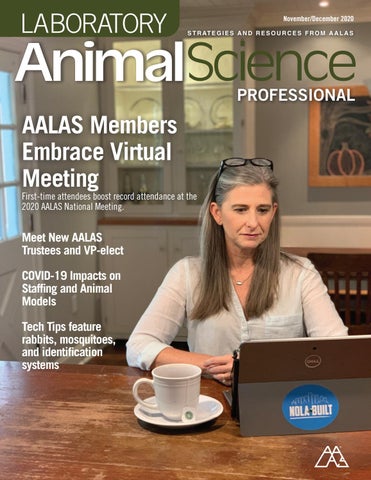
AALAS Members Embrace Virtual Meeting
First-time attendees boost record attendance at the 2020 AALAS National Meeting.
Meet New AALAS Trustees and VP-elect COVID-19 Impacts on Staffing and Animal Models Tech Tips feature rabbits, mosquitoes, and identification systems
Catalog 2021 – now available! Request your free copy at: finescience.com
FINE SURGICAL INSTRUMENTS F O R R E S E A R C H™
November/December 2020 Vol. 8 Issue 6
7
INSIDE THIS ISSUE...
11
Going Virtual
12
Inside the Meeting
16
2020 AALAS Award Winners
18
Meet the Trustees and VP-Elect
22
COVID-19 Insights
The 2020 AALAS meeting attendees embrace the opportunity to participate until year end with first time attendees boosting numbers.
AALAS presents peeks at four meeting presentations you don't want to miss.
14
Meet the 2020 award winners spanning seven categories and representing years of LAS experience.
Pam Straeter takes on the Vice President-elect role and three new trustees join the AALAS Board.
Review recent developments with COVID-19 animal models and learn about solutions to staffing shortages.
18 November/December 2020
AALAS Members Embrace Virtual Meeting
First-time attendees boost record attendance at the 2020 AALAS National Meeting.
Meet New AALAS Trustees and VP-elect COVID-19 Impacts on Staffing and Animal Models Tech Tips feature rabbits, mosquitoes, and identification systems
2 Laboratory Animal Science Professional November 2020
On the cover: Amelia Prados, a Department Administrator in Comparative Medicine at Tulane University, is a new AALAS member and a first time National Meeting attendee. Photo courtesy of Maggie Prados, a senior Communications major at Tulane and Amelia’s daughter.
What can
Research Ready
do for your vivarium?
Research-Ready means having clean, single-use cages and pre-filled water delivered directly to your vivarium; cages that are pre-bedded, pre-enriched, and irradiated upon arrival. It means reducing repetitive non-ergonomic tasks such as cage processing. It means having peace of mind knowing you’ll receive consistent products with guaranteed quality. Research-Ready means your vivarium can focus on what’s important: the science.
www.innovive.com | (866) 432-2437
Less Washing, More Science
37
38
58
DEPARTMENTS 5 Publisher’s Note
38 Tech Tips
6 People & Places
50 Across the Pond
Focusing on gratitude
New hires, promotions, awards, memorials
8 PROfiles
Insights on techniques and tactics
COVID-19 Animal Research in the UK
52 AALAS Foundation
2020 Branch POE Award Winner
Meet Vaneesha Ali
30 Inside the IACUC
Unique IACUC considerations regarding rabbits
34 Career & Training
Certification test taking tips
37 Enrichment Item
Frozen chicken broth treats
4 Laboratory Animal Science Professional November 2020
54 AALAS Connection Important 2021 dates
56 Crossword LAT 1 puzzle
58 Pet Talk
AALAS members talk about their pets
60 Ad Index
PUBLISHER’S NOTE
Staff Publisher Ann Turner Associate Publisher Chris Lyons Managing Editor John Farrar Associate Editor Liz Rozanski
Focusing on Gratitude
Ad Sales John Farrar Design/Production Zara Garza
Although I do not spend a lot of time on social media, the other night, I came across a meme that struck me as funny and true. The meme shared a comment about how staying up to see the New Year in had become less frequent. However, this year, the author noted everyone would stay up to see the old year out! I think we are all ready for 2020 to be on its way. While we may want to focus on how tough this past year has been, we must take stock of what went well. 2020 did have silver linings, as the saying goes. Those silver linings for me involve gratitude for my family, friends, and our AALAS community. I’m so grateful to have spent a bit of time with my grandchildren. I don’t know if there is anything better than seeing the world through a child’s eyes. Their sense of wonder and excitement as they explore and learn is a treasure. While our gatherings with friends and family may not be as frequent in years past, we have found new ways to connect. Technology helps, but a general willingness to be flexible and open to new ways to socialize goes a long way. Zoom and Teams are for more than just business! Those planned gatherings have highlighted being intentional with maintaining our relationships. When life isn’t easy, things that are truly important resonate. Our AALAS community has also been a source of gratitude, pride, and excitement. Our members in the field are facing challenges and overcoming them. They are working to support the development of treatments and vaccines for COVID-19. On top of that, the work continues with other human and animal health issues like cancer, heart disease, diabetes, and others. Yes, we are eager for 2020 to end and 2021 to arrive. We are driven by hope and strengthened by the challenges we have overcome as we move forward to the new year. Be sure to take a moment and think about your silver linings, ponder what you can be grateful for, and appreciate the treasures in your life. Best wishes to you and your families for a fulfilling holiday season and a most eagerly awaited New Year!
Ann Turner
Editorial Advisory Board David Bienus Andrew Burich Benaroya Research Institute Bob Dauchy Tulane Univ School of Medicine David DeOrnellis Champions Oncology Penny Devlin Pennsylvania State Univ College of Med Sonia Doss Duke Univ Medical Center Glenn Jackson Cornell University Rick Marble Univ of Tennessee Jamie Naden Envigo Elizabeth Nunamaker Univ of Florida Sara Oglesby Abbvie Karuna Patil Federation Bio Amy Pierce Tulane Univ School of Medicine Stacy Pritt UT Southwestern Medical Center Robin Tucker Georgetown Univ
Mission Statement Laboratory Animal Science Professional (LAS Pro) is the official magazine for American Association for Laboratory Animal Science members. LAS Pro provides a wide range of useful resources and knowledge to the association’s 13,000 laboratory animal science professionals who are involved in advancing responsible laboratory animal care and use to benefit people and animals. All signed articles, including, committee reports, news, and commentary, reflect the individual views of the authors and are not official views of AALAS. Authorization to photocopy portions for personal or internal use is granted by the American Association for Laboratory Animal Science. Photocopying for purposes of resale or outside distribution is prohibited unless written approval is obtained from the AALAS Director of Communications. Copyright 2020 by the American Association for Laboratory Animal Science. Laboratory Animal Science Professional (USPS 010-730) is published bimonthly by the American Association for Laboratory Animal Science, 9190 Crestwyn Hills Drive, Memphis, TN 38125. Periodicals Postage paid at Memphis, TN 38101 and additional mailing offices. POSTMASTER: Send address changes to AALAS, 9190 Crestwyn Hills Drive, Memphis, TN 38125-8538.
Publisher Executive Director American Association for Laboratory Animal Science American Association for Laboratory Animal Science 9190 Crestwyn Hills Drive Memphis, TN 38125-8538 Phone: 901-754-8620 Fax: 901-753-0046 E-mail: info@aalas.org Web: www.aalas.org
November 2020 Laboratory Animal Science Professional 5
PEOPLE & PLACES
New hires, promotions, meeting updates, and memorials.
Turner Featured in Associations Now AALAS Executive Director, Ann Turner, was interviewed by Associations Now on the topic of healthcare and how animal science is chasing breakthroughs. The August 22 article highlighted AALAS training programs and the association members who are responsible for caring for lab animals. Turner commented that proper animal care is critical to study results. She noted that AALAS is deepening its focus on technician and manager training opportunities and emphasized the connection between training and better results and therapies. Turner was quoted as saying that she believes cancer breakthroughs are coming withing the next five years and that the pace of research has accelerated. She concluded with noting that childhood leukemia now has a 80% plus survival rate and hopes that within 20 years the idea of cancer as a killer will be a distant memory. Read the interview here: https://associationsnow.com/2020/08/american-association-for-laboratory-animal-science/
AALAS Foundation Participates in USA Science and Engineering Expo The AALAS Foundation typically partners every other year with Americans for Medical Progress (AMP) to have a booth at the USA Science & Engineering Expo in Washington, DC. This expo attracts over 300,000 students/teachers/parents over a threeday period. The Expo, of course, was canceled this year due to COVID-19; however, the organizers of the event pulled together a virtual conference. The virtual booth created by Paula Clifford (AMP) and AALAS Foundation Administrator, Vicki Campbell featured display panels that had text linking to the info mentioned. This virtual event began September 26 and ended October 3, 2020.
6 Laboratory Animal Science Professional November 2020
IN MEMORIAM Cammie Symonowicz Provided by Lisa Secrest
We lost a titan in the laboratory animal science industry. Camelia Symonowicz died from early on-set dementia on Saturday, September 5, 2020, at the age of 57. Ironically, throughout her career, Cammie was an outspoken advocate for more studies to be conducted on dementia because her father was a victim of this ravaging disease. She touted that we would find a cure and never to lose hope. But we were not fast enough. She became lost in the fog for the past two years, but true to her advocacy, her brain has been donated to further Alzheimer’s disease research. Cammie was a lifeforce that barreled toward you at breakneck speed, and you had to prepare for the onslaught. She would envelop you in her signature bear hug, whether you wanted it or not. She was joy, she was laughter, and she never met a person she didn’t think of as a friend. From the moment I met her at a LAMA meeting in Portland, Oregon, she brought me into her circle, and I never left. She was a connector. She drew people to her from all over the world, and it showed as condolences came pouring in on Facebook, ACE, and privately to friends and family. She held multiple credentials: a bachelor’s degree from Worcester State College, a master’s degree from Kennedy Western University, CMAR, LATG, and a proud ILAM graduate. Her impact on our field was immense, and she touched many people through her volunteer activities at AALAS, LAMA, and her local SNEAALAS branch. She spent much of her career as a facility manager at Bristol Myers-Squibb in Connecticut before a stint with Pfizer and a return to BMS–San Francisco. Off-the-clock she was a volunteer Superwoman. At AALAS, she was appointed Awards Committee Chair, and she held the position of Learning Resources Chair for the National Meeting Program Committee. She was a past president of SNEAALAS and LAMA. A yearly fixture at Nationals teaching CMAR prep classes, Cammie was also a popular ILAM faculty member covering multi-generational staffing. She won multiple awards, including the LAMA sponsored 2015 Charles River Medallion, the 2014 William Umiker Training Award, the 2014 LAWTE Performance Award, and many more. She was a favorite on the speaker circuit, and her reach was wide. If they didn’t come to her at an AALAS or ILAM meeting, she frequently went to them, even traveling to Singapore and Dubai. Karena Thek of BioServ remembers being dragged into branch leadership and states, “It wasn't a difficult decision
because Cammie was impossible to say no to. You just felt her passion and got energized by it. She was high on life and could party with the best of us to all hours of the morning. Man, once you got her started, the jokes didn't stop.” Warren Ball of Pharmacal said that Cammie always “busted his chops” and that political correctness was not in her vocabulary. “She had so much energy she seemed to be everywhere at once,” said University of Miami supervisor Catherine Bernstein. “She was so warm and welcoming.” Cammie’s smile and over-the-top personality bowled you over and was infectious. When asked what she did for a living, she always answered, “I create miracles and save lives, what do you do?” She was an ambassador and could bring up issues that might have been difficult, but she still made people have the conversation and never let them feel uncomfortable in those sticky places. She inspired so many in the laboratory animal research field, and she will be missed by many more. At the end of a conference day, you would find Cammie floating in the pool, drink in hand, flirting with anyone around her. That is the image I will keep of my friend. I will miss my goofy, Red Sox loving, New England Patriot die-hard fan that always had my back or a shoulder to cry on. And yes, I’ll miss the laughter. We laughed and laughed because that is how she conveyed herself in this world. It is the angels’ turn to laugh with her now. The family has asked that any memorial donations be made to the Alzheimer's Association c/o Grammie's Groupies, P.O. Box 18, Auburn, MA 01501, or the Boston University Research: CTE Center (www.bu.edu/cte/financial-support/). Donations made to the AALAS Foundation in her name will help establish a lasting memorial in her honor.
November 2020 Laboratory Animal Science Professional 7
5
minutes with...
Vaneesha Ali, RLATG
12
PRO-files in LAS
Facility/Employer: BIOQUAL, INC. Job Title: Biosafety Specialist
How did you get in this field? While attending the University of Maryland
College Park as an animal science student, I had the opportunity to work for a lab for the Department of Animal and Avian Sciences. This was my first experience working with animals in a laboratory setting. I loved it so much that I switched my major from pre-veterinary science to lab animal care and management. As soon as I graduated, I was offered a position as an animal caretaker working with NHPs. It was the best experience ever, and I was hooked since then!
Who were your mentors? I am very fortunate to have had many mentors
throughout my career! While at UMD, Dr. Mary-Ann Ottinger and Dr. Zimmerman of UMD fostered my educational growth in the animal sciences. Once I graduated and started working in the field, Brad Fisher took me under his wing and supported my rapid growth in the bioscience realm. Lynn Lambert, Katina Thomas, Melissa Marrah, and Dr. Danielle Covington also played pivotal roles as mentors throughout my animal science career.
1
What are your current interests in animal science? My current interest
in animal science is in the coronavirus that has plagued the globe. I have had the honor and privilege of leading a dedicated laboratory animal technician team in the coronavirus vaccine effort. We have been committed to providing the best quality animal care and research data, which has aided in some vaccines' progression to clinical trials in people. I am proud to be a part of such a momentous occasion and even prouder to be a part of a community of front-line animal science professionals and heroes!
2
Where do you see yourself in 5 years? Regarding my career, I see myself
Getting Personal What companion animals do you have?
Our family pets are an orange tabby named Simba, an English mastiff named Bishop, and a red miniature pinscher named Napoleon.
Best binge-watching TV series?
Our Planet on Netflix and any other nature series hosted and narrated by the wonderful David Attenborough.
What is the last book you read?
This Past Was Waiting for Me by Sarah Trembath.
Where is your favorite vacation spot?
Anywhere in the Caribbean that a cruise ship will take me! Lately, it has been my backyard!
What is your favorite dessert?
Warm pecan pie with vanilla bean ice cream.
operating as a biosafety officer for my company. I want to continue to expand my knowledge and experience within the animal science and biosafety field. In life outside of work, I hope to have my non-profit organization dedicated to Sickle Cell Disease awareness up and running.
What is your favorite part of your job? My favorite part of my job is
teaching and training new or junior technicians on technical procedures and introducing them to the world of laboratory animal science. I also really enjoy working with the lab animals on a day to day basis. They are indeed the unsung heroes, and I am happy to be a part of the team that provides the best quality care for them.
What advice do you have for others just beginning their animal science career? Stay in hot pursuit of your AALAS certifications as they set
3
you apart from the rest of the crowd! Always be willing to do the job or task that no one else is willing to do and take ownership of every task given to you. People are always looking to identify leaders, so decide to take on a leadership role even if it is not in your job description because one day it will be.
What is the most rewarding aspect of your career? The most rewarding
part of my job is fostering and witnessing the growth of junior lab technicians and animal caretakers as they become facility managers, research associates, and facility trainers. I can pass along the mentorship that was so graciously provided for me and see the fruits of all the hard work and dedication that was put into others over the years. I especially love when a mentee or trainee from the past reaches out to me to provide updates on their career progressions, or I run into someone at the local and national AALAS meeting, and they are eager to tell me of the certifications that they acquired and the positions that they have been promoted to.
4
What has been the most challenging aspect of your career? The most
challenging aspect of my career has always been the limitations of sharing what I do with family and friends. I am very passionate about the work that we do in the lab animal field, and I try my best to convey the importance of this work to the best of my ability. 8 Laboratory Animal Science Professional November 2020
5
VIRT UAL MEET IN G 2020
The AALAS National Meeting will be available 24 hours a day until December 31, 2020. Attend sessions at your convenience. Learn the latest techniques and insights from laboratory animal science colleagues. AALAS National members attend for free. Register today! www.aalas.org
10 Laboratory Animal Science Professional November 2020
FEATURE
Inside the Meeting
2020 AALAS National Meeting Continues Until Year End First-time participants boost meeting attendance.
A
t publication date, over 6,000 attendees are experiencing the 2020 AALAS Virtual National Meeting. As 2020 AALAS President Tracy Parker shared, “While this is not the way I envisioned the meeting, there are so many positive things that will be offered to our members this year.” Tracy’s choice of “Overcoming Challenges” for the spotlight forum topic proved to be eerily accurate. Pivoting from a physical, onsite meeting to a virtual one required national office staff, AALAS leadership, and a team of volunteers to step outside of comfort zones, learn new things, and overcome challenges! Remember, meeting registration remains available on the AALAS website. In addition, the AALAS National Meeting exhibitors stepped up and embraced the virtual meeting plan. Parker expressed gratitude for their partnership. “I would like to thank our commercial partners. AALAS is truly a community, and they have demonstrated patience and resilience as we adjusted to this unprecedented situation,” Parker said. Parker also acknowledged the many first-time attendees, like Amelia Prados, featured on this issue’s cover. Prados is a Senior Department Administrator in the Comparative Medicine Department at Tulane University. She shared that she is a new national member and this is her first experience with an AALAS National Meeting. "I have worked as the Department Administrator for almost ten years. Still, since I have no direct interaction with animals, I have never had the opportunity to attend the national meetings," Prados said. Hearing about the opportunity to attend through Amy Pierce, an Associate Director at Tulane and the AALAS District 7 Trustee, Prados was thrilled to register. "I am most excited to participate in the seminars/sessions that have to do with technology use in the animal facility. I hope that AALAS will continue to develop programs for the industry's administrative support staff," Prados added. In addition to attending seminars, Parker encouraged all first-time attendees to spend time with the exhibitors. "I know that our exhibitors have innovative solutions to improve efficiency in our programs. In my experience, it is the technician who will see the direct benefits of these innova-
tions; bring your ideas back to your leadership,” Parker added. As you continue to experience the meeting platform, keep in mind these tips to make the most of the opportunity.
Make the Most of the Meeting • Read the Daily Digest: All the important announcements from our commercial partners and presenters are gathered in the email digest including information on live presentations, contests, and more. • Exhibitors: Solution sharing, service providing, and expertise galore — all those things can be found in our AALAS Virtual Exhibits. Be sure to join their communities. • Viewing Sessions: You can identify sessions to view in two ways. You can search the Program Overview and use the alpha order list of all sessions. Or you can access All Tracks and search within a specific concentration. • Review Posters: This is a great way to get tips and solutions for LAS issues. Posters are available in 4 categories: Animal Welfare, Training & the 3Rs, Clinical, Husbandry/Management, and Laboratory Investigations. • Platform Sessions: They are organized by category as well. Don’t miss the What’s Your Diagnosis sessions. • Technician Virtual Fun Fair: Over 25 participating companies and some great prizes are up for grabs. • AALAS Foundation: Look at opportunities to contribute through the AALAS Foundation including the Biplane Battle and the Fun Run. November 2020 Laboratory Animal Science Professional 11
FEATURE
Inside the Meeting
Accelerating Drug Discovery with Noninvasive Animal Imaging: The 3Rs Perspective
By Jeffrey Morin MA, RLATG; Crystal Bluette MS, LATG; James Goodman PhD; John David DVM, PhD, DACLAM; and Dinesh Hirenallur-Shanthappa DVM, PhD, DACLAM
A
nimal models are important in helping to understand the fundamental aspects of the pathophysiology of diseases as well as in bringing breakthrough medicine to patients. When using animal models, the laboratory animal medicine community is committed to upholding the principles of 3Rs: Reduction, Refinement and Replacement.1 Efforts are made with the goal of reducing the number of animals needed for a study, as well as performing techniques designed to minimize pain and distress on animals. Use of non-invasive imaging modalities fits perfectly well with reducing animal number and minimizing pain and distress during experiments. In the field of drug discovery, translatable imaging modalities are the most desirable as they provide data read outs comparable to those found in human studies and procedures. This seminar will focus on translatable imaging modalities such as ultrasound-based techniques, magnetic resonance imaging (MRI), computed tomography (CT), and positron emission tomography (PET). Emphasis will be placed on how these instruments are used in animal studies, how they benefit animal welfare, and how they are helping scientists make decisions on which drugs are safe and effective to go to clinic. The first two presentations will outline how in vivo ultrasound imaging of animal models can help in novel drug development against cardiovascular and nonalcoholic fatty liver disease (NAFLD). The first presentation will discuss advancement in echocardiography and its use in monitoring changes in heart structure and function in rodent models, while the other will highlight an ultrasound technique known as shear wave elastography, which is used to monitor tissue stiffness and fibrosis in models of NAFLD/NASH. The next topic focuses on translational MRI in drug discovery and development. MRI and spectroscopy are remarkably flexible techniques which can be used for in vivo quantification of multiple aspects of anatomy, physiology, and even biochemistry. As it is non-invasive and can be used repeatedly without concerns of ionizing radiation, MRI is especially well-suited for longitudinal assessment of disease progression and treatment in both preclinical and clinical settings.
12 Laboratory Animal Science Professional November 2020
Positron emission tomography (PET) will also be covered. PET is a molecular imaging technique that utilizes radioactive isotopes to track the movement of molecules through time and space. PET applications include measuring metabolism, pharmacokinetics, and pharmacodynamics with extensive use in the fields of oncology, neurology, and drug development. PET features an extremely high sensitivity that can measure biological process at “tracer� levels where very small changes can be detected without altering the biological processes. This makes it a desirable procedure for studying how physiology changes in the same living subjects over a long period of time. The final topic will showcase an example of adopting a novel approach and technology to derive a translatable imaging biomarker in support of an anti-cachexia program. Briefly, the ability of CT to generate 3-D images with very high resolution enables one to segment regions of interest using tissue density to derive body composition information in an animal model. One of the limitations to using CT to derive total body composition in preclinical models is low throughput due to prolonged imaging and analysis time. However, the presenter will discuss a refined imaging approach and an automated segmentation tool to increase throughput. Overall, the major goal of most early stage, pre-clinical drug research is to develop quantitative screening tools that can be translated into human subjects, but an underlying goal to preserve animal welfare also exists. Using imaging instrumentation to examine biological happenings in living animal subjects in real time allows scientists to see how potential therapies are behaving in smaller cohorts with amazing precision. This means fewer animals are used, less frequently. By using translatable imaging models, researchers gain better understanding of how their potential drugs could work in humans. Each presenter will outline how their imaging technique translates to the clinic, emphasizing how animal research can truly lead to healthier lives for humans. REFERENCE 1. Russell WMS, Burch RL. 1959. The principles of humane experimental technique. London: Methuen and Co.
Keeping Your Culture of Care Current By Joy Redmond, DVM
T
he concept of a culture of care in our industry is not new; it has been around for over a decade. Companies large and small have adopted the commitment to continually advance the quality of animal care and welfare. A well-defined culture of care is something to be celebrated yet maintaining a culture that responds to the environmental changes in which we operate can be challenging. The transformations and aspirations made under a culture of care banner can fade and become outdated if the culture is not continuously nurtured and renewed. How do you keep a culture of care current and ensure it is embedded and alive throughout your organization? The details will vary depending on your situation, but some basic steps can provide guidance. I welcome you to join me this October and create your path forward as I share potential routes based on experiences from our ongoing cultural journey at Covance. Like any journey, we will begin by determining a starting point. By clarifying your current culture, you create a useful reference for future comparisons. It is important to get a well-rounded view of your current culture by being all-inclusive, so consider interactive meetings, company-wide surveys, and client feedback. One approach that worked for us was having a global core team and then extended teams executing through defined working groups. Methods such as this allow you to engage with multiple internal and external stakeholders to help understand the current status. Next, we will look forward to envisioning what an ideal culture of care would be like. What is pivotal and should remain, and what needs to grow or change? Again, it is important to take an expansive and inclusive approach and think of ways of making the vision meaningful to everyone. Encouraging participation with activities such as company-wide survey to gather suggestions and then voting to select the statement that resonates with most people. Once a vision is articulated, the next stage of the journey is planning and execution. Strong support from senior leadership
and maintaining clear sponsorship of the initiative are critical to move forward. Plan activities in detail, with a clear timeline for a phased roll-out to keep momentum going. Aim for activities that capture both heads and hearts and ensure they are localized to resonate globally. For example, you may want to consider a global launch to celebrate your renewed culture and include onsite activities such as poster signing opportunities for your new vision statement or commitments to care. We found that activities like this help harness enthusiasm, motivate involvement, and build traction to help embed the organization's culture. Once you are traveling along the cultural journey, you need to remain focused and be prepared for the twists and turns on the road. Detours are inevitable and should be viewed as opportunities, not obstacles. One major twist we encountered was how to extend the culture of care following the acquisition of a company. By staying nimble and engaging proactively, we drew individuals and new business groups into the organization's culture by sharing values and collaborating to ensure alignment and harmonized growth. In conclusion, a strong culture of care is not a final destination. It requires constant adjustments along the course to remain on track with an evolving vision. The key point is not to fight this, but to welcome the challenge and embrace the dynamism and energy it generates. Follow up with surveys, meetings, articles, teaching, websites, activities, and new goals. Continue to encourage two-way communication and engage with as many people as possible in as many ways as possible so you can keep abreast of the cultural developments. In answer to the original question on how to keep a culture of care current – you need to build a perpetual road map by identifying your starting point, then planning a path forward and constantly adjusting as you navigate to new destinations. Joy Redmond, DVM, is an Attending Veterinarian at Covance Laboratories Inc., in Denver PA.
November 2020 Laboratory Animal Science Professional 13
FEATURE
Inside the Meeting
Retirement Benefits: Maximizing Your Institution’s Adoption Program By Abigail Wolf Greenstein, DVM, DACLAM
D
oes your institution have an active adoption program? Are you looking to start one? Do you adopt out a small number of animals but would like to expand? Does adoption sound great, but you cannot imagine it working in your context? Adoption provisions for research animals are increasingly integrated into biomedical research programs and in some states have become a legal requirement. Research animal adoption can have a tremendous positive impact on institutional culture, benefiting both animals and their human caretakers, while also exposing the public to research animal use in a positive and approachable context. However, even the most successful adoption programs face myriad challenges. This panel discussion will address needs, concerns, and resources available for adoption of research animals as pets, with representatives from the pharmaceutical industry, academia, government, and Homes for Animal Heroes (HAH) sharing their experiences. Regardless of context, key components of a successful adoption program include careful planning, clear communication, and transparency within institutions and with the adopting public. Few institutions have the luxury of unlimited supplies of staff time, money, and space. Strategies to allocate appropriate resources for adoption programs include having a clear understanding of the adoption process, mapping how long it takes to accomplish, and designating the personnel responsible. Institutions should decide at the outset which species will be eligible for, and how animals will be prepared for adoption. A budget taking these factors into consideration can guide the financial resources required. Prospectively determining the number of animals eligible for adoption at a given time based on study use or a standardized retirement age helps to assure adequate space is available to house animals prior to adoption. Consideration of adoption at the outset of an animal’s study engagement aids in ensuring adequate resources are available to prepare the animal for adoption down the road. 14 Laboratory Animal Science Professional November 2020
Animals can be adopted directly from institutions or through a partner organization. Adoption partners are commonly local rescue organizations. When working with an intermediary it is important to ensure that they are comfortable communicating with the public about the animal’s incredibly valuable role in biomedical research and will provide an informed and positive perspective, while educating potential adopters on the animal’s background and how this could impact their adaptation to life as a pet. Educational strategies include exposing representatives to the animal facility and interacting with the individuals that care for the animals, providing sharable informational on the animal’s history and research contribution, and following up to address questions that arise after adoption. Alternately, HAH is the first national rehoming organization with a pro-research platform dedicated to the adoption of retired research animals. All coordinators, foster volunteers and prospective adopters are screened to assure placement in appropriate homes. They provide a variety of educational materials on the importance of animals in biomedical research, openly share the contributions of retirees, and have a nationwide network of resources to draw on. Adopting out animals through HAH can facilitate important conversations and interactions as animals’ transition to adoptive homes. This panel discussion welcomes interaction. Attendees will have the opportunity to ask questions throughout, with time at the end for audience members to share the struggles and successes of adopting out retired research animals at their institutions. Building a culture within the laboratory animal community that strongly advocates for and routinely practices adoption of research animals benefits animals, institutional culture, and the perception of animal research by the public. We hope you will join us in a multifaceted discussion of how the lab animal community can be even more successful at finding homes for our animal heroes!
Six Degrees of Separation: How to Expand Your Network in a Meaningful Way By Tasha Thomas, EdD, MS, CMAR, RLATG
A
ccording to Siri, as of 2018, the world population was 7,655,957,369. The concept that everyone in the world is only six, or fewer, social connections away from one human to the next has always fascinated me. This is also known as the 6 Handshakes rule. Imagine living in a world with over seven billion people, and theoretically being connected to any two people on Earth by only six or fewer acquaintances. How awesome is that notion? I have personally tested this theory on some of my favorite worldrenowned performers and celebrity personalities in the world. With minimal effort, I was almost always less than three social connections away from them. This includes Michael Jackson, Oprah Winfrey, Nelson Mandela, and others. During difficult times, it is human nature to come together, lean on one another, for guidance, comfort, and to persevere. The onset of COVID-19, specifically in our industry, has illustrated this. We have witnessed it within our organizations. For example, neighboring institutes that never had the “need” to collaborate are now reaching out for guidance, ideas, or simply for support or, more importantly, to let others know that they are there for them. This phenomenon is experienced at a personal level, as well. I have witnessed individuals that have lived in proximity for an extended time and never connect, now interacting and seeing one another as neighbors. This presentation was originally focused on the power of networking when it comes to career development, advancement, and personal satisfaction. Since coronavirus swept through the U.S. and the world, its importance is evident in the need for guidance, information exchange, morale, self-esteem, and mental health. Studies have indicated
that not only are human connections important, but it is critical for human health. Social connections can help lower your anxiety levels and feelings of depression and improve your immune function. We put our health at risk when we fail to connect. Connecting helps us regulate our emotions and lead to higher self-esteem and our ability to empathize with others. I am excited to invite all to join the discussion. I will provide a deeper dive into the concept of six degrees of separation and share personal examples of the importance of a social network for both personal and professional relationships. The presentations will include information on the power of networking, its benefits for humans, including how animals play a role in improving our lives through social interaction/networking. I will also share how to expand and grow your network in a meaningful way. I welcome junior and senior-level attendees and will share ways to overcome challenges in networking and/or ways you assist your staff grow their network. The presentation will share real tools to use for successful networking strategies. So, the real question is, if you could theoretically connect with anyone in the world, why wouldn’t you? What is holding you back? And who would you want to connect with, and why? Please join us for the 71st AALAS Virtual National Meeting. Dr. Tasha Thomas, EdD, MS, CMAR, RLATG is a Business Development Specialist in Insourcing Solutions at Charles River in Frederick, MD. She works remotely from her home in South Florida.
November 2020 Laboratory Animal Science Professional 15
2020
AALAS AWARD WINNERS Robert H. Weichbrod,
RLATG, MBA, PhD
Senior Advisor, NEI Animal Care and Use Executive Secretary, NEI Animal Care and Use Committee National Institutes of Health - NIH/National EyeInstitute - NEI
Nathan R. Brewer Lifetime Achievement Award
Dr. Robert H. Weichbrod is a dedicated, and compassionate advocate for animal welfare and the responsible use of animals. He has worked in several positions, ranging from an entry level Animal Caretaker to a Program Administrator within large, complex, and diverse programs of animal care and use in a career that has spanned over 40-years. He is a RLATG and earned his BS from the University of Maryland, an M.B.A. from Marymount University, and a PhD from Walden University. Dr. Weichbrod is the recipient of AALAS’ 2005 Joseph J. Garvey Award, the 1990 George R. Collins Award and has served in several leadership roles within AALAS, including AALAS President in 2000.
Sue VandeWoude,
DVM University Distinguished Professor, Department of Microbiology, Immunology, and Pathology and Director, One Health Institute Colorado State University
Joseph J. Garvey Management Award
Sue VandeWoude is a veterinary virologist recognized for her studies of feline retroviruses. She attained her BS from California Institute of Technology, completed her DVM at Virginia-Maryland College of Veterinary Medicine, and conducted a postdoctoral fellowship in Comparative Medicine at The Johns Hopkins University School of Medicine She has served as President of ASLAP and ACLAM, Chair of the NIH Veterinary Subcommittee of the Physician Scientist Workforce Report and AAVMC Research Committee, Member, AVMA Council of Research and Veterinary Virology Councilor for ASV. She was elected to the National Academy of Sciences in 2019. VandeWoude is currently University Distinguished Professor and Director of the One Health Institute at Colorado State University.
Ekaterina A. B. Rivera,
DVM, PhD Invited Researcher Universidade Federal de Goiás
Charles River Prize
Dr. Rivera is a lecturer on animal welfare, IACUCs, animal facilities, and teaching laboratory animal science. She provided the first laboratory animal science courses in Brazil and was instrumental in the establishment of Brazil’s first ethical committee on animal experiments as well as subsequent ethical committees in universities across Brazil. She was instrumental in the approval of the Brazilian law regarding the use of experimental animals. She is an ad hoc member of AAALACi and is the Brazilian representative for ICLAS and is serving as secretary general. She is a past president of the Brazilian Congress on Laboratory Animal Science and the Brazilian Laboratory Animal Science Association. She has been named one of the fiftieth most influential veterinarians in Brazil.
M.A. McCrackin,
DVM, PhD, DACVS, DACLAM, CMAR, CPIA Director, University Research Animal Resources and Professor, Population Health University of Georgia
Joseph J. Garvey Management Award
M.A. McCrackin is one of only a handful of veterinarians in the U.S. board-certified in both surgery (1994) and laboratory animal medicine (2010). Dr. McCrackin transitioned to lab animal medicine in 2004, serving in three positions as Director and Attending Veterinarian, first at the University of Montana-Missoula (2004-2011), then Virginia Tech (2011-2013), then the Charleston, S.C. VA Medical Center (2013-2019). She was Professor of Comparative Medicine at MUSC and Director of its Surgical Research Laboratory for five years. She has been a member of the AVMA Panel on Euthanasia since 2009 and an active member of AALAS, ASLAP, AVMA, ACVS, and ACLAM.
Kenneth R. Boschert,
DVM, DACLAM Associate Director Washington University, St. Louis
Charles A. Griffin Award
Dr. Ken Boschert obtained his DVM from Mississippi State University and completed postdoctoral training at the University of Alabama at Birmingham. He is a Diplomate of the American College of Laboratory Animal Medicine and is presently Associate Director of the Division of Comparative Medicine at Washington University in St. Louis. Over the past three decades, he established and maintained websites and networks for numerous veterinary and laboratory animal organizations, including the COMPMED listserv and NetVet website. He has led seminars and workshops for national and international veterinary and laboratory animal conferences and serves as consultant for several academic, non-profit, and commercial organizations.
Kim Froeschl,
BS, LATG, CMAR, CPTD
Comparative Medicine Training Specialist Pfizer, Inc
George R. Collins Education and Training Award
Kim Froeschl is a CM Training Specialist at Pfizer. She has a passion for training, education, and mentoring. As a lifelong learner she earned her NYS AHT License and AALAS Certifications (including CMAR) early in her career and went on to earn her Certified Professional in Talent Development (CPTD) credential from The Association for Talent Development in 2014. Kim challenges herself to incorporate technology and computer-based learning into training without losing the benefits of face to face training. Kim is currently pursuing a Master’s in Laboratory Animal Science degree from Drexel University (anticipated completion in Spring 2021).
Lori Mattox,
RVT, RLATG, SRA Surgery Supervisor The Ohio State University
Technician of the Year Award
Lori Mattox is the Surgery Supervisor at The Ohio State University in Columbus, Ohio, and received an AAS at Penn Foster College for Veterinary Technology. Her primary responsibilities include the management of the experimental surgery core staff as well as providing instructional support for technicians and students in animal, medical, anesthesia, and surgical techniques. Lori is also the founder of the Blue Ribbon Connection 4-H Club and continues to provide leadership support to the group.
16 Laboratory Animal Science Professional November 2020
2020 NATIONAL MEETING SPONSOR LIST PRESIDENTIAL SPONSORS
GOLD SPONSORS
SILVER SPONSORS
November 2020 Laboratory Animal Science Professional 17
FEATURE
Inside the Meeting
Introducing AALAS’ New Vice President-Elect Pam Straeter joins the Executive Committee in October.
2020 AALAS National Election Results At-Large Trustee Seat 4 District 1 Trustee District 2 Trustee District 4 Trustee District 7 Trustee At-Large Alternate Trustee Seat 4 District 2 Alternate Trustee District 3 Alternate Trustee District 6 Alternate Trustee LAS Pro: When did you join AALAS and why did you make the decision to join? Straeter: I joined National AALAS in 1994 so I could take advantage of the discounted rate to sit for my Assistant Laboratory Animal Technician certification exam. I have never looked back! The network and friends that I have gained over the years have enriched my career and personal life beyond measure. LAS Pro: What do you think was the most important project you worked on as a BOT/Committee member?
James Macy Jennifer Asher Erin Vogelsong Mark Sharpless Amy Pierce Ramaswamy Chidambaram Karen Froberg-Fejko Carolyn Pelham Stephen Levin
Straeter: Wow, there are so many favorite memories. The first that comes to mind would be the meeting where Scott Mischler and Ann Turner arrived at the 2014 San Antonio Opening Session riding bulls. It was amazing! LAS Pro: Do you have companion animals? Straeter: I would love to have a companion animal, but I don’t spend a lot of time at home, so I enjoy other people’s pets. LAS Pro: Favorite TV show?
Straeter: I have been fortunate enough to be a part of some great initiatives and projects as a BOT and Committee member. One of the most challenging yet rewarding was serving on the Educational Resources Committee (ERC), and being involved with development of certification manuals and other reference documents for the laboratory animal science profession.
Straeter: This is a standing joke in my home when family or friends asked what I watch on TV, my husband will comment, “Pam can’t commit.”This is because I cannot sit still. Although, I do not spend a lot of time watching TV, when I want a break from reality and some laughs, my go-to are repeat episodes of Seinfeld and Friends. No matter how many times I watch re-runs, I laugh every time.
LAS Pro: What will you bring to the table in your new role?
LAS Pro: Last book you read for fun?
Straeter: I hope members will see my passion for National AALAS and my drive to help pull new leaders to forge the future path of our organization.
Straeter: My interest in reading tends to be directed to nonfiction (i.e., world history) and hobby related topics such as cooking and travel magazines.
LAS Pro: What would you like to say to the AALAS membership?
LAS Pro: Favorite vacation spot?
Straeter: Get involved in AALAS, whether it is at a local, regional, or national level. The return on your investment will bring so much career fulfillment and long-lasting relationships.
Straeter: Anywhere sunny, warm, and close to the water.
LAS Pro: What is your favorite National Meeting memory?
Straeter: Hands down, chocolate peanut butter ice cream!
18 Laboratory Animal Science Professional November 2020
LAS Pro: Favorite dessert?
Meet Some New Faces on the AALAS Board of Trustees
Erin Vogelsong
W
Amy Pierce Jennifer Asher
ith the 2020 AALAS election, Jennifer Asher (District 1 Trustee), Erin Vogelsong (District 2 Trustee), and Amy Pierce (District 7 Trustee) are ready to represent their district members and get to work for national members as they join the AALAS Board of Trustees. LAS Pro: When did you join national AALAS, and what prompted you to join?
JA: I joined during my first summer of grad school. I wanted to join before that, but I didn’t have the money until I had a summer internship in 2004. I had this idea that National AALAS membership was only for elites in the field, which feels silly now, but that’s where my head was at the time. Because of that, it was a big deal for me to become a national member. I maintained the membership as often as possible during the rest of my master’s degree and veterinary school. But being a student, I let it lapse here and there. I have been a member every year since vet school. EV: I have been a national AALAS member since 2003. I joined national AALAS because the company I was working for encouraged (and financially supported) its leadership to become members. I was very fortunate that they could see the value of having their employees involved in an organization that advances responsible animal care. AP: I joined national AALAS in 2006 as I was beginning my career in laboratory animal management. I became a member to increase my knowledge through the AALAS Certification Program. I also wanted to grow professionally by networking with others in this industry. LAS Pro: What will you bring to the table in your new role on the BOT?
JA: I am very honest, always try to be an active listener, and do my best to be open-minded about the viewpoints of others. I like to believe that I have a decent sense of humor and try not to take myself too seriously. I am passionate about the work we all do, and I have the best interest of this organization and its members at heart. I am driven to find out how to best serve and communicate with the individual branches within District 1. Between the strong work ethic I developed growing up on a farm, and my enthusiasm for this position, I can’t wait to get started representing my district on the board.
EV: I hope to bring the same level of commitment and enthusiasm that our previous D2 Trustee brought to the table. This will be a reach since she has set the bar extremely high. Also, I hope to encourage some of our newer members to explore leadership positions at the national level. Taking the first step is the hardest part. Having someone to walk next to you makes getting involved a little less daunting. AP: I will bring passion and enthusiasm as I genuinely believe in the mission of AALAS. I will also bring creative thinking for generating fresh ideas, laboratory animal science knowledge and experience, and a willingness to listen and learn from others. LAS Pro: What have you enjoyed the most so far of the Virtual National Meeting? JA: As a member of the National Meeting Program ComNovember 2020 Laboratory Animal Science Professional 19
mittee, we were challenged to develop an alternative to the traditional in-person meeting that would best serve our membership. Is a virtual meeting anyone’s first pick? Probably not. However, there are some benefits. I love that sessions can be viewed at the most convenient time for our members, and I hope this results in more people than ever before being exposed to national meeting presentations. I also like that I’ll be able to cuddle up with my dogs while listening to sessions, sans pants, which is not something I normally get to do at the National Meeting. EV: I really looked forward to the Virtual National Meeting this year. The advertising was particularly relevant and fun. This year presents an extremely unique opportunity for the lab animal community. In the past, many lab animal professionals may not have attended the National Meeting due to budgetary or operations restrictions. This year, the meeting is accessible to everyone! This is an extraordinary occasion. Technicians who never have had the opportunity to attend a meeting are experiencing their first National Meeting this year! AP: Although I do look forward to when we can have our meetings onsite, I must admit that there were some perks of having a virtual meeting. I did not have to worry about my appearance as no one will see me. I also don’t have to worry about being too noisy when eating a snack during a presentation.
TM
LAS Pro: What are you looking forward to helping with on the BOT? JA: While I have read the manual, I think there are many details about the responsibilities of a trustee that I won’t truly grasp until after orientation and my first BOT meeting. I am excited about meeting more District 1 branch members and figuring out how to best meet their needs. I am also looking forward to serving on one of the national subcommittees, as I think that will be where I can have the most influence. Lastly, I cannot wait to get to know my fellow trustees! From what I hear, they are a great group of people who want what is best for our districts and the national organization. EV: I am looking forward to advancing AALAS’ mission by working with (and learning from) all the dedicated volunteers that help make AALAS possible. 2020 has resulted in many unexpected and undesirable outcomes; however, one silver lining is the concept of “one health” has never been so important or widely publicized. With all the potential treatments and vaccines for coronavirus, the one thing they have in common is animal research. We are fortunate to be the caretakers of this movement. AP: AALAS, like many non-profits, is facing new challenges amid COVID-19. I look forward to helping the BOT think creatively about new ways to engage and serve our members during this challenging time.
STERAMIST
®
POWERED BY
BINARY IONIZATION TECHNOLOGY®
INTRODUCE STERAMIST® INTO YOUR FACILITY AND DISCOVER SUPERIOR DECONTAMINATION DISINFECTION & DECONTAMINTION FEATURING QUICK & POWERFUL HIGH-LOG EFFICACY
PROTECT YOUR FACILITY WITH STERAMIST® DISINFECTION TODAY Half Page.indd 20 JAALAS Laboratory Animal1 Science Professional November 2020
TOMIMIST.COM 800.525.1698 9/15/20 11:25 AM
FEATURE
COVID-19
Learning More about Animal Models for COVID-19 Research
L
AS Pro had an opportunity to interview Megan M. MacBride, PhD, the director of product marketing at Taconic Biosciences, Inc about animal models and COVID-19 research. From the ACE2 receptor in transgenic mice to various models being studied to advance a cure, MacBride shared some recent developments. LAS Pro: What is an ACE2 receptor? MacBride: ACE2 stands for angiotensin I converting enzyme 2. It is an enzyme that plays a role in the renin-angiotensin system, which is a hormone system that regulates cardiovascular homeostasis. ACE2 is expressed in the lungs and gut as well as in blood vessels and muscle cells in humans. LAS Pro: How was it determined that the ACE2 receptor was what was needed to study COVID-19? MacBride: From a scientific perspective, the pace of research on this disease has been amazing. There were two key papers that identified ACE2 as the receptor for SARS-CoV-2 entry into cells posted as preprints in late January 2020. These were later peer-reviewed and published in Nature in February (https://www.nature.com/articles/s41586-020-2012-7) and Cell in March (https://www.cell.com/cell/fulltext/S00928674(20)30229-4). Zhou et al.'s Nature paper evaluated viral infectivity in HeLa cells expressing the ACE2 protein from 22 Laboratory Animal Science Professional November 2020
a variety of species, including mice and humans. ACE2 from humans and several other species facilitated viral entry into cells, but the mouse ACE2 protein did not. That experiment made it clear wild type mice were not likely to be useful tools, at least until a mouse-adapted virus was generated. Luckily, transgenic mice expressing human ACE2 had been generated previously to study the SARS virus, which also binds to the ACE2 receptor. However, research funding for SARS waned over time, so most of these transgenic models were in a cryopreserved state at the beginning of the pandemic and not readily accessible by the broader research community. LAS Pro: What prevents a regular mouse from getting SARSCoV-2? MacBride: SARS-CoV-2 gains entry into cells when its spike protein binds to ACE2 on the surface of a host cell. The mouse ACE2 receptor is sufficiently different from the human version that the virus does not bind well to the mouse protein. That prevents viral entry into wild type mouse cells, so wild type
mice are not susceptible to infection with circulating strains of SARS-CoV-2. Two different groups have recently reported generation of mouse-adapted SARS-CoV-2 viruses which can infect wild type mice and will likely be quite useful. LAS Pro: How long has this model been around? MacBride: A number of transgenic models expressing human ACE2 were generated after the SARS outbreak in 2002. At least nine lines were generated by different research groups using various approaches. We obtained four hACE2 mouse lines generated by Dr. Chien-Te K. Tseng at the University of Texas Medical Branch (UTMB). These were first published in 2007 (https://jvi.asm.org/content/81/3/1162.long). My colleague Dr. Philip DubĂŠ wrote an article comparing several of the hACE2 lines reported, including response to infection by the SARS virus as only limited data is available on response to SARS-CoV-2 at this point. LAS Pro: Have you ever seen a similar effort like this partnership with UTMB and Taconic? MacBride: Taconic routinely works with academic institutions to distribute scientifically useful lines they have generated, but this particular case was a little different. We learned that UTMB had hACE2 mice cryopreserved, but they were facing challenges in recovering the lines and scaling up colonies quickly to start COVID-19 studies. Our initial outreach to UTMB was to offer our assistance, using our capabilities in embryology and in vitro fertilization to recover the lines and generate cohorts quickly for Dr. Tseng's research. Both parties understood that these mice would be in demand by other researchers, so we negotiated an agreement under which we will produce and distribute hACE2 mice worldwide, with subsidized pricing for nonprofit users. Because of the urgency of this public health crisis, timelines were compressed. Taconic invested resources on recoveries and scale-up as soon as we obtained materials, which was well before the distribution agreement was finalized. That was a little unusual, but it was justified by the urgent need for these critical mouse models. LAS Pro: How is the ACE2 mouse different from the DPP4 mouse? MacBride: DPP4 (dipeptidyl peptidase 4), another enzyme present on the surface of human cells, was identified as the receptor for the MERS virus, another coronavirus related to SARS-CoV-2. Although one paper has reported that SARSCoV-2 may bind tightly to human DPP4 and serve as a co-receptor for cell entry, the functional data does not seem to back that up so far, with cells expressing hDPP4 not facilitating entry of SARS-CoV-2 into cells. Dr. Tseng generated a mouse expressing human DPP4 for MERS research, and Taconic will distribute that model, but we expect less demand compared to hACE2 models.
LAS Pro: Are there other mouse models being studied and what other animal models are being studied regarding COVID-19 research? MacBride: It's a pretty long list! Additional hACE2 mouse lines are being generated using novel approaches which we think could yield interesting and useful models. We are using our capabilities in model design and generation for these projects and will work with an academic partner to characterize the models. Beyond rodents, other species are being used to study this disease. Ferrets are quite commonly used for respiratory disease research and are susceptible to SARS-CoV-2. Hamsters and cats are also susceptible. Nonhuman primates have been used in SARS-CoV-2 vaccine challenge studies. The World Health Organization has assembled a panel of experts focused on COVID-19 animal models which meets regularly to address this question; We participate in some of these meetings to share information on rodent models. I expect mouse models will be used extensively to study COVID-19, particularly because of how easily we can manipulate their genome. LAS Pro: Can you share any other new developments? MacBride: In partnership with Lexicon Pharmaceuticals, Taconic is subsidizing distribution of an ACE2 knockout mouse for COVID-19 research. Based on SARS research, we know that binding of coronavirus spike protein to ACE2 causes downregulation of ACE2, and this is associated with development of acute respiratory distress syndrome (ARDS). ARDS is the severe lung complication present in many patients who eventually die from COVID-19. This knockout mouse, while not susceptible to infection by SARS-CoV-2, may be very useful for examining the mechanisms of lung injury in COVID-19. A recent report indicated that the human apolipoprotein E4 allele may be associated with risk of more severe COVID-19 infections compared to other versions of this gene, perhaps related to the inflammatory and cardiovascular complications which are now being reported. We have a suite of mice which express each of the three common human ApoE alleles, as well as a murine ApoE knockout which may contribute to mechanistic investigations of this effect. With the advent of mouse-adapted SARS-CoV-2 variants, standard strains such as BALB/c, C57BL/6 and 129S6 will start to get used for COVID-19 studies, particularly aged mice which have been shown to develop more severe illness after infection with mouse-adapted SARS-CoV-2. This can help model the difference in clinical severity and mortality seen in older humans. Mice which mimic the human immune response through transgenic expression of human HLA variants are being used in COVID-19 vaccine development, and mice with engrafted human immune cells can help model the immune/inflammatory response seen in the disease.
November 2020 Laboratory Animal Science Professional 23
FEATURE
COVID-19
Veterinary Staffing Shortages and Potential Solutions During the COVID-19 Pandemic By Nicolette Petervary, VMD; Catharine Pritchard, PhD, Juan A. Esparza-Trujillo, MS; and Neera Gopee, DVM, PhD
T
he COVID-19 pandemic has impacted institutions in unprecedented ways. While the research community has risen to the challenge, the widespread effects of the SARS-CoV-2 virus has presented staffing difficulties for some institutions. According to the Guide for the Care and Use of Laboratory Animals (Guide), facilities must have a disaster plan. The disaster plan should identify essential personnel, provide training in advance of implementation, ensure personnel safety, and prevent animal pain and distress.8 The Public Health Service (PHS) Policy for the Care and Use of Laboratory Animals (Policy) requires medical care for animals to be available and provided as necessary by a qualified veterinarian,14 and the Guide specifies daily care for animals by qualified personnel, including weekend, holiday, and emergency care.9
all applicable regulatory requirements. Therefore, institutions should have an onboarding procedure in place as part of their disaster plan to ensure training criteria are met for temporary emergency staff.
How to Prepare Proactively for Staffing Shortages
Considerations for Hiring Temporary Staff
The best responders will be individuals whose emergency tasks are similar to their daily tasks,5 who work well together as a team,2,15 and who are capable and authorized to make situational decisions.15,16 For example, the best animal caretakers in an emergency are those who perform husbandry tasks routinely. Responders may or may not be caretakers; in an emergency there may not be the luxury of having specialized staff available for certain tasks. To mitigate this possibility, make sure responders are cross-trained,3,11,15 and try to maximize the number of emergency responders and back-ups with specialized skills.15 Advance agreements with other institutions or contractors may also be of benefit.10,11 All responders identified in the institutional disaster plan should be categorized as essential personnel by the institution and receive basic first responder training to ensure access in as many situations as possible.3,15 Often only those with certain credentials and/or types of formal responder training are permitted access in hazardous situations. Requirements may vary depending on the situation and locality. One example is the Occupational Safety and Health Administration requirement for training if there is release of a hazardous agent.4 Although less applicable to pandemics, this training may prove crucial to entering damaged lab areas to access research animals during other emergencies such as natural disasters where gas, oil, or other hazardous agents may no longer be contained. In addition to responder training, emergency alternates and temporary hires should also have appropriate training in institutional procedures15 and 24 Laboratory Animal Science Professional November 2020
What if You Still Need Help?
Even with the most thoughtful disaster plan, extraordinary events can strain resources, and among the most critical resources for an animal care and use program are the dedicated and trained professionals involved in the care and well-being of laboratory animals. The current COVID-19 pandemic is affecting institutions globally, making it difficult to ensure staffing despite preemptive planning efforts. Below are some suggestions and resources to assist with personnel shortages. If temporary employees are recruited by an institution, it is important that they possess the appropriate training and/or experience with the species at the hiring institution. This is a requirement for attending veterinarians under the Animal Welfare Act Regulations for Animal Welfare Act-regulated species.1 Institutions should also ensure that new temporary hires are trained, for example, in the humane practice of animal care and use as outlined in the PHS Policy and the Guide.13,6 Additionally, they should be covered under the institution’s Occupational Health and Safety Program and/or an alternate method that meets all applicable regulatory requirements.12,7 Examples applicable to veterinarians include licenses if required by state Veterinary Medical Practice Acts, and any permits such as Drug Enforcement Agency permits.
Resources to Connect Institutions with Potential Hires
Two useful resources to assist institutions in providing much-needed veterinary relief are via advertising on the American College of Laboratory Animal Medicine (ACLAM) website and in the ACLAM Newsletter. Institutions may advertise jobs or offer veterinary services on the ACLAM website (aclam.org) or quarterly Newsletter free of charge. Ads are posted on this website for 90 days within a few days of submission. An approximately 150-word excerpt of the ad will also appear in the next ACLAM Newsletter referring those interested to the ACLAM website. The deadline for Newsletter submission is two weeks prior to the publica-
tion date. ACLAM Newsletter readers are predominantly board-certified veterinarians in laboratory animal medicine, so advertisements target a specific cohort of knowledgeable and interested professionals. ACLAM requests that advertisement content be submitted within the body of a plain text email or as an MS Word attachment to nanettekleinman@gmail.com. Content may be formatted into the following sections: • • • • •
Job Title (short position title) Applications (how applicants are to apply) Position Description Requirements (qualifications, etc.) Employer Information (additional information about the employer [EEO etc.])
A new website section dedicated to advertising for temporary hires evolved through a collaboration between the American Association of Laboratory Animal Science (AALAS) and ACLAM. Institutions may occasionally require the temporary services of credentialed relief or consultant veterinarians to assist with temporary staff shortages, special projects, or to fill other needs. This is especially true with staff shortages resulting from the pandemic. ACLAM is creating a special section within the jobs area of the ACLAM website where institutions may post openings for these temporary services. AALAS is assisting in managing the site to ensure timely publication of announcements. Advertising requests follow the same procedures as for general advertisements. Openings are generally posted on the web within a day or two of receiving them, and will be accessible from the ACLAM home page. Be on the alert for when this specialized service becomes available.
Finding the Silver Lining
While the pandemic has proven to be an extremely trying time for institutions, it has also strengthened them. When institutions recruit temporary animal care staff for assistance in emergency situations, they also forge new relationships, and may benefit from an exchange of ideas and expertise. As members of the laboratory animal community, the authors
are grateful to ACLAM and AALAS for providing this new resource that will benefit institutions with temporary staffing shortages. We encourage the research community to investigate this new resource and to share it with colleagues. Using this tool and providing constructive suggestions will enable the research community to continually improve its emergency planning capabilities so that it can be fully prepared for future emergencies. Institutions may find useful information on emergency management for research facilities from the NIH Office of Laboratory Animal Welfare by visiting https://olaw.nih.gov/ resources/disaster-planning.htm, and https://olaw.nih.gov/ covid-19.htm. Nicolette Petervary, VMD, is an Animal Welfare Program Specialist within the Division of Policy and Education, Office of Laboratory Animal Welfare, National Institutes of Health in Bethesda, MD. Catharine Pritchard, PhD, is an Animal Welfare Program Specialist within the Division of Policy and Education, Office of Laboratory Animal Welfare, National Institutes of Health in Bethesda, MD. Juan A. Esparza-Trujillo, MS, is an Animal Welfare Program Specialist within the Division of Policy and Education, Office of Laboratory Animal Welfare, National Institutes of Health in Bethesda, MD.
Neera Gopee, DVM, PhD, is the Director of the Division of Policy and Education, Office of Laboratory Animal Welfare, National Institutes of Health in Bethesda, MD. REFERENCES 1. Animal Welfare Regulations. 2015. 9 CFR § 1.1. 2. Baker DP, Day R, Salas E. 2006. Teamwork as an essential component of high-reliability organizations. Health Serv Res 41(4p2):1576–1598. 3. Durkee SJ. 2013. Planning for the continued humane treatment of animals during disaster response. Lab Anim (NY). 42(10):F8–F12. 4. Hazmatschool.com [Internet] OSHA First Responder AwareNovember 2020 Laboratory Animal Science Professional 25
ness Training [Cited 16 September 2020]. Available at: https:// www.hazmatschool.com/osha-first-responder-awareness-training-1007/ 5. Heath SE. 2000, Disaster Planning for Research and Laboratory Animal Facilities. Anim Welfare Inform Center Bull 11:1–2. 6. Institute for Laboratory Animal Research. 2011. [Internet]. Guide for the care and use of laboratory animals, pages 15-17. 8th ed. Washington (DC): National Academies of Science. [Cited 09 September 2020]. Available at: https://olaw.nih.gov/sites/ default/files/Guide-for-the-Care-and-Use-of-Laboratory-Animals. pdf 7. Institute for Laboratory Animal Research. 2011. [Internet]. Guide for the care and use of laboratory animals, pages 17-18. 8th ed. Washington (DC): National Academies of Science. [Cited 09 September 2020]. Available at: https://olaw.nih.gov/sites/ default/files/Guide-for-the-Care-and-Use-of-Laboratory-Animals. pdf 8. Institute for Laboratory Animal Research. 2011. [Internet]. Guide for the care and use of laboratory animals, page 35. 8th ed. Washington (DC): National Academies of Science. [Cited 07 August 2020]. Available at: https://olaw.nih.gov/sites/default/ files/Guide-for-the-Care-and-Use-of-Laboratory-Animals.pdf 9. Institute for Laboratory Animal Research. 2011. [Internet]. Guide for the care and use of laboratory animals, pages 74-75. 8th ed. Washington (DC): National Academies of Science. [Cited 07 August 2020]. Available at: https://olaw.nih.gov/sites/ default/files/Guide-for-the-Care-and-Use-of-Laboratory-Animals. pdf
10. Joseph GW, Couturier GW. 1993. Essential management activities to support effective disaster planning. Int J Inform Manage 13(5):315–325. 11. Mische S, Wilkerson A. 2016. Disaster and contingency planning for scientific shared resource cores. J Biomol Tech 27(1):4–17. 12. Office of Laboratory Animal Welfare. 2015. [Internet]. National Institutes of Health (NIH). Public Health Service Policy on humane care and use of laboratory animals. Section IV.A.1.f. Bethesda (MD): US Department of Health and Human Services [Cited 07 August 2020]. Available at: https://olaw.nih.gov/sites/ default/files/PHSPolicyLabAnimals.pdf 13. Office of Laboratory Animal Welfare. 2015. [Internet]. National Institutes of Health (NIH). Public Health Service Policy on humane care and use of laboratory animals. Section IV.A.1.g. Bethesda (MD): US Department of Health and Human Services [Cited 07 August 2020]. Available at: https://olaw.nih. gov/sites/default/files/PHSPolicyLabAnimals.pdf 14. Office of Laboratory Animal Welfare. 2015. [Internet]. National Institutes of Health (NIH). Public Health Service Policy on humane care and use of laboratory animals. Section IV.C.1.e. Bethesda (MD): US Department of Health and Human Services [Cited 07 August 2020]. Available at: https://olaw.nih. gov/sites/default/files/PHSPolicyLabAnimals.pdf 15. Petervary, N., & Pullium, J. K. 2019. Disaster planning and research continuity in responsible animal research. ILAR Journal, 60(1):74-85. 16. Pullium JK, Roble GS, Raymond MA. 2014. Emergency planning: Be prepared. Nat News 514(7523):430.
Customer-focused, quality driven solutions! Handling projects both great and small is our speciality. Facility Management Research Support Animal Care
Customized Training IACUC Administration Data Management
Providing scientific staffing solutions to an ever growing list of clients.
Your Project, Our People, One Priority!
Priority One Services Call today and speak with a project consultant! 703-971-5505 | PriorityOneServices.com 26 Laboratory Animal Science Professional November 2020
We’ve got you covered. Made from lint-free, cleanroom-grade, high-filtration, autoclavable polyester, Ancare’s Autoclavable Covers are available in both stock and custom sizes. They feature brass zippers and double-stitched seams, ensuring they will be both durable and effective.
www.ancare.com sales@ancare.com 516-781-0755
November 2020 Laboratory Animal Science Professional 27
Better Products. Better Science.
ALLENTOWN NEWS
The following is sponsored content
From Polio to Coronavirus – Institutions and Innovators Lead the Way Toward a Vaccine
I
n the 1940s and 1950s polio caused a world-wide health crisis as hundreds of thousands of people suffered from the debilitating virus; a virus which had no cure. Enter Dr. Jonas Salk who was recruited by the University of Pittsburgh to develop a virus program, and ultimately a vaccine to eradicate the dreaded polio virus. Fast forward 50 years later and the world is faced with a health crisis of epic proportions, with over 20 million cases and over 750,000 deaths. Coronavirus is a challenge to global health unlike any seen before, and it is appropriate that one of the historic leaders in vaccine research with a pedigree that includes the University of Pittsburgh and Dr. Salk's work is again hard at work at developing a vaccine. The Center for Vaccine Research at the University of Pittsburgh is led by Dr. Paul Duprex, who appropriately enough is the Jonas Salk Chair for Vaccine Research. Dr. Duprex comes from Boston University's School of Medicine where he was a professor of microbiology and director of bioimaging at the university's Emerging Infectious Diseases Lab and now directs the Regional Biocontainment Laboratory that allows scientists to contain and study dangerous pathogens. There is no more dangerous pathogen at the moment than coronavirus. Dr. Duprex received permission for the use of coronavirus in his vaccine research laboratory, and at the same time secured funding for his research based on a grant that had very specific requirements for the type and design of NHP enclosures to be used. With Pitt’s commitment to the highest standards of care for all research animals, Dr. Duprex's team of highly experienced researchers sought out housing experts of comparable skill. They decided upon a partnership with Allentown, the leader in laboratory animal housing solutions for over 50 years. The Center for Vaccine Research collaborated with Allentown on an innovative enclosure design that satisfied funding requirements and is efficient, safe and humane. Allentown then accelerated all aspects of the project in order to meet critical deadlines. They found innovative ways to fast-track the design and engineering processes, and through a determined and tireless effort expedited fabrication to improve delivery by over two months. In the spirit of discovery, and as always supporting all scientific initiatives that improve life, Allentown provided the essential tools necessary to help Dr. Duprex's team and the world meet the current unprecedented challenges. 28 Laboratory Animal Science Professional November 2020
"When we started this project, we knew we needed custom enclosures, and we needed them fast," said Dr. Duprex. "The whole world is watching, waiting on a vaccine." For all involved in this essential discovery project the hopes are that a swift and reliable vaccine can be developed. The effects of such a discovery will rival the achievements of Dr. Salk and will allow the world to breathe a sigh of relief thanks again to the scientific institutions and researchers that make vaccines research and discovery possible. For more information on the University of Pittsburgh's Center for Vaccine Research, its History with Dr. Jonas Salk and Dr. Duprex's current efforts please visit http://bit.ly/UofPitt to watch an interview broadcast* by CBS Sunday Morning. *This content may not be available to all viewers.
November 2020 Laboratory Animal Science Professional 29
Inside the IACUC
Rabbits in Ocular Research – Unique Considerations for IACUCs By Shannon Keane, DVM and Stacy Pritt, DVM, MS, MBA, CPIA, CHRC, DACAW
For several years, I worked for two different institutions that focused on pre-clinical drug and device development for ocular diseases. This research is critically important to the development of new treatments and cures for devastating conditions such as glaucoma, age related macular degeneration (AMD), keratoconjunctivitis sicca (also known as dry eye), and ocular cancer. Many of these conditions are age related, making the need for new treatments and cures even more important given our aging population. As I found during my time conducting ocular research, there are some unique considerations for animal welfare in this field that should be evaluated by IACUCs when reviewing protocols that include ocular observations and/or procedures. This article focus on these unique considerations, focusing on rabbits which are the primary model for ocular research give the similarities in their ocular anatomy and physiology to that of humans. Dr. Shannon Keane, as part of her time with my IACUC Office as a student intern, helped write this article. She graduated this year from Kansas State University with her veterinary degree. Congratulations Shannon! Stacy Pritt, DVM, MS, MBA, CPIA, CHRC, DACAW
T
he use of animals, and rabbits in particular, is crucial to ophthalmological research; however, these studies pose unique considerations that must be reviewed by an Institutional Animal Care and Use Committee. This article reviews some of the more unique aspects of rabbit ocular studies that can impact IACUC review. Association for Research in Vision and Ophthalmology (ARVO) Guidelines
While the Animal Welfare Regulations and the Guide for the Care and Use of Laboratory Animals do not have any specific ocular research related guidelines, the Association for Research in Vision and Ophthalmology (ARVO) has published their own guidelines (Statement for the Use of Animals in Ophthalmic Vision Research) for animal research that every IACUC should understand.10 ARVO is the premier ophthalmological research association that publishes a significant amount of animal-based ocular research. While the ARVO guidelines express support for animal research and reiterate common animal research guidelines, unique components of ARVO’s Statement as applied to investigators within the United States include: • Visual deficits or blindness, also known as “visual disabilities,” may occur depending on the protocol and may be an expected or unexpected side effect of any procedure performed. IACUC protocols for studies resulting in visual deficits should account for animal welfare given these potential impairments. • Any ocular survival surgery that “produces substantial impairment…”, to the point where an animal’s normal daily activity could be disrupted, should be considered a major survival surgery based on the Guide for the Care and Use of Laboratory Animals’ definition. • Ocular studies, especially ones involving both eyes, require special justifications and considerations. The probability of side effects and the nature of possible visual deficits must be addressed in the protocol.
30 Laboratory Animal Science Professional November 2020
• Researchers are responsible for justifying bilateral ocular surgeries and for demonstrating that no other option exists for the project given the potential to “impact vision bilaterally.”
Animal Screening, Handling, and Housing
Transport, handling, and new environments can stress rabbits. One study found that rabbits who were given a three-week period to grow accustomed to their handlers were found to be less stressed when restrained and removed from their cages as compared to rabbits with no human interaction during those weeks.9 The rabbits were handled for just five minutes a day, five days a week.9 These lower levels of stress continued after regular handling ceased.9 The findings suggest that allowing the rabbits to have an acclimatization period will reduce stress, which could alter study results, since, for example, stress and elevated endogenous steroid levels can elevate intraocular pressure (IOP) measurements, a common physiological parameter measured in ocular studies. In addition to letting the animals become accustomed to their surroundings and being handled, pre-screening for ocular abnormalities is extremely important prior to ocular studies because any preexisting conditions could be erroneously considered a side effect from the study. One study found that 177 of 1840 rabbits examined, or roughly 10% of the animals, had a preexisting ocular issue that prevented their inclusion on a study.6 Therefore, a thorough ocular examination is required to identify these defects so that they do not cause erroneous results, data misinterpretation, or confounding of health/veterinary observations.6 During the examination, both the eyelids and the eye itself must be checked with or
without ophthalmoscopy.7 Rabbits that have identifiable ocular abnormalities should not be included in a study with ocular observations as a part of data collection.6 Animals not used for ocular studies may be used in non-ocular studies. Animal numbers requested in IACUC protocols may need to account for attrition due to ocular abnormalities. Oryctolagus cuniculus, commonly known as the European rabbit, is one of the most used species regulated by the USDA.2 In the wild, these animals are typically found in social groups, where a male will share territory with females and submissive males.2 These social preferences found in wild rabbits are also found in laboratory rabbits.2 When housed socially, rabbits will rest together at least half the time and will work as hard for social interaction as they would for food.2 While social housing may reduce stress in the rabbits, aggression can also be displayed, especially between members of the same sex.2 In addition, aggression can lead to complications such as additional trauma to surgery sites, wound openings, or the eyes (in one author’s opinion, rabbits will bite each other in the face during bouts of aggression). Therefore, IACUCs need to pay special attention to ocular studies to determine if the PI has evaluated the advantages and disadvantages of social housing for rabbits. If a PI requests to singly house animals while during an ocular study, the justification to do so should include special considerations related to the ocular study. Notably, an ocular injury sustained due to aggressive actions in socially housed animals may confound study results obtained from ocular exams due to non-study related pathology resulting from the injury or may result an animal’s removal from the study.
any necessary procedures but may be at odds with institutional IACUC and veterinary policies for rabbit surgeries and anesthesia. Topical analgesics can be used post-operatively to control pain. The most popular are tetracaine and proparacaine, although complications following ocular application have been reported. 8 Another study found that low dose buprenorphine and meloxicam reduces post-operative pain as well.4 These pain relief drugs can be combined with steroids to reduce the amount of inflammation caused by the procedure. By preventing inflammatory damage, vision impairment is reduced. Antibiotics, such as triple antibiotic ophthalmic ointment containing bacitracin, neomycin, and polymixin B, are also commonly used after ocular procedures to ensure that the resulting ocular inflammation does not result in an ocular infection, which is also standard in human ophthalmological practice.
Board-Certified Veterinary Ophthalmologists
Board-certified ophthalmologists often participate in pre-clinical ocular studies by conducting ocular examinations in live animals. This is often mandated by the United States Food and Drug Administration (US FDA) for studies evaluating new ocular drugs, biologics, and devices for use in humans and animals. Very few veterinary ophthalmologists work outside of
Anesthesia and Analgesia
Procedures used in human ophthalmology that are also commonly conducted in rabbits as part of ocular research include cataract (lens replacement) surgery, glaucoma surgery, lid surgery, ocular implant placements, ocular injections, and orbital surgery.3 Anesthetic drugs administered during procedures can modify the intraocular pressure (IOP). One study demonstrated that a xylazine-ketamine cocktail reduced IOP ten minutes after the dose was injected intravenously (IV) or intramuscularly (IM).5 These findings could be useful when performing procedures that would increase the baseline intraocular pressure when IOP measurement is a component of study design. Using a mask for gas anesthesia can pose challenges when performing ocular procedures. Masks tend to sit just below the inferior eyelids and can interfere when attempting to manipulate or remove the eye. Intubation could be used as an alternative if gas anesthesia was the only option for the procedure; however, intubation in rabbits is extremely difficult due to the animal’s long, narrow oral cavities, which make visualization of the larynx difficult.7 Because of these issues, the use of injectable systemic anesthetics or local sedative could be the preferred option during ocular procedures in rabbits unless it is determined that the impact on IOP from certain injectable anesthetics is unacceptable for the study. These agents would provide appropriate anesthetic levels while giving the researcher the appropriate space to manipulate the eye and perform November 2020 Laboratory Animal Science Professional 31
private practice. According to the American College of Veterinary Ophthalmologists, the specialty college that credentials veterinary ophthalmologists, only 453 practicing veterinarians were board certified specialists in the field in 2018.1 Of these 453, only one listed laboratory animals, five noted they are willing to see any species, and two had small mammals such as rabbits, mice, and ferrets listed. Despite this information, in one author’s experience there are several board-certified ophthalmologists available to consult who might not have included such services in their ACVO web site description.1 IACUCs could inquire as to whether or not a veterinary ophthalmologist will consult on a study. While veterinary ophthalmologists are the specialists in their own field, they will need training as required by the IACUC to ensure that
they understand animal research guidelines and institutional requirements. They may also need to be enrolled in occupational health programs, depending on their exposure, since working with rabbits and other research animals is not common for them in private practice. Shannon Keane, DVM, is a Veterinarian with the Animal Medical Center in New York, NY, and is a 2020 graduate of Kansas State University in Manhattan, KS. Stacy Pritt, DVM, MS, MBA, CPIA, CHRC, DACAW, is Assistant Vice President of COI & IACUC at UT Southwestern Medical Center in Dallas, TX.
BENCH TOP FLUOROSCOPY HIGH RESOLUTION , LOW DOSE. FOR SMALL ANIMAL RESEARCH
The LabScopeTM In use in research labs around the world
www.GlenbrookTech.com 32 Laboratory Animal Science Professional November 2020
REFERENCES 1. American College of Veterinary Ophthalmologists. [Internet} (n.d.). Veterinarians & Public. [Cited 19 May 2020]. Available at: http://www. acvo.org/new/public/about/about.shtml 2. DiVincenti Jr L, Rehrig AN. 2016. The social nature of european rabbits (Oryctolagus cuniculus). J Am Assoc Lab Anim Sci 55(6): 729-736. 3. FCI Ophthalmics. 2011. Types of eye surgery. [Cited 19 May 2020]. Available at: http://www. fci-ophthalmics.com/blog/types-of-eye-surgery/ 4. Goldschlager GB, Gillespie VL, Palme R, Baxter MG. 2013. Effects of multimodal analgesia with low-dose buprenorphine and meloxicam on fecal glucocorticoid metabolites after surgery in new zealand white rabbits (Oryctolagus cuniculus). J Am Assoc Lab Anim Sci 52(5): 571-576. 5. Holve DL, Gum GG, Pritt SL. 2013. Effect of sedation with xylazine and ketamine on intraocular pressure in new zealand white rabbits. J Am Assoc Lab Anim Sci 52(4): 488-490. 6. Holve DL, Mundwiler KE, Pritt SL. 2011. Incidence of spontaneous ocular lesions in laboratory rabbits. Comp Med 61(5): 436-440. 7. Inglis S, Strunk A. 2009. Clinical techniques. Rabbit anesthesia [Cited 19 May 2020]. Available at: http://www.labanimal.com/laban/journal/v38/ n3/full/laban0309-84.html 8. Kim C, Barbut D, Heinemann MH, Pasternak G, Rosenblatt MI. 2014. Synthetic neurotensin analogues are nontoxic analgesics for the rabbit cornea. Invest Ophthalmol Vis Sci 55(6): 35863593. 9. Swennes AG, Alworth LC, Harvey SB, Jones CA, King CS, Crowell-Davis SL. 2011. Human handling promotes compliant behavior in adult laboratory rabbits. J Am Assoc Lab Anim Sci 50(1): 41-45. 10. The Association for Research in Vision and Ophthalmology. 2016. [Cited 19 May 2020]. Available at: http://www.arvo.org/About_ARVO/Policies/Statement_for_the_Use_of_Animals_in_Ophthalmic_and_Visual_Research/
Low-stress blood sampling and infusion.
vein
artery
The Vascular Access Button™ No poking. No needles. Precise, pure blood samples. Proven long-term patency. Group housing. Improving mouse and rat research, every day, all over the world.
www.instechlabs.com/button
Management/Career & Training
To Test or Not to Test: What Is Holding You Back? Tips and Tricks to Help You Ace the AALAS Certification Exams By Morgan Holmes, AS, RLATG and Heather Splawn, BS, CVA, RLATG
L
ike many of you, we started our careers as animal technicians seeking ways to expand our knowledge and skills. Whether your motivation is knowledge, promotion, bonus money, or Corona boredom, now is the perfect time to take your AALAS certification exams.
Study Prep Tips
Here are several proven tips and tricks your colleagues across the nation have implemented (including us!) to successfully obtain all three AALAS certification levels (ALAT, LAT, LATG). Short and Sweet Many adults learn best when they break information down into more manageable chunks. You can use this technique to study. Break each section down into 15-20-minute segments. These micro-learning sessions can help keep you focused and prevent frustration, making it easier to retain the information. The more manageable time frame can also make it easier to fit studying into a busy schedule. The key here is to stick to it every single day. For some, this is on their breaks at work. For others, it is in the evenings after the kids go to bed. There is no wrong time. These sessions can be anything from using flashcards, reading a manual section, or playing AALAS quizlet games on your phone. Calculations and Conversions If you know you are weak with the dosage calculations, temperature conversions, or weight conversions, ask your study buddy (or your director/vet - they are great at doing these and might even have some tips/tricks of their own) to create some test-like questions for you to study. Practice with real-life scenarios also. All the Animals When you are studying, pay particular attention to animals you do not currently have in your facilities. It can be hard to remember characteristics and husbandry aspects of animals you don’t see every day. The exams are written so you could move to another animal facility and have working knowledge of a multitude of laboratory animals. 34 Laboratory Animal Science Professional November 2020
Maintain Momentum Plan to take the tests one right after another (once eligibility is achieved). This forward momentum will help keep you focused on your end goal of attaining your LATG. This also makes studying easier because the concepts from the previous tests are still fresh in your mind. If your institution provides an incentive program, they may have cool down periods between each incentive bonus or raise.
Study Tools
Did you know AALAS provides a breakdown of question categories with percentages for each exam? Make use of this. The Certification and Registry Board stick 100% to this, and they will help drive your focus. For example, if a category makes up 35% of the test, it is good to focus on that. If it makes up 2%? Read it, but do not worry if you miss the one or two questions on it. Also, use the following tools to ensure you leverage every resource available. AALAS provides study tools such as the manuals and workbooks, the AALAS Learning Library, and even flashcards. Make sure you use them. Keep past manuals as each test is cumulative, and you might need to do a little refreshing as you move through the certification levels. Do not, however, drive yourself crazy going back through each previous manual meticulously as you advance. Its a cumulative test in that it will draw on the knowledge you've obtained taking the previous tests, but there aren't any obscure "gotcha" questions. AALAS’ ACE community offers a wealth of knowledge from many different individuals in our vast research community. Review questions/information from facility directors to cage wash staff and every position in between. Be sure to utilize this vast network to it's fullest by posting any additional questions you might have. Your institution may have resources available to take advantage of as well. Those resources can range from formal classes to offering study materials reimbursements or providing a study partner. Your study buddy can be someone taking the same test or someone who has already passed the exam level you are working on. Create flashcards from questions you have missed on AALAS Learning Library exams. You can use flashcard sets on Quizlet (quizlet.com) and Jeopardy labs (jeopardylabs.com)
No White Outline No White Outline No White Outline
for many of the AALAS certification chapters. Try searching “Heather_Splawn” or “AALAS” for premade cards on Quizlet. They are free and are a blast to play in groups.
Timing Reminder
It takes approximately four weeks to receive your confirmation to test and then you have an additional three months to take the exam. Keep this in mind and send in your documentation before you finish studying. The testing deadline after the AALAS confirmation can be a good timing motivator. Some folks fall down the rabbit hole of studying “until they are ready” which can lead to never taking the test. AALAS has added Pro-Proctor as an additional method for booking your test online with ease! Be sure to check the computer set-up requirements in advance (camera, microphone etc) - in the event you use the online proctor option for your test.
Testing Day Tips
You have likely heard different test-taking strategies throughout your life. We all remember mandated achievement tests. Not much has changed. Testing Day: • Know where your testing center is located and plan to arrive early; you never know about traffic and getting lost can cause undue stress. • Get a full night of sleep and eat a balanced meal beforehand. • Be sure to understand and prepare for whatever COVID-19 precautions will be required of you at your testing center. • Do not take your manual into the testing center – you should not need to look over anything at this point. • Take only your car keys and identification items. You will lock them up prior to the test, so the fewer items to juggle, the better. • Read the directions carefully before beginning. • The scrap paper the testing center provides is your best friend! Use it. If they do not provide paper, ask for it. Write down your skipped questions. Take notes if needed.
• Use that scrap paper to perform a brain dump at the very beginning of the exam. Are you scared of forgetting a formula or definition? Before you start the exam, write down any equations, conversions, or reminders (i.e., 1 kg = 2.2 lb) to avoid panicking in the middle of the test. • Like the achievement tests, these are timed. Be sure to take your time answering each question, but do not spend too much time on any one question. Answer the questions you know first and skip those you do not. Take note of those you skip so you can return to those questions. This will save time, and you may remember the answer as you are working through other questions. If you return to a skipped question and are truly stuck, make an educated guess. • Answer all the questions. If you finish early, be sure to go back through the test. You may catch something you misread or mismarked. • Since these tests are cumulative, it is a good idea to note where you struggled either just before leaving the testing center or in your car afterward. If you struggled with formulas, then you know for the next test you need to focus more attention in that area.
Conclusion
Do not let stress and fear get in your head. We can assure you, if you read the materials and pair it with your general knowledge and experience in the animal facility, you will be successful. The great thing about these certifications and the folks who write the test questions is that they are not trying to trick you or make anything difficult. They are simply confirming you have taken the time to read the materials and have a satisfactory understanding of whichever level you are obtaining. You can do this! Morgan Holmes, AS, RLATG, is the SE Consultant at Lighthouse Life Sciences and the Chair of the AALAS Certification and Registry Board. Heather Splawn, BS, CVA, RLATG, is the Veterinary Health and Training Coordinator & Gnotobiotic Core Manager at Oklahoma Medical Research Foundation and a member of the AALAS Committee for Technician Awareness and Development. November 2020 Laboratory Animal Science Professional 35
Management/Career & Training
A Different Kind of Learning By Glenn Jackson, DVM, PhD, DACLAM
M
any people are feeling burned out. We’ve endured months of various stages of pandemic lockdown and day after day of virtual meetings. By now you may have logged enough virtual CE to keep you in good standing for the next seven years. You may feel like you need a break. So, this article will not be about how to study harder, learn more, remember better, or set up the coolest Zoom virtual background. Let's go for a different kind of learning. Lessons from Everyone You Meet
Look around you. During your average day, you likely see dozens of people, a few of whom you know well, many whom you think you do, and dozens of perfect strangers. This is your classroom. Regardless of who you are, how old you are, the number of stamps in your passport, or the pedigree of your education, there is something you can learn from everyone you meet, and there is something you can give to them in return. Carl Jung is credited with saying, “Everyone you meet knows something you don’t know but need to know. Learn from them.”3 Others have said something similar. It’s an important principle many leaders have found to be true.1 Treating others with this kind of respect opens up a wealth of knowledge to you, and it brings with it an opportunity to help those in need. Henry B. Eyring, an educator, administrator, and religious leader, commented that he learned something from a mentor about people. He was told, "When you meet someone, treat them as if they were in serious trouble, and you will be right more than half the time." Dr. Eyring added that "Not only was he right, but I have learned over the years that he was too low in his estimate." In some ways, we are like the "prey species" we care for in the laboratory settings. We tend to hide our most significant pain as long as we can.
Focus on Service
What does it mean to "treat [someone] as if they were in serious trouble"? Speak to them with kindness. Serve them with love. Listen with empathy. Service is like a powerful drug with wonderful off-target effects. Not only does it benefit the individual you are reaching out to, but it lifts your spirits as well.1 And service is a powerful way to get to know others as it opens doors to conversations that may remain locked tightly otherwise. It is not difficult to serve. Many organizations are looking for community volunteers, and websites make it easy to sign up. Plus, service can be done on a very simple and low-key level. 36 Laboratory Animal Science Professional November 2020
You can pick up litter in your neighborhood. You can provide a genuine compliment to a friend, coworker, or even a stranger. Or you can simply smile at those you meet. Sometimes a person does not need an expression of sympathy or a suggestion on how to improve their situation; they just need a listening ear. Listen not for an opening in the conversation to interject an even bigger and better anecdote, listen for understanding. What is he or she trying to convey? What do they hope I will understand or take away from this? What experiences is this person sharing that I may never have?
Remove Barriers
People fear the unknown and may hold prejudices against people they do not know. The best way to remove the barriers in society that keep us from being a community is to get to know one another. I promise you that if you engage in this curriculum, you will receive a unique education that will be well worth the effort. You may not receive a gold star on your paper, but you will receive something of much greater value. Glenn Jackson, DVM, PhD, DACLAM is the Assistant Director, Conventional Rodents at the Center for Animal Resources and Education (CARE), and Director of the Laboratory Animal Medicine Residency Program at Cornell University in Ithaca, NY. REFERENCES 1. Aknin LB, Hamlin JK, Dunn EW. 2012. Giving leads to happiness in young children. PLoS one 7:e39211. 2. Forbes. [Internet]. 2013. Bill Marriott: the four most important words employees need to hear from their boss. [Cited 22 September 2020]. https://www.forbes.com/sites/carminegallo/2013/05/30/bill-marriott-the-four-most-important-words-employees-need-to-hear-from-their-boss/#77fcacd573c2. 3. goodreads. [Internet]. Quotes. [Cited 22 September 2020]. https://www.goodreads.com/quotes/9031047-everyone-youmeet-knows-something-you-don-t-know-but-need.
ENRICHMENT ITEM
TOYS, TREATS, AND TIPS
DIY: Frozen Chicken Broth Treats By Kari Buchanan, RLATG
T
hese treats are not only refreshing for dogs, but also easy to make. Mix and match dog friendly fruits and veggies to make many treat varieties. All enrichment items should always be approved by facility vets before using.
Supplies needed: silicone molds or ice trays.
Ingredients:
• Chicken broth – Unsalted or low sodium recommended • Any dog friendly fresh or frozen fruits or vegetables approved by facility veterinarian.
Directions:
1. Lay out all your silicone molds or ice trays. *Note: using a piece of cardboard to place molds/trays on will help transfer to freezer with minimal spillage. 2. Place small layer of bite size pieces of chosen vegetables/or fruit on the bottom of ice trays or mold (Figure 1). 3. Pour unsalted chicken broth into silicone molds or ice cube trays until full. 4. Place trays into freezer wait 4 plus hours until frozen. 5. To remove treat, tap the tray or mold on the counter to loosen, then turn over and pop out the treats and let the fun begin. For this article, I made this treat 3 ways. I used carrots and peas, chopped apples, and fresh blueberries frozen in unsalted chicken broth (Figure 2).
Figure 1. Bite size pieces of vegetable or fruit are placed in the bottom of the trays or molds.
Figure 2. Frozen treats featuring apples, blueberries, peas, and carrots.
Have an idea for a DIY enrichment treat or toy? Share your solutions with other LAS Pro readers. Email us at laspro@aalas.org to learn more. November 2020 Laboratory Animal Science Professional 37
TECH TIPS
Insights in husbandry, enrichment, and new techniques and tactics
Development of a Rabbit Enrichment Program and Contribution to a Culture of Transparency and Care By Terrance Worlds, BS, RLATG; Morgan Kearney, BS; Fernando De La Garza, ALAT; Kevin Kelly, BS, RLATG; and Coralie Zegre Cannon DVM, DACLAM
R
abbits are commonly used in the biomedical industry for Good Lab Practices (GLP) safety and toxicity testing, antibody production, and preclinical studies. It is important to provide an enriched environment that promotes species-specific natural behavior to help reduce stress in prey species, including rabbits. Emphasis on acclimating rabbits to the laboratory environment leads to less variability in scientific data outcomes. Research animal studies at Becton Dickinson (BD) include the use of purpose-bred rabbits for safety and assessment and preclinical studies. All rabbit studies are approved under the BD Institutional Animal Care and Use Committee (IACUC) and require scientific justification for approval of single housed rabbits. The BD Research Animal Care Program has developed an acclimation and enrichment program that has enhanced animal welfare for studies requiring single housing, contributed to a culture of care, increased transparency, and improved compassion satisfaction for the animal care staff and researchers. Objective and Steps
The goal is to provide a positive initial experience from the moment purpose-bred research rabbits are received at BD from an approved animal vendor. The positive experience incorporates positive human interactions with environmental and food enrichment. Step 1. Arrival and Acclimation Period. The first step is to provide a comfortable, calm experience and environment for the research animals at time of arrival to the facility. Each rabbit cage is equipped with a hanging toy, floor toy and a hut for hiding to promote rabbits to display their natural behaviors and to have control of their own environment (Figure 1). During the 6-day acclimation period, positive association is built between the rabbit and animal care staff by daily hands-on contact (i.e., head and chin rubs, and brush grooming) and gentle handling. Food enrichment (timothy hay, apple slice, and/or leafy green produce) is routinely offered. The animal care staff routinely refer to the rabbits as animal associates. 38 Laboratory Animal Science Professional November 2020
Step 2. Pre- and Intra-Study Period. Once rabbits have completed their 6-day acclimation period, playtime and additional food enrichment are introduced. Playtime provides rabbits a safe, clean environment to socialize and exercise once a week for approximately 1-2 hours. The rabbits are carefully removed from their home cage and placed inside a secure, recycled clean plastic bin. They are transported to a dedicated animal holding room with sanitized, enclosed runs for each rabbit. (Figure 2). Alternative playgroup set-up can be setting up dog pen caging in the rabbit holding rooms. (Figure 3). This approach was originally used before finding a dedicated playroom and may still be used for additional space. In both approaches, rabbits are provided timothy hay, fresh apple slices, and lettuce inside their play areas. Certified yogurt drops and mardi gras foraging mix (BioServ) are offered on a biweekly rotating basis. Each playgroup enclosure is inspected for sharp edges and cleaned before and after playtime. Any rabbits that start a study will rotate off weekly playgroup time to ensure no variability (e.g., negative social interaction with
Figure 1. Each rabbit cage is equipped with a hanging toy, floor toy, and a hut for hiding as this is a natural rabbit behavior.
Figure 2. Rabbits are transported to a dedicated animal holding room with sanitized, enclosed runs for each rabbit.
Figure 3. An alternative playgroup set-up can be setting up dog pen caging in the rabbit holding rooms.
other rabbits, injury, etc.) will interfere with the study. The PI is involved in any changes to the environmental enrichment program, as described in an approved standard operating procedure (SOP).
Results
Step 3. Post-Study. Rabbits will rotate back into the playgroups once the study is completed. The 4Rs (reduce, refine, reuse, and retire) are applied in the BD Research Animal Program, and rabbits will be transferred to a different approved IACUC study, approved training protocol, or retired to their “forever home.�
Research rabbits have become well-socialized and easily approachable in a dynamic environment. The animal care staff have noted the rabbits are relaxed and readily approach the front of their cages during studies. Research staff can easily and safely handle them due to their calm temperament. Second, animal care staff have reported safe, efficient cage changes, less stressful nail trimmings, and grooming sessions. Third, there has been a reduction in veterinary cases and health concerns, including common gastrointestinal issues. Fourth, anesthesia recoveries appear to be safer with faster recovery times due to a reduction in pre-medication drug volumes that are required to achieve surgical planes of anesthesia. November 2020 Laboratory Animal Science Professional 39
Attempts have been made to socially group specific rabbits consistently each week in the playgroups; however, the animal care staff have observed aggressive behaviors and thus continue to single-house them for safety reasons. Rabbits always have visual contact with other rabbits and frequently touch noses between the playpen fencing. Animal care staff have also used the playgroups to study which enrichment objects and feed items are preferred among the rabbits.
acclimated research animals to successful research outcomes. This has helped to further share and educate BD employees about the important role the research animals and program have to ensure the safety and efficacy of BD medical devices. It has also encouraged BD researchers and employees to participate in the animal program. Participation includes the onsite cafeteria staff donate fresh produce (leafy greens, fruits), and researchers volunteer time to observe rabbit playgroups. This has helped to further create a culture of care among nonanimal users. Discussion BD Management and IACUC have greatly supported the The rabbit enrichment program has helped to promote a rabbit enrichment program and culture of care because it is the culture of care and transparency at BD. First, vivarium tours right thing to do. The company has a set of core values to treat for customers, researchers, and marketing teams now include one another and human patients with respect. The Attending observing rabbits in playgroups. This enables the program Veterinarian (AV) provides routine updates to management to tell ‘our story first’ and to explain the benefits of welland the IACUC that demonstrate the animal program commitment to animal welfare, the reduction of veterinary health issues, improvement in animal care staff morale and Have Questions on the recently revised job satisfaction. These have led to reduced AVMA Guidelines? We Can Help. costs associated with the replacement of animals due to health issues and minimal job turnover. The AV also works closely with the BD Office of Sustainability to further develop company policies and communication of our Best Method - Best Science - Best Brand... For Over 30 Years! commitment to animal welfare. Last, the program supports 3 of the • All Systems AVMA Compliant 4Rs, including refinement, reduction, and • Completely Automated retirement. Refinement in rabbit handling and • Preset and User Changeable Cycles husbandry has led to a reduction in distress • Accommodates ALL Cage Sizes and health issues and the number of animals • Home Cage to 8-Chamber Systems needed to complete an approved study. The healthy, calm animals contribute to good, quality scientific data outcomes and potential for successful retirement under the IACUC Adoption Policy. ®
Acknowledgments: William “Andrew” Spinks for photography and editing work. The RAF staff for the implementation of the “vision.”
Powered By:
®®
SMARTBOX Prodigy & Lids on Home Cages
New AVMA Guidelines = Scan here
Chilling Results
to see how we can help or visit www.ezsystemsinc.com/avma-revisions
SYSTEMS
®
SMALL ANIMAL ANESTHESIA AND EUTHANASIA EQUIPMENT
Toll-Free: 1.877.559.0159 Phone: 610.882.3800
www.ezsystemsinc.com 40 Laboratory Animal Science Professional November 2020
Terrance Worlds, BS, RLATG, is a Surgical Tech II at Becton Dickinson in Research Triangle Park, NC. Morgan Kearney, BS, is a Animal Care Technician I at Becton Dickinson in Research Triangle Park, NC.
Fernando De La Garza ALAT, is a Behavioral Management Specialist at Becton Dickinson in Research Triangle Park, NC.
Kevin Kelly, BS, RLATG, is a Research Animal Facility Manager at Becton Dickinson in Research Triangle Park, NC. Coralie Zegre Cannon, DVM, DACLAM, is the Corporate Director of Veterinary Medicine and Attending Veterinarian at Becton Dickinson in Research Triangle Park, NC.
FINALLY,
disinfection can be
SAFE AND EFFECTIVE Responsibly Disinfect Avoid animal and staff exposure to harsh chemicals.
Sustainable Protocols Responsible and noncorrosive disinfection protecting the environment and your equipment.
Disinfection Compliance Eliminate pathogens while decreasing product usage and time with a practical one-application protocol.
Exclusively available at
Peroxigard.com
TECH TIPS
Insights in husbandry, enrichment, and new techniques and tactics
Rearing Aedes aegypti Mosquitoes in a Laboratory Setting By Sean W. Masters, RALAT; Katie J. Knapek, DVM, MS; and Lon V. Kendall, DVM, PhD, DACLAM
M
any species of insects have been used in a plethora of scientific studies.3 Laboratory reared mosquitoes are particularly integral to arthropod-borne disease experiments, especially with the recent emergence in North America of Zika virus in the human population. Aedes aegypti (Figure 1) is the preferred model for researchers because of their capacity to spread viruses such as, Zika, dengue, chikungunya, and yellow fever4 as well as their relatively short rearing times in a laboratory insectary and the ability to store their eggs for up to 6 mo. At any given time, the insectary at the Centers for Disease Control (CDC) National Center for Emerging and Zoonotic Infectious Diseases, Division of Vector-Borne Diseases in Fort Collins, CO, has 7 different Aedes aegypti strains that are used in a variety of experiments, including vaccine and vector competence research.2 The maturation process from egg to adult takes approximately 8 d. The 4 stages of development in the mosquito life cycle includes egg, larval, pupal, and adult stages (Figure 2). Eggs of Aedes aegypti can be stored in an airtight container on seed germination paper (The Bangalore Paper & Pulp Mills) (Figure 3) for up to 6 mo. After the eggs hatch, the immature larval and pupal stages follow (Figure 4). During the distinct larval growth there are four molting
Figure 2. The life cycles of the mosquito.
42 Laboratory Animal Science Professional November 2020
Figure 1. Image of male (center left) and female (center right) Aedes aegypti mosquitoes.
stages. The development and growth between the molts are known as instar stages 1-4 and each instar takes between 24-30 h to complete. Ultimately the non-feeding pupal stage follows the fourth instar larval stage and lasts from 24 to 48 h. After pupae emerge to adult mosquitoes, they are provided a 10% sucrose and deionized water solution throughout their life using a repur-
Figure 3. Egg papers in a sealed plastic bag stored in an airtight container.
Figure 4. Larval pan with immature aquatic stages, both larvae (red arrows) and pupae (circled).
Figure 5. Repurposed baby food jar wrapped with a 4×4 in gauze and secured with a rubber band.
Figure 6. Mesh cage holding adult mosquitoes that are being offered a blood meal.
posed baby food jar wrapped with a 4 × 4 in gauze, secured with a rubber band (Figure 5). The sucrose jar is then placed upside down on top of the holding cage and is replaced weekly. With each egg batch, females can lay upwards of 100-200 eggs and can generate up to 5 batches during a lifetime. Unlike some other mosquito species that lay a cluster of several hundred eggs in a raft on the water surface, the Aedes aegypti lay their eggs individually on a moist substrate. The number of eggs produced is dependent on the volume of the bloodmeal ingested. Blood meals are provided using a Hemotek Blood Feeding System (Discovery Workshops United Kingdom) (Figure 6).
Arthropod Rearing; From Egg to Adult
When a request for mosquitoes is received from a research
scientist, eggs (on seed germination paper) are pulled from a sealed storage container. The egg papers (Figure 7) are submerged in deionized water in a 16 oz MicroGourmet cup (Reliable Paper Company) and placed in a desiccator attached to a vacuum line (Figure 8) for 10 min. Placing eggs in a desiccator stimulates the eggs to hatch by slowly decreasing the available oxygen and simulating bacterial growth1 which significantly decreases the time it takes for eggs to hatch. First instar larvae begin to hatch from eggs almost immediately and may continue this process for up to 1.5 h. The first instar larvae are poured into a 12 × 24 × 2 in larval pan (~300 larvae per pan) filled with 16 oz deionized and 16oz tap water then placed in an incubator maintained at 28° C with >80% humidity. Larvae are provided with the appropriate diet daily, which consists of ground fish flakes (Tetramin), rabNovember 2020 Laboratory Animal Science Professional 43
Figure 7. Egg papers submerged in deionized water in a 16oz MicroGourmet cup.
Figure 8. Egg papers hatching in a desiccator.
Figure 9. Mesh holding cage containing pupae and adult stages of development.
44 Laboratory Animal Science Professional November 2020
bit pellets (TekLad), and liver powder (MP Biomedicals). This diet is sprinkled on the water surface starting at 0.5 grams in a volume of 32 oz on the first day and then gradually increased daily for 4 to 7 d depending on the number of larvae in the pan and any left-over food from the previous day. Once pupae develop, they are sieved or handpicked from the larval pan and transferred to a MicroGourmet cup filled halfway with deionized water. The cup is covered with the plastic lid and vinyl funnel of a Mosquito Breeder (BioQuip) then placed in a 12 × 12-in mesh cage with a lab mat liner (Figure 9). Pupae emerge into adults and are physically released into the cage daily. The holding cage is accessed through a fabric tube sock that is used to minimize the risk of mosquitoes escaping from the cage (Figure 10). Both female and male adults are maintained in this cage for their entire life cycle where mating takes place. At 5 d of age the female receives her first citrated sheep’s blood meal using a Hemotek Blood Feeding System heated to 37° C (Figure 6). The day following a blood meal, seed germination paper is placed in a MicroGourmet cup with 1 in of deionized water and the cup is situated in the cage, the germination paper serves as an egg laying substrate. This seed germination paper is unique because of its excellent wet strength, moisture content, as well as its structure making it an ideal surface for the eggs to attach to in the egg collection stage. Prior to use, the paper should be free of toxins, evenly finished and free from bacteria and fungi by being stored in a dry and sealed container. The egg paper and cup are removed from the cage 3 d later. The paper is air dried for 30 min, and then stored in a sealed plastic bag and kept in an airtight storage container for up to 6 months. These storage containers are kept at ambient temperatures in an environment with >80 % humidity and are visually checked weekly for humidity and potential mold growth. Humidity is achieved by placing a 2 × 2 in sponge in each container and soaking with tap water as needed.
Summary
Mosquitoes play an important role in vector-borne disease research; their successful development and growth is pivotal to the efficacy and strength of the studies they support. While most strains of mosquitoes are hardy in their natural environment, they are very delicate in lab settings making rearing challenging, thus consistency is key. Through trial and error, we have determined that Aedes aegypti mosquitoes thrive better when fed citrated sheep blood, rather than avian or bovine blood, ultimately increasing the number of females ingesting a blood meal and producing larger, healthier eggs. The better fed the mosquito, the less they bite their handlers too! If at any stage of development overfeeding occurs, this can lead to “repugnant” water which causes bacterial growth and could potentially kill the larvae. If there are high temperature or humidity fluctuations in the incubators this too can be deleterious to the rearing of mosquitoes and their egg production efficacy. In our facility, the 10 % sucrose solution was found to be a better alternative to the previously determined 5 % because it increased the survival rate of the mosquitoes. Mosquitoes do not take holidays or weekends so dedicated
Figure 10. Accessing the holding cage through the fabric tube sock.
and committed staff is crucial for the maintenance and survival of the colony. Aedes aegypti have significant contributions to research, especially when studying disease transmission. In the laboratory they are relatively easy to maintain, lay eggs that can be stored up to 6 mo and can be grown from egg to adult in 8 d, making them an accessible and reliable tool for experiments. Acknowledgments: The authors wish to thank the staff members of Laboratory Animal Resources at Colorado State University and the Centers for Disease Control in Fort Collins for all their contributions and efforts to the care of the mosquito colonies at CDC.
4. Singer M. 2017. The spread of Zika and the potential for global arbovirus syndemics Glob Public Health 12(1): 1-18. Epub 2016 Sep 2. PMID:27590737
Neonate Tattoo Identification Quick, Easy, & Humane The
NEO-9
Sean W. Masters, RALAT, is the Project Manager for Priority One Service Inc. at the Division of Vector-Borne Diseases at the Centers for Disease Control and Prevention in Fort Collins, CO. Katie J. Knapek, DVM, MS, MLS (ASCP)CM, is a Clinical Veterinarian in the Animal Care Operations Department at the University of Houston in Houston, TX
Lon V. Kendall, DVM, PhD, DACLAM, is the Director of Laboratory Animal Resources and Attending Veterinarian at Colorado State University in Fort Collins, CO. REFERENCES 1. Gjullin CM, Hegarthy CP, Bollen WB. 1941. The necessity of a low oxygen content for the hatching of Aedes mosquito eggs. J Cell Comp Physiol 17 (1941): 193–202 Record Number: 19411000313 2. Kauffman EB, Kramer LD. 2017. Zika Virus Mosquito Vector: Competence, Biology and Vector Control. J Infect Dis 216(Suppl 10): S976–S990. Published online 2017 Dec 16. doi: 10.1093/infdis/jix405PMCID: PMC5853459 3. Simons M, Tibbetts E. 2019. Insects as models for studying the evolution of animal cognition. Curr Opin Insect Sci 34: 117–122. doi: 10.1016/j.cois.2019.05.009. Epub 2019 Jun 3. Review.PMID:31271948
animalid.com The only way to tattoo neonates! November 2020 Laboratory Animal Science Professional 45
TECH TIPS
Insights in husbandry, enrichment, and new techniques and tactics
Notch Your Average Tattoo
By Vonn Wright; Abigail Keyser, BS; Ashley Nelson, BS; Rachael Larsen, BA, LAT; Thomas Ochoa; Kara Ronellenfitch, MSc; Carliana Halterman, BS; Marie Desierto, MPS, LAT; and Luke Esposito, PhD
A
breeding colony of over 4,500 animals with unique transgene combinations used in a multitude of pipeline projects requires an identification system suited for tracking and identifying individual animals. Identification begins early in postnatal development—permanent paw tattoos are given at postnatal day 10 (P10) (Figure 1), and ear notches are assigned at P21 (Figure 2). Tattoos allow colony managers and animal care technicians to distinguish littermates prior to sending in genotype samples in the form of tail biopsies to the genotyping lab for analysis. Genotype analysis results are then reported back to the colony managers prior to weaning. Ear notching at weaning (P21) allows animals from different litters of the same genotype to be co-housed in the same cage. By using this system that combines unique combinations of tattoos and ear notches to enable early identification and genotyping, colony managers can effectively select only mice of the desired genotype for weaning. This allows for a reduction in cage allocation and promotes social housing.
Figure 1. The tattoo identification chart provides that during the tattoo/tail-tipping process a specific tattoo is assigned per litter and per sex.
Methods and Materials
When a litter is born, the animal care technicians record the information in an electronic colony management system called LabTracks (Locus Technology, Manchester, MD), which assigns each pup a unique ID number. All pups that require genotype analysis are then tattooed by well-trained personnel between P5-P12. Skin prep is applied on the paw to reduce fading and tattoos are applied using the AIMS™ (Animal Identification & Marking System) NEO-9 Neonate Tattooing System. A 3-pronged needle is used to deliver a precise, low impact tattoo that will stand the test of time (Figure 3 A-B). A 2-3 mm tail biopsy is also taken at the time a tattoo is given, which allows genotypic informa-
46 Laboratory Animal Science Professional November 2020
Figure 2. The ear identification chart enables at the time of weaning, each mouse is given an ear punch or notch based on the last 2 digits of the unique ID from LabTracks.
A
B
Figure 3 A-B. Tattoo quality and forelimb paw development of C57BL/6J animals at P21, P56, P100, and P150 (A). Tattoo quality and hindlimb paw development of C57BL/6J animals at P21, P56, P100, and P150 (B).
tion for individual animals to be provided to colony managers prior to weaning (P21). Once the colony manager selects the necessary animals to wean, an ear notch is given according to the last two digits of the animals’ unique ID assigned at birth. Animals can now be identified through two different systems: paw tattoos and ear notches. Having two identification systems promotes social housing and maximizes space (Figure 4). A yearly equipment maintenance of the tattoo machine is performed by AIMS™. Tattoo needles come pre-sterilized from AIMS™ and is examined prior to each use, changed if bent or dull, and routinely replaced once per month. All our animals are maintained at the same high health status thus the needle is reused within the colony in an animal holding room. The needle and barrel are cleaned using tattoo cleanser to remove excess ink, then rinsed with deionized water followed by 95% ethanol as a drying agent to prevent corrosion and rust build up from daily use as recommended by manufacturer. The rubber cover of the barrel is also rinsed with 95% ethanol and dried before covering the needle. These rubber covers can dry out and are reordered if needed. At the end of each work week, the barrel and platform are soaked in 70% ethanol and dried. Proper training of personnel is provided to ensure the correct tattoo application. To ensure training and skills are uniform throughout the team, the trainer first demonstrates the proper technique including how to set up and handle the tattoo machine, how to safely restrain a pup, and how to apply the paw tattoo. Once the process is observed, the trainee is then closely monitored while performing their own tattoos, with corrections made by the trainer as necessary. When the animals reach weaning age, the trainer examines the tattoos performed by the trainee, paying attention to tattoo fading, proper location, and proper depth. Too much pressure can lead to deformities of the paw. Additional training is then provided if necessary. New trainees are also provided small oranges to train and practice their skills, the skins of which have a similar thickness to the paw thickness of neonate pups. If the tattoo bleeds through to the other side of the orange skin, the depth is too great and must be scaled back (Figure 5).
Conclusion
Relying on 2 identification systems allows for a unique tracking system for a complex breeding colony and enables mice of the same gender from different litters to be co-housed. Applying tattoos early in neonate development allows for a
Figure 4. Animal cage card showcasing social housing from different litters with the same tattoo but different ear identification.
Figure 5. Oranges were used as a supplement to tattoo administration training to gauge needle depth and tattoo size when tattooing neonate pups P5-12.
low-stress alternative to identification strategies such as toe clipping. In addition, a tattoo system does not require the use of anesthesia and is a quick, low cost process with an effective outcome. This promotes social housing and maximizes space efficiency to save on husbandry time and resources. Tattoos applied early in neonatal development (P5-P12) last well into adulthood without causing paw deformities, ambulatory issues, or excessive fading. Tattooing mice at this age helps researchNovember 2020 Laboratory Animal Science Professional 47
ers plan their experiments since most genotyping results are available prior to the weaning age of the mice. We propose the use of this identification system in a complex transgenic mouse breeding colony to maximize efficiency and animal welfare. All procedures on mice were conducted with approved protocols in accordance with NIH guidelines, and were approved by the Institutional Animal Care and Use Committee (IACUC) of the Allen Institute.
Ashley Nelson, BS, was a Research Associate II on the Transgenic Colony Management team at the Allen Institute for Brain Science in Seattle, WA. Thomas Ochoa is a Research Technician on the Transgenic Colony Management team at the Allen Institute for Brain Science in Seattle, WA.
Rachael Larsen, BA, LAT, is the Manager of the Transgenic Colony Management team at the Allen Institute for Brain Science in Seattle, WA.
Acknowledgments: Special thanks to our wonderful and passionate Animal Care Team Debbie Shiozaki, Tim Dawe, Chris Bowman, Ramel Velasco, Mirah Wells, Andrew Glomb, and Sarah Bannink for taking care of our mice.
Kara Ronellenfitch, MSc, is a Research Associate III on the Transgenic Colony Management team at the Allen Institute for Brain Science in Seattle, WA.
Vonn Wright is a Research Associate III on the Transgenic Colony Management team at the Allen Institute for Brain Science in Seattle, WA.
Carliana Halterman, BS, is a Research Associate II on the Transgenic Colony Management team at the Allen Institute for Brain Science in Seattle, WA.
Abigail Keyser, BS, is currently a veterinary student at Kansas State University College of Veterinary Medicine in Manhattan, KS. Her contributions were made as a Research Associate I on the Transgenic Colony Management team at the Allen Institute for Brain Science in Seattle, WA
Marie Desierto, MPS, LAT, is a Research Associate II on the Transgenic Colony Management team at the Allen Institute for Brain Science in Seattle, WA.
Luke Esposito, PhD, is the Director of Scientific Operations at the Allen Institute for Brain Science in Seattle, WA.
NEONATE RODENT TATTOO SYSTEM
Neonate tattooing made quick, easy and humane! =
Tattoo Multiple Sites Paw Pads
Shanks
The AIMSTM NEO-9 Neonate Tattooing System is a practical and humane alternative to toe clipping. Developed for tattooing P0-P15 neonate rodents of any color/strain, the toe tattoos allow you to use your existing numbering system without removing the toe. Request your Braintree Scientific catalog today!
48 Laboratory Animal Science Professional November 2020
Tail
Kit includes comprehensive instructions & Lab Animal Tattoo Identification Volume 1 – Neonate Mice & Rats with DVD Instruction
Tel.: 781-917-9526 Fax: 978-244-8917 Email: info@braintreesci.com
braintreesci.com
Toes
Bio-Serv Provides a Clear Path to Wellness
With Innovative Gelled Diet Products When your animals need a boost, the Bio-Serv line of Gelled Diet products is there for them. We developed Nutra-Gel in 2003 to provide a highly effective way for debilitated animals to get the food and water they need. Now, we are expanding the Gelled diet line to include a Pure-Water source and an Electrolyte-Replenisher.
www.bio-serv.com | November 800-996-9908 2020 Laboratory Animal Science Professional ISO 9001:2015 Certified Quality System
49
Across the Pond: COVID-19 Animal Research in the UK By Nicky Windows and Alanah Mudie
A
t the time of writing, there have been over 27 million recorded cases of COVID-19 worldwide. With new spikes in cases and the uncertainty of what cold winter months may bring, the race for a vaccine has been at the forefront of most established research facilities. Since the outbreak began, some UK animal facilities have closed or reduced capacity; however, many have continued to fight against the disease and have taken considerable steps towards a solution. On average, a vaccine can take anywhere between 5 and 20 years to come to fruition, but during a global pandemic, there is a notable shift in activity. Objectives, rules, and solutions become more desperate. In the case of COVID-19, after global regulators met to discuss such challenges, the new rule of thumb is this: For all SARS-CoV-2 vaccine candidates, it is necessary to obtain data in animals and to characterize the immune response induced by a SARS-CoV-2 vaccine candidate. It is not required to demonstrate the efficacy of the SARSCoV-2 vaccine candidate in animal challenge models before proceeding to FIH clinical trials.
“I truly believe Animal Technicians UK wide have stepped up during this pandemic and have gone over and above to ensure the animals have had the best of care.” – University of Cambridge
Extending Thanks
“During this time of crisis, AFBI owes so much to the men and women who ensured that the health and welfare of all livestock across all units was provided for. Without our livestock teams and farm teams, there would be no research at AFBI, and we continue to recognize how valued our staff is to keep the wheels of AFBI turning.” – AFBI
In September, the Institute of Animal Technology published a series of appreciation messages from various establishments, dedicated to those who have continued to provide the highest standards of care and welfare across the UK. So many animal technicians have continued to fulfill their duty in maintaining animal welfare throughout the pandemic. We want to share some of those comments. “The animal technicians at the Medical School Resource Unit have been outstanding during the pandemic. Led and inspired by their manager, they have gone above and beyond in coordinating with scientists remotely to ensure the welfare of animals and maintaining colonies for when lockdown is lifted.” – University of Dundee “The Biological Services staff and management have been awesome and truly inspiring throughout the whole COVID-19 pandemic. They were instrumental in our Institute achieving a manageable lockdown in which we could maintain essential cohorts, preserving our cutting-edge research.” – Beatson Institute 50 Laboratory Animal Science Professional November 2020
“The MLC staff art Harwell have had a very positive outlook in these uncertain times with the COVID-19 situation. The team have continued coming in every day to look after our equipment and husbandry needs.” – MRC Harwell Institute “The staff at Strathclyde have been exceptional. This whole situation happened so fast, and everyone had to pull together to prepare for the ‘closure.’ The staff then adjusted to the new working pattern and were willing to help at all stages. The animals have remained in good health, and the unit is spotless.” – University of Strathclyde
“I am writing to express my tremendous appreciation for all of our colleagues who have worked in our research facilities ensuring the continuing health and welfare of the animals during this extraordinary time. I am very aware that they have routinely gone above and beyond our expectations to maintain the high standards required in our facilities”. – University of Southampton With animal facilities at Imperial College London also remaining open, Rob Floyd, Director of the Central Biomedical Services Department, explained, “My heroes are those that are caring for the animals, the animal technicians who cannot work from home and must be at work to carry out their role every day of the week so that research at the College can continue. Their commitment and dedication are outstanding.”
History in the Making
Ground-breaking research has been taking place throughout the UK since February. Following a national survey during the March UK lockdown, Understanding Animal Research provided reports showing the general public’s high acceptance for the use of animal research to find a vaccine. Seventy-five percent agreed that as long as there is no unnecessary suffering and no alternative, they agreed with the use of animals in scientific research. A team at Imperial College London, led by Professor Robin Shattock, is one of several institutes working on a SARS-CoV-2 vaccine. Animal research began on this trial in February, which provided encouraging results in mice early on in the process. The team has now joined forces with researchers in Paris, using nonhuman primates to test a vaccination that can be produced at a much quicker rate than conventionally done before. Meanwhile, at the University of Oxford, Professor Sarah Gilbert and a team of researchers have used an adenovirus, known as ChAdOx1, to engineer a specific coronavirus protein or the ‘spike protein’ to mimic the SARS-CoV-2 and trick the body to recognize this foreign form and fight it. Public Health England laboratories have been carrying out trials using ferrets
and nonhuman primates. The Oxford team has also collaborated with researchers at the Pirbright Institute to study the effects of this particular vaccine on pigs. At the University of Cambridge, teaming up with DIOSynVax has proved successful as the UK government awarded £1.9 million for further development. CEO of DIOSynVax, Prof Jonathan Heeley, explained, “Before you put a vaccine into humans, you want to ensure it’s not going to make the disease worse. That is why an animal model of the disease is very useful”, therefore using mice to look at autoimmune responses to the proposed vaccine was essential. The physiology and immune systems of mice are similar enough to ours to understand the risks when looking ahead to human trials.” We hear of promising research that could lead us to the vaccine we need. All notable research and funding so far can be found on this insightful, interactive map from EARA: https://public.flourish.studio/visualisation/1698667/ Nicky Windows is a Global Commercial Manager with Datesand in the United Kingdom. Alanah Mudie is a Social Media Executive with Datesand in the United Kingdom.
Product Focus for
PCR Chambers PLAS■LABS offers HEPA filtred and non-HEPA filtered PCR Chambers. The 825-Series includes our “Bright Light” illumination system and a U.V. germicidal lamp. The U.V. lamp is rated at 254nm and will decontaminate all exposed surfaces in the interior. Rodent Restrainers
Ventilated Balance Enclosure The PLAS■LABS’ HEPA filtered ventilated balance enclosures are the latest in self containment laboratory processing products. The VBE Series is ideal for working with fine powders, biological products, and viruses.
PLAS■LABS® www.PLAS-LABS.com PLI@PLAS-LABS.com
Ferret Restrainers
Illuminated Injection Cones
November 2020 Laboratory Animal Science Professional 51
AALAS Foundation Announces 2020 Branch POE Award Winner
T
he AALAS Foundation established its Branch Public Outreach & Education Award (POE) in 2019 to recognize branches for their public outreach efforts and is based on their public outreach activities submitted to the AALAS Foundation between September 1, 2019 and August 31, 2020. The winner for this year’s Branch POE Award is Research Triangle Branch! Research Triangle Branch won partly because of their innovative thinking with their virtual outreach and their willingness to share their ideas with everyone. Congratulations to every branch that submitted their outreach efforts. In the current climate of COVID 19, with restricted travel and contact, how do we continue to reach the public to educate them on the essential role of animals in biomedical research to help find a cure, vaccine, or, at least, a better treatment of corona viruses? How about a virtual public outreach event via Zoom or another video platform? The Research Triangle Branch recently did just that. They connected with a group of high school students attending a Virtual Animal Science Camp in their area. A PowerPoint presentation was developed to introduce themselves, their jobs, and how they take care of the animals needed for this life saving research.
They conducted a virtual demonstration including: • Intro to Lab Animal Science-Husbandry • Mouse Caging / Typical Room Set Up • PPE / Change Stations & BSC • COVID-19 Animal Models
What a great way to continue our message to students. The members of Research Triangle Branch have made their PowerPoint and other information available to share. It can easily be modified to your specific needs. No need to re-invent the wheel. The AALAS Foundation Branch Committee has also put together an audio PowerPoint presentation with these ideas along with tips and tricks for virtual presentations. Email foundation@aalas.org for a copy of either the PowerPoint, the tips and tricks, and more information. Let's not let this current situation keep us from our public outreach efforts. Visit www.aalasfoundation.org for more information about the Branch POE Award and how to send us your public outreach activity submissions. Let’s get started for next year.
Systems, Services & Supplies for Zebrafish Research • Danio Care - Service & Support • Danio Core - Insourcing & Training
• Danio Health - Diagnostics & Testing • Danio Housing - IVT Rack Systems ACCELERATING RESEARCH
Zebrafish IVT Housing
• Danio Nutrition - Diet & Dispensing
Contact us today: hello@daniolab.com +1.617.982.3151 www.daniolab.com
Available Fall 2020
DANIO LAB – A DIVISON OF SOUTH BOSTON LIFE SCIENCE CORP.
52 Laboratory Animal Science Professional November 2020
Submit Your 2021 Tech Week Celebrations to LAS Pro Be sure to send LAS Pro information on your Tech Week festivities. Please limit your recaps to 1-2 photos and 50-100 word descriptions. Photos must be 300 DPI jpeg or tifs. Tech Week celebrations will be featured in the May/June 2021 LAS Pro magazine. The deadline to submit is March 23. Submissions may be edited for length and clarity. Photo selection will be determined by the graphic design team.
INTERNA TIO ANIMAL T NAL LABORATOR Y ECH JANUARY NICIAN WEEK
31, 2021
- FEBRUA
The Ameri can Assoc iation for Council for Laborator Laborator y An technicia y Animal ns around Science (IC imal Science (AALA the world LA S) and ou for their ess S), announce the r affiliate supporte annu ential contr AALAS ad r, the vances res ibutions as al event recogniz ing labora International ponsible members laborator tory anim of the res y animal al earch tea care and m. use to be nefit peop le and an imals.
RY 6, 202 1
November 2020 Laboratory Animal Science Professional 53
AALAS CONNECTION
Update to Publication Packaging You've asked and AALAS is delivering. Starting in January, JAALAS, Comparative Medicine, and Laboratory Animal Science Professional will be mailed in eco-friendly sleeves. AALAS President, Doug Taylor, applauds the change. "I am excited to learn that AALAS will replace the plastic wrap currently used for packaging its journals with a biodegradable alternative starting in January. We know that the generation of plastic waste leads to significant negative consequences for ecosystems. I am proud to preside over an organization that shows in a tangible way that it cares about responsible environmental stewardship," Taylor said.
2021 Important AALAS Dates January
4 Bookstore Opens 4 Awards Nominations Open 4 NM Topic & Abstract Submission Opens; NM Exhibitor Applications Available 19 Winter Committee Reports & Action Resolutions Deadline 31 January-February 6 Tech Week
February
31 January-February 6 Tech Week 1 Officer Nominations Deadline 1 GLAS Applications Close 5 Exhibitor Priority Point Deadline 23 BOT Winter Session Webinar
March
11 Foundation Meeting 12 BOT Summer Session 13 Leadership Summit 30 AALAS Election Closes
August
1 NM Pre-Registration Deadline 15 Emergent Leadership Forum Registration Deadline
September
1 Final Committee Reports & Action Resolutions Deadline 14 Final Committee Reports & Action Resolutions Deadline 15 NM Pencil/Paper Technician Exam and CMAR Exam Application Deadline
October
15 Election Candidate Petition Deadline; NM Topic Submission Deadline
15–16 Annual BOT Session, Kansas City, MO 16 AALAS Foundation Board Meeting, Kansas City, MO 17–21 AALAS National Meeting, Kansas City, MO
April
November
3 Awards Nomination Closes 30 Deadline to Submit Email Addresses to Vote Online
May
3 Summer Committee Reports & Action Resolutions Deadline 23-27 ILAM Week
June
1 NM Abstract Submission Deadline; AALAS Election Opens; Emergent Leadership Forum Nomination 54 Laboratory Animal Science Professional November 2020
December
1 GLAS Applications Open 14 Bookstore Closes
Upcoming AALAS National Meetings Louisville, KY, Oct. 23–27, 2022 Salt Lake City, UT. Oct. 22–26, 2023 Nashville, TN. Nov. 3 –7, 2024 Long Beach, CA. November 9-13, 2025 Houston, TX. October 25-29, 2026
CEU Tests Now Available for LAS Pro on the AALAS Learning Library
A
re you looking for additional ways to earn CEUs and maintain your registry status? The AALAS Learning Library (ALL) may hold the answer. The ALL holds continuing education tests for the current issues of JAALAS and now for LAS Pro. Read the journal and magazine then test your knowledge to earn CEUs. Two CEUs are available per JAALAS issue and one CEU is available per LAS Pro issue. AALAS members receive LAS Pro 6 times per year and each edition has articles that can be used to earn CEUs. See the new LAS Pro Library for the July/August test on the articles. CEUs and certificates are available with a free or paid enrollment. 1. Click Libraries and scroll down to select the LAS Pro Tests Library.
2. Select the appropriate LAS Pro edition test and follow the instructions on the Welcome page. 3. Successfully complete the 5-question exam. 4. Download your CEU certificate from your transcript page. • Click on your name (upper right corner) to access a link to your transcript. • Click on the arrow by the course name to see a dropdown list of certificates that can be downloaded. For additional information on activities that count towards the CEU requirement for registry participation, visit our website: https://www.aalas.org/certification/ceu-opportunities
November 2020 Laboratory Animal Science Professional 55
AALAS Crossword LAT #1
1
2
3
4
5 7
6 8
9
10
11
12
13
14
15
16 17
18 19
20
21
22
23
ACROSS
DOWN
4 What is the main shaft of the long bone called? 9 A ________ _________ enables bacterial colonies to propagate and break down wastes. 12 A _______ is localized collection of blood outside the blood vessels. 13 A substance that enhances the immune response is called a(n)________. 14 The gastrointestinal (GI) tract is also known as the: 16 Which structure filters blood, forming urine with water, and wastes removed from the blood? 19 What is the mechanism for gas exchange in the body? 20 What document is signed by institutional official and is filed to commit the institution to compliance with the PHS policy? 21 Which item kept onsite requires a current Drug Enforcement Administration license? 22 A Substance that damages a developing fetus is called: 23 The fluid environment of the cell that includes all cellular matter is called:
1 A toxin or other foreign substance that induces an immune response in the body, especially the production of antibodies is called: 2 What is the general term for the policy at an institution that protects individuals from reprisal if they report a problem? 3 What is the animal called that spreads an infectious disease while showing no signs of disease? 5 _________ is a thin, slimy film of microorganisms that adhere to aqueous surfaces. 6 Who is responsible for monitoring a study and ensuring compliance with GLP Regulations ? 7 What is the name of the technique for injecting DNA directly into the fertilized egg with tiny glass pipette? 8 A substance that produces a fever is called: 10 What substance can be added to an aquatic system to raise pH? 11 What organ produces bile, breaks down chemicals,and stores glycogen? 13 Which organization uses the Guide as one of its standards for accreditation of Lab animal programs? 15 What animals are covered under the PHS policy? 17 What hormone lowers the blood glucose level? 18 What is a predominant material found in roughage?
56 Laboratory Animal Science Professional November 2020
NING TRAIN N I W D R I NG AWA AALAS LEARNING LIBRARY OVER 240 COURSES AND GROWING! Maintain your continuing education with: RACE CEUs FOR 39 COURSES
AALAS CEUs FOR:
DVM RVT CVT Visit us now for more information: aalaslearninglibrary.org
LAS PRO 's
PET TALK Gorgeous Gauge Gauge is a sweet head turning 6-month-old English Setter. Melissa shared that he often gets compliments when out and about on the town. This handsome pup is sweet and is brushing up on some obedience skills now a days. When he is feeling mischievous, he can be found seeking out socks in the washing machine (as the door is not usually latched he has figured out he can open the door with his head) or in one of the kids rooms. This photo was taken on his 6 month birthday.
Meet Mickey and Dingle Mickey is 13 and is a sable domestic short hair cat who might have a bit of Burmese mixed in. Prince Eric Dinglehopper AKA Dingle is 4 and is a domestic long hair with maybe a touch of Norwegian Forest Cat thrown in the mix. This dynamic duo loves to snack on Temptations cat treats, but their owner Leslie notes Dingle will eat pretty much anything. Mickey loves visitors and will chirp at you for attention. Dingle plays fetch, loves belly rubs, and chews up any fluffy objects he can find. Leslie is convinced Dingle is secretly a dog disguised as a cat. Mickey likes to carefully find a spot to sit on you and gingerly lowers himself, whereas Dingle loves to throw his whole body on you when he wants to cuddle. He is not one for subtlety. They are both incredibly sweet and love taking care of foster kittens, but when it comes to fears they’re completely opposite. Mickey loves people, is ambivalent toward the vacuum, and fears the onslaught of fireworks near the house every Fourth of July. Dingle is terrified of people (except for Leslie), and the vacuum, but is intrigued and curious about fireworks.
Meet Stevie Stevie is a Rose Hair Tarantula and is 18 years old. Her owner, Karen, has over 40 different tarantulas ranging in age from 4 months to 18 years. Stevie is kept company by peach earth tiger, blue fang, pink toe, golden blue leg, curly hair, strip knee, and pumpkin patch tarantulas. Stevie’s favorite treat are crickets. Karen shared that she had a salmon pink birdeater spider who liked to fill his water dish up with dirt and she had a curly hair spider who escaped after a feeding and was found two days later in a closet. Quite the field trip!
58 Laboratory Animal Science Professional November 2020
Statement of Ownership, Management, and Circulation (All Periodicals Publications Except Requester Publications)
1. Publication Title
2. Publication Number
LAS PRO
3. Filing Date
12/1/2020
010 _ 730
4. Issue Frequency
5. Number of Issues Published Annually
6
BIMONTHLY AMERICAN ASSOCIATION FOR LABORATORY ANIMAL SCIENCE 9190 CRESTWYN HILLS DR MEMPHIS, TN 38125-8538
14. Issue Date for Circulation Data Below
LAS PRO
JULY/AUGUST 2020
15. Extent and Nature of Circulation
6. Annual Subscription Price
MEMBERSHIP BENIFIT
7. Complete Mailing Address of Known Office of Publication (Not printer) (Street, city, county, state, and ZIP+4 ®)
13. Publication Title
a. Total Number of Copies (Net press run)
Contact Person
(1) Mailed Outside-County Paid Subscriptions Stated on PS Form 3541 (Include paid distribution above nominal rate, advertiser’s proof copies, and exchange copies)
JOHN FARRAR
Telephone (Include area code)
901-754-8620
8. Complete Mailing Address of Headquarters or General Business Office of Publisher (Not printer)
AMERICAN ASSOCIATION FOR LABORATORY ANIMAL SCIENCE 9190 CRESTWYN HILLS DR, MEMPHIS, TN 38125-8538 9. Full Names and Complete Mailing Addresses of Publisher, Editor, and Managing Editor (Do not leave blank) Publisher (Name and complete mailing address)
AMERICAN ASSOCIATION FOR LABORATORY ANIMAL SCIENCE 9190 CRESTWYN HILLS DR, MEMPHIS, TN 38125-8538
b. Paid Circulation (By Mail and Outside the Mail)
(2)
Mailed In-County Paid Subscriptions Stated on PS Form 3541 (Include paid distribution above nominal rate, advertiser’s proof copies, and exchange copies)
(3)
Paid Distribution Outside the Mails Including Sales Through Dealers and Carriers, Street Vendors, Counter Sales, and Other Paid Distribution Outside USPS®
(4)
Paid Distribution by Other Classes of Mail Through the USPS (e.g., First-Class Mail®)
c. Total Paid Distribution [Sum of 15b (1), (2), (3), and (4)]
Average No. Copies No. Copies of Single Each Issue During Issue Published Preceding 12 Months Nearest to Filing Date
13690
13306
12722
12264
0
0
607
617
0
0
13329
12881
0
0
0
0
Editor (Name and complete mailing address)
d. Free or (1) Free or Nominal Rate Outside-County Copies included on PS Form 3541 Nominal Rate Distribution (2) Free or Nominal Rate In-County Copies Included on PS Form 3541 (By Mail and Free or Nominal Rate Copies Mailed at Other Classes Through the USPS Outside (3) (e.g., First-Class Mail) the Mail)
JOHN FARRAR AALAS 9190 CRESTWYN HILLS DR, MEMPHIS, TN 38125-8538 Managing Editor (Name and complete mailing address)
LIZ ROZANSKI, AMERICAN ASSOCIATION FOR LABORATORY ANIMAL SCIENCE 9190 CRESTWYN HILLS DR, MEMPHIS, TN 38125-8538 10. Owner (Do not leave blank. If the publication is owned by a corporation, give the name and address of the corporation immediately followed by the names and addresses of all stockholders owning or holding 1 percent or more of the total amount of stock. If not owned by a corporation, give the names and addresses of the individual owners. If owned by a partnership or other unincorporated firm, give its name and address as well as those of each individual owner. If the publication is published by a nonprofit organization, give its name and address.) Full Name Complete Mailing Address
(4)
Free or Nominal Rate Distribution Outside the Mail (Carriers or other means)
e. Total Free or Nominal Rate Distribution (Sum of 15d (1), (2), (3) and (4))
f. Total Distribution (Sum of 15c and 15e)
g. Copies not Distributed (See Instructions to Publishers #4 (page #3))
h. Total (Sum of 15f and g) i. Percent Paid (15c divided by 15f times 100) 11. Known Bondholders, Mortgagees, and Other Security Holders Owning or Holding 1 Percent or More of Total Amount of Bonds, Mortgages, or None Other Securities. If none, check box Full Name
0
0
25
25
25
25
13354
12906
336
400
13690
13306
99.81%
99.8%
* If you are claiming electronic copies, go to line 16 on page 3. If you are not claiming electronic copies, skip to line 17 on page 3.
Complete Mailing Address
12. Tax Status (For completion by nonprofit organizations authorized to mail at nonprofit rates) (Check one) The purpose, function, and nonprofit status of this organization and the exempt status for federal income tax purposes: Has Not Changed During Preceding 12 Months Has Changed During Preceding 12 Months (Publisher must submit explanation of change with this statement) PS Form 3526, July 2014 [Page 1 of 4 (see instructions page 4)] PSN: 7530-01-000-9931
PRIVACY NOTICE: See our privacy policy on www.usps.com.
Statement of Ownership, Management, and Circulation (All Periodicals Publications Except Requester Publications) 16. Electronic Copy Circulation
Average No. Copies Each Issue During Preceding 12 Months
No. Copies of Single Issue Published Nearest to Filing Date
a. Paid Electronic Copies b. Total Paid Print Copies (Line 15c) + Paid Electronic Copies (Line 16a)
PS Form 3526, July 2014 (Page 2 of 4)
WHAT IS THIS? Glad you asked!
These are mandatory forms we have been requested to include in the magazine in compliance with the United States Postal Service. Thanks!
c. Total Print Distribution (Line 15f) + Paid Electronic Copies (Line 16a) d. Percent Paid (Both Print & Electronic Copies) (16b divided by 16c Í 100)
I certify that 50% of all my distributed copies (electronic and print) are paid above a nominal price. 17. Publication of Statement of Ownership If the publication is a general publication, publication of this statement is required. Will be printed
Publication not required.
November/December issue of this publication. in the ________________________ 18. Signature and Title of Editor, Publisher, Business Manager, or Owner
Date
12/1/2020 I certify that all information furnished on this form is true and complete. I understand that anyone who furnishes false or misleading information on this form or who omits material or information requested on the form may be subject to criminal sanctions (including fines and imprisonment) and/or civil sanctions (including civil penalties).
PS Form 3526, July 2014 (Page 3 of 4)
PRIVACY NOTICE: See our privacy policy on www.usps.com.
November 2020 Laboratory Animal Science Professional 59
AALAS Crossword Answers LAT #1
1
A N 2 T W 4 D I A P H Y G I E S N T S L E B L 12 H E M A T O M W 13 A D J U V E N A R A P L O 20 A N I M A L W C I C Y
3
S I S
9
B I O
A T
E L F A 21
C O
22
T E R A
C A 7 P R R R L O G I C A N E U R C L E A R 16 I N 17 N I J N R E A S S U C U N T R O L L I I T O G E N N
5
6
B Q I U O A L F I L I I L T M Y A S S U E P H R A N R A N C E E D S U N I T
8
P Y T E R O G E N
10
14
A L
O N 19
P
E B S T A 23
C Y
S O D I U M B I C A R B O N A T E
11
L I V E M E N T A R Y C A N A L
15
V E 18 C R E S S U R E G R A D I E N T L E L B C E U R L A O P L A S M O T S E E S
—Advertising List—
COMPANY
Allentown LLC Animal Identification & Marketing Systems Ancare Corp Bio-Serv Braintree Scientific Inc. Danio Lab E-Z Systems/Euthanex Corp. Fine Science Tools Glenbrook Technologies Inc. Innovive Inc. Instech Laboratories Inc. Lab Products Inc Lomir Biomedical Inc PlasLabs Inc. PMI LabDiet Priority One Services Spire Integrated Solutions SteraMist By TOMI Tecniplast Transnetyx Inc. Virox Technologies
WEBSITE
PAGE
www.allentowninc.com back cover,28 www.animalid.com 45 www.ancare.com 27 www.bio-serv.com 49 www.braintreesci.com 48 www.daniolab.com 52 www.ezsystemsinc.com 40 www.finescience.com 1 www.glenbrooktech.com 32 www.innoviveinc.com 3 www.instechlabs.com 33 www.labproductsinc.com inside back cover www.lomir.com 29 www.plas-labs.com 51 www.labdiet.com inside front cover www.priorityoneservices.com 26 www.spire-is.com 57 www.tomimist.com 20 www.tecniplast.it 21,55 www.transnetyx.com 9 www.peroxigard.com 41
Advertise in LAS Pro
60 Laboratory Animal Science Professional November 2020
Contact us for more information. Visit us at aalas.org or call John Farrar at (901) 754-8620.
Automatic Watering prices are now much more affordable.
Your trusted global partner in life-saving research.
MAX
High Density Rodent Housing
TM
• Increases Cage Density by 20% • More Cost Effective Capacity Increase vs. New Construction/Renovation • Accommodates NexGen MAX Reusable & EasyCage MAX Disposable Cages • Up to 192 Cage Capacity / 960 Mice per Rack • Automatic or Bottle Watering Available
20% More
Cages in the Same Size IVC
• Works with WiVarium Plus, Wi-Com InSight, Wi-Com Sensus, and other Allentown Facility Support Solutions
To view a webinar on our MAX High Density Rodent Housing go to www.AllentownInc.com/MAX.
WWW.ALLENTOWNINC.COM