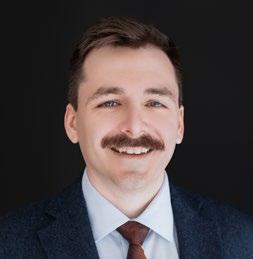
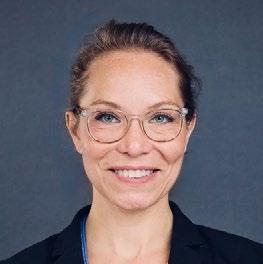
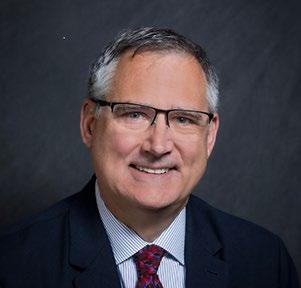
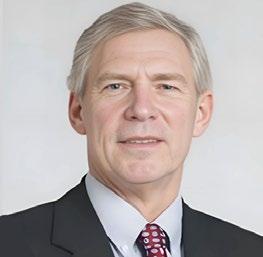
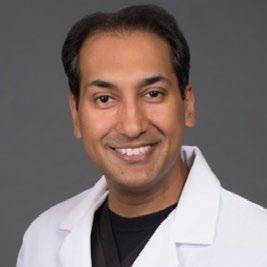
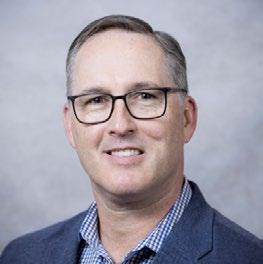
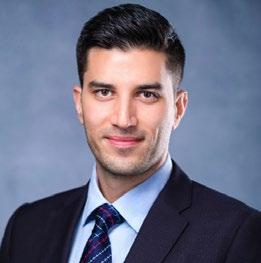
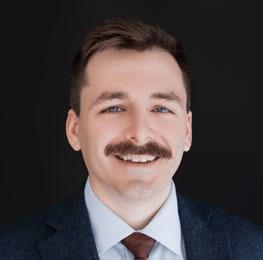
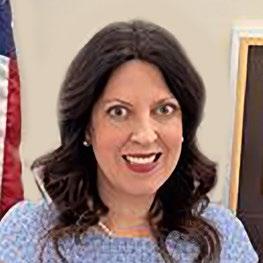
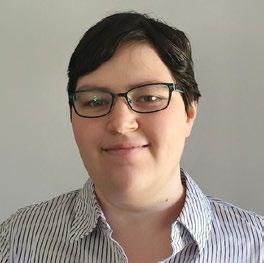
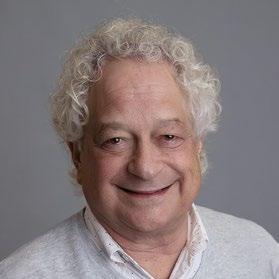
Yash Chavda, DO MBA FPD-AEMUS FAAEM, Assistant Editor
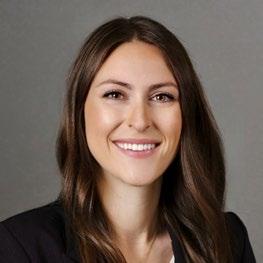
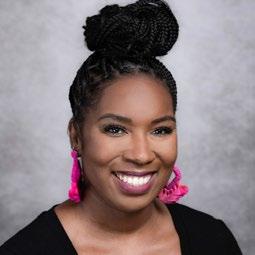
Mel Ebeling, MD, Resident Editor
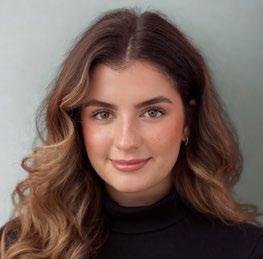
Stephanie Burmeister, MLIS, Managing Editor
Articles appearing in Common Sense are intended for the individual use of AAEM members. Opinions expressed are those of the authors and do not necessarily represent the official views of AAEM or AAEM/RSA. Articles may not be duplicated or distributed without the explicit permission of AAEM. Permission is granted in some instances in the interest of public education. Requests for reprints should be directed to AAEM, 555 East Wells Street, Suite 1100, Milwaukee, WI 53202, Tel: (800) 884-2236, Fax: (414) 276-3349, Email: info@aaem.org
AAEM is a non-profit, professional organization.
Table of Contents
As part of AAEM's antitrust compliance plan, we invite all readers of Common Sense to report any AAEM publication or activity which may restrain trade or limit competition. You may confidentially file a report at
Mission Statement
AAEM fights for high-quality patient care delivered by board-certified emergency physicians and champions a fair and equitable workplace for emergency physicians through advocacy and education.
Vision Statement
We aspire to and champion a future in which:
1. The integrity of the doctor-patient relationship is upheld by emergency physicians with full control over their own practices, free of outside interference.
2. Every individual, regardless of race, ethnicity, sexual identity or orientation, religion, age, socioeconomic or immigration status, or physical or mental disability has unencumbered access to high-quality emergency care.
3. Emergency medicine is solely practiced by physicians who are board-certified or board-eligible through either the American Board of Emergency Medicine (ABEM) or the American Osteopathic Board of Emergency Medicine (AOBEM).
4. Every emergency physician’s personal and professional well-being is supported through fair and equitable practice environments and due process.
5. Residency programs and graduate medical education are free from harassment and discrimination.
6. The Academy continues to provide its members with high-quality, cutting-edge emergency medicine education.
7. The Academy supports the establishment and recognition of emergency medicine globally as an independent specialty.
Membership Information
Fellow and Full Voting Member (FAAEM): $595* (Must be ABEM or AOBEM certified, or have recertified for 25 years or more in EM or Pediatric EM)
Associate: $195 (Limited to graduates of an ACGME or AOA approved emergency medicine program within their first year out of residency) or $295 (Limited to graduates of an ACGME or AOA approved emergency medicine program more than one year out of residency)
Fellow-in-Training Member: $95 (Must be graduates of an ACGME or AOA approved emergency medicine program and be enrolled in a fellowship)
Emeritus Member: $295 (Please visit www.aaem.org for special eligibility criteria)
International Member: $195 (Non-voting status)
Resident Member: $80 (voting in AAEM/RSA elections only)
Transitional Member: $60 (voting in AAEM/RSA elections only)
International Resident Member: $80 (voting in AAEM/RSA elections only)
Student Member: $40 (voting in AAEM/RSA elections only)
International Student Member: $30 (voting in AAEM/RSA elections only) Pay dues online at www.aaem.org or send check or money order to: AAEM, 555 East Wells Street, Suite 1100, Milwaukee, WI 53202 Tel: (800) 884-2236, Fax: (414) 276-3349, Email: info@aaem.org
COMMONSENSE
Featured Articles
2
President’s Message: Showing Up Matters: Advocacy on the Front Lines
In her first President’s Message, Dr. Vicki Norton discusses the importance of advocacy and the importance of showing up and being heard. AAEM continues to show up because our patients and our specialty depend on it. If we don’t, others will define the conversation, but if we stay engaged, we help shape it. Emergency medicine needs your voice!
4
Editor’s Message: The Case for Being in the Room
There are plenty of good reasons not to go to a national conference—Shifts have to be covered. Travel is expensive. Home does not pause because we are away.—is it really worth it? According to Common Sense Editor, Dr. Chavda, we do not go to national conferences only to collect CME or sit through another set of slides. We go because in emergency medicine, there is value in simply being in the room.
14
AAEM26: Thank You for Joining Us!
24
Cover Article: The Hardest Part of Writing is Always the First Sentence
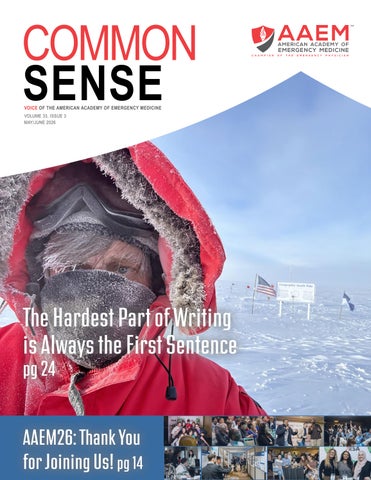
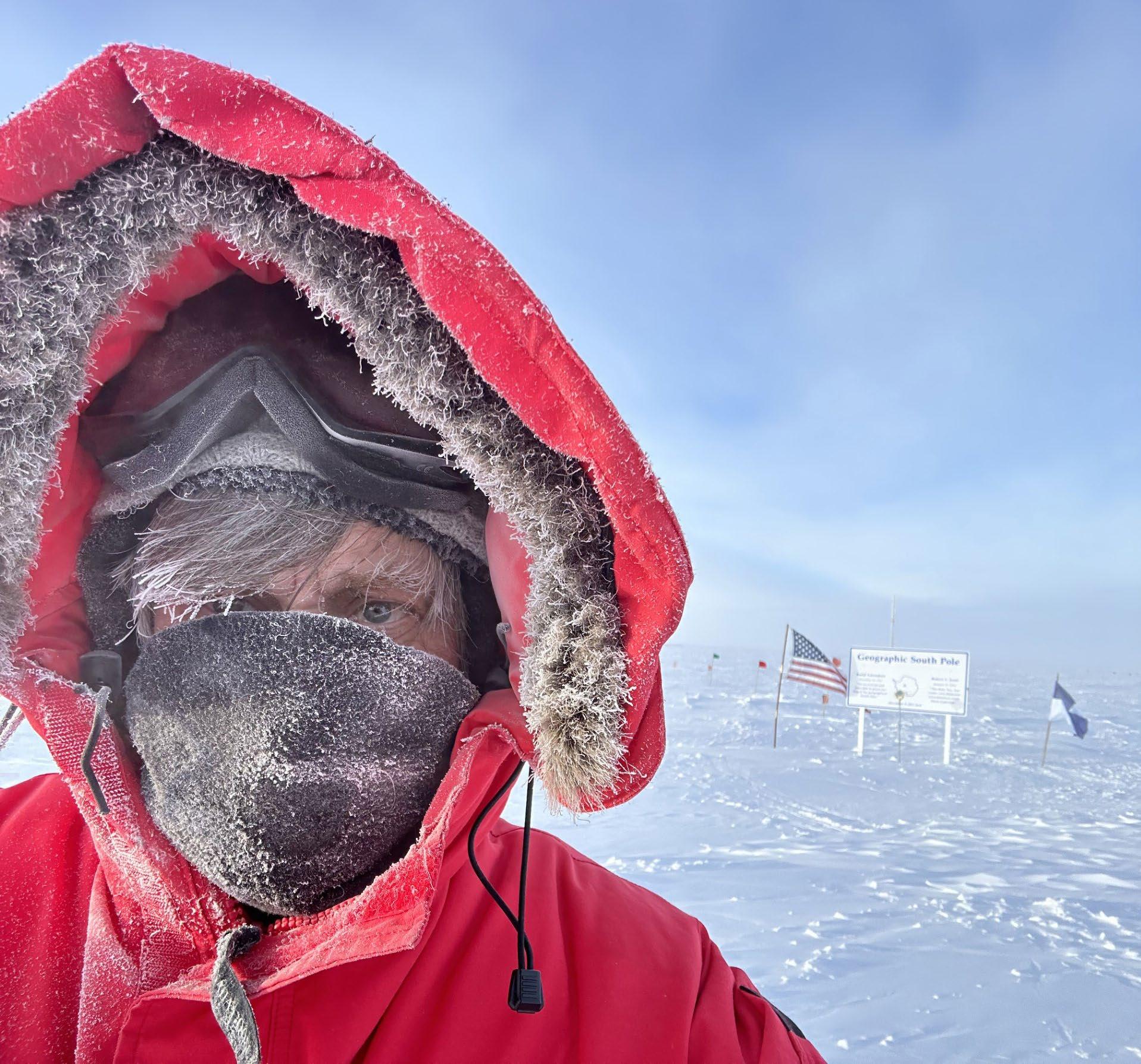
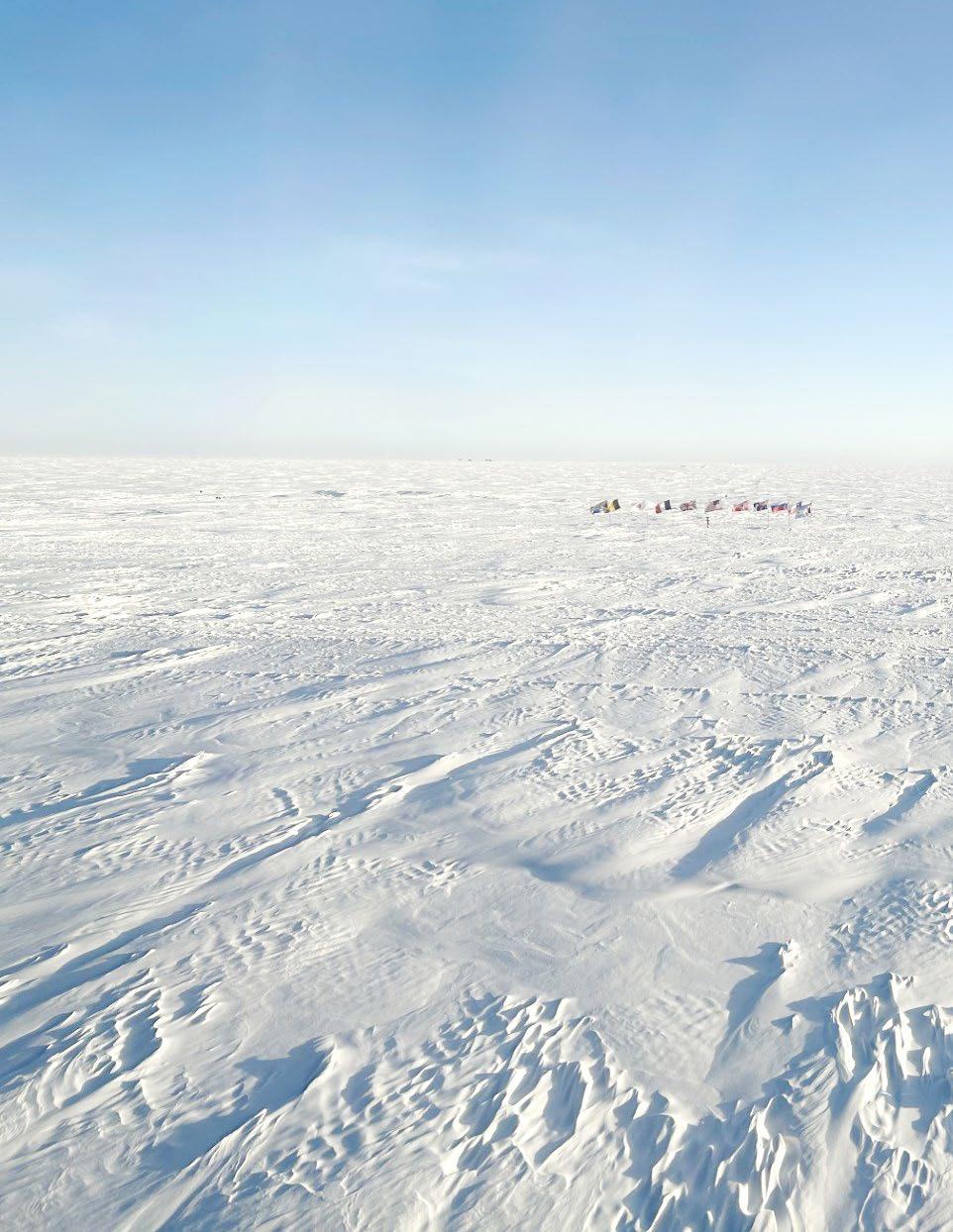
Dr. Howard Rodenberg spent a year as the 2023 Over-Winter Physician at the National Science Foundation Amundsen-Scott South Pole Station and has plenty of stories to tell from that year, including the “Tale of the Great Lucky Charms Outbreak of 2023” he shares with us.
28
Mentorship in the Era of Physician Turnover
The traditional mentorship model in emergency medicine (finding a senior faculty member early in residency, meet regularly for guidance through training, your first job search, and the early years of practice) is breaking down. Not because mentorship matters less, but because the conditions that supported it are disappearing. But Dr. Martini argues even though this “traditional” model is disappearing, there are many new ways residents can get the mentorship they need.
Showing Up Matters: Advocacy on the Front Lines
Vicki Norton, MD FAAEM
Each year, emergency physicians from across the country travel to Washington, DC for the AAEM Emergency Medicine Advocacy Summit. We meet with lawmakers and share what we see every day in our emergency departments. We advocate for our patients and our profession. On paper, it sounds straightforward, but in reality, it can feel frustrating.
My first experience with federal lobbying was through AAEM. I joined a group of emergency physicians from Florida. We were in Washington to talk about real concerns affecting our patients, including harmful corporate practices in emergency medicine. We were waiting for a scheduled meeting with a staffer for Senator Rick Scott. As we sat in the waiting area of the office, prepared and ready to speak, a man with a thick southern accent walked in and approached the front desk, chatting casually with the staffer. He joked that he was her cousin. Within minutes, she ushered him back to a meeting.
We kept waiting.
Advocacy does not require a perfect setting. You may find yourself waiting. You may be in a hallway. You may feel overlooked. Show up anyway.”
We later learned that he was the head lawyer for HCA Healthcare. We were there in part to highlight concerns about harmful corporate practices like those associated with large hospital systems. He was able to walk straight into a meeting with the Senator, while we remained in the waiting area. When our turn came, we did not even meet inside the office. We spoke with a young staffer in the hallway. That moment stayed with me. It felt discouraging, but it also made something clear. If we are not there, lawmakers and their staffers hear only one side. They hear from corporate representatives and professional lobbyists. They do not hear from the physicians who care for patients every day.
Advocacy is not always smooth, but it is necessary.
In contrast, my first experience with state lobbying felt far more direct and personal. I participated through the Palm Beach County Medical Society, but I handled most of the outreach
and meetings on my own. I visited offices, often without appointments, and met face-toface with legislators. They were engaged and open to helping. My state representative, Kelly Skidmore, even introduced and advocated for a corporate practice of medicine bill in Florida. Although the bill did not pass, the experience was encouraging. It showed me that there are committed individuals in the legislature who listen to the people at the bedside and are motivated to improve healthcare.
That experience reinforced the value of showing up and being heard. It also made clear how important it is to bring that same persistence to the national stage, where the stakes and complexity are even greater. AAEM continues to show up because our patients and our specialty depend on it, and our presence on the federal level ensures that real clinical experience informs policy decisions. Believe it or not, we are seeing progress!
Several important pieces of legislation reflect the issues we raise:
• The Physician and Patient Safety Act (S. 1767/H.R. 3413) addresses due process for physicians on medical staff, with rulemaking to eliminate waiver-of-due-process clauses in third-party contracts.
• The Patient Safety and Whistleblower Protections Act (S.4086) protects healthcare workers who speak up about unsafe conditions and fills a major gap in current law.
• The Workforce Mobility Act (S.2031) addresses non-compete clauses that restrict physicians and limit patient access to care.
• The Break Up Big Medicine Act (S.3822) targets consolidation by preventing common ownership across insurers, pharmacies, and physicians.
These efforts reflect growing awareness in Washington that corporate influence in medicine has real consequences for patients.
We are also encouraged by efforts at the state level to strengthen corporate practice of medicine (CPOM) prohibition laws. Oregon, in particular, has taken meaningful steps to fortify physician autonomy and limit corporate control. AAEM is reinforcing these efforts in the courts. We are financially supporting the lawsuit brought by Eugene Emergency Physicians against PeaceHealth and ApolloMD, which challenges an emergency department staffing
arrangement that may violate Oregon’s CPOM law and will help determine whether these laws have real force. We expect to see federal legislation that directly addresses CPOM in the future. The groundwork is being laid now through advocacy, education, and legal action.
None of this happens without physicians who are willing to engage. Advocacy does not require a perfect setting. You may find yourself waiting. You may be in a hallway. You may feel overlooked. Show up anyway. When you speak, you bring something no lobbyist can
replace. You bring real patient experiences and clinical judgment shaped by training and practice. You bring credibility, and lawmakers remember that.
Join us at the Emergency Medicine Advocacy Summit. Respond to action alerts and read our monthly Action Reports. Share your experiences with your representatives. Talk with your colleagues about why this work matters. If we are not present, others will define the conversation, but if we stay engaged, we help shape it. Emergency medicine needs your voice!
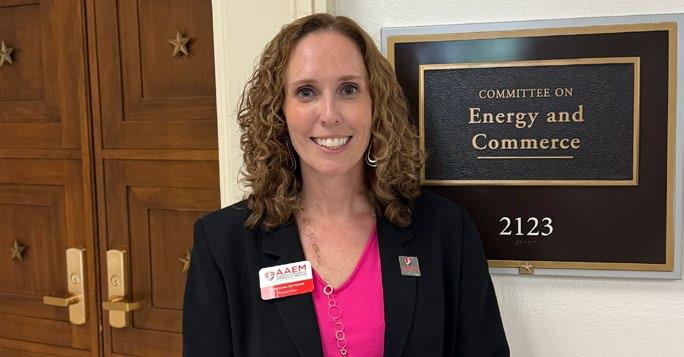
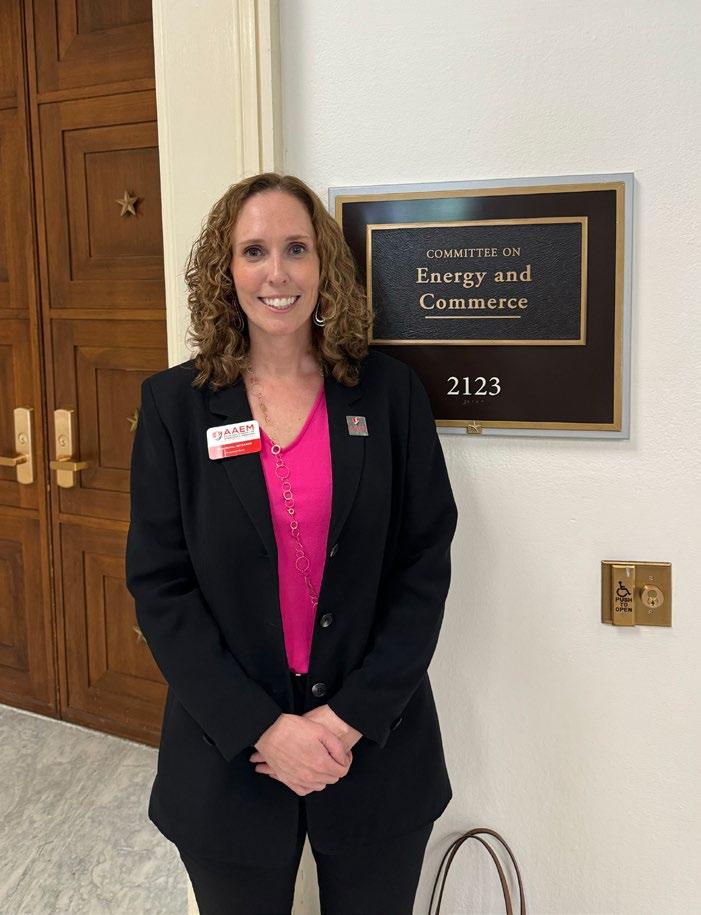
Dr. Norton outside the Energy and Commerce Committee Hearing Room in the House of Representatives
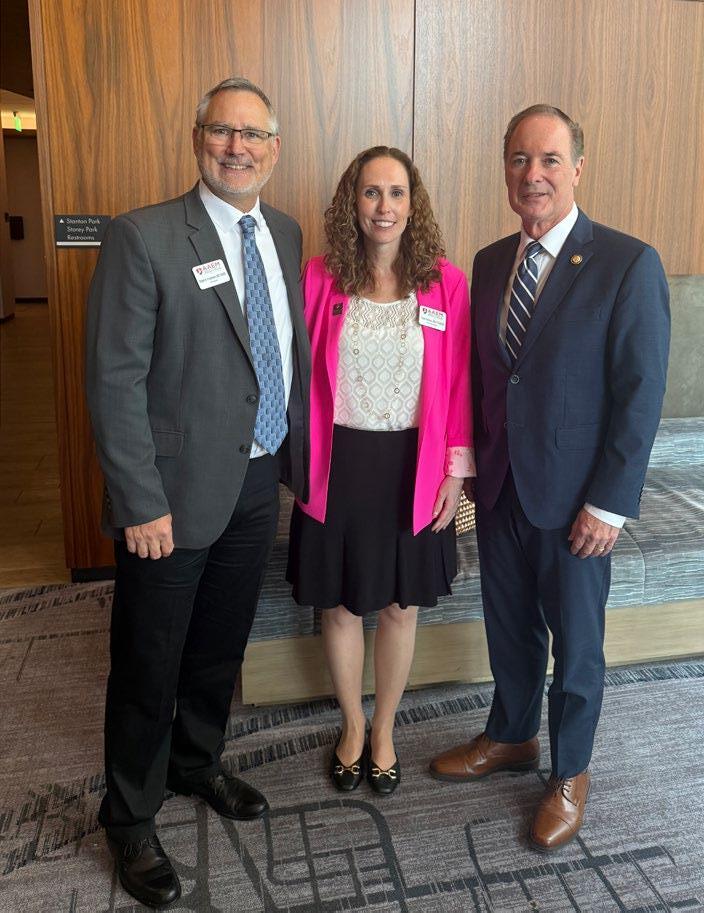
Drs. Frolichstein and Norton with Congressman John Joyce at the 2025 AAEM Emergency Medicine Advocacy Summit
The Case for Being in the Room
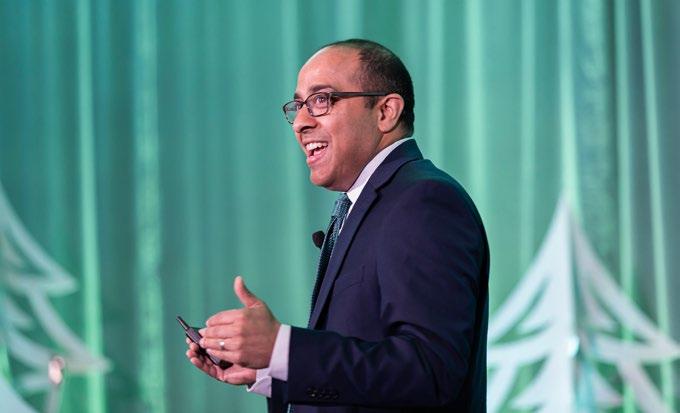
Yash Chavda, DO MBA FPD-AEMUS FAAEM
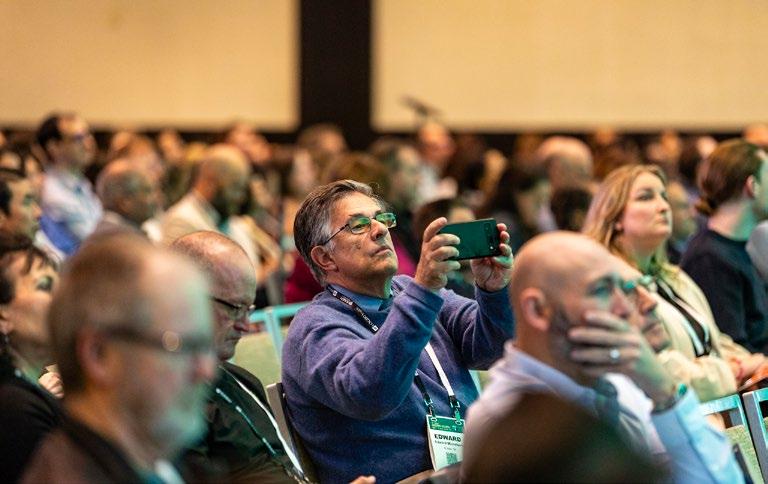
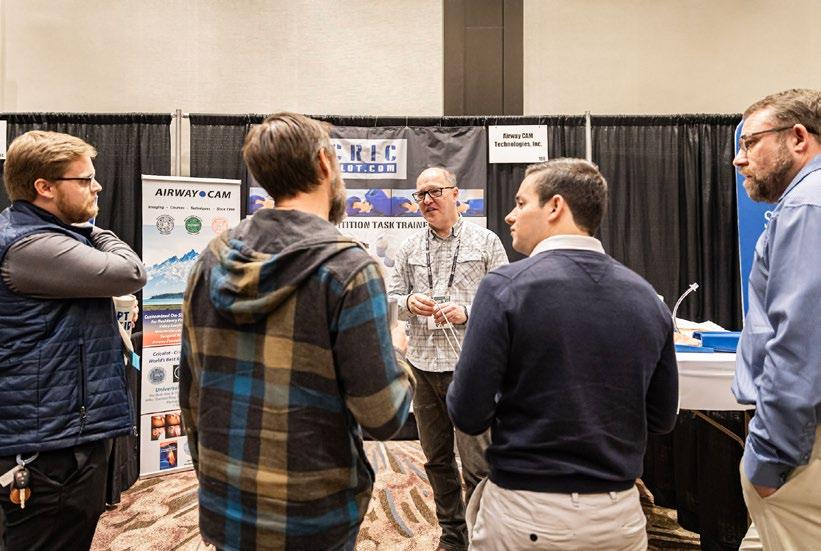
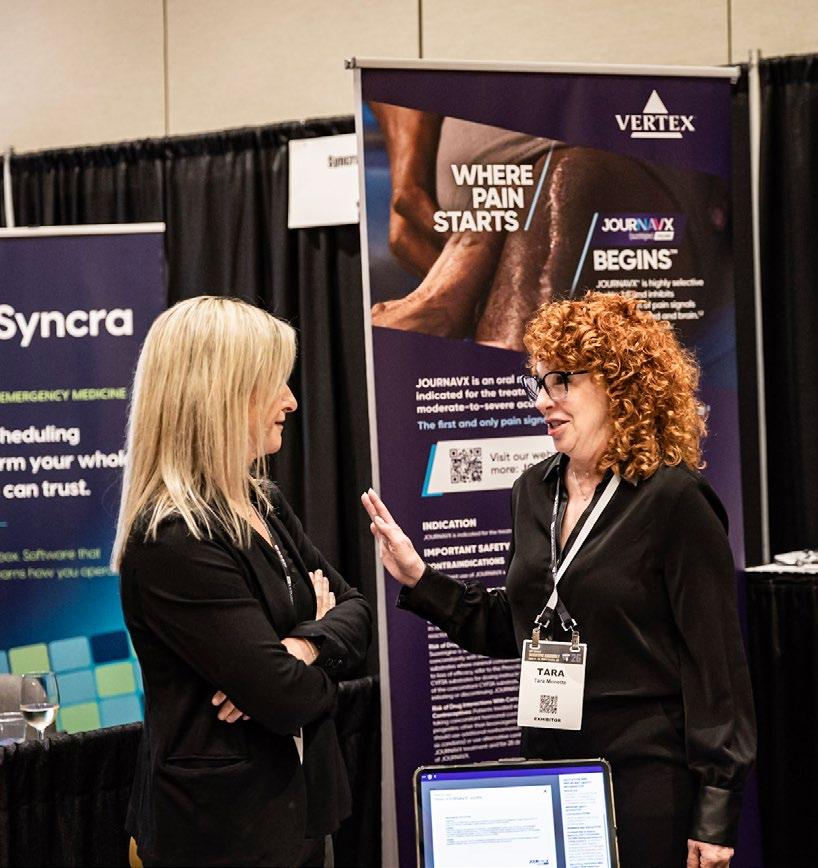
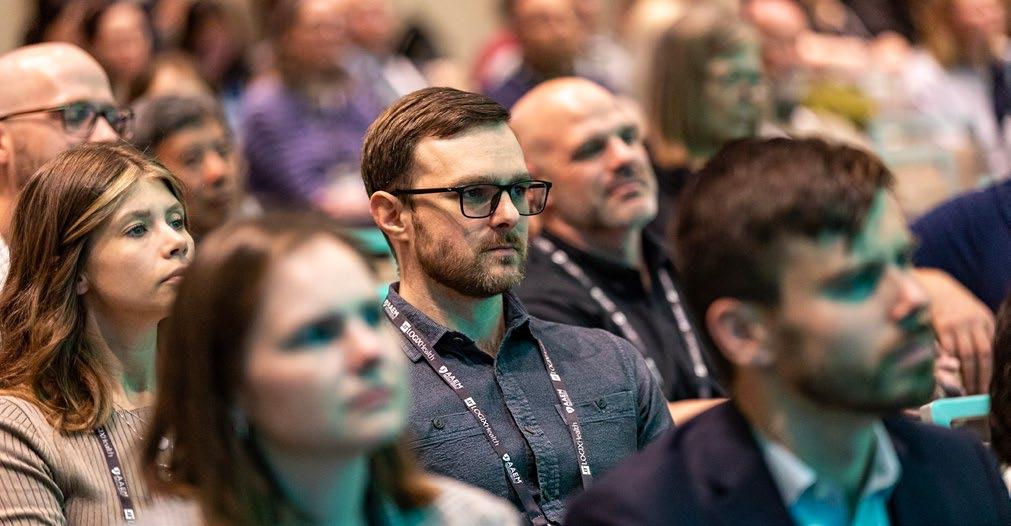
There are plenty of good reasons not to go to a national conference, and I understand most of them. Shifts have to be covered. Travel is expensive. Home does not pause because we are away. And now that almost everything can be streamed, recorded, summarized, or turned into a podcast, it is fair to ask what we are really getting by going in person. After AAEM 2026, I think the answer is simple: the slide deck is not the point. The point is being in the room.
This year, I went to the conference with a busy schedule: presentations to give, workshops to help lead, colleagues to reconnect with, and sessions I hoped to attend. My inbox filled up anyway. Life at home kept moving. By the time I found my footing, the meeting was nearly over.
AAEM 2026 was in Seattle, a city I had never visited, and that is part of the appeal of these meetings too. Conferences sometimes give us a reason to go somewhere we might not otherwise go, to bring family, see old friends, or briefly step outside the familiar geography of work and home. I did not see as much of Seattle as I hoped. The meeting schedule was full, and the city mostly came to me in glimpses. But even that mattered. In a field where time away can be difficult, there is value in remembering that professional development can still leave room for curiosity, travel, and a life outside the department.
On shift, our field of vision gets narrow for good reasons: the patient in front of us, the waiting room, the consultant we are trying to reach, the bed we do not have, the next task already waiting. That focus is necessary, but it can also make our problems feel uniquely local. A national conference reminds us that they usually are not.
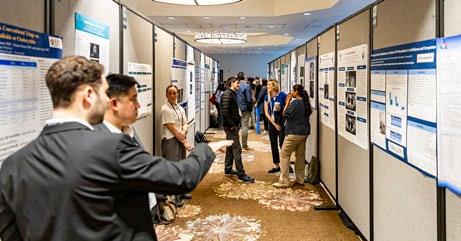
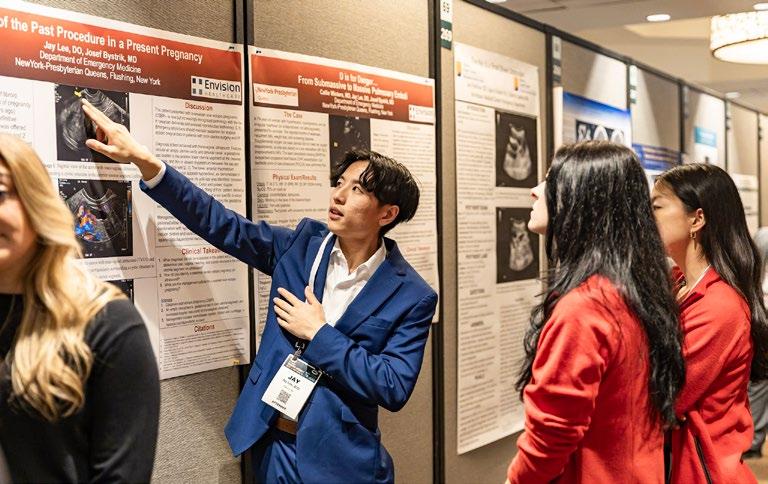
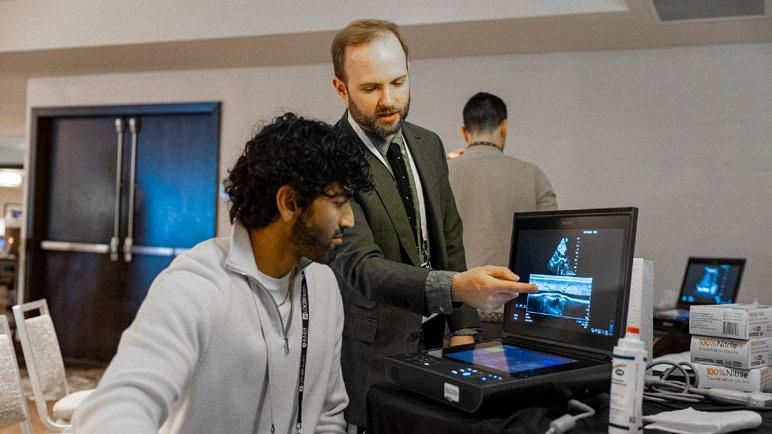
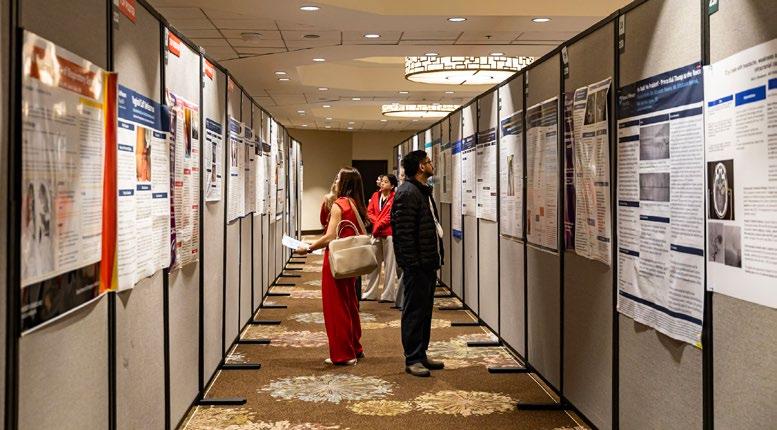
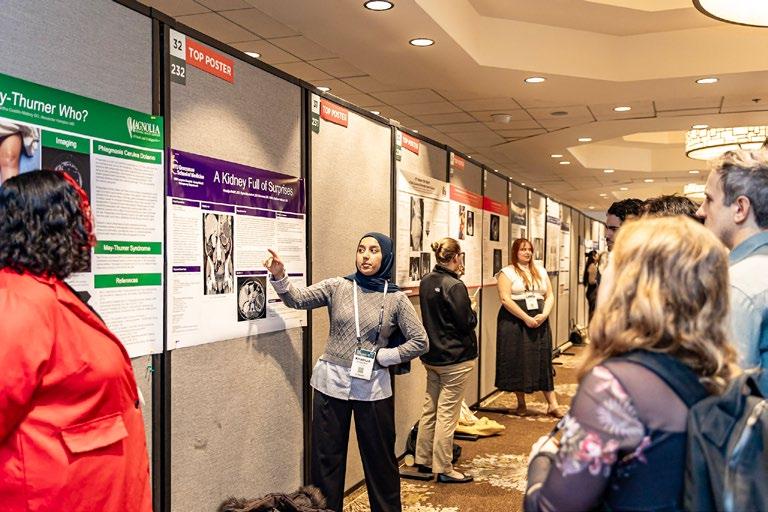
Conferences expose us to ideas we might not seek out on our own. Every now and then, a lecture actually changes the way we practice. The conference offered lectures ranging from EKG interpretation updates and trauma care beyond the basics of ATLS to focused clinical topics such as intubating pregnant patients, pediatric foreign body removal, and post-intubation management. They refreshed my knowledge, but they also made me reconsider some of my usual habits. The poster hall offered another kind of value: a place where EM clinicians could ask questions, test early ideas, find collaborators, and see themselves as part of the specialty’s academic life.
And then there is the simple value of hearing what other people are dealing with. Different hospitals. Different resources. Different headaches. We hear what others have tried, what worked, what absolutely did not, and we come home with a broader view of the specialty.
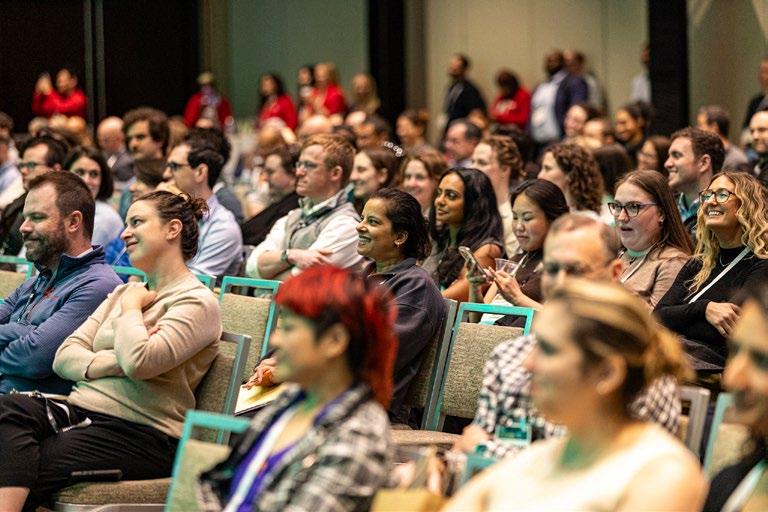
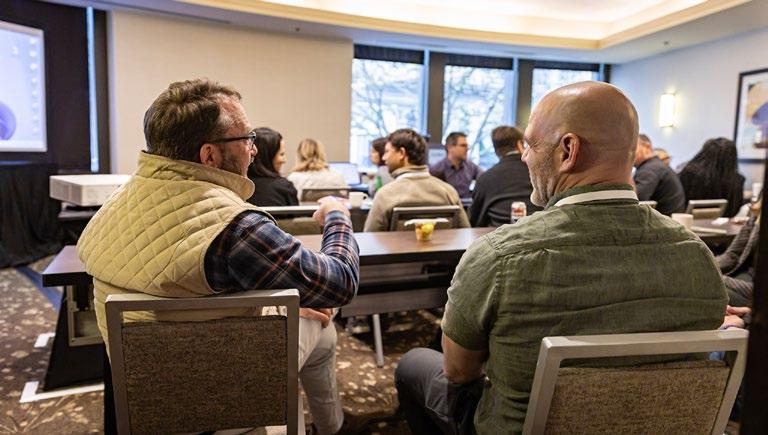
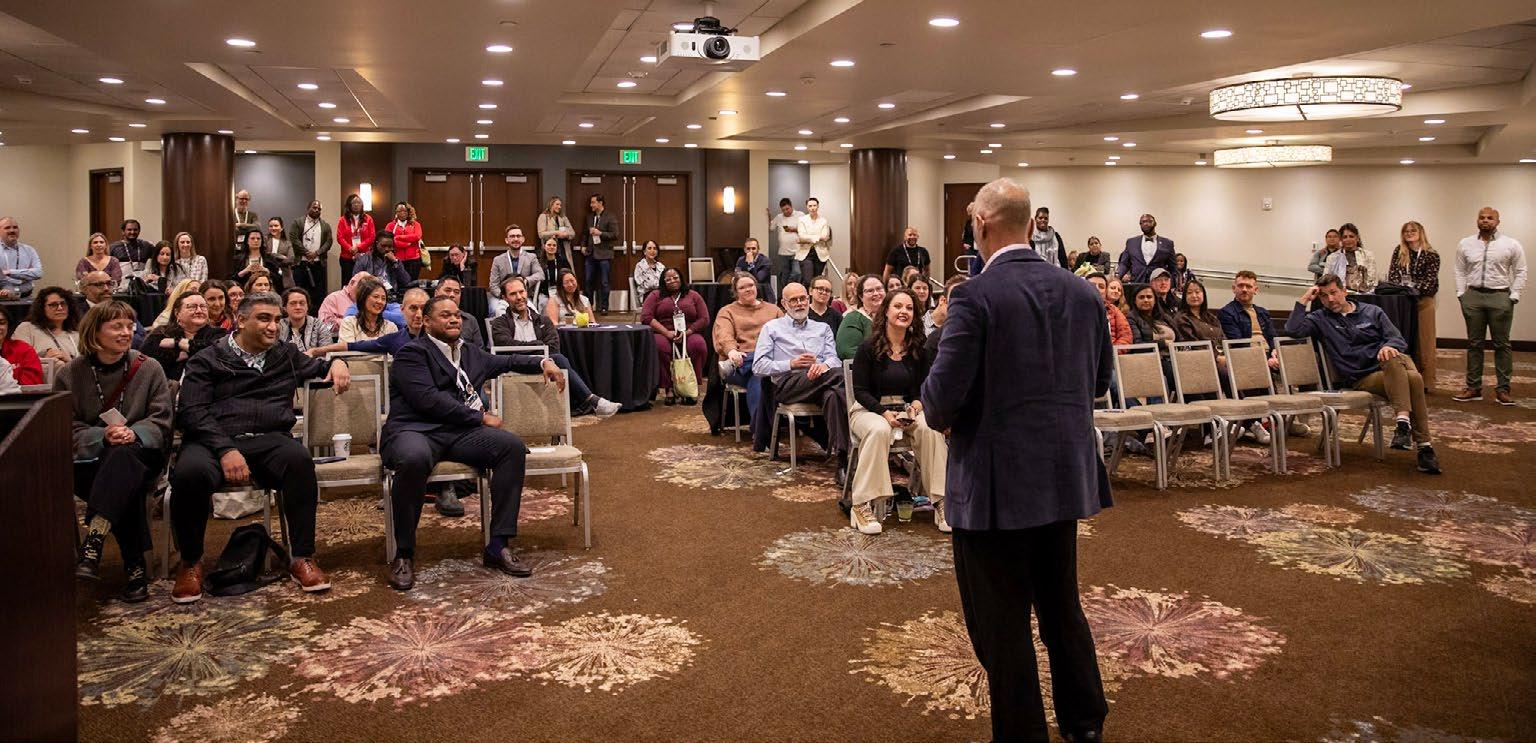
During events like “Curbside: EM Stories from EM Doctors” and “Critical Care After Dark,” I was reminded how restorative it can be to sit in a
We may share the same EM foundation, but we practice inside very different realities based on where we trained, where we work, and what resources we have at hand.”
room full of emergency physicians. There is something different about hearing laughter ripple through a room because everyone recognizes the same absurdity. There is a shared understanding there that does not require much explanation. We heard stories that were funny, difficult, strange, and sad. In “Critical Care After Dark,” as we dissected the management of a severely ill hypothermic patient, I found myself thinking less about whether there was one perfect answer and more about how much our environments shape our decisions. We may share the same EM foundation, but we practice inside very different realities based on where we trained, where we work, and what resources we have at hand.
The humor, the fatigue, the impatience with vague recommendations, the affection for controlled chaos, the frustration with systems that make simple things difficult—it is all familiar. For a few days, the strange rhythms of our work are normal.
The agenda matters, but the unscheduled moments may matter just as much: the conversation after a session, the colleague who describes a fix for a problem we thought was unique to our department, the mentor you meet by accident, the resident or student whose question reminds you how you used to think before every minute had to be accounted for. That is the kind of thing I forget when I think about conferences only in terms of lectures and CME. Some of the most useful parts happen between the scheduled things.
Conferences also remind us that we are part of a specialty, not just individuals covering shifts. AAEM has always had a clear professional identity: physician-led, advocacy-focused, and independent-minded. One of its strengths is that it insists emergency physicians are not interchangeable shift workers. We are specialists, professionals, advocates, teachers, and colleagues. For a few days, that identity is not buried under boarding metrics, inboxes, RVUs, and the next patient to be seen.
For AAEM in particular, being in the room also means being present where the professional boundaries of emergency medicine are named and defended: physician autonomy, due process, fair practice environments, and a meaningful voice in the systems where we work. Those conversations matter because the pressures facing emergency physicians are not theoretical. Loss of autonomy, corporate practice models, unsafe staffing, productivity demands, and the erosion of due process all eventually show up at the bedside.
I do not want to suggest that every emergency physician should attend every national meeting, or that those who do not attend are somehow less engaged. The barriers are real: cost, coverage, family obligations,
geography, and plain exhaustion. I still came home tired at midnight on a weekday. My inbox was still full. I still had to go back to work. But when the opportunity is there, it can be deeply worthwhile. I try to make it happen most years, even though my CME money never seems to cover the full cost.
A specialty does not hold itself together on its own. It requires us to show up, ask questions, challenge assumptions, mentor, learn, argue respectfully, and bring something useful back to our own departments.”
A specialty does not hold itself together on its own. It requires us to show up, ask questions, challenge assumptions, mentor, learn, argue respectfully, and bring something useful back to our own departments. If we want emergency medicine to reflect our values, then we have to participate in the places where those values are discussed and defended.
I left AAEM 2026 the way I usually leave conferences: with useful knowledge, new questions, and a few moments I will carry with me. I did not come back to a magically transformed department. The practice environment was not suddenly simpler. The next shift was still the next shift.
But I came back reminded that the frustrations of emergency medicine are not mine alone, that the direction of the specialty is still being shaped, and that there is value in being present for that work. We do not go to national conferences only to collect CME or sit through another set of slides. We go because emergency medicine is more than the next shift, the next metric, or the next departmental problem.
Sometimes, there is real value in simply being in the room.
AAEM Foundation Contributors – Thank You!
AAEM established its Foundation for the purposes of (1) studying and providing education relating to the access and availability of emergency medical care and (2) defending the rights of patients to receive such care and emergency physicians to provide such care. The latter purpose may include providing financial support for litigation to further these objectives. The Foundation will limit financial support to cases involving physician practice rights and cases involving a broad public interest. Contributions to the Foundation are tax deductible. Levels of recognition to those who donate to the AAEM Foundation have been established. The information below includes a list of the different levels of contributions. The Foundation would like to thank the individuals below who contributed from 4/1/2025 to 5/1/2026.
Contributions $1000 and above
Alexander Riss, DO FAAEM
Charlotte A. Ransom, MD FAAEM
David W. Lawhorn, MD MAAEM
Donna Kang
Elaine Skalabrin
Eric W. Brader, MD FAAEM
Frank L. Christopher, MD FAAEM
Jeffery M. Pinnow, MD FAAEM FACEP
Ling Jin
Marius Pakalniskis
Michael Luszczak, DO FAAEM
Oscar A. Marcilla, MD FAAEM
Robert A. Frolichstein, MD FAAEM
Robert E. Suter, DO MHA FAAEM
Robert P. Lam, MD FAAEM
Steven Cathcart
Stockton Clemons
Tom Scaletta, MD MAAEM FAAEM
Vicki Norton, MD FAAEM
Contributions $500-$999
Algis J. Baliunas, MD FAAEM
Andrew Kokkino
Charlotte Clausen
Charlotte Yeomans
Daniel Gorecki, MD FAAEM
David A. Farcy, MD MAAEM FAAEM FCCM
Eric D. Lucas Sr., MD FAAEM
Garret Zallen
Jonathan S. Jones, MD FAAEM
Jonathan W. Riddle, DO
Justin Freeman
Kevin C. Reed, MD, FACHE, FAAEM
Li Ding
Mark S. Penner, DO FAAEM
Melissa Ann Barton, MD FAAEM
Orlando J. Encarnacion, MD FAAEM
Patrick A. Aguilera, MD FAAEM
Richard Langiulli
William E. Franklin, DO MBA FAAEM
Contributions $250-$499
Alex Alers Fuentes, MD FAAEM
Alvin Jose, DO
Andrew P. Mayer, MD MAAEM FAAEM
Andrew Wilson, FAAEM
Ann Loudermilk, MD FAAEM
Anna M. Olson, MD
Antonios D. Katsetos, DO FAAEM
Bradley E. Barth, MD FAAEM
Bryna Cofrin-Shaw
Carlos F. Garcia-Gubern, MD FAAEM
Daniel P. Shand, MD FAAEM
David E. Strong, MD FAAEM
David Oves Andonian, MD MPH FAAEM FACEP
David Russo
Deborah D. Fletcher, MD FAAEM
Don L. Snyder, MD FAAEM
Douglas M. Char, MD FAAEM
Edmund Yang
Heath Spencer, DO
Jacob Boehmer
Jalil A. Thurber, MD FAAEM
James J. Schlesinger, DDS MD
Jeffrey Sterritt
Joshua J. Faucher, MD FAAEM
Joshua J. Stein, MD FAAEM
Julia Kuhn
Julie Vieth, MD FAAEM FACEP
Karl A. Nibbelink, MD FAAEM
Kathryn Getzewich, MD FAAEM
Kevin Allen, MD FAAEM
Kian J. Azimian, MD FAAEM
Larry A. Nathanson, MD FAAEM
Laura J. Bontempo, MD MEd FAAEM
Marco Anshien, MD FAAEM
Mark I. Langdorf, MD MAAEM FAAEM
MHPE
Mary Ann H. Trephan, MD FAAEM
Michael Graffeo
Michael Ip, MD
Nate T. Rudman, MD FAAEM
Paul C. Tripathi, MD FAAEM
Rian Pillitteri, MD FAAEM
Robert B. Simonson, DO FAAEM
Robert J. Feldman, MD FAAEM
Robert R. Westermeyer II, MD FAAEM
Rosa K. Gigliotti, MD FAAEM
Sarah B. Dubbs, MD FAAEM
Scott K. Rineer, MD MPH FAAEM
Tim J. Carr, FAAEM
Valerie Coon
William A. Miller, MD
William K. Clegg, MD FAAEM
William Peter Kehr, MD
Contributions $100-$249
Aaron Frolichstein, FAAEM
Aaron Hougham
Ada Cuellar, MD FAAEM
Adam Benjamin Bernstein, MD FAAEM
Adam Hill, MD FAAEM
Alejandro Candil
Alex Powell, MD
Alexander Tsukerman, MD FAAEM
Alexandra Lambeck, MD FAAEM
Andrew Dow
Andrew Faus
Andy Walker, MD MAAEM
Angela Jones
Angela Zallen
Anna Loughlin, MD
Anthony Catapano, DO FACOEP FAAEM
Arielle Perez
Ashleigh MacLean
Balazik Matthew
Barbara Alessi
Benjamin J. Ricke, MD FAAEM
Benjamin Rhoades, DO FAAEM
Benson Yeh, MD FAAEM
Beth Girgis, MD FAAEM
Billie Adelson
Bradley A. Dreifuss, MD FAAEM
Bradley K. Gerberich, MD FAAEM
Bret Gorham, MD FAAEM
Bret M. Birrer, MD FAAEM
Brian Acunto, DO EJD FACOEP
Brian Gacioch, FAAEM
Brian R. Potts, MD MBA FAAEM
Brian Summers
Brian T. Hall, MD FAAEM
Brian Zimmer, DO FAAEM
Carrie Dewsnup
Catherine York
Chaiya Laoteppitaks, MD FAAEM
Charlie Loeb
Charlotte Ransom
Chelsea Hanno
Cheryl Jones
Christine Kollmorgen
Clayton Ludlow, DO FAAEM
Dan M. Mayer, MD FAAEM FACEP
Daniel D’Souza, DO FAAEM
Daniel F. Zlogar, MD FAAEM
Daniel Gow
Daniel Guy
Daniel T. Goodberry, MD FAAEM
Darin Harbick
David C. Crutchfield, MD FAAEM
David Pillus, MD FAAEM
David R. Hoyer Jr., MD FAAEM
Dean J. Williams, MD FAAEM
Deborah Harmon
Desiree Brooks, MD
Diane Lynn Gorgas, MD FAAEM
Dianna Binnion
Dierdre Garton
Douglas P. Slabaugh, DO FAAEM
Douglas Stewart, MD FAAEM
Duc M. Dang
Edward A. Panacek, MD MPH FAAEM
Elle E. Schultz, DO FAAEM
Erica Donnan
Felix K. Ankel, MD FAAEM
Garrett Abbott
Garrett Clanton II, MD FAAEM
Gary M. Gaddis, MD PhD MAAEM FAAEM FIFEM
Gianina P. Best, MD
Glenn I. Goodwin, DO FAAEM
Gregg Kosloff
Heather York
Ilan Kaye, FAAEM
Irene Chennell
Isaac A. Odudu, MD FAAEM
Jacob W. Ufberg, MD FAAEM
James W. Small, MD FAAEM
Jamie Kuo, MD
Jane Wieler, DO FAAEM
Jeffrey A. Rey, MD FAAEM
Jennifer Hart
Jesse Hostetter Kropf, MD FAAEM
Joan Brown
Jocelyn Park
John B. Tanner, MD FAAEM
John Byun
John C. Kaufman, MD FAAEM
John H. Kelsey, MD FAAEM
John Polansky
John Robert Dayton, MD MBA FAAEM FACEP
John Serini
John Susumu McCall, MD FAAEM
John V. Murray, MD FAAEM
Jon Ekstrom
Jorge L. Infante, MD FAAEM
Joseph Molloy
Josephine Stokes
Joshua C. Feblowitz, MD MS FAAEM
Joshua Mugele, MD FAAEM
Juan Carlos Jones
Judi Scranton
Julianne Wysocki Broadwater, DO FAAEM
Julie Ramirez
Justin P. Anderson, MD FAAEM
Kaitlin Bettencourt, MD FAAEM
Karen M. Jones-Spangle, MD
Kasey Champion, MD FAAEM
Katherine Klemz Swank, MD
Katherine Ready
Kathleen Hayward, MD FAAEM
Kay A. Buchheit, MD FAAEM
Kerry Clark
Kesah DeLisio, MD FAAEM
Kyler Pastorius
Laura Cazier, MD FAAEM
Lauren Hatmaker
Lauren Kendall
Lenard Kerr, DO FAAEM
Leo Folsom
Leonard A. Yontz, MD FAAEM
Leonardo L. Alonso, DO FAAEM
Lillian Oshva, MD FAAEM
Linda Sanders, MD FAAEM
Lou Sinniger
Luat Nguyen
Madison Tustian, MD FAAEM
Magdalena van Leeuwen
Manuel E. Lopez Diaz, MD FAAEM FACEP
Marc Brian Schnapper, MD
Mark A. Antonacci, MD FAAEM
Mark Molnar
Mark Portman
Mary Jane Brown, MD FAAEM
Matthew Lipton
Matthew W. Porter, MD FAAEM
Matthew W. Turney, MD FAAEM
Matthew William Carman, MD FAAEM
Mckaila D. Aun Allcorn, DO FAAEM
Michael Homerick, MD FAAEM
Michael Langowski, DO FAAEM
Michael N. Johnston, MD FAAEM
Michael T. Cudnik, MD FAAEM
Michael Wilder
Miguel L. Terrazas III, MD FAAEM
Milan Fratrik III, MD FAAEM
Mimi Lu, MD FAAEM
Miyoko Patricelli
Moath Amro, MD
Molly Mulflur, MD FAAEM
Molly O’Sullivan Jancis, MD FAAEM
Morgan Shasteen
Nancy L. Kragt, DO FAAEM
Nanda Srinivasan
Nathan Christensen
Nathan Hundley, MD FAAEM
Neal Graham
Nicholas Boyko, DO, FAAEM
Nicholas R. Reinhart, DO FACEP FAAEM
Nicholas S. Larson, MD FAAEM
Nicolas A. Ulloa, MD FAAEM
Nicole Brooks
Paul C. Giasi, MD MBA FACEP FAAEM
Pete Chambers
Phillip L. Rice Jr., MD FAAEM
Quentin Smith, FAAEM
R. Lee Chilton III, MD FAAEM
Raymond Lee Chilton III
Rebecca K. Carney-Calisch, MD FAAEM
Rebecca N. Mills, MD FAAEM
Regan Wylie, MD FAAEM
Regina Hammock, DO FAAEM
Renee Marie Nilan, MD FAAEM
Richard E. Daily, MD FAAEM
Rishan Tesfay Desta, MD
Robert Boyd Tober, MD FAAEM
Robert Bruce Genzel, MD FAAEM
Robert E. Gruner, MD
Robert Pelz
Roland S. Waguespack III, MD MBA MHCDS FAAEM
Ronni Pitiger
Rose Valentine Goncalves, MD FAAEM
Ross J. Fleischman, MD FAAEM
Russell P. Landry III, MD
Ryan Geers, MD FAAEM
Ryan S. DesCamp, MD MPH FAAEM
Sandra Grecu
Sandra Rood
Sara A. Misthal, MD FAAEM
Sara Walker
Sarah Cadieux
Scarlett Reed
Scott C. Calder, DO FAAEM
Scott C. Williams, MD FAAEM
Scott D. Reiter, MD FAAEM
Scott Kunkel, DO FAAEM
Sean M. Wetjen
Seth Gunderson
Shalem Lee
Shane R. Sergent, DO FAAEM
Shawn John
Sherry Carlson
Stephanie Eden, MD FAAEM
Stephen A. Harper, MD FAAEM
Stephen H. Andersen, MD FAAEM
Steven E. Holt, MD FAAEM
Steven Ostarello
Steven R. Hernandez, MD
Steven Zaborowski
Stuart M. Gaynes, MD FAAEM
Stuart Meyers, MD FAAEM
Suzanne Temple
Talia Zoe Glodjo
Tamara Kellogg, MD FAAEM
Tamara Wagester
Tanna Giroux Larsen
Tanya Schnell
Terrence M. Mulligan, DO MPH FAAEM
FACOEP FIFEM FACEP FNVSHA
FFSEM HPF
Thomas W. Lukens, MD PhD FAAEM FACEP
Tim Herrmann
Timothy A. Coakley, MD FAAEM
Timothy J. Huschke, DO FAAEM
Tina H. Chen, MD FAAEM
Ting Ho Danny Cheng
Travis Omura, MD FAAEM
Vinicius Knabben, MD FAAEM
Westin G. Horne, DO FAAEM
William Dean
William E. Swigart, MD FAAEM
William T. Durkin Jr., MD MBA MAAEM FAAEM
William T. Freeman, MD FAAEM
William Teufel, MD FAAEM
Yeshvant Talati, MD
Zachary J. Sawaya, MD FAAEM
Zakhar Serkin
FAAEM
Yeshvant Talati, MD
Contributions up to $99
Adam Balinger
Addison Reede Tarjanyi
Adina Henderson
Adrienne Malik, MD FAAEM
Alatasi Clancy
Alex Camilo
Alexandra Aboukhater
Alexandra C. Doan, MD
Alexis Brown
Allison Foster
Amanda Holland-Yang
Amber Vester
Ameer Sharifzadeh, MD FAAEM
Amelia Gurley
Amy Hart
Amy Keech
Amy Mihelich
Andrew Mcculloch
Andy Doan
Andy McNamara
Ann Christian
Anthony Tierno
Anupama Mikkilineni
Ashley Koehn
Atif Jaleel, MD FAAEM
Aura White
Benjamin Bauer
Bethany Sisler
Brad W. Russell, MD FAAEM
Bradley Roberts
Brenton Gicker
Brian Walker
Brisella Escalante
Brook Manion
Brooke OConnell
Brylee Flores
Bunmi Olarewaju, DO FAAEM
Caitlin Fleming
Caitlin Jenkins
Carly Pind
Carly Porat
Cassondra Richard
Cathy Ho
Celia Cheung, MD
Charlotte Maloney
Chris Delarue
Chris Rompala
Christa Olsen
Christina Charlone
Christopher B. Parks, MD FAAEM
Christopher C. Reynolds, DO FAAEM
Christopher Connors
Ciara Hall
Claire Malany
Claire Rosasco
Claudia Lam
Clifton Burt
Colette Khan
Colleen Kersh
Corrie Sizemore
Dalilah Restrepo
Dan Hagengruber
Daniel Brown
Darcie Kidder
David Barnes
David L. Justis, MD PhD
David Meldrum
David Nestor
David Rettew
David Saenger
David Schwartz
Deanna Stanley
Demi Kalatzes
Denali Cooke
Devin Nasco
Dexter Gregg
Dilan Patel, MD FAAEM
Dillon J. Warr, MD FAAEM
Donn E. Johnson, MD
Edward S. Bessman, MD MBA FAAEM
Elena Benda
Elisabeth Calhoun, MD MPH FAAEM
Elizabeth Buckalew, DO FAAEM
Elizabeth Davlantes, MD FAAEM
Elliot Levi
Emily Brown
Emily Fosnight
Ericka Thessen
Erika Boyers
Erin David
Ernest H. Leber Jr., MD FAAEM
Estephanie Castro Hernandez
Ethan Danielson
Eugene Lee, FAAEM
Frances Munkenbeck
Francisco Jose Cordero-Rodriguez, MD
Fred Earl Kency Jr., MD FAAEM FACEP
Gabtiella Vasquez
Garrett Brady
Genoa Ferguson
Gerald Aggrey
Gina Humphries
Glacel Salagan
Golda LoBello
Graham Becherer-Bailey, FAAEM
Grant Janecek
Hai Pham
Haley Truebe
Halle Renfro
Harry Charles Wolf IV, MD FAAEM
Helana Kadyszewski
Henry Cakebread
Holly Brown
Hong Bui
Honora Considine Cortelyou
Ian Connors
Isaac Logerwell
Ivan C. Rokos, MD
Jaclyn Michel
Jacob M. Altholz, MD
James Hill
Jan Montry
Janet Wright
Jason Crowell
Jayden Hernandez-Traister
Jeannine Bienn
Jeff Chandler
Jeffery Bolte
Jen McKinney
Jenai Manuel
Jennifer Dabbs
Jennifer Hill
Joel Valencia, MD
John Chu, MD FAAEM
John Orth
John Wilson
Jonathan D. Apfelbaum, MD FAAEM
Jonathan S. Cagle, FAAEM
Jordan R. Chanler-Berat, MD FAAEM FAEMUS
Josephine Valenzuela, MD
Joshua Miller, MD FAAEM
Julia Bowlin
Julia D. Whiting, MD FAAEM
Julia Siporin
Kaitlin Geck
Kalena Van Leuven
Karen Leuenberger
Karen McIntyre
Karen Oyama
Karen Patton
Katherine Laura Poma Ramos Jr., MD
Katherine Wright
Kathleen Bechtol
Katie Lundberg
Katy A. Konkel
Kelli Stephens
Kelsey Schroeder
Kevin Robert Brown, MD FAAEM
Kevyn Paul
Kimberly Bock
Kimberly Kuo
Kirsten Boland
Larry Lewin
Lauren P. Sokolsky, MD FAAEM
Leif Woodford
Leita Dzubay
Lela Fossett
Linda Shulman
Linn Bergander
Lorne Bigley
Lorraine Latorraca
Mara Darian
Margaret Hause
Margaret Weiss
Mario Garcia
Mark Robinowitz
Marshall Wilde
Martha Jones
Mary Joe Walker
Mary O’Connor
Mason Kates
Matt Dentino
Matthew Ash
Matthew Yu
Meagan Bruskewicz
Meg Hamilton
Megan Ellery
Megan Kunkel
Mei Robillard
Melissa Beally
Melissa Kramer Rankin
Melissa Murray, MD FAAEM
Michele Herrera
Michelle Rainville, MD FAAEM
Molly K. Estes, MD FAAEM FACEP
Morgan E. Hanlon
Mustfa Manzur
Myra DeLine
Nancy Cox
Nancy Selko
Natalia Nakajim
Natalia Nakajima
Neal Andrew Jens Nettesheim, MD FAAEM
Nicholas Markadakis, MD
Noelani A. Candelaria, DO FAAEM
Patricia B. Aswani, DO
Patricia Goettler
Patrick W. Daly, MD FAAEM
Paul Ehrlich
Paul W. Gabriel, MD FAAEM
Paul Wagner
Paula Luginbuhl
Peggy McGuire
Peter Vajda, FAAEM
Peter Weber
Phaedra Johnson
Rebecca Coons
Rebecca L. Palmer, MD FAAEM
Rebecca McBride
Rebekah Wieland
Rex Villanueva, DO
Richard Mann, MD
Richard W. Trierweiler, MD FAAEM
Rishi Vohra
Robert A. Hoogstra, MD FACP FAAEM
Robert Ancker
Robert Hartley
Robyn Hilles
Russ Granholm
Ruth Tabak
Ryan More
Sachin J. Shah, MD FAAEM
Sam Rapine
Sara Folsom
Sarah Cassell
Sarah L. Coleman, MD FAAEM
Sarah Messmer
Sarah Morales
Sarah Reading
Scott Blumenthal
Scott Myrick
Sean Crowe
Selene Rear
Sharon A. Malone, MD FAAEM
Shelly Birch, FAAEM
Shirree Eberhart
Stacey York
Stephanie Gold
Stephanie Roberts
Stephanie Willet
Stephen Galliver
Stephen Shaheen, MD FAAEM
Susie Rexius
Swati Gobhil
Tabitha Williams, FAAEM
Tania Florez Cordoba
Tatiana Nunez, MD
Thea Patersen
Thomas G. Derenne
Tracy Bartlett
Trevecca Winters
Turner Tushaus
Virginia Wilson
Whitney Donielson
Yulia Kotlyar
Zuzanna Wieckowska
AAEM PAC Contributors – Thank You!
AAEM PAC is the political action committee of the American Academy of Emergency Medicine. Through AAEM PAC, the Academy is able to support legislation and effect change on behalf of its members and with consideration to their unique concerns. Our dedicated efforts will help to improve the overall quality of health care in our country and to improve the lot of all emergency physicians.
All contributions are voluntary and the suggested amount of contribution is only a suggestion. The amount given by the contributor, or the refusal to give, will not benefit or disadvantage the person being solicited.
Levels of recognition to those who donate to the AAEM PAC have been established. The information below includes a list of the different levels of contributions. The PAC would like to thank the individuals below who contributed from 4/1/2025 to 5/1/2026.
Contributions $1000 and above
Fred Earl Kency Jr., MD FAAEM FACEP
Mark S. Penner, DO FAAEM
Robert E. Suter, DO MHA FAAEM
Vicki Norton, MD FAAEM
Contributions $500-$999
Alexander Riss, DO FAAEM
Eric W. Brader, MD FAAEM
William T. Durkin Jr., MD MBA MAAEM FAAEM
Contributions $250-$499
Heath Spencer, DO
Kevin Allen, MD FAAEM
Contributions $100-$249
Ada Cuellar, MD FAAEM
Adam Sykes, DO FAAEM
Alex Alers Fuentes, MD FAAEM
Alexander Tsukerman, MD FAAEM
Andrew P. Mayer, MD MAAEM FAAEM
Andy Walker, MD MAAEM
Beth Girgis, MD FAAEM
Brian R. Potts, MD MBA FAAEM
Chaiya Laoteppitaks, MD FAAEM
Cynthia Martinez-Capolino, MD FAAEM
Daniel D’Souza, DO FAAEM
David Pillus, MD FAAEM
David R. Hoyer Jr., MD FAAEM
David R. Steinbruner, MD FAAEM
Deborah D. Fletcher, MD FAAEM
Garrett Clanton II, MD FAAEM
Gary M. Gaddis, MD PhD MAAEM FAAEM FIFEM
Glenn I. Goodwin, DO FAAEM
Ilan Kaye, FAAEM
Jalil A. Thurber, MD FAAEM
James J. Schlesinger, DDS MD
Jeffrey A. Rey, MD FAAEM
Joseph T. Bleier, MD FAAEM
Josh E. Kravetz, DO FAAEM
Julianne Wysocki Broadwater, DO
FAAEM
Justin P. Anderson, MD FAAEM
Karl A. Nibbelink, MD FAAEM
Kevin C. Reed, MD, FACHE, FAAEM
Kian J. Azimian, MD FAAEM
Marianne Haughey, MD MAAEM FAAEM
Mark A. Antonacci, MD FAAEM
Matthew W. Porter, MD FAAEM
Michael Langowski, DO FAAEM
Michael T. Cudnik, MD FAAEM
Molly O’Sullivan Jancis, MD FAAEM
Nicholas R. Reinhart, DO FACEP FAAEM
Rebecca K. Carney-Calisch, MD FAAEM
Robert A. Frolichstein, MD FAAEM
Robert Bruce Genzel, MD FAAEM
Roland S. Waguespack III, MD MBA
MHCDS FAAEM
Sachin J. Shah, MD FAAEM
Shane R. Sergent, DO FAAEM
Steven R. Hernandez, MD
Tim J. Carr, FAAEM
LEAD-EM Contributors – Thank You!
Vinicius Knabben, MD FAAEM
William T. Freeman, MD FAAEM
Contributions up to $99
Adrienne Malik, MD FAAEM
Ameer Sharifzadeh, MD FAAEM
Andrew Wilson, FAAEM
Christopher B. Parks, MD FAAEM
Ernest H. Leber Jr., MD FAAEM
Jonathan D. Apfelbaum, MD FAAEM
Jonathan S. Cagle, FAAEM
Jordan R. Chanler-Berat, MD FAAEM FAEMUS
Kathryn Getzewich, MD FAAEM
Marc D. Squillante, DO FAAEM
Nate T. Rudman, MD FAAEM
Nicholas Boyko, DO, FAAEM
Rian Pillitteri, MD FAAEM
Ron Koury, DO, FAAEM, FACEP
Stuart M. Gaynes, MD FAAEM
Contributions $500-$999
Alexander Riss, DO FAAEM
David A. Farcy, MD MAAEM FAAEM FCCM
Eric W. Brader, MD FAAEM
Jeffery M. Pinnow, MD FAAEM FACEP
Contributions $250-$499
Carlos F. Garcia-Gubern, MD FAAEM
Eric M. Sergienko, MD FAAEM
Kevin C. Reed, MD, FACHE, FAAEM
The AAEM Institute for Leadership, Education & Advancement in the Development of Emergency Medicine, Inc. (LEAD-EM) was established after the tragic and unexpected death of AAEM president, Dr. Kevin G. Rodgers.
The Kevin G. Rodgers Fund and the Institute will LEAD-EM just like Dr. Rodgers did. The funds will support important projects such as development of leadership qualities, and clinical and operational knowledge of emergency physicians with a view toward improving and advancing the quality of medical care in emergency medicine, and public health, safety and well-being overall. LEAD-EM would like to thank the individuals below who contributed from 4/1/2025 to 5/1/2026.
Contributions $100-$249
Ada Cuellar, MD FAAEM
Ann Loudermilk, MD FAAEM
Brian R. Potts, MD MBA FAAEM
Chaiya Laoteppitaks, MD FAAEM
Dale S. Birenbaum, MD FAAEM
Edward T. Grove, MD FAAEM MSPH
James J. Schlesinger, DDS MD
Justin P. Anderson, MD FAAEM
Kailyn Kahre-Sights, MD FAAEM
Kathleen Hayward, MD FAAEM
Leonard A. Yontz, MD FAAEM
Mark A. Antonacci, MD FAAEM
Mary Jane Brown, MD FAAEM
Moath Amro, MD
R. Lee Chilton III, MD FAAEM
Rebecca K. Carney-Calisch, MD FAAEM
Robert E. Gruner, MD
Roland S. Waguespack III, MD MBA
MHCDS FAAEM
Rose Valentine Goncalves, MD FAAEM
Stephen A. Harper, MD FAAEM
Travis Omura, MD FAAEM
William T. Freeman, MD FAAEM
Contributions up to $99
Alex Alers Fuentes, MD FAAEM
Jordan R. Chanler-Berat, MD FAAEM FAEMUS
Nicholas Boyko, DO, FAAEM
Steven R. Hernandez, MD
Stuart M. Gaynes, MD FAAEM
Tania Florez Cordoba
Tatiana Nunez, MD
Thomas G. Derenne
UPCOMING EVENTS:
AAEM Events & Recommended Education
Introducing the AAEM and AAEM/RSA Events Calendar — your go-to source for conferences, webinars, workshops, and more. Explore the latest opportunities to connect, learn, and grow in emergency medicine by scanning the QR code.
AAEM Events
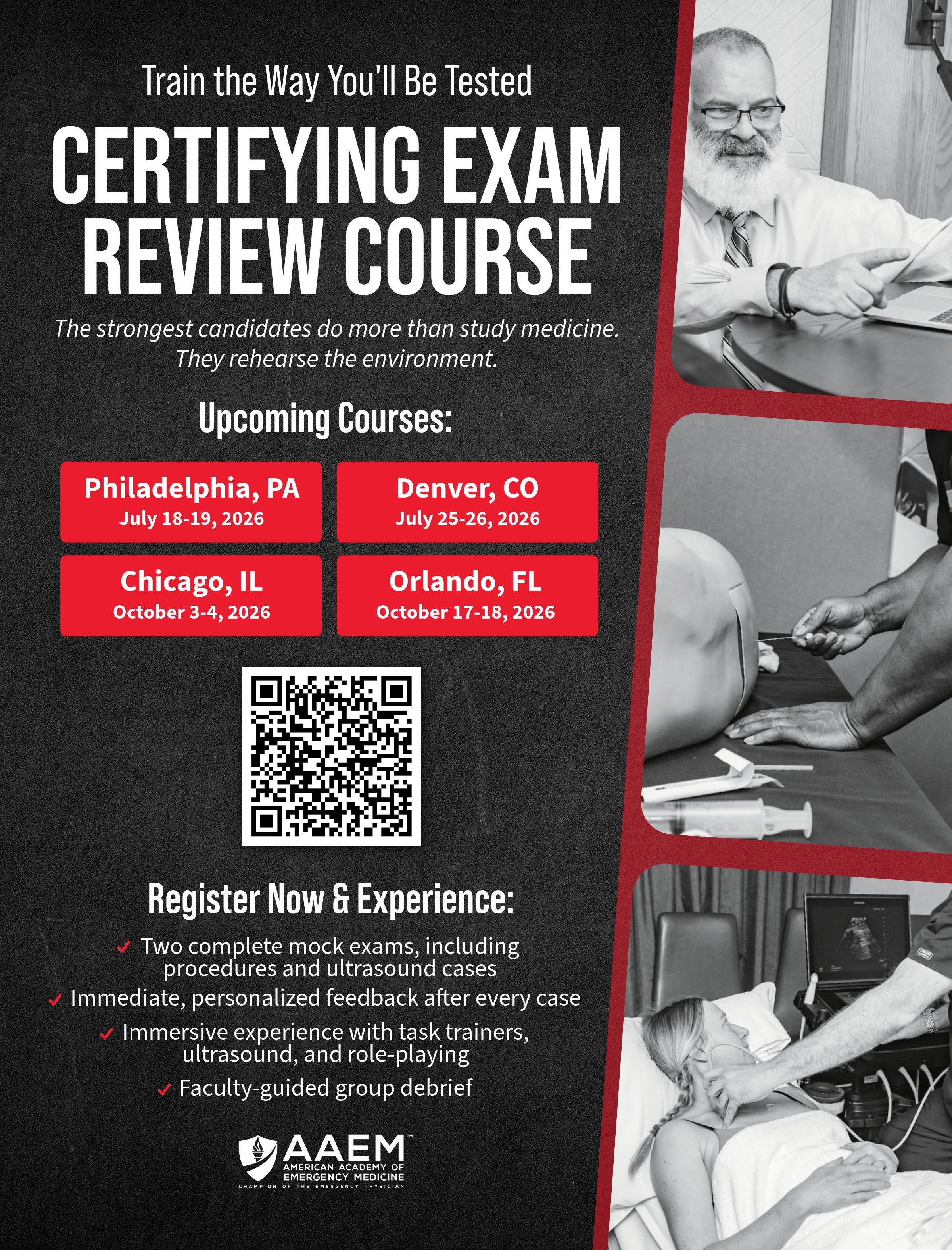
2026 In-Person Certifying Exam Review Courses
June 13-14, 2026 (Baltimore, MD) – July 18-19, 2026 (Philadelphia, PA) – July 25-26, 2026 (Denver, CO) – https://www.aaem.org/ certifying-exam-review-course/
Emergency Medicine Advocacy Summit
June 2-3, 2026 (Washington, DC) –https://www.aaem.org/emaes/
Emergency Medicine Western Regional Conference
October 17, 2026 (San Diego, CA) – Hosted by Cal/AAEM and the EMS Club of UCSD
14th Annual FLAAEM (Florida Chapter of AAEM) Scientific Assembly
November 13-14 (Sarasota, FL)
33rd Annual Scientific Assembly
April 25-29, 2027 (San Antonio, TX)
Recommended Education
Miami Beach Point-of-Care Ultrasound Conference
July 25-26, 2026 (Surfside, FL) - https://miamibeachultrasound.com/
The Difficult Airway Course: EmergencyTM
September 25, 2026 (Atlanta, GA)https://www.theairwaysite.com/a-course/ the-difficult-airway-course-emergency/
21st Annual Emergency Medicine Update: Hot Topics 2026
October 20-24, 2026 (Kauai, HI) - https:// health.ucdavis.edu/emergency/education/ Continuing%20Med%20ED/CME-index.html
AAEM CME Online
Online CME
Rapid Response to Adverse Events of Bispecific Antibodies: Follicular Lymphoma and Diffuse Large B-Cell Lymphoma Emergency Medicine Strategieshttps://www.staging.medscape.org/ viewarticle/1001569
Online CME
Recognizing Life-Threatening Emergencies in People with VEDS - thesullivangroup.com/ TSG_UG/VEDSAAEM/
Explore AAEM CME Online, where we understand the fast-paced nature of emergency medicine (EM) and the need for concise, accessible education. This platform is designed to provide members of the American Academy of Emergency Medicine (AAEM) and AAEM Resident and Student Association (AAEM/RSA) with top-tier continuing medical education (CME) resources right at their fingertips. Access today!
Chief Complaint: Stressed. But What’s the Real Diagnosis?
Amanda Dinsmore, MD, Kendra Morrison, DO, and Laura Cazier, MD
You can rattle off a 20-item differential for chest pain in a 50 year-old man, but you can only name three feelings. Learning emotional granularity will help you not only identify your feelings, but will make them less problematic.
Emergency physicians are highly intelligent, efficient, and capable; our job is to be able to handle, well, anything. We are masters of diagnosis, except when it comes to our own emotional states.
Working in chaotic emergency departments filled with trauma and abject human misery causes our nervous systems to become less and less “in tune” with ourselves. This is an understandable adaptation meant to help us survive “going into combat” every day. And, over time, it will contribute to our burnout.
This does not show up in just the occasional doctor; it’s a near universal problem in physicians we work with in our coaching practice. Doctors come to us describing themselves as “burned out” or “just really stressed,” but it’s kind of like vague belly pain in an elderly patient; there’s almost always a lot more going on there than “I’m having a little indigestion.”
One of the docs I work with described how, on days before an overnight shift, she’d spend the whole day “prepping.” Mentally rehearsing how exhausted she’d be. Imagining everything that could go wrong. By the time she walked through the department doors, she was already half-depleted, and the shift hadn’t even started.
When I asked what she was feeling during all that “prepping,” she said: “Stressed. Just really stressed.”
When we actually broke it down, there was anticipatory dread about fatigue, fear of what might walk through the door that she might not be able to handle, frustration about having to work with nurses with less and less experience, and, underneath all of it, some grief about what her department used to feel like. Four distinct emotions. All crammed under “stressed.” All getting the same unhelpful treatment: more rumination, more mental rehearsal, more depletion.
In emergency medicine, vague diagnoses like “abdominal pain” aren’t very satisfactory, and we try to be more specific if possible. “The patient feels bad; hope he feels better soon” is not a plan. But when it comes to our own emotional lives, most of us are practicing exactly that kind of medicine on ourselves, every single day.
Emergency physicians… are masters of diagnosis, except when it comes to our own emotional states.”
Emotional Granularity: The Skill Nobody Taught Us
Emotional granularity is the ability to distinguish between nuanced emotional states, to know the difference between “anxious” and “irritable,” “disappointed” and “overwhelmed,” “proud” and “relieved.” Most of us were never taught to do this with any real precision. In fact, we were taught to ignore and suppress feelings. We learned to stay functional, push through, “suck it up, Buttercup.” It’s no wonder so many of us have become alexithymic (emotionally illiterate), only able to name a few emotions: happy, sad, mad, (and the ever-present raging at stupidity).
Research has shown that people with higher emotional granularity regulate their emotions more effectively, experience less distress, and make more adaptive decisions. They also show lower rates of depression and greater overall psychological health.
One of the first tools we introduce in coaching is the Feelings Wheel, developed by Dr. Gloria Willcox. Think of it as a differential for your emotional state. Instead of defaulting to “stressed,” you work outward from a broad category and get more specific: Is it frustration? Helplessness? Guilt? Disconnection? The more granular you get, the more accurately you can respond. The treatment follows the diagnosis.
Start with Metacognition (Or: Notice What’s Generating the Malaise)
Before you can label an emotion precisely, you have to notice it’s there, and the thought that is generating it. This is metacognition, the ability to observe your own thoughts and feelings rather than just believe them at face value.
Your brain is a world-class storyteller. It will serve up thoughts like “this shift is going to be a disaster” or “I can’t keep doing this” with complete conviction and a very authoritative tone. These thoughts feel true. They feel urgent. But, as you know from working with patients who are certain that they know what is wrong with them and that they need an MRI tonight for their two days of knee pain, feeling true and being true are not the same thing.
Just like a CT scan, emotional granularity gives us a more accurate picture of what’s actually happening inside.”
The physician I mentioned wasn’t prepping. She was ruminating. Once she could see it for what it was, she had a choice about what to do next. Metacognitive awareness has been shown to reduce emotional distress and increase psychological flexibility, and in our experience coaching physicians, it’s usually the thing that unlocks everything else.
Naming It Actually Changes Your Brain
Can talking about feelings actually change our neurobiology? Amazingly, yes! fMRI studies by Lieberman and colleagues showed that labeling a negative emotion reduces its intensity and decreases activity in the amygdala, the brain’s threat-response system. It also increases activation in the prefrontal cortex, which is the part of the brain we actually want running the show during a difficult resuscitation, a hard family conversation, or any time we aren’t actually being chased by a tiger. By naming our emotions, we can change blood flow in our brains in real time. How cool is that?
So when you pause after a brutal case and think “I’m feeling grief and moral distress” rather than just “this sucks,” you’re building your emotional intelligence and helping your brain function better.
The same applies to positive emotions: naming them specifically amplifies their effect and builds resilience over time. Expressive writing (putting emotional experiences into words after difficult events) has also been shown to increase positive affect and support emotional processing. The simple act of finding the right word is doing more work than it looks like.
Some Simple Implementation Steps
Use the Feelings Wheel like a differential. When you notice vague distress, run a quick workup. Start broad: am I in the “fear” family? “anger”? “sadness”? And then narrow it down. “Frustrated” and “helpless” are not the same thing, and they don’t need the same intervention. Treat yourself with the same diagnostic rigor you’d apply to a patient.
Do a metacognitive pause before or after hard cases. When a thought arrives with a lot of urgency like “this will be a disaster,” “I can’t do another night like that,” take a pause and ask: Is this actually true? Is it helpful? What emotion is underneath it?
Say it out loud, or write it down. Emotion labeling, literally stating or writing the specific feeling, reduces its intensity. So does saying it quietly to yourself in the doc box between patients. After difficult shifts, try writing down the recurrent thoughts that stuck with you, then ask: Is this true? What would I say to a colleague who was thinking this? Do I want to keep thinking this? What’s a more useful frame?
Accept it, then decide. Once you’ve named the emotion, accept it as valid, it showed up for a reason. Then ask: do I need to act on this, or can I let it move through? Sometimes acceptance alone takes the charge out of it.
“It makes sense that my brain wants to tell me how horrible my job is. It’s trying to keep me safe. But the truth is that I don’t want to do any other job. I’m choosing to show up each day.”
32nd Annual AAEM Scientific Assembly: Thank You for Joining Us!
Scientific Assembly Program Planning Committee Co-Chair Zachary Repanshek, MD FAAEM; Co-Chair Julie Vieth, MD FAAEM; Co-Vice Chair Harman S. Gill, MD FAAEM; Co-Vice Chair Kathleen M. Stephanos, MD FAAEM
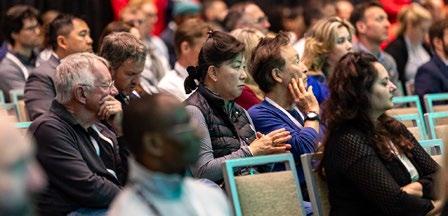
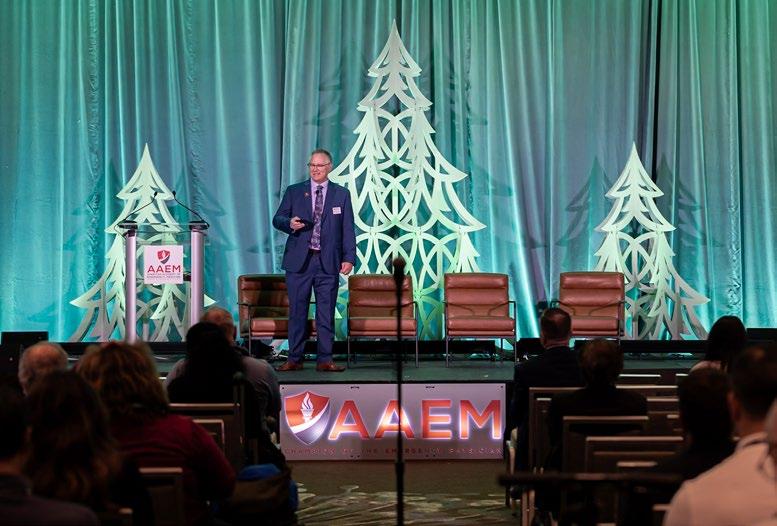
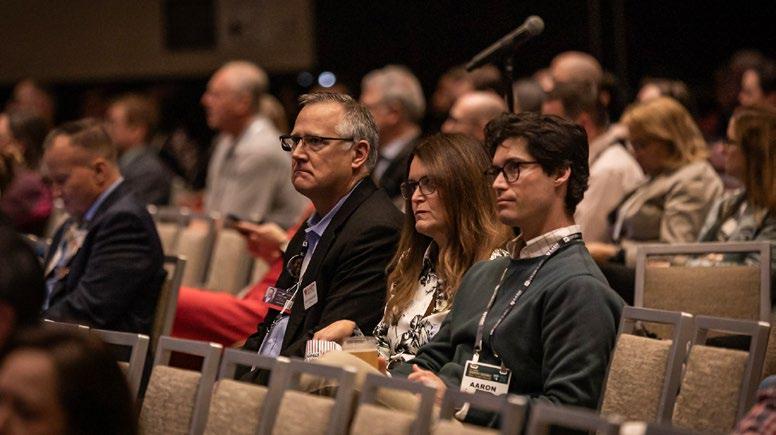
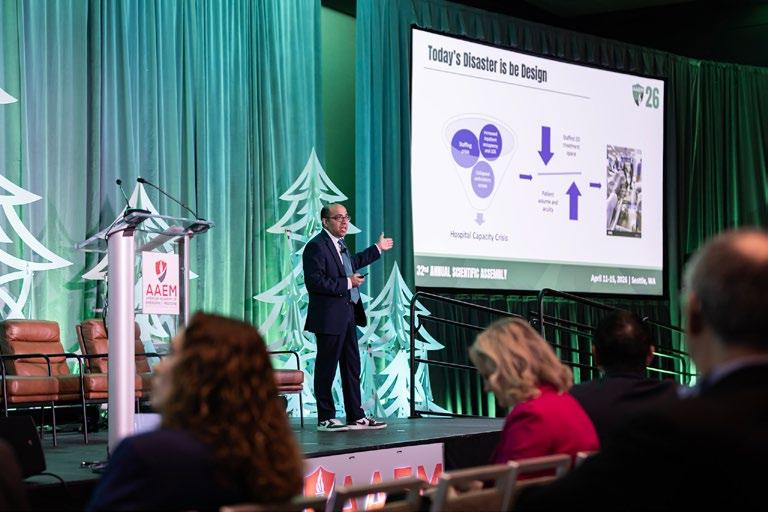
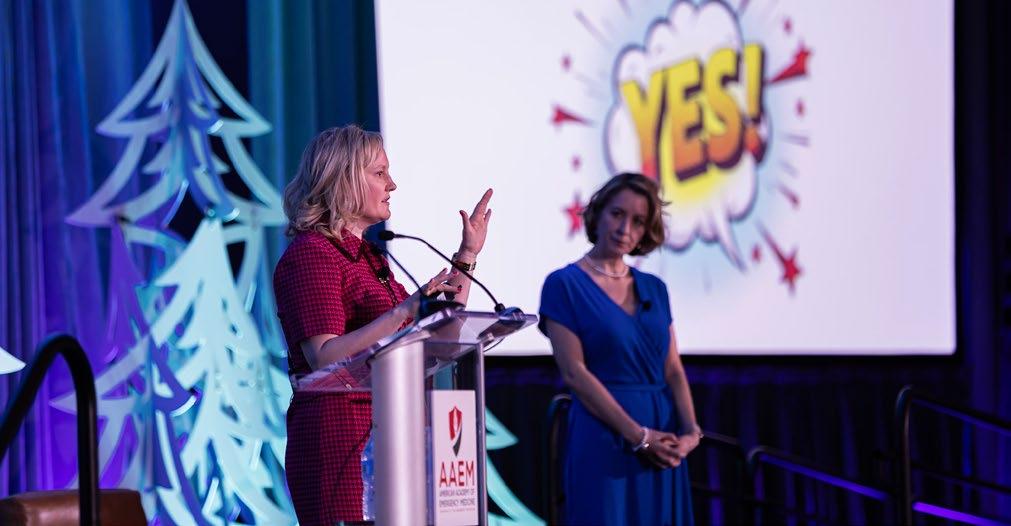
The 32nd Annual AAEM Scientific Assembly, held April 11–15, 2026, in Seattle, WA, was one of the year’s most anticipated academic conferences, drawing emergency physicians from across the country to learn, connect, and help shape the future of the specialty.
This year’s Scientific Assembly offered cutting-edge insights into clinical topics including cardiology, critical care, neurology, trauma, and more. Leading experts explored key issues shaping the future of emergency medicine, including the evolving role of artificial intelligence and the continued threat of the corporate practice of medicine.
Our keynote speaker was Dr. Arjun Venkatesh. His dynamic presentation explored the evolution of emergency medicine through four generational transformations and what it will take for the specialty to adapt and thrive amid rapid changes in technology, training, and workforce dynamics. Powerhouse plenaries included Drs. Reuben Strayer (Trauma), Michael Winters and Skyler Lentz (Critical Care), Amal Mattu (Cardiology), Ilene Claudius and Mimi Lu (Pediatrics), Julie Vieth and Andrea Shields (Obstetrics), Brian Acunto (Medical-Legal), Cortlyn Brown, Italo Brown, and Kristyn Smith (Bias in AI).
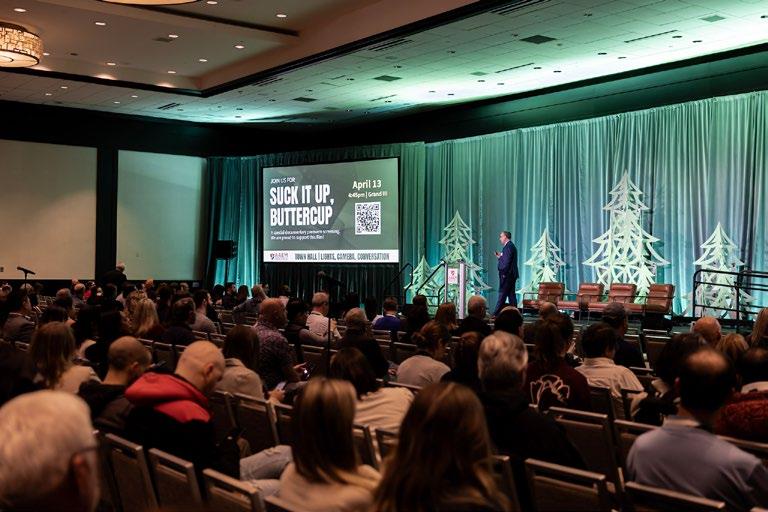
The emergency medicine community stood up and spoke out at Scientific Assembly. A record-breaking 17 nominees for the AAEM Board of Directors shared their visions for the future of the Academy and the emergency medicine profession during the Candidates Forum. The screening of the powerful documentary “Suck It Up, Buttercup” sparked passionate reactions from an energized audience. Our members’ dedication to enacting meaningful change was reflected in a surge of donations to the AAEM PAC and the AAEM Foundation, along with messages of support for our colleagues in Eugene Emergency Physicians. Thank you to everyone who donated.
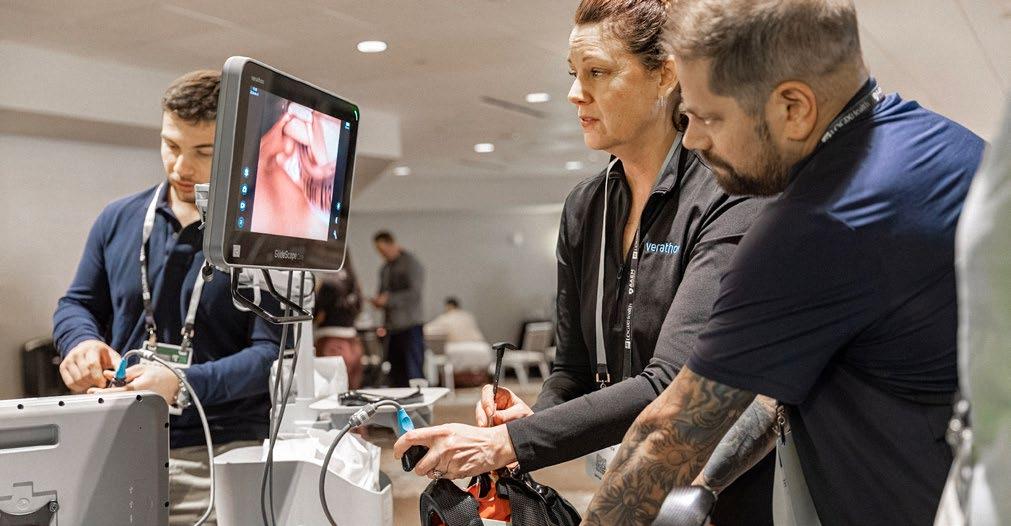
The ever-popular Breve Dulce sessions returned this year and continued to be some of the most attended sessions of AAEM26. The interactive Small Group Clinic sessions gave attendees hands-on practice in ultrasound, complicated vaginal deliveries, vent management, and many other valuable skills.
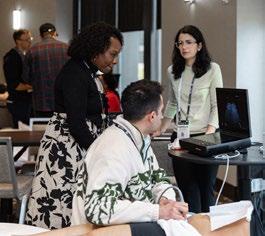
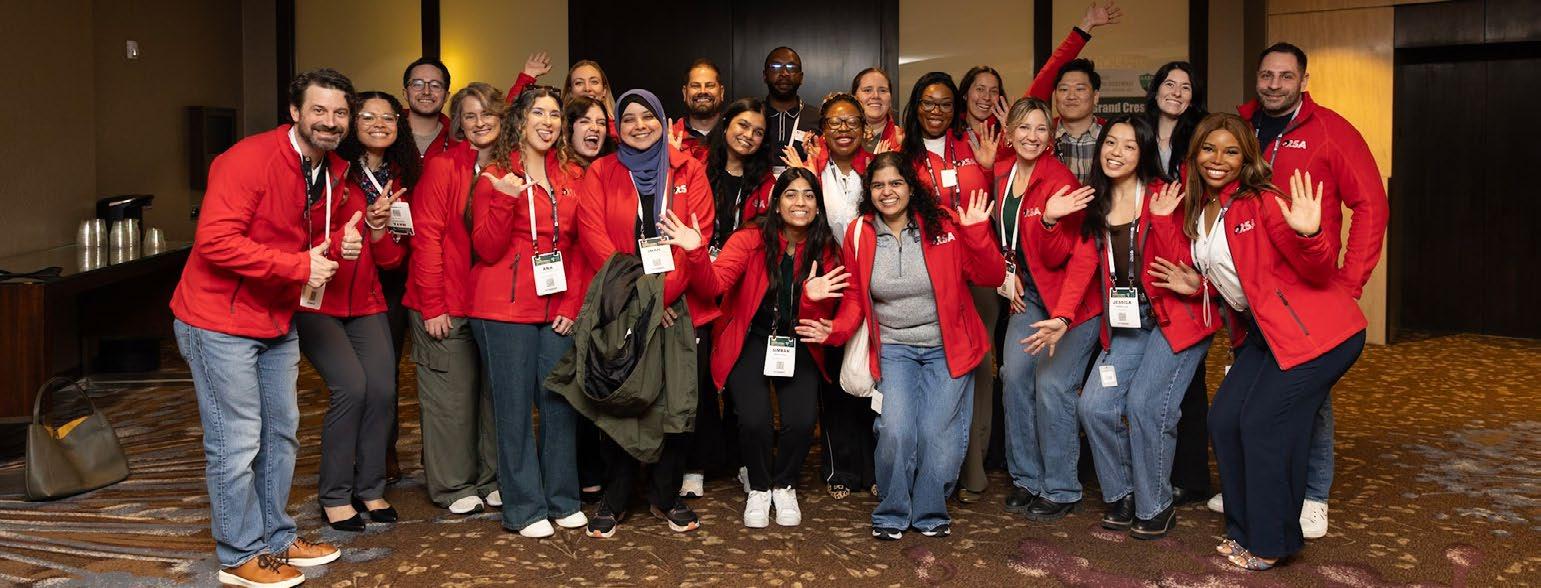
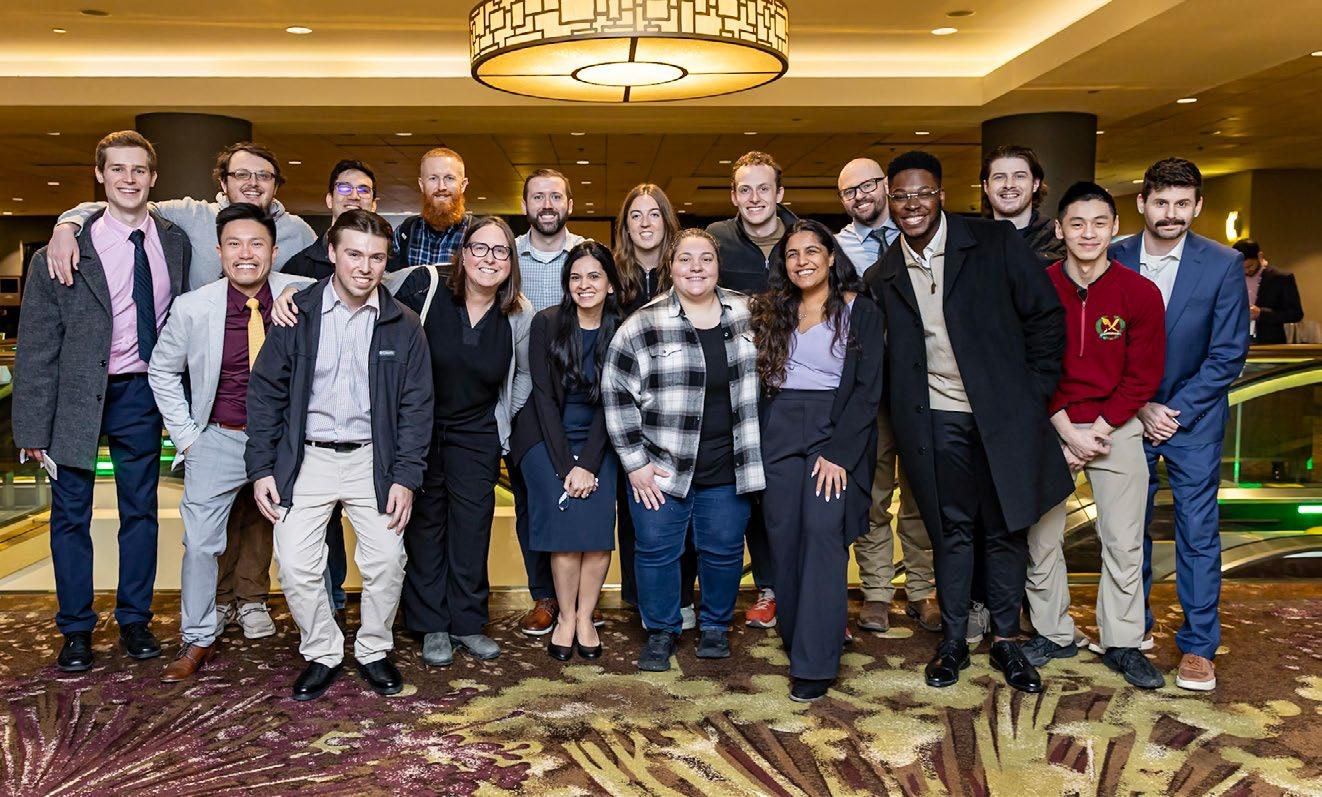
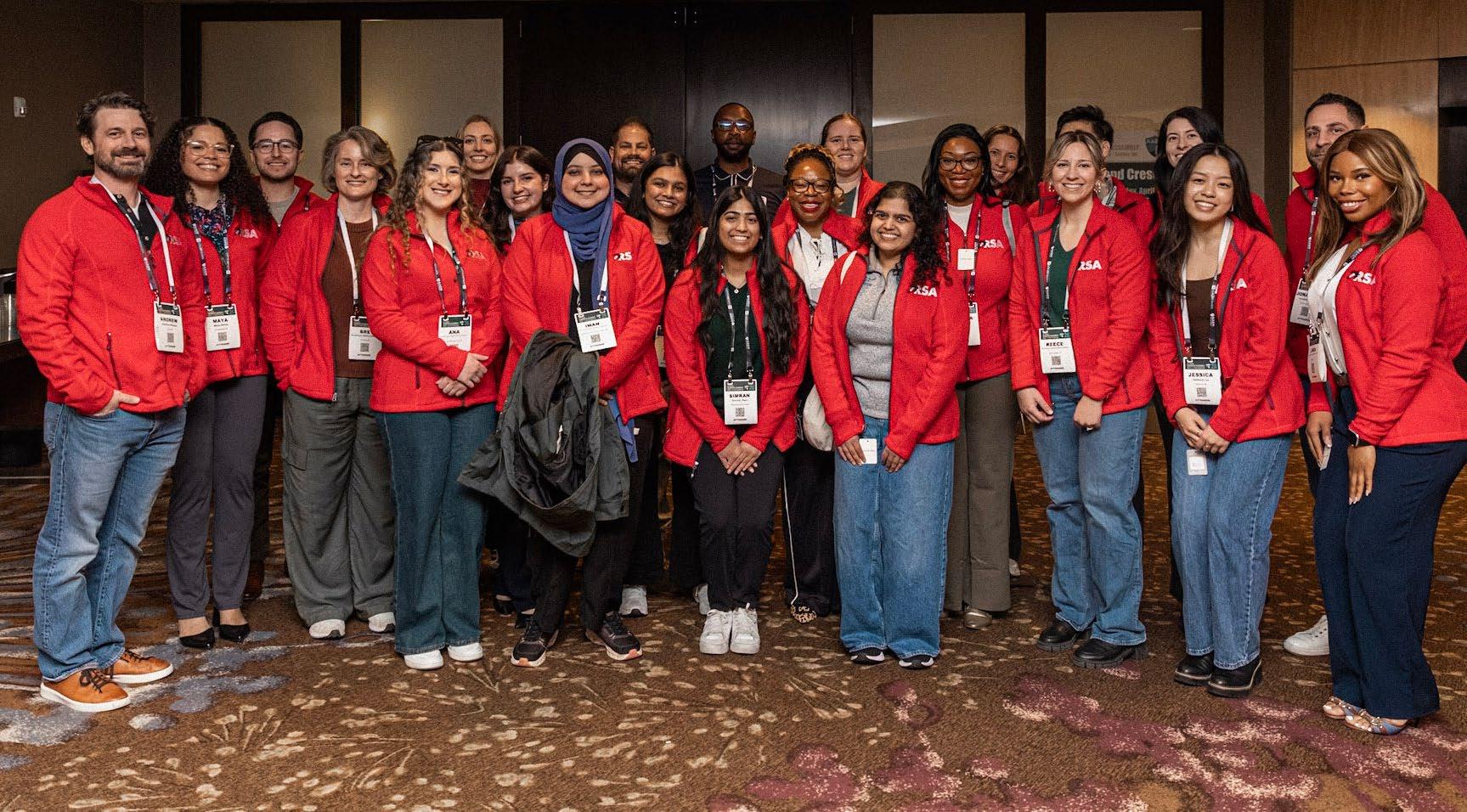
There were plenty of opportunities for residents and students at this year’s Scientific Assembly. The AAEM/RSA Track and Medical Student Session add-on course prepared future emergency physicians with presentations focused on clinical topics and career development. Several residents and students also volunteered as scanning models during the ultrasound workshops, helping support hands-on learning. An energetic group of medical student ambassadors were omnipresent and ever helpful in keeping the conference going. Thank you, student ambassadors!
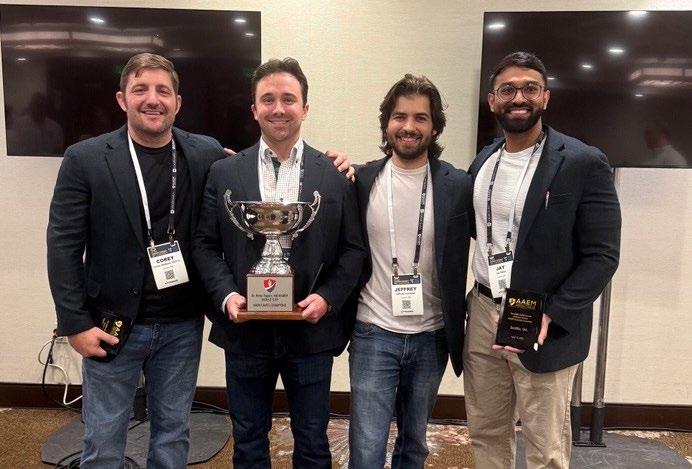
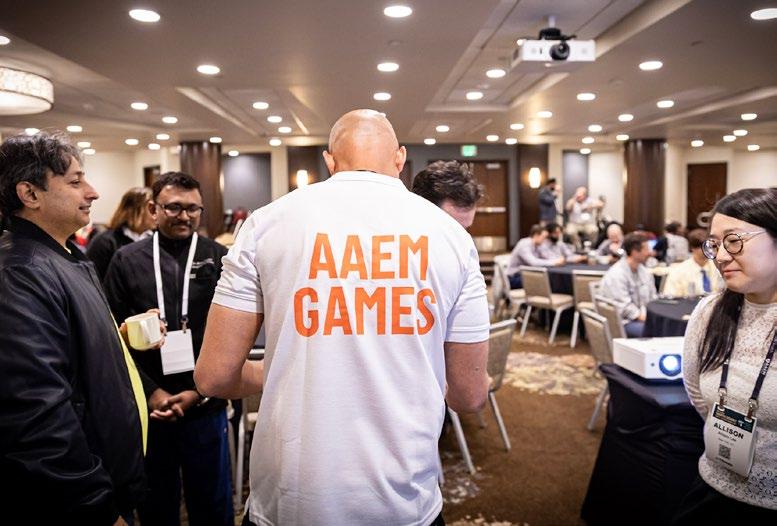
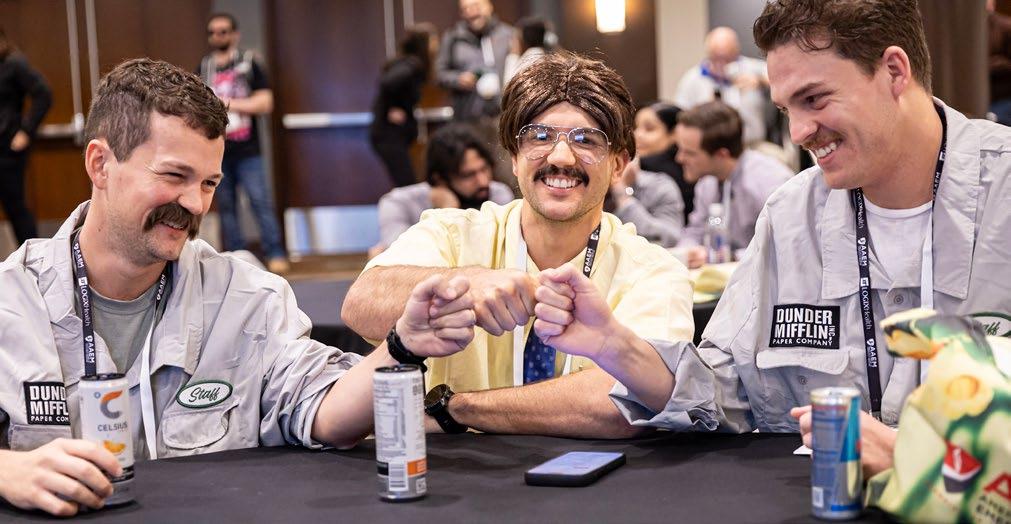
The AAEM Games competition saw 14 teams of emergency medicine residents navigating intense challenges to showcase their mastery in an exhilarating blend of brains, skill, and competition. Congratulations to team Sweet Tea and Ketamine (Magnolia Regional Health Center, Corinth MS) who brought home the prestigious Kevin Rodgers Cup!
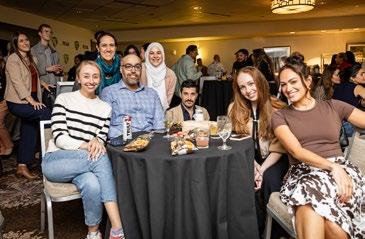
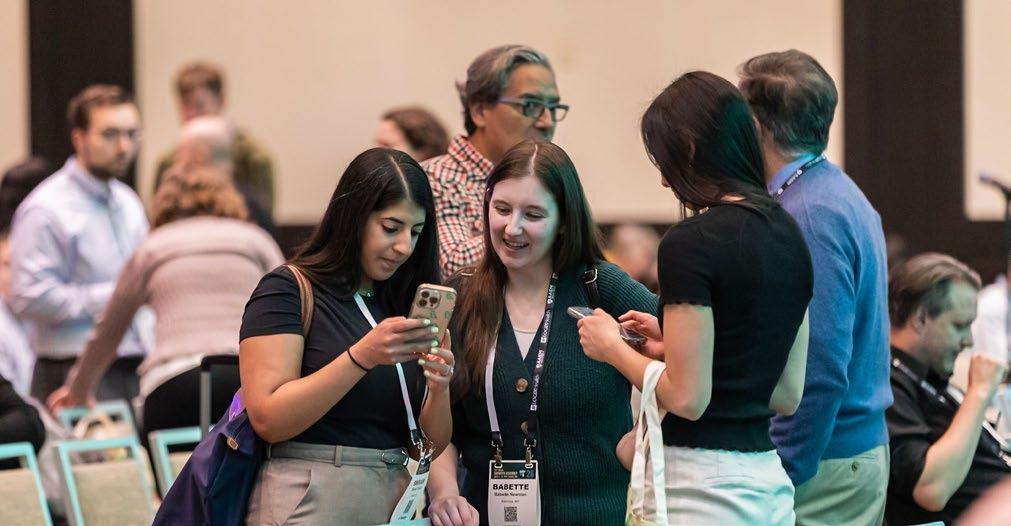
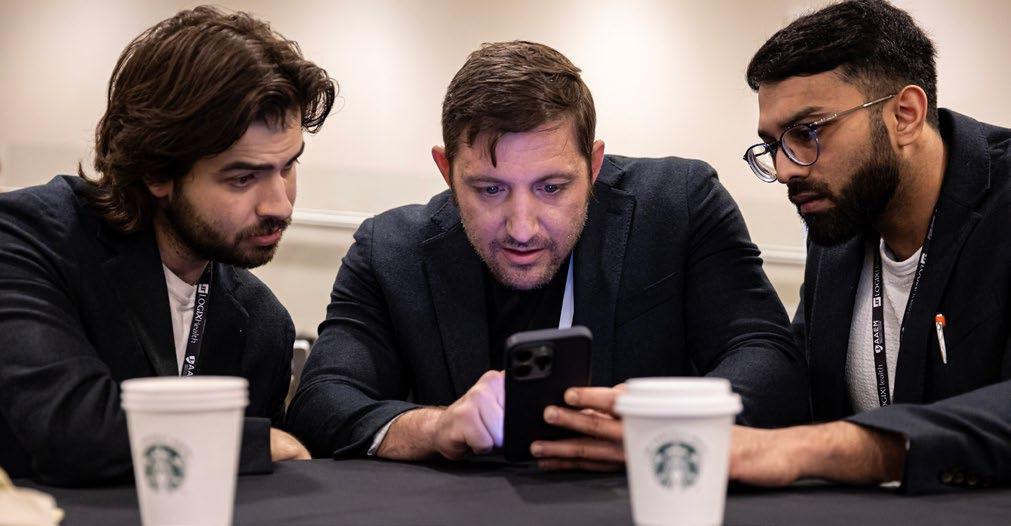
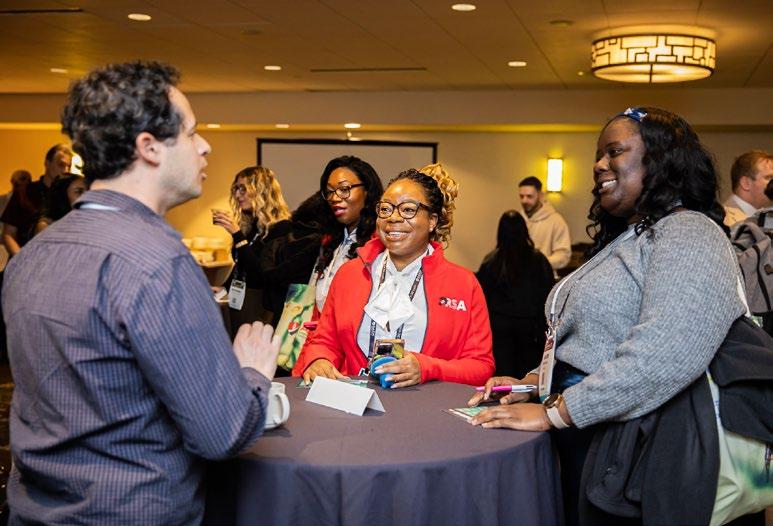
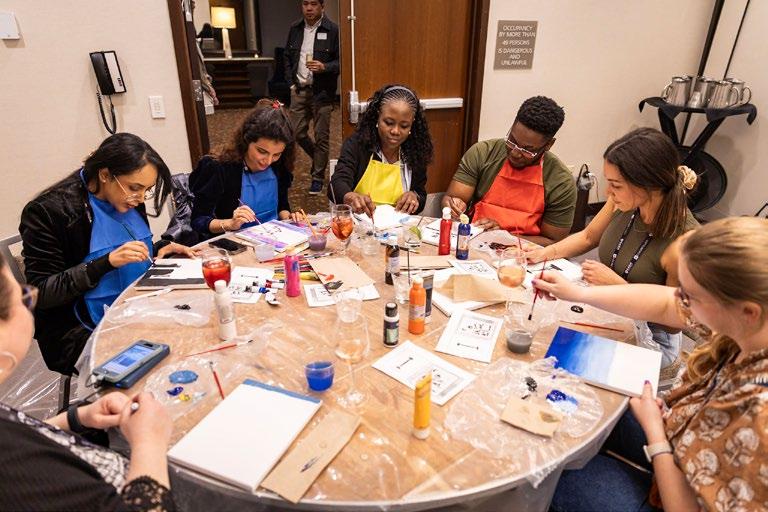
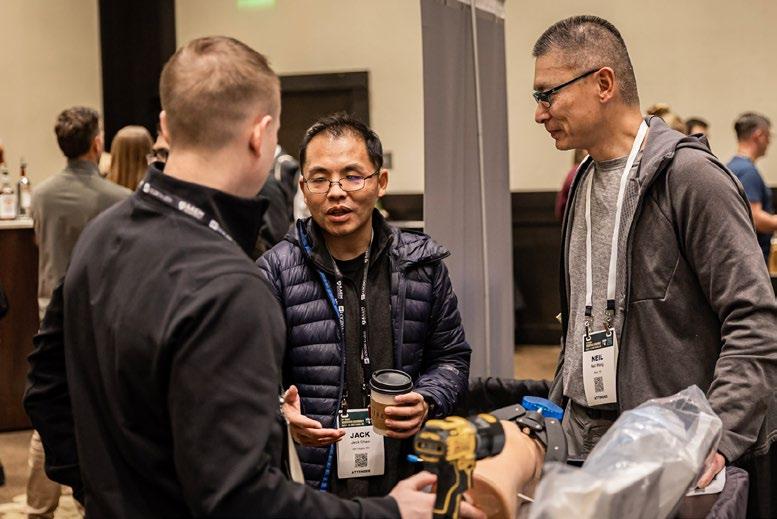
Whether in the hallways, at receptions, or around the coffee stations during breaks, attendees connected and engaged throughout the meeting. Several AAEM groups also hosted their own networking and nonCME educational events, including JEDI-AAEM, EUS-AAEM, WiEMSAAEM, AAEM/RSA, EMSS-AAEM, OMS-AAEM, YPS-AAEM, USAAEM, Aging Well in Emergency Medicine Interest Group, Government and National Affairs Committee, Palliative Care Committee, Social EM & Population Health Committee, and Wellness Committee.
We hope you enjoyed Scientific Assembly this year. Our goal is to continue the tradition of bringing together your perennial favorites alongside fresh voices to keep you informed, inspired, and eager to return each year.
Please let us know your thoughts and we hope to see you in San Antonio in 2027!
Annual Scientific Assembly • April 11-15, 2026 • Seattle, WA
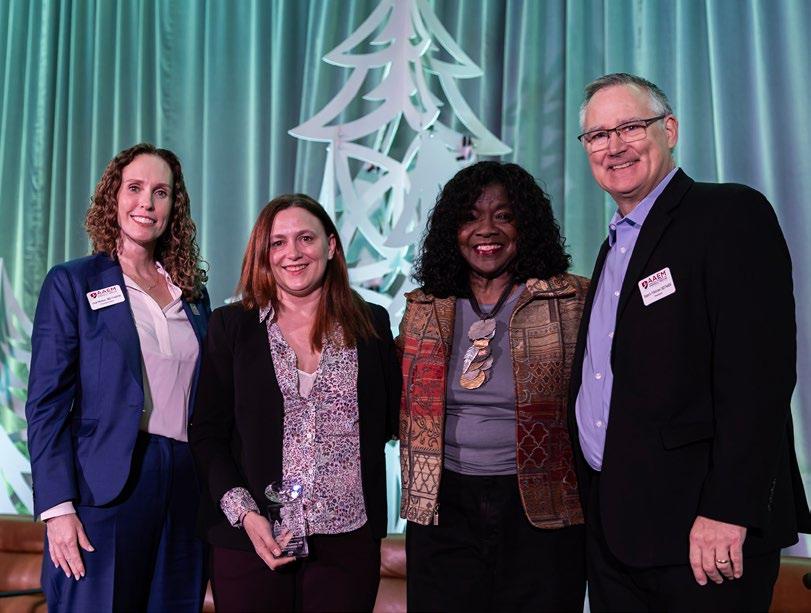
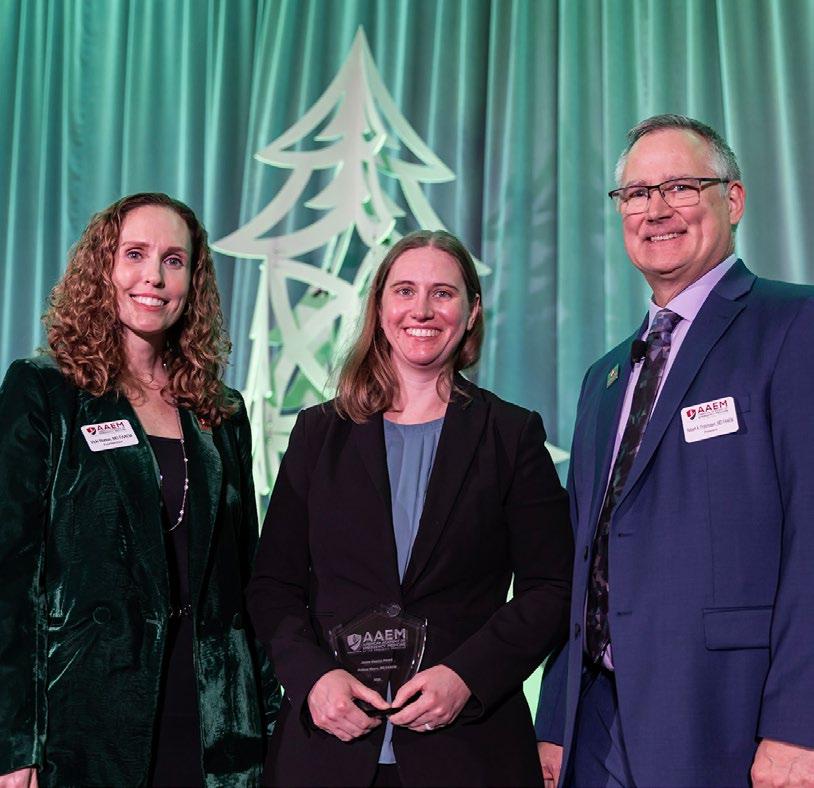
Awards
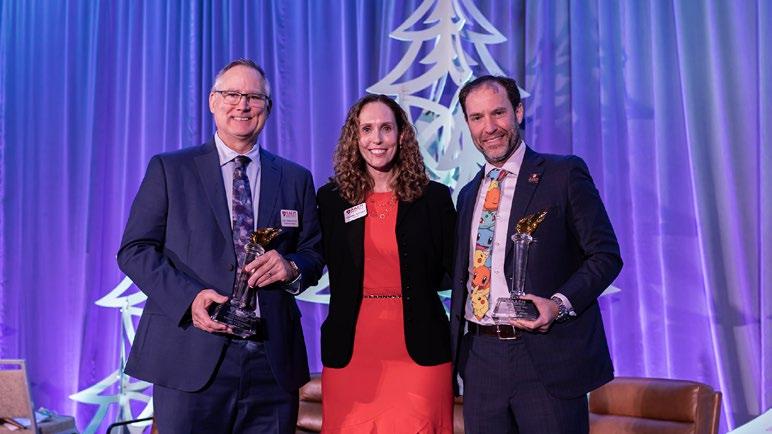
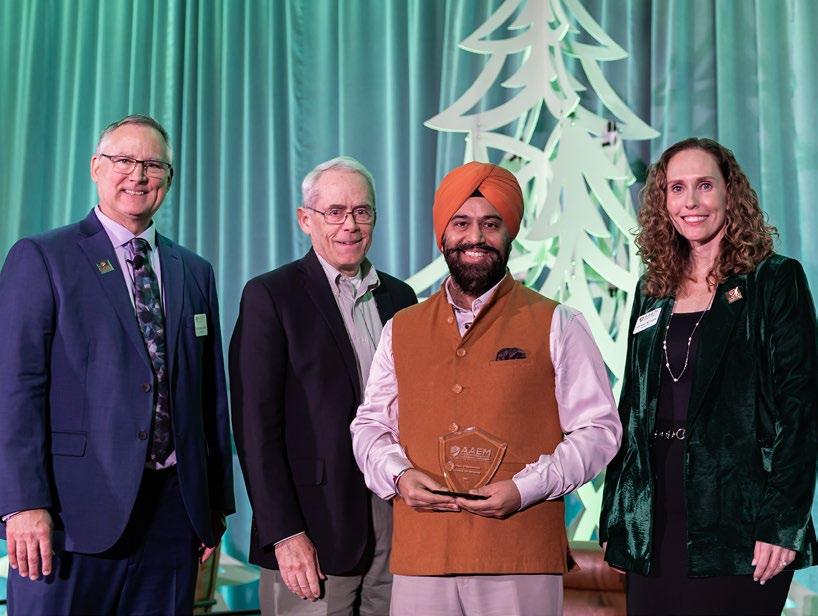
Advocate of the Year
Jake Moore, DO
David K. Wagner Award
Brian K. Browne, MD FAAEM
Joe Lex Educator of the Year Award
Julie Vieth, MD FAAEM
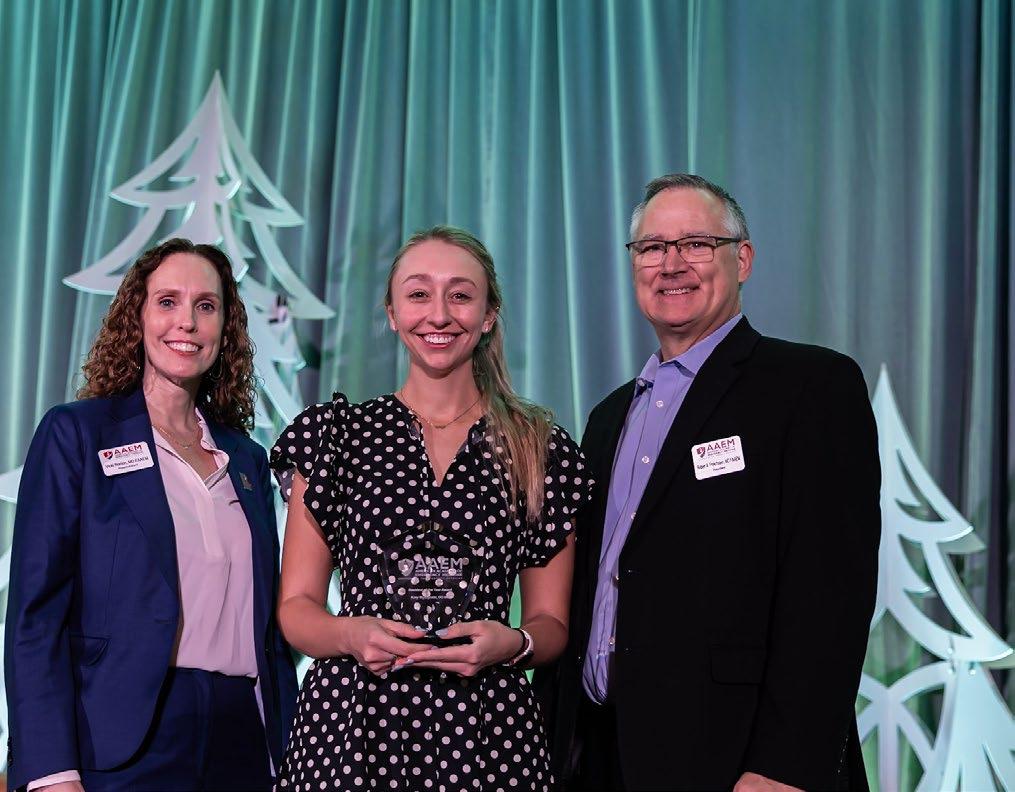
Kay Whalen
Strategic Ally Award
Jim Blakeman
Resident of the Year Award
Katy Wyszynski, DO MS
Amin Kazzi International Emergency Medicine
Leadership Award
Leonardo L. Alonso, MD FAAEM
James Keaney Award
Melissa Myers, MD FAAEM
Joanne Williams Award
Elisabeth Calhound, MD
MPH FAAEM
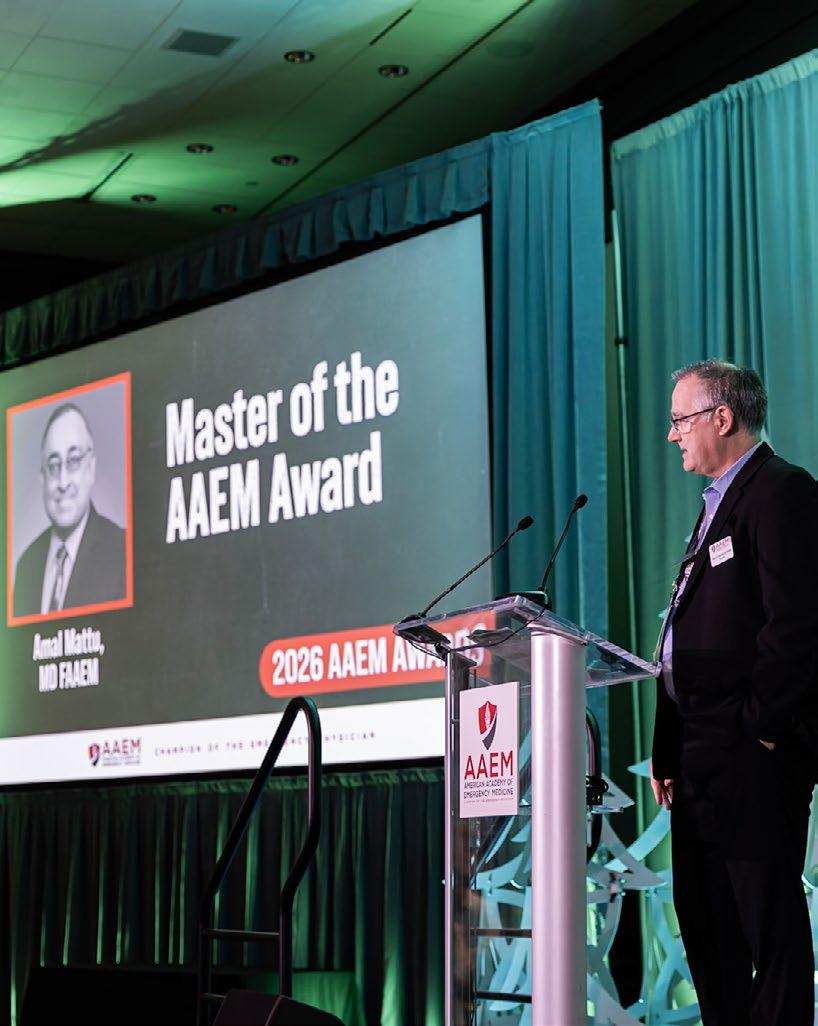
Master of the American Academy of Emergency Medicine (MAAEM)
Amal Mattu, MD FAAEM
Young Educator Award
Kathleen Stephanos, MD FAAEM
Robert McNamara Award
Harman S. Gill, MD FAAEM
Research Forums and Competition Winners
AAEM/JEM Resident and Student Research Forum Oral Abstracts
1st Place: Justin R. Townsend, DO
2nd Place: Felicia Tanu
3rd Place: Jared Cloutier
AAEM/RSA & Western Journal of Emergency Medicine Population Health Research Forum Oral Abstracts
1st Place: Katrin Jaradeh, MD
2nd Place: Marium Khan
3rd Place: Colin Harris, MD
CCMS-AAEM Breveloquent Competition
1st Place: Gavin Lynch, MD
2nd Place: Shannon Towle, MD
3rd Place: Alexander Giuliano, MD
Open Mic Competition Winner
Kristin Lewis, MD FAAEM
YPS-AAEM Research Forum Oral Abstracts
1st Place: Samuel J. Hertz, MD
2nd Place: Matthew Johnson, MD FAAEM
3rd Place: Sullivan Hanback, MD
AAEM GAMES Winner of the Grand Prize
—the Dr. Kevin Rogers Cup
Team: Sweet Tea and Ketamine (from Magnolia Regional Health Center - Corinth, MS)
Team Members: Drs. Jay Patel, Cory Abdeen, Jeffery Johnson
Team Mentor: Dr. Alex Hampton
AAEM/RSA at AAEM26
569 residents and medical students participated at AAEM26
13 lectures and a hands-on ultrasound workshop were presented during the AAEM/RSA Resident Track drawing resident, medical student, and attendings
82 medical students took in the lectures by engaging faculty speakers and panelists during the Medical Student Track
8 medical students competed in the AAEM/RSA & EUS-AAEM Sim Sono Sleuthing Case Challenge
56 students participated in Meet Your Match: Residency Edition meeting with 24 residency program representatives
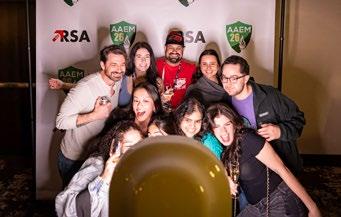
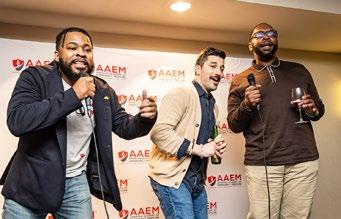
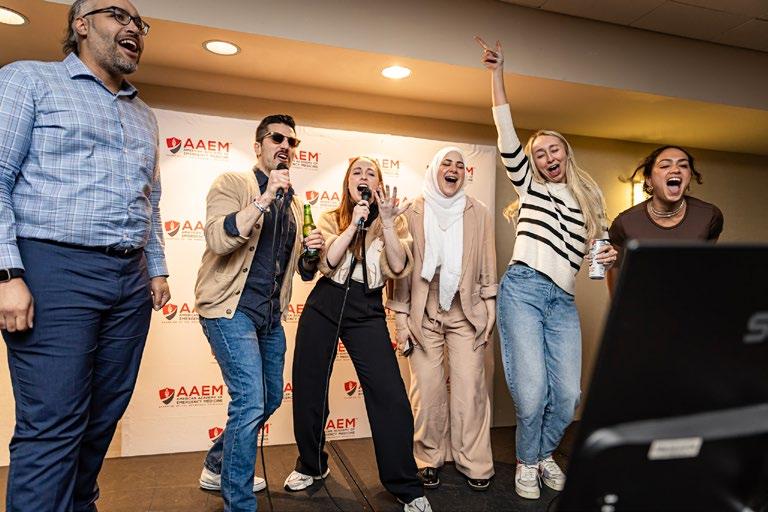
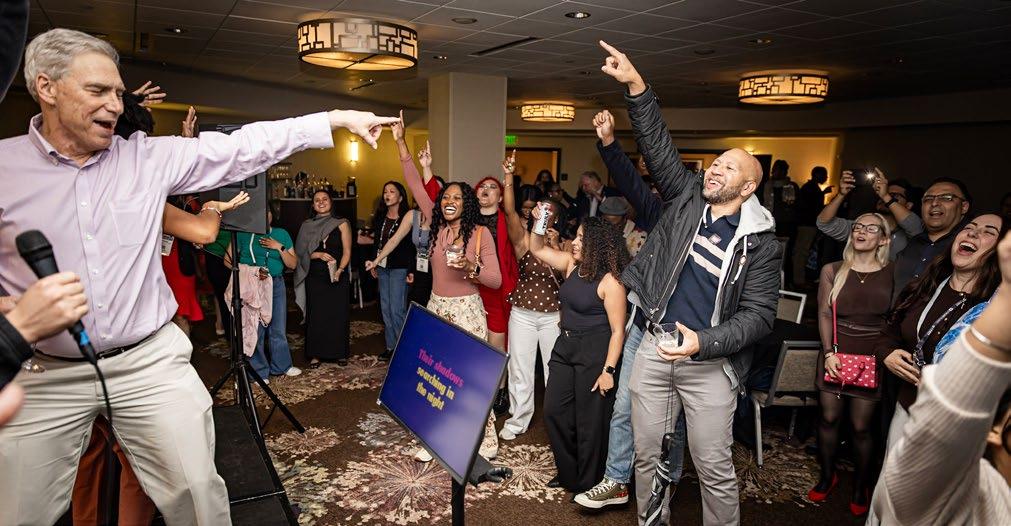
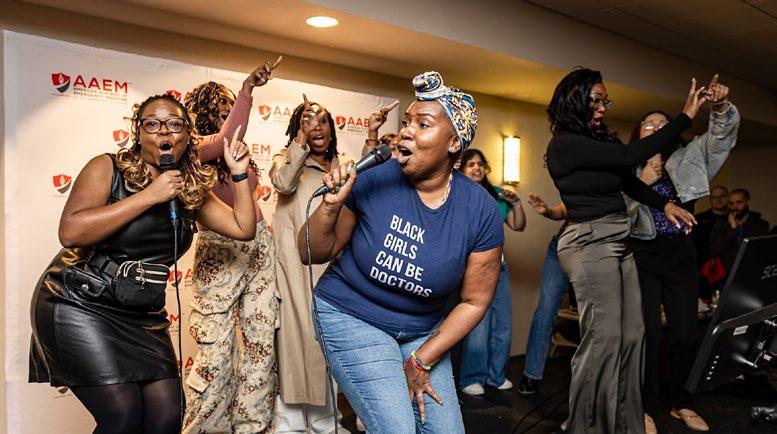
158 residents and students attended the RSA Party to sing karaoke and hit up the photo booth
23 medical students participated as Medical Student Ambassadors –THANK YOU!
RSA Awards
Kevin G. Rodgers Program Director of the Year
Sarah Dubbs, MD FAAEM
Northeast Regional Faculty of the Year
Leah Colucci, MD MS
Program Coordinator of the Year
Janet Kupferschmid
National Medical Student of the Year
Scholarship Award
Jake Moore, DO
Regional Medical Student of the YearInternational
Paul Pfrimmer
Faculty Mentor of the Year
Bruce Lo, MD MBA RDMS FAAEM
Southern Regional Faculty of the Year
Cortlyn Brown, MD FAAEM
Regional Medical Student of the YearWest
Laura Minor
RSA Committee Member of the Year
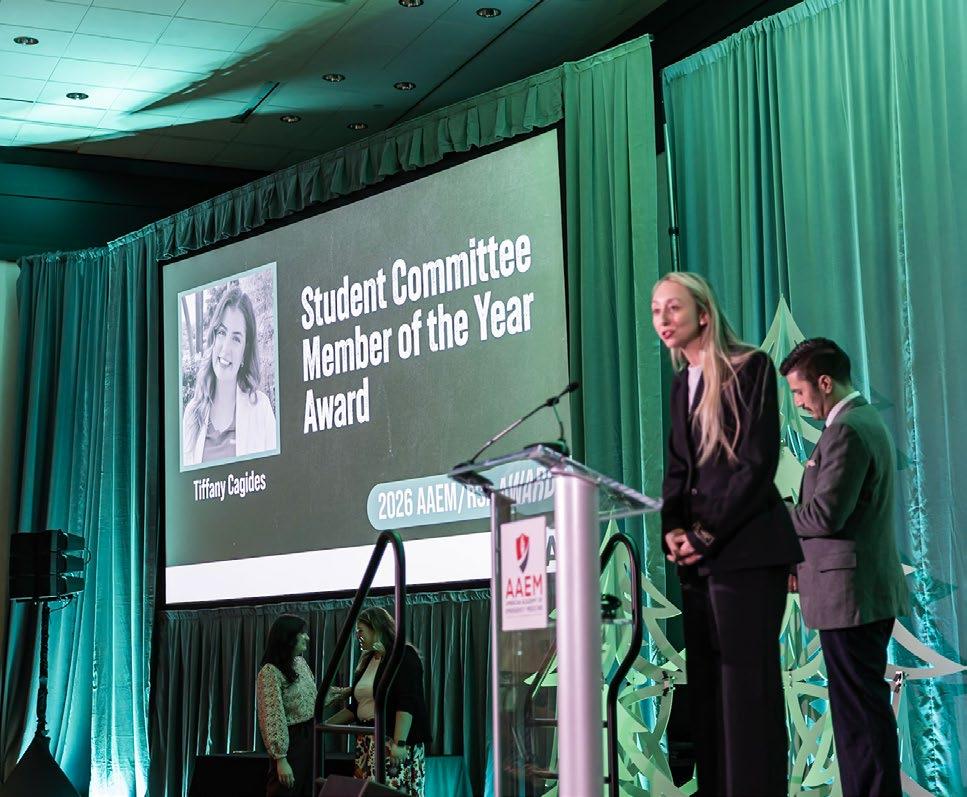
Tiffany Cagides
International EMIG of the Year
Ross University School of Medicine
Scientific Assembly Program Planning Committee
Co-Chairs
Zachary Repanshek, MD FAAEM
Julie Vieth, MD FAAEM
Co-Vice Chairs
Harman S. Gill, MD FAAEM
Kathleen M. Stephanos, MD FAAEM
AAEM/RSA Co-Representatives
Katy Wyszynski, DO MS
Jazmin Gibson
Members
Kene A. Chukwuanu, MD FAAEM
Leah B. Colucci, MD MS
Sarah B. Dubbs, MD FAAEM
Jessica Fujimoto, MD FAAEM
Michael Gottlieb, MD FAAEM
Matthew N. Graber, MD PhD FAAEM
Lauren Lamparter, MD
Alice Min Simpkins, MD FAAEM
Andrew W. Phillips, MD MEd FAAEM
Eric M. Steinberg, DO MEHP FAAEM
Advisors
Christopher Colbert, DO FAAEM
Molly K. Estes, MD FAAEM FACEP
2026 Sponsors
Thanks to our 2026 Industry Partners
AAEM extends its thanks and appreciation to the following industry partners who have funded activities at the 2026 AAEM Scientific Assembly.
GOLD SPONSOR – $20,000$49,999 SUPPORT LEVEL
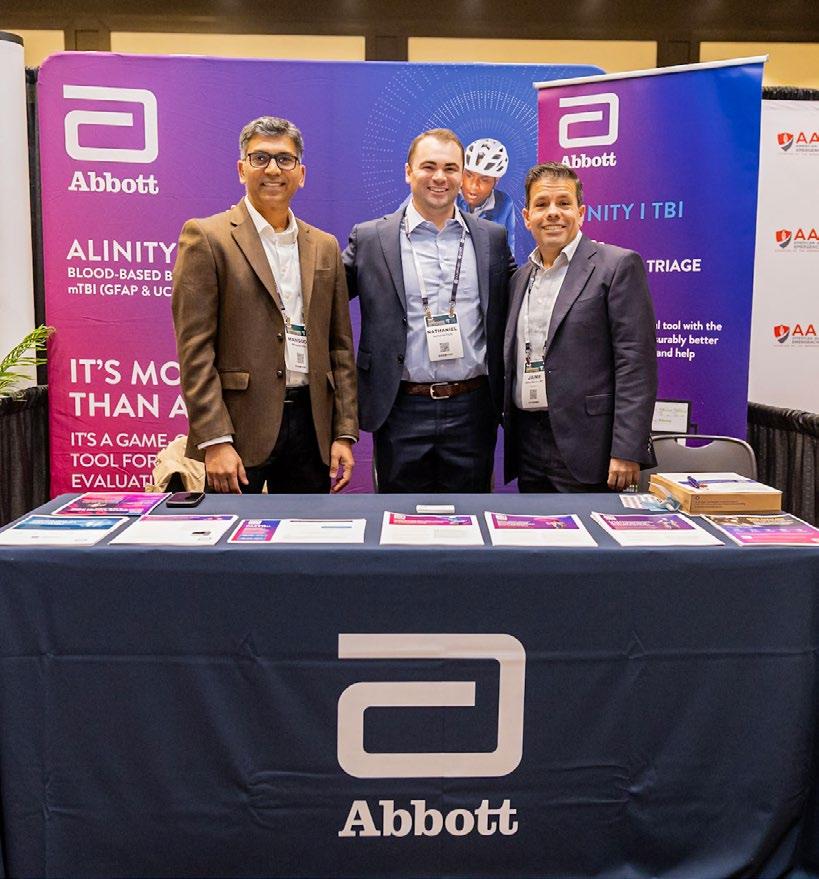
• Abbott
SILVER SPONSOR – $5,000$19,000 SUPPORT LEVEL
• LogixHealth
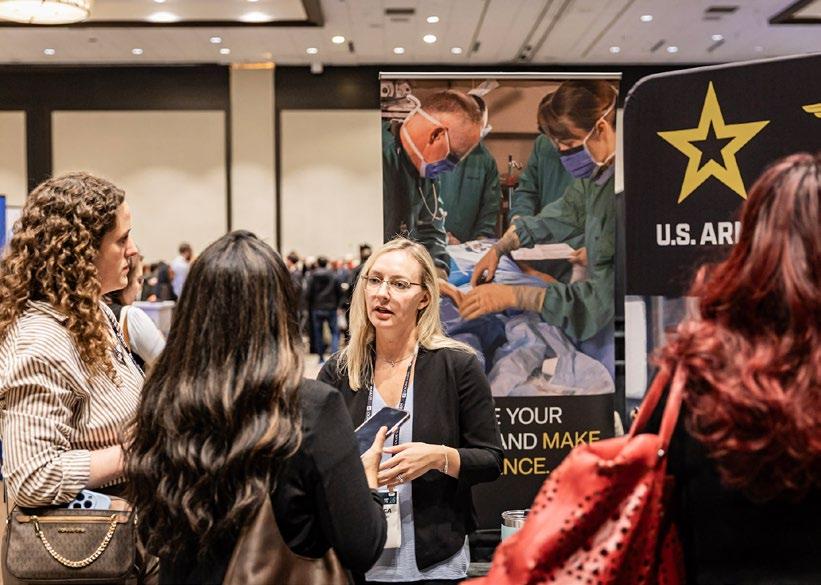
• Army Medicine
BRONZE SPONSOR – Up to $4,999 SUPPORT LEVEL
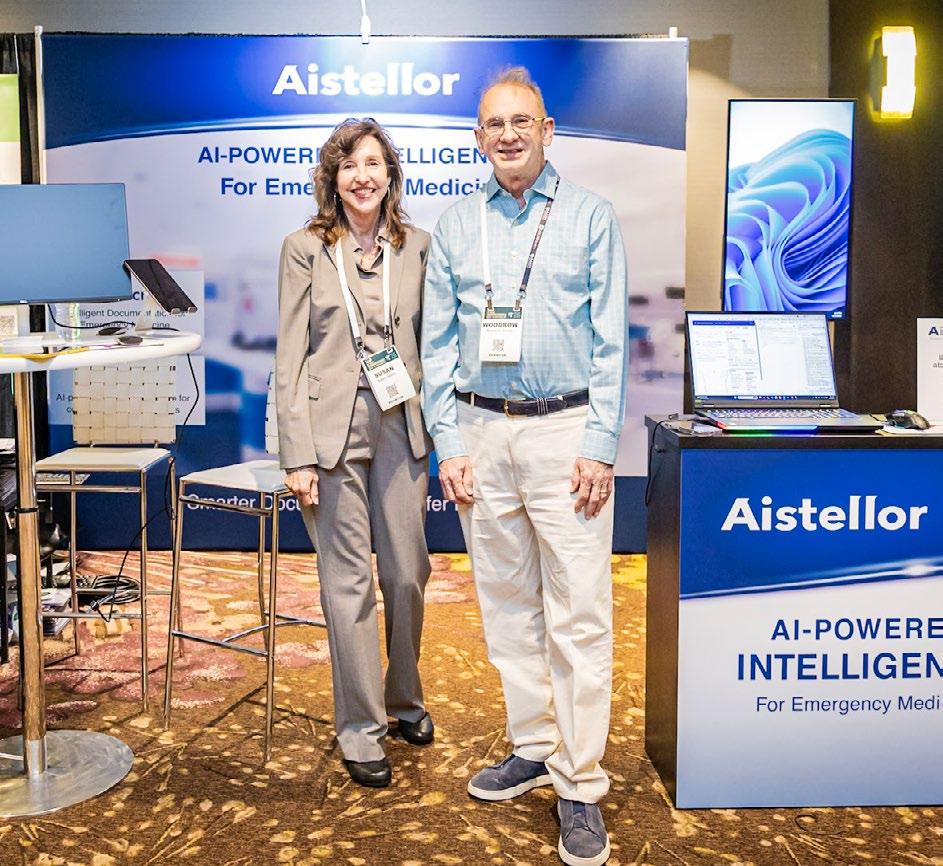
• Aistellor
IN-KIND SPONSORS
• Ambu
• CIVCO Medical Solutions
• EchoNous
• Elevate Healthcare
• FUJFILM Sonosite
• Hamilton
• Laerdal
• Oregon Health and Science University
• Verathon
New Board of Directors
AAEM is proud to welcome the newly elected Board of Directors!
President Vicki Norton, MD FAAEM
Secretary-Treasurer Heidi Best, MD FAAEM
At-Large Board Member
Laura J. Bontempo, MD MEd FAAEM
At-Large Board Member
Frank L. Christopher, MD FAAEM
At-Large Board Member
Robert P. Lam, MD FAAEM
YPS Director Jennifer Rosenbaum, MD FAAEM
CEO, AAEM-PG
Ex-Officio Board Member
Mark Reiter, MD MBA MAAEM FAAEM
President-Elect
Phillip A. Dixon, MD MBA MPH FAAEM CHCQM-PHYADV
Immediate Past President
Robert Frolichstein, MD FAAEM
At-Large Board Member
Eric Brader, MD FAAEM
At-Large Board Member
Manish Garg, MD FAAEM
At-Large Board Member
Kimberly M. Brown, MD MPH FAAEM
At-Large Board Member
Fred E. Kency, Jr., MD FAAEM
At-Large Board Member
Kevin C. Reed, MD FAAEM
AAEM/RSA President
Arya Hawkins-Zafarnia, MD MA
At-Large Board Member
Robert E. Suter, DO MHA FAAEM
President Arya Hawkins-Zafarnia, MD MA
AAEM/RSA Board of Directors
AAEM is proud to welcome the newly elected RSA Board of Directors!
Immediate Past President
Katy Wyszynski, DO MS
At-Large Board Member Alex Jenkins, MD
At-Large Board Member
Kadie Stephens, MD
Vice President
Marykate Decker, DO MS
At-Large Board Member
Emily Burkes, MD
At-Large Board Member
Christopher Laugier, DO
Student Representative
Emile Legendre
Secretary-Treasurer
Ava Omidvar, MD MPH FP-C
At-Large Board Member
Hernandez, DO
At-Large Board Member
Jake Moore, DO
Gabriela
The Hardest Part of Writing is Always the First Sentence
Howard Rodenberg, MD MPH
good at it. There’s a reason Snoopy never gets past “It was a dark and stormy night.” Over time, I’ve learned that the easiest way to start an essay is to think of it as a letter. “Dear X.” What could be easier than that?)
Dear AAEMers (Or AAEMites. Or AAEMonians. You choose):
My erstwhile pen pal and your esteemed Editor Edwin Leap has asked me to comment on my year in Antarctica as the 2023 Over-Winter Physician at the National Science Foundation Amundsen-Scott South Pole Station. Trying to figure out exactly what to write reminds me of the dilemma of the French cavalier who noted that Cyrano de Bergerac had a big nose. Cyrano offered him a host of more literate options.
Gracious: “I see you love the little birds and offer them this perch for tired feet.”
Dramatic: “When it bleeds, the Red Sea!”
Innocent: “Tell me, when do they unveil the monument?”
Similarly, I could describe my time at the South Pole in many different ways.
Egotistical: “It’s a great place to be a narcissist, because the world really does revolve around you.”
Literal: “How can I be at the bottom of the world and not fall off?’
Heroic: “I can walk around the world in five seconds flat.”
Lyrical: “Sastrugi, sastrugi, sastrugi.”
But given that we’re all ER docs, I’ve decided to share with you the story of…
You: The 2025 Royal New Zealand Air Force medical evacuation mission from the US McMurdo Station in Antarctica that made YouTube? No.
You: The article in Wilderness and Environmental Medicine about the transport of a cardiac arrest patient from Antarctica? No.
I now share with you The Tale of the Great Lucky Charms Outbreak of 2023.
Do you ever wonder where expired candy goes? Some of it goes to Antarctica, to stock the little shops that serve the three US bases on the southernmost continent. I learned this as a regular shopper at Pole Mart, the 10x10 closet on the bottom floor of the South Pole Station that served as our post office, clothing store, bank, snack shop, and liquor depot.
Along one wall next to the door were racks of candy. Twix, Snickers, Skittles, and the like. Just don’t look too closely, or you’ll find that the expiration dates on the wrappers were from well into the prior decade, which probably explains why the Milky Ways would crunch in an abnormal way. We bought them anyway, mostly because they weren’t from a can or in a cardboard box buried under the ice.
We also had expired cereal for purchase. These were those five pound, industrial-strength bags that your favorite hotel pours into the “Tube o’ Cheerios” before opening the breakfast buffet. The most succulent of our options was the plastic beanbag of Lucky Charms that could be yours for a few dollars. What a deal.
It was a Saturday, which is important because it’s on Friday night we got our alcohol rations. I received calls late that morning from two of my colleagues, both of whom worked as vehicle mechanics. They had severe GI symptoms, with nausea, vomiting, and copious diarrhea. The numbers were worrisome in itself. When two people out of the 43 over-winters are affected, your incidence rate is already pushing 5%. Those are epidemic numbers. And was it something in the water supply? The refrigeration? The sanitation system? They were both working on engines indoors; could it be poorly ventilated toxic fumes? What was happening? Who was next?
The history and physical are still the mainstay of clinical care, and it’s just as true at 90 degrees south. What these two had in common was alcohol, the munchies, and no access to Waffle House or Taco Bell. Their only recourse: Lucky Charms. All five pounds of them.”
So I pulled myself out of bed and walked to the clinic. The medical clinic at the South Pole was a small room surprisingly wellequipped for emergency care, right up to a burr hole set and TNK. There was also a two-station “ward,” the beds mostly used to sit on when doing a jigsaw puzzle on the table between them. (Oh, and falling asleep while watching CME videos, which I did a lot. Fall asleep.) There was separate doctor’s office and a small pharmacy that stocked goodies such as Viagara, ostensibly to be used for high-altitude pulmonary edema but more than once a source of interest from my colleagues, usually on a Friday morning. (I think I mentioned the importance of Friday evening.) This was offset by a store of enough birth control pills to insure that the entire state of Wyoming was sterile for at least a fortnight.
The history and physical are still the mainstay of clinical care, and it’s just as true at 90 degrees south. What these two had in common was alcohol, the munchies, and no access to Waffle House or Taco Bell. Their only recourse: Lucky Charms. All five pounds of them.
Our friends on the internet tell us that Lucky Charms are about 33% sugar, and that a cup of granulated sugar weighs about seven ounces. So out of a five pound bag, there are roughly 1.65 pounds, or 3.71 cups, of sugar in five pounds of Lucky Charms. Which means that each of my colleagues ate almost two cups of raw and unadulterated granulated sugar. You can just imagine the osmotic forces at work.
“What’s going on with me, doc?” they asked through clutched abdomens and overworked sphincters.
While my patients were clearly uncomfortable, my thirty-plus years in the business has taught me well the value of the tinture of time and the elixir of neglect. They would be better no matter what I did. And since this was relatively early in the season, it was important to set the right tone. Don’t want people waking me up every Saturday with the Leprechaun’s Revenge.
I freely admit to being a professional dinosaur. I grew up in era without EMTALA, where the registration clerk could say to a patient “go home and see your doctor tomorrow,” and the patient would hang his head, murmur an apologetic, “okay,” and slink off into the night. I was also steeped in the practice of what we might call “educational therapy;” that is, if you did something stupid, you should learn from it and not do it again. If you were a four-year old who accidentally swallowed a bottle of Tylenol, you get the gentlest care in the world. If you’re twenty-three and took four aspirin because your girlfriend broke up with you, not only is she not coming back (and her judgment to leave you is probably confirmed) but you’re getting something called an Ewald tube—basically a fancy garden hose—placed down your gullet to “pump your stomach.” Of course, we don’t do this
The patients got better, they learned a lesson, nobody did that again, and my metrics didn’t suffer because there were none and nobody can afford to piss off the doctor with seven months on the ice still to go.”
anymore. The Ewald resulted in a lot of discomfort, a complete lack of airway protection, and more-than-occasional aspiration—but you didn’t do it again.
(We still have educational opportunities like this today. Take the guy who comes in Sunday morning and says he needs something for his ”man problem” because his wife is coming home from her mother’s that afternoon. If there seems to be genuine remorse, we might consider some tabs of Zithromax along with your doxycycline. If not, or you’re a repeat offender, it’s a big ol’ shot of Rocephin for you, lidocaine optional.)
So while I practically oozed compassion and concern, I knew they would be just fine if I did nothing. So that’s what I did. I advised rest, increased clear liquids, and provided reassurance that once the Lucky Charms had accomplished their mission of whole bowel clearance their colons would have been clean enough for me to perform a colonoscopy should the inclination and equipment be available. (They were not.) The patients got better, they learned a lesson, nobody did that again, and my metrics didn’t suffer because there were none and nobody can afford to piss off the doctor with seven months on the ice still to go.
Maybe next time we’ll talk about the 300 Club. But the first rule of the 300 Club is that we don’t talk about the 300 Club.
I have the honor to remain, your most humble and obedient servant (words my ex-wives have never heard),
Howard Rodenberg, MD MPH
Using Point-Of-Care Ultrasound for Acute Mitral and Aortic Regurgitation
Denise Elizondo, MD,* Andrew G Theophanous (MD candidate),† Nina Angeles, MD,* and Rebecca G Theophanous, MD, MHSc*‡
Introduction
Acute valvular emergencies are associated with high morbidity and mortality.1,2 Early recognition is critical, as timely diagnosis can significantly impact management and patient outcomes. However, cardiac auscultation may miss softer murmurs or subtle abnormalities, particularly in critically ill patients. Point-of-care ultrasound (POCUS) is a valuable bedside diagnostic tool that allows for early identification of acute valvular pathology. Unlike comprehensive transthoracic (TTE) or transesophageal echocardiography (TEE), POCUS is a focused exam designed to answer targeted clinical questions and guide immediate management decisions.3,4 Although comprehensive echocardiography incorporates advanced quantitative techniques such as PISA and volumetric assessment, this review emphasizes practical, high-yield findings that can be rapidly obtained at the bedside using POCUS.
Prior work has demonstrated that focused cardiac ultrasound can identify key features of acute valvular dysfunction, including regurgitant flow and associated hemodynamic consequences, allowing emergency physicians to rapidly narrow their differential diagnosis and escalate care when needed.5 We focus on acute mitral regurgitation (MR) and acute aortic regurgitation (AR)—two life-threatening conditions that may present with cardiogenic shock despite preserved or hyperdynamic left ventricular function and often require urgent surgical intervention.6 Key POCUS findings that help differentiate acute mitral and aortic regurgitation at the bedside are summarized in Table 1.
Acute Mitral Regurgitation
Acute mitral regurgitation (MR) is a time-sensitive diagnosis that can rapidly progress to pulmonary edema and cardiogenic shock.
Common etiologies include papillary muscle rupture following ischemia, rupture of the chordae tendineae, and infective endocarditis.6
Unlike chronic MR, patients typically lack compensatory left atrial dilation and often present with severe respiratory distress and minimal or absent murmurs.6 Prompt diagnosis is essential, as management frequently requires mechanical circulatory support and emergent surgical intervention.6
POCUS plays a key role in early recognition. Evaluation should begin with parasternal long-axis and apical four-chamber views. The left ventricle is usually normal in size and may appear hyperdynamic, while the left atrium often remains normal, reflecting the acute nature of the pathology.6 Mitral valve abnormalities such as prolapse, flail leaflets, papillary muscle rupture, or incomplete coaptation may be visualized.6
Primary Doppler Finding Systolic jet from LV into LA
Jet Direction Central or eccentric
Jet Appearance Pitfall Jet may appear large and prominent
Jet may appear deceptively small due to rapid pressure equalization
≥0.6cm suggests severe AR
Jet width >65% of LVOT diameter
Valve disruption, vegetation, or aortic dissection flap
Clinical Implication Requires emergent surgery ± mechanical support Surgical emergency
Color doppler is the most important component of the exam. A regurgitant jet directed into the left atrium supports the diagnosis. In acute MR, the jet is often prominent and may appear eccentric, leaning towards one of the sides.5 While quantitative measures are not always feasible in emergent settings, the vena contracta—the narrowest, highest-velocity portion of the jet just beyond the regurgitant orifice—can be helpful, as it is less dependent on loading conditions.7 A vena contracta width ≥0.7cm suggests severe MR but should be interpreted cautiously, particularly in the presence of multiple jets.7
Supportive findings include a hyperdynamic left ventricle and pulmonary edema on lung ultrasound, reflecting elevated left atrial pressures.3
Acute Aortic Regurgitation
Acute aortic regurgitation (AR) is a life-threatening condition caused by rapid backflow of blood from the aorta into the left ventricle,
most commonly due to endocarditis, aortic dissection, or trauma.6 This can result in pulmonary edema, respiratory failure, and cardiogenic shock, requiring emergent surgical intervention.6
On POCUS, acute AR is identified by a diastolic color doppler jet extending from the aortic valve into the left ventricular outflow tract, best seen in parasternal long-axis and apical five-chamber views.5 Unlike chronic AR, the left ventricle is typically normal in size and relatively noncompliant, leading to rapid increases in diastolic pressure.6 As a result, the regurgitant jet may appear smaller than expected, and reliance on jet area alone may underestimate severity. Instead compare the width of a centrally directed jet to the LVOT diameter in the parasternal long-axis view just next to the aortic valve. A ratio >65% indicates severe AR.7
Jet morphology may be central or eccentric, particularly in cases of leaflet disruption or dissection.6 Like in MR, the vena contracta can also provide an estimate in the AR severity; a width ≥0.6cm supports severe AR.7 Clinical context remains essential. Findings such as hypotension, pulmonary edema, or shock should heighten concern for acute severe AR, which is primarily a physiologic diagnosis requiring urgent surgical evaluation rather than reliance on a single echocardiographic parameter.6
Conclusion
While POCUS does not replace comprehensive echocardiography, it enables rapid bedside recognition of acute MR and AR. Identifying key sonographic findings in the appropriate clinical context can expedite diagnosis, prompt early consultation, and facilitate timely escalation of care.
While POCUS does not replace comprehensive echocardiography, it enables rapid bedside recognition of acute mitral regurgitation (MR) and acute aortic regurgitation (AR).”
References
*Duke University School of Medicine, Department of Emergency Medicine, 2301 Erwin Rd, Durham, NC 27710
†University of Toledo College of Medicine, 3000 Arlington Avenue, Toledo, OH 43614-2598
‡Durham VA Healthcare System, 508 Fulton St, Durham, NC 27710
1. Coffey S, Cairns BJ, Iung B. The modern epidemiology of valvular heart disease. Heart. 2016;102(1):75–85.
2. D’Arcy JL, Coffey S, Loudon MA, et al. Large-scale community echocardiographic screening reveals a major burden of undiagnosed valvular heart disease. Eur Heart J. 2016;37(47):3515–3522.
3. Labovitz AJ, Noble VE, Biereg M, et al. Focused cardiac ultrasound in the emergent setting. A consensus statement of the American Society of Echocardiography and the American College of Emergency Physicians. 2010. Accessed on May 28, 2026. https://www.acep.org/siteassets/ uploads/uploaded-files/acep/by-medicalfocus/ultrasound/acep_ase_card_us_stmt_ sep10.pdf.
4. Atkinson P, Bowra J, Lambert M, et al. International Federation for Emergency Medicine consensus statement: sonography in hypotension and cardiac arrest. CJEM. 2017;19(6):459–470.
5. Stenberg R, Bowling J, Jacquet J, Watkins K, Eggleston J. Point-of-care ultrasound diagnosis of acute valvular emergencies. Am J Emerg Med. 2025;89:36-50.
6. Otto CM, Nishimura RA, Bonow RO, et al. 2020 ACC/AHA guideline for the management of patients with valvular heart disease. Circulation. 2021;143(5):e72–e227.
7. Zoghbi WA, Adams D, Bonow RO, et al. Recommendations for noninvasive evaluation of native valvular regurgitation. J Am Soc Echocardiogr. 2017;30(4):303–371.
Mentorship in the Era of Physician Turnover
Wayne A. Martini, MD*
The traditional mentorship model in emergency medicine assumed stability. You’d find a senior faculty member early in residency, meet regularly over coffee or after shift, and that person would guide you through training, your first job search, and the early years of practice. The relationship was built on proximity, consistency, and time.
That model is breaking down; not because mentorship matters less, but because the conditions that supported it are disappearing.
The Turnover Problem
Emergency physician turnover has accelerated. Contract changes, corporate acquisitions, burnout-driven career exits, and the growing instability of CMG employment mean that the attending who mentors you during intern year may not be at your institution by the time you graduate. A 2020 survey found that nearly half of emergency physicians planned to leave their current practice within five years. Among younger physicians, the number was higher.
require formal meetings; they happen in real time during resuscitations, sign-outs, and curbside conversations.
Career mentors help you navigate contracts, negotiate salary, evaluate practice environments, and make strategic decisions. These people don’t need to work at your hospital. In fact, it’s often better if they don’t, external perspective is more honest.
Scholarly mentors guide research, education projects, or quality improvement work. These relationships are project-based and can function entirely over email and video calls. Geography is irrelevant.
The single-mentor model was always fragile. In today’s environment, it’s unreliable.”
For residents, this creates a specific problem: the mentoring relationship you invested months building can evaporate with a two-week notice email. For early-career attendings, it’s even lonelier, you arrive at a new group expecting institutional knowledge transfer and find that everyone around you is also new.
This isn’t a mentorship failure. It’s a workforce failure with mentorship consequences.
Stop Looking for a Mentor. Build a Network
The single-mentor model was always fragile. In today’s environment, it’s unreliable. The more resilient approach is a mentorship network, multiple relationships, each serving a different function, distributed across institutions.
Clinical mentors help you refine your practice patterns and decision-making. These relationships are often local and shift-based. They don’t
Advocacy mentors, and this matters particularly in the AAEM community, help you understand the political and structural forces shaping your career. Who teaches you to read a contract? Who explains why due process protections matter before you need them? These conversations rarely happen in residency curricula, but they shape careers more than any clinical pearl.
Distributing mentorship across a network means no single departure leaves you stranded.
How to Build Relationships That Survive Turnover
Go national early. Attend AAEM’s Scientific Assembly, SAEM, or regional conferences not just for the lectures but for the people. Introduce yourself to speakers whose work or perspective resonates. A specific, thoughtful question after a presentation opens more doors than a generic networking request.
Use professional organizations as anchors. AAEM committees, sections, and interest groups provide continuity that individual institutions cannot. Your hospital’s attending roster may change yearly, but your involvement in the Young Physicians Section or the Wellness Committee connects you to a stable community of physicians who share your values.
Maintain relationships after people leave. When a mentor changes jobs, the mentorship doesn’t have to end, but it will unless you actively
If you’re mid-career and reading this, consider that the instability you’ve experienced—the contract changes, the group transitions, the lateral moves—gives you exactly the perspective that trainees and early-career physicians need most.”
maintain it. A quarterly check-in email takes five minutes and preserves years of invested relationship. Most people let these connections lapse by default. Don’t.
Be explicit about what you need. Busy physicians who are navigating their own career transitions will not guess what you need from them.
“Can I send you my contract for a second opinion before I sign?” is a better ask than “Will you be my mentor?” Specific, time-limited requests are easy to say yes to, even across distance.
For Attendings: You Have a Role Too
If you’re mid-career and reading this, consider that the instability you’ve experienced—the contract changes, the group transitions, the lateral moves—gives you exactly the perspective that trainees and early-career physicians need most. You don’t need to be at someone’s institution to mentor them. You don’t need a formal title. You need to answer the email.
THE WHOLE PHYSICIAN
Continued from page 13
The Missed Diagnosis
You already know that emergency medicine is incredibly emotionally challenging. We don’t need to tell you that. The work is hard in ways that are genuinely difficult to explain to anyone who hasn’t done it. Work dread, frustration, grief, witnessing patients’ worst days over and over again. Negative emotions are normal responses to a deeply abnormal environment.
What we see in coaching, over and over, is that doctors misdiagnose what’s going on with themselves all the time. They label themselves with “soul numbness, NOS” and no real plan for how to get better, just
References
1. Wells, A., & Matthews, G. (1996). Modelling cognition in emotional disorder: The S-REF model. Behaviour Research and Therapy, 34(11-12), 881-888.
2. Barrett, L. F., Gross, J., Conner, T., & Benvenuto, M. (2001). Emotion differentiation and emotion regulation. Journal of Personality and Social Psychology, 81(5), 965-979.
AAEM was built on the principle that emergency physicians deserve fair, stable, transparent practice environments. When those environments are absent, mentorship becomes harder. But it also becomes more important, because the physicians who most need guidance on navigating an unstable landscape are the ones with the least experience recognizing the warning signs.
Start Now
Identify one person outside your institution whose career you respect. Send them a message this week, not asking them to be your mentor, but asking one specific question. That’s how durable mentorship networks begin: not with a title, but with a conversation that neither person wants to stop having.
*Mayo Clinic Arizona, Department of Emergency Medicine
a prescription to: push through, stay functional, repeat. Just like a CT scan, emotional granularity gives us a more accurate picture of what’s actually happening inside. That accuracy, same as it does clinically, points us toward a better understanding of what’s going on and how to make it better.
Start small. Next time you’re dreading a shift, or seething after a frustrating interaction, or just feel vaguely terrible, get curious. What is this, exactly? You might be surprised how much was hiding under “stressed” all along.
3. Lieberman, M. D., et al. (2007). Putting feelings into words: Affect labeling disrupts amygdala activity in response to affective stimuli. Psychological Science, 18(5), 421-428.
4. Kircanski, K., et al. (2012). The benefits of expressive writing on emotional processing and regulation. Emotion, 12(3), 494-503.
Private Equity in Emergency Medicine: Where Do We Go From Here?
Nicholas Boyko, DO FAAEM —- Young Physician Section Chair
Aspecialty once defined by physician autonomy and patient-first decision-making is increasingly shaped by corporate ownership and financial priorities. What was historically dominated by physician-owned democratic groups has shifted over the past decades toward consolidation under large contract management groups, many of which are backed by private equity.
By 2024, private equity firms staffed nearly a quarter of all U.S. emergency department visits, making them the second-largest ownership category after health systems.1 Even more concerning, just three private equity groups control over 90% of all private equity-staffed visits, reflecting extraordinary market concentration.1 One firm alone employs approximately 25,000 clinicians and touches nearly 15% of emergency department visits nationwide.2
This is not simply a change in ownership structure. It represents a shift in the incentives that drive clinical care.
Private equity firms operate on a different timeline than physicians. Their model relies on leveraged buyouts, often financed with substantial debt, to acquire healthcare assets, increase profitability, and exit within several years.2,3 While this approach may be effective in other industries, it conflicts with the long-term, patient-centered mission of emergency medicine.
At the bedside, these pressures translate into fewer staff, increased throughput expectations, and greater emphasis on financial metrics. For many emergency physicians, this is a part of daily practice.
The consequences for physicians and patients are clear. After private equity acquisition, hospitals reduced emergency department salary
expenditures by 18.2% and ICU salary expenditures by 15.9% compared to control hospitals.4 These reductions reflect meaningful changes in staffing and care delivery. More concerning, patients treated in private equity-owned hospitals experienced seven additional deaths per 10,000 visits, a 13.4% increase from baseline.4 This is not a subtle shift and instead is a measurable increase in mortality.
Other quality indicators show similar trends. Hospital-acquired conditions increased by more than 25%, including infections and other preventable complications.5 Patient experience scores declined within three years of acquisition.6 At the same time, hospitals shifted toward more profitable service lines while reducing services with less reliable revenue streams.7 Changes in payer mix, including fewer Medicare patients and more privately insured patients, suggest a focus on higher-reimbursement populations.3
For emergency physicians, the impact has been equally significant. Many now practice in corporate environments that limit autonomy and weaken due process protections. In one survey, 62% of emergency physicians reported that their employer could terminate them without full due process, and nearly 20% reported pressure or threats related to raising concerns about patient care.8
These conditions create difficult ethical situations. Physicians may feel pressure related to decisions that should be guided by clinical judgment alone.9 At the same time, physician turnover increases after private equity exit events, contributing to instability and disrupting continuity of care.8
Several steps could help mitigate harm in the near term. Minimum staffing standards for emergency departments and ICUs would help prevent
Emergency medicine was built on the principle that every patient deserves expert, compassionate care regardless of circumstance or ability to pay. Preserving that principle will require thoughtful action from physicians, professional organizations, and policymakers.”
the workforce reductions seen after private equity acquisition. Greater transparency around ownership structures and financial arrangements would allow for improved oversight. Due process protections are needed to ensure physicians can advocate for patient safety without fear of retaliation. Public reporting of outcomes and patient experience, stratified by ownership type, would provide valuable accountability.
Longer-term solutions must address the underlying incentives driving these changes. Regulatory limits on debt-heavy leveraged buyouts in healthcare could reduce pressure for aggressive cost-cutting. Policies that support physician-owned groups could help preserve practice models aligned with patient care. Payment systems should reward quality and outcomes rather than volume and margin.
Emergency physicians also have a role to play. Professional organizations must continue to advocate for policies that protect patients and
References
1. Emergency Physician Employer Market Share and Concentration by Ownership Type. Cai AG, Jarou ZJ, Janke AT, et al. Annals of Emergency Medicine. 2025;:S0196-0644(25)00990-4. doi:10.1016/j. annemergmed.2025.06.610.
2. Health Care in the USA: Money Has Become the Mission. Gaffney A, Woolhandler S, Himmelstein DU, McCormick D. Lancet (London, England). 2025;406(10519):2588-2600. doi:10.1016/S01406736(25)01669-1.
3. Changes in Hospital Income, Use, and Quality Associated With Private Equity Acquisition. Bruch JD, Gondi S, Song Z. JAMA Internal Medicine. 2020;180(11):1428-1435. doi:10.1001/jamainternmed.2020.3552.
4. Hospital Staffing and Patient Outcomes After Private Equity Acquisition. Kannan S, Bruch JD, Zubizarreta JR, Stevens J, Song Z. Annals of Internal Medicine. 2025;. doi:10.7326/ANNALS-24-03471.
5. Changes in Hospital Adverse Events and Patient Outcomes Associated With Private Equity Acquisition. Kannan S, Bruch JD, Song Z. JAMA. 2023;330(24):2365-2375. doi:10.1001/jama.2023.23147.
physicians. Residency programs should educate trainees about employment models and the implications of corporate ownership. Physicians must remain committed to prioritizing patient care, even in challenging practice environments. Collective efforts to support physician-led models will be important in shaping the future of the specialty.
The evidence is clear. Private equity ownership in emergency medicine is associated with decreased staffing, worsening patient outcomes, declining patient experience, and erosion of physician autonomy.4,6 At the same time, a small number of firms now control a substantial portion of emergency care delivery in the United States.1,10
Emergency medicine was built on the principle that every patient deserves expert, compassionate care regardless of circumstance or ability to pay. Preserving that principle will require thoughtful action from physicians, professional organizations, and policymakers.
6. Changes in Patient Care Experience After Private Equity Acquisition of US Hospitals. Bhatla A, Bartlett VL, Liu M, Zheng Z, Wadhera RK. JAMA. 2025;333(6):490-497. doi:10.1001/jama.2024.23450.
7. Private Equity Acquisition and Responsiveness to Service-Line Profitability at Short-Term Acute Care Hospitals. Cerullo M, Yang KK, Roberts J, McDevitt RC, Offodile AC. Health Affairs (Project Hope). 2021;40(11):1697-1705. doi:10.1377/hlthaff.2021.00541.
8. Sale of Private Equity–Owned Physician Practices and Physician Turnover. Berquist V, Klarnet L, Dafny L. JAMA Health Forum. 2025;6(2):e245376. doi:10.1001/jamahealthforum.2024.5376.
9. Emergency Physicians’ Ethical Issues With Hospital Business Models. Iserson KV, Paxton JH, Martin DR, Marcolini E. The Journal of Emergency Medicine. 2024;67(1):e99-e104. doi:10.1016/j.jemermed.2024.03.005.
10. Corporate and Hospital Profiteering in Emergency Medicine: Problems of the Past, Present, and Future. Derlet RW, McNamara RM, Plantz SH, Organ MK, Richards JR. The Journal of Emergency Medicine. 2016;50(6):902-9. doi:10.1016/j.jemermed.2016.01.006.
So You Matched… Now What?
Mel Ebeling, MD
Congratulations—you have matched into emergency medicine, the most rewarding specialty in the House of Medicine! Over the past four years, you have toiled and survived a number of tribulations, your endurance through which should be reflected on with pride. Now what? Now you exist in between the end of an era and the daunting start of a new one. Starting residency is the natural next step, but the logistics of getting there can be challenging; there are many moving parts (“life stuff”) that need to be addressed to set yourself up for success. As an intern who went through this process last year, there were several important logistical considerations that made the difference between a manageable and overwhelming start to residency, listed below. While not an exhaustive list, I hope these pearls and pitfalls ease your transition to the next stage of your career.
Work
• If you can, try to tie up any projects or research you had been involved with during medical school before residency starts. It is normal and expected to feel overwhelmed at the start of residency, even during orientation, so if you can alleviate any academic burdens from your plate before starting, do it. I am guilty of drafting three manuscripts in the month prior to residency orientation, and while it was exhausting at the time, I’m so glad I stayed committed to those projects but were able to complete them before I needed to focus on residency matters.
• Do not delay completing the necessary paperwork outlined by your residency program when it comes to licensing paperwork, Medicare provider registration, employee health screening/drug testing, etc. Getting off on the right foot with your program is important in addition to being able to legally practice medicine when it is time for your first shift.
Now you exist in between the end of an era...”
• While this may be a more appropriate task for the middle or end of your intern year after you have had some time to learn the medicine, it is worth starting to develop dot phrases (macros) to improve your efficiency with documentation of patient encounters. For example, discharge instructions for common complaints are one area where I and my co-residents commonly use these macros, in addition to a reassessment statement prior to discharge or when assuming care of a patient during sign-out.
Home
• Conduct a thorough spring cleaning, especially if moving for residency! Not only do you have the potential of making a couple of extra bucks by selling some unused or underutilized items, but I can promise you that the process of moving is a hassle and a much better experience the more minimalistic you are regarding your possessions.
• Forward your mail—you do not want to miss receiving your tax forms, diploma, or bills. The United States Postal Service offers free mail forwarding for one year and can easily be applied for online.
• Spend some time walking, biking, or driving around your next neighborhood. One of the most frustrating parts of starting residency was never knowing where everything was and needing to use GPS for several months before I had finally built a mental map of my life, so take the time to find your new grocery store, coffee shop, gas station, etc.
Transportation
• Assuming you will be driving to work and are moving to a different state, do not forget to register your car with that state’s DMV, perform any required vehicle inspections, and get a new driver’s license! For some states, this must be done within 30 days of moving to avoid a possible fine.
• In the same vein, make sure to update your car insurance company with your new home address. Where your car is stored/parked can typically influence insurance premiums; hopefully, your new address is compatible with a lower rate than what you are currently paying.
• If you are going to be using public transportation, consider investing in a transit pass and look to see if your institution offers any discounts for the transit service.
Finances
• If you have been working a job outside of medical school this calendar year, make sure to update your employer with your updated address once you move for residency, so that you get your tax forms in the mail when you go to file taxes during your intern year!
• As soon as you sign your resident contract and know your salary, it’s time to establish a budget. This is arguably one of the most important things you can do to set yourself up for success in residency, and there are numerous ways to go about this. There are several budgeting apps, such as You Need a Budget (YNAB), that are convenient and work well, especially if willing to purchase a subscription to use the app. I’ve personally found the free AAMC Budget Worksheet for Residents to be straightforward and comprehensive for my needs as a resident and would highly recommend it.1 Whichever route you take, the simple act of building a mental framework for your fixed and variable expenses will help you be more intentional with your money during residency.
• When it comes time to do taxes, check your eligibility for the IRS’s Volunteer Income Tax Assistance.2 Depending on the cost of living for the area in which you are living, it’s very likely that your resident income will qualify you to participate in this program, which provides assistance in filing your taxes at no cost. This can save you tens to hundreds of dollars on filling taxes each year, which makes a big difference as a resident!
• In case you’re not enrolled in paperless billing (or if you’re moving far for residency and don’t want to risk having your card declined), update your home address on all your credit/debit cards.
• Consider establishing an account with a national or local bank that is accessible in your new city, particularly if your current bank does not have a branch nearby. Luckily, while most things can be done online nowadays, depositing cash into a
bank account, discussing loans, etc. is more feasibly done in person.
Health & Wellness
• As soon as you have your insurance information, go ahead and make those dentist, optometrist, and primary care (+/- OBGYN) appointments. Part of taking care of yourself as a resident involves preventative healthcare; it is much easier to establish care at the beginning of residency than to try to negotiate with a clinic scheduler after hour 11 of your day during an ICU rotation.
• And before you do go to these appointments (and ideally before you move), don’t forget to obtain copies of your medical records for your next physician to facilitate transition of care.
• Invest some time researching nearby places to exercise, whether that’s a weight-lifting gym, pool, yoga studio, trail, park, etc., and lock in that membership. While everyone’s abilities and relationship with physical activity varies, it is an important aspect of health that can easily get ignored during residency, especially during the throes of intern year.
• Similarly, consider if your relationship with cooking is one that might benefit from a meal delivery service during residency. With several companies to choose from, there are often great deals on regular subscriptions.
• Finally—no studying! Unfortunately, there’s no magic study guide for mastering intern year. This is a journey that requires repeated trial and error. Prioritize your relationships and yourself during those last few weeks before residency starts. This doesn’t have to mean spending thousands on overseas vacations (although it certainly can); it does mean that you are investing your time in your support system and your own mental health, both of which are more crucial than any clinical pearl that you could learn in the interim.
References
1. Budget Worksheet for Residents. Published 2025. Accessed April 2, 2026. https://studentsresidents.aamc.org/media/7256/download
2. Internal Revenue Service. Free Tax Return Preparation for Qualifying Taxpayers. www. irs.gov. Published 2024. https://www.irs.gov/ individuals/free-tax-return-preparation-forqualifying-taxpayers
...and the daunting start of a new one.”
Leadership Academy Capstone Projects: Putting Leadership into Action
Robert Lam, MD FAAEM and Kimberly M. Brown, MD MPH FAAEM
The capstone projects of this year’s Leadership Academy represent the very best of what our community can achieve when passion and mentorship meet action. Each project represented our common goal of advancing the Academy’s mission— championing high-quality emergency care led by board certified emergency physicians and fair, equitable practices through thoughtful advocacy and education.
These efforts are meaningful contributions that will continue to shape our specialty and the patients we serve. From innovative approaches to care delivery to impactful advocacy initiatives to expanding the Academy to regions of the country that are underrepresented, our participants have translated their vision into tangible progress.
None of this work happens in isolation. These projects were made possible through the guidance, encouragement, and dedication of our exceptional mentors, whose investment in developing future leaders highlights the power of mentorship.
Congratulations to the 2025-2026 Leadership Academy Cohort!
Anis Adnan, MD – The Union Roadmap: Taking Medicine Back
Samuel A. Hampton, MD FAAEM – AAEM Ambassador Program
Ngunyi S. Leke-Tambo, MD – The Medical Drama: An Avenue for Self-Reflection or Just Entertainment
Thien An Ngyuen –Emergent Journeys Podcast
Jesse Tran, DO FAAEM –The Clean Catch Crew
Nicholas Boyko, DO FAAEM – The Business of Emergency Medicine
Edleda James, MD –Getting Kicked in the Rear End
Bobbi-Jo Lowie, MD FAAEM – AI Literacy in Medicine
Alison Spice, MD – Find Naloxone
Dillon Warr, MD FAAEM – 4Corners Plus Educational Day
Tai Donovan – Allyship in Action
Jones, MD FAAEM – Advocacy in Action
Jake Moore, DO –Procedure Manual Guidebook for Residents and Students
Stephanie Thom, MD FAAEM – Advocacy in Medicine: Going Beyond Good Patient Care
Rachel Wiltjer, DO FAAEM – Neonatal Resuscitation
Biosha
Could Sisyphus Be an ER Doc?
Barry Heller, MD FAAEM
In Greek mythology, Zeus condemns Sisyphus to eternal punishment: endlessly pushing a boulder uphill only to watch it roll back down. Emergency physicians may recognize themselves in this image. We confront difficult responsibilities, inadequate resources, and problems without clear solutions—yet we return shift after shift, committed to our responsibilities and our oath. Is it surprising, then, that burnout and moral injury are so common in our field, when we can see no way to avoid the task of facing that huge rock and pushing it uphill in futility?
While definitions and causes of burnout vary, moral injury is arguably one of the most significant reason doctors feel depressed, detached, undervalued, and angry, leading to high rates of attrition in our field. Much discussion rightly focuses on institutional and systemic change, and on the importance of advocacy through professional organizations and leadership. Individual doctors often recognize system failures but may feel unable to effect change on their own. Yet there is another component of moral injury intrinsic to EM itself.
This facet of moral injury comes from the nature of our job. We are asked to bear witness to tragedies, unspeakable cruelty, violence, and the unfairness of disease and fate. We must often tell people the worst thing they will ever hear and comfort them on the worst day of their lives. These aspects of EM leave, if not open wounds, certainly life-long scars. I am not sure there is much we can do about this form of moral injury, as it is part of our job, but is there any way for us to lessen the damage?
EM is the rare specialty in which there is very little opportunity to be thanked or appreciated. If you have ever responded to a call for medical assistance on an airplane, for example, do you remember what it felt like when the flight was over?
Even if you did nothing but babysit a passenger who drank too much, when you left the plane didn’t you hear and feel the “thank-yous” and gratitude from the crew as well as other passengers. In short, for a few moments, didn’t you feel like a “doctor”? Didn’t you feel that you had done something useful? Didn’t you feel appreciated?
I know that most of us didn’t go into medicine expecting to be thanked for what we do. But I do think that if we allowed ourselves more opportunities to be thanked or appreciated, it might offer a bit of a salve to the moral injury of our job.
One of my mentors during residency told me that I should pick a few patients I had admitted and visit them in their room after my shift or the next day. I recommend it to anyone looking for ways to dampen the pain of moral injury. It is perhaps the easiest few minutes you will ever spend as an emergency physician. I catch up on the patient’s progress in the
What if Sisyphus is proud of what he does every day, what if he feels like he is doing this job well and completing his task, which is not getting to the top, but the pushing of the rock?”
medical record, I say, “Hi, I’m Dr. Heller. You may not remember me, but I took care of you in the emergency room. I see that you are having this treatment and these tests, and I just wanted to check in and see how you were doing.” If there is family in the room, you might have to help them up off the floor, because they have never seen anything quite like this. I am quite certain that you will experience heartfelt and sincere gratitude from patients and families. This is amazingly restorative to the psyche.
There are other benefits as well. Patient satisfaction comments frequently mention these visits. You will see many more thank you notes on the ED bulletin board. But wait! There’s more! Other doctors in the hospital will see what you are doing, and this seems to have a surprisingly significant effect on them. Even after doing this for so long, other doctors, housestaff, and nurses will see me on the
HVIPs and Interrupting Cycles of Violent Injury in Emergency Care
Natalia Chaudhry, Medical Student
In emergency medicine disposition often marks the transition to the next phase of care. Once a patient is stabilized, treated, and their immediate concerns addressed, the clinician must shift attention to the next patient in the waiting room. To maintain the department’s flow, emergency medicine physicians coordinate ongoing care, whether through admission, outpatient follow-up, or connection to community resources. This efficiency is essential; without it, the system breaks down. Within the pace of the ED, this transition can feel like a natural stopping point in the encounter.
recidivism reflects structural forces that span beyond what can be addressed in a single encounter. The ED excels at stabilizing physiology, but violence is not a physiologic diagnosis; it reflects social and structural forces that are often cyclical. Without intervention that transcends the initial encounter, patients may return within a recurring cycle that the emergency department alone is not designed to disrupt.
The ED excels at stabilizing physiology, but violence is not a physiologic diagnosis; it reflects social and structural forces that are often cyclical.”
HVIPs aim to change that trajectory. Through longitudinal follow-up and multidisciplinary coordination with community resources, often led by violence prevention professionals (VPPs) who build ongoing relationships with patients and facilitate connection to services, HVIPs extend care beyond the hospital. What stood out to me was the shift in thinking HVIP models required. The question expands from “is this patient stable for discharge?” to also ask, “What will happen to this patient after they leave, and is there an opportunity to meaningfully alter their course?”
This reframing sharpened my understanding of the role of the emergency physician.
apply elsewhere in emergency care; it simply operates on a different timescale.
Working within this model also clarified a central tension in emergency medicine: balancing efficiency with depth. The ED depends on throughput. Patients often present at their most unstable, frequently without reliable follow-up or consistent access to care, reflecting the role of the emergency department as a primary point of care for many patients. Many are also living with chronic conditions that remain uncontrolled for the same reasons of limited access, unstable environments, and gaps in continuity, demonstrating how both ongoing illnesses and patterns of repeated injury are shaped by broader systemic factors rather than just individual, isolated medical events.
Addressing complex social needs requires care that persists beyond the ED, where sustained trust and continuity of support can be built. HVIPs help bridge that gap, allowing emergency physicians to maintain efficiency while ensuring patients are not lost after discharge.
However, when I began working with a hospital-based violence intervention program (HVIP), a model that provides longitudinal support and connects patients with community resources after violent injury, I began to see more clearly how incomplete that perspective can be.
Many of the patients we treat for violent injury return, not because of a failure of acute management, but because the conditions that brought them to the emergency department remain unchanged. This pattern of injury
Emergency medicine is defined by immediacy with rapid assessment, decisive action, and stabilization under uncertainty. Those priorities do not change. However, HVIPs highlight a parallel responsibility: recognizing when the most meaningful next step is not a test, medication, or procedure, but connection to resources that address the underlying drivers of illness and injury. That recognition must occur without slowing the system we rely on.
Thus, the “teachable moment” after injury becomes more than a concept. It is a narrow window during which patients may be uniquely receptive to change, and where the emergency department can serve as a point of entry into longer-term support systems. Identifying that moment requires the same clinical judgment we
HVIPs also offer a different perspective through which to assess patient outcomes. In the emergency department, success is often defined over hours: accurate diagnosis, timely treatment, symptom control, and safe disposition. Within HVIPs, success unfolds over months, reflected in whether patients are able to move toward greater stability beyond the hospital. Both perspectives are essential, but the latter is often less visible within the timeframes emphasized in traditional emergency medicine training.
help bridge that gap, allowing emergency physicians to maintain efficiency while ensuring patients are not lost after discharge.”
This experience, shaped through my work with the Prescription for Hope HVIP program at Eskenazi Health, has refined how I approach patient care even in brief encounters. I find
myself asking not only about symptoms and risk factors, but about context: Who supports this patient? What barriers will they face after discharge? Is there an opportunity, however small, to intervene beyond the immediate complaint?
Emergency medicine will always be defined by how we evaluate, treat, and manage acute illness and injury. But its impact does not end there.
The emergency department is often the first point of contact for patients at their most vulnerable. It can also be the first step toward interrupting cycles of injury and instability, where a different trajectory begins if we are prepared to recognize and act on that opportunity within the realities of the setting.
Author acknowledgment: I am grateful to Dr. Damaris Ortiz, MD, for her mentorship and for the opportunity to contribute to the Prescription for Hope hospital-based violence intervention program at Eskenazi Health.
Continued from page 35
The Tribe That Carries Us: Turning 50, Leading a Residency, and Learning to Accept Help
Katia Lugo, MD FACEP FAAEM
Emergency physicians are trained to run toward crisis. The harder lesson is learning what to do when the crisis is your own.
Last year, when I was offered the opportunity to become Program Director after our former program director was promoted to DIO, I felt honored, grateful, and energized. Medical education has always been one of my deepest passions. I love teaching. I love working with residents. I love watching medical students grow into physicians who are skilled, compassionate, and steady in the middle of chaos. Academic emergency medicine is one of the places where I feel most purposeful.
But along with that excitement came a quiet fear I did not say out loud.
At 50 years old, single, and the main breadwinner in my family, I understood that I was stepping into one of the most demanding leadership roles in academic medicine during a season of life already filled with responsibility. My parents are in their mid-70s and remain independent, but age has a way of changing the rules without warning. My mother no longer drives because of a retinal detachment several
years ago. My father had become the one managing the driving, the appointments, the errands, and the countless daily tasks that keep a household moving. My 48-year-old sister, who lives with them, has Down syndrome and severe psoriatic arthritis that significantly limits her mobility. I had long known that if my parents’ health changed, I would likely be the one helping hold everything together.
That fear became real this past January, in the middle of interview season.
I was supposed to be celebrating my 50th birthday. My friends had arranged a surprise party. Instead, every plan was canceled when my father was diagnosed with an NSTEMI. Within a week, we were preparing him for open-heart surgery.
In an instant, my personal and professional worlds collided. Interview season is one of the busiest and most visible seasons in residency leadership. Applicants are forming impressions. Faculty need coordination. Residents need guidance. The program depends on steadiness. At the exact same time, my family needed me in a completely different way. My mother needed transportation and support. My father needed an advocate at the hospital. My sister
needed someone with her while my mother was away. And I needed to figure out how to be present for all of them while continuing to lead.
For a while, it felt as though my world was crumbling.
I remember asking myself questions that so many women in medicine know well: How am I going to do this? How do I meet the needs of the people I love without dropping the responsibilities I have worked so hard to earn? How do I remain strong for everyone else when I am barely holding myself together?
What carried me through that month was not flawless planning or superhuman endurance. It was people.
Over the years, I had built friendships and professional relationships across cities, states, and seasons of life. During my father’s illness, those relationships became lifelines. Friends, colleagues, residents, and family showed up in ways I will never forget. When I was trying to figure out who could stay with my father, someone called. When I worried about how my mother would get where she needed to go, someone offered a ride. When my sister needed support, someone stepped in. When work and home felt impossible to balance, someone extended grace, coverage, encouragement, or simply presence. Again and again, someone showed up.
This experience taught me something I wish more of us, especially women in medicine, would say out loud: being capable is not the same as being limitless.”
And perhaps the most humbling part is that so much of that help came before I even knew how to ask for it. To every person who stood beside me during that time, thank you. You know who you are, and your kindness meant more than I can fully express.
This experience taught me something I wish more of us, especially women in medicine, would say out loud: being capable is not the same as being limitless. Many of us are so used to being the helper, the organizer, the dependable one, that asking for help feels foreign.
We are excellent at carrying the load. We struggle with letting others carry part of it with us.
As physicians, and especially as leaders, we can begin to believe that strength looks like self-sufficiency. But this season taught me otherwise. Strength is not pretending that everything is fine. Strength is not silently absorbing every burden until you are depleted. Sometimes strength is naming what is hard. Sometimes strength is asking for help. And sometimes strength is simply accepting the help that is already being offered.
That last part may be the hardest of all. Accepting help requires vulnerability. It requires us to release the illusion that we can control everything. It asks us to trust that the community we have invested in will be there when life becomes too heavy to hold alone. It reminds us that leadership is not about carrying every burden by ourselves. Leadership is also about allowing others the dignity and generosity of showing up for us.
In emergency medicine, we speak often about resilience. We teach residents how to function under pressure, adapt to uncertainty, and move through crisis. But perhaps one of the most important lessons we can model is that resilience is not a solo act. It is relational. It is built in community. It is built in the colleague
But perhaps one of the most important lessons we can model is that resilience is not a solo act. It is relational. It is built in community.”
who quietly covers for you, the friend who calls at the right moment, the resident who offers grace, the family member who stays late, and the simple human decision not to let someone suffer alone.
So this is the lesson I carry into my role as Program Director, and the one I want to share with residents, faculty, and medical students: build your tribe before you need it. Invest in people. Stay connected. Be generous. Be present. Check on each other. One day, you may be the person offering the ride, the meal, the coverage, or the hand to hold. Another day, you may be the one who needs all of those things.
My 50th birthday did not look the way I imagined. There were hospital hallways, difficult decisions, rearranged schedules, and the ache of trying to be in several places at once. But there was also something deeper: a profound reminder that I am not alone.
When I first considered becoming Program Director, I worried about whether I could carry the weight of leadership and family responsibility at the same time. What I learned is that sometimes the answer is not that we carry it all. Sometimes the answer is that we let ourselves be carried, too.
And that, in its own way, may be one of the strongest forms of leadership there is.
AAEM Job Bank
Promote Your Open Position
To place an ad in the Job Bank: Equitable positions consistent with the Mission Statement of the American Academy of Emergency Medicine and absent of restrictive covenants, will be published (upon approval). All ads run for a six month period or until canceled and will appear in the AAEM member magazine Common Sense and online. For pricing and more information visit www.aaem.org/membership/benefits/ job-bank.
Complete a Job Bank registration form, along with the Criteria for Advertising Section, and submit payment. If you are an outside recruiting agent, the Job Bank Criteria for Advertising must be downloaded and completed by a representative from the recruiting hospital/group.
Direct all inquiries to: www.aaem.org/membership/benefits/job-bank or email info@aaem.org.
Positions Available
For further information on a particular listing, please use the contact information listed.
Section I: Positions listed in Section I are in compliance with elements AAEM deems essential to advertising in our job bank. Fairness practices include democratic and equitable work environments, due process, no post contractual restrictions, no lay ownership, and no restrictions on residency training and have been given the AAEM Certificate of Workplace Fairness.
Section II: Positions listed in Section II are in compliance with elements AAEM deems essential to advertising in our job bank. Fairness practices include democratic and equitable work environments, due process, no post contractual restrictions, no lay ownership, and no restrictions on residency training but have not been given the AAEM Certificate of Workplace Fairness.
Section III: Positions listed in Section III are hospital, non-profit or medical school employed positions, military/government employed positions, or an independent contractor position and therefore cannot be in complete compliance with AAEM workplace fairness practices.
SECTION I: POSITIONS RECOGNIZED AS BEING IN FULL COMPLIANCE WITH AAEM’S JOB BANK CRITERIA AND GIVEN THE AAEM CERTIFICATE OF WORKPLACE FAIRNESS
COLORADO
Join EMSPC, a thriving democratic, physician owned EM group with 40+ years of excellence in the Colorado Springs region. We staff 4 hospitals and 4 Free Standing EDs, including the area’s only Level I Trauma Center, giving you the clinical variety and acuity you want - without sacrificing autonomy or lifestyle. We offer an average starting rate of $200/hour for both partnership and non-partner tracks, along with a partnership pathway that includes productivity based income and profit sharing. Our partners average $416K annually before benefits and distributions, working approximately 130 hours per month. Employees can access comprehensive health benefits, malpractice coverage, CME and licensing reimbursements, and flexible scheduling. Outside the ED, Colorado’s Front Range delivers unbeatable living - mountain trails, world class skiing, and a vibrant, growing community. If you’re looking for a career that rewards your skill and a location that elevates your life, this is it. (PA 2202)
Emergency Medicine Physician Opportunities – Central Florida East Coast Come for the Job. Stay for the Lifestyle. Emergency Medicine Professionals, P.A. (EMPros) is seeking board-certified/board-eligible Emergency Medicine physicians to join our physician-led, physician-owned group along central Florida’s beautiful east coast. This is more than a job—it’s a long-term career path with flexibility, strong compensation, and a lifestyle that’s hard to match. Choose the Path That Fits Your Goals Partner Track • $185/hour base + $10/hour quality bonus • RVU bonus up to $25/hour • Full benefits package • Equitable
• $250/hour (day) | $270/ hour (night) • RVU bonus up to $25/hour • Flexible independent contractor structure Other non-partner and W2 options also available Why EMPros? • Physician-led & physician-owned • Flexible scheduling options • Supportive, collegial team environment • Clear growth and partnership opportunities Why This Location? • Coastal living with year-round sunshine
• Easy access to Orlando, St. Augustine, and Jacksonville
• Excellent schools and family-friendly communities • Ideal balance of professional fulfillment and personal lifestyle Let’s Connect! Email: Recruitment@EMProsOnline.com Website: www.EMProsOnline.com Phone: 386-310-3519 Instagram: @ empros1976 (PA 2205) Email: jesse.santos@emprosonline.com Website: https://www.emprosonline.com/
NEW YORK
CityMD is a network of urgent care centers dedicated to setting an unprecedented standard of care for our patients and an edifying, intuitive work environment for our employees. We are looking for board-certified Emergency and Family Practice trained physicians who thrive in an environment surrounded by highly trained and motivated individuals and operate on one of the most advanced administrative systems in healthcare today. Your responsibilities will include the diagnosis and treatment of patients of all ages and interpreting and archiving medical information. We are hiring board-certified physicians who are Emergency Medicine or Family Medicine trained to work in our state-of-the-art urgent care centers. Our facilities are staffed with highly trained and motivated individuals who operate one
of the most advanced administrative systems in healthcare today. Highlights: · Scribes on staff. This allows you to focus your time on direct patient care. · Advanced imaging available on a routine and STAT basis, including CT, US and MRI. · Specialist consultation allows for 48 hour turn around and same day results for urgent cases. · State-of-the-art facilities, digital X-Ray, laboratory services with modern, clean and aesthetically designed work environments. · Dedicated physician led Aftercare team following up on all aspects of patient care. · Integrated Electronic Medical Records across all CityMD locations. Current NY/NJ State Medical License required and at least 2 years post residency preferred. Our Compensation package is broken down as follows: · Competitive hourly rate plus performancebased bonus · 4 weeks of paid time off · $3000 annually in CME · Full medical, dental and vision benefits, as well as short term and long-term disability benefits and company paid life insurance · 401(k) and 401(k) match · Medical Professional Liability Insurance Covered · Holiday Pay & Extended Hour Site Differential · $120 - $185 per hour The provided compensation range is based on industry standards and salary determinations will be made based on numerous factors including but not limited to years of experience, individual performance, quality measures and location of position. Job Type: Full-time Pay: $125.00 - $185.00 per hour Benefits: 401(k) 401(k) matching Dental insurance Flexible schedule Flexible spending account Health insurance Health savings account Life insurance Paid time off Parental leave Referral program Vision insurance Work
Location: In person (PA 2185)
Email: slameira@summithealth.com
Website: https://www.citymd.com/
SECTION II: POSITIONS RECOGNIZED AS BEING IN FULL COMPLIANCE WITH AAEM’S JOB BANK CRITERIA
FLORIDA
Emergency Medicine Residency Program Director Live where others vacation and work where innovation thrives! Join us on Florida’s Space Coast Seeking an experienced, passionate physician-educator to lead the Emergency Medicine Residency Program, ensuring excellence in education, clinical training, and compliance with ACGME standards. General Requirements: • BC in Emergency Medicine by the ABEM or AOBEM • Minimum of three years of documented educational and/or administrative experience in graduate medical education. • Active Florida Medical License. • Familiarity with GME online and reporting systems including NRMP or SF Match, ERAS, AMA, Freida, GMETrack, ABOS, etc. To apply, please send CV to shannon. royer@hf.org. (PA 2179)
Salem Hospital, a proud member of Mass General Brigham (MGB), is seeking an accomplished, Board-Certified Emergency Medicine physician to serve as Chair of the Department of Emergency Medicine. This is a unique leadership opportunity for a visionary clinical leader to guide a high-volume, communitybased emergency department while leveraging the resources, stability, and academic connections of one of the nation’s leading integrated healthcare systems. About Salem Hospital Salem Hospital is a 371-bed community hospital located north of Boston and is the largest healthcare provider on the Massachusetts North Shore. The hospital is a Level III Trauma Center, an American Heart Association Stroke Gold Plus hospital, and a recognized leader in community-based care and innovation. Through its integration with Mass General Brigham—founded by Massachusetts General Hospital and Brigham and Women’s Hospital—Salem Hospital delivers worldclass care while remaining deeply rooted in its local mission. Position Overview The Chair of Emergency Medicine provides clinical, operational, strategic, and administrative leadership for all Emergency Medicine services at Salem Hospital. The Chair reports to the President & Chief Operating Officer of Salem Hospital, the Salem Hospital Board of Trustees, and the Chief of Mass General Brigham Enterprise Emergency Medicine. Department Highlights • State-of-the-art Emergency Department fully renovated in 2019 • More than 75,000 annual emergency visits serving adult and pediatric patients • 65 private patient bays • Dedicated behavioral health treatment area with on-site psychiatry consultation • 9-bay Pediatric Emergency Department pod staffed 24/7 • Newly opened 16-bed Observation Unit (January 2025) Key Responsibilities • Provide leadership and direction for Emergency Department physicians, Advanced Practice Providers, and staff • Ensure the highest standards of clinical quality, patient safety, and patient experience • Lead initiatives to optimize patient flow, throughput, and access to emergency services • Develop and execute a strategic vision aligned with Salem Hospital and Mass General Brigham priorities • Represent Salem Hospital within the Mass General Brigham Emergency Medicine Enterprise Service Group • Recruit, retain, mentor, and develop a high-performing clinical team • Advance quality, safety, health equity, and evidence-based care initiatives • Support medical education, continuing education, and scholarly activity Qualifications • MD or DO from an accredited medical school • Board Certification in Emergency Medicine • Eligibility for unrestricted Massachusetts medical licensure • Minimum of 8–10 years of progressive clinical leadership experience strongly preferred • Demonstrated success in quality improvement, operations, and physician leadership Interested candidates should submit a CV and letter of interest to Jeff Maloney at JMaloney9@mgb.org. Applications will be reviewed on a rolling basis through March 30, 2026. (PA 2194)
The Department of Emergency Medicine at Cleveland Clinic Main Campus seeks an Assistant Program Director to support the development, launch, and ACGME application process of a proposed new Emergency Medicine residency training program at the Cleveland Clinic. This is a unique leadership opportunity to help design and implement a high-quality, academically rigorous residency program at one of the nation’s premier academic medical centers. The Cleveland Clinic Main Campus ED is a high-acuity, state-of-the-art facility, 24/7 adult and pediatric ED treating over 61,000 patients annually. Care is provided to a diverse patient population with complex medical and surgical presentations, making it an excellent environment for resident education. Key Responsibilities: · Support program design, curriculum development, and preparation of ACGME accreditation materials · Assist in establishing educational systems, and resident assessment frameworks · Help recruit qualified faculty and future residents · Participate in resident teaching, mentorship, and evaluation Required: · MD or DO degree · Board-certified or board-eligible in Emergency Medicine · Eligible for medical licensure in Ohio · Demonstrated interest in GME and academic medicine · Strong organizational, communication, and leadership skills Interested candidates should submit their cover letter and CV online. https://www. practicematch.com/physicians/job-details.cfm/1111070
Applications accepted until Friday, February 6th, 2026 (PA 2192)
University of Toledo Emergency Medicine seeks an enthusiastic, mission-driven Associate Program Director to join our growing academic program. This is an outstanding opportunity for an emergency physician passionate about resident and student education, faculty development, curriculum innovation and mentorship—while allowing you to remain clinically active with residents across our multi-site emergency department system. Protected administrative time and strong institutional support are provided. Prior leadership experience is welcome but not required; we value passion for education, collaboration, and a commitment to training the next generation of emergency physicians. The ideal candidate has long-term aspirations in GME leadership. (PA 2200)
Located in beautiful Windsor, Ontario, Canada, our client, Windsor Regional Hospital (WRH), is situated directly across the border from Detroit, Michigan. WRH is the regional provider of advanced care in complex trauma, renal dialysis, cardiac care, stroke and neurosurgery, and intensive care. WRH is seeking full-time or part-time Emergency Medicine Physicians to contribute to the top tier care provided in the Department of Emergency Medicine. Pathway licensure is easily available for US Board Certified Physicians through WRH and the College of Physicians of Ontario without requirement for supervision. Please forward a CV in confidence to: Robb Callaghan, E-mail: rcallaghan@medfall.com (PA 2189)
Email: rcallaghan@medfall.com
Website: https://www.wrh.on.ca/
SOUTH DAKOTA
The University of South Dakota Sanford School of Medicine in Sioux Falls seeks an accomplished, board-certified academic emergency medicine physician to serve as the Inaugural Chair, Department of Emergency Medicine. Candidates must demonstrate proven leadership experience in a medical school or comparable setting, along with excellence as a clinician, educator, and scholar. The position is based in Sioux Falls, SD. The Leadership Profile, which includes additional information about USD and SSOM, along with the application procedures,
can be found here: https://www.agbsearch.com/searches/ inaugural-chair-department-of-emergency-medicine-universityof-south-dakota. For full consideration, application materials should be submitted by January 7, 2026. (PA 2181)
Email: USD-ChairEM@agbsearch.com
Website: https://www.usd.edu/
VIRGINIA
The University of Virginia’s Department of Emergency Medicine is seeking a Vice Chair of Faculty Affairs to provide strategic leadership for faculty development, engagement, and advancement. This vital role involves close collaboration with the Department Chair, Andrew Muck, MD, MBA, fellow Vice Chairs (Education, Research & Innovation), and UVA Health leadership. The goal is to cultivate an equitable, collaborative, and thriving environment that supports faculty success across all career stages. Key responsibilities include advising on faculty policies, overseeing appointments and promotions, championing well-being and recognition initiatives, and ensuring alignment with UVA Health priorities. UVA Emergency Medicine is a nationally recognized leader in care, education, and research, treating over 75,000 patients annually. The department features a top-tier residency, fellowships, and a culture of innovation in AI, simulation, and physician well-being, supported by strong institutional partnerships. This is an exceptional opportunity to shape academic emergency medicine. (PA 2182)
Email: sd2cv@uvahealth.org
Website: https://apply.interfolio.com/176495
VIRGINIA
The Department of Emergency Medicine at the University of Virginia (UVA) School of Medicine seeks an experienced and visionary leader to serve as Division Chief of EMS. This is an exceptional opportunity to guide a well-established division within a nationally recognized academic health system. The Chief will advance EMS research and education and help shape innovative prehospital and critical incident care for the Commonwealth of Virginia. The Division Chief will provide strategic, academic, and operational leadership for all EMS-related activities, including prehospital care, special event coverage, mass casualty preparedness, research, and education. The successful candidate will be an accomplished physician-leader committed to clinical excellence, innovation in EMS delivery, and UVA’s academic mission. Reporting directly to the Department Chair, the Chief will collaborate with departmental and institutional leaders, regional EMS agencies, and community partners to advance UVA Health’s critical role in prehospital care, regional disaster preparedness, and community health. (PA 2183)
Email: sd2cv@uvahealth.org
Website: https://apply.interfolio.com/176493
VIRGINIA
University of Virginia School of Medicine is seeking an Emergency Medical Services (EMS) faculty member within the Department of Emergency Medicine to contribute to a wellestablished and nationally recognized academic EMS program. This role focuses on providing high-quality clinical care in both UVA Health’s Emergency Department and its prehospital settings while supporting UVA’s mission in education, research, and community engagement. The EMS faculty member will work collaboratively with departmental colleagues, regional EMS agencies, and community partners to advance prehospital care, disaster preparedness, and patient outcomes across the Commonwealth of Virginia. Responsibilities include serving as an attending physician within the Emergency Department, teaching and mentoring learners at multiple levels, participating in EMS-related research and innovation, and contributing to the development of evidence-based, data-informed approaches to prehospital and emergency care. (PA 2188)