
Editorial Board
Geoff Mutton
Jeff Smit
Technical Editor
Jeff Smit
Sub-Editor
Cameron McGavin
Scan Data Director
Rod Maher
Technical Research
Brendan Sorensen
Technical Contributors
Brendan Sorensen
Mark Rabone
Frank Massey (UK)
Jack Stepanian
Sam Nazarian
Jason Smith
Clinton Brett (Diesel Help)
Technical Assistance Team
Deyan Barrie Andrew Kollosche
Sideth Chiv Maurice Donovan
Gil Sher Anthony Tydd
Wayne Broady Jason Smith
Marty Hosie Jack Stepanian
Mark Rabone Rob Romano
Daniel Armer Jack Mackay
Gary O’Riain Scott Thomas
George Anagnostoudis
Associate Team Members
Gary Homan Peter Hinds
Columnists
Geoff Mutton (TaT Biz)
Advertising Enquiries
Paul Woods,
National Advertising Manager
E: pwoods@tat.net.au
Ph: 0494 044 958
Graphic Design
Brigid Fraser
E: production@tat.net.au
PH: 0413 009 122
Affiliated Associations
AAAA – info@aaaa.com.au
Capricorn Society Alliance Supplier
VASA – secretary@vasa.org.au




to our second diagnostic bonus edition of TaT.
When we put the first diagnostic edition together, diagnostics was already taking up more space in serious workshops. Since then the pace has not slowed down. The vehicles coming through independent workshops are carrying more networked systems, more software-controlled functions, more calibration requirements and more security layers than many of us would have imagined when we first picked up a multimeter or scan tool.
Diagnostics deserves proper attention. A diagnostic trouble code (DTC) can be a useful starting point but it’s only one piece of information. The real work is deciding what the code means on that vehicle, under those conditions, with that symptom, and then choosing a test that actually proves something.
We all know the pressure that exists in a busy workshop. The hoist is needed, the customer wants an answer, the parts supplier can have a sensor here in an hour and there is always another job waiting. Under that pressure it’s easy to start moving too quickly. That might mean replacing a component because it is mentioned in the code description, unplugging a connector before thinking through what will be disturbed or pulling something apart before a non-invasive test has been performed. Most technicians have been caught by that at some stage. I know I have. The important part is building the discipline to slow the first decision down just enough to avoid wasting the next few hours.
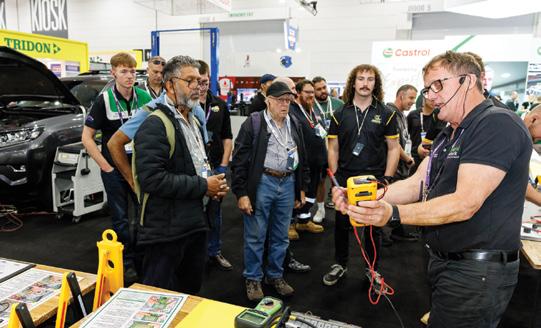
This thought process was part of our focus at the Diagnostic Discovery Zone we ran at the Australian Auto Aftermarket Expo (AAAE). Jeff Smit, the TaT Tech Team and I all had a great time getting involved and it was fantastic to see so many people attend, ask questions and get involved with the displays.
The best discussions came when a fault, test method and result were in front of people because the conversation could move past the reading itself and into what the reading actually proved.
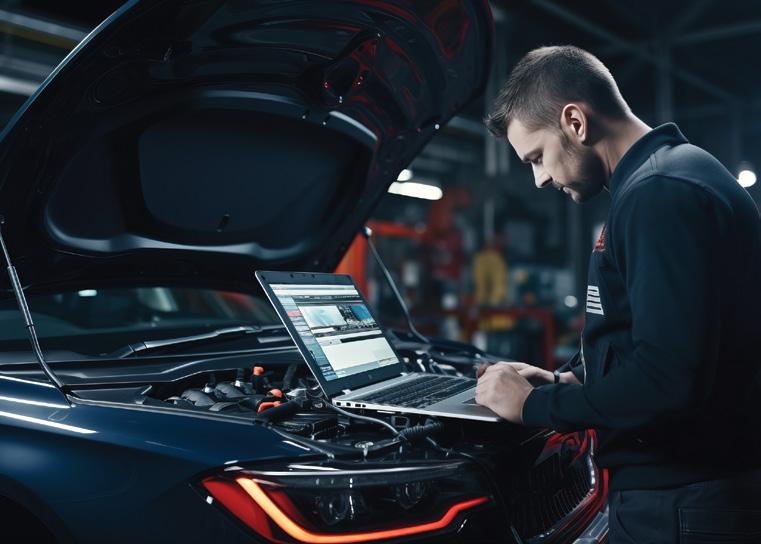
That mirrors the better parts of real workshop diagnosis. A waveform might look wrong but why is it wrong? A circuit might show voltage but can it carry load? A scan tool value might be out of range but is the sensor lying, the engine condition wrong or is the control unit making a decision we have not yet understood?
It was also good to see owners, apprentices, experienced technicians and front-office staff all looking at the process from different angles. The more the whole workshop understands what is involved in a proper diagnosis, the easier it becomes to charge for that time, explain it to the customer and avoid turning a hard job into an expensive guessing exercise. This edition continues that theme. The articles are focused on the type of thinking, testing and workshop decision-making that modern vehicles now demand. Some jobs can be handled with a good all-makes scan tool and clear process. Some need OE information, pass-thru access, remote support, specialist equipment or a decision to refer the job before it becomes commercially silly.
With the whirlwind of AAAE now behind us, I’m looking forward to Wire & Gas 2026, which runs in Brisbane from Friday, July 31 to Sunday, August 2. This is a joint Automotive Air-Conditioning, Electrical and Cooling Technicians of Australasia (VASA) and TaT event and it’s shaping up to be a great weekend of training, discussion and industry interaction.
We have a strong line-up of trainers and I’m looking forward to seeing TaT members there, meeting people face to face and having the sort of technical conversations that are hard to replicate online. Events like this are a good reminder that while the trade is getting more complex, there are still plenty of people willing to share information and help lift the industry. If you can make it to Brisbane, I strongly encourage you get a ticket and come along for a beer in the heated pool’s swim-up bar. It’s set to be a very worthwhile weekend and we’d love to see you there.
Jeff Smit
Jeff Smit explores the future of ADAS and what the AAAE ADAS Discovery Zone revealed about where the industry is heading.
Advanceddriver-assist system (ADAS) technology is no longer confined to premium vehicles, flagship models or the latest electric vehicle (EV) platforms. Today, ADAS features are appearing across an increasing share of the Australian car parc, from passenger vehicles and SUVs to light-commercial applications.
For the independent aftermarket, that shift is substantial. ADAS is no longer a niche technical subject on the periphery of workshop activity – it’s becoming a routine and increasingly critical part of modern diagnostics, repair planning and quality assurance.
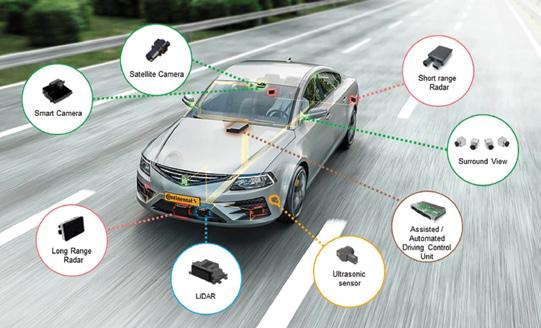
Systems such as autonomous emergency braking, adaptive cruise control, lanedeparture warning, lane-keep assist, blindspot monitoring, rear cross-traffic alert and traffic-sign recognition are now common across many mainstream vehicle brands.
These functions rely on a network of forward-facing cameras, radar and ultrasonic sensors and electronic control modules, all working together to detect lane markings, measure following distance, monitor adjacent traffic and interpret the vehicle’s surroundings in real time. For technicians and workshop owners the
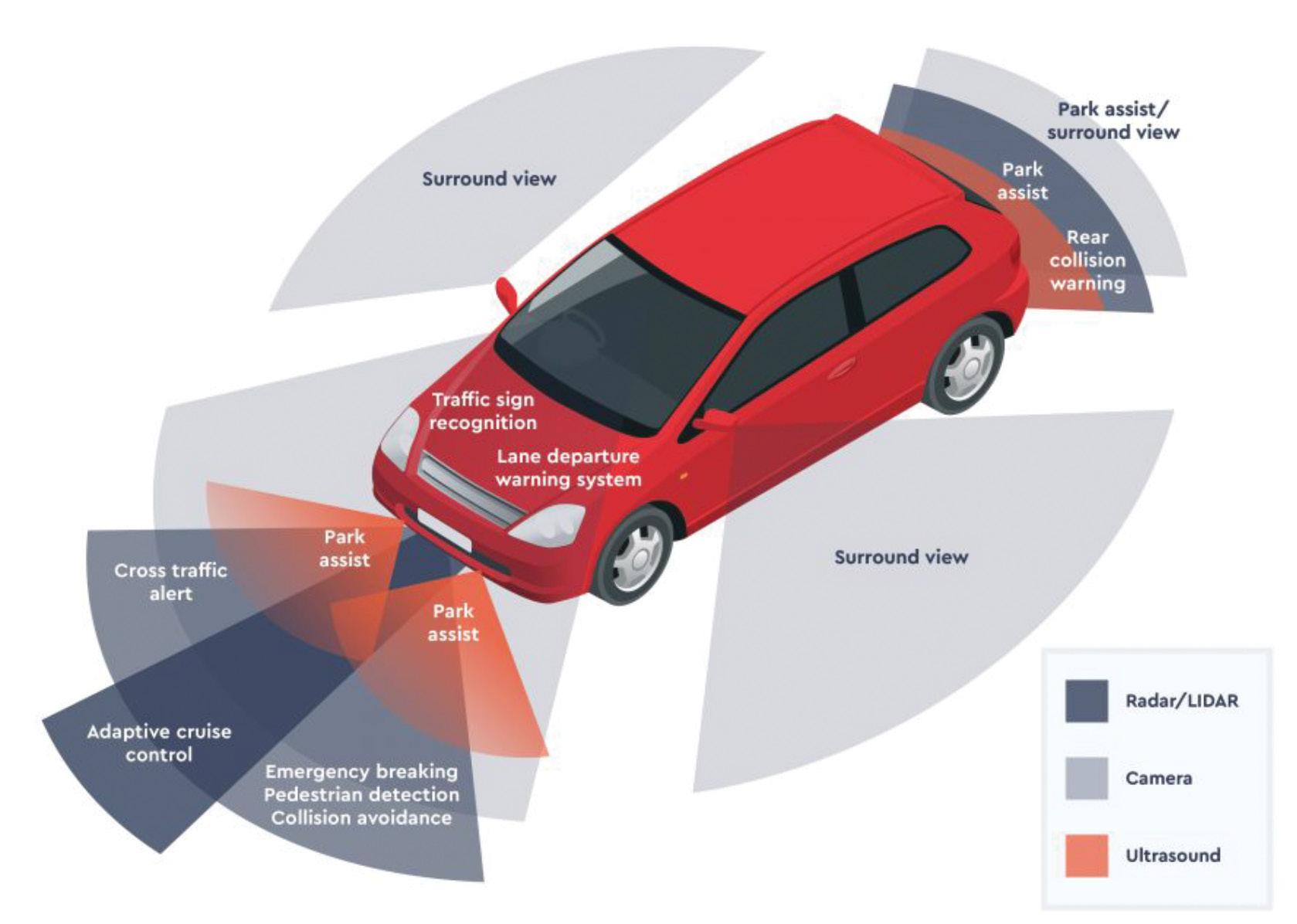
significance of ADAS lies in the precision these systems demand. Unlike many traditional components, ADAS performance depends not only on correct installation but precise positioning, vehicle geometry and successful calibration.
A seemingly straightforward repair can alter how a sensor sees the world. Windscreen replacement, wheel alignment, suspension and steering repairs, ride-height changes, tyre replacement, subframe removal and even minor collision damage can all affect system performance. If calibration is overlooked or performed incorrectly, the result may be fault codes, degraded functionality or unsafe operation.
That’s why ADAS can no longer be viewed as a specialist service reserved for a small number of repairers. It’s becoming part of standard workshop procedure.

Increasingly, it is not enough to complete a mechanical repair, clear any stored faults and road-test the vehicle. Workshops must determine whether the work carried out has affected an ADAS-equipped component or the supporting geometry and whether an OEM-specified static or dynamic calibration procedure is required before the vehicle is returned to the customer.
This is where workflow discipline is as important as tooling. Effective ADAS servicing begins with identification –confirming which systems are fitted, consulting manufacturer service information and understanding the triggers for recalibration. Pre-scan documentation is essential to establish the vehicle’s condition on arrival and identify pre-existing faults. Post-repair scanning is equally critical but scanning alone is not enough. Successful calibration may depend on factors such as tyre pressures, ride height, steering centring, vehicle loading, floor level, ambient lighting, target placement and the amount of controlled space available in the workshop. In other words, ADAS is not simply about buying a scan tool or calibration frame. It’s about process, repeatability and technician competency. Workshops need to understand the limitations of their equipment, the vehicle manufacturer’s requirements and the circumstances in which work should be referred or outsourced.
That’s a major operational shift, particularly for independent businesses balancing cost, throughput and liability. It also raises broader commercial questions. As more vehicles enter workshops with integrated
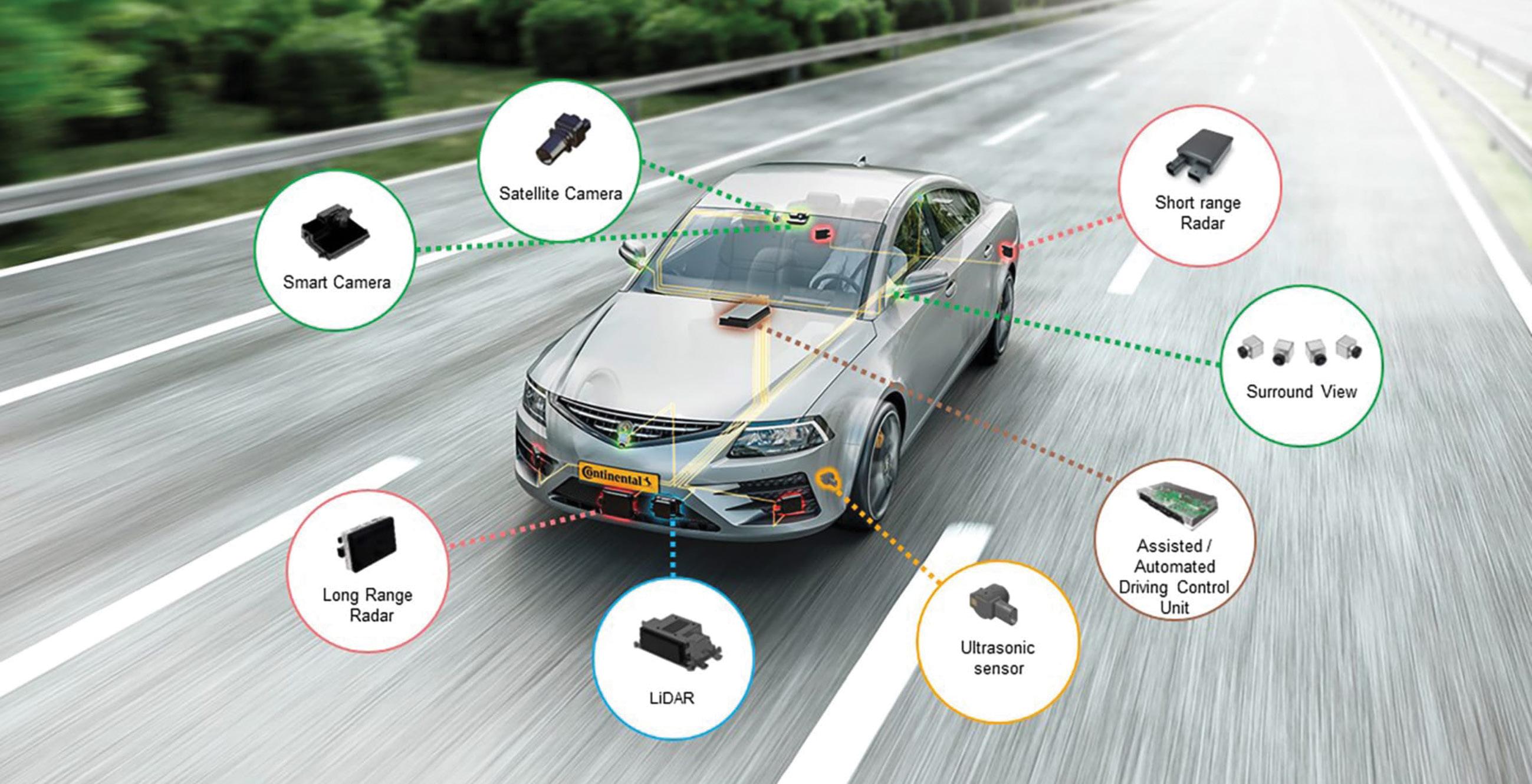
driver-assistance systems, businesses must decide whether to invest in inhouse calibration capability, partner with specialised providers or adopt a hybrid approach.
They must also consider technician training, workshop layout, equipment selection, documentation standards and insurance implications. ADAS is creating new service opportunities but it’s also demanding a higher level of procedural accountability than many businesses have previously needed to maintain.
This is why the Australian Auto Aftermarket Expo (AAAE) ADAS Discovery Zone was
as busy as it was. It gave technicians a practical opportunity to engage with ADAS in workshop terms rather than in a theoretical discussion of technology.
For many technicians in the trade, the challenge isn’t recognising that ADAS matters – it’s understanding exactly what that means in day-to-day operations.
The Discovery Zone helped bridge that gap by focusing on real-world service implications – which systems are fitted to modern vehicles, why calibration is necessary, how the process works and what infrastructure is needed to perform it correctly.

Just as importantly, it helped separate market hype from workshop reality. ADAS is often discussed in broad, future-focused terms yet on the workshop floor the issues are immediate and highly specific. Does the repair require recalibration? Is static, dynamic or combined calibration required? Has the workshop environment been prepared correctly? Is the target positioned to specification? Has the procedure followed OEM instructions? Is the repair documented well enough to protect both the business and the customer?
These are the questions that matter in practice and they are exactly the issues the industry needs to understand more deeply. Looking ahead, ADAS will become increasingly prevalent and complex. Sensor fusion will continue to improve. Software integration will deepen. More safety features will become standard across entry-level and mid-range vehicles, not just high-end models.
This means workshops will see more calibration events, greater brand variation and more post-repair validation requirements. Businesses that respond early – by investing in training, process development and a realistic assessment of capability – will be far better positioned to manage risk and capture the opportunities that come with this growing area of work. For the trade, the message is clear. ADAS is not a future issue waiting on the horizon. It’s already reshaping the present-day service and repair landscape. The real question is not whether workshops will encounter ADAS but whether they’re ready for what comes next.
Brendan Sorensen
Why condemning the module is only half the job
Ano-communication fault can look tidy on a scan report. One module missing, a handful of U-codes around it, maybe a related warning on the dash. It’s easy for the job to become a parts decision too early, especially when the vehicle is tying up a bay and the customer wants a clear answer.
The harder question is whether the controller has failed or whether it’s only the most obvious casualty of something around it. Low voltage, a weak ground, a shorted actuator, water in a connector, a biased controller area network (CAN) line or a collapsed 5V reference can all make a good module look guilty.
Even when the module is eventually proved faulty, the work does not finish at condemnation. The next decision is how to put the vehicle back together without losing data, skipping set-up, creating a security issue or setting up a comeback.
Power, ground and network checks before condemning a controller
A high-impedance multimeter can flatter a bad circuit. A feed that shows battery voltage with no load may collapse when the module wakes, a relay closes or a pump runs.
On a suspect module supply, test at the module connector where practical, load the circuit with a suitable current draw for that feed, then voltage-drop the supply and ground sides while the circuit is working. The useful result is not just voltage present. It is proof the circuit can carry current without the module becoming the return path.
Ground testing deserves the same treatment. A poor eyelet, corroded splice or loose body ground can leave enough continuity for a good ohmmeter reading while it is still a fault under load.
Measuring with one lead at the module earth pin and the other on ideally the battery earth (or chassis earth if battery-
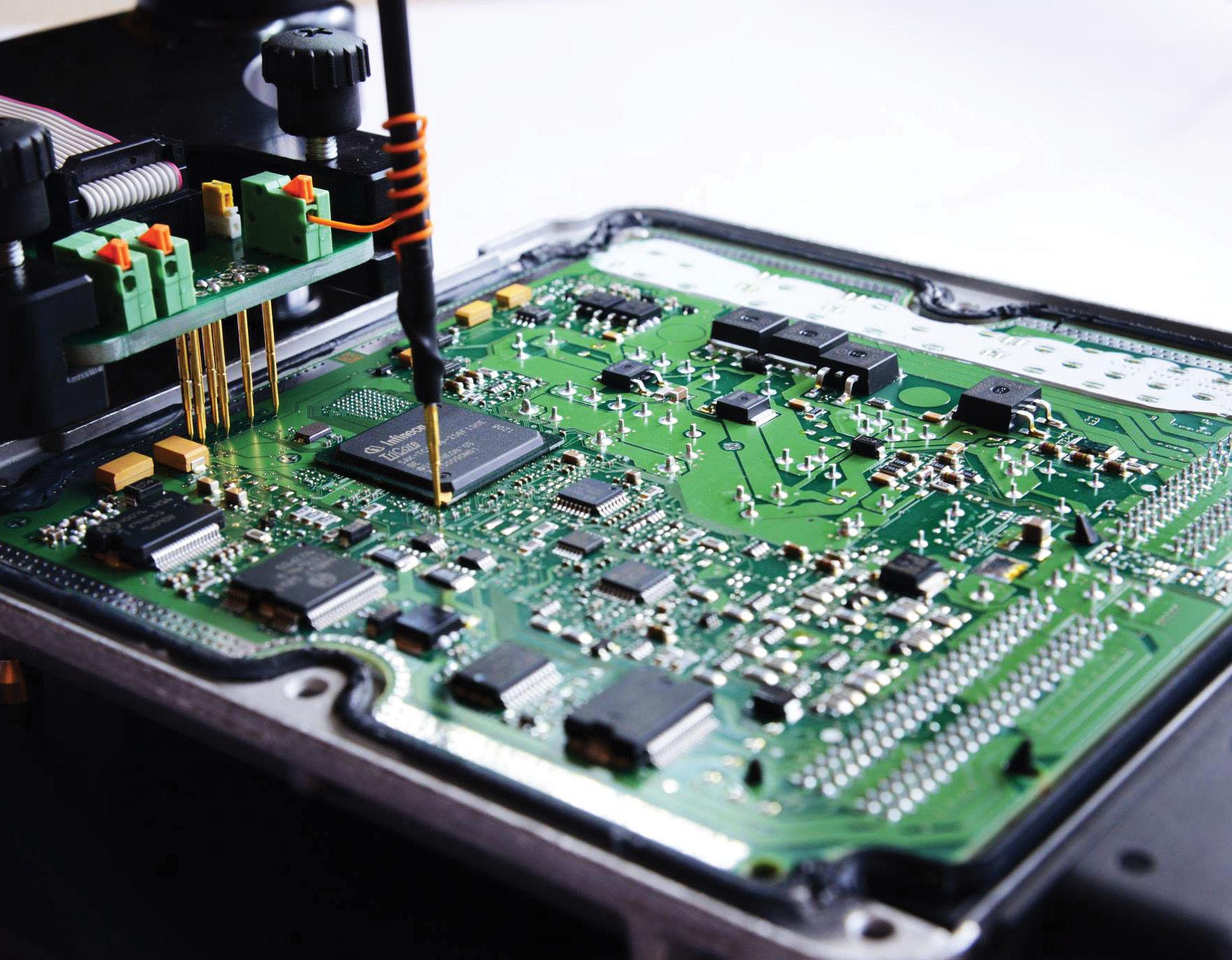
to-chassis voltage drop has already been confirmed good) treat anything over roughly 100 millivolts (mV) on a low-current module with no actuator outputs as suspect. For high-current modules with many actuators, anything climbing toward 300mV or more is a fault worth fixing before condemning the controller.
Network testing also needs more than a resistance check at the diagnostic link conntector (DLC). A 60-ohm reading is a useful starting point on a conventional highspeed CAN pair but it does not prove the bus behaves correctly when awake and is likely not looking at networks that only exist on the other side of a gateway module. Scope network pins at the module and look for normal bias and differential activity. A line held high, pulled low, mirrored incorrectly or heavily distorted points toward a bus fault, transceiver issue, wiring problem or another module corrupting the network. Where safe and accessible, isolating the suspect controller and watching whether the bus recovers can separate a failed module from a module that is simply unable to communicate.
Wake-up states, loads and shared references
Some modules look dead because they were never properly invited to wake up.
Before calling the controller, check the ignition feed, wake-up feed, enable line or network wake condition the system relies on. A module with permanent power and ground may still stay silent if the wake-up input is missing or the gateway has not commanded it awake.
Output-stage failures need a different mindset. If a controller driver has failed on an injector, solenoid, relay coil, motor or actuator circuit, the external load has to be proved before the replacement unit goes near the vehicle. Check resistance against specification, then look for harness rub-through, intermittent shorts during movement, water in connectors, abnormal current ramp or a relay coil drawing more current than expected. A new or repaired module fitted into the same shorted load can be damaged immediately.
Multiple implausible sensor codes can create another false path. On engine and transmission controllers, a short on one branch of a shared 5V reference can make several unrelated sensors disappear together. Measure the reference at the controller and at accessible sensors, then isolate branches in a controlled sequence. If unplugging one sensor or harness branch brings the reference back, the module was probably not the cause.
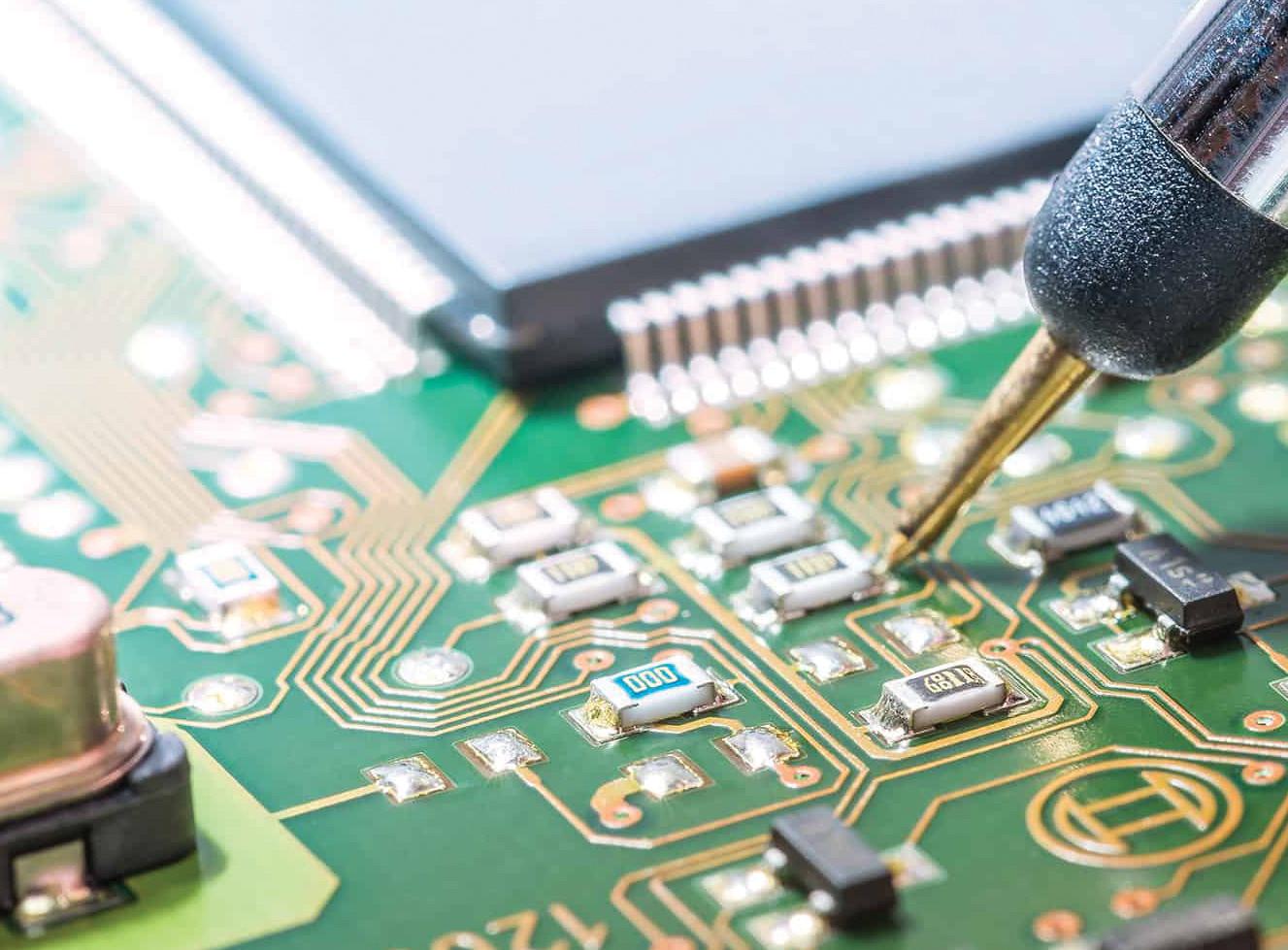
Once the controller is genuinely condemned, the original unit still matters. On some platforms it may carry vehicle ID number (VIN) related identity, variant coding, immobiliser relationships, learned values, programmable module installation data or simply a useful reference against the replacement. Removing it too early, sending it away without records or losing the chance to read it can make the rest of the job much harder.
Before the unit leaves the car, save what can be saved. That may include pre-scan
and post-scan reports, part numbers, software numbers, coding strings, configuration screenshots, freeze-frame data, immobiliser or key status where legitimately available and any OE-guided data-copy routine. The point is to check the procedure while the original unit is still available.
Original-unit repair can be attractive when the failure is localised and the unit’s identity is valuable. A dry module with a known board-level power-supply fault, outputstage issue or solder-fatigue pattern may be a reasonable repair candidate if the external cause has been corrected and the repairer can test it properly.
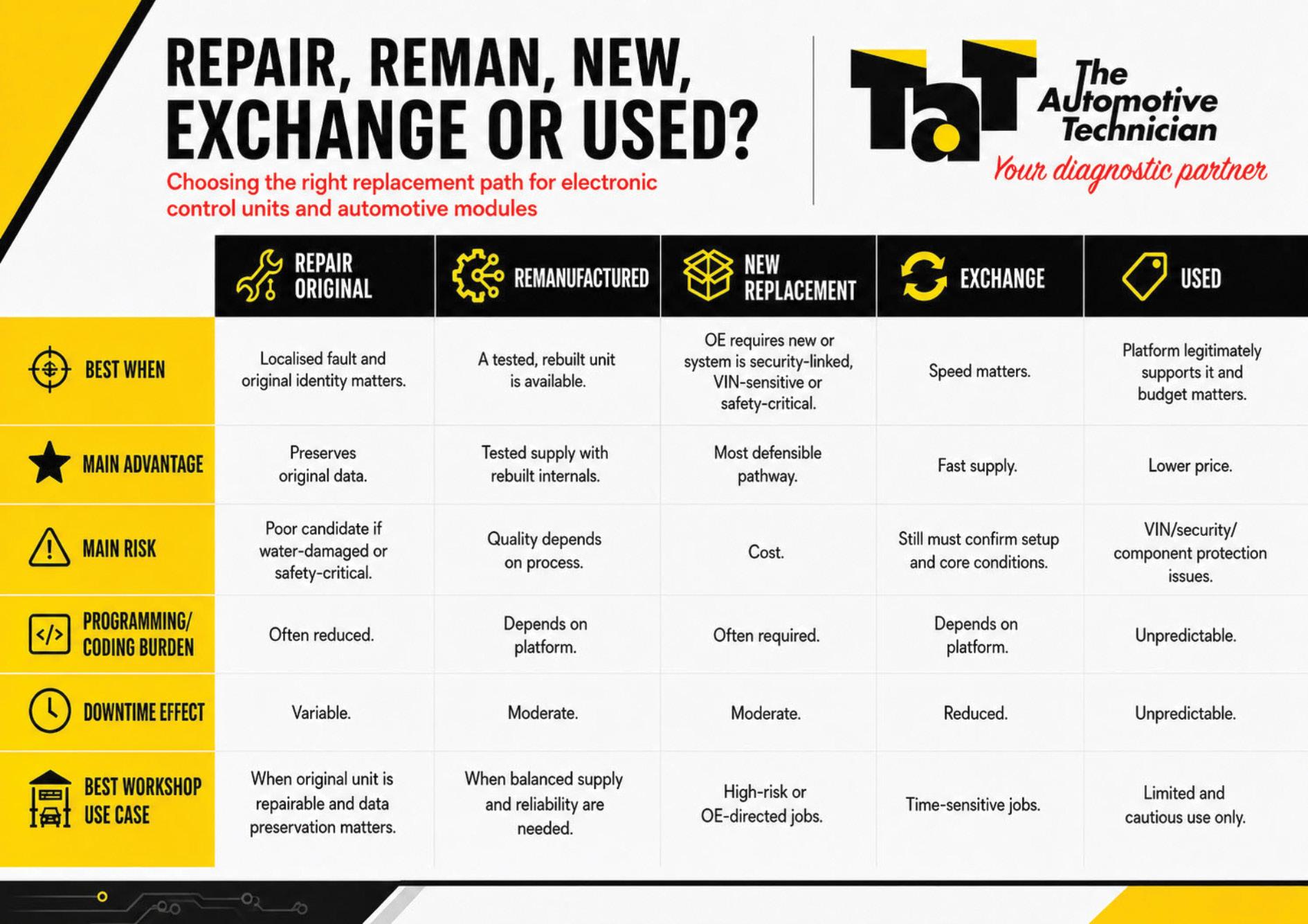
Repairing the original unit suits known failure patterns where the cause is understood and preserving identity reduces downstream work. Remanufactured units can be strong when the supplier process is traceable, tested and clear about what has been renewed.
New replacement is obviously a great choice for new-part longevity but it is important to research what is involved in getting that unit operational in the car to ensure your tooling, software or outsourcing stack will be up to the task.
Exchange is mainly a convenience factor. It gets a stocked unit into the workshop sooner and the old core goes back later. That can be the right answer when downtime matters but it still needs checks around configuration, part number, programming and core return conditions. Used modules require the most caution. Some platforms accept them with the correct procedure. Others will not, especially where VIN locking, immobiliser data, component protection, gateway relationships or variant identity are embedded. A used unit that plugs in may still create a no-start, missing functions, rejected coding or an awkward handover. Aftermarket software and procedures are always improving. It is a cat and mouse game as old as time for manufacturers to make fitting a used module ‘impossible’ and for the aftermarket to formulate a way to do it. But there are certainly modules that just cannot be done or at least aren’t worth the extreme time and effort required to provide a used-module solution.
The replacement stage is where a physically correct module can still leave the vehicle unfinished. Depending on the system, the job may require programming, coding (configuration), immobiliser registration, steering-angle zero, transmission adaptation, radar or camera calibration – the list is getting longer by the day and could fill this magazine.
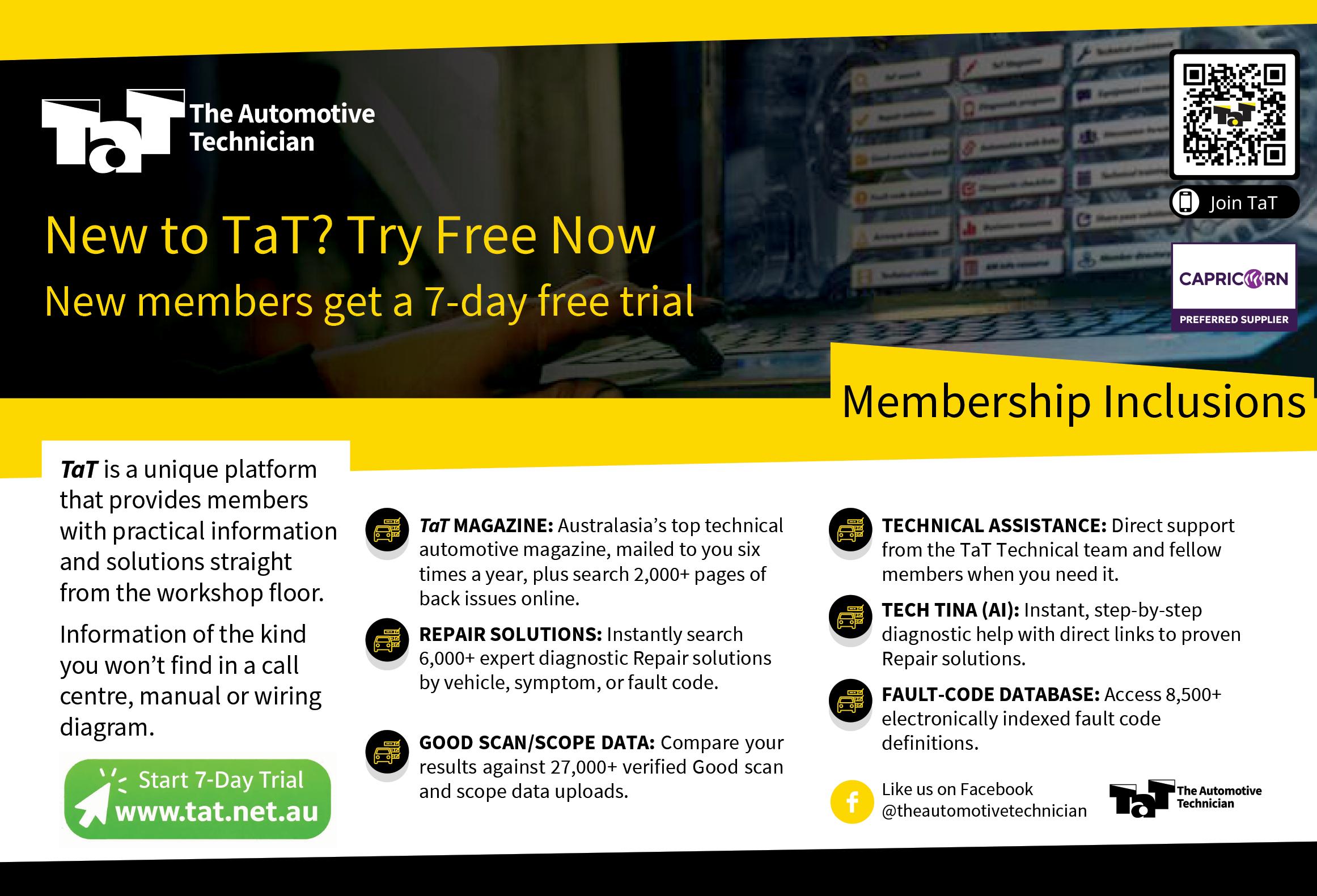
During a flash, guided set-up or long initialisation, the vehicle may hold multiple networks awake and trigger fans, pumps, relays or other current loads with the engine off. A charger that was designed to recover a battery is not the same as a stable support supply for a session-critical procedure. Battery chargers provide very dirty power with large voltage ripple, whereas a proper piece of battery-support equipment is
nice, clean ripple-free voltage. If voltage sags or spikes during writing, you are playing Russian roulette for a damaged module
Proof before handover
A module job should leave a trail another competent technician could understand –why the original unit was condemned, what power, ground, network, reference and load checks were done, what root cause was repaired, what part path was chosen and what set-up or calibration steps were completed.
That evidence also improves the customer conversation. Repair versus replacement is not just a price comparison. It affects downtime, coding risk, freight, security access, calibration, warranty exposure and the chance of the car returning with the same fault.
When these jobs go well, it is usually because the decision was slowed down before the part order, not because someone got lucky after the part arrived. Keep the failed unit until you know whether it is needed for coding, copy data or comparison. Spend the $20 or so to access
OE information to give you the full picture of what replacement involves, allowing you to write the quote around the full finish, not just the physical swap, potentially saving you hundreds in unknown, unquoted procedures.
The car should leave with the fault fixed, the system commissioned and enough evidence on the job card that the next technician can see exactly why that module was condemned and why the chosen repair path made sense. g
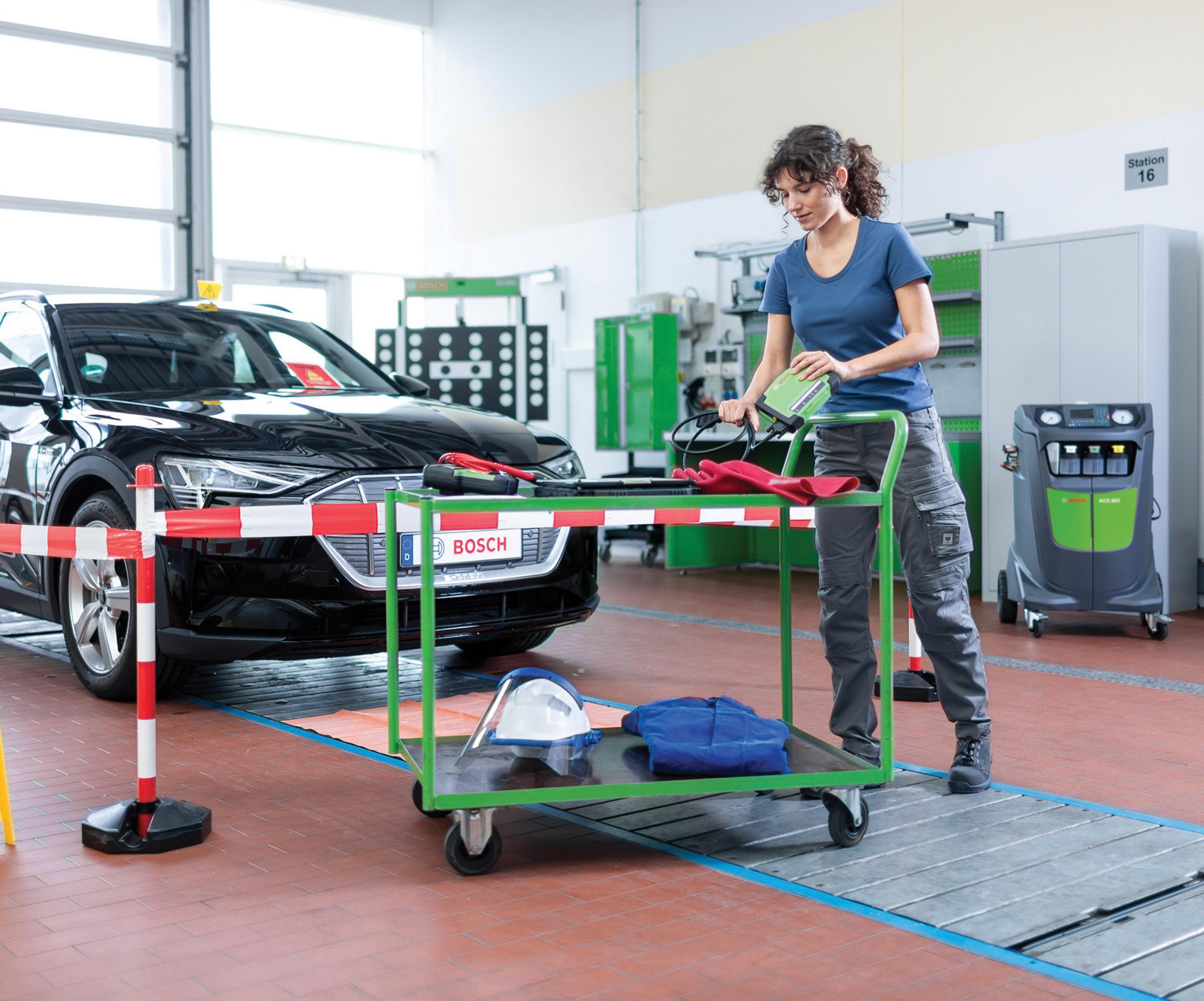
As vehicle technology evolves, workshops need diagnostic equipment that keeps pace.
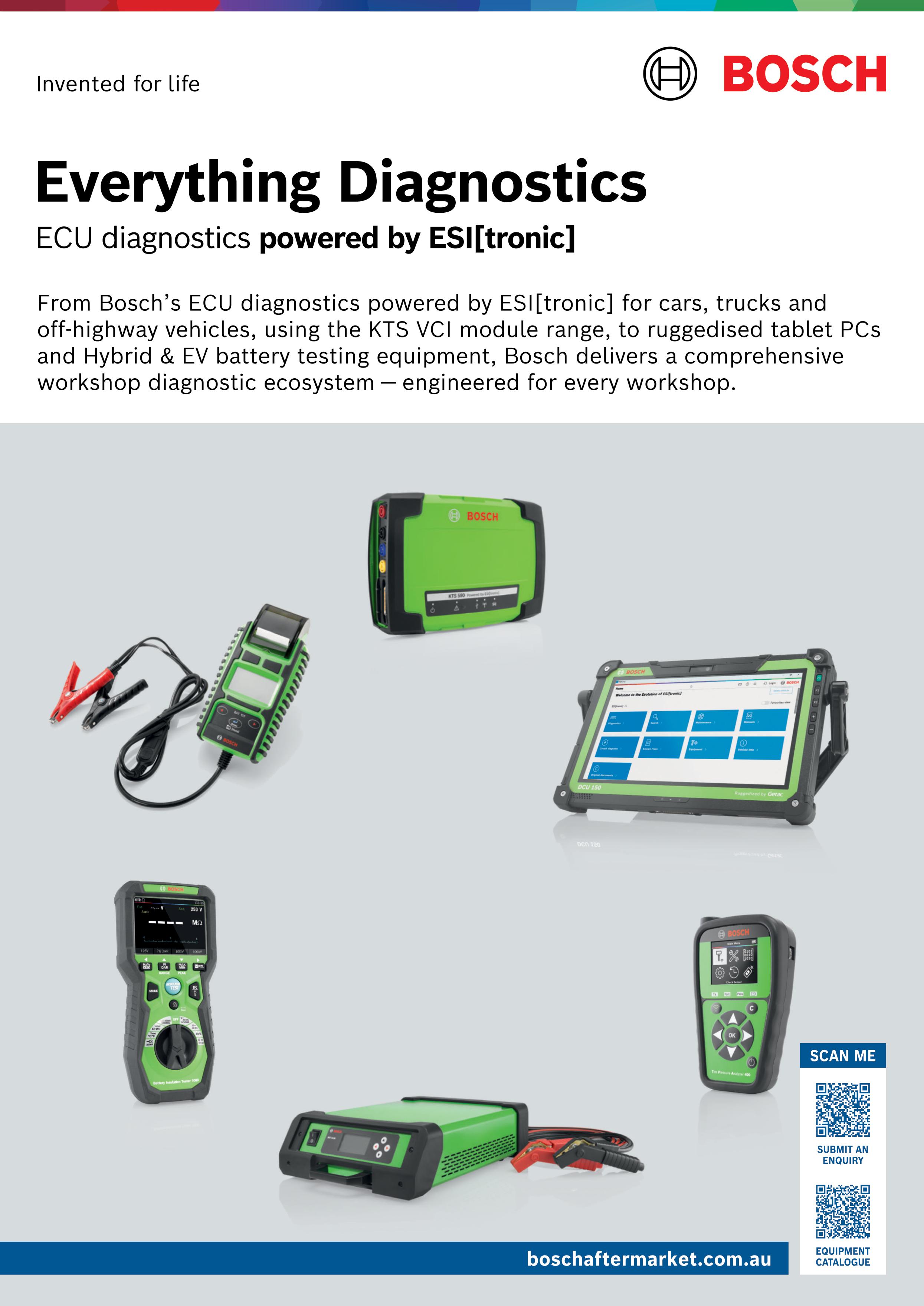
Bosch continues to offer workshops a comprehensive diagnostic ecosystem designed to support today’s increasingly complex passenger, hybrid and electric vehicles (EVs).
At the centre of the Bosch diagnostic range are the trusted KTS 560 and KTS 590 diagnostic interfaces, powered by ESI[tronic] software. Both are designed to deliver fast, accurate ECU diagnostics with extensive multi-brand vehicle coverage, giving technicians the confidence to identify faults quickly and efficiently. But modern diagnostics go beyond ECU
scanning alone. Bosch also provides workshops with a comprehensive suite of diagnostic and testing solutions, helping technicians perform electrical analysis, battery testing, charging support and tyre-pressure monitoring system (TPMS) servicing with one trusted brand. Bosch diagnostic solutions include:
• Bosch KTS 590/560 – Advanced ECU diagnostics with broad vehicle coverage
• New DCU 150 Ruggedised Tablet PC
– Mobile diagnostics built for workshop durability
• New BIT 1000 – High-voltage insulation tester for hybrid and EV battery systems
• BAT 135 Battery Tester – Tests 6V and 12V batteries plus 12V and 24V charging systems
• BAT 6120 Battery Charger and Maintainer – High-performance charging with 120A power-supply support
• New Tyre Pressure Analyzer 400 –TPMS programming and diagnostic solution
Combined with Bosch battery testing and charging equipment, workshops can streamline workflow, improve productivity and confidently service modern vehicles from bumper to battery.
Equip your workshop with Bosch diagnostic technology built for the vehicles of today –and tomorrow.
• Find out more at boschaftermarket. com.au or submit an enquiry to speak to Bosch distributor at bosch-ma.com/ diagnostic-enquiry
Jeff Smit
As workshops across Australia and New Zealand take on battery electric vehicle (BEV), hybrid electric vehicle (HEV) and plug-in hybrid electric vehicle (PHEV) servicing and repairs, highvoltage (HV) battery work is now coming into play.
The car parc is now large enough that battery durability, fault patterns and replacement economics are becoming workshop issues rather than theoretical ones. In the first quarter (of 2026, Australia saw a record-breaking surge in BEV and HEV/PHEV sales, largely driven by rising fuel prices and global supply concerns, while New Zealand passed 100,000 total new BEV and PHEV registrations in early 2026.
Add in our region’s very large hybrid population and it is clear that more independent workshops will be asked to test, diagnose and, in some cases, replace or repair HV batteries.
The encouraging news is most HV batteries appear to be holding up better than early sceptics expected. Geotab’s latest analysis, based on more than 22,700 EVs, found average battery degradation of 2.3 per cent per year. That is not negligible but it is also not catastrophic. It suggests that, in normal service, many packs will still retain a useful level of capacity well beyond the warranty window.
Geotab also found that the biggest enemies remain exactly what technicians would expect – heat, high-power DC fast charging and severe duty cycles. In other words,
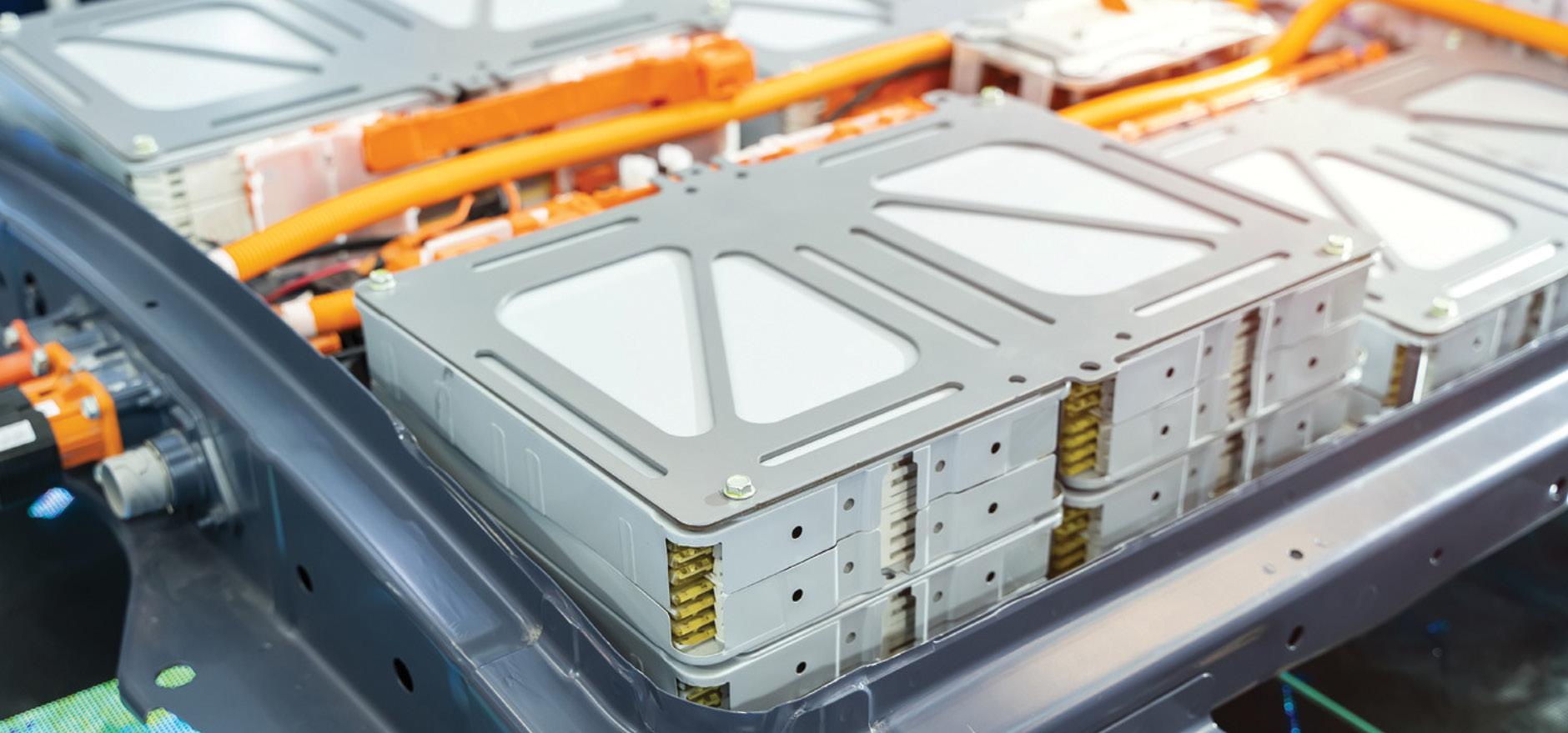
the chemistry is proving durable but the operating environment still matters. Warranty terms back that up. Toyota Australia offers up to 10 years of tractionbattery cover for HEV, PHEV and BEV systems when the vehicle is maintained to schedule and receives an annual batteryhealth check. Hyundai Australia provides an eight-year HV battery cover, BYD Australia offers eight years/160,000km on its traction battery and Tesla New Zealand lists eight years with a minimum 70 per cent capacity retention threshold for many Model 3 and Model Y variants, depending on the model and kilometre limit.
Manufacturers do not write those terms because they expect routine early pack failure – they write them because field data now supports treating batteries as long-life assemblies.
That said, holding up well does not mean every battery ages the same way. New Zealand’s long history with imported Nissan Leafs remains a useful reality check for
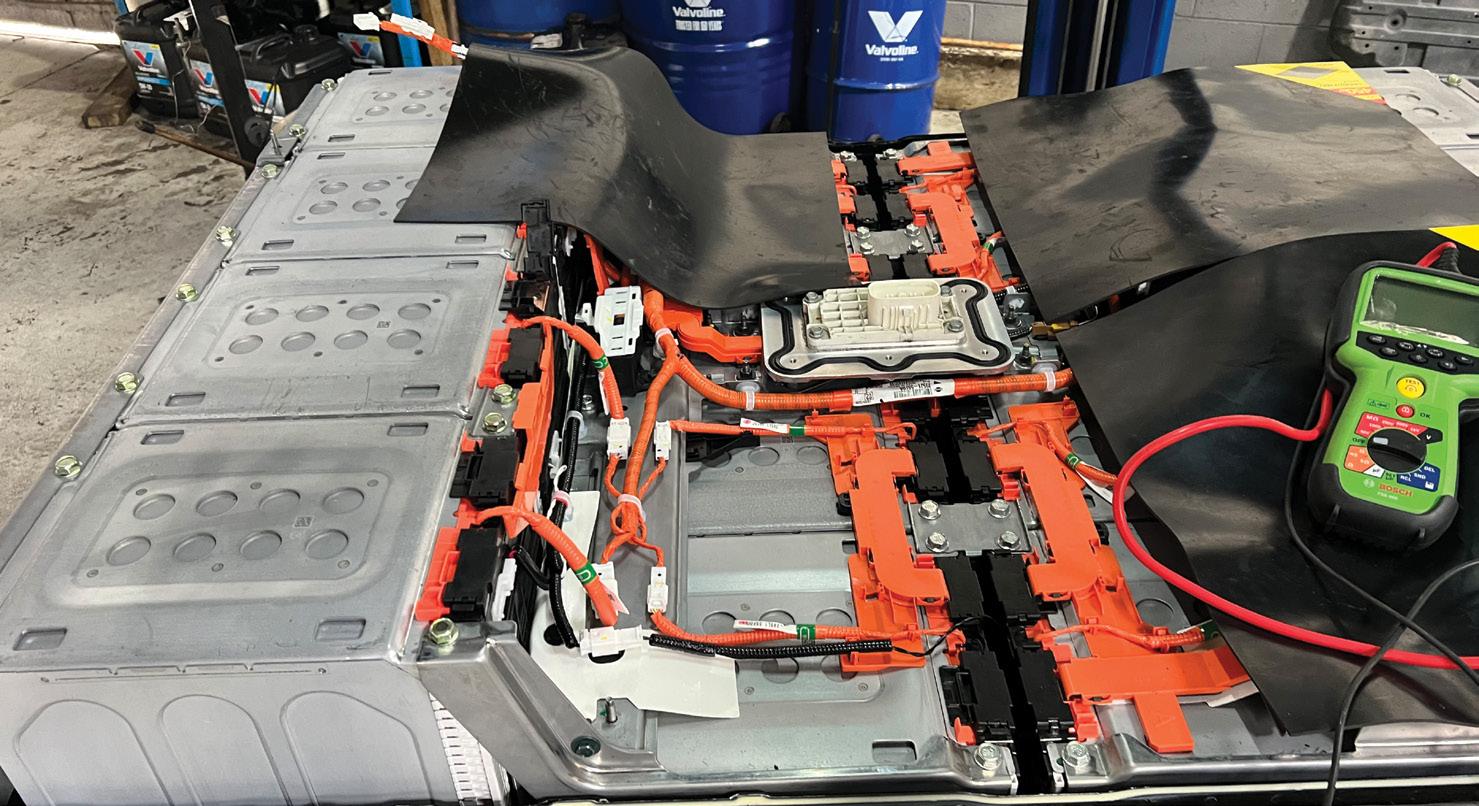
the trade. Flip the Fleet’s work highlighted unexpected battery health loss in some 30 kilowatt-hour (kWh) Leafs, and later reporting showed that battery-controller firmware and state-of-health (SoH) reporting could distort the picture.
That is a valuable lesson for any technician –do not base a diagnosis on a single batteryhealth number. A scan tool can point you in the right direction but battery diagnosis still needs to consider diagnostic trouble codes (DTCs), cell-pair balance, temperature spread, isolation status, contactor behaviour, cooling-system condition and the customer’s real-world complaint. The job is to diagnose the pack as a system, not just read out a percentage.
This is where safety and process become central. In Australia, Australian Standard (AS) 5732:2022 sets out safety requirements and guidance for maintaining and repairing EVs, including work on HV systems. The Australian Competition and Consumer Commission’s (ACCC) Motor Vehicle Information Scheme also provides independent repairers and training organisations with service and repair information, software updates and computersystem codes for covered vehicles. That is a major step forward.
But the trade still faces practical barriers –the Australian Automotive Service and Repair Authority (AASRA) says some automakers require EV certificates to access certain service information and it has acknowledged that HV safety-training options have been limited.
In New Zealand, the response is more visible in the training pipeline, with Level 5 EV automotive-engineering programmes focused on diagnosing and repairing batteryelectric and hybrid faults.
The direction of travel is clear – battery work is increasingly possible outside the dealer network but only for workshops that invest in training, tooling and disciplined procedures. Are HV batteries repairable? In many cases, yes – but not always as owners imagine.
Hybrids are usually the most practical to repair because the aftermarket is mature and failure patterns are better understood. Depending on the model and battery type, the workshop may have several options –cleaning and restoring the battery-cooling path, repairing ancillary faults, replacing failed sensors or busbar hardware, performing module-level repair or fitting a complete replacement pack.
BEVs are more mixed. Some faults lie outside the cell stack and can be repaired at the component level. Others may push the job towards pack replacement, specialist remanufacture or referral.
The important point is that ‘repairable’ is not a universal yes or no. It depends on chemistry, pack design, OEM procedures, software-pairing requirements, parts access and the workshop’s own capability.
That is also where aftermarket replacement options are becoming increasingly important. In Australia and New Zealand, Infinitev supplies remanufactured and new aftermarket hybrid batteries through authorised fitters and says its grading and rebuilding process is independently certified by the National Transport Research Organisation (NTRO), with batteries built in ISO9001-certified facilities in both countries.
In New Zealand, EVs Enhanced in Christchurch offers HV battery swaps and upgrades for older Nissan Leafs, including translator-based upgrade paths. In Australia, specialist businesses such as Dr Hybrid advertise genuine, aftermarket and refurbished hybrid packs for Toyota, Lexus and Honda applications, while EVTech advertises new aftermarket and
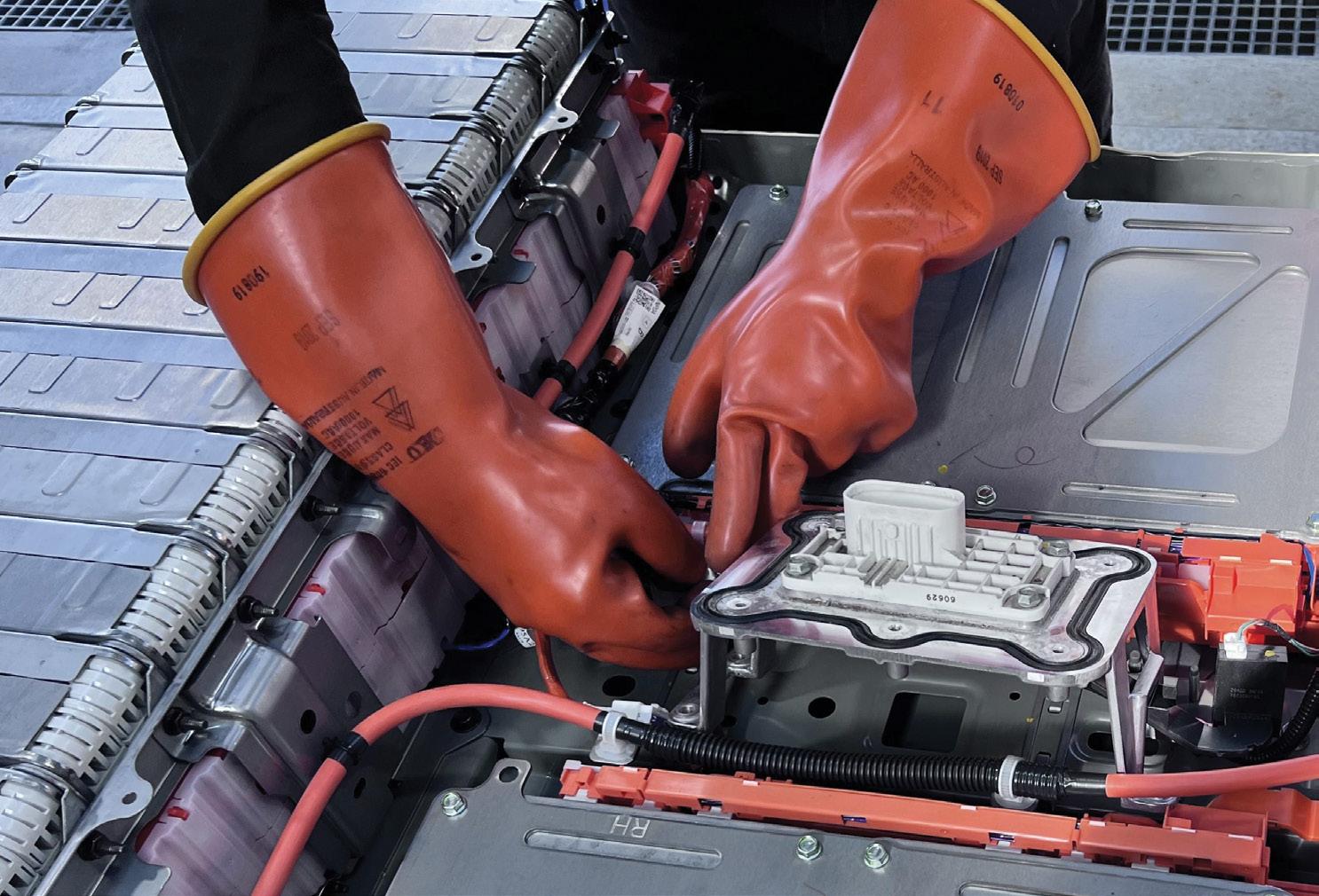
hybrid batteries for Toyota and Lexus.
These examples do not mean every aftermarket battery is equal but they do show independent workshops now have more options than simply quoting a new dealer pack or sending the car to auction.
For workshops and technicians the trick is to distinguish reliable aftermarket solutions from risky ones. A remanufactured pack with documented grading, matched modules, verified balance, clear warranty terms and a safe installation process is one thing, an unknown used pack with a poor history is another.
The same caution applies to salvage batteries and imported replacements. Workshops need to ask hard questions about testing methods, pack traceability, firmware compatibility, thermal management, transport compliance and warranty backing.
The better aftermarket suppliers are already leaning into this by routing installations through authorised fitters and tying product warranty to correct fitment and handling.
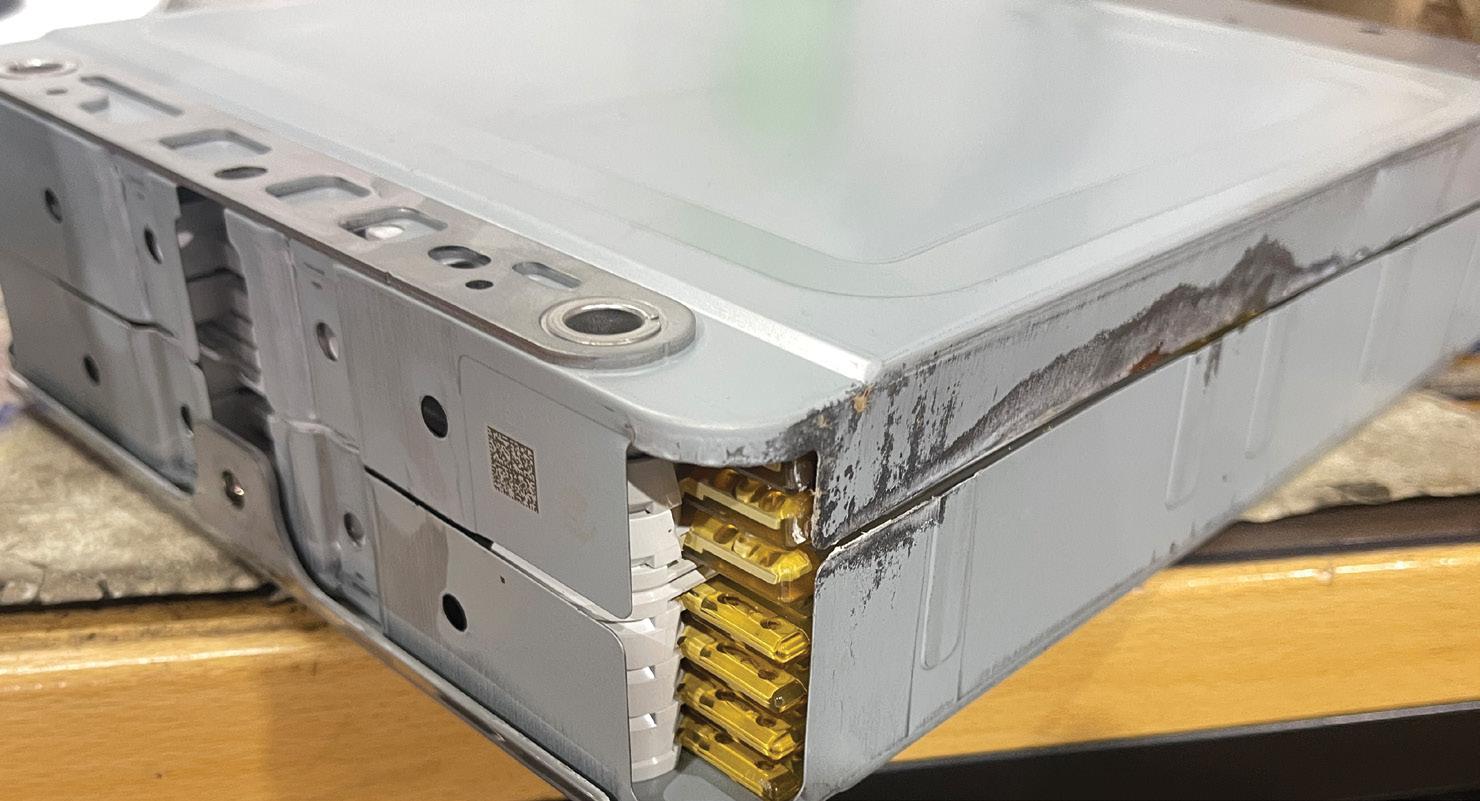
That should be read as a sign of maturity, not inconvenience. HV batteries are not just expensive parts – they are safety-critical energy-storage systems.
End-of-life is another area where the market is maturing. CSIRO says Australia produces around 3300 tonnes of lithium-ion battery waste each year, while Sustainability Victoria, citing CSIRO, reports that only 10 per cent of Australia’s lithium-ion battery waste was recycled in 2021 and that volumes could exceed 136,000 tonnes by 2036. In New Zealand, Counties Energy launched a second-life storage system built from endof-life EV batteries to support EV charging in Waikato.
The relevance for the trade is obvious – a battery that is no longer suitable for a vehicle may still have repair, remanufacture, secondlife or recycling value.
That affects how insurers assess total losses, how workshops approach replacement strategy and how the aftermarket builds a circular economy around electrified vehicles. The bottom line for technicians is this – HV batteries in HEVs and BEVs across Australia and New Zealand are generally holding up well but they’re not magic and they’re not disposable. They respond to good testing, good information and good process.
For workshops the opportunity is real. The businesses that learn how to diagnose battery faults properly, work safely, document condition accurately and choose the right repair-or-replace pathway will be better placed as our electrified fleet keeps growing.
The future battery workshop may still replace complete packs when needed but the smarter workshop will know when a battery is actually failing, when it is merely reporting poorly and when the aftermarket offers a safe, commercially sound alternative. g
Brendan Sorensen
Alate-model diagnostic job can look normal for the first few minutes, then get awkward very quickly.
The scan tool connects, the vehicle ID number (VIN) decodes, the health report builds and the fault list gives you somewhere to start. Then the active test is greyed out, the module map looks thinner than the vehicle build suggests or the guided routine will not initialise.
The scan is still important but it is no longer the whole diagnostic environment. A serious bay now has to manage scan-tool capability, vehicle communication interface (VCI) support, communication protocol, gateway access level, battery support, laptop condition, internet reliability and the decision about whether the job should stay in-house or move to a support path.
The new diagnostic stack is the chain that gets the vehicle from first connection to a verified result without losing control halfway through.
The first scan is a map, not a verdict
A full vehicle scan gives the fastest broad view of the complaint, especially where the symptom crosses powertrain, chassis and body systems. A low-power complaint might appear like an underboost condition but a deeper look at the data may show stability control requesting torque reduction, causing the low boost.
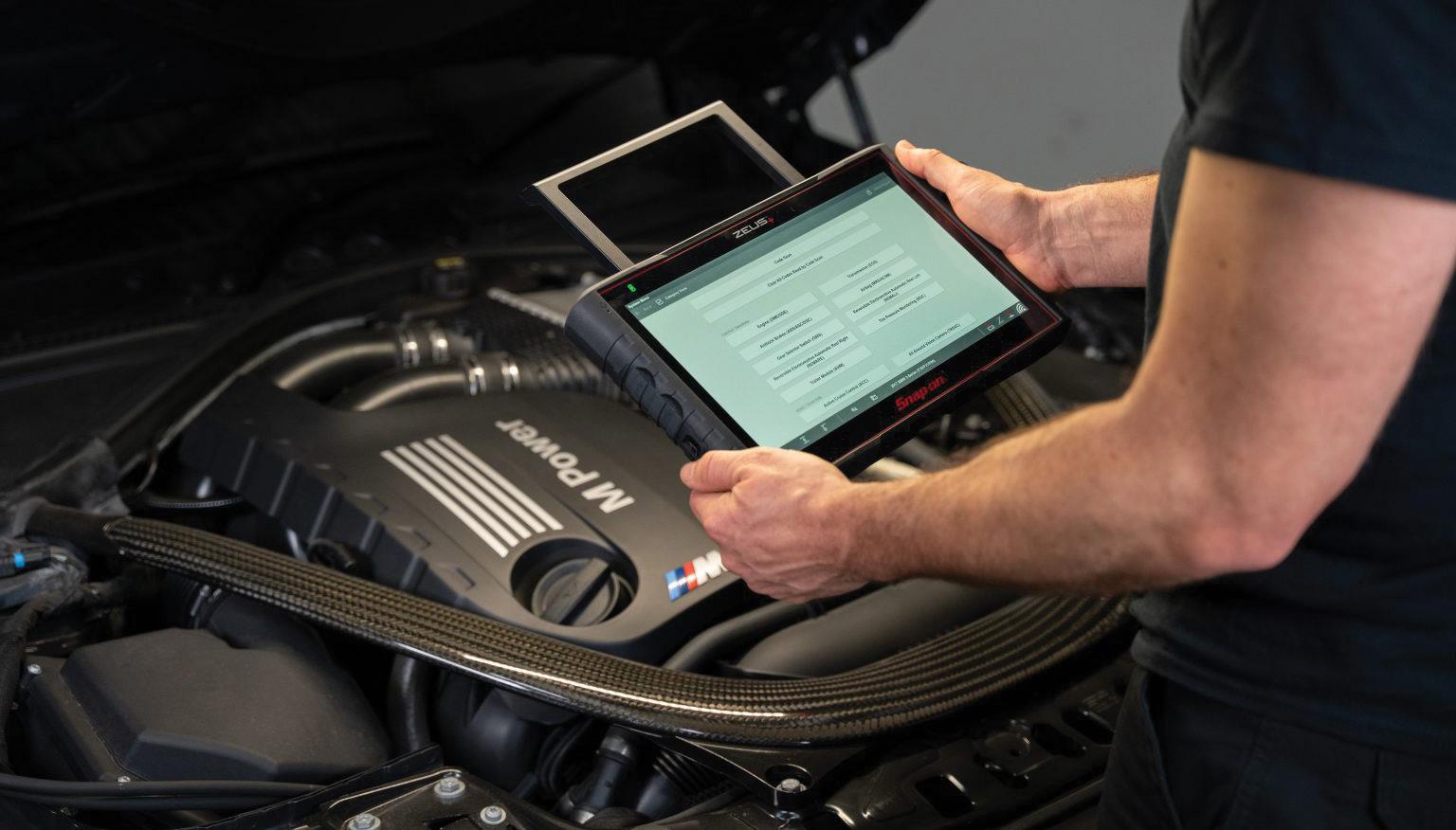
The better question after the scan is often not, ’What part is faulty?’ but, ’What path does this job need?’. The all-makes platform may carry the job through with live data, active tests, guided component tests
and a validated reset or relearn. Another vehicle may need secure gateway access, pass-thru software, a manufacturer portal session or remote support for a procedure the workshop does not sensibly want to own in-house.
A scan report should be treated as evidence and planning material. Save it before clearing anything. Look at which modules are present, which are missing, which diagnostic trouble codes (DTCs) are current and which are history. If the scan doesn’t match the build level of the vehicle, don’t rush straight into component testing. First decide whether you are actually seeing the whole car.
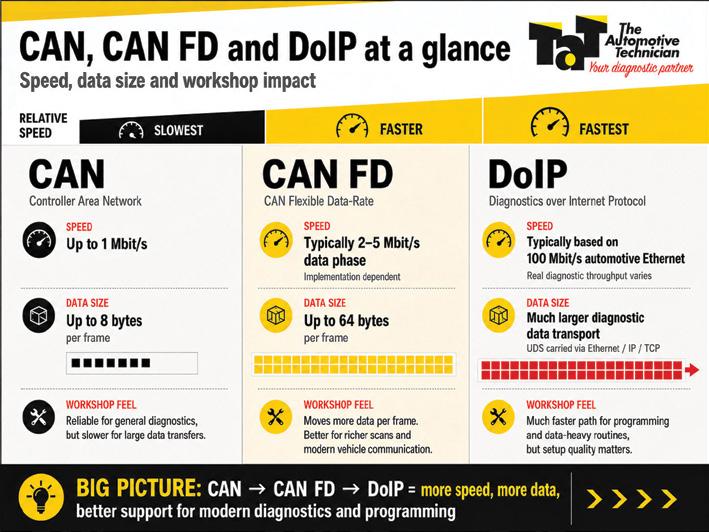
Controller area network (CAN) flexible datarate (CAN FD) is often sold as faster CAN but the workshop value is more specific. Classic CAN carries up to eight bytes of data in a frame. CAN FD can carry up to 64 bytes, with the data phase running faster once bus arbitration is settled. That extra payload matters when a gateway is handling richer diagnostic data, software events or higher network traffic.
A tool or interface that is weak on CAN FD support may still talk to enough of the vehicle to look useful. It may read the ECU, display rail pressure or boost pressure, and clear that module’s codes while missing modules or routines sitting behind a gateway. On a driveability job, that can
leave the technician watching powertrain data while missing the body, chassis, gateway or energy-management input causing torque reduction.
When the scan looks thin or the topology doesn’t match the vehicle, confirm the scan tool and VCI support the network properly. Check whether updated tool software or a specific adapter are required.
When a genuine network fault is suspected, check supply and ground to the missing module and verify communication at the module’s connector with a scope rather than relying only on resistance at the data link connector (DLC), which can be deceiving if the DLC has to pass through a gateway to access the network.
Diagnostics over Internet Protocol (DoIP) is not diagnosing the car over the public internet. It is diagnostic communication running over ethernet-style networking inside the vehicle architecture, usually through a gateway that identifies the tester, opens the session and routes requests to the modules behind it.
The vehicle may identify normally, then the tool refuses to start the routine, drops out partway through or asks for a different connection method before continuing. On a longer routine or software event, a gateway or module may reset during the process. If the tool, VCI and laptop don’t reconnect cleanly afterwards, the problem can look like a vehicle fault when the real issue is the set-up.
Before a DoIP-equipped vehicle routine or
programming event, treat the set-up with care. Use the correct lead or interface path, secure the VCI, power the laptop, connect battery support and run the tool’s DoIP connection analyser if available.
A successful vehicle ID and fault scan won’t tell you what the tool will be allowed to do next.
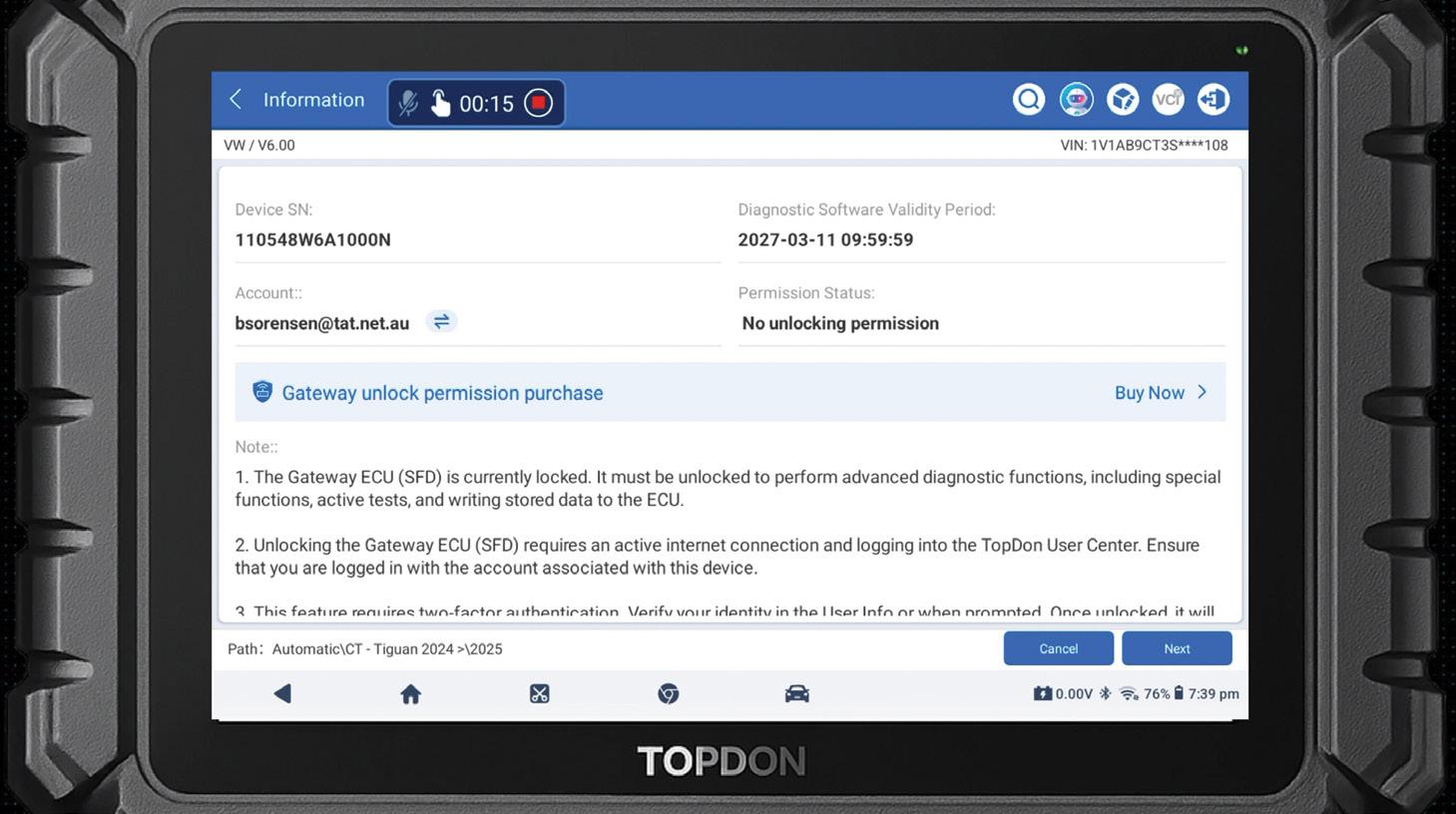
On vehicles with secure gateways or protected functions, passive access and active authority are separate issues. Reading DTCs and live data may be allowed, while clearing codes, running actuator tests, initiating service routines or completing guided functions require authentication.
If an active test is blocked, the next move is not automatically another scan tool or a suspected module or part fault. Check whether the vehicle is behind a secure gateway, whether the tool is approved for that access method, whether the user account and subscription are current and whether the tool has internet access when it needs to authenticate.
Australian workshops now have a more legitimate pathway into manufacturer information and restricted procedures than they had a few years ago. That progress matters but access existing and access being easy are not the same thing. Much
of the friction still sits in manufacturer portals, subscription structure, security steps, browser requirements, VCI approval and make-specific procedure flow. The Australian Automotive Service and Repair Authority (AASRA) is part of the framework but it is not the source of every awkward manufacturer process a technician meets on the screen.
If the vehicle is likely to need a security function, electric vehicle (EV) or hybrid service information, a software update or a manufacturer-guided routine, the access path should be checked before the bay is tied up or the job is sold.
specific direction – which circuit to test, where to connect, what good and bad look like and whether the result agrees with the scan data. A scope pattern, current ramp or loaded voltage test still needs judgement but good tool guidance can stop the job drifting into guesswork.
A programming event or long, guided routine is a controlled electrical and communication environment. Stable voltage matters. VCI quality matters. Laptop health matters. Cable security matters. Procedure discipline matters. A high-current batterysupport unit should be connected before a long key-on procedure, not after the voltage starts dropping.
Pass-thru gives independents a useful route into manufacturer software functions where supported. It can reduce the need for brand-specific hardware in some cases and help keep work in the building rather than sending the customer away.
It is still one path, not the whole answer. Some manufacturers support pass-thru well while some are giving laughably antiquainted methods, basically sticking their head in the sand and hoping the aftermarket will say it’s too hard.
The efficient decision is whether the current job needs broad all-makes diagnosis, an OE software path, remote support, specialist assistance or referral. A strong all-makes tool is not made less important by these other paths. It’s usually the quickest way to gather the broad scan, build a coderelated data list, graph suspicious data, run functional tests and decide whether a component test is worth doing.
Guided component testing is a useful example of where modern scan platforms can add depth without pretending to replace the technician. The value is vehicle-
Remote support is useful when the workshop can inspect, test and prepare the vehicle but the final digital step needs deeper brand access or specialist experience. Used well, it keeps the vehicle and the customer relationship in-house without pretending every independent workshop must build every possible factory tooling and software pathway itself.
For most workshops, the next step is tightening the diagnostic environment around the work already coming through the door.
Keep the scan tool and VCI current enough for the vehicle mix you service. Treat CAN FD and DoIP support as practical capability for modern vehicles, not just brochure wording. Save pre-scan evidence and question suspicious data sets. Identify protected-function jobs before they reach the awkward part.
Build a reliable software lane with battery support, stable internet, a known laptop and internal notes on the tools and manufacturer portals you use often. A great feature inside the OEM Info Resource page on the TaT website is the ability for members to click into a manufacturer, see key details such as up-to-date service portal subscription information for that manufacturer and the ability to make notes right there on that page. These notes are member-specific, so seen only by you, and they are a great timesaver for navigational notes or a tip like ’only works with Microsoft Edge Administrator Mode’
A successful scan is only the beginning. The workshop that thinks ahead and controls the full diagnostic stack will quote more accurately, lose less time to avoidable hurdles and have less hard conversations when you discover the part you’ve just installed is actually going to also require an OE subscription to program. g
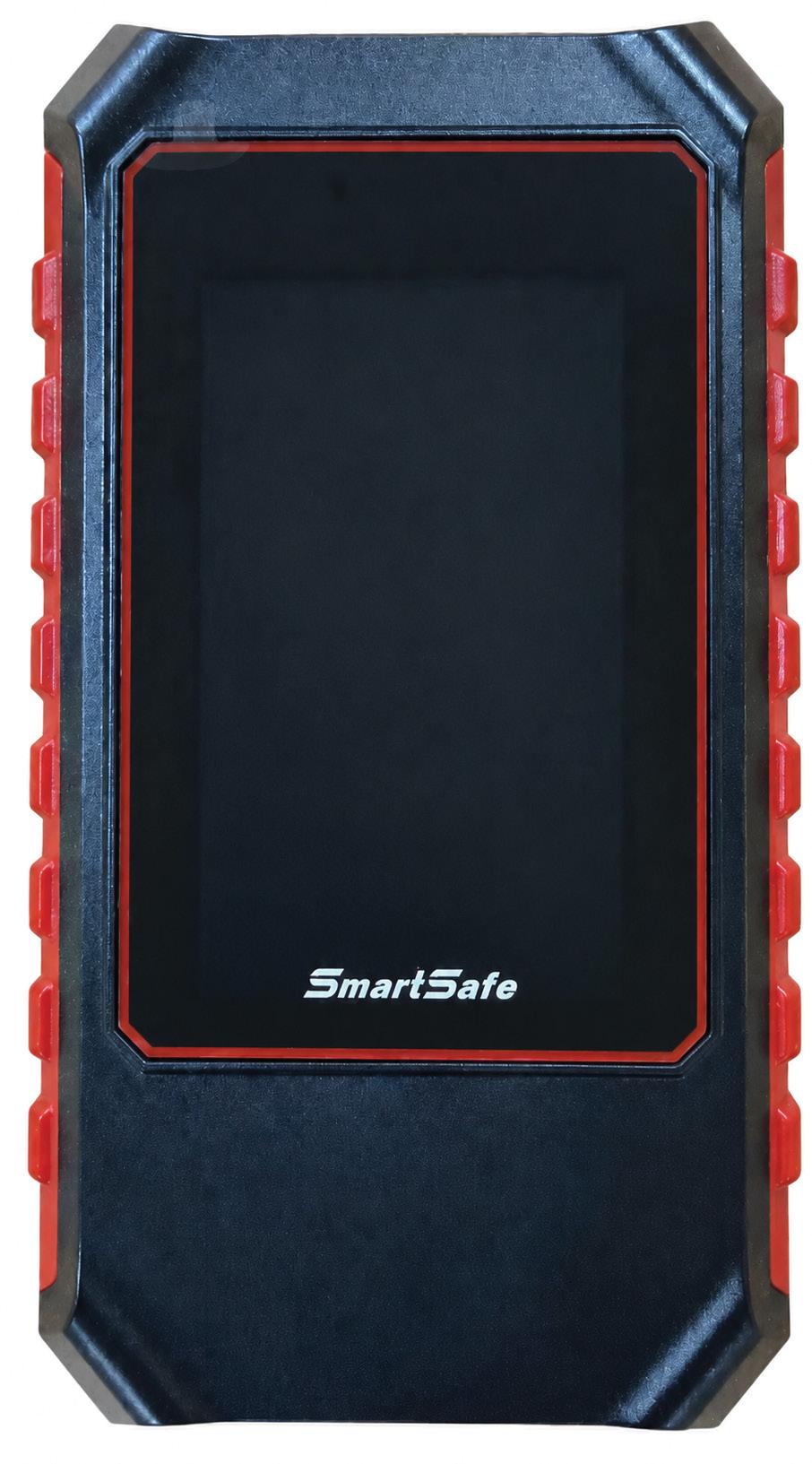
Modern vehicles continue to blur the line between mechanical systems and advanced electronics and workshop equipment is evolving to match.
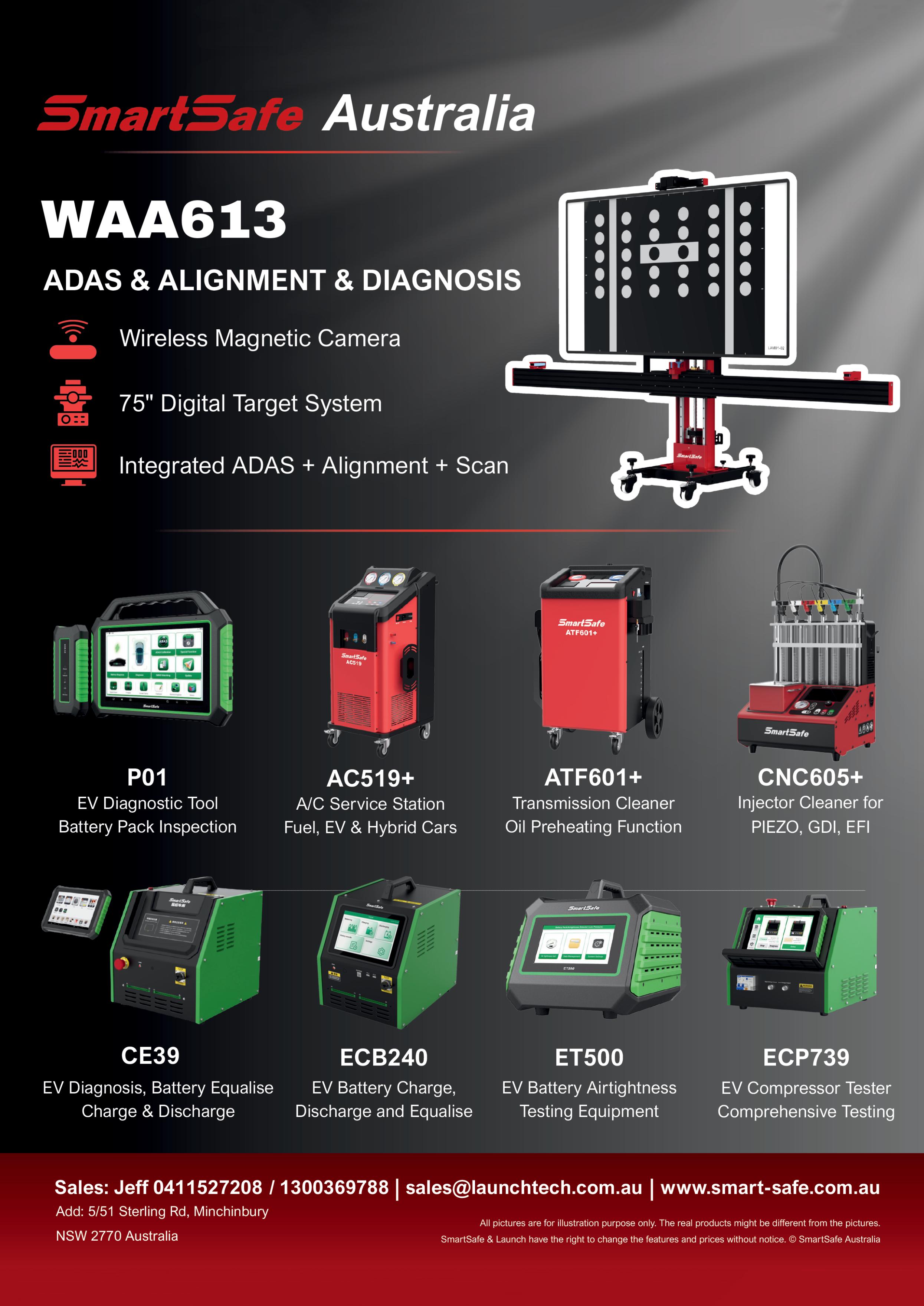
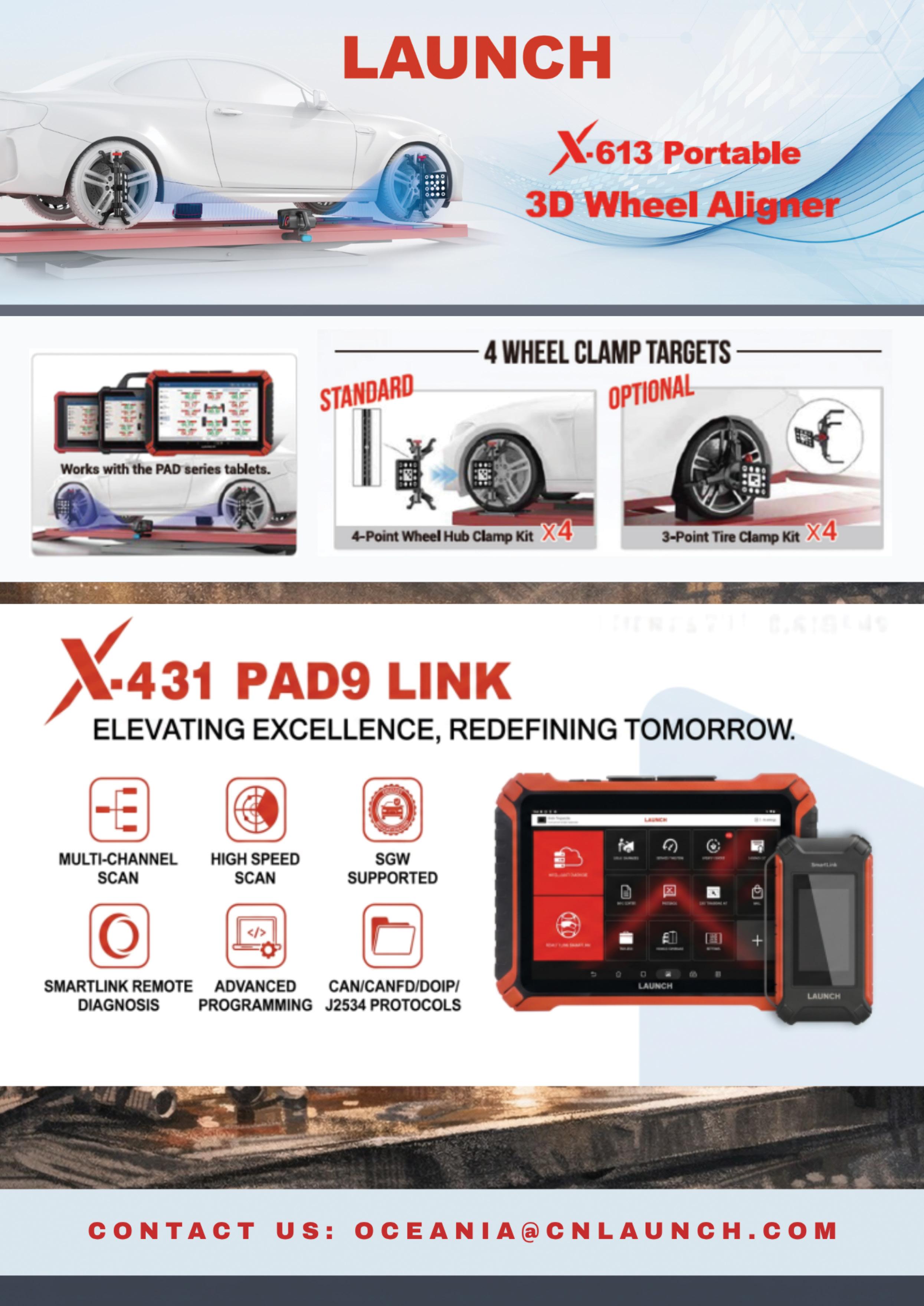
The WAA613 Wheel Alignment with ADAS System is positioned as a fully integrated solution, combining wireless 3D wheel alignment with advanced driver-assist system (ADAS) calibration in a single platform. Designed to reduce fragmented workflows, it brings alignment and calibration together, helping workshops cut set-up time, improve accuracy and streamline day-to-day operations.
At the centre of the system is a 75-inch display that replaces traditional physical targets with digital visuals. Wheel-alignment data and calibration targets are presented in real time, giving technicians a clearer understanding of each adjustment. Wireless screen mirroring allows the interface to move from tablet to large display, creating a more unified workspace.
One of the biggest productivity gains comes from the integrated operation workflow. Once alignment is complete, the system can transition to ADAS calibration with a single action, without resetting or repositioning the equipment. Optimised software guides technicians step by step with clear visual prompts, helping reduce complexity, shorten training time and maintain consistency across jobs.
Accuracy is supported by Bluetooth laser distance measurement, which automatically captures centring, parallelism and height
data. By reducing manual input, the system helps reduce human error while speeding up the process. Laser-assisted positioning and crossbeam height detection further refine calibration, with support for both manual and motorised adjustments.
With a database covering more than 50,000 vehicle models and support for more than 95 per cent of ADAS-equipped vehicles globally, the WAA613 is built for the realities of today’s workshop. Continuous updates help compatibility keep pace with new vehicle technology.
Wheel-alignment functions cover all key parameters, including front toe, camber, caster, steering axis inclination (SAI) and thrust angle, along with additional measurements such as wheelbase, track width and axle offset. The system also supports automatic report generation, producing inspection and calibration comparisons that can be shared with customers and kept as digital records.
The WAA613 is not limited to alignment and calibration duties. Using the included diagnostic vehicle communication interface (VCI), it can also function as an automotive diagnostic platform, supporting passenger car and heavy-duty truck diagnostics, antitheft matching and immobiliser (IMMO) functions, online coding and programming, remote diagnostics, full-system scanning and more than 30 common maintenance functions.
The system can also be expanded with additional modules for tyre tread-depth detection, oscilloscope and multimeter functions, current clamp testing and videoscope inspections. Backed by three years of free software updates for both passenger and heavy-duty applications, it’s designed to stay relevant as vehicle technology evolves.
For workshops navigating the growing complexity of ADAS-equipped vehicles, bringing alignment and calibration into one streamlined system is becoming essential.
• To find out more call 1300 369 788 or go to launchtech.com.au
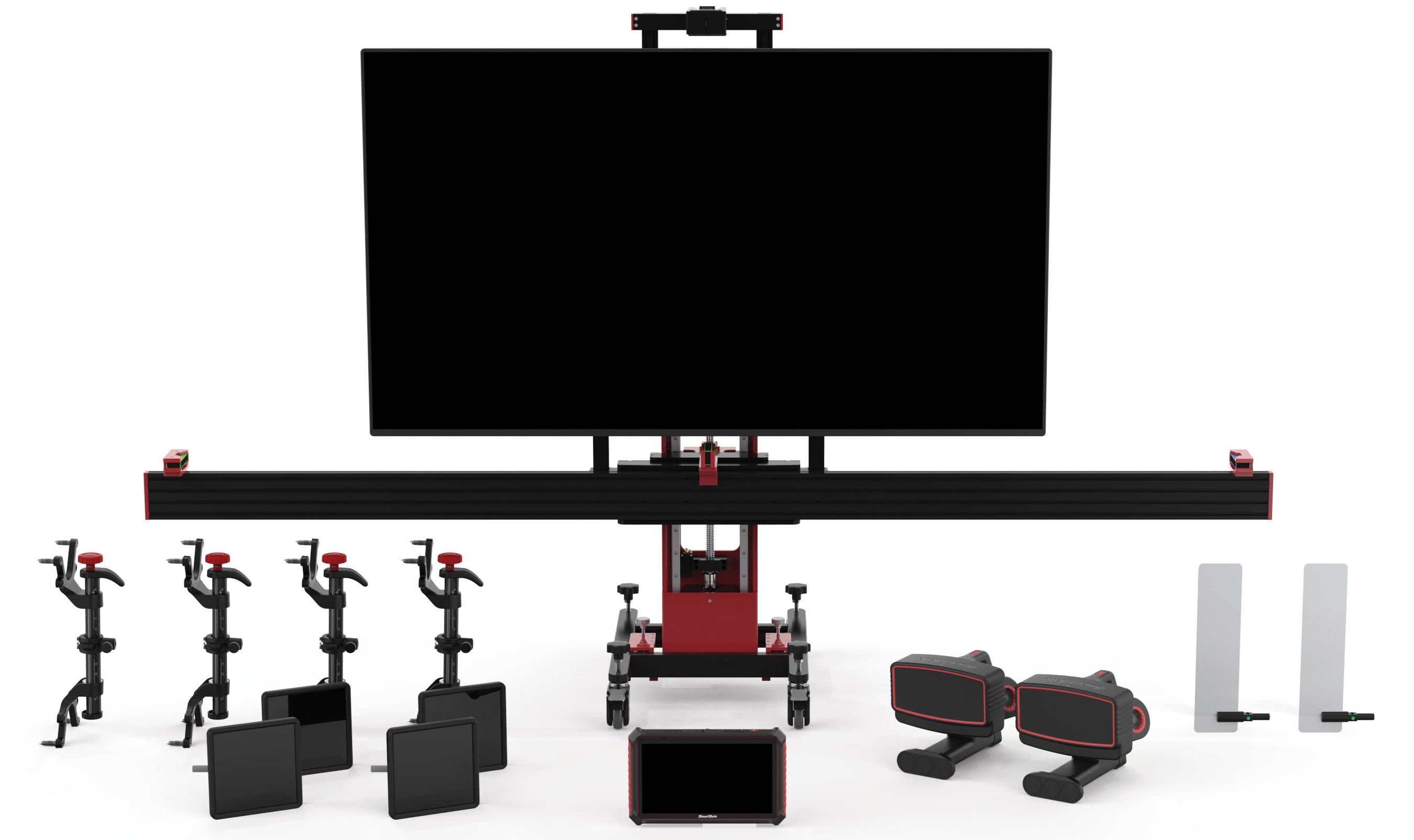
The 75-inch display delivers real-time alignment and ADAS calibration data in one view.
Every workshop knows the job that stops being about the fault and starts being about access.
A late-model European vehicle, security gateway in the way and the coding or adaptation you need sits behind an OEM firewall. The diagnosis was never the hard part. Getting the tool to finish the work is.
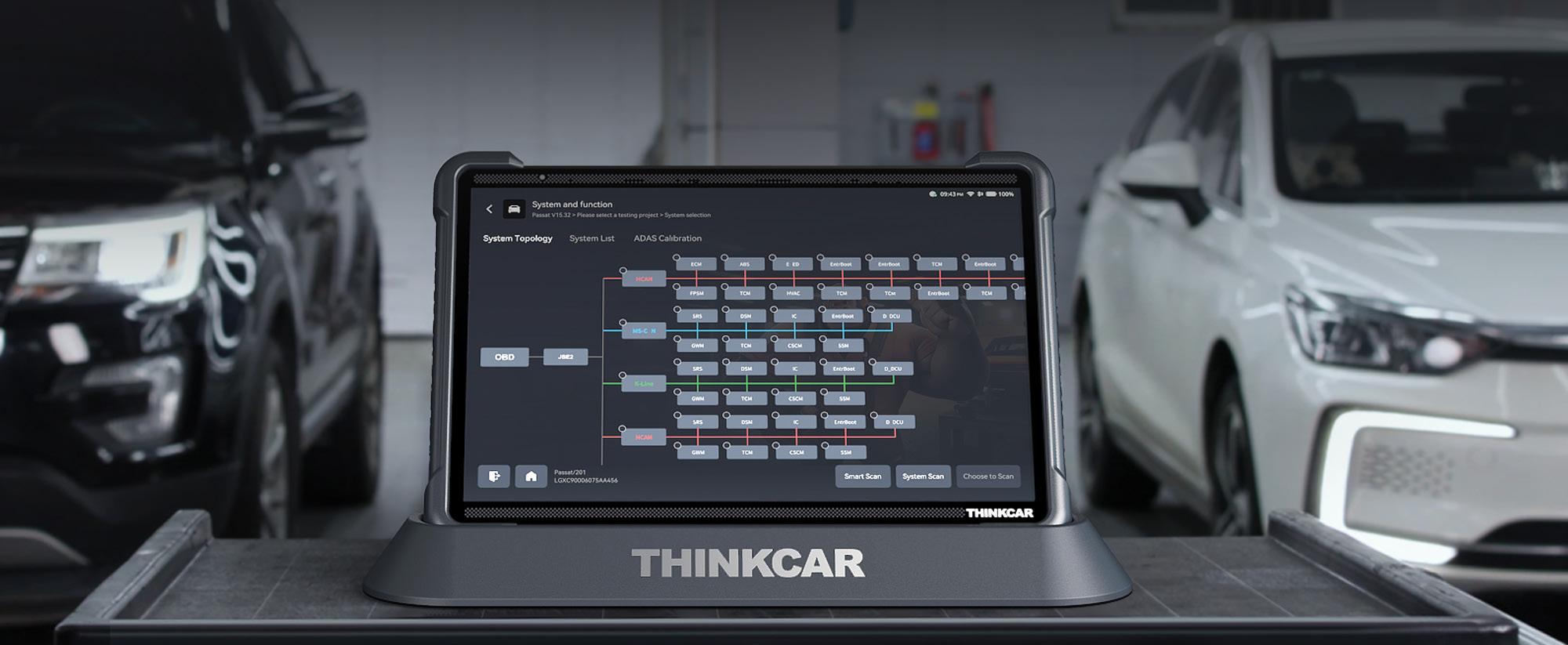
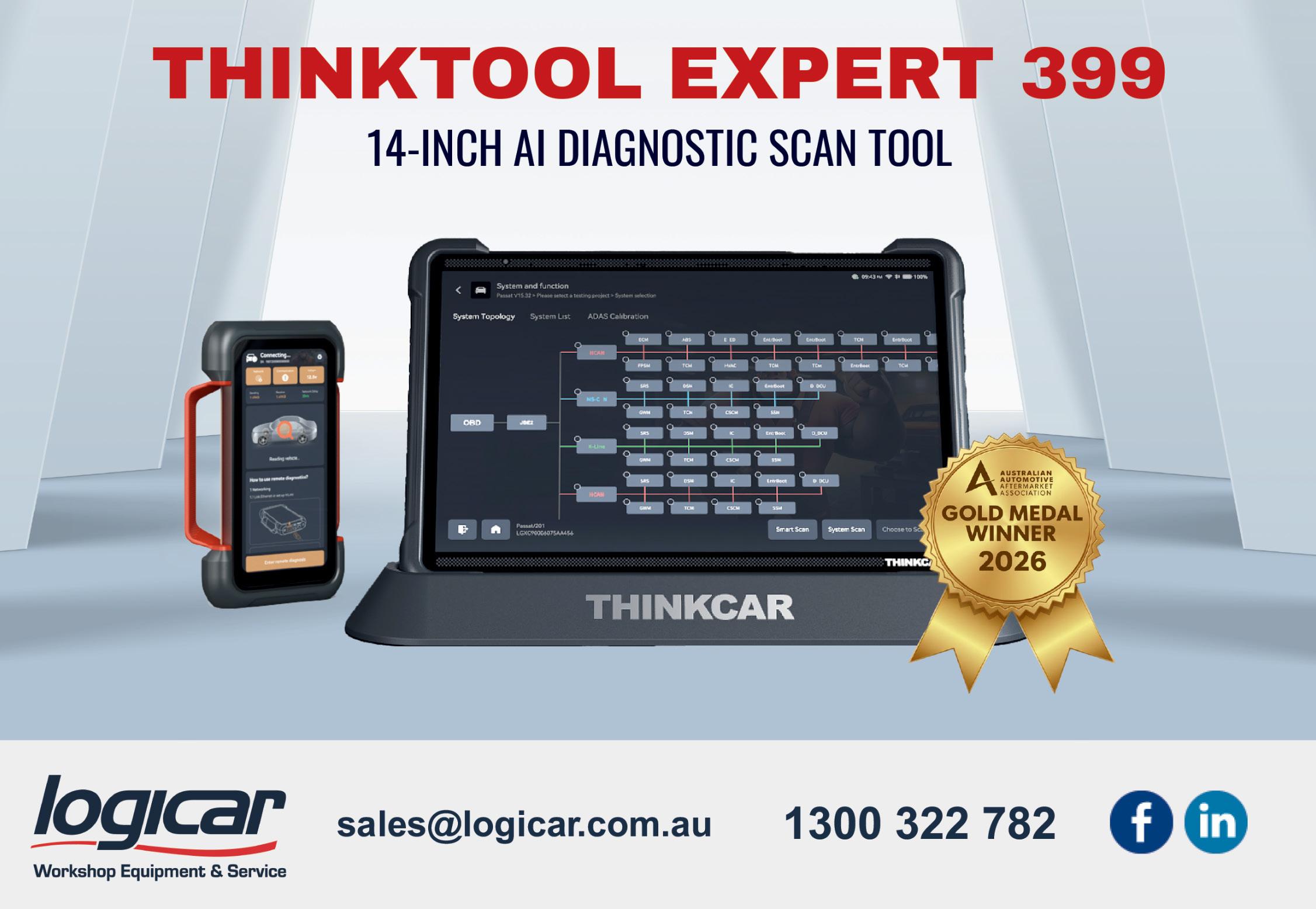
This is the problem the THINKTOOL Expert 399 is built to solve. Awarded Gold for 2026 Most Innovative New Aftermarket Product (Tools and Equipment) at the Australian Auto Aftermarket Excellence Awards, it’s a diagnostic platform designed to keep more of the repair under one roof.
Built on Thinkcar’s TCOS operating system, Expert 399 is security-gateway ready. It works with modern OEM security systems, including Volkswagen Vehicle Diagnostic Protection (VAG SFD) and other secure gateway (SGW) firewalls, to restore protected diagnostics, coding and adaptations where valid security access is available.
Underneath it sits a full OE-level platform with full-system diagnostics, bidirectional control, actuator tests, advanced coding and online programming, plus pass-thru support across CAN 2.0, CAN FD, DoIP, J2534 and RP1210. Its 48 maintenance functions include diesel particulate filter (DPF) and
gasoline particulate filter (GPF) regeneration, electronic park-brake service, injector coding, battery registration and AdBlue reset, with electric vehicle (EV), heavy-duty and advanced driver-assist system (ADAS) options available.
The 14-inch 2.5K display earns its size in live data, with more than 100 parameter IDs (PIDs) available, up to 12 on screen at once and four graphed together. Sessions can be captured and converted to an emailable PDF straight from the tool.
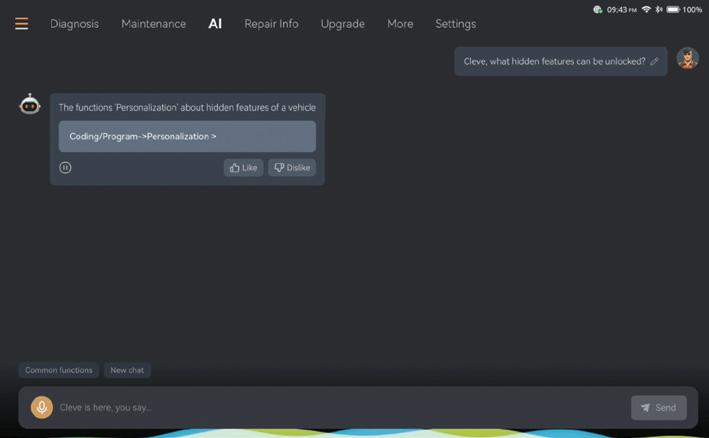
Thinkcar has built artificial intelligence (AI) directly into the diagnostic workflow, helping technicians interpret scan information, identify likely causes and choose the next test path.
• Logicar supplies, installs and supports the Expert 399 with qualified tradespeople behind the phone. To see it in your own workshop, call 1300 322 782 or go to logicar.com.au
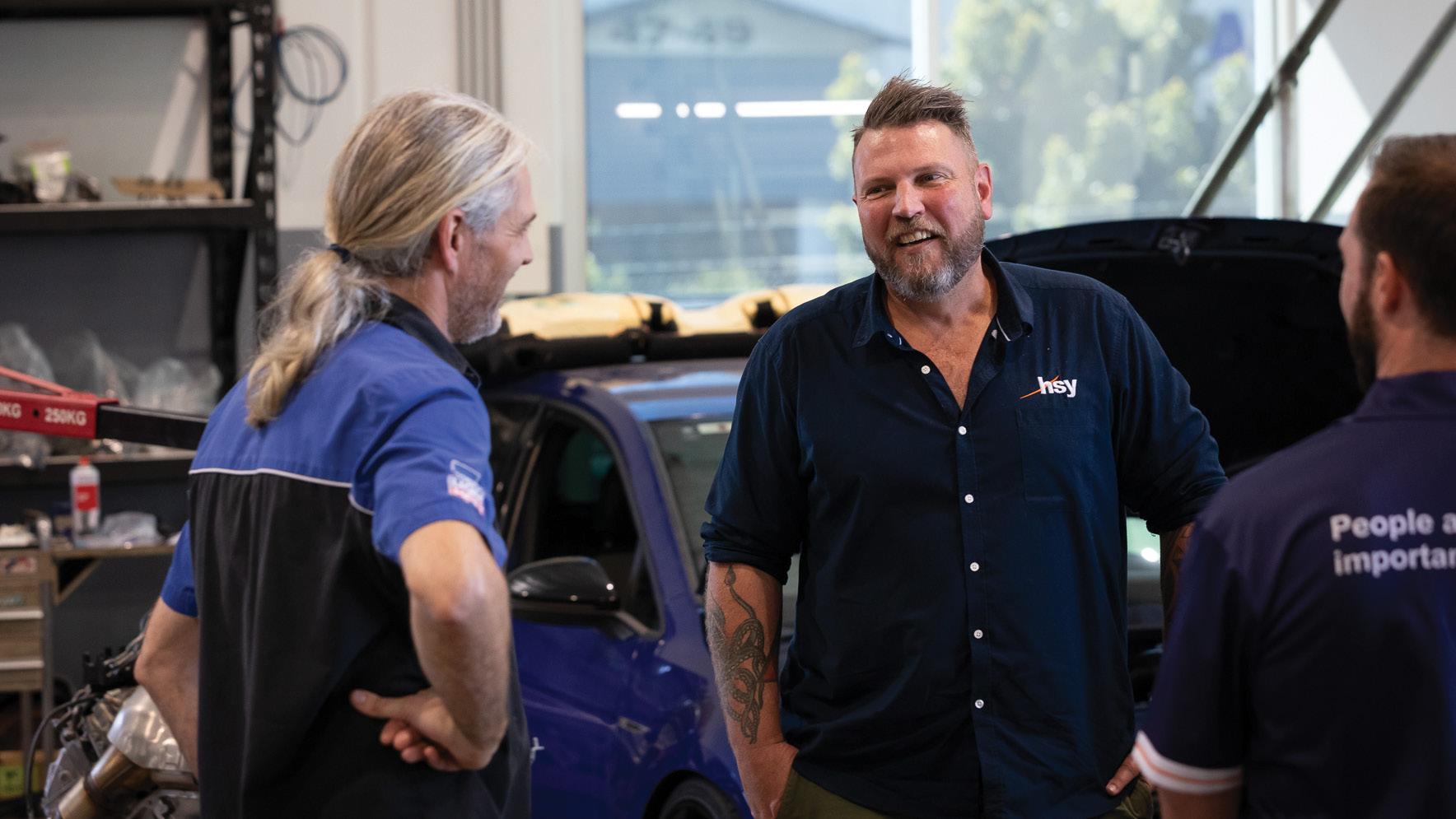
For more than 63 years, hsy has been supporting independent automotive workshops across Australia with more than just European automotive parts.
As a proudly Australian family-owned business established in 1963, hsy has built its reputation on quality products, trusted supplier partnerships and genuine customer support.
While the automotive industry continues to evolve rapidly, one thing has remained consistent – hsy’s commitment to helping workshops grow, adapt and succeed.
Today’s workshops face increasing pressure. Modern vehicles are more complex than ever, diagnostics are becoming increasingly critical and workshops are expected to work faster and more efficiently while continuing to deliver high-quality repairs.
hsy said it recognised early that workshops needed more than parts availability – they needed support – and that philosophy had shaped the way the brand operated today.
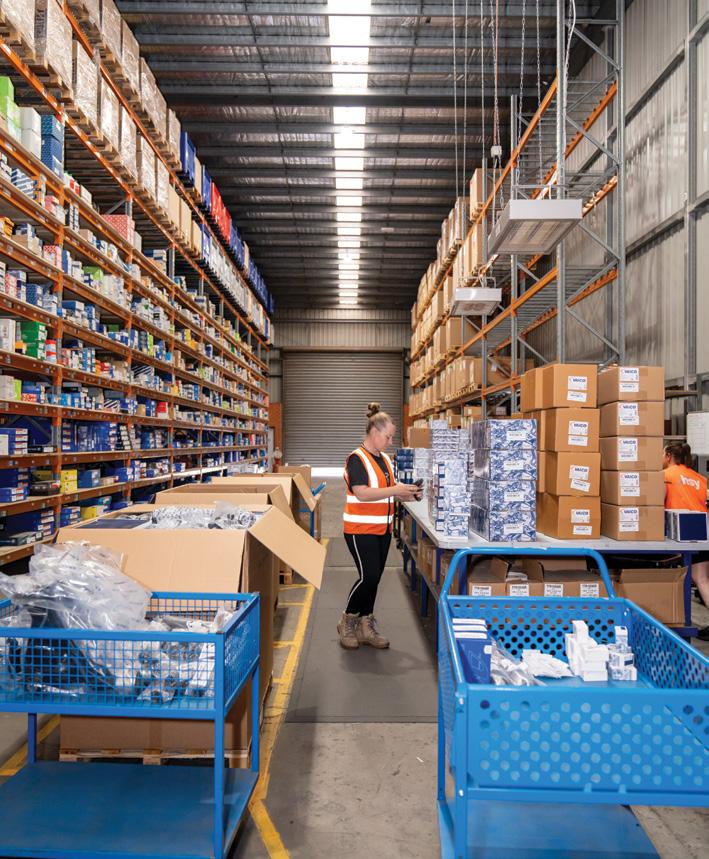
While hsy continues to supply OEM, OES and quality aftermarket components for European vehicles nationally through its 15 branches across Australia, the business has evolved to become a broader partner to the independent workshop industry.
This is where hsy Workshop Solutions plays an important role. hsy Workshop Solutions was developed to help workshops access the equipment, diagnostics, tooling and technical support needed to operate efficiently in a rapidly changing industry. Having the right tools is no longer optional. The ability to diagnose vehicles accurately, improve workshop productivity and recover billable time is becoming increasingly important for independent workshops across Australia.
From scan tools and workshop equipment through to diagnostics, consumables and specialist European workshop solutions, the focus at hsy Workshop Solutions is on helping workshops future-proof their businesses.
Alongside equipment and tooling support, hsy continues to invest heavily in technical training and industry education.
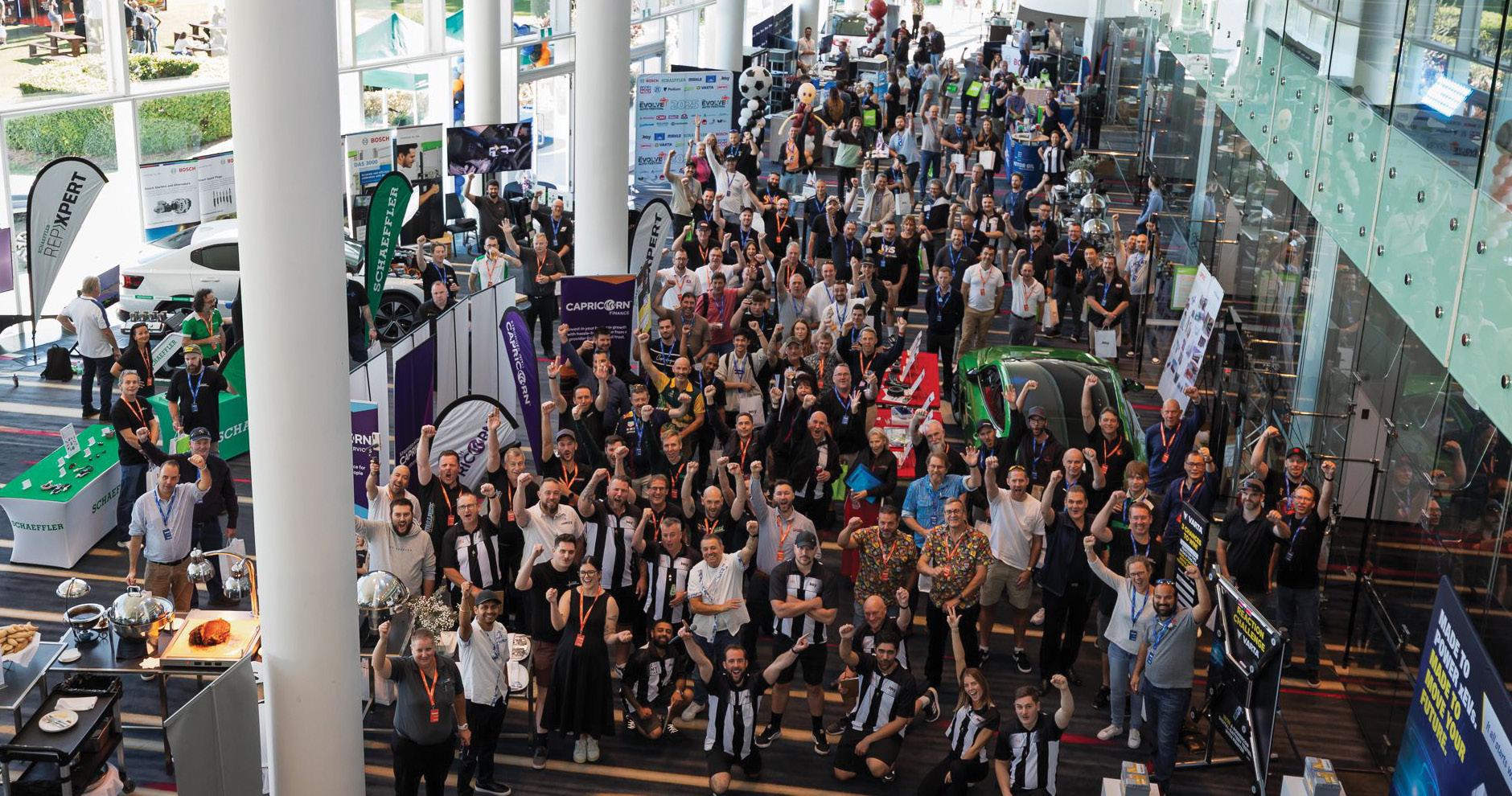
One of the biggest examples of this commitment is the EVOLVE Auto Festival. Created by hsy to support the automotive industry, EVOLVE has grown into one of Australia’s leading workshop-focused training and networking events.
What started as a smaller industry event has evolved into a national platform bringing together workshop owners, technicians, suppliers and trainers for hands-on technical learning and real industry conversations.
EVOLVE Auto Festival 2026 will be held at Kangan Institute on Saturday, August 15 and will feature multiple technical training rooms, live demonstrations and businessfocused sessions covering diagnostics, braking systems, battery technology, thermal
management, drive-by-wire systems and workshop efficiency.
hsy said it continued to heavily subsidise tickets for customers because it believed investing in technicians and workshop education was investing in the future of the industry itself.
Beyond the products, events and equipment, hsy said it remained focused on what had always mattered most – relationships.
From technical training nights and supplier support through to the myhsy online ordering platform and dedicated customer service teams, it said its goal was simple – help workshops operate more efficiently and support them beyond the parts counter.
After more than six decades in the industry, hsy continues to stand by the values it was built on – quality parts, quality people and genuine support. Because hsy believes being a supplier means being a true partner in business.
• Find out more or secure tickets to EVOLVE Auto Festival 2026 at evolve.hsy.com.au/
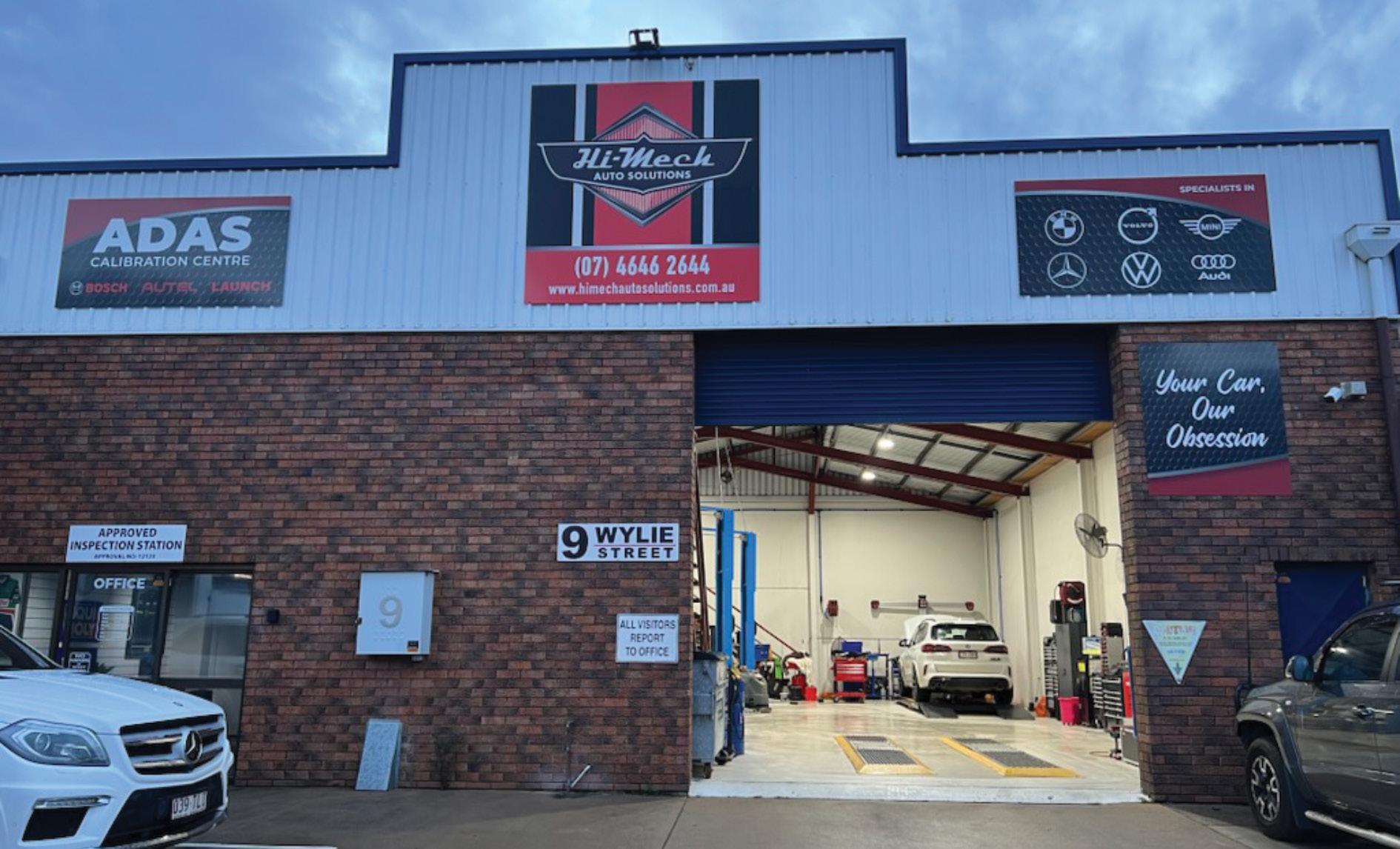
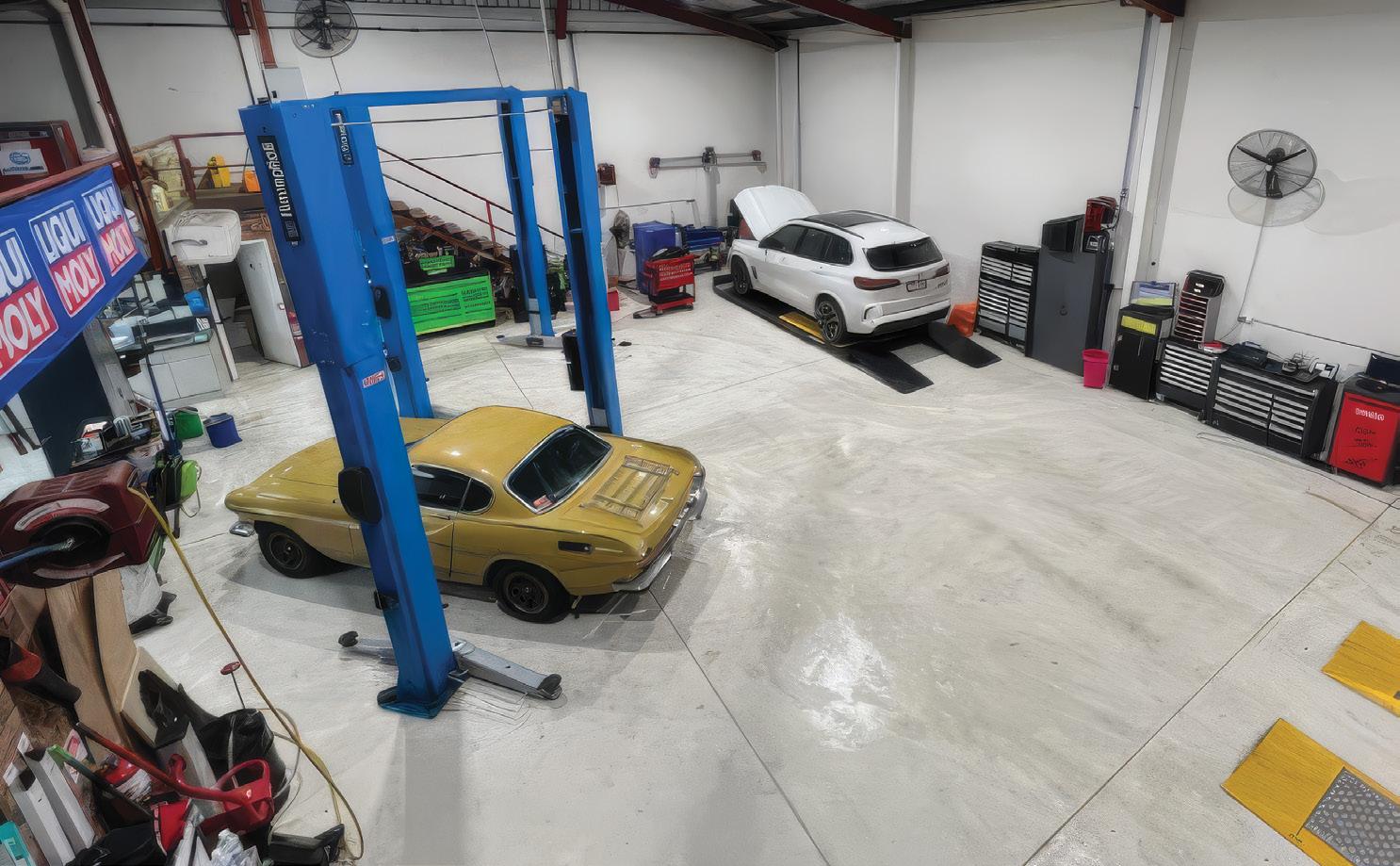
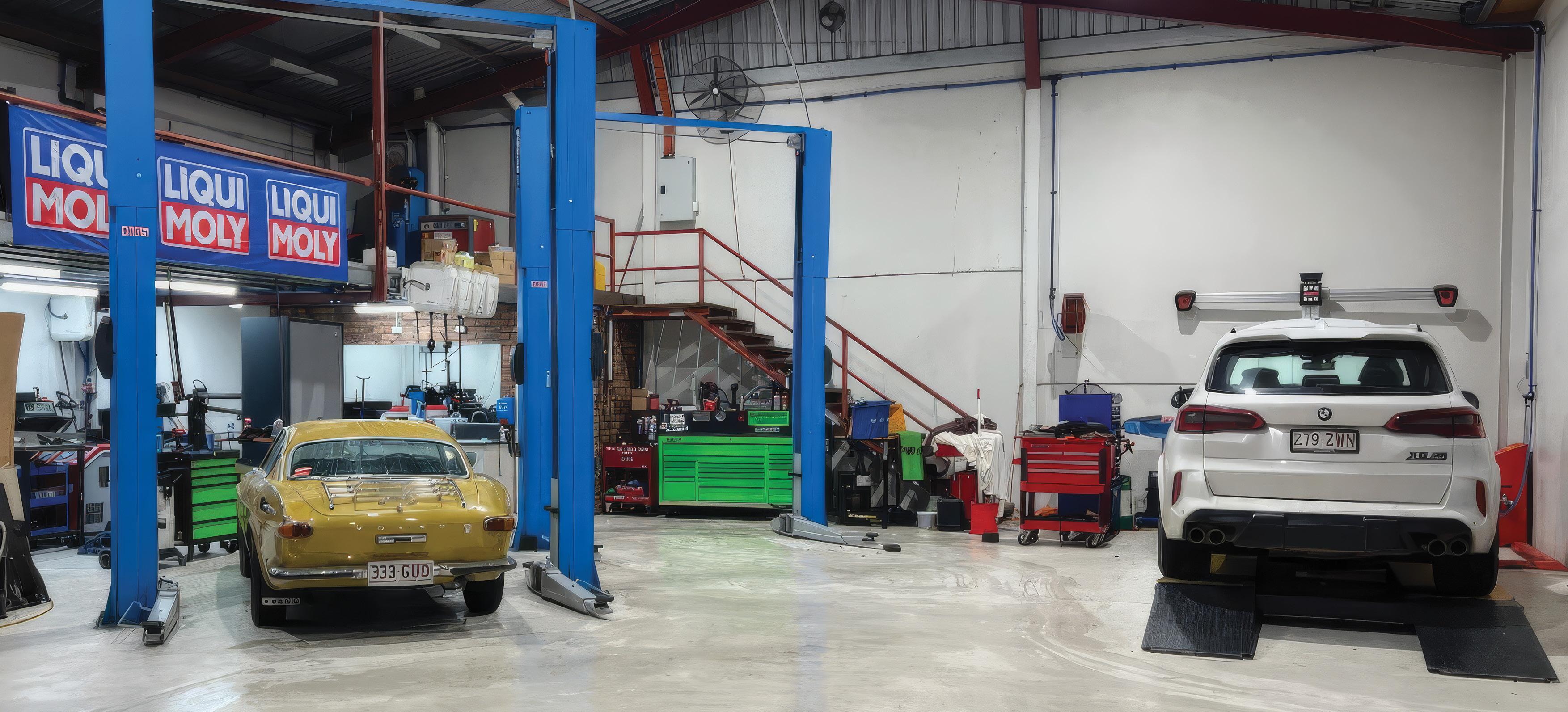
Craig Baills has built Himech Auto Solutions’ ADAS Centre into a highly sought-after hub for advanced diagnostics, European car servicing and EV capabilities
The modern automotive-repair landscape is transforming rapidly. Where mechanics once focused on mechanical components, today’s technicians increasingly deal with the complex technology of cameras, radars, and sensors that make up advanced driverassist system (ADAS) technology.
As these safety systems become mandatory across the Australian car parc, independent workshops face a choice – invest heavily to service these systems in-house or find a reliable partner who can.
For Craig Baills, the path was clear. Recognising a crucial gap in the local market, he launched a dedicated ADAS Centre in 2020 as part of Himech Auto Solutions.
The Toowoomba-based business has since evolved into a vital resource for the region’s automotive trade while expanding its capabilities to capture demand for European vehicle maintenance and electric-vehicle (EV) servicing.
The ADAS Centre was brought to life amidst the global COVID pandemic, with the planning phase taking roughly six months mapping out the infrastructure, diagnostic
tooling and alternative revenue streams necessary to make the concept viable.
‘It all came out of trying to put a business model together to start a standalone ADAS centre,’ said Baills. ‘We had a close look at what we needed to do and back then we didn’t have enough ADAS work to start a shop on its own but we were able to put together a business model that supported the ADAS Centre as part of our workshop alongside general servicing, pre-purchase inspection programs and the like.
‘We started putting things in place in June 2020 and by September 2020 it was up and going and it is still going now.’
A foundational pillar of the ADAS Centre’s success is its physical location. Because ADAS calibration goes hand-in-hand with collision repair and windscreen replacements, Baills knew proximity to the existing trade was non-negotiable.
‘When we were making our decisions on how to set this up, having a location that was close to panel shops and windscreen repairers was critical to be able to run this profitably and we were able to find such a desirable location,’ said Baills.
This attention to geographic placement has paid off immensely. Today, the core of the business’ ADAS revenue comes directly from serving other local automotive businesses rather than retail consumers.
‘The ADAS side of it is primarily – say 95 per cent – focused on the trade, on collision repair, on windscreen repair and servicing some of those doing vehicle modifications as well,’ said Baills.
Before the ADAS Centre opened, local collision repairers had struggled to secure prompt technical calibrations. Many relied on mobile technicians with erratic schedules or local dealerships with famously slow turnarounds, causing severe productivity bottlenecks.
By offering an in-house, dedicated ADAS set-up, Baills has eliminated these costly friction points for his trade partners.
‘It was sort of the first in the area and it was well received,’ said Baills. ‘Starting a standalone in-house ASDAS set-up meant we could provide a service that was a lot more reliable and efficient than what our customers had previously been working with.
‘The mobile guys were not always efficient or reliable and the turnaround times from the dealers were quite unreasonable. We were able to say when you have it ready, we will fit it in and get it done. That has 100 per cent been a gamechanger for our customers.’
When it comes to the tooling decisions for Himech Auto Solutions and its ADAS Centre, Baills said it boiled down to making sure it was equipped for the majority of possibilities.
‘For our ADAS rigs, we started out with Bosch before also adding Autel,’ said Baills. ‘Along with their rigs, we also use their scan tools, along with those of Snap-on, Launch Tech and Autocom.
‘We have these brands as they allow us to match our car parc – we have a broad range of vehicles here and this selection allows us to match that and ensure we can do pretty much most things that come through the door.’
Operating a full-scale ADAS centre allows the team to perform comprehensive calibrations and set-ups, easily handling front and rear radars, lane-departure cameras and complex multi-system resets.
Working intimately with the collision sector has also opened the door to unforeseen and lucrative revenue streams, with the centre’s high-level diagnostic capabilities naturally positioning it as an ideal mechanical partner for major insurance companies.
‘We hadn’t factored this into our initial planning but an additional income stream developed as a result of us supplying ADAS services to the crash-repair businesses and that was doing vehicle inspections for insurance companies,’ said Baills.
With an eye always on the shifting repair landscape, Baills and his team were also quick to pivot when prestige European dealerships made operational changes in the Toowoomba region.
‘We had started working in European vehicle servicing and repair and the Volvo and BMW dealerships closed down in Toowoomba, so we took advantage of that and specialised in that space,’ said Baills.
The ongoing success of the model has generated high volumes of collisiondiagnostic work alongside heavily booked
schedules of Euro and EV servicing for Himech Auto Solutions and its ADAS Centre, frequently putting the workshop floor at maximum physical capacity.
‘We have outgrown the space we have now, so to grow further we need to move into another premises and we are in the thought process on that at the moment – we definitely need more space to accommodate the work that we have got,’ said Baills.
While expansion is firmly on the horizon, Baills is absolutely adamant about not losing sight of what made the business so successful in the first place, advising fellow workshops to be highly strategic when thinking about growth.
‘I think it is important for most workshops to understand what works for you – if you are expanding and staying in your lane with what you are already doing and doing well, that can be great and if you are expanding and doing new things that can be great too but you need to make sure you have done the background work on it first,’ said Baills. ‘For us, we do the ADAS stuff well, we do the Euro stuff well and we do the EV stuff well, so that is our lane and we will stick to that and work on expanding around that recipe without changing it too much.
‘At the end of the day, I think a lot of expansion can come by just improving your service offering with what you already do.’
Looking ahead, Baills said the sheer volume of ADAS-equipped vehicles would only continue to surge as complex sensor systems officially became mandatory baseline requirements for almost every new vehicle on the road.
‘Every car that is coming into the country is going to have some sort of driver-assistance safety control in it, so that is not going away,
and we have to be able to adapt to that and understand it,’ said Baills.
The centre’s focused dedication means Baills’ team is ideally positioned to handle these transitions seamlessly, though he sympathises with the increasing technological hurdles for late adopters.
‘For us, having done this already for essentially five or six years now, you get familiar with it and so understanding a new system is not that difficult,’ said Baills. ‘But for those who are just looking at getting into it, it can be a little more difficult as the technology is changing and improving and different systems are coming into cars.’
For independent workshops that haven’t yet made the technological leap, Baills’ core advice is straightforward – protect your business and your customers by building strong, reliable industry relationships today.
‘The most important thing as a workshop is if you are not going to do ADAS, you need to make sure you are associated or aligned with someone that can,’ said Baills.
Ultimately, the ongoing strategy for Baills and the entire ADAS Centre boils down to one simple but crucial methodology, which he also recommends to fellow workshop owners – continual technical education and proactive improvement of workshop operations.
‘We are making sure we are always training and making sure we are keeping on top of the services and technologies as they come out and always looking at what equipment is out there and what may be available to help us do our jobs better – everyone needs to be doing that,’ said Baills.
• Find out more about Himech Auto Solutions and the ADAS Centre at himechautosolutions.com.au
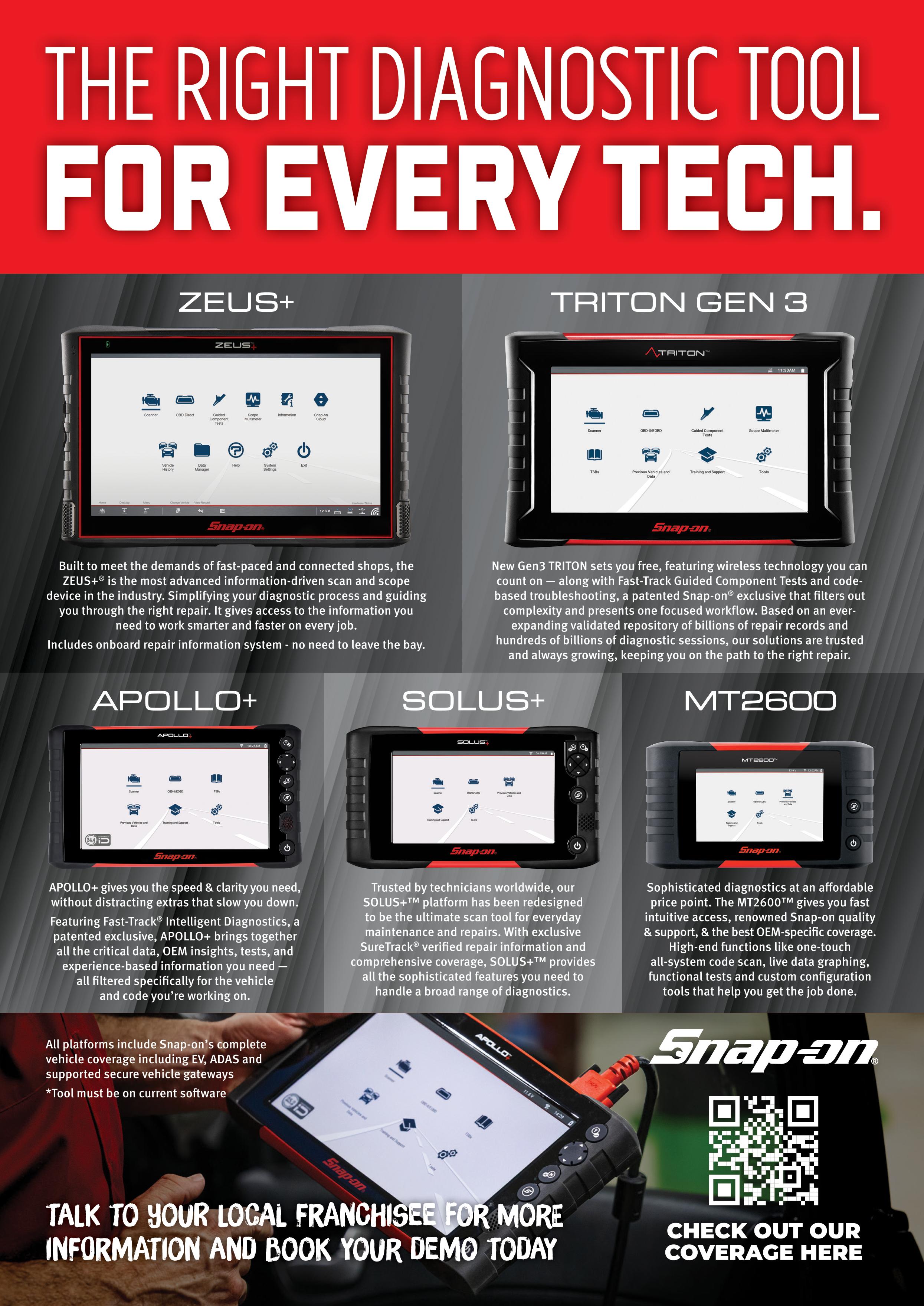
How can Snap-on exclusive FAST-TRACK Intelligent Diagnostics help technicians?
Snap-on FAST-TRACK Intelligent Diagnostics is designed to help technicians tackle more diagnostic challenges with confidence.
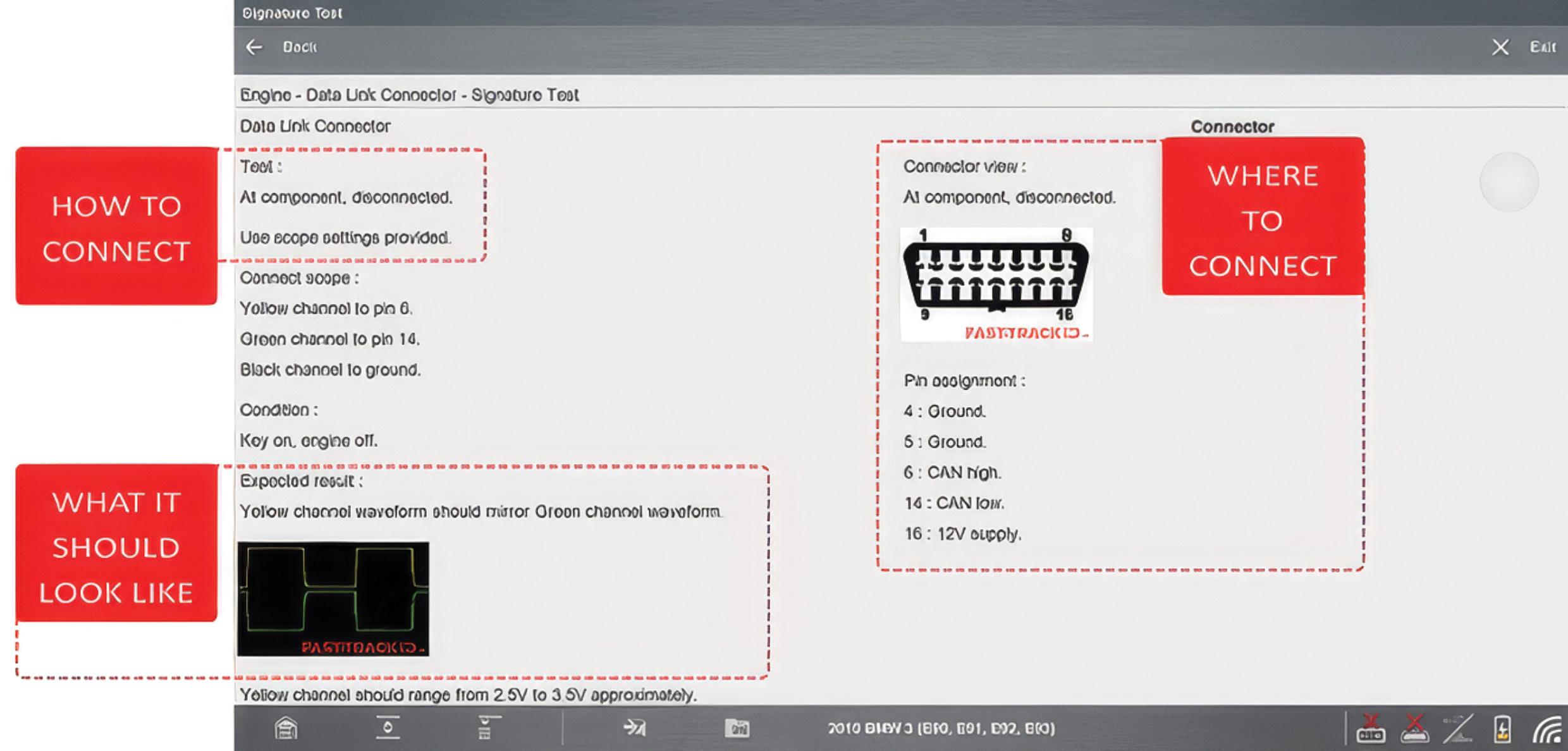
True pre-filtered guided diagnostics give technicians code and vehicle-relevant OEM Technical Service Bulletins (TSBs), code-related custom parameter ID (PID) lists, functional tests and reset procedures and real fixes with ‘Complaint’, ‘Cause’ and ‘Correction’, plus guided component testing with verified information showing where to hook up, how to hook up and known good scope patterns.
With far more fault codes on vehicles today than just a few years ago, smart technology can accelerate the diagnostic process, improve accuracy and provide capability beyond basic scan data. Snap-on FASTTRACK Intelligent Diagnostics does this by providing repair-specific guidance tailored to the exact vehicle and fault code to save time and boost confidence.
Many scan tools display codes and basic descriptions but can lack depth. They may show a network map or note that a fault exists yet offer little guidance on where the fault originates or how to fix it.
In modern diagnostics, component testing is essential. Accurately identifying whether a part is truly at fault or simply affected by another system can be the difference
between a quick repair and hours of lost workshop time. Guided component tests are designed to help get to the root cause quickly, verify faulty parts or components, confirm repairs and prevent costly comebacks, helping cut out trial and error and avoid ‘swapnostics’.
Snap-on FAST-TRACK Guided Component Tests are available on ZEUS and TRITON series tools on current software.
What makes FAST-TRACK Guided Component Tests different?
They are designed to take oscilloscope diagnostics to the next level. Rather than simply displaying generic waveforms, they provide vehicle-specific test procedures that guide technicians on where to connect, how to connect and what to look for.
With more than seven-million tests and built-in sample waveforms, FAST-TRACK can help reduce guesswork and increase diagnostic certainty. This combination of instruction and insight can transform a traditional scope test into an efficient diagnostic workflow.
• Efficient: Get information specific to the code and vehicle, removing clutter and helping technicians fix cars faster.
• Trusted: Snap-on engineers verify the information provided so technicians can be confident in clean, accurate data.
• Cutting edge: Continually updated with new fixes that are automatically synced to the tool via Wi-Fi.
• Reliable: With more than two-billion repair records from real technicians, Snap-on big data provides a comprehensive technical library without needing to leave the bay or scour the web for unauthenticated answers.
Leave the guessing to the others
All platforms include comprehensive coverage with the breadth and depth of manufacturer-level capabilities for codes, data and tests, electric vehicle (EV) and advanced driver-assist system (ADAS) content, with no hidden cost.
Using the Snap-on Security Link, the complete range of current tools allows technicians to work on vehicles with secure gateways from major OEMs, including Ford, Stellantis/Fiat Chrysler Automobiles (FCA direct fee applies), Mercedes-Benz and Volkswagen Group (VAG) when connected to Wi-Fi.
Get support from the dedicated Snap-on Diagnostic Helpdesk
The local team can help with registration, troubleshooting tips, scanner and scope operation and more.
Snap-on also offers online training from expert technicians. These free training modules cover the latest diagnostic techniques and quick tips to help solve common vehicle problems.
Technicians can learn at their place and pace.
• Find out more at snapontools.com.au

Brendan Sorensen
The Diagnostic Discovery Zone sat in the middle of the Australian Auto Aftermarket Expo (AAAE) with a simple aim – give people something useful to do, not just something to look at.
That sounds easy enough until you try to build it. A show floor is noisy, busy and full of people moving at different speeds. Some attendees are lead diagnostic technicians. Some are general technicians wanting to build confidence. Some are workshop owners, parts people, trainers, apprentices or partners walking the floor with someone from the trade. The challenge was to create an area that gave all of them a meaningful diagnostic experience without turning the stand into a lecture room.
The Diagnostic Discovery Zone was a joint initiative between the Australian Automotive Aftermarket Association (AAAA) and TaT and we were grateful for the opportunity to run something so technical in the middle of such a major industry event.
From the TaT side, Jeff Smit and I carried the main technical planning, with the TaT Tech Team helping bring the sessions to life across the three days. A special thanks must go to Jason Smith, Anthony Tydd,
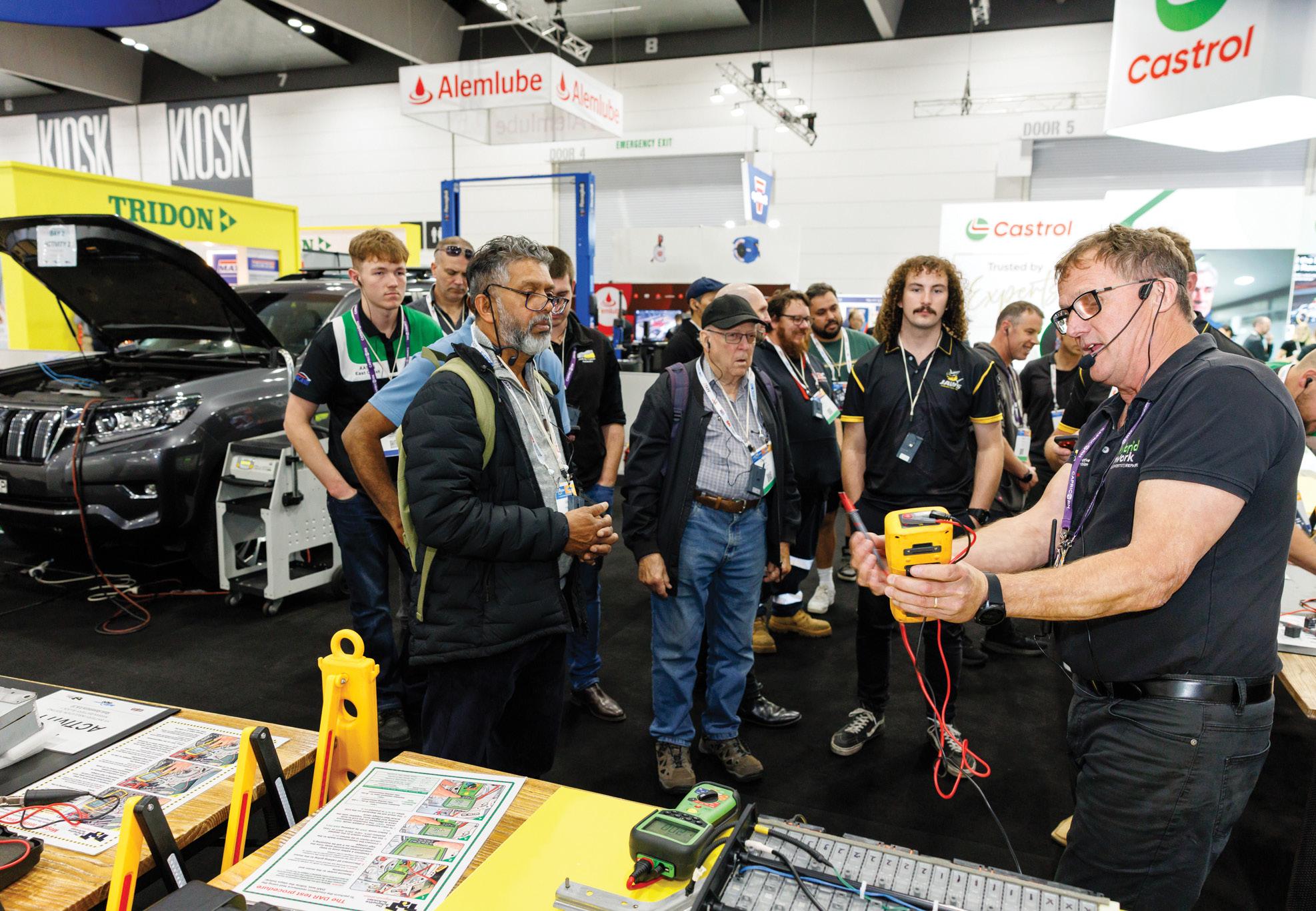
Marty Hosie and Sideth Chiv, who basically helped us through every session to keep the activities moving.
AAAA Chief Executive Officer Stuart Charity described the Diagnostic Discovery Zone as having ’fully engaged participants, getting hands-on with expert trainers’. That was certainly how it felt from our side of the benches.
The temptation with any diagnostic display is to make it look impressive from a distance or to go too deep for the wow factor. Our goal was making sure the person who attended was engaged and interacting throughout while still allowing
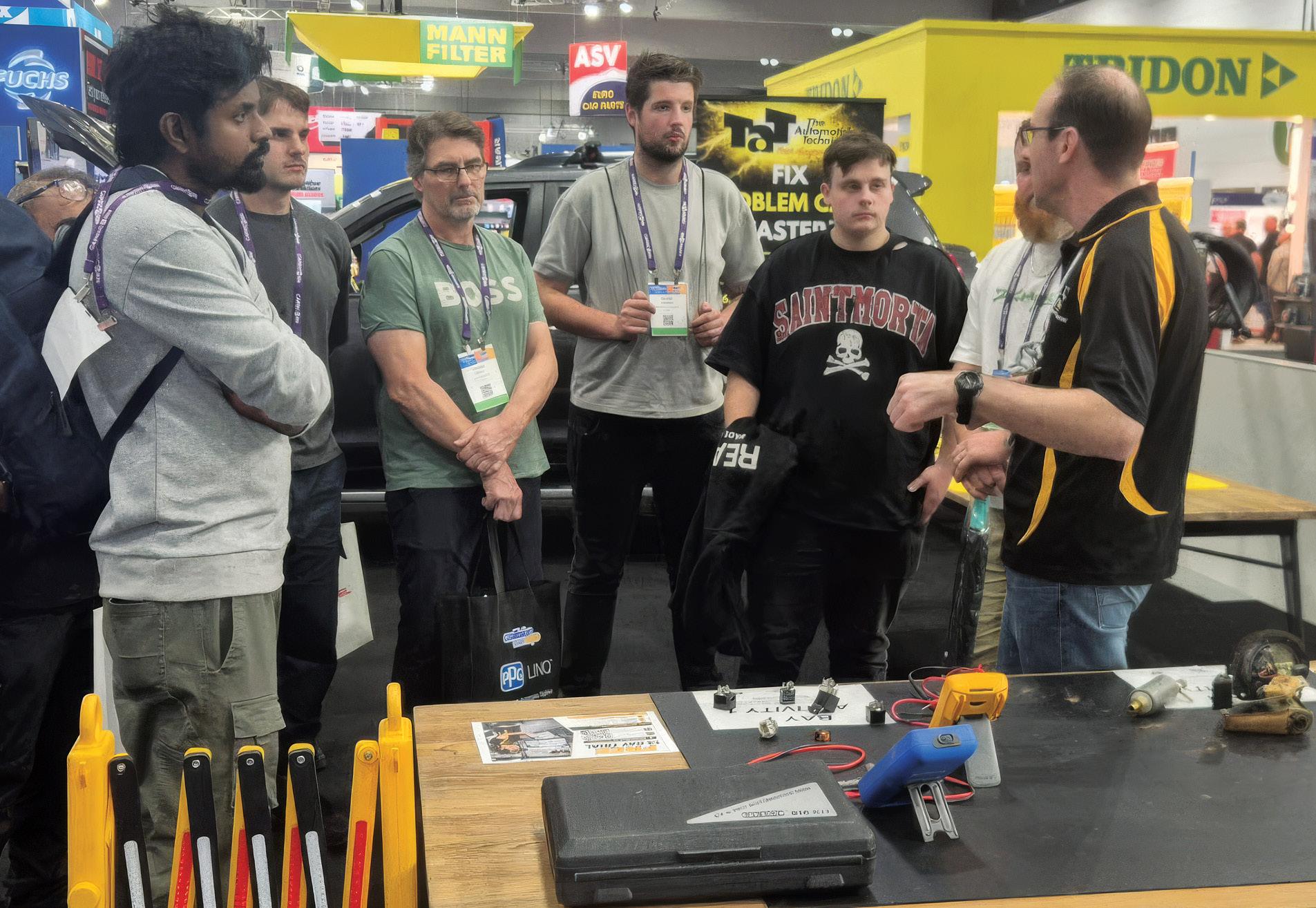
enough attendee traffic through to make the opportunity accessible.
We didn’t want the Diagnostic Discovery Zone to be a competition to see who knew the most. We also didn’t want it to become a passive product display. The plan was to put real tests in front of people, let them measure something, see a result and connect that result to a workshop decision. Diagnostics becomes interesting in that moment when the technician asks ’What does this result actually prove?’ and just as importantly, ’What doesn’t it prove?’. That was the thinking behind the whole zone. It wasn’t only technicians who engaged with it. Workshop owners, front-of-house staff, trainers, apprentices and partners all came through the space. Some had never held a meter lead or looked closely at a waveform before. Others had plenty of diagnostic experience and wanted to talk through the finer points. That mix was one of the most rewarding parts of the event.
Bay 1 was built around fundamentals but not in a beginner-only sense. It used familiar 12V components to reinforce the relationship between resistance, current flow, power and component work.
A resistance value on its own can be misleading if the person reading it doesn’t understand the circuit’s job. A component can have continuity and still fail under load. A circuit can show voltage and still be unable to carry current. These aren’t apprentice-only lessons. They sit underneath plenty of diagnostic mistakes on late-model vehicles.
The same bay also introduced high-voltage (HV) battery-insulation testing concepts in a controlled and unintimidating way. The goal wasn’t to turn attendees into HV battery specialists in one expo session. It was to let them see the type of thinking required –isolate the test area, understand what the measurement is telling you and avoid treating a result as a magic answer without context.
2: Network faults you could see Bay 2 moved into controller area network (CAN) diagnosis. We wanted attendees to see network behaviour, not just hear a description of it.
The first activity used a CAN test board, generously lent by Kangan Institute, to simulate common fault conditions and show the effect on an oscilloscope. A technician can read about a CAN line being pulled high or low, distorted or biased but it lands differently when they can switch in a fault and watch the waveform change in front of them.
The important part wasn’t memorising every possible shape but rather recognising that a network fault has behaviour. A scan tool might show missing modules or communication faults but that doesn’t automatically tell you whether the issue is a module problem, a power-supply problem, a wiring fault or a network fault affecting the bus itself.
The second activity used the Toyota LandCruiser Prado Jeff drove from Sydney to this Melbourne expo in with a live CAN fault for attendees to work through. They had a topology diagram, wiring information and guidance but the point was still to think. Which modules are missing? What do they share? Where would you test first without pulling half the vehicle apart? What do we need to test to condemn the module or a fault in its inputs?
This is the sort of diagnostic thinking that is hard to teach from a slide, whereas here we were, in the middle of a packed Melbourne Convention & Exhibition Centre, with attendees using an oscilloscope to work through a network fault on a live vehicle. There were plenty of good conversations around this bay and it was great to be able to demonstrate little nuances to look for when using test equipment that could otherwise go overlooked and result in lost valuable diagnostic information.
Bay 3 focused on camshaft and crankshaft correlation. This is one of those subjects many technicians know is valuable but not everyone gets regular practice with it. The idea was to make the process less mysterious.
The main part of the activity had multiple PCs set up with known-good and suspect waveforms so attendees could carry out their own cam-crank correlation measurements with the helpful guidance of the TaT Tech Team.
The other part of the bay involved live capture. Again, the point wasn’t to rush people through a perfect oscilloscope set-up. It was to show the sequence – connect cleanly, get a stable signal, capture enough engine rotation to see the relationship, then interpret the result.
For many technicians, the hurdle with scope work is not the theory, it is confidence. Where do I connect? How much data do I need? What timebase and voltage levels? How do I avoid fooling myself with a poor capture? Putting those questions into a short, guided activity made the tool feel less like a specialist instrument and more like a device to prove a mechanical relationship the most efficient way possible.
That confidence shift was one of the best things to see across the whole zone. A waveform that first looked complicated became clear. A comparison became a workshop decision. That is exactly the sort of thing that can go straight back into a workshop.
The engagement was the point
The best part of an area like this wasn’t watching someone get the answer right. It was watching the conversation that happens around the test.
That was always the real value of the Diagnostic Discovery Zone. It created a space where technicians could ask
questions without turning it into a classroom and where people outside the diagnostic role could see why modern fault-finding takes more than plugging in a scanner.
Workshop owners, partners and front-ofhouse staff often see the cost, time and customer pressure attached to diagnosis but they may not always see the thinking behind it. A hands-on zone gives them a window into why a network fault, HV battery-insulation concern or cam-crank relationship check needs method rather than guesswork.
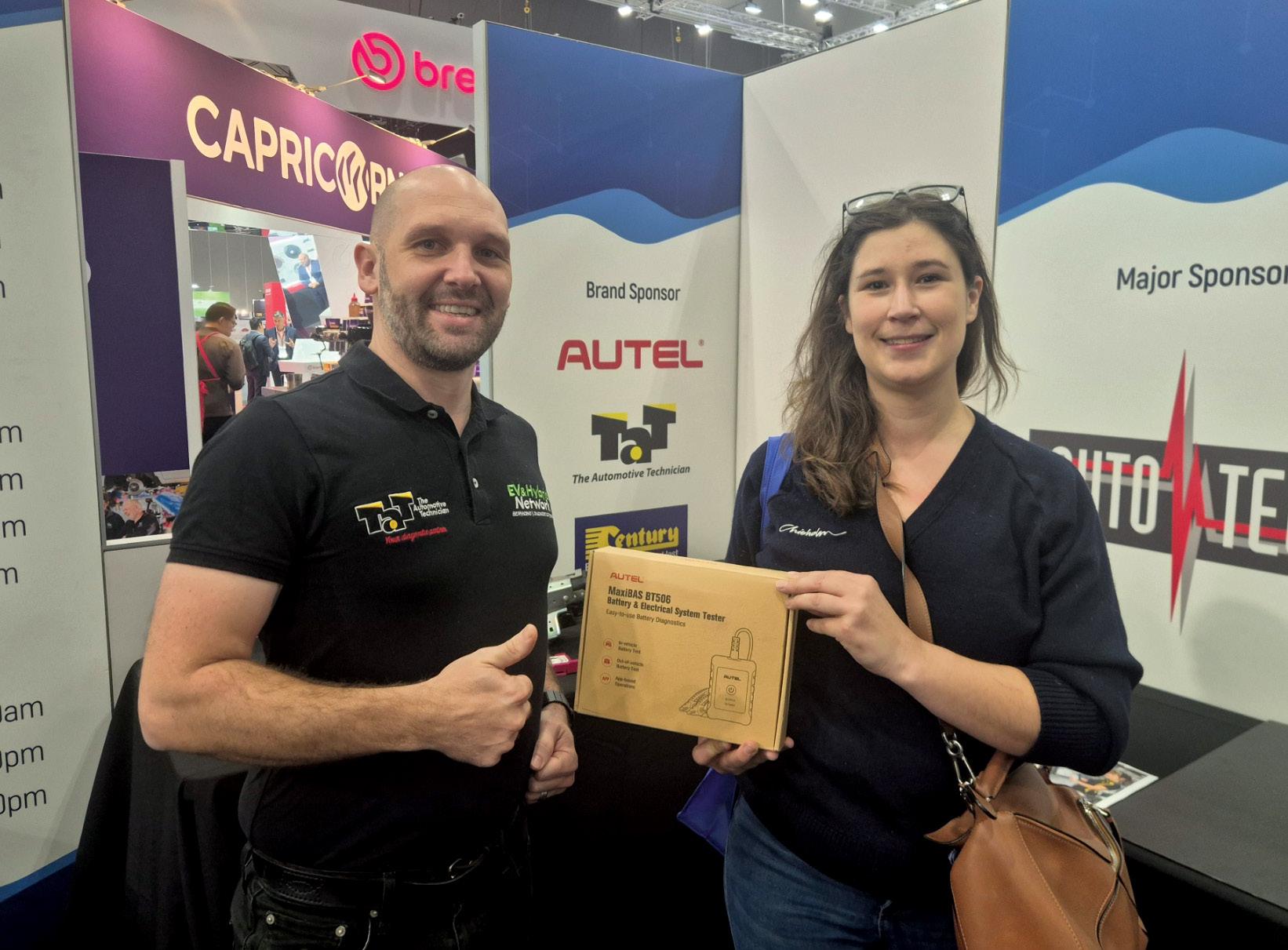
As an added bonus, attendees were able to use a dedicated quiz on the event app to answer questions about the tests they were carrying out and go into the draw to win a new prize each day from our generous sponsors of the Diagnostic Discovery Zone – AutoTech, Autel, Century and Bosch.
Across the three days, Jeff, the TaT Tech Team and I had the chance to speak with a wide mix of the automotive community. Some conversations were technical. Some were about training, staffing and the challenge of giving technicians time to build confidence. Some were simply people realising how much is going on behind a diagnostic invoice.
For TaT, that is the part worth championing. Diagnostic confidence grows when the test makes sense, the result has context and the next decision is clearer than it was before.
If people left the zone with one message, I hope it was this – good diagnostics isn’t about knowing every answer before the vehicle arrives, it’s about knowing how to ask the next better question, then choosing the test that can actually answer it. g
TOPDON continues to evolve its diagnostic ecosystem with advanced programming, coding and intelligent repair tools.
The automotive-repair industry is being reshaped by increasing vehicle complexity and the rapid integration of electronic control systems. Intelligent diagnostics is now a key factor in improving workshop efficiency and repair accuracy.
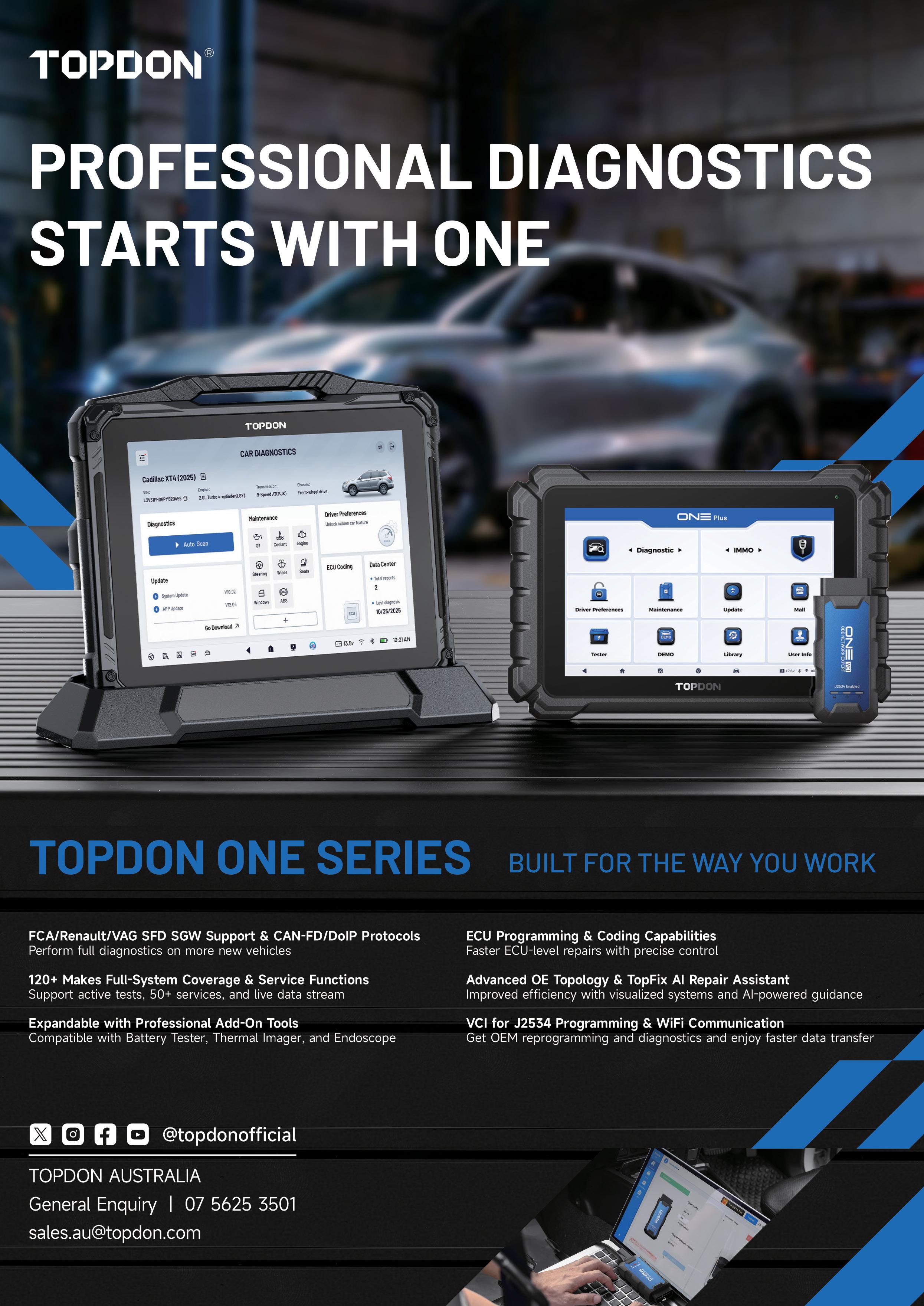
For years, TOPDON has been a trusted partner in the bay. The compact TopScan Series offers essential diagnostic functions for quick vehicle scanning, while the midlevel ArtiDiag Series expands service depth with multi-system diagnostics, active testing and comprehensive maintenance services. Now TOPDON is taking a major step forward with the ONE Series, developed from years of feedback from real-world technicians. The professional line-up includes the ONE Plus and ONE Pro for passengervehicle diagnostics, plus the ONE Moto for motorcycle and marine applications.
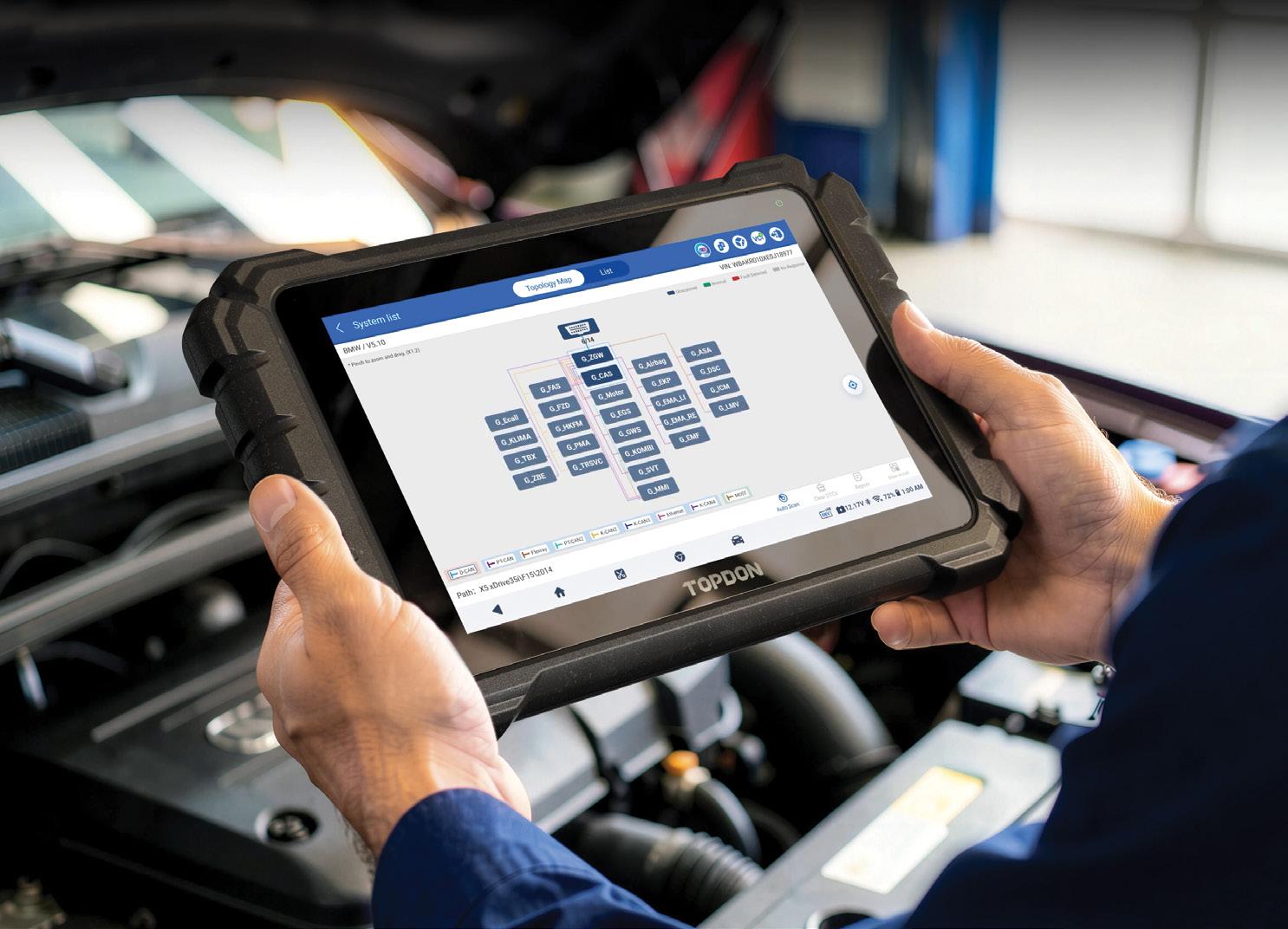
ONE Plus: Compact yet powerful Combining portability with advanced functionality, the 10.1-inch ONE Plus is designed to deliver a premium diagnostic experience.
Built for complex vehicle networks, it supports four-system ECU programming for BMW and Volkswagen Group (VAG) vehicles, deep ECU coding and oneclick customisation for 10 vehicle brands, supporting stability and efficiency across routine tasks and specialised repairs.
Pro: Engineered to optimise workflow
The ONE Pro is engineered to maximise workflow efficiency in busy professional repair shops. Featuring a 12-inch display and TOPDON’s optimised software logic, it’s designed to reduce repetitive operations by allowing seamless function changes without rescanning vehicle data.
The ONE Pro also offers full-system ECU programming/coding features and can expand beyond diagnostics through compatibility with accessories such as battery testers and endoscopes.
Both the ONE Plus and ONE Pro include TOPDON’s latest intelligent diagnostic technologies. At the centre of the system
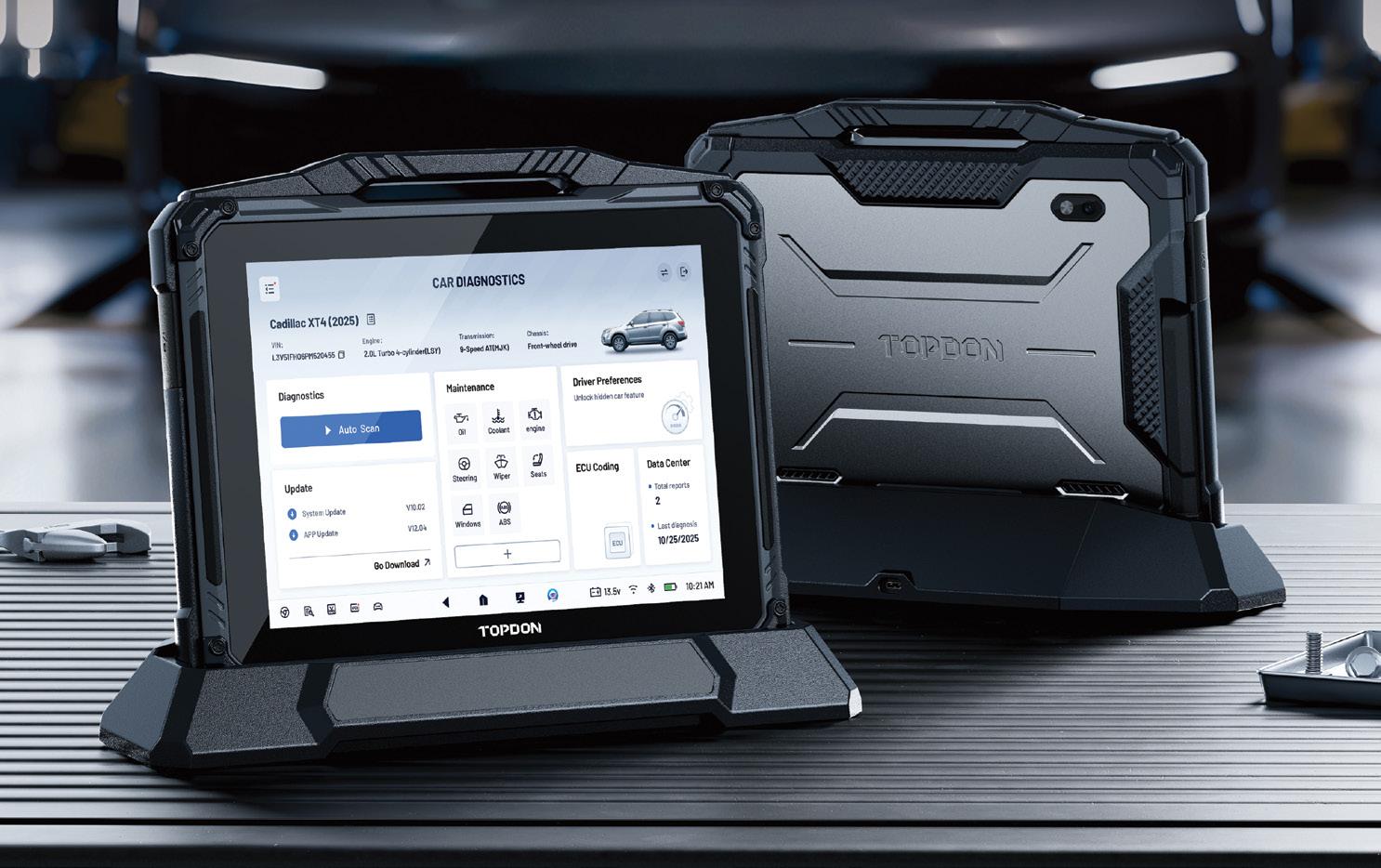
is TopFix, TOPDON’s intelligent diagnostic assistant, which helps users analyse fault codes, access repair suggestions and review wiring diagrams during troubleshooting.
The tools also support OE topology mapping, allowing technicians to visualise communication between vehicle modules for faster fault localisation. To meet the demand of newer vehicles and OEM diagnostic capabilities, both devices support J2534 pass-thru functionality as well as gateway access for Stellantis (Fiat Chrysler Automobiles), Renault, Nissan and VAG vehicles. They also deliver full-system diagnostics for more than 120 brands, bidirectional active tests, immobiliser (IMMO) functions and more than 50 highfrequency maintenance-reset services.
TOPDON has also launched the ONE Moto, designed for motorcycles and marine equipment. It supports fullsystem diagnostics for more than 100 motorcycle brands and marine diagnosis for Honda, Yamaha, Kawasaki and BRP equipment, with functions such as active tests, maintenance services and hidden feature activation. Pre-packaged with a complete set of adaptor cables, ONE Moto is designed to help technicians repair specialised equipment with speed and precision.
The ONE Series reflects TOPDON’s vision for the future of intelligent vehicle diagnostics – faster workflows, smarter troubleshooting and more connected repair solutions for technicians worldwide.
• To find out more call 07 5625 3501 or go to au.topdon.com