A Message From A4BGU
Welcome to the newest edition of Americans for Ben-Gurion University (A4BGU) Negev Connection, where we spotlight the people, partnerships, and breakthroughs shaping Ben-Gurion University of the Negev (BGU)—and its impact in securing a better future for Israel and the world.
Following the recent war, BGU continues to prioritize the safety and security of its students, faculty, and staff. The spring semester began virtually, and while many students are still on reserve duty, classes have now returned to BGU’s campuses.
At BGU, the pursuit of research and innovation never stops. This issue places a special focus on one of the defining challenges of our time: cybersecurity. As digital threats grow more complex and global industries become increasingly interconnected, BGU is stepping boldly into the forefront—training the next generation of cyber leaders, advancing cutting-edge research, and building real-world solutions that protect lives and critical systems.
Our cover story highlights an exciting milestone: the groundbreaking partnership between Boeing and BGU, a collaboration that is redefining cybersecurity education and innovation through the launch of a pioneering aviation cybersecurity research center. It’s a powerful example of what happens when academic excellence meets industry leadership, with the Negev as the launchpad.
Inside, you’ll read about inspiring women innovators at BGU, including the minds behind FeminAI, a breakthrough initiative using artificial intelligence to improve breast cancer detection.
We also feature a donor story that explores the heart of BGU, where healing and compassion thrive alongside scientific discovery.
Our feature on dog therapy at the University —made possible by relationships that A4BGU cultivated—highlights how community care, resilience, and emotional recovery are being nurtured in meaningful ways.
As always, the centerpiece of our work is the importance of connection: between vision and reality, donors and students, research and impact, and between BGU and the friends around the world who believe in its mission. We hope this issue leaves you informed, inspired, and eager to be part of what comes next.
Join us in our mission to fulfill Ben-Gurion’s vision for Israel in the Negev by supporting BGU today.
Visit www.a4bgu.org/negevconnection, mail a gift in the enclosed envelope, or call us at 800-962-2248.
Thank you for standing with A4BGU and BGU —and for helping shape the future from the Negev outward.


IAN BENJAMIN
Interim CEO, Americans for Ben-Gurion University
Cybersecurity at the Forefront:
Boeing & BGU Building Tomorrow’s
Defenses
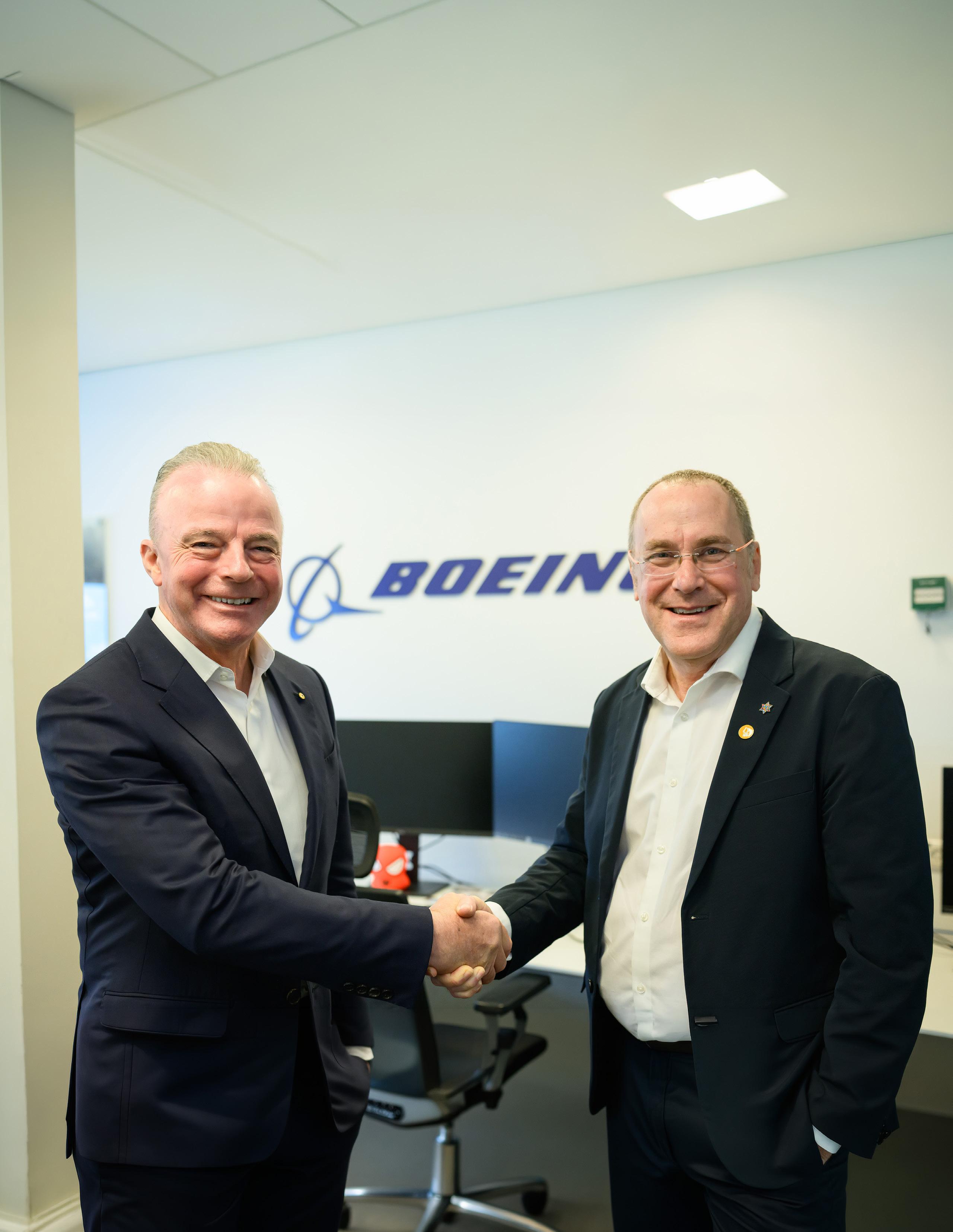
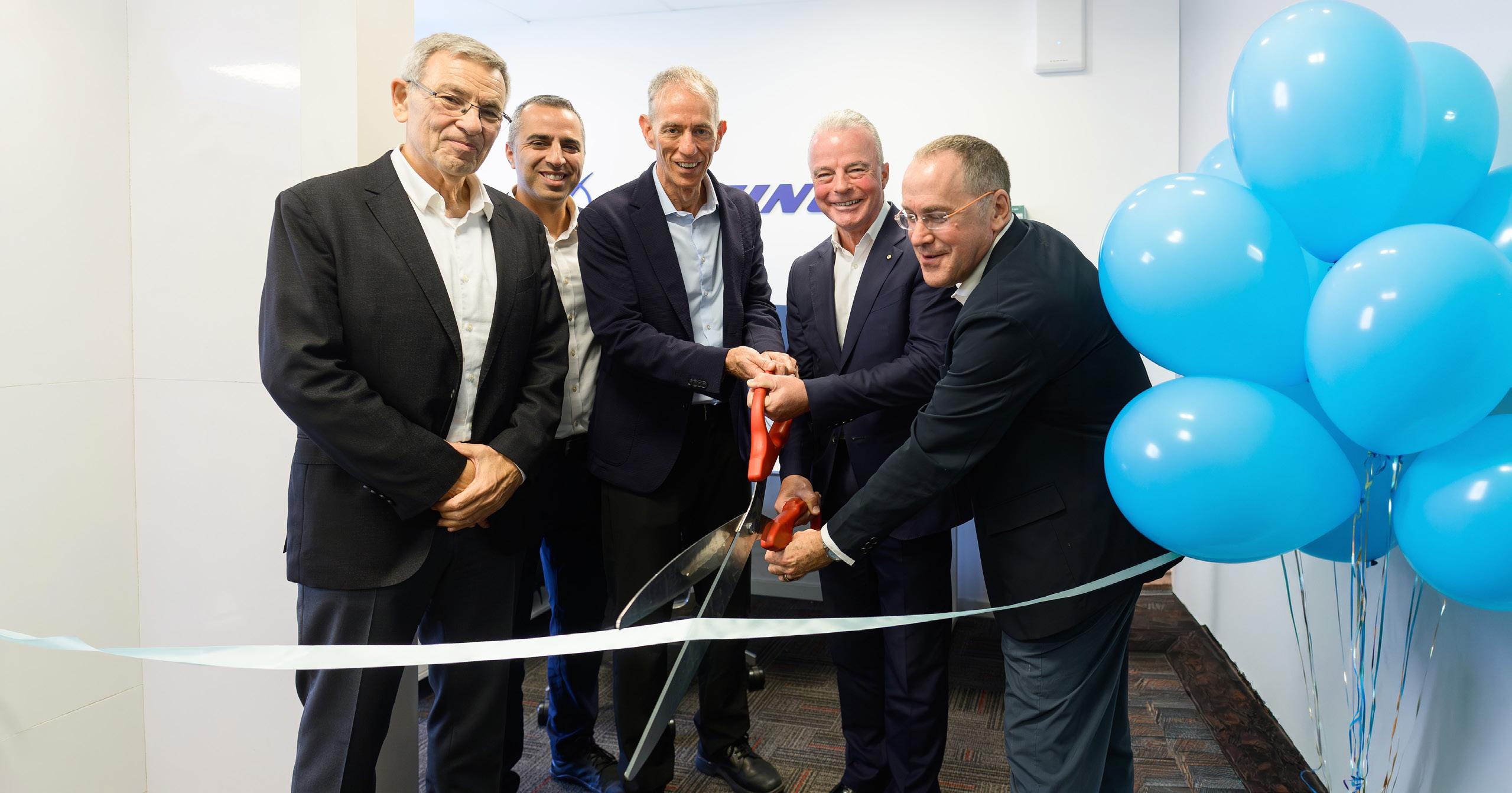
Ben-Gurion University of the Negev (BGU) and Boeing, a leading global aerospace company, recently established a pioneering research collaboration focused on advancing cybersecurity capabilities for next-generation aviation and aerospace systems.
The collaboration will advance proactive cybersecurity research for autonomous, digital, and connected aerospace systems.
The partnership will develop innovative security architectures, secure communication systems, resilient autonomous platforms, and trusted technologies for future aviation platforms.
“Aviation and space systems are becoming more autonomous, digital, and connected,” said Dr. Brendan Nelson, President of Boeing Global.
“Partnering with Ben-Gurion University, one of the world’s foremost centers in cybersecurity and advanced engineering, helps us stay at the leading edge of secure aerospace innovation.”
BGU President Prof. Daniel Chamovitz shared, “The establishment of this cybersecurity research center with Boeing is an important milestone for BGU. This partnership exemplifies how a deep connection between breakthrough academic research and a leading international corporation advances innovation, strengthens the Negev as a leading technological center, and trains the next generation of cybersecurity experts for the benefit of Israeli and global society.”
Boeing and BGU, through its tech transfer company BGN, have signed a multi-year framework agreement to launch a pioneering research collaboration in aviation cybersecurity.
The five-year agreement, valued at over USD $10 million, establishes a dedicated research center designed to explore and secure nextgeneration aviation and space systems amid increasingly complex cyber-physical environments.
“This agreement reflects the strength of BGU’s research ecosystem and its global leadership in cybersecurity, AI, and related technologies,” said Prof. Dan Blumberg, VP of Regional and Industrial Development at BGU.
The collaboration will operate within the facilities of CBG, BGU’s Cybersecurity Center of Excellence, enabling BGU researchers, graduate students, and Boeing experts to jointly tackle these challenges.
“Boeing is a natural partner for BGU. Years of collaborating with global leaders on their most critical cybersecurity challenges, in various fields, provide a solid foundation for addressing Boeing’s aviation cybersecurity needs. This collaboration is poised to advance new security capabilities for the next generation of aviation technologies while using the latest AI developments,” said Prof. Yuval Elovici, Director of the Cyber Security Research Center at BGU.
The collaboration between Ben-Gurion University and The Boeing Company will pave the way for Israel’s most advanced technologies and capabilities to be incorporated into future generations of aviation and space systems worldwide.
— Ido Nehushtan, President of Boeing
Israel

Meet BGU Women Innovators:
How Feminai is Revolutionizing Breast Cancer Detection
As she stepped away briefly from surgery to answer an unexpected phone call, Dr. Karny Ilan learned that she had earned the 2023 Ira M. Ingerman Entrepreneur of the Year Award from Ben-Gurion University of the Negev (BGU).
For Ilan—then a young physician with a bold idea to transform breast cancer screening—it was more than an award.
“It felt like people are really behind me, believe in my mission, and will do everything to support it,” she recalls.
That moment captures the spirit behind Feminai, a BGU-born startup that is reimagining how women detect breast cancer. At its heart is a powerful convergence of medicine, artificial intelligence, and entrepreneurship—nurtured from the earliest days by BGU’s Yazamut 360° entrepreneurship center and through an investment from Cactus Capital, a venture fund backed by the University.
AN IDEA ROOTED IN PERSONAL MISSION
Feminai’s story didn’t begin in a lab or boardroom, but in a medical school classroom. Growing up with a family history of breast cancer—the most common cancer among women—Ilan felt the stakes personally.

BORN AT YAZAMUT 360°
The company itself was forged on campus at BGU. Ilan met her co-founders, Shani Klein Antman and Gal Yanuka, through “WE,” a women-only entrepreneurship community organized through the Yazamut 360° center. The program, part of a broader initiative to cultivate entrepreneurial talent in the Negev, created what Ilan describes as a “bubble”—a rare environment where an all-female founding team felt not unusual but entirely natural.
Yazamut 360° provided more than coursework. It delivered validation, mentorship, and critical ecosystem connections.
“It gave us the first push into this world and made us believe that our dream and vision is possible,” notes Ilan.
Through Yazamut 360°, the founders also gained access to experts and investors who helped them move from concept to company formation. Those connections translated into tangible backing when Cactus Capital, Israel’s first student-run venture capital fund rooted within Yazamut 360°, made a $100,000 early investment.
For first-time entrepreneurs, it was transformative.
“It was our first money in the bank,” Ilan explains. The funding enabled Feminai to write and publish its patent and build its first working prototypes. Just as important, it signaled institutional confidence in a bold idea emerging from the Negev.
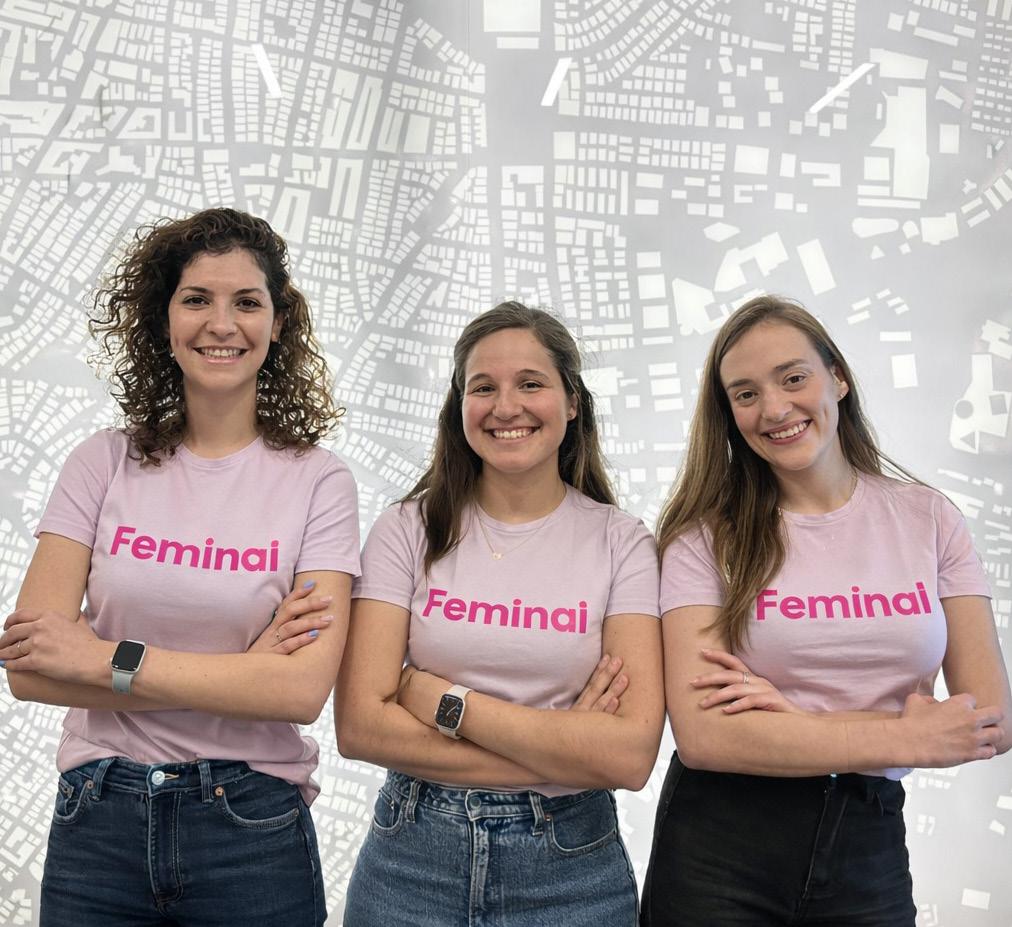
Our goal is to make breast cancer screening more accurate, accessible, and affordable—ultimately improving outcomes for women’s health.
— Dr. Karny Ilan, Co-founder & CEO of Feminai


SCREENING REIMAGINED
Feminai’s solution is deceptively simple in concept but sophisticated in execution. The company combines an AI-powered mobile application with a disposable wearable patch. A woman uses the patch at home for a five-minute scan, and the system generates a clinician-signed breast health report.
By moving screening beyond traditional imaging centers, Feminai aims to expand access dramatically and shift the trajectory of early detection. The technology is designed not to replace mammography but to provide a complementary, accessible tool particularly valuable for women who face geographic, financial, or biological barriers to standard screening.
FROM THE NEGEV TO THE WORLD
What began as a classroom connection has quickly matured into a venture -backed health-tech company. Feminai recently secured a $6 million seed investment, marking a major milestone in its growth. The company is now pursuing FDA approval and preparing for a U.S. go-to-market strategy.
BGU President Prof. Daniel Chamovitz recently commented on this momentous milestone, “This is exactly why we invest so deeply in entrepreneurship. Because when universities trust young innovators and give them room to grow, ideas turn into impact.”
#13 | SPRING 20267

From AI to Archives, Jeff Polak’s Support for BGU
Bridges Israel’s Past and Future

For the David and Janet Polak Foundation, support for the cybersecurity and artificial intelligence initiatives at Ben-Gurion University of the Negev (BGU) began more than five years ago —before AI and cyber were dominating headlines and becoming daily buzzwords.
“We try to identify trends well before they become public and widely recognized,” says Jeff Polak, President of the foundation. “Cyber and AI were clearly going to be of increasing strategic importance.”
BGU’s location in Beer-Sheva—at the heart of Israel’s southern innovation ecosystem and near the IDF’s elite technology units, including Unit 8200—made the opportunity to support the National AI Resilience Lab especially compelling. The Israeli government actively partners with the University, building a unique nexus between academia, military expertise, and industry.
“All the pieces were coming together,” Polak says. “Strategic location, partnership with the government, top-tier talent—it had the potential to be incredibly important.”
Polak says that while some philanthropists are focused on seeking recognition, his family’s foundation has “simply identified an important institution and invested in results.”
As far as BGU is concerned, that translates into philanthropic investments which form a continuum—bridging Israel’s founding vision with the innovation that will define its future.
INVESTING EARLY IN ISRAEL’S STRATEGIC EDGE
Today, as Israel stands at the forefront of global cybersecurity and AI innovation, Polak sees the foundation’s early investment as both prescient and essential.
At an international financial conference several years ago, he recalls hearing cybersecurity’s global power structure summarized simply: “The Russians, the Chinese, the United States— and Israel. And in many ways, Israel is the best.”
Helping to ensure that Israel remains a dominant force in AI and cyber is, for Polak, not only an economic imperative but a security one.
“Our ultimate goal is to secure the State of Israel,” he explains. “If we help facilitate wealth creation through high-tech entrepreneurship—AI companies, cyber companies—that wealth ultimately circles back to strengthen and secure the country.”
BGU’s National AI Resilience Lab represents exactly that kind of multiplier effect: cuttingedge research that fuels economic growth, strengthens national security, and cements Israel’s position as a global innovation hub. Polak plans to visit the Lab in the coming months, eager to see firsthand how it has expanded and deepened its impact.
PRESERVING ISRAEL’S FOUNDING VISION
If the AI Lab represents Israel’s future, the digitization of the Ben-Gurion Archives embodies its past.
Polak conceived the archives project after participating in A4BGU’s 2016-2017 Zin Fellows program. During a visit to the Ben-Gurion Archives, he met with Dr. Adi Portughies, who was then overseeing the collection. What he saw left a lasting impression.
The archives, housed in a basement and filled with David Ben-Gurion’s handwritten notes, letters, and documents, struck him as something far more than historical artifacts.
“What I saw was the authentic, true history of the State of Israel,” Polak says. “Not through a journalist’s interpretation or someone’s opinion, but directly from Ben-Gurion himself.”
To Polak, Israel’s founding prime minister is akin to “the George Washington of Israel.” Yet the materials documenting his leadership and vision were largely accessible only to researchers and archivists.
Polak envisioned something more expansive and more democratic: a digitized, engaging platform that would make Ben-Gurion’s words and ideas available to students, educators, and the broader public worldwide.
“This shouldn’t just be for archivists,” he says. “It should be packaged in a way that’s engaging and accessible—so a high school student or anyone interested in learning about Ben-Gurion’s life can connect with it.”
By supporting the digitization and modernization of the archives, Polak sought not only to preserve history but to animate it—bringing Israel’s founding story to life for future generations.
THE NEGEV AS ISRAEL’S FUTURE
Polak’s connection to BGU is deeply tied to Ben-Gurion’s original vision: that the Negev would be central to Israel’s future growth and strength.
During his time as a Zin Fellow, he witnessed firsthand the transformation of Beer Sheva and the broader Negev region. What once seemed improbable now feels almost miraculous.
“The development and growth—it’s remarkable,” he says. “Ben-Gurion University plays such an important role in realizing that vision.”
For Polak, supporting BGU is a strategic investment in Israel’s long-term resilience. The University not only anchors the region’s economic and technological development but also shapes the character and resolve of its students.
In the aftermath of the October 7th attacks, Polak met with BGU-affiliated medical students and alumni whose commitment to Israel deepened in the face of tragedy. Some altered career plans to serve at home. Others returned to military or medical units despite personal hardship. He also encountered survivors whose resilience left a profound mark on him.
“As horrific as October 7th was, I saw an extraordinary resolve,” he says. “There’s mourning, of course, but there’s also strength. A culture that doesn’t wilt. A culture that creates.”
That spirit is what Polak believes makes Israel one of the most exciting places in the world today.
“Funding AI and cyber is important,” he says. “But what’s even more impressive are the individuals the University is producing—the doctors, the entrepreneurs, the leaders. That’s where the real impact is.”
Through strategic philanthropy, focused on results rather than recognition, Jeff Polak is helping to shape both the future and the historical memory of Israel. By investing in BGU, the family foundation he leads is advancing innovation, preserving legacy, and strengthening the foundations of the Jewish state for generations to come.
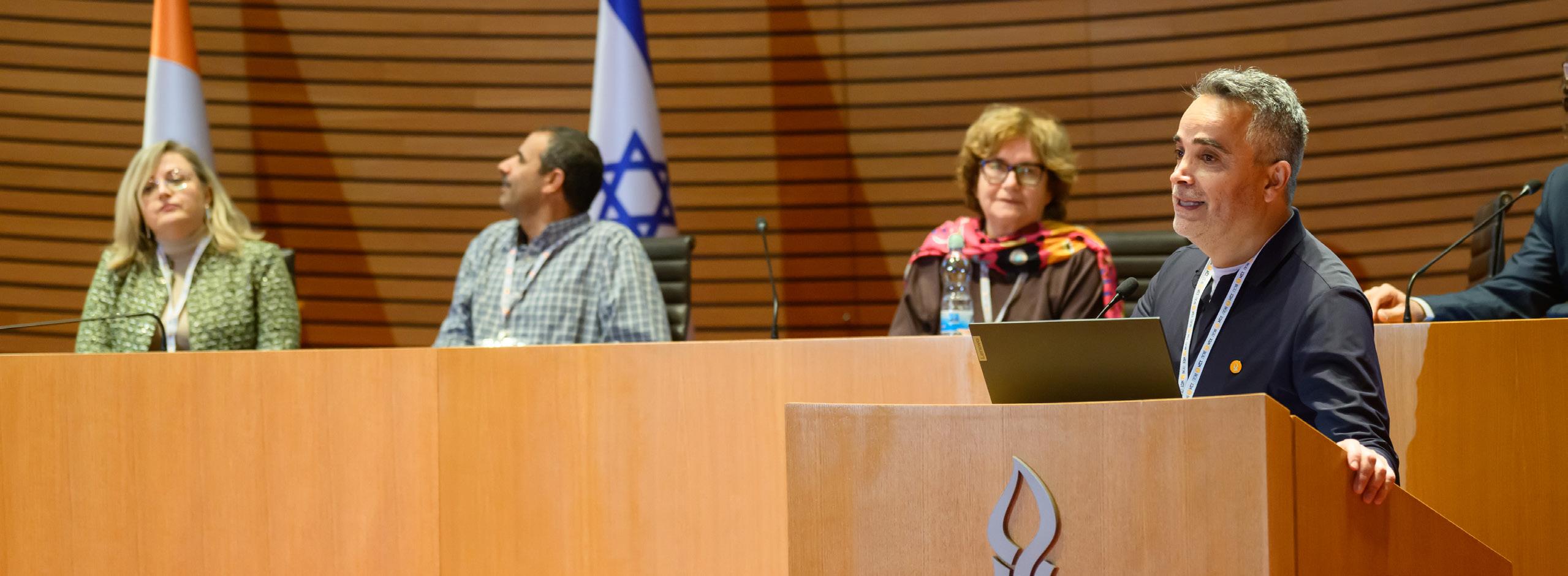
The Local Leader Behind Prisma Negev
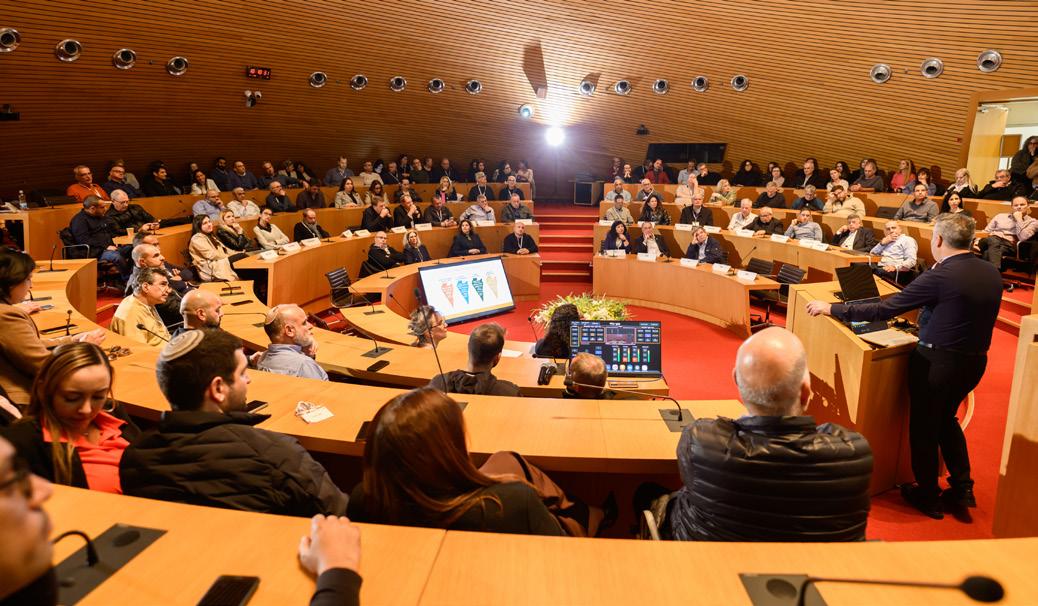
Ben-Gurion University of the Negev (BGU) has launched Prisma Negev, a new center that integrates academic research, data, and applied initiatives to develop practical, scalable solutions that directly impact the lives of residents and communities across the Negev. The initiative brings together more than 40 heads of local government, alongside representatives from industry, civil society, innovation centers, the IDF, and academia.
A STRATEGIC REGIONAL HUB
January’s launch marked the official opening of the strategic center, whose mission is to strengthen regional cooperation, promote high-impact projects, and support informed, data-driven decision-making at the regional level. Key initiatives for the project include economic development, education & reducing gaps, employment, social innovation, health and community wellbeing, civic and community resilience, technology and society, and tourism.
ROOTED IN THE NEGEV
Leading the project is Prof. Miki Malul, Head of the Negev Strategy Office at the BGU President’s Office and an expert in economic development.
Prof. Malul was born and raised in Dimona, just miles from BGU. Following his military service, he pursued higher education at BGU, earning a bachelor’s and two master’s degrees in economics, all with honors. He has spent his career utilizing higher education as a tool to promote economic growth and reduce socioeconomic disparities.
Realizing the Negev’s tremendous potential is a central component in strengthening the Israeli economy and society. Prisma Negev is where regional vision becomes action and knowledge becomes impact. With partners across all sectors working together, we are shaping a stronger future for the Negev and for Israeli economy and society as a whole.
— Prof. Miki Malul
New BGU Faculty Shaping the Future of Tech
Dr. Guy Laban

Department of Industrial Engineering & Management
Dr. Laban bridges computer science, engineering, and behavioral sciences to study how people communicate and share emotions with AI agents like social robots and chatbots.
“Curiosity and the ability to learn are the most important qualities in research. My field is dynamic and constantly changing, you have to enjoy the journey and learning new things.”

Dr.Itay Safran
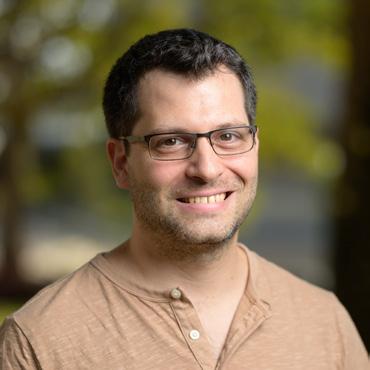
Department of Computer Science, Faculty of Natural Sciences
Dr. Safran studies the scientific foundations of modern artificial intelligence, developing theoretical frameworks to better understand and improve deep learning.
“I’ve always wanted to be an astronaut, but my academic studies made me realize that what excites me the most is discovering and proving something new that no one else was able to previously.”
Dr.Nir Chemaya
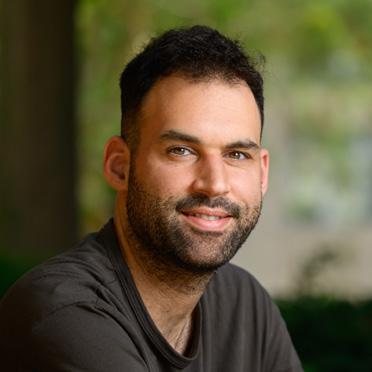
Department of Economics, Faculty of Humanities & Social Sciences
Dr. Chemaya studies how people make economic decisions and how decentralized technologies like blockchain are reshaping financial systems.
“BGU, and especially the Department of Economics, were truly a home for me during my undergraduate and master’s studies, and while serving as a teaching assistant. I am excited to return now as a researcher and lecturer, and to work alongside the professors who taught me at the very beginning of my academic journey.”
Dr.
Chaim Baskin
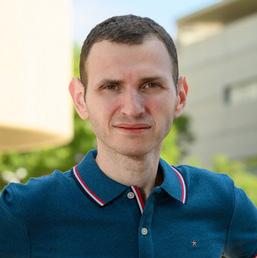
School of Electrical & Computer Engineering, Faculty of Engineering Sciences
Dr. Baskin develops deep learning methods that solve real world problems efficiently while requiring minimal data.
“The field I work in evolves at an incredibly fast pace. To remain relevant, I read dozens of research papers every day and, like in chess, I’m always thinking several steps ahead.”
Dr.Ayal Taitler
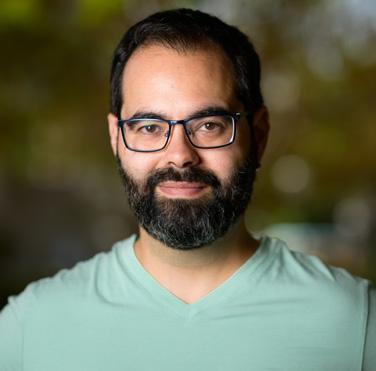
Department of Industrial Engineering & Management, Faculty of Engineering Sciences
Dr. Taitler studies how autonomous systems like self driving vehicles and robots make safe and reliable decisions in complex environments by combining adaptive learning with established algorithms.
“The solutions to the challenges we face today don’t lie in just one approach or another, but in combining different disciplines and methods.”

Dr.Motke Porat
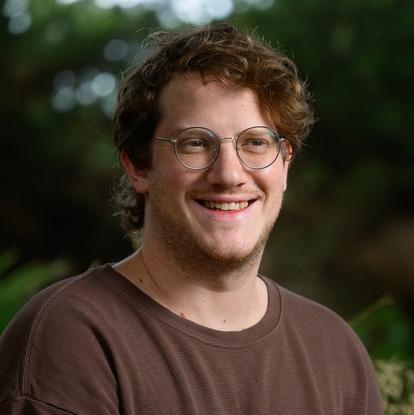
The Foundation Courses Teaching Unit
Dr. Porat is leading a new unit dedicated to coordinating and teaching mathematics service courses for other departments.
“My main goal is to make mathematics accessible so that students have a rigorous and comprehensive learning experience and, at the same time, overcome any fear or apprehension of the subject and maybe even come to love it.”

Healing in a High-Tech World:
Dog Therapy at Ben-Gurion University
In a university known for its high-tech innovation and cutting-edge research, the pace of progress can be relentless. Students immersed in cybersecurity, AI, engineering, and advanced sciences operate in an environment defined by intensity, ambition, and constant problem-solving.
At Ben-Gurion University of the Negev (BGU), excellence drives discovery—but in a world shaped by technology and global uncertainty, wellness and emotional resilience matter just as much as intellectual achievement
It is within that context that healing, balance, and human connection take on new meaning —reminding us that even in the most advanced environments, it is our humanity that sustains us.
When Laurie Bernhard thinks about her late brother Paul, she doesn’t begin with his illness She focuses on who he was: kind, gentle, pragmatic, and effortlessly warm to everyone he met.
That spirit is now at the heart of a unique and deeply personal gift to Israel: a guide dog training park at BGU, made possible through
a donation from Paul’s siblings, Laurie, who lives in Los Angeles, and John Bernhard, based in Seattle. The park was created in memory of Paul Stanford Bernhard (1955–2010) of Los Angeles, whose life, joy, and final days were profoundly shaped by the healing presence of dogs.
And while the park supports a growing national initiative in Israel, its roots are unmistakably family-centered: a tribute shaped by love, loss, and the determination to transform grief into healing
A BROTHER REMEMBERED FOR HIS LIGHT
Paul was 54 years old when he died of lung cancer. As Laurie recalls, the emotional weight of his final chapter wasn’t only the illness itself.
“He was very sad when he realized his illness was terminal…that was the end of his lineage He had no children,” she shares.
After Paul’s passing, their mother made a decision that would define the family’s next steps. She wanted to create a small family foundation that would support causes Paul cared about.
He loved the outdoors: sailing, skiing, hiking, camping, and gardening. And then there was the joy he found in dogs. Laurie remembers what happened when therapy dogs would visit Paul in the hospital as he fought cancer.
John first discovered BGU about a decade ago. After the October 7 attacks, as Israel’s trauma deepened and needs multiplied, he began thinking about how their family’s foundation—built in Paul’s honor—could extend its impact to Israel.
FROM TRAGEDY TO TRIBUTE
We saw Paul’s face light up every time a dog approached his hospital door. Those visits were transformative Laurie describes watching the shift in Paul as something you could almost feel in the room. They were palpable, the moments of joy and love and happiness and tenderness and connection.
Ever the connector, Paul would engage not just with the dog but with the person who brought it, learning about their lives with the same genuine interest he offered everyone else.
It’s that image—Paul in a hospital bed, with his mood softened by a dog’s presence—that became the emotional blueprint for the gift Laurie and John would later make to BGU.
A PERSONAL CONNECTION TO ISRAEL
The project actually began with John Bernhard’s connection to Israel. He lived in Israel twice as a young man—first in 1971 at Kibbutz Ma’ayan Baruch near the Lebanese border, and again in 1973, when he traveled there during the Yom Kippur War to help with the winter harvest in the Jordan Valley.
Those experiences, John says, were among the most significant of his life and helped shape his identity and commitment to Israel.
Over time, John became fascinated by the growth and development of Israel’s South, particularly the Negev—and by BGU’s role in that story.
“It seemed like a great hub of creativity,” he says, pointing to the University’s diverse demographics and technological advancements.
Then, a clear idea arrived. Through Americans for Ben-Gurion University (A4BGU), he learned about an initiative BGU hoped to launch connected to dog therapy and guide dog training. John and Laurie agreed that it would be a fitting tribute to Paul’s legacy. They ultimately made their gift to the University not through the foundation, but personally as a brother and sister.
The guide dog training park at BGU is designed as a contained, purposeful space where dogs can be trained—supporting not only mobility needs, but also emotional healing and companionship.
In the aftermath of October 7, Laurie says she understood the emotional power behind trauma therapy and canine support in a way that felt even more urgent: what a dog can offer someone when the world has become frightening or unbearably sad.
“It helps people to see goodness and see joy and light in the darkest times,” she says.

Leave a Legacy of Light A seed planted today brings beautiful blossoms tomorrow.
Endowment to fund your legacy in perpetuity
Naming opportunities for building or capital project
Fund specific research initiatives and/or programs of your interest
Faculty chair and recruitment opportunities
Scholarships and fellowships

Already included A4BGU in your estate plans?
Let us know so we can welcome you to the Living Legacy Society.
For more information plannedgiving@a4bgu.org 646-452-3689 a4bgu.org/planned-giving
Make Ben-Gurion University of the Negev part of your legacy by establishing a Charitable Gift Annuity.
NOTES:
The rates are for ages at the nearest birthday.
In the month you use cash to establish a gift annuity, a final calculation is made determining the portion that will be paid to you tax-free.
Donors over the age of 701/2 can make tax-free Qualified Charitable Distributions from their IRAs of up to $50,000 in one calendar year in exchange for one or more charitable gift annuities. Contact us for more details.
Upcoming Events & Ways To Engage
Hamptons Summer Event
New York
July 9, 2026
Vail & Aspen Summer Events
Colorado
July 12 - 15, 2026
Pre-Global Gathering Shabbat Experience
Jerusalem, Israel
October 16 - 18, 2026
Global Gathering at the Board of Governors
Israel
October 18 - 22, 2026
Ben-Gurion Day in the USA Fall 2026
Tempe & Sedona, Arizona Climate Connections: Where Nature Meets Knowledge February 2027

David Ben-Gurion to Life!
David Ben-Gurion Speaks is a three-part AI-powered video series, in collaboration with Jewish IdeaLab, that brings Israel’s founding prime minister to life. This unique approach invites viewers to connect Ben-Gurion’s enduring vision with the university that bears his name and with his belief that knowledge and creativity could transform a desert into a thriving center of innovation.
SCAN TO WATCH