Essential Insights for Long Term Wastewater System Reliability A properly functioning septic system is one of the most important yet overlooked components of any home. Hidden beneath the ground, it quietly manages wastewater every day, keeping your household safe, hygienic, and comfortable. When the system begins to fail, the impact can be immediate and disruptive. Understanding how septic systems work, why problems occur, and when professional help is needed can save homeowners from unnecessary stress and costly damage. This guide is designed to help Orlando-area residents make informed decisions about caring for their septic systems and maintaining long-term reliability.
Why Septic Systems Demand Special Attention Unlike municipal sewer connections, septic systems rely on a balance of natural processes and mechanical components. Wastewater flows from the home into a tank, where solids separate and bacteria begin breaking them down. The treated liquid then moves into underground lines and soil for final filtration. When this process is disrupted, wastewater has nowhere to go, leading to backups, odors, and environmental concerns. Florida’s soil conditions and fluctuating water tables make septic systems especially sensitive. Heavy rainfall, compacted soil, or poor drainage can strain the system and accelerate wear. That is why homeowners should be proactive rather than reactive when it comes to septic care.
Common Causes of Septic System Failure Septic issues rarely appear overnight. Most problems develop gradually due to a combination of usage habits, environmental factors, and aging components. Some of the most frequent causes include: ● Excessive water use: Running multiple appliances at once can overload the system, preventing proper separation and filtration. ● Improper disposal: Flushing wipes, grease, hygiene products, or harsh chemicals can clog pipes and kill beneficial bacteria. ● Lack of maintenance: Skipping routine inspections and pumping allows solids to build up, increasing the risk of blockages. ● Root intrusion: Nearby trees and shrubs may send roots toward moisture, damaging underground pipes.
Over time, these factors can weaken the system and lead to the need for professional septic repair in Orlando.
Warning Signs You Should Never Ignore
Early detection is key to avoiding extensive damage. Homeowners should remain alert to subtle changes around their property and plumbing. Common warning signs include slow-draining sinks or toilets, gurgling sounds in pipes, unpleasant odors indoors or outdoors, and standing water near the yard. In some cases, grass over the drain area may appear unusually green due to excess moisture. Ignoring these symptoms can result in more serious consequences, including sewage backups or contamination of surrounding soil and groundwater.
When Drainage Issues Signal a Bigger Problem One of the most serious septic concerns involves the underground lines that carry wastewater away from the tank. These lines rely on healthy soil to absorb and filter liquid waste. When the soil becomes saturated or compacted, wastewater may surface instead of dispersing properly. In such cases, homeowners may require field line replacement Orlando to restore proper drainage and prevent further system failure. Replacing these components is not just about fixing a single issue. It is about restoring balance to the entire system and ensuring that wastewater is safely treated below ground.
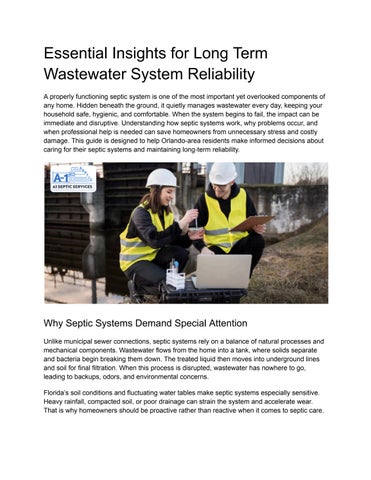
The Value of Professional Expertise Septic systems are complex, and attempting repairs without proper training can make problems worse. Professional technicians use specialized tools such as camera inspections and soil assessments to identify the root cause of an issue. They also understand local regulations and environmental requirements, ensuring that all work is completed safely and correctly. Working with an experienced provider like A1 Septic Service gives homeowners confidence that repairs are handled efficiently and with long-term performance in mind. Professional guidance also helps property owners understand how to prevent similar issues in the future.
Preventive Care for Long-Term System Health The best way to avoid major septic problems is through consistent maintenance and responsible usage. Homeowners can take several simple steps to protect their systems: ● Schedule regular inspections and pumping based on household size and usage ● Conserve water to prevent unnecessary strain on the system ● Avoid disposing of non-biodegradable or chemical products through drains ● Keep heavy vehicles and structures away from septic areas ● Maintain proper landscaping to protect underground components
These habits not only extend the lifespan of the system but also reduce the likelihood of unexpected repairs.
Protecting Your Home and Investment A failing septic system can affect more than just daily convenience. It can lower property value, create health hazards, and lead to costly emergency repairs. By understanding how systems work and responding promptly to warning signs, homeowners can protect both their homes and their investments. Septic care is not just about fixing problems when they arise. It is about making informed choices, working with knowledgeable professionals, and maintaining a system that quietly supports your household every day.
Final Thoughts Septic systems may be out of sight, but they should never be out of mind. With proper care, timely repairs, and professional support, homeowners can enjoy reliable performance and peace of mind for years to come. Whether you are addressing early warning signs or planning preventive maintenance, taking action today can prevent major disruptions tomorrow and keep your home running smoothly.