

Barbie is a toy doll that has shaped the childhoods of several generations of young kids, in particular little girls. She’s often cited as a feminist icon due to her neverending showcase of job roles she ob tains for each individual “line”. Howev er, as we look deeper, you’ll see that her feminist iconship is debatable.
Barbie was inspired by a cartoon char acter called ‘Lilli’ from a German newspaper from the 1950s. She wore high heels and skimpy clothes, similar to a pinup model. This character went on to become a toy, marketed to older children in Switzerland and Ger many.
Ruth Handler, Barbie’s creator, saw a Lilli doll on holiday and was inspired by her, best seen in the design of the original Barbie doll. Barbie reflected a very modern image of a woman in the early 1960s; she is single, childless and confident. Barbie’s persona resonated strongly with Handler, who de scribed herself as a ‘Jewish feminist’.
girl’s best friend.
Ruth Handler named Barbie and Ken after her own two children.

Barbie’s creation symbolised the renaissance of feminism in America.
In 2023, as the premiere of Barbie’s first-ever live-action film loomed closer, some people expected a ‘feel-good’ watch, following the convention of her many animated movies. The only difference this time would be the use of human actors. Even more hoped for some sort of escapism that we have come to associate and cherish with cinema.
However, audiences were forced to re-evaluate their expectations of the film as it became apparent it was far more political than anticipated, opening up many discussions about the Barbie brand and where it stands within politics. One aspect of the film that stood out to me was the lack of intersectionality when approaching the topic of feminism.
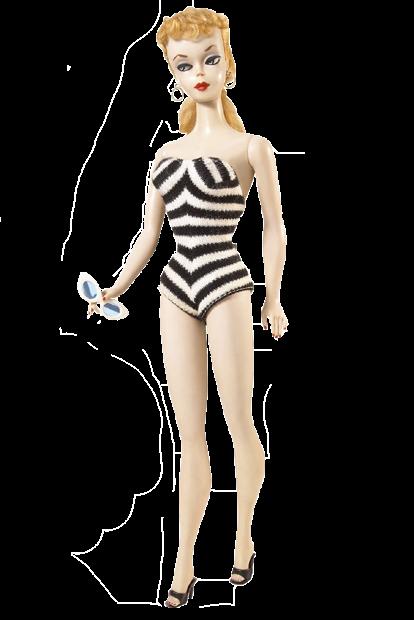
ABarbie.

(Mattel’s first Barbie doll, dating back to 1959)

Kimberlé Crenshaw civil rights activist and scholar
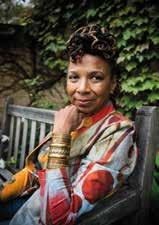
Kimberlé not only a civil right activist but also a She is a professor at the UCLA School of Law and Columbia Law School.
She also started the #sayhername movement.

Betty Friedan
American second-wave feminist writer and activist.
Betty also helped advance the women's rights movement as one of the founders of the National Organization for Women. Friedan was restless as a homemaker before she wrote her book.
“Intersectional feminist theory correctly notes that several other factors outside of one’s gender can generate extra oppression, such as race, class, disability, sexuality and religion.”
Intersectionality describes the many factors that contribute to people’s experiences and identities. The term was coined by civil rights activist and scholar Kimberle Crenshaw in her 1989 essay, ‘Demarginalizing the Intersection of Race and Sex: A Black Feminist Critique of Anti-discrimination Doctrine Feminist Theory and Antiracist Politics’, the primary aim of which was to explain the oppression and disenfranchisement of black women to black women.
Intersectional feminist theory correctly notes that several other factors outside of one’s gender can generate extra oppression, such as race, class, disability, sexuality and religion. Crenshaw argued that when one is subject to multiple forms of discrimination by interlocking systems of power and oppression, the effect created is much more than the sum of its parts, instead each oppressive experience compounds on itself to create a
far more layered, complex and oftentimes, brutal ordeal. The addition of intersectionality to feminism allows for a more inclusive movement, one that empowers the voices of women from a much wider array of backgrounds.
By broadening the scope of oppression, intersectional theory distinguishes itself from first and second-wave feminism, which was based almost entirely on the experiences of white, middle-class, cis-gender women.
‘The Feminine Mystique’ was thought to be one of many catalysts for the second-wave feminist movements that dominated the 1960s through to the 1980s. The phrase comes from the title of Betty Friedan’s 1963 book, where she coined the term ‘Feminine Mystique’ to describe society’s assumption that American women could be fulfilled solely through housework, marriage and child-rearing. The concept held that “truly feminine” cis gendered women had no desire for
higher education, careers, or a political voice. Middle-class white women represented idealised femininity in American society and became the de facto face of the ‘Feminine Mystique’. Friedan, however, disputed this idea, expressing that many housewives were deeply unsatisfied with their lives but had difficulty articulating their feelings.
While Friedan’s theory was quite notable for bringing many women to second-wave feminism and its shirking of women’s societal roles, towards the 1980s, it began to come under criticism, especially amongst feminists of colour. A notable critic of Friedan’s work was bell hooks. hooks argued that Friedan’s manifesto was both racist and classist because it lacked an intersectional perspective and did not apply to the plight of African-American and other working-class women, many of whom joined the labour force out of sheer necessity.
“Alike to The Feminine Mystique theory, it has been argued that the feminism championed by the Barbie brand is severely myopic, centring shallow, cis white women and their brand of feminism.”
Alike to The Feminine Mystique theory, it has been argued that the feminism championed by the Barbie brand is severely myopic, centring shallow, cis white women and their brand of feminism. For example, Stereotypical Barbie, the film’s titular character, is a young white woman and the face of the brand. While Mattel has produced many Barbies of colour to date, they tend to remain in sidekick-type roles.
The brand’s approach to feminism and gender politics is very much one-size-fits-all, failing to consider and/or recognise how other characteristics can impact feminism.
Although none of the dolls have genitals in Barbieland, it can be assumed that their idea of gender is similar to the western world’s. All dolls are assigned to a gender during creation.
Many moviegoers were impressed by the inclusive casting of the
film. For once, a range of minority actors are interacting with the Barbie franchise, showing us spectators that Barbieland welcomes everybody. Hari Nef’s (Doctor Barbie) casting, in particular, made a big buzz on social media. Online, many trans people and allies celebrated her casting, as it showed that a brand as big and powerful as Mattel could be inclusive too.
Trans commentary isn’t a big topic in the film, rather the main focus is on cis gender women. While watching the film, I did anticipate a deeper discussion of gender due to how the film was presented to us. Perhaps, we did not receive said discussion because the Barbies exist within a world where no doll has genitals so the idea of trans people does not coincide with the world.
The absence of a deeper conversation about gender may also be due to the two hour runtime of
the film; there wasn’t enough space to fit in this discussion smoothly. Or maybe they believed trans commentary in a ‘kids’ film would be badly received from parents and critics.
I personally think that Gloria’s speech would have been a great time to mention trans people, in particular trans women, and how they interact with intersectional feminism. Like the patriarchy, the Barbies could have been made aware of different genders and trans people.

Gloria from the Barbie Movie (played by America Ferrera)
Many viewers of the live-action Barbie film criticised Gloria’s speech about the hardships of being a woman, describing it as superficial as it only touched the surface of how deeply entrenched misogyny is. When first watching the movie, I loved the overall idea of this scene but I thought it definitely needed to be executed better without focusing on one single perspective.
It can be perceived as a bit odd that Gloria doesn’t touch on race, considering that she is ostensibly a Latina woman.
This is most likely due to all the people in the writers rooms and behind the scenes being white.
In her monologue, she touches on topics like body image and motherhood. Frustratingly, these topics were not further explored throughout the film, bringing us to one of the major issues viewers, including myself, had with the movie; it shies away from several opportunities to deliver impactful social commentary, despite setting them up so well.
Mattel decided to start diversifying the Barbie line in the late 60s.
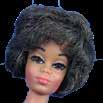
Although the initial non-White Barbie was introduced in 1967 as “Colored Francie”, the first official Black Barbie, “Christie”, was produced in 1968, created to show the brand’s support of the civil rights movement. This idea was pushed
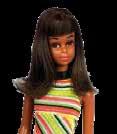
by Beulah Mae Mitchell (a Mattel worker) and Kitty Black (a doll designer). Black was Mattel’s first black designer.
We can acknowledge that while the creation of Christie was a step in the right direction, it was never more than that, a singular step. All dolls of colour always remained confined in the sidekick role, never allowed to have or even share the spotlight.
During Lagueria Davis’ (Beulah’s niece) interview with ‘NowThisImpact’, she expressed thoughts of the Barbie brand and blackness being intertwined. Davis compares the creation of the ‘Colored Francie’ and ‘Chrissie’ dolls to being invited to a dinner but only offered crumbs. “While that [the creation of black dolls] feels progressive for them [white people], it feels less progressive for us. Why did it take 21 years to have a black fashion doll worthy of the Barbie brand name?”
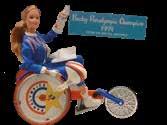
For almost 40 years, Barbie dolls were solely able-bodied, until Mattel, working closely with Toys “R” Us and the American non-profit organisation National Parent Network on Disabilities (NPND) to produce the first disabled Barbie, wheelchair-bound “Share-a-Smile Becky”, in 1997. Initially, Becky was well-re-
ceived for promoting the visibility of and catering to disabled people and Mattel struggled to match supply to demand.
Ironically, Becky quickly demonstrated how inaccessible society’s infrastructure often is for disabled people, as her wheelchair failed to fit into the Barbie Dreamhouse lift.
For those who didn’t play with Barbie as a kid, Barbie’s Dreamhouse is integral to the Barbie brand. According to Lisa McKnight, the global head of Mattel’s Barbie and dolls portfolio, “Dreamhouse owners buy twice as many Barbie toys as non-Dreamhouse owners.”
The Dreamhouse not only elevated the playing experience to a new level, they became collectors’ items. They were designed to be “architecturally implausible”; they symbolised childhood fantasy and adventure.
To strip a child from their ability to play with the house solely based on their dolls’ physical abilities is disgustingly isolating. Even during playtime, they are being ‘othered’.
Instead of modifying the dollhouse to accommodate Becky’s wheelchair, Mattel discontinued the Becky line altogether. While there is an argument from a financial standpoint to be made for this line of action, it cannot help but leave a sour taste in the mouth.
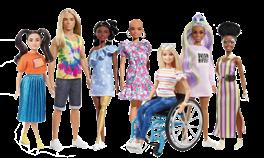
Fortunately, Mattel’s more recent attempts at ability-based inclusion have been more successful. The Barbie Fashionista doll line launched in 2015, the first official Barbie line to showcase different body types and abilities together. This line has a Barbie with vitiligo; one with no hair and one doll with a prosthetic leg.
In 2019, 7 of the top 10 selling Fashionistas dolls were dolls with more diverse features!
In addition, the dolls with wheelchairs are now equipped with a ramp accessory and the Dreamhouse has been modified to be accessible for everyone.
This Fashionistas line has proven to be quite positive in showing the benefits of inclusion and how important it is to feel represented.
Barbie has also made dolls modelled after disabled celebrities. For instance, Rose Ayling-Ellis who is deaf; Bebe Vio, a paralympian and model Ellie Goldstein, who has Down’s Syndrome, all have their own dolls! This helps to not only normalise all body abilities in our society but to
also demonstrate to young kids that idols can be of any ability.
It’d be wrong to ignore the progress that Barbie has made over the years. For example, the Fashionista line; it has allowed people of all shapes and abilities to feel represented. So much so that the top selling doll of every week in 2019 was the Curvy Black Fashionista with afro hair!
In addition, the vast range of actors casted made everyone feel welcomed to watch the film. We saw ourselves in the characters and didn’t feel the societal limits we feel in everyday life.
However, all these attempts at inclusion are surface level and long overdue. Mattel has a tendency to stay behind social trends until it’s super necessary to make a change. For instance, “Share-a-Smile Becky” being discontinued in 1997 and another disabled barbie being produced twenty two years after because the brand was under scrutiny for a lack of inclusion amongst dolls.