This book is sold subject to the condition that it shall not, by way of trade or otherwise, be lent, hired out or otherwise circulated in any form of binding or cover other than that in which it is published. No part of this publication may be reproduced, stored in a retrieval system, or transmitted in any form or by any means (electronic, mechanical, photocopying, recording or otherwise) without the prior written permission of Nosy Crow Ltd.
A CIP catalogue record for this book is available from the British Library.
Printed in Turkey.
Papers used by Nosy Crow are made from wood grown in sustainable forests. 1 3 5 7 9 8 6 4 2
Introduction
Pa g e s 4-5
Elizabeth I
Joan of Arc
Indira Gandhi
Theresa Kachindamoto
Empress Wu Zetian
Harriet Tubman
Boudicca
Hatshepsut
Isabella I
Sacajawea
Frida Kahlo
Beatrix Potter
Coco Chanel
Billie Holiday
Anna Pavlova
Mirabai
Maya Angelou
Georgia O’Keeffe
Emily Brontë
Sarah Bernhardt
Pa g e s 2 6 -2 7
Pa g e s 2 8 -2 9
Pa g e s 3 0 -3 1
Pa g e s 3 2 -3 3
Pa g e s 3 4 -3 5 Pa g e s 3 6 -3 7
Pa g e s 3 8 -3 9
Pa g e s 4 0 -4 1
Pa g e s 4 2 -4 3
Pa g e s 4 4 -4 5
Florence Nightingale
Helen Keller
Annie Sullivan
Mary Seacole
Shirin Ebadi
Maria Montessori
Pa g e s 4 6 -4 7
Pa g e s 4 8 -4 9
Pa g e s 5 0 -5 1
Pa g e s 5 2 -5 3
Pa g e s 5 4 -5 5
Mother Teresa
Wangari Maathai
Pa g e s 5 8 -5 9
Elizabeth Blackwell
Eva Perón
Marie Curie
Rachel Carson
Ada Lovelace
Hypatia
Rosalind Franklin
Mary Anning
Katherine Johnson
Dorothy Hodgkin
Dian Fossey
Valentina Tereshkova
Malala Yousafzai
Rigoberta Menchú
Amelia Earhart
Hannah Szenes
Rosa Parks
Noor Inayat Khan
Emmeline Pankhurst
Cathy Freeman
Sophie Scholl
Anne Frank
When They Lived
Glossary
Index
Chapter Explanations
Pa g e s 9 0 -9 1
Pa g e s 9 2 -9 3
Pa g e s 1 10-1 1 1
Pa g e 1 1 2
Pa g e s 5 6 -5 7 Pa g e s 8 6 -8 7 Pa g e s 8 8 -8 9
Every great dream begins with a dre amer. Always remember, you have within you the strength, the patience, and the
passion to re ach for the st ars t o ch ange the world. “ “
Harriet Tubman
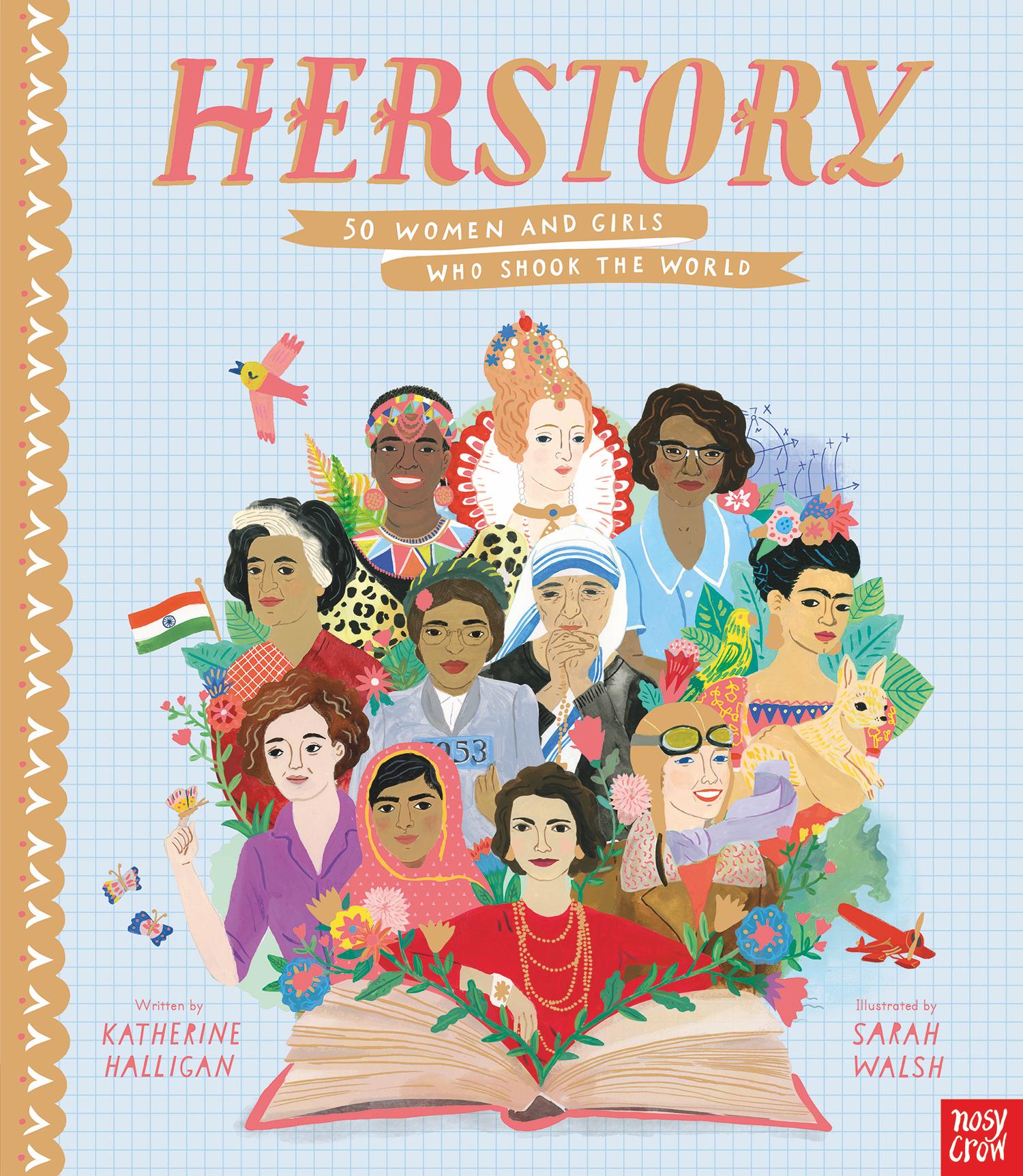
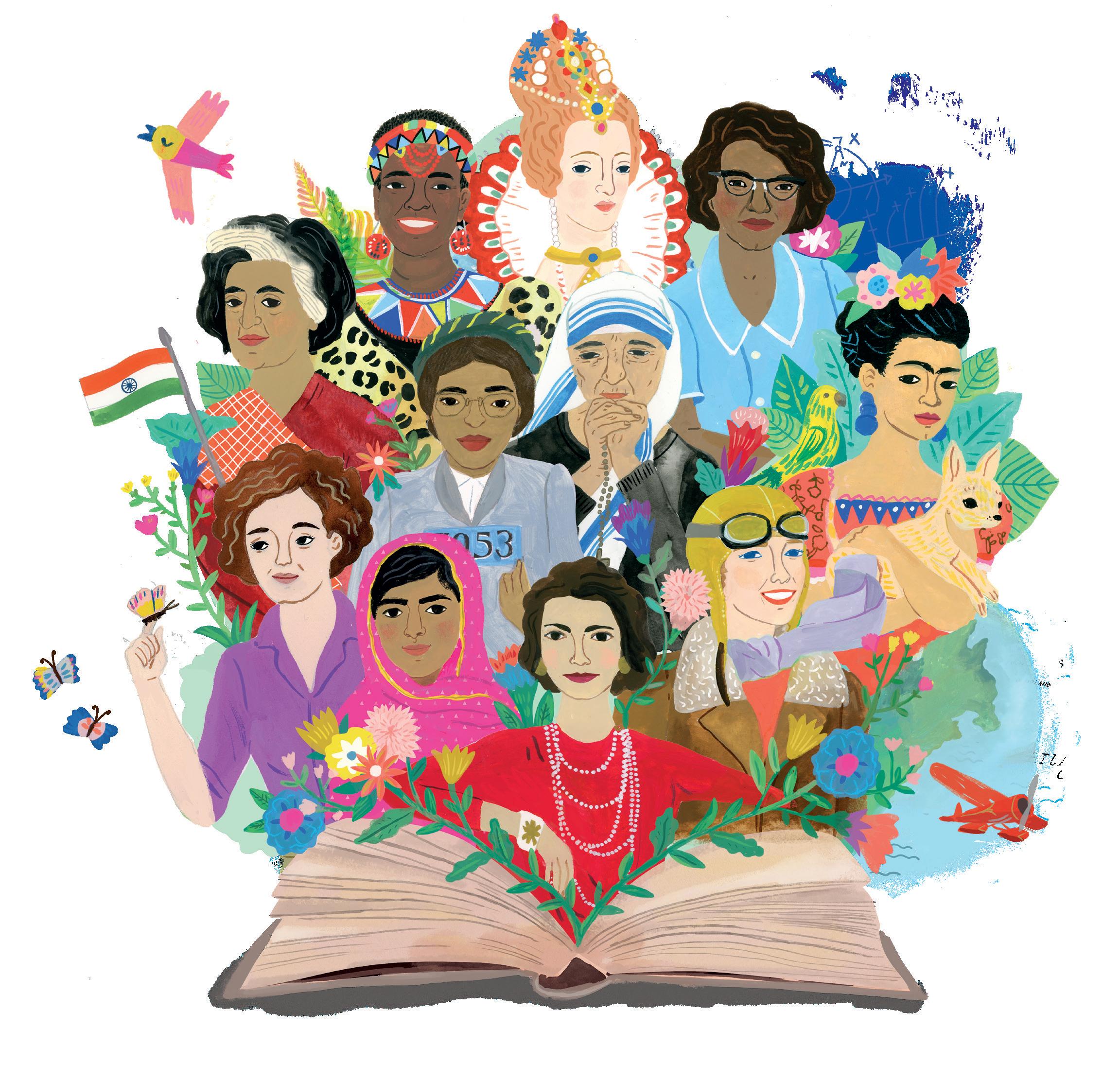
There are almost four billion women and girls in the world today. Every day, millions of them carry out acts of bravery, creativity, kindness, cleverness and hope. Most of those women and girls - and their amazing actions and achievements - remain unknown to the rest of us . . . but occasionally their acts shake the world.
History is often just ‘his story’: tales of kings and conquerors, of men who fought wars and built nations. But throughout human history, countless women and girls have fought in great and small ways to make their mark on the world and change the future. Many of their stories have been lost, forgotten or hidden. In this book we celebrate the lives of 50 incredible women and girls who refused to obey the rules society set for them, and whose lives, work and words can inspire us all to make the world a better place. Now it is time to talk about a past and a present that are not history, but herstory.
This is the story of brave leaders, who believed in doing what was right for their country and their people. Some of them faced imprisonment and even death for following their beliefs. Some of them made difficult choices that made sense to them during their time, but that we might find hard to understand now. All of them proved that women were just as capable as men in positions of power, making stronger, better leaders than many of the men who came before and after them.
This is the story of talented artists, writers and performers, who changed the world with their art and with their lives. Some of them had help along the way, and some had to fight to express their ideas. All of them created beautiful works of art - in spite of, and sometimes because of, the difficulties and rejections they faced.
This is the story of gifted healers and committed teachers, who dedicated their lives to helping others. Some of them came from a place of privilege and wanted to share their good fortune with others, and some overcame unimaginable hardships themselves. All of them worked tirelessly to care for those in need, risking their health, their wealth and even their own lives to improve the lives of others.
This is the story of gifted scientists and mathematicians, who were driven by curiosity to solve the mysteries of the world around them. Some of them faced prejudice and danger. Some made great personal sacrifices, but thought that these were worthwhile in order to make discoveries that could change millions of lives. All of them had to challenge the belief that the world of science, facts and figures was a world for men, and men only.
This is the story of women and girls who followed their dreams, whatever the cost. All of them overcame challenges, faced danger and made sacrifices, and some of them even lost their lives - but they never gave up hoping to make the world a better place.
This is the story of 50 women and girls who did extraordinary things. Some of them won prizes, while others were never appreciated during their lifetimes. Some of them died tragically young, while others lived long lives. They became leaders, artists, revolutionaries, thinkers and idealists, because they knew that to turn their hopes and dreams into reality they had to shake the world . . . and so they did.
China’s first and only female ruler Alsoknown as Wu Zhao and Wu Hou Lucky start
Wu Zetian was born in AD 624 in the Shanxi province of China. The Wu family was wealthy and her father Wu Shihuo was a chancellor for the Tang Dynasty. Unusually for the time, he encouraged his clever daughter to read, write, play music and speak in public - skills normally taught only to boys. Her father raised her to believe that women could do anything that men could do.
Both bright and beautiful, 14-year-old Zetian was noticed by Emperor Taizong, who invited her to his court and gave her the important responsibility of the royal laundry. One day, she bravely spoke to the emperor, who was impressed by her intelligence, and he decided to make her his secretary instead. Even though she was young, she helped with important business of the empire, and Zetian was good at her new job.
The ideal ruler is one wh o rules like a mother rules over her children. “ “
Empress of Heaven
The emperor’s oldest son noticed beautiful Zetian, too - and fell in love with her. After Taizong died, the prince became Emperor Gaozong. Even though he was already married, he loved Zetian and they had two sons together. Gaozong’s first wife, Lady Wang, was furious. After Zetian had a daughter, the poor baby was found dead in her cot. Wu Zetian believed Lady Wang had killed her. Lady Wang was accused of witchcraft, divorced by the emperor, banished, then killed.
Wu Zetian became the first wife of the emperor and China’s new empress. Soon after, there was a huge earthquake, which many people believed to be a bad omen proving that a woman should not rule. Her husband had bad eyesight and struggled to read, so Zetian took on more and more of the work of leading China.
When Gaozong started calling himself ‘Emperor of Heaven’, Zetian called herself ‘Empress of Heaven’: she knew that she was equal to any man.
When Gaozong died, the empress made first her elder and then her younger son emperor, ruling from behind the scenes, but when they did not obey her, she forced them to give up the throne, proclaiming herself Emperor of China. Ruling China with absolute power, she renamed the dynasty ‘Tianzhou’, or ‘granted by heaven’, claiming that she was a divine ruler. She created new characters for the Chinese alphabet: even the way people wrote would change under her reign.
Wu Zetian was an extraordinary woman,
“
- Ann Paludan
And many things did change, often for the better. China had long been a land where many leaders were not trustworthy, lying and cheating to keep their power. Wu Zetian decided to end all of this. She started a system of spies so that she always knew what was happening. She fired many government officials, saving money and making the kingdom run more smoothly. She created a special box where people could send suggestions directly to the emperor, and she used many of her people ’ s ideas, making herself very popular. She changed the education system, hiring the best possible teachers and introducing exams so that all workers in the government or military had to prove their intelligence. She reopened the Silk Road to start trade with the West, bringing money to China. She improved farming - and the lives of her people - by lowering taxes and encouraging people to grow bigger crops. And she shared out the land so that everyone had a small, equal piece to farm.
Shaking the world
Wu Zetian ruled for many years, and she was known by many names, but one thing is clear: she made China a fairer and more peaceful place. Although many historians have shown her as a ruthless, cruel politician, she proved that women were equal to men, and that they could rule just as well - or indeed better.
Her tomb marker is blank, possibly because people were uncomfortable honouring a woman who held such power. Other stories say she believed her successes were so impressive words could not describe them; while some believe she wanted her actions to be judged by later generations. Although her enemies accused her of many crimes, people now recognise the many positive changes she made to her country and to the lives of ordinary people.
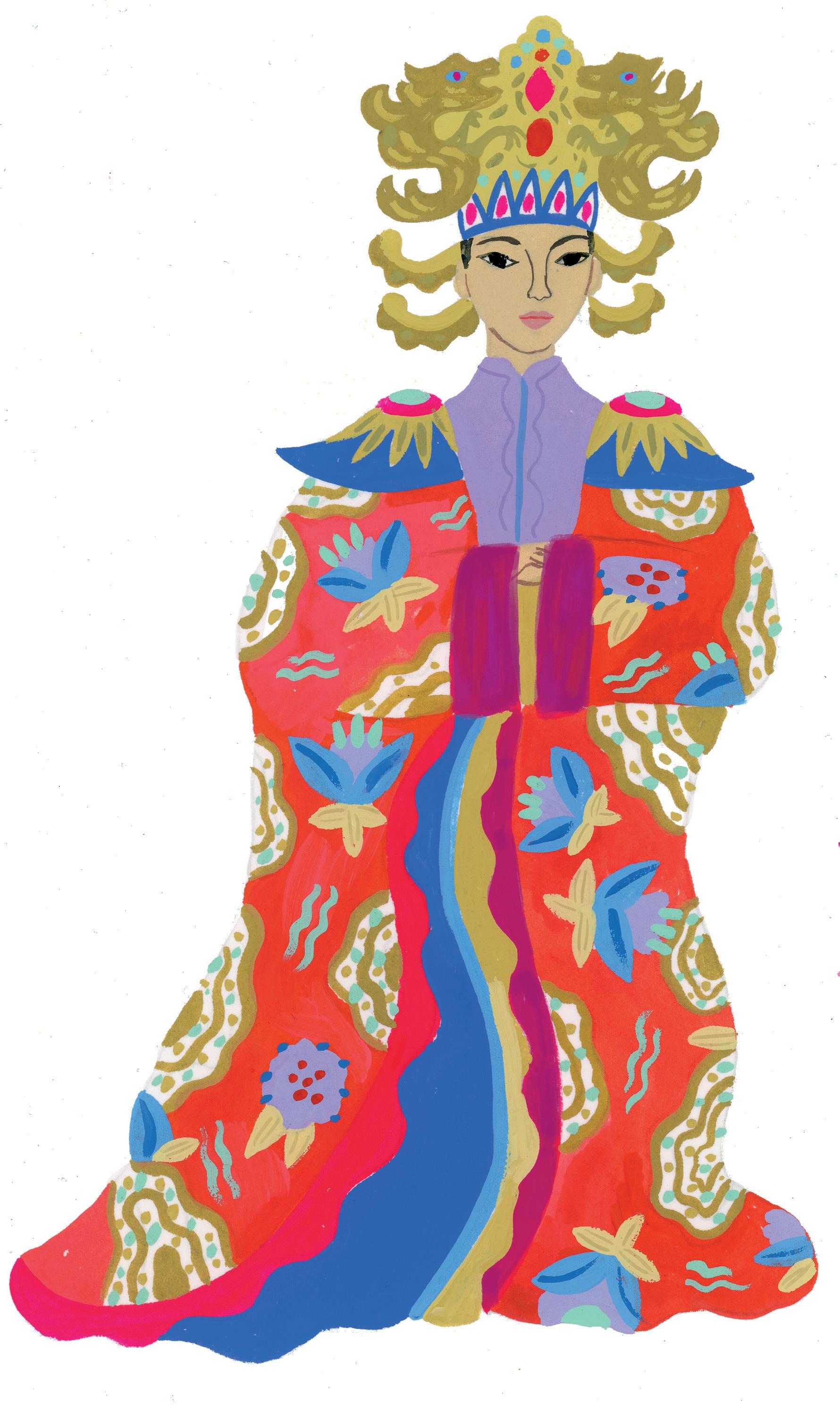
A portrait of Wu Zetian as an older woman
China was the first country to produce silk from silkworms, which it traded with the West along the Silk Road
Trailblazing Mexican painter and feminist hero
Happy childhood
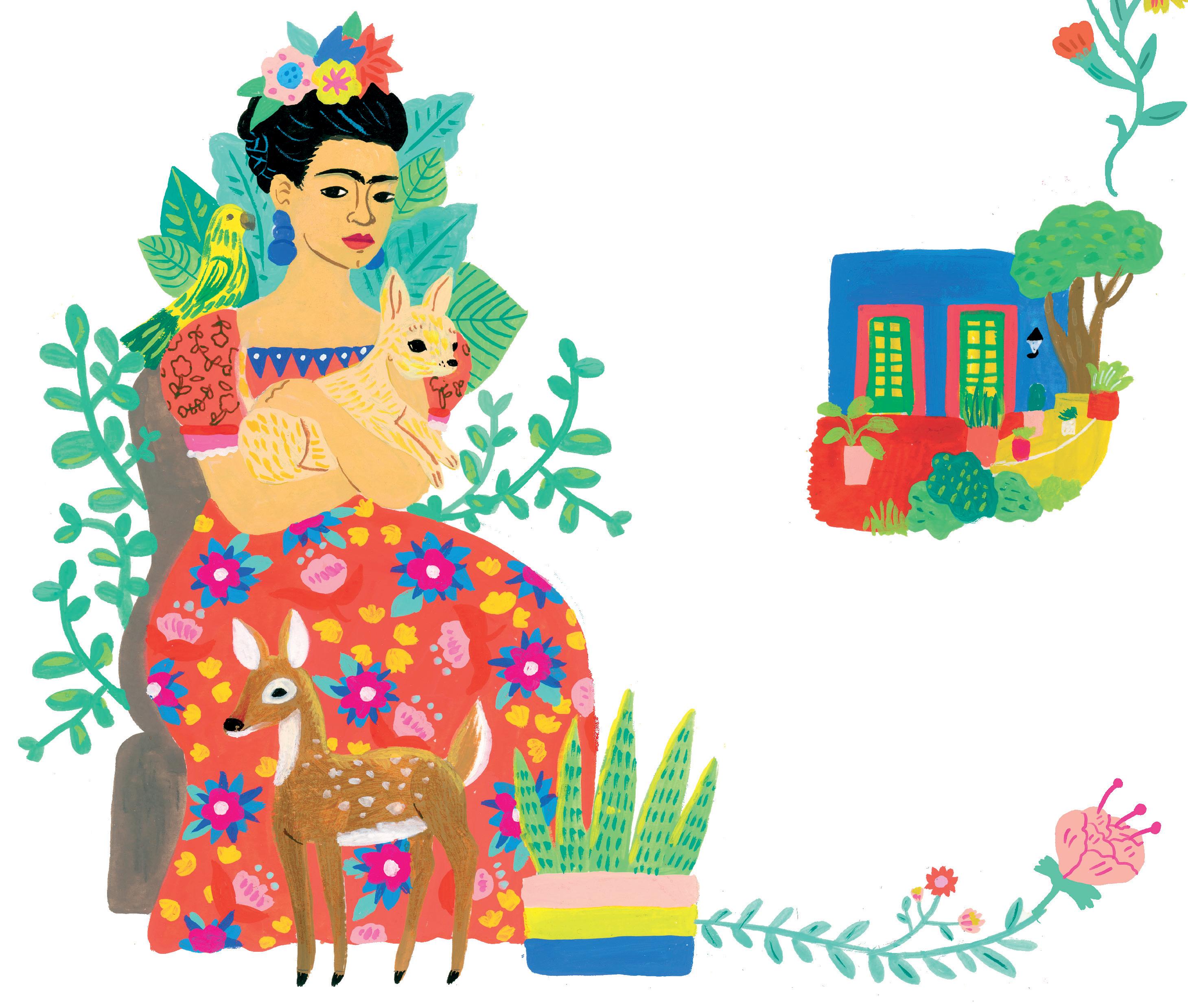
Frida’s German - Jewish father, Guillermo, and her Mexican mother, Matilde, were loving parents who wanted their four daughters to follow their dreams. The family all lived together in the Casa Azul, or Blue House, in Mexico City in Mexico, where Frida was born in 1907 and lived for most of her life.
Carmen Frida Kah l o y Calderón
When Frida was six, she got polio and had to stay in bed for nearly a year. Afterwards, she walked with a limp, but her father encouraged her to play football, swim and wrestle to help strengthen her body. These
sports were unusual for girls at that time, but they helped to make Frida fit and confident.
Frida was clever, and one of the few girls at her high school. She was loved by her friends for being warm, jolly and stylish: she liked wearing traditional Mexican clothes and jewellery.
Tragedy and triumph
One day, when Frida was 18, she was travelling on a bus that crashed into a tram, killing several people. A metal handrail smashed right through Frida’s body and she nearly died.
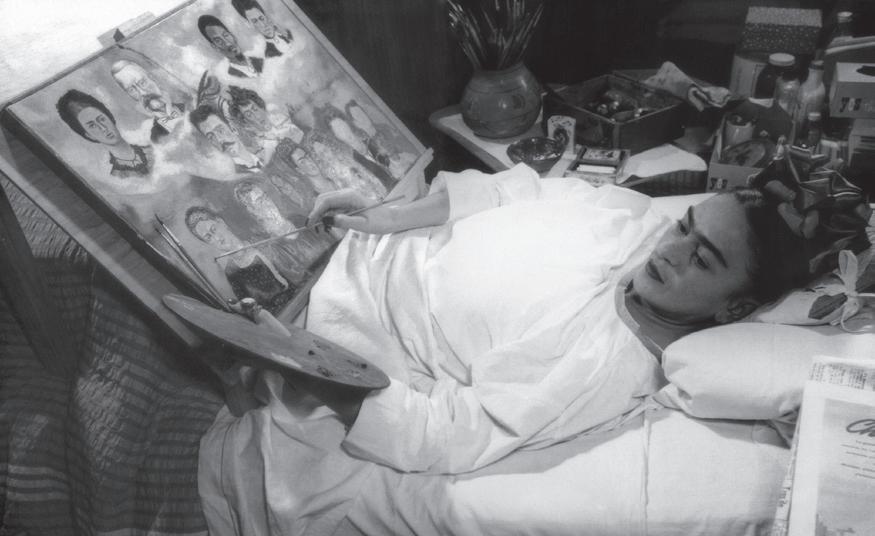
Frida was in hospital for many weeks, and was changed by the accident. She still liked to joke, but she was often in pain and being stuck in bed for months while she recovered left her bored and sad. She decided to start painting, and her father helped her hang a mirror over her bed so she could paint a portrait of herself lying down.
Feet, what do I need you for, when I h ave wings to fly? “ “
Magdalena
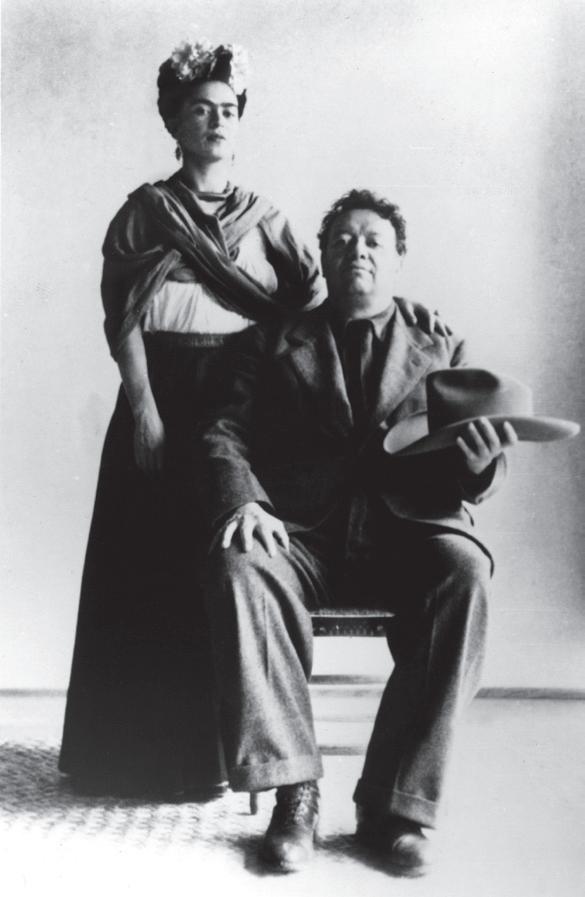
She began painting all the time, and once she was well enough to see people again, she met and fell in love with famous Mexican artist Diego Rivera. Frida called Diego, who was very big and not very handsome, ‘Sapo’, which means ‘ toad ’ in Spanish. Although they loved each other deeply and were soon married, they often argued and spent a lot of time apart, living in separate houses joined by a walkway. Frida wanted a baby very much but, because of her injuries from the crash she couldn ’ t have one. Many of her paintings are inspired by her sadness about it.
often alone, and because I am the subject I know best. “ “
I paint myself becau
se
I
am so
Frida loved animals, and she had many pets who brightened her life. These included a deer called Granizo, an eagle named Gertrudis Caca Blanca, (which means Gertrude White Poo!), a spider monkey called Fulang Chang, and many little dogs, her favourite of which was called Mr Xoloti. Both Fulang Chang and Mr Xoloti appear in many of her paintings.
Diego became jealous that Frida and her paintings were becoming so famous. She was invited to show her artwork in New York, USA, and Paris, France. They divorced in 1939, but then got married again the next year.
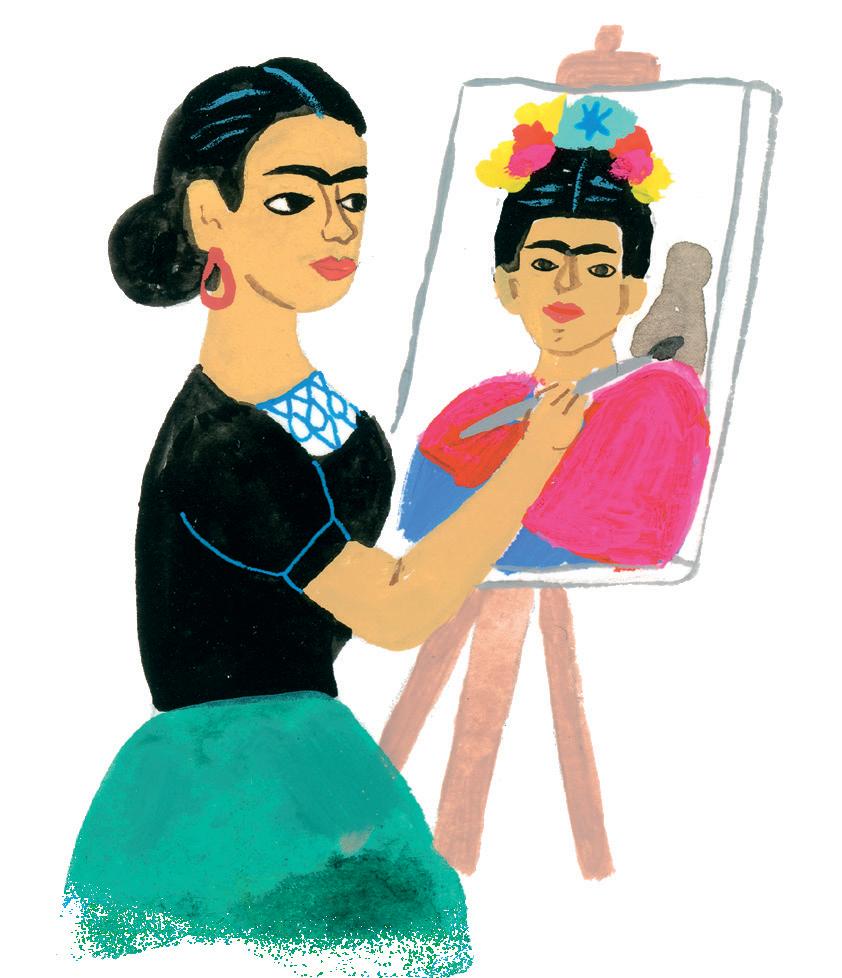
Like her husband, Frida was a Communist, believing that workers and other poor people deserved a better life. She was a close friend of the Russian revolutionary Leon Trotsky. Unlike Diego, whose art was often about politics, Frida’s artwork was more personal, although she also painted about peace. Of her 143 paintings, 55 were self-portraits. She often painted herself as harsh and unattractive, with heavy eyebrows and a moustache.
As Frida grew in fame and popularity, her health grew worse and worse. She had over 30 operations in her life to help correct the problems from her awful accident, and she lived in constant pain. After a battle with pneumonia, Frida died at the age of 47.
Shaking the world
I am not sick, I am not broken. But I am h ap py to be alive as l ong as I can paint.
“
Frida has become known and loved all over the world for her unique artwork and her paintings, particularly her self-portraits, which still draw huge crowds. Frida herself has become even more popular than her paintings, for proving that women can do anything they want to do, despite obstacles. She is admired for her creativity, her bravery and for following her heart.
Frida and Diego Rivera
Frida painting from her bed
Environmental and human rights activist
Nature lover
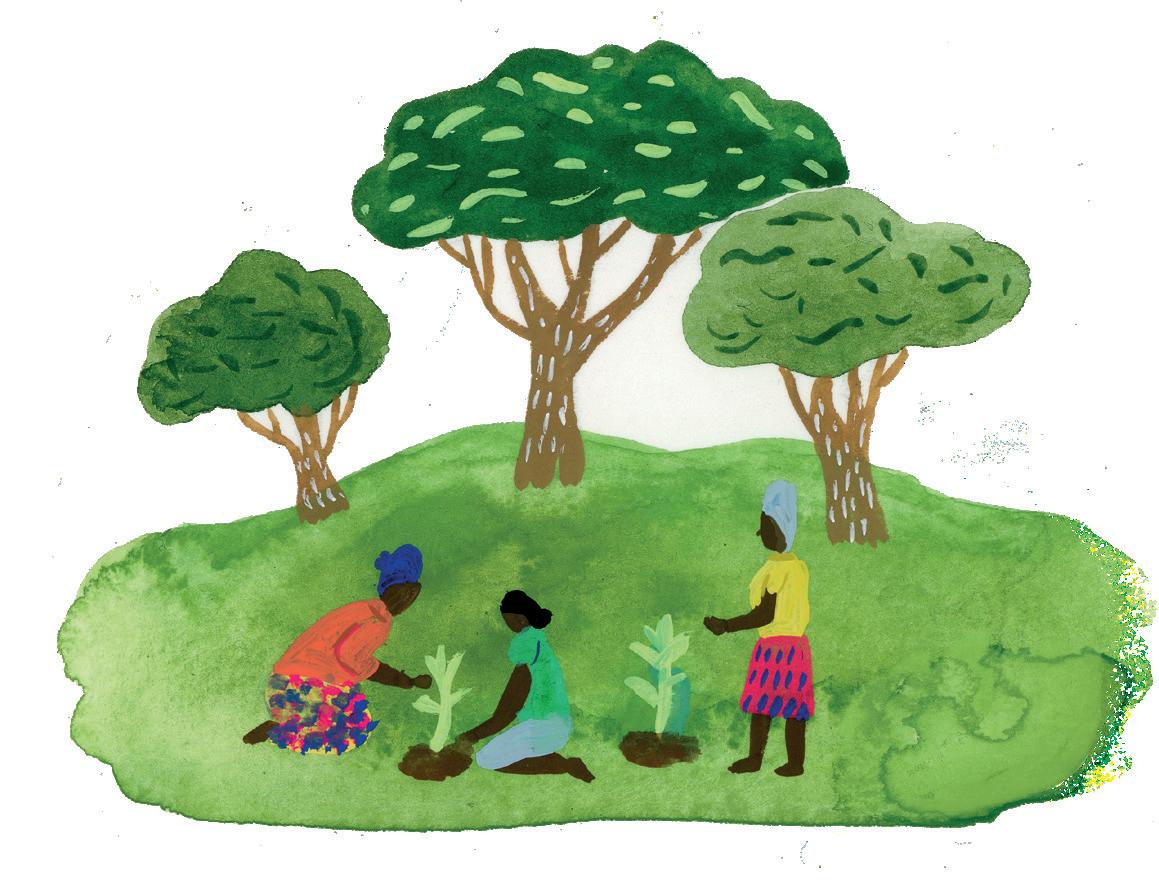
Wangari Muta Maathai was born in 1940 in a village called Ihithe, in Nyeri, Kenya. As a child, she loved nature, especially walking to the stream to fetch drinking water and watching the tadpoles wriggling in the clear, clean water. Later, her family moved further along the Rift Valley, where her father had found work on a farm, but they soon returned because there weren’t enough opportunities for Wangari’s education, which was very important to her parents.
Wangari then went to St Cecilia’s School, becoming fluent in English and converting to Catholicism. As one of the very best students at the Loreto High School, she was chosen to study in the USA.
Trees and teaching
In the United States, Wangari earned a degree in biological sciences and a master’s degree in science. She went on to became the first woman in East and Central Africa ever to earn a doctorate. She also became chair of the Department of Veterinary Anatomy, and then an associate professor - once again the first woman in this part of Africa to achieve these things.
“ “
Trees are symbols o f peace and ho pe.
But all these firsts weren’t enough for Dr Maathai, who wanted to make an even bigger difference. She listened to local women telling her that streams - like the one she remembered from her childhood - were drying up. Food was less plentiful and they were walking farther and farther to collect firewood. She knew something had to be done to stop the deforestation that was causing so many problems in Kenya. Then she had a brilliant idea.
“ “
To
the young peo ple I say, you are a gift to your communities and indee d the world. You are our hope and our future.
Wa ngari Muta Maathai
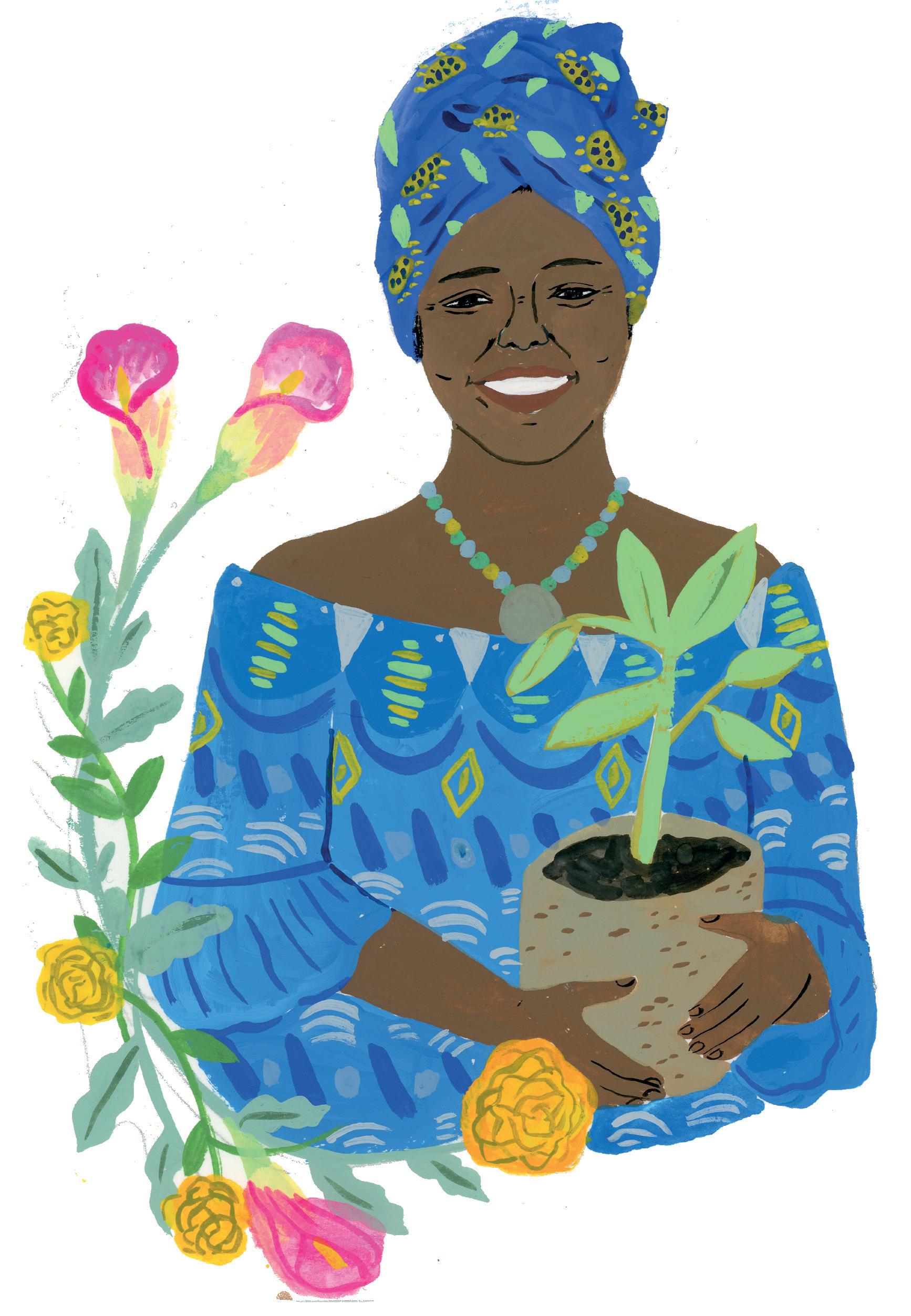
Her idea was that everyone could make a difference in the world, saving the environment one tree at a time. She warned people, “If you destroy the forest, then the river will stop flowing, the rains will become irregular, the crops will fail and you will die of hunger and starvation.” Local communities could protect their environment from these problems by planting trees, earning money at the same time. Now called the Green Belt Movement (GBM), Wangari’s idea was hugely successful.
Since 1977, the GBM has helped communities plant over 51 million trees in Kenya. It has made the government work harder to protect the environment, stopping farming from destroying the forests, and teaches Kenyans to ‘ reduce, reuse and recycle ’ .
Wangari was also passionate about education, which she saw as the answer to ending the HIV/AIDS pandemic that has devastated Africa and left behind nearly 15 million orphans. She believed that the only way to change things and to stop Africa being lost to the threat of disease was “to eliminate ignorance, fear and a sense of helplessness” through education.
Shaking the world
We cann ot tire or give up. We owe it to the present and future generations o f all species to rise up and walk!
“ “
Tirelessly working to help protect both her own country and the whole continent of Africa, Wangari wrote four books about ecology and Africa. She also founded the Wangari Maathai Institute for Peace and Environmental Studies, bringing together academic research with the GBM’s commuity - led action, so that scientists and villagers can work together to save the Earth. She accomplished all of this while raising three children, Waweru, Wanjira and Muta.
Invited to be a United Nations Messenger of Peace, Wangari addressed the United Nations many times and worked on several international environmental projects, including the Earth Summit. She was awarded many honorary degrees and won dozens of international awards, including the Nobel Peace Prize in 2004, when she became the first African woman to win the prize.
Wangari dedicated her life to helping women, the environment, Kenya and indeed the rest of Africa, all of which she believed to be linked. A leader in education, she dreamed of a world where communities could be empowered, especially women and children, where the environment could be protected and preserved, and where everyone could live in peace and harmony. Wangari’s hard work means that local communities in Kenya - and, thanks to her example, around the world - are many steps closer to achieving that dream.
Wangari planting a tree with former US president, Barack Obama
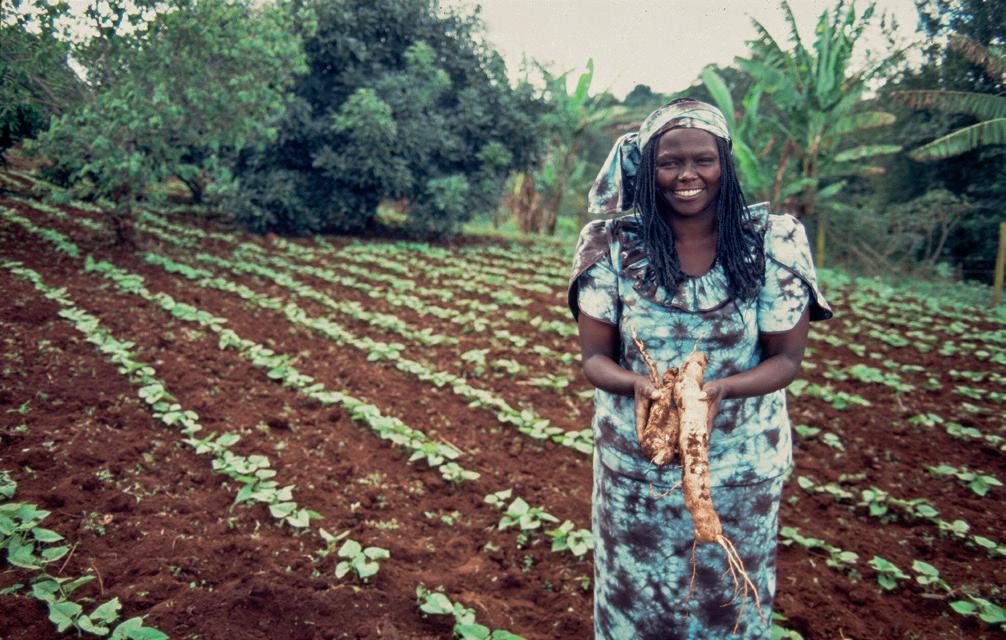
Wangari demonstrating the success of the Green Belt Movement
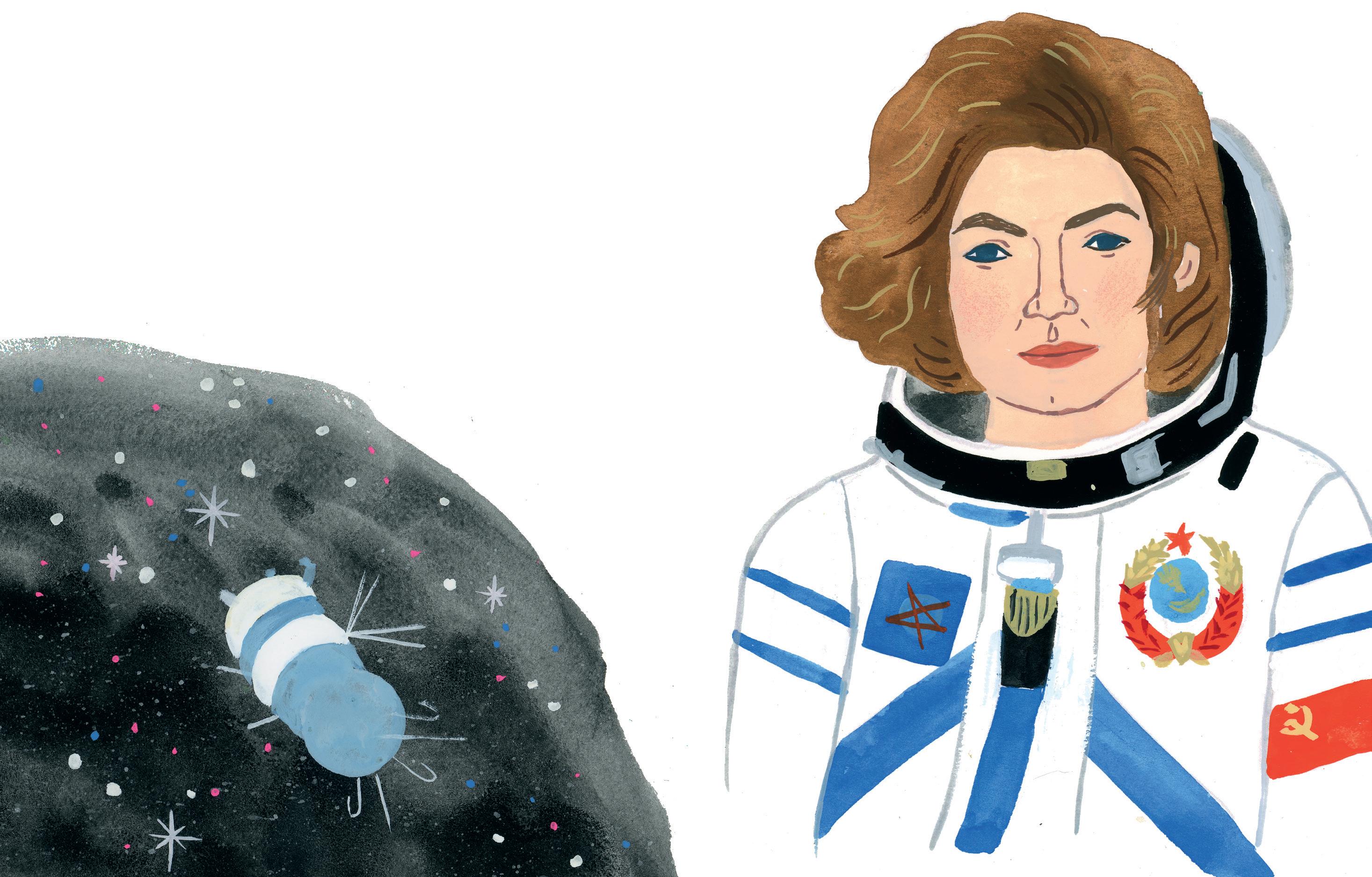
First woman to travel in space
Passion for parachutes
Valentina
Vladimirovna ‘Valya’ Tereshkova was born in 1937 in a village in western Russia. Her father, Vladimir, was a tractor driver, but was killed in the Second World War when little Valentina was just two years old. Her mother, Elena, raised Valentina, her sister Ludmilla and her brother Vladimir, working in a textile mill to earn money. Valentina started school when she was around eight and, when she was 17, she joined her mother working in the mill.
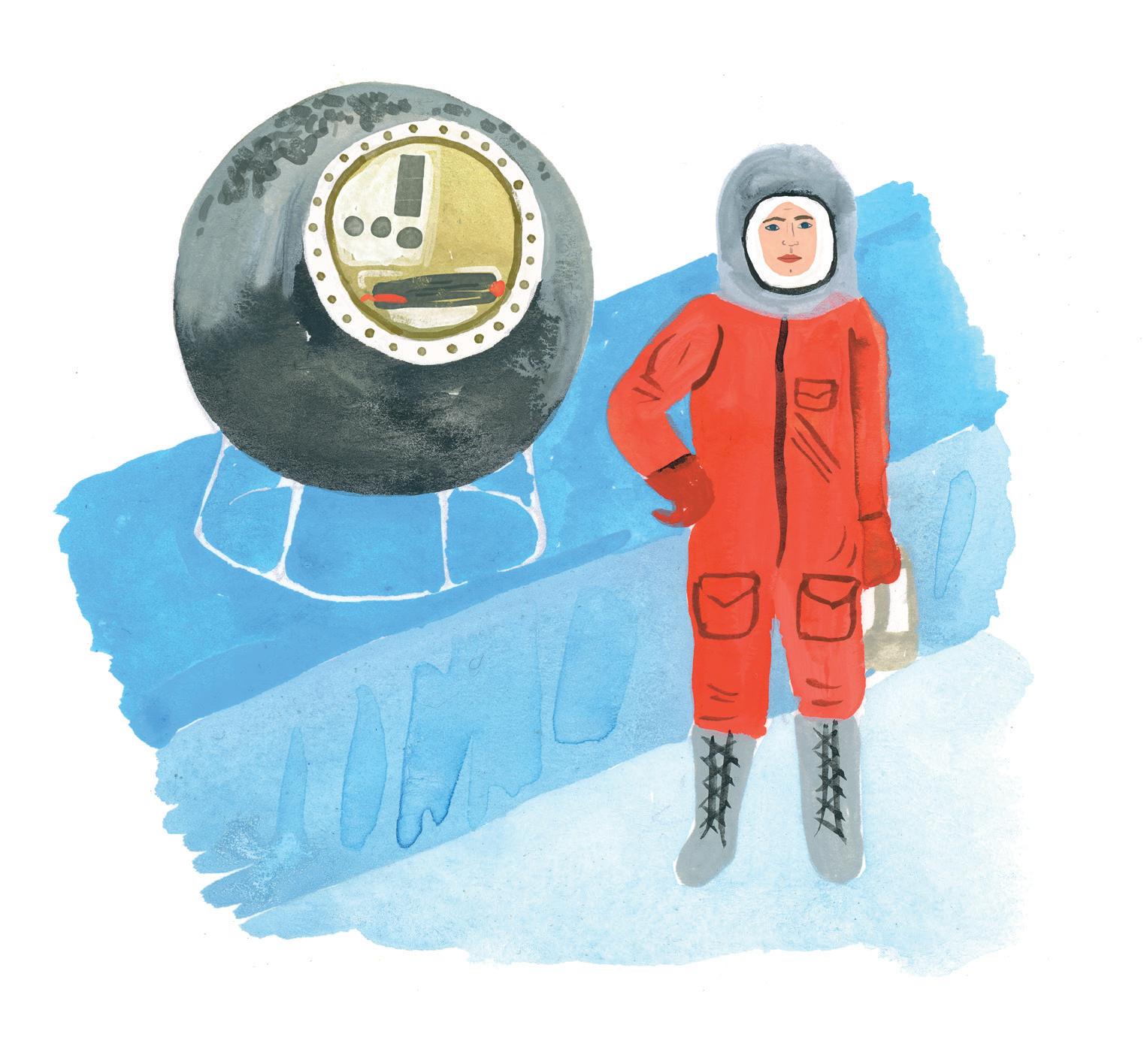
Valentina was very clever and, although she had to work to help earn money, she carried on with her studies at home. She also learned how to parachute for fun. She loved it, jumping whenever she could, day and night, on land and on water - but she didn’t tell her mother! A few years later, her passion for parachuting got her an amazing job: she was chosen to train as a cosmonaut in the Soviet Union’s space programme.
Shooting for the stars
The Soviet Union (or USSR) and the United States were locked in a fiercely competitive ‘Space Race’, from the end of the 1950s through the 1960s. Although the USA and the USSR had been allies in the Second World War, the former friends stopped trusting each other. Soon, the world’s two big ‘superpowers’ were stuck in a Cold War: there was no actual fighting, but both nations lived in constant fear of nuclear war. Space became the new frontier where the two nations could compete, each fighting to prove that they had better technology and therefore more power.
Hey, sky, take off your hat. I’m on my way! “ “
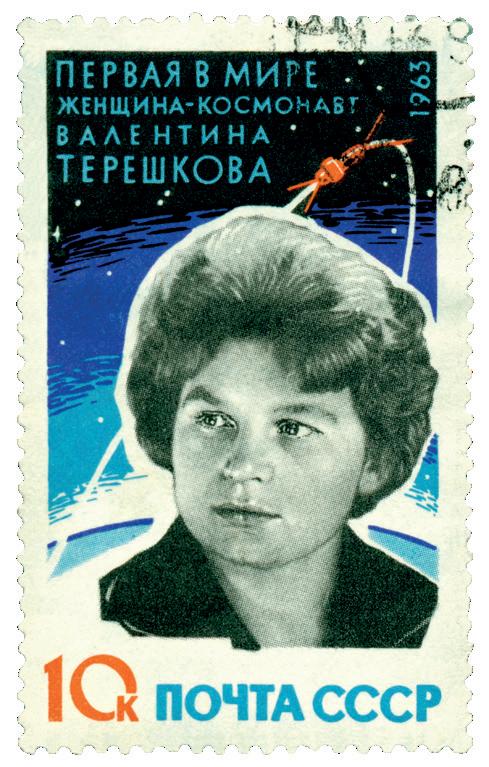
Valentina on a 1963 stamp from the Soviet Union
Valentina
Vladi m i r o v na
Tereshkova
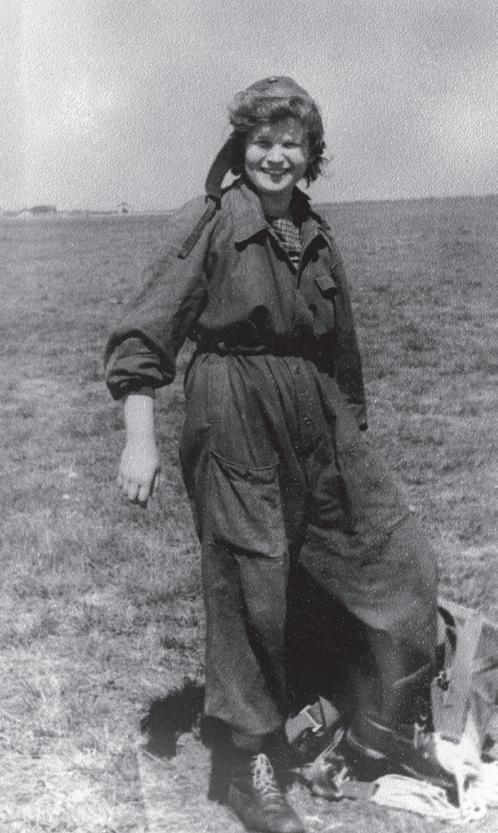
Valentina as a young woman on the airfield of the Yaroslav Flying Club
A bird cann ot fly with one win g only. Human space flight cann o t develop any further without th e active participati on o f wome n. “ “
Shaking the world
The Soviets launched the first satellite, Sputnik, into space in October 1957. A month later, inside Sputnik II, Laika the space dog proved that it was possible to travel in space with the right equipment. In 1959, the Soviet space probe Luna 2 landed on the Moon; in 1961, Yuri Gagarin became the first astronaut - or cosmonaut as he was called in Russia - to go into space. The Soviets were clearly winning the Space Race!
Keen to keep their lead by sending the first woman into space, they trained four female cosmonauts. Valentina was the only one chosen for space flight. On 16 June 1963, she climbed aboard Vostok 6 and took off, orbiting Earth an impressive 48 times in just under three days. Yuri Gagarin had orbited only once and the four American astronauts who followed him orbited a total of 36 times, so Valentina’s success made her country very proud.
But she very nearly did not come back. Although the USSR kept it secret for decades, Valentina recently revealed how she realised that the calculations for her re-entry to the Earth’s atmosphere were wrong: she knew that she would be sent hurtling out into space, never to return, unless she changed the coordinates. With the correction safely made, Valentina returned, making her greatest parachute jump yet: leaving her spacecraft, she fell 20,000 feet ( over 6,000
Valentina was called a ‘Hero of the Soviet Union’, the highest honour in the USSR. The Soviets continued to lead the Space Race, sending up the first three-man flight and achieving the first spacewalk. Then the USA finally pulled from behind to land men on the Moon, in what many believe was the greatest moment of the Space Race. But the first American female astronaut, Sally Ride, did not go into space until 20 years after Valentina made her voyage.
An important member of the Communist Party, Valentina led the Soviet Committee for Women for nearly 20 years, often representing her country abroad. When Vostov 6 was displayed in London, England, in 2015, Valentina came to the opening ceremony and called her spacecraft, “ my best and most beautiful friend ” . She and her trusty friend had indeed been on an incredible journey to the stars - and back again. metres ) back to Earth.
Once you’ve been in space, you ap preciate how small and fragile the Ear th is. “ “
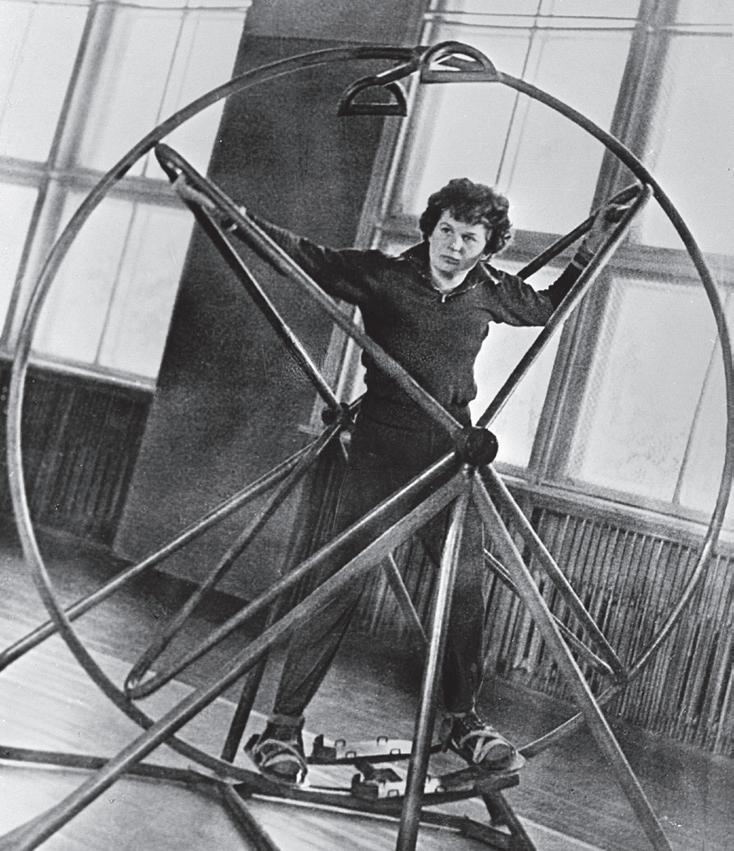
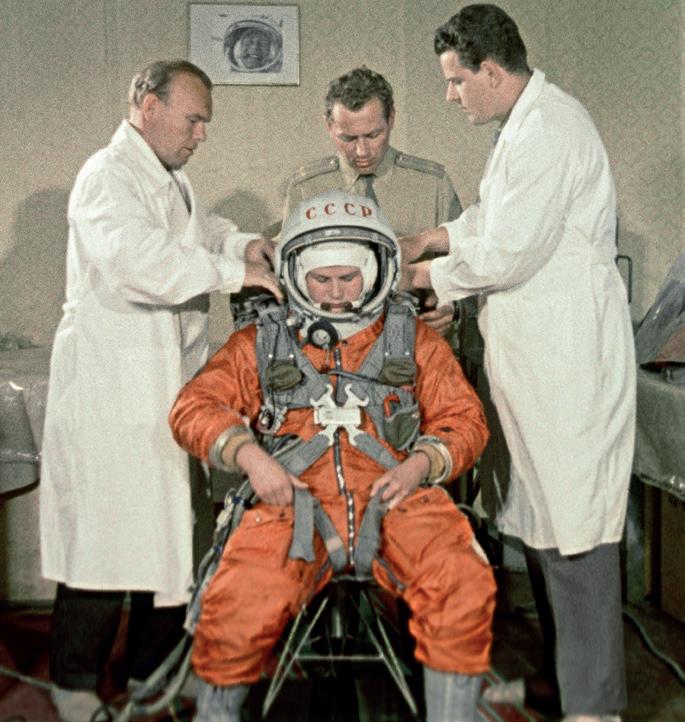
Valentina training to work whilst disoriented in a specially designed machine (left) and getting dressed before lift-off (below)
Record-breaking pilot and adventurer
Tough times
“
Adventure is worthwhile in itself.
“
Born in 1897, Amelia Mary Earhart had a difficult childhood. Her mother did her best to raise Amelia and her sister Muriel, but her father, Edwin, was unwell and drank a lot. They were often poor and the girls spent a lot of time with their grandparents. Amelia became very independent. She liked to climb trees, hunt and play sports.
The first time Amelia saw an aeroplane at a state fair when she was 10 years old, she thought it was disappointing: “It was a thing of rusty wire and wood and not at all interesting,” she said.
Taking flight
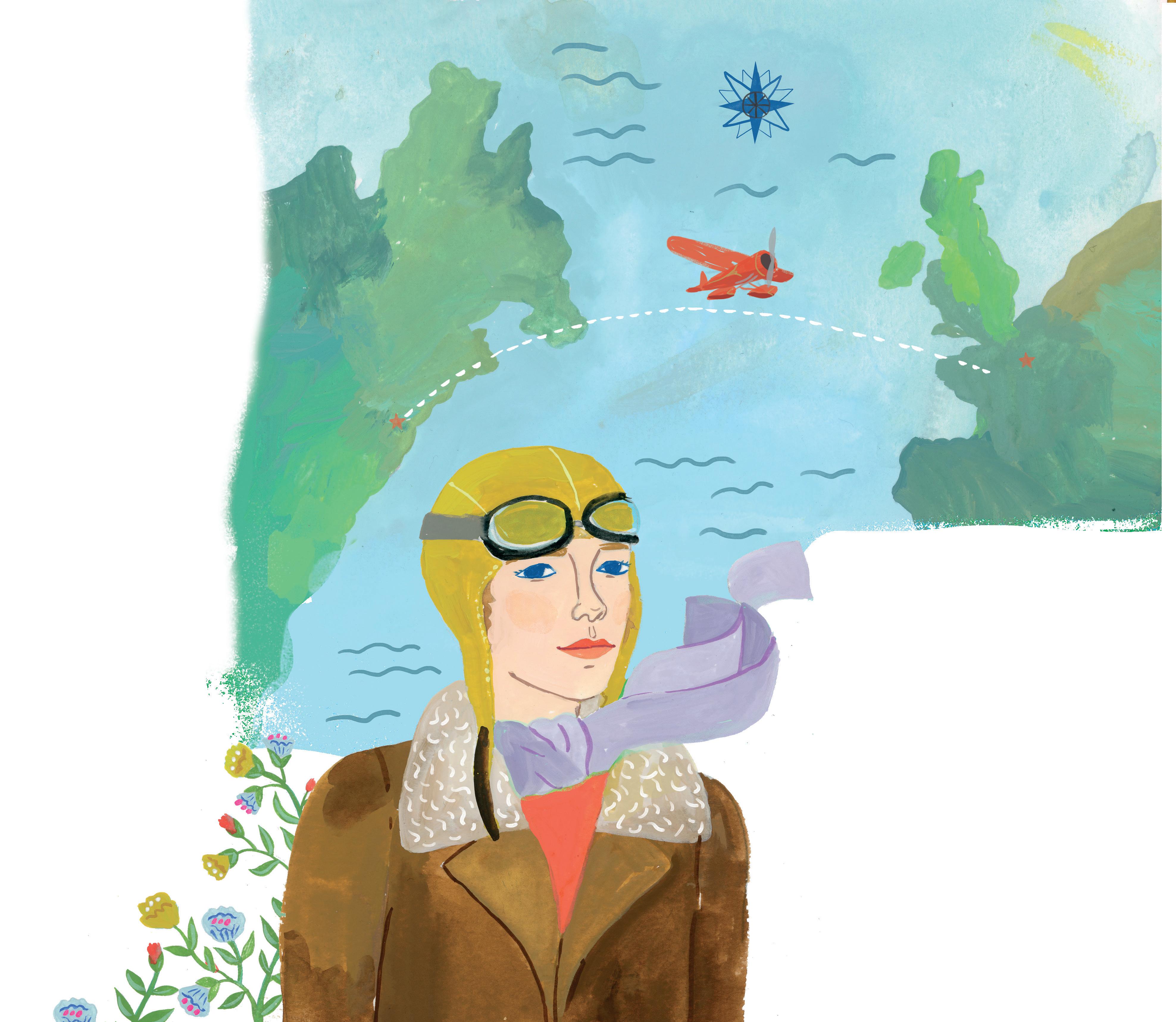
But once Amelia grew up, she changed her mind. One day at an air show, the pilot of a little red plane swooped towards her. Amelia was thrilled and felt as if the plane itself was telling her that she needed to fly. Not long afterwards, she flew for the first time and fell completely in love with flying.
Although she had trained as a nurse during the First World War, and later worked as a social worker, in her heart all Amelia really wanted to do was fly. She saved hard for lessons, cut her hair short, and even slept in her new leather pilot’s jacket to make it look more worn, so that the other pilots wouldn’t see how inexperienced she was. After six months, Amelia was able to buy a little yellow plane she called ‘The Canary’.
A few years later, on 17 June 1928, she joined a team of male pilots flying from the USA across the Atlantic Ocean. They landed in Wales around 21 hours later, making Ameila the first woman to travel across the Atlantic by plane. Aeroplanes were a new invention, and they weren’t safe: they were slow and loud and dangerous. Earlier that same year, three women had died trying to make the same crossing. Amelia’s success made her a hero. Soon after, she married George Putnam, a book publisher who supported her love of flying.
Amelia and her husband made secret plans for her to become the first woman to fly solo across the Atlantic. Only one man, Charles Lindbergh, had done it before her. Flying solo was very hard: there were no computers in planes then, so usually you needed a navigator to guide you, a mechanic to fix things that went wrong, and a co-pilot so you could take breaks to eat and sleep. But on 20 May 1932, despite wind, ice and problems with the plane, Amelia did it - all on her own!
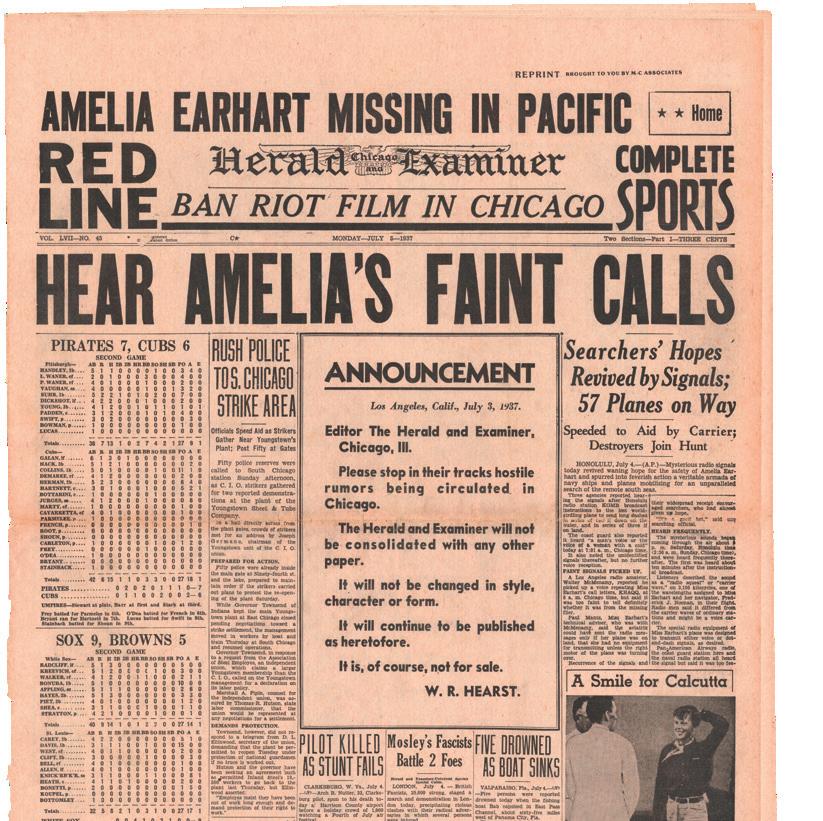
She set many other records, and was determined to take on the biggest challenge of all: becoming the first woman to fly around the world. On 1 June 1937, Amelia and her navigator set off. Over a month later, on 2 July, they had travelled all but the last 7,000 miles. They were aiming to stop on Howland Island, which is just 1.5 miles long, but after sending radio messages saying they were running low on fuel, the plane disappeared.
Amelia as a young girl
Amelia after crossing the Atlanic ocean
“
The most diffi cult thing is the decisi on to a ct, the rest is merely tenacity . . . you can do anything you decide to do.
“
After the biggest air and sea search in history, the United States government finally gave up. Amelia, her navigator and their plane had simply vanished.
Shaking the world
New evidence has been found that shows that Amelia and her navigator may have landed on another uninhabited island and survived for a short time, but no one really knows what happened. Although Amelia died following her dream, her bravery, courage and strength live on.
I am quite aware of the h azards. I want to do it because I want t o do it. “ “
M a r y Earhart
Hatshepsut Around 1504 - 1458 BC
Mirabai Around 1498 - 1557
Hypatia Around AD 360 - 415 Boudicca Around AD 30 - 61
Elizabeth I 1533 - 1603
Around
Maria Montessori 1870 - 1952
Harriet Tubman Around 1820 - 1913
Empress Wu Zetian AD 624 - 705
Mary Seacole 1805 - 1881
Isabella I 1451 - 1504
Joan of Arc
1412 - 1431
Sacajawea 1788 - 1812
Emily Brontë 1818 - 1848
Florence Nightingale 1820 - 1910
Mary Anning 1799 - 1847
Ada Lovelace 1815 - 1852
Elizabeth Blackwell 1821 - 1910
Annie Sullivan 1866 - 1936
Helen Keller 1880 - 1968
Emmeline Pankhurst 1858 - 1928
Marie Curie 1867 - 1934
Beatrix Potter 1866 - 1943
Sarah Bernhardt 1844 - 1923
Amelia Earhart 1897 - 1937
Georgia O’Keeffe 1887 - 1986
Coco Chanel 1883 - 1971
Anna Pavlova 1881 - 1931
Theresa Kachindamoto 1958
Rachel Carson 1907 - 1964
Frida Kahlo 1907 - 1954
Rosa Parks 1913 - 2005
Noor Inayat Khan 1914 - 1944
Indira Gandhi 1917 - 1984
Dorothy Hodgkin 1910 - 1994
Hannah Szenes 1921 - 1944
Eva Perón 1919 - 1952
Billie Holiday 1915 - 1959
Mother Teresa 1910 - 1997
Katherine Johnson 1918
Rosalind Franklin 1920 - 1958
Maya Angelou 1928 - 2014
Anne Frank 1929 - 1945
Dian Fossey 1932 - 1985
Valentina Tereshkova 1937
Wangari Maathai 1940 - 2011
Rigoberta Menchú 1959
Malala Yousafzai 1997
Sophie Scholl 1921 - 1943
Shirin Ebadi 1947
Cathy Freeman 1973
What makes a great leader? Is it bravery or belief? Cleverness or conviction? Power or personality? The women in this chapter come from many countries, historical periods and backgrounds, but they all shared one dream: the desire to create a better world. While fighting to prove that women were just as capable of leading as men, they broke boundaries with their intelligence, dedication and belief that they could make a difference. Their leadership shook the world.
What makes a great artist? Is it talent or tenacity? Brilliance or boldness? Wit or wisdom? The women in this chapter shared many and sometimes all of these gifts. Their inventiveness and willingness to try new things helped them to create amazing art, whether with pictures, words, movement or song. Inspiring those around them, these women and their amazing creations continue to move, motivate and connect with us today. Their art shook the world.
What makes a great guide, teacher or healer? Is it commitment or compassion? Service or sacrifice? Generosity or gentleness? The answer is, of course, all of these and more. The women in this chapter spent their lives improving the lives of others; tending to the ill, the injured, the poor and those in need. Many made huge sacrifices in order to help those less fortunate than themselves, and the work they started continues to change lives to this day. Their compassion shook the world.
What makes a great problem-solver? Is it intelligence or ingenuity? Originality or optimism? Daring or dedication? The women in this chapter possess all of these traits, as their curiosity and inventiveness drove them to ask questions and seek answers. Despite being told that the world of science and maths was for men and men only, these amazing women proved that the pursuit of truth and knowledge belongs to us all, equally, no matter who we are or where we come from. Their courageous and clever problem - solving shook the world.
What makes a great hero, fighter or dreamer? Is it courage or confidence? Fearlessness or faith? Strength or spirit? The women in this chapter shared all of these qualities and more. They were fighters even when they could not win. They were survivors even when they did not live. They were believers that things could and would change, even if they wouldn ’ t get to see it. And the greatest thing they shared - indeed with all of the women in this book - was hope. They shook the world