
Article
“AneesHasMeasles”:StorytellingandSingingtoEnhanceMMR VaccinationinChildCareCentersAmidReligiousHesitancy
TherdpongThongseiratch 1,* ,PuttichartKhantee 2,NaphatJaroenmark 1,NapatsareeNuttapasit 1 andNithidaThonglua 1
1 ChildDevelopmentUnit,DepartmentofPediatrics,FacultyofMedicine,PrinceofSongklaUniversity, Songkhla90110,Thailand;natpat.nay@hotmail.com(N.J.);napatsaree.nut@gmail.com(N.N.); thonglua31@gmail.com(N.T.)
2 InfectiousDiseaseUnit,DepartmentofPediatrics,FacultyofMedicine,PrinceofSongklaUniversity, Songkhla90110,Thailand
* Correspondence:ttherd@gmail.com;Tel.:+66-843099325
Citation: Thongseiratch,T.;Khantee, P.;Jaroenmark,N.;Nuttapasit,N.; Thonglua,N.“AneesHasMeasles”: StorytellingandSingingtoEnhance MMRVaccinationinChildCare CentersAmidReligiousHesitancy. Vaccines 2024, 12,819. https:// doi.org/10.3390/vaccines12070819
AcademicEditor:RalphA.Tripp
Received:30April2024
Revised:5July2024
Accepted:16July2024
Published:22July2024

Copyright: © 2024bytheauthors. LicenseeMDPI,Basel,Switzerland. Thisarticleisanopenaccessarticle distributedunderthetermsand conditionsoftheCreativeCommons Attribution(CCBY)license(https:// creativecommons.org/licenses/by/ 4.0/).
Abstract: ThisstudyexplorestheenhancementofMMRvaccinationratesinthedeepsouthof Thailandthroughaculturallytailoredinterventionthatincorporatesstorytellingandsinging,aligning withlocalculturalandreligiousvalues.The“AneeshasMeasles”intervention,developedwithinput fromcommunitystakeholdersincludinghealthworkers,religiousleaders,andparents,featured traditionalmelodiesinitssingingactivities.Theinterventioncomprisedtwomaincomponents: storytellingsessionsandsingingactivities,bothutilizingculturallyresonantcontentandformats toeffectivelyengagethecommunity.ConductedfromDecember2019toMarch2020acrosseight districtsinfiveprovinces,thestudytargetedchildrenaged18monthsto5yearsingovernment childcarecenters.ResultsindicatedasubstantialincreaseinMMRvaccinationcoveragefrom44.3% to72.0%twelvemonthspost-intervention,andfurtherto77.0%at48monthspost-intervention, representingasignificantandsustainedimprovement(p <0.001).Thismarkedandcontinuous increasedemonstratestheeffectivenessofculturallyadaptedhealtheducationinareaswithsignificant vaccinehesitancy.Thefindingshighlighttheimportanceofintegratingculturallyandreligiously sensitivemethodsintopublichealthstrategies,significantlyenhancingvaccineacceptanceand coverageindiverseandconservativesettings.Thisapproachsuggestsabroaderapplicabilityfor similarinterventionsincomparablecontextsglobally.
Keywords: MMRvaccination;culturaladaptation;storytelling;singing;healtheducation;vaccine hesitancy
1.Introduction
Measlesisahighlycontagiousviraldiseasethatisspreadthroughtheairbyrespiratory dropletswheninfectedindividualscoughorsneeze[1].Ifleftuntreated,measlescanlead toseriouscomplicationssuchasencephalitis,pneumonia,andevendeath[2].Themeasles vaccine,oftenadministeredaspartofthecombinedmeasles,mumps,andrubella(MMR) vaccine,isahighlyeffectivemeasuretopreventthespreadofthedisease[3].TheWorld HealthOrganization(WHO)recommendsthatchildrenreceivetwodosesofthevaccine formaximumprotection[4,5].Thevaccinehasbeeninstrumentalinreducingmeasles casesglobally,andhighvaccinationcoverageisessentialforachievingherdimmunityand preventingoutbreaks[6].
Inrecentyears,measlesoutbreakshaveincreasinglyoccurredincommunitieswithlow vaccinationrates[7–9].Unvaccinatedchildrenareatahigherriskofcontractingmeasles andcontributingtothespreadofthevirus[10].Theseoutbreaksareparticularlyconcerning inregionswherehealthcareaccessislimited,andthecapacitytomanagelarge-scalemeasles casesisinadequate.Theresurgenceofmeaslesincertainareashigh-lightstheimportance ofmaintaininghighvaccinationcoveragetopreventthedisease’sspread[11–13].
Religiousandculturalbeliefscontributetovaccinehesitancy[14].Forinstance,inparts ofSouthernThailand,therearemisconceptionsabouttheMMRvaccinenotbeinghalal, leadingtolowervaccinationratesamongMuslimpopulations[15–17].Theperceptionthat vaccinescontainingredientsforbiddeninIslamhasfueledskepticismandfear,resultingin decreaseduptakeofessentialimmunizationslikethemeaslesvaccine[18,19].
ToaddressthechallengesposedbyMMRvaccinehesitancy,variousinterventions havebeenimplemented[20].Theseincludeeducationalcampaignstodispelmythsabout vaccines,engagementwithreligiousandcommunityleaderstoendorsevaccination,and culturallysensitivehealthcommunicationstrategies[21–24].Manyfactorsinfluenceparentaldecisionstovaccinate,andparentswhoactivelydeclineimmunizationoftenbelieve thatvaccinesareunsafeandineffective,thatthediseasestheyaremeanttopreventare mildanduncommon,andmaymistrusttheirhealthprofessionals[25].Nevertheless,such attitudescouldshiftduringanoutbreak[26,27].Todate,therehasbeenlimitedresearch assessingtheuptakeoftheMMRvaccinefollowingmeaslesoutbreaksincommunities withhistoricallylowvaccinationrates.Thisinformationiscrucialformanagingfuture outbreaksinsimilarcontexts.
Since2000,measlescasesinThailandhavegenerallytrendeddownwards,butthe deepsouthernprovinceshaveexperiencedrecurringepidemicsevery3–5years,leadingto disabilityandmortality.Theseprovinces,whereMuslimsarethemajority,reportedthe highestincidenceratesinthecountry,with126casesper100,000population,andnotably lowMMRvaccinecoverageofaround70%from2014to2018[28–30].Theregion’soverall childhoodvaccinecoverageisamongthelowestinThailand,compoundedbythemhaving thehighestfrequencyofmeaslesoutbreaks.InNovember2018,morethan20casesof measles-relateddeathswerereportedforthatyear’soutbreak,highlightingthesevere impactoftheseepidemics[28–32].Inthisarea,vaccineacceptanceissignificantlyinfluencedbyIslamicpracticesandreligiousleaders,contrastingwithotherThaicommunities, predominantlyBuddhist,whogenerallyperceivevaccinesasprotectiveagainstdisease[33]. ThispatternissimilartothatobservedinMalaysianMuslimcommunities,wherevaccine hesitancyisalsoprevalent[34].
Inthisstudy,weexploredtheimpactofameaslesoutbreakandatargetedtwoprongedimmunizationcampaignonMMRvaccineuptakeatlocalchildcarecentersina regionwithnotablereligioushesitancy.InSouthernThailand,initiativesemployingdesign thinkingmethodshavebeenusedtoempathizewithcommunityconcernsanddevelopnew strategiestoboostMMRvaccination.Theseeffortsfocusoncreatingculturallyresonant narrativesandimagerytoenhancehealthliteracyandpromotevaccineacceptanceamong childcarecenterstaffandparents.Theobjectivesofthestudywereto(a)describeand comparetheuptakeofMMRatthelocalchildcarecenterswiththatofthewiderregional andnationallevels,(b)assesstrendsinimmunizationcoverageandevaluateanyincreases inrelationtothetimingoftheoutbreakandtheimmunizationcampaign,and(c)gather quantitativeandqualitativefeedbackfromchildcarecenterstaffregardingtheimpactof theimmunizationcampaign.
2.MaterialsandMethods
2.1.StudyPopulation
Thestudypopulationincludedparents,childcarecenterstaff,andreligiouscounselors associatedwithchildrenaged18monthsto5yearsinsubdistrictlocalgovernmentchild carecentersacross8districtswithrecordedmeaslesmortality,locatedin5provincesinthe deepsouthofThailand.Thedatacollectionperiodspannedfrom1December2019toMarch 2020.Duringthistime,animmunizationcampaignwasimplemented,whichincluded distributingaculturallyadaptedstorybookandorganizingmeaslespreventionactivities suchasstorytellingandsingingatthechildcarecenters.Thesedistrictswereselected basedontheirhistoricallylowuptakeoftheMMRvaccineandrecentreportsofmeasles outbreaks,targetingareaswheretheinterventioncouldhavethemostsignificantimpact.
nity, including parents, health workers, and religious leaders, who shared their insights on cultural nuances and common hesitancies surrounding vaccines. Their contributions ensured the content was culturally relevant and sensitive to the audience s beliefs and practices.
The storybook aims to engage both children and their parents with its culturally resonant narratives and appealing imagery, making the topic of vaccination approachable and understandable. It consists of the following components:
2.2.StorytellingandSingingIntervention
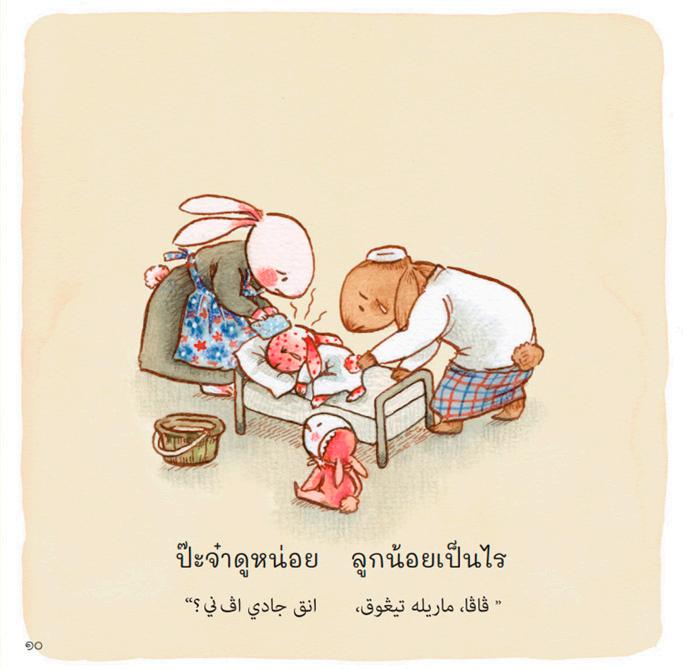
(1) The Story of Anees: A narrative about a girl named Anees who contracts measles, illustrating the severity of the disease. It underscores the message that vaccines can be deemed halal when necessary to save lives, aligning with religious considerations.
TheinterventionincludedtwomaincomponentsdesignedtoincreaseMMRvaccinationratesamongthetargetpopulation:thedistributionofaspeciallydesignedstorybook andtheconductingofrelatedsingingactivities.
(2) Insights from the Muslim Organization of Thailand: This section highlights the importance of vaccinations and reassures that they can be considered halal, addressing a significant cultural concern within the community.
StorybookDevelopment
(3) Educational Q&A on MMR Vaccine: Eight carefully crafted questions and answers designed to educate the community about the MMR vaccine, addressing common doubts and misinformation.
(4) Vaccine EPI Schedule Table of Thailand: An informative table presenting the official vaccination schedule, helping parents understand when their children should receive their shots.
(5) Vaccine Song Lyrics: Lyrics of a song related to the MMR vaccine, designed to be catchy and memorable, which helps reinforce the information about vaccination in a fun and engaging way.
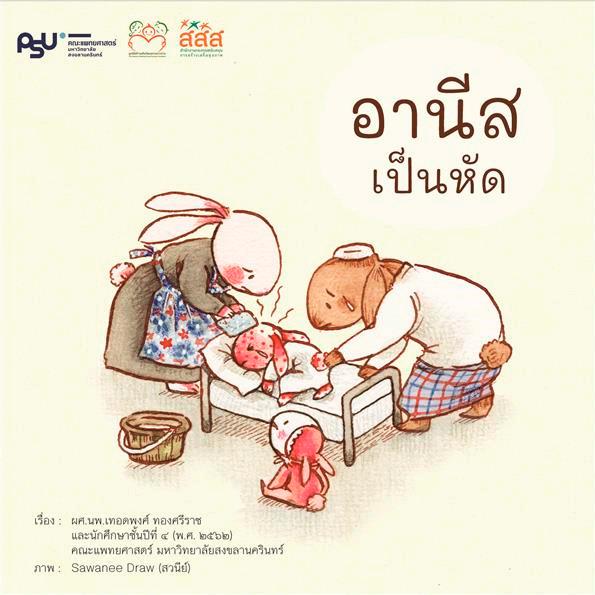
Thestorybooktitled“AneeshasMeasles”(Figure 1)wascraftedusingadesignthinkingapproachtodeeplyunderstandandempathizewiththecommunity’sconcernsabout MMRvaccination.Thiscreativeprocessinvolvedvariousstakeholdersfromthecommunity, includingparents,healthworkers,andreligiousleaders,whosharedtheirinsightsonculturalnuancesandcommonhesitanciessurroundingvaccines.Theircontributionsensured thecontentwasculturallyrelevantandsensitivetotheaudience’sbeliefsandpractices.

Thestorybookaimstoengagebothchildrenandtheirparentswithitsculturally resonantnarrativesandappealingimagery,makingthetopicofvaccinationapproachable andunderstandable.Itconsistsofthefollowingcomponents:
(1) TheStoryofAnees:AnarrativeaboutagirlnamedAneeswhocontractsmeasles, illustratingtheseverityofthedisease.Itunderscoresthemessagethatvaccinescan bedeemedhalalwhennecessarytosavelives,aligningwithreligiousconsiderations.
(2) InsightsfromtheMuslimOrganizationofThailand:Thissectionhighlightsthe importanceofvaccinationsandreassuresthattheycanbeconsideredhalal,addressing asignificantculturalconcernwithinthecommunity.
(3) EducationalQ&AonMMRVaccine:Eightcarefullycraftedquestionsandanswers designedtoeducatethecommunityabouttheMMRvaccine,addressingcommon doubtsandmisinformation.
(4) VaccineEPIScheduleTableofThailand:Aninformativetablepresentingtheofficial vaccinationschedule,helpingparentsunderstandwhentheirchildrenshouldreceive theirshots.
(5) VaccineSongLyrics:LyricsofasongrelatedtotheMMRvaccine,designedtobe catchyandmemorable,whichhelpsreinforcetheinformationaboutvaccinationina funandengagingway.
SingingActivity:Alongsidethestorybook,asingingactivitywasintegratedintothe intervention.ThisactivityutilizedtraditionalMuslimmelodiestoreinforcethemessages inthestorybook,emphasizingthebenefitsofvaccinationandtherisksofmeasles.The singingsessionsweredesignedtobeinteractive,involvingbothchildrenandtheirparents, andtherebyfosteringacommunity-basedlearningenvironmentthatsupportsbehavioral changetowardstheutilizationofhealthpractices.Thecompletevideosofthesongs performedintheinterventioncanbeaccessedvia https://photos.app.goo.gl/GYm4Ft5 pBEY2Fbjw5 (accessedon1July2024).Allteachers,medicalstudents,andchildrenfeatured inthesevideoshaveprovidedtheirconsent.
Figure 1. The storybook, titled “Anees has Measles”.
Commented [M11]:
Commented [M12]: English term or add
Figure1. Thestorybook,titled“AneeshasMeasles”.
2.3.TargetedVaccinationCategories
Thisstudyfocusedexclusivelyonacatch-upvaccinationapproach:
C1(Catch-upVaccination):Targetedchildrenaged18monthsto5yearswhohadnot previouslyreceivedanyMMRdoses.ThesechildrenwereofferedtheirfirstdoseofMMR, withtherecommendationtoreceiveaseconddoseatleastonemonthlater.
C2(Catch-upVaccination):Consistedofchildrenwhohadalreadyreceivedonedose ofMMR.Thesechildrenwereprovidedaseconddosetocompletetheirimmunization againstmeasles.
2.4.DataSourcesandCollection
Privacy,confidentiality,andtherightsofpatientswererigorouslyprotectedthroughoutthestudyinaccordancewithlocalhealthinformationpolicies.Datawereprimarily collectedfromtwomainsources:
LocalHealthData,includingdetailsextractedfromthelocalhealthinformationsystem, suchasgender,birthdate,anddatesofMMRimmunizationsforchildren.
ImmunizationRecords,meticulouslycheckedbychildcarecenterstaffbeforeand aftertheintervention;theserecords,combinedwithsecondarydatafromthelocalhealth datasystem,wereusedtoverifytheimmunizationstatusofeachchild.
2.5.DataAnalysis
VaccinationUptakeAnalysis:MMRvaccinationcoverageat12and48monthswas assessedbasedonrecordsfromthelocalhealthclinicsandcomparedwithbroaderregional andnationaldata.Thedifferencesinvaccinationratesbeforeandaftertheintervention wereanalyzedusingtheWilcoxonsigned-ranktestduetothenon-normaldistributionof thedata(asindicatedbytheShapiro–Wilktest).Statisticalsignificancewasdetermined atalevelof p <0.05.Confidenceintervals(CI)forthechangesinvaccinationrateswere calculatedtoprovideameasureoftheprecisionoftheestimatedeffects.
TrendAnalysisinImmunizationCoverage:ThemonthlyadministrationofMMR dosesduring2020wastrackedalongsidesignificantoutbreakeventsandcomparedwith historicaldatafrom2018to2019toidentifyanysignificantchangesinvaccinationtrends. Theanalysisinvolvedcomparingthepre-interventionandpost-interventionperiods,with statisticalsignificancedeterminedusingappropriatenon-parametrictests.
QuantitativeandQualitativeFeedback:Gatheredfeedbackfromchildcarestaffregardingtheintervention’simpact,analyzedquantitativelyandthematicallytoidentifykey themesaffectingtheprogram’ssuccess.
AllstatisticalanalyseswereperformedusingSTATA/ICversion16.0,focusingon thedifferencesinvaccinationuptakebeforeandaftertheintervention,andevaluating theeffectivenessoftheculturallytailorededucationalstrategiesimplementedduringthe measlesoutbreak.
3.Results
Thestudypopulationconsistedof983childrenaged18monthsto5yearsoldina governmentchildcarecenterasof1December2019;49%weremale.
3.1.VaccinationUptakeatLocalHealthCenter,Provincial,andNationalLevels
Vaccinationcoveragewascloselymonitoredatthelocalhealthcenterandcompared withregionalandnationallevels.Initially,thelocalhealthcenterreportedanMMR2 coveragerateof44.3%(435/983)beforetheintervention.Thisrateincreasedsignificantly to72.0%(708/983)twelvemonthsaftertheinterventionandfurtherto77.0%(734/953)by the48-monthmarkpost-intervention(Table 1).
Comparedtobroadergeographicalvaccinationtrends,thelocalhealthcenter’spreinterventioncoveragewasconsiderablylowerthantheregionalandnationalaverages.The deep-southregion’scoveragewas50.8%initially,risingto66.7%at12monthsbutslightly
decliningto65.7%at48months.Nationally,Thailandstartedat89.7%andsawaslight increaseto90.5%at12months,reaching92.5%at48months.
Table1. Vaccinationcoverageatthelocalhealthcenter,inthedeep-southregion,andatthenational level(Thailand).
GeographicalArea
Localhealthcenter435/983(44.3)708/983(72.0)734/953(77.0) Deepsouthregion50.866.765.7 Thailand89.790.592.5
3.2.StatisticalAnalysisofVaccinationRateChanges
Theeffectivenessofthe“AneeshasMeasles”storybookinterventiononMMRvaccinationrateswasstatisticallyanalyzed.TheShapiro–Wilktestindicatednon-normal distributionofvaccinationratechanges(W=0.775, p <0.001).Consequently,theWilcoxon signed-ranktestwasapplied,confirmingasignificantincreaseinvaccinationratesfroman initial44.3%to72.0%post-intervention,anincreaseof27.77percentagepoints(Z=31,180.5, p <0.001).Thissubstantialincreaseunderscorestheintervention’ssuccessinboosting MMRvaccinationuptakeinthetargetchildcarecenters.Thesefindingsdemonstrate notableimprovementsinMMRvaccinationratesatthelocalhealthcenter,highlightingthe significantimpactofthetargetededucationalintervention.Despiteremarkableprogress, localratesstilllagbehindnationalaverages,emphasizingtheneedforcontinuedeffortsto enhancevaccinationcoverage.
3.3.QuantitativeChildCareStaffFeedback
Followingtheevaluationofvaccinationcoverage,anadditionalaspectofthestudy involvedassessingthesatisfactionlevelsofstafffromtheSubdistrictAdministrativeOrganizationandchildcarecentersregardingthe“AneeshasMeasles”storybookintervention. Asurveywasconductedtogathertheseinsights,withtheresultshighlightingapositive receptiontowardstheproject’sexecutionandoutcomes.
3.3.1.SatisfactionSurveyResults
ProgramAppropriateness:Alargemajorityofrespondentsfelttheprogram’sformat washighlysuitable,with28.39%ratingitasmostlyappropriateand54.20%asappropriate, summingtoanoverallsatisfactionrateof80.21%.
ProgramDuration:Similarly,thedurationoftheprogramwasdeemedappropriateby 26.27%andveryappropriateby65.68%,yieldingacombinedapprovalof79.86%.
Knowledge/BenefitGained:Theeducationalbenefitoftheproject“AneeshasMeasles” wasacknowledged,with83.57%ofparticipantsreportingtheygainedknowledgeor benefitsfromtheprogram.
IncreasedVaccineAwareness:Theimportanceofmeaslesvaccinationwasmore widelyrecognizedpost-intervention,asindicatedbyan88.39%agreementrateamongthe respondents.
DataCollectionandTransfer:Theproject’sdatamanagementwaspraised,with80.77% satisfactionregardingtheabilitytocollectandtransfercompleteandaccuratedata.
Theoverallsatisfactionwiththeprojectwasnotedat83.22%,indicatingstrongapprovaloftheinitiative’simpactandexecution.
3.3.2.BookFeedbackandImpact
IncreasedDiseaseUnderstanding:80.51%ofrespondentsfelttheirunderstandingof measlesimprovedsignificantly.
PerceivedVaccineImportance:81.65%recognizedtheincreasedimportanceofvaccination. ConfidenceinVaccination:Anincreasedconfidenceinvaccinatingwasreportedby 81.14%ofparticipants.
ReligiousContextUnderstanding:Theprojectfacilitatedabetterunderstandingof religiousstipulationsregardingvaccination,with79.62%acknowledgingthisaspect.
3.4.QualitativeChildCareStaffFeedback
Inadditiontothequantitativesatisfactionsurvey,qualitativefeedbackwascollected fromparticipantstogaindeeperinsightsintotheexperiencesandperceptionssurrounding the“AneeshasMeasles”storybookintervention.Throughthematicanalysisofthequalitativedata,severalkeythemesemergedthatprovidedanuancedunderstandingofthe intervention’simpactandareasforimprovement.
ThemesfromQualitativeFeedback:
1. ContinuityandFrequencyofPrograms
Participantsemphasizedtheneedforregularandongoinginterventionstomaintain highlevelsofawarenessandprevention.
“Weneedthismeaslespreventionprojecteveryyear.Ithelpsinkeepingthecommunity alertandpreparedagainstthedisease.”
2. CommunityandMulti-sectoralEngagement
Theimportanceofcollaborativeeffortsamonghealthcareproviders,parents,and communityleaderswashighlightedascrucialforthesuccessoftheprogram.
“It’scrucialthateveryonegetsinvolved,notjustthehealthcareworkers.Parents,teachers, andlocalleadersneedtounderstandandsupporttheinitiativeforittobesuccessful.”
3. ProjectDurationandReach
Respondentssuggestedthatalongerprojectdurationandbroaderreachwouldenhancetheeffectivenessoftheintervention.
“Theprogramwasgreat,butitfeltrushed.Extendingthedurationandcoveringmore areascouldhelpreachmorefamiliesandhaveastrongerimpact.”
4. FieldActivities
Theme:Theneedformoreinteractiveandon-siteactivitieswasidentifiedtostrengthen theprogram’simpactandcommunityengagement.
“Havingmoreactivitiesinourcommunitywouldmakethemessagestronger.Peopleneed toseeandexperiencethebenefitsofvaccinationfirsthand.”
5. SustainabilityofEducationalEfforts
Ongoingeducationalinitiativesweredeemednecessarytoimprovevaccineuptake andhealthliteracycontinuously.
“Continuouseducationonnotjustmeaslesbutallvaccine-preventablediseasesisneeded tokeepourcommunityhealthy.Thisshouldbeanongoingeffort.”
6. BarrierstoEngagement
Participantsnotedseveralbarrierstoengagement,includinglogisticalissuesandthe accessibilityofeducationalmaterials.
“Thestorybookwasagoodidea,butmyworkscheduledidn’tallowmetoparticipate much.Also,someparentsmentionedthatthetextandpicturesweretoosmallforthekids toseeclearly.”
7. EnhancedEducationalMaterials
Feedbackindicatedaneedformoreappealingandaccessibleeducationalmaterialsto effectivelyconveythemessage.
“Thestorybookshouldhavelargerprintandmorecolorfulpicturestoattractthechildren’s attention.Makingthematerialmoreengagingwillhelpindeliveringthemessage effectively.”
Thesethemesandquotationsencapsulatethemultifacetedperspectivesonthe“Anees hasMeasles”storybookintervention,highlightingtheprogram’ssuccessesandareas forimprovement.Thefeedbackunderscoresthenecessityforadaptable,engaging,and sustainedeffortstocombatvaccinehesitancyandpromotepublichealthinthecommunity.
4.Discussion
Theeffectivenessofthe“AneeshasMeasles”storybookintervention,complemented bysingingactivities,inincreasingMMRvaccinationratesamongyoungchildreninthe deepsouthofThailandisatestamenttothepowerofculturallyandreligiouslysensitive healthcommunicationstrategies.Byintegratingstakeholdersfromthecommunityin thedevelopmentprocess—includingparents,healthworkers,andreligiousleaders—the interventionwastailoredtoresonatewiththelocalculturalandreligiousethos,which playedacrucialroleinitsacceptanceandsuccess.Thisapproachisconsistentwithprevious studiesthatemphasizetheimportanceofcommunityinvolvementinhealthinterventions toensureculturalcompatibilityandincreasethelikelihoodofpositiveoutcomes[35–37].
Utilizingstorytellingandsinging,whichareculturallyfamiliarmethodsofcommunication,theinterventionpresentedthevaccinationmessageinanengagingandnonconfrontationalmanner.Thisstrategyprovedeffectiveinnotonlyincreasingtheunderstandingofandtrustinvaccinationsbutalsoinmakingtheeducationalprocessenjoyable forchildrenandtheirparents[38–41].Similarapproacheshavebeendocumentedin othersettings,whereintegratinghealtheducationintolocalculturalpracticessignificantly improvedpublichealthinitiatives’receptivenessandeffectiveness[42].
Thesubstantialincreaseinvaccinationratespost-interventionhighlightsthepotential oftargetededucationalstrategiestomodifyhealthbehaviors,particularlyinareaswith initialvaccinehesitancyandlowvaccinecoverage.Thisalignswithfindingsfromother regionswheretailoredcommunicationstrategieshavesuccessfullyaddressedvaccine hesitancy.Moreover,theuseofspecificeducationaltoolswithinthestorybook,suchasthe Q&Asectionandvaccinationschedule,helpeddemystifytheMMRvaccineandaddressed prevalentmisconceptions,amethodsupportedbyliteratureonhealtheducation[43–45]. Despitetheintervention’ssuccess,challengessuchaslogisticalissuesandlimitedreach werenoted,suggestingtheneedforongoingsupportandresourcestoensurewider accessibilityandconsistencyinvaccinedelivery.
Thestudy,whileinsightful,presentsseverallimitationsthatshouldbeconsidered wheninterpretingtheresults.Firstly,theabsenceofacontrolgrouplimitstheability toconclusivelyattributetheobservedimprovementsinvaccinationratessolelytothe intervention,despitecomparisonswithregionalandnationaldata.Thislimitationmakes itchallengingtodefinitivelyisolatetheeffectoftheinterventionfromotherexternal factorsthatmayhaveinfluencedtheoutcomes.Secondly,thefindingsarebasedona relativelysmallsamplesizeandareconfinedtospecificchildcarecentersinSouthern Thailand,whichmaynotfullyrepresentbroaderpopulationsordifferentculturalcontexts. Thirdly,therelianceonvoluntaryparticipationcouldintroduceselectionbias,asthose whochosetoparticipatemightinherentlyhavedifferentattitudestowardsvaccination comparedtothegeneralpopulation.Additionally,wedidnotcollectdetailedinformation onthesociodemographicfeaturesofparents,whichcouldprovidefurtherinsightsinto factorsaffectingvaccinationuptake.Whilethe48-monthfollow-upperiodprovided valuablelongitudinaldata,thestudycouldbenefitfromexploringotheraspectssuchasthe continuityofvaccinationbehaviorbeyondtheimmediateaftermathoftheinterventionand thelong-termacceptanceofvaccinesinthecommunity.Theselimitationsunderscorethe needforfurtherresearchwithamorerobustexperimentaldesign,includingacontrolgroup andbroaderdemographicsampling,tovalidateandexpandupontheseinitialfindings.
Thefindingsfromthisstudyhaveimportantimplicationsforbothclinicalpracticeand futureresearch.Clinically,theintegrationofculturallyappropriateeducationalmaterials andmethodsintoroutinevaccinationcampaignscouldenhancevaccineuptakeinother regionswithsimilarculturalandreligiousconsiderations.Forfutureresearch,thisstudy
References
highlightstheneedforlarger-scaleinterventionsandlongerfollow-upperiodstoverify thefindingsandassessthelong-termsustainabilityoftheinterventioneffects.Italso underscorestheimportanceofexploringdifferenttypesofeducationalinterventionsthat couldcatertodiverseculturalgroups,therebyenhancingtheoveralleffectivenessof publichealthcampaignsaimedatincreasingvaccinecoverage.Furtherstudiescould alsoinvestigatetheimpactofcombiningmultiplecommunicationstrategiesonvaccine hesitancytoidentifythemosteffectiveapproachesforvariouspopulations.
5.Conclusions
Overall,the“AneeshasMeasles”interventionillustratesthatculturallytailorededucationalstrategiesthatemployengagingandfamiliarcommunicationformatscaneffectively enhancevaccinationuptakeincommunitieswithsignificantvaccinehesitancyduetoreligiousbeliefs.Thepositiveoutcomesofthisstudyprovidevaluableinsightsfordesigning futurepublichealthprogramsthataimtobridgethegapbetweenculturalbeliefsand healthbehaviors,emphasizingtheimportanceofasustainedandadaptiveapproachto healtheducationandcommunityinvolvement.
SupplementaryMaterials: Thefollowingsupportinginformationcanbedownloadedat: https://www. mdpi.com/article/10.3390/vaccines12070819/s1.PDFS1:“AneeshasMeasles”storybook.
AuthorContributions: Conceptualization,T.T.andN.J.;methodology,T.T.andN.J.;software,T.T.; validation,T.T.,N.J.andN.N.;formalanalysis,T.T.,P.K.andN.N.;investigation,T.T.,P.K.and N.J.;resources,T.T.andN.J.;datacuration,T.T.andN.J.;writing—originaldraftpreparation,T.T.; writing—reviewandediting,T.T.,P.K.,N.J.,N.N.andN.T.;visualization,T.T.andN.T.;supervision, T.T.andN.T.;projectadministration,T.T.;fundingacquisition,T.T.Allauthorshavereadandagreed tothepublishedversionofthemanuscript.
Funding: ThisresearchwasfundedbytheFacultyofMedicine,PrinceofSongklaUniversity.The APCwasfundedbytheFacultyofMedicine,PrinceofSongklaUniversity.
InstitutionalReviewBoardStatement: ThestudywasconductedinaccordancewiththeDeclaration ofHelsinki,andapprovedbytheInstitutionalReviewBoardoftheFacultyofMedicine,Princeof SongklaUniversity.TheethicsapprovalcodeforourstudyisREC.67-231-1-1.
InformedConsentStatement: Informedconsentwasobtainedfromallsubjectsinvolvedinthestudy.
DataAvailabilityStatement: Datasupportingthereportedresultscanbereachedbycontactingthe correspondingauthor.Wherenonewdatawerecreated,orwheredataareunavailableduetoprivacy orethicalrestrictions,pleaseseethesupplementalfilesassociatedwiththispublication.
Acknowledgments: Theauthorswouldliketoexpresstheirgratitudefortheadministrativeand technicalsupportprovidedbytheFacultyofMedicine,PrinceofSongklaUniversity.Additionally, heartfeltthanksareextendedtotheThaiCreativeforReadingCulturePromotionFoundationand theThaiHealthPromotionFoundationfortheircomprehensivesupportthroughoutallphasesof publishingthisstorybook.Wealsowishtoacknowledgethecontributionsofthegroupof4th yearMedicalstudentsfortheHealthPromotionblock,whoutilizeddesignthinkingmethodsto developthefirstprototypeofthestorybookandsong,RapeepatThewamit,co-advisoroftheproject, RapeephanPattanavech,theeditor,SawaneeDraw,theillustrator,SudjaiBhromkoed,chairman ofTheCreativeforReadingCulturePromotionFoundation(CRF),andtheSouthernmostReading PowerNetworkforthedevelopmentanddistributionofthestorybook.Yourcollectiveeffortshave madethisprojectpossible,andwearedeeplygratefulforyourdedicationandhardwork.
ConflictsofInterest: Theauthorsdeclarenoconflictsofinterest.Thefundershadnoroleinthedesign ofthestudy;inthecollection,analyses,orinterpretationofdata;inthewritingofthemanuscript;or inthedecisiontopublishtheresults.
1. Naim,H.Y.Measlesvirus:Apathogen,vaccine,andavector. Hum.Vaccin.Immunother. 2015, 11,21–26.[CrossRef]
2. CentersforDiseaseControlandPrevention(CDC).Increasedtransmissionandoutbreaksofmeasles—EuropeanRegion,2011. Morb.Mortal.WklyRep. 2011, 60,1605–1610.
3. DiPietrantonj,C.;Rivetti,A.;Marchione,P.;Debalini,M.G.;Demicheli,V.Vaccinesformeasles,mumps,rubella,andvaricellain children. CochraneDatabaseSyst.Rev. 2021, 11,CD004407.
4. Moss,W.J.;Griffin,D.E.Measles. Lancet 2012, 379,153–164.[CrossRef]
5. Bester,J.C.MeaslesandMeaslesVaccination:AReview. JAMAPediatr. 2016, 170,1209–1215.[CrossRef][PubMed]
6. Hughes,S.L.;Bolotin,S.;Khan,S.;Li,Y.;Johnson,C.;Friedman,L.;Tricco,A.C.;Hahné,S.J.;Heffernan,J.M.;Dabbagh,A.;etal. Theeffectoftimesincemeaslesvaccinationandageatfirstdoseonmeaslesvaccineeffectiveness—Asystematicreview. Vaccine 2020, 38,460–469.[CrossRef][PubMed]
7. Clemmons,N.;Wallace,G.S.;Patel,M.;Gastañaduy,P.A.IncidenceofMeaslesintheUnitedStates,2001–2015. JAMA 2017, 318,1279.[CrossRef][PubMed]
8. Dabbagh,A.;Laws,R.L.;Steulet,C.;Dumolard,L.;Mulders,M.N.;Kretsinger,K.;Alexander,J.P.;Rota,P.A.;Goodson,J.L. ProgressTowardRegionalMeaslesElimination—Worldwide,2000–2017. Morb.Mortal.WklyRep. 2018, 67,1323–1329.[CrossRef]
9. Patel,M.;Lee,A.D.;Clemmons,N.S.;Redd,S.B.;Poser,S.;Blog,D.;Zucker,J.R.;Leung,J.;Link-Gelles,R.;Pham,H.;etal. NationalUpdateonMeaslesCasesandOutbreaks—UnitedStates,January1–October1,2019. Morb.Mortal.Wkly.Rep. 2019, 68, 893–896.[CrossRef]
10. Guerra,F.;Bolotin,S.;Lim,G.;Heffernan,J.;Deeks,S.L.;Li,Y.;Crowcroft,N.S.Thebasicreproductionnumber(R0)ofmeasles:A systematicreview. LancetInfect.Dis. 2017, 17,e420–e428.[CrossRef]
11. Zucker,J.R.;Rosen,J.B.;Iwamoto,M.;Arciuolo,R.J.;Langdon-Embry,M.;Vora,N.M.;Rakeman,J.L.;Isaac,B.M.;Jean,A.;Asfaw, M.;etal.ConsequencesofUndervaccination—MeaslesOutbreak,NewYorkCity,2018–2019. N.Engl.J.Med. 2020, 382,1009–1017. [CrossRef]
12. Phadke,V.K.;Bednarczyk,R.A.;Omer,S.B.VaccineRefusalandMeaslesOutbreaksintheUS. JAMA 2020, 324,1344–1345. [CrossRef][PubMed]
13. Dimala,C.A.;Kadia,B.M.;Nji,M.;Ndemazie,N.B.FactorsassociatedwithmeaslesresurgenceintheUnitedStatesinthe post-eliminationera. Sci.Rep. 2021, 11,51.[CrossRef]
14. Nuwarda,R.F.;Ramzan,I.;Weekes,L.;Kayser,V.VaccineHesitancy:ContemporaryIssuesandHistoricalBackground. Vaccines 2022, 10,1595.[CrossRef]
15. Alsuwaidi,A.R.;Hammad,H.A.A.;Elbarazi,I.;Sheek-Hussein,M.VaccinehesitancywithintheMuslimcommunity:Islamic faithandpublichealthperspectives. Hum.Vaccin.Immunother. 2023, 19,2190716.[CrossRef]
16. Jinarong,T.;Chootong,R.;Vichitkunakorn,P.;Songwathana,P.Muslimparents’beliefsandfactorsinfluencingcomplete immunizationofchildrenaged0–5yearsinaThairuralcommunity:Aqualitativestudy. BMCPublic.Health 2023, 23,1348. [CrossRef]
17. Trangerud,H.A.“Whatistheproblemwithvaccines?”Atypologyofreligiousvaccineskepticism. VaccineX 2023, 14,100349. [CrossRef]
18. Ahmed,A.;Lee,K.S.;Bukhsh,A.;Al-Worafi,Y.M.;Sarker,M.M.R.;Ming,L.C.;Khan,T.M.Outbreakofvaccine-preventable diseasesinMuslimmajoritycountries. J.Infect.Public.Health 2018, 11,153–155.[CrossRef][PubMed]
19. Ansari,M.T.;Jamaluddin,N.N.;Ramlan,T.A.;Zamri,N.;Majeed,S.;Badgujar,V.;Sami,F.;Hasnain,M.S.;Singh,H.K.B. Knowledge,attitude,perceptionofMuslimparentstowardsvaccinationinMalaysia. Hum.Vaccin.Immunother. 2021, 17,785–790. [CrossRef][PubMed]
20. Nayar,R.K.;Nair,A.T.;Shaffi,M.;Swarnam,K.;Kumar,A.;Abraham,M.;Lordson,J.;Grace,C.Methodstoovercomevaccine hesitancy. Lancet 2019, 393,1203–1204.[CrossRef]
21. LeMenach,A.;Boxall,N.;Amirthalingam,G.;Maddock,L.;Balasegaram,S.;Mindlin,M.Increasedmeasles-mumps-rubella (MMR)vaccineuptakeinthecontextofatargetedimmunisationcampaignduringameaslesoutbreakinavaccine-reluctant communityinEngland. Vaccine 2014, 32,1147–1152.[CrossRef][PubMed]
22. Jarrett,C.;Wilson,R.;O’Leary,M.;Eckersberger,E.;Larson,H.J.Strategiesforaddressingvaccinehesitancy—Asystematicreview. Vaccine 2015, 33,4180–4190.[CrossRef][PubMed]
23. Kompithra,R.Z.;Magdalenal,R.;Mathew,L.G.;Verghese,V.P.AHighVolume,User-FriendlyImmunizationClinicinVellore, India:AModelforUrbanHospitals. J.Immun. 2016, 1,1–8.[CrossRef]
24. Krishnendhu,V.K.;George,L.S.Driversandbarriersformeaslesrubellavaccinationcampaign:Aqualitativestudy. J.Fam.Med. Prim.Care 2019, 8,881–885.[CrossRef]
25. Olson,O.;Berry,C.;Kumar,N.AddressingParentalVaccineHesitancytowardsChildhoodVaccinesintheUnitedStates:A SystematicLiteratureReviewofCommunicationInterventionsandStrategies. Vaccines 2020, 8,590.[CrossRef][PubMed]
26. Phadke,V.K.;Bednarczyk,R.A.;Salmon,D.A.;Omer,S.B.AssociationBetweenVaccineRefusalandVaccine-PreventableDiseases intheUnitedStates. JAMA 2016, 315,1149.[CrossRef][PubMed]
27. Chung,Y.;Schamel,J.;Fisher,A.;Frew,P.M.InfluencesonImmunizationDecision-MakingamongUSParentsofYoungChildren. Matern.Child.HealthJ. 2017, 21,2178–2187.[CrossRef]
28. MinistryofPublicHealth.DepartmentofDiseaseControl.ThailandMeaslesSituationReport2018to2019.2019.Available online: https://ddc.moph.go.th/uploads/files/1112120200121090145.pdf (accessedon10April2022).
29. MinistryofPublicHealth.DepartmentofDiseaseControl.ThailandMeaslesDatabase2018.2018.Availableonline: https: //apps-doe.moph.go.th/measles/ (accessedon15April2022).
30. MinistryofPublicHealth.DepartmentofDiseaseControl.AnnualEpidemiologicalSurveillanceReport2019.2021.Available online: https://ddc.moph.go.th/uploads/publish/1129820210620030431.pdf (accessedon10April2022).
31. Daya,S.;Lillahkul,N.;Noin,J.ExperienceofparentsofThaiMuslimChildhoodaged0–5yearsinYalaProvincewhorejected theserviceofexpandedprogramimmunizationwithvaccine. J.Dept.Med.Serv. 2018, 43,137–141.Availableonline: https: //he02.tci-thaijo.org/index.php/JDMS/article/view/247857 (accessedon12April2023).
32. Puti,S.;Pilate,A.;Puti,S.;Talalama,I.;Muputi,N. HealthStatus,Beliefs,andHealthBehaviorsofPeopleintheSouthernBorder Provinces;ThaiMuslim’sHealthPromotionProgram:Bangkok,Thailand,2018.
33. Yotawut,M.MaternalperceptionsofChildhoodVaccinations:AcasestudyofBanphaeoGeneralHospitalSamutsakornProvince. J.Nurs.HealthCare. 2019, 37,32–41.Availableonline: https://he01.tci-thaijo.org/index.php/jnat-ned/article/view/232339 (accessedon12April2023).
34. Lim,W.Y.;Amar-Singh,H.S.S.;Jeganathan,N.;Rahmat,H.;Mustafa,N.A.;Yusof,M.;Rahman,F.-S.;Itam,R.;Chan,S.C.H.; N-Julia,M.S.ExploringimmunisationrefusalbyparentsintheMalaysiancontext. CogentMed. 2016, 3,1142410.[CrossRef]
35. Nixon,L.S.;Hudson,N.;Culley,L.;Lakhanpaul,M.;Robertson,N.;Johnson,M.R.D.;McFeeters,M.;Johal,N.;Hamlyn-Williams, C.;Boo,Y.Y.;etal.Keyconsiderationswheninvolvingchildreninhealthinterventiondesign:Reflectionsonworkingin partnershipwithSouthAsianchildrenintheUKonatailoredManagementandInterventionforAsthma(MIA)study. Res.Involv. Engag. 2022, 8,9.[CrossRef][PubMed]
36. Radhamony,R.;Cross,W.M.;Townsin,L.;Banik,B.Perspectivesofculturallyandlinguisticallydiverse(CALD)community membersregardingmentalhealthservices:Aqualitativeanalysis. J.Psychiatr.Ment.HealthNurs. 2023, 30,850–864.[CrossRef] [PubMed]
37. Ferdinand,A.;Lambert,M.;Trad,L.;Pedrana,L.;Paradies,Y.;Kelaher,M.Indigenousengagementinhealth:LessonsfromBrazil, Chile,AustraliaandNewZealand. Int.J.EquityHealth 2020, 19,47.[CrossRef][PubMed]
38. Daykin,N.;Mansfield,L.;Meads,C.;Julier,G.;Tomlinson,A.;Payne,A.;Duffy,L.G.;Lane,J.;D’innocenzo,G.;Burnett,A.;etal. Whatworksforwellbeing?Asystematicreviewofwellbeingoutcomesformusicandsinginginadults. Perspect.PublicHealth 2018, 138,39–46.[CrossRef][PubMed]
39. Feng,L.;Romero-Garcia,R.;Suckling,J.;Tan,J.;Larbi,A.;Cheah,I.;Wong,G.;Tsakok,M.;Lanskey,B.;Lim,D.;etal.Effectsof choralsingingversushealtheducationoncognitivedeclineandaging:Arandomizedcontrolledtrial. Aging 2020, 12,24798–24816. [CrossRef][PubMed]
40. Black,L.W.;Wolfe,A.W.;Han,S.-H.StorytellingandDeliberativePlayintheOregonCitizens’AssemblyOnlinePiloton COVID-19Recovery. Am.Behav.Sci. 2023, 67,963–981.[CrossRef][PubMed]
41. Lober,A.;Komnenich,P.StorytellingasaTeachingApproachforBreastfeedingEducation. Nurs.Women’sHealth 2020, 24,440–445. [CrossRef][PubMed]
42. Shruti,T.;Govindraju,H.A.;Sriranga,J.IncorporationofStorytellingasaMethodofOralHealthEducationamong3–6-year-old PreschoolChildren. Int.J.Clin.Pediatr.Dent. 2021, 14,349–352.[CrossRef]
43. Meyer,B.A.;Viskupiˇc,F.;Wiltse,D.L.Pharmaciststopartnerwithreligiousleaderstoovercomevaccinehesitancyamong Christians. J.Am.Pharm.Assoc. 2022, 62,302–304.[CrossRef]
44. Hicken,A.;Jones,P.;Menon,A.;Rozek,L.S.Canendorsementbyreligiousleadersmovetheneedleonvaccinehesitancy? Vaccine 2024, 42,918–923.[CrossRef]
45. Thomas,B.;Flood,C.M.EliminatingReligiousandPhilosophicalExemptions:TheNextStepinOntario’sCampaignagainst VaccineHesitancy. Healthc.Policy 2020, 16,14–20.[CrossRef][PubMed]
Disclaimer/Publisher’sNote: Thestatements,opinionsanddatacontainedinallpublicationsaresolelythoseoftheindividual author(s)andcontributor(s)andnotofMDPIand/ortheeditor(s).MDPIand/ortheeditor(s)disclaimresponsibilityforanyinjuryto peopleorpropertyresultingfromanyideas,methods,instructionsorproductsreferredtointhecontent.