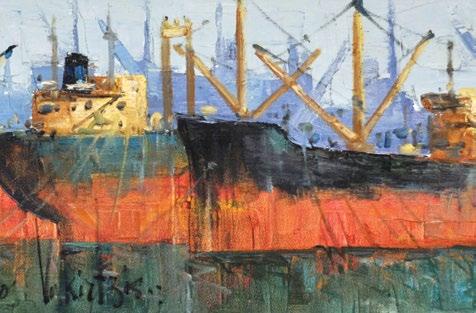
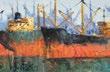
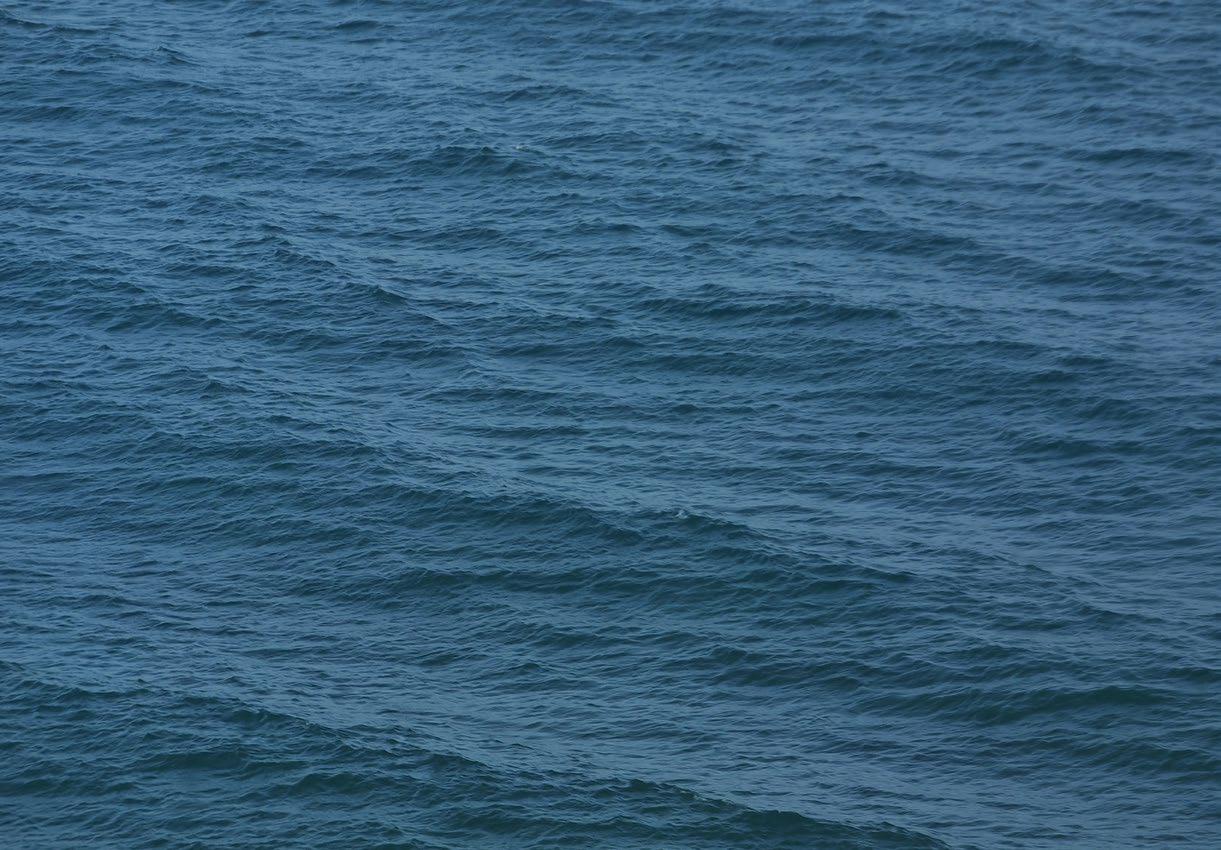
Αλέξανδρος Βακιρτζής, Δεμένα πλοία. Ελαιογραφία, 38,5x118 cm.
his year marks 110 years since the founding of the Union of Greek Shipowners and it is an opportunity to assess the work, both in the interests of the Association members, and the offer to the Greek society in general. It is an undisputable fact that the 18th century was the most productive period for the development of the Greek merchant marine. Islanders and residents of coastal areas under Ottoman and Venetian rule were engaged in seafaring and they found freight available for transfer either agricultural products from the interior of the country, or popular handi-
At the same time, the international conditions in the Eastern Mediterranean favored the development of shipping, Keeping always in mind that the Ottoman conquerors did not want their involvement to the seafarcitizens.
The Revolution of 1821 was based on this Navy consisting of small commercial cargo ships, equipped with a few small cannons to deal with pirates, who at that time, ravaged the Mediterranean. The foundation of the Greek state in 1830 found the shipping decimated by the loss of Revolution war of nine years. Efforts were made to the rectification, both by Governor Ioannis Kapodistrias, and the subsequent Royal administration. Some shipping centers recovered, some were unable to recover, some new started their maritime history. All these variations and developments were the result of market forces operating even rudimentarily in the 19th century and the availability of similar freights.
Διεύθυνση Σύνταξης: Γιάννης Παλούμπης
Επιμέλεια Έκδοσης:
Αναστασία Αναγνωστοπούλου-Παλούμπη
Πηνελόπη Βουγιουκλάκη Δρ Βυζαντινής Αρχαιολογίας
As the century progressed the Greeks of the diaspora mainly created commercial firms in all major ports of the Black Sea, the Mediterranean and Western Europe. Commun cation between and transfer of loads from one to the other, gave new impetus to shipping. At the same time the steam started to enter dynamically to the construction of merchant ships, rendering them independent of the wind and thus giving them a significant advantage to the competition with sailing boats Greek shipowners delayed their entry into the moving by steam for many reasons among which were the following:
• Movement of vessels with sails for forty centuries had instilled a conservative conception which disliked changes and innovative ideas.
Ιωάννα Μπερμπίλη Μ.Δ.Ε.
• The high cost of new constructions precluded the traditional financing scheme with contributions by all parties involved
(1814-1902).
(captain, owner, shipwrights, loggers, etc.).
On the other hand in the small Greece there were not appropriate financial institutions that could support large financial projects like these constructions.
• The lack of technical education institutions capable of producing sufficiently trained personnel to support and address the needs of new technology.
So as late as 1880, Panagis Valianos, one of the major grain trade of Black Sea ordered the building Gr The First World War found Greece to be 11 steamers which were registered on December 31, 1914.
The confusing internal political developments damaged the Greek shipping as made it a target of both belligerents. The country’s losses in 1916 amounted to 36% of total global losses.
Until then the idea of the union of the Greek shipowners to an Association that would support the interests of its members had
not matured. An explanation of the relative slow rate observed was perhaps the spatial dispersion of owners accommodation and therefore it was not easy the contact between each other and the creation of fermentations.
It should also be taken into consideration the communication difficulties of that era, that made almost prohibitive the exchange of views among people living in different geographical areas
/
Union of Greek Shipowners. An historical overview.- An. Anagnostopoulou-Paloumpis, President of HMM
Indeed shipowners coming mainly from the classes of masters and engineers were permanently settled in their places of origin, ie in the Aegean and Ionian islands, where crews were enlisted among relatives, friends and villagers. With this constitution of crew, labor problems were rare, thereby eliminating another cause for which the establishment of an association could be useful.
So not having any particular reason and with the shipowners not gathered in Athens and Piraeus, as it happened later, but scattered in the nautical lands of the country, the lack of a representative association that would represent their collective interests was found late.
(ε.τ.) Π.Ν. Digital Transformation in the Humanities and Contemporary Shipping Dr P. Laskaridis, Rear Admiral (hon.) H.N.
Besides, until the first decades of the 20th century the state interventions in shipping were minimal to nonexistent. Governments used to leave the shipping to develop by its own and it was dependent on a war Ministry, the Ministry of the Navy, as yet another branch of national forces.
The first thought of a better organized policy and direction of Marine may be credited to could be developed into an important sector of the national economy. It began even considering switching from the Department of the Navy to the Ministry of Economy and the assignment of its administration into a body of technocrats who would understand the needs and serve them.
In these thoughts influential owners of the time encouraged him, members of the Liberal Party, as it was Leonidas Embeirikos founder of the “National Steamboats of Greece”, linking Greece to America with ocean liners, Antonis Giannoulatos great coastal owner of the time, Nicholas Kyriakides personal friend of Venizelos and others. These, in order to help him achieve his goals took the initiative on February 10, 1916 to establish an Association, the Union of Greek Shipowners based, then, at Piraeus and more specifically in Spiraki mansion.
-
/ Forecasts for Cruises and Tourism - Th.Kontes President of EEKFN
(ε.α.) Ι.
/ The birth of Liberties -Vice admiral (ret) J. Paloumpis HN
The Statute provided that the purpose of the newly formed association was “... to enlighten the government on the appropriate maritime policy by completing and improving the domestic legislation and the award or
/ 10,000 Years of Hellenic Maritime Tradition
The birth of Liberties
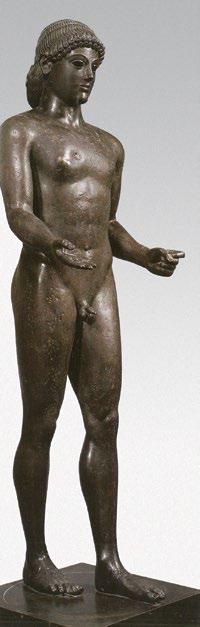
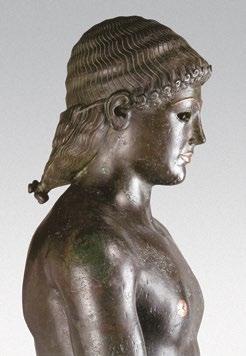
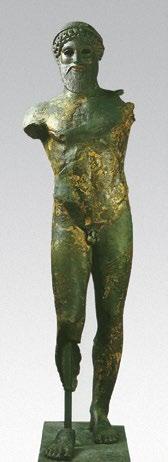
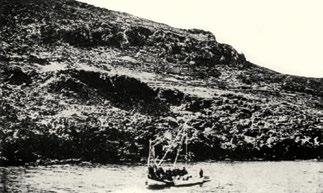
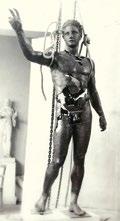
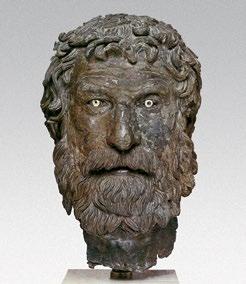
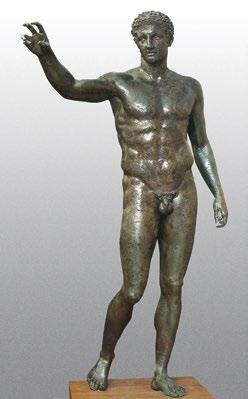
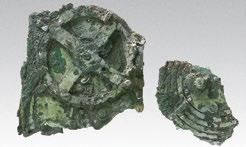
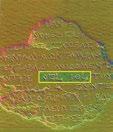
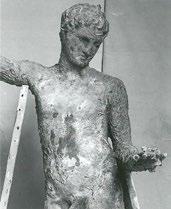
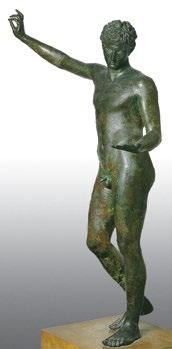
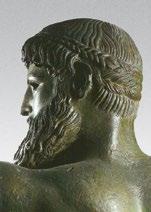
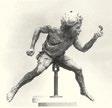
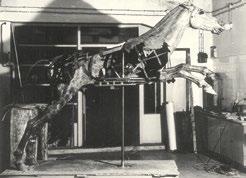
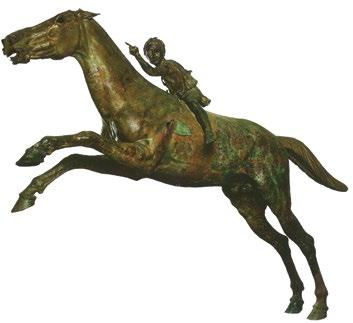
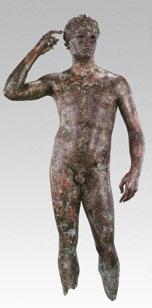
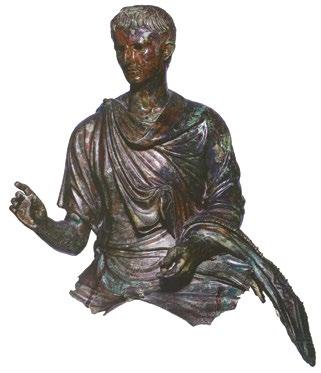
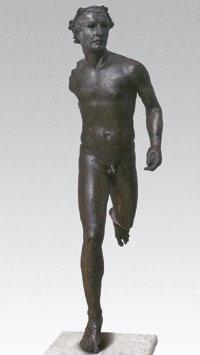
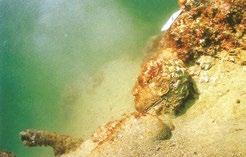
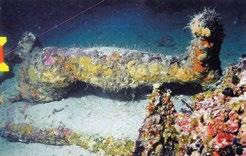
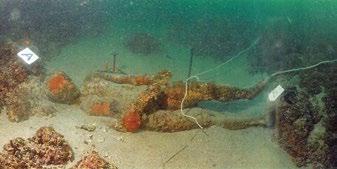
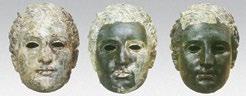
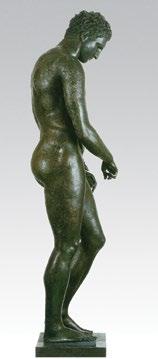
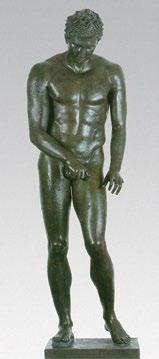
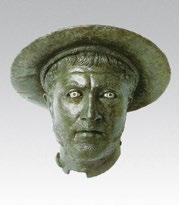
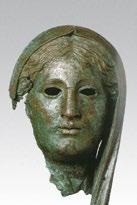
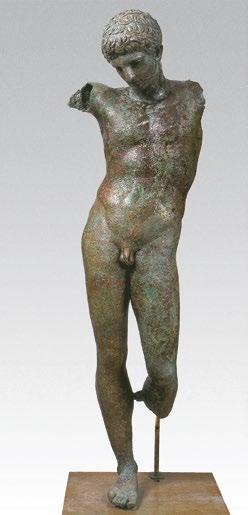
/ Bronze Statues from the depths of the Sea - Η. Tzala
The year 2026 marks the return of the Posidonia exhibition, and this issue of "Periplous of Maritime History", the journal of the Hellenic Maritime Museum, seeks to connect the contemporary dynamism of the maritime industry—as reflected in this leading international event—with the rich historical and cultural legacy of Greek seafaring. Through its pages, diverse aspects of the history of Greek merchant shipping and shipowning are explored, shedding light on individuals, entrepreneurial ventures, vessels, and milestones that have profoundly shaped the country’s economic development and international presence.
With more than five decades of uninterrupted history, Posidonia has evolved into an event of global significance, where the pulse of the international maritime industry is felt and where Greece is firmly established as a major meeting point for the global shipping community. Far more than a trade exhibition, Posidonia serves as a platform for dialogue, innovation, and cooperation, consistently underscoring the leading role of Greek shipping on the international stage.
The origins of Posidonia can be traced to the early 1960s, when Theodoros Vokos, inspired by the dynamism of the Greek maritime community and developments in international shipping, conceived the idea of a major maritime exhibition in Greece. This vision began to take shape in 1965, when Vokos— journalist and founder of the newspaper Naftiliaki–Naftergatiki—together with public relations executive Richard Stubbs, recognised the need for a specialised exhibition that would showcase internationally the strength of Greek shipping and the significance of the Greek fleet to the global maritime sector.
The first International Shipping Exhibition, Posidonia, was eventually held in 1969 at the Zappeion Hall, bringing together 80 shipyards, maritime enterprises, and companies from 15 countries.
The choice of its name, inspired by the god of the sea in ancient Greek mythology, was far from incidental. It reflected an intention to connect contemporary maritime activity with the long-standing seafaring tradition of Hellenism. From 1970 onwards, the exhibition became an established biennial institution, held every June, and rapidly experienced remarkable growth.
From the Zappeion to Piraeus, and from there to the modern exhibition venues of Attica, the trajectory of Posidonia reflects not only the continuous development of international shipping but also Greece’s leading position within it. Although born in Athens, Posidonia
came of age in Piraeus, closely intertwining its evolution with the country’s foremost maritime centre and continually highlighting the enduring relationship between Hellenism and the sea.
Beyond its business and technological dimensions, Posidonia has also developed a significant cultural aspect, promoting Greece’s maritime heritage to an international audience. Within this context, the Hellenic Maritime Museum has had the honour of contributing through major thematic exhibitions: in 2012 with 10,000 Years of Greek Maritime Tradition, in 2016 with Piraeus, the Port of the Triremes, and in 2024 with Voyages of the Greeks, presenting aspects of Greek maritime history and culture to thousands of visitors from around the world.
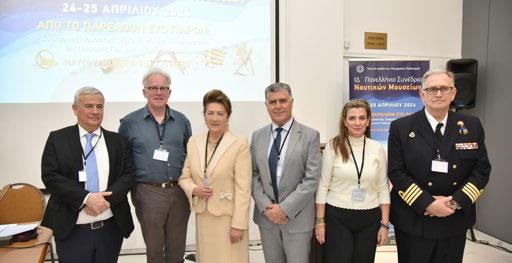
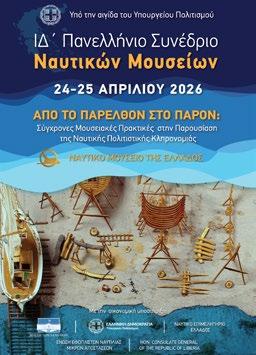
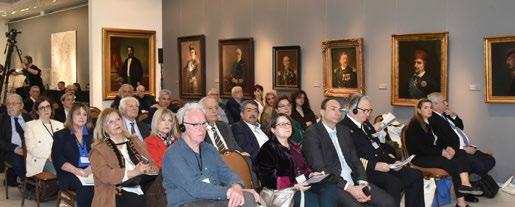
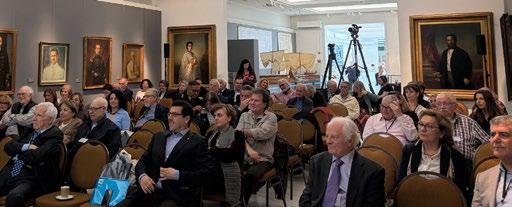
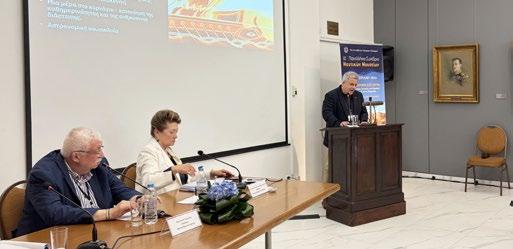
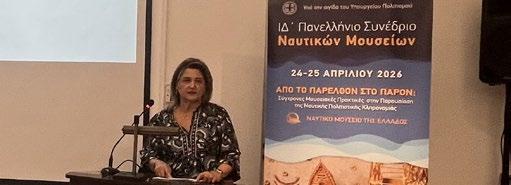
In the same spirit of promoting and reinterpreting maritime cultural heritage through contemporary museum practices, this issue also features a review of the 14th Panhellenic Conference of Maritime Museums, held on 24–25 April 2026 at the Hellenic Maritime Museum. The conference brought together representatives of twenty maritime museums and maritime heritage institutions from across Greece, alongside academics, specialists, and professionals from cultural organisations. Of particular significance was the participation of the directors of two major European maritime museums of international standing: the British National Maritime Museum in Greenwich and the Spanish Naval Museum in Madrid, lending the conference a substantial international dimension and creating valuable opportunities for the exchange of experience and best practices. The conference proceedings highlighted contemporary museological approaches, issues of digital transformation, and new forms of storytelling, while emphasising the need for maritime museums not merely to present history, but also to interpret the enduring significance of shipping and maritime activity for contemporary societies. In this way, maritime museums are called upon to function as open, participatory, and dynamic cultural institutions, capable of creatively connecting the past with the challenges of the future.
At a time of profound transformation in global shipping, Posidonia continues to remind us that Greece’s relationship with the sea remains vibrant and enduring, continuing to shape the country’s economy, culture, and collective identity.
We hope this issue will offer you an engaging and enriching read
Anastasia Anagnostopoulou-Paloumpi, President of the Hellenic Maritime Museum
Greek Shipping Moves the World
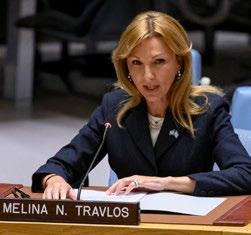
Melina Travlos, President, Union of Greek Shipowners
In an era of geopolitical realignments, uncertainty and multiple crises, shipping remains a force of stability, continuity and connection. Shipping moves the world, keeping economies functioning, societies supplied and people connected.
Posidonia brings together in Greece, home to the world’s leading shipping nation, the international maritime community, highlighting the strategic importance of an industry that does not merely transport goods and energy, but safeguards the very functioning of the modern world.
In the current international environment, shipping operates under conditions of increasing geopolitical tension. Threats to freedom of navigation and attacks against merchant vessels and seafarers are no longer isolated incidents. They have become a new reality, testing maritime routes, supply chains, energy security and global economic stability.
The safe and uninterrupted operation of maritime transport is a prerequisite for humanity’s welfare. Shipping carries food, medicines, energy, raw materials and essential goods at a scale and efficiency unmatched by any other system of transport.
For this reason, maritime security is a global public good and a collective responsibility. The protection of human life at sea, of merchant vessels and freedom of navigation must be a non-negotiable duty of the international community.
In this challenging environment, Greek shipping, representing almost 20% of global capacity and more than 60% of the EU-controlled fleet, continues to demonstrate its strength, reliability and resilience.
This leadership is not only measured in numbers. It is reflected in the consistently principled and institutional stance of the Union of Greek Shipowners on all critical issues concerning our sector and international maritime
policy. It is reflected in our foresight, our investments and our ability to respond with consistency, composure and determination to constantly changing global conditions.
At the same time, Greek shipping is at the forefront of the industry’s green transition, with one of the youngest fleets worldwide and the largest alternative-fuel-capable fleet globally. Our investments in new build vessels, innovative technologies, digitalisation and emission-reducing solutions are continuous and substantial.
However, the transition towards decarbonisation requires realism, technological maturity and global alignment. It must not compromise the safety of crews and vessels, nor the viability of shipping and global supply chains. A truly sustainable transition must be safe, practical and implementable, fair for all parties and operationally effective worldwide.
The recent discussions at IMO MEPC 84 offer the international community a second chance to restore consensus and work towards a realistic, fit-for-purpose and workable global framework for the reduction of greenhouse gas emissions from ships. The ultimate success of this effort requires safe, available, economically viable and scalable alternative fuels worldwide.
Shipping has proven throughout time that it knows how to navigate with resilience, prudence and resolve, even through the most turbulent waters. And it will continue to do so.
Because shipping is a force of vital continuity for the world. In times of crisis, it keeps the routes of cooperation open. In times of uncertainty, it provides stability. In times of transition, it ensures that progress can continue.
In this great global mission, Greek shipping continues to lead with purpose and vision. With its seamanship, resilience and unity, it will continue to connect the world with consistency, vision and a sense of responsibility for generations to come.
Union of Greek Shipowners An historical overview
INTRODUCTORY ARTICLE by
By Anastasia Anagnostopoulou-Paloubi, President of Hellenic Maritime Museum
Anastasia Anagnostopoulou-Paloubi, President of Hellenic Maritime Museum
This year marks 110 years since the founding of the Union of Greek Shipowners and it is an opportunity to assess the work, both in the interests of the Association members, and the offer to the Greek society in general.
It is an undisputable fact that the 18th century was the most productive period for the development of the Greek merchant marine. Islanders and residents of coastal areas under Ottoman and Venetian rule were engaged in seafaring and they found freight available for transfer either agricultural products from the interior of the country, or popular handi-
At the same time, the international conditions in the Eastern Mediterranean favored the development of shipping, Keeping always in mind that the Ottoman conquerors did not want their involvement to the seafarcitizens.
The Revolution of 1821 was based on this Navy consisting of small commercial cargo ships, equipped with a few small cannons to deal with pirates, who at that time, ravaged the Mediterranean.
The foundation of the Greek state in 1830 found the shipping decimated by the loss of Revolution war of nine years. Efforts were made to the rectification, both by Governor Ioannis Kapodistrias, and the subsequent Royal administration. Some shipping centers recovered, some were unable to recover, some new started their maritime history. All these variations and developments were the result of market forces operating even rudimentarily in the 19th century and the availability of similar freights.
As the century progressed the Greeks of the diaspora mainly created commercial firms in all major ports of the Black Sea, the Mediterranean and Western Europe. Communication between and transfer of loads from one to the other, gave new impetus to shipping. At the same time the steam started to enter dynamically to the construction of merchant ships, rendering them independent of the wind and thus giving them a significant advantage to the competition with sailing boats Greek shipowners delayed their entry into the moving by steam for many reasons among which were the following:
• Movement of vessels with sails for forty centuries had instilled a conservative conception which disliked changes and innovative ideas.
• The high cost of new constructions precluded the traditional financing scheme with contributions by all parties involved
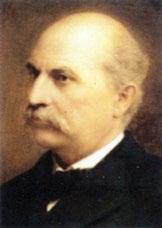
(1814-1902).
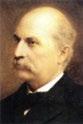
Panagis Ath. Vaglianos (1814-1902). Greek Ship-Owner and merchant from Cephalonia, who took one step ahead of his contemporaries by founding the first greek shipping office in London and by acquiring steamships.
(captain, owner, shipwrights, loggers, etc.).
On the other hand in the small Greece there were not appropriate financial institutions that could support large financial projects like these constructions.
• The lack of technical education institutions capable of producing sufficiently trained personnel to support and address the needs of new technology.
So as late as 1880, Panagis Valianos, one of the major grain trade of Black Sea ordered the building of 12 cargo steamers under Greek flag.
The First World War found Greece to be 11th maritime power in the world with 474 steamers which were registered on December 31, 1914.
The confusing internal political developments damaged the Greek shipping as made it a target of both belligerents. The country’s losses in 1916 amounted to 36% of total global losses.
Until then the idea of the union of the Greek shipowners to an Association that would support the interests of its members had
not matured. An explanation of the relative slow rate observed was perhaps the spatial dispersion of owners accommodation and therefore it was not easy the contact between each other and the creation of fermentations. It should also be taken into consideration the communication difficulties of that era, that made almost prohibitive the exchange of views among people living in different geographical areas
Indeed shipowners coming mainly from the classes of masters and engineers were permanently settled in their places of origin, ie in the Aegean and Ionian islands, where crews were enlisted among relatives, friends and villagers. With this constitution of crew, labor problems were rare, thereby eliminating another cause for which the establishment of an association could be useful.
So not having any particular reason and with the shipowners not gathered in Athens and Piraeus, as it happened later, but scattered in the nautical lands of the country, the lack of a representative association that would represent their collective interests was found late. Besides, until the first decades of the 20th century the state interventions in shipping were minimal to nonexistent. Governments used to leave the shipping to develop by its own and it was dependent on a war Ministry, the Ministry of the Navy, as yet another branch of national forces.
The first thought of a better organized policy and direction of Marine may be credited to
could be developed into an important sector of the national economy. It began even considering switching from the Department of the Navy to the Ministry of Economy and the assignment of its administration into a body of technocrats who would understand the needs and serve them.
In these thoughts influential owners of the time encouraged him, members of the Liberal Party, as it was Leonidas Embeirikos founder of the “National Steamboats of Greece”, linking Greece to America with ocean liners, Antonis Giannoulatos great coastal owner of the time, Nicholas Kyriakides personal friend of Venizelos and others. These, in order to help him achieve his goals took the initiative on February 10, 1916 to establish an Association, the Union of Greek Shipowners based, then, at Piraeus and more specifically in Spiraki mansion.
The Statute provided that the purpose of the newly formed association was “... to enlighten the government on the appropriate maritime policy by completing and improving the domestic legislation and the award or
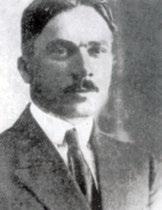
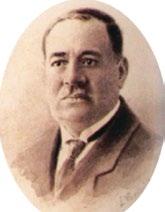
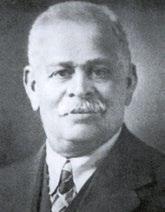
1920. From left to right: Leonidas Embiricos, Antonios Yannoulatos & Nikolaos Kyriakides. They had the initiative of founding the Union οf Greek Shipowners. Leonidas Embiricos was union’s first president from 1916 until 1920. Κάτω:
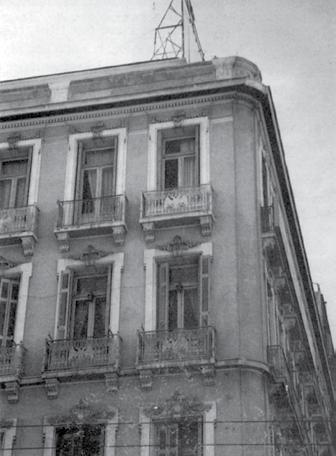
Below: Τhe Spiraki building that housed the first offices of the Union of Greek Shipowners.
withdrawal of international conventions.....”. Leonidas Embeirikos was elected President and Paul Kountouriotis Honorary President. Internal adventures of the country and in particular the declaration of the Thessaloniki State by Venizelos did not help in the functioning of the association because both the President Leonidas Embeirikos and Vice President Nikolaos Kyriakides involved in internal political disputes and did not activate the Union, which fell idle.
Embirikos consider to be the number two of the Liberal Party. It was he, who in 1916 with the ship “Esperia” carried Eleftherios Venizelos and 100 Liberals in Thessaloniki where he stayed as Food Minister of the informal state of Thessaloniki. The Union remained leaderless. By the end of the First World War the Greek fleet had lost 80% of its power.
In 1919, when many owners had already been installed in Athens, it was thought that the Association would reopen as a union, under the condition the seat of Piraeus to be transferred in Athens. Despite the amendment of the by-laws to satisfy the condition, the Union again did not work effectively. Meanwhile, foreseeing Venizelos that shipowners were likely to indulge in other investments safer than Marine and this would entail to further loss of jobs, passed a bill under which there would be a tax exemption for all who would take up replacement of vessels lost in the war within a short time. The result was from 1918 to 1920, 116 ships which were salvaged to become 440. Of course they were old vessels purchased expensively, which in the next two years had lost ninetenths of their value. From 1919 to 1923, no activity related to the Union took place. The only one who remained fervent preacher for the Union was the Hydra owner Gikas Koulouras, who never stopped throughout the period to “disturb” his colleagues.
In 1923 the situation had deteriorated for the shipowners. The wealth that they had accumulated the time of war had dissipated, while the state with Venizelos Law from the war period had imposed heavy taxes 25% on extraordinary profits of ships. Various administrative nature problems also began to appear. As an example it is mentioned that the Coast Guard, which had been founded in 1917 by showing excessive zeal of a neophyte in maritime affairs, took various measures concerning the composition of the crew, for diplomas, degrees etc which were necessary but they made difficult the life for shipowners. Another issue was the German allowances for merchant ships which were sunk during the period Greece was neutral, a part of which the government wanted to hold for its needs.
So the problems were increasing and from the summer of 1923 the discussions multiplied for the revival of the Union that would represent all the shipowners of both political parties.
So in 1924 following a General Assembly President of the Union was elected Stamatis Embeirikos, Vice President Nikolaos Kyriakidis and CEO Gikas Koulouras. The Union in order to establish direct contact with all Greek shipping offices in London appointed one of them as its representative. This ensured the good cooperation that since then exists, between two important points, at which the Greek Shipping is established. In 1927 under the Constitution of the Republic the second legislative body, that of the Senate, was founded. Thanks to the actions of the Union, the Union itself was considered to be a special electoral Group and elected by popular vote a Senator. First Senator was elected the President of the Union Stamatis Embeirikos. Thus the Union gained the possibility of voice in the legislative bodies, expressing the interests of its members.
The following year, Eleftherios Venizelos, who was Premier again recommended committee under the Deputy Prime Minister Andreas Michalakopoulos to study the issues and to recommend measures that should be taken for the Marine. The Union suggested to the committee the useful measures at its discretion, many of which were accepted. The measure suggested, to establish a Ministry of Merchant Navy as maritime policy-making body, it was not accepted by the government and the situation remained as it was, with 5 or 6 Ministries to retain responsibility for the Marine, which stacked unfavorable impacts. The crash of America occurred in September 1929 affected the shipping structure in many countries, such as England. Banks pressed the owners to sell ships. Their prices reached the price of a ship going to scrap, to dissolution. The Greeks took the opportunity and started buying.
The absence however of government policy in Greece for the Greek shipping led ships to foreign flags. At that time, in 1932 the flag of Panama appeared.
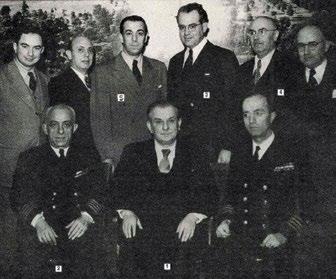
(5). [Πηγή: https://kasosnews. wordpress.com] Commemorative photo after the agreement for the purchased on favourable terms of 100 Liberty by Greek Ship-owners from the USA government. On the photo depicted Minister of Merchant Marine N. Abraam (1), Captain of Hellenic Coast Guard V. Skarpetis (2), the ship-owners M. Kouloukoundis (3), D. Kottakis (4) and A. Papadakis (5) [Source: https://kasosnews.wordpress.com]
policy for the Greek shipping kept pushing for the creation of marine ministry. Later in 1936 the Merchant Marine Undersec-retariate was founded as part of the Ministry of the Navy, which was maintained throughout the period between 1941-1944, when the coun-try was conquered and the government was operating from the place of self-exile, Egypt. It was the period that Greek merchant ships were involved in the effort of the free demo-cratic states and their revenues addressed the Government’s operating expenditure. When WWII broke out Greek ships officially participated and gave everything to fight for their homeland. When the country was con-quered, the Germans wanted to obtain own-ership of Greek merchant ships and for this purpose sought information. The Union had decided to destroy the files, whereby the con-queror would be informed as of the owner of each vessel and demand the transfer of ownership. The Germans requisitioned the build-ing where the Union had moved a few years ago on the 10 Panepistimiou street so nec-essarily the decision making center moved to London, where the Committee had been created. In May 1944 the exiled government of the Middle East with the Law 3268/44 founded the Ministry of Merchant Marine. The Ministry was maintained, acquired experience, was organized, improved and continues to this day to be the maritime policy making body of the Greek government. In recognition of the sacrifices of the Greek merchant marine during the Second World War in the struggle for freedom, the US granted to Greek shipowners, with soft loans guaranteed by the Greek State, 100 Liberty
These ships were used in the postwar period as a springboard for the spectacular jump of commercial shipping in the first place worldwide today. The members of the Union of Greek Shipowners played an important role in the negotiation and agreement with the beneficial effects on shipping especially in the period immediately after the war. Today, in an era marked by heightened geopolitical and economic challenges, the Union of Greek Shipowners continues to play a leading role as the institutional representative of Greek shipping, one of the most dynamic and strategically important pillars of the national economy. With consistency, foresight, and a strong sense of responsibility, it represents a sector that has long contributed decisively to economic growth, employment, and the international standing of Greece.
At the same time, the Greek shipping community has developed a strong record of social contribution, recognizing the importance of tangible solidarity with Greek society. In this context, SYN-ENOSIS was established in 2016 as an initiative of members of the Union of Greek Shipowners, with the aim of serving as the permanent and stable vehicle for the collective social contribution of the shipping community.
Through charitable programmes, initiatives supporting vulnerable social groups, humanitarian interventions, and donations of broader public interest, SYN-ENOSIS demonstrates that Greek shipping extends beyond its economic role and remains deeply connected to social cohesion and national progress. In this way, the historical trajectory of the Union of Greek Shipowners continues to unfold not only across the seas and within the economy, but also in the sphere of social responsibility, reflecting the enduring relationship of Greek shipping with the common good.
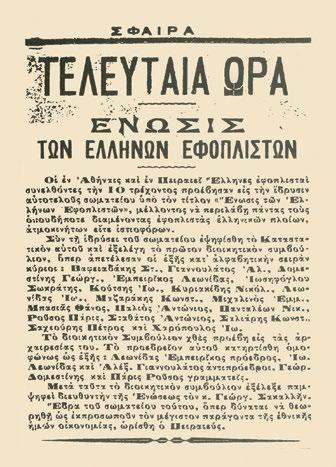
Press release of the newspaper "Sfera" from Piraeus, about the founding of the Union of Greek Shipowners.
Digital Transformation in the Humanities and Contemporary Shipping 1
Before I begin, I would like briefly to explain why I chose to speak today on a topic which, at first glance, may appear to extend beyond the field of maritime museums.
My role is a dual one: on the one hand, as head of Laskaridis Shipping, a company active in contemporary international shipping, and on the other, as President of the Aikaterini Laskaridis Foundation, an institution with a strong presence in the fields of culture, research, and maritime heritage.
I believe, therefore, that these two worlds — cultural management and contemporary maritime practice — are not as distant from one another as they may initially seem. On the contrary, they are becoming increasingly interconnected through the dynamics of digitalization, data management, and the application of emerging technologies.
For this reason, I would like to divide my presentation into two parts: the first con cerns the applications of digitalization in museums, libraries, and cultural management, drawing upon the experience of the Aikaterini Laskaridis Foundation; the second concerns the ways in which these same technological developments are transforming shipping today, enhancing efficiency, decision-making, and operational excellence.
The discussion concerning the future of museums and libraries is particularly significant today, as the profound technological and social changes that characterise our era substantially affect the
ways in which cultural institutions operate, communicate, and fulfil their mission.
Museums, libraries, and archival institutions safeguard valuable treasures: objects, manuscripts, books, documents, and collections that shape collective memory and cultural identity. Contemporary realities, however, necessitate a redefinition of their role. The institutions of the future can no longer function exclusively as repositories and places of physical access to cultural assets, nor remain confined to the traditional role of exhibition or the provision of material for study. Rather, they are called upon to evolve into dynamic centres for the production of knowledge, participation, and the dissemination of cultural experience.
A key instrument in this transition is the rapid development of digitalization, which has already transformed many aspects of everyday life. In the field of museums and libraries, this development is reflected in what is internationally referred to as digital humanities
This concept goes far beyond the mere digitalization of material. A museum or library can no longer simply display its treasures passively while awaiting the physical visitor. Instead, institutions themselves — either through their own staff or through collaborations with specialised external partners — are increasingly developing digital projects, platforms, and applications that enable the presentation of cultural heritage in ways that are accessible,
comprehensible, and engaging for wider audiences.
Through such initiatives, documents, manuscripts, exhibits, and collections become available to the broader public, while simultaneously highlighting the scholarly work produced within these institutions. Digital content does not merely function as a substitute for physical experience; rather, it constitutes a complementary means of interpretation, an educational tool, and a vehicle for the dissemination of knowledge, significantly broadening access to cultural heritage.
In recent years, many cultural and research institutions worldwide have systematically moved in this direction. At the Aikaterini Laskaridis Foundation, considerable effort has been devoted to the development of digital projects aimed not only at the preservation and documentation of valuable material but also at making it meaningfully accessible to the public through contemporary and innovative methods of presentation.
This transition is neither simple nor immediate. It requires time, specialised expertise, interdisciplinary collaboration, and substantial financial resources. Despite these challenges, however, it increasingly appears to be an inevitable direction for the museums and libraries of the future, particularly for institutions managing large and complex collections that often remain inaccessible to the public through exclu-
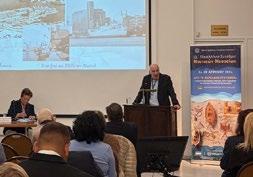
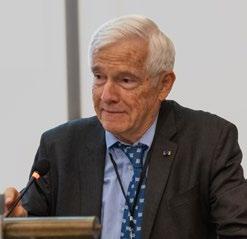
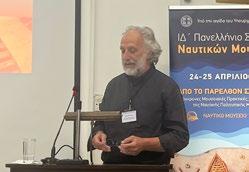
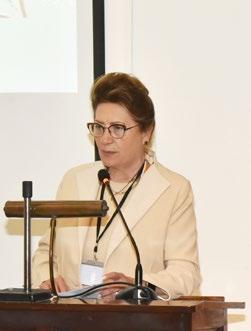
1 This article is based on the speech delivered by Rear Admiral (ret.) H.N. Panagiotis Laskaridis at the 14th Panhellenic Conference of Maritime Museums, held at the Hellenic Maritime Museum on 24–25 April 2026.
By Dr Panagiotis Laskaridis, Rear Admiral (Hon.) H.N.
sively physical means.
As a continuation of this strategic direction, digital projects are now being developed on an ever-larger scale, broadening both the scope and possibilities of access to cultural content. At the Aikaterini Laskaridis Foundation, engagement with the digital transformation of cultural information has already led to the development of a number of significant digital projects, all freely accessible through the Foundation’s website.
One of the most characteristic examples is the Travelogues, an extensive project for the digitalization and documentation of engravings from historical travel books relating to Greece. This digital collection comprises approximately 25,000 images, providing systematic access to valuable visual material concerning the history, topography, and representations of the Greek world as recorded by travellers of previous centuries. The impact of the project has been particularly significant: within a decade of operation, the platform has exceeded 30 million visits or downloads and is also utilised in academic contexts, serving as teaching material at universities abroad.
At the same time, particular interest is attached to the development of a digital application available on both Google and Apple platforms, through which archaeological sites across Greece, their historical development, and the events associated with them are presented. A notable innovation of this initiative lies in the combined presentation of ancient and later textual sources referring to these locations, thereby creating a multi-layered tool for knowledge and interpretation.
Furthermore, within the framework of broader funding schemes, such as projects
co-financed through the NSRF (National Strategic Reference Framework), additional digital initiatives of varying scale and thematic focus have been implemented, including projects related to maritime history and maritime cultural heritage. These projects are available for viewing, study, and public use through the website of the Aikaterini Laskaridis Foundation.
The experience of recent years demonstrates that digital projects frequently achieve significantly greater outreach than exclusively physical forms of access to cultural content. This is due not only to their free availability but also to the immediate and easy access they provide to different age groups, regardless of geographical limitations or time constraints. Cultural information thus ceases to be confined within the physical boundaries of a museum or library and acquires a genuinely global reach.
At the same time, digital projects continue to evolve, becoming increasingly sophisticated and dynamic as digitalization technologies advance and collaboration among scientific and cultural institutions expands. A characteristic example is a project currently under development in collaboration with the Gennadius Library: the application of the same methodology previously employed for the digital processing and presentation of images from travel publications, this time to the texts of the travel books themselves. This initiative aspires to further expand possibilities for research, access, and the utilisation of travel literature, opening new perspectives for the study of historical and cultural memory.
Another characteristic example is the digitalization of the valuable archive of the Historical Service of the Ministry of National
Defence, which contains unique material relating to the military history of the Greek state. Despite its considerable value, the organisation and presentation of this archive remain limited to this day, making access and wider public use particularly challenging.
Within this framework, and in collaboration with the Ministry of National Defence, a new digital platform is currently under development, aspiring to present the military history of Greece in a more interactive, user-friendly, and engaging manner through the use of multimedia material, including images, videos, and audio records. This initiative aims not only at the preservation and organisation of knowledge, but also at its meaningful reconnection with wider audiences.
In recent years, however, the dynamics of new technologies have also gained significant momentum in the field of shipping — the second subject to which I would like to turn — substantially affecting the way ships and shipping companies operate.
Unlike many other sectors, shipping was relatively slow to embrace digitalization, primarily due to limitations in ship-to-shore communications. Until recently, limitations in satellite connectivity prevented the rapid and economically viable transmission of large volumes of data, thereby significantly delaying the adoption of modern digital applications.
This picture has changed dramatically in recent years, mainly thanks to the development of new satellite systems such as Starlink, which have made the transmission of data from vessels to headquarters faster, easier, and considerably more cost-effective. As a result, shipping is now
entering a period of intense digital transition, with an increasing number of companies investing in technologies for data monitoring and analysis.
Within this context, newly built or relatively modern vessels are being equipped with a large number of sensors installed at critical points throughout the ship. These sensors collect and transmit high-frequency data via satellite to companies’ central offices. This practice enables the continuous monitoring of vessel operations and the optimisation of overall operational performance.
At our shipping company, Laskaridis Shipping Co. Ltd., similar systems have already been installed on approximately sixty vessels across the fleet, which includes different types of tankers and reefer ships, marking the gradual transition of shipping towards a more digitised and data-driven operating model.
In practice, these technologies are now applied across almost the entire company fleet, whose vessels operate on nearly all major maritime routes worldwide. Monitoring systems have been installed on various
vessel types — from smaller Ultramax bulk carriers of 63,000 tonnes to very large Newcastlemax vessels of 210,000 tonnes, as well as certain tankers — enabling the collection of extensive operational data across different operational environments. However, the installation of sensors alone is not sufficient. The real value of data emerges through the processing and data analysis systems operating both on board the vessel and ashore. To this end, the company collaborates with specialised technology providers — both Greek and international — that develop the necessary software and supporting data analysis platforms.
Through these systems, the data collected from the vessel are integrated into a broader digital ecosystem, utilising technologies such as machine learning, artificial intelligence (AI), and the Internet of Things (IoT). The objective is not merely the recording of information, but the extraction of meaningful insights that enable the optimisation of vessel operations.
The process is based on the continuous
collection of large volumes of data from sensors installed at critical points throughout the ship. These sensors record temperatures, pressures, torque, speed, engine performance data, and even weather conditions. The information is transmitted via satellite systems to cloud computing infrastructures — namely large-scale data centres — where it is stored and processed. Subsequently, through specialized data analysis systems — whether relating to engine performance or environmental and weather conditions — the data are transformed into actionable information, which is then transmitted to the shipping company’s headquarters.
The human factor also plays a decisive role in this process. The effective use of data requires specialised teams of analysts capable of interpreting information and translating it into operational decisions. Large volumes of data, without appropriate analysis and scientific processing, cannot in themselves produce meaningful results.
These data concern the overall operation of the vessel (ship operations), which is based on three principal operational centres: the bridge, where navigational instruments and navigation systems are concentrated; the engine room, which contains engine control systems; and the cargo control centre, from which the condition and management of cargo are monitored.
The transition from traditional forms of monitoring to today’s digital reality is substantial. Whereas in the past conclusions were drawn from a limited number of measurements, today the continuous collection of highfrequency data and the use of specialised algorithms enable a far more sophisticated, dynamic, and precise understanding of vessel operations, opening new possibilities for safer and more efficient performance.
A characteristic example is the study of the relationship between vessel speed and power — one of the most fundamental methods for measuring, monitoring, and visualising the operation of a ship’s engines.
The use of high-frequency data enables more accurate measurements and more reliable conclusions, contributing to the optimisation of vessel performance and, above all, to a significant reduction in fuel consumption.
The drive to reduce fuel consumption is closely linked to the increasingly stringent international regulatory framework governing contemporary shipping, particularly with regard to decarbonisation. A central role is played by the International Maritime Organization (IMO), which has developed dedicated monitoring and data collection systems, while corresponding instruments are also implemented by the European Union through the Monitoring, Reporting
περιηγητικά βιβλία για την Ελλάδα. Η
ψηφιακή αυτή συλλογή περιλαμβάνει περίπου 25.000 εικόνες, προσφέροντας
τη δυνατότητα
and Verification (MRV) system.
At the same time, indices such as the EEXI (Energy Efficiency Existing Ship Index) and the CII (Carbon Intensity Indicator) now function as key criteria for evaluating the energy performance of vessels. Failure to comply with these standards may result in poor ratings and, in cases of prolonged deviation, may require substantial operational adjustments, such as engine power limitations or a transition to less commercially efficient operating models.
Within this context, particular importance is also attached to the so-called ship operating file, namely the vessel’s operational record. Whereas in the past monitoring relied on simple measurements — effectively observing only the “red line” — today it has become possible to monitor multiple operational parameters in real time. This allows for the selection of optimal operating conditions according to operational requirements, whether prioritising fuel-efficient sailing or increased speed when transport demands necessitate it.
The management of this complex digital environment, however, presupposes extensive collaboration between the shipping industry and the academic community. Within this framework, our company has developed partnerships with universities and research institutions in Greece and abroad — including the National Technical University of Athens, the University of Liverpool, the University of Nicosia, and the
At the same time, we have established the “Lavinia Innovation Centre”, which functions as a platform for the publication and dissemination of our related research activities, strengthening the connection between digital technology and maritime innovation.
In practice, digitalisation offers a wide range of possibilities: improved control over vessel operations, enhanced efficiency, faster and more accurate compliance with international regulations, and more effective coordination of a vessel’s operation within the context of the overall fleet.
Digitalisation concerns not only the monitoring of an individual vessel’s performance, but also the more effective coordination of the fleet as a whole. Just as every new vessel must be operationally integrated into an already organised operational network, cooperation among vessels likewise presupposes the continuous exchange of information and adaptation to shared procedures and requirements.
At the same time, compliance with increasingly stringent environmental standards makes the development of new forms of monitoring and operational management essential.
Of particular interest in this context is what is known as condition-based maintenance
Until recently, vessel maintenance was carried out at predetermined intervals in accordance with manufacturers’ guidelines — much like the servicing of an automobile. For example, the main engine of a vessel was scheduled for inspection every 8,000 operating hours, while other systems followed corresponding maintenance cycles.
Today, however, the collection of data through sensors allows for a more precise as sessment of the actual condition of a vessel at any given moment. On the basis of these data, maintenance no longer follows an exclusively predetermined schedule, but is adapted to the actual needs of the equipment. In other words, we are moving from scheduled maintenance to condition-based maintenance
Thus, an engine exhibiting signs of reduced performance — due to poor fuel quality, wear, or technical malfunctions — may require inspection earlier than originally anticipated. Conversely, an engine operating under optimal conditions may continue functioning effectively beyond standard maintenance thresholds. This approach entails significant economic benefits, while simultaneously improving operational reliability and the company’s overall performance.
This development reflects a broader transformation in the way maritime operations are understood and managed. Today, there no longer exists solely the physical system — namely the vessel itself, its machinery, and traditional reporting mechanisms — but
Technical University of Crete — focusing on the study of issues related to digitalisation, efficiency, and sustainability in shipping.
rather a complex cyber-physical system, in which the vessel’s physical operation is combined with continuous digital monitoring.
In this new environment, the vessel, the crew, engineers, company executives, and digital data analysis tools coexist, creating an integrated decision-making system. At the same time, the integration of artificial intelligence algorithms enables the development of learning and selfimproving models, through which systems continuously adapt on the basis of the results they generate.
A notable example of these emerging capabilities is provided by the process of taking delivery of newly built vessels from major Chinese shipyards. Upon completion of construction and prior to delivery to the shipowner, so-called acceptance trials are carried out, during which the vessel’s actual operational behaviour and performance are evaluated.
Until recently, acceptance trials were based on relatively limited measurements. Major shipyards, such as COSCO and other important shipbuilding organisations, assessed vessel performance through speed and fuelconsumption trials conducted under certain predefined operating conditions, in order to determine whether the vessel complied with
the agreed specifications.
Today, however, on the newly built vessels received by our company, we have already pre-instaαlled sensor systems that allow us to monitor vessel behaviour far more accurately and comprehensively from the trial stage itself. In this way, it becomes possible not only to achieve a more detailed understanding of the vessel’s actual performance, but also to monitor its operation and fuel consumption across the full range of speeds and operating conditions, rather than solely at the conventional speeds examined until recently.
The effectiveness of this approach has not gone unnoticed by the major shipbuilding groups with which we cooperate. As a result, three major shipyards — among them COSCO, the largest shipyard in China — have expressed interest in adopting similar monitoring systems themselves, in order to obtain a more accurate understanding of construction quality and vessel performance during the trial stage.
In closing, I would like to share with you a broader reflection concerning the field of maritime cultural heritage and, more specifically, the possibilities for cooperation between maritime libraries and museums. This reflection was prompted by recent
discussions surrounding initiatives related to maritime libraries, which, in my view, once again highlighted the need for more substantial coordination among institutions managing related material and specialised collections. For many years, I have believed that we should seriously consider the creation of a network of maritime museums and libraries, with the primary aim of interconnecting and integrating their catalogues into a shared digital database.
The creation of a unified digital platform or a common documentation network could significantly strengthen accessibility, research, and cooperation among the country’s maritime museums, rendering the collective cultural heritage more visible and more effectively utilised.
In conclusion, I would like to express my great pleasure at welcoming representatives from maritime museums across Greece to this conference. I consider it particularly important to maintain an open dialogue and to strengthen even further the bonds of cooperation among our institutions. I also hope that, in the future, there will be more opportunities for visits, exchanges of experience, and more substantial collaboration, so that the network of maritime museums in our country may be further reinforced.
Quality around the clock and against the elements
Around
Combining
Bethlehem Steel Corporation
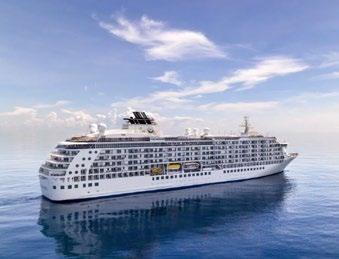
FORECASTS FOR CRUISES AND TOURISM ARE BEING REVISED
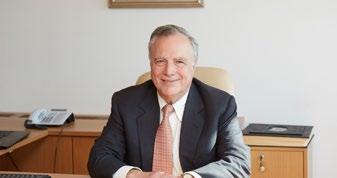
Honorary President of the Union of Cruise Ship Owners and Shipping Agencies
After the developments in the Middle East over the last period with hostilities in that region between Iran – America – Israel, which also affect neighboring countries, they have already terrified the tourism clientele in that area and unfortunately include the Eastern Mediterranean and certainly also include our country as well as Turkey, which borders Iran.
The events of the hostilities are unfolding in our neighboring region in early Spring, a season when programs start in tourist destinations, including programs in the cruise sector in the Eastern Mediterranean, which are of great interest to us.
There is particular concern and discussions are taking place regarding the Eastern Aegean and Turkey but other destinations in the country are not being complacent either.
Thus, our recent forecasts for the year 2026 in the Cruise sector, which were an increase on the order of 4-5% compared to the year 2025, seem to need revision, especially if these hostilities continue for a significant period as we approach the tourist season.
Let us hope that these hostilities will be smoothed out as soon as possible and that we can return to normality very quickly.
Re-examining the markets that particularly interest us, America, Israel, Turkey, Europe, as well as Saudi ArabiaMiddle East, which are strong customers of the sea tourism industry, we find that there is significant concern from the tour operators regarding cruises as well.
Based on this fact, we are somewhat cautious about the expected cruise results. We should be quite satisfied if we perhaps maintain the 2025 results. If the current situation continues for a long period, the programs of the Eastern Mediterranean, which include Egypt, Israel, Turkey, and other destinations in the region, will be largely affected.
Several new ships are scheduled for 2026, particularly luxury cruise ships with very interesting itineraries to new destinations in our country.
Already, several companies are considering the potential change of schedules, if necessary, with particular interest in Northern Europe (but only for a limited period and for a very limited offer in tourist ports). There is consideration for schedules concerning the Western Mediterranean.
The major difference will be made with American passengers, who constitute the
majority in their region, and the Caribbean to rise significantly in visitation rates.
However, the significant depreciation of the dollar is a negative incentive for their trips to Europe, as by now their trips to Europe are considered quite expensive.
In all the above, we must, of course, also mention the impacts on costs regarding the operation of tourist facilities, transportation, as well as the operating costs of cruise ships, particularly due to the increase in fuel and more.
Regarding the Asian market as well as the Middle East, the Asian market significantly increases cruise capacity for the winter season. Therefore, these ships face a problem returning to their summer destinations, especially in Europe, through the Strait of Hormuz. The result is that they must return via the route around Africa, with almost double the cost and time.
In the Middle East region, in the Strait of Hormuz, with very interesting destinations (Dubai, Abu Dhabi, Doha), there are already two cruise ships under Greek management, and many other ships appear to be trapped in the area with enormous difficulties in returning to the Mediterranean for their summer programs.
With closed airports and difficulties in refueling as well as the change of passengers heading to destinations during the war, the programs cannot continue. Furthermore, with the Strait of Hormuz closed, it is impossible for ships to return to their summer destinations if the said hostilities continue.
There are also other problems arising in the region affecting global energy ventures, high transportation costs and generally high prices for almost all products.
The main issue regarding the above is, of course, the closure of the Strait of Hormuz, which makes the arrival of tankers at their destination uncertain.
Additionally, ships/trucks transporting products worldwide to Europe face the same problem.
The very important event that we are experiencing now and have experienced similar situations in the past is once again proof that we are in a critical area.
Let us hope that the hostilities will end as soon as possible, without further risk and damage, especially to our tourism product, which is just beginning seasonally in our region.
Αμερική, Ισραήλ, Τουρκία, Ευρώπη αλλά και Σαουδική Αραβία-Μέση Ανατολή οι οποίες αποτελούν δυνατούς πελάτες της τουριστικής
διαπιστώνουμε ότι υπάρχει
The birth of Liberties
By Vice Admiral HN (ret) Ioannis Paloubis
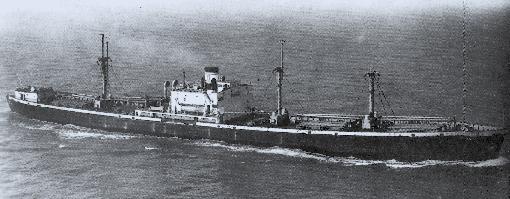
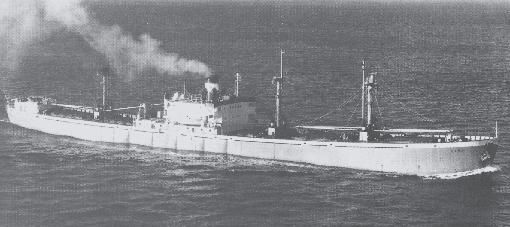
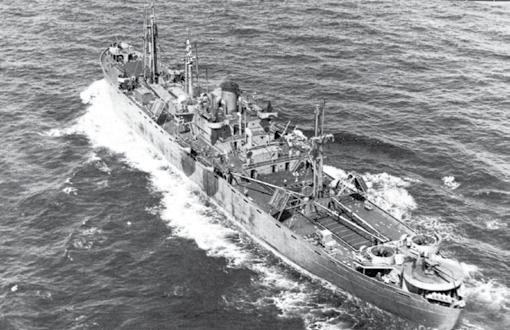
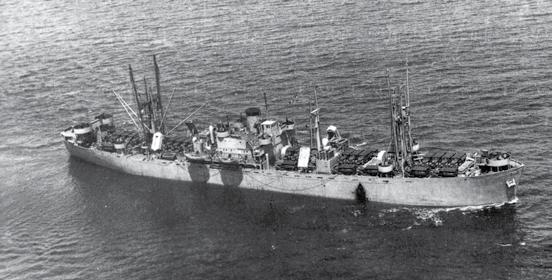
This article aims to set out some very few elements of the fascinating history of the ships built during the war, called "Liberties", these slow-moving, but tough, "blessed" as our sailors called them.
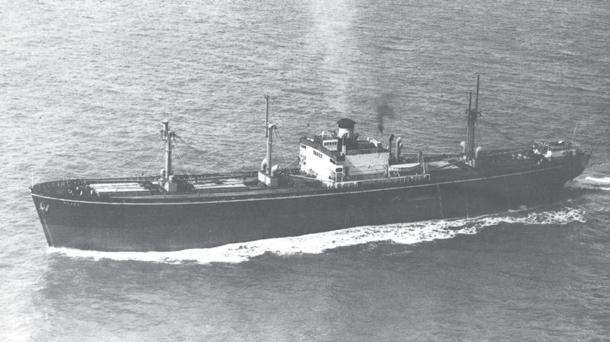
The Liberty “IGOR”.
During World War II the German Navy put into action and perfected the strategic plan, which was already implemented in the First World War, the naval blockade of the main rival of insular England. This meant the total attack on the marine communications, and, when possible, cut the umbilical cord that connected the country with the raw materials, which was so necessary for the continuation of the war.
Main tactical tool for achieving the strategic objective was the submarine, which, in the interwar period, had developed at a very high level of technical perfection.
Indeed during the first nine months of 1940, 150 English or allied merchant ships with tonnage of about 1 million tons, were sunk by the action of German submarines. The rate of loss was much higher than that which could make up British shipyards which noteworthy were entrusted with all constructions, repairs or any other employments of the British Navy.
The feverish consultations among British hierarchy to address the problem resulted in a solution: The building ships in yards away from the theater of operations and more specifically in the US, which at that time were not yet involved in the war.
The question was what ship. In 1939 in Sunderland shipyards Thompson had launched a Trump with all attractive features. It was a dead weight cargo of 10,000 tons and gross tonnage of 5,281 tons. It had a reciprocating engine and it was developing 2,500 horsepower and speed of 11 knots. Its dimensions were length 426 width 59 and draft of 25.5 feet.
In September 1940 a committee was established headed by the shipbuilder Thompson, designer of Trump, to build commercial ships. The committee traveled to the US to negotiate and determine the deliverability of about 60 ships a year.
The committee carried along the plans of the old Trump.
The plan was very simple and the committee was directed to it believing that the simplicity of the project will facilitate the speed of production.
In the USA, the implementation of state policy in shipbuilding either commercial or warships was run by the Maritime Commission. The British committee encountered many difficulties in the initial consultations and contacts with the US Maritime Commission. First there were not free shipbuilding grills, they were all closed by orders of naval or merchant vessels of different types. Then Americans were in no way consistent with the manufacture of such a cumbersome vessel. They saw the future of the American shipping in speed craft projects 17 and more knots. On the other hand, the British were
not prepared to accept the technical welding as ship construction. Particularly the British Seafarers unions did not agree to travel their members on ships which were not built with the traditional way of riveting. The dislike of British mariners for welded ships was based on an incident that had happened in 1935. A cargo ship of Canadian interests, built in British shipyards Tyne, which was entirely welded, sailing from the Tyne to Quebek August 10, was lost with all its crew of 19 men. Although the investigating committee of the Trade Ministry and the Maritime court concluded that the ship had hit an iceberg, bias remained that the accident was due to welding construction.
On the other hand, U.S. shipyards had made wide use of welding because it had many advantages. Smaller boat weight, required much less technical experience, required less muscle power by the workers, was much faster method etc.
So when everything indicated that Thompson’s committee would not achieve its mission to put an order for commercial ships, he met with an entrepreneur “a certain Henry Kaiser” as he was described by Thompson in the report submitted to the British Government.
The Kaiser had no relation to shipbuilding and other maritime activities and he was a major projects contractor, as we would say today. The Kaiser had amazing organizational skills, his aides were
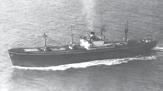
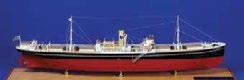
It was one of the Liberties that were purchased by the Greek shipowners. The ship was built in 1944 and its original name was “JOE FELLOWS”. In 1950 the vessel was renamed “SYRA”. It was destroyed by fire in 1966.
among the US best engineers and they used to say that their own mission was “to make Mr. Kaiser’s» promises. The doctrine of the Kaiser’s business was that “could do the impossible immediately, and for the wonders it would take a little more time.”
Kaiser immediately liked desperate Thompson and motivated, unsurprisingly, by the size of the order, agreed to do the work. So on December 20, 1940 Thompson’s committee signed with Kaiser complex two contracts for the construction of 30 ships each.
It was only the beginning. To understand the method of Kaiser organization the example only of Richmond yard Kallifornia would be mentioned.
Along with contract negotiations Kaiser complex began to take aerial photographs from various coastal areas in the East and West coasts of the US, in order to select the most appropriate locations for the development of shipyards that would be implementing the English order. Richmond was a low sand coast which literally terrified the Britons expecting in this place to be built 30 ships in 1942. Kaiser though did not retreat to anything. The entire yard was based on
The birth of Liberties
25,000 piles length 70 feet to drive into the earth to meet solid ground. The rate was 700 piles per day. Within four months the deserted beach had been transformed into a modern shipbuilding yard with seven grills.
The Kaiser started the shipbuilding effort with the same technicians who had dealt with the construction of a dam and a bridge that connected San Francisco to Aucland.
The Thompson’s cargo designs certainly passed by the design firm of Gibbs & Cox in New York, they were edited, improved and detailed design drawings were prepared.
The 60 ships were delivered in 12 months from contract signing in January 1941. Locations suitable for construction had been also found in Canada. In England in Sunderland North Sands yard the same ships were also built.
The construction time of ships constantly diminished as a result of competition of various shipyards even of the same complex. So in Richmond, California the launching of the first Liberty took 197 days.
In August of ‘42 in Portland Oregon the Kaiser shipyard complex again, handed ship in 31 days and 16 days in Richmond.
In Richmond, also on November 8, 1942 the keel came. The construction was completed in 4 days and 15 hours and it was
The Liberty “Aliakmon”.
launched on 12 November. The ship entered the service three days later. Amazing achievement if one considers that it was more than 250,000 prefabricated pieces coming and snapped together according to specifications, which were described in the contracts with the respective manufacturers. And all this without Computers!!!
Overall in the four years from April 1941 to September 1945 ie 1580 days only in US 2.770 Liberty ships were built (60 for England and 2,710 for America) that averaged 1.75 boats per day.
During the Second World War from regular wear mainly of German submarines, but also from other weapons, raiders, surface mines and aircraft more than 6,000 merchant ships of every kind and size were sunk. Of these 3,180 belonged to the British Commonwealth and other Allied countries.
The Greek Merchant Marine came out of the Second World War having paid its own toll disproportionately large. It lost 77% of vessels and 70% of the capacity of the merchant fleet it had before the war, apart from the 2,500 dead and missing sailors and the many unregistered, mentally disturbed by the hardships and the shipwrecks that have suffered.
After the war, the owners’ offices at Piraeus, London and New York, stayed inert while sailors remained without jobs on land because they did not find a place to embark.
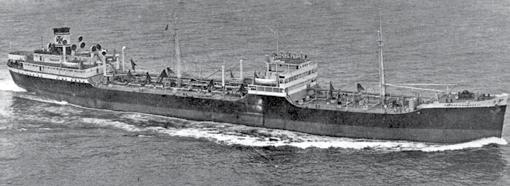
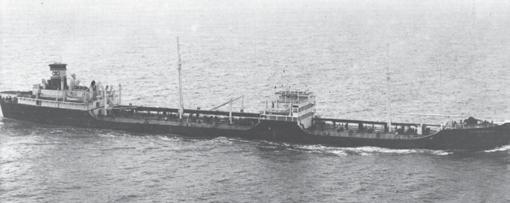
In recognition of the sacrifices of our commercial shipping US decided to grant, to Greek shipowners through a low-interest loan with the guarantee of the Greek State, a hundred freighters Liberty type ships and seven oil tankers of the same type.
It was a tangible expression of gratitude of the international community for the unique contribution of the small Greece to the cause of peace and freedom. In this way Greece could take part in carrying global reconstruction materials. The deal closed on January 7, 1947.
The historian of our Marine, the unforgettable Captain Tasos Tzamtzis, parallels and considers the same importance for the Greek shipping of January 7, 1947 to July 10, 1774, when the Treaty of Küçük Kaynarca was signed.
With these vessels, 100 cargoes and 7 tankers as a springboard and main features, the virtuous, in the ancient sense of the word, command of Greek shipowners and the seamanship of the crews, both inherited characteristics out of a marine tradition of the nation
for 100 and more centuries, the Greek shipping began the uphill path to the top of the world ranking, which is today.
We, Greeks are proud of our merchant shipping. In the darkness of the days we live it is finally a sector, which makes us feel great power. And it is this feeling of hope and optimism, much stronger, of the not insignificant, revenue in the country’s national budget.
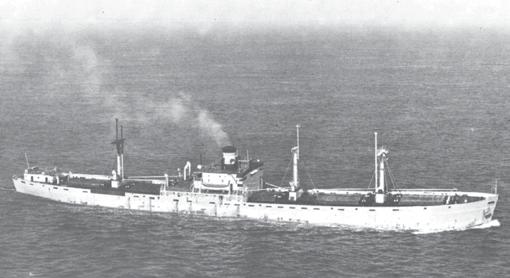
SD 14
In the mid 60s the Liberties continued to travel achieving lifespan four times the designed (were designed for five years and traveled 20).
The British shipyard Austin & Pickersgill designed a standard vessel to replace the Liberties. The SD (Standard Design) manufactured from 1967 until the mid of 1980. 27 of these ships were built in the shipyard Scaramanga. Their figures were:
Length 140.97 m, width 20,46 m, mean draft 8,84 m, DWT 14.910 t.
Five cylinder two-stroke Diesel Power 7,500 hp at 137 rpm. / Min. Speed 14.9 n.
10,000 years of Hellenic Maritime Tradition
Pre-Historic Age. 8000 BC-1100 BC
THE BEGINNING
In the cave of Fraghthi, in Argolida, at a habitation stratum of 8,000 BC, excavations revealed scales of obsidian that were identi ed as coming from the island of Milos. Obsidian is a volcanic glassy stone, which was used for making tools and arms by the Stone Age people.
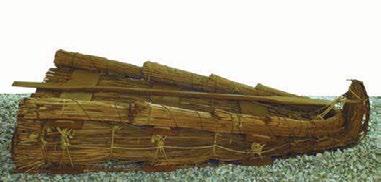
We can only speculate regarding the oating means that were used to transport the obsidian from Milos to the Greek mainland. According to the prevalent scienti c version, they must have used a boat made of papyrus, like the Cor ot papyrella.
The important fact, which is proven by the findings at Fraghthi, is that trading transactions and sea voyages in the Aegean had
Cor ot papyrella. The papyrellas from Corfu were essentially shing boats and were in use, in west Corfu, until 1965. The boat’s primitive form and structure led researchers to believe that it is a residual of prehistoric maritime technology of eastern Mediterranean. H.M.M. collection.
already begun 10,000 years ago, and it is the most ancient trip, worldwide, that is evidenced by archaeological findings. The mild climatic conditions and the geographical formation of the Aegean islands o ered the most ideal conditions for the development of shipping. Very early on, the inhabitants of the Cyclades islands turned to the sea and pioneered in the skill of shipbuilding and seamanship, as it is evidenced by the rock paintings and engravings on vessels showing many – oared boats, from the 3rd millennium BC. In the Neolithic age, the Cycladic civilization was mainly a seafaring one and sea voyages were the main occupation of the people of the Cyclades islands.
THE MINOAN M ARI TIM E SUPRE MACY
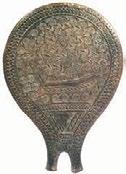
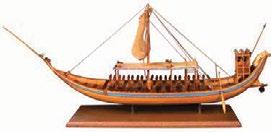
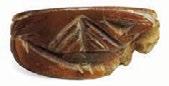
The early Cycladic civilization is succeeded by that one of Minoan Crete. The use of copper for making arms and tools proves longer trips outside the Aegean, to places like Cyprus, the Middle East, Egypt etc. Archaeological findings substantiate the establishment of colonies and naval stations by the Minoans, at the islands of the Aegean, the Greek mainland, the coast of Asia Minor and Phoenicia. The ceramic works of art of the Minoan civilization, at the palaces of Knossos, Phaestos, Zakros and Mallia ooded the area of the Near East and substantiate the discovery that Crete becomes the rst sea-ruling power in eastern Mediterranean. It monopolizes maritime commerce and its people experience a time of peace, creation and prosperity. The ships that were used by the Minoans are known to us from representations on vessels, jewellery and seals.
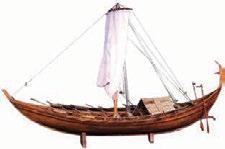
Συλλογή Ν.Μ.Ε. Left: Minoan ship (1700-1400 BC). Model by George and Aristotle Rallis. H.M.M. collection. Δεξιά: Πλοίο
(17ος
Right: Ship from Thira (17th century BC). Replica. Construction: George Rallis. H.M.M. collection.
In the eld of the shipbuilding, all the accumulated experience from the long, for that time, sea voyages, reached a peak in the middle of the 2nd millennium. The most signi cant evidence, regarding the progress in the eld of shipbuilding, in the Aegean of the copper era, is the representation of the so-called “ eet” on the wall paintings, at West House in Thira (Santorin), island dating back to about 1550 BC.
On the fresco, there are 14 small boats that form a “convoy” and use all the ways of propulsion, known at the time. Those boats have a ship-building perfectness. According to scholars, the length of these ships was, in actual fact, over 30 meters, they had 18 to 21 oars-men and there were two steering oars from both sides of the stern. The rich physiocratic decoration of the ships, on the wall painting, which is considered to be of an emblematic character, is also typical.
1770. A steatite seal stone showing a sailing ship. Middle-Minoan IIB, 1800-1700 BC. Archaeological Museum, Heraklion, 1770.
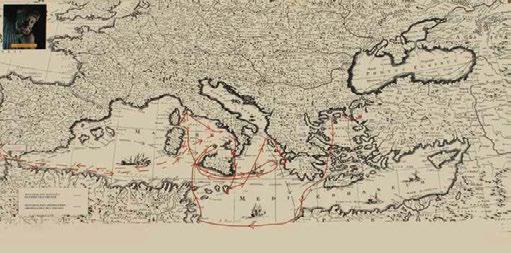
THE MYCENAEAN ASCENDANCY From 1450 BC onwards, the Mycenaean’s succeed the Minoans in the ruling of the sea, establishing commercial networks in almost the whole of the Mediterranean basin. Their maritime accomplishments are re ected in Homer’s epics and the mythical maritime exploits of the Argonauts.
Map on which are drawn the routes taken by the Argonauts and Homer’s Ulysses. H.M.M. collection.
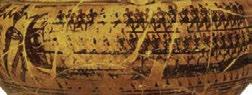
In the 12th century BC, the invasion of new populations in the Greek territory, signi ed the end of Mycenaean world. The subsequent centuries are an era of intense procedures and upheavals, when the foundations for the development and formation of the succeed ing classical Greek civilization are being established. Depictions of ships, in representations on vessels, are increasing in number, dating back to the end of this period. It is the time when the Greek tribes are moving, establishing colonies in all the coasts of the Mediterranean, from Marseille in France, to the coast of the Black Sea.
The ships’ displacement increases, as it is revealed by the increas ing number of the oarsmen, portrayed. From Homer’s descriptions, concerning ships of the 8th were many kinds of ships, while the emerging distinction of ships as merchant or warships is a very important development. It is then that the triantakontors (with 15 oars on either side) and the pentik ontors (with 25 oars on either side) appear that were the forerun ners of the war ships in the classical period.
Geometrical Attic
showing a war ship and an “abduction” scene. It probably refers to the abduction of Helen of Troy by Paris or of Ariadne by Theseus. 735-710 BC. British Museum, London, 1899, 2-19.
Right: Pentekonter (7th century BC). Replica. Construction: G. Vammenos. Supervision: K. Alexandris. H.M.M. collection.
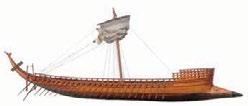
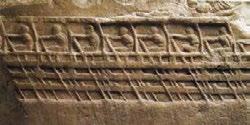
In the 7th century BC, the rst triremes were built. The trireme is considered to be the masterpiece of the Greeks’ ancient, shipbuilding skill. She has three rows of oars on each side (a total of 170)and a crew of about 200 men. The trireme had the rst, pure naval weapon in history, the rammer. It was a strong, metal, sharp end of the keel, at the ship’s bow, which was used for ramming and breaking the opponent’s hull. The trireme will dominate, in the 2 half of the last millennium before Christ, and she is the ship that will save Western civilization at the sea battle of Salamis in 480 BC from the mortal danger of the Persians.
DANAOS AND THE ENVIRONMENT ...A LOVE AFFAIR
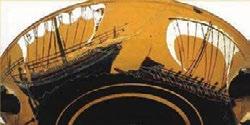
However, if the trireme ensures the ruling of the Mediterranean by the Greeks, the ship that carries supplies and spreads the Greek language, art and civilization, in general, is the olkas, the transport ship of the ancient world.
History flowed over Greece, the cities –states declined and all of the Greeks were united, for the fist time, under the rule of Phillip II, King of Macedonians. Then, Alexander the Great with his conquests and his descendants made Eastern Mediterranean a Greek sea. The ships’ range continuously increases, overseas trade is expanded and people are travelling to distant places, in order to widen their knowledge about the world and then to record it, so that their experiences from their voyages to new places could be utilized by subsequent generations.
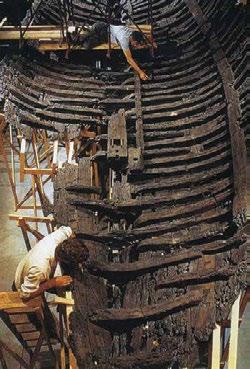
At that time, ships are being perfected and trips are far better organized. A lot of information, regarding ship-building and commercial ships of the classic period, is given to us by the wooden ship, preserved by 75%, which was found at the bottom of the sea of Cyrene, in Cyprus and dated, accurately, as going back to 303 BC. She was made of pine tree, according to the ancient shipbuilding technique, by which the shell was structured rst and then the frame. She was 15 meters long and when she was sunk, she carried 403 amphorae with wine from Rhodes, sacks of almonds and 29 millstones.
Over the following centuries, when the world’s ruling goes to the Romans, the Greeks’ sea trading activities do not stop. Greek seamen, being more experienced, carry out the internal and external trade of the Roman Empire, man its war ships and the in uence of the Greek ship-building mastery on the roman ship is obvious.
The ports of many Greek cities, like Salonica, Nikopolis, Delos, Rhodes and others, have a new period of prosperity, under Roman rule.
Yψος: 73εκ.
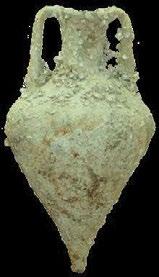
λογή Ν.Μ.Ε. Above: Pointed amphorae from Corfu. 3rd century BC. Height: 73 cm. H.M.M. collection.
Κάτω:
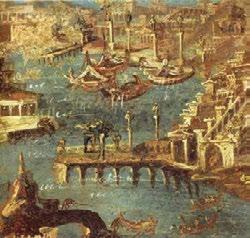
9514. Below: View of an Italian port. Fresco from Stabiae, 1st century. National Archaeological Museum 9514, Naples.
G. Bass. Right: The ancient shipwreck that was raised and restored in Kyrenia Castle, Cyprus. G. Bass archives.
Sailing in the byzantine seas. The paths of sea trade
The advantageous geographical position of the Byzantine Empire –at the crossroad between East and West– very early on, made it a world trade center. For a long period of time, the Byzantines maintained control over the Mediterranean and held a leading role in maritime trading transactions.
THE
BYZAN T INES RULERS OF T HE MEDI T ERRANEAN
Αριστερά: Μινωικό πλοίο (1700-1400 π.Χ.). Ομοίωμα. Κατασκευή: Γεώργιος και Αριστοτέλης Ράλλης. Συλλογή Ν.Μ.Ε. Left: Minoan ship (1700-1400 BC). Model by George and Aristotle Rallis. H.M.M. collection. Δεξιά: Πλοίο της Θήρας (17ος αι. π.Χ.). Ομοίωμα. Κατασκευή: Γεώργιος
Right: Ship from Thira (17th century BC). Replica. Construction: George Rallis. H.M.M. collection.
In the early Byzantine era, especially during the 5th and 6th centuries AD, the Empire’s eastern provinces played a particularly signi cant role in commerce. The most important trading routes, through which all merchandise and raw materials were transferred, from the Far East towards the Mediterranean, ended up in Antioch and Alexandria, the large trading centers of Syria and Egypt. From there, the ships undertook to spread them to all the important ports of the Mediterranean and support the people that lived there. Signi cant coastal centers, like the Peloponnese and the Ionian islands, were used as intermediary stations along the trading routes from Italy towards Constantinople, Asia Minor and the Palestine.
In the eld of the shipbuilding, all the accumulated experience from the long, for that time, sea voyages, reached a peak in the middle of the 2nd millennium. The most signi cant evidence, regarding the progress in the eld of shipbuilding, in the Aegean of the copper era, is the representation of the so-called “ eet” on the wall paintings, at West House in Thira (Santorin), island dating back to about 1550 BC.
THE A RABIAN IN T ERFERENCE
When the Arabs regained the Empire’s eastern provinces, the Byzantine state sought new trading bases. At that time, the center of commercial activities was transferred to the Greek territory and the Black Sea ports. Constantinople still remained the key to transit trade, while, at the same time, Salonika developed into an important trading junction.
THE INFILT RAT ION OF T HE ITALIAN CI T IES IN TO T HE E AS T MEDI T ERRANEAN T RADE
On the fresco, there are 14 small boats that form a “convoy” and use all the ways of propulsion, known at the time. Those boats have a ship-building perfectness. According to scholars, the length of these ships was, in actual fact, over 30 meters, they had 18 to 21 oars-men and there were two steering oars from both sides of the stern. The rich physiocratic decoration of the ships, on the wall painting, which is considered to be of an emblematic character, is also typical.
At the end of the 11th century, the commercial eets of the Italian cities began to penetrate the East trade and gradually establish their rule. The territorial acquisitions and the colonies, that were established by the Italian seafaring communities, within Byzantine territory, like those at Galatas, Ka as, Crete and Euboea, were the indisputable factor, which contributed to their taking over the control of the Eastern Mediterranean commerce and to the isolation of the Byzantine traders.
1770. A steatite seal stone showing a sailing ship. Middle-Minoan IIB, 1800-1700 BC. Archaeological Museum, Heraklion, 1770.
THE MYCENAEAN ASCENDANCY From 1450 BC onwards, the Mycenaean’s succeed the Minoans in the ruling of the sea, establishing commercial networks in almost the whole of the Mediterranean basin. Their maritime accomplishments are re ected in Homer’s epics and the mythical maritime exploits of the Argonauts.
During the time of the Palaeologos dynasty (1261-1453), the role of the Byzantines in the East transit trade has diminished, but not extinguished. The Byzantines continued to trade in the Aegean and the Black Sea, where tradesmen begin to appear from Constantinople, Adrianople, Salonika, Mistras and Monemvasia.
Hogenberg,
Left: Constantinople and the Golden Horn bay. Engraving by Braum and Hogenberg. 16th century. Gennadius Library.
Rallis. H.M.M. collection.
Map on which are drawn the routes taken by the Argonauts and Homer’s Ulysses. H.M.M. collection.
(shell rst). Right: Caique from Inepolis with sakoleva sail rigging. Scale: 1/30. Model by Aristotle Rallis. Research and drawings: F.E.Paris, K. Damianidis. H.M.M. collection. In the area of Inepolis, on the coast of the Black Sea, the ancient technique of ship-building (shell rst) survived until the beginning of the 20th century. Κάτω:
Below: Earthenware pithos (jar) of the byzantine period, for transporting wine (detail). The vessel features incised representations of a merchant ship and a dromon (warship). From Euboea. H.M.M. collection.
THE SHIPS
Information regarding the trading ships, during the Byzantine period, comes mainly from marine archeology ndings, as well as from the limited number of representations. The shipwreck of a small, 7th century trading boat, near the islet of Yassi Ada, opposite Kos, gives us a complete picture of the changes, that took place from the Hellenic-roman to byzantine ship-building, as it imprints the transition from the ancient construction technique of the boat’s hull “shell rst” and skeleton next, to the more recent “skeleton rst” and shell next.
At the shipwreck of Yassi Ada, up to the waterline, the boat was built according to the ancient technique and above that, the frames, made of elm, were xed. The shell’s planks were nailed onto the frames with iron nails. It seems that this technique was perfected in another shipwreck of the 11th century at the same area.
During that period, commercial ships were relatively small, with a round hold, and they had up to three masts with triangular sails (lateens). The boats were steered with the help of two steering oars, on either side of the stern. They were primarily sailing boats, although some types used oars, as well.
After the 12th century, the invasion of foreigners to the trade is also noticeable by the commercial ship types that the Byzantines begin to use for their transfers. Such foreign ship types that are mentioned, are the linn, griparea, tarida, ciguta and others.
The Turkish Occupation Period. 1453-1821.
C REAT ION OF T HE H ELLENIC CO MMERCIAL SHIPPING
After the fall of Constantinople by the Ottomans, there was a period of bloody conflicts between Venetians and Turks over the ruling of the Aegean, while, at the same time, the sea was preyed on by pirates. The change of situation was signaled by the establishment of the ottoman rule over the whole of the Greek area, since the beginning of the 17 th century, and a relative peace prevailed.
As the Ottoman rulers were never good sailors, they virtually gave free scope, in the eld of shipping, to their Greek subjects. From the sporadic information available, it becomes evident that, in the rst half of the 18th century, the internal trade of the Ottoman Empire had come into the hands of the Greek seafarers. This situation caused the suitable conditions for the creation of a blooming Hellenic merchant shipping, far sooner than the establishment of an independent Hellenic state.
The remarkable development of shipping, which occurred in the 2nd half of the same century, is due to the favorable international circumstances that allowed Greek ship-owners to expand their commercial activities to the ports of Europe, Russia, even those of America. This evolution comprised the Napoleonic wars and the frequent con icts between Russia and Turkey, culminating in the Treaty of Kuchuk Kainarji, signed after the rst Russian-Turkish war (1768-1774), which was decisive for Greek seamen. According to the Treaty, Greek ships could use the Russian ag and sail freely through the Bosporus and the Dardanelles Straits. This resulted in the transportation of Russian grain coming into the hands of Greek ship-owners, who made great fortunes out of this business. The Greek gains were even bigger, when they would break through the blockades of European ports, imposed by the British eet, during the Napoleonic wars. Part of the pro ts was invested in building new ships, but the largest part was used to nance the Revolution in 1821.
THE FLEE T OF T HE G REEK RE VOLU T IONARIES IN 1821
On the eve of the Revolution, Greek ship-owners possessed the impressive number of about 1000 merchant ships coming mainly from the islands of Hydra, Spetses and Psara. Most ships were brigs with two
Αριστερά:
(1700-1400
Model by George and Aristotle Rallis. H.M.M. collection.
(17ος
Left: Minoan ship (1700-1400 BC).
47x62
Left: Antonios Kriezis, The brig “Leonidas” from Hydra, at the port of Marseille, in 1812. Aquarelle 47×62 cm. H.M.M. collection.
Right: Sailing permission to the brig “Epamenondas”, according to which she can carry the Russian ag and sail everywhere in the Mediterranean. It is accompanied and rati ed by the Seal of the Russian Empire. It is dated September 22, 1816. H.M.M. collection.
In the eld of the shipbuilding, all the accumulated experience from the long, for that time, sea voyages, reached a peak in the middle of the 2nd millennium. The most signi cant evidence, regarding the progress in the eld of shipbuilding, in the Aegean of the copper era, is the representation of the so-called “ eet” on the wall paintings, at West House in Thira (Santorin), island dating back to about 1550 BC.
On the fresco, there are 14 small boats that form a “convoy” and use all the ways of propulsion, known at the time. Those boats have a ship-building perfectness. According to scholars, the length of these ships was, in actual fact, over 30 meters, they had 18 to 21 oars-men and there were two steering oars from both sides of the stern. The rich physiocratic decoration of the ships, on the wall painting, which is considered to be of an emblematic character, is also typical.
large masts, of a 250 tons displacement and were armed with 8 to 16 canons, in order to confront the pirates still lurking in Mediterranean. After the declaration of the Revolution in Peloponnese, those merchant ships were converted into warships. It was an uneven confrontation. However, where the Greeks excelled, was in the unequalled seamanship of the captains and their crews, who, with skillful maneuvering of their small but agile boats, succeeded in prevailing upon the Turkish warships that lacked in organization and e ectiveness. These maritime skills were transmuted into the regular use of the re-boats that were the great and novel weapon in the sea ghts, during the Greeks’ Revolution. It is beyond any doubt, that, without those ex-merchant vessels the Revolution would not have gone far.
A steatite seal stone showing a sailing ship. Middle-Minoan IIB, 1800-1700 BC. Archaeological Museum, Heraklion, 1770.
Map on which are drawn the routes taken by the Argonauts
THE MYCENAEAN ASCENDANCY From 1450 BC onwards, the Mycenaean’s succeed the Minoans in the ruling of the sea, establishing commercial networks in almost the whole of the Mediterranean basin. Their maritime accomplishments are re ected in Homer’s epics and the mythical maritime exploits of the Argonauts.
Left: Schooner “Terpsichori” belonging to the Tompazis family. Model by Dimitrios Bardis. H.M.M. collection.
Right: Nikolaos Kalogeropoulos, The brig
Right: Ship from Thira (17th century BC). Replica. Construction: George Rallis. H.M.M. collection.
and Homer’s Ulysses. H.M.M. collection.
Contemporary Period. 1830-Today.
ESTABLISHING CO MM ERCIAL NE TWORKS
Since the second half of the 18th century, ship-owners from the Ionian islands mainly, set the foundations for the subsequent great Hellenic commercial shipping. They establish commercial networks at all the main ports of the Black Sea, the Mediterranean and Western Europe. Commercial Firms open o ces in the Sea of Azof, Odessa, Taganrok , Varna, the Danube’s banks, Trapezounda, Constantinople, Syros, Trieste, Livorno, Palermo, Marseille, Antwerp and other ports.
After the creation of the newly established Hellenic state, the trends of the sea trade, during the 19th century, were characterized by the need to transfer cargo in the mass, especially grain, coal and cotton. Big Commercial Firms build eets, by which they primarily serve the need for transfer of goods they trade themselves. Commercial networks provide shipping networks and an endless series of products is transported from one place to another. Eastern Mediterranean is connected with the world market, while the Black Sea functions as the granary of 19th century Europe. Commercial ships carry raw materials and foodstu s to Europe and from there they export industrial goods to the rest of the world.
INT RODUC T ION OF S T EA M.
F IRS T NAT IONAL SHIPPING CO M PANY
Greek shipping is greatly favored by the explosive rise of commerce and shipping in Eastern Mediterranean.
Steam, which appeared as the future means for the propulsion of ships, even from the beginning of the 19th century, gradually sup-
Right: Post card showing a picture of Neorio, in Syros. H.M.M. collection.
Left: Post card showing a picture of Smyrna harbor. H.M.M. collection.
planted the sails. Although Greek ship-owners realized, early on, the advantages of this novelty, they were unable, initially, at least, to respond to this challenge of technology, due to lack of funds and loaning institutions, on one hand, and on the other hand, lack of technical experience and trained personnel, required for these ships.
It is characteristic that the rst steam-powered ships were bought by Greeks living abroad, like those in Rumania and Trieste and the ship-owners of the independent Greece followed.
As the time goes by, commercial ships acquire specialized features, depending on the cargo they carry.
In 1856, the Greek government bought three steam-powered cruise-liners and formed the rst national company, in order to cover the needs of connecting the islands with the ports on the Greek mainland. About the end of the 19th century, the transoceanic shipping began to develop, to serve the growing emigration tide.
PAR T ICIPAT ION IN T HE 20TH CEN T URY WARS
During the wars, in the 20th century, the Balkan wars and World Wars I and II, the Greek merchant marine acted as the fourth service, on the side of the ghting Greek armed forces. It gave its own battle, carrying vital supplies to the people of Europe, through the naval blockades by enemy submarines, surface raiders, mine elds and air raids. World War II, in particular, proved to be extremely devastating to Greek shipping. During the war, it lost 77% of its ships and 70% of its capacity, together with over 2500 human losses, without counting the thousands of injured people, the psychologically disturbed and physically disabled, who survived, after the sinking of the ships.
R EGENER AT ION AND T HE WAY TO T HE TOP
After the war, in acknowledgement of the great contribution made by commercial shipping to the issue of freedom, the USA granted 100 Liberty–type cargo ships and 7 T2-type tankers to Greek shipowners, on favorable nancial terms.
From those ships, the “blessed” ones, as Greek seamen used to call them, began the development, which brought the Greek-owned shipping at the rst place, in world rating.
Today, commercial shipping is the rst source of income for the Greek economy. Besides its obvious nancial signi cance, its presence adds power and prestige to the country, disproportionately great to its size and population, both within the European Union, as well as all over the world.
The components that raised Greek shipping in the rst place of the World are:
Ship-owners that are sensible, hard-working, serious businessmen, who know when to take well calculated business risks.
Crews that are unequalled in seamanship skills and reasoning, well trained in all modern systems that uphold today’s ships. 10000 years of maritime tradition, acquired in the seas that has infused saltiness into the DNA of the Greeks.
Left: Hellenic Shipping Company Headquarters, Ermoupoli, Syros.
built in 1929, by order of Kasos Shipping S.A., based in Syros. Model.
Right, below:
Bronze statues from the depths of the sea
By Harry E. Tzalas
The commencement of the seizure and expatriation of Classical and Hellenistic artworks was marked by the capture, destruction and looting of Corinth (146 BC), Thebes, Chalkis and other Greek cities, by the Roman general Mummius in the middle of the 2nd century BC. Their artworks were carried off to the Italian peninsula, particularly to Rome.
The sculptures served as models for Roman artists, illustrating the perfection of the Greek sense of moderation and unsurpassable beauty. The emperors and officials did not confine themselves to commissioning copies of Greek originals from the 5th and 4th century BC: they wanted the originals. In order to adorn the palaces and villas, masterpieces from Greece and from Greek cities in Asia Mi-nor found their way to Ostia, the port of Rome. Some of the works included in this inexhaustible treasure were transferred, after AD 330, to Constantinople, the New Rome, capital of the Eastern Roman Empire. Nevertheless sea travel involved many hazards even for the large merchantmen of the period: many were wrecked and their precious cargoes lost at the bottom of the Mediterranean. Long before 1832, when the first bronze statue (the Apollo of Piombino) was found in the sea, bronze limbs from statues were being pulled up in fishermen's nets, along with amphoras. These finds were very "annoying", since they were so heavy that they tore the nets. The amphoras were smashed with crowbars to let the water out, while any solid, but useless items were thrown back into the sea. Anything made of bronze was cut up into pieces, regardless of whether it was a work of art, enabling the fishermen to make a small profit from the scrap value. Fabulous treasures have probably been lost due to this practice, while, for the same reason, the first large bronze statues pulled up in fishermen's nets or found by sponge-divers were retrieved in a large number of pieces. The simple
fishermen or divers, unaware of the value of the finds, did not hesitate to make their task easier by breaking off arms, legs, or heads and bringing them up separately from the bottom of the sea.
Nowadays, everyone seems to be aware of the importance of these finds. For a bronze statue to be retrieved in good condition, however, at least three conditions need to be met, in which chance plays a large part: first, the captain of the ancient ship carrying the cargo has to be unlucky; second the ship has to founder at a spot where it won't be dragged along and broken up by the tackle of a fishing trawler, and third, it has to be discovered by a conscientious diver who doesn't damage it in an attempt to exploit it commercially. In this article, I shall recount some of the exceptional stories surrounding the discovery and retrieval of nineteen bronze statues, all regarded as masterpieces. Very little is known of the discovery of the Apollo of Piombino (figs 1, 2). It is reported that in 1832, fishermen, pulling in their nets in the bay of Baretti, near Cape Piombino to the south of Livorno in Tuscany, drew in a fine bronze statue depicting Apollo. It is without doubt an original of late Archaic Greek art, preceding 480 BC. It is smaller than life size, being 1.15 m. tall, and is now on display in the Louvre. Similarly, very little is known of another statue of the Early Classical period, found at Kreusis in Boeotia, in the Corinthian Gulf. It was given the name Poseidon of Livadostra (fig. 3) from the location on the coast where it was found in 1897. It is 1.18 m. tall, has both arms missing from the shoulder, as well as both eyes, which were inlaid. It is now on display in the National Archaeological Museum, Athens, and seems to have been found in very poor condition, judging by the extent of the conservation work on it.
It is an original dating from about 460 BC, which certainly depicts Poseidon, since it bears a votive inscription to the god of the sea.
The Antikythera Shipwreck is a land-
Apollo of Piombino, a masterpiece of the Late Archaic period (ca. 480 BC), is the first statue to have been retrieved from the depths of the sea, in 1832. Paris, Louvre Museum.
mark in marine archaeology, though this was a chance find. The bottom of the sea was explored for the first time by spongedivers, and the retrieval of the bronze statues was not a matter of their being caught in nets, as had previously been the case. It was 1900, and two small spongediving boats were returning to the island of Symi from Benghazi. They encountered very bad weather and in an attempt to seek shelter from the raging storm, they put in at Pinakakia on Antikythera (fig. 4). The rock formation above and below sea level in this area is steep, so they anchored and waited for the weather to improve. In order not to waste the day, the captain and owner of the sponge-diving boat, Dimitrios Kondos, asked one of the divers, Ilias Stadiatis, to make a dive and see if there were any sponges. The depth was 30 fathoms, or over 50 metres. A century earlier in 1802, on Kythera, Lord Elgin's representative had sought the help of sponge-divers to retrieve 17 crates containing masterpieces from the Parthenon. They had gone down when the ship transporting them to England, the Mentor, had foundered. Free divers
had carried out the search, at that time, while Kondos's men wore primitive diving apparatus. Stadiatis disappeared under water. Suddenly, the rope went taut. Merkourios, the sailor tending the line that monitored the dive, was worried. The diver had been in the sea for less than two minutes. Why was he beginning his ascent so soon? Had he encountered a large shark? Was his suit letting in water? They brought him up, and as they were taking off the helmet of his diving apparatus, they heard him stammering breathlessly: “horses, men, naked people...” The young diver had chanced on one of the most important shipwrecks of ancient times, fully loaded with artworks. The captain now went down to see for himself and was in no doubt that the find was important, but he had no idea as to how they were going to benefit from it. In order to convince some would-be purchaser, he broke the arm off a bronze statue as evidence for the find.
The captain hastily raised the anchor and set a course for Symi. Kondos tried to put his thoughts in order. It was not the first time that local divers had chanced on an
In 1897, an original Archaic statue of Poseidon (ca. 460 BC) was found in the shallows off the coast of Livadostra, ancient Kreusis, in the Corinthian Gulf. Although mutilated, with both arms missing as well as part of the right leg, it remains one of the important sculptures in the National Archaeological Museum of Athens.
Throckmorton “History from the Sea, Shipwrecks and Archaeology” 1987.
A unique photograph of 1900 showing two small sponge-diving boats at Pinakakia, Antikythera. The Antikythera Shipwreck has entered history as the first organised underwater archaeological survey, despite the primitive and non-scientific means used. From P. Throckmorton (ed.), History from the Sea, Shipwrecks and Archaeology (1987).
5.
P. Throckmorton (επιμ.),
(1987). Cumbersome diving apparatus was used by sponge-divers from Symi who, at the risk of their lives, located and retrieved the finds of the Antikythera Shipwreck. From P Throckmorton (ed.), History from the Sea, Shipwrecks and Archaeology (1987).
The restoration of the superb Hellenistic statue known as the “Youth of Antikythera” was an achievement for the Greek restorers, bearing in mind that it was carried out a century ago. Archive of National Archaeological Museum.
The head of a mature man, known as the Antikythera Philosopher, belonged to a large statue of the Hellenistic period (240 BC). Despite repeated attempts, the body was never found. Athens, National Archaeological Museum. 8. It is thought that the Youth of Antikythera was probably the work of the great sculptor Euphranor and dates from 340-330 BC Visitors to the Museum wonder what the young man once held in his outstretched right hand. Athens, National Archaeological Museum.
ancient shipwreck. They usually found large broken “pitchers”, but in this instance, they were dealing with an unusual cargo. Broken, badly damaged statues, in a difficult location, crushed by stone boulders. The captain and his crew were preoccupied by the question of how they could reap some financial reward from their discovery. What were the broken statues worth? Where and to whom could they sell them? They approached a teacher from the island, A.Oikonomou, who agreed to act as intermediary and arrange a meeting with the Greek Minister of Education, Spyridon Stais. When he examined the bronze arm, Stais immediately realised the value of the find and proceeded to try to reach an agreement with Captain Kondos and his divers.
The negotiations were tough. It did not escape the minister's attention that Kondos and his men were the only ones who knew the exact position of the wreck, and more importantly, only sponge-divers were capable of working at the bottom of the sea in order to retrieve the finds. He was also aware of the enormous dangers they would face (fig. 5). Kondos, too, certainly realised that he was only in a position to exploit his discovery if he cooperated with the Greek government. Only the minister could make a suitably equipped naval vessel available to bring up the ancient cargo. An agreement was finally reached. The first attempts to raise the statues took place in midwinter, during December 1901, thus revealing how eager Stais was to bring the enterprise to a close as soon as possible. The details of this first organised survey of an ancient shipwreck are recorded in the diary of Emmanuel Lykoudis, legal consultant to the Ministry of Education.
As one reads Lykoudis's diary, one is astounded at the unacceptable manner in which the survey was carried out. A diver lost his life in the presence of representatives of the Greek state, and some large-scale ancient works of art slipped out of the inadequate lifting crane available and fell to the seabed, perhaps lost forever. Despite repeated efforts made during recent decades, two involving the re-
It is thought that the Youth of Antikythera was probably the work of the great sculptor Euphranor and dates from 340-330 BC. Visitors to the Museum wonder what the young man once held in his outstretched right hand. Athens, National Archaeological Museum.
9.
Two of the fragments of the Antikythera Mechanism. These are the largest and best known of the total of 82 fragments of the Mechanism that have been found. Athens, National Archaeological Museum.
10.
The interior of fragment A, from a picture (section) taken by a radiography device weighing 8 tonnes that was brought to Greece from Britain in autumn 2005 specially to study the Antikythera Mechanism. Courtesy of The Antikythera Mechanism Research Project.
11.
Fragment 19 as seen through the special Hewlett-Packard PTM system. Courtesy of The Antikythera Mechanism Research Project.
search vessel Calypso, captained by Jacques-Yves Cousteau, very few additional finds have bean retrieved. Without going into further detail about the poorly organised “underwater archaeological investigation” from the decks of the Navy vessel Mykalis, it must be said that two bronze masterpieces of Hellenistic art emerged from the seabed: the well-known Youth of Antikythera (figs 6, 8), which dates from 340-330 BC and is probably by Euphranor, and a head from a large male statue thought to be the portrait of an unknown philosopher and dating from 240 BC (fig. 7). Parts of other bronze statues were found with them.
The Antikythera Mechanism is an important find. It is a unique instrument which a century after its discovery continues to raise
many questions for scholars (figs 9-13). It was initially thought to be an astrolabe. Thanks to the inscriptions on it, however, which have recently been deciphered, it has been shown –inter alia– that the indicators at the back of the mechanism moved on spiral grooves, not on concentric circles. The inscription on fragment E is clear: the spiral is divided into 235 sections. These sections corresponded to 235 lunar months (fig. 13). According to the inscription on fragment 19, a second spiral had 223 subdivisions (fig. 11). It is thus clear that the mechanism was used –inter alia– to predict the movements and eclipses of the sun and moon. It was therefore a very complex mechanism, for which the word astrolabe is hardly appropriate. It might be described as the first astronomical calculator known to mankind. As early as the time that the statues were retrieved, a date of about 8580 BC was proposed for the shipwreck. A recent study of the coins found on the ship, published by Dr. Mando Oikonomidou, confirms the date (terminus ante quem of 70-60 BC), and also indicates the probable port of the ship's departure and its cargo for this fateful voyage. Almost all the coins were issued by Pergamon, which vindicated those who suggested that the statues had been looted from this important Greek centre in Asia Minor. All the finds are now kept in the National
Archaeological Museum of Athens. The Marathon Boy is another chance find retrieved from the sea (figs 14, 15). Very little is known of the circumstances under which this very important work of art was found, other than that it was entangled in fishing nets in the shallows of the bay of Marathon in 1925.
In contrast with other finds, the arms and legs of which were broken off during their recovery, it is one of the few bronze statues found intact in the sea. Despite repeated attempts to locate the wreck of the ship that had transported the statue –Cousteau investigated the area for this purpose in 1975– neither the wreck nor traces of any other finds have been discovered.
The Marathon Boy is probably an original from the workshop of Praxiteles dating from 340-300 BC. It is 1.30 m. tall but the arms are not the originals; for some unknown reason, they were replaced in ancient times. It is now in the National Archaeological Museum of Athens.
In the case of the Artemision Shipwreck, there exist all the elements of the plot of an exciting thriller: the attempted but ultimately unsuccessful smuggling of antiquities, the involvement of a highranking civil servant, together with the participation of fishermen, divers and archaeologists. An additional element that lends suspense to this drama is the discovery of pieces of the ancient works of art, separated by a decade and 13 nautical miles. I had the exceptional good fortune, 25 years ago, to meet a seaman, who played a leading role in the events and who, despite being 83 years old when I interviewed him, remembered everything in the greatest detail (fig. 17). A fisherman from the age of twelve, like his father and grandfather before him, Captain Parisis was born in 1898 in Asia Minor. He left cesme for Chios with his family because of the pogrom of 1914. From Chios he went on to Volos and from there to Pefki in north Euboea.
I checked Captain Parisis’s account, comparing it with that of the archaeologist Nikos Bertos, who had undertaken to supervise the investigation, as well as with the details that emerged from crossquestioning by the police: everything was consistent. But Parisis supplied some additional evidence: he had noted the exact
The “Marathon Boy” is one of the few bronze statues that were preserved intact at the bottom of the sea for over 2000 years. It is probably an original work from the workshop of Praxiteles (340-300 BC). This early photograph of the find at the National Archaeological Museum shows the statue before its restoration. Archive of National Archaeological Museum.
15.
Many interpretations have been proposed for the position of the arms of this exquisite statue of a youth found by fishermen in 1925 and brought to light from the sea at the bay of Marathon. Athens, National Archaeological Museum.
16.
The head of the life-size statue of Zeus of Artemision. The attention to the details of the hair, the beauty of the curls, the harmonious flow of the beard, and the serene majesty of the face, all converge to render a truly Olympian god. Athens, National Archaeological Museum.
20.
Mutilated, with the right leg missing, the Jockey was retrieved in fishermen’ nets off Cape Artemision.
21-22.
With its pronounced negroid features, the restored statue of the Jockey waits to ride again the horse that was found in two separate parts, dragged up by the nets of fishing trawlers in the waters of northern Euboea. It is an original statue group dating from about 140 BC. Archive of National Archaeological Museum.
location at which the large statue of Zeus was raised: “I have the exact position, I took the bearings on the shore...” The old mariner did not ask for any reward. He did, however, confirm that, after the discovery of the large statue and half the horse, two more heavy statues became entangled in the nets of their calque, but, unfortunately, they slipped out as the boat departed.
I refer to my notes, made in 1981, and the cassette recording on which the voice of the veteran of the sea is captured: “It was April 1926 when we got the god out of the sea... we were all expecting it to be a goddess, they were saying that it was Artemis. But what goddess, I shouted... look here..." and Captain Parisis’s amused chuckle can be heard.
It all began when fishermen from Skiathos caught a heavy bronze arm in their nets: it was the left arm of the statue of Zeus of Artemision, now in the National Archaeological Museum of Athens (figs 16, 18, 19). They kept the find from the port authorities, but the news spread amongst the other fishermen, and when they passed over the spot, they searched the area with great care. Eventually the statue was caught in the nets of a trawler owned by one Markos Tsakoumakos, Parisis’s uncle. Since, he reports, they did not have the means to raise the heavy statue, they brought a diver from Trikeri, whose name was Lalaios. At this point, the seabed lay at a depth of over 45 metres. They promised him they would divide anything they found fifty-fifty. A man called Deliyiannis also appeared on the scene. He had spent time in America and insisted he knew an Italian antiquities dealer. He also promised
that he would make sure they received millions. However, the resting place of the statue was very muddy, and a number of divers were required to retrieve it, with Lalaios digging all around to free it. As luck would have it, one Gogos, a retired army captain, became suspicious as he saw the two boats anchored at the same location and divers repeatedly emerging from the sea. He informed the president of the nearby village, who in turn told the police and the local magistrate, and just as they were joyfully preparing to heave up the anchor and leave with the truncated masterpiece, they were caught red-handed.
Parisis’s laugh could be heard again. “They took us all to court, but the judge let us all go free, on the following rationale: if you had acted lawfully and reported the find, you would have received a reward of one million drachmas; your punishment is that you won't receive anything.” And Poseidon, as Parisis named the statue, was loaded on to a cart at Pefki and taken to the National Archaeological Museum. The task of conservation was laborious, but rewarding. The two arms were replaced in position and the god once more acquired his majestic stance. The statue is thought to have probably been the work of Kalamis and dates from about 460 BC. It is 2.09 m. tall and the arm span is 2.10 m.
As one reads the report of N. Bertos, one gains the impression that the authorities were negligent, they allowed a full year to pass before they organised an investigation of the site of the shipwreck. Eventually, with five divers and a Navy ship, the Pleias, they found a millstone and a large number of other irregularly shaped stones that had been used as ballast, along with broken ancient pottery, some intact amphoras, and the front half of a horse with its young jockey (figs 20-23).
The divers, searching for a statue of the goddess Artemis, were greatly disappointed when they realised they had found part of a horse. Delikonstantis, the head diver, shouted: “What a waste of time. We've worked all these days for a lousy horse!”
For many years it was thought that the Jockey was too small to belong to the same statue group. Nine years were to pass before the other part of the horse was found by chance in 1937 near Oraioi and associated with the horse and rider. Today the young Jockey has found his huge horse once more and they “gallop” lightly in a gallery at the National Archaeological Museum. The group dates from about 140 BC.
Jacques-Yves Cousteau searched the area sporadically in 1959 and 1975, and since 1980 the Ephorate of Underwater Antiquities has continued using modern sonar equipment, though without any positive results. Cape Artemision continues to guard its secrets, but the day may come when other finds are discovered, hopefully in fishermen’s nets, or with the aid of constantly improving technology. As we see from the above, all the finds yielded by the sea are accompanied by extraordinary stories. The story about the recovery of the Autostephanoumenos in the J. Paul Getty Museum at Malibu (statue of an athlete crowning himself by placing a wreath on his own head) deserves the description of the most extraordinary (fig. 24). In 1961, two fishermen from Fano in the northern Adriatic Sea were pulling their nets in the area of Numana and hauled up one of the finest statues of post-Classical Greek art. The fishermen had no way of knowing that this statue might be a very rare original by Lysippos. The preserved height of the young athlete is 1.51 m.
If one adds the length of the legs, which are missing from the thighs down, it is probably a life-size portrait statue of a victorious athlete, possibly an Olympic champion. The experts date the Autostephanoumenos after 340 BC, during the years when the sculptor of Sikyon went to the court of Philip II in Macedonia.
On 13 September 1964, Denis Fanquerle explored the bed of the river Herault with a team of divers from the Agde Marine Archaeological Research Group. As an archaeologist, he was aware that the name Agde is derived from the Greek word agathe ([good] fortune). Fortune smiled on him when, on the muddy river bed, at a depth of 6 m., he discovered a smaller than life-size bronze statue of a youth: the Youth of Agde (fig. 26). Both arms were missing below the elbows, as were both feet. After persistent efforts, the left foot was found six months later, 600 m. away from the statue, beneath 1.5 m. of silt deposits. Other ancient objects, such as mill-stones, two stone anchors and a large number of small finds which cannot, with any certainty, be attributed to the same shipwreck were also
Ridden by the young Jockey, the restored horse is in full gallop. It is thought that the ship that sunk off the coast of Cape Artemision may still yield more of the masterpieces it was carrying. Athens, National Archaeological Museum.
24. Ο «Άυτοστεφανούμενος»
Malibou J. Paul Getty Museum.
The Autostephanoumenos in the J. Paul Getty Museum in Malibu, USA, is believed to be an original created after 340 BC by Lysippos. It probably represents a victorious athlete. Malibu, J. Paul Getty Museum.
25. Ή κεφαλή του
420-410 π.Χ.) Reggio di Calabria, National Museum.
The head of the mature bearded man known as the Philosopher of Porticello is probably one of the earliest Greek portraits (about 420-410 BC). Reggio di Calabria, National Museum.
Herault
Agde, Musee de l’ Ephebe. Mutilated and heavily corroded because of its lengthy immersion in the waters of the Hérault estuary, the Youth of Agde recalls the statue of Doryphoros Alexander attributed to Lysippos. Agde, Musée de l’ Ephebe.
found. The statue, which was kept in storage in the Louvre for fifteen years and is now on display once more in the Agde Museum, has a preserved height of 1.33 m., but the bronze surface is unfortunately in a poor state of preservation. The interest in this statue is primarily concerned with the head, which, according to experts, follows the models established by portraits of Alexander the Great. It is thought to be a work from the school of Lysippos influenced by the Doryphoros (Spear-bearing) Alexander by the great master. It dates from the 2nd century BC and probably depicts a young prince of the Seleucid dynasty or one of the other rulers of the Late Hellenistic period, who were partial to having themselves portrayed with the features of the great Macedonian.
The head known as the Porticello Philosopher (fig. 25) is an outstanding work of art, and it was found in 1969.
It is not a conventional statue of a god or hero, but one of the earliest surviving portraits from the ancient Greek world. It is dated to 420410 BC, earlier according to some scholars, and is thought to have come from an Attic workshop. It depicts a mature man with noble features, a luxuriant beard and carefully groomed hair. Only the head is preserved, which is 0.40 m. high and it is kept in the National Museum of Reggio di Calabria.
The circumstances under which this masterpiece was found, are further evidence for the way in which unique works of art disappear following their discovery by unscrupulous “searchers” of the depths, attracted by the now legendary sums of money private collectors as well as museums, are prepared to pay to acquire them.
When fishermen and amateur divers looted the Porticello shipwreck in 1961, it was not the first act of vandalism against it. It was readily accessible at a depth of only 20 m. in the straits of Messina, and the larger part of its cargo had already been dispersed.
The ship wrecked at Porticello was about 15 m. long and appears to have sunk in about 400 BC.
It is believed that the amphoras and statues were being carried together and that the date of the amphoras provides the date at which the cargo was being transported. The question arises of how to account for the transportation of ancient statues from Greece to Italy in 400 BC. It is possible that the statues and amphoras were transported on separate vessels at different times and that, by coincidence, they sank at the same point. (The site of the finds, near the Villa San Giovanni, is renowned for its dangerous currents.) If this was the case, the ship carrying the statues probably went down much later than 400 BC.
For scholars of early Classical sculpture, the Warriors of Riace are, together with the Zeus of Artemision, the supreme works of this period. That they are originals dating from about 460 BC is beyond doubt. They are thought to be the work of Pheidias, and a variety of Greek sanctuaries have been advanced as their provenance, the most probable being the sanctuary at Delphi. They were possibly removed from it during Sulla’s raid in 86 BC. Both statues are larger than life size: A, is 2.05 m. tall and B, 1.97 m. They were found complete and in a very good state of preservation (figs 27, 28). The shields they were holding have been lost, with only the sockets in the arms that held them in place surviving. The weapons they held in their right hands are also missing. Warrior B wore a helmet, which is also lost.
The two statues were found by Stefano Mariottini, an amateur diver, at Cape Riace in south-east Calabria, Italy, at a depth of only 7 m., and 300 metres off shore. Mariottini at once informed the authorities and a few days later, together with divers from the Messina police and in the presence of archaeologists, he raised the statues from the seabed.
Both the inlaid eyes were still preserved in statue A, while the right eye was missing from B. Certain points of the mouth, the lips and teeth are made of copper and silver, as are the nipples on the breast; this was co distinguish them by colour from the bronze.
The question that immediately arises is how was it possible they had not been found earlier in such an accessible location. Popular theory was that it was likely the statues were found in different locations and were being transported aboard a ship by illicit antiquities dealers, when something unexpected apparently occurred and they hurriedly dumped them in the sea to avoid arrest. Whatever the mystery behind their final retrieval from the sea, good fortune rescued and presented us with two masterpieces of ancient Greek art, which now adorn a special gallery in the National Museum of Reggio di Calabria.
We have very little information about the discovery of the upper part of a very fine statue of the Roman emperor Augustus (fig. 29). It was found on 12 March 1979 by the fisherman V. Mazarakis in his nets and was handed over to the port authorities of Kymi. The precise location of its recovery is not certain, since he was fishing between Ai-Stratis and the east coast of Euboea, covering a distance of over 60 nautical miles.
The preserved height of the statue is 1.23 m. The great Roman emperor is depicted on horseback, but the horse and the entire lower part of the body are missing. The statue is a bronze of a very high quality that was probably made in one of the great Greek workshops, which continued to produce in Roman times. It was probably executed about 10 BC, and is now on display in the National Archaeological Museum of Athens.
Mariottini,
Mariottini
The Warriors of Riace (A: fig. 27, B: fig. 28) are, with the Zeus of Artemision, the most magnificent bronzes of the Early Classical period (ca.460 BC). Reggio di Calabria, National Museum.
The equestrian statue of Augustus is a fine work of the late 1st century BC. The location of the wrecked ship that transported this statue is unknown, but it is hoped that the day may come when the lower part of the body as well as the horse will be found somewhere in the central Aegean. Athens, National Archaeological Museum.
30.
The bronze statue found in the Aegean sea, near the coast of Aeolian Kyme, probably depicts the winner of a foot-race. It dates from the Hellenistic period. Smyrna, Archaeological Museum.
In theory, the rest of the statue and the horse are still at the bottom of the sea in the central Aegean, waiting for fortune to decide to bring them to light, as in the case of the Artemision find. In the case of the Youth in the Smyrna Museum (fig. 30), all that is known is that it was found about fifteen years ago in the nets of Turkish fishermen near the coast of Aeolian Kyme in Asia Minor. It is a very fine bronze statue depicting a victor in a foot race. Its right arm is missing. It is probably an original work of the Hellenistic period. In the Museum catalogue it is listed as the Athlete of Foca, and is still unpublished.
In 1996, Dr Don Frey of the Institute of Nautical Archaeology at Texas A & M University carried out an underwater survey using Side Scan Sonar in an attempt to locate the position of the wreck. Under the guidance of Necati Beytorum, the captain of a Turkish trawler, who had found the arm of a larger than life-size bronze statue in the same region, he investigated likely areas. The records of the instrument possibly point to an ancient shipwreck, but the American archaeologists were unable to dive, because of the great depths involved. They intend to return with a remotely operated vehicle for a further survey.
The discovery of the Apoxyomenos (athlete scraping his body with strigil) of Vele Orjule (figs 31-36) in Croatia, like the Warriors of Riace, marks one of those rare moments in underwater archaeology when the prerequisites stated above exist and ensure the retrieval of a complete, outstanding work of art.
It was 12 July 1997 when the Belgian diver René Wouten, on holiday in Istria, decided to take advantage of the wonderful weather by diving in the channel between two islets, Vele Orjule and Kosjak. At a depth of 42 metres, he had to turn on a powerful torch to light his way. The sight that met his eyes made his hair stand on end and he came up to the surface visibly shaken. A full-length statue, lying down, half buried in the sand, covered by sponges and other marine organisms, looked to him like a lifeless body. His curiosity, however, impelled him to dive down again, and after careful examination he became aware that he had come across a complete bronze statue. Hands, legs, and head... nothing was missing: but when he touched the head, he realised that it had become separated from the body when the neck had struck a large rock as it fell.
Wouten went at once to the port authorities and reported the find. It was brought up in April 1999. Although a careful search of the seabed was conducted, there was no sign of the wrecked ship. The fine bronze statue of Vele Orjule is 1.92 m. tall and is kept in the Zadar Museum (figs 34-36). It is undoubtedly a great work –a Roman copy influenced by Lysippos’s Apoxyomenos.
The years 1996 and 1997 were lucky for the Greek Ephorate of Underwater Antiquities. Two fishermen in the Dodecanese handed in the statue known as the Kalymnos Kore and the head of a Macedonian. Both were fished up in nets in the waters off Kalymnos.
The Kore has just been put on display, at the beginning of June 2005, in a room in the National Archaeological Museum of Athens, while
Complete, with only the head separated from the body, a superb copy of the Apoxyomenos of Lysippos lay on the sandy sea bottom.
The statue from Vele Orjule (in Croatia) was conserved in Florence, in the same laboratory in which the Warriors of Riace were conserved. The picture shows three successive phases of the process of cleaning the head.
the “Macedonian” has for six years been displayed with other artefacts retrieved from the sea in a room in the Fortress of Pylos, the headquarters of the Centre for Underwater Archaeological Research of the Ministry of Culture (figs 37, 38). Both are important works, probably originals dating from the Hellenistic period. Did they belong to the same cargo? Were they on their way from Pergamon? These questions will forever remain unanswered. We come now to the last of the large-scale bronzes guarded by the sea for about 2000 years. This is a full-length statue of a young male figure, as it is temporarily known (figs 39, 40). It depicts a young nude athlete; both of the arms are missing from the shoulder and the left leg from below the knee. The eyes were inlaid and have been lost. The total height of the statue is 1.41 m.It is dated somewhere in the Early Roman Imperial period (1st century BC-1st century AD), and the influence of the school of Polykleitos is evident.
In this case, too, we have an interesting scenario. Precisely when and in what circumstance the statue was retrieved from the waters of the Ionian Sea is not known.
At the trial held in 1998, the antique
smugglers asserted that it was found in international waters between Greece and Albania, while the Greek officials countered that it was discovered in the Bay of Preveza. The statue was apparently smuggled out of Greece a long time ago and, after remaining in the display rooms of an antiquities dealer in Basel for several years, it was taken to Saarbriicken in Germany, where it was confiscated. It was repatriated to Greece in 2002. This beautiful statue was displayed in the National Archaeological Museum of Athens in the exhibition “Agon” during the 2004 Olympic Games in Athens. It was published provisionally in the catalogue of this exhibition by Dr. Rosa Proskynitopoulou, the head of the Bronze Collection of the National Archaeological Museum, whose definitive publication is awaited with great interest. We now surface after diving countless times at fourteen different places in the Mediterranean, from which good fortune has ensured that nineteen fine works of ancient Greek sculpture have been retrieved. This list will certainly grow longer, for many masterpieces patiently wait to be brought to the surface to see the light of day once more.
It was first thought that the Apoxyomenos of Vele Orjule was an original by Lysippos. However, new studies have revealed that it is in fact a copy made in Roman times. Zadar, Archaeological Museum. (All the photographs were kindly provided by Dr. lasen Messic, Deputy Minister of Culture of Croatia, who presented the Apoxyomenos at the 9th International Symposium on Ship Construction in Antiquity, held at Ayia Napa, Cyprus, in 2005).
Fishermen in the vicinity of Kalymnos raised in their nets the head of a male bronze statue wearing the causia, a typical Macedonian hat (left). This is an original from the Hellenistic period. This find is exhibited in the Fortress of Pylos, in the same waters, fishermen also caught a life-size female statue in their nets (right). This find is still unpublished. Athens, National Archaeological Museum.
The life-size statue of a young male figure, as it is temporarily known, was clandestinely retrieved from Greek waters. Thanks to the combined efforts of Greek and German authorities, the statue was repatriated and is now on display in the National Archaeological Museum of Athens. It is the work of an artist of the Early Roman Imperial period and it probably depicts a nude athlete.
14th Panhellenic Conference of Maritime Museums: Contemporary Approaches to Maritime Cultural Heritage
By Ioanna Berbili, Archaeologist, Curator, Hellenic Maritime Museum
WISTA International
Captain Juan Escrigas Rodríguez,
From left: Mr Leonidas Dimitriadis-Eugenides, President of the Eugenides Foundation, Mr Paddy Rodgers, Director of Royal Museums Greenwich, Ms Anastasia Anagnostopoulou-Paloumpi, President of HMM, Admiral (ret.) Nikolaos Tsounis, H.N. Vice President of HMM, Ms Elpi Petraki President of WISTA International and Member of the Board of HMM, and Captain Juan Escrigas Rodríguez, Director of the Naval Museum of Madrid
The 14th Panhellenic Conference of Maritime Museums was successfully held on 24–25 April 2026, organised by the Hellenic Maritime Museum at its premises in Marina Zeas, Piraeus, under the auspices of the Ministry of Culture. The conference focused on the theme: “From Past to Present: Contemporary Museum Practices in the Presentation of Maritime Cultural Heritage.”
The conference once again confirmed its role as a major institutional forum for dialogue and exchange among Greece’s maritime museums, bringing together museum representatives, academics, specialists in cultural heritage, and, for the first time, directors of major maritime museums from abroad. The Panhellenic Conferences aim to strengthen cooperation among the country’s maritime museums, encourage the exchange of expertise, and promote contemporary approaches to the management, interpretation, and presentation of maritime cultural heritage.
This year’s special thematic focus concentrated on the transformation of maritime museums in the contemporary era, exploring new exhibition approaches, visitor-centred interpretive models, digital tools and immersive technologies, as well as strategies for attracting new audiences and strengthening the social and educational role of museums. Particular emphasis was placed on the role of maritime
museums as dynamic cultural institutions, capable of creatively linking maritime history with the challenges and needs of the present.
Particular significance was attached to the conference proceedings through the greeting message of Ms Olympia Vikatou, General Director of Antiquities and Cultural Heritage at the Ministry of Culture, which was delivered by Ms StavroulaVilly Photopoulou, Director of the Directorate of Modern Cultural Heritage, who officially represented the Ministry at the conference. The message highlighted the importance of hosting the event at the Hellenic Maritime Museum, one of the foremost custodians of Greece’s maritime tradition, emphasising its educational and research mission. It also underlined the institutional importance of maritime museum conferences as platforms for collaboration, knowledge exchange, and the development of shared strategies for the protection and promotion of maritime cultural heritage. Particular emphasis was placed on the understanding of maritime cultural heritage as a “living heritage”, one that continues to shape both present and future, while museums were encouraged to expand their reach to new audiences, strengthen their educational and experiential role, and function as spaces of dialogue, memory, and social participation. Of particular importance was the participation of the directors
of two major European maritime museums of international standing: the Royal Museums Greenwich and the Museo Naval de Madrid. Their presence added a strong international dimension to the conference, offering Greek maritime museum professionals and representatives a valuable opportunity to gain first-hand insight into the experiences, challenges, and contemporary practices implemented by leading European museum institutions, while further strengthening prospects for international collaboration and professional networking.
The keynote speaker was Paddy Rodgers, Director of the Royal Museums Greenwich who presented a thoughtful reflection on the role of museums in the twenty-first century, emphasising the transition from the traditional object-centred museum towards an open, visitor-oriented and socially inclusive institution. Particular emphasis was placed on the importance of human interaction and dialogue over the uncritical use of digital technologies, on the need for museums to establish meaningful connections with local communities, and on the enduring power of museum objects as carriers of memory and meaning. At the same time, he framed the ocean not as a boundary, but as a timeless connecting thread between peoples and cultures, underlining the crucial role of maritime museums in safeguarding maritime consciousness and cultural heritage in a period of rapid social and technological transformation.
The second keynote address, delivered by Juan Escrigas Rodríguez, Director of the Museo Naval de Madrid, presented a practical and successful example of museum transformation, focusing on the long-term process of renovation and modernisation undertaken by the Spanish Naval Museum. Mr Escrigas highlighted the importance of renewing museum infrastructure and reinterpreting collections in ways that are accessible and engaging for contemporary audiences, stressing that “objects serve the narrative, not the narrative the objects.” Particular emphasis was placed on the creation of a clear curatorial narrative, the enhancement of visitor experience, the effective use of contemporary communication tools, and the continuous need for maritime museums to evolve while preserving their historical character, authenticity, and scholarly mission.
A special invited speaker of the conference was Ms Villy Photopoulou, Director of the Directorate of Modern Cultural Heritage at the Ministry of Culture, given that the Directorate constitutes the institutionally competent authority for Greece’s thematic maritime museums. In her address, Ms Photopoulou emphasised a contemporary understanding of cultural heritage as a “living” process of meaning-making and collective identity formation, placing particular focus on intangible cultural heritage, social practices, traditional know-how, and the active participation of communities in safeguarding their
Ms Stauroula-Villy Photopoulou, Head of the Directorate of Modern Cultural Heritage of the Hellenic Ministry of Culture.
heritage. She further underlined the transition from monumentcentred protection towards a more participatory approach to the safeguarding of living heritage, linking sustainability, social cohesion, and cross-sectoral collaboration with contemporary cultural policies and future challenges.
The connection between maritime cultural heritage, education, and skills development was explored in the address delivered by Mr Leonidas Dimitriadis-Eugenides, President of the Eugenides Foundation, a historic institution that has made a decisive contribution to maritime education in Greece. In his speech, he stressed the importance of education, experiential learning, and skills development as a crucial bridge between historical knowledge and the needs of contemporary society. Particular emphasis was placed on the role of museums as living institutions of historical consciousness, which not only preserve memory but also actively contribute to shaping responsible and engaged citizens. At the same time, he highlighted the importance of cooperation between educational, cultural, and maritime stakeholders, so that maritime cultural heritage may function not only as a legacy of the past but also as a meaningful tool for the future.
Ms Elena Melidi, Director of the Museum of Modern Greek Culture, presented one of the most contemporary and successful examples of museum transformation in Greece. Through the presentation of the museum’s long-term process of reinstallation and institutional redefinition, she highlighted both the challenges and opportunities involved in renewing a
Ms Elena Melidi, Director, Museum of Modern Greek Culture
historic cultural institution within the realities of contemporary museology. Particular attention was given to experiential visitor engagement, multiple interpretive readings of exhibits, the creative use of digital applications, and the systematic study of audiences, all aimed at shaping an open, participatory, and inclusive museum capable of meaningfully connecting modern cultural heritage with the expectations and needs of today’s visitors.
The next special invited speaker, Professor Alexandra Bounia, Professor of Museology at the University of the Aegean, provided an essential theoretical framework for many of the contemporary challenges currently facing Greek maritime museums, offering a coherent perspective on the role and future orientation of a maritime museum in the twenty-first century. Particular emphasis was placed on the connection between maritime cultural heritage and pressing contemporary issues, including climate change, intangible cultural heritage, experiential learning, and digital transformation. She highlighted the role of maritime museums as bridges between the historical past and the realities of contemporary shipping, while stressing the importance of outreach, collaboration with the maritime community, and the attraction of new audiences. Museums, she argued, should function not merely as repositories of memory, but as dynamic centres of knowledge, research, and social dialogue. With a clear museological perspective and a strong focus on the Greek context, her presentation underscored the need to move beyond inward-looking and object-centred models towards open, participatory, and socially relevant museums, capable of responding to the demands of both present and future. In this context, maritime museums were presented not as a cultural luxury, but as a strategic cultural resource for the future.
A practical application of many of the concerns raised in the previous presentation regarding the future of maritime museums was offered through the next paper, dedicated to the new museological and museographical reinstallation programme of the Hellenic Maritime Museum. The presentation was delivered by the project team: architect Spyros Nasainas, Dr Penelope Vougiouklaki, archaeologist and curator, and Ioanna Berbili, archaeologist and curator of the Museum’s collections. The presentation introduced the vision of a contemporary, open, and visitor-centred maritime museum, seeking to reconnect audiences with Greece’s maritime history and cultural heritage through a humancentred narrative, in which museum objects function as carriers of experience and meaning. At the core of the new reinstallation lies the enduring premise that Greek culture is fundamentally maritime, inviting visitors to follow a conceptual journey from past to present and to reflect upon the longstanding dependence of societies on the sea and maritime transport. Organised into nine thematic units, the proposed exhibition combines authentic artefacts with contemporary interpretive tools and digital applications, while integrating accessibility as a horizontal design principle, aiming to provide a multi-layered, inclusive, and experiential visitor experience. The presentation also highlighted the importance of international museological experience and comparative study of best practices from leading museums abroad, reaffirming the Hellenic Maritime Museum’s ambition to transform into a contemporary cultural institution with a strong scholarly identity and international outlook.
One of the most innovative presentations of the conference was delivered by Mr Dimitrios Makris and the interdisciplinary research team of A. Malea, Ch. Sakellariou, G. Koutsouflakis, M. Giannoulaki, S. Rapti, M. Petrou, V. Argyropoulou, and
Ms Alexandra Bounia, Professor of Museology at the University of the Aegean.
G. Panagiaris, representing the Laboratory for the Study and Conservation of Ancient and Modern Cultural Heritage (CULTLAB) at the University of West Attica in collaboration with the Department of History, Archaeology and Social Anthropology of the University of Thessaly. Their presentation demonstrated in particularly practical terms how emerging technologies can strengthen scientific documentation, accessibility, and public communication of maritime cultural heritage. The paper focused specifically on the contribution of digital technologies to the preservation and interpretation of underwater cultural heritage, emphasising the capacity of digital methods to render previously “invisible” aspects
O κος Paddy Rodgers
των Royal Museums of Greenwich
Mr Paddy Rodgers CEO of Royal Museums of Greenwich
Mr Leonidas Dimitriadis-Evgenidis, President of the Eugenides Foundation
O Captain Juan Escrigas Rodriguez
Captain Juan Escrigas Rodriguez, Director of Naval Museum of Madrid
From left: Ms Ioanna Berbili, Curator and Archaeologist at HMM, Dr Penelope Vougiouklaki, Curator and Archaeologist at HMM, and Mr Spyros Nasainas, Architect and Museographer.
of objects visible, support evidence-based conservation decisions, and generate new opportunities for museum interpretation through interactive applications, digital reconstructions, and tactile replicas.
From digital documentation and the preservation of cultural information, the next presentation shifted the discussion towards the possibilities of digital storytelling and the visitor’s immersive experience within the museum environment. Mr Kasapakis, Associate Professor at the Department of Cultural Technology and Communication of the University of the Aegean, focused on the potential of digital storytelling technologies and augmented experiences in the interpretation of maritime history and cultural heritage. Through the presentation of an immersive virtual reality application recreating the exploit of Konstantinos Kanaris and the destruction of the Ottoman flagship at Chios in 1822, he demonstrated how contemporary digital technologies can transform the public’s relationship with historical events, turning visitors from passive observers into active participants in the narrative. Particular emphasis was placed on the use of immersive environments, historically documented three-dimensional reconstructions, sound, movement, and interactivity, aimed not only at enhancing understanding but also at fostering emotional and experiential engagement with historical events. Practical examples from museums and educational institutions further illustrated the contribution of such applications to attracting new audiences—particularly younger generations—and transforming learning into an active rather than passive process.
A particularly valuable contribution to the conference theme was also made by Dr Haris Georgiadis, Scientific Coordinator of SearchCulture.gr at the National Documentation Centre, who introduced a highly practical dimension to the discussion surrounding the digital transformation of maritime museums. He presented an already operational digital tool available to cultural institutions across Greece, designed to support the documentation, preservation, and dissemination of cultural heritage. Through the presentation of the SearchCulture. gr National Aggregator of Cultural Data, the audience was introduced to new possibilities for unified search and access to maritime heritage records from museums, archives, and cultural organisations. The presentation demonstrated in practical terms how organised digital documentation, data interoperability, and semantic connectivity can strengthen both scholarly research and institutional outreach. Particular
Efstathia Politi, Historian-Archivist, Head of the HMM Library.
reference was made to the mapping and combined searching of cultural records, as well as to the connection of Greek collections with the European platform Europeana, while the dedicated maritime heritage section of SearchCulture.gr emerged as a characteristic example of new possibilities for digital access to and utilisation of cultural resources.
The special thematic section of the conference concluded with the presentation of Ms Efstathia Politi, Historian–Archivist and Head of the Library of the Hellenic Maritime Museum, who focused on the museological use of archival collections through digital storytelling. Using the logbook of the submarine “Delfin” from the Balkan Wars as a case study, the presentation proposed an interesting approach to transforming archival material from a source of documentation into a tool of interpretation and storytelling, highlighting the potential for connecting archives with exhibition spaces and enriching the visitor’s experiential engagement.
From left: Mr Dimitrios Makris, Associate Professor, Laboratory for the Study and Conservation of Ancient and Modern Cultural Heritage (CULTLAB), University of West Attica, Mr Vlasios Kasapakis, Associate Professor, Department of Cultural Technology and Communication, University of the Aegean and Dr Charis Georgiadis, Scientific Coordinator of SearchCulture.gr, National Documentation Centre.
The following two conference sessions were dedicated to presentations by maritime museums and related institutions across Greece, offering an updated and multifaceted overview of the current state, challenges, and future prospects of maritime cultural heritage in the country. Through contributions from representatives of the maritime museums of Crete, the Aegean, Chios, Andros, Thera, Skiathos, Syros, Litochoro, and Kavala, as well as the Hydra Historical Archive–Museum, the floating museums Battleship Georgios Averof, Neraida, and Hellas Liberty, and the Museum of Shipbuilding and Maritime Arts of the Aegean, diverse aspects of maritime museum practice and development were explored. Topics ranged from institutional achievements and collection management to exhibition renewal, contemporary narrative approaches, educational programming, visitor engagement, and strategies for outreach and attracting new audiences.
Particular interest was generated by presentations concerning new or developing cultural infrastructures, including the “Spyros Zervopoulos” Centre for the Preservation of Maritime Tradition, which aspires to become a new cultural landmark in the Ionian region through contemporary museological approaches, as well as the under-development Maritime Museum of the Ionian in Argostoli, confirming the dynamic and evolving nature of the maritime museum sector in Greece. At the same time, particular significance was attached to presentations delivered by the Ephorate of Underwater Antiquities concerning the progress of the National Museum of Underwater Antiquities, the Institute of the History of Merchant Shipping, Ports and the Hellenic Coast Guard regarding the cultural initiatives of the Ministry of Maritime Affairs and Insular Policy, and the Aikaterini Laskaridis Foundation, which presented a major project dedicated to the documentation, digitisation, and promotion of archival material relating to traditional wooden vessels. A common thread running through all presentations was the shared concern for preserving maritime memory through contemporary means of communication, with emphasis placed on education, public engagement, and stronger connections between museums, local communities, and contemporary maritime realities.
The conference proceedings were open to the public and livestreamed online, allowing remote participation from audiences across Greece and abroad, further strengthening the outreach and public impact of the institution.
The successful completion of the 14th Panhellenic Conference of Maritime Museums once again confirmed the crucial role of this long-standing institution as a forum for dialogue, exchange of experience, and collective reflection on the present and future of Greece’s maritime museums. The fruitful discussions, the sharing of best practices, and the participation of distinguished Greek and international institutions highlighted the dynamic role of maritime museums as living organisations of culture, education, and social engagement.
The Hellenic Maritime Museum extends its sincere thanks to all speakers and participants whose contribution was instrumental to the success of the conference.
Special thanks are also due to the conference sponsors and supporters, whose generous financial contribution proved essential to the successful realisation of the event: the Hellenic Parliament, the Ministry of Culture, the Hellenic Chamber of Shipping, the Union of Greek Shortsea Shipowners, and the Consulate General of Liberia in Piraeus. Their tangible support reaffirms the importance of cooperation between public and private institutions in safeguarding and promoting Greece’s maritime cultural heritage.
Ms Konstantina Adamopoulou, President of the Management Body of the Hydra Historical Archive and Museum.
Mr. Dimitrios Kourkoumelis-Rodostamos, Deputy Director of the Ephorate of Underwater Antiquities, Ministry of Culture
Mr Emmanouil Petrakis, President of the Maritime Museum of Crete
Dr P. Laskaridis, Rear Admiral (hon.) H.N., President of Aikaterini Laskaridis Foundation
Dr Konstantinos Damianidis. Architect- Historian of Wooden Boat building, President of Association of Friends of the Museum of Boat building and Maritime Crafts of the Aegean
Address
by the President of the Hellenic Maritime Museum, Ms Anastasia Anagnostopoulou-Paloumpi, at the Opening Dinner of
the 14th Panhellenic Conference of Maritime Museums
Ladies and Gentlemen,
Dear Guests,
It is with great pleasure and honour that we welcome you to the Hellenic Maritime Museum on the occasion of the official opening of the 14th Panhellenic Conference of Maritime Museums, held under the auspices and with the financial support of the Ministry of Culture. This two-day conference represents not merely the continuation of a successful institution, established in 1996, but also a meaningful renewal of dialogue concerning the role of maritime museums within an ever-changing cultural and social environment.
At this evening’s dinner, which marks the opening of the 14th Panhellenic Conference of Maritime Museums, the hosts are, in essence, all maritime museums and maritime heritage institutions of the country, whose representatives honour us with their presence, having travelled from maritime communities across Greece to gather here in Piraeus, share their vision, and enrich the conference through their experience and expertise. Allow me to acknowledge the museums and institutions represented here this evening: the Maritime Museums of Crete, the Aegean, Galaxidi, Chios, Thera, Andros, Oinousses, Litochoro, Kavala, Skiathos, Syros and the Ionian, the Hydra Historical Archive–Museum, the Museum of Shipbuilding and Maritime Arts of the Aegean, the “Spyros Zervopoulos” Centre for the Preservation of Maritime Tradition in Corfu, the floating museums Battleship Georgios Averof, Hellas Liberty, and Neraida of the Latsis Foundation, the Institute of the History of Merchant Shipping, Ports and the Hellenic Coast Guard, the Ephorate of Underwater Antiquities of the Ministry of Culture, the Aikaterini Laskaridis Foundation, and the Eugenides Foundation. Greece, a country whose relationship with the sea is existential and uninterrupted, bears a maritime heritage extending from antiquity to the present day. This heritage is not confined merely to historical events or technological achievements; rather, it shapes identities, values, and ways of thinking. From antiquity onwards, Greek civilisation spread not through land routes but travelled to the far reaches of the known world aboard seaworthy merchant vessels and swift triremes, transforming the sea into a route for the dissemination of ideas, language, and creativity. Today, our responsibility extends beyond safeguarding this heritage; we are equally called upon to reinterpret it.
The special theme of the conference, whose proceedings will begin tomorrow morning — “From Past to Present: Contemporary Museum Practices in the Presentation of Maritime Cultural Heritage” — reflects precisely this need.
Maritime museums are no longer spaces of static narration. They are evolving into dynamic arenas of dialogue, where the past encounters the present and enters into conversation with the future. Our collections are called upon to acquire new meanings through contemporary interpretive approaches that promote:
• accessibility,
• participation, and
• plurality of voices.
Particularly today, when our audiences are not only national but increasingly international, we must recognise that Greece’s maritime history is approached through different cultural lenses. This constitutes not merely a challenge, but also an opportunity—an opportunity to redefine our narratives in ways that are open, inclusive, and genuinely communicative.
At the same time, within the framework of contemporary policies for sustainable development and cultural tourism, maritime museums are called upon to play
Ms Anastasia Anagnostopoulou-Paloumpi, President of the Hellenic Maritime Museum
Ms Elpi Petraki, President of WISTA International and Member of the Board of HMM, Mr Ioannis Petrakis, Founder of ENEA Management Inc. and Ms Anastasia Anagnostopoulou-Paloumpi, President of HMM.
a broader role. They are not merely institutions safeguarding memory, but active pillars of local development, particularly in island and coastal regions where maritime identity remains deeply rooted and alive. The renewal of exhibitions, the creative use of technology, the development of meaningful visitor experiences, and stronger engagement with local communities have now become fundamental priorities. Ladies and Gentlemen,
At this point, we would like to express our warmest thanks to all those who contributed decisively to the realisation of this conference.
We extend our sincere gratitude to the Hellenic Parliament, the Ministry of Culture, the Hellenic Chamber of Shipping, the Union of Greek Shortsea Shipowners, and the Consulate of Liberia for their generous financial support.
We also owe special thanks to the Eugenides Foundation and the Aikaterini Laskaridis Foundation for their kind offer to host guided visits at their premises, enriching the conference programme in a meaningful way and offering participants a broader and more experiential engagement with maritime and scientific knowledge.
It gives us particular pleasure to welcome our distinguished guests from abroad, Mr Paddy Rodgers, Director of the Royal Museums Greenwich, and Captain Juan Rodríguez, Director of the Museo Naval de Madrid, whom we warmly thank for accepting our invitation to participate in this conference and contribute their knowledge and experience to this international exchange of ideas.
At the same time, we express our sincere gratitude to all speakers participating in the conference’s special thematic section, who readily accepted our invitation and enriched the proceedings through their presentations
and scholarly contributions.
Ladies and Gentlemen,
The Hellenic Maritime Museum, which has the honour of hosting this year’s conference, continues to fulfil its mission despite the well-known challenges it faces regarding its infrastructure.
We remain committed, with perseverance and consistency, to improving our facilities, while keeping alive the vision of an upgraded and functionally adequate home that will allow for a fuller presentation and interpretation of our maritime culture. At the same time, we continue to produce significant cultural work through the organisation of, and participation in, exhibitions in Greece and abroad, the publication of historical studies and commemorative volumes— many of which have repeatedly received awards from the Academy of Athens —and, above all, through the daily implementation of educational programmes attended annually by more than twenty thousand children
At a time when culture is being both challenged and redefined, our responsibility is clear: to preserve our maritime heritage as a living force—not simply as a past that we honour, but as an active element that continues to inspire and guide the present and the future. Before concluding, I would like to share something personal. We remain here as volunteers because we believe it is our duty to open windows through which younger generations may not only see, but also dream of the glorious horizons of our maritime history.
I warmly thank you for the exceptional courtesy you have shown me by listening so patiently, and, of course, I thank you most sincerely for your presence and participation.
I wish every success to our conference proceedings.
At the podium, Dr Michalis Agathos, Scientific Associate of the “Spyros Zervopoulos” Centre for the Preservation of Maritime Tradition of the Corfu Port Authority
Ms Anna Drakopoulou, Member of the Board of Directors of the Aegean