kansascitymag.com$4.95



Sun-Soaked Laughter


Playful Splashes








Heartfelt Moments



kansascitymag.com$4.95


















Hidden within the intricate folds of your brain are the pathways that lead to your thoughts, memories and dreams — the very essence of your human spirit. At the AdventHealth Neuroscience Institute, our experts are dedicated to protecting those pathways. With state-of-the-art technology and groundbreaking treatments, we care for the most complex neurological conditions, so you can keep moving, keep dreaming and keep being your whole self.







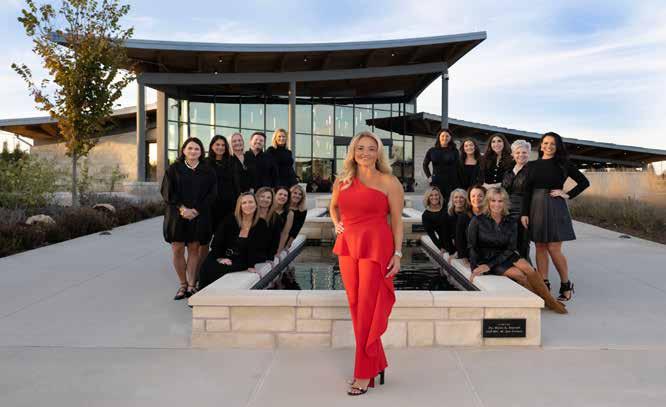
We’ve of cially been named the
What does this mean for you?
When you work with the #1 team, you aren’t just getting a sign in the yard.
You’re getting:
•High-impact marketing
•Unmatched insight into the Kansas City market
•Complete home staging
•A team that knows how to win in any market
We’re proud of this distinction: hard work, dedication and our wonderful clients got us here. Thank you.
Let’s write your next chapter. Together.
OUR MISSION
Kansas City is our beat. As the city’s definitive magazine, we bring Kansas City to life with dynamic storytelling, unforgettable photography and design that pops. We’re the metro’s trusted, modern guide—celebrating what works, questioning what doesn’t, spotlighting innovation and curating the very best in culture, food, fashion and city life.
EDITOR-IN-CHIEF
Dawnya Bartsch
GENERAL MANAGER, BUSINESS OPERATIONS
Alex Healey
ARTS AND ENTERTAINMENT EDITOR
Nina Cherry
CONTRIBUTING EDITOR
Nicole Kinning
FOOD CRITIC & WRITER
Tyler Shane
SOCIAL MEDIA COORDINATOR
Madison McMillen
PRODUCTION COORDINATOR
Dominique Parsow
ADVERTISING SALES
Angie Henshaw and Brett Miller
COPY EDITOR
Kelsie Schrader
WEB COORDINATOR
Madison Russell
NEWSSTAND CONSULTANT
Joe. J. Luca & Triva Bridges JK Associates, www.jkassoc.net
WRITERS
Kelly Bunch, Nina Cherry, David Hodes, Lauren Kanan, Nicole Kinning, Beth Lipoff, Ian Ritter, Tyler Shane, Sarah Sipple and Hampton Stevens
DESIGNERS/PHOTOGRAPHERS
Julie Babcock, Kevin Goodbar, Samantha Levi, Dominique Parsow, Anna Petrow, Kelly Powell, Ian Simmons, Dana Smith, Mark Snyder, Clayton Steward, Paola Tello and Jake Wickersham

SUBSCRIPTIONS
kansascitymag.com/subscribe or call (913) 469-6700 Scan here to subscribe to our newsletter and magazine.
Kansas City magazine is published monthly by KC Publishing, LLC. No part of this publication can be reprinted or reproduced without the publisher’s permission. Kansas City magazine assumes no responsibility for unsolicited materials. Kansas City magazine adheres to American Society of Magazine Editors guidelines, which requires a clear distinction between editorial content and paid advertising or marketing messages.
INQUIRIES

KC Publishing, LLC 605 W. 47th St., Suite 200 Kansas City, MO 64112 (913) 469-6700
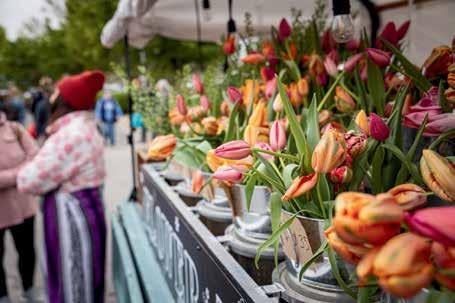
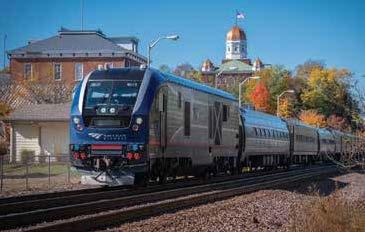




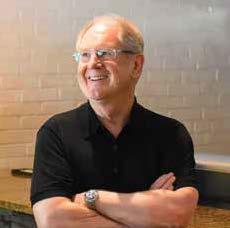









I WOULDN’T CALL MYSELF A GARDENER, not even close. When I gussy up my patio and porch for spring, I buy already artfully arranged containers of flowers and ferns and just plop them right into my large planters—no mess, no fuss. However, every year, somehow, I do manage strawberries. And I have a potted lemon tree that lives a migratory life: in my kitchen all winter, outside all summer. It’s not much, but it’s enough to remind me how good it feels to grow even a small piece of what you eat.
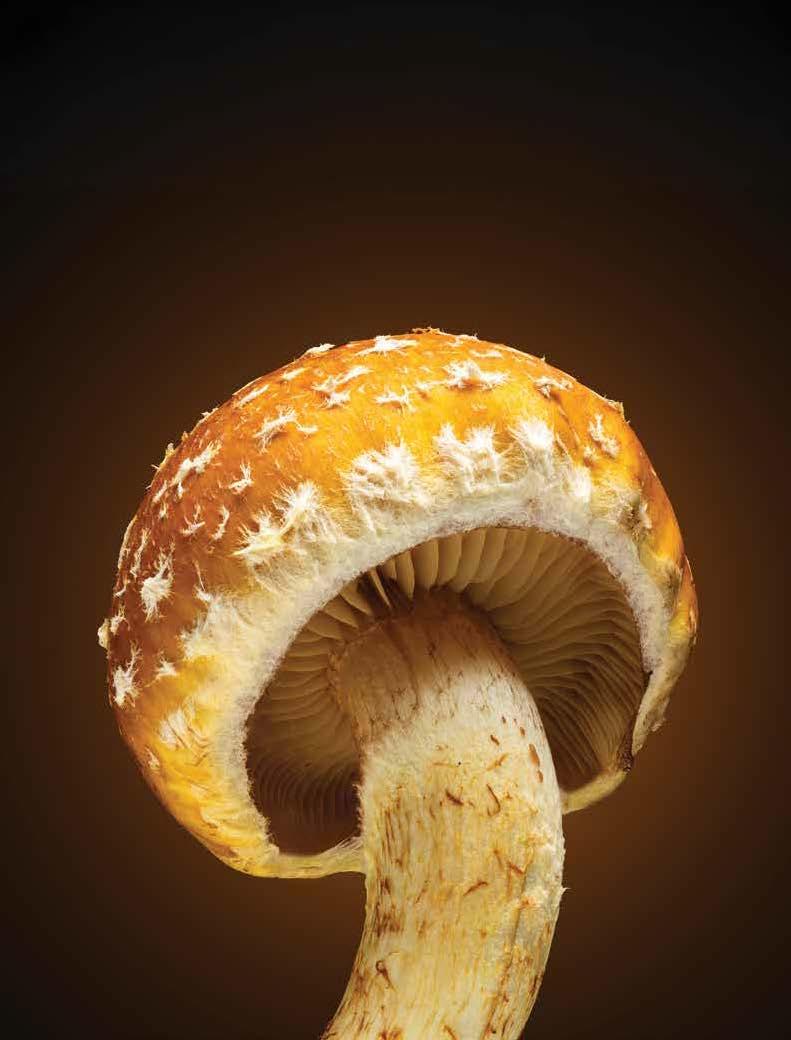
Because we all want to eat well, and good food just doesn’t start in your kitchen; it starts in a field, or a greenhouse or even a dim, misty warehouse filled with sprouting mushrooms in neat vertical rows. What that means, is it starts with people who’ve built their lives around doing things differently.
In this issue, just in time for summer’s produce bounty, we dig into the metro’s fresh food scene, highlighting some of the markets, businesses and programs influencing how we prepare and eat our food. There’s the Kaw Valley Farm Tour, where “farm-totable” stops being a slogan and becomes something you can actually touch—basil, chickens, soil and all. There’s Robin Moore, who couldn’t find the mushrooms she wanted, so she grew them. She now supplies them to some of Kansas City’s best restaurants. And there are KC tea masters traveling halfway across the world to control every step, because flavor starts at the root.
And then there’s a different kind of nourishment highlighted in this issue entirely: the KC Diamonds, the city’s first professional women’s softball team. They’re not growing food, but they are growing something just as vital—momentum, visibility, a new team to add to the city’s growing women’s sports legacy.
Throughout this issue, that’s what you’ll find: stories about people building, creating and growing what didn’t exist before because they know it should.
Dawnya Bartsch, editor-in-chief dawnya@kansascitymag.com


Mark Snyder Art Director
Mark Snyder, a graduate of the ArtCenter College of Design in Pasadena, California, has worked for a variety of agencies and publishers, such as Petersen Publishing, Motor Trend Group and PriMedia, producing a multitude of titles. For this issue, Snyder designed the piece about the KC Diamonds.


Madison McMillen Photographer & Editor Photographer and editor
Madison McMillen, a KC native, has spent the last five years working in local news across the Midwest. She now brings that editorial sensibility to Kansas City magazine’s social media platforms, crafting visual stories and digital campaigns that celebrate the people, culture and character of her hometown.
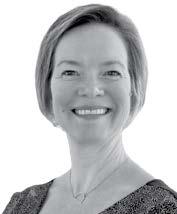

Dana Smith Art Director
Dana Smith is a Denver-based art director and designer whose work has appeared in publications such as Outside, SKI, and 5280, Denver’s city magazine. For this issue, Smith designed the feature on local produce. She believes good design is a lot like good produce—best when it’s fresh, thoughtful and maybe just a little bit spicy.
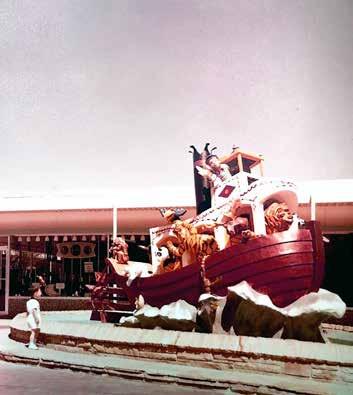
Hide and Seek
Our story tracing the unknown fate of the nearly 30 animal sculptures that once lived at The Landing pedestrian mall struck a cord with readers. Folks flooded us with their own memories of climbing on the giraffes and kangaroos at 63rd and Troost, but no one offered a hint as to where they might be.
There was Noah’s Ark before they put the fence around it. People used to throw coins in there, and we’d fish them out and use them in the gumball machine in that store right there. My sister once got her head stuck in the bars of the fence surrounding the ark when trying to get the money out. A police o cer had to come help her get her head unstuck.
- Heidi Hood Sullivan
One of my best childhood memories in the ’60s was climbing on all the animal sculptures and playing make believe.
- Leslye Cook
Lived about a halfmile from The Landing. Remember the ark and the animals. Looks like Record
“I’d heard about lion’s mane or king trumpet and wanted to try those, but I couldn’t find them at the grocery stores. So I kind of took it upon myself to grow them.”
- Robin Moore,, founder of MyCo Planet mushroom farm
Numbers From This Issue
4
The booth number President Harry Truman favored at the historic Savoy restaurant in Independence, now preserved as the President’s Booth. Page 00
6,500
The capacity of Legends Field, home stadium of the Kansas City Diamonds. It will be the largest venue in the Professional Softball League by far. Page 00
18
The number of months it took to complete the Overland Park Farmers Market’s $34 million renovation. Page 00
Rendezvous along with Macy’s. Fun times.
- Mike Henggeler
Anyone got some pics? I don’t remember them. Maybe I wasn’t old enough or the wrong part of town.
- Ron Tindall
All my crazy teen years there.
- Bridget Morris
Contact Us KC Publishing, LLC 605 W. 47th St., Suite 200 Kansas City, MO 64112 (913) 469-6700 Email editor@kansascitymag.com

Scan

Shout Out
Thanks to our production coordinator and graphic design artist Dominique Parsow, who rolled up her sleeves and dug in, designing about half the magazine along with performing her regular duties when she saw that we were short-sta ed.


























Richland, MO




From the swi and wide Big Piney River to the meandering, spring-fed Gasconade River, our waterways provide visitors with a variety of memorable experiences. Come paddle, float, swim, or fish. Don’t have your own watercra or gear? Don’t worry. Our outfitters are here to provide you with everything you need.
For more information, maps, and a list of outfitters, visit pulaskicountyusa.com.


Arrowhead becomes “Kansas City Stadium” as a $42.5M makeover
reshapes the NFL’s loudest arena for World Cup soccer
By David Hodes
WITH SIX WORLD CUP games being played at Arrowhead Stadium this summer, the arena has been getting a complete soccer-friendly makeover to go along with its new World Cup name: Kansas City Stadium (only to be used this summer during the World Cup tournament).
The Missouri State Legislature Fiscal Year 2024 budget appropriated $50 million for certain FIFA World Cup activities—marketing, transportation and event support—with $42.5 million reportedly going to stadium renovations. Changes to the stadium have been underway since April 2024, picking up in earnest after the conclusion of the NFL 2025 season.
Since 1999, Arrowhead has hosted a handful of soccer matches, most recently the South American Copa América in 2024, where Uruguay defeated the United States 1-0. A Major League Soccer game between Sporting Kansas City and Inter Miami in April 2024, featuring Miami’s marquee player Lionel Messi, drew more than 72,000 fans, the fourth largest soccer crowd in MLS history. But the soccer legacy in Kansas (Continued on next page)
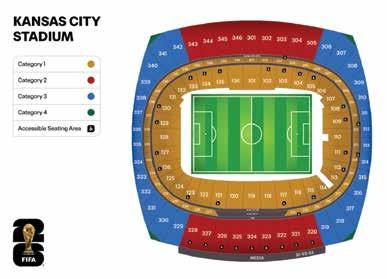


“Arrowhead
Stadium has been getting a total soccer-friendly makeover and a new name: Kansas City Stadium (only to be used during the World Cup tournament).”
(Continued from previous page)
City goes back even further, to the Kansas City Spurs, who played two seasons at Municipal Stadium from 1968 to 1969, right around the time that Arrowhead was being built.
That soccer legacy played a significant role in FIFA’s decision to make Kansas City one of its host cities for the world cup. And FIFA is laying it on thick, promoting the “vibrant energy of Arrowhead Stadium” and calling it “an iconic symbol of innovation and the community spirit at the heart of Kansas City.” It’s an “architectural marvel, home to the legendary Kansas City Chiefs” and offers an “experience that transcends beyond sports, uniting generations in a shared fervor for excellence and excitement.” Yeah, we knew that. Loud, raucous soccer fans should fit right in here, beginning with the Argentina v. Algeria match on June 16 and ending with a quarterfinal match on July 11.
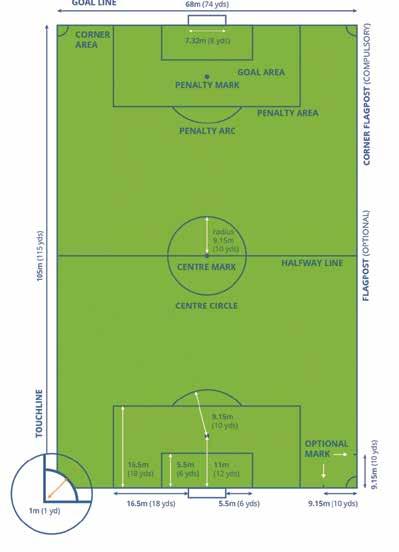
But physically reworking Arrowhead for soccer is no easy feat. The FIFA-approved soccer field is 115 by 74 yards—essentially a squareshaped field. Arrowhead’s field dimensions, like all NFL football fields, are 120 by 53 yards, a definite rectangle.
For modifications to the field, such as widening it approximately 20 yards to meet FIFA regulations, developers have carved up 5,100 cubic yards of earth, enough to fill about 510 large and fully loaded
dump trucks, and removed 9 million pounds, or 4,500 tons, of concrete. Approximately 3,500 seats at Arrowhead had to be reconfigured with removable systems, mostly those on either side of the width of the field.
“Of the approximately 3,500 total seats removed during the modification process and then reinstalled as a modular riser seating system, each of those seats was replaced 1-for-1 in the modified configuration,” wrote Luke Shanno, vice president of corporate communications for the Kansas City Chiefs, in an email response to questions.
Other projects Arrowhead crew have been working on include installing an aeration and moisture control system under the field to ensure a world-class playing surface. “We also installed new LED light banks in 2024,” Shanno wrote. “The ‘warning track’—the area around the edge of the field nearest the wall—was replaced with a seamless natural-to-synthetic turf transition.”
But not to worry. Arrowhead will still be Arrowhead. The process to convert the stadium and field back to the original football configuration will begin immediately following the final soccer match on July 11. The seats will be put back in their original positions, and the field will be ready for the first preseason game.
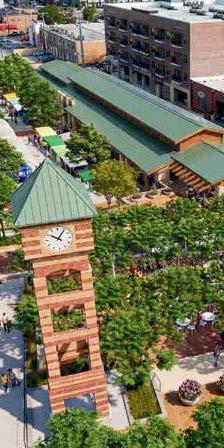
Downtown Overland Park’s newest community gathering space and the new home of the Overland Park Farmers Market Friday, June 5 5:30-7 p.m.
Wednesday and Saturdays
Starting June 6 7:30 a.m.-1 p.m.
SOCCER SUMMER CELEBRATION
Watch Party Tuesday, June 16 5 p.m.
SOCCER SUMMER CELEBRATION
Watch Party Saturday, July 11 5 p.m.



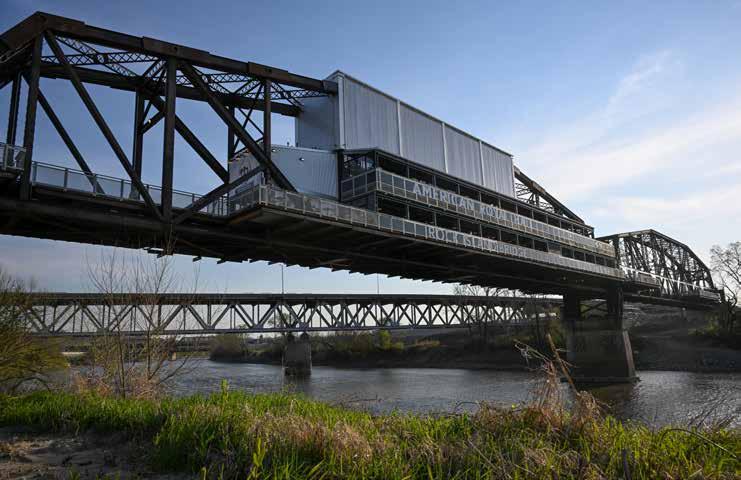
Zeller describes the bridge as a “gift from about 200 Kansas Citians to our city”
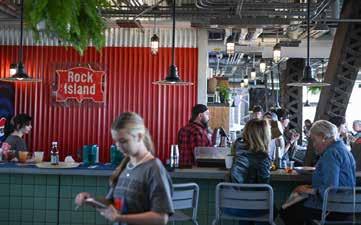
After years of anticipation, a 121-year-old bridge with a $20 million makeover is now open to the public
By Lauren Kanan
SIXTY FEET ABOVE THE KANSAS RIVER, a 121-year-old railroad bridge has found a second life. Reborn as a $20 million gathering place for dining, events and riverfront exploring nearly a decade in the making, the Rock Island Bridge officially opened on April 1.
Kansas City magazine toured the space—which is technically accessed in Missouri but spans the river to Kansas—with CEO Michael Zeller, whose company Flying Truss (the name a play on the famous “flying buttresses” of cathedrals and also the bridge’s trusses), has a 66-year lease on the bridge with Kansas City, Kansas.
Zeller describes the bridge as a “gift from about 200 Kansas Citians to our city,” a collected effort from investors, civic leaders, elected officials, volunteers, lenders, companies and more. “I got to be the leader of the band, but it took a band to get it done,” he says.
The $20 million project was funded 60 percent through private investment, 30 percent from state and local government funding, and 10 percent from philanthropic donations to the Unified Government of Wyandotte County and KCK.
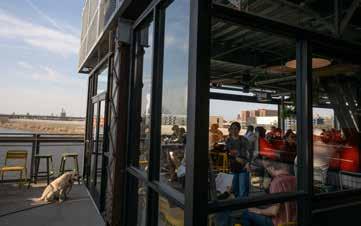
Originally constructed in 1905, the bridge has four main areas: the east-side entrance, the River House restaurant, an open-air public space and the upper-level event venue American Royal Hall. The bridge’s towering steel beams frame the blue sky, and hanging bulb lights create unique sightlines, making the bridge not only an interesting walkway to traverse but a destination in and of itself.
Structurally, it is made of three trusses. The original two are each 100 yards long, and a third smaller truss was added in 1921. It is through the smaller truss that visitors can enter the bridge under a neon sign made by Hammer Out Design. It flies high over the bridge, its height and structure reminiscent of a classic drive-in theater sign.
Rock Island Bridge is free to enter and walk across, and Zeller says visitors can also expect fun events, from farmers markets and live musicians to ticketed concerts and more.
Initially set to open in 2024, the bridge faced delays due to numerous factors, including design upgrades, financing challenges, complications working around the levy raise and a decision by the Unified Government to raise the bridge four feet. To further protect the river valley, the U.S. Army Corps of Engineers also raised the levy by three feet. In response, the Rock Island Bridge was then raised again using lifting gears (originally installed in 1951), a process Zeller says took about three hours for each truss.
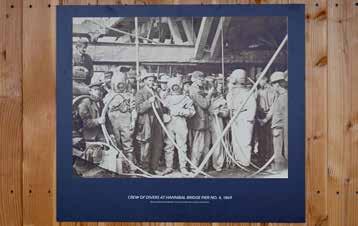
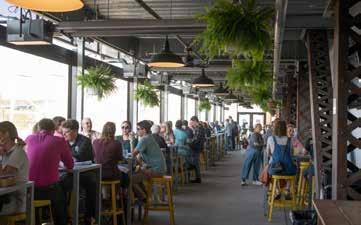
Architecture fans will love how the bridge is highlighted in the new designs. Some outdoor tables encircle the bridge’s beams, for example, and rail lines from the train track are used as footrests for the bridge’s two bars. In American Royal Hall, the top of the bridge is enclosed, allowing for a tall cathedral-style ceiling in the event space. And, Zeller notes, history buffs will be happy to hear that some of the steel in the bridge still bears the stamp of “Carnegie,” a reference to the Carnegie Steel Company that manufactured the original beams.
For bicyclists, walkers and nature lovers, the bridge will connect levee walking paths on both sides of the Kansas River. The Rock Island Bridge is also officially designated a trailhead for the proposed Greenline KC 10-mile-loop path.
Free parking is available on the east side of the bridge, and Zeller says he expects the west side entrance to open mid-summer, where guests can use the bridge to cross from one side of the Kaw to the other by foot or bike.
Zeller says the best part of the project was seeing so many individuals, organizations and companies come together to support the bridge revitalization effort. “And they are doing it for the right reasons: to create something spectacular for Kansas City that our kids and our grandkids are going to enjoy,” he says.
GO: Rock Island Bridge, 1799 American Royal Drive, KCK. Hours vary daily. For more information visit, rockislandkc.com.
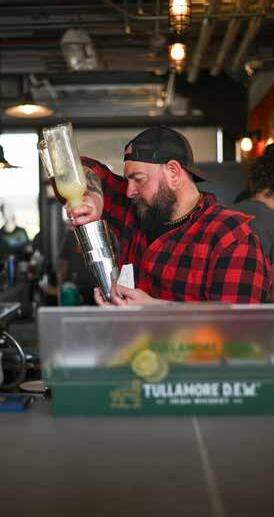
The bridge o ers a few di erent food and drink experiences. For grub on the go, the Rock Island Eats window sells casual fare like loaded fries, a “river dog” topped with queso and crispy onions, and cocktails such as the Kaw Tide Cooler (Tom’s Town vodka, watermelon juice, lime juice, mint, jalapeño simple syrup and a Tajín rim) and Bourbon on a Bridge (Tom’s Town bourbon, pineapple juice, coconut water, lime juice, simple syrup and angostura bitters).
For a sit-down meal, the River House restaurant o ers meals that are more seafood-forward, Zeller says. It is a covered restaurant, but it has open windows for a nice breeze and view of the Kaw. Those holding events at American Royal Hall can either use the in-house caterers, Una Familia Foods, or bring in a preferred vendor of their own. River House seats about 200 while American Royal Hall accommodates roughly 220 seated or up to 350 standing.

by Samantha Levi
By Nicole Kinning
PETE MUNDO HAS has spent nearly two decades in broadcasting, from an internship in Philadelphia and newsroom positions in Oklahoma and New York to hosting his live KC talk radio show.
Since 2018, he has hosted a morning show, Mundo in the Morning, on KCMO Talk Radio, where he has built a loyal audience by bringing his strong opinions and an open mind to every conversation. He shares how his winding path led him to his daily show, why live talk radio still has the edge over podcasts and what keeps him grounded outside the studio.
What originally drew you to broadcasting, and how did your career take shape in Kansas City? Listening to talk radio, mostly sports, starting in middle school, is when my passion and love began for
broadcasting. Growing up in northern New Jersey, WFAN was the first-ever all-sports radio station in the country, and it had some top talent like Mike and The Mad Dog, Steve Somers and Don Imus. However, I never viewed it as a career path. I did a talk radio show at Villanova University, but it was for fun.
When the 2008 financial crisis hit, I was unable to secure an internship in my field of finance and real estate. I started to consider broadcasting as a potential career. That led to an internship at ESPN Radio in Philadelphia, part-time broadcasting gigs after graduation and then to Oklahoma for a sports and news broadcasting position. It was the best experience imaginable.
In 2013, my fiance, now wife, and I moved to New York City, where I worked at WCBS Newsradio 880, WFAN Sports Radio and CBS Sports Radio. By 2016, I was filling in for Fox News’ national radio network, and I fell in love with talking about the news.
A connection recommended I look at Kansas City and KCMO Talk Radio. After months of test shows and interviews, my show began in April of 2018, and it’s been an incredibly fun, rewarding and fast eight years.
How do you know what stories resonate most with your audience? There’s not an exact science to it, but over time, you just start to get a “feel” for what is going to make the audience tick. What is the big national story of the day? How can we localize it or make it relatable to Kansas City? What are people going to be talking about at the water cooler? Those are the angles we try to explore each morning.
In an era of podcasts and digital media, what role do you think traditional radio still plays, and how have you adapted? Are we really in an era of podcasts? Or are we in an era of talk shows that are just time-delayed? There’s no doubt that podcasts are hot, but all they are, at their core, are talk shows. In a climate of nonstop breaking news, live radio has a huge edge that our industry has not
done a good enough job in telling its own story. Also, talk radio has caller interaction in real time, which is not something a podcast can do.
“What are people going to be talking about at the water cooler? Those are the angles we try to explore each morning”.
↓ Listen: Catch Mundo
How would you describe your style as a host? Has it evolved over time? Strong opinions, with a willingness to listen and learn. The best part of having live callers is that if there is a caller who is an expert in their field, I am willing to have my mind changed. Too many hosts think they need to always double down on their opinion, even when presented with different information or new facts. That’s an act. And it’s not how real people interact with each other.
When you’re not working, how do you unplug? Burnout can be real, but watching and opining on the news of the day are things I would be interested in doing anyway. But I do try to have moments that are news- and phone-free to reset, whether it’s taking my dog for a walk with my daughter, a night out to dinner with my wife, or watching college football, basketball, the Chiefs or a golf tournament.

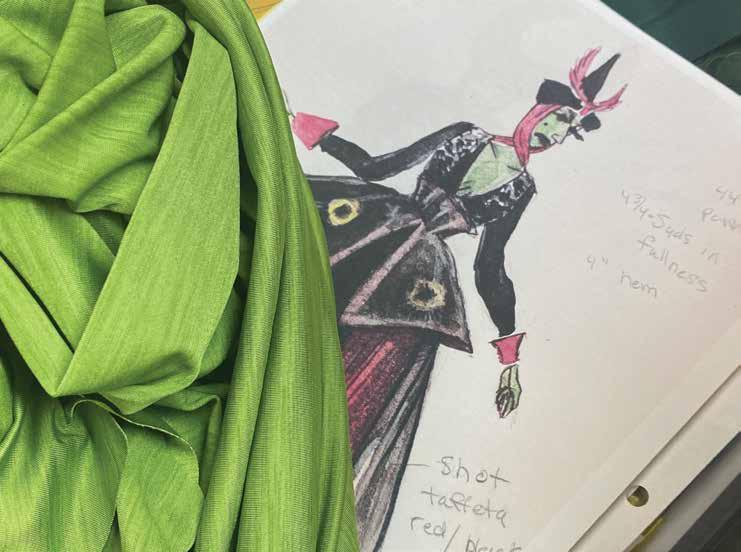
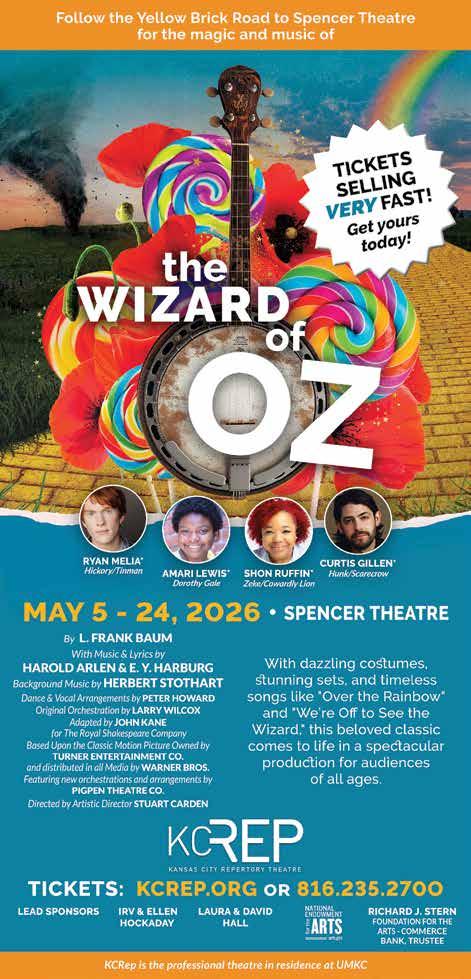
KCRep teams up with PigPen Theatre Co. for a whimsical, music-driven take on The Wizard
By Nina Cherry
FROM THE WIZ to Wicked, L. Frank Baum’s turn-of-the-century novel
The Wizard of Oz has seen a plethora of interpretations—especially for the stage. As Dorothy and Toto stray far from their Kansas farm, KCRep’s upcoming production, which runs May 5–24, makes the classic story its own, in collaboration with PigPen Theatre Co.
KCRep artistic director Stuart Carden says the New York City-based indie troupe specializes in productions that place “music-making at the center of the experience.” In this reimagining, the score is performed entirely by 15 actor-musicians: The Cowardly Lion will timidly strum the ukulele; the Tinman operates as a rustic one-man-band, complete with a washboard integrated into the costume; Dorothy doubles as a cellist.
“It’s very much inspired by the classic film, which moves
from black and white to technicolor when Dorothy opens her farmhouse door into Oz,” Carden says. “We’re doing a similar approach to the music. When we’re in Kansas, the music is very sparse, Americana and acoustic. When we land in Oz, everyone plays and it will be a much richer, more diverse sound.”
Although the interpretation is innovative, Carden says the script stays true to the original. “We’re not approaching it in a revisionist way, as Wicked does by giving Elphaba and Glinda a back story,” he says.
The cast features several local talents, including leading lady Amari Lewis as Dorothy. Shon Ruffin (of soul band The Freedom Affair) portrays a woman-cast Cowardly Lion, and frequent KCRep performer Jenise Cook returns as a luminous Glinda the Good Witch. A 10-member local youth cast rounds out the ensemble.
Beyond the music, the production teams up with Lawrence-based puppet company Simple Mischief, which has designed a puppeteered Toto, flying monkeys and more. “We’re approaching the flight of the Wicked Witch in a style that I call lo-fi, high imagination,” Carden says. All costumes, set design, lighting and sound effects are created in-house for a cohesive and whimsical vision.
GO: May 5–24. Times vary. Spencer Theatre. Visit kcrep.org for tickets and more information.
“It’s going to be pretty fantastical,” Carden says.
BY NINA CHERRY


KC’s minor league baseball team opens the season with a matchup against the Chicago Dogs. This year’s roster features the return of power hitter and outfielder Isiah Gilliam, along with newly signed players like local standout Marcus Smith, an alum of Pembroke Hill School. To commemorate the home opener, stick around for the post-game fireworks display. May 19. 6:35 pm. Legends Field.
Cinco de Mayo Fiesta
For 100 years, Guadalupe Centers’ Cinco de Mayo Fiesta has packed Westside streets with a vibrant celebration of Mexican culture. To commemorate the organization’s centennial Fiesta, enjoy live music from local bands, children’s activities, plenty of traditional cuisine and more. May 1–2. Times vary. Westside.
Brookside Art Annual
Brookside Art Annual celebrates 40 years as a premier showcase. Each May, the art festival attracts over 100 artists (out of a pool of approximately 1,000 applicants) from around the country. From oil paintings to jewelry to ceramics, explore a robust display of striking artwork in the charming, historic neighborhood. May 1–3. Times vary. 63rd Street and Brookside Boulevard.
The Great Gatsby
In the Roaring Twenties, flappers defied modest societal norms of womanhood by sporting shorter dresses and hairstyles and embracing nightlife—which included partaking in once-scandalous dances like the Charleston. The Kansas City Ballet pays tribute to this formative era in music and dance with a reimagining of F. Scott Fitzgerald’s The Great Gatsby. Bringing the glitz, glamour and grandeur of the Jazz Age to the Kauffman Center, the production is choreographed by renowned director Septime Webre and features extravagant set design and costumes by Academy Award-winning designer Tim Yip. May 8–17. Times vary. Muriel Kauffman Theatre.
If you’re on the hunt for Mother’s Day plans, look no further. Hosted by Mildred’s, this market—inspired by Brooklyn Flea—pops up each second Sunday of the month on 19th Street between Wyandotte and Baltimore streets. Treat Mom to one of KC’s best breakfast sandwiches (and coffee and cocktails) before shopping a wide range of local produce and flowers,
artisan-made goods, vintage gems and more. May 10. 9 am. Mildred’s (Crossroads location).
If you tuned into the Super Bowl this past February, you likely recognize singer-songwriter Charlie Puth from his soulful rendition of “The Star-Spangled Banner.” Although Puth initially rose to popularity posting covers on YouTube, his big break ultimately came from a feature on Wiz Khalifa’s 2015 hit single “See You Again.” Now, Puth comes to Starlight Theatre in support of his latest album, Whatever’s Clever!, for a night of music under the stars. May 13. 7:30 pm. Starlight Theatre.
Hot Country Nights are back, bringing live music to the Power & Light District every Thursday through August. Hailing from Southeast Texas, Eli Young Band kicks off the summertime series with its gritty and down-to-earth Southern rock stylings. Sing along to fan favorites like “Even If It Breaks Your Heart” and “Crazy Girl.” May 21. 7 pm. Kansas City Live!
Folk singer-songwriter Ben Rector’s latest endeavor, Symphonies Across America, is inspired by the past 15 years he’s spent on the road. Performing his catalogue alongside orchestras nationwide, Rector is joined by friend and fellow singer-songwriter Jon McLaughlin. The tour brings the duo’s songs—like McLaughlin’s “Beautiful Disaster” and Rector’s “Make Something Beautiful”—to new heights with lush symphonic arrangements. May 21–22. 8 pm. Helzberg Hall.
Held each Sunday before Memorial Day, this KC tradition returns to honor fallen soldiers. Tens of thousands of audience members

will gather on the lawn of Union Station and the National WWI Museum and Memorial for food trucks and patriotic festivities. The Kansas City Symphony reliably ends its program with a performance of Tchaikovsky’s climactic 1812 Overture (and deploys real canon blasts), immediately followed by a dazzling fireworks display. For those who’d prefer to avoid the crowds, Kansas City PBS broadcasts the festivities from home. May 24. 5 pm. Union Station & National WWI Museum and Memorial.
Carín León brings the sounds of Mexico’s Sonoran desert to Kansas City. Weaving regional styles like ranchera and norteño with rock and roll and country, the nine-time Latin Grammy Award winner is best known for songs like “Según Quién” and “Primera Cita.” Leon’s North American tour precedes a September residency at Las Vegas’ Sphere, where the musician will make history as the first Latin artist to headline the mega-venue. May 28. 8 pm. T-Mobile Center.






KC’s own Tech N9ne teams up with longtime collaborator and fellow platinum-selling rapper E-40 on the Strange Wid’ It Tour, with the Midland Theatre performance closing out the run. Beyond Tech N9ne’s own music, the rapper has spent more than two decades building record label Strange Music into a hip-hop empire right out of his hometown. Special guest (and Strange Music artist) King Iso joins the lineup. May 24. 8 pm. The Midland Theatre.
KC’s favorite fundraiser, Big Slick, returns. For 17 years, this benefit for Children’s Mercy Hospital has brought homegrown celebrities (and their friends) back to their hometown. This year, hosts include Paul Rudd, Saturday Night Live alums Heidi Gardner and Jason Sudeikis, Modern Family’s Eric Stonestreet and more. The celebrity weekend kicks off with a VIP party at The K, where attendees have an opportunity to mingle with the stars, and culminates in a Saturday-night performance at T-Mobile Center. May 29–30. Times and locations vary.
It’s been 20 years since Ed Bassmaster launched his YouTube channel, building a following for public pranks and quirky character sketches. After a long string of viral videos, he’s sharpened his stand-up chops, delivering observational humor and energetic crowdwork. May 29–31. Times vary. The Comedy Club of Kansas City.
KC’s annual celebration of Italian-American culture returns to Zona Rosa. Across the three days of festivities, enjoy an Italian motorsports show, bocce ball, cooking demonstrations, live performances and more. The music lineup is headlined by KC’s own Kate Cosentino, a former contestant on The Voice now based in Nashville. And of course, food is an integral part of the festivities. Vendors will be serving up everything from arancini to lasagna to tiramisu. May 29–31. Times vary. Zona Rosa.
Kansas City Folk Festival returns to Washington Square Park for a full day of free music. This year’s headliner is nine-piece soul powerhouse
The Freedom Affair, along with performances from R&B singer Adeta Marie, Flutienastiness and The Soul Patrol, clawhammer banjo player Kaïa Kater and more. Plus, attendees can browse the craft market and grab a bite from food trucks. May 30. 11 am. Washington Square Park.
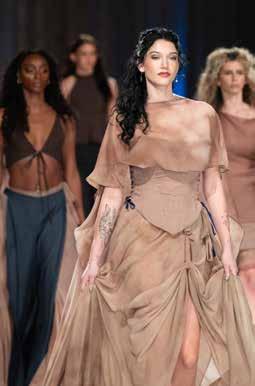

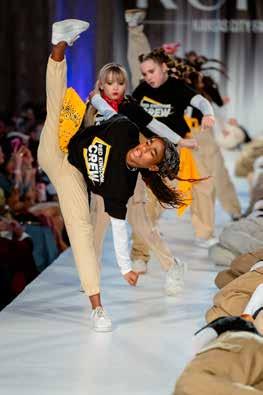
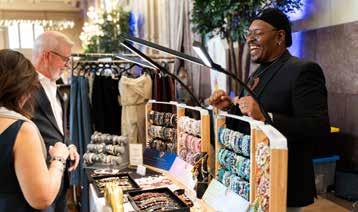
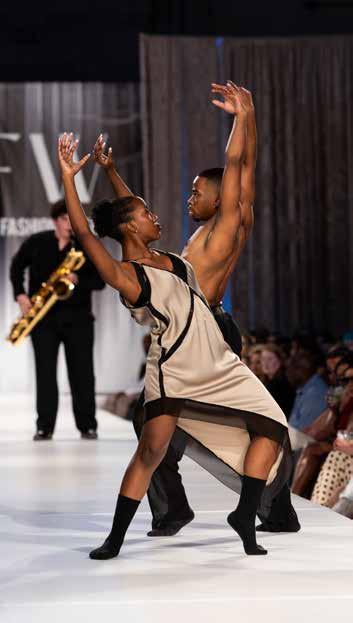
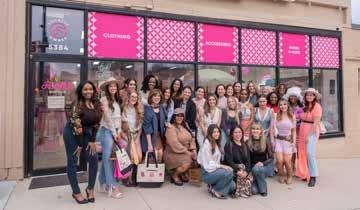
AT THE END OF MARCH , Kansas City Fashion Week once again proved why the heart of the Midwest belongs on the fashion map.

The event, which ran March 20–28, transformed Union Station into an epicenter for local, national and international designers alongside world-class stylists, makeup artists, models and photographers. For up-and-coming designers, it was an invaluable opportunity to gain exposure while established names used the week to reconnect with their audiences. Thanks for another great season—and see you in the fall, KCFW.
We want to hear from you. Tell us about events happening in the community.
–Dawnya Bartsch, editor-in-chief editor@kansascitymag.com.









Indie rocker Kevin Morby turns road trips, solitude and Kansas landscapes into a sprawling new sound
By Nina Cherry
IT’S NOT HARD to find music that romanticizes the cityscapes and fast-paced hustle of East and West Coast cities (think Billy Joel’s “New York State of Mind” or 2Pac’s “California Love,” to name just a few). However, when it comes to idealizing the heartland, the catalog is much thinner.
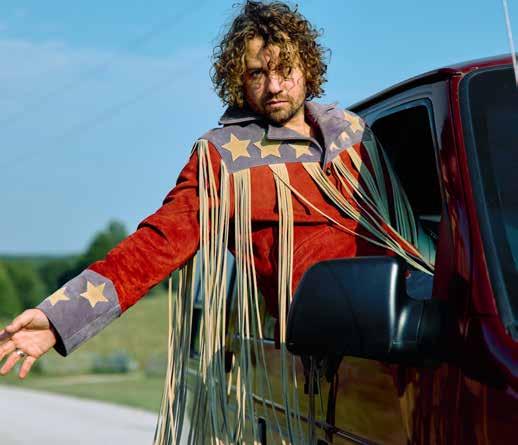
Singer-songwriter Kevin Morby’s forthcoming album, Little Wide Open, sentimentalizes the less-pined after landscapes of the Midwest—most notably, the sweeping plains of Kansas. “It’s a highway album,” he says. The indie-rocker’s eighth studio album will debut May 15, and on May 29, he’ll bring the record home with a performance at Uptown Theater.
If you’re not familiar with Morby’s music, he’s arguably one of the most prolific artists to come out of Kansas City in the 21st century (along with names like Janelle Monáe and Logan Richardson). Originally from Overland Park, Morby spent over a decade calling both New York City and Los Angeles home, and he’s traveled the world with his down-to-earth musical storytelling. Most recently, R&B legend and civil rights activist Mavis Staples covered one of Morby’s most popular tracks, “Beautiful Strangers.” Staples’ rendition of the protest song, which Morby wrote in the wake of the 2015 terrorist attack at Paris’ iconic Bataclan theater, garnered a Grammy Award this past February.
I grabbed lunch with Morby to talk roadtrips, his formative years in KC, performing for his hometown and more.
As a teenager from Overland Park in the early aughts, Morby cut his teeth playing DIY shows in the Crossroads and in run-down warehouses throughout the West Bottoms. He played drums in punk band Creepy Aliens and fondly recalls his first show as a solo artist at Prospero’s Books in Midtown.
On the precipice of social media’s big boom, Morby recalls KC’s music scene as “very word of mouth,” having to carve out his own lane. “It’s so funny to think about,” he says. “I booked shows through friends or by just going into a venue and asking if I could play there. I remember it fondly for those reasons—it was very organic.”
By the time Morby turned 18, he was ready to push his budding career further and, having never even visited, moved to New York City. He says his upbringing in KC’s gritty DIY scene prepared him well for the transition.
“Having the ability to do stuff ourselves, with the community I was a part of [in Kansas City], made you feel like there was no one to tell you couldn’t,” Morby says. “In New York, I found a similar community that was operating on a much bigger scale. I felt really primed to enter the scene there because of where I grew up. In fact, it was a lot harder to do in the Midwest, but we still pulled it off.”
In NYC, the musician played bass for folk rock band Woods and co-fronted The Babies. Eventually, with more experience as a bandleader and songwriter, he decided it was time to strike out on his own. In 2013, Morby released his debut solo album, Harlem River, shortly after relocating to Los Angeles.
A couple years later, after getting what Morby describes as his first “real chunk of money from music,” he bought a house in downtown Overland Park. He initially rented it out to a friend, but when the house became vacant, it felt like the right time to come home. After 12 years away, he told himself he’d try it out for six months.
“It’s been eight years,” Morby says. Today, he continues to reside in Overland Park with his partner, Katie Crutchfield, who leads Americana project Waxahatchee. Morby says KC’s more leisurely life pace is conducive to writing, which is well-reflected in his upcoming album, Little Wide Open. “I can burn myself out in a bigger city very easily, and I find that my creative life gets pushed to the side,” Morby says. “Life moves much slower here—there’s a lot of time and space, and I have to fill that somehow. That’s where a lot of my creativity surfaces.”
Road trips are one of the things that keep Morby occupied. “I love solo drives, adventuring by myself or with my partner, Katie,” he says. “There are so many great day drives—Memphis, Arkansas, Oklahoma. I do a lot of adventuring out here.”
He points to two of the album’s singles, “Die Young” and “Javelin,” as representative of the project. Shaped by his frequent and often arbitrary travels, much of the hour-long record was written in the in-between moments of his busy touring schedule. “Coming out of the pandemic and going back to touring was such a whiplash effect,” he says. “It was a funny sensation to be traveling the world and then having an isolating week or two. When I was home, I was still trying to keep to myself, so I’d go to a random town for a night just to work on music.”
Now, as he gears up to tour the record, even a seasoned performer like Morby admits that performing for his hometown is still nerve-wracking.
↓
GO: Kevin Morby. May 29. 8 pm. Uptown Theater, 3700 Broadway Blvd., KCMO.
“It’s stressful,” he says. “It’s when family and friends come—it feels like a wedding or something. It’s great.”
help feed the animals at the kczoo for an entire year!















friday, june 5















BE A PART OF THE WILDEST FUNDRAISER OF THE YEAR!



AJOIN US FOR A 21+ EVENING AT THE ZOO ON FRIDAY, JUNE 5. PROCEEDS FROM JAZZOO FEED THE NEARLY 10,000 ANIMALS WHO RESIDE AT THE ZOO & AQUARIUM AND PROVIDE EDUCATIONAL OPPORTUNITIES FOR CHILDREN IN OUR COMMUNITY.


new foot and ankle clinic is coming to AdventHealth South Overland Park under the direction of Matthew Galliano, DPM, previously with the Kansas City Bone and Joint Clinic in Overland Park.
Patients familiar with Dr. Galliano know him to be a respected board-certi ed podiatrist and foot and ankle specialist with more than 25 years of experience, which is why he was ranked as the leading podiatrist in the Overland Park area based on Google reviews. A er serving patients at Kansas City Bone and Joint Clinic in Overland Park, Galliano is transitioning his current practice to the AdventHealth Medical Group Foot and Ankle at AdventHealth South Overland Park in June.




Dr. Galliano will continue to provide comprehensive services for patients across the metropolitan area, focusing on the diagnosis and treatment of a wide range of foot and ankle conditions. With an emphasis on both advanced surgical correction and evidence-based non-surgical treatments, Dr. Galliano remains committed to helping patients return to an active, pain-free lifestyle.
“ is new clinic at AdventHealth South Overland Park represents a signi cant step forward in expanding specialized foot and ankle care in the region, o ering patients greater access to high-quality, focused treatment close to home,” said Galliano.




AdventHealth Medical Group Foot and Ankle will begin accepting new patients in early June. For more information or to schedule an appointment, additional details will be available soon through AdventHealth.

By Nina Cherry
WHEN ANTHONY GLASSMAN —founder of outdoor brand Prairie Sailor—designs clothing, he’s often thinking about how the pieces can be layered. Based in Mission, Kansas, the company specializes in attire for nature-loving Midwesterners, so preparing for the region’s notoriously unpredictable and fluctuating weather is a must.
“In the morning it could be 30 degrees, and in the afternoon it could be 85,” Glassman says.
Originally from Hays, Kansas, Glassman started his career as an engineer, working for his father. But he knew that wasn’t his passion.
“Clothing always spoke to me—even as a kid looking through sports books or watching movies, I would notice the clothing more than anything,” he says.
While living in Hays, Glassman began selling his own T-shirt designs. Eventually, he decided he wanted to learn design “the right way.” After
going back to school and moving to Kansas City, he opened Prairie Sailor’s storefront in the summer of 2021.
Now, Prairie Sailor is gearing up to drop its summer collection, focused on lightweight, fast-drying and comfortable fabrics. Canvas shorts, lightweight polos and activewear button-down shirts will soon hit the racks.
“We’re concentrating a lot on a kind of tennis, country-club vibe, except in the outdoor space,” Glassman says.
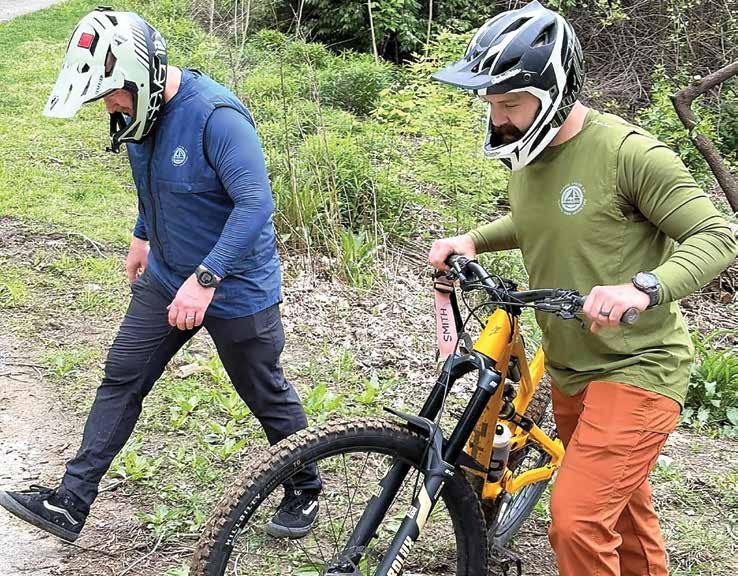
Although the brand specializes in men’s clothing, Prairie Sailor also offers a limited selection for women. Beyond breezy shorts and sturdy jackets, the Mission storefront doubles as a bike shop—a passion project of sorts for Glassman, an avid mountain biker who noticed the neighborhood was in need of a repair shop.
As with much of the brand’s attire, color plays a central role. You won’t find any neon hues on the racks; Prairie Sailor gravitates toward environmentally inspired tones like mustard yellow, forest green and sky blue.
“Anytime I went biking or hiking, I noticed everyone was in grey or black,” Glassman says. “I wanted to include some creative colors—nothing overdone, but something cool so you look a little different out there.”
Shop Prairie Sailor’s collection in person (5811 Johnson Drive, Mission) or online at prairiesailor.com.
A new
store
at the Kansas City Art Institute means artwork by alumni, faculty and students can finally be yours
By Nicole Kinning
WHEN BUSINESSMAN HOWARD VANDERSLICE purchased a grand brick mansion on Warwick Boulevard in 1927 and gifted it to the Kansas City Art Institute, he had a vision. At a dinner the following year, he told students he hoped the art school would inspire them to give “to this city, in the forms of great marble and great canvases, the inspiration it has given them.”
Photography by
Jake Wickersham
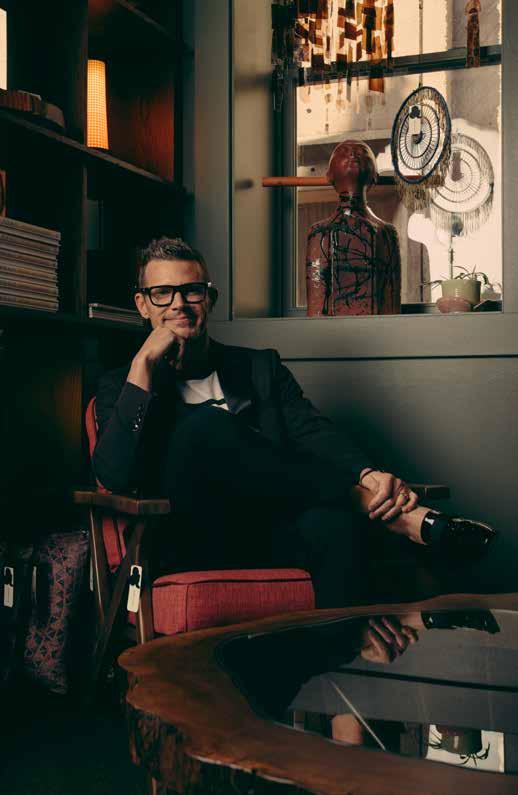
Nearly a century later, that vision has come to life. Marble & Canvas, KCAI’s new on-campus retail store, opened its doors in early April inside Vanderslice Hall. The 900-square-foot space, formerly a cluster of offices and a narrow hallway, has been completely reimagined by Gabe York, the lead design consultant on the project. York, who is based in Kansas City, has a resume that stretches from Banana Republic and Anthropologie on the Plaza to Burberry’s U.S. expansion.
When KCAI president Peggy Shannon brought on York to lead the project, the brief was pretty openended. “They said, ‘We want to open a store, and we want to support alumni. And other than that, we don’t know,’” York says.
York took that freedom and ran with it. During early walkthroughs of Vanderslice, he kept returning to one thought: The historic mansion’s mix of refined and raw design reminded him of New Orleans-style architecture. The challenge, he says, was figuring out how to present contemporary artwork within a traditional setting without losing the integrity of either. “There’s this juxtaposition you have to cram into one space, and it has to make sense somehow,” York says.
The result is a curated, immersive environment where a single wall shares the work of five or six artists, and ceramics, textiles and works on paper are layered together in vignettes.
The collection comes entirely from KCAI alumni, students and faculty. York spent months connecting with artists and their work. “I have literally been on the phone with people as they’re crying, telling stories about how much KCAI changed their life,” he says. He mentions two artists in particular: Kelly Porter, a 1997 printmaking graduate and founder of the handpainted wallpaper company Porter Teleo (whose work can be found in Gwen Stefani’s home and restaurants in Japan); and Irma Starr, a ceramicist who studied at KCAI in the early 1960s and whose work now lives in the Nelson-Atkins Museum of Art among other museums around the country. Both Porter and Starr are contributing work for the shop. “[Starr] just laughs and hugs and speaks so highly of what the Art Institute meant to her,” York says.
Beyond being a retail spot, Marble & Canvas is designed to make art ownership more approachable to those who don’t consider themselves collectors. “We wanted to create a space where people could come and be surrounded by art and not be afraid to touch it,” York says.
Sales from the store will support student scholarships. The school, one of the oldest art colleges in the country, was founded in 1885 and is, as York puts it, “a hidden little city,” which he hopes to change. “It’s no longer going to be Kansas City’s secret,” York says.
↓ GO: Marble & Canvas, 4415 Warwick Blvd. in Vanderslice Hall, Tuesday–Friday, 10 am–5 pm.



By Nicole Kinning
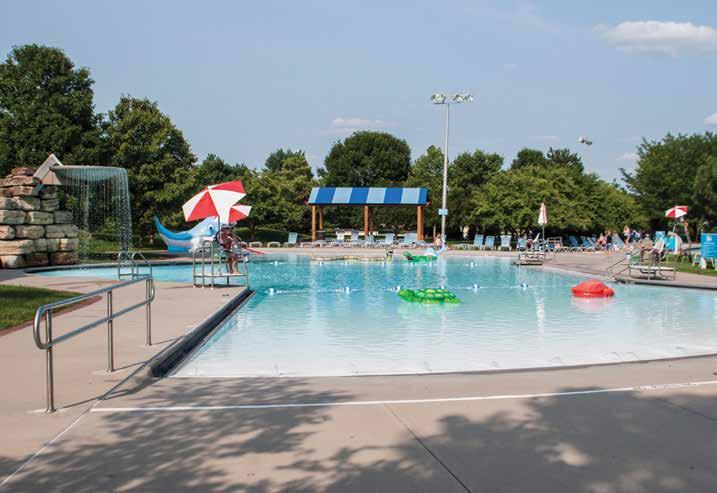
WHETHER YOU’RE UP for some cannonballs, want to swim laps or are just looking for a spot to unwind, there’s a perfect pool spot waiting for you in KC. Here are all the best places to cool off, from neighborhood gems to luxurious adults-only escapes and full-fledged waterparks.
BEST ALL-AROUND CROWD-PLEASING POOL
Leawood Aquatic Center (10601 Lee Blvd., Leawood)
Leawood Aquatic Center checks every box for an ideal summer pool day. There are fountains, slides and lap lanes, plus plenty of room to spread out thanks to grassy areas and shady spots that make it easy to stay awhile. Semi-recent upgrades to the facilities make the whole space feel fresh, and a quick swim could also easily turn into an all-day adventure since the pool is set near Leawood City Park’s trails, shelters and playgrounds.
BEST FOR A STAYCATION
The Elms Hotel and Spa
(401 Regent St., Excelsior Springs, MO)
Situated on 16 acres just northeast of the city, The Elms is an entire resort-spa-wellness retreat experience. With a hot tub,
poolside bar and cabanas, the outdoor pool is the perfect spot to slow down, and the surrounding grounds make it feel completely removed from any hustle and bustle. But the real draw is the 28,000-square-foot spa at the hotel, complete with an indoor lap pool and a grotto-style experience, which is everything you need for a staycation that feels like an escape without the long drive.
Springs Aquatic Center
(9400 N. Congress Ave., KCMO)
Just south of the airport, Springs Aquatic Center is a paradise for kiddos, with slides, a splash pad and a sprawling spray ground. There’s also a large whirlpool (not a hot tub), where jets create a gentle spinning effect that kids will love. And parents aren’t left out either; there are plenty of lounge chairs to relax within eyesight of your little ones.
BEST OPTION FOR A POOL PARTY Swimply
Think of Swimply (swimply.com) as the Airbnb of pools—an easy way to rent a private pool for a few hours or a full day. Options span the city, from indoor pools in Olathe when the weather won’t cooperate to sprawling outdoor setups in Bucyrus, Kansas, with full backyard amenities like grills and pickleball courts. Just keep in mind that each host sets their own rules, so it’s worth checking guest limits and extra hours before you book.
BEST “SANDLOT SUMMER” POOL
Budd Park Pool
(5600 Budd Park Espl St., KCMO)
Dating back to the 1980s, Budd Park Pool has a true nostalgic neighborhood vibe straight out of The Sandlot (except there’s no Wendy Peffercorn on duty). With plenty of lawn space, shady trees and picnic spots, this public pool is the place where you pack a bologna sandwich and settle in, just like the good old days. There are no frills at this pool, so go ahead and initiate that cannonball contest.
BEST FOR LAP SWIMMING
Park Hill Aquatic Center
(8152 N. Congress Ave., NKC)
This hidden gem is perfect for serious swimmers. The indoor heated pool at Park Hill School District features six lanes and two diving boards with a deep well, making it one of the few spots in the metro where you can really get your laps in without fighting for lane space. Lap lanes are available in two-hour time slots (sign up at parkhill.k12. mo.us), and both residents and non-residents can grab memberships for year-round access.
BEST FOR ADULTS ONLY
Woodside
(2000 W. 47th Place, Westwood)
Woodside, a full-service luxury fitness and tennis club, has the ultimate resort-like pool experience just for grown-ups. Away from the club’s family pool, the adult pool boasts live music, DJs, cabanas, soft seating and hammocks. Amenities go way beyond the basics—think phone charging stations, poolside concierge and even sunglasses cleaning. The exclusivity comes with a price: membership required.
Ad eat et pro esequam alicium rem il iuntendignat eosa si qui nis ne doloribus audit, acea eicaboratur atem vit, imagnis aniaes utemoditia ne ne pro doluptiunt ernam, que vendi intinti sciaerro eventes intius. Ovitiberio minis et omnimin eos acepedit, sit occus sed qui intionem el eat aut quostent. Invelenest as magnis experisi omnis ipit modite plite suntecero berspersped ut ut











Nestled on a Briarcli blu , the Bott House stands as one of Frank Lloyd Wright’s final residential designs






By Nicole Kinning
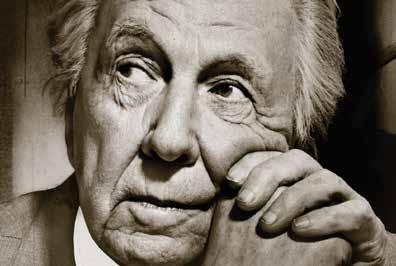
FOR YEARS, Frank and Eloise Bott wrote letters to Frank Lloyd Wright.
The couple had their sights set on the architect, who happened to be the most celebrated of the 20th century, and wanted him to design their home on a bluff in Briarcliff. Wright, then in his late 80s, wasn’t easy to reach. But what finally got his attention were the photographs of the sweeping views and the topography of the hillside lot. By late 1956, Wright wrote back, and by May 1957, he had signed and dated preliminary drawings. In 1963, the Botts’ home was ready for move-in.
The house is among the last that Wright ever completed. Homer Williams has lived there for nearly 40 years. An architect himself, he knew Frank and Eloise Bott and received the first right of refusal when the estate sold in 1987. “The rest is history,” Williams says.

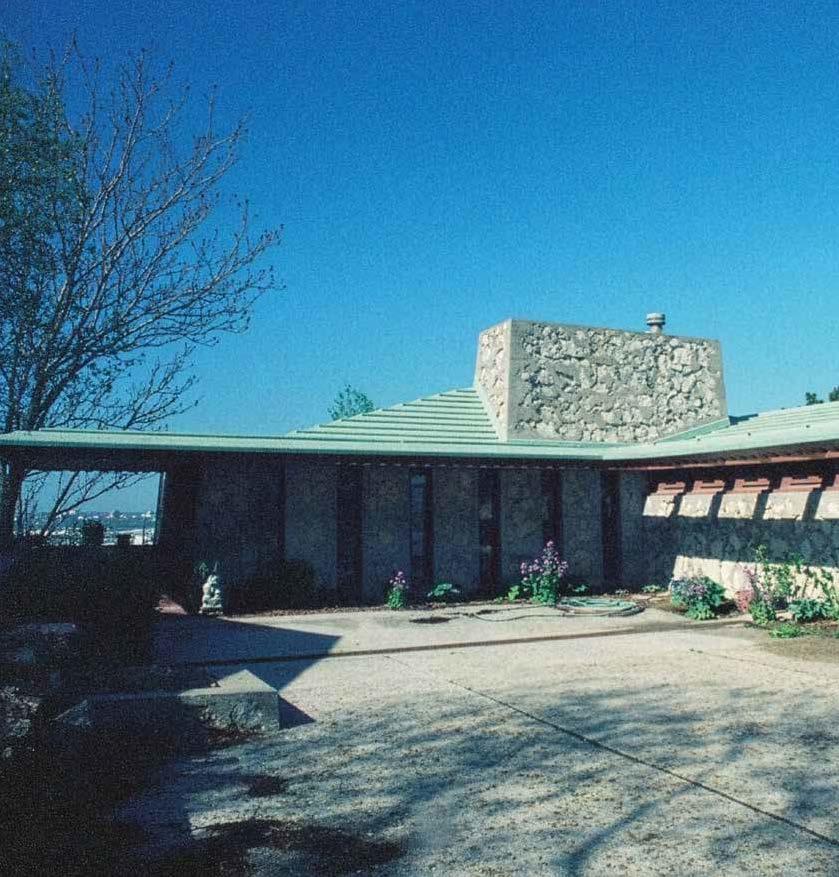
Wright’s philosophy was “organic architecture,” or the belief that a building should feel at peace and one with nature. The Bott House is a clear expression of that idea.
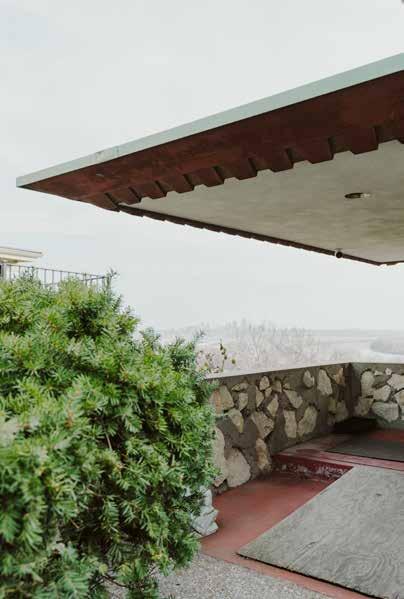
Rather than sloping over the Briarcliff bluff, the house descends into it, emerging from the hillside in a way that makes it feel a part of the hill, rather than built on the topography. “Don’t build on the hill,” Wright used to say. “Build of the hill.”
Williams, who spent many years as a pilot, says he used to spot the house’s signature green roof on his descent to downtown’s Charles B. Wheeler Airport. “When I used to look down and see this green roof,” he says, “I had no idea I’d one day be here.”
From the cantilevered terrace behind the home, you’re met with 180-degree views, the city’s skyline in perfect view with the Missouri River bending to the west. “Wright wasn’t averse to using the view,” Williams says. “He did a lot of buildings where the house was located down the hill.”
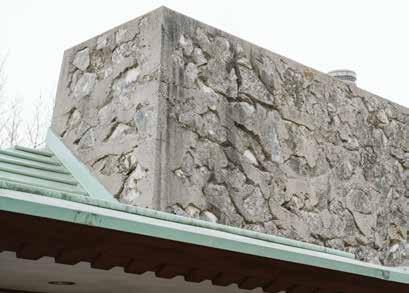
One of the most striking features of the home is the stone, which juts out from the walls in irregular cuts. The desert-style stonework is not unlike Wright’s own home, Taliesin West in Scottsdale. But the stone in the Bott House didn’t come from the desert—Frank Bott found it in the Flint Hills of Kansas.
“Frank Bott made an arrangement to buy a farmer’s fence about 75 miles west of here,” Williams says. Bott then replaced the farm fences with steel and hauled the stones to Briarcliff, where they were laid in forms with concrete poured around them.
“Every one of these pieces of stone that you see was put in a wall by a human somewhere around 150 years ago,” Williams says. The variation in color and texture and the rough honeycombing where concrete surrounds the stones was entirely intentional.

Rather than sloping over the Briarcli blu , the house descends into it, emerging from the hillside in a way that makes it feel a part of the hill.





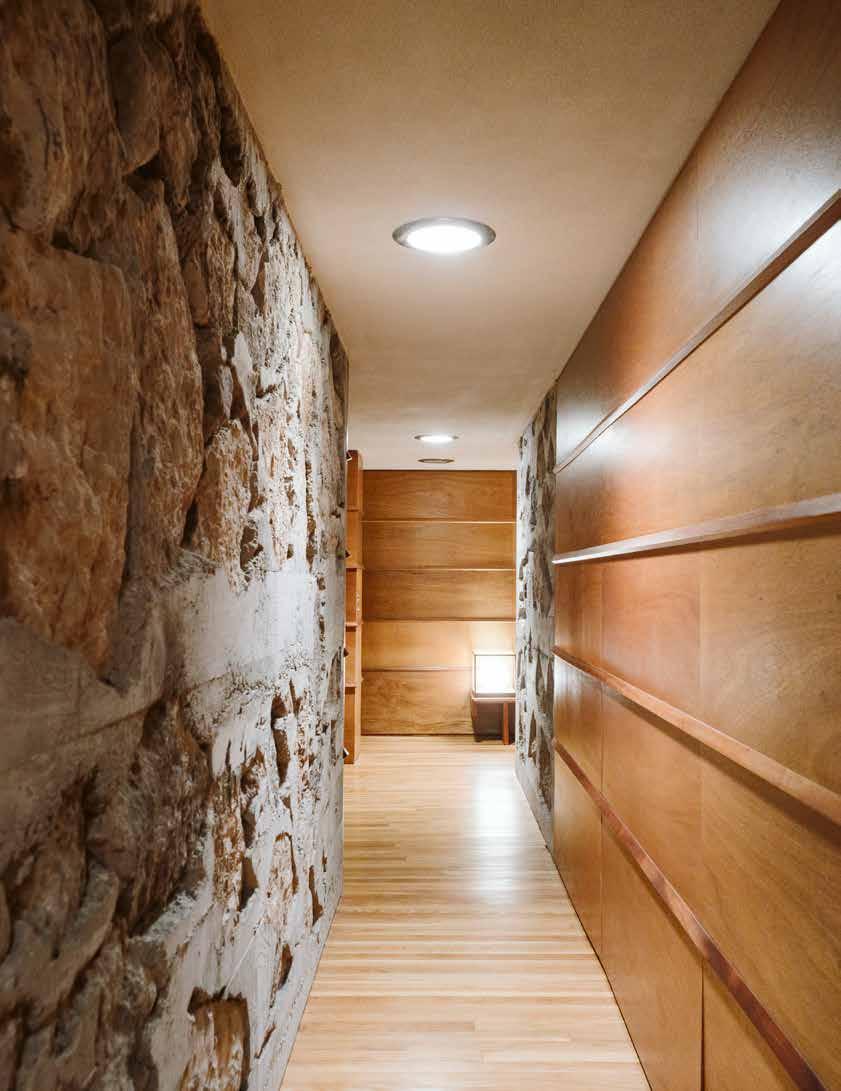
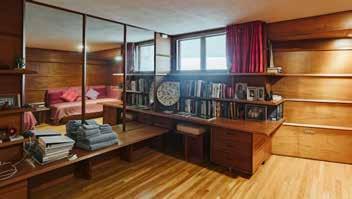
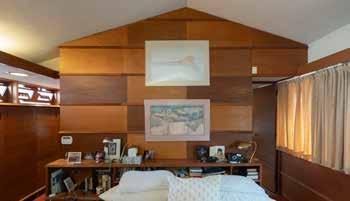
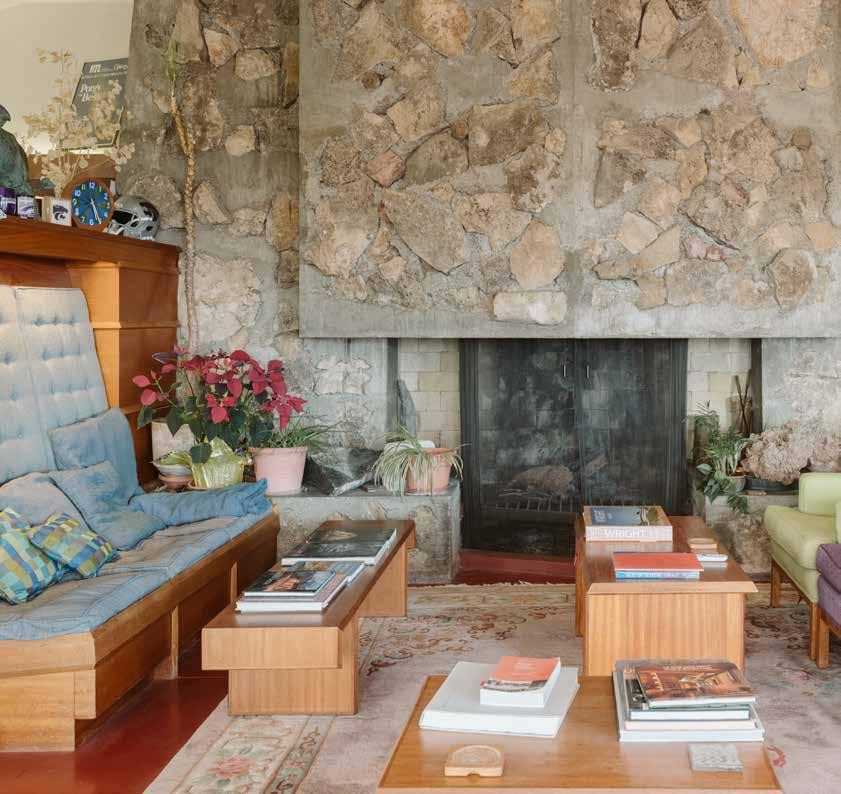
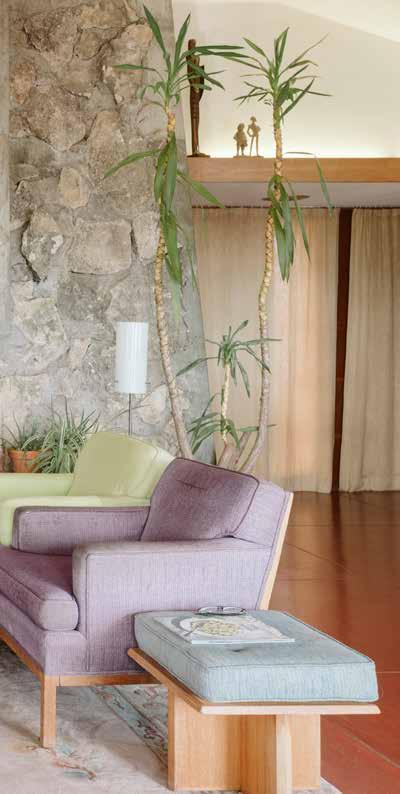
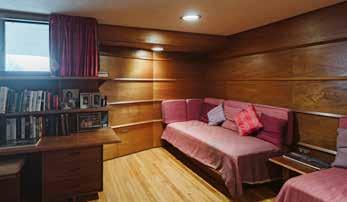

The home is full of relics beyond these, including a planter box built directly into the foundation and framed original drawings and mementos.
The roof’s low, horizontal ridges are inspired by Bermuda-style homes, a design feature that’s known for its tiered rooflines built to collect rainwater.
“Wright wanted a specific color, which is not what copper turns to when it oxidizes,” Williams says. “In order to get that, it had to be something that came in that color by nature. Nothing did.” The solution was terne metal, a tin-coated steel that could be painted to achieve the color that Wright was after.
Despite the roof’s seemingly rainproof design, it did pose issues over years. “The Botts knew it never didn’t leak,” Williams says. The crimped seams of the roof were no match for high-wind storms up on the bluff, and over decades, the resulting leaks threatened the woodwork and furniture inside the home.
To remedy this, Williams eventually found a PVC-based membrane whose color was, as he puts it, a dead match. Heat-welded seams, which replaced crimped joints, creating one continuous waterproof surface over the entire roof. It looks very much as Wright designed it, but with no water getting into the house.
The furniture and built-ins are all original, as are many of the fabrics, including a blue textile with a Sally thread that Williams has spent years trying to replicate. “It’s easy to match the color,” he says. “We haven’t been able to find the texture.”
Eight antique oriental screens once lined the walls, and when Williams bought the house, he says the screens were not included. Seven are now in a private collection in Chicago; the last one’s whereabouts are unknown. “I’d have to win the lottery to get them back,” says Williams. In their place are Spanish posters from the Miró and Picasso museums in Barcelona, brought back from Williams’ own travels.
↓
GO: Tours of the Bott House are available by appointment only. Inquire via email hwilliams@wskfarch.com or by calling (816) 721-7564.
The home is full of relics beyond these, including a planter box built directly into the foundation and framed original drawings and mementos—among them are Wright’s preliminary sketches for the house and his original letter to the Botts.























































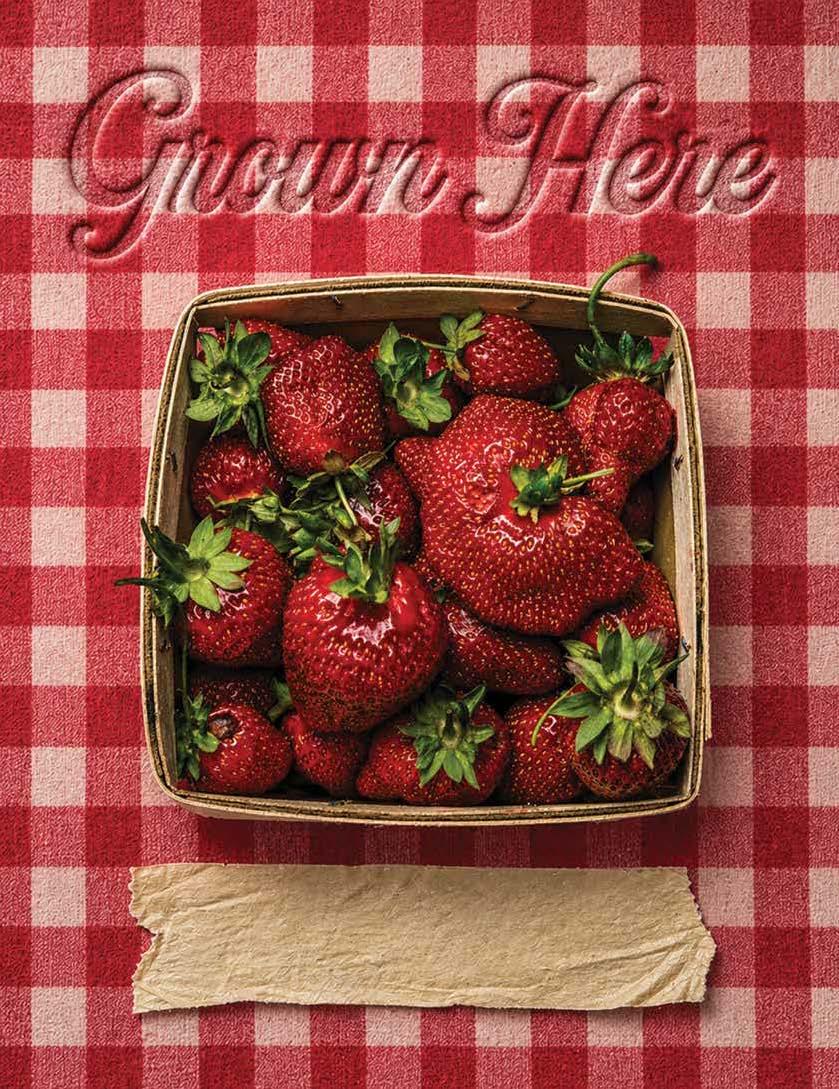

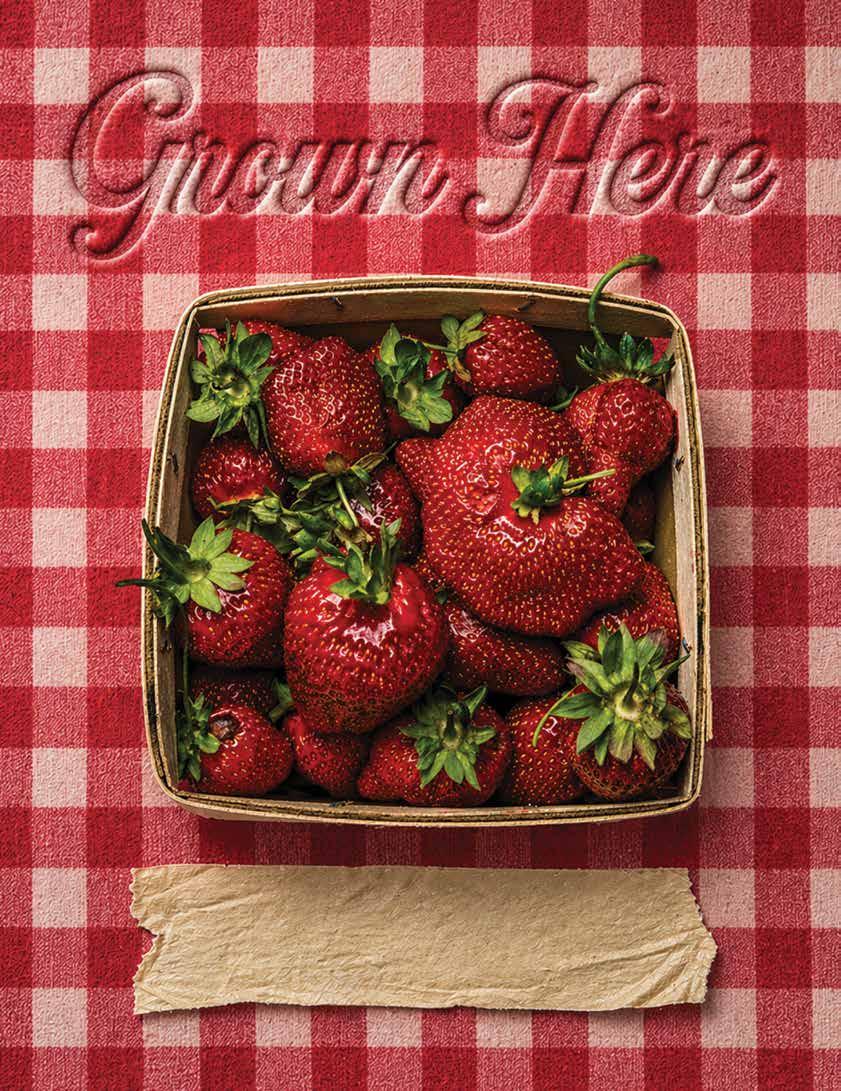
KC’s produce story is more than just hothouse tomatoes. From an indoor exotic mushroom farm to a nationally acclaimed farmers market, Kansas City’s most innovative farmers are reshaping what we eat. Here’s a look at some of the metro’s best places to source real food.
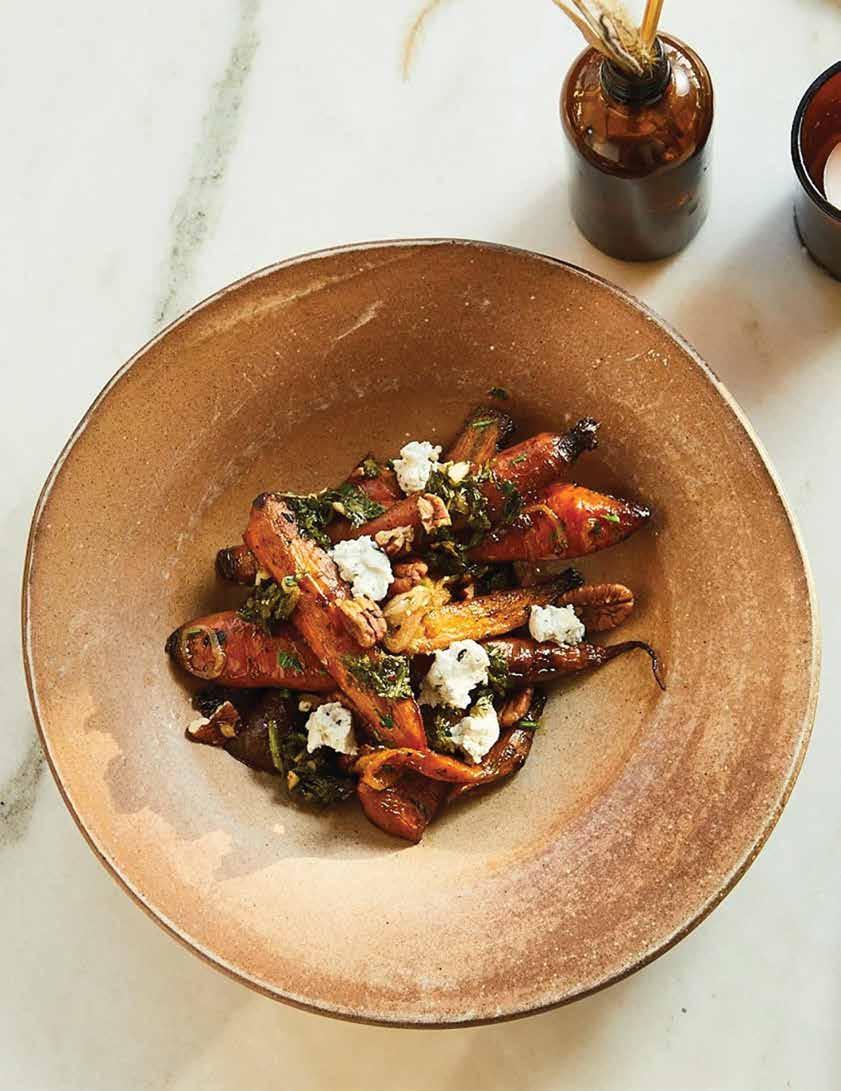
Green Dirt on Oak brings Sarah Ho mann’s Weston farm to the Crossroads, where chef Oskar Arévalo’s waste-not philosophy shapes every dish.


By Tyler Shane
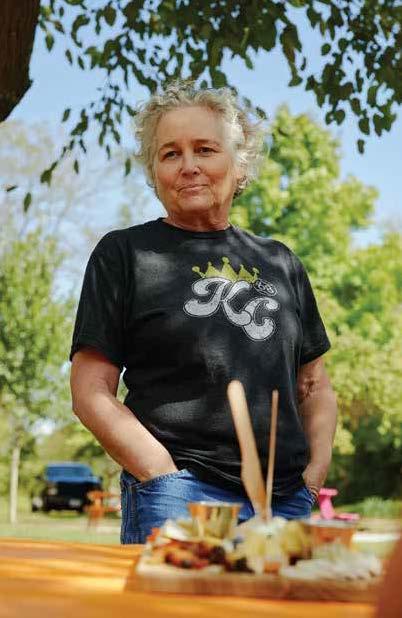
SARAH HOFFMANN
DIDN’T mean for Green Dirt on Oak to be a ne dining restaurant. The Crossroads space was intended to be another production facility for her eston-based sheep’s milk cheese company reen irt arm. ut chef skar Ar valo, who has been a cheese maker at reen irt since 2020, convinced Ho mann of the two-story building’s potential. reen irt on ak did end up becoming a cheese facility, but it’s also a cafe downstairs and farm-to-table restaurant upstairs . hile the beautiful upstairs dining room serves a slightly more sophisticated and elevated menu, the cafe’s more casual o erings of Reubens with shredded lamb and cinnamon rolls with sheep’s cheese icing pack an e ually impressive artisan uality as well. As far as Ho mann’s ourney from cheesemonger to restaurant owner, it’s not ust about showcasing cheeses anymore. At reen irt on ak, it’s about deriving creativity from sustainability. verything that can be locally sourced is. verything that can be made in house is. tarting with the lamb, Ar valo sources it from reen irt’s sheep farm in eston. The goal is to use every bit of it, so it’s commonly seen throughout the menus. t doesn’t matter if lamb isn’t your thing. Ar valo prepares it in so many di erent ways that the avor you know as lamb becomes trivial. There’s lamb tartare, lamb ragu, leg of lamb, even a lamb burger. The Reuben is made with corned lamb, but because reen irt doesn’t make the e uivalent of a wiss cheese, the common choice for the sandwich, Ar valo uses the byproduct of various other cheeses to create a worthy parallel. His waste-not mentality ensures uni ue dishes every time. f course, reen irt’s cheeses are integral to the menu. t may sound cliche, but this is one charcuterie board you don’t want to miss. ou get to choose the cheeses featured on the board, and irt

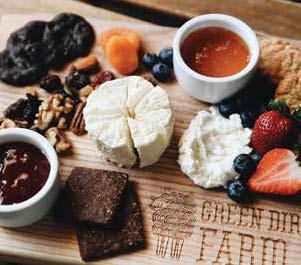





over, a soft, funky, award-winning cheese, should be on it. Alongside the cheeses are house-made chicken liver mousse, country p t made from whole hogs, nuts with di erent candied coatings and sourdough bread made with native yeast from issouri.
The cheesecake made with reen irt’s fresh soft cheese should be the nish to every meal.
f you happen to nd yourself at reen irt for a more casual visit, the downstairs co ee bar shouldn’t be overlooked. heep’s milk straight from the farm is one of the milk options and makes for an indulgent and tasty cappuccino.
The Kaw Valley Farm Tour brings families face-to-face with local agriculture—no boots required.


By Beth Lipo
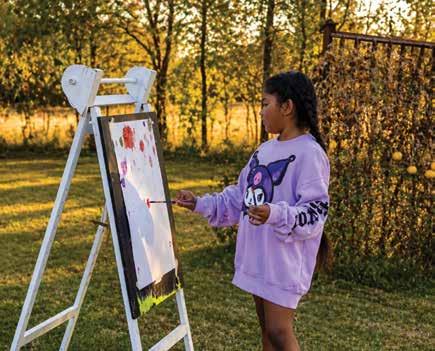
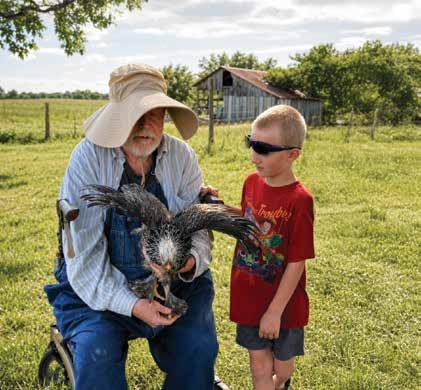
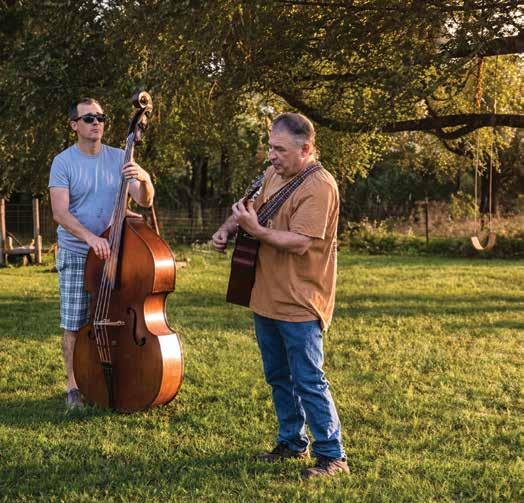
FARM TO TABLE DOESN’T get more real than coming face-toface with a pig or touching some basil while it’s still growing. The Kaw alley arm Tour o ers these kinds of experiences at local farms from here to Topeka.
ach year, the tour runs during the rst weekend in ctober. or $ 5 per car, you can explore your choice of approximately 30 di erent family and community farms over two days.
The idea is to connect the community with regional agriculture, to inspire people to purchase locally, to educate people about how things are grown and maybe even inspire them in their home gardening, says Hilary Kass, tour coordinator.
isiting three to four farms on each day is fairly typical, Kass says, and allows you to spend some time at each one. Although most visitors are local, the tour has drawn people from as far as inneapolis and klahoma City.
e’ll have families with small children we’ll have older couples, Kass says. met, last year, a group of four people in their mid-20s who go together as a group. They live in di erent areas going to college, and they meet and they do the farm tour over both days, Kass says.
Some of the farms are open to the public throughout the year, but many are not. ach farm is di erent in terms of what activities there are and what they grow or produce.
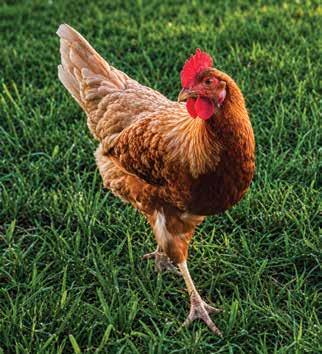
The biggest attractions are hands-on types of things, like you-pick owers or you-pick pumpkins, Kass says. ne farm has a hayrack ride that takes you down the road and over to the farm. thers have small animals that you can pet. ou can watch where the chickens lay their eggs and walk through the barn.
The farm tour started through a partnership between ouglas County xtension and The erc Co-op in awrence. ast year, they added three KCK farms.
“We are growing with the concept of farming, which means it doesn’t necessarily mean it’s in the country, Kass says. ou can grow a lot of food, a lot of plants, a lot of animals right in the city.
At one ine arms in ecompton, Kansas, which has operated since the 860s, a big attraction is a pig named ady.
veryone likes seeing a pig up close, says arah ul uhle, operations manager of one ine arms. They don’t realize how big they can be, the texture of their coat, how smart they are. or oeleyn Trahan, owner of eat8 owers in cClouth, Kansas,
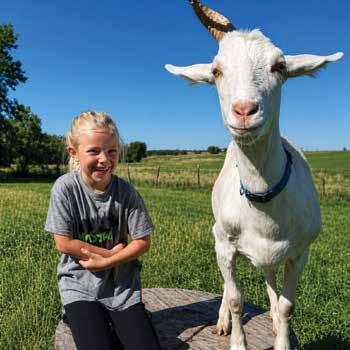
giving tour visitors a hands-on interactive experience is vital. ast year, she introduced scavenger hunts at her farm.
The scavenger hunt was like, Taste three di erent types of basil nd two di erent types of mint and smell them touch a straw ower,’ Trahan says. This really encouraged families to go out there and interact and nd things they didn’t notice before.
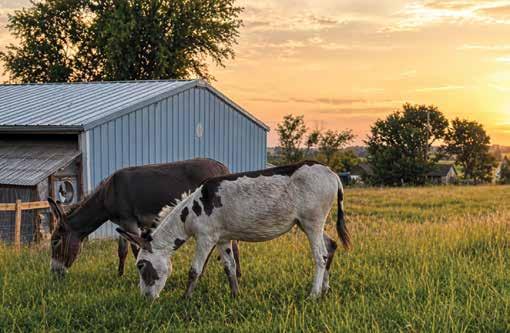
Trahan especially loves interacting with families with kids, encouraging them to play with her baby goats and meet the donkeys and chickens.
love seeing them get some sort of spark of, h wow, that’s something new and exciting,’ Trahan says.
To interact in another way, she sells baked goods featuring her produce, such as lime basil shortbread.
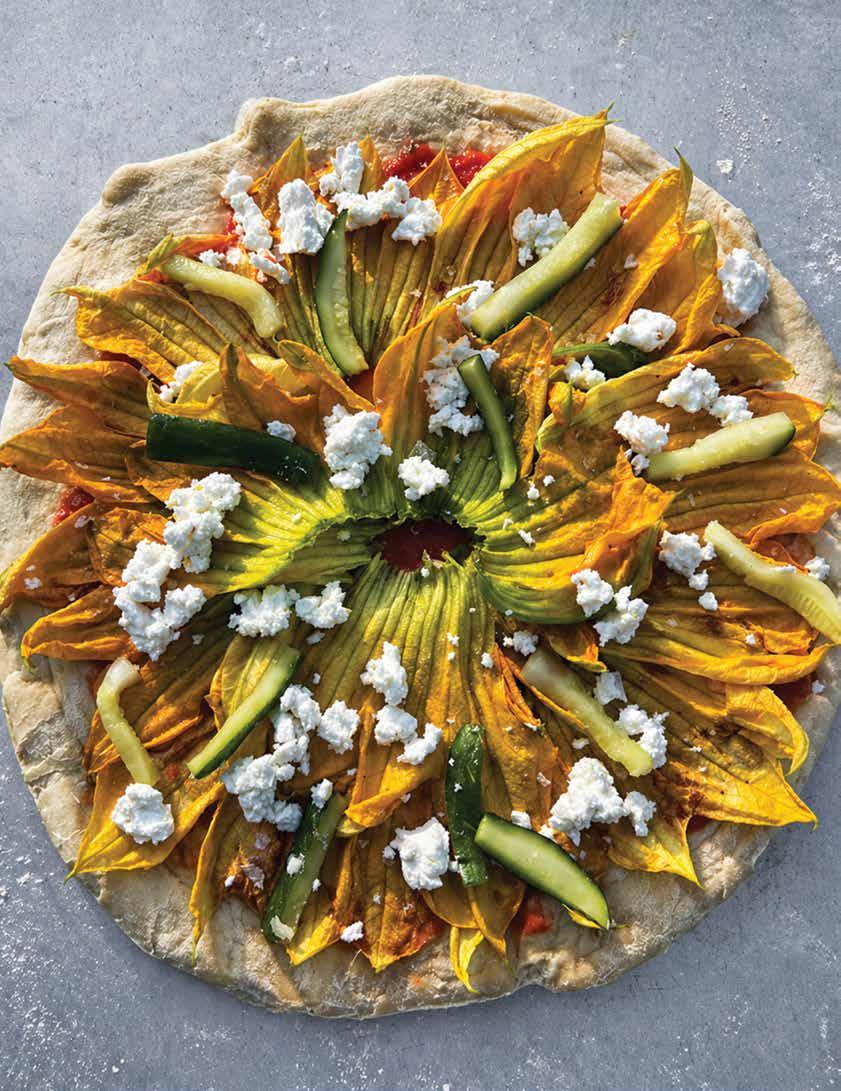
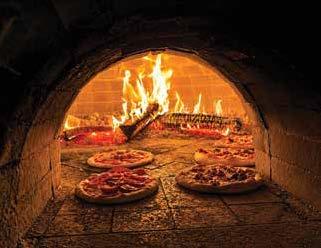
Kass encourages tour visitors to bring a cooler for the various farm products they might purchase along the way. eyond vegetables and fruit, di erent farms sell items such as bread, ams, ellies and honey. There are usually several wineries on the tour as well. ancy Thellman owns uniper Hill arm and Table, a pizza restaurant on the grounds of uniper Hill arms in awrence. Her son, cott, owns and operates the farm. he says having a personal connection with farmers in the community is important.
mall family farms add so much to the life of a community, Thellman says. They feed us and keep space for people to get reconnected with their food and with the farmers who grow their food. t’s really an important part of a community’s life, and when people don’t appreciate that, those small family farms are lost before you know it. o, hope folks go away having fallen in love with our farm and the farmers who grow their food.
At uniper Hill, the farmers pull out various tractors and other vegetable production e uipment for people to see on the tour, and
“SMALL FAMILY FARMS ADD SO MUCH TO THE LIFE OF A COMMUNITY.”
—Nancy Thellman, owner of Juniper Farm



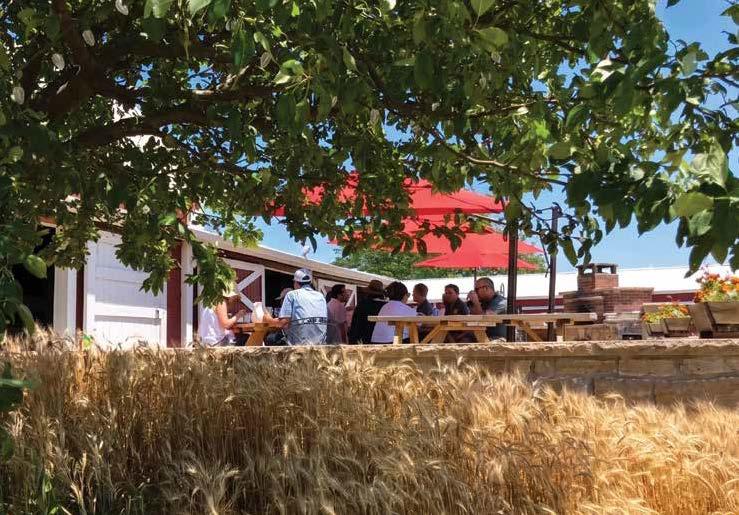




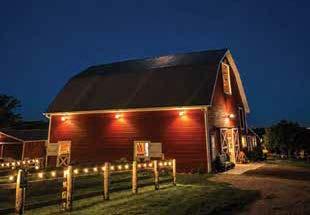
they’re available to discuss how they use all of it on the farm. The farm also has a big pumpkin patch, a large greenhouse and picnic tables where people can sit.
ou’re right by the elds, and you’re right by the barn, and you’re right by the pack house where all the vegetables are cleaned and packaged. With one visit, you can see pretty much every part of farm-to-table and [farm-to-grocery store],” says Thellman. “Every part of creating food that you put on your table, you can see from beginning to end.”
Thellman says she enjoys seeing the families who tour Juniper Hill Farm every year. Many families come every year and she has watched their children grow up.
“I really love having time every year where we invite people from all over, where we get to have people—from the city especially—get their feet on some farmland and take some time to learn about the farm and farming and especially food production,” Thellman says.
Gregory Shipe, who co-owns Davenport Winery in Eudora, Kansas, with his wife, says the tour lets people know they’re around and leads to repeat visitors.
Shipe encourages people to come for the tour because “a lot of times during the week, we can’t show them everything because we’re busy tasting wine and selling wine.”
The Kaw Valley Farm Tour will be Oct. 3–4 this year.
Information on this year’s tickets and farms will be available at kawvalleyfarmtour.com later in the summer.
Robin Moore turned a basement hobby into MyCo Planet, a vertical mushroom farm now feeding Kansas City’s top kitchens.


By Hampton Stevens
MUSHROOMS ARE WEIRD.
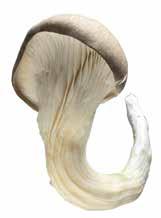
They don’t grow from seeds and they don’t use photosynthesis. Instead, mushrooms love the dark and damp, and they reproduce through microscopic spores. Mushrooms aren’t even plants. They belong to the distinct biological kingdom of Fungi. Genetically (and bizarrely), mushrooms are biologically closer to humans than they are to plant life.
See? Weird.
Robin Moore knows all about it. She’s the owner and founder of MyCo Planet, a mushroom farm that’s almost as unusual as the produce that’s grown there.
yCo is indoors, rst o , in a building o urlington treet, north of the river. In that decidedly not-rural setting, MyCo practices vertical farming rather than growing horizontal row crops. The company is also female-owned—unusual for any farm. oore met with the magazine on a sunny spring afternoon. After a uick tour, while sitting in a break area, she spoke about the growth of her highly unusual farm. Curly-haired, kind-eyed, wearing a pale green T-shirt and a navy blue hoodie, she talks about growing up on a small farm in Eagleville, Missouri, just a couple of hours north of KC.
She always loved cooking with mushrooms, she says, and used to forage for morels with her grandfather. She wanted more variety, though. MyCo Planet, in fact, was born from a desire to eat the mushrooms she couldn’t buy.
“I’d heard about lion’s mane or king trumpet and wanted to try those, but couldn’t nd them at the grocery stores, she says. o kind of took it upon myself to grow them.
She was good at it, too. Soon she was producing more mushrooms in her small basement operation than she could possibly eat on her own. She gave some away to friends but still had a constant surplus.
Then she got an idea—an obvious one in retrospect: making money. hat if went to a farmers market oore asked herself. That might be fun.
It was fun—and life-changing. In 2020, she started selling her wares at the City Market. “I sold out every time I went down there, so kept going back, she says.
Eventually, the business started to interfere with her day job working as a chemist for a biotech company. She took a leap and uit, deciding to focus full-time on fungus.
ithin a few months, oore had moved to the urlington Street space. Within a few years, MyCo mushrooms were being served at some of the nest restaurants in the city. Today, less than a decade later, MyCo is an integral part of the Kansas City culinary scene, with clientele including Whole Harvest, Fox and Pearl, Extra Virgin, Green Dirt Farm and Voltaire.
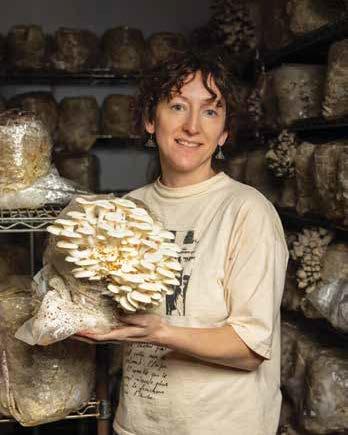
MyCo also supplies local grocery stores like Hy-Vee, Price Chopper and Hen House. It’s a bit of a full-circle moment for Moore. She started growing mushrooms because she couldn’t nd much variety in stores. Now she’s supplying that variety for all of Kansas City.
The farm is worth a visit. There’s a storefront foyer decorated with merch and mushroom-themed art. There’s a warehouse where the pelletized growth medium is bagged and sterilized and a pair of foggy, misty grow rooms where the fungi bloom in eerie silence.
n those rooms, at any given time, you might nd blue oyster, lion’s mane, chestnut, black pearl and more.
ou will not, however, nd psilocybin, what with it being illegal in Missouri and all.
esides, oore notes with a smile, that would be a whole separate business. t’s not food. t’s medicine.
yCo does, though, o er medicinal products, including reishi and lion’s mane supplements. The company also sells homegrower kits for anyone who wants to cultivate fungi of their own.
MyCo has even become something of a national innovator, recently winning a Sustainable Agriculture Research and Education grant from the A, which will allow yCo to research di erent systems for sterilizing the growing medium.
Food, though, is what matters most to Moore. MyCo grows an amazing 1,500 pounds of mushrooms a week. She is understandably proud of that—and especially of how she achieves it.
“That’s three tons of fresh, healthy food for Kansas City every month, she says. And it’s such nutritious food, and it’s grown so sustainably in comparison to traditional crops. We’re really trying to do it in a conscious way. e try to have a positive impact on our environment.
Nutritious food grown locally, sustainably and consciously—all by a female-owned business.
o, yeah. yCo lanet, much like the mushroom itself, is denitely a bit unusual. That’s the beauty of it.
Photos by Paola Tello


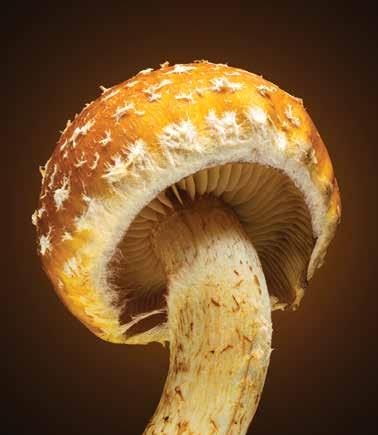
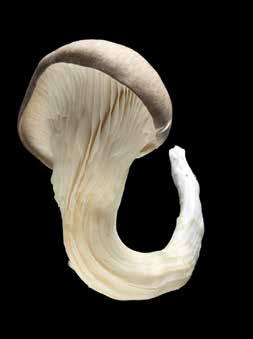
MYCO GROWS AN AMAZING 1,500 POUNDS OF MUSHROOMS A WEEK. THAT’S THREE TONS OF FRESH FOOD FOR KC EVERY MONTH.


Inside the global sourcing game behind Shang Tea and Hugo Tea Company, the KC businesses betting on farm ownership for better brews.
By Ian Ritter
IT’S EASY TO TAKE TEA FOR GRANTED. It can be found almost anywhere, from self-serve dispensers at your local gas station market to canned versions lining grocery store shelves. But to tea connoisseurs, there’s a de nite art to brewing tea and drinking it, and it starts with the leaves.
According to two high-end KC-based tea businesses, Shang Tea and Hugo Tea Company, procuring the best tea leaves possible requires hands-on work with Camellia Sinensis, the plant from which all true, non-herbal tea is derived: white, green, yellow, oolong, pu’er and black. The di erence comes from how the leaves are processed. Native to East Asia, the camellia sinensis plant thrives in tropical and subtropical climates and has been carefully cultivated and harvested for its ca eine-rich leaves for nearly 3,000 years. That also means a long trip to the farm.
Both Shang Tea and Hugo Tea Company hold direct stakes in farms around Asia to ensure the quality of their farm-tocup products.
Shang Tea, founded in 2005 by ehua hang, is on the rst oor of Crown Center’s retail shops. Shang has interests in a farm in southeastern China’s mountainous Fujian Province, roughly 7,500 miles from the metro. He regularly visits the farm during the fall and spring harvests and has a team working the crop.
Black and green teas are what most nd familiar, but hang specializes in the white variety, though he sells several shades of the tea plant’s dried leaves. The ma or di erence, like most crops, lies in the conditions where the tea is grown, notably the soil and altitude above sea level.


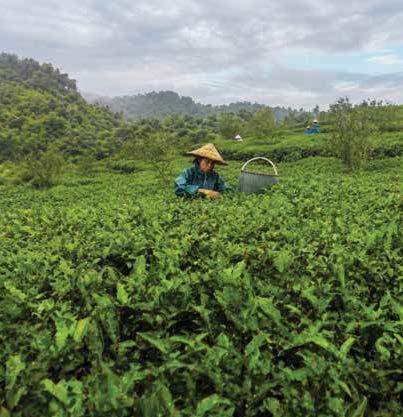
into play. White tea, for example, is considered the least processed because it is air-dried under the sun. Green tea immediately goes through a roasting, steaming or frying process that retains its hue. lack tea, meanwhile, is fully oxidized, often rolled or mashed, releasing a di erent avor pro le, and then dried until brown.

The tea masters all have their own methods of preparation, from fermentation and blending various types of teas to adding oral and herbal elements, such as jasmine.

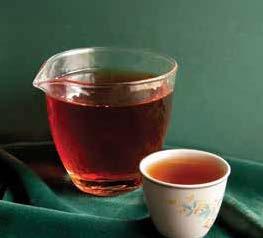
In the case of Shang’s farm, the slightly acidic pH conditions, rich in humus and active microbial populations, create the correct aroma and freshness speci cally for his signature white tea, he says. The tea plants aren’t delicate but do re uire regular, specialized tending to achieve the desired avors.
Once harvested, tea leaves are dried immediately. It’s when the tea leaves have dried that the tea master’s techniques come
Hugo Tea Company, founded in 2012, is a wholesaler whose teas can be found at a multitude of grocery stores, restaurants and cafes around the country.
The orth Kansas City company o ers extensive varieties of high-end teas, all sourced from farms abroad, says Will Johnson, a Hugo Tea Company director.
Like Shang Tea, Hugo Tea Company grows tea in Fujian, China, as well as farms in other Chinese locales, such as Guangxi, Yunnan and Guangdong.
However, the Hugo team also farms in other parts of Asia, such as Wazuka and Nagasaki, Japan, and Nepal.
Finding your way in a business steeped in thousands of years of history in foreign lands requires commitment and a knack at building relationships that are certainly nancial but also transcend pure economics.
“Our commitment to close relationships with our partners across Asia is why we are able to source such wonderful teas,” says Johnson. “These aren’t just our partners; they’re our friends.”
From Brookside to Bonner Springs, here are 17 farmers markets across the KC metro.
By Nina Cherry
Like a Midwest summer harvest, farmers markets are abundant throughout Kansas City. Whether you’re looking for peak-season produce, locally raised meats or a midweek shopping option, here’s your guide to the region’s best markets.
Brookside Farmers Market
6425 Wornall Road, KCMO
ocated ust o the ld Trolley Trail, this year-round market prides itself on being truly direct from the source. Held Saturday mornings from 8 am to noon at HJ’s Community Center, vendors are carefully vetted to ensure that all goods are sold by the same folks who make, grow and raise them.
City Market Farmers Market
20 E. Fifth St., KCMO
We would be remiss not to mention the metro’s largest farmer’s market, which is open from 8 am to 3 pm on both Saturdays and Sundays throughout the summer. Located in the heart of the River arket, you’ll nd vegetables ranging from collard greens to kohlrabi, vibrant bouquets, baked goods and even vintage clothes.
Lenexa Farmers Market
17101 W. 87th St. Parkway, Lenexa
ering everything from homemade ams to prepared foods, this market is open Saturdays from 8 am to noon at Lenexa’s Civic Campus. Starting May 26 through August, shoppers can also peruse on Tuesdays from am to pm.
Merriam Farmers Market
5740 Merriam Drive, Merriam
ust steps away from erner ark and the Turkey Creek treamway Trail, this market hosts live music on the rst aturday of each month and children’s activities—like hands-on crafts and storytimes—each third Saturday. It’s open Saturdays through September from 8 am to pm.


Mission Farmers Market
5701 Broadmoor St., Mission
Although the metro has no shortage of Saturday morning shopping options, Mission stands out as an exclusively evening market. Held Thursdays from 4 to 8 30 pm from une through August, this farmers market is known to host occasional sunset yoga sessions and dedicated makers nights.
Olathe Farmers Market
219 W. Loula St. (Downtown) and 14500 W. 151st St. (Black Bob Park), Olathe
lathe’s armers arket spans two locations—downtown and at Black Bob Park—sharing local goods throughout the suburb. Shop aturdays from 30 am to sellout at both locations and ednesdays at the downtown pavilion starting at the same time.
Overland Park Farmers Market
8101 Marty St., OP
Shawnee Farmers Market
11110 Johnson Drive, Shawnee
Held outside the suburb’s City Hall, this quaint neighborhood market— ust steps away from bouti ues, craft breweries and more—opens bright and early from 7 am to noon on Saturday mornings through ctober.
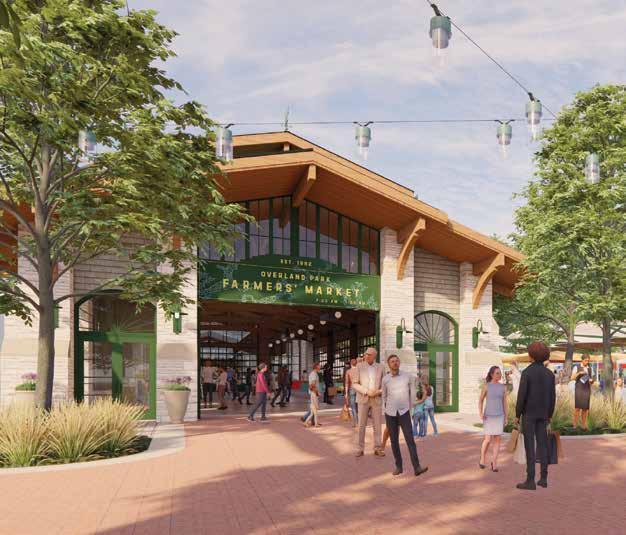
This summer marks a new era for the Overland Park Farmers Market
After 18 months of construction, the Overland Park Farmers Market will soon complete a $34 million renovation. The new indoor pavilion, designed with heating, is a major upgrade that will enable the market to continue operations year-round, even throughout winter.
Founded in 1982, the market has built a national reputation over the past four decades for both its scale and quality. In 2022, it took home
first place in the America’s Farmers Market Celebration out of more than 7,000 participants.
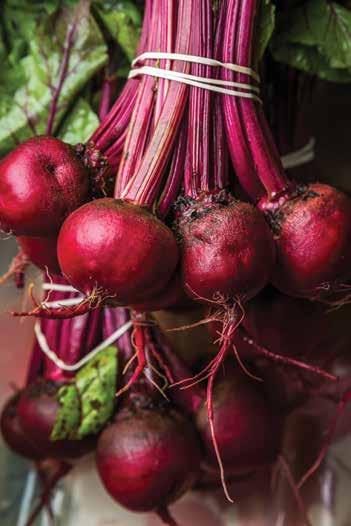
This season, the market welcomes 110 vendors. For shoppers looking to cook closer to the source, the OP market o ers a comprehensive shopping experience. Here, you’ll find a bit of everything: eggs with amber yolks, fresh cheeses, pasture-raised meats, moist zucchini breads, homemade jellies and more. Among Kansas City magazine’s favorite vendors are Dirt Beast Farm, an urban farm located in KC’s East Side that produces stunning
heirloom varieties (the sweet golden beets are a must), and My Bloom (formerly LP’s Farm), which consistently o ers striking and fragrant floral arrangements.
The market has been temporarily operating at the nearby Matt Ross Community Center during construction. It will move back to its permanent home, Clock Tower Landing, in June. Hours will shift in the colder months, but the market is currently open from 7:30 am to 1 pm on Saturdays and will add Wednesday mornings to the mix from June through Sept. 2.
Blue Springs Market on Main
107 S.W. 10th St., Blue Springs
xpect to nd more than produce at arket on ain. Alongside fresh fruits and vegetables, vendors o er handcrafted goods like earrings, wood art, knitted items and more. t’s open aturdays from 8 am to noon through eptember in downtown lue prings.
Independence Farmers Market
211 W. Truman Road, Independence
ptown arket, a fully enclosed pavilion near ndependence’s historic s uare, is home to this growers-only market. All goods are made or grown within 00 miles of ndependence.
Grandview Farmers Market
514 Main St., Grandview
The randview armers arket will open a bit later in the season this year with a new head uarters, debuting an indoor covered space on uly 8 to welcome patrons rain or shine. n addition to aturday shopping from 8 am to noon, the new venue now welcomes customers on ednesday evenings from 4 to 8 pm.
Green Street Market
209 S.E. Green St., Lees Summit
At this community hub in downtown ee’s ummit, expect a robust indoor market of approximately 80 vendors each aturday from 8 am to noon and 50 booths on ednesday mornings. earby parking is available at no cost.
Parkville Farmers Market
8850 McAfee St., Parkville
ocated near the issouri riverfront at nglish anding ark, this market o ers a relaxed and pictures ue backdrop to browse local goods, now with a new open-air shelter. arkville armers arket is open aturdays from am to noon through ctober, and from une 0 through ept. , it’ll also be open ednesdays from noon to 4 pm.
Historic Downtown Liberty Farmers Market
1 Courthouse Square, Liberty
Held rain or shine in charming downtown iberty, this long-running outdoor market—open aturdays from 8 am to noon through ctober—includes a designated children’s play area. The market also hosts a wellness weekend on the rst aturday of each month, where attendees can participate in rotating activities like yoga and receive free wellness checks, token vouchers and seasonal recipe cards.
Smithville Farmers and Makers Market
108 W. Main St., Smithville
pen ednesday evenings from 4 to pm in mithville’s town s uare, you’ll nd more than typical farmers market fare here. n addition to an abundance of produce, fresh eggs and sourdough, browse handcrafted goods like homemade aprons, body butters and more.


KCK Farmers Market
1739 Quindaro Blvd., KCK
KCK’s armers arket has a new home this year ust outside ilson’s izza—a shop known for its double-decker pies it’s all about balance . The biweekly market opens next month on une 3 and runs every other aturday from 8 am to pm.
Bonner Springs Farmers Market
126 E. Cedar St., Bonner Springs rom crisp wines to raw honey, browse local goods on aturday mornings through mid ctober from 8 am to noon underneath the pavilion at Centennial ark.
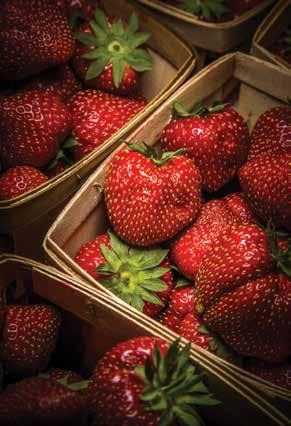
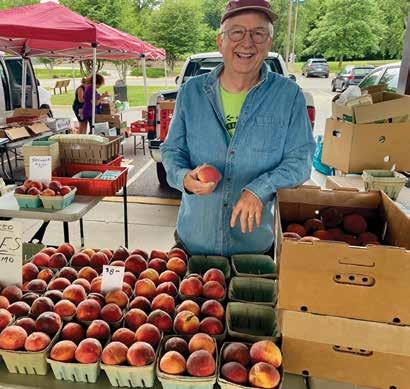
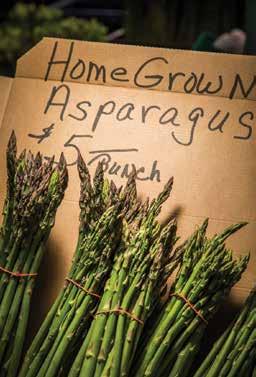
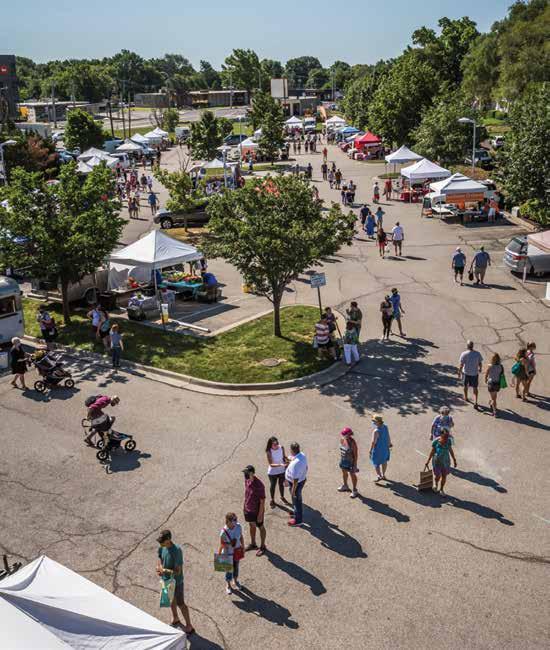
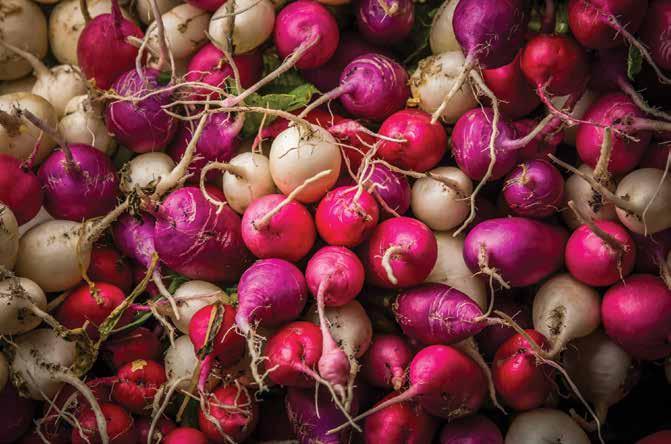
FARMERSMARKETS ARE ABUNDANT THROUGHOUT KANSAS CITY WITH PEAK-SEASON PRODUCE.
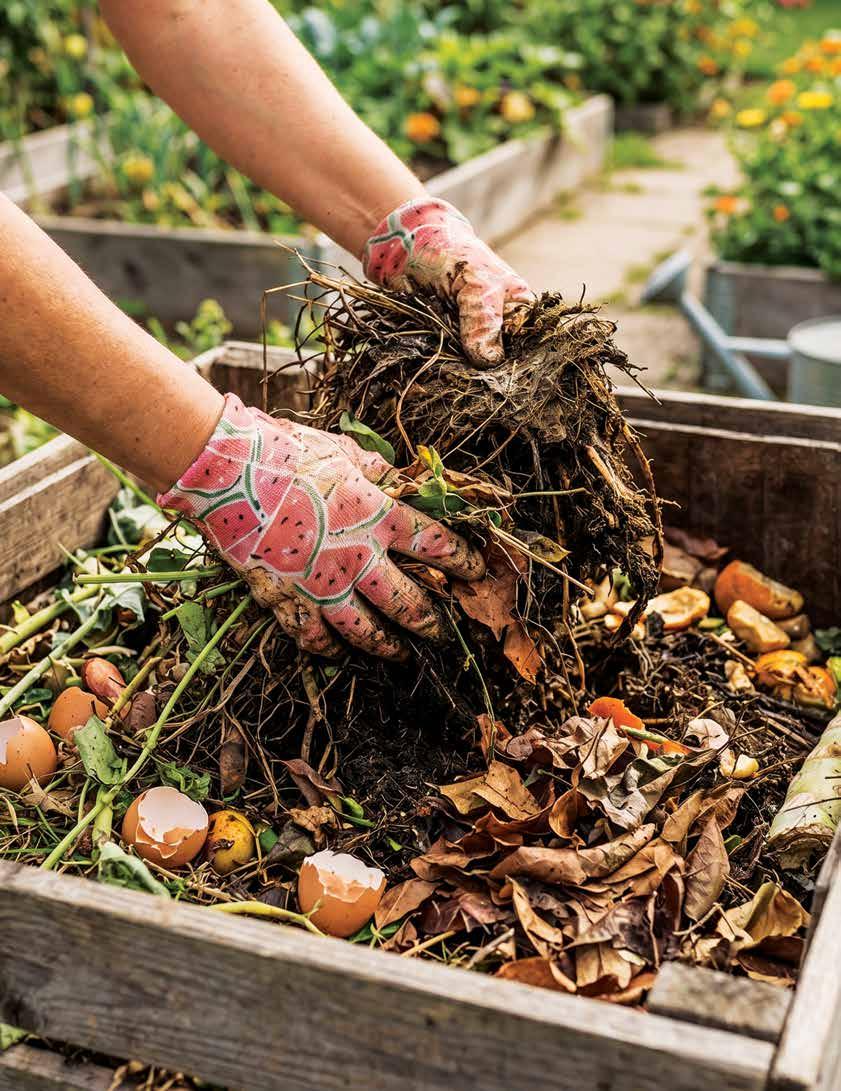
What used to hit the landfill is now feeding gardens, farms and a fast-growing compost culture across KC.
By Kelly Bunch
KATHY HOGGARD,
retired rookside resident and certi ed master gardener, has been a dedicated home composter for decades. he was exposed to the idea early in life from her parents. y mom and dad were both farm-raised, orld ar -aged people who would ust take kitchen scraps out and bury them in their garden, ust between the rows, she says. o had seen this sort of thing it wasn’t foreign to me.
About 20 years ago, Hoggard decided to get more serious about her composting e orts. ith suggestions from friends, she created her own compost method that she has used ever since. ach ecember, she starts a new compost pile in her backyard with layers of alfalfa pellets, shredded leaves- and water. That mixture is used as the base for her compost. The food waste goes in all year, Hoggard says. ust dig a little hole, throw the food waste in, and cover it up.
y une, the compost is ready for use. Hoggard spreads her compost on top of her ower beds and mixes it with purchased potting soil for her pots. he notes that while she doesn’t have a concrete way to prove it’s improving her garden’s bounty, fellow master gardeners have told her there’s no way she could have such a proli c garden if it weren’t for her compost. don’t know if that’s true or not, but it’s a fabulous way to keep what your yard produces in your yard and not have to buy something where you don’t know what’s in it, Hoggard says. know everything that goes into this. t’s 00 percent no pesticides and no herbicides.
TO
Organics and long-time home composter, started her composting efforts in 2020. he was inspired by environmentalist aul Hawkens’ 20 book, Drawdown, which names reducing food waste as one of the top ways an individual can contribute to a healthier planet.
However, you don’t have to be a master gardener or chief sustainability o cer to start composting. on’t be scared to start doing it, ayerho er says. ’ve talked to a lot of people who are apprehensive about it, but once they start doing it, they really en oy it. t’s fun for kids, it’s fun for people to see it’s the circle of life in a way.
Kansas City’s chief environmental o cer, ensen Adams, says the city is focused not only on composting, but also reducing food waste from the start. Adams encourages individuals to buy only what they need so they accumulate less waste.
Kansas City is a leader, especially in the idwest, and especially in the state of issouri, says Adams. artly because we have a really comprehensive and coordinated network of service providers that are concerned about organic material, and it’s not ust the compost part. Adams mentioned Kanbe’s arkets and rban roduce ush as partner organizations working to reduce food waste and increase food access to those who need it.
Kansas City Composting Program
Find local Compost drop-o locations throughout the city www.kcmo.gov
Compost Collective KC
www.compostcollectivekc.com 816-281-7871
KC Can Compost
www.kccancompost.com 816-912-3286
Composting or decomposing organic waste into nutrient-rich material has gained momentum in recent years. The nited tates nvironmental rotection Agency reports that wasted food causes 58 percent of methane emissions from municipal solid waste land lls and that wasted food in the . . causes greenhouse gas emissions e uivalent to those of more than 50 million gas-powered passenger vehicles.
Composting decreases methane emissions and land ll capacity by keeping organic material out of land lls. inished compost can act as a natural fertilizer and improve soil and water health. arah ayerho er, chief sustainability o cer for issouri
Kansas City, issouri’s Climate rotection and Resiliency lan, published in 2022, includes a strategy to divert organic waste from the land ll through composting. The city is taking action to expand access to composting resources by partnering with service providers and community organizations, such as issouri rganics, KC Can Compost- and Compost Collective KC. ince 2023, The city’s composting program has collected 202,000 pounds of food waste at its collection locations waste that otherwise would have ended up in a land ll.
Compost Collective KC, who o ers farm drop o , curbside pick up- and bin-swapping for food waste, doesn’t stop at composting. ne of the phrases we use is farm to table, table to farm, says Tony hitter, chief executive o cer for the organization. That re ects the full circle that Compost Collective is associated with a 3.5-acre urban farm in Kansas City, issouri, and that farm grows food for its neighbors. t’s what consider to be an authentic social enterprise in that it serves a social good, but it’s also trying to be a viable way to make a living for somebody.
Kristan Chamberlain, chief executive o cer and co-founder of KC Can Compost, a non-pro t composting organization, is thrilled that many of Kansas City’s businesses make the e ort to partner with them for composting. reen irt arm, the elson-Atkins useum of Art- and oulevard rewing Co. are ust a few examples from a long list of local businesses that are also KC Can Compost partners.
Chamberlain encourages people to start composting and notes that it isn’t hard. t is easy to do, she says. nce they are set up, it becomes a simple habit a small, everyday action that adds up to real environmental and social impact.
When choosing a healthcare provider, choose from Kansas City’s Top Docs. The 2026 list of providers in every medical specialty is coming soon to the August issue.
For more information, email angie@kansascitymag.com

May is skin cancer awareness month. With over five million cases diagnosed in the United States each year, skin cancer is America’s most common cancer. Fortunately, skin cancer is also one of the most preventable cancers. The team at KMC Dermatology is sharing facts about the dangers of unprotected sun exposure and encouraging people to check their skin for warning signs.
Skin cancer is an abnormal growth of skin cells. It most often develops on areas of the skin exposed to the sun’s rays. Skin cancer affects people of all colors and races, although those with light skin who sunburn easily have a higher risk. There are many forms of skin cancer, but the most common types are basal cell carcinoma (BCC) and squamous cell carcinoma (SCC). They’re different
from each other and look different on the skin. The good news is that both can be treated and, when spotted early, even cured. Melanoma is the deadliest form.
Mohs Micrographic surgery for skin cancer is the most reliable method of ensuring that skin cancer is completely removed. While traditional methods for removal of skin cancer commonly achieve cure rates of 90-95%, micrographic excision produces cure rates of 96-99%. This method allows the surgeons at KMC to precisely remove cancerous tissue while sparing the maximal amount of non-involved normal surrounding skin.
With offices in Kansas City, Mission, Independence, Topeka, and Manhattan, the KMC team of board-certified Mohs surgeons—Dr. Joseph Gadzia, Dr. Michael Kucenic, Dr. Majdy Albahhar, and Dr. Jeanette Pitts—provide specialized skin cancer care throughout the region.
Summer is approaching, so now is the time for due diligence. Reach out to the team at KMC for your annual skin cancer screening. Same week and Saturday appointments are available at select locations.

Summer is approaching, so now is the time for due diligence. Reach out to the team at KMC Dermatology for your annual skin cancer screening.
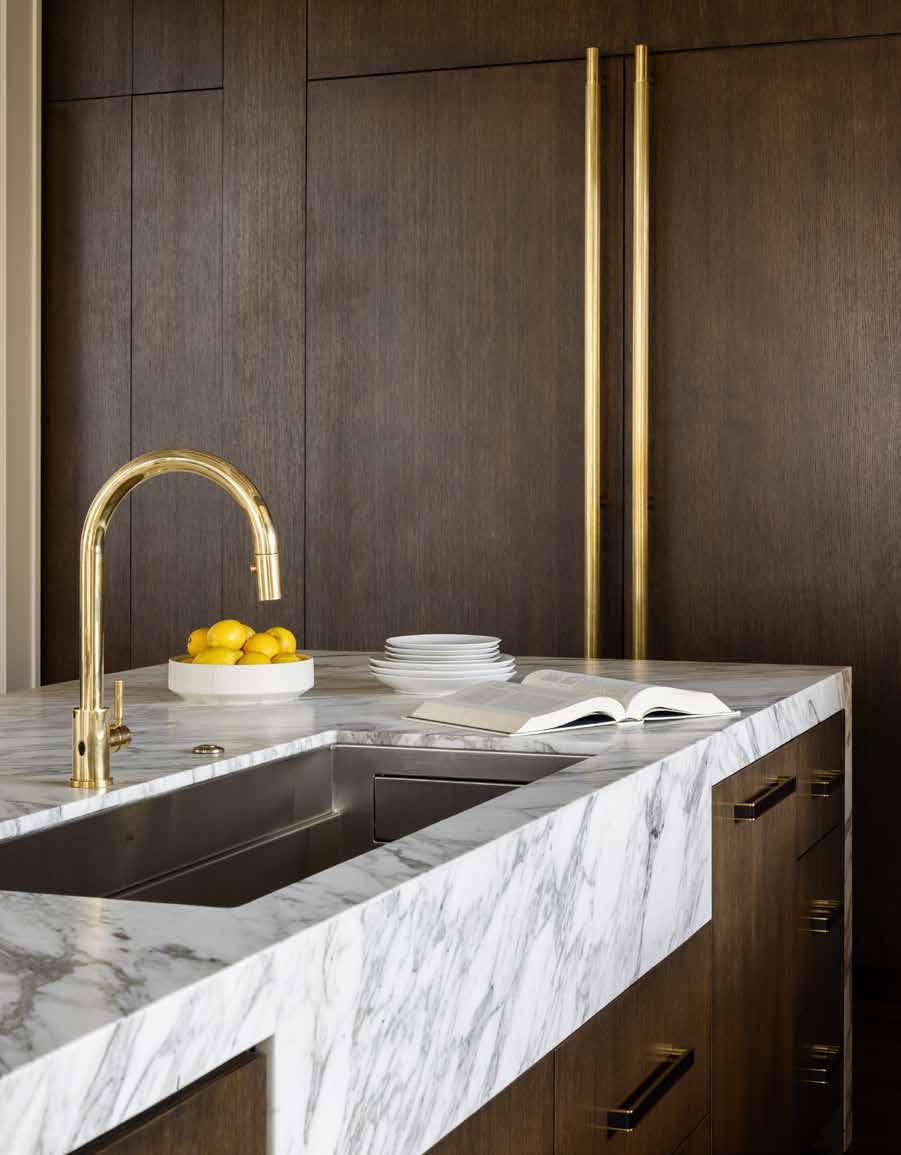


No two weekends in Lee’s Summit look the same. What starts as a quick errand in the downtown area can turn into an hour browsing boutiques like Elle & Em and lingering over coffee at Whistle Stop. A weekend hike or bike ride along the trails leads to afternoons spent enjoying views at Longview Lake. A stop at Green Street Market for flowers turns into a picnic on the lawn in front of live music.
This Missouri suburb sits just east of Kansas City. It’s close enough to catch a concert downtown or pop over to The K for an afternoon Royals game but far enough that the pace feels different when you cross into it. Neighborhoods in Lee’s Summit have a cozy feel, with plenty of welcoming front porches, fun block parties, ice cream trucks and farmers markets where vendors know your name. Green spaces like Lake Jacomo and Legacy Park give you space to breathe, and volunteer groups, tight-knit neighborhood associations and public art initiatives mean there’s always a way to get involved.
The restaurant scene has depth, the town’s calendar stays full, and there’s a sense of community and connectivity that’s developed over the years. See how easy it is for Lee’s Summit to win you over.
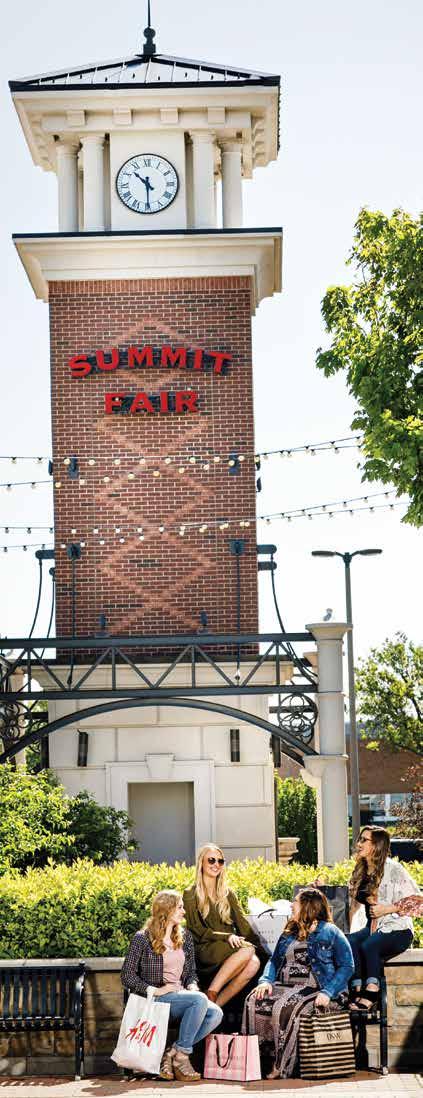




Downtown Lee’s Summit, also known as the Strother District, is a walkable stretch of small businesses and historic architecture that feels like a true neighborhood. The district’s name is a nod to the area’s origins: In 1865, William B. Howard platted an 11-block town here along the Missouri Pacific Railroad and named it after his late wife Maria Strother. The town was renamed Lee’s Summit just a few years later to honor another prominent landowner Dr. Pleasant Lea, who was reportedly killed in a civil war battle near the rail stop. However those original 11 blocks are still referred to as the Strother District.


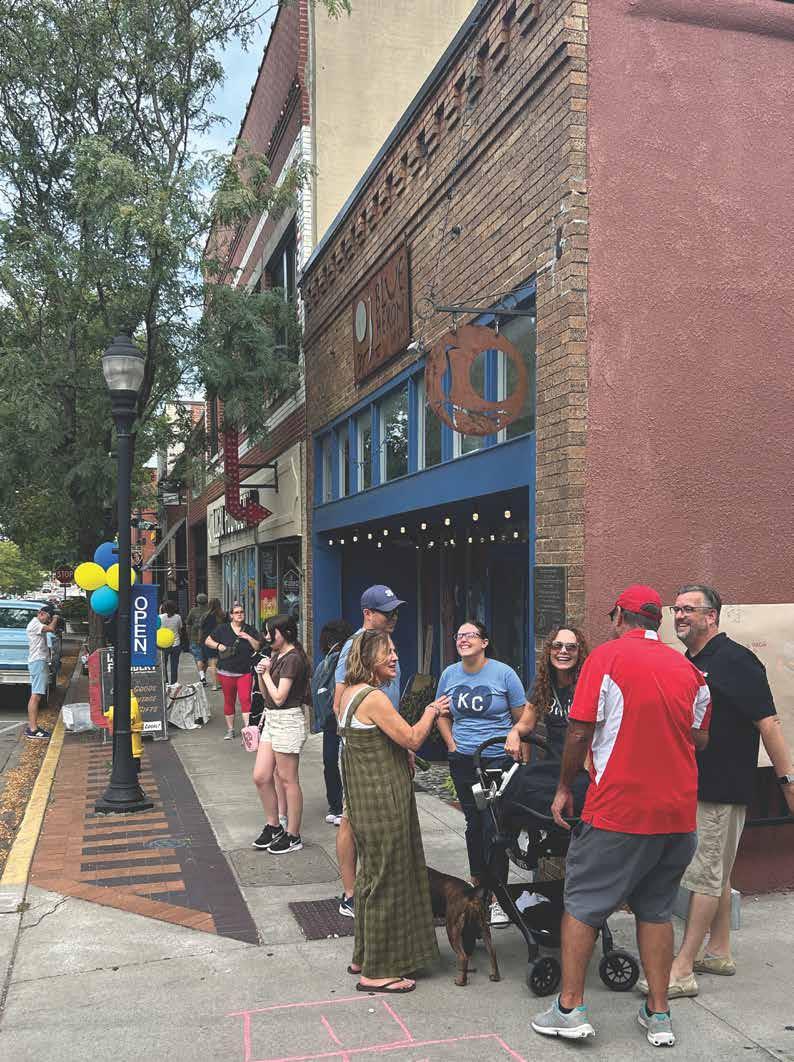
In 2019, the American Planning Association named downtown Lee’s Summit one of only four Great Neighborhoods in America, the result of roughly 30 years of intentional revitalization led by residents, business owners and civic leaders. The vacancy rate, which was once a problem, is now effectively zero.

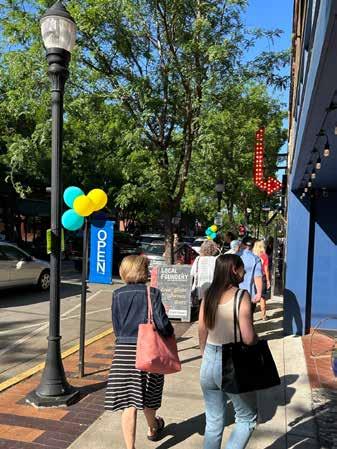



Lee’s Summit has built one of the more interesting dining scenes in the KC metro. There’s a little something for every appetite, from casual spots to watch Chiefs games to bistros perfect for
The LS restaurant game gets better and better: Jack Stack, off of Pryor Road, brings in east Missouri crowds for its beloved barbecue. Across the street, new-to-town 30hop adds fresh energy to the mix with a huge tap of craft beers and a great weekend brunch. Post Coffee Company, with one location at the Colbern Library and another more central to town, are great spots for coffee and pastry dates or for working remotely. The W, a reservation-only

speakeasy, holds its own in the KC cocktail space. Smoke Brewing, Diametric Brewing and the Goat Brewing Co. keep the craft beer scene covered. And local group Summit Hospitality makes up much of the dining scene with Summit Grill, Third Street Social and Pearl Tavern—each distinct restaurant with its own personality but the same killer homemade pie.
What sets Lee’s Summit apart is how comfortably it balances polish and approachability. You can dress up for a nicer dinner, keep it casual with a burger and a pint or build an entire day around coffee, lunch, drinks and dessert—all within a few miles. The variety keeps growing, but the vibe stays grounded: local, welcoming and just ambitious enough to make the drive from anywhere in the metro to Lee’s Summit feel worth it.
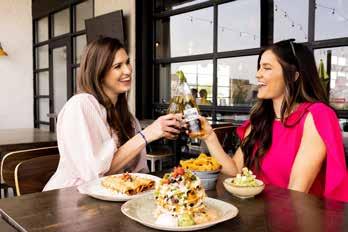
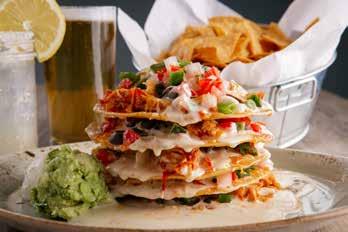
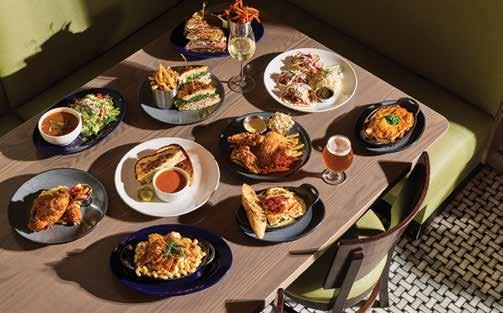
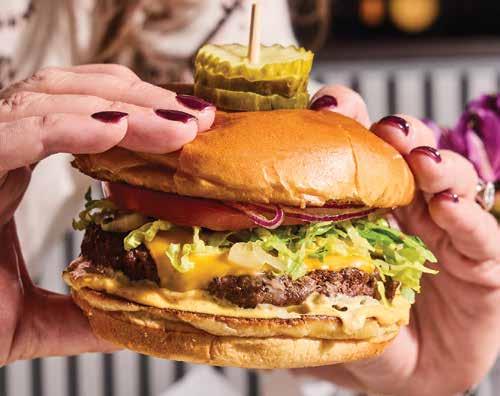
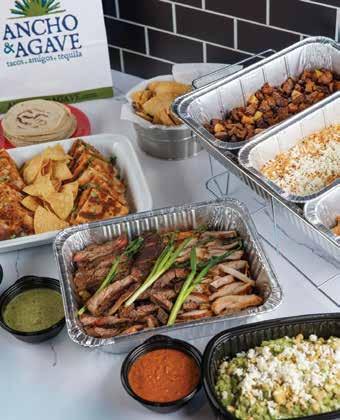

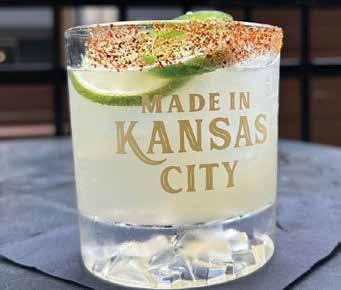

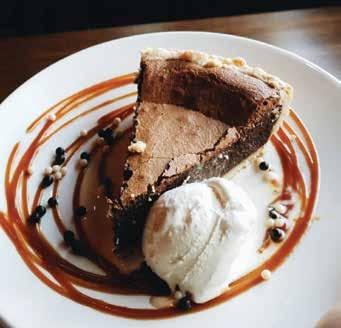



The Amtrak Missouri River Runner stops at the quaint downtown station, offering a direct connection between Kansas City and St. Louis and beyond. It’s a convenient alternative to driving, especially for day trips or weekend travel.
The Lee’s Summit Regional Airport, located just north of downtown, serves private and regional aviation. Most residents still rely on Kansas City International Airport for major travel, but the local airport adds a small, practical option for those who need it. Summit Flight Academy, based at the airport, also offers discovery flights, which is a cool way to see the city from above.
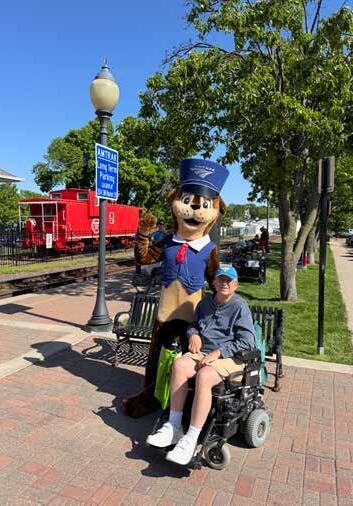
In 1865, as the Missouri Pacific Railroad pushed west, local landowner William B. Howard struck a deal to build a town directly on the line. Lots were intentionally arranged around a future depot, with the expectation that the rail access would drive growth. It worked: The early settlement (then called Strother) quickly became a shipping hub for surrounding farms by moving corn, livestock and fruit to larger markets by train. As the railroad took hold, residents wanted a name that better reflected the growing town, and the name Lee’s Summit was born, honoring another early settler Dr. Pleasant Lea, who was killed in a Civil War battle near the rail stop.
Since the station was initially experimental and improvised, it was built out of a wood frame, whose vulnerability led to a fire in the early 1900s. Two years later, the depot was rebuilt as it’s still standing today: constructed of brick and stone, with freight rooms at one end, passenger space at the other and a bay window for the station master to monitor incoming trains.
By the late 19th century, Lee’s Summit had become one of the busiest shipping points on the line between KC and St. Louis. Today, trains pass through via Amtrak’s Missouri River Runner, but the role of the depot has shifted from a point of departure to the home base for the local chamber and historical society. Info sourced from Great American Stations.
Info sourced from Great American Stations.


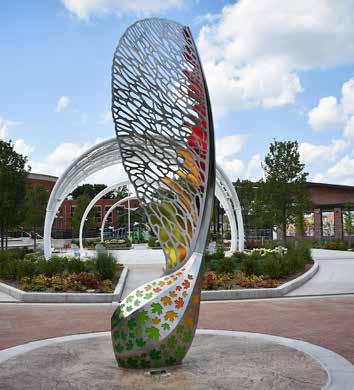
The art scene comes alive during the warmer months with Fourth Fridays, which draws the town to open-door galleries and studios. But impressive art is everywhere year-round; murals, sculptures, and rotating installations are hallmarks of Lee’s Summit’s thriving creative community.





Don’t settle for the drive-thru. Enjoy scratch-made favorites from one of Lee’s Summit’s local go-to spots.
Crispy fried chicken, pot pies, signature hand-held sandwiches, soups, salads, burgers, tacos & more.

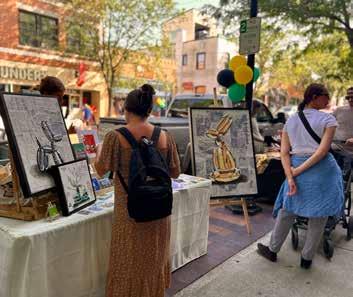
The 6th Annual Plein Air Festival
May 20th-30th, 2026
The Sixth Annual Plein Air Festival will be May 20–30, celebrating the French tradition of creating artwork directly from the scene in front of you, capturing light, color and atmosphere on the spot. The festival kicks off with an optional workshop with renowned artist Larry DeGraff at Lake Jacomo, followed by painting sessions at Missouri Town Living History Museum, Pergola Park at Longview Lake and Powell Gardens and in downtown Lee’s Summit. It wraps up in a public art show and awards presentation at Green Street Market, where visitors can view and purchase art pieces, enjoy live music and meet the artists.


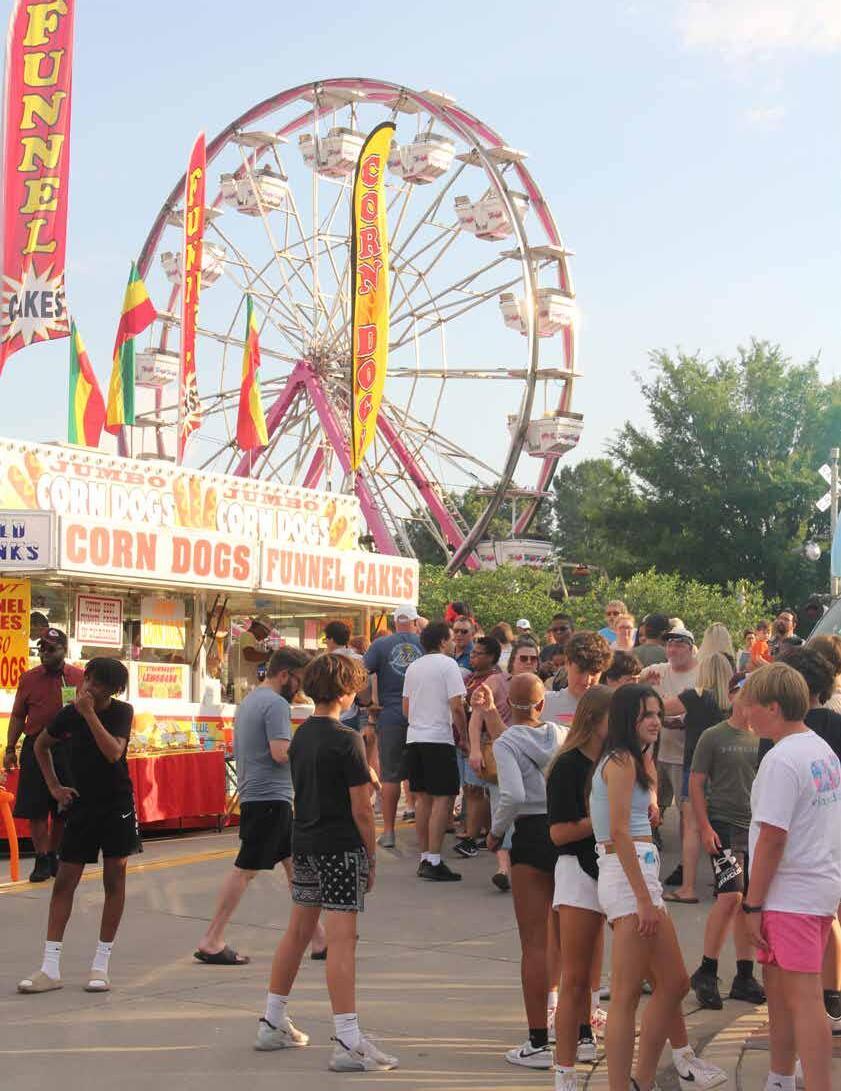
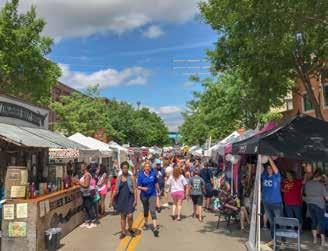
June 5: 12pm-9pm
June 6: 10am-9pm
June 7: 11am-4pm
Downtown Days is Lee’s Summit’s annual summer festival, typically held in early June. For one weekend, the Strother District turns into a full-blown block party. There’s live music, carnival rides, art booths, food stands and pop-up events taking over the downtown district for the weekend, and it’s grown into one of KC’s marquee summer weekends. Mark your calendars.


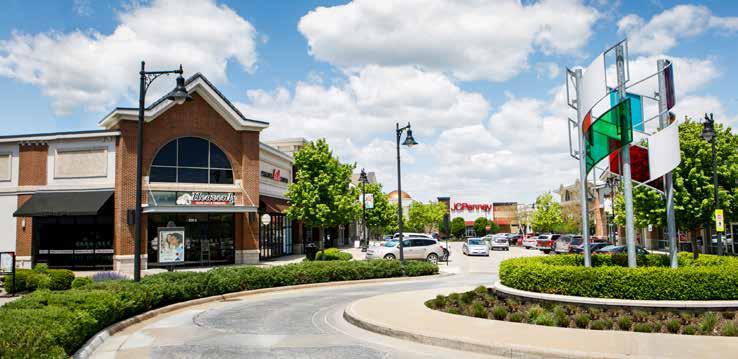
Downtown Lee’s Summit punches above its weight for a smallcity shopping district. The tight cluster of local shops is hard to beat. Bel Fiore Co. Flower Bar + Boutique lets you build a custom bouquet stem by stem. Anchora Bella and Elle & Em cover everything in women’s fashion, from blouses and dresses to graphic tees and accessories. The Purple Hippopotamus might be the cutest children’s clothing store in town. KD’s Books is your classic neighborhood bookstore, and it hosts events to boot. A Messner Bee Farm storefront rounds things out with locally sourced honey and goods, and Local Foundery fills in the gaps for home goods and gifts.
And let’s not forget the farmers market, which runs every Wednesday and Saturday from April through October at Green Street, where 70-plus vendors turn out fresh produce alongside candles, soaps, merch and dog treats. Everything is within walking distance, so it’s easy to dip in and out, browse and window shop to your heart’s content.

Summit Fair is Lee’s Summit’s primary shopping hub. The open-air center includes a mix of national names like DSW, JCPenney and H&M along with smaller boutiques and services, all in one place. Adjacent to Summit Fair is Summit Woods Crossing, which houses staples like a Super Target and a Lowe’s. You’ve got just about everything you need within a mile of each other.
From gifts to treats, there is something for every mom.
Sweeten her day with beautifully crafted cakes and bundtlets made just for her.
Give her a gift she'll treasure forever, from sparkling rings to timeless necklaces.
Celebrate mom with one-of-a-kind gifts made right here in Kansas City.
Give the gift of glowing skin and book a treatment she'll love this Mother's Day.
Treat her to the beauty favorites she deserves for a fresh, radiant spring look.
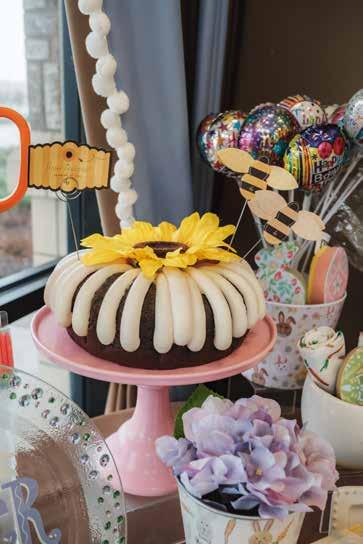
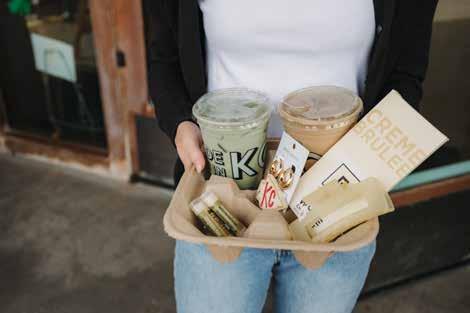
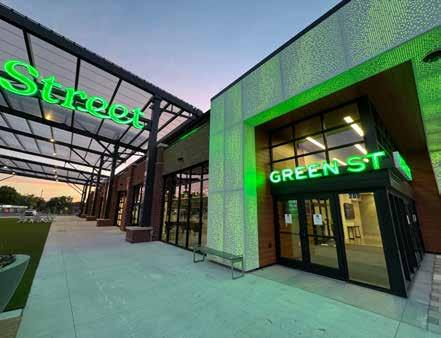
Green Street is downtown Lee’s Summit’s newest space. The idea for the gathering spot dates back to 2007, when the Lee’s Summit Arts Council began laying the groundwork for an out door performance space downtown. It took a bond issue, years of planning, a pandemic and a $44 million investment to finally bring it to life, but when the doors opened in August 2025, it was clear that the wait was worth it.
Centered around a lush green lawn, Green Street is as much a community hub as it is an event space. On weekends and Wednesdays, Green Street is best known for its farmers market, where locals set up and sell produce, fresh flowers, baked goods and apothecaries. Hot tip: Early birds get the best picks, so show up before noon. On market days, there’s always live music out on the stage, and the lawn is a perfect spot to park and enjoy your market finds.
The Green Street calendar stays busy well beyond market days. On any given day, you might also find yoga classes, makers markets, reptile shows or even line-dancing lessons taking over the lawn or pavilion. And the Green Street project isn’t over yet: Future phases will add housing, restaurants, retail and a boutique hotel to the mix.

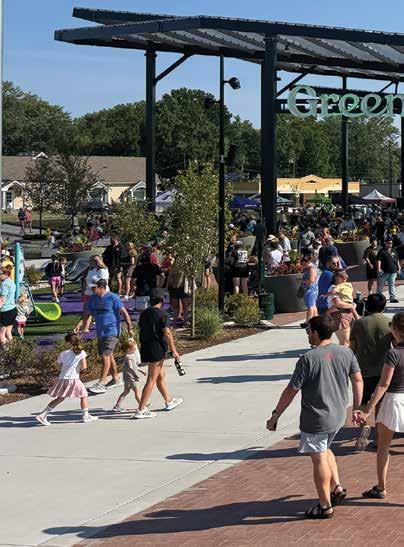
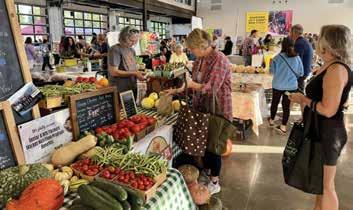
Saturday & Wednesday Market: April 4 – Oct. 31, 8 a.m. – noon
Holiday Mart: Nov. 14, Nov. 28, Dec. 5 & Dec. 19 8 a.m. – 4 p.m.


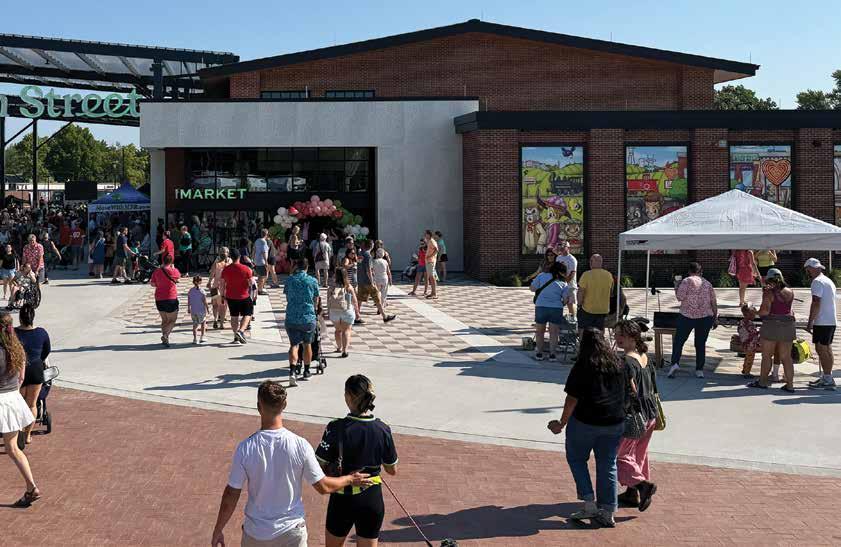

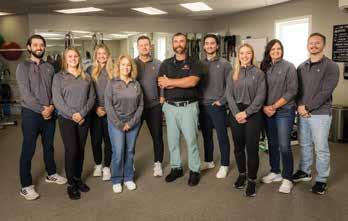


Lee’s Summit is fortunate to have Dr. John Bleazard serving the Lee’s Summit community. He is a highly esteemed orthopedic surgeon specializing in Total Ankle Replacements (TAR) at Kansas City Bone & Joint. With a unique focus on ankle joint preservation and restoration, Dr. Bleazard stands out in his field where only a select few practitioners undertake ankle replacements. In a field predominantly oriented towards treating knee and hip issues, Dr. Bleazard’s dedication to ankle replacements showcases his commitment to providing comprehensive care for patients suffering from ankle arthritis.
By offering TAR as a treatment option, he enables patients to regain mobility and lead more active lifestyles, thus significantly improving their quality of life. Before the advent of ankle replacements, ankle fusion was the standard treatment for severe ankle arthritis. However, this procedure often limits mobility and functionality in the joint. Dr. Bleazard’s expertise in TAR not only provides patients with an alternative but also offers a solution that preserves motion and function in the ankle joint. With his specialized skill set and dedication to advancing ankle joint treatments, Dr. Bleazard continues to make significant contributions to the field of orthopedic surgery, helping patients overcome the limitations imposed by ankle arthritis and empowering them to live life to the fullest.
To learn more about Kansas City Bone & Joint, visit them at kcbj.com or call
Dr. Bleazard to schedule an appointment. He is currently accepting new patients.
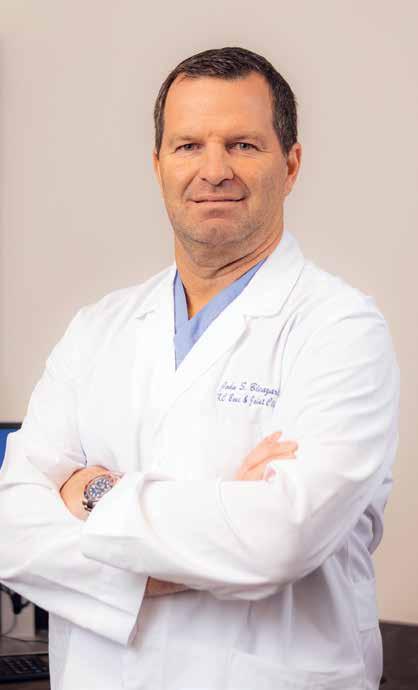



ro softball lands in Kansas City, where women’s sports are thriving—not ust surviving



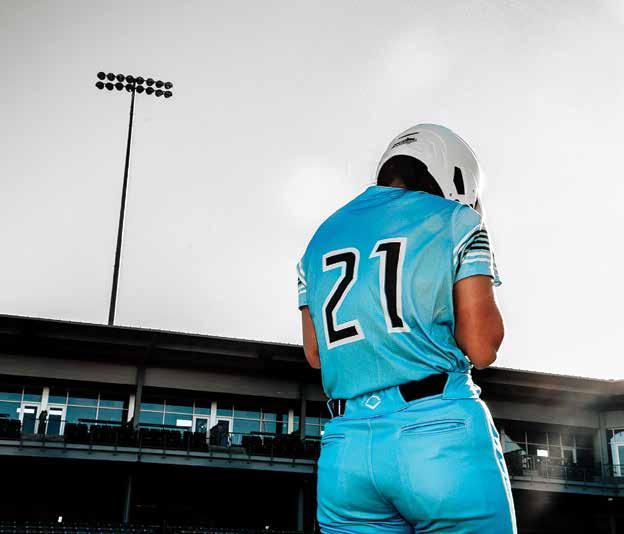
By Ted Cotti.
If, as Marilyn Monroe sang, “Diamonds are a girl’s best friend,” then women softball players and fans in Kansas City have reason to celebrate.
The Kansas City Diamonds have announced they will compete as a founding member of the newly formed Professional Softball League.
One of seven founding teams, the Diamonds will play its home games at Legends Field in KCK, where the Monarchs play too.
“This is a defining moment for softball in Kansas City,” says Jeremy McDowell, KC Diamonds president.
“The KC Diamonds represent opportunity, visibility and growth for professional women’s sports. Kansas City has already proven it shows up for softball, and now it has a team to call its own.”
McDowell—who has been running high-level, largescale amateur tournaments around the United States for the past two decades—explains that KC was “an easy choice” when it came to selecting a franchise site because it’s nationally known for its support of women’s sports. Kansas City, of course, has the Current, but it also has hosted the NCAA Division I women’s volleyball



and soccer finals in the past year and has hosted the women’s Big-12 basketball tournament since its inception in 1997.
“Bringing a franchise to Kansas City just reinforces the region’s growing reputation as a national women’s sports destination,” McDowell says. “KC is just the right-size city: big enough but close knit enough.”
He said the PSL is already working to expand in 2027, adding a franchise in St. Louis and perhaps other cities. The Diamonds are also working on scheduling some exhibition games with the USA national team, which will name its roster for the next Olympics at the end of this year.
Diamonds tickets went on sale Feb. 1, and the team reported they sold more than 2,000 tickets on day one alone.
“We were very excited about our day one ticket sales,” McDowell says. “If we do this well, we’ll get butts in seats.”
With softball returning to the Olympic games in 2028, the sport has never been more popular. “This is a milestone moment for professional fastpitch softball,” PSL spokesperson and owner of the Florida Vibe Ryan Moore told USA Today. “We’ve seen the momentum build year after year.”
The league has secured the rights to broadcast its contests exclusively on the All Women’s Sports Network, which is featured on various platforms, including Amazon Prime, Pluto TV and DirecTV.
The Diamonds recently named Georgia’s Valdosta State University head softball coach Thomas Macera as the team manager for its inaugural season.
Macera, currently in his 19th year at the helm of his alma mater, is the winningest active coach in NCAA Division II softball. He’s reached 1,000 career wins faster than any coach in NCAA softball history.
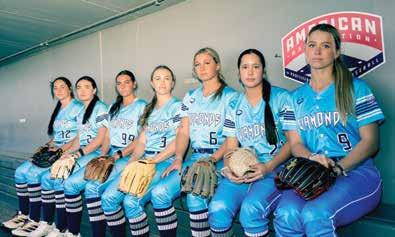
Thus far, the team has signed:
UTILITY PLAYER
Riley Blampied
CATCHER
Leah Boggs
INFIELDER
Alex Brown
LEFTY PITCHER
Savanah Henley
RIGHTY PITCHER
Laurin Krings
INFIELDER
Presleigh Pilon
OUTFIELDER
Rachel Roupe
INFIELDER
Allie Skaggs
OUTFIELDER
Lauren Lucas Thornhill
PITCHER
Hope Trautwein
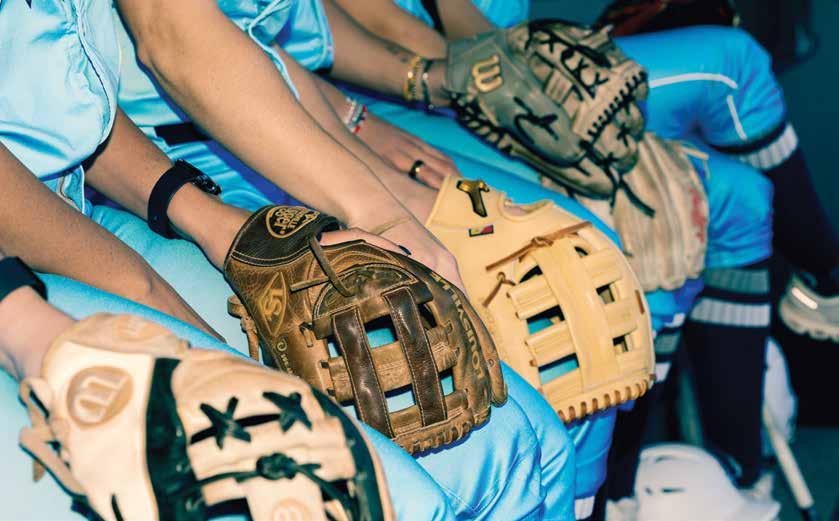


Under Macera’s leadership, the VSU Blazers have consistently ranked among the top 25 teams, have made 14 consecutive NCAA South Regional Tournaments and three NCAA Division II National Championship Tournament finals appearances. His 2004 team went 53-4, earning him NAIA Coach of the Year honors.
“Fundamentals are number one for me,” Macera says, “but I’m also pretty big on hitting. Home runs are always great, but you’ve got to be able to get baserunners because without baserunners, you don’t score.”
Macera says his family, including his wife, Tana, will remain in Georgia during his first season in Kansas City.
“My first job is just trying to help solidify the team,” says Macera, who admitted he has never even visited Kansas City. “Our biggest challenge is going to be learning how to play together in a very short period. It’s going to be an adventure, but I am going to try to enjoy it.”
Macera’s resume includes professional coaching experience. He served as the hitting and infield coach for the Chicago Bandits, who won the 2008 title in the now defunct National Pro Fastpitch League.
“It is a blessing to be out there, just an
honor to be around that level of player,” Macera says. “These women are pros and carry themselves as such and train hard and do everything they can to perform at the highest level.”
McDowell says Macera was the clear choice to lead the Diamonds.
“He brings a rare combination of professional experience, player development and championship culture,” McDowell says. “Thomas has developed a reputation as one of the top hitting minds in the game, and more importantly, knows how to develop athletes and build winning environments. We’re building something special in Kansas City, and bringing in a proven leader like Thomas gives our players and our fans confidence that the Diamonds will compete at the highest level from day one.”
The PSL has no affiliation with the Athletes Unlimited Softball League, which is backed by the MLB, who provides marketing, content distribution and operational support. Whereas the AUSL is league-owned (MLB reportedly has 20 percent equity), the PSL is franchise-owned.
“Entry to a professional league has always been expensive, and investors can lose millions,” McDowell says. “But because we have independent franchises, we don’t have a barrier to entry. This allows for business groups who have a passion for the sport to be involved.”
The AUSL employed a traveling exhibition format last year but is switching to city-based teams in 2026 with six hosts, none of which have an MLB team (unlike the PSL). The two leagues run concurrently, but the PSL playoffs will occur the week after the AUSL concludes its season.
“We’re not anti-AUSL,” McDowell says. “We all just want to support the game.”
For years, hundreds of U.S. women have had to go to Mexico, the Netherlands, Germany, Taiwan or Japan to find opportunities to keep playing after college. These leagues allow women who love the game and want to keep playing more opportunities to play and stay at home.
“We want to disrupt the status quo of the professional game,” McDowell says. “For so many years, we’ve seen leagues come and go, but that’s because they had no broadcasting deal, no game-day experience, and
The Diamonds held tryouts in December. As they did not have a coaching staff yet, management brought in former college coaches, former professional softball coaches and even a couple of Kansas City Royals scouts to complete evaluations. “We have some really good players who had opportunities elsewhere and chose Kansas City,” McDowell says. “We are looking to be unlike any other professional sport in terms of accessibility to these players, who will be very involved in the community. These women are pioneers. They’re in this to pave the path for the next generation.”

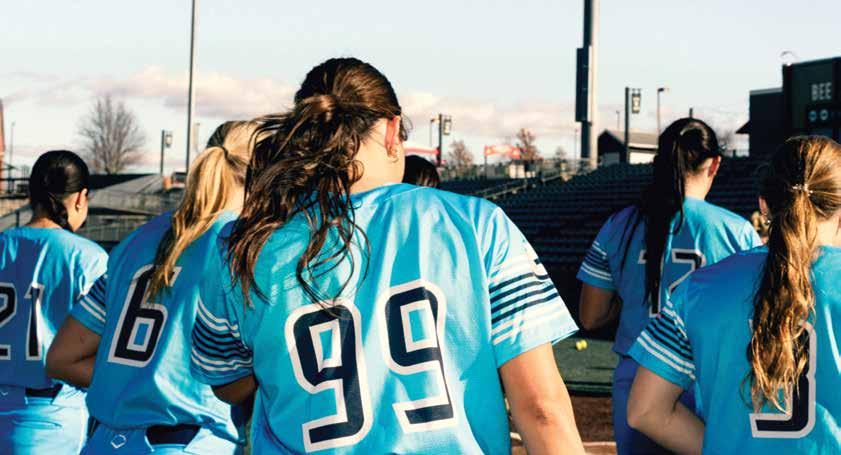

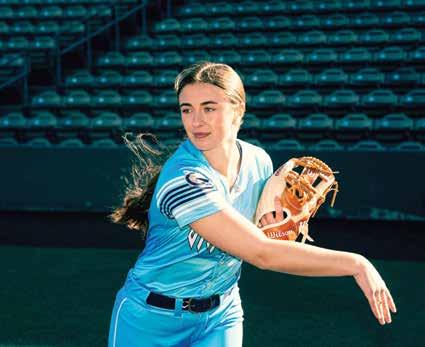
we’re changing that.”
The league’s other teams include the Atlanta Smoke, Chattanooga Chill, New York Rise, Tampa Bay Breeze, (Viera) Florida Heat and (Bradenton) Florida Vibe.
The PSL’s opening day is June 11, just after the Women’s College World Series concludes. Each team, with a roster of 20 players, will play 10 consecutive weeks.The league will host an exhibition series against teams of current juniors in college from Columbia and O’Fallon, Missouri, and Normal, Illinois, the week of July 28 and conclude with a postseason tournament August 5–9.
The Diamonds will make four road trips this year—two to Florida between visits to Atlanta and New York.
Kansas City’s home opener is June 17. The Diamonds will host six different three- and four-game home stands: June 17–19 and July 19–21 against the Vibe; June 29–July 1 and July 23–26 against the Smoke; July 2–4 against the Rise; and July 13–16 against the Heat.
“The setup is nice, especially when you’re building and the thing is in its infancy,” McDowell says.
The Diamonds have partnered with the Kansas City Monarchs, who will not only allow the Diamonds to use their Legends’ facility for its games but are also providing the softball team with access to their personnel, including their box office and operations.
“They approached us, and we nego-
tiated a partnership that worked both ways,” McDowell says.
With a maximum capacity of 6,500, the stadium will be the “biggest by far in the PSL,” McDowell says.
“We want the players and the fans to have a good experience,” he says, “and the fact that we don’t have to build an infrastructure for all that is extremely beneficial.” The goal is to eventually have their own stadium, but McDowell said that would probably take a STAR bond.
Of course, the field at Legends will have to undergo a few changes to accommodate softball. The Diamonds will purchase and install temporary six-foot green mesh fencing featuring sponsors’ names and messaging in the outfield; place their own bases around the diamond; and outline a pitcher’s circle in front of the pitcher’s mound, which will remain in place during games.
The Diamonds will practice at Avila University, where they will also be housed along with the opposing teams while the World Cup is in town.
“We visited all over the metro and even had a couple of former pro players help us decide where to reside—women who would know if the accommodations, security and practice facilities were suitable for a professional women’s team,” McDowell says. “It’s a win-win for Avila (whose dorms would otherwise be empty during the summer) and us.”
Learn more about the Diamond’s season by visiting thekcdiamonds.com.
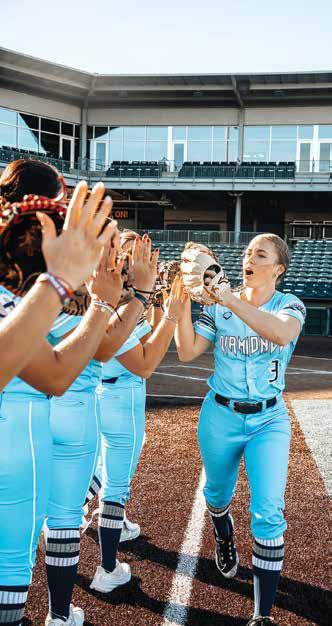


The nominations were made, the finalists were chosen and now the winners will be named. Stay tuned for the June issue to learn who the winners are and help us celebrate those that make this city great! You can also visit the website for a complete list of winners.
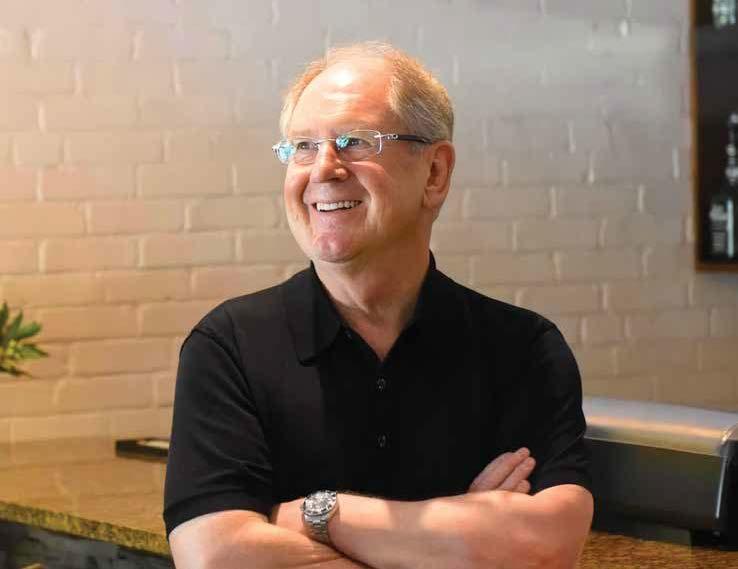
By Sarah Sipple
MINSKY’S PIZZA HAS stayed true to its slogan: “Gourmet, and going to stay that way.”
This year, the KC-based pizza chain is celebrating 50 years, a milestone that few restaurants reach. In fact, less than 35 percent of restaurants will make it to year 10, according to the U.S. Bureau of Labor Statistics, and industry experts estimate that less than one percent of independently owned restaurants will make it to the half-century mark.
What’s the secret ingredient to Minsky’s Pizza’s longevity? It’s a three-part recipe, according to Gregg Johnson, founder and owner of Minsky’s: Persistence, changing with the times and excellent ingredients, says Johnnson, who opened his first Minsky’s in 1976 at South Plaza (5105 Main St., KCMO).
For example, a BBQ chicken pizza is common at pizzerias now, but Minsky’s had it first, Johnson says. “It started when our former
next-door neighbor, Jake from Jake Edward’s BBQ, would come over. He always had extra chicken and suggested we put the BBQ chicken on a pizza. At first, I thought that was kind of a dumb idea. But he kept bringing it over. So my help at Minsky’s started doing it, and they were telling me it was a pretty damn good pizza, and so I tried it and liked it. So we put it on the menu—that was in 1976.”
Minsky’s, named after a famous early 1900s New York City burlesque house, also offers an extensive gluten-free menu, proving once again that Johnson keeps innovating.
Johnson believes quality pizza comes from quality ingredients, and Minsky’s uses only high-quality mozzarella from Wisconsin’s Pagel’s Ponderosa Dairy and Christoforo Colombo tomatoes grown in California. To retain generations of loyal customers, the pizza itself must stand out, Johnson says.
Minsky’s is celebrating its milestone with the Kansas City community, who have made it possible, Johnson says. In March, Minksy’s provided first responders across the metro with pizza, and it’s holding $50k Double Give-Back Days to help fundraise for local charities. The restaurant is also introducing new specials throughout the year. Check out minskys.com to find a location near you.

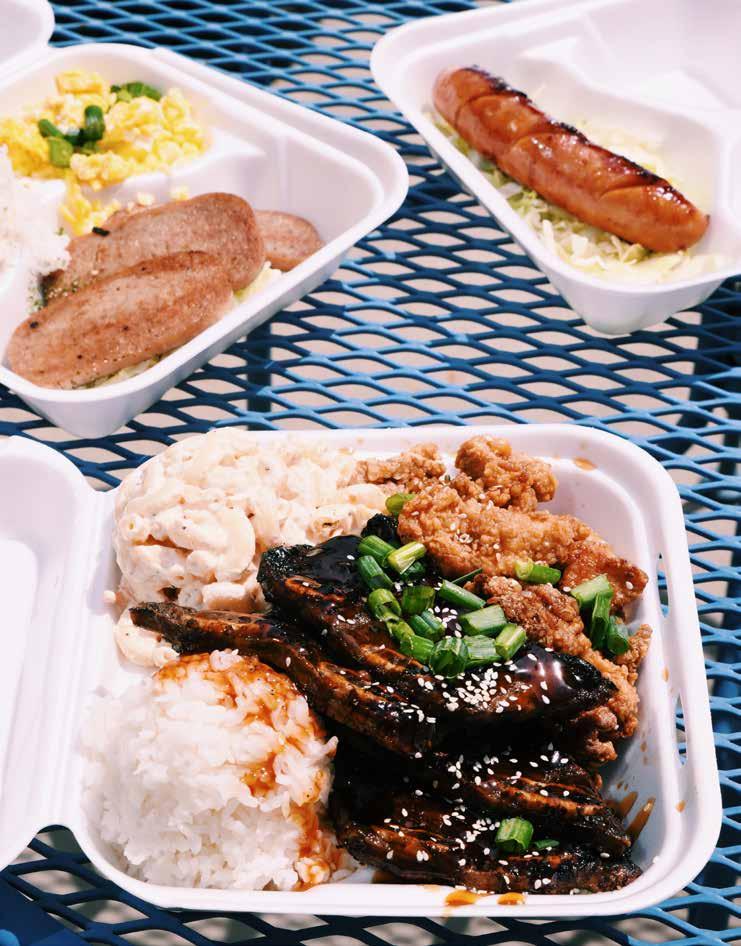
by Anna Petrow
From Samoan turkey tails to Hawaiian plate lunches, a food truck brings Polynesian comfort food to Kansas City
By Tyler Shane
by Anna Petrow

NDEPENDENCE is home to one of the Midwest’s largest Samoan populations. That’s why, off Highway 291 and 23rd Street in the Tractor Supply parking lot, you can find Cameron Maluia tossing kalua pork, pineapple sausages and turkey tails into Styrofoam to-go boxes from his food truck throughout the week.
Uce Kitchen serves all kinds of Polynesian comforts, including the Hawaiian-style plates more commonly associated with franchised establishments like Hawaiian Bros or Mo’Bettahs. Classically served with a scoop of macaroni salad and white rice, Maluia’s plates come with kalbi short ribs or sticky, garlicky chicken. He welcomes the comparison to Polynesian food, and he welcomes the idea of having more Polynesian restaurants in the area. But if you follow his food truck long enough to order something you’re less familiar with—say, turkey tails or sapa sui (Samoan chop suey)—you’ll see why he describes Uce Kitchen as the “Samoan cousin” to those larger Hawaiian plate lunch chains.
Maluia fell into the classic Covid story: He was laid off during the pandemic and needed to pivot and find something else to do. His wife, Anita, who works behind the scenes of Uce (pronounced oo-seh) Kitchen, says that it’s common in Samoan culture for men to do the cooking at family gatherings. With Maluia already experienced in cooking for large groups, he decided to bring his family’s recipes to Independence’s larger Samoan community, first as pop-ups, then as a food truck. As for the truck’s name, “Uce” is Samoan slang for “bro,” derived from uso, meaning “brother.”

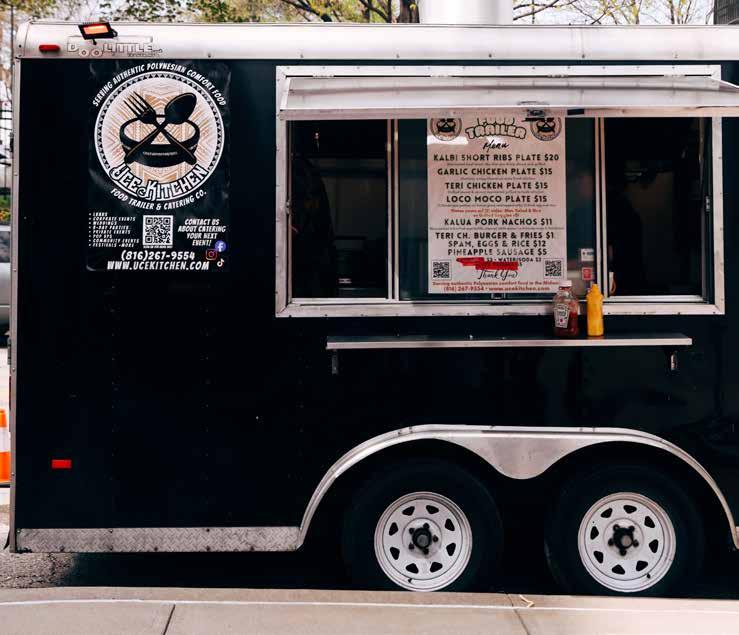
I tell my customers my momma and my wife and sister are making [the Samoan food]. So that’s what you taste. People say, ‘Man, it tastes like my mama made it,’ and I say, ‘Cause my mama made it.’
Maluia compares his Samoan food to soul food, saying it has the same “oomph” or depth of flavor often associated with it, due mainly to the cooking techniques and seasonings he uses. He tries to change up the menu once a month, but it almost always includes turkey tails, or mulipipi. In Samoan cooking, turkey tails play a role similar to oxtails in Black soul food. Slow-cooked until rich, fatty and tender, they are a staple served in multiple ways. Other traditional Samoan dishes include the fa’alifu fa’i (bananas cooked in coconut cream) and fai’ai pilikaki (mackerel cooked in coconut cream). Maluia’s sapa sui is made with povi masima (think Samoan corned beef), which he travels all the way to San Francisco to source. Because these menu items require more labor, Maluia says cooking Samoan food requires “all hands on deck,” meaning his wife, mom and sister all help.
“I tell my customers my momma and my wife and sister are making [the Samoan food],” says Maluia. “So that’s what you taste. People say, ‘Man, it tastes like my mama made it,’ and I say, ‘’Cause my mama made it.’”
Maluia’s Samoan food is what makes his food truck a true treasure, but other Uce Kitchen menu items—like the Hawaiian plate lunches you’re probably more familiar with—are a worthy pick, too.
Anita, who is originally from Hawaii, says it was the island food she missed the most when moving to the mainland. The Hawaiian plate lunch, a popular meal originating in the late nineteenth century among Hawaii’s immigrant plantation workers, often of Japanese, Chinese or Korean descent, is comparable to tacos served with beans and rice. With a scoop of macaroni salad, a scoop of rice and a protein typically tossed in a sweet-savory Asian condiment glaze, it’s one of those meals that’s universally meant to be. Uce’s garlic fried chicken plate is the most popular, but there’s something especially satisfying about eating the fatty edges of kalbi short ribs between bites of creamy macaroni salad, tossed in no shortage of Hellmann’s, and white rice sprinkled with furikake. Between the chicken and ribs, Maluia says these are the menu items that draw in customers. Wherever he’s posted, the aroma of sweet grilled meats is hard to ignore. “We don’t have the prettiest trailer,” says Maluia, “but you can smell it.”
Sometimes, embracing another culture means eating canned meats, and Uce Kitchen wouldn’t be a Polynesian food truck without some Spam. The rectangular pork slices, which became extremely popular in Hawaii during WWII, when food was being rationed (apparently Hawaii has the highest per capita consumption of Spam in the U.S), are served with an egg your way, topped with green onions and a dome of rice. There’s also the loco moco plate, which Maluia asked—before he knew who I was—if I’d had before. The dish starts with white rice, gets layered with two hamburger patties and a fried egg, and is smothered in sweet brown gravy.
“It’s a Hawaiian hangover meal,” he says.
Maluia asked, he explained, because, it’s typically something only those in the Polynesian community would order. As I dug through layers of gravy, egg yolk, beef and rice, I suddenly found myself wishing I had been sipping heavily on gin and tonics the night before. The savory feast would bring an anemic back to life in no time.
The pineapple pork is sweet and juicy with a wonderful snap. Along with povi masima, this is another ingredient Maluia travels to San Francisco for (Maluia says the brand name is a secret, though anyone in the Polynesian community out West would recognize it). He also buys taro leaves there, as they’re harder to find in Kansas City.
As for future plans, Maluia says he’s content with the flexibility the food truck life offers. He positions his truck outside Tractor Supply,
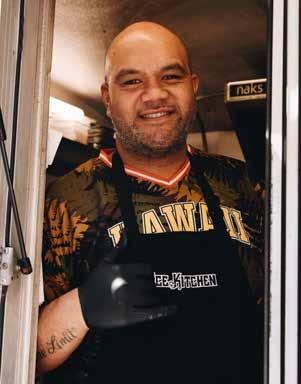
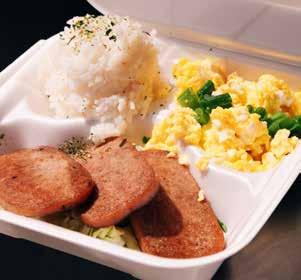
a location he originally chose because he was buying propane there about three days a week. Uce Kitchen also offers catering and prepares food at the Ennovation Center in Independence, a nonprofit business incubator that Maluia credits with helping him and his wife learn the ropes of food trucking.
If you’re looking to host a celebration, Maluia also caters luaus with a whole pig roast. Uce Kitchen can often be found at local festivals, too. Look for the big guy with tribal tattoos; maybe he’ll hit you with a shaka, or hang loose sign, like he did for my son. Keep updated with Uce Kitchen on Instagram and Facebook @ucekitchen.
By Sarah Sipple

THE BRICK IS A DIVE BAR , but it doesn’t want to be put in a box. Its design combines mermaids, Mardi Gras and local art. Its entertainment programming ranges from Rural Grit bluegrass each Monday to album release parties for local punk bands. And its menu? That’s where things get even more interesting.
Since 1999, The Brick (1727 McGee St., KCMO) in East Crossroads has been serving food and drinks in front of its small stage. Sure, there are burgers and onion rings, what one expects from a place with vinyl booths and walls covered in Sharpie love notes. But there is also a vegan meatloaf, an apple butter and brie sandwich, and a Kansas City Reuben hot dog. So why should the cocktail menu be any less eclectic?


The Revolver is an interpretation of an old fashioned that—you guessed it—can’t be put into a box. In addition to bourbon and a dash of simple syrup and orange bitters, St. George NOLA Coffee Liqueur takes its turn as a well-balanced featured ingredient.
It may appeal to long-time fans of the cocktail who appreciate a riff, just as it may be an entry point for someone who longs to enjoy old fashioneds but finds them too strong or full-bodied. This one is light and as crushable as an old fashioned could ever be. In fact, crushing it might be recommended, since the traditional large ice cube is relinquished for standard ice, and dilution is quick.
The Brick is full of surprises, and this light, coffee-enhanced old fashioned is just the tip of the iceberg.

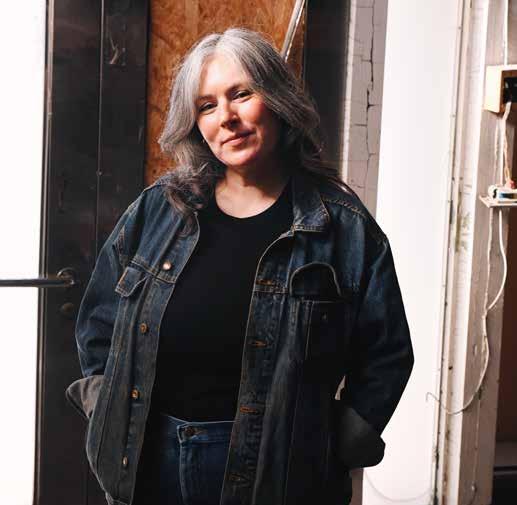
Meet Candice Moore, KC’s sober beverage expert and co-owner of Loretta Jean’s, a modern Midwest restaurant opening later this year
By Tyler Shane
CANDICE MOORE doesn’t make a point of telling people she doesn’t drink alcohol. Most customers wouldn’t even think to question it while she pours them a beer at one of the two bars she manages. But it’s true: The Overland Park native has been sober for six years.
Of course, Moore didn’t always forgo alcohol. She jokes that she “sampled plenty” during her early bartending days at The Foundry in Westport (RIP), Davey’s Stagecoach Inn (RIP) and The Blind Tiger (also RIP). Her experience has proven value, as she is now a sought-after beverage aficionado.
She built the beer program at The Riot Room and eventually became general manager at the Crossroads’ Brewery Emperial, where, along with managing the Strawberry Hill dive bar Hillsiders, she still is today. Soon, Moore will also be opening Loretta Jean’s restaurant with co-owner and chef Rick Mullens in the historic Seiden’s Fur building.
It was while working at Brewery Emperial during Covid that Moore decided to stop drinking to help her mental health. Oh, and another twist: Moore also has celiac disease.
“Yup, I was a sober celiac general manager of a brewery,” she says. “Really great title, right?”
Sobriety pushed Moore into non-alcoholic cocktails just as the mocktail movement was gaining momentum during the pandemic.
“[Mocktails] have gotten exponentially better, but most people just used juices or sodas for N/A drinks,” Moore says. “I was looking for something with all the layers—sweet, salty, citrus, a little bitter.”
While managing a brewery where customers primarily came for beer, Moore built an ambitious non-alcoholic program. She worked with herbs and shrubs to create her own vermouth and Campari alternatives, pulling tannins from hops, pickling Bloody Mary garnishes and fermenting fruits and vegetables to mimic the complexity and mouthfeel of cocktails.
These days, Moore continues to enjoy pushing the envelope with local seasonal ingredients, something she shares with Mullens. Currently, Moore says her fridge is filled with shrubs made from Morton and Concord grapes sourced from Prairie Birthday Farm in Kearney. (Morton grapes, native to Missouri, are often used in regional wines.) Fermentation is a favorite technique for both Moore and Mullens, and the two take a collaborative, slightly offbeat approach, playing with ingredients and seeing just how far they can take them into unexpected flavors. It’s this curiosity and experimentation that makes Loretta Jean’s one of the more exciting new restaurants on KC’s horizon—especially with Moore’s plans to rethink how restaurants approach beverages in general. Instead of isolating the non-alcoholic ones in a separate section, the entire beverage menu will be built around non-alcoholic drinks, each with suggested spirit pairings for those who want them.
Toward the end of our conversation, I ask Moore the obvious question: How does a sober bartender create drinks with alcohol? Or maybe more importantly, how does she know they taste good?
CANDICE MOORE’S PERFECT DAY IN KC
Daily Grind
Broadway is my favorite place to grab co ee. I’m a basic gal and I love a dirty chai with oat milk.
Thrift Therapy
My friend Jill Castaneda in downtown OP has this cool little vintage shop only open on Saturdays called Storyteller Provisions. It’s only open from 10 am to 2 pm, but it’s sick. It’s all things that I wear—cool old T-shirts, Wranglers denim, flannels and some Western wear.
Taco Time
I’ll be going to San Antonio’s, El Camino Real or Bonito Michoacan, just depending on what mood I’m in. I’m getting al pastor tacos, and if I’m at San Antonio’s, I’ll grab salsa and some of their dry spices and peppers.
Hill Thrills
I’ll catch a show at my homebase, Hillsiders. One of the bartenders there has a band called Western Cuts. It’s like a honky-tonk country band and I love them so much.
“Yeah, that’s the crazy part,” Moore says. “I know what a lot of things taste like—I sampled a lot back in the day. But I have a really good nose, and I always have a handful of people to help me taste things. It’s about finding your people who are very honest with you.”
Moore admits she sometimes feels “a little out of touch” with new spirits, especially those thaty hit the market after she stopped drinking, like Bronson’s Milk Punch, a locally produced spirit launched in 2021. Moore has never tasted it herself, but she’s still incorporated it into a cocktail—a variation of a Paper Plane—that’s already become a hit. A version of it will appear at Loretta Jean’s—with Moore’s own creative spin, naturally. Keep an eye on Loretta Jean’s private dining room and basement bar, a space Moore says will serve as the team’s creative playground for unexpected drink and food pairings. Loretta’s will also have an espresso machine and serve Lo-Lo, a 3.5 percent ABV easy-drinking beer brewed exclusively for Loretta Jean’s by Brewery Emperial brewmaster Keith Thompson.
Moore has been in enough managerial positions and created enough bar programs to feel comfortable stepping into the role of restaurateur. When asked if she feels ready, she simply answers, “I survived in a dive bar.”
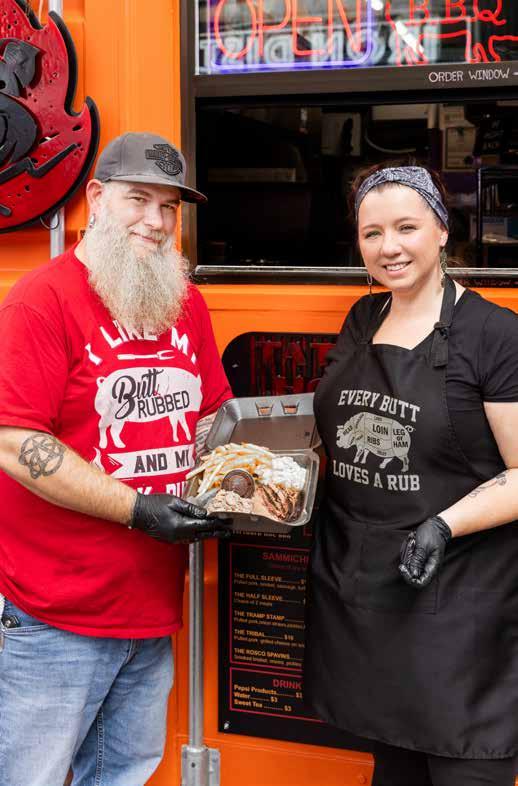
Tattooed Hog aims to elevate KC barbecue culture with zero shortcuts
By Sarah Sipple
SOMETIMES THE BEST WAY , to examine your own city is by viewing it from the perspective of an outsider. Danny Hawkins, owner of the recently opened barbecue spot Tattooed Hog, did just that when his girlfriend, Sarah Knox, moved here from Texas and lamented that she could not find any good barbecue.
Hawkins remembers thinking she couldn’t be more wrong. This is Kansas City, after all. Good barbecue is everywhere. “So I took her to some of the well-known, very popular spots, and there were a couple I was very disappointed in,” he says.
Hawkins’ standards are high. He grew up immersed in the craft world of barbecue. “My dad did competitions when I was a kid,” he says. “I just fell in love with it.
It forced Hawkins to zoom in on the city’s barbecue scene, and after looking around, he, too, thought there was room for improvement. The final straw came after visiting Eureka Springs, Arkansas. “There was a barbecue place there with trophies on the walls and all these awards, and it was almost inedible,” Hawkins says. “It was horrible. I was really, really mad. Sure, it wasn’t Kansas City, but it was still considered a barbecue region. I stewed for quite some time, and then I decided to do something about it.”
Hawkins’ standards are high. He grew up immersed in the craft world of barbecue. “My dad did competitions when I was a kid,” he says. “I just fell in love with it.”
The disappointment in something so dear to him fueled an inner fire. After a few years honing his recipes at festivals and catering gigs, he opened Tattooed Hog in North Kansas City’s Iron District (1599 Iron St., NKC) earlier this year.
So what is Hawkins doing to raise the bar? Through trial and error, he’s found a consistent meat supplier that meets his high expectations for quality. He relies on smaller, more frequent ingredient deliveries to keep things fresh in the small kitchen. He has perfected his dry rub and sauce recipes over years. And outside of the meat, all of the desserts and sides, besides fries and coleslaw, are made from scratch by Hawkins and Knox.
The sauce, served on the side so guests can first appreciate the meat, lands between Kansas City and Carolina style. It has a vinegar base and only a slight sweetness, which is one of Hawkins’ non-negotiables.
“I’m not crazy about sweet barbecue sauce, and mine has got a little bite to it,” he says.
Hawkins is not spiteful or even competitive; he is passionate about the art of smoking meat and wants everyone to have a good experience. “There are plenty of great places out there, and I am nobody,” he says. “But I know [some] places [are] better than what they’re currently putting out. People come to Kansas City for barbecue, and I want to represent it well and do it right.”
by Kelly Powell
By Nicole Kinning
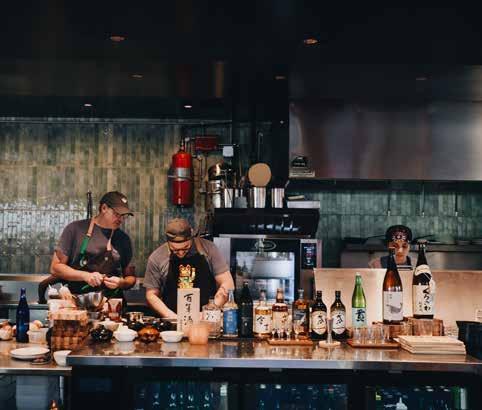
Kansas City doesn’t often get to play in the rarefied air of the James Beard Awards—but this year it does. Anjin (1708 Oak St., KCMO), the intimate, fire-driven Japanese Izakaya restaurant in the Crossroads built around Japanese technique and binchotan charcoal grilling, has landed a spot as a James Beard finalist, one of the highest honors in American dining. The 20-seat dining room is less sushi counter, more modern yakitori meets tasting menu.
Now comes the waiting. Winners will be announced in early June in Chicago— one of the industry’s biggest nights and a rare national spotlight moment for Kansas City’s dining scene.
Naturalz Ice Cream (6301 W. 135th St., S# BA, Overland Park), a small Washington state-based chain with flavors inspired by India and other global regions, chose Overland Park for its fifth store (and first in the KC area). Located in the Corbin Park shopping center, the
shop opened at the end of March and is best known for its all-natural ice cream made with fruit, dairy and premium ingredients.
Here you’ll find adventurous flavors like Spicy Guava, Sunlit Soan Papdi and Refreshing Rasmalai alongside classics like chocolate and cookie dough. The menu also features faloodas, which are layered ice cream-based drinks with sweet noodles and syrups.
Horsefeather Social,the rooftop bar located on the seventh floor of the Loews Kansas City Hotel (1515 Wyandotte St., KCMO), is set to reopen for the season on May 8. Open Wednesday through Sunday evenings (weather permitting), the space is a go-to spot for cocktails, bites and live music with skyline views.
New this year is Alchemy by Loews, a botanical-inspired cocktail and mocktail program featuring layered, sensory-driven drinks. The hotel is also bringing back its Sweat Forum fitness series on Sunday mornings through fall,
along with Taco Thursdays and First Fridays programming beginning June 5.
Sugar Llamas (8971 Metcalf Ave., Overland Park), an Oklahoma-based dessert chain, recently opened in OP. Known for its made-to-order mini doughnuts, the shop leans into a “one-stop” concept, also offering ice cream, coffee, energy drinks and even dirty sodas.
The doughnut menu has fun flavors like Peanut Butter Cup, Flintstone and Cherry Bomb. The space is currently in a soft opening phase, with expanded hours and a grand opening planned for this month.
Retro-inspired Westport chicken restaurant, bar and music venue Laney’s Get Down (4057 Pennsylvania Ave., KCMO), has closed after just a year in business. Laney’s opened in December 2024 and shut its doors at the end of March.
The concept came from the Nashville-based team behind neighboring bar Tin Roof, who said the Westport location ultimately didn’t perform as hoped, according to reporting from the Kansas City Star. Originally pitched as a ’70s-themed, food-forward Southern comfort spot with live music, Laney’s replaced Mickey’s Hideaway, which had a three-year run. A new, to-be-announced tenant is expected to take over the space.
Mo’ Bettahs, a Hawaiian-style fast casual chain, has closed all of its KC-area locations after about four years in the market. The brand first entered the metro in 2022 and quickly expanded with restaurants in the suburbs on both sides of the state line.
The company told the media it made the “difficult decision” following a recent review of its restaurants, with the final day of service reported on April 10. Although closures mark a full exit from the Kansas City market, Mo’ Bettahs continues to operate in other states, including Utah, Texas, Nevada and Oklahoma.
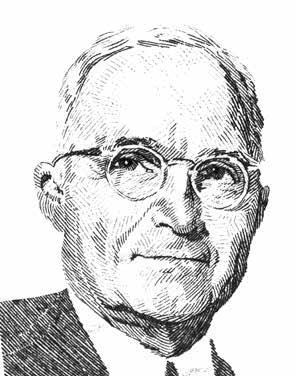
A guide to the real stomping grounds that shaped Harry S. Truman into the man he became
By Nicole Kinning
HARRY S. TRUMAN called Independence, Missouri, “the center of the universe,” and if you know how he moved about town, it’s easy to see why. He could have lived anywhere after his presidency, and he chose to come home. This month, in honor of the man born on May 8, we put together a guide to the KC-area spots where Truman actually spent his time.
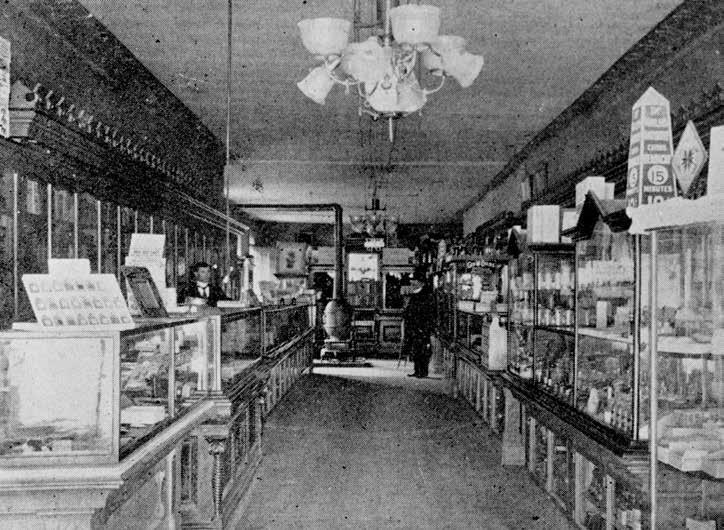
↑ Clinton’s Soda Fountain (100 W. Maple Ave., Independence)
Before he was a politician, Truman swept floors and washed bottles for a drugstore then called Clinton’s. According to Samuel Rushay, supervisory archivist at the Harry S. Truman Library and Museum, Truman was around 14 years old at the time. The building still stands on Independence Square and operates today as Clinton’s Soda Fountain, where you can get ice cream and 12 flavors of Polly’s Soda Pop.
↓ The Noland Home (216 N. Delaware St., Independence) Young Harry had a crush on the girl across the street, Bess Wallace. His cousins, the Nolands, lived directly opposite her family’s home, giving Truman plenty of excuses to visit. “One night a cake plate had to be returned across the street to the Wallace home and Harry Truman volunteered to take the plate across the street,” Rushay says. “Who opened the door? Bess Wallace.” It was one of many small moments that kicked off their love story. The Noland Home offers tours today through the National Park Service.
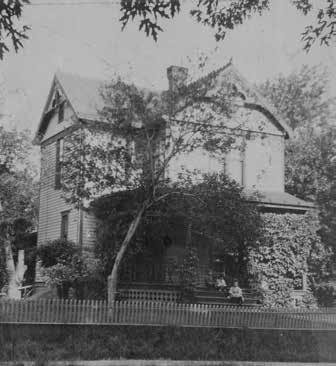
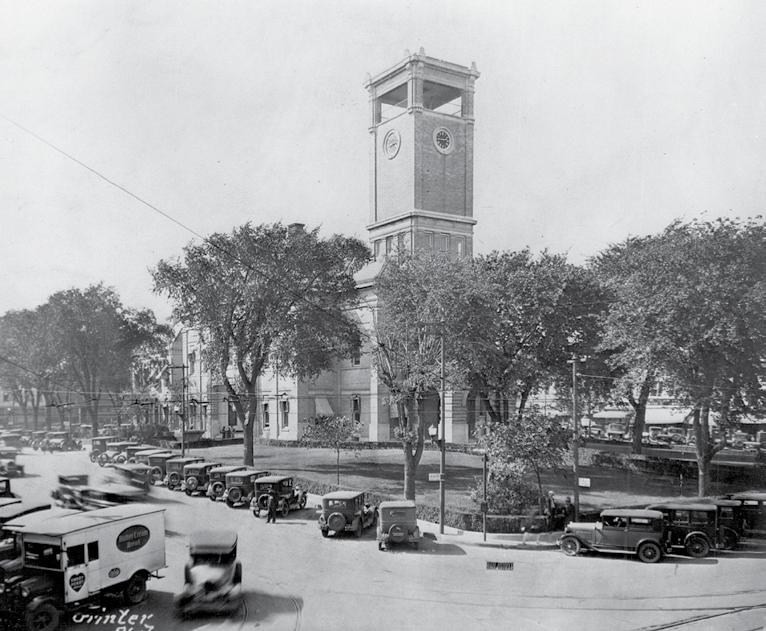
↑ The Savoy Grill
(219 W. Ninth St., KCMO)
Before and after his presidency, Truman was a creature of habit and stayed close to home with his wife, Bess. But the Savoy Grill downtown was one of their exceptions. The historic restaurant closed after a 2014 fire and reopened as the Savoy at 21c Hotel. The original 1903 barroom was restored, including booth No. 4, Truman’s preferred seat. It’s now known as the President’s Booth, and you can wine and dine there in historic style today.
Harry S. Truman Library and Museum → (500 W. U.S. Hwy 24, Independence)
We’d be remiss not to mention this one. After his presidency, Truman drove himself here nearly every day. “He really had a mission to make the library the location for his papers, but also make it an educational facility so that young people especially [could] learn about democracy,” Rushay says. Truman helped establish the museum and library in 1957 and stayed closely involved throughout his life.
← Historic Truman Courthouse
(112 W. Lexington Ave., Independence)
Truman served as a county judge on the Jackson County Court through the 1920s and ’30s. However, according to Rushay, the title’s a little misleading. Although Truman was called a judge, it was not a judicial position but rather an executive one. During his tenure, Truman pushed through roughly $10 million in voter-approved bond issues for roads and bridges. “You can actually see the office where he conducted business,” Rushay says. “It’s open for tours.”
← The Muehlebach Hotel
(200 W. 12th St., KCMO)
Truman kept a suite of offices on the 11th floor of the Muehlebach for decades. “He spent election night up in Excelsior Springs at the Elms Hotel,” Rushay says, “but then when we found out he had won the election in 1948, he moved the party over to the Muehlebach Hotel, where he celebrated the victory.”
The Truman Library holds a table from that hotel, where plenty of history was made. Truman signed the Truman Doctrine on it, and President Johnson later used that same table at the Truman Library to sign the Medicare Act in 1965.
WITH MARBLE SLA BS and floral motifs, this building’s exterior is well-ornamented, but has unfortunately fallen into disrepair over the decades. Do you know where this Art Deco treasure is?
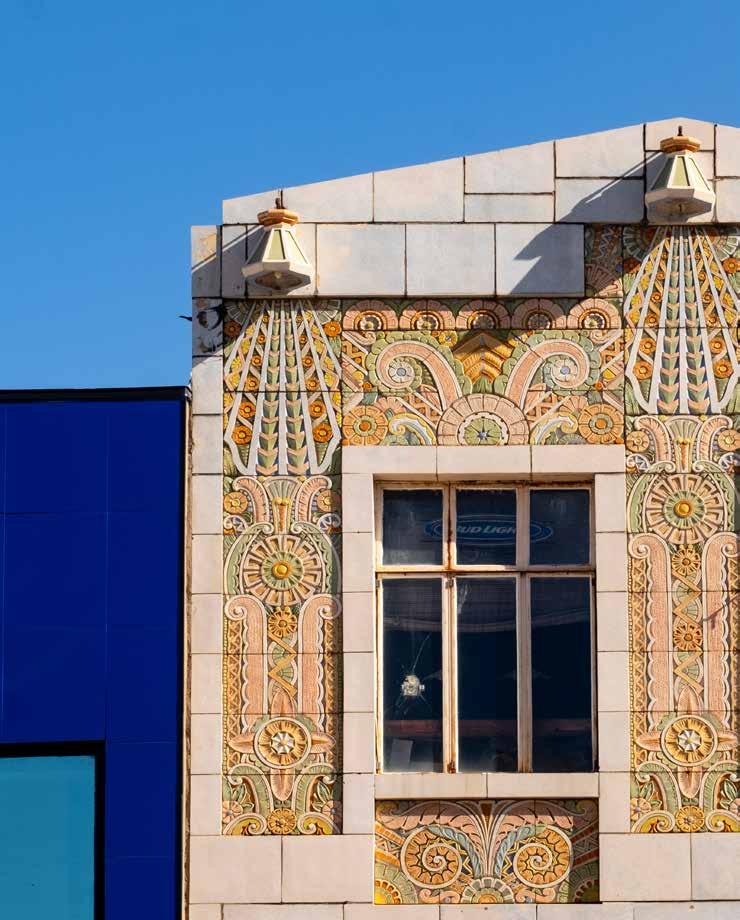
Hint: The second floor of this building was long home to a music venue. You may remember cautiously going down its precarious stairs after a stiff drink. We want to hear your clever responses. Send them to editor@kanascitymag.com.