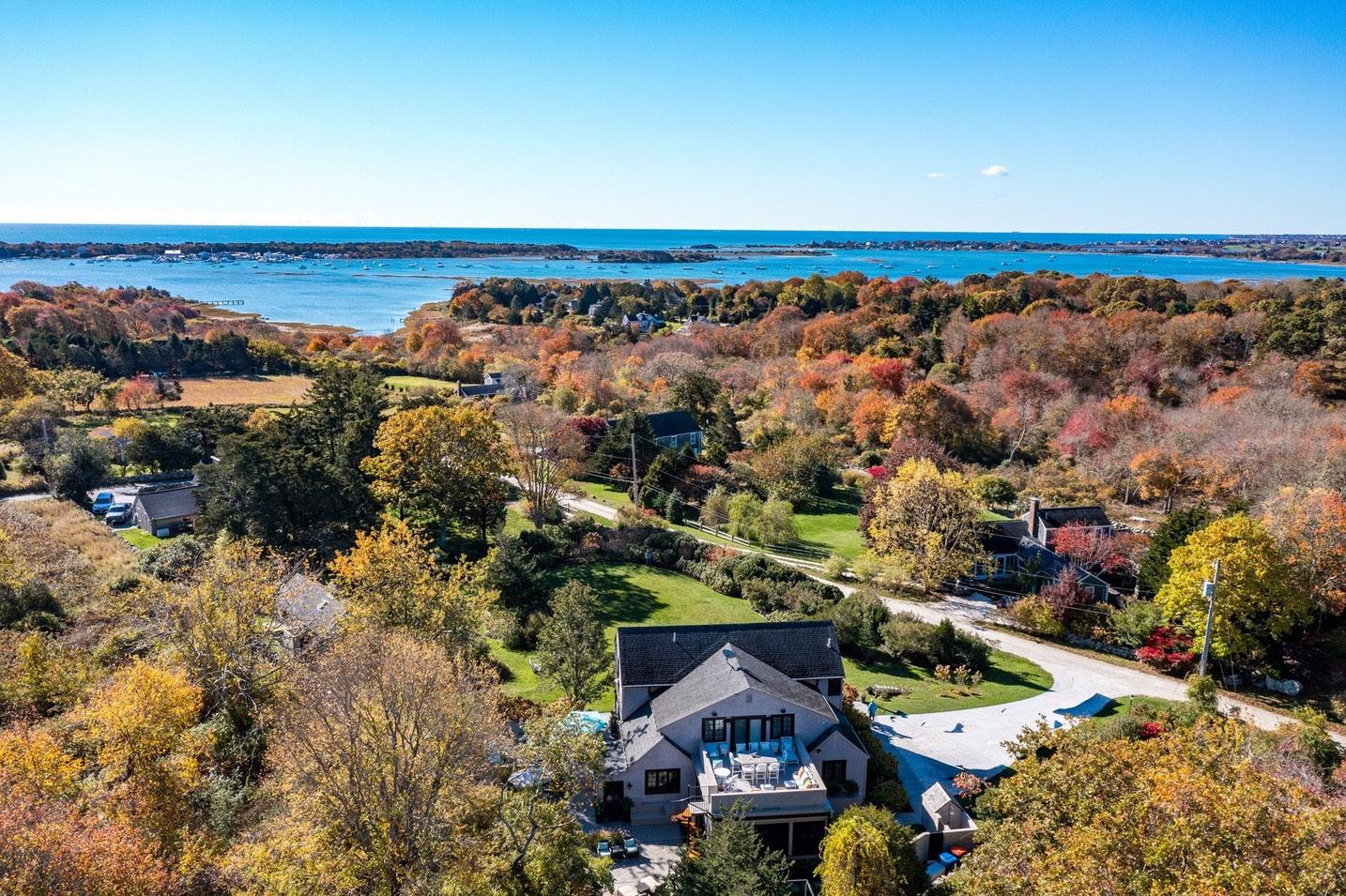
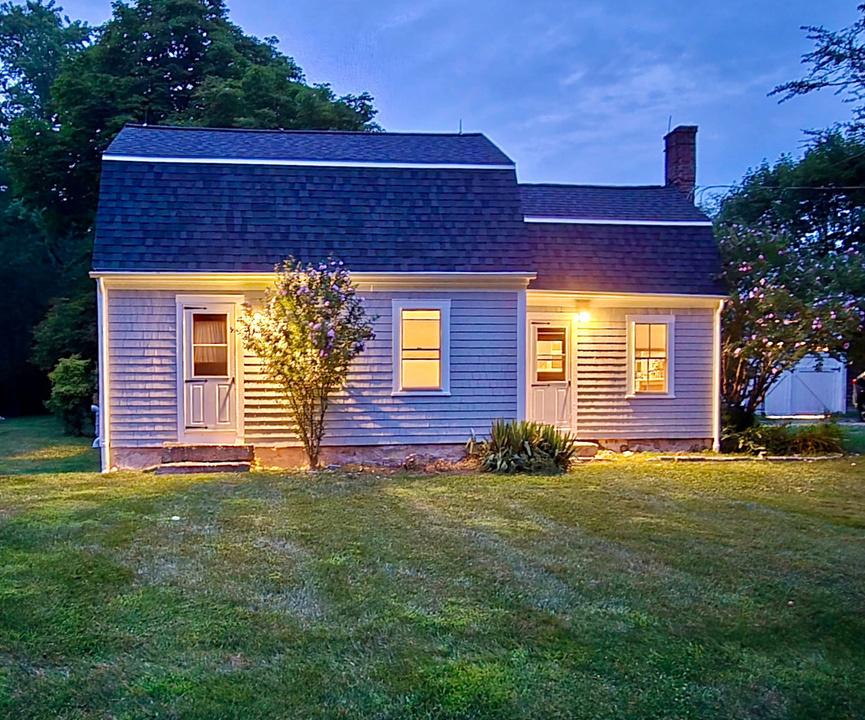
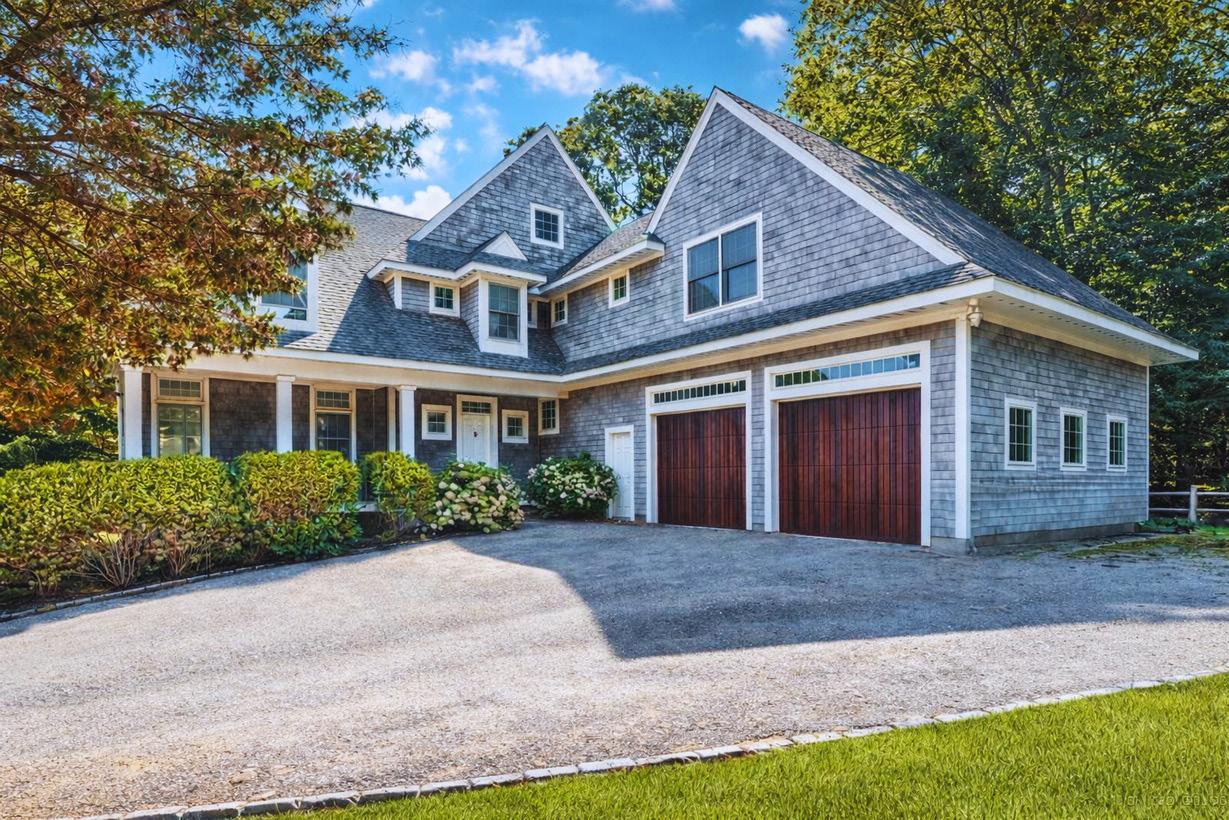
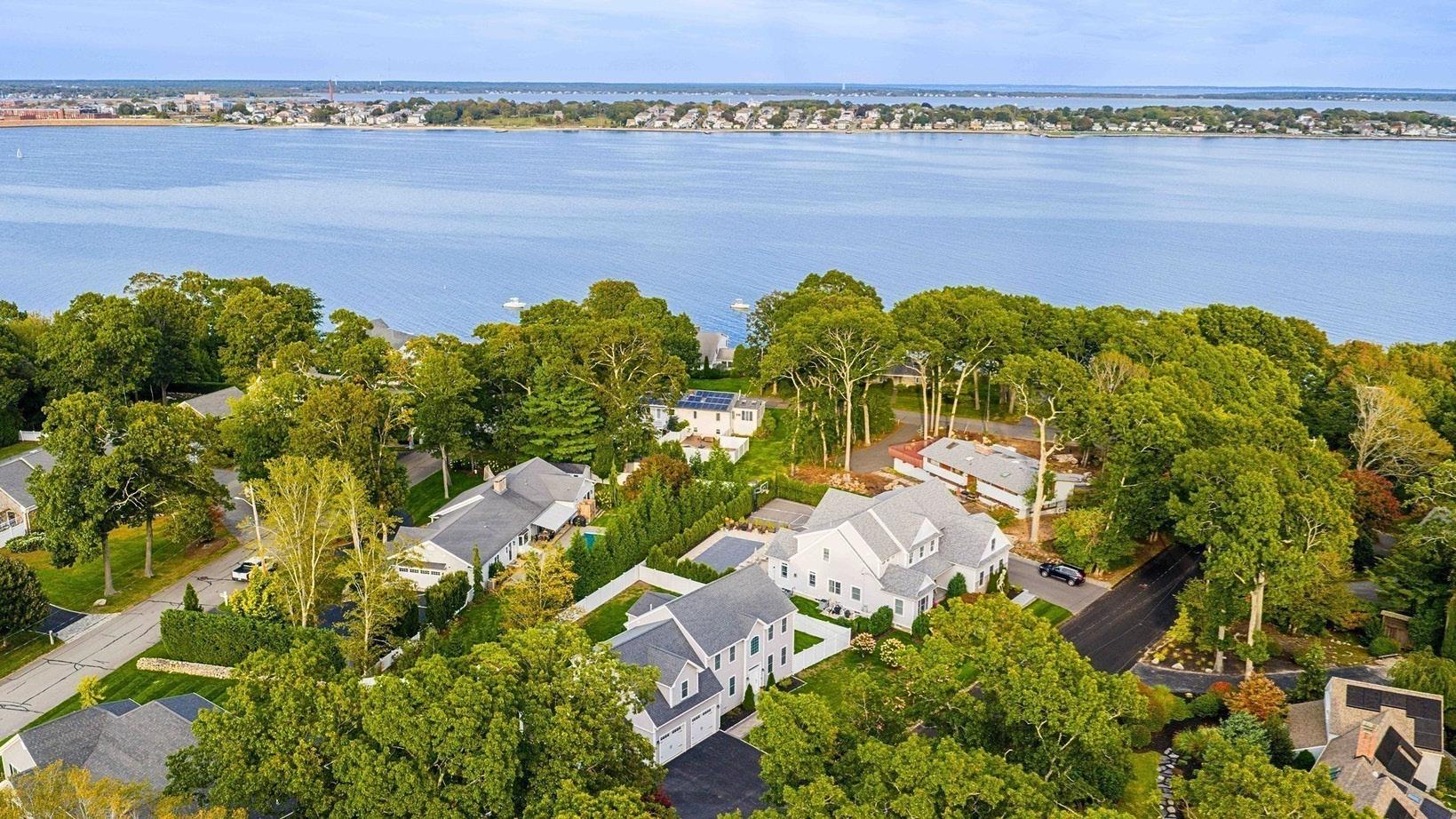
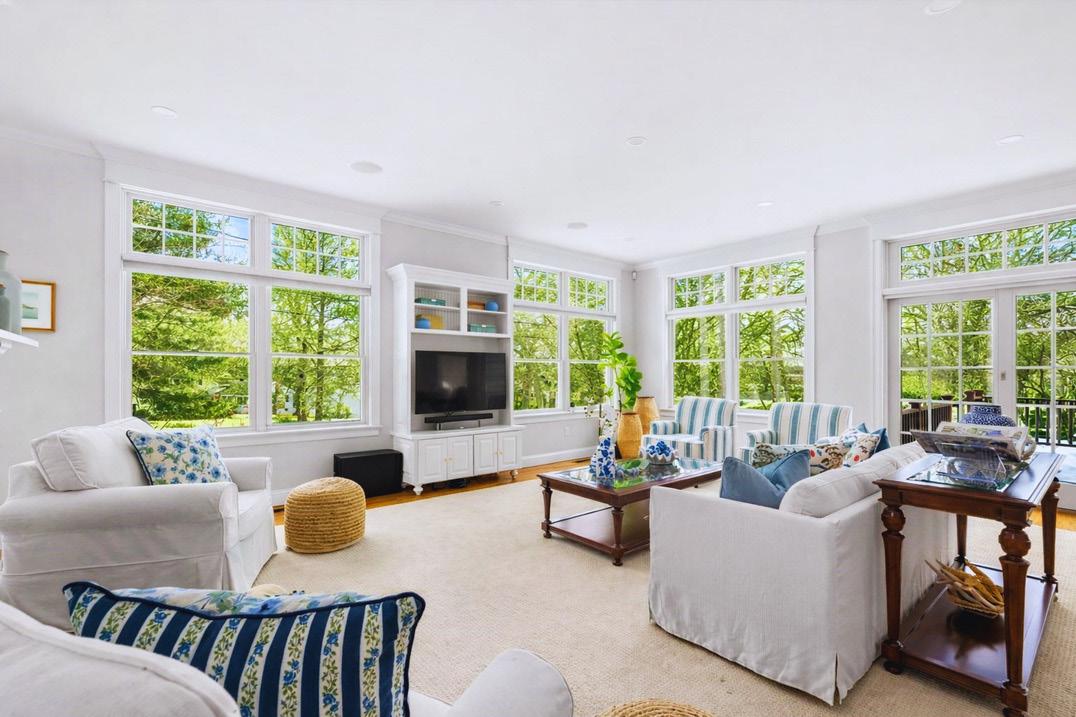
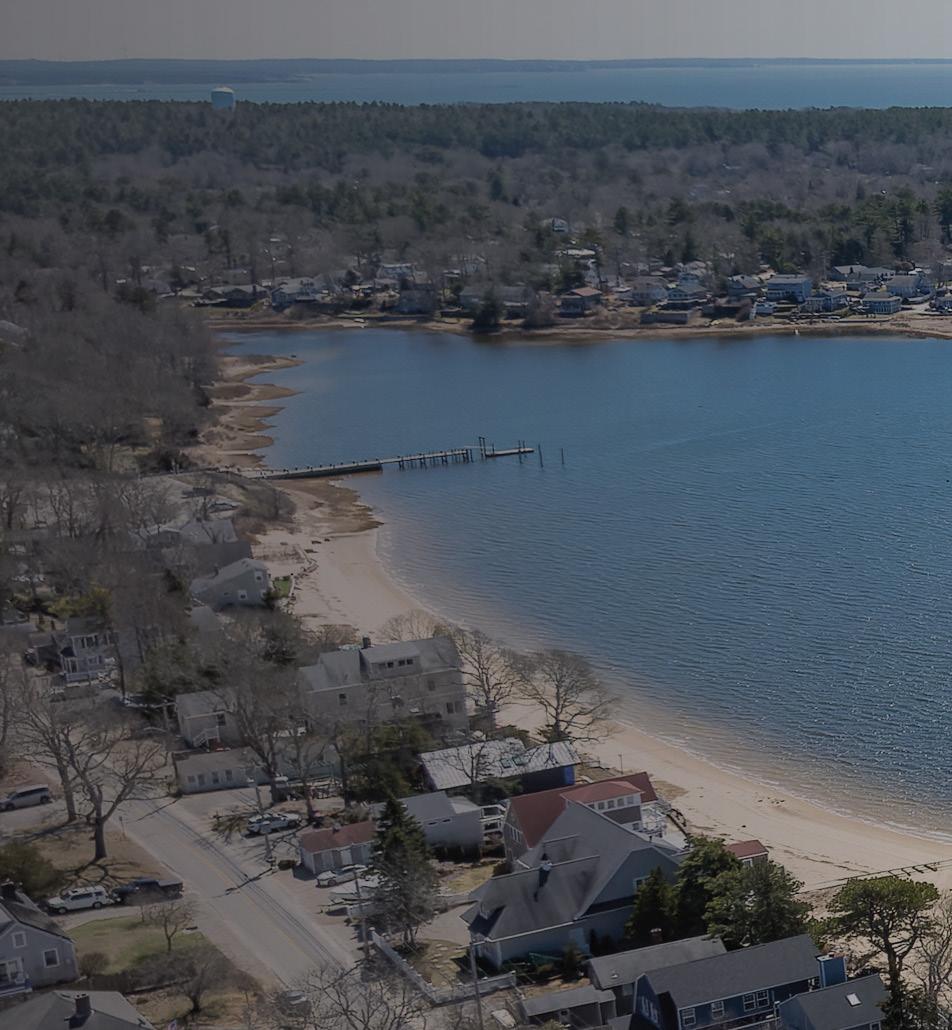
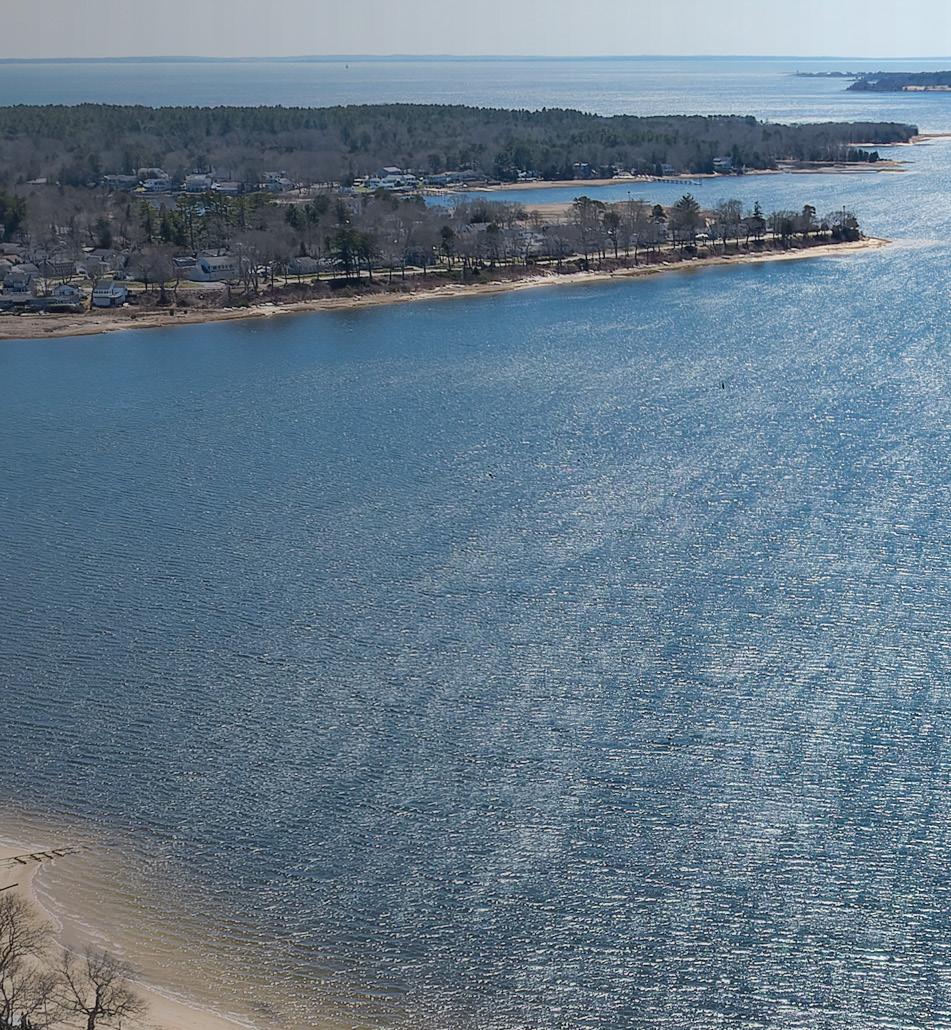
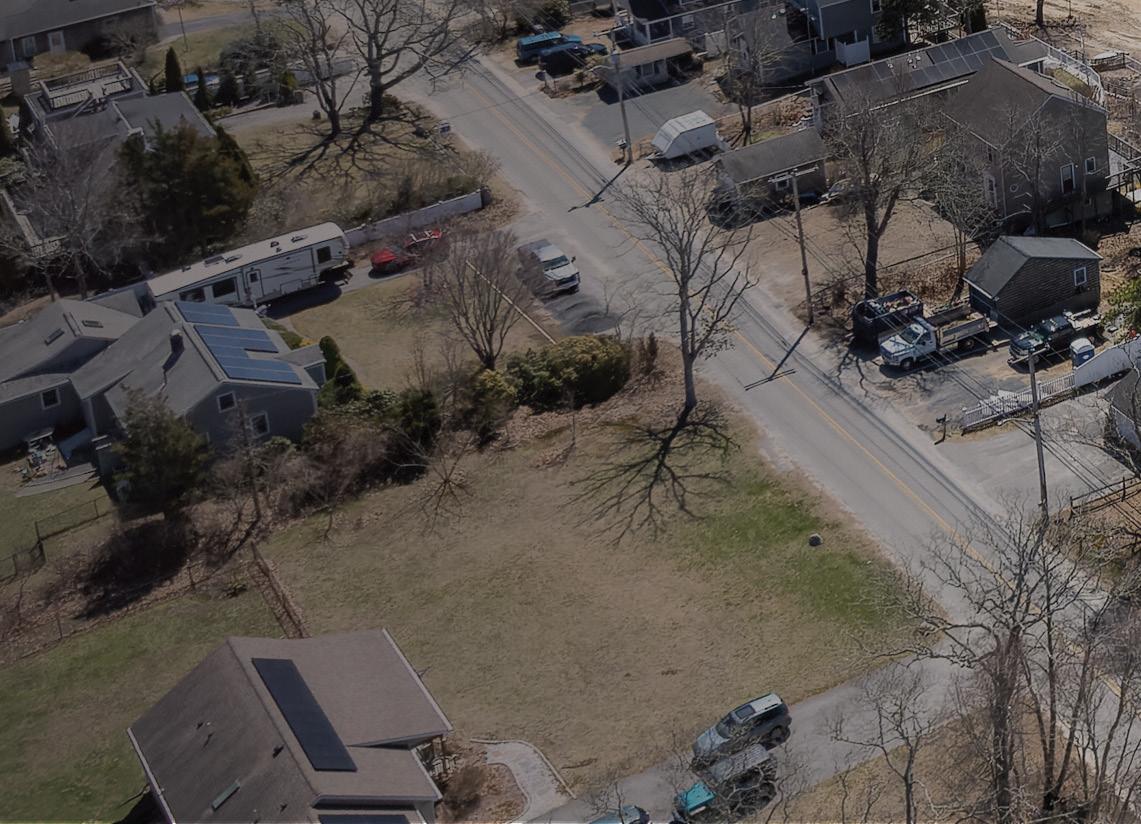
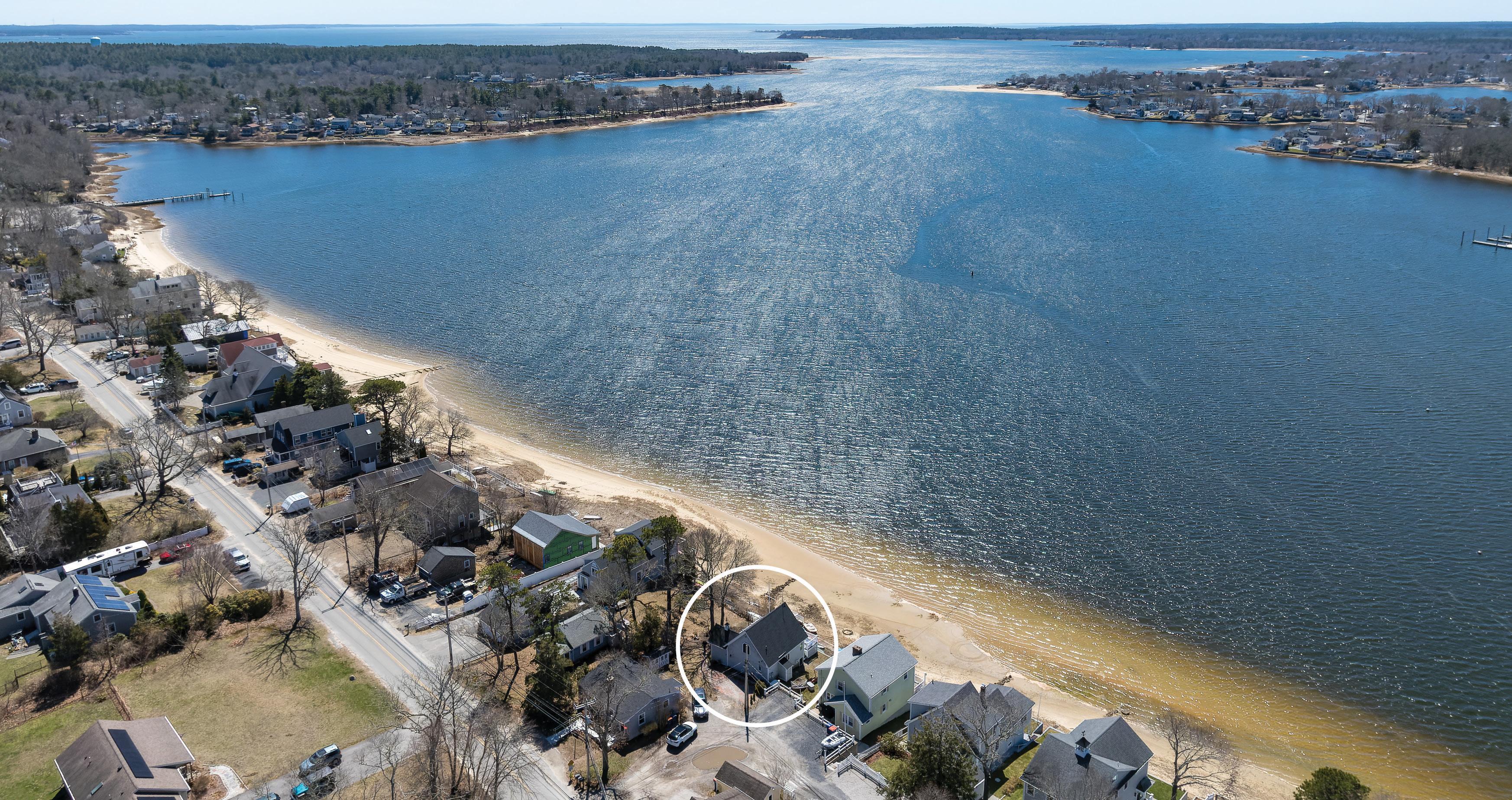
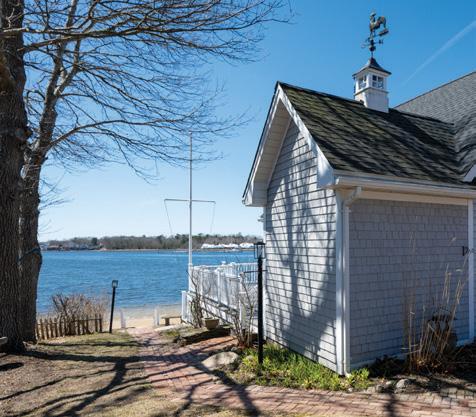
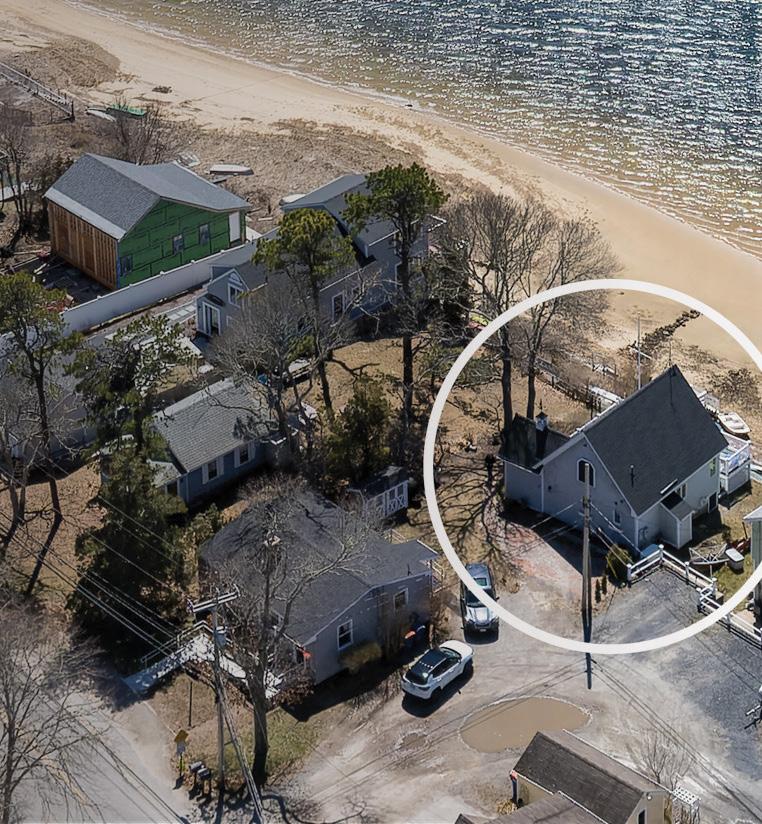
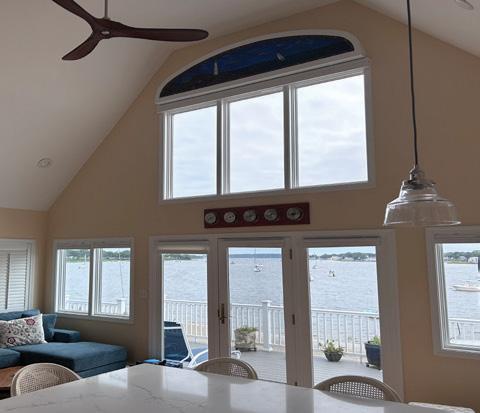
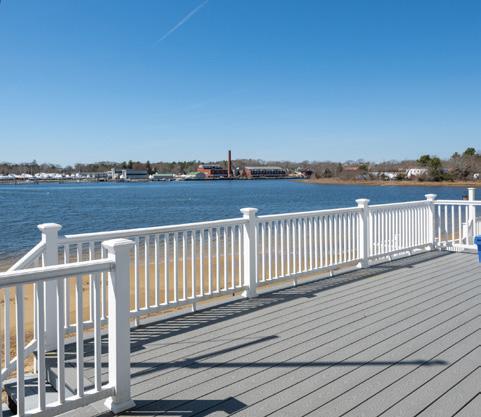
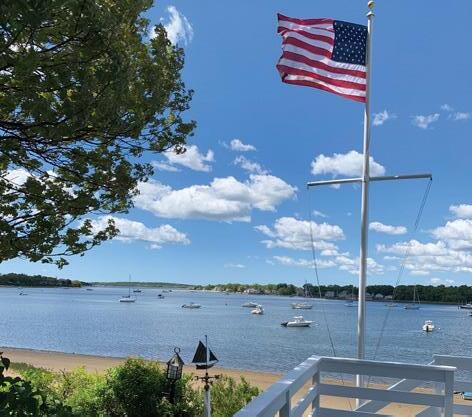
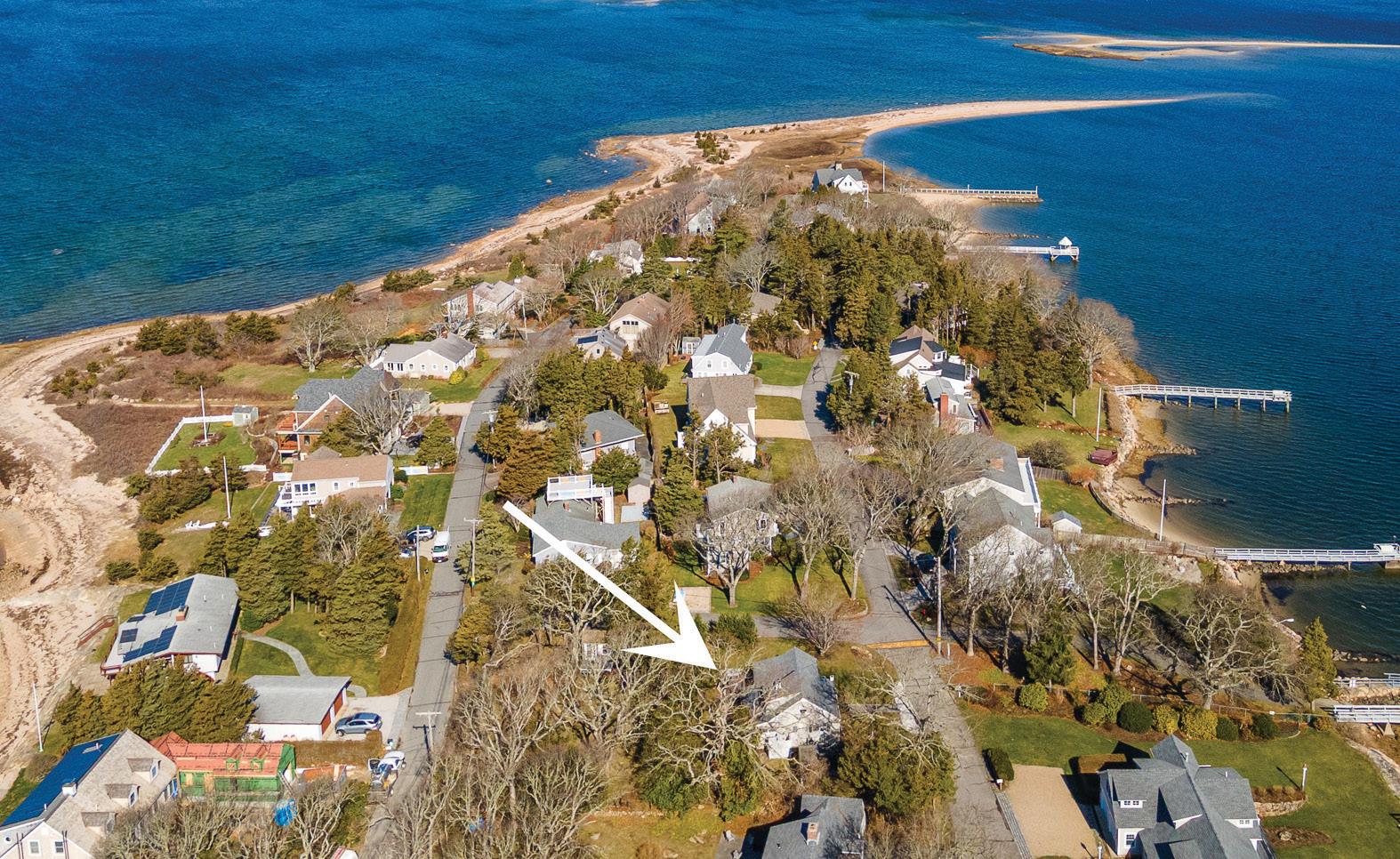
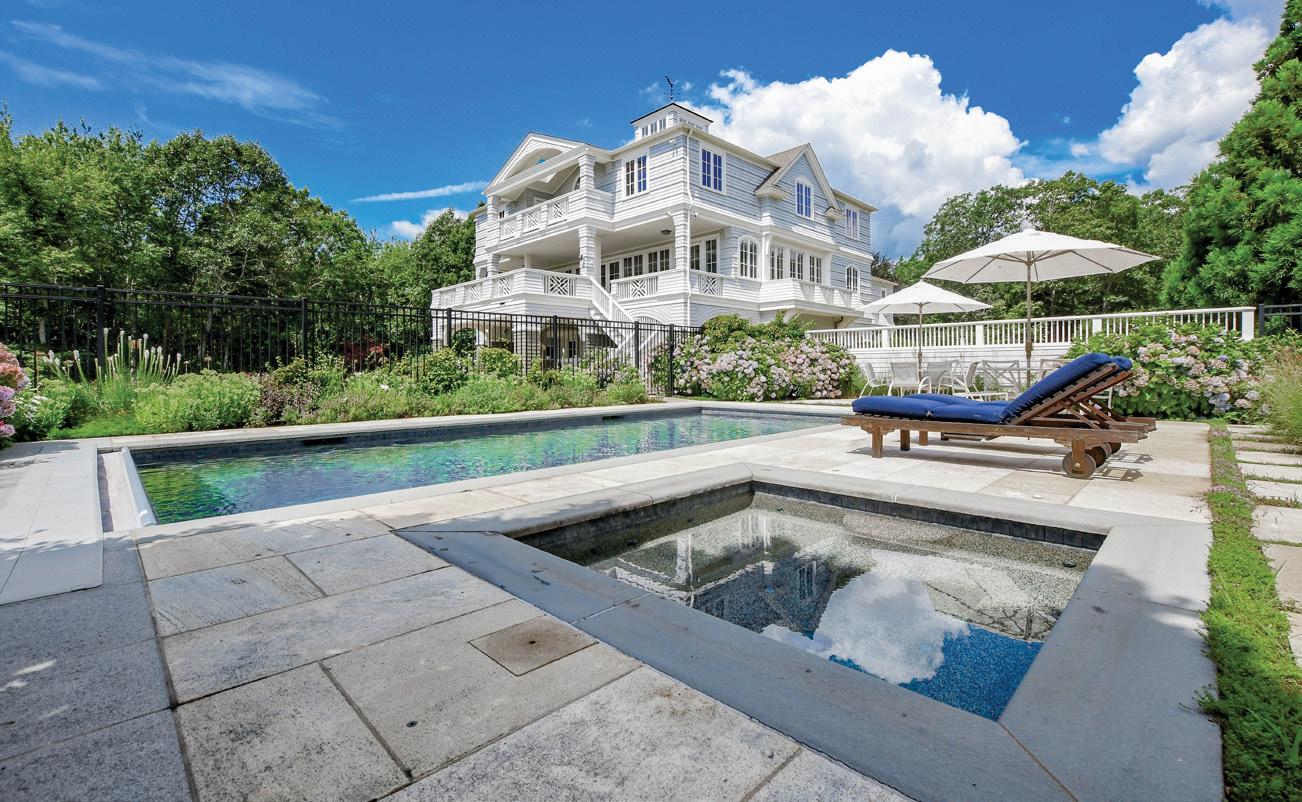
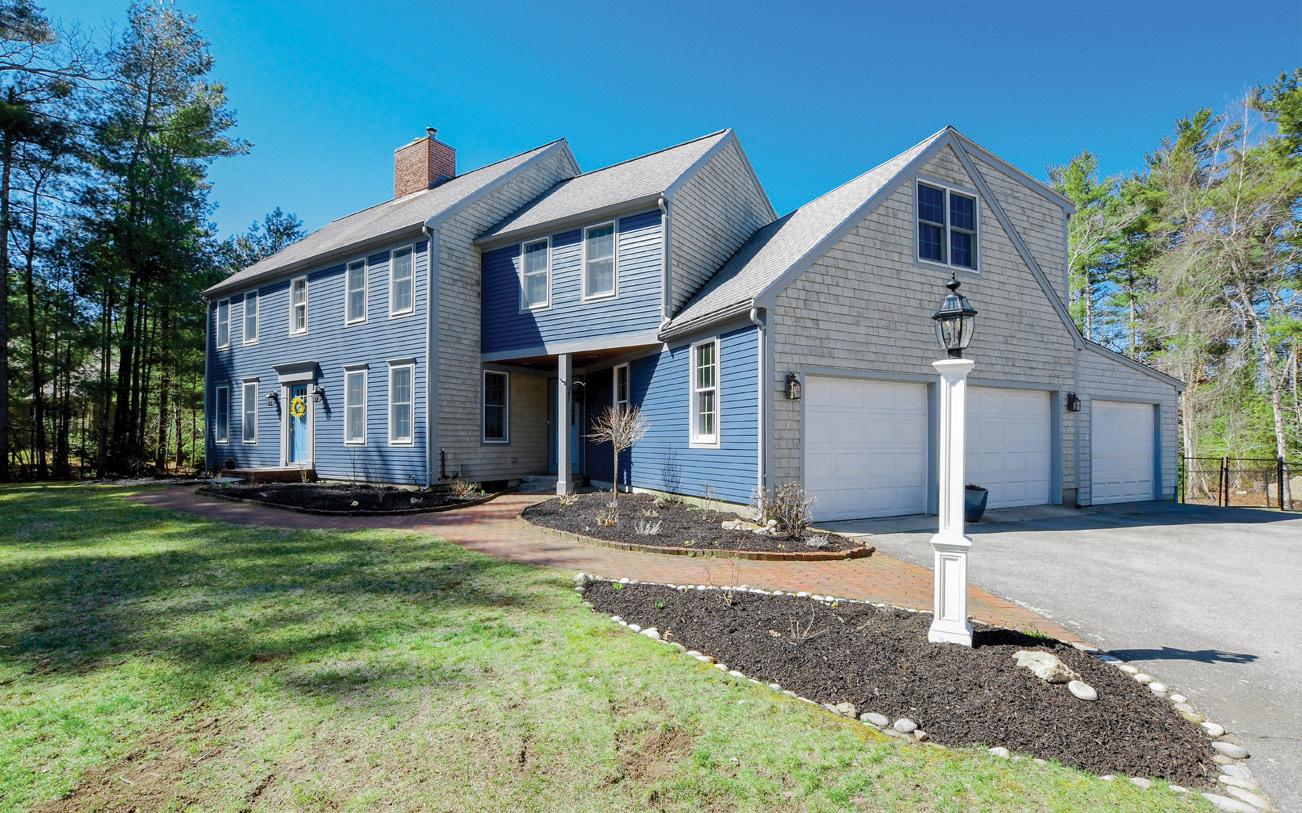
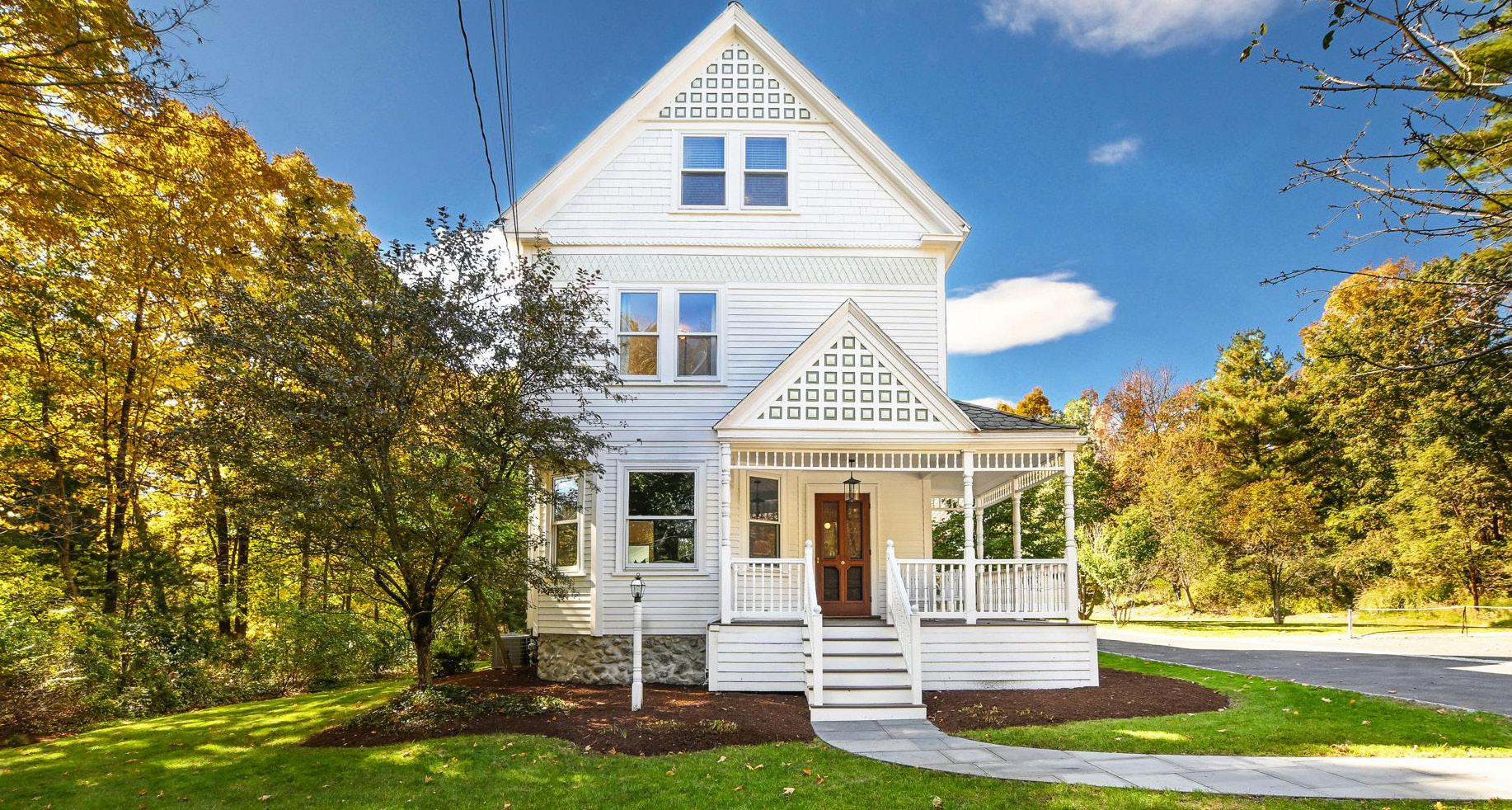
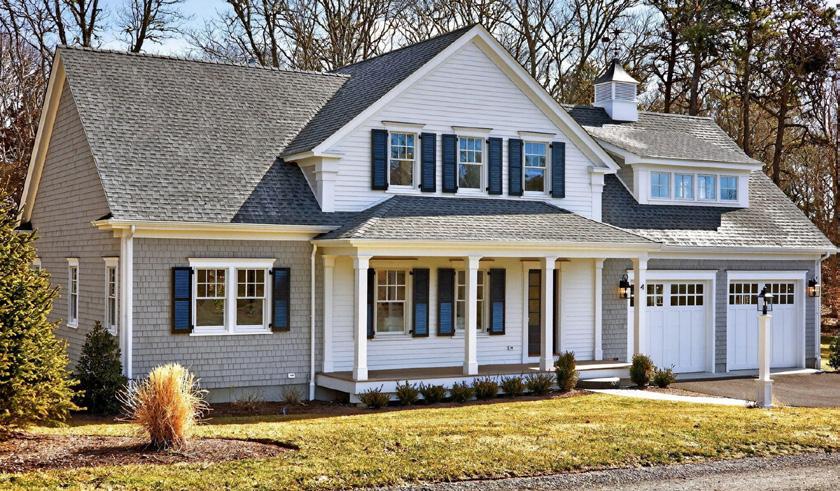
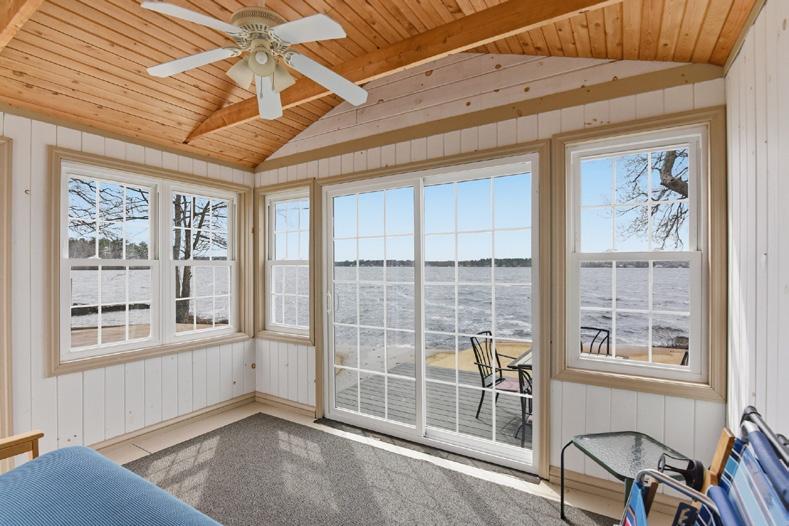
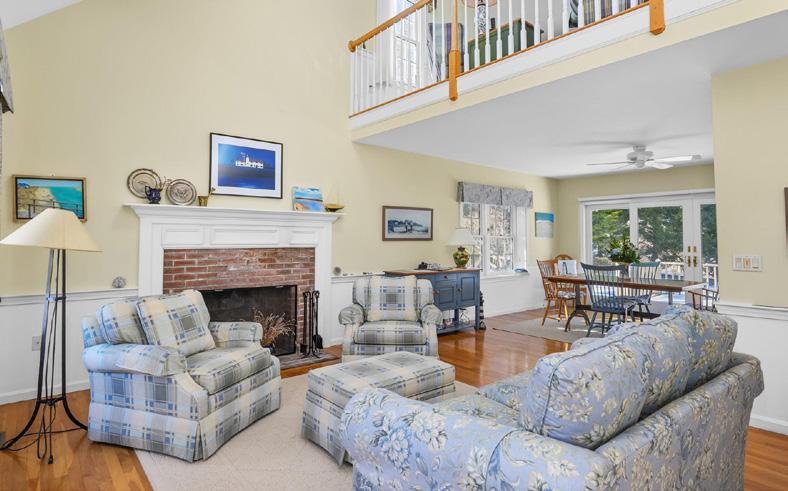
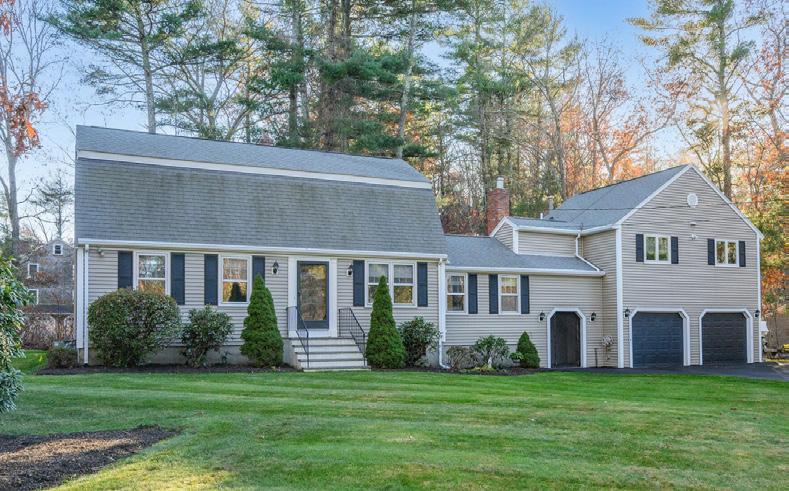
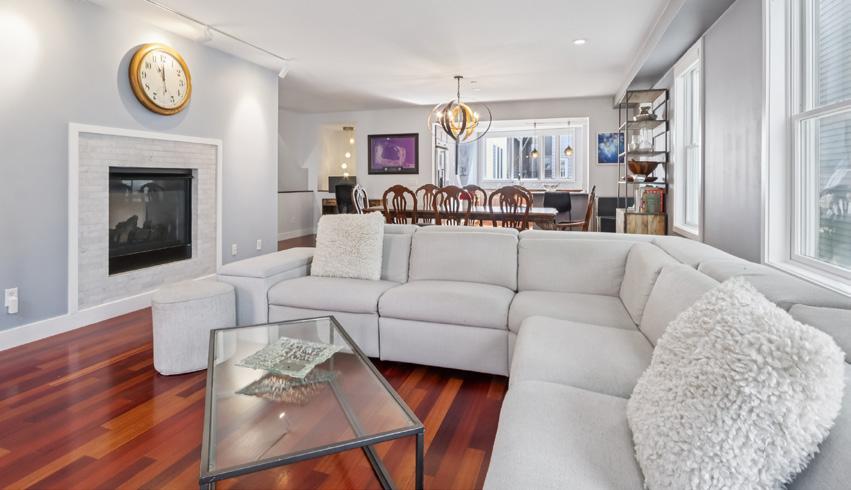
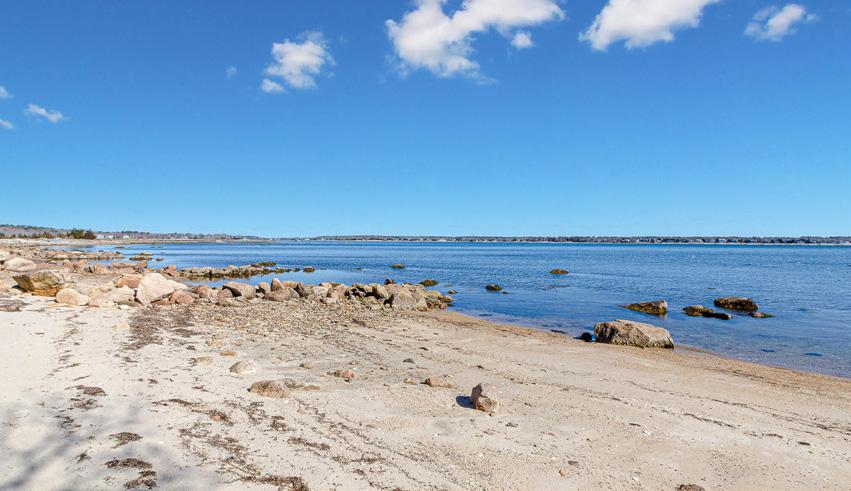
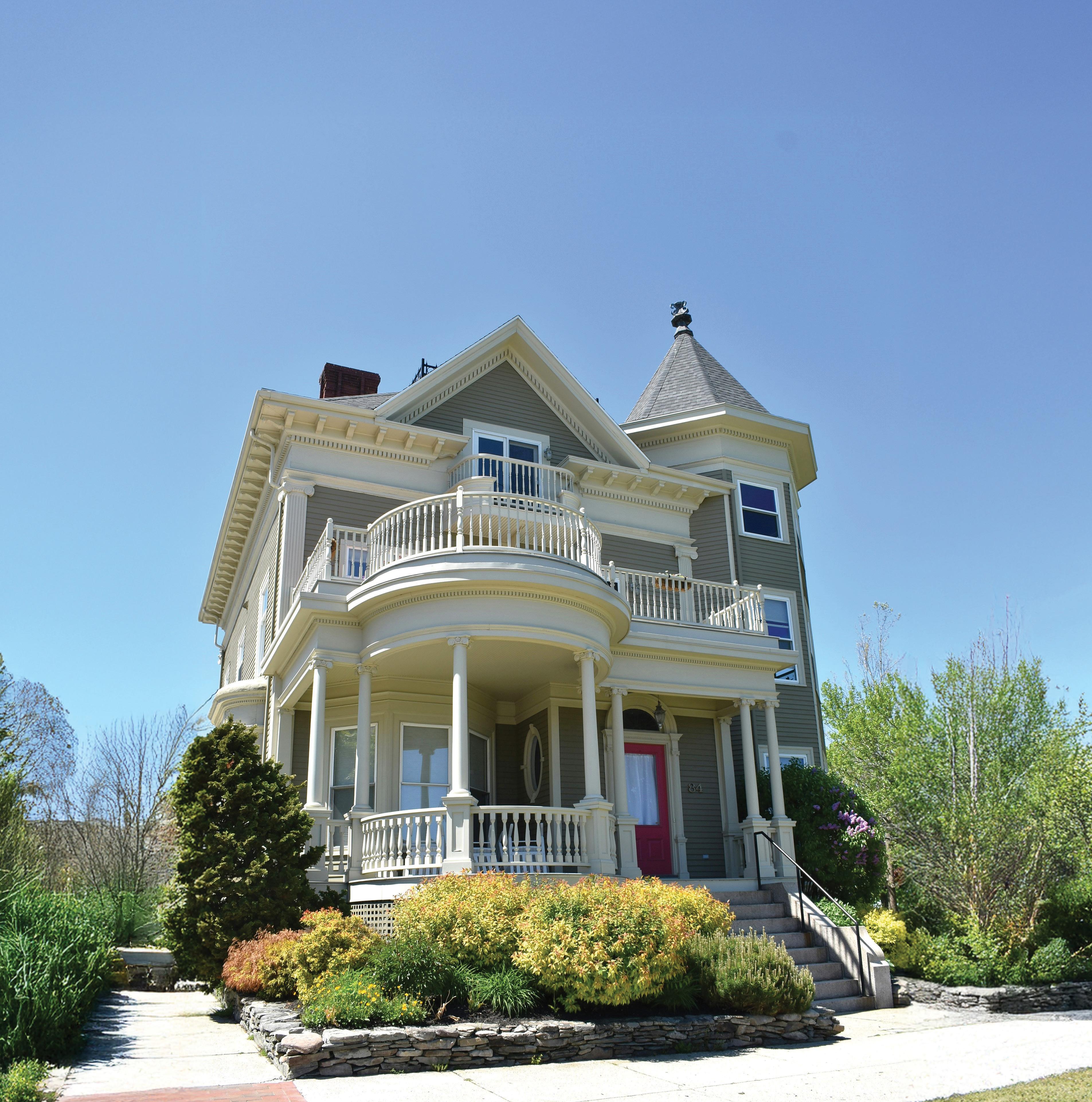
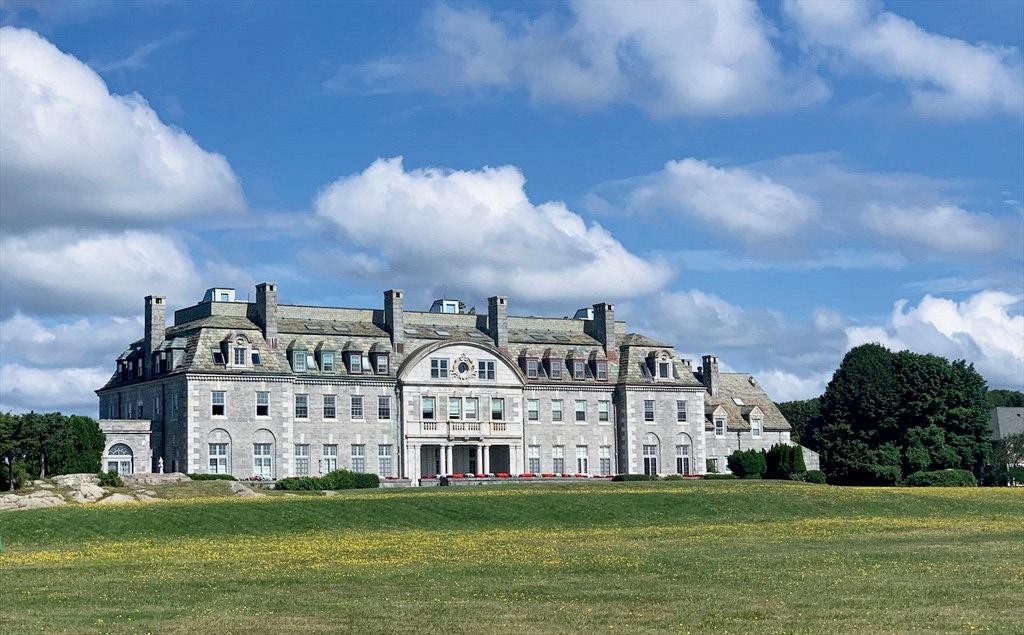
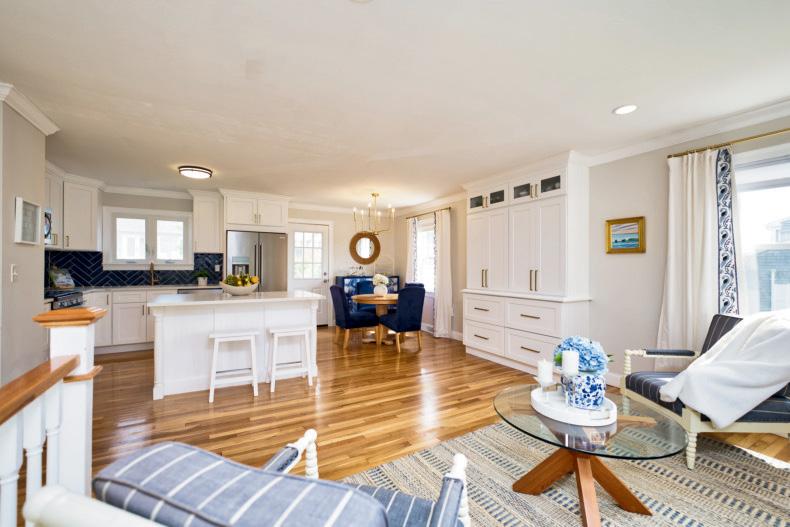
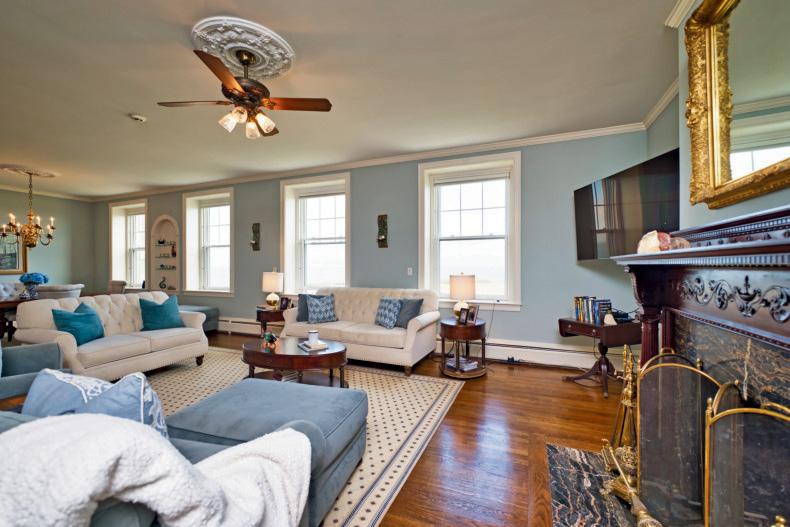
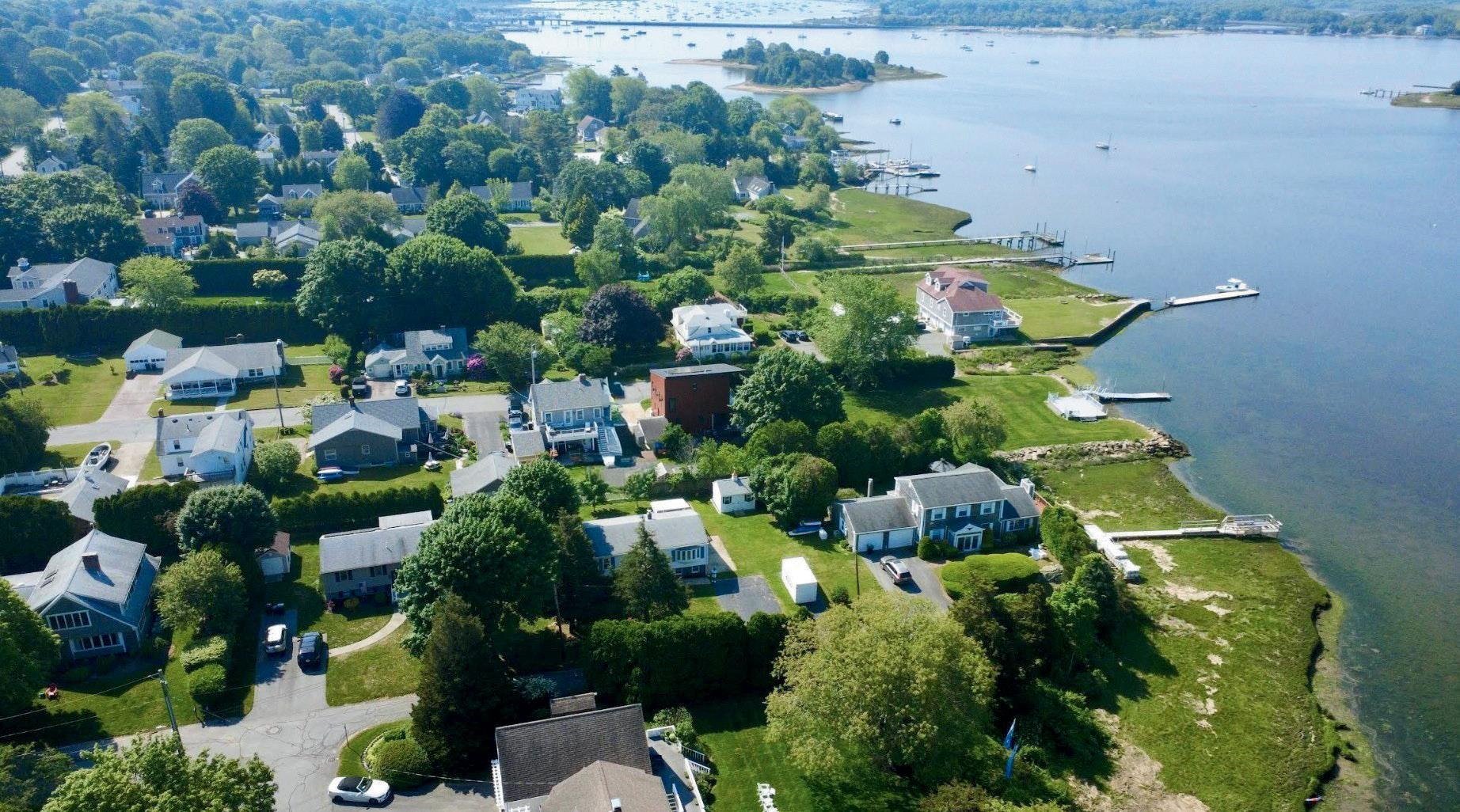
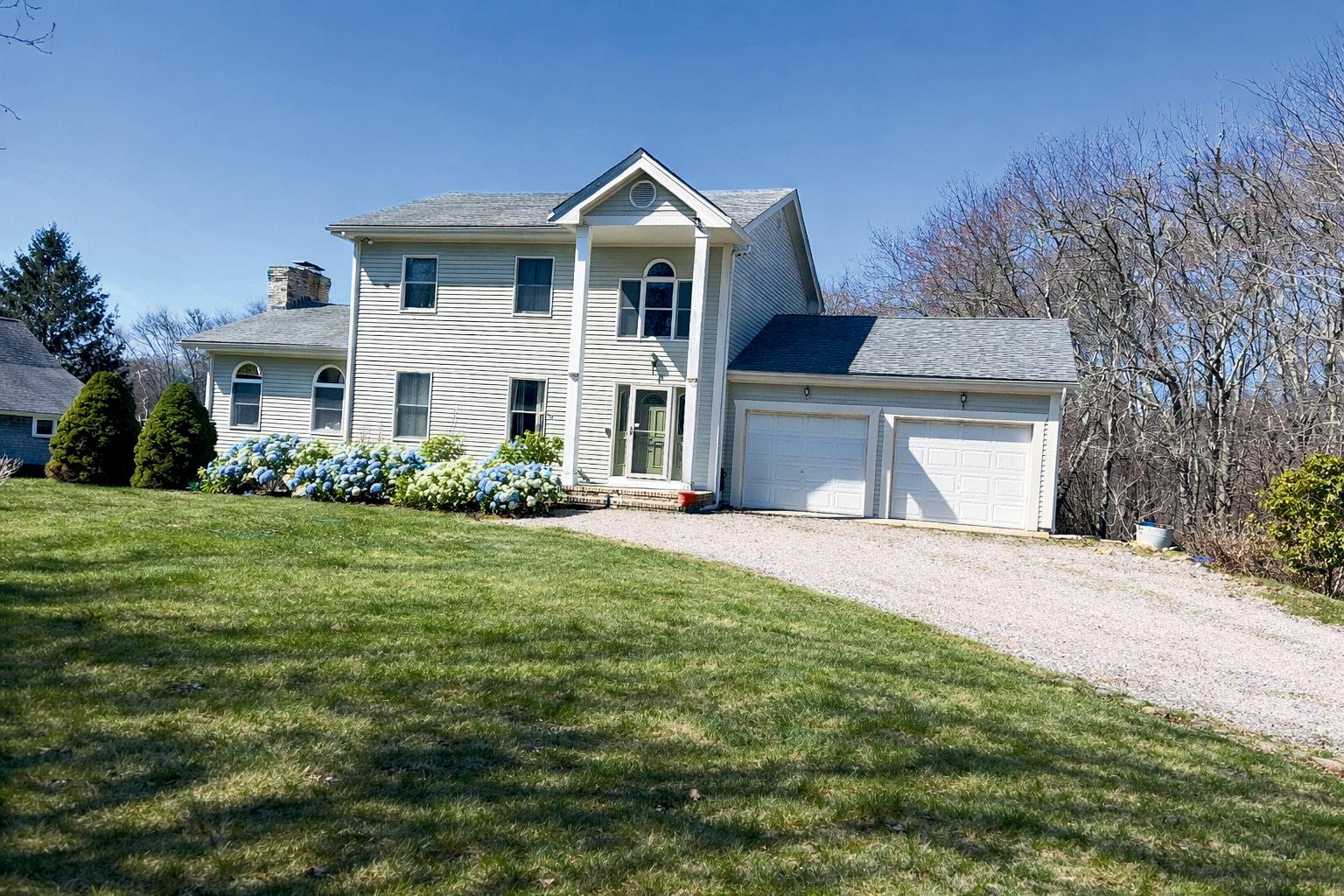
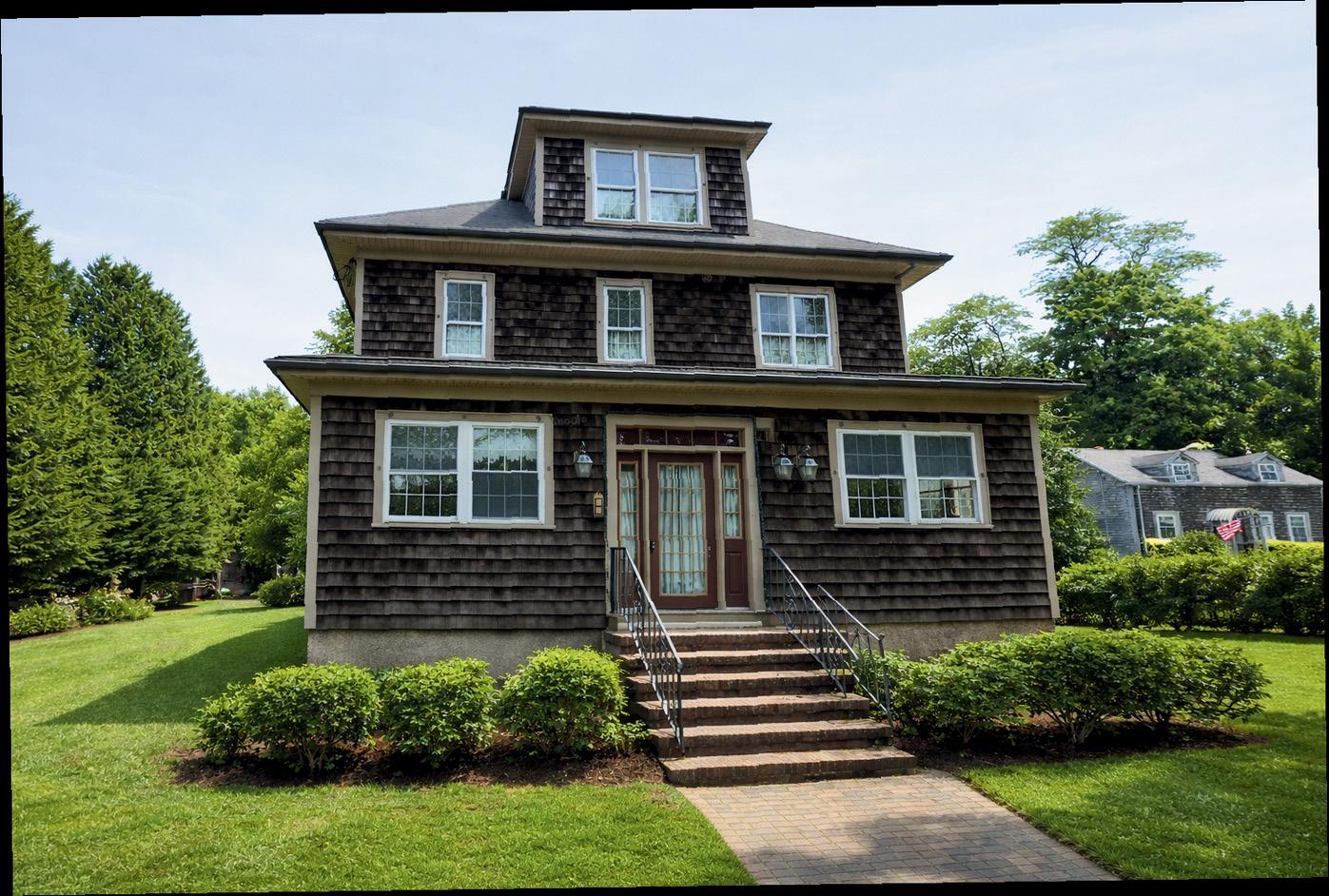
Spectacular Westport Point Coastal Colonial offers four bedrooms, five baths with fabulous guest cottage and deeded water access!
Contact Will Milbury 508.525.5200
NEW LISTING
SOUTH DARTMOUTH $1,295,000
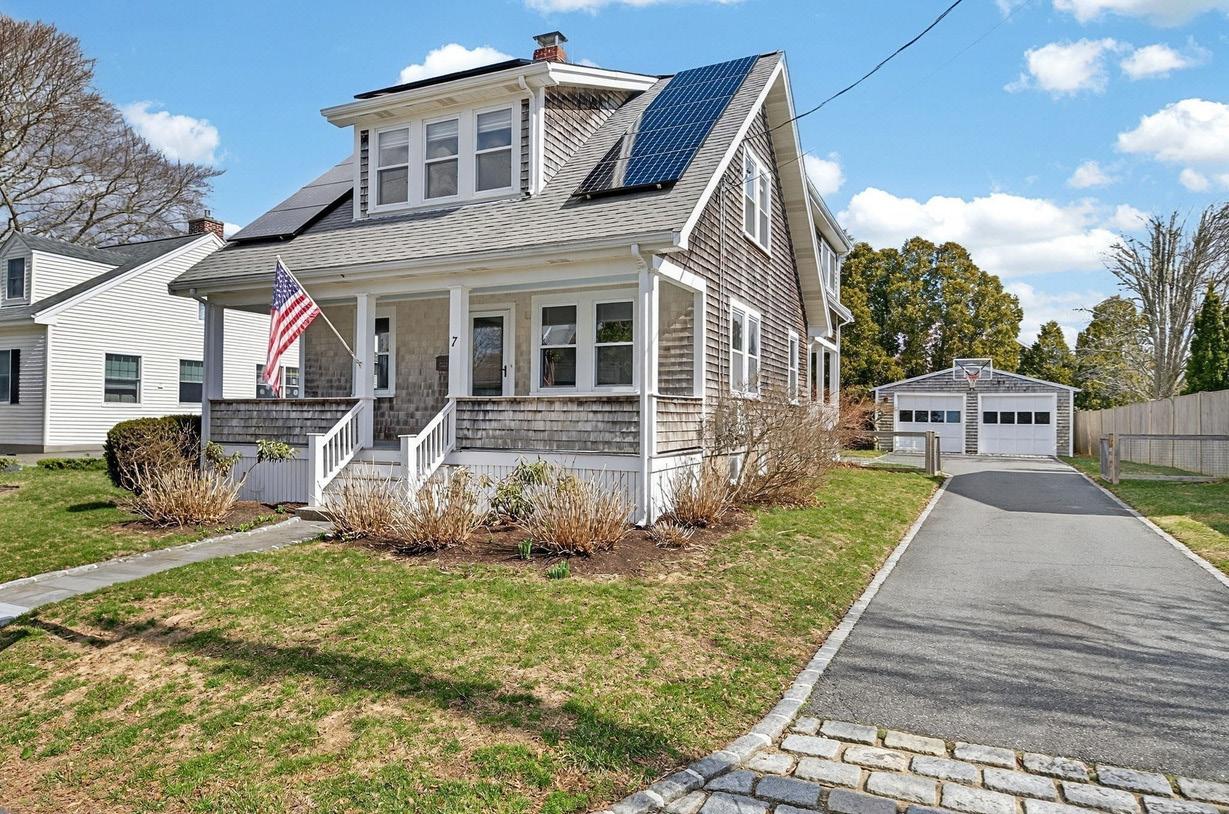
Pristine, three-bedroom home with two-car garage, set on 17 acre in Padanaram Village. A perfect for year-round home or summer retreat!
Contact Roberta Burke 508 498 3285
WESTPORT $2,595,000
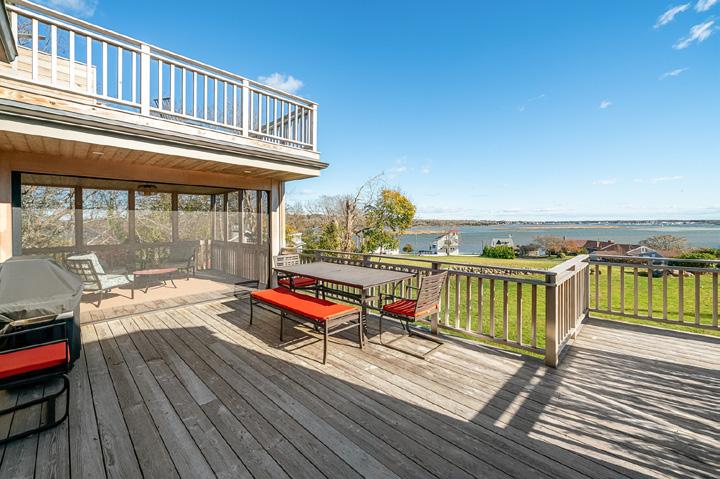
Westport perfection with water views from nearly every room of this home with expansive waterside decks, set on 1.5 acres in the Acoaxet area.
Contact Sarah Meehan 508 685 8926
NEW LISTING
WESTPORT $1,795,000
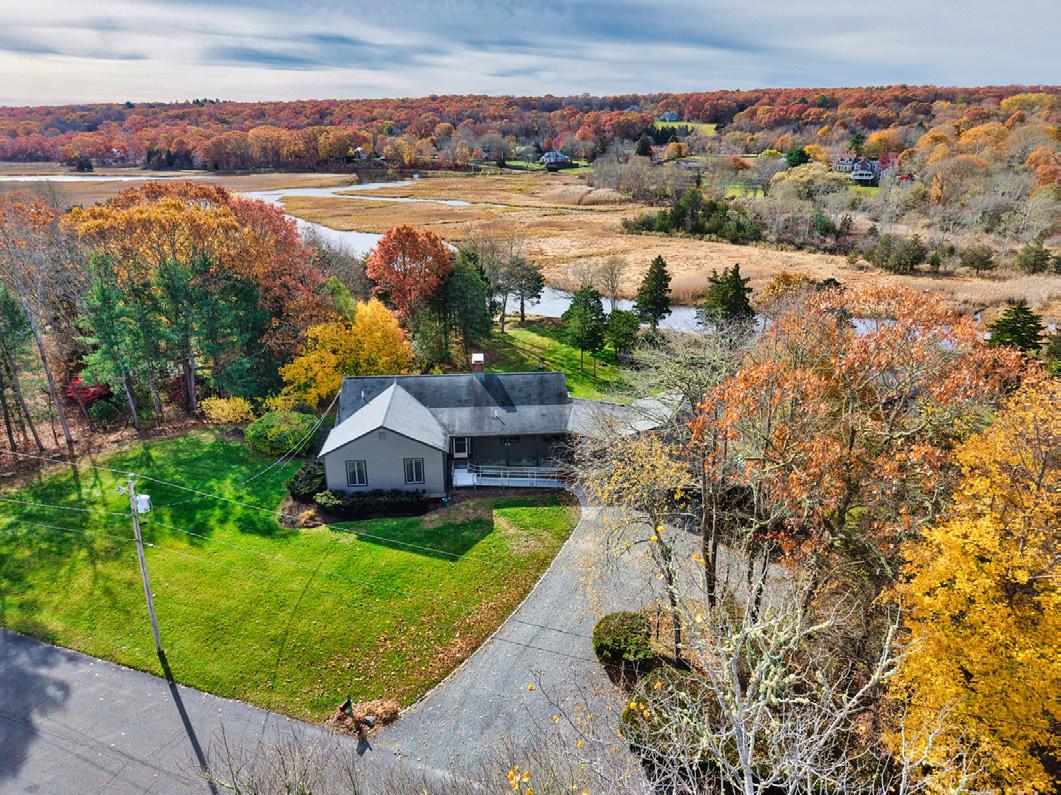
Experience country coastal living in this four-bedroom gem set on 1 5 acres along the Westport River
Contact Tom Chace 401.965.3259 or Sarah Meehan 508.685.8926
SOUTH DARTMOUTH $595,000
Perfectly situated in the heart of Padanaram Village, this delightful three-bedroom, onebath home with attached one-car garage and gleaming hardwood floors throughout.
Contact Sarah Me ehan 508 685 8926
NEW LISTING
DARTMOUTH $519,000
NEW LISTING
SOUTH DARTMOUTH $625,000
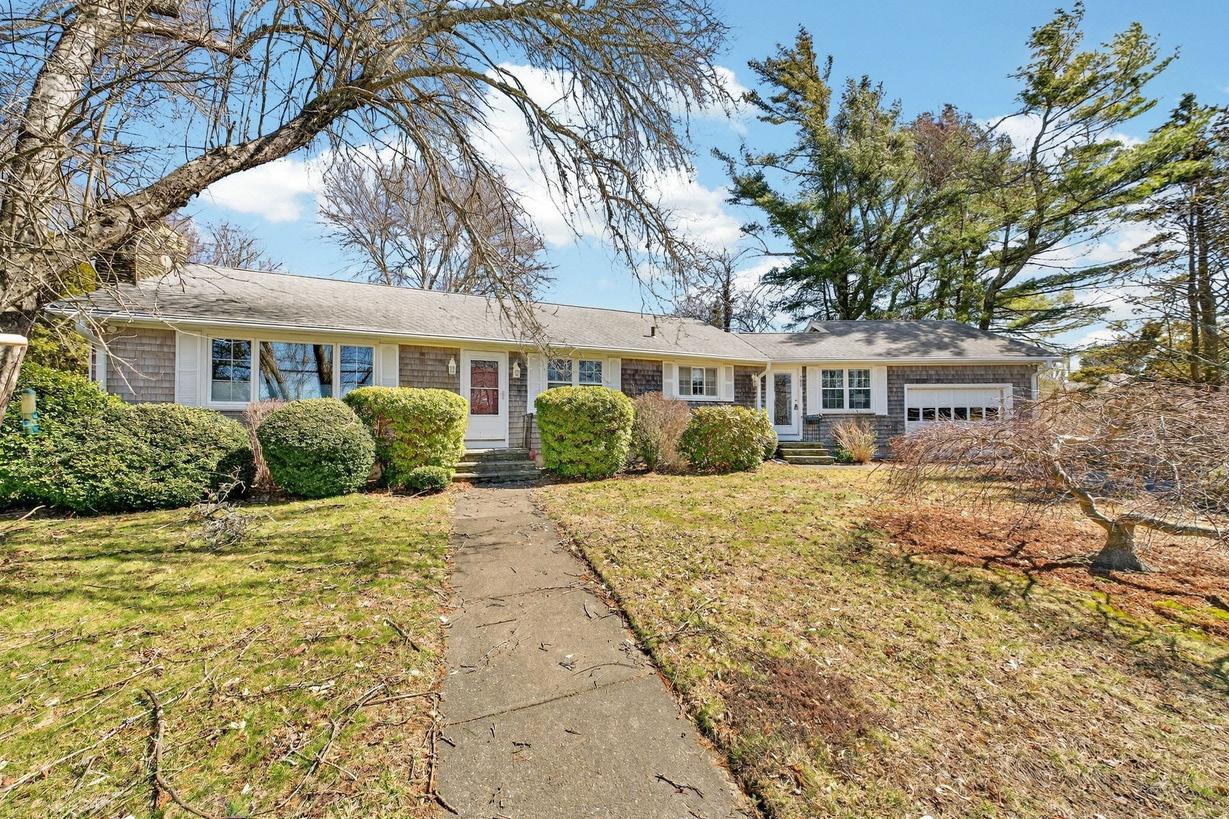
Located in Padanaram Village, this charming ranch offers coastal living with deeded beach rights on a generous 1/3- acre lot
Mid-century Executive Ranch on 1.15 acres offers 2,953 of living space with five+ bedrooms, two baths, in-law apartment, twocar garage and spacious double lot.
Contact Will Milbury 508 5 25 5200
Contact Gillian Barnard 617 799 3917
NEW LISTING
SOUTH DARTMOUTH $599,000
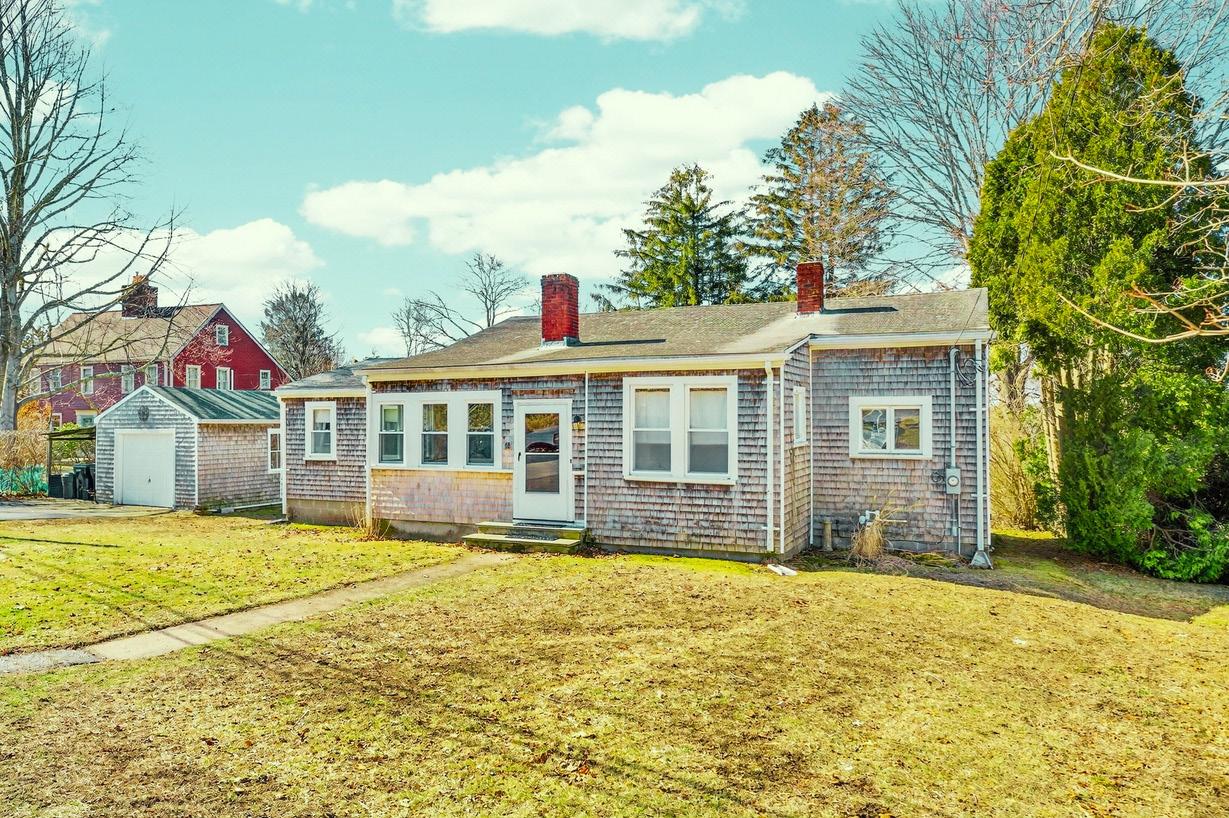
Charming, two-bedroom country home featuring an updated kitchen and bath situated on 1.39 acres with a multipurpose barn.
Contact Sarah Korolnek 774 644 9156
WESTPORT $2,295,000
This spectacular shingled Acoaxet home offers four bedrooms and custom details throughout! Features include a chef’s kitchen, open floor plan, finished basement and so much more!
Contact Will Milbury 508 525 5200
NEW LISTING NEW LISTING
SOUTH DARTMOUTH $1,350,000
Stunning four-bedroom, 3.5 bath Colonial with 2 5-stall garage and beach access to Oak Shores Beach Association.
Contact Sarah Meehan 508 685 8926
WESTPORT $895,000
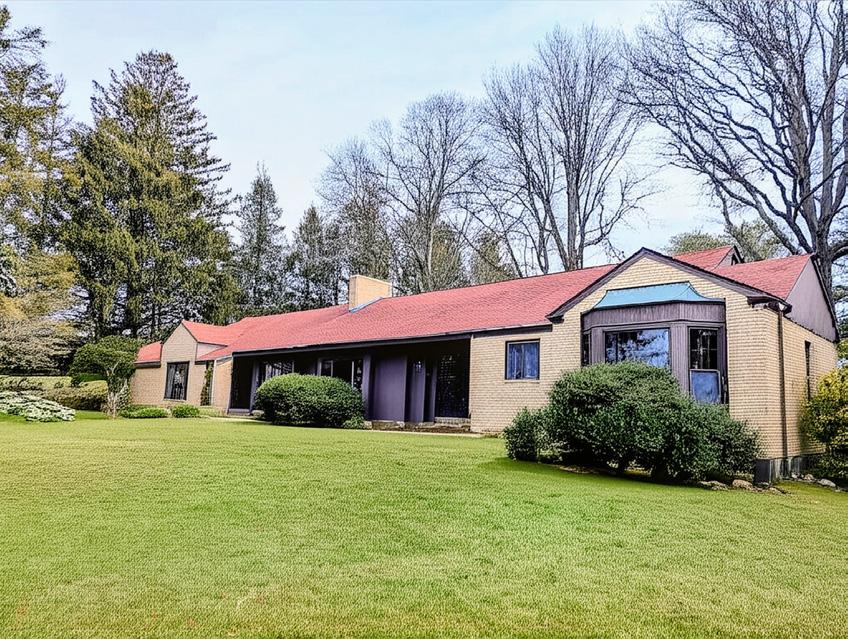
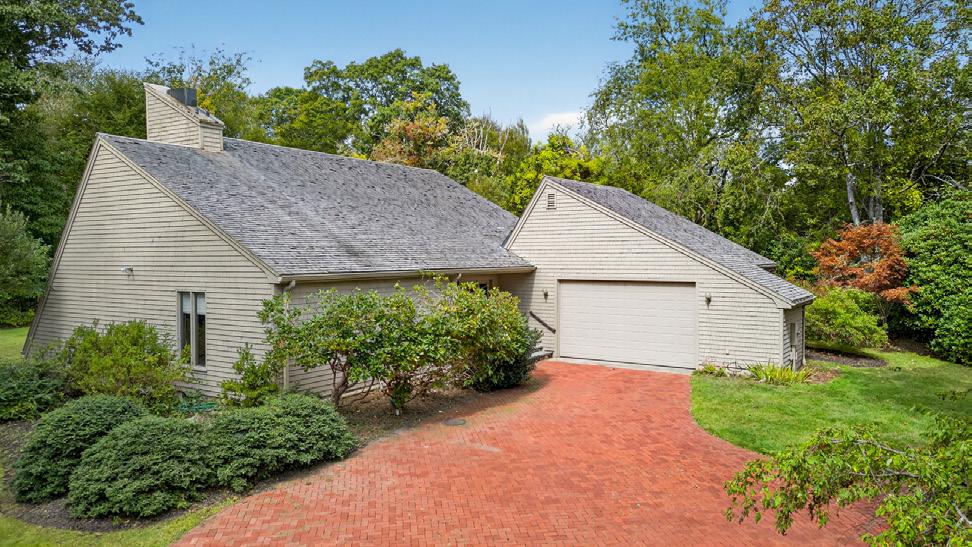
This three-bedroom, 2.5-bath post-modern shingle-style home is set on nearly 1 5 acres and offers the convenience of first-level living, just minutes from the town landing.
Contact Sarah Meehan 508 685 8926
LISTING
SOUTH DARTMOUTH $795,000
Meticulously maintained Executive Ranch with three bedrooms, two baths, update kitchen, central air, two-car garage and patio.
Contact Gillian Barnard 617 799 3917
Contact Sarah Korolnek 774 644 9156 NEW
MATTAPOISETT $1,295,000
BARNSTABLE $1,175,000
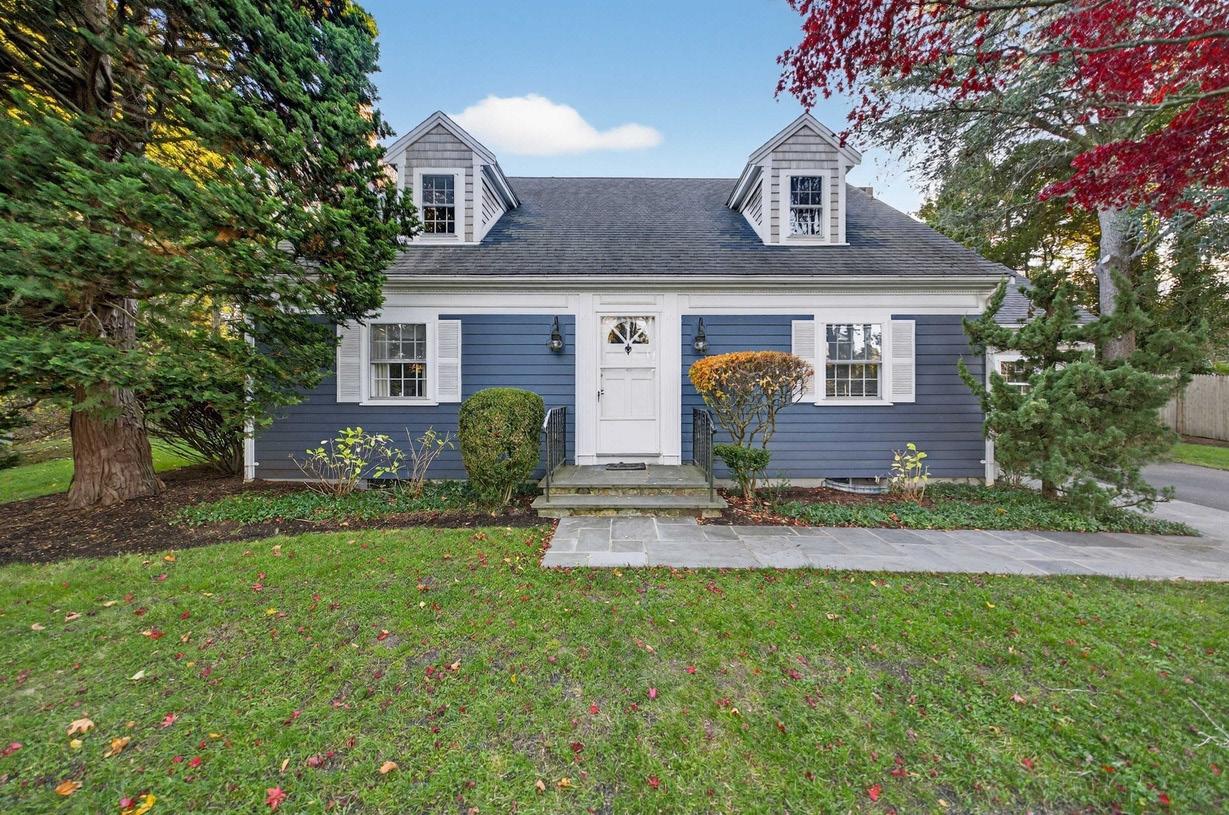
Rarely available four-bedroom, threebath Cape on nearly an acre, at the end of a dead-end, set just one mile from charming Barnstable Village.
Contact Sarah Meehan 508 685 8926
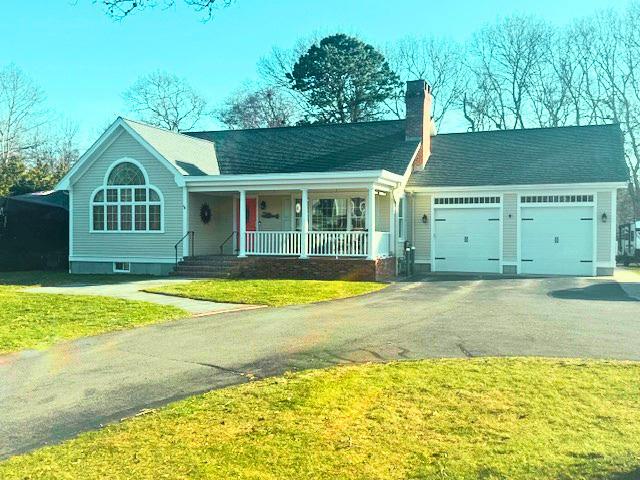
Located in the Bay Club, an exclusive gated golf and country club community, this newer construction 3-bedroom, 2.5-bathroom Executive Ranch home boasts many upgrades
NEW LISTING
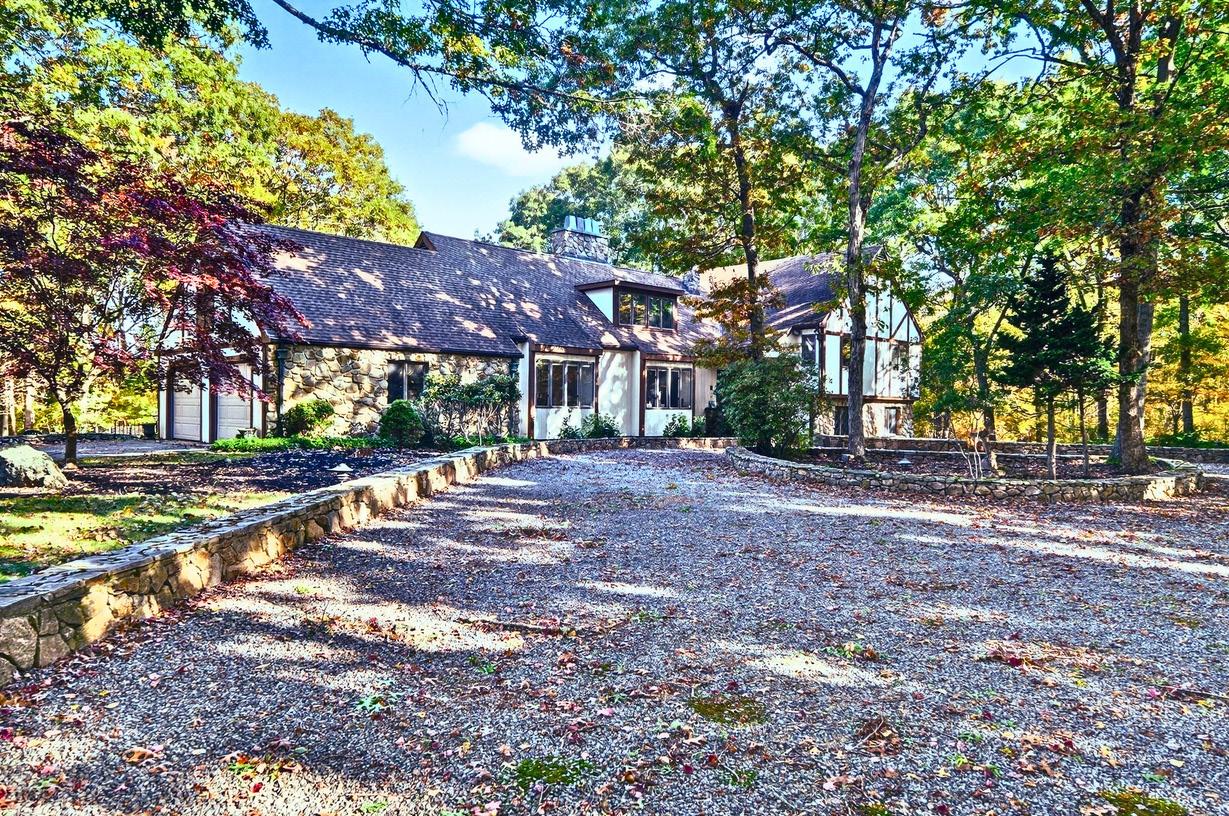
$1,249,000 Four-bedroom modern colonial surrounded by 28 acres consisting of woods, wetlands, fields, stunning pond and an inground pool
“YOU DIDN’T, YOU DON’T, AND YOU CAN’T… ”
IT’S THE GO-TO RALLYING CALL FOR THOSE WHO ‘DON’T’ BELIEVE IN PERSONAL RESPONSIBILITY & PRODUCTIVITY
By removing a citizen’s freedom to make choices for themselves and, in its place, forcing them to rely on a government that mistakenly believes it knows what is best, we hijack one of the most basic human rights of life—self-determination. Such actions cause innumerable harm and are more deeply rooted than any policy debate or partisan squabble; this invasion of will over the public is the root cause of many ills plaguing the social fabric of contemporary society.
In 2012, Americans were scolded like children and publicly called out: “If you’ve got a business, you didn’t build that. Somebody else made that happen.”
Those two caustic remarks cut deeply into the psyche of every man and woman passionate about creating a business, fulfilling a vocation, and becoming a contributor to the culture surrounding them. Through tireless effort, unimaginable sacrifice, and the risk of family and fortune, these people— principally being called users for making a better life for their loved ones, supporting their communities, and indulging in the hard-earned satisfaction of reaching a goal—had been marginalized by a man who never built anything and, for all we know, lived a life of privilege and continues to do so.
As startling as it sounds, the outrage was not only about the reprehensible optics. It was about the entrenched belief system behind them—one that is systemically flawed and designed to discourage the very innovation transforming the world today.
Yet despite rising incomes, expanding educational opportunities, and offering a higher standard of living in an attempt to escape the restraints of poverty, a majority of Americans, the hardest-working, most philanthropic individuals and families, are being chastised, ridiculed, and forced into paying more than their fair share. And it doesn’t end there. There are also plans to force these same people to pay a fee if they dare move themselves, their families, and their money out of states that are trying to take what isn’t theirs to abscond.
CASES IN POINT
American tax policy has entered unsettling territory. A growing number of legislators are not merely raising taxes—they are exploring ways to punish American citizens who respond by exercising one of the most fundamental freedoms in a republic: the freedom to leave.
Senator Elizabeth Warren of Massachusetts reintroduced the Ultra-Millionaire Tax Act in March 2026—a 2 percent annual
levy on household wealth above $50 million, with an additional 1 percent surtax on billionaires. The provision that should give every American pause is its proposed 40 percent exit tax on anyone worth more than $50 million who renounces their citizenship. Not 40 percent of income, of accumulated wealth. The message is unmistakable: you may leave, but we’ll take nearly half of everything you’ve built on your way out. Warren frames this as “basic fairness.” Fair to whom? The individual who earned it, or the government that didn’t? Her own state already offers a cautionary tale. Since Massachusetts enacted its 4 percent “millionaire’s surtax,” IRS data shows a net loss of 30,000 residents and $4.2 billion in adjusted gross income in a single year. A Boston University study projects the exodus could cost the state $1 billion annually by 2030.
In New York, Governor Kathy Hochul finds herself caught between fiscal reality and political aspiration. The state lost an estimated $9.9 billion in net adjusted gross income to outmigration between 2015 and 2025. Hochul recently acknowledged that New York’s tax base has been “eroded” and suggested someone should “go down to Palm Beach and see who you can bring back home.” The candor is refreshing. The irony is not. You cannot chase productive citizens away with punitive policy and then lament their departure.
Beneath Hochul, New York City’s newly elected Mayor Zohran Mamdani—a self-described democratic socialist—has proposed slashing the state’s estate tax exemption from $7.35 million to $750,000, a nearly 90 percent reduction, while tripling the top rate from 16 percent to 50 percent. In a city where a modest home can exceed that threshold, this is not a tax on the ultra-wealthy. It is a tax on the middle class and on generational aspiration itself. His $127 billion budget agenda also includes higher income and corporate taxes. When the governor declined to raise them, Mamdani threatened property tax increases instead—framing it less as a budget proposal than a hostage negotiation.
On the opposite coast, California provides perhaps the most dramatic illustration. The 2026 Billionaire Tax Act would impose
FROM THE C-SUITE
a one-time 5 percent levy on the total net worth of any resident worth more than $1 billion—including illiquid assets like private company shares. For a founder whose wealth exists on paper, in the form of a company employing thousands, the state would present a bill that could only be paid by liquidating the enterprise that created the wealth and the jobs. Worse, the measure pegs liability retroactively to anyone who was a California resident as of January 1, 2026—months before voters even get a say. The result has been swift: six of California’s 214 billionaires departed before the deadline, taking an estimated $27 billion in potential tax revenue with them. Even Governor Gavin Newsom—no conservative— called the proposal “really damaging” and “bad economics.”
What unites all these proposals is the assumption that wealth is a static resource to be redistributed rather than a dynamic force to be cultivated. The language is always the same: fairness, fair share, equity. It sounds reasonable in a headline. But beneath the rhetoric lies a misunderstanding of how economies grow and why people build things in the first place. No one risks their family’s security or works 18-hour days because they dream of handing half of it to a government that has repeatedly demonstrated it cannot manage what it already has. They do it because the freedom to build—and to keep what they’ve built—is the engine of the very prosperity these proposals claim to want to share.
The deeper problem is not that these states face budget shortfalls. They do. The problem is the reflex to treat every shortfall as a revenue problem rather than a spending problem. California’s budget exceeds $200 billion. New York City’s is $127 billion. Yet the first instinct is never to audit, streamline, or prioritize—it is to reach further into the pockets of those who produce. And when those citizens move to states that respect the relationship between effort and reward, the political response is
not reflection. It is resentment: exit taxes, retroactive levies, wealth assessments that follow you for a decade. As one observer noted when Mamdani’s estate tax was announced: “When they tell you they only want to punish the rich, what they don’t tell you is that they plan to redefine ‘rich’ to include you.”
A CONSTRUCTIVE WORD
Milton Friedman, the Nobel laureate whose clarity of thought remains as vital today as it was half a century ago, offered a principle that deserves a place on the wall of every statehouse and city hall in the country:
“A society that puts equality before freedom will get neither. A society that puts freedom before equality will get a high degree of both.”
Friedman understood that a free society unleashes people’s energies and abilities to pursue their own objectives. The great achievements of civilization—the innovations, the industries, the institutions that lift populations out of poverty—have never come from government mandates. They have come from individuals solving problems no bureaucrat thought to assign, building things no committee would have approved. When the government tries to rearrange the economy or legislate outcomes, the cost comes in inefficiency, lost motivation, and the erosion of the very freedom that made prosperity possible.
The answer to inequality is not to restrain the ambitious. It is to remove the barriers that prevent others from joining them. Build better schools. Reduce regulatory complexity. Reward risk. Create environments that entice productivity and self-sufficiency rather than dependency. That is how you expand opportunity.
You don’t do it by telling people they didn’t build what they built. You don’t do it by telling them they can’t keep what they’ve earned. And you certainly don’t do it by telling them they can’t leave. H
5
C-SUITE PERSPECTIVE
You Didn’t Make That! Examining the disconnection and differences between the industrious, self-motivated, responsible, and those who are unable to create, so they attempt to prevent others from succeeding.
12 CULTURE
Kicking Off The Summer In Newport, Rhode Island. It’s the time of year when fancy-dress, bonnets, and jewels grace society’s summer coming-out event at Rosecliff Mansion on Bellevue Avenue. This year’s Annual Flower Show, “Pearls of Newport,” celebrates its 30th Anniversary!
14
LUXURY LIVING
Where Is The Puck Going To Be? These words win hockey games, but when you find someone who understands the concept in real estate, boy, oh boy, have you found a winner broker. This month, we introduce our Broker of the Month, Erin Hovan of Hovan Property Group / Compass.
18 IMPRESSIONS
Relax And Grab A Bite To Eat. Our poet extraordinaire turns back the clock on how food shapes, or at least identifies, moments in our lives we’ll never forget.
SEASONS
Yachts, Trots, And Beaches Headline The Memorial Day Weekend. Life is too short to settle for the depressing thoughts and words of “It’s good enough.” NO! It’s time to level up and get in the game. We bring your attention to the best of the best in sun, surf, and the ponies.
28 LIVING WELL
The Controversy Over Genes Is Finally Over. We have the facts. No, not those jeans, the ones that might determine your longevity. However, even that claim is up for debate.
32 INTIMACY
The Costs Associated With Meeting Up And Hooking Up Continue To Rise. How one’s market value dictates and influences optionality, hypergamy, and choices. It’s the adage, “Money talks, and as for the rest of you—walk away.”
42
COMMUNITY
38 CAPITAL
Who Wants To Be A Millionaire? That’s what we thought. But to claim you are one, you’ll need to squirrel away a great deal more since it doesn’t have the same value as it once did. In 2000, the purchasing power of that same amount was about $1.92 million. But don’t be disappointed, you can earn the label of being a ‘five-hundred thousandaire.’ Thankfully, there’s still hope, and we show you how to earn that coveted badge.
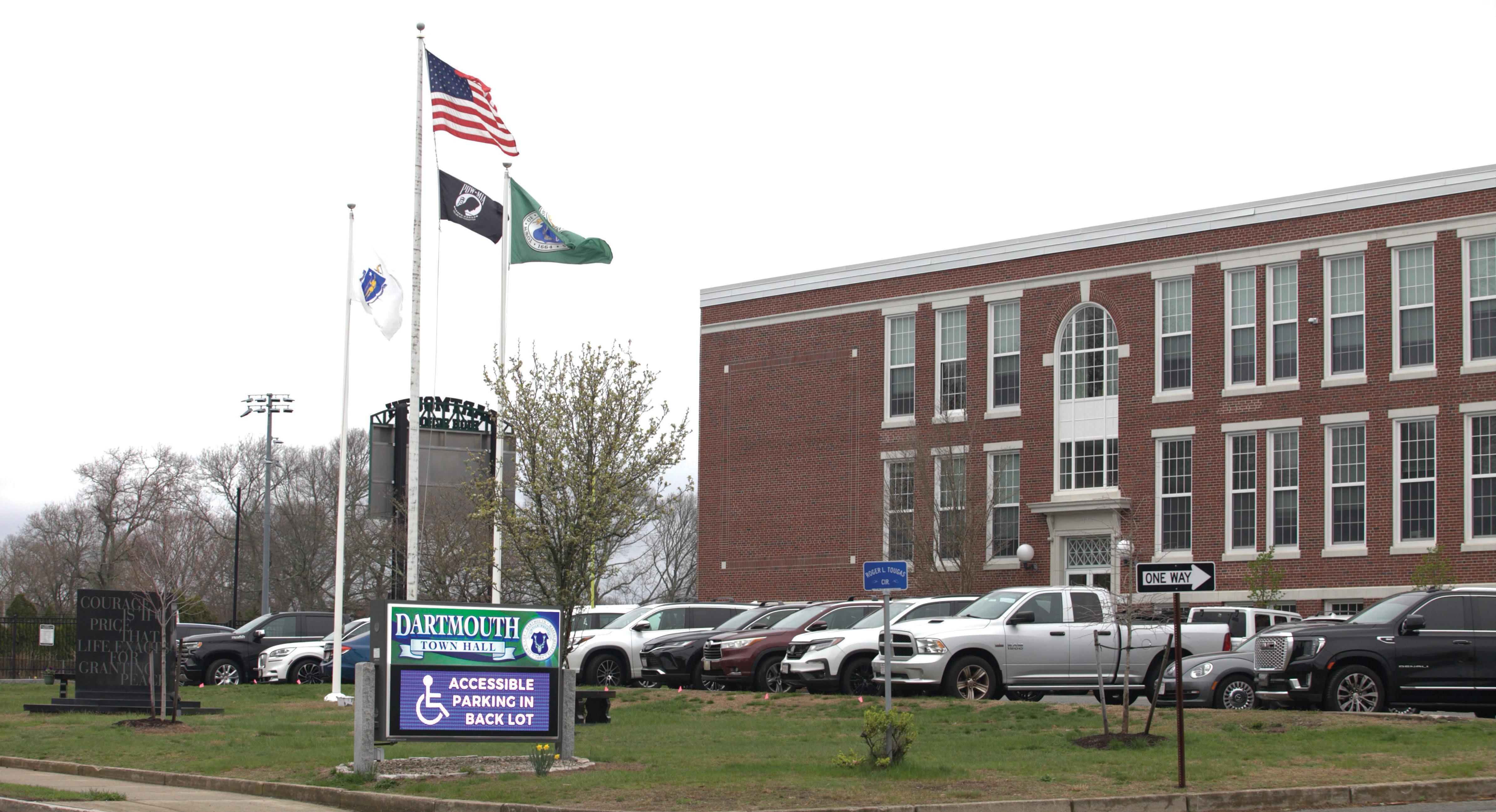
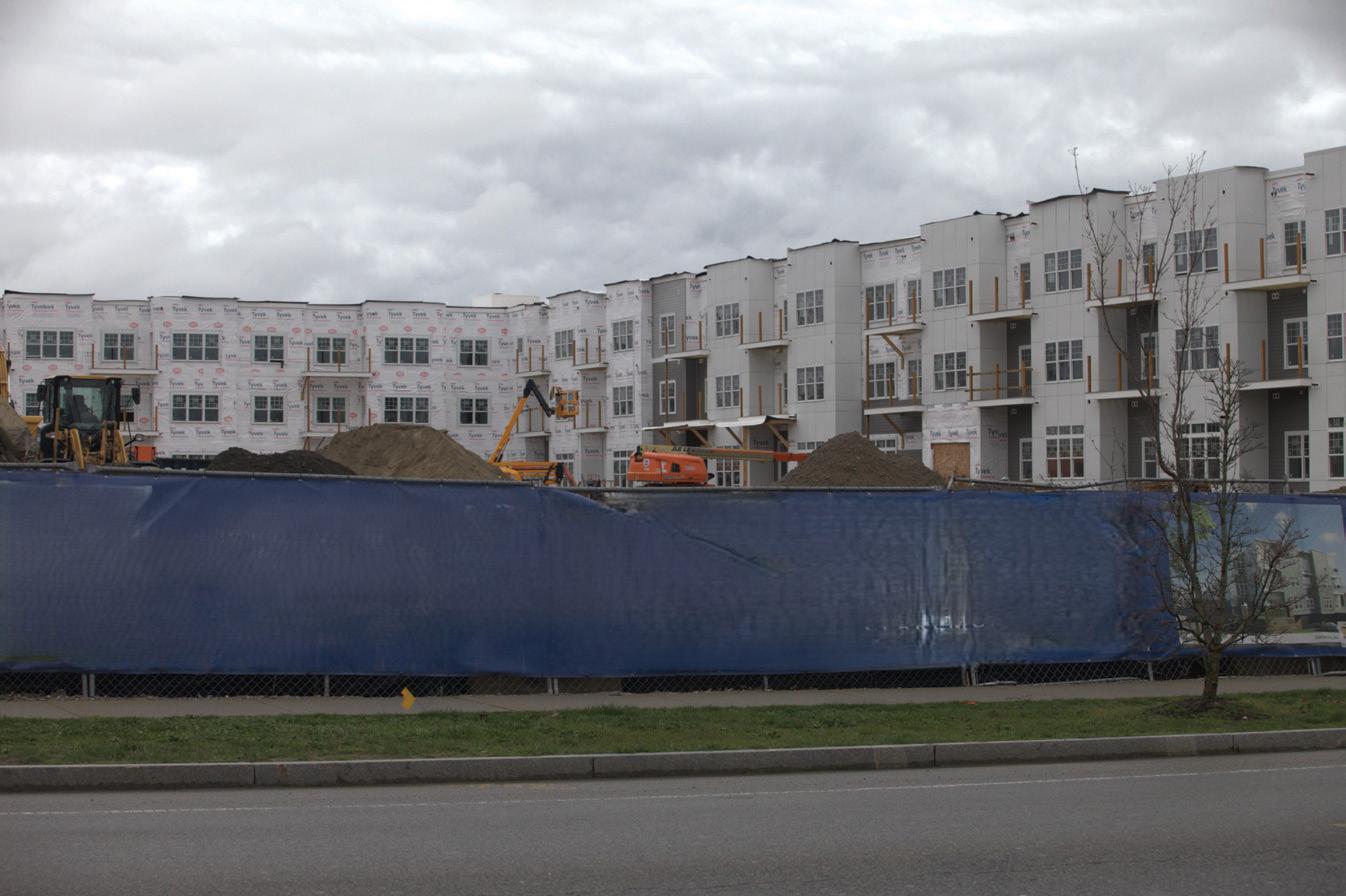
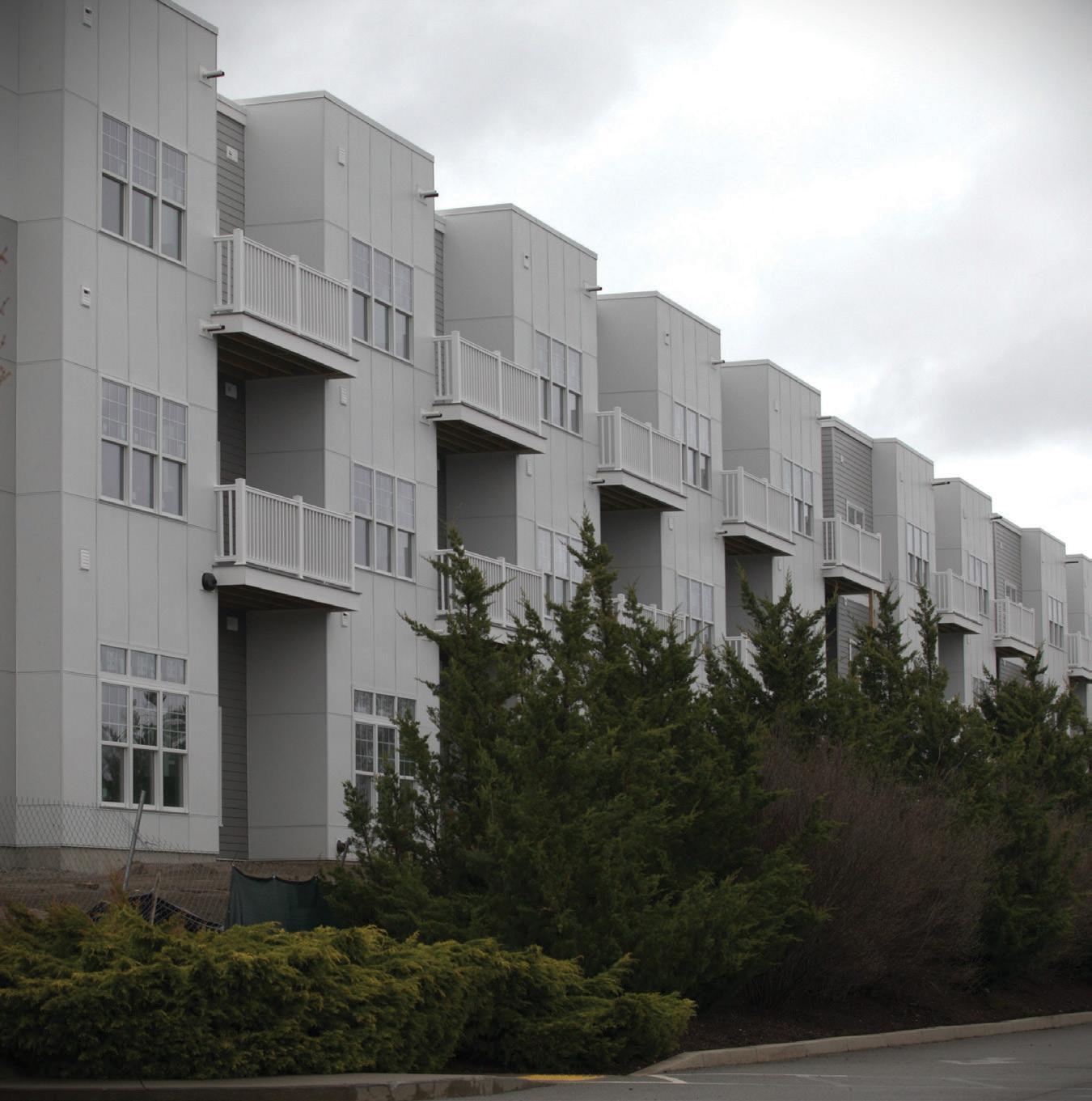
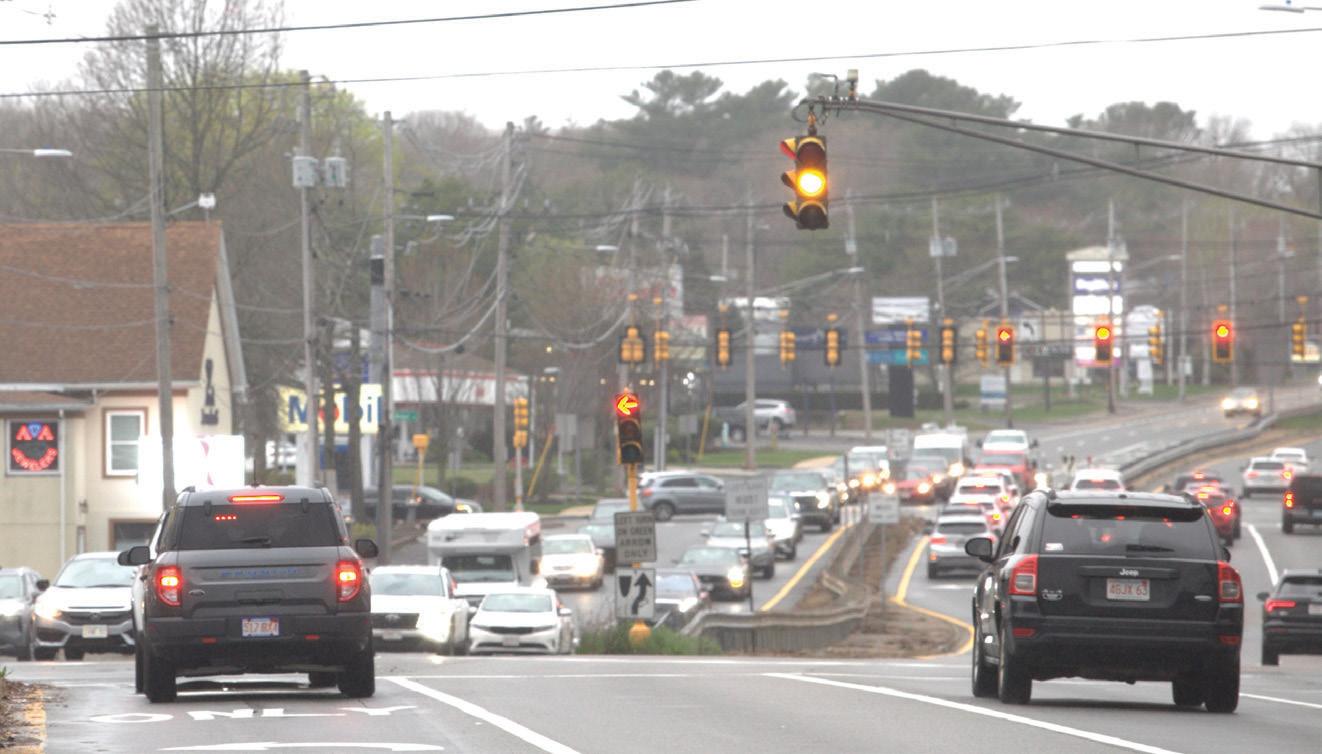
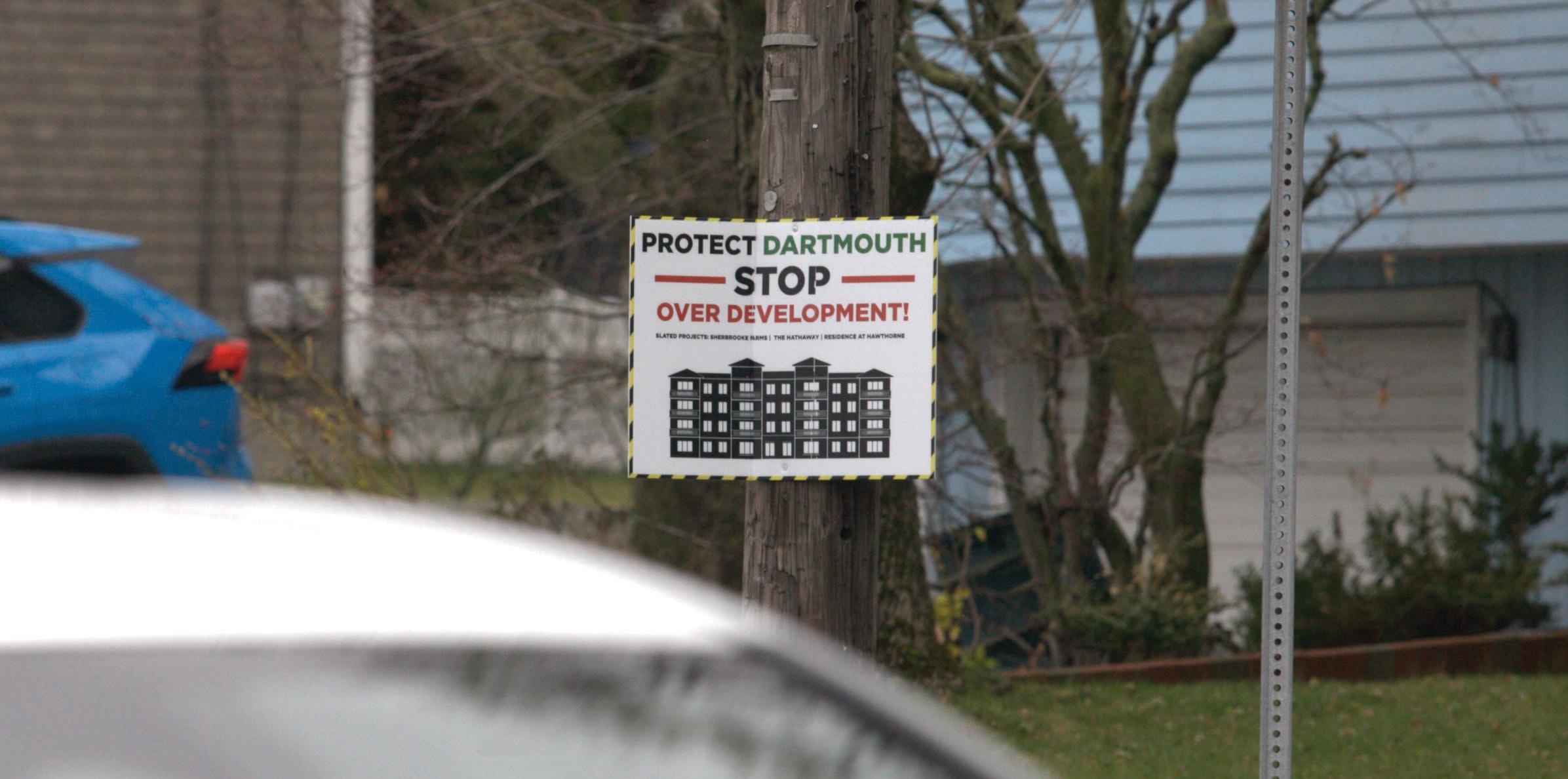
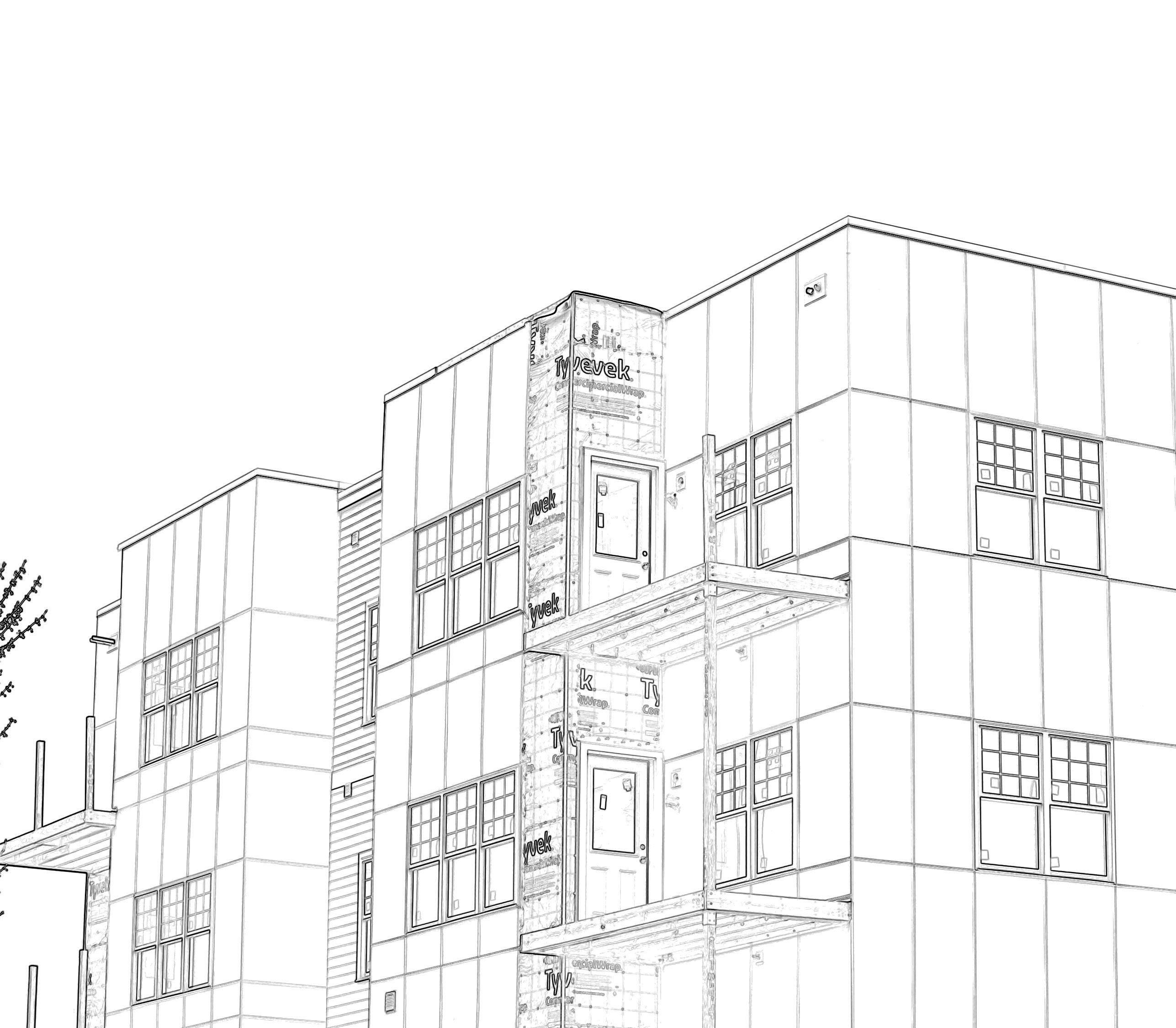
What State-Sponsored Growth, Against The Will Of The People And The Town Of Dartmouth, Massachusetts, Looks Like. The age-old question, ‘who knows best,’ is playing out in this historic town against sensibility and legal charter.
BY CATHERINE HILDERBRAND
TThe Event of the Summer is Here
A List of the Many Reasons You Must Attend
For three decades, the Newport Mansions Flower Show has marked the unofficial start of summer on Aquidneck Island. This year, once again, at Rosecliff, the milestone edition promises to be the most luminous on record.
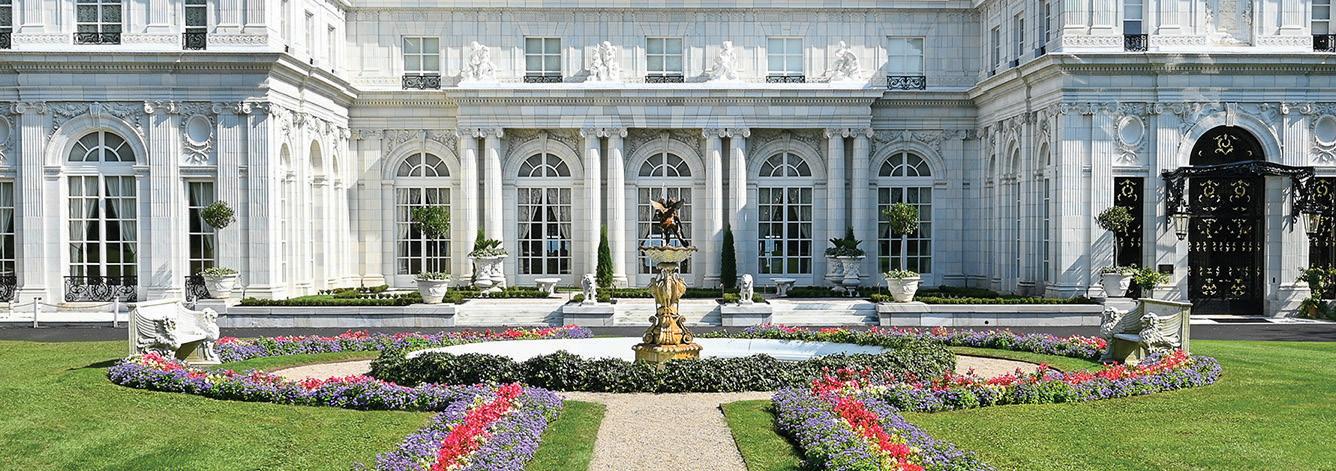
here are events that populate a calendar, and then there are events that define a season. The Newport Flower Show, presented by the Preservation Society of Newport County, has belonged to the latter category since its founding in 1993. It is the weekend that announces summer’s arrival on Aquidneck Island—not by the calendar, but by something more persuasive: the sight of Rosecliff’s Beaux-Arts façade framed by thousands of blooms, the sound of cocktail glasses touching on the back terrace overlooking the Atlantic, and the particular electricity that moves through a crowd when Newport’s social calendar formally reopens.
This June 19 through 21, the show celebrates its 30th anniversary with a theme worthy of the occasion: “Pearls of Newport.” It is a title that works on every level—a nod to the lustrous gem that Gilded Age hostesses wore as a declaration of taste and standing, a metaphor for the hidden treasures of a city whose beauty has always rewarded those who look closely, and a fitting emblem for a show that has, over three decades, become one of the premier horticultural events in the country.
The setting, as always, is Rosecliff—the Stanford White-designed mansion completed in 1902 for Nevada silver heiress Theresa Fair Oelrichs, who modeled it after the Grand Trianon at Versailles and used its heart-shaped staircase and sweeping ballroom to host some of the most legendary parties of the era. That spirit of theatrical generosity still animates every corner of the property during Flower Show weekend. Inside the mansion’s elegant rooms, exhibitors competing across four divisions—Floral Design, Botanical Arts, Horticulture, and Photography—will present work inspired by Newport’s coastal identity and maritime heritage. Outside, on the terraced lawn above the Cliff Walk, vendor tents, garden displays, and demonstration areas transform the grounds into a living marketplace where serious collectors, casual gardeners, and first-time visitors mingle with equal enthusiasm.
The weekend draws approximately 7,000 visitors and roughly 150 exhibitors, and it routinely sells out. The Preservation Society, which stewards 11 historic properties including The Breakers, Marble House, and The Elms, directs all proceeds toward the preservation and interpretation of these irreplaceable landmarks. Attending the Flower Show is not merely a pleasant afternoon. It is an act of cultural sponsorship, dressed in refined clothing.
Friday evening is where it begins. The Opening Night Party on June 19 is the event within the event—the gathering that Newport’s social circuit treats as an annual reunion and that visitors from Boston, New York, and beyond mark months in advance. It is the room
where you will see sponsors and society figures, floral designers and philanthropists, preservation advocates, and people who understand that certain evenings, in certain settings, are worth crossing state lines for. The festive décor, the floral artistry on full display, the energy of a crowd gathered in celebration of something genuinely beautiful— it sets the tone for the entire weekend. If the Flower Show is Newport’s announcement that summer has arrived, the Opening Night Party is the overture.
Saturday introduces a new tradition. For the 30th anniversary, the show debuts the “In Full Bloom” Hat Luncheon on June 20— already projected to sell out. Guests are encouraged to wear their most imaginative garden-inspired hats while enjoying a seated luncheon in a tent on Rosecliff’s back lawn, the Atlantic stretching out behind them. It is the kind of event that rewards both extravagance and wit, and if Newport has ever excelled at anything, it is the art of making both feel welcome at the same table.
Throughout the weekend, the show offers educational programming and expert-led lectures that elevate the event beyond spectacle into genuine instruction. Whether your interest is in competitive floral arrangement, sustainable garden design, rare cultivars, or the simple pleasure of watching someone who has spent 40 years growing peonies explain exactly why the soil matters, there is a conversation here for you. The vendor marketplace—spanning specialty nurseries, artisan garden tools, botanical art, and landscape design—offers the kind of curated selection that rewards browsing and punishes rushing.
What makes the Newport Flower Show endure, beyond the obvious beauty of the setting and the caliber of the talent, is something harder to quantify. It is the feeling of participating in a tradition that values craft, beauty, and community in equal measure—a weekend where the competitive pursuit of horticultural excellence coexists with the simple joy of standing on a manicured lawn above the ocean, holding a glass of something cold, and admiring what human patience and artistry can coax from the earth.
Thirty years is a milestone worth marking. “Pearls of Newport” promises to mark it with the elegance, ambition, and warmth that have defined this event since its first bloom. H
The 30th Annual Newport Flower Show, “Pearls of Newport,” takes place June 19-21, 2026, at Rosecliff, 548 Bellevue Avenue, Newport, Rhode Island. Tickets are available at newportmansions.org. Member tickets went on sale April 1; general public tickets became available April 8. The event benefits the Preservation Society of Newport County. The Opening Night Party and the “In Full Bloom” Hat Luncheon are expected to sell out. Plan accordingly. newportmansions.org.
the Newport Flower Show
30th Anniversary
June 19, 20 & 21, 2026
Rosecliff • Newpo rt, R I
Join us for the 30th Annual Newport Flower Show, where extraordinary floral design, botanical artistry, and horticultural excellence transform the mansion and its grounds into a spectacular garden retreat. From the Opening Night Cocktail Party Newport’s signature start to summer — to a leisurely daytime visit, experience showstopping displays and explore the Seaside Marketplace.
tickets & information
Presenting Sponsor
Rosecliff
Sometimes Luxury Living Means Weeks In Shorts And A Polo
The Quiet Confidence of Knowing Exactly Where You Belong, And Why the Most Discerning Buyers on the Southern New England Coast Trust One Broker to Find What Others Can’t
BY SUSAN FLETCHER
In a market defined by scarcity, speed, and the stakes of getting it right, the difference between a transaction and a transformation is the person guiding you through it. For buyers seeking waterfront homes across SouthCoast Massachusetts, Rhode Island’s East Bay and Newport, and the storied communities of coastal Connecticut, that person is Erin Hovan.
There is a particular kind of property that never makes it to a Sunday open house. It sits on a point, or at the end of a private road, or along a stretch of shoreline that most people drive past without knowing what lies beyond the hedgerow. It has been in the same family for decades, sometimes for generations. When it finally comes to market—if it comes to market—the window is narrow, the buyer pool is specific, and the broker who brings the right client to the door at the perfect moment is the one who understood, long before the listing appeared, that the opportunity was coming. Sound familiar? It should, because it is exactly what Erin Hovan is known for, and what you can expect when she represents your best interests. Far from the transactional mechanics of real estate, though she handles her business with precision, she is the deeper, less visible broker, matching people to places—the kind of work that requires genuine knowledge of a coastline, an inventory of relationships built over years, and the instinct to know when a property and a buyer are meant to find each other.
As a REALTOR® and Broker Associate with Compass, Hovan operates within the most formidable infrastructure—residential real estate. Compass closed 2025 as the number-one brokerage firm in the United States by sales volume for the fifth consecutive year, recording $262.2 billion in transactions—a 13.5 percent increase over the prior year and more than $66 billion ahead of its nearest competitor. The company’s reach has expanded dramatically through a series of strategic acquisitions that now place some of the most recognized names in luxury real estate under a single umbrella: Christie’s International Real Estate (via @properties), Better Homes and Gardens Real Estate, The Corcoran Group, Century 21, ERA, Sotheby’s International Realty, and Coldwell Banker. Few organizations in any industry can claim that depth of brand recognition, market data, and global connectivity. In residential real estate, none can.
But here is what matters more than scale: the warmth and human understanding that come with buying a home are far more important than negotiating numbers. At the same time, selling a property requires a cutting-edge technology platform, sound market analytics, cross-network referral capabilities, and proprietary research on pricing trends and buyer behavior. Once gathered, these data points become truly useful only when the right broker—one with sound judgment, honest relationships, and refined sensibility—
puts them to work on behalf of a client with a distinct aspiration.
For all of these reasons, Erin Hovan is the likely choice, which explains why she has a large client following and an equally impressive list of referrals.
Hovan and her family put roots down in this region years ago, drawn by the same things that bring her clients here now— the quality of light on the water in late afternoon, the rhythm of communities that still operate at a human pace, the rare combination of natural beauty and proximity to Boston, Providence, and New York. She did not arrive as an outsider selling a lifestyle she read about in a brochure. She chose it, lives it, and understands it with the specificity that only comes from experience—how the traffic flows, which neighborhoods hold their value through market cycles, which stretches of waterfront offer true privacy versus the illusion of it, and which properties are worth waiting for.
Her territory reflects the diversity of the southern New England coastline: the working waterfronts and hidden beaches of Massachusetts’s SouthCoast and Farm Coast—Dartmouth, Westport, Mattapoisett, Marion, and Wareham—where cranberry bogs give way to salt marshes, and the pace of life still belongs to the tides. Hovan has a unique understanding of the many refined villages of Rhode Island’s East Bay and of Newport’s singular social and architectural heritage. Licensed in Connecticut, she brings a meticulous approach to marketing the state’s manicured shoreline communities, where legacy estates and contemporary waterfront homes command some of the highest prices in the Northeast. Across all of these markets, Hovan brings the same approach: deep local knowledge, far-reaching contacts, absolute discretion, and a level of personal attention that treats every client’s search as if it were the only one on her desk.
What distinguishes her practice is not a philosophy she articulates in a pitch meeting. It is something her clients describe after the fact: the feeling that, from the first conversation to the closing table, they were the priority. Not a portfolio entry. Not a transaction in a pipeline. The priority. She builds confidence not through sales-womanship, but through competence: accurate pricing guidance grounded in data, honest assessments of a property’s strengths and limitations, transparent communication at every stage, and the willingness to tell a client when a property is not right for them, even when saying so means walking away from a commission.
In a culture where the buying and selling of homes has become increasingly automated, impersonal, and noisy, this star’s agency is genuine, unduplicated, and personally accountable.
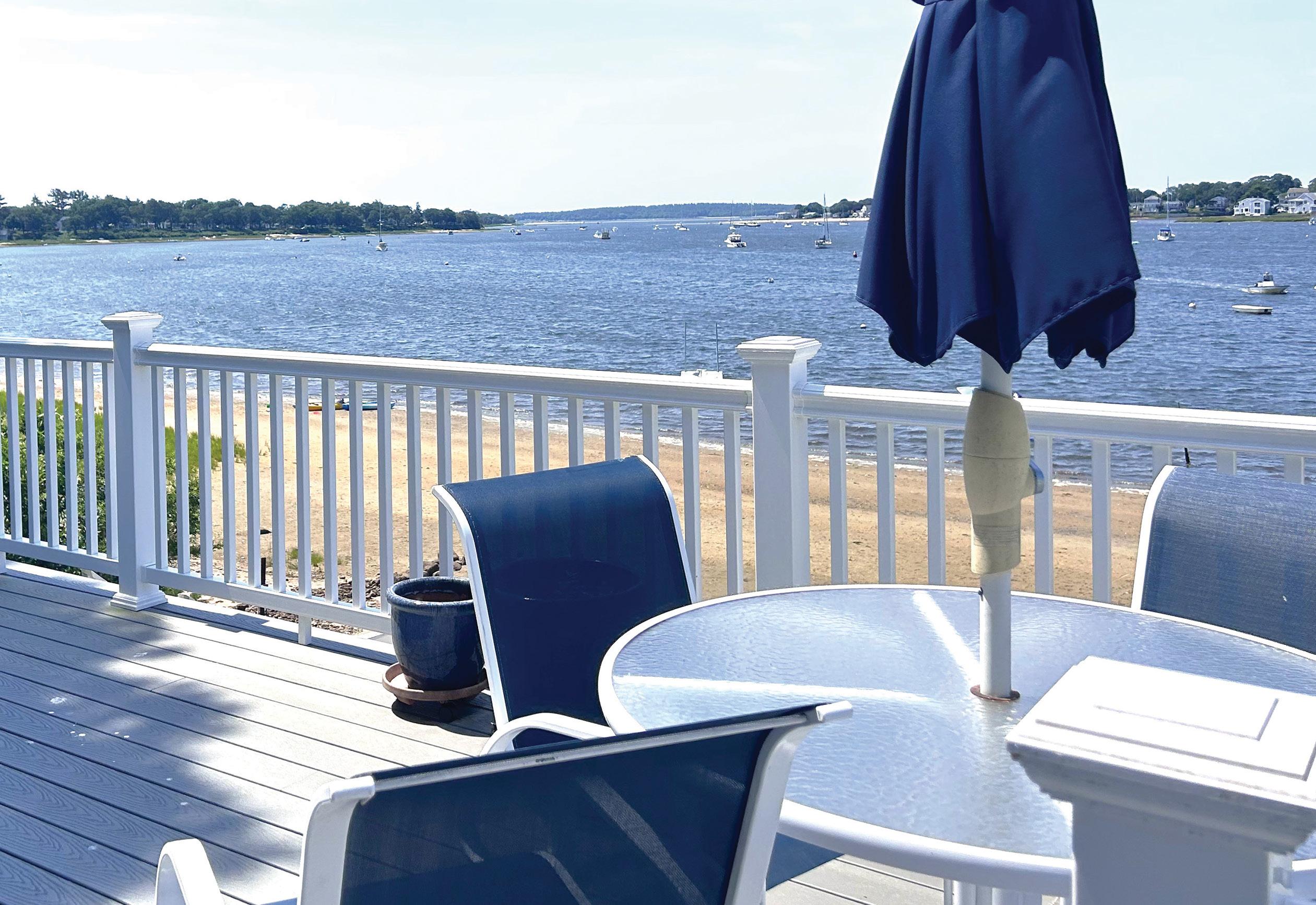
A case in point is the kind of property that illustrates both the opportunity and the challenge of coastal buying in this market at 15 Oakhill Road in Wareham, Massachusetts—a listing Hovan is unveiling—a 1920-era shingled cottage sits on the shoreline where the Wareham River meets Buzzards Bay, in the Tempest Knob neighborhood. It is the sort of home that, on paper, reads as modest: two bedrooms, a sleeping loft, 932 square-feet of living space on a compact lot. But what the data sheet cannot convey is what you see when you stand on the composite deck and look west across the water—an unobstructed panorama of bay, river, and sky that turns gold and copper every evening as the sun drops behind the far shore.
The home is currently completing a full renovation, with delivery anticipated in May 2026. The scope is thoughtful rather than extravagant: quartz countertops and new appliances in the kitchen, Corian surfaces and a walk-in European shower in the bath, hardwood floors throughout, cathedral ceilings in the living room and kitchen that amplify the coastal light, and French doors that open onto the deck and dissolve the boundary between interior and waterfront. Central air conditioning, gas heat, and an automatic generator address the practical realities of year-round coastal living. A new roof went on in 2021. The deck is a 2023 composite, as mentioned. It is a home being prepared not for a flip but for the next chapter of a long life; it has been cherished across multiple generations, and the renovation honors that continuity.
The feature that elevates the property from appealing to exceptional is one that no renovation can create: it sits outside the flood zone. For true waterfront—with a private sandy beach as the backyard, direct access for swimming and boating, and water views from nearly every room—that designation is extraordinarily rare along Buzzards Bay. It means lower insurance costs, fewer lending complications, and
— Erin Hovan
the peace of mind that comes from knowing the home’s relationship to the water is one of pleasure, not anxiety.
Listed at $850,000, it is offered as a gateway to a way of life that, along this stretch of coast, is becoming harder to find and harder to afford. It is also a useful illustration of why having the right broker matters: understanding the true value of a property like this requires knowing not just the comparable sales data, but the emotional and practical calculus that a buyer weighs when considering a waterfront home—the commute from Boston, the viability of year-round versus seasonal use, the character of the neighborhood, the trajectory of the local market, and the intangible question of whether a place feels, in the most personal sense, like home.
Erin Hovan understands the calculus because she has lived it.
And for every buyer she finds for 15 Oakhill Road through a listing alert, there is another who needs a broker with the network, the patience, and the local intelligence to surface the property that has not yet appeared—the one that is coming, or the one whose owners have not yet decided to sell but might, for the right buyer, at the right moment, with the right conversation.
Whether you are acquiring your first waterfront home, adding a coastal retreat to complement a primary residence, or searching for the property that will anchor your family for the next generation, the value of working with someone who combines institutional resources with individual commitment cannot be overstated. Compass provides the platform—the data, the technology, the global brand network. Erin Hovan provides everything else: the local expertise, personal accountability, seasoned judgment, and the genuine investment in your outcome that turns a search into a discovery.
She is not the loudest voice in the market. She is the one her clients trust. H
— Erin Hovan
A Coastal Escape at the Gateway to Cape Cod
Set along the shoreline where the Wareham River meets Buzzards Bay, 15 Oakhill Road offers a compelling take on waterfront living, defined by open views, coastal light, and a relaxed connection to the water. With a west-facing orientation, the property enjoys long afternoons of sun and striking sunsets across the bay. A rare advantage for true waterfront, the home sits outside of the flood zone and includes a private sandy beach as its backyard, ideal for swimming, boating, and effortless coastal living. Currently undergoing a full renovation with completion anticipated in May 2026, the home features two bedrooms and a sleeping loft, offering flexible space for guests. Long cherished as a multigenerational home, a rare opportunity to create lasting memories in a beautifully reimagined coastal retreat. For further details or to arrange a private showing, please contact Erin Hovan of Compass. With a thoughtful, client-focused approach and deep market insight, Erin provides a seamless, highly tailored experience designed for luxury properties.
LUNCH THROUGH THE AGES
BY PEET NOURJIAN
BREAKFAST HARDLY COUNTS AS A MEAL DINNER WAS NOT THAT BIG A DEAL ONCE OFF TO SCHOOL I HAVE A HUNCH OUR FAVORITE CLASS WAS EATING LUNCH
A LUNCHBOX BILLBOARD THAT EXPRESSED WHICH TV HERO WE LIKED BEST FILLED WITH THERMOS, SANDWICH, AND FRUIT VARIETY NOT MOM’S STRONGEST SUIT
CAFETERIA REFINED LUNCH
HAIR NETS, TABLES, TRAYS, AND A BUNCH OF OLDER KIDS, PUSHY AND LOUD IN TIME WE SAT WITH OUR OWN CROWD
AT COLLEGE THERE’S NO TIME FOR LUNCH FILLING POCKETS WITH SNACKS TO MUNCH DURING CLASSES, THE LATE-NIGHT CRAM TIRED, STARVING, ACE THE EXAM
LUNCH RULES AGAIN, IT PICKS UP STEAM WHEN DINING WITH A CORPORATE TEAM OYSTERS, PRIME RIB, A GLASS OF RED COMPANY KEEPS IT’S CREW WELL FED
ONCE THE 9 TO 5 RAT RACE ENDS LUNCH ONCE A WEEK AMONG OLD FRIENDS THE FAVORITE DISH THEY’RE ALL AFTER MEMORIES SEASONED WITH FRESH LAUGHTER. H
EXCLUSIVELY LISTED AT $1,395,000
MARION, MASSACHUSETTS
Custom-designed and built estate set on a 10+ acre estate in the secluded Hammett’s Cove neighborhood in East Marion. This property offers an unparalleled blend of elegance, privacy, and coastal charm. Complete with a 4,000 +/- sq. ft. main home, 3-car garage, gunite pool, pool house, putting green, and access to the association beach and dock, offering easy access to Sippican Harbor!
Welcome to River’s Edge—one of Marion’s most desirable neighborhoods. This move-in-ready 4-bedroom, 3.5-bath home offers 3,592 sq. ft. of updated living space on a private 1.19-acre lot, including a fully finished basement for added flexibility. The chef’s kitchen features high-end finishes and flows seamlessly into spacious living and dining areas, perfect for entertaining. Upstairs, enjoy brand-new hardwood floors throughout, while renovated bathrooms and central air add modern comfort. Step out from the sunroom onto a beautiful bluestone patio to enjoy a stylish, durable outdoor living space.
EXCLUSIVELY LISTED AT $4,650,000
MARION, MASSACHUSETTS
Tucked away on Planting Island in East Marion is this quintessential water-view Cape and adjacent buildable lot. With unobstructed water views and loads of coastal charm, this Cape Cod-style home is ideally located across from the association dock on Planting Island Cove. This 1,242 +/- sq. ft. 3-bedroom, 1 bath home captures the essence of coastal living. What truly makes this property unique is the .18-acre buildable lot included in the sale, offering endless possibilities for expansion, a guest house, a family compound, or added privacy.
EXCLUSIVELY LISTED AT $1,285,000
MARION, MASSACHUSETTS
Welcome to Marion’s Converse Point, an exclusive waterfront enclave on Buzzards Bay. Set on 2.76 acres, this 5,030 sq. ft. residence offers breathtaking views of Buzzards Bay and effortless coastal living. Built in 2012, this home features 5 bedrooms, 4.5 baths, an elevator, and multiple decks showcasing the sweeping views. The chef’s kitchen features premium appliances and custom cabinetry, flowing to sunlit living spaces ideal for entertaining. Enjoy a heated swimming pool, hot tub, and pool cabana.
WESTON $2,250,000
Exceptional Victorian elegance on 1.42 picturesque acres abutting the Jericho Town Forest.
HARWICH $2,195,000
Experience luxury living with this newly completed home in an exclusive seven-residence enclave.
LAKEVILLE $1,025,000
Charming waterfront home, with many updates, on picturesque Long Pond.
CHATHAM $1,650,000
Situated on a .5-acre lot overlooking a wooded cul-de-sac near beaches and biking trail.
PEMBROKE $939,000
Elegance and comfort come together in this meticulously maintained home with a private in-law apartment.
BOSTON $1,297,500
Custom-designed duplex offers nearly 1,600 sq ft of sophisticated living in welcoming Charlestown neighborhood.
MARION $899,950
Own a special site overlooking a sandy beach on the shore of Sippican Harbor - opportunity awaits.
Caregiver Payments
Caring for someone at home? You may qualify for a monthly payment.
Are you facing the challenges of caring for a loved one at home? Perhaps trying to wholeheartedly balance their needs and the daily demands life delivers you?
If this sounds familiar, we are here to assist you in providing an unmatched standard of Adult Foster Care benefits for those striving to stay in their homes.
Mass Care Link is evolutionary, providing a monthly payment to those caring for someone at home while supporting them with a personalized touch.
Costing less than assisted living facilities and nursing homes, with a record of compassion and empathy, we cover the unique needs of our clients.
Families and individuals rely on our services to:
• Ensure caregivers receive a tax-free monthly stipend/payment
• Review and verify MassHealth paperwork and qualifications
• Train and assist with the management and demand of providing 24-hour care
You may not know this fact, but if you qualify as an at-home caregiver, you can earn up to $18,240 yearly.
For a caregiver to meet state requirements, they must:
• Be at least 18 years of age
• Reside in the same home as the person they care for
• Not be the legal guardian or legally married to the person being cared for
• Provide necessary medical care and assistance that meets the needs of the person they care for
For your family member or loved one to qualify for Mass Care Link services, they must meet these eligibility points:
• Be 16 years of age or older
• Be approved for MassHealth insurance
• Live with the primary caregiver in the same home
• Require supervision and cueing, or physical assistance daily with at least one of the following needs: bathing, toileting, ambulation, transferring, eating, and/or dressing.
If this sounds attractive and meets your level of interest, contact us today for additional information or to schedule an appointment.
Mass Care Link, Inc.
99 South Main Street, Fall River, Massachusetts 02721 Hablamos Español | Falamos Português call for more information or visit us online at:
LIFESTYLE MAGAZINES FOR THE CURIOUS, AMBITIOUS, AND FEARLESS.
TRUTH BE TOLD
IT’S WHO WE ARE AND WHAT WE HAVE STRIVED TO ACCOMPLISH SINCE DAY ONE — 21 YEARS AGO —THIS MONTH
We’ve never disappointed our readers who have supported our niche in the markets we serve because, like us, they are driven by independent thought, sound principles, and a winning attitude when facing insurmountable odds.
For decades, the ‘machine’ did its best to drown our voices, then attempted to put us out, only to degrade until they vanished; ‘Damnatio memoriae.’
Our audience should take comfort in knowing that we’ll go when we decide on the timing, never leaving it to another’s discretion and unethical tactics.
For more information on continuing the conversation with a positive and common-sense outlook on business and culture, contact the one and only SouthCoast Magazine SOCO at nemedia@earthlink.net. Support A Winner.
YACHTS, TROTS & BEACHES
BY STEVEN CHAN
A
Curated Guide to the Season’s Most Distinguished Pleasures— From Long Island Sound to the Kentucky Bluegrass
The calendar has turned, the days have grown longer, and the coast has begun its quiet exhale, waiting for a new crop of visitors. For those who know where to go—and when—the next few weeks offer three of the finest pleasures this part of the world produces: the open water, the greatest two minutes in sports, and a shoreline that was, quite literally, just named the best in America. Consider this your invitation.
YACHTING—THE SOUND, THE HARBOR, AND THE PARTY
There are few pleasures more satisfying than arriving somewhere extraordinary by water. From Montauk to Nantucket to Newport, the marinas, clubs, and charter houses define extraordinary, while preparing for another season of combining intimate pleasures, social calendars, and extravagance—and if you haven’t already made arrangements, the moment is now.
For owners, have your Captain and crew arrive early at Long Island to complete a summer shakedown as they return from southern waters. There’s no better place to meet your vessel for a long weekend than Safe Harbor Montauk Yacht Club. Set across 16 acres on Lake Montauk, the property opens its 228-slip marina to everything from day cruisers to 300-foot superyachts. Ranked among the Top Ten Marina Destinations in North America by Yachting magazine, the club’s 2026 season adds a new fleet of X Shore electric boats, a fully renovated racquet center, and Alba Spiaggia , a new waterfront dining concept channeling the ease of coastal Italy. Transient dockage is available; have your people make a reservation through Dockwa or directly at montaukyachtclub.com
Over at Sag Harbor (please refrain from drinking and driving we know how that ends), the village harbormaster oversees one of the most civilized docking experiences on the East End. Long Wharf accepts transient vessels up to and beyond 100 feet, with the season running April 1 through October 31.
Reservations are confirmed by phone, and holiday weekends carry a two-night minimum. Harbormaster Robert Bori can be reached at 631-725-2368 or harbormaster@sagharborny.gov.
For those poor souls who are boatless, Sail Hamptons offers crewed excursions departing from Sag Harbor, aboard the 80-foot Bermudian schooner Luna , plus the performance trimaran Cosmos
and a classic lobster yacht, Blue Sky, launching in early summer 2026. Their hospitality-forward approach makes every charter feel like it was arranged by someone who genuinely loves the water. sailhamptons.com
North across the Sound and 30 miles off Cape Cod, the Nantucket Boat Basin is the benchmark by which all other New England marinas are measured. Located at 1 Swains Wharf in the heart of historic Nantucket Harbor, the 240-slip full-service facility opens May 1, 2026—with spring rates in effect through June 10. Concierge service, pet-friendly docks, and slip-side cable are standard. The town’s cobblestone streets, award-winning restaurants, and the White Elephant hotel complex are steps from the dock. Book directly at nantucketboatbasin.com or by phone, 844-213-6500.
In Newport, Rhode Island—the sailing capital of the world, former home of the America’s Cup, and the gateway to New England’s most distinguished cruising grounds—the conversation shifts register entirely. Once the superyachts leave Europe, they come to summer with us.
International Yacht Collection (IYC) maintains a dedicated office at Safe Harbor Newport Shipyard and manages one of the largest crewed superyacht charter fleets in the world, with yachts from 80 to over 180 feet available for week-long, monthly, or full-season New England itineraries. Their Newport team builds bespoke programs from the Hamptons north through Nantucket, Martha’s Vineyard, and into Maine. Call 401-849-0834 or visit iyc.com/newport
Northrop & Johnson, one of the most respected names in the superyacht industry, operates its New England charter desk from Newport and offers access to every crewed luxury yacht 30 meters and above cruising these waters. Their brokers carry real-time intelligence on availability, routing, and provisioning for the full May-through-October season. northropandjohnson.com.
Denison Yachting, an American family firm since 1948 and among the highest-volume superyacht brokerages in the world, maintains a Newport office at 2 Christies Landing and is an active presence at the Newport Charter Yacht Show each June. For week, month, or full-summer placements, contact charter specialist
Jennifer Saia directly—she brings both the inventory and the institutional knowledge to match vessels to clients with precision. Call 401-619-1210, email denisonyachting.com, or visit denisonyachtsales.com
All three firms counsel early engagement. The finest yachts for July and August are placed by late winter, and summer on Narragansett Bay waits for no one.
TROTS—THE RUN FOR THE ROSES
There is one week each spring when an entire American city holds its breath, when bourbon flows like the Ohio River below it, and when the finest three-yearold thoroughbreds in the world make their case in 1 minute, 59 seconds of breathtaking power and grace. The 152nd Kentucky Derby runs Saturday, May 2, 2026, at Churchill Downs in Louisville, Kentucky.
Derby Week officially opens April 25, with Dawn at the Downs on April 27— when contenders train at first light and guests breakfast in the Stakes Room with track-side commentary. Thursday brings Thurby, an afternoon of racing steeped in Kentucky culture. Friday, May 1, belongs to the Kentucky Oaks, the premier race for three-year-old fillies and a fixture among those who understand that the day before the Derby is itself an event of consequence. Then comes Saturday, and the roses.
Getting there: Louisville Muhammad Ali International Airport (SDF) is just three miles from Churchill Downs and offers nonstop service from most major cities. Fly in Thursday; leave Sunday. Where to stay: The Brown Hotel on 4th and Broadway has been the social center of Derby Week since 1923. This AAA Four-Diamond Georgian Revival landmark sells out quickly, but you may score a cancellation. Contact Ariel Williams directly at 502-736-2989, AWilliams@BrownHotel.com, brownhotel.com, or kentuckyderby.com
Also worth noting: East Hampton Main Beach ranked 5th on Dr. Beach’s 2025 list—a short drive east, equally wellmaintained, and beloved by its own loyal constituency.
Our #2 Choice: Surfside Beach, Nantucket, Massachusetts
Nantucket’s most celebrated south-shore beach stretches wide and unobstructed, with genuine Atlantic surf and the kind of wild, clean air that reminds you why people have been coming to this island for 300 years. Surfside has lifeguards, facilities, and the legendary Surfside Beach Shack—the lobster roll alone justifies the trip. The NRTA shuttle runs from downtown in season. For the quieter end of the experience, ‘Sconset Beach on the island’s eastern tip offers historic rose-covered cottages above the dunes and a sunrise that belongs in no magazine because no photograph does it justice. nantucket.net/beaches.
Haven’t Been-But Planning On It: Singing Beach, Manchester-by-the-Sea, Massachusetts
An hour north of Boston, on a rocky stretch of the North Shore that attracted Gilded Age wealth and never let it leave, Singing Beach earns its name: the particular mineral composition of its sand produces an audible sound—a soft, sustained note—when walked upon. The beach is small, intentionally exclusive, with limited public parking, and surrounded by stately homes on the granite bluffs above. Arrive by commuter rail from Boston’s North Station (Manchester/Essex line) to skip the parking entirely. The village itself—with its harbor, its galleries, and its unhurried tempo—is among the finer afternoon walks in New England. manchester.ma.us
Final Words: Memorial Day weekend arrives in days, not weeks. Slips fill, hotel rooms vanish, and the best parking at the best beaches goes to those who planned early. If any of these Memorial Day activities have your name on them, now is the moment to act.
Travel well. H
BEACHES—SUN, SAND, AND REMARKABLE SURF
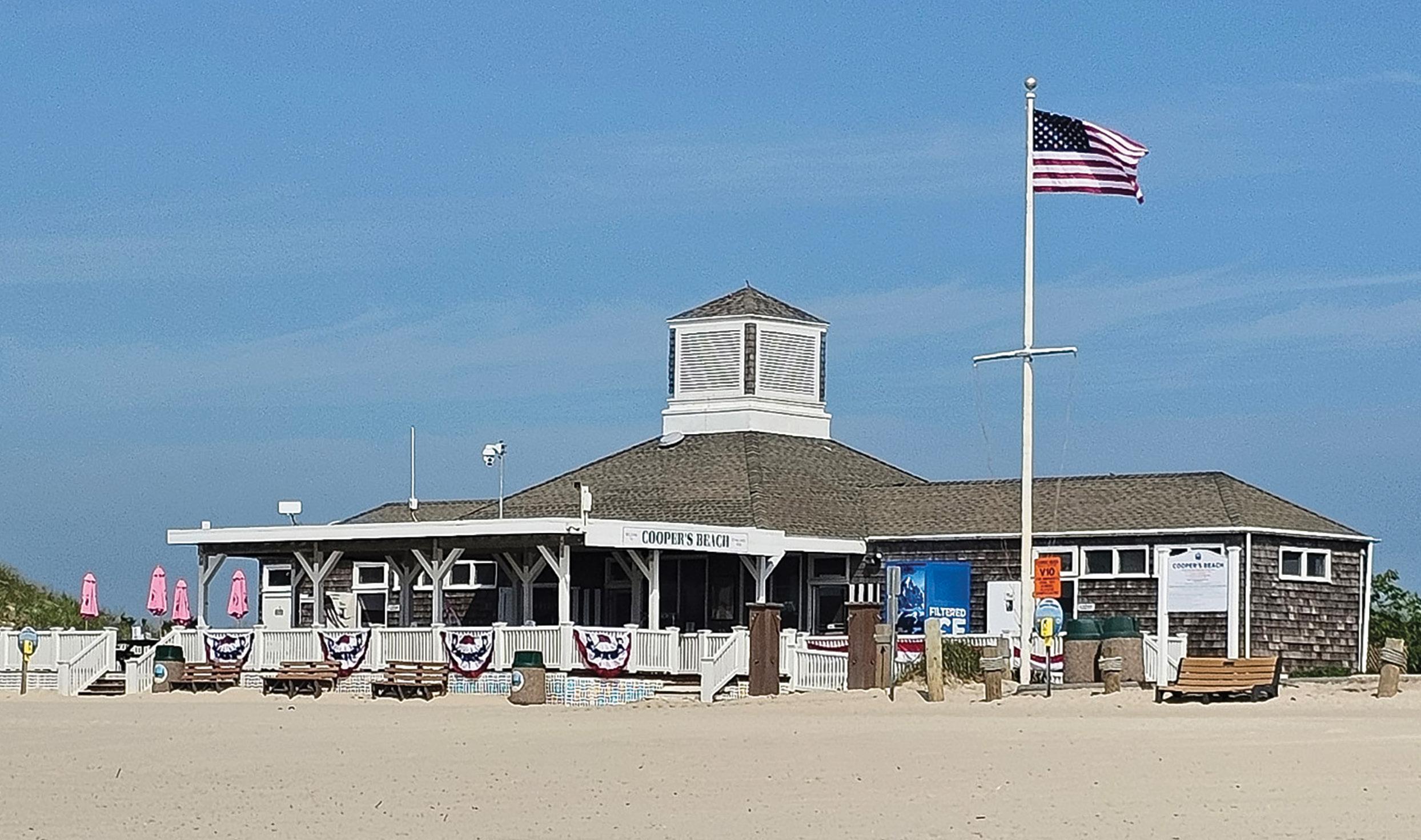
#1 Pick: Cooper’s Beach, Southampton—Long Island, New York
Each Memorial Day, Dr. Stephen Leatherman—the coastal scientist known as “Dr. Beach”—releases his annual ranking of America’s top 10 shorelines, scored across 50 criteria including sand quality, water clarity, safety, and access. In 2025, for the first time in the ranking’s 34-year history, a northern beach claimed the top position. Cooper’s Beach in Southampton, New York, was named the best beach in the United States—the first to break the long dominance of Hawaii and Florida. It had placed 3rd in 2023 and 2nd in 2024. The 2025 award confirmed what summer residents have quietly known for decades.
The beach is hundreds of yards wide, composed of fine white quartz sand, backed by substantial dunes threaded with American beach grass and framed by the historic oceanfront estates of Southampton Village. Parking is $50—the free alternative is the Circuit electric shuttle from downtown Southampton, which runs every 30 minutes from Memorial Day through Labor Day and can be hailed via the Circuit mobile app. Chairs and umbrellas are available for rent; the beachside café is perfectly adequate. southamptonvillage.org.
Cooper’s Beach
Photo by Lucki Schotz
Living Long, Staying Well
GENES, LONGEVITY, AND INCREASING HEALTHSPAN
BY ROB SAINT LAURENT, M.ED.
The impact of genes on longevity has long been a topic of research and debate. For a while, the answer seemed settled—heritability, or genetic variation in biological traits, was thought to account for about 20-25 percent of human lifespan after controlling for external factors.
But a new, well-publicized study in Science suggests a much higher number that experts say could be susceptible to misinterpretation.
CHANGING ENVIRONMENT
At Weizmann Institute of Science in Rehovot, Israel, biophysicist Ben Shenhar and colleagues created a mathematical model of intrinsic aging, where external factors like environmental hazards, violence, and accidents that cause “extrinsic deaths” are cut from the equation.
Analyzing extensive data on Scandinavian twins raised together and apart, as well as siblings of U.S. centenarians, they found heritability of lifespan to be consistently at 50-55 percent.1, 2
Shenhar’s study suggests that if genetic influence is predominant in living a long life, lifestyle may not matter as much as once thought. It’s because of this theory that he plans to explore the impact of lifestyle in the future, and says his research could potentially lead to medical interventions down the road.
It’s not that our genes have become more powerful, however.
Science editor Yevgeniya Nusinovich, M.D., Ph.D., prefaces Shenhar’s study by explaining that the Scandinavian data stretches back to the late 19th century, a time when extrinsic deaths were commonplace. When they’re no longer statistically significant, the impact of genes on longevity will naturally spike.
Swedish epidemiologist Karin Modig, Ph.D., concurs, saying what’s changed isn’t our DNA but our environment. She points to advances in vaccination, pollution reduction, better diet, and healthier lifestyles in wealthy nations that have evened out the playing field by reducing environmental impacts on aging.3
The earlier estimate of genetic influence wasn’t wrong, she says. It reflected a harsher world.
Today, intrinsic death from aging and age-related disease is more of the norm.
ALL IN THE FAMILY
We’re still learning about how genes help preserve us and which ones are most responsible.
According to the National Institutes of Health, variations in the APOE, FOX03, and CEPT genes have been linked to long life, but not every extraordinarily long-lived person has them. Moreover, while research has found a lot of new gene variants that may give rise to so-called “supercentenarians” (people aged 110-plus), people over 100 also harbor the same diseasepromoting variants as the average mortal.4
Since 1995, Boston University School of Medicine has been conducting the New England Centenarian Study and, since 2006, has been a participant in the Long Life Family Study. During this time, they’ve found what many of us have long suspected: exceptional longevity is passed down through families.5
They’ve also discovered that a very long life often means a very long “healthspan,” in which age-related disease typically occurs toward the end of life and lasts only a short time. The influence of genes becomes increasingly greater once a person reaches their 90s. Genes probably don’t have a great individual effect on longevity; as a whole, they likely exert a significant effect. They surmise that people over 100 probably have genetic variants that decrease their risk for age-related diseases (heart disease, high blood pressure, cancer, diabetes, Alzheimer’s disease, etc.) by slowing the aging process.5
Another ongoing research study is the Longevity Genes Project by Albert Einstein College of Medicine’s Institute for Aging Research.
In the first phase of the study, researchers sought to determine whether longevity in people aged 95-112 is genetic and distinct from that of people with an average life expectancy. Thus far, their results echo those of other studies. Longevity is strongly associated with a high level of HDL (“good”) cholesterol and a low level of LDL (“bad”) cholesterol. Longevity and avoidance of
cognitive decline and Alzheimer’s have been linked to variations in cholesterol genes. Longevity has also been linked to variations in a growth hormone gene. They found that people with a particular genetic composition lived an average of four more years than those without this makeup, and were “highly likely” to inherit long life.6
Of the gene variants that influence longevity, some are involved in maintaining the normal functioning of the body’s cells. It includes repairing damaged DNA, protecting the ends of chromosomes (telomeres) from deterioration, and protection from oxidative stress caused by free radicals. Other gene variants are associated with regulating blood fats, like cholesterol, controlling inflammation, and maintaining our cardiovascular and immune systems.4
LIFESTYLE AND LONG LIFE
Some hardy folks will indeed cruise to 100 and beyond with a cigar in one hand and a shot of whiskey in the other. But for most humans, how one lives is still a vital component of a long, healthy life.
Modig says it would be a misconception to think we have control over just half our lifespan. In reality, she says, there are “countless routes to a long life.” Excellent nutrition, regular exercise, and healthcare can offset genetic makeup that may not be so protective of external stressors. There are many different combinations that can lead to long life.3
Shenhar concedes that lifestyle, environment, random processes like cancer, and healthcare still account for about half of lifespan variation. 3
Scientists say genetic influence becomes a factor later in life when age-related diseases typically emerge. For about the first 80 years of life, they believe how we live carries more weight than genes for warding off diseases.4
When comparing the lives of people in their 90s-110s, the common denominators are not smoking, avoiding excessive alcohol, eating healthy foods, regular physical activity, keeping a healthy weight (avoiding obesity), and managing stress. Educational level, profession, and income are not important factors.4
To determine the effect of lifestyle on lifespan, scientists at Harvard’s T.H. Chan School of Public Health examined data of health professionals that included over 78,000 women and 44,000 men, along with government data to help estimate lifestyle habits and death rates across the U.S.7
Data on five low-risk health habits were collected, and outcomes were compared between those who followed all five and those who followed none. The habits included consistent healthy eating (recommended amounts of fruits and vegetables, nuts, whole grains, and omega-3 and polyunsaturated fatty acids, while limiting red and processed meats, sugary beverages, trans fats, and sodium); not smoking; at least 3.5 hours each week of moderate-vigorous physical activity; drinking just one daily alcoholic drink or less for women and two daily drinks or less for men; and maintaining a healthy body mass index of 18.5-24.9.
By age 50, women and men who followed none of these healthy behaviors were estimated to have an average lifespan of 79 years and 75.5 years, respectively. Women and men who followed these behaviors had estimated average lifespans of 93.1 and 87.6 years, respectively. Each of these behaviors significantly reduced the risk of total mortality from heart disease and cancer.
The researchers concluded that healthy lifestyle habits are important for the greater longevity of U.S. citizens. At the same time, they acknowledged that adherence to these habits is low and
that more government-sponsored health promotion and support efforts are needed.
THE ‘BLUE ZONE’ PHENOMENON
There are unique pockets around the world where people have a knack for living past 100.
In 2004, demographers Gianni Pes and Michel Poulain published research on five world regions they termed “Blue Zones,” where people live much longer than average: Sardinia, Italy (with a high percentage of centenarian men); Okinawa, Japan; Nicoya Peninsula, Costa Rica; Icaria, Greece; and the Seventh Day Adventist enclave of Loma Linda, California.
The concept isn’t without critics, but it’s interesting to look at factors common to these areas, which support the notion of healthy eating, active living, and community engagement.
BLUE ZONE LONGEVITY CLUES
OKINAWA, JAPAN
moderate physical activity
Some hardy folks will indeed cruise to 100 and beyond with a cigar in one hand and a shot of whiskey in the other. But for most humans, how one lives is still a vital component of a long, healthy life.
Evidence suggests humans are approaching the limit of their natural lifespan. Frenchwoman Jeanne Calment still holds the world record for the longest human life, at 122 years and 164 days. Recent research suggests we may be able to push it to 150 years, at most. But scientists note there are many more things that can kill us than keep us alive.
REACHING YOUR POTENTIAL
More Americans are living longer but spending more years with chronic disease. At the same time, research shows no link between poor health and extreme age. 8
As we live longer, the goal should be to remain as healthy as possible until the end of life.8
Studying the world’s oldest woman, Maria Branyas Morera, who passed away in 2024 at the age of 117 years and 168 days, revealed not only a durable genome but also the vital role of diet in promoting an anti-inflammatory gut microbiome that can support healthy aging. (Yogurt with Bifidobacterium probiotic, for example, is being studied for its ability to slow age-related disorders.)8
Research on centenarians and Blue Zones, as well as animal experiments, shows the effectiveness of plant-based diets featuring whole, unprocessed, locally sourced foods, reprogramming metabolism through calorie restriction and intermittent fasting, a physically active lifestyle, and social connections. Anti-inflammatory diets like Dietary Approaches to Stop Hypertension (DASH) and Mediterranean are strongly linked to lower death and healthy aging.8
Scientists say longevity is likely a synergy of genes, environment, lifestyle, efficient metabolism, and low inflammation.3, 8 While our genes may partly determine lifespan, healthy living is still vital for prolonging the quality of life and realizing genetic potential. H
1. Shenhar, B., Pridham, G., Lopes de Oliveira, T., et al. (2026, January 29). Heritability of intrinsic human life span is about 50 percent when confounding factors are addressed. Science, 391(6784), 504-10.
2. Buehler, J. (2026, January 29). Genes may shape how long we live more than once thought. Science News.
3. Modig, K. (2026, February 2). Your Genes May Influence Longevity More Than Every Before. Here’s Why. The Conversation.
4. Staff. (n.d.). Is longevity determined by genetics? MedlinePlus.
5. Boston University School of Medicine. (n.d.). New England Centenarian Study.
6. Albert Einstein College of Medicine. (n.d.). Longevity Genes Project.
7. Hicklin, T. (2018, May 8). Healthy habits can lengthen life. NIH Research Matters.
8. Kordowitzki, P & Ying, K. (2026, February 5). The pursuit of understanding human longevity. npj Aging, 12, 25.
RRelationship Economics 101
THE COST OF MEETING UP AND HOOKING UP HAS BECOME A DETERRENT
Previously understood, but left unspoken, one’s market value dictates optionality, influencing hypergamy and choices.
BY STEVEN CHAN
egardless of age, position, or financial situation, the topic of investing time and financial resources to meet someone and move towards an emotional and physical connection has become a prerequisite for entering or maintaining a dating lifestyle. And for good reason, over time, the expense of courting (old-school for connecting or hooking up) has risen relative to the cost of a month’s rent or a mortgage, depending on lifestyles and tastes. For this reason, more and more singles point to reallocating resources inward, rather than to what they view as a ‘high-risk’ entity that, for the most part, is volatile and unregulated.
THE ECONOMICS OF DATING AND ROMANCE
According to multiple sources, men who are actively dating claim to spend $15,000 - $20,000 annually (approximately $1,250 - $1,667 monthly) on dining, gifting, or travel to attract the attention of a paramour or other love interest. In comparison, high-frequency daters raise the bar to many thousands of dollars monthly. These numbers relate to more traditional forms of wooing and attracting a mate, where men
are largely expected to fund the fun. And for those who retreat to sharing the expense of romantic meetings and greetings, don’t waste your time; 45 percent of women polled, claim that a guy not paying for the first—and at least a few more dates after a flame appears to ignite, is an automatic ‘turn-off,’ viewed as ‘petty,’ and a ‘romance killer.’ Another factor to consider is that, while it is always polite and many women might offer to split the cost of a first date, according to a NerdWallet survey, 72 percent of your dates expect you to pay the tab.
MARKET VALUE—DO YOU KNOW YOURS?
As crass as it may seem, and it clearly isn’t an attractive personality trait, blame can be placed squarely on human evolution. As a means of survival, we are programmed to make the best selections available to us, and our built-in acuity of attraction during the election and selection process is heightened. For the doubters or those unwilling to accept our predisposition, observations in public social settings or a few moments on social media platforms, which serve as a measuring stick of attraction, make it easy to see how dating hierarchy and our never-ending efforts to reach scale dominate our lives.
RELATIONSHIP CAPITAL
I recently heard a quip that addressed what some view as a problem with the dating scene from a man’s perspective. Given that many young women have an insatiable need to take selfies, relentlessly posting them to achieve self-imposed ‘fame,’ here is a brief of what two 30-something-year-old men were talking about when deciding where to socialize on a weekend night. One suggested, “Let’s go to the ‘Forty-Niner.’ His friend, confused,
having never heard of that particular location, asked where it was. Grinning, the first guy retorted, “You’ve been there-you know, the place down the street where ‘fours, think they’re nines.’ ” Just a joke, folks—don’t be offended.
But, in fact, we do know that within humor lie threads of truth, and it’s no different with this topic. We all have an idea of our level of attraction, and much has to do with a multi-dimensional ranking system made up of value; it includes: physical appearance, height, weight, condition, facial conformity to current-day desirability, education, social skills, income, but, more importantly, earning potential, self-awareness, grounding, and what is critical for safety and security—emotional stability. Together, these elements create a ‘value’ that is consciously or unconsciously assigned to those we consider bringing into the fold. The evaluation isn’t immediate, but these days, no one is belaboring the testing phase; it doesn’t take too long before you check all the boxes or are disregarded; think ghosting.
Relationship capital, when used wisely, can help find an appropriate partner. Still, the pendulum has swung much too far, and for many, expectations exceed reasonable selection criteria, as noted in our humor above. The conflict between self-evaluation and that of others’ see-and-feel can be an unnerving jolt of reality. Whereas some call it settling, others call it leveling. Still, regardless of the terminology, the fact remains that we all decide what value we bring to the table and shouldn’t take it personally if it’s not found acceptable or sufficient, which leads us to the next topic.
RELATIONSHIP RECESSION
Going It Alone? What’s The Cost?
Something, not so quiet, is happening in the personal lives of young adults across the developed world, and it does not show up in unemployment reports or stock tickers. It is exemplified by empty apartments, unmatched dating profiles, and a growing number of people who have stopped trying to find a romantic partner.
Economists and sociologists are calling it the relationship recession—a sustained, structural decline in the formation of romantic partnerships, marriages, and shared households, primarily among people under 40. But this phenomenon isn’t always the case; it’s happening across all age groups, with skyrocketing reports of loneliness throughout generations.
And unlike a financial recession, there is no central bank with a tool to fix it, so for many, it becomes years of maladaptive singleness.
The numbers are striking. According to reporting by The Economist, roughly one in four young adults in the United
States may reach their 40s or 50s without ever having married—a figure that would have been nearly unthinkable a generation ago.
People who eventually marry do so nearly a decade later than their parents did. Meanwhile, data across multiple studies suggests that young adults today are having less sex and fewer romantic partners than people their age in previous decades. The generation with the most access to potential partners—via apps, social media, and a more mobile lifestyle—is, paradoxically, among the loneliest.
The causes are layered. Economic pressure sits at the foundation. As noted across multiple research sources, housing and transportation costs, inflation, and stagnant wages have made financial stability feel like a prerequisite for commitment—a bar that keeps rising. When two people cannot afford to live separately but also cannot afford the emotional risk of combining lives, many choose to hold off, with some withdrawing entirely.
At the same time, the social math has shifted. Women’s growing economic independence—a genuinely positive development—has also changed the partnership calculus. As researchers and writers in Marie Claire Australia have observed, women who no longer need a partner for financial security become, quite reasonably, more selective. The result, for many men who have not kept pace socially or professionally, is a shrinking pool of mutual interests.
Then there are the apps. Dating platforms promised efficiency and abundance, and delivered something closer to exhaustion. A loss of faith in the process—in swiping, matching, ghosting, and the blurry arrangements known as situationships—has left a significant portion of singles not playing the game at all.
The consequences extend well beyond the personal. Fewer couples means fewer children, and declining birth rates are already straining economies and social systems across the developed world. There’s also what researchers call the single tax—the simple, grinding reality that living alone costs more per person than living together. Loneliness, as previously mentioned, carries health costs that are increasingly well-documented both physically and mentally.
What the relationship recession ultimately describes is not about people not wanting love; it’s more about those who have lost confidence in the available paths to find it, accompanied by a loss of faith in ever being in a loving relationship.
Whether the current reorganization is permanent is, for now, an open question.
RELATIONSHIP PROGNOSIS
Is there a cure for singleness, or will it become our next epidemic?
There are countless books, articles, and blogs with suggestions on escaping the cell of oneness, but do any of them offer effective tools? We’ve found that most advice falls into one of two camps: the painfully obvious, or the dangerously unrealistic. So let’s skip both.
The research is actually more encouraging than the headlines suggest, but it requires an honest reckoning with a few uncomfortable truths.
First, the data on where lasting relationships actually begin may surprise you. According to Stanford sociologist Michael Rosenfeld, who has tracked how couples meet for over two decades, meeting through friends remains one of the highest-converting paths to long-term partnership—not apps, not bars, not algorithmic matching. Which means the single most effective investment you can make in your romantic life is, counterintuitively, your social life. Widen the circle. Accept the invitation. Show up in rooms where people share your interests, not just your zip code.
Second, the research on attachment and self-awareness is unambiguous: people who understand their own relational patterns—why they pull away, why they over-invest, why they keep choosing the same unavailable person—form more stable partnerships faster than those who don’t. A few sessions with a therapist or even an honest read through Dr. Amir Levine’s work on attachment styles in Attached can do more for your dating life than six months on Hinge.
Third, and perhaps most practically, it lowers the temperature of the process itself. Studies on decision fatigue—including work cited by behavioral economist Dan Ariely—consistently show that more options produce less satisfaction, not more. The paradox of the modern dating market is that abundance has made commitment harder, not easier. Narrowing your focus, spending more time with fewer people, and resisting the compulsion to keep scrolling while you’re already talking to someone worthwhile— these behaviors statistically improve outcomes.
The relationship recession is real. The economic pressures are real. The exhaustion is earned. But the cure, such as it is, has less to do with finding the right person and considerably more to do with becoming someone ready—financially grounded, emotionally self-aware, and genuinely present—when that person appears. With this, it turns out that, as in financial markets, preparation is rewarded, and being late to the party results in a deficit.
One thing to know and take comfort in is that you’re not alone; millions of people are having the same experience, and they, too, are looking for a satisfying exit. For now, focus on bettering yourself and finding comfort in being quiet and reflective, because, as you know, once you find someone to share your life with, you will be giving up a peace that is the entry fee into the game of love. H
We are an established print publication with over 21 years of history, credibility, and readership. Our brand has deep roots, a loyal base, and a rich archive of content. We are now ready to expand globally through a structured, data-driven digital growth strategy.
The ideal candidate will be a capable Digital Growth Strategist to lead the transformation of our publication into a scalable digital media platform with an initial goal of reaching one million monthly views, subscribers, and engaged readers.
The position is not a basic social media role but a leadership opportunity to build and execute a comprehensive audience development system, with substantial financial rewards.
RESPONSIBILITIES:
n Develop and implement a full digital growth strategy
n Convert existing print and archive content into SEO-optimized web assets
n Build and scale an email newsletter system
n Design and execute multi-platform social distribution
n Create a content repurposing engine (article → video → short-form → email)
n Establish analytics dashboards and growth benchmarks
n Develop partnerships and sponsorship opportunities
n Implement paid promotion strategies when appropriate
IDEAL CANDIDATE:
n Proven experience growing online audiences (newsletter, YouTube, social media, or publication)
n Strong understanding of SEO and content marketing
n Experience with email marketing platforms and automation
n Comfortable using analytics to guide decisions
n Familiar with short-form video and digital trends
n Entrepreneurial mindset and long-term vision
This position is partnership-based, with performance incentives tied to audience growth and revenue milestones.
We are not looking for vanity metrics, but rather, a sustained, engaged readership and meaningful reach.
If you have successfully grown digital audiences and can demonstrate measurable results, we want to hear from you.
PLEASE SUBMIT TO NEMEDIA@EARTHLINK.NET
n Resume
n Portfolio or examples of growth results
n A short strategic outline explaining how you would approach scaling a legacy publication
The Slow Fortune
How Patience, Time, and as Little as $10 a Month Built Generational Wealth, and Why $1 Million
Is
Only the Beginning
A Practical Guide to Long-Term Investing for the Generation That Inherited a More Expensive World
BY STEVEN CHAN
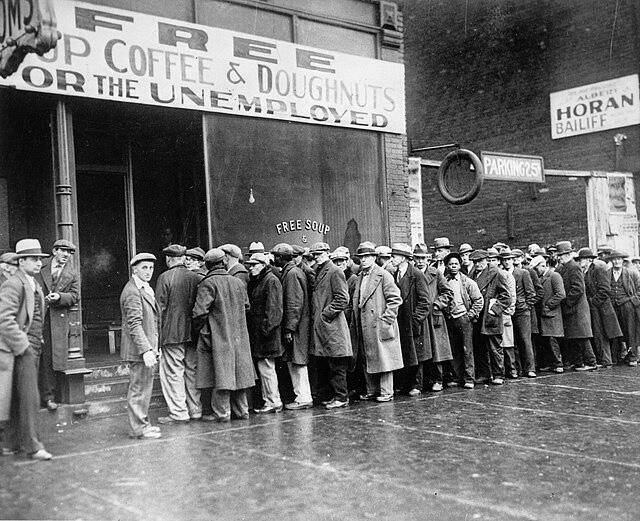
There is a story your grandparents never thought to tell you, mostly because to them it was not a story at all— it was a way of life. During the Great Depression, nearly everyone was poor, and, in many cases, dirt poor, like going without food, medicine, and heat. Yet ask anyone who may be left from that period, and they will tell you that the suffering built character out of necessity. More importantly, they’ll also point out that the generations that
followed them have all lacked the same level of ambition and integrity, primarily because they were spoiled, and much was handed to them. During those years, many escaped the pain of poverty by joining the military, sending their meager salary home to loved ones, while whole families worked in mills and factories under harsh conditions. It was a time when women and children were forced into labor so they might survive; ill-treated and abused, it wasn’t a choice but an intense reality.
You did not spend what you did not have. You saved what you could, even when it seemed embarrassingly small: pennies, nickels, and dimes. And if you were fortunate, disciplined, or both, you put that savings somewhere it could work while you slept, dreaming of what might happen someday, a life of improvement and optimism.
The generation that survived the Great Depression did not become wealthy because they were lucky. Many of them quietly, without fanfare, became financially comfortable because they were stubborn. They had watched the economy collapse, watched neighbors lose homes and life savings, and they came out the other side with a near-religious conviction that money left alone—invested, reinvested, untouched—had a way of compounding into something extraordinary. Decades later, that conviction is passed down through estates and conversations. Increasingly, through the kind of data that makes the math undeniable, family wealth has never reached this current level.
You won’t find a ‘get-rich’ story here; instead, it is a point-blank tale about time, patience, and discipline that increase the chance of becoming a millionaire, even though that amount of money pales in comparison to its intrinsic value from prior years.
THE VALUE AND POTENTIAL OF $10
Let us start with a number that might feel more honest than the figures typically thrown around in financial media. Not $1,000, not $500, but $10 a month.
In September 1929—one month before the stock market crash that triggered the Great Depression—if a family had invested $1,000 in what we would today recognize as an S&P 500 index fund, and then committed to adding just $10 every month, reinvesting every dividend along the way, and passing the account to their heirs without ever liquidating it, that portfolio would be worth approximately $21.5 million today.¹ Total cash contributed over those 96 years: roughly $12,590.¹
Read that again slowly—$12,000 in, $21 million out. The difference is not magic. It is time, consistency, and the refusal to panic, with the ability to block out the noise.
Now consider the context: $10 in 1929 had the purchasing power of roughly $180 today.¹ Outrageous by all accounts. By the 1970s, that same $10 monthly contribution felt more like $75 in modern terms, because inflation had quietly made the sacrifice easier. The contribution never changed. The world got more expensive, which meant the family’s commitment, in real terms, was shrinking—while the investment was growing.²
THE GREAT DEPRESSION—EDUCATION
To understand why this simple savings strategy works, it helps to understand the people who first proved it—not intentionally, but by necessity.
The generation that came of age during the Depression watched the Dow Jones Industrial Average lose nearly 90 percent of its value between 1929 and 1932. Unemployment reached 25 percent. Banks failed. Families who had felt solidly middle-class found themselves
standing in bread lines. The experience did not make them reckless. It forced them to be patient, frugal, and deeply skeptical of spending what had not yet been earned.
This generation understood, perhaps better than any other before or since, that a market crash is not a permanent condition; but, instead, it becomes a sale. And if you have the discipline, or the necessity, to keep buying during a sale, you accumulate shares at prices that, in hindsight, look unbelievably inexpensive. A prime example of a minor, but similar event a year ago was the market’s retreat of approximately 11 percent on “Liberation Day,” under the cloud of new tariffs enacted worldwide.
During the worst years of the Depression, an investor who continued to put even a small amount into equities each month was buying shares at 80, 85, or 90 cents on the dollar compared to their 1929 prices. Those discounted shares, reinvested and held, became the engine of every recovery that followed.²
The S&P 500, measuring the total return including reinvested dividends, has averaged approximately 9.83 percent annually since 1929, through the Depression, World War II, the stagflation of the 1970s, the dot-com collapse, the 2008 financial crisis, and a COVID market crash in 2020. Not despite those events. Through them.1,2
THE MATHEMATICS OF STAYING PUT
“The market has never permanently lost. It has only temporarily paused.”
The single most important variable in long-term wealth building is not which stock you buy. It is how long you hold them and whether you keep contributing when everything around you is falling apart.
Consider what the heirs of that original 1929 investor had to endure without selling. The initial $1,000 dropped to roughly $140 by 1932.² It did not recover to its nominal 1929 value, based on price alone, until approximately 1954—25 years later.¹ The market fell 35 percent in the recession of 1937 to 1938. It lost 26 percent during the stagflation bear market of 1973 to 1974. It dropped 37 percent in 2008. It fell by 34 percent in a matter of weeks during the March 2020 COVID panic.²
Every one of those drops looked, in the moment, like the end of the world. Every single one of them was followed by a recovery that surpassed the previous high.
The families who built generational wealth from ordinary incomes were not financial geniuses. They were simply people who did not sell during the panic—often because the investment was in someone else’s name by then, sitting in a brokerage account that felt too abstract and too important to touch.
WHAT A LOAF OF BREAD TELLS YOU ABOUT INFLATION
One of the clearest ways to understand the relationship between time, money, and purchasing power is through something as ordinary as a loaf of bread.3,4
1930s ~$0.08 ~$3,900
1950s ~$0.18 ~$18,206
1970s
~$0.36
1980s ~$0.50
2000s ~$1.20
2020s ~$2.00+
$27,000–$74,200
$73,600–$151,200
$126,000–$232,500
$405,300 (Q4 2025)
Depression lows; a home costs roughly 3X an annual salary
Post-war prosperity; homeownership surges
“Great Inflation;” home values surged 43% in the decade
Mortgage rates above 16%; affordability collapsed
Real estate bubble, then the 2008 crash
Pandemic-era surge; median briefly topped $420,000
Bread has increased roughly 25 times in price since the 1930s. Housing has increased more than 100 times.³ The gap between those two numbers tells you something important: the essentials most critical to building a stable life—shelter, education, healthcare—have inflated far faster than general consumer goods. These realities are not small distinctions. They are the defining financial pressure of your generation.4
A MILLION-DOLLAR MISCONCEPTION
Here is the number the financial industry has used as a benchmark for so long that it has taken on an almost mythological quality: $1,000,000.00.
For the Silent Generation—those born roughly between 1928 and 1945—$1 million was a genuine fortune. In the 1950s, $1 million could purchase nearly 100 median-priced American homes.³ The millionaire next door was, in the most literal sense, wealthy. Today, $1 million is still meaningful. But it is not what it was. Adjusted for the cost of living that has accumulated since 1929, the purchasing power of a 1930s million-dollar fortune would require approximately $18 million today to replicate. 5,6 All of these issues matter enormously for how you think about your own financial goals—and especially for how you think about your home.
YOUR HOME IS NOT YOUR PORTFOLIO
It is one of the most common and consequential miscalculations in personal finance, affecting millions of people across every income level: treating your primary residence as your primary asset.
A home is not a liquid investment. It is a shelter. You cannot sell half of it to cover medical bills. You cannot use it to fund retirement without either downsizing, taking on debt against it, or leaving the community you built your life in. When the market corrects, and housing values fall—as they did by 30 percent between 2006 and 2012 in many American markets—your net worth on paper collapses while your mortgage payment does not.³
More fundamentally, you have to live somewhere. If you sell your home at a profit, you will almost certainly use that money to buy or rent another one, meaning the “gain” is largely theoretical unless you are moving to a dramatically less expensive market.
A healthy financial life requires building wealth that is genuinely separate from the roof over your head.
YOUR PERSONAL PORTFOLIO
If $1 million is the floor, not the ceiling, of meaningful wealth—and if your home does not count—what does a genuinely diversified, resilient portfolio look like?
Think of it as four interconnected layers, each serving a different purpose.
Equities (Stocks). The engine of long-term growth. A low-cost S&P 500 index fund has consistently outperformed the majority of actively managed funds over 20 years.6 This is where the compounding happens. For a young investor with decades ahead, this should represent the largest portion of a growth-oriented portfolio; many financial planners suggest 60 to 70 percent for investors under 40.6 However, with the high-tech explosion, AI ramping, and Quantum computing around the corner, some are rethinking this traditional allocation.
Real Estate (Beyond Your Home). Investment property, real estate investment trusts (REITs), or participation in real estate partnerships can provide income and inflation protection. Unlike your primary residence, investment real estate generates cash flow and can be sold or transferred without disrupting your daily life. Historically, U.S. real estate has appreciated at a rate that keeps pace with or slightly exceeds general inflation over long periods.4
Gold and Commodities. Gold is not a traditional growth investment. It is a hedge, a store of value that tends to hold purchasing power when paper currency loses ground to inflation or when equity markets enter sustained downturns.7 A modest allocation of five to ten percent in gold or broad commodity exposure acts as ballast when the rest of the portfolio is under stress.
Bonds and Fixed Income. As an investor ages, or as a portfolio grows large enough that preservation becomes as important as growth, bonds provide stability and regular income. They typically move inversely to stocks, which means they cushion the blow during equity sell-offs.6 The classic shift is from growth-heavy in youth to increasingly bond-heavy in the decade or two before retirement.
A blended portfolio built on these four pillars—equities, investment real estate, commodities, and fixed income—does not require a financial advisor’s salary to maintain. It requires consistency, patience, and the discipline to avoid liquidation when the headlines are terrifying.
THE COMPOUNDING ENGINE: A CLOSER LOOK
The concept of compound interest is taught in school, but its emotional weight rarely lands until you see the numbers stretched across nearly a century.
That $10 a month contribution starting in 1929 did something specific and irreplaceable during the Depression years: it bought shares at catastrophically low prices. When the market recovered—as it always has—those cheap shares appreciated dramatically. The dividends paid on those shares were reinvested to buy more shares, which paid more dividends, which bought more shares.¹ This is the engine the financial world calls compounding, and it accelerates over time in ways that feel counterintuitive until you experience them.
The first million dollars takes the longest to accumulate. The second million typically arrives in roughly half the time. The third in half the time again. This is not a metaphor. It is arithmetic.5 The investor who starts at age 22 with $10 a month and never increases that contribution will, on average, based on historic returns, outperform the investor who waits until 40 and contributes $500 a month for the same number of years. Time is the variable that cannot be purchased retroactively.5,6
THE INHERITANCE NOBODY TALKS ABOUT
There is an inheritance that requires no estate, no trust, and no wealthy relative. It is the inheritance of financial behavior—the understanding, passed down deliberately or absorbed through observation, that money invested quietly and left alone tends to become something remarkable.
The families who benefit most from the mathematics described in this article are not necessarily those who started with the most. They are those who started earliest, contributed most consistently, and resisted the powerful emotional urge to react when the market fell.5,6 The good news for this generation is structural: the barriers to entry have never been lower. Index funds can be purchased with as little as $1. Automatic monthly contributions can be set in minutes on a smartphone. The $10 a month that would have built $21 million across a century is available to nearly everyone reading this page—not as a guarantee of that precise outcome, but as the beginning of the same compounding logic.¹
What is required is not wealth. It is patience, consistency, and the quiet confidence that the economy, for all its turbulence, has always, eventually, recovered.
Start there. The rest, given enough time, tends to take care of itself. H
Note: All S&P 500 return figures assume total return with dividends reinvested. Past performance does not guarantee future results. This article is intended for informational purposes. Readers are encouraged to consult a licensed financial advisor before making investment decisions
2. Hypercharts. (2026). S&P 500 total returns by year since 1926. Slickcharts https://www.slickcharts.com/sp500/returns
3. Federal Reserve Bank of St. Louis. (2026, February). Median sales price of houses sold for the United States. Federal Reserve Economic Data (FRED) https://fred.stlouisfed.org.
4. Better Mortgage Staff. (2021, October 19). How much home prices have risen since 1950. Better Mortgage https://better.com/content/home-price-history
5. Institute for Youth in Policy. (2022). Generational wealth, purchasing power, and the millionaire threshold. Institute for Youth in Policy Research Report
6. U.S. Bank Wealth Management. (2024). How inflation affects investments. U.S. Bank. https://www.usbank.com/investing/financial-perspectives/investing-insights/how-inflation-affectsinvestments.html
7. Visual Capitalist Staff. (2023). The purchasing power of the U.S. dollar over time. Visual Capitalist. https://www.visualcapitalist.com/purchasing-power-of-the-u-s-dollar-over-time
DARTMOUTH, MASSACHUSETTS: OVER-BUILDING AND OVER-EXTENDING
A quiet New England town built for farms, coastline, and single-family homes is being reshaped by a surge of high-density housing it never asked for—and may not be able to absorb.
It’s a tax paradox when residential development demands more services than it generates, eroding the town’s stated master plan values.
BY STEVEN CHAN
For most of its 362-year history, Dartmouth, Massachusetts, has been defined by what it is not.
It is not New Bedford, the old whaling city that presses against its western border. It is not Fall River, the former mill town to the north. And it is not a suburb of Boston, though it lies within its economic orbit. Dartmouth is something
rarer in contemporary Massachusetts—a semi-rural town of roughly 34,000 people where farms still operate on roads named for the families who settled them, where the village of Padanaram maintains the quiet geometry of a coastal New England postcard, and where the overwhelming majority of homes—roughly 83 percent, according to the town’s own master plan—are single-
family residences on generous lots.
That identity is now under siege. Not by market forces alone, nor by some organic population boom; rather, it is a collision of state housing mandates, developer ambition, and a local infrastructure that was never designed for what is coming down the tracks. As of early 2025, Dartmouth had approximately 977 housing units in
some stage of planning, permitting, or construction—a figure that would represent a staggering expansion for a town whose total housing stock numbers around 14,000 units. The developments are not modest infill projects or small clusters of townhomes. They are large-scale, multi-story apartment complexes: five-story buildings proposed for land zoned for single-family residences, with
hundreds of units apiece, all arriving within the same compressed window.
The question Dartmouth now faces is not whether it needs housing—Massachusetts has a well-documented affordability crisis, and the town is not immune. The question is whether anyone in a position of authority has paused long enough to ask whether this particular town, with
this particular infrastructure, can absorb a significant volume of development without fundamentally degrading the quality of life for the people who made significant investments to call it home?
The evidence so far suggests the answer is no. And the people asking the hardest questions are not outside critics. They are Dartmouth’s own officials.
THE 40B PROBLEM
To understand how Dartmouth arrived at this moment, you have to understand Chapter 40B, a Massachusetts statute enacted in 1969 with the admirable goal of expanding affordable housing across the Commonwealth. The law grants developers the ability to bypass local zoning restrictions—setbacks, height limits, density caps, use designations—in any municipality where less than 10 percent of the housing stock qualifies as affordable. In such towns, a developer proposing a project with at least 25 percent affordable units can apply for a comprehensive permit that effectively overrides the local planning authority.
Dartmouth’s affordable housing stock currently stands at approximately 7.9 percent of its total inventory, roughly 275 units below the 10 percent threshold. The data indicates the town has limited legal standing to reject or meaningfully reshape the highdensity projects now before its Zoning Board of Appeals. As Planning Board member Margaret Sweet observed at a September 2025 meeting, after Town Meeting voted down a locally crafted multi-family housing bylaw that would have given the town more control over development, she warned the audience directly: the state does not need Dartmouth’s permission to approve a 40B project. By rejecting the town’s own, more measured proposal, she cautioned, residents had inadvertently opened the door to something far larger and less manageable.
The irony has not been lost on town officials. Select Board member Shawn McDonald, reflecting on the dynamic at a public meeting, put it plainly: he is not comfortable with 40B, but he understands the reality. The town’s options are to work cooperatively with developers or watch them proceed with even less local input.
WHAT IS COMING
The scale of what is now in the pipeline would be significant for any municipality. For Dartmouth, it is unprecedented. The major projects include the Hathaway, a proposed 300-unit apartment complex on Hathaway Road consisting of six buildings— four of them five stories tall—on 113 acres of land zoned for single-family residences. It also includes Sherbrooke Farms, a 156-unit development planned for Old Westport Road; the Residences at Hawthorne, a 138-unit complex on the site of the former Hawthorne Country Club on Tucker Road; and the Delano Apartments, an 89-unit
building for residents aged 55 and older on Dartmouth Street. There is also a 56-unit luxury apartment building approved for State Road and a 64-unit project on Faunce Corner Road. These are in addition to the 288-unit Dartmouth Woods complex approved years earlier under a separate 40B permit.
Combined, these projects represent well over 1,000 new housing units, a transformative addition to a town that has grown slowly and deliberately for decades.
Daniel Giosia, who became Dartmouth’s Director of Planning in January 2025, has been candid about the trajectory. As he told the Dartmouth High School student newspaper, The Spectrum, residents should expect to see more high-density developments in the future, because it is simply more economical to build vertically than to develop conventional subdivisions. The market reality is clear. Whether the town’s systems can keep pace is another matter entirely.
ROADS THAT CANNOT HANDLE IT
Dartmouth’s road network was built for a dispersed, low-density community. Its major arteries—Route 6, Slocum Road, Old Westport Road, Hathaway Road—are two-lane roads that already carry substantial traffic. A traffic study conducted for the Hathaway development found that the intersections surrounding the project site experience crash rates above the Massachusetts state average, based on data collected between 2018 and 2022. The study measured an average of 29,000 vehicles per day traveling these corridors, with observed speeds exceeding posted limits.
At a March 2026 Zoning Board hearing, residents did not mince words. One described Hathaway Road as “a death trap.” Another recounted multiple serious accidents on a family member’s property on Spring Hill Road, including one that resulted in a fatality in a neighbor’s yard. Daniel Rodrigues, who lives near the proposed Hathaway site, warned of flooding, trespassing, and the compounded noise from both the development and Interstate 195.
The traffic study for the Hathaway, notably, did not account for the proposed redevelopment of the nearby Whaling City Golf Course into a commercial business park—a project that, if realized, would add its own substantial traffic load to the same corridors. The developer’s traffic consultant acknowledged this omission, explaining that the golf course project had not received city approvals at the time of the study and
therefore was not required to be included. For residents living on these roads, that technicality offered little comfort.
SEWERS, WATER, AND THE LIMITS OF AGING SYSTEMS
If traffic is the most visible concern, the infrastructure beneath the surface may be the most consequential. Dartmouth’s wastewater treatment facility is more than 30 years old and has a permitted maximum capacity of 4.2 million gallons per day. According to Public Works Director Tim Barber, the system was never designed to accommodate the flow generated by highdensity residential development.
Barber has been direct about the stakes. Speaking about the Delano Apartments, he told local media that the project “could possibly put us over the limit.” Regarding Sherbrooke Farms, he was even more pointed, telling the Board of Public Works that the Zoning Board should not issue approvals without first resolving pump station capacity concerns. The sewer extension of Sherbrooke Farms alone would require replacing the force main along Old Westport Road with a larger main and connecting to four nearby pump stations—infrastructure that may need to be expanded or rebuilt.
At a May 2025 Select Board meeting, board member David Tatelbaum put the long-term picture into stark terms: the more than $3 million in sewer upgrades currently underway are only interim measures, and within a few years the town will have to rebuild or tear down the existing treatment facility entirely. A peer review conducted by the engineering firm Stantec confirmed that, upon completion of the Hawthorne development and other planned projects, the town can expect a higher frequency of average daily flows exceeding the facility’s permitted capacity and its 80 percent design threshold.
The water supply presents its own challenges. Several town wells were taken offline after a 2020 storm introduced contaminants, forcing Dartmouth to purchase supplemental water from the City of New Bedford. In December 2025, the Board of Public Works approved a 13 percent increase in water rates, effective immediately, along with a shift from bi-annual to quarterly billing—a change driven by rising operational costs and the ongoing need to buy water from a neighboring municipality while the town works to bring its own wells back online.
Barber reported that his department is actively tracking 744 proposed housing
units from developers at various stages of the process, evaluating their potential impact on a system that is already straining to meet existing demand.
THE TAX PARADOX
Here is where the over-building becomes the over-extending. The conventional argument for development is that new construction expands the tax base, generating revenue to support town services. In Dartmouth’s case, the arithmetic is more complicated—and potentially self-defeating.
Seventy-one percent of the town’s general fund revenue comes from property taxes, and under Massachusetts’s Proposition 2½, the tax levy can only grow by 2.5 percent annually without an override vote. New construction is one of the few mechanisms for additional revenue growth beyond that cap. In fiscal year 2026, new growth was projected to add approximately $800,000 to the levy—helpful, but modest against the scale of infrastructure investment the town now faces.
Gary Carriero, the town’s interim administrator and director of budget and finance, has warned that the trend for new growth may soon plateau or decline as developable land becomes scarce. The Finance Committee, meanwhile, has
[…access to goods and services] “should not come at the cost of congestion, buildings that lack character, and intrusion into residential areas.”
cautioned the Select Board about the town’s growing reliance on residential property tax revenue, noting that the development pipeline is overwhelmingly residential rather than commercial or industrial.
The problem is structural: residential development, particularly high-density rental housing, tends to demand more in services— schools, roads, police, fire, water, sewer— than it generates in tax revenue, especially in a community where the infrastructure to support it does not yet exist and must be built or rebuilt at public expense. Zoning Board member Michael Medeiros articulated this concern directly during hearings on an earlier 40B project, noting that the development would place “a burden on the taxpayers of this town” and that the costs would “translate to higher tax rates for everybody.”
Meanwhile, as one town official observed, increased development “can be better for the tax base but not necessarily for our services.” That distinction—between revenue on paper and capacity in practice—is the crux of Dartmouth’s dilemma.
WHAT GETS LOST
Dartmouth’s 2023 Master Plan opens with a statement of community values, adopted through public process and enshrined in the town’s zoning bylaws. The first value
listed is unambiguous: “We value the rural character of our Town.” The sixth: “We value the small town feel that endures within a community that has gained big town attractions. Attention must be paid to the delicate balance of these two traits, with new development integrated in a manner that doesn’t sacrifice small town connections.”
The seventh adds that access to goods and services “should not come at the cost of congestion, buildings that lack character, and intrusion into residential areas.”
These are not sentimental aspirations. They are the official planning framework adopted by the town to guide its future. The question residents are now asking—at packed Zoning Board meetings, in letters to the editor, and in conversations at the transfer station—is whether any of it matters when the state can effectively overrule local zoning and when developers can build five-story apartment complexes in neighborhoods zoned for single-family homes.
At the Hathaway hearing, when Zoning Board Chairman Michael Medeiros asked developer Dave Calhoun whether the buildings could be reduced to three or four stories to fit the surrounding neighborhood
better, Calhoun’s response was revealing. “That’s not the product we’re trying to build,” he said. “We’re trying to build a highclass product that people want.”
He may well be right about what the market wants. But the market does not live on Eisenhower Road, where residents told the board they stand to lose the wildlife habitat and open views behind their homes. The market does not drive Hathaway Road at rush hour. The market does not rely on a wastewater treatment plant that is running out of capacity. And the market does not pay the property tax bill that will come due when the town has to rebuild its infrastructure to accommodate what the market has delivered.
THE PATH FORWARD
None of this is to say that Dartmouth should build nothing, or that the need for affordable and diverse housing is illegitimate. It is real, documented, and felt. Massachusetts has the highest median home sale price in the country—$772,000, as of the most recent data—and young families,
“We value the rural character of our Town.”
longtime residents looking to downsize, and working people across the income spectrum are being priced out of communities they have called home for generations. Dartmouth’s Planning Board members themselves have acknowledged this, with one noting that the lack of affordable housing is a problem driven by statewide forces far larger than any single town.
But the solution to a statewide housing shortage cannot be to concentrate hundreds of units of high-density development in communities whose infrastructure— physical, fiscal, and environmental—was never built for it, and then tell residents that their concerns about traffic, water, sewage, taxes, noise, and the character of the place they chose to live are secondary to a developer’s financial model and a stateimposed numerical threshold.
Responsible growth requires that the pace of development match the capacity of the systems meant to support it. It requires that the costs of infrastructure expansion be borne by the projects that necessitate them,
not passed along to existing taxpayers. It requires honest conversation about what a town can absorb and in what timeframe. And it requires that the people who live in a community have a meaningful voice in how that community changes— not merely the legal right to attend a hearing and be heard, but the practical authority to shape outcomes.
Dartmouth does not appear to be opposing growth. Its own master plan says so explicitly. But it is asking—through its officials, its residents, and its own planning documents—for growth that respects what already exists: the roads, the water, the sewers, the tax base, the neighborhoods, and the quiet, stubborn identity of a town that has endured for more than three and a half centuries precisely because it has never tried to be something it is not.
The question is whether state officials you elected to office are listening? H
Enjoy Your Day In The Sun
Our Model Search Continues This Spring & Early Summer
Have you ever thought about seeing yourself on the cover of a magazine? Of course you have, and this is your chance to live out that dream.
Our model search is open to anyone who wants to step into the spotlight and be seen; no prior modeling experience required, just a fresh face, confidence, and personality.
Whether you’ve always wanted to model or curious about what it’s like, this is the opportunity to be celebrated on our covers.
All you need is the desire to participate and the confidence to put yourself out there: You Got This!
To learn more, send an email to nemedia@earthlink.net or text 508-971-1969.
• Depart from New Bedford’s historic waterfront; a short walk to downtown New Bedford’s many restaurants, boutique shops, museums & galleries.
• Enjoy the gorgeous views of Buzzards Bay as you make your way to the laid back island of Cuttyhunk.
• Friday Night Sunset Cruises! Breathtaking scenery, comfortable accommodations, not to be missed excursion.
SPRING: APRIL 28, 2026-MAY 21, 2026
Depart
EARLY SUMMER: MAY 22, 2026-JUNE 18, 2026
Depart New Bedford *Additional trips Memorial Day Weekend-Monday, May 25@1 PM.
Depart Cuttyhunk **Additional trips Memorial Day Weekend-Monday, May 25@11