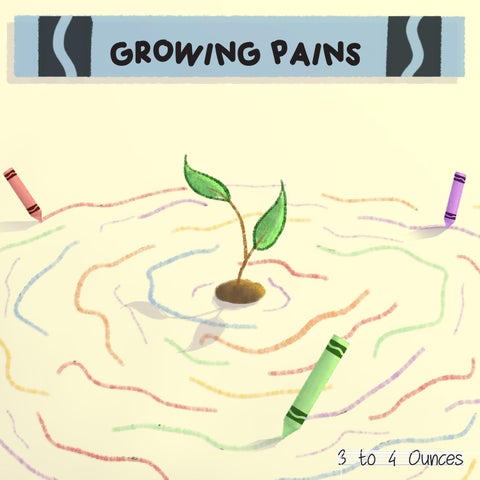
Growing Pains
“The human soul weighs three to four ounces.”
-Don Delilo, Americana
Art By Snowy Deville
THree To Four Ounces
Chief Editor: Melina Traiforos
Managing Editor: Bella Santos
Treasurer: Aderinola Adepoju
Poetry Editors: Bella Romine and Carolyn Malman
Prose Editors: Anna Gramling and Virginia Noone
Art Editor: Avery Houk
Photo Editor: Caroline Bates
Graphic Designers: Snowy Deville and Pelin Blanton
Social Media: Paulina Hernandez and Kate Keenhold
Event Director: Caroline Searcy
Table of Contents
Written Works
5.Editor’s Note*
6.How to Be a Child In Monroe*
9.Graphite Bullet Scar
10.The Pain of Growth
13.Pots and Plants
14.Leave it as it is
16.On Wishful Thinking**
17.Requiem of a Child No More
21.Restless19.SupernaturalDream
22.Shiny Black Shell
23.Goodbye Dad
28.Get Home Safe
30.Brown and White Dog
31.Exit Interview
33.Quicksand
35.Joy
37.I Know What It’s Like**
40.The Boy Who Loved The Stars
47.Let Me Love In Color
48.April 15
50.March 27, 2023**
56.Bass53.Belonging Clef DNA
57.I Try To Imagine What My Mother Dreams Of
60.(Scenes)59.Primogeniture On Jamaica Ave.**
63.On Devotion
66.Fleeting
67.Cornrows*Entanglements
69.Self-Preservation in a Sunflower
74.Growing Down
76.Twenty-Two, An Ode/To Seven and Twenty-One/A Memorial*
32.Next Steps
34.Impressionism*
39.Look Harder
49.Maria*
55.Venturing Out*
56.iv
60.Looking Back
62.FadedandForgotten*
76.Reminisce
Art
8.The Glade*
12.Picky Eater
18.Recursive Frustration
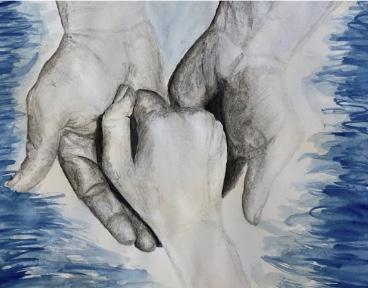
27.Held
58.Buen Camino
68.Cutting Ties
*= Editor’s Piece
**= Content Warning
Editor’’’s Letter
Melina Traiforos
Twenty-five hundred years ago, Heraclitus, a Greek philosopher Plato admired, shared this wisdom in his only known work. This year’s editorial board felt one could say a lot about those seven words and thus the theme, “Growing Pains,” was born.
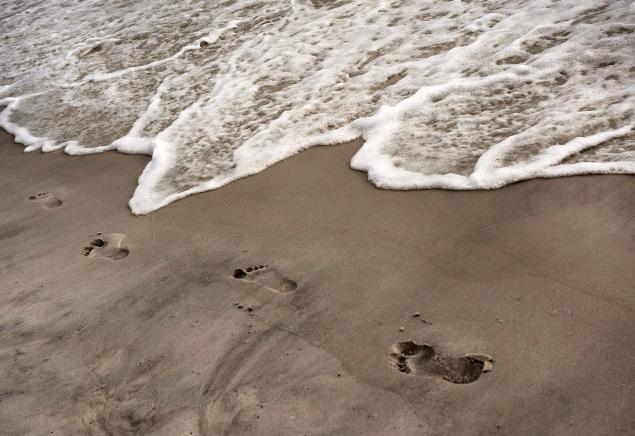
Impermanence is not a Western idea. In Buddhism, “annica” is one of three marks of existence—the human body decays and ideas appear and dissolve in one’s mind. Nothing we create will last. Everything that comes must go. Monks in Tibetan monasteries spend hours creating elaborate sand mandalas before wiping them away in a testament to the Four Noble Truths, which profess that once we accept life’s fluidity, we shed the suffering it causes.
College students are experts on the difficulties of change. My little brother, Ethan, is a rising high school senior. I remember being seventeen. One moment, you are singing in the car with your childhood friends, gleefully racing toward freedom and endless possibilities, and the next, you are crying on the drive to Winston-Salem because it’s finally hit you that your youth is gone. It sucks—there is no way to put that feeling lightly—but that loss is also the first step toward adulthood. The shy freshman who arrived at Collins Residence Hall that fall could not have imagined being responsible for Wake Forest University’s oldest student publication.
Three to Four Ounces has experienced growing pains of its own these past few years. COVID-19 hit us hard. There was no print edition from 2019 to 2021, and a three-person editorial board produced the Spring 2022 magazine (Aine, Declan, and Joshua—how did you pull that off?) Without this semester’s immensely talented 14 board members, we never would have resurrected our Instagram account, collaborated with The Afternoon Salon, or increased our total submissions by over 50 percent. As Managing Editor, I spent 6-hour afternoons in the Three to Four Ounces office during production week, deter mined to create an edition that would revive this creative outlet for future Wake Forest students. This semester, I watched Bella, the current Managing Editor, do the same. I am indebted to the 14 women who care about Three to Four Ounces as much as I do.
My sincere hope for this publication is that it continues to abide by the doctrine of annica. I am already excited to take on new challenges in improving Three to Four Ounces next year (there is talk of starting a TikTok—more information to come) and to watch it grow from a sandy squiggle to a vibrant Tibetan mandala. Yes, growth is challenging, but where would we be without it?
How to Be a Child in Monroe
Caroline Searcy
My childhood home sits at the bottom of a hill
Not the top, like you would think,
But at the end of a long driveway and to the right of a corn field
That never got developed in the five years I lived there
Full of mice and snakes and thrice my height
I was two and had never seen anything quite as big.
There were cows that lived behind our blue and brown house
Dozens of them that would mill near the grove at the end of the backyard
but I never went over to visit them because there were there
And I was there and I always thought we were just there together
Sharing the big expanse of green that was our backyard, me and the cows.
I skinned my knee catching fireflies with my brother in the jars from the cabinet when I was four
And my dad carried me, crying all the way inside
To the light from the bay window in the kitchen
Where I made cherry cobbler and put sugar in my rice krispie cereal
The drive to school never scared me
Because though we passed corn fields the whole way there,
We also passed the tomato man, who we visited each weekend
Who sold his tomatoes, nothing else, from the back of his truck
So my dad and brother could put them between bread with mayonnaise
On a saturday afternoon.

I was three and knew the smell of honeysuckle before I knew my mom’s middle name I knew what cows looked like in the pouring rain And how to set a mousetrap, cause everyone knows mice are better than snakes, And I know how to hold a blade of grass between my thumbs And blow just right to make it whistle. I know the exact corner at the bottom of the staircase with a loose floorboard. And I know that if I saw that winding driveway now to that house at the bottom of the hill I could walk down it and know every step that I took.
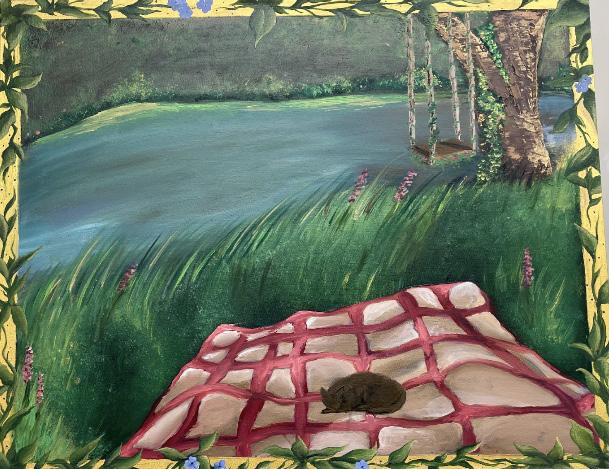

“The Glade”, Snowy Deville
Graphite Bullet Scar
Katherine Sherlock
There is still some piece of you inside me, a little stub of pencil lead worked under the skin, scabbed over and healed, out of touch and always visible. It does not hurt, not in a physical way;
Angel Amador
my body embraces you just as my arms did.
I wonder how many years it will take for that piece to break down into smaller elements.
I hope it stays with me, the mark, the scar, the time capsule, until life does away with me too.
A sharp shooting sliced up the calf, a feeling that one can imagine being their bone shattering into a million pieces like a picture frame crashing to the ground. A staggering ache in the hip, causing an unpleasant night's rest consisting of jerking around in the sheets. Knee pain that leads to think ing early onset arthritis might be the only explanation for the anguish; cross country practice becomes
Growing pains. Aggravating and nearly unbearable in the moment, yes, but what’s the outcome and result of them? I couldn’t tell you because I never really grew. Not like the people around me anyway.The significance of growing in the younger days of life seemed to be a top priority. Training bras, gel nail polish, friendship bracelets, little kid’s shoes to a big kid’s, and domination on the play
A pain I may have felt once or twice. Maybe. I stand 5 feet tall; short. I refused to consume caffeine until the later days of high school and partook in frequent yoga classes with attempts in the back of my mind to “stretch” my spine out. Who was I kidding? The growth spurt never really came and I felt as though my growth was stationary; stationary while everyone around me continued up the totem pole. The back of the pantry had a wall with all siblings and visitors’ heights. I hardly ever made it
This desire and focus on physically growing and turning into who we are today was what was displayed by the pain we felt in our legs and arms. It was a physical example of development and progression; it wasn’t until I spent a summer working at a camp in Maine, thousands of miles away from my home, that I felt my personal growing pains- an unpreparable change was the cause of this.


And then after that, walking onto the campus of Wake Forest as a freshman, the growing pains doubled. This time the source of this was departing from my childhood home and leaving behind the forever-familiar sounds of laughter and feelings of unconditional love from my family. Exiting my calculus class with the bleeding red sharpie of a C minus shining through on both sides of my exam made my knees want to buckle in misery and embarrassment. The boy who forgot that I had feelings too caused a growing pain in my heart that I soon found to be one of the more tormented types of ago-
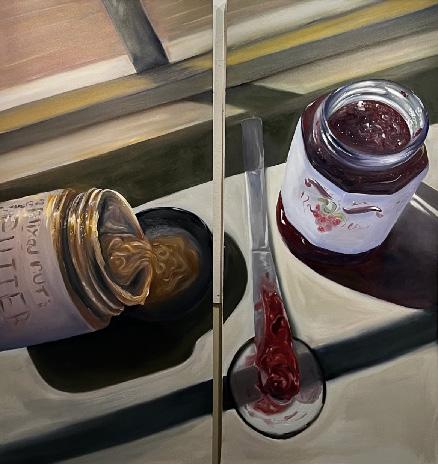
Pots and Plants
Leave It As It Is
Catie Oakley
the plants outside my window have been dead for two years i just can’t bother to pick them up and throw them out yet.
i got home today and i said hi to the dog and heated myself up leftovers from the fridge because i knew they’d be there.
i sat on the outdoor porch and watched the birds fly by and the clouds blow on towards the east. i came upstairs and entered into the time capsule that is my childhood bedroom. quilt unchanged, guitars collecting dust, letters on the wall and the fan that’s broken but still makes noise.
the history here chains me to this home. it’s like i take the exit and all of a sudden, as i’m turning up the loop im sixteen again driving my car for the first time on my way to my best friends house.
im listening to lana and my overnight bag holds not only my high school field hockey team tshirt but also amethyst for healing and peace. my mom is calling my phone because i forgot to set the alarm and also can i pick up more dog food on the way home?
life is different now. the breeze comes in and messes around everything. i’m broader now and have not only a dog but also a cat whom i love. i study what i want, and wear greek letters on my shirts instead of the pirate emblem. when i left i thought i would have changed my mind. but it looks like it never left. the briskness of the time now that causes me to slip into bed with my blanket over my head is the same briskness i felt when it was eleven pm and i was crawling into my moms bed for the third night in a row because i just. couldn’t. do it.
it’s all the same now and it’s blended in together like the soup brewing downstairs after the icy fall day we’ve had but it’s also so different. it’s the same in the way that i still go to sleep in the same bed in the same house with the same fan after all these years. but it’s different in the way that i now look in the mirror and don’t recognize who’s standing before me. she’s experienced everything and also nothing. the times that felt like a blur were just that—- indeed, a blur. what have i done? who am i? what is worth doing that i need to do but haven’t done because i’m just me? but now the coffees getting cold and i have dinner in an hour but i can’t help but think where i would be now if it wasn’t for the ending. if it wasn’t the goodbye we said but instead it was the goodbye to this life hello to the next one? the one where you’d be picking me up right now and we’d go somewhere we love to go? but alas, here i am. there you are. and we move. we move forward we move up we move out. we grow out we grow in we grow up. and there we are again.
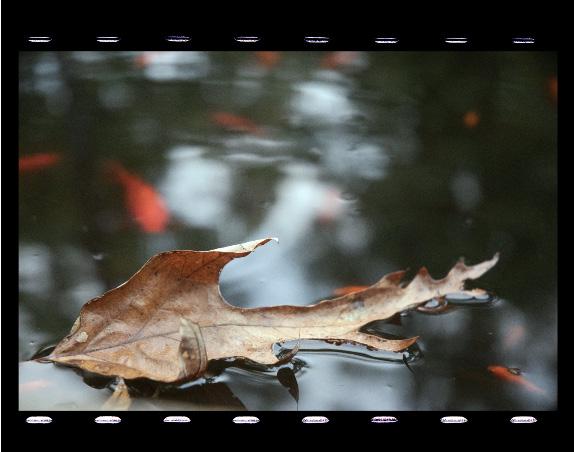
“Adrift”, Caroline Bates
and nothing bad has happened to me.
ON WHAT IF’S
Every night, in my dreams, I scream. I screamed as much as she did that night, and every night afterward. I scream for the girlhood that was robbed of her.
ON WISHFUL THINKING
I will never be whole again. A part of me died that first night he came, and I don’t think it will ever come back.
Requiem of a Child No More
Aine Pierre
Now that I’m older
I smile at the moon
And she turns her back
Because I grew up.
Now that I’m older
I flirt with the stars
And they play with my heart
Because I grew up.
Now that I’m older
I am burned by the sun
He fumes and flares at me
Because I grew up.
Now that I’m older
I’m to yell at people, not planets
But the people roar back
That I’m still a child.
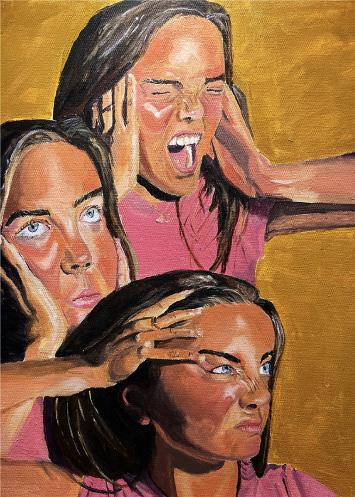
“Recursive Frustration”, Sophie Smith
Supernatural
Maryan Khanum
What do you call a ghost with flesh?
Is that just a person?
Infinite memories from infinite lifetimes all wrapped up into a clean bundle of skin and bones. Walking down the sidewalk, You focus on the conversation at hand, I focus on trying not to hit the ground.
What do you call love without a receiver?
Is that just pain?
She brought her love in baskets and tried to sell it on the side of the road but you wouldn’t stop. You walked right by her, aching bones and all, and she did not try and stop you, though she should have. Just to hurt somewhere you would see it.
What do you call discontent with sharp edges?
Is that just resentment?
They say regret is the hardest thing to live with but I’d rather it be that than this feeling. Like I’m pulling limbs just to get there though I never will. It’s your fault for letting me try over and over again. You will never give me the time of day.
What do you call a room without people in it?
Is that just a space?
The grass isn’t the same, and neither is the burning between my fingers.
Time doesn’t heal anything —- it simply just passes. How can you blame it? Wouldn’t you do the same?
What do you call a heart without a soul?
Is that just an organ?
I wonder why we feel pain in the chest. It isn’t like it’s actually there.
The color green is different now. It’s everywhere I look.
I think of it every time I walk home at night.
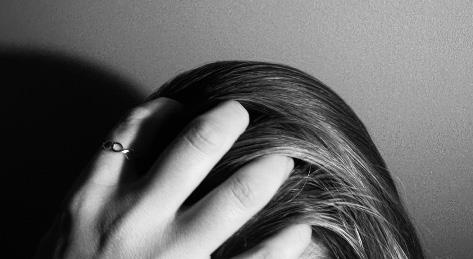
“Stress”, Sabrina Bakalis

Restless Dream Katherine Sherlock
Most nights I lie in bed wishing there was the shape of somebody lying there next to me.
I arrange the blankets in a too-soft line and tell myself that my pillow is the shoulder of someone who loves me very much.
Oh, please, I beg my heart, my ceiling, my God, Oh, please let it be enough; though I would not want it if it was real.
I only want to touch a dream and, in the haze of sleep, think that the body heat comes from someone else but me.
Shiny Black Shell
Lauren Schofield
Sunday evening
and there are beetles crawling up my back— black legs climbing up and over every notch in my spine, sneaking, stepping, shiny black legs sliding across my skin, each movement making me gag with the vileness of it.
But never mind the beetle feet, or the cars that don’t stop driving, or the smiles that seem sewn onto everyone’s faces; never mind the ends of the earth and the way it feels like they’re located in the palm of anyone’s hands but mine.
Never mind my sleepless nights and my hardheaded resolution not to take a pill to blur my dreams, never mind the boy back home, never mind the muffled laughter from the room next door, never mind the airports and the ice that’s forming behind my eyes, never mind me.
I never do mind, or maybe I just can’t stop for a moment and think about how long those beetles have been marching, and where it might be that they want to go. And so I swipe at my spine, stretching, straining, scrubbing the skin where the insects stepped, and I breathe deep, and I start again: not minding.
Goodbye Dad
Caitlyn Jeffrey
I stepped into the church, my knee-length black dress seemingly choked me. I tried to keep my head down, but each time I glanced up, I saw my dad bearing the shiny, brown oaken casket. Quivering in the second pew, I watched my Aunt Beth drop her head on her son’s shoulder, and I listened to their violent wail. My knees crashed into the prie-dieu as soft as a bed of white roses, and my arms wrapped around my sister as we both failed to let reality sink in. My eyes met my father’s as he clutched the tall church podium, and I knew he would do anything to return to simpler times when he and his brother would discuss the NY Giants and the pre-season lineup, one of the last moments they shared.
The torrential downpour hit in blinding sheets on the last night of August. I was almost done with my US History summer work when I heard my dad’s voice drop an entire octave. The house fell silent like a heavy and suffocating fog, and his footsteps reverberated across every inch of our house. I paused, looked up, and there he was, circling our living room. My mother was behind him and insisted that my sister, Christina, and I go to our bedrooms. The words “Uncle Pat,” “missing, “ “storm drain,” and “rain” echoed around our house. Confusion flooded my mind, so I picked up the one thing I knew would calm my anxiety, my guitar. I strummed the strings to the pitter-patter of the heavy raindrops closely followed by the tears that fell from my swollen eyes.
I awoke the next morning to the blazing sun shining through my windows. It was a welcome sight from the terrifying storm the prior day, and for a split second, my anxiety dissipated .month, no longer felt so special.

in his and the neighbor’s homes; an utterly selfless act. Had the government taken the warnings more seriously, and realized that global warming was real and only getting worse, I believe my Uncle Pat, a wonderful man, son, brother, father, and friend, would be alive today. Truly a horrendous tragedy that could have been avoided. I clutched my sister’s hand as we slowly made our way down the aisle behind the casket, our black mascara smudged by our endless tears. I stared out the window as we drove to the burial grounds to see the line of cars in the funeral procession, each identifiable by a bright orange flag, which was too deep to count. Nobody spoke inside of our car. Not my mother, my sister, and especially not my father, who had just given an incredibly moving eulogy at his older brother’s funeral and was about to see his casket lowered into the ground. I stepped out of the car onto the cemetery grounds, and my foot gently hit the pavement. There were cars as far back as I could see and people dressed in black for the opportunity to say their final goodbyes and I was handed a red carnation to place aside the casket. I stared at the casket, and I stared at my father, his glassy eyes filled with so much pain. Shaking, I delicately placed the vibrant red carnation next to Uncle Pat’s final resting place. I stepped back and watched my younger cousin fragilely place his fingertips on the shiny brown coffin when I heard the words “Goodbye Dad.”
“Held”, Mia Burke

Get Home Safe
Aine Pierre
It is 3 PM, and even though the rain has not let up, I have to go. There are people waiting for me. I leave the warm, fluorescent light of your kitchen — we were having lunch, the two of us — and brace myself against the storm. You place an umbrella gently, almost sadly in my hands.
You walk me to the door, and just as I turn to leave, you pull me back toward you. You hold me tight to your chest, cradling my head with your arms.
“Let me know when you’re home safe,” you say just before letting me go.
I just look at you.
“Please?” You say.
I turn to leave. I don’t mean to be brash, but I’m in such a hurry. Sometimes, I think I hurry so goodbye doesn’t have to hurt as much.
The doorknob is cold in my hands, and I shiver. The rain calls my name. It’s time to leave. And just then, from the kitchen, a noise pierces the air.
“Oh, I’m so sorry,” you begin. “You turned to leave so suddenly, I forgot to tell you I baked cookies. I know they’re your favorite. They’ll be here if you want to come back later. I know you’re in a rush.”
I turn around, and suddenly, the room seems full of sunlight. I see the purple flowers you have sitting in a vase, the photos of smiling faces hanging on the wall. Everything is still and gentle.
“Do you mind if I stay a little? I don’t want to drive in the rain.”
You exhale for the first time in minutes. “Of course, you can stay.”
A million years later, we are eating cookies in our kitchen. Our home is full of flowers and memories. It is the brightest of days outside, and the birds are singing. Your smile stops meeting your eyes, deep and gray as storm clouds. You ask me how I find the strength to keep going “I don’t.”
“But you must have had times when you’ve wanted to give up, right?”
Brown and White Dog
Katherine Sherlock
I still feel something pitiful and wanting hunch over in my chest when I see red clay. I find I am reduced to some wretched crying mongrel, dragged along to choking at the world’s heel, mourning a slower pace and a bright-warm day in an old backyard. I turn to the window and wonder; does my dog long for home the way I do?
Exit Interview
Lauren Schofield
You asked me about New York, and I felt my nose wrinkle thinking of the stench of the sewers, and the horses, and the hot dog carts, and the milky puddles that soaked through my shoes in Times Square, so I had to leave.
You asked about New York, and I thought about the way New Jersey stuck in my teeth and rotted them right down to the root, and I remember how I tore through every last medicine cabinet in all five boroughs, but there wasn’t a drop of mouthwash to be found— even that stupid bubblegum-flavored shit we’d use as kids— so now I feel my teeth crack a little bit more every time I smile.
You asked me about New York, and I asked myself about my bed: why I cried every night that it was empty, but I never bothered to put my sheets on the mattress.
You’re asking about New York, but I don’t know. I don’t know how I got there, or why I stayed, or how to be okay with the person it turned me into. I didn’t cut my hair, or rip it all out; I didn’t tear up all my clothes and burn them in the sink, but I used to be nowhere, and now I am everything, and I hated the subway, but I loved to go fast, and I was scared to be touched, but then I was.
I ask about New York too, sometimes, when the pavement smells like rain and my molars start to ache. Sometimes I get an answer, and sometimes I can’t hear it over the ringing in my ears that sounds just like the trains that hurtled toward the platform, fast enough to turn us into splatters on the concrete wall— and I got on, but that doesn’t mean I don’t want to ask anymore.
My pockets are empty on the way out— there wasn’t much I wanted to take with me. Inside of my shoes, my socks slip down on my ankles. It’s not dark yet, and my skin is smooth, and the city looks like liquid on the other side of the window.
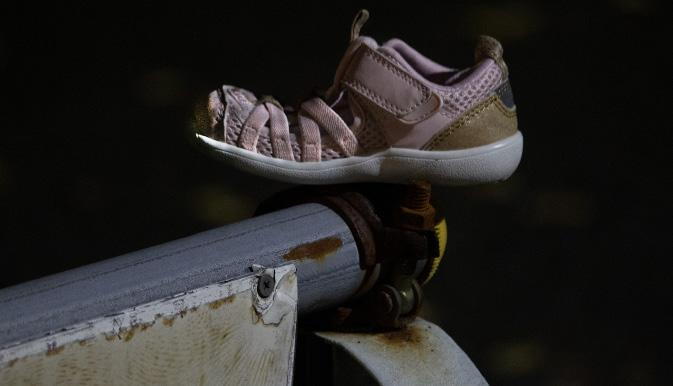
“Impressionism”, Caroline Bates
i am holding you close and you are in the shape of my sister. the steam blurring my vision as my cousin and i spend the afternoon sharing hotpots and secrets. you are the sight of my mother’s big white hat at the airport as I fall into her embrace. you are the wagging tails and the sloppy licks of every dog i’ve fallen in love with. and somehow, you are nestled in the pages of poetry and scribbles of love in my grandma’s notebook as she shares her version of you to her grandchildren. and in my darkest hours, when my eyes are overflowing with tears and regrets and self-hatred and fear and the agonizing repetition of “i’m sorry’s” bubbles out of my mouth and all i can hear are the voices of men who lies and hurt, i find you in the form of weighted warmth enveloping me, shielding me from myself. his sweet and firm whispers are somehow louder than my past, and he manages to calm me to sleep with you in my thoughts.
joy, maybe you only appear with those small white pills i swallow every morning. or only when the sun is out or when Taylor Swift releases a new album. but if it means i am closer to becoming the person i was before my girlhood was robbed of me, i will spend the rest of my short life forcing down the bitterness and chasing sunsets.
I Know What It’s Like Amarah Owens
to grieve a dream
to say, “I would never!”
And do exactly what I said “I would never.”
I know what it’s like
to fear the thread of my pillowcase
Decorated with colorful peace signs
Enmeshed with the torture of demons
Whom I had welcomed in the light
And thought they would leave me alone
Once I closed the doors at night.
I know what it’s like
to be so wounded by the past
Unable to regurgitate the perpetrator’s name
Without a lump in my throat when asked
As if that name-wrapped-flesh didn’t
Enter into the taste palate of my breath
By my permission when asked.
I know what it’s like
Then be handed one from the heavens that was not my own.
Only to hear, “But it is, beloved! Yes, even still! Has it not always been?”
I know what it’s like
to carry a stone
Polished and plump and Heavy.
Thumbed forcibly between my rib cage
Deposited where blood, life, was meant to Flow.
But I also know What it’s like
To let my yes be yes and my no be no.
To search my heart and be silent. Still, reverent thoughts nestled safely in my pillow’s plush.
Reclined in shamelessly abundant Peace Come dusk.
To exercise the power of life in the tongue
No longer seared with the tang of bitter death.
Nor deceived by its duplicitous aroma Plagued by toxins indigestible, but To overcome By the blood of Love’s death Loving not my life unto its own.
To joyfully embrace the predestined plan And walk faithfully in its path. Emancipated from the oppression Of a glamorously touted nightmare.
To undergo excision of mislaid stone. Each wedge of anatomical protection shattered yet masterfully enclosed. Encompassing a gift, a heart Healed and harbored and capable Of response.
So, I know what it’s like
To know what it’s like Because He knew, God Omniscient, all along That one day I would forever know What life, true life, in Him Is like.
“LookHarder”,
Sabrina Bakais
The Boy Who Loved the Stars
Aine Pierre
Once upon a time, there was a boy who could fashion anything out of words.
As a young child, he made the world his own, delighting in the gifts the universe had created. In the daytime, he played with the Sun, who was his best friend. Under his friend’s light, the most wonderful things sprung to life – animals of all different shapes, and plants of all different colors. In a book with a soft, yellow cover, he recorded all of the wonderful things he had seen in the world, and every time he wrote, a bed of flowers would spring from his pen.
Most of all, though, he loved the stars. Looking at his window every night, he would gaze at the millions of shimmering lights above his head, and his soul would burst inside of him. Those twinkling lights were his true and constant companions, and so, he resolved to name, know, and love every star in the sky.
And so, for years of nights, he would find a new star and use the books he had found to see if it already had a name. If not, he would give the star a name that was precious to him and which he hoped would be precious to it. Then, he would write one thing about that star that he adored — how it twinkled every so often, how it reminded him of a juicy orange, or sometimes, just how it lit up a darker corner of the sky. He began with the North Star, whose name he already knew, and wrote that he loved that it helped so many people find their way — himself included. All of these names and odes, he etched into a book with a soft, blue cover. As he wrote, night after night, he wove a blanket, a patchwork quilt with billions of stitches. It made him feel warm, and it made him feel safe. It was the only thing that made him feel that way, for he had never known another’s touch, and he had never once been loved.
Instantly, he regretted it. Instantly. He didn’t mean to, he almost said. But he did. His punishment, decided by a council he had scarcely heard of, was swift. His pen was taken from him, and he was locked away, in a place where he could never see the sun, the moon, or the stars again. In his concrete cage, he would murmur under his breath. He would fashion thousands of poisons and put little drops of them on his tongue. He would contemplate swallowing them, but he could never bring himself to do it. Instead, he would spit the poisons down at the ground. It
One time, his poisons leaked into the groundwater, and he was discovered. His jailers put him in a smaller cage, deep beneath the Earth, naked and alone. Only when enough time had passed and no one remembered why that man – who was once a boy – was kept down there, was he allowed
Returned to his not-quite home, he would search for comfort, which is to say he searched for friends. He found them in the lights, and they became his truest and most constant companions. Sometimes, when he stared at them closely, they would make the illusion of shadow puppets appear on the wall – here, a cat, there, a deer, there, a child – even more company for his lonesome heart. But best of all, the lights never flickered – in all of his time behind bars, the power had not gone out once – and they never wavered. They would not abandon him. Yes, the lights made up the walls in which he was confined, and lights like them had taken his precious stars from him, but he could not bring himself to be resentful. To him, consistency made many
So it shook him to his core when, one night, the power went out. It was so sudden -- the hum of the electricity did not even gasp for its last breath before tapering out. The man fell to his knees in grief. He had, once again, lost the only thing he had left, his only comforts. Anger raced to boil in his heart, but he could not even muster the heat of rage. Instead, he closed his eyes and dreamt – of his weapons, of his readers, of the girl with the severed heart, and lastly, of the stars

Waking in the darkness, he could see nothing. His constant companions were still hidden from
And so, by the dying moonlight, he tried to write them a flower. The thorns came easily, for they were nothing but a rose’s weapon, and after some time, he had fashioned a stem, too, for it was nothing but armor. For all his efforts, though, he could not write petals, the most delicate and most beautiful part. Defeated, he hid his writings and half-heartedly pretended to murmur as the guards began to make their morning rounds.
Days passed, and the man – who was once a boy – refused his paper, ashamed. His thoughts pointed imaginary knives at his soul so that it would cease its quivering, but it only shook with deeper fright. He cursed his cruelty, and eventually, cursed that he could do nothing but make flimsy armor, since he could not withdraw the blades. To write beauty into existence was challenge enough; to write ugliness out of existence – especially out of himself – seemed a task too impossible to even attempt.
That night, the power went out again, and this time, he stayed awake, hoping against hope that his love would visit. Eventually, he turned his face to the wall, so that their coming would be a surprise and that their absence would – in theory – disappoint less. All the while, his soul quaked in his armor, afraid, and his brain, unpitying, sent more and more knives. Again, he dozed off, and again, he dreamed, but all he could dream about was them.
Once more, a tap on his shoulder woke him, and once more, he felt the visitor’s warm touch on his cheek. His heart, still torn in half, bounded in his chest. With no need for introductions, the two spoke at a fevered pace for hours, knowing they had precious little time until morning came.
The boy – who was once a man, and who before that was a boy, and who before that was a man, and who before that was a boy – asked question after question. He wrote the answers down in his mind, and then, when they had disappeared again – this time, though, with a promise to return –in the margins of his sheets.
It went on like this for months. Every few days, the power would go out, and the visitor, his love, would come. Eventually, they brought him a journal, so he would not have to write on scraps. He learned everything there was to know about them: that they adored pink, that they, too, let rage consume them once, and that more than anything, they wanted to be loved. He told them that he had not loved anything in a very long time, but that he promised to do his best. They smiled and kissed him, and they told him they would wait for him. He made them beautiful things – he learned that necklaces were not too far from a garotte wire, and that if you made a shield small enough, it could be a ring — but still, he could not make a flower.
One night, his love told him their most precious secret. The lights knew, but not another living soul. They asked, with a serious tone, if they could trust him. He said they could, and for once, he believed himself.
His visitor — his love — told him that once, they had been hunted by a group of terrible demons. When the demons had cornered them, and their breath was hot and putrid against their neck, they uttered a silent prayer. Suddenly, they were a bird, with brilliant blue wings, and they flew away. Eventually, they learned to transform into a cat, then a deer, then a child. He asked if they would show him, and at once, what he once thought were shadow puppets came to life. He cried in relief: He had also loved them before he met them.
He wrote as fast as he could, of all the creatures his love had been, and memory flooded his singed veins. Suddenly, he remembered the Sun and all of the wonderful things he had once torn apart. First rabbits, then elk, then the grass under his feet, and the little house with the red roof where he first learned to love the stars. All of them appeared in the concrete cell, surrounding the two lovers with beauty and life. Somehow, nothing seemed cramped.
And finally, the man — who was once a boy, and before that a man, and before that a boy, and so on — remembered one warm, summer afternoon, when the wind was calm and the air full of perfume. It was the day when he ran outside and never stopped running until his feet ached and his lungs cried for air. He had run to a clearing, and at the center of that clearing was one thing.

Let Me Love In Color
Taylor Nisbet
I loved in black and white
And sometimes sepia

Slanting, curving
Parallel? For a moment. Not touching
Afraid of never
And forever
Carving careful cross-sections of a stillborn
When I was small, my mother caught me playing wedding, marrying two of my barbies. When I came home from school the next day, I had a ken doll. Having only one Ken and several Barbies, Ken was the husband of all of them. Much
Intertwining with hers only if I close my one good eye
When I was just as little, my neighbors across the street were two women. I told their daughter that she must have a father. That’s how it works.
White and black pixels
Forming into some semblance
Of a person who fancied herself in love
Until
You pulled me into a third dimension
Painted over old sepia photographs
Hugged me both-armed and all-consuming.
Radio static drones over sermons
When did I fall?
Maybe it was the first time I saw her bite into
Watched juice drip from her fingers
I blamed the dry fractures in my spine
Carved with the fragments of a mirror
But light grows from my glass-faceted fingertips
I want to love you in every facet of the universe Dreams colliding in every supernova or subtle shift of the stars
Golden, molten
Cooling into a silver epilogue and a pinky promise. Darling, I love you volume-up I love you in every color.
April i5
Lauren Schofield
I’ve been making a list of all the days that have been mine: all the ones that smelled like citrus and the ones that burned right through my palms, the itchy memories that won’t be scrubbed from my skull, the swollen dreams that pulse behind my eyes, dog-eared books with cracked spines, hand-painted porcelain and handwritten postscripts, tattooed initials on weather-worn skin— there are so many places that have been my home.
It’s so pretty to think that there are so many days that don’t mean anything to me yet, so many words I haven’t read, so many hands I haven’t held, so many races I’ve yet to win, and so many more to just finish— there are a million snowstorms that I haven’t seen roll across the sky, and here I am, alive, alive with legs that can run and hair on my head and music that plays just for me to dance to.
There’s dirt under my fingernails and life thrumming in my veins and my knees are scraped and my arms are full and the days will come and they will go, and there’s a chance that some might stick, but I get to stay.

“Maria”, Virginia Noone
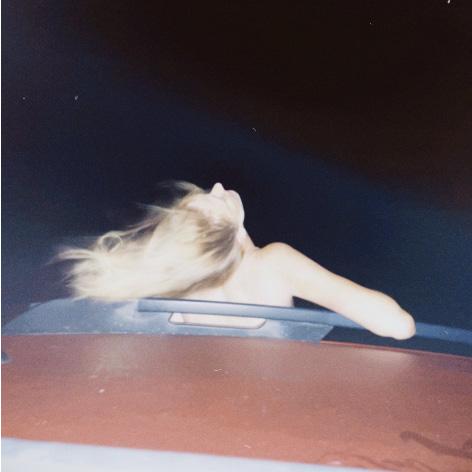

March 27, 2023
Taylor Nisbet
little birds, scarlet angels you burn crimson, and we remember a flicker of turning leaves then, bare branches
You six, why do you sleep during school hours? It’s 10:13am on a Monday.
We used to play hide and go seek. We will close the blinds, tape up sheets of printer paper to the glass on the classroom door. Can I get a couple strong boys to help me move this desk in front of the door? Just like we’ve practiced. Perfect. Now, let’s all sit over here in this corner. Quiet, now. Rest your eyes if you need.
I was six years old when I first practiced. I read a picture book, straining my eyes in the dark.
Then, we learned tag was better than hide and go seek. They got too good at seeking, at finding the 20 children in the corner. Statistics show we are less likely to get “out” if we run, instead of hide. (The statisticians didn’t run any trials. They didn’t have to.)
I never practiced playing tag. Everyone assumes you know how to run.
You six, you got tagged.
Wake up, please wake up, or you’ll miss school.
When I was nine years old, I was learning multiplication, and the loudest sounds I had ever heard were on the Fourth of July. When I was nine years old, I decided I would be a writer when I grew up.
When you are nine, you learn what evil looks like. You learn what bullets feel like. Evelyn, Hallie, William, what did you want to be, before somebody decided you would never grow up?
Cynthia, Katherine, Mike, in your early sixties, you learned the same.
Died of natural causes in your old age, surrounded by family and friends was stolen from you. For you, friends, yes. Natural causes, no.
It took ten minutes for officers to arrive. The police are good at tag, too.
The tagger didn’t wake up.
Neither did Evelyn, Hallie, William, Cynthia, Katherine, or Mike.
I woke up to a phone call.
“We are waiting to pick up your sisters. The school is still in lockdown.”
“Have you heard from them?”
“No,
not yet. I think they’re okay.”
I sat on my dorm room floor in the dark for an hour. I think I cried. I don’t remember.
Thank you, God, that this was two miles away. Thank you that it was not Reagan or Evan. It would have broken me.
Then, I’m sorry I’m so selfish.
I am awake now. I’m sorry it took a two-mile proximity to wake me up.
And you –
Are you still asleep?
there are valentines bears in the park white roses and two-dimensional faces twisted in a smile pretending feathers beats metal remember? rock, paper, scissors shoot
Belonging Sidney White
My back aches from the odd angle I have been forced to stand. I still remember watching my sweat fall from my face onto the cracking earth below me. There had not been so much as a drop of rain for what seemed like months. As I reached forward to tug on the next stem, fearful still of the small grass-green garden snake, despite the ease with which my grandma and her shovel slew it. The heat of the July sun showed no mercy, even to me. I noticed a wolf spider skittering across the dirt and into the cover of another cluster of leaves. Planting my dust-caked tennis shoes, I leaned back to pry out the three pota toes that grew just under the surface. The mound of dry soil began to give way and I proudly held my harvest. Upon looking up, I found that in the time it had taken me to successfully free my first bunch, my sister had nearly quadrupled my harvest. So I continued, putting all my weight into pulling these small, dust-covered, starchy vegetables up from their barren and drought-ridden rows.
Surrounded by the acres of pine trees that fed the local lumber industry which kept small town Louisiana running, we maintained the small field that kept our family in possession of a
burning the garbage was cheaper than hauling it to the nearby dump, likely placed there due to the reluctance of those in wealthier areas to deal with its pervasive odor.
My sister and I spent hours out in the nearby forests, imagining lurking enemies that required the careful construction of stick and leaf fortresses—using rusty old pans to make mud pies and cutting trails through the brush..
My childhood was centered around the time I spent outdoors, embracing the solitude of small-town life. My immersion into this way of life occurredevery summer. I would return to school with a reinforced country accent, bruises of unknown origin, and calloused feet. I felt a deep-seated connection to the life I led on that chunk of land, surrounded by miles of pines. However, this sense of belonging was broken as I began to ventureout from the confines of my family’s property.
Traveling into town created a sense of alienation that I found ironic compared to how I felt in the woods and the fields. A nauseating side effect of small-town life is the ease with which you can pinpoint an outsider. I always assumed that the strange stares I received when attending community events or simply shopping in the only store for miles were because they could sense the softness of the city in me. I reasoned that it must simply be because I was a new face, maybethey noticed I would not speak with their same thick accent. It took many years not only to realize but also to accept that my alienation was not a result of any small action of mine that they considered taboo. It also was not some sense of haughtiness they mistakenly felt I exuded, but rather what they saw. I was brown, black, whatever you want to call it. I’m sure their descriptors for myself were much harsher. A black girl, no matter how many of those potatoes she pulled from the same dry earth in which they grew their vegetables could never belong within their community.
When I was much younger, it was easy to embellish the true nature of that small town. I could overlook the disdain in their stares. I never noticed the dilapidated wood that constructed their crumbling downtown. For a town that small and isolated, growth was a struggle. Their children often moved away, and the few that escaped to college were likely never to return. The rest stayed, likely to maintain the timber industry their community relied on so heavily. I never paid much mind to the cyclical nature of life there, nor how it seemed to suck away at the vitality of its victims.
However, all this is not to say that small town life was without its charms. The sense of community, although admittedly riddled with gossip, was strong. Those who stayed had a senseof pride that I have found lacking in the outside world. The ability to belong in such a community, even in an environment that had been structured against me, was something I craved. They welcomed each other and celebrated over their long-awaited family gatherings and their delicious, grease-covered, fried foods. The abundance of joy that was exchanged between the townsfolk was in stark contradiction to the hostility with which they glanced in my direction, a stranger, despite her familial ties to their community. I still find myself wondering where the line is drawn. At what point do they get to decide thattheir desire for sameness negates my blood ties as part of their community? I had always felt we were born of the same dry earth, but I grew to understand that appearance would always outweigh our shared heritage.

The all-consuming desire to belong nags at nearly everyone, or maybe I just want that to be the case to forcibly create a sense of fellowship for myself amongst others. I have wasted years attempting to wedge myself into the mold they demanded, contorting myself to their silent regulations created the same sense of unease that I had felt while harvesting my measly potatoes. However, this time it came without the satisfaction of successfully freeing their hardened hearts from the harsh nature of their small-town life. Growing older has failed to make this reality any easier to face, nor have I become any more likely to give up trying, but now my eyes have been opened to see the futility of it all. Ideally, this pain willfade, and to some extent it has. While I am no longer shocked by prejudice, nevertheless the knowledge that I have to harden my heart in order to survive in this world will always tear at my heart. I know that no matter how calloused my hands become, that same little girl who, for the life of her couldn’t understand what she had done so wrong, will always be with me.
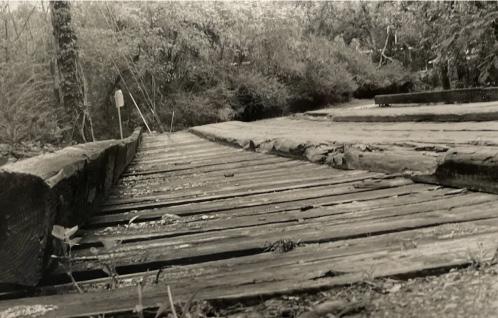
Bass Clef DNA Taylor Nisbet
I wish my DNA was shaped like a treble clef. my heart plays Rachmaninov without looking but my fingers type words and words and they belong in a prying article and not set to Clair de Lune.
I wish my blood belonged to her whose heart fit perfectly in the spaces between piano keys. I think towards the end, her entire body would have fit in those spaces, too, and sometimes I think I fit, but the keys stick when I stuff my mind there beside her in the darker shades of black and white.
if my DNA was shaped like a treble clef, my blood would run lavender with the unshed tears of children I’d never bear and I’d be letting music students pretend they were grandchildren. instead, my DNA is shaped like smears of red lipstick and gray-streaked orange and always the wrong words
“iv”, Sabrina Bakais
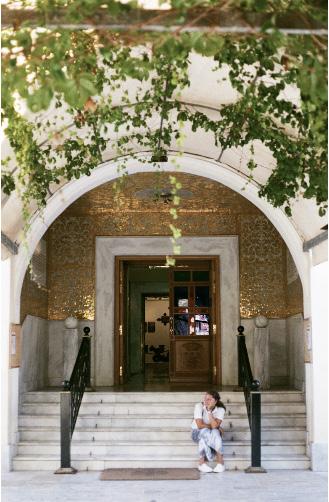
I Try To Imagine What My Mother Dreams Of
Christina Tran
My mother says that I remember too much and I hold on to too many things inside me, but where am I supposed to put it? You got it from your mother, as she did from her mother, and so, naturally, I got it from my mother. This kind of weight does not travel up, it only travels down. And down it trickles to us, growing and growing. But my daughter will not get it from her mother. I refuse to let that happen. This will end with me.
And I rage that she demanded love and compassion from me after I got used to living without it. But I left. Not completely though, she gets the occasional texts and the postcards. I care about her enough to think of sending her one, but not enough to go back.
I try to imagine what my mother dreams off. Whether she regretted the choices she made. In her dreams, would I exist? Would I finally be worthy of her love? I hope that in at least one universe, she gets the chance to have the perfect family. A husband who would raise the mountains
I wonder if in another life, another universe, in any reality, my mother passed down to her children the gifts of love instead of its burdens. And when my mother asks for more patience from me More than what she deserves, I grieve in rage. I grieve for the younger version of her that was never allowed to feel. I grieve for the inner child that never was.
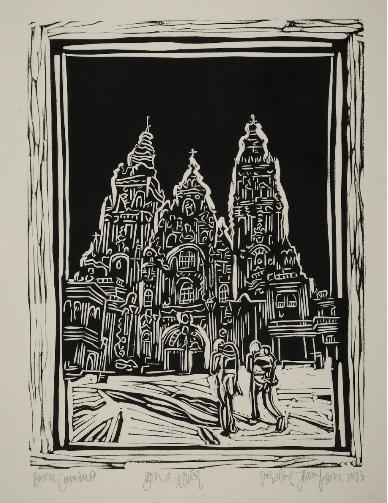
“Buen Camino”, Caroline Thompson

the bottle stands proudly as gentle curves (and someone else’s past) beg another sip in golden script, promising to sate the appetite from what could have been.
(scenes) on Jamaica Ave.
Alex Silverio
deep in the heart of the jungle back in the back of the Q114 far away from the grasp of candy-flavored vapes and glossy, glass-laden ivory towers in LIC.
eyes open and see the different shades and textures of island-time, flat-wound bass-string crowns: a cacophony of languages and cultures that led to this perfect mess as we wake and side-eye out the window onto a smear of grays and blacks that kill the greens and browns and old golds that have replaced your home.
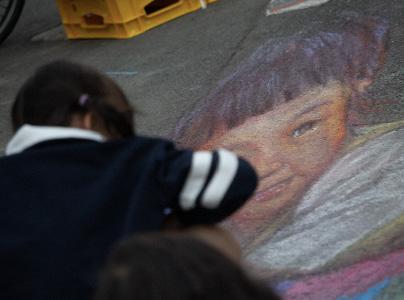
“Looking Back”, Angel Amador

that rough-hewn, rat-pack crack of concrete reclaims you and draws you back to the past you can only hope to postpone as you sit on the right wheel-well and relive the past out the window: i. what should have served as a surefire way out stood locked behind metal detectors, alarms, and high-school nurseries— both for the kids and their kids,
“you ain’t never seen a pregnant girl before?” says the 16-year-old, whose eyes dart around piss-stained yellow halls, terrified on the way to her 4th period class with a brave face and no help.
new york’s finest serve proudly manning scanners, securing the gates. remnants of what once was the city’s worst high school.
now, they merely fuel the fire for great expectations: america’s next sacrifice, rikers next tenants destined for an up north trip— you turn around and head for greener pastures. ii. the bus passes the park, but your mind walks
and sought to become the ornament back towards the train, hand-in-hand with a stranger. a friend of mine grows her very own christmas trees. tall, dark, perfect evergreens that reach toward the sky and out the gutter in a perfect cone—save the one gnarled branch protruding from the trunk completely bare.
she always was obsessed with december.
“the best thing about the dark is the christmas lights: the sunrise in my sunset exposed at night.”
she loved those lights more than life itself and sought to become the ornament that would finally cover
a jab step right, a quick crossover left, a missed dribble and a fatal hesitation—
the shot rings out across jamaica and bounces off the rim, through apartment windows, and between car door screens and barely drops in.
he lays on the ground and clutches his stomach but there’s blood all in his sick and there’s a heavy rain blowing in.
“FadedandForgotten”, Caroline Bates
On Devotion
Chase Clark
Can we discuss fluorescent lighting first? Have you ever noticed how different it looks depending on your specific environment? In elementary school, our rectangular lights were permanently installed into the ceiling. They hummed an old hum, one only heard in an underfunded public school, but it was consistent, and there is much safety in consistency. Each day, those lights would greet us in the morning, having tenacity like the hands of a clock. They never gave up on us, those lights, nor would the persistent hum coming from them. I can recall moments when my classmates and I would lie down on our classroom center rug, allowing the tox ic fluorescence to dry our skin like raisins. Our eccentric teacher would join us, throwing in a few comments about the irritation the hum added to her already stressful life.
Those days, laying on that filthy elementary school floor, reminded me of the hot summers spent at my grandmother’s home in Virginia. She and I would sit out in her gravel driveway, legs crossed, as ladies do. We would also gossip, as ladies also do, about the latest sagas of her small town where everyone seemed to know everything about everyone else but themselves. Those stories of love, loss, and scandal were reminiscent of the soap operas we would spend our rainy days absorbing. Though the sun above shined on us incessantly, its per sistence didn’t bother us any. I like to believe that we appreciated the sun’s consistency. Between the ever-changing gossip and our ever-changing lives, the consistency brought us comfort. The light of the sun and the past lights of my classroom are in stark contrast to the lighting flickering above me now.
The lights around me now do not feel like love. They hum an old hum, one only heard in an underfunded hospital. They are independent and weak, shining light only when they are able. On and off to a rhythm no one cares enough to understand in a moment like this. Each moment, the lightsgreet us with a surprising jolt of light. One that requires you to look up in annoyance and share an understanding glance with your neighbor, which I do. I look over at the woman across the hall from me as she waits and smiles before she returns her face to her phone. I look over at the woman across the hall from me as she waits and smiles before she returns her face to her phone. I look back up, taking a moment to acknowledge the light above me, and realize there is a row of them. With nothing better to do, and an inexplicable guilt in my heart, I decided to count
and observe each canister that lined the hallway. Five unpredictable lights turned to fifteen as I stared down a seemingly never-ending hallway. I believe the architect intended to evoke a sense of heaven, but truthfully, how effective could that be in a space like this? Eventually, amid my observations, my grandmother caught my eye, and her disposition required my attention. She sat, legs crossed as ladies do, and looked straight ahead.
The inconsistency of light did not bother her much, but you could tell that something did. I looked at her eyes, and for a moment I believe they looked at mine, though I know this is untrue. Sometimes, I believe the woman in front of me is the same woman who sat on her gravel driveway with me a few years ago. The names of various patients get called, and they go into their observation room, all the while my grandmother’s eyes remain consistent on whatever is straight ahead. I believe, in these moments, she is trying her best to make me believe she knows where she is, or even, who she is, so as to not bother me. We have been here before, and these are things you learn from loving someone with fleeting memories. The doctor calls her name and for a moment, her eyes stay frozen awaiting an answer from herself. I tap her, and she looks at me, and then to the doctor, and begins walking back to her appointment. I stay put.
Back to the lighting, as I said, those lights were not crafted with love. Those were doused with guilt-inducing ideas that only hospital fluorescent lights could elicit. As I sat down for the first time in a while, and, undistracted by the dealings of the outside world, I was able to think for a moment. It was then that the guilt manifested in my mind.
As the lights buzzed on the ceiling above me, the moments of my youth came to the forefro nt of my mind. She and I used to spend summers together trading temporality. She found much joy in teaching me how to be a lady, in the same way that she showed my mother. We would try on dresses, do our hair, do housework, and engage with the latest episodes of learn soap operas. She was always a traditionalist at heart. We would dance, oh man, we would dance for hours to the songs that brought her joy. I would introduce her to my technology, whatever gadgets my parents permitted, and would show her how to remain young. I have always been a preservationist at heart.
At some point, I got older, and life became something I could not escape with a quick visit to grandma’s house. I got grown, with boyfriends and girl drama, and thought I knew all there was to be a lady. There were many times I was wrong, and still, she picked me up and told me that it was a part of life. She showed me grace, and I continued to grow away. Now, she is still my grandma, but I can acknowledge the ways she is not. She doesn’t cook much anymore, she does not wear many dresses, she forgets most chores halfway through and she does not find much enjoyment in the latest soaps.
She is fading, and she knows it, and I do too. In this process, I figured keeping busy would be a healthier alternative to watching her pass away slowly. It was for a time, the gratification of work became insatiable. It became my routine. It became my devotion.
Can we go back to the lights? I think I like that better. There have been plenty of nights characterized by blue fluorescence. Nights spent with a computer’s artificial glow replacing my dorm room’s lighting. Ones distinguished by approaching deadlines and lengthy “to-do” lists full of projects I created for myself. With each act of checking something off my list, there was a necessity to dream up something new, with a limited deadline to complement the urgency of work as I had come to understand it. Each morning I was awakened to the sound of buzzing, far different from the sound the lights above me are currently making.. Each notification was a signal of productivity, of implicitly, of worth. Five buzzes turned to fifteen as I momentarily let my eyes drift back asleep, to which I would quickly be alerted by the sixteenth alarm. I floated through each event of the day, praying for sleep, but understanding the reality of the matter. I was growing up, and this is what grown-ups do. I often found myself sinking in troubled waters. I found much thrill in that. The proximity to drowning was always a consistent high. My therapist said my attachment to working was unhealthy, but what is health to an addict? My mother always told me nothing in life is free, and unfortunately, devotion always comes at a cost that seems much higher than the reward. That is the thrill of getting older, deciding what will get your attention today.
I am under the lights, and perhaps I prefer paying attention to them because it distracts from how vulnerable her doctors’ appointments make me feel. The inconsistency of the lights bothers me be cause I know that I am inconsistent in her life, for my health. It is no secret that she will leave soon, and how best do I spend my time? Moments like these, under a fluorescent spotlight of my own make me wonder. I wonder, what is devotion by an extreme extension of love, and how, on Earth, do I spend my time?
Fleeting Entanglements
Sofia Trujillo
i think we are all just flakes of snow, f a l l i n g. you and i fell collided in the air our properties entangled as we floated down. but then we touched the cold, lifeless ground a battlefield, a grave, of other snowflakes who curiously danced together— that’s when we dissolved. but maybe when the time is right, we can evaporate and freeze once more, our spikes and ridges may meet again, or even simply cross the same sky, as we collide with others, even just a chance to say goodbye. but what if melting meant starting anew?

Cornrows Aderniola
Adepoju
I stopped getting cornrows in the third grade.
“Why not?” my mother asked when I firmly pleaded with her not to set a hair appointment, “Your face shines so beautifully with cornrows.” Yet a mother’s words were just that: it was their duty to say you look pretty, dote on you, and give you kisses. It was kids, your own classmates, that always spoke their
“I don’t like it anymore,” I said. I chose to say those few words instead of the truth. Of course, I couldn’t tell her that my classmates said that it’s weird that they can see my scalp so clearly. I didn’t want to say that they had asked me why the ends of the braids were so stiff. Nor could I mention that they said it I started using relaxers quickly after. These boxes were colorful and vibrant with the playful lettering of “Just for Me Texture Softener,” promising to “loosen curls” with a little black girl with pin-straight hair plastered front and center. I believed this box would be my savior. I could already see myself joining in with the “hair salon” games on the playground, and I could almost feel how my ponytail would swing behind me as it did for my white classmates. Yet, to my dismay, my hair looked nothing like the smiling girls on the box. No matter how often I begged my mother to apply another box’s worth of product, praying that this time I would receive my desired results, my hair would stay curly—just thinner.
Thus, I kept my hair in long box braids because it was the hairstyle my white classmates liked the most, and I chose never to leave my natural hair out. I would carry my braids for many months until I knew that my next hair appointment was right around the corner, choosing to take out my old braids the night before I wrapped my identity in those box braids throughout middle and high school, feeling bare and ugly without them. I couldn’t even imagine walking into school without the familiarity of those braids. She shielded me like no other. I sacrificed the health of my hair to feel secure.
It’s been a decade since I first rejected cornrows. Yet, now I welcome the styles that I was first embarrassed by. I now carry locs, and I love them more each day. I’ve sealed away the years of tears, yearning to have the hair of my white counterparts, and I’ve corked the envy thrown at those little black girls on the boxes. Or, dare I say, loc’d it.
Some of my identity still remains in my hair—but not in the way it did before. I used to wrap my identity in her so tightly that it smothered the life out of me. Yet now, she lies wildly on my shoulders, allowing me to finally breathe on my own. She’s now a part of me, and I’m no longer a part of her. My hair is my hair, and I love that.
Besides, snakes on my head sounds pretty badass.
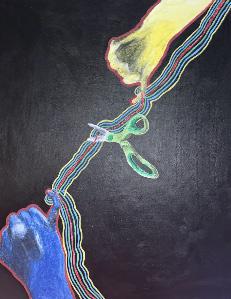
“Cutting Ties”
Self-Preservation in a Sunflower
Bella Santos
On Earth Day in first grade, my class decided to plant a garden. We were developing our “green thumbs” and decided to use a backyard of produce to reverse climate change. When we arrived at class, our teacher, the affectionate Mrs.Reed, sat ready with a giant plastic tub full of seed packets and told us we could each choose a crop to plant. Upon my turn to choose, I proudly shook my head, declaring that I did not need the complimentary seeds provided by my teacher.
“I came prepared,” I spoke arrogantly as I reached into the back pocket of my knee-length jean shorts (perfect for gardening) and pulled out a pack of David’s sunflower seeds. I had retrieved them from the glove compartment of my Mom’s car, for I knew they were her favorite snack on road trips. From what I knew, sunflowers were the tallest flowers of all and, therefore, most likely to save the world. My teacher smiled at me, proud of the pride blossoming inside me, yet wise enough to know that David’s sunflower seeds would not provide me the harvest I envisioned.
She sighed and walked towards me, ‘While I appreciate your enthusiasm, unfortunately, those seeds are just for eating.” My stomach dropped; one of the things I liked least in the world was being incorrect, yet luckily, one of the things I appreciated most was an opportunity to learn something new. Mrs.Reed handed me a stiff paper parcel she had pulled from the bin; the cover read, “Sunflower, Mammoth,” and displayed a picture of bright yellow petals. I knew immediately that these were sunflower seeds made for planting.
“David’s sunflower seeds are roasted, so they’re stripped of important nutrients that they need to grow; these, however, will grow tall and strong, and that way, you can save those,” she gestured at the package in my hand, “for an afternoon snack. Gardening can make you pretty hungry.”
Eagerly, I ripped the bag out of her hand and stuffed it in my back pocket, protecting it from my seven-year-old classmates, who I feared could only be jealous. Aptly, I lined up at the door, single file, anxiously anticipating my sprint to our class’s gardening plot. The night before, I stayed up late diligently decorating my own plant markers to dig into the soil and denote my territory with zeal. I had lied to my
mother and told her that creating our own markers was a homework assignment I had forgotten to complete, but truly, it was an idea I had devised entirely on my own. I knew that if a first-grade girl was going to change the world, she had to do it with style and independence. As I waited for Mrs.Reed to open the classroom door and send us flying towards the outside, I could feel the bundle of popsicle sticks resting in my pocket, weighing me down like butterflies.
My elementary gardening endeavors were never not competitive. After I had dug my sticks into the ground and marked my territory, I waited impatiently for Mrs.Reed to pass out our shovels, the miniature gardening tools we would use to become amateur horticulturists. When she finally pressed the delicate spade into my tiny palm, I noticed that my shovel was flat and rectangular while the girl standing next to me held a sharp, rounded blade perfect for excavating the soil. I begged her to trade with me (I even offered her my David’s sunflower seeds) and was immensely surprised when she required hardly any persuasion.
My passion for sunflowers was indebted to their size and grandeur. As a young girl, I found it easiest to cling to the measurable facets of life; with height and strength, I was certain came power and potential. Staring at my plant markers, each one decorated with its own personified sun-shaped caricature, the presence, and steadiness of a second set of eyes validated my proactivity. Mrs.Reed smiled down at my work, proud of how I had artfully associated sunflowers with sunlight.
“You know the miraculous thing about sunflowers?” she asked me. Swiftly, I shook my head no, anticipating the information she had to share. At seven, I knew sunflowers were miraculous because, like all children, I could sense a miracle with just my eyes, yet Mrs.Reed, like all adults, could decipher miracles with her mind, and I was eager to see her thoughts at work.
“No matter what and no matter where, every sunflower on this green earth grows east in the direction of the sun. Unlike our own, the face of a sunflower always stares directly into the sun’s powerful rays and follows them as the star moves across the sky.” I looked at her with awe, clinging to the knowledge generated by her lips.
“The growth of a sunflower can never be manipulated,” she spok sparkle appeared in her eye, with magic so strong it trickled down her face.
“Sunflowers always know where they’re headed.”
Her words crept toward me like fire, poisoning me with passion and lighting me from the inside out. As I crouched down into the dirt, I felt the sun beaming on the back of my neck, alerting me that I was contributing something great to the world. With love and perfection, I dug my holes into the earth before individually dropping each mammoth sunflower seed- a word I knew only from Ice Age. After covering them back up, I patted the ground earnestly, saying goodbye to my precious black and white shells. Sunflowers had the prettiest seeds, I was sure, and I had all the confidence that they would swiftly blossom into the strongest saplings and the most poised vegetation. As I looked at my plant markersmsticking out of the dirt, they dwindled in comparison to the imaginary sunflowers I had devised in my mind. The world saw all of my best parts on that Earth Day: my cunningness, my persuasion, and my confidence that only a child could ever possess. With water and sunlight on my side, I was certain my flowers would bloom; I never considered a plant could go against its nature and do anything aside from grow and stand tall. I never realized the weight of the tiny seeds nestled into my hand, the capsules of opportunity I had so eagerly let go of.
Earth Day looked a lot different as I got older. There were no more classroom gardens or assemblies teaching us how to recycle. Even the flowers moved on, finding a new identity in Valentine’s Day, a symbol of love rather than natural wonderment—something much more unattainable. Mrs.Reed’s message, however, stuck with me, its potency growing stronger with each passing year. I continued chasing sunflowers everywhere I went. The day I got my driver’s license I drove past a field of them on the highway, the compass on the dashboard of my new car proving that, yes, they do still grow eastwards. As adolescence came closer, miracles appeared fewer and further between. I longed for the unambiguous and pronounced direction of a sunflower. I scoffed at the ideas of fate or destiny. I lost friends and experienced heartbreak, struggling to move onwards while the idea of a greater purpose loomed over my head. I attended three different high schools in a nine-month period. My family moved from an East Coast beach town to Minnesota in the middle of January. I could never find any sunflowers there.
The older I got, sometimes it seemed the more dependent I became. The world was a scarier place at seventeen than it was at seven, and friendly faces weren’t only hard to find but sometimes hard to even look for. My stamina for joy suffered as my obsession with identity increased, and putting myself out into the world became a dreadfully daunting task. Mrs.Reed explained that the growth of a sunflower could never be manipulated; however, my growth felt stunted, exploited, and constantly subject to the harshness of others. It’s a scary thing to see more of yourself in a memory than you can in a mirror. My new body was marketed to me as a vessel for ingenuity and innovation, yet instead, it was a prison, keeping the soul of a little girl trapped inside.
In my senior year of high school, we took a field trip to a local art museum. Distant from my elementary school endeavors, field trips such as this one lacked structure, motivated by the concept of senioritis, and an attempt to teach us any remaining knowledge before sending us out into the world. When we arrived at the museum, we were given full freedom to wander and explore; however, as a seventeen-year-old girl paralyzed by indecision and inadequacy, I knew freedom was a dangerous thing. With careful precision to not choose any specific galleries, for choice can always lead to disappointment, I found myself winding through a Vincent van Gogh copycat exhibit, where nearby grade school students had replicated the artist’s famous works. In the center of the room, the work of a seven-year-old girl was displayed. In crayon, she had recreated van Gogh’s painting Sunflowers, depicting a dozen Crayola stems condensed into a tiny yellow vase. For what felt like an eternity, I stood entranced by the image. I had never seen sunflowers in a vase before, and it infuriated me to see them lifeless and without purpose. What was a sunflower if not bound to the earth and its continuous orbit of the sun? For ten years, I had brought myself up like I first did to my sunflowers in first grade, trying to recreate in myself the same drive to stay true to my goals and direction. The confidence I possessed in childhood was shattered as even my perception of a young girl’s messy crayon strokes felt anxious and aimless. As my eyes filled with tears, I realized that perhaps the sparkle in Mrs.Reed’s eye all those years ago was not a sparkle after all.
“Sunflowers are my favorite,” a voice croaked from behind me, and I turned to see an elderly woman hunched against a beautiful wooden cane.
I opened my mouth, preparing to respond, but she continued. “Not only are they beautiful, but they know exactly when and when not to grow.”
“Not to grow?” I asked, unsure of what she could mean.
“Why yes. In the summer, they grow east toward the sun; however, when autumn rolls around, the sunflowers begin preparing for their harvest, and their seeds become too heavy for them to keep moving. They have to stop growing, or else they will fall over and die before they can be collected. In the darker periods of their life, their needs change. Sunflowers are my favorite because they have to know when to stop focusing on moving and instead focus on standing tall.”
In that moment, I realized that what had felt like a loss of personhood and direction was perhaps a virtue of stability and a necessary period of stillness.
As I looked into the young girl’s drawing, I saw how keenly she had outlined each individual seed within the face of each sunflower. The seeds I had pressed into the earth at seven years old embodied the ambitions and goals burrowed deep inside of me. My stability was a condition of my self-preservation. With each year I aged, my goals grew heavier and more important, and as change induced darkness, it forced me to hold fast and stand tall, nurturing the characteristics that had defined me as a young girl. In such a tumultuous time, I needed to embrace the inertia of my adolescence, recognizing that my harvest would one day come.
Growing Down
Breanna Laws
While others grow up, I get to watch myself grow down
While others mark new achievements, I know in my heart
That I reached my pinnacle long ago:
...In every testing room
...At every school awards ceremony
...In the praises of adults around me
“You’re so mature for your age”
“You’re reading at a college level”
“You are so talented”
A mini adult
Destined to die a child. I watch as the flame Of my so-called potential Begins to flicker — Before extinguishing entirely I listen as their praises Turn into disappointment
“You are so sensitive”
“...a mini adult”
“Why are you so childish?”
You can only ignore the knocking so long. You can only be who they want you to be Until your body and mind give up. You can only grow up If it fits the narrative they placed on you. While others grow up,
“You’ve changed”
twenty-two, an ode / to seven and twenty-one / a memorial
the path is unmarked but the crunch of the leaves a familiar hymnal walk through the graveyard skeletons of my childhood palimpsest of past walk as my new skin extends greeting to aged air welcome me back home creek runs the same as when i was winters younger unlike the year past when my bones brittle and wavering aimless steps turned young doe away
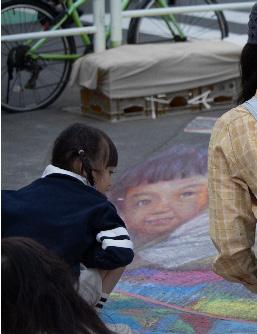
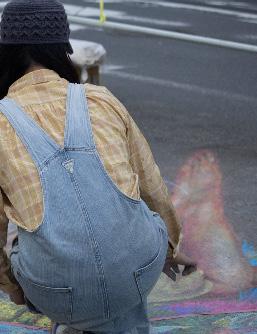
“Reminisce”, Angel Amador