3D Scenes: Full Environments and Detailed
Bedroom Models
Creating complete spaces requires more than individual assets. Architects and interior designers need comprehensive environments that show how every element works together. Full 3D scenes and bedroom models serve this purpose by providing ready-to-use spaces that demonstrate layout, lighting, and material relationships in realistic settings.
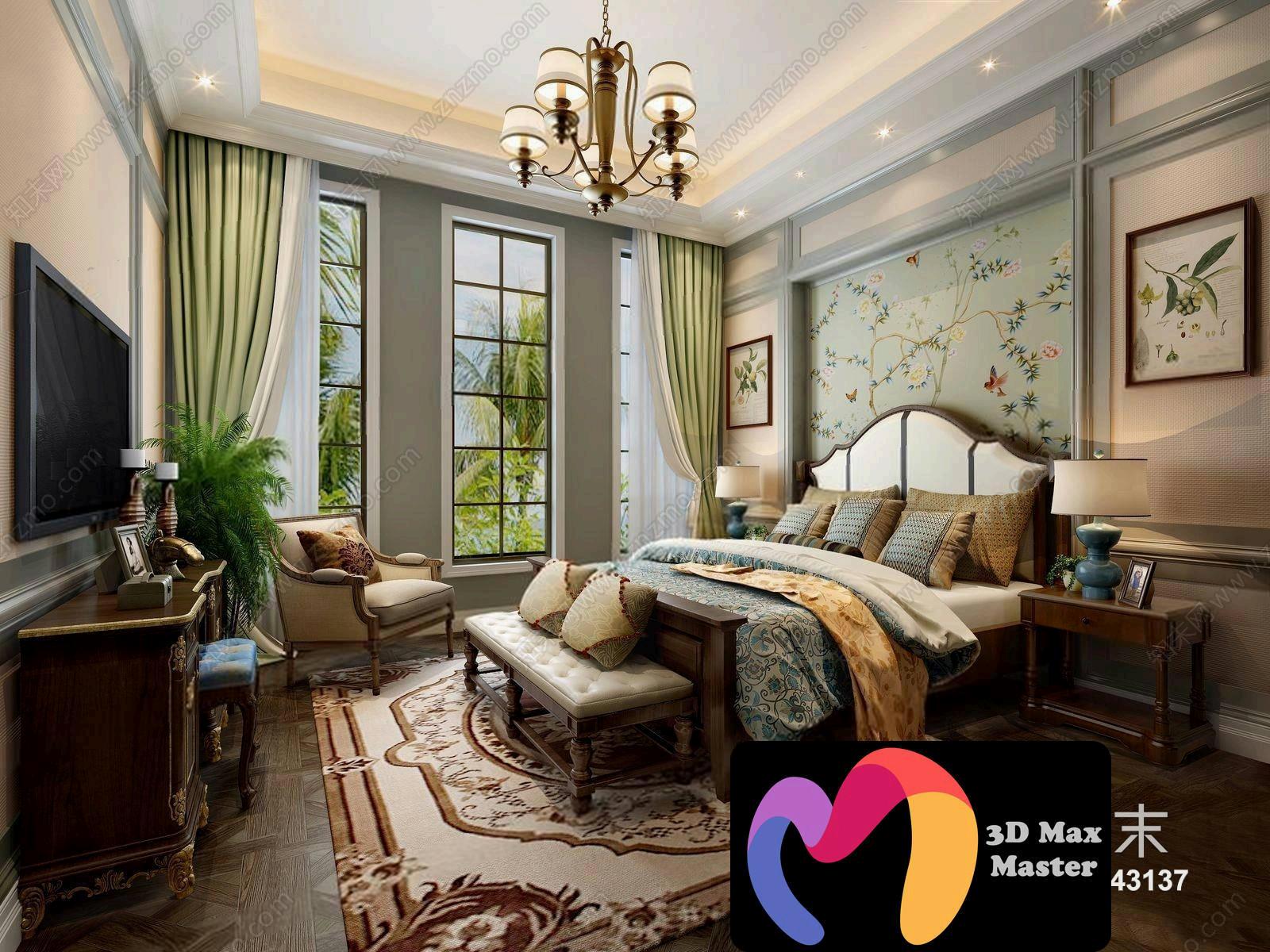
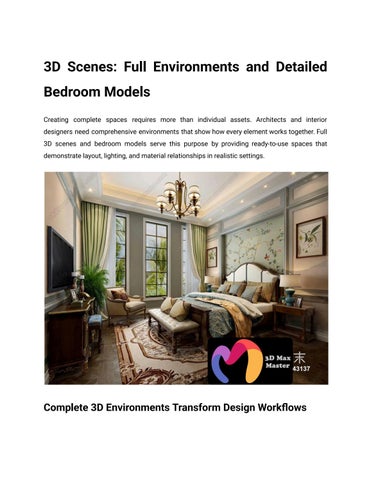
Full environment scenes save hours of assembly work. Instead of placing furniture piece by piece, designers can start with a complete space that already features proper scale relationships and lighting setups. These 3D Scenes Models of 3DMAXTER include everything from wall textures to decorative elements, giving you a foundation to build upon or modify for client presentations.
Professional scenes come with materials already applied and render settings configured. This means you can generate client previews within minutes rather than spending days on setup. The lighting in these scenes reflects real-world conditions morning sunlight through windows, evening ambient glow, or artificial light distribution. Each element positions itself to create believable spaces that clients can immediately understand.
Working with complete environments also helps you spot design issues early When furniture, lighting, and architectural elements exist together in a scene, you can evaluate traffic flow, visual balance, and spatial proportions more accurately than working with isolated models This reduces revision cycles and strengthens your design decisions
Bedroom Models Demonstrate Intimate Space Design
Bedrooms require special attention to scale, comfort, and functionality. Detailed bedroom models show how bed dimensions relate to nightstand heights, how closet door clearances affect furniture placement, and how lighting creates different moods throughout the space. Free Bedroom 3D Models 3DMAXTER provides these specifications already worked out, letting you focus on customization rather than basic spatial planning.
Quality bedroom scenes typically range from 150 to 400 square feet (14 to 37 square meters), covering standard room sizes from compact urban apartments to spacious master suites. Models include essential elements: bed frames with proper mattress thickness, storage solutions at realistic depths (typically 24 inches or 61 centimeters for wardrobes), and circulation space that meets building code requirements of 36 inches (91 centimeters) for primary pathways.
These scenes also demonstrate material combinations that work in real projects. You can see how wood grain direction affects visual weight, how textile patterns interact with wall
treatments, and how reflective surfaces behave under different lighting conditions. This practical knowledge accelerates your material selection process and reduces client uncertainty about finish choices.
Technical Standards That Matter in Scene Construction
Professional 3D scenes maintain consistent units and scale accuracy All objects measure correctly in both imperial and metric systems a 60-inch (152-centimeter) bed frame remains exactly that size when imported into your project This precision prevents the common problem of furniture appearing too large or too small in rendered views
Polygon counts affect both file size and render performance Well-optimized bedroom scenes balance detail with efficiency, typically using higher polygon counts for foreground objects and simplified geometry for background elements Bed frames might contain 50,000 to 100,000 polygons to show carved details, while distant wall art uses 500 to 2,000 polygons
Material libraries within scenes should include diffuse maps, bump maps, and reflection parameters already configured. This saves you from hunting through texture folders or adjusting shader networks. When a scene includes a wooden floor, the wood grain, surface roughness, and light reflection properties come preset to realistic values.
Adapting Scenes for Client-Specific Projects
Pre-built scenes work best as starting points rather than final deliverables You can swap furniture pieces while maintaining the overall spatial composition, adjust color schemes to match client preferences, or modify lighting to show different times of day This flexibility means one bedroom scene can generate dozens of variations for different projects
Layer organization in quality scenes separates movable furniture from fixed architecture This structure lets you quickly test different bed positions, try alternative storage configurations, or remove specific elements without disrupting the entire model Clean file hierarchy also makes collaboration easier when multiple team members work on the same project
The ability to render from multiple camera angles adds value to scene investment. A well-constructed bedroom model supports eye-level views that show spatial relationships, elevated views that demonstrate layout efficiency, and detail shots that highlight material quality. These varied perspectives give clients complete understanding of your design intent without requiring multiple scene setups.
Complete 3D environments and bedroom models provide the foundation for faster, more accurate design work. They demonstrate spatial relationships, material interactions, and lighting effects in ways that individual models cannot achieve alone. For professionals who need to produce client presentations quickly while maintaining quality standards, these comprehensive scenes become indispensable tools in the visualization workflow.