















Who else is looking forward to vacation this summer?

Who else is looking forward to vacation this summer?
Happy summer, everyone! I hope the first half of 2026 has been good for you! The BBA has been busy — we’ve been working on renewing your memberships and welcoming new members and have enjoyed a calendar full of special events, informative CLE programs, and fun networking and social opportunities, so I hope you’ve bee able to take advantage of all the BBA has to offer. We also have a full schedule planned for the second half of 2026, so please keep reading.
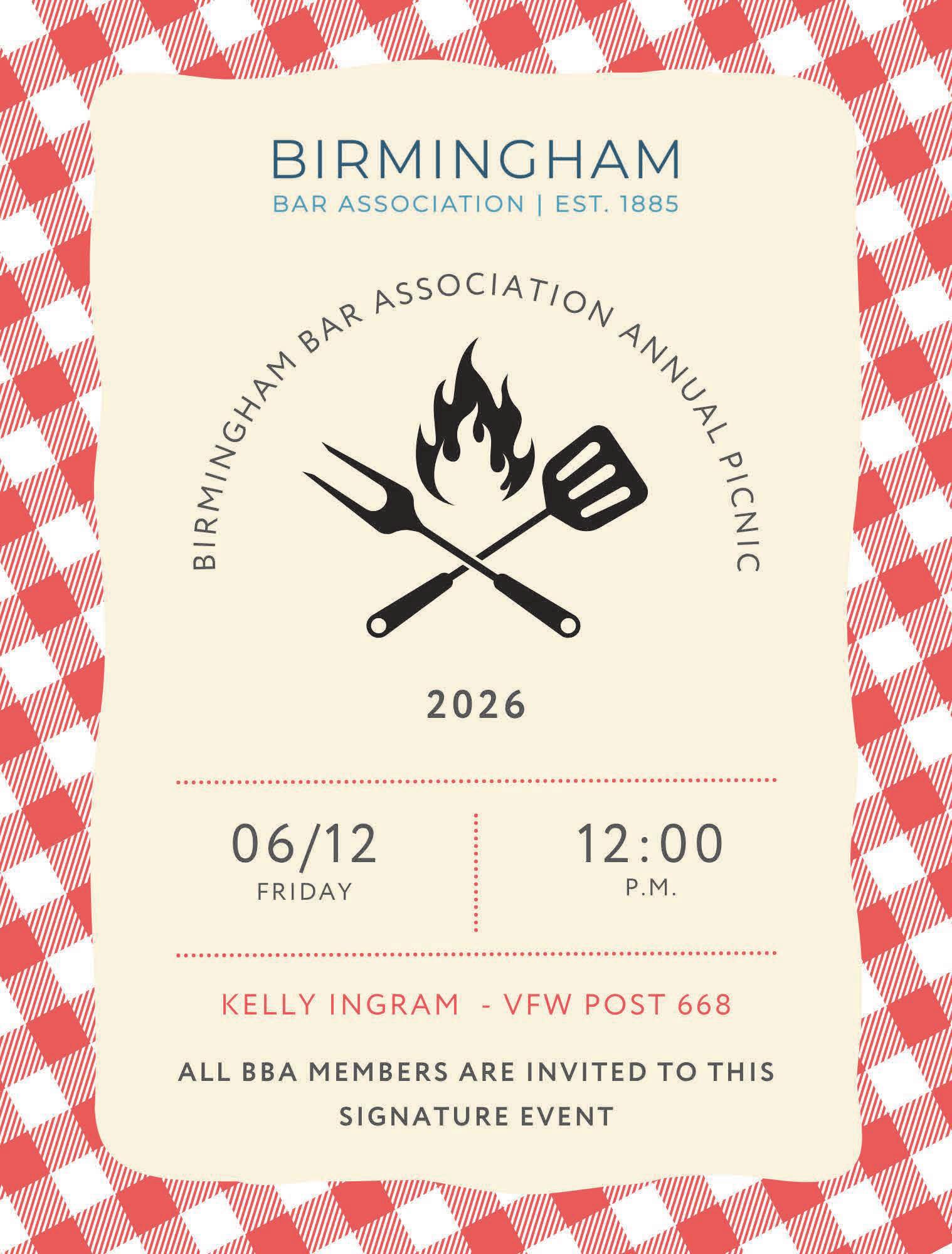
First, a reminder: the BBA’s annual Picnic is scheduled for Friday, June 12 at the Kelly Ingram VFW so mark your calendars!
The BBA and its Sections and Committees will be bringing you some exceptional, new CLE programs, and we’ll be hosting more networking and social events for our members throughout the remainder of 2026.
Please be sure to check the BBA’s online calendar often for updates at www.birminghambar.org/?pg=events.
In this issue of the Bulletin:
› See what your fellow BBA members have been doing during the first half of 2026.
› Check out featured articles from the BBA’s Probate Section, Workers’ Compensation Section, and Young Lawyers Section.
› Read updates from several of the BBA’s Committees, including:
› Birmingham Connection Committee
› CLE Committee
› Nominating Committee
› Scholarship Committee
› See what the Birmingham Bar Foundation, Legal Aid Society, and Volunteer Lawyers Birmingham have happening.
› Find out what your fellow Bar members and their firms and organizations are doing in the “Attorneys in the News” section.
Have a great summer, and I hope to see you soon!
Jim H. Wilson
Executive Director
President Rebecca Beers
President-Elect Leslie Rubio
Secretary-Treasurer Virginia Miller
Immediate Past President Robert E. “Bob” Battle
Executive Director Jim H. Wilson
EXECUTIVE COMMITTEE
Stanley E. Blackmon
Jennifer Tombrello Cohn
Darius Crayton
Ben Goldman
Sidney Jackson
Katie M. Kimbrell
Julie E. McMakin
Denzel Okinedo
Brandy Robertson
Laura S. Winston
Jon Lewis, A.D.R. Section
Wes Bulgarella, Bankruptcy/Commercial Law Section
Griff Waters, Business Law Section
Michelle Spiker, Criminal Justice Section
Adam Plant, Federal Practice Section
Thad Davis, Probate Section
Pooja Chawla, Solo/Small Firm Section
Hannah Stokes, Women Lawyers Section
Kris Burbank, Workers’ Compensation Section
Robby Anderson, Young Lawyers Section
Ashley Peinhardt, ASB Commissioner
Clinton Richardson, Magic City Bar Association
BIRMINGHAM BAR ASSOCIATION
2001 Park Place N., Ste 430 Birmingham, AL 35203
205-251-8006
birminghambar.org jwilson@birminghambar.org
PUBLISHED BY STARNES MEDIA
For information about this publication and/or advertising rates, email Dan Starnes at dan@starnesmedia.com or call 205-313-1780.
Starnes Media produces six monthly newspapers in the Birmingham metro area: 280 Living, Cahaba Sun (Trussville), Homewood Star, Hoover Sun, Vestavia Voice and Village Living (Mountain Brook). Starnes Media also produces other magazines and business marketing materials. Starnes Media. All rights reserved. Reproduction or use of editorial or graphic content without prior permission is prohibited.
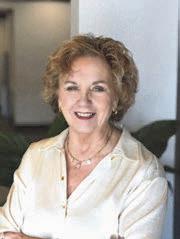






WHEW! I hope you all have had as much fun and have learned as much as I have at Birmingham Bar events in the first several months of 2026. Your BBA leadership and staff are working hard to put together meaningful and engaging programming, useful and informative CLEs, and fun social outings for all of our members, and I hope to see you and your colleagues at these events as we move forward into 2026.
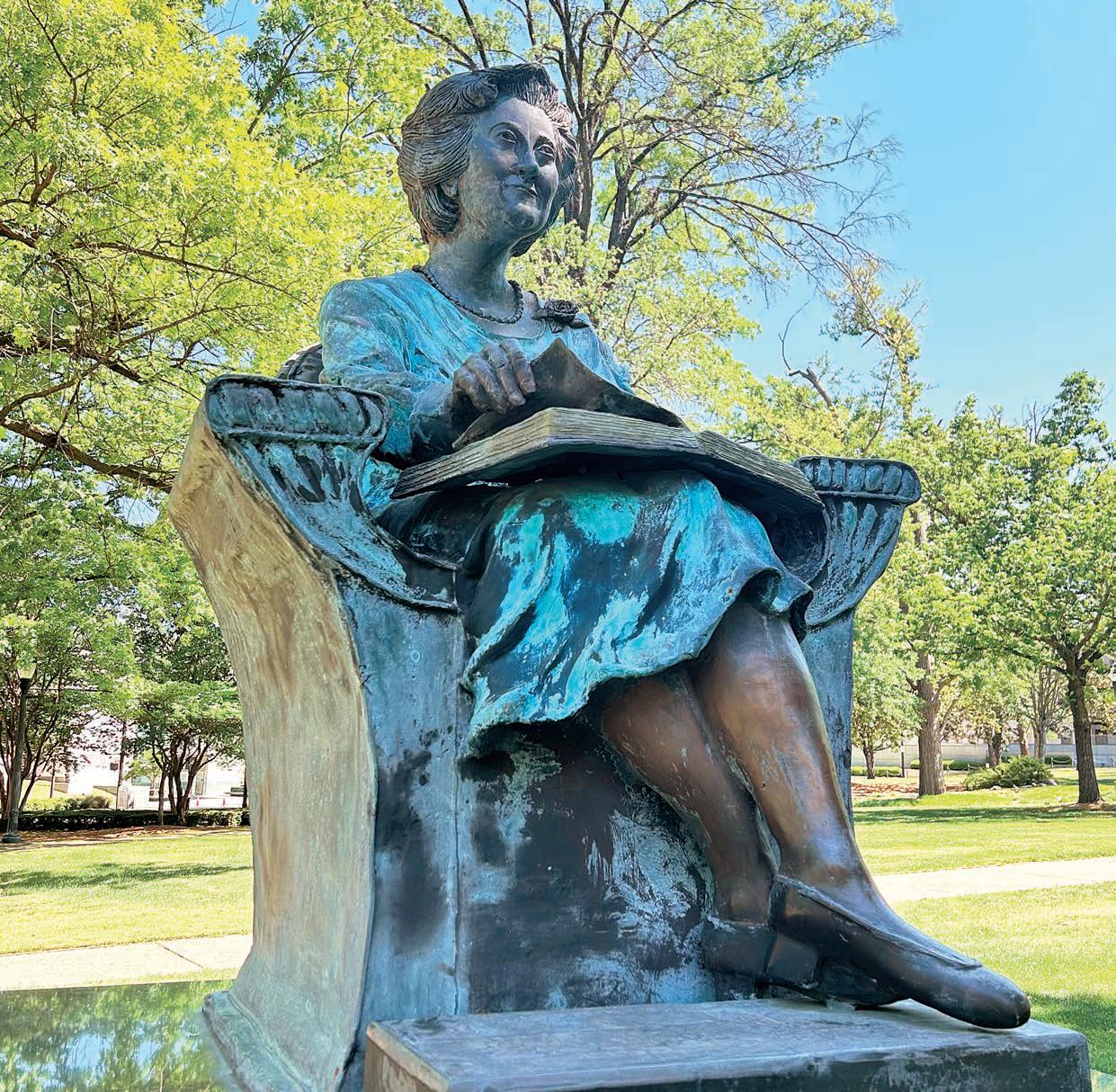
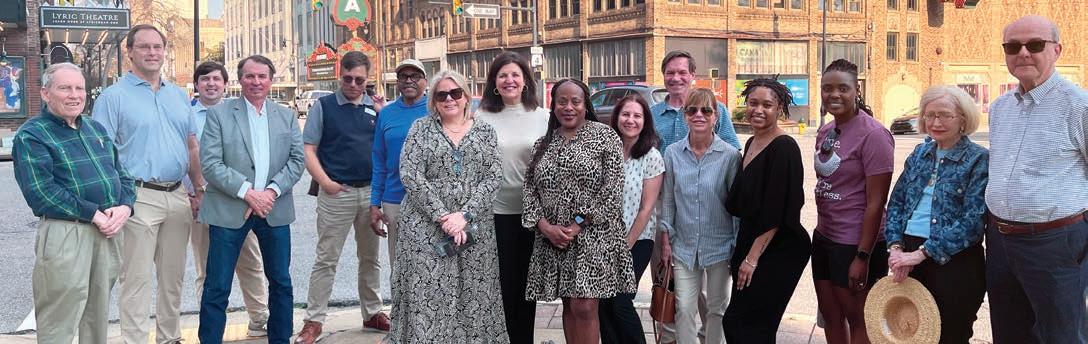
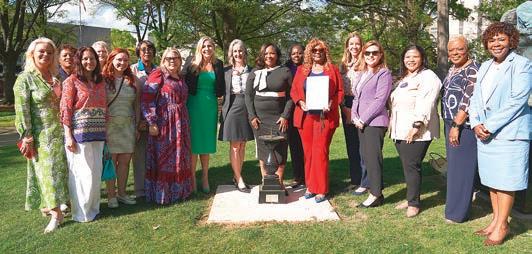
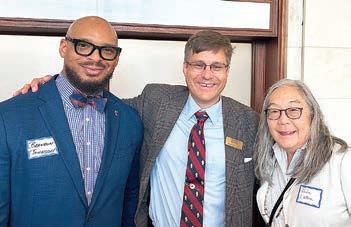
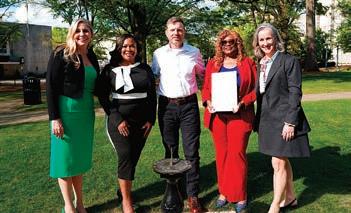
In the first quarter, we hit the ground running by getting committees organized and engaged and beginning to implement programming in keeping with my theme of Birmingham Lawyers: We Lead, We Serve, We Inspire, and that work definitely continued through the second quarter. After an inclement weather day at the end of Black History Month in February, we had a fantastic program on March 5 organized by our Birmingham Connection Committee (led by Leanna Pittard, Joi Travis, Judge Kandice Pickett, and Judge Chuck Price) in which BBA members participated in a walking tour of the historic Civil Rights and Black Business District in downtown Birmingham, concluding with a happy hour with live jazz music at the historic Carver Theatre. And, on March 31, we closed out Women’s History Month with the Women Lawyers Section’s dedication of its gift of a sundial, which was placed in Linn Park next to the statue of “Miss Nina” Miglionico, followed by our first installment of the Birmingham Connection Committee’s “Taste of the City” series at La Fête, a woman-owned and much-lauded restaurant on Morris Avenue. Special thanks to our WLS leadership (Judge Brendette Brown Green, Judge Tanita Cain, Keren McElvy, and Sylvion Moss, among others), Birmingham City Councilor Dr. Darrell O’Quinn, and Birmingham Connection Committee leadership Joi Travis and Judge Price for making this event happen.
In April, we started the month off with our first program in our “History of Birmingham Lawyers” series — an absolutely outstanding (if I do say so myself!) program that the BBA co-sponsored with the Magic City
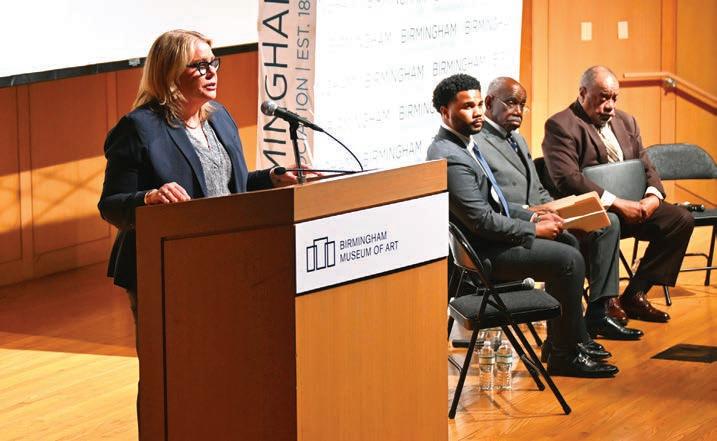
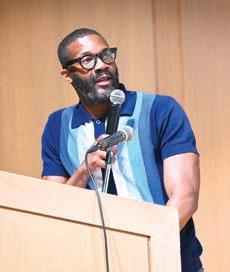
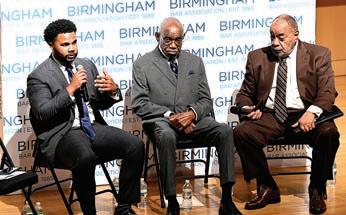
Bar Association: “History of Birmingham Lawyers: Birmingham Lawyers in the Civil Rights Movement.” Birmingham lawyers, the public, and the local news showed up to hear from our esteemed slate of panelists: Judge U.W. Clemon, Judge Houston Brown, Fmr. U.S. Rep. Ben Erdreich, BCRI Historian Barry McNealy, Sam Rumore, and Maury Shevin. Mayor Randall Woodfin even dropped in to emphasize the importance of sharing the history and stories of our legal community’s impact on the Civil Rights Movement, in Birmingham and beyond. Big thanks to our moderators Jordan Cade (MCBA Treasurer) and Judge Bob Vance for facilitating our panels. We also followed this event with another “Taste of the City” social at Continental Drift, a Black-owned, James Beard Foundation-recognized bar in Southside. If you weren’t able to join us for this special program, be on the lookout for a video recording accessible via the BBA website.
Also in April, our BBA Young Lawyers Section partnered with the Alabama State Bar Young Lawyers Section to offer a “New Lawyer Bootcamp” with five (5) hours of free CLE for our newest lawyers, followed by a social hour, and hosted a Master’s Social. Our Business Law Section and In-House/
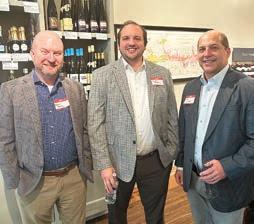
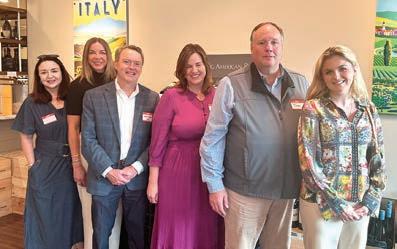
Corporate Committee also hosted a Wine Tasting Social at Finch Fine Wines. On April 22, our Future Leaders Forum Committee (led by Ken Boyles, Judge Javan Crayton, and Carmen Weite) hosted an FLF Alumni Social at Bygones, bringing our FLF graduates together and working to identify new Future Leaders to apply for the 2026 class.
Finally, we closed out April with an event focusing on service to our bar and to our community. On April 28, we hosted a Judicial Candidates Forum and reception for the only contested judicial primary in Jefferson County — the race for District Court Place 7. Special thanks to Balch & Bingham for hosting and to retired Judges Jim Hughey and Carole Smitherman for serving as moderators for this BBA event. BBA members who were unable to attend the Forum in person were given the opportunity to review a recording of the event and candidate-provided information about the candidates. The BBA then facilitated a Bar Poll on candidate qualifications for the race, which was published to the greater Jefferson County community.
In May, the BBA hosted a private event for BBA members and their guests on May 12, providing hors d’oeuvres and drinks as well as guided access to the Birmingham
Museum of Art’s “Monet to Matisse: French Moderns 1850–1950” exhibition. This was a fun and exciting social event for Birmingham Bar members to socialize and learn alongside fellow members and guests.
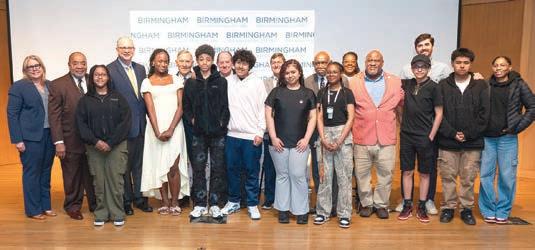
The focus of May, however, was definitely all aspects of our Law Day programming. On May 1, the BBA again partnered with the Magic City Bar Association and implemented our first-ever Lawyers in the
Classroom program with Birmingham City Schools. Through this program, BBA and MCBA members who are Birmingham City Schools alumni went back to their alma maters and met with high school students to talk about their paths from growing up in those same neighborhoods and walking those same halls to becoming lawyers, and about their careers and other opportunities to work in the legal field. Thank you to the leadership of the Birmingham City Schools
for making this exciting partnership happen, and to MCBA leadership (especially Clinton Richardson and Chris Burrell) for helping us staff each of these schools with alumni! For BBA members who are not BCS grads, we also offered other volunteer opportunities to work with students in the Birmingham City Schools.
CONTINUED ON PAGE 10
Shahin Aslani
Robert Austin*
William Bearden*
Madison Brantley*
Ryan Brewer
Taylor Brown*
Riley Browne*
Samuel Callahan*
Arrie Clanton
Darius Dunklin*
Aretha Ergus-Rogers
Katy Givens*
Marcus Goode
Tyler Gray*
Mary Grill*
Erika Grooms
Allison Guilbert*
Brock Holt*
Kerah Hyatt
Frankie Jefferson
Deven Jenkins*
William Johnson*
Heather Jones*
Zachary Jones
Faith King*
Aaliyah Lacy
Nancy Lopez-Smith
Tanisha Mason*
Donna McBrayer*
Sarah McClure
Byron McMath
Masoud Morshedi
Eric Nail*
Miranda Nchekwube
Jacob Owens
Andrea Penn-Hutcherson
James Phipps
Joyce Preston*
Michael Quinby
Charles Robinson
Anna Rogers*
Sina Skates*
Trina Sloan*
Haley Smith*
Frances Taylor*
Austin Tidwell
Holly Vaughan*
Dedria Ward
Sallie Wright*
*Denotes First Time Takers
On May 7, the BBA partnered with Better Basics for Better Basics Reads Day 2026. With the assistance of Birmingham Connection Committee Service Chair Leanna Pittard, the BBA fully staffed Avondale Elementary School and Norwood Elementary School with lawyers and judges who read and discussed a grade-appropriate book with each class and provided students with a copy of that book to take home. It was such a fun day!
Finally (and also on May 7!), we had our 2026 BBA Law Day program with the theme “Preserving and Protecting the Rule of Law in America: Understanding the Roles We Play as Citizens.” Our 2026 Law Day chairs, David Fawal, Ruby Jackson, and D.G. Pantazis, put together a fantastic program, with a panel discussion and social taking place at The Club. The panel was a lively and informative conversation led by moderator (and Pulitzer Prize-winning journalist) John Archibald and consisted of Senior U.S. District Judge David Proctor, Dr. Carlos Aleman (CEO, HICA), historian Dr. Mark Lester (former Birmingham-Southern College History Professor and Assistant U.S. Attorney), Stephanie Smith (President and CEO, Alabama Policy Institute), and David M. Smolin (Constitutional Law Professor, Cumberland School of Law). Thank you to our Law Day chairs for their hard work in putting together such an outstanding event.
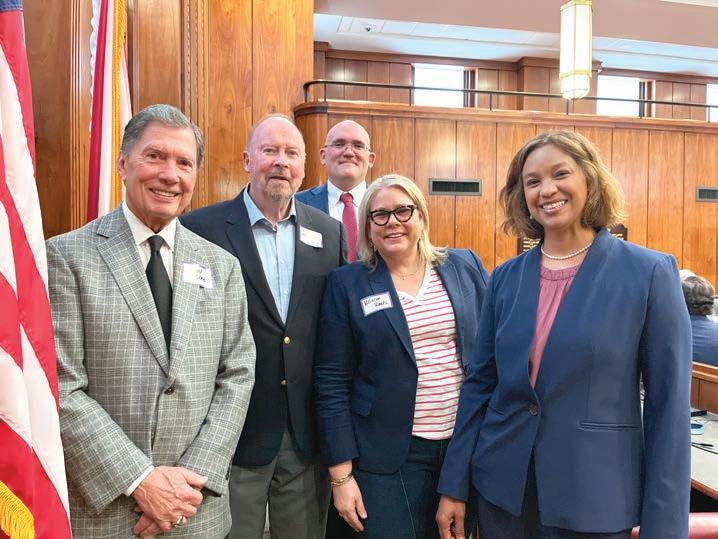
In May, the Solo-Small Firm Section also held their annual Cornhole Tournament, and our committees continued doing great work for the Bar. The BBA’s Nominating Committee (led by Andrew Nix and Kristin Waters) is a great example of this. If you are interested in being considered for an elected position in BBA leadership or would like to nominate someone, please reach out to Andrew, Kristin, or BBA Executive Director Jim Wilson, and we will make sure that the Nominating Committee considers each submitted name. Our CLE Committee, led by Jennifer Bates, Judge Monica Agee, and Hilary Williamson, has been hard at work, and through that Committee, our sections, and other Bar events, your BBA has already offered 24 hours of FREE CLE in 2026 — incredible! I am looking forward to seeing more of what our sections and
committees do this year.
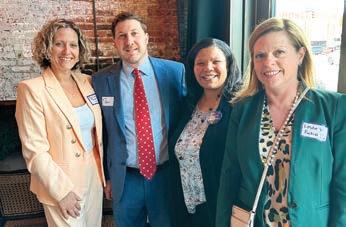
In June, we are looking forward to one of our best events of the year: the BBA Annual Picnic, scheduled for Friday, June 12. Thank you to our hard-working Entertainment Committee, led by Nick Callahan and his merry band of chefs. Also be on the lookout in June for more information about our next series installment, “History of Birmingham Lawyers: Women Trailblazers,” which will be presented in conjunction with the Women Lawyers Section.
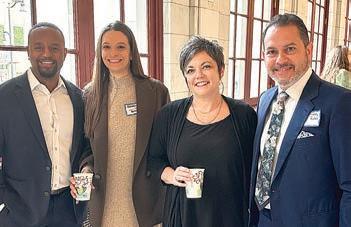
Two other things of note from our first few months of the year. First, we have had outstanding attendance at our monthly Coffee with the Judges, which have so far been held in Judge French’s courtroom, in family court, in federal court, and in the domestic relations courthouse. Thank you so much to our generous sponsors for each of these Coffee with the Judges events: Butler Snow; Graham Neal Seal & Bell; Lightfoot; Legal Aid; Merrill Lynch; Solo/Small Firm Section; Heninger Garrison & Davis; Hare Wynn; Workers’ Comp Section; Gregory Fann Turner; Volare Wealth Management; and the Women Lawyers Section. If your firm or organization is interested in sponsoring a coffee, we still have a few slots available. Finally, our grace period for 2025 BBA members ended on March 31, and I am thrilled to report that we are ahead of our
2025 membership numbers at this point in the year. However, we still have a few hundred 2025 members who have not renewed their BBA membership for 2026. If you have friends or colleagues who have not renewed, please encourage them to do so — we want as many people as possible to enjoy this great lineup of events, CLEs, and social opportunities. We have been working to utilize our new software system to conserve the Bar’s resources and to facilitate online renewals and registrations, so please use our website as a first option when possible. If you have questions or issues, don’t hesitate to let us know — we are here for you!
If you are still reading this message, thank you for sticking with me! I am proud of all that we have accomplished so far this year, but we are just getting started. If you have thoughts, ideas, critiques, or anything else — please reach out. I want to make sure that our BBA programming is providing value to all of our members. Better yet, join us at one of our many events and share your thoughts with me over a hot cup of coffee or a cold drink. Regardless, I hope to see you at a Bar event soon!
All the best, Rebecca
Beers
2026 BBA President
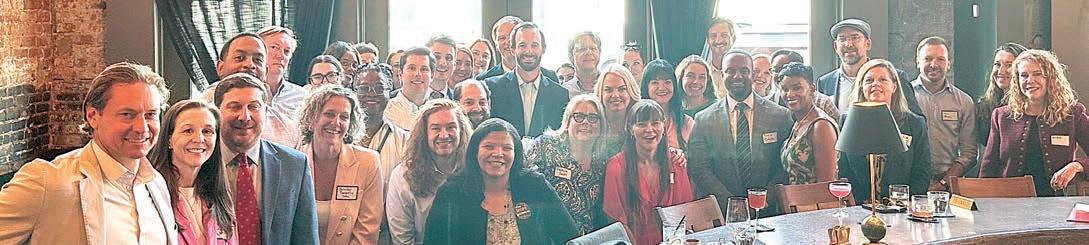
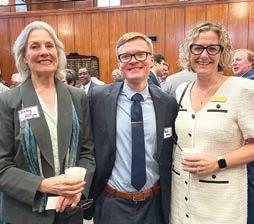
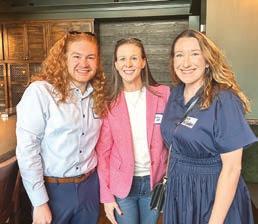
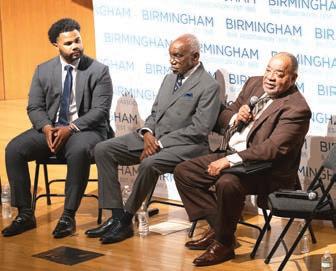
Moderator Jordan Cade with the Honorable U.W. Clemon and the Honorable Houston Brown
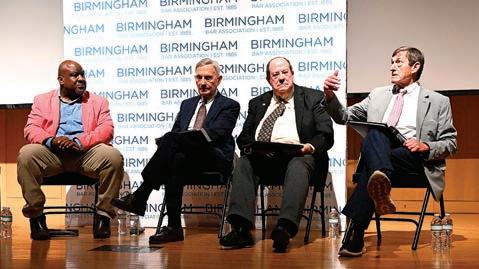
Barry McNealy, Fmr. Rep. Ben Erdreich, Sam Rumore, and Maury Shevin
By JENNIFER McINERNEY
More than three years have passed since Alabama enacted comprehensive legislation governing supported decisionmaking agreements (“SDM”) (known as the “Colby Act,” named after Colby Spangler), and yet many practitioners have never heard of the legislation. Ala. Code § 26-1B-1. These agreements provide an alternative to guardianship or conservatorship that preserves the individual’s right to act independently while receiving decision-making support from designated supporters. The Colby Act defines supported decision-making as “the process of supporting and accommodating an adult in the decision-making process without impeding the self-determination of the adult,” including “assistance in making, communicating, and effectuating life decisions.” Ala. Code § 26-1B-2. The statutory framework establishes:
› (1) detailed requirements for agreement formation,
› (2) supporter duties and limitations,
› (3) termination provisions, and
› (4) third-party reliance protections.
Ala. Code §§ 26-1B-6, 26-1B-5, and 26-1B-7.
The legislation establishes a framework for providing decision-making assistance while preserving the adult’s selfdetermination. Alabama Code § 26-1B-3 provides that “the existence of an executed supported decision-making agreement does not preclude the adult from acting independently” and that courts “may not consider an adult’s execution of a supported decision-making agreement as evidence of the adult’s incapacity.” Ala. Code § 26-1B-3.
Alabama law establishes strict requirements for valid supported decisionmaking agreements. Under Alabama
Code § 26-1B-3, an adult may enter into such an agreement only if two essential conditions are met: (1) the adult enters into the agreement voluntarily and without coercion or undue influence, and (2) the adult understands the nature and effect of the agreement. Ala. Code § 26-1B-3. The statute explicitly prohibits third parties from requiring an adult to execute such agreements, though this prohibition does not extend to guardians or conservators. Ala. Code § 26-1B-3.
The SDM must meet specific formal requirements under Alabama Code § 26-1B-6, including being in writing, dated, and signed by the adult in the presence of a notary public. Ala. Code § 26-1B-6. The agreement must name at least one supporter and describe the SDM assistance each supporter may provide and how supporters may work together. Ala. Code §
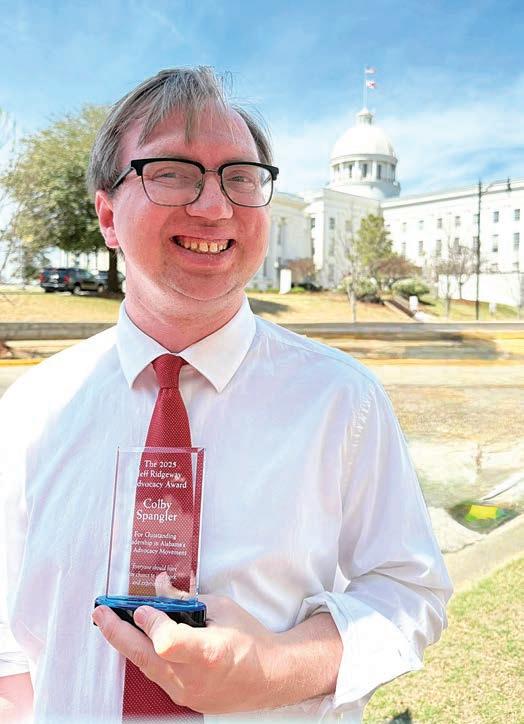
Colby Spangler, a Shelby County resident born with cerebral palsy, is the namesake of Alabama's Colby Act. The Colby Act is a landmark legislation providing a legal alternative to guardianship for adults with disabilities.
26-1B-6. Each supporter must provide separate written consent acknowledging their relationship to the adult, willingness to serve, and understanding of their duties. Ala. Code § 26-1B-6.
If the adult is subject to a limited guardianship or conservatorship, the agreement must be executed by the adult’s guardian or conservator. Ala. Code §§ 26-1B-7, 26-1B-6. This provision ensures compatibility with existing protective arrangements while allowing continued supported decision-making within appropriate bounds.
Alabama Code § 26-1B-5 establishes supporters as fiduciaries who “shall make and communicate decisions in cooperation with the adult and preserve the adult’s
authority to make decisions.” Ala. Code § 26-1B-5. This fiduciary relationship creates specific duties that supporters must fulfill, including supporting the adult’s will and preference rather than the supporter’s opinion of the adult’s best interest, acting honestly and diligently, remaining within the agreement’s scope, avoiding conflicts of interest, and providing timely written notice of intent to resign. Ala. Code § 26-1B-5.
The statute imposes significant restrictions on supporters to prevent exploitation and maintain appropriate boundaries. Supporters are prohibited from exerting undue influence, receiving compensation for their services, obtaining unauthorized information beyond that necessary for specific authorized decisions, accessing nonpublic personal information without consent, and acting outside the scope of their authority. Ala. Code § 26-1B-5. These prohibitions create a comprehensive framework protecting the adult while enabling meaningful support.
When supporters are expressly given authority in a power of attorney, they may sign documents or communicate decisions on behalf of the adult within that scope. Ala. Code § 26-1B-5. However, Alabama Code § 26-1B-5(e) establishes that “a request or decision made or communicated with the assistance of a supporter in conformity with the supported decision-making agreement shall be recognized as the request or decision of the adult for the purposes of any provision of law.” Ala. Code § 26-1B-5. This provision ensures that supported decisions carry the same legal weight as independent decisions.
Alabama provides strong protection for third parties who rely on SDM agreements. The law provides that an SDM agreement that complies with Section 26-1B-4 is presumed valid and establishes that a party may rely on the presumption of validity unless that party has actual knowledge that the SDM agreement was not validly executed. Ala. Code § 26-1B-8. This creates an actual knowledge standard rather than a constructive notice requirement, providing certainty for third parties acting in good faith.
Alabama Code § 26-1B-9 provides
that “a person who in good faith relies on an authorization in a SDM agreement is not subject to discipline for unprofessional conduct.” Ala. Code § 26-1B-9. However, this protection does not extend to conduct involving “fraud, misrepresentation, recklessness, or willful or wanton misconduct.” Ala. Code § 26-1B-9. These provisions encourage third-party compliance while maintaining accountability for egregious conduct.
The Colby Act provides multiple mechanisms for agreement termination. An adult may revoke an SDM agreement at any time through a written revocation provided to each supporter. Ala. Code § 26-1B-7. SDM agreements also terminate automatically upon the adult’s death, supporter withdrawal without approved successors, or court determination that the adult lacks capacity to consent to the agreement or that a supporter has engaged in financial exploitation, abuse, or neglect. Ala. Code § 26-1B-7.
Significantly, SDM agreements terminate when a court appoints a temporary or permanent guardian or conservator for the person or property of the adult, unless the court’s order of appointment does each of the following:
› Expressly modifies, but continues, the supported decision-making agreement alongside a partial guardianship or conservatorship.
› Limits the powers and duties of the guardian or conservator.
This carve-out allows courts to preserve SDM arrangements when compatible with limited guardianship orders. Most importantly, the SDM agreement terminates if the adult signs a valid durable power of attorney, unless that document expressly continues the supported decision-making agreement in whole or in part. Ala. Code § 26-1B-7. Therefore, it is critical that practitioners understand the ramifications of advising an individual — who may not be known to have an SDM agreement — to execute a standard durable power of attorney.
The Colby Act establishes SDM
agreements as alternatives to traditional guardianship while recognizing their interaction with existing protective proceedings. The parameters of how the two interact are set forth below:
› Alabama Code § 26-1B-3(d) prohibits adults from entering into an SDM agreement “if the agreement supplants the authority of a guardian or conservator of the adult.” Ala. Code § 26-1B-3.
› However, the termination provisions in Alabama Code § 26-1B-7 contemplate that courts may continue an SDM agreement alongside partial guardianship or conservatorship arrangements when the court expressly modifies but continues the agreement and limits the guardian’s or conservator’s powers. Ala. Code § 26-1B-7.
› The Colby Act emphasizes that courts “may not consider an adult’s execution of a supported decision-making agreement as evidence of the adult’s incapacity” and that “the existence of an executed supported decision-making agreement does not preclude the adult from acting independently.” Ala. Code § 26-1B-3.
The Colby Act represents a significant recent development in the state’s disability and capacity law. This legislation reflects growing national recognition of the rights of individuals with disabilities to make their own decisions with appropriate support, consistent with principles in the UN Convention on the Rights of Persons with Disabilities and similar legislation in other states. The law provides a comprehensive alternative to traditional guardianship that aligns with modern principles of supported autonomy while maintaining appropriate safeguards against exploitation and abuse.
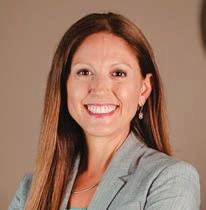
Jennifer McInerney Jenny@McInerneyLawFirm.com
By KRIS BURBANK
The Workers’ Compensation Section kicked off 2026 by co-sponsoring Coffee with the Judges on March 6, where BBA members enjoyed breakfast and conversation with fellow attorneys and members of the judiciary. Looking ahead, the Section will also host its annual social event and a free CLE later this year. We hope to see you at one — or more — of these upcoming events.
In the meantime, it is worth taking a step back to reflect on where workers’ compensation came from and how we arrived at the system we practice in today. At its most basic level, workers’ compensation provides wage replacement and medical benefits to employees injured in the course and scope of their employment. In exchange, employers receive immunity from most tort claims arising out of workplace injuries, with the cost of the system ultimately passed along to consumers, primarily through insurance.
Although workers’ compensation is often viewed as a modern statutory creation, the concept of compensating workers for injuries has ancient roots. Scholars trace early examples back to ancient Mesopotamia, where the Laws of King Ur Nammu (circa 2500 B.C.E.) established scheduled compensation for specific injuries — centuries before the Code of Hammurabi. Similar injury schedules appeared in ancient Arab, Chinese, Greek, and Roman societies, though historians caution against viewing these systems as direct predecessors of modern workers’ compensation.
Medieval European law moved closer to the idea of employer responsibility. English texts from the early twelfth century suggested that employers could bear responsibility for deaths occurring while workers were performing errands on their behalf. Early Prussian law went further by imposing liability on masters for injuries or death suffered by servants in service, unless caused solely by an independent third party.
The Industrial Revolution, however, tested the limits of common law remedies. As factory work replaced agrarian labor, workplace injuries increased dramatically. English courts struggled to adapt and instead developed a set of defenses that made recovery by injured workers exceedingly difficult — later known as the “unholy trinity.”
The first of these defenses, contributory negligence, emerged in 1809, holding that any negligence by an injured worker could bar recovery entirely. The second, the fellow servant doctrine, shielded employers from liability when injuries were caused by a coworker’s negligence. The third, assumption of risk, treated workplace hazards as risks implicitly accepted by the employee as part of the job. American courts adopted all three doctrines, leaving injured workers with little realistic hope of recovery.
By the late nineteenth century, the shortcomings of the tort system were impossible to ignore. Industrial accidents were widespread, litigation was slow and costly, and injured workers were often forced into meager settlements — or left with nothing at all. Reform followed, inspired in part by Germany’s compulsory, exclusive-remedy workers’ compensation system and Great Britain’s Workmen’s Compensation Act of 1897.
In the United States, states began establishing commissions to study alternatives. A 1910 New York report condemned tort litigation as inadequate to meet the needs of injured workers. Alabama enacted its Workers’ Compensation Act in 1919, largely modeled on Minnesota’s statute, with the
goal of providing faster relief, shifting the cost of workplace injuries to industry, and supporting workers disabled in the course and scope of their employment.
Workers’ compensation occupies a unique space in the law. The parties are not strangers, as in tort law, yet the issue is not purely contractual despite the existence of an employment relationship. As a result, workers’ compensation has always reflected broader questions of social responsibility and morality.
Professor Arthur Larson framed society’s options succinctly: ignore injured workers altogether, place them on public relief, or provide workers’ compensation that preserves dignity and places costs on the consumers who benefit from the work giving rise to the injury. Workers’ compensation, he argued, is psychologically and morally the best of those choices.
Against that backdrop, the current state of the Alabama Workers’ Compensation Act raises difficult questions. The cap on permanent partial disability benefits — $220.00 per week — has remained unchanged for roughly 40 years. In the author’s view, this stagnant cap increasingly risks pushing injured workers toward poverty or reliance on public assistance, rather than preserving their dignity as veterans of industry.
As practitioners, policymakers, and members of the bar, these are questions worth revisiting — just as they have been revisited, in one form or another, for thousands of years.
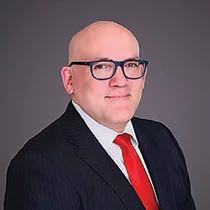
By MASON KRUSE
Lawyers of every stripe are very wellattuned to the shifting nature of our shared discipline. I don’t think it’s a stretch to say that almost every one of us can point to a regulatory development, a recent case, or a new tool (I promise this article is not about artificial intelligence) that has changed our specific practice area in some significant way. The resulting truism is that law, as both a profession and a body of rules, is constantly shifting even while many of the underlying job functions and legal principles remain consistent. I start with these platitudes because I want to set a baseline before trying to convey how different practicing cannabis law feels sometimes. Most areas of law offer nuanced, gray answers rather than the clear-cut, black-andwhite solutions clients seek. Those “gray answers” often become even murkier when a cannabis issue is piled on top. But as a mentor has cautioned, cannabis lawyers have to be “comfortable being uncomfortable.”The uncertain and perpetually changing nature of cannabis law sometimes makes practicing in this area feel like a totally different profession. I won’t go so far as to say that cannabis law is the fastest-changing area of law since 2014, but it often feels that way. We are seeing changes at every level and in every branch of government. To illustrate this point, I’ll give just a few examples. At the federal level:
› Legislative — the November 2025 appropriations package contained a provision that will redefine hemp effective November 12, 2026. This change will shake up the entire cannabis market and will likely make most hemp processing illegal within the U.S., due to the cannabinoid-laden byproducts that
› June 2023 — Alabama Medical Cannabis Commission begins licensing medical marijuana facilities; ongoing litigation and administrative actions follow
› May 2025 — Alabama passes HB445, changing the legality and regulatory structure surrounding certain hemp-derived products
› November 2025 — Federal appropriations package passes, containing a provision that will redefine hemp
› December 2025 — Administration releases Executive Order 14370, directing the U.S. Attorney General to complete rulemaking to reschedule marijuana and issuing guidance on hemp-derived products
› March 2026 — U.S. Supreme Court hears arguments in United States v. Hemani, addressing firearm restrictions as applied to marijuana users
› November 2026 — New federal hemp definition takes effect, expected to significantly narrow the hemp market and restrict most hemp processing in the U.S.
› necessarily result.
› Executive — on December 18, 2025, the administration released Executive Order 14370, which ordered the U.S. Attorney General to complete the rulemaking necessary to reschedule marijuana while also issuing guidance related to hemp-derived products. Although rescheduling hasn’t happened yet, it is (as always) allegedly right around the corner. Even more recently, the Centers for Medicare & Medicaid Services released information about a hemp pilot program, which will also be significantly narrowed if the new hemp definition
takes effect in November.
› Judicial — although the United States Supreme Court had not yet released its opinion as of the time of this writing, it heard arguments on March 2, 2026, in United States v. Hemani, which will address the application of 18 U.S.C. § 922(g) as it relates to the marijuana-user defendant.
And at the state level, Alabama’s own cannabis laws have been both the source and site of constant change. Over the past few years, we have seen ongoing litigation and administrative actions relating to the Alabama Medical Cannabis Commission’s licensing of medical marijuana facilities. Alabama also passed a law (HB445) last year that changed the legality and regulatory structure surrounding certain hemp-derived products.
As attorneys, our clients expect us to guide them through the minefields created by uncertain and changing regulatory structures. We are gifted with the opportunity to discover the right paths and lead our clients through them. Even when we are stuck with shifting guidance or daunting, cumbersome statutes, we are simultaneously gifted with problems to solve and puzzles to work out. And that’s the secret — the ability to uncover and provide solutions is what makes this job so rewarding. To my fellow young lawyers, I hope you’ll embrace the uncertainty that comes with this profession (whether it’s caused by lack of experience or shifting law). In doing so, I hope you will also find the reward — the fun — in practicing law.
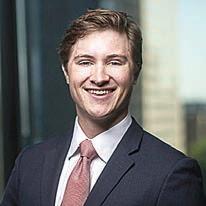
Mason Kruse Bradley Arant Boult Cummings LLP
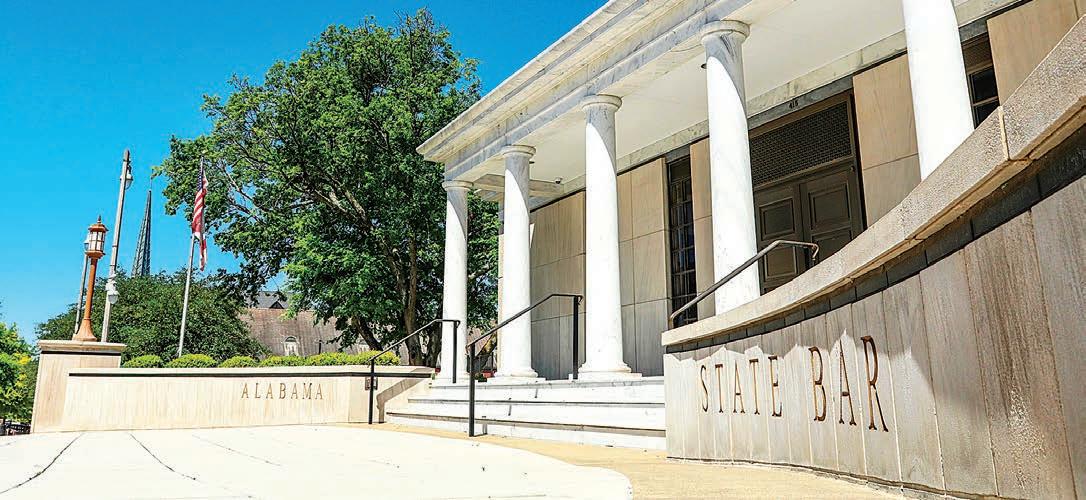
By ASHLEY PEINHARDT
The Alabama State Bar is busy serving its lawyers and planning for the future. Here are some updates and upcoming events:
› Annual Meeting: The 2026 Alabama State Bar Annual Meeting will be held July 15–18 at the Grand Hotel Golf Resort & Spa in Point Clear.
› Young Lawyers Section: The Young Lawyers Section hosted its annual Orange Beach CLE on May 14–16 at the Perdido Beach Resort. The Board of Bar Commissioners also approved a YLS proposal to waive first-year dues for newly admitted lawyers, encouraging early engagement with Bar programs.
› Bar admissions: On the admissions front, 318 applicants sat for the February 2026 bar exam, and more than 550 applicants are expected for the July exam. The Bar continues working with the Alabama Supreme Court on updates to the Rules Governing Admission, including NextGen bar exam changes and potential revisions affecting military spouse admissions.
› Ethics and safety: General Counsel
Roman Shaul reported an increase in threats of violence directed at lawyers and judges requiring investigation. His office also has two formal ethics opinions forthcoming — one addressing AI use in legal practice and one addressing ethical obligations related to online payment systems.
› AI advisory: Ethics complaints are rising involving lawyers who use AI tools to draft filings containing false or hallucinated citations. Always verify every citation before filing.
› Legislative update: The Alabama Legislature officially adjourned sine die, closing out a full 30-day session that saw 1,046 bills introduced and significant activity in its final week. The Alabama State Bar tracked more than 300 bills relevant to the profession, with outcomes still pending for measures awaiting the Governor’s action. Lawmakers passed a range of measures impacting property law, trusts and estates, business entities, criminal law, domestic relations, and more, while both state budgets were finalized and signed.
› Law Day 2026: Law Day was held on
May 1, when attorneys connected with classrooms across Alabama for 45-minute, conversation-style visits to help students better understand the legal system and the role lawyers play in everyday life.
› Legislative tracking: Members are encouraged to use the Bar’s legislative tracking system to monitor legislation affecting their practice areas.
› Coming this Fall: Alabama will host the Southern Conference of Bar Presidents in October. Planning is underway.
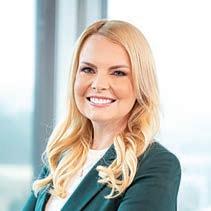
Ashley Peinhardt
Birmingham Bar Association Liaison to the Alabama State Bar Board of Bar Commissioners
By LEANNA PITTARD and JOI TRAVIS
The Birmingham Connection Committee helps strengthen the BBA’s relationship with and presence in the Birmingham community; promotes community events that might be of interest to BBA members; considers impactful ways that the BBA can get involved with Birmingham events; and engages in public service projects. Here are just a few things we have already done and have planned for this year.
and children’s programs — in 12 counties across central Alabama. CFB aims to ensure people in need can access emergency food near where they live. This fall, the BBA will partner with CFB to sort food and pack boxes to benefit Alabamians who are food insecure. Please plan to join us in helping our neighbors and meet new friends. Details to follow.
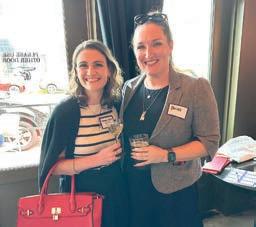
honored the contributions of women in Birmingham’s history, followed by a cocktail reception at La Fête, which was recognized as a James Beard Award Semifinalist. The event fostered meaningful conversations around the impact of women in the legal profession and the broader community.
› Better Basics: Better Basics empowers children across Alabama by equipping them with foundational academic skills and educational opportunities for lifelong success. Last year alone, Better Basics served more than 40,000 children and gave away nearly 200,000 books. On May 7, the BBA participated in Birmingham Reads Day. BBA volunteers read to children at Avondale Elementary and Norwood Elementary classrooms, and each student received a copy of the featured book to take home.
› School Supplies Drive: It’s almost that time of year. The BBA will again be teaming with the Birmingham Bar Foundation, the Magic City Bar Association, D.A. Danny Carr, and the Helping Families Initiative to collect supplies for area elementary schools. Last year, the BBA helped raise almost $9,000, so please be on the lookout for more information.
› Community Food Bank of Central Alabama: CFB supplies millions of meals per year to more than 230 partner agencies — such as food pantries, shelters,
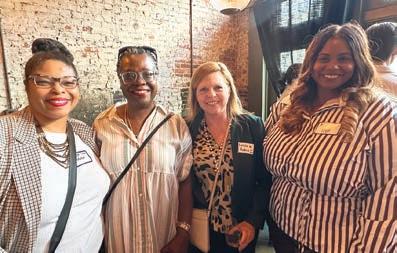
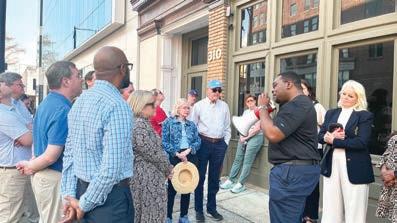
› 4th Avenue Historic District Walking Tour & Social: The Committee organized a walking tour of the Historic 4th Avenue Business District, one of Birmingham’s most culturally significant corridors and a centerpiece of the city’s Black business and professional life during the era of segregation. The district played a vital role in supporting African American entrepreneurship and served as a gathering place for leaders during the Civil Rights Movement. The tour concluded at the Carver Theatre, a restored historic venue that has long been a hub for arts and community events. Attendees then enjoyed a relaxed happy hour inside the theater, providing an opportunity to reflect on the district’s legacy while connecting with colleagues.
› Linn Park Sundial Dedication: In recognition of Women’s History Month, members attended a special event at La Fête following the sundial dedication ceremony at Linn Park. The ceremony
› “History of Birmingham Lawyers” series: The BBA launched the inaugural program in its “History of Birmingham Lawyers” series, focusing on Birmingham lawyers in the Civil Rights Movement. This program featured two esteemed panels and explored the critical role local attorneys played in advancing justice and shaping landmark legal challenges during a transformative period in the city’s history, closely tied to events such as the Birmingham Campaign. Following the program, attendees gathered for networking at Continental Drift, a nationally recognized cocktail bar and 2026 James Beard Award Semifinalist.
› Monet to Matisse museum tour: The BBA hosted a private tour of the Monet to Matisse exhibit at the Birmingham Museum of Art on May 12, followed by a reception at the museum.
This year’s committee is chaired by Leanna Pittard and Joi Travis and sub-chaired by Judge Chuck Price and Judge Kandice Pickett.
Please continue to check the BBA calendar for upcoming events and programs at www.birminghambar. org/?pg=events.


Donate supplies to help Birmingham elementary school children succeed!
The BBA is excited to be partnering again with D.A. Danny Carr’s Helping Families Initiative to donate school supplies to students in 2nd grade.
How to donate:

Purchase from our Amazon Wish List, or Make a Tax-Deductible Monetary Donation
Make a monetary donation with Swell
Purchase from the Amazon Wish List
Donate any time before July 31, 2026
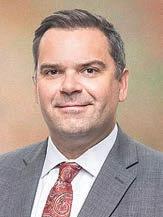
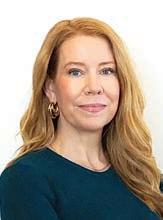
The Birmingham Bar Association has a history of strong leadership — and continuing that legacy is critical to the ongoing success and sustainability of our organization. The Nominating Committee convenes each year to construct a slate of candidates for officer and Executive Committee positions, to be submitted to the full BBA membership for a vote prior to the annual meeting.To ensure that the slate is representative of the wide variety
A word with the
By ALEXIS BRINKMEYER
On behalf of the Scholarship Committee, we are pleased to share an update on the Birmingham Bar Association Memorial Scholarship Fund and to thank our members for their continued support. The Committee is committed to providing one-time scholarships to deserving law students attending Birmingham School of Law, Cumberland School of Law, Miles Law School, and The University of Alabama School of Law. Applicants are evaluated with emphasis on demonstrated financial need, an intent to practice in the Birmingham area, and overall commitment to the profession and our local legal community.
For the 2025 scholarship cycle, the Committee received 19 applications and awarded scholarships to three (3) recipients, distributing a total of $9,000.00 ($3,000.00 per recipient).
of individuals who make up the BBA’s membership, the Nominating Committee is composed of a diverse group of members from BBA sections and committees who have been active in the organization and bring a range of perspectives on which BBA members would make strong candidates for these important positions.
This year’s committee is chaired by Andrew Nix, with Kristin Waters serving as co-chair.
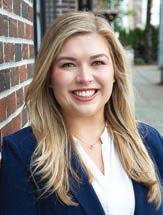
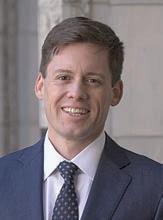
While we are proud to support these outstanding students, the number of qualified applicants continues to underscore both the growing demand for financial assistance and increased awareness of the program — building on 16 applicants in 2024 and seven (7) applicants in 2023 — and highlights the importance of sustaining and expanding our scholarship fund. Applications for the 2026 scholarship cycle will be available on the BBA website this fall. To promote early student engagement with the BBA, all scholarship applicants will receive a free BBA student membership.
For more information on how to give to the Birmingham Bar Association Memorial Scholarship Fund, please contact: Jim Wilson at jwilson@birminghambar.org. Thank you for your support of the BBA Scholarship Committee.
We are deeply grateful to BBA members whose generosity makes this scholarship possible, and we encourage continued support through one-time donations, recurring contributions, or legacy planning. Every contribution directly impacts law students who represent the future of the Birmingham Bar. Members who know law students interested in practicing locally are also encouraged to direct them to the BBA Memorial Scholarship Fund. Together, we can continue investing in the next generation of our bar and strengthening the legal community we serve.
This year’s committee is chaired by Alexis Brinkmeyer and co-chaired by Jay Lester.
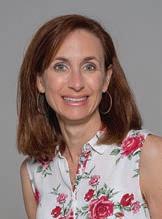
Every year, you have to consider how you are going to satisfy your CLE requirements, and every year you search for topics that are interesting and relevant to your practice area. Every year you tell yourself that you will not delay getting your credits until December, but every year your holiday season is interrupted so that you can take those last few needed CLE classes.
The BBA CLE Committee offers a different paradigm for members.
First, throughout the year, we provide programs on interesting topics, presented by engaging speakers, covering subjects related to a variety of practice areas. Our CLE classes provide you with tools that
will enhance your legal skills and further your legal career in both tangible and intangible ways.
Second, we host a “Last Chance Day of CLEs” in early December, allowing members to obtain up to six hours of credit before the chaos of the holidays begins. If you want to wait until the end of the year to obtain your CLE credits, mark your calendar for Tuesday, December 1, and join us for an enjoyable day of CLEs
We always welcome suggestions for CLE topics, so please let us know what you would like to see next! Contact CLE Committee Chair Jennifer Bates at jennbuettnerbates@gmail.com.
and socializing with your colleagues at the Birmingham School of Law. Thank you to Dean Scott Garrett for allowing us to use the BSL space again this year — we had a great time and a huge turnout at last year’s event.
CLEs may be necessary, but they won’t be dreadful thanks to the BBA’s CLE Committee.
This year’s committee is chaired by Jennifer Bates and co-chaired by Judge Monica Agee and Hilary Williamson.

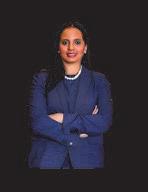
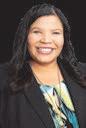
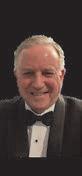
On February 20, 2026, the Birmingham Bar Foundation welcomed 32 new Fellows and Life Fellows at it’s annual Fellows Gala themed Fashioning the Future. This peer-nominated group of individuals recognizes the noble and worthy accomplishments of distinguished members of the Birmingham Bar Association who have demonstrated a spirit of excellence in their field of practice. The Fellows program funds our endowment that, in turn, allows us to award grants to legal related charitable organizations and programs. Welcome, Class of 2026!




























IMPACT SPONSORS IMPACT SPONSORS
Birmingham Bar Association
Birmingham School of Law Crew Law Group, P.C. Dentons
Eastwood Estate & Probate Law
Edge Lawyers Farris, Riley & Pitt, LLP
Killings & Poe, LLC
Maples, Tucker & Jacobs, LLC
Maynard Nexsen P.C.
Starnes Davis Florie, LLP
Wiggins Childs Pantazis Fisher & Goldfarb, LLC
By WILL THOMPSON, President of the Legal Aid Board of Trustees
The Board of Trustees of the Legal Aid Society of Birmingham is pleased to announce that attorney Pooja Chawla has been named Legal Aid’s next Executive Director, effective April 15, 2026. Current Executive Director Jequette Edmonson Noland resigned after nearly 26 years of dedicated service to Legal Aid — the last 10 as its Executive Director.
Pooja is a highly respected leader in the Birmingham legal community with a longestablished commitment to expanding access to justice for underserved populations. She brings many years of experience practicing law in the Family Courts of Jefferson County, Alabama — expertise that will undoubtedly support Legal Aid’s mission to deliver high-quality legal representation for children involved in dependency and juvenile delinquency cases, as well as for low-income individuals in the specialty courts Legal Aid serves. For the past 16 years, Pooja has been a solo practitioner in the greater Birmingham area, focusing primarily on juvenile cases and juvenile appellate practice. She is a certified guardian ad litem. Since October 2019, Pooja has also served as Special District Judge in Jefferson County’s Family and Probate Courts, and in this new role, she will make history as the first South Asian to serve in the position.
In addition to her years of experience as a practicing attorney, Pooja has been an active member of the Alabama and Birmingham Bar Associations. Most recently, she served as the BBA’s SecretaryTreasurer and as Chair of the Mentoring Program and Solo/Small Firm Section.
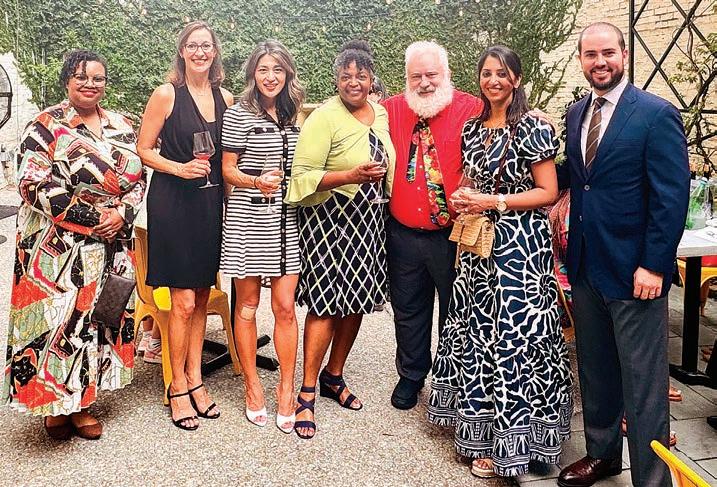
LAS Staff Attorney Courtney Reed, LAS Board Member Angie Cameron Smith, LAS Board Vice President Lisha Graham, former ED Jequette
and Will Thompson
Over the course of more than ten years, she contributed to the Legal Aid Board of Trustees, including serving as Board President. Beyond her board service, Pooja remains deeply engaged in her legal and local communities through a variety of speaking engagements and panel discussions. Her achievements have been recognized with numerous awards and honors in the legal profession. Pooja is a graduate of several leadership programs, including Leadership Hoover, Leadership Birmingham, Alabama Leadership Initiative, Alabama State Bar Leadership Forum, Future Leaders Forum, and the FBI Citizens’ Academy (Birmingham Chapter). The Legal Aid Board of Trustees congratulates Pooja on her new position and wishes her well in this exciting new chapter.
Another transition in the Legal Aid family is the retirement of attorney Julie Marks after 39 years of committed, loyal, and unwavering dedication to the children
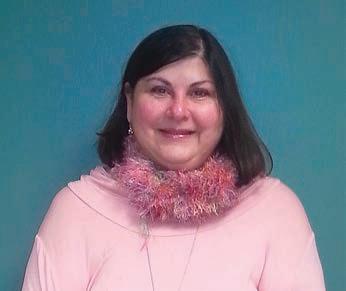
of Jefferson County. She too served as a guardian ad litem for abused and neglected children. Thousands of children experienced permanency because of her straightforward, practical, and direct style of representation. One of her greatest achievements is being among the founders of the Heart Gallery, which connects children in foster care with permanent families using photography and storytelling to raise awareness. The Legal Aid Board thanks her for her decades of service and wishes her well in retirement.

By MEGAN CHEEK, Director of Programs and Engagement
While the idea of practicing law may bring to mind visions of courtrooms, juries, and gavels, reality does not always live up to those expectations. Lawyering comes with many fulfilling responsibilities, but often that work doesn’t involve spending a lot of time in a courtroom. Or at least not at first.
Enter Volunteer Lawyers Birmingham! VLB has long been known as an easy entrée into pro bono work for attorneys and law students, with weekly civil clinics and help desk opportunities. In October 2025, VLB embarked on a new initiative to provide realtime legal assistance at Jefferson County’s District Court. The Jefferson County District Court Access to Justice Program utilizes volunteer attorneys working with VLB staff to assist clients with issues including habitability, eviction, wage garnishment, debt collection, and more. Led by VLB’s Managing Attorney Eric Vinsant, attorneys and other volunteers head up to the fifth floor of the Jefferson County courthouse on Tuesday and Wednesday mornings and meet with clients who have trials set that very day. After a brief intake process, volunteers talk with clients to determine the desired outcome, research the issue(s) at hand, meet with opposing counsel to reach an agreement, and then present the resolution to the judge.
Through the District Court Access to Justice Program, VLB has been able to help more than 30 families avoid eviction, negotiated extra time for more than 25 clients to stay in their homes, and saved their clients more than $143,000 to date.
“This program really provides a critical step for providing our low-income population a connection to the legal resources they need,” says Eric Vinsant, VLB’s Managing Attorney. “We rely on the contributions of our legal community, who
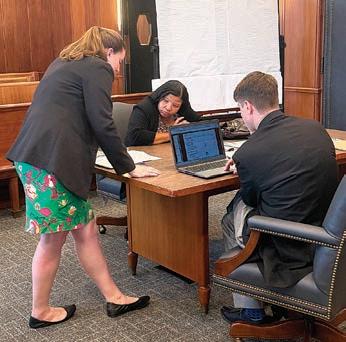
VLB’s Senior Staff Attorney Cara Morse and Managing Attorney Eric Vinsant work with volunteer attorney Hope Marshall (White Arnold Dowd) to assist clients during the District Court Access to Justice Program.
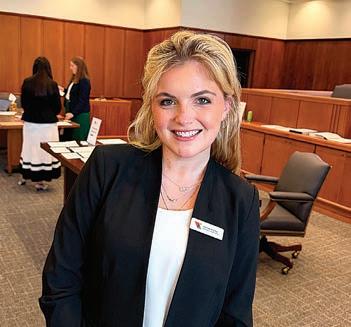
Volunteer Attorney Stephanie Tunnell (Starnes Davis Florie) has volunteered several times at VLB’s District Court Access to Justice Program.
selflessly give their time and talent to those who would otherwise not have access to justice.”
For the volunteer attorneys, a few hours of their time at a court docket provides immediate guidance to those who need it most, helping clients understand their rights and legal options. The District Court Access to Justice Program also levels the playing field in our justice system and can prevent life-altering consequences from procedural missteps.
For attorney volunteers, the program advances professional development by gaining hands-on courtroom experience across diverse civil matters. Additionally, volunteers expand their professional
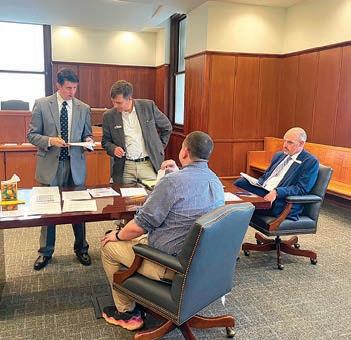
VLB’s Managing Attorney Eric Vinsant with volunteer attorneys Honza Prchal (Heninger Garrison Davis) and Patrick Schach (Littler) assist a client during a district court docket.
network within the legal community by meeting other practitioners from across the city. As an added bonus, the Alabama State Bar grants CLE credit for every six hours of pro bono work, for up to three CLE credits per year.
One of VLB’s super star volunteer attorneys is Stephanie Tunnell, an associate at Starnes Davis Florie, who to date, has volunteered several times with Volunteer Lawyers Birmingham, mostly with the District Court Access to Justice Program. Stephanie likes the routine of the program and feels like volunteering has reignited her passion for lawyering. “I don’t practice this type of law in my every day,” says Tunnell. “This project gives me, as a young attorney, the experience to go in front of the judge, work with a variety of clients, and get training in legal issues. Additionally, the VLB attorneys Eric and Cara are seasoned veterans that provide training and guidance to help you navigate any and all issues.” Tunnell adds, “It feels good being able to help folks who feel so hopeless in their outcomes and wouldn’t necessarily be able to help themselves.”
The Jefferson County District Court Access to Justice Program meets weekly on Tuesday and Wednesdays from 9:30 a.m. to noon on the fifth floor of the Jefferson County Courthouse. Interested volunteers can visit vlbham.org to sign up or reach out to Megan Cheek, Director of Programs and Engagement at mcheek@ volunteerlawyersbham.org.
We invite you to honor the life of a colleague or loved one through a gift to the Birmingham Bar Association Memorial Scholarship Fund. Your tax-deductible gift is used to award scholarships to law students at Birmingham School of Law, Cumberland School of Law, Miles Law School, and The University of Alabama School of Law.
Donations may be sent to the Birmingham Bar Foundation, 2001 Park Place North, Suite 430, Birmingham, Alabama 35203. For more information, please contact Jim H. Wilson at jwilson@birminghambar.org or the Birmingham Bar Foundation at info@ bbfound.org.
We are thankful to the following generous donors for supporting this important scholarship program and carrying on a legacy of justice in future attorneys:
IN MEMORY OF ERNEST CORY, JR.
The Honorable Alan L. King
IN MEMORY OF FRANK BAINBRIDGE
Thomas A. Ritchey
IN MEMORY OF JESSE EVANS
The Honorable Alan L. King
IN MEMORY OF ROBERT “SQUIRE” GWIN, JR.
The Honorable Alan L. King
IN MEMORY OF WILLIAM FRANK “BILL” PROSCH, JR. Haynes & Haynes, P.C.
IN MEMORY OF THE HONORABLE TERESA PULLIAM Haynes & Haynes, P.C.
The Honorable Alan L. King

IN MEMORY OF STELLA SCHREIBER Haynes & Haynes, P.C.
IN MEMORY OF EDWARD STILL Haynes & Haynes, P.C.
IN MEMORY OF MICHAEL BURGESS WALLS Haynes & Haynes, P.C.


Members of a high-performing team go above and beyond because their role, team, manager and culture engages and inspires them.
Members of a high-performing team go above and beyond because their role, team, manager and culture engages and inspires them.
Members of a high-performing team go above and beyond because their role, team, manager and culture engages and inspires them.
Members of a high-performing team go above and beyond because their role, team, manager and culture engages and inspires them.
Members of a high-performing team go above and beyond because their role, team, manager and culture engages and inspires them.
In order to have a high performing team, not only must you have the right people in the right roles, but you must also know how to manage them in the way in which they will respond.
In order to have a high performing team, not only must you have the right people in the right roles, but you must also know how to manage them in the way in which they will respond.
In order to have a high performing team, not only must you have the people in the right roles, but you must also know how to manage them in the way in which they will respond.
In order to have a high performing team, not only must you have the right people in the right roles, but you must also know how to manage them in the way in which they will respond.
We unleash the power of behavioral analytics to allow you to achieve both of these objectives. Then, we transfer the knowledge to you and allow you to build a winning-culture with ongoing support.
We unleash the power of behavioral analytics to allow you to achieve both of these objectives. Then, we transfer the knowledge to you and allow you to build a winning-culture with ongoing support.
We unleash the power of behavioral analytics to allow you to achieve both of these objectives. Then, we transfer the knowledge to you and allow you to build a winning-culture with ongoing support.
unleash the power of behavioral analytics to allow you to achieve both of these objectives. Then, we transfer the knowledge to you and allow you to build a winning-culture with ongoing support.
We unleash the power of behavioral analytics to allow you to achieve both of these objectives. Then, we transfer the knowledge to you and allow you to build a winning-culture with ongoing support.
CONTACT US TODAY
We unleash the power of behavioral analytics to allow you to achieve both of these objectives. Then, we transfer the knowledge to you and allow you to build a winning-culture with ongoing support.
We unleash the power of behavioral analytics to allow you to achieve both of these objectives. Then, we transfer the knowledge to you and allow you to build a winning-culture with ongoing support.
CONTACT US TODAY for a free six-minute demo and learn how to make your organization a high performing culture.
for a free six-minute demo and learn how to make your organization a high performing culture.
CONTACT US TODAY for a free six-minute demo and learn how to make your organization a high performing culture.
Cvstrategy.com
CONTACT US TODAY for a free six-minute demo and learn how to make your organization a high performing culture.
CONTACT US TODAY for a free six-minute demo and learn how to make your organization a high performing culture.
Cvstrategy.com
Cvstrategy.com
CONTACT US TODAY for a free six-minute demo and learn how to make your organization a high performing culture.
CONTACT US TODAY for a free six-minute demo and learn how to make your organization a high performing culture.
Cvstrategy.com
Cvstrategy.com
Cvstrategy.com
Cvstrategy.com

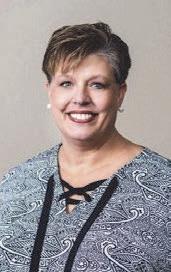
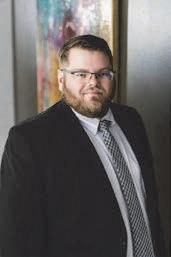
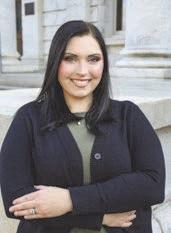
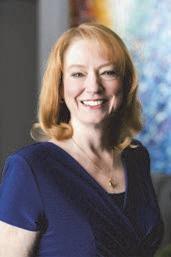
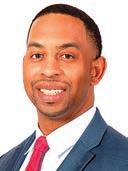
Cory Watson Attorneys announced that it has elected two new principals — Joel Caldwell and Tiffany Webber Carpenter — to its leadership team. Joel and Tiffany bring extensive experience in complex litigation and have played critical roles in advancing the firm’s work in high-impact personal injury and mass tort cases.
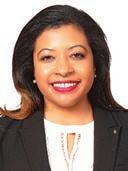
Graham Neal Seal & Bell is pleased to share that Sarah Beth Sanders has joined the firm as a partner. Sarah Beth is a seasoned litigator whose practice focuses on business torts, corporate litigation, complex civil litigation, and professional liability.
Prim Escalona has rejoined Maynard Nexsen PC as a shareholder in its complex and commercial litigation practice.
Bradley partner Jim Archibald has been elected Treasurer of the American College of Construction Lawyers (ACCL) Executive Committee.
Lightfoot, Franklin & White LLC is pleased to welcome Caroline Decker to the firm as Tech Coach and AI Workflow Lead.
Dentons Sirote PC has elevated Sidney W. Jackson IV and Alex Sidwell to shareholders in the firm.
Bradley has launched an Outside General Counsel Services team designed to provide businesses with flexible, value-driven dayto-day legal and compliance support in an increasingly complex and fast-changing regulatory and business environment. Corporate & Securities partner Jeffrey M. Harvey leads the team, drawing on more than 20 years of experience as in-house and outside general counsel to coordinate with attorneys
across the firm’s footprint and deliver tailored, scalable legal solutions that align with clients’ operational and strategic needs.
Jacy Fisher has been named a partner with Gregory Varner & Associates Attorneys at Law. Fisher’s practice areas include heirs’ property and real estate litigation, family law, criminal defense, estate planning, and probate.
Maynard Nexsen has added Phillip D. Corley Jr. as a shareholder in its real estate practice.
Balch & Bingham has strengthened its energy practice by naming Jon Trotta as a partner. Trotta specializes in guiding investor-owned utilities, project developers, and industrial end-users through complex energy-related challenges.
Susanne Moore has launched Blackstone Trial Group PLLC, a law firm specializing in defending correctional health care providers. The firm represents clients facing medical malpractice and civil rights claims and has offices at 1200 Corporate Drive in Hoover and in Dallas.
Bradley has established the Bradley Operations Center in downtown Birmingham’s historic Federal Reserve Building, creating a centralized hub for key administrative services that will support the firm’s 13 offices, more than 750 lawyers, and continued growth.
Maynard Nexsen PC has named Steve McPheeters a shareholder and Zac Goozée of counsel. Both are now part of the firm’s mergers and acquisitions, corporate and business transactions, and private equity and venture capital teams.
Burr & Forman Partner Melinda Sellers has been appointed Chair of the Common Interest Ownership Committee of the American College of Real Estate Lawyers. As Chair, Melinda leads the committee’s efforts to advance real estate law and practice in the
area of condominium, planned community, and other types of common interest ownership.
Baker Donelson has welcomed Robert E. Pendley as a new shareholder. Pendley’s practice concentrates on mergers and acquisitions, real estate development, and vendor supply chain agreements.
Huie, Fernambucq & Stewart, LLP is pleased to announce that Maggie Waldrop has joined as an associate attorney in the firm’s Product Liability, Automotive Litigation, and Employment Litigation groups.
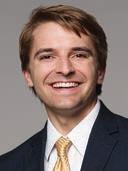
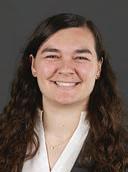

Clark May Price is proud to announce that it has elevated attorney Justin H. Nolen to the firm’s partnership. Justin has spent the entirety of his legal career at the firm and becomes the first Clark May Price associate to be promoted to partner. As a partner, Justin will continue his civil defense litigation practice, including general liability, construction defects, employment, insurance, medical malpractice, healthcare fraud, worker’s compensation, subrogation/ recovery, transportation, and real estate-related professional liability.
Bradley has added partner Scott S. Frederick to the firm’s Real Estate Practice Group.
Ogletree Deakins is pleased to repor t that Scott Kelly has been appointed co-chair of its Pay-Equity Practice Group.
Robert Baxley has joined the Baker Donelson as a shareholder in the Firm’s Commercial Litigation Group.