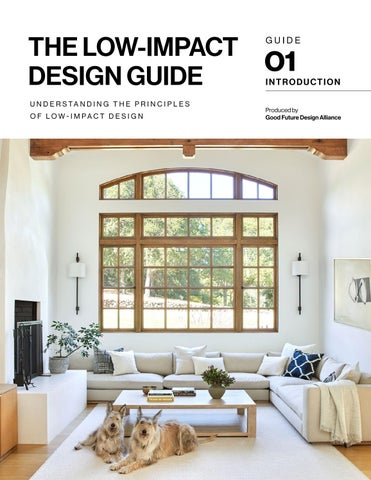
THE LOW-IMPACT DESIGN GUIDE U N D E R S TA N D I N G T H E P R I N C I P L E S O F LOW- I M PACT D ES I G N
GUIDE
O1
I N T R O D U CT I O N
Produced by Good Future Design Alliance
LC
Interior walls and ceilings finished with reclaimed snow-fence boards, transforming agricultural materials into a warm, textured architectural expression. 2
LW
RAM’S GATE WINERY, Sonoma, CA architecture: Backen & Backen design principal: Luca Pignata photographer: Erhard Pfeiffer
WELCOME TO THE LOW-IMPACT DESIGN GUIDE The design and construction industry shapes far more than beautiful spaces— it also shapes our waste stream, our air and water quality, and a significant share of our climate impact. Globally, the built environment accounts for nearly 40% of carbon emissions.1 The U.S. generates approximately 600 million tons of construction and demolition debris annually—more than twice the amount of municipal solid waste. 2 Even everyday materials carry hidden consequences, from persistent chemical contamination in our drinking water to the millions of tons of microplastics entering our oceans each year. Here’s the good news: much of this is preventable. Research suggests that more than a third of construction, demolition, and furniture waste can be traced back to decisions made during the design phase—and another 10–15% comes from change orders and rework alone. That means nearly half of all waste is potentially avoidable, and designers, builders, and homeowners have more influence than they may realize. This guide is your invitation to explore a different approach: one that prioritizes low-carbon, low-waste, and low-toxin choices without sacrificing beauty, functionality, or creativity. Whether you’re a seasoned designer, an ambitious architect, a contractor pushing the envelope, or a passionate DIY renovator, this guide is here to strengthen your toolkit and help you create spaces that are healthier, smarter, and built with the future in mind. Ready to see what’s inside?
COVER PHOTO company: Staprans Design interior designer: Lisa Staprans photographer: Thomas Kuoh
1
UNEP, 2019 Global Status Report for Buildings and Construction
2
EPA, 2019 Construction and Demolition Debris: Material-Specific Data
3
INSIDE THIS SERIES
YOU’LL LEARN HOW TO:
REDUCE CLIMATE IMPACT
DESIGN WITH LESS WASTE
Explore smarter material choices, energy-conscious design, and climateaware decisions that lower both embodied and operational carbon.
Discover practical ways to cut demolition debris, extend the life of materials, and bring reuse, salvage, and circular thinking into your projects.
(Don’t worry if those terms are new—we’ll break down what they mean and why they matter to your work.)
CREATE HEALTHIER SPACES
BUILD A STRONGER DESIGN TOOLKIT
Learn to spot lower-toxin materials, sidestep common harmful chemicals, and make choices that support healthier indoor air for the people who live there.
Walk away with resources, frameworks, and ideas you can apply to any project, at any scale, without sacrificing beauty, function, or creativity.
The strategies in this guide are designed to help you make thoughtful, low-impact decisions for both people and the planet—one project at a time.
LC
LW
LT
HOUSE SOCIAL company: Red Dot Studio principal architect: Karen Curtiss lead architects: Camille Peignet, Mark Myers photographer: Helynn Ospina
4
Daylight fills this converted art studio and former grocery store, now a modern showcase of sustainable design. The project successfully demonstrates all ten principles of the AIA Framework for Design Excellence.
5
THE LOW-IMPACT
DESIGN SERIES
THREE WAYS TO DESIGN A BETTER FUTURE Beautiful design can be better for people and the planet. The choices we make about materials, construction methods, and the products we bring into our homes have consequences far beyond how a space looks and feels. The Low-Impact Design Guide Series explores three essential approaches to creating healthier spaces with a lighter environmental footprint.
Each Guide takes you deeper with practical strategies, real-world projects, professional insights, and resources you can put to work. 6
GUIDE 02 | LOW CARBON Lowering Carbon Pollution Discover how smarter design decisions, material choices, and energy strategies can reduce the emissions associated with a project.
GUIDE 03 | LOW WASTE
GUIDE 04 | LOW TOXIN
Reducing Construction Waste
Creating Healthier Spaces
Learn how to preserve what’s valuable, embrace circular design principles, and give useful materials a second life.
Explore how building materials, furnishings, and finishes can affect our health—and how to choose healthier alternatives.
LC
LW
LT
LOOK FOR THE THREE DOTS
Explore the complete series at goodfuturedesign.org
Throughout the Guides, our LC / LW/ LT symbols identify projects that demonstrate low-carbon, low-waste, and low-toxin strategies. Many great design decisions accomplish more than one.
7
LOW CARBON
LOWERING CARBON POLLUTION THE PROBLEM The planet is warming at an alarming rate. The past 11 years have been the hottest on record and the consequences are increasingly personal: more dangerous heatwaves, worsening droughts in vulnerable regions, destructive wildfires, and extreme weather. Rising temperatures are also taking a toll on human health, increasing heat-related illness and deaths while wildfire smoke adds another layer of harmful air pollution. Continued carbon emissions will intensify many of these risks. As one of the world’s largest carbon emitters, the U.S. has an important role to play. And with millions of homes built and remodeled across the country, our industry has an enormous opportunity to make a difference. Imagine if we collectively reduced carbon emissions from producing materials for new single-family homes by just 10%. That could prevent approximately 4 million metric tons of carbon emissions annually—the equivalent of taking more than 2 million cars off the road for an entire year. And that doesn’t even account for the additional savings possible in the home remodeling market.
Better design means finding value in what we already have, and making every new choice count.
8
LC
LW
GARDEN SHOWCASE
California Home and Design – 2026 Landscape Design Award company: Katharine Webster Inc. landscape designer: Katharine Webster photographer: Adam Potts
Source: World Meteorological Organization (2026); University of Texas research; U.S. EPA. Full citations in Guide 02.
9
LC
LW
MAISON GERARD, New York company: Stackabl photographer: Michael Mundy
10
A BETTER WAY Every design and construction decision presents an opportunity to lower carbon emissions. We can make a difference by building only what we need, choosing lower-carbon materials, reducing transportation and job-site emissions, improving the energy efficiency of our homes, and incorporating renewable energy wherever possible. Together, these strategies can significantly reduce the carbon pollution associated with our projects.
TRY THIS: THINK BEFORE YOU EXPAND Before adding square footage to a home, explore whether reconfiguring the existing space could meet the client’s needs. Repurposing an underused room, converting a garage, or improving the floor plan may eliminate the need for new construction—and the carbon emissions that come with it. For new homes, incorporate reclaimed or lower-carbon materials from the outset, and explore Passive House principles to dramatically reduce energy consumption over the home’s lifetime.
DISCOVER MORE IN GUIDE 02 Discover how thoughtful design choices can make a remarkable difference. Explore a home built with 80% reclaimed materials, landscaping designed for wildfire resilience, and furniture engineered to withstand the demands of busy restaurants. Along the way, learn how to choose lower-carbon materials, design homes that use less energy, and even calculate the carbon savings of your decisions. Get the Complete Guide 02: Lowering Carbon Pollution
11
LOW WASTE
REDUCING CONSTRUCTION WASTE THE PROBLEM Construction and demolition waste is a massive problem. In the U.S., nearly 145 million tons of C&D debris were sent to landfills in 2018. And much of this waste is preventable. Research suggests that more than one-third of construction waste can be traced to decisions and errors made during the design phase. Poor planning, ordering errors, change orders, and rework only add to the problem—costing time, money, and potentially damaging client relationships and professional reputations. And the consequences extend beyond the job site. Certain discarded building materials, like drywall, can release harmful gases or contribute to soil and water contamination when improperly managed. Recycling helps keep valuable resources out of landfills, but it still requires energy to transport and reprocess them. The better approach is to prevent waste before it’s created. And when renovation calls for removing materials, thoughtful deconstruction and salvage can give them a second life. Cabinets, flooring, fixtures, and furnishings that no longer suit one homeowner may be exactly what another family, nonprofit, or community organization needs.
It’s not about avoiding new. It’s about buying better, wasting less, and giving good materials another life.
12
LC
LW
PRIVATE RESIDENCE, Sun Valley, Idaho architecture: Backen & Backen design principal: Howard Backen lead architects: Dusan Motolik, Tony Selko photographer: John Merkl
Source: U.S. EPA (2018); Fadiya et al. (2014). Full citations in Guide 03.
13
Photo courtesy of Vema Deconstruction
14
A BETTER WAY Waste reduction begins with thoughtful planning and collaboration. By involving designers, builders, and clients early, we can avoid costly mistakes, minimize unnecessary demolition, and make better decisions about what stays and what goes. The five Rs—Retain, Restore, Reuse, Repurpose, and Recycle—offer a practical framework for keeping valuable materials in circulation. From salvaging architectural elements to choosing durable products and planning for responsible disposal, every project presents opportunities to waste less.
TRY THIS: WALK THE PROJECT BEFORE DEMOLITION Before demolition begins, walk through the project with your contractor and identify what can be retained, repaired, salvaged, sold, or donated. Cabinets, doors, flooring, lighting, and plumbing fixtures may have value beyond the project. A little planning can keep useful materials out of the dumpster— and put them to work somewhere else. Qualified appraisals may result in meaningful tax deductions, too.
DISCOVER MORE IN GUIDE 03 Discover the creative possibilities of designing with less waste. Explore remarkable buildings given new life, homes that preserve their histories, and manufacturers rethinking what we consider waste. Find out whether old tile can be salvaged or recycled, how to reduce unnecessary packaging, and where unwanted materials can find new homes. Plus, put our practical Waste Diversion Planner to work on your next project—helping you turn good intentions into measurable results. Get the Complete Guide 03: Reducing Construction Waste
15
LOW TOXIN
CREATING HEALTHIER SPACES THE PROBLEM We spend much of our lives indoors, surrounded by materials we rarely question. Yet paints, flooring, adhesives, upholstery, and finishes can contain chemicals that quietly make their way into the air we breathe and the dust that settles throughout our homes. Some are associated with respiratory problems, hormone disruption, reproductive harm, and other long-term health concerns. Among the growing concerns are PFAS, often called “forever chemicals” because of their persistence in the environment, and microplastics—tiny plastic particles increasingly found in our surroundings and even our bodies. Certain chemicals used in building materials and furnishings are known to pose health risks, yet consumers and designers often have little information about what’s actually in the products they specify. And because many exposures are invisible, we may not recognize them in our everyday surroundings. We may not yet understand the full long-term effects of the many chemicals we’re exposed to every day. But why add unnecessary exposures in the one environment where we have so much control?
Creating a beautiful home shouldn’t come at the expense of our health.
16
LW
LT
SEAHOLM PENTHOUSE, Austin, TX interior design: Urbanspace Interiors custom integration: Service Tech photographer: Frank Oudeman
Lutron offers a wide range of environmentally conscious fabric options, including fabrics that are PVC-free, Greenguard® certified or contain recycled content. Pictured: Lutron Ethos Blackout
Source: Healthy Materials Lab; Green Science Policy Institute; NIEHS. Full citations in Guide 04.
17
LC
LW
LT
company: Bailey Katherine Interiors interior designer: Bailey Konieczka photographer: Ian Warren
18
A BETTER WAY A healthier home starts with asking better questions about the materials we bring indoors. What’s in them? How are they made? What might they release into our air and dust over time? And are there healthier alternatives that perform just as beautifully? Favoring natural, responsibly sourced materials, avoiding unnecessary chemical treatments, and choosing products with greater ingredient transparency can reduce potential exposures. Good ventilation and welldesigned HVAC systems further support healthier indoor air.
TRY THIS: LOOK BEYOND THE FINISH Start with natural materials such as solid wood, wool, linen, and cork whenever practical. Consider the broader environmental impacts of fossil fuel-based synthetics and vinyl. And look beyond the visible finish: adhesives, sealants, stains, and installation products can introduce unwanted chemicals, too.
DISCOVER MORE IN GUIDE 04 Discover how beautiful design and healthier living can go hand in hand. Step inside a beach house transformed with natural, timeless materials, and see how one designer’s personal health journey inspired spaces that nurture wellbeing. Learn what to look for in paints, flooring, furnishings, and fabrics; how better ventilation and filtration can improve indoor air; and how to recognize certifications that help you make more informed choices. Because creating a healthier home begins with knowing what goes into it. Get the Complete Guide 04: Creating Healthier Spaces
19
ABOUT THE
SERIES
DESIGN + BUILD: A MOVEMENT The mission of the Good Future Design Alliance is to raise public awareness about the impact of construction industry waste—on climate change, natural resources, and human health. We support design and build professionals working in the residential and hospitality sectors as they navigate the shift toward lower-waste, healthier, and more circular practices. Through education, advocacy, and practical tools, we aim to accelerate the adoption of more responsible and regenerative approaches to the built environment. The Low-Impact Design Guide series is written and produced by GFDA, drawing on the work and experience of our members.
WHERE THE FRAMEWORK BEGAN The three principles that organize this series—low carbon, low waste, and low toxin—were inspired by Meno Home, a sustainable furniture company and GFDA member. Seeing those principles shape Meno’s own products gave us a clear framework for the choices designers and builders face, and set GFDA on the path to these guides. We’re grateful for their example, their support, and the photography they shared.
Get the complete guide series at: GoodFutureDesign.org 20
LC
LW
LT
VALE HAMMERED BENCH + DUNE 4 LIGHT CHANDELIER company: Meno Home
21
GETTING
STARTED
22
DEFINE THE SCOPE
BUDGETING
Low-impact design can apply at many scales—whether it’s a full home, a single room (bedroom, kitchen, bathroom), or a smaller area (entryway, mudroom, pantry). Defining the scope helps clarify priorities , material choices, and sustainable strategies.
Establishing a clear budget helps balance sustainability goals with financial realities. Consider materials, labor, and subcontracted services separately from design and planning fees to better track costs and identify opportunities for savings.
GOAL SETTING & ALIGNMENT
TIME FRAMES
Getting everyone on the same page from the start makes a world of difference. Talk with your contractors, suppliers, and partners about your shared values and what “low impact” means for this project. Then set one or two specific, doable goals—like diverting 75% of construction waste from landfill or using only low-VOC paints and finishes, or identifying materials for reuse. Write them down, share them in your project meetings or bid notes, and keep them visible so every decision circles back to the same north star.
Every design effort benefits from a realistic timeline. Separating the design and planning phase from the construction or installation phase ensures smoother execution and reduces waste from last-minute changes.
MILESTONES & DEADLINES Successful low-impact design often requires anticipating key steps such as design finalization, permits, demolition, and installation. Factoring in product lead times, contractor availability, and the sourcing of eco-friendly materials helps avoid delays.
LC
LW
PRESERVATION WITH PERFORMANCE company: Perez Construction photographer: Brad Knipstein
Mission Terrace shows how a historic San Francisco home can be upgraded and expanded while preserving its original craftsmanship and character. We restored original wood floors, paneling and millwork, and added high-efficiency, all-electric systems, and solar, to prepare it for the next century. LC
LW
LT
LOW-IMPACT LIVING, Napa Valley, CA company: Niche Interiors interior designer: Jennifer Jones photographer: Brad Knipstein
Designed for clients with chemical and allergen sensitivities, this home features sustainable materials and furnishings throughout. The custom dining table and benches are crafted locally from FSC-certified wood, with pendants designed and fabricated in San Francisco.
23
24
DOING IS THE REAL LEARNING Perfection isn’t the goal—progress is. If your project doesn’t hit every target, that doesn’t mean it failed. Every misstep, workaround, or unexpected outcome is part of the learning process. The Low-Impact Design Guide is about practicing, experimenting, pushing boundaries and building confidence. If you encounter setbacks or make choices you’d do differently next time, no problem. That means you’re learning. Capture those lessons, evaluate them honestly and know that your effort is still valuable. Trying new solutions inspires others to design with less impact.
QUICK TIPS TO STAY ON TRACK: Keep it simple: focus on achievable, high-impact changes that make a real difference. Stay on track: use this checklist to monitor your progress and guide the implementation of the strategies. Low-Impact Design Checklist Document everything: take photos, videos, and notes to track progress, celebrate milestones, and share your insights with the community. Build in flexibility: expect surprises, and allow for small adjustments or buffers as needed. Above all, enjoy the process! Sustainable design is a journey, and every step you take helps create spaces that are better for people and the planet.
This 1970s home was reimagined with natural materials, thoughtful reuse, and lower-impact choices throughout. Original exposed trusses and wood ceilings were retained, while new additions include locally made walnut cabinetry, an LED chandelier, low-emitting Muuto stools, and California-made Fireclay tile.
LC
LW
LT
MID-CENTURY MODERN REIMAGINED company: Loczi Design interior designers: Catrina Cooper & Michael Ufferman photographer: Ken Gutmaker
25
Thoughtful renovation of an existing restaurant, incorporating antique furnishings and carefully selected low-toxicity materials to minimize environmental and occupant impact. 26
LC
LW
LT
NO | MA HOUSE CAFÉ & COLLECTIVE, Napa Valley, CA architecture: Backen & Backen design principal: Ann Backen lead architect: Carson Howell Costa photographer: John Merkl
27
STAY FLEXIBLE & ADAPT Making low-impact choices work within real-world constraints takes flexibility, creativity, and support. Use these strategies to adapt when challenges arise. Setbacks can spark innovation. STRATEGIES TO STAY ON TRACK Adjust material choices: salvaged, reclaimed, or remnant materials can bring down costs while keeping your impact low. Reduce scope: prioritize the most visible or highest-impact areas of the home. Build in phases: a reconfigured plan and schedule lets you remodel over time as budget allows, without sacrificing the low-impact goals. Leverage incentives: explore rebates or tax credits for energyefficient upgrades or sustainable materials.
PRO TIP Less Obvious Ways To Save Ask your GC, stone fabricator, or tile installer if they have remnant slabs or unopened boxes of tile. They usually do — especially if you only need a small amount (think powder room floor, bar-area backsplash, small island or custom table). You can purchase leftovers at extremely reduced prices, if not for free. Looking for small ways to save means you can splurge on your favorite decor or art.
28
Meadowood Spa, Backen & Backen Architecture; photo by Adrian Gregorutti
29
30
SHARE YOUR PROGRESS The Low-Impact Design Guide is more than a reference—it’s part of a broader movement. Sharing your insights and results helps expand collective knowledge and show the value of low-impact design.
Collaborate Within Your Team Share your goals and progress with contractors, vendors, and other partners. Keeping everyone in the loop surfaces new ideas, strengthens collaboration, and keeps the project aligned with its low-impact goals. Share With the Wider Community When you’re ready, share your work more broadly. Post progress updates, before-andafters, or highlights of reclaimed materials and energy-efficient solutions. Tag @thegfda so your work can be seen, celebrated, and possibly reshared with the wider community. If you’re especially proud of a project, we’d love to see it. Please send photos, or a short story about your process, to: hello@goodfuturedesign.org. We may feature your work in a future newsletter.
You’re ready. You’ve just finished the first guide in the Low Impact Design series—and you’re already thinking differently about the materials, systems, and choices behind every project, and the importance of collaborating early in a project. This mindset shift is what matters most. From here, dive into whichever guide speaks to what’s in front of you right now: reducing carbon, designing with less waste, or creating healthier spaces. Keep the checklists and glossary nearby as you go—they’re built to be referenced again and again. Real change happens through collective action, and every choice you make—no matter how small—helps shape a better future, one project at a time. Questions or want guidance? We’re here. Reach out anytime at hello@goodfuturedesign.org
The client’s original table was refinished, and vintage armchairs were sourced for the ends of the table and locally reupholstered in fabric to match the new chairs. The corner cabinet is also vintage.
LW
DINING ROOM company: Nystrom Design interior Designer: Ellen Nystrom photographer: David Tsay, Cat Dash (stylist)
31
Mid-century lounge chairs, reupholstered in brightly patterned outdoor performance fabric for longevity, pair with vintage side tables to make this sunroom lively and inviting. 32
LW
SHINING NEW LIGHT ON A SUNROOM company: Lotus Bleu Design interior designer: Jeannie Fraise photographer: Vivian Johnson
33 33
CHECKLIST Every decision is an opportunity to reduce emissions, waste, and toxicity. Start by asking a few key questions to get into the right frame of mind. Then track each swap you’re able to make—you’ll see how quickly progress adds up. Refer back to these checklists on every project until low-impact thinking becomes second nature.
GET IN THE RIGHT FRAME OF MIND
REDUCE CARBON EMISSIONS
The earlier you ask, the more successful you will be at lowering your impact.
It’s not just at the job site—it’s everything you specify.
Nearly 47% of waste is determined at the pre-construction phase. Designers play a key role in reducing it. Can we preserve some materials rather than replace them?
Reducing carbon emissions is about a lot more than cutting back on trips to the job site—it includes the materials and operating systems you specify, too. Some things to consider when you create, and when you operate:
Can we “rehome” unwanted items responsibly?
Use less material (consider the complexity of the design)
Can we minimize packaging waste?
Choose low-carbon materials when available
How much can we source locally? (within 500 miles) Are there healthier materials available?
Design for a long life
Are there lower-carbon options?
Choose high-efficiency fixtures and systems
Are we asking the right questions of all stakeholders early enough?
34
Reuse some material
PUT IT TO WORK Download the project-ready version of this checklist to guide your decisions, track progress, and keep low-impact goals on course throughout your project.
REDUCE WASTE
REDUCE TOXICITY
Almost half of it is decided before construction even starts.
What’s in it matters as much as what it looks like.
Can anything be deconstructed instead of demolished?
Your checklist should help ensure good indoor air quality and reduce chemical exposure, creating healthier spaces for occupants. Ask these questions before specifying a product:
How can we reduce unnecessary material or packaging use? Can we include vintage or preowned parts and materials to reduce carbon and save money? Where will our discarded materials go? Let’s set up a waste management plan ahead of time.
Does it off-gas (have a strong odor)? Does it contain unnecessary surface treatments? (Almost anything “added” to a material will contain chemicals, some of which can be harmful to humans and pets.) Is there a lower-toxicity alternative? Can we include more natural materials in our project? Is there a trusted certification available? Is the manufacturer transparent about their processes and ingredients?
35
GLOSSARY
SUSTAINABLE DESIGN TERMS
PART 1: MATERIALS GLOSSARY Bio-Based & Natural Materials PLANT-BASED MATERIALS Abaca: a plant fiber (also called Manila hemp) used for rugs, wall coverings, upholstery, woven furniture.
Mycelium: root structure of fungi; used in insulation, panels, and packaging.
Agave fiber (sisal-like fibers): used for rugs, textiles, and woven décor.
Piñatex®: leather alternative from pineapple leaf fiber, used in upholstery and soft goods.
Algae: increasingly used in bioplastics, wall panels, textiles, and acoustic materials.
PLA (Polylactic Acid): bioplastic made from corn or sugarcane; biodegradable in specific conditions.
Bamboo: rapidly renewable grass used in flooring, furniture, and fabrics. Cactus Leather: vegan leather from nopal cactus, durable and low-impact. Coconut Fiber (coir): useful for rugs, upholstery, erosion control, and composites. Cork: harvested from tree bark without harming the tree. Fire-resistant and antimicrobial. Cotton (organic preferred): widely used fiber; organic versions use fewer pesticides and less water. Hemp: strong, fast-growing fiber with minimal water needs; used in textiles, insulation, and finishes.
36
Linen (from Flax plant): breathable, low-impact, and biodegradable.
Rattan: fast-growing climbing palm; commonly used for furniture and woven applications. Sisal: durable agave-based fiber used in rugs and rope. ANIMAL-BASED MATERIALS Alpaca: hypoallergenic and insulating fiber, softer than wool. Biodegradable. Leather (vegetable-tanned): leather tanned using plant-based tannins, avoiding toxic chromium. Sheepskin / Hide: durable and warm, ideally sourced as by-products of the meat industry.
Jute: biodegradable fiber for rugs, textiles, and wallcoverings.
Silk: protein-based fiber from silkworms, prized for its softness and sheen.
Kapok: lightweight fiber from the kapok tree; hypoallergenic and petroleum-free fill.
Wool: durable, insulating fiber from sheep. Naturally water-resistant due to lanolin.
A quick-reference companion to the Low-Impact Design Guide Download this Glossary
Wood & Wood-Based
Tile
Carbon Smart Wood™: sustainable lumber salvaged from trees removed from urban environments.
Cement Tile: handmade; look for local production and low-VOC sealants.
FSC® Certified: ensures sourcing from responsibly managed forests. Mass Timber / CLT: engineered large-format wood panels with low embodied carbon. Reclaimed / Salvaged Wood: repurposed wood from barns or old buildings.
Recycled Content Tile: made from recycled glass, porcelain, or ceramics. Regionally Manufactured: reduces transportation emissions.
Natural Stone
Strawboard / Wheatboard: compressed agricultural waste panels; a durable, formaldehyde-free alternative to MDF for cabinetry and millwork.
Ethically Sourced: confirm human and environmental standards in quarrying.
Urban Salvaged Wood: harvested from downed trees in city environments.
Local is Better: choose regionally quarried stone to reduce carbon footprint.
DESIGNER TIP: Choose solid wood over veneers or MDF to avoid adhesives and added formaldehyde. Prioritize regionally sourced species.
Focus on Forestry: Carlisle Wide Plank Floors sources slow-growing domestic hardwoods from responsibly managed forests, manufactured locally using low VOC and formaldehyde-free finishes, and recycles 100% of mill waste into bio-pellets.
37
GLOSSARY
SUSTAINABLE DESIGN TERMS
PART 2: CONCEPTS, STANDARDS & CERTIFICATIONS Recycled, Renewable & Circular Materials
Environmental Impact
Circular Product Design: products designed for reuse, repair, recyclability, or biodegradability.
Carbon Offsetting: investing in carbon-reducing projects to balance emissions.
Durability & Longevity: select items that will age well and withstand daily use.
Embodied Carbon: total emissions from a product’s production, transport, and installation.
Eco-Packaging: seek recyclable, compostable, or minimal packaging, blanket wrap, or returnable crates.
Waste Management: responsible practices for reuse, recycling, and landfill diversion.
Low Waste: plan projects to reduce offcuts, overordering, and unnecessary finishes.
Healthy Interiors & Indoor Air Quality
Recycled Materials: materials made from reclaimed waste (metal, glass, textiles, plastic). Renewable Materials: grown and replenished quickly (e.g., bamboo, cork, hemp).
Energy & Water Efficiency Energy Efficiency: reduce consumption through design and efficient appliances. Passive Heating/Cooling: orientation, insulation, and natural ventilation to reduce HVAC loads. See also: ENERGY STAR® and WaterSense under Certifications & Transparency Labels.
CertiPUR-US®: ensures foam is free from ozone depleters, heavy metals, and flame retardants. Chemical / Synthetic Free: free from petrochemicals, phthalates, flame retardants, and PFAS. Global Organic Latex Standard (GOLS): organic latex certified for social and environmental responsibility. Low VOC: products with reduced emissions of harmful chemicals (paints, sealants, etc.). Red List Free: avoids hazardous materials as listed by the International Living Future Institute. Zero VOC: products with no measurable volatile organic compounds. See also: GREENGUARD Certified under Certifications & Transparency Labels.
38
Certifications & Transparency Labels B Corporation®: social and environmental business impact certification. C2C® (Cradle to Cradle): product lifecycle sustainability certification. Declare Label: full product ingredient disclosure and Red List status. ENERGY STAR®: EPA-certified energyefficient appliances and systems. Fair Trade Certified™: promotes ethical labor and fair wages.
FSC® (Forest Stewardship Council): certifies sustainable, responsibly managed forest products. GOTS (Global Organic Textile Standard): organic textiles with verified processing and sourcing. GREENGUARD Certified: confirms low chemical emissions in indoor products. OEKO-TEX®: verifies textiles are free from harmful chemicals. WaterSense: EPA-certified water-efficient plumbing fixtures (faucets, toilets, showerheads).
Quality, Craft & Conscious Sourcing
Design Standards & Emerging Tools
Artisanal / Small Business: support independent makers and local economies.
Biophilic Design: incorporating natural elements into the built environment to support well-being and connection to nature.
Community Engagement: center local voices in design process and sourcing decisions. Cultural Preservation: honor and celebrate traditional craftsmanship respectfully. Made in the US: supports domestic labor standards and reduces emissions from global shipping. Plant-A-Tree Programs: product-linked reforestation initiatives to offset carbon.
Digital Product Passports: track product materials and impacts through a QR code or app; traceability is becoming a more normalized practice. Environmental Product Declarations (EPDs): standardized reports on a product’s environmental impact; can be requested directly from brands. Life Cycle Assessment (LCA): method for evaluating the total environmental footprint of a product. Passive House: rigorous energy-efficiency standard focused on building envelope performance. Take-Back Programs: manufacturer return systems for recycling, repair or reuse. 39
THE END
(OF WASTEFUL PRACTICES!)
© Meno Home. Marl slipper chairs in natural wool Get the complete guide series at: GoodFutureDesign.org
GoodFutureDesign.org