By Dearbhla Lawson, Director, Dún LaoghaireRathdown County Council
Don Nugent, Director, Dundrum Town Centre
HIGHLIGHTS
Dublin's unemployment rate remained stable in the first quarter of 2017 at 6.3%.
Residential rents in Dublin showed some signs of moderation in Q1 2017 as rents declined QoQ for apartments and remained stable for houses.
Residential property price growth accelerated to over 8% YoY in both March and April 2017.
Public transport trips reached a new peak of almost 51 million passenger journeys in Q1 2017 in spite of industrial action in the quarter.
Dublin’s hotel market remained buoyant in Q2 2017 as occupancy rates exceeded 82% and Average Daily Room Rates reached a new post-recession peak.
Housing completions in Dublin remained low in Q1 2017 with fewer than 430 units completed in each of the first three months.
The Dublin MARKIT PMI
Dublin PMI data indicated a sharp and accelerated increase in business activity in Q2 2017, with a particularly strong expansion in the construction sector.
Dublin KBC/ESRI
Consumer sentiment in Dublin rose sharply in Q2 2017 driven by a strengthening jobs market and more positive perceptions of the economic outlook.
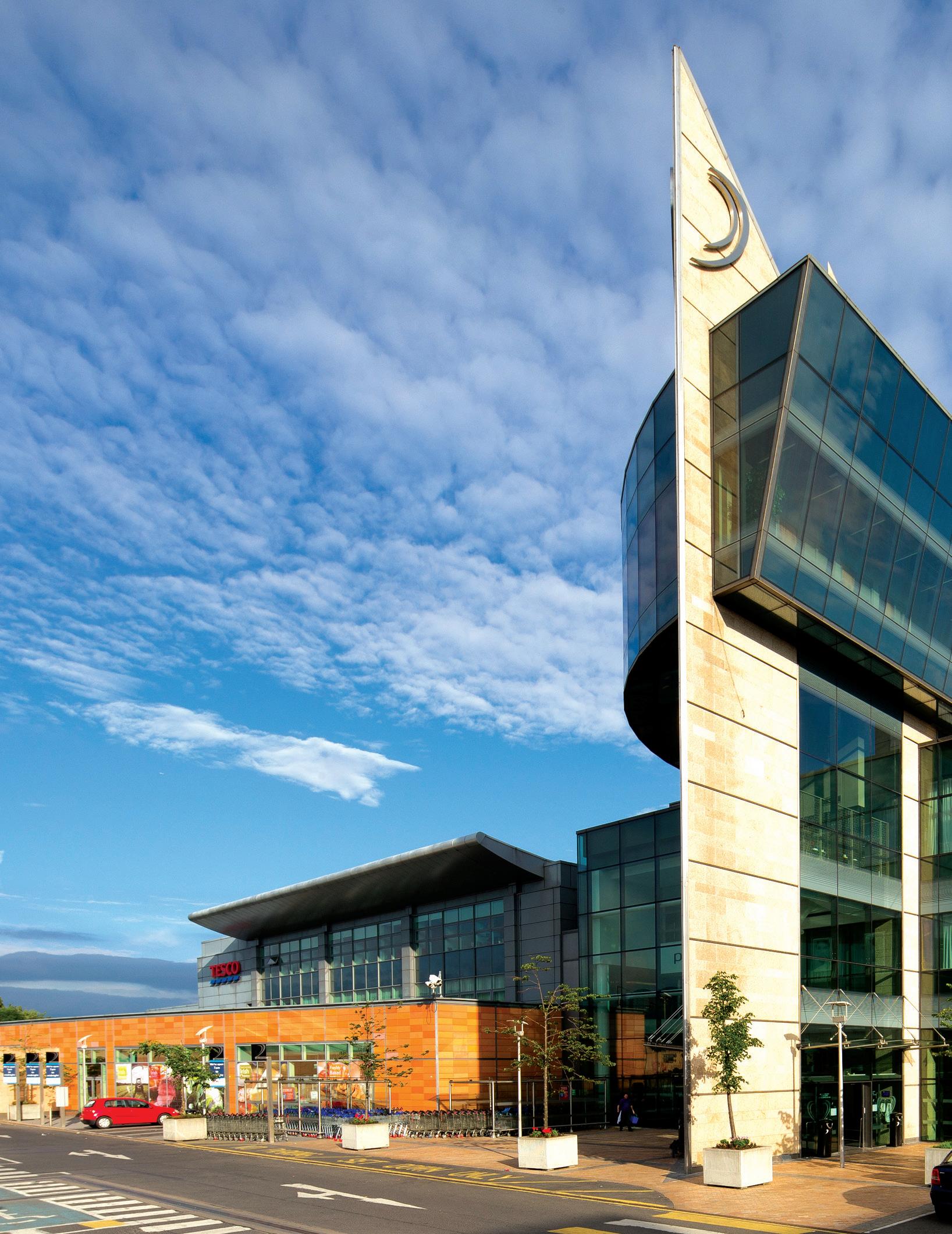
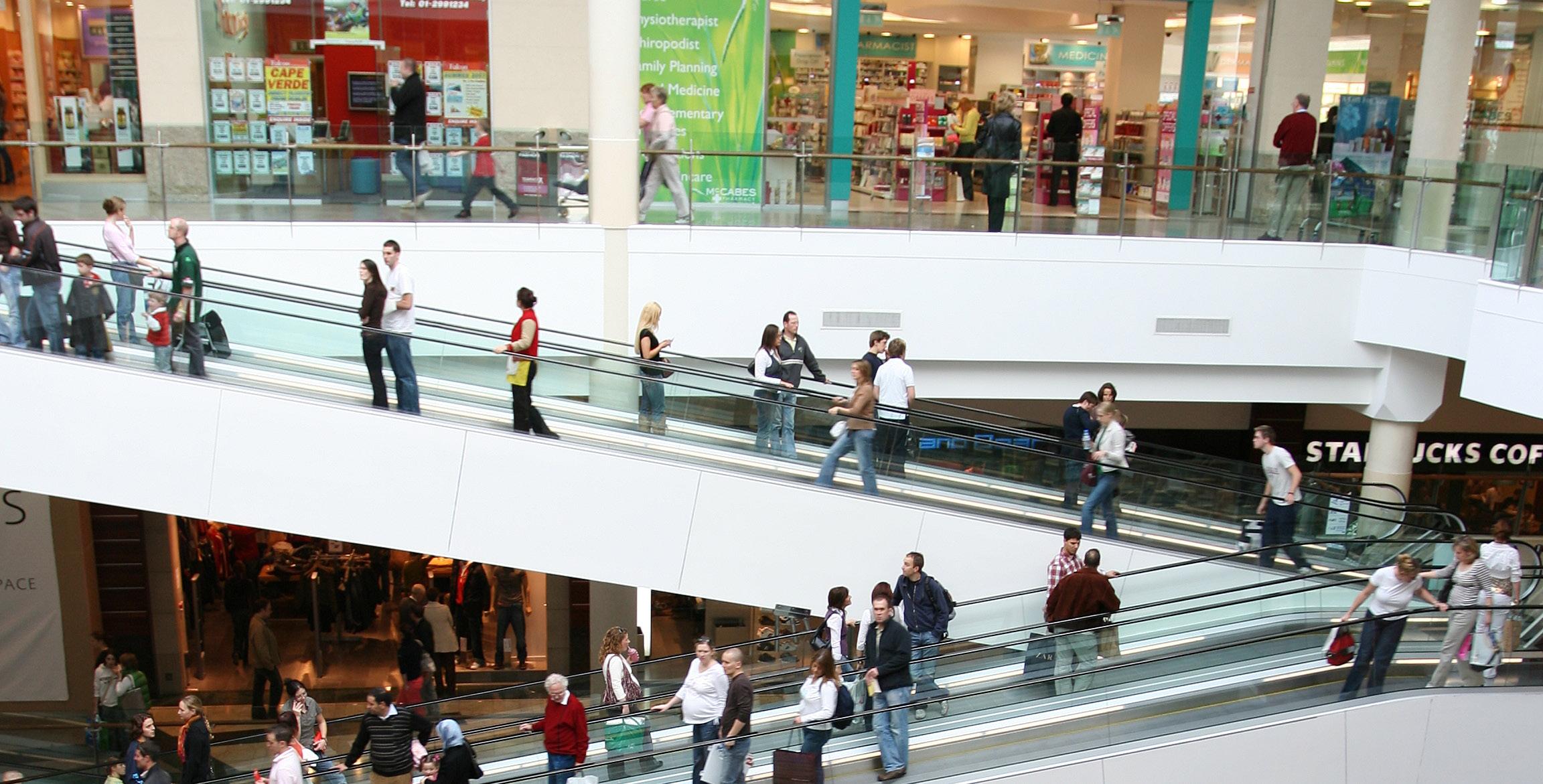
dundrum town centre. photographer: peter kavanagh
welcome to the July 2017 issue of the dublin economic monitor
The Dublin Economic Monitor is a joint initiative on behalf of the four Dublin Local Authorities, co-ordinated by the City Council. The Dublin Region (four Dublin local authorities combined) plays an increasingly important role in the economy of Ireland and it is important that its performance is properly tracked. The Monitor is designed to be of particular interest to those living and doing business in Dublin or considering locating here. It is produced by DKM Economic Consultants, with KBC/ ESRI delivering the Dublin consumer sentiment data and IHS MARKIT delivering the Dublin Purchasing Managers’ Index (PMI).
We are delighted to publish a new data series from STR on Dublin's hotel market which provides data on hotel occupancy, market supply and daily room rates.
Also in this edition we have a special article by Dearbhla Lawson from Dun Laoghaire Rathdown focusing on Dublin Area Tourism Plans which sets out the role the 4 local authorities play in supporting this important sector of the Dublin economy. There is also a special article by Don Nugent, Director of Dundrum Town Centre on how they are embracing new retail opportunities and technology trends.
You can sign up to our quarterly mailing list and access the Monitor online at www.dublineconomy.ie.
We hope you find the Monitor useful and welcome any feedback to info@leo.dublincity.ie. The next release will be published online on 26th October 2017. Interactive charts from the Monitor are available on the Dublin dashboard www.dublindashboard.ie.
This document provides general information on the Dublin economy. It is not intended to be used as a basis for any particular course of action or as a substitute for financial advice. The document is produced independently by DKM Economic Consultants; the views and opinions expressed are those of the relevant author, and do not necessarily reflect the views of the Dublin Local Authorities. The Dublin Local Authorities disclaim all liability in connection with any action that may be taken in reliance of this document, and for any error, deficiency, flaw or omission contained in it.
Dublin City Council South Dublin County Council Fingal County Council Dún Laoghaire Rathdown County Council
NATIONAL ECONOMY GLOBAL ECONOMY
Following a relatively subdued year in 2016, global economic growth is expected to rise moderately in 2017 on the back of increasing trade, investment and manufacturing output. Improving business confidence and recovering domestic demand—particularly in Europe—have been cited as primary positive forces.
In the US, fiscal expansions (mostly in the form of reduced household and corporate tax rates) are expected to further stimulate economic growth, which has already benefitted from rising consumer demand driven by a strengthening labour market. The Federal Reserve increased interest rates for a third consecutive quarter in June, but business investment is still expected to contribute positively to domestic demand.
euro: sterling exchange rate
€1.30 €1.35
€1.25
€1.20
€1.10 €1.15
source: central bank of ireland.
The UK’s General Election on June 8th generated greater instability and uncertainty as the Conservative Party formed a minority government supported by the Democratic Unionist Party, which will have implications for Northern Ireland. The UK’s economy has started to show the first major signs of a slowdown since the Brexit referendum as higher inflation (related to the weakening of Sterling shown in the chart), low real wage growth and tightening credit supply have contributed to a softening of growth which is expected to continue into 2017 and 2018.
The Eurozone has shown relative strength in recent quarters, supported by higher demand from export markets in Asia and the US. Accommodative monetary policies and modest fiscal expansions are expected to support growth but stubbornly high unemployment, weak real wage growth and high levels of non-performing loans are constraining domestic demand in some countries.
The finalised National Accounts results for 2016 showed that Irish GDP expanded by 5.1% YoY, driven by particularly strong performances in the sectors of construction (+15.1%) and information & communications (+9.8%). Activities related to aircraft leasing and the import of intellectual property (IP) rights also had significant – if somewhat distortionary — effects in increasing the rate of GDP growth.
On July 14th, the CSO revealed a new measure for Irish economic performance (GNI*) which strips out large movements in these specific components. This tailored measure, which valued economic output at €189bn in 2016 compared to GDP of €276bn, affects the key metrics for the economy, especially regarding Irish debt levels as the ratio of Debt: GNI was c.106% versus a Debt:GDP ratio of c.73%. This could have knock-on effects for Government fiscal policy over the coming years.
exchequer tax receipts performance against profile, h1 2017 (€million)
source: department of finance.
The Government published its first Summer Economic Statement under new Taoiseach Leo Varadkar in July. The Statement outlined in broad terms the Government’s plans for increased medium term capital expenditure, along with estimates of fiscal space for 2018 (€500m after pre- committed expenditure is filtered out), and scaled back plans for a ‘Rainy Day Fund’.
Strong Exchequer tax returns for the month of June narrowed an unexpected deficit which had emerged between actual returns and forecasted returns over much of the first half of the year. However, as shown in the chart, revenue was still marginally behind profile (-0.5%) largely due to shortfalls in income taxes (-2.3%) and excise duties (-2.9%).
In line with the broadly positive movements in the Irish economy in recent quarters, economic activity in Dublin has continued to gather pace. The Capital’s rapidly improving labour market is a prime example of the region’s resurgence with the unemployment rate swiftly reducing over the past three years to 6.3% (seasonally adjusted) in Q1 2017. Such positive developments in the labour market have been driven by job creation in specific sectors, such as construction, while further employment growth is expected over the coming quarters as a number of larger international firms have recently selected Dublin as their city of choice for relocation from the UK in light of Brexit.
Dublin’s tourism market has continued to evolve and contribute to the wider economy of the region in recent years, as can be seen in a number of indicators and a special report (pages 12-13) in this issue. Dublin Airport is the primary example in this regard as passenger arrivals reached a new peak of over 1.23 million (SA) in March 2017. This was the 23rd consecutive month in which arrivals exceeded 1 million, thus underlining both the growing importance of the airport as a transport hub and the ongoing success of the Capital’s tourism sector.
Further evidence of the strong levels of tourists visiting Dublin is demonstrated by two new hotel market indicators from STR. This data shows that the Dublin hotel occupancy rate remained at a high level in Q2 2017 (82.7% SA), which reflects a booming tourism market combined with limited new room supply in recent years. Average Daily Rates (ADR) charged showed a similar trend, reaching €148 per room per night (SA) in the quarter to stand at the highest point since the series began in 2011.
The increasing level of trips on Dublin’s public transport system is another signal of the strong levels of tourism and economic activity. Passenger trips reached a new peak in Q1 2017 and this likely reflects both rising levels of employment in the Capital and the strong performance of the tourism sector in attracting visitors. The overall improvement in economic activity in Dublin was cited
as a key driver of rising consumer sentiment levels in Q2 2017, according to KBC/ESRI. Austin Hughes, Chief Economist at KBC Bank Ireland, notes:
“The Dublin consumer sentiment index in the second quarter of 2017 improved to its best level in a year and was driven by a strengthening jobs market that boosted household finances and encouraged a more positive assessment of the economic outlook for the coming year. While the latest reading is very encouraging, it suggests consumers outside Dublin remain cautious in relation to their personal financial prospects and their spending plans”
In line with the broadly positive economic performance of the Capital, Dublin’s IHS Markit Purchasing Managers’ Index (PMI) for Q2 2017 showed continuing momentum from previous quarters. Andrew Harker, Senior Economist at IHS Markit, explains:
“The latest Dublin PMI data suggest no signs of a let-up in the strong performance of the Capital’s private sector, with output growth accelerating from the first three months of the year. A particular highlight this quarter was the construction sector, which saw activity increase at one of the strongest rates in the series 16-year history. There was a slight easing in the rate of job creation during Q2, but firms continued to take on extra staff at a marked pace and the labour market situation will likely improve further should growth of workloads be maintained at the current pace. Dublin outperformed the Rest of Ireland in terms of both output and new orders as the Capital continued to drive growth, but the improving position is by no means restricted to Dublin as the rest of the country also posted marked expansions in activity, new business and employment.”
dublin airport & hotel sector maintain significant momentum
DUBLIN ECONOMIC INDICATORS
unemployment remains stable in first quarter of 2017
source: cso qnhs seasonally adjusted BY DKM..
Following a very strong final quarter of 2016, the Dublin labour market was comparatively stable in Q1 2017. The unemployment rate for the Capital stood at 6.3% (seasonally adjusted) in the quarter, down by 0.8 percentage points YoY but unchanged QoQ. This reflected increased employment combined with a less significant increase in unemployment. At the national level, the unemployment rate fell for a fifth consecutive quarter to stand at 6.8% in Q1, thus reflecting the ongoing improvement in the labour market outside Dublin.
construction leads strong employment growth
Despite slowing levels of QoQ growth, seasonally adjusted employment levels in Dublin rose by 2.6% or almost 16,000 jobs YoY in Q1 2017. As with the final quarter of 2016, YoY employment growth was recorded in each of the four main sectors of the economy. The most substantial YoY expansion was in construction where employment increased by 20.4%. This was followed by the public sector and industry where employment growth reached 2.9% and 2.2% respectively. The private services sector recorded the lowest proportional increase of 1.2% YoY, but this still equated to over 4,600 jobs.
source: cso qnhs. dublin seasonally adjusted by dkm
Dublin National
DUBLIN ECONOMIC INDICATORS
residential property prices continue to rise
source: cso.
The rate of YoY growth in Dublin residential property prices accelerated to over 8% in each of March and April 2017. Prices have now increased on a YoY basis in every month since the end of 2012, reflecting both the macro-economic recovery and the acute supply issues facing the Dublin residential market. Growth remained stronger outside of Dublin in April 2017 with prices rising at the sharpest YoY pace (+13.4%) in over two years.
residential rents moderate in first quarter of 2017
source: rtb.
Following strong growth levels in average rents for both houses and apartments in Q4 2016, the Dublin residential rental market showed signs of moderation in Q1 2017. Average rents for apartments recorded a QoQ decline of 2.7% which was the largest such decrease since late 2009. Average rents for houses rose at a very minor QoQ rate in Q1 2017, but nonetheless reached a new peak of €1,535 per month. This was 6.6% above the equivalent average in Q1 2016.
house completions rising modestly
source: declg. seasonally adjusted by dkm.
House completions in the Dublin region remained at a low ebb in Q1 2017, with a seasonally adjusted total of fewer than 430 houses completed in each month. A modest upward trend in completions has emerged over the past year but completion rates remain far below what is required by the market. On a positive note, commencements increased quite robustly in February and March, while completions were more evenly spread across the local authority areas, with rising completion rates in South Dublin in particular.
source: rtb.
dublin housing completions (sa)
source: dhpclg. seasonally adjusted by dkm.
dublin office rents stable in q2 2017
source: CBRE
Office rents remained stable on a QoQ basis across the Dublin region in Q2 2017. Although unchanged in the quarter, rents remained at peak levels in both the city centre and south suburbs. On a YoY basis, rents for commercial space grew in three of the four Dublin regions covered. Rents rose by 18% and 17% YoY in the west suburbs and north suburbs respectively, while an 8.7% YoY increase was recorded in the relatively more expensive city centre area.
office demand strong in high tech and financial sectors
source: cbre.
Office vacancy rates in Dublin fell on both a QoQ and YoY basis in Q2 2017. These trends reflect the exceptional level of office take-up in Dublin in H1 2017, which increased by almost 70% on the corresponding period in 2016. Approximately 40% of the office take-up in the Q2 2017 was by computer/hightech occupiers, with a further 30% accounted for by financial services firms. Vacancy rates overall in Dublin were down from 7% to 6% in the quarter.
public transport trips rebound strongly in q1 2017
Passenger trips on Dublin's public transport system rebounded strongly in the first quarter of 2017 in spite of three days of industrial action on Bus Eireann's routes. A seasonally adjusted total of almost 51 million trips were taken in the quarter, 1.6 million trips or 3.2% above the same quarter in 2016. Growth was robust across the different transport modes, but was particularly strong on Dublin Bus and Luas. Increasing public transport usage is likely a reflection of both rising employment in Dublin and positive trends in the capital's tourism market.
dublin office space vacancy rates %
source: cbre.
City Centre South Suburbs
Dublin 2/4 Dublin Suburbs
Suburbs
source: cbre.
dublin office rents index (2006 = 100)
DUBLIN ECONOMIC INDICATORS
dublin airport connectivity improves further
Passenger arrivals at Dublin Airport maintained significant momentum in the first quarter of 2017, with robust YoY growth recorded in each month. January recorded the strongest growth of 10.1% YoY with 1.23 million passenger arrivals. YoY growth fell back to 3.9% in February, but recovered to 9.6% in March. Overall, passenger arrivals in Q1 2017 were 7.8% or 264,000 arrivals above the same quarter in 2016. This ongoing success has contributed to the airport being recently ranked in the top 20 European airports for both direct connectivity and hub connectivity.
hotel occupancy rates remain high
The Dublin hotel occupancy rate remained above 82% (seasonally adjusted) for a ninth successive quarter in Q2 2017. Occupancy stood at 82.7% in the quarter, down by marginal proportions of 0.3 percentage points (pp) QoQ and 0.4pp YoY. This minor decrease in occupancy rates may be related to a fall off in UK visitors on foot of the depreciation of Sterling, combined with moderate increases in hotel room supply. The stock of available hotel rooms rose by 2.4% YoY in the quarter to stand at the highest level since the series began in Q1 2011.
hotel room rates reach new post-recession peak
Average Daily Rates (ADRs) charged for Dublin hotel rooms maintained an upward trajectory from previous quarters in Q2 2017 to reach a new post-recession peak of €148 (seasonally adjusted) per room per night. This was 3% above the equivalent rate for Q1 2017, and represented an increase of 7.3% or €10 compared to Q2 2016. ADRs have now increased in every quarter for two years, demonstrating the impact of surging demand in the market.
dublin
dublin airport arrivals '000s (sa)
THE CAPITAL CONTINUES TO RANK HIGHLY UNDER INTERNATIONAL BENCHMARKS
Internationally published benchmarks are a useful means of measuring a city’s performance relative to its peers, and recent indicators for Dublin confirm the city’s strong showing across a range of dimensions (see table below).
The benchmarks listed focus on a number of areas – attractiveness for FDI, the real estate market, quality and cost of living, business environment, university quality, start-up environment and tourism.
The QS World University Rankings 2018 showed that two of Dublin’s three universities had improved their standings over the previous year. Trinity College rose 10 places to 88th in the world while UCD was up 6 places to 168th. DCU’s ranking fell in the year, dropping by 11 places to
391st. The report showed that all of the universities improved their reputations amongst employers, but research impact was considered to be low by international standards.
In terms of an EU destination for US startups, Dublin was rated highly in a new report by Venture Capital firm Index Ventures. The report named Dublin as the second most popular location due to its relative affordability, availability of staff and the country’s competitive corporation tax rate. London topped the list due in large part to its high concentration of large corporations and its deep talent pool. Despite this strong performance, the 2017 Mercer Cost of Living Survey ranked Dublin as the second most expensive city in the Eurozone
for expats to live. Rental accommodation was cited as a key factor in this result, which positioned Dublin as the 66th most expensive city worldwide. However, this still represented an improvement on its ranking of 47th in 2016.
Accommodation was also highlighted as a weak point for the Capital in a ranking of 100 worldwide locations best suited for millennials to live in or visit. The index, compiled by Nestpick, ranked Dublin as the 33rd best city in the world with strong performances in areas such as gender equality, the startup scene, tourism and internet connectivity. Surprisingly Dublin’s nightlife was poorly rated by Nestpick, while the transport network also received a relatively low rating.
dublin consumer sentiment rises sharply in q2 2017
The overall Dublin Consumer Sentiment Index increased in Q2 driven by improving perceptions of current conditions and rising expectations regarding the future. There was a 7 point increase compared to Q1 as all underlying components of the survey improved. It appears that Dublin consumer sentiment is beginning to recover following a relatively poor performance in the index in H2 2016. Outside of Dublin, consumer sentiment decreased by 1.4 points QoQ as financial and labour market concerns increased.
perceptions of current conditions positive
There was a further increase (4.2 points) in the Index of Current Conditions in Dublin in Q2, mainly driven by improvements in households' financial situations. There was a 5.7 percentage point rise in consumers reporting their personal financial situation had improved over the past year which likely reflects better labour market conditions as well as reduced household indebtedness. The buying climate has also improved with more consumers stating that now is a good time to make large household purchases.
consumer expectations increase further
Following a fall in consumer expectations for much of last year, it appeared in Q2 2017 that consumers in the Capital had generated greater confidence about the future. In particular, expectations regarding the economy and labour market over the next 12 months improved in the quarter. This indicates that the continuing decline in the unemployment rate and better jobs prospects are feeding into consumer expectations.
dublin firms see faster rise in output in q2
The Dublin private sector recorded an accelerated increase in output during Q2 2017. The Dublin PMI posted 59.4, up from 57.8 in Q1 and above the reading for the rest of Ireland. Strong growth was seen across all three economic sectors, with the rise in construction the fastest in three years. This expansion was also one of the fastest in the series which dates back to 2001. Manufacturing recorded a bounceback in growth following signs of a slowdown in Q1, while services continued to see strong expansions in output.
new order growth in dublin outpaces rest of ireland
New orders continued to rise sharply in the quarter, albeit to a slightly lesser extent than in Q1. The increase in new work in Dublin was stronger than the rest of Ireland at 58.8 on the index. This was the fifth quarter in a row in which Dublin has outperformed the rest of Ireland. Output has now expanded in Dublin in every quarter since Q3 2012.
solid increase in staffing levels
Dublin companies increased their staffing levels for the nineteenth successive quarter in Q2 2017. The rate of job creation eased from the start of the year, but remained solid at 54.8 on the index. This was above the mark of 50 on the index which signifies expansion, and is an indication of the ongoing improvement in the Capital's labour market. The rest of Ireland also saw a rise in employment in Q2, and one that was slightly faster than in Dublin.
The Dublin Purchasing Managers’ Index® (PMI) series is produced by IHS Markit Economics, an independent research company that produces highly-regarded surveys of business conditions in nations around the world www.markit.com
dublin area tourism plans supporting sustainable growth
BY DEARBHLA LAWSON DIRECTOR OF ECONOMIC COMMUNITY AND CULTURAL DEVELOPMENT AT DÚN LAOGHÁIRE RATHDOWN COUNTY COUNCIL
Tourism plays a key role in supporting the local economy, with employment in the sector expected to rise to 250,000 by 2025 compared with circa 225,000 in 2016.
2016 was a record year with 8.7 million overseas tourists spending an estimated €4.6 billion in Ireland. However the first five months of 2017 shows a more mixed picture, with a 7% drop in British visitors compared to the same period in 2016, most likely driven by weaker Sterling and economic uncertainty. On the other hand, there was strong performance from North America with CSO figures indicating 24% growth and a 4% increase in volume from mainland Europe.
The four Dublin Local Authorities play a significant role in supporting tourism development, and since 2012 have worked with Fáilte Ireland to raise the profile and promote Dublin as a key tourism destination through the 'Dublin - A Breath of Fresh Air’ campaign. This showcases a vibrant capital city which thrives side
by side with the natural outdoors, with the aim for Dublin to be in the top 10 European destinations for city breaks.
Across Dublin, amenities, arts, cultural events and festivals are in abundance. The Dublin Authorities are central to creating the right environment for tourism to thrive, whether through planning, managing or investing in attractions and events or providing high quality public realm. This helps ensure a range of uniquely enjoyable visitor experiences exist, meaning that a visit to Dublin can be so much more than just a city break; whether taking in the Biosphere Bay tours from Howth to Dun Laoghaire or the breath-taking panoramic views across the Dublin Mountains, all side by side with the bustling city centre.
Dublin City - Ireland’s Capital City is home to some of the country’s most iconic cultural, sporting and leisure facilities, and offers a huge variety of museums, theatres and galleries complemented by a dynamic night life, famous throughout the world. Attractions are supplemented by the cityscape, where the elegance of Georgian Dublin sits comfortably with the vibrancy of the Docklands. Dublin’s Tourism Statement of Strategy highlights the scale of tourism investment in recent years: Home to two world class sports stadia in Croke Park, the headquarters of the GAA, and the Aviva Stadium, home of the FAI and IRFU, and the centre piece of Ireland's 2023 Rugby World Cup bid. In Dublin Zoo, the Guinness Storehouse and the Book of Kells, Dublin City has 3 of the top 5 national attractions with 3.3 million combined visitors
annually. The award-winning Dublin.ie platform enables visitors to find out exactly what’s happening in this great city.
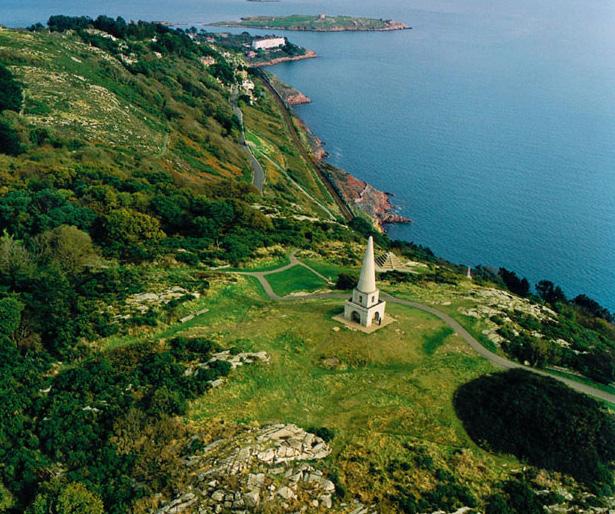
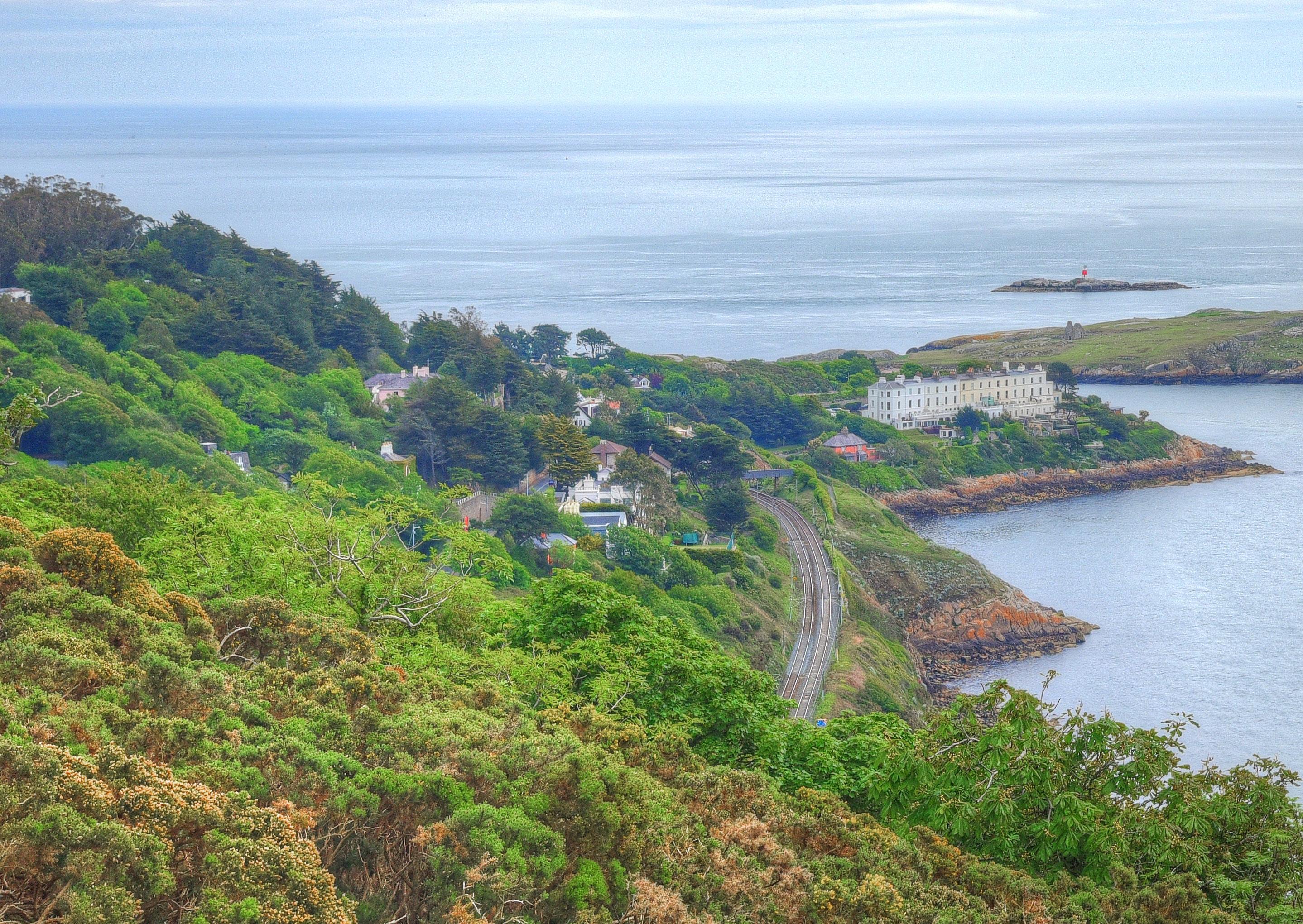
Dún Laoghaire-Rathdown (DLR) embodies the ‘Breath of Fresh Air’ proposition, with breath-taking coastline and the wonderful Dublin Mountains, combining land- and water-based activities with a rich cultural heritage, art, music, literature, festivals and events. DLR’s range of visitor attractions offers the visitor unique and distinctive experiences. DLR’s Tourism Strategy 2017 – 22 identifies three thematic experiences based on the area’s key attractions; ‘Urban Splash!’, ‘Between the Lines’ and ‘Well worth the Climb’. These build on the maritime opportunities, cultural heritage and the opportunities that the landscape has to offer, to reach new heights and deliver panoramic views.
DLR has an eclectic array of activities underway currently including free guided Summer of Heritage tours, music festivals at Marlay Park and Dún Laoghaire Harbour (Beatyard), literary and historic trails such as Dalkey Heritage Centre and and The Maeve Binchy Literary Trail, the iconic Lexicon Library and Cultural Centre, Food Markets in Dun Laoghaire and Marlay Park, events at Airfield Estate, Dundrum, Bio-Sphere bay tours and Dublin Mountains adventures.
Fingal - Fingal Tourism Strategy, launched in mid-2015, focused on aligning the County with the ‘Dublin - A Breath of Fresh Air’ brand, working in collaboration with sectoral stakeholders. The Tourism Strategy has recently been reviewed and updated, and has
prioritised actions in two distinct sets aimed at maximising growth. These include the enablers: connectivity, accommodation and skills, and the motivators; attractions, culture and heritage, business tourism, marketing, events and food. Fingal County Council commissioned the Fingal Heritage Properties Review in 2016 and is about to embark on an initiative to better conserve, manage and promote its impressive array of signature heritage properties. The Council also organises and supports 64 annual events of various scale, such as the Dublin Bay Prawn Festival and the Flavours of Fingal County Show. These impact the local economy to the tune of €30.1 million.
South Dublin since the launch of the Tourism Strategy in 2015, have progressed a range of projects to deliver sensitive development and marketing of tourism initiatives. A Tourism Marketing Plan launched in 2017, aligns well to ‘Dublin – A Breath of Fresh Air’. The key project - a gateway to the Dublin Mountains providing access improvements, a treetop walk, trail upgrades, interpretative and education facility with café at The Hellfire Club and Massy’s Woods - has been submitted for approval. In addition, The Round Tower, Clondalkin – Brú Chrónáin - opened in June, and features an interpretative centre, café, and craft shop and is home to the ‘Happy Pear’. The expansion of Tallaght Stadium provides a basecamp for sports and outdoor activity such as the inaugural Gael Force Dublin Event, which was held in February and will run again in 2018.
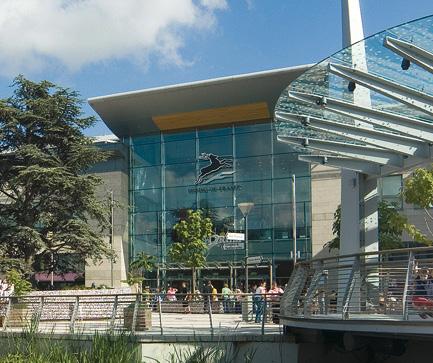
Dundrum Town Centre
Experiential Shopping
BY DON NUGENT DIRECTOR, DUNDRUM TOWN CENTRE
The retail sector represents Ireland's largest indigenous industry employing almost 280,000 people, accounting for almost 14% of Irish jobs and 23% of the State’s tax revenue.
While retail has been through a period of change over the past decade, with a decline of 40,000 jobs from a peak in 2008, it remains Ireland's largest employer. Traditionally, growth in retail has kept pace with general economic growth; however economic analysis carried out by IBEC suggests more modest future retail sales with growth of 1.2 – 2.2% expected per annum to 2020. This is due mainly to changing consumer behaviours and technological innovation changing how consumers shop and engage in-store and online.
The digital economy presents significant opportunities given that the share of Irish consumer spending in the digital economy is expected to grow from 7.7% in 2016 to 12.4% by 2021. The value of online spending will almost double, rising from an estimated €7.5bn to €14.1bn, and embracing digital transformation is key to securing a greater share of this growth.
Although Dublin is part of Europe’s fastest growing economy and consumer sentiment is steady, as an industry, retailers need to create and deliver a compelling offer to remain a significant player in this economy.
A major focus for many will be on experiential shopping, providing enjoyable and compelling experiences which cannot be replicated online. ” “
Consumers are looking for experiences and retailers are offering personalised in-store service like never before.
In a 2017 Retail Excellence Ireland survey, Dundrum Town Centre was identified as the highest performing shopping centre in Ireland with leases close to market rent, a good retail mix and a move towards experiential shopping.
Dundrum Town Centre is Ireland’s most popular shopping destination with 18 million visits per annum. Employing over 5,500 people. Our aim is to ensure this is a destination where customer
service expectations in shopping, leisure and dining are met and exceeded. However, we are also striving to create a destination point with unexpected activity designed to delight and surprise. Most recently we opened our Dundrum Garden of Pure Imagination by Diarmuid Gavin. This spectacular garden was showcased in last year’s RHS & Chelsea Flower Show and this is the first time it has appeared in Ireland. The animated garden comes alive every 15 minutes and has drawn crowds from all over the country with a positive impact on our tenants’ businesses.
Recently we have also seen the emergence of online influencers and their role in driving sales particularly within fashion, beauty and lifestyle categories. As these influencers inhabit the world of social media and blogs we see their recommendations fuelling high demand for products and thus footfall to stores and sales online. One high profile Irish blogger, Suzanne Jackson even coined the term “the so-sue-me effect” referring to her ability to put a product out-of-stock after a review. There is a scope for retailers to harness the power of these influencers and most recently Dundrum welcomed Pippa O’Connor and her POCO by Pippa pop up shop. Her range of jeans had only been available online previously. The store created a massive buzz – increasing Dundrum’s footfall by 12% in the opening weekend alone - and attracted shoppers who wanted to explore and experience the POCO by Pippa experience. This was a brilliant example of how physical retail can blend with online offerings and truly engage with people.
Customers also want restaurants and leisure which brings variety and vibrancy to retail destinations. Food and beverage outlets provide an experience that cannot be replaced wholly online and present an opportunity to increase dwell time and enhance overall customer experience.
The Irish retail industry is built on a solid reputation of unrivalled service. While the only thing that is constant is change, we all need to embrace dynamic trends and technology in order to thrive. We will see a lot of exciting times ahead in retail and you can be sure that Dundrum Town Centre will be at the forefront of them!
dublin: economic scorecard july 2017
Note: These "petrol gauge" charts present the performance of the particular indicator relative to a range of performances from most positive (green) to least positive (red). Each gauge presents the latest value compared to the peak value and the trough value over the last decade (except for public transport trips which cover the past 5 years). The Commercial Property gauges are red at the high and low extremes, in recognition of the undesirability of rents that are either too high or too low as well as vacancy rates.