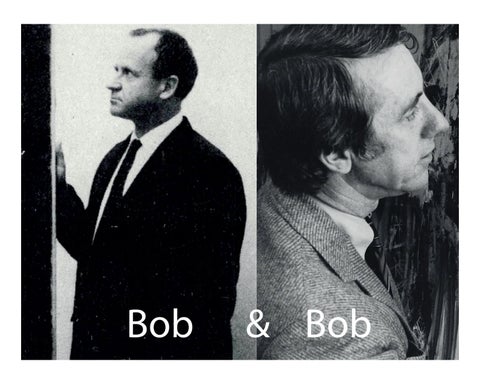
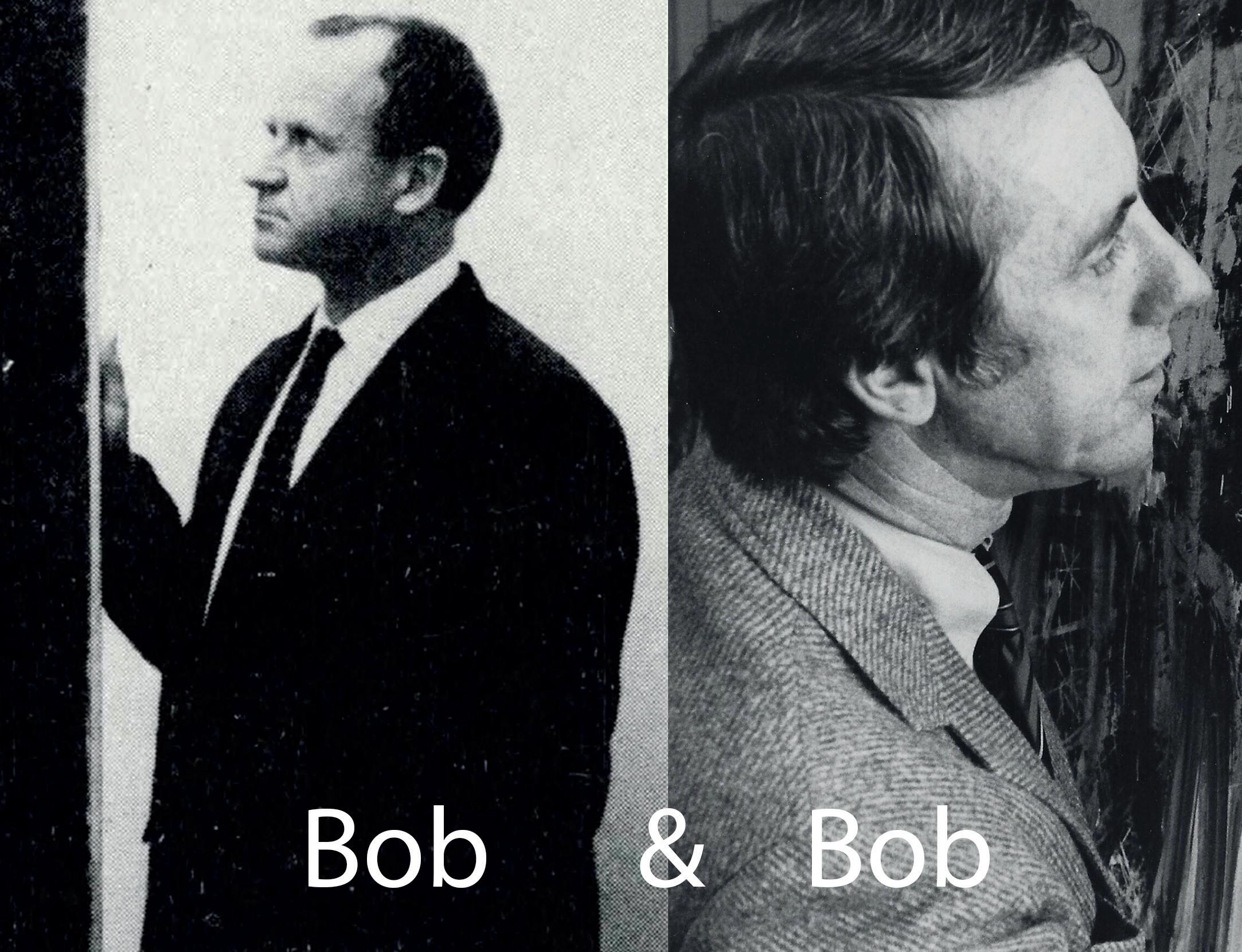
Bob & Bob
Robert C. Ellis (1923-1979)
Robert M. Ellis (1922-2014)
Opening Reception: Friday, July 3 | 5 - 7 PM
Exhibition Dates: July 3 - August 15, 2026
Introduction
203 FINE ART is pleased to answer an age-old question: what is the difference between Robert Ellis and Robert Ellis?Aside from a middle initial that distinguishes the two artists (Robert C. Ellis and Robert M. Ellis), these two legendary modernist painters have consistently overlapped. From their use of the GI Bill after WWII, their time at the University of New Mexico, to choosing the small town of Taos as home and building international artistic careers that crossed the same borders, both Bobs have long deserved to have their individual stories shared.
Both initially enamored with the Cubism movement of the early 20th century, the Bobs transformed the fundamentals of the genre to fit their unique perceptions of the world around them. Their transformative journeys with Cubism eventually led both of these artists to one of their first muses— the country of México. Robert M. Ellis pursued his BA at the México City College in México City in search of the same knowledge that shaped Diego Rivera and Jose Clemente Orozco. Robert C. Ellis lived remotely in the state of Chihuahua with the artistic masters of the Tarahumara Indians. While they both shared a profound love for and inspiration from the diverse cultures of México, the surfaces of their work exemplify distinct differences.
Robert M. Ellis was an academic as well as an artist, having taught at the University of New Mexico for two decades before becoming the Director of the Harwood Museum in 1987. This polished professionalism created a perceptible change in his style, as he became more figurative and direct, evidenced by his 1970s Studio Bay series depicting his studio as an architectural abyss. Robert C. Ellis, solely an artist and a graduate of the University of New Mexico, instead fell further into abstract surrealism. Focusing on luminosity and the quality of light in his compositions, the spiritual world is ever present in his pastel drawings and oil paintings. However, whether ironically or not, by the end of each of the artists’ careers, they had both found a home in minimalism.
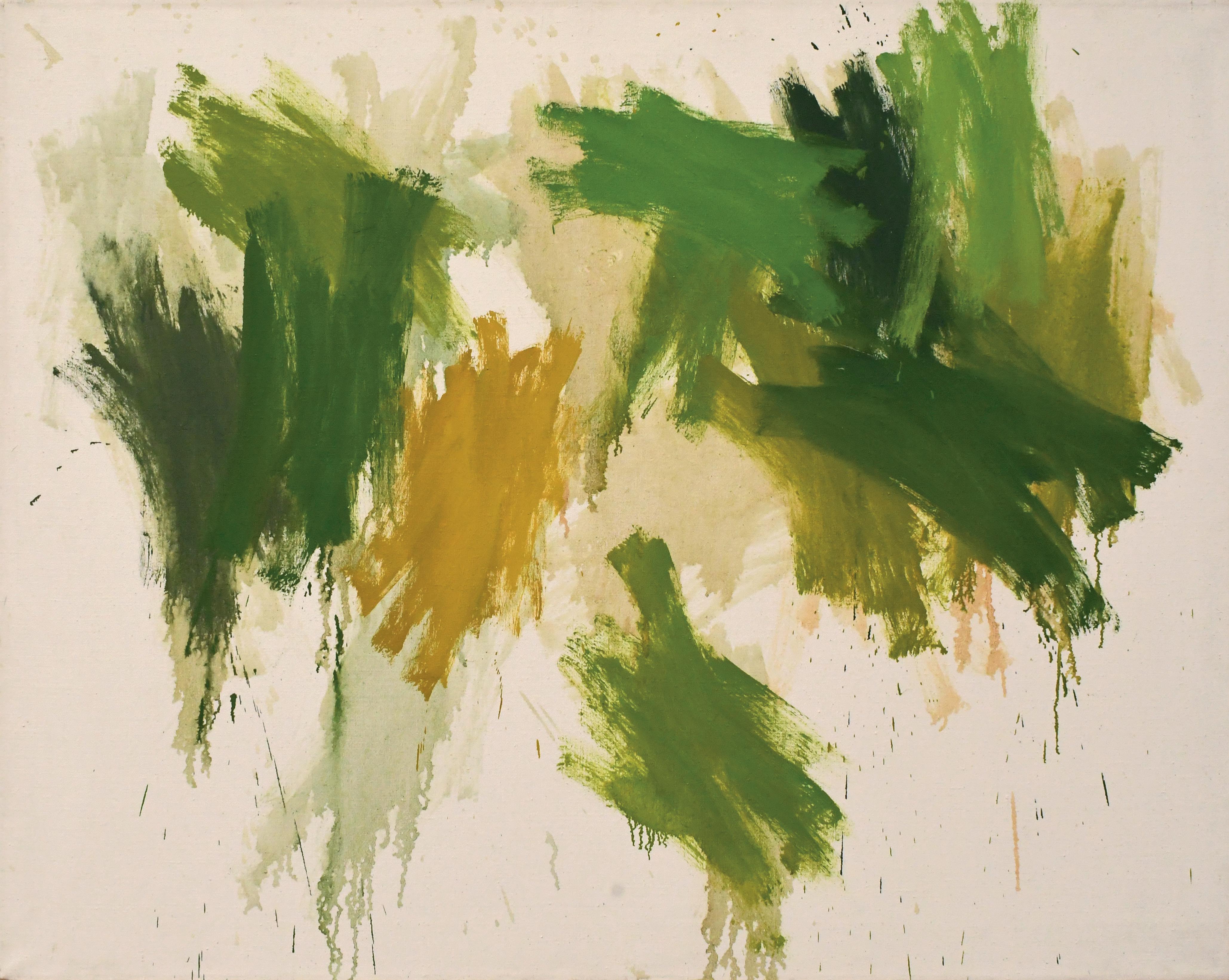
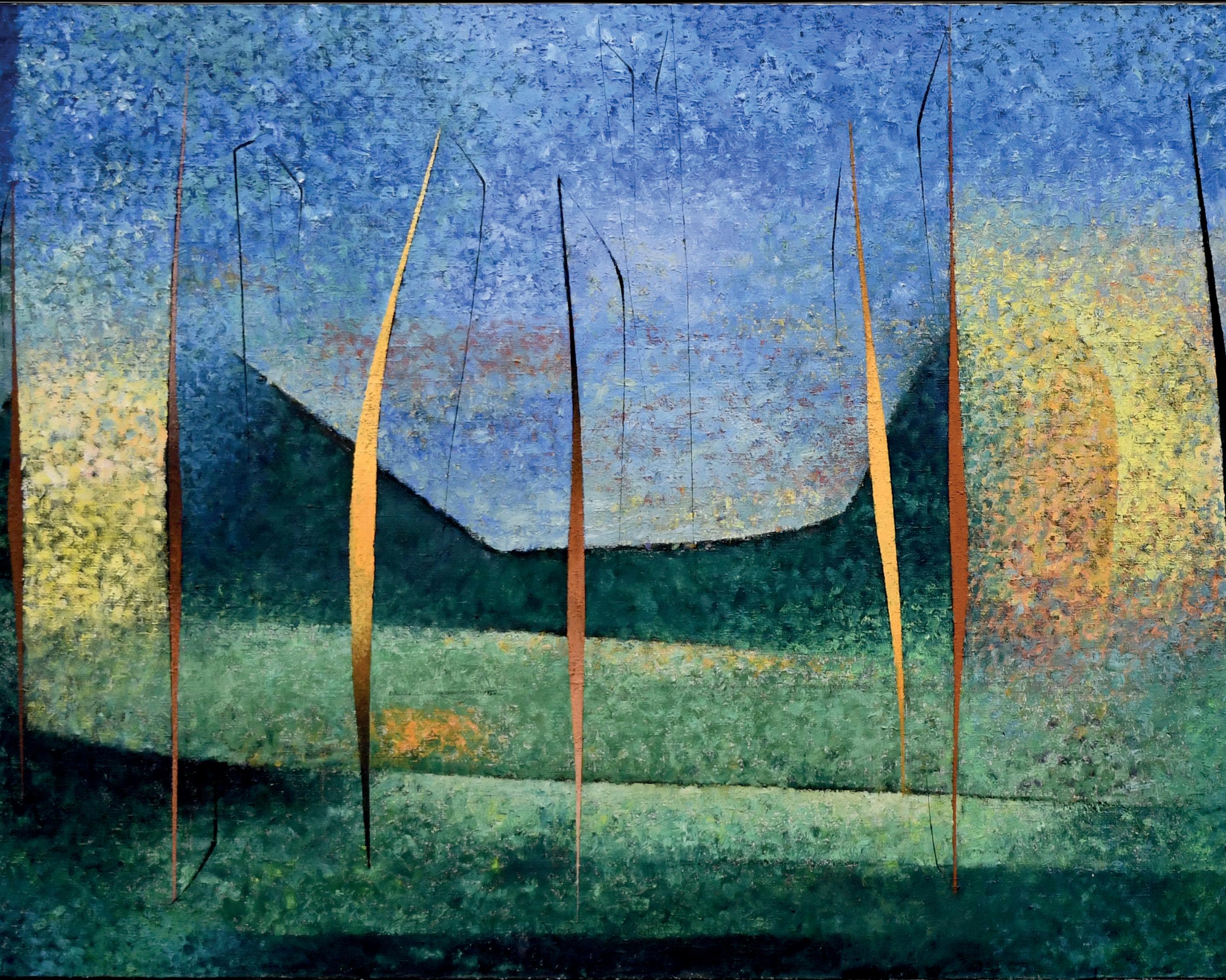
Image: R.M. Ellis, Untitled (Tree Series), 1962, 38 x 48 inches, oil on canvas
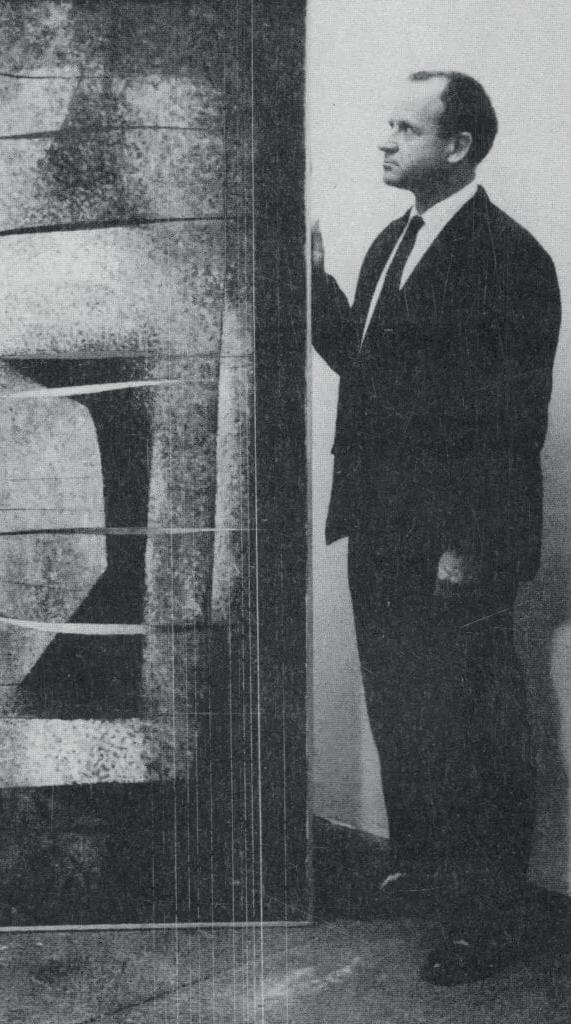
Robert C. Ellis (1923 - 1979)
Born in Union Point, Texas, on February 3, 1923, Robert C. Ellis first began studying art at the University of New Mexico (UNM), Taos Summer Field School in 1942. It was here that the artist would meet and befriend one of his personal inspirations: Andrew Dasburg.
R.C. Ellis would have moved to Taos earlier if it had not been for WWII and his service through the Coast Guard. After the war, he returned to studying art at the New School of Social Research in New York in 1949, where he studied with Abraham Rattner and Adja Yunkers (the latter becoming one of the Albuquerque Moderns). R.C. Ellis returned to New Mexico the following year to study at the University of New Mexico, obtaining his BFA in 1950.
Most important to R.C. Ellis was the time between 1947 and 1953, when he lived intermittently with the Tarahumara Indians of México’s Sierra Madre. He was the only artist among the Taos Moderns to pursue a career on both sides of the US/México border. In 1957, he married Rosamaria Ramirez de Alba, a Mexican citizen.
In 1961, R.C. Ellis returned to Taos as a resident of the Helene Wurlitzer Foundation. In 1965, he finally decided to call Taos home.
Robert M. Ellis (1922 - 2014)
Born in Cleveland, Ohio in 1922, Robert M. Ellis was an influential artist, educator and museum director. His academic career spanned six decades. In this time, R.M. Ellis never ceased creating and exhibiting his own art.
From 1942 to 1946, R.M. Ellis served as a naval officer in WWII. Along with many from his generation, he took advantage of the G.I. Bill, graduating from the Cleveland Art Institute. Influenced by the Mexican figurative artists Diego Rivera, José Clemente Orozco and David Alfaro Siqueiros, R.M. Ellis traveled to México and received a BA at México City College, México City.
In the 1950s, R.M. Ellis moved to the Los Angeles area where he earned his MFA. From 1956 to 1964, he served as Curator of Education at the Pasadena Art Museum. There, in the fall of 1961, he had an exhibition of paintings from his “Tree Series” which he created in Paris in the fall of that year.
In 1964, R.M. Ellis began his career as an educator with the University of New Mexico’s art department and moved to Albuquerque. Inspired by the expansive landscape of Northern New Mexico, R.M. Ellis moved to Taos after his retirement from UNM.
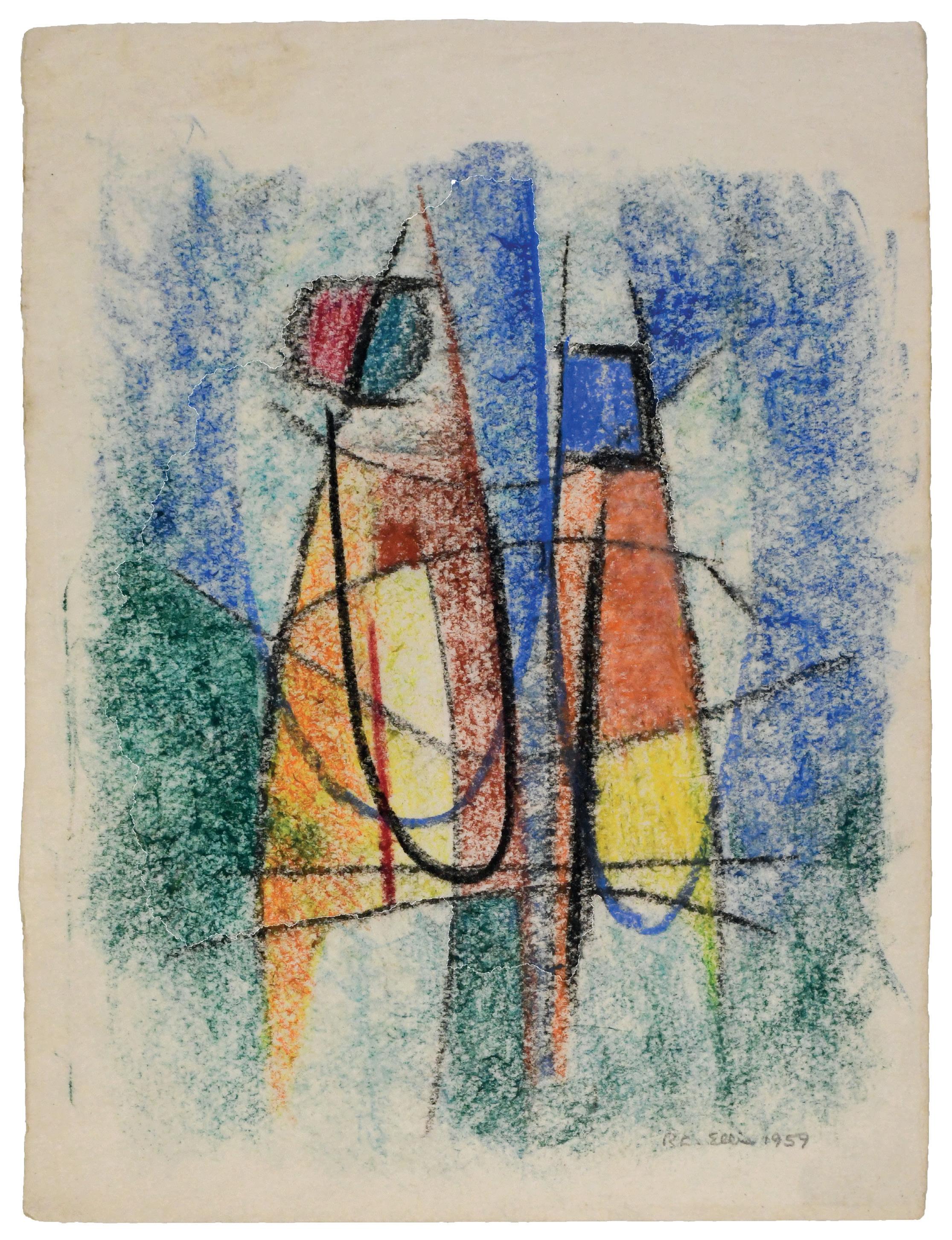
Untitled , 1959
12 x 9 inches, pastel on paper
R.C. Ellis
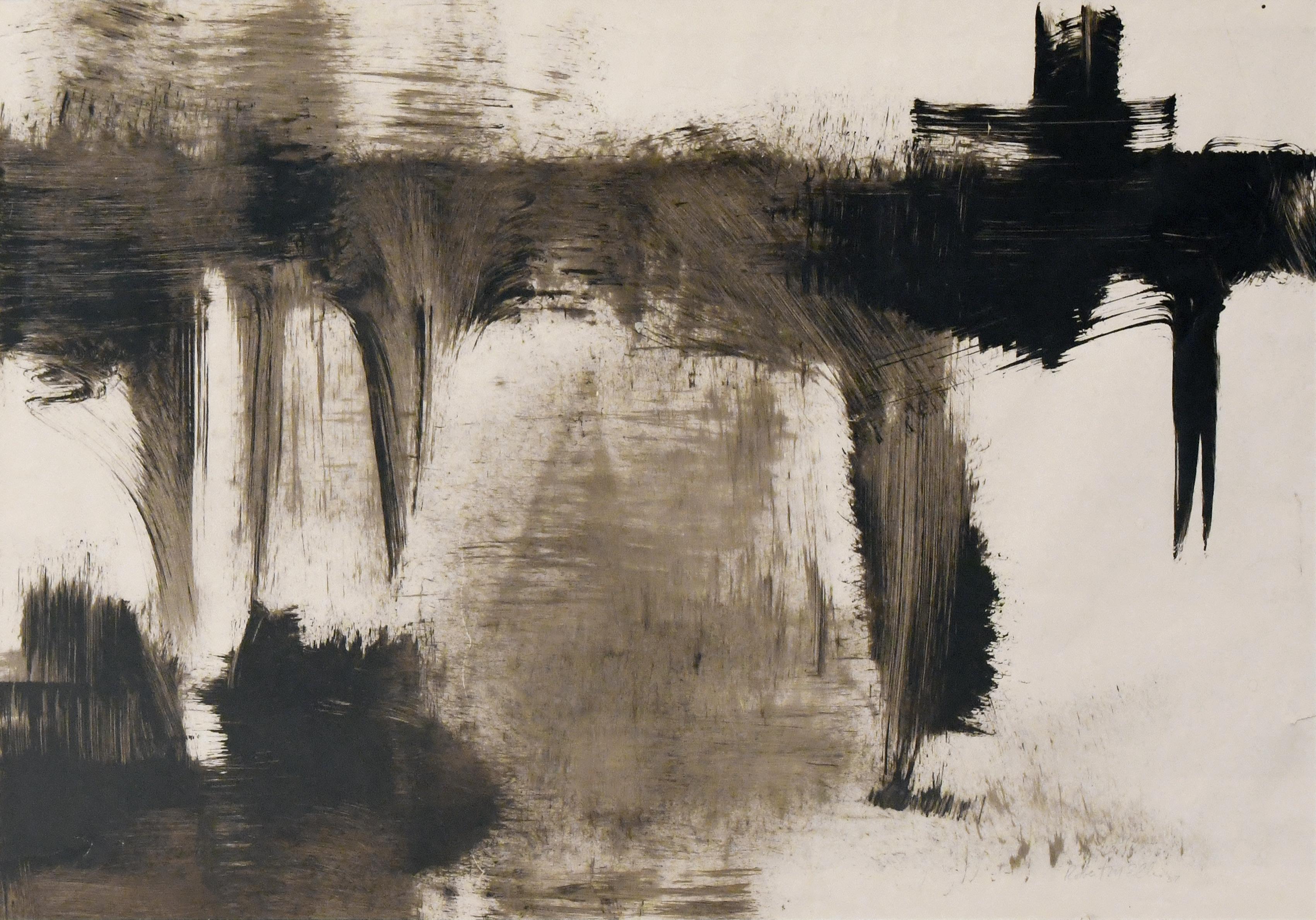
R.M. Ellis
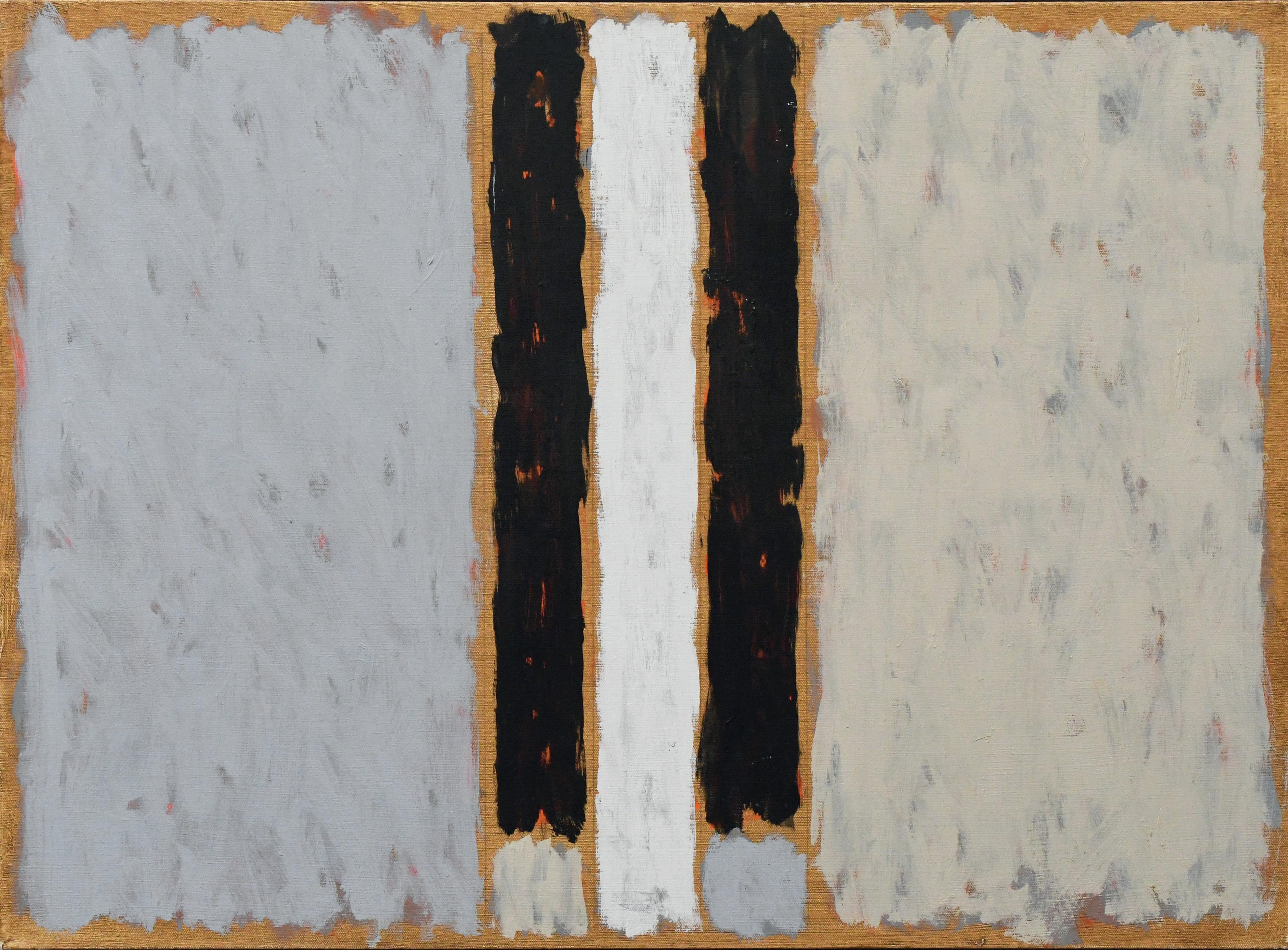
Viaduct , 1957
22 x 31.5 inches, enamel screen paint on paper
PostAegeanSeriesNo.34 , 2009
R.M. Ellis
24.25 x 32.25 inches, oil on canvas
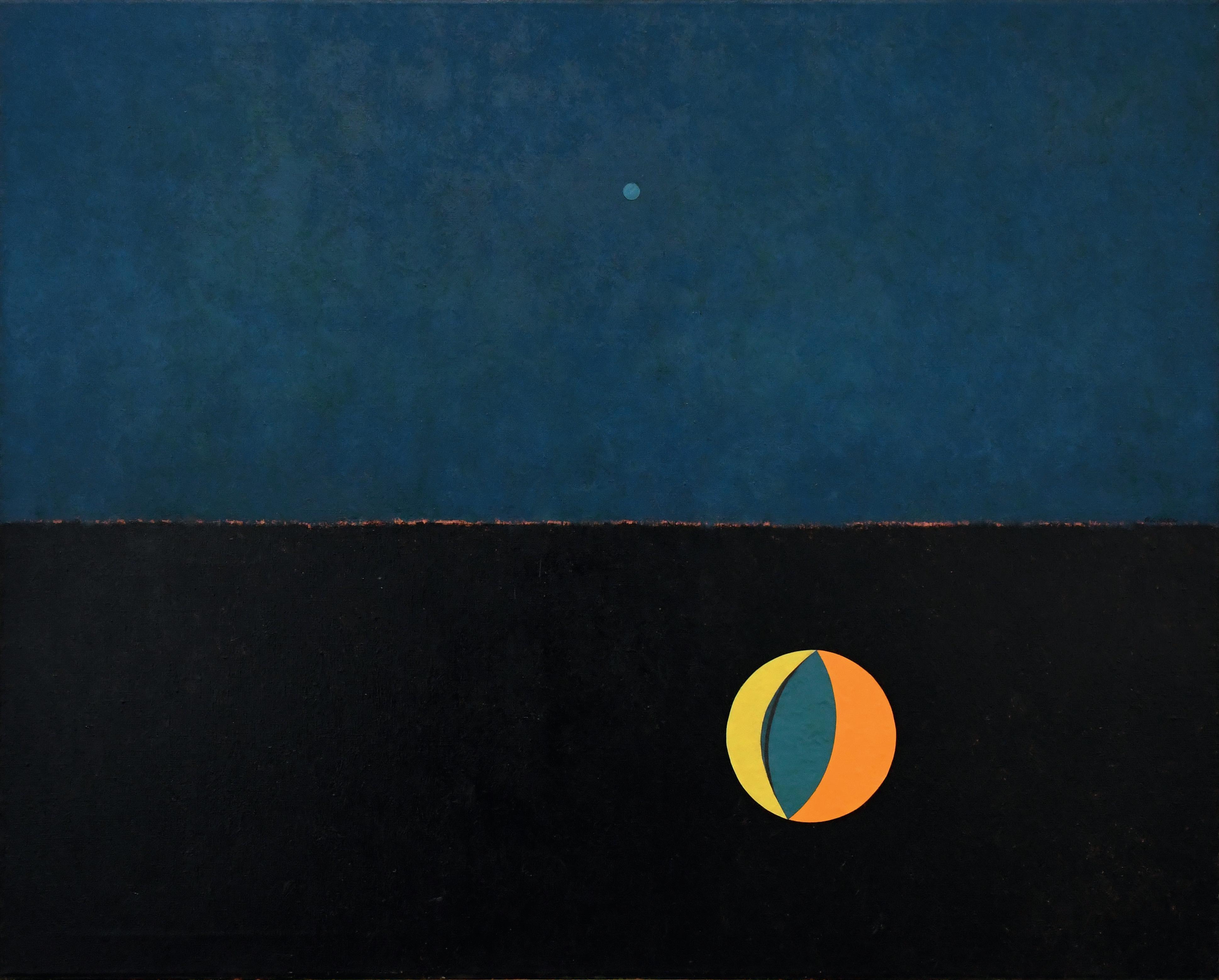
R.C. Ellis
Phasm #2 , c. 1970s
49 x 60.5 inches, oil on linen with collage
México
One of the earliest inspirations for both Bobs was the diverse culture of México, encompassing the rural, Indigenous tribes and the Cubist masters of the cities. Though they were both in México around the same time, and at the same age, their opposing outlooks on life and respective curiosities led them to adopt different techniques during this foundational period.
From 1947 to 1953, R.C. Ellis lived intermittently with the Tarahumara Indians. Particularly captivated by their brilliant use of color, R.C. began employing this approach in his early work. While in México, the artist found major success with multiple museum and gallery exhibitions, exhibiting at institutions such as Instituto Mexicano Norteamericano de Relaciones Culturales, México; Galería de Arte Mexicano, México; Galería Villa Roma, San Miguel de Allende, México; Museo Nacional de Arte Moderno del Instituto Nacional de Bellas Artes, México. His ties to México, as strong as those he felt for the Southwest, became even stronger with his 1957 marriage to Rosamaria Ramirez de Alba, who was from Guadalajara.
After serving as a naval officer in World War II and using his GI Bill to graduate from the Cleveland Art Institute, R.M. Ellis was not yet satisfied with his schooling. He went on to follow the path of his creative influences Diego Rivera, José Clemente Orozco, and David Alfaro Siqueiros to México City, where he completed a Bachelor of Art at México City College. Mexican art and culture would remain a lifelong influence for both artists.
Image: Detail of R.C. Ellis, PaisajeInterceptado, 1958, 36 x 73.5 inches, oil on linen
R.M. Ellis
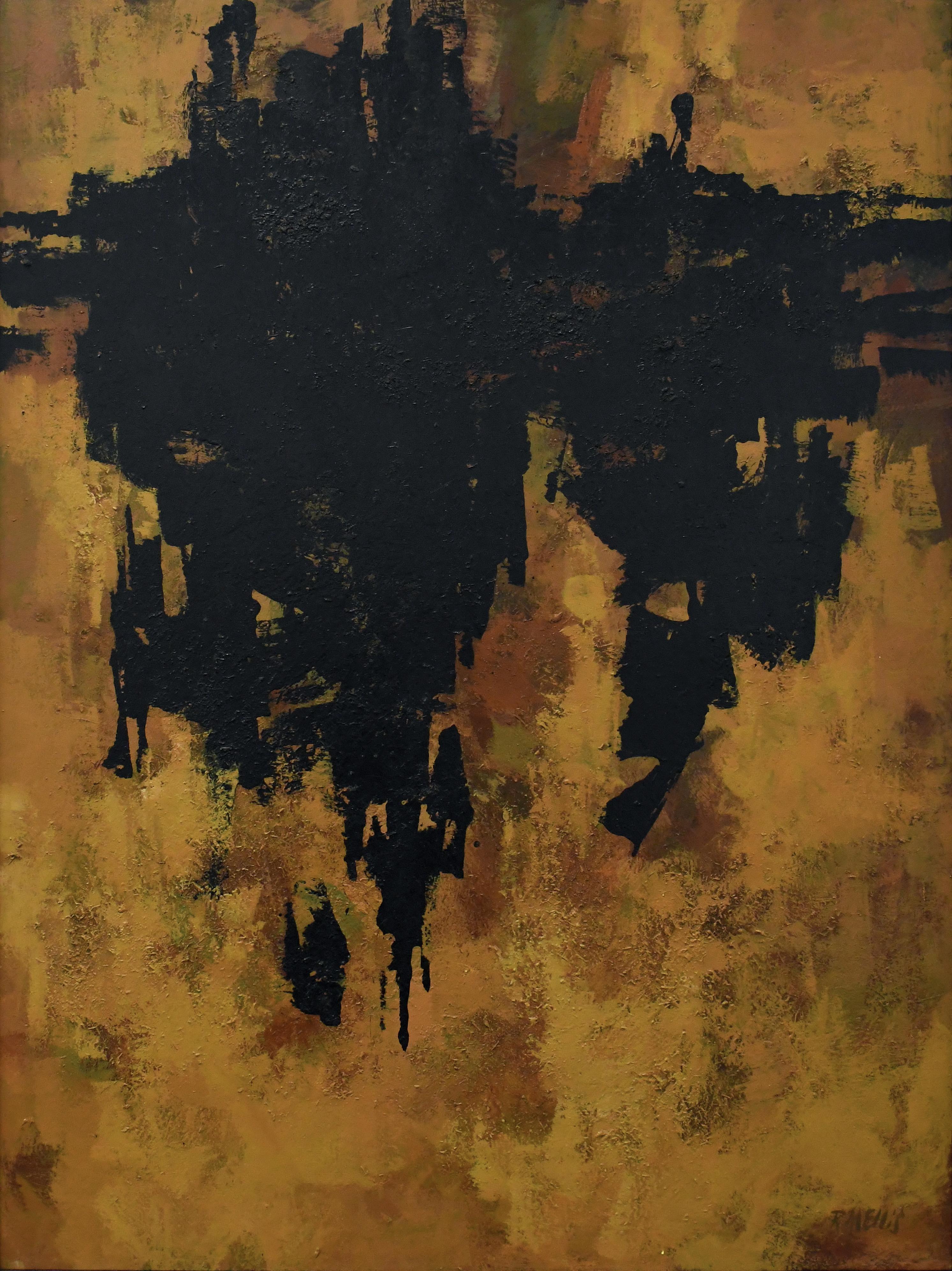
Spacescape(Yellow) , 1959
48 x 36 inches, vinyl on masonite (celotex fiber)
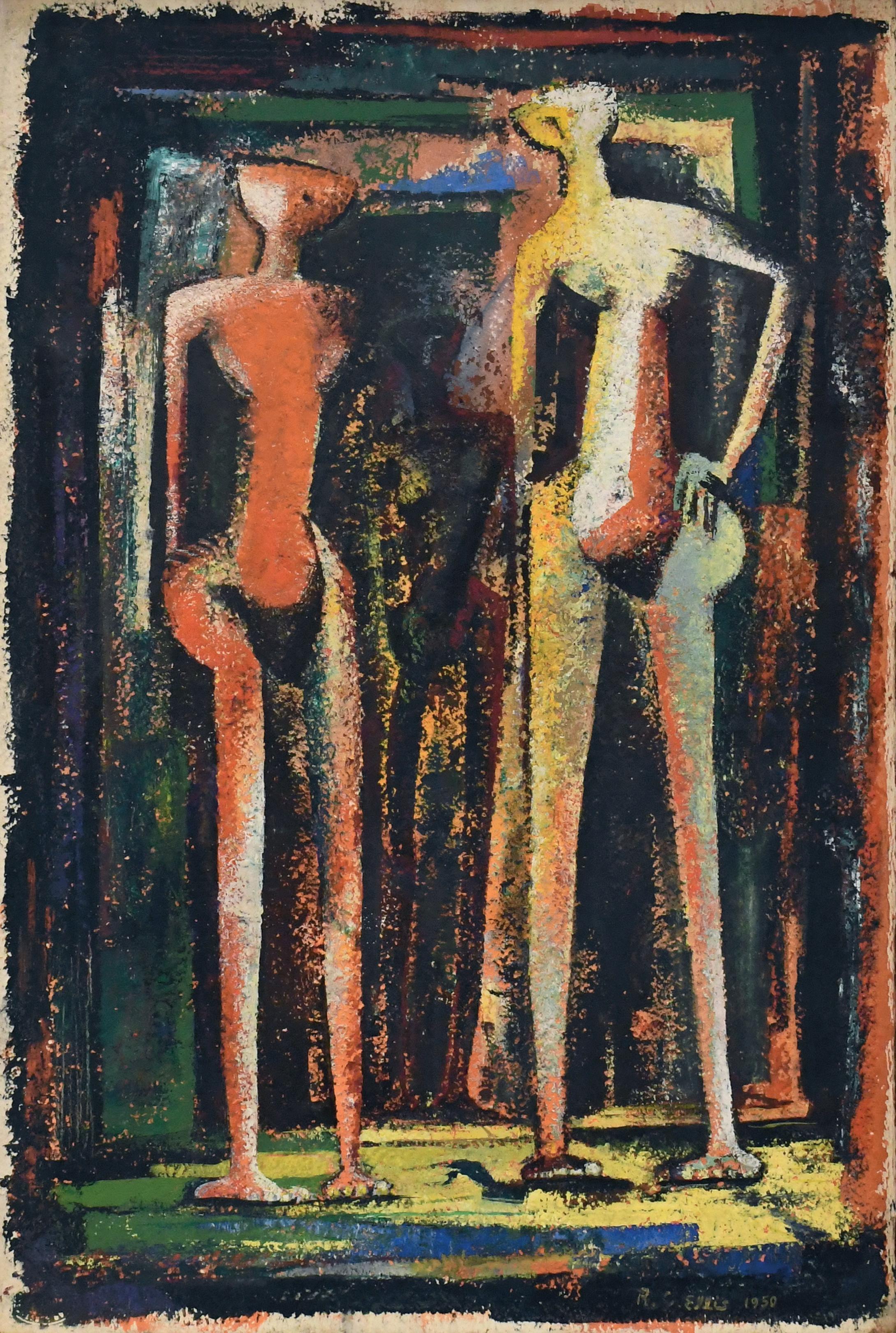
Untitled(CaveFigures) , 1950
15 x 22 inches, oil pastels on paper mounted to masonite
R.M. Ellis
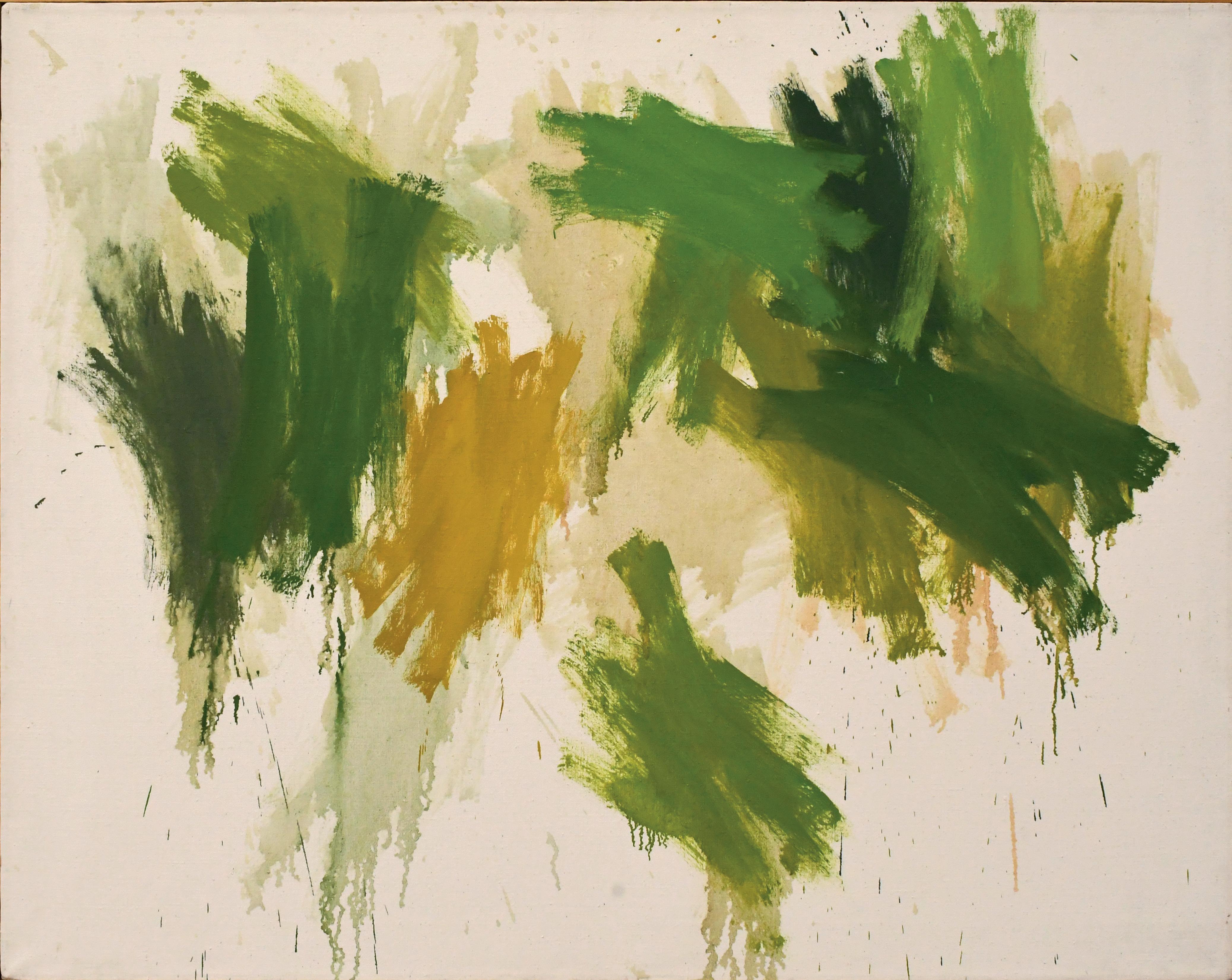
Untitled(TreeSeries) , 1962
38 x 48 inches, oil on canvas
R.M. Ellis
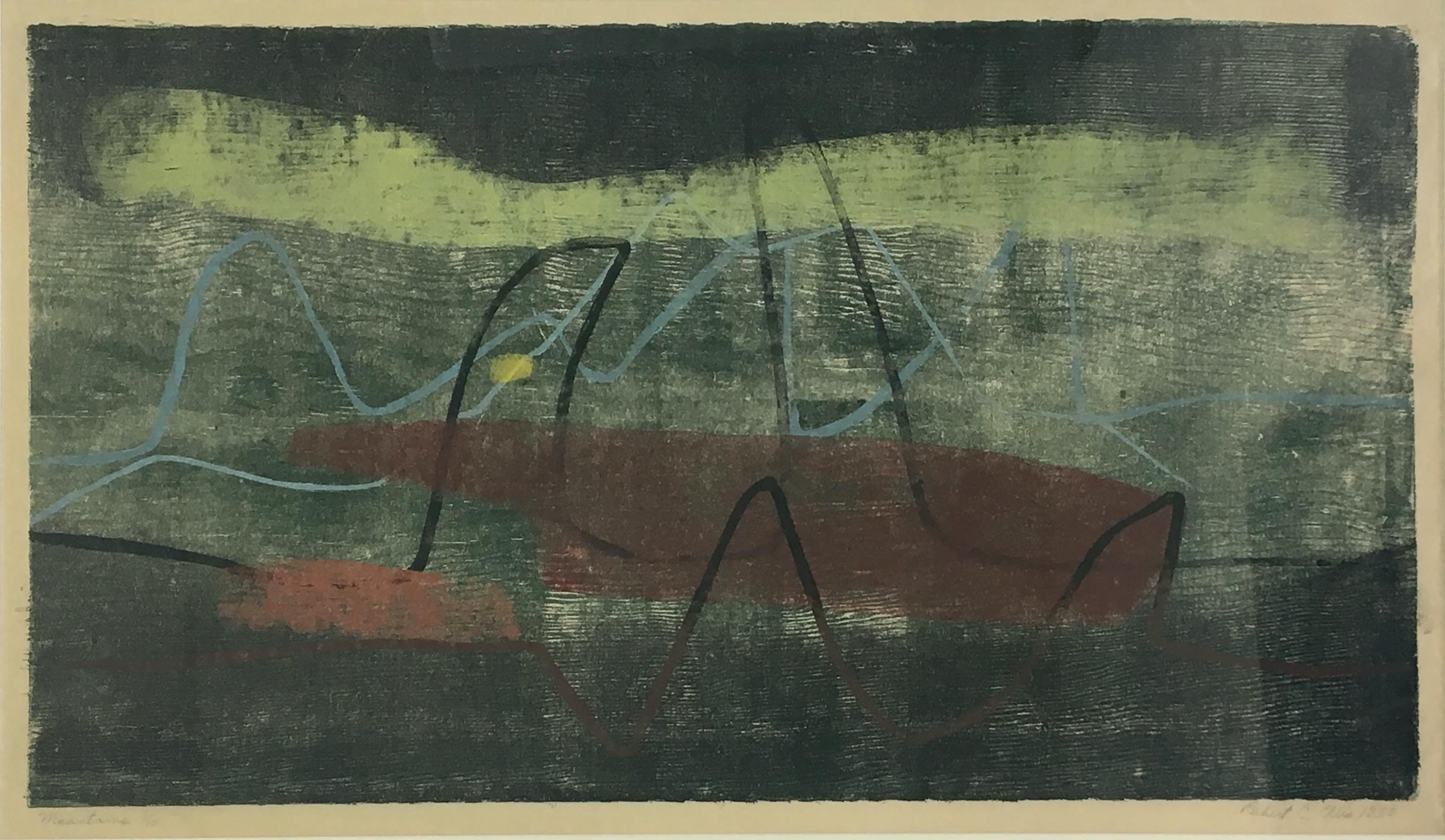
Mountainsed.1/10 , 1950
12.5 x 22 inches, wood block on paper
R.C. Ellis
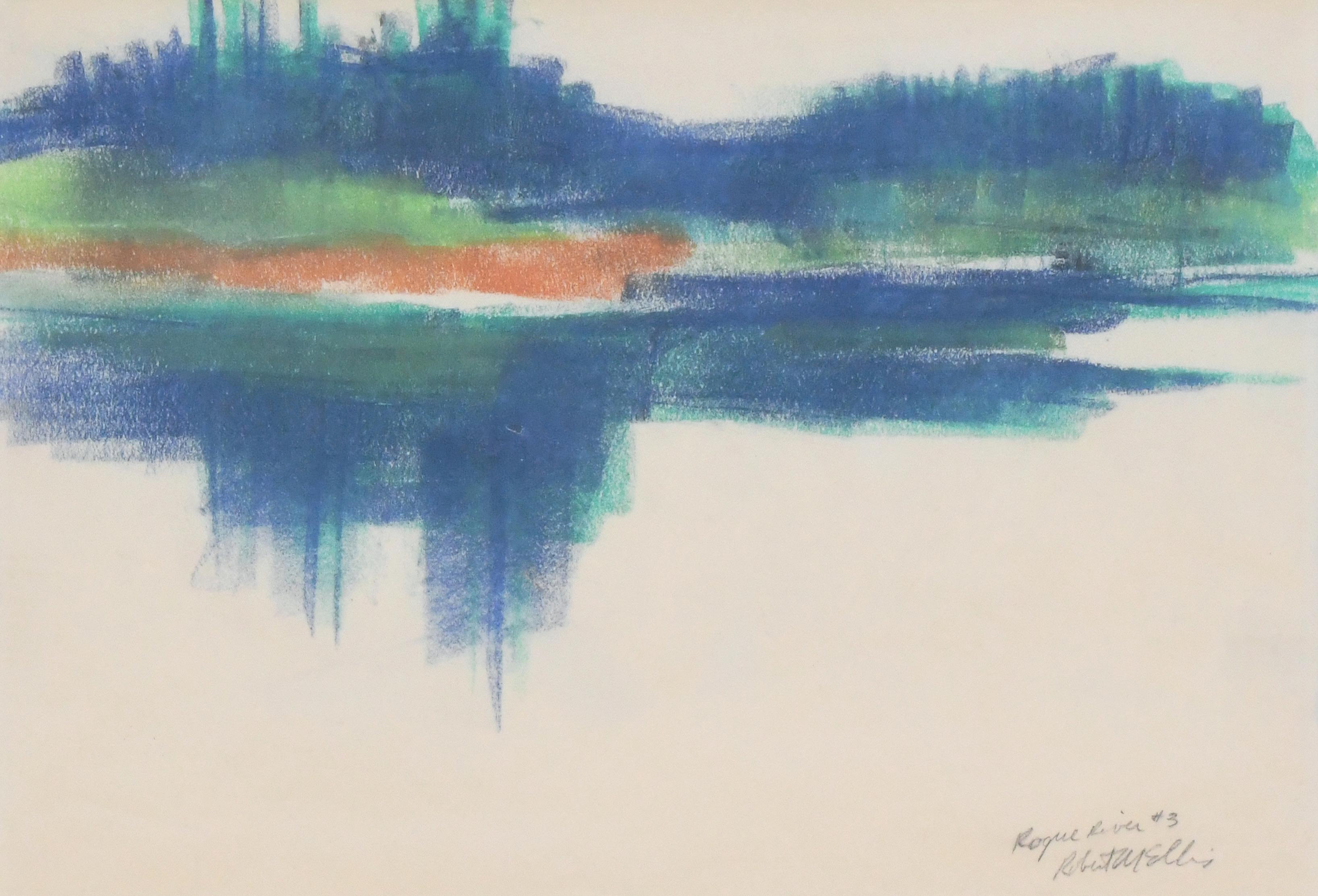
13 x 16.5 inches, oil pastel on paper
R.M. Ellis
RogueRiver#3 , c. 1959
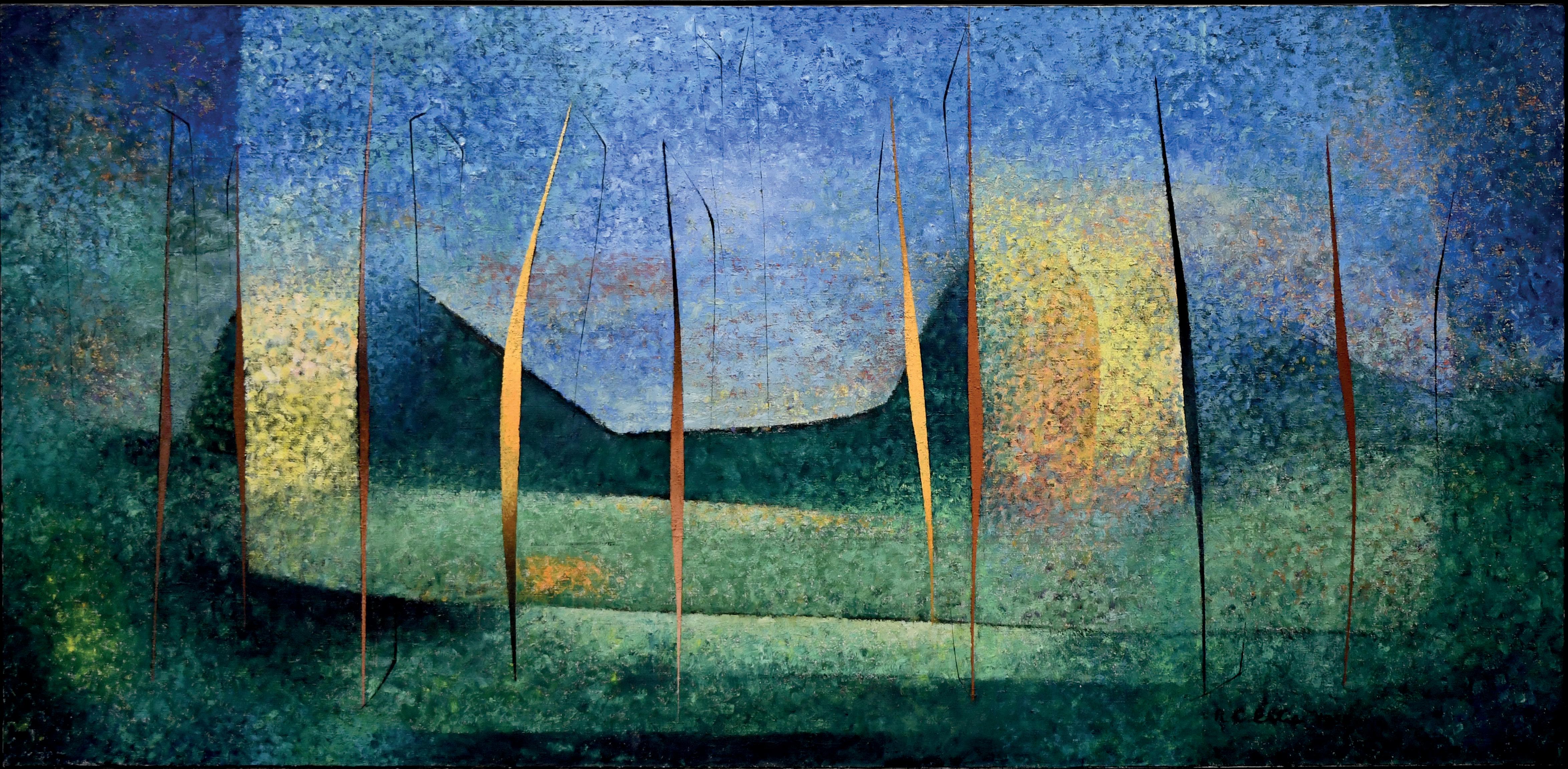
R.C. Ellis
PaisajeInterceptado , 1958
36 x 73.5 inches, oil on linen
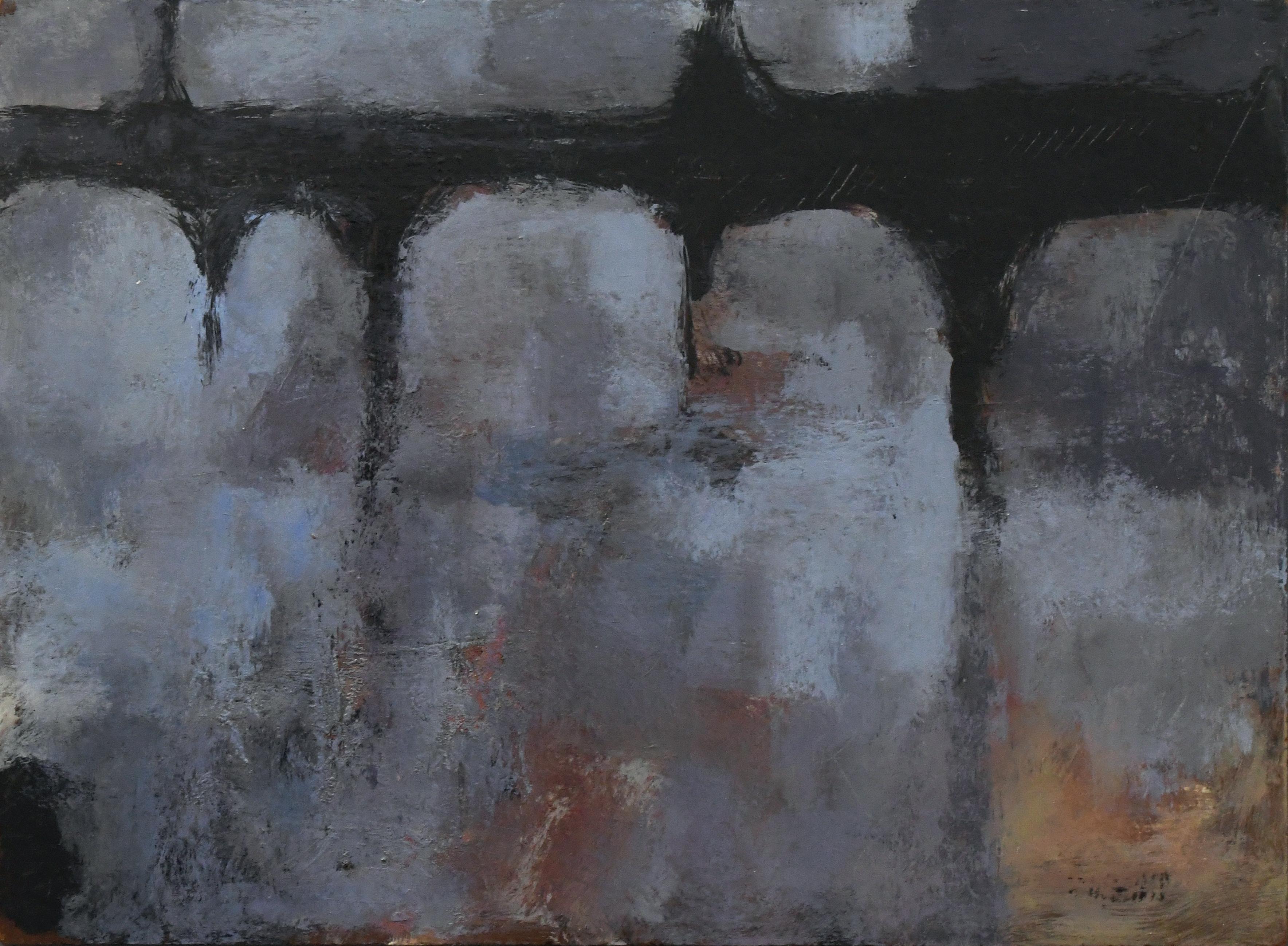
R.M. Ellis
Bridging#5 , 1957
18.875 x 14 inches, crystal vinyl acrylic on masonite
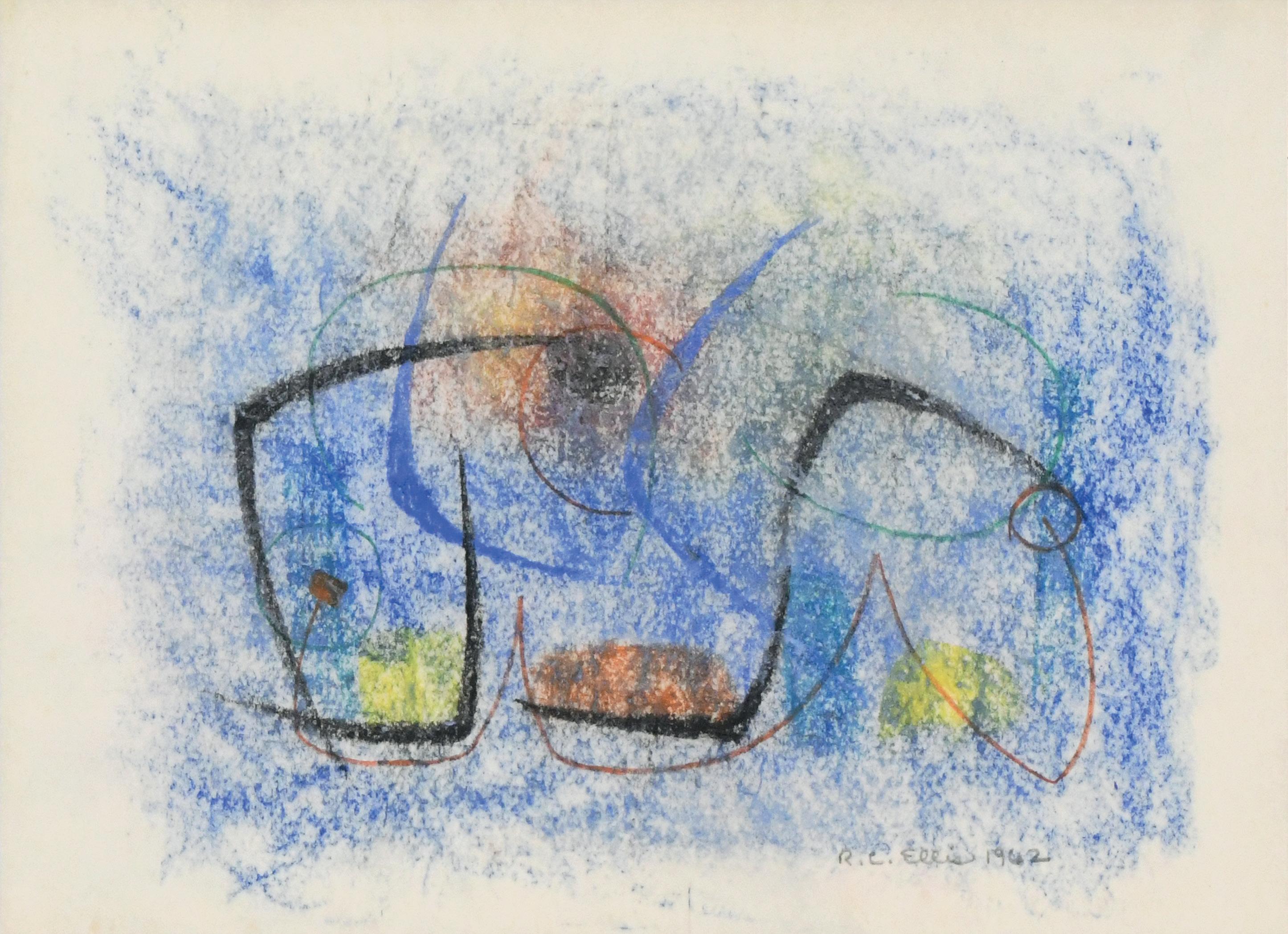
Untitled , 1962
R.C. Ellis
11.5 x 8.5 inches, pastel on paper
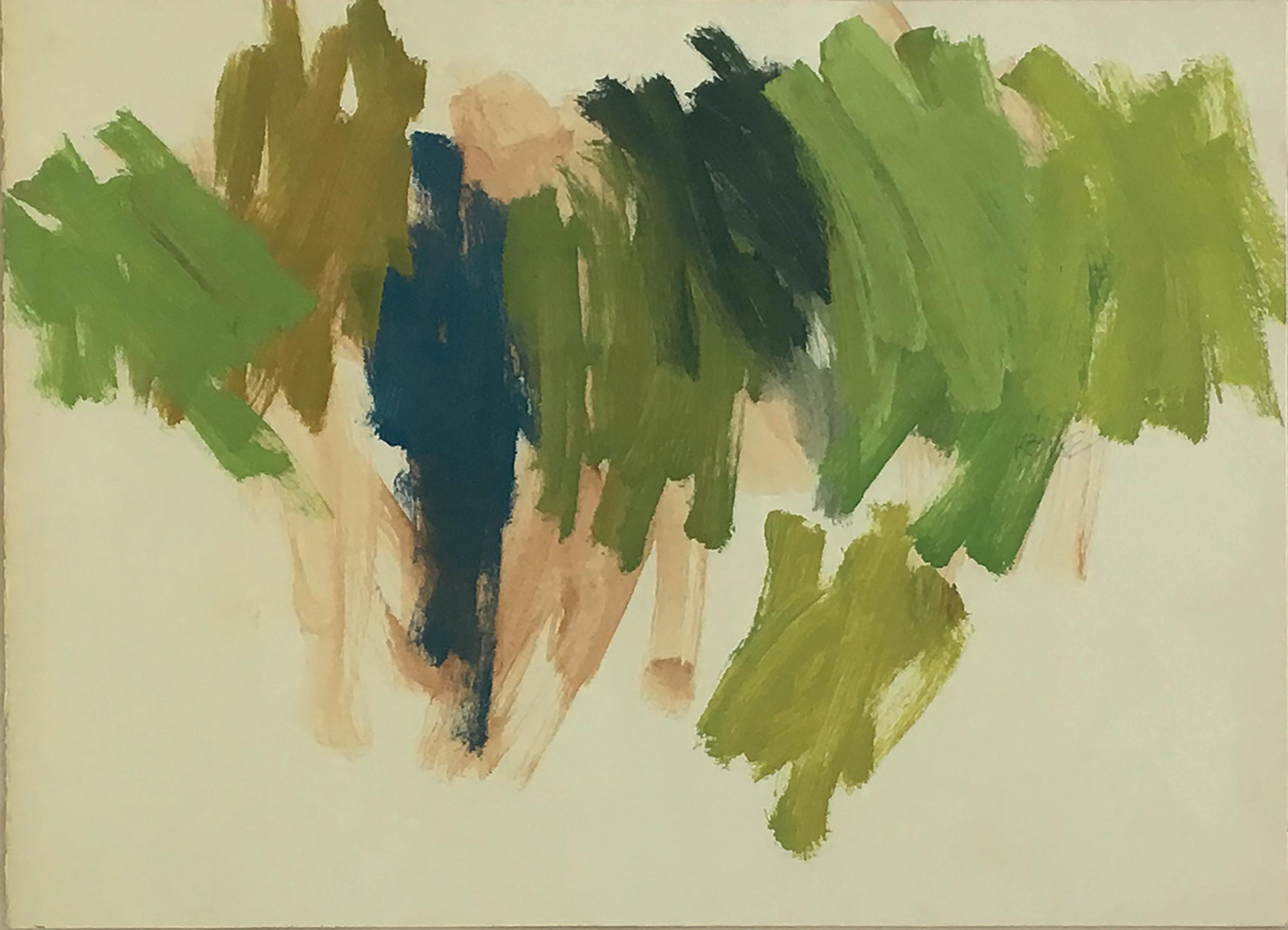
R.M. Ellis
Man in Nature , 1962
10 x 13 inches, oil on paper
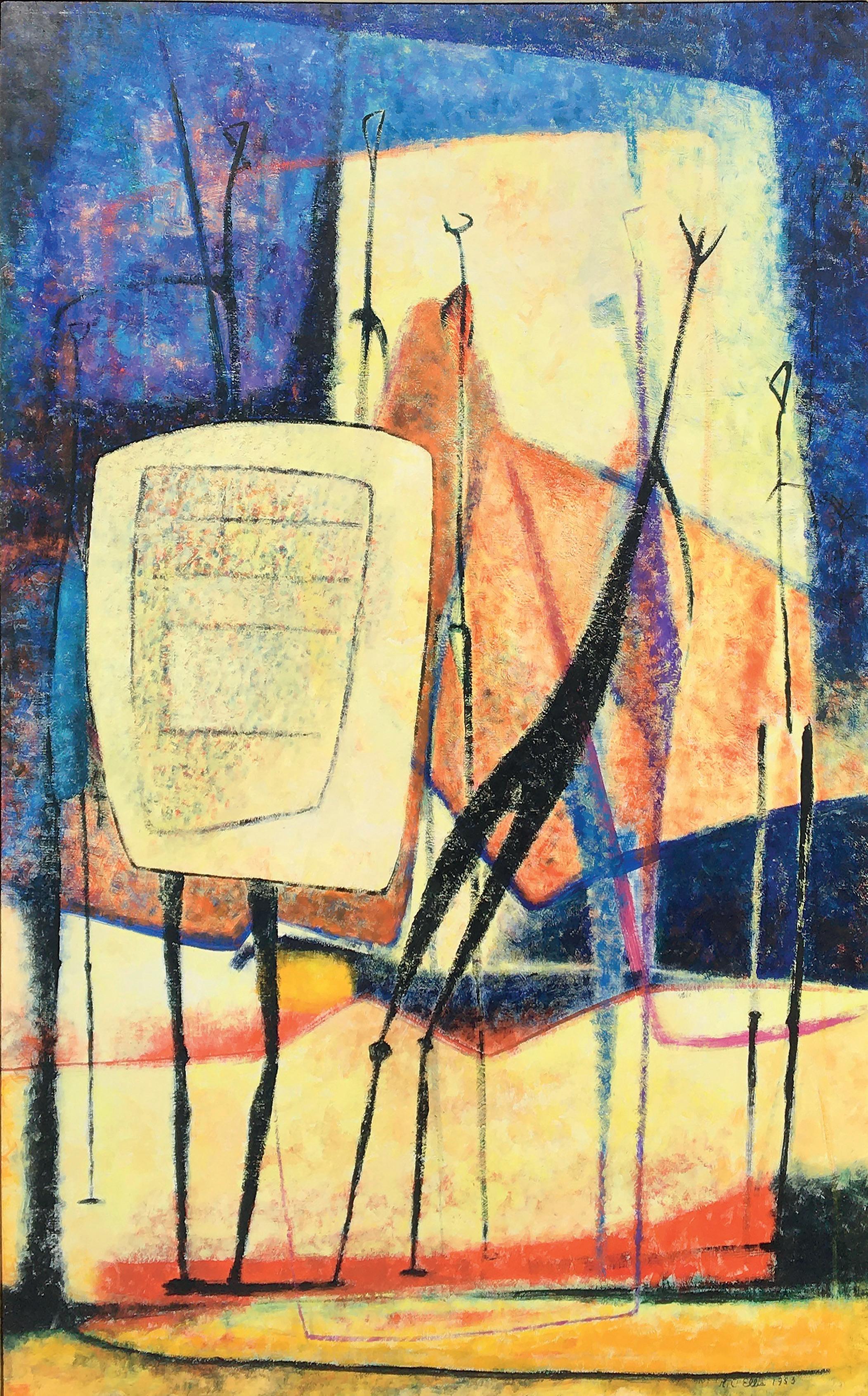
R.C. Ellis
Warriors , 1953
44 x 28 inches, casein on masonite
University of New Mexico
While in different roles and at different times, both Bobs found support and inspiration during their time at the University of New Mexico.
Robert C. Ellis pursued studies at UNM to further his career as a fine artist. When he first attended UNM’s Taos Summer Field School in the early 1940s, he met and befriended Andrew Dasburg, one of the most influential modernists of the American Southwest. Upon his return from WWII, R.C. Ellis continued his education at UNM, earning his BFA in 1950. R.C. and Dasburg remained close friends, having afternoon tea almost every day in R.C.’s home once he settled in Taos.
Robert M. Ellis left his role as Curator of Education at the Pasadena Art Museum in 1964, at a time when the Museum was playing a pivotal role in establishing Southern California’s reputation as a major contemporary art center. It had just held a major Marcel Duchamp retrospective under the direction of the new curator, Walter Hopps. Conflict with Hopps caused R.M. to resign from the Pasadena Art Museum, and take up a teaching position at UNM. He would go on to teach an entire generation of art students during his 23 years as a professor.
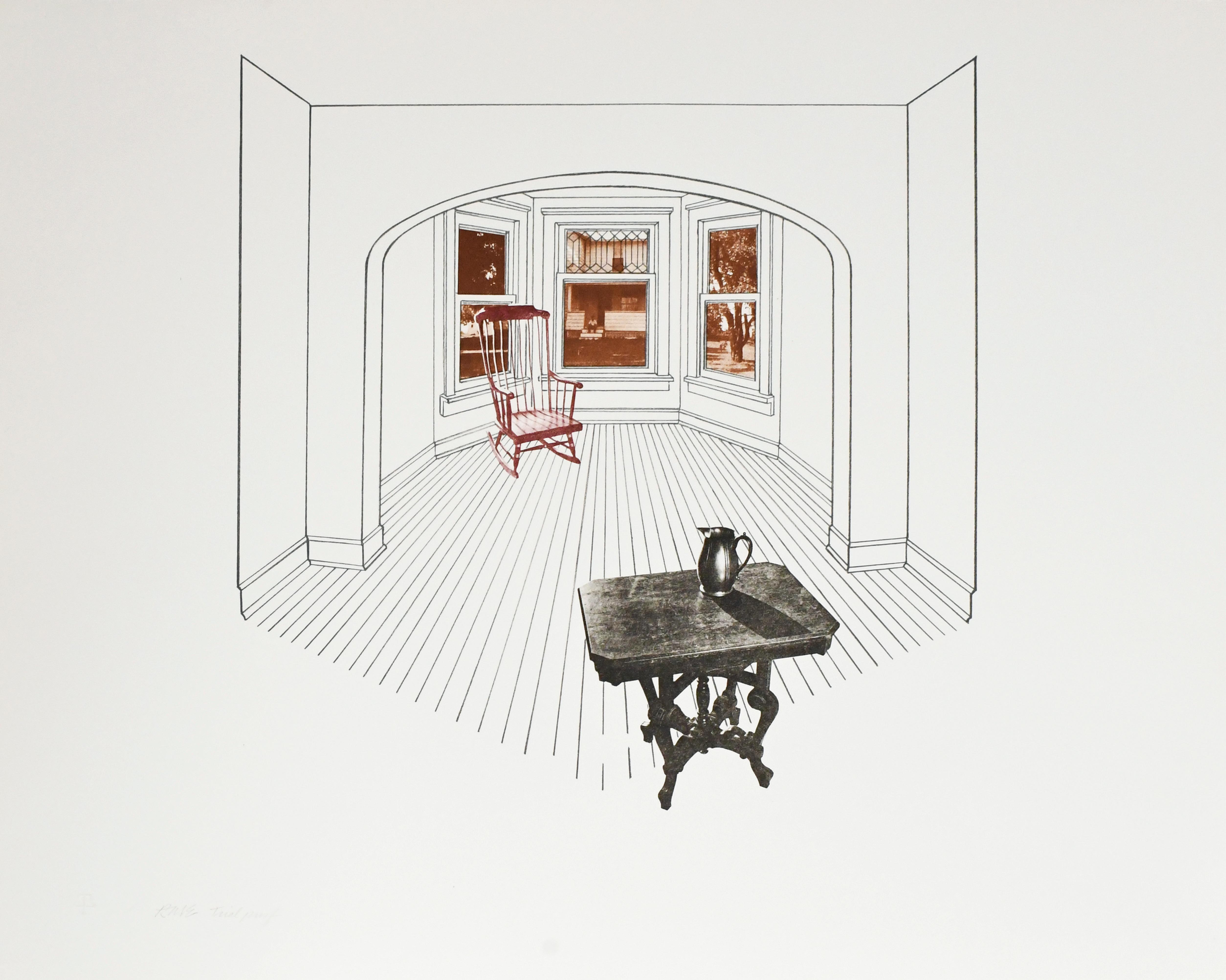
Image: Detail of R.M. Ellis, StudioBaywithChild-scape , c. 1970s, 19 x 24 inches, lithograph
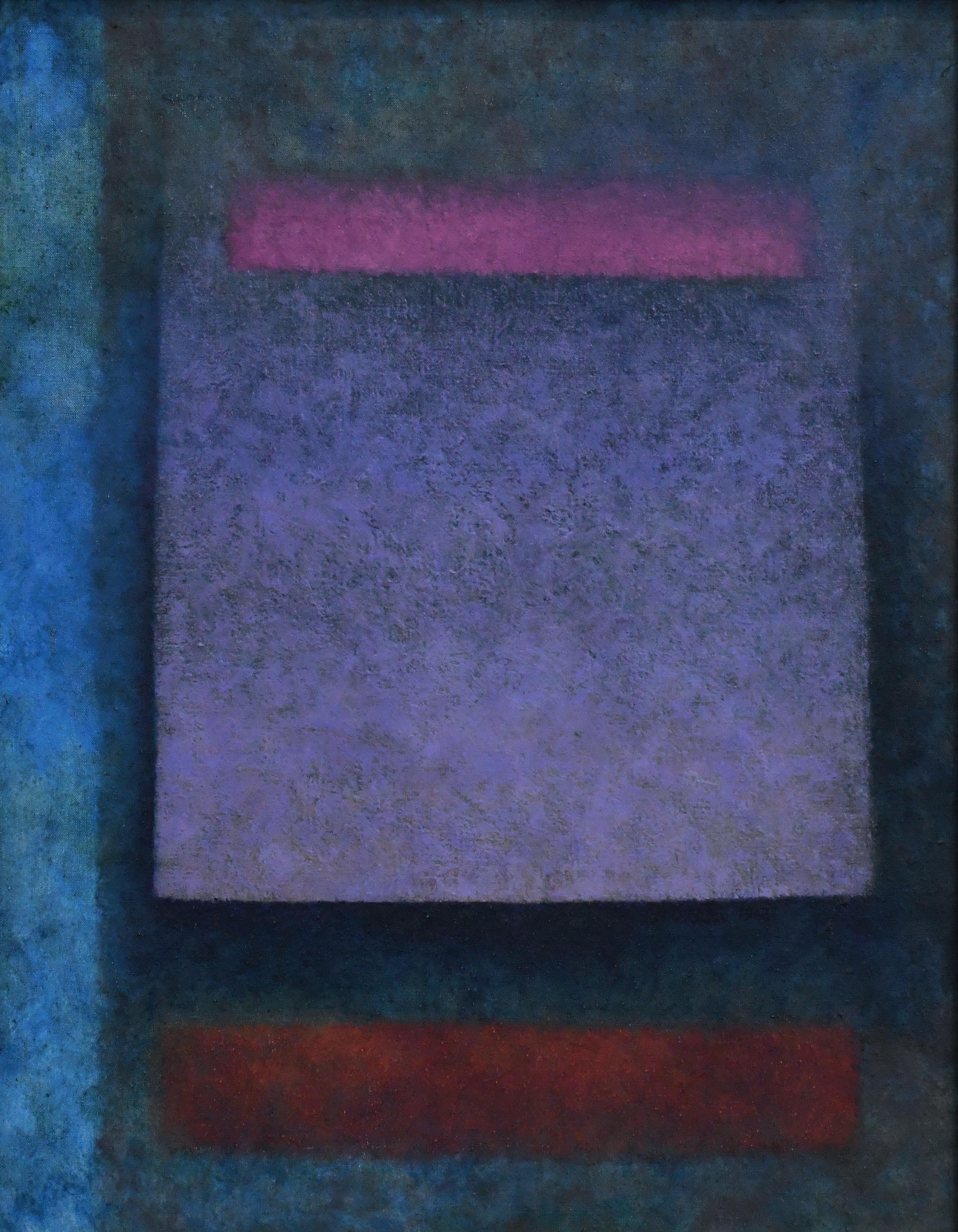
CuautlaNo.Twenty , 1963
R.C. Ellis
30 x 24 inches, oil on canvas
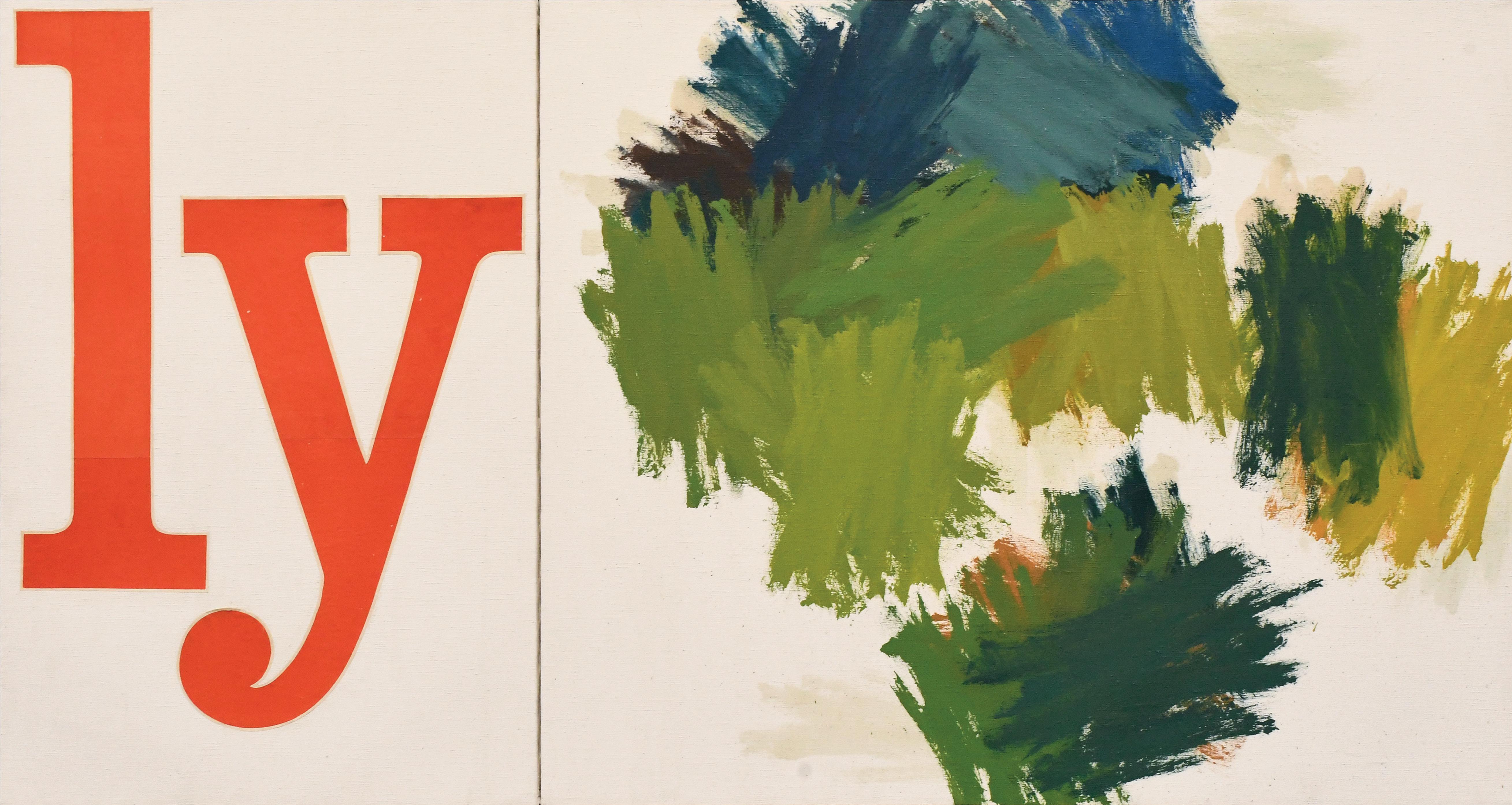
LettersintheLandscape-LyScape, 1964
30 x 56 inches, oil & collage on canvas
R.M. Ellis
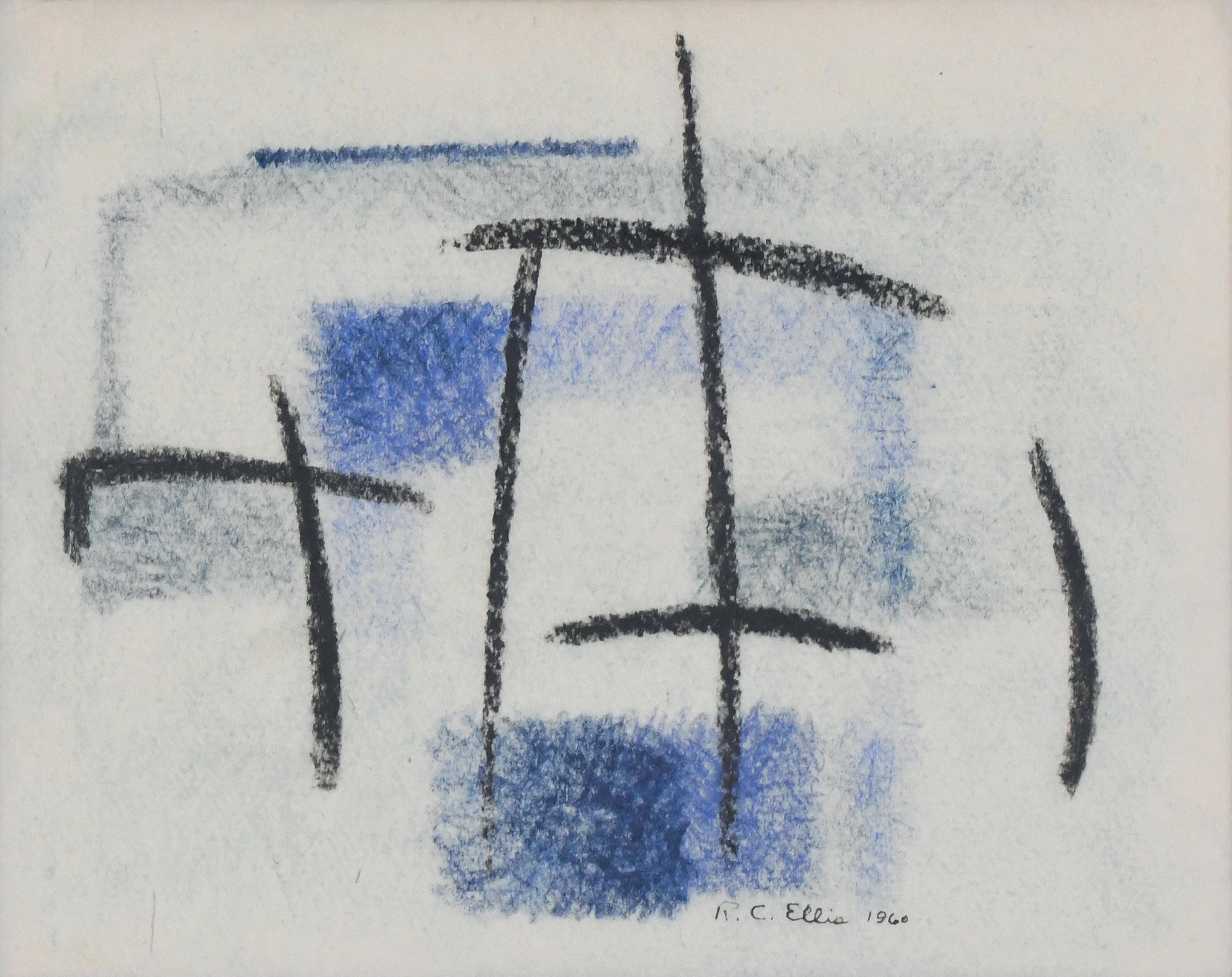
Mar #1 , 1960
R.C. Ellis
14 x 16 inches, oil pastel on paper
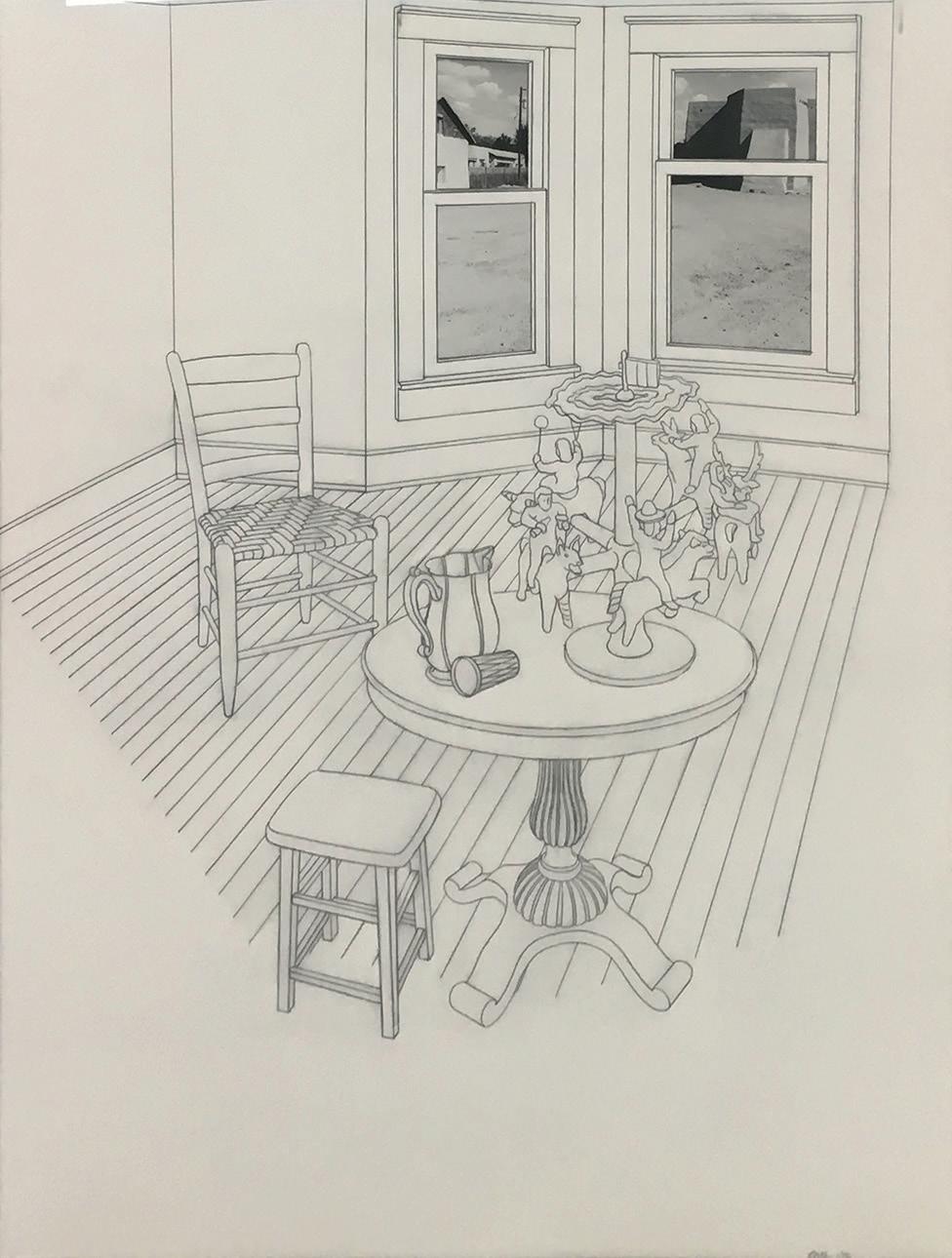
BayWindow-RanchosChurch , 1976
24 x 17 inches, graphite & photograph on paper
R.M. Ellis
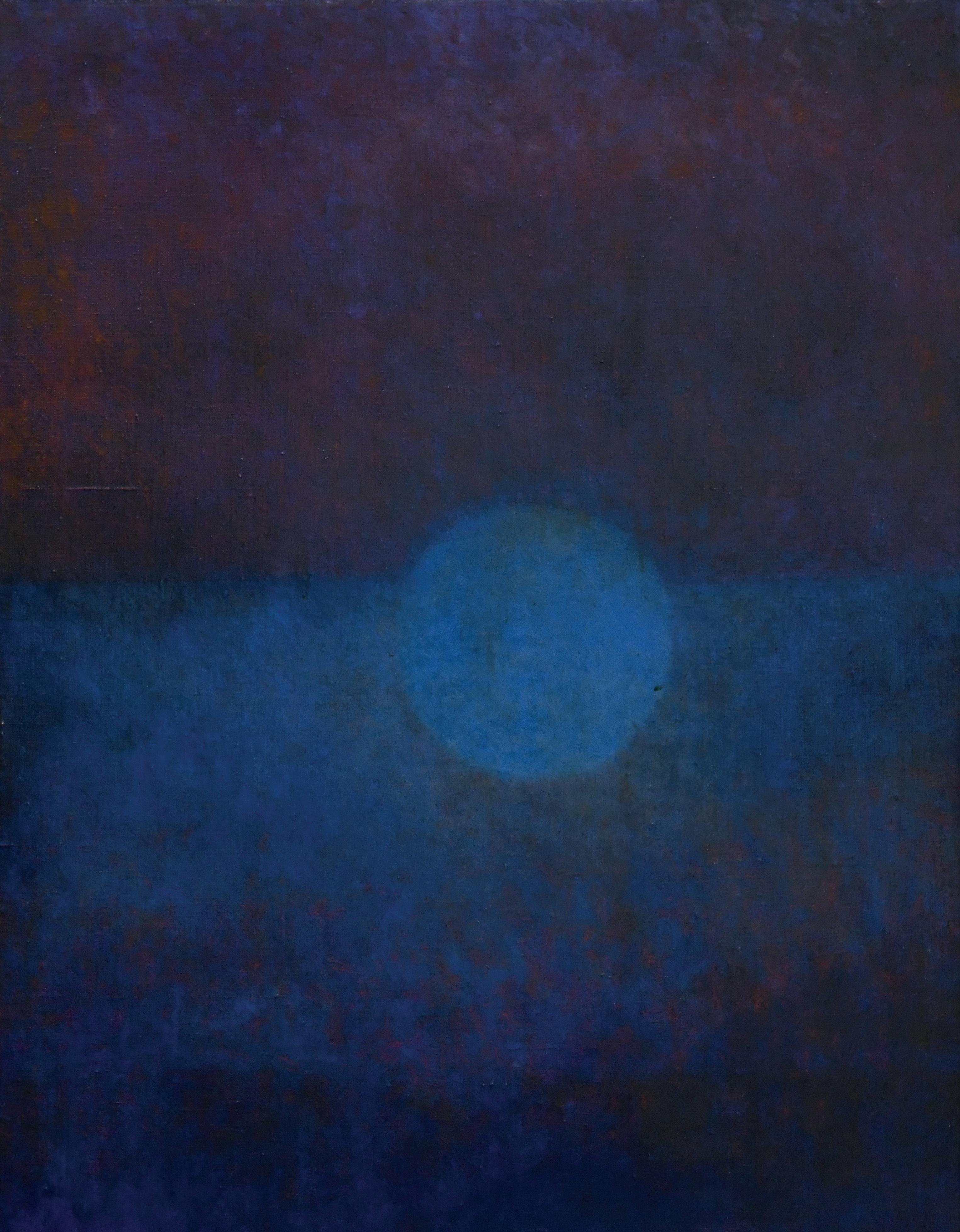
R.C. Ellis
Firmamento , c. 1970s
41.75 x 31.75 inches, oil on canvas
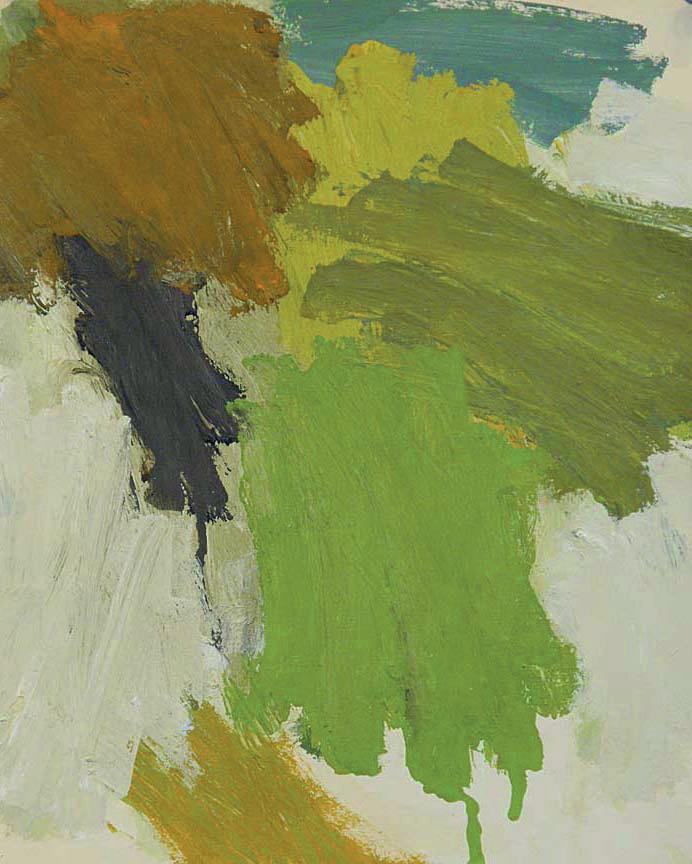
R.M. Ellis
Tree Series #23 , 1962
12 x 10 inches, oil on paper
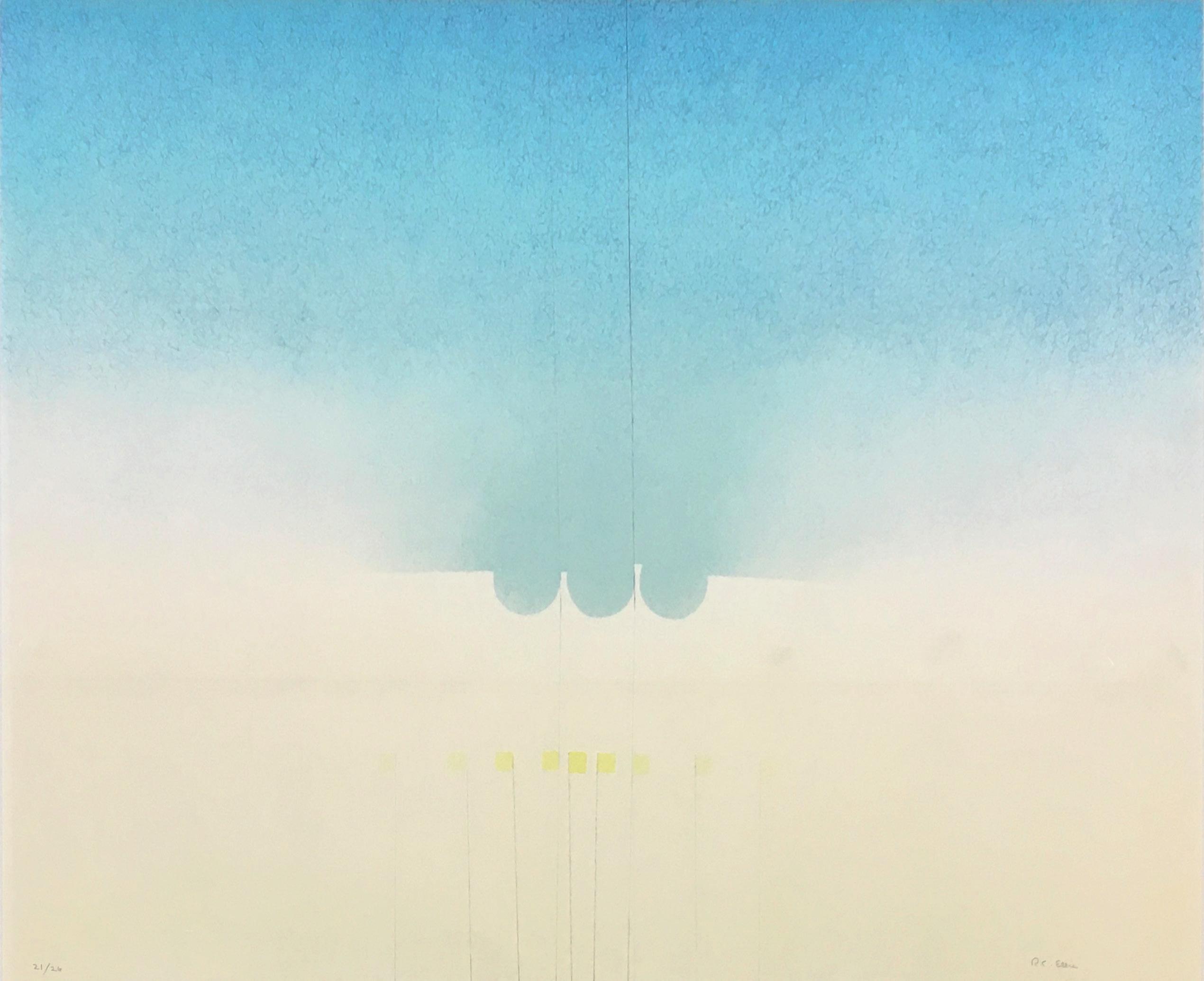
SpainSeriesBlueHorizon(Lithograph) , c. 1970s
22 x 30 inches, lithograph ed. 21/26
R.C. Ellis
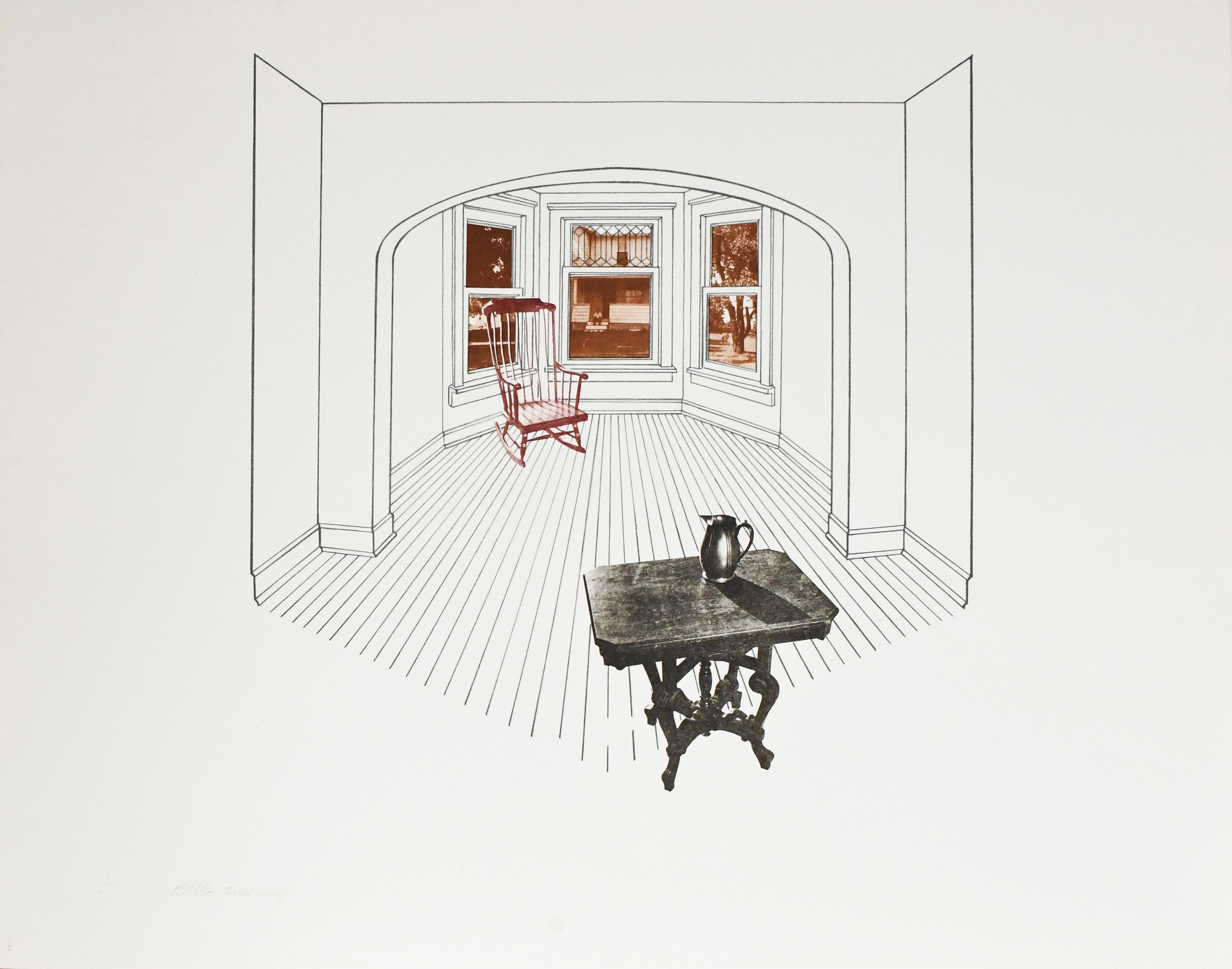
R.M. Ellis
StudioBaywithChild-scape , c. 1970s
19 x 24 inches, lithograph
Harwood Museum of Art
When Robert M. Ellis retired as professor emeritus from UNM in 1987, he was quickly recruited to become the first Director of the Harwood Museum of Art, part of UNM’s museum system. Over his decades-long directorship, R.M. transformed the small museum into a world-class institution. He expanded the two-room gallery and public library to seven galleries. Most notably, he oversaw the acquisition of seven paintings by the pre-eminent American artist, Agnes Martin, which are permanently on display.
In 1961, Robert C. Ellis received the Helene Wurlitzer Foundation residency and, in 1965, officially settled in Taos with his wife, Rosamaria Ellis Clark. During this time, Rosamaria deeply committed herself to the arts community. She became one of the founding members of the Harwood Museum, assisting in its transition from a library foundation to a nationally known museum under the leadership of the University of New Mexico. Many works by R.C. Ellis are in the permanent collection. After R.C. Ellis passed in 1979, leaving his estate in the care of Rosamaria, she continued to uphold the couple’s dedication to the arts. The Harwood Museum recognized this dedication by honoring her with a wing of the Museum, named The Ellis Clark Taos ModernsGallery.
R.M. and R.C. both shaped and were shaped by the Harwood Museum. It is within the Harwood’s walls that R.M. and R.C. Ellis have had their legacies immortalized, their names affixed to the Museum’s walls and their artworks preserved within its collection. Without these two artists and Rosamaria, the Museum would have become something much different than the one we see today.
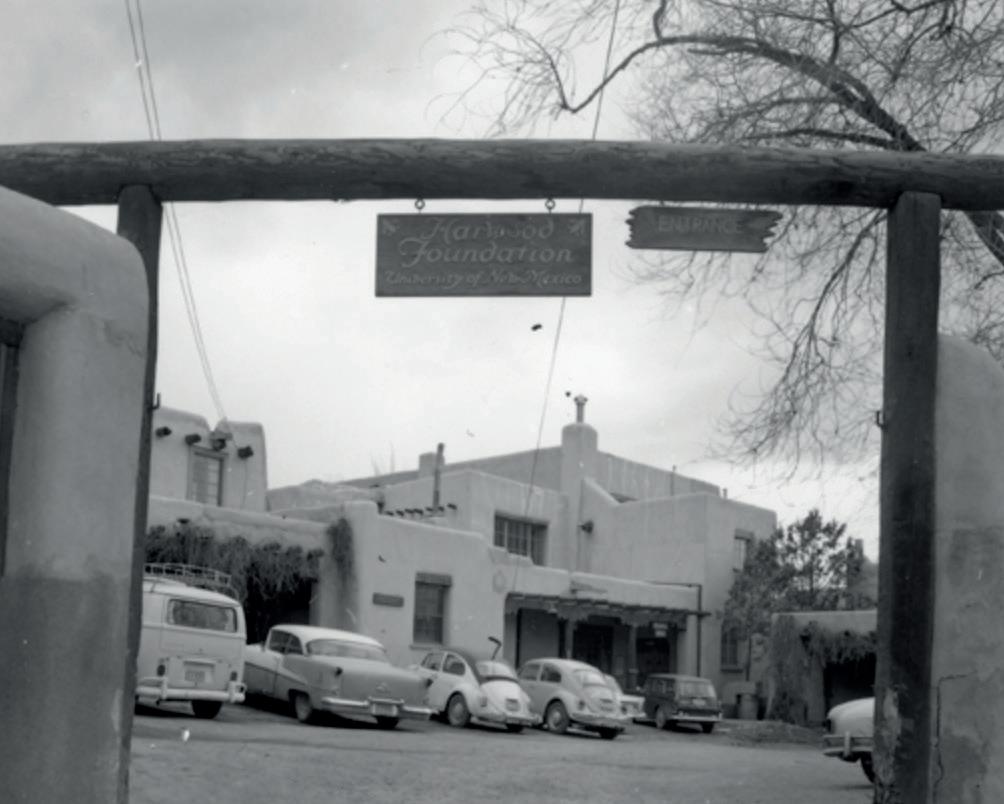
Image: The Harwood Foundation before it became a museum, courtsey of the Harwood Museum of Art
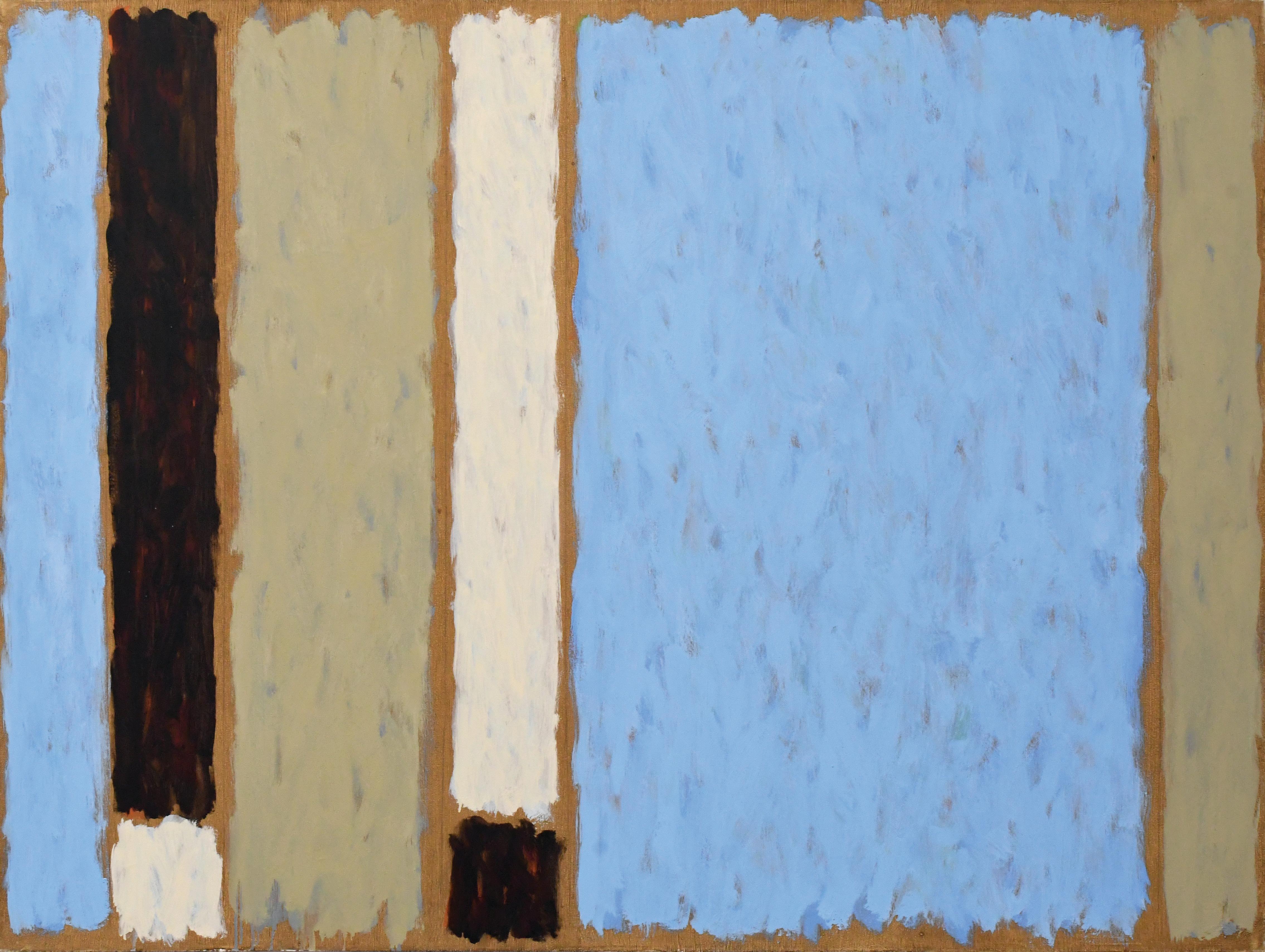
R.M. Ellis PostAegeanSeriesNo.37 , 2009 36 x 48 inches, oil on canvas
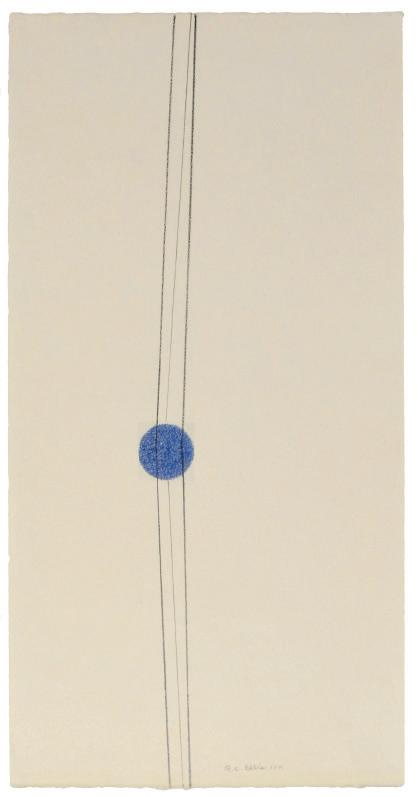
18 x 9.5 inches, colored pencil on paper
R.C. Ellis
Untitled , 1971
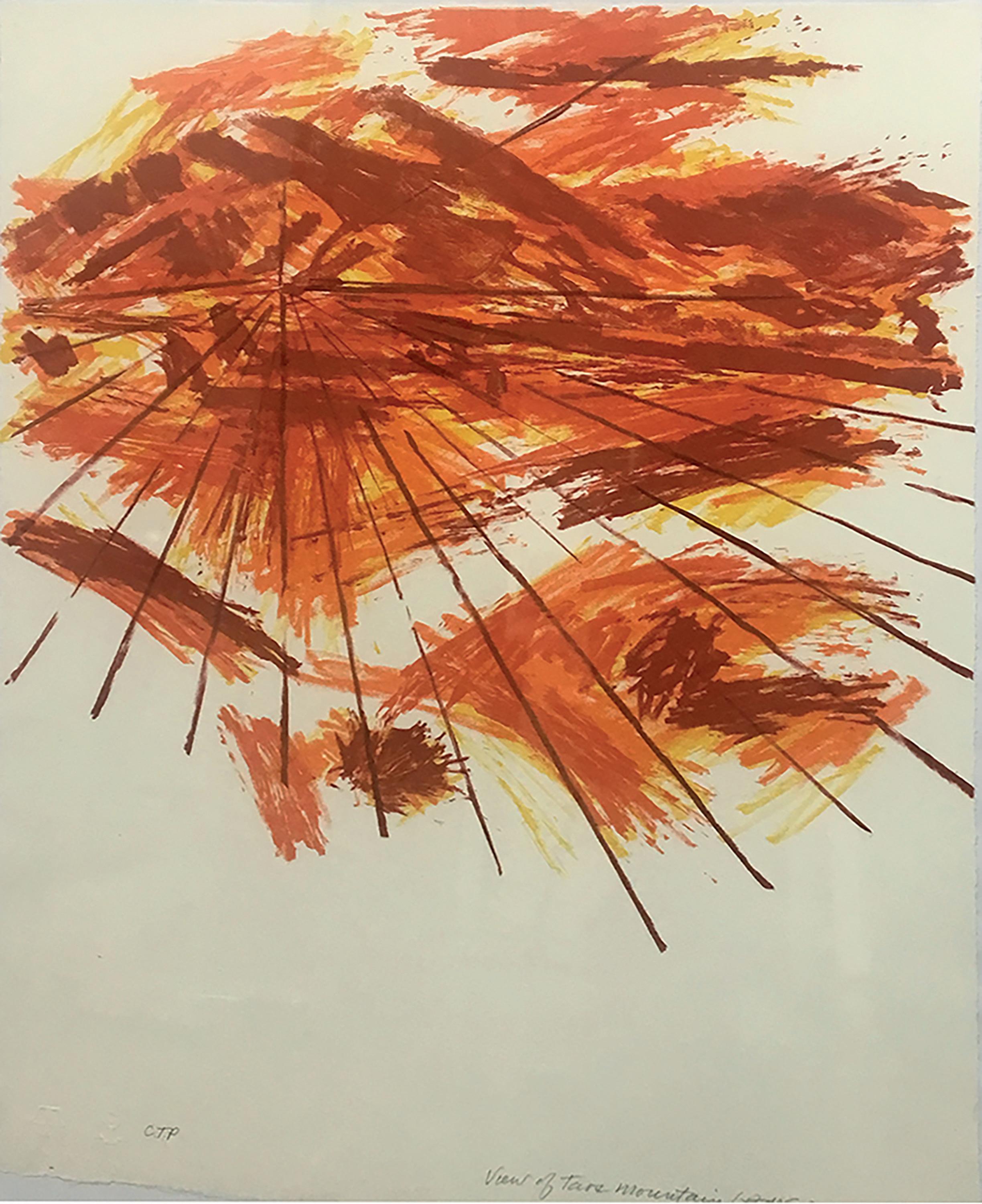
R.M. Ellis
View of Taos Mountain , n.g.
16 x 12 inches, lithograph CTP
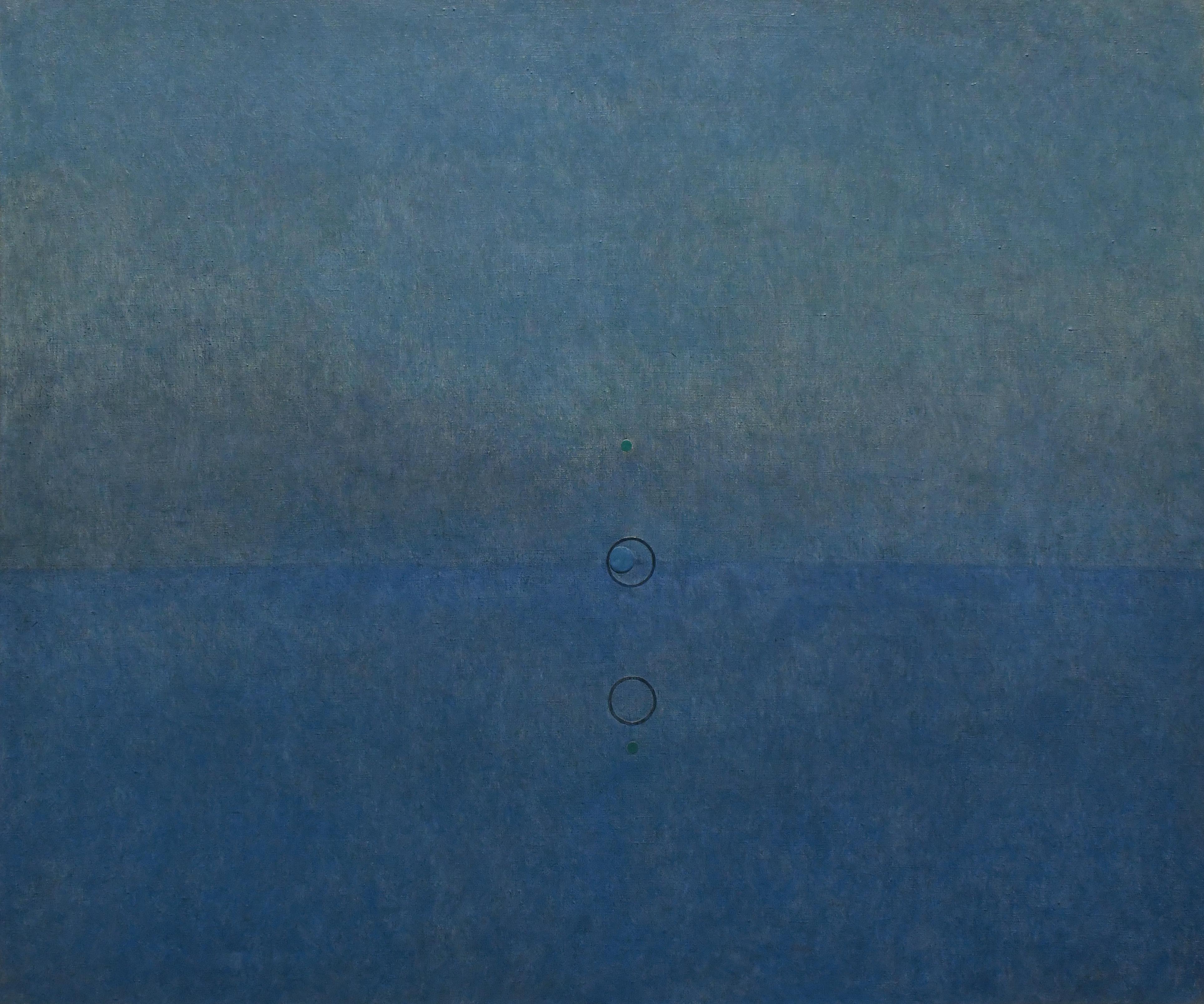
StartingWithNight , 1972
51 x 61 inches, oil on canvas with collage
R.C. Ellis
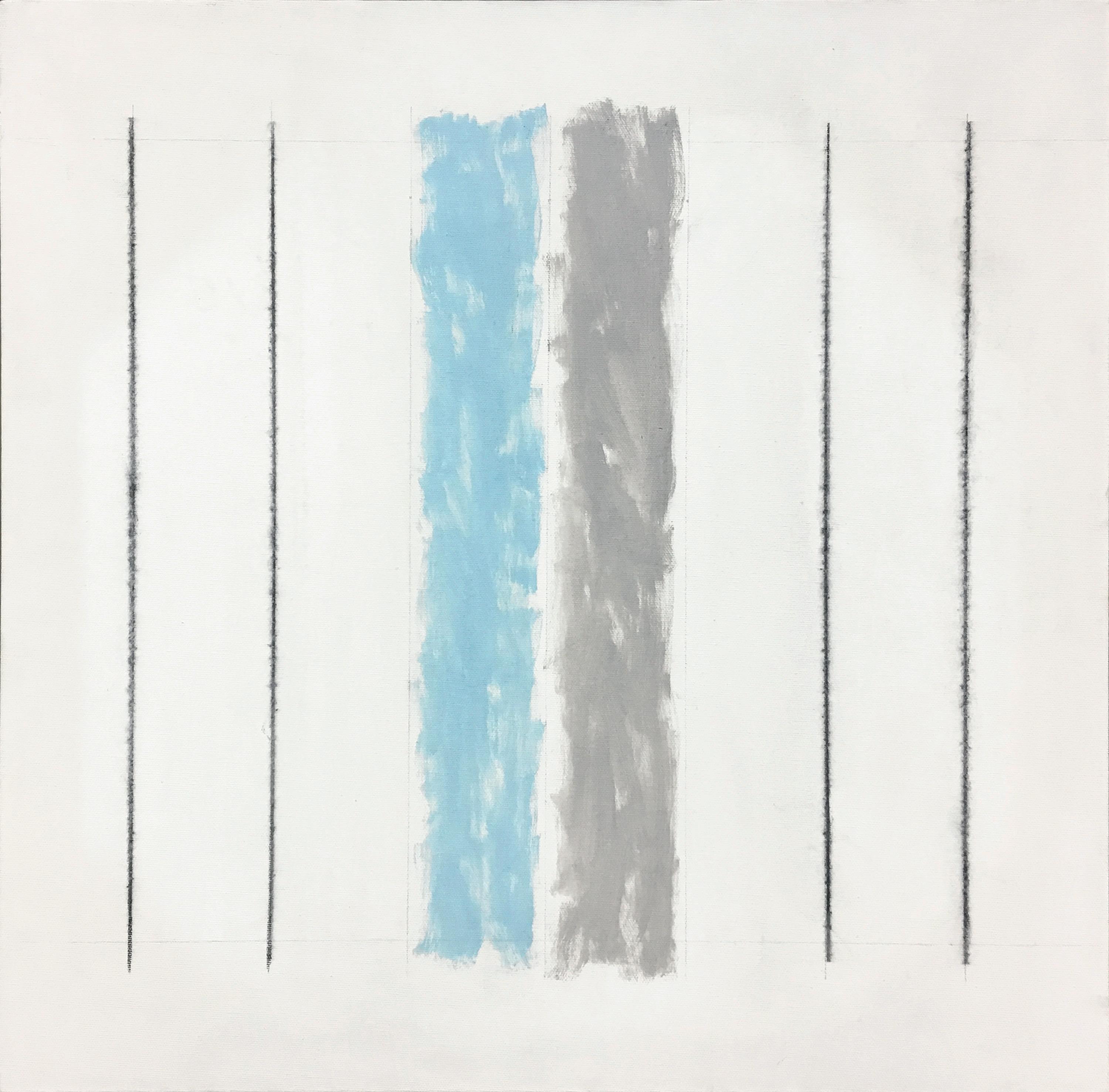
20 x 20 inches, graphite & oil on canvas
R.M. Ellis
AegeanSeriesXV , 2004
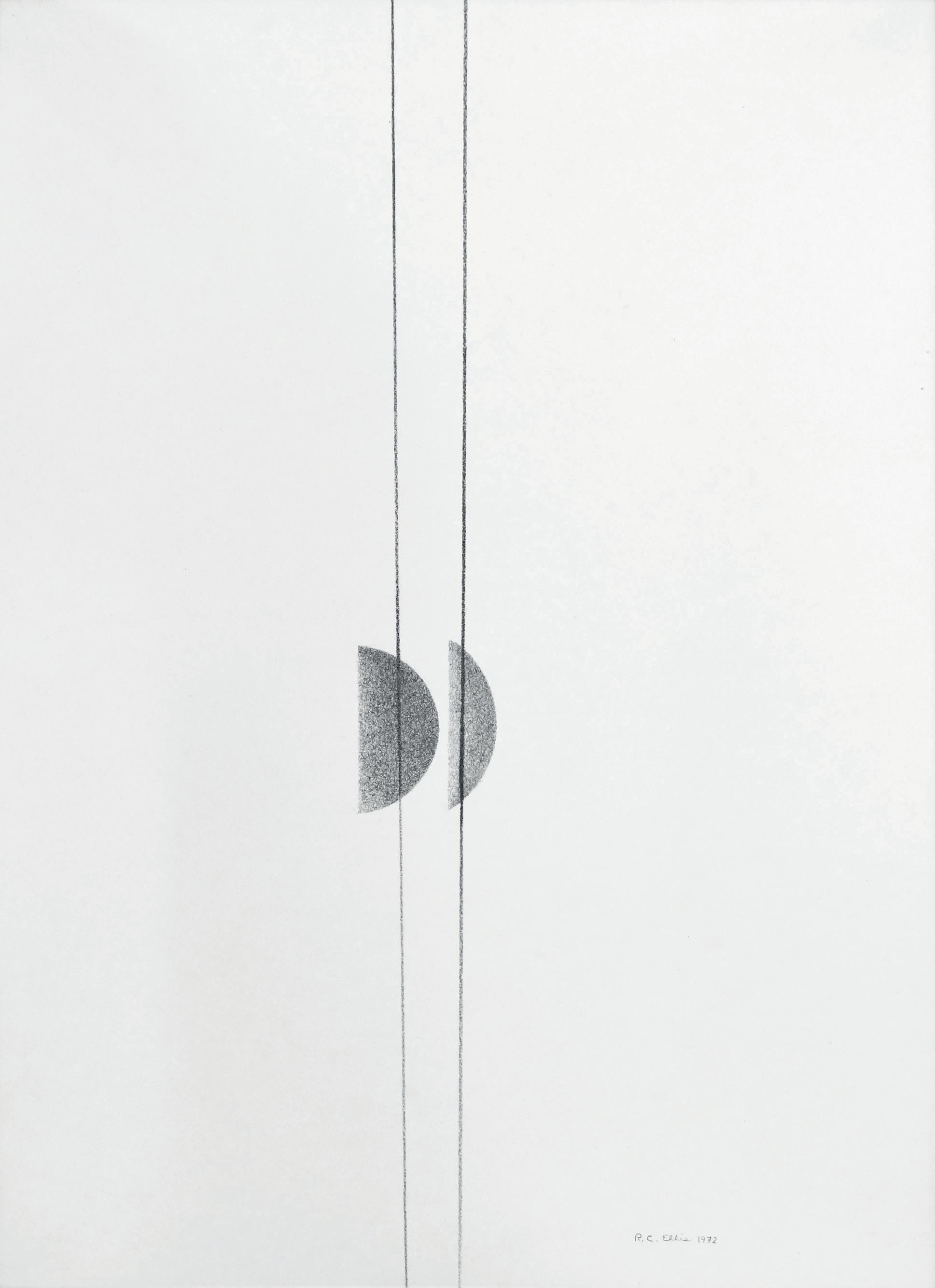
SpainNo.Eleven , c. 1970
25 x 18 inches, graphite on paper
R.C. Ellis
Closing Remarks
In 1979, R.C. Ellis passed away at the age of 56 in Albuquerque, New Mexico. R.M. Ellis lived until 2014, also passing in his home city of Albuquerque. His estate is stewarded by his step-daughter, Wendy Shannon-Ellis. Funds raised from the sale of R.M. Ellis’ works and collection will ultimately be given to the University of New Mexico.
Mirrored by their names and juxtaposed by their paths, when paired together these two artists symbolize how influential each small decision in our life can become in shaping such dramatically different styles of self-expression. This exhibition serves to share the lifelong importance of two powerful artists and patrons. It is created in partnership with the Robert M. Ellis Art Collection Trust and the Estate of Robert C. Ellis.
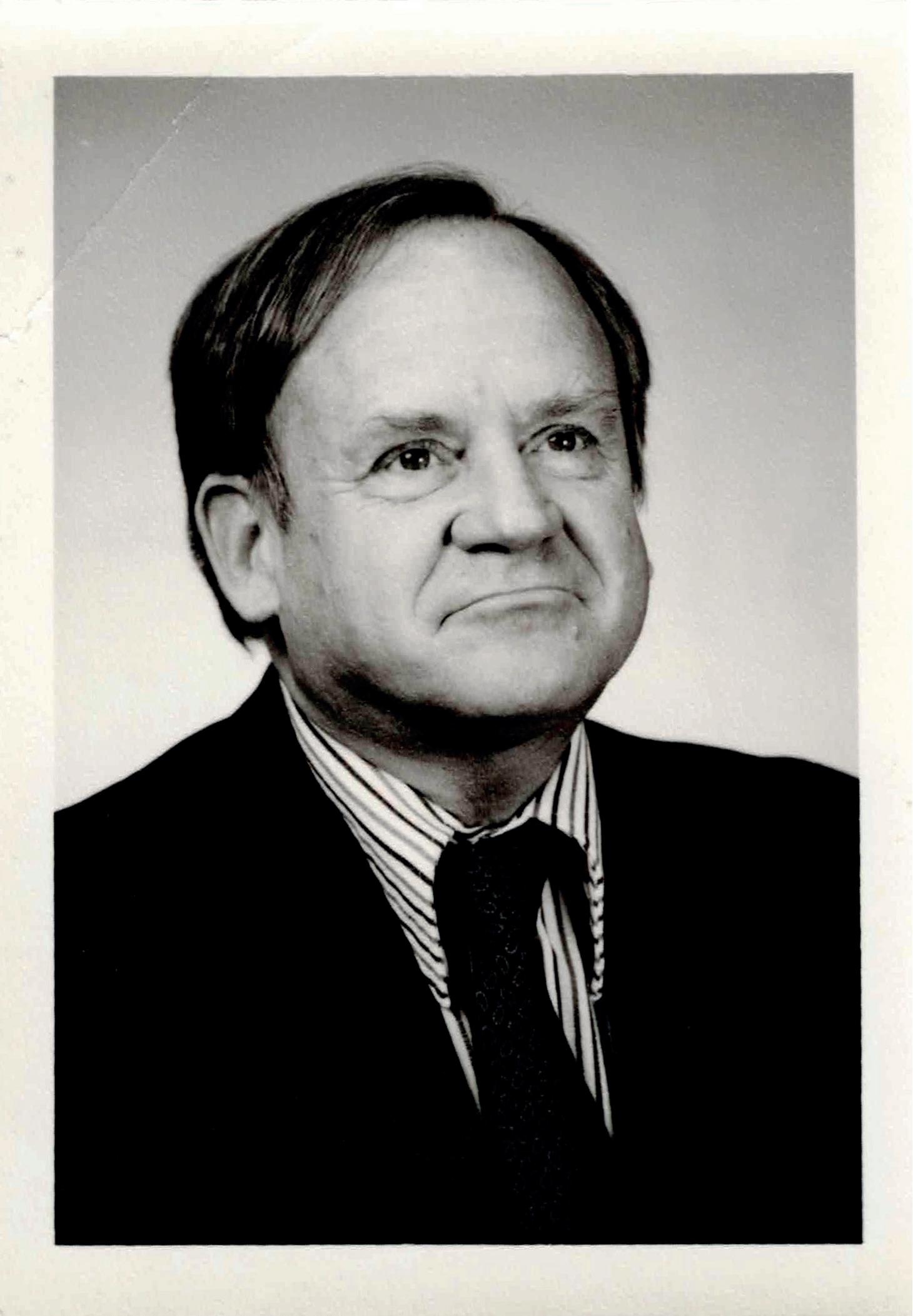
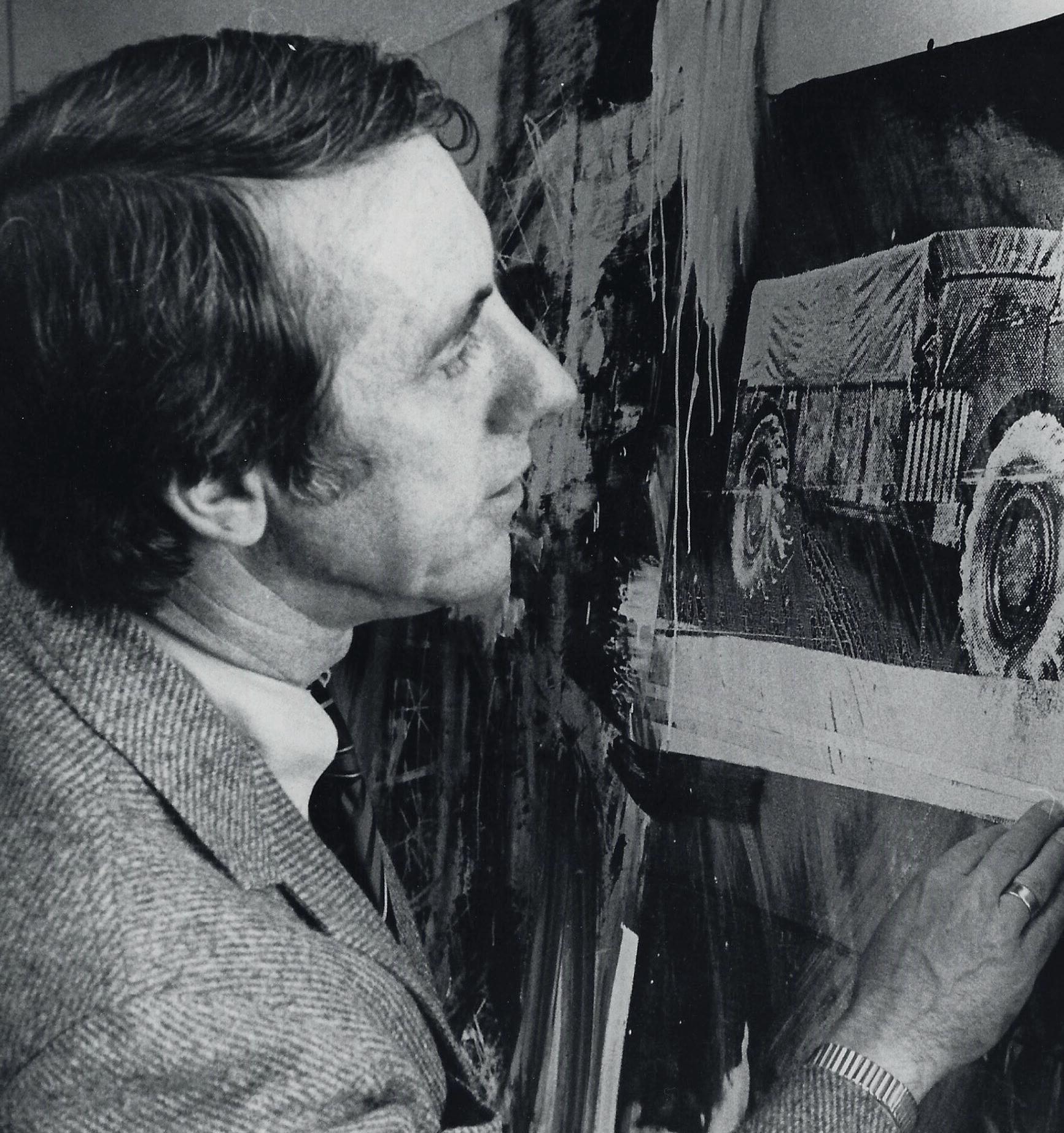
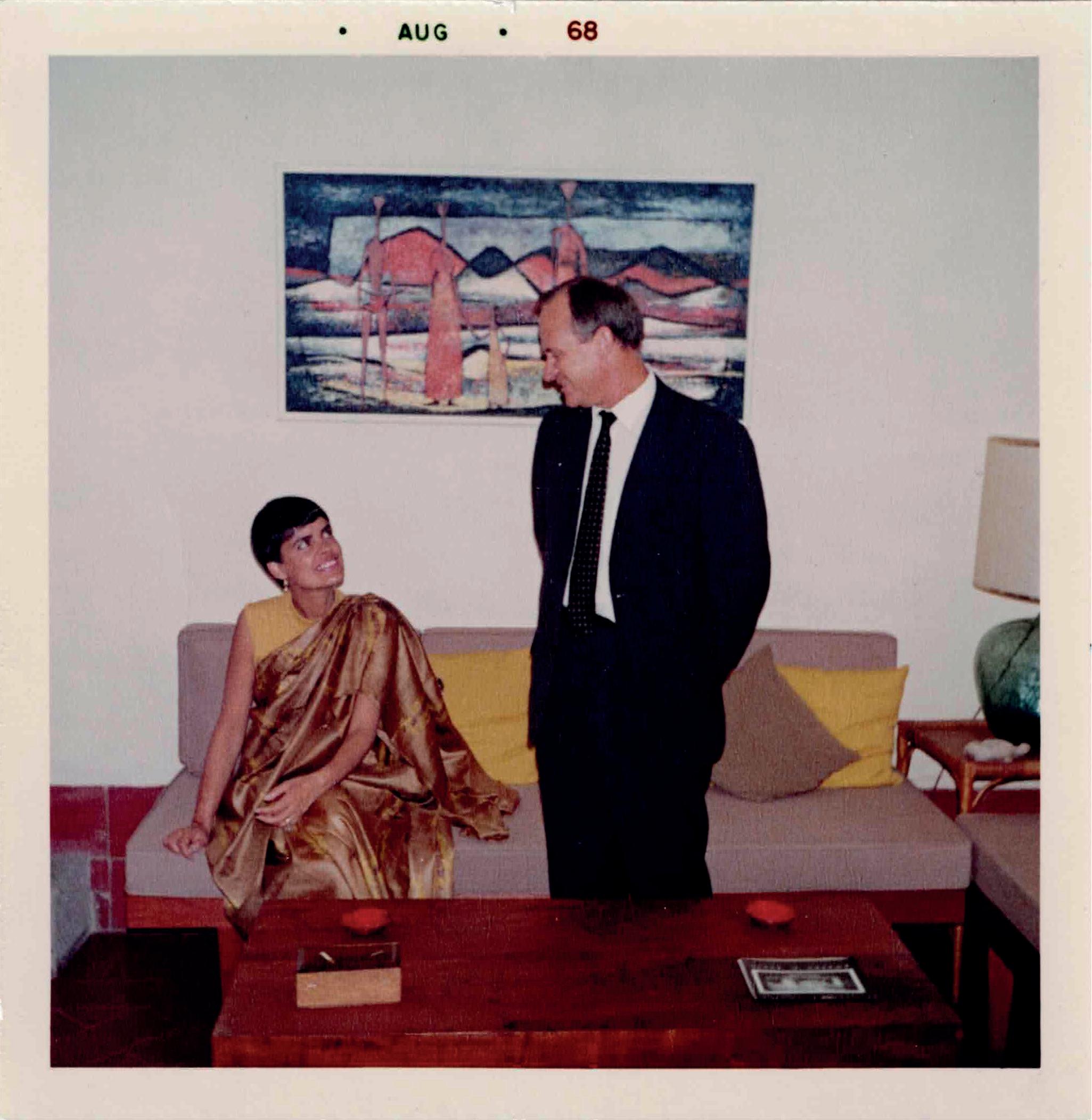
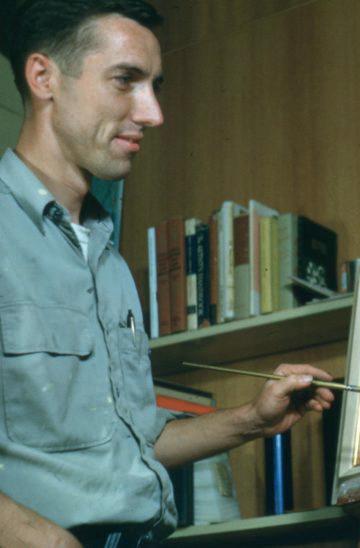
Image 1:
Portrait of R.C. Ellis
Image 2:
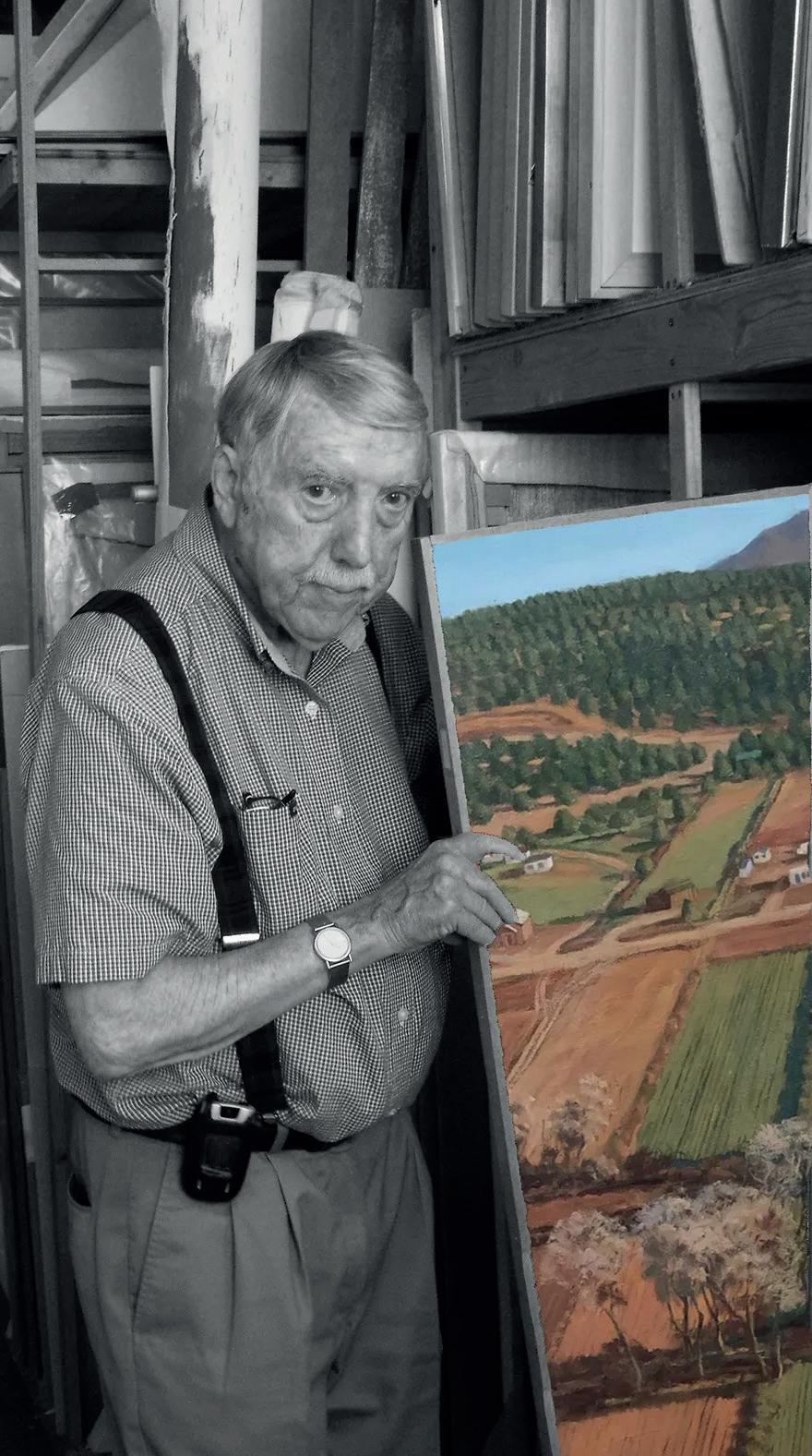
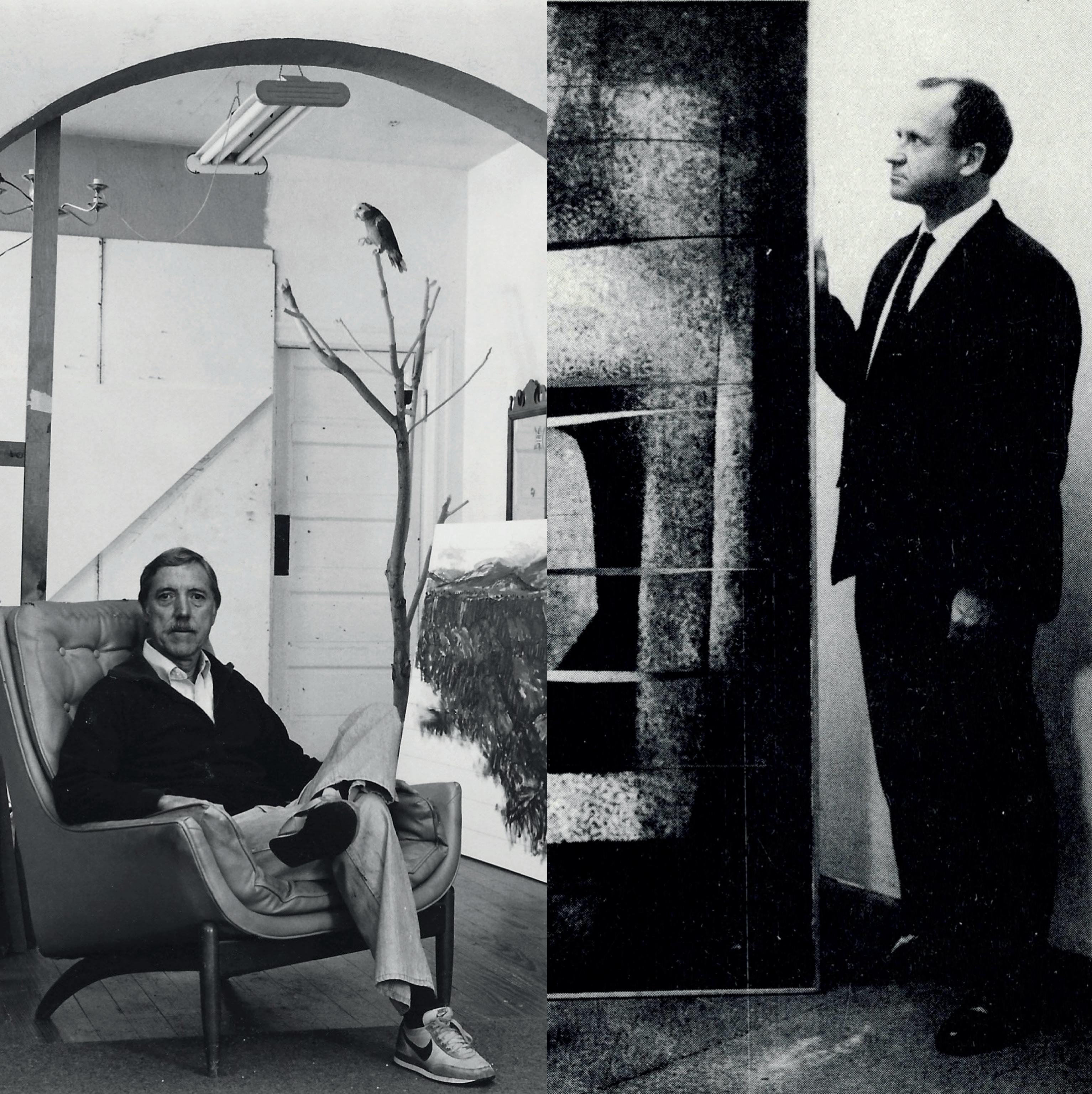
Portrait of R.M. Ellis in his studio
Image 3:
R.C. Ellis and Rosamaria Ellis
Clark in their Taos home
Image 4:
Portrait of R.M. Ellis in his studio
Image 5 (left to right):
R.M. at his home in Albuquerque; R.C. Ellis with his painting PaisajeInterceptado at the Instituto Mexicano
Norteamericano de Relaciones Culturales
Robert C. Ellis (1923 - 1979)
Selected Solo Exhibitions
1972 Stables Gallery, Taos Art Association, Taos, NM
1969 Stables Gallery, Taos Art Association, Taos, NM
1969 Jonson Memorial Gallery, University of NM, NM
1969 Tucson Art Center, Tucson, AZ
1968 Galería Villa Roma, San Miguel de Allende, México
1967 Stables Gallery, Taos Art Association, Taos, NM
1964 Museo Nacional de Arte Moderno del Instituto Nacional de Bellas Artes, México
1964 Rosequist Galleries, Tucson, AZ
1961 Galería de Arte Mexicano, México
1959 Little Gallery, Birmingham, MI
1959 Galería de Arte Mexicano, México
1958 Instituto Mexicano Norteamericano de Relaciones Culturales, México
1957 Galería de Arte Mexicano, México
1958 Galería Villa Roma, San Miguel de Allende, México
1956 Fantasy Gallery, Washington D.C.
1955 Galería de Arte Mexicano, México
1952 Little Gallery, Birmingham, MI
1952 Gump’s Gallery, San Francisco, CA
Robert M. Ellis (1922 - 2014)
Selected Solo Exhibitions
2022 Sky Views Askew, 203 Fine Art, Taos, NM
2020 Iterations, The Robert M. Ellis Art Collection Trust, Albuquerque, NM
2016 The Endless Race, The Harwood Museum, Taos, NM
2013 Aegean Reverie, Works from 2004-2012, 333 Montezuma Arts, Santa Fe, NM
2010 Bob Ellis Recent Work, Woodcuts/Works on Wood, Exhibit 208, Albuquerque, NM
2009 Retrospective, 203 Fine Art, Taos, NM
2006 Dwight Hackett Projects, Santa Fe, NM
2000 Jaquelin Loyd Contemporary Gallery, Taos, NM
1991 The University of New Mexico Art Museum (Retrospective), Albuquerque, NM
1991 Cafe Gallery, Albuquerque, NM
1991 Contemporary Exhibitions/Philip Bareiss Fine Arts, Taos, NM
1986 Kauffman Galleries, Houston, TX
1981 Wildine Gallery, Albuquerque, NM
1978 David Stuart Gallery, Los Angeles, CA
1977 Hills Gallery, Santa Fe, NM
1997 White Oak Gallery, Albuquerque, NM
1975 James Yu Gallery, New York, NY
1964 Jonson Gallery, Albuquerque, NM
1964 Hollis Gallery, San Francisco, CA
1962 Ester Robles Gallery, Los Angeles, CA
1961 Pasadena Art Museum, Pasadena, CA
1958 Occidental College Gallery, Los Angeles, CA