Blue Dot Thinking
When the Nest Isn’t Empty
Discipleship That Shows Up
A Gospel Expectation
The Zechariah Boodey Farmstead
From Folding Tables to Forever Impact
Why Care About Theology Amid Cultural Crisis?

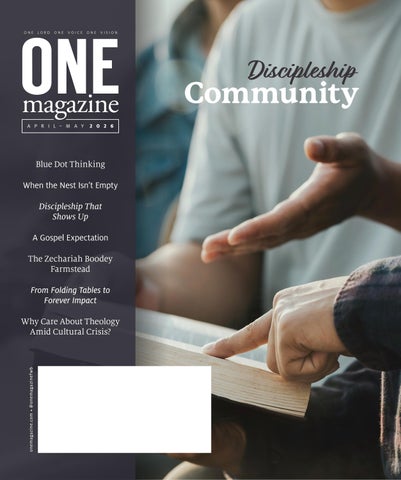
Blue Dot Thinking
When the Nest Isn’t Empty
Discipleship That Shows Up
A Gospel Expectation
The Zechariah Boodey Farmstead
From Folding Tables to Forever Impact
Why Care About Theology Amid Cultural Crisis?



May
May
May
June




BY ERIC K. THOMSEN
“I was born November 20, 1913, with a high-plains blizzard raging outside. It was the first of many dangers I would face with my family during our life on the Colorado high prairie.”
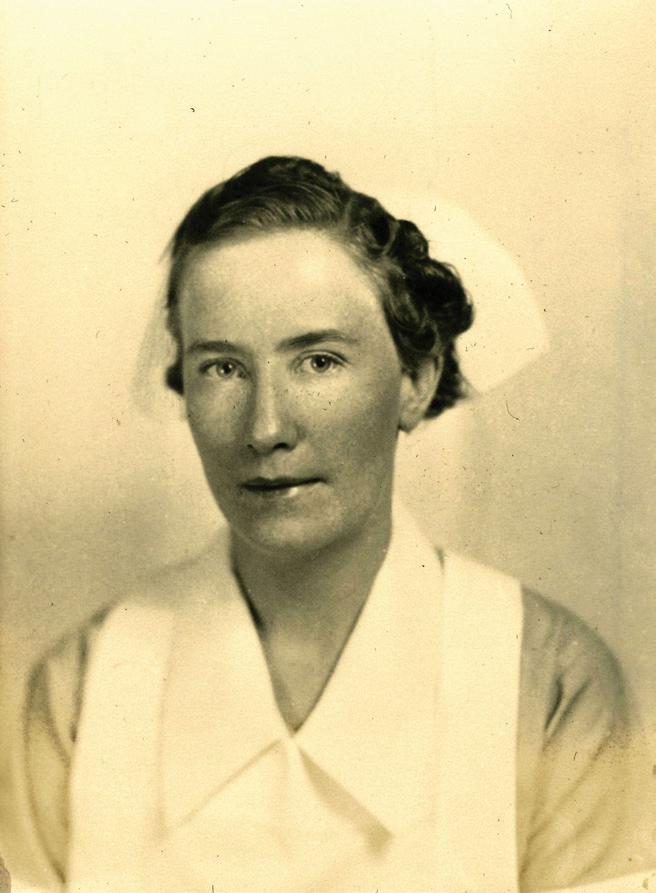
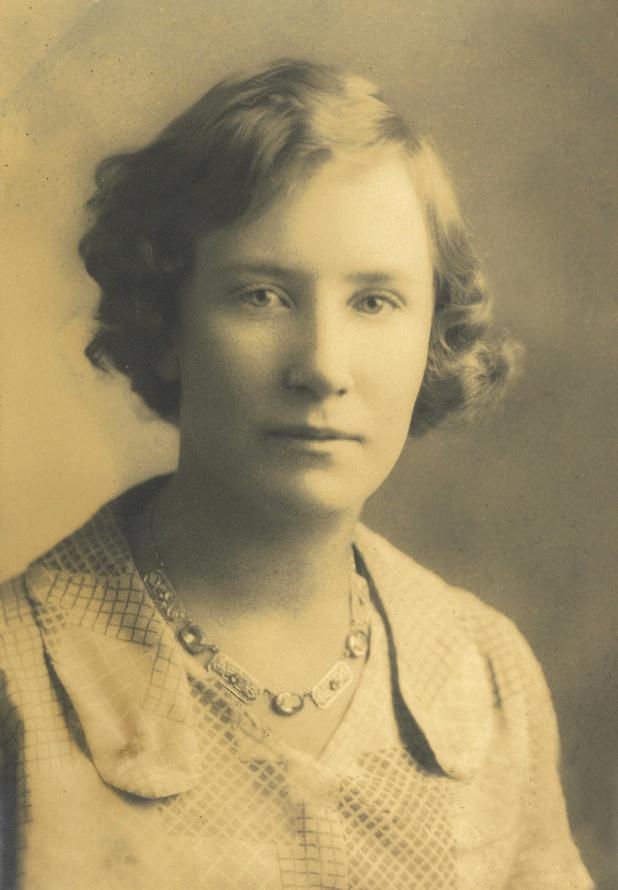
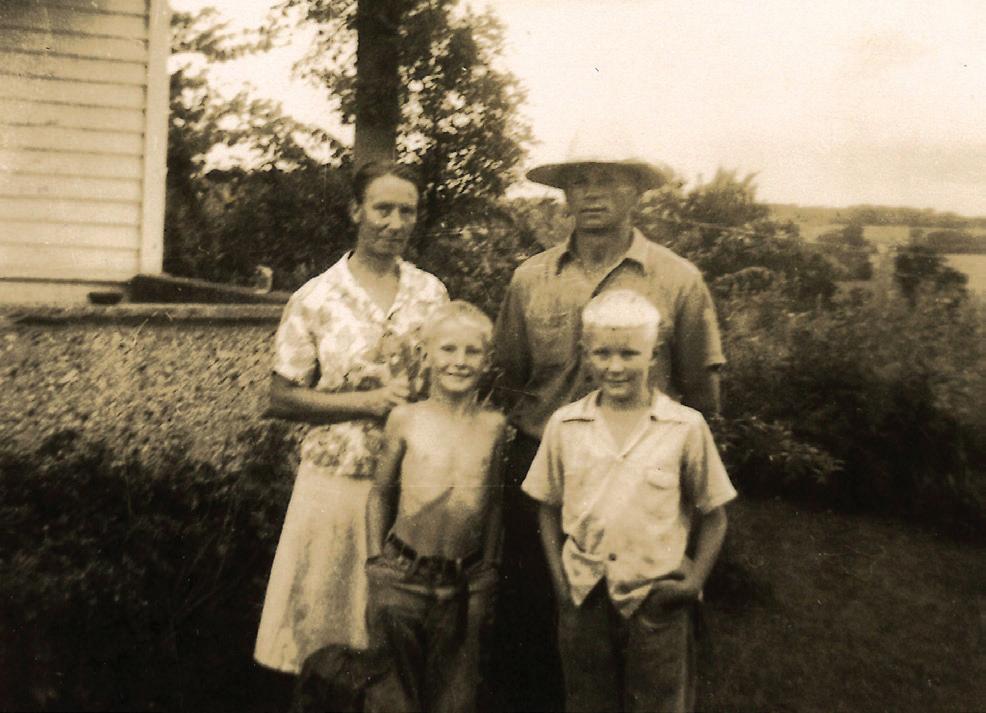
These are the opening lines from Lillie’s Story. Lillie was my paternal grandmother, and not too long ago, I finished compiling her autobiography. A simple farming lady, she and my grandfather gave 50 years to a small farm in the rugged flint hills of northwestern Arkansas.
Things didn’t grow well. They endured dust, tornadoes, droughts, floods, and continuous financial setbacks. Over her lifetime, she survived Spanish flu, measles, whooping cough, scarlet fever, and cadmium poisoning from a tainted cistern. Once, when my grandfather was ill, she broker her leg while hitching up the wagon and lay outside in the snow all night before a neighbor came looking for her. It was a hard life.
Despite the difficulties, Lillie loved the Lord and was determined to pass along her faith. Over months, years, and decades, Grandma jotted her life down on old bills of lading, the backs of Post™ cereal boxes, produce cartons — whatever she found at hand. After her death, I found dozens of shoeboxes filled with these short snapshots of her life. (It took me eight years to sort them!) I soon discovered Grandma’s story recounted much more than hardship and endurance. She constantly described her faith, and even more importantly, God’s faithfulness.
As I read about her life, I often thought of Hezekiah, the faithful king of Israel, to whom God granted 15 “extra” years, healing him from a terminal illness. Isaiah 38 records Hezekiah’s glowing testimony of gratitude, along with his challenge to parents to share their own stories of God’s faithfulness to their children.
Grandma Lillie certainly did that, and she didn’t mince words. In her final entry, written not long before her passing, she wrote, “I sincerely hope all my family, or others who read these simple stories of my life, come to trust in the Lord with all their heart. If they do, they will have His strength to sustain them….What could be more encouraging to know our Savior laid down His life for us, and then gave us the Holy Spirit to comfort us?”
Do you know what those simple words do for me? They strengthen me, ground me, remind me my grandmother lived out her faith to the end, and I can do it too! Grandma did two simple things as she wrote:
• She made her faith the central theme. She wrote openly about her conversion, church experience, the faithful example of her own parents. She recounted important faith milestones, and she deliberately worked in the gospel again and again.
• She told the whole story. The whole truth — good, bad, redeemed. She was open about sin and struggles, noting, “I will try my best to live for Him and to ask His forgiveness when I do wrong.”
May I challenge you to record your own story of faith for the next generation? Like King Hezekiah observed, you can only tell of God’s faithfulness now, while you are living. So, will you write an autobiography? A few key memories? A single moment that changed your life forever? The story of your childhood? It really doesn’t matter. It’s your story. Tell it however you want. But tell it! It could make an eternal difference for those you love.
About the Columnist: Eric K. Thomsen is managing editor of ONE Magazine. Email: eric@nafwb.org.
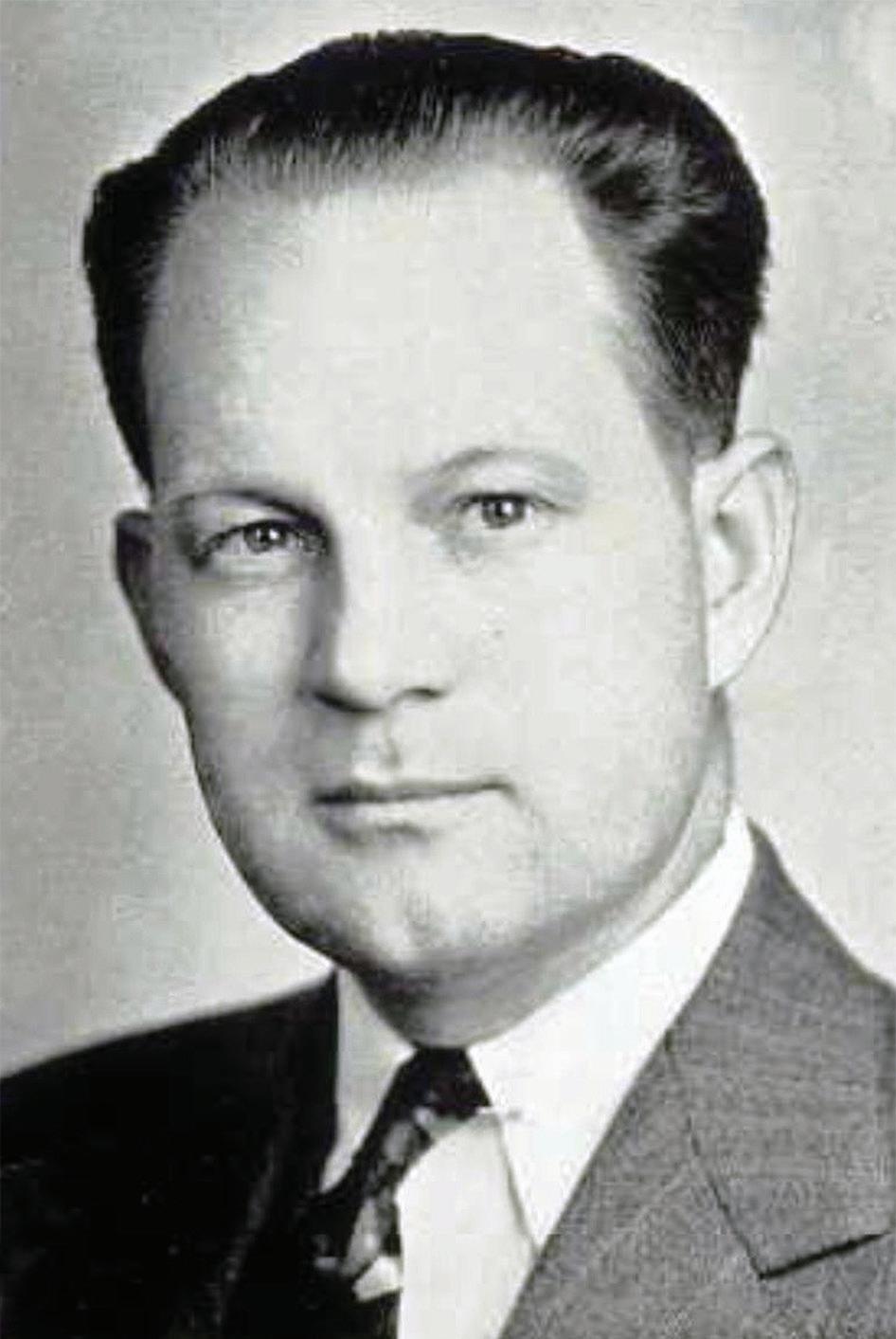


In a letter dated July 24, 1974, William Henry Oliver described his studies at Vanderbilt University: "I was trying to prepare myself to teach ministers and other church workers at our Free Will Baptist college." The remarkable pastor, educator, and administrator certainly did that and more. In 1957, Oliver became the superintendent of schools for Nashville, Tennessee, guiding the city through the tumult of desegregation. Later, after stepping down as superintendent, he taught education at Welch College. Throughout his career, Oliver also served as a Free Will Baptist pastor. When asked by a reporter what principles guided him through his life and career, Oliver responded simply: "I try not to do anything that's un-Christian. And I don't have to back anybody I know is wrong."
Why not create your own legacy to benefit Welch College?


Open a map app, type a destination, and a blue dot appears. That dot answers the primary question of navigation: where are you now? Only after identifying your location does the system work backward, calculating routes, accounting for obstacles, and guiding each turn.
Discipleship requires the same kind of thinking. Faith does not drift toward maturity by accident. It develops through intention, direction, and time. Yet many parents and ministry leaders remain locked in the present, reacting to urgent problems rather than charting a long view. Calendars fill. Programs multiply. Leaders hope faith forms somewhere along the way.
Data tells a different story. Research shows two-thirds of young people disengage from faith after leaving home. They once sang the songs and memorized the verses. Today, many walk away quietly, shaped more by screens and schedules than Scripture.
Blue dot thinking insists on backward planning. It begins with God’s desired destination and traces intentional steps back to where belief actually stands today. That shift transforms reaction into direction and replaces hope-based ministry with purposeful discipleship.
Scripture reveals a consistent pattern of preparation before action. Moses was shaped across decades. Daniel’s
BY RON HUNTER JR., P h .D.
convictions formed long before Babylon tested them. Jesus lived thirty hidden years before three public ones and surrendered in Gethsemane before the Cross. Nothing of eternal weight unfolded by chance.
That same pattern defines discipleship. Faith forms through intentional planning, steady Scripture intake, and trusted relationships established long before pressure arrives. Backward discipleship begins with God’s intended end and works deliberately toward it. In a culture chasing speed and quick wins, backward thinking restores depth and equips faith to endure when it matters most.
Many ships encountered icebergs, but the Titanic is remembered because it failed to prepare for the inevitable strike, believing itself impervious. Leaders moved forward with confidence while neglecting a critical question: what should already be in place if the ship starts to sink? On the Titanic, lifeboats were counted only after impact, and by then, twothirds of the 2,228 aboard were lost.
That ratio mirrors today’s discipleship crisis. As previously mentioned, roughly two-thirds of church-engaged teens disengage from faith in adulthood. The pattern is sobering. Faith rarely collapses in a moment. It drifts due to lack of preparation. Backward planning changes that trajectory by shaping belief long before pressure arrives.

Many churches struggle with a blue dot problem. Leaders know where they want people to be, but they cannot clearly identify where disciples are today. Assumptions replace assessment. Activity replaces direction. Faith formation becomes busy rather than intentional. Without a clear understanding of current beliefs, habits, and influences, discipleship drifts toward reaction instead of design. Blue dot thinking brings honesty back into leadership. It forces pastors, parents, and mentors to pause long enough to identify their real starting point. Only then can backward planning trace a meaningful path forward that addresses real needs instead of imagined ones.
Scripture never uses the phrase backward planning, yet the pattern runs throughout the biblical story. From Creation itself, God worked with the end in view. He formed the world in sequence, preparing land and provision before placing humanity within it, then pointing His creation toward the seventh day, a day set apart for worship. God began at day one while aiming toward rest and glory.
Jesus lived with the same clarity of purpose. He spoke of preparation, appointed timing, and a mission defined long before the Cross. Jonah’s three days in the fish foreshadowed Christ’s three days in the tomb, reinforcing God’s long-range design.
Scripture consistently calls for preparation before pressure. God’s Word is stored now because it will be needed later. Children are arrows aimed with intention. Paul framed discipleship through images of racing, building, and planting, each shaped by a clear destination. When eternity leads, today’s decisions change.
Across decades of research and Scripture, five themes consistently rise to the surface. These practices dramatically increase the likelihood faith will endure into adulthood. They are not programs or quick fixes. They are relational, repeatable rhythms shaping belief over time. When churches and homes
align around these practices for all ages, discipleship moves beyond information toward transformation.
• Bible engagement anchors belief.
• Faith lived at home shapes daily decisions.
• Mentors provide intergenerational reinforcement.
• Sharing faith deepens conviction.
• Serving builds belonging and purpose.
The word forging captures the nature of this process. Metal gains strength through heat, pressure, and time until it holds its form. In the same way, lasting faith develops through repeated exposure to truth, guided relationships, and lived practice. Enduring faith rarely grows from a single event. It forms where Scripture is read, faith is practiced at home, mentors walk alongside families, and conversations about Jesus happen naturally.
Faith strengthens when it stretches beyond Sunday. Parents shape faith most directly, for good or for harm, yet mentors often reinforce what families hope to pass on. Volunteers, coaches, teachers, and prayer partners frequently carry quiet influence that shapes spiritual direction more than they realize.
Two decades ago, limited research already pointed in a troubling direction. When Randall House, now D6 Family Ministry, reassessed its approach, one conclusion became unavoidable: a strong Sunday lesson alone no longer formed lasting faith. Competing influences crowded out Scripture, and belief lost its daily footing.
Healthy churches chose a different path. Since the launch of D6 Curriculum in 2004, children have grown up with Scripture reinforced throughout the week. Many did not grow out of their faith. They grew into it. Today, many raise families of their own, engaged in both home and church, repeating the rhythms that shaped them.
Now a second generation is rising. The future of the church depends on how leaders respond. Look honestly at your blue dot.
Faith forms most effectively when Scripture and application extend beyond the classroom into daily life.
Measure the distance between where you are and where God calls you to go. Progress begins when leaders plan backward, tracing intentional steps from God’s desired future for discipling all generations to today’s decisions.
Blue dot clarity demands action, not intention alone. Churches can begin by ensuring disciples of all ages engage both the in-church and at-home components of D6 Curriculum. Leaders must make at-home Bible engagement a top priority, and D6 provides the best tools to build biblical literacy, foster conversations, and instill values. Faith forms most effectively when Scripture and application extend beyond the classroom into daily life. If leaders are unsure how their church currently uses curriculum or how well families are engaging at home, a conversation with one of our D6 Family Ministry church consultants can provide helpful insight. Those consultants regularly help churches identify their current discipleship reality and outline next steps.
Churches may also consider becoming a D6 HomePoint church. That single ministry helps individuals and families identify their own blue dots, recognize where faith formation is strong or underdeveloped, and receive direction for intentional growth. For leaders ready to go deeper, Backward Discipleship explores how D-Groups, curriculum, mentoring, and volunteers work together to shape faith that endures. Discipleship strengthens when leaders stop guessing and start planning backward with clarity and purpose.
Forward faithfulness always begins there. The framework behind this approach is explored more fully in my book, Backward Discipleship, where these ideas are expanded into a practical roadmap for churches, parents, and leaders seeking to form durable faith across generations.
About the Writer: Ron Hunter Jr., Ph.D. is the CEO of D6 Family Ministry. Learn more about discipleship essentials and resources: d6family.com/.

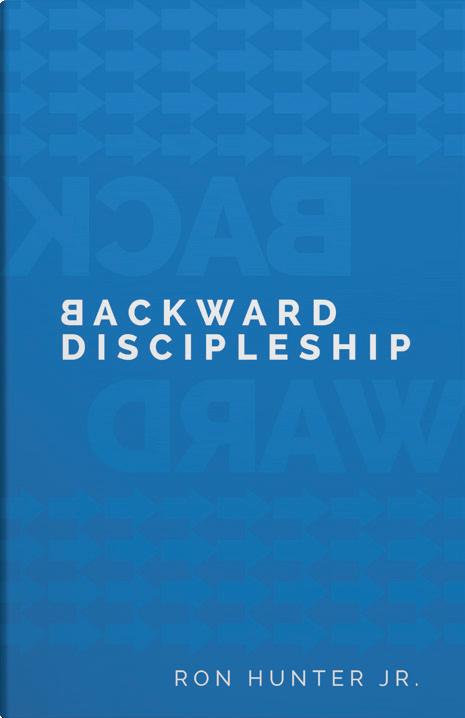
When you open a map, you don’t just look at where you are; you look at where you want to be, then chart the course.
Discipleship works the same way. We identify the destination, then chart a course to get there.
Backward Discipleship, by Ron Hunter Jr., helps leaders start with the end in mind, planning backward before pressure comes. Drawing on the research-backed approaches of the faithforging five, Backward Discipleship reconnects what was never meant to be separated: the church and the home, belief and daily practice, and parents and spiritual family.
BY RON HUNTER JR., PH.D.
I don’t have the capacity right now.
I need to step back and rethink our approach. I overlooked the impact on people. Let ’ s slow down.
In the first installment of “Phrases Leaders Struggle to Say,” we explored four statements that test a leader’s courage, clarity, and integrity. This column continues the series by turning our attention to a quieter but equally dangerous leadership challenge: pace. Many leadership failures do not begin with bad intentions or flawed vision. They begin when leaders move too fast, carry too much, and fail to recognize the strain building.
When a leader says, “I don’t have the capacity right now,” honesty enters the room. Setting limits signals measured strength, not weakness. Leaders who refuse to acknowledge capacity eventually ask people to carry burdens they were never designed to bear. Burnout rarely announces itself. It accumulates quietly while leaders insist they can push a little longer. Capacity is recalibrated when leaders stop ineffective programs and hand off tasks that still matter. Wise leadership begins by acknowledging what cannot be sustained. Not every program or ministry needs to last forever.
The phrase, “Let’s slow down,” often feels risky in fast-moving environments. Leaders fear that reducing speed signals uncertainty or loss of momentum. History suggests otherwise. Napoleon, a leader known for urgency and conquest, famously insisted, “Dress me slowly; I’m in a hurry.” He understood haste often costs more than it saves. Slowing down creates space for recalibration. Leaders who manage pace protect clarity, relationships, and mission.
Saying, “I need to step back and rethink our approach,” requires humility. Leaders are often rewarded for decisiveness, yet wisdom sometimes demands pause. When leaders
refuse to reassess, they “double down” on strategies that no longer fit the moment. Stepping back creates space to see blind spots, re-engage purpose, and realign direction. Reflection strengthens leadership, while stubborn momentum weakens it. Which areas require rethinking? Honest evaluation turns sacred cows into well-cooked steaks.
Perhaps the most revealing phrase is, “I overlooked the impact on people.” Results-driven leaders can unintentionally treat relationships as secondary to outcomes. History reminds us even the most faithful leaders recognized human cost only in hindsight. Abraham Lincoln once reflected, “I claim not to have controlled events, but confess plainly that events have controlled me.” Pressure, expectations, and comparison can obscure impact, but people feel it long before leaders name it. When leaders acknowledge relational cost, trust begins to heal.
These four phrases share a common thread. Leadership requires the courage to manage pace, not just vision. Leaders who ignore limits create exhaustion. Leaders who ignore speed create chaos. Leaders who ignore reflection invite mediocrity. Leaders who ignore people create fracture. None of these happen overnight, but all happen eventually.
Strong leaders learn to speak these phrases before circumstances force them to do so. In the next issue, we will identify the phrases leaders resist when loyalty to the past threatens the future.
About the Columnist: Ron Hunter Jr. has a Ph.D. in leadership and is CEO of D6 Family Ministry. You may contact him at ron.hunter@d6family.com.

BY RUTH MCDONALD

Wouldn’t it be nice if newborn babies came with instructions? Simple details like:
• This child is an introvert, so don’t expect them to get up and perform for a whole church of strangers or serve as a greeter for your church plant.
• This child will be a mess while going through puberty, but don’t worry because these irrational feelings will pass. It’s normal.
• This child, on the other hand, is not going to get over it. These feelings are indicators of a more serious problem, so therapy is advised.
Unfortunately, parenting is the ultimate example of “on the job training.” And, if God blesses you with multiple offspring, each new child brings a completely different job assignment and set of challenges. And no instructions. It’s trial and error. Or, as I once heard about parenting: “You take the hand you’re dealt, and you do the best you can.”
Here are a few things I’ve learned the hard way; you could call them my thoughts on parenting.
Don’t overreact. Just because your son refuses to go to class, digs in his heels, and remains outside the classroom does NOT mean he will become a high school dropout and hater of authority. It might just mean he is an introvert who doesn’t walk into new situations without hesitation. He might just need to observe for a few minutes to convince himself it is safe to engage.
Don’t underreact. I know, that’s not really a word. The very fact that I wrote opposing advice here underlines the difficulty of parenting. Sometimes you feel like you really can’t win. Am I overreacting? Am I not taking her seriously enough? Don’t say to your daughter, “This is just hormones talking. You will feel better in a day or two!” While the statement may be true, it also may not be true. Her anxieties and feelings are real to her, and blaming them on hormones makes her feel you are not taking her real emotions seriously.
Heed warning signs and get help. This is a hard one. Most children occasionally make overly dramatic statements such as, “I wish I could die!” or, “I hate you!” In an
emotionally-charged moment, many things are said that are not serious. Children and teens have BIG feelings. Every episode does not dictate calling in a professional counselor. Sometimes, a hug, something comforting to drink or eat, a change of setting, or some “space” is all that is needed. However, if these reactions become a pattern, you may need to get your child some help. In some cases, therapists can help them manage the mood swings and angst of the teen years (and beyond).
Mom guilt is real…and not. Even the best parents I know feel guilty at times. Hard as we try, we all mess up. Thankfully, most of our mistakes are small and can be laughed about in years to come. (We didn’t mean to zip up our baby’s chubby little neck in her footie pajamas!) The fact we feel guilty over every mistake is simply evidence we are good parents who want what’s best for our children. Truly “bad” parents simply don’t care.
Pray…a lot! A good support group, a loving church community, and godly professionals are tremendous aids to successful parenting. But the most essential thing is to ask God for wisdom. “If any of you lack wisdom, let him ask of God, that giveth to all men liberally, and upbraideth not; and it shall be given him” (James 1:5). As babies become children, teens, and young adults, their problems become more complicated. We need God’s wisdom to know how to love and guide them best.
It sounds like a platitude, but please remember God really does love your children and desires what is best for them. He truly loves them more than you do, hard as that is to imagine. The love of a parent for a child is probably the closest thing we experience to unconditional love, but it misses the mark by far.
God’s love is perfect. While we fret and worry about how to guide our kids through difficult days and emotions, God knows exactly what to do. Trust Him! He doesn’t need your suggestions and solutions. He just wants you to pray, trust, and hang in there. He’s got this.
About the Writer: Ruth McDonald served as executive director of WNAC from 2022-2025. Previously, she and her husband Donnie served as missionaries to Japan for 38 years. The couple has four adult children and four grandchildren. Her family describes her as “crazy, fun-loving, talkative, and passionate.”

BY JOHN BRUMMITT
In the early 2000s, as the millennial generation left for college or moved out on their own, they followed an expectation of how life would proceed. However, by the 2010s, after a recession in 2001 and the Great Recession in 2008, millennials soon became known as the “Boomerang Generation.” They didn’t follow the norms of previous generations. Rather than leaving home permanently to start a career, get married, and raise children, many millennials returned home to live with their parents.
This phenomenon was caused by many economic factors beyond their control. Because the phenomenon was so widespread, it changed how culture viewed the transition to adulthood. Now, the timing for marriage and children has shifted, and the idea of multigenerational households has become desirable rather than necessary. This has created yet another societal shift for Gen Xers and late boomers — and another new name — the “Sandwich Generation.” After their children delayed the transition to adulthood, many parents now face living with children, often adult children, in the home while also caring for their own aging parents. This cultural shift has both positives and negatives, like anything else. Understanding both sides can help you navigate this new norm.
First, the positive: the Bible isn’t silent about multiple generations working together to pass down faith and discipleship. Deuteronomy 6:4-9 describes passing down God’s Word and commands to the next generation. Titus 2:1-6 encourages older generations to disciple younger generations. Deuteronomy 4:9 urges passing the faith to children and grandchildren. The model of three generations working together is not only found throughout Scripture but is also held up as the model for successful discipleship.
However, we must also consider challenges resulting from this cultural shift. Caring for children and parents simultaneously

can pose multiple problems. The most obvious are financial. Raising children today can cost over $500,000, according to a study by the Brookings Institute. On top of that, lasting student loan debt from your own education can eat into disposable income. Caring for your parents often results in financial strain, even when your parents bring additional income. Often these individuals also struggle to balance their careers with responsibilities at home. This may lead to a shift from full-time to part-time work, giving up or being passed over for promotions, or ending a career prematurely to become a full-time caregiver.
This struggle to balance work and home leads to a reduction in personal time, which, in turn, impacts friendships and marriages. Time is a limited resource, and with so many demands, the caregiver is often the one to sacrifice. This leads to burnout and increases the risk of depression, anxiety, and fatigue. All impact the way we carry out other responsibilities in our lives.
The Sandwich Generation must also be prepared to navigate changing family dynamics. Transitioning from cared for to caregiver (or vice-versa) can create issues for everyone involved. Having adult children who still need you but don’t want to be treated like children, and parents who also don’t want to feel disrespected or burdensome, can add difficulty on multiple levels to anyone’s life. (Not to mention the constant demands for attention!)


Whether millennial, Gen X, or late boomer, can you avoid these challenges? Probably not. However, you can greatly reduce them through clear communication before entering a multigenerational living situation. Set clear and firm rules and responsibilities for the house ahead of time. Grandparents are responsible for A, B, and C. Children are responsible for X, Y, and Z. You are responsible for K, L, and M.
Of course, these expectations won’t be perfect and will require flexibility. But start laying the groundwork early for how things will be handled within the family unit, rather than trying to juggle all responsibilities yourself. Seek out ways to stay organized with everyone in the house. A family calendar/schedule provides opportunities for self-care and relationship-building with your spouse and others.
Plan ahead while understanding situations change. As parents age, their ability to help will diminish. Anticipating the next steps will ease future decisions. Having difficult conversations while parents are still able to share their wishes will also provide guidance for the future. When possible, include siblings in these hard conversations and decisions
to avoid confusion and resentment on their part. As your adult children age, give them more responsibilities, but also give them space and freedom to launch out on their own. Don’t inadvertently tie them down by requiring them to help with aging parents. Be kind and patient with your adult children, understanding they (and you) may soon face a similar situation. Set a good model the next generation can follow.
Living in a multigenerational household is once again becoming normal, even expected. As we gradually embrace this cultural shift, being prepared emotionally and financially will make the process smoother. Multiple generations under one roof can be a huge blessing. Grandparents enjoy more time with children and grandchildren. Parents receive additional support with day-to-day life. Children are discipled by multiple generations, strengthening their relationship with Christ.
Still, it is not easy. Put in the hard work on the front end to help when you suddenly find your empty nest is no longer empty.
About the Writer: John Brummitt became director of Richland Ave Financial in January 2016. He graduated in 2011 with an MBA from Tennessee Tech University.


BY CHRIS COMPTON
I am encouraged when I see Christians live out their faith in everyday moments. Following Jesus has a way of opening our eyes to the people around us and softening our hearts toward their needs. Discipleship shapes us into people who notice, care, and respond to others, often in quiet, ordinary ways.
One of the most encouraging things about the church is how believers step up when needs are visible. You bring a meal to a family who just welcomed a new baby. You sit with a grieving friend who doesn’t want to be alone. You watch a neighbor’s kids, so Mom or Dad can attend an important appointment. You take time to pray with someone after a hard conversation. These efforts may seem small, but they are powerful expressions of Christ-like love.
Acts of kindness matter greatly. They encourage weary hearts, strengthen relationships, and point people to the goodness of God. Many require little more than time, presence, and compassion. But discipleship eventually leads us to wrestle with a more challenging question: what about the moments when loving our neighbor carries a financial cost?
What about the single mom whose car breaks down at the worst possible time? Or the college student trying to stay in school while juggling tuition and rent? Or the church member quietly choosing between prescriptions and groceries? These needs are less visible but no less real.
It is one thing to feel compassion and another entirely to be financially positioned to act on it. At times, following Jesus calls us to put more than words on the table. It calls us to act with our resources. Another issue comes when a Christian desires to be generous but is not financially prepared to be generous. This is where financial discipleship becomes essential. If our lives are being formed by Christ, then our finances must be shaped with purpose, so generosity is possible when the moment comes.
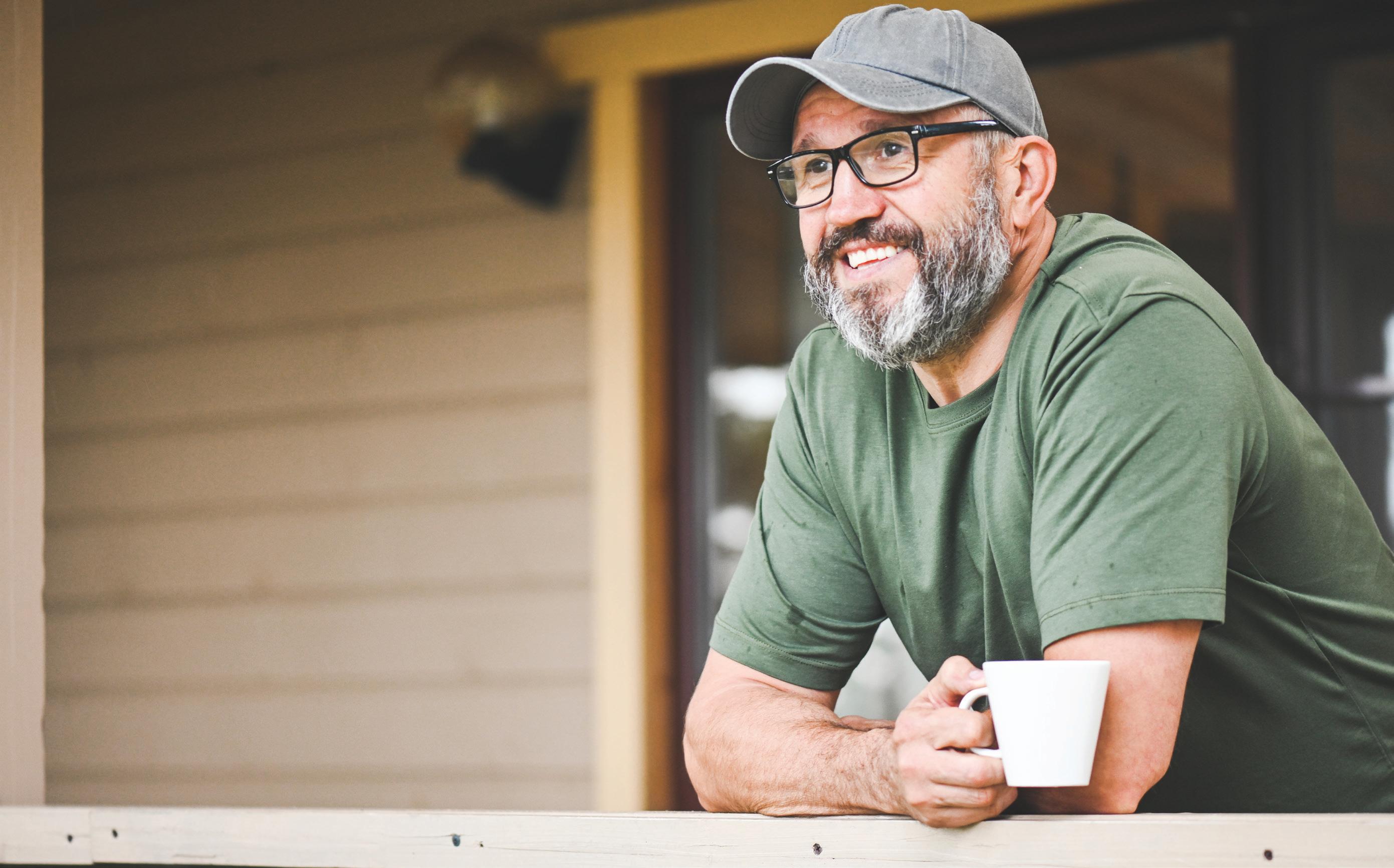
Jesus illustrates this clearly in the Parable of the Good Samaritan (Luke 10:30–37). After tending the wounded man, the Samaritan took him to an inn and ensured ongoing care. Luke 10:35 says, “And on the morrow when he departed, he took out two pence, and gave them to the host, and said unto him, Take care of him; and whatsoever thou spendest more, when I come again, I will repay thee.”
The Samaritan did not hesitate. He had both compassion and capacity. He was prepared to meet the need before him and willing to absorb the cost. His generosity flowed from readiness. That readiness required foresight, discipline, and intentional stewardship.
Imagine what it would look like if this kind of readiness marked our lives. Discipleship gives us a pathway. Start by praying and asking God to help you be prepared to obey Him when He places opportunities for generosity before you. Consider how your money is currently being used. Look for areas where spending can be reduced, like subscriptions, impulse purchases, or small conveniences that quietly add up.
At times , following Jesus calls us to put more than words on the table . It calls us to act with our resources .
Take those savings and intentionally set them aside as money designated for generosity. Over time, God will make you more attentive to needs, and you will feel more confident when opportunities arise.
You do not have to be wealthy to live this way. You simply need a plan, consistent habits, and a heart being shaped by Jesus. When financial stewardship becomes part of discipleship, generosity stops being stressful and becomes joyful. And through those everyday acts of faithfulness, God’s love is made visible in powerful ways.
About the Writer: Chris Compton is the CFO of Richland Ave Financial. He graduated in 2007 with an M.A. in Bible exposition from Columbia International University. A 1998 graduate of East Tennessee State University, he has more than two decades of administrative/financial experience in varied fields, and seven years in pastoral ministry.
BY TRAVIS ALEXANDER
Is a “gospel expectation” prevalent within the Body of Christ today? By “gospel expectation,” I mean do we first and foremost understand the Lord expects every one of us to share the good news of Jesus personally, individually, and corporately?
From His first interactions with His future disciples, Jesus set this expectation and pattern. Matthew 4:18-22, Mark 1:16-20, and Luke 5:1-11 all record His promise to make His disciples fishers of men. I purposely emphasize future disciples to make it clear Jesus expressed this expectation to share the gospel with everyone they encountered even before He began to pour Himself into their lives as His disciples.
The thought of a “gospel expectation” has consumed my thoughts over the last couple of years. Do we as Christians fully comprehend the wonderful call placed on each of us? Do we truly appreciate the gravity of this responsibility? Second Corinthians 5:17-20 describes the new identity we receive when we accept the gospel. We become ambassadors for Christ, accepting His mission to help others be reconciled to God.
I’m afraid this is not our current mindset as the Body of Christ. I am certainly no expert, but I have pastored for many years. For the last five years, I have traveled to many churches, associations, and even foreign fields as the Arkansas director of missions. Along the way, I made the following observations.
1. Many churches (though not all) are struggling to stay alive, rather than living out His promises, power, and presence (Matthew 28:18-20).
2. Many pastors are preaching the Word but struggle to equip their congregations past church attendance (and statistics show we are losing that battle also).
3. Meaningful discipleship is deficient in many congregations, whether Sunday School, small groups, D-groups, or one-on-one interaction.
4. Not everyone in our congregations is interested in sharing the gospel, but some are. They just need to be equipped (Ephesians 4:11-12).
5. If a church, pastor, or individual commits to change in this area, there will be resistance (even within the church family). But take heart! There is also help (Galatians 6:8-9).
Considering these observations, what is a gospel expectation, and how do we develop it, both in our congregations and in our relationships beyond the church? To define it simply, a gospel expectation is sharing with others on a regular basis the biblical truths we have learned ourselves. We will not stand before Jesus and give an account for how many people we led to Jesus (the results are His), but we will account for how openly we shared Him, how we sowed the gospel seed.
Developing this mindset means an addition in messaging and location. That is, when we share the Scripture, we must

additionally challenge our listeners to share the truths they have learned with someone else (preferably unsaved). This often requires a change of venue. I have been criticized for making the statement: “If the primary location of your ministry is at church, you are missing the biblical example.”
These days, I typically end every sermon or lesson with two questions: 1) What did you learn today? 2) Who needs to hear that?
Other methods I teach through revitalization include:
a. A simple method to pray consistently for the lost people you personally know.
b. How to have gospel conversations with strangers and friends.
c. Developing your personal testimony to be shared in 15 seconds.
d. How journaling can be used as a tool to share the gospel.
e. Accountability and how to set witnessing goals.
These simple tools point to the essence of outreach — and don’t cost a dime. We can do many things to reach people for Jesus. However, if inviting people to church, passing out Bible tracts, and big day events are our primary tools for evangelism (and, yes, all these have value), we will always struggle to stay alive rather than living out His promises, power, and presence.
It is imperative to adopt and develop an attitude of gospel expectation in our lives and ministry.
About the Writer: Travis Alexander is director of missions for the Arkansas State Association. Learn more: arfwb.org/missions/.




“During a youth outing, a young man approached me and spoke to me about Jesus. Something in the honesty and passion of his voice touched me deeply. Right there, I gave my life to Christ. He prayed for me, and from that moment I joined their youth group.”
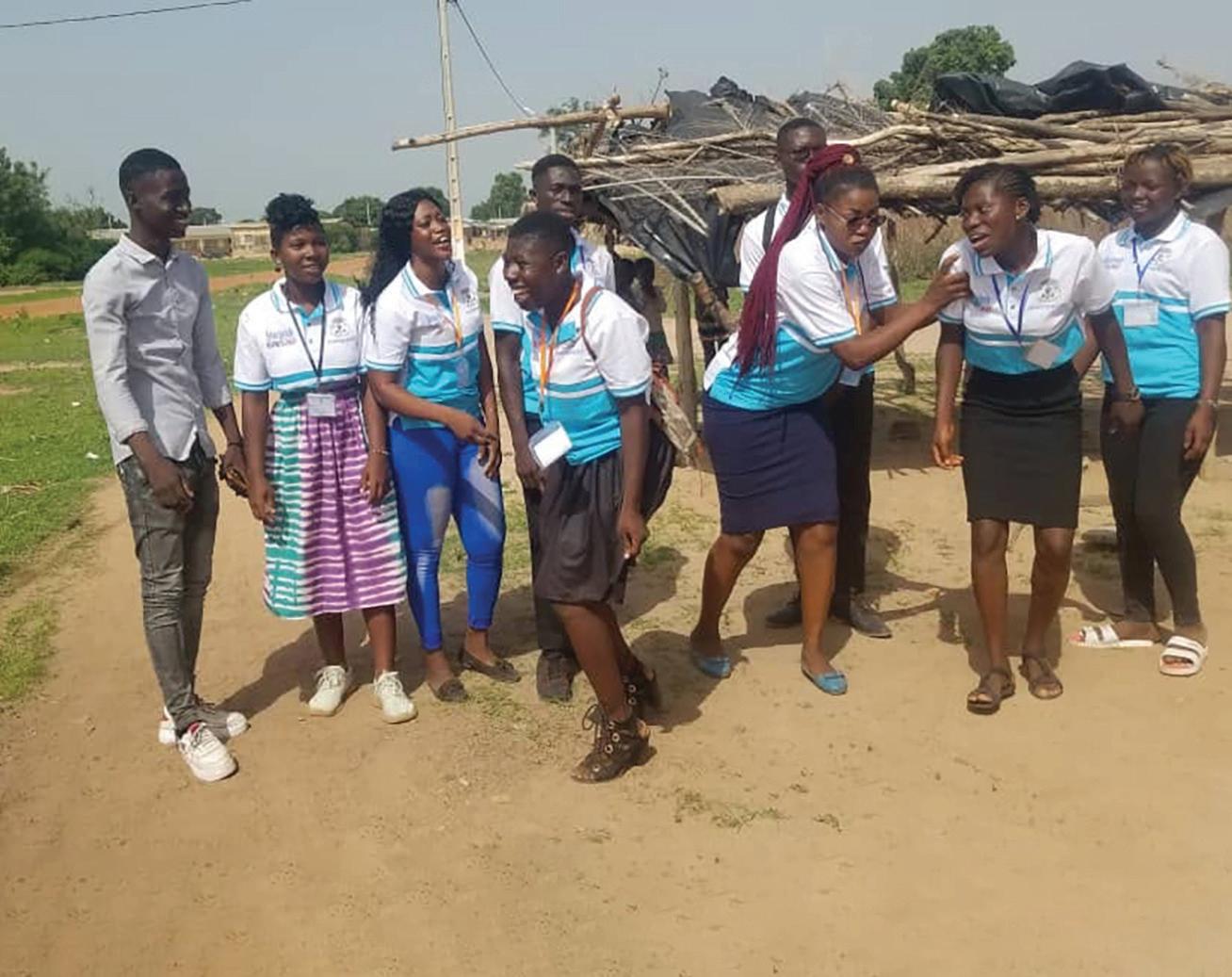
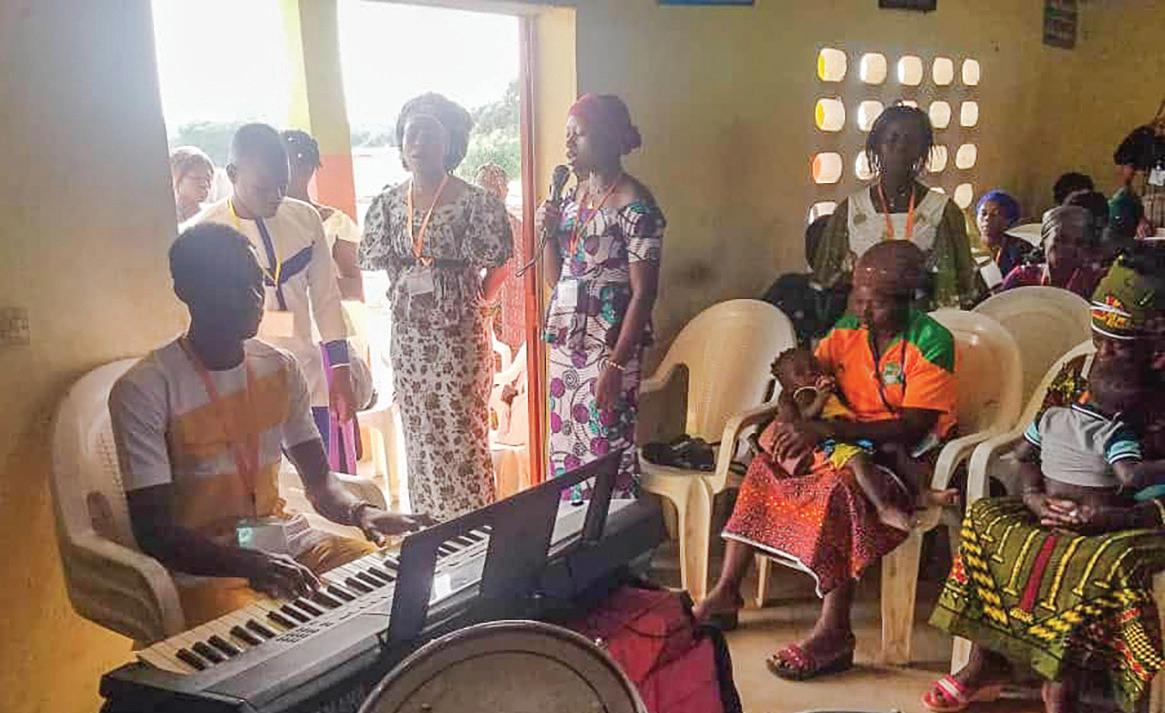
Kouame’s story is an example of the quiet but steady movement reshaping the future of Free Will Baptists across Côte d’Ivoire (Ivory Coast). It is led by young people — students, newlymarried couples, musicians, and emerging leaders — going into their communities with conviction to serve and carry the gospel as well as stepping into leadership responsibilities in their local churches.
The population of Côte d’Ivoire, West Africa, is young. Seventy-five percent are below the age of 35, with a median age of 18 years. Twenty-two percent of the population are within the age range considered “youth” (between 15-30 years). These statistics show the strategic importance of a vibrant ministry targeted at this vital segment of the church.
The youth department of the National Association of Free Will Baptist churches in Côte d’Ivoire is highly organized and divided into national, associational, and local church levels. The youth ministry rests on four pillars: evangelism, spiritual formation (discipleship), Christian fellowship, and pastoral support. These pillars guide a range of creative and practical initiatives

BY ROBERT KOUASSI
incorporating young believers — not just in church life — but as active builders of its mission. Through evangelistic campaigns, spiritual retreats, community outreach, and worship gatherings, they embody a living discipleship bridging generations.
One of the longest-running efforts of the youth department is campus ministries, founded in 1998. Cell groups on campuses of middle schools, high schools, and universities gather students to explore how Scripture intersects with academic life, personal challenges, and social issues. Over the years, many non-Christian students, whether invited by friends or showing up out of curiosity, have discovered faith and repentance in these meetings.
“My journey began with a simple invitation,” says Eri. “While in high school, a classmate who is now a pastor invited me to a meeting of his Christian group. It was full of meaningful conversation, prayer, and even a skit. My heart opened that day. Afterward, my friend spoke to me about Jesus with such sincerity I could not ignore it. I surrendered my life to Christ. All glory to Jesus for allowing me to encounter Him. Today, I’m married and all my family is active in my Free Will Baptist church, but my faith began in high school.”
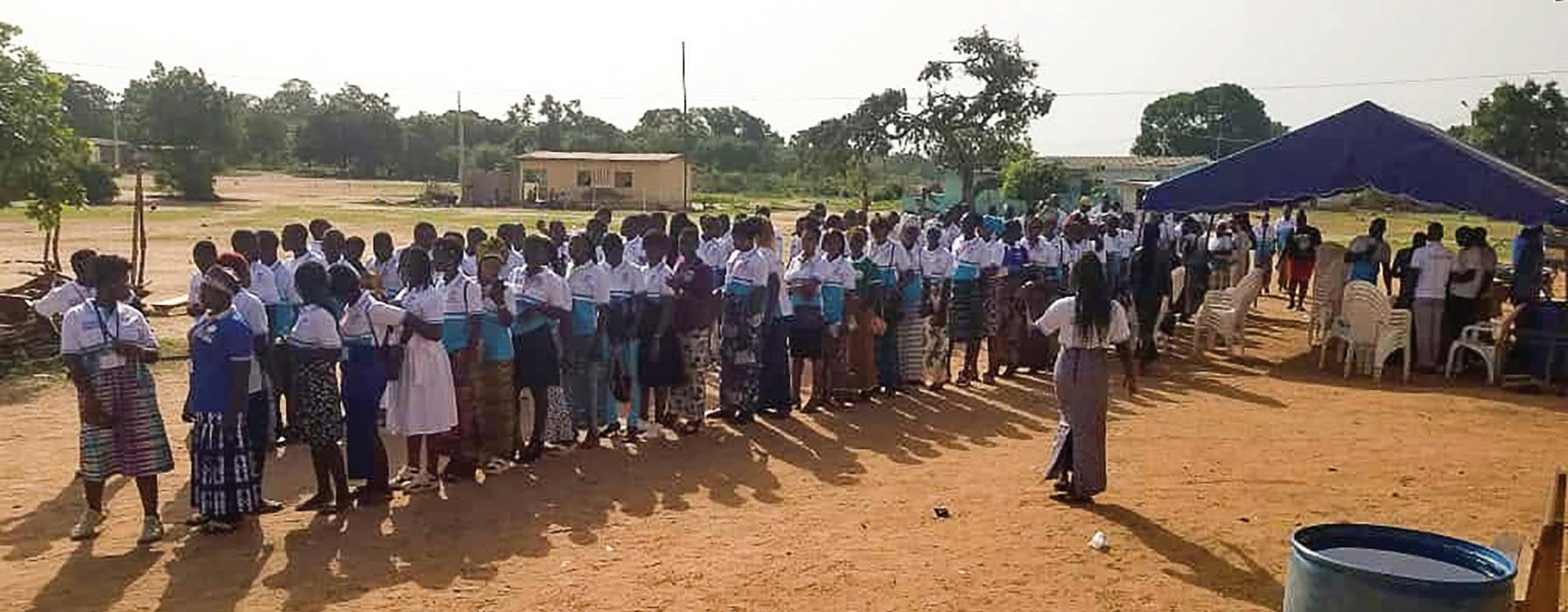


On campuses, Bible studies give students answers for questions that emerge on a secular campus, strengthen them academically and spiritually, and foster mutual support and Christian friendships.
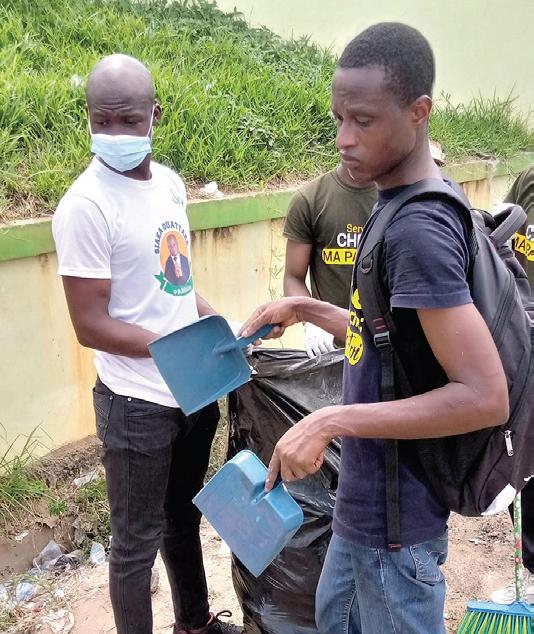
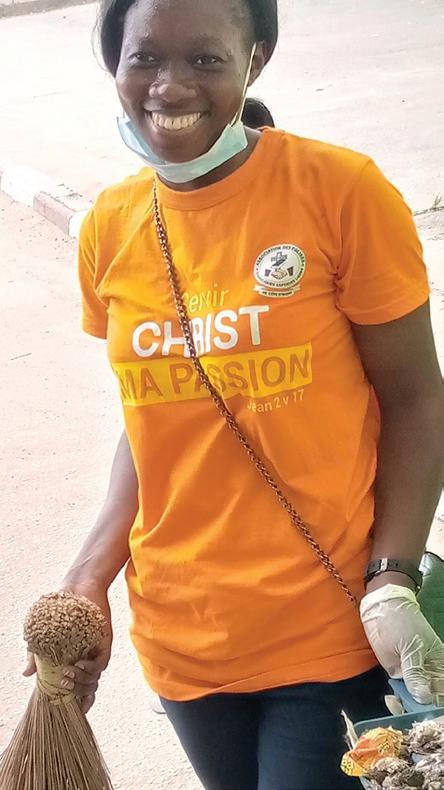
Beyond school campuses, the youth-led community service days encourage young people to engage with those around them by going into the streets of cities, villages, and neighborhoods. Armed with brooms, cleaning tools, and open hearts, they clean and beautify public spaces while sharing the Good News. They also have served in orphanages, hospitals, and even military camps performing acts of generosity and opening doors for conversations to plant seeds of hope. This is how Kouame encountered the youth from the church.
Inspired by the words of 1 Peter 2:9, which encourage us to demonstrate “the praises of him who hath called you out of darkness into his marvelous light,” the youth plan a large-scale evangelistic campaign once a year. These efforts both reach unreached areas as well as help local churches seeking to evangelize their communities. Robert said, “Hope after death awakened my heart. It was during a major evangelistic campaign. The youth were going house to house, inviting people to a special gathering. One of them stopped to speak with me about the immense love of Christ and the reality of life after death. His words touched something inside me. The promise of eternal joy


filled me with hope, and I chose to give my life to Christ.”
In the most recent campaign, 72 people committed their lives to Christ, and a brand-new congregation was planted. Each evangelistic campaign draws between 500 and 1,000 people. Through the work of the Holy Spirit and the efforts of 30 to 50 young volunteers handling logistics and actively sharing the gospel, anywhere from 20 to 100 people give their lives to Christ each year during these campaigns. New congregations are often planted.

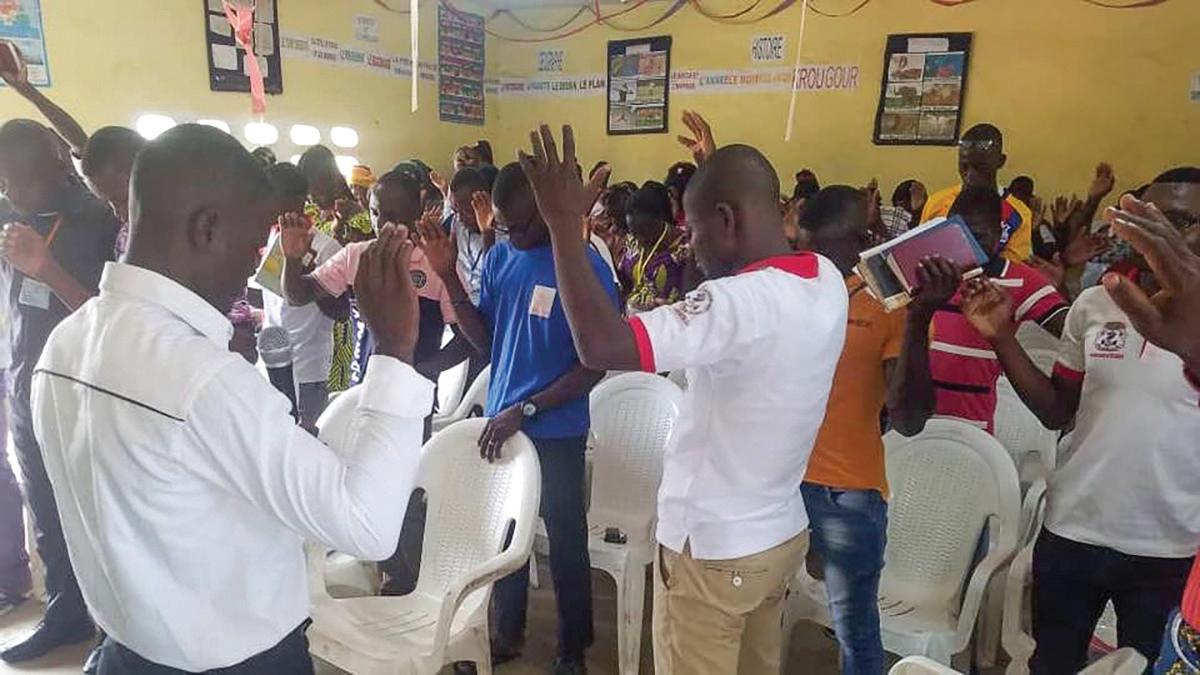
Spiritual retreats and youth camps, held nationally and locally, gather young people for days of prayer, teaching, testimony, and Continued on page 47
Kenya — In February 2026, IM Global Partners announced a partnership with the Samburu Church. The partnership aims to strengthen and sustain the ministry under national leadership, ensuring the church continues to flourish for generations to come.
Joshua Project estimates the Samburu population at 364,000, with only a small percentage having any contact with the gospel. An animistic, semi-nomadic ethnic group, they live in arid, north-central Kenya. Primarily herdsmen, significant time is spent in search of suitable grazing areas.
From 2016 to 2026, IM missionaries Eddy and Amanda Simmons faithfully shared the gospel among the Samburu. During those years, many people followed Jesus, were baptized, and gathered for worship under shade trees.
Antioch, TN — “Share the Gospel! Give a Million. Reach a Million.” is the theme for IM’s 2026 World Missions Offering. It aligns well with the three major IM Horizon Goals for 2025-2035. The WMO supports new missionary funding, the IM General Fund, and partnerships.

This year, in addition to continuing to provide the standard WMO resources for churches and individuals, IM will introduce Monthly Missions Moment downloads, a magnetic prayer calendar, posters, and more.

Sign up for the WMO newsletter to receive WMO news and access to the resources.
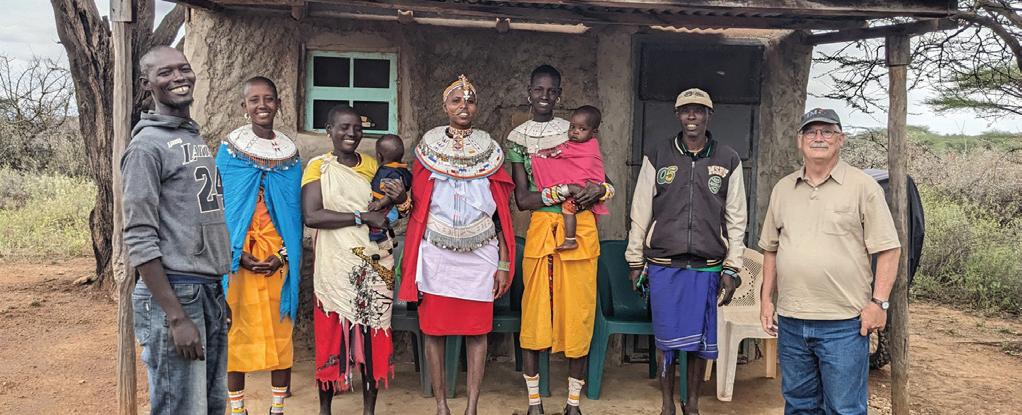
Francis, a Samburu pastor, continues to evangelize and pastor the groups.
What started as seeds of faith has grown into an exciting opportunity to continue “watering those seeds.” One focus of this partnership is continuing the distribution of solar-powered MP3 players loaded with oral Scripture in the Samburu language — delivering God’s Word directly to their hearts.

Panama — Ten people from the Buenas Nuevas (Good News) FWB Church in Chitré, Panama, took a missions trip to Guatemala. They performed evangelistic and community service outreaches, including medical and optical clinics. This is the church’s third annual mission trip. The previous trips were to Cuba and El Salvador.
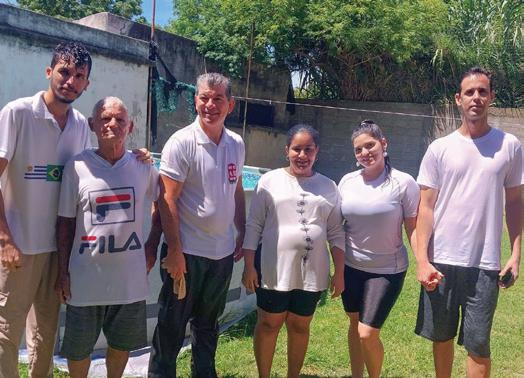
Uruguay — On February 22, five believers from the Iglesia Emanuel FWB Church in Montevideo, Uruguay, publicly declared their new life in Christ through baptism.
Japan — The Hope Alive Church in Tokorazawa, Japan, is planting a second church in Ikebukuro. The church-planting team, led by missionaries Osam and Emily Sakamoto and Jack and Ashley Ketteman, includes interns Reece Rooke and Robert Newton, local believers, and volunteers from Hope Alive.
Brazil — November 30, 11 people were baptized in Brazil: seven at Jaboticabal and four at Nova America in Campinas.
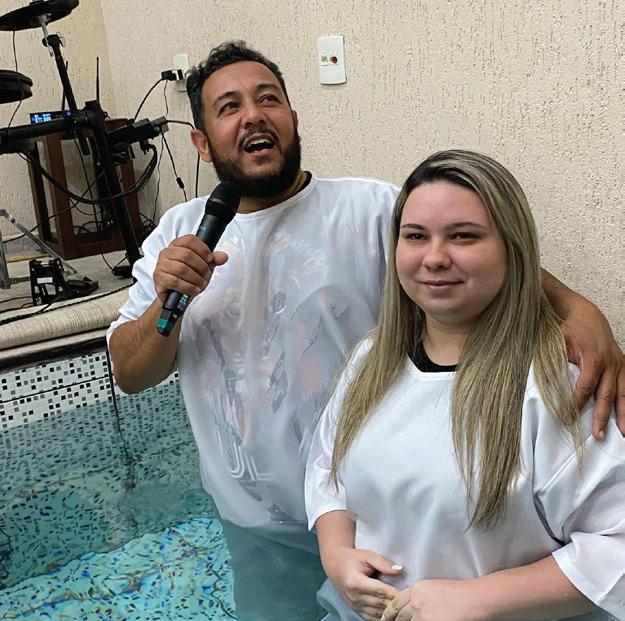
Japan — During January, the New Life FWB Church in Sapporo, Japan, hosted a Korean group who evangelized college students in the area. They now have a weekly Bible study for college students attended by several seekers.
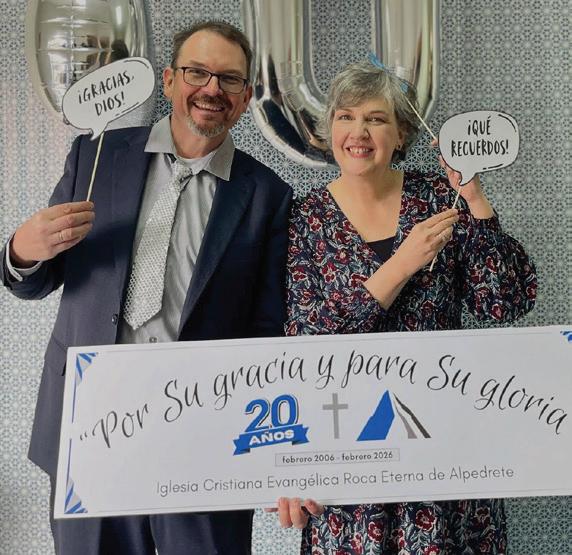
Spain — February 8, the Alpedrete Church celebrated 20 years of sharing Christ in a city which previously had no evangelical witness.
Bulgaria —
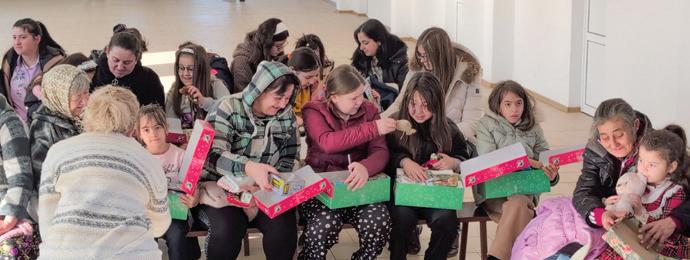
More than 1,000 people in the Shumen province heard the gospel through Operation Christmas Child outreach. A THP team joined Josh and Bea Provow for a marathon of events in 18 villages and cities. Josh said, “Pray for us as we dream, plan, and pray about future work in these villages, many of which are 100% Muslim.”
Brazil — Two mission churches recently launched in the states of Santa Catarina and Paraná in Brazil. Begun by two Cuban FWB pastors who recently immigrated to Brazil, the Brazil FWB National Association is providing support for outreach in these states with no previous FWB churches. Services are held in Spanish (rather than the native Portuguese) to serve refugees from Cuba and Venezuela.
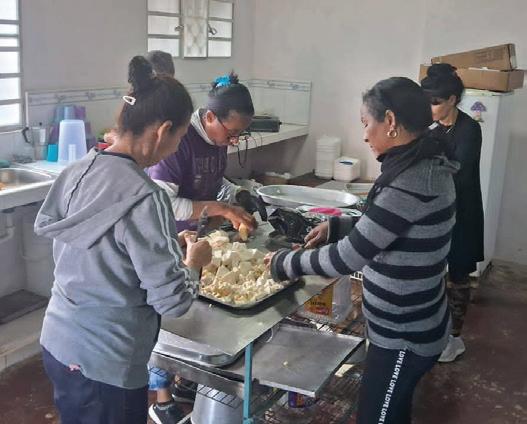
Cuba — On February 7, the women’s group of Abundant Life FWB Church, with help from the youth, prepared a “caldosa” (hearty Cuban stew) to share with individuals in their local community. The normal food shortages have been greatly multiplied as the island seeks to recover from Hurricane Melissa and no longer receives fuel from Venezuela.
Bulgaria — Jonathan and Amy Postlewaite recently announced they and several others in the Pleven congregation have given Bibles to seekers as well as Christians interested in sharing the Word with others. They ask, “Pray, through reading God’s Word, they will come to faith in Jesus Christ.”
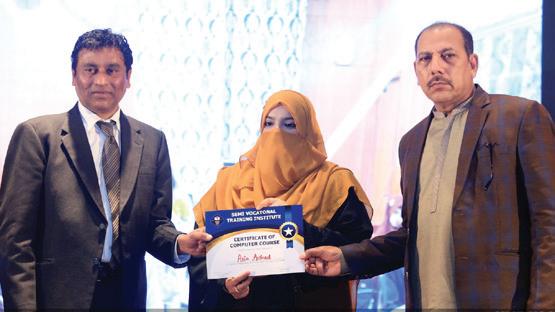
Pakistan — January 30, 259 students graduated from the free vocational program organized by Free Will Baptists in Lahore, Pakistan. Students now have the skills to earn a living as tailors, hairdressers and barbers, electricians, plumbers, mobile phone techs, and more. In addition to learning life-changing skills, these students heard the gospel.
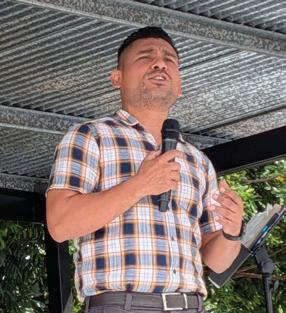
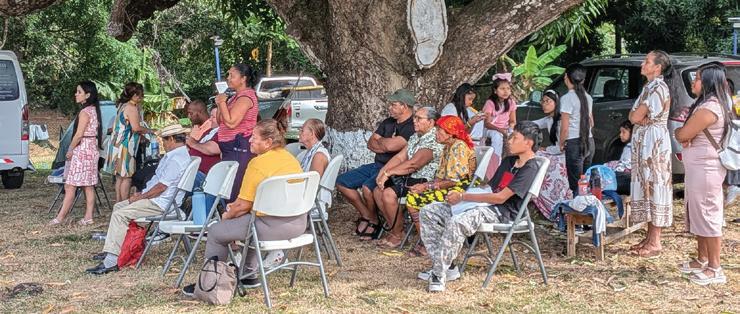
Panama — Panama’s National Association met January 10-11. The theme — One Family, One Mission, One Kingdom — was supported with two messages and a Bible study. IM’s Director of Global Partnerships Kenneth Eagleton preached the keynote message. Seven people from two churches were baptized. The business session featured reports of new works begun in 2025 and plans for new mission works.

In the summer of 2024, I participated in ETEAM, traveling to Tokyo to help several churches in their efforts to spread the gospel. While there, I encountered God in countless ways, but certain lessons were woven throughout every service, conversation, and destination. ETEAM allowed me to see the Great Commission realized, understand the importance of missions, and appreciate the sacrifice of becoming a missionary.

One opportunity ETEAM provides is seeing the Great Commission realized. As a devoted Christian, I’m familiar with Jesus’ commands in Matthew 28:18-20. I tried to witness in my hometown, but I come from a rural community where most people already identify as Christian. Therefore, the necessity to evangelize had become less urgent. I caught the “plague” of comfortable Christianity.
According to Mustard Seed Network, in Japan, less than 0.5% of people identify as Christian. We shared our testimonies with adults and children who had never seen the love of their heavenly Father. We also taught English and learned to worship in Japanese. On crowded streets in Tokorozawa, we passed out church flyers and performed a short skit on the sidewalk,
praying to reach even one passerby. Ministry came to life. I realized sharing the gospel was never meant to feel comfortable, and I brought home new skills as a Christ-follower.
Moreover, ETEAM helped me understand the importance of missions. In Japan, I encountered a culture with beautiful architecture, delicious food, and kind people. However, I also encountered a culture without Jesus, driven by shame and entangled with empty religion. One day, we visited a popular Buddhist temple with an immense prayer wall at its center. Papers crowded its surface — pleas for good health, happy marriages, and successful careers. I watched people pray in isolated corners, pouring out their hearts to man-made gods who could not hear, care, or make the sacrifices required for true love.
Before we left, our group stood in a circle outside the temple, preparing to pray over things we had witnessed. As we shared our thoughts on the experience, a missionary’s child whispered to his father: “What happens to the people who never hear about Jesus?” This innocent question weighed on my mind for the remainder of our trip. I tried to digest the truth,


but it only settled in the pit of my stomach. I know God is just and kind, but I also know the Son is the only way to the Father. ETEAM enabled me to realize this tension is what makes missions so important.

have accessed this faith if not for the obedient sacrifices of missionaries.
Finally, ETEAM helped me recognize the sacrifice of becoming a missionary. Before, I had few interactions with full-time missionaries or their families. I listened to missionaries visiting my church and saw them walk across the stage at national conventions. I understood what they did, but I could not understand the reality of their sacrifice.
ETEAM allowed me to perceive missionaries in a new light. I met families in Japan whose submission to God required them to give up lifetimes built in the U.S. They left their homes and spent years learning a new language and culture to bring others to God. I met a missionary woman prepared to give up marriage for missions. I met children spending their childhoods as foreigners in a new country, giving up normalcy to accompany their parents as they followed the Holy Spirit.
Most importantly, I saw countless lives changed because of these faithful Christ-followers. I watched Japanese church
Whether students realize through these experiences they are called to become missionaries or called to support them, ETEAM presents students with examples of Christ-like love, enabling them to hear God’s voice, feel His Spirit, and obey His direction.
Regardless of the moments I shared with my teammates, the lessons I learned from missionaries, and the revelations God offered me throughout my ETEAM experience, it seems impossible to explain its true significance. Perhaps this is why Jesus emphasized missions with a call to action: “Go ye therefore, and teach all nations, baptizing them in the name of the Father, and of the Son, and of the Holy Ghost: Teaching them to observe all things whatsoever I have commanded you: and, lo, I am with you alway, even unto the end of the world” (Matthew 28:19-20).
About the Writer: Josephina Wieczorek-Bettendorf is studying English and Political Science at University of North Dakota. She and her husband Jonah were married in March 2025.
BY LESLIE NICHOLS
Each year I have the incredible opportunity to sit down and talk with your students. I hear about their experiences overseas. The exotic foods they tasted. The varied things they saw and heard. But we always spend the most time talking about the people they met.
If you’ve traveled overseas, you understand the feeling. You do everything you can to prepare for the trip, but at the end of the day, you fear the language barrier. Time after time, I’ve listened as students explained how the language didn’t matter because these kinds of relationships transcend

To gain a better understanding of this, we asked Anthony Edgmon what hosting ETEAM and CMPs in his area has done for his team’s ministry after the students leave.
“For several years, we have had Alpedrete church youth who coincide with the ages of the ETEAMers and CMPers. It is an encouragement for our young people to see other Christian young people and learn from them. Often, the testimonies of the American youth and their relationships with each other challenge and inspire our young people. Usually, several of our church youth and the ETEAMers and CMPers connect on social media and maintain a relationship through the years.
Many of the teams to Alpedrete have heard testimony from Pedro and Sole, an older couple in the church. They share how God drew them unto Himself out of Catholicism. Their insight and sweet spirit are always inspiring. We want the teams to be challenged in their relationship with the Lord and discover what their role in missions may look like.
Another moment that tends to be a moving time for the teams is when we take them to a hilltop from where they
can see several towns in our area, many of which have no evangelical church. We challenge the students to pray and collaborate with us to help take the gospel to these towns so people in these communities can develop a relationship with Christ.
You see, although it may not be spoken about much, I believe on many levels the ETEAM and CMP experience must be about relationships.”
These relationships matter for the gospel. Josephina’s narrative (pages 22-23) and Anthony’s perspective above make it clear our actions matter in the Great Commission. Equally, what we don’t do also matters.
Take the trip. Be bold for the gospel. Step out in faith. Say “yes” to what the Lord is calling you to do.
About the Writer: Leslie




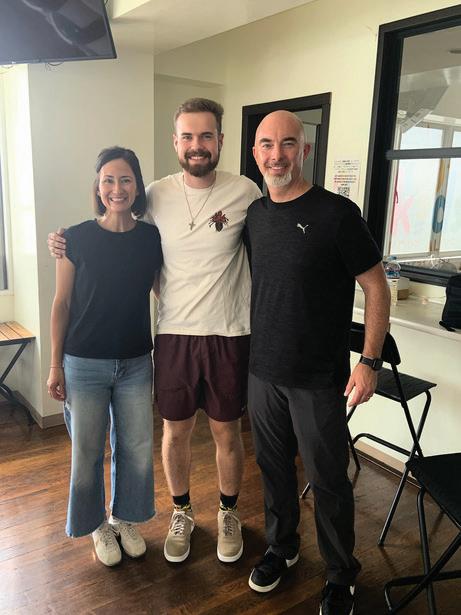
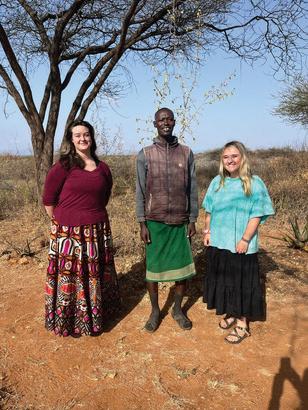



From training week to on-thefield highlights, follow these students and see how God works in them and around the world!

Pueblo, CO — For 36 years, Mark and Donna Thomas have faithfully served the Lord through Free Will Baptist North American Ministries (NAM) and the broader Free Will Baptist family. When they began their church planting journey in 1988, the department was called Free Will Baptist Home Missions and was led by Mark’s father Roy Thomas. Mark embarked as a church planter after serving as minister to the military at Gateway FWB Church in Virginia Beach, Virginia.
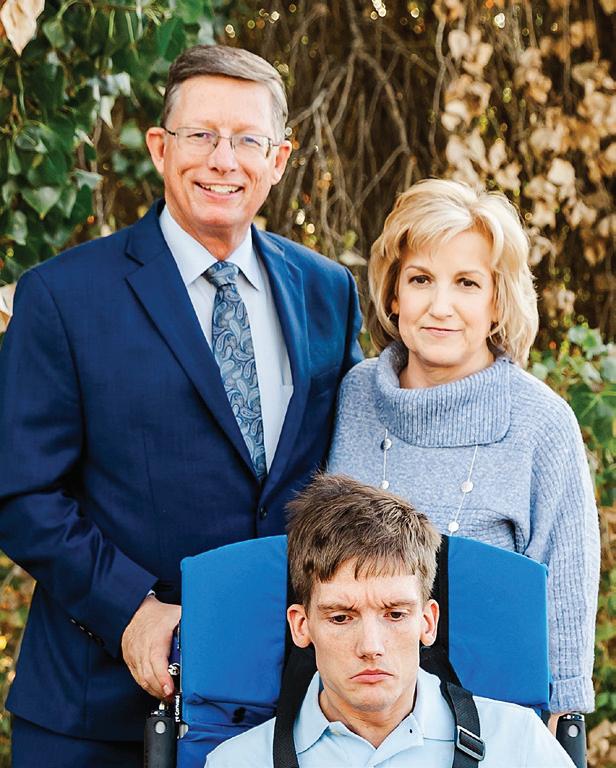
and long seasons where progress feels slow (not to mention snowy winters). Through it all, the Thomases remained steadfast, preaching the gospel, discipling believers, loving and serving people well, and staying the course, even when the work proved difficult. Their ministry has always extended beyond any single location or assignment. They have been faithful representatives of NAM and the Free Will Baptist family, modeling holiness, integrity, and a deep love for Christ and the local church.
As they retire and relocate to Arizona to be closer to family, Mark and Donna are not stepping away from ministry so much as stepping into a new season. Retirement, for them, is not an ending but a transition. Their desire to continue serving churches in the western U.S. reflects the same heart that has guided them for decades. They are committed to being used by God wherever He places them.
As Mark and Donna step into retirement and prepare for a new chapter in life, it is fitting to pause and thank them for a lifetime of obedience and their gospel impact. Their journey has been marked by a clear calling to plant churches and strengthen the work of Christ in the largely unreached western states. For 36 years, they faithfully partnered with NAM, investing their lives in places where gospel presence was desperately needed.
Perhaps nowhere is that faithfulness more evident than in Colorado, where Mark and Donna planted two churches. In 1988, they moved to Greeley, Colorado, and planted Highland Hills FWB Church. They remained there until the church was self-supporting and able to call a pastor. This church continues to impact its community today.
In 2007, they raised support a second time and moved three hours south of Greeley to Pueblo West and did it again, establishing a Free Will Baptist church. Although the church isn’t completely self-supporting yet, Lory and Danielle Rawlinson have moved to Pueblo West from Florence, South Carolina, to take it to the finish line.
Church planting is never easy, and planting in the West often comes with unique challenges of spiritual resistance
We are deeply grateful for Mark and Donna Thomas. On behalf of NAM and the Free Will Baptist family, we thank them for 36 years of faithful service and for believing in the mission of Free Will Baptist North American Ministries. We thank them for loving people, planting churches, and serving Christ with endurance and joy. May God richly bless the Thomases in this next chapter as they continue serving Christ and His Church.
About the Writer: Dr. Brad Ransom is the chief training officer at FWB North American Ministries. Learn more about becoming a church planter at fwbnam.com/church-planting/.
Greenville, NC —
Congratulations to the graduating class of 2025! This December, nine students graduated from the NAM Hispanic Bible Institute at Parker’s Chapel FWB Church in Greenville, North Carolina. This year’s graduates came from North Carolina, Indiana, Oklahoma, and Alabama. We are thankful for each student’s enthusiasm for ministry and willingness to follow the Lord’s leading.

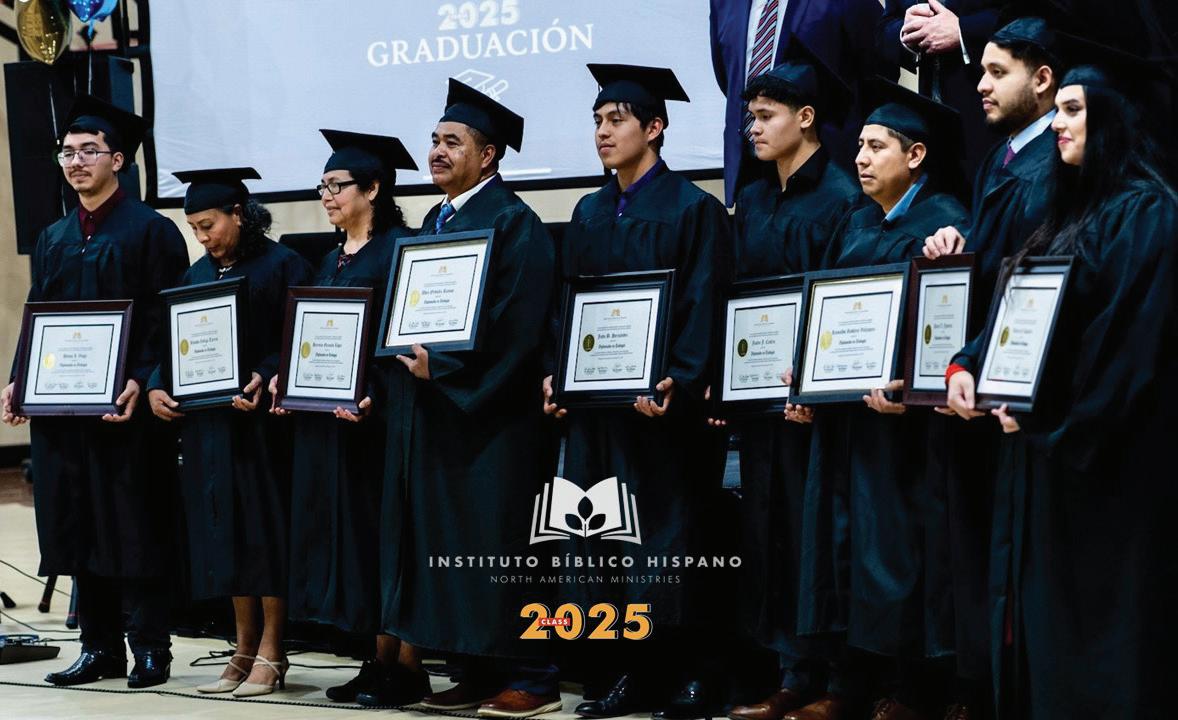
We are also grateful to every administrator, instructor, and pastor who supported them and equipped them for their next season of Kingdom service.
Nashville, TN —
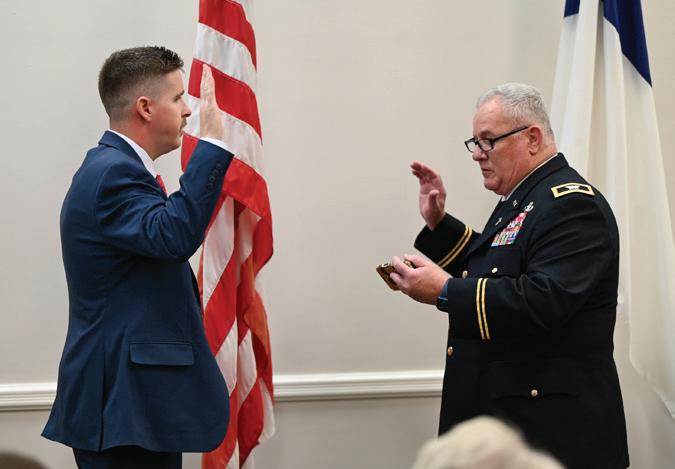
It was an honor for NAM to host Joshua Hampton’s Oath of Office ceremony at the National Office Building in Nashville, Tennessee, following the annual NAM board meeting. Dr. David Crowe opened the service, Chaplain Support Officer Terry Austin administered the oath, and Josh’s father and fellow church planter, Clayton Hampton, offered the benediction.
Josh has been selected to serve as the newest Free Will Baptist chaplain in the United States Navy. We are incredibly proud of him and his family as they follow God’s calling into this new chapter of ministry to our nation, the denomination, and the Lord.
Learn more about Free Will Baptist chaplaincy at fwbnam.com/chaplaincy/.
Nashville, TN — The Church Extension Loan Fund is currently accepting new loan applications from churches and ministries. If you’re planning a building project, expansion, or ministry initiative, we’re here to help. Visit fwbnam.com/CELF/ for more information.
Note: Please be aware CELF may not be available in all states.

Missoula, MT — Congratulations to Montana church planters Daniel and Darby Lindsay on the arrival of their daughter, Denver Kate Lindsay! Please pray for them as they settle Denver Kate at home and continue to raise her, along with her proud big brothers, Duncan and Drake, to love the Lord and serve Him each day.
Darby shared their gratitude: “Daniel and I are so appreciative of the prayers for a healthy baby! Most importantly, we want to praise our Savior for the miracle of life! He is so worthy of it all!”

Nashville, TN — Thanks to the sacrificial generosity of churches and individuals, the November Mission North America Offering met and exceeded its goal of raising $750,000 to support the work of church planters, chaplains, and partner ministries in 2025. The offering totaled just over $806,000!
NAM cannot thank our giving partners enough! We anticipate how God will multiply these funds to advance the gospel across North America and around the world.
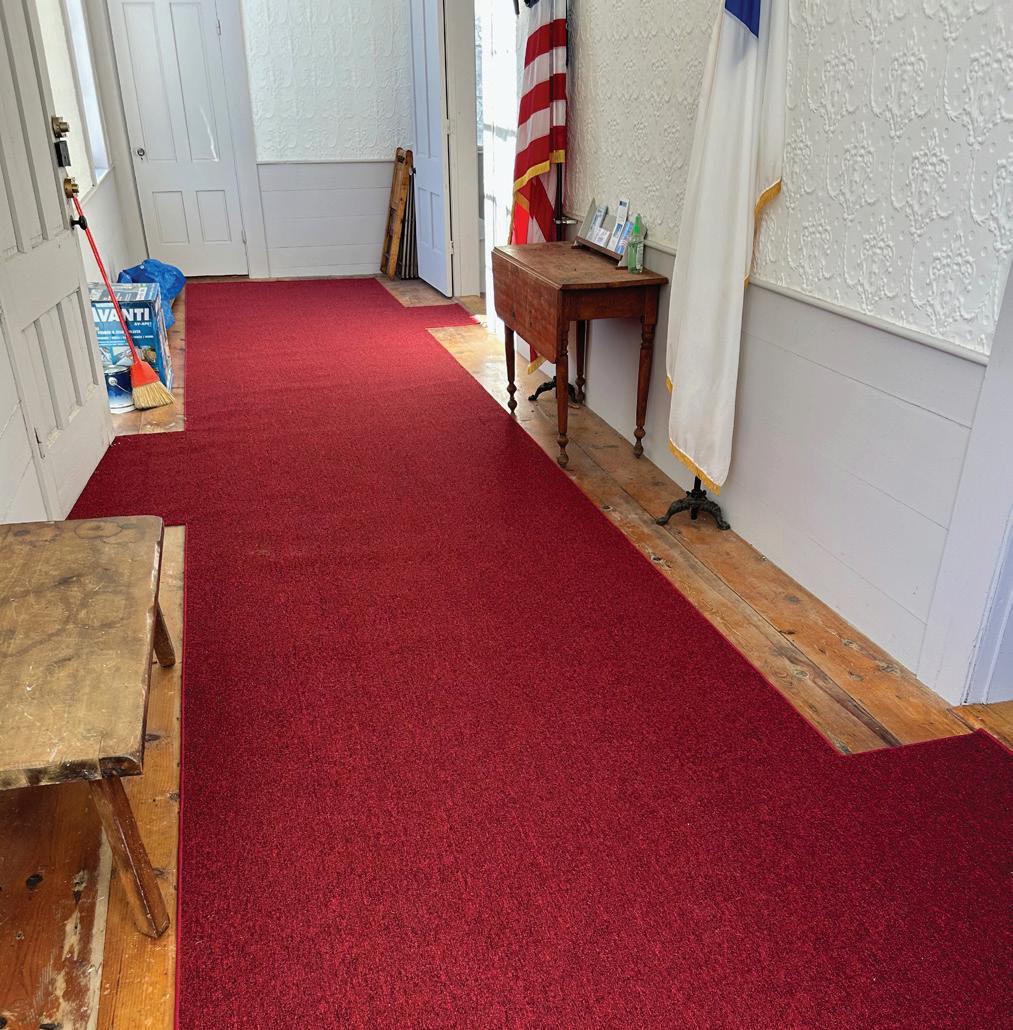
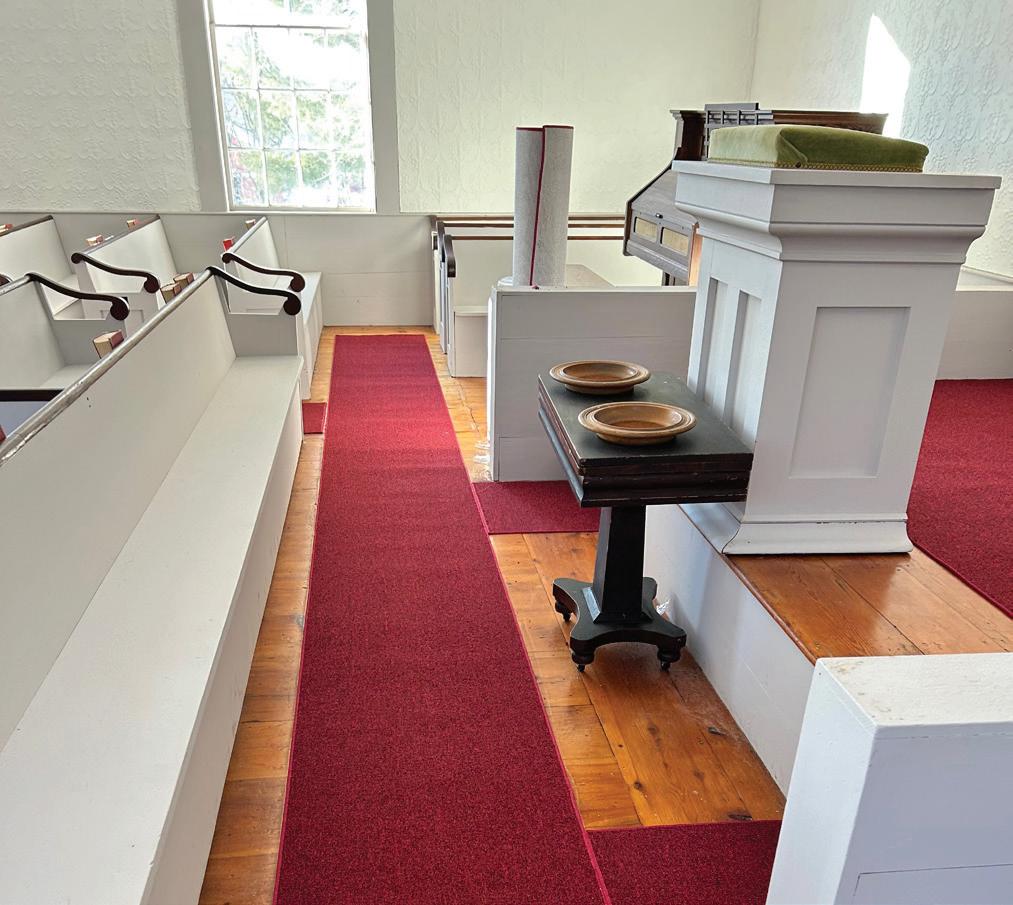
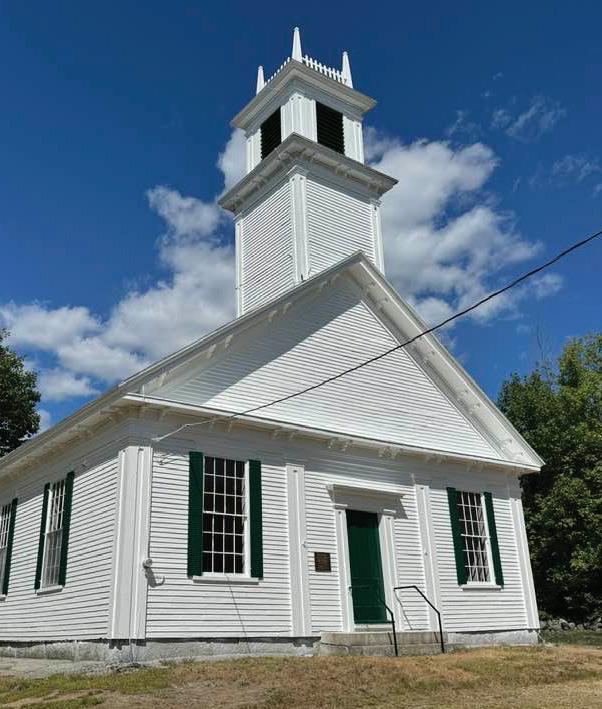
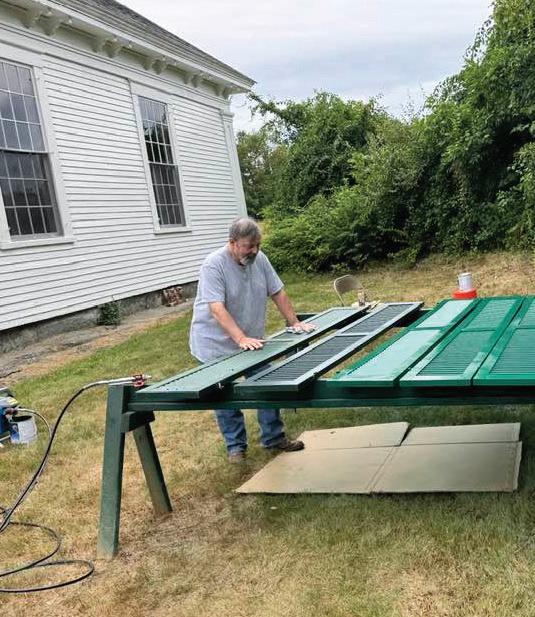
New Durham, NH — In addition to recent work on the outside of the Ridge Church building, the inside received a much-needed update last fall. After decades of use, a local team removed and replaced the carpeting and runners on the church aisles and continued maintenance on the building, bell tower, and grounds. A special thank you to Jewell Thomsen, who sponsored the carpet replacement project in honor of her late husband, Rev. Neal Thomsen.
BY B.J. EATON
Worship. In recent decades, this subject has become one of the most debated and sometimes divisive topics for the Church. With that in mind, first, I want to define what I mean by the terms “vibrant” and “worship.” When I use the term worship in this article, I am referring to the corporate, congregational worship of the Lord through song.
I am not trying to prove that, theologically, most worship should be done beyond the few minutes we sing corporately. Nor am I expounding on my belief that God is more concerned with our worship outside the Church as we (hopefully) demonstrate Christ to those around us throughout the week (Romans 12:1-2).
When it comes to vibrant, I am describing an action done with energy and enthusiasm. We have all heard preachers say that if we can jump up and down, scream, and act crazy for our favorite sports teams on Saturday, we’d better be ready to give God the same energy on Sunday morning. Honestly, I don’t believe God demands that same type of energy. I hope I never lead a worship service where I look out and see shirtless guys with the letters J E S U S painted on their chests, responding hysterically as each high and low note plays out.
I believe it is scriptural to be vibrant in our worship, but not over the top. How we worship should not be dictated solely by emotional response to our current circumstances. God deserves reverential awe as we acknowledge who He truly is. I believe we should worship vibrantly, yes, and with passion, but also respectfully and reverentially before a God who is good and sovereign, no matter the circumstances.
With those brief definitions in place, let’s consider seven reasons for vibrant worship. At first, I worried it would be difficult to come up with seven. Before long, however, the real challenge became narrowing the list. So, I will give you what I believe to be the most important of those reasons, knowing we won’t all agree.
1. Worship comes from an appreciative heart. “And whatsoever ye do, do it heartily, as to the Lord, and not unto men; Knowing that of the Lord ye shall receive the reward of the inheritance: for ye serve the Lord Christ” (Colossians 3:23-24). In short, an appreciative heart should be evident in every area of our lives, governing how we do all things, including worship. In context, this passage is speaking more to how we worship the Lord in everyday life, but it should also dictate how we worship in song as well.
2. God commanded worship. “Make a joyful noise unto the Lord, all ye lands. Serve the Lord with gladness: Come before his presence with singing” (Psalm 100:1-2). The Bible doesn’t describe worship as passive, dull, and
boring but repeatedly commands God’s people to sing, shout, celebrate, and express joy in worship.
3. Worship communicates a public testimony. “O sing unto the Lord a new song: Sing unto the Lord, all the earth. Sing unto the Lord, bless his name; Shew forth his salvation from day to day. Declare his glory among the heathen, His wonders among all people” (Psalm 96:1-3). Lively, heartfelt, vibrant worship offers a public testimony to the greatness of God. It demonstrates the Church’s witness to believers and unbelievers alike.
4. Vibrant worship offers “our whole heart.” “Praise ye the Lord. I will praise the Lord with my whole heart, In the assembly of the upright, and in the congregation” (Psalm 111:1). What we demonstrate outwardly comes from what dwells within us. Vibrant, joyful worship comes from a heart filled with Christ.
5. Worship unifies the Body of Christ. “Be filled with the Spirit; Speaking to yourselves in psalms and hymns and spiritual songs, singing and making melody in your heart to the Lord…” (Ephesians 5:18b-19). Worship is not only vertical, toward God, but also has horizontal benefits, binding us to other believers. Vibrant corporate worship strengthens unity and fellowship within the Body of Christ.
6. Worship expresses what is in our hearts. “Praise him with the sound of trumpet…with the psaltery and harp….with the timbrel and dance.…Let everything that hath breath praise the Lord. Praise ye the Lord” (Psalm 150). The life of a believer should be mostly identified with joy and praise, and our worship should be a demonstration of what is truly going on within — His salvation, joy, and life.
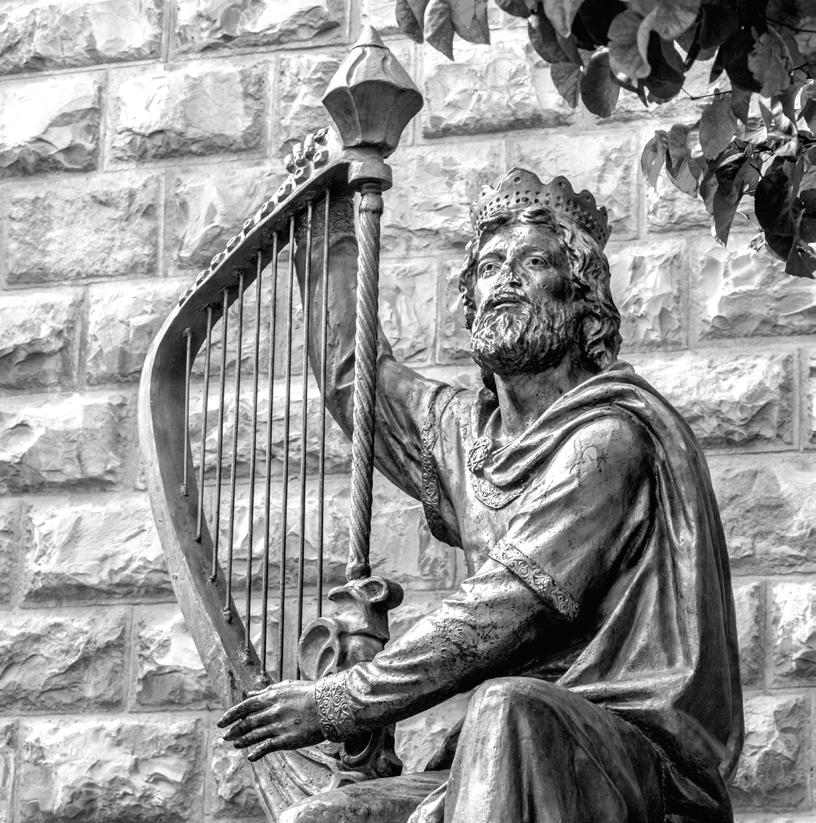
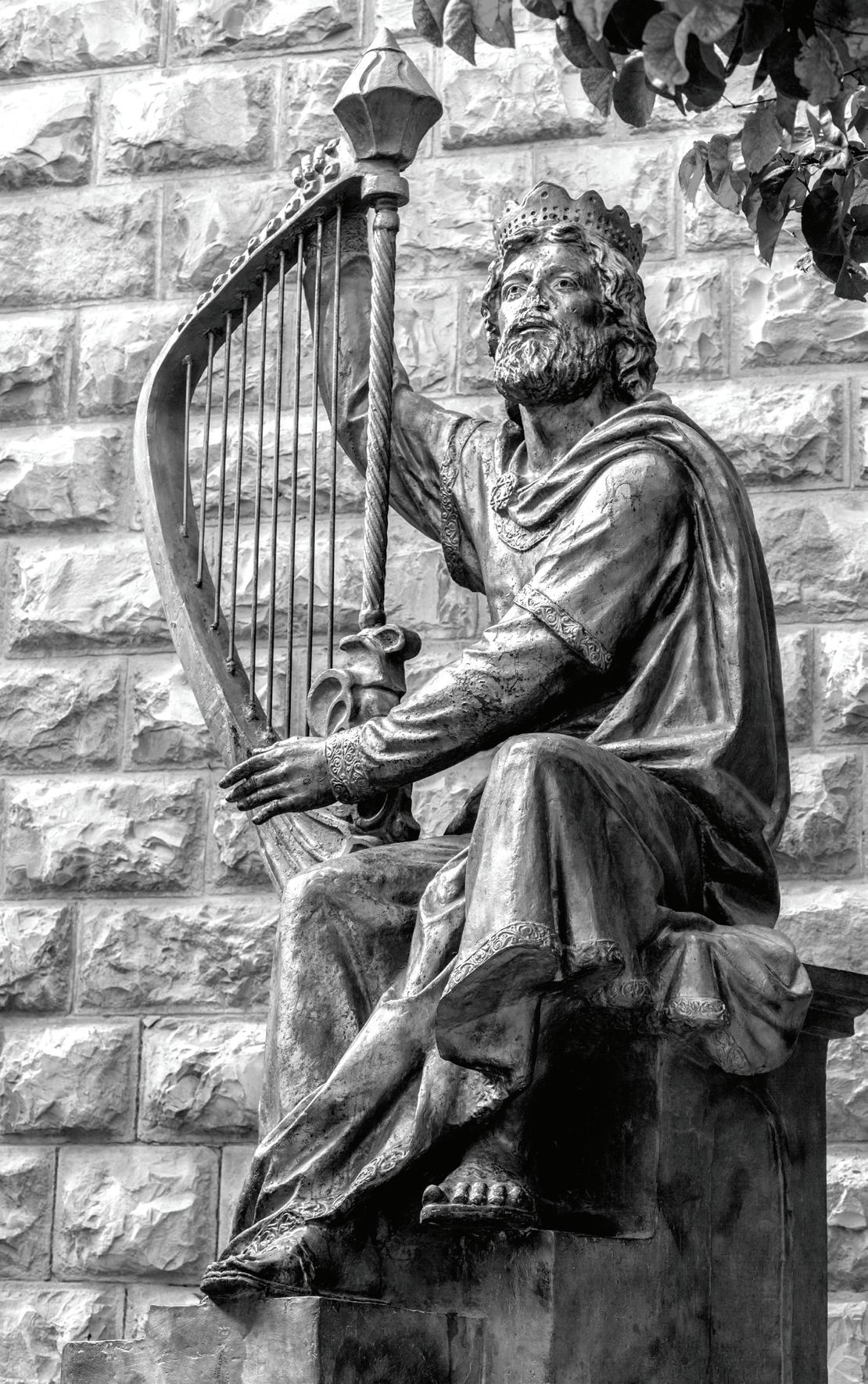
7. Vibrant worship is the biblical pattern. “And David danced before the Lord with all his might.…” (2 Samuel 6:14). When we read the Psalms David penned, and observe the way he worshiped, we see a pattern of expressive, vibrant worship.
We must be so moved by the majesty of God we put all we have into our worship. When we enter His house and His presence with other believers, our worship should reflect who He is and should best ascribe to Him His true worth!

We must be so moved by the majesty of God that we put all we have into our worship.
He is worthy of more than our best, and obeying His command to worship vibrantly — thankfully, openly, and unrestrainedly, in unity with fellow believers past, present, and future — is our only reasonable response. Let’s continue to express back to God what He has put within our hearts.
About the Columnist: B.J. Eaton and his wife Joann are North American Ministries associate church planters at Cultivate FWB Church in Athens, Alabama. The Eatons play a vital role at Cultivate, focusing on youth and worship ministries. Learn more about their ministry at fwbnam.com/eaton/.
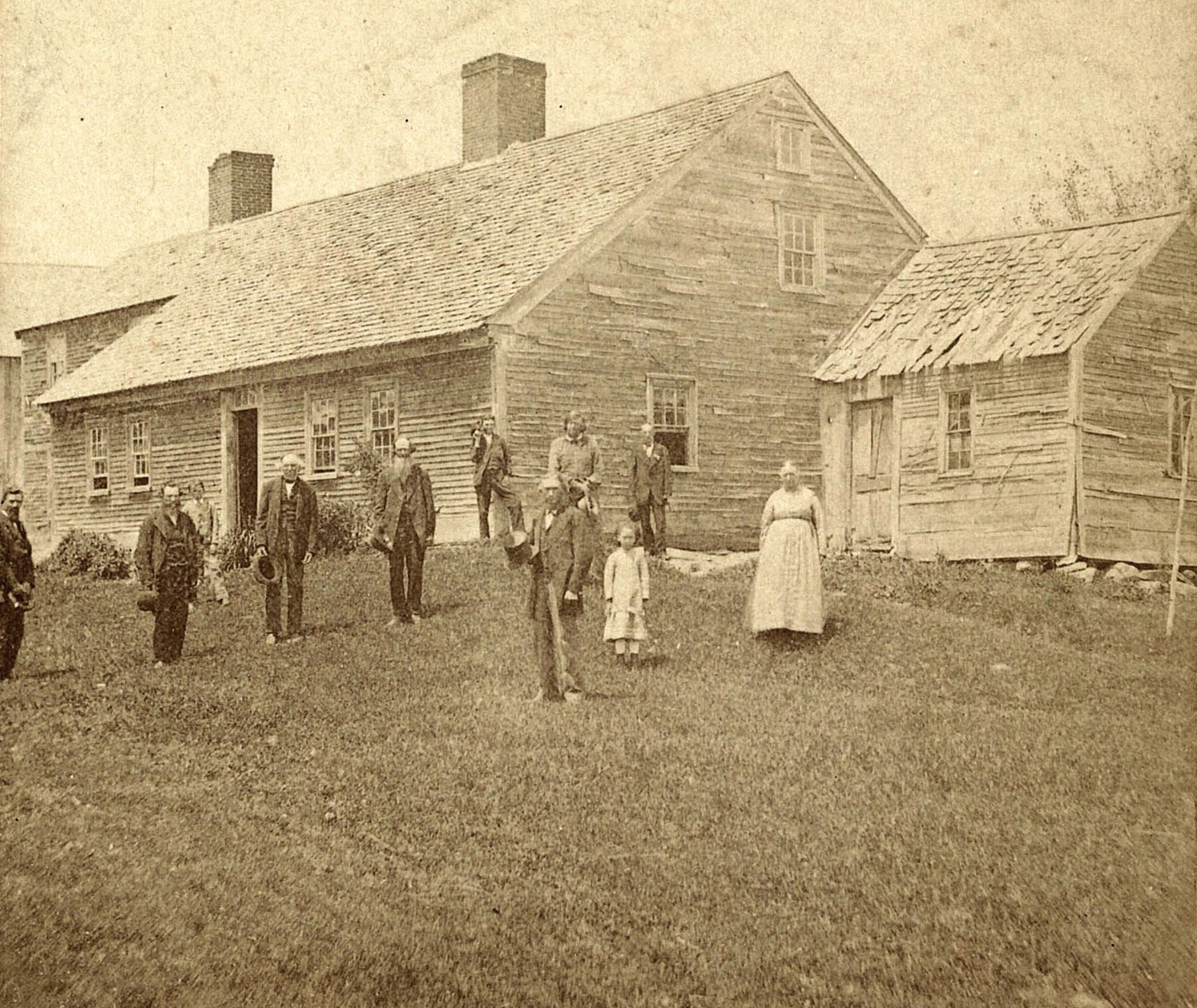
BY CHRISTINE C. EVANS, BOODEY AND RANDALL FAMILIES DESCENDANT
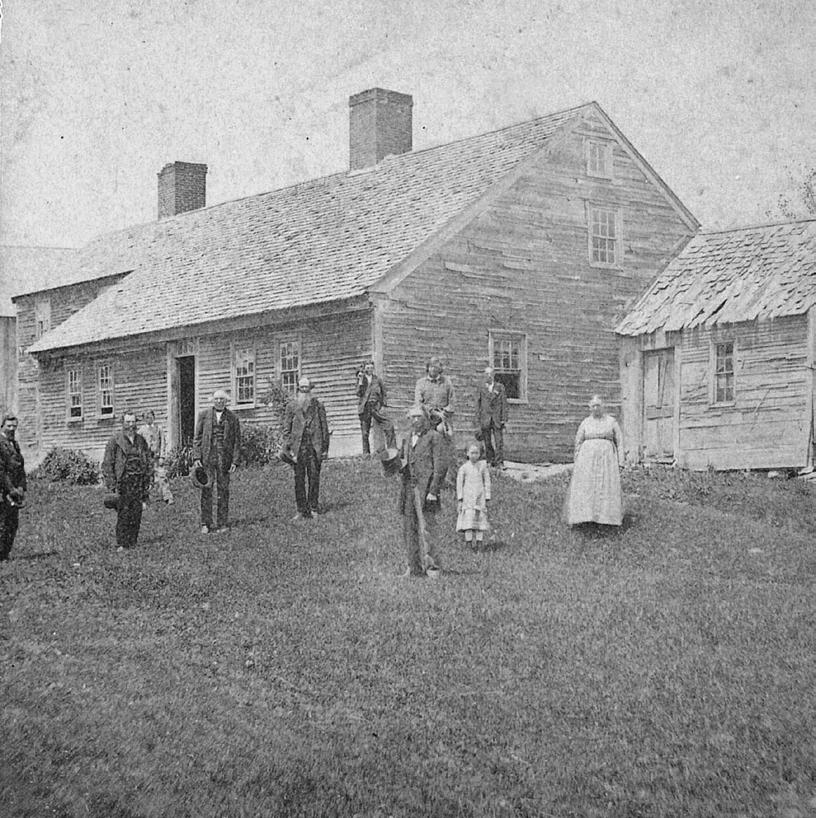
A note from the editor: This article, somewhat unusual for ONE Magazine, traces the ongoing restoration efforts for the Zechariah Boodey Farmstead. The building, located near the Ridge Church in New Durham, New Hampshire, marks the first meeting place for Free Will Baptists in New England.
Zechariah Boodey II was a leading figure among the first settlers in New Durham, New Hampshire, during the community’s founding years. He was the second to bear the name Zechariah in the colonial States. The son of Azariah and Bridget, Zechariah was born in Madbury, New Hampshire, in November 1745.
One of nine children, Zechariah married Mary DeMerritt, a member of the DeMerritt family of Madbury, New Hampshire.
The couple settled in the newly incorporated town of New Durham in November 1768, after purchasing 100 acres. It is said Zechariah “felled the wild native forest, cleared up his lands, and built his barn and dwelling house there on.”1 During the first winter, the Boodeys built a log cabin. In 1773, their son Joseph Boodey (Elder) was born in the log cabin.
1 Robert Boodey Caverly. Annals of the Boodeys in New England, together with lessons of law and life, from John Eliot, the apostle of the Indians. Published by the author, 1880.
Zechariah’s home, which served as the meeting place, became known as the birthplace of the Free Will Baptist denomination.
In 1769, they constructed a colonial post-and-beam Cape Cod dwelling. The frame consists of heavy timbers, with posts and crossbeams hand-hewn from the forest and interior walls lined with hand-hewn panels. Using fieldstones from the land, the basement stonework was laid in place.
“After hearing Randall preach while visiting acquaintances in New Durham, several of the settlers invited him and his family to move to the town. The following fall, Randall accepted the invitation to become the town’s minister.”2 3 Randall and his family moved from Newcastle, New Hampshire, by ox cart to New Durham March 23, 1778, a trip taking three days. Zechariah and his brothers Robert and Joseph were early supporting members of the denomination later called Freewill Baptists, founded by Elder Benjamin Randall.
On June 30, 1780, the covenant of the new denomination was signed in the east room of the Boodey home by the original seven founding members: Elder Benjamin Randall, Robert Boodey (Zechariah’s brother), Nathaniel Buzzell, Joseph Boodey (Zechariah’s brother), Judith Chartel, Margery Boodey (Robert’s wife), and Mary Buzzell (Nathaniel’s wife and Elder Randall’s sister). Zechariah’s home, which served as the meeting place, became known as the birthplace of the Free Will Baptist denomination. Miss Betsey P. Boodey, granddaughter of Zechariah, responded to a reporter’s question about why Elder Benjamin Randall selected the Boodey house to hold his first meetings. She replied, “It was chosen because it was the best house in town and the front room was large.”
As a direct descendant of both Zechariah Boodey and Elder Benjamin Randall, the historic Boodey Cape Cod house holds a special significance for my family. Seven generations have lived on the original homestead. Many of our ancestors lived, raised families, and made their final resting place on the land.
Efforts to preserve the Cape Cod house began in 2006, when
2 John Buzzell. The Life of Elder Benjamin Randal : principally taken from documents written by himself. Limerick, ME: Hobbs, Woodman & Co. 1827.
3 Carolyn Clarke. “Two Hundred Years of Kingdom Community: A History of the Bow Lake Free Will Baptist Church in Strafford, New Hampshire, 2019.”
my family donated the Boodey house to the town of New Durham. Plans to disassemble the house were accelerated after a 2008 arson attack.
After accepting the donation of the timber-frame house, the town’s selectboard appointed a committee to develop and implement a plan for the preservation of the historical landmarks and to raise funds by any lawful means.
The Zechariah Boodey Farmstead originated as a historic preservation initiative centered on the 1769 timber-framed colonial Cape Cod style house. It is a national landmark for its architectural style, and for its distinction as the birthplace of the Free Will Baptist denomination. The Mooney/Damon barn is a Yankee-style barn originally constructed in the early 18th century and once owned by the famous author, humorist, and lecturer Bertha Damon. These places are associated with the lives of persons and events significant in our community and nation’s past.
The buildings embody the distinctive characteristics of a type, style, period, and construction method, representing a part of our shared heritage of which we can all be proud. The original property’s footprint included the house, an addition to the west gable of the house, the log cabin attached to the east gable of the house, and a barn. The reassembly and new construction of these buildings will be known as the Zechariah Boodey Farmstead Project.
The project has achieved several milestones over the years. In 2017, while developing a business/marketing plan, the committee learned of significant challenges facing a house museum in the Lakes Region of New Hampshire. This led to a shift in the plan to add this threatened building to the original structures at Boodey Farm.
After the house and barn were dismantled, moved, and stored, timber frame assessments were completed on both structures. A permanent location on town-owned property has been designated for the reassembly and construction of the farmstead, approximately two miles north of the original Boodey family site.
The committee received approvals from local and state regulatory land-use boards and has state-approved septic design. The project has benefited from strong public-private partnerships. One example is the donation of in-kind services to install the septic system and to provide base materials for the site-approved parking lot.
Supporting opportunities for educating our youth and tradesmen has always been a high priority. During the 2018 school year, students from the civil engineering capstone project senior class at the University of New Hampshire completed preliminary designs for the Farmstead project. Their work was used to move forward with the next phase of documentation. Formal architectural drawings were recently completed, enabling the committee to obtain budgetary quotes to determine costs for the reassembly and reconstruction of the buildings. Since 2021, the project has greatly benefited from and values its partnership with the Zechariah Boodey Farmstead Collaborative. This federally recognized nonprofit’s mission is “to raise funds to support the reassembly and construction of the historic Zechariah Boodey Farmstead Project and provide a valuable asset and an economic centerpiece for our local community.”

Preserving historic landmarks safeguards our shared heritage. The Boodey family home once served as a gathering place for brave pioneers who dared to lead in their beliefs during a pivotal time in our nation’s history. These buildings will serve as a gathering spot for future generations, hosting a variety of historical and cultural programs, along with civic, educational, social, or private events and activities for audiences.
The Zechariah Boodey Farmstead Project will continue to attract residents and visitors to our village core. It seeks to enhance community vibrancy and promote support for local businesses, active recreation, retail trade, and cultural experiences.
Preserving the Zechariah Boodey Farmstead is essential. Starting in 2026, the Zechariah Boodey Farmstead Collaborative will share exciting news about fundraising opportunities that could double the impact of contributions for advancing this project.
For more information and to support preservation efforts, visit zbfcnh.org. Online donations are simple. Tap the “Donor Button” at zbfcnh.org, or you can send a check by mail to Zechariah Boodey Farmstead Collaborative, P.O. Box 45, New Durham, NH 03855.

BY BRENT PATRICK
One of my vivid childhood memories was attending the Johnson County Conference in Kentucky with my dad Henry. As the associational clerk and treasurer for many years, he sat in the front of the church at a folding table, recording the minutes of the services and business meetings with me by his side.

As a little boy, I was enamored to see my dad doing something important in the church for God. To engage me in his ministry work, he would allow me, with careful instruction, to count the money after each offering — every bill aligned the same way, of course. Watching my dad serve in the local church and observing his willingness to be used for broader Free Will Baptist causes planted a seed in me. I longed to be just like him.
Little did I know those small moments of counting Free Will Baptist offerings were quietly shaping a future calling. Today, as the CEO and director of the Free Will Baptist Foundation, I have the privilege of stewarding financial resources that advance Kingdom work across our denomination. I approach this responsibility with deep humility and gratitude, confident God has orchestrated these and many more experiences “for such a time as this” (Esther 4:14).
My business and financial training, with experience both as a CFO and in promotional development, combined with pastoral ministry have developed within me a passion for leadership and stewardship. The result is a desire to strengthen ministries by serving investors.
As you may know, the Foundation exists to serve as a trusted steward of God’s resources. We partner with individuals, churches, and ministries to provide biblically-grounded financial stewardship. We manage investments, endowments, and legacy gifts. In addition, the Foundation helps believers align their financial goals with eternal impact, ensuring resources are handled with integrity, transparency, and purpose. Simply put, our goal is to help God’s people give wisely, invest faithfully, and leave a lasting legacy. “Thoughts of the diligent lead only to plenteousness” (Proverbs 21:5).
The circles in our Foundation logo demonstrate these objectives:
• Green Circle — Serving investors by benefiting them with demand notes, gift annuities, and estate plans.
• Red Circle — Strengthening the financial base by building endowment funds.
• Gold Circle — Supplying the mission of Free Will Baptist agencies and ministries through the blessing of endowment contributions and grants.

For many years, the Foundation has been known as a secure place to make sound investments, establish estate plans, and receive grants. As the Foundation continues to move forward, those elements remain true. However, we as a denomination must start building a financial strength that supports both ministry today and ministry for generations to come. That strength comes through the use and funding of endowments.
With endowments, funds are permanently invested to provide a lasting source of income for ministries such as churches, missions work, education, and denominational operations. The original gift (principal) remains untouched, while a portion of the investment earnings is used annually to support these causes. The fund is designed to last forever, providing financial means and stability across generations.
Rather than spending the entire donation, only a percentage (usually 3% to 5%) is distributed annually, allowing the principle to continue to grow. Further, endowments help ministries withstand fluctuating economic times and support long-range planning. Donors can leave a legacy, ensuring their support continues beyond their lifetimes.
Endowments are not about storing money; they are about securing ministry. They provide consistent, reliable income for ministry purposes. They protect churches, ministries, and denominational agencies during economic uncertainty and allow pastors, leaders, and directors to focus on mission and not survival. Giving to an endowment allows an individual to turn a one-time gift into perpetual gospel influence. As Proverbs 13:22 reminds us, a good man leaves an inheritance to his children.
The Free Will Baptist Endowment has already been established to enable you to make such an impact. Much like your support of The Together Way, which provides cooperative giving to undergird all Free Will Baptist departments, agencies, and commissions, gifts to the Free Will Baptist Endowment will yield monies to these same denominational ministries to sustain ministry efforts for years to come.
Giving to an endowment allows an individual to turn a one-time gift into perpetual gospel influence.
Currently, the endowment has a balance of $1.2 million, with plans to begin disbursements once it reaches the $5 million mark. To give to the
Free Will Baptist Endowment, you can contact the Foundation at 877-336-7575 or visit fwbgifts.com/.
The Free Will Baptist Foundation is prioritizing the development of new and strengthened ministry endowments by focusing on:
• Endowment Education — Helping individuals and churches understand the purpose of how endowments work and the power of why they matter.
• Endowment Creation — Assisting individuals, churches, and ministries in launching new endowments tailored to their mission and vision.
• Endowment Growth — Encouraging legacy giving, estate planning, and long-term investment strategies.
Invest Today…Impact Tomorrow! Those words are more than a motivational slogan. They are the driving force behind what the Free Will Baptist Foundation is about, and what we desire for you to do. We must capitalize on our “such a time as this,” our opportunity to plant financial seeds, water them with consistent giving, and allow the Lord to give the increase of Kingdom growth (1 Corinthians 3:6-8).
Yes, there are real and pressing needs today! But we also must answer our call to action of long-term faithfulness by growing the Free Will Baptist Endowment. How? By including it in our legacy plans and by partnering with the Foundation with your investments. Let today’s monetary resources become tomorrow’s ministry reach.
My father did all he could to invest in me spiritually, academically, physically, socially, and financially. Those faithful days and moments — taking me to church and associational meetings — were investments into my future that have provided larger dividends over time. And not only for me, but for all Free Will Baptists as well. Henry Patrick passed from this life into his eternal home of Heaven in March 2024, but his contributions continue the Lord’s work today and into the future as a part of his legacy.
The Free Will Baptist Foundation is here to provide an avenue for you to do the same.
About the Writer: Brent Patrick became the new CEO and Director of the Free Will Baptist Foundation in October 2025. He graduated from the University of Kentucky with a degree in management, and he earned an MBA from Morehead State University. In addition, Brent has served at Southeastern FWB College and pastored Free Will Baptist churches in North Carolina, Kentucky, and Virginia over the past 29 years.
BY BARRY RAPER
A familiar adage for marriage is, “Never go to bed angry.” I suppose that is a good general principle to follow, although sometimes staying up all night to solve a problem only makes matters worse. Yes, the Bible does instruct us not to let the sun go down on our wrath, but I think the principle is to deal with anger before it has a chance to fester. In any case, every married couple knows what it is like to disagree. Sometimes, even small disagreements lead to bigger ones.
Disagreements happen in all types of relationships, not just marriage. Good friends encounter something that causes them to become hostile toward one another. The infamous phrase irreconcilable differences can apply to couples, friends, and even churches that reach the point where they splinter into separate congregations.
In an estranged relationship, who is responsible for taking the first step toward reconciliation? In 2 Corinthians 5:1721, the Apostle Paul reminded us we all were alienated or separated from God by sin, but in His mercy, God took the initiative to restore our relationship with Him. And today, His primary work in the world is reconciliation.
The Greek word for reconciliation is used five times in this short passage, making it the key theme of the text. Reconciliation implies two parties at odds with one another — strife, enmity, and separation. Work must be done to repair the relationship, to bring the two parties back together.
The good news for us? We don’t make our own reconciliation with God. We don’t come back to Him on our terms or our work. Reconciliation comes only through His grace. If someone says, “I’ve made my peace with God,” it means nothing unless he or she has found peace with God through Jesus
This passage reminds us if we have a relationship with Jesus, we have been reconciled to God. And because we were reconciled to God we received two things: 1) a ministry of reconciliation; and 2) the message of reconciliation.
The Greek word translated ministry here is the same word sometimes translated con. It means to serve. That’s ministry: service to others. While some people are called to specific roles of service like pastor, deacon, or missionary, the New Testament makes it clear every Christian is called into ministry in some sense.

If we have been reconciled to God through Christ, we are now His ministers, His servants. And Paul describes it as a ministry of reconciliation. And it is a matter of stewardship. God has entrusted us with the message of the gospel. (We will come to that message itself in a moment.) We are to be good stewards of our lives, to recognize one day we will give account to the One who assigned us this responsibility. He doesn’t need our help to make the message more “relevant” or twist it to fit into today’s culture. No. He simply desires we faithfully hold to it and hold it forth.
The moment we were saved, we became His ambassadors. In every circumstance, if we profess the name of Christ, we act as His representatives. Perhaps you remember your parents warning you to represent your family well through your actions and decisions. Or consider U.S. ambassadors, appointed to serve as official representatives of our nation around the world.
As minister, steward, and ambassador for Christ, we are in the business of reconciliation, not condemnation. Please don’t misunderstand. The message and ministry of the gospel involves faithfully and unapologetically sharing the truth that all have sinned and fallen short of the glory of God (Romans 3:23). It involves emphasizing man must repent from sin and turn to God (Romans 6:23; Romans 10:9-10). And Jesus Himself said those who do not believe in Him are condemned already (John 3:18). But our message is not

hope, to let them know they can be reconciled to God.
This means our posture toward unbelievers will be one of humility and approachability. It means we understand the most fundamental problem for humanity is being alienated from God. And the way to fix problems in the culture is to see people reconciled to God. When they come to know Him, their lives will be transformed by Him.
What is this message of reconciliation we offer? In a world alienated from its Creator, God takes the initiative through the Person and work of Christ and the gracious work of the Holy Spirit to draw estranged, rebellious, and guilty people back to Him.
There may not be a more compressed theological verse on the atonement and imputation than verse 21: “For he hath made him to be sin for us, who knew no sin; that we might be made the righteousness of God in him.”
We find double imputation in these words: my sins are credited to the account of Jesus, and His righteousness is credited to my account. As the only One who never knew or experienced sin, Jesus bore the guilt and punishment of every sinner on the Cross. So, to the ones who could not help but sin — that’s us, folks — He imputed His sinless record. What an incredible gift! God bridged the uncrossable gulf; He made the way back to Him through the Person and work of Jesus Christ.
When dealing with conflict resolution, you never know which person is going to take the first step toward reconciliation. Sometimes one person is totally at fault, sometimes both. But someone must take the first step toward healing. The message of the gospel is that God did that for us.
In verse 20, Paul implored his readers, on behalf of Christ, to be reconciled to God. By the way, this is one of the crucial elements of preaching and teaching — a beseeching, urgent pleading with people to do what the Bible says. This pleading should be done in keeping with each preacher’s personality, but it must be there. And it should be present in the witnessing efforts of every believer.
In other words, we cannot present “just the facts” of the gospel message and think, “Well, I told them! My job here is done.” Of course, salvation is an individual decision, but we should long to see, should implore or “beseech” others to accept Christ. Why? So they, too, can experience the wonderful realities found in verse 17.
• A new creation
• Sins not counted against them
• Counted as righteous in God’s sight
• Forgiven
• Without condemnation
• Freedom
• Eternal life
• A child of God
No wonder we call it the Good News!
God is reconciling people to Himself, and He has shared with us the ministry and message of reconciliation. In Colossians 4:17, Paul made it a point to encourage his friend Archippus to fulfill the ministry Archippus had received from the Lord. We, too, have received a ministry from the Lord: the ministry of reconciliation. Now, it is up to us to fulfill our ministry. It won’t be easy; the ministry of reconciliation is hard work. But it is worth it, and the world needs it.
You can go in confidence as an official ambassador for Christ. God’s work has already been accomplished. All that remains is reconciliation.
About the Columnist: Dr. Barry Raper is pastor of Bethel FWB Church near Ashland City, Tennessee, and teaches ministry at Welch Divinity School.
BY JEFF CAUDILL Navigating Details for Great Ministry Impact
The organization and administration of a church will determine its success in accomplishing its mission. Consider three important areas of church administration: 1) purpose, the importance of administration to overall success; 2) people, those who should be involved; and 3) process, the function of administration.
Church administration is essential to the success of every church. Of course, the focus of the church is to evangelize and disciple, helping people embrace Christ and become like Him — making disciples who disciple others. However, if someone isn’t navigating the details, it can become difficult or even impossible to effectively achieve the mission of the church.
Take, for instance, something as seemingly mundane as utilities. If someone doesn’t pay the electric bill, it’s a problem. Worst case? The power could get shut off, making it difficult or impossible to meet and presenting a bad testimony to the community.
Or, what if your property has fallen into disrepair? A potential guest who sees the crumbling facility or neglected landscape could assume you don’t care and consequently never visits.
Myriad other examples could be drawn from children’s ministry, music, and more. What is the point? Simply this: the purpose of administration is to ensure the ministry of the church can thrive. Things often viewed as insignificant can hinder and
even cripple our ability to evangelize and disciple if they are not handled correctly.
It is important to recognize God Himself is organized. Consider the orderly fashion of creation or the step-by-step details in His instructions regarding the construction of the Tabernacle and later the Temple.
First Corinthians 14:40 commands the church to do things decently and in order. While I understand Paul was specifically describing worship services in this passage, I still think it provides a good reminder God loves and desires organization. So, remember: good church administration is vital to the success of your church, and navigating the details efficiently will enable larger ministry impact.
The primary responsibility of the pastor is the preaching and teaching of the Word. Obviously, he will have other responsibilities such as care ministry or other expectations from the church. But does the pastor need to be the administrator of the church?
Consider Acts 6:1-7. While the early church did not have concerns about building maintenance, payroll, children’s ministry, and many other things on our radar today, they were heavily involved in benevolent ministry. The need for church administration soon became evident. However, the apostles also identified a need for people other than the preaching and teaching pastors to provide administration. Thus, in Acts 6, deacons were established to help. It’s a good reminder administration and organization can be performed by deacons or other laypersons. It does not all have to fall upon the pastor.
The early church identified the need, identified people who could meet the need, and then turned over those responsibilities to the selected individuals. Scripture makes it clear God has gifted individuals with various abilities to carry out the work of the ministry. Romans 12 and 1 Corinthians 12 describe these as “diverse” gifts and then provide a broad list of the gifts of the Spirit. Administration is found in both lists.
Many churches are financially unable to have a paid staff person whose primary responsibility is administration. In those cases, the church may need multiple volunteers responsible for administrative tasks to reduce the burden on the pastor. It
is crucial for each church to identify trustworthy, faithful individuals to oversee administrative details, using their specific spiritual gifts for the growth of the church.
Those with gifts, skills, and a passion for administration should step up to embrace these responsibilities. They can make a big difference for their church. Many people who are not gifted in the “up-front” roles of ministry have important abilities in organization and administration and understand the need for attention to detail. Their work will provide efficiency in accomplishing the church’s mission.
It is easy to overlook the areas of local church ministry that need administration. While this article does not provide space to cover all of these, consider just a few:
Building and Grounds. Developing an organized plan can make caring for the building(s) and grounds manageable. An attractive, well-cared-for facility makes a good impression on guests and potential visitors. Here are some specific areas of maintenance to consider.
• HVAC
• Landscaping
• Exterior maintenance
• Interior maintenance
• Playgrounds
• Parking lots
• Locks and alarms
• Facility use policies
Safety and Security. Do you have an official safety and security team? If so, have team members been trained to handle all emergencies ranging from medical to fire, a missing child to life-threatening weather, or — God forbid! — an active shooter?
Ministry to Children and Youth. Children and youth ministries are crucial to the life and discipleship of the church. From an administration standpoint, consider important policies that should be in place: volunteer background checks, child check-in, staffing ratios, supplies, safety, and much more.
Budgeting and Finance. Every church should have a zero-balance budget and should operate based on (though not always within) that budget. The budget should be monitored throughout the year to ensure income and expenses are in line with expectations.
Audio-Visual. The pandemic made A-V a bigger consideration for every church. Appropriate licensing, staffing, social media, live feed, church website, and equipment needs are all important parts of reaching a culture where technology is the language of the common man.
Scheduling. Monitoring staff (both paid and volunteer) schedules and activities ensure all aspects of the ministry are functioning properly and staffed appropriately. When it comes to service and meeting times, a procedure (and it can be simple) should dictate schedule changes and/or cancellations. Define who makes these decisions, what the parameters surrounding the decision are, and how a scheduling change will be communicated to the staff and congregation.
Staffing. For paid staff members, provide written job descriptions, procedures for hiring and dismissal, payroll and
benefits, IRS filings, and any other payroll related documentation. Expectations for volunteer staffers should be set and agreed upon, with a clear process for recruiting and training volunteers.
Oversee Church Ministries. Each ministry mentioned above and other ministries in the church require oversight to ensure they are helping accomplish the mission of the church. Work with and support directors of each ministry, offering necessary resources, course correction, and encouragement when needed.
And this is only a partial list. Administration can seem overwhelming. It is a lot! However, it is important to do the best we can, always seeking ways to improve our administration and efficiency. Good administration helps the work of God prosper in your local church! Purpose, People, Process: navigating the details for greater Kingdom impact!

Gallatin, TN — Dr. Daniel Webster has been named vice president for administration and student engagement at Welch College, according to President Matt Pinson.
In a major administrative reconfiguration, Webster will strengthen coordination across campus operations, fostering a more cohesive and effective experience for current and prospective students and employees.
“In recent years, many institutions have consolidated the campus experience under one vice president who oversees multiple department directors and coordinators,” Pinson said. “I’m so excited about Dr. Webster’s appointment. Not only is he a stellar leader and administrator, but he has just the skillset we need for this streamlining of campus operations.”
After Dr. Jon Forlines’ retirement from student services in October 2025, Webster was named interim director of student services. Then, following Craig Mahler’s resignation as vice president for financial affairs, Webster became interim vice president for administration and student engagement.
“In this restructuring, a single vice president will supervise three departments with corresponding directors or coordinators in the areas of enrollment, student services, and the business office,” Pinson said. “Dr. Webster will be supervising these departments, not taking on the jobs of the former VPs in these areas. We’ll be hiring three new employees to ensure the workload is adequately spread out.”
Webster began serving part-time in 2016 as director of marketing and recruiting for Welch Online. In 2017, he became the full-time director of enrollment services. Then, in 2022, he was named director of enrollment and marketing, while overseeing chapel worship and the worship ministry program. Webster also holds a faculty appointment, teaching part-time as assistant professor of music and theology.
At Welch College, every facet of life, from academic programs and spiritual formation to campus activities, is designed to develop the whole person. With more than 60 undergraduate, graduate, and online programs, you will be prepared to serve Christ in the field you choose. Learn more about Welch College today!
A native of Virginia Beach, Virginia, Webster holds a bachelor’s degree in music from Gateway Christian College, a master’s degree in biblical studies from Virginia Beach Theological Seminary, and two master’s degrees from Maranatha Baptist University, in theology and church music.
Webster was recently awarded the Ph.D. in church music and worship from Southwestern Baptist Theological Seminary. He has also served extensively as an author for D6 Family Ministry, has written numerous popular and academic articles and papers, and serves on the Music

Commission of the National Association of Free Will Baptists.
“This restructuring aligns Welch College with best practices in higher education and positions us strategically for continued growth as an institution,” Provost Matthew McAffee said. “I can think of no one more uniquely qualified to lead this particular effort than Dr. Webster. His diverse experience and expertise are just what we need in someone to lead these three crucial departments.”
To facilitate this transition, Welch will employ three full-time-equivalent employees and shift existing employees. Former Student Accounts Coordinator Alyssa Hill has been named director of financial services. A 2018 Welch graduate with a B.S. in business administration, Hill served four years in financial aid and the business office before assuming the role of student accounts coordinator in 2022.
Women’s Resident Director Whitney Lute has been named interim dean of students. Currently assisting President Pinson part-time, Lute is in her sixth year in student services. She holds a B.S. in psychology from Welch (2018) and an M.S.W. from Tennessee State University in social work. She has served as an adjunct instructor in psychology for the past three years.
Dr. Webster will continue to provide direct, daily oversight and strategic leadership in enrollment services, working closely with Pam Buck, AnnaGee Harris, and Abby Settle. Together, this experienced team brings nearly forty years of combined undergraduate recruiting and admissions experience and will continue building on the 42-year high enrollment the college had last fall.
“I’m excited about what the future holds as these stellar, proven leaders assume these new positions with fresh ideas and a firm commitment to the mission of Welch College to educate leaders to serve Christ, His Church, and His world,” Pinson said.
For more information about Welch, visit the college’s website at welch.edu/.
In January, the University of Tennessee Press released Welch President Matt Pinson’s book The Free Will Baptists: A New History
Pinson’s book is the latest in the America’s Baptists series, edited by Dr. Andrew Smith of Carson-Newman University. The series explores the complex history of Baptist tradition through scholarly monographs and edited collections of primary and secondary documents.
Pinson offers a comprehensive history of the Free Will Baptist movement — a distinct theological tradition within the larger Baptist family.
The Free Will Baptists: A New History is available for purchase at utpress.org and wherever books are sold.

When you don't plan for your passing, you hand over your assets to the courts. Since 2013, Free Will Baptist Foundation and Cornerstone Estate Planning have helped thousands of families avoid the legal and financial nightmares of probate court. At your death, our caring staff will walk beside your family through difficult days and guide them through your plan for the future.
foundation@nafwb.org www.fwbgifts.com

BY PAUL V. HARRISON
“And they which heard it, being convicted by their own conscience, went out one by one” (John 8:9a).
When Richard and Katharine Mather rejoiced over the birth of another boy on June 21, 1639, their minds turned to “the never-to-be-forgotten Increase, of every sort, wherewith GOD favoured the Country.” They thought of Boston and its five thousand inhabitants and their little Congregational church of at least 35 families over which Richard presided as pastor. They remembered crossing the Atlantic from England because of religious persecution and being welcomed into the Massachusetts Bay Colony. Seeing the blessings of God on their lives, they named their newborn Increase.
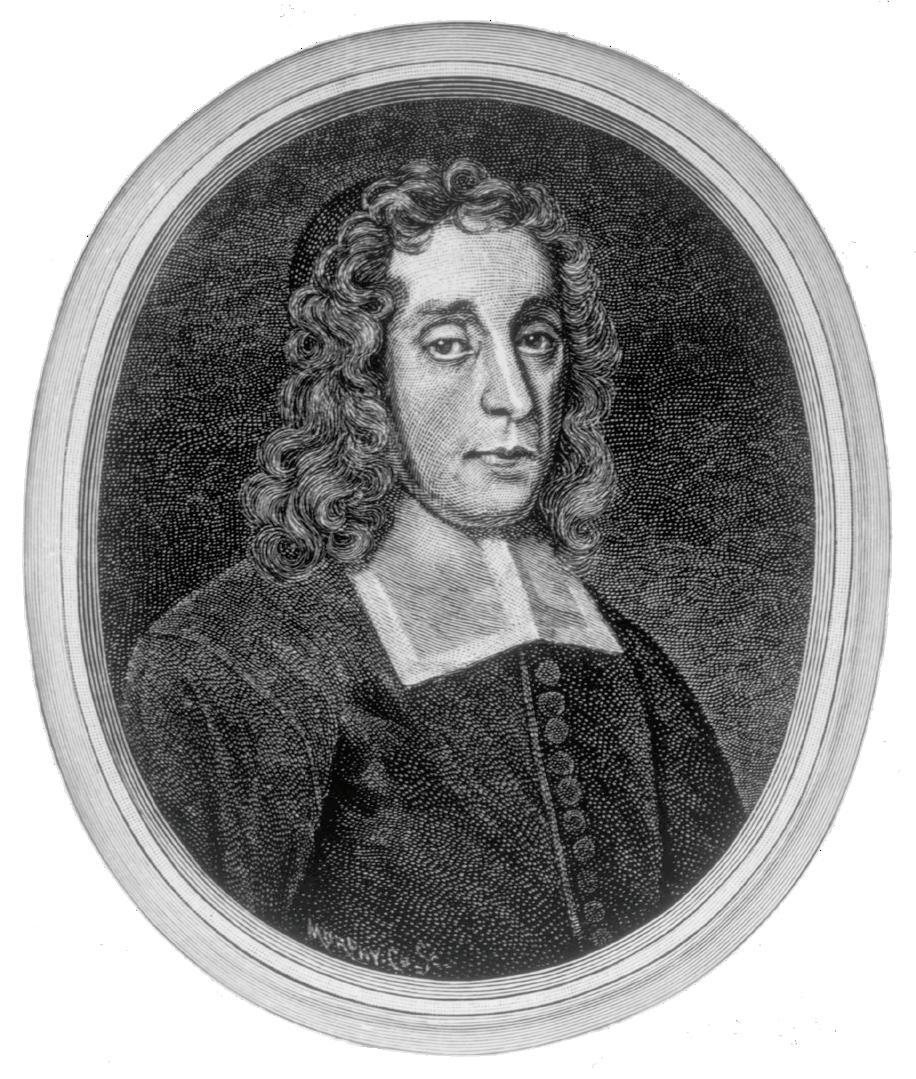
from this time I became very studious.”
Not long after this, his mother died, and “about that time the Lord broke in upon my conscience with very terrible convictions and awakenings.” During the spring of 1655, he wrote: “I was in extremity of anguish and horror in my soul.”
One day at home, when his father was away, the 15-yearold wrestled with his sin: “I shut myself up in his study, and wrote down all the sins which I could remember I had been guilty of that lay as a heavy burden on my spirits. I brought them before God, and cried to him for pardoning mercy.”
The Mather home had no shortage of books, so the lack of established schools in Boston posed no problem for educating children. In this household, learning — whether math, science, history, or whatever — meant learning about God, the Author of all truth. Of course, each Sunday the Mather family was privileged to hear sermons by Richard, with his “excellent faculty in making abstruse things plain.”
Richard and others taught Increase, and soon he could read the Latin of Cicero extempore and conjugate verbs in Greek. His handwriting was horrendous, and, though he excelled academically, he didn’t enjoy studying. But, like it or not, at age 12, he entered Harvard, located about ten miles away. Named after a minister, America’s oldest college was established by New England Christians fearful of leaving “an illiterate Ministery to the Churches.” This Puritan-minded school pressed on young Mather the claims of Christ, but he seemed unfazed.
At 14, sickness did what the classroom and pulpit could not. In Increase’s own words, this “sore disease,” perhaps a kidney stone, “set me upon prayer to God, and caused me to reform many vain, wild courses and extravagances of my life. And,
One wonders what sins he listed. So much of what Increase would later write has survived, for he became a famous preacher and educator, but this list didn’t make it to sunup, for that night he “burnt the paper which in way of confession I had sorrowfully spread before the Lord.”
Where he had been only “outwardly Moral,” now he became “strangely changed,” and some of his friends made fun of his “tender conscience.” Turning his sin-list to ashes didn’t end his struggles. Comfort came when he again shut himself off from others. “I poured out my soul in complaints before God….I gave myself up to Jesus Christ, declaring that I was now resolved to be his servant, I his only, and his forever; and humbly professed to him that if I did perish, I would perish at his feet.” This prayer carried him to God where he found “ease and inward peace.”
About the Columnist: Paul V. Harrison has pastored Madison FWB Church in Madison, Alabama, since 2015. Previously, he pastored Cross Timbers FWB Church in Nashville, Tennessee, for 22 years. He was an adjunct professor at Welch College for 17 years, teaching church history and Greek. Paul is the creator of Classic Sermon Index, a subscription-based online index of over 66,000 sermons, with clients including Harvard, Baylor, and Vanderbilt, among others: www.classicsermonindex.com/.

BY JESSE OWENS
During the Great Depression, Presbyterian theologian J. Gresham Machen was troubled to find some Christians downplaying the importance of teaching the gospel in favor of focusing on people’s physical needs (food, housing, clothing, education, etc.). Certainly, the concern for people’s physical needs is noble, reminding us of the book of James. But Machen realized that, while Christians must care about and seek to meet these various needs, they also should realize physical needs are not primary. Treating them as if they are is to misdiagnose the human problem.
Machen wrote, “The distress of the world is due to an evil within the soul of man.” For this reason, the root of all human problems is a theological problem. He went on to say, “God has so ordered the course of this world that . . . it is impossible to attain the lower end [dealing with social and political evils] until the higher end has been attained” and “we have come to be right with God. No emergency can possibly be so pressing as to permit us to postpone our attention to the unseen things.”1
We must care about the plight of humanity, but we must never let times of emergency or crisis cause us to conclude that mankind’s greatest need is anything other than being reconciled to and delighting in the triune God through faith in Jesus Christ.
Amid our current cultural crisis, some Bible-believing Christians are erring in the opposite direction, arguing all we need to worry about is “getting people saved.” Certainly, we must care about the gospel message. However, this goal is no reason to neglect robust Christian theology.
One of the oldest descriptions of theology is “faith seeking understanding.” True theology is the reflection of God’s Word and its truth in faith. It is seeking to understand God and the world better. Alister E. McGrath helpfully defines theology as “reflection upon the God whom Christians worship and adore.”2 Theology is ultimately governed and guided by what God has revealed about Himself in the Bible. So, theology should be centered on reflecting and meditating on God’s Word. However, we might add to this understanding that theology includes reflecting on the created order and engaging the reflections of other believers throughout the world and throughout time.
With this definition in mind, let us consider several reasons we should care about theology amid our cultural crisis.
1 J. Gresham Machen, Things Unseen: A Systematic Introduction to the Christian Faith and Reformed Theology (Glenside, PA: Westminster Seminary Press, 2020), 8–9.
2 Alister E. McGrath, Christian Theology, 5th ed. (Malden, MA: Wiley-Blackwell, 2011), 102.
REASON #1: There will always be a crisis. I remember how moved I was the first time I read C. S. Lewis’s essay “Learning in Wartime.” He was writing during World War II to university students doubting the value of devoting their time and energies to higher education during a global conflict. Should they not be doing more important things?
Is engaging the life of the mind in this situation not like “fiddling while Rome burns?” Lewis questioned. “If we let ourselves, we shall always be waiting for some distraction or other to end before we can really get down to our work. The only people who achieve much are those who want knowledge so badly that they seek it while the conditions are still unfavorable. Favorable conditions never come.” 3 Along those same lines, he said, “If men had postponed the search for knowledge and beauty until they were secure, the search would have never begun.” 4
Just imagine if the early church, the Protestant Reformers, or seventeenth-century English Baptists said, “You know, times are tough right now. We better just lay low. We do not have time to think deeply about God, write books, or preach theological sermons. We will wait for a less chaotic time.”
Thank the Lord they did not fall prey to this temptation!
So, when we are drawn to conclude thinking deeply about God and His Word is just polishing the brass on the Titanic as it sinks, let us remember human history is filled with crisis. Waiting for good times and ease to give our attention to theology is a mirage. Favorable conditions never come.
REASON #2: Our cultural crisis is a theological problem. At a fundamental level, people do not understand we are created by God in His image. The various crises related to sexuality, identity, euthanasia, abortion, or whatever else are, at their core, theological problems. Christians need thoughtful, biblical answers to the questions of the day. People are asking: “Who am I? Why am I here? Do I have any purpose?” These are theological questions requiring robust gospel answers.
3 C. S. Lewis, “Learning in Wartime,” in The Weight of Glory and Other Addresses (New York: Harper Collins, 2001), 60.
4 Lewis, “Learning in Wartime,” 49.
Christian young people face a different world than even the one in which I grew up. They do not need us to entertain them or convince them Christianity is cool. They need us to answer hard questions about their world and the constant messaging they encounter. They need us to help them sink roots deep in the historic faith and equip them to live and minister to our brave new world.
Dealing with this theological problem requires both evangelism and discipleship that addresses how to survive sustained engagement with the sinister, destructive lies abounding in our culture. We must proclaim the gospel with sincerity, fervency, and clarity. But we also must expose the false claims of society that seek to undermine the fundamental truths of Scripture. We must counter the false narratives of our day with the unchanging truth, and that requires serious theological reflection.
REASON #3: Theology can deepen our love of and longing for God. Maybe you have heard people refer to seminary as “cemetery” — as if Christian college or seminary is where spiritual fervor goes to die. The idea that a deeper understanding of God could lead to a deeper love of and longing for God is difficult for some people to imagine. Some think knowing more about God will necessarily lessen our love of and longing for Him. That notion simply is not the case. When we read the Bible and good theology books for the purpose of loving and obeying God, our longing for God will deepen.
We must counter the false narratives of our day with the unchanging truth, and that requires serious theological reflection.
Consider two examples: one from Scripture and one from my own experience. Sure, what Paul says in his letter to the Romans is hard to understand. But hopefully, you do not read Romans and say, “Man, this is boring!” Paul certainly did not intend that reaction as he explored the depth and breadth of God’s wisdom, knowledge, and love. His deep, theological reflection in Romans does not lesson his sense of longing for God. Just read Romans 11:33-36 or 16:25-27.
Let me share a personal example from reading good theology books. In 2014, I read Augustine’s Confessions while studying at Southern Seminary. Two features of the book often come to mind a decade later. First, I was moved by Augustine’s account of the pervasiveness of human sin. In Confessions, Augustine traced the presence of sin throughout his life. He offered a well-known account of stealing pears from a neighbor with childhood friends. As he reflects on this act, Augustine considered the depravity of the human heart. He did not steal the pears because he was hungry or in need. He stole them for the sake of stealing. He confessed, “I stole things I had much more
of, and much better. I wanted the stealing, not the thing stolen. I wanted the sin.” He continued, “The act was ugly, and that is what I loved in it.”5 Augustine’s Confessions transformed the way I understood the depths of my own sin.
But Confessions also deepened my sense of awe at God’s work in saving me. In many ways, Confessions is a sustained reflection of God’s pursuit of Augustine from the earliest years of his life. Augustine wrote as though looking at his life in a rearview mirror. After his conversion, he saw everything that came before in a different way. The Lord had always been present and at work, even when Augustine did not realize it. The Lord was drawing Augustine to Himself all along, but with eyes of faith he saw the Lord’s providential hand.
When I read that, I was reminded of the Lord’s consistent pursuit of me. I considered all the ways I resisted Him throughout my youth, but through faithful believers, preaching, and the convicting work of the Holy Spirit, the Lord brought me to repentance and faith.
So, what does caring about theology look like amid cultural crisis? It looks like spending time reflecting and meditating on Scripture. It looks like reading theology books with a group of men or women in your church. It looks like answering the most pressing questions of our day for youth in your church with the depth and breadth Scripture provides. Instead of avoiding hard questions, let’s do our best to confront them with the unchanging truth of the Bible.
Caring about theology amid cultural crisis looks like preaching doctrinal sermons on topics like sanctification, glorification, election, predestination, the second coming, substitutionary atonement, vocation, and the deity and humanity of Christ. It looks like using the Free Will Baptist Catechism to instruct your own children or the children in your church. It looks like singing rich theological songs during worship services.
If we are going to meet the needs of our age, if we are going to answer the questions of our children and our community, we must have hearts enflamed by the truth of God and minds equipped through deep reflection on the Word of God.
This article is adapted from an essay previously published on HelwysSocietyForum.com/.
About the Writer: Jesse Owens is program coordinator for the M.A. in Theology and Ministry program at Welch College. He also pastors Immanuel Church in Gallatin, Tennessee. Read more: Welch.edu/.
5 Saint Augustine, Confessions, trans. Garry Wills (New York: Penguin, 2006), 32.
TREASURE is a quarterly Bible study guide for personal use, group study, or mentoring. Each issue offers inspiring articles, helpful resources, insightful columns, and the latest news, projects, and events from WNAC.
www.wnac.org/
Continued from page 19
fellowship. This renews faith, deepens commitment, and offers opportunity for rest and connection. Year after year, attendance is strong, and the spiritual impact is evident.
Each year, youth camps alternate between one national camp and three associational camps. The regional camps permit more youth to participate, since the cost of transportation is less. The national camp allows youth from all over the country to come together, reinforcing unity, keeping their faith vibrant, and making new connections. Youth camps and retreats usually gather 200 or more students for biblical teaching, worship, fellowship, and growth in the Lord.
Worship concerts have become another signature event with three hours of joyful praise led by hand-picked music groups. Besides the music, time is also spent in a directed concert of prayer. For many young people, these moments become catalysts for renewed devotion and spiritual depth.
The fruits of this movement can be counted not only in numbers but also in transformed lives, where faith took root and changed the direction of their lives. Many young people are now well-trained and hold leadership roles within their local
churches, regional associations, and the national association.
One of the leaders of the youth organization commented, “I’ve seen firsthand how the sincerity and maturity of the youth inspire confidence in church leaders, both locally and nationally. This trust has led to many young people being placed in significant roles within the church. It is clear evidence of the strength and effectiveness of the youth ministry. Their maturity opened doors for leadership.”
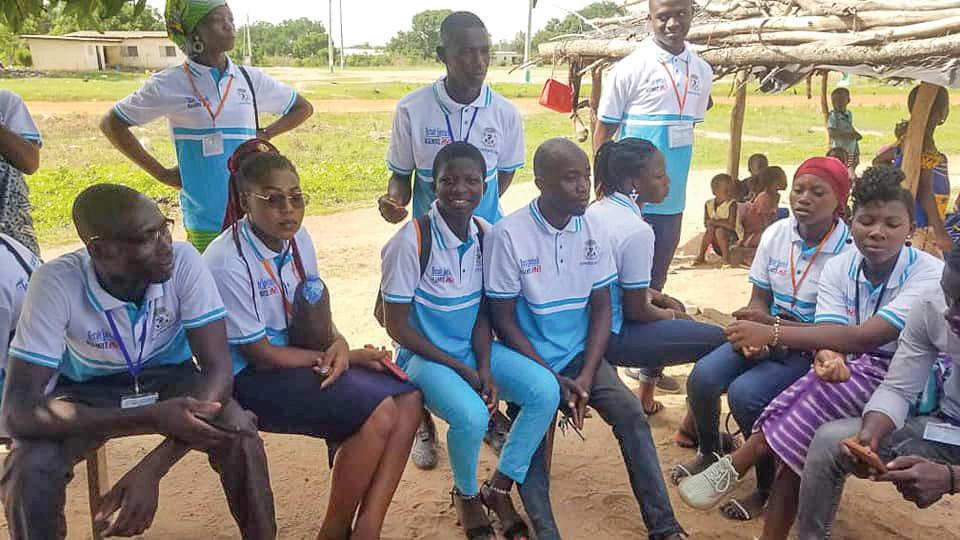
Through service, testimony, and unshakeable commitment, Free Will Baptist youth in Côte d’Ivoire are proving faith is not only inherited. It is lived, shared, and renewed with every generation. Their work illuminates communities and strengthens the Church, ensuring the flame of the gospel burns brightly across the nation.
About the Writer: As first vice-president of National Youth, Robert Kouassi oversees organization and training for the Ivorian youth association. He and his wife attend Shalom FWB Church of Abidjan-Angré. He serves as a tax official in his professional career and enjoys reading and football (soccer).

BY BRENDA EVANS

If the length of my life were measured in seasons, summer has passed, and fall is ending. That means I’m on the brink of winter, the final season — or already in it unaware. Fact is, I’m old!
In his most recent collection of poems, my favorite living poet writes about that final season of life. He calls it “the stern privilege of being old.” Wendell Berry should know. Ninety-one years old and author of more than fifty books, he is still active as poet, novelist, essayist, farmer, and fellow Kentuckian.
All these years, Berry has addressed old age in both fiction and poetry. Jack Beechum, a “very old man” and the protagonist of Berry’s 1974 novel The Memory of Old Jack, mused over his advanced age. He thought of those who had already made their “departure” and knew it was “one of the inescapable themes” of life. Departure not only for his friends and family, but for himself.
“Having put his foot into the furrow, he [Old Jack] has not looked back, though he has known that it must deepen into a grave.”
Despite these inescapable themes of old age and departure, Berry’s characters and poems are never self-pitying or sentimental. Old Jack simply said, “another hinge has turned.” Life had changed. That is all. Old Jack’s neighbor, Jayber Crow, agreed without commentary: “Well…time will make mortals of us all.” Another added, “Yes, if we don’t die first.”
These old characters make me smile. Yes, old age is out there. Yes, the hinge turns. Yes, the furrow will deepen to a grave. We just reckon with it.
After Old Jack’s death, his nephew Mat mulled over his uncle’s “level-footed” life. Old Jack “stood unconditionally...straight as a tree and…charged with purpose and with strength,” even in hard times. Old Jack reminds me of the Psalmist David who said, “I have set the Lord always before me…I shall not be moved” (Psalm 16:8).
Old Jack was first published when Berry was just 40 years old. At 81, Berry comes back once again to the theme of old age as he
has all those years. In Poem VII (2015) from his newest collection, Another Day: Sabbath Poems 2013–2023, he writes:
What a wonder I was when I was young, as I learn from the stern privilege of being old….
The poem recounts his youth when he was “regardless” of how he stepped on “rough pathways” and persistent when he worked “unachingly hard days.” Now, he is old, yet life is still a privilege, though “stern.”
In a long dream poem written when Berry was 89, his tone is again matter-of-fact: “You have begun your journey from all you know to all you don’t” Poem 1 (2023). Berry’s narrator looks back on his life as the faithful husband of “one woman only.” He remembers the death, ugliness, greed, war, and ignorance he experienced. But at the end, he looks ahead as the dream brings him to the Sabbath morning where he “at last may come to rest.”
In other Sabbath poems, Berry writes, “Times will come as they must….and grow scarce.” But that scarcity of time is merely “the Real, the wholly real.” In Poem XIV (2013), he adds:
The old dog with her gray muzzle and I with my fringe of white hair please ourselves by nearness to the fire inside while outside the birds answer their calling to stay alive.
Berry admits, “We all now have fewer days than we had yesterday.” Yet he seems unruffled. Thoughts of aging and “fewer days” are simply “the Real, the wholly real.” Berry began the first line of that poem with the words of Jesus in Luke 20:38: “For he

is not a God of the dead, but of the living.” In the final line, he comes back to the Lord: “The Kingdom of God is life itself.”
I love Berry’s writings — poems, novels, essays. They are rooted in ordinary life and often even Christian life. Yet he does not say all I need or want to know as I stare ahead into that “stern privilege” of old age.
And so, I move on to Flannery O’Connor. Flannery died of lupus at age 39 in 1964, and she is far more blunt than Berry. In a letter dated September 6, 1955, she said to a friend, “The truth does not change according to our ability to stomach it….there are long periods in the lives of all of us…when the truth as revealed by faith is hideous, emotionally disturbing, downright repulsive. Witness the dark night of the soul in individual saints.”
In 31 short stories and two novels, O’Connor dealt with the impudent young and the shrewish old, many in the dark night of the soul. Some received grace. Many others faced the dark night alone, resentful, and without faith. Even her “good ones” were often hard to admire. Life of whatever length was not often pretty in O’Connor’s fictional world.
When “standing on the world’s edge,” as Berry says about old age or “on the verge,” as O’Connor calls it, we don’t necessarily feel it is a privilege of any sort. Nevertheless, we can face the fact we will come “at last to the great edge and keep on going,” as Berry says.
So what are some takeaways from this talk of the stern privilege? Here are ten:
1. In my 80s, I’m in the unknown. I see what is behind — what once was — but I see ahead through dense fog. Still, I don’t have to lose heart. I can say with Paul, though my outer self is wasting away, my inner self is being renewed daily (2 Corinthians 4:16).
2. Truthfully, I often feel vulnerable. I have no control over what lies ahead and perhaps little choice. That’s frightening. I may, somewhere up ahead, have to cede all control, all choices to others — family, caretakers, medical professionals, and ultimately the Lord’s timing.
3. For now, I admit my limitations. I have walking issues that restrict my choices. I don’t like strictures; I don’t like pain. I’m prone to whine. But I adjust, recognizing many my age suffer terribly all day, every day. My pain is a splinter, theirs a sword.
4. I want to be gracious, though “gracious” is not my middle name. Often, I fail. I don’t want to allow the “milk of human kindness” to sour in my soul. A friend’s parent was a belligerent booger in his last years. Uncooperative and miserable, he made everyone around him miserable. I don’t want to do that.
5. The Psalmist David said, “I shall not be moved” (16:8). I, too, want to stand firm, yet know when to be flexible, to be compliant for people who care and to circumstances I don’t like.
6. I practice gratitude. Someone called gratitude the dialysis of the spirit because it flushes self-pity and complaining from our souls and prevents “making a martyr” of ourselves, as C. S. Lewis said. In his farewell address, Samuel advised the Lord’s people to “consider how great things he hath done for you” (1 Samuel 12:24). I must remember…and be grateful.
7. I must acknowledge wisdom is not automatic just because my hair turns gray (or turns loose). I don’t know everything, despite these collected decades.
8. Sometimes, I need to “let go.” Someone said, “Letting go doesn’t mean giving up; it means giving over” to the Lord (1 Peter 5:7) and to His helpers — my helpers. I’m trying.
9. Now in my 80s, the future feels weightier, heavier, so I move with more caution, both physically and in decision-making. I watch my steps. I weigh my choices.
10. I’m counting on something new. I lean on what John heard in Revelation 21:3-7, a loud voice from the throne that said, “I make all things new.” All things new. Praise to the loud voice from the throne. Amen and Amen!
About the Writer: Brenda Evans lives and writes in Ashland, Kentucky. You may reach her at beejayevans@windstream.net.
During her early weeks in the WNAC office, the ONE Magazine staff sat down with Kristi Johnson, recently appointed director of WNAC. A former missionary to Spain, Kristi and her husband Tim spent nearly three decades on the field before returning to the States. Tim teaches missions at Welch College and, until recently, Kristi worked as communications manager at IM. But there is so much more to learn! Enjoy this revealing look into her life and vision.
What would people be most surprised to learn about you? When my daughter Ana was a little girl, I took her to see The Nutcracker in Madrid, Spain. We were so excited our discountpriced tickets landed us seats in a prime spot, right in front of the stage. While waiting for the show to start, we turned around and saw Spain’s Prince Phillip (now King Phillip) and his family sit down near us. It became a night to remember when we realized we’d gone to the ballet with the future King of Spain!
Besides your parents, husband, and children, who has had the most influence on your life?
A few years back, someone asked who I would choose for my “Mount Rushmore” of people who influenced my life. Four people
immediately came to mind from various stages in my life. From my teen years to the present, they each mentored me along the way. When my mother passed away two years ago, I looked around and saw all four in the church that day. They truly have been monumental influences.
For what are you most grateful? Besides being grateful for God’s saving grace, I often reflect on His providence. He knew I would grow up in a Christian home where God’s Word was taught. I remember waking up each morning to find my dad in the living room at his usual place reading the Bible. I also went with my mom to ladies’ auxiliary meetings, where she modeled discipleship by investing in the lives of other women.
I attended a home church where missions was emphasized and missionaries were often invited to share their stories. These providential encounters were instrumental in showing me the things that would become even more important in my life as an adult. As I have stepped into this role with WNAC, I am grateful for this rich heritage of women, both younger and older, who have inspired me.
Would you share some humorous experiences from childhood? When I was in kindergarten, my teacher thought I could read well. (Really, I was a good memorizer.) She even asked me to read to the third graders, which made both my heart and my head swell with pride. While I was likely just reciting what I’d memorized, I felt so grown-up reading to the third graders. Interesting story: one of those third graders later ended up attending Welch College with me. We still laugh every time we see each other, and I remember being the imposter kindergartner who read books to her.
Can you share your conversion experience? My conversion was a process that started when my parents modeled God’s love and taught me about Him. I distinctly remember the night I made the conscious decision to give my heart to Christ. I was at my home church and walked down to the altar to pray. That night, after church, I remember telling my mom, “I want to go tell someone now!” My little heart longed to share the good news of salvation from the very beginning.
How did you meet Tim? And how would you describe him? Tim and I were both students at Welch College, but we got to know each other in a missions class. (How appropriate, right?) One thing I realized about Tim from the beginning is that he’s steady. He’s my rock! I don’t think I could do what I do without someone who keeps me focused and balanced.
As you look back over life and ministry, how did God prepare you to serve as director of WNAC? I must have seen leadership in my future as far back as high school because I was very involved in student organizations and leadership. That experience stayed with me through my years as elementary school teacher, missionary, communications manager at IM, and even into my master’s degree program in organizational leadership. While God used my ministry experience to prepare me for leadership, He also perfectly aligned my skillset and calling to shape me for this role.
My missions experience spanned 25 years and included about that many roles....Each new task gave me insight into what ministry looks like.
Can you share a humorous story from your time in Spain? During our first year on the field, our entire missionary team met in a restaurant where we had the whole venue to ourselves. During the meal, I went to the restroom. When I tried to leave, the door handle fell off in my hand, and the door did not open without it. I stood there alone and began to wonder what I was going to do. My teammates were on the other side of the restaurant out of earshot, possibly passing through the first AND second courses of the meal. I just waited, hoping eventually one of them would realize I was missing. Eventually, Lea Edgmon came to check on me and realized I was locked in the bathroom. She and the other missionaries had a great laugh at my expense.
What was your greatest challenge as a missionary? My greatest challenge also taught me the most patience. Sharing my faith in Spain wasn’t always easy, as their perceptions of Christ and of Christians were often colored by their own painful experiences with the Roman Catholic Church. It sometimes took years of demonstrating that Christ could be trusted before they would make the decision to follow Him. Those times of waiting taught me patience.
What will you bring to your new role from your missions experience? My missions experience spanned 25 years and included about that many roles. I’ve been a translator, a Bible teacher, a children’s worker, a worship leader, a discipler of women, a church planter, an event organizer, and so much
more. Each new task gave me insight into what ministry looks like. I also gained valuable experience working at IM these last few years. I worked extensively on plans for the National Convention, spoke in many churches and ladies’ groups, and helped plan events for fundraising. And I’ve even been able to mentor several new missionaries and college students. Each of these experiences has brought me to where I am today as I enter a new phase of ministry.
Can you name some of your greatest encouragers during your time as a missionary? This is a difficult question to answer because so many people over the years were incredible encouragers to me. When Marjorie Workman was the WNAC director, she and her husband Gene came to visit us in Spain. She not only encouraged us, but she took time to carry our kids on piggy-back rides after church one Sunday. This small gesture symbolizes how so many women through the years cared for our family through gifts to the Provision Closet, hand-written cards, or personalized gifts. I’ve always felt the women of our denomination truly understand the heartbeat of caring for missionaries’ hearts and homes.
What do you see as the greatest challenge(s) for WNAC, both immediately and in the future? While being introduced to this role, I learned WNAC faces severe underfunding in our Operating Fund. This fund sustains ministry, pays bills and salaries, and supports all other WNAC ministries. I am concerned our ladies aren’t aware of this challenge, and I will be working to share this need in the coming months as we establish a funding system that can sustain ministry. As I look toward the future, I see many of our most faithful WNAC supporters are aging and cannot continue their current level of financial partnership. We must challenge our younger ladies to see this need and get behind WNAC, so the next generation of women can keep fulfilling the Great Commission.

We must challenge our younger ladies to see this need and get behind WNAC, so the next generation of women can keep fulfilling the Great Commission.
What one thing would you like to say to Free Will Baptist women as you begin this new role? Don’t think of WNAC, or Free Will Baptist women’s ministries,
as existing only for older women. While it’s true older, more seasoned women are a valuable part of WNAC, so are younger women! We already have the Shine Conference for teens, and we hope to restart Flourish events to continue the momentum for women already in ministry. We want to meet your needs where you are now…and into the future. I would like to sit across the table and talk openly about the future. Please contact me. I’m here for you.
Briefly, what do you see as the future for WNAC? While I am still listening and learning and formulating a vision, I know I would love to see:
• Spiritually grounded teens and women living with purpose.
• Missionaries and church planters strengthened for long-term faithful service.
• Local ministry expanded to global ministry as women pursue the Great Commission together.
Antioch, TN — After much prayer and consideration, the WNAC Board is pleased to announce the hiring of Kristi Johnson as director. Mrs. Johnson is well-known within the denomination as an IM missionary to Spain, where she and her husband Tim served for over 25 years. Most recently, she served four years at IM as the development communications manager.

helped lead WNAC forward. York was instrumental in bringing WNAC to develop a digital format of Treasure Bible Study Guide.
Words cannot express our gratitude for her sacrifices through the years for Free Will Baptist women’s ministries. We wish her all the best in her future ministry endeavors.
Johnson's heart continues steadfast to the cause of the Great Commission, and in her new role as WNAC executive director she endeavors to herald the message of WNAC to “provide opportunities for each woman to fulfill the Great Commission through her God-designed roles at home and abroad.”
Johnson noted: “While I am still listening and learning and formulating a long-term vision for WNAC, I know I would love to see spiritually-grounded teen girls and women living with purpose, missionaries and church planters strengthened for long-term faithful service, and local women's ministry expanded to global ministry as women pursue the Great Commission together.”
Learn more about Johnson through her interview responses in "Meet Kristi," page 50.
Long-time employee and champion of WNAC, Phyllis York, resigned from her positions as interim WNAC director, administrative assistant, and managing editor of Treasure Bible Study Guide, effective January 30.
York served WNAC 15 years, as well as additional years as an officer of the WNAC Convention. During her tenure, she oversaw many projects, most notably the content and editing of Treasure Bible Study Guide. She also played a key role in launching The Giving Tree plan, an initiative designed to strengthen WNAC financially and ensure the sustainability of its mission.
Through these and other efforts, her extensive experience
Antioch, TN — Over 100 coaches have been trained in Rekindle coaching techniques and continue to serve pastors across the denomination.
To better meet your needs, the program is expanding to address specific challenges: improving first impressions, starting a stewardship campaign, updating a church constitution, etc.
Executive Director Eddie Moody encourages pastors: “Whether you need a ‘battle buddy’ or a senior perspective, you don't have to minister alone (Proverbs 24:6).”
He encourages pastors to complete the Rekindle Coaching Request Form to get started. “Together, we accomplish more” (Ecclesiastes 4:9-12).
Learn more at nafwb.org/rekindle/ or nafwb.org/refresh/
JULY 19-22, 2026
MATTHEW 5:1–16, 43–48
NAM Recipient: Layton & Stephanie Smith Sumterville, Florida
IM Recipient: Cody & Lauren Herren • France
SUNDAY • JOHNATHAN WASHAK ( OHIO )
THE BEATITUDES • MATTHEW 5:1 –12
MONDAY • KEVIN JONES ( OHIO )
SALT AND LIGHT • MATTHEW 5:13 –16
TUESDAY • RAY PAXTON ( MISSOURI )
LOVE YOUR ENEMIES • MATTHEW 5:43 – 48
Antioch, TN — Eddie J. Payne entered Heaven February 23, 2026. Born July 27, 1939, to Virgil and Octavia (Smith) Payne in Decatur, Arkansas, he was raised in Oklahoma and considered himself a true Okie. The 86-year-old died 14 months after Sandra, his wife of 64 years.
Eddie accepted Christ as his Savior at age 13 in Tulsa, Oklahoma. By the time he was 15, he had answered the call to preach. He attended Welch College where he met Sandra and responded to the call to serve overseas. The summer after his 1962 graduation, Eddie attended the Wycliff Summer Institute of Linguistics.
Appointed to serve in Côte d’Ivoire, West Africa, in October 1962, the Paynes first served in Doropo at the medical station. While Sandra put her nursing skills to use, Eddie built houses, maintained the facilities, and evangelized the villages. After a decade in Doropo, the couple relocated to Bouna where they spent much of their ministry. Eddie continued in village evangelization, taught Bible classes in public schools, assisted in the local church, and taught in youth camps. He also produced and provided audio cassettes of the Bible in the Lobi language. After 25 years of faithful service, the Paynes resigned due to persistent health issues.
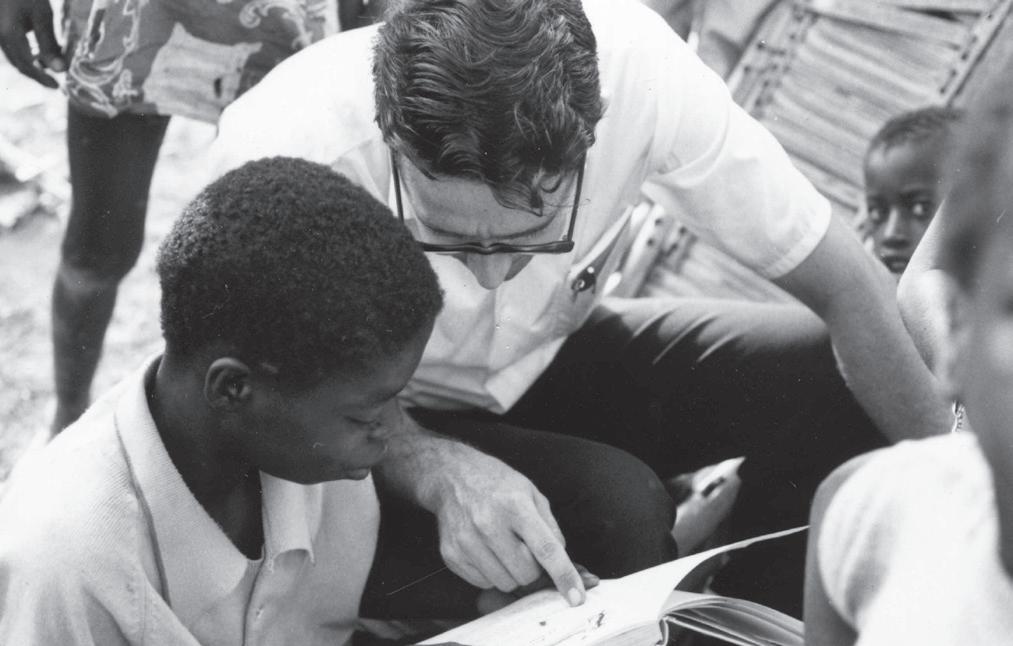
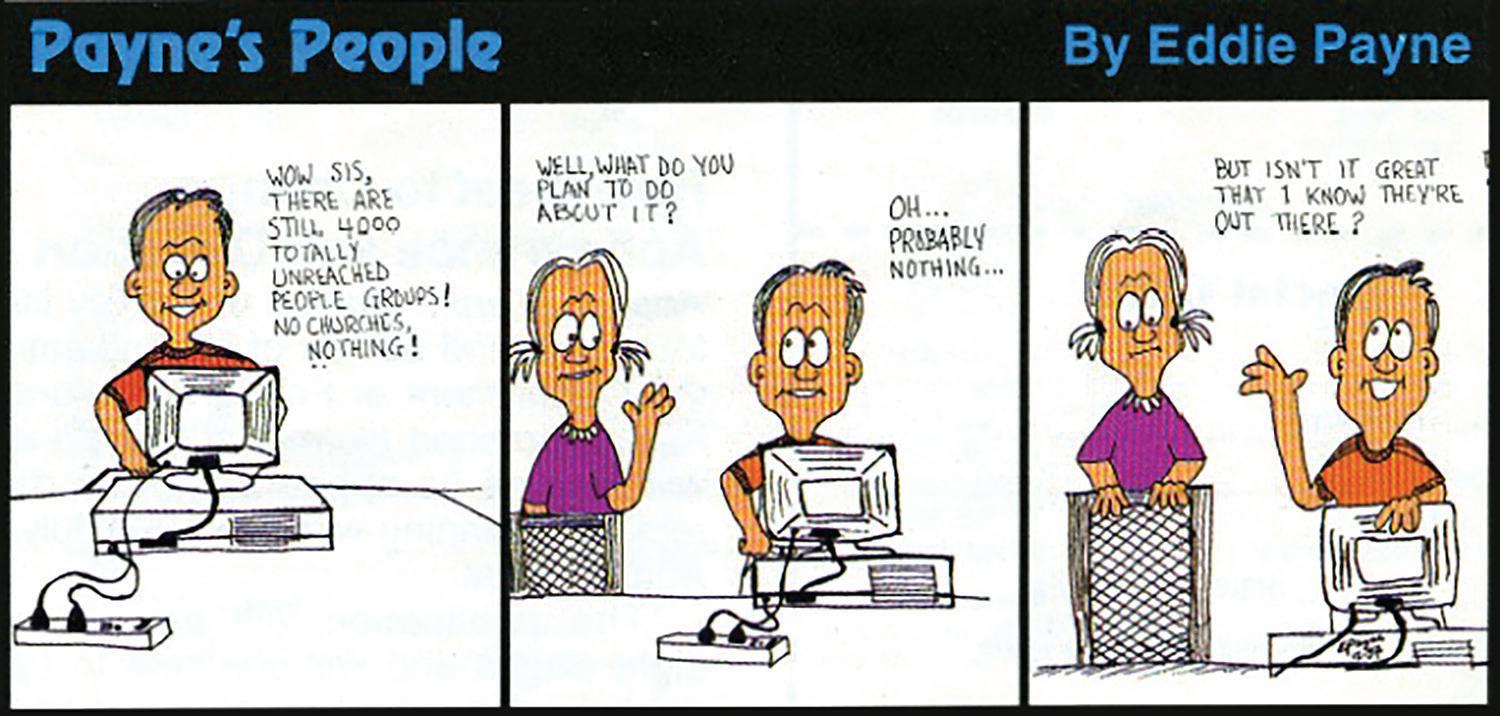
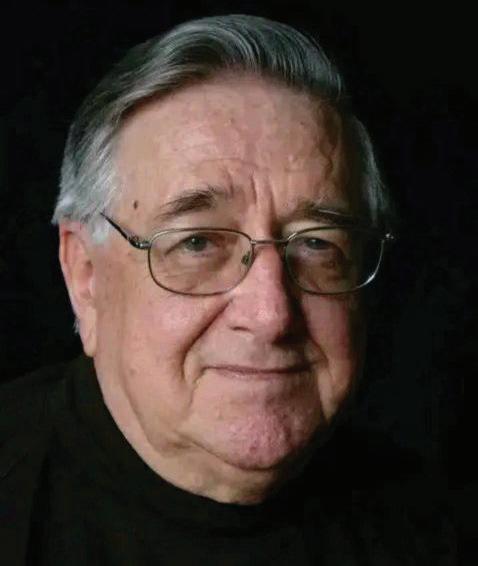
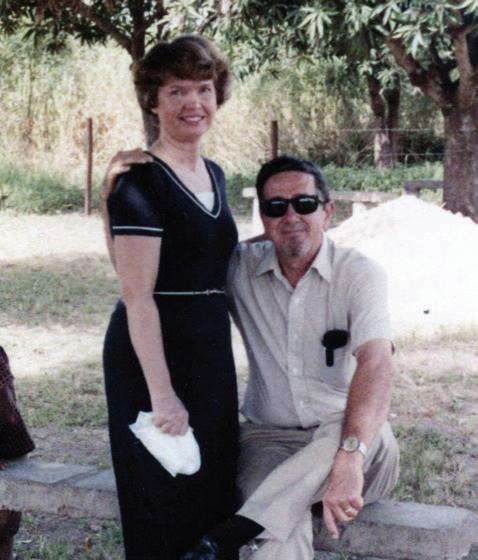
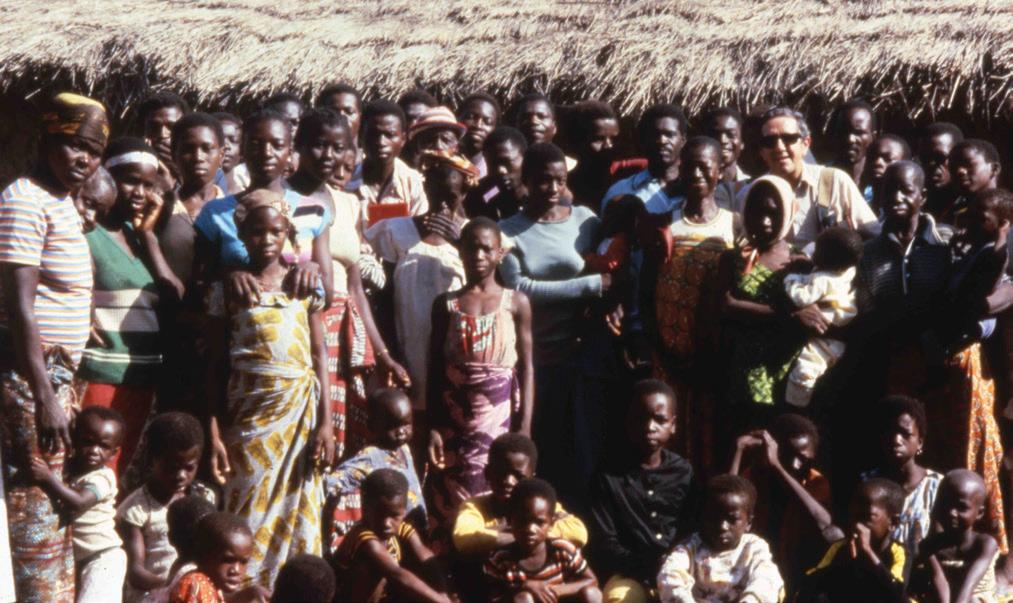
However, the return to the United States was not retirement. Eddie taught missions at Welch College from fall 1989 to spring 1995, impacting many future missionaries. In 1997, he transitioned to the IM office (then Free Will Baptist Foreign Missions) to work in video production and assist in developing a ten-year missions strategy. In 2000, he was named the first director of mobilization and recruitment. During his five-year tenure, 37 people were approved for short-term service. An additional twenty candidates were approved for career service.
Hundreds of students and young adults knew Eddie as Poppa Payne, Uncle Eddie, professor, mobilizer, mentor, humorist, and friend. The multi-faceted Payne was also a photographer; cartoonist, providing “Payne’s People” for HeartBeat magazine for over a decade; painter; and author.
Payne was also a father, grandfather, and great-grandfather. He leaves behind two daughters — Debbie (Verlin) and Laura Stafford, seven grandchildren and four great-grandchildren.
Following a private burial, the family celebrated Payne’s life during a memorial service at Cross Timbers FWB Church in Nashville, Tennessee, March 7, 2026.
Pre-registration for the NAFWB and Vertical Three Conference will only be available online. No mail-in forms will be accepted.
Wednesday, April 1, pre-registration will open for individuals and groups at nafwb.org/convention. Payment options include Visa, Discover, or MasterCard, and both debit and credit cards are accepted. Registration will close Friday, June 19, and no refunds will be issued after that date.
The information below includes the various options for registration for attendees.
• National Board/Commission Member
• Ordained Minister
• Ordained Deacon
• State Delegate (Authorization Required) • Local Church Delegate (1 Per Church — Delegate Card Required)
• Attendee (Non-voting) All Ages, Including Infant and Toddler
Preschool Ages 0-5, NOT Attending Preschool Worship – NO FEE
For each option listed below, the cost of registration is $40 pre-registered, $50 onsite.
• Ages 3-5, Attending Preschool Worship • Grades K-3
• Grades 7-12
• Grades 4-6
• Adult Attendee (Adults attending any V3 CTS competition or event)
*Any student or competitor attending any CTS competition or event MUST pay V3 conference fee in addition to CTS competition fees already paid.
Register all members of the group in the same “transaction.” This allows the registration system to group all members together using the same confirmation number.
Use the church mailing address as the address for each person’s registration in the group. By default, when you “Add Another Person” to your registration, the mailing address stays the same. There is no need to change the address for each individual member. One address for the group is sufficient.
Use the group leader/contact person’s phone number as the phone number on each registration in the group. This gives us a point of contact for questions about the registration or to contact the group onsite at the convention if needed.
If your group is participating in CTS Ministry Expo events that begin Monday at 8:00 a.m., make sure you have pre-registered or plan to register on site Sunday before 7:00 p.m. Registration opens at 8:00 a.m. Monday.


Sonesta Columbus Downtown
33 E Nationwide Blvd, Columbus, OH 43215
614-461-4100
Room Rate: $189
Parking: $32 Valet / $22 Self

Hampton Inn & Suites Columbus Downtown
501 N High St, Columbus, OH 43215
614-559-2000
Room Rate: $169
Valet Parking: $30/Night

1. Prepare personal information. You will need the following:
Hyatt Regency Columbus Downtown
350 N High St, Columbus, OH 43215
614-463-1234
Room Rate: $189
Parking: $17/Night

Drury Plaza Hotel Columbus Downtown
88 E Nationwide Blvd, Columbus, OH 43215
614-221-7008
Standard Room: $189 | Suite: $224
Parking: $32 Valet / $22 Self

Hilton Columbus Downtown 402 N High St, Columbus, OH 43215
614-384-8600
Room Rate: $199
Self-Parking: $38/Night
* Room Rates do not include state, local, and city taxes.
+ Name(s), address, city, state, zip
+ Phone/email
+ Credit card information
+ Special requests: accessibility, rollaway, or crib
2. Make reservations.
+ Online reservations open Monday, May 11, 9:00 a.m. CDT.
Links to make reservations will be available at nafwb.org/.
+ The group code (for convention
rate) will be built into each reservation link.
+ Contact the hotel directly for changes to reservations or issues with a reservation. Note: NAFWB is not responsible for housing issues.
3. Important things to remember:
+ Hotels have been told not to accept reservations before the opening day.
+ Rates do not include state, local, and city taxes.
NOTE: The first night's room and tax will be charged for canceled reservations. While the charge is non-refundable, reservations are transferable. Available rooms may be posted at nafwb.org for transfer.
NOTE: Convention policy supercedes the hotel policy.
Groups making eight or more reservations can contact Ryan Lewis before April 1 for more information: ryan@nafwb.org or 877-767-7659.
Reservation cut-off: Friday, June 19, 2026 | More info: nafwb.org/convention

Things have changed in the 43 years since the convention last met in Columbus, Ohio. (For starters, Convention Manager Ryan Lewis last attended the meeting there in a stroller!) The city itself has undergone a major transition. In 1983, Columbus was exploding in population, driven by manufacturing and a reputation as a major shipping and transportation hub. While both remain true, more recently, Columbus has also experienced growth in high-tech manufacturing and remains the 14th largest metropolitan area in the country.
As Free Will Baptists chart a course for Columbus this summer, attendees are challenged to renew their Focus, the theme for this year's meeting. Executive Director Eddie Moody notes, "with so much happening around us, it is easy to become distracted from the things that really matter." Each service will bring attention to one area where we should focus. Sunday morning, during a joint service with teens and adults, representatives from Truth & Peace Student Leadership Conference will teach Sunday School before Jon Forrest (TN) challenges listeners to Focus on Loving God. Sunday evening, Isaiah Hatfield (WV) will invite us to Focus on Loving Your Neighbor. Monday, Brian Williams (NY) will Focus on the Church. Jeff Crabtree (OH) will Focus on the Family on Tuesday before Kenneth Eagleton (TN) wraps up the conference by reminding Free Will Baptists to Focus on the Mission.
Though worship and fellowship with Free Will Baptists from across the nation and around the world is the highlight of the National Convention, the annual gathering consists of much more than worship services.
Delegates handle business during annual sessions Tuesday and Wednesday. Convention goers have opportunity to attend 80-plus seminars, workshops, panels, and activities presented by the various agencies of the denomination and covering a broad range of topics. Children and teens can take part in activities and sessions geared just for them. And women will enjoy a restructured and streamlined experience that "reflects new direction and excitement for WNAC," according to new director Kristi Johnon.
The Exhibit Hall will feature resources from departments, colleges, ministries, and vendors. Students will participate in the Vertical Three Conference with services, games, and events put together especially for them. And the CTS Expo finals will put the God-given abilities of Free Will Baptist students on full display.
For regular updates, scheduling information and changes, and updated city information, visit nafwb.org/convention/. We look forward to seeing you in Columbus.
The annual, one-day IMPACT Columbus service and evangelism event hosted by Master's Men will be held Saturday, July 18. Volunteers will partner with local churches for community outreach, service projects, and special events.


To register for IMPACT or to learn more details about these events, visit FWBMastersMen.org/.
Once again, the Convention Worship Team will guide the Convention Choir, Orchestra, and Praise Team. Worship Service Coordinator Kevin Justice encourages all musicians to visit the following webpages for more details and updates regarding convention music.

As "The Biggest Small Town in America," Columbus is proud of its friendly and tasty heritage. The city boasts a rich farmto-table movement and many locally-owned, one-of-a-kind restaurants. The North Market, located only a block from the convention center, showcases these local flavors and provides convenient eating options for attendees.
Among the city's iconic flavors are Buckeyes, a chocolate covered peanut butter creation that mimics the state symbol, and Wor Su Gai, a Chinese-American dish created at the fwbworship.com/choir fwbworship.com/orchestra fwbworship.com/praiseteam
Far East Restaurant in Columbus in the 1920s. A crispy fried chicken breast comes smothered with gravy and served over a bed of iceberg lettuce garnished with almonds or peanuts.
The German Village Historic District, just south of downtown, is among the most picturesque neighborhoods in Columbus. Built by German settlers centuries ago, the district is marked by handmade brick homes, shops, and even streets. Find German restaurants, bakeries, shops, and the 32-room Book Loft book store. Depending on the schedule, you might catch a free live performance of Shakespeare at Schiller Park.
Nature lovers and runners will enjoy the Scioto Mile, which consists of parkland throughout downtown Columbus. Named one of the ten best riverwalks in the nation in 2024, the area offers miles of multi-use trails stretching from Bicentennial Plaza (south) to North Bank Park (north).
Need a break from the city? Enjoy a hike with views? Check out the six beautiful waterfalls located within a short drive of Columbus: Hayden, Indian Run, Millikin, Grove, Honey Run, and Greenville Falls. Directions, photos, and maps are all available with a Google search.
Perhaps you have seen the Columbus Zoo & Aquarium featured on National Geographic’s “Secrets of the Zoo.” Home to more than 10,000 animals and 600 species, the zoo has been enchanting visitors for nearly a century. Learn more: columbuszoo.org/.
If the littles need to get out their wiggles, visit LEGOLAND Discovery Center, one of Columbus’ newest attractions. Children and adults alike will be fascinated by the history,
technology and sheer joy of one of the world’s favorite toys. The center features 36,000 square feet dedicated to interactive games, play areas, rides and more. Visit the website: legolanddiscoverycenter.com/.
In 2026, as we celebrate 90 National Conventions, we look back on many incredible memories, but we also look forward to many exciting things to come. Convention Manager Ryan Lewis notes, “This summer's convention shapes up to be an exciting one, as we return to a city we haven't visited in over forty years, and as we celebrate God's faithfulness through nine decades as a National Association. Please begin praying now that God will bless our time together.”





BY EDDIE MOODY
“With a firm reliance on the protection of divine Providence, we mutually pledge to each other our Lives, our Fortunes and our sacred Honor.”
The quote above comes from the last line of the Declaration of Independence, signed nearly 250 years ago. It is easy to forget the signers put their lives at great risk. Congress voted on July 4 to approve the text, but the signing did not begin until August 2, under very tense conditions.
quoting John Hancock. “We must be unanimous. There must be no pulling different ways; we must all hang together.” Sparks wrote that the comment led to Benjamin Franklin’s famous words, “Yes, we must, indeed, all hang together, or most assuredly we shall all hang separately.” 1
Because they did “hang together,” the United States is about to celebrate its 250th birthday. Were the fears the signers endured that summer of 1776 realized? Although they did experience many hardships, interestingly, not a single signer was hung or executed by the British. What can we learn from their example?
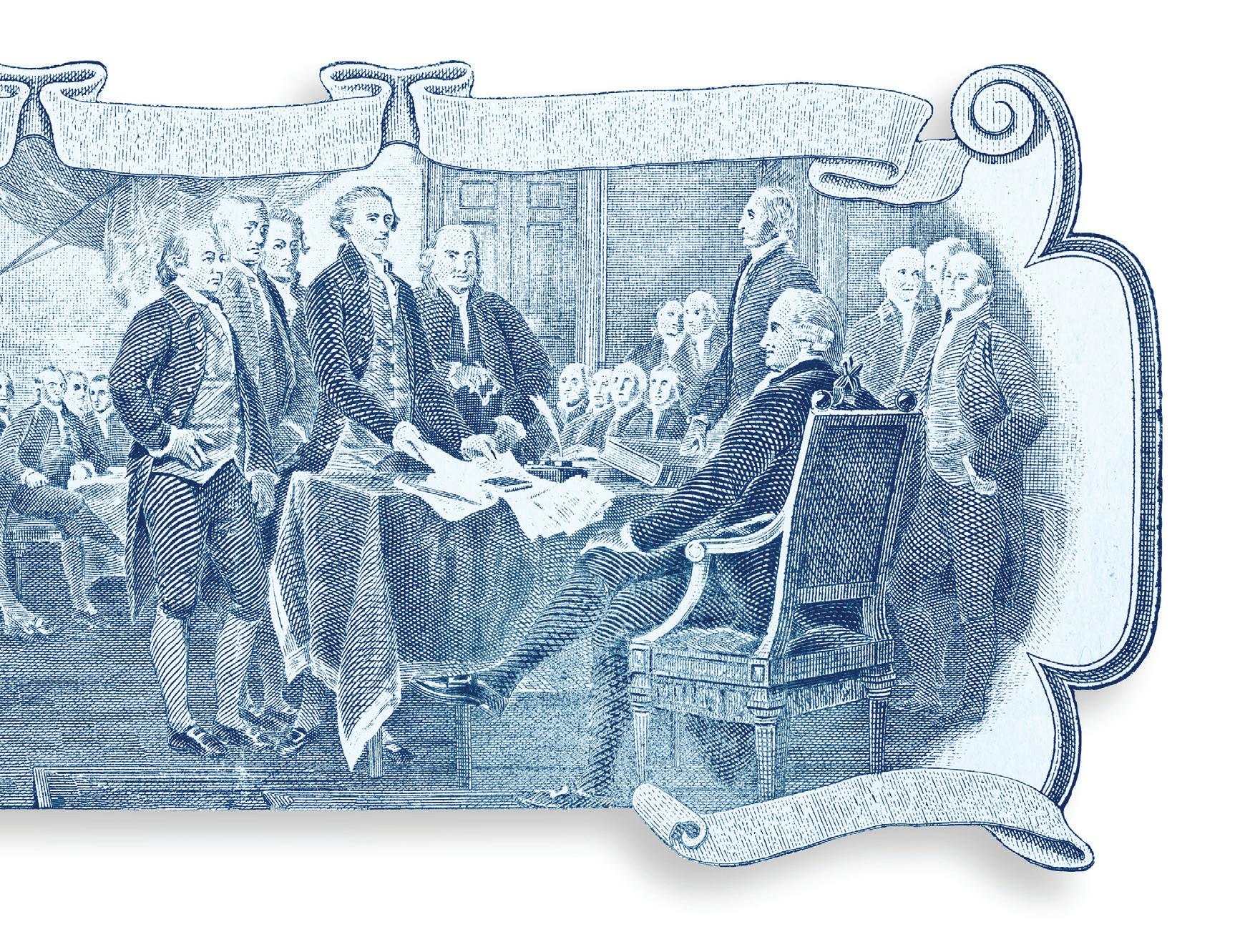
Thirty-five years later, Dr. Benjamin Rush wrote to John Adams about those trying moments. “Do you recollect the pensive and awful silence which pervaded the house when we were called up, one after another, to the table of the President of Congress to subscribe what was believed by many at that time to be our own death warrants?”
It was clear both Rush and Adams never forgot that day. Other accounts of the day circulated in the decades that followed. Historian Jared Sparks published a work in 1840
Hang together. When we hang together — whether friends, a marriage, a church, a denomination, or even a nation — we accomplish so much more. Further, we are safer when attacked by the evil one (Ecclesiastes 4:9-12), because others have our back.
Be unanimous or of one accord. The founders knew a house divided would not stand (Mark 3:25). When we are of one accord (Philippians 2:2), focused on the primary mission, we are more likely to survive and be successful in building relationships, rearing children, reaching our communities, and elevating Christ.
Rely on God. The founders realized without “divine Providence” they would not succeed. Neither will we when we rely only on our own efforts. Only God can give us true success.
Eddie Moody Executive Director, National Association of Free
Will Baptists
1 Bell, J. L. (2019, July 2). The Declaration of Independence: Did John Hancock really say that about his signature and other signing stories? Journal of the American Revolution. https://allthingsliberty. com/2019/07/the-declaration-of-independence-did-john-hancockreally-say-that-about-his-signature-and-other-signing-stories/.