

From the CEO’s Desk Amanda Rae
Client experience is one of the most powerful parts of a business because it is the part people remember.
They may come to you for the service, the product, the solution, or the result. But what stays with them is how they felt while working with you. Did they feel clear? Did they feel confident? Did they know what was happening next? Did your business feel easy to trust?
That is what this issue of The Journey is all about.
Inside these pages, we are looking at client experience from every angle: the first impression, the lead journey, the booking process, the moments between booking and delivery, the systems that keep communication consistent, the trust signals that help solo owners look professional, and the thoughtful follow-up that turns one-time clients into long-term relationships.
You will also see a very important thread throughout this issue: a better client experience is not about doing more. It is about designing the right moments with intention.
A simple form. A fast reply. A clear next step. A clean invoice. A thoughtful reminder. A follow-up that closes the loop. These are small things, but they carry a lot of weight. They tell your clients, “You are in good hands.”
As you read this issue, you’ll look at your own client journey with fresh eyes. Find one spot where someone might feel unsure, have to wait too long, or wonder what comes next. Start there. Fix that one moment.
A great client experience is built in the small, steady moments where people feel guided, cared for, and confident they chose the right business.
Onwards and upwards,
Amanda Rae CEO, 17hats
Sips & Snippets News from 17hats HQ
Feature Updates
New Feature:
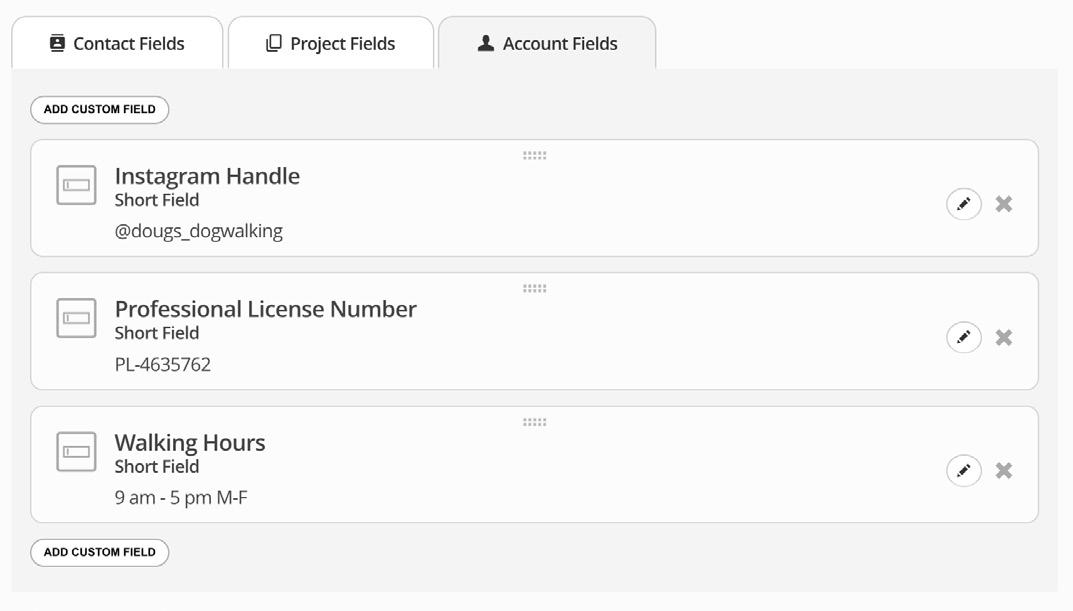
Custom Account Fields
Personalize your business like never before with Custom Account Fields. Store details like office hours, license numbers, and social media handles, then use them as tokens in emails, documents, Products & Services, and Client Portals to keep your information consistent across 17hats.
New Feature:
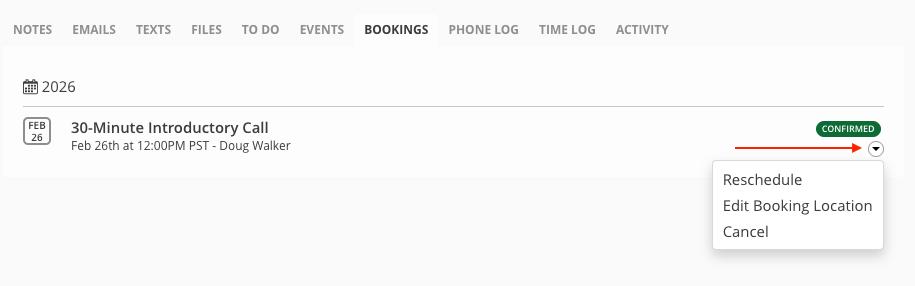
Edit Locations for Online Scheduling Bookings
Need to change a meeting spot? You can now edit the location of an Online Scheduling booking directly from the Project → Bookings tab. Any updates will update the calendar event, future Online Scheduling location tokens, and Project details. — keeping everything accurate and up to date.
Feature Update:
Google Analytics & Tag Manager Integration
See what's driving your leads and bookings with new Google Analytics (GA4) and Google Tag Manager integrations. Connect your Lead Capture Forms and Online Scheduling services to automatically track key actions like form views, submissions, scheduling activity, and completed bookings—all from the tools you already use.
Feature Update:
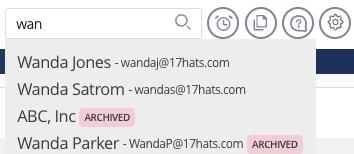
Archived Contacts in Search
Finding active contacts just got easier! Archived Contacts will now appear at the bottom of your Contact Search results and are clearly labeled as Archived, helping keep your searches cleaner and more organized.
Feature Update: Automate with Questionnaire Responses
Questionnaires just got even more powerful! Checkbox questions can now automatically apply Project Tags based on your client’s responses, helping you trigger Workflows, move Projects into Pipelines, and automate your process with less manual work.
Feature Update: SMS Usage Tracking & Alerts
Stay on top of your texting usage with new SMS segment tracking! You can now see how many segments each message uses, plus receive Dashboard alerts if you exceed your monthly allotment— giving you better visibility into your SMS activity and billing.
Feature Update: Custom Redirects for Online Scheduling
You can now choose what clients see after they book through Online Scheduling. Use the standard 17hats confirmation page or redirect clients to a custom URL, such as a thank-you page, intake form, or next-step instructions.
New Feature: Notification History
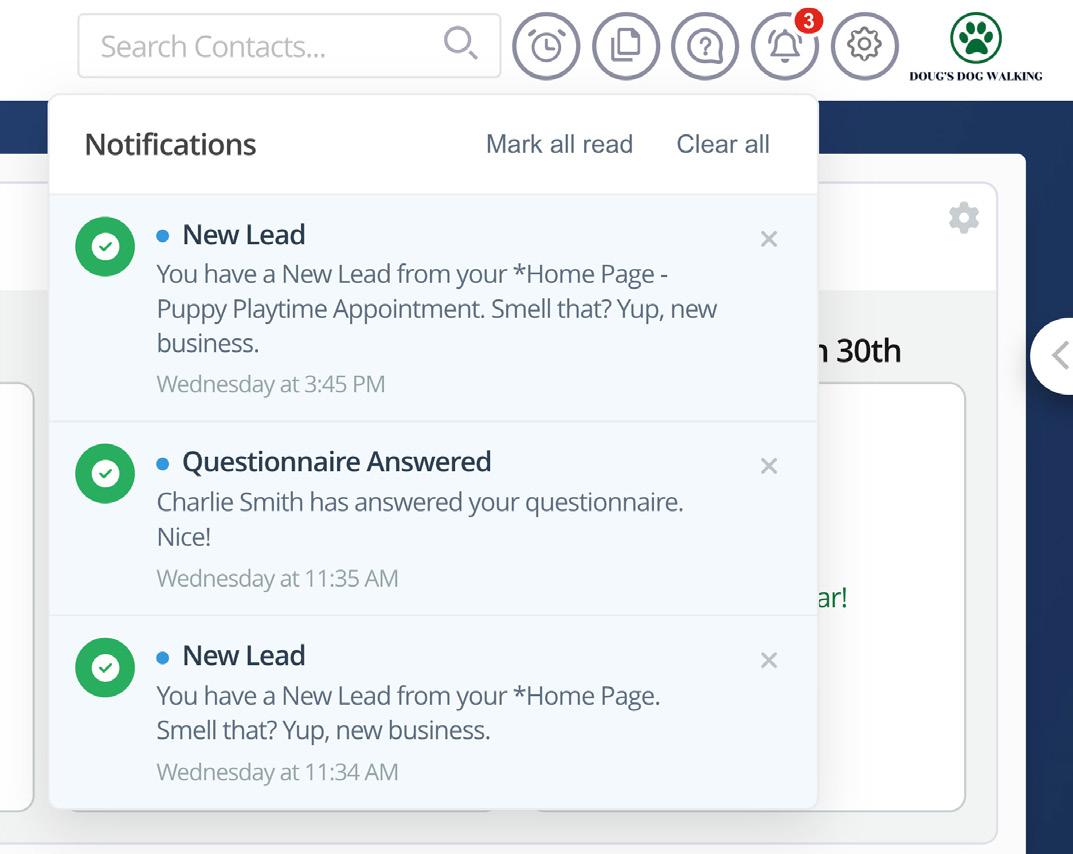
Never lose track of important account activity again. You can now open the notification bell to view a history of recent alerts—including new leads, signed contracts, paid invoices, bookings, and more. Each user has their own notification history, making it easy to review, mark as read, or clear notifications whenever you're ready.
Every Step Shapes Your Client's Experience
A great client experience doesn't happen by chance. IT'S BUILT STEP BY STEP

LEAD EXPERIENCE
What the client feels:
“Can this person help me?”
What you should focus on: Make the first impression clear, simple, and easy to act on.
KEY TOUCHPOINTS
• Website clarity & trust signals
• Lead Capture Forms
• Inquiry response time
• Autoreply & first email
• Service fit & next steps
17hats Features Lead Capture Forms, Email Templates, Workflows
BOOKING EXPERIENCE
What the client feels:
“Do
I feel confident saying yes?”
What you should focus on: Remove friction from the decision and make booking feel organzied.
KEY TOUCHPOINTS
• Quotes & proposals
• Contracts & agreements
• Invoices & payment options
• Clear expectations
• Easy scheduling
17hats Features Quotes, Contracts, Invoices, Online Scheduling, Workflows
The Ripple Effect of Extraordinary Client Experiences

ONBOARDING
What the client feels:
“Do I know happens
What you should focus Guide the client after they feel prepared,
KEY TOUCHPOINTS
• Welcome emails
• Questionnaires
• Apppointment
• Prep guides & resources
• Timelines & reminders
17hats Features Questionnaires, Client Portal,
A client who walks away with a smile isn’t just a one-time sale; they’re a walking billboard of your awesomeness. They’ll spread the word leading to more business and referrals. Think about it: you’re not just selling products or services; you’re crafting memories. You’re creating moments that linger in their minds, making them come back for more and share the joy with their tribe.
From the very first inquiry to long after the project is complete, every interaction influences how your clients feel about working with you.
Use this map to create intentional touchpoints that build trust, set clear expectations, and turn first-time clients into raving fans.

ONBOARDING EXPERIENCE feels: focus on: after they book so not abandoned.
FULFILLMENT EXPERIENCE
What the client feels:
People may forget what you said, but they will never forget how you made them feel!

• Anniversary & nurture emails 3 4 5
TOUCHPOINTS emails details resources reminders know what happens next?” Features Questionnaires, Online Scheduling, Portal, Templates, Workflows
“Am I being taken care of”
What you should focus on: Deliver the service with clear communication, consistent updates, and thoughtful touchpoints.
KEY TOUCHPOINTS
• Project updates & milestones
• Reminders & confirmations
• Clear timeline communication
• Phone Logs, Notes & Texting
• Boundaries & availability
17hats Features Calendars, Phone Logs, SMS Texting, Project Notes, Workflows
FOLLOW UP EXPERIENCE
What the client feels:
“Did this business care after the project?”
What you should focus on: Close the loop, strengthen the relationship, and create opportunities for repeat business or referrals.
KEY TOUCHPOINTS
• Thank you email
• Feedback & review requests
• Testimonials & case studies
• After care check ins
17hats Features Email Templates, Start/Stop Workflows, Tags, To-Dos
When clients feel informed, cared for, and confident at every step, they trust you more, refer you more, and keep coming back.
Beginner's Guide to a Better Client Experience with 17hats
A great client experience comes down to the small moments that make working with you feel easy. These six setups each take less than five minutes, and every one removes a little friction your clients will notice.
If you are new to 17hats or just never got around to fully setting it up, this guide is for you! Here are some of the most noticeable client experience improvements that take less time than a coffee break.
1. Use the First Name token. Stop leaving the greeting blank because you're worried about misspelling a name or you can't remember it. Drop the First Name token into your email templates, and 17hats swaps it out for the right name every time. One setup, personalized forever. Add it once to the templates you send most, and you'll never type "Hi there" again. Watch our Token tutorial video here.
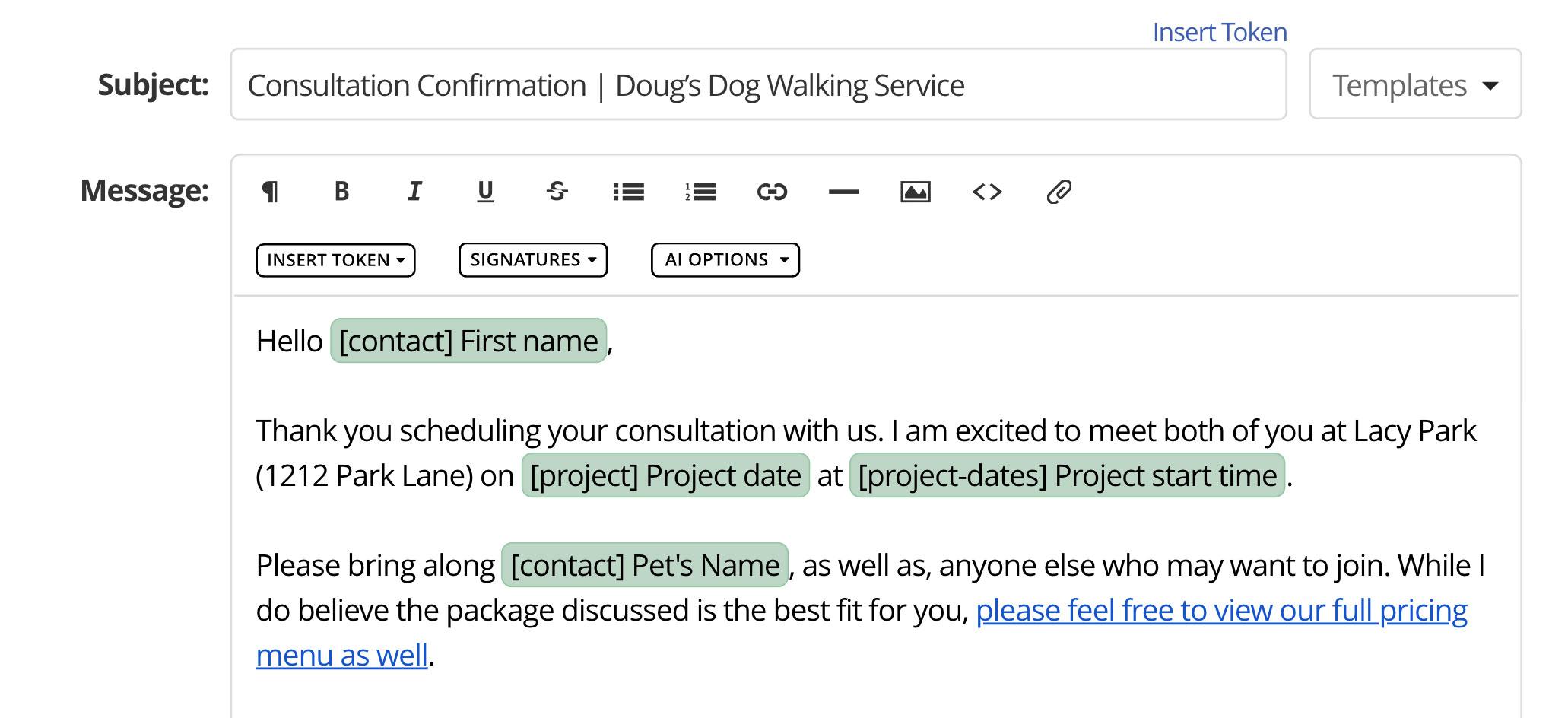
2. Add the Client Portal token. While you're working with tokens, grab the Client Portal URL token and add it to your email templates. It gives your client a single link to their own portal, where they can see their event details and any documents you've sent or they've completed. Less digging through their inbox, fewer "where do I find that?" emails for you.
3. Switch to a Lead Capture Form. That generic contact form on your website sends you an email and nothing else. Swap it for a 17hats Lead Capture
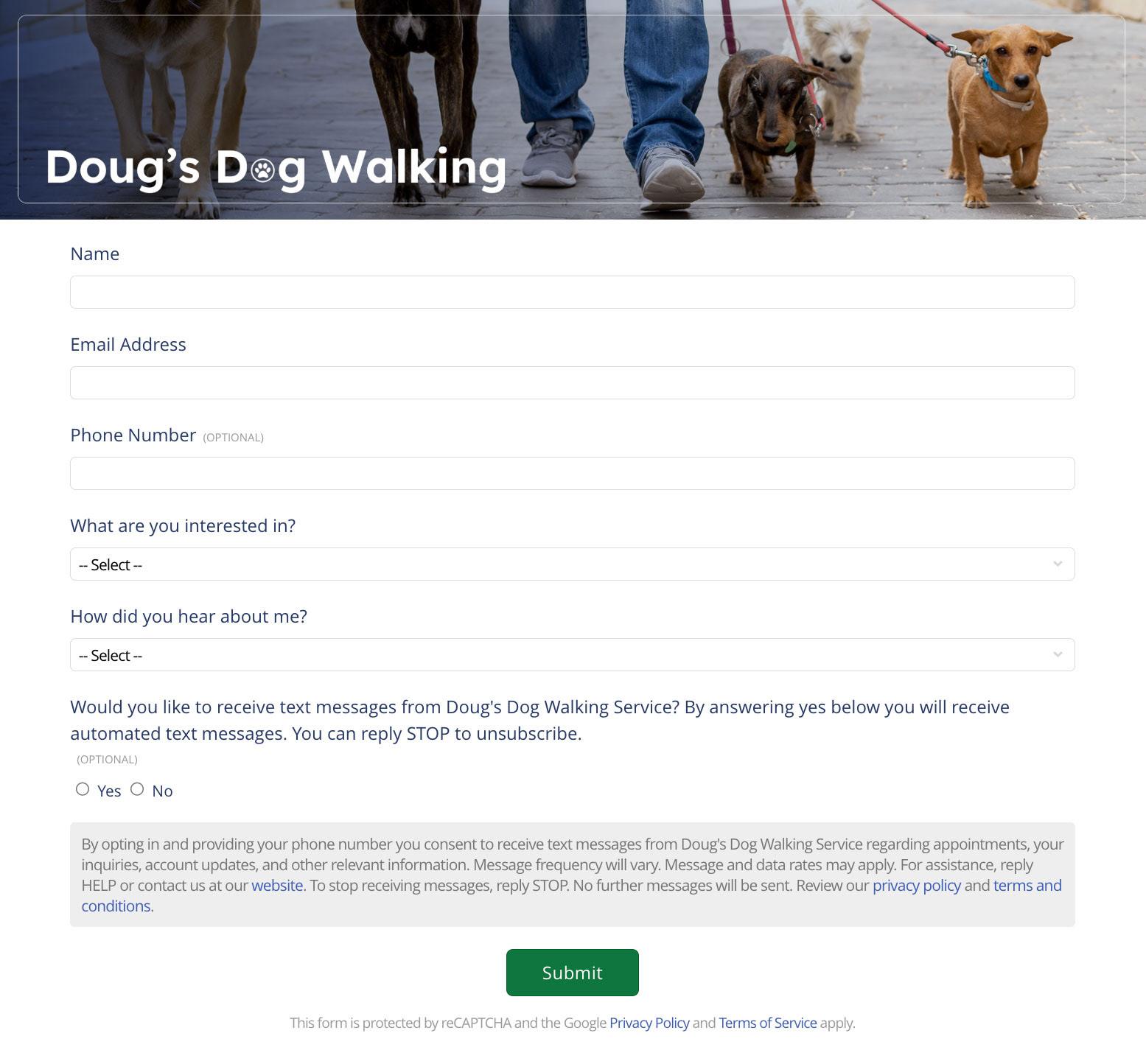
Form with an automated response, and every new lead gets a personalized reply the second they reach out. You can grab one from the Marketplace to skip the setup.
Speed and a warm first impression are often the difference between booking someone and losing them to whoever answers first.
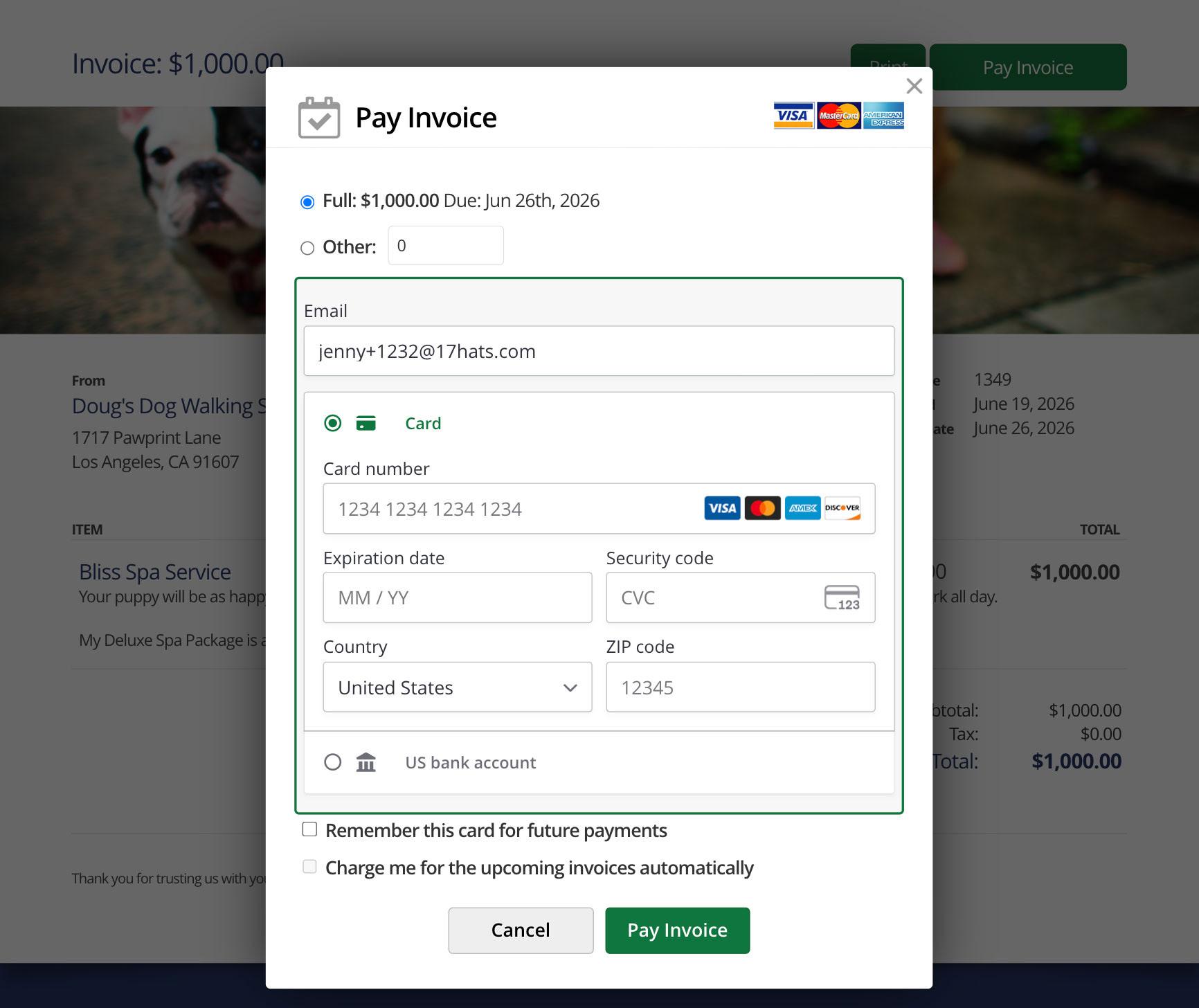
4. Turn on online payments.
If you're still asking people to mail a check, read their card number over the phone, or swipe a reader, you're adding friction right at the moment they're ready to pay you. Connect a payment processor and let clients pay their invoice online in a couple of taps. The easier you make it, the faster you get paid.
5. Enable Apple Pay and Google Pay.
Once online payments are on, take it one step further. In your payment processor settings, turn on "Accept digital wallets (Apple Pay and Google Pay)." Now your client taps one button, their saved card fills in, and they're done. It’s the fastest way of paying, which makes it the ideal client experience.
New to 17hats?
You don't have to set up everything at once. Pick one small step today — a Token, a Lead Capture Form, online payments — and watch how your client experience improves.
Every little upgrade adds up, and your clients will feel the difference.
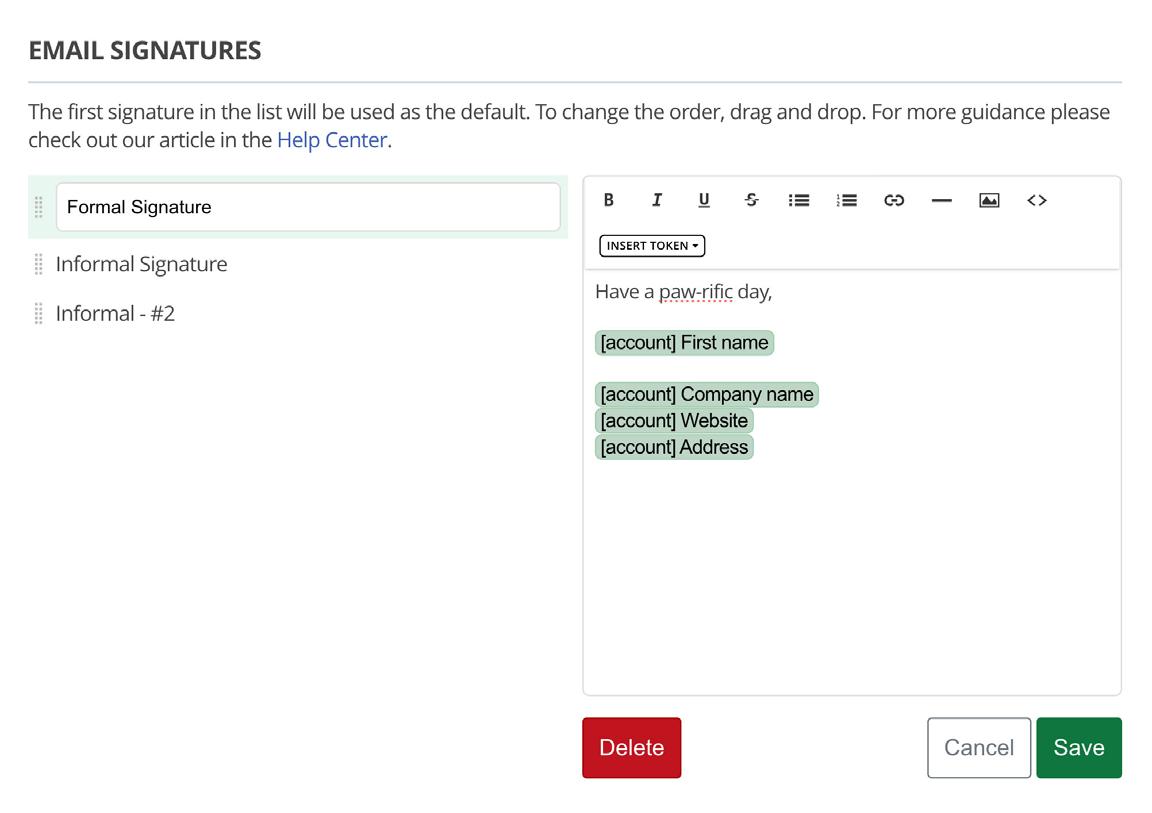
6. Build one email signature with tokens. Create a signature using tokens for your phone number, business name, and website, then add it to your templates. If any of that ever changes, you update it once in your account settings, and every template updates with it.
Set it and forget it. Now your clients always have your information for easy access in each email sent.
None of these will take you more than five minutes, and each one removes a little friction that your clients can feel. Pick one, set it up today, and let it work for you on every client from here forward.
WRITTEN BY AMANDA RAE

As new business owners, we just jumped in and did. This client said I should do this, that influencer said to do that, and some book said I needed to do xyz. The amount of "you should do" in the world of business is exhausting, and it can even leave a lot of us overwhelmed and doubting ourselves.
I wanted to write this to cut through some of that noise, reduce the overwhelm and shed light on a foundational element that is rarely discussed in the small business world. Hopefully, by the end, you’ll feel more confident wearing the business owner hat in your business.
Most of us went into business without ever taking a business course. So naturally the business was built from the top down (the website, the logo, the social media) instead of the foundation up.
And for a lot of owners, that's exactly why the business has a hard time growing. The problem usually isn't your skill or your knowledge. It's that there’s nothing underneath the surface holding it all together.
So let's start at the bottom, with the piece everything else rests on: your business model.
Every business sits somewhere on a spectrum. At one end is high-touch and low-volume: fewer clients, higher prices, lots of personal guidance, a premium feel.
At the other end is low-touch and highvolume: more clients, lower prices, speed, and convenience over hand-holding.
Neither one is the right answer. Plenty of strong businesses live at each end. The trouble starts when an owner picks one model and then delivers the client experience of the other.
Your business model sets a standard, and four things have to line up behind it: your ideal client, your value, your experience, and your product or outcome. Picture them as links in a chain. The client you attract should match the value you promise. The value should match the experience you deliver. The experience should match the result people walk away with. When all four agree, your business becomes something powerful. It's consistent, repeatable, and referable. People know what to expect before they ever reach out.
Look at the brands you already trust. McDonald's built its model on price and speed. The experience is fast and low-touch, the food is the same in every city, and you know exactly what you're getting before you walk in.
A high-end restaurant runs the opposite playbook. It's slower, more personal, and more expensive, and that's exactly what guests
want. Both brands are wildly consistent. Both get referred constantly. Each one matches its experience to its model, top to bottom.
The trouble shows up when the pieces stop agreeing. Charge premium prices but answer new leads three days late, and the experience undercuts the promise. Position yourself as fast and easy, but bury people in a clunky booking process, and you've broken your own model. Clients usually can't name what feels off. They feel it anyway, and they hesitate. When the experience doesn't support the price, the price starts to feel like the problem.
This is what brand consistency actually means. Most people hear "brand" and think colors, fonts, and logos. But your real brand is the promise your business makes and whether you keep it the same way every single time. It's the experience, start to finish, lining up with the kind of business you said you are. When someone can predict what working with you feels like before they ever book, that's a consistent brand.
To get that alignment, you first have to decide your business model: low-touch and highvolume, or high-touch and low-volume.
Here's a quick way to find out where you actually stand. For each of the six points below, circle the side that's true for your business.
• Craft: Good enough / Excellent
• Detail: The little things don't matter / The little things matter
• Price point: Lower priced / Higher priced
• Communication: Reactive (you respond when they reach out) / Proactive (you lead the journey)
• Guidance: Say it once and they should get it / Be the trusted guide at every step
• Perceived value: What they're buying is mostly tangible / The intangible matters more than the tangible
Now look at what you circled. All left? You're low-touch, high-volume.
All right? You're high-touch, lowvolume. Either one is a real, profitable business.
But if you circled some on the left and some on the right, that's your signal. Your brand isn't aligned, and your clients can feel the mismatch even if they can't name it.
Now sell those exact same crystals at a boutique in Beverly Hills at a high price. People buy. Same product. The only thing that changed is that everything finally tells the same story. That's brand consistency.
Your ideal client has to align to the value, the value to the experience, and the experience to the product or outcome. When all four agree and align with your business model, you have a foundation you can actually grow on as every decision after gets easier and better aligned.
“When the experience doesn't support the price, the price starts to feel like the problem.”
- Amanda Rae
That new marketing tactic the influencer swears by? Run it through your model. Would your ideal client be drawn to it? Does it fit the experience you've built? If not, it's a no; not because it's a bad idea, but because it's not fit for what you are building.
Once you know your model, the rest has to fall in line behind it: your ideal client, your value, your experience, and your product or outcome.
Imagine selling rare crystals to millionaires for a low price on a basic internet storefront. Will they buy? No.
It's too good to be true, so it reads as fake. The pieces don't agree, so the business can't be trusted.
If it fits, it's a yes. The filter does the deciding for you. You stop making moves out of emotion or fear of missing out, and you start making them from strategy. And that's where the relief comes from. The noise doesn't stop, but it stops running your business. You do.
As you dive into client experience through this edition of The Journey, let your business model be the guide in the takeaways and the changes to implement for your business.
6 Ways to Build a Better Client Experience and Make More Money with 17hats
A better client experience and a healthier bank account aren't separate goals. When you make it easy and comfortable for people to say yes, they buy more, and they feel good doing it. Here are six 17hats moves that do both at once.
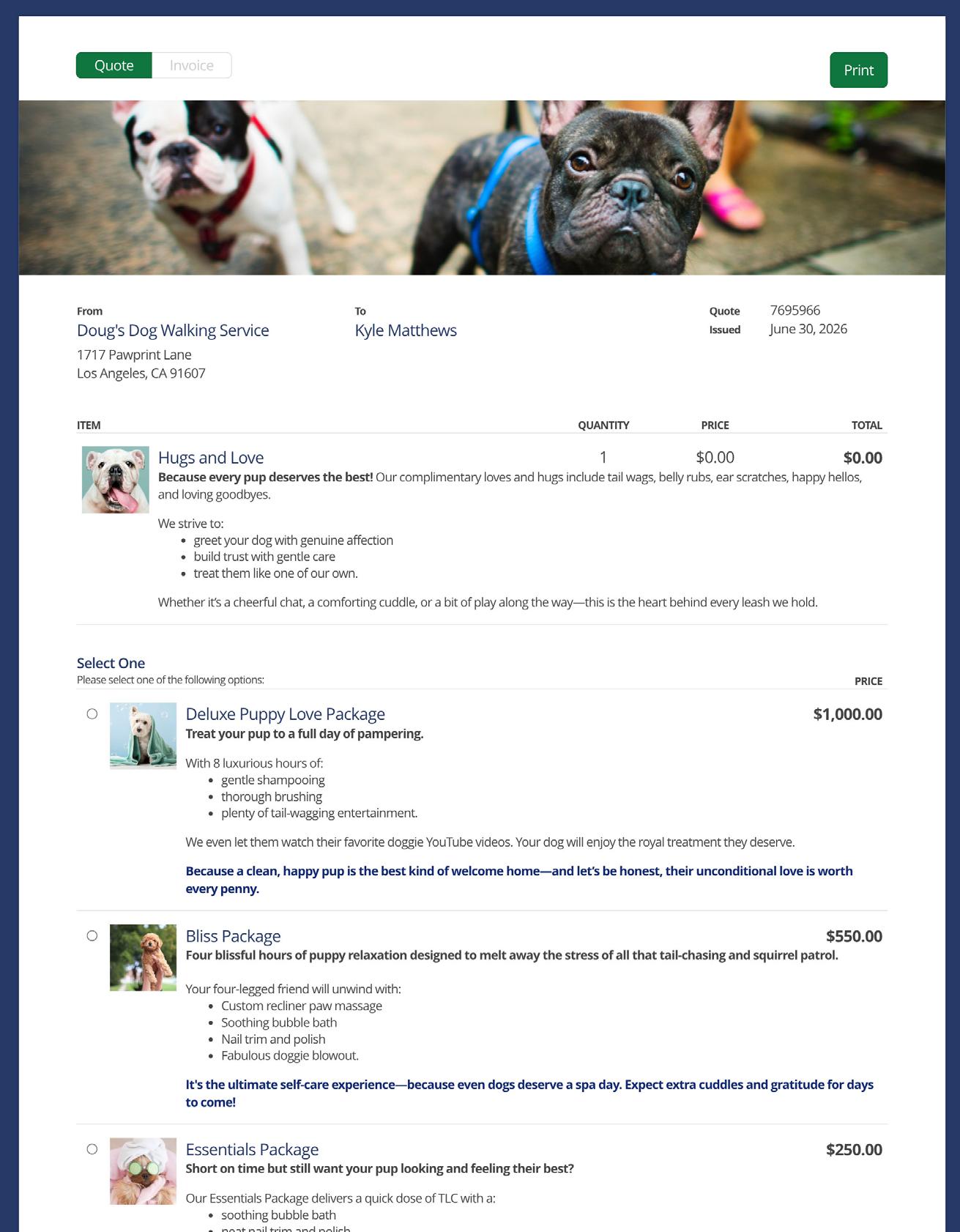
1. Send a quote, not just an invoice. When you jump straight to an invoice, you've already decided what your client is buying. A quote hands a little of that choice back to them. By combining a quote and an invoice in one document, they choose and pay in a single sitting. Give people the chance to pick, and many will reach for more than you would have offered them.
2. Add à la carte items to your quote. This is selling without
selling. List a few optional add-ons right on the quote: an extra hour, a rush turnaround, a small upgrade. Let your client decide. You're not pitching anything. You're simply making the options visible. Most owners are shocked how often people add an extra item just because it was sitting right there.
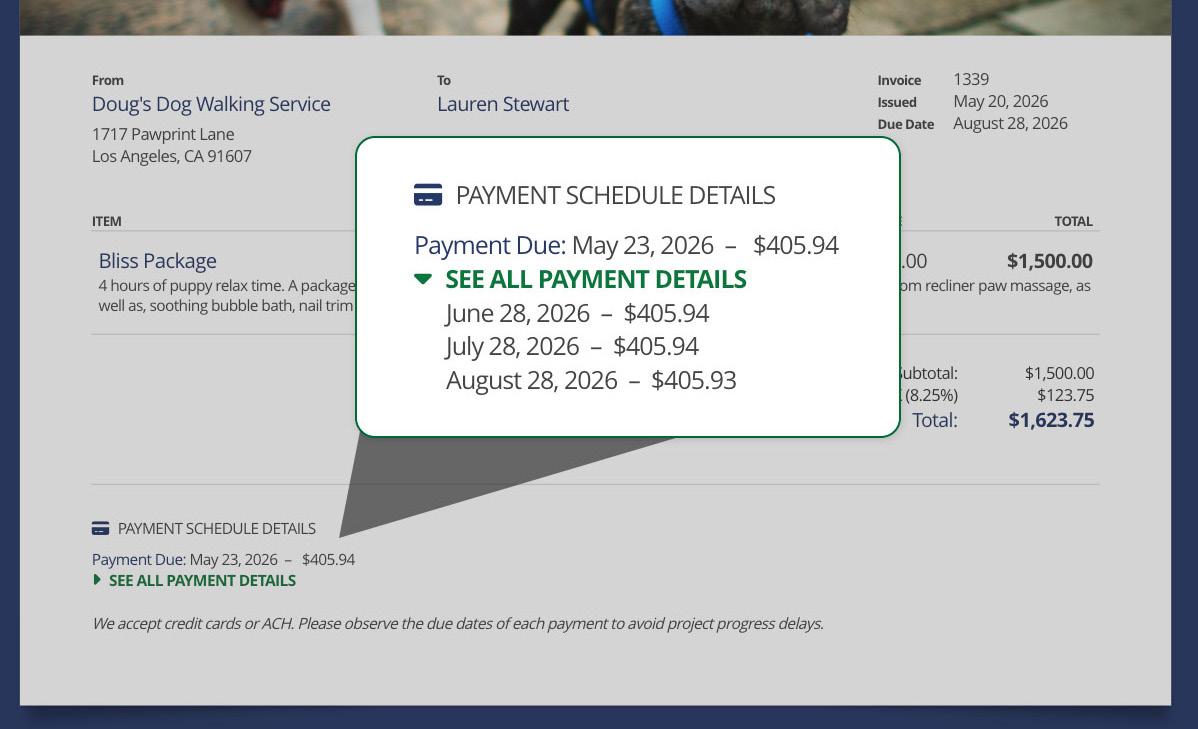
3. Offer a payment plan.
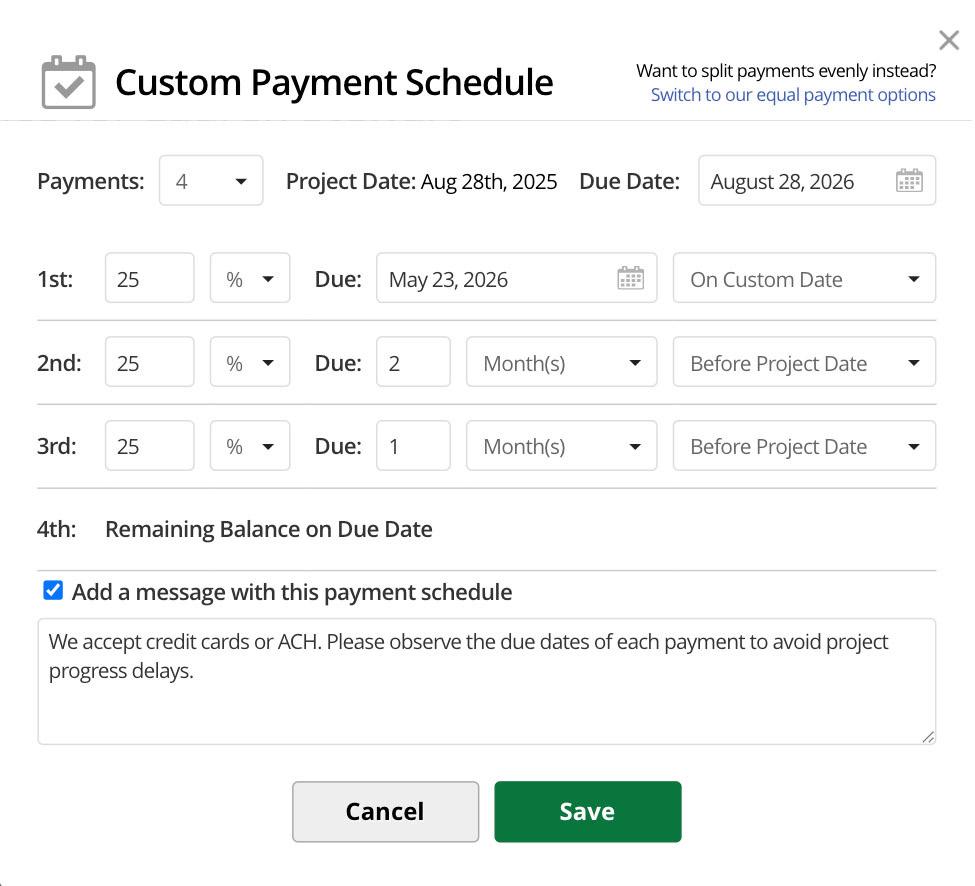
A number that feels steep all at once often feels easy when it's broken up. Add a payment schedule to your quote or invoice and split the total into smaller installments. People will commit to a higher total when they can pay over time, so a payment plan frequently means a bigger sale, not just a slower one.
4. Turn on online payments and digital wallets.
Every extra step between "yes" and "paid" is a chance for second-guessing. Let clients pay their invoice online, then enable Apple Pay and Google Pay so they can check out with a single tap. No checkbook, no typing a card number. The easier you make paying, the faster and more reliably it happens. Better yet, turn on autopay!
5. Switch on upcoming payment reminders. Most late payments aren't refusals, they're just forgotten. Turn on upcoming reminders in your email settings, and 17hats nudges your client before each payment is due. The message goes out automatically, in your voice, so you collect on time without ever feeling like you're chasing anyone.
6. Switch on past due reminders too.
For the payments that still slip by, past due reminders handle the awkward part for you. The day after a payment is due, 17hats sends a polite, automated follow-up with a link to pay. No tense email to write, no relationship strain. The system stays on top of it so you don't have to.
Here's what's easy to miss: these moves compound. A single quote can carry à la carte add-ons, a payment plan, and one-tap checkout all at once — so the same document that makes a client feel cared for is working to grow the sale, too. Then the reminders keep that momentum going long after you've moved on to the next project. You put the pieces in place once, and they keep working together on every client, on every quote, without another minute of your attention. That's the quiet math of a good client experience: less friction for them, more revenue for you.
Notice the thread running through all six:
None of them is a hard sell. You're not pressuring anyone. You're removing friction and offering choices, and that's what makes people comfortable spending more with you. This client experience is set up once, and will keep earning for you on every client who comes through your door.
I Built 4 Very Different Businesses Without Ads. Here’s What Kept Clients Coming Back.
How a great client experience became my highestROI marketing strategy across photography, music, a VA agency, and coaching/consulting.
Over the past 13 years, I’ve built 4 very different businesses: photography, music, a virtual assistance agency, and a coaching/ consulting business for small business owners.
Different industries. Different offers. Different types of clients.
But one marketing strategy continues to work for all of them. It wasn’t because I ran ads, posted 8 times a day, or chased shiny new marketing trends – it was simpler than that.
Clients came back because they had a great experience with me from start to finish. As a result, they referred their friends and continued working with me for years.
I’ve had photography clients who have worked with me since nearly the beginning 13 years ago. Music clients who rebook year after year. Coaching clients I supported consistently for 3–4 years. And my VA agency? That business was built almost entirely on repeat clients and referrals. I never even had a website or social media profiles for it. Most
people didn’t know I did it. I literally sold from just a Google Doc.
Which is why I believe so strongly that your client experience is one of the cheapest, highest-ROI forms of marketing you have.
2. Make People Feel Understood
Across all four businesses, there are a few things that always made the difference. Here are the key pieces to why it works.
1. Design an Easy “Yes”
People are busy, distracted, and overwhelmed. If your process is confusing, slow, or scattered, you lose them before you’ve even started.
If you do nothing else, you have to make it easy to work with you. A clear first step. A simple booking process. Make it easy for them to give you money. Period.
When someone is ready to buy, make it easy or you lose the sale.
You may not like selling. You might feel like you’re bad at sales. You might even sweat profusely. But a great sales process is NOT about you at all.
Your potential clients want to feel heard and understood. Not sold to. If you start with a discovery or sales call, your job is to listen deeply. Pay attention to what they actually need, what they’re worried about, and what matters most to them. When they feel understood, and learn how your offer is the solution to their problem, you’ve already sold them.
Plus, when they feel understood by you, they trust you, and they will continue to keep coming back as long as that feels true.
3. Deliver. Period.
This might sound obvious, but it always amazes me how many people run into businesses or service
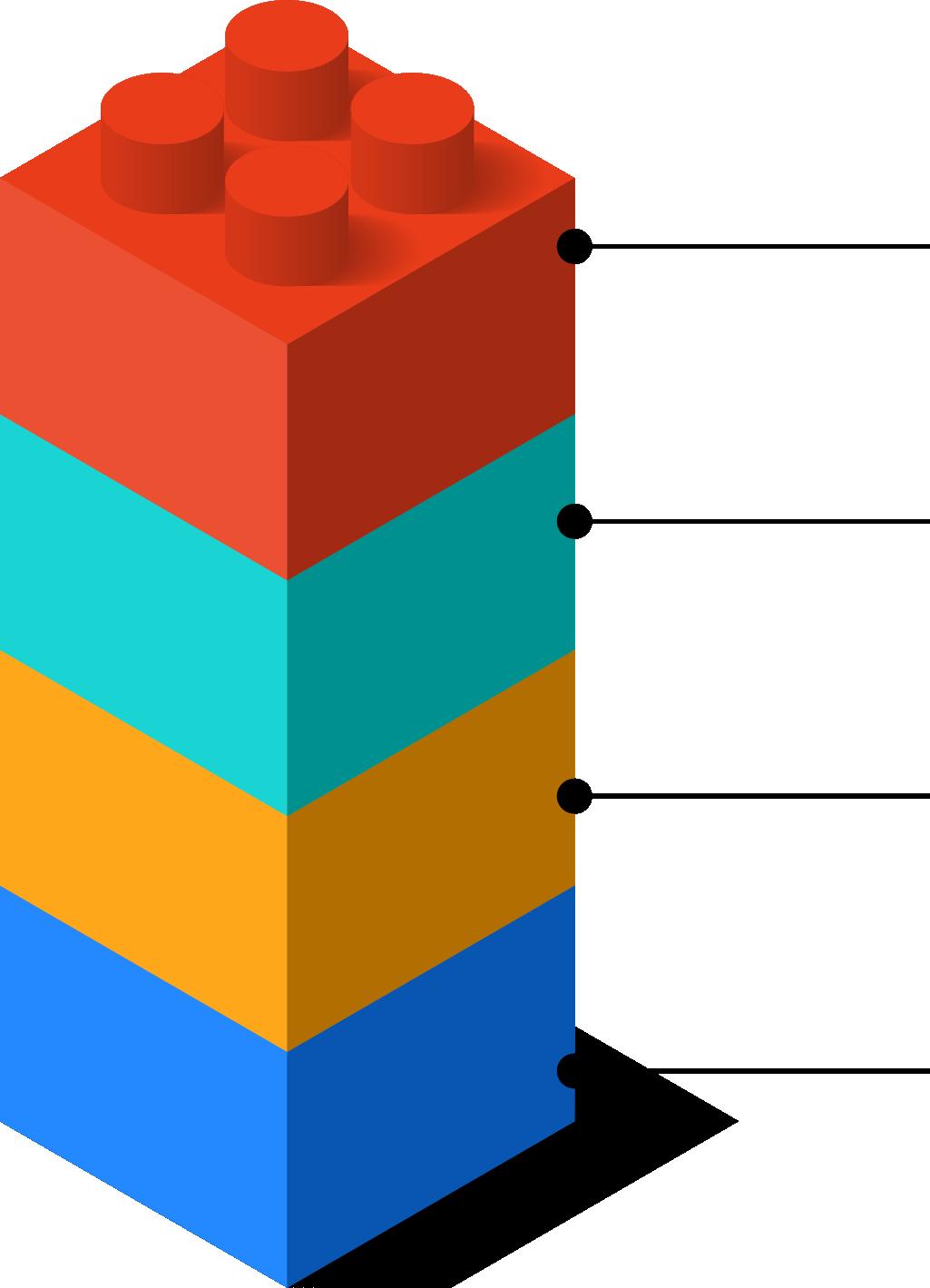
Design an Easy "Yes"
Give people a clear first step and a simple way to pay, because a confusing or slow process loses them before you've even begun.
Make People Feel Understood
Great sales isn't about you; it's about listening deeply so clients feel heard, trust you, and keep coming back.
Deliver. Period.
Long-term retention comes from reliably doing what you promised, on time and with clear communication.
Professional + Systems
Systems and clear boundaries create a seamless, professional experience while keeping leads from slipping through the cracks.
providers who dropped the ball, who didn’t respond, who let timelines fly off the rails, or who simply didn’t communicate what was going on.
Whatever you’re offering, deliver it – communicate, follow through, and deliver on-time.
Long term client retention isn’t about doing something flashy or overdelivering. It’s about reliably delivering what you promised. Let them know what they can expect and then make that happen. Everything else on top of that
enhances their experience with you, but the trust is built on your ability to deliver. When you deliver consistently, that’s what keeps clients coming back.
4. Professional + Systems
Listen, being professional doesn’t mean being available 24/7 or replying at 11 p.m. on a Sunday. (Please don’t do that.) It means having clear expectations, strong communication, and systems that support the experience you want your clients to have.
Response times matter. Clear boundaries matter. Leading your clients through the process, what happens next, and what to expect matters.
There’s a huge difference between reaching out to work with someone and getting an email response 3 days later, setting up a call they show up late for, or not getting an invoice without having to ask for it… Or reaching out to work with someone who has a clear intake
form, an immediate email response, and a proposal with everything ready to pay right there.
Real systems in your business not only make this process simpler and faster for potential clients to work with you, but make it easier for you to run your business and not let leads fall through the cracks, giving them a professional experience from the first impression.
Implement
I’m definitely not anti-marketing. But too many small business owners are focusing too much on pouring time and money into marketing and not enough when it comes to the simpler strategy that they have full control over. Start with your client experience. Make it so good that clients want to come back, refer others, and stay a client longer.
So don’t just move on to the next article—pick one thing from this article and actually implement it. Make it easier for your clients to pay you. Listen more deeply in your sales process. Tighten up your delivery. Design your processes and systems.
For an easy plug-and-play, check out my Proven Lead Conversion Workflow: Turn Leads into Clients inside the 17hats Marketplace for a tested lead-to-booked process you can plug into your own account and customize for your business.
About The Author
Danielle Uhl is a Certified Coach & Business Consultant, 17hats Implementation Expert, and multi-business entrepreneur with 13+ years scaling three profitable businesses from scratch. She blends mindset, strategy, and systems with a human-first approach to help service-based business owners and multipassionates build and streamline their business without overwhelm so they can grow with confidence. www.visionaryactivationco.com
Most Business Owners Never See The Client Experience Gap
Your clients aren't just evaluating your work. They're evaluating what it feels like to work with you. And that feeling is built, or broken, in the spaces most business owners never think about.
WRITTEN BY DEB MITZEL
Think about the last time you hired someone to do something for you. Maybe it was a contractor, a designer, or a consultant. The work itself was fine. But somewhere in the process you felt a little uncertain. You weren't sure what came next. You had to reach out to ask a question you felt like you shouldn't have to ask. And when it was all over, someone asked you if you'd recommend them... and you hesitated a little before you said yes.
That hesitation isn't about the quality of the work. It's about the experience around it. And the experience around it lives in the in-between.
Every client journey moves through five distinct stages - inquiry, booking, pre-service, service delivery, and post-service follow-up. Most business owners put their energy into the actual service, and let everything else work itself out. But the stages that clients remember most are rarely the ones where you're doing the work. They're the ones where you're communicating around the work. Or not communicating. And a gap in communication, even an unintentional one, sends a message.
Why Aren't Your Best Clients Sending You Referrals?
Picture a business coach who just signed a new client. The contract is signed, the invoice is paid, the kickoff call is scheduled for two weeks out. And then... nothing. No welcome message. No "here's what to expect before we start". No acknowledgment that anything happened at all. From the coach's perspective, everything is moving along perfectly. From the client's perspective, they just handed over a meaningful amount of money and the coach went completely quiet.
That two-week gap is the pre-service stage - and it's a stage most business owners have never deliberately designed. The same thing happens on the other end. The work wraps up, the final deliverable goes out, and the business owner moves on to the next client. No follow-up. No check-in. There's no sense of closure. The relationship just... stops.
Neither of those gaps requires more of your time. But they do require a little more intention.
What Does a Consistent Client Experience Actually
Look Like?
Here's the thing about those welcome messages and follow-up check-ins...they don't need to come from you in the moment. They need to come from your business consistently, regardless of how full your week is or how many projects are running at once. A client who books you in January and a client who books you in October should both feel like they're getting your best. Not your best when you have bandwidth. Your best, every time.
That's what a well-built CRM actually does. When your inquiry response, your pre-service touchpoints, and your post-service follow-up are built into your workflows, they run whether you're at your desk or away from it. The client experiences the same professionalism and care at every stage because you designed it that way — once — and then it just works.
A photographer I know used to personally write every client a thank-you message after each session. She meant every word of it. But some weeks she sent them the same day and some weeks they went out four days later and some weeks, during her busiest stretches, they didn't go out at all. Her intentions were completely consistent. Her client experience wasn't. When she moved that message into her workflow, every client got it within 24 hours of their session wrapping up. Nothing changed about her warmth or her care. She just stopped depending on herself to remember to do it.
How Do You Know If Your Client Experience Has Gaps?
You don't need to overhaul everything at once. You just need to walk through your client journey one stage at a time and ask an honest question at each one ... could a client move through this stage feeling uncertain about what comes next?
If the answer is yes anywhere along the way, that's your starting point. Not because your business is broken, but because there's a gap you can close. And closing
it doesn't just improve the experience for your next client. It changes the story your current clients tell when someone asks if they should hire you.
The businesses that get referred aren't always the ones who do the most impressive work. They're the ones who made every step of the experience feel thoughtful, personal, and worth talking about. That doesn't happen by accident. It happens by design... and it starts by paying attention to everything that happens in the inbetween.
Want to review your own client journey right now?
Download my free Client Experience Checklist on the 17hats Marketplace — it gives you three honest questions to ask at every stage to help you find where the gaps are and know exactly where to start.
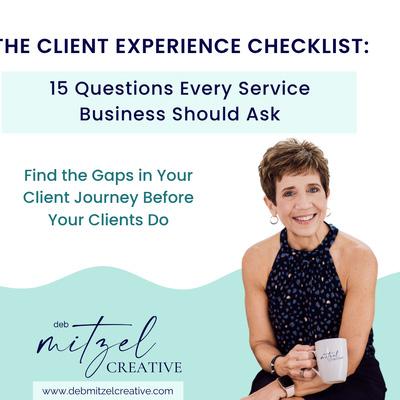

The Client Experience Checklist
Most business owners focus on delivering great work — but the client experience is built in the spaces around the work, not just during it. This one-page checklist walks you through 15 honest questions across every stage of your client journey — from first inquiry to final follow-up — so you can see exactly where your experience is strong and where a client might be feeling uncertain. Find your gaps. Fix them one at a time. Build a client experience that gets you referred.
How to Audit Your Client Experience
WRITTEN BY ALYSHA SPENCER
Most business owners know exactly what happens next.
Their clients don't.
The fastest way to improve your client experience isn’t adding more emails, workflows, touchpoints or automation. It’s identifying the moments where clients feel confused, forgotten, or unsure what happens next.
That’s where their trust is either built or quietly lost.
Imagine we are sitting across from each other at a coffee shop. I’ve got my usual caramel macchiato with oat milk, and you’ve got yours. After a few minutes of catching up, I ask you one question:
“A lead just filled out your contact form on your website. What happens next?”
You start talking. And then I ask: “And then what?”
You tell me the next step. “And then what?“
We keep going until the entire client
journey is mapped out right in front of us. Most business owners can talk about their process for twenty minutes straight. They’ve just never been asked to walk through it out loud before. That’s exactly what this audit is designed to do!
Step 1: Brain Dump Your Entire Process
So many business owners are running their entire client journey from memory.
They know when to send an invoice. They know when to follow up. They know what happens after a client books.
But none of that lives anywhere their clients, or anyone, can see it.
Exercise:
Open a voice note, a fresh Google Doc, or your notes app and answer this one question:
“A lead just filled out your contact form on your website. What happens next?”
Then keep going. Don’t organize it. Don’t edit it. Just talk.
Walk through every phase from inquiry to booked and beyond.
What happens after they inquire? What happens after they book? What happens if they don’t book? What happens after the work is done?
You can’t audit a process that only lives in your head. Get it out first!
Step 2: Map the Journey
Once you have finished your big brain dump, we can start organizing things into phases.
Your categories might look something like:
• Inquiry
• Nurture
• Onboarding
• Booked Client
• Offboarding
Don’t get too hung up on the labels. The goal is simply to see the entire journey laid out in front of you. Because your client experience isn't a collection of tasks. It’s a journey. And every stage of that journey shapes how someone feels while working with you.
Step 3: Audit The Experience, Not Just the Process
This is where people go wrong. They audit their tasks when they should be auditing the experience.
As you review each stage, ask yourself:
What does my client actually know right now?
What questions might they have? What could they be worried about? Do they know what happens next?
One of the biggest gaps I find during client journey audits is silence, not because silence is always a bad thing, but because clients tend to fill silence with assumptions.
If someone doesn’t hear from you for three weeks, do they know that’s normal? Or are they wondering if they’ve been forgotten?
Look for moments where clients might feel confused, overlooked, or unsure of their next step. Then ask yourself: Can I answer that question before they even think to ask it?
Pro Tip: You’re too close to your own process to see it clearly. Ask a trusted friend or colleague to fill out your inquiry form, read through your emails, and walk the journey just as your client would. What feels obvious to you won’t always feel obvious to them and that gap is exactly where the experience breaks down.
Step 4: Fix ONE Thing
Now here is where I need you to resist the urge to overhaul everything at once.
Pick one thing. Just ONE!
Maybe it’s a faster inquiry response. Maybe it’s clearer next steps after someone books. Maybe it’s an offboarding sequence that actually makes a client feel like the experience had a proper ending, not just delivery and bye!
Every audit will uncover plenty of opportunities for improvement that you can tackle in one sitting. That’s a good thing. The goal isn't to fix everything at once; it’s to identify the biggest gap in your client experience, the one that will have the biggest impact on how your clients feel, and start there.
Then come back and repeat the process. Your client experience isn’t something you build once. Think about it like a garden, it’s something you have to tend to.
The goal of this audit isn't perfection; it’s visibility.
Because if we sat down for that coffee and walked through your entire client journey from inquiry to offboarding, what would we find? The biggest improvements usually come from the gaps you didn't even
know existed. And sometimes all it takes to find them is asking one simple question out loud.
“A lead just filled out your contact form. What happens next?”
If this exercise helped you identify a few gaps in your client journey, my free CRM Quick Wins guide is a great next step. Inside, you'll find simple ways to improve communication, reduce friction, and create a better client experience without overhauling your entire business.

About The Author
Alysha Spencer is a systems strategist and 17hats Ambassador who helps small business owners stop winging it and start running their business like a CEO. With over 15 years in the photography industry and experience working inside successful photography studios, she knows exactly what it takes to run the back end of a thriving creative business. Find her at www.yourva4aday.com

Most of the clients you lose, you never hear from. They visit your site, read a few lines, and decide to go with someone who seems more established. They weren't comparing your work to a competitor's. They couldn't see your work yet. They were reading the signals around it and guessing what kind of business you'd be to hire.
The space between how good you actually are and how trustworthy you appear before anyone has worked with you is the credibility gap. Solo owners lose business in that gap all the time, and they almost never find out it happened.
Here's the good news. Closing the gap has nothing to do with size. A one-person shop can send every credibility signal a 30-person agency sends, often faster and with more warmth. You don't need to pretend you're bigger. You need to look like you take your business as seriously as you want clients to take it.
Why people read signals in the first place
When someone can't judge the thing they're buying, they judge everything around it. A prospect can't evaluate your photography, your legal work, or your coaching until after they've hired you. So they look for clues they can read right now. How fast did you reply? Did the
email look like it came from a business or from a hobby? Was it clear what would happen next?
None of that measures your talent but it does shape whether someone trusts you enough to find out how talented you are. That's worth sitting with, because it means small, fixable details are doing a lot of the deciding.
The trust cues you can set up this week
Start your email address at your own domain. An address like hello@ yourbusiness.com reads as a business. A free webmail address reads as a side gig, fair or not. This is usually a same-day fix and one of the highest-impact ones.
Respond fast, even when you don't have the full answer. A reply within a few hours that says "Got your message, I'll send details by tomorrow morning" beats a perfect reply three days later. Speed tells people you're on top of your work. If you can't always be quick, set up a short auto-reply that confirms you received the inquiry and names when they'll hear back.
Tell people what happens next. Uncertainty is what makes a prospect nervous, and nervous people stall. End every early message with the next step
and a rough timeline. "After this call, I'll send a proposal within two business days." Clarity reads as experience.
Put your terms in writing. A simple, clear contract or service agreement signals that you've done this before and that both sides are protected. Skipping it makes even great work feel risky to the buyer.
Show proof you've done good work. Two or three short testimonials with a real first name and a line about the result will do more than a page of adjectives about yourself. If you're early and don't have them yet, a brief, specific case description works too.
Make your money moments look professional. A clean invoice and an easy way to pay tell clients the back end of your business is as solid as the front. A hand-typed total in a casual email undercuts everything else you've built.
Keep your presence consistent. The same name, logo, and tone across your site, your emails, and your profiles tells people the lights are on and someone's paying attention. Mismatched details make a business feel abandoned, even when it isn't.
The line you shouldn't cross
There's a difference between looking established and faking scale. Don't invent a "team" that's just you. Don't say "our offices" when it's your kitchen table. Clients forgive small things. They don't forgive being misled, and the moment a prospect catches one inflated claim, they start doubting all the others.
The signals above don't require a single lie. A domain email, a fast reply, a real contract, and a clean invoice are all true reflections of a business that's run with care. You're not dressing up as something you're not. You're making sure a serious business doesn't read as a casual one by accident.
Your move this week
Open your own last inquiry and walk it like a stranger would. Read the reply you sent, the timing, the email address it came from, what happened next. Find the one signal that's costing you trust, and fix that one first. It's the cheapest upgrade to your client experience you can make, and the client you win because of it will never know how close they came to choosing someone else.
The Solo Owner's Trust Checklist
Work down the list. Anything you can't check off is a place a prospect might lose confidence. Fix the unchecked items in order, easiest first.
Before They Reach Out
Your email runs on your own domain (hello@ yourbusiness.com), not a free webmail address.
Your name, logo, and tone match across your website, emails, and profiles.
Two or three real testimonials are easy to find, each with a first name and a result.
Your site says clearly who you help and what you do, in one plain sentence.
There's an obvious way to contact you, and it works on a phone.
The First Reply
New inquiries hear back within a few hours, even if it's just "Got it, details by tomorrow."
You have an auto-reply that confirms the message landed and names when they'll hear more.
Your first email greets them by name and reads like a person wrote it.
You tell them what happens next and roughly when.

This Week:
Getting To Yes
You send a written proposal or quote, not a number typed into an email.
Every client signs a simple contract or service agreement before work starts.
Your pricing or a starting range is shared early, so the right people keep going.
The path from "interested" to "booked" takes a few clicks, not a week of back-and-forth.
Money Moments
Your invoices look clean and consistent, with your name and clear line items.
Clients can pay you in an easy, expected way.
Payment terms and due dates are stated up front, not improvised later.
The Honesty Check
Nothing on this list inflates your size. No invented "team," no "our offices" when it's just you.
Every signal above is true. You're presenting a serious business accurately, not pretending to be a bigger one.
Pick the single unchecked box that a prospect would notice first, and handle it before Friday. Then come back for the next one.
From Hello to Yes How the lead experience becomes a booking
It’s 9:14 p.m. on a Tuesday. Someone who has never met you is on their couch, deciding whether to reach out to your business. They’ve spent a week comparing options. They fill out the contact form on your website, hit submit, and set the phone down.
You’re asleep.
That prospect is about to have one of the best first impressions of their entire search, and you won’t lift a finger to make it happen. At some point you built a system that treats every new inquiry like it matters, and now it runs without you.
This is the part of the client experience most owners overlook. By the time someone signs a contract or sits across from you, dozens of small moments have already shaped how they feel about working with you. The lead experience is where those moments start. Get it right and a stranger arrives at “yes” already trusting you.
Let’s follow one inquiry from that 9:14 message to a booked client. We’ll track two things at once: what your future
client feels, and what your system is doing on the other side. Call her Dana.
The inquiry
Dana finds a short form on your site. Five fields, not 20. Her name, email, phone, what she needs, and how she heard about you. She’s done in under a minute, and a friendly note tells her to check her inbox.
Here’s what happens on your side. The second Dana submits, your Lead Capture Form creates a contact and a project for her and drops her answers into the right fields. No retyping. No notes to lose. She’s organized in your business before you’ve read a word.
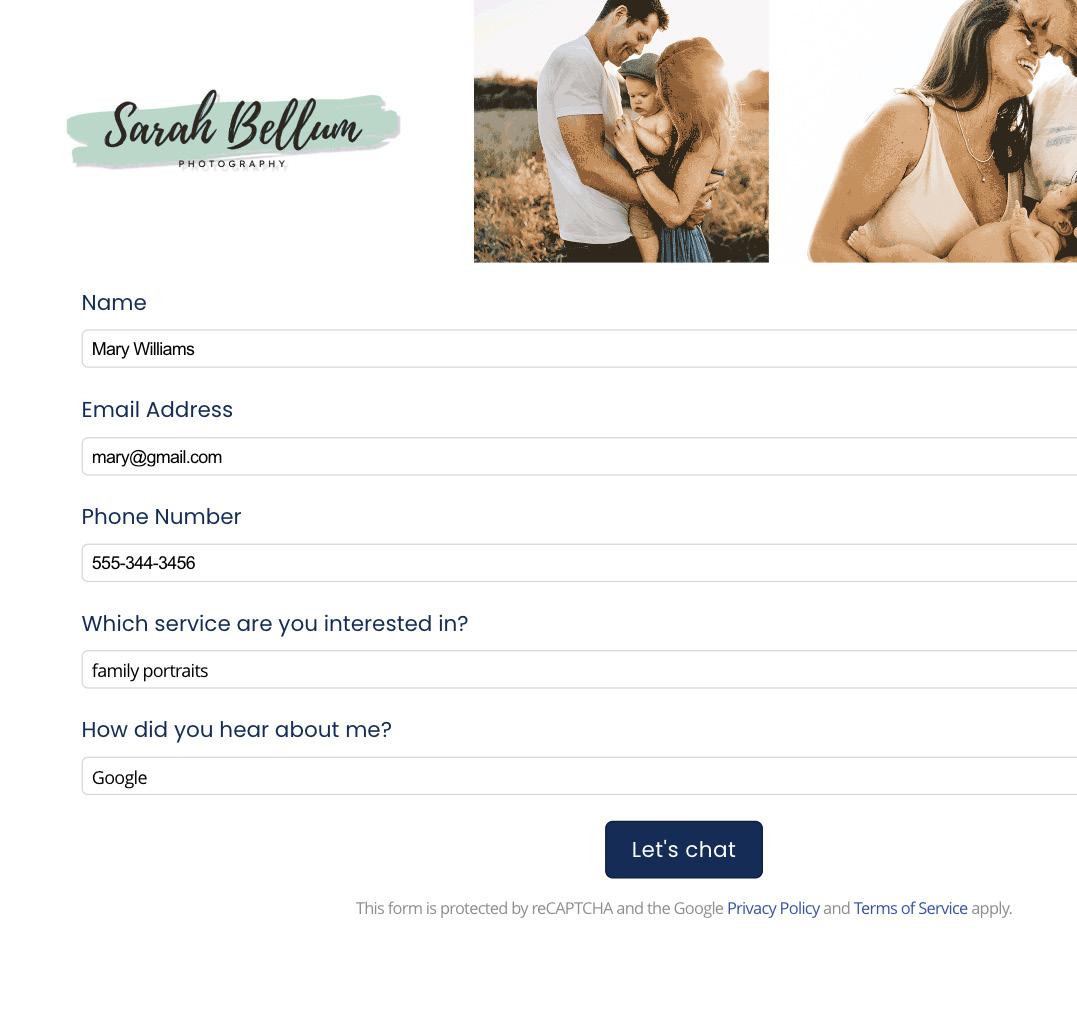
The lesson is restraint. A shorter form is a kinder form. Every extra question is a small tax on someone who’s already taking a risk by
reaching out to a stranger. Ask for what you need to start a conversation, and save the rest for after you’ve earned it.
If your current form has 15 fields, that’s the first thing to fix. Cut it down to the five that actually help you respond.
The first reply
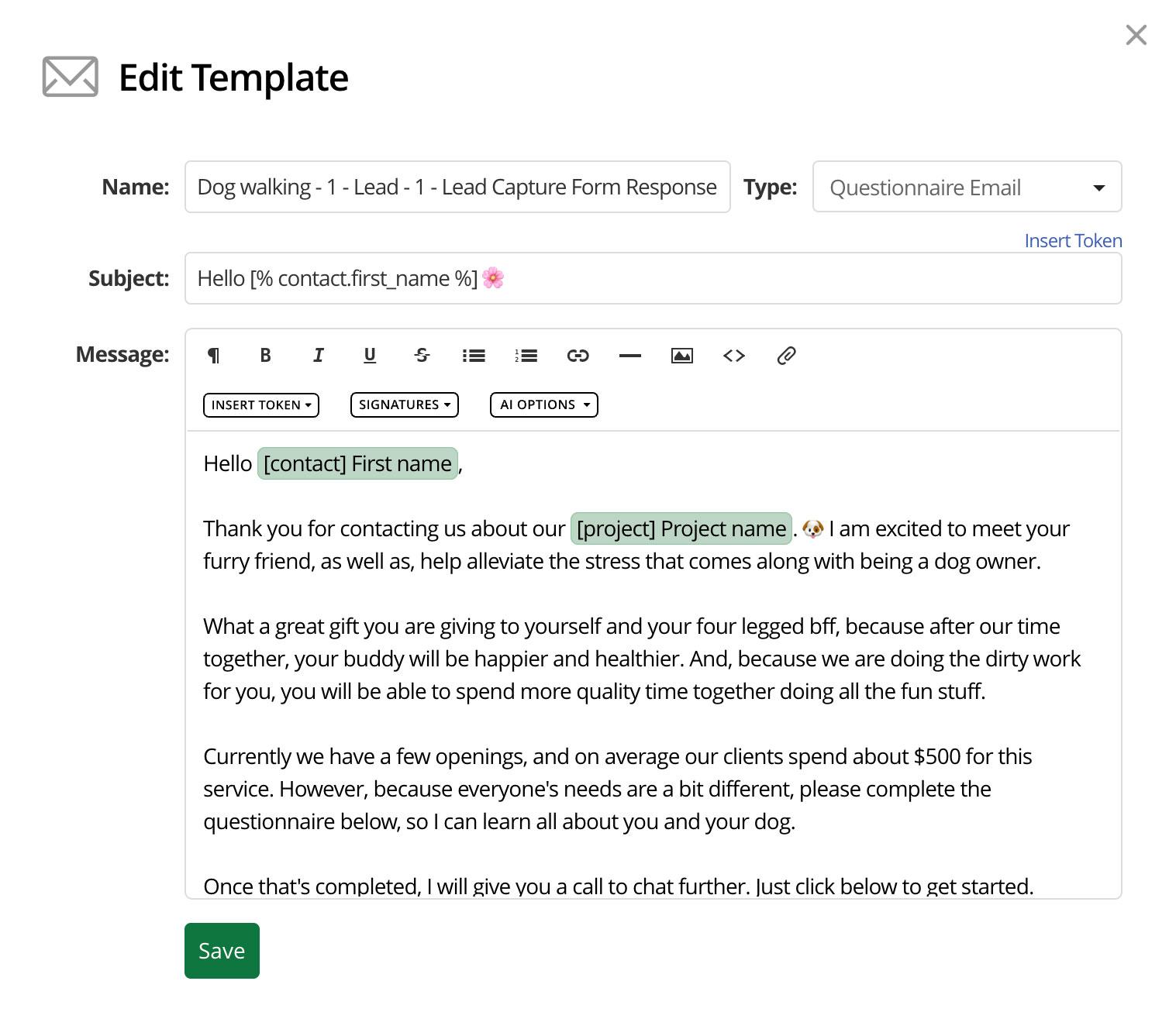
Less than a minute later, an email lands in Dana’s inbox. It opens with her name. It reads like a person wrote it. It thanks her, tells her exactly what happens next, and includes a few short questions so you can understand what she’s after. Her reaction is the one every owner hopes for: these people are on it, and they actually want to understand me.
You didn’t write that email tonight. You wrote it once, saved it as a template, and added a couple of tokens for her first name and your company name that fill
themselves in every time. Your workflow sent it the moment her form arrived. The questionnaire traveled inside the same email.
People worry that automation feels cold. It only feels cold when there’s no care behind it. The warmth comes from the thinking you do upfront: what a nervous prospect needs to hear, which questions actually move things forward, what tone sounds like you. Do that thinking once and every lead gets your best version of a first reply.
What goes in that email matters as much as how fast it arrives. Tell Dana what happens next and roughly when. If your pricing tends to scare off people who only skim, name a starting point now, so the people who keep going are the ones who can say yes later. A short, honest preview saves you both a wasted call.
Speed carries its own message too. A response in minutes instead of days tells Dana something true about how you’ll treat her once she’s a client.
The questionnaire
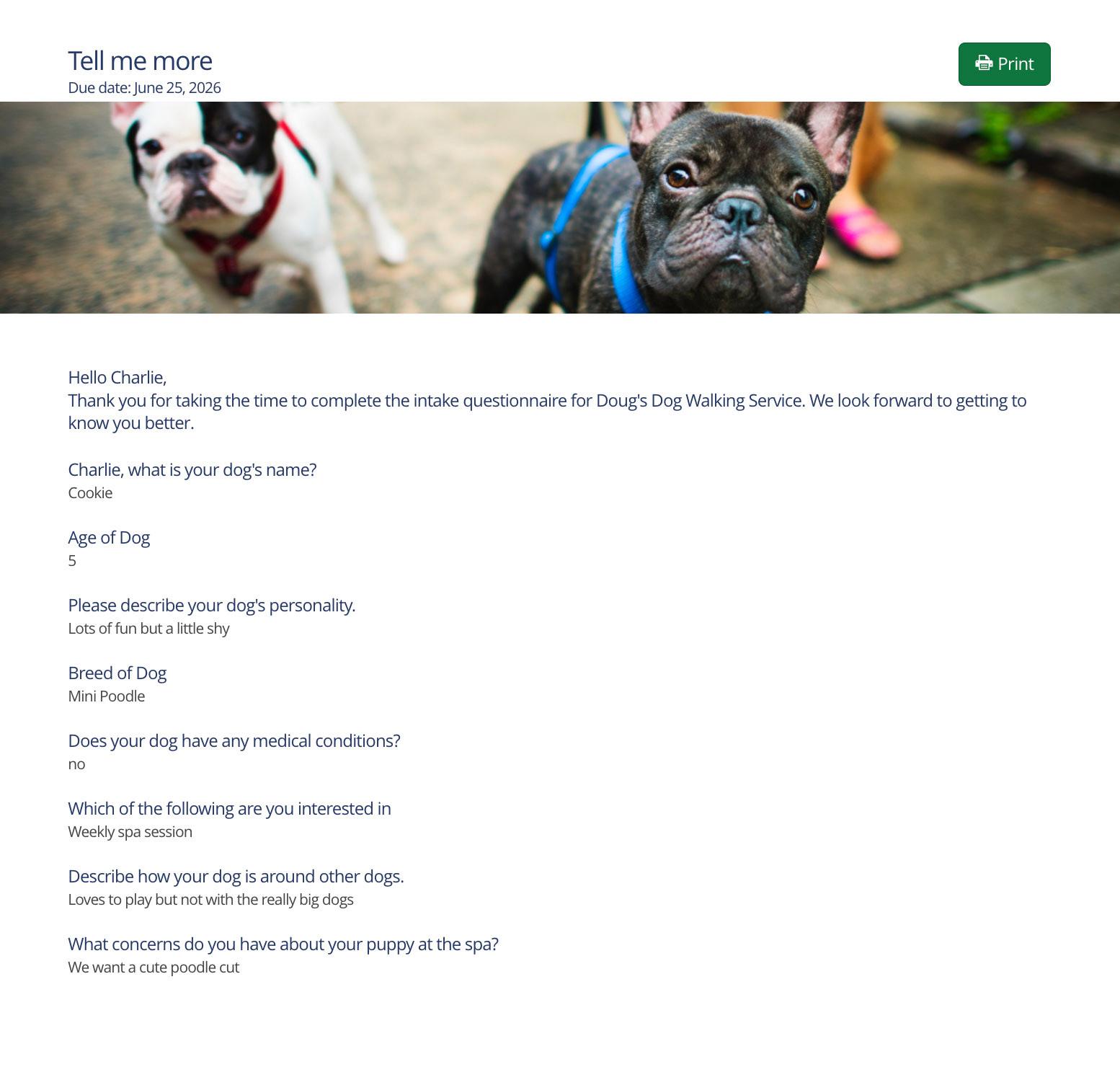
Dana opens the questionnaire and finds a handful of real questions. What she’s hoping for. Her timeline. What’s made her nervous about hiring someone before. As she types, the exchange starts to feel less like a form and more like the beginning of a working relationship. She
clicks submit more committed than when she started.
On your side, you’ve gained two things. A lead who takes the time to answer is a lead who’s serious, so you know where to spend your energy. And you walk into the next conversation already knowing what matters to her.
Treat the questionnaire as a twoway interview. Dana is sizing up whether you’re right for her while you learn whether she’s right for you. A good set of questions sets honest expectations and surfaces a poor fit early, before either of you has sunk weeks into the wrong project. Five to eight questions is plenty. Ask about the work, the timeline, and what success looks like to her.
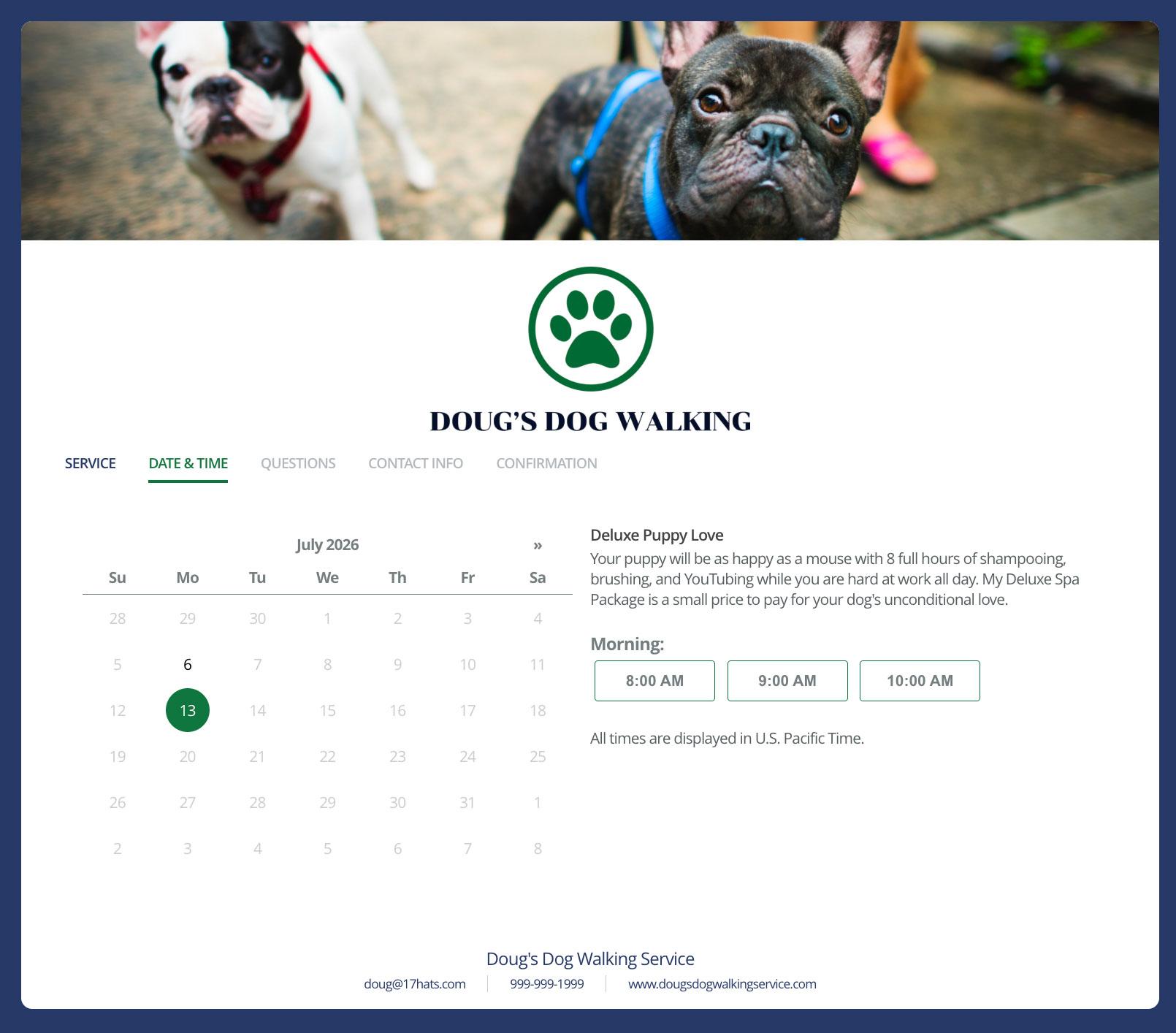
the right time with the context already filled in, so your attention could go to Dana instead of to logistics.
The call
The next day, you call. From Dana’s side, this is the moment the experience turns personal. You already know her name, her timeline, and what she’s after, so you’re not fumbling through introductions or reading off a script. The conversation is warm and specific. She hangs up thinking, I want to work with this person.
That call didn’t depend on your memory. The moment Dana answered the questionnaire, your workflow put a “call lead” task on your calendar and your todo list, with your talking points attached. The system handed you the right task at
Jot a few talking points into that task ahead of time: the two or three things you want to learn, and the one thing you want her to remember about you. Future you will be grateful when the phone is ringing.
This is the most important handoff in the whole journey, the point where the system steps back and you step in. Everything before it earned Dana’s attention and set the table. Now your voice, your questions, and your judgment do the work no template can. That’s the real purpose of the systems behind you. They clear away the busywork so you can be fully present when presence is what counts.
Into booking
The call ends with a clear next step. Maybe you send a quote she can accept online. Maybe a proposal, a booking link to lock in a date, or a contract with a deposit. Whatever the path, Dana never has to wonder what comes next. Each piece shows up when she expects it, in a form she can act on in a couple of clicks.
There’s usually one of two paths from here. Some owners can book a client straight from a quote or an online scheduler, because the work is well defined and the client is ready. Others need a consultation first, where the details get nailed down before anything is signed. Both work. The path that fails is the one that leaves Dana guessing what to do, or waiting days for a reply between steps.
This is where the lead experience flows into the booking experience. The instincts that served you at the first inquiry carry straight through: be fast, be clear, sound human, and remove friction at every step. A booking has a lot of moving parts behind the scenes, including project details, service selection, payment, and a contract. Dana should feel none of that machinery. She should feel only how easy you’ve made it to say yes.
A useful test: count the clicks and the days between Dana’s call and a signed agreement. Every one you cut is friction your competitor probably still has.
The takeaway
From Dana’s seat, the whole thing felt personal, attentive, and close to effortless, like she’d found a business that simply had it together. None of it was improvised. Every moment that impressed her traces back to one decision you made once and then trusted to run.
That’s the payoff of a real lead experience. The system does the remembering, the sending, and the timing, which hands you back the hours and the attention to show up as a person when it matters. Build it once and it works for you at 9:14 p.m. on a Tuesday, and every time after.
Your move this week: map your own lead path from first contact to booked, and find the one step where prospects wait too long or do too much. Fix that step first. It’s the fastest upgrade to your client experience you can make.

The Five Senses & Memorable Client Experiences
When a client walks into your space or logs into a video call with you they're not only evaluating your work. They're experiencing you and your service through their senses, even if they’re not consciously aware that they are.
Businesses that create complete sensory experiences are ones that clients remember long after their project's done.
WRITTEN BY JEBB GRAFF
Think about your favorite shop, spa, or hotel. You probably remember how it makes you feel to be there. Those feelings are created by the way those places activate your senses. Many of those sensory experiences are deliberate choices that anchor positive memories in your brain. You have the same power to shape how clients experience you and your services even if you’re not running a hotel or shop. Whether you're meeting someone in person or across a screen, activating your clients’ senses builds deeper connections and stronger recall, essentially bonding the client to your brand.

SIGHT
The visual component is obvious, but can be easy to overlook especially when we get complacent in a routine. Your space should be
clean, organized, and thoughtfully lit. Your own attire, style, and hygiene send signals as well. You should be aware of what your appearance says about your brand and be thoughtful about how that plays into your clients’ experience with you. I’m not saying you need to be dressed up in formal business attire (unless your brand and market represents formal business). I’m saying that your appearance should align with your brand. If you're meeting over video call, your background, lighting, and camera angle should all communicate your intended message. A client can't see your eyes or smile if you're backlit and shadowy and the opened laptop built-in camera looking up the nose isn’t a good look either. You don’t have to have pro gear and a studio setup, you just need to spend some time googling tips for looking good on Zoom. If your setup looks careless, you risk losing your clients’ trust in your expertise.

SOUND
If clients spend time in your physical space, your background music choice and volume sets the tone and mood. Imagine going in for a relaxing massage and the background music is circus calliope. You’d probably leave, and maybe even call the authorities. If your brand messaging is bursting with color and vibrance, pop or funk may be the right choice. If it’s sophisticated and elegant, maybe some classical or jazz is the way. What about if clients don’t come to your space? If you're on video calls, background music will likely be a distraction, but your audio quality shouldn’t be overlooked. A clear microphone sound tells clients you're invested in your business and their project. Echoing, distorted, or robotic-sounding audio makes people uncomfortable, even if they can't pinpoint why. It's subconscious friction. Again, you don’t have to have pro gear or look like a YouTuber or podcaster, but simply using the microphone on some earbuds will typically sound a lot better than the built in microphone on your computer.

SMELL
Scent creates memories faster than almost anything else. Most people have at least one or two scents that immediately take them to another place and time when they smell them. The boxwoods in front of my home always take me back to playing in my granny’s yard on family trips to Virginia when I was a kid. Certain candles take me to the laughter filled nights of board games and coffee with my wife when we started dating. If you have a physical space, a subtle, signature scent like fresh coffee, quality candles, or even the scent of leather and wood furnishings and flooring becomes part of how clients remember you. Many boutique and luxury hotels
have proprietary air freshener and soap fragrances custom made for this very reason. They want your stay with them to be ingrained in your memory, so when you smell something similar you’ll remember that great experience. For remote work, this doesn't apply as easily, but it’s not impossible. Consider sending fragrant client gifts like a particular candle scent, or even a drop of scented oil in the packaging or envelope to accompany a gift.

TOUCH
In person, this might mean the quality of materials you hand over like a business card that feels good or work samples printed on nice stock. It could mean offering clients a comfortable chair or a drink in a glass or mug instead of something disposable. I remember when the first iPhone was released, people were talking about the feeling of opening the box –the literal feeling of the cardboard, not the emotion of getting the iPhone. Soon after, many other brands started using packaging with smoother textures, and clever pull tabs. Online, touch translates differently. A well-designed, intuitive interface on your website feels good to navigate. A poorly designed one feels off, even if clients can't explain it.

TASTE
If you meet clients in person, offer something to drink or eat. It doesn't have to be elaborate, but it should be consistent. Similar to the other senses, the flavor profiles of what you offer are subconsciously aligned to working with you. For remote clients you can suggest they grab their favorite drink before a call. This will help unconsciously align something the client already loves and finds comfort in with you and your service. Just like scent, you can send your clients
edible gifts or gift cards to local restaurants, or even better – their favorite restaurant. I used to send clients to the bakery next store to my old studio for a pastry and a coffee drink. It became one of the things they most looked forward to and heightened their experience of working with me. So much so that sometimes I’d plan my meetings there instead of in my actual studio. For them, it made meeting up with me a treat.
Sensory Audit Your Business
Go through your specific setup and take note of your sensory experiences. Sight: Is your space or virtual meeting scene conveying the message you intend? Sound: Do you have clear audio and intentional background music if applicable? Smell: Does your space or physical correspondence have a signature scent? Touch: Are your materials and tactile experiences high quality? Taste: Are you offering, suggesting, or gifting a beverage or snack?
You don't have to nail all five. You can pick the ones that fit your business model best and do them deliberately. The point is to keep in mind that activating the senses is a simple and sometimes overlooked way to convert a transactional exchange into an emotionally activated experience. When clients feel positive emotions when working with you, they take ownership and you become their go-to instead of just another option. And who wants to be just another option?
One Small Move Per Sense
You don't need a renovation or a gear closet to activate the senses. You need one deliberate choice per sense that enhances your clients' experiences. Here's a starting move for each, whether clients sit across from you or across a screen.
Sight
In person: Clear the clutter in their sight line and add one warm light source.
On Screen: Face a window or lamp, raise the camera to eye level, tidy the background.
Sound
In person: Pick background music that matches your brand's mood, kept low.
On Screen: Use an earbud mic instead of your laptop's, and mute notifications.
Smell
In person: Choose one signature scent (coffee, a quality candle) and keep it consistent.
On Screen: Tuck a scented card or a small candle into a mailed gift or welcome packet.
Touch
In person: Hand over materials on nice stock; offer a real mug, not a paper cup.
On Screen: Make sure your site and booking flow feel effortless to click through.
Taste
In person: Offer a consistent drink or snack, however simple.
On Screen: Invite them to grab their favorite drink before the call, or send a gift card.
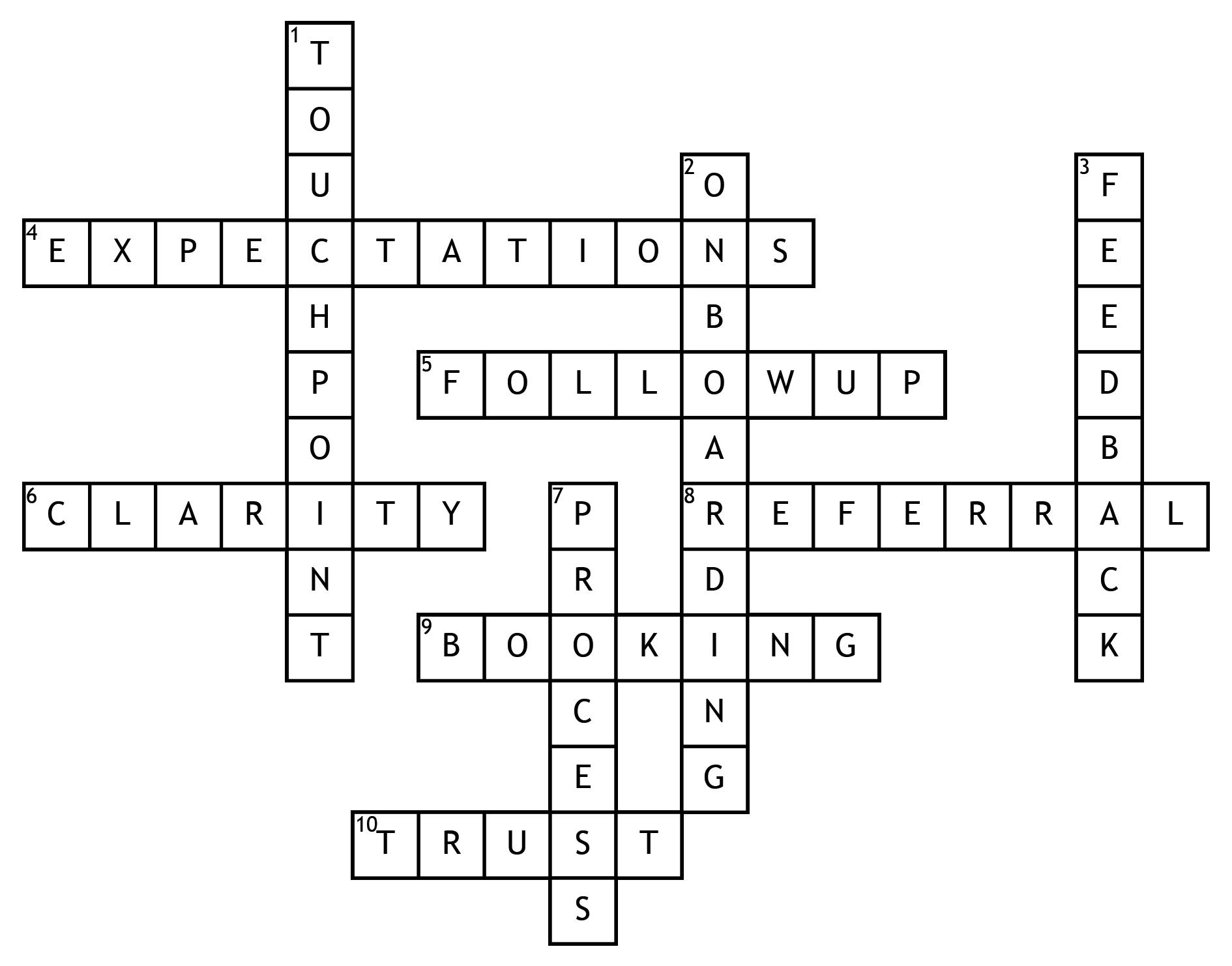
Crossword Puzzle:
Client Experience

ACROSS
4. What should be set early to prevent confusion later.
5. The touchpoint that keeps the relationship warm after the project ends.
6. What clients need when they feel unsure or overwhelmed.
8. What happy clients may send your way.
9. The moment a lead officially becomes a client.
10. What a great client experience builds over time
DOWN
1. Any interaction a client has with your business.
2. The stage after booking where clients learn what happens next
3. What you ask for to improve the client experience.
7. A repeatable way to guide clients from inquiry to completion.
SEE PAGE 43 FOR THE ANSWERS
WRITTEN BY MADDY MAHAIRAS JENKINS
Business advice often focuses on doing more: more followers, more ads, more posting, scaling faster, and working more. While growth and hard work certainly matter, many businesses become so focused on chasing new opportunities that they overlook the opportunities already in front of them.
Sometimes the greatest opportunity for growth lies in refining communication, improving systems, creating a more connected client experience, and maximizing opportunities that already exist within the business. Sustainable growth does not always come from adding more. Often, it comes from improving what already exists, paying closer attention to the customer journey, and serving current clients exceptionally well.
Your Existing Customers Already Told You “Yes”
One of the most overlooked assets in business is the customer who has already trusted you. While many businesses invest heavily in attracting new leads, past customers are often forgotten once the transaction ends.
Yet existing customers are usually the easiest people to serve again because trust has already been established. The challenge is not always a lack of interest. More often, people get busy, distracted, forget to follow up, or simply wait for someone to reach out first.
This is where thoughtful systems become valuable. A timely reminder, a personal check-in, or a message acknowledging a milestone can strengthen relationships and create opportunities to serve clients again.
The strongest businesses understand that follow-up is not just marketing. It is relationship maintenance. Systems Should Support Human Connection.
Good systems create consistency. And consistency creates trust. CRMs like 17hats allow businesses to stay connected in ways that would be nearly impossible to manage manually. Simple workflows can create meaningful touchpoints like:
• birthday emails
• anniversary reminders
• service follow-ups
• maintenance reminders
• yearly check-ins
• membership renewals
• personalized recommendations
• “thinking of you” messages
The goal is to make sure clients are not forgotten. Some businesses treat follow-up like a sales tactic. The best businesses treat it like remembering someone mattered, and customers notice the difference.
Examples are:
A salon reminding someone it has been 6 weeks since their last appointment is not “pushy.” It is helpful.
A photographer reaching out a year after a family session to say, “Your kids have probably changed so much this year; I love this one photo of them (add photo)” is not just selling another session. IT IS CONTINUING A RELATIONSHIP… Just wishing them a Happy Anniversary and sharing from favorite moments.
A coach checking in months later with: “I’ve been thinking about your business lately and have a few ideas that may help where you’re at now, I would love to catch up.”
It feels personal because it is personal. The strongest businesses understand that follow-up is not just marketing… It is relationship maintenance, and all relationships take effort.
Better Experiences
Create Better Revenue
Many businesses assume growth comes from raising prices or increasing volume. Often, it comes from improving the customer experience. People spend more with businesses they trust, and trust is built through clear communication, consistency, and positive experiences. Better onboarding, smoother booking, organized workflows, and proactive communication all make it easier for customers to say yes.
Every extra step in your process creates friction, and friction loses sales. The easier you make it for people to inquire, book, pay, and stay informed, the more likely they are to move forward.
Convenience is not just a customer service strategy. It is a revenue strategy.
Time Is Revenue Too
Burnout is expensive. Disorganization is expensive. Good systems and automation should not replace human connection. They should create more space for it by handling repetitive tasks.
When businesses save time, they gain the ability to improve service, strengthen relationships, increase consistency, and focus on quality. Efficiency is not just about productivity. It is about sustainability.
About The Author
Maddy is the owner and lead photographer of Maddness Photography, a Tampa Bay-based wedding photography business known for emotional and storydriven imagery. Recognized as one of the Top 30 Wedding Photographers in the World by Flash Masters, she is also a mentor and speaker who is passionate about helping creative entrepreneurs build meaningful businesses, create exceptional client experiences, and grow with purpose.

The Gap Between
“I Did the Work” and “I Got Paid”
WRITTEN BY LIZ AUGUST
A few months ago, I audited a 17hats account that had been “set up” two years prior. The owner was talented, booked regularly, and genuinely good at what she did. But her cash flow felt unpredictable, and she couldn’t figure out why.
When I pulled up her account, the answer was everywhere. Invoices sitting unsent. Workflows that stopped halfway through the client process. A quote that had gone cold three months ago with no follow-up. A payment reminder was configured but pointed to the wrong template, so it had never actually fired.
She wasn’t bad at running her business at all, she just had a broken client journey, and it was quietly costing her money every single month.
Your client journey is a money system
Most business owners think about money in terms of what they charge. The assumption is if you raise your rates, you make more money. That’s true, but it’s only half the picture. The other half is how reliably money moves from an interested stranger to a paid invoice in your account.
Every step between “I want to hire you” and “payment received” is an opportunity for the process to break down. When it breaks down, money either delays or disappears. Not because clients didn’t want to pay you. Because your system didn’t make it easy for them to follow through, and in a post-pandemic world in which our whole lives move even more online, we must make it easy for our consumers.
That’s what I mean when I say the client journey is a money system. The path your client walks from first contact to final payment isn’t just an experience question - it’s a revenue question.
Where the gaps actually live
When I do a systems audit, I look for the places where the handoff breaks. In my experience, they cluster in four spots:
Between inquiry and proposal. This is where leads go cold. Someone fills out a form or sends an email, and then life gets busy. If your follow-up is manual and sporadic, you’re losing people who were genuinely interested. Automated confirmations and follow-up
sequences aren’t impersonal. They’re the difference between a lead who hears from you and one who booked someone else.
Between proposal and contract. A quote that sits in someone’s inbox without a nudge is just hope. If your system doesn’t prompt the client to move forward, the sale stalls. A simple automated reminder at three days and again at seven recaptures approvals from people who intended to say yes but forgot.
Between contract and deposit. Contracts don’t confirm bookings, deposits do. If you’re not requiring a deposit to hold the date, or if your invoicing doesn’t trigger automatically once the contract is signed, you’re holding calendar space for people who haven’t actually committed.
Between delivery and final payment. This is the one that surprises people most. The work is done, and the final invoice is still sitting unpaid two weeks later because the payment reminder never went out, the due date was set vaguely, or the client had to chase you for the invoice. Automated reminders tied to clear due dates close this gap almost entirely.
What to actually do about it
You don’t need to overhaul everything at once. Start by walking your own pipeline in 17hats from the outside, the way a new lead would experience it. What happens the moment someone inquires? Keep asking “then what happens?” until you reach the point where a happy client is singing your praises after the job is done.
Look for the longest silence. This is the place where the most time passes between one step and the next, with no system touching it. That silence is usually where money is leaking.
Then fix that one thing. Set up the follow-up sequence that doesn’t exist. Turn on the payment reminder that’s been sitting in your to-do list. Connect the contract signature to the deposit invoice. One gap closed is real money recovered.
The business you run is the one you built
That business owner I mentioned at the beginning? Once we mapped her client journey and patched the gaps, she didn’t change her prices, add new services, or post more on social media. She just stopped losing the money she had already earned.
Most cash flow problems aren’t pricing problems. They’re process problems in disguise. The good news is that process problems are fixable, usually faster than you think, and the payoff shows up in your account before the month is out.
Your client journey is already making you money or costing you money. The only question is whether you’ve looked closely enough to know which.
About The Author
Liz August is the founder of Simplify, Simplify, a virtual support micro-agency based in Worcester, MA. She helps service-based entrepreneurs build the backend infrastructure that supports consistent, professional client experiences. Find her at www.simplifysimplify.me or on socials @simplifysimplify.me

Level Up

Your Client Experience

Matt Stagliano
The Connection CollectionClient Communication Bundle

Zsa'nee Photography
The Senior Portrait Workflow for Busy Photographers!
Vanessa Joy Vanessa Joy's Complete Wedding Workflow
Danielle Uhl
Comprehensive Coaching Feedback & Testimonial Questionnaire
Will Wohler Client Experience Strategy Call
Nicole Larson
Balloon / Event Decor Rebooking Form, Workflow & Pipeline
Share Your Secret to Business Success
Turn your business savvy into cash rewards by simply sharing 17hats.
Referring 17hats is a win-win. You’ll earn $50 for every new member who joins using your link — and there’s no limit to how many rewards you can collect.
Even better? Your friends get a huge head start with 50% off their first year or first two years of 17hats. That’s up to $400 in savings for them, just for being connected to you. It’s an easy way to support fellow business owners while putting extra cash in your pocket.

Easy Ways To Refer 17hats:
Share on Social Media
Post about how 17hats helps you — and include your link. Include before/after stories or screenshots! Business owners love seeing behind-the-scenes.
Send a Personal Message
Reach out to a business friend with a quick text or DM: “Hey! If you’re still juggling client stuff manually, you should check out 17hats. Here’s my referral link for 50% savings — it’s a no brainer!”
Add it Where People Already Look
Place your referral link somewhere simple, like your email signature, website resources page, or link-in-bio. That way, business owners can discover it naturally without feeling like you’re directly pitching them.
Example:
Find Your Referral Code & Link!
Head to your 17hats account settings and click the “Referrals” tab to copy your unique referral link. Your referred friend can use your code when signing up for a trial or upon checkout. You can also send them your link that allows your referral to directly buy now.
“Tools I use to keep my business organized: 17hats — here’s my referral link for 50% off.”
Your Shortcut To Working Smarter Top Tutorials!
Want to get more out of 17hats without the guesswork? Our top tutorials are the fastest way to learn, implement, and level up your business systems — no tech degree required. Each video walks you through key tools and features step-by-step, so you can spend less time figuring things out and more time doing what you love.

Learn how to require multiple signatures on your 17hats Contracts.

Learn how to create Account Custom Fields in 17hats and use them as tokens in emails, documents, and more
Craving MoreEducation?
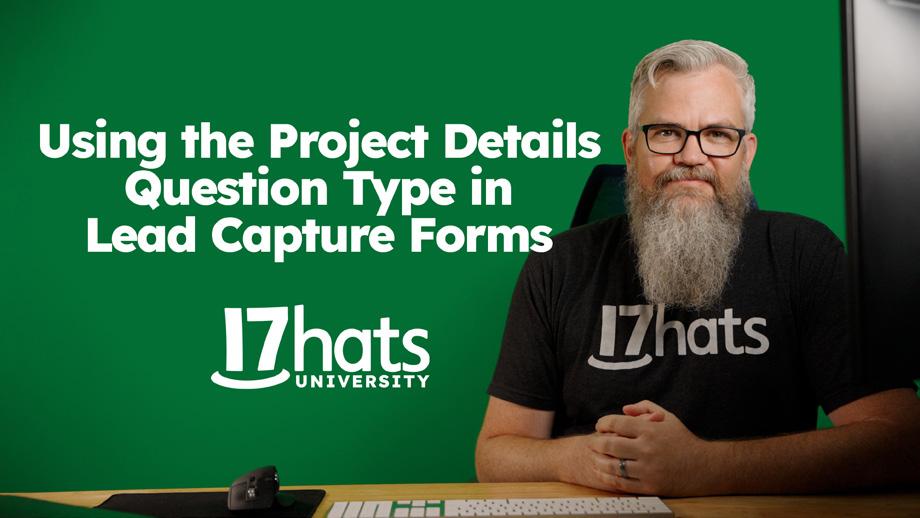
New! How to use the Project Details Question Type in Lead Capture Forms.

Discover how to use bold, italics, underline, strikethrough, links, and line breaks to format questions across 17hats.

Head over to 17hatsUniversity.com and blog.17hats.com to dive deeper into both business and 17hats education. Bookmark both sites and check back weekly for fresh insights and tutorials.

You Bring The Talent We Bring The Tools
17hats is the all-in-one business management platform you didn’t realize you need — but soon can't imagine yourself living without. Together, we'll take your business to the next level.
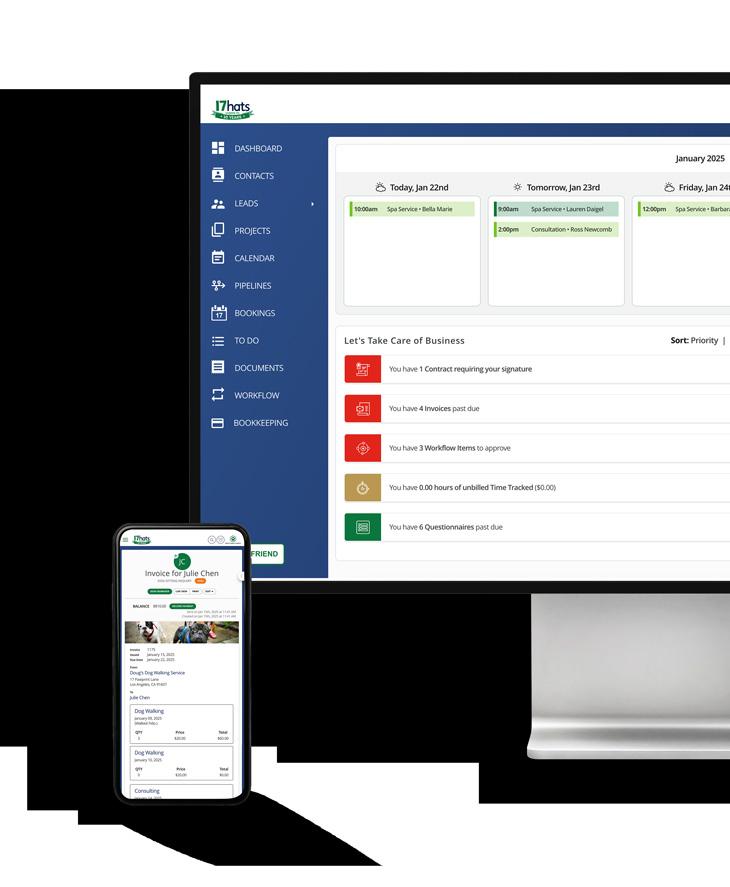
START A 7-DAY TRIAL
17hats Resources
Deep dive into our blog and learn how 17hats can help you manage your business better.

Listen to our HatsOff Podcast for business tips and tricks with our CEO, Amanda Rae.

Check out our University for 17hats tutorials, workshop replays, live events, and more.
Upcoming Conferences
Maternity and Newborn Photographers Summit, Grapevine, TX
July 23 - 26, 2026
The Maternity & Newborn Photographers Summit is where photographers like you master the art, business, and confidence to grow. Learn from world-class instructors, refine your craft hands-on, and surround yourself with a community that believes in your potential.
Find something new from 17hats at the trade show!
Balloon Boss Summit 2026, Orlando, FL
November
8 - 12, 2026
Elevate your Balloon Business and Increase Your Professional Network in an Intimate Setting. Focus on increasing business skills taught by business professionals. Learn proven business systems to increase efficiency from balloon business owners.
Find Ambassador, Nicole Larson leading 4 new classes.
Ambassador Events


17hats Power Hour: Feature Updates & FAQ
Tuesday, June 21, 2026
11:00 AM PT / 2:00 PM ET
Location: Virtual
Join 17hats Ambassador Deb Mitzel, for her 17hats Small Business Success Series: Power Hour. This series is dedicated to learning more about a 17hats feature, including use and set it up and Q&A after the feature presentation.
debmitzelcreative.com/workshops
Crossword Puzzle:
Client Experience
ACROSS
4. What should be set early to prevent confusion later.
5. The touchpoint that keeps the relationship warm after the project ends.
6. What clients need when they feel unsure or overwhelmed.
8. What happy clients may send your way.
9. The moment a lead officially becomes a client.
10. What a great client experience builds over time
DOWN
1. Any interaction a client has with your business.
2. The stage after booking where clients learn what happens next
3. What you ask for to improve the client experience.
7. A repeatable way to guide clients from inquiry to completion.


People will forget what you said, people will forget what you did, but people will never forget how you made them feel.
– Maya Angelou
Keep
In Touch