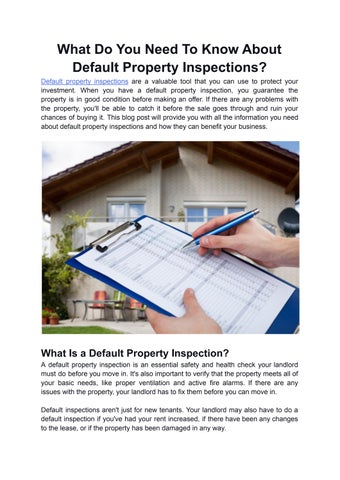
What Do You Need To Know About Default Property Inspections? Default property inspections are a valuable tool that you can use to protect your investment. When you have a default property inspection, you guarantee the property is in good condition before making an offer. If there are any problems with the property, you'll be able to catch it before the sale goes through and ruin your chances of buying it. This blog post will provide you with all the information you need about default property inspections and how they can benefit your business.
What Is a Default Property Inspection? A default property inspection is an essential safety and health check your landlord must do before you move in. It's also important to verify that the property meets all of your basic needs, like proper ventilation and active fire alarms. If there are any issues with the property, your landlord has to fix them before you can move in. Default inspections aren't just for new tenants. Your landlord may also have to do a default inspection if you've had your rent increased, if there have been any changes to the lease, or if the property has been damaged in any way.
-Make sure you have your paperwork ready, including your lease and any addenda (if applicable). -Decide a date and time that works best for you and your landlord. -Arrive at the property clean and tidy, wearing appropriate clothing and shoes. -Ask your landlord to show you around the property, so you know what's included in the inspection. -Be prepared to answer any questions your landlord has about the property's condition.
What Is Included In a Default Property Inspection? When you're ready to sell or lease your property, it's important to have it inspected by a qualified inspector. A default property inspection covers the basics of your home, such as structural integrity, electrical systems, water and sanitary systems, and 3rd party inspections, such as radon and asbestos. While not all necessary repairs will be found during the inspection, having one will give you peace of mind.
When Should a Property be inspected? There are a few things to consider when determining when an inspection is necessary for your property.
-Location: The first factor to consider is the property's location. Is it in a high-risk area? A recent study by Milliman found that homeowners in tornado, hail and flood-prone regions were more likely to have their home damaged or destroyed in a covered loss event, such as an uninsured burglary. Having your home regularly inspected is important if you live in a high-risk area.
-Age of the Property: Another factor to consider is the property's age. Older homes may have hidden problems that can become apparent during an inspection. For example, suppose drainage issues are s on a property built in the 1940s but recently updated with new roofing materials and gutters. In that case, those materials may not be effectively protected against rainwater infiltration or water damage. An inspector can often identify these issues before they result in significant damage or loss.
-Condition of Your Home: Once you know the location and age of your home, you need to determine its condition. A poor condition will likely require more extensive repairs than a well-maintained home. Do not hesitate to call an inspector if you notice any significant problems with your home – even if they are minor –that may indicate future damage or loss.
Who Should perform the inspection? Property inspection is an important step in the buying process. It can help you identify any problems with the property and determine if it's a good fit for you. If you're buying an unseen property, it's important to have someone inspect it. That person could be yourself, a family member, a friend, or a professional inspector. Here are some things to consider when choosing who to perform the inspection: -Are you comfortable with the person performing the inspection? They should be qualified and experienced in inspections. -Will they be able to inspect all areas of the property? -Is their fee reasonable? If so, will you be able to afford it? -Will they provide written reports of their findings? If so, will those reports include photos or videos?
What To Do If You Find An Issue during your inspection? If you find an issue during your property inspection, here are some tips on what to do: 1. Report the issue to the inspector. Let them know about any problems you find so they can correct them and ensure the property complies with the law. 2. Get pictures or recordings of any issues you found. This will help you document what needs to be fixed and ensure the repairs were made correctly. 3. File a complaint with the bureau. If you feel that the property wasn't appropriately inspected or there were serious violations, file a complaint with the bureau responsible for overseeing inspections in your area.
Conclusion If you're in the market to buy or sell a property, a professional must inspect your property. A default inspection is one of the most common default property inspections that real estate agents and sellers request from potential buyers and sellers. What is a default inspection? Simply put, it's an inspection where the seller appoints a qualified inspector to check the condition of their property before putting it on the market.