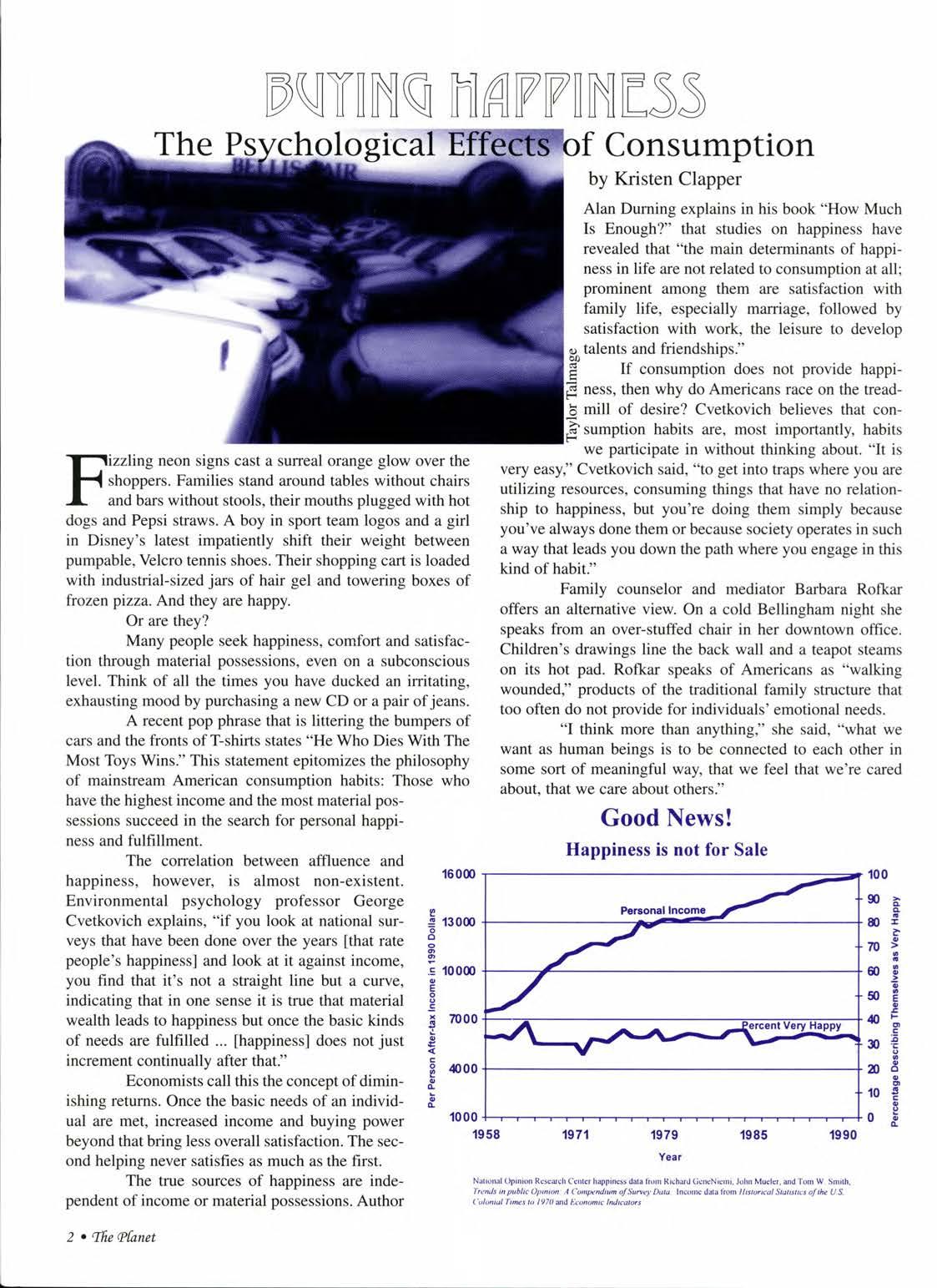
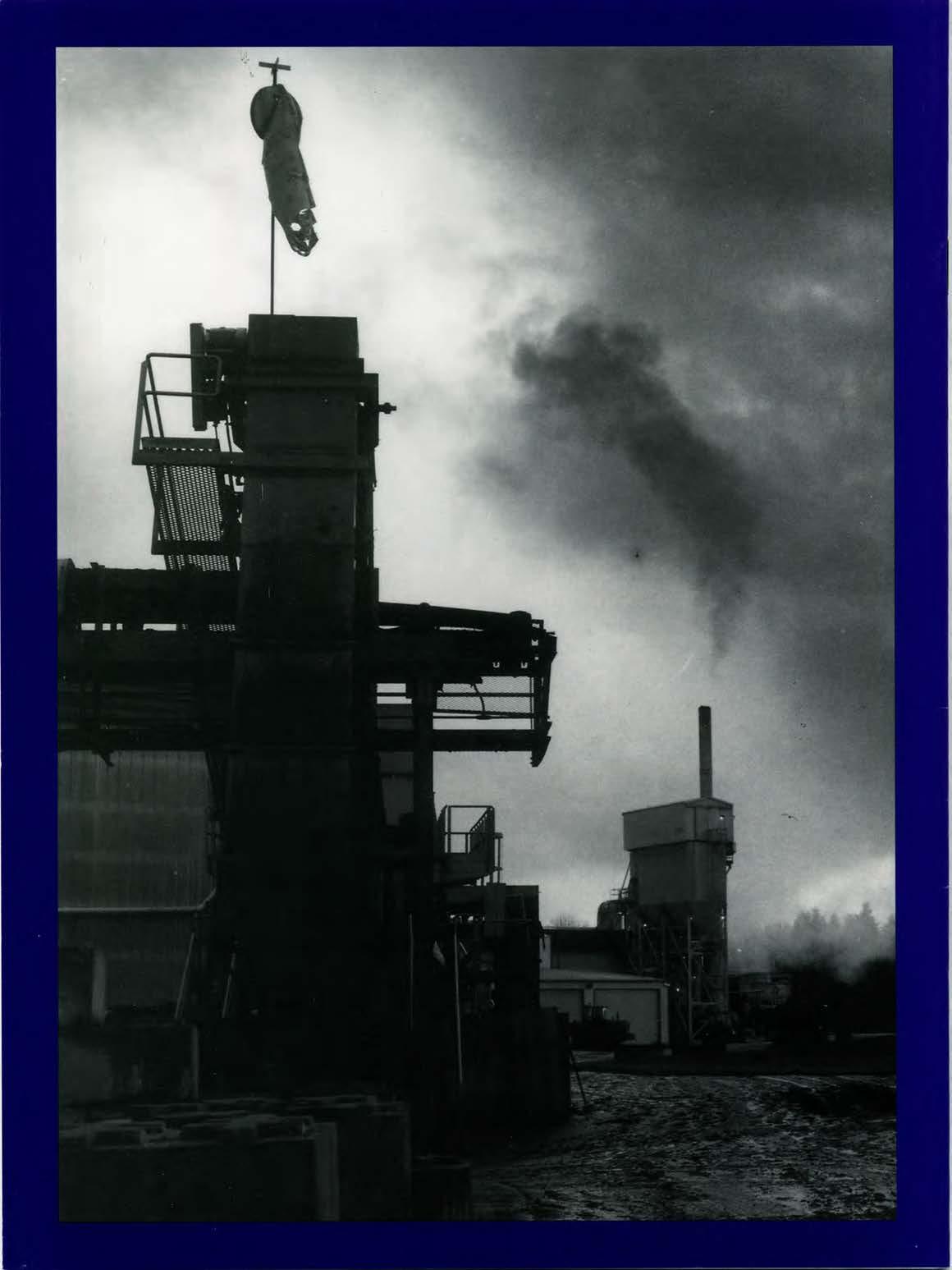
ubsidies are government grants given to private people or companies to aid or promote enterprises deemed advantageous to the public. When the government subsidizes a certain industry, it means that we, taxpayers or soon-to-be taxpayers, are help ing promote that industry. Here in the Northwest, the government subsidizes industries such as timber, mining, agriculture, electricity and
S
Timber •The Tongass National Forest is the largest national forest in the United States covering four-fifths of southeast Alaska. The U.S. Forest Service granted 50-year contracts signed in the 1950s to two pulp mill companies. They guaranteed monopoly access to the timber for as little as $1.48 per thou sand board feet; at this rate it would cost about $15 in wood for the average American house. In 1993, $40 million on tim ber sales was lost from the Tongass. •The Forest Service reported Washington’s Mt. Baker Snoqualmie National Forest lost over $8 million in 1993.
cars. Therefore, we are aiding and promoting industries that exploit and degrade our local environment. Subsidizing these environmentally damaging industries promotes wasteful consumption of our earth’s resources. As purchasers of these industries’ products, we consume with out knowing the true cost to the environment. The following examples illustrate how your tax dollars subsidize these industries. Columbia Basin, are among the costliest of anti-environmental handouts in the Pacific Northwest. •Greenhouse gas-producing aluminum smelters receive power at below cost. These subsides cost the average house hold about $2 per month.
Agriculture •Farmers in Eastern Washington pay $12,000 annually for hydropower to pump water uphill from the Columbia River for irrigation. At wholesale rates, the power is worth more than $25 million annually.
•With the costs of excavating and grading logging roads, log ging of the Northwest national forest cost taxpayers some $91 million in 1993.
•The Bureau of Land Management manages a large share of the Northwest’s dry lands. It charges $1.98 per animal-unitmonth (the amount a cow and calf eat in a month, equal to 800 pounds of forage) and loses $3 million annually.
Mining
•Commodity programs essentially require participation farm ers to plant the same crop year after year to receive the bene fits of subsidized irrigation and livestock grazing.
•The U.S. Mining Act of 1872 allows miners to “patenf’ the land where minerals are found for as little as $2.50 an acre. In addition, as long as miners pay an annual fee of $225 (as of 1994) they have the right to sell minerals taken from public lands without paying any royalties to the government. •In 1994, Secretary of the Interior Bruce Babbitt was forced by the mining act to sign over the richest gold deposit in the United States to Toronto-based American Barrick Resources. ABR cut a check for $9,765 and became the pround owners of 1,949 acres in Nevada that could contain as much as $10 billion in gold. •The mining act could transfer a large bloc of Montana’s fed erally protected Cabinet Mountains Wilderness Area to Canada’s Noranda Minerals Co. This wilderness area is habi tat to the endangered grizzly bear. •Producing one gram of gold requires digging through, pro cessing and dumping three million grams of earth.
Cars •Northwestemers make 90 percent of their trips by car or truck. •Drivers paid 76 percent of the 3.9 billion spent on Northwest roads. The other 24 percent came from other sources unrelat ed to driving. •Since the 1950s the United States has built a 44,000-mile interstate highway system. Two percent of our land is used for roads and automible repairing, fueling and parking facili ties— more land than is used for housing.* •In 1989 the United States imported 220 million barrels of oil from Iraq and Kuwait — we would have saved the same amount if the U.S. automobile fleet was 3 miles per gallon more efficient.*
Electricity •The hundreds of millions of dollars annually subsidized to electricity users through Bonneville Power Association and the speed of decline of salmon runs in the heavily dammed
Source: Hazardous Handouts: Taxpayer Subsidies to Environmental Degradation, by John C. Ryan *Source: Car Trouble, by Steve Nadis and James J. MacKenzie TaCC1996 • 19