No GPS? No Problem

MCLAREN F1 TEAM TAPS GREENE TWEED FOR SEAL APPLICATION
BEYOND: PRESSES


MCLAREN F1 TEAM TAPS GREENE TWEED FOR SEAL APPLICATION
BEYOND: PRESSES
Klemsan relay timers from AutomationDirect give you versatile, dependable timing control without added complexity or a high price tag. From simple delays to advanced multi-mode and special-purpose functions, you get one cohesive family that fits more jobs and stretches your budget further.





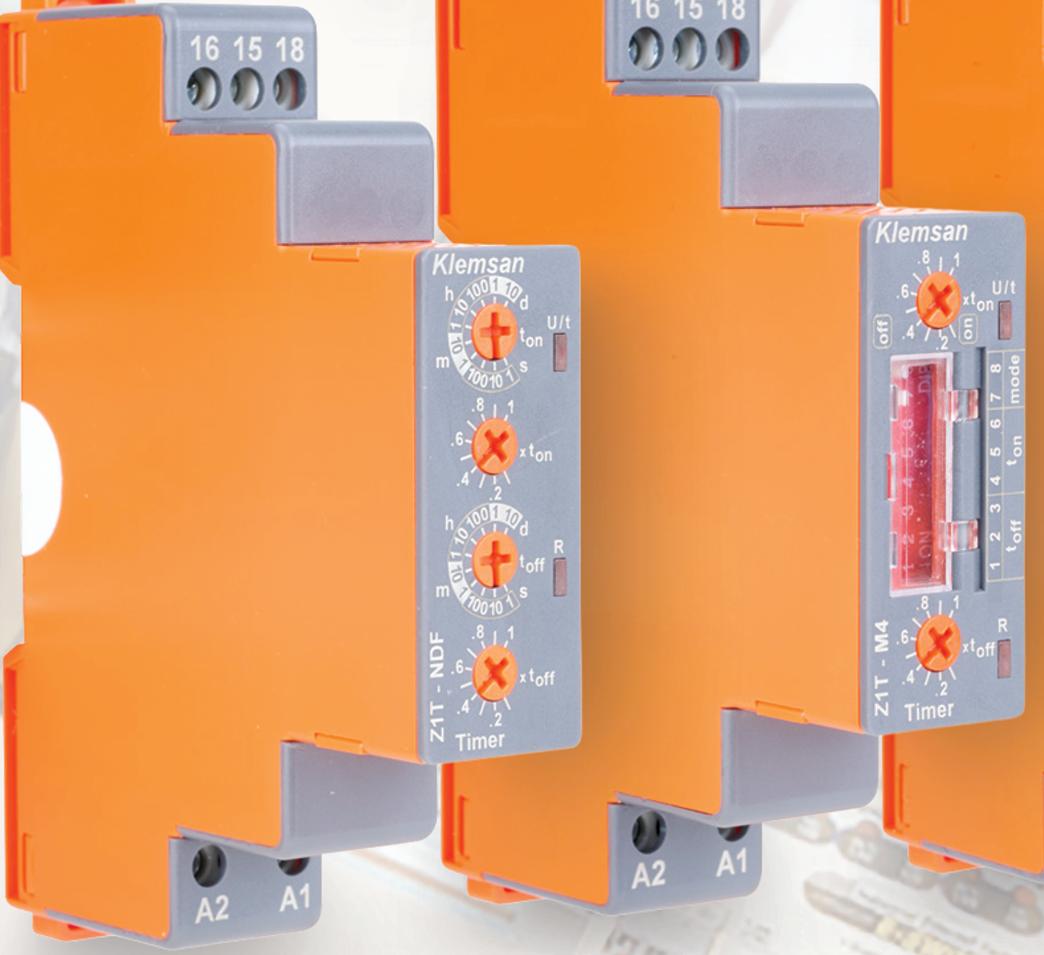



Single Function Timer Relays
Starting at $16.75 (Z1A-ND30S)
Ideal for straightforward on-delay and flasher applications, single function series relay timers offer wide timing ranges, and high switching capacity for everyday control tasks.
• Selection of timing ranges from 0.1 seconds to 10 days lets you cover everything from short machine cycles to long process delays
• Models supporting a range of AC and DC voltages reduce the part numbers you need to stock

Slim 18 mm DIN-rail bodied timers offer 250 VAC / 10 A / 1250 VA output contacts, LED status indication, and high mechanical endurance. The relays conform to IEC 61812-1, UL 508, and CSA C22.2 for dependable operation in industrial environments.
Multi-Function
Starting at $23.75 (Z1T-M2)
When your application demands versatility, the multi-function series packs up to ten timing modes into a single module, ideal for OEMs and panels that must adapt to changing control strategies.
• Select models covering on-delay, off-delay, flashing, interval, pulse, and additive functions in one device
• Triggered delay timer type available for greater flexibility
• 12–240 VAC/VDC operating range simplifies design across control cabinet standards

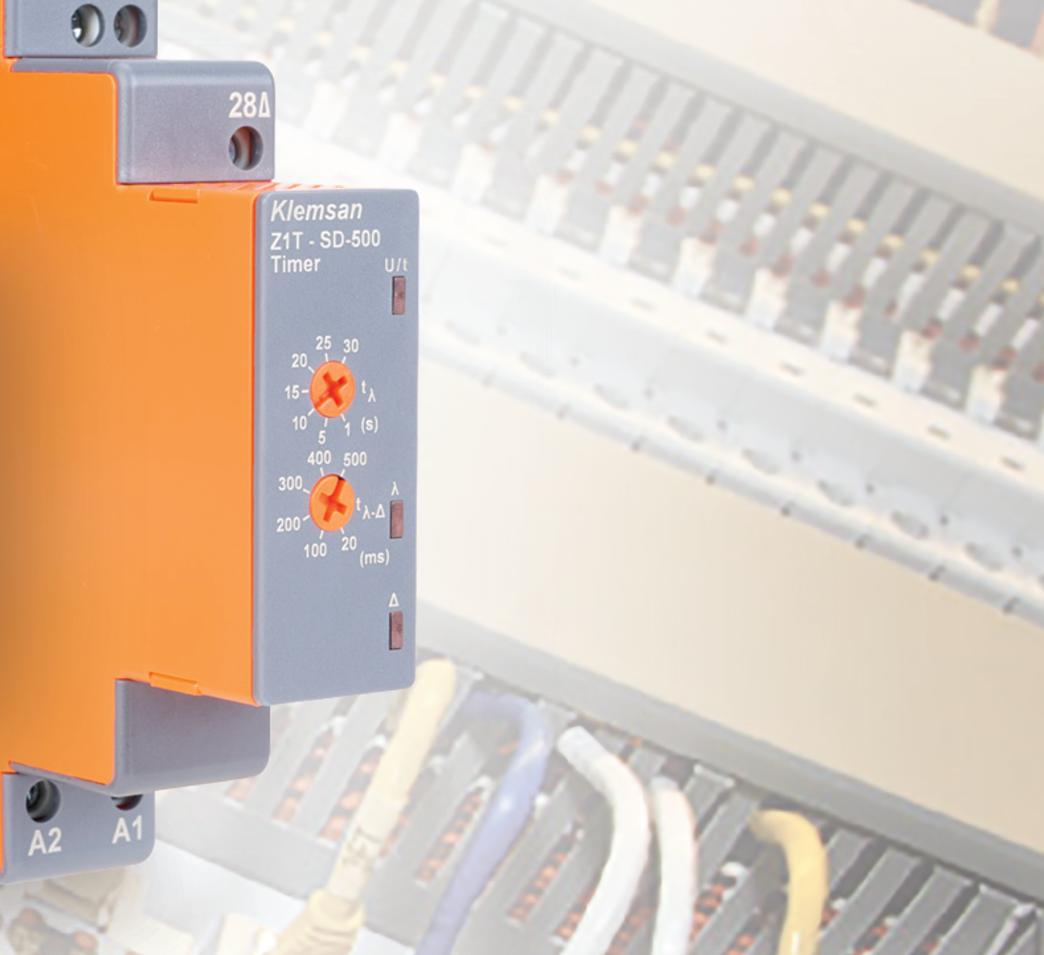
Starting at $23.50 (Z1T-SD-500)

For applications that need more than basic timing, like motor reversing or star-delta starting, the special function series delivers dedicated left-right or star-delta control in compact, easy-to-set modules.
• Left-right (motor reversing) and star-delta timers designed expressly for demanding motor applications
• Adjustable from 0.1 seconds to 10 days on most models, with 12–240 VAC/VDC and 150–500 VAC options



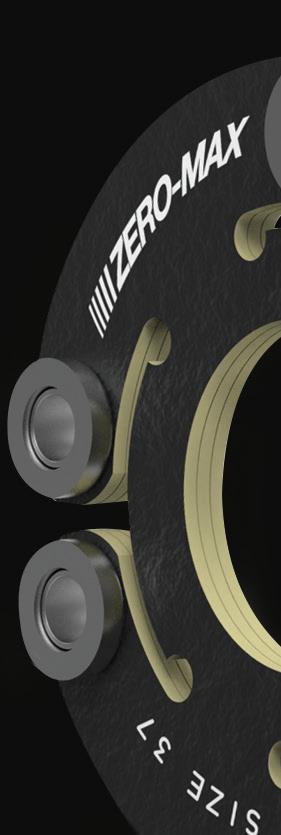





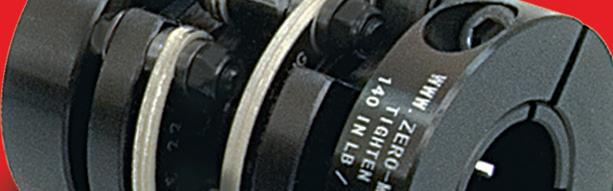


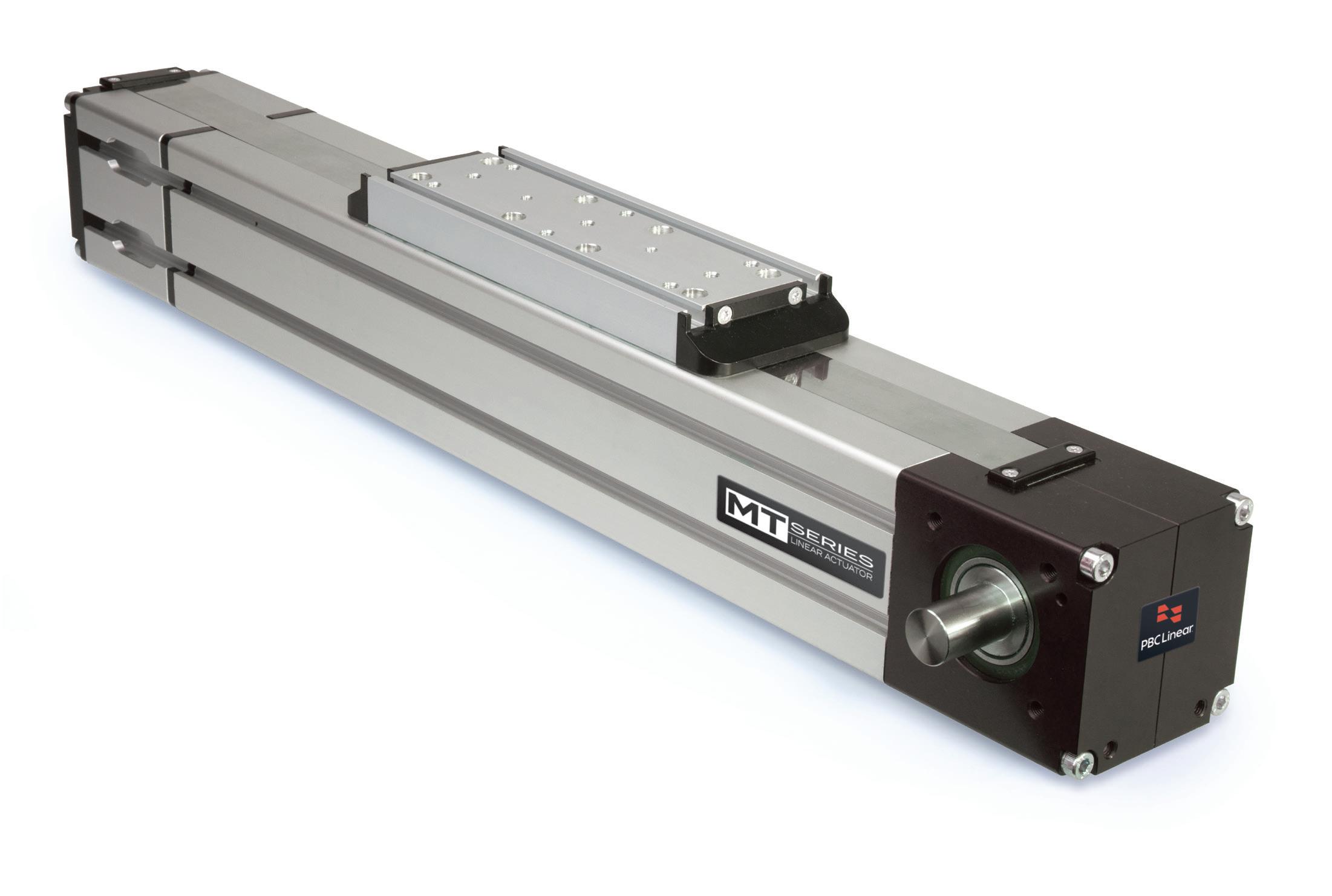
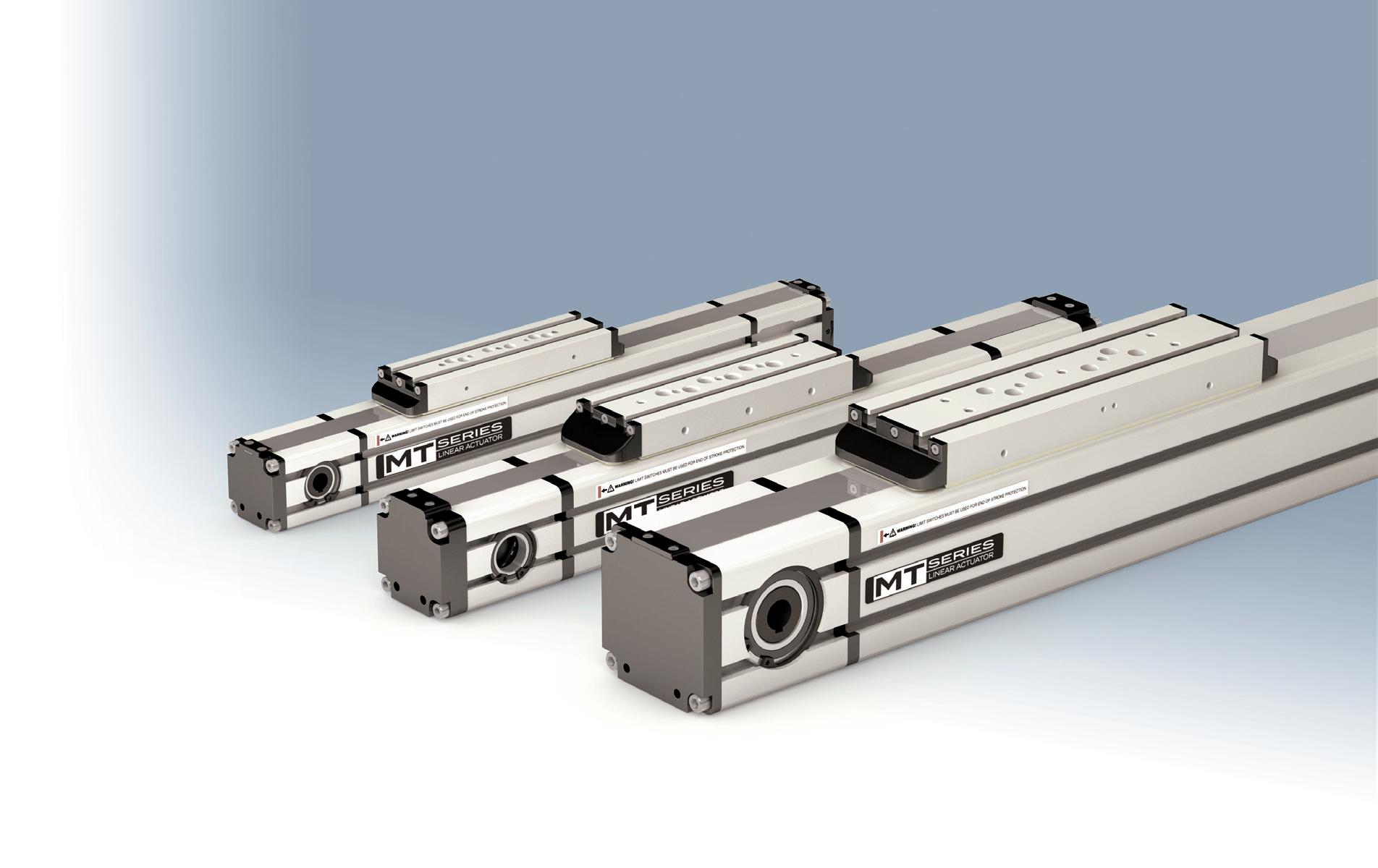
The MTB Series is a belt driven, profile rail linear actuator that has a number of sizes with some design configuration availability to meet high loads and stroke length.
MTB actuators are fully enclosed systems that perform at speeds up to 3000 mm per/second. The newer MTB 105 linear actuator can move a static load of 7500 N and has a thrust capacity of 2750 N.
Applications:
Packaging and Assembly Automation
Cartesian Multi-axis Gantry Systems
Pick & Place Gantries
Automated Door Systems
Manufacturing Equipment Motion MAX


How are you holding up, mechanical design engineers? I’m referring to all the simulation-driven design, AI-enabled design, design for manufacturability, model-based systems engineering, material selection, cost estimating, collaboration with suppliers, manufacturing, quality assurance, marketing, interfacing with product lifecycle management and enterprise resource planning tools — and all the other roles you play outside of designing and prototyping parts and systems.
Back in engineering school, while you were drawing free-body diagrams and calculating moments of inertia in statics class, did you ever think you’d be so involved in so many aspects of a company? Do you remember feeling excited to work in CAD and create parts and structures that could make airplanes fly and spaceships launch to Mars?
Maybe you recall when your professors told you that communication skills were equally important — because you’d have to present and justify your designs to businessfolks, and that no matter how smart you were, you’d be working for a business-focused manager one day? (That one still slaps me in the face sometimes.)
The reality is that mechanical design engineers wear many hats and need skills beyond 3D modeling and finite element analysis. Despite what professors preach, such guidance often goes in one ear and out the other, then hits hard upon entering the workforce. I’ve been out of college for many years, but it seems not much has changed. Engineers are still coaching one another on the realities of work and the value of diverse skills.
Victor Li, mechanical engineer and creator of one of my favorite YouTube
channels, Engineering Gone Wild, recently said, “Part of your job is to negotiate and explain the trade-offs to people who don’t understand the difference between stress and strain, but do understand the difference between a project being late or on time.” He makes many more excellent points in his video, “The biggest lie in mechanical engineering.”
Another Ivy League engineer and father who goes by the alias “Asian Dad Energy” was laid off after 25 years at a big tech firm and cautions mid-level engineers to beef up their skills or become obsolete. In his video, “Midlevel engineers are in trouble (here’s the escape plan),” he even notes that proficiency in legacy software languages is no longer a safety net in the age of AI. Though he’s talking to software engineers, his guidance applies to all engineering disciplines.
I’ll spare you the rest of my recent YouTube playlist, but the point is that successful mechanical design engineers do so much more than design. The unemphasized people aspects of the job are more important than ever these days and differentiate candidates in the job market. If you feel you’re lagging in this department, send me an email, and I’ll share a list of books, articles, and videos to get started. If you already value diverse skills, communication, building relationships, and even actively mentor others, many thanks … and hats off to you! DW

Rachael Pasini
rpasini@wtwhmedia.com
linkedin.com/in/rachaelpasini
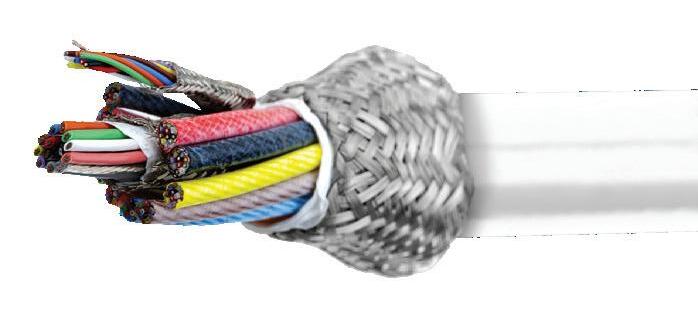



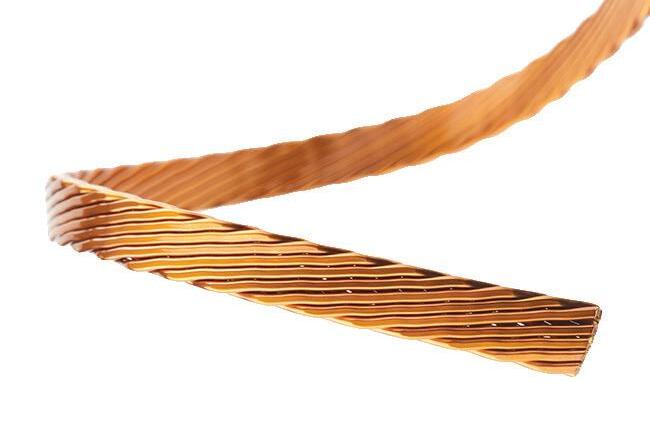




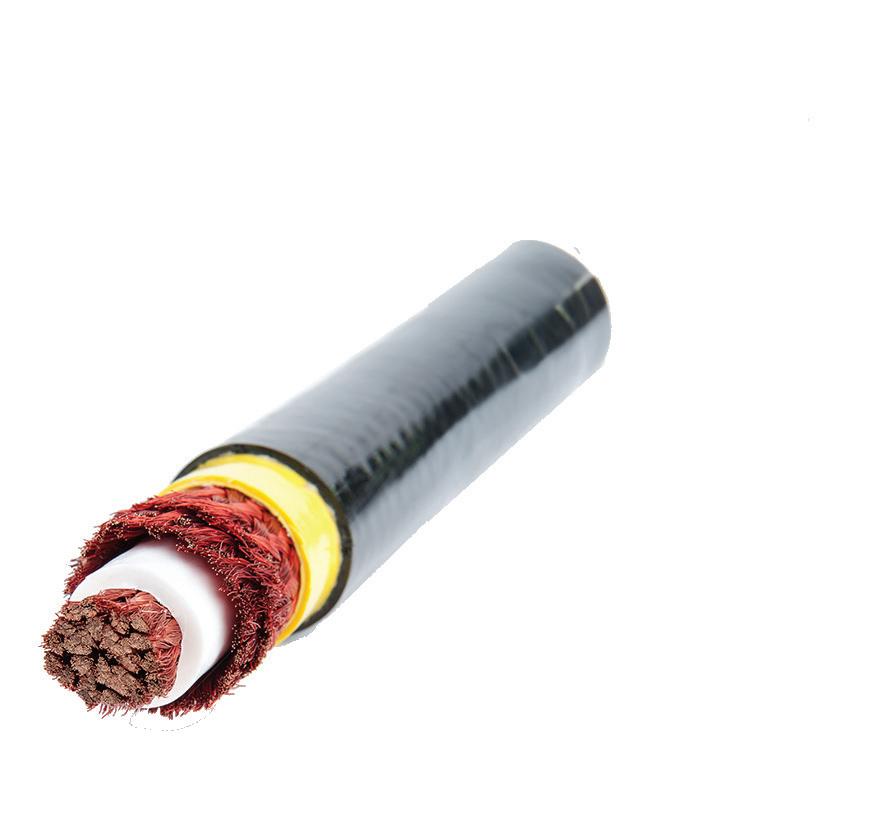



Design World reports on the vast world of design engineering and machine building with technical, indepth content. We cover semiconductor, medical, factory automation, packaging, off-highway, material handling, simulation, rapid prototyping, and more. By signing up for the Engineer’s Edge, you’ll stay on top of the news and trends happening in the engineering space. Scan the QR code to access three weekly newsletters plus new product announcements! SCAN

APRIL 2026 • DESIGNWORLDONLINE.COM
EDITORIAL
VP, Editorial Director
Paul J. Heney pheney@wtwhmedia.com
Editor-in-Chief
Rachael Pasini rpasini@wtwhmedia.com
Managing Editor Mike Santora msantora@wtwhmedia.com
Executive Editor Lisa Eitel leitel@wtwhmedia.com
Senior Editor Miles Budimir mbudimir@wtwhmedia.com
Senior Editor Mary Gannon mgannon@wtwhmedia.com
DIGITAL MARKETING
VP, Marketing Annie Wissner awissner@wtwhmedia.com
Portfolio Marketing ManagerEngineering & Life Sciences
McKenzie Burns mburns@wtwhmedia.com
PRODUCTION SERVICES
Customer Service Manager
Stephanie Hulett shulett@wtwhmedia.com
Customer Service Rep Tracy Powers tpowers@wtwhmedia.com
Customer Service Rep JoAnn Martin jmartin@wtwhmedia.com
DIGITAL PRODUCTION
Digital Production Manager
Reggie Hall rhall@wtwhmedia.com
Digital Production Specialist Nicole Johnson njohnson@wtwhmedia.com
Digital Design Manager Samantha Goodrich sgoodrich@wtwhmedia.com
Marketing Graphic Designer Hannah Bragg hbragg@wtwhmedia.com
Digital Production Specialist Elise Ondak eondak@wtwhmedia.com
WEB DEVELOPMENT
Web Development Manager

www.linkedin.com/company/design-world-online


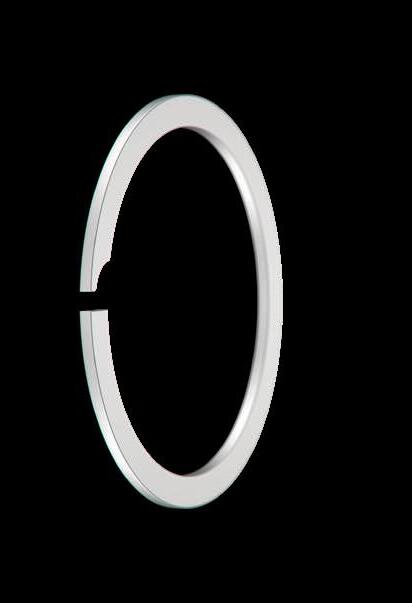
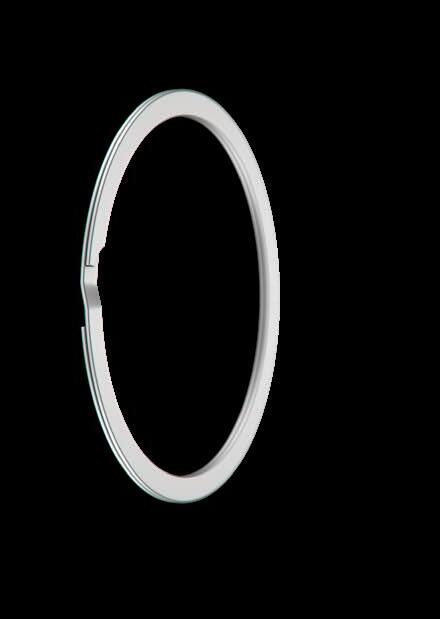
As the inventor of the spiral retaining ring with 100+ years of innovation, here’s why Smalley is The Engineer’s Choice®:
ᘩ 11,000+ standard parts in stock
ᘩ Customizable with No-Tooling-Charges™
ᘩ Trusted performance in 25,000+ applications
ᘩ Award-winning quality backed by leading industry certification
Smalley Retaining Rings
ᘩ No Ears to Interfere®
ᘩ High RPM Capacity
ᘩ Easy install and removal
ᘩ Diameters from .118" to 120" in 40+ materials

or Request
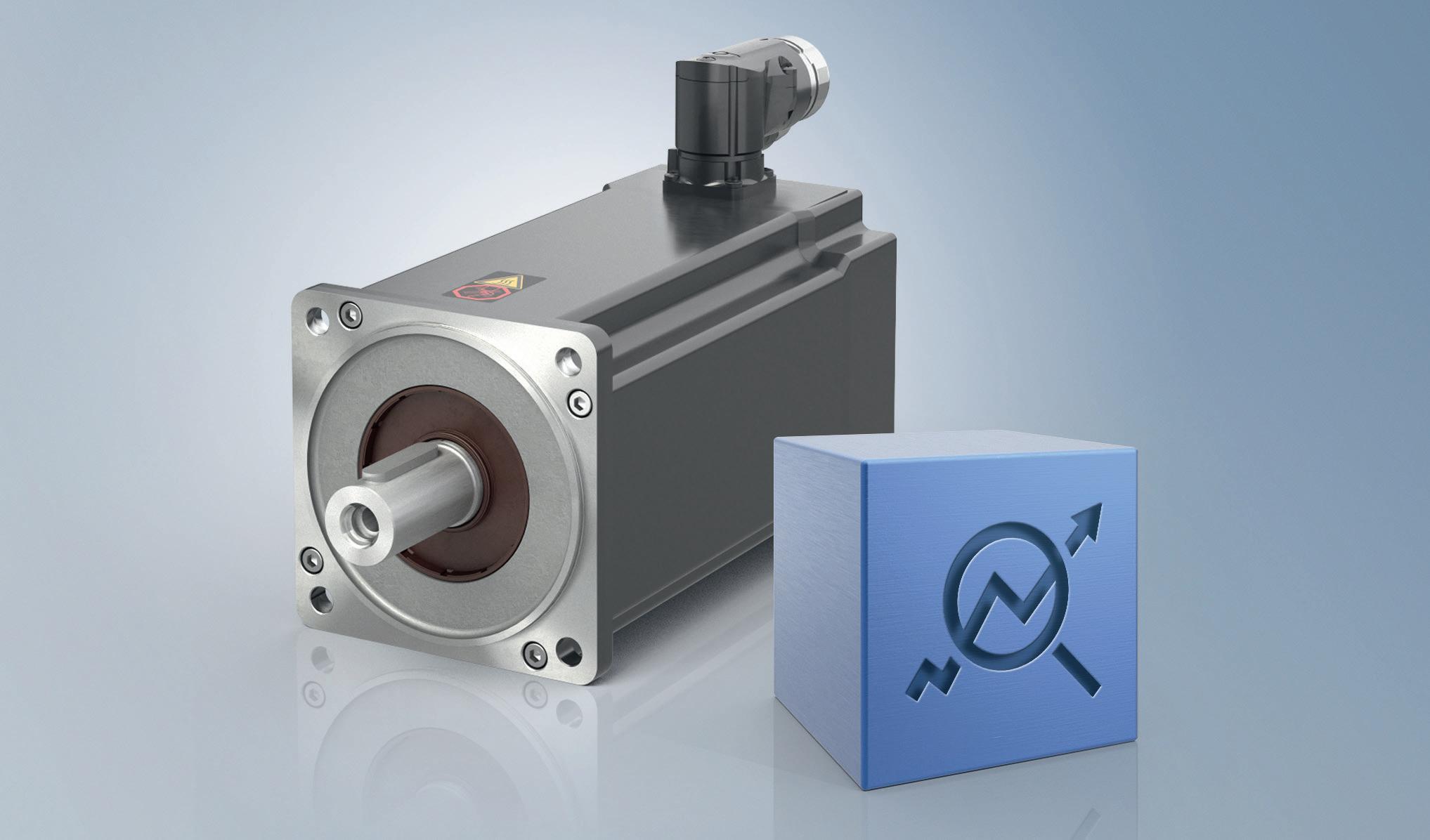
Integrated diagnostics are a key differentiator in motion products. Embedding monitoring capabilities directly into servo drives, controllers, and actuators enables real-time performance analysis, troubleshooting, and preventative maintenance without interrupting operations.
Beckhoff offers an optional predictive maintenance feature, Beckhoff Smart System Diagnosis (B/SSD), that enables real-time monitoring to support effective predictive maintenance across motion control systems and machines. B/SSD can now be integrated into the company’s AM8000, AM8300, AM8500, AM8700, and AM8800 servomotor series.
Precise in-motor measurement of vibration, humidity, and temperature provides the basis for statistical evaluation of system health with TwinCAT Analytics software. This enables continuous monitoring of machine conditions and processes with timely interventions to ensure efficient operation and maximum machine uptime. Built into One Cable Technology (OCT) available on AM8000 servomotors, B/SSD requires no additional sensors or sensor cables, keeping the wiring work similar to that of a standard motor.
Vibration measurements can be performed as average values (RMS), peak values, or statistically (kurtosis),
up to ±50 g. This covers detection for bearing and gearbox damage, imbalance, misalignments, various shocks and impacts, and more. B/SSD also offers temperature monitoring from -40 to 125° C and humidity monitoring from 0 to 100%.
With full B/SSD integration in TwinCAT Analytics, both live data and historical data can be recorded, clearly visualized, and processed into valuable, dashboard-ready information for machine optimization. DW
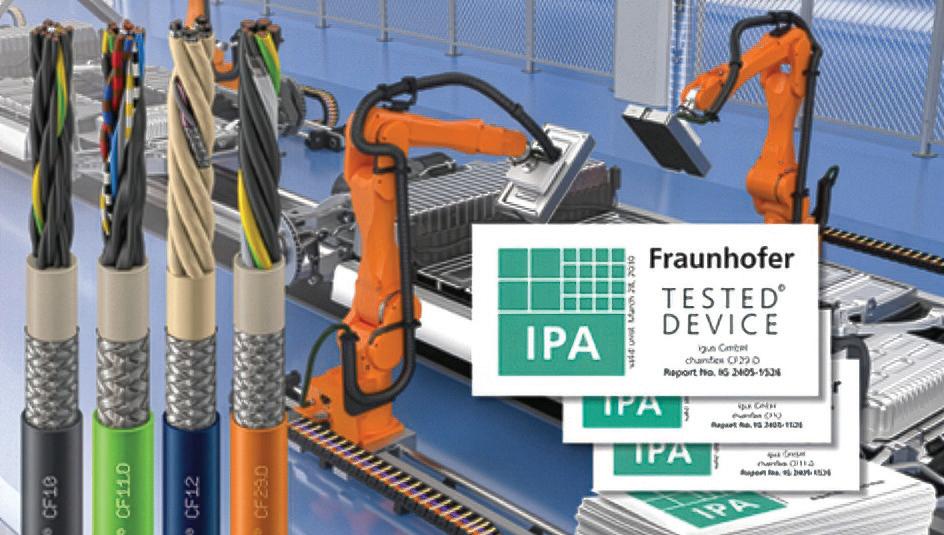
In lithium-ion battery manufacturing, production purity is critical. Dust, particles, and moisture can compromise quality and shorten product life. Dry cleanrooms — where relative humidity is typically below 1% or just a few ppm — protect sensitive materials, such as electrolytes, from chemical reactions. However, many machine components fail under such harsh conditions.
“Many components are susceptible to wear and tear due to the dry air, so they have to be replaced within a very short time,” said Kira Weller, product manager of e-chains and cleanroom expert at igus.
Earlier this year, igus announced that its halogen-free chainflex thermoplastic elastomer (TPE) cables were qualified for IPA dry cleanroom classes 4 and 5 by the Fraunhofer Institute for Manufacturing Engineering and Automation (IPA). This certification ensures customers in highly automated battery production receive energy supply solutions with a guaranteed service life of up to four years.
The certification now covers the 238 chainflex cables, the company’s high-end TPE cables, including control, bus, motor, robot, servo, and measuring system cables, specially developed and tested for use in the energy chain.
After extensive testing in igus’ Cologne lab, the cables earned the two highest IPA dry cleanroom classes, 4 and 5. The certification guarantees low particle emissions under long-term stress and reliable material resistance, which are key for modern automation in battery production.
These TPE cables are standard catalog items, available from stock in lengths starting at 1 m, without cutting fees, small quantity surcharges, or packaging costs. DW
igus igus.com
WHITTET-HIGGINS manufactures quality oriented, stocks abundantly and delivers quickly the best quality and largest array of adjustable, heavy thrust bearing, and torque load carrying retaining devices for bearing, power transmission and other industrial assemblies; and specialized tools for their careful assembly.
Visit our website–whittet-higgins.com–to peruse the many possibilities to improve your assemblies. Much technical detail delineated as well as 2D and 3D CAD models for engineering assistance. Call your local or a good distributor.
Many manufacturers elevating work platforms (MEWPs) use ac induction motor systems (ACIMs) to drive the hydraulic pump powering the machine’s lift function. These motors are often bulky and inefficient, so MEWP manufacturers seek alternative solutions.
Compared to ACIM, synchronous reluctance assisted permanent magnet (SRPM) technology can deliver higher torque and power in a more compact design. At the Agritechnica 2025 show, Danfoss Power Solutions announced the launch of its Editron EM-PMI180 low-voltage electric motor, a 48-volt SRPM motor designed to drive a hydraulic gear pump in compact electric machinery, powering the machine’s work functions. The PMI180 is suitable for boom lifts, scissor lifts, compact loaders, and excavators. With an outer diameter of 180 mm, its small size is particularly suitable in small electric machinery, where the battery pack occupies most of the available space, leaving little room for motors, inverters, hydraulics, and other components.
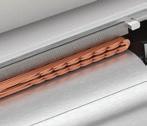
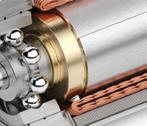
Danfoss claims that the PMI180 motor is 15% more efficient and 15% smaller than an ac induction motor with the same torque and power. It includes hairpin windings, which help increase motor power density and efficiency compared to conventional round wires. The motor and connector have an IP67 rating, protecting from dust, dirt, and moisture ingress. Additionally, the motor’s
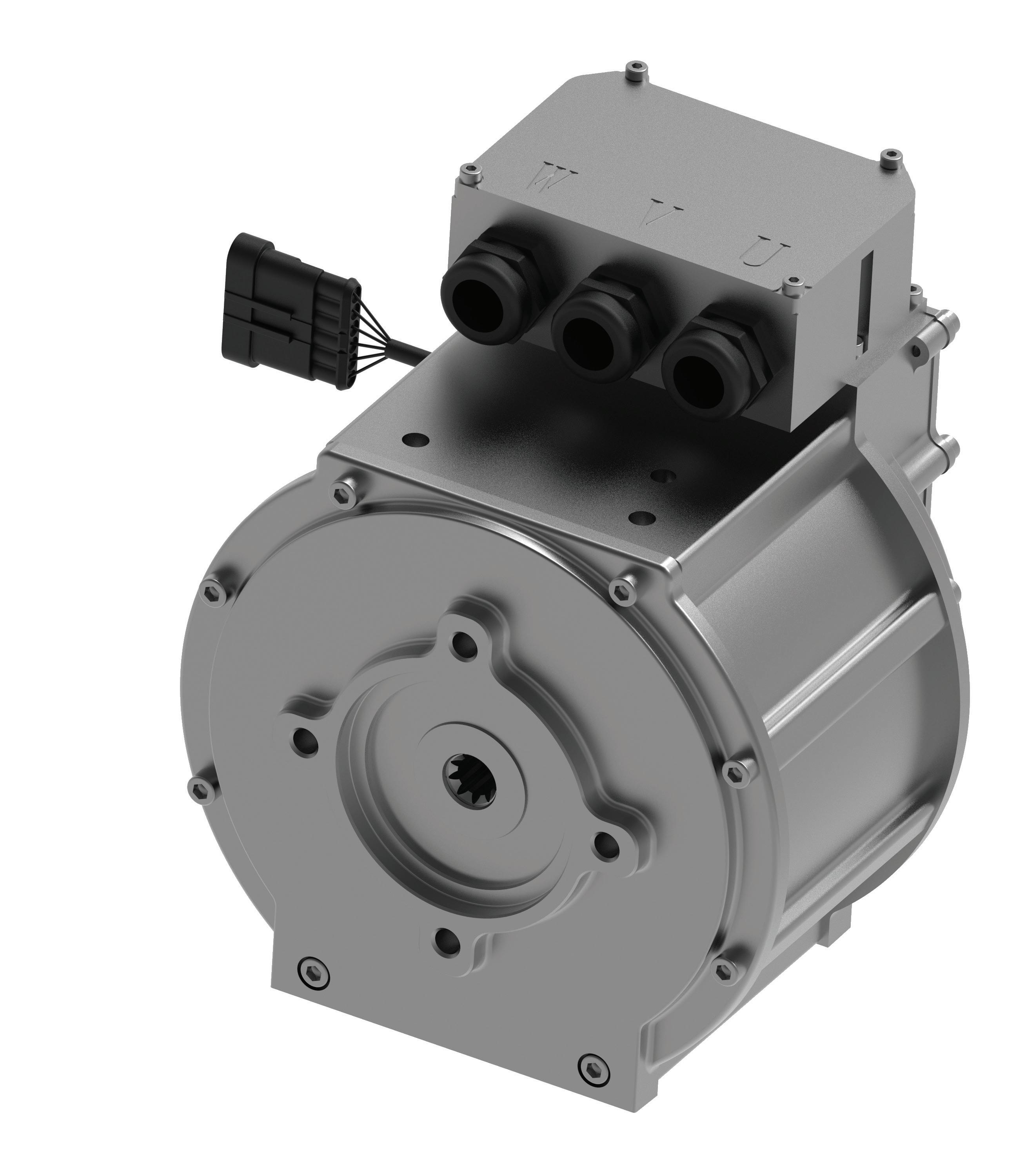
corrosion resistance was validated in a 200-hour salt-spray test.
The motor has a rated power output of 7 kW at 48 volts dc. Its rated speed is 3,000 rpm, and its maximum speed is 4,000 rpm. Rated torque is 22.5 Nm, while maximum torque is 90 Nm. It features a standard gear pump interface for connection to pumps up to 16 cc at 240 bar. The PMI180 works with the EC-C48 inverter, which will be available this year.
In addition to the PMI180, the EDDT180 eDrive will add to the Editron 48-volt portfolio. The eDrive is a propel solution for MEWPs and similar offhighway vehicles that integrates an electric motor, a reduction gearbox, and an electromagnetic brake. The 48-volt system joins the 24-volt system launched in 2024. DW

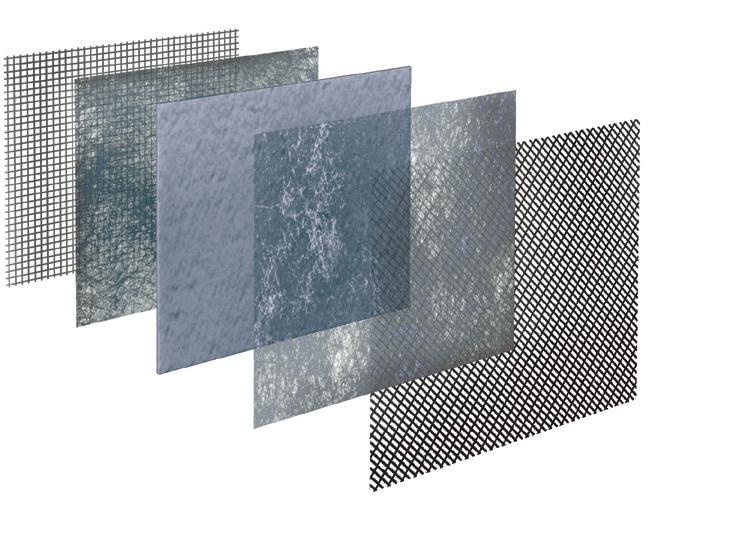
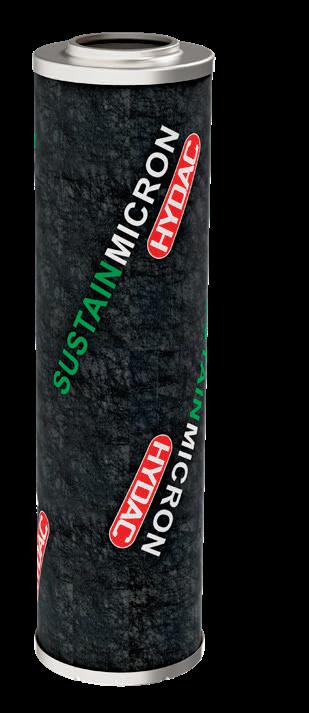
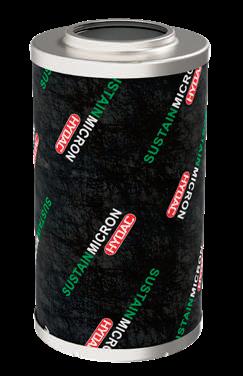
Five unique layers offer first-rate filtration efficiency, high cleanliness levels, significant energy cost savings and sustainable filtration solutions for a variety of mobile and industrial applications.
Electrostatic optimization now as standard
Additional reduction in differential pressure by up to 30%
High filtration efficiency despite reduction in differential pressure
High contamination retention capacity and proven quality
Intelligent element design for preventing mesh damage
Longer oil service life, low wear, higher system safety
Saves valuable resources and reduces costs
Ensures compliance with relevant fluid cleanliness classes
Long element service lives and longer intervals between element replacements
Near unlimited dynamic stability

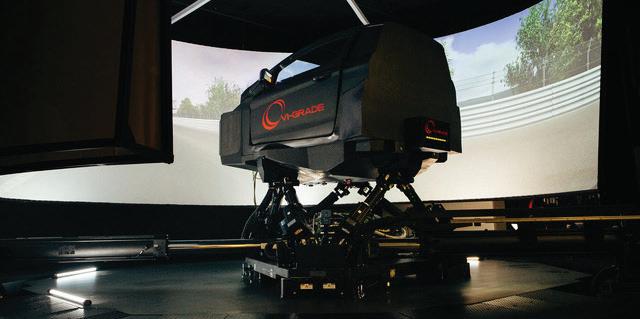
With software-defined vehicle design and electrification trends influencing vehicle behavior, isolated subsystem testing no longer provides enough insight. Engineers need fullspectrum simulation environments that integrate vehicle dynamics, structural response, and NVH (noise, vibration, harshness) in real time. This integrated knowledge can enable earlier validation, faster iteration, and fewer costly physical prototypes.
VI-grade is one company that develops such systems for engineers seeking highly integrated, immersive development workflows. For instance, its HyperDock cockpit is an ultralightweight, carbon-fiber system engineered to significantly improve stiffness, reduce inertia, and enhance simulator responsiveness. By replacing the traditional top disk with a direct
actuator interface and integrating vibroacoustic feedback, the system enables engineers to evaluate ride, handling, and noise-and-vibration behavior with increased realism and precision.
The HyperDock made its debut in North America in March at Multimatic’s Vehicle Dynamics Center in Novi, Michigan. The system elevates Multimatic’s existing DiM250 driving simulator, originally installed in 2020, into a full-spectrum simulation platform, enabling the combined development of vehicle dynamics and NVH attributes within a single, immersive environment.
Last summer, VI-grade launched its advanced HexaRev driver-in-theloop (DiL) motion platform. HexaRev is a high-performance 6-DoF platform designed to overcome the limitations of traditional hexapod-based motion systems. While conventional designs
suffer from restricted motion envelopes during multi-axis input, the new platform introduces a new mechanical and kinematic concept that expands usable motion during complex, combined maneuvers. This enables development teams to evaluate vehicle behavior in highly dynamic scenarios, such as braking while cornering or acceleration through a chicane, with greater realism and accuracy.
When combined with HyperDock, the HexaRev platform becomes a full-spectrum simulator (FSS) capable of delivering synchronized motion, vibration, and sound for a complete sensory experience. DW
VI-grade vi-grade.com

EDITED BY MIKE SANTORA
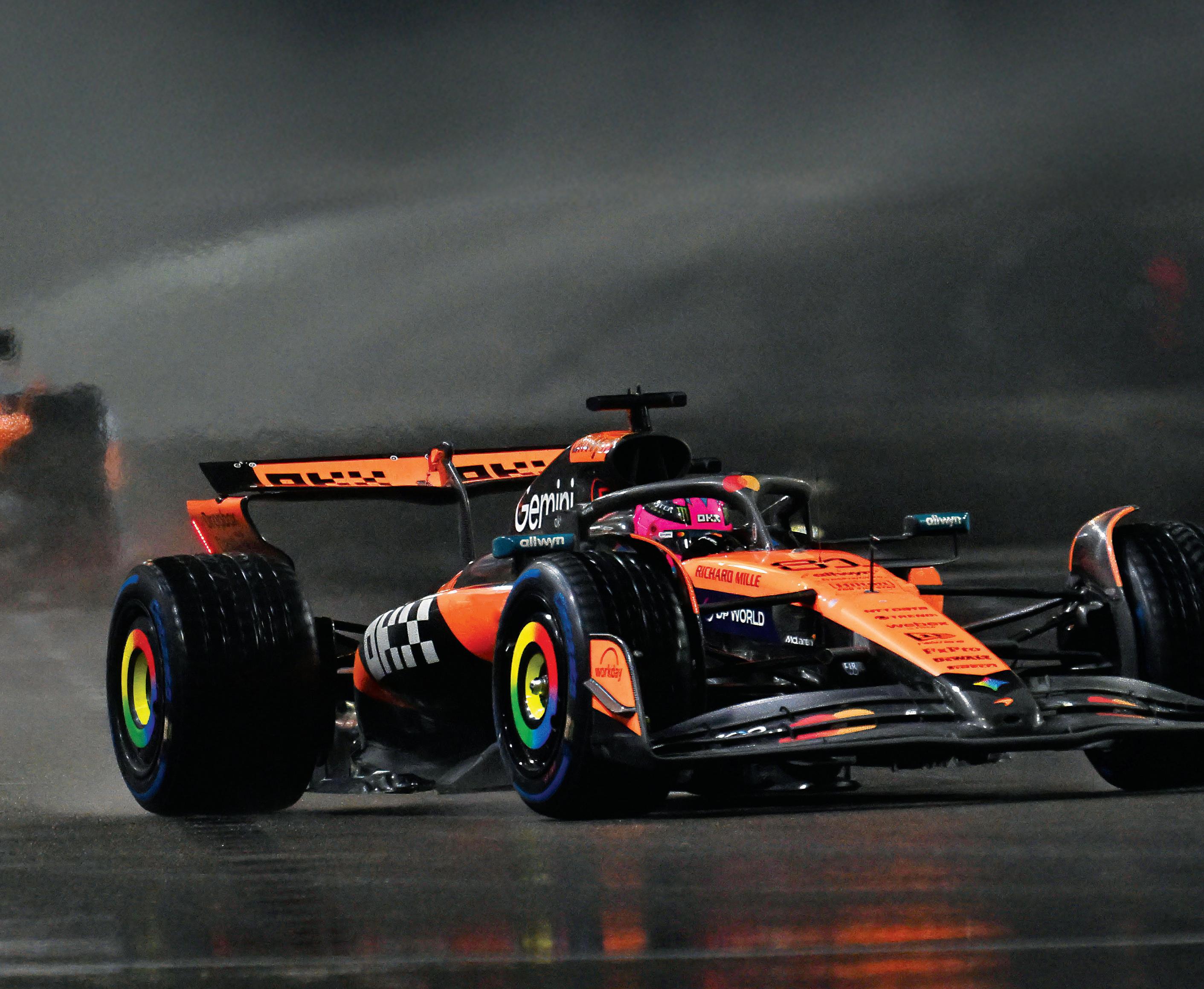
As the standing Formula 1 (F1) Constructors’ Champions, McLaren recognizes that incremental gains in every component deliver a competitive advantage.
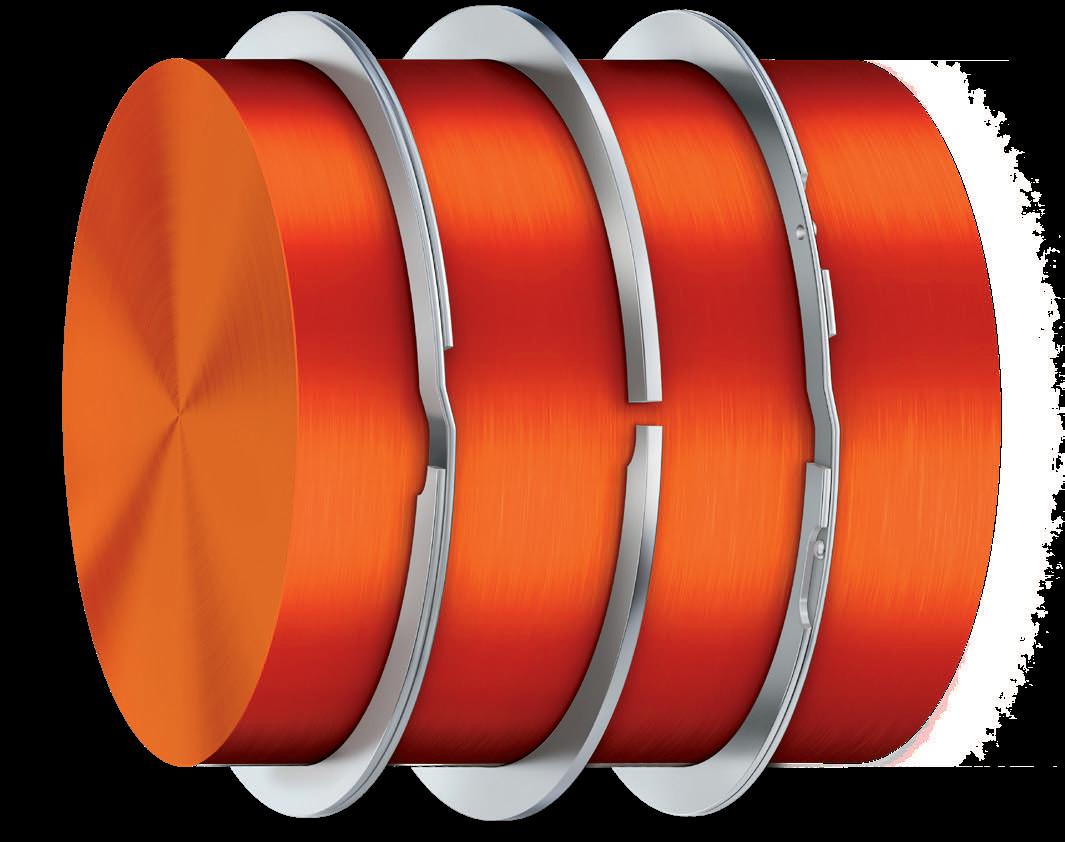
Greene Tweed, an advanced materials and high-performance solutions company, recently announced the successful development and deployment of its Metal-SpringEnergized (MSE) seals for McLaren Mastercard Formula 1 Team’s limitedslip differential clutch pack. The collaboration represents the step in the ongoing partnership between the two companies and continues to fuel advances in motorsports engineering.
As the standing Formula 1 (F1) Constructors' Champions, McLaren recognized that incremental gains in every component have the potential to deliver a significant competitive advantage. When McLaren needed
a sealing solution and needed it fast, they turned to Greene Tweed for a sealing option that would work for the hydraulic actuator that clamps the friction clutch inside the differential. This system optimizes torque distribution for maximum traction and cornering speed. Seal integrity is paramount, as significant leakage would cause a catastrophic loss of system function and force the car to be retired.
“This project was a true example of collaborative engineering at its best,” said Matthew James, Director of Engineering and Product Design at Greene Tweed. “Our teams worked side-by-side to validate seal behavior under real operating conditions, refining
the design through testing and iteration. The result is a robust, leak-free sealing solution that supports McLaren’s pursuit of marginal gains while meeting the long-term demands of Formula 1 racing.”
Greene Tweed developed two MSE seal assemblies featuring a unique C-shaped profile and a corrosionresistant metal spring to provide uniform sealing force. Designed to operate under the application’s extreme conditions, including temperatures up to 150°C (302°F), pressures from 5 to 250 bar (72.5–3,625 psi), and exposure to aggressive fluids, the seals use Greene Tweed’s proprietary Avalon 44 (PTFE). This material ensures superior wear resistance, high strength, and
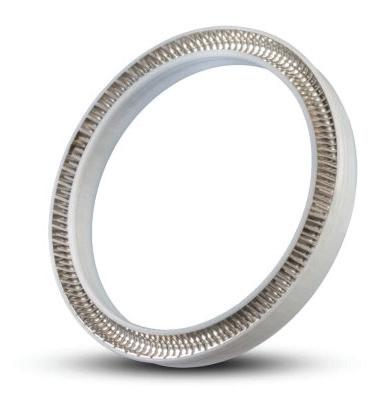
Designed to operate under the application’s extreme conditions, including temperatures up to 150°C (302°F), pressures from 5 to 250 bar (72.5 - 3,625 psi), and exposure to aggressive fluids, the seals use Greene Tweed’s proprietary Avalon 44 (PTFE).
Festo festo.com
low friction, meeting the exacting demands of mission-critical industries — from motorsports and aerospace to semiconductor manufacturing and energy — where reliability and precision are crucial.
“Given Greene Tweed's longstanding reputation for excellent quality, choosing them was an obvious choice for us,” said James Manning, Head of Transmission at McLaren Mastercard Formula 1 Team. “The MSE Seal has consistently demonstrated its durability and reliability within our system. We’re confident this is only the beginning of a long-term collaboration to drive even greater performance in future seasons.”
Following rigorous testing on a dynamic transmission test rig, Greene Tweed and McLaren engineers have successfully qualified the nextgeneration MSE sealing system for the 2026 season. This more robust version, reinforced with backup ring support and a 301SS finger spring, has enabled McLaren to develop a more compact version of their system for future performance gains. DW
Greene Tweed gtweed.com

Are your power cord suppliers getting you up, down, and all around because of tariffs? You shouldn’t have to pay more for imported cords when you can get them right here in the United States of America. Interpower cords are durable and reliable, and they come with 1-week U.S. lead times. Our North American and international power cords and components are manufactured in accordance with our product quality plan: hipot testing, continuity testing, and ground testing with multiple inspections.
• 1-week manufacturing lead times
• Same-day shipping on in-stock products
• No tariffs, no surprises
Phone: (800) 662-2290
info@interpower.com
EDITED BY MIKE SANTORA
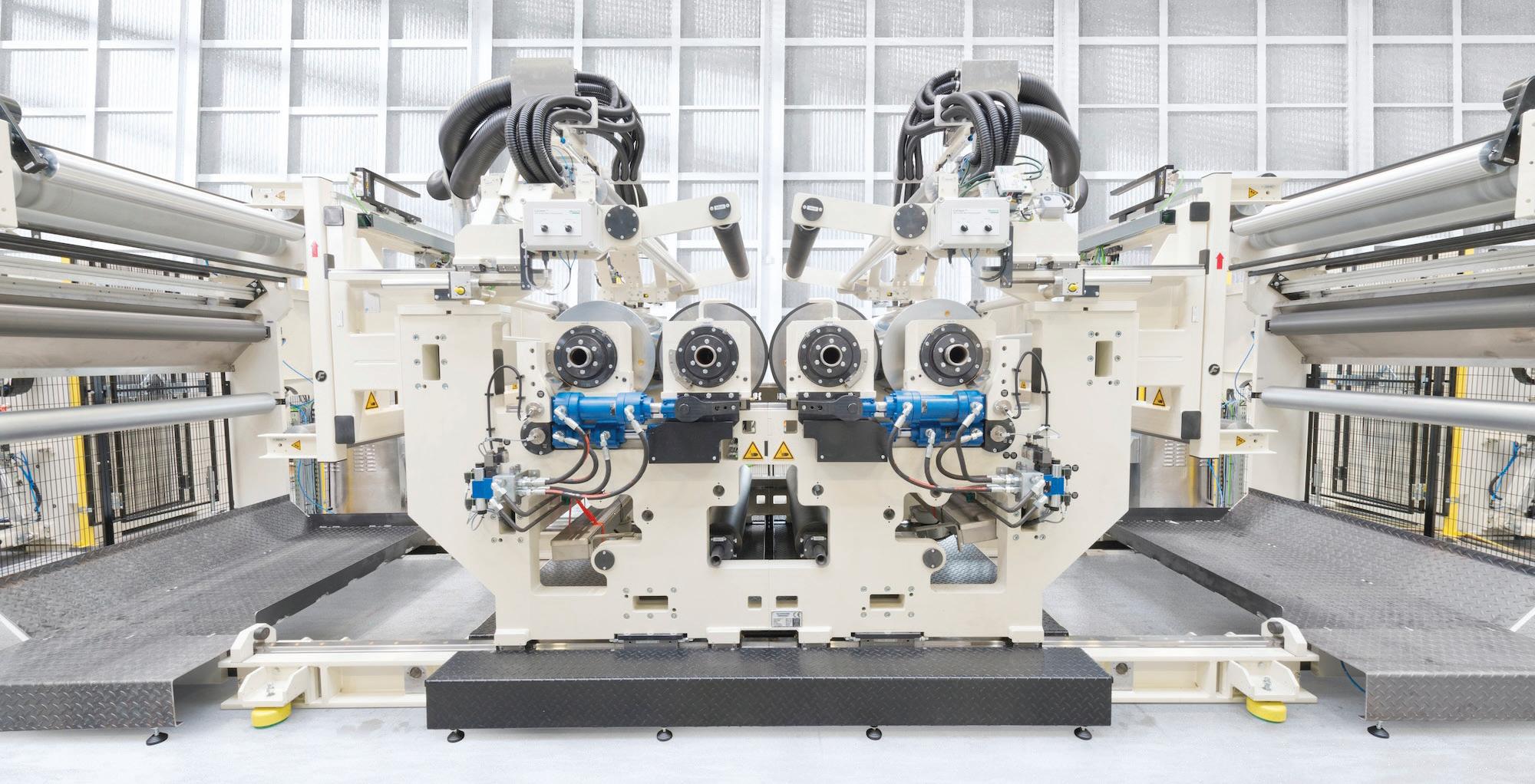
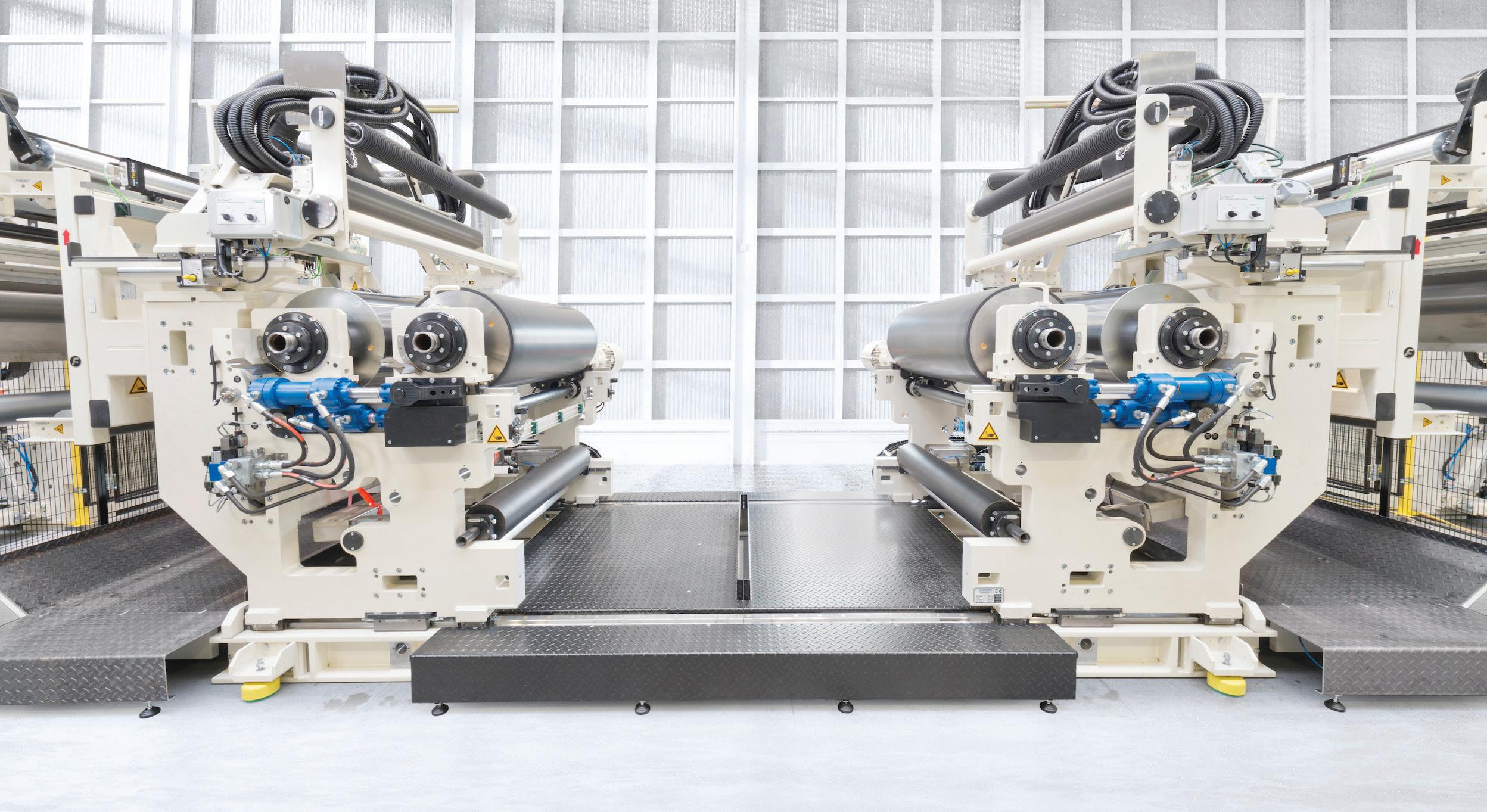
In a large laminating unit by SAUERESSIG Engineering for laminating steel strip on both sides, rubber rollers press a protective PET film onto hot steel strip. Despite cooling, these rubber rollers do wear down and need to be replaced regularly. Four profiled rail brakes by mayr power transmission ensure that the laminating process, which takes place 24 hours a day, only has to be interrupted briefly to replace the rollers.
SAUERESSIG began manufacturing printing and embossing rollers for the packaging and printing industry around 70 years ago. Today, the company is a highly innovative mechanical engineering company with a diverse portfolio. As a leading full-range supplier of calendering, embossing and rotary processing systems in standard and special designs, the company supplies a wide range of industries.
The machine solutions include both complete production lines and customized systems for embossing, finishing, coating, smoothing, perforating and calibrating sheet materials such as paper, film or metal sheets. The company offers comprehensive expertise from the initial idea to the final customized solution, including planning and designing mechanics, drive and automation technology, pre-assembly and commissioning in the factory, and final approval at the customer's premises.
One such customized system, no less than six meters long and around four meters wide, coats a steel strip on both sides with a thin protective PET film. Harald Bartsch, Head of Design/Expert Advisor at SAUERESSIG Engineering, describes the machine's design concept as follows, “The complete laminating unit consists of two nearly identical, symmetrically arranged side frames, each
with a rubberized laminating roller and a contact cooling roller. For laminating, the steel strip moves vertically between the two laminating rollers through the laminating unit at a conveying speed of up to 250 m/min. The laminating rollers press the film onto the hot steel strip from both sides.”
The steel strip's high temperatures of up to 260 °C heat up the rubber coating on the laminating rollers. Water-cooled contact rollers dissipate this heat and limit the rubber coating’s temperature to a maximum of 90 °C. Despite the cooling, the rubber linings of the laminating rollers are subject to wear and must be replaced regularly. “As the laminating process should ideally be running continuously all year round and 24/7 without interruption,” explains Harald Bartsch, “the time required to replace the laminating rollers must be kept as short as possible. Therefore, the laminating
unit is designed in such a way that the automated roller replacement only takes half an hour.”
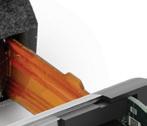
The laminating unit consists of two symmetrically arranged side frames. Both side frames are mounted onto profiled rail guides and can be separated axially to replace the worn laminating rollers. While the coating process is in progress, profiled rail brakes of the ROBA guidestop series by mayr power transmission hold the two system parts in position backlash-free and with high rigidity. To replace the rollers, these safety brakes are released hydraulically, the two machine halves can be moved apart via rack and pinion gears and the laminating rollers can be replaced.
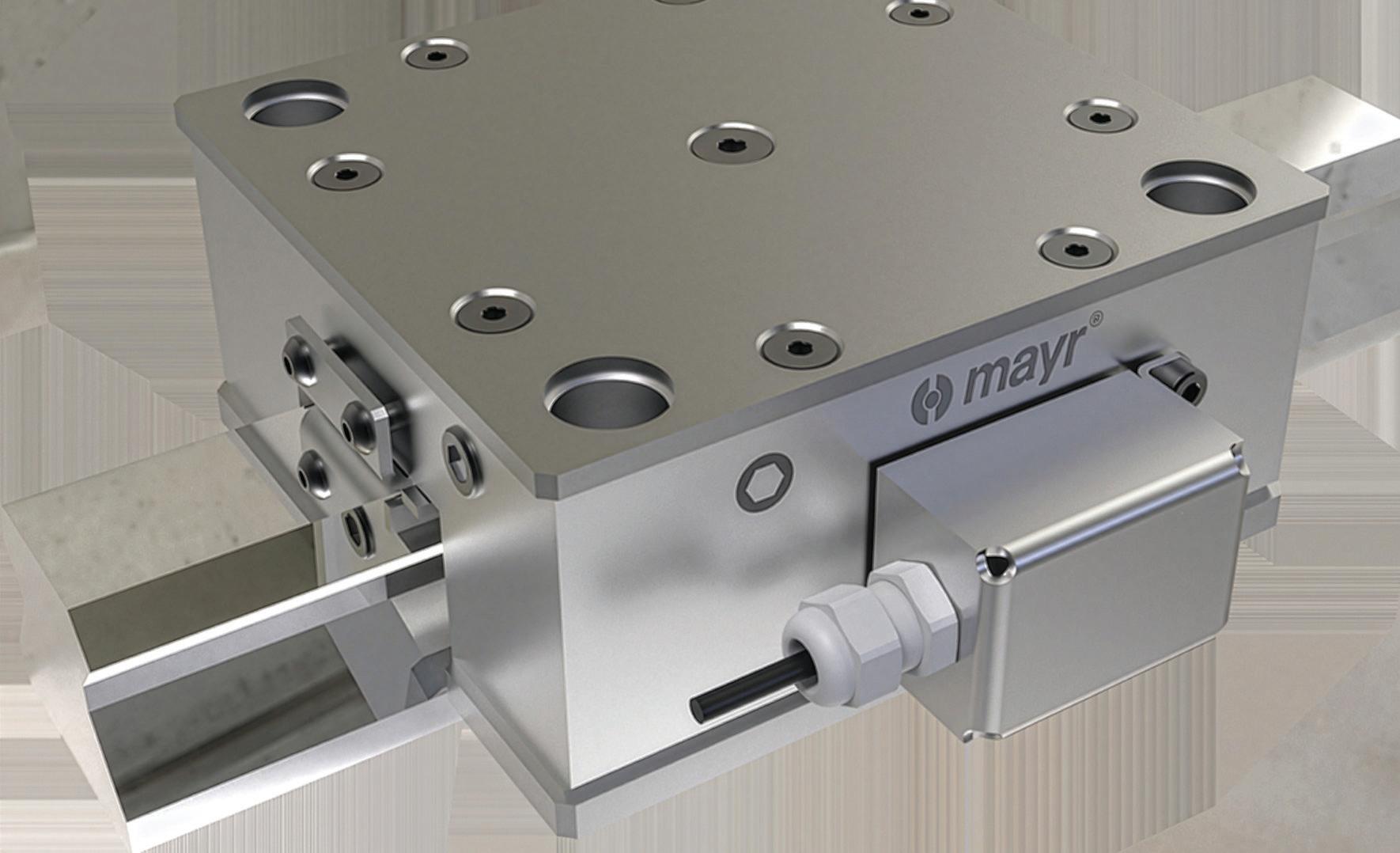
The ROBA guidestop profiled rail brake serves as a reliable safety brake and backlash-free clamping unit. It can brake movements safely and quickly and clamps the axes rigidly and backlash-free.
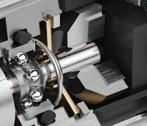
Just like all safety brakes by mayrpower transmission, the profiled rail brakes also work according to the fail-safe principle. This means they are closed in de-energized condition. The ROBA guidestop brakes use pretensioned cup springs to press the
brake shoes against the 'waist' of the profiled rail, thus clamping it in place.
The hydraulic brake design used in the SAUERESSIG laminating unit is released using a nominal pressure of 70 bar. This is comparatively low in relation to the very high holding forces. The brake mechanism is dimensioned for relatively large strokes. As a result, the brake can compensate for production tolerances on the profiled rails without losing braking force. The ROBA guidestop safety brakes are equipped with two independent brake circuits: This allows for either double holding forces or a redundant design.
The profiled rail brakes are therefore directly mounted onto the masses which are to be braked or held. This minimizes the risk of hazards, particularly with gravityloaded axles, as drive elements between the motor and the moving mass, such as spindles, spindle nuts, shaft couplings, and gears, do not affect safety. This is different for concepts with motor brakes, as all drive elements must transmit the braking torque to the carriage. Furthermore, every element between the brake and the carriage has a

Are you paying extra for tariffs on overseas cords and cord sets? We make ours right here in Iowa and ship them with 1-week U.S. lead times. And, with the cost of overseas shipping, why not choose dependability? Interpower uses superior raw materials while exceeding UL and VDE testing standards to manufacture power cords and components. No other cord maker in the U.S., perhaps even the world, can quick-change die molds to make 40 different country-specific cord sets in one week.








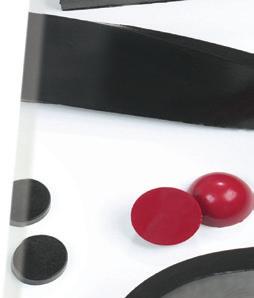
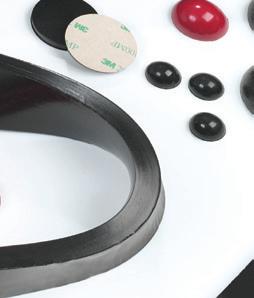

negative effect on rigidity. ROBA guidestop safety brakes are therefore considerably more rigid than motor brakes, rod brakes or band brakes, which are often subject to backlash. ROBA guidestop safety brakes by mayr power transmission are available in pneumatic or electromagnetic versions in addition to the hydraulically opening design. The hydraulically releasing ROBA guidestop series covers nominal holding forces from 5000 to 34000 N with four sizes. The pneumatically releasing version offers the greatest variety of options: Six sizes with nominal holding forces from 700 to 15000 N are available in the standard product range. Both versions (i.e., pneumatically and hydraulically releasing) are available for all common linear guides. Electromagnetically opening rail brakes do not require any pneumatic or hydraulic equipment. mayr power transmission develops this variant on request, customizing it for the respective application. DW










BY ARNE LINDER • PRODUCT MANAGER DRIVES • KOLLMORGEN
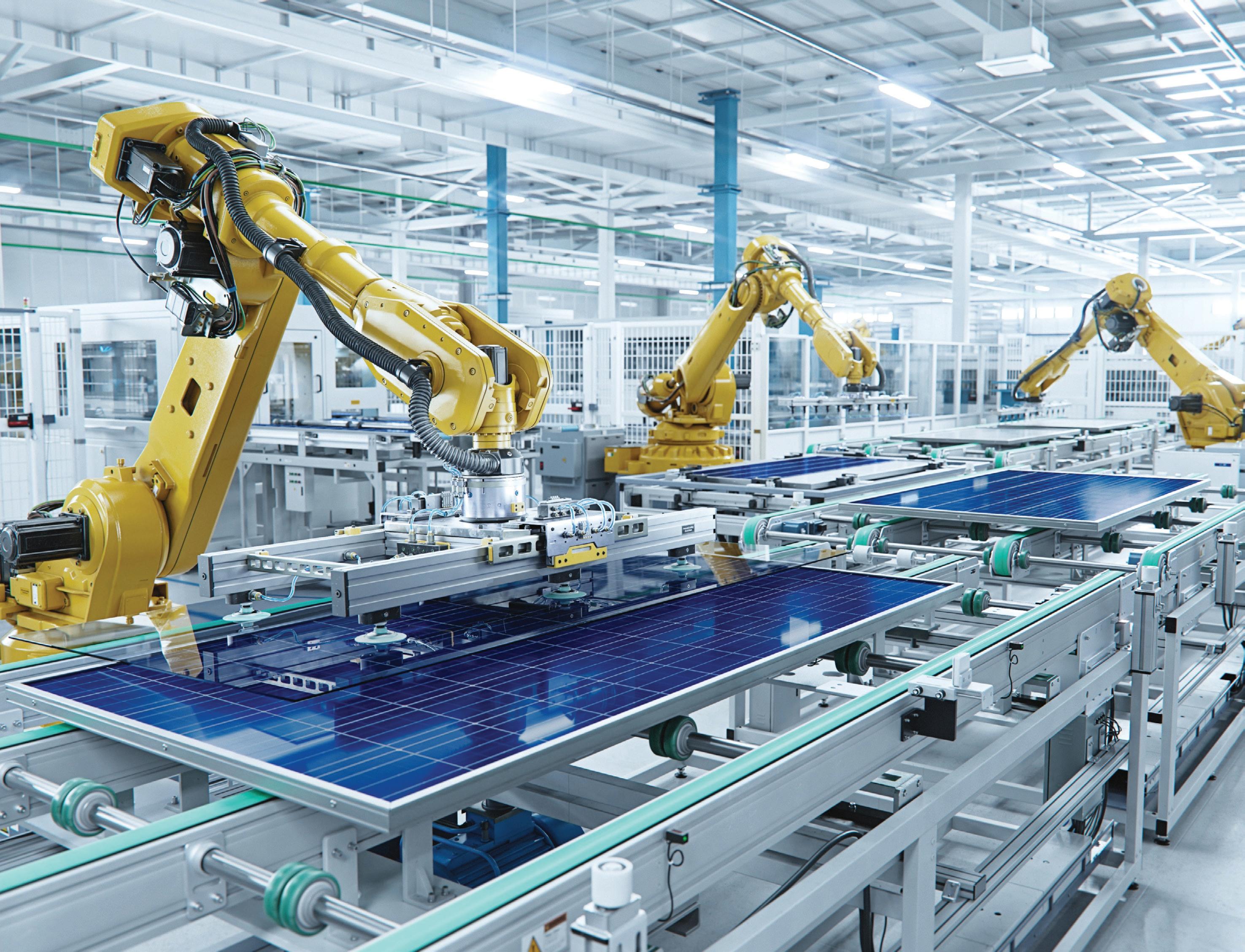
When people talk about mechatronics, it’s often framed as something futuristic—the next big leap in automation. In truth, it describes something engineers have been working toward for decades: designing machines where the mechanical, electrical, and control systems work together as one.
What’s changed is the level of sophistication we can now achieve, and the expectation that we should. The idea of building a machine from isolated parts, each with its own setup and software, no longer fits how modern automation works. A mechatronic approach instead looks at the entire system as a single organism, where the motor, drive, controller, and software are not just compatible, but interconnected.
The idea of building a machine from isolated parts, each with its own setup and software, no longer fits how modern automation works.
Correctly applied to today’s motion systems, this concept can deliver greater precision, faster commissioning, and easier long-term support.
You can see this in how advanced machines are now designed and developed. Rather than treating electrical, mechanical, and control engineering as separate stages, they’re part of one continuous process: from virtual design and simulation to physical
commissioning and maintenance. Each discipline informs the others, and the end result is a machine that moves and evolves as a unified system.
For a long time, setting up a servo system meant — rather ironically, for automation projects — doing everything by hand. Engineers had to enter the motor parameters into the drive manually, refer to lookup tables, and hope nothing was mistyped. Small errors in those numbers could lead to poor performance, instability, or unexpected behavior. Even something as minor as a misplaced decimal point could have catastrophic consequences, potentially causing a motor to damage itself or rapidly overheat.
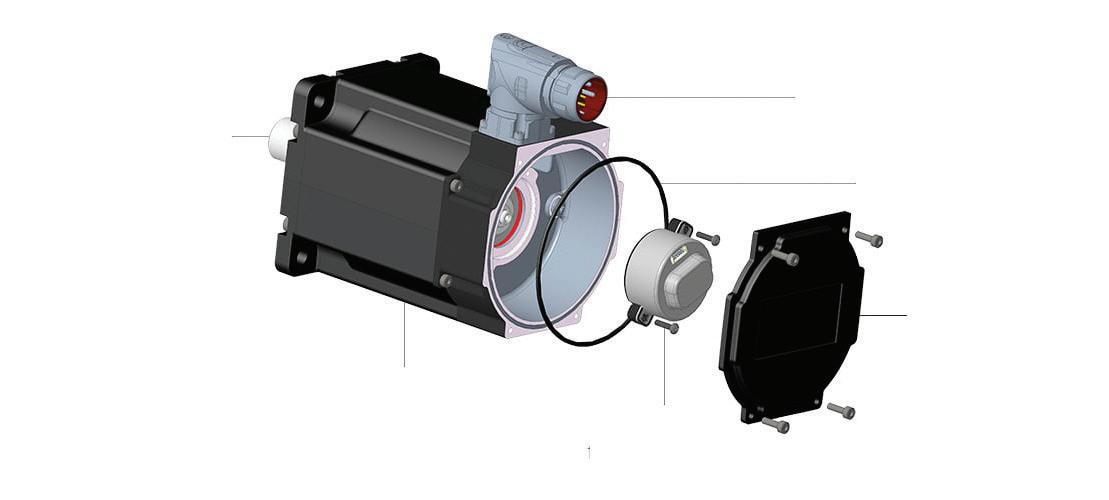
Modern systems, such as Kollmorgen’s own SFD-M feedback device, can take much of that risk away. Today, a properly designed setup can allow the motor and drive to automatically identify and configure each other, loading the correct parameters for torque, current, and speed control without the need for slow (and potentially incorrect) manual entry. That not only saves time but also ensures that the system performs as designed from the first test move.
This is what we think of as the first stage of mechatronic integration: getting the key elements to cooperate automatically. It may sound simple, but it represents a big step forward for commissioning and consistency. The engineer can focus less on configuration and more on the dynamics of the machine itself.
The next step is bringing that same simplicity to the control layer. Many OEMs have long-standing automation environments and communication protocols they prefer to use. That’s why many modern drives are built to operate agnostically, communicating across
multiple industrial networks by default.
For those developing entirely new systems, fully integrated environments such as the Kollmorgen Automation Suite make it possible to handle motion, PLC logic, safety, and visualization within a single workspace. It’s a practical example of mechatronics in action — combining mechanical intent and digital control in one place.
One of the key aspects of mechatronics is understanding how components will fit together and perform as a whole. This is an area where modeling and simulation tools can deliver huge benefits, as they allow engineers to explore motor and drive combinations virtually, predicting performance before any hardware is deployed. Later, when motion control and PLC logic are developed in an integrated software environment, coordinated motion can even be tested and refined virtually — often before a control cabinet has been wired.
And once the machine is operational, a well-integrated system can help dramatically simplify maintenance and support. For example, when components from multiple vendors are stitched together, identifying the source of a fault can be time-consuming and
uncertain — the motor manufacturer says the issue must be caused by the controller, the controller supplier blames the drive, and so on.
A unified system removes that ambiguity, allowing issues to be traced and resolved quickly. It also makes upgrades and replacements more straightforward, as new components can be validated and fitted without redesigning the surrounding system.
The ability to connect the physical and digital worlds will only become more important. The growing use of simulation and digital twins aims to bring mechanical, electrical, and control design into a single virtual environment, where a complete machine can be tested and validated before a prototype is built. While experience tells us that removing physical testing entirely is unlikely, each step toward deeper integration brings us closer to highly optimized designs out of the box. DW
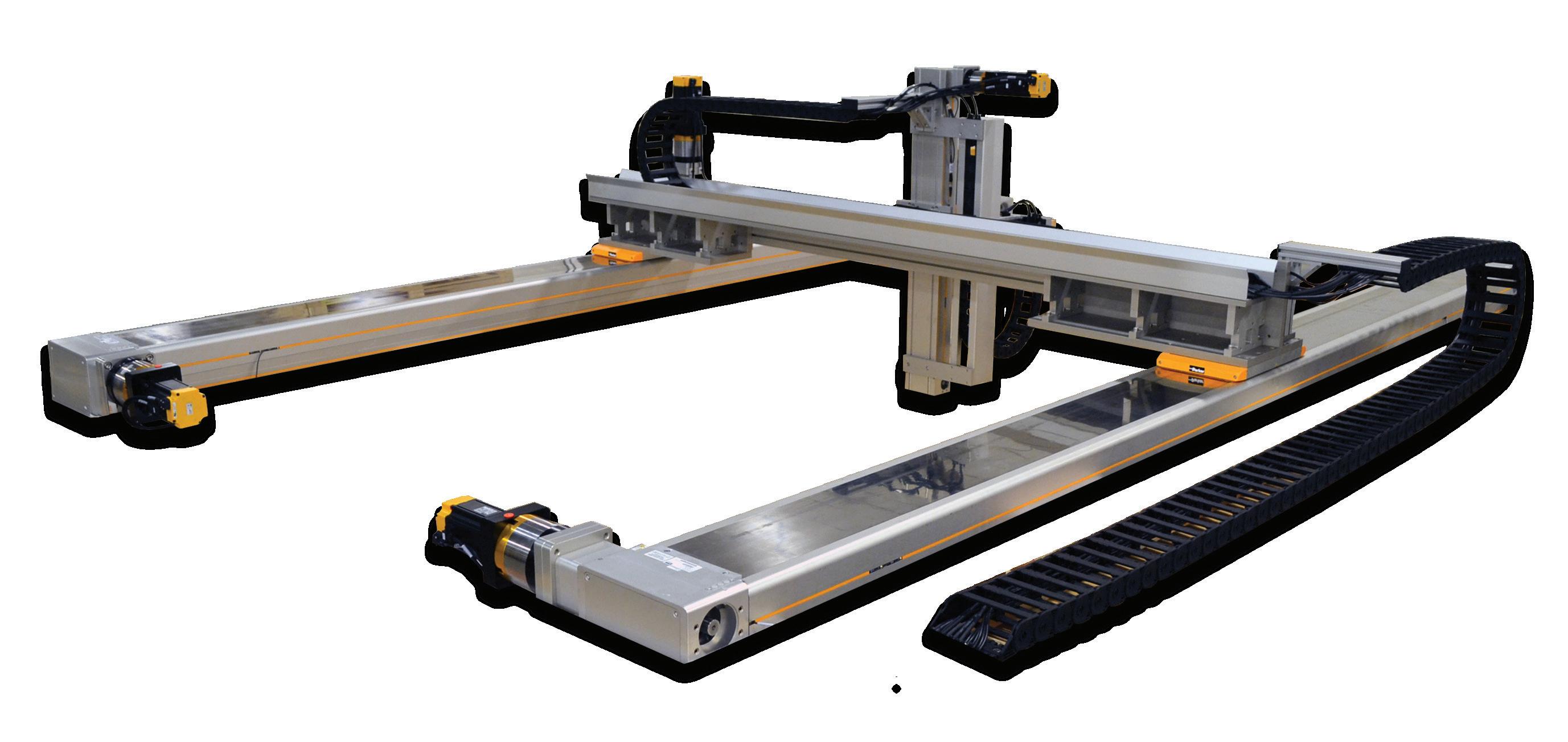
Gantry systems can be predesigned with listed specifications, but most are designed for specific application requirements from standard actuator building blocks.
COREY FOSTER VALIN CORPORATION
This series has focused on highprecision motion control. In such applications, system performance is often judged simply by the specifications of the mechanics alone. The actuators are typically sorted by a standard set of specifications such as repeatability, accuracy, and load capability. For many applications, this is all that’s required. Others will need an understanding of those specifications to make sure the basic assumptions for them are met during installation. Achieving true precision, however, requires a deeper understanding of the full motion control system from the mechanics to the motors, drives and controls.
Here we continue to explore how each layer of technology contributes to the overall system performance. The first article in the series looked at the mechanics, examining critical factors that are often overlooked such as bearing deflection, body stiffness, and structural smoothness. The second article looked at the motors, examining their designs, construction, quality and other factors. In the third part of the series, the discussion focused on the importance of the designs and features of drives and controls for the system. Lastly, here in the fourth and final article, we end with the critical elements of the system integration itself.
A common theme running throughout all such cases is that there are details that do not show up on data sheets but can make or break the high-performance expectations of the entire system. As motion systems push beyond micron-level accuracy, traditional specifications start to lose their typical meaning and relevance, making nuanced engineering decisions essential. This series aims to help engineers, designers, and system integrators recognize just how important each decision is in putting a highprecision motion system together.
In the previous articles, we discussed three general tiers of performance to consider in a motion control system:
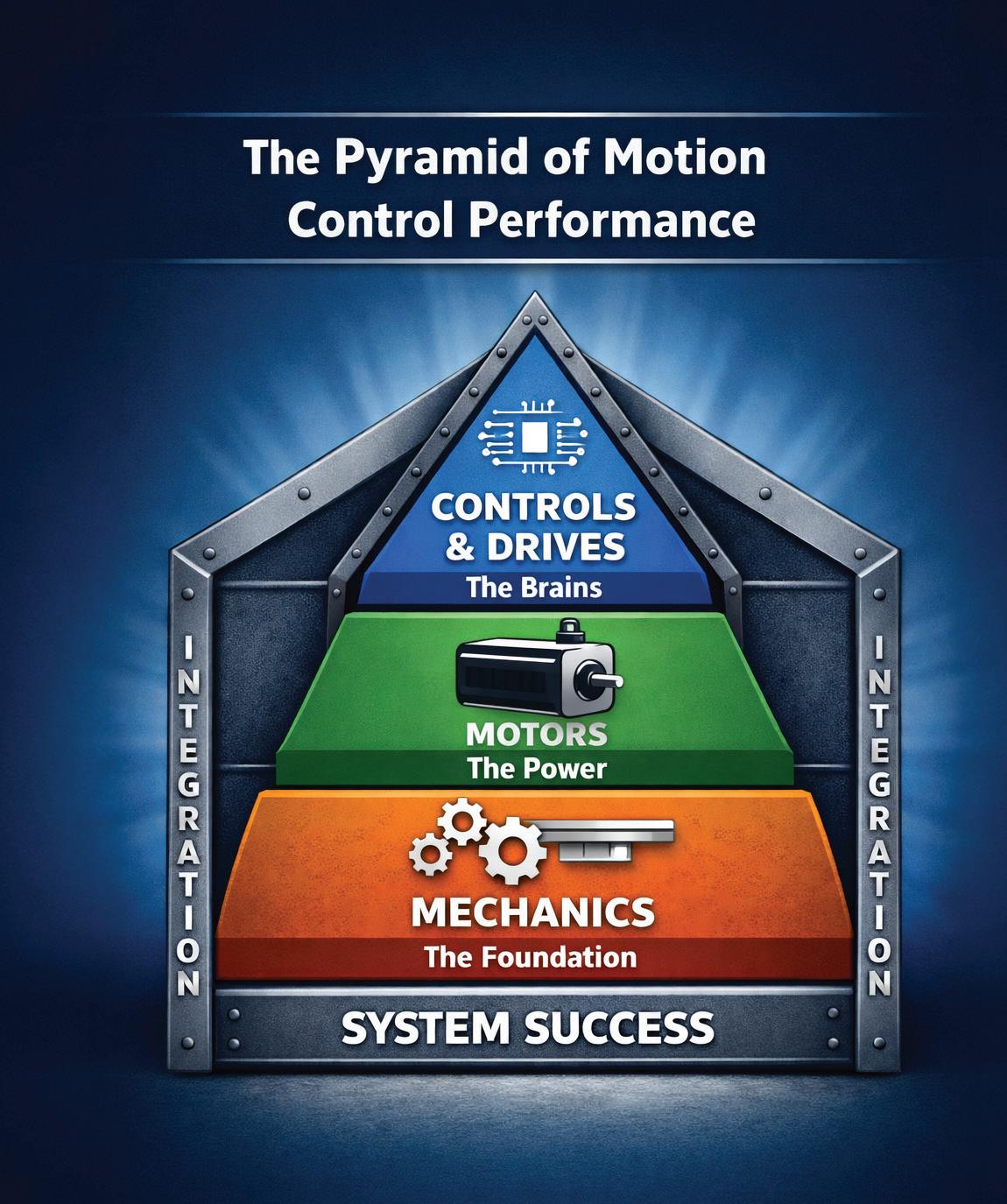
basic, specification-level, and pushingbeyond-the-specifications performance. This even applies to the integration of the components.
Many ideas get thrown together and they just work; or at least at first. For example, the concept was good and the initial assembly proved it out. But as time wears on, problems may arise or a better level of performance is needed for the next generation of that same concept. If you’ve ever made a paper airplane, you get the point. You folded the paper into a simple airplane and it flew. Then, after repeated flights and crashes, it stops flying as well. And then you get the desire to make it fly farther and straighter. Now the folds have to
be more precise, crisper and cleaner, even with the same initial design.
those components is based upon hidden assumptions that the system has to meet in order for those components to be able to perform to their stated specifications. For example, mechanical actuators assume certain flatness and stability of their mounting surfaces, while motors assume certain air flow and heat sink conditions. For drives and controllers, the assumption is that clean power is available.
A precision linear motor is highly affected by its mounting surface and its alignment with the linear bearings that are holding the load. Using a linear motor with linear guides on both sides creates a three-component system that must be precisely aligned. If they are not, then mechanical binding can occur that, at best, creates uneven friction and wear and, at worst, creates binding that stops the motor from moving all together.
System integration is the all-enveloping design process that brings together the mechanical components, motors, and drives and controls for achieving precision motion control.
With motion control systems, the same principle applies. Even the best-designed motion control subsystem will fall short if the overall system isn’t thoughtfully engineered or properly integrated. Optimal performance doesn’t come from the sub-system, but from the whole system itself.
System integration is the art of making all the mechanics, motors, drives and control components work to their full potential in combination with the infrastructure of the rest of the system around them. Every specification of
Two long linear belt and pulley actuators that are parallel in a system have the same challenge as the linear motor and guides. However, they have an additional challenge of their travel lengths needing to be tuned to match each other. If their belt tensions vary, then the distance per revolution of the pulley will vary. This may be minor in the short travel, but over the course of two meters of travel, a 5-mm variance between the two actuators at the end of travel can be significant in a system requiring precise movements.
Controllers and drives are usually integrated in lab or workshop environments where the electrical power is clean and strong so proper grounding techniques, shielding, and EMC filters may not be needed. Once that same system is deployed into the field however, those short cuts will allow dirty power sources to affect the performance of the system.
That same system assembled in the workshop may be getting installed in
a hot environment. Hot environments can cause thermal expansion which can directly impact all the mechanical alignments and performance of the motors keeping the system from even getting close to meeting its performance requirements.
For systems using precision motion control sub-systems, there are several practices that should be regularly implemented.
The surfaces that actuators are mounted to need to meet the assumed standards of the actuators and the application itself. Dowel pins can be used between the actuators and their mounting surfaces which may include another actuator. This helps with the repeatability of the system’s assembly if and when it is disassembled and re-assembled.
For axes that will have encoders, whether they are linear, rotary, or ring-type encoders, proper alignment is often critical. Some of these require proper fixtures and measurement tools to ensure accuracy.
Cable routing is a discipline that is often overlooked. Lower-power signals should run separately and perpendicularly to the high-power signals. They should never be run in parallel in the same cable tray over long distances. Coiling up the extra high-power cable should also be avoided. Ultra-high precision systems can easily be affected by the environment around them, so isolating them from that environment can be critical. Vibration dampers will help as will temperature-controlled rooms. The highest precision systems are used and measured in temperature-controlled rooms that are on separate foundations from the rest of the facilities around them.
Here are some vital questions to consider during the integration process:
• What assumptions are buried in the product specifications?
• What performance dependencies exist between the components and sub-systems?
• Is one component or sub-system being over-specified while another one is under-specified?
In the end, it is the questions unasked that will come back to haunt the system. If the application requires any sort of high-performance, be sure to think like a systems engineer, not a product selector. DW











ONE AXIS OR FIFTY.
Servo hydraulic or servo electric.
Position, velocity, or force control.

Connect to sensors and actuators directly or through EtherCAT.

Here, we outline how some linear components — including guides, cylinders, and even electric actuators — go strong for presses.
LISA EITEL · EXECUTIVE EDITOR
Linear motion abounds in the machine-tool industry. But unlike machines using linear motion to transport workpieces (and for material handling generally) equipment such as presses use linear motion to apply force to compress, insert, and form assembly elements. Dominant here are heavy-duty linear guideways and hydraulic cylinders or (less common but on the rise) servodriven ballscrew or roller screw axes complemented by linear encoders and safety devices.
Pressing so essential to machine tool, woodworking, and assembly operations needs controlled application of force, position, and timing. Most press machines generate controlled linear force through a vertically oriented ram or slide. The latter are used to compress, assemble, form, insert, bend, straighten, or join metal, wood, rubber, or composite materials or subassemblies.
Any press variations involving assembly, insertion, or clamping
emphasize high-resolution sensing and control of bottoming (seating) and consistent cycle-to-cycle repeatability. Operations are often slow and controlled. Data collection and process verification logic is common to automate confirmation of product output quality. In contrast, punching, piercing, and shearing (and all the high force and impact loading they involve) require press equipment with especially rigid and rugged high-force output — often while maintaining high-speed
production cycles as well. To protect tooling and ensure quality parts output, feedback is common to model and confirm material-breakthrough behavior.
Lastly, forming, bending, and stamping operations need stable force throughout the press stroke — so actuators in presses for these tasks must output high speed and force control. Uniform pressure distribution protects tooling and ensures dimensional accuracy of output parts.
In fact, stamping often proves the most challenging pressing application, because it can involve both workpiece-material variations and shock loading. Where the application is the shaping of large sheet metal sections between matched dies inside a press, motion is cyclical yet moderate. Stamping of small parts on the other hand can involve highspeed deformation and concurrent cutting of a material into shapes predefined by tool geometry.
A tier-one automotive supplier was experiencing roller-screw actuator failures on their damper and bearing presses. These were replaced with hybrid actuators leveraging the strengths of electric and hydraulic technologies to withstand the shock loads.
Equipment designed for this kind of stamping contrasts with press axes on molding and extrusion machinery needing stable clamping forces with pressure that’s maintained over prolonged heating and materialflow processes inside the mold halves. Smooth mold closing and reliable tooling alignment are other requirements.
Hydraulic cylinders absolutely dominate in press equipment — especially those needing the highest forces. But while hydraulic systems reign supreme, fluid leaks, energy consumption, compromised precision, and downtime can be real issues — especially as pumps, hoses, seals, and filtration components need regular servicing. What’s more, design engineers tend to overspecify presses’ hydraulic actuators for significantly higher force capacity than needed. This can unnecessarily
increase equipment cost, footprint, and energy consumption.
Air-over-oil hydropneumatics can in some cases meet the force and accuracy requirements of presses but tend to have low efficiency.
After fluid power, next-most capable in terms of absolute force are electric motors paired with roller screws — specifically, planetary roller screws. For example, some assembly presses use servodriven roller-screw actuators to press bearing hubs into their assemblies with precisely controlled insertion depth and force.
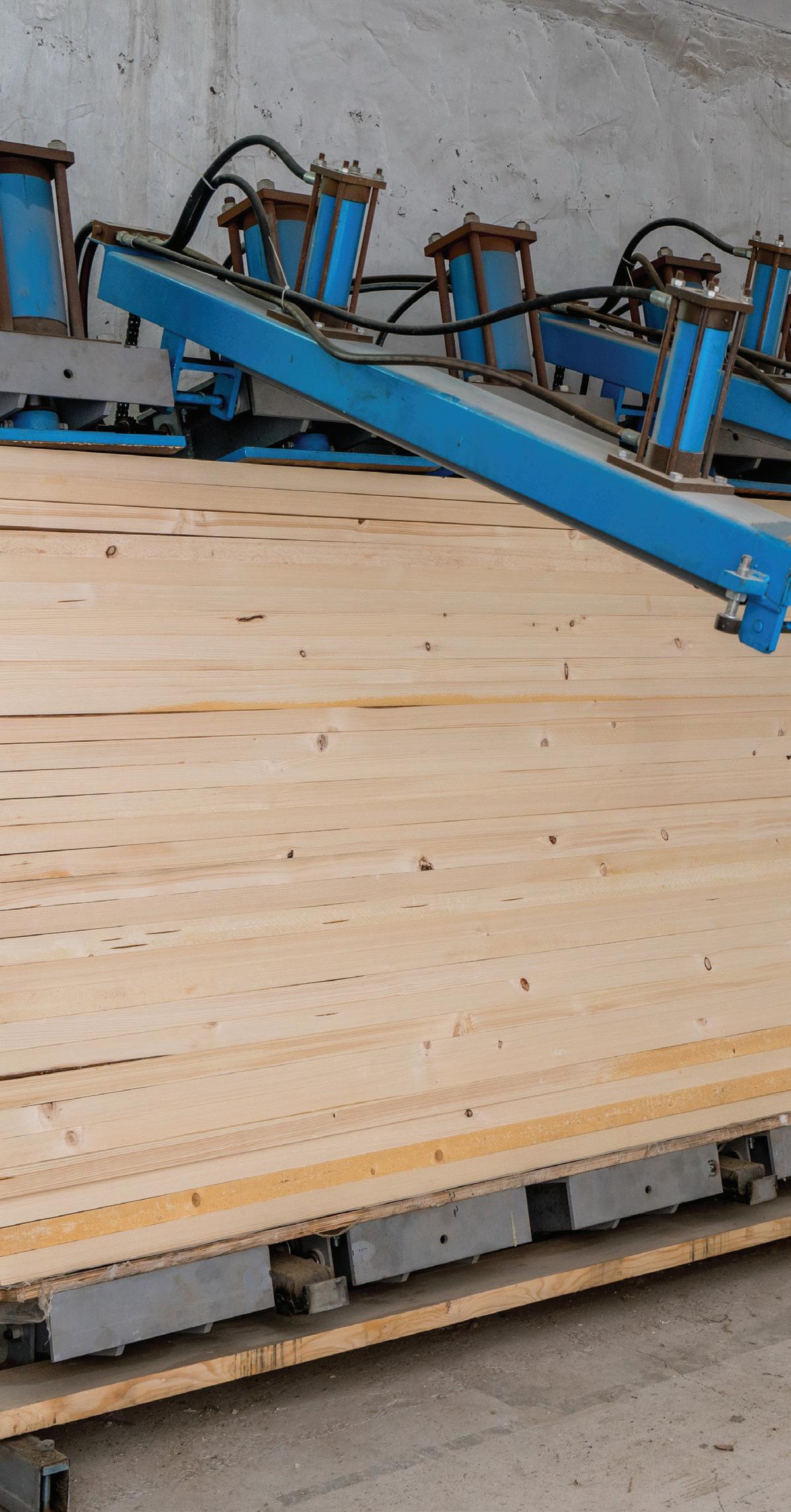
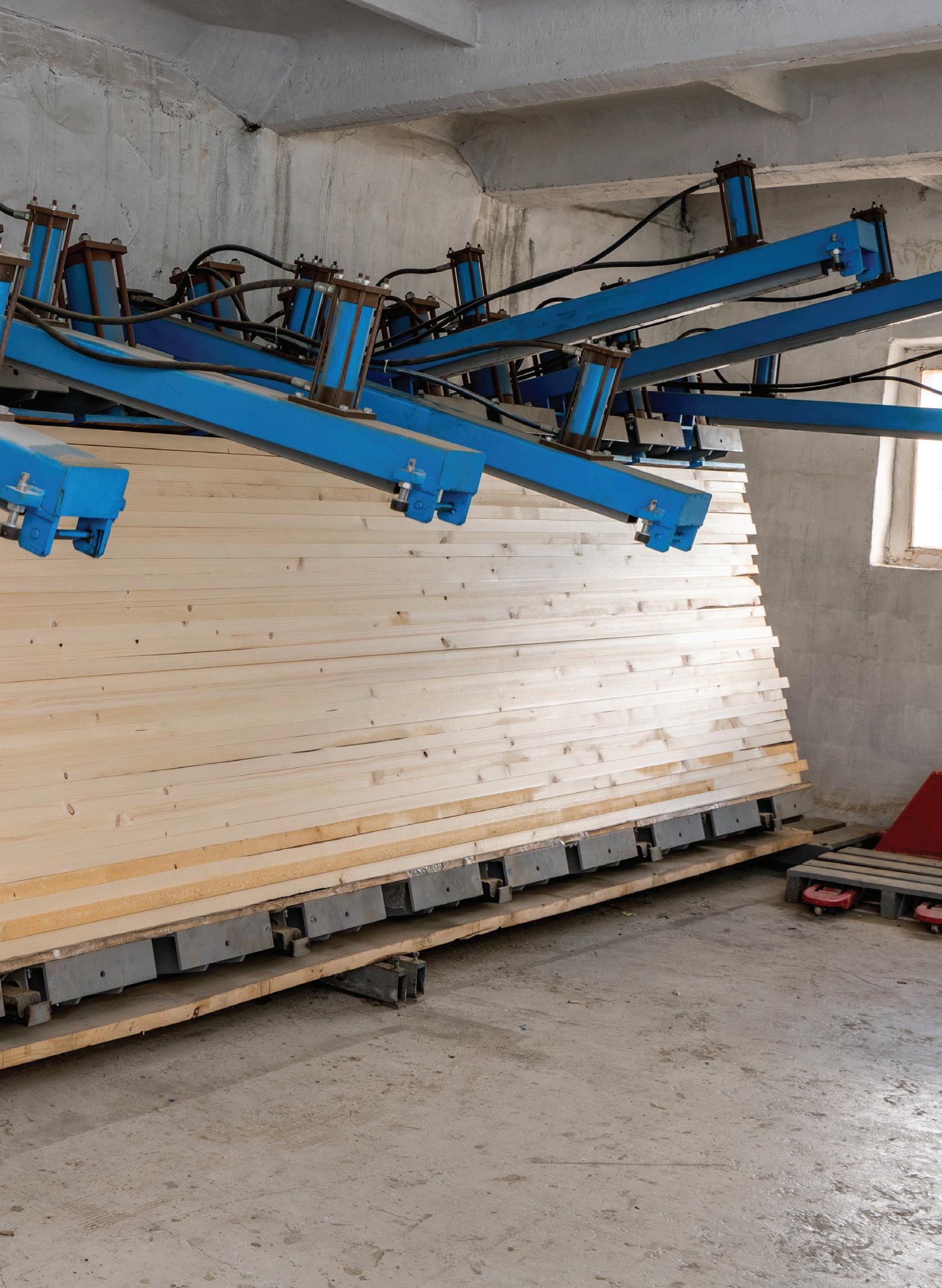
Glue-laminated (glulam) beam presses form engineered wood products with multiple hydraulic cylinders or electric actuators (along with plain bushings or heavy-duty shielded linear guides) along the press length providing clamp force. Complementing these axes are lateral positioning carriages that in some cases ride linear guides or cam followers on structural rails. Stiffness and uniform pressure distribution are key. Adobe Stock
So, how common are roller screws in these and other presses — and why are roller screws seeing increased adoption?






“Generally, market awareness of screw technologies is growing,” said John Fenske of Tolomatic.
“Designers these days are more aware of the advantages and disadvantages of each technology in a given application. Roller screws, in particular, are becoming more common in pressing and stamping due to the distinct advantages over other screw technologies in those applications.”
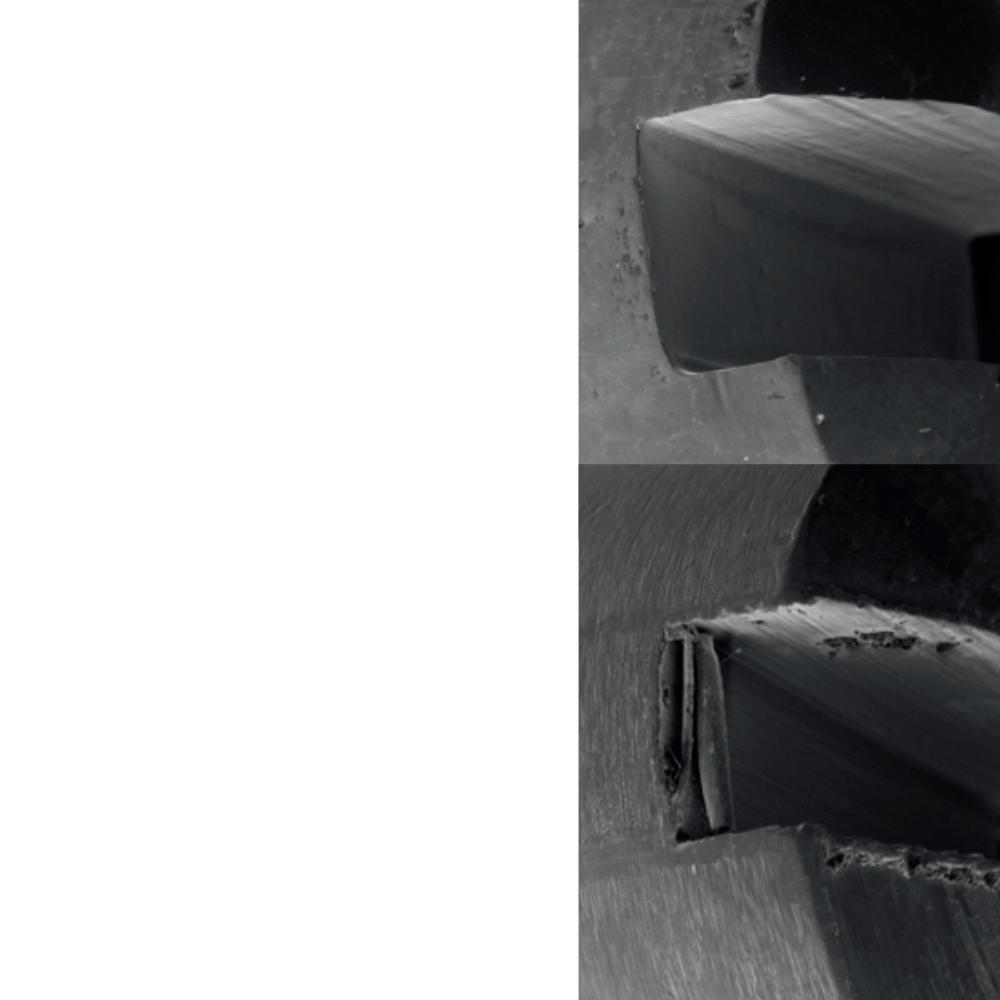
Planetary roller screws are more common in these applications than other roller screws because of their advantageous
geometry. More specifically, the geometry “provides a larger contact area for distribution of the load … and the manufacturing process for a precision ground planetary roller screw allows for deeper and more robust hardening of the screw. This results in a DLR or life that can be twice as long as other roller screw technologies,” said Fenske.
Servomotor-ballscrew pairings are generally only suitable in press applications needing precision control over axes involving relatively modest to moderate press forces. That said, some (for example, the Promess electromechanical assembly press or EMAP) come in large sizes to deliver to
1,000 N albeit at slower speeds than smaller units.
Indeed, screw-based electromechanical actuation delivers high precision, but without careful engineering, presses’ shock and impact loads can preclude their use … or accelerate screw wear and accuracy degradation.
“For press and stamp equipment, some manufacturers offer both ballscrews and planetary roller screws in their electric linear actuators. The [most suitable] choice depends on required precision, duty cycle, life, and amount of shock loading,” said Fenske of Tolomatic.
Indeed, viability of electromechanical actuation can depend on how much the machine tool is force-dominant (as in forming) or position-dominant (as in precision assembly).
“Generally stamping involves high speeds and impact energy that reflects back into the drive train of the actuator. In contrast, pressing applications tend to be lower speed but need more precise position and force control. Roller screws are a practical default in both applications due

MedTech Demands Smooth-Running Motors for Patient Comfort
MedTech equipment manufacturers demand that their motors not only run flawlessly, but also without being noticed. That’s why you’ll find Bodine Electric motors in CT scanners, mammography systems, blood collection centrifuges, and x-ray patient beds. If a patient’s peace of mind while using your equipment is important, then you need a Bodine.
Learn how a quiet-running Bodine motor made mammography a little less stressful.
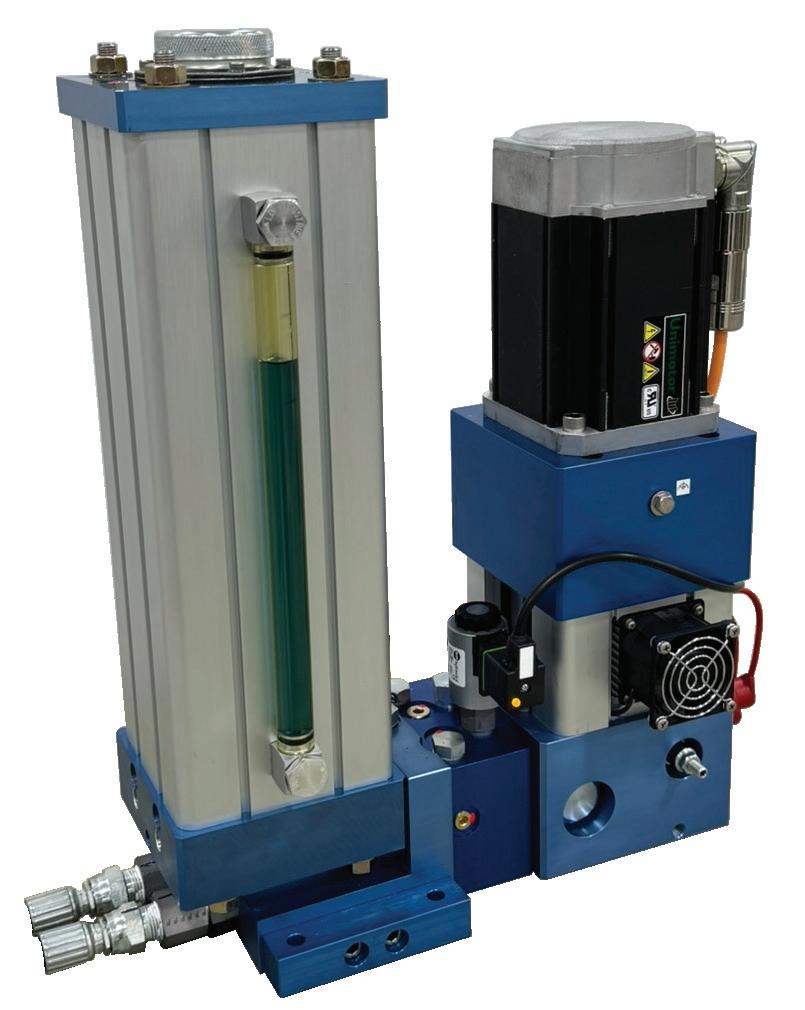
Kyntronics’ servo power units (SPUs) are compact servo-driven hydraulic power sources that replace traditional hydraulic power units. More specifically, SPUs incorporate a servomotor, pump, valving, and rod compensation reservoir to directly connect to an external cylinder or rotary actuator through quickconnect couplings. The SPU is typically located very close to the cylinder or rotary actuator to minimize fluid and efficiency losses. Most SPUs are used to operate a single cylinder, though they can operate multiple cylinders.
This is a Tolomatic
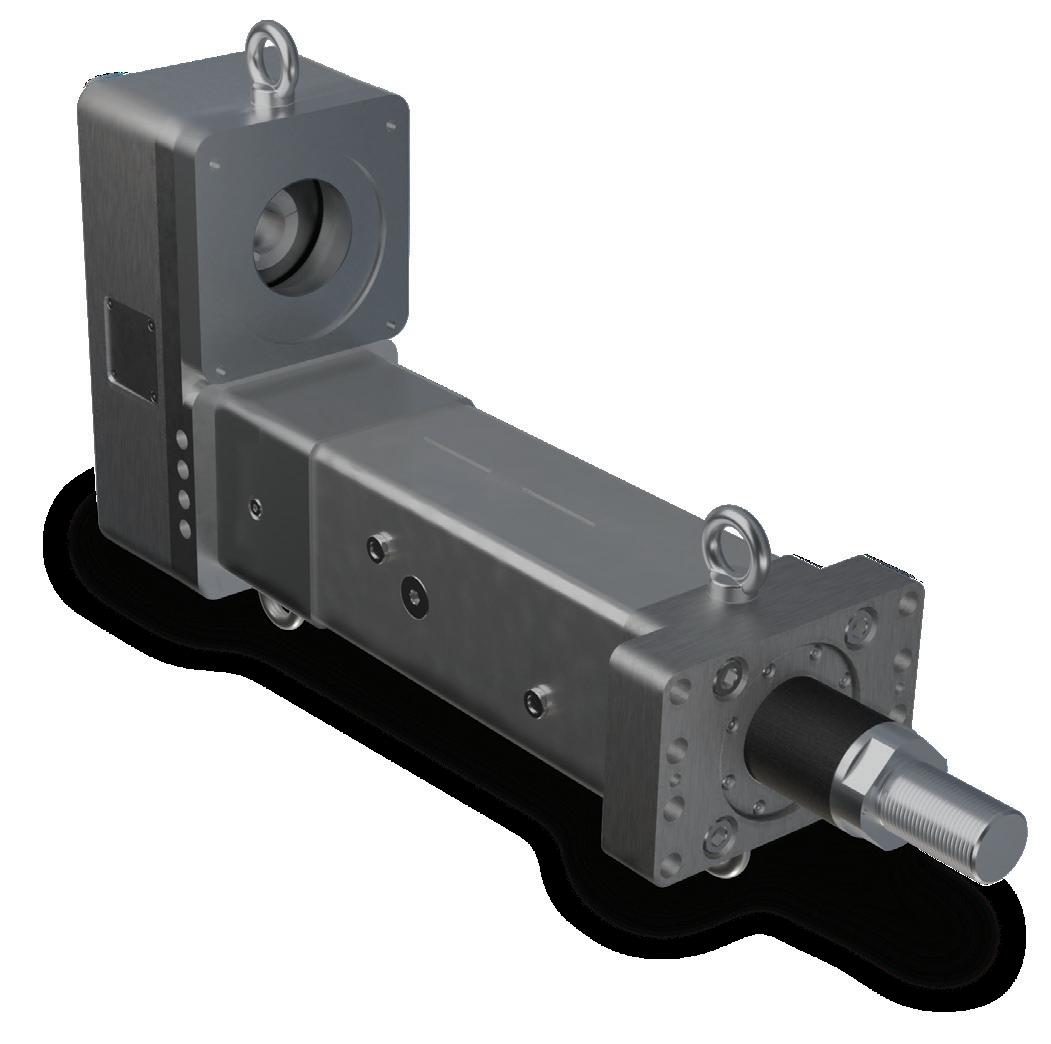
to the precision, high force capacity, resistance to shock loads and long life,” added Fenske.

Rack-and-pinion drives are also employed on presses, though typically only to complement other liner-motion technologies — for example to extend the stroke of a press axis as on the Italian Pressix PPMi straightening press. Any of these actuation options must be accompanied by some kind of linear component for loading bearing and guidance. The vast array of presses and the subset of stamping equipment integrate linear guides in the form of heavy-duty T-shaped boxways with gibs, round rail paired with bushings (usually integrated in foursomes around the axis), or recirculating-roller (ball or cylinder) profile-rail linear guides.
In many cases, these press-actuation options must also be accompanied by force sensors and load cells. On linear axes actuated by hydraulics, feedback is often supplemented by that from magnetostrictive transducers as well. On those pairing motors with screws or rack-pinion assemblies, feedback is often provided with motor current or torque feedback along with rotary encoders on the motor — or linear encoders for more direct measurement of output.
One last option for press actuation is hybrid electric-hydraulic actuation. Components of this type directly integrate a fluid cylinder with a servomotor that drives a pump. The latter in turn generates hydraulic pressure within the sealed actuator assembly so there’s no need for a centralized hydraulic power unit, external hoses, or reservoirs.
Tracing their roots to purely mechanical solutions, today’s automated presses are dominated by hydraulics. That said, electromechanical actuators have been used for decades with a recent uptick in adoption.
Output from these hybrid actuators is 100 to 150,000 lb that’s precisely controlled to deliver specific positions, forces, speeds, and dwell times set by servo-level programming. Power-ondemand operation makes for energy consumption that’s lower than that of traditional hydraulic systems. Plus, a sealed actuator body minimizes maintenance requirements and prevents leaks.
Thanks to their hydraulic force transmission, hybrid actuators can also tolerate the shock loads commonly encountered in pressing applications. DW

ADVANCED SAFETY RELAYS, TERMINAL BLOCKS, AND EMERGENCY STOPS IN ELEVATORS ENSURE PASSENGER AND TECHNICIAN SAFETY.
Laszlo Gyorgypal · Product and Quality Assurance Manager · Altech Corp.
Markus Kraess · Product Manager · Altech Corp.
The importance of mechanical and electronic safety components in modern passenger and freight elevators can’t be overstated. Passenger and technician safety depend on these components to monitor, control, and respond to potential hazards in realtime.
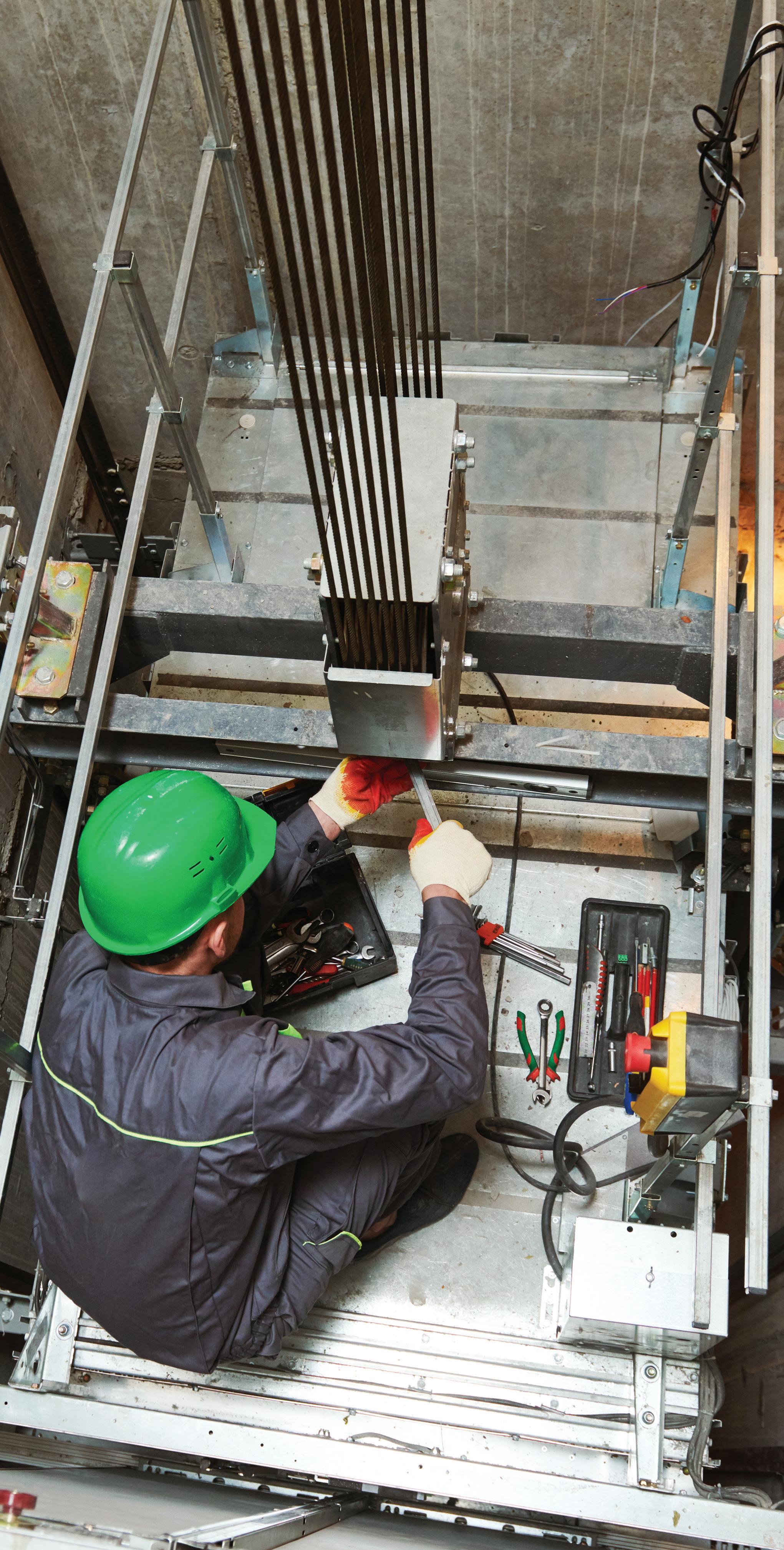
Safety relays ensure failsafe electrical control. Advanced pushin and spring clamp terminal blocks guarantee reliable connections in high-vibration environments. Emergency stops (e-stops) serve as the final line of defense for maintenance personnel. Integrating these components creates
comprehensive safety systems that protect people while enabling efficient elevator operation.
For example, when a technician activates an e-stop during elevator maintenance, the signal must travel through vibration-resistant terminal block connections to reach the safety relay. The latter in turn responds within milliseconds to safely halt the elevator. This coordinated response depends on every component in the chain performing its role without fail.
The integration of advanced safety electronics addresses several demands in modern elevators, including the
need for failsafe operation during power failures, durability in highvibration environments, fast emergency response, and compliance with stringent safety standards.
Safety relays manage electrical circuits and provide failsafe mechanisms to prevent hazardous situations. These devices are designed for applications such as elevator standard EN 81-1 (electric) and EN 81-2 (hydraulic), as well as the escalator standard EN 115/06.95. These safety relays operate using forced-guided contacts — also known
as captive, locked, or positive-guided contacts. This critical feature ensures that normally open (NO) and normally closed (NC) contacts are mechanically linked so it’s impossible for both to be closed at the same time. This mechanical interlocking guarantees a safe state even if a contact welds or a relay part fails.
Beyond core safety, these relays support remote monitoring and predictive maintenance. The ability to reliably diagnose the switching position allows for proactive strategies that identify potential issues before system failures and unexpected downtime occur.
Terminal blocks represent critical connection points in elevator electrical systems, and choice of terminal technology directly impacts system reliability and safety. In elevator shafts, electrical connections are subjected to constant vibration and long, continuous operation.
Traditional screw-type terminal blocks, though widely used, are a vulnerability in these environments. Over time, the constant vibrations can cause screw terminals to loosen and compromise the connections and potentially leading to circuit failures. Two advanced terminal block technologies that address this issue include spring-clamp terminal blocks and push-in terminal blocks.
Spring-clamp terminal blocks are terminal blocks overcome the vibration issue through an innovative clamping mechanism. The spring mechanism maintains constant pressure on conductors, pressing them firmly against current bars despite vibration levels. This consistent contact pressure maintains reliable electrical connections throughout the elevator’s operational life while the elimination of vibration-induced connection failures enhances system reliability and reduces maintenance requirements.
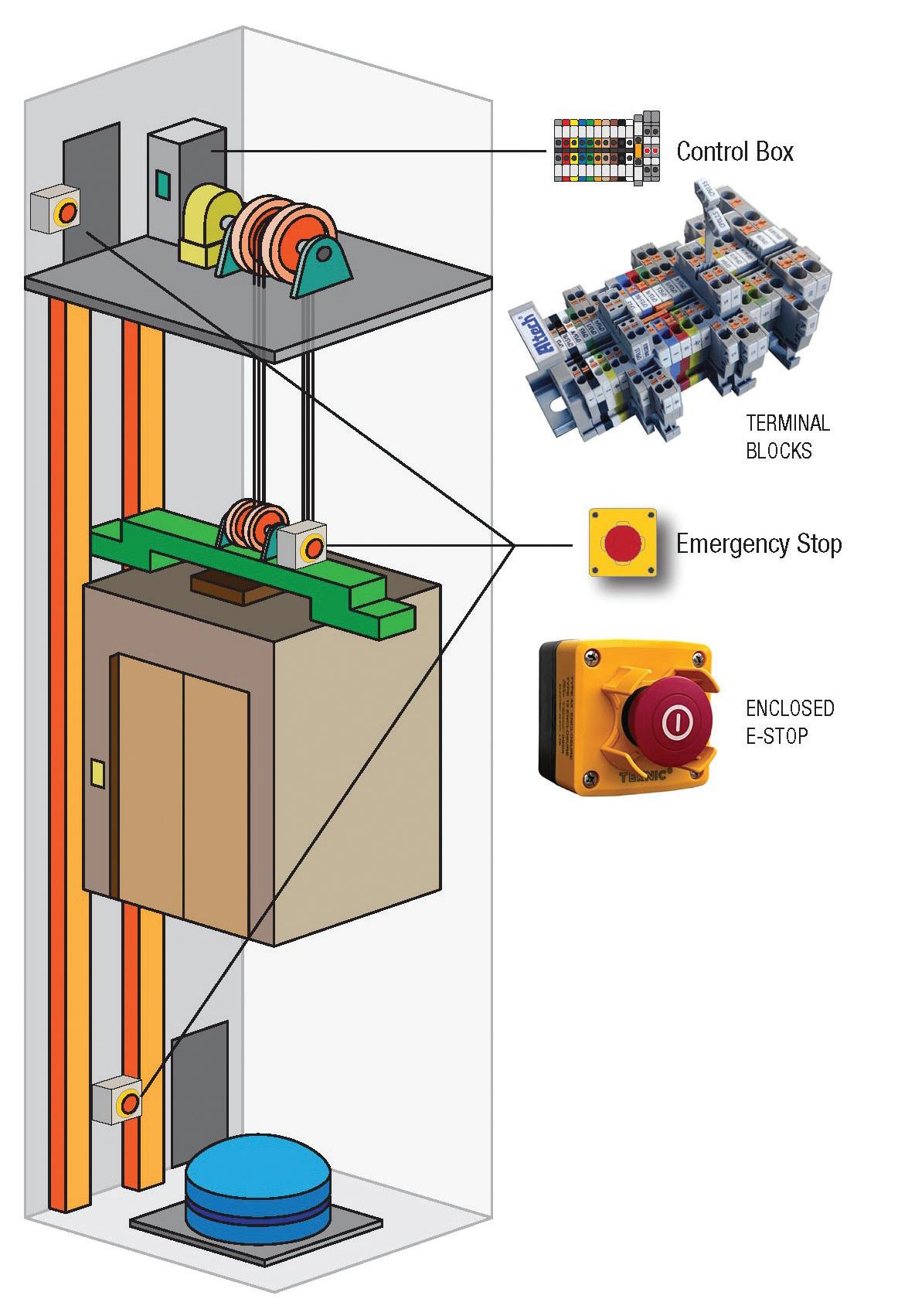
Push-in terminal blocks are a second type of terminal block that uses a push-in connection. These represent the latest advancement in spring technology and offer time savings, a compact design. and secure wiring. This technology maintains long-term contact reliability and is specifically engineered for the harshest environments, including steady vibrations and high temperature variations.
Some of Altech’s e-stops incorporate features that enhance safety and usability. For example, protective shrouds of durable polycarbonate can ensure long-term durability while preventing accidental actuation.
Another major advantage is installation efficiency. Push-in terminal blocks eliminate the need for tools for solid wires or flexible wires with ferrules, supporting direct connections and reducing wiring time by more than 50% compared to traditional screwtype alternatives. The consistency of the connection quality is independent of operator skill, ensuring uniform performance across all termination points.
This no-tool-required direct connection accelerates installation and commissioning so complex elevator wiring jobs go faster with less labor cost while still ensuring reliable and gas-tight connections with a stainlesssteel push-in spring.
Both spring clamp and push-in terminal blocks come in a variety of configurations for design flexibility (including versions for different connection types) and use high-impact self-extinguishing materials (such as Polyamide PA66) fire safety and durability.
E-stop mechanisms are a mandatory safety feature that provides personnel with an immediate way to halt elevator and escalator operations during an emergency. In elevators, e-stops serve as critical safety devices for maintenance and inspection personnel … as needed by codes such as the ASME A17.1 / CSA B44 safety code for elevators and escalators.
E-stops are explicitly needed in the elevator pit and on the top of the elevator car as part of the car top inspection station, which is designed for use by qualified technicians. More specifically, at elevator car-top inspection stations, an e-stop button immediately stops the elevator in case of emergency during maintenance. In contrast, an e-stop switch in the elevator pit (adjacent to the access) lets technicians immediately remove power from the car motor and brake.
In fact, e-stops are also found in public-facing locations on escalators — for the use of both passengers and maintenance personnel. In these areas, e-stops often include protective shrouds to prevent accidental actuation while still ensuring the e-stop can be quickly pressed when needed.
To be clear, e-stop devices are distinguished from standard stop switches by needing a human action for resetting — often a twist, pull or key
release — before the machine can be restarted, providing a foolproof shutdown. Their actuators must also be colored red with a yellow background for high visibility and recognition in an emergency.
Some e-stops from certain manufacturers incorporate sophisticated design features that enhance safety and usability. Protective shrouds, typically made from durable polycarbonate, ensure long-term durability while preventing accidental actuation, while the standardized 22.5-mm mounting configurations offer flexibility to accommodate various actuator types. Additional features and benefits abound.
Engineered materials such as ABS nylon and polycarbonate offer mechanical strength and selfextinguishing properties to reduce fire risk during electrical faults, ensuring
e-stop functionality even under adverse conditions. Certain e-stop mechanisms are also designed to integrate seamlessly with other safety components. When one is engaged, the coordinated response with safety relays and terminal blocks minimizes accident risk.
Safety-standard compliance: All safety electronics in elevator systems must comply with stringent safety standards for top effectiveness and reliability. These include:
• DIN EN 61810-3 which specifies requirements for relays with forcibly guided (mechanically linked) contacts.
• IEC 60947-5-1 and EN 60947-5-5 that are international standards specifying requirements for e-stop functions and electromechanical control circuit devices.
• UL, NEC, CSA, IEC, VDE — the
general standards for push buttons and control components.
• NEMA Type 4X, 12 — the common enclosure protection rating for harsh environments.
• ASME A17.1 / CSA B44, which is the primary safety code for elevators and escalators.
Compliance with these standards is critical for protecting passengers, personnel and equipment from potential hazards. The standards address not only functional requirements, but also the environmental conditions and performance criteria that the electronics must meet throughout their operational lives. DW Altech Corp.

MAY 27-28, 2026
BOSTON, MA



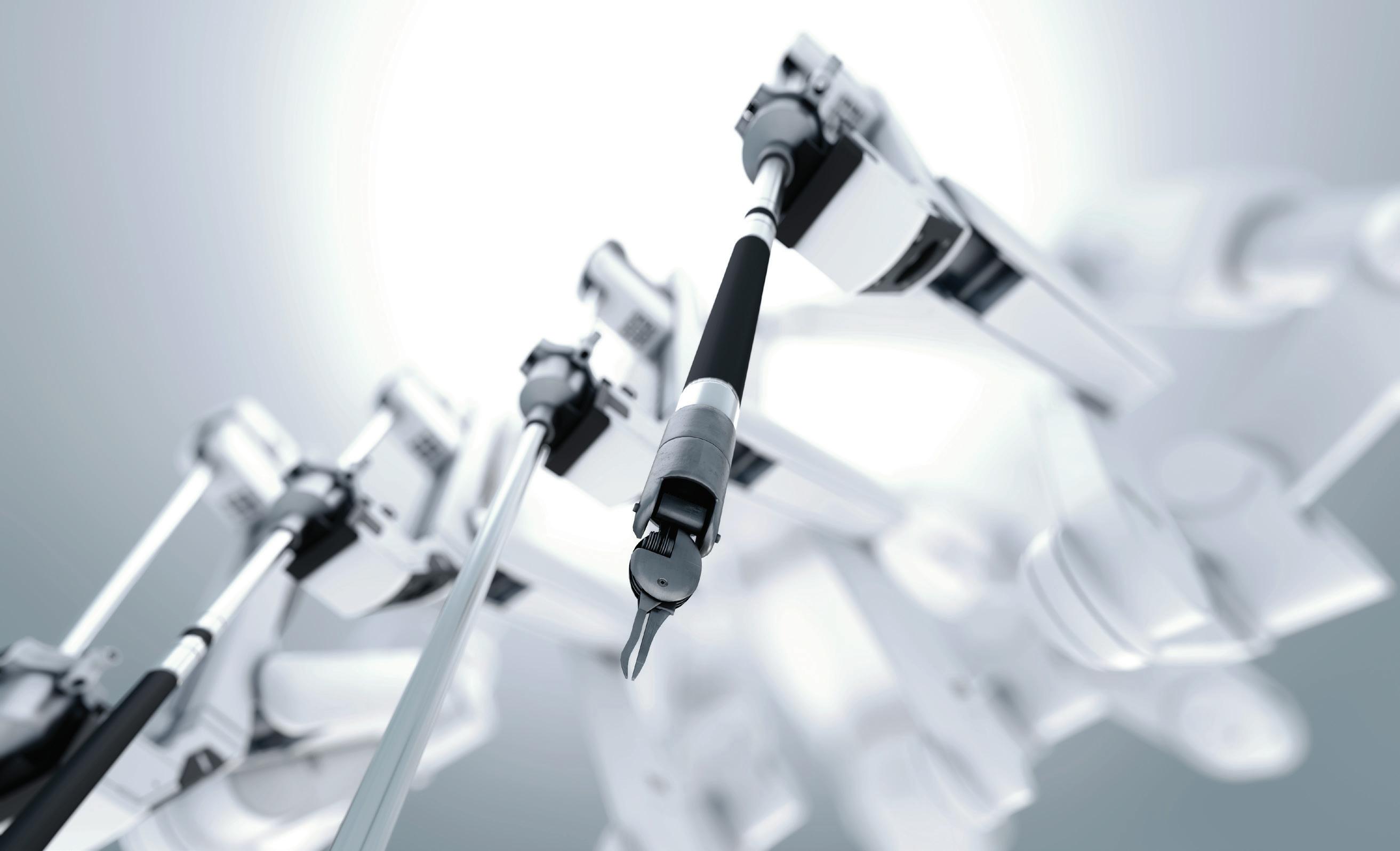















For the past few years, Asensus Surgical Inc. has been working to bring LUNA, its next surgical robot, to market.
First announced in 2023, the company has now finalized the design for the system and plans to pursue U.S. Food and Drug Administration and European CE approval this year. To develop LUNA, Asensus drew on its experience rolling out the Senhance system and the more than 20,000 cases it has handled with that minimally invasive system.
Dustin Vaughan, vice president of robotics research and development at Asensus, shared the company’s top priorities for LUNA and its hopes for the surgical robotics field as a whole in the coming years.
Surgical robots must remain operational for 10+ years
Developing surgical robots is a long and slow process. While roboticists often adopt a “move fast and break things” mindset to iterate on robotics, this won’t work for surgical robots.
“The challenge, as a technologist or as an engineer, is that you want things to move very quickly, and you want to evolve and improve,” Vaughan told The Robot Report. “But in softtissue surgical robotics, it’s just slow. You’re talking about a platform that takes hundreds of millions of dollars to get to market, and then it really needs to be a successful and viable platform for 10 years.”
Hospitals or healthcare providers that are investing in robotics don’t just expect a system to last for a long time; they need it to. Otherwise, they’re investing millions of dollars into something that they can’t replace in a few years.
“We have this enhanced surgical platform that’s been in the U.S. clinically since 2017, and we’ve done over 20,000 cases with that platform globally,” Vaughan said. “So, we learned a lot. We learned a lot of the things that break. We learned a lot of the things that work really well. And we learned that the maintenance and servicing aspects of a complex system like this require a lot of effort.”
The LUNA surgical robot has a modular design. Asensus Surgical
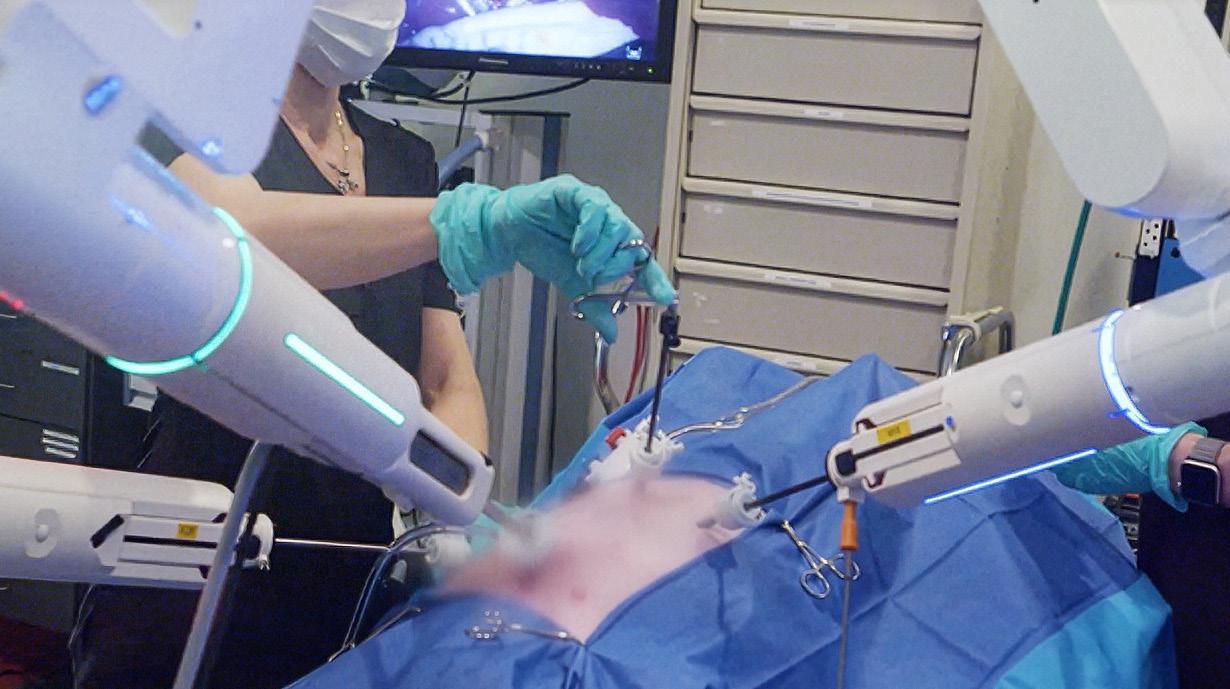
When designing LUNA, Asensus prioritized making the system modular and easy to service, so that it could eliminate downtime as much as possible.
“The modularity of the system is something that we really focused on to identify all of the areas that we think could, or would, see the need to be replaced, and make them as serviceable as possible,” Vaughan said. “This actually created some real engineering challenges because of the lengths that we went to enable that.”
Durham, N.C.-based Asensus does provide a level of support to its customers. With LUNA, it wanted to give hospitals the power to solve as many problems on their own as possible, if they want to.
“We just want to really limit downtime, because we certainly don’t want it to influence a case. That’s just No. 1,” Vaughan said. “You’ve got a patient, they’re prepared for care. They may have had very specific prep activities. Their surgeon is ready. They picked this surgeon for whatever reason, and he or she is trained and ready with the robot that they’ve elected to use for that case.”
“So all of these things are already there. The room is reserved. There’s a very high price tag on that moment in time,” he explained. “So, if something were to happen to the robot, they may have to abandon the case, or they’d convert to
use traditional laparoscopy, depending on what it is and the surgeon.”
Currently, Asensus guarantees that it can resolve cases within 24 hours, but Vaughan claimed this could be even faster.
“What if we deploy some of these repairable items to hospitals for them to maintain?” he said. “And we actually will. The way that the service is structured is that we’ll relay those cost savings back to the hospital if they’re willing to enable that.”
In recent years, hospitals, especially in rural areas, have been under a tighter monetary squeeze than ever before. With many hospitals losing federal funding, Asensus said cost of the robotic arm and cost of instruments was a huge consideration with LUNA.
“We wanted to be able to wheel [the robot] in at little or no cost to the hospital and come up with a subscription model for the platform,” Vaughan said. “You really can’t do that if you’re wheeling in a very, very expensive platform.”
“We can’t just provide millions and millions and millions of dollars of these systems at little to no cost out of the gate. It’s a big capital investment,” he noted. “Whereas, if you have a really, really aggressive cost model, that becomes much easier. You can really bring in a lot of the players that have historically not had access to the surgical robotics market because of funding.”
In making its robot more economically viable, Vaughan said Asensus did have to make sacrifices when it comes to capabilities.
“It also forces you to create a product to be as economically sound as possible, and that means, at times, you have to delete features,” he acknowledged. “Sometimes these features require
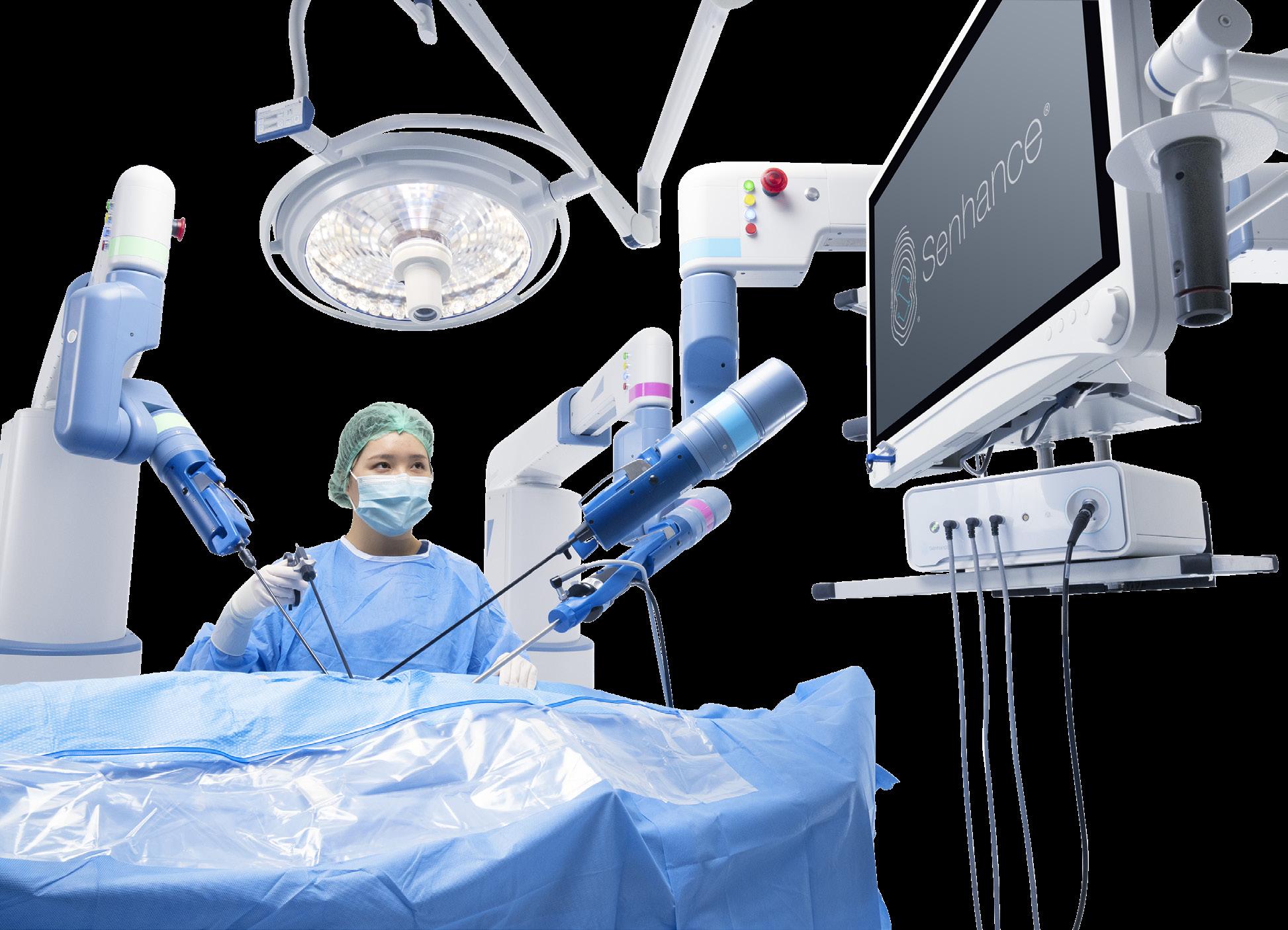
Senhance is designed to be movable and includes interchangeable arms. Asensus Surgical
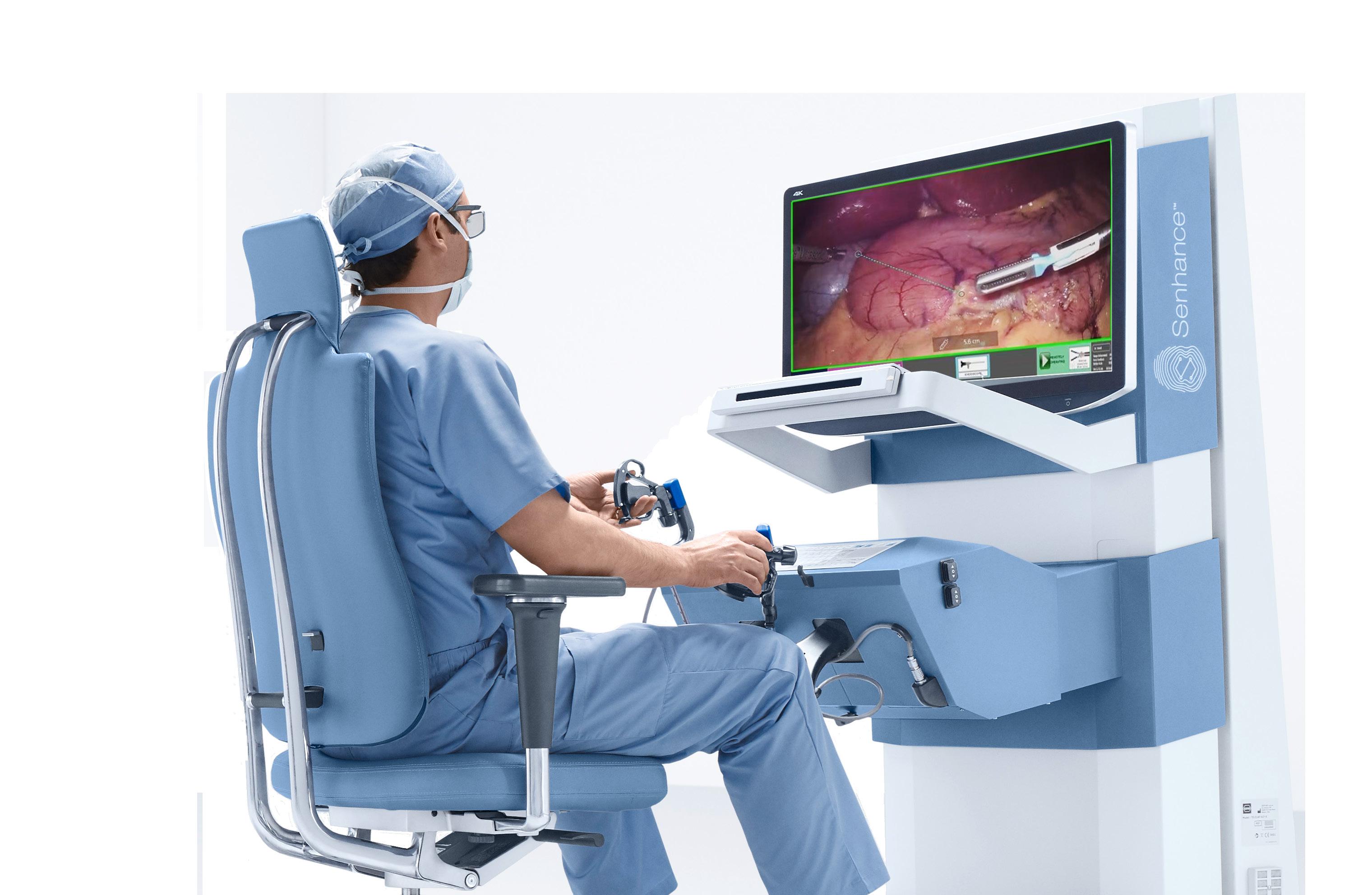
Autonomous features are gradually coming to robotic surgery.
Asensus Surgical
bespoke hardware or sensors or other elements that really dramatically modify your cost profile.”
The company also benefited from a much more mature market than the one it experienced when developing Senhance. Both quality and cost of parts have improved in the past 20 years, Vaughan said.
What did Asensus learn from surgeons using Senhance?
Asensus’ experience with Senhance played a large role in its development of LUNA.
“We’ve been fortunate that we’ve had access to our Senhance user base for the entire duration of Luna’s development,” Vaughan said. “We took the things that worked really well, and we really had a lot of feedback from that user console, especially, where the surgeon sits. That’s their office for the day. They really like the open concept, where they can see the patient.”
The company learned that surgeons prefer to have access to their patients during surgery. “We have a lot of patient access as part of our boom setup and the overall kinematic structure of the arm, it allows for a lot of direct physical access, but also visually from the console. It’s incredible,” Vaughan said.
This was something the pediatrics community, especially, benefited from, Vaughan said.
“We invested heavily in bringing people in who have never seen the system before, and taking that raw kind of first date feedback. You never get another first impression, so we really tired to create a lot of those experiences for surgeons that we trust,” Vaughan said. “We’ve been trying to create as diverse of a profile as possible to understand if there are regional differences and things like that.”
Right now, with conversations about AI growing every day, many are wondering when, or if, robots will start performing surgeries independently. Vaughan said he believes that, on a long enough pipeline, robots will be able to do many more things in surgery. However, right now, Asensus is focusing on what it can roll out soon.
“I’m worried about safely deploying things in the next five years, and what comes in 20 is very, very hard to predict in my mind based on what I’m seeing now,” Vaughan said. “What we are doing is creating these clinical support tools that a surgeon can elect to use or not. It’s similar to how the levels of autonomy in your car have gone up.”
Ten years ago, people would have been very hesitant to jump into an autonomous car, but backup cameras, lane assist, and other features have paved the way for this technology.
“That’s going to slowly start to become more and more prevalent in surgery. We’ll call it a boundary layer first,” Vaughan said. “If you have an experienced surgeon, and they’re letting, for example, a resent preform some cases. They may want to enforce that boundary and say, don’t go here.”
“That’s one of the beauties of robots in general, that it can actively prevent that mistake in ways that shouting at your fellow at bedside cannot,” Vaughan continued. “So, that’s what you’re going to see in the next five years. We’re going to deploy things that actively prevent errors.” RR

DUSTIN VAUGHAN VP OF ROBOTICS R&D ASENSUS SURGICAL



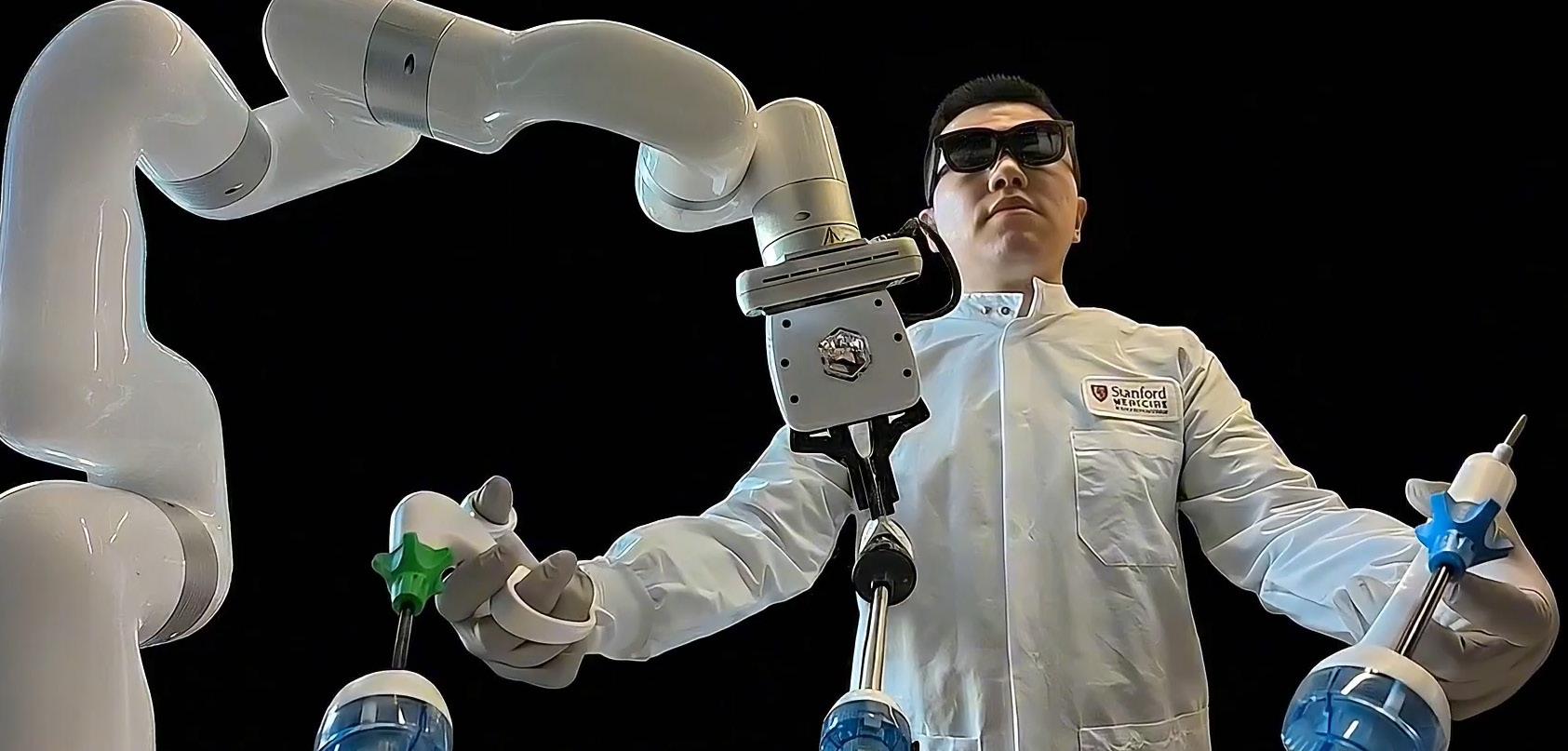
Developers are finding ways to combine artificial intelligence, augmented and virtual reality, and robotics for clinical applications. The Stanford-Princeton AI Coscientist Team recently launched MedOS, which it claimed is “the first AI–XR-cobot system designed to actively assist clinicians inside real clinical environments.”
More than 60% of physicians in the U.S. have reported symptoms of burnout, according to recent studies. The Stanford and Princeton researchers said they designed MedOS to alleviate burnout, not by replacing clinicians, but by reducing cognitive overload, catching errors, and extending precision through intelligent automation and robotic assistance.
“The goal is not to replace doctors. It is to amplify their intelligence, extend their abilities, and reduce the risks posed by fatigue, oversight, or complexity,” stated Dr. Le Cong, co-leader of the interdisciplinary project and an associate professor at Stanford University. “MedOS is not just an assistant. It is the beginning of a new era of AI as a true clinical partner.”
MedOS incorporates feedback loop “Medicine historically separates abstract clinical reasoning from physical intervention,” said the researchers in
a paper. “We bridge this divide with MedOS, a general-purpose embodied world model. Mimicking human cognition via a dual-system architecture, MedOS demonstrates superior reasoning on biomedical benchmarks and autonomously executes complex clinical research.”
MedOS combines smart glasses, robotic arms, and multi-agent AI to form a real-time co-pilot for doctors and nurses, said the Stanford-Princeton AI Coscientist
Team. Its mission is to reduce medical errors, accelerate precision care, and support overburdened clinicians.
The scientists built on years of experience with LabOS to bridge digital diagnostics with physical action in MedOS. They said the system can perceive the world in 3D; reason through medical scenarios; and act in coordination with doctors, nurses, and care teams.
MedOS also introduces a “world model for medicine” that incorporates

MedOS could help democratize surgical expertise. Stanford-Princeton AI Coscientist Team, via Github
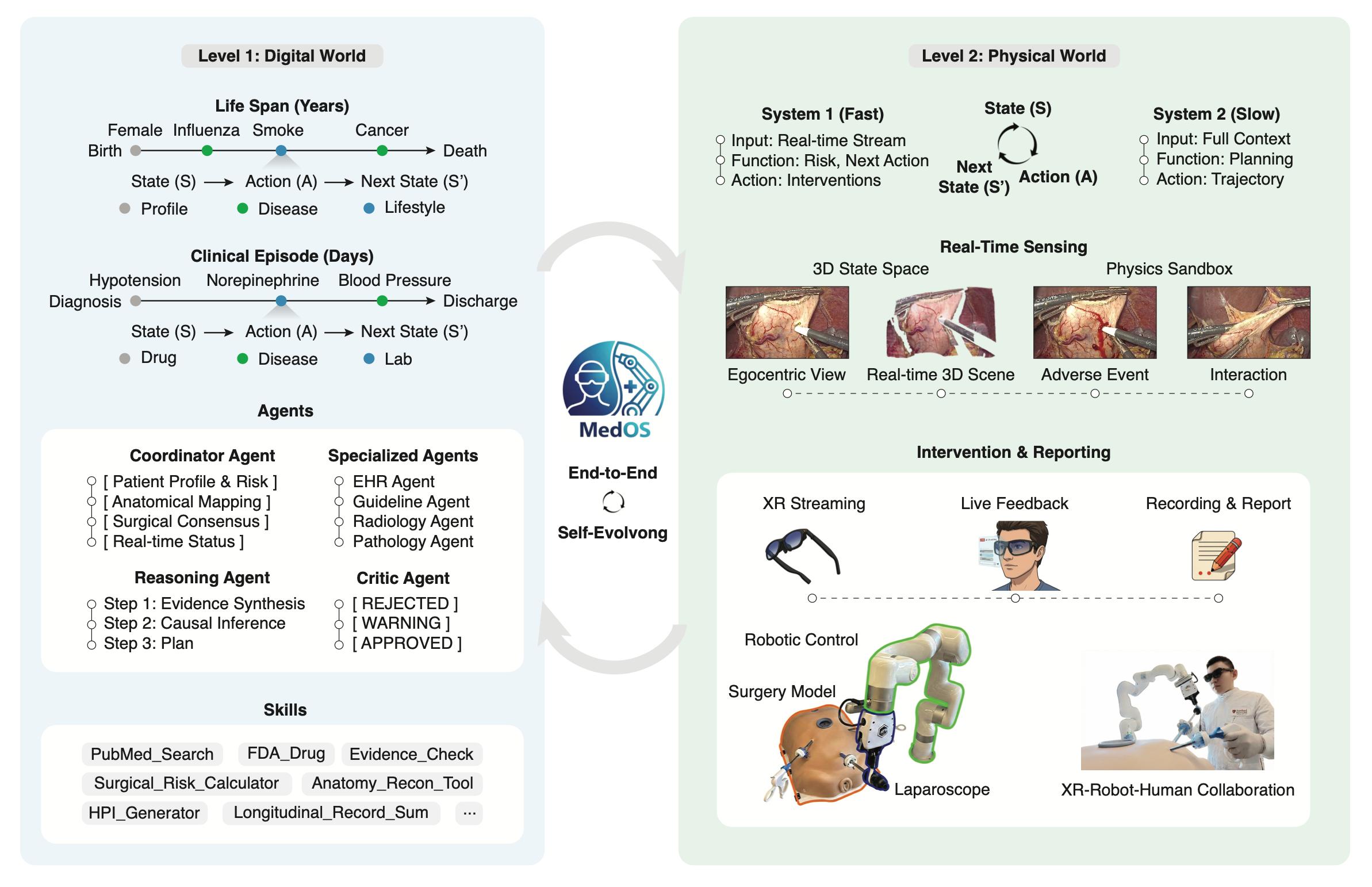
perception, intervention, and simulation in a continuous feedback loop. Using smart glasses and robotic arms, it can understand complex scenes, plan procedures, and execute them in close collaboration with clinicians.
“The data layer enables us to build the world model with the spatial intelligence to allow robotics to work with humans today rather than wait for fully humanoid robots,” Dr. Cong told The Robot Report “There are very few robots in hospitals now other than [Intuitive Surgical’s] da Vinci. We want to bring robots into every single part of medicine.”
The platform has been tested in surgical simulations, hospital workflows, and live precision diagnostics. The researchers said it has shown early promise in tasks such as laparoscopic assistance, anatomical mapping, and treatment planning.
The Stanford and Princeton researchers
said they designed MedOS to be modular and adaptable across clinical settings and specialties. In surgical simulations, it has demonstrated the ability to interpret realtime video from smart glasses, identify anatomical structures, and assist with robotic tool alignment.
The team has developed its own tactile sensors to work with force- and power-limited robot arms, said Cong. It works with off-the-shelf smart glasses and cameras to collect training data, which complements publicly accessible databases.
MedOS integrates perception, planning, and action, functioning as a clinical co-pilot and an active collaborator in high-stakes procedures, said the Stanford-Princeton AI Coscientist Team. Its capabilities include:
• A multi-agent AI architecture that mirrors clinical reasoning logic, synthesizes evidence, and manages procedures in real time
• MedSuperVision, an open-source medical video dataset featuring more
than 85,000 hours of surgical footage across procedures
• Demonstrated success in helping nurses and medical students reach physician-level performance and reducing human error in fatigueprone environments
• Case studies, including uncovering novel immunotherapy resistance pathways through large-cohort data integration
“We need to first generate the world model,” said Cong. “By giving intelligence from physicians, clinicians,
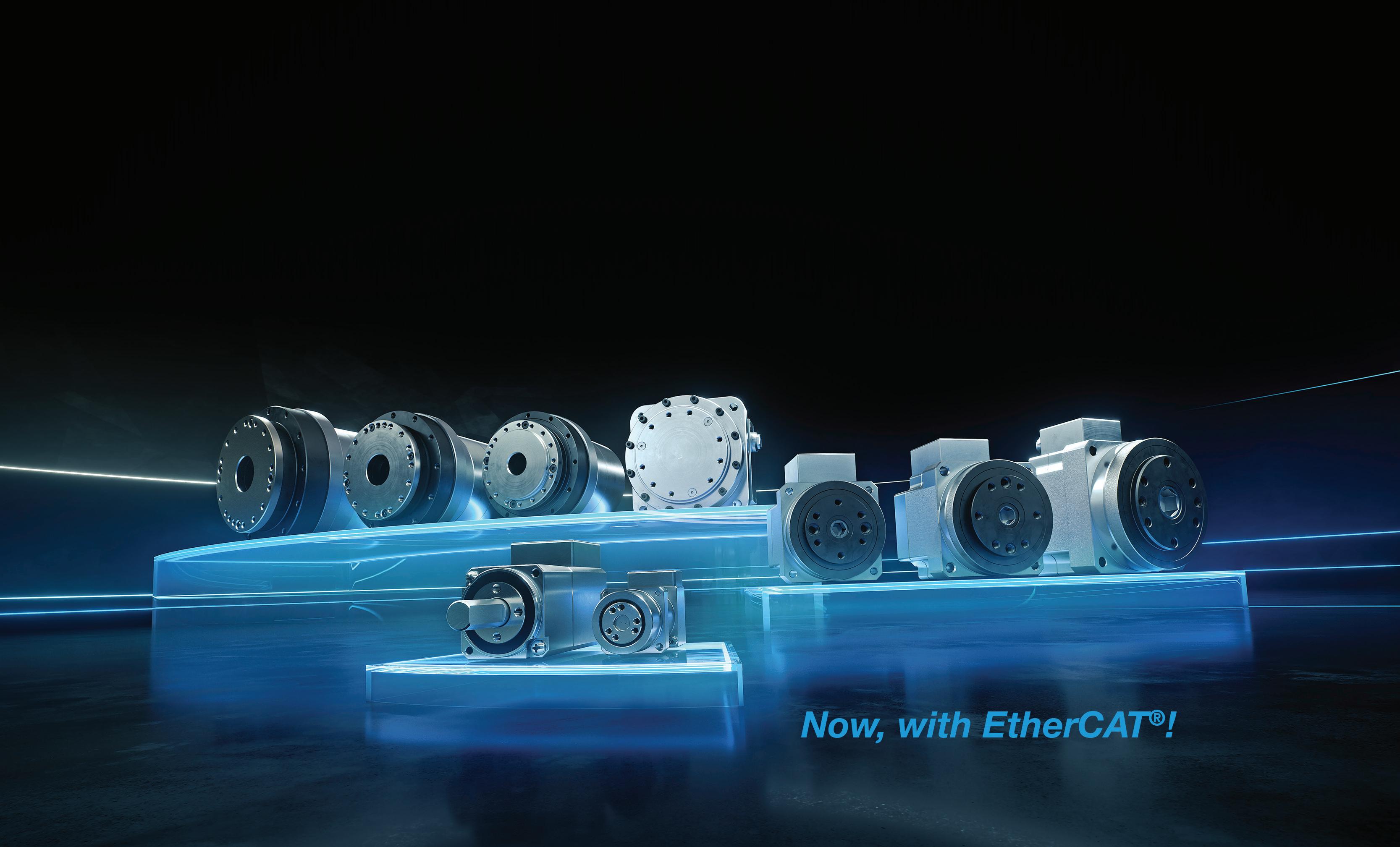
The Integrated Series is a family of compact actuators that deliver high torque with exceptional accuracy and repeatability. These servo actuators feature high precision Harmonic Drive® gearing combined with a brushless servo motor, a brake option (for SHA models), magnetic absolute encoders and an Integrated Servo Drive with CANopen® or EtherCAT® (for LPA or SHA models) communication options. This revolutionary product eliminates the need for an external drive and greatly simplifies cabling, yet delivers high-positional accuracy and torsional stiffness in a compact housing.
• Actuator with Integrated Servo Drive utilizing CANopen® or EtherCAT®
• 24 or 48 VDC nominal supply voltage
• A single cable with only 4 conductors is needed: CANH, CANL, +VDC, 0VDC
• Zero Backlash Harmonic Drive® Gearing
• Panel Mount Connectors or Pigtail
Cables Available with Radial and Axial Options
• Control Modes include: Torque, Velocity, and Position Control, CSP, CSV, CST

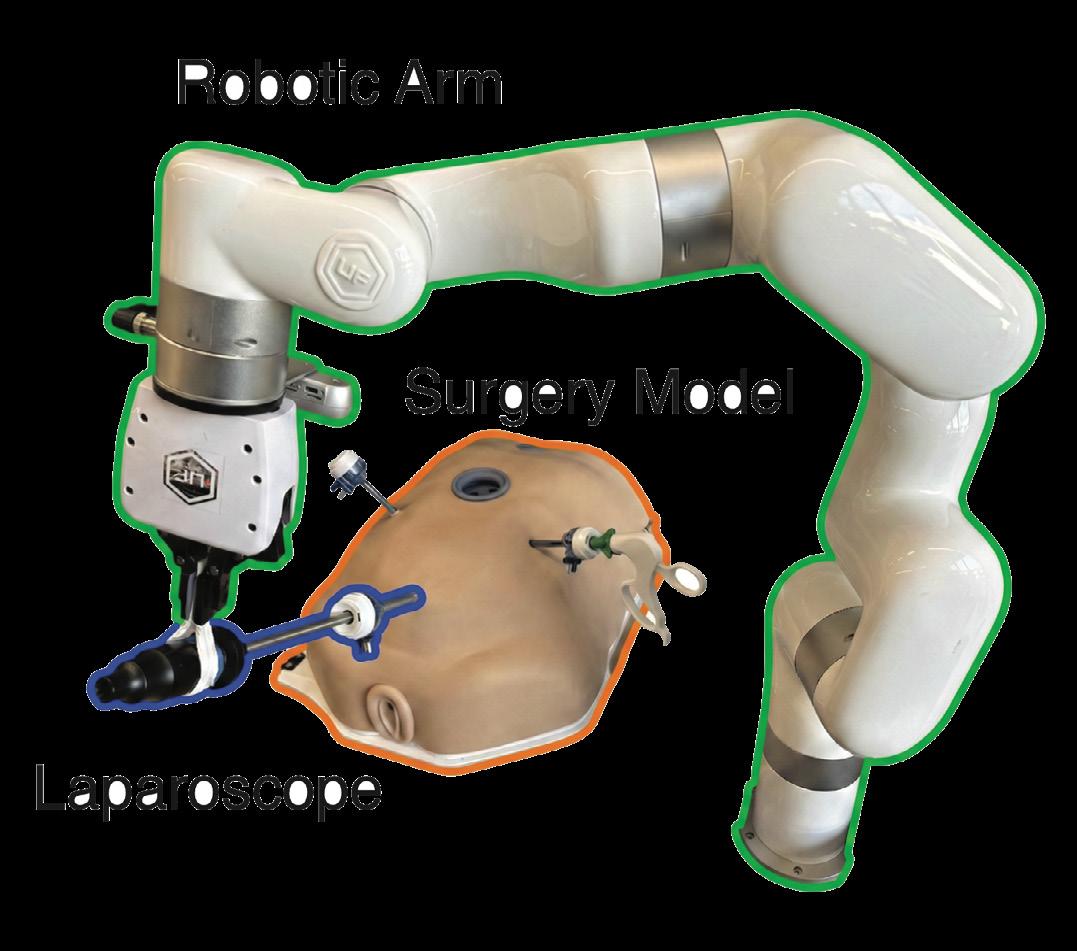
The AI-XR-Cobot world model incorporates perception, intervention, and simulation. StanfordPrinceton AI Coscientist Team, via Github












and nurses, our AI brain could be the foundation for deploying fully autonomous humanoids someday.”
In the meantime, the team is working on initial deployments in hospital logistics and laboratories. For logistics, MedOS can help quickly deploy robots to move blood samples and supplies.
Labs are a good place to start because they are not patient-facing and are therefore simpler to ensure that testing and diagnosis are faster and error-free, Cong explained.
Early pilots lead to GTC unveiling MedOS is launching with support from NVIDIA, AI4Science, Nebius, and VITURE. It has been deployed in early pilots at Stanford, Princeton, and the University of Washington. Clinical collaborators can now request early access.




“We’re just starting to work with clinicians on testing surgical procedures on a mock body,” Cong said. “We want to make sure that for patient-facing applications, we’ve already tested with different levels of physicians and simulations before moving into actual clinical settings. MedOS has already proven to be robust and better than Gemini for spatial tests. It could be very flexible for surgical automation.”








































MedOS will be showcased at a Stanford-hosted event in early March, followed by a public unveiling at NVIDIA’s GPU Technology Conference (GTC). Media, clinicians, and research institutions interested in early demonstrations or interviews can contact the MedOS team for coordination.








The Stanford-Princeton AI Coscientist Team is dedicated jointly building real-time AI systems designed to work alongside human scientists and clinicians. It said LabOS and MedOS are deployed across leading universities and hospitals to accelerate discovery, reduce human error, and improve scientific and clinical outcomes.
“We’re in touch with hospital systems in the Northwest and soon the East Coast,” said Cong. “We’re sending data-collection tools to other partner institutions and for the next version, which will use massive amounts of benchmark data. It’s an ongoing progress, and multiple institutions are interested in MedOS.” RR







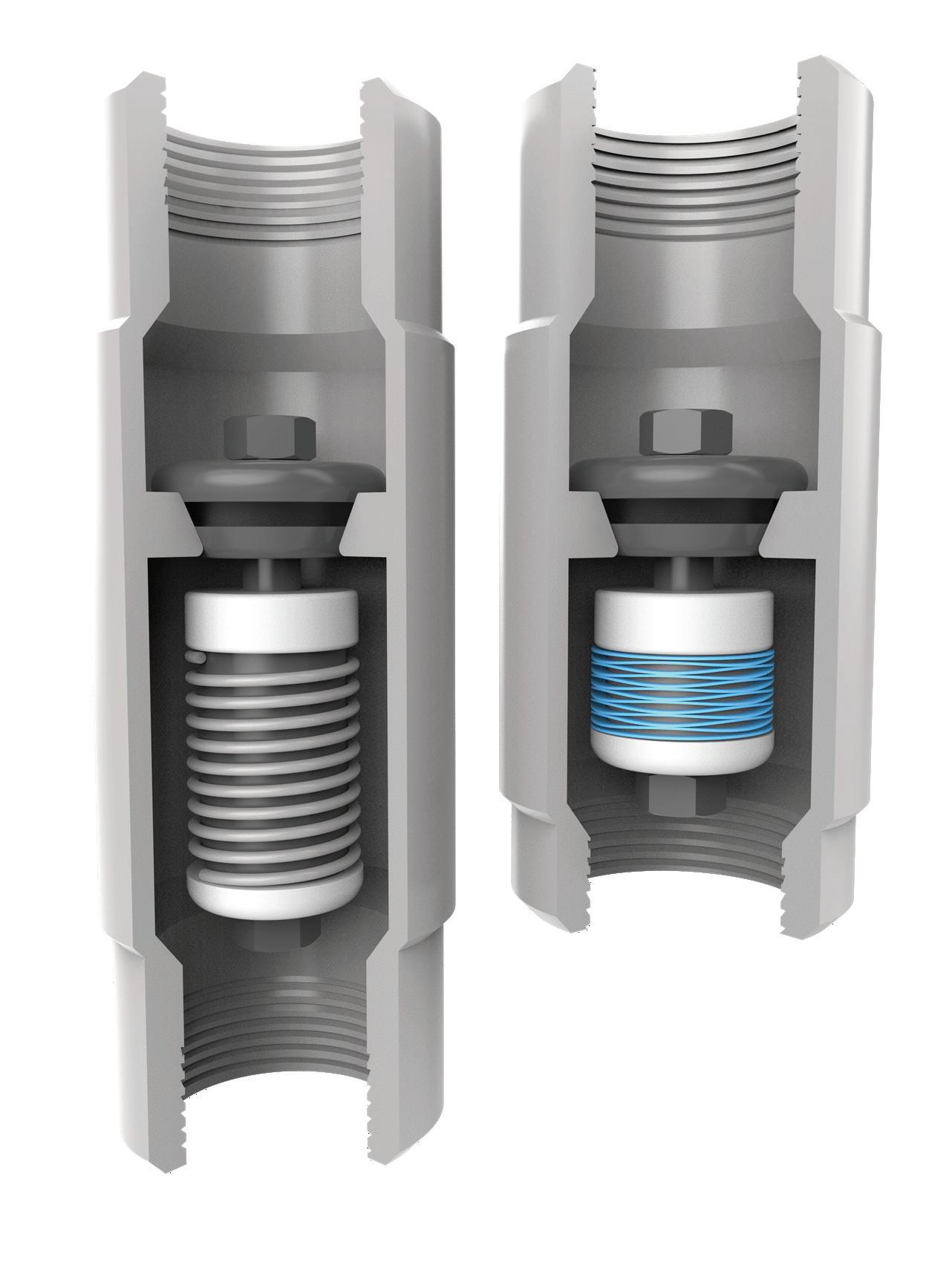
Rotor Clip Wave Springs are engineered to save space and weight by reducing spring heights up to 50%. Our experienced engineering team is ready to assist you in specifying a standard spring or developing a custom design in the material and size you require. From prototype to production, we'll provide you with the perfect spring solution for your application.

Advanced Navigation
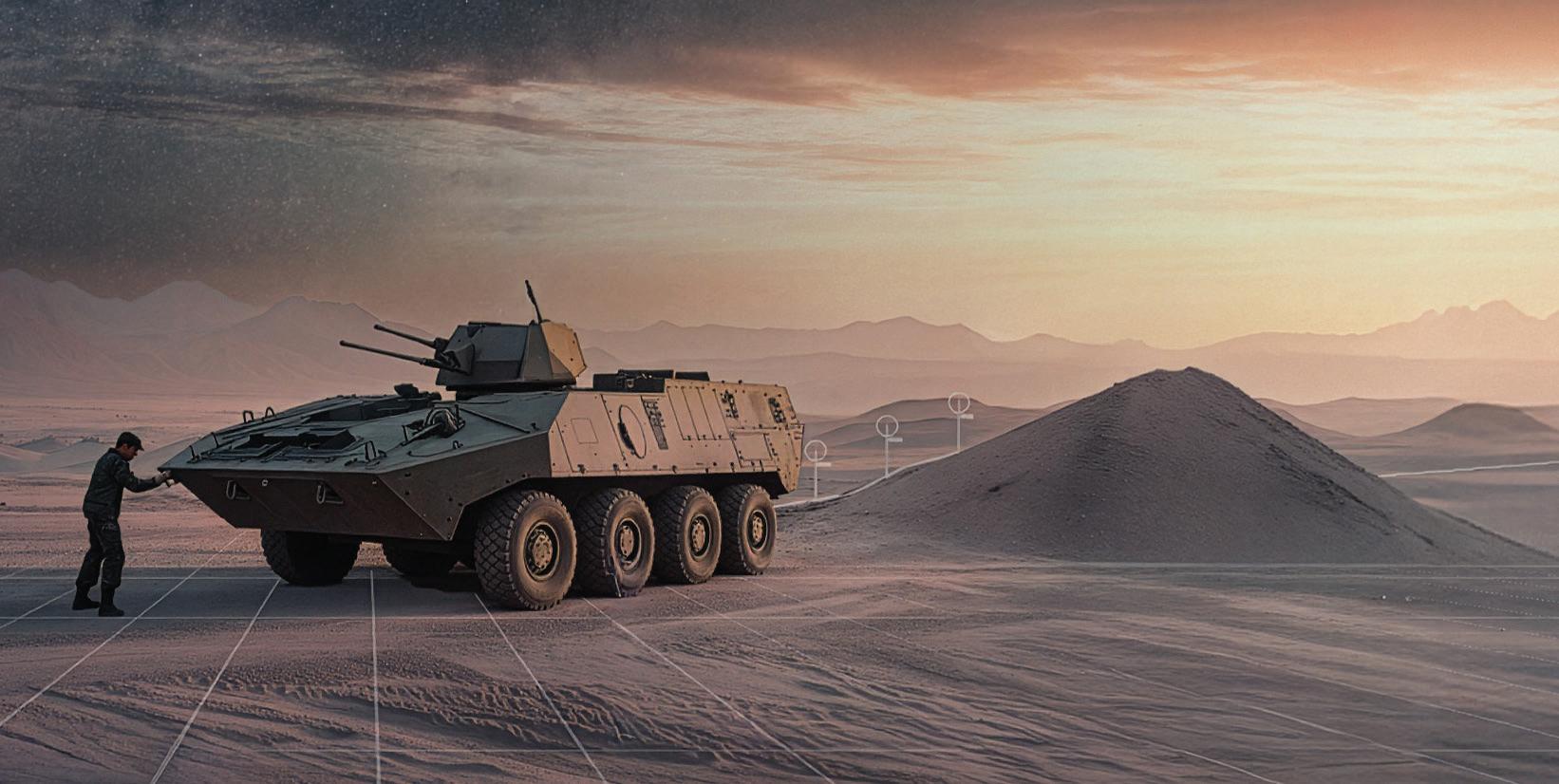
Modern warfighters operate in electromagnetic environments more contested than any previously encountered — conditions where GPS and communications may be degraded, denied, intermittent, and lowbandwidth (DDIL). GPS satellites orbit at approximately 20,200 km (12,550 mi) above Earth with a 12-hour orbital period. The signals they transmit are exceptionally weak by the time they reach a receiver, making GNSS jamming easy and even accidental.
“You get accidental jamming through LTE or any other out-of-band emitters
all the time,” said Andrew Dries, sales, engineering, and support manager for the Americas at Advanced Navigation. “And it doesn’t take a lot of energy for adversaries to engage in this as well.”
Dries noted that many systems across defense, agriculture, and mining rely heavily on GNSS as a single source of navigational information. Though the information is accurate and useful, overreliance on GNSS in defense applications has led to challenging situations and brittle systems that can fail in contested environments.
GNSS jamming in military environments involves the deliberate
transmission of radio-frequency (RF) interference at the same frequencies used by satellite navigation systems, making such signals unusable by overwhelming receivers with noise or false signals. Modern adversaries deploy groundbased and airborne jamming systems that can create denial zones ranging from localized tactical areas to broad regional coverage, with some systems also capable of spoofing — transmitting false GNSS signals that deceive receivers into calculating incorrect positions.
In ISR (intelligence, surveillance, and reconnaissance) platforms that use dual GNSS receivers to derive heading, if
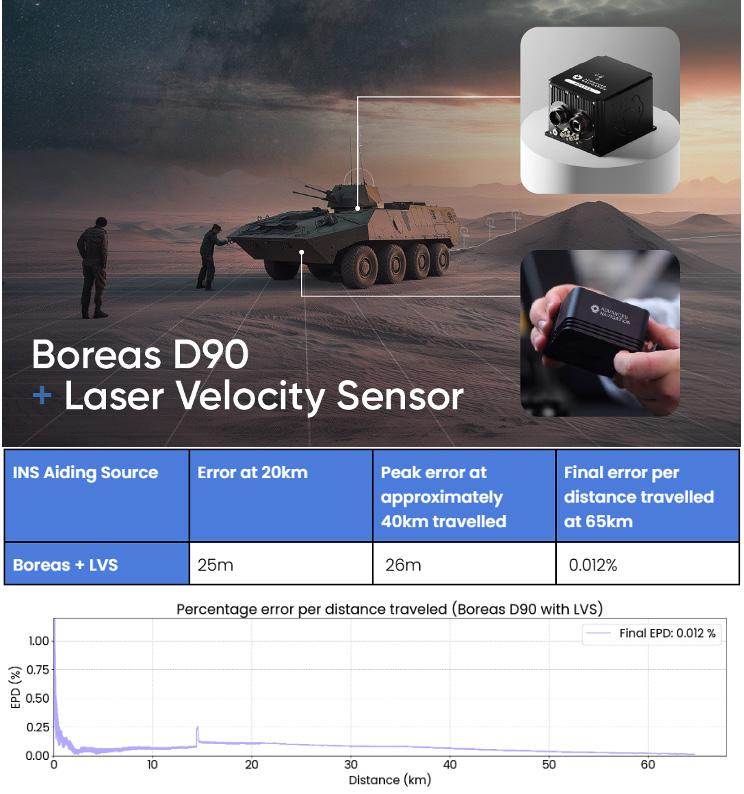
The LVS provides ground-relative, drift-free velocity measurements, as long as it maintains a clear line of sight to the ground or a stationary surface. Advanced Navigation
jamming eliminates the GNSS signal, the platform loses its heading reference entirely.
“All of a sudden, you lose your GNSS. You have no idea where you're pointing. And so, you have a lot of people scrambling to figure out how to adapt,” Dries said. “That’s where the inertial navigation solutions come in.”
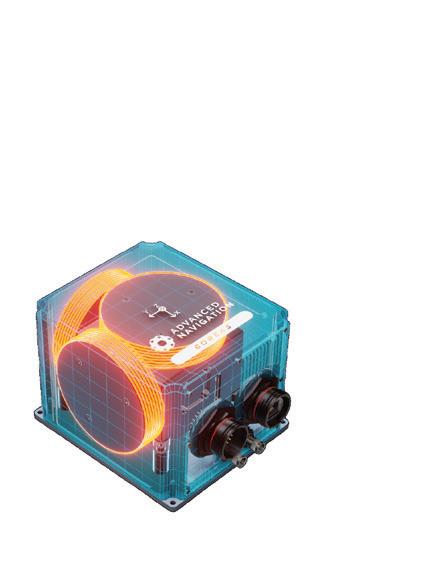
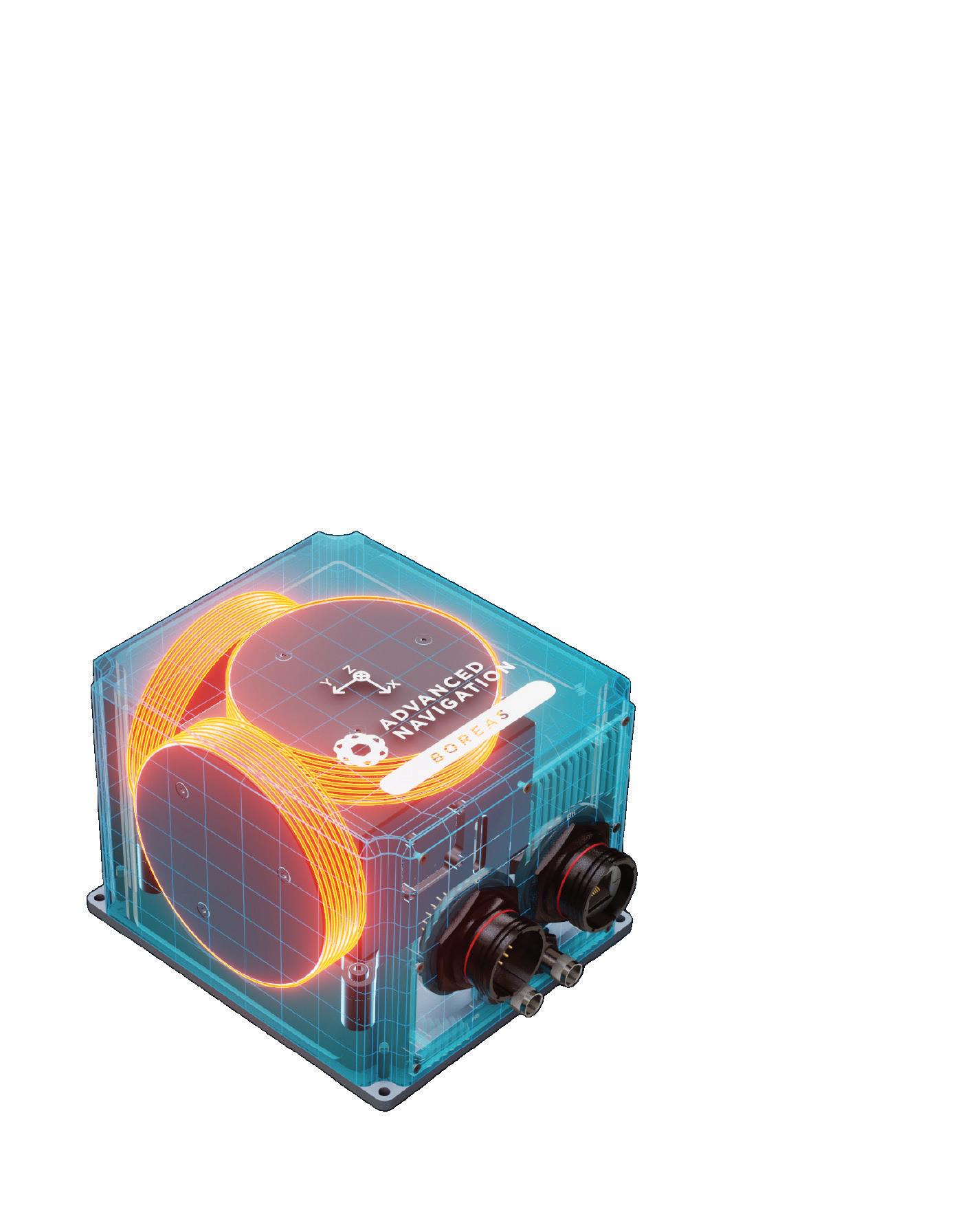
In an inertial navigation system (INS), the inertial measurement unit (IMU) contains accelerometers and gyroscopes to continuously calculate a platform's position, velocity, and orientation without external references. The system measures accelerations and rotational movements, then integrates the measurements over time from a known starting position to track the platform's current location. For example, Advanced Navigation’s Boreas
fiber optic gyroscopes (FOGs) are sensitive enough to detect Earth’s rotation and determine true North without relying on magnetic fields or external references. This provides autonomous navigation immune to jamming or spoofing, which is obviously favorable for applications in GPS/GNSSdenied environments.
“An inertial navigation system is built, as the name implies, around the inertial sensors. Inertial measurement units, as people know, are your three-axis accelerometers and gyroscopes,” said Dries. “Your accelerometers are measuring acceleration. This is the second derivative of position, which, when noise and bias are added in, is not the most convenient thing to detect, in terms of a navigational aiding source. And then you have your gyroscopes, which are giving you your
angular rates and degrees per second, which is a more convenient measure… In order to turn that information, the acceleration and the angular rates, into useful navigation, you need to utilize sensor fusion and state estimation techniques.”
Advanced Navigation describes inertial sensing as part of the “nervous system” of a navigation solution, which includes multiple sensors collecting information and AI-enabled software calculating the state solution.
“In the 1960s, Rudolf Kalman developed the Kalman filter, which is what inertial navigation systems have been designed around,” said Dries. “The Kalman filter enabled both sensor fusion and state estimation. The sensor fusion part allows us to blend information from various sensors that are reading different pieces of information.”
Dries explained that the software fuses measurements from the accelerometers and gyroscopes with the GNSS information that estimates position in a geodetic reference frame. It can also fuse that information with a laser velocity sensor (LVS) or wheel speed encoder, for example.
“The next part is the state estimation, which is going to be calculating your state solution. So that'll be your body velocities, your body angular rates, your position and latitude, longitude, acceleration, in a global reference frame,” he said. “Essentially, you're weighting these various sensor solutions that are coming in against the noisiness of the solution. The interesting thing about the Kalman filter is the Kalman gain, and the Kalman gain is optimized so that you reduce the covariance of your error. You come up with a minimum error solution, essentially.”
Errors are unforgivable in military environments, making continuous accuracy a critical requirement. To evaluate technologies for potential use in DDIL environments, the U.S. Army holds an annual All-domain Persistent Experiment (APEX) event (formerly the Positioning, Navigation, and Timing Assessment Experiment, or PNTAX).
Advanced Navigation evaluated the performance of its Boreas D90 FOG INS
when fused with complementary aiding sensors at the APEX event on White Sands Missile Range in New Mexico in December 2025.
During APEX, Boreas D90 with AdNav Intelligence software was integrated with an LVS and a wheel speed encoder aboard a four-wheel-drive vehicle. The demonstration was conducted during night operations, and the event organizers created an environment of complex and emerging electronic warfare threats by conducting GNSS jamming.
The Boreas D90-LVS configuration achieved a 0.012% error per distance traveled (7.5 m over 65 km), and the Boreas D90–wheel encoder configuration achieved a 0.018% error per distance traveled (11.7 m over 65 km), without reliance on GNSS, even under deliberate jamming.
Wheel speed encoders are a rugged, cost-effective option that work well on firm terrain and structured routes. Advanced Navigation
“Our laser velocity sensor is giving a ground-relative velocity. You have three lasers that are about 120° pointed away from each other, and you're using the Doppler shift that's occurring as the lasers are returned back off of the ground, and it's directly proportional to the velocity. It's a highly accurate system,” said Dries. “In fact, what we've seen at APEX, and we've proven this quite a few times, is that you're able to get multiple orders of magnitude improvement over self-positioning performance over just the INS alone, when you add the velocity sensing.”
Each LVS measurement is independent and unaffected by previous measurements, so it does not accumulate systematic errors over time. When fused with an INS, this drift-free velocity reference helps bound inertial navigation errors by providing periodic corrections
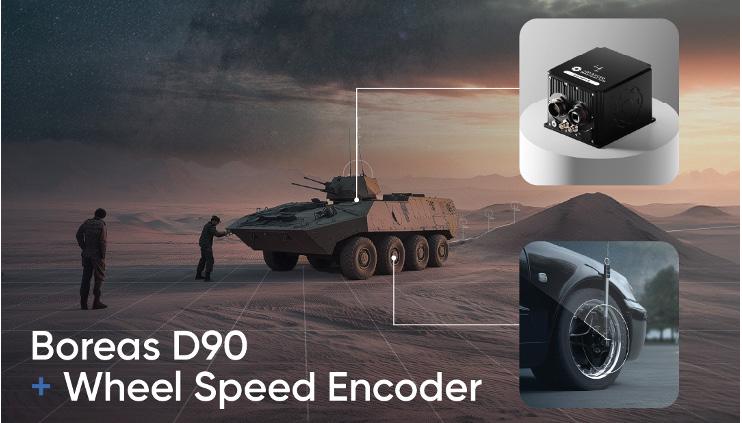
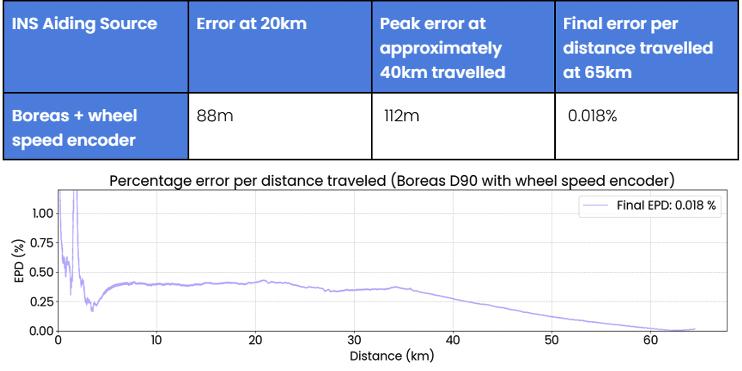










































CS





performance materials made for aerospace nishing & manufacturing.

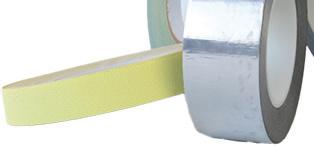


that prevent the position estimate from drifting unbounded, which is why the Advanced Navigation system achieved such high accuracy.
As for the wheel speed encoder, it measures wheel rotation to determine ground speed and distance traveled. Though it must account for factors such as wheel slip, tire wear, and terrain variations that can affect measurement accuracy, wheel speed encoders offer a more rugged, cost-effective, simpler option suitable for firm terrain and structured routes.
“With the wheel encoder, you're inferring velocities from the wheel rotation,” said Dries. “There are various error sources that get introduced. You need to accurately know your wheel diameter and the distance off of the baseline, because the wheel is going to be rotating faster around turns. And then, most importantly, there's wheel slip, and you can't account for that. It just happens and introduces errors. And for some applications, especially for heavy wheeled and tracked vehicles, wheel slip occurs all the time, so it just becomes impractical.
I don't want to disparage them. They're good sensors.”
Dries noted other considerations for wheel speed sensors, such as mounting. It is common to use a simple external configuration that mounts to the hub and attaches to the lug nuts, which, in reality, is impractical for many applications because they are likely to detach. Therefore, it can be a mechanical engineering challenge to design an enclosure that can protect it.
Though the APEX evaluations were focused on proving the INS and complementary aiding sensors' accuracy, it is clear that selecting one of the tested configurations depends mainly on cost and application.
“The trade-offs you have around an LVS compared to a wheel speed sensor are probably going to be more around cost than anything else,” said Dries. “The reality is, if you're looking for a high accuracy solution, the LVS is going to beat out the wheel speed encoder every single time.”
alignment of some optical or radar sensor, and it needs to be operating in GNSSdenied, then that D90-LVS with the antijamming, anti-spoofing modules — that's what you're looking for.”
Aside from defense applications, the mining industry has an interest in improving underground navigation, increasing throughput, and removing operators from dangerous conditions. Autonomous solutions prove challenging, so accurate navigation is critical. Subsea applications are also pursuing similar solutions for surveying, for example.
“There's a lot of interest in pairing systems with what's referred to as a DVL, a Doppler Velocity Log,” said Dries. “These are fundamentally acoustic sensors. They're doing largely the same thing as the LVS, but in a subsea situation which enables them to have really accurate positioning underwater.”
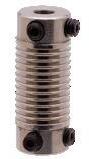
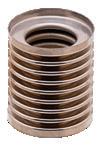
World’s Finest Metal Bellows
Servometer® - PMG, LLC
Custom Designed
Miniature Electrodeposited Nickel Bellows have diameters as small as 0.020 inch (0.5mm), are ideal for dynamic applications where reliability and long life are critical requirements. Servometer® bellows
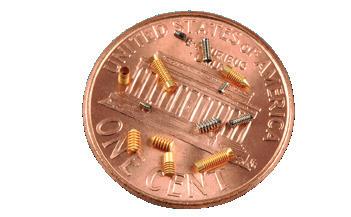

The applications for the LVS are not limited to ground vehicles, however. Last year, Advanced Navigation conducted an independent evaluation of a Boreas D90-LVS configuration for long-range aerial missions, ISR platforms, helicopters, and fast-moving fixedwing aircraft. Over 100 km traveled, the configuration achieved only 29 m error (0.03% of distance) without GNSS.
“What you're really trying to do is pair the navigation solution with the requirements of that system,” Dries said. “The same application might be able to get away with a smaller SWaP, lower cost solution, if they're not going to be going into GNSS-denied areas. But if you need a super critical heading accuracy, especially
Dries identified several areas he anticipates seeing development in the coming years. On the software side, he mentioned AdNav Intelligence and perhaps some interesting advancements that could be made in AI-enabled maintainability. As for hardware, he noted ongoing development of more resilient GNSS solutions, including anti-jamming and anti-spoofing modules and antennas, that can be integrated into Advanced Navigation’s layered navigation approach. He also expressed personal interest in visual-based navigation and terrainrelative navigation (TRN), a technique that uses camera or infrared imagery to match terrain features against a map, providing a positioning reference that plays a similar functional role to GNSS. Fused with an inertial sensor, he said, this approach could enable long-duration GNSS-denied navigation on small, cost-constrained uncrewed aircraft systems where size and weight prevent the use of higher-end inertial systems. A&D

RACHAEL PASINI • EDITOR-IN-CHIEF
Tougher than steel, less dense than aluminum, as conductive as copper. Galvorn is a flexible, lightweight conductor for wiring, carbon fiber reinforcement, and strengthening composites.
Copper has been the default conductor in aerospace wiring for decades. However, the case for copper is becoming more complicated across the supply chain. On the supply side, copper sourcing is increasingly worrisome. A January 2026 study by S&P Global projected that global copper demand will reach 42 million metric tons by 2040 — a 50% increase from current levels — while production is expected to peak in 2030 and then decline. The International Copper Study Group forecast a refined copper deficit of 150,000 tons in 2026 alone, and J.P. Morgan Global Research projected a U.S. refined copper deficit of 330,000 metric tons this year. Competition from AI data center buildouts, defense spending, and electrification is intensifying pressure on a resource that is already difficult to bring to market. With global copper grades falling below 0.7% — down from 1 to 2% historically — miners are processing more rock per ton of output, driving up cost and carbon footprint. As such, the U.S. designated copper a critical mineral in 2025.
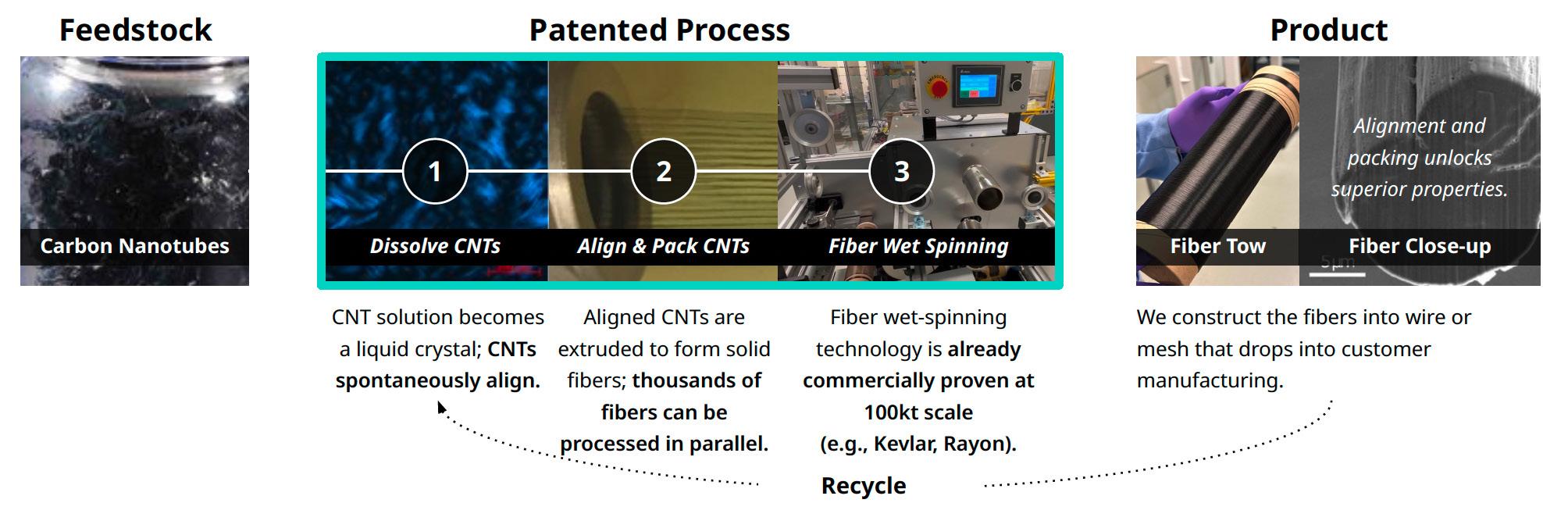
Recycling Galvorn is relatively simple. Products can be treated as feedstock, dissolved with the same solvent as raw CNTs, and processed the same way.
DexMat

•
Solid or hollow shaft, high performance, housed and frameless, brushless motors and matching drives for demanding applications.
On the design side, the weight of copper wiring has always been a tradeoff that aerospace engineers have had to live with. For instance, a Boeing 747 (retired from production in 2023) contains over 150 miles of wiring, weighing upwards of 3,500 pounds. Modern aircraft are increasingly complex, with more sensors, fly-by-wire controls, communication systems, and avionics than earlier generations — requiring more wire runs and more EMI shielding. Lightweighting is an ongoing engineering objective in aerospace, and every gram saved in the electrical system is a gram available for structure, fuel, or payload.
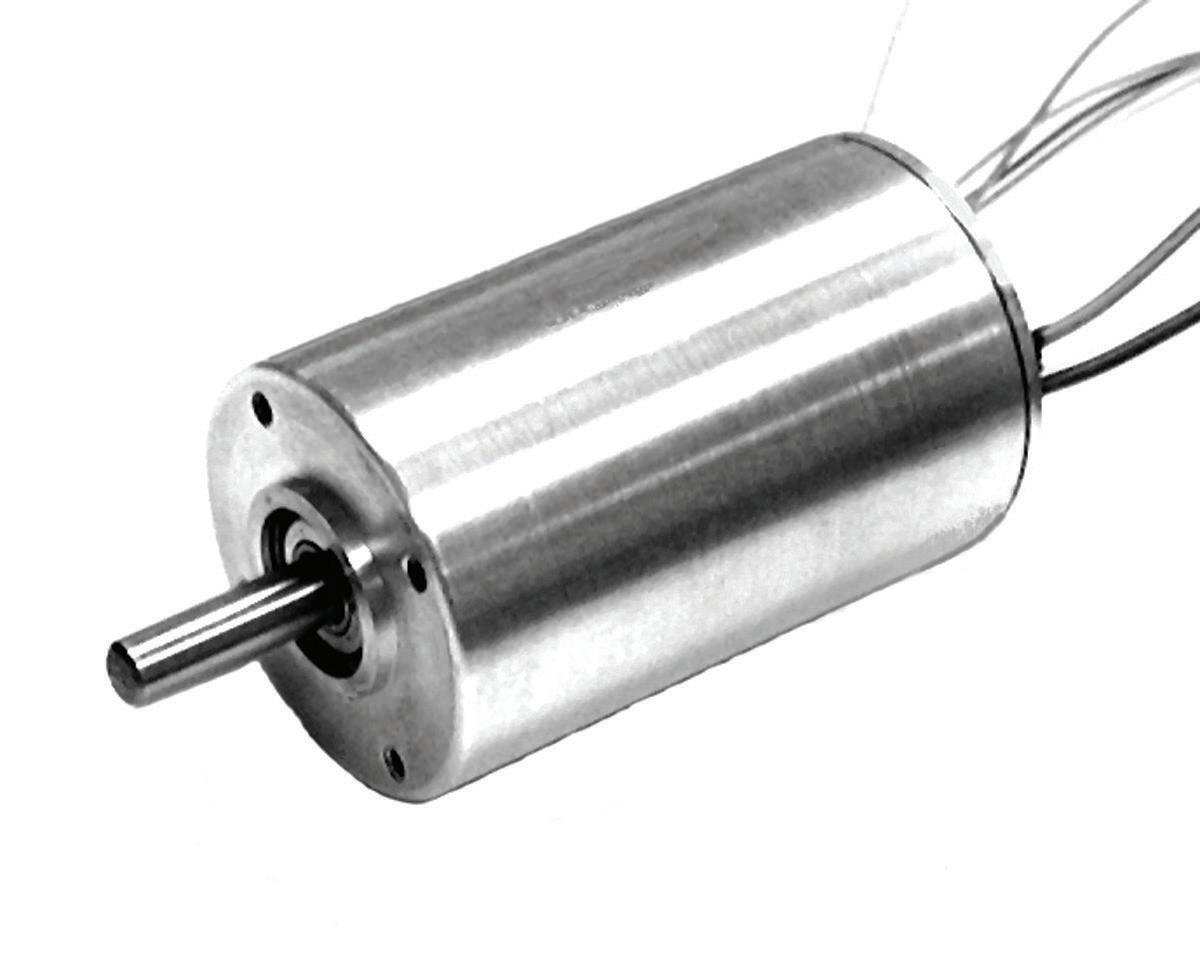
• •
• •
•
•
Hall or sensorless motors and drives for surgical tools, aerospace, military, and scientific instrument applications. Custom drive programing and designs available.
Motors up to 95% efficient, power up to 1,500 watts. Highest power density in the industry.
Operating temperatures from -73C to 150C
Slotless and slotted designs. Available with encoders and gearheads and separate or integral electronics.
Quantities 1 to 5,000.

www.koford.com
Contact us at mail@koford.com
Plus, EMI shielding adds to the challenge. As aircraft pack in more electronics and operate in denser electromagnetic environments, the conventional solution of braided copper shields is effective but adds weight and bulk. A braided shield inherently has
gaps in coverage, and at higher signal frequencies, the skin effect reduces the amount of the copper cross-section doing useful work. Engineers working on nextgeneration aerospace platforms need next-generation solutions.
Carbon nanotubes emerge from the lab and into engineering designs
Carbon nanotubes (CNTs) have attracted research attention for decades because of properties that seem almost too good to be true at the nanoscale: tensile strength that exceeds steel by a wide margin, electrical conductivity comparable to copper, and low density. The challenge has always been translating those nanoscale properties into materials that engineers can actually use, such as fibers, tapes, cables, and composites, at scales and costs that make sense for manufacturing.
The main obstacle is that individual nanotubes are extraordinarily small. Getting millions of them to cooperate — align, pack tightly, and bond effectively — in a macroscale material requires precise processing. Early CNT fibers demonstrated the concept but fell short on performance and were nowhere near commercial scale. That is the problem DexMat has been working to solve.
DexMat, founded in Houston in 2015, produces a carbon nanotube fiber it calls Galvorn. The technology traces back to Rice University, where research from Nobel Prize-winning scientist Rick Smalley
established the scientific foundation for CNT fiber development. A 2004 paper demonstrated that wet-spinning processes could produce fibers from carbon nanotubes at scalable quantities. Dmitri Tsentalovich, cofounder and CTO of DexMat, began his PhD at Rice in 2008 and worked on the development of that process.
“DexMat produces Galvorn, which is a lightweight, flexible, carbon-based conductor,” Tsentalovich said. “It bridges the gap between metals and high-performance polymeric materials, because it’s both highly strong and flexible like Kevlar and Dyneema, but it is able to conduct electricity like metals such as aluminum and copper.”
After enough lab-scale results accumulated to suggest commercial viability, DexMat was founded. Today, Galvorn is available in several engineering form factors: fiber tow, twisted yarn, braided wire, tape, film, and fabric. Each opens different application possibilities depending on what engineers need — a wire replacement, a shield layer, a composite reinforcement, or some combination of all three.
To produce Galvorn, DexMat uses a wet-spinning method, the same general approach that has been used for decades to produce high-performance polymer fibers such as Kevlar. Tsentalovich explained that dry spinning, an alternative CNT fiber approach, does not scale economically the way wet spinning does.
The process begins with raw carbon nanotubes, produced from methane feedstock by a small number of suppliers that meet DexMat’s quality standards. Tsentalovich said that two feedstock material characteristics primarily drive performance: defect ratio and aspect ratio. Defects on nanotube sidewalls reduce conductivity and make alignment harder. The aspect ratio, the ratio of nanotube length to diameter, has a documented power-law relationship with fiber strength and conductivity, where the higher it is the better.
“Once we get the raw material, we dissolve it in a solvent that is able to individualize the carbon nanotubes, and this forms a liquid crystalline phase, which means that the carbon nanotubes, when they get to a certain concentration, start to spontaneously align…Once we flow align them and squeeze them through a series of small holes called a spinneret, that causes all the nanotubes to line up and pack densely close to each other,” said Tsentalovich. “We then put them through another liquid, a coagulant, and this removes our solvent, but it causes the nanotubes to coalesce and coagulate into a solid structure where they have this preserved alignment. Then that’s wound up roll to roll, and you get the tow filaments, which is standard for processing fiber materials.”
The process does not require high-temperature carbonization postprocessing steps, which are a significant
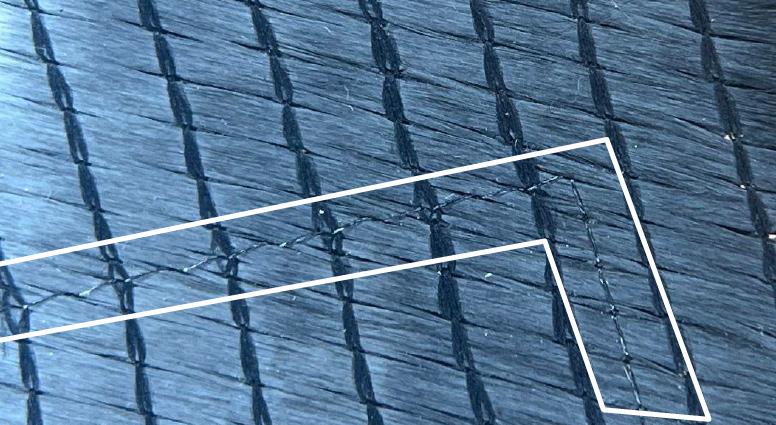

Harwin’s connector products are proven to perform in extreme conditions, with shock, vibration and temperature range rigorously tested.
WITH OUR QUALITY, SERVICE, SUPPORT, AND HIGHLY RELIABLE PRODUCTS, YOU CAN DEPEND ON HARWIN.
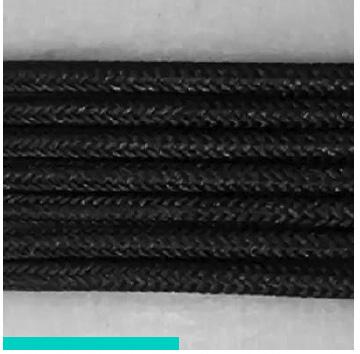
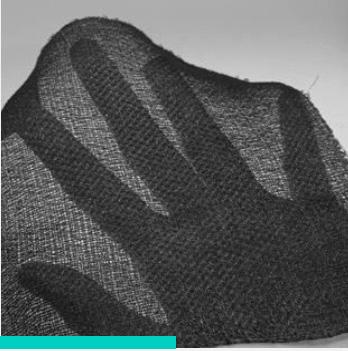
cost and energy input in conventional carbon fiber production. The material is also fully recyclable, in which Galvorn fibers can be redissolved in the same solvent and reprocessed from the start of the production line with no reported loss of properties.
“What actually gives you the strength and conductivity is that those nanotubes are right next to each other,” Tsentalovich said. “When we actually break the fibers, we're not breaking the individual nanotubes, we’re just pulling them past each other. So, it’s important to use particularly long nanotubes in order to get the strength.”
Despite what Galvorn has already demonstrated, Tsentalovich said the material is operating well below its theoretical ceiling. Current fibers are at approximately 10% of the theoretical electrical conductivity limit and less than 10% of the theoretical tensile strength limit.
“The thing that [has been] driving improvements is a combination of better processing, but also using higher aspect ratio nanotubes,” Tsentalovich said. “If our suppliers can develop even higher aspect ratio nanotubes while maintaining quality, there’s a pathway to get to absolutely ridiculous numbers in terms of performance.”
Galvorn for aircraft signal cabling and EMI shielding applications
For aerospace wiring, DexMat’s current focus is on data and signal cables rather than high-current power transmission. Galvorn’s electrical conductivity is nearly equivalent to copper on a per mass basis (6,150 Sm²/kg for Galvorn compared to 6,300 Sm²/kg for copper), but for power transmission, a Galvorn conductor carrying the same current as a copper equivalent would need to be slightly larger, which reduces its weight advantage in that use case. However, for signal cables, which make up a large amount of the wire runs in any modern aircraft, Tsentalovich said that “for the majority of cable runs that are only a few meters long, this is way more than sufficient performance.” EMI shielding is another application and benefit. DexMat has demonstrated, in testing with a cable manufacturing partner, that Galvorn film used as a shield layer can meet military specifications for shielding effectiveness while producing a cable that is up to 60% lighter. Plus, the material itself is more than 20 times stronger than copper
by mass, which is an advantage in aerospace environments where vibration and mechanical robustness are also concerns.
“If you use the solid copper sheath, you get really good shielding, but then you have a perfectly stiff cable that you can’t bend and route. The advantage with Galvorn is that we can essentially apply the shield as a film, or multiple layers of film, that give you full coverage while maintaining the strength and flexibility,” said Tsentalovich.
Hybrid designs are also possible. Depending on the frequency range and shielding requirements of a specific cable, an engineer might replace one of two copper braid layers with a Galvorn film layer and still achieve 20 to 30% weight reduction, while retaining copper’s low-frequency shielding strength.
“Because it’s a multifunctional material that also has structural applications, one opportunity is to actually put the wiring, or the Galvorn, directly into the structural components,” Tsentalovich said. “For example, you can imagine a drone [with] a composite body, where the Galvorn is already insulated by the epoxy or resin, and it’s also being used to conduct current to the rotors and the motors. That’s something still in the very early stages of development, but potentially a completely different design system. You take advantage of the material properties that Galvorn offers the copper and that other metals don’t have.”
One mechanism Tsentalovich highlighted for Galvorn’s EMI shielding advantage — particularly at higher frequencies — is reduced susceptibility to the skin effect. In conventional copper conductors, alternating current at high frequencies is concentrated near the surface, leaving most of the crosssectional area effectively unused. Tsentalovich noted that published research indicates CNT conductors maintain current conduction across a larger portion of their cross-section at higher frequencies.
“This difference in the skin effect enables us to significantly outperform copper, especially at higher frequencies. At the very low frequencies, sometimes you might still need the copper, so that’s where constructions that have both copper and Galvorn may make more sense,” said Tsentalovich. “But especially for next-generation data transmission cables that are operating at higher frequencies, that’s the biggest advantage that we see.”
Design engineers evaluating Galvorn for cable applications will need to account for termination compatibility. Galvorn is compatible with crimp-style terminations, but soldering is more complex, as standard commercial solders do not readily wet the material. DexMat’s cable manufacturing partner has developed proprietary solder formulations that work with Galvorn, and Tsentalovich acknowledged that this is an area where the broader ecosystem of compatible materials is still developing.
“As cables made with Galvorn become more prominent, there’s going to be more of those types of solutions,” Tsentalovich said.
Beyond wiring: structural sensing, de-icing, and heat shielding
Aerospace customers have approached DexMat on a range of additional applications that take advantage of the material’s multifunctional properties, including:
• Embedded strain sensing: Galvorn fibers integrated into carbon fiber composite structures to enable damage detection.
• Electrothermal de-icing: Galvorn fibers embedded in wing skins to provide resistive heating for ice prevention or removal.
• Heat shielding: Tsentalovich said Galvorn can withstand temperatures exceeding 1,000° C in inert environments and is being used in a space application.
The material also shows resilience across a range of environmental conditions, including low and high temperatures and humidity variation, and is not susceptible to galvanic corrosion. Tsentalovich said it performs well in salt fog and even seawater immersion.
“Galvorn really redefines the physical limits of a traditional conductor,” Tsentalovich said. “Historically, you have to choose either conductivity or structural
Boker’s provides custom stamped component parts to accommodate nearly any aerospace and defense application, including avionics, control systems, engines, hydraulic, pneumatic and other equipment that require unique specifications. Boker’s Quality Management System is certified to the stringent AS 9100:2016/ISO 9001:2015 standard, and can comply with DFARS and RoHS, with the ability to manufacture to customer provided AN, NAS, MS and MIL spec standards.
At Boker’s, we know that aerospace and defense OEMs demand manufacturing partnerships with the highest levels of precision, quality management and performance, along with a strong understanding of unique industry requirements ranging from space/non-space qualifications to AMS specifications. For over 100 years, Boker’s continues to meet the evolving design needs of the aerospace, aviation and defense industries.
performance. This is a material that offers you both — the very good mechanical properties alongside the high conductivity — and so it allows people to think in a different design space.” A&D
DexMat dexmat.com
Sources:
• Copper in the Age of AI: Challenges of Electrification, S&P Global Energy & Market Intelligence: https://wtwh.me/spglobal
• Copper Market Forecast 2025/2026, International Copper Study Group: https://wtwh.me/ICSG
• Copper prices could soar further amid a tightening market, J.P. Morgan Global Research: https://wtwh.me/jpmorgan
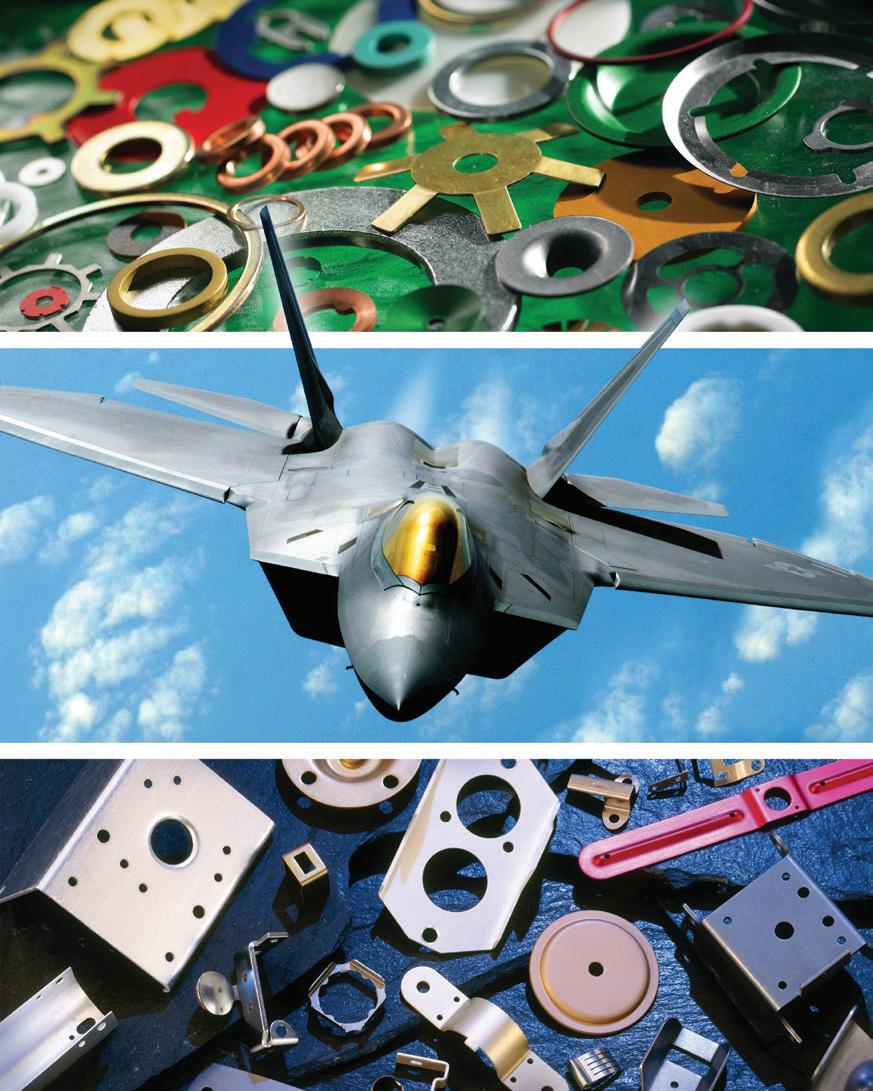
• www.bokers.com
This specialized Kapton® tape joins treated polyimide film with 3M™ 966, a 2 mil. High temperature (up to 400°F) acrylic adhesive laminated on one or two sides. The balanced performance properties of polyimide and an adhesive with low outgassing, low-leachable chloride makes this tape ideal for different aerospace applications, including label overlays, flexible circuit attachments, and wire or harness cable wrapping. PTFE, Nylon, Mylar, PEEK, and ULTEM can also be laminated with 966 adhesive. Customizable in sheets, rolls, or die-cut parts.
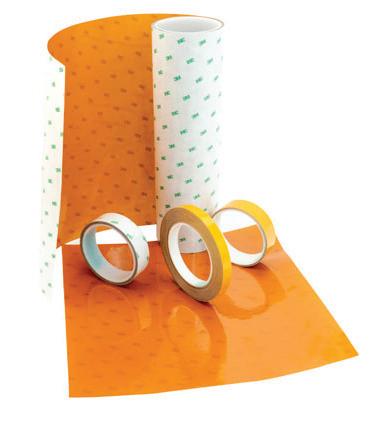
CS Hyde Company Lake Villa, IL 60046
800-461-4161 • www.cshyde.com
Why accept a standard product for your custom application? NEWT is committed to being the premier manufacturer of choice for customers requiring specialty wire, cable and extruded tubing to meet existing and emerging worldwide markets. Our custom products and solutions are not only engineered to the exacting specifications of our customers, but designed to perform under the harsh conditions of today’s advanced manufacturing processes. Cables we specialize in are LITZ, multi-conductor cables, hybrid configurations, coaxial, twin axial, miniature and micro-miniature coaxial cables, ultra flexible, high flex life, low/ high temperature cables, braids, and a variety of proprietary cable designs. Contact us today and let us help you dream beyond today’s technology and achieve the impossible.


New England Wire Technologies www.newenglandwire.com 603.838.6624
Ryan Ashdown rashdown@wtwhmedia.com 216.316.6691
Jami Brownlee jbrownlee@wtwhmedia.com 224.760.1055
Mary Ann Cooke mcooke@wtwhmedia.com 781.710.4659
Mike Francesconi mfrancesconi@wtwhmedia.com 630.488.9029
Jim Powers jpowers@wtwhmedia.com 312.925.7793
CEO Matt Logan mlogan@wtwhmedia.com
CFO Ken Gradman kgradman@wtwhmedia.com 773-680-5955
DESIGN WORLD does not pass judgment on subjects of controversy nor enter into dispute with or between any individuals or organizations. DESIGN WORLD is also an independent forum for the expression of opinions relevant to industry issues. Letters to the editor and by-lined articles express the views of the author and not necessarily of the publisher or the publication. Every effort is made to provide accurate information; however, publisher assumes no responsibility for accuracy of submitted advertising and editorial information. Non-commissioned articles and news releases cannot be acknowledged. Unsolicited materials cannot be returned nor will this organization assume responsibility for their care.
DESIGN WORLD does not endorse any products, programs or services of advertisers or editorial contributors. Copyright © 2026 by WTWH Media, LLC. No part of this publication may be reproduced in any form or by any means, electronic or mechanical, or by recording, or by any information storage or retrieval system, without written permission from the publisher.
Subscription Rates: Free and controlled circulation to qualified subscribers. Non-qualified persons may subscribe at the following rates: U.S. and possessions: 1 year: $125; 2 years: $200; 3 years: $275; Canadian and foreign, 1 year: $195; only US funds are accepted. Single copies $15 each. Subscriptions are prepaid, and check or money orders only.
Subscriber Services: To order a subscription or change an address visit our website at: www.designworldonline.com


By Mark Jones


The temperature outside is in the low single digits. I’m freezing some water bottles for use in a cold therapy device by placing them outside. Three are frozen solid. One remains liquid until I pick it up. As the thin plastic crinkles under my touch, crystallization begins. The clear water goes cloudy and begins to stiffen. After mere seconds, the bottle is a solid mass of ice.
The explanation is easy. Supercooled water remains liquid until perturbed by shaking or touch, triggering a nucleation event. Rapid ice formation follows. About one quarter of the time, I observe supercooling. All four bottles freeze solid, but most of the time, one of the four remains liquid, and it isn’t always the same bottle. The triggered freezing is still super cool — pun intended. It brings Cat’s Cradle to mind.
While supercooling is well understood, ice still holds some secrets. Winter in Michigan comes with the telltale sound of antilock brakes. Traction is at a premium. Ice is slippery — an undisputable fact. There is, however, no consensus on why.
The explanation I first heard is that pressure causes melting, and the liquid water formed acts as a lubricant. It makes sense. Ice expands when it freezes, so compressing it should lower the freezing point. Lord Kelvin demonstrated freezing point
depression way back in the mid1800s. It isn’t enough to explain slipperiness. Tons of force are required.
A water layer produced by friction was proposed in the 1930s. Experiments showed materials that conduct heat well create more friction on ice than insulators, consistent with heat flow being a driver — heat from friction. More experiments followed, this time looking at friction when surfaces are spun against ice. Rotating a piece of metal against ice at different speeds while measuring the forces showed that friction is not what creates the water layer. Frictional heating increases with speed, but the experiment showed no dependence on the speed of rotation. Friction-induced melting isn’t the cause.
More recent explanations both invoke changes in ice structure at the air interface. Both use computer models as part of their explanation. Note I didn’t use “prove.” I’m not sure the models are testable. Throughout my career, I’ve learned all models are wrong, but some are useful.
I purchase shoes and tires for winter with ice traction in mind. Thousands of patents devoted to rubber compounds and tread design show this remains an active area of research. The research and patents clearly show that what is touching the ice matters. My own experience
shows that two identical-looking shoe soles can behave very differently on ice. I am a believer in snow tires — the traction difference can be remarkable. The empirical evidence is undeniable. Understanding seems to be lagging. There are computer models of ice traction that focus on friction forming a water layer. This seems at odds with more recent models and experiments illustrating why ice is slippery.
There is a widely quoted statistic that one million falls and 17,000 deaths are due to ice and snow. Dig as I might, I can’t find a source. It appears to be a zombie fact, one likely inflated. Extrapolating U.S. Bureau of Labor Statistics data gives an estimated 140,000 falls and 150 deaths due to falls on ice and snow. A total of 536,000 crashes, 117,000 injuries, and 1,300 deaths are attributed to snowy and icy pavement, according to Federal Highway Administration data. Not a million injuries — but stopping even one death would be a positive. Leveraging better understanding into better technology for keeping us upright and in our lanes would be a great step forward. It would be a great outcome for what today is curiosity-driven research. Models of why ice is slippery might strike some as frivolous. The models are surely wrong but hopefully will prove useful. DW

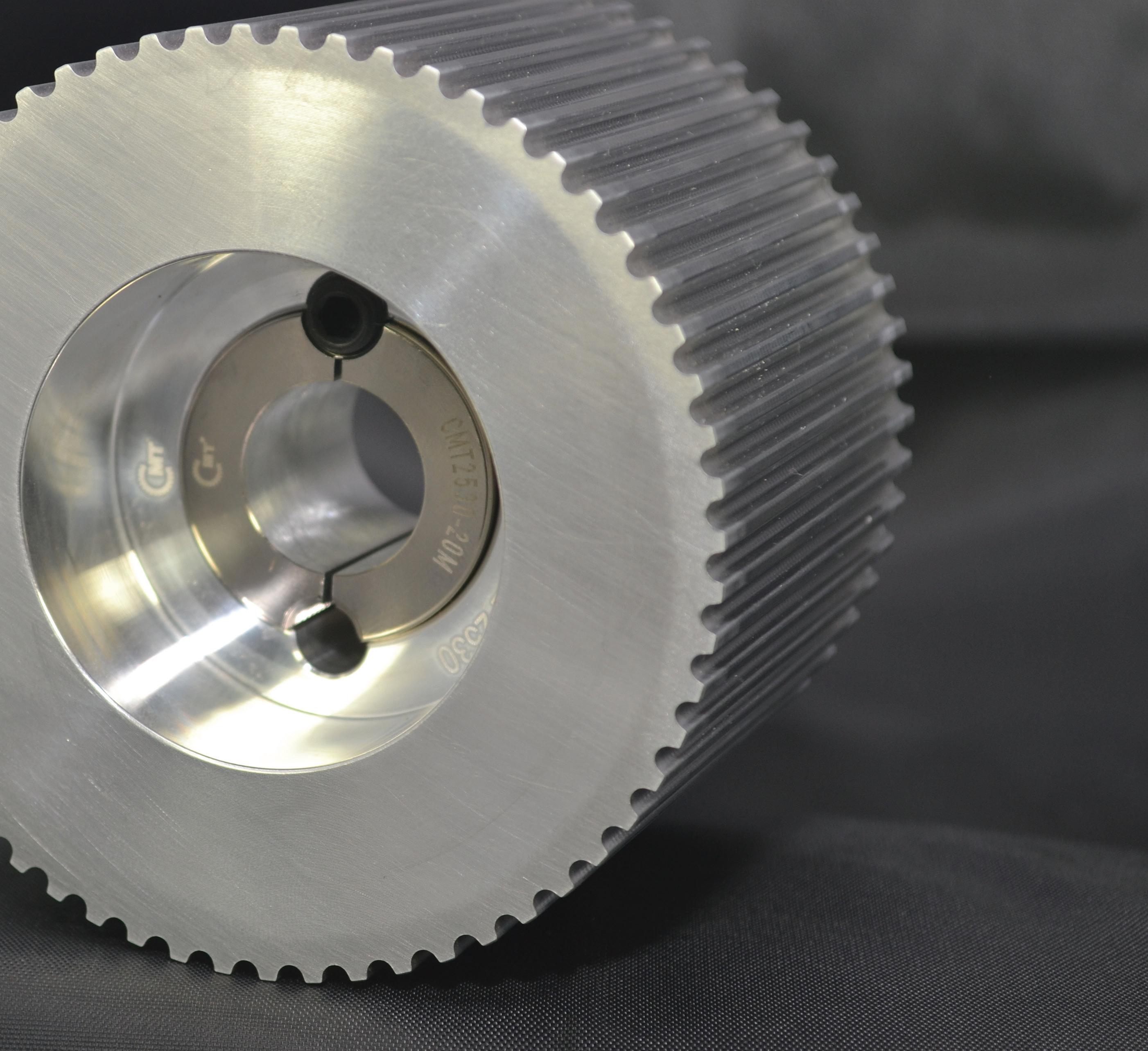


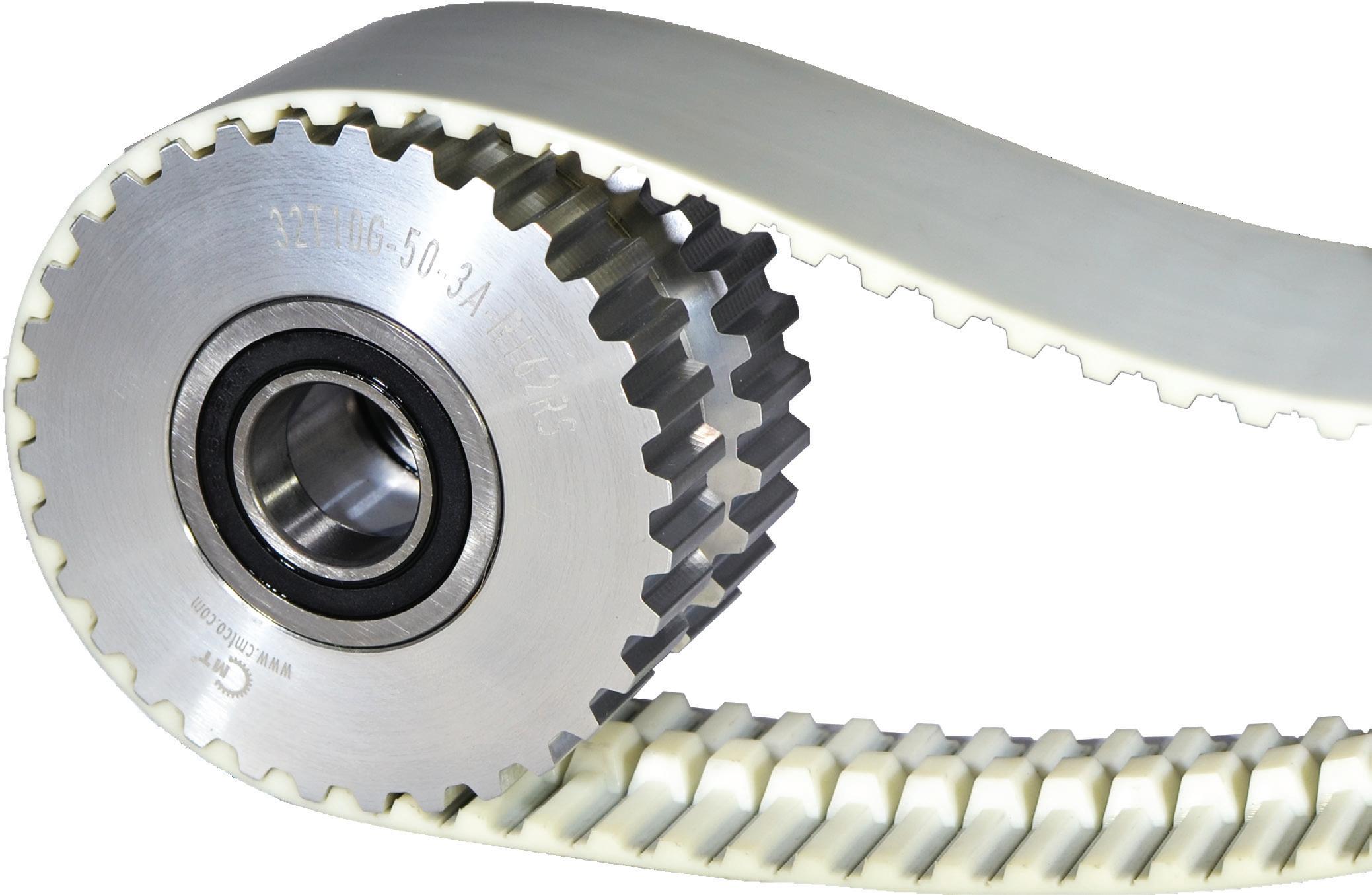
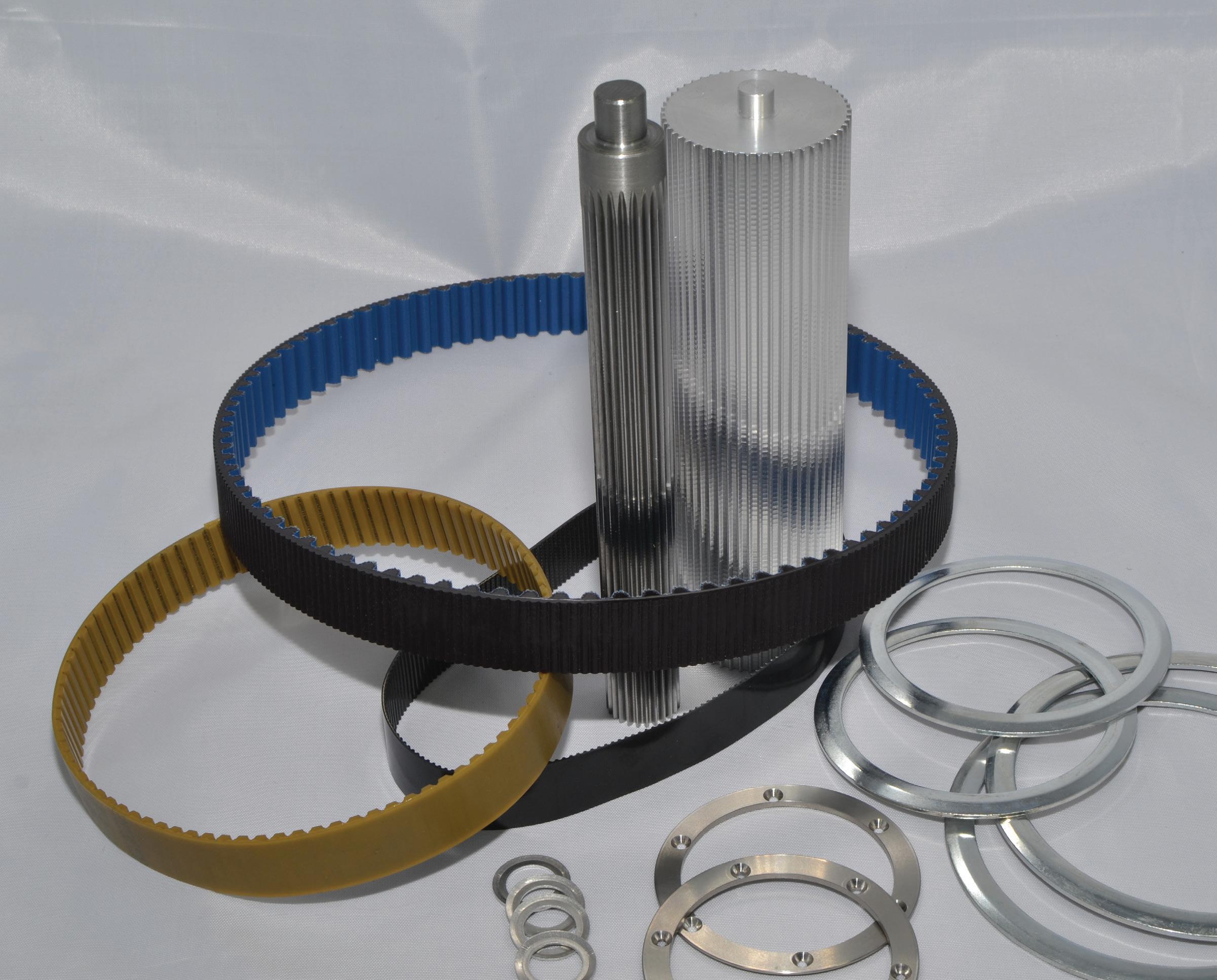




Designing efficient systems is about more than components and specifications—it’s about understanding how real requirements come together in the real world. By taking the time to understand the specific demands of your system, we bring decades of engineering experience and a people-first mindset to develop solutions that perform better, last longer, and fit exactly where they need to.
Have a challenge you’re working through? Call or email us today and let’s connect our engineers with your engineers.


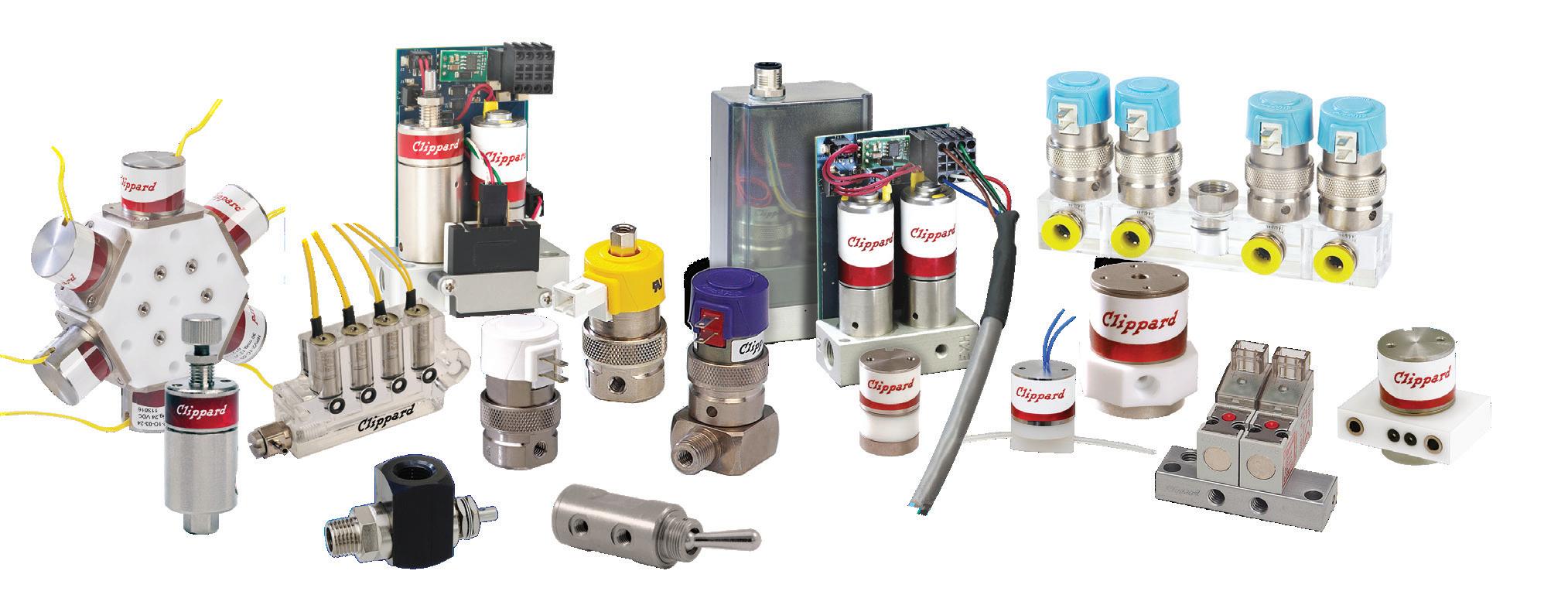
• Electronic Valves
• Proportional Valves
• Isolation Valves
• Pinch Valves
• Precision Regulators
• Toggle & Stem Valves
• Needle Valves
• Electronic Controllers
• Pneumatic Assemblies
• Special Manifold Designs
• Pneumatic Circuit Design
• Fittings, Hose & Tubing