11
Passive Cooling and capital costs throughout the lifecycle of the building.
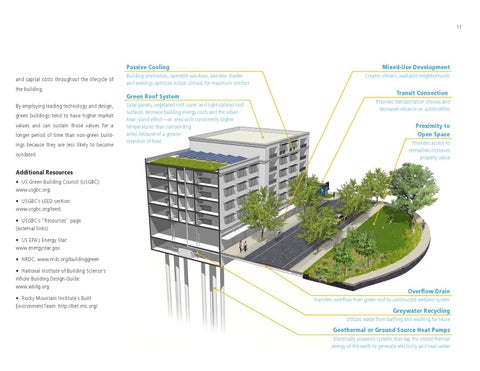
Building orientation, operable windows, window shades and awnings optimize indoor climate for maximum comfort
Green Roof System By employing leading technology and design, green buildings tend to have higher market values and can sustain those values for a longer period of time than non-green buildings because they are less likely to become outdated.
Solar panels, vegetated roof cover, and light-colored roof surfaces decrease building energy costs and the urban heat island effect—an area with consistently higher temperatures than surrounding areas because of a greater retention of heat
Mixed-Use Development Creates vibrant, walkable neighborhoods
Transit Connection Provides transportation choices and decreases reliance on automobiles
Proximity to Open Space Provides access to recreation,increases property value
Additional Resources • US Green Building Council (USGBC): www.usgbc.org; • USGBC’s LEED section: www.usgbc.org/leed; • USGBC’s “Resources” page (external links) • US EPA’s Energy Star: www.energystar.gov • NRDC: www.nrdc.org/buildinggreen • National Institute of Building Science’s Whole Building Design Guide: www.wbdg.org • Rocky Mountain Institute’s Built Environment Team: http://bet.rmi.org/
Overflow Drain Transfers overflow from green roof to constructed wetland system
Greywater Recycling Utilizes water from bathing and washing for reuse
Geothermal or Ground Source Heat Pumps Electrically powered systems that tap the stored thermal energy of the earth to generate electricity and heat water