Biotech indigo / Unsticking elastane recycling / Hemp matures Wool denim’s revival / Miles Johnson / Nikita Raman
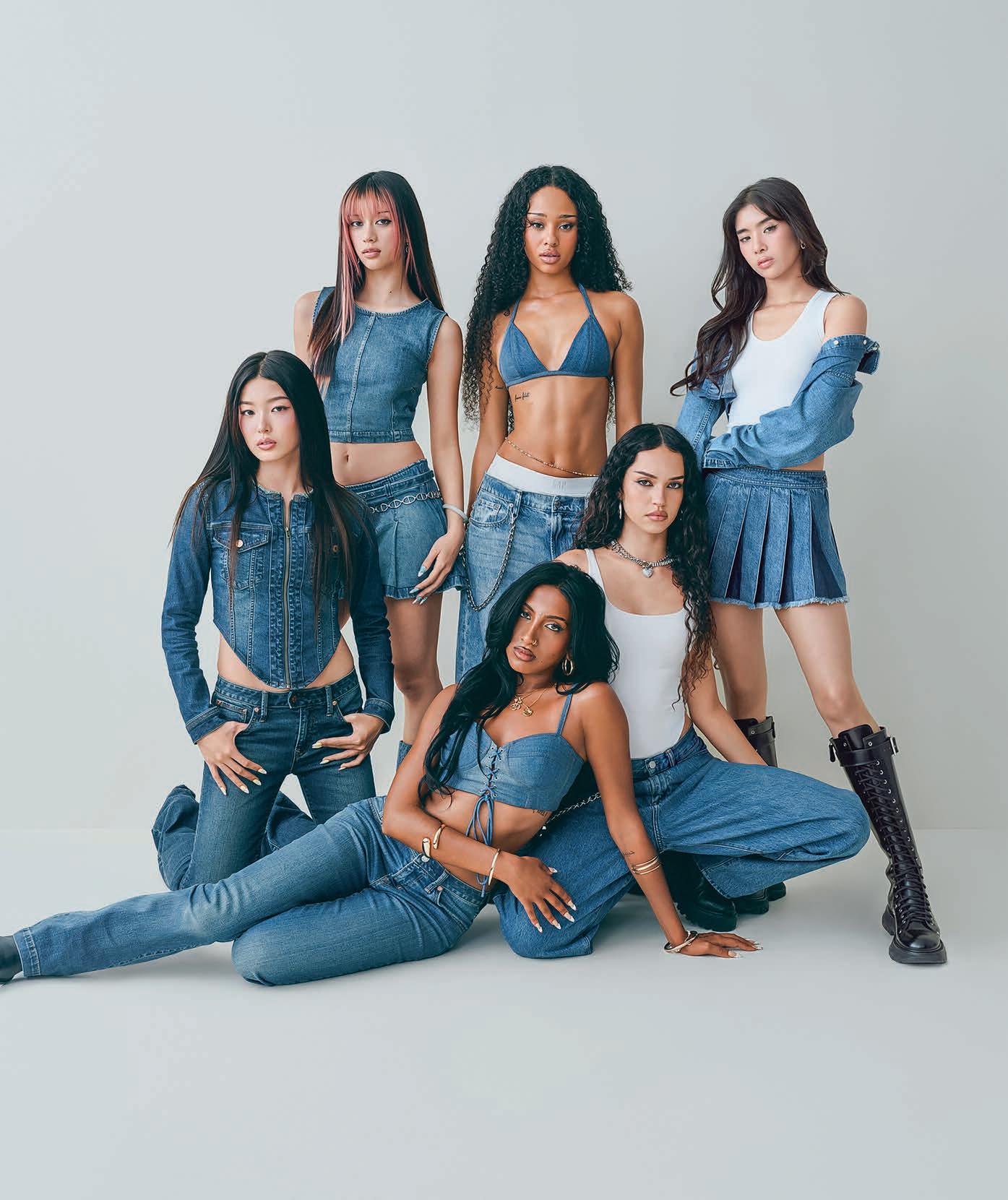
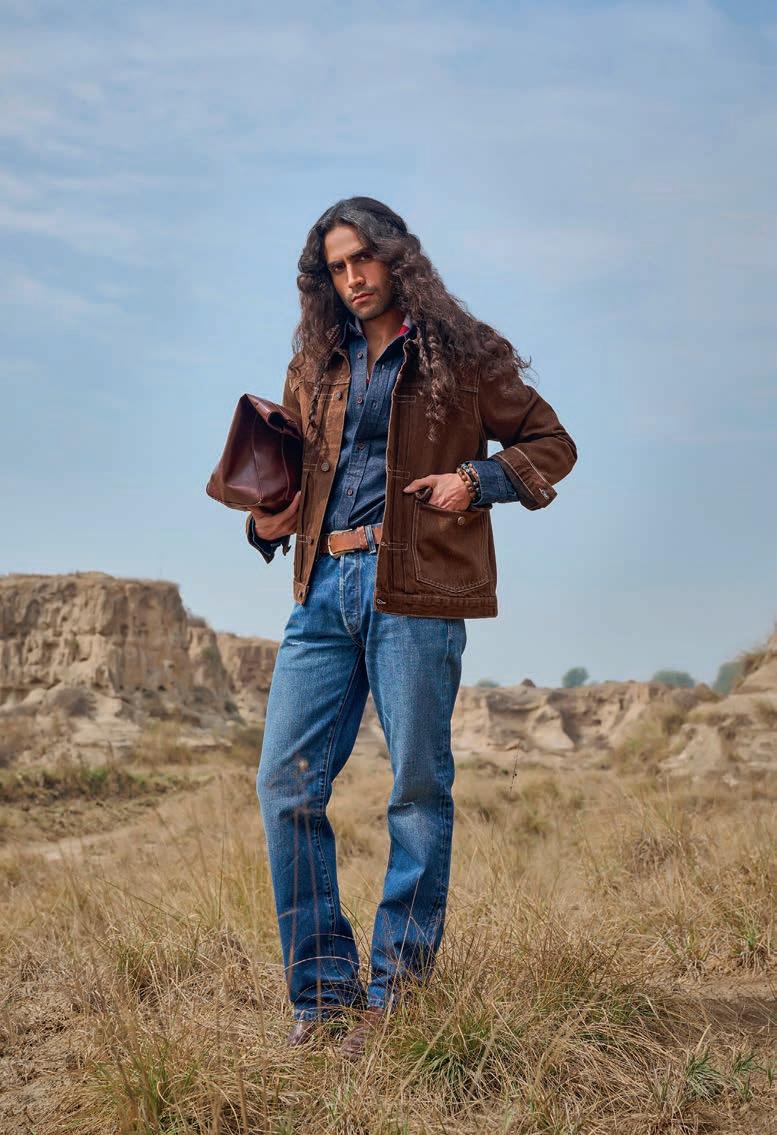
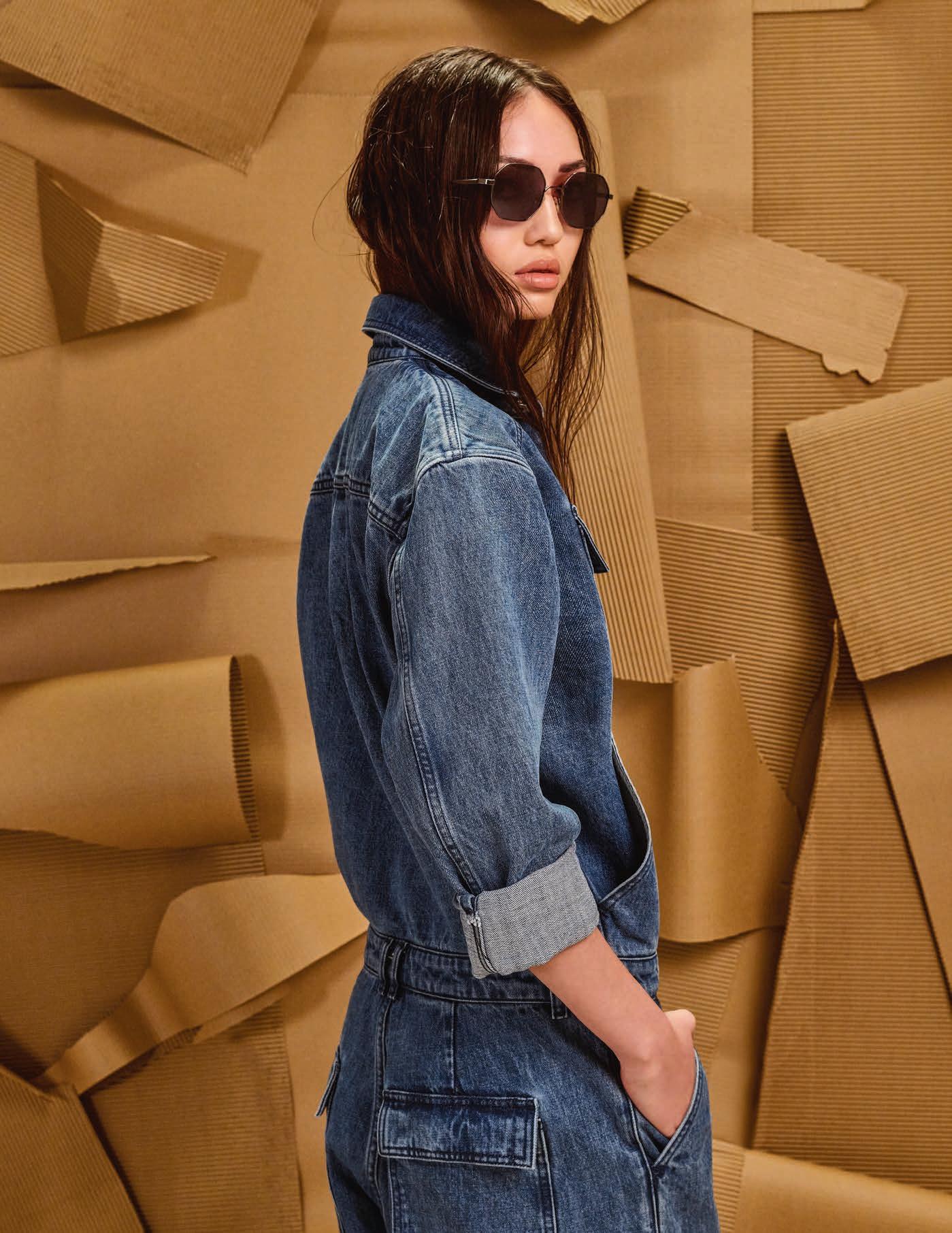
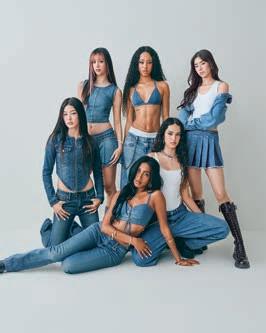
Cover Gap’s autumn-winter 2025 campaign, Better in Denim, starring girl group Katseye.
PHOTO: BJORN IOOSS FOR GAP
03 Editor’s letter:
Co-editor Sophie Bramel sees bright spots in a difficult context with real progress being made in innovative funding as well as lower-impact processes.
04 Guest comment: Miles Johnson
The respected denim consultant digs deep into the challenges the industry faces of building on a rich heritage while building in sustainable innovation.
THE SCIENCE BEHIND THE STYLE
Editors
Sophie Bramel
Clare Grainger
Consultant editor
Stephen Tierney
Publisher
Simon Yarwood
Design
Tim Button
Subscriptions manager
John Collins
Administration
Lisa Fabian-Smith
Editorial enquiries
clare@worldtrades.co.uk sophie@worldtrades.co.uk
06 Biotech indigo in the starting blocks
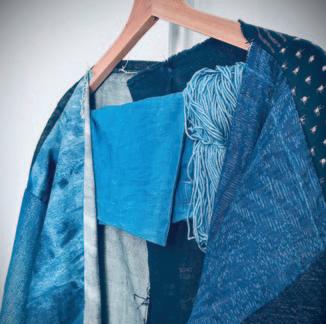
Novel fermented indigo and blue dyes are prepping to put a dent in a market dominated by synthetic colourants.
10 The coming of clean tech hemp
A new generation has set its eyes on making hemp mill friendly and rebuilding a dedicated supply chain
14 Elastane and circularity
Everyone loves elastane, with the exception of recyclers. A subtle mix of give and take is needed to address a sticky issue in circular solutions.
Gap’s Gen-Z pay-off
18 Dialogue: Jane Pattinson
Gap’s global head of design discusses the need to balance nostalgia and newness.
20 Retail tour Tokyo
Tilmann Wröbel checks up on the denim retail scene in Tokyo and finds that it is, like other big cities, afflicted by the same gap between offering and consumer aspirations.
32 Clocking On:
Nikita Raman
The denim designer’s day alternates between meditative and more intense moments, including obsessing over washes.
22 A brand with a plan
Levi’s chief growth officer Harmit Singh details the transformative journey the company is on to become a denim-focused lifestyle brand.
World Trades Publishing, The Old Stone House, Teeton, Northampton NN6 8LH, UK.
Tel: +44 151 928 9288
Sales
Simon Yarwood
Direct: +44 151 319 4977
Mobile: +44 7887 523872
26 Heritage with a t w ist
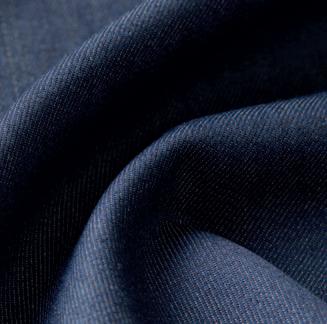
Exploring the possibility of bringing wool into the world of denim to offer premium brands a distinctive fabric with unique qualities.
30 A blueprint to modernise mills
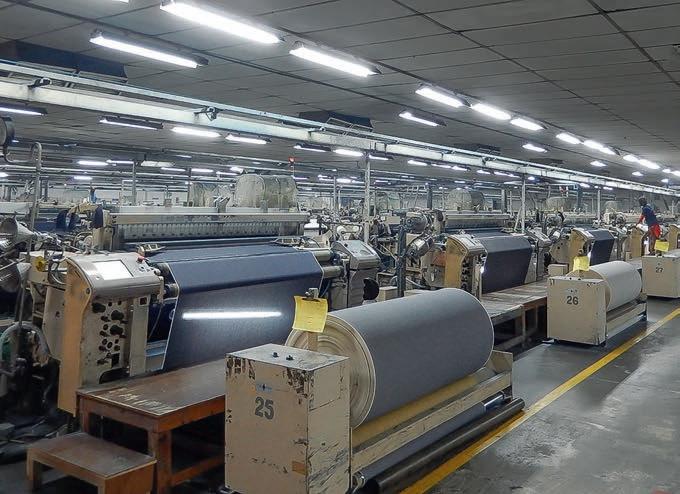
Sri Kannapiran Mills Limited found the support needed to confidently engage in an upgrade of its cotton spinning and denim weaving facilities.
Email: simon@worldtrades.co.uk
World Trades Publishing 2025
Contributions: The editor welcomes news items, articles and photographs for consideration and possible publication but no responsibility can be accepted for the loss or non-publication of such material. Opinions expressed by individual contributors do not necessarily reflect the view of the editor or publisher.
Whilst every effort is made to ensure accuracy in reproduction, no responsibility can be accepted for the technical content or for claims made by manufacturers for product performance that are published. Publication in Inside Denim cannot be construed as an endorsement for a claim or product by the publisher.
Graphic origination by WTP.
Printed by Bishops Printers, Walton Road, Portsmouth, Hampshire PO6 1TR
All rights reserved. ISSN 2633-9463
World Trades Publishing 2025. All rights reserved. No part of this publication may be reproduced, stored in a retrieval system or transmitted in any form or by any means mechanical, electronic, recording, photocopying or otherwise, without the written permission of the publisher.
Inside Denim is published three times a year by World Trades Publishing, The Old Stone House, Teeton, Northampton NN6 8LH, UK. Head Office
We want our readership to be as valuable and as valued as our journalism. It’s why we have left no stone unturned in identifying key global contacts in the global denim industry.
GEOGRAPHICAL TYPE OF BUSINESS
JOB TITLES
will be landing on the desks of those individuals we have hand-picked to receive our magazine: Global Sourcing Managers, Product Development Managers, Senior Denim Designers, Product Development Directors, International Sourcing Directors, Wash Technicians, Senior Sustainability Managers, Denim Laundry Managers.
Contact: Simon
In flux
These are complicated times for our industry, and many others. From tariffs chaos to sluggish consumer demand, these uncertainties are testing relations between brands and suppliers and compounding the ever-sensitive issue of price-setting.
Harmit Singh, chief growth officer for Levi Strauss, spells it out clearly. His goal is to boost annual revenues from $6 billion to $10 billion but he cannot commit to a timeline until “the dust settles on the tariffs”. Meanwhile, the company has been busy restructuring its supply chain, reducing Chinese imports from 15% in 2018 to just 1% today. Brands need to be especially agile, even if it implies disruptive practices. As Jane Pattison, Gap’s global head of design puts it: flexibility and collaboration are crucial.
“Navigating timelines, costs, or new regulations” requires strong supplier relationships, especially in unpredictable times. Denim designer Miles Johnson captures this complexity, as he tells us in this issue’s Guest Comment: “Cost needs a broader interpretation as much as sustainability needs a narrower one”.
Innovators are at the intersection of these two key industry issues. The cleaner solutions in development are the result of decade-long, capital-intensive journeys. In these pages, we take a close look at two promising low-impact solutions: new biotech dyes and more uniform, mill-friendly hemp fibres. These more sustainable alternatives are better for the industry, though they might not yet be price competitive. They are market-ready, as soon as brands say go, as Chloris CEO and founder Lei Sun tells us.
Interestingly, creative funding models are emerging alongside product and process innovation. Circulose has introduced a new business model that reduces ‘pricing friction’ to encourage wider-scale adoption of the next-gen fibre, a formula that might have saved former owner Renewcell from bankruptcy. Fashion for Good has set up and confirmed the validity of a fund tailored specifically for Tier 2 and 3 suppliers to help them reduce emissions by upgrading equipment and switching to renewable energy.
Meanwhile, fluctuating denim styles seem to mirror today’s volatile market. Wide legged and barrel cuts feel fresh, slim remains a contender, and selvedge has become a hot social media meme alongside matcha and Labubu dolls. Gap’s product lead speaks of finding the balance between nostalgia and newness, an apt description of a basic tenet in the denim world. Product trends seem forever torn between two polar opposites, fidelity to authenticity and need for novelty. In his retail tour of Tokyo, Tilmann Wröbel notes the gap between buzzy campaigns and real-world shopping, even in the trendiest of cities.
The possibility of introducing wool into denim and hemp’s comeback are admittedly quieter voices in these tumultuous times. These fibres could play a larger role especially in the luxury sector, which has its eyes on denim. In the inextinguishable mainstreaming of jeans, their voices deserve attention, and we are happy to open our pages to these under-the-radar trends.
The need for greener and fairer practices in the industry, however, can hardly be considered under-the-radar. It is more often simmering under the surface. It is where real change is needed, and possible, with innovative thinking and a measure of elasticity in pricing. As seen, the very notion of cost is in flux. The EU has recently voted into effect a new approach with extended producer responsibility. Its attendant eco-fees will make it more expensive to market unsustainable products. This signals that price can have a broader definition and account for intangible assets. Are they? Climate disruptions are proving that the planet is paying a price that is far from immaterial.
Sophie Bramel Co-Editor / Technical Editor sophie@worldtrades.co.uk
High time for hive mentality
I’ve seen many changes in my 25 years of designing denim. Many of them absolutely necessary. We never even gave throwing chemicals and unctions at jeans a thought. Why would we? At the time, what things looked like was the most exciting criterion and therefore the most important. What it cost to the customer or the planet didn’t seem to be a problem.
Now, cost is a much more complex issue. In design, we struggle to find a balance. The responsibility often falls to us to make the right decisions from concept through to wash. What can we save and take away while keeping the product interesting? What is the impact of less sustainable products sold locally versus more sustainable garments shipped widely? I know I’m not the only one scratching my head about which is the right thing to do.
We are often guided by company, not personal, values. Morals that state belief in the cause and make commitments to cleaner processes and long-term strategies without asking too many awkward questions. Even better is a Mission Statement that acts as a guard rail to internal conversations and expensive decision making.
GUEST COMMENT
Consultant Miles Johnson acknowledges the dichotomy between balancing profit and sustainability but says there’s no excuse to not work in a better, more collaborative way.
It wasn’t easy leaving Patagonia back in 2018 and feeling an industry-wide bleakness when it comes to environmental issues. Seven years later, progress is numbingly slow and sustainability still feels very open to interpretation.
So, has sustainability lost its meaning? Or have hard times and tariffs thrown all that aside? We are an industry and would cease to exist without profit, but does that absolve us of our obligations to future generations? Cost needs a broader interpretation as much as sustainability needs a narrower one.
PHOTO: TIM DAVIS
Cost
needs a broader interpretation as much as sustainability needs a narrower one.
Of course, we are all doing our bit, or would like to think so. Designing through a series of problem-solving lenses and trying to find better ways of doing things. Twenty-five years ago we could say that we didn’t know: the information was there but it wasn’t everywhere. Now, there is no excuse.
We like to think that every breakthrough is a step forward, but those uncommunicated, more expensive sustainable initiatives will often drop out to make way for volume-driving wins. Hundreds of denim-producing companies are competing for environmental popularity, while staying alive by selling a less eco product to their mass market. Perhaps, as with the car industry, it will take legislation to really change things, at which point it will be the people who are innovating now who will be ahead of the game.
But that is no excuse not to share intellectual property for fear of others running with it more successfully. The urgency of the situation will require a kind of hive mind. The courage Patagonia has shown in sharing ideas has done nothing to dent their profits. Someone asked me recently if Patagonia is still as serious about sustainability, because they don’t hear so much about it anymore. Maybe the press has moved on, or maybe no news is not abandoning core values. It involves huge marketing spends to tell customers what a great job you are doing. Instead, you could put that same money into eco innovation. Which can then be shared within the industry. Wouldn’t that be a greater benefit?
I assume that much of innovation could be shared, given that we all care so very much about our planet. But we are still mired in suspicion and uncomfortable with partnerships. So, for all our best intentions, from companies who want to do a better job, the bottom line is still the bottom line and we are yet to even secure 15% of production that is truly sustainable. If the next 25 years doesn’t address that, we may not have a market to sell to.
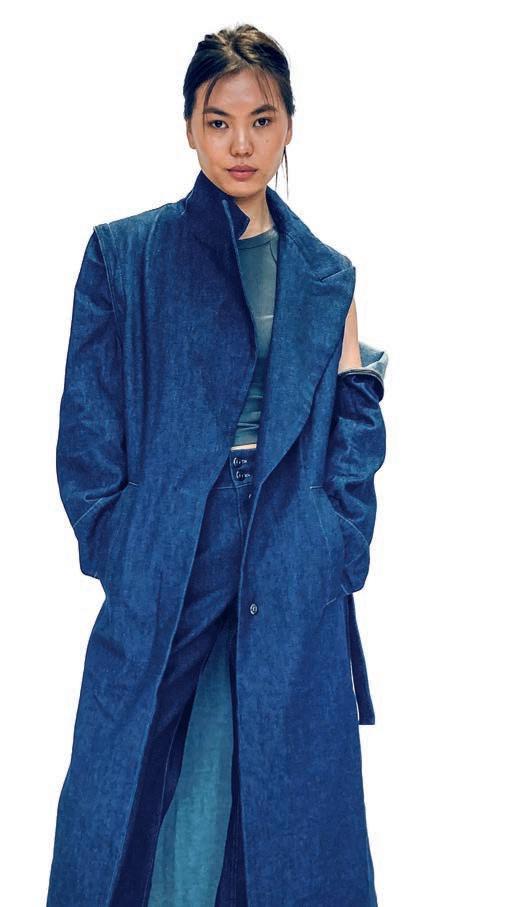
Miles worked with Soorty on an autumn-winter 26/27 collection.
PHOTO: SOORTY
UK-based Miles Johnson is a renowned consultant with specialist focus on how to action change in the denim and fashion industries. He has previously worked as a design director at Levi’s and senior creative director of product design and development at Patagonia. He has led his own agency, The Johnson Design Consultancy, for the past seven years, creating collections for Stan Ray, Lee, CBL, Soorty and ISKO, among others.
But let’s not lose sight of our other goal: denim; beautifully crafted, perfectly fitting and comfortably constructed. I have seen denim come in and go out of fashion. But it never goes away because at heart it is a practical fabric, founded in workwear. The challenge is to build on that and build in sustainability. To remain an indispensable product and an honest pleasure.
Disrupting an industry that produces some 70,000 tonnes of petrochemical indigo annually is no small feat. Innovators in synthetic biology claim they have already ticked key boxes: achieving purity levels comparable to conventional indigo and scaling production capacity— at least to a degree. Convincing mills and brands to switch to these biobased alternatives is the next box they need to tick.
Biotech indigo at a tipping point
Denim and indigo, the very basis of jeans. But while cotton is natural, the dye that gives denim its signature blue is overwhelmingly synthetic. Petrochemical indigo accounts for 99% of the market, a dominance it has held for more than a century, despite the hazardous substances used in its production and toxic by-products. Producing the deep blue dye via fermentation instead of from fossil fuels would clearly be a net positive for the industry, and a better fit for our cotton fibre jeans. This is the vision driving companies developing biobased indigo. Like many biotech innovations, progress has been slow, but momentum is building.
The few ‘brewed’ indigos that have reached commercial scale have been in development for a decade or more. Chloris founder Dr Lei Sun has been working on a microbe-made blue dye for 13 years, since his PhD programme. “It took us ten years to increase yield from milligrams to kilogrammes, and beyond,” he tells Inside Denim. The Utah-based company operates a factory in China, with 300-tonne bioreactors capable of producing 10,000 tonnes annually. Dr Sun says that hundreds of tonnes have already been shipped to mills. “We are ready, and the mills are, too, as soon as the brands say go!”
Research into biobased dyes began at Pili, based in France, in 2015. Production of its first fermented dye, Eco-Indigo, began in 2024. With partner mill Orta, in Turkey, US-based Citizens of Humanity has successfully launched the first jeans dyed with the novel pigment in January 2025. Jérémie Blache, CEO and co-founder says that 100,000 units have been dyed. A small, but significant, step towards industrial scale. Pili intends to increase production in 2026, enough to dye a few hundred thousand items, and eyes one million Eco-Indigo-dyed jeans in a not-so-distant future.
Newcomers to this field include Nordic Blue. The Danish company was founded in 2024 and is developing an “eco-friendly alternative for dyeing denim”. Indian fermentation specialist Fermbox Bio, founded in 2022, also has a Synbio-Indigo in its portfolio.
However, scientist/entrepreneurs seeking to develop bacteria-made indigos are struggling. Huue, in San Francisco, has been working on a biotech indigo since 2018, when the company was called Tinctorium. AGI Denim, in Pakistan, trialled the dye in 2023, and it was featured in a capsule collection by UK designer Patrick McDowell this spring. Synovance, based in France, is shuttering this fall, mainly due to lack of funding.
Pili has been working with denim mills to finetune its Eco-Indigo, notably with Turkey-based Orta.
PHOTO: VINCENT BLANCHARD
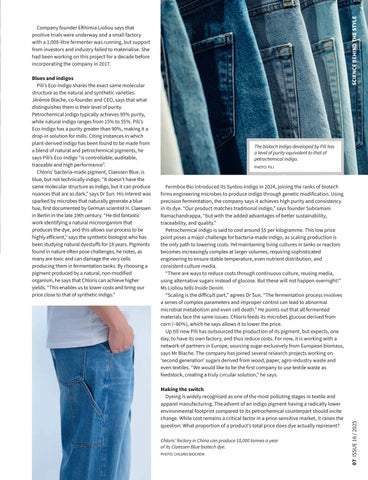
Company founder Efthimia Lioliou says that positive trials were underway and a small factory with a 1,000-litre fermenter was running, but support from investors and industry failed to materialise. She had been working on this project for a decade before incorporating the company in 2017.
Blues and indigos
Pili’s Eco-Indigo shares the exact same molecular structure as the natural and synthetic varieties.
Jérémie Blache, co-founder and CEO, says that what distinguishes them is their level of purity. Petrochemical indigo typically achieves 95% purity, while natural indigo ranges from 15% to 55%. Pili’s Eco-Indigo has a purity greater than 90%, making it a drop-in solution for mills. Citing instances in which plant-derived indigo has been found to be made from a blend of natural and petrochemical pigments, he says Pili’s Eco-Indigo “is controllable, auditable, traceable and high performance”.
Chloris’ bacteria-made pigment, Claessen Blue, is blue, but not technically indigo. “It doesn’t have the same molecular structure as indigo, but it can produce nuances that are as dark,” says Dr Sun. His interest was sparked by microbes that naturally generate a blue hue, first documented by German scientist H. Claessen in Berlin in the late 19th century. “He did fantastic work identifying a natural microorganism that produces the dye, and this allows our process to be highly efficient,” says the synthetic biologist who has been studying natural dyestuffs for 18 years. Pigments found in nature often pose challenges, he notes, as many are toxic and can damage the very cells producing them in fermentation tanks. By choosing a pigment produced by a natural, non-modified organism, he says that Chloris can achieve higher yields. “This enables us to lower costs and bring our price close to that of synthetic indigo.”
Fermbox Bio introduced its Synbio-Indigo in 2024, joining the ranks of biotech firms engineering microbes to produce indigo through genetic modification. Using precision fermentation, the company says it achieves high purity and consistency in its dye. “Our product matches traditional indigo,” says founder Subramani Ramachandrappa, “but with the added advantages of better sustainability, traceability, and quality.”
Petrochemical indigo is said to cost around $5 per kilogramme. This low price point poses a major challenge for bacteria-made indigo, as scaling production is the only path to lowering costs. Yet maintaining living cultures in tanks or reactors becomes increasingly complex at larger volumes, requiring sophisticated engineering to ensure stable temperature, even nutrient distribution, and consistent culture media.
“There are ways to reduce costs through continuous culture, reusing media, using alternative sugars instead of glucose. But these will not happen overnight!” Ms Lioliou tells Inside Denim.
“Scaling is the difficult part,” agrees Dr Sun. “The fermentation process involves a series of complex parameters and improper control can lead to abnormal microbial metabolism and even cell death.” He points out that all fermented materials face the same issues. Chloris feeds its microbes glucose derived from corn (~80%), which he says allows it to lower the price.
Up till now Pili has outsourced the production of its pigment, but expects, one day, to have its own factory, and thus reduce costs. For now, it is working with a network of partners in Europe, sourcing sugar exclusively from European biomass, says Mr Blache. The company has joined several research projects working on ‘second generation’ sugars derived from wood, paper, agro-industry waste and even textiles. “We would like to be the first company to use textile waste as feedstock, creating a truly circular solution,” he says.
Making the switch
Dyeing is widely recognised as one of the most polluting stages in textile and apparel manufacturing. The advent of an indigo pigment having a radically lower environmental footprint compared to its petrochemical counterpart should incite change. While cost remains a critical factor in a price-sensitive market, it raises the question: What proportion of a product’s total price does dye actually represent?
Chloris’ factory in China can produce 10,000 tonnes a year of its Claessen Blue biotech dye.
PHOTO: CHLORIS BIOCHEM
The biotech indigo developed by Pili has a level of purity equivalent to that of petrochemical indigo.
PHOTO: PILI
In discussions with brands and mills, Jérémie Blache, at Pili, says many different reasons are cited as potentially triggering change. Responsibility, which encompasses sustainability, and a desire to implement best practices, is one. “We are creating a new standard that is reliable,” he says. Traceability is an issue that luxury brands tend to focus on. Innovation is another draw that he cites. Keeping ahead of future laws and regulations “can be strategic for a brand”. He believes that extended producer responsibility and environmental scores will come, at some point, and will “level the playing field by making it more expensive to do business for less sustainable companies”.
Differentiation is another key motivator for adoption. “Brands and mills have few ways to differentiate in a bold and convincing manner, beyond style and price, and biotech indigo is one such strong differentiation point. It is also a fairly easy notion to understand for consumers,” he adds.
The tipping point for dyeing mills and brands is sustainability and safety, says Dr Sun. “The wastewater discharged from our factory contains no organic solvents, no heavy metals, no aniline, only small amounts of sugars, amino acids and norganic nitrogen sources. It can even be used as fertiliser.”
Dr Sun has spent years learning about dyeing, and says that Claessen Blue presents several advantages for mills: a lower working pH, requiring less supplementary salts for reduction, and a lower oxidation-reduction potential or ORP, a measure used to monitor water quality.
Claessen Blue has specific performance properties beneficial to dyeing mills and brands. Unlike indigo, it resists yellowing during storage, and this, he says, is a critical issue for brands. Since indigo is dyed in layers, Claessen Blue can be applied as a top layer to protect the true denim blue. Instead of using bleaching chemicals, he says that the dye can be washed by enzymes, at a lower temperature, thus preserving the elastane content and saving laundry costs.
Chloris thus promises dyeing mills convenience and savings. “Mills are motivated to switch because of the savings on resources, chemicals and even wastewater treatment costs,” says Dr Sun. They do, however, need to be persuaded to switch from a dye they know well to one they have no experience with. It is a new molecule, which means new recipes need to be devised. “We are the ingredient, not the chef,” he says. “We need the dye technicians to make Claessen Blue as beautiful as indigo.”
Citizens of Humanity launched the very first jeans made from regenerative cotton dyed with Pili’s Eco-Indigo.
PHOTO: LAURENCE ELLIS / CITIZENS OF HUMANITY
The innovative natural microbial dye is being tested by by denim mills in Turkey and China. Chloris is also working with brands, citing Gap and Kontoor. While convincing brands is not an easy task, Dr Sun insists on the good story they can derive from using a biobased dye that biodegrades into amino acids, while offering savings in dyeing, laundry processes and anti-yellowing. “This is our most important contribution. We are not expensive and could even be cheaper than synthetic indigo,” he says.
Dyeing mills have been reaching out to Pili, says Pierre-Yves Bollé, Pili’s chief business officer, looking for innovation and differentiation. If Citizens of Humanity was keen to adopt the novel biotech dye, it is due in part to the company’s in-house manufacturing. “It would be good to see brands that are truly dedicated to better practices benefit from the added effort they put into making their products.”
As with many next-gen materials and dyes, the industry is slow to switch to solutions that address the most glaring issues in jeans manufacturing. Though not all, as seen at Citizens of Humanity, and at Levi’s, which has adopted Nature Coatings’ BioBlack, a pigment derived from wood waste, for one of its commercial ranges. While these alternatives may carry a trivial additional cost, their environmental benefits, along with the positive impact on the industry’s image, could be far-reaching.
An exploration of denim and flat fabric’s new territories: premium touch, recycled roots and chromatic statements.
Innovation in hemp processing is helping the natural fibre shed its characteristic coarseness, without losing its rugged appeal. Technologies that produce finer and more homogenous fibres may enable the low impact, regenerative and biodiversity-friendly plant reach new heights in denim collections.
A new spin on hemp
Anew generation of hemp processors believes it can unlock the slow adoption of the original ‘slow’ fibre. Working closely with farmers and spinning mills, these entrepreneurs are also seeking to bridge the gaps in an industrial supply chain that has been decimated by globalisation and legislation.
A few years ago, Marmara Hemp had sparked renewed interest in hemp for jeans. Its initiator, Denis Druon, had rounded up a consortium of agricultural and industrial partners in France to develop a fibre offering and a brand name.
At the time, a few other hemp enthusiasts were also seeking to produce a fibre better suited to today’s optimised supply chains. UK-based SEFF has dedicated the past 15 years to this quest. “We’ve been called the best kept secret in hemp,” Josh Nusenbaum, SEFF founder and CEO, tells Inside Denim. “There has been a 70-year hiatus in hemp farming and processing in the USA, a lot of knowledge has been lost,” he says. When interest in the fibre returned a few years ago, he says, “many ran before they could walk”, which is why adoption by mills and brands did not take off.
SEFF is now ready to play a more visible role in the hemp revival. The company has recently hired a team of high-profile executives. Junaid Safdar, the new head of operations, previously worked at Bangladesh textile conglomerate Beximco, and denim expert Neil Bell has taken on the role of head of innovation. “The design community is passionate about hemp, but many hurdles hindered its uptake,” says Mr Bell. “SEFF has a technical solution that can unlock demand, and increase the proportion of hemp in fabrics, providing the characteristics that designers are looking for.” Incorporating only 10 to 15% hemp in a fabric is not compelling enough for him. Plus, he adds that any inconsistency across the supply chain “immediately kills the story”.
Making hemp mill-friendly
Like other companies in this field, SEFF sees removing the issue of fibre inconsistency as the solution to boosting the use of hemp grown in Europe and the United States. In other regions, notably China, harsh chemicals are commonly applied, and these are either forbidden, in the West, or negate the fibre’s environmentally-friendly nature.
SEFF believes its mill-friendly hemp unlocks the fibre’s potential to be used in higher proportions and delivers the fibre’s inherent strength, comfort and hand feel.
On average, US farmers plant about 90 million acres of corn each year, with most grown in the Heartland region (20 states in the middle of the country) – it is the starch that will go into Lycra’s fibre. The US is the largest producer, consumer and exporter of corn in the world.
PHOTO: LYCRA
PHOTO: SEFF
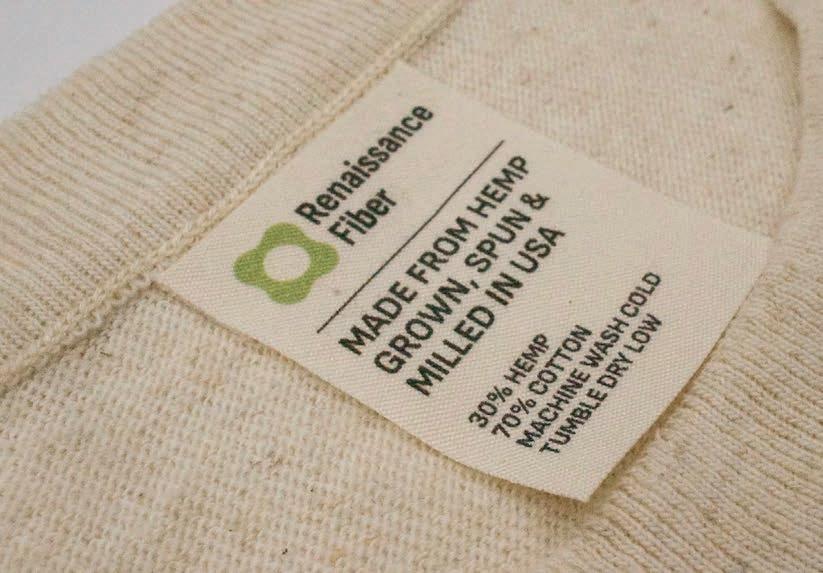
Renaissance Fiber makes small, limited proof-of-concept product runs to showcase the potential of its hemp fibre. Here a T-shirt released this summer.
PHOTO: RENAISSANCE FIBER
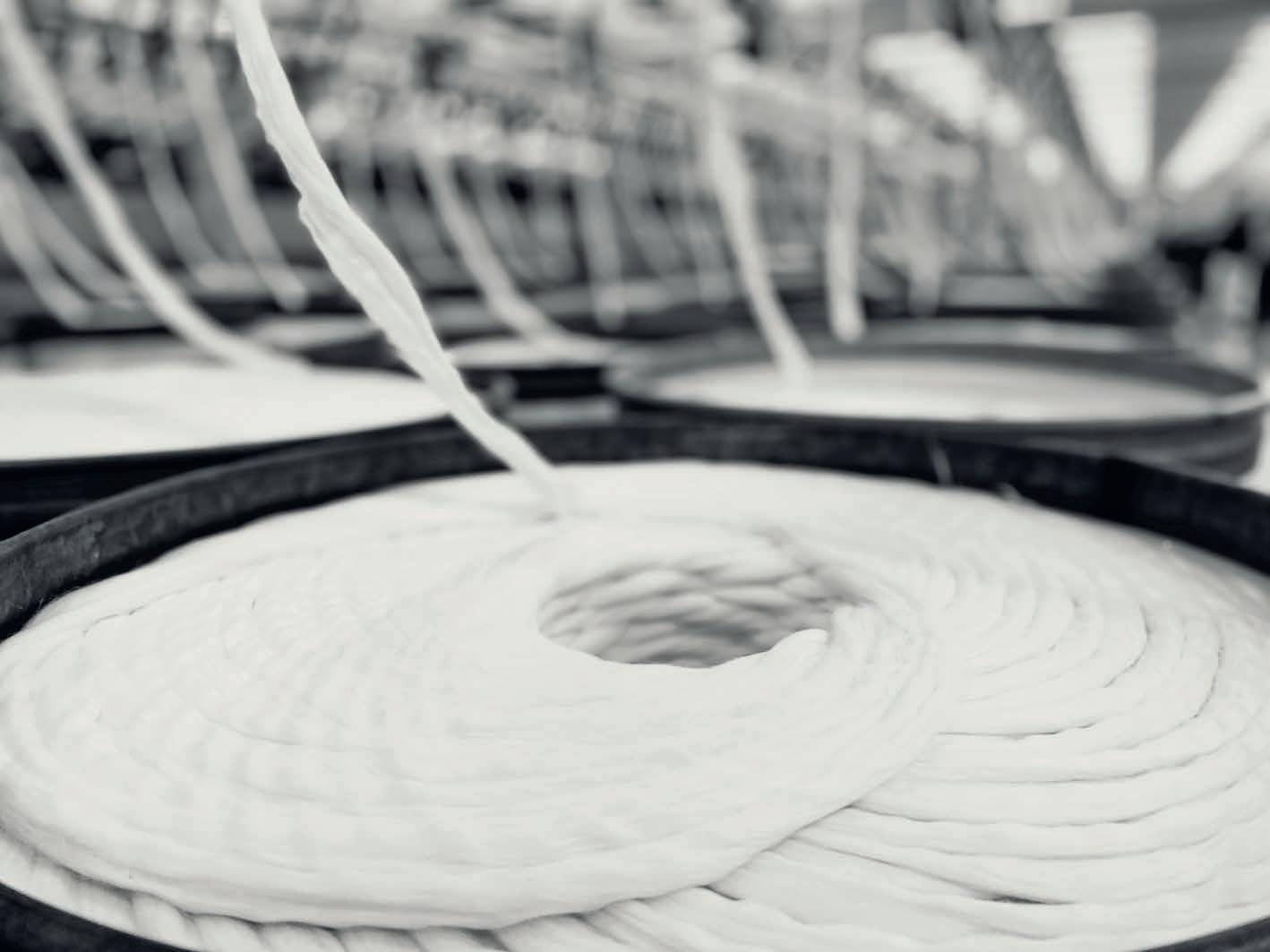
SEFF’s hemp fibres undergo a special cottonisation method that yields consistent and uniform fibres of roughly the same length and thickness. They are degummed, a process that dissolves the ‘glues’ binding the fibres together, using a patented technology developed by the company. The Nano-Pulse machine sends high-voltage electric discharges in water to separate the fibres from the bundles. “It takes mere milliseconds and, more importantly, neither damages nor shortens the fibres,” says Mr Nusenbaum.
Tests conducted by DITF, a German textile research and engineering lab, found that SEFF’s hemp fibres presented low standard deviations in length, strength and fineness. “They are identical to cotton, and this removes any hurdles for all types of spinning machines, air jet, open end or ring,” he says. SEFF’s mill-friendly hemp makes it possible to incorporate higher proportions of the fibre into fabrics, up to 55% or even 70%.
Following a soft launch in 2019, and a mentorship at Fashion for Good in 2024-25, SEFF is now focusing on establishing a network of partner mills to bring the fibre to market. Spinning tests are underway with manufacturers in eight countries, most recently in Pakistan. Some are testing 60-70% hemp content, as the company’s goal is to increase the percentage of the bast fibre.
Industrial scale
Panda Biotech has built a 500,000 square-feet, fully automated hemp processing facility in Texas. Founded in 2019, the company is also seeking to rebuild an entire supply chain, and its business model even begins with the seeds. “We are creating a complete farm-to-fashion ecosystem,” Mark D’Sa, head of business development, tells Inside Denim. “We buy the seeds and the harvest of farmers located within a 300-mile radius of our plant in Wichita Falls.” The company’s innovative technology promises to provide the consistency and scale that the industry needs.
Panda Biotech hemp is enzymatically retted in the field. At the factory, it is then decorticated, cleaned, refined and cottonised to produce fibre, along with hurd, the coarse parts that add hair to the fibre after it is separated, and dust. These processes, including degumming, are entirely mechanical. This is what Mr D’Sa presents as a game-changer. “Using our advanced equipment and proprietary process, we produce a cottonised hemp fibre that is mill-ready,” he says.
The scale of the automated facility, which can process 10,000 tonnes per hour, allows Panda Biotech to offer its fibre at prices comparable to French grown hemp, and lower than that of other bast fibres such as linen or ramie, he says. The company is working closely with denim brands to integrate its US-grown and processed hemp into their fabrics. Twin Dragon (TDMI) and Global Denim, in Mexico, have been producing fabrics in blends of 20-30% hemp, that can also go up to 45-50%, says Mr D’Sa. “Hemp is a good fit for denim. It is the low hanging fruit.”
Clean-tech degumming
Based in Winston-Salem, Renaissance Fiber is also looking to support US-grown and processed hemp. Its first industrial facility, in Mocksville, will produce ready-to-spin fibre starting in 2026, with an expected annual capacity of 2 million pounds (900 tonnes). “By building this advanced refining capacity here in North Carolina, we are creating new opportunities for American farmers and manufacturers to shift to eco-friendly textiles,” says Daniel Yohannes, CEO and co-founder of Renaissance Fiber.
The company has devised a ‘clean’ biomimetic degumming process that controls fibre length, fineness and surface quality. “It can unlock hemp’s potential as a true plug-and-play fibre in textiles,” says Mr Yohannes. The method emulates natural blackwater estuary conditions, returning water to the watershed as it is naturally found in river ecosystems. This makes it an “ecologically invisible” degumming technology, as the company calls it.
Research is ongoing at Renaissance Fiber to achieve its targeted fineness, length and uniformity of length. “We’ve reduced variation by 50% on fineness and length, yielding greater consistency in fibre quality,” he says. Once cottonised, the fibres are suitable for spinning on many types of staple yarn equipment, including open-end (rotor), ring and vortex. The company is currently working with Mount Vernon Mills (MVM) on hemp denim fabrics. It has supplied fibre to Patagonia and, with partner spinners and mills, made functional fabrics for the Department of Defence.
While American companies are busy building up a new supply chain from farm to factory, in France, industrial hemp farming never came to a full stop. However, there are many missing links in the European industrial infrastructure for textile manufacturing. For decades, French growers focused on other end markets, but apparel end-uses are making a comeback, thanks in part to the Alliance of Linen & Hemp, which is working to reintroduce hemp as a textile fibre.
A view of Panda Biotech’s 500,000-square-foot facility which began commercial production last year. The zero-waste factory can process 10 tonnes of industrial hemp into textile-grade fibre, hurd, short-fibre/hurd mix, and micronised hurd per hour.
PHOTO: PANDA BIOTECH
La Chanvrière, a major hemp growing cooperative founded in 1973 and based in Saint-Lyé, southeast of Paris, first began its R&D on hemp for textile applications in 2015. In 2017, it launched its first cottonised hemp fibres under the brand name Canalia. It is also working on producing finer and more homogenous fibres. The company is trialling a new washing technique that reduces irregularities enabling the production of yarns with 50% hemp, says Laurie Coutelot, marketing and sales manager. She says that when degummed, it is possible to include up to 70-80% hemp. She does, however, have reservations on the possibility of degumming the bast fibre without using chemicals.
Although renewed interest in hemp a few years ago did not reach the expected heights, Ms Coutelot says La Chanvrière’s sales volumes have remained constant. “Textile applications remain niche, but those customers that believe in it, and use it, continue to use it and believe in it.” Her key denim customers include Orta and Sharabati.
It is anticipated that, when higher volumes of mill-friendly hemp become available, manufacturers will be more willing to add the alternative natural fibre to their yarn, fabric and garment offerings. For Neil Bell, “SEFF’s plug and play solution brings confidence to the manufacturing community”. Marc D’Sa of Panda Biotech says that “demand is there. What is missing is a strong supply chain.”
A fibre of many assets
These hemp enthusiasts are also keen to promote the fibre’s technical assets. “Hemp is stronger than linen, but shares its antimicrobial, anti-UV and absorbency characteristics, adding performance to cotton,” says Josh Nusenbaum, at SEFF. Neil Bell believes mills are interested in hemp for its properties and its durability, while young designers are attracted to the environmentally friendly attributes of the natural fibre. “People aren’t buying hemp for its authenticity or ruggedness; they’re interested in the fibre’s performance,” he says.
Demand is there, what is missing is a strong supply chain.
MARC D’SA, PANDA BIOTECH
The plant is touted as a carbon sink and provides many other environmental benefits. Research by the European Commission into hemp farming found that one hectare of hemp sequesters 9 to 15 tonnes of CO2. This, it states, is similar to the amount sequestered by a young forest, whereas hemp takes only five months to grow. The good story gets better when it comes to biodiversity. The plant’s flowering cycle is said to coincide with a lack of pollen production from other crops, and hemp produces large quantities of pollen. Hemp fields provide shelter for birds, and its seeds are a food for animals, as the report notes. Finally, the crop requires few to no pesticides.
The farmers who supply Panda Biotech apply regenerative techniques. “This is not because they have to, but because hemp’s fast growth, deep roots and natural canopy make these practices even more effective,” points out Mr D’Sa. It is the beauty of hemp, chimes in Laurie Coutelot of La Chanvrière. “Our Canalia brand offers the most natural form of the fibre, true to its low-impact profile.”
Sources of industrial hemp may also expand in the future. Ukraine is looking to grow its production. The war, and the rerouting of grain from its usual customers to Eastern European countries has disrupted the market, and suppliers, leading Ukrainian farmers to switch to hemp and avoid conflict with its allies. On the other side of the planet, Australia’s parliament has just launched a research programme into industrial hemp farming, citing soil health and the circular economy as beneficial to its development.
As hemp prepares to make a comeback, from the farms to the factories, in new mill-friendly formats, it should have no trouble weaving its way back into our wardrobes. Neil Bell says it makes sense in denim, and Josh Nusenbaum adds that “hemp has a soft spot in many people’s hearts”.
Jeans are near perfect candidates for mechanical recycling thanks to their high cotton content. But the presence of elastane, nearly as ubiquitous, can be a stumbling block for circularity. Luckily, workarounds are being found as are new solutions to recycle the stretch fibre.
Stretch in or out?
Present in minor concentrations in jeans, elastane or spandex, as it is also called, plays a major role in fit, comfort and longevity. While looser-fitting jeans are back on trend, they have not dampened demand for stretchy skinny styles. They are here to stay as is a measure of give for comfort. A few forward-thinking brands are taking the bold move to limit the use of stretch fibres in their ranges.
Over the years, elastane has been the go-to solution to offer comfort and fit. Matter to Market, a consultancy specialising in bringing next-gen fibres to market, screens the presence of fibre use in apparel, drawing on data collected by Edited, a London-based retail intelligence platform. Its report on clothing sold online in the UK found elastane to be present in 34% of the millions of items scanned. For jeans, the proportion is higher, 52% of them mention the stretch fibre on care and composition labels.
A measure of stretch drives sales and, consequently, market share. However, when jeans reach the end of their useful life and could be recycled to make new ones, the presence of spandex is no longer a benefit. It may deliver added value for retailers, but it is considered a contaminant by recyclers.
The mechanical recycling of jeans is a multistep process that starts with collecting and sorting suitable feedstock before garments are chopped, shredded, and combed back into fibres. The shredding is the hot spot here as elastane forms a spiderweb-like substance that clogs the machines. Recyclers can accept a certain amount of ‘other fibres’ in their mix, and usually set the bar at 5% for spandex. At this level, a fabric can be recycled, but the value of the recycled fibres may be lower.
As textile-to-textile recycling facilities scale up and adoption of automated sorting systems grows, stretch jeans pose yet another challenge. The elastane yarns in denim fabrics are often corespun, meaning they are covered by a layer of cotton. The near-infrared sensors used by automated sorting machines will not be able to detect the presence of the hidden spandex. Here again, it may contaminate feedstock for both mechanical and chemical recyclers.
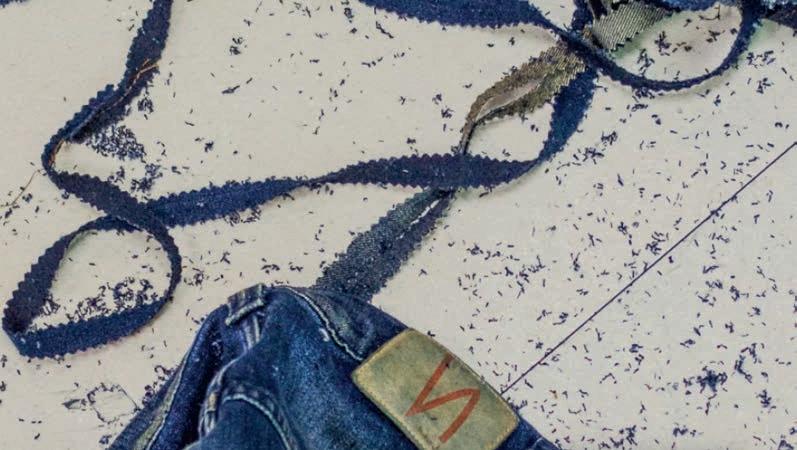
Nudie Jeans’ repair shops and partners collect used jeans and pre-sort what can be resold as Re-use jeans, what can be used for redesign projects, and what can only can only be recycled into new fibre. In Europe, these are sent to the brand’s warehouse in Sweden and then shipped to its denim suppliers in Turkey for fibre-to-fibre recycling to use in the production of new Nudie Jeans denim fabric
PHOTO: NUDIE JEANS
Circular denim advocates
A few circular-minded denim brands are taking measures to use elastane ‘with purpose’ and reduce its presence to the lowest possible level. Mud Jeans, a pioneer in recycled cotton and circular business models, from leasing to reselling, says that its recyclers can accept a 5% maximum of foreign fibres. "Ideally, of course, we use less, and our aim is to use a maximum of 2%,” Dion Vijgeboom, the brand's head of product, tells Inside Denim. Looking to limit its use of stretch fibres, the brand is now offering jeans made from a new 100% cotton fabric (20% post-consumer recycled, 80% organic) engineered to offer a mechanical elasticity of approximately 10% due to specific spinning and weaving parameters. This, he says, is the “ultimate natural stretch solution”.
Swedish brand Nudie Jeans is taking a similar path. It has broadened its offering of regular and loose-fit jeans in the last couple of years and has thus gradually decreased its dependence on elastane. “Raw and rigid denim is our core, but we also have deep roots in the slim and skinny drawers, making elastane use in denim fabric a necessity to a certain degree,” says Kevin Gelsi, circular product manager for Nudie Jeans. “As long as we have slim or skinny fits in our assortment, a slight use of elastane or alternative stretch fibres will remain necessary and relevant. We’ve never been keen to use elastane, or other stretch fibres, if it doesn’t deliver this essential wearer comfort.” In general, the premium denim label has limited the use of elastane to no more than 2-3%. “When considering the needs of our denim fabric suppliers that can mechanically recycle our jeans, a maximum of 3% elastane is acceptable for good recycling results, without compromising quality and durability,” he adds.
On average, US farmers plant about 90 million acres of corn each year, with most grown in the Heartland region (20 states in the middle of the country) – it is the starch that will go into Lycra’s fibre. The US is the largest producer, consumer and exporter of corn in the world.
PHOTO: LYCRA
French denim brand Bonobo has recently introduced a range of jeans made from 99% recycled cotton, with just 1% elastane, as part of its Rebirth line and eco-responsible Instinct range.
PHOTO: BONOBO
Neela by Sapphire has partnered with Recover to create a concept collection from Recover’s RCotton and RDenim fibres blended with cotton and Modal. The resource-saving products require no dyeing and have no more than 1% elastane.
PHOTO: NEELA BY SAPPHIRE / RECOVER
Denim Deal knows a thing or two about jeans recycling. The initiative, born in the Netherlands, has now set up hubs in France, Germany and India with local suppliers. Its mission is to increase uptake of post-consumer recycled cotton with a stated goal of reaching one billion pairs of jeans made from at least 20% recycled content. It is no surprise that the organisation recommends limiting the use of elastane. Its presence “is a crucial component for ensuring the fit and comfort of jeans and for developing a diverse range of styles to meet consumer demand,” says Nicolas Prophte, a member of the Denim Deal’s steering committee. He agrees, however, that “there is broad technical consensus within the mechanical recycling industry that up to 5% elastane content is manageable for fibre removal, allowing the fabric to be recycled without contamination”. Denim Deal members have access to technical guidelines to maximise the recyclability of jeans at the end of their useful life, and this includes the exclusion of polyester fibres.
Possible glitches
Pakistan-based denim mill Neela by Sapphire (NBS) has been working with recycled cotton in a partnership with Recover, a company specialising in pre- and post-consumer recycled cotton yarns. They created a circular concept collection that leads to significant processing savings, including avoiding dyeing, while maintaining core denim aesthetics, the company says. The collection features rigid and comfort stretch fabrics containing no more than 1% elastane. Zeeshan Ahmed, head of product development for NBS says that when using 15% to 20% Recover recycled content in a fabric made from recycled fibres which contain 1–2% elastane, there are generally no issues with indigo-dyed fabrics. “From my experience, 1% elastane does not significantly impact the appearance of indigo fabrics. However, when it comes to black fabrics, and especially black-over-black, there is a possibility that elastane particles may become visible on the fabric surface,” he tells Inside Denim
Elastane producers on board
Producers of elastane yarns, such as The Lycra Company and Hyosung, are well aware of these issues, and are also deeply committed to a more sustainable apparel industry. Both companies are working with recyclers to investigate new methods that can process stretch fabrics and garments. “Most recyclers require feedstock that is 100% cotton, polyester or nylon. Yet this does not reflect the reality of textile waste,” points out Dr. Alberto Ceria, a textile and chemical engineer at The Lycra Company’s R&D department. He admits that “elastane is everywhere” but insists that “its value is overlooked”. He argues that it should not be considered a contaminant, as it is always used for a reason. “Without it, a fabric may not have been made in the first place.” He believes that retrieving the stretch fibre would increase a recycler’s yield, making its business more sustainable and economical. But what may be true for swimwear, which are made from fabrics with a high percentage of elastane, does not apply to denims. To optimise yields and enable manufacturers of elastane to retrieve recycled material, the more elastane recovered, the better. “In clothing with low elastane content, we understand that it will often be lost,” he concedes.
Korean textile conglomerate Hyosung, the world’s largest elastane producer, is also working with recyclers and investigating both post-industrial and post-consumer waste. At this stage of development, the learning curve is wide open, and Hyosung is pursuing a hybrid strategy, says Simon Whitmarsh-Knight, Hyosung Textiles’ global sustainability manager. Due to the variety of fibres, additives and colourants, he does not foresee “a one-size-fits-all solution”. He also notes the critical importance of cost-efficiency. “No matter how advanced the technology may be, commercialisation is not viable unless the process can achieve acceptable levels of economic performance that the market is willing to support.”
Re&Up’s recycling process for cotton does not need to sort out elastane-rich items as it removes all impurities, including dyes, using a thermo-chemical process.
PHOTO: RE&UP
Some recyclers have found solutions for elastane-embedded clothes. Re&Up, part of Turkey-based Sanko Group, says that its technology can handle post-consumer and post-industrial textile waste, including garments with elastane. “Our process is capable of identifying and extracting elastane,” Re&Up general manager Andreas Dorner tells Inside Denim. After an initial mechanical transformation, a thermo-chemical process separates the stretch yarn from other fibres. “This enables us to isolate components such as elastane, polyester and colourants, while preserving the integrity of the cotton fibres,” he says. The elastane is currently ‘downcycled’ in non-textile applications, such as in the automotive industry. But the company is working with elastane producers to explore pathways for integrating it back into circular textile systems. Mr Dorner notes that “on average, the elastane content in the material we process is around 3 to 4%”.
A matter of proportion?
Innovation in recycling processes could in time find ways to regenerate textile waste of all types, including those pesky stretchy ones. To phase out elastane from the initial design is clearly one option that could boost circularity in the denim industry.
The Circular Textile Foundation in the UK, an organisation founded by Tim Cross, who also established Project Re:Claim, a thermomechanical recycling facility for polyester, focuses specifically on the design stage and offers guidance and courses for designers and product developers. Having experience in developing “circular” products, Mr Cross has devised a simple “theory of thirds”. He believes that one third of clothing made today is already recyclable, but brands don not know this or take account of it. A second third is probably recyclable, if a few minor changes were made, without changing the aspect or performance of the garment. This could be as simple as reducing elastane content from 6 to 5%, and making pocket bags out of cotton instead of polyester. The final third will require” a massive redesign” or a “new recycling technology”. The Circular Textile Foundation has chosen to focus on the first two thirds, those that require little effort. “It is a revolution in thought, it does not require a new breed of designers. We can get there quickly,” he says.
Lutz Walter, a textile innovation expert, regular LinkedIn contributor, and secretary general of the European Technology Platform for the Future of Textiles and Clothing, dedicated a post to the issue of elastane and circularity. Recycling fabrics with elastane, he notes, is a matter of scale. “The feedstock recyclers are working with will contain no more than 3-5% elastane on average”, and “a recycler will only recover some 25-30% of the actual amount of the elastane in any valuable and reusable intermediate form”. This implies that a recycler will “need a lot of feedstock to create any useful volume” of recycled elastane. For the denim industry, where elastane is already used in low proportions, it may not be too difficult to reduce its presence by a few more notches.
The Lycra Company has been working with recyclers and testing retrieved elastane from blended fabrics to make new stretch yarns. The recycled content is combined with virgin polymer.
PHOTO: THE LYCRA COMPANY
Jane Pattinson, senior vice-president and global head of design at Gap, explains how Gen Z and Millennials have influenced fits in its autumn campaign Better in Denim, and explains why the company’s social strategies are among the aspects she is most proud of.
Building on indigo foundations
What strategies do you use to keep relevant to younger generations, and what are you seeing in terms of how they feel about denim?
We’re constantly paying attention to how people are styling denim in real life, especially Gen Z and Millennials, who are so good at making trends their own. We’re seeing a lot of experimentation with proportions, low-rise fits and vintage-inspired washes. At Gap, we bring that into our design strategy by evolving the icons people love like our Long & Lean low-rise and pairing those with new knit silhouettes that feel right for today. It’s all about offering versatility and pieces that work across different lifestyles and moments.
More widely, how does denim fit into Gap as a brand; why is it so important?
Denim is the foundation of Gap – it’s what we’re known for and where we continue to evolve. From iconic jackets to reissued fits like the Long & Lean, denim carries both nostalgia and newness. That legacy pushes us forward with innovative silhouettes, washes and design details.
Thinking about some of Gap’s work with the supply chain, can you tell us how the Reimagining Industry to Support Equality (RISE) and the Personal Advancement & Career Enhancement (PACE) initiatives help you to empower workers?
The majority of people who make our clothes are women, many of whom face barriers like limited education, financial independence and workplace agency. In 2007, Gap Inc. launched PACE to help close that gap – providing life skills and training to help women in our supply chain reach their full potential. Since then, PACE has impacted more than 1.6 million women and girls. PACE was just the beginning. In 2023, Gap Inc co-founded RISE – an industry-wide initiative now adopted by over 30 apparel brands. RISE brings together brands, manufacturers, unions and civil society groups to advance gender equity across our industry. Its programmes build upon
PACE's legacy, providing training on the topics workers want and need, such as financial literacy, problem-solving, workplace rights and health. These efforts are core to how we show up as a brand – helping create more opportunity and equity for the people who make our clothes. It’s a part of our work I’m especially proud of.
Who does good work in the supply chain?
We work with incredible partners across the globe who are doing inspiring things from using only reclaimed water in manufacturing to advancing more inclusive practices in the workplace. It’s a collective effort and we’re proud to work alongside partners who are setting a high bar for the industry.
Which new fibre blends or innovations in the sector have caught your eye recently?
There’s so much exciting work happening in denim right now. I’m particularly inspired by innovations like new dye techniques that significantly reduce water and chemical use, and blending cotton with Tencel to create the softness and drape you feel in our soft and ultra-soft denim. We’re constantly exploring ideas in our design process that let us deliver great product while staying responsible to the planet.
Why is the water strategy central to thinking at Gap?
Water is critical. Both to how we make product and to the communities behind it. From 2017–2023, Gap Inc.’s Women + Water Alliance with USAID helped 2.4 million people in India gain improved access to clean water and sanitation. We’re now continuing that work through the Women + Water Collaborative, part of the Water Resilience Coalition, focused on driving long-term impact in key sourcing regions.
On the manufacturing side, we partnered with Arvind Limited to launch the Global Water Innovation Center for Action, an open-source hub for water-saving technologies and best practices across the apparel industry.
These efforts support our 2030 goals: to replenish 100% of the water we use in manufacturing and operations, and to reach 5 million people with improved water access. It’s a long-term effort, but one we’re committed to through smart design, strong partnerships and local community engagement!
What can brands do to shelter and support their suppliers in the face of volatile markets, changing tariff regimes, etc?
I think it starts with treating suppliers like true partners. We’ve worked with many of ours for years, and those relationships matter, especially when things get unpredictable. Whether it’s navigating timelines, costs or new regulations, it’s about staying flexible and finding solutions together.
What can we expect next from Gap and GapStudio?
This fall, we’re leaning into newness with a focus on fresh fits and iconic throwbacks like the return of our low-rise Long & Lean silhouette. You’ll also see innovations in wash, texture and proportion that bring a modern edge to timeless staples. Our goal is to deliver denim that feels both rooted in heritage and relevant to how people want to dress right now.
Gap’s autumn campaign, ‘Better in Denim’ starring girl band Katseye (on our front cover), has been a viral hit. The advert was the number one search on Tiktok, “not just driving cultural conversations, but creating a cultural takeover”, according to group CEO Richard Dickson, with 20 million views in the first three days and 400 million a few weeks later. “It drives industry interest, which helps all of us,” he adds.
Jane Pattinson, senior vice-president and global head of design at Gap, “We’ve worked with many of our suppliers for years, and those relationships matter, especially when things get unpredictable.”
PHOTO: GAP
A street in Harajuku is one of many top shopping destinations in Tokyo. ALL
Tokyo retail reality check
This August I took my kids, aged 13, 16 and 28, to Tokyo. It was the first time I wasn’t traveling there for business, but it didn’t stop my ‘professional denim consultancy brain’ from staying alert. My initial plan was to focus on culture, architecture and my kids’ passion for the animations of anime. We stayed in Shibuya, close to the boroughs of Harajuku, Daikanyama and Nakameguro, and our attention was quickly drawn to shopping, retail, and denim.
One of the many highlights of the trip was visiting Jacques Marie Mage’s impressive brand-new Harajuku store, ahead of its official opening ceremony. Many thanks for the recommendation from my former colleague Olivier Grasset (Dr. Collectors), our friend Yoshio Yokobori, a fashion consultant, and especially denim expert Stephane Muller who now rocks the development of Jacques Marie Mage in Japan.
Besides this memorable experience, suddenly we all had denim products in mind, for personal, or for me, professional reasons. I remember finding myself in Tokyo some 25 years ago and wanting to buy absolutely everything. Every single pair of jeans. This time, however, felt different. My son Romeo (16) captured it on the second day of our stay: “Dad, isn’t it strange that the styles I see in the stores have nothing to do with what the stylish people wear in the streets?”
Tokyo, a fantastic and shining metropolis. A mecca for denim lovers and a benchmark for retail analysis. This summer in Tokyo, the city and its retail offering made my head spin. Begging one big question: what’s up in international denim and fashion retail? Tilmann Wröbel takes us on his most recent Tokyo retail tour to find out.
He spotted, and confirmed, what I have been discussing with my clients and addressing in my trend seminars these past seasons. The big gap between denim retail and reality. The gap between security-driven retailers and consumers hungry for “wow effect” products when they shop in brick-and-mortar stores. In Tokyo as much as in Europe.
I, like anyone in the world of denim, am delighted to see amazing campaigns in the likes of Katseye for Gap, Beyonce for Levi’s, or Sydney Sweeney for American Eagle. But what do you see when you push the doors of a store? Not the ‘fancy’ styles promoted. Welcome to a world of dull, more or less tight-fitting basics, most often made from price-conscious fabrics and boasting tired moustache and used effects
PHOTOS: TILMANN WRÖBEL
Former high points of a denim pilgrim’s favoured haunts, like the Replay store in Daikanyama, have become no-go’s for modern demographics. Worse, the ‘denim sector’ of department stores have fantastic walls filled with… basic jeans. A few flannels, but few customers in the alleys. It’s sad, really, to see sales staff striving not to fall asleep in their shop-in-shops surrounded by international denim brands that were once the holy grail of denim.
Falling off the map
This reminded me of other coveted brands that had gone from hero to zero in the blink of an eye. Take cell phone company Nokia that misinterpreted the signs of times to become a shining example among the biggest fails in tech history. What if basic denims were today’s Nokia? Why is it so difficult for a denim-interested person to find new and exciting products in stores? In Europe or in an international capital as is Tokyo?
Luckily, there are places to experience true wow moments, like the fantastic jeans presented like artworks in Visvim’s store in Nakameguro. Shopping here is memorable. The store embodies what denim used to stand for. One is tempted to buy ever ything. Located in a typical Japanese house with authentic wooden beam ceilings, it displays in small rooms no more than some 40 styles (tops, bottoms, shoes), and only one of each. Additional sizes are hidden in the backrooms. This is when blue-blooded hearts start pumping.
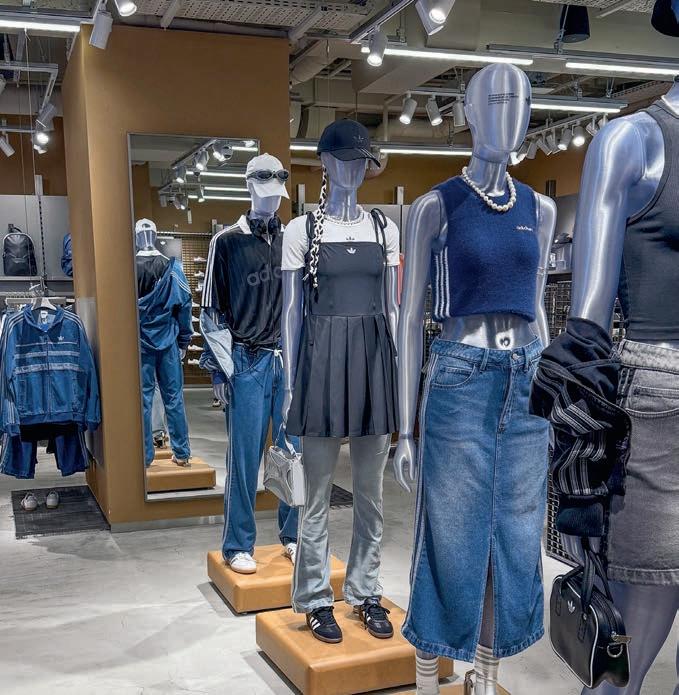
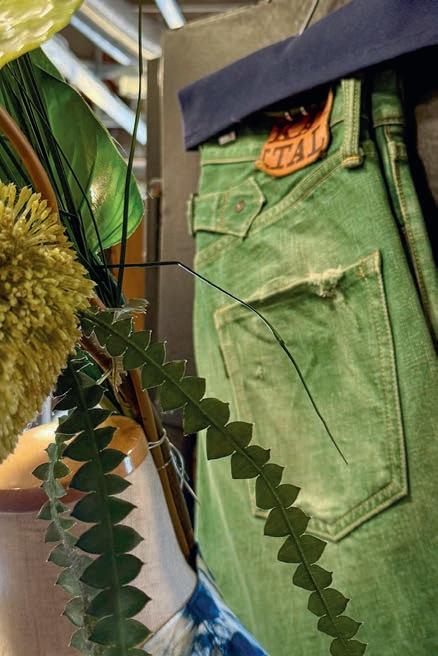
Kapital Legs in Daikanyama is another. It presented an exciting new green leaf dye, and we enjoyed our conversation with the store’s highly informed sales team. What about luxury brands? Never have I seen such a wealth of fashion-relevant, yet classy denim styles in luxury stores. If luxury brands are beyond your budget, that is not a problem, head to a sports shop or even an adidas store where you will find a great number of sporty, absolutely trend-relevant, well fitted jeans. Not a basic in sight.
Which begs the question: what is denim today? On one hand, trend forecasters pitch short-term denim fads or overdesigned jeans that have neither a future, nor a reason, nor a need. On the other, an industry that has traded perfectly good cotton for under average fibre blends; sharp fits for shapeless super-stretch; function and resistance for nothing, or some vague notion of a washed blue fabric made for the masses, removed of all traces of a past of utility, rebellion, meaning and storytelling.
Is it all over?
Will our industry shrink to a size that allows storytelling to become relevant again? In which denim stands for something? Where jeans offer a stronger sense of identity than non-denim fabrications? And where denim stores are once again pilgrimage destinations?
It may be too late to change course, as the natural process of weening out the weak is already underway. Yet those that have the know-how and will to pivot in the right direction can be tomorrow’s superhero brands. Don’t be another Nokia! Denim needs to get real. Now.
Tilmann Wröbel is the founder of Monsieur-T, the ‘denim lifestyle’ studio. He started his career as a haute couture designer before moving into streetwear and denim. He has worked as a designer and consultant for some of the world’s top brands. He is based in Dusseldorf, Germany, and Biarritz, France.
MONSIEUR_T_OFFICIAL/PHOTO: CHRISTIAN GEYR
Inside the adidas store in Shibuya.
The jeans by Kapital Clothing are all made in Kojima, Japan. The cult brand’s latest innovation is a green leaf-based dye.
Levi’s says it is transforming its business and that the changes are paying off.
A ‘denim lifestyle’ brand called Levi’s
When chief finance and growth officer, Harmit Singh, joined Levi Strauss & Co a dozen years ago, its main areas of focus were jeans, men, wholesale and the US. Now, the growth officer says, big boosts to revenues and profits are coming from other types of apparel, from women’s collections, from its direct-to-consumer business, and from international markets. Emphasis on these aspects of the business are driving a transformation, he says. Levi’s is changing and it believes the changes are paying off.
“When I joined, women’s was one-fifth of the business,” he says. “It was worth less than $1 billion per year and was declining. Now the women’s business is close to 40% and is on the way to 50%. It is the faster growing of the two genders, with double-digit growth and a higher gross margin than men’s.” Many stores lead with the brand’s women’s offering now; after all, 75% of the people who shop are women, he points out. The average age of Levi’s customers has changed, too, from high 40s at the start of Mr Singh’s career with the company to the low 30s now.
Channel change
On the subject of distribution channels, he says direct-to-consumer (DTC), when he arrived, accounted for between 20% and 30% of the business, whereas today its share is closer to 50%. Mr Singh says wholesale remains an important piece of the company’s business, but he describes it as a channel that will complement direct-to-consumer, rather than the other way round. Growth in wholesale is more modest and it is a channel the company cannot control completely, but he points out that there would be no way for Levi’s to reach all of its customers around the world without its wholesale partners.
He also says that the idea that you reduce your operating margins when you increase your DTC business is a myth. “The way I think about DTC is as a trifecta,” he explains. “You have to try to grow same-store sales, grow e-commerce and then open new stores.” There are around 3,200 Levi’s stores around the world, with the brand owning and operating 1,200 of these, with the rest run by partners. In this current business year, which runs until the end of November, the company is confident of a net increase in its total number of stores of 50 or 60, and of maintaining that growth rate for the years ahead.
Denim-inspired
Other changes have made an impact on the type of product the company is now offering its customers. The chief growth officers talks of moves into “denim-inspired adjacencies” to jeans, such as chinos for men and yoga pants for women (it has been the owner of a brand called Beyond Yoga since 2021 and has already taken it from $100 million per year to nearly $150 million). There is also a wide range of denim jackets, shirts, skirts, dresses and jumpsuits in the Levi’s brand’s collections now.
“We are trying to evolve and the consumer is giving us licence to evolve, but it is not lifestyle for lifestyle’s sake,” he insists. “It is denim-focused lifestyle. We said that if we are denim leaders in bottoms, can we be denim leaders across all clothing. The consumer is giving us permission to do this. As long as we lead with denim, the consumer will allow us to get into adjacencies that are linked to denim.”
The appeal of Western style
He quotes the overall value of the denim category, across all brands and all geographies, as being $100 billion per year, with expectations from research groups such as Euromonitor of continued single-digit-percentage growth. “The world is becoming more casual,” Harmit Singh says. “Denim drives that casualisation.” At the moment, what he refers to as a “quiet Western” or “subtle Western” trend is also helping. Here, the company’s long-term relationship with singer Beyoncé is paying dividends. Her multiple-award-winning album ‘Cowboy Carter’, which came out in 2024, has helped make Western style popular, in categories such as footwear as well as in apparel. The album even includes a track that pays homage to Levi’s jeans. “Her team called us to check we were okay with that,” Mr Singh says. “We were more than okay. It’s been a home-run.”
The company has launched a series of reimagined old advertisements with Beyoncé on the back of this. It expects a new wave of high-profile publicity in 2026, but stemming from sport rather than music. Super Bowl LX will take place at the Levi’s Stadium in Santa Clara, California, in February. And in June and July next year, the stadium will host a total of six matches at the FIFA 2026 World Cup. The Levi’s name will be on millions of lips.
Narrow enough
Returning to fashion, another trend he points to is one for looser, baggier fits, which started with women’s jeans but which now has men “gravitating towards it too”, he says. This fit now accounts for 15% of the Levi’s business, although slim fits are also still popular. “Different trends are helping the denim category,” he explains.
A focus on men’s jeans has given way to greater emphasis on women’s collections, including skirts, dresses and tops.
Supply chain reaction
Beyoncé’s team called us to check we were okay with there being a song about Levi’s on the ‘Cowboy Carter’ album; we were more than okay.
HARMIT SINGH, LEVI STRAUSS & CO.
He argues that the Levi’s focus is still narrow enough to keep the company on a coherent path. It took steps in 2024 to make its future “sustained and profitable”. This included decisions to move away from footwear and to stop offering lower-priced products under its Denizen sub-brand. It sold its Dockers brand, which focused heavily on khakis as an alternative to denim jeans, to Authentic Brands in May this year. Levi’s said at the time that it was confident of having taken as much benefit from Dockers as it could.
The transformation of the company has been taking place for 18 months now and Harmit Singh says he is pleased with progress. The transformed company will have higher growth and higher margins, he insists, stronger cash flows and higher returns on invested capital. He thinks continued growth at the high-single-digit percentages Levi’s has posted in recent quarters can see it achieve an increase in annual revenues from $6 billion at the moment to $10 billion in the long run (it may be next year, “when the dust settles on the tariffs”, before he is able to give a more detailed timeline on that). By narrowing its focus, the company has expanded its scope for growth, according to Mr Singh. “The opportunity is immense,” he says.
This transformation is already changing the Levi Strauss & Co supply chain. Its exits and divestments have contributed to the elimination, so far, of around 15% of all of its stock keeping units. And its go-to-market calendar is reducing. Mr Singh says the company is trying to bring down the time it takes to bring new products to market from 16 months to 12 or 13. “If you are going to grow your tops business and grow your DTC business, your go-to-market calendar has to be shorter,” he says.
Tariffs are an issue for every company importing product into the US, but Levi Strauss & Co learned a lot from the tariff uncertainty that affected supply chains during the first Trump administration, when the US entered into a heated trade dispute with China. In 2018, he explains, Levi Strauss was importing 15% of its products from China. It adjusted its set-up in response to the tariffs and the share that China now has of its garment production is approximately 1%.
Levi Strauss has manufacturing partners in 28 countries at the moment, Harmit Singh says, and imports jeans and other products into the US from 20 of them. He says sourcing from different vendors in different parts of the world is an important element of its strategy.
“If you look at our core products, say the 501 or the 511 jeans, they are not rocket science,” he adds, “and we can source them from multiple vendors. As long as you work with your vendors and upskill them, they can make those products.” In a complex macroeconomic environment, he says there are probably going to be losers as well as winners. “I think we will be in the winners’ category,” he concludes, “because we have the product, we have the people, we have the stores and we have great marketing.”
Advertise in Inside Denim to reach our global co mmunity –simon@worldtrades.co.uk
Advances in blending, weaving and dyeing wool have led to some exciting new denim fabrics, in a quietly growing segment that offers an upmarket take on winter collections.
Indigo’s sophisticated companion
Adriano Goldschmied loves the idea of expanding natural fibres into denim. Inspired by the indigo hues of kilim carpets, wool blends can offer a warmer, more refined denim for winter and result in a longer life through the seasons, he says. But working with wool in denim presents no shortage of challenges, he adds. “Washing is critical, indigo dyeing is delicate and finishing demands precision – all of which once pushed many mills away from wool entirely.”
These technical challenges, as well as cost, have been off-putting to mills and designers. But wool’s demand in the denim sector has been quietly increasing, particularly over the past four years, according to industry body Woolmark. This inspired it to invest in development, working with mills such as Italy’s Berto and Pure Denim, to produce examples of new blends, textures and updated dyeing processes that could offer the sector the specifications and the performance required.
The benefits of adding some wool to garments are many, Woolmark’s R&D director, Birgit Gahlen, tells us, citing its next-to-skin comfort, thermoregulation, moisture management, odour resistance, elasticity and wrinkle recovery. Wool’s natural temperature-regulating properties make wool denim suitable for all seasons, keeping the wearer warm when it is cold, and cool when it is hot. “For instance, wool on the inside of the fabric adds an extra element of warmth and takes the initial chill out of putting on regular denim jeans,” she says. It enables designers to explore traditional patterns and subtle contemporary twists, or they can look into bold and imaginative interpretations with prints, creative dyeing methods and unique finishing touches, she adds.
The new methods and attributes are shifting wool denim into novel dimensions. “While I’ve experimented with wool in the weft, the real breakthrough came with indigo wool in the warp, developed by Indiwool, an Indian company specialising in wool innovations,” says Mr Goldschmied. “It’s the perfect solution to showcase the fibre’s unique character.”
AI interprets
Edward Crutchley’s vision of wool denim in streetwear.
PHOTOS: WOOLMARK
Technical challenges
Typically, wool needs more careful handling than some fibres and is too delicate for the slasher and rope dyeing techniques associated with denim. This is why, traditionally, indigo-dyed cotton has been used for the warp yarns combined with undyed wool weft yarns. The wool used for denim must be machine washable. Micron selection is also crucial. For shirting, the wool should be 17.5 micron or finer, with a maximum of 18.5 micron. For bottom weights, 21–22 micron is suitable for coarser weft yarns, while finer weft yarns should be limited to around 19.5 micron. “In addition to the traditionally woven twill constructions, wool denim can also incorporate weaves like herringbone, Bedford cord, seersucker, chambray, jacquard weave and dobby weave,” explains Ms Gahlen. “There are also denim-inspired wool knits and jerseys; two-thread or three-thread terry structures with a diagonal knit can be employed for unique textures and comfort.”
To boost options, recent innovations have enabled indigo dyeing of wool, allowing the development of 100% wool “denim” (notwithstanding questions over what constitutes ‘real’ denim) – although they might not be suitable at volume level. These include fabric dyeing by Indian company Thesara, which uses a near-waterless dyeing process that applies indigo in a “reduced atmosphere” on a fabric, not a yarn. As it is a surface dyeing process, it colours a single side of the fabric at a time, with up to 80% penetration. “It is possible to achieve the authentic white core of traditional indigo yarn-dyed fabrics,” managing director Prabhakaran Chetti has previously told Inside Denim. Woolmark also tested Huilai Biotechnology’s natural indigo screen printing on 100% wool fabrics, to create a textured and faded look.
Pigment injecting
However, it is the partnership with US biotech company Colourizd that Woomark is most excited about. “After extensive testing, we realised they are on to something truly revolutionary for the wool industry,” says Ms Gahlen. “The groundbreaking process significantly reduces resource consumption, pollution and costs.”
Rather than a traditional wet colouring process that uses between 60 and 120 litres of water per kilogram of yarn, Colourizd’s QuantumColour process uses just 0.5 litres of water per kilogram and eliminates the need for bleaching and pre-treatment, and, therefore, wastewater discharge. It uses only wetting agents and a dosage of pigment and binder injected into a raw yarn fibre bundle, minimising chemical wastage and energy. Colourizd yarns range from solid to heathered to fully washed-down effects, with the final fabric appearance determined at the yarn colouration stage, eliminating the need for post-dyeing treatments.
The technology has been validated on 100% merino wool, as well as blends with cotton, Tencel and nylon, and on a range of yarn counts. “Another benefit of this cutting-edge process is that it eliminates the variability commonly associated with conventional dyeing techniques, such as shade bands,” adds Ms Gahlen. “Furthermore, its ability to colour multiple fibre types in a single pass eliminates the complexity and cost typically associated with cross dyeing, a process that often leads to inconsistency and high resource consumption.”
Given the challenges of indigo dyeing wool yarns, “simulated wool denim” offers an alternative, says Woolmark. These fabrics are commonly woven in a twill structure using wool or wool-blend warp yarns dyed with non-indigo navy blue dyes together with an undyed wool or wool-blend weft yarn.
Mills have created a bank of fabrics for brands to choose from, or gain inspiration from, with different weave patterns, prints and fibre blends.
Novel blends and sectors
The finishing process for wool denim follows conventional denim methods but requires pH control, avoidance of strong alkaline treatments and setting at a lower temperature to help protect the wool fibres. If these are carefully controlled, the denim should be able to undergo the same processes as standard cotton denim, according to its research and after working with Tonello in Italy. However, to minimise wool fibre damage, sustainable methods such as enzyme washing, ozone treatment and laser etching are increasingly used, it adds.
Pure Denim combined cotton with recycled wool. Berto, based near Padua, has developed wool-cotton blends with more than 40% wool content in the weft, using machine washable wool yarn from Suedwolle Group, with positive feedback. The next step is to introduce an elastomer to satisfy the need for comfort requested by some customers.
The work fed into an updated version of Woolmark’s Wool Denim Toolkit, which it launched at Denim Premiere Vision in Milan this summer, as inspiration for mills and weavers. Recent developments have also included less commonly used blends: wool-lyocell, wool-hemp and spandex-core spun wool, adding softness, texture and some stretch.
The Wool Lab sourcing guide has also been updated, containing 100 swatches of some of the best commercially available wool denim fabrics and yarns to inspire the design community. Woolmark worked with Edward Crutchley – who has designed for Dior, Fendi and Louis Vuitton – to bring the wool denim blends to life through artificial intelligence (AI).
Findings from recent R&D include:
Spandex-core spun wool or other blended yarns can be used to add extra stretch and elasticity.
Wool x lyocell enhances luxury and comfort with improved drape, sheen, softness and gives a more refined appearance.
Wool x linen/hemp creates a textile with a clean, denim-inspired surface. The blend leverages the crisp texture of linen and the soft, insulating properties of wool. Hemp blends add rugged authenticity.
Wool x synthetic fibres add functionality, offering increased durability, cost efficiency, rigidity, stretchability and the ability to produce thinner fabrics.
Key finishing steps
1. Brushing and singeing: Removes impurities and smooths the surface.
2. De-sizing: Removes sizing agents without strong alkalis.
3. Stretching and skewing: Maintains fabric width and prevents twisting.
4. Drying and stentering: Regulates moisture, applies softeners or resin and setting of fabric dimensions.
5. Sanforization: Prevents excessive shrinkage.
After finishing, the fabric is cut, sewn and treated with additional wet or mechanical processes for final texture and appearance. Wool-cotton denim can undergo standard cotton denim wet finishing but requires pH control, avoidance of strong alkaline treatments and setting at a lower temperature to help to protect the wool fibres.
The nine-look collection weaves together narratives from the indigo-dyed garments of 17th-century Europe with functional layering worn by Australia’s merino wool growers. “I wanted to find ways in which the unique qualities of wool and the heritage and atmosphere created by denim could bring something new to the outerwear category of streetwear, one which has been growing significantly over the last few seasons,” he comments. “It has made me realise there is so much more potential for wool denim in outerwear than I have previously thought possible."
Mr Goldschmeid, who uses merino blends in his latest fabric collaborations with Artistic Milliners’ subsidiary Artmill, sees wool gaining traction at the top end of the market. “As luxury houses deepen their presence in the denim world, the demand for truly distinctive fabrics grows,” he concludes. “Wool, with its richness and refinement, emerges as a compelling option once again. Though its cost positions it firmly in the high-end segment, its unique properties – warmth, texture and heritage –align perfectly with the narrative of modern luxury. Indigo is evolving, and as it expands into new territories, wool is quietly stepping in as its most sophisticated companion.”
If you haven’t already you can sign up to www.insidedenim.com FREE and access our technical articles and features. We’ll also send you a weekly newsletter to keep you up to date.
Inside Denim is top ranked on Google for search phrase ‘denim news’. Be seen where the denim industry looks for insight.
Connect with our 100% denim focussed global audiences via our print and digital marketing opportunities. Contact: Simon Yarwood e simon@worldtrades.co.uk t +44 151 319 4977
Funding for good
Newer and more efficient Saurer rotor spinning machines, auto doffers, high-speed Reshmi winding machines for Sri Kannapiran Mills
Limited’s (SKML) two spinning units, KG Naidu Mill and Balaji Mill; a series of second-hand air jet looms, an upgraded singeing machine and a cone winding machine for the denim weaving unit KG Fabriks – these are the tangible assets that the manufacturer based in Coimbatore, India, a part of KG Group, was able to acquire through the Good Fashion Fund. This funding mechanism, tailored for second and third tier suppliers, was created by Fashion for Good and is managed by Fount, an impact investment firm, both based in Amsterdam. It provided SKML with a $2.5 million five-year loan, with the specific goal of achieving resource efficiency gains, financial savings, social improvements, and circularity.
Fashion For Good launched the Good Fashion Fund (GFF) in collaboration with Fount, the Laudes Foundation, The Mills Fabrica and Dutch lender Rabobank in 2019. Described as a first-of-its-kind initiative, it initially focused on supporting textile manufacturers in India and Bangladesh to transition to more sustainable production practices.
SKML was able to reduce cotton waste generation from its spinning operations by 95%, or nearly 5 tonnes annually.
ALL PHOTOS: SRI KANNAPIRAN MILLS & KG FABRIKS
FACTORY TALK: SRI KANNAPIRAN MILLS LTD.
A new type of fund created by Fashion for Good is tailored to second and third tier manufacturers that have difficulty accessing financing to upgrade their mills and factories. Case in point: Sri Kannapiran Mills Limited, a cotton spinner and denim maker, was able to acquire more efficient equipment and reduce its energy consumption by 59%.
It enabled SKML to replace 25-year-old machinery and automate labour-intensive spinning operations. Unlike traditional lenders, the GFF is more flexible in its approach to investment. Rather than acquiring a limited number of new weaving looms, it enabled SKML to purchase a greater number of second-hand air jet looms. These have increased the weaving unit’s monthly output to 220,000 metres and the new spinning equipment has reduced waste by 95%.
The fund also imposes a reduction in emissions of at least 50%. To achieve this target, which it exceeded, SKML switched its energy mix to renewable resources over the last two years, with solar now making up 58.1%, wind 20.7%, while natural gas fell to 10.8%.
GFF helped us take a leap we couldn’t have taken alone.
SRIHARI BALAKRISHNAN, SRI KANNAPIRAN MILLS
These improvements were confirmed by two on-site assessments conducted by the Good Fashion Fund (GFF) with Bureau Veritas, Fairwear Foundation, GlobalCAD and adelphi Consult in February and June of this year. The company achieved annual energy savings of 886,469 kWh, according to Bureau Veritas, and the overall upgrade has led to “stronger operational monitoring,” says Rakesh Vazirani, the organisation’s head of decarbonisation.
Workers at the DEL denim making facility.
It is estimated that the financial benefit resulting from the new equipment will allow SKML to save approximately $140,000 through efficiency gains in spinning and waste reduction and another $115,000 through the more efficient weaving looms. It has also led to safer working conditions as a result of the automation of spinning operations, improved grievance mechanisms, and better health and safety measures.
Building confidence
“Without the Good Fashion Fund, we may not have moved forward with these upgrades so confidently,” says SKML managing director Srihari Balakrishnan. “As an SME navigating a turbulent global supply chain, marked by trade disruptions, rising input costs, and sustained margin pressures, long-term investments are difficult to justify without the right support. The flexible capital and technical guidance from GFF helped us take a leap we couldn’t have taken alone. We’re now seeing the benefits — not only in cost savings and operational improvements, but also in product quality, data systems, and progress on worker well-being.”
The fund’s flexible approach is an essential part of its success, says Bob Assenberg, Fount co-founder and fund director for the GFF. This experience, “confirms that transformation need not rely on acquiring the newest or most advanced technology. It requires a mindset. By prioritising what’s available, affordable, and adaptable to its context, SKML has delivered measurable improvements”. He sees this as validating the need to go deeper into the supply chain, where actionable change “can help align the sustainability strategies of suppliers and brands”.
Alongside SKML, the first round of GFF loans was granted to denim-focused Epic Group and Progress Apparels in Bangladesh, and to Pratibha Syntex, KKP Fine Linen and Sharadha Terry Products in India. Building on the knowledge gained from these initial experiences, the institutional partners are now preparing to launch Good Fashion Fund 2.0.
What’s next?
The next iteration of GFF, due to launch in early 2026, will have a broader scope and deeper pockets. It is expected to have access to $60 million, with $1 to $5 million allocated to each recipient in the form of mezzanine funding, a mix of debt and equity. It will also reach out to small- and medium-sized brands that also have difficulty accessing capital to engage in programmes for their suppliers. “The fund will aim to facilitate clear, long-term brand commitments for suppliers in terms of offtake, responsible purchasing, worker welfare, living wages, gender and so on,” Jayanth Kashyap, GFF Investment Lead, tells Inside Denim. “GFF 2.0 will also consider follow-on investments in companies from the first fund.”
The innovative fund is firmly convinced that flexibility is key. “What works in one place might not be the best solution in another. This is also true for finance: products need to be tailored to different segments of the textile manufacturing sector subject to volatile macroeconomic conditions and markets, the GFF notes in the lessons learned during the first phase of the programme. A real-world example of the good in the mantra: think global, act local.
Output for KG Fabriks, the denim weaving unit, is now 220,000 metres per month.
Nikita Raman has a lengthy career in fashion, specialising in denim, moving around the world to take up roles at Lee Jeans, Zara, Massimo Dutti, Only and S.Oliver. For the past three years, she has been a senior designer at Hugo Boss. She is known for a strategic mindset, strong trend forecasting and a hands-on approach to the full creative and technical process.
PHOTOS: NIKITA RAMAN
Denim experiments (below)
CLOCKING ON...
Nikita Raman’s experience across categories, segments and countries helps shape her approach, with Hugo Boss’ suiting strength an inspiration for fresh designs.
Tailored to perfection
6.00am
Let’s be honest: my day does not start with a sunrise jog or a green juice. As a professional snoozer, I dedicate a good 30 minutes to rolling around, trying to bargain with the alarm clock, and savouring the silence before the world wakes up. Somewhere between turn number three and four, I decide whether today calls for a full denim-on-denim uniform or a slightly more diplomatic “business casual denim” look. (Yes, there’s a difference.)
7.00am
Once I’m up and dressed, I give myself half an hour to train the brain. Some mornings that means practising origami cranes – my desk is slowly turning into a paper aviary. Other mornings I wrestle with the Korean alphabet, because I have promised my best friend I’d learn the language.
9.00am
With a cup of tea in hand, I dive into the day. Designing for BOSS Womenswear Black Line means I switch between denim and non-denim categories, often weaving tailoring techniques into jeans. For a denim designer, it’s a bit like cross-training: unexpected, sometimes challenging, but it makes the results stronger and sharper. Plus, working with different teams keeps the ideas fresh – and the mood board lively.
12.00pm
Lunch is my daily ritual. Most days I bring my own food, but the real highlight is eating with colleagues. Sometimes it’s the design team, sometimes I branch out to other departments. Call it networking if you want, but really, it’s just me being curious about how the big machine of Boss works.
1.00pm
Afternoons are for the craft. If I’m not in fittings or meetings, I’m sketching, building tech packs or obsessing over wash comments. Music sets the pace, and when the rhythm is right, I slip into experiments with AI, like another corner of the atelier where ideas can twist and unfold in unexpected ways.
6.00pm
Evenings are project time. I’m hand-sewing a kimono out of denim swatches (pictured). It’s slow work, but there’s something meditative about it – like yoga, but with needles. When I want to balance the sewing with something less… sharp, I switch to jigsaw puzzles. My favourites are art-inspired: Yayoi Kusama dots, Leandro Erlich’s installations or Alma Haser’s surreal photography. It keeps the brain busy, with a TV show in the background as company
10.00pm
Before the day officially ends, I like to read. Right now, it’s Haruki Murakami’s The City and Its Uncertain Walls. The title alone sounds like denim: layered, mysterious and a little poetic. By the time I close the book, the snooze cycle is ready to start all over again.
MAGAZINES
Inside Denim
Keep up to date with denim developments from raw material to finished product with in-depth coverage of advances at fibre and fabric level.
(2 issues per year)
Sportstextiles
The international technical trade magazine for performance and sports materials.
(4 issues per year)
UK: £90.00
Airmail: £150
Footwearbiz
All you need to know to assist you in the global footwear market.
(4 issues per year)
UK: £90.00
Airmail: £150
World Leather
The world’s leading magazine for the leather industry.
(6 issues per year)
UK: £90.00
Airmail: £150
Websites
Designed to provide up-to-theminute news and market intelligence.
To be kept up-to-date on what’s happening in the denim industry... sign up now.
InsideDenim.com is the news portal to complement Inside Denim® magazine, offering the latest industry news, market intelligence, product information and much more. It is a comprehensive news site for the industry, which boasts a searchable archive of stories, as well as emailed newsletters and a technical online library of Inside Denim® articles.