Tracy Richter Vice President of Planning Services, HPM
Mark Schoeman Design Principal, ABA Studios
David Schrader Managing Partner, SCHRADERGROUP
Michelle Smyth Principal Architect, McMillan Pazdan Smith
Arnold Swanborn Design Principal, CO Architects
Photo Credit: Grant Van Hoose, MOREgroup STAFF
President
Torrey Sims
CONTACT
Sales
Vice President of Sales and Marketing Sarah Clow
Sarah Clow, Vice President of Sales and Marketing sarah@wmhmedia.com
Subscription Information billing@wmhmedia.com
& CONSTRUCTION
ARTS
& REUSE
DESIGN
School Construction News is proud to present the newest members of the Editorial Advisory Board. The board is comprised of industry experts who offer valuable perspectives from the school construction, design and maintenance and operations fields. Members were selected based on their professional backgrounds and experience, as well as their commitment to developing safe, healthy, accessible, sustainable and student-centered education projects. Watch for exclusive articles from members throughout the year in the digital edition of School Construction News and online. Learn more about the Editorial Advisory Board.
Kevin Conn, Ed.D.
Executive Director of Student Housing and Residential Life California State University Northridge
Dr. Conn is the Executive Director of Student Housing and Residential Life at California State University Northridge. Dr. Conn received a Doctorate in Education from New York University, a Master of Science in Human Resource Management from Stony Brook University, a Master of Science: College Student Personnel from Southern Illinois University-Carbondale, and a Bachelor of Business Management and Finance from Grand Valley State University. Dr. Conn serves on local, regional and national associations within residence life and LGBTQ+ advocacy. In addition, Dr. Conn has vast experience working with and researching the topic of emotional intelligence and related dynamics within both student and professional staff.
Dr. Conn has a strong passion for researchturned-engagement and has partnered with colleagues on international ACUHO-I grantfunded research projects focused on the evolving role of the resident assistant, and recently coauthored a book titled “Evolving Landscape of Residential Education.”
A/E/C
Chris Cook, PE, LEED AP, is the new president of ADC Engineering. Cook has been with the firm since 1996 and is a founding partner of the company’s civil engineering department. A graduate of The Citadel with a degree in civil engineering, he is licensed in more than 28 states and U.S. territories and has led projects nationwide. His work spans K-12 schools, higher education facilities, Department of Defense complexes, retail developments and mixed-use communities. Cook has served as chair of The Citadel’s Civil Engineering Advisory Board and as chairman emeritus, and he is known for his technical leadership and collaborative approach to complex design challenges.
Rachael Martemucci was named director of education market development at Owen-Ames-Kimball Co. in January, reflecting the firm’s continued emphasis on the K-12 education sector. In this newly created leadership role, Martemucci is responsible for advancing the company’s footprint in education
Tieg Murray Rustam
Vice President of Market Strategy and Creative Services
Skanska USA Building
Tieg Murray Rustam is Vice President of Market Strategy and Creative Services for Skanska USA Building, where she leads strategic planning to strengthen market differentiation across core sectors, including education. Over the last 19 years at Skanska, Murray Rustam has advanced from marketing coordinator to senior leadership roles, driving growth strategies for higher education (particularly in the university science space), K-12, science and technology, and healthcare markets. She oversees Skanska’s national advisory councils and creative services teams, fostering collaboration and innovation to deliver exceptional client experiences.
Murray Rustam is a recognized leader in the life sciences community and has served as Vice President of Marketing and Communications for the International Society for Pharmaceutical Engineering (ISPE) regional chapter, earning accolades for her forward-thinking approach. She brings deep expertise in market strategy, communications, and customer engagement to the School Construction News Editorial Advisory Board.
markets and strengthening client engagement within that sector. Owen-Ames-Kimball, an employeeowned construction management and general contracting company, operates in Michigan, Florida and Colorado, offering services in commercial, government and educational construction. Prior to this appointment, Martemucci held roles in programming and marketing at the firm, bringing experience in strategic planning, marketing coordination and industry engagement to her expanded responsibilities. Her work supports efforts to build long-term value for clients and partners in the education segment.
Arnold Swanborn, AIA, LEED AP, is Design Principal at CO Architects in Los Angeles, which he joined in 2008. During his 30-plus-year career, Swanborn has created a diverse portfolio of award-winning projects, including higher research and academic facilities, medical and health sciences education buildings, healthcare facilities, and K-12 schools — ranging from 100,000 square feet to more than two million square feet. Swanborn leads CO Architects’ design direction. His work focuses on connecting people to place through the design of sustainable buildings that are responsive to their environments. His widely publicized work includes the Health Sciences Innovation Building, Health Sciences Education Building, and Biomedical Sciences Partnership Building for the University of Arizona and the Loyola Marymount University Life Sciences Building. Notable under-construction projects include the Wichita Biomedical Campus, the Arizona State University Health Building and the University of Texas at Austin Autry C. Stephens Engineering Discovery Building.
science and tech, commercial, healthcare and education markets, with recent expansion including a Utah office opened in 2024.
EDUCATION PROFESSIONALS
In January, Andrea Weisheimer joined Fortis Construction as President, overseeing Geographic Markets. In this strategic leadership role, she will focus on strengthening Fortis’ national presence, expanding client partnerships and supporting the company’s growth across regions. Weisheimer brings extensive executive experience in the construction industry, having held senior positions at Lease Crutcher Lewis, Webcor Builders and DPR Construction. Fortis Construction, headquartered in Portland, Oregon, is an employeeowned general contractor specializing in data center,
The Sutherlin, Ore., School Board of Directors has appointted Jon Martz as the district’s next superintendent, effective July 1. Martz currently serves as principal of Sutherlin High School, a position he has held since 2021. He previously served as principal of the district’s middle school and Sutherlin Virtual Online Academy. Earlier in his career, Martz was an athletic director, assistant principal, and principal in Winston-Dillard School District from 2013 to 2016 and taught in the Sutherlin School District from 2008 to 2013. Martz earned a bachelor’s degree and a master’s degree from Oregon State University, as well as a master’s degree from George Fox University. Additionally, Martz was named the 2026 Oregon Principal of the Year by the Oregon Association of Secondary School Administrators, recognizing his leadership in improving academic outcomes, strengthening school culture.
Arnold Swanborn, AIA, LEED AP Design Principal CO Architects
Cook Martemucci
Weisheimer
Martz
The K-12 Master Plan: A Tool for Navigating Change
By Mark Schoeman, AIA, and Lee Salin, FAIA
There’s the old saying that a failure to plan is a plan to fail. It’s a perspective we know well in the A/E/C industry, clients included. We can’t successfully design building solutions if we don’t define and understand the needs these solutions aim to address, which is why master planning is such a vital task in the overall process of managing facilities.
As we consider the state of education in America today, it’s clear that we are at an inflection point as educators are buffeted by multiple challenges. There are the lingering impacts of COVID-19, and the lessons learned to improve future pandemic responses to better support students, teachers, families and administrators. There is also the impact of technology on students’ socialemotional health and learning skills, which not only encompasses artificial intelligence but smartphones and social media, too.
To these factors, we can add ongoing ideological debates on how education is offered to students on a systemic basis, with the debate on voucher programs and “school choice” being one of several flashpoints. And there’s more, of course. The question facing educators, then, is how do all these factors cohere into a pedagogical vision for the day-to-day student experience rooted in schools’ built environments?
To answer, it’s worth considering the ways in which master planning, enhanced by strategic visioning, can go beyond material thinking to serve K-12 districts as a cultural tool for navigating change.
Getting to the ‘Why’
Fundamentally, it’s about the rationale for undertaking a master planning effort — the underlying “why.” At a minimum, master plans are meant to take a holistic look at facilities on a campus, or across a district, and contextualize specific needs (e.g. for deferred maintenance repairs, major modernizations and new structures) with timelines and funding. Yet we can go beyond thinking primarily in terms of facilities by engaging with, and incorporating, other elements, such as Education Specifications. Since these are where a district articulates its pedagogical thinking, these documents provide essential insights into the overall educational experience — teaching methods and tools, student engagement approaches and guidelines for evaluating student success in achieving learning objectives.
The contextual and strategic approach to master planning can offer an added benefit, particularly when looking to apply pedagogical innovations to the many spaces that comprise a school. As effective master plans consider where buildings are placed, there’s an opportunity to understand why they relate to each other in the way they do — and judge whether this relationship really does serve the desired student learning experience. Furthermore, looking at how the parts of a campus come together allows for exploring underused areas in a building or campus, the interstitial spaces, to activate them in a way that further enhances the learning experience in line with pedagogical goals.
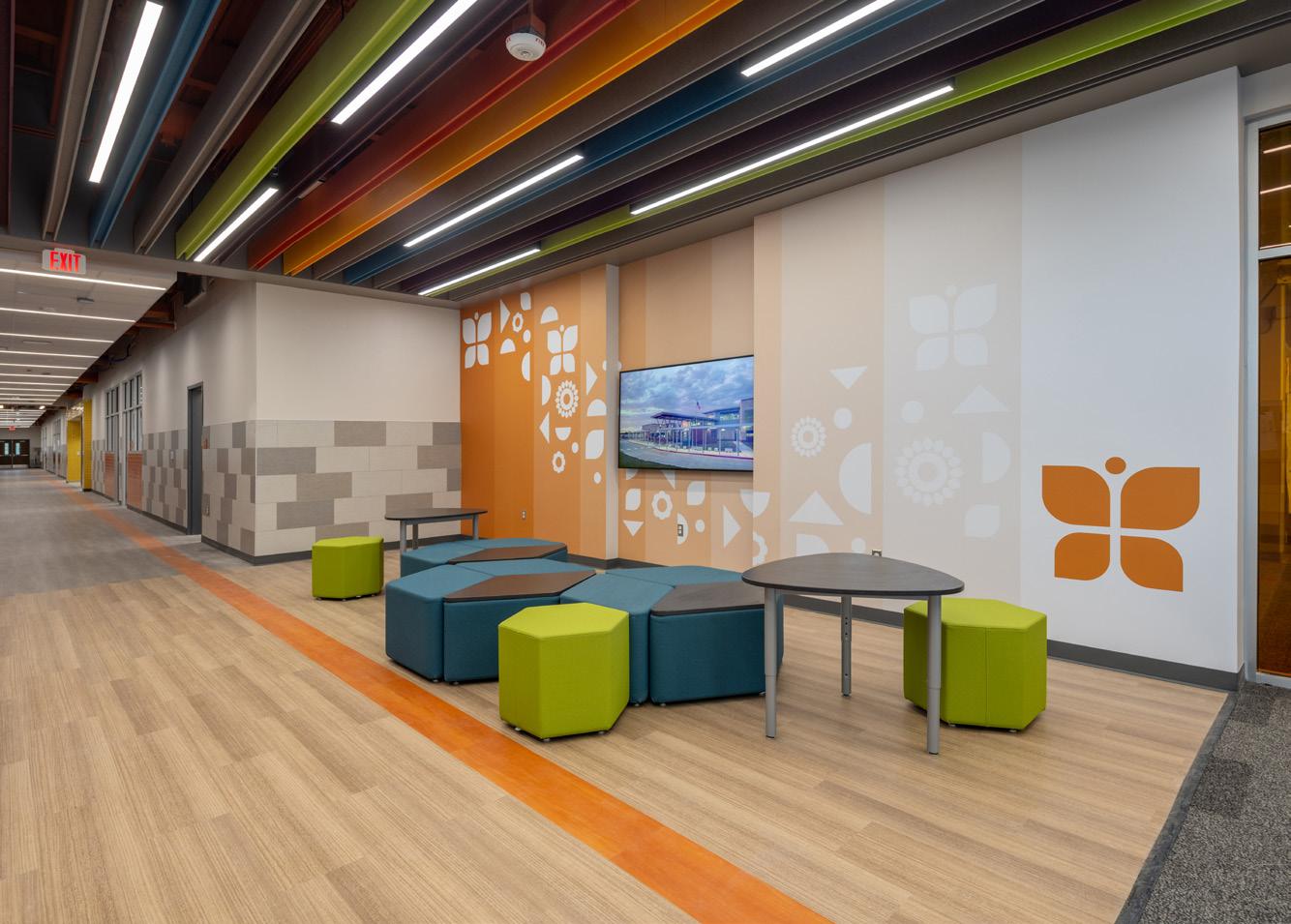
For example, a courtyard corner used for little more than seating could be enhanced with a garden planter to support STEM education in biology. Or an empty/utilitarian space within a circulation path could be supplied with seating, a whiteboard, and a Smart TV to become an interactive “curiosity space” for student project work and outside-the-classroom teacher interactions. Finally, viewing the various elements of a campus as a “network” supports more robust thinking about challenges related to wayfinding, safety and security.
Another consideration involves understanding a campus’ history and culture. First, this allows a school to continue to express and celebrate its identity and role in the community (e.g. through joint-ventures and after-hours programming). Second, this allows for understanding the history of changes in the campus and their impacts, positive and negative. Embedding a historical understanding of a campus (or multiple campuses) into the master plan can provide additional context for decisions made regarding future improvements.
Planning in Practice
When it comes to thinking about how to teach given changing circumstances (e.g. the aforementioned pandemic impacts, technology and broader political environment), time spent developing (or updating) educational specifications and strategic plans — before beginning the master planning process can support more sophisticated results.
Rather than looking at facility improvements in isolation or in purely reactive terms, (e.g. what needs to be fixed in response to immediate needs), master planning efforts informed by clearly articulated and actionable pedagogical visions can define rich and multi-faceted improvements with long-term benefits. For example, if a classroom’s audiovisual technology is out of date, rather than simply upgrading to the latest equipment the master plan could consider the district’s hybrid learning strategy and how students can maintain the continuity of their learning experience in a variety of circumstances, whether at home or in the classroom.
So how should a district approach creating a richer, more multifaceted master plan that is more adaptable and resilient in the face of change? Crucially, it’s important to emphasize conversations with district staff, teachers, parents, and students to understand what their hopes and expectations are related to the learning experience. The goal is to explore more than just needs, but overall goals, constraints and opportunities — the “big picture” of how students grow and develop throughout their academic journey. We can build on this deeper understanding by paying attention to thinking expressed in strategic documents such as Education Specifications — does it reflect not only a district’s current thinking about the learning experience but also strive to address projected evolutions, and disruptions due to technology and broader social context? Does it purposefully incorporate adaptability and resilience?
Whether updating an existing education specifications or starting fresh, prior to master planning it becomes all the more worthwhile to conduct strategic visioning that develops a clear and holistic “picture” of the learning experience spanning past experience, current practice and potential future improvements. When all the above are combined, the outcome — a roadmap for navigating change — strengthens district leaders’ ability to respond to both immediate and longer-term challenges facing their students, teachers and communities.
Mark Schoeman, AIA, DBIA, is Design Principal at ABA Studios. Lee Salin, FAIA, is President and Managing Principal at ABA Studios.
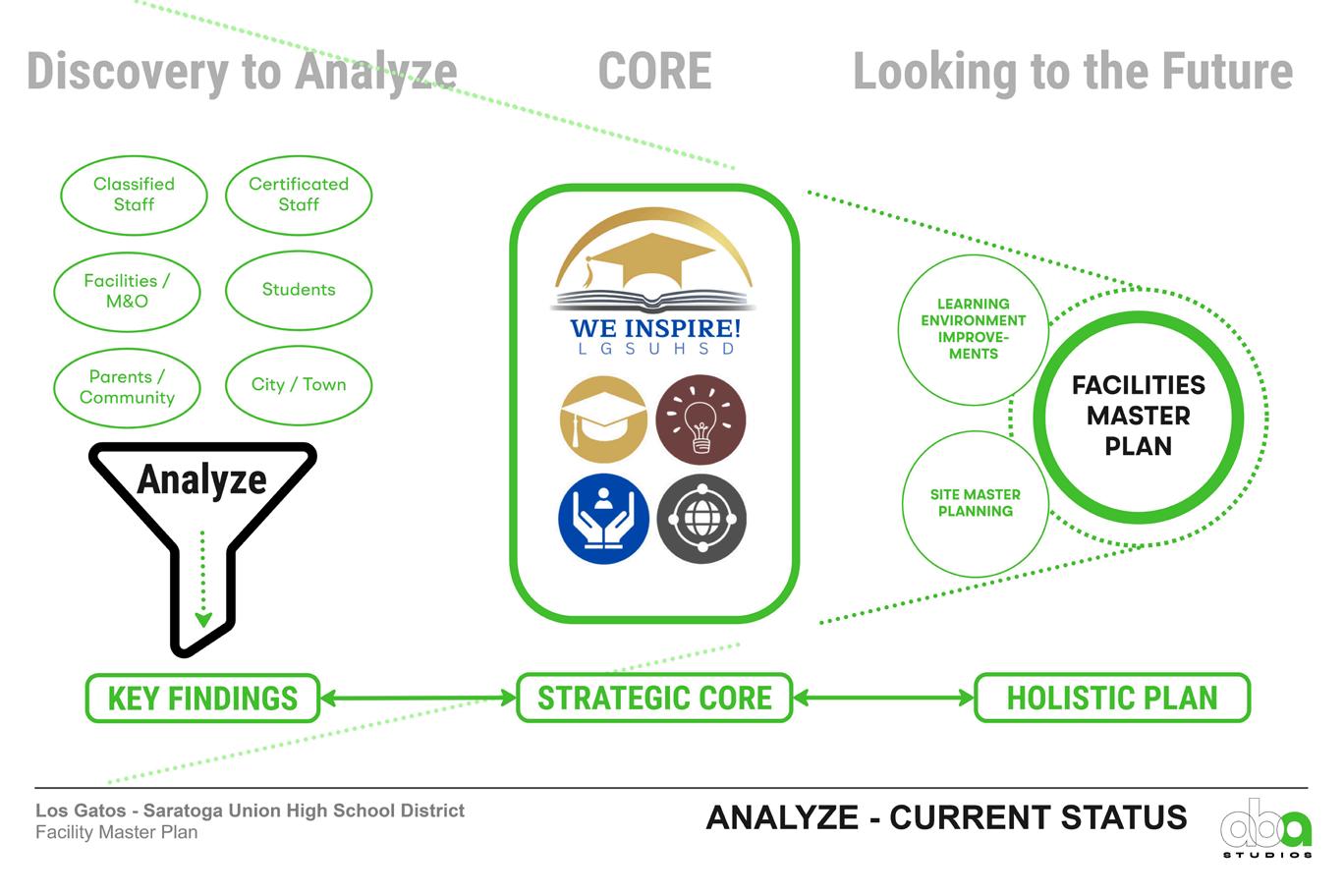
Diagram illustrating the connection between stakeholder engagement and strategic vision in the master planning process.
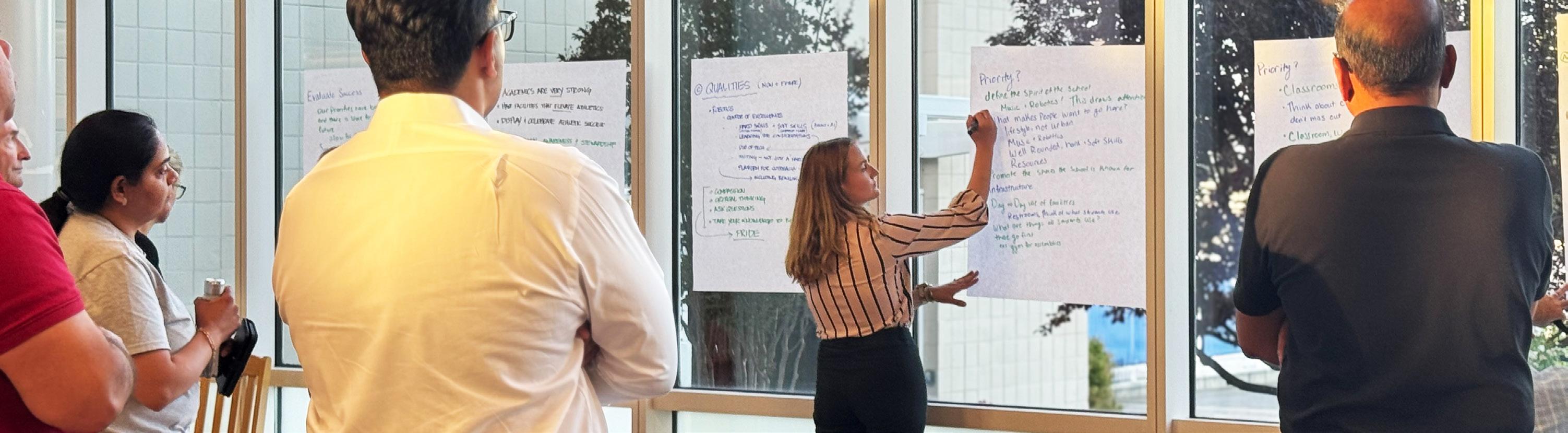
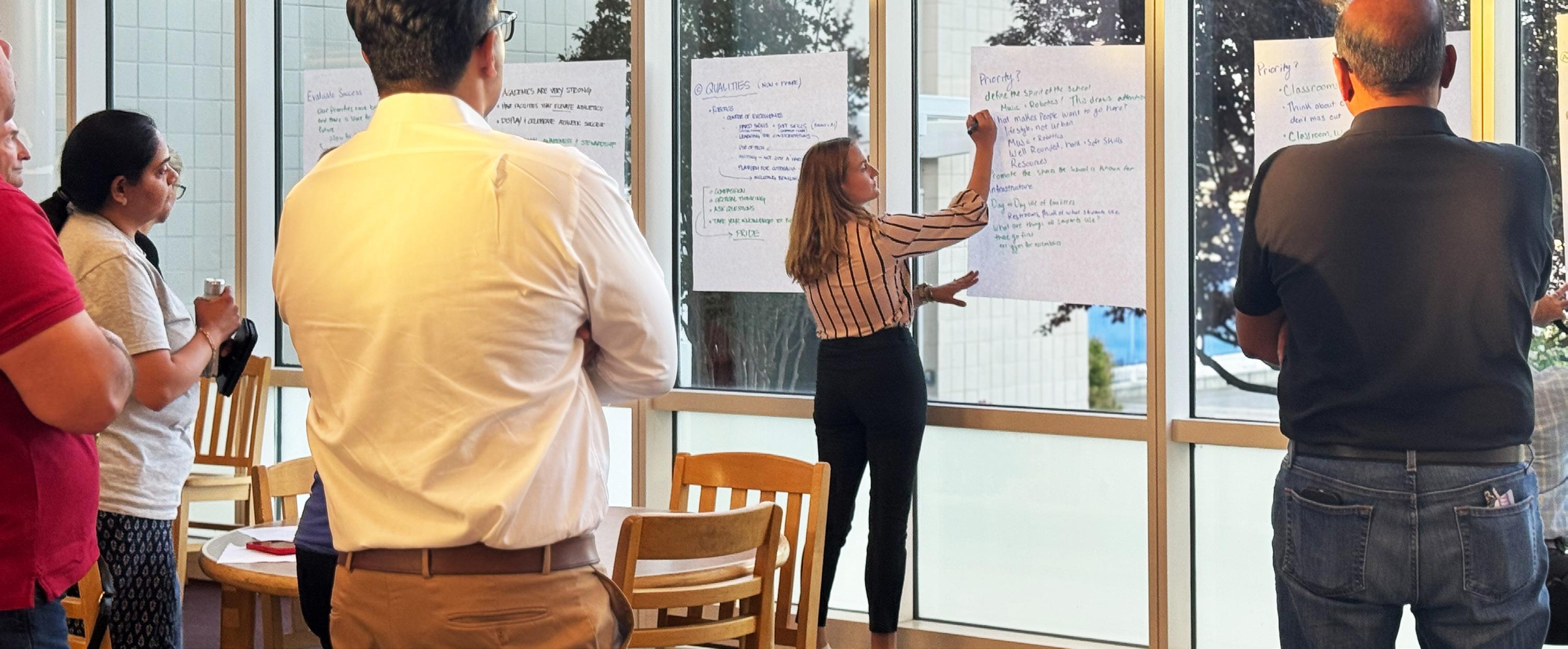
ABA designer Kelly McKenna works with Los GatosSaratoga Union High School District community members during an interactive planning workshop.
Photo Credit (all): Courtesy of ABA Studios
How Regional Collaboration Is Shaping the Future of School Design
By Kate Broderick
Across the country, conversations about school design are becoming more complex and more urgent. District leaders, designers, and builders are being asked to deliver learning environments that are flexible, resilient, inclusive, and grounded in real-world constraints. While national conferences and industry publications continue to play an important role, some of the most impactful work shaping learning environments today is happening at the local level.
Regional professional communities are emerging as critical hubs for collaboration, experimentation, and shared problem-solving. Through site tours, targeted webinars, and cross-disciplinary gatherings, these localized networks are helping professionals move beyond theory and into practice, learning directly
brought together professionals from multiple states to explore topics such as evolving learning models, post-occupancy insights, and operational challenges. Because the audience shared similar regulatory environments and regional priorities, discussions stayed practical and immediately applicable. Amanda Vottis, ALEP, Architectural Designer at Mosaic Associates Architects, DPC, and President of the A4LE New York Chapter, shares, “A4LE exposes us to so many fabulous learning environments across the country, but, in New York, it can be challenging to see these spaces and feel restricted in what we can create for students. As a response to this, our chapter hosted open forums and a virtual panel discussion that brought school districts, designers, and code officials together to share challenges, highlight successes, and explore how we can
from each other and from the spaces they design and build.
At the Association for Learning Environments (A4LE), regional chapters are increasingly where meaningful engagement happens. These groups bring together architects, engineers, educators, facility leaders, contractors, and product partners; not to sell ideas, but to test them against real projects, real budgets, and real communities.
Learning in Context: Why Site-Based Engagement Matters
One of the most powerful aspects of regional engagement is the opportunity to learn in real spaces. Seeing a completed or even an in-progress school building provides insights that drawings and presentations simply can’t capture. Conversations about daylighting, acoustics, circulation, safety, and flexibility take on new depth when participants can walk the space together and ask candid questions.
A recent Southern California site tour to the Early Childhood Center at Lemon Grove School District exemplified this approach. Participants from across disciplines toured a local learning environment and discussed design decisions directly with project team members and school representatives. The dialogue wasn’t scripted. It focused on what worked, what didn’t, and what teams would do differently next time. Emily Alessandri, Learning Environment Specialist at Meteor Education, explains the impact: “Experiences like this matter because they ground learning environment planning in real world impact. Being on site helps us better understand how spaces actually function for students and educators… not just how they look in a 3D rendering. Additionally, tours like this create opportunities to connect with other industry professionals, share perspectives, and learn from one another.” That kind of experience builds shared knowledge quickly and helps raise the bar for future projects across the region.
Bringing the Right Voices into the Room
Equally important is who participates in these regional conversations. The most effective learning environments emerge when educators, designers, builders, and owners collaborate early and often. Regional programming creates space for those voices to intersect in ways that national events sometimes can’t.
The Northeast Region’s recent webinars highlight how this collaboration can work even when participants aren’t in the same physical space. These sessions
collaborate better to create innovative learning environments.”
These kinds of exchanges help break down silos. Designers gain a clearer understanding of day-to-day operational realities. Facility leaders hear how construction and design decisions affect long-term performance. Educators can articulate how space impacts teaching and learning, often influencing decisions earlier in the process.
Investing in the Future Workforce
Regional engagement also plays a critical role in developing the next generation of professionals. Many chapters are intentionally creating space for emerging professionals and students to engage with experienced practitioners, helping build a stronger, more connected talent pipeline.
In Central Texas, for example, programming focused on emerging professionals has created opportunities for mentorship, leadership development, and peer learning. Emerging Professional, Patrick Reinhard, Project ArchitectAssociate, at Perkins & Will, shares, “The A4LE Central Texas Emerging Professionals Group grew out of our desire to connect with our peers in the industry and learn alongside them without the fear of looking inexperienced. While the broader chapter focuses on strengthening learning environments through design and networking with established leaders, we needed a place to learn the basics of this uniquely complicated market. This type of professional development was intended to be organic and has been driven by emerging professionals, for emerging professionals. Our goals have always been to help each other grow in our careers and to foster a network of support for the future leaders in education design.” These initiatives recognize a simple truth: the future of school design depends on supporting those who will lead projects in the years ahead. Regional communities are uniquely positioned to do this well, offering accessible, relationship-driven entry points into the profession.
Why This Matters Now
As schools face increasing pressure to adapt, whether due to changing instructional models, funding challenges, or community expectations, the need for grounded, collaborative learning has never been greater. Regional engagement allows professionals to respond to these challenges with nuance, shared experience, and local insight.
Looking ahead, A4LE is continuing to expand and evolve its regional offerings, supporting chapters as they experiment with new formats and partnerships. The goal is simple: create more opportunities for professionals to learn from each other, in context, and apply those lessons directly to their work.
For those shaping the future of learning environments, the message is clear. Some of the most valuable conversations aren’t happening on a national stage; they’re happening locally. Getting involved at the regional level isn’t just professional development; it’s a way to actively contribute to better schools, stronger communities, and more effective learning environments.
To learn more about what’s happening in your region, visit us at www.a4le.org
Kate Broderick is Chief Learning Officer at A4LE.
A4LE is continuing to expand its regional offerings as chapters explore new formats and partnerships.
A4LE chapters are creating space for young professionals to connect with veteran practitioners to strengthen the talent pipeline.| Photo Credit (all): A4LE
Designing Career and Technical Education Spaces for Real-World Learning
How flexible, well-planned CTE and STEM environments support collaboration, adaptability and career-ready skills
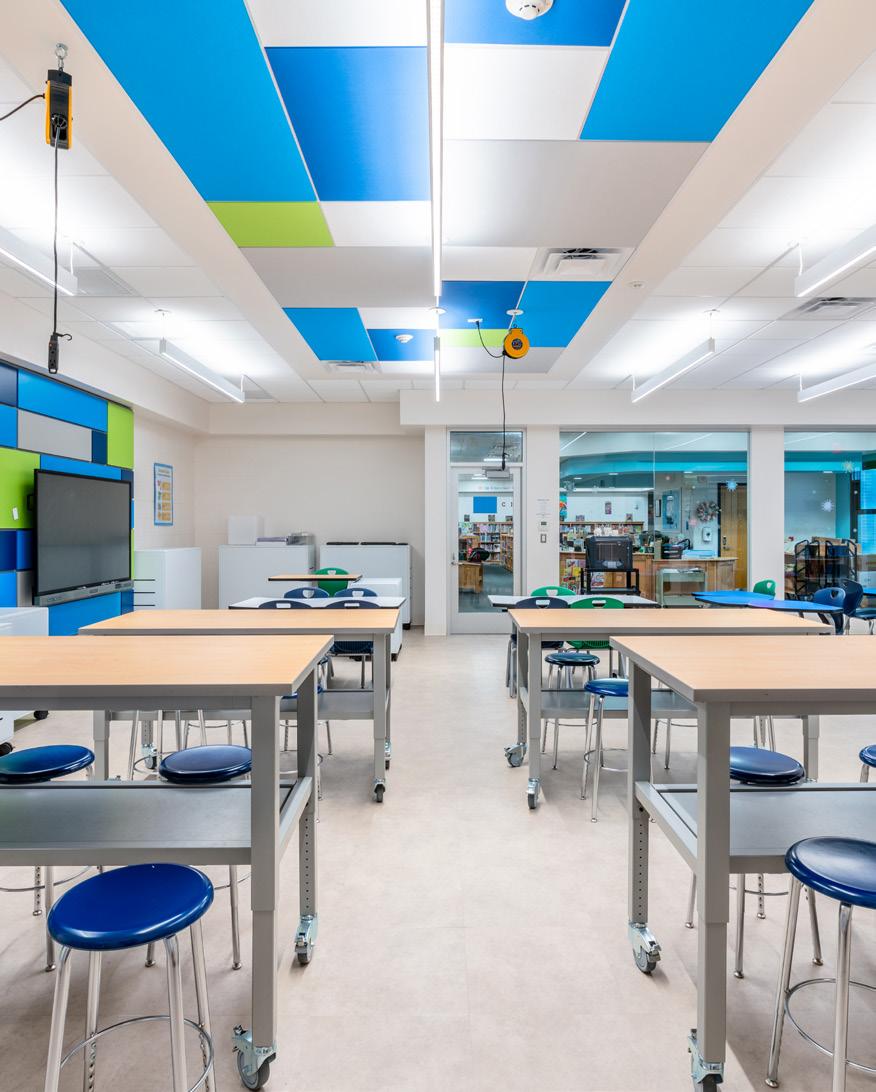
Career and Technical Education (CTE) programs build connections between academic coursework and real-world application, providing some of the most meaningful elements of career exploration.
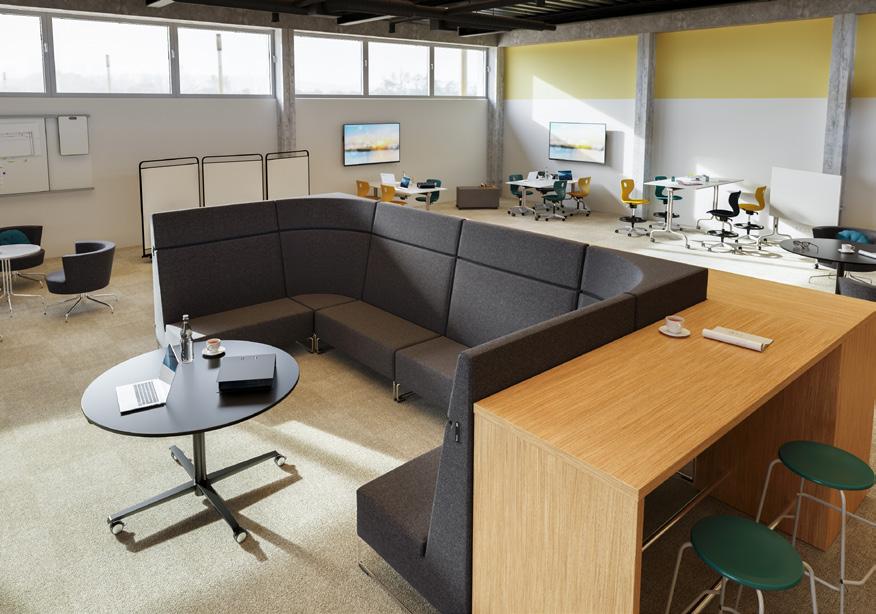
Team-based, project-oriented approaches supported by flexible classroom designs are transforming both CTE and STEM learning environments. Agile furniture plays a pivotal role in creating adaptive spaces that can be easily reconfigured to support hands-on learning, collaboration and evolving instructional needs.
Work-Based Learning
Work-based learning integrates academic learning with practical, real-world experience to prepare students for future careers. By aligning classroom instruction with hands-on activities, students gain a deeper understanding of their chosen fields and develop essential technical and employability skills. Partnerships with local businesses provide opportunities for internships, apprenticeships, and real-world projects, enabling students to apply theoretical knowledge in practical settings. This experiential learning enhances technical proficiency and cultivates critical thinking, adaptability and collaboration skills — all vital for success in today’s dynamic job market.
Designate collaborative areas with large tables, comfortable seating, and writable surfaces.
Designate collaborative areas with large tables, comfortable seating and writable surfaces like whiteboards or glass boards. These spaces should encourage group discussions, brainstorming, and teamwork, fostering peer interaction and developing essential communication and collaboration skills.
Student Leadership
A key purpose of student leadership spaces is to foster personal development, academic learning, and career preparation, supporting overall student growth. Student leadership is transformative as it ignites potential, fosters initiative, and hones problem-solving and decision-making skills. By taking on leadership roles, students lead projects, collaborate, and tackle real-world challenges, building confidence for future careers. These roles instill a deep sense of responsibility and ownership, fueling commitment to their educational and career aspirations.
Design student leadership and apprenticeship spaces with versatile, multipurpose furniture to support a variety of learning and professional development activities. Ensure these spaces align with career pathways and postsecondary education, fostering environments that promote hands-on learning, collaboration and interactions with industry professionals.
Laboratory Learning
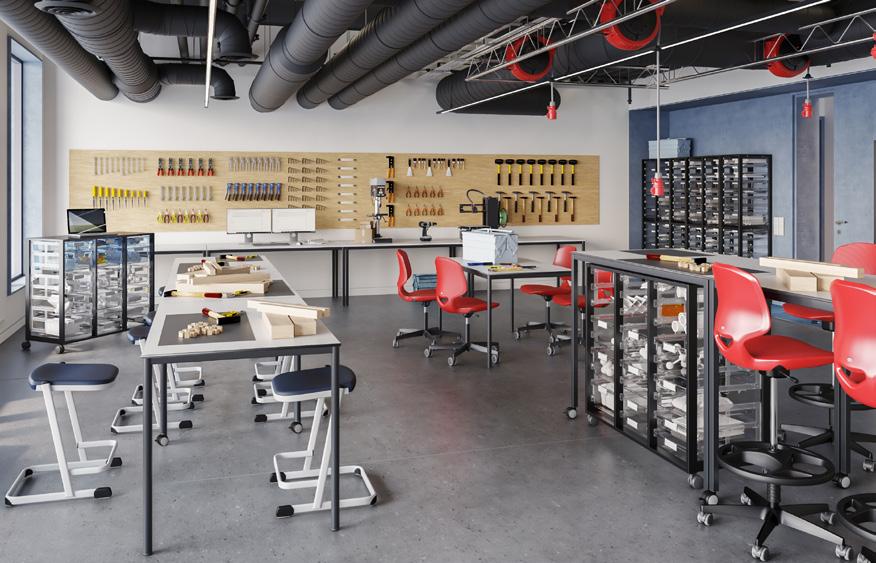
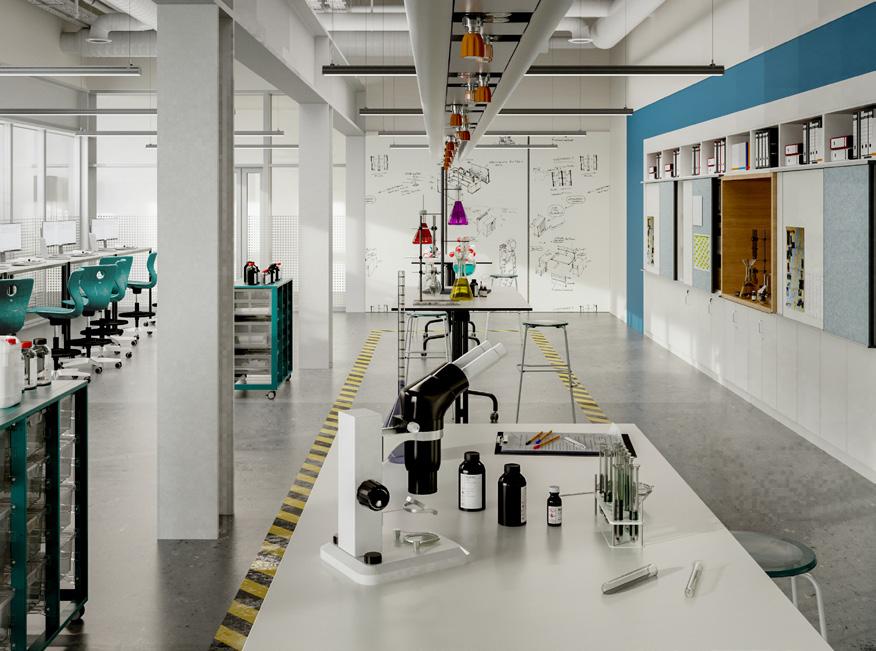
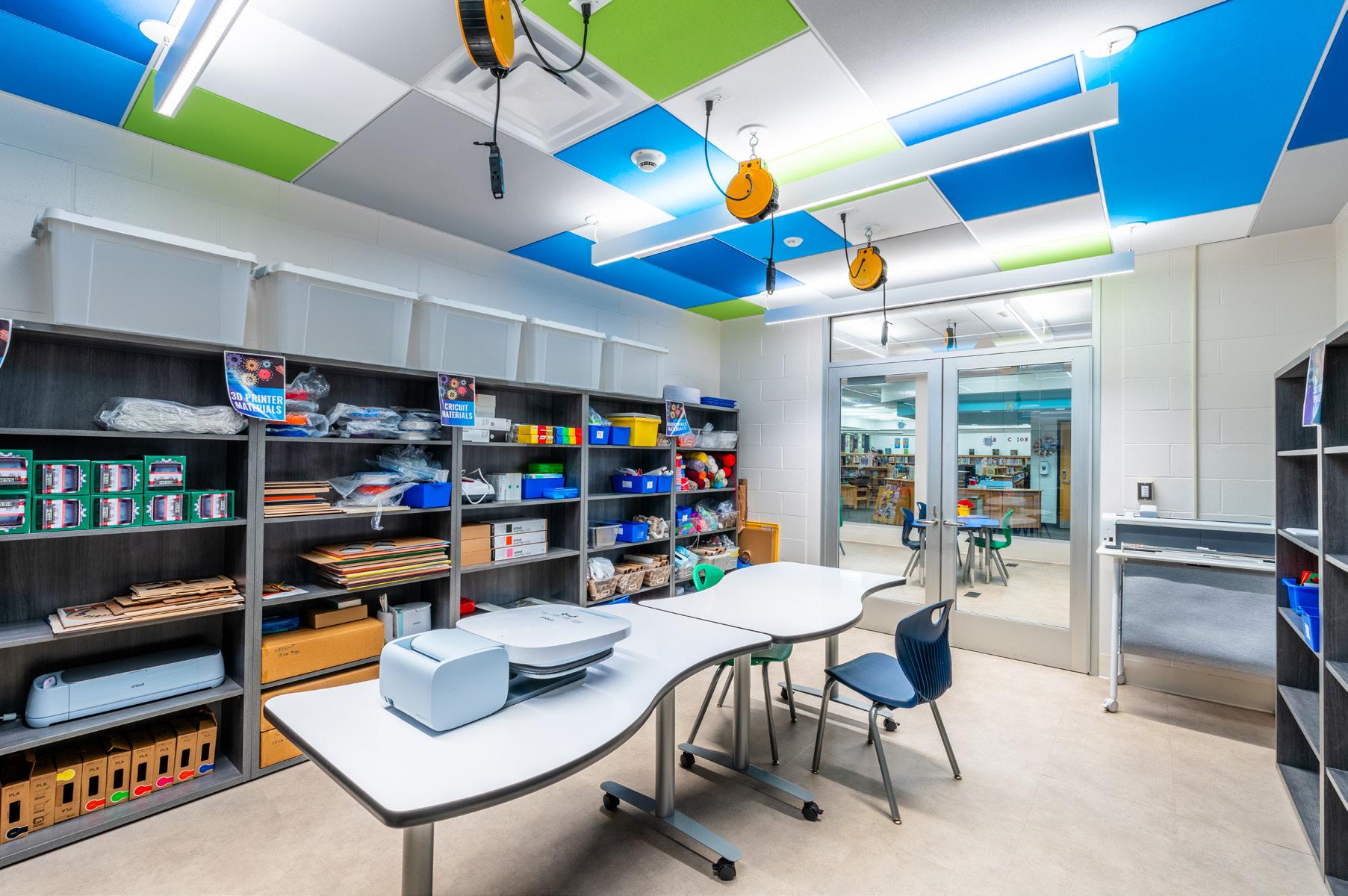
Laboratory learning spaces should align with local labor-market needs, ensuring the curriculum prepares students for careers in their community by supporting work that mirrors real-life scenarios. This approach enhances student engagement through project-based learning and helps build strong business and community partnerships. Sourcing projects from online communities or creating a makerspace within the lab can provide diverse
“The
LABORATORY LEARNING PLANNING TIP:
The appropriate furniture solutions — such as movable lab benches, adjustable workstations, effective storage and versatile seating — support the dynamic use of space and allow for quick reconfiguration to accommodate various activities and instructional methods.
Classroom Instruction
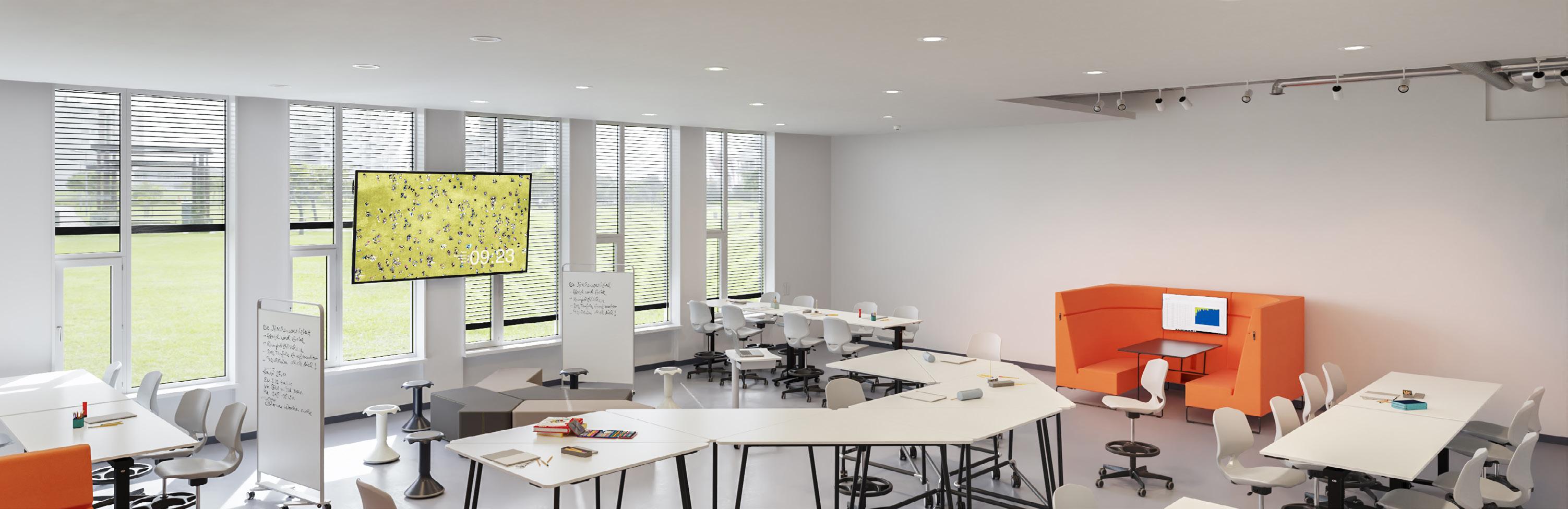
The design of CTE and STEM classrooms is crucial because it directly influences the quality and effectiveness of student learning experiences. These classrooms should be designed to be flexible and adaptable, allowing for easy reconfiguration to accommodate a variety of teaching methods and learning activities. By creating well-organized, adaptable, and resource-rich environments, CTE and STEM classrooms effectively prepare students for the demands of modern careers, equipping them with the skills and knowledge necessary to excel in a rapidly evolving technological landscape.
CLASSROOM INSTRUCTION PLANNING TIP:
Design CTE and STEM classrooms with flexible and movable furniture to create versatile zones for group work and individual study, ensuring adaptability to various teaching methods and evolving educational needs.
Why the Physical Learning Environment Matters
Agile furniture in CTE and STEM learning environments goes beyond mere aesthetics. As a study in the Journal of Science Education
flexibility of a learning environment is directly proportional to the creativity it fosters.” – International Journal of STEM Education
learning experiences, while integrating relevant technologies and equipment into lesson plans ensures students are prepared for modern workplaces.
and Technology states, “The physical classroom environment significantly influences students’ collaboration and engagement in STEM activities.” This underscores the need for furniture that is adaptable and can be reconfigured to suit various learning and teaching styles.
Design Ideas for CTE and STEM Spaces
Explore more STEM, maker, and CTE room concepts at https://www.vsamerica.com/en_US/ concepts-stem.
About VS America
VS America, Inc. is a leading manufacturer of educational furniture for K-12 schools, colleges, and libraries. Focused on best practices for educational facilities worldwide, VS develops adaptable, ergonomic, and sustainable furniture solutions which allow for the creation of agile learning environments. For more information, visit www.vsamerica.com.
Spaces should encourage hands-on learning and collaboration.
Laboratory spaces should prepare learners for careers in their community.
Flexible and movable furniture creates versatile zones for group work and individual study.
Photo Credit (all): VS America
WORK-BASED PLANNING TIP:
STUDENT LEADERSHIP PLANNING TIP:
Future of Facilities Starts Here The
Power Speakers
Dorice Horenstein International Keynote Speaker, Positive Intelligence Expert and Author
IFMA’s Facility Fusion isn’t your typical conference. It’s a fusion of fresh ideas, bold solutions and intimate networking that moves facility management forward. Whether you're a decision-maker, service provider or emerging leader, you'll find real conversations, relevant insights and strategic opportunities — all in one place. Unlike larger conferences, the Facility Fusion experience is intentionally intimate — giving you more access to peers, speakers and solution providers who are invested in your success.
Skyler Tibbits Founder & Director, MIT Self-Assembly Lan
What’s New in 2026?
More time, more access, more insights.
The two-day expo is back to give you even more time to explore solutions and connect with the people behind them. You’ll also experience new formats, curated tracks and fresh voices redefining the future of FM.
Rory Gardner TED Speaker, awardwinning comedian & CCMA-nominated artist
Athletic Facilities as Civic Infrastructure
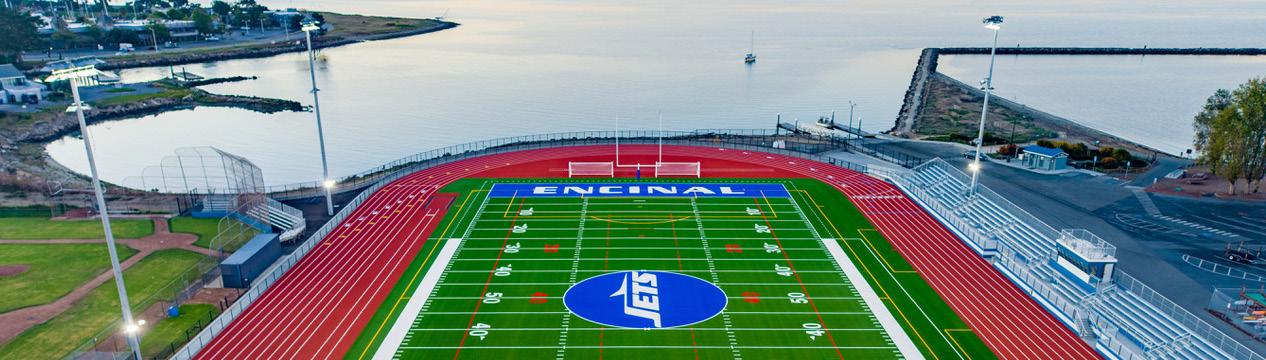
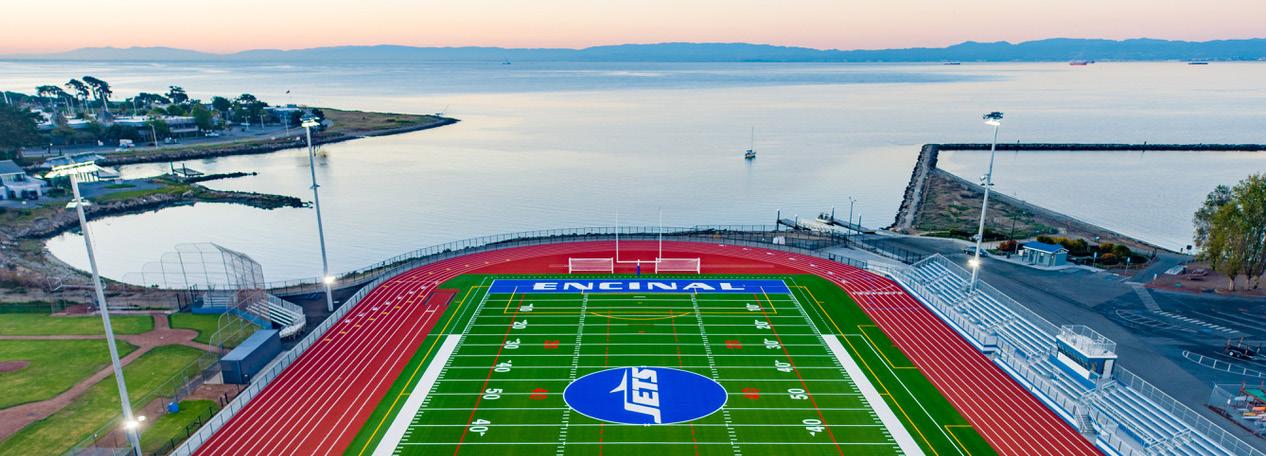
Encinal High School’s stadium renovation centers access, technology and sustainability
By Joel Williams
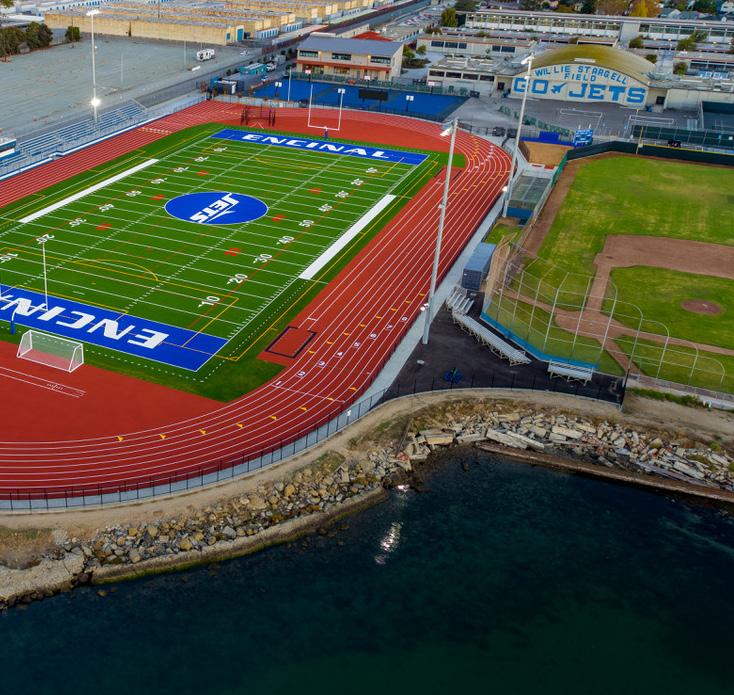
Modern high school athletic facilities are now designed for more than just sporting events; they support student wellness, foster school identity and benefit the entire community. Encinal High School’s recent athletic field renovation in Alameda, Calif., demonstrates how thoughtful planning, community input and effective public funding can upgrade old facilities into inclusive, long-lasting assets.
Vision and Community Impact
Founded in 1952, Encinal High School serves approximately 1,200 students in grades six through 12. Over more than seven decades, the campus has evolved through multiple phases of modernization, including new buildings, renovated courtyards and upgrades to outdoor learning and recreation spaces. The athletic field renovation represents the latest chapter in that ongoing investment.
The original vision for the project was straightforward but ambitious. The district sought to replace an aging natural grass field and deteriorating track with a state-of-the-art, multi-sport athletic complex capable of supporting year-round use. Early goals included improving accessibility for students and spectators, increasing durability and flexibility for multiple sports, and resolving longstanding drainage issues related to the campus’s proximity to San Francisco Bay.
As design and planning progressed, that vision expanded. Rather than focusing solely on school use, the project team embraced the idea of the stadium as a shared community resource. Funded through Measure B, the bond measure approved by Alameda voters, the project benefited from a robust stakeholder engagement process that included students, coaches, parents, school administrators and district facilities staff. Their input directly influenced key design decisions, from which sports would be accommodated on the field to the number of track lanes, the layout of field events, and the capacity and configuration of the bleachers and press facilities.
Beyond district stakeholders, the project also required close coordination with external agencies. Because the campus sits along the San Francisco Bay shoreline, the Bay Conservation and Development Commission (BCDC) played a critical role in shaping the design. The agency’s involvement resulted in improvements to public access between the athletic field and the waterfront, reinforcing the project’s role as a connector between campus and community.
Equity, Access and Student Experience
At the heart of the Encinal project was a commitment to equity and inclusion. Designing for universal access began with a clear understanding of the requirements set forth in the Americans with Disabilities Act (ADA) and Title IX, which establish essential baseline standards for accessibility, equity and safety. However, the design team viewed these regulations not as a ceiling, but as a starting point.
True inclusion requires anticipating the diverse ways people experience space. That meant considering not only physical accessibility, but also how users of different ages, genders, abilities and sensory needs would navigate and enjoy the facility. The goal was to create an environment where access feels intuitive and dignified — where accommodations are seamlessly integrated rather than added as afterthoughts.
In parallel with these universal access strategies, the project placed strong emphasis on enhancing the overall athlete and spectator experience. New LED sports lighting improves visibility and performance while allowing events to extend into the evening hours. A new video scoreboard and upgraded public address system introduce opportunities for dynamic, full-color graphics, video content, and announcements that elevate game-day energy. Seating for approximately 1,200 spectators, along with a dedicated press and coaching booth, supports larger events and creates a
more professional environment for athletes, officials and media alike.
One of the project’s most distinctive features is its waterfront setting. With San Francisco Bay as a backdrop, the stadium offers a dramatic and memorable venue that reinforces student pride — particularly when hosting visiting schools. The setting transforms routine athletic events into experiences that strengthen school identity and community connection.
Funding, Value and Bond Accountability
As with any publicly funded project, maximizing value and long-term performance was a central consideration. The Measure B framework required the project team to evaluate not only initial construction costs, but also ongoing operations, maintenance and lifecycle impacts.
A key decision was the use of a synthetic turf field with sustainable infill made from recycled olive pits. This natural infill material, paired with newer environmentally responsible turf systems, delivers a high-quality playing surface capable of year-round use while reducing maintenance demands. Importantly, the turf system is designed to be recyclable, supporting long-term environmental stewardship.
The site’s proximity to the Bay introduced another critical longevity challenge: flooding. The previous athletic field experienced periodic impacts during king tide events; a condition expected to worsen as sea levels rise. To address this risk, the project incorporated strategic grading and retaining walls between the field and the waterfront, creating a protective barrier against tidal intrusion. Since completion, the facility has withstood king tide events, confirming the effectiveness of these resilience measures.
For districts communicating the value of bond-funded athletic projects to voters, Encinal demonstrates the importance of framing facilities as long-term assets—designed for durability, adaptability and shared use rather than singlepurpose amenities.
Technology, Performance and the Future of School Athletics
Technology now plays a significant role in high school athletic facilities, and the Encinal project reflects that evolution. Compared to a decade ago, today’s systems offer significant gains in energy efficiency, performance and flexibility. LED sports lighting provides more consistent illumination while reducing energy consumption and minimizing light spill into surrounding neighborhoods, a frequent concern for school campuses embedded in residential areas.
Scoreboard and audiovisual technologies have similarly advanced. Video displays create new opportunities for student engagement, from pregame introductions featuring photos and highlights to in-game messaging and announcements. For schools with digital media or broadcasting programs, these systems also offer valuable educational synergies, allowing students to produce content for live events.
As districts look ahead, future-ready infrastructure — such as adaptable power, data and mounting systems — will be essential. Designing with flexibility in mind allows schools to integrate emerging technologies over time without costly retrofits.
A Model for Community-Centered Design
The Encinal High School stadium renovation illustrates how athletic facilities can serve as platforms for equity, resilience and community connection. By grounding design decisions in stakeholder input, prioritizing universal access, and responsibly stewarding public resources, the project delivers value well beyond athletics. For districts considering similar investments, the lesson is clear: when sports facilities are treated as civic infrastructure, they become enduring assets that support students, schools, and communities for generations.
Joel Williams is a Studio Lead at Quattrocchi Kwok Architects.
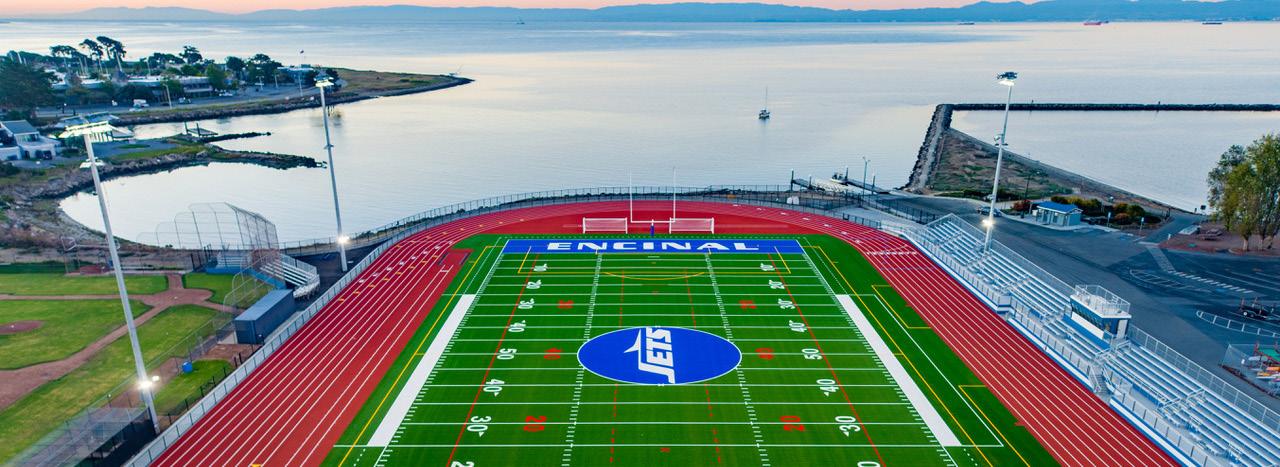
A key decision was the use of a synthetic turf field with sustainable infill made from recycled olive pits. Photo Credit (all): Robert A. Bothman Inc.
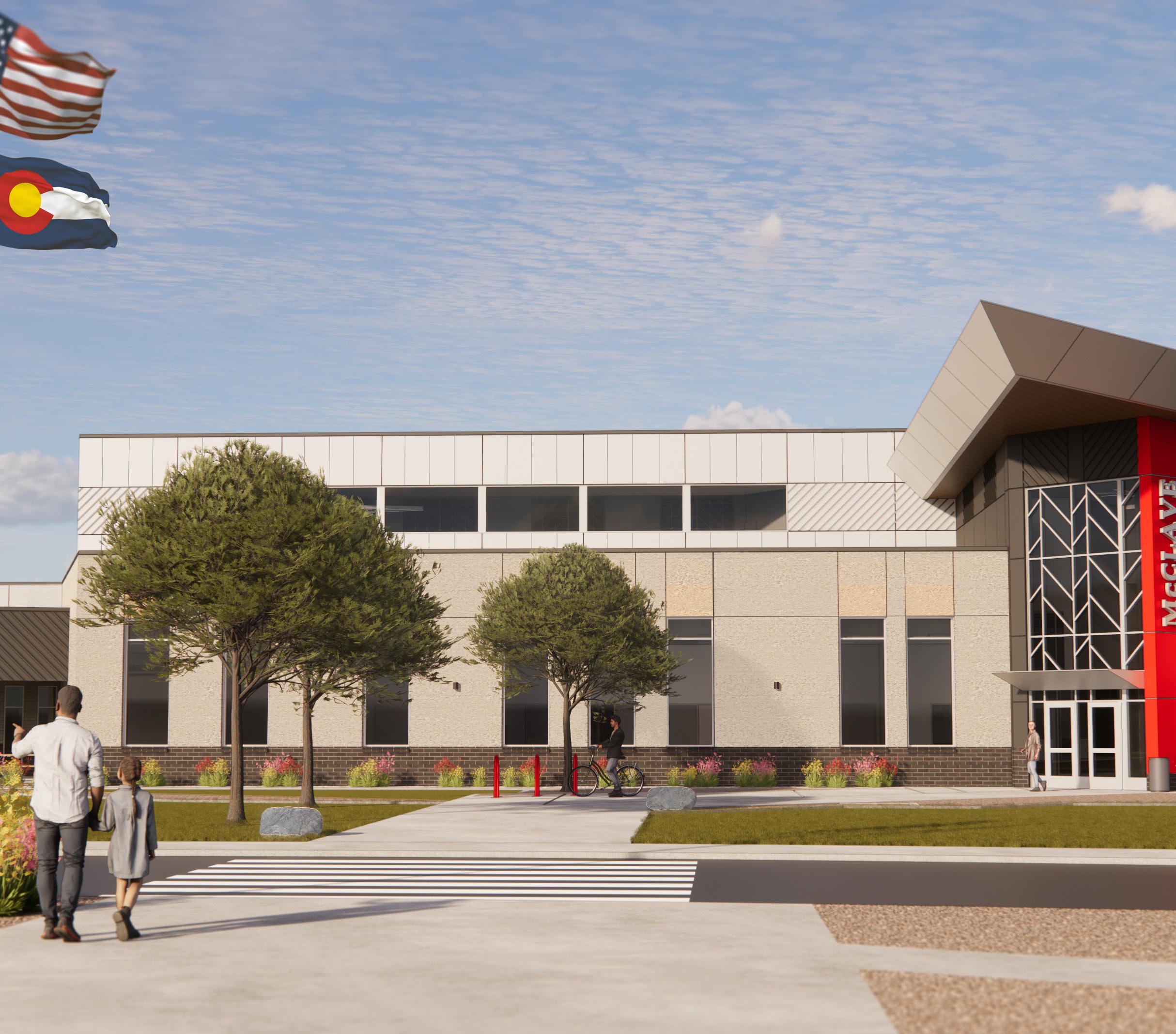
McClave Cardinals Prepare to Soar in New PK-12 Campus
A milestone project shaped by persistence, partnership and planning
By Lindsey Coulter
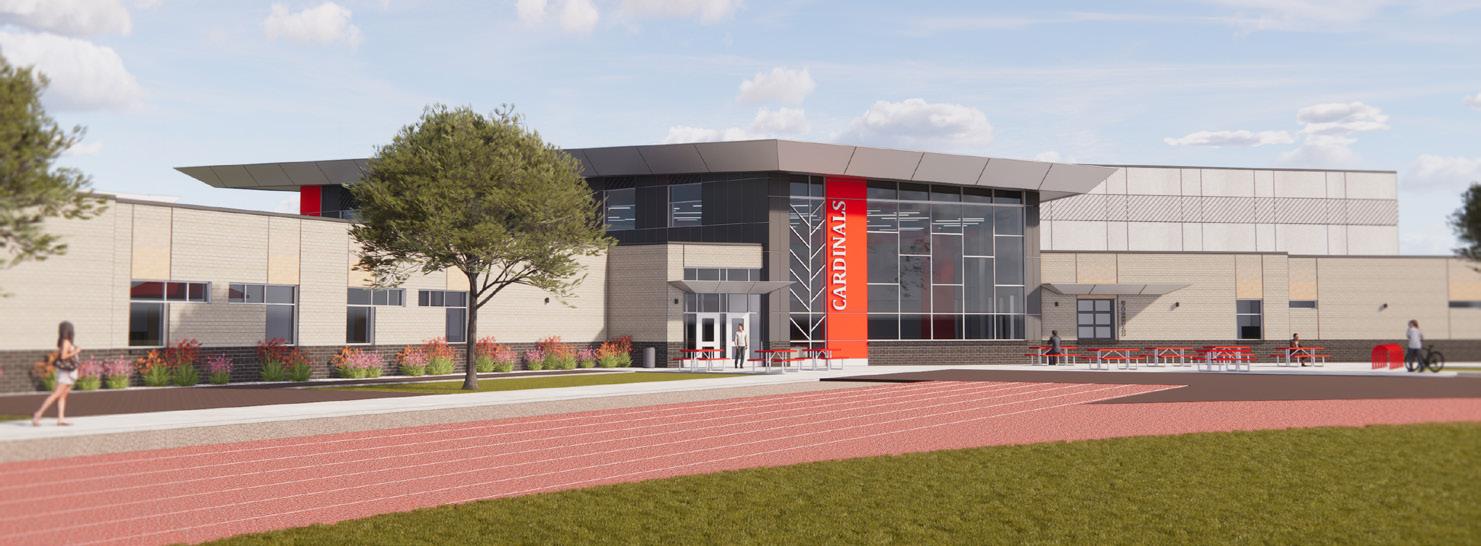
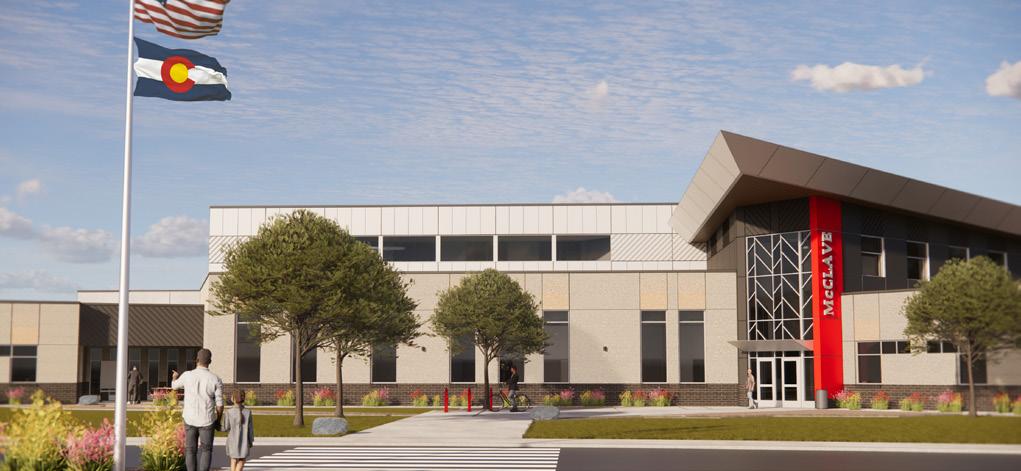
On the Eastern Plains of Colorado, where schools often double as civic anchors, students, education leaders and community members gathered in early January to celebrate the groundbreaking of the new McClave PK-12 School. The project culminates a long pursuit by the rural district to replace its aging campus with a facility that reflects how students learn, how the community gathers and how the town envisions its future. Rather than a simple rebuild, the new McClave PK-12 School represents a deliberate rethinking of what a modern rural campus can be: compact yet flexible, practical yet aspirational, and designed to serve both daily instruction and the broader life of the community.
Designed by Wold Architects and Engineers and built by Nunn Construction, the approximately $51.8 million, 70,000-square-foot school consolidates all grade levels into a single, purpose-built campus. The project is funded through a combination of a BEST grant and a voter-approved local bond, secured after multiple attempts over several years.
Funding, Persistence and a Long View
Wold began working with McClave School District several years before construction began, guiding the district through master planning, community engagement and repeated funding applications.
“It took us three years to secure the funding,” said Job Gutierrez, education practice leader at Wold. “The community passed the local bond right away, but it took two more tries after that to get the BEST
grant, which ultimately satisfied the budget.”
Despite early setbacks, district leaders remained focused on delivering a high-quality facility that would serve both current and future generations. Rather than scaling back ambitions, the district pursued a balanced approach that aligned fiscal discipline with long-term value.
Designing With — Not Just For — the Community
In a rural district where enrollment is modest but civic engagement is high, community input played a central role in shaping the project.
“When you’re doing a school for a community like this, everybody shows up,” Gutierrez said. “You can be in a gymnasium with 150 people, and you’re actually taking their input and bringing it directly to
the planning table.”
That engagement influenced both the building’s organization and its architectural character.
Although McClave is an agriculturally rooted and politically conservative community, residents consistently expressed a desire for a modern facility
said. “You often need on-site water storage just for fire suppression.”
Limited municipal capacity ultimately required the design of a dedicated sewer treatment plan and upgrades to portions of the town’s water infrastructure. Foundation systems, drainage
that conveyed pride and permanence.
“The Design Advisory Group wanted the design to ‘balance function and grandeur,’” Gutierrez said. “They wanted something clean, something they could be proud of.”
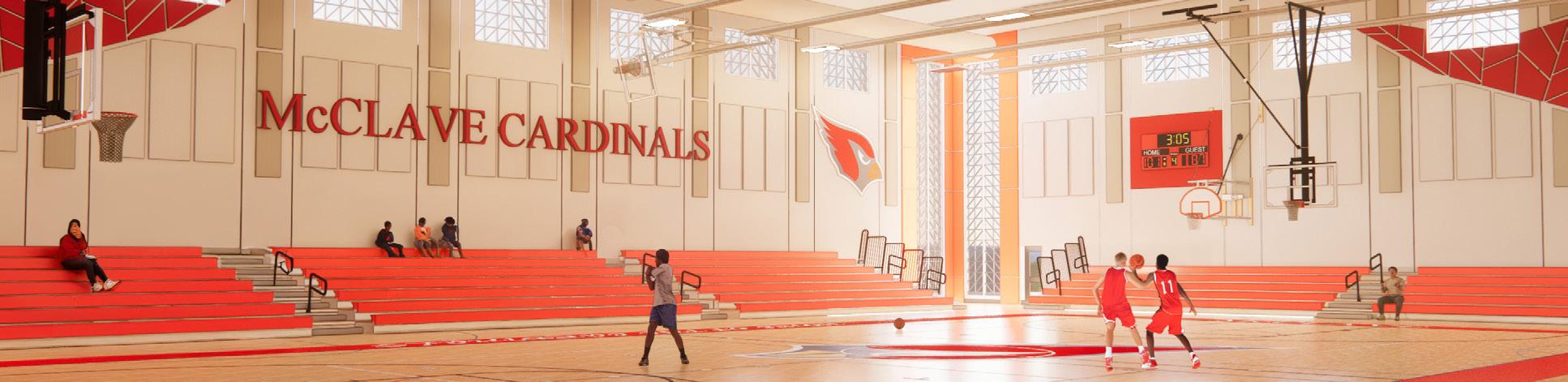
Athletics emerged as a defining priority. McClave’s long-standing success in basketball and volleyball shaped site planning and building massing, with the competition gym positioned as a central and flexible gathering space.
“The gym was the first element they would move when we did planning exercises,” Gutierrez said. “It was clearly the center of gravity for the school and for the community.”
Organization, Safety and Shared Space
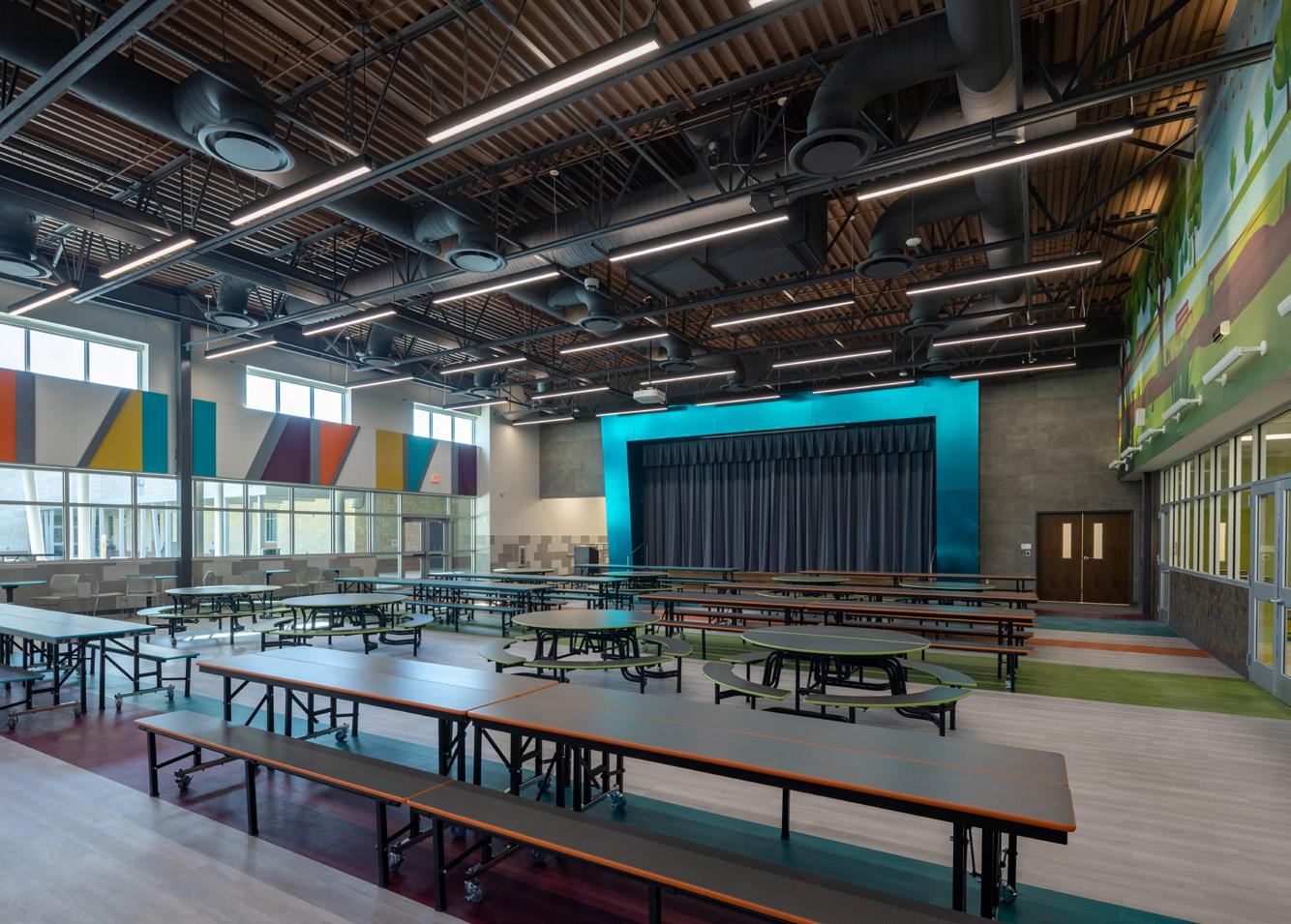
Programmatically, the school is organized around a central commons that anchors daily operations and community events. The cafeteria sits at the heart of the plan, functioning as both a dining space and an informal lobby for the adjacent competition gym.
“The cafeteria acts as a lobby to the gym and an overflow gathering space,” Gutierrez said. “Everything converges there.”
From that central zone, circulation extends into dedicated elementary and secondary wings, maintaining age-appropriate environments while preserving connection across grade levels. Administrative offices are positioned to provide clear sightlines and reinforce supervision. The plan incorporates controlled access points and clear circulation paths aligned with current safety standards without creating an institutional atmosphere.
Technical Coordination on the Eastern Plains
Beyond program and aesthetics, the project required detailed coordination to address rural infrastructure constraints. Water access, sewer capacity and soil conditions all influenced engineering decisions early in the process.
“In rural Colorado, water is a big deal,” Gutierrez
strategies and long-term durability measures were developed in coordination with civil engineers, the district and state authorities to ensure the building’s performance over time.
Career and Technical Education and Interior Identity
The school’s Career and Technical Education wing reflects McClave’s agricultural heritage and hands-on learning culture. The space includes a large shop, welding lab and instructional areas designed to support fabrication and agricultural programs.
“Their CTE program is very robust,” Gutierrez said. “We spent a lot of time with the instructors developing a shop that could really support how they teach and what students actually do.”
Interior materials and finishes were selected to balance durability with warmth. Subtle references to the Cardinals mascot and regional landscape reinforce local identity without relying on overt theming.
“We’re not just designing an object; we’re designing a place that has to feel like home to the people who use it every day,” Gutierrez said.
A Community Investment
For McClave School District, the new campus addresses aging facilities while signaling a long-term commitment to students and residents.
“This milestone reflects years of determination to provide a better home for our students,” said Superintendent Brianne Howe. “It’s an investment in the next generation of Cardinals.”
As construction continues through 2027, the project demonstrates how rural districts can pair strategic planning and community engagement with disciplined design to deliver high-quality educational environments — even amid funding and infrastructure challenges.
“When they walk into the new school and say, ‘This is exactly what we wanted,’ that’s when we’ll know we did our job,” Gutierrez said.
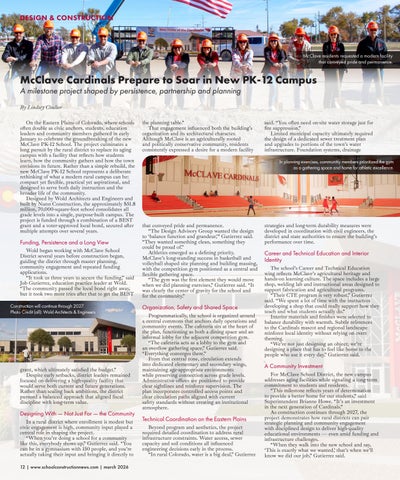
In planning exercises, communitiy members prioritized the gym as a gathering space and home for athletic excellence.
Construction will continue through 2027. Photo Credit (all): Wold Architects & Engineers
McClave residents requested a modern facility that conveyed pride and permanence.
Alyssa’s Law Gains Momentum as School Safety Focus Expands to Communications Infrastructure
By Lindsey Coulter
to each school, and they’ve put forth a deadline,” Schomisch said.
The 2022 Uvalde, Texas, school shooting serves as a tragic example of why communications systems matter.
For Amanda Schomisch, the urgency around school safety crystallized in an unexpected moment.
“My daughter entered school recently, and I was shopping online for a Minecraft backpack,” Schomisch said. “I was scrolling down to look at the ‘frequently purchased with’ section, and I saw a bulletproof backpack insert. That kind of broke my brain.”
Schomisch, an engineering compliance manager with Airtower Networks — which designs, builds and manages indoor wireless networks across the country — said that experience forced a decision.
“I could either be stressed, upset and scared, or I could do something about it,” Schomisch said. “I chose to do something.”
Today, Schomisch is the committee chair for the School Safety Legislative Work Group with the Safer Buildings Coalition (SBC), where she has become deeply involved in legislative efforts related to Alyssa’s Law, a growing set of state-level mandates focused on emergency alerting and response systems in K–12 schools.
What Alyssa’s Law Requires — and What It Often Misses
Named for Alyssa Alhadeff, a victim of the 2018 Marjory Stoneman Douglas High School shooting, Alyssa’s Law generally requires schools to install panic alert systems that allow staff to immediately notify law enforcement during emergencies.
“At the base level of the bill, it is about every teacher and administrative staff member having a wearable panic button,” Schomisch said. In addition to activeshooter events and more extreme instances of violence, the technology and bill can also provide immediate communication for medical emergencies.
“If a kid has an asthma attack, you can press that panic button. It’ll geolocate you in the school, and then you can get EMS there immediately,” she said. However, panic alerts are only as effective as the communications infrastructure behind them.
“If a first responder gets into the building and they can’t talk on their radio, it’s not really going to help,” she said. “And if there is an emergency … what’s the first thing you’re going to grab? It’s your phone to contact either 911 or your loved ones.”
Legislative Language Under Scrutiny
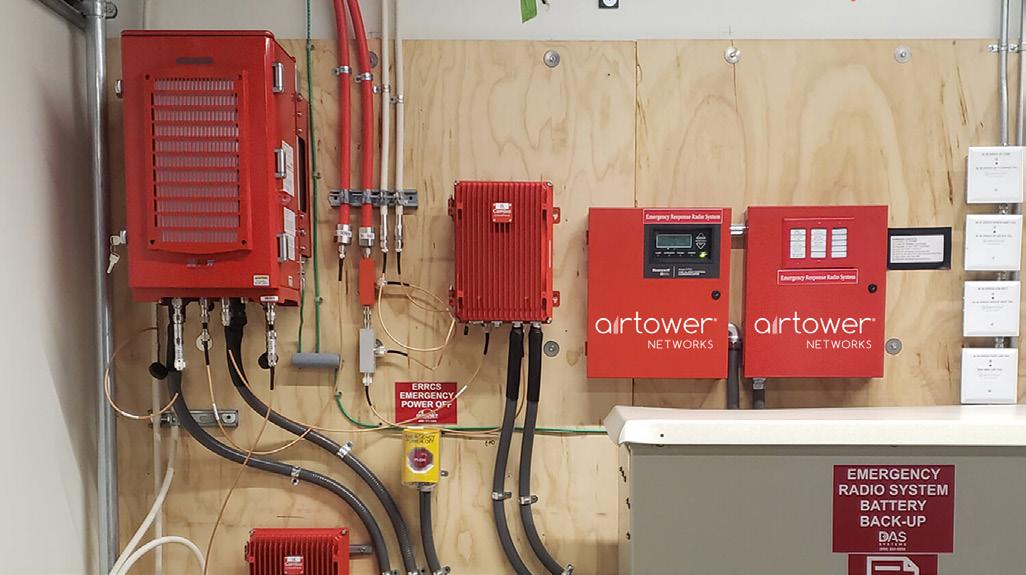
Through SBC’s legislative working group, Schomisch and her colleagues analyze Alyssa’s Law bills as they are written and enacted across states, and each state is different. While some require wearable panic buttons, others just require that at least one stationary panic button be present in each classroom. According to Schomisch, that approach fails to account for essential systems such as Emergency Responder Radio Communication Enhancement Systems (ERCES), also known as Bi-Directional Amplifier (BDA) systems, as well as cellular coverage and performance testing.
“We’re really focused on adding those addendums and encouraging other states to adopt that in their bill language,” Schomisch said.
She also highlighted the importance of enforceable statutory language.
“A lot of these bills include wishy-washy language,” she said. “Instead of ‘shall implement,’ it’s ‘may implement,’ and we need strong, firm language.”
States Demonstrating a More Comprehensive Model
Some states have already begun to address these gaps. Florida’s statute, in particular, outlines vendor qualifications, establishes funding sources, mandates baseline testing for emergency responder radio coverage and cellular connectivity, and sets firm deadlines for implementation.
“[Florida lawmakers] outlined the funding, where it’s coming from, how much
“When police got into the building, their radios didn’t work,” Schomisch said.
Communications Infrastructure Moves Into the Spotlight
As Alyssa’s Law discussions evolve, attention is increasingly shifting toward the reliability of in-building communications systems. That focus aligns with recent regulatory developments in Washington, D.C., where Airtower Networks has been approved by the Office of Unified Communications (OUC) to conduct inspections of public safety systems in district buildings.
Airtower is now one of only four firms authorized to inspect BDA/ERCES systems for code compliance, a role that underscores the growing emphasis on verification and accountability.
“In emergencies, every minute counts,” said Craig Gillespie, Chief Executive Officer of Airtower. “If you were in danger, you wouldn’t want your rescuer to encounter dead zones.”
The OUC mandates annual inspections of buildings equipped with BDA systems to ensure first responders can maintain radio communications throughout a structure. Airtower recently completed its first official inspection at Dorothy Height Elementary School in Washington, D.C., with additional inspections scheduled at schools, offices, hospitals and industrial facilities.
“The inspections may seem like a burden, but connectivity saves lives,” Gillespie said. “Any building owner or manager who cares about tenants and users realizes that the upkeep of BDA systems is not optional.”
Bridging Policy and Practice in Existing Schools
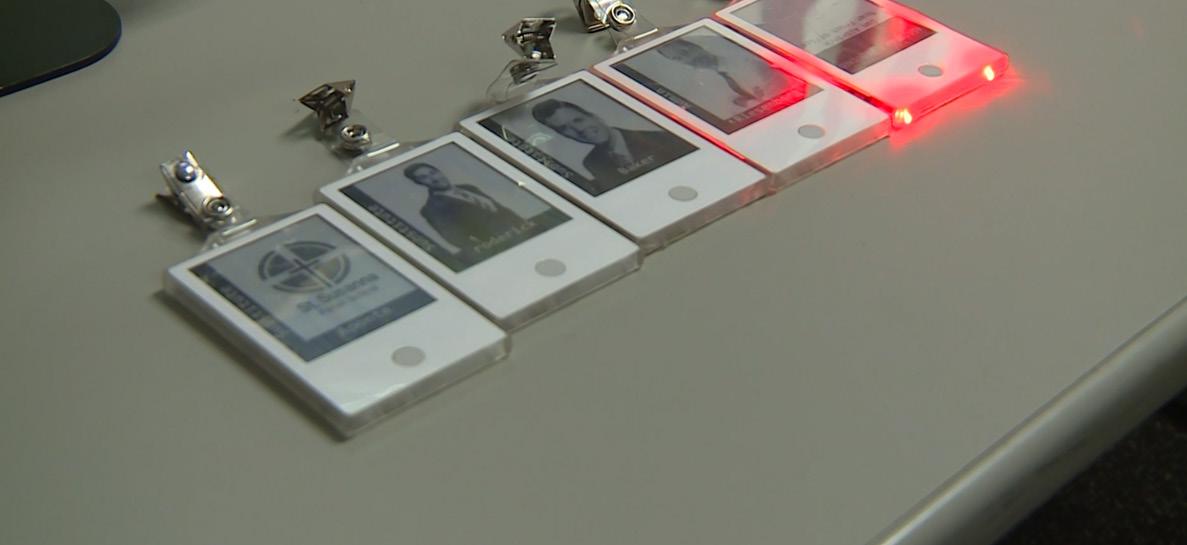
Schomisch stressed that most K–12 facilities are existing buildings, making retrofit solutions essential. Additionally, advances in technology, including wearable panic buttons that resemble smartwatches and provide indoor geolocation, have made integration more feasible.
To further guide policymakers and school leaders, SBC’s legislative team is developing a white paper outlining core requirements and recommended enhancements for Alyssa’s Law legislation.
A Call for a More Integrated Safety Conversation
Ultimately, Schomisch believes school safety discussions must move beyond isolated solutions.
“I do think that the conversations need to be more balanced and honestly, more married,” she said. “There are smart door locks. There’s incredible technology with smart cameras. There are just so many options out there.”
Even as she digs deeper into policy and technology, seeking to impact students and educators across the country, her motivation remains deeply personal.
“My kid is everything to me,” she said. “I want to make sure that it’s not just my kid that’s safe out there. It is every kid.”
As Alyssa’s Law continues to advance across states, educators, policymakers, and facilities leaders are increasingly confronted with a central question: not whether to act, but how comprehensively to address the systems that make rapid response possible.
HOW READERS CAN ACT NOW
· Confirm state requirements: School and facilities leaders should determine whether Alyssa’s Law or related mandates apply in their state, including timelines, funding provisions and enforcement language.
· Evaluate communications coverage: Administrators should assess emergency responder radio, cellular and Wi-Fi performance throughout all areas of school facilities.
· Ensure required testing: Where ERCES/BDA systems are installed, teams should verify that inspections and testing are conducted in accordance with local requirements.
· Coordinate with first responders: Districts are encouraged to engage police, fire and EMS early to align safety infrastructure with real-world response needs.
· Plan for retrofits: Leaders should prioritize retrofit-ready solutions that can be integrated into existing buildings with minimal disruption.
· Advocate for comprehensive policy: Educators, parents and facilities professionals can support legislation that addresses both alerting systems and the communications infrastructure that enables effective response.
Airtower is one of four firms authorized to inspect BDA/ERCES systems for code compliance. | Photo Credit (all): Courtesy of Airtower
Legacy Elementary Designing a secure, healing campus for Uvalde’s future
By Lindsey Coulter
Legacy Elementary School in Uvalde, Texas, stands as one of the most consequential educational projects undertaken in the state in recent decades. Replacing the former Robb Elementary School following the tragic events of May 24, 2022, the new campus represents not only a significant investment in educational infrastructure, but also a deeply intentional effort to support community healing, safety and long-term resilience.
Located adjacent to Dalton Elementary School, Legacy Elementary is a 116,000-square-foot campus situated on 23 acres. Designed to serve approximately 800 students in grades three through five, the $52 million facility was completed in fall 2025.
From its inception, Legacy Elementary was envisioned as more than a replacement school. Designed by Fort Worth-based Huckabee, now part of MOREgroup, the project reflects the firm’s largest pro bono architectural effort to date and exemplifies trauma-informed design principles throughout its conception and execution. The project team included general contractor Satterfield & Pontikes, mechanical, electrical and plumbing engineer Baird, Hampton & Brown Inc., civil engineer Pape-Dawson Consulting Engineers, landscape architect Studio 16:19, among others.
“Communication went beyond progress updates and schedules. It was about making sure stakeholders felt informed, respected and confident in the process.”
– Mike Hall, Director of Design, Huckabee
The client for the project is Uvalde CISD, with funding administered through the Uvalde CISD Moving Forward Foundation, a 501(c)(3) organization established following the tragedy. The foundation played a central role in aligning donor support, community input and project execution.
A Project of Exceptional Responsibility
According to Mike Hall, AIA, Director of Design for Huckabee, the project carried an exceptional weight for everyone involved, requiring heightened care, professionalism and awareness beyond that of a typical K-12 project.
“While every school project requires discipline around schedule and budget, this one asked something more of us,” Hall said. “Every decision carried added meaning because of what this building represents to the community.”
That understanding shaped every phase of the work, from early governance structures to construction sequencing and stakeholder communication. Clear leadership roles were defined early, with lines of responsibility established among the district, foundation, architect and construction team.
“We spent a lot of time upfront clarifying who was responsible for what,” Hall said. “That clarity helped the team move quickly and avoid confusion later
in the process.”
Those governance structures proved critical as the project navigated schedule pressures tied to the academic calendar, heightened public scrutiny and the emotional context surrounding the site.
“The schedule wasn’t flexible, but the approach had to be,” Hall said. “We constantly evaluated sequencing to keep the project moving without creating downstream issues.”
Community-Led, Trauma-Informed Design
At the heart of Legacy Elementary’s design is an extensive, structured community engagement process rooted in trauma-informed design principles. The design team embraced listening, empathy and trust-building, creating a
PROJECT TEAM
Location: Uvalde, Texas
Size: 116,000 square feet on 23 acres
Completion: Fall 2025
Construction Cost: $52 million
Architect: Huckabee, a MOREgroup brand
Client: Uvalde Consolidated Independent School District
General Contractor: Satterfield & Pontikes
Funding: Uvalde CISD Moving Forward Foundation
MEP engineer: Baird, Hampton & Brown Inc.
Structural Engineer: Huckabee, a MOREgroup brand
Civil Engineer: Pape-Dawson Consulting Engineers
Landscape Architect: Studio 16:19
Acoustician: BAi
Building Envelope Consultant: Engineered Exteriors
Site Surveying Consultant: Moy Tarin Ramirez Engineers
Commissioning Agent: DBR
At the heart of the design was an extensive community engagement process rooted in trauma-informed principles.
Photo Credit: Bryce Powers, MOREgroup
process that engaged a broad range of stakeholder groups, including families of victims and survivors, students, educators, law enforcement and emergency responders.
Over a seven-month period from September 2022 to March 2023, the project team conducted 10 Community Advisory Committee meetings, four Uvalde
Moving Forward Foundation, CAC and Huckabee public preview presentation meetings, and a series of focused design charrettes. These sessions included empathy mapping, discussions on inclusive design, instructional experience, safety and security, architectural aesthetics and material selections.
A three-day design charrette in October 2022 brought together students, district staff, law enforcement and emergency responders to ensure the campus would meet operational, educational and safety needs. Separate presentations were also provided to victims’ families, survivors’ families, the broader community and the press, allowing for tailored dialogue and transparency.
By creating a safe space for every voice to be heard and pacing the process in response to stakeholder needs, the design team produced a campus deeply shaped by the concerns, hopes and aspirations of the Uvalde community.
Cultural Integration and Architectural Expression
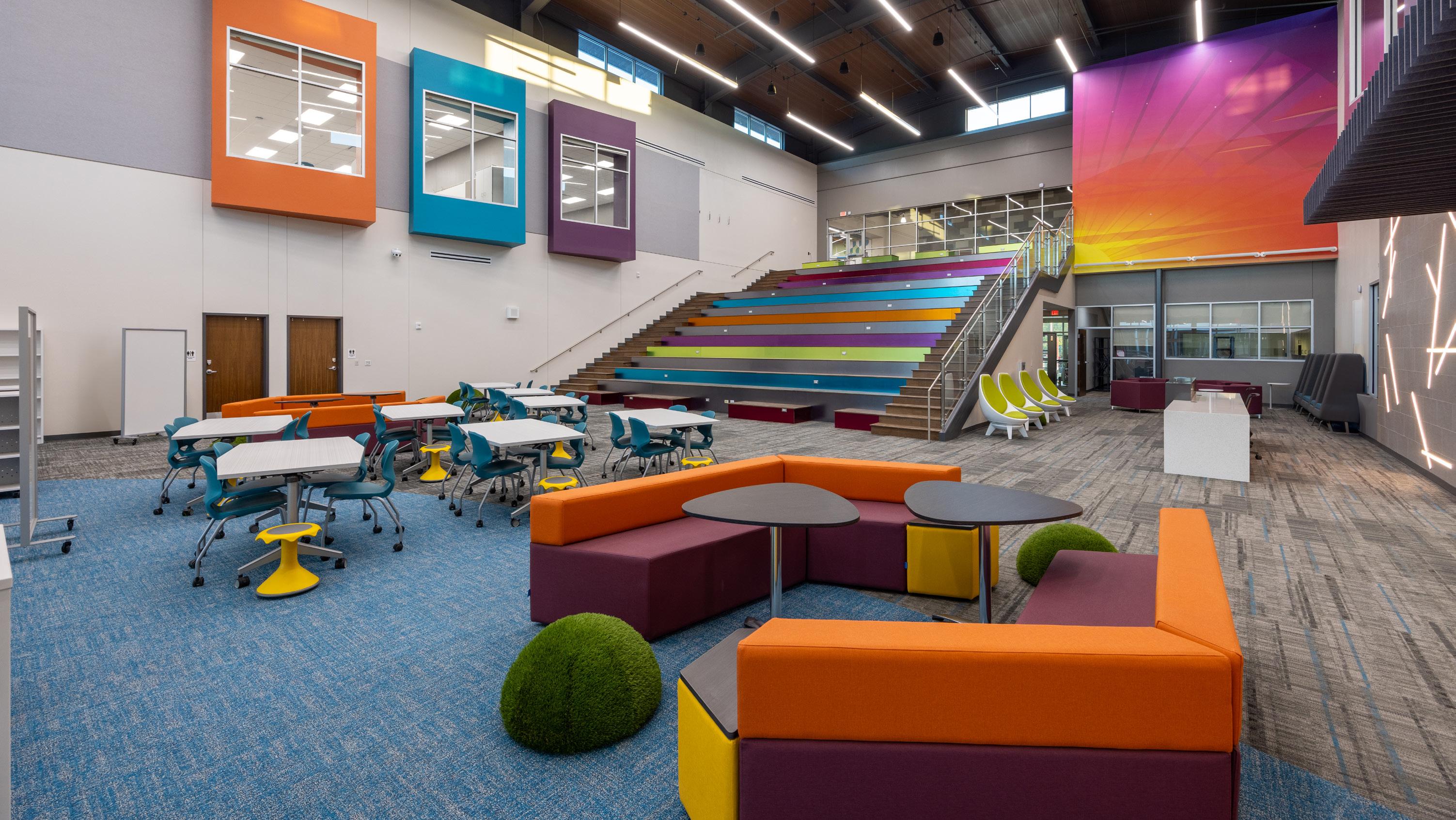
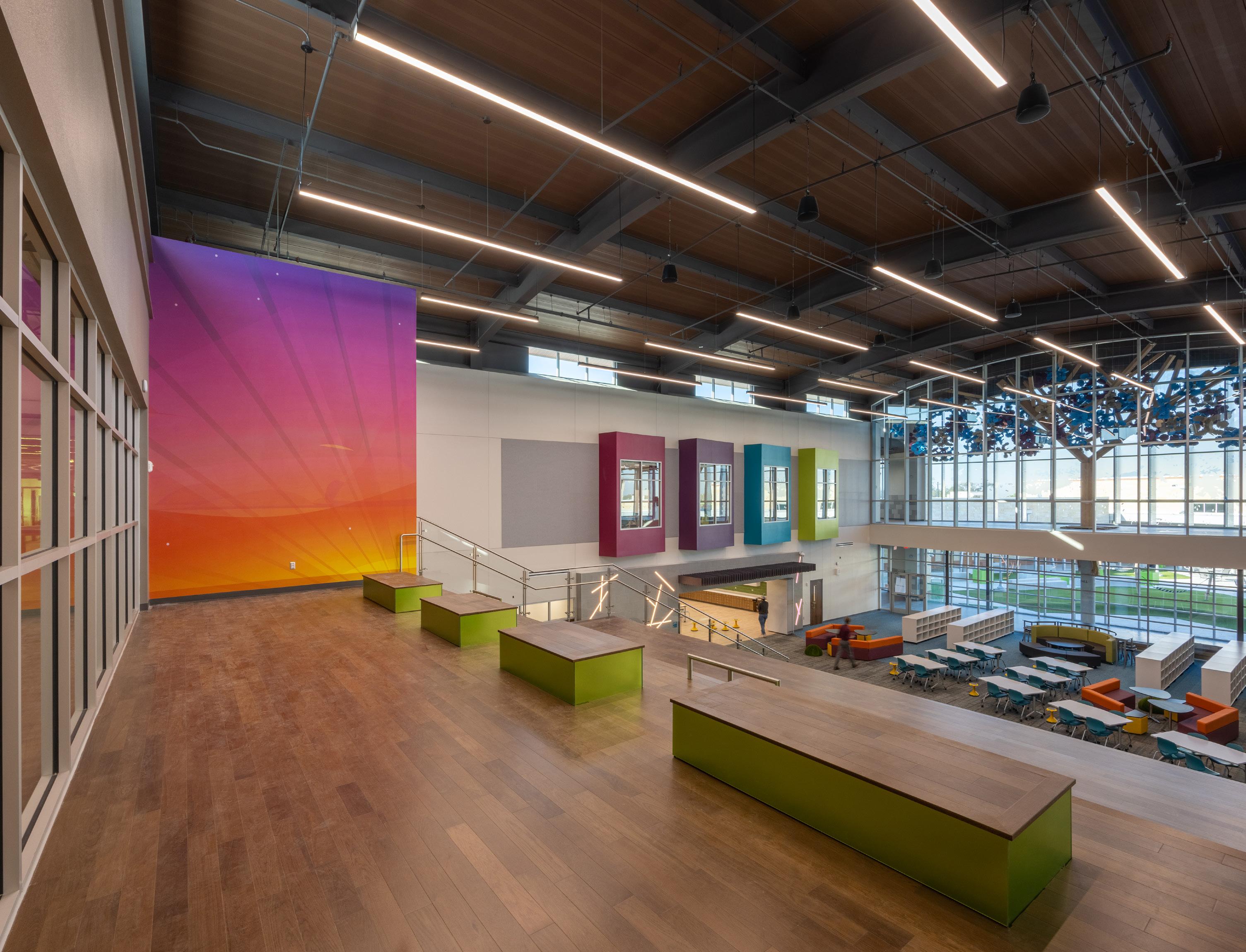
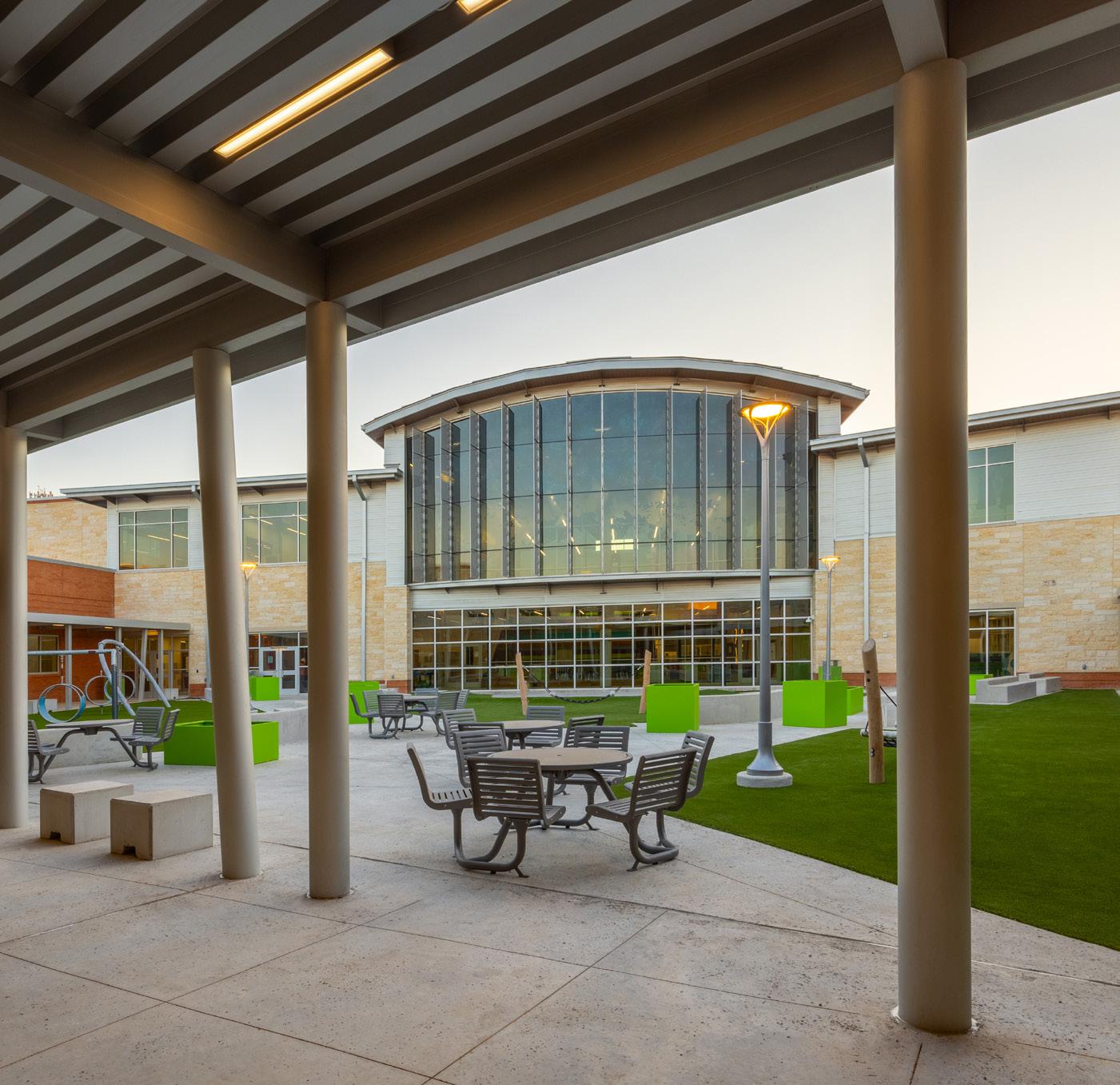
The architectural design of Legacy Elementary blends regional context with cultural symbolism, creating a holistic connection between the built and natural environments. The campus incorporates elements drawn from Uvalde’s landscape and heritage, including the vibrant colors of the region’s sunsets, the Monarch butterfly migration route, the Frio River, honeybees — reflecting Uvalde’s designation as the honey capital of the world — and the area’s large native oak trees.
These references appear throughout both the exterior and interior design. Exterior materials include natural limestone veneer with warm tones and rough textures, smooth brick matching the D’Hanis brick long used in Uvalde and neighboring towns, and reddish-orange brick veneer that anchors the building and highlights the main entry and art studio.
Inside, the campus is organized into three primary sections: an academic, library and administration wing; a cafeteria with a performance platform and adjacent music room; and a fully air-conditioned gymnasium. Specialized spaces include STEM classrooms, dedicated science, music and art rooms, a functional life skills academic wing, collaboration spaces throughout corridors and multiplepurpose areas designed to support flexible learning.
Memorial and Healing Spaces
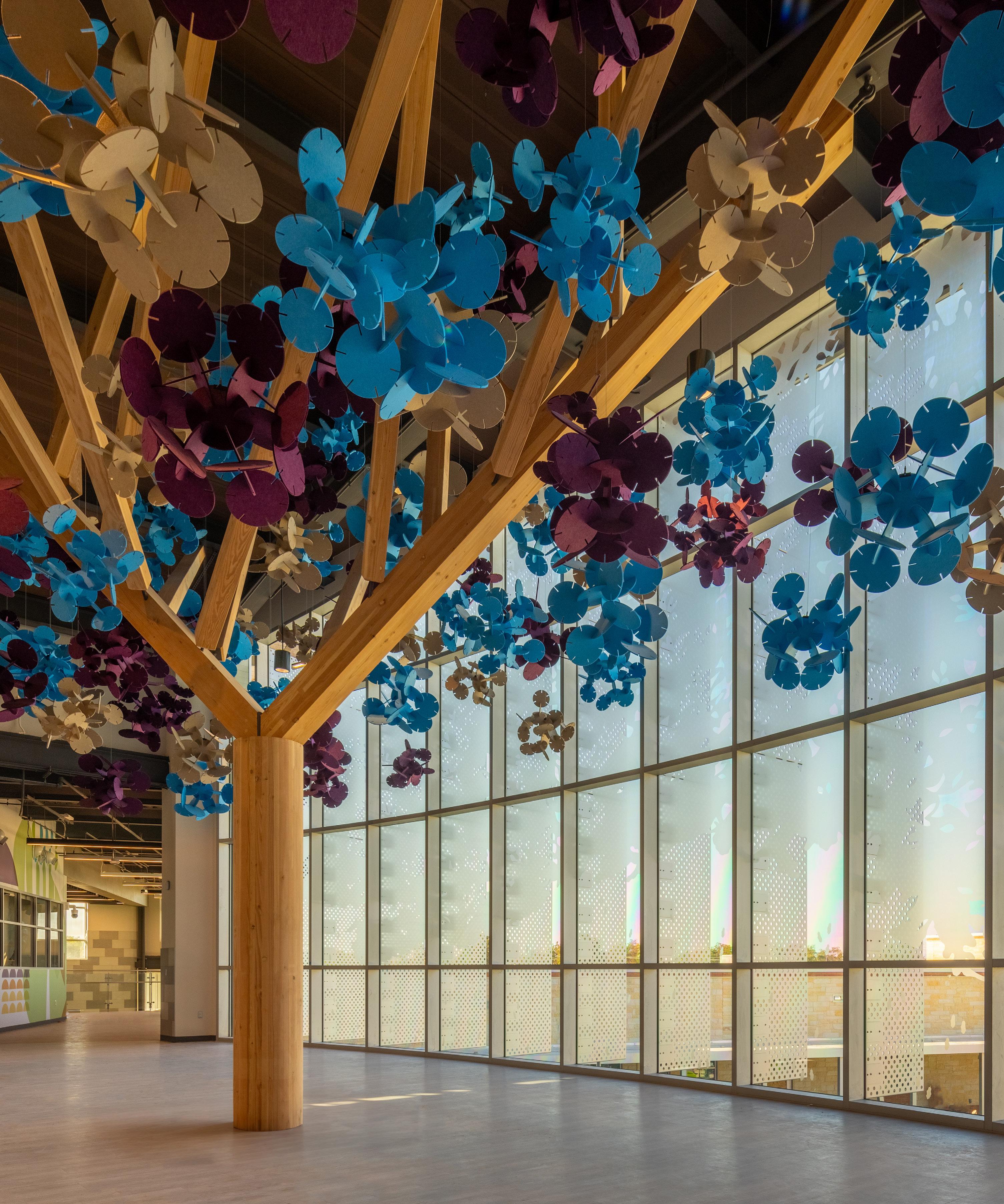
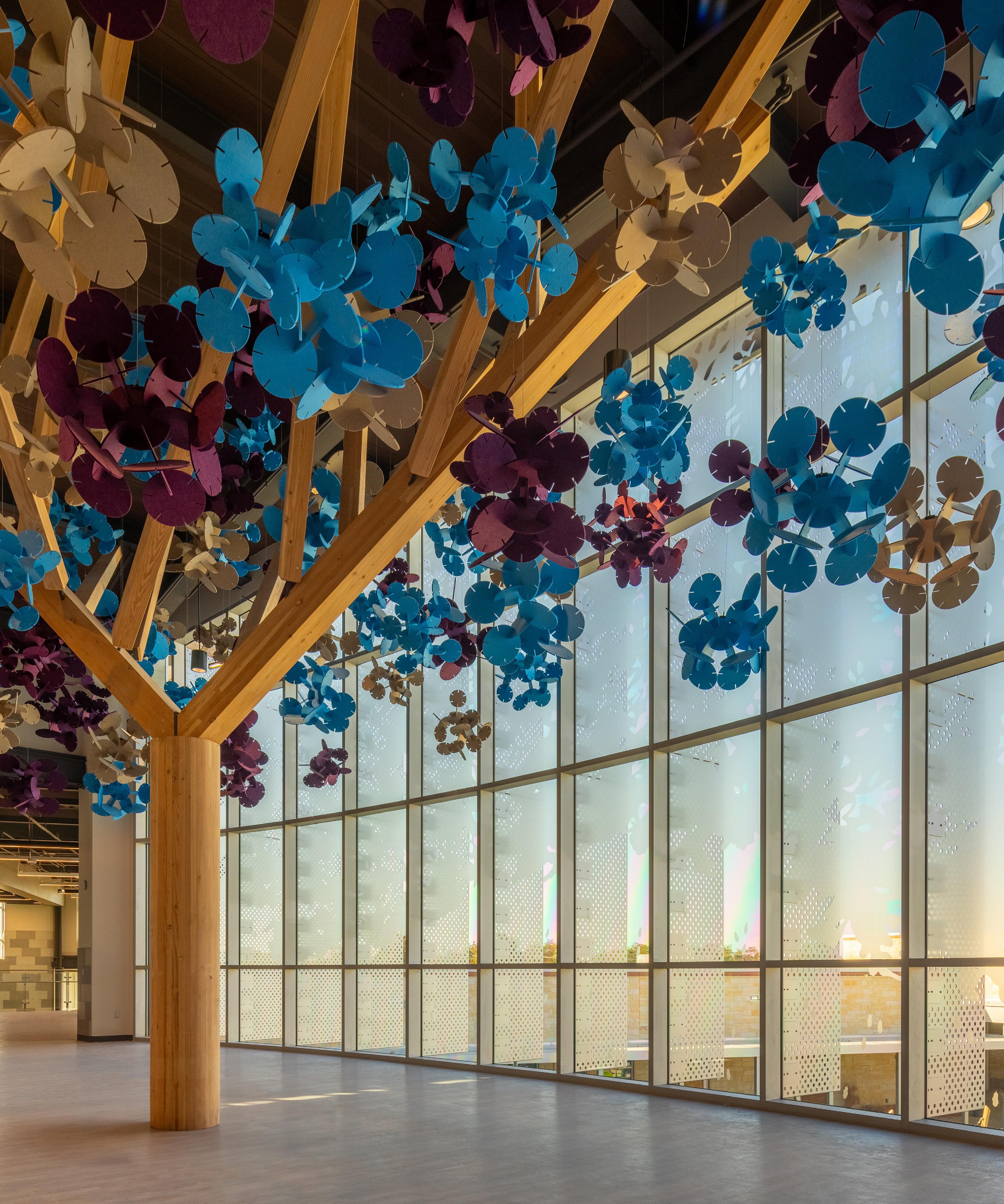
While Legacy Elementary is a state-of-theart educational facility, some of its most meaningful elements are intentionally subtle. Central among these is a sculpture of an oak tree that is located along the walkway between the outdoor courtyard
and the library. The sculpture features 21 branches — two larger branches honoring the teachers and 19 smaller branches memorializing the children lost at Robb Elementary.
The tree motif holds deep local significance. In the late 19th century, Robb Elementary’s namesake, Annie Robb, led a grassroots campaign to protect ancient live oak trees from being cut down for firewood. That early environmental stewardship helped establish Uvalde’s identity as a community defined by its majestic oak trees, earning it recognition as a “tree city.”
These quiet gestures of remembrance and comfort are designed to be deeply understood by students, staff and community members, even if they are not immediately apparent to outside visitors.
Security with Subtlety
Security was a central concern throughout the design and construction of Legacy Elementary. The campus incorporates a layered, discreet approach to safety that balances transparency with sanctuary.
Features include intentional zoning throughout the campus, a secure visitor entrance with a contained vestibule requiring identification and clearance, eightfoot-tall privacy gates, keyless entry points, door locks and security cameras, bullet-resistant glazing, door-prop alarms and advanced perimeter security. The goal was to create a campus that is secure without feeling institutional.
Oldcastle BuildingEnvelope, a global supplier of architectural glass, aluminum framing and hardware, contributed in-kind products, services and expertise to support that vision. Working closely with Huckabee, Oldcastle engineered a variety of products to meet requirements for forced-entry resistance while maintaining transparency and openness.
According to Chris Gall, Architectural Business Development Manager with Oldcastle BuildingEnvelope, the best safety and security design is layered. It
starts at the parking lot, then the entrance, then communications — followed by additional layers inside the building.
“It was very important for everyone that this still felt like a warm, inviting elementary learning environment — not like a detention center or military fortification,” said Gall. “The security products look identical to standard products. To the layperson’s eye, you can’t tell which entrances, storefronts, windows or glass are hardened and which are not — and that was intentional.”
Construction Execution and Quality Control
General contractor Satterfield & Pontikes began construction in February 2024 following a groundbreaking ceremony in October
The campus incorporates a layered, discreet approach to safety that balances transparency with sanctuary.
Photo Credit: Grant Van Hoose, MOREgroup
Community Advisory Meetings included empathy mapping and discussions on inclusive design and safety.
Photo Credit: Grant Van Hoose, MOREgroup
The architectural design blends regional context with cultural symbolism.
Photo Credit: Grant Van Hoose, MORE Group
2023. According to the project team, jobsite safety, quality control and discipline across all trades were treated as foundational priorities.
“From the first day on site, safety and quality were treated as absolute requirements,” Hall said. “There was a shared understanding that shortcuts were simply not acceptable on this project.”
Transparency and communication were equally critical. Frequent reporting, milestone reviews and ongoing coordination with district leadership and foundation representatives helped maintain alignment and trust.
“Communication went beyond progress updates and schedules,” Hall said. “It was about making sure stakeholders felt informed, respected and confident in the process.”
Stewardship and Oversight
Tim Miller, executive director of the Uvalde CISD Moving Forward Foundation, served as the project owner responsible for translating community vision into execution.
“Following the tragedy at Robb Elementary, the Foundation’s mission was to support healing, renewal and long-term educational excellence for Uvalde,” Miller said. “I led coordination among the school district, donors, designers and construction partners to ensure Legacy Elementary reflected both enhanced safety standards and a trauma-informed, student-centered environment.”
Governance structures included close coordination with Uvalde CISD leadership, foundation board oversight and regular reporting to community stakeholders. Decision-making protocols defined roles among the owner, architect and contractor, while milestone reviews ensured alignment with district requirements, safety standards and community expectations.
Balancing stakeholder input with project execution required disciplined listening and decisive leadership, Miller said.
“We engaged community members, family members of the victims, family members of the survivors, survivors, educators, students and design professionals through structured forums and feedback loops,” he said. “Input was evaluated against project goals, safety requirements, budget and schedule. Once decisions were made, we maintained clarity and consistency in execution.”
Contractor selection emphasized experience with complex, highprofile projects, quality control, schedule reliability and sensitivity to community context. Miller said Satterfield & Pontikes stood out for its technical expertise, management capabilities and willingness to go beyond contractual requirements to support community engagement and milestone events.
Sustainability and Performance
Legacy Elementary also incorporates a range of sustainability strategies. Classroom windows are oriented to optimize daylighting, with southfacing windows equipped with shading devices to reduce direct sunlight. Mechanical systems include high-efficiency, single-zone, variable-volume heat pump rooftop units with direct expansion cooling and electric heating.
Water conservation strategies include the use of native plants, drip irrigation for shrub beds, permanent irrigation where possible, and rain and soil sensors to prevent unnecessary watering. LED lighting is used throughout the campus, and locally sourced materials reinforce the project’s regional context.
A Lasting Educational Legacy
Beyond its physical attributes, Legacy Elementary established new educational specifications for Uvalde CISD. Prior to the project, the district did not have formal standards or educational specifications. The design process served as an educational effort for the district’s facilities team, setting a new benchmark for future projects.
“This building isn’t just for today’s students — it’s for future generations as well,” Hall said. “Keeping that long-term perspective helped guide decisions throughout the project.”
Funded through a combination of donations, state funding and New Markets Tax Credits, the project represents a significant investment in the Uvalde community. Major contributors include H-E-B, the Charles Butt Family, the Kate Marmion Charitable Foundation and a broad network of community supporters, with Fort Worth-area donors contributing more than any other region.
Officially opened in October 2025, Legacy Elementary stands as a symbol of what is possible when architecture, construction and community align with purpose. Through unprecedented collaboration and care, the project demonstrates how trauma-informed design can create educational environments that are secure, welcoming and deeply meaningful — providing Uvalde’s children with a place to learn, grow and dream.
Doors: Forte Opening Solutions (formerly Masonite)
Curtainwall & Storefront Systems: Oldcastle
Security Glazing Materials: ArmouredOne
Security Wall Materials: ArmorCore
INTERIOR FINISHES
Acoustic Ceilings: Armstrong
Acoustic Baffles: Kirei
Acoustic Ceiling Components for Tree: Frasch
LVT: Interface & Shaw Contract Solutions
Carpet: Tarkett
Tile: Maniscalco and BPI
SPECIALTIES
Electronic Signage: Spectrum by Watchfire
Operable Partitions: DEA Specialties
Canopities: Avadek
Memorial Tree: Timberlyne
FOODSERVICE EQUIPMENT
Double Stack Oven: Blodgett
Milk Crate Dollies: Cambro
Induction Ranges: Cooktek
Pan Racks: CresCor
Bench Mixer, Food Processor, Slicer and Dishmachine: Hobart
Ice Machine and Ice Bin: Manitowoc
Air Curtain: Mars
Cold Storage Shelves, Dunnage Racks, Dry Storage Shelves, Chemical
Shelves, Mobile Utensil Shelves: Metro (Intermetro Industries)
Hoods with MELINK, Counters, Milk Coolers: Mod-U-Serve
Pan Rack: New Age
Combi Oven & Combi Duo Stack Over: Rational Cooking Systems
Refrigeration Units & Evaporators Coils: RDT/Polarcraft
Disposers: Salvajor
Walk-in Refrigerator/Freezer: Thermokool
Refrigerators and Heated Cabinets: Traulsen
PLUMBING FIXTURES:
Bradley Corporation, Oasis International
HVAC & IAQ:
AAON (Texas Air Systems), LG Electronics, Plasma Air International
SITE & EXTERIOR
Flexbase: Martin Marietta
Synthetic Turf: SYNLawn
PLAYGROUND EQUIPMENT
Play Pieces: Kompan
Fabric Canopies: Capital Shade
Acoustic Precision Meets Everyday Accessibility at Menlo School’s Spieker Center for the Performing Arts
By Sarah Hacker
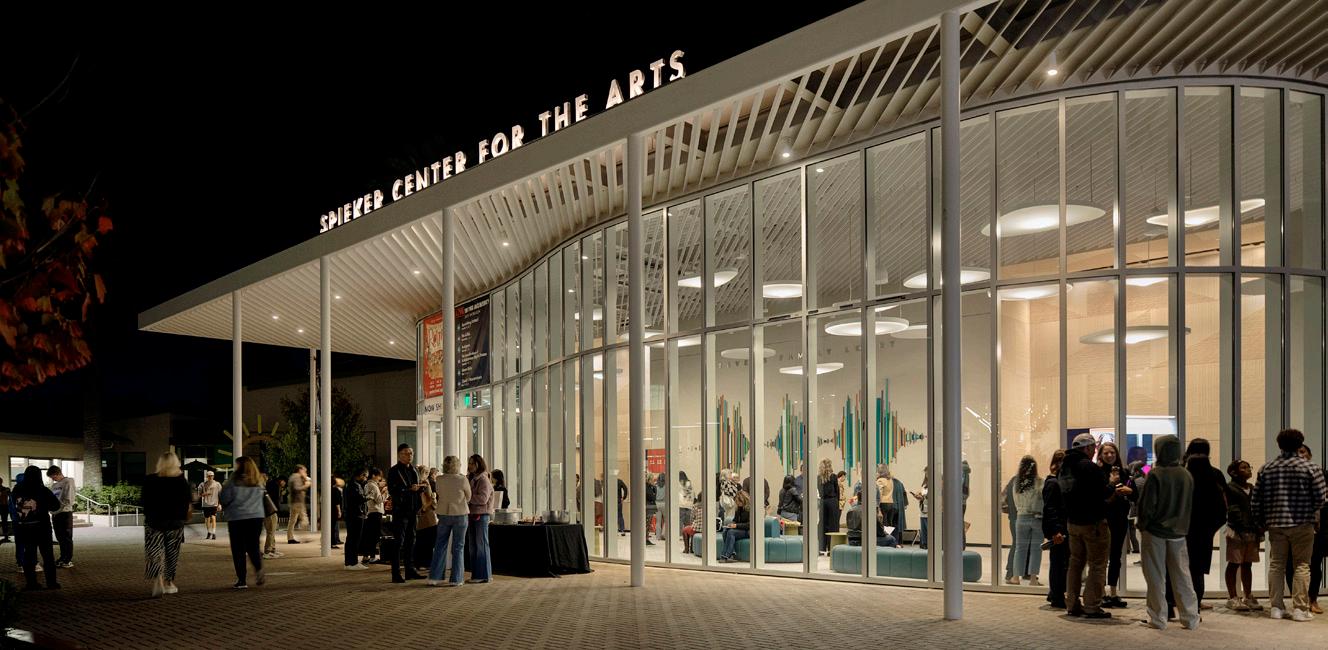
Menlo School, located in the heart of Silicon Valley, is a private institution serving grades 6–12 with a strong emphasis on academic rigor, creativity and athletics. The school encourages interdisciplinary learning and values the arts as an essential component of a well-rounded education. The Spieker Center for the Performing Arts reflects this philosophy, providing a space that supports artistic exploration while serving as a focal point for campus life and community engagement.
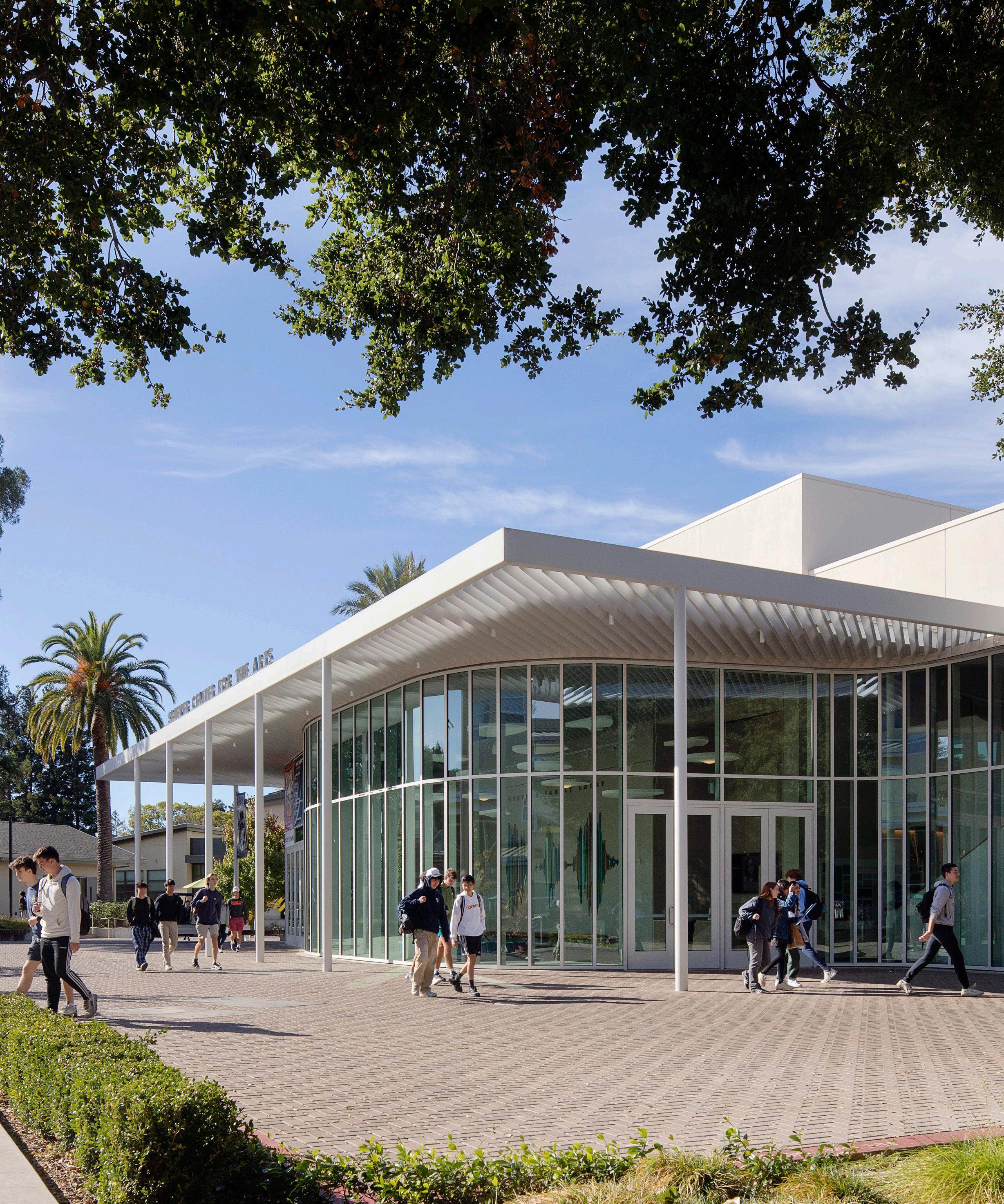
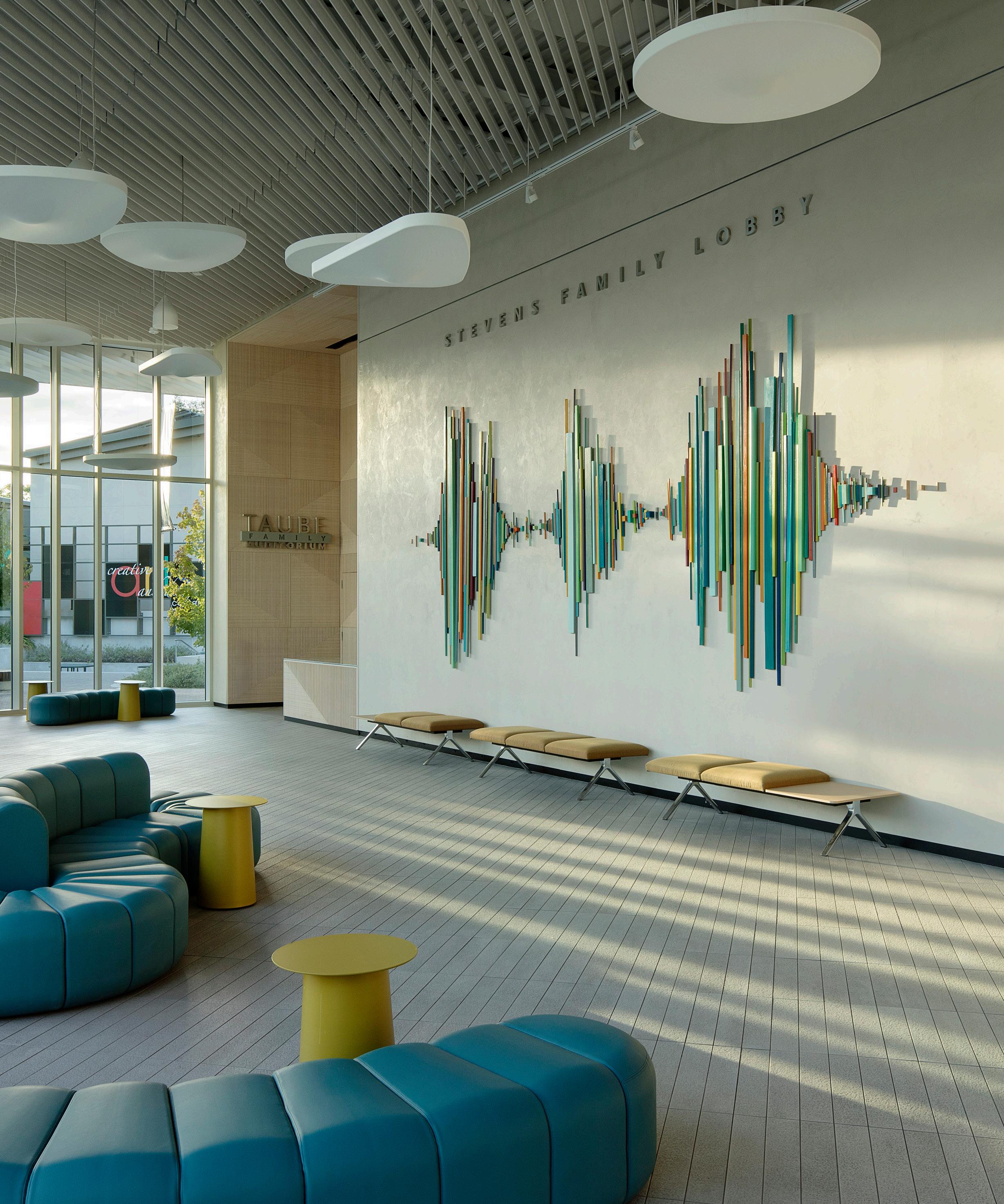
The Spieker Center for the Performing Arts was developed as part of a broader campus master plan led by Hacker Architects, with the goal of strengthening Menlo School’s arts infrastructure and creating a more cohesive campus environment. The 28,000-square-foot facility includes a 400-seat auditorium, a flexible orchestra pit, a technical booth, green room, and dedicated spaces for scene and costume production.
“The site was simply too small for the program, so the solution was to stack and prioritize spaces, placing support functions where they made the most sense while preserving the performance experience,” said David Keltner, AIA, LEED AP, Principal and Lead Designer with Hacker.
Collaboration with Music@Menlo
A defining feature of the Spieker Center is its partnership with Music@ Menlo, an internationally recognized chamber music festival and institute based
in the San Francisco Bay Area.
This collaboration elevated the performance requirements of the facility, particularly in terms of acoustics, while also ensuring that the building remained accessible and useful for students on a daily basis.
The auditorium was designed as a high-quality chamber music venue, capable of supporting professional performances, while also adapting to school productions, lectures and community events.
“The most innovative aspect of the project was designing a facility that could function as a worldclass chamber music venue while remaining approachable, flexible and easy for students to use every day,” said Keltner.
Space Optimization on a Constrained Site
The Spieker Center occupies a highly constrained site at the heart of campus, bordered by major circulation paths, athletic facilities and adjacent academic buildings. The available footprint
PROJECT TEAM
Design Architect: Hacker
Local Architect: Kevin Hart Architecture
Interior Designer: Hacker
Civil Engineer: BKF Engineers
Structural Engineer: Degenkolb Engineers
Mechanical & Plumbing Engineer: Taylor Engineers, Guttmann & Blaevoet
Electrical Engineer: The Engineering Enterprise
Lighting: O-
Acoustical Engineer: Charles M. Slater
Theatrical/AV: Auerbach Pollock Friedlander
Client: Menlo School
was smaller than the program demanded, requiring careful prioritization and vertical organization.
“True functionality meant keeping everything on one floor,” Keltner said. “We prioritized direct access where it mattered most: the performer-audience connection, efficient scene shop movement, and essential storage for pianos and acoustic shells.”
The lobby plays a critical role in this strategy. Designed as a flexible, multi-use space, it efficiently accommodates large crowds during Music@ Menlo performances and school events, while also functioning as an informal
“The most innovative aspect of the project was designing a facility that could function as a world-class chamber music venue while remaining approachable, flexible and easy for students to use every day.” – David Keltner, Principal, Hacker
teaching and gathering space for students. Classes, rehearsals, and spontaneous collaboration frequently take place here, reinforcing the building’s role as
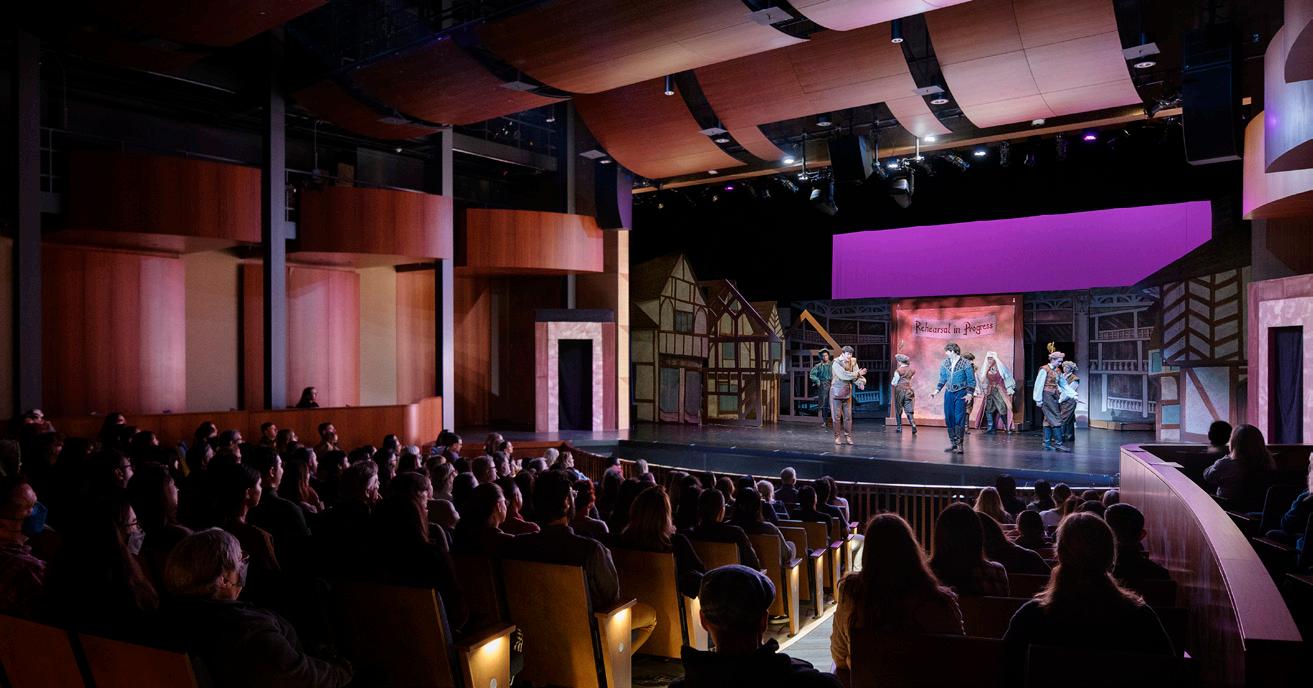
The auditorium supports chamber music performances and student theater, balancing acoustics with theatrical adaptability. Photo Credit (all): Jeremy Bittermann
STANDOUTPRODUCTS
Media Station
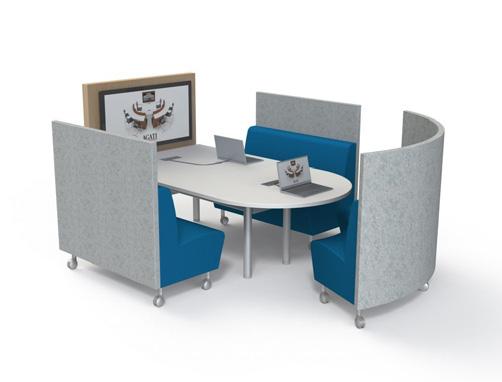
The Elements Media Station by Agati pairs evolving technology with the brand’s established Hampton seating design to support collaborative work and learning. It allows users to connect locally and remotely while maintaining ergonomic support and comfort. The unit accommodates multiple data access options and can be equipped with a touchscreen to expand interactive capabilities. Elements Media is engineered to balance functionality and durability without compromising design integrity. Its modular approach integrates modern connectivity needs with traditional furniture quality for environments requiring robust media access, including classrooms, libraries and collaborative workspaces.
Agati
www.agati.com
MOV Stool
Mini-Pitch System
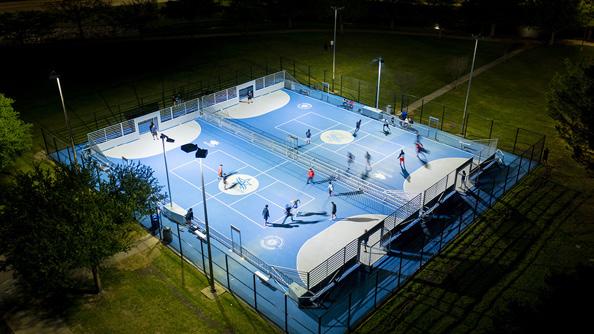
Musco’s Mini-Pitch System™ modular sports solution is engineered as a comprehensive small-scale field system for community, youth and recreational play areas. Designed in collaboration with the U.S. Soccer Foundation, the system integrates lighting, fencing, goals, benches and lockable storage into customizable pitch sizes to meet space and activity needs. LED lighting reduces glare and ensures extended usability, while modular construction supports efficient installation and maintenance. The Mini-Pitch System offers a versatile platform for soccer, basketball, futsal and other games, helping schools and communities activate underused sites and promote outdoor activity and teamwork.
Musco
www.musco.com
The MOV Stool from Artcobell is an active seating solution that encourages natural movement and engagement in learning and collaborative spaces. Designed with a broader footprint for stability and safety, it supports students’ urge to move while seated. The attractive, uncomplicated form is available in multiple seat heights — including 14-, 16-, 18-, and 20-inch options — to accommodate a range of users and settings. Its durability and dynamic design make it suitable for classrooms and shared environments where mobility and comfort are priorities. Educational spaces benefit from active seating that promotes focus through subtle motion.
Artcobell www.artcobell.com
HALO 3C Smart Sensor
The HALO 3C Smart Sensor by Avigilon is an all-inone environmental and security monitoring device with 12 integrated sensors and configurable realtime alerts. It enhances situational awareness by tracking occupancy and detecting varied conditions to support health, safety and environmental monitoring applications. The sensor’s compact form factor and data insights augment existing security systems without intruding on privacy. When paired with Avigilon video management platforms such as Unity On-Premise or Alta Cloud-Native, it provides layered intelligence to help organizations respond more quickly to events while strengthening overall safety ecosystems across interiors.
Avigilon www.avigilon.com
TeacherLock I
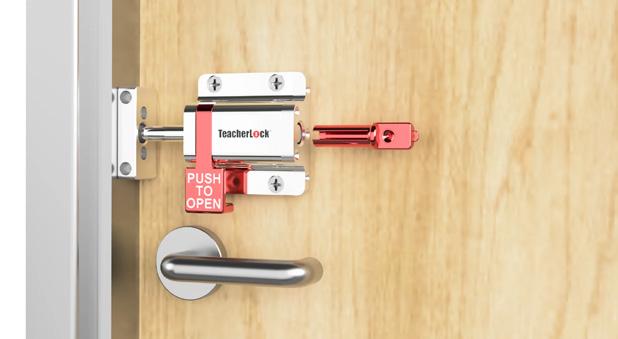
TeacherLock I is a code-compliant classroom door security device designed for jurisdictions permitting a two-operation unlock and unlatch sequence. It aligns with NFPA 101 Life Safety Code provisions and supports rapid lockdown from inside the classroom in emergency situations. The device is intended to enhance routine classroom safety while maintaining required emergency egress. Left or right-side installation options accommodate different door configurations. TeacherLock I is part of a broader suite of safety products aimed at securing educational environments by giving teachers a reliable and compliant lockdown solution that works with existing classroom doors.
TeacherLock
www.teacherlock.com
Dezibel Acoustic Floor Screen
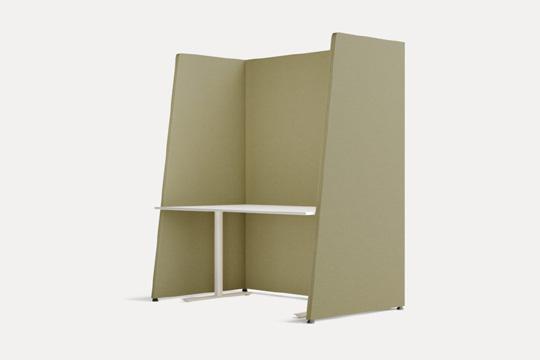
The Dezibel Floor Beveled acoustic floor screen by Zilenzio combines minimalist design with effective noise reduction to enhance focus and comfort in workspace environments. Constructed with a solid wood frame and stone wool filling, the product delivers high sound absorption and comes with a 20-year warranty. Removable fabric allows for easy maintenance and customization, while a range of standard fittings and color options such as oak, metal black, white and gray support diverse interior schemes. The screen contributes to quieter, more productive spaces through its durable and versatile acoustic performance.
Zilenzio www.zilenzio.com
School District Gets High Marks for Exterior Sign Upgrades
LED displays effectively and quickly communicate to constituents
By Shawn Klinger
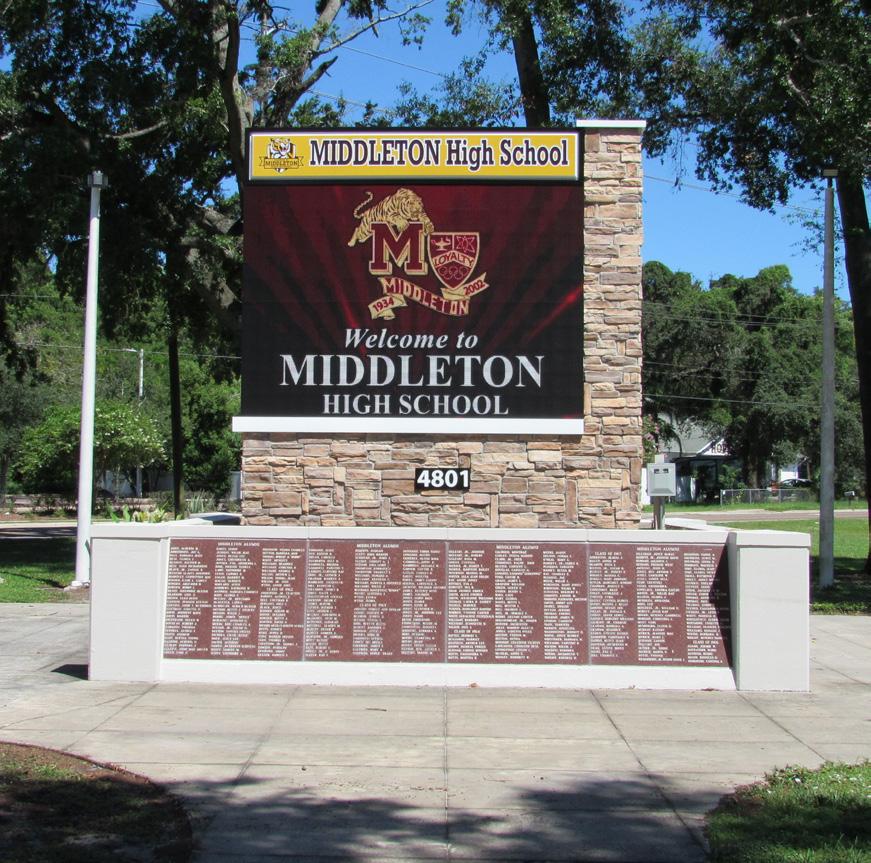
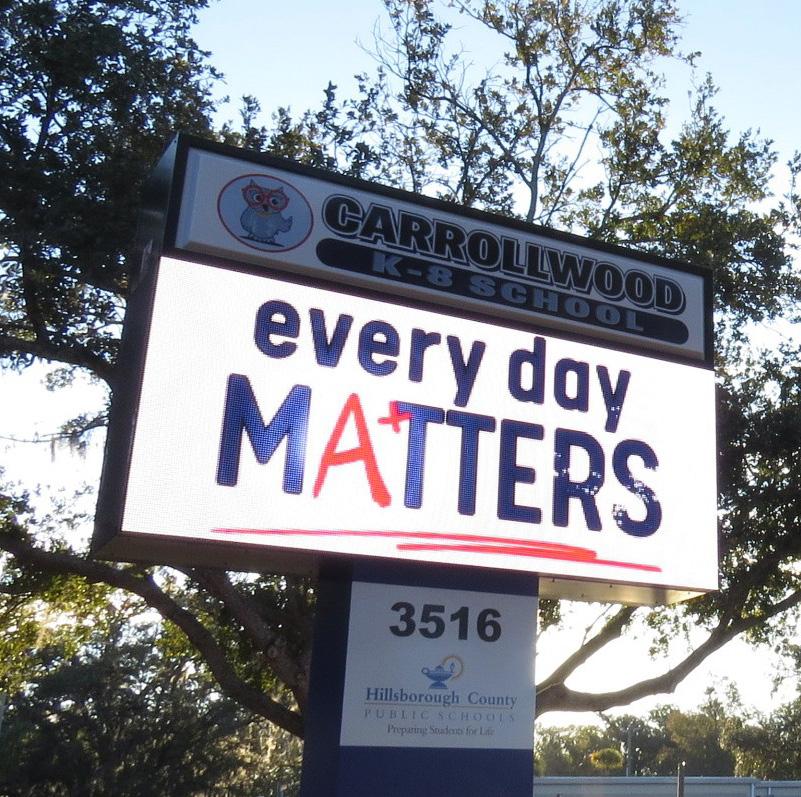
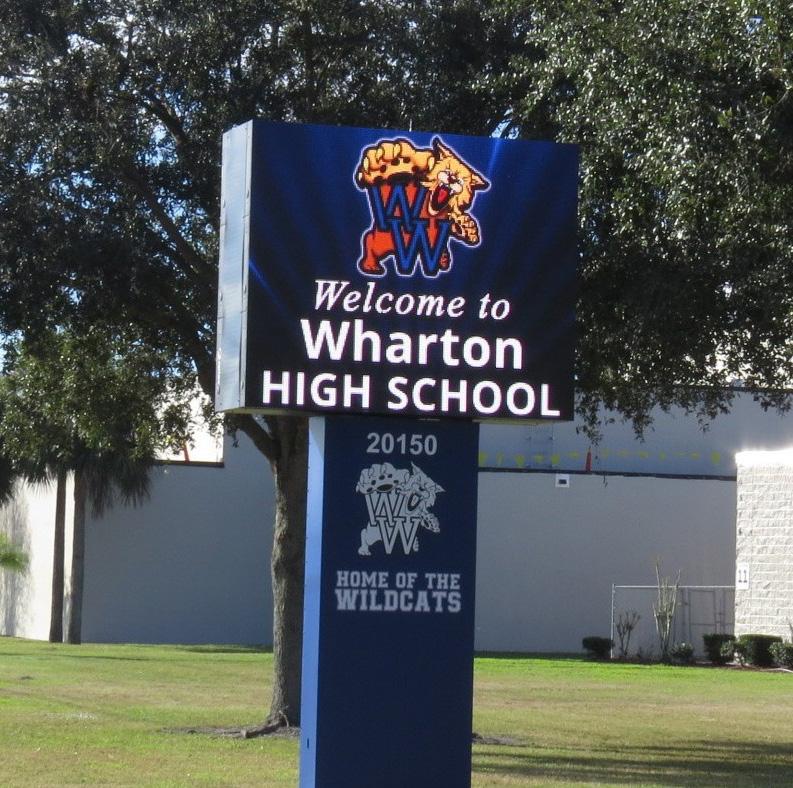
Exterior LED displays for schools can keep students, parents, staff and the community informed about news and events while projecting a modern educational environment. Interior and exterior digital signage solutions provide color, light and motion to communicate 24/7; they are energy-efficient, and more effective and flexible than traditional static signage. Whether announcing school events, sharing emergency alerts or displaying other school messages, programmable LED signs offer a reliable way to reach the entire school community in real time.
Seventy-three percent of learning institutions see the benefits of digital signage in education as crucial for the future of communication and 87% of educational institutions, including K-12 schools, have already deployed digital signage systems to streamline and improve communication. LED signage also helps build school spirit and community connection by showcasing events, sports scores, academic milestones and even PSAs.
Hillsborough County School District, Tampa, Fla.
Hillsborough County Public Schools (HCPS), the seventh-largest school district in the country, operates 309 schools consisting of elementary, middle, high and charter schools.
The school district is committed to preparing its more than 200,000 students to become successful and responsible citizens, which encompasses academic achievement and personal growth. To ensure student success, each school provides a rigorous and supportive academic experience that motivates all learners to meet high expectations.
Challenges
In Florida, the Department of Education provides design and construction oversight for K–12 schools, including established requirements for sign installations. The code mandates general requirements of a sign, including being designed to withstand appropriate wind loads. Illuminated signs need to comply with the electrical and installation requirements of the Florida Building Code and Florida Fire Prevention Code as adopted by the State Fire Marshal.
The school district has more than 100 digital signs in use. However, over the years, each school has been specifying a variety of sign sizes rather than working through a framework of standardized signs. Additionally, because many of the schools’ signs were using older technology, the district’s IT team had security concerns.
Solution
For the past 20 years, a California-based LED display manufacturer has built a relationship with the district and local installers. To address these current challenges, the company worked closely with Daniel Stermer, HCPS technical coordinator of maintenance operations, to develop a standardized framework of three sign sizes from which schools can choose, improve security and enhance the user experience.
The software technology on any retrofits and newly constructed schools’ digital signs has advanced from previous fiber optic to cellular modems. Cellular connectivity’s expansive and reliable coverage is a key factor for Stermer and the IT team upgrading the digital signs. This broad coverage ensures HCPS’ digital signs remain functional in various settings throughout the school district in the greater Tampa area.
“The improved technology that supports this company’s digital signs
ensures that our schools communicate uninterrupted and essential information to parents, staff and students when necessary. Additionally, the cloud-based software addresses our security concerns since the displays are no longer tied to a network,” said Stermer.
Advanced cloud-based software protects HCPS’ digital signage content and systems from unauthorized access, cyber threats and data breaches. This includes securing the data stored in the cloud and ensuring that their digital displays are not vulnerable to hacking attempts.
To further address security issues, the company engineered Single Sign-On (SSO) into the software so that HCPS doesn’t need to maintain separate credentials for each school. This district-wide security protocol integration means fewer avenues for cyberattacks. Another benefit from this advanced technology involves user-access control. The IT team can now designate specific people throughout the district to have access to particular communication tasks. This ensures that only authorized personnel can post information and that their access is limited to what they need to perform their duties.
“We consider this LED display company to be a trusted advisor and not just a sign vendor. The company helps us address security concerns, improve user experiences and enhance the schools’ visibility,” Stermer said.
Results
When considering technology partners, the HCPS IT team and the school district look for an overarching, turn-key solution and not just the lowest cost. To further provide value, the company’s latest technology allows the team remote access into each sign to diagnose maintenance issues, walking Stermer through repairing the problem. This means HCPS no longer requires a sign company to come out and assess the problem, order parts and then come back to repair the sign, which is expensive and time consuming.
Whenever a school has a display issue, the manufacturer is able to remote in and troubleshoot the matter, minimizing the need to dispatch technicians for onsite visits, saving travel costs and labor hours, and reducing unplanned downtime.
Beyond providing real-time information, digital signs are also a reflection of school culture. HCPS’ new construction includes monument signs — with these digital signs as a part of the specification — providing a cohesive branded entrance. For HCPS schools that have pylon signs installed, they’ve been easy to upgrade to the company’s digital signs with the newest technology.
“For the past 20 years, we’ve partnered with this company for our exterior digital displays. Now, their advanced technology reinforces this relationship and ensures we’re meeting our security concerns while communicating effectively with students, staff and parents,” Stermer said.
For more than 40 years, this LED display company has engineered and manufactured a wide range of ultra-bright, high-performance LED displays for various applications, including education. The company’s campus-wide communication solutions, virtual-sports scoreboards and exterior lighting solutions provide school systems and universities with increased visibility and lasting value.
Shawn Klinger is Vice President North America Partner Sales at Optec Displays Inc., and may be reached at sklinger@optec.com.
LED signage can help build school spirit and community connection by showcasing events and milestones.
LED signs offer a reliable way to reach the entire school community in real time.
Maintenance issues can be diagnosed and repaired remotely. | Photo Credit (all): Courtesy of Optec Displays
Transforming an Office Park for Modern Learners A decade of design innovation at Eastside Preparatory School
By Lindsey Coulter
Over the past decade, Seattle-based architecture firm PUBLIC47 has partnered with Eastside Preparatory School in Kirkland, Wash., to transform a 1980s-era office park into a vibrant, studentcentered campus. What began as a cluster of low-rise office suites — complete with cubicles and even dentist chairs — has evolved into a cohesive educational environment serving grades 5 through
12, where faculty and students move easily between light-filled spaces designed to foster connection, collaboration and growth.
The transformation began in 2015 with the Macaluso Academic Collaborative (TMAC), a 30,000-square-foot hub for science labs, digital fabrication spaces, an amphitheater and a gym. TMAC established a new architectural language for the campus, emphasizing transparency, flexibility and active learning. Three years later, TALI Hall — named for the school’s “Think-Act-Lead-Innovate” motto — added 50,000 square feet of performing arts and academic space. Anchored by a highly adaptable theater, TALI Hall also introduced a central plaza that transformed a 12-foot grade change into a lively pedestrian commons.
“While this campus occupies a former office park that emphasized vehicles and low-rise development, we have transformed it into a quite dense campus where pedestrian movement and space-making is central,” said Jeff Boone, AIA, Partner at PUBLIC47. “Once on campus, you feel the community of the school — more so than potentially in a sprawling campus.
Subsequent projects have continued to expand and refine the campus, including a middle school addition optimized for daylight and learning and a reimagined dining hall that encourages social interaction across grades. The architecture embraced the idea of exposing the structure (concrete, steel, etc.) with resourceful touches of refined finishes like acoustic wood paneling. Each intervention reflects a careful balance of the school’s educational values with the practical constraints of an existing office park.
School Construction News spoke with Boone about the process of taking an underutilized commercial site and reimagining it to serve as a connected and cohesive home for education.
SCN: Eastside Prep has grown so much over the last decade. Can you describe how you approached the original design and renovation challenges?
BOONE: Given our constraints with property
lines, we had to think vertically. For example, we had to be a little more creative in the performing arts spaces. The orchestra room was located right above the stage, and there’s a lift for big drum sets and the piano, things that can then just drop to the stage. And there’s a tension grid that students can easily walk onto to learn about theatrical lighting without being up on catwalks. Stagecraft is below the stage.
SCN: Can you talk about some of the interesting multi-use spaces you developed across the campus?
BOONE: In the TMAC, we have this amphitheater space that’s off of the plaza. In a sense, it’s compromised in that it’s not acoustically sealed off from the rest of the space, but it also creates casual opportunities for people to interact with activities such as the robotics team that’s practicing, or maybe there’s an informational meeting about school clubs that you walk by, but you don’t literally have to go in the door and invite yourself into the space.
The theater balcony has retractable seats, and the space can be closed to the theater and used for things like yoga and dance. The main [theater] seats all retract as well, so you can transform the space for other uses like college fairs. All of a sudden it becomes this dynamic part of the campus, and it’s used quite a bit.
SCN: With TALI Hall, how did your team address site constraints while creating a vibrant public space?
BOONE: Necessity drove this move to create an accessible, pedestrian-friendly campus that allowed everyone to move between buildings throughout the day. The topography creates opportunity for different types of spaces and different types of opportunities for gathering. A change in grade can
create an opportunity, for example, for a natural amphitheater like exterior space, even if it’s just a couple steps. Those steps on a campus can become a place to sit, to eat lunch, to talk with a classmate or teacher. A change in topography can provide a nice way to overlook a space without necessarily having to engage the space — and that visual connection helps create opportunities for community connectivity and engagement — even if accidental.
SCN: How did flexibility factor into the design of the theater and performance spaces?
BOONE: In a constrained campus, vertical arrangement of programs becomes critical. For the theater, we were inspired by the programmatic design of Wyly Theatre in Dallas, designed by Rex. It was creative in how it reconsidered the traditional idea of where rooms were to be located. Wyly Theater can be set up in multiple configurations. For TALI, the school couldn’t afford balcony seating on elevator lifts, but we looked at ways to provide proscenium theatre, thrust theater and theatre in the round options. Windows to the outside could be revealed and walls to the atrium could be opened to connect the space of the theatre to the rest of the building. It’s always a negotiation. For example, the theater is adaptable, but the orchestra and labs need to meet specific requirements.
SCN: How do daylighting and performance factor into the learning environments?
BOONE: For the middle school addition, daylight optimization was key, as the existing building lacked adequate daylight. We wanted classrooms that were flexible, bright and engaging. Natural light enhances learning and well-being. It’s not just a design aesthetic — it’s part of the pedagogy. And that principle guides how we approach each addition, even when the site has strict limitations.
SCN: What lessons from this project could other schools or firms apply when repurposing commercial properties?
BOONE: You have to think creatively and vertically, embrace flexibility and look at every constraint as an opportunity. Office parks aren’t ideal schools, but they can be transformed into dynamic, connected campuses. That’s what Eastside Prep has become — a model of how careful planning and long-term collaboration can reclaim underutilized sites for education.
SCN: Is there a sense that your work on this campus will ever fully conclude?
BOONE: There’s always a next phase: new academic needs, and the school is always looking ahead. Long-term planning is as important as the buildings themselves. It’s fun, because I’m still actively engaged with leadership, and there’s always some tinkering going on.
The exterior of TALI Hall offers expansive glazing on the ground level.
The Macaluso Academic Collaborative supports transparency, flexibility and active learning.
TALI Hall is named for the school’s “Think-Act-Lead-Innovate” motto.
Photo Credit (all): Courtesy of PUBLIC47
The Macaluso Academic Collaborative (TMAC)
· Size: 30,000 square feet
· Opened: 2015
· Key Features: Science labs, digital fabrication spaces, gym, amphitheater
· Design Focus: Transparency, flexibility and active learning
· Highlight: The atrium off the plaza allows casual interaction without forcing students or faculty to enter a classroom — supporting informal learning and collaboration
· Middle School: Flexible classrooms designed to maximize natural light and support studentcentered pedagogy
· Dining Hall: Redesigned to encourage crossgrade social interaction, turning mealtime into a communal experience
· Campus Vision: Each addition contributes to a walkable, adaptable campus that grows with the school and its educational programs
TALI Hall
· Size: 96,000 square feet
· Opened: 2018
· Purpose: Performing arts and academic hub
· Signature Features: Highly adaptable theater, central plaza transforming a 12-foot grade change into a pedestrian commons
· Flexibility: Retractable theater seating allows the space to host yoga, dance, college fairs or traditional performances
· Design Philosophy: Connects indoor and outdoor spaces while creating vibrant communal areas for students and faculty
How LEED Certification Is Reshaping Learning Environments
By Julianne Laue and Sara Greenwood
The conversation around sustainable building in education has shifted dramatically. No longer a niche consideration for progressive districts, LEED certification has become a strategic tool for school systems seeking to enhance student outcomes, control long-term costs and demonstrate community leadership. As municipalities confront aging infrastructure and competitive grant-funding environments, understanding how to effectively implement green building standards has become central to facilities planning.
Understanding the Certification Landscape
The distinction between LEED and WELL certifications represents a fundamental evolution in how we conceptualize building performance. LEED focuses primarily on building performance — energy efficiency, water conservation and environmental impact — while WELL certification addresses the health and wellness of building occupants through organizational best practices, human resources policies and facility maintenance protocols.
LEED is about the building’s performance, and WELL is about the people inside. This differentiation is crucial for district leaders navigating certification options. While LEED ensures third-party validation of sustainability metrics, WELL requires documentation of emergency preparedness plans, cybersecurity measures, nutrition standards, as well as verified testing of air quality, water quality, lighting and acoustics.
The financial benefits extend beyond operational savings. A recent report from the American Institute of Architects documents that the financial benefits of greening schools reach approximately $70 per square foot — more than 20 times higher than the initial cost of implementing green features. This represents a fiscally superior design choice that pays dividends for decades.
The key is understanding that sustainable design and construction require collaboration. JE Dunn works with design teams to build consensus with project stakeholders and leverage partnerships with trade partners to achieve goals and drive innovation. It’s about balancing constructability, lifecycle cost and energy use at every phase.
Measurable Impact on Health and Performance
The health benefits of LEED-certified schools extend far beyond environmental stewardship. Research demonstrates that student performance improves significantly in classrooms with adequate daylighting, clean air quality and biophilic design elements. The statistics are compelling: according to the Green Education Foundation, more than 20% of U.S. public schools report unsatisfactory indoor air quality and asthma remains the leading cause of diseaserelated absenteeism in American public schools.
By improving indoor air quality, green schools can improve the health of students, faculty and staff, potentially decreasing sick days. The impact is particularly pronounced for younger students, whose developing respiratory systems are more vulnerable to harmful chemicals and poor ventilation. LEED-certified schools address this through strict material selection protocols and enhanced ventilation systems.
Acoustics represent another critical factor. Unlike other building types where acoustics are optional, LEED mandates acoustic performance standards for educational facilities. Poor acoustics — such as noisy HVAC systems — can significantly hinder learning, particularly for English language learners who struggle to hear clearly, compromising equitable engagement.
Financial Returns That Strengthen District Budgets
The financial case for LEED certification challenges common misconceptions about cost premiums. According to GBRI, operating costs for energy and water in green schools can be reduced by 20% to 40%, directing more funding toward teacher salaries, textbooks and technology. The average green school reduces water usage by 32%, creating both direct savings and substantial societal benefits through reduced stormwater runoff and wastewater treatment demands.
Case Study: Shawnee Mission School District
The Shawnee Mission School District exemplifies successful large-scale implementation. After passing their 2021 bond, district leaders made an early commitment to pursue LEED certification across all new construction projects.
JE Dunn built three new elementary schools as part of this initiative: John Diemer Elementary (opened August 2023), Rushton Elementary (opened August 2024), and Tomahawk Elementary (opened in August 2025).
What distinguished this project was the comprehensive stakeholder engagement. There was tremendous involvement from the community, district leaders, the design team and the JE Dunn project team throughout the entire process.
Students themselves took leadership roles, creating programs focused on pursuing certification and holding student-led forums that pushed the district to maintain its commitment. The JE Dunn project team handled every challenge with a can-do attitude and collaborated seamlessly. Any issue that arose during construction was presented with viable solutions, resulting in beautiful and successful projects for the students and patrons of Shawnee Mission School District.
The district began with a goal-setting strategy meeting that produced a living document gathering all relevant owner project requirements. This approach created consistency across multiple schools, streamlining design construction andmaintenance processes, while ensuring alignment of energy, water, waste, health and certification goals.
Implementation Roadmap
Success in LEED certification depends heavily on timing and team composition. There’s a lot of value in planning early as that’s when schools can see the biggest cost savings across the board. Engaging sustainability consultants before design documents are completed allows for integrated decision-making with energy modelers and cost estimators, making the entire process smoother and more cost-effective.
According to recent data from the U.S. Green Building Council, more than 5,000 schools are now LEED-certified, impacting the lives of eight million students. These schools save an average of $100,000 per year on direct operating costs — equivalent to hiring two new teachers, purchasing 200 computers or buying 5,000 textbooks.
Integrated decision-making from the preconstruction phase through commissioning delivers the best results. When the construction team is part of these early conversations, they can identify practical solutions that reduce costs and improve buildability while achieving performance goals.
For Enhanced Commissioning — a LEED requirement — the Commissioning Agent should be engaged by the halfway point of design development completion. Delaying consultant involvement until later phases can still yield certification but may require rushed decision-making and could compromise budget efficiency.
The process should begin with education. The Center for Green Schools offers resources to help districts understand certification benefits. Early assessment of potential LEED points based on location and project specifics allows teams to evaluate experience levels and align capabilities with performance goals.
Dispelling the Cost Myth
The most persistent misconception about LEED certification is budget impact. The biggest misconception is that LEED certification will completely blow the budget and isn’t costeffective, but with a savvy team and careful planning, it doesn’t have to be a financial burden.
Direct costs are limited to certification fees based on square footage. Soft costs include energy modeling, commissioning and project management, but numerous financial incentives can offset these expenses. Early identification of available
Shawnee Mission School District’s John Diemer Elementary School pursued LEED certification.
Shawnee Mission School District’s Rushton Elementary opened in 2024.
Photo Credit (all): Matt Kocourek
Redefining Student Wellness Through Inclusive Design
By Saverio J. Belfiore, AIA, CDT, and Sharon Lasher, CPA
Last year marked the 35th anniversary of the passage of the Americans with Disabilities Act (ADA), a landmark piece of legislation guaranteeing important civil rights protections for people with physical and intellectual disabilities. The ADA made clear that discrimination on the basis of disability is as unacceptable as discrimination based on race, ethnicity, gender or religion. In upholding the values of the ADA, schools must continue to create and grow inclusive cultures where every student is valued, supported, and given the opportunity to succeed within their learning community.
According to the National Center for Education Statistics, the number of children with disabilities has increased from approximately 6.4 million in 1977 to nearly 7.5 million in 2023. Likewise, the National Institutes of Health reports an increase of 15.6% in the prevalence of childhood disabilities between 2001 and 2011. Considering these statistics, accessibility continues to play an increasingly larger and larger role in how school facilities are designed and various features are implemented, with a shift over the last several decades from accessible design toward inclusive design that balances both the physical and emotional needs of students.
Accessibility and Inclusivity
Facilities that meet ADA guidelines are considered accessible but may not necessarily be inclusive. Inclusive design philosophies build upon ADA standards even further by creating an environment that not only promotes equal accessibility by remedying issues of mobility, but also equal usability, providing for as wide a spectrum of users’ physical, social and mental health needs as possible. Applied to schools, inclusive design takes the form of widely usable facilities and accommodations both inside and outside the
classroom. Regardless of ability, every student should be able to both access and use each educational space.
Athletic facilities such as the Farmingdale UFSD’s Aquatic Center, for example, can be
reasonably accessed by people using mobility devices. Beyond that, however, the accommodations themselves are equally accessible, with mechanical pool lifts that allow people with mobility issues to actually use the pool rather than just access the building in which it is located.
Elements of Inclusive Design
There are a number of inclusive design elements that can be implemented, both indoors and outdoors, to provide an equitable educational experience for all students.
over their privacy.
Individualized bathrooms that meet the needs of students who are more comfortable with a single stall restroom for a multitude of reasons (larger spaces, privacy, anxiety) are essential for inclusiveness within schools.
3. Flexible furniture arrangements. Furniture that is flexible — available in a variety of shapes and capable of assembly in a variety of configurations — can dramatically expand a teacher’s ability to meet the educational needs of each student. School districts such as the Mineola, Baldwin and EastportSouth Manor school districts on Long Island have styles. Classrooms with
1. Wellness spaces. Wellness spaces, such as quiet play areas, offer a respite for children who may be overwhelmed by the sensory elements of a playground. These quiet play areas can take several different forms, including sensory gardens and enclosed structures on or near the playground. Not only do these areas offer the opportunity to socialize with others away from a busy playground, but they can also help encourage students to engage with their peers by providing the comfort of knowing there is an alternative place to go. Likewise, schools are redefining wellness in their gym facilities by introducing spaces for mindfulness activities such as meditation and yoga.
Wellness spaces are not restricted to the playground. Schools such as Baldwin High School in Nassau County, N.Y., and White Plains High School in Westchester County, N.Y., have implemented these types of spaces into wellness centers that emphasize mental well-being as much as physical well-being. These wellness spaces offer customizable lighting and temperature, creating a calming environment that supports sensory equilibrium in students. Wellness spaces also have the broader effect of bolstering students’ sense of autonomy and independence while helping redefine how educators and students alike think of wellness and self-care.
2. Individualized restrooms. Single-occupant restrooms are standard in most schools. For those who are neurodivergent and/or gender nonconforming, these single-occupant restrooms can help reduce anxieties that some students may have
can effectively be used to teach any subject to all students.
4. Life-skills classrooms. For students who need support with self-care, home maintenance and other everyday tasks, life skills classrooms can be created to help mimic one’s home and teach skills for establishing independence. These classrooms often include areas that replicate a home interior, which may include cooking, cleaning and laundry stations, as well as “office” stations for developing financial responsibility. Unlike vocational programs, which teach skills related to specific jobs, life skills classrooms offer a universal education that can improve and enhance the wellbeing of students.
Incorporating Inclusive Design
When incorporating inclusive design measures into school facilities, whether they are inside or outside of the classroom, it is vital to work with specialists who understand the most pressing student needs. These specialists should collaborate with professionals who can design spaces that will support the physical and emotional needs of students within the school. In doing so, schools can prepare their students for success in their present lives and beyond.
Saverio J. Belfiore, AIA, CDT, is Senior Vice President & Education Market Director, and Sharon Lasher, CPA, is Education Market Specialist at H2M architects + engineers.
Inclusive design takes the form of widely usable facilities and accommodations, inside and outside of the classroom.
Photo Credit (all): Courtesy of H2M architects + engineers
Flexible furniture can dramatically expand a teacher’s ability to meet students’ educational needs.
Designing STEM and CTE Schools That Close the Skills Gap
By Debra Kolesar, NCIDQ
It’s no secret the American job market is shifting. According to the U.S. Bureau of Labor Statistics, STEM occupations are projected to grow by 10.4% between 2023 and 2033, nearly three times the rate of other fields. At the same time, many skilled trades are experiencing a wave of retirements without an adequate pipeline of new workers ready to step in. While these sectors may seem distinct, both reflect a growing need for graduates who possess technical abilities as well as digital fluency.
But the pace of change is placing new pressure on high schools as they work with students who are increasingly uncertain whether a stable, attainable future awaits them.
Unlike traditional classes, STEM courses and Career & Technical Education (CTE) programs can offer students a sense of hope in the form of direct pathways to in-demand careers as well as equitable hope for students with different backgrounds, interests and learning styles. However, success hinges on how programs are implemented in today’s learning environments.
Barriers to Achieving Educational Equity
Although STEM curricula have become more common across the K–12 landscape, access to advanced and applied sciences remains out of reach for many students, particularly those from lowincome communities. Much of this gap is driven by differences in what schools are able to offer. Schools in low-income, high-poverty areas are almost half as likely to offer advanced mathematics and applied science courses as their low-poverty counterparts. Because these courses often serve as prerequisites for postsecondary STEM programs, limited access at the high school level can narrow students’ academic options well before college entry.
Access to CTE programs reflects a similar disparity. Findings from University of Michigan’s Youth Policy Lab indicate high-poverty schools, which are disproportionately urban, offer about half as many CTE programs as low-poverty schools. The study also found that on-campus access is the strongest driver of participation, with students twice as likely to enroll when programs are located on site. Without access to such pathways, students may never realize an alternative career is an option.
For those in underserved communities, access to quality STEM and CTE programs provide pathways to economic mobility, yet systemic barriers keep them out of reach.
Bridging the Gap
Capital upgrades offer an opportunity to address this gap. As architects and designers, our challenge is to maximize these facility investments by creating spaces that make applied learning visible, accessible and part of everyday instruction. It also requires us to think more critically about the unique pedagogy
and community central to each school, so every space supports students and educators alike.
To better support STEM and CTE learning environments, designers must understand emerging curricula and their technical requirements. Both
programs increasingly rely on sophisticated technology and advanced problem-solving skills, particularly in CTE, as these once traditional “vocational tracks” have evolved into more rigorous technical programs. With the increasing overlap between STEM and CTE, learning environments need to connect classroom instruction with hands-on practice.
Rainier Beach High School
Consider Seattle’s Rainier Beach High School, an urban public high school serving one of the most diverse communities in the country, where many residents identify as economically disadvantaged. Despite meaningful curricular innovations over the past decade, including the implementation of an International Baccalaureate for All program, a lack of funding and aging infrastructure limited the implementation of STEM and CTE courses.
Working closely with Bassetti Architects, Moody Nolan was able to deliver a community-shaped replacement campus responsive to its unique student body and the forward-looking curriculum it aspires to offer. Modern labs, makerspaces, and industrygrade learning zones not only expose students to in-demand fields but prepare them to get in.
Active Learning on Display
Because visibility often shapes how students engage, much of the building’s instructional spaces, like the biotech labs and makerspaces, feature glass partitions that visually connect out into shared spaces. Fabrication labs are organized into two connected but distinct zones: a primary instructional classroom and an adjacent hands-on fabrication area, allowing students to see their concepts move from theory to physical form.
Pipeline to Opportunity
Rainier Beach’s new Regional Skills Center reflects Seattle’s long-standing role as a global leader in innovative manufacturing and technology. Available to students district-wide, the Center offers several CTE programs for some of the city’s leading industry sectors, including aerospace and maritime manufacturing, and construction trades. These programs function as a bridge between secondary education and post-graduation careers.
Instructional spaces mirror industry-standard environments, with dedicated zones for instruction, fabrication, assembly and finishing. Clear sightlines keep active learning visible and help instructors supervise safely. Labs are designed with adaptable
infrastructure, so programs can evolve as equipment and industry standards change.
Warrensville Heights High School
Another design approach is integrating STEAM (including the arts) or CTE spaces, on equal footing with traditional classrooms, making them feel like part of the school’s core academic curriculum. At Warrensville Heights High School, an inner-ring suburb of Cleveland, programs such as Cybersecurity, Graphic Design and Biomedical Sciences (supported by a nursing lab) are distributed alongside science, math and art classrooms to encourage interdisciplinary learning. As part of the school’s STEAM initiative focused on strategic thinking and digital literacy, we also integrated esports gaming lab as a focal point of the school’s media center. The lab not only supports game-design and media-production curriculum but also provides an afterschool activity for students.
Integration also informs the school’s Culinary Arts and Restaurant Management program. A publicly accessible café, operated by students, features a professional teaching kitchen for students to gain hands-on experience with cost control, marketing and customer relations. A connected classroom with a hydroponic system supports science instruction, where students can test and observe food production as part of the curriculum.
Making STEAM Collaborative
STEAM equity improves when learning feels social rather than isolating. Shared project rooms and team-oriented commons support peer learning and help students feel empowered to take on a new
experience or subject for the first time.
Each floor at Warrenville Heights features classrooms with floor-to-ceiling windows and doors that open to extended learning areas. This transparency creates visual connections between instruction and collaboration and student-centered learning.
A Final Note
Every learning environment sends a message to students about their worth and their future. Advancing STEM and CTE education requires acknowledging the inequities embedded in the education system to create spaces that allow students to reach their full potential. Architects and designers should take the time to learn about the students, educators and communities they’re designing for. Doing so can create spaces where students see that opportunities exist for them, all because someone recognized their value and provided a place for them to succeed.
Debra Kolesar, NCIDQ, is Senior Interior Designer at Moody Nolan.
At Rainier Beach High School, modern labs, makerspaces, and industry-grade learning zones not only expose students to in-demand fields but prepare them to get in.
Photo Credit: Chris Grant
Integration also informs the school’s Culinary Arts and Restaurant Management program.
Photo Credit: Cory Klein
At Warrensville Heights High School, programs such as Cybersecurity, Graphic Design and Biomedical Sciences are distributed alongside science, math and art classrooms to encourage interdisciplinary learning.
Photo Credit: Cory Klein
Performing Arts, from page 17
an everyday learning environment rather than a venue used only for special occasions.
Flexible Performance Spaces
The auditorium is designed to support both chamber music performances and student theater productions, balancing acoustic precision with theatrical adaptability. Adjustable acoustic elements and sound-dampening curtains allow the space to shift between musical resonance and speech clarity, ensuring that both music and drama can be presented effectively.
A flexible orchestra pit further enhances this adaptability. The pit can be left open for musical performances or covered to extend the stage floor for theater and other events, allowing the room to respond to a wide range of programming needs.
Educational Design Decisions
One of the most notable design decisions was the absence of a traditional fly tower. While height limitations on the site made a fly tower impractical, its exclusion also aligned with the educational goals of the project.
Fly towers require specialized training to operate safely and are typically managed by a single certified technician, which often limits student access and hands-on learning. By omitting this system, the Spieker Center encourages students to engage more directly in set design and construction, using hands-on, “old-fashioned” methods that emphasize creativity, collaboration and problem-solving.
“Rather than over-specializing the theater, the design prioritizes accessibility and ease of use, allowing students to fully participate in making sets and learning stagecraft without technical barriers,” Keltner said.
This approach reinforces the idea that the performing arts are not just about the final production, but about the process of making, experimenting and learning.
Climate-Responsive Design and Campus Integration
The Spieker Center is deeply integrated into the life of the campus. An elegant sun canopy wraps the building, providing shade and thermal comfort while shaping outdoor circulation and gathering spaces. The canopy creates shaded pathways that naturally draw students toward the building, encouraging informal interaction and engagement with the arts.
“The sun canopy doesn’t just protect the building. It shapes how students move through campus, creating shaded paths that naturally draw people toward the arts,” said Keltner.
The building also connects to an outdoor gallery and a redesigned sports walkway, linking artistic and athletic spaces and reinforcing the school’s commitment to both disciplines.
Educational Impact and Community Use
At its core, the Spieker Center is an educational building. It supports formal instruction in music, theater, and technical production, while also offering informal spaces where students can rehearse, collaborate or simply spend time between classes. The facility regularly hosts performances and events that welcome parents, alumni, and the surrounding community, strengthening Menlo School’s cultural presence beyond campus.
Sustainability and Longevity
While the project did not pursue formal sustainability certification,
environmental performance was a key consideration throughout the design process. Material choices, energy-efficient systems, and climate-responsive strategies reflect Menlo School’s commitment to stewardship and long-term
value. The building is designed to remain flexible and relevant as programs evolve, ensuring its usefulness for future generations of students.
The Spieker Center for the Performing Arts exemplifies Menlo School’s commitment to creativity, collaboration, and experiential learning. By balancing professional-level performance capabilities with student-centered design decisions, the building supports both excellence and accessibility. More than a performance venue, it is a living part of the campus—one that invites students to participate, experiment, and grow as artists and learners.
Green Scene, from page 22
incentives allows districts to factor them into initial budgets.
Many recently certified schools, particularly those built in the last three years, have achieved LEED certification for no additional cost compared to conventional construction. Some have even completed projects below regional averages for traditional schools. The key is incorporating sustainable construction practices where possible on every project, not just when pursuing formal certification. This integrated approach helps deliver value without surprising budget impacts.
Beyond Certification
Perhaps the most innovative aspect of modern green schools is their role as educational resources. In almost every school project JE Dunn works on, the company includes an educational component to teach students, staff and visitors about the building’s sustainable features. This “building as pedagogy” approach might include cutaway wall sections revealing sustainable materials, digital dashboards displaying real-time energy performance or student-led sustainability committees. These features transform facilities into living laboratories that reinforce environmental literacy and STEM concepts.
The Path Forward
With K-12 schools spending more than $8 billion annually on energy — the second-highest operating expenditure after personnel costs — the imperative for sustainable design is clear. The funding opportunities through programs like the Department of Energy’s Renew America’s Schools grant program provide $500 million for energy efficiency and clean energy improvements.
LEED certification has evolved from a district’s wishlist item to a financial strategy for school systems facing aging infrastructure and enrollment pressures across the country. Embracing LEED certification as a strategic tool can create healthier, more productive learning environments while strengthening their financial position and demonstrating the kind of forward-thinking leadership communities and students deserve. The buildings we construct today will shape educational outcomes for generations.
Julianne Laue is the Environmental and Sustainability Director at JE Dunn Construction, where she leads the company’s sustainability initiatives and strategy.
Sara Greenwood, LEED Fellow, WELL Faculty and Green Globes Professional, is the Owner and CEO of sustainability consulting firm Greenwood Consulting Group.
Sarah Hacker, LEED Green Associate, is a Principal with Hacker.
The building is designed to remain flexible and relevant as programs evolve.
The Center provides space for artistic exploration and community engagement.
An elegant sun canopy wraps around the building, providing shade and thermal comfort while shaping outdoor circulation and gathering spaces.
Beyond the Building
The engineering challenges of K-12 school site design
By Jason Carr
Civil engineers often think of school design as an exercise in balancing competing priorities. Safety, traffic flow, site constraints, pedestrian patterns, drainage, sports fields and a litany of regulatory requirements are all part of the mix. Nowhere is this more true than in the exercise of designing K–12 campuses that can handle surges of activity during short, windows of time.
Unlike commercial or residential developments, a K–12 school experiences its highest traffic volume during two peak periods: the morning drop-off and the afternoon pick-up. During those periods, nearly every group tends to arrive at once. Coordinating and separating these flows while preventing congestion on public streets becomes the basis of the entire site layout.
Many too often assume that staggering bell schedules would solve the problem. The suggestion will often be, “Why not start first grade at 7 a.m., second grade at 7:15, third grade at 7:30?” But anyone who has worked within the operational reality of a school district knows this is impractical. Bus routing, staffing schedules, after-school programs, and family logistics make staggered starts unfeasible. The result is that engineering solutions must develop the solution.
Traffic Streams
A modern school campus must simultaneously accommodate several distinct vehicle types, each with its own set of challenges.
School bus traffic is predictable and highly concentrated. Dozens of buses often arrive within minutes of one another, requiring dedicated stacking space long enough to prevent spillover onto adjacent public roads. Buses also need a clear loop that allows them to pull forward, unload, and exit without reversing.
Alternatively, staff at K-12 campuses tend to arrive earlier, requiring reliable, separate parking areas that are not entangled with the parents’ line. This often means locating staff parking in a discreet lot that provides direct access while remaining isolated from student circulation.
Accommodating parents is typically the most challenging flow to manage, especially in communities where driving young children to school is the norm rather than the exception. Parents want to avoid buses, so they require a completely separate lane and often a lengthy stacking approach.
Additionally, for younger children, many parents will park and walk their child to the entrance. This necessitates a nearby bank of visitor parking which is used intensely for 30 minutes each morning but rarely needed during the rest of the day. Designing enough parking for event nights (performances,
assemblies, open houses) while avoiding a sea of underused asphalt is always a challenge.
Next, there are delivery vehicles to prepare for. Schools rely on a steady stream of deliveries including food service, technology equipment and
trash collection. These vehicles need access to a dedicated loading zone, preferably on the backside of the building, separated from students and general traffic. Larger trucks also require generous turning space and heavy-duty pavement sections to withstand repeated loads.
Finally, there are the are the critical emergency vehicles. Life-safety access is non-negotiable. Fire departments require clear, unobstructed pathways around the building, reliable turning clearances and strategic fire lane designations. This typically results in multiple points of vehicular entry and a circulation loop capable of accommodating fire trucks and medical responders.
Pedestrian Safety
In many K–12 settings, a large portion of students arrive on foot. Engineering for pedestrian safety means more than simply marking crosswalks; it involves predicting human behavior. Students and parents will naturally choose the shortest path, even if it’s not the safest or intended one.
To reduce conflict between vehicles and pedestrians, crossings must be strategically placed in locations that feel intuitive and direct. Sidewalks must connect residential routes to the campus logically, minimizing the temptation to veer from the intended path.
Heavy Vehicle Considerations
School sites experience unusual pavement demands due to repeated bus traffic, delivery trucks and periodic 18-wheelers. Geotechnical engineers typically provide recommendations for pavement sections based on soil conditions, identifying which areas can use standard asphalt, and which require heavy-duty sections or concrete.
Bus loops, fire lanes, and service areas often demand significantly thicker structural sections to withstand frequent turning and braking of heavy vehicles. Although these upgrades protect long-term durability, they add substantial cost.
Athletic Fields
Beyond traffic and parking, school campuses must also leave room for a variety of outdoor elements. While generic open fields are straightforward to design, regulated sports facilities introduce a different level of complexity.
If a district expects a field to host official games, the required dimensions, clearances and safety
offsets increase. Drainage becomes even more critical. Fields cannot slope significantly along the direction of play, yet many sites are hilly or constrained, requiring substantial grading.
It’s common for districts to initially express interest in a full-size regulation field, only to discover during layout exercises that space, grading and budget limitations necessitate scaling back.
Stormwater and Utilities
In new developments, schools often rely on master-planned stormwater facilities designed by a separate developer. When these facilities are delayed, the school project becomes tied to someone else’s schedule, creating friction and impacting opening timelines.
Similarly, roadway improvements, water and sewer connections, and other utility provisions must all align with construction sequencing. Early coordination with municipalities and developers is essential to avoid last-minute conflicts.
Master Planning
From an engineering standpoint, the most critical phase of any school project is the master planning one. During this phase, we must identify access points, understand jurisdictional constraints, define parking needs, ensure space for fields and account for stormwater requirements — just to name a few. Good master planning requires asking the right questions early that outline all of these needs.
When these issues are understood upfront, the resulting design is safer, smoother and more resilient. When they aren’t, the project can devolve into a challenging mix of redesigns, compromises and operational stress.
Beyond traffic and parking, school campuses must also leave room for a variety of outdoor elements.
Photo Credit (all): Courtesy of S.A. Miro
A modern school campus must safely and simultaneously accommodate multiple vehicle types.
Step inside the spaces that are redefining how students learn and educators teach. At EDspaces 2026, the ideas, designs, and innovations that transform education aren’t just discussed—they’re built, experienced, and lived.
Space Shapes Learning Kansas City, MO October 28-30,