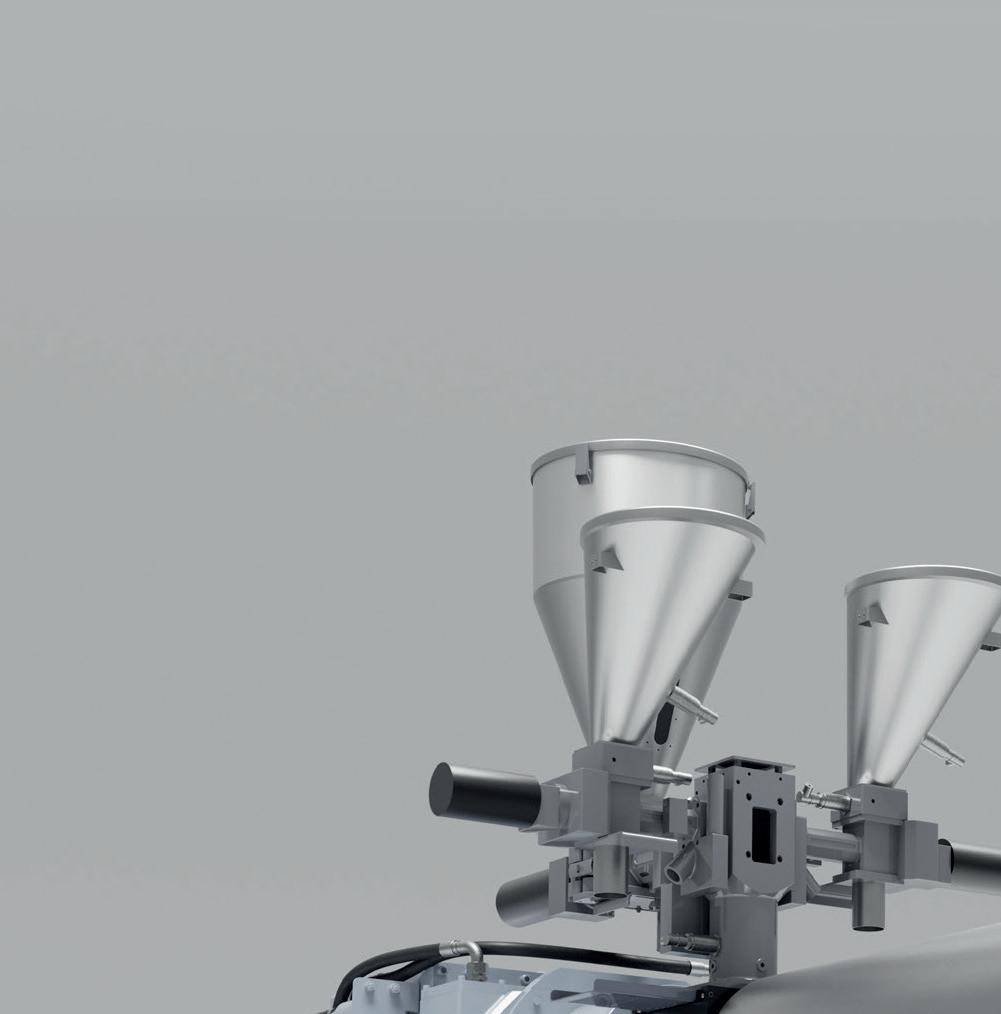
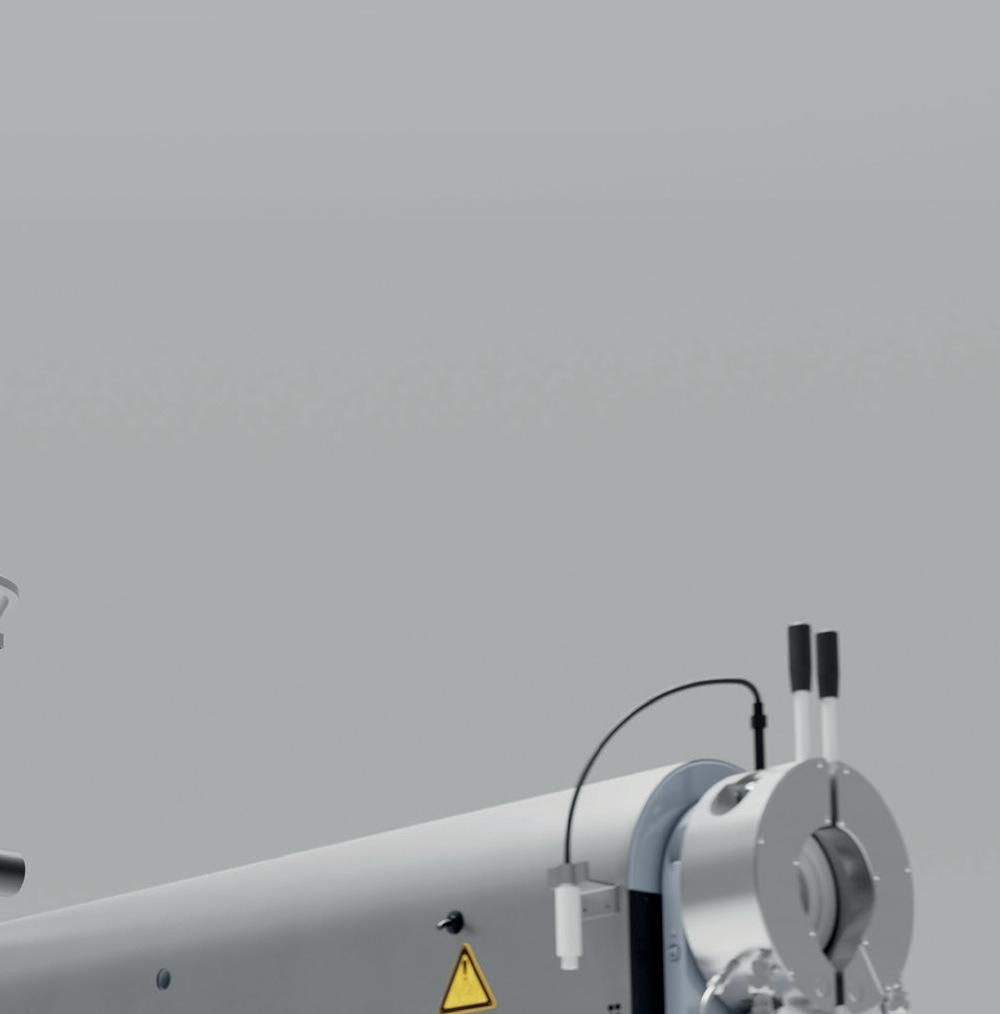
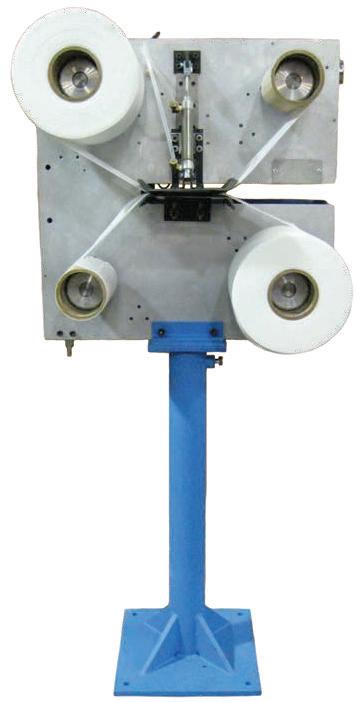
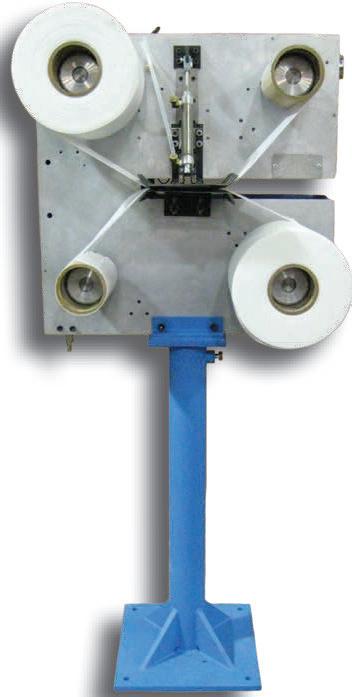
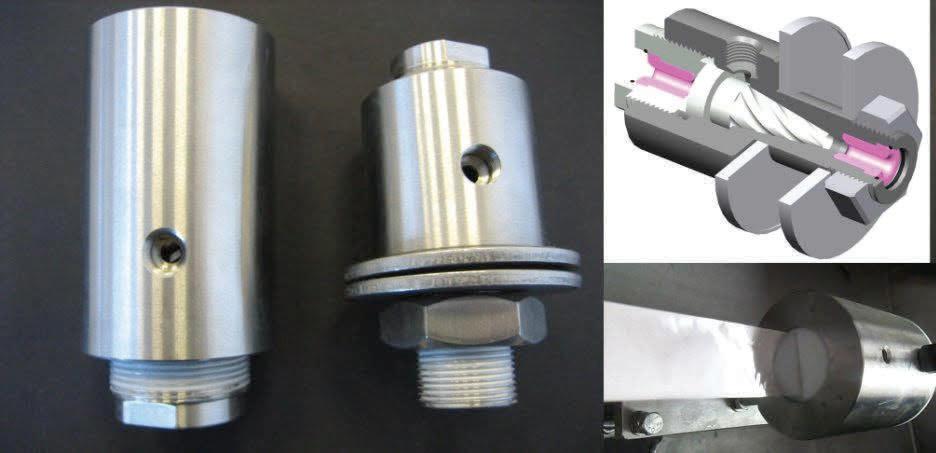
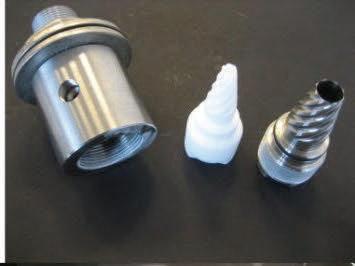
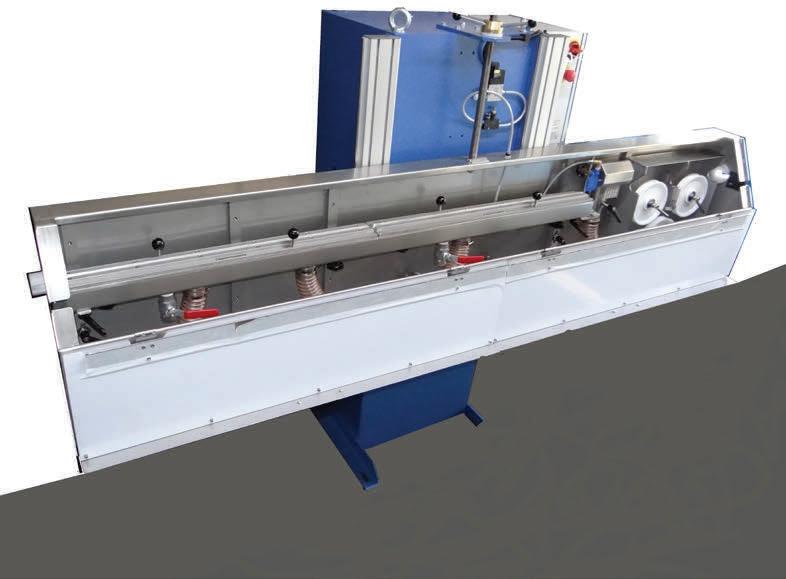
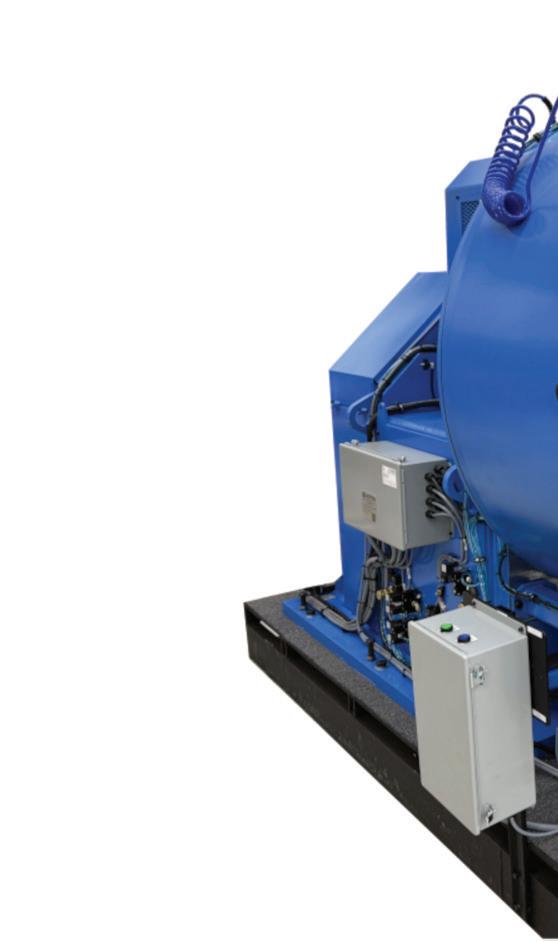
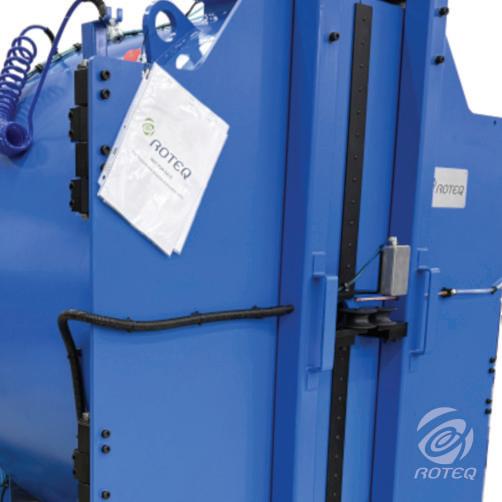
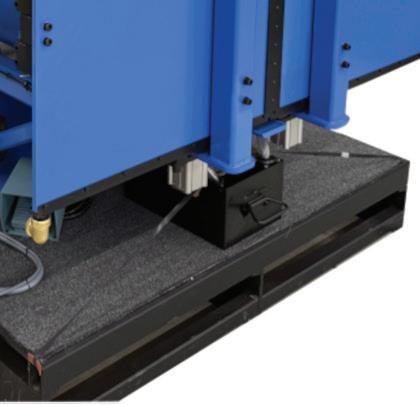
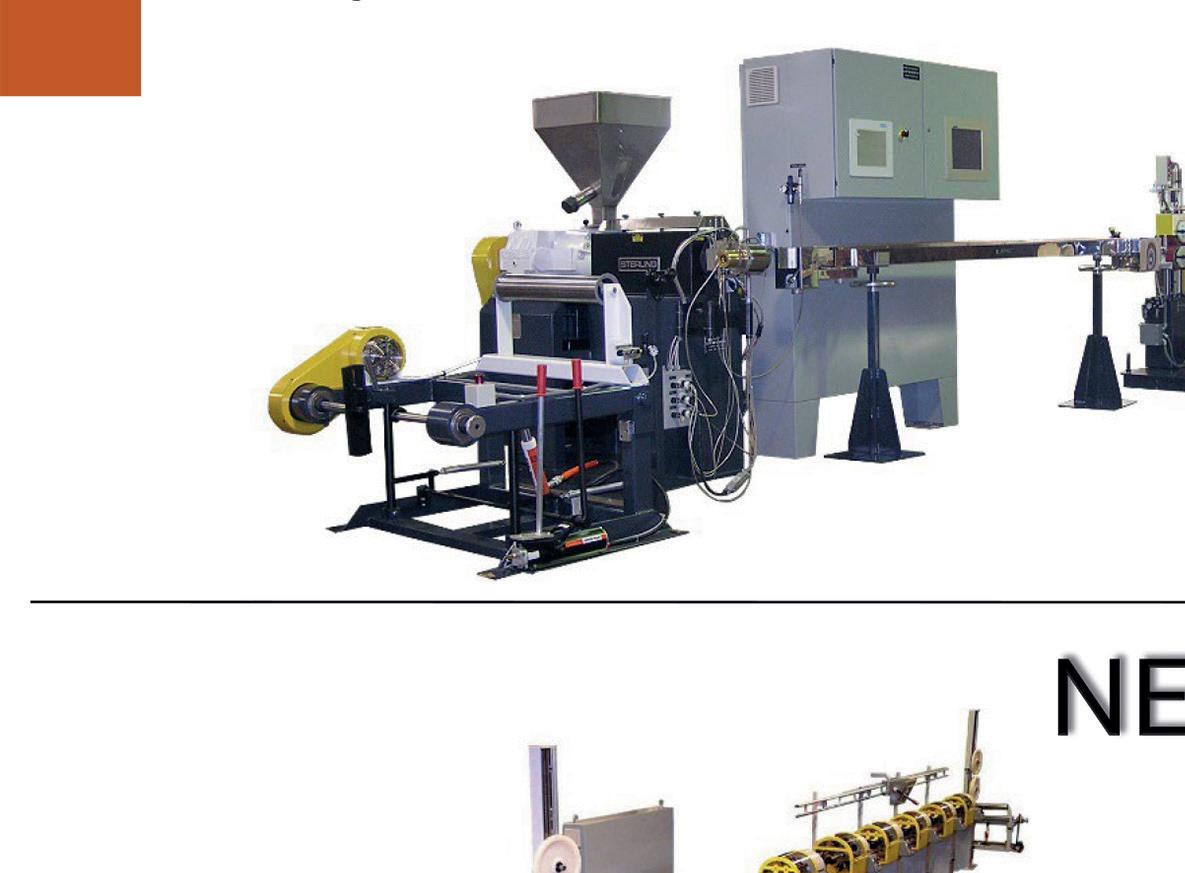
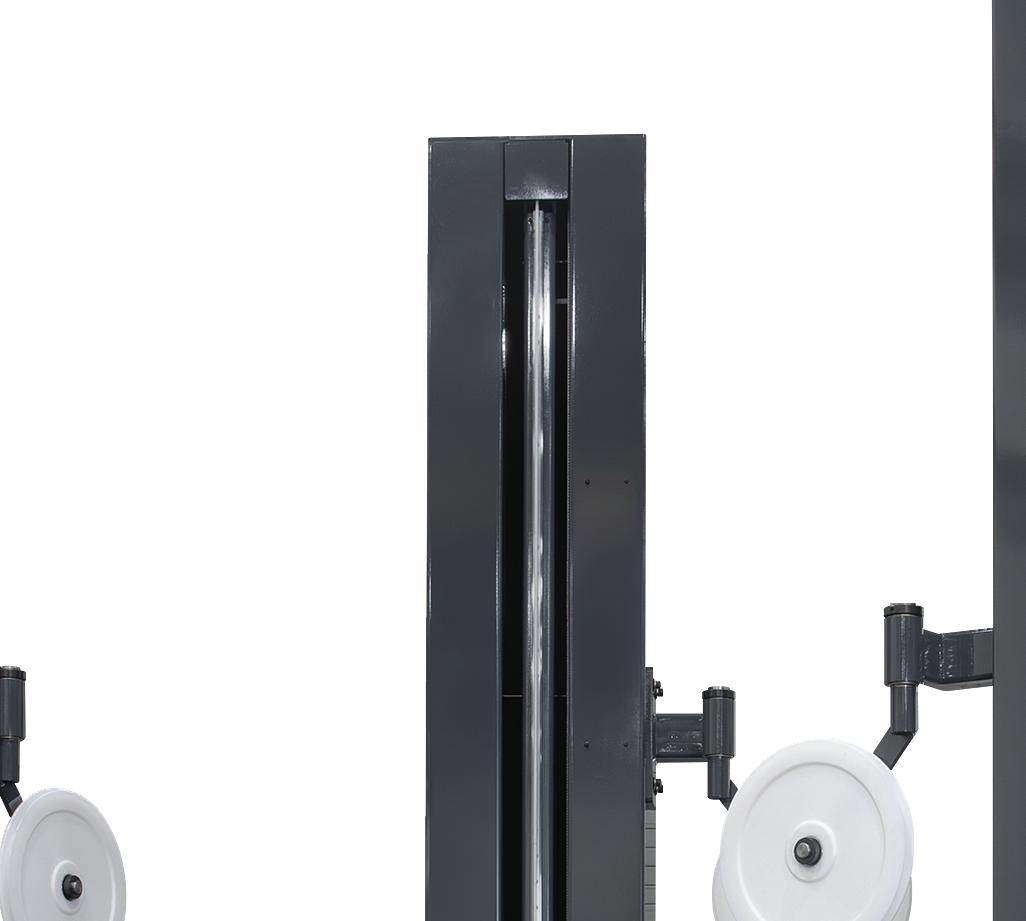
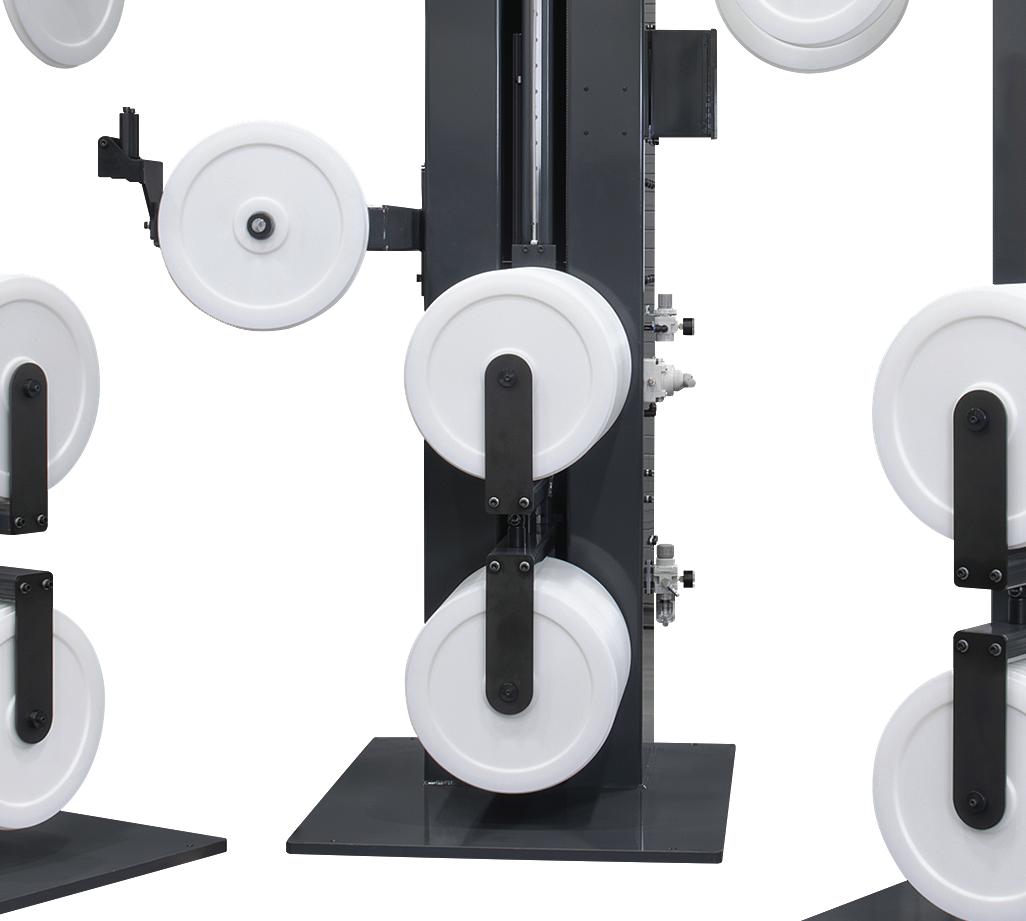
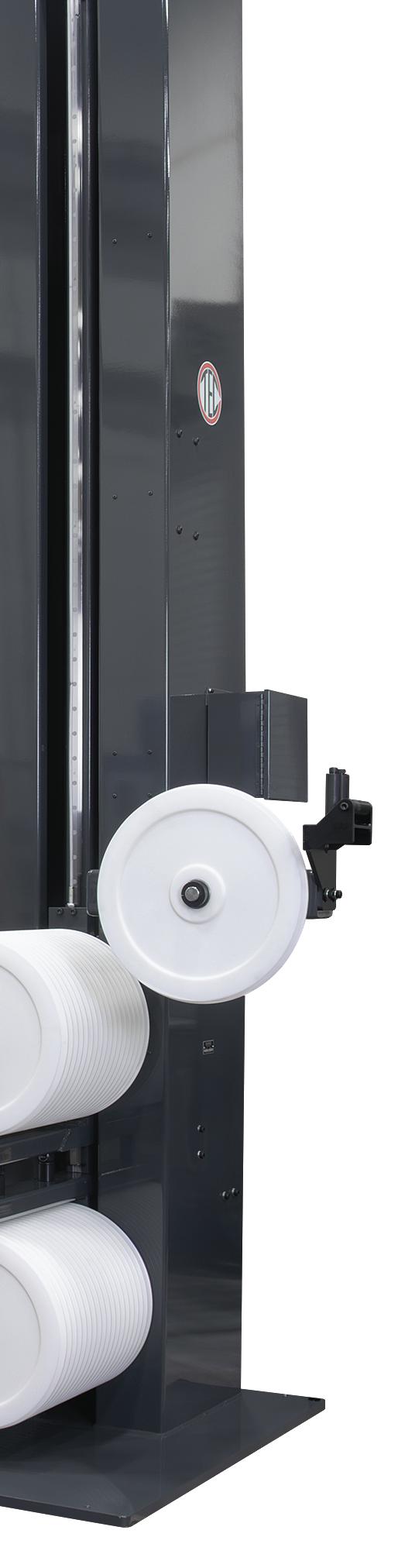
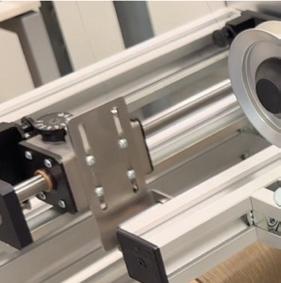
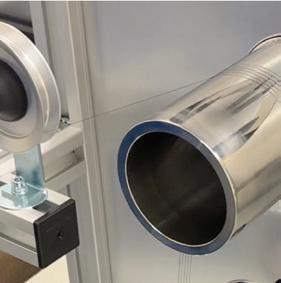
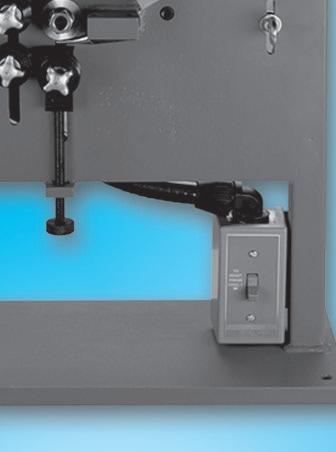
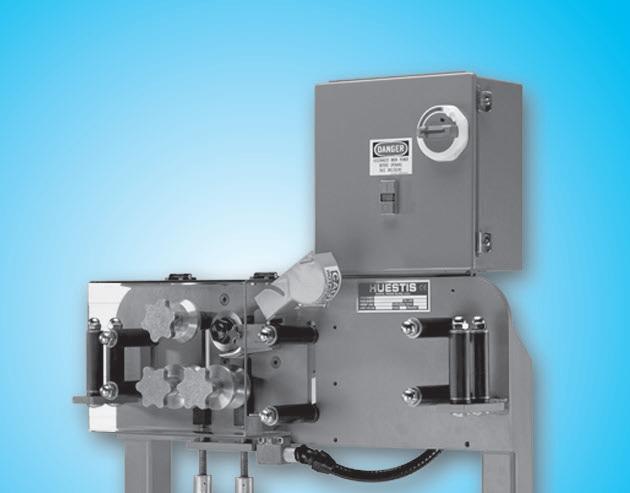
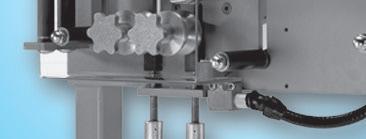
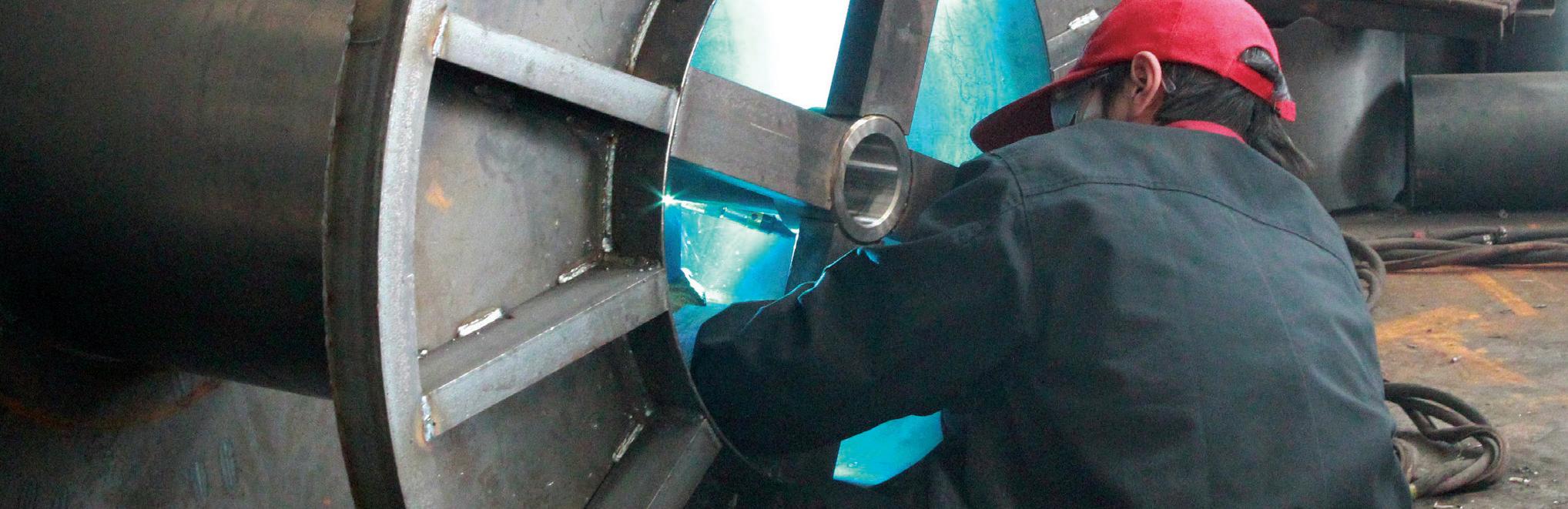
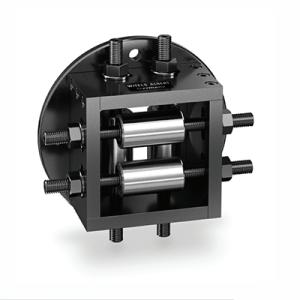
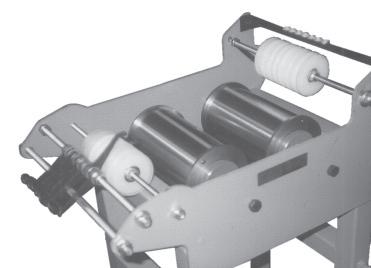
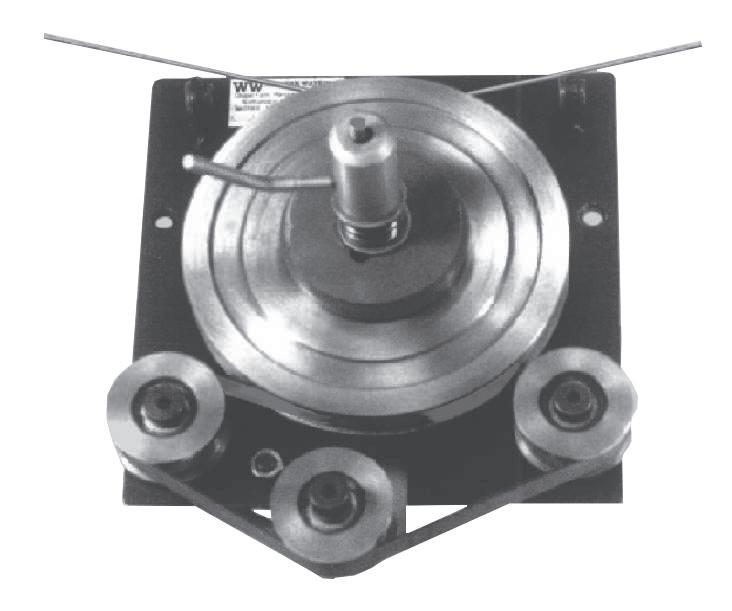
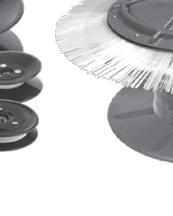
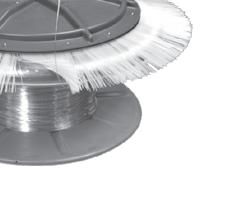
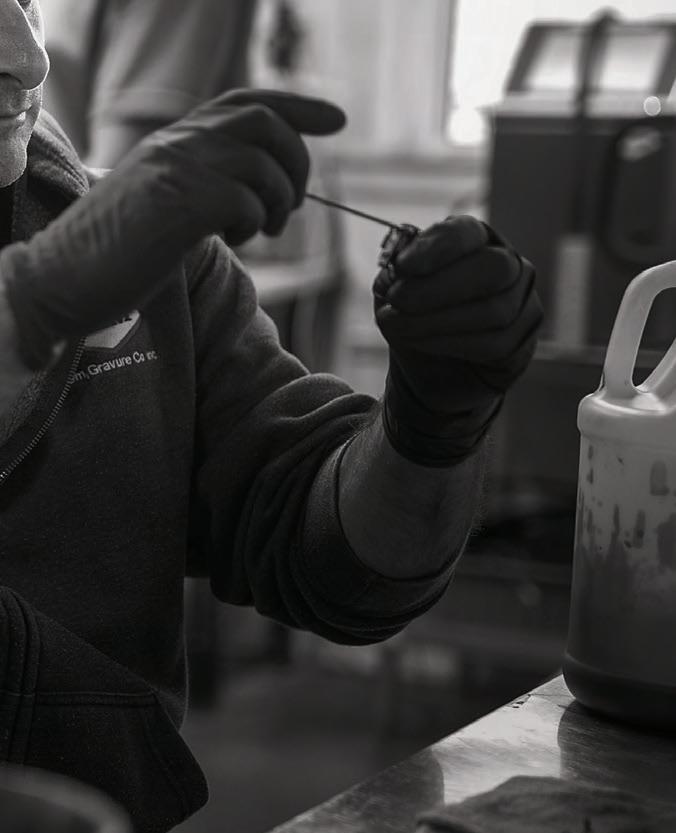
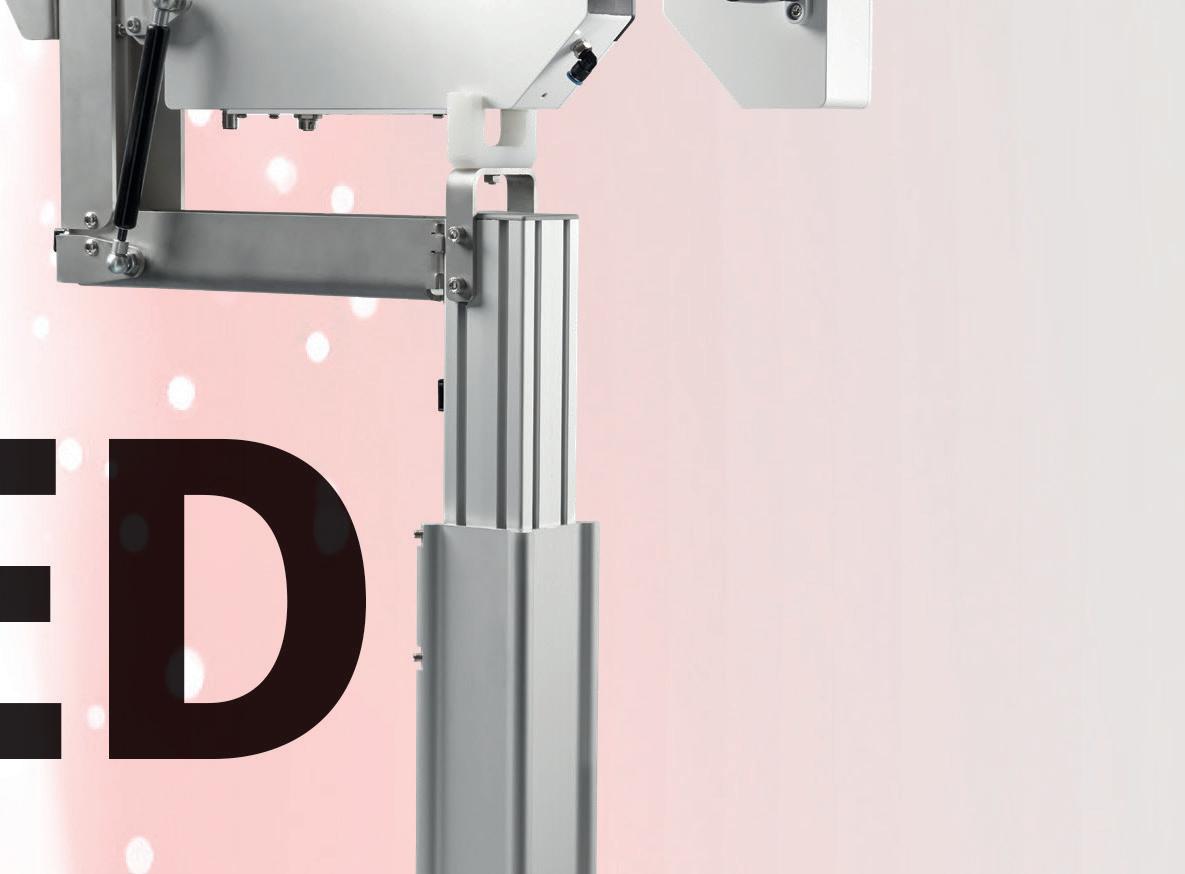
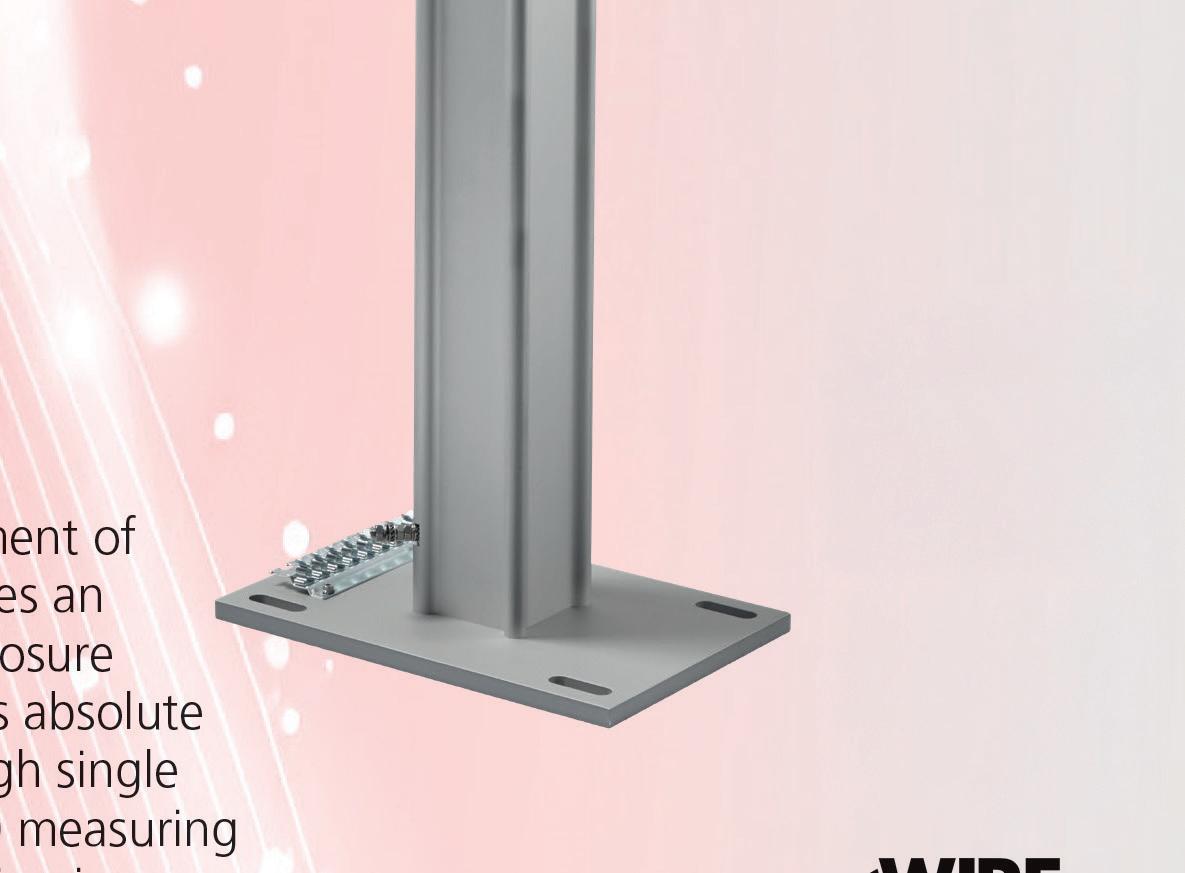
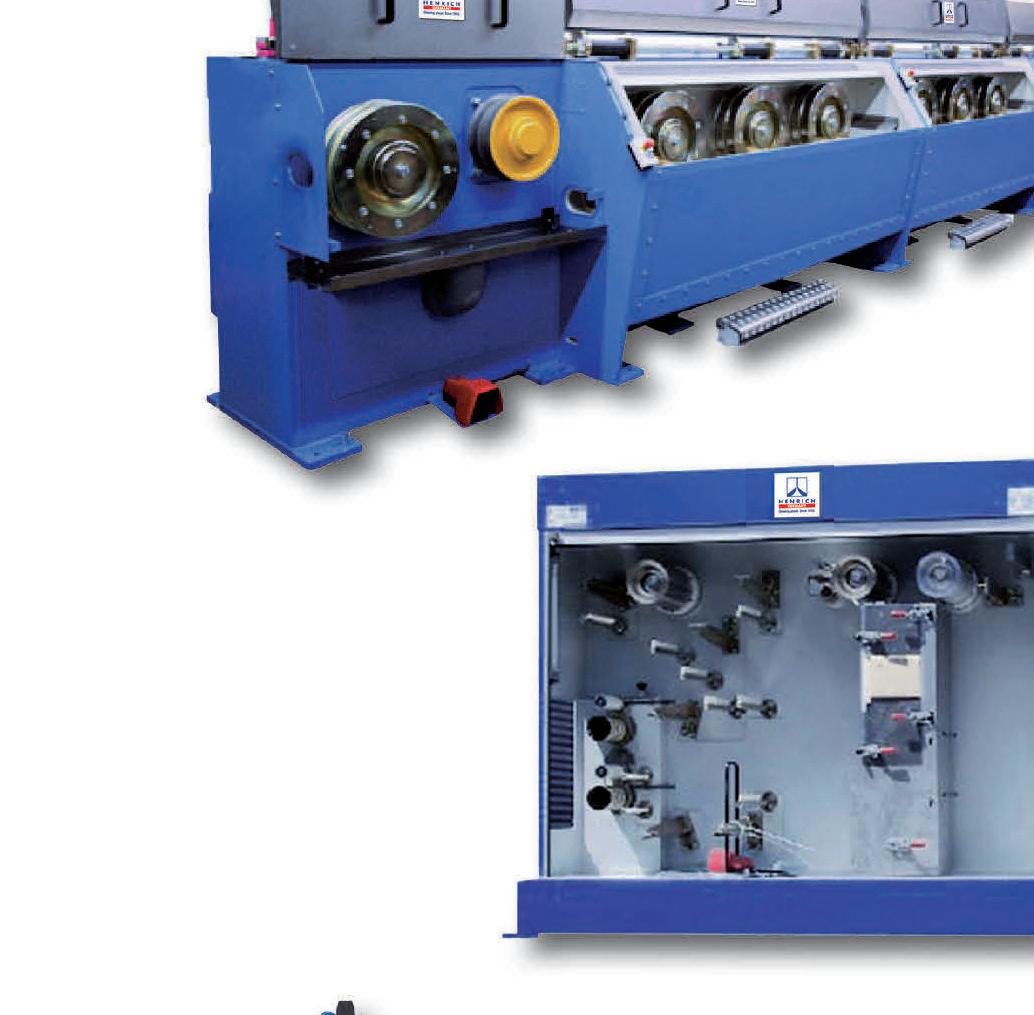
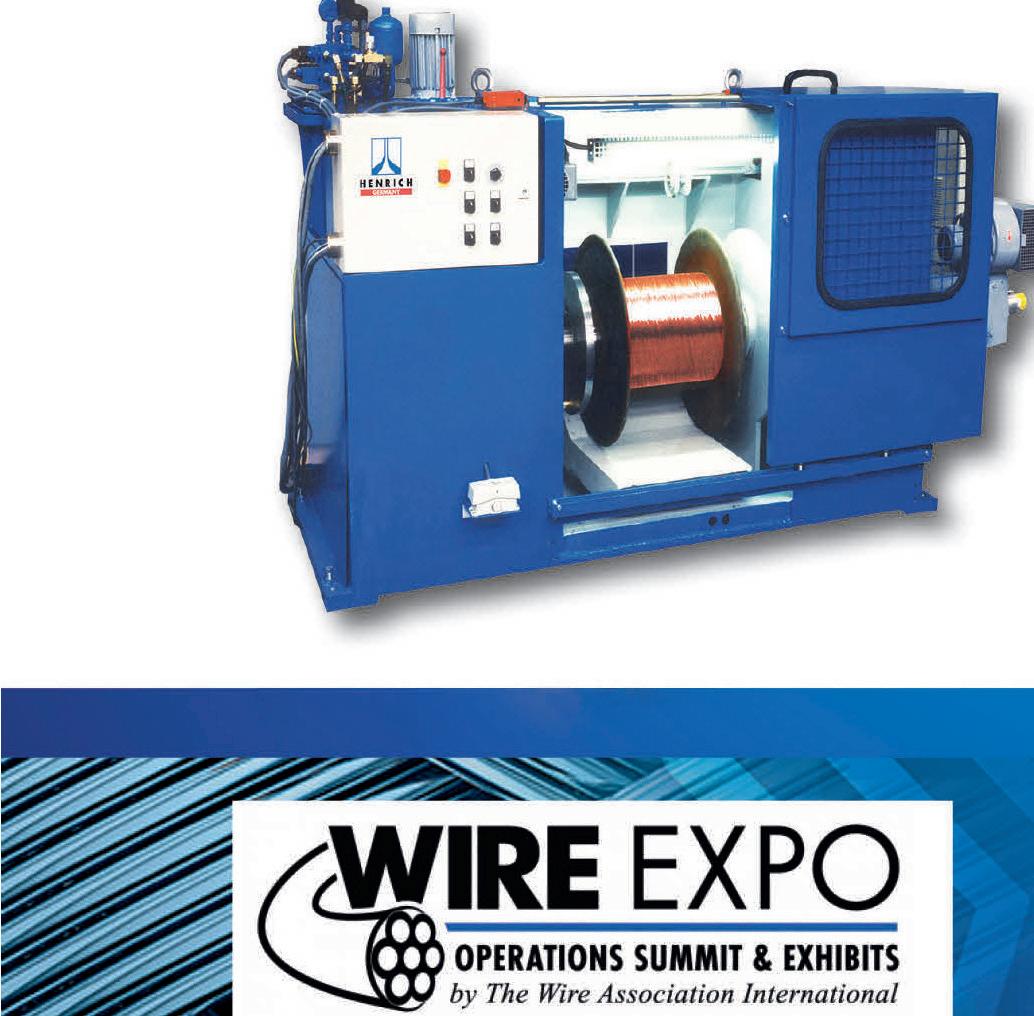
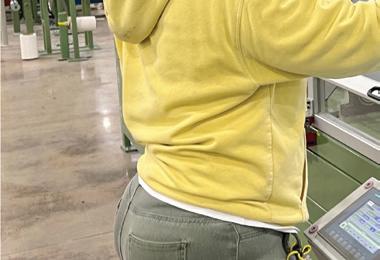
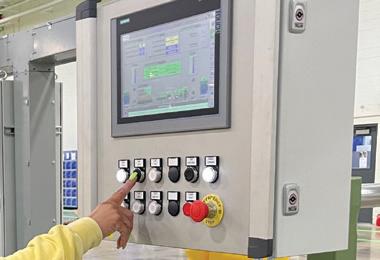
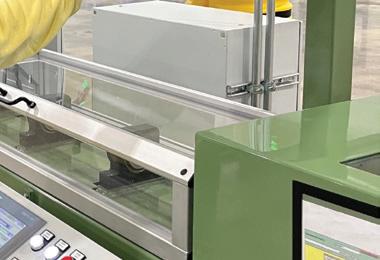
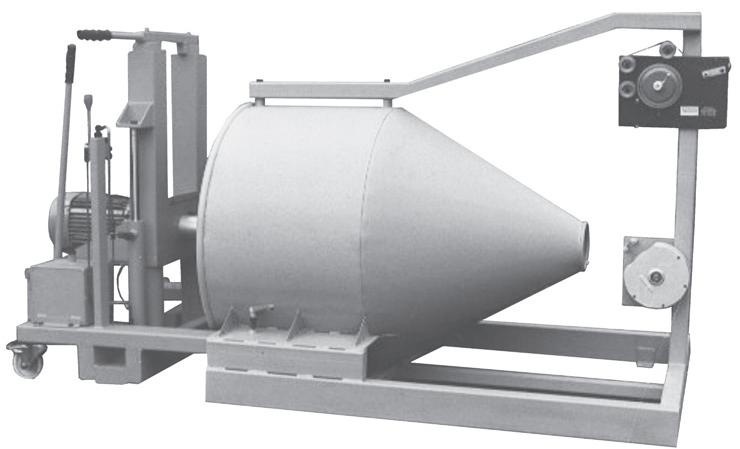
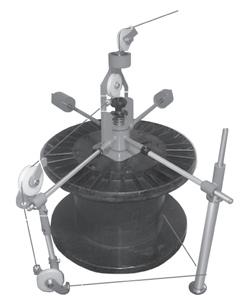
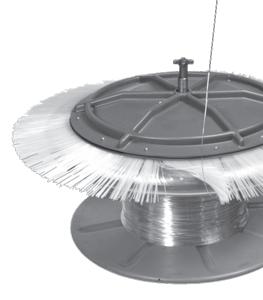
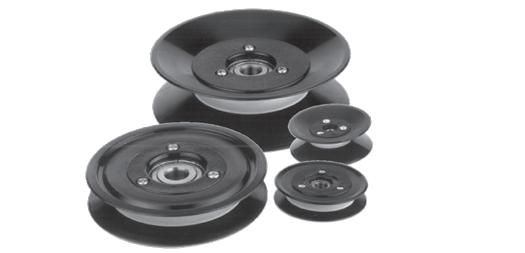
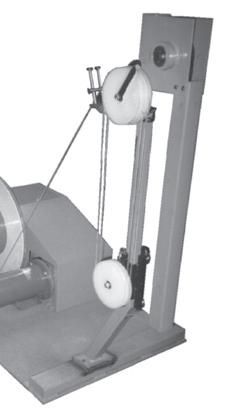
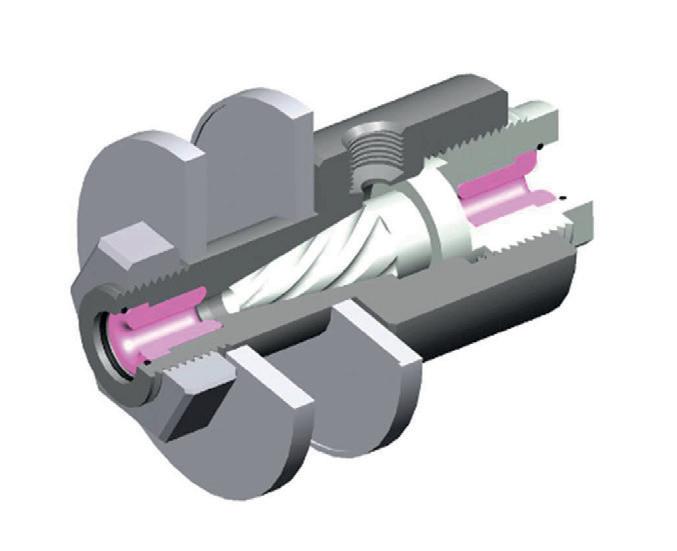
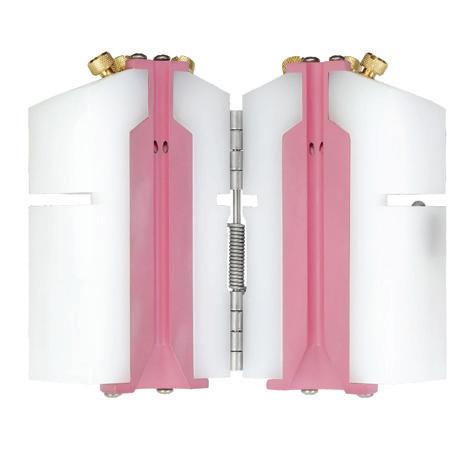
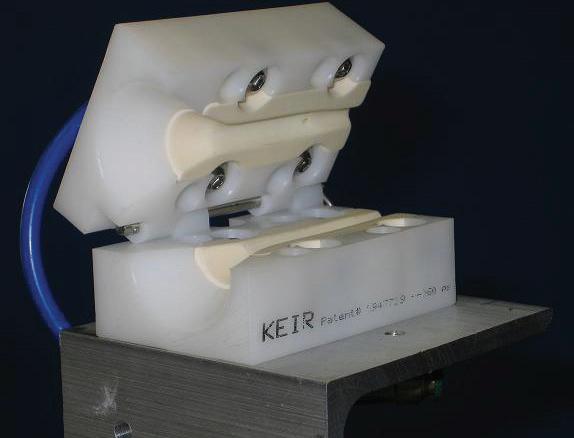
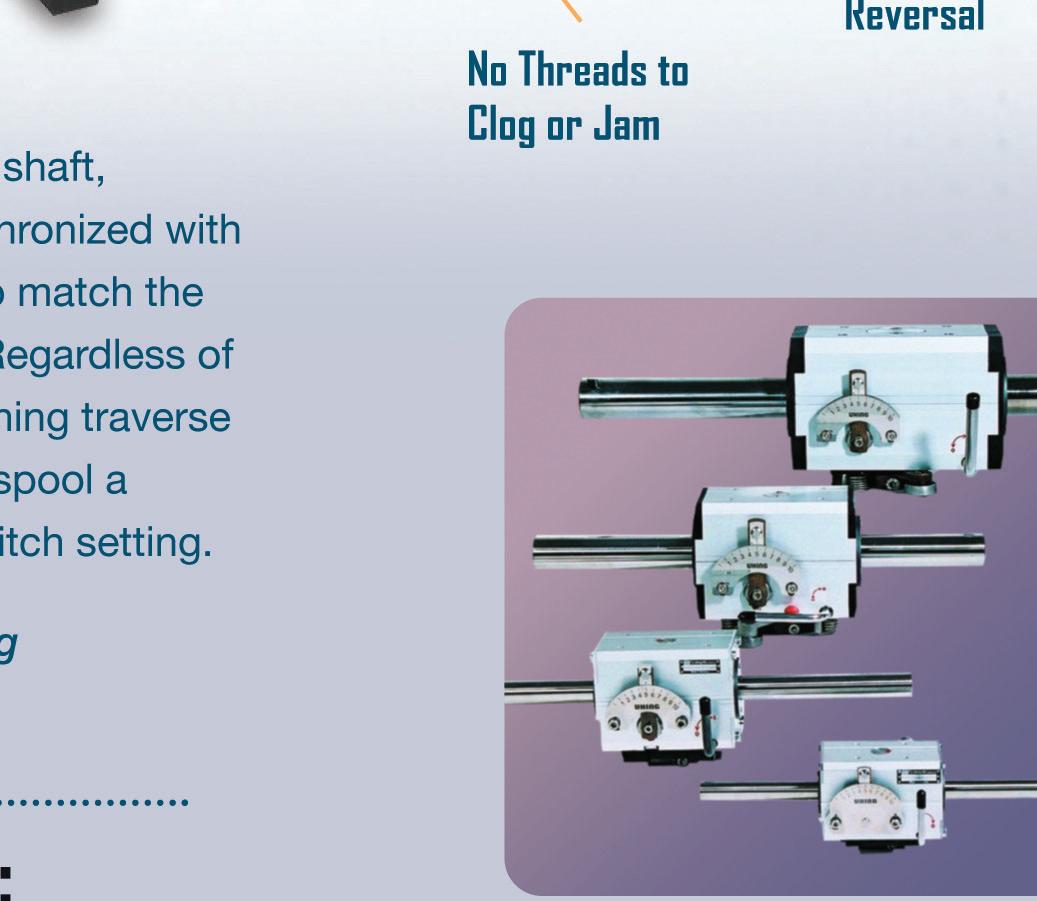
An economical way to remove copper dust, excessive oil lubricant, dirt, and dust from primary wire or strand
CCC LINE CARD
• Stranding & Cabling Lines
• Take-Ups / Pay-Offs / Coilers
• Fully Automatic Re-Wind Lines
• Complete Extrusion Lines
WIRE RANGE: Up to 0.098 in. (2.5 mm.) diameter
MAX. F/M: Approx. 8000 ft./m.
MATERIALS: Ferrous or nonferrous material / tinned, bare, or plated
FLOOR SPACE: 18” x 27”
• Reduce Spark Faults
• Improve Insulation Bond
• Easy to Install
• Improve Insulation Concentricity
• Increase Pre-Heater Sheave Life
• Environmentally Friendly
• Ultrasonic, Wet Blast, and Various Mechanical Cleaning Systems
• Drum Packers, Air Wipes, and Taping Lines
• Forming / Welding / Sizing Lines
• Wire Drawing and Shaving
• Semi and Auto Re-Spooling
and Canada by CCC.
At COPPERWORKS™ , we’re easy to do business with—and that means more than just supplying copper. It means you have a copper partner who shows up and helps you stay ahead of challenges, every day. From our collaborative approach to our 99% on-time delivery rate, our can-do culture isn’t just lip service. It’s a difference that makes the impossible, possible.
This is Where Copper Works.
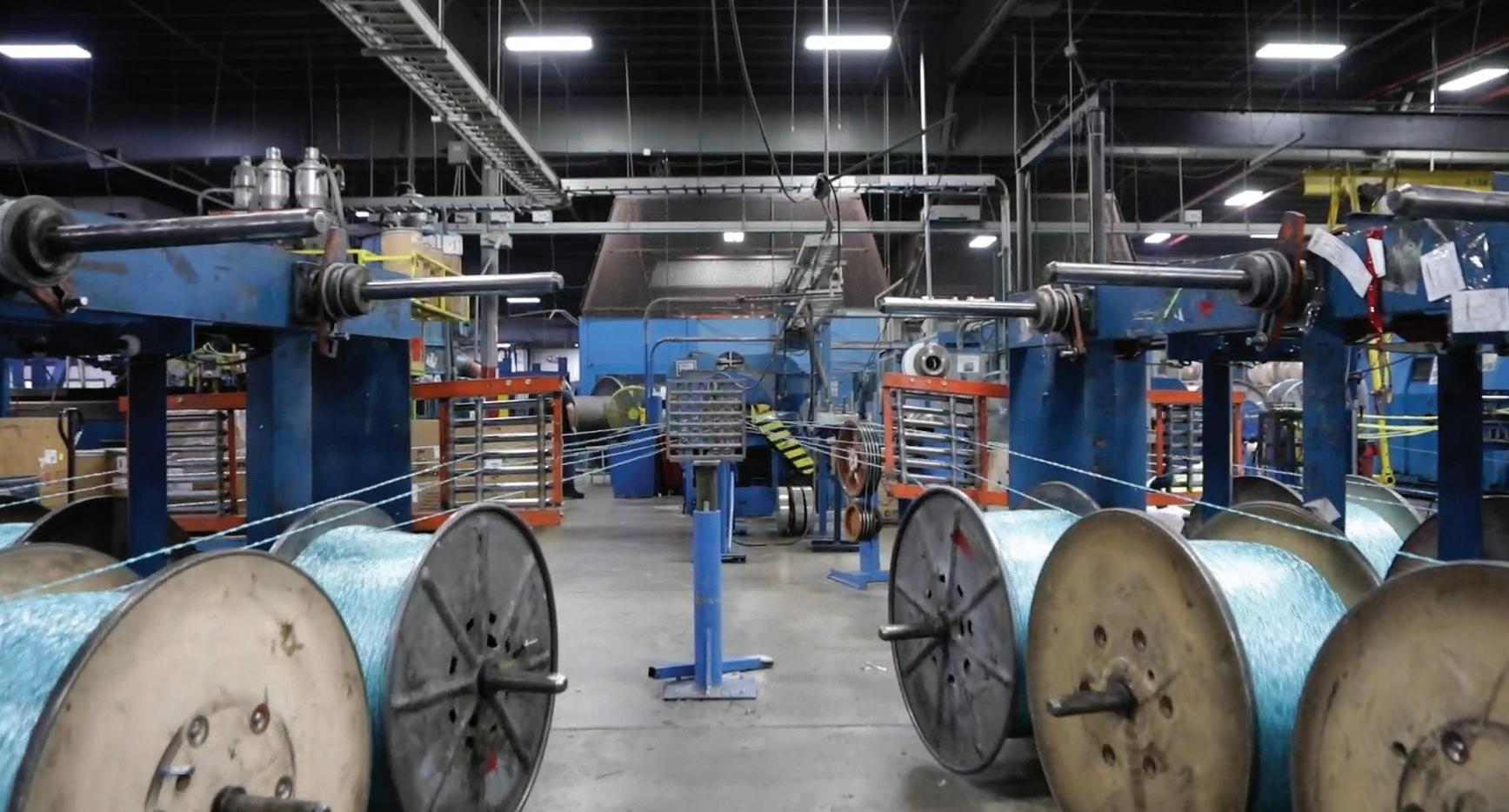
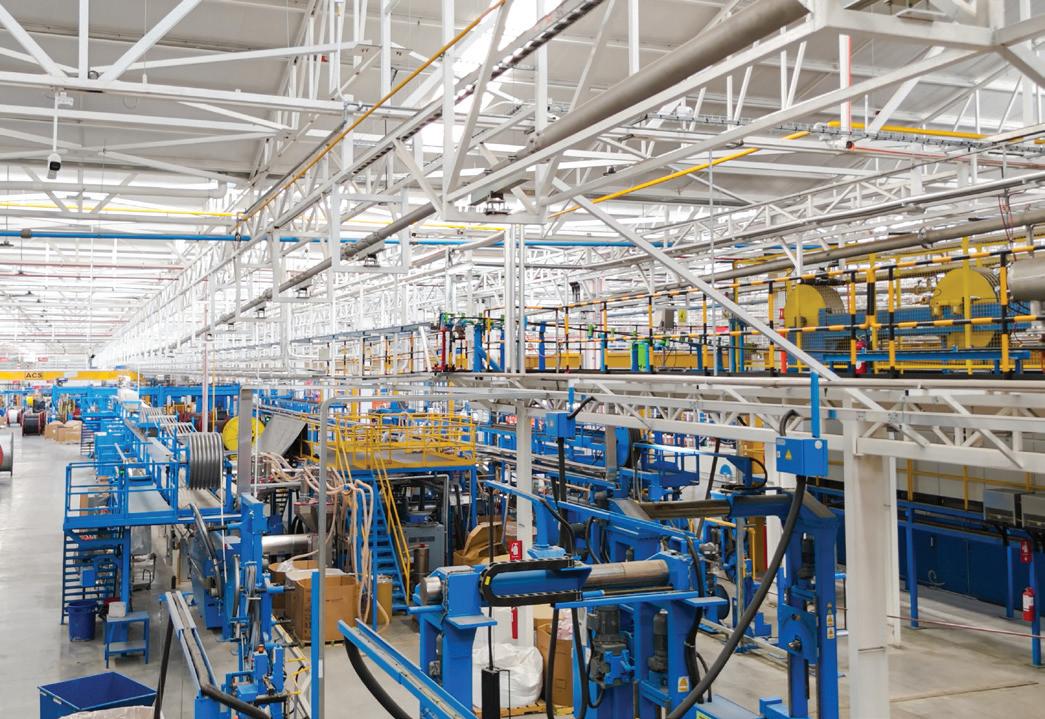
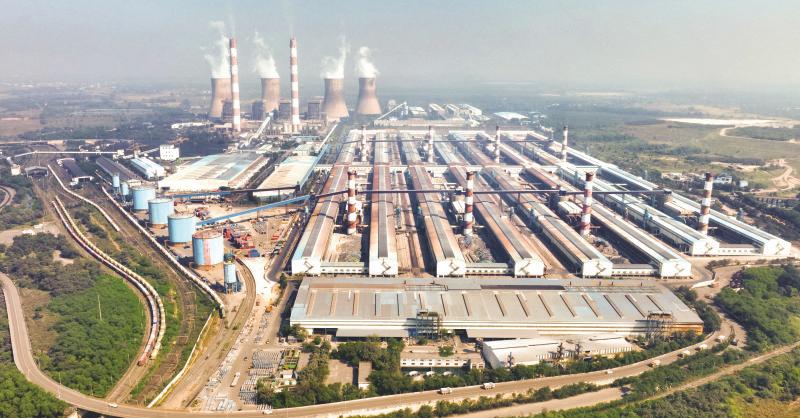
An inside look at Viakable’s Monterrey Energy plant, located in Nuevo León, Mexico. The state-of-the-art facility, dedicated in 2025, makes medium-voltage cable. The company says the plant features the two longest catenary lines in the Americas.
2026
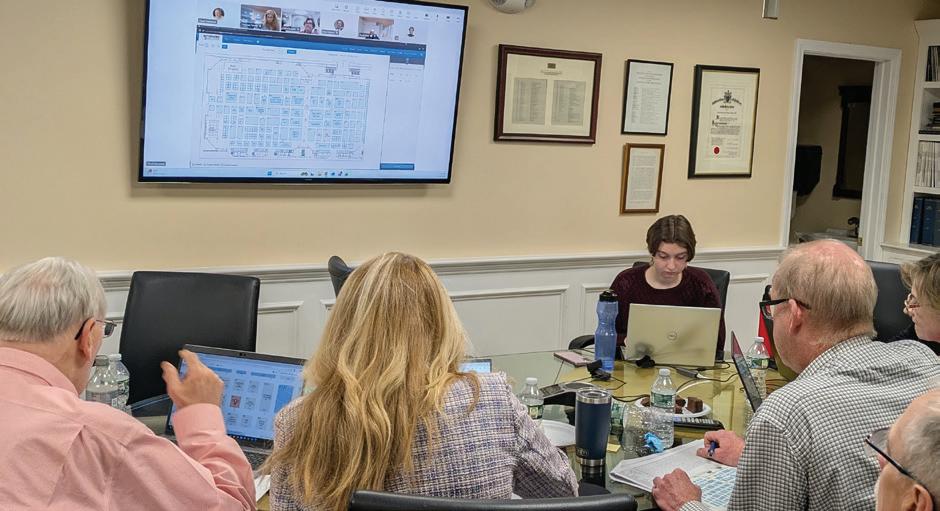
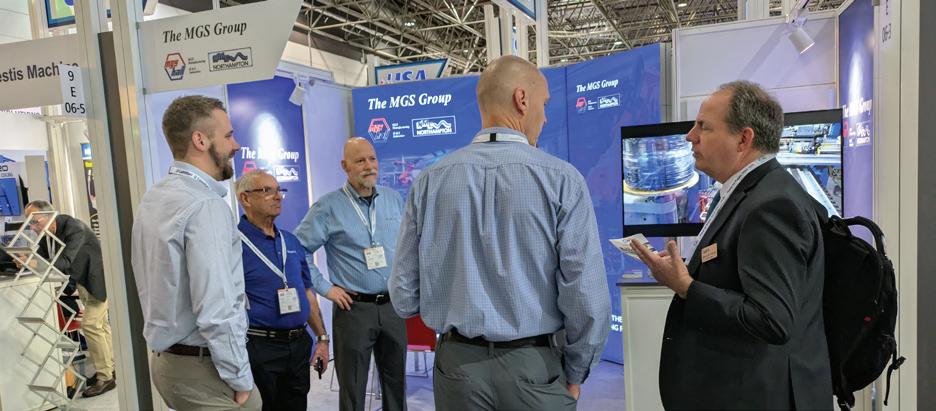
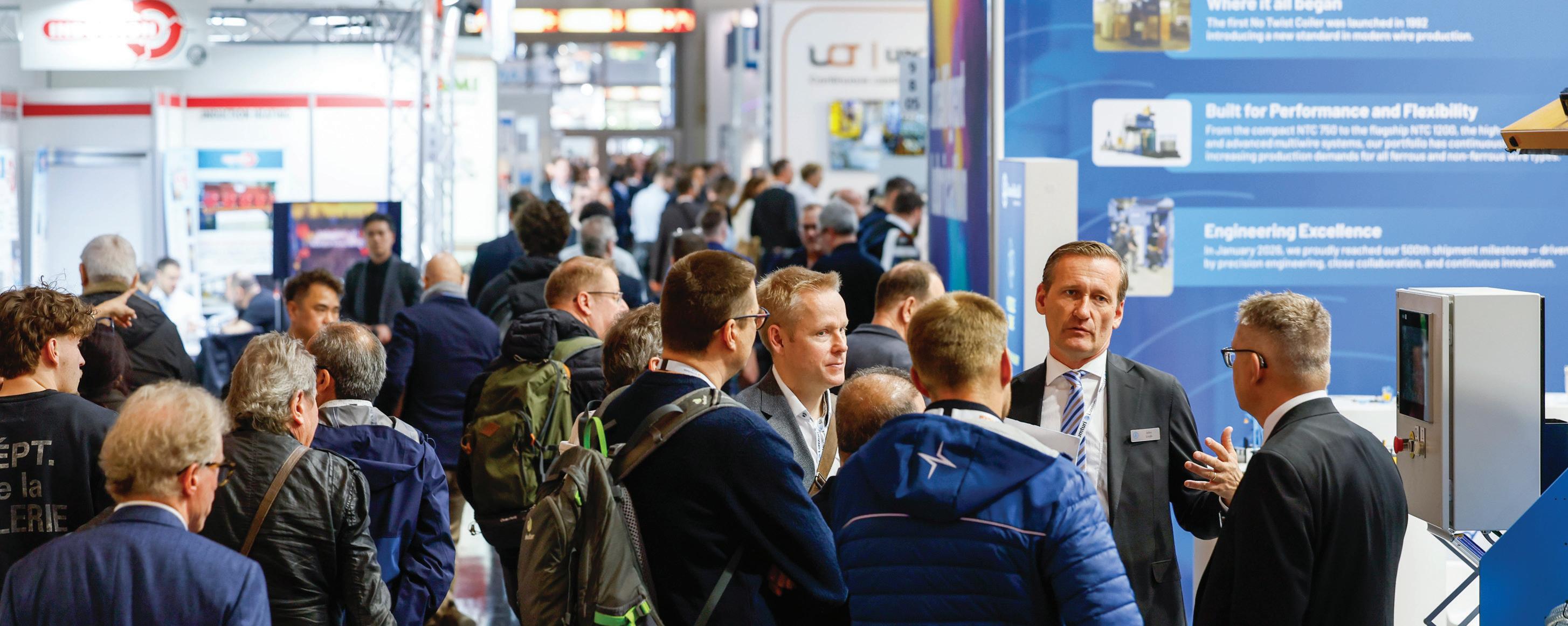
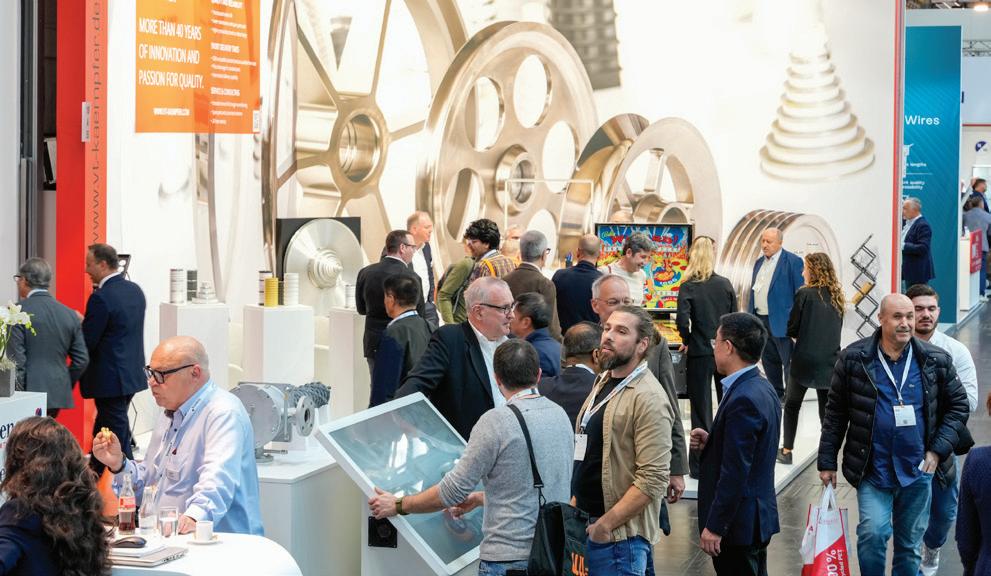
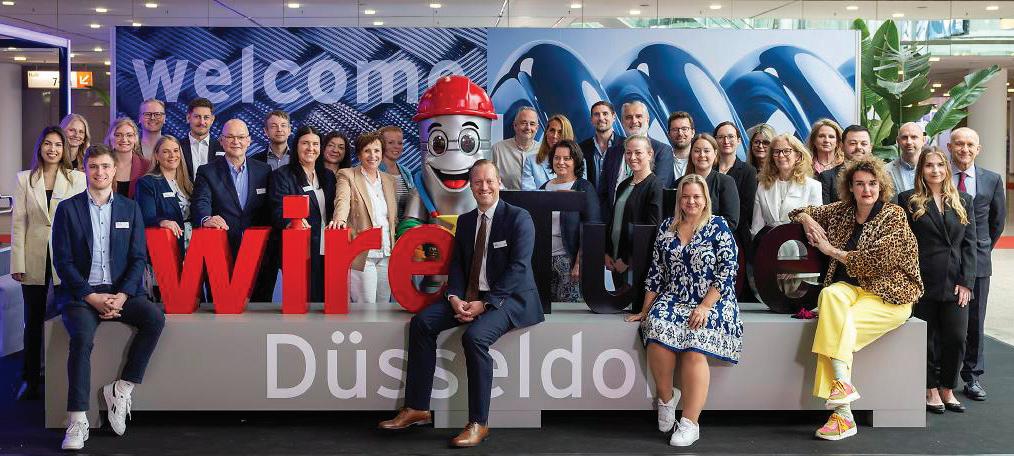
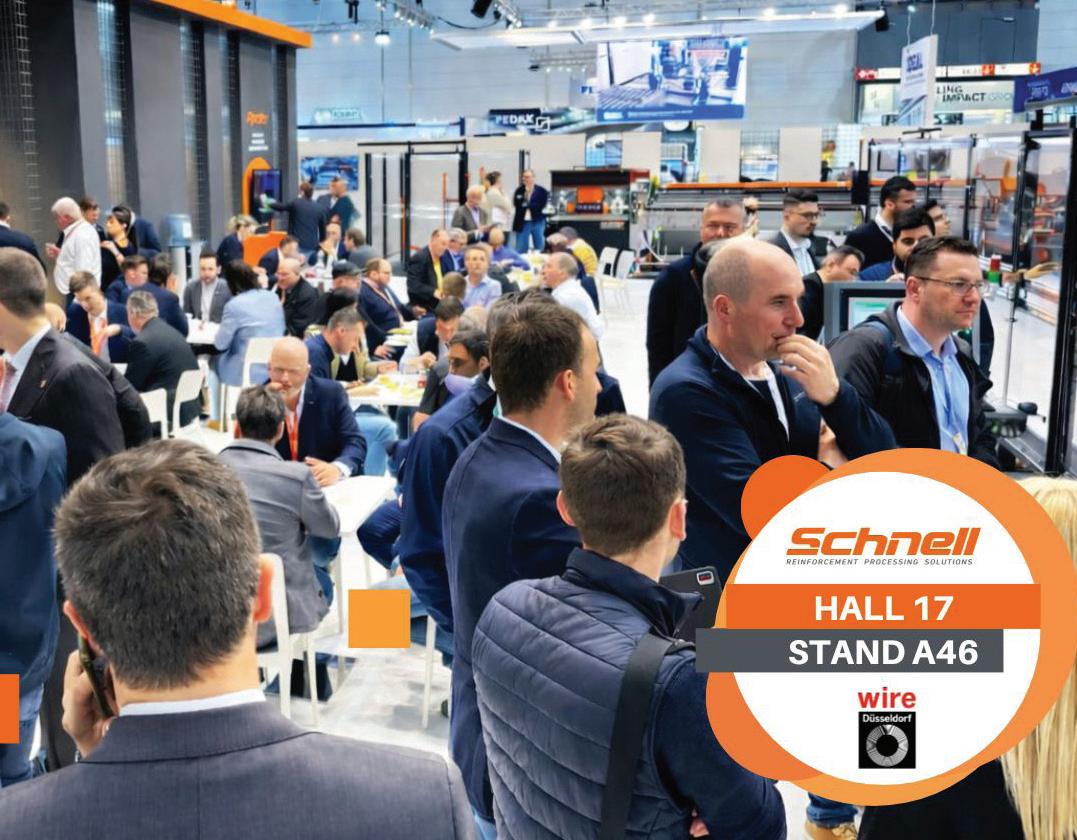
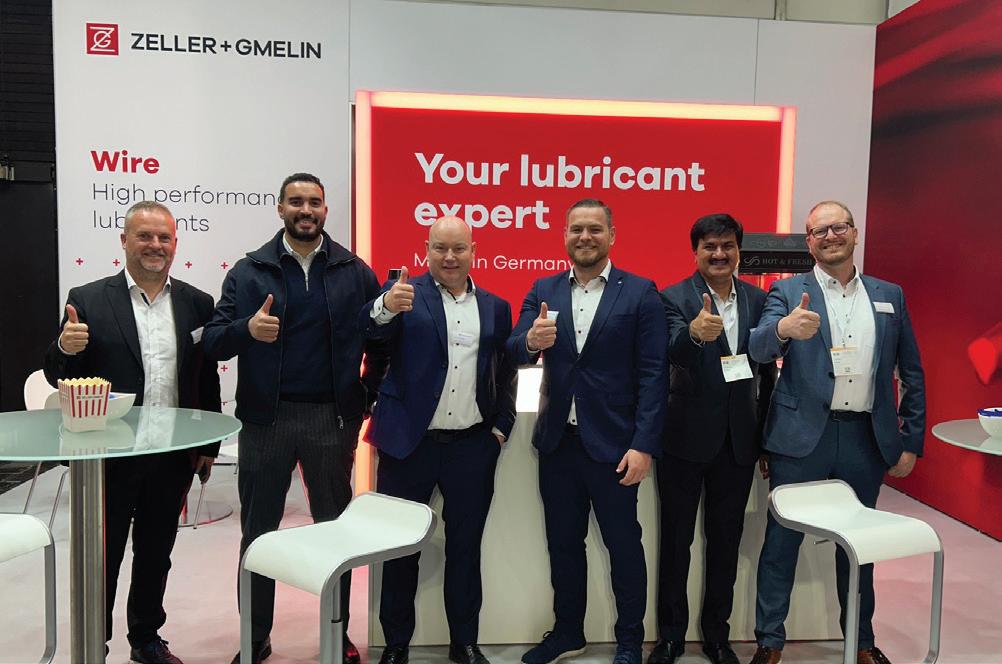
Even an unexpected short strike by Lufthansa could not ground the energy on the show floor at the Messe Fairgrounds.
Emerging sectors could mean opportunity for operators. Are their people, plants and processes ready to capitalize?
Sourabh Singh Panwar, Nitish Kumar Singh and Raj Bahor Yadav
• Feature: Equipment at wire Düsseldorf 2026
• Event wrapup: Wire Expo 2026
• Sector Update: Extruders
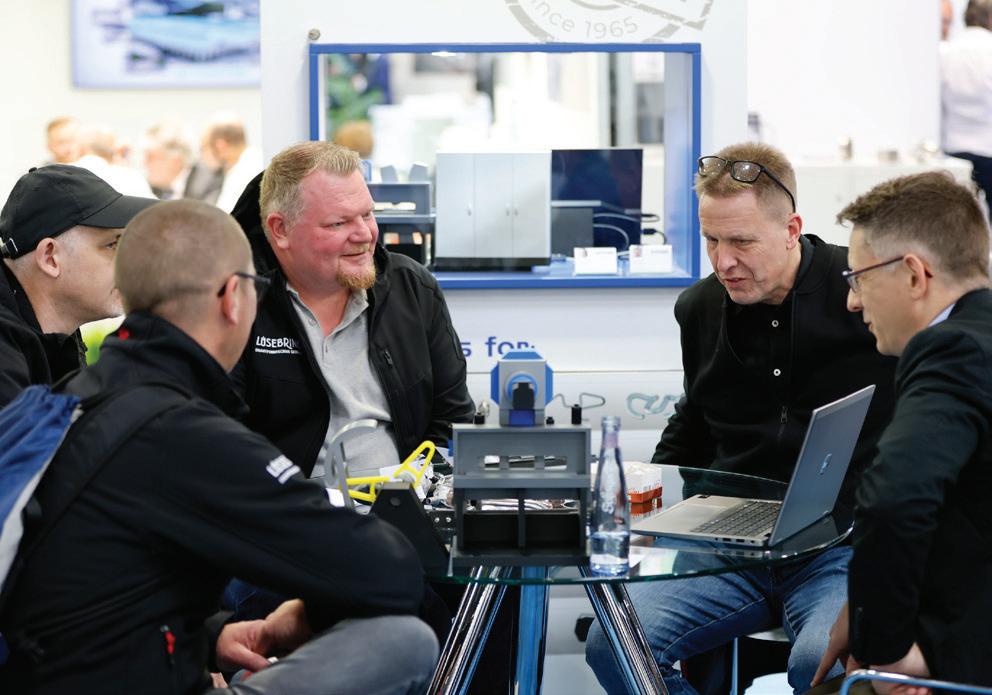
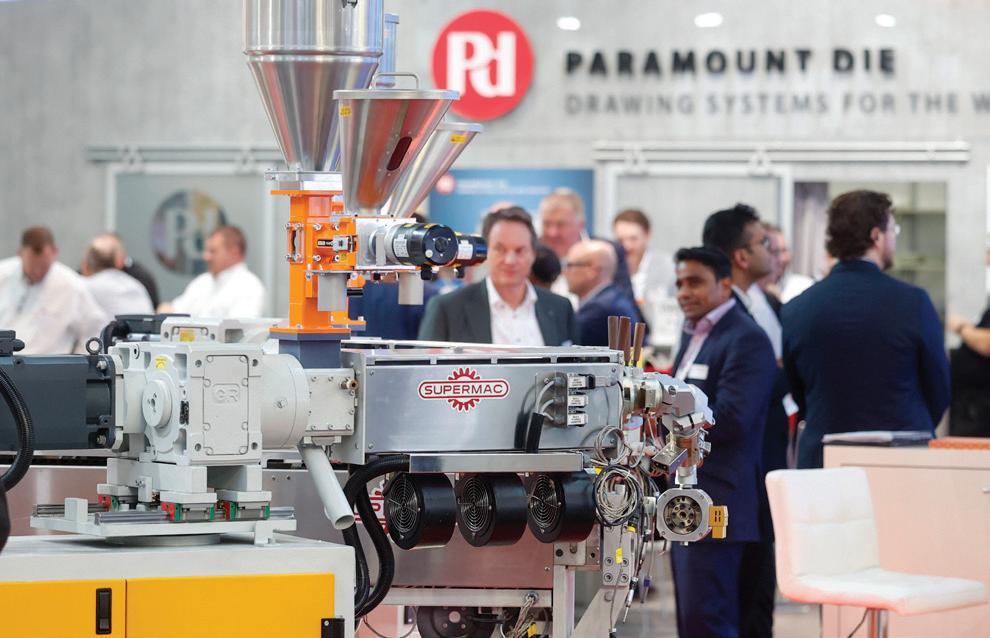
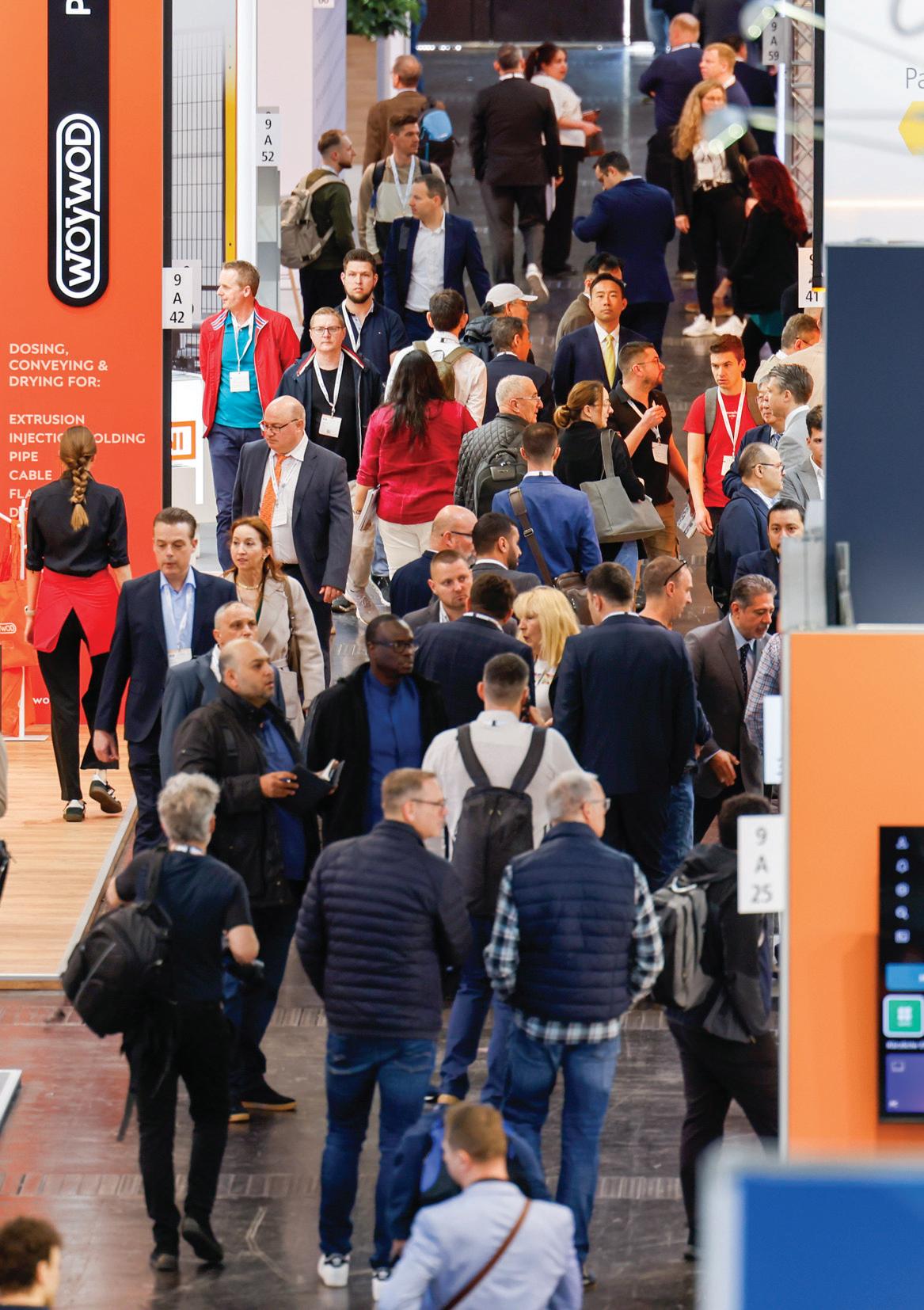
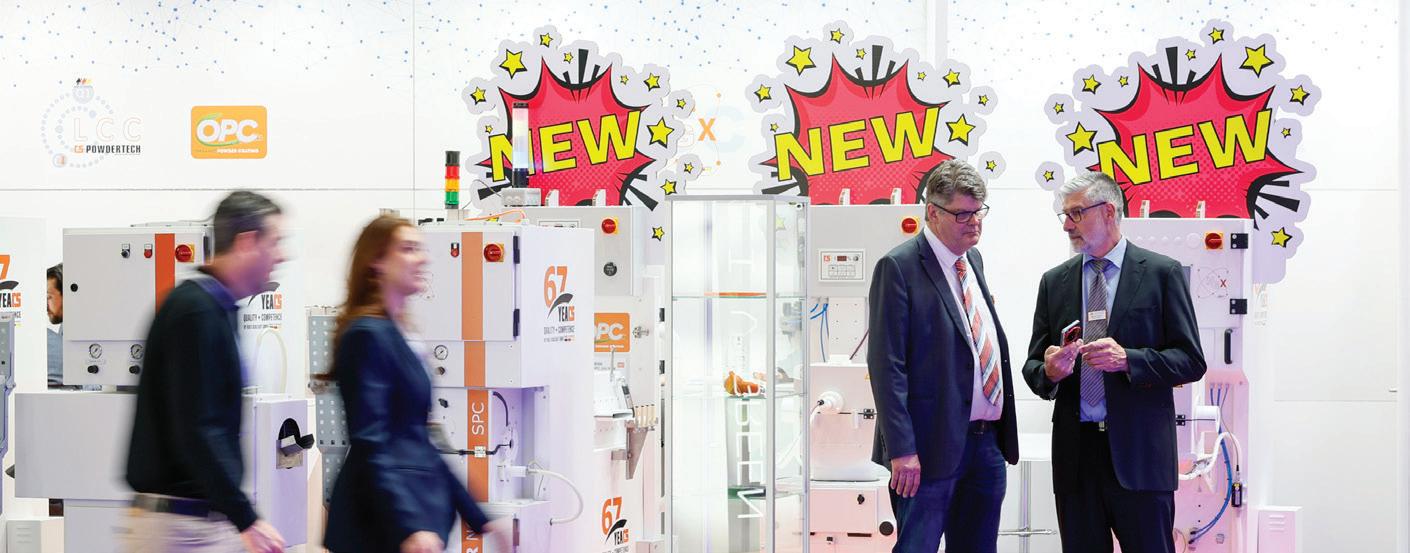
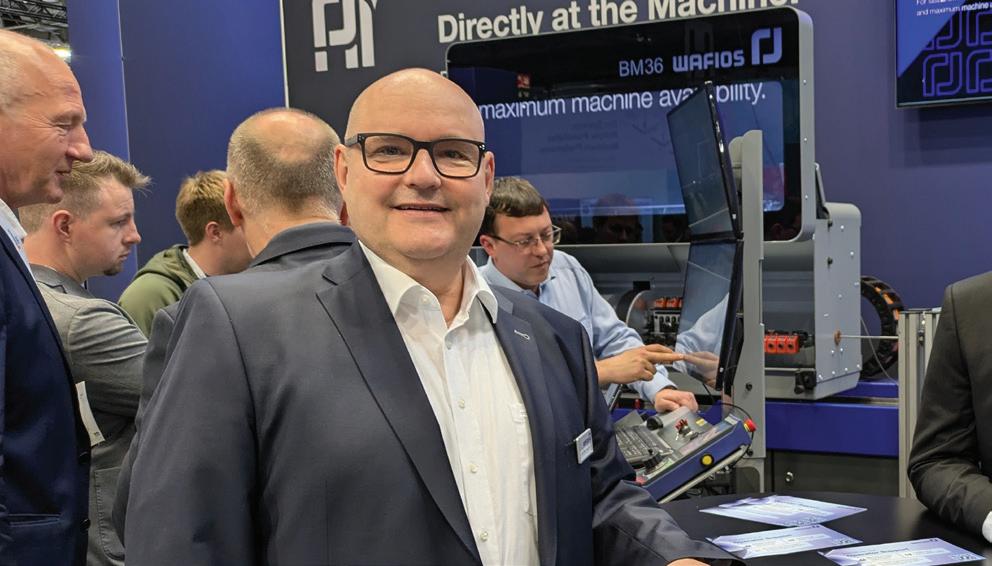
wire Düsseldorf continues to be the place for the industry to gather ... and it matters
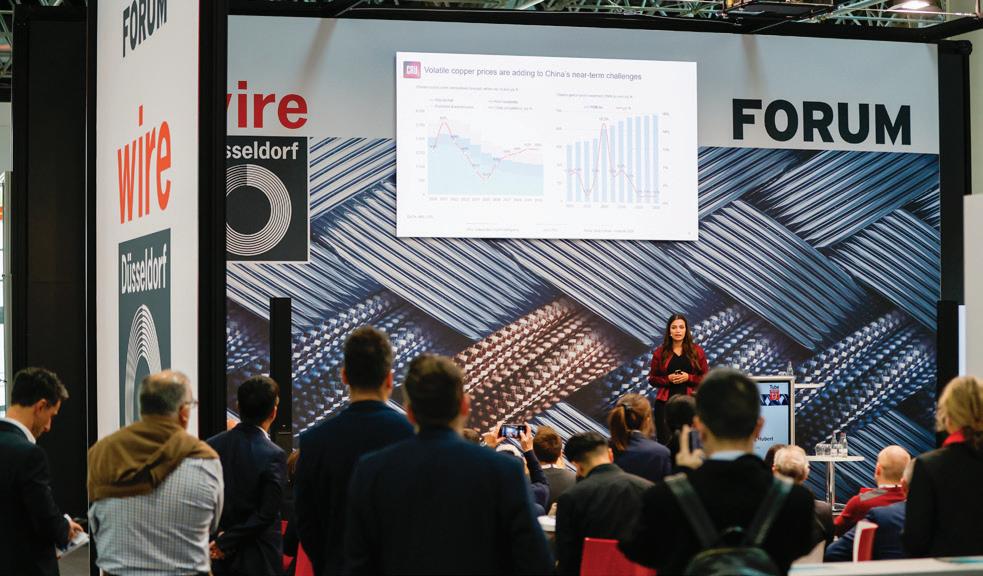
The Messe fairgrounds remain the industry’s most important meeting point, where exhibits bring opportunity and insight together. Companies build relationships, advance deals and test new ideas, sharpening their position in a changing global market. The cost of being there is considerable—but the price of not being there may be even steeper.
Manufacturing Success: How some operators plan to meet the moment
Electrification, digitalization, and data centers are transforming wire and cable from a steady, volume business into a performance-critical backbone of the new power economy. This feature explores how a few leading manufacturers define “manufacturing success” and whether their plants, people and procedures are up to the test.
Interlock Strip Armouring:
New and Improved V24 Model! 2 inch / 50 mm Machine
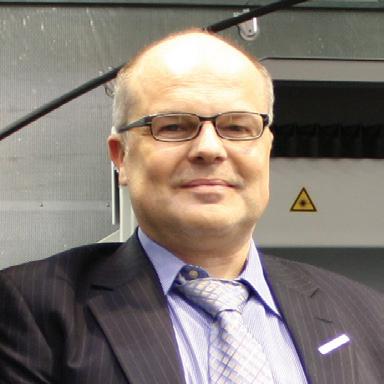
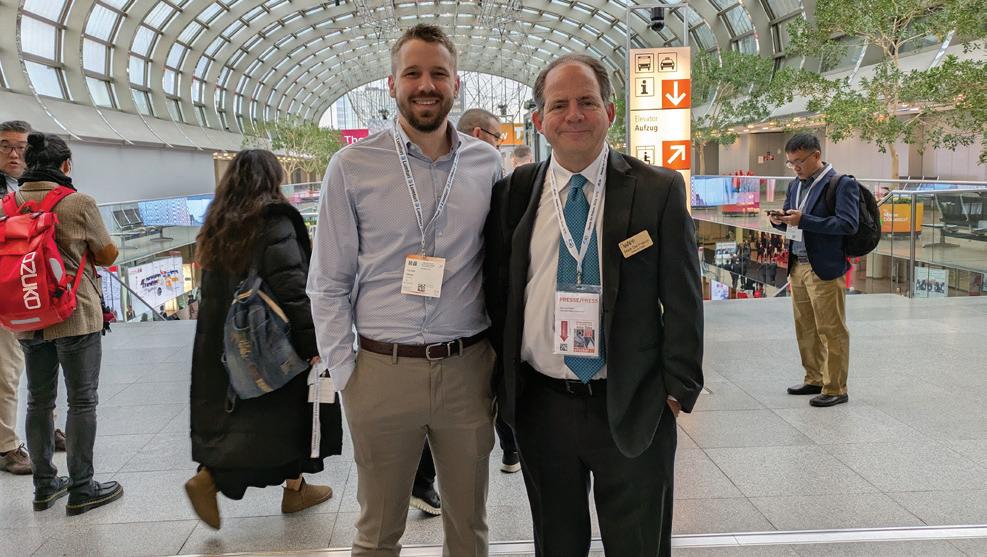
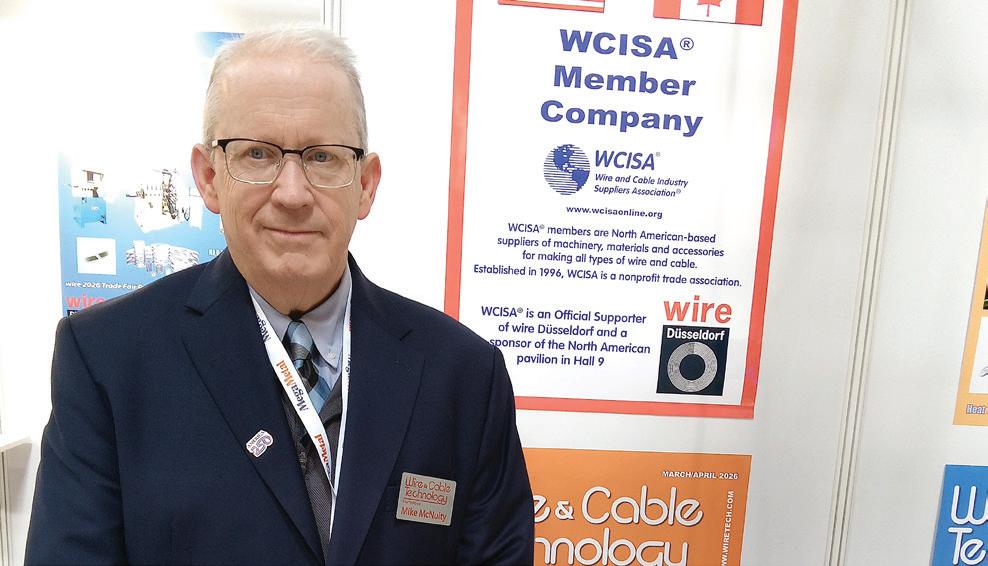
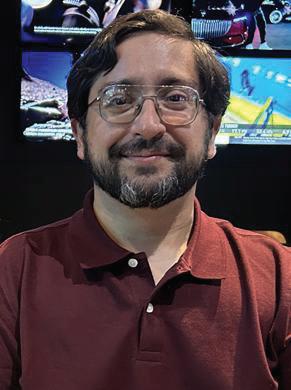
The May issue marks my first as Wire Journal International’s new Editor-in-Chief. I bring to these pages a deep background of journalistic and publishing experience, most recently as Editor-inChief of North American Windpower, covering utility-scale wind power and offshore wind.
While I’m new to WJI, I’m not a complete neophyte to wire and cable. My father had a long career in wire and cable and held leadership positions at several Connecticut-based manufacturers, such as Whitney-Blake Co., Rockbestos Products Corp., Cerro Wire & Cable, (now Cerrowire) and Meyer Wire and Cable, where I cut my industry teeth reversing wire and operating braider machines by day and plying my journalism degree at night.
I’d be remiss if I didn’t acknowledge long-time WJI Editor-inChief Mark Marselli, who has been instrumental in easing my transition during my first days here.
I’ve marveled at how Mark’s leadership, insight, and enthusiasm have shaped these pages into a trusted voice for the wire and cable industry. There is no replacing Mark. My goal is to uphold his high editorial standards, starting with this issue’s feature, which has been an education for me, as was attending wire Düsseldorf.
Meeting the moment
In the coming years, the wire and cable industry is poised to take advantage of several long-term growth drivers, such as electrification, digitalization, infrastructure renewal and the energy transition.
However, saddled with the day-to-day challenges of customer demands, fluctuating commodities pricing and supply chain constraints, the question quickly becomes, will manufacturers be able to meet the moment?
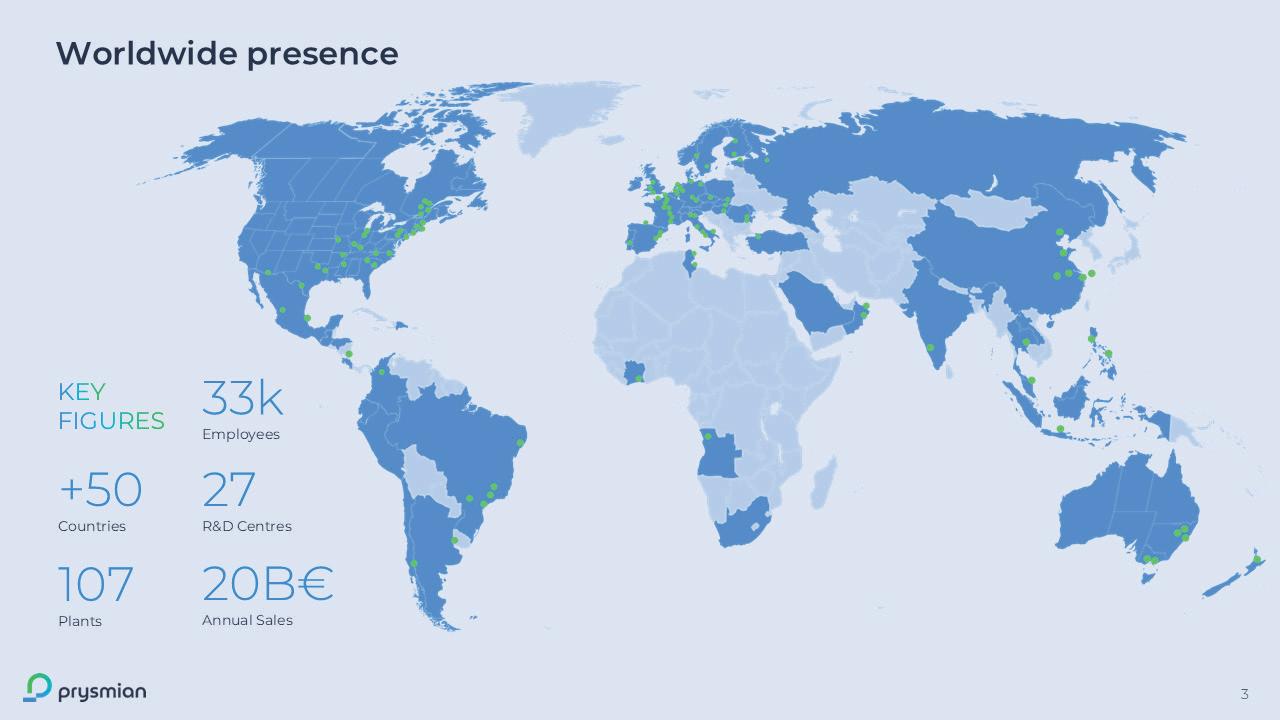
As Paul Furtado, COO at Prysmian North America, explains in this month’s feature, Manufacturing Success, “The hard part is consistency. It is one thing to turn around a single facility; it is another to achieve repeatable performance across dozens of plants with different histories, systems, and cultures. It’s not just about serving more customers; it is about building a portfolio that can flex as markets rise and fall.”
These comments and others from the likes of Lake Cable, DexMat and Viakable convince me that I’ve arrived at an interesting time in the wire and cable industry.
I look forward to reporting on WAI’s Wire Expo in the June issue as there was a lot of interest going into the Milwaukee event.
Mark Del
Franco
Editor-in-Chief, editor@wirenet.org
PUBLISHER Steven J. Fetteroll
EDITOR-IN-CHIEF Mark Del Franco
CONTRIBUTING EDITOR Mark Marselli
DIRECTOR OF SALES Shannon Timme
DIRECTOR OF INTERNATIONAL SALES & BUSINESS DEVELOPMENT
Anna Bzowski
DIRECTOR OF MARKETING & CORPORATE COMMUNICATIONS
Janice E. Swindells
WAI PUBLICATIONS COMMITTEE
Dane Armendariz, consultant
Ferruccio Bellina, TKT Group/President ACIMAF
Michael Crowle, QED Wire Lines Inc.
Tom Moran, consultant
Giulio Properzi, Continuus Properzi
Willem Sundblad, Oden Technologies Inc.
John N. Tomaz, Stolberger
W.T. Bigbee, Cerrowire LLC
TECHNICAL ADVISORS
John Drummond, Scotia Group
R. M. Shemenski, RMS Consulting, Inc.
Images: Adobe Stock.
Wire Journal International (ISSN-0277-4275) published monthly by The Wire Journal, Inc., is a wholly owned subsidiary of The Wire Association International, Inc., which is located at 71 Bradley Road, Suite 9, Madison, CT 06443-2662, USA, and can be contacted at tel. 203-453-2777; fax 203-453-8384; Internet wirenet.org; e-mail editor@wirenet.org. Address all correspondence concerning advertising production, editorial and circulation to the above address. WJI is printed in the USA.
Subscription rates: $110 per year, USA; $120 per year, Canada and Mexico; other countries, $140 per year (includes air mail). Back copies: $10 WAI members, $15 non-members. Periodicals postage paid at Madison, CT 06443, USA, and at additional offices.
Wire Journal International grants photocopy permission to libraries and others registered with Copyright Clearance Center (CCC), 21 Congress St., Salem, MA 01970, USA, for a fee of $0.50 per article. Payments should be sent directly to the CCC. Requests for bulk orders or reprints should be sent to the Wire Journal International, 71 Bradley Road, Suite 9, Madison, CT 06443-2662, USA.
POSTMASTER: Send address changes to Wire Journal International, 71 Bradley Rd., Suite 9, Madison, CT 06443, USA.
Continuity in motion
From pure copper to endless cycles, sustainability and precision work in harmony. The legacy of UPCAST® Continuous Casting Technology creates lasting value for today and generations to come.
CALENDAR
MAY 6-7, 2026: Wire Expo & WAI’s 96th Annual Convention
Milwaukee, Wisconsin, USA To be held at the Baird Center, co-located with the Electrical Wire Processing Technology Expo (EWPTE).
MAY 6-7, 2026: Electrical Wire Processing Technology Expo (EWPTE)
Milwaukee, Wisconsin, USA. To be co-located with Wire Expo 2026 at the Baird Center. The Conference will be held May 5. Contact: WHMA/Global Electronics Association, 847-615-7100, contact@electronics.org.
JUNE 23-25, 2026: CRU Wire & Cable Connections Summit
Hanover, Germany. This global summit, organized by CRU, will be held at the DoubleTree by Hilton Hannover Schweizerhof. Contact: CRU Group, www.events.crugroup.com/wireandcable, conferences@crugroup.com.
SEPT. 21-24, 2026: wire China
Shanghai, China. This event will be held at the Shanghai New International Expo Centre (SNIEC). Contact: Messe Düsseldorf/Messe Düsseldorf (Shanghai) Co., Ltd., www.wirechina.net, www.mdna.com.
OCT. 7-9, 2026: SpringWorld Expo and Symposium Rosemont, Illinois, USA. This event at the Donald E. Stephens Convention Center is put on by the Chicago Association of Spring Manufacturers and the Spring Manufacturers Institute. Contact: CASMI, tel. 414-908-4963, info@casmi-springworld.org.
NOV. 1-4, 2026: 75th IWCS Cable & Connectivity Industry Forum
Orlando, Florida, USA Contact: IWCS, tel. 717-993-9500, www.iwcs.org.
NOV. 30-DEC. 2, 2026: Wire India
Mumbai, India. This event, organized by Messe Düsseldorf India Pvt. Ltd, will be held at the Bombay Convention & Exhibition Center (NESCO). Contact: Messe Düsseldorf North America, tel. 312-781-5180, info@mdna.com, www.mdna.com.
FEB. 23-25, 2027: wire & Tube Mexico
Monterrey, Mexico. This Messe Düsseldorf event will be held at the CINTERMEX Centro Internacional de Negocios. Register at www.wire-tube-mexico.com.
MAY 4-6, 2027: Interwire & WAI’s 97th Annual Convention
Atlanta, Georgia, USA To be held at the Georgia World Congress Center, this event includes the trade show, technical programs and WAI’s 97th Annual Convention.
SEPT. 15-17, 2027: wire Southeast Asia
Bangkok, Thailand. This event will be held at the Bangkok International Trade & Exhibition Centre (BITEC). Contact: Messe Düsseldorf Asia, www.wire-southeastasia.com.
DEC. 9-11, 2027: Cable & Wire Fair
New Delhi, India The 7th International Exhibition & Conference for the Wire & Cable Industry will take place at the Yashobhoomi Convention Centre. Contact: Tulip 3P Media Pvt. Ltd., www.cablewirefair.com.
WAI/WAI CHAPTER EVENTS
MAY 6-7, 2026: Wire Expo & WAI’s 96th Annual Convention
Milwaukee, Wisconsin, USA. See above.
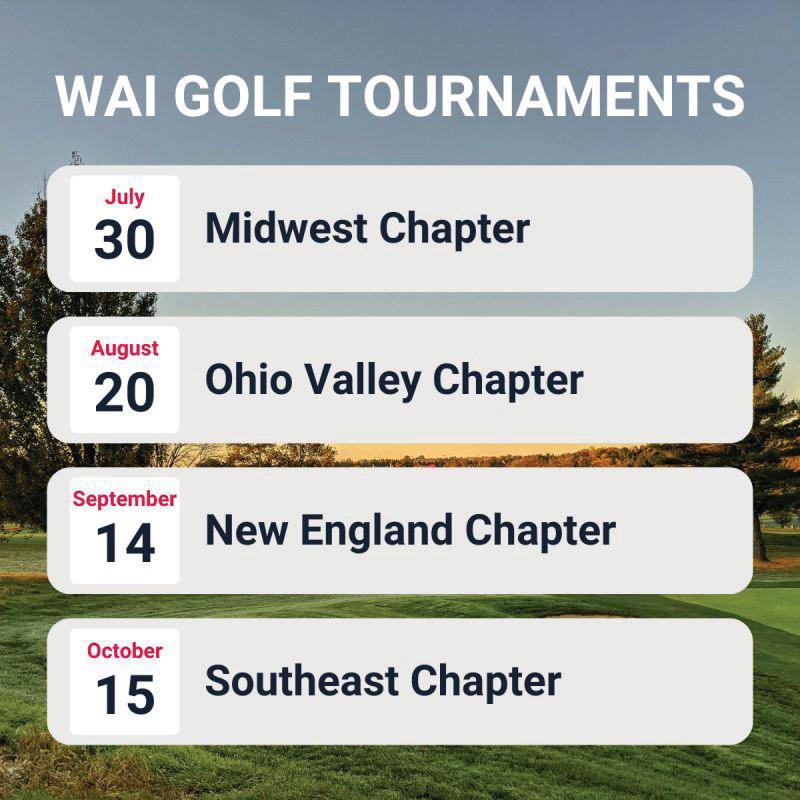
JULY 30, 2026: Midwest Chapter Annual Golf Tournament
Bensenville, Illinois, USA. The chapter will hold its golf tournament at the White Pines Golf Club.
AUG. 20, 2026: Ohio Valley Chapter Annual Golf Tournament and Education Program
Canfield, Ohio, USA. The chapter’s tournament and education program will return to the Kennsington Golf Club.
SEPT. 14, 2026: WAI New England Chapter Annual Golf Tournament
Farmington, Connecticut, USA. The chapter’s annual tournament will return to the Tunxis Country Club.
Conover, North Carolina, USA. The chapter’s annual tournament will be held at the Rock Barn Country Club and Spa.
MAY 4-6, 2027: Interwire & WAI’s 97th Annual Convention
Atlanta, Georgia, USA. See above.
For more details on WAI/WAI Chapter events, go to www.wirenet.org then “events” and/or “chapter events.”
INDUSTRY NEWS reports of industry activity
Fisk Alloy acquires France’s FSP-One
Fisk Alloy, Inc., announced that it has acquired FSP-One, the specialty wires business of Thermo-Technologies, in a transaction that reinforces its position in high-performance copper alloy conductors.
A press release said that the transaction includes all the share capital of FSP-One in France, along with its distribution subsidiaries International Wire & Tube (IWT) in the U.S. and Thermo-Tech Shanghai International (TSI) in China. By bringing these entities under one umbrella, Fisk Alloy has structured a tri-regional footprint spanning North America, Europe and Asia, with tightly aligned production and distribution capabilities.
Fisk Alloy, based in Hawthorne, New Jersey, manufactures specialty copper alloy wires and conductors for demanding applications, as does FSP-One. Markets include aerospace, defense, electronics and medical devices.
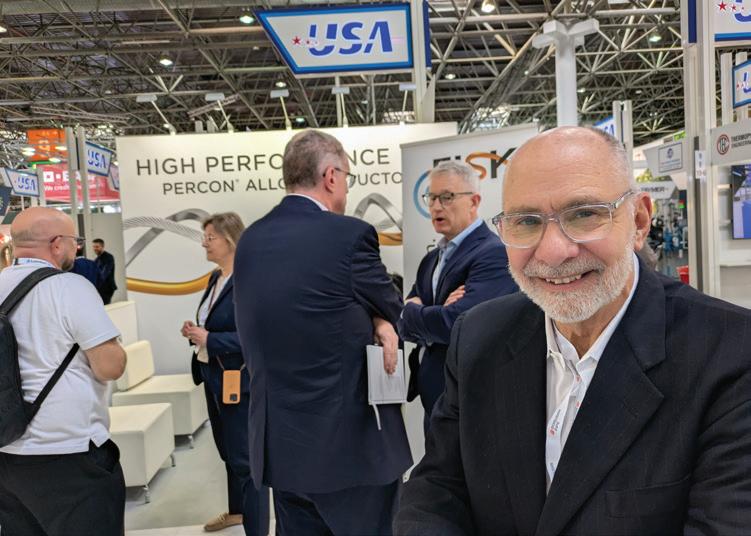
At wire Düsseldorf, Fisk Alloy CEO/owner Eric Fisk explained that the deal, which took about a year and a half to conclude, joins two companies with a similar philosophy to cross-pollinate and optimize their domestic production. FSP-One officials will continue to run their business, reporting to Fisk Alloy. “There’s no rush to make changes.”
Strategically, the deal positions Fisk Alloy to better support multinational OEMs that require local supply, consistent specifications and robust technical support across multiple regions. It deepens Fisk Alloy’s access to European manufacturing capabilities and strengthens its commercial reach in China at a time when supply-chain resilience is a critical priority for high-reliability sectors. Both companies describe the transaction as a “transformative milestone” that they expect will accelerate innovation and growth while enhancing service to global customers.
Italian manufacturer buys EIS Wire & Cable
Italy’s Tecnikabel SpA has acquired a majority stake in EIS Wire & Cable (EIS), giving the Italian specialty cable manufacturer a direct production base in the U.S. and expanding its position in high-value cable markets.
A press release said that Tecnikabel is taking a controlling interest while EIS’s current leadership remains invested.
Based in South Hadley, Massachusetts, EIS produces specialty cables for defense and industrial automation applications, including products used in underwater detection systems for the U.S. Navy and in factory-automation environments. It has more than 700 UL and/or CSA product certifications.
EIS, founded in 1910, generates more than $40 million in annual revenue and will continue to operate under the EIS brand from its existing facility, with President Nicholas Moceri and his team retaining a significant minority stake.
Tecnikabel, based in Volpiano and part of the broader TK Group, is a specialty cable manufacturer with a few hundred employees that focuses on specialty cables, connection systems and cable assemblies.
Its press release spelled out why the deal is win-win. “EIS brings specialist know-how, a distinctive positioning in the defence sector and a well-established client base, whilst Tecnikabel contributes its international commercial platform, extensive R&D capabilities and the group’s industrial strength. The objective is to accelerate EIS’s growth both in the U.S. market and globally, within a single technological platform covering North America, Europe and Asia.”
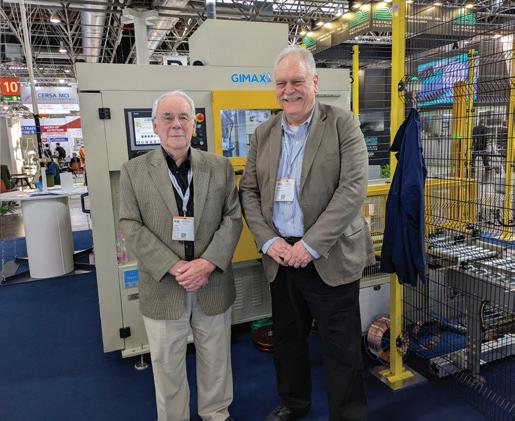
Fisk Alloys CEO Eric Fisk at his company’s booth at wire Düsseldorf. In back is President Bill Yankovich, who is now also president of FSP-One.
DEM Group acquires WWM Technology
Italy’s DEM Group SpA, best known for its wire rolling technology, has expanded its scope with the acquisition of WWM Technology, a specialist in welding wire machinery, for an undisclosed price.
A press release said that DEM has acquired the WWM Technology brand and proprietary know‑how in weld ing wire fabrication, adding drawing, respooling and drum‑packing solutions to its portfolio. The combination allows DEM to offer an end‑to‑end welding wire tech nology chain by pairing its tube‑forming and wire‑rolling equipment with WWM’s downstream processing lines, including wet drawing, respoolers, drum packers and copper‑coating equipment.
WWM Technology is based in Conselve, Italy, and there was no disclosure of any change in that location or in key management roles. The company has focused on welding wire machinery since the late 1990s and is associated with patents for multi‑pass drum drawing machines for welding wire production. Over more than three decades, WWM has developed customized drawing and respooling systems, particularly for CO2 welding wire, and built a reputation as
a reference supplier for complete weld ing wire lines.
DEM, based in Pavia di Udine, Italy, serves both ferrous and nonfer rous applications and is known for cold rolling and profile‑rolling tech nologies. Founded in 1996, it first sold cold rolling cassettes for rein forcing wire and went on to install profile‑wire rolling lines and reinforcing‑bar rolling lines as it expanded its workshop capacity in the 2000s. In recent years, DEM has added direct wire‑rolling concepts and its Wire Up digital platform, moves that, together with the WWM deal, are intended to position the group as a full‑line provider for welding wire producers.
WIRE & CABLE IN THE NEWS
Why ‘you’re so dense’ is the ultimate optical
Being ultra‑dense is a compliment in optical fiber, as Lightera—the Furukawa Electric Group brand that bundles its global optical‑cable busi ness—moves into mass production of a 13,824‑fiber data‑center cable it says is among the world’s high est‑density designs. See p. 13. The cable is aimed squarely at hyperscale operators wrestling with AI‑driven traffic in already crowded ducts and trays. Per Furukawa Electric, it delivers roughly twice the transmission capacity of the compa ny’s earlier ultra‑high‑count designs while keeping overall diameter under 40 mm. Fujikura recently announced a 13,824‑fiber SWR/WTC cable with a similar outer diameter, so Lightera’s product effectively ties that bench mark while using its own rollable‑rib bon, central‑core architecture. Per Furukawa technical papers and company reports, the
13,824‑fiber cable builds directly on the firm’s 6,912‑fiber rolla ble‑ribbon products, which packed 6,912 fibers into a roughly 29
fiber compliment
“full.” Subsequent R&D showed that much of the cable cross‑sec tion was still taken up by plastics, gels, and structural voids, not glass, leaving room to further increase packing density.
mm jacket and were installed in 1.25‑inch conduit on data‑cen ter campuses—configurations many engineers already viewed as
In the design, Lightera pushes density by combining 200 μm fibers with 16‑fiber rollable ribbons that are intermittently bonded so they can collapse into round bundles inside the sheath, then flatten for mass‑fusion splicing. A re‑optimized central‑core geometry and reduced non‑fiber content increase the share of the cross‑section devoted to glass, so “full” is redefined: engineers nearly double the fiber count with only a modest increase in diameter. Conceptually, it is like replacing flat, rigid bricks with flexible, tightly packed spheres inside the same pipe—the pipe only grows a little, but the volume of glass goes way up.
Lightera’s fiber optic cable packs a punch.
Legendary McKinney campus debuts new wire plant and an expanded service center
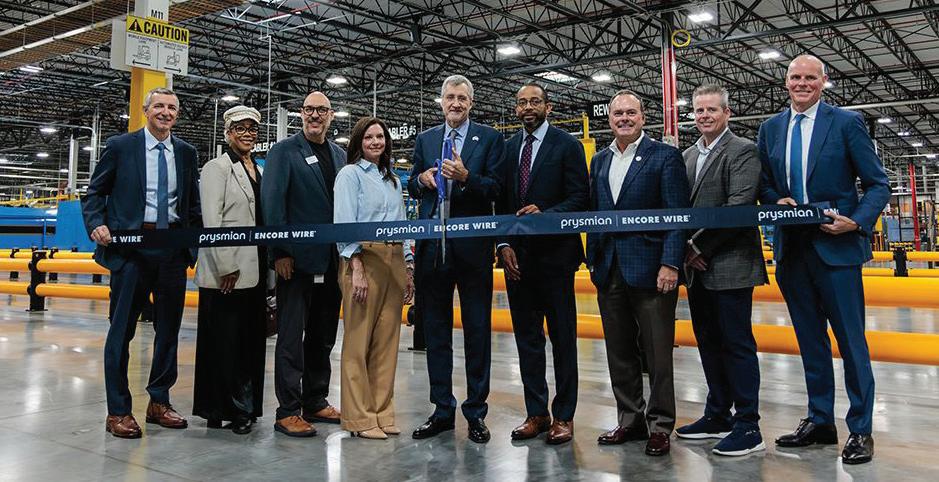
Prysmian | Encore Wire has officially opened a new copper building wire plant and a greatly expanded service center at its campus in McKinney, Texas, marking a major step forward for a site that started out with 68,000 sq ft in 1989 and now tops 3.5 million sq ft on 460 acres.
A press release said that the April 9 ribbon-cutting ceremony celebrated the new 340,800-sq-ft copper building wire plant alongside a Service Center that now spans one million sq ft. The McKinney campus as a whole has grown into a massive, integrated manufacturing and logistics hub, with operations consolidated on a single site to maximize efficiency, speed and product breadth. The company reports the campus, which now houses what it calls the industry’s largest service center, is among the largest single wire and cable manufacturing sites in the industry.
“These two projects represent the next chapter in our story here at Encore: one of outstanding service across the board – service to our customers and to the community here in McKinney that we call home,” said Andrea Pirondini, CEO of Prysmian North America. The Encore Campus and its integrated business model combine advanced manufacturing with industry-leading logistics, supporting Prysmian’s broader evolution from a traditional cable manufacturer to a comprehensive solutions provider serving data centers, U.S. industrial expansion, and grid modernization efforts.
The enlarged service center supports next-day shipments and advanced customization, while the new copper building wire facility is designed to increase throughput and responsiveness across key product lines. Together, the projects are also driving economic activity in the greater McKinney area through increased industrial output and continued local investment. Some 115 employees staff the copper building wire plant around the clock, and more than 250 employees support the Service Center, contributing to a total of about 1,750 people employed across the McKinney campus. Executives credit this workforce and the scale of the site as central to Prysmian | Encore Wire’s leadership in the wire and cable industry.
AmerCable to expand its El Dorado plant
AmerCable announced that it plans to invest more than $10 million to expand its wire and cable manufacturing facility in El Dorado, Arkansas, adding capacity for medium-voltage products and creating 13 new jobs over the next three years.
A press release said that the project, supported by the Arkansas Economic Development Commission, will add 26,000 sq ft to the existing 400,000-sq-ft plant, which also houses the company’s headquarters. Company and state information said the added space will relieve manufacturing line constraints and support new and existing demand from data center, global mining and industrial customers.
The El Dorado plant produces a range of power and control cables for harsh environments. The expansion was described as a way to increase throughput in medium-voltage constructions while improving material flow and logistics within the site.
The project will be built out in phases, with hiring to be spread over the next three years as new capacity comes on line. AmerCable officials cited the region’s skilled workforce and the company’s long history in El Dorado as key factors in choosing to expand at the existing campus rather than build a new plant elsewhere.
Equity firm makes big investment in AWG
American Wire Group (AWG) announced that it has entered a growth chapter with a strategic, majority investment from Greenbelt Capital Partners that gives the equity firm a controlling stake in the business.
A press release said that the deal will help accelerate the company’s role in North American “electrification” and grid-modernization projects. The parties did not disclose financial terms but say the capital will support AWG’s expansion as a specialized supplier to power utilities, renewable-energy developers and data-center projects.
Founded in 2001, Miami-based AWG supplies wire and cable, hardware, equipment and accessories, and maintains one of the largest inventories of wire and cable solutions in the U.S. It provides cable management and design as well as value-added services and project management for its product portfolio that enables it to be a single-source provider for complex infrastructure work.
Greenbelt Capital Partners is an Austin- and York-based private equity firm focused on middle-market companies at the intersection of energy, power and infrastructure transformation. The firm says it aims to partner with manage-
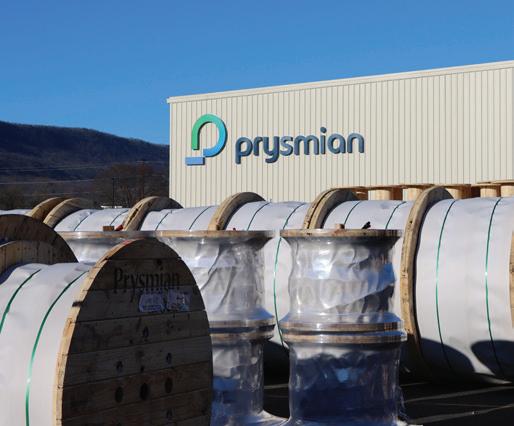
Prysmian | Encore mark the latest McKinney plant expansion.
ment teams to build “lasting value” in businesses that enable grid modernization, electrification and energy‑tran sition projects.
AWG’s existing management team, including CEO Michael Dorfman, will remain in place and continue to oversee day‑to‑day operations.
Ningbo Orient Wires & Cables sets a company record for an umbilical project
Ningbo Orient Wires & Cables (NBO) has delivered a 39.5‑km continuous deepwater umbilical for the Liuhua 29‑1 gas field in the South China Sea, operated in deep water by Husky Oil China.
A press release said that the replacement umbilical, made and shipped as a single, joint‑free length, is engineered to operate at water depths of around 800 m. That depth, it said, matches the 640 785 m range reported for the field and ties back wells into existing subsea infrastructure. It also represents an in‑house record.
NBO notes that both umbilical termination heads (UTHs) for the project were designed and manufactured in‑house, using its own UTH technology rather than imported designs. That builds on earlier Liuhua‑area work where the company supplied static subsea production system (SPS) umbilicals to CNOOC Deepwater Development and
THE GREENER WAY TO JOIN
Cold pressure welding generates no heat, no fumes, and reduces material waste, delivering a cleaner process that’s as good for your sustainability targets as it is for your bottom line.
British made and built to last, our machines and dies help you reduce energy use, cut consumables, and keep waste to a minimum across every production run. Find out more at pressureweldingmachines.co.uk
North America inquiries: Tel: 774-991-0504 | joe@jsnee.com
Pressure Welding Machines Ltd
Tel: +44 (0) 1233 820847
info@pwmltd.co.uk
supports its broader push into integrated power‑and‑con trol umbilicals for offshore oil and gas.
Based in Ningbo, NBO has grown into a multibil lion‑yuan producer of land and subsea cable systems, with 2025 revenue of about $1.6 billion. Its sea‑ca ble and high‑voltage cable sales are up more than 60% year‑on‑year. The 39.5‑km Liuhua 29‑1 umbilical under lines NBO’s technical focus on long, deepwater static umbilicals produced in single passes. Challenges included controlling dimensional tolerances over tens of km, managing steel‑tube and optical‑fiber elements under high hydrostatic pressure, and handling the full length on carou sels and vessels without damage. NBO describes the proj ect as its longest continuous deepwater umbilical to date.
R&D by Furukawa’s Lightera doubles the fiber count to 13,824 in a 1.25 in. conduit
Being ultra‑dense just became a compliment in optical fiber, as Lightera—the Furukawa Electric Group brand that bundles its global optical‑cable business—moves into mass production of a 13,824‑fiber data‑center cable that the company says offers one of the world’s highest fiber densities for hyperscale facilities.
Per a press release, the cable is aimed at cloud and AI operators trying to push more traffic through conduits
and trays that are already space‑constrained. The design delivers roughly twice the transmission capacity of the company’s existing ultra‑high‑count designs while holding overall diameter under 40 mm.
The move puts Lightera into the same class as compet itor Fujikura, which in January announced a 13,824‑fiber Spider Web Ribbon/Wrapping Tube Cable (SWR/WTC) for hyperscale data centers, also described as doubling the fiber count of its prior 6,912‑fiber WTC cable while keep ing the outer diameter below 40 mm. Fujikura billed that product as “the world’s highest‑multi fiber optic cable,” highlighting its proprietary Spider Web Ribbon and thin‑di ameter WTC structure. With both suppliers now reaching 13,824 fibers in sub‑40 mm designs, the race to pack more glass into constrained data‑center pathways underlines how competitive the ultra‑high‑count cable market has become.
Furukawa Electric says Lightera’s 13,824‑fiber design builds directly on its own 6,912‑fiber rollable‑ribbon cables, which packed 6,912 fibers into a jacket of about 29 mm and were proven in 1.25‑inch conduit on data‑center campuses. The earlier designs, documented in Furukawa technical papers and reports from 2018 onward, were considered “full” at the time, but R&D analysis showed that a substantial share of the cross‑section was still occu pied by plastics, gels and structural voids rather than glass.
To support volume production of the cable family, Furukawa Electric opened a second ultra‑high‑count opti cal‑cable plant at its Mie Works site in Kameyama, Japan. The company reports that has more than doubled its capac ity to produce ultra‑high‑count cables compared to FY 2023, positioning Lightera to supply AI‑era data‑center build‑outs worldwide. See p. 11 for more.
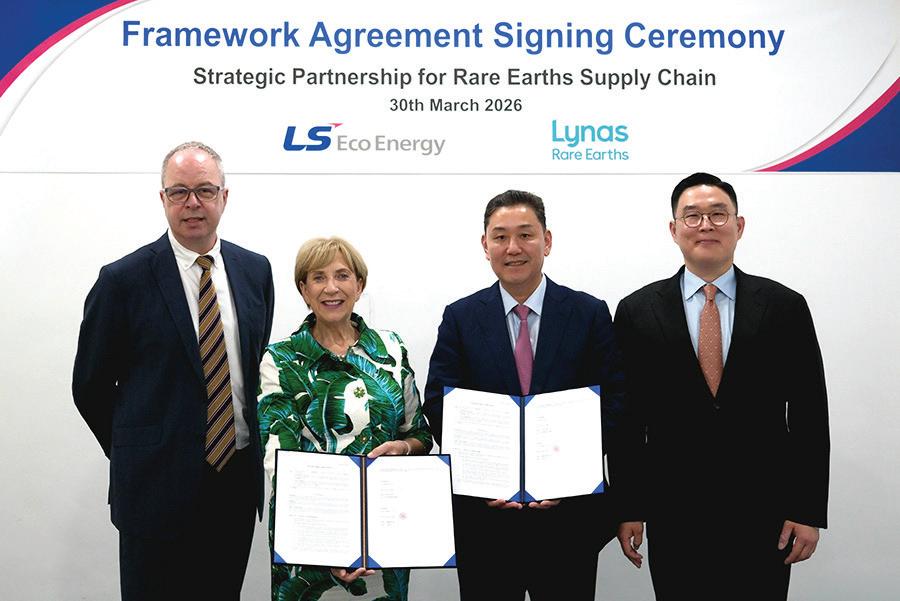
LS Cable & System business unit enters strategic alliance with rare earth supplier
LS Eco Energy, a subsidiary of LS Cable & System, is pushing further downstream from wire and cable into rare earth metals and magnets.
A press release said that it has entered an alliance with Lynas, a company it and multiple press reports identified as “the world’s No. 2 producer of rare earth raw materials.” Of note, the company was also described as “the leading non‑Chinese supplier.”
Per the March 26 announcements from both compa nies, LS Eco Energy and Lynas have agreed to a recipro cal investment in which each will subscribe to roughly $20 million–$21 million of the other’s convertible securities. LS Eco Energy’s statement said that the alliance is intended to secure a long‑term supply of rare earth oxides from Lynas and to combine that feedstock with LS Eco Energy’s metal‑making know‑how “honed through its power cable business” to produce rare earth metals and, eventually, permanent magnet materials.
The company notes that it plans to install rare earth metallization facilities at its LSCV production subsidiary in
Officials from LS Cable & System, LS Eco Energy and Lynas at the March 30 signing ceremony.
Ho Chi Minh City, Vietnam, and that this plant will begin mass production of rare earth metals using oxides supplied by Lynas and other miners. LS Group’s earlier briefings on its materials strategy explain that this move into rare earths is part of a plan to build a complete magnet value chain—from ore and oxides supplied by global mining firms, through metallization at LS Eco Energy in Vietnam, to permanent magnet manufacturing under a plant that LS Cable & System is evaluating for Chesapeake, Virginia.
In that same context, LS Eco Energy CEO Lee Sang‑ho has described the cooperation with Lynas as “a strategic bond that goes beyond simple investment” and said that the LS group intends to expand its business “beyond the existing cable‑centric operations into the strategic materials sector.”
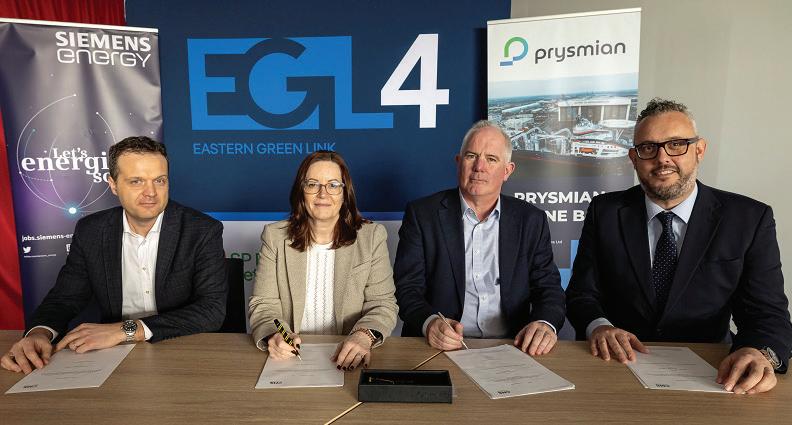
Prysmian wins £2 billion HVDC contract
Prysmian has been awarded a £2 billion‑plus contract to supply Britain’s Eastern Green Link 4 (EGL4) subsea interconnector with the required subsea and under ground cables.
A press release said that Prysmian will supply more than 640 km of HVDC cable—about 530 km subsea and some 116 km underground—to connect Fife, Scotland, and Norfolk, England, via a 2‑GW, ±525‑kV link designed to move large volumes of renewable power to demand centers in England. Siemens Energy will supply the HVDC converter stations for what is one of five planned subsea “electricity highways” along the U.K.’s east coast.
“Projects such as EGL4 help strengthen our capability to deliver major offshore and onshore cable connections by driving investment and scaling operations to enable British energy security,” said David Worthington, busi ness director, UK & North Europe for Prysmian. He noted that the company’s Middlesbrough marine base and its network of more than 100 U.K. suppliers—over 40% in the North East—are central to delivering secure, high‑per formance infrastructure.
The EGL4 award builds on Prysmian’s growing U.K. HVDC portfolio. The company previously secured a £750 million contract for Eastern Green Link 1 (EGL1), a 525-kV HVDC cable link between Scotland and northeast England, and has also delivered major interconnector systems such as Viking Link between the U.K. and Denmark and the NeuConnect link between the U.K. and Germany. EGL4 is expected to move into main construction in 2028 and be completed in 2033 while EGL1 is scheduled to be in service by 2029.
Nexans to acquire Republic Wire
At press time, Nexans announced that it had agreed to acquire Republic Wire, Inc., a U.S.-based manufacturer of low-voltage copper and aluminum wire products, strengthening its position in the North American market.
A press release said the operations of Republic Wire, based in Cincinnati, Ohio, include a 32,500-sq-m manufacturing facility and a newly completed 30,000sq-m warehouse and distribution center, supporting nationwide distribution. A recent expansion, due online by year-end 2026, is expected to increase capacity by about 30%.
The transaction, valued at about €680 million (approximately $797 million) with a potential €43 million earnout, is expected to close this year, subject to regulatory approvals and customary closing conditions. Republic Wire’s management team will remain in place.
Republic Wire was founded in 1982 and serves electrical distributors, utilities and municipalities across the U.S. and Canada. The company reported revenue of approximately €520 million for the 12-month period ending February 2026. Nexans said the acquisition supports its strategy to expand in the U.S., a key growth market for low-voltage cable driven by residential, commercial and data center demand.
The deal enhances Nexans’ manufacturing and distribution footprint while providing access to Republic Wire’s established sales network and enabling cross-selling opportunities across its product portfolio. Nexans expects to generate approximately €23 million in annual run-rate synergies within three years through commercial, technological and operational efficiencies.
IEWC further diversifies by acquisition of New York control panel manufacturer
IEWC is taking another step to diversify its business model with the acquisition of Simcona Electronics Corporation, a Rochester, New York-based distributor and control panel manufacturer, a move that it said will enable the company to extend its reach.
A press release said that Simcona supplies wire and cable, connectors and industrial electronic components, and provides sourcing and design support for OEM and industrial customers. More importantly for IEWC’s strategy, it operates a custom control panel manufacturing operation that designs and builds panels and assemblies around those components. That activity aligns with IEWC’s ongoing effort to move closer to end-use applications on the factory floor, broadening its mix from bulk product and distribution to integrated systems and value add services. Simcona’s distribution and sourcing activities will be folded into IEWC’s existing OEM- focused distribution platform, strengthening its regional presence in upstate New York and surrounding markets. The control panel business is slated to support IEWC’s dedicated controls unit, adding capacity, engineering expertise and a customer base already accustomed to sourcing both components and panel builds from a single provider.
New name for HELUKABEL is HELU
The HELUKABEL Group has unveiled a major rebranding—officially becoming HELU—a move that underscores its evolution from a cable manufacturer into a global systems and solutions provider for electrical connection technology.
A press release explained that the name and brand claim—“Always Stay Electrified”— highlight HELU’s shift toward integrated assemblies, drag chains and installation-ready systems that meet complex industrial demands. The transformation represents not just an identity, but a clear step into the future of connected systems. By unifying its entire product range under one name, HELU simplifies customer interaction and reinforces its position as a leading one-stop supplier. The company operates 76 locations in 43 countries with more than 2,500 employees, serving industries including automation, mobility, energy, and infrastructure.
In the U.S., HELU USA, based in West Dundee, Illinois, supports domestic customers from a 200,000-sq-ft facility with access to a 1.8 million-sq-ft automated warehouse in Germany for rapid delivery of over 4,000 stocked items.
Kanthal expands its SiC heating element production capacity in Scottish plant
Kanthal has completed a multi-million-pound expansion of its Globar silicon carbide (SiC) heating element manufacturing facility in Perth, Scotland, to meet growing demand for high-temperature electric heating systems.
A press release said that the heating elements, produced in Perth for more than 50 years, enable electrification of processes up to 1,625°C, allowing manufacturers to replace fuel-fired systems with electric alternatives that offer improved energy efficiency, tighter process control and lower emissions.
The investment, initiated in 2023, adds about 1,750 m² (19,000 sq ft) of manufacturing area at the Perth site, along with new equipment, a revised production layout and additional warehouse space. Kanthal said the project increases global Globar capacity by roughly 40% and adds capability to support larger-scale electrical heating solutions and future product and application development.
In related news, Kanthal has established a Globar service center at its consolidated manufacturing and distribution facility in Concord, North Carolina, to bring SiC element support closer to U.S. customers and reduce lead times. In total, about $11 million was invested in Perth and Concord, and both locations are now fully operational.
Hyperion acquires Electronica Tungsten
U.S.-based Hyperion Materials & Technologies has acquired Electronica Tungsten Ltd., a Nashik, India–based manufacturer of tungsten carbide products used in wear parts, metal cutting and metal forming applications.
A press release said that the company’s tungsten carbide powders and components can be used in the manufacture of wiredrawing dies and rolls, alongside a wide range of other wear and forming tools.
Founded in 1988 and reshaped through a 2016 Electronica Group merger, Electronica Tungsten employs more than 200 people at its Nashik, India, headquarters and vertically integrated tungsten-carbide manufacturing facility. It has a vertically integrated operation that converts mined tungsten ore concentrates into tungsten carbide and ready-to-press powders and offers closed-loop recycling for hard and soft tungsten scrap.
Hyperion was formed in 2018 out of Sandvik’s hard-materials business (formerly Sandvik Hyperion), which itself combined the Sandvik Hard Materials and Diamond Innovations/GE Superabrasives heritage in cemented
carbide and synthetic diamond. Adding Electronica Tungsten, it said, will strengthen its upstream tungsten capabilities and reinforce supply security for customers in India, Asia and other regions.
Corning breaks ground for new fiber plant
Following news earlier this year of Corning agreeing to supply Meta with high density optical fiber, cable and connectivity solutions, the companies held a groundbreaking ceremony in Hickory on March 31 to mark the start of construction on a major expansion of Corning’s North Carolina capacity.
A press release said that Meta will be the anchor customer for a major build out at Corning’s Trivium Corporate Center site in Hickory. Corning reports that the Meta agreement could support a 15–20% increase in its employment across the state, where it already has more than 5,000 employees in fiber and cable operations.
Per PRP Real Assets, the real estate owner and developer, the new Hickory building is expected to exceed 275,000 sq ft and will more than double the size of Corning’s existing manufacturing complex there, with a placed in service investment of more than $250 million and more than 125 new direct jobs tied to the project.
Per the city of Hickory and Catawba County, Corning has agreed to acquire roughly 33 acres in Trivium, invest between $170 million and $267.9 million in the latest phase, and create at least 132 jobs. The plant is being designed for high fiber count, high density cable used in hyperscale and AI driven data centers, which Corning and Meta say will collectively require millions of miles of fiber as workloads scale.
The new facility is targeted to come online in the coming years, with capacity expected to ramp in phases. The Meta backed project caps a sequence of expansions that have steadily scaled Hickory’s role in Corning’s network. Corning was announced as Trivium’s first tenant in 2018, when it committed about $60 million and 110 jobs for an initial cable plant, and follow on expansions have included a roughly $150 million, 200 job project in 2021. The Hickory complex has been described as being on track to become one of the world’s largest optical cable manufacturing sites dedicated to AI era data demand.
“As Corning celebrates its 175th year, our partnership with Meta and today’s groundbreaking underscore the importance of our investments in U.S. manufacturing,” said Mike O’Day, senior vice president and general manager, Corning Optical Communications.
Spain’s FLYMCA completes big equipment order for submarine cable plant expansion
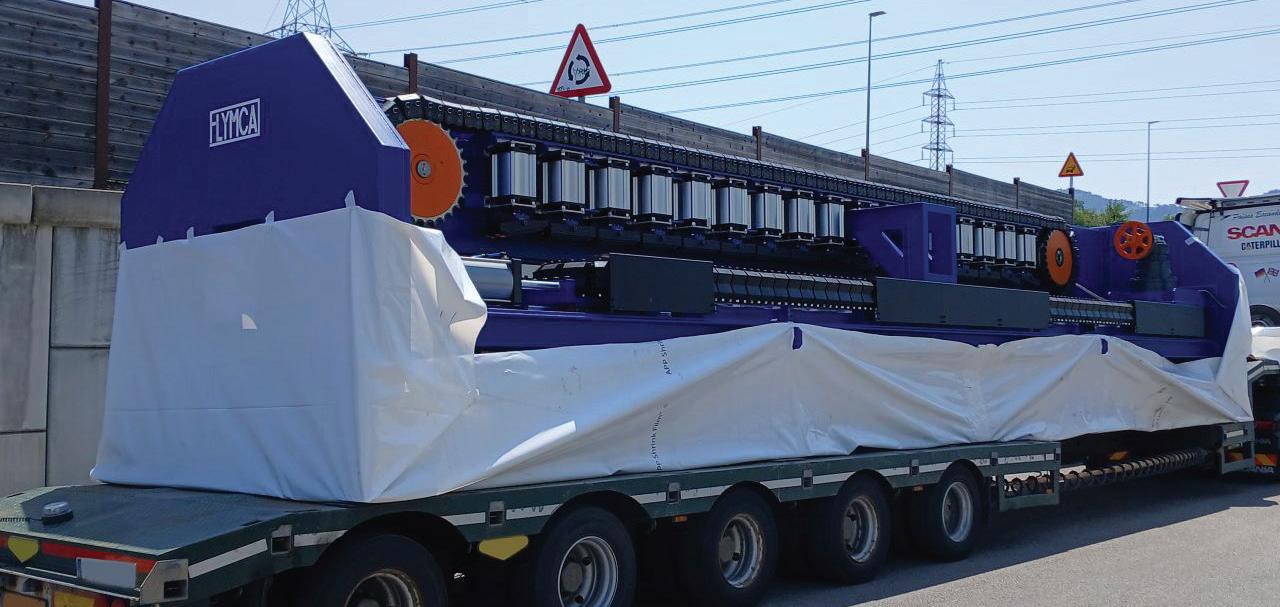
Spain’s FLYMCA reported that, just before wire Düsseldorf, the company completed its largest project to date.
At its website, the company posted that the project involved the delivery of four fully integrated production solutions to support what is expected to become the world’s largest facility for the manufacture of submarine power cables. The scope included two rigid stranders (176and 140-wire configurations with 800-mm bobbins), two planetary armoring lines capable of handling up to 208 steel wires plus fiber optics, and 28 reversible caterpillars designed to ensure full cable handling throughout the plant. The final shipment featured a 40-metric-ton caterpillar system with four gripping contacts and an 8-meter length. In total, the project required 158 truck shipments and more than 2,260 metric tons of equipment. FLYMCA reported that approximately 340,000 hours were dedicated to engineering, fabrication and assembly.
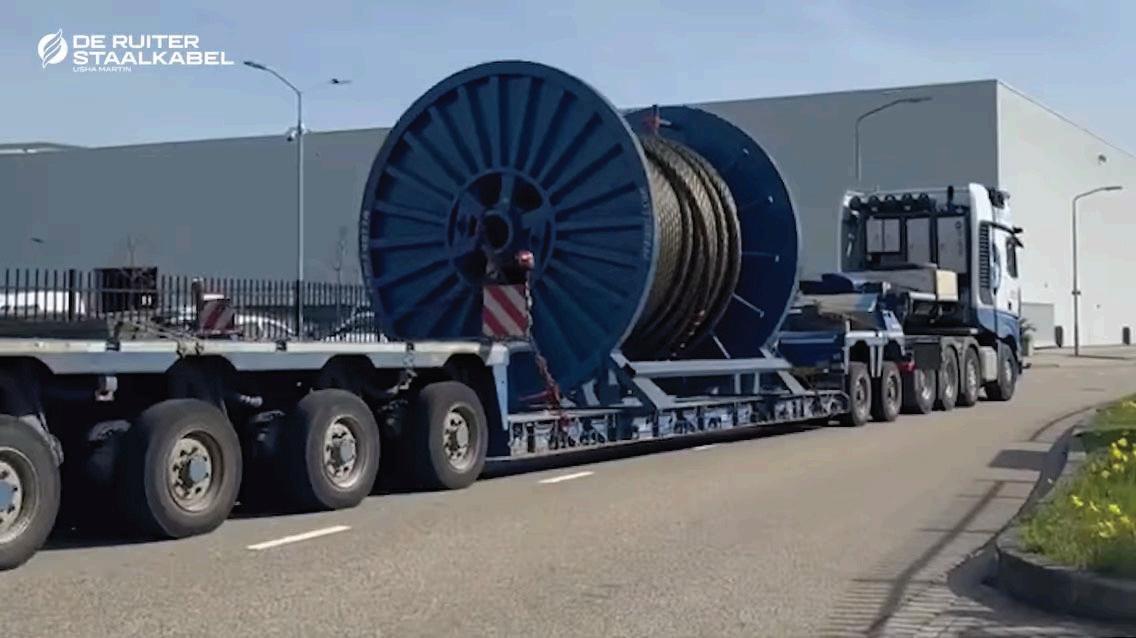
Usha Martin reports order for steel wire rope headed to U.S. took much prep work
Usha Martin’s European wire rope center has reported completing a standout delivery of a massive offshore-class steel wire rope reel prepared at its international service hub, De Ruiter Staalkabel BV in the Netherlands. A press release said the order was part of a broader multi-reel supply program, with the 1,800-m length representing one of the larger individual units in a wider package of heavy-duty ropes for a Gulf-region project. The order was for 83-mm steel wire rope on a reel measuring roughly 3.60 m high and 3.50 m wide. It is fitted with a short bow socket at one end, leaving the other end plain to match the installation contractor’s specific rigging plan. The scale of the package demanded precise cutting from stock, controlled socketing and inspection, and high-tension spooling to avoid damage or distortion over 1.8 km of large-diameter rope, the release said. The completed reel was secured for sea transport to Houston for an unnamed
customer, likely for a major offshore, crane or energy-sector installation. Usha Martin is using this shipment as a reference example of how central stocking of large-diameter ropes in Europe, coupled with integrated socketing, testing and export logistics, can support time-critical, long-distance deliveries for offshore applications.
Dates set for wire Mexico 2027; event will return to same venue with co-location
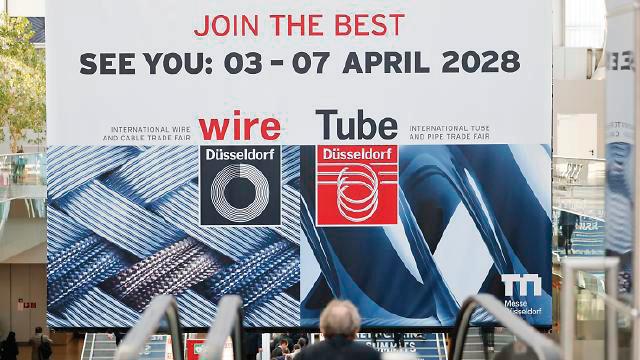
Messe Düsseldorf announced that wire and Tube Mexico will return in 2027, and that exhibitor registration is now open online for the co-located trade fairs that will be held alongside Expo Manufactura Feb. 23–27, 2027, at CINTERMEX in Monterrey, Mexico.
A press release said that wire Mexico will feature exhibits covering machinery for wire and cable manufacturing and processing, tools, materials, finished products, testing technology and software. Tube Mexico will focus on metallic tube and pipe manufacturing and processing, including related machinery, tools and OCTG applications, with an emphasis on resource-efficient production. Country pavilions from Germany, Italy and Austria are planned, along with a French group exhibit and an International Wire and Machinery Association (IWMA) stand.
Organizers cited continued growth in Mexico’s wire and tube sectors, supported by infrastructure development, automotive production, energy projects and nearshoring activity. The 2025 edition included 168 exhibitors from 20 countries and 13,652 visitors, including attendees from the concurrent Expo Manufactura.
Organizers project exhibitor participation to increase by approximately 10% in 2027, reflecting both domestic and international interest in the Mexican market. Registration can be made at www.wire-tube-mexico.com. n
FLYMCA delivers part of a major order that the company said represents its largest project to date.
A large reel provided by Usha Martin on its way to the U.S.
When asked how he defines manufacturing success, DexMat CTO Dmitri Tsentalovich did not talk first about patents or pilot projects—he talked about running like a real factory. For him, success means producing Galvorn at large scale, with rigorous quality control and a high, sustained utilization of installed capacity, rather than intermittent campaigns or demonstration runs. That framing matters to wire and cable producers, who need consistent volumes and predictable properties more than “hero” samples.
DexMat still considers itself a startup, but it has moved beyond the pure R&D stage. DexMat’s Galvorn program gained early traction in 2021 when the company, together with Rice University, was named one of the Stage 1 winners in the U.S. Department of Energy’s CABLE Conductor Manufacturing Prize, a federal competition to advance next-generation conductors for grid and industrial applications. The company also has patents and exclusive licenses from Rice University covering multiple Galvorn production methods.
DexMat recently closed its seed investment round, which leadership says will be used to build out production and support early commercial programs. At the same time, they emphasize that Galvorn is already being sold into the market—positioning DexMat as an emerging supplier rather than a pre-revenue research venture.
To industry newcomers, Galvorn can sound like “carbon fiber on steroids,” a description Tsentalovich accepts with qualifications. Both materials are carbon based, but they diverge in structure and in how they are used. Traditional carbon fiber is designed primarily for structural applications, where stiffness and strength dominate. Galvorn, by contrast, is built from carbon nanotubes that are assem-
bled into fibers, yarns, and films, giving it a distinct combination of electrical conductivity, mechanical performance, and flexibility.
That multifunctional profile is what makes Galvorn interesting for wire and cable. Rather than thinking of it as a lightweight reinforcement, DexMat is pursuing it as a conductive material that can be a substitute for copper or aluminum in specific elements of the cable architecture. In practice, that has led the company to focus on two key targets: primary conductors and cable shielding. Depending on which element it replaces, Galvorn can be engineered to offer a balance of conductivity, strength, and weight that incumbents struggle to match simultaneously.
Designed as a manufacturing “drop in”
One of the more practical themes from the conversation is DexMat’s focus on manufacturability. The Galvorn production involves fewer process steps than some traditional advanced materials, which the team believes will translate to a more straightforward path to scale. For cable makers, just as important is how the material behaves once it reaches their plants.
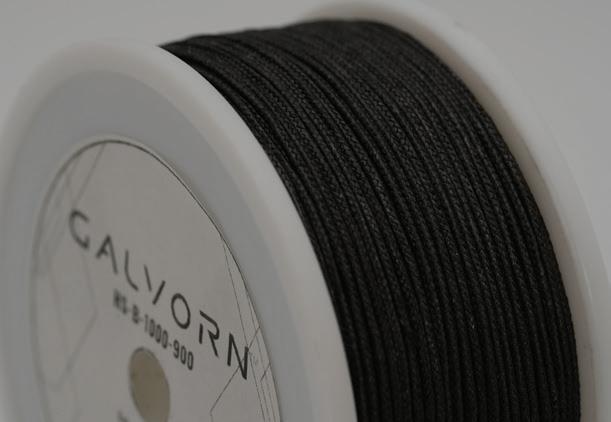
DexMat describes Galvorn as a semi-finished good: the company does not make complete cables, but instead supplies fibers, yarns, or related forms that can be fed into existing cable manufacturing lines. In many cases, Galvorn can be “dropped into” current processes with relatively modest adjustments, particularly where it replaces a conductor or shield within an established design. The specifics depend on the product and on the component being swapped out, but the intent is clear— minimize the disruption at the cable plant.
That positioning reflects a broader lesson from new material introductions. As Tsentalovich pointed out, history is full of examples where a material first enters the market as a one-for-one replacement—often with a cost premium—before entirely new applications emerge. Aluminum, he noted, was once a specialty material before aviation and mass manufacturing unlocked its volume and drove down costs. DexMat’s near-term focus is on those replacement use cases, with an eye toward more transformative designs as familiarity grows.
Copper constraints and the economic equation
Galvorn is meant for relatively thin, high-value slices of the “copper pie” in signal, shielding and high-frequency or weight-sensitive designs. It is not intended
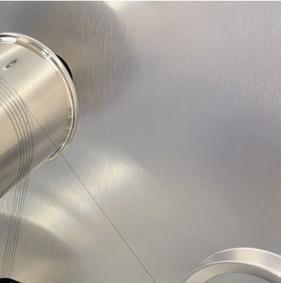
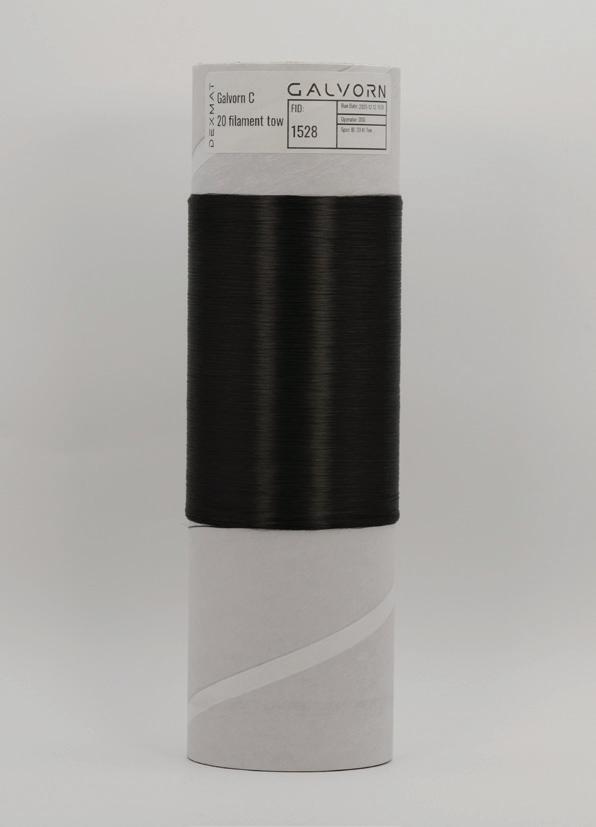
Continuous multi-filament alignment and take-up winding system used to produce Galvorn fiber in a form ready for processing.
Tsentalovich
to replace mainstream copper in standard building and power cables. Nonetheless, envisions opportunity where copper availability and pricing may become more challenging. Tsentalovich pointed to forecasts of a copper shortage over the next five, ten, or fifteen years, driven by electrification, renewable generation, e-mobility, and the growth of data heavy infrastructure. For a sector built on copper, any credible alternative immediately draws attention.
At today’s volumes, Galvorn is more expensive than copper, something DexMat acknowledges directly. However, the company has completed techno economic analyses that suggest Galvorn can be cost competitive at full commercial scale. The key levers are process efficiency, simplified manufacturing, and the ability to achieve the required electrical performance with less mass of material. For cable producers, this sets up a familiar trade off: short-term premium pricing in exchange for long-term supply security, weight and space savings, and potential system level cost benefits.
The early commercial strategy reflects this reality. DexMat is not trying to replace copper everywhere at once. Instead, it is working with select partners on specific applications where Galvorn’s properties—conductivity, strength to weight, flexibility, and corrosion resistance—can deliver enough value to justify an initial premium while the manufacturing base scales.
Even as DexMat builds capacity, it is already working with major industry names. The company’s materials reference Prysmian as a collaborator, and Tsentalovich confirmed that the two companies have worked together on signal level cable development and related projects. That kind of collaboration signals that large OEMs are at least willing to test Galvorn in demanding applications.
Interestingly, DexMat itself is not yet a regular presence at major wire and cable trade events. When asked whether the company would be exhibiting in Düsseldorf or at
INDUSTRY INSIGHTS
DexMat says Galvorn can be dropped into the production process with “modest adjustments”.
Wire Expo, Tsentalovich said there were currently no firm plans to attend and noted that the company had only occasionally participated in such conferences in the past. For now, DexMat is choosing to focus its resources on manufacturing scale up and targeted customer programs, while acknowledging that some of its customers are likely to be on the show floor.
For editors and buyers scanning exhibitor lists, that means Galvorn may show up more often in partner booths and joint announcements than under DexMat’s own banner—at least in the short term. The company’s go to market model is tightly linked to OEMs that can integrate the material into existing cable portfolios.
An early stage startup that is already shipping
Despite its modest headcount and startup label, DexMat is keen to emphasize that it is not purely aspirational. The company is already selling material, even as it invests in scaling production and proving out more applications. That nuance is important in a market that has seen its share of promising nanomaterials stall between lab and line.
The current production capacity is about 2 million meters per year. That will scale to ~20 million meters annually by the end of this year, with a longer-term goal of reaching ~20 billion meters per year within the next 3–5 years, the company notes.
Structurally, DexMat remains in the early stages of its corporate life cycle. The recently completed seed round provides capital for equipment, process optimization, and quality systems, but this is still far from a mature, global supply network. For customers, the message is that Galvorn is available currently for targeted programs, with broader availability expected as capacity ramps and as the company advances through future funding and industrial partnerships.
Sustainability: reducing the cable carbon footprint
Toward the end of the discussion, Tsentalovich brought up a topic that had not yet been covered: sustainability. For a material aimed at displacing copper and aluminum, the life cycle profile is increasingly part of the buying decision, particularly in segments serving renewables, EVs, and data centers.
The basic argument is straightforward. If a cable manufacturer is currently ordering tons or kilotons of copper, and can instead achieve the same or better performance with less mass of Galvorn, the embodied carbon in that portion of the product can be reduced. DexMat’s own analyses suggest that, as processes are optimized and feedstocks evolve, Galvorn can offer a lower life cycle footprint than conventional metals in many applications.
Looking further ahead, DexMat envisions sourcing its carbon from lower impact streams—such as renewable derived feedstocks or even captured CO2—while locking that carbon into long-lived fibers and films. If achieved at scale, that could open the door to cable components that are not just lower carbon, but potentially carbon negative over their life cycle. For wire and cable producers increasingly asked to report on embodied emissions, such developments could create new differentiation in a traditionally commodity driven space.
What it means for wire and cable producers
For wire and cable manufacturers, Galvorn represents a blend of risk and opportunity. On the opportunity side, the material promises:
• A potential hedge against future copper constraints, with a path to competitive economics at scale.
• New design options that combine conductivity, mechanical strength, and reduced weight.
• A route to lower or even negative embodied carbon in selected cable elements, aligning with customer ESG goals.
On the risk side, the familiar questions apply: how quickly can capacity grow, how robust is the supply chain, and what standards, qualifications, and long-term field data will be needed before Galvorn can move from niche to mainstream in critical applications?
DexMat’s answer, at least for now, is to meet the industry where it already is—by supplying a semi-finished material that can fit into established manufacturing flows; collaborating with large OEMs to validate performance; and defining “manufacturing success” in the same language cable producers use internally: scale, quality, and high utilization.
As the company scales its Houston operations and deepens ties with major cable makers, WJI readers can expect to see Galvorn appear first as a copper or aluminum alternative in specific, high value applications—signal cables, weight sensitive aerospace or drone platforms, or high performance shielding—before any broader reshaping of cable architectures is on the table. n
PATENT REPORT
recently approved U.S. patents for wire and cable
Stranded optical fiber cable
U.S. Patent No.: 12,529,858
Patent date: Jan. 20, 2026 Filed: July 17, 2027
Assignees: Corning Research & Development Corporation, USA
Inventors: Peter Johnson, Christopher Quinn, David Seddon
An optical fiber cable comprises a plurality of buffer tubes, a hollow-core optical fiber disposed within one of the plurality of buffer tubes, and a central strength member. The plurality of buffer tubes are helically stranded about the central strength member, where a diameter d of the central strength member and a lay length l of the plurality of buffer tubes around the central strength member satisfy the following inequality: d≤0.075l−6.875. A cable jacket surrounds the plurality of buffer tubes, where a radius of curvature of the hollowcore optical fiber, when the optical fiber cable is kept straight at a temperature of 20° C., is 200 mm or greater.
Optical fibre cable with multi layered tubes
U.S. Patent No.: 12,529,856
Patent date: Jan. 20, 2026 Filed: Dec. 28, 2022
Assignees: Niot listed, India
Inventors: Pramod Marru, Srinivas Pai
The present invention relates to an optical fiber cable (100, 200, 300) comprising a plurality of tubes (104) and a sheath (114) encapsulating the plurality of tubes (104) with a plurality of optical fibers (106). At least one tube of the plurality of tubes (104) has young’s modulus that is different from other tubes and the young’s modulus that is at least 30% more than young’s modulus of the other tubes. In particular, the plurality of tubes (104) is arranged in an innermost layer (108) and an outermost layer (110). Additionally, young’s modulus of the innermost layer (108) is greater than young’s modulus of the outermost layer (110). Further, the diameter of the central strength member (102) is in a range of 1.5 millimetres to 6 millimetres.
Cable, strand, and method and device for producing a cable and a strand
U.S. Patent No.: 12,529,186
Patent date: Jan. 20, 2026 Filed: Nov. 2, 2021
Assignees: YKV R&D Center GmbH/ Germany
Verope AG/China, Kiswire/South Korea
Inventors: Thierry Verreet, Narkus Zogg, Marco Elig
The invention relates to a laid cable (1-1b), in particular a laid fiber cable (1-1b) or a laid hybrid cable, comprising at least one core strand or a laid core cable (2-2b) and at least one outer strand (7-7b) surrounding the core strand or the core cable (2-2b), the core strand, the core cable (2-2b) and/or the at least one outer strand is composed of at least one fiber line (9-9b, 10-10b). The at least one fiber line (9-9b, 10-10b) is beneficially made of a composite material having reinforcing fibers (12), the reinforcing fibers (12) of which composite material are laid to form at least one reinforcing line (11). Advantageously, a laid cable which is stable under transverse pressure is provided. The invention also relates to a strand, to a method for manufacturing a cable and a strand, to an apparatus for producing a cable and/or a strand, as well as an apparatus with a drum drive, said apparatus comprising a cable according to the invention.
Carbon nanotube composite wire and manufacturing method therefor
U.S. Patent No.: 12,529,168
Patent date: Jan. 20, 2026 Filed: March 19, 2024
Assignees: Yazaki Corporation, Japan
Inventors: Ken Nishiura, Junichiro Tokutomi
Provided is a carbon nanotube composite wire including: a substrate; a carbon nanotube; and a thin metal film formed on the carbon nanotubes, wherein the carbon nanotube has a peak ratio (G/D) of a G band to a D band in a Raman spectrum of 5 or more and 30 or less, a carbon nanotube occupied area ratio that is a ratio of a cross-sectional area of the carbon nanotube to a sum of the cross-sectional area of the carbon nanotube and a cross-sectional area of the thin metal film is 10% or less in the cross section perpendicular to the longitudinal direction, and an amorphous layer made from a metal oxide is present at an interface between the carbon nanotube and the thin metal film, and a thickness of the amorphous layer is within a range of 1 nm or more and 5 nm or less.
THE IP PATENT PRIMER
Is your manufacturing process missing a step?
Most manufacturing companies have processes for everything: production efficiency, quality review, supply chain, safety, etc. But an intellectual property review is often overlooked. And that oversight can be costly.
I’ve seen it happen multiple times. A company creates a successful product, increases revenue and gains market traction, only to be caught off guard by a lawsuit they didn’t expect. Or they realize that a competitor is copying their innovation and they have no protection in place.
Intellectual property is not a legal issue to consider “later.” It is a business risk and opportunity that should be integrated into your process. You need to include a step to evaluate patents, trademarks, copyrights and trade secrets. In today’s business climate, intellectual property is likely your most valuable asset and a potential source of litigation. Let me give you two real-world examples.
A company had been using a trademark for its business name for several years. It was their identity. Then they were sued for trademark infringement. They were stunned. “How can we be infringing?” they asked. “We’ve been using this name for years.” Here’s the problem: they never performed a proper clearance search before adopting the mark. Someone else had superior rights. Years of goodwill were lost. They incurred rebranding costs, legal fees and customer confusion. All of it could have been prevented with a simple step early in the process.
Now let me contrast that with a different story.
A company in the filter industry built a welding station with the filter system mounted on top. Previously, welding stations had the filter placed on the floor next to them, connected by a tube to the station. That change meant less maintenance, lower costs and more available floor space. It wasn’t a flashy invention or a major breakthrough, but it solved a real problem.
We obtained a patent for them. That simple improvement became important intellectual property because it was recognized, recorded and secured. They earned millions in sales because nobody else could offer that system.
That’s the difference. One company ignored IP until it became a problem. The other recognized IP as an asset.
Manufacturers face IP risks on multiple fronts, often without realizing it. You can unknowingly manufacture or sell a product that infringes on someone else’s patent. Or you may have developed an improvement that is patentable, but you never filed for it, and now it’s unprotected. Marketing materials, product photos, CAD drawings and manuals are all typically protected by copyright. Using someone else’s content without permission can lead to a lawsuit, even if it seems minor. Processes, formulas, designs, methods and customer lists can be incredibly valuable. But if not properly safeguarded, they can walk out the door with an employee or be disclosed without recourse. Many business owners overlook intellectual property. Litigation is costly not only in legal fees but also in time, distraction and stress. I’ve
seen owners spend years entangled in lawsuits. And even when you “win,” you often don’t: you lose focus, opportunities and money.
Integrate IP reviews into your process. This isn’t complicated, but it requires discipline. Just as you have quality control checkpoints, you need IP checkpoints. Before launching a new product, conduct a patent and trademark clearance review, assess whether your innovation is protectable, identify patentable improvements and document your development process. Protect trade secrets within your operations using agreements and internal controls, and ensure employees understand confidentiality obligations. In your marketing, verify that you have rights to all images, content and branding. Intellectual property is an asset if you treat it that way. Your most valuable business assets may not appear on your balance sheet: they could be your ideas, processes and brand. Companies that succeed long-term recognize this. They don’t wait for a lawsuit: they build systems to prevent issues and create value by protecting what they’ve already built.
When was the last time your company conducted a structured IP review? If the answer is “never” or “I’m not sure,” now is the time. The difference between a costly problem and valuable assets is often just one step in your process.
I’ve created a practical IP checklist. If you want a copy, send an e-mail to me at bill@ipguy.com.
-Bill Honaker
Bill Honaker has been an intellectual property attorney for more than 30 years, helping businesses—from Fortune 100 firms to individual entrepreneurs—protect their patents, trademarks and copyrights. A former Patent Office Examiner, he is a partner with Dickinson Wright, PLLC. He notes that he is especially good at keeping clients out of court. He can be contacted at whonaker@dickinson-wright.com, tel. 248-433-7381.
Wire rod and component, for cold forging, each having excellent delayed fracture resistance characteristics, and manufacturing methods therefor
U.S. Patent No.: 12,529,117
Patent date: Jan. 20, 2026 Filed: Nov. 9, 2022
Assignees: POSCO, South Korea
Inventors: Byung-inJung, Yong-sik Park
Disclosed are a wire rod and a component, for cold forging, each having excellent delayed fracture resistance characteristics and applicable to high-strength bolts and the like and a manufacturing method therefor. According to an embodiment, a heat-treated component having excellent delayed fracture resistance characteristics includes, in percent by weight (wt %), 0.3 to 0.5% of C, 0.01 to 0.3% of Si, 0.3 to 1.0% of Mn, at least two types selected from the group consisting of 0.3 to 1.5% of Cr, 0.3 to 1.5% of Mo, and 0.01 to 0.4% of V, and the balance being Fe and other impurities, includes, as a microstructure, a tempered martensite phase in an area fraction of 95% or more, and includes V-based carbides having a diameter of 300 nm or less at 10/100 μm.sup.2 or more.
Method for restoring superconductivity of an MgB2 wire
Inventors: Serdar Atamert, Mehmet Kutukcu, Chris D’Hulst, Jan Mestdagh
A method for restoring superconductivity of a wire having a core of reacted MgB.sub.2 comprises subjecting said wire to a two-phase heat treatment, wherein a first phase comprises heating in a range of 800° C. to 1000° C. during 20 minutes to 40 minutes and a second phase comprises heating in a range of 550° C. to 750° C. during 45 minutes to 75 minutes.
Electric connctor unit for connecting a shielded cable with a plurality of inner cables to an electric connector
U.S. Patent No.: 12,525,748
Patent date: Jan. 13, 2026 Filed: Nov. 3, 2022
Assignees: TE Connectivity Japan G.K., Japan
Inventors: Nobuhiro Yamasaki, Chiyin Li
An electric connector unit comprises a connector and a cable connected thereto. The connector includes a terminal housing having an opening, and a shell attached to the terminal housing and having a shield fixation portion inserted into the opening. The cable comprises an inner cable bundle having a plurality of inner cables, and a cable shield surrounding the inner cable bundle. At least a portion of the cable shield is inserted into the opening and electrically connected to the shield fixation portion within the opening.
Preparation method of an insulated wire
U.S. Patent No.: 12,525,376
Patent date: Jan. 13, 2026 Filed: Jan. 10, 2025
Assignees: Well Ascent Electronic (Ganzhou) Co., Ltd., China
Inventors: Yuejia Zhu; Zuomao Zhu, Huimin Yu
An insulated wire and a preparation method therefor, a coil, and an electronic/electrical device are provided. In the preparation method, the thermoplastic polyimide is extruded to mold by adopting the extrusion process, so as to form the insulating layer on the core material, which can significantly improve the production efficiency compared to the traditional multiple-time coating process. The preparation process of the bonding layer and the extrusion process are optimized; the bonding layer is prepared by a specific bonding layer formulation; and then the insulating layer is extruded under a specific negative pressure, so that the prepared thermoplastic polyimide insulating layer has fewer bubbles, and the size of the bubbles is smaller, which ensures the insulating layer to have a higher breakdown voltage.
Electrically conductive wire
U.S. Patent No.: 12,525,373
Patent date: Jan. 13, 2026 Filed: July 28, 2022
Assignees: Sumitomo Electric Industries, Ltd., Japan
An electrically conductive wire includes a core wire made of metal, and a coating layer made of stainless steel covering a surface of the core wire. The metal constituting the core wire has an electrical conductivity greater than that of the stainless steel. The core wire includes a diffusion layer containing not less than 0.5 mass % Fe, arranged to constitute the surface of the core wire. The diffusion layer has a thickness that is not less than 0.4% and not more than 5% of the diameter of the core wire.
Cable inspection apparatus
U.S. Patent No.: 12,523,714
Patent date: Jan. 13, 2026 Filed: Nov. 19, 2020
Assignees: Tyco Electronics (Shanghai) Co., Ltd.,
TE Connectivity Solutions GmbH, China
Inventors: Zongjieer Tao, et al.
A cable inspection apparatus includes an image capturing device and a determination device. The image capturing device includes a ring camera frame and a plurality of cameras mounted on the ring camera frame and distributed at intervals on a circumference of the ring camera frame. The cameras simultaneously capture images of a cable to be inspected extending through the ring camera frame from a plurality of different angles. The determination device determines whether or not a portion of the cable is qualified according to the images.
Method for producing an ablated wire
U.S. Patent No.: 12,519,293
Patent date: Jan. 6, 2026 Filed: Nov. 4, 2021
Assignees: Heraeus Medical Components LLC USA Heraeus Medevio GmbH & Co. KG, USA/Germany
Inventors: Jörg-Martin Gebert, Paul Schuster, Yang Yu, Thomas Launinger
One aspect pertains to a method for producing an ablated wire, including providing a coated wire having a circumference and a length. The coated wire has a core, an outermost coating layer, and an outer surface. The outermost coating layer at least partially surrounds the core. A plurality of laser beams are provided. The coated wire and the plurality of laser beams are arranged with respect to each other. At least two of the plurality of laser beams are arranged at different angular positions with respect to the circumference of the coated wire. The outermost coating
layer is at least partially removed by moving at least one of the plurality of laser beams with respect to the coated wire to obtain the ablated wire. At least two of the plurality of laser beams are independent of each other.
Cable stripping fixture
U.S. Patent No.: 12,519,291
Patent date: Jan. 6, 2026 Filed: June 7, 2022
Assignees: TE Connectivity Solutions GmbH, China
Inventors: Chadwick Alan Kerstetter, Mandar Desphande
A cable stripping fixture includes a depth gauge block having a first plurality of cable openings formed therein. Each of the first plurality of cable openings is sized to receive at least a portion of a first type of cable. A guide plate is fixed to the depth gauge block and includes a second plurality of cable openings formed therethrough. Each of the second cable openings is coaxially aligned with one of the first plurality of cable openings. A blade holder of the fixture is connected to one of the depth gauge block or the guide plate, and is movable between a cutting position and a cable insertion position. A blade
When Quality Counts.
ASIAN FOCUS
LS Eco Energy targets ASEAN data center boom with Malaysian busduct order
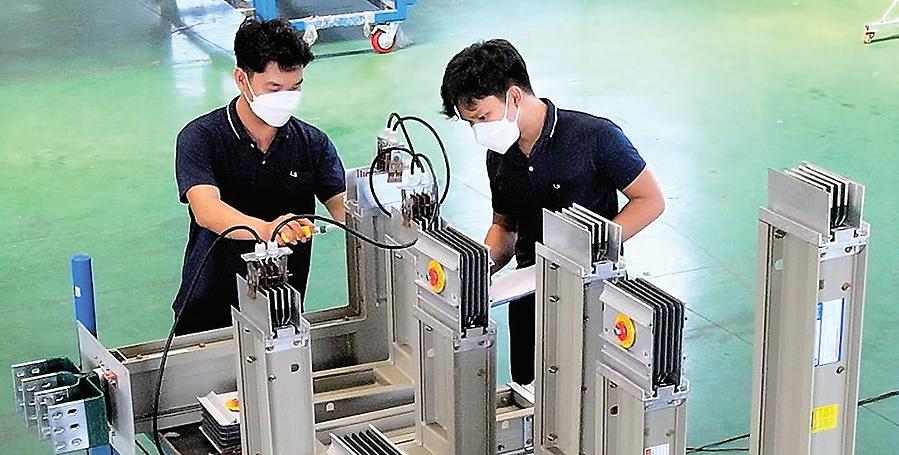
LS Eco Energy, an affiliate of South Korea’s LS Cable & System (LS C&S), is moving deeper into the ASEAN data center power‑infrastructure market with its first busduct supply contract for a hyperscale facility in Malaysia.
Per the company, its Vietnamese subsidiary, LS‑CV, will provide busduct systems for a new hyperscale data center under construction by a global IT company in Johor Bahru, a fast‑emerging hub for cloud and AI capacity in Southeast Asia. The contract is valued at about US$8 million, and LS‑CV will ship the busducts in multiple phases tied to the project’s build schedule.
Busducts—enclosed busway systems that can carry large currents over relatively short distances—have become a core element of hyperscale power architecture, where oper ators need to move megawatts of power efficiently from transformers and switchgear into dense racks of servers and GPU clusters.
Johor Bahru is attracting major cloud and content play ers thanks to its relatively abundant land and its ability to support large grid connections while still sitting close to Singapore’s regional network and talent base. LS Eco Energy notes that this Malaysian win follows a data center busduct project in Indonesia awarded in October, and says LS‑CV is now treating ASEAN hyperscale work as a stra tegic growth market, with Vietnam serving as a regional manufacturing and export base.
CEO Lee Sang‑ho of LS Eco Energy said the company sees the rapid build‑out of AI and cloud data centers driv ing “parallel growth in power‑infrastructure demand,” and that it will strengthen its position by offering both busducts and power cables as integrated packages. LS C&S is a leader in the domestic Korean busduct market and is leveraging that technology base across its Gumi plant in Korea and LS‑CV in Vietnam, while also build ing a new facility in Mexico to address rising demand in North America. The Malaysian order underscores a broader strategy of following the AI data‑center wave with higher‑value power‑distribution solutions, not just traditional cable.
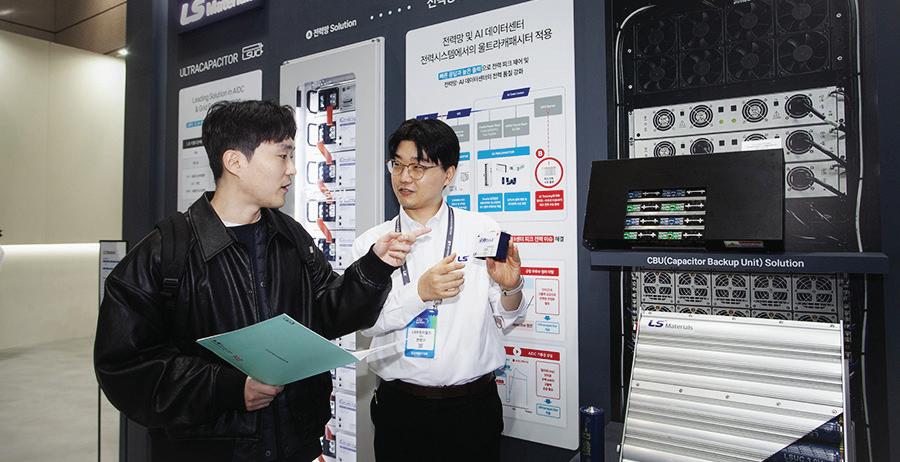
LS Materials debuts long‑life ultracapacitor system designed to serve AI data centers
LS Materials, an affiliate of South Korea’s LS Cable & System (LS C&S), has unveiled a new ultracapacitor (UC) system aimed at AI data centers, claiming a step‑change in both lifetime and power‑handling capability for backup and peak‑shaving applications.
The company says the UC system is rated for more than six million charge–discharge cycles—roughly six times the life of conventional general‑purpose UC products, which are typically limited to around one million cycles in demanding environments. In practical data center terms, LS Materials notes that general‑purpose ultracapaci tor solutions often need replacement after about a year when exposed to the sharp power peaks associated with GPU‑heavy AI workloads. By contrast, the new UC system is designed to operate for five years or more under those same conditions, reducing maintenance interventions and lifecycle cost for operators that are already struggling with power‑density, cooling, and uptime constraints.
Per the company, the product is expressly engineered for AI data center power profiles, where banks of GPUs can pull massive power in milliseconds, causing frequent and steep load spikes. Those spikes are increasingly managed by capacitor‑based devices that can buffer instantaneous demand, protect upstream equipment, and work alongside batteries and grid feeds. LS Materials says its new system was developed as a full stack—from the individual UC cells through to complete modules and integrated racks— so that electrical performance and thermal management could be optimized together.
On the engineering side, the company reports that the system more than doubles heat‑dissipation capability versus its previous designs and reduces internal resistance, allowing the capacitors to deliver high power quickly while keeping temperatures and losses under control. CEO Hong Young‑ho described long lifetime and momentary peak‑power handling as “core competitive advantages” in the AI data center segment, and noted that LS Materials is already in supply discussions with several global manufac turers of AI server and power‑conditioning equipment.
An employee inspects a busduct at the LS Eco Energy facility in Ho Chi Minh City, Vietnam. LS Eco Energy photo.
An LS Materials employee explains the UC system for AI data centers at InterBattery 2026.
The company planned to give the new UC platform a formal launch at InterBattery 2026, where it hopes to expand collaborations with data-center, server, and power-electronics customers looking for next-generation solutions to manage AI-driven loads.
Asia-Pacific wire and cable demand seen climbing because of 3 market drivers
Multiple research houses now see Asia-Pacific retaining its position as the world’s largest regional wire and cable market through the 2020s, with steady mid-single-digit growth tied to transmission upgrades, construction, and the energy transition, and with several analysts noting that the region already accounts for well over one-third of global wire and cable demand when measured by revenue.
One outlook, from Expert Market Research, pegged the Asia-Pacific wire and cable market at roughly $157 billion in 2024, and expects that to be $229 billion by 2034. That implies a 3.8% CAGR over the 2025–2034 period as governments pour money into power grids, urban infrastructure and renewables. A second market firm pegs the broader Asia-Pacific wire and cable segment at $81–82 billion in 2024 and $150 billion by 2034, a faster 6.7% CAGR, citing stronger upside in emerging ASEAN markets.
Analysts generally agree that low- and medium-voltage power cables still account for the most regional volume. However, several reports flag extra-high-voltage (EHV) and submarine power cables as the most dynamic niches, tied to offshore wind in markets such as China, South Korea, Taiwan and Japan and to long-distance HVDC links connecting remote renewables to load centers. China alone is expected to see its wire and cable revenue grow from roughly $38 billion in 2023 to more than $50 billion by 2030, with EHV the fastest-growing voltage class as ultra-high-voltage corridors expand.
The regional market mix is also shifting. India’s wire and cable sector, for example, is forecast to grow from about $21–23 billion in the mid-2020s to roughly $35–36 billion by 2031, an annual pace of around 9%, supported by residential wiring, nationwide 5G fiberization and utility-scale renewable projects.
Communication and data cables are expected to outpace traditional power products as data-center clusters in markets such as India, Singapore, Malaysia, and Indonesia roll out new fiber and high-performance copper for cloud and AI workloads. Together, these dynamics are prompting global cable majors to add capacity in China, India, Southeast Asia, and Australia, while local players race to move up the value chain into higher-specification power, control, and data cable designs.
PEOPLE CORNER
who’s on the move in the industry
After a 36‑year career with the Niehoff organization, includ ing 22 years leading the North American operation, Robert Wild has retired as president and CEO of Niehoff Endex North America (NENA). Wild started out in 1990 as a trainee at the Schwabach, Germany, plant of Maschinenfabrik Niehoff GmbH & Co. KG. Three years later he became assistant manager of sales and marketing, then five years later he was promoted to area sales manager. In 2004 he was named president and CEO of NENA. He has also been an impressive supporter of the WAI, serving two terms on the Board of Directors. He was the 2023 recipient of the President’s Award from WAI. Replacing Wild is Andy Zinner, who has been serving as vice president of operations and service at NENA since 2022. He previously spent nearly 18 years in senior leadership roles at Leoni Wire Inc., including vice president sales and operations lead, president and vice president of sales, and vice president of sales and market ing. Earlier, he worked for Schneider Electric in Germany. Of note, he also is a member of WAI’s Board of Directors and a frequent contributor to WAI programs. He holds an engineering degree in electrical power and automa tion from OTH Regensburg and completed an executive finance program at Harvard Business School. Based in Swedesboro, New Jersey, Niehoff Endex North America, is part of the Niehoff Group, a global supplier of wire processing equipment for the wire and cable industry.
T.J. Quinn has been promoted to director of sales – power grid for Copperweld, with responsi bility for leading sales strategy, key account development and growth initiatives in the utility and grid modernization sectors. He most recently served nearly seven years as regional sales and business development manager
at Copperweld, after spending more than 28 years with Anixter, including seven years as vice president of sales for wire and cable. Quinn holds a degree in busi ness, economics and finance from North Carolina State University. Copperweld, based in Pittsburgh, Pennsylvania, manufactures copper‑clad steel conduc tors and related products for utility, communications and specialty markets.
Michelle Dinkel has joined TiniFiber as regional sales manager. She most recently worked for a year as senior account manager at BS Cable Company LLC. Prior to that she held wire and connectivity sales roles with CommScope for more than two years, at Great Lakes Data Racks & Cabinets for four years and the C&C Technology Group in the New York and Philadelphia markets. She holds a BSBA degree in accounting from Shippensburg University of Pennsylvania. TiniFiber, based in Farmingdale, New York, manufactures micro‑ar mored fiber‑optic cable solutions for data, telecom and security applications.
Matt Miller has been named president of Agave Wire Ltd and Interstate Wire Co., sister wire and cable companies that oper ate alongside Copperweld in a shared ownership group. He previously spent nearly 15 years with IEWC in a range of key sales positions, most recently as vice president of global sales. Prior to that he worked for Jupiter Communications and as general manager of sales for Fastenal. He holds a BBA degree in business sales and marketing from Western Michigan University’s Haworth College of Business. Based in the Dallas–Rockwall, Texas area, Agave Wire Ltd. manufactures specialty electronic wire and cable. Interstate Wire Co., also based in the Dallas–Rockwall, Texas, area, distributes elec tronic and electrical wire, cable and related wire manage ment products.
Wild
Zinner Quinn
Miller
Dinkel
Renee Havrilla has been named CEO of Aurora Material Solutions, succeeding Darrell Hughes as part of a planned leadership transition. She joined Aurora in June 2025 as president of the company’s flexible compounds business segment, where she led value creation planning and managed P&L responsibility for global operations. Previously, Havrilla served as vice president of Monument Chemical’s solvents business and spent 11 years with Westlake Chemical Corporation, including seven years as vice president of global PVC compounds, overseeing 13 global locations. She earlier held senior management roles with Bayer Material Science (now Covestro). She holds a B.S. degree in chemistry from the University of Pittsburgh. Based in Streetsboro, Ohio, Aurora Material Solutions, supplies polymer compound solutions for customers that include the wire and cable industry.
he managed global R&D for power distribution and low-voltage cables as well as EHV and HVDC product development and industrialization. He previously served as vice president of research and development for NKT from 2016 to 2020, and earlier spent nearly 15 years with SABIC in a series of progressively senior technology and innovation positions. Earlier in his career, he worked as a senior process engineer at Holland Sweetener Company and as a process engineer at DSM Research. He holds both a master’s degree in chemical engineering and a PhD in chemical reaction engineering from the University of Twente. The Abbeville, South Carolina, plant of Prysmian produces wire and cable for energy and communications markets.
Steven Kenney has joined Burton Wire & Cable as sales and marketing manager, with responsibility for developing new business, managing key customer relationships and supporting the company’s growth strategy in core and emerging markets. He most recently was marketing and technical sales manager at UCL Swift Americas, focusing on fiber connectivity solutions and field support, following more than 15 years at Hitachi Cable America in sales and technical roles serving OEM and distribution customers. Prior roles include Masy BioServices, Longchamps Communication Systems and CCN Data Systems, where he gained experience in communications infrastructure and customer support. He holds a B.A. degree in English from Plymouth State University. Based in Hooksett, New Hampshire, Burton Wire & Cable manufactures copper and fiber-optic communication cables.
Peter Borman has been named high voltage cable design and development and process engineering director for Prysmian, based at the company’s Abbeville, South Carolina, facility. He has nearly four decades of experience in process engineering, cable technology and industrial R&D leadership roles. He joined Prysmian in 2020 as energy product development director for the Energy & Infrastructure business, where
Bill Locey has joined Hueson Wire & Cable as manufacturing manager at the company’s South Grafton, Massachusetts, facility. He is a career wire and cable manufacturing professional with 35 years of hands-on experience in extrusion, quality and production leadership. In his new role, he is responsible for production operations, procurement, facilities and manufacturing execution, supporting Hueson’s continued growth and focus on operational excellence. He most recently served as vice president of manufacturing at Cat Wire and Cable Corp. in Miami, Florida, where he managed all daily operations, including production scheduling, purchasing, quality control and new product development. Prior to that, he spent more than a decade with TriCab Engineered Cable Systems, where he progressed from machine operator to plant manager. While at TriCab, he helped develop XLPE cross-linked polyethylene (XLPE) processes without irradiation, and contributed to securing UL tray cable certification. He previously held positions at Montrose CDT, Madison Cable and BICC General, gaining broad experience in high-speed extrusion, in-process quality systems and ISO 9001 audit preparation. Based in South Grafton, Massachusetts, Hueson Wire & Cable is a U.S. manufacturer of custom specialty electrical wire and cable.
OBITUARY
Peter J. Olsta, a long-time part of the plastics manufacturing industry, died March 12 at age 78. He worked for DuPont, Albany International, Crellin Plastics, Sonoco Plastics and Pittsfield Plastics. He held a bachelor’s degree from Lowell Tech and master’s degree from RPI. He was predeceased by his wife of 49 years, Carol (Nadeau) Olsta. Survivors include a sister, Mary Kunkel; daughters Lisa Sullivan and Michelle Marino; and eight grandchildren. n
Kenney
Olsta
Borman
Havrilla
Italy’s Fontana Gruppo to acquire Germany’s Kamax Group
Italian fastener specialist Fontana Gruppo has signed an agreement to acquire Germany’s Kamax Group, a major producer of high-strength fasteners and complex cold-formed parts for the automotive sector.
A press release said that the transaction will significantly expand Fontana’s global footprint and roughly double the size of the group once it closes. The parties said that the agreement marks a further step in the consolidation of the global fastener sector as suppliers scale up to support increasingly complex vehicle platforms and powertrain technologies.
Per the Fontana Group, the deal will increase the group’s network to 42 plants worldwide, employing more than 9,000 people and generating about €2 billion in annual revenue. With around €2 billion in annual fastener sales, the combined Fontana–Kamax business is viewed as one of the larger dedicated fastener manufacturers worldwide.
Founded in 1935, Kamax is headquartered in Homberg (Germany) and reports more than €700 million in sales from production of roughly 2.8 billion fasteners and cold-formed components per year. The company operates around 15 plants across Germany, Spain, Slovakia, the Czech Republic, Poland and China, supplying high-performance fasteners for safety-critical automotive applications.
Fontana said the acquisition is a key step in its long-term expansion strategy, strengthening its position as a leading global supplier of fastening solutions to automotive and industrial customers. “From a strategic, industrial, and managerial perspective, this acquisition represents an important opportunity for business development, strengthening our distinctive positioning in the fasteners sector, while generating significant prospects for growth and value creation,” said Fontana Group CEO Giuseppe Fontana.
With Kamax’s manufacturing footprint and technical know-how, Fontana expects to enhance its technological capabilities and broaden its portfolio of engineered fasteners and cold-formed parts. Both companies emphasized that the combination will support continued investments in advanced forming, coating and process technologies, as well as closer partnerships with OEM and Tier-1 customers in Europe, Asia and the Americas.
Kamax has been pursuing its own growth strategy, including targeted mergers and acquisitions, to “expand our core business and focus on the automotive industry with other business areas,” the company has stated. The planned integration into Fontana Gruppo is intended to accelerate that trajectory while maintaining Kamax’s brand and customer relationships in key markets.”
Single-mode fiber in short supply and the outlook is uncertain
An Australian optical fiber connectivity supplier warns that the industry has moved from tight capacity to a full-blown global shortage of optical fiber, with little relief in sight. The result has been longer lead times, fast-expiring quotes, and some customers unable to get any allocation of single-mode fiber.
Per a report at ScaleFibre.com, the crunch stems from a “perfect storm” of demand and constrained manufacturing. A global wave of hyperscale data center construction— driven by generative AI and GPU-dense compute fabrics— is soaking up vast volumes of high-density fiber, even as governments push “Broadband for All” builds and operators densify 5G networks. Key inputs such as high-purity helium for fiber drawing are in short supply, limiting the industry’s ability to add capacity quickly.
The impact is already visible on the ground. Some cabling manufacturers, ScaleFibre notes, “are unable to obtain any single-mode optical fiber at all,” leaving contractors mobilized on site while cable drums fail to arrive. Projects engineered around specific high-count cables are being forced into compromises, using whatever is available rather than what was designed. That, it warned, can lead to inefficient duct utilization, higher long-term
costs, and in some cases no viable product on the shelf, even in the surplus market.
Prices have responded accordingly. The blog reports that spot prices for optical fiber have jumped more than 270% in just a few weeks, with customers in some cases paying three to four times last year’s rates. Raw fiber costs are seeing triple-digit percentage increases and logistics volatility, in part due to geopolitical disruptions. That means a cable price quoted today may not hold two weeks from now. For hyperscalers, operators, and ISPs, the cost structure is shifting fast enough to force a fundamental rethink of multi-year capital budgets.
The ScaleFibre message to customers is blunt: passive, transactional purchasing “is no longer an option.”
Operators need to lock in capacity now, share long-term demand roadmaps, and design around more commonly manufactured fiber families instead of niche constructions that require line changeovers. In return, suppliers can reserve manufacturing slots and stage raw materials to shield committed projects from the worst of the volatility. Done right, the company argues, today’s shortage can push the industry toward more disciplined capacity planning and ultimately, more resilient network designs.
Exhibiting Companies
ACIMAF/Italian Trade Commission
AFH Antriebstechnik GmbH
AIM, Inc.
AWT Machinery / Clifford / Ultimat
Axjo America 2027
B&H Tool Co.
Bartell Machinery Systems LLC
BECHEM Lubrication Technologies, LLC
Betasistemi s.r.l.
BLACHFORD CORPORATION
Boockmann Engineering
Cable Components Group
Cable Consultants Corp.
Carris Reels Inc.
Cemanco LLC
Centran USA LLC
CERSA MCI
Chase Corp.
Chroma Color Corp.
The Clinton Instrument Co.
CM Furnaces Inc.
CN Wire Corp.
Condat Corp. - Saline, MI
Conneaut Industries, Inc.
COREMO SPA
DELTA TECNIC
Die Quip Corp.
Direct Wire
Domeks Makine A.S.
Dynamex Corp.
Enercon Industries Corp.
ERA Wire Inc.
Esteves Group USA
EVG
Fabpro Polymers
Fabritex, Inc.
Fil-Tec, Inc.
Filtertech
Fine International Corp.
FMS USA Inc.
Foerster Instruments Inc.
Fort Wayne Wire Die, Inc.
Frekans Makina San. Ve Tic As
FUHR GmbH & Co. KG
Gem Gravure Co.
The George Evans Corp.
GMM Guven Mühendislik Makine
Kimyave Elektronik AS
Graham Engineering Company, LLC
Guelph Twines Ltd.
HAIYAN ADS SPECIAL CABLE CO., LTD.
Heany Industries LLC
Howar Equipment Inc.
Huestis Machine Corp.
Ideal Welding Systems LP
iiM GmbH measurement + engineering
InnoVites B.V.
International Wire, a Pantheon Electric Co.
Joe Snee Associates
Joe Tools, Inc.
KABLOMAR KABLO HAMMADDELERI
SAN. VE TIC. LTD. STI.
KABMAK MUHENDISLIK VE MAKINA
SAN. TIC. LTD. STI.
KALMARK INTEGRATED SYSTEMS LTD.
KEIR Manufacturing Inc.
Kinrei of America, LLC
Lamnea Bruk AB
Leggett & Platt
LEIBINGER
Lloyd & Bouvier Inc.
M. Holland Co.
Madem-Moorecraft Reels USA, Inc.
Magnetic Analysis Corp.
Magnetic Technologies Ltd.
Maillefer Extrusion Oy
Mario Frigerio S.p.A.
Mathiasen Machinery, Inc.
Medek & Schörner GmbH
Mega Metal
Metal Link Inc.
The MGS Group
Micro Products Co.
Mikrotek Machines Ltd.
Morgan-Koch Corp.
Niehoff Endex North America Inc.
Nordson Measurement & Control
Nylon Corporation of America-NYCOA
P & R Specialty Inc.
Paramount Die Co.
Phifer Inc.
Pioneer / Simpacks
Precision Die Technologies
Process Control Corp.
Properzi International, Inc.
Proton Products Inc.
Q8Oils
QED WIRE LINES INC.
Quaker Houghton
Radyne Corp.
Rainbow Rubber & Plastics
RAUTOMEAD LIMITED
Redex USA
Reel Options by Vandor Corp.
Reel Power Industrial Inc.
REFRACTRON TECHNOLOGIES CORP.
Reichenbach Equipamentos Indústria e Comércio LTDA.
RichardsApex, Inc.
Ridgway Machines Ltd.
RMG
Roblon
Rosendahl Nextrom GmbH
Roteq Machinery Inc.
SACO AEI Polymers
Saint-Gobain Ceramics
SAMP USA, Inc.
SAR MAKİNA SANAYİ VE TİCARET A.Ş.
Sark-Wire Corp.
Schlatter North America
SDI LaFarga COPPERWORKS
SETIC POURTIER SAS
Shanghai KECHEN Wire & Cable Machinery Co., Ltd.
SHANGHAI TIANYUN EXHIBITION SERVICE CO., LTD.
SIKORA
Sonoco
Star Materials Co. Ltd.
Steel Cable Reels
SWEED Machinery
TAUBENSEE STEEL & WIRE
Taymer International Inc.
Teknikor
Teknor Apex
Tektapes
Tensor Machinery Ltd.
Thermoplastics Engineering Corp (TEC)
TROESTER GmbH & Co. KG
Uniflow
United Wire Co.
Universal Wires LLC
UPCAST Oy
US Extruders
WAFIOS Machinery Corp.
Wardwell Braiding Co.
Wire & Cable Technology International (WCTI)
wire 2028
Wire and Plastic Machinery Corp.
The Wire Association International, Inc.
The Wire Journal International, Inc.
Wire Lab Co.
Wire Machine Systems
Witels-Albert
Worth Steel
Zhejiang Taihu Yuanda New Material Co., Ltd.
Zhejiang Zhenli Technology Co., Ltd.
Zumbach Electronics Corp.
Want to exhibit?
Contact: Shannon Timme or Anna Bzowski: sales@wirenet.org
ASSOCIATION HIGHLIGHTS
March 26 Interwire Points Meeting went quite well, up nearly 20% from last one
The day-long meeting for Interwire 2027, held at the Association’s office in Madison, Connecticut, determines how exhibition space is allocated based on the official points system. Exhibiting companies earn points over time, with total accumulation dictating booth selection order. Volunteers included WAI President David Fisher, along with Mike Mathiasen and Joe Snee.
Exhibit Hall - Building A, Level 1
This year’s meeting assigned 76,800 sq ft of exhibition space to 152 companies, marking a 19% increase over the 2025 Interwire Points Meeting. “That’s an excellent indicator of the importance of the show and the outlook for the industry,” Fisher said.
Following the Points Meeting, booth space is made available on a first-come, first-served basis. The current floor plan reflects sales to date, including additional contracts secured at wire 2026 in Germany, where some
8,100 sq ft of space was sold to 18 companies. With Interwire 2027 (May 4–6) still about a year away, it is feasible that the floor plan may be expanded. Contact the WAI sales department for more information.
The show floor layout for Interwire 2027. As of press time, only the blue-shaded booths were still available.
Joe Snee, l, with WAI staff at the March 26 Points Meeting at WAI headquarters.
WAI’s new booth hosted inquiries for educational programs and Interwire 2027
At wire Düsseldorf 2026, the newly designed sleek WAI booth saw a steady stream of visitors posing questions about Interwire 2027 as well as the Association’s educational programs, which have continued to increase in both growth and scope.
WAI Manager of Education John Markowski was busy explaining the existing and on-the-way educational videos, such as those cited on the prior page, as well as talking to companies interested in contributing to future topics. WAI Project Manager Vanessa Lewis discussed membership and chapter activity, while sales representatives Shannon Timme and Anna Bzowski showed the Interwire 2027 floor map to prospective Interwire exhibitors.
Of note, the WAI signed up over a thousand subscribers for Wire Journal International, a very positive sign, while WAI sales staff showed available floor positions for Interwire 2027.
New WJI editor-in-chief had a quick introduction to many people, companies
It did not take long for Mark Del Franco, the new editor-in-chief of Wire Journal International, to become immersed in the wire and cable industry. Less than five weeks from his first day, he was walking the halls at wire Düsseldorf 2026, meeting exhibitors and readers from around the world. He visited dozens of booths, and left with a better feel for what mattered to a wide range of suppliers and manufacturers.
Del Franco is a seasoned business-to-business journalist with deep experience in renewable energy, offshore wind and industrial markets. He previously served as editor of North American Windpower and as a managing editor at Penton Media, where he oversaw coverage of complex technologies, project development and policy trends in the renewable energy sector.
for its educational programs and Interwire
Del Franco’s early career included operating Wardwell braiding machines (he recalls them as “durable workhorses”) at Hamden, Connecticut-based Meyer Wire and Cable, where his father served as vice president and general manager. Of note, his grandmother was also familiar with braiders, only she worked with cotton instead of wire and cable.
(Continued on p.38)
WAI’s take on the 2026 staging of wire Düsseldorf
The wire and cable industry is evolving, and wire 2026 showed how suppliers remain the heart of that journey. Whether you provide materials or equipment, you are driving continuous improvement, launching new products, developing teams, deploying AI, managing tariffs and navigating supply chain challenges. You are also finding time to market your critical contributions, which was fully on display in Düsseldorf. Steve Fetteroll, WAI. Editor’s note: see pp. 48-49 for other association takes.
WJI Editor-in-Chief Mark Del Franco (r) at the MGS Group booth. There were many such visits.
2027.
(Continued from p.37)
“That backdrop of editorial and manufacturing experience positions Mark Del Franco to connect highlevel technology, market forces and the day-to-day realities of wire and cable producers worldwide,” said WAI Executive Director Steve Fetteroll. “WJI is well positioned to continue its reputation as being a trusted voice for the wire and cable industry.”
WAI launches animated Fundamentals of Wire Dies online course ... more to follow
The online launch of Fundamentals of Wire Dies marks a new chapter for the Wire Association International, extending its 1930-era mission into a more structured, application-focused level of training that mirrors its day-long wire and cable course while remaining accessible to beginners.
The WAI course, now available through the WAI Education Center, is focused and practical, taking about one hour to complete. It is structured as a series of concise video segments, each paired with knowledge checks to reinforce learning and track progress. The WAI Education Center supports both individual learning and team-based training, making it easy for companies to plug the course into internal development programs or onboarding paths.
The course is designed for operators, engineers, and technical professionals at all experience levels. It serves those new to wire drawing who need a clear starting point, as well as experienced staff looking to refresh their understanding of core fundamentals.
The content starts with an overview of why wire dies matter, then moves into types of wire dies and their applications. It breaks down die profile geometry and specifications across two segments, using consistent visuals and terminology. From there, it covers maintenance and common issues, and closes with wire die selection, optimization, and a concise recap that ties concepts together.
The material is structured to support real-world decision-making. Whether in the toolroom, on the production floor, or in process optimization discussions, the emphasis is on how to recognize what is happening at the die and what to do about it.
The course was developed by Eric Bieberich, president of Fort Wayne Wire Die and WAI Past President (2025). Supporting material was provided by Hyperion Materials & Technologies, adding perspective on materials, wear behavior, and die performance.
A key design choice sets this course apart. It leans heavily on animation because wire dies are difficult to capture effectively with real-world footage; the most important details happen at a scale that is hard to see. Animation allows learners to clearly visualize geometry, material flow, and wear patterns, turning abstract concepts into something concrete and memorable.
“Our goal is to make technical training more accessible without sacrificing depth,” said John Markowski, WAI’s manager of education. “Courses like this are designed to deliver practical knowledge quickly, so professionals can apply what they’ve learned immediately.”
This course is part of WAI’s growing library of modular, on-demand training. The focus is building core technical knowledge across the wire manufacturing process and delivering it in a format that fits how today’s workforce learns in short segments, clear visuals and immediate feedback. The approach is intended to reduce trial-and-error on the shop floor and support more informed decision-making across operations.
The newest addition to WAI’s practical educational course uses both familiar views as well as animation.
More content is on the way. The Ferrous Heat Treatment course is more than halfway through production and is expected to launch within one to two months. It will cover heat treatment fundamentals, batch and in-line processing, patenting, conventional quench and tempering (oil tempering), as well as austempering and martempering. Looking ahead, Mechanics of Wire Drawing is next to enter production. The course will be led by Daniel Witt of Prysmian – Encore Wire.
Visit wirenet.org or email education@wirenet.org for more about WAI training/development opportunities.
The WAI’s new online segment on wire dies will soon be joined by a new course on ferrous heat treatment.
CHAPTER NETWORK
New England Chapter to visit UConn’s Institute of Materials Science in October
The University of Connecticut’s Institute of Materials Science (IMS) in Storrs will provide a research‑focused backdrop for the New England Chapter’s upcoming educational program on Oct. 21.
The specifics of what participants will see will be presented in future issues, but there is much about the IMS that will interest wire and cable professionals. The IMS houses the Electrical Insulation Research Center (EIRC), which maintains facilities for characterizing insulating materials used in power trans mission and distribu tion networks, rotating machinery, electro‑re sponsive devices and capacitive energy storage. Its instruments support broadband dielectric spectroscopy, high‑field polariza tion studies and pulsed electroacoustic space‑charge profiling on cylindrical power cable samples, enabling detailed investigation of aging, space‑charge formation and failure mechanisms in modern cable insulation.
IMS also operates a broad suite of laboratories for materials characterization that align with cable R&D and troubleshooting needs. The Center for Advanced Microscopy and Materials Analysis offers high‑res olution imaging and microanalysis to reveal surface defects, microstructural features and interfacial issues in metallic conductors, metallic coatings and polymer insulation. X‑ray facilities, including wavelength‑dis persive X‑ray fluorescence spectrometers, provide elemental analysis of metals, alloys and polymer formu lations, supporting quality control and failure analysis of cable compounds and shields.
Complementing these strengths are mechanical testing labs for tensile and bend measurements, a state‑of‑the‑art cleanroom with microfabrication tools and an Industrial Affiliates Program that connects IMS experts with regional manufacturers. For wire and cable professionals, the visit will demonstrate how a modern university research center can partner with industry to characterize materials more deeply, speed development and address field reliability challenges.
Specific details and registration information will be provided in future issues.
Reminder: 4 WAI chapters have golf tournaments set from July to October
A golf enthusiast needs no special incentive to head to the links, but when you add in a good cause—such as a college scholarship program—plus networking, a good spread and potential bragging rights, the only real ques tion should be: “Where do I sign up?”
The answer to that is at www.wirenet.org, where you can find the four chapters that have dates set for their annual golf tournaments.
First up is the Midwest Chapter, which will hold its golf tournament on July 30 at the White Pines Golf Club in Bensenville, Illinois. Next will be the Ohio Valley Chapter, which will hold its annual golf tour nament and education program on Aug. 20 at the Kennsington Golf Club in Canfield, Ohio. That will be followed by the New England Chapter, which will hold its annual golf tournament on Sept. 14 at the Tunxis Country Club in Farmington, Connecticut. Finally, the Southeast Chapter will hold its annual golf tournament on Oct. 15 at the Rock Barn Country Club and Spa in Conover, North Carolina.
Each chapter welcomes support‑company spon sorships as well as donations of raffle prizes to help further their activities. See the chapter websites for more details. n
All In for AI?
Artificial Intelligence. Where human curiosity and technology meet.
If you are on a mission to learn how AI suits your manufacturing plans, turn to the Wire Association International’s educational resources for answers.
Meet experts at WAI conferences who will introduce you to AI and other advancements. Learn how to make faster, smarter decisions with AI to boost productivity. And see how companies use this new technology with proven results.
WAI’s programs embrace change...for the better. They are designed to help you meet your educational and manufacturing goals. That’s our mission and it has been for more than 95 years.
Connect with peers who are centered on AI. Use the QR code to reveal why members around the world rely on WAI. Not a member?
JOIN TODAY: www.wirenet.org
wire Düsseldorf ... steadfast
The focus on numbers is always part of any wire Düsseldorf wrap-up, but the 2026 staging stood out for something more: its role as a steady industry platform amid geopolitical uncertainty, supply chain disruptions, tariffs and raw material limits—and possible big changes to come.
Organizer Messe Düsseldorf reported that despite those pressures—and an ill‑timed airline strike—the overall week‑long fairgrounds experience was one of steady activ ity, reflecting an industry that continues to engage, evaluate and adapt. Once again, wire and its sister show, Tube 2026, provided a setting where manufacturers, suppliers and end users could measure shifting market conditions and look for practical paths forward.
The combined wire and Tube events fielded some 2,600 exhibitors from 65 countries, spanning 16 halls and about
119,000 sq m of exhibition space. Visitors from 130 coun tries attended, with both long‑standing participants and newer industry groups represented, pointing to continued diversification across end‑use markets.
Demand trends were visible across the show floor. The need for resilient materials, reliable production and more secure supply chains—particularly in areas such as energy infrastructure and defense—came up repeatedly. The growing presence of defense‑related applications and new visitor segments suggested that requirements are shifting
(Continued on p. 46)
Photos on this opening spread page courtesy of Messe Düsseldorf. Photographer C. Tillman
Pictures from the show floor
(Continued on from p. 42)
toward tighter expectations on performance, quality, and supply assurance.
The June WJI issue will present a range of displayed machinery. Per comments from exhibitors, most were quite pleased with the result.
At wire 2026, Lämneå Bruk made the company’s largest presence to date with two booths and four machines on display. “The response was overwhelming: strong visi tor engagement, highly positive feedback on our technol ogy, and great appreciation for our engineers’ expertise,” it reported. Highlights included a virtual tour of its Swedish production facilities, 3D models of its lines and some games such as a 3D puzzle of its No Twist Coiler. “I’m truly amazed by how successful the week turned out— far beyond what I expected, especially given the current geopolitical climate,” said President Jonas Hagstedt.
“wire Düsseldorf is the central meeting place for the global wire and cable industry,” declared Bernd Lohmüller, managing director of Maschinenfabrik Niehoff. “All market leaders attend this event. For us, it also marked our 75th anniversary. All these years stand for engineering excellence, innovative strength and partnership based on collaboration worldwide. Visitors to our booth could see this, and we are very satisfied with how wire 2026 went.”
Rosendahl reported a solid outcome, even though visitor numbers were lower than two years ago. Many attend ees arrived with specific projects and investment plans. Attendance from Arabic countries and parts of Asia was reduced, often limited to smaller delegations, and some European visitors were affected by airline disruptions. Despite this, interest remained strong across core technolo gies that were spotlighted, such as its “From Fiber to Super Bundle” preform‑to‑ribbon process, advanced magnet wire extrusion with robotic winding and its Insulation Plus stan dardized low‑voltage cable insulation line.
“Wire 2026 proved to be a highly satisfying event, clearly exceeding our expectations, especially in terms of visi tor turnout,” reported the FML Group. “We welcomed a remarkably high number of visitors, which translated into
many concrete discussions around new projects. Beyond the business aspect, it was especially valuable to reconnect with many of our long‑standing customers in just a few days, a clear reminder of the real strength of this trade fair.”
A robust slate of presentations and special sessions sharp ened the show’s focus, tackling sustainability, decarboniza tion, procurement and shifting market demands. The forum program delivered compact talks on technology, markets and policy, including a “Wire 2030 in Germany” theme day with keynotes and a panel on industry challenges and polit ical framework conditions. Association‑led sessions (such as by ACIMAF and partner organizations) also highlighted machinery innovation and international market trends in concise, practice‑oriented updates.
One could also see a “changing‑of‑the‑guard” evolution at wire Düsseldorf. Roughly a dozen years ago, “green” arrived as the dominant banner on the wire Düsseldorf floor, driven largely by big‑OEM and corporate sustain ability targets. Over time, that hot topic became less vibrant as elements of sustainability were absorbed into day‑to‑day expectations. In recent years, AI has emerged as the “must‑have” talking point for process control, quality monitoring and predictive maintenance across the halls. Whether AI follows a similar path—loud start, mixed results outside mandated areas—or achieves new heights at future wire Düsseldorf stagings is unknown, but at this point its trajectory appears clearly upward.
If anything, the “green‑to‑AI” handoff underscores how themes come and go while the core role of the event remains largely unchanged. wire Düsseldorf may reflect shifting priorities on the show floor, but its function as a steadfast platform for assessing those shifts—and deciding what matters—has been remarkably consistent, which is why being at such industry events remains a necessity.
The next staging of wire and Tube will take place April 3‑7, 2028, in Düsseldorf, Germany. For further infor mation, contact Messe Düsseldorf North America, tel. 312‑781‑5180, info@mdna.com, www.wire‑tradefair.com, www.tube‑tradefair.com and www.mdna.com.
It’s never too soon to start thinking about reservations for the next staging of wire Düsseldorf.
Wire Link Scholar Corbin Whan, Prysmian, with WJI Editor-inChief Mark Del Franco at the entrance to wire Düsseldorf.
The industry association ‘take’
Messe Düsseldorf stages wire Düsseldorf, but it gets significant support from industry associations on multiple levels. Below are comments from several organizations on the 2026 event. See p. 37 for comments from WAI.
Willibert Dautzenberg, IWMA
wire Düsseldorf is a very resilient show. In 1996, the Düsseldorf airport burned down. In 2010, the Swiss volcano stranded attendees. In 2020, there was Covid. In 2026, the main German airline went on strike. Yet the event continues to excel as the place for suppliers to display new technology and their latest developments. It also was a good place for us to spread the word about how IWMA has modernized, focusing on young people, offering them networking opportunities because they are the future of our industry.
wire Düsseldorf remains very important for ACIMAF members as it draws people from all over the world. Being able to meet with customers in such times matters. The numbers may have been a bit lower, and I noticed that there were fewer people from South America, but all the big companies were there and the overall attendee quality continues to be very good. I am also proud to note that nine of our member companies took part in the Wire & Cable Forum.
Ralf Kappertz, IWCEA
Even if challenging times did have an impact, this year’s wire Düsseldorf was a great success for all exhibitors and guests. Our members welcomed thousands of visitors from all over the globe. Already existing bonds could be tightened, new bonds could be forged. Though undergoing a huge transformation, wire Düsseldorf proved once again that this is the place to be for the wire & cable industry.
Ferruccio Bellina, ACIMAF
wire Düsseldorf continues to be the major world wire show by far for our members and customers. There is a high efficiency return because of the high number of visitors, because you get to speak to people aside from usual contacts that you would not otherwise see. There are also many other issues to discuss, such as current economic troubles: allocations, material shortages/prices. The Middle East conflict and airline strike, however, are likely to have had an impact on the attendance.
As a co-founder of “wire &Tube” and president of VOEDKM/AWCMA (Association of Austrian Wire and Cable Machine Manufacturers), I had the pleasure of bringing 26 specialized companies to Düsseldorf to participate in the world’s most important trade fair for wire and cable technology. Although attendance was somewhat lower compared to 2024, many of our exhibitors were able to secure deals and generate inquiries, and through discussions with international visitors they could assess their current market position too. The leading trade fair in Düsseldorf is indispensable for us.
wire Düsseldorf once again confirmed its role as the central global meeting point for the wire and cable industry and a key platform for driving innovation forward. For the VDKM, the fair is an essential opportunity to act as a hub for connecting our members and fostering valuable exchange across the industry. The fair provides an ideal setting to discuss current market developments and to drive the future of the wire and cable industry. Despite the Lufthansa strike, significantly more visitors from outside Europe attended than expected.
wire Düsseldorf continues to be a strong event – the exhibits are strong and expansive. The technology continues to advance. And the event continues to be a gathering event for many. Some North American members have remarked about the irony of coming all the way to Düsseldorf just to do business with their fellow North American neighbors. It’s a great time to be in the wire and cable industry – lots of emerging sectors like electrification, data centers and sustainability. About the only hiccup was the Lufthansa strike. n
Uwe-Peter Weigmann, VDKM
Francois Chambellant, IWCEA France
Dr. Kurt Eder, VOEDKM
Mike McNulty, WCISA
Manufacturing Success: Can operators meet the moment?
Emerging sectors, such as electrification and digitalization, are reshaping opportunity in wire and cable. Here’s how some manufacturers are planning to meet demand.
By Mark Del Franco, Editor-in-Chief
A wave of opportunity from emerging sectors promises to transform wire and cable from a mature, volume business into a performance critical backbone of the energy and digital transition. These applications demand cables that can carry more power, more data, and more intelligence— safely and reliably—under harsher thermal, electrical, and cybersecurity conditions.
For manufacturers, that raises the bar from basic throughput to true operational excellence. Plants must master tighter tolerances, advanced insulation and fire resistant compounds, and higher test rigor to meet standards governing smart grids, high density data centers, and EV charging networks. At the same time, project timelines are
compressing, and customers increasingly expect consistent performance from multi plant, often global, supply footprints. That requires standardized processes, disciplined problem solving, and real-time KPI management across safety, quality, delivery, and cost.
Operational excellence in this context also means agility. As policy, technology, and load profiles shift, manufacturers must retool quickly, qualify new designs, and absorb new standards without disrupting service. The companies that can pair advanced engineering with stable, repeatable, and continuously improving operations will be best positioned to capture growth in these high stakes, emerging sectors.
Editor’s note: See Industry Insights on p. 20 for how one company has focused its R&D.
WJI reached out to several leading manufacturers and asked them, “What does manufacturing success mean to you?”
Beyond output, how Prysmian measures success
Milan, Italy-based Prysmian, the world’s largest wire and cable manufacturer, says it success is built on leadership, culture, and repeat business—supported by disciplined execution and a network that stays agile even as it grows.
Prysmian’s definition of manufacturing success starts with something deceptively simple: delivering consistent, reliable performance that keeps customers coming back. That mind-set shapes how the company acquires, integrates, and operates more than 50 facilities across North America in markets that range from traditional construction wire to offshore wind and data centers.
For Paul Furtado, Prysmian’s chief operating officer for North America, manufacturing success is not just output, but “quality of service” delivered in a way that is sustainable over time. That shows up as on-time, to-spec product and the kind of performance that earns repeat orders “day in, day out,” rather than one-off wins. Inside the plants, that philosophy becomes discipline in execution, strong local ownership, and a culture where leadership drives behavior, behavior drives culture, and culture drives performance.
North American plants, particularly on response times and service levels. General Cable, which brought North American relevance, added 20-plus plants, and a broad energy and communications portfolio when Prysmian acquired it, contributed experience, people, and process depth that the combined company has folded into its operations and R&D footprint.
Prysmian keeps score with a full slate of KPIs, but Furtado is wary of letting metrics “lead you down the wrong path,” so he calibrates success against a longer arc: where the business stands now versus say, in 2012, when Prysmian’s first major wave of acquisitions in North America began. The test is whether customers still depend on the company as a trusted partner—and whether plants can deliver the same level of performance month after month, even as markets shift around them.
Acquisitions as a two-way street
“The hard part is consistency,” Furtado explains. “It is one thing to turn around a single facility; it is another to achieve repeatable performance across dozens of plants with different histories, systems, and cultures. Furtado’s answer is to put accountability as close to the shop floor as possible, decentralizing decision-making so local teams can act quickly while still aligning with a regional strategy.
Balance, resilience, and the long game
Over the past 15 years, Prysmian has stitched together a North American manufacturing footprint through acquisitions such as Draka (2011), General Cable (2018), and more recently, the 2024 acquisition of Encore Wire. The company’s integration playbook is deliberately simple: “seek to understand,” protect what made the acquisition target successful, and then replicate the best practices across the network without imposing a single “Prysmian way.”
As Furtado explains, Encore Wire brought a best-in-class service model built on speed and agility, including a tightly integrated production and distribution process that set a high bar for responsiveness. Prysmian has been explicit about not diluting that advantage; instead, the company is using Encore’s approach to raise the standard across its
Prysmian’s North American network—50-plus manufacturing, distribution, service, and R&D facilities generating more than $9 billion in net sales—gives it a scale advantage in both product range and geographic coverage. That scale is not just about serving more customers; it is about building a portfolio that can flex as markets rise and fall. Data centers are surging, fueled by digitalization and cloud growth, and Prysmian can supply a wide range of cables and systems into those projects.
At the same time, there is a renewed push for electrification
Furtado
A Prysmian employee in Jackson, Tennessee, stranding optical fiber cable.
and grid modernization in North America, and Prysmian’s transmission, power grid, and high‑voltage offerings posi tion the company to participate in upgrading infrastruc ture that feeds those same data‑hungry facilities. On the renewable side—offshore and onshore wind, solar—the company has become a major subsea and high‑voltage cable supplier, even as policy changes and shifting incen tives have made that space more volatile.
Resilience, in that context, means continu ing to invest in plants and people even when a given segment cools. Furtado points to the pandemic period as one example where Prysmian kept its work force intact and contin ued to back businesses that were not “boom ing” at that moment, reflecting a long‑game strategy rather than a purely short‑term, demand‑driven approach. That same resilience shows up in how Prysmian navigates political shifts that affect renew ables: when incentives retreat, the company leans on its diversified portfolio instead of exiting the space.
ing environment. For Prysmian, that means deliberately revisiting its own legacy practices when new acqui sitions reveal “a better mousetrap,” whether in safety culture, speed, or market outreach.
The leadership model follows a clear sequence: start with strong leaders, build the right culture, and let that culture drive performance. That is why the company emphasizes local ownership in its plants, even as it thinks globally about portfolio and strategy. The organization prizes focus—having a strategy you believe in, then prioritizing and executing it with discipline—while keeping its “head on a swivel,” ready to pivot when markets, technologies, or policies shift.
Wire and cable may not be what many outsiders might label “attractive,” but Furtado argues that it is fundamental to everything from cell phones and electric vehicles to offshore wind and data centers.
Furtado often reaches beyond manufacturing for anal ogies, including the Dallas Cowboys’ long drought since their early‑1990s dominance. The lesson he draws is that organizations cannot rely on old formulas in a chang
For Prysmian, manufacturing success in that context is not a single metric or milestone; it is the ongoing ability to adapt, integrate, and deliver reliably in a world that increasingly runs on electrons.
How Prysmian defines manufacturing success
• Success equals repeat business, not just output Prysmian frames manufacturing success as deliver ing consistent, reliable performance that earns ongoing orders—not just hitting volume targets for a single quarter.
• Leadership first, KPIs second. The company tracks plenty of KPIs, but its internal formula is: strong leadership builds the right culture, and that culture delivers the perfor mance the numbers only confirm.
• Think globally, act locally. With a broad North American footprint, Prysmian pushes ownership down to the plant level so sites can stay agile and responsive while still aligning with a global and regional strategy.
• Integrations are two-way learning. Acquisitions such as Draka, General Cable, and Encore Wire are treated as sources of best practices—not just assets to be absorbed— so the “best of both” gets replicated across the network.
• Speed and service as differentiators. Encore’s fast, vertically integrated service model is being used as a benchmark to sharpen responsiveness and lead times across Prysmian’s North American operations.
• Resilience through balance. A diversified portfo lio—serving construction, electrification, data centers, and renewables—helps Prysmian keep investing in plants and people even when individual segments soften or incentives shift.
• No resting on past wins. Markets, technologies, and policies move too fast for legacy playbooks; Prysmian treats “what worked five or ten years ago” as a starting point, not a destination, and continuously adapts its manu facturing approach.
Prysmian by the numbers: A look at how the company juggles manufacturing success on a global scale.
‘Protecting the house’ at Lake Cable
It’s a “people first” ethos at the company. Manufacturing success is not defined by quarterly returns, but by creating a workplace “worth staying at,” where operators are paid well, respected, and confident their jobs will still be there a decade from now.
For Lake Cable’s Cooper Runzel, success isn’t just measured in margin or market share. It starts on the production floor, with operators who feel valued—and stay for the long haul.
When Runzel, the company’s chief operating officer, talks about manufacturing success, he doesn’t start with EBITDA, ROI, or capacity utilization. He starts with people—specifically, the operators and staff who run Lake Cable’s lines every day.
Runzel, the son of company founder /president Bill Runzel and the latest in a multigenerational wire and cable family, grew up inside the business. He recalls his Illinois office displaying a patent from a distant grandfather who helped develop patch cable for Bell Telephone — a reminder that the Runzel name has been tied to wire and cable for more than a century. The family’s early enterprise, Runzel Cord and Wire, began as a distributor supplying products such as patch cords and pinball wire before evolving through bankruptcy, restructuring, and ultimately the launch of Lake Cable in 1995.
What began as a 60-person low-voltage outfit has since grown into a 700 plus employee manufacturer operating multiple sites in Illinois and Indiana, including a 35-acre complex in Valparaiso and a facility in Elkhart that rose from a former Copperfield building. Lake Cable, an early adopter of Industry 4.0 smart manufacturing, added copper drawing capacity and expanded into tray, thermocouple, cell tower, and wind turbine cables, all while keeping much of its equipment design and build work in-house. A 35-person maintenance and engineering team routinely rebuilds and customizes production lines, enabling the company to pivot quickly into new products and markets.
Despite that growth, Runzel says the core definition of success has stayed consistent: create a business “worth staying at.” In his view, the first duty of leadership is to serve the people on the floor— the operators, technicians, and support staff closest to the product. If they are paid well, treated with respect, and given a stable ob they can count on, everything else becomes possible. If not, no amount of commercial ambition will stick.
He frames it as a chain of responsibility: leadership serves employees, employees serve customers, and customers ultimately reward the company through performance on the P&L. In this model, layoffs are not a “necessary” response to market cycles but a failure of administration. That philosophy was stress-tested during the pandemic, when Lake Cable saw business drop sharply but still avoided layoffs, maintained at least 80% of pay, suspended distributions, and reduced executive compensation so hourly employees could remain whole.
Runzel’s commitment to people extends well beyond paychecks. He cites the company’s “Lake Cable Cares” program, which provides direct support to employees facing personal crises. When a long tenured worker’s spouse suffered a severe injury and faced a large medical bill without insurance, Lake Cable stepped in and paid the hospital directly. In return, he says, that same employee is the one who will show up for five straight Sundays if the business needs it.
“That’s how you build a company worth fighting for,” he explains—a place where operators will go the extra mile not because they are told to, but because the company has already done the same for them.
It’s tough. We melt plastic for a living. It’s not exactly the most environmentally friendly thing to do. It’s a weird combination because you don’t get green energy without power generation. But you don’t get energy without applying plastic.
Operationally, Lake Cable couples this people-first culture with a strong emphasis on efficiency and continuous improvement. In an energy- and resource-intensive business, efficiency is both an economic and environmental priority. The company has invested in closed-loop chilling systems to prevent glycol from entering waterways, upgraded drives and controls to regenerative AC systems, and collaborated with local utilities on cleaner, more efficient power delivery to its sites. For Runzel, “green” and “efficient” are inseparable: a faster, more efficient plant naturally reduces waste, scrap, and energy per unit of output.
That same agility shows up in how the company pursues new markets. Lake Cable has supplied cables for wind
Runzel
turbines, transitioned those lines to cell tower builds with integrated power and fiber, and ramped up production in niche segments as opportunities emerged, often designing or rebuilding equipment internally to meet new specifications. Being willing to say “yes” to complex, multi discipline projects—from thermocouple wiring to specialty OEM constructions—has helped the company remain flexible in the face of shifting demand.
Away from the plant, Runzel channels this people- and culture-centric mindset back into the broader industry. An active member of the Wire Association International, he serves on the Board of Directors and speaks at events such as Interwire and WHMA conferences, often focusing on
Lake Cable pairs its people-first culture with a strong emphasis on efficiency and continuous improvement.
We work with state and local agencies to make sure that we’re operating our facilities in the most efficient and environmentally-friendly way possible, because it has a good payoff and it’s the right thing to do.”
the intersection of technology and leadership. He is particularly passionate about engaging young engineers—giving them “fun toys to play with,” as he puts it, while ensuring they develop the resilience and accountability that manufacturing demands.
“I was given a great gift to grow up in this industry,” he says. “All I can really do is make cable. So I want to give back.” For Runzel and Lake Cable, that means protecting what he calls “the house”—the culture, the people, and the long-term stability of a company that intends to be around for the next generation of wire and cable professionals.
Ten tips to minimize material waste
According to Underwriter’s Laboratories, material waste costs money. For example, raw materials typically form 70%-80% of the selling price for wire and cable products. The easiest way to manage waste is not to make it in the first place. Material waste is the cost of any materials consumed in excess of what is required to satisfy the customer’s minimum requirements.
Wire and cable manufacturing will inevitably incur costs attributed to waste. However, appropriate systems, processes, and procedures must be implemented to minimize this waste and manage materials much more effectively.
1. Material cost considerations must be assessed at each product manufacturing point. It is essential to determine, or affect, how much and which types of materials are to be consumed.
2. Implementing effective measurement and analysis procedures to control waste will help identify what action is needed. Action needs to happen as close to the moment of conversion or raw material usage as possible to ensure maximum effectiveness.
3. Careful consideration must be given to the entire value chain.
4. Understanding customers’ requirements and the subsequent designs that follow specified standards.
5. Implement a high degree of internal process capability, e.g., excellent statistical control of processes enables a much clearer view of what material is needed and by what quantity.
6. Cable design policy, held in a central database, should be clearly defined for a business to prevent unnecessary design variants such as differing interpretations of specifications and varying applications of formulae.
7. Ensure costings are calculated using the most recent raw materials costs.
8. Include allowances for scrap when costing.
9. Ensure clear communication across production and quality control staff.
10. Apply a statistical analysis regime to ensure a good understanding of process capabilities.
Viakable is building to meet the moment
One of Mexico’s largest wire and cable manufacturers, Viakable, explains how productivity culture, strict standardization, and customer‑focused quality allows the company to prepare for emerging demand.
Against the backdrop of emerging opportunities, Raúl Garciá and Enrique Javier Del Rio Cuevas describe a manufacturing culture that is deliberately built to turn those macro trends into sustainable, high‑quality growth rather than one‑off wins.
For Garciá, the company’s director of technology and development, everything starts with the basics. The market is dynamic and growing, driven by global elec trification and modernization, but he stresses that cable makers deal in an inherently risky product: electricity. That reality makes quality, safety, and strict adherence to specifications non‑negotiable. As volumes rise with grid upgrades, renewables, and data center projects, the first task, in his view, is to keep the foundation rock‑solid— quality, safety, and standardization—before talking about productivity and competitiveness.
One of the company’s core strengths, explains Del Rio, Viakable’s director of operations, is a deeply ingrained Total Productivity System, evolved from the well‑known Toyota Production System. Over years, TPS has become part of the organization’s DNA, not just a set of tools. Operators and engineers “live it,” using its methods every day on the plant floor. That culture of continuous improvement is tightly coupled with a strong customer‑centric focus on quality. The plants undergo frequent customer certi fications and audits, and visitors routinely comment on the capabilities they see in the labs and among the workforce—evidence, Del Rio notes, that the compa ny’s emphasis on quality is visible and credible, not just rhetorical.
Internally, performance is managed through a struc tured scorecard. Safety sits at the top of the hierarchy, followed closely by quality. The team tracks not only traditional quality metrics such as defect rates, but also the cost of quality—money lost to failures—as well as the volume of customer complaints and the speed with which those complaints are resolved. Delivery, effi ciency, and other operational indicators round out a KPI set that cascades through the business. The CEO owns the top‑level financial and strategic metrics, and each layer of the organization has aligned KPIs that tie directly
back to those overarching goals. Garciá explains that this cascade is reinforced through a system implemented a few years ago called TOPS, which ensures that everyone— from corporate leadership to individual departments— shares the same objectives, monitors progress monthly, and follows a standardized problem‑solving process when results deviate from plan.
Consistency across multiple plants is achieved through a combination of system discipline and active knowledge sharing. Standardization of processes—how goals are set, metrics tracked, and corrective actions executed—provides a common framework for all locations. When an issue arises, there is a standard method for problem solving, which helps harmonize responses regardless of site. Del Rio calls standardization “criti cal” to delivering the same product and finish from plant to plant, whether it is low‑voltage or medi um‑voltage cable.
Communication then amplifies that founda tion. Plants regularly share best practices, particu larly among processing engineers responsible for equipment and recipes. As an example, Del Rio points to thermoplastic extru sion: tip‑and‑die design is crucial to the final product. Lessons learned on newer medium‑voltage lines installed in the El Carmen facility in 2022 were systematically transferred to a ramp‑up operation in Monterrey, sharply shortening the learning curve for the new team. Similar exchanges occur between San Luis Potosí and the La Salle, Illinois, plant, which produce comparable products and collaborate on best practices.
Garciá
Del Rio
An inside view of production at the Monterrey, Mexico based wire and cable manufacturer.
Beyond plant‑to‑plant exchanges, the company runs structured, cross‑site forums under its parent corporate umbrella. Sites that produce cables as well as those with related operations—such as aluminum continuous casting or a dedicated wood plant—meet around a handful of core themes like safety, quality, productivity, and maintenance. Each location brings forward its strongest projects and practices to a central forum, where senior leaders partici pate, comment, and even rate the teams. This structure both surfaces high‑impact ideas and signals that operational excellence is a visible, leadership‑sponsored priority.
To cement this culture, the company has created an internal competition, the Viakable Cup, likened to a foot ball tournament. Each plant submits a project that uses a formal problem‑solving methodology to tackle a specific issue, and projects are grouped into categories aligned with KPIs such as safety, quality, delivery, and productivity. In mid‑April, for example, plants presented quality‑focused projects, shared their results, and competed for recognition. The plant that accumulated the most wins across catego ries claimed the Cup. Del Rio emphasizes that this isn’t just about trophies; it is a deliberate way to embed culture. You cannot credibly call yourself “lean” or “quality‑oriented,” he says, unless you are actively doing the work—“walking the walk” through visible projects and shared learning. Looking ahead to new market opportunities tied to electrification, digitalization, and data centers, Garciá notes that the first challenge is simply staying informed. With so many forces pushing into the industry, the company deliberately positions itself in key networks and forums. At the national level in Mexico, they play leading roles in the electrical stan dards association and the main elec trical industry chamber, while also holding positions in organizations such as Mexico’s Cámara Nacional de Manufacturas Eléctricas, an association for electrical equipment manufacturers. Those roles give the company early visibility into emerging requirements and trends in areas like energy infrastructure, grid modernization, and related standards. From an operations standpoint, Del Rio describes a mindset built around scenario planning and flexibility. The team does not assume that everything will go according to the “A‑plan”; they routinely prepare scenario B, C, and D so they can respond quickly to shifts in demand or supply‑chain disruptions—such as geopolitical tensions in the Middle East that affect materials and freight. That readiness, he argues, allows the plants to capital
ize on opportunities and confront challenges without losing momentum.
Asked whether size is an advantage or a burden, Garciá is clear: he views the company’s scale as a positive. Multiple sites create more opportunities to compare approaches, refine methods, and converge on “the better way” to do things. In his view, that diversity of perspec tive feeds directly into more informed decisions and a stronger, more resilient operation.
1 - HIPOTRONICS 30HVT-DI, 30kV Digital HiPot Tester
1 - HIPOTRONICS H300B HiPot & Megohmmeter
2 - DAVIS STANDARD Model M48 Dancers See us in Booth #138 (EWPTE Hall)
POWERFUL TRAINING
Start learning wire industry essentials at your own pace and see how quickly you can achieve your career milestones.
Led by industry experts, and built for individuals and teams, each on-demand course includes interactive content, a quiz, and a certificate of completion to track your progress.
New content is added regularly. Courses are offered separately or bundled; and WAI members get discounts.
“The information is completely accurate. Concepts are taught simply and directly.”
Learn more with WAI https://wirenet.org/education/online-courses/ or contact: education@wirenet.org
WAI’s inspiring industry training videos energize individuals & teams.
EDUCATION
Check out:
• Introduction to Ferrous Metallurgy
• Single-Layer Extrusion Overview
• Extrusion Applications
• Extrusion Materials
• Extrusion Special Process Considerations
• Manufacturing Safety
• Fundamentals of Wire Dies
• Ferrous Testing & Properties
How Viakable defines manufacturing success
For Viakable, manufacturing success starts with the basics and builds outward. It begins with uncompromising safety and quality in an industry where electricity itself is an inherent risk and cables are a critical link in electrification, digitalization, and data center infrastructure. Every plant is expected to meet demanding specifications and maintain “zero risk” for end users, and that commitment is constantly tested through frequent customer audits and certifications, where visitors scrutinize labs, documentation, and people as closely as finished product.
Behind that performance is a deeply embedded Total Productivity System, evolved from the Toyota Production System and now part of the company’s culture rather than a toolbox. Teams “live” TPS on the floor every day, using standardized problem solving methods whenever results deviate from plan. A formal KPI structure—anchored by safety and quality, and extending through cost of quality, complaint rates and closure speed, delivery, and efficiency—cascades from the CEO through every department so that all functions are aligned on the same goals and reviewed monthly.
Success is also defined by consistency across a multiplant footprint. Standardized processes, shared recipes,
and common problem solving routines ensure that low or medium voltage cables made in different facilities deliver the same performance. Processing engineers connect daily across sites to exchange best practices—for example, in tip and die design for thermoplastic extrusion—shortening learning curves for new lines and ramp ups. Structured internal forums and a friendly competition, the Viakable Cup, reward the best safety, quality, delivery, and productivity projects, reinforcing a culture that “walks the walk” on continuous improvement.
Finally, Viakable measures manufacturing success by how well it anticipates and adapts to change. The company keeps a seat at key industry tables and trade associations, including NEMA in the United States, to stay close to emerging standards and market needs. On the shop floor, teams plan multiple scenarios—A, B, C, and beyond—to respond quickly to supply chain shocks or demand shifts. In Viakable’s view, true manufacturing success is the ability to deliver safe, high quality, standardized product today while remaining agile enough to capitalize on the electrification and data center opportunities of tomorrow.
PATENT REPORT
recently approved U.S. patents for wire and cable
(Continued from p. 27)
is fixed to the blade holder for engaging with a cable inserted into the depth gauge block and the guide plate.
Insulated wire and preparation method thereof, coil and electronic/electrical device
U.S. Patent No.: 12,518,895
Patent date: Jan. 6, 2026 Filed: Dec. 30, 2024
Assignees: Well Ascent Electronic Co., China
Inventor: Dalibor Jans Smejtek
An insulated wire and a preparation method thereof, a coil, and an electronic/electrical device are provided. The insulated wire includes a conductor and a bonding layer, and a PEEK resin sequentially arranged on the outer side of the conductor. The structure of the bonding layer includes a polymerization unit and a polymerization unit, and the polymerization unit accounts for 5-15%.
Electrical cable with dielectric film
U.S. Patent No.: 12,518,894
Patent date: Jan. 6, 2026 Filed: Dec. 12, 2022
Assignees: Swift Bridge Technologies (M) Sdn Bhd, Malaysia
Inventor: Dalibor Jans Smejtek
A cable includes an inner conductor and a dielectric layer extending around the inner conductor. The dielectric layer includes a linearly-stretched polypropylene film having a porous structure that includes a plurality of pores that extend through a thickness of the linearly-stretched polypropylene film. The dielectric layer includes air molecules trapped within the pores of the linearly-stretched polypropylene film such that the dielectric layer includes polypropylene and air. The cable includes an outer conductor extending around the dielectric layer.
Power or data transmission cable with metallic water barrier and process for manufacturing such a cable
U.S. Patent No.: 12,518,839
Patent date: Jan. 6, 2026 Filed: April 6, 2023
Assignees: Prysmian SpA, Italy
Inventors: Marina Gandini, Giovanni Pozzati, Enrico Maria Consonni, Massimo Tawfilas
A transmission cable includes a cable core extending along a longitudinal direction; a water barrier in form of a metallic foil folded around the cable core along the longitudinal direction with overlapped edges. The overlapped edges is bonded to one another by a bonding layer made of an inorganic material.
Access feature for cable jacket having low tensile strength and high adhesion to cable jacket
U.S. Patent No.: 12,517,317
Patent date: Jan. 6, 2026 Filed: April 3, 2022
Assignees: Corning Research & Development Corporation, USA
Inventor: Bradley Jerome Blazer
Embodiments of the disclosure relate to an optical fiber cable. The optical fiber cable includes a cable jacket having an interior surface and an exterior surface. The interior surface defines a central bore extending along a longitudinal axis of the optical fiber cable, and the exterior surface defines an outermost surface of the optical fiber cable. The optical fiber cable also includes a cable core including at least one optical fiber disposed within the central bore of the cable jacket. The cable jacket includes at least one access feature made of a first polymeric material disposed between the interior surface and the exterior surface. The first polymeric material has a first tensile strength (TS.sub.1). Each of the at least one access feature is surrounded by a second polymeric material of the cable jacket. The second polymeric material has a second tensile strength (TS.sub.2). TS.sub.1≤(⅔)*TS.sub.2.
Method for stripping encapsulation layer of cable
U.S. Patent No.: 12,515,364
Patent date: Jan. 6, 2026 Filed: Sept. 1, 2022
Assignees: Shinda (Tangshan) Creative Oil & Gas Equipment Co. Ltd., China
Inventors: Jianliang Duan, Jian Dong, Qifa Sun
A method for stripping an encapsulation layer of a cable is provided, which relates to the encapsulating a layer stripping. The method mainly includes pre-stripping a left part of the encapsulation layer, pre-stripping a right part of the encapsulation layer, pre-stripping an upper part of
the encapsulation layer, secondarily stripping the upper part of the encapsulation layer stripping the lower part of the encapsulation layer, and stripping the right and left parts of the encapsulation layer. The encapsulation layer is completely stripped and the central pipe body of the cable is completely exposed.
Wire harness
U.S. Patent No.: 12,512,652
Patent date: Dec. 30, 2025 Filed: April 26, 2024
Assignees: Yazaki Corporation, Japan
Inventors: Yusuke Ueta, Yoshinao Sato
A wire harness including: a shielded wire; a metal housing having a tubular body serving as a wire insertion path and being inserted into an outer wall body in a metal shield case, and a fixed part causing the tubular body to be fixed to the outer wall body; a tubular shield terminal being connected to a shield material; and an annular seal member disposed in the wire insertion path to fill an annular gap between the tubular body and the shielded wire, in which the shield terminal includes: a press-fitting part being press-fitted and fixed to the tubular body at a position farther on an interior side of the shield case than the seal member in the wire insertion path; and a locking part being locked to a locked part of the tubular body farther on the interior side of the shield case than the seal member.
Superconducting power cable system
U.S. Patent No.: 12,512,236
Patent date: Dec. 30, 2025 Filed: April 22, 2022
Assignees: NKT Cables Group A/S, Denmark
Inventors: Dag Willén, Carsten Thidemann
A superconducting power cable system, including: a superconducting power cable including a cryostat, a first cooling station, a second cooling station, wherein the superconducting power cable extends between the first cooling station and the second cooling station, wherein the first cooling station is configured to pump cooling fluid into the cryostat in a first direction towards the second cooling station and the second cooling station is configured to pump cooling fluid into the cryostat in a second direction, opposite to the first direction, towards the first cooling station, an access pipe assembly arranged between the first cooling station and the second cooling station, the access pipe assembly extending into the cryostat for tapping cooling fluid flowing from the first cooling station and the second cooling station from the cryostat, and a return pipe structure arranged externally to the superconducting power cable, the return pipe structure connecting the access pipe assembly to the first cooling station and to the second cooling station, and providing a respective return cooling fluid line from the cryo-
stat through the access pipe assembly to the first cooling station and to the second cooling station.
Duplex twisted shielded cable, and wire harness
U.S. Patent No.: 12,512,235
Patent date: Dec. 30, 2025 Filed: May 15, 2023
Assignees: Yazaki Corporation, Japan
Inventors: Taketo Kumada, Toshiharu Shimizu
There are provided a duplex twisted shielded cable and wire harness, the duplex twisted shielded cable including; two insulated wires that are twisted together, each having a conductor and an insulator covering the conductor; a metal foil shield provided around the two insulated wires; a metal braid provided on an outer periphery of the metal foil shield; and a sheath provided on an outer periphery of the metal braid. The metal foil shield includes a PET film layer and a metal layer. The PET film layer has a thickness of 20 μm or less, an ellipticity of the PET film layer is set to 0.75 or more and 0.90 or less, and the metal foil shield is longitudinally attached to the two insulated wires.
Thick electric wire
U.S. Patent No.: 12,505,938
Patent date: Dec. 23, 2025 Filed: Dec. 12, 2023
Assignees: Sumitomo Electric Industries, Ltd., Japan
Inventors: Yuhei Mayama
An electric wire for use in an electric vehicle with a large current of 100 A or more and a high voltage of 30 V or more includes a conductor and an electrically insulating layer covering an outer surface of the conductor, wherein the conductor includes first twisted wires in each of which a plurality of element wires are twisted together, and the first twisted wires are twisted together to form one or more second twisted wires, wherein an element-wire diameter of each of the element wires is 0.18 mm to 0.35 mm, and wherein a secant modulus of the electrically insulating layer is 15 MPa to 41 MPa.
Cable
U.S. Patent No.: 12,505,937
Patent date: Dec. 23, 2025 Filed: May 8, 2023
Assignees: Dyden Corporation, Japan
Inventor: Yukihiro Iyonaga, et. al.
Provided is a cable having improved durability while enabling smooth bending operation. A cable formed by covering a conductor section, in which a conductor is spirally disposed in a longitudinal direction, with an insulating covering member having an insulating property includes: a conductor section formed by stranding a plurality of bare wires to form a core wire and arranging a plurality of the core wires closely in contact in an annular shape; and a reinforcement section including a cord that includes a plurality of filaments of a fiber material, and formed by compressing and housing the cord substantially linearly within a central space formed by the core wires in the annular shape in the conductor section, and the cord is press-fitted into the central space.
Sealable fiber optic cable connection system
U.S. Patent No.: 12,504,587
Patent date: Dec. 23, 2025 Filed: Oct. 24, 2024
Assignees: Baker Hughes Holdings LLC
Inventors: Keith Jones, Robin Desai, Kevin McKinny
A sealable connection system is provided. The system can include a connection assembly including a housing and at least one ferrule positioned within the housing. An inner surface of the housing can be arranged to mate with and secure to an outer surface of a sensor assembly. The at least one ferrule can be arranged to engage with the sensor assembly as the housing is secured to
the sensor assembly. The system can also include a fiber optic cable assembly. The fiber optic cable assembly can include a fiber optic cable extending through the housing and the at least one ferrule. The fiber optic cable can also be surrounded, at least along a length of the fiber optic cable within the connection assembly, by a fiber optic cable cover. The sealable connection system is provided to hermetically connect the fiber optic cable assembly to a sensor assembly.
Seal structure of wire drawing furnace for optical fiber, and production method for optical fiber
U.S. Patent No.: 12,503,387
Patent date: Dec. 23, 2025 Filed: Nov. 20, 2019
Assignees: Sumitomo Electric Industries, Ltd., Japan
An optical fiber ribbon includes a plurality of optical fibers and a ribbon layer covering the plurality of optical fibers. A Young’s modulus of the ribbon layer is larger than or equal to 290 MPa and smaller than or equal to 1400 MPa. A static frictional coefficient between a plurality of the optical fiber ribbons is larger than or equal to 0.71 and smaller than or equal to 1.12.
Locking cargo restraint with multiple retracting cables
U.S. Patent No.: 12,503,056
Patent date: Dec. 23, 2025 Filed: Jan. 22, 2021
Assignees: Mobren, Inc., USA
Inventors: Monty Queener, Brian Kirk, Eric Nolte
A locking cargo restraint with multiple retracting cables is provided for securing cargo to a base, surface, or object. The locking cargo restraint is generally composed of a housing, retractable cables, and spools. The cables may be spooled within the housing to take up slack for storage of the device or to provide tension when cargo is being secured. The spools are spring biased to assist the user in pulling the cables into the housing. The cables are independently operable, allowing the operator to secure symmetrical or irregularly shaped objects. The locking cargo restraint also features a mode selection knob that can effectuate different modes of operation of the device such that the cables may be extended from the housing, retracted into the housing, or tightened about cargo. Further, the device includes a lock mechanism that, when engaged, limits the operation of the mode selection knob.
Submarine optical cable system
U.S. Patent No.: 12,500,670
Patent date: Dec. 16, 2025 Filed: July 2, 2021
Assignees: NEC Corporation, Japan
Inventor: Yoshinari Takigawa
In order to improve the flexibilities of structures to be added, a submarine optical cable system according to the present invention comprises a first switching device connected to a first land station by means of a first submarine optical cable, a second switching device connected to a second land station by means of a second submarine optical cable, and a third submarine optical cable connected to the first switching device and to the second switching device, wherein the first switching device comprises a first optical fiber core connecting unit and a first optical switch group, and the second switching device comprises a second optical fiber core connecting unit and a second optical switch group.
Flat cable having conductive thin plate covered with an insulating layer
U.S. Patent No.: 12,500,010
Patent date: Dec. 16, 2025 Filed: Dec. 28, 2021
Assignees: Koumeican Co., Ltd., Yoshihiro Niijima, Japan
Inventor: Hitoshi Shibata
A flat cable having high performances in current-carrying, insulation, and safety is provided. The flat cable 1, comprises: a pair of conductive thin plates 2 of stripshape arranged in parallel; an insulating layer 3 covering the conductive thin plates 3; and a sheath protective layer 4 covering the conductive thin plates 2 covered with the insulating layer 3. The conductive thin plate 2 has a thickness of 0.6 mm or less and a cross-sectional width of 4 mm or more. the insulating layer 3 has a thickness of 0.25 mm or more, the sheath protective layer 4 has a thickness
of 0.25 mm or more, and the flat cable has a total thickness of 2 mm or less and a cross-sectional total width of 20 mm or more.
Optical fiber ribbon, ribbon cable and method for manufacturing optical fiber ribbon
An optical fiber ribbon includes a plurality of optical fibers and a ribbon layer covering the plurality of optical fibers. A Young’s modulus of the ribbon layer is larger than or equal to 290 MPa and smaller than or equal to 1400 MPa. A static frictional coefficient between a plurality of the optical fiber ribbons is larger than or equal to 0.71 and smaller than or equal to 1.12.
Electrical cable equipped with a device for indicating the presence of an electrical voltage
U.S. Patent No.: 12,498,403
Patent date: Dec. 16, 2025 Filed: May 17, 2023
Assignees: Nexans, France
Inventors: Christophe Demule, Miguel Santana, Samuel Griot
An electrical cable (10) has at least one conductor (12), and further has a device for indicating the presence of an electrical voltage inside the cable (10). The device has at least one layer (14) at least partially covering the outer surface of the cable (10) in at least one region of the cable (10) and a means for transmitting a signal indicating the presence of an electrical voltage inside the cable (10).
Abstract
Preparing for Mass Production of Multicore Fiber Assemblies
Daniel M. Smith Principal Engineer, Nest Technical Services, Inc. Westerly, RI, USA
+1-401-218-2963
· danielmsmith42@gmail.com
Since the late 1970s, optical fiber manufacturers have been able to produce optical fibers which contain more than one optical waveguide, by placing multiple cores within the cross-sectional index profile of the glass preforms from which these optical fibers are drawn. The obvious advantage of this construction is the ability to transmit multiple optical signals in parallel using a common source type, reducing the space and power needed for a given data transmission protocol. However, until very recently, multicore fiber (MCF) has remained a “specialty” fiber primarily of academic research interest, rather than gaining any appreciable share of commercial market applications. The advent of direct-to-chip optical terminations has changed this, making mass production of MCF an imperative.
This paper will examine the distinct challenges of connectorizing MCF, separating the single-fiber ferrule connectors (LC, SC, etc.) from the multi-fiber ferrule connectors (MPO, etc.), which must be addressed in fundamentally different ways.
Keywords: multicore, multicore fiber, space division multiplexing, mass production, automation, specialty fiber, multicore polarity, multicore testing, radial indexing, multicore ribbon, rotational feedback control
1. Introduction
It may astonish many to discover that multicore fiber (MCF) was first developed more than four decades ago, but the truth of the matter is that, since the core index profile of a given glass optical fiber is defined when its preform is constructed, and that the core dopant (germanium oxide) is the same for each core, creating the preform for multicore fiber is not much more complicated than creating preforms for ordinary fiber types.
The difficulty in using MCF is not one of production of the fiber, but of termination. Ordinary fiber, having a single, effectively centered core, only needs to be aligned axially to the fiber which it is being mated to. MCF, on the other hand, must be aligned both axially and radially, since rotation of just a few degrees would render the optical loss for non-centered cores intolerable, if not disconnecting them entirely.
Unfortunately, as a result of this, the barriers to commercial mass production of MCF assemblies remain much the same as they were when MCF was first developed. While some progress has been made in fusion splicing of MCF, terminating such fibers within connector ferrules still requires the indexing to be performed manually under magnification prior to connector polish. This means high-skill technicians working slowly, which places strict limits on how many such terminations can be performed in a given time.
With this high-skill labor supply dwindling, new solutions must be found to enable workers of ordinary skill to produce MCF assemblies with the same ease that ordinary fiber cable assemblies
are produced today. Fortunately, with the aid of computercontrolled automation and new methods of fiber, cable, and ribbon manufacture, even given the current state of manufacturing and automation technology, these remaining barriers can be overcome quite quickly with focused effort. A timeline of 2-3 years is not unrealistic.
Once the barriers to mass production are removed, a host of new considerations for manufacturing, testing, and systems topology present themselves, and so the supporting equipment, standards, and technology around fiber cable assembly manufacturing and deployment will need to evolve as well.
2. The Main Barrier – Radial Indexing
The problem of making sure the radial orientation of a multicore fiber is correct at the point of termination is the primary technical hurdle facing anyone attempting to utilize MCF. For singlemode cores, which have a roughly 9 m diameter, radial errors of as little as 4° in either direction are sufficient to render the finished product useless. Of course, the more precise the alignment, the better the optical performance will be, particularly for those cores which are furthest from the center of the fiber’s core index profile. Since the key alignment of most commercial fiber connectors is held within ±0.2°, it stands to reason that mature production technologies should eventually be able to replicate this degree of precision.
To aid in this effort, most multicore fiber is produced with an optically salient indexing mark within its profile, such as that seen near the top of the 7-core profile section of Figure 1. This mark runs the entire length of the fiber, and is typically much smaller than even a singlemode core would be. Without such marks, it would be difficult if not impossible to identify which core is which, essential to ensuring that the assemblies being made have the correct polarity.
As noted in this paper’s introduction, the job of indexing MCF is done manually under magnification, prior to connector polish,
essentially as the epoxy used to secure the fiber in its ferrule is slowly curing. This means that the servicing technician will get a less-than-clear view of the fiber end, as compared to a polished fiber endface, and that drift away from this alignment as the epoxy fully cures, due to residual forces in the fiber cable, can readily occur.
The fiber industry mainly uses two types of fiber connectors, which utilize fundamentally different methods to align the fibers contained therein. The first type uses a ceramic ferrule, aligned using a ceramic sleeve contained within the adapter or receptacle, as first exemplified on a commercial scale by the ST connector, and now best represented by the much smaller LC connector type. The second connector type, exemplified by the ubiquitous MPO connector, aligns ribbons of fibers in a fixed array, using precisionmolded thermoplastic ferrules aligned by high-precision pins which directly align them in gendered mated pairs. The first type exhibits lower fiber density, but due to the nature of production, generally enables higher alignment precision and thus better optical performance than the second type.
Since these two connector types work on fundamentally different principles, and require somewhat divergent termination processes, it should come as little surprise that the indexing process for MCF must likewise be fundamentally different for these two connector types.
2.1 Radial Indexing with Single-Fiber Ferrules
The actual alignment components of LC-type connectors are all fully cylindrical, meaning that, in the absence of other keying features, the ferrules and thus the fibers contained therein would be free to rotate 360°. Of course, this is undesirable from an operational standpoint, as it could introduce torsional stresses on very delicate glass fibers. To prevent rotation, the ceramic ferrule is secured to a metal flange, which contains non-cylindrical features to prevent rotation once assembled. In the LC connector, this flange is typically hexagonal, whereas in the older SC type, it is usually square.
In MCF assemblies, these features would limit the radial adjustments which could be made post-polish to 60° increments in the case of LC, and 90° increments in the case of SC – nowhere near the precision required to meaningfully index MCF terminated therein post-polish. However, a fully cylindrical flange would be free to drift during and even after assembly, rendering the finished product of unsuitable fragility and reliability. A recent patent filing by the author presents a ready solution to this conundrum.
The solution involves replacing the single-piece metallic flange of each ferrule assembly with a bimetallic assembly, as typified by the
components seen in Figure 2. The inner flange has a fully cylindrical outer profile, around which will be fitted an outer flange which presents the ordinary, keyed outer profile, in this case the hexagonal profile of an LC ferrule. The materials of each are selected to maximize the differential in their respective thermal expansion coefficients1. This enables these components to be a fixed, secure, interference fit at operating temperature, while being freely rotatable with respect to one another at elevated temperature. MCF terminated within such an assembly could then be indexed post-polish by warming the flange, rotating the inner ferrule assembly, with the ferrule locking in place again once the flange components cool back down to ambient temperature.
Using this construction, the indexing process can then be fully automated, using equipment with a computerized interface similar to that seen in Figure 3. Here, both ends of a MCF cable assembly would be plugged into the equipment, which would use its cameras to align the cores at each end, and use continuity of a light source (e.g. a laser) to confirm that the correct cores are in the proper orientation(s). In other words, such assemblies would be built like ordinary fiber assemblies, without consideration to the radial indexing, only to have the indexing performed automatically, at the end of the polishing process, at the push of a button. No additional operator skill, over and above what is needed to make ordinary fiber assemblies, is required. Recent demonstrations of this technique have proven the cycle time for such indexing could easily be reduced to under 60 seconds.
1 For thermal expansion coefficients of a selection of metals, refer to CRC Handbook of Chemistry and Physics, 78th Edition, CRC Press, 1997. pp. 12-191 thru 12-192.
2.2 Radial Indexing with Multifiber Ferrules
Multifiber ferrules, often referred to as “MT” ferrules, present a fundamentally different problem to the incorporation of MCF. In this case, all of the fibers terminated therein must be formed into ribbons, typically of 12 or 16 fibers each. These ferrules can have multiple rows of fiber locations to accommodate multiple ribbons, but in commercial practice are typically confined to at most two such rows. In the termination of connectors which utilize MT ferrules, the most common of which is the MPO, the fibers must be formed into a ribbon prior to insertion into the ferrule itself. If the fibers are not ribbonized to begin with, a ribbonization tool or fixture must be used to secure the fibers into a ribbon array prior to termination. With MCF, it is at this stage that radial indexing must presently occur.
Again, the process must take place visually and manually under magnification, with the added complication that the fibers will be further handled – with coating stripped from the ends and maneuvered into the ferrule as a group – after the ribbonization process is completed. This process, like that currently used for single-fiber ferrule connectors, is also clearly a process which requires far too much skilled labor to produce assemblies in appreciable numbers. Another recent patent filing by the author outlines the process by which this limitation would be readily overcome.
2.2.1 Pre-Indexed Multicore Fiber Ribbons. The solution is to provide 12- and 16-fiber ribbons, constructed using MCF, wherein each fiber is continuously pre-indexed in a predetermined position relative to the plane in which the ribbon is centered. The fact that ribbon fiber itself contains a reference plane which individual fibers lack enables this approach to be undertaken. The construction of such fibers is the result of three separate processes –fiber drawing, fiber coating, and ribbonization – all of which must be subject to special process controls in order for the final indexing of all the constituent fibers to be of suitable precision for practical use.
The precision of the indexing will be a result of the stack-up of the tolerances of the three constituent processes, which as noted in the introduction, must be no worse than ±4° for the finished product to be suitable for singlemode MCF applications (multimode MCF will be more forgiving due to the larger core size).
In the fiber drawing process, careful attention must be paid to avoid any torsional effects which would case the core pattern to drift along the length of the drawn fiber. Rotational drift of more than 1° per kilometer would be intolerable for MCF ribbon construction, though entirely inconsequential for ordinary fiber ribbons or MCF for single-fiber application use. By adding torsion sensing and control to the fiber drawing process, schematic, this condition can be met. The length of the finished ribbons would be dependent upon the amount of rotational drift, so better controls at this stage will enable longer ribbons to be produced. A schematic of such a control system is shown in Figure 5.
In the coating process, an additional feature needs to be added, to control the orientation of the fiber within the coating, and to enable visual indexing during the final ribbonization process. This takes the form of an indexing tracer, whose orientation is maintained relative to the indexing mark within the MCF itself as drawn. Since the raw glass fiber being fed into the coating process is effectively free of rotational drift, maintaining the orientation of the coating’s tracer with respect to the fiber’s core pattern can be ensured by visual sensors combined with torsion control at the feed point, as shown in Figure 6.
Once the fiber is coated, the coating tracer becomes the visual feature for maintaining fiber orientation through the process whereby a group of 12 or 16 fibers is bonded together to form a continuous ribbon. As with the coating process, visual sensors are combined with torsion control at the feed point, this time for each fiber as shown in Figure 7. The resulting product, the bonded ribbon, will have its coating tracers visible on only one side, a feature which will aid in the proper termination of the fibers, as MCF ribbons will have polarity implications which make it important to know which end of the ribbon is being terminated, rather than ordinary ribbons where the coating colors alone are sufficient for termination purposes. This holds true when mass fusion splicing, as well.
3. Polarity Implications
3.1 Selecting a Core Pattern
One of the salient issues with MCF is that, even in cases where only single fibers are in use, there are polarity implications which have to be managed over the broader system topology. Whereas ordinary fibers are simply split amongst transmit/receive pairs, and sometimes not even this in the case of bidirectional communications protocols, MCF needs to carefully consider which cores map to which between assembly ends. In this respect, even the design of the fiber itself plays a significant role.
Depending on the number and types of cores present, and in what position it is terminated relative to the connector key, different termination and mating options may exist. Figure 8 shows a number of basic options, including (a) a 7-core circular pattern, (b) a 6-core circular pattern, (c) a 4-core aligned pattern, and (d) a 4-core circular pattern with two singlemode cores and two multimode cores, of alternating type. Pattern (a) has the most flexibility, since it has mirror symmetry across both horizontal and vertical centerlines, and rotational symmetry in 60° increments. Pattern (b), on the other hand, only possesses mirror symmetry across the vertical centerline, and rotational symmetry in 72° increments, which importantly doesn’t include a 180° option. Pattern (c) has both mirror symmetries, but only a 180° rotational symmetry. Pattern (d) has only 180° rotational symmetry, and no mirror symmetry of any kind.
One must remember that the pattern of cores will be mirrored from one end of the fiber to the other. In other words, even though the pattern may look the same on both ends, which cores are which will be different between ends unless all cores lie along the axis of the connector key, which in the options shown is only possible with Pattern (c). In all patterns, cores which are offset from this axis will be mirrored, and with circular patterns at least some cores will always be offset. Depending on how those kinds of MCF are terminated, certain cores will be transposed between the near and far end of a given fiber cable assembly.
3.2 Simplex Polarity Options
In the case of simplex connections, the core pattern alone determines what polarity options are available. Once the core pattern is established, where the connector key is aligned relative to
the pattern will yield a “family” of polarity options. In Figure 9, Pattern (a) from the previous section is shown in two basic orientations at one end. Convention (I) places three cores on the axis of the connector key, while Convention (II) only has the center core there, with the remaining six mirrored about the axis of the connector key. If the fiber is terminated with the index mark in the same location at both ends, Convention (I) yields three cores which don’t transpose, and four cores which do transpose in two distinct pairs. Convention (II) yields only one non-transposing core, and six which do transpose.
However, in the case of simplex connections, any orientation is possible, and in the case of circular patterns, and rotational increment of 60° will yield another option. Figure 10 shows the different “chiral” options for the opposite end of Option (I), each of which will map within the system topology in a different manner.
Figure 11 shows two options for Pattern (c) from the previous section with all core aligned to the connector key. Here there are only two polarity choices, which vary by 180° at the far end. If the cores are terminated in the same manner at both ends, no transpositions occur. If they are terminated in opposite manners, each core transposes with the one opposite to it. While lacking in terms of the number of options in comparison to the preceding example, the two options shown are topologically simpler, and thus easier to map across potentially complex fiber interconnection networks.
3.3 Ribbon Polarity Options
In MT ferrule connectors, the bonding of fibers together into ribbons greatly restricts the overall polarity options even with
ordinary fiber ribbons, and the same is true of MCF ribbons. Indeed, only mirror symmetry and 180° rotational symmetry can be considered, and it becomes critically important to know which end of a given ribbon is being terminated and/or connected, as the colors of the fibers alone are no longer a sufficient guide to ensure correct polarity.
The presence of visible tracers on the fibers in the pre-indexed ribbons, as described in section 2.2.1, combined with the sequence of colors within the individual fibers as defined by ANSI/TIA-598, will make the different ends of each ribbon immediately and obviously distinguishable. Since the blue fiber is always considered fiber #1, the tracers will appear on the side of the ribbon with the blue fiber on the left at end A, and on the side of the ribbon with the blue fiber on the right at end B. This is critically important as certain assembly polarities and systems topologies will not allow for the inversion of cable assemblies.
4. Testing Implications
4.1 General Implications
The location of a specific core will have implications as to its expected performance. The further from the center of the fiber that a particular core is, the more sensitive it will be not only to imperfections in radial indexing, but also to imperfections in the endface polish, including but not limited to apex offset, radius of curvature, and at least with respect to multimode cores, core dip.
Additionally, MCF is susceptible to crosstalk. In ordinary fiber, there is no way for light to leak from one fiber core to another, but in MCF, any light lost into the cladding can potentially be captured by another core within the fiber. Since macrobending losses are inherently representative of light escaping into the cladding, crosstalk will not be an inherent property of the cable assembly as manufactured, but rather as it is finally deployed. As such, crosstalk measurements will be more important as field tests than as factory proof tests.
4.2 Endface
Geometry
As a result of cores having to be placed off-center, it should be preferred that the polished MCF fiber be flatter – that is, it should have a larger radius of curvature – in order to maximize the performance of the outer cores. Where a radius of curvature of 7mm is considered tolerable for ordinary singlemode fiber, singlemode MCF will almost certainly perform poorly when the radius of curvature is this small. Additional research is needed to determine what range of values is appropriate for a future polishing standard.
Likewise, the apex offset – the distance between the peak of the dome and the center of the fiber – should be kept to a minimum. Where a 50 m distance is typically acceptable for an ordinary singlemode fiber, remember that in multicore, the core opposite the direction of the apex offset will have its off-center distance effectively added to that of the offset. As with radius of curvature, more careful study needs to occur to determine what values for apex offset should be considered tolerable, and this value should be expected to vary depending on how far from the fiber center certain cores are positioned.
4.3 Performance Testing
The issue of determining the optical performance of an MCF interconnection is compounded by the fact that most current equipment is only designed to launch into ordinary fiber, and that their associated photodetectors are typically only designed to accept a whole connector. Ensuring that all cores are performing
adequately would technically require for each core to be illuminated in turn, so as to be measured individually. Overall average performance could be determined by current-generation equipment using a launch condition which illuminates all cores simultaneously, but more rigorous qualification would only be possible by designing new equipment capable of measuring only one core at a time. While launching into each core separately might seem like the most efficient way to approach this problem, as a practical matter, it is more likely that using an intervening shutter to obstruct all cores but one will prove to be easier to execute, while still providing valid reference and measurement data. Moving a passive shutter with precision will likely be much easier than moving a light source, or else employing multiple light sources packed very tightly together.
4.4 Crosstalk
Recent years have yielded a few insights into the nature of crosstalk signals within multicore optical fiber. Rademacher et al. (2017) published a detailed study of crosstalk within multicore optical fiber, and found that crosstalk power varies greatly with time, particularly when the on/off keying typical of modern fiber communications is employed, as the variation can be quantified in the tens of decibels. With such variation, careful design and specification considerations will need to be made to ensure system level reliability. Kobayashi and Hayashi (2023) note that such crosstalk does not appear to be much affected by core-dependent loss (CDL).
More research will likely need to be done concerning crosstalk, particularly in terms of how sensitive specific equipment is likely to be to such signals, both in terms of bit error rate and overall active component reliability. It seems likely that systems will be more sensitive to crosstalk directed back towards their sources than to the noise generated by having them intermix with a given core’s transmitted signal. As such, MCF topologies which involve signals being transmitted in different directions will be less tolerant of crosstalk than those where all signals within a given fiber are traveling in the same direction.
Nonetheless, methods of testing for crosstalk will ultimately be necessary, and since crosstalk will be sensitive to both microbending and macrobending, field testing for crosstalk will be more important than factory testing.
5. Conclusions
The author’s recent work has created a clear path to overcoming the main technical hurdle to mass production of multicore optical fiber cable assemblies, that being the problem of radial indexing. Since these solutions require no additional worker skill, and almost no additional labor capacity, production of such assemblies will be essentially unlimited as soon as systems development is complete. However, serious concerns remain regarding the testing and evaluation of multicore systems, as well as the standards work needed to ensure interoperability. Practical systems topologies will also need to be worked out and mapped out for the everyday end user to follow.
The barriers to mass production will come down much more quickly than the industry is presently anticipating, and so additional urgency is needed in the development of test equipment, as well as the development of standards for the production, testing, assembly, topology, and systems architecture of multicore fiber networks. Indeed, the scale of this challenge is comparable to that of the development of ordinary fiber standards, which have evolved over the preceding three decades, but which for multicore will need to be
achieved over a span of time barely one tenth as long. Foresight will be critical to meeting the demands of AI and hyperscale customers, who will not wish to wait for the broader industry to come up to speed.
6. Acknowledgments
The author wishes to thank the people at bmi CAD of Simsbury, CT, for assisting in the first proof-of-concept for the single-fiber ferrule indexing technology mentioned in this paper. Additional thanks to Jim Tracey at Thorlabs for helping to confirm the feasibility of the automation equipment. Your efforts have helped the entire industry take the critical first steps towards making multicore fiber an everyday part of telecommunications infrastructure.
7. References
[1] ANSI/TIA-598 Revision D, published July, 2014.
[2] CRC Handbook of Chemistry and Physics , 78th Edition, CRC Press, Boca Raton, 1997. pp. 12-191 thru 12-192.
[3] Herman, Phillip, Fiber Optic Terminus End Face Quality Standards, https://www.fibersystems.com/pdf/whitepapers/QualityStandards.pdf retrieved 10/1/2025.
[4] Kobayashi, Yuto and Tetsuya Hayashi, Behavior and measurement method of inter-core crosstalk in multicore fibers with core-dependent loss, Opt. Express 31, 502-508 (2023)
[5] Rademacher, Georg, Ruben S. Luís, Benjamin J. Puttnam, Yoshinari Awaji, and Naoya Wada, Crosstalk dynamics in multi-core fibers, Opt. Express 25, 1202012028 (2017).
8. About the Author
Daniel M. Smith is the founder, President, and Principal Engineer of Nest Technical Services, Inc., and a named inventor on sixteen US Patents, with numerous others pending. Originally a consulting services company, Nest Technical has shifted its focus to developing and licensing essential new product and production technology for a diverse range of industries. Mr. Smith possesses a uniquely broad and varied set of skills, including mechanical, optical, electrical, industrial, manufacturing, and process
engineering, as well as computer architecture, automation, chemistry, geochemistry (presenting a paper on Gallium and Germanium at IWCS in 2024), and even economics (he is the author of the 2013 e-book, In Defiance of Reason: The Failure of Modern Economics and the Coming Dark Age).
This skillset enables Mr. Smith to foresee the evolving demands of the market as few others can, understanding that what seem to be physics problems in particular industries are almost always solved by changes in system architecture or manufacturing methodology, and further recognizing that while considerable effort is made on the cutting edge of new technologies, the importance of optimizing components and subsystems is almost universally neglected until such time as current components and subsystems are insufficient to meet cutting-edge demands. As the inventor of the Alignment Independent Multifiber connector and the unique “conversion adapter” concept which said connector enables, Mr. Smith foresaw the impending need for the industry to eliminate connections, and provided a solution which enables the flexibility of duplex patching to be maintained without the need for a secondary MPO harness or labor-intensive fusion splicing. His work on multicore fiber began with the recognition that direct-to-chip optics would soon require reductions in fiber count, a prediction which has already proven to be true.
High Density Ultra-Light Wight Optical Fiber cable with Easy Fiber Access
1)Optical Cable Research and Development Department, Optical Cable Division, HFCL Ltd. Hyderabad, Telangana, India
+91-7020317090· jyotiprakash.das@hfcl.com
Abstract
According to Cloud flare’s latest “Year in Review” report, global internet traffic experienced a significant surge in 2024, growing by 17.2%. Over the next five years up to 2028, global data creation is projected to grow to more than 394 zettabytes. The continued growth of internet traffic presents both opportunities and challenges One of the UK’s largest network operators was tasked withincreasing network fiber capacity to support the expansion of a nationwide broadband network. It underscores the need for higher fiber count aerial cable solution that could both meet their robust safety and performance requirements, while cost-effectively increasing network capacity.
This paper discusses the development of a new high density, lightweightaerial cable with 200-micronG.657A1fiber and micro module tube structure which allows easy expansion faster installation and increase the existing network capacity.
Currently, in the UKand EU,36F and 48FULW (UltraLightweight) optical fiber cablesare typically used inFTTx and access network.Due tocurrent5G expansion,dense urban FTTP, rural backbone and scalabilityall over the world there is a requirement of lighter, compact and high destiny aerial optical fiber cable.
Higher fibercounts at a size/weight will allow installation on current poles without reinforcement or replacement. Specifically, this will allow operators to reduce the cost of installing multiple cables and addressespole capacity issues.
The new cable design had to fall within a very tight loading window of ≥ 1300 N (292 lbf) and ≤ 2000 N (450 lbf), with the lower limit being defined as the requirement to support storm loading conditions and the upper limit defining the break load (such that the cable would break before pulling down a pole) at the same time the cable should also pass the tensile requirement. The breaking load is intentionally limited to 2000N to ensure the cable is designed to fail before exerting excessive force on surrounding infrastructure. This acts as a protective measure aligned with safety and compliance requirements
2.Cable
Design
This Ultra-Light Wight overhead micro-module cable consists of G.657A1200-micornfiber where 24 number of such fibers are
protected with low smoke zero halogen material which is filled with the thixotropic gel to prevent the water ingress. These modules have major advantages over the conventional loose tube for rapid and risk free installation which will be discussedlaterin this section.
Such four number of modules are stranded together and bundled with the help of polypropylenebinder where the several water swell able yarns are kept in the center cavity for better water tightness of the cable. This stranded core is covered with water blocking tape and jacketed with high density polyethylene. This jacket has brass plated steel wire embedded in it and the resultant cable structure sustain the maximum required tensile load at the same time break at a predefined load which is greater than the formerone.
2.1G.657A1200-micron Optical Fiber
To enable the high packing density of the cable, new 200-micron single mode optical fiber has been incorporated for this cable design. It has the cladding diameter of 125-micron same as the 250-micronfiber which enable the easy splicing with conventional optical fiber. The fiber outer diameter was reduced at the expense of primary and secondary coating thickness.
Figure1. Cross Sectional View of Cable
Table 1. Various ULW cable comparison
Cable Cross Section
Figure2. Distribution of fiber coating diameter
The smaller coating diameter reduces the overall cross sectional area by 36% and provide more free space in a given inner diameter of the buffer tube. This results in the overall cable diameter reduction and 2X fiber can be incorporated inside 7.0 mm outer diameter.
Since the fiber has the same mode field diameter as lower fiber count ULW being used in the field, there are significantly low splice loss compared to G,657A2 fiber.
Figure3. Mode Field Diameter G.657A1 200-micron Fiber
Table 2. Macro Bend Performance comparison of A1 200 with ITU-T
Attribute ITU-T G.657.A1 HFCL A1 200
1turn around 20 mm mandrel diameter.
2.2.1 Ease of Handling – Translates to Reduced Risk and Faster Deployment
It is 40 to 50% quicker to terminate as compared to the regular loose tube as the module made up of a very soft and flexible material which can be easily stripped without any specific tool. Also, it contains comparatively far less jelly which takes lesser time for cleaning. These tubes are kink free and there is no risk of getting high attenuation and fiber break due to tube getting kinked during installation.
2.2.2 Solutions for Space Restriction in existing network accessories
The flexible and lightweight design of micro modules reduces space requirements within joint closures, enabling accommodation of up to 3 –4 times more fibers in the same closure volume compared to loose tube designs
2.2.3 Lower cost for installation and maintenance with improved performance
The below image describes the features of the micro module including lower installation, lesser risk, fiber with improved performance and high fiber density results in the cost optimized solution for access network.
≤ 0.75 dB at 1550 nm ≤ 0.2 dB at 1550 nm
≤ 1.5 dB at 1625 nm ≤ 0.5 dB at 1625 nm
10 turn around 30 mm mandrel diameter ≤ 0.25 dB at 1550 nm ≤ 0.2 dB at 1550 nm
≤ 1.0 dB at 1625 nm ≤ 0.5 dB at 1625 nm
2.2 Micro Module
The micro module has many advantages over the conventional loose tube cables.
Pictorial view of lower cost of design
Figure4. Kink performance comparison
Figure5. Loose Tube Vs Micro module inside the Closure
Figure6.
2.3 Cable Tensile and Breaking Load Test
To get the trade of window between two test the cable design and manufacturing parameter have been optimized. The cable has the brass plated steel wire which provide the required tensile strength to the cable. Also, the modules are stranded together to optimize the excess module length. Less excess module length might cause the load to be applied directly on fibers. Hence, high fiber strain. Whereas the more EML might induce micro bending losses during temperature cycling test. in the load improved zero strain window.
Figure7. Test set up for tensile and breaking load test
The cable EML is optimized to increase the zero strain window and the cable passes the test with 0.649% at the maximum tensile load of 950N with a change in attenuation at 0.026 dB at 1550 nm.
The HDPE jacket with embedded BPS wires works as a composite and there is no coupling between the inner core ant the outer jacket. As a result, cable breaks before the 2000N load as per the requirement.
3. Cable Performance
This design has been tested for compliance against the UK standard of Ultra-Light weight overhead fiber cable CW 1842 Issue 14 for mechanical and environmental performance. Below table describe all the test results.
Table 3. Macro Bend Performance comparison with IUTT
Characteristics
Tensile
13.1.2
Bend Performance
Torsion
Fiber strain at 950 N
0.027 dB at 1310
dB at 1550
dB at 1310
at 12D Complied
dB at 1550
0.027 dB at 1310
0.026 dB at 1550 Complied
Impact
Temperature Cycling
Water Penetration
CW-1842
Clause 13.1.5
CW-1842
Clause 13.2.1
CW-1842
Clause
13.2.2
Sample length
3 m
nm after 5 cycles
Δα 0.023 dB at 1310
nm
0.027 dB at 1550
nm at 10 N.m
Δα 0.033 dB at 1310
nm Δα 0.021 dB at 1550 nm
Water head 1 m No fluorescent dye to be present at the collection end of the cable either during or on completion of the test.
Complied
Complied
Complied
Water penetration test for ULW cables is conducted by incorporating the joint closure in the test set up to simulate the actual field scenario. Since the water head with joint closure increased by 25 to 3o cm created 30% more pressure at the cable open end. The cable passes the test with good margin of penetration length even if the test is rigorous than IEC 60794-122 method F5B.
3.1 Cable Sag Test
Figure9. Cable Sag Test (a) Cable with Installation load (b) Cable with maximum environmental load
These cable designs are comparatively lighter in weight which makes them more prone to wind swing and sag compared to heavier ADSS and figure-8 cable. The sag test is performed to simulate the calculated maximum loading conditions, derived
Figure8. IEC Vs Joint Closure method for water penetration test
from either ice radial thickness and or wind speed. The resultant maximum environmental load can be calculated as per the below equation.
W = √ (WC + WI)2 + Ww2 (1)
Where:
W: Resultant maximum environmental load
WC: Weight of Cable (kg/km)
WI: Weight of Ice
Ww: Wind Load
The test is conducted for 15straight days with loaded and un loaded condition and the sag of the cable is monitored. The following table illustrate the results of test conducted on this cable with a wind load of 97 km/h and 0 mm ice thickness and complies to PIA requirement.
Figure10. Sag test data
The maximum installation cable sag is 0.34 meter and the cable height change between the installation load (D9) and installation load (D1) is 0.23 meter.
As per the acceptance criteria,CW 1500-11 the difference between the maximum installation load and the height difference between D9 and D1 shall be less than 1.2 meter, whichis 0.11 meter for the tested cable.
3.2High Voltage Test
ULW cables usually strung on poles shared with low/medium/high voltage power lines.The HV test on ULW optical fiber cables is conducted to prove that the cable’s outer sheath and dielectric construction can safely withstand high electric fields, ensuring safety, durability, and compliancein environments where induced voltages, lightning, or accidental contact with power lines may occur.
The coils of sample test lengths shall be immersed in a waterbath withoutcompromisingthe minimum bend radius of the cable. The ends of the cables protruding from the water bath shall not exceed 0.5m in length.
The sample test lengths shall be completely immersed in the water bath for >24 hours (except for 20cmleading to the HV connection). The water bath shall be connected to earth, and the test samples shall each have 15 kVrms applied at a frequency of 50 Hz and of a sine wave form between all metallic parts and earth. The voltage shall be applied at steady rate, such that the 15kV point is reached after 10 ± 2 seconds after starting the test. Once the 15 kV voltage has been attained, it shall be maintained for >5 minutes.
The sample is considered as pass if it withstands 15KV for 5 minutes. If the sample doesn’t fail after 5 minutes and quoted as > 10 minutes.
Table 4. High voltage test data
4.Fiber End Access
In micro module cabledesign, the outer jacked extruded with embedded strength member with the help of vacuum sizing unit. One or more micro modules covered with water blocking tape remains inside the hollow structure of the jacket. The unique design and the easy pealing feature of the micro module makes the end access of the fiber less time consuming.The following MB02 Miller series tool form Ripley is used for the end access of the ULW cables.
5.Conclusion
Hence, the newdeveloped96F ULW aerial cabledesign pass all applicable design andperformance standards. Also, the solution successfully met the stringent fieldrequirements that were tested during a16-day storm loading evaluation which makes it fully complied with PIA requirements. It provides work safe feature with a predefinedbreakload and ability to withstand high voltages up to 15KV. This newaerial cable design has helped the customerto achieve a step-change in network capacityby doubling the fiber count of its aerial cableswhile maintaining the same cable diameter which is a sustainable solution as it creates lesser carbon footprint compared to conventional 250-micron version micro module cable.
Figure11. Sample under water bath
Figure12. Tool for ULW cable end access
individuals who success with their Amit Tiwari,
7. Reference
[1] “The advantages of using reduced coating diameter optical fibers (200 micron) in ADSS cables for deployment in FTTx networks” proceedings of the 66th IWCS 2023 conference.
[3] Recommendation ITU-T G.657 “Characteristics of a bending loss insensitive single-mode optical fiber and cable”
8. Authors
I would like to appreciate the contribution of individuals who have contributed to make this project a great success with their valuable technical insights. Pramod Agarwal, Amit Tiwari, Venkat Joshi, Akhil Garg, Sanu Nath.
7. Reference
[1] “The advantages of using reduced coating diameter optical fibers (200 micron) in ADSS cables for deployment in FTTx networks” proceedings of the 66 th IWCS 2023 conference.
[3] Recommendation ITU-T G.657 “Characteristics of a bending loss insensitive single-mode optical fiber and cable”
8. Authors
Jyoti Prakash Das holds a B. Tech degree in Electrical and Electronics Engineering from Biju Patnaik University of Technology (2012). He joined HFCL’s New Product Development (NPD) team in 2020 and currently heads NPD for the entire HFCL Group in the Optical Fiber Cable (OFC) domain. With more than 13 years of experience in optical fiber cable design, development, and manufacturing, he has previously contributed to Gupta Power Infrastructure Limited and HFCL Limited in leadership roles within manufacturing and product development. He holds multiple patents and number of case studies and white papers in his name in the optical fiber cable domain.
Jyoti Prakash Das holds a B. Tech degree in Electrical and Electronics Engineering from Biju Patnaik University of Technology (2012). He joined HFCL’s New Product Development (NPD) team in 2020 and currently heads NPD for the entire HFCL Group in the Optical Fiber Cable (OFC) domain. With more than 13 years of experience in optical fiber cable design, development, and manufacturing, he has previously contributed to Gupta Power Infrastructure Limited and HFCL Limited in leadership roles within manufacturing and product development. He holds multiple patents and number of case studies and white papers in his name in the optical fiber cable domain.
Manohar Pol was born in 1976 and holds a Master’s degree in Organic Chemistry from SRT University, Maharashtra. He has been associated with HFCL since 2013 and currently serves as the Manufacturing Head of the Hyderabad Optical Fiber Cable (OFC) facility. With more than 27 years of experience in the optical fiber cable industry, he has authored case studies, written patents, and contributed to the development of several innovative OFC designs, including micro cables, micro module cables, IBR cables, and data center cables.
Manohar Pol was born in 1976 and holds a Master’s degree in Organic Chemistry from SRT University, Maharashtra. He has been associated with HFCL since 2013 and currently serves as the Manufacturing Head of the Hyderabad Optical Fiber Cable (OFC) facility. With more than 27 years of experience in the optical fiber cable industry, he has authored case studies, written patents, and contributed to the development of several innovative OFC designs, including micro cables, micro module cables, IBR cables, and data center cables.
Ashok Kumar M, born in 1999, attended Central Institute of Petrochemical Engineering and Technology for his bachelors. He has joined HFCL in 2021 as a Graduate Engineer Trainee. He has more than 4 years of experience in optical fiber cable domain. He is currently taking care of Non IBR NPD projects at the Hyderabad facility as Senior Engineer.
Ashok Kumar M, born in 1999, attended Central Institute of Petrochemical Engineering and Technology for his bachelors. He has joined HFCL in 2021 as a Graduate Engineer Trainee. He has more than 4 years of experience in optical fiber cable domain. He is currently taking care of Non IBR NPD projects at the Hyderabad facility as Senior Engineer.
Jitendra Kumar Panda (born in 1993) has attended SCTE & VT. He has joined HFCL in 2020 as a Assistant Engineer. He has more than 9 years of experience in optical fiber cable domain. Prior joining HFCL he has been associated with Gupta Power . He is currently taking care of the Hyderabad OFC NPD Process facility as an Engineer.
Jitendra Kumar Panda (born in 1993) has attended SCTE & VT. He has joined HFCL in 2020 as a Assistant Engineer. He has more than 9 years of experience in optical fiber cable domain. Prior joining HFCL he has been associated with Gupta Power . He is currently taking care of the Hyderabad OFC NPD Process facility as an Engineer.
Sourabh Singh Panwar, serving as Deputy Manager in the New Product Development department at HFCL for the past one and half years. He graduated in Mechanical Engineering from BITS Pilani in 2018. He brings over more than seven years of experience in the optical fiber and optical fiber cable industry which includes both operations and new product development. He has been associated with the Sterlite Technologies prior joining HFCL. He is also the inventor of several patents in the optical fiber cable domain and have contributed to several case studies and technical papers.
Sourabh Singh Panwar, serving as Deputy Manager in the New Product Development department at HFCL for the past one and half years. He graduated in Mechanical Engineering from BITS Pilani in 2018. He brings over more than seven years of experience in the optical fiber and optical fiber cable industry which includes both operations and new product development. He has been associated with the Sterlite Technologies prior joining HFCL. He is also the inventor of several patents in the optical fiber cable domain and have contributed to several case studies and technical papers.
Nitish Kumar Singh (born in 1996) has attended CIPET. He has joined HFCL in 2023 as a Supervisor. He has more than 8 years of experience in optical fiber cable domain. Prior joining HFCL he has
been associated with Sterlite technologies. He is currently taking care of the Hyderabad OFC NPD Process facility as a Supervisor.
Nitish Kumar Singh (born in 1996) has attended CIPET. He has joined HFCL in 2023 as a Supervisor. He has more than 8 years of experience in optical fiber cable domain. Prior joining HFCL he has
Raj Bahor Yadav (14/11/1993) attended (BE in RGPV BHOPAL). He has joined HFCL in 2022 as a Quality Engineer. He has more than 9 years of experience in optical fiber cable domain. Prior joining HFCL he has been associated with HCL Baddi. He is currently Quality Engineer of the Hyderabad OFC
diameter optical deployment in FTTx conference.
fiber 215 of a bending
Ashok Kumar M, born in 1999, attended Central Institute of Petrochemical Engineering and Technology for his bachelors. He has joined HFCL in 2021 as a Graduate Engineer Trainee. He has more than 4 years of experience in optical fiber cable domain. He is currently taking care of Non IBR NPD projects at the Hyderabad facility as Senior Engineer.
SECTOR UPDATE
Air Wipes
GEO CLEANING GERMANY/USA
A split view of cleaning technology from GEO.
What do you offer?
Represented in the U.S. by Cable Consultants Corporation (CCC), Germany’s GEO Cleaning Technology provides the wire and cable industry with decades of cleaning expertise. Adequate cleaning can be accomplished using mechanical cleaning such as textile wipes and brushes or aqueous cleaning with ultrasonic, high pressure, and steam. The proper solution is dependent on the process and product being cleaned. In many cases, air wipes are needed for drying product after cleaning. For this, GEO has designed a highly effective wiping nozzle. A surface is dried by an airstream, which is lead through a helical Teflon body inside the nozzle. The airstream is accelerated, pushed into rotation and blown against the material running direction. This causes an enormous shear impulse on the interface between the profile surface and the water.
What should readers know about your company?
1. Commitment. GEO Cleaning Technology is dedicated to supporting your team and providing you with the best possible cleaning solution for your process.
2. Versatility. Our company’s strength lies in our open and flexible approach to each individual application, allowing us to successfully handle even unusual requests.
3. Service. At our factory located in Germany, our team is capable of performing cleaning tests of many products to assure our customers that a specific cleaning solution is right for them.
Huestis Machine, headquartered in Bristol, Rhode Island, is a dynamic global leader in specialized wire, cable and fiber optic machine products. Our ISO 9001 registered manufacturing supports a wide array of products that have earned a reputation for dependability and rugged design. We are known for our acclaimed Air Miser™ air wipe systems, but we also offer payoff and take-up stands jacket strippers, spool cap and tension brushes, capstans, pulleys and cold-welding wire products.
What should readers know about your company?
1. Scope. For 100+ years, Huestis has built and supplied high-quality machines and ancillary equipment to industrial companies around the world. From military to wire and cable, and every industrial application in between, the world has depended on Huestis’s rugged, long-lasting solutions for the ever-changing business environment. Whether it is our air wipers, jacket strippers, payoffs, take-ups, or cold welder – our performance is legendary!
2. Service. Since the mid 1960s Huestis Industrial has been building air wipes, today there are 66 standard models, and Huestis has designed and built over 800 custom models with unique profiles.
3. Online store. Huestis has an online store, if you’re looking for a standard round, rectangular or ceramic line air wipe, you can order directly at the Huestis Industrial online store at www.huestis.com.
Contacts: Ron Marks, sales, rmarks@huestis.com
Patti Cirillo, sales, pattic@huestis.com
Inside view of the AMSC0250 ceramic Air Miser from Huestis.
HUESTIS MACHINE USA
For inclusion, submit your entries via the online form at https://bit.ly/WJISector. You can include a high-resolution image or logo (200 dpi min). Questions? Send them to editor@wirenet.org.
KEIR MANUFACTURING USA
What do you offer?
KEIR Manufacturing Inc., a privately owned manufacturing company in Brevard, North Carolina, is a world leader in supplying the wire industry with air wipes, composite bunching/twinner bows and long wearing ceramics.
What should readers know about your company?
1. Engineered performance. KEIR’s Frontiersman air wipe is designed around the controlled release of compressed air, decompressing to atmospheric pressure within a precisely sized chamber. The resulting kinetic energy is directed along the product surface at high velocity, delivering superior drying performance compared to conventional designs.
2. Options. SureShot Series: solid ceramic inserts mounted into a 2” x 2” x 1.5” housing, sizes to .400 in. The compact design needs less space and is excellent for wire drawing, cleaning, plating, etc. Customized sizes, acid resistant, multi-head manifolds available. SplitShot Series: KEIR’s clamshell air wipe is a highly effective and convenient drying solution. Ceramic two-piece inserts are standard in the 250, 350, & 450 series. Down drain models and special housings for fitment into U-bracket available.
3. Service. Typical lead-times two weeks; knowledgeable wire manufacturing sales/engineering support, 100% focus on customer service.
A Robco wiper block for control of coating thickness.
What do you offer?
Wiping hot-galvanized wire can be an art as much as a science. At Robco, we put a bit of science into our wiper blocks to enable your operations to better control coating thickness on low and high carbon wires. We understand that each activity impacts the final quality. Founded in 1911, our experience with wear composites as well as high temperature resistant materials in other industries is put to the fore to provide high performance wiper blocks. Robco’s available styles are designed to adapt to all AWG. We keep working at our manufacturing plant in Montreal, Canada, on improving the materials used to make better blocks for your requirements of tomorrow. Contact us for a free trial.
What should readers know about your company?
1. Resources. With over 200 dedicated employees including 20 experienced technicians and 15 customer service professionals working from our four locations across Canada, we are ready to answer all of your questions.
2. Wide product line. We also offer extreme environment resistant materials, high temperature insulation, gas and liquid sealing gaskets and gasket materials, mechanical seals, compression packing, engineered rubber and plastic parts, lubricants and greases.
3. Service. Everyone at Robco is dedicated to cultivating customer satisfaction in a fair, honest manner by fully embracing our core values.
At wire Düsseldorf 2026, Austria’s Unitek Crossheads, represented in North America by HOWAR Equipment Inc., presented automatic color-change systems along with its high-precision/high-concentricity fixed-center single and multi-layer crossheads for thermoplastic and fluoropolymer thermoplastic materials.
Per the company, the high-precision designs can achieve the highest concentricities and hold them for extended service life. PVC heads are documented to last up to 50,000 hours. Unitek manufactures a complete line of fixed-center crossheads capable of producing up to 120 mm over-insulation cable diameters, allowing processors to cover everything from smaller building wire to larger power or specialty cables with a common design philosophy.
Unitek’s THHN co-extrusion crosshead is designed for a maximum 30 mm die ID, providing precise layer control for building wire and related constructions. Peripheral equipment such as purge valves is also available to simplify color and compound changes.
Together, the THHN co-extrusion head, fixed-center designs and supporting options give wire and cable manufacturers tools to improve wall uniformity, extend maintenance intervals and better control material usage across a variety of thermoplastic and fluoropolymer applications.
Straighten-and-cut system was designed to be fast, precise and very consistent
Italy’s Cometo, a specialist in straightening and marking machines, showcased two flagship machines at its booth at wire 2026, one of which is a straighten-and-cut model.
Per the company, its MTF57-5 model is a high-speed wire straightening and cutting machine engineered to deliver precise and consistent results. It was designed to process wire diameters up to 2 mm with ease, combining high throughput with excellent straightening quality. Its advanced design helps optimize production workflows, reduce cycle times, and improve the overall quality of finished products, making it suitable for high-volume manufacturing environments. The machine is aimed at applications that require short, accurately cut wire segments in large quantities for downstream forming or assembly work.
The MTF57-5’s advanced mechanical layout and encoder-based control system help optimize production workflows by minimizing setup time and keeping cut-length tolerances tight over long runs. High-speed cutting software is intended to support very high piece counts per minute on short lengths, while still holding the straightness and consistency required for precision parts. The modular structure allows configuration of straightening, feeding and cutting units for different materials, and the robust electro-welded frame is designed to deliver long service life with limited maintenance in high-volume environments.
Alongside the straightening solution, Cometo also presented a marking machine dedicated to TIG rods. This system is designed to meet the industry’s growing requirements for product identification and traceability. The machine ensures fast, accurate, and permanent marking, supporting compliance with quality standards while streamlining downstream identification and logistics processes.
Lubricant supplier says CSR is more than a talking point: it is a good business choice
At wire Düsseldorf, France’s CONDAT emphasized measurable progress in applying its sustainability goals to lubricant development for wire drawing operations.
Per the company, its Corporate Social Responsibility (CSR) program is grounded in prac tical results across manufacturing, logistics, and lubri cation technology. At its production sites, CONDAT has reduced water use through closed‑loop cooling, installed heat‑recovery systems, and improved energy efficiency and waste manage ment—steps that lower emissions while maintaining stable production costs.
On the product side, the company continues expanding its range of eco‑designed lubricants that reduce residue buildup and improve process uptime. Three examples are Vicafil TCU 255, Protelec 150 and Vicafil TFA 1480. Vicafil TCU 255 is a calcium‑based soap for medium and fine wire drawing that provides strong lubricity and low dust generation, improving operator safety and reduc ing consumption. Protelec 150 offers clean drawing with low residue for copper and copper‑alloy wires, simplify ing maintenance and cutting water and cleaner use. Vicafil TFA 1480, formulated for demanding steel applications, supports high speed drawing with long bath life and less waste material. Each helps manufacturers lower cost and environmental impact without sacrificing performance.
The company also continues to refine packaging and transport through the FRET21 program, which it reports has prevented more than 500 tons of CO2 since 2022.
At wire Düsseldorf 2026, Italy’s Schnell showcased a range of automated solutions spanning wire straight ening, cold rolling, rebar tying and digital plant control, all aimed at improving production efficiency, precision and flexibility.
Per the company, it presented its RI 4 EVO and RI 8 PREMIUM automatic wire straightening machines for
smooth industrial wire, covering diameters from 1 mm to 8 mm. The RI 8 PREMIUM features a motorized automatic length stop that allows sequential programming of differ ent cut lengths without interrupting production, helping streamline workflows and reduce downtime.
Schnell also featured its
COLDRIVE
3MV UN.O., a fully automatic cold rolling line equipped with an integrated mass sensor and motorized cassettes. The system measures wire cross section in real time and maintains diame ter within tolerance, minimizing manual intervention while improving consistency and final product quality.
For reinforcement applications, the company highlighted its X TIE 2.0 automatic rebar tying system, which uses a patented dual cross wire technology. Designed as an alter native to welding in cage assembly, the system places, cuts and twists two wires around reinforcing bars, reducing costs as well as health and environmental impacts.
In mesh production, Schnell emphasized its elec tro welded mesh plants, including the Versa Line UN.O. series. These fully automatic systems are designed for rapid changeovers of mesh formats and wire diameters in less than one minute without stopping production, support ing high productivity and operational continuity.
Finally, it presented its APOLLO platform that provides an IoT based solution for real time monitoring and optimi zation of production. The system offers advanced analytics, predictive maintenance tools and performance tracking to reduce downtime and improve overall plant efficiency.
Contact: Schnell, www.schnellgroup.com.
New line of low-halogen and halogen-free flame retardants has been introduced
At wire Düsseldorf, Ampacet Europe SA, part of U.S. based Ampacet, a global masterbatch leader, showcased the company’s advanced products.
Per the company, those include Halolite 527 and Halofree 533, low halogen and halogen free flame retar dant masterbatches for the EU market, designed for appli cations such as cable ducts, cable management systems and other polypropylene electrical equipment used in building and construction. The products comply with international standards IEC 61249 2 21 and EN 50642, which regulate maximum halogen and antimony content. Good fire resistance is required for electrical equipment
used in the building and construction sector to help ensure safety in case of fire.
For new installations in the building and construction sector, use of low- or halogen-free flame retardant solutions is required to comply with EN 50642 and IEC 612492-21 standards. Ampacet Halolite 527, which contains low levels of halogen, and halogen-free Halofree 533 have achieved a UL94 V2 classification and high Glow Wire Flammability Index (GWFI) in compliance with EN 50642 and IEC 61249-2-21 standards.
Halolite 527 and Halofree 533 are available in a natural color and can also be colored by adding separate color masterbatches; pre-colored versions can be developed upon request.
Contact: Ampacet, Europe Regional Head Office, tel. +352-29-20-99-1, marketing.europe@ampacet.com, www.ampacet.com.
Lubricant added to company product line targets medium/fine copper wire drawing
At wire 2026, Germany’s Zeller+Gmelin presented its expanded portfolio of specialty lubricants with Multidraw CU MW (item no. 3550), developed for the medium and fine drawing of copper wire.
Per the company, the water-miscible high-performance lubricant combines effective cooling and lubrication with high process reliability, helping optimize production while maintaining consistent wire quality. The formulation provides strong buffering capacity, long-term stability and controlled foaming behavior, supporting stable operation over extended production runs.
Multidraw CU MW is designed to produce a clean, shiny wire surface with low copper erosion and reduced oxide formation. It can also be used for tinned copper wires, allowing processors to handle a broader range of materials with a single lubricant system.
The product’s stable pH behavior and high level of non-ferrous metal protection help maintain emulsion stability over time, reducing maintenance requirements and extending machine service intervals. Its low-foaming characteristics and good machine cleanliness further support efficient operation by minimizing deposits and simplify-
ing cleaning. The lubricant helps manufacturers improve productivity, reduce scrap and enhance process consistency in modern copper wire drawing applications.
The company also presented Multiroll CU LF Special for the production of continuous cast wire rod. The fully synthetic, water-miscible cooling lubricant was specially developed for the cooling and lubrication of rolls in copper wire rod production. In addition to high wear and corrosion protection, the product is characterized by low foaming, which enables stable and trouble-free operation. The formulation used also ensures excellent long-term stability of the emulsion and the pH value.
U.S.-based Anomet Products reports that the company offers a line of titanium-clad copper rod and bar products made using its unique metallurgical bonding process. Per the company, Anomet Titanium Clad Copper bus bar uses CP titanium that is metallurgically bonded to an OFHC (Oxygen-Free High Conductivity) copper core. Anomet Ti Clad Copper has excellent conductivity and is fully ductile for shaping and forming. Ti Clad Copper also has great weldability for connecting, capping, and joining. Anomet’s custom processing methods allow for a wider variety of Ti-to-copper ratios.
Specifications for Anomet Ti Clad Copper are listed as follows. Round rod: .250 in. to 1.750 in.; square: up to 1.5 in. x 1.5 in.; rectangle: max 4 in. wide; wire: 0.030 in. to 0.250 in. lengths: up to 30 ft. Typical Ti thickness: 0.030 in. - 0.100 in.
Anomet Ti Clad Copper can be cut to length and packaged to customer requirements. Anomet also offers complete metallurgical services for testing and quality control. Bus bars are also available with aluminum (Al Clad Cu), zirconium (Zr Clad Cu), and stainless steel (SS Clad Cu) cladding.
Contact: Anomet Products, tel. 508-842-3069, sales@anometproducts.com, www.anometproducts.com. n
This section is part of an information agreement between Wire & Cable India (WCI), www.wirecable.in, and U.S.-based Wire Journal International.
Vedanta Aluminium’s USD 10 Billion Capex Roadmap: Building Aluminium Powerhouse for the World
Vedanta Aluminium is supporting the nation’s expanding aluminium production ecosystem, whilst reducing external alumina dependence and meeting global demands- making India a global manufacturing hub. In an interaction with Wire & Cable India, Mr. Rajiv Kumar, CEO, Vedanta Aluminium, outlines USD 10 billion capex roadmap towards strengthening the aluminium value chain- creating India’s largest single location 5 million TPA alumina refinery at Lanjigarh; land acquisition in Dhenkanal, Odisha for expansion; transitioning into 1 million TPA capacity at BALCO, Chhattisgarh; accelerating investments in value-added products, logistics, and export-oriented infrastructure- enabling better market access, improved supply chain efficiency, and stronger competitiveness for growing downstream portfolio.
Wire & Cable India: Vedanta Limited has outlined a USD 10 billion capex roadmap. Can you share how this capex will be allocated across growth corridors such as downstream capacity expansion, value-added products, and export infrastructure for the aluminium business?
Rajiv Kumar: We are directing our capex within Vedanta Limited’s broader investment roadmap towards strengthening the aluminium value chain, with a clear focus on capacity expansion and downstream integration.
At Lanjigarh, our alumina refinery has already enhanced its infrastructure to support a 5 million TPA footprint. We have also secured land in Dhenkanal, Odisha, for a major new expansion project to further reinforce our raw material security. At BALCO in Korba, Chhattisgarh, we are on the cusp of transitioning into a 1 million TPA aluminium producer.
Simultaneously, we are accelerating investments in value-added products, with a clear ambition to move toward a 90% VAP share. This aligns with the needs of high growth sectors such as electric mobility, renewable energy, power transmission, infrastructure, and aerospace. We have significantly enhanced our billet production capabilities as part of this shift.
Selective investments in logistics and export-oriented infrastructure are also underway, enabling better market access, improved supply chain efficiency, and stronger competitiveness for our growing downstream portfolio. These initiatives collectively position Vedanta Aluminium to meet rising global demand while supporting India’s vision of becoming a global manufacturing hub.
WCI: The Lanjigarh refinery has been central to Vedanta Aluminium’s journey. How does this asset fit into the broader growth plan in terms of improving raw material security and enhancing cost competitiveness?
RK: The Lanjigarh refinery is a critical pillar of our aluminium value chain and central to our long-term growth plans. Over the years, we have expanded its capacity from
The Lanjigarh refinery is a critical pillar of our aluminium value chain and central to our long-term growth plans. Over the years, we have expanded its capacity from 2 million TPA to 5 million TPA, creating India’s largest single location alumina refinery and significantly strengthening alumina security for our Jharsuguda and BALCO smelters.
2 million TPA to 5 million TPA, creating India’s largest single location alumina refinery and significantly strengthening alumina security for our Jharsuguda and BALCO smelters. This scaleup sharply reduces dependence on external alumina and supports the nation’s expanding aluminium production ecosystem. In parallel, we are advancing domestic bauxite sourcing and operationalising captive coal assets to further optimise raw material and power costs. These efforts are designed to bolster cost competitiveness, enhance operational resilience, and safeguard our value chain from global supply disruptions.
Lanjigarh is therefore much more than an operational facility, it is the backbone of our journey toward 100% vertical integration, world class cost efficiency, and long term resilience as we scale to become one of the world’s leading aluminium producers.
WCI: What are the key demand drivers you are seeing in the Indian aluminium market, particularly from the wire and cable segment? How is Vedanta Aluminium positioning itself to support these industry trends?
RK: India’s aluminium demand is accelerating sharply, driven by rapid expansion in power transmission networks, renewable energy integration, electrification, and the shift toward electric mobility. The wire and cable segment, in particular, is witnessing strong growth as India’s electricity demand, expected to maintain a 6% annual growth rate through 2026, requires highly efficient, high conductivity materials for long distance transmission and next generation grid infrastructure.
Aluminium, with its high strengthto-weight ratio and superior conductivity, is an essential material for this transformation. To address this, in 2024 Vedanta Aluminium introduced two advanced products tailored for
India’s aluminium demand is projected to grow nearly sixfold, from around 5.5 million tonnes today to an estimated 37 million tonnes by 2047.
the power sector — the AL59 ingot and the fine drawing application EC-grade wire rod. Both are engineered for high precision applications such as fine drawing, conforming, and enamelling, making them indispensable in transformer and motor winding. By supplying Al-59 ingots directly, we offer a cost-effective, energy-efficient, and operationally streamlined solution to our customers, positioning ourselves as a valuedriven supplier in the aluminium alloy segment.
These launches reflect our commitment to meeting the sector’s evolving requirements with high-quality feedstock that drives both efficiency and sustainability. Our wire rods, with up to 99.8% purity, provide exceptional conductivity and durability, ensuring efficient long-distance power distribution. With superior metallographic properties and design flexibility, they deliver consistent performance that enhances reliability across the power value chain. As India builds
future-ready infrastructure to support renewables, smart grids, and electric mobility, these products will serve as critical enablers of an affordable, uninterrupted, and sustainable power supply.
WCI: Sustainability is increasingly becoming a differentiator in metal supply chains. How is Vedanta Aluminium planning to advance its green aluminium initiatives, especially for customers in the electrical and infrastructure sectors?
RK: Sustainability is at the centre of Vedanta Aluminium’s business strategy, and we are embedding circularity, recycling, and energy efficiency across our operations to create a truly future ready aluminium value chain. Our efforts focus on reducing the carbon intensity of aluminium production while ensuring that our customers have access to reliable, low carbon materials.
Our low-carbon portfolio includes Restora, produced using renewable energy, and Restora Ultra, made with aluminium recovered from dross generated in the smelting process. These rank among the lowest-carbon aluminium products in the market today and align with the global trend of decarbonization and meet customer demands for sustainable products.
To advance our sustainability agenda, we have committed to achieving Net Zero by 2050 or earlier, guided by a two-pronged strategy, that is, decarbonising operations and carbon mitigation. We are rapidly increasing the share of renewables in our energy mix, improving process efficiencies, and transitioning to cleaner fuels across facilities. We are undertaking largescale afforestation efforts around our
operational locations to create longterm carbon sinks.
As part of our energy transition pathway, we aim to achieve 30% renewable energy in our power mix by 2030. We plan to procure around 1,500 MW of renewable power through long-term PPAs, supplementing the 1.57 billion units of renewable energy already consumed in FY25, the highest within India’s aluminium industry. This has substantially lowered our Scope 2 emissions. We are also accelerating clean fuel adoption through biomass cofiring, solar powered systems to replace diesel gensets, and transitioning our alumina refinery to natural gas.
On the efficiency front, innovations such as our patented ’Vedanta Lining Design’ for aluminium smelter pots reduce energy consumption by 200–250 kWh per tonne, contributing to significant CO2 abatement. We are also integrating natural gas in our cast houses through our partnership with GAIL (India) Ltd. At Lanjigarh, the use of over 20 tonnes of biomass briquettes per day for steam generation will help eliminate more than 10,000 tonnes of CO2 equivalent annually.
The wire and cable segment, in particular, is witnessing strong growth as India’s electricity demand, expected to maintain a 6% annual growth rate through 2026.
Through these initiatives, Vedanta Aluminium is building a robust, transparent, and low carbon supply chain, enabling our customers in the electrical and infrastructure sectors to meet their own energy efficiency and sustainability targets while moving India closer to a greener industrial future.
WCI: With evolving competition from both domestic players and rising imports, how does Vedanta Aluminium plan to strengthen its competitive edge in terms of product quality, cost effectiveness, and customer service?
RK: Vedanta Aluminium’s competitive edge rests on our ability to innovate at scale, customise with precision, and deliver exceptional customer experience backed by full value chain integration. As competition evolves, both from domestic players and rising imports, we are deepening our focus on high-quality, differentiated products supported by strong technology, R&D, and digital capabilities.
A key strength is our ability to engineer highly customised products. Our R&D and customer technical services teams work closely with customers to co-develop high-performance billets, tailor-made wire rods, and casting solutions customised to precise application requirements. This level of metallurgical customisation enhances performance across conductivity, drawability, strength, and surface finish, enabling customers to achieve greater efficiency in their own manufacturing.
Many of these advancements are enabled by proprietary design interventions and operational innovations, including patented process improvements, such as our advanced smelter potlining technology, that enhance energy efficiency and reinforce our cost competitiveness.
In parallel, we are transforming customer engagement through ’Vedanta Metal Bazaar’, the world’s largest online superstore for primary aluminium. The platform has fundamentally reshaped how aluminium is procured in India, offering more than 750 product variants and delivering transparency, speed, and convenience to a traditionally complex process. With AI driven price discovery, live shipment tracking, LME linked price booking, and seamless financial reconciliation, Metal Bazaar brings a B2C grade digital experience to B2B buyers. Our fully integrated value chain continues to give us structural cost advantages that are difficult to replicate. Combined with world class technology partnerships and global operations across 60+ countries in Asia, Europe, North America, and South America, we serve a diverse customer base in automotive, power, infrastructure, building and construction, and renewable energy. This positions Vedanta Aluminium as a reliable supplier offering consistent quality, competitive pricing, and strong technical support.
WCI: As the CEO of Vedanta Aluminium, at this point in time, what are you most excited to work on? Could you also share some key
challenges and learnings that have shaped your journey so far?
RK: What excites me most today is the scale of opportunity before us. India’s aluminium demand is projected to grow nearly sixfold, from around 5.5 million tonnes today to an estimated 37 million tonnes by 2047, as the country accelerates its journey in energy transition, electric mobility, defence, infrastructure, and high-tech manufacturing. We are positioning Vedanta Aluminium to lead this transformation. The demerger will allow us to operate as a focused, pureplay aluminium company with sharper allocation, greater strategic agility, and the ability to unlock long-term value as we expand capacity, deepen value-added product offerings, and build a truly world class aluminium powerhouse for India. What energises me every day is the work we are doing across the value chain, strengthening raw material security, scaling our refining and smelting footprint, advancing premium products for sunrise sectors, and embedding sustainability and digital excellence into the core of our operations. The challenge, of course, lies in navigating a rapidly evolving global market, ensuring cost competitiveness, and building future ready capabilities while growing at speed.
As India builds the manufacturing ecosystem of the future, I am excited to add to shaping an aluminium industry that is globally competitive, technologically advanced, and deeply aligned with the nation’s growth ambitions.
We are transforming customer engagement through ’Vedanta Metal Bazaar’, the world’s largest online superstore for primary aluminium. The platform has fundamentally reshaped how aluminium is procured in India, offering more than 750 product variants and delivering transparency, speed, and convenience to a traditionally complex process.
APPL Commits INR 1,300 Crore Projects in India; Develops Over 1,800 kms
Transmission Line
Agrawal Power Pvt. Ltd. (APPL) is executing government-backed initiatives including RDSS and railway electrification projects across multiple states in India, worth INR 1,300 crore. The company developed 1800+ kms of 33 kV line network as a part of this project.
Agrawal Power Pvt. Ltd. (APPL) is executing government-backed initiatives, including RDSS and railway electrification projects, to strengthen India’s power and railway infrastructure across multiple states.
The company has undertaken initiatives such as 10+ major projects which are under execution, installation of 5000+ distribution transformers, developed 1800+ kms of 33 kV line network, and has maintained an active presence across Maharashtra, Madhya Pradesh, Chhattisgarh, Odisha & Gujarat.
”With over INR 1,300 crore of projects, our portfolio reflects strong capabilities in executing these projects. From urban distribution strengthening to railway electrification, our focus remains on reliable execution, operational efficiency, and long-term infrastructure impact. At Agrawal
Power Pvt. Ltd, we are committed to powering progress— region by region, project by project,” posted the company on its social media handle.
HFCL Limited Signs USD 1.10-Billion Long-Term Global OFC Supply Agreement
HFCL has secured a five-year international contract worth about USD 1.10 billion to supply high-fibre-count optical fibre cables globally.
HFCL Limited has entered into a long-term supply agreement with a global multinational corporation to provide high-quality, high-fibre-count optical fibre cables (OFC) through its overseas wholly owned subsidiary. The contract has an estimated potential value of about USD 1.10 billion (around INR 10,159 crore) based on prevailing OFC selling prices.
The agreement covers the supply of a minimum multi-million fibre-kilometre (fkm) quantity annually starting calendar year 2026 to 2028, with an automatic extension for two additional years until 2030. Purchase orders will be issued periodically during the contract period based on project-specific and specification-based requirements. Under the contract terms, HFCL’s wholly owned subsidiary will also be eligible to supply OFC to the assignees and authorised affiliates of the customer. The order has been awarded by an international entity and will be executed through December 2030.
The company said the agreement marks the first time in its history that it has secured a long-term, multi-year OFC supply arrangement of this scale, strengthening its competitive position in the global optical fibre cable market. The company also confirmed that no promoter or group company has any interest in the awarding entity, and the contract does not fall under related-party transactions. n
WAI MEMBERS seeking positions are entitled to free “Position Wanted” classified ads.
CLASSIFIED AD RATES: • $1.30 per word for WJI and on-line classifieds at wirenet.org (20-word minimum). • Blind box numbers, add $25. • Boldface headlines, add $6 per line (up to 18 characters per line). Specify category.
CAREER OPPORTUNITIES
SPRING WIRE SALES
REPRESENTATIVE (HUNTER)
– U.S. Wire sales experience required. A U.S.manufacturer is seeking a proven sales hunter with a spring wire background to grow our stainless-steel spring wire business across the U.S.
This role is focused on new business development with spring manufacturers, wire formers, and OEMs that use stainless-steel spring wire. Candidates must have prior experience selling wire products and understand wire applications, specifications and manufacturing customers.
Responsibilities
• Prospect and close new accounts using stainless steel spring wire.
• Develop and execute a territory growth plan.
• Drive opportunities from first contact through close.
• Travel regularly to customer and prospect facilities.
• Maintain disciplined CRM activity and pipeline reporting. Requirements
• Knowledge of stainless-steel wire applications, specs, and tolerances.
• Proven B2B hunter mentality with a track record of new account wins.
• Comfortable selling to purchasing, engineering, and operations. Compensation
• Competitive base salary plus commission, bonus, and benefits.
Please send resume to: bbeebe@bmametals.
BLIND BOX INFO: Address Blind Box responses to: WJI, Box number (as it appears in print or on-line), 71 Bradley Road, Suite 9, Madison, CT 06443-2662 USA.
PAYMENT POLICY: All ads must be pre-paid.
DEADLINES: Copy is due a full month in advance. Contact: classified@wirenet.org for more details.
AA ENTERPRISE. México. Proveedores e soldadoras eléctricas y manuales; impresoras y discos; cilindros, bandas y anillos para recocedores, bobinas/ carretes de plástico y acero; carretes p/ enmalladoras; bandas para caterpillar; tapes; conos y anillos de cerámica y tungsteno p/estiradoras; maquinaria p/ producción; cabezas de extrusión, etc.ayala1953@gmail.com.
WAI RESOURCES
FERROUS WIRE HANDBOOK. This 1,168 page, hard-cover, indexed publication is a definitive industry resource for ferrous wire, a reference tool for those in the steel wire or manufacturing, engineering or operations sectors. 36 chapters cover many of the equipment types, processes, and specialty applications of steel wire manufacturing. The book begins with a history of the steel industry and its evolution, followed by details on: continuous casting; controlled rod cooling; rod defects; pickling and coating; mechanical descaling; deformation in cold drawing; wiredrawing theory, machinery and finishing equipment; lubrication; heat treatment; stress relief; annealing; oil tempering; patenting; corrosion; galvanizing; statistical process control; bridge rope and strand; nails, barbed wire, mechanical springs. The price is $235, $195 for WAI members. Go to wirenet.org and click on The WAI Store.
WAI’S ELECTRICAL WIRE HANDBOOK, PART 3. The revised Electrical Wire Handbook has been divided into 3 handbooks: Part 1: Wire and Cable Production Materials, Part 2: Wire and Cable Production Processes, and Part 3: Types of Cables. The goal of the books is to provide basic but meaningful information to those people working in the wire and cable industry-especially those who are new to the field. The price is $45, $25 for WAI members. Buy at wirenet.org and click on The WAI Store. n
NEXT AD DEADLINE
SALES REP & OFFICES
Shannon Timme ext. 126 | stimme@wirenet.org
Anna Bzowski ext. 119 | abzowski@wirenet.org North America
Europe
U.K., France, Italy, Spain, Holland, Belgium, Denmark, & Scandinavia
Wire Journal International
71 Bradley Road, Suite 9 Madison, CT 06443-2662 USA Tel: 203-453-2777 www.wirenet.org sales@wirenet.org
Anna Bzowski ext. 119 abzowski@wirenet.org Germany, Austria, & Switzerland