

THE MAGAZINE FOR INTERNATIONAL EDUCATORS Being Known, Loved, Safe and Successful Finding Purpose through CAS kampus24.com MAGAZINE SUMMER 2023 www.schoolmanagementplus.com PART OF SCHOOL MANAGEMENT plus E-Acharya: Learning Simplified IN PARTNERSHIP WITH In partnership with
Are you truly embedding wellbeing into your classroom?



OUP is proud to put both teacher and student wellbeing at the heart of our educational offering. From professional development courses to grab-and-go resources created with experts and thought leaders, OUP strives to make wellbeing simple in a busy work climate.
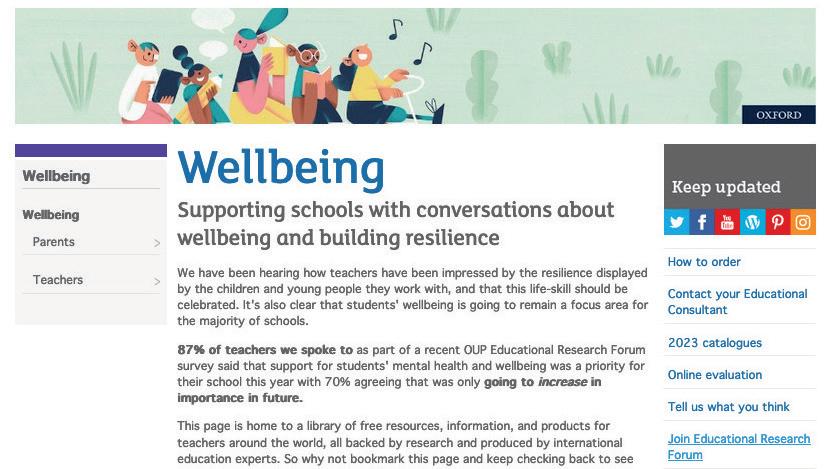





87% of teachers













87% of teachers in a recent Oxford University Press (OUP) Educational Research Forum survey said that support for students’ mental health and wellbeing was a priority for their school.
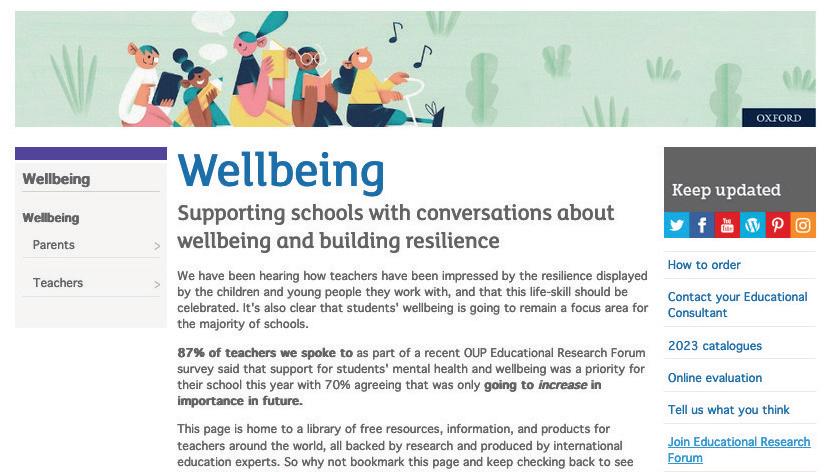
Explore our easy-to-navigate hub and integrate wellbeing into everyday learning with free resources, information, and products for teachers all around the world.
Scan the QR code to browse our hub and see how Oxford’s wellbeing offering can transform your school today.













Contents 26 Finding Purpose through CAS John Haakon Gould 30 Differentiation and Inclusion. Different or Included? Martha Ross 34 AI in Education: We Are All Explorers Stephen Taylor From the Schools 38 E-Acharya: Learning Simplified Arnav Pandey and Keya Sanghvi From the Associations 40 Do Awards Matter for Schools? Nalini Cook Book Review 43 School Leaders Matter, by Helen Kelly Reviewed by Paul Regan Features 4 Being Known, Loved, Safe and Successful: Collaboration for Inclusion Ochan Kusuma-Powell and Kendall Zoller 8 Challenges Faced By Women Who Lead, Part Two: Navigating Interviews and Finding Mentors Kim Cofino 12 International School Leadership and the need for Cultural Dexterity Ian Gross 14 Empowering Educators Vanessa Miller and Margareta Tripsa 18 Teaching in International Schools: a Passport to Freedom? Cherry Atkinson Leading, Teaching and Learning 20 Authentic Learning through Designbased Education Debra Williams-Gualandi 24 Personalised Learning Naaz Kirmani On the Cover Teaching in International Schools: a Passport to Freedom? page 18 14 Empowering Educators 38 E-Acharya: Learning Simplified 26 Finding Purpose through CAS THE MAGAZINE FOR INTERNATIONAL EDUCATORS EDITORS Mary Hayden Jeff Thompson editor@is-mag.com www.is-mag.com MANAGING DIRECTOR Steve Spriggs steve@williamclarence.com DESIGN & PRINT Fellows Media Ltd The Gallery, Southam Lane, Cheltenham GL52 3PB 01242 259241 bryony.morris@fellowsmedia.com ADVERTISING Jacob Holmes jacob.holmes@fellowsmedia.com 01242 259249 No part of this publication may be reproduced, copied or transmitted in any form or by any means. International School is an independent magazine. The views expressed in signed articles do not necessarily represent those of the magazine. The magazine cannot accept any responsibility for products and services advertised within it.
Spring 2023 International School Being Known, Loved, Safe Successful Finding Purpose through CAS MAGAZINE schoolmanagementplus plus E-Acharya: Learning Simplified partnership Summer 2023 | International School | 3
Part of the Independent School Management Plus Group schoolmanagementplus.com
Being Known, Loved, Safe and Successful Collaboration for Inclusion
 By Ochan Kusuma-Powell and Kendall Zoller
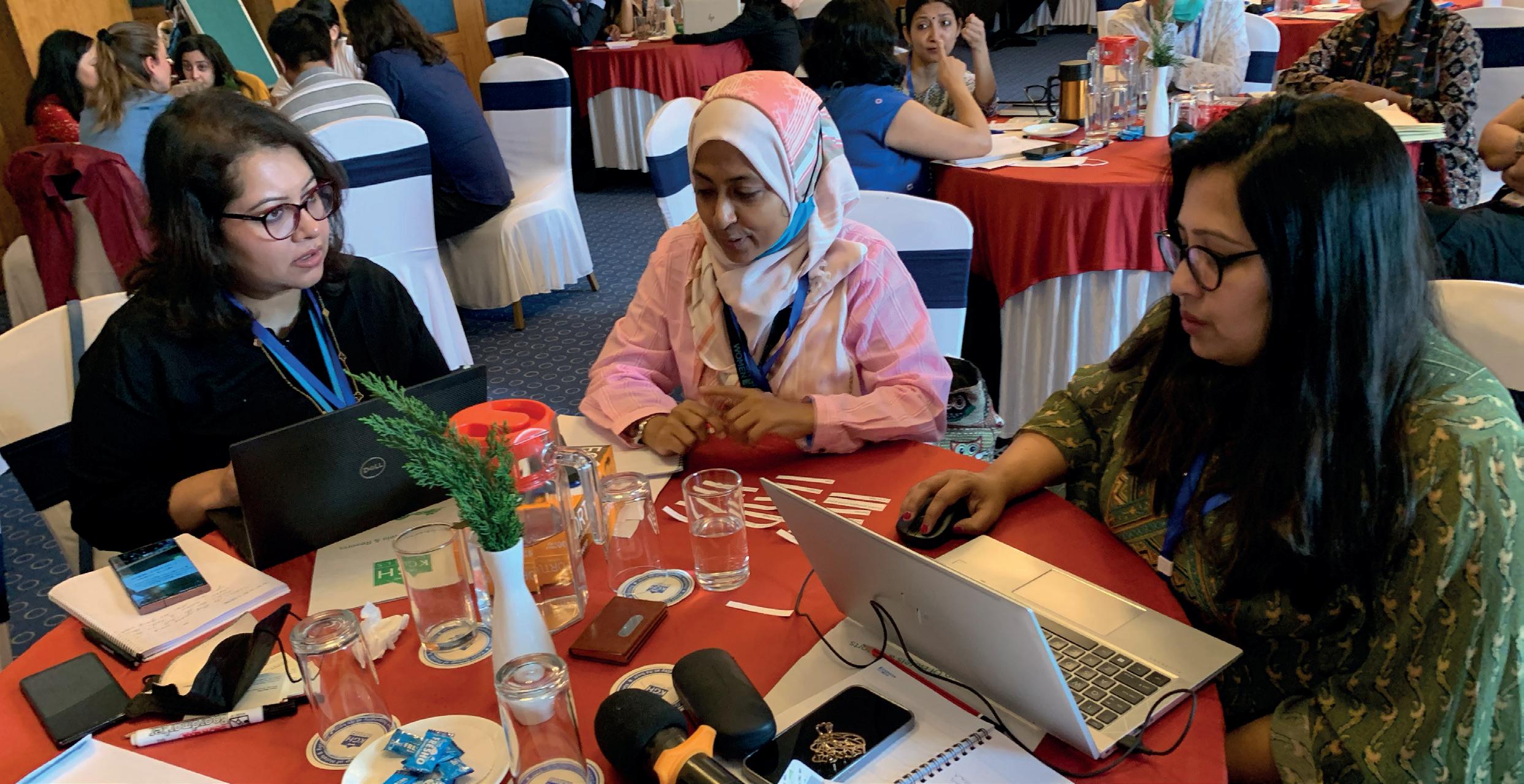
Imagine if all schools were designed specifically for the students they serve. How might they be different from the way they are now? We suspect the differences might be evident beyond the confines of the classroom and extend to the way adults relate to one another as they work together. When a school is designed for its students, it creates an inclusive culture where every member of the community feels known, loved, safe, and successful.
When a team experiences synergy, it develops a collective spirit that propels the group forward. This collective spirit contributes to a sense of community, where everyone feels included and valued. Each person’s participation is necessary for the success of the whole, and they find deeper meaning in their work because of that spirit. What would it take to create and sustain such a culture? What liberatory courage would it take
to dismantle existing systems that are getting in the way? It would require adaptive thinking to create what has been elusive up to this point in time. This article will explore the importance of developing a sense of inclusion, how teams can arrive at this synergy, and why it is crucial for creating a successful school culture.
What is Inclusion?
Many of us can remember a time when we were excluded and the social pain associated with it. Our social status in the moment meant what we said, felt or thought made no difference, and might even have been a hindrance to the group. Under such difficult conditions, learning is negatively impacted. Unlike physical pain, social pain is re-lived again and again because this kind of pain preferentially engages the affective pain system (Lieberman, 2013). Rejection does not
encourage contribution or thinking.
In contrast, an inclusive environment is one where everyone feels welcomed, respected and valued, regardless of differences in background or experience. Members of the community have equal access to opportunities, resources and benefits. Barriers that would have prevented people from participating fully and contributing to the work of the organization have been removed. Being inclusive means embracing diversity, seeking out differences in opinion, and recognizing the unique talents and perspectives that others bring to the table. Inclusion frees people to achieve their personal best. Being inclusive requires us to examine our own privilege and recognize how others might not have access to the same opportunities. When we are able to perceive how others don’t have access, we can see how to remove barriers.
4 | International School | Summer 2023
To Be Known, Loved, Safe and Successful
We define inclusion as the extent to which members of a group or community feel known, loved, safe and successful: acknowledged, cared for, secure and accomplished. These dimensions are easily recognized as essential to human well-being and provide the environment necessary for collaboration. They are also scalable across multiple and diverse stakeholder groups, including all members of a school community: ranging from students and teachers to non-teaching professionals and parents. When these dimensions are prioritized and integrated, they create a culture of acceptance and inclusion. When an individual feels included, they experience these four dimensions in the following ways:
Being Known
People in the organization recognize and value me
• People know who I am
• I matter and feel respected – I enjoy status within the organization
• Others listen to me when I speak
• What I say counts – I have voice
Why is Inclusion Important?
By design, many, if not most, communities are homogeneous and exclusive in nature. We gather in like-groups and develop activities around our similarities. Without challenging what or how we act in life, we will not easily perceive the groups that have no access to our rituals and traditions, nor access to their own rituals and traditions. There is a paradox inherent in inclusion: in biological terms, we are wired to seek similarity. In social situations, privilege goes to those most like the group in power. Despite this, our frontal lobes contain a moral filter that seeks fairness and equity independent of similarities. This makes the road to inclusion an arduous path. To become more sensitive to the effects of privilege, we must first acknowledge its existence. Otherwise, we remain blind to its impact and may feel our success is due solely to our own merits.
Kendall’s and Ochan’s Experiences
In an illustration of white privilege, Kendall was offered the post of
Feeling Loved
People in the organization care about me
• They are interested in my growth and development
• I can be my authentic, best self
• I am accepted for who I am
• Others show me personal regard – I feel appreciated and valued
Being Safe
People engage with me without judgment
• I can take risks and others will not be judgmental towards me
• I can make mistakes and be forgiven
• I am not bullied
• Others are careful and conscious of not committing micro-aggressions against me or others
Being Successful
I find meaning in the work I do
• I am encouraged to be self-directed
• Even as I work towards the organization’s success, I also have my own, personal goals
• I have a sense of achievement about my work – I can grow and learn in this environment
• My values are aligned with the values of the organization – they are a good fit
Science Coordinator in a district of 55,000 students, even though he was a new teacher with only 17 months of classroom teaching experience. 164 other, more experienced science teachers were bypassed. Kendall’s race, gender and physical appearance – white, male, and over six feet tall – likely played a role in his selection. In an example of exclusion, Ochan was often the only person of color on the list of invited guests to receptions honoring incoming diplomats or noteworthy scholars – in countries where the majority of the population was non-white. In these instances, she experienced being treated like wait staff when other invited guests asked her to
refresh their drinks. Her exclusion, due to outward appearances, immediately placed her in the ‘outgroup’.
When people feel valued and respected, they are more likely to be engaged and motivated in their work, leading to greater innovation and creativity. However, creating an inclusive culture isn’t always easy, and requires intentional effort. Beyond examining our own biases and cultural assumptions, we need to actively seek out and value different perspectives and voices so that individuals feel safe to express themselves and their ideas without fear of discrimination or marginalization. Being deliberately inclusive is the right thing to do because it contributes to the dignity of humanity. It is challenging because it asks each of us to cross boundaries into the unknown or partially known, to bring to the table those from other cultures and traditions, and those from groups unlike our own.
How do we Become Inclusive?
In a survey, we asked stakeholders: To what extent do you feel included? To what extent do you feel known, loved, safe and successful? Before the COVID pandemic, we conducted a study on schools and organizations that had taken on training in developing collaborative skills through the Adaptive Schools framework (Garmston & Wellman, 2016). We also interviewed the authors of the original work, heads of school, a UN agency director, and other groups we had collaborated with. Survey results included administrators, teachers, nonteaching professionals, students, and parents. We asked stakeholders to tell us what it was ►
Summer 2023 | International School | 5 Features
that contributed to their sense of membership within their organization: how did they know they were known, loved, safe, and successful in their communities? The consensus was that relationship-building is key to making everyone feel known, together with a strong focus on diversity and common core values. People also felt appreciated and heard, in a culture of collaboration, trust, and equity.
To foster a culture of inclusivity, we believe that communicative intelligence and systems are crucial. Communicative intelligence involves using skills such as empathy, active listening, and recovery to communicate effectively and authentically. Systems refer to the structures, boundaries, and practices that support relationship-building and equity. Leaders play a key role in designing these systems to ensure that everyone has a place, purpose, and freedom to be themselves. Ultimately, our goal is to create liberatory systems that promote equity and selfactualization, grounded in humanized pedagogies that recognize the importance of identity and intersectionality. By building strong relationships and fostering inclusivity through communication and
systems, we can help everyone in the community feel known, loved, safe, and successful.
The following story exemplifies the importance of building strong relationships necessary to navigate adaptive challenges.
To Be or Not to Be Inclusive?
Recognizing the downward shift in student numbers after Covid, the Board of Directors of a European international school knew they had to trim the budget. They decided to cut the school’s learning support program for students with intensive learning needs, which had only been in operation for four years. When the new head of school arrived in July for the next academic year, he was greeted
with letters of protest from the US Embassy, the United Nations, from many teachers and parents - who felt that, while expensive, the program had captured the spirit and hearts of the community. It was now something they were proud of. On the other hand, there were also letters offering support for the decision to put a stop to the program. These stakeholders realized it was a lot of work and their own enthusiasm for it had waned; such a program would require extensive support that might not be sustainable.
At this point, the new head of school realized this was an adaptive challenge facing the school – there were conflicting values represented in the school and community. Part of the community valued a program designed to meet the
needs of students. Another part of the community valued fiscal conservatism while also acknowledging the additional work burden some were anticipating. The head made the decision to spend the bulk of his first year studying the issue from all sides. He held focus group meetings and spoke to as many community members as possible. He built relationships to gather data and to learn what issues were at the heart of the intensive needs program. At the end of the second term, the new head had arrived at a decision. He was going to recommend to the Board to reverse their previous decision and keep the intensive needs program. He recognized the program stood for hope, symbolizing what was good about the community. It was what students in the school needed and deserved. The path was laid out.
This challenge required more than a simple technical solution of policy and implementation. The entire community would need to find common values and the inclusion of a variety of stakeholders. The head moved to develop a shared language and a place for perspectives to be heard. Using meeting protocols that ensured equity of voice and safety in the
Features
To foster a culture of inclusivity, we believe that communicative intelligence and systems are crucial.
form of expression without judgment, the community could focus on students and joy in their work. The conversation had shifted. Stakeholders had unified around a common goal with common values.
Creating a culture of feeling known, loved, safe and successful requires intention. It is the work of building, supporting, and developing relationships for the times when conflicts arise, as in this case. The urgency we all face in such a challenge has two facets: one facet is to recognize that, while we might be in the midst of turmoil, we need to act now because relationships are being harmed, factions are forming, the community is fracturing and students are not being served. The second facet is to develop agility: we never know when the beast of conflict will emerge, and if we have strong relationships in place in a culture of being known, loved, safe, and successful, the pathway is often easier, more respectful, and less harm is done.
How Do We DO Known, Loved, Safe and Successful?
In his 2019 book How to be an Antiracist, Kendi asserts it is insufficient to be not racist; to fight racism one must work actively to be an antiracist. The insertion of the prefix ‘anti’ suggests that racist structures can only be dismantled through deliberate action. Similarly, Tulshyan (2022) writes that inclusion is not a passive act, and requires intentionality in our inclusion of others. It is an act of liberation. It is not sufficient merely to believe that every member should feel known, loved, safe, and successful. It requires continuous action by taking a liberatory stance that eliminates elements of systems that block inclusion. We now offer examples from three
contexts: self, teams and system.
At the self or individual level, effective communication involves actively listening and using skills such as paraphrasing, pausing, assigning of attributes, and getting into rapport. While these skills sound simple, they are often challenging to implement in the moment, especially when the existing relationship is weak or damaged.
Moving to the team level, the same communication skills are essential to create a safe and inclusive environment for all team members. Building relationships is critical to achieving psychological safety, particularly as we don’t usually get to choose who we work with and differences and conflicts will arise in complex human systems. For many of us, building relationships is a simple task when those we work with enjoy a deep mutuality. The challenge lies in relationships that are not strong, where differences might be significant and where values clash. Adaptive inclusion involves forging relationships towards common goals in an ecology that balances the everpresent tension between collaboration and autonomy.
At the systems level, there are two areas of focus. First, it’s important to examine critically the rituals and practices
References
to determine who is and isn’t included, to ensure that all voices are heard. In what ways are current systems meeting or not meeting the needs of all students in the school? Second, practices of gathering, including meetings and professional development events, can play a crucial role in building a positive and inclusive culture. Routines and practices around meetings can serve to develop a group to this end. In HeartSpace (Issa Lahera & Zoller, 2020), the authors offer a framework for organizing meetings and work time to create conditions for individual and collective growth and accomplishment. The authors further assert that:
‘People need each other and need to have positive relationships in order to get things done. There is not enough time to complete everything that needs to be done. Challenges arise without there being a mechanism in place to address them. HeartSpace creates a positive culture of adaptivity. Positive cultures only happen by design and these practices are the design’ (p1).
Conclusion
Creating an adaptive and inclusive culture that fosters a sense of belonging and enables everyone to thrive requires personal commitment to relationshipbuilding and a liberatory stance in systems analysis. This is a continuous process that begins with relationships, and is essential for everyone to feel known, loved, safe, and successful. ◆
Ochan Kusuma-Powell, EdD has had a lifelong interest in developing inclusive schools and currently serves as a consultant to international schools in the areas of coaching, collaboration and inclusion.
✉ powell@eduxfrontiers.org
Kendall Zoller, EdD is an author and global consultant on communication, facilitation, and leadership.
✉ kvzoller@sierra-training.com
•Garmston B & Wellman B (2016) The adaptive school: A sourcebook for developing collaborative groups (3rd ed.). Washington DC: Rowman & Littlefield.
•Issa Lahera A & Zoller K (2020) HeartSpace: Practices and rituals to awaken, emerge, evolve, and flourish at work and in life. Burlington, ON: Word & Deed.
•Kendi I (2019) How to be an Antiracist. New York, NY: One World.
•Lieberman M D (2014) Social: Why our brains are wired to connect. New York, NY: Crown.
•Tulshyan R (2022) Inclusion on Purpose: An intersectional approach to creating a culture of belonging at work. Cambridge, MA: The MIT Press.
Summer 2023 | International School | 7 Features
Challenges Faced By Women Who Lead, Part Two: Navigating Interviews and Finding Mentors
By Kim Cofino
As described in Challenges Faced By Women Who Lead, Part One: Four Themes from Interviews with Women in School Leadership, published in the Spring 2022 issue of this magazine, in the Spring of 2020 I interviewed over 70 successful female leaders, in international schools as well as in some public and private schools around the world, to seek their personal stories and insights on the challenges and realities facing women in leadership in education. Those interviews highlighted many of the unique challenges that women face pursuing a leadership role in schools – and their stories can help aspiring leaders recognize that the path to leadership may share some common experiences and barriers for those who do not fit the stereotypical view of ‘a leader’.
The first article focused on four major themes that emerged from these interviews:
• unconscious bias and daily microaggressions;
• physical expectations;
• linguistic expectations; and
• cultural expectations of ‘leaders’. In this article, I will highlight some specific stories regarding four more areas of challenges which emerged from these interviews, including:
• perception (or reality) of lack of opportunities for women;
• exclusive networking practices among ‘traditional leaders’;
• impostor syndrome and double standards; and
• availability of mentorship and guidance. All the direct quotes included below are excerpts from the Women Who Lead Interview Series (Cofino, 2020).
Few Visible Role Models, Disproportionate Representation
Many interviewees mentioned the widespread perception that there
8 | International School | Summer 2023 Features
are limited opportunities for women leaders, and several pointed to the lack of visible role models as contributing to this perception. This is particularly noticeable in the international school environment, where leadership teams tend to be very male-dominated. Katrina Charles, International Baccalaureate Diploma Coordinator at the American School of Doha, highlighted that it’s difficult to find women, particularly strong women, within leadership. Within her career she has often been ‘the only woman on the senior leadership team; or the only woman, ethnic minority; or the only member of an ethnic minority on a leadership team’.
Ultimately, pursuing a leadership pathway in an environment where, as Nadine Richards, then High School Principal at the American School of Dubai, noted, ‘the glass ceiling still exists’, is an ongoing challenge. As she pointed out, ‘it’s been an historical factor and things just don’t change overnight’. While we may perceive (and hope) that there are more women in senior leadership positions, making this a reality continues to be a slow and long term process.
Madeleine Heide highlighted that, although we may see more women in lower leadership positions, the gap widens when you begin applying for a Head of School position, and ‘women have to work harder to successfully secure a position at the very top level of our schools’. Madeleine recalled that she was interviewed for 15 different positions and was rejected. Because it’s not that common for a woman to be Head of School, she could feel them ‘wondering as they are looking at you “Can you lead?”.’ Women, and particularly women of color, have to prove themselves over and over again to be viewed as successful leaders.
This combination of lack of visibility of strong, successful women leaders, alongside the societal expectations of leaders and the all-too-prevalent belief that there are limited positions for women, can lead to women feeling as if they are isolatedly competing with each other for positions, rather than supporting each other.
Exclusive Networking Practices
The disproportionate representation of white male leaders of a specific age becomes even more visible in upper level networking opportunities. In my conversation with Nicole Schmidt, High School Principal of the American International School Johannesburg, she shared her experience of walking into one of the cocktail events during leadership recruiting fairs and seeing almost exclusively older white men. As Nicole stated: ‘There’s a bubble around access and the engagement and conversations that happen in those social circles are not particularly welcoming unless you’re in that clique. If you don’t know how to play that game, it’s hard to
break in.’ Seeing a very homogeneous group moving from one senior leadership position to another makes it very challenging for anyone who doesn’t ‘fit the mold’ to become part of that exclusive group.
As Junlah Madalinski pointed out, getting a foot in the door for a leadership position is often overly reliant on who you know. It’s very common to hear that ‘you need a network’ or ‘you need to put yourself out there’, but if you don’t yet have that social currency, as a newer leader it can be so much more difficult. Junlah also noted that because the international school community is so homogenous, it’s even harder for women of color to make those supportive social connections that will help them leverage a network.
Impostor Syndrome and Double Standards
Many women mentioned feeling so unsure of themselves that they might end up sabotaging their job search before it began. Rachel Caldwell recognized that she has had bouts of impostor syndrome throughout her career, facing feelings of self-doubt and inadequacy, in particular when looking at job descriptions. Despite being confident that she met the majority of the requirements, she still wouldn’t apply, even though she saw her male counterparts applying when they seemed to have fewer of the required skills and still being successful.
Taking over an internal position at a school can also bring up discouraging doubts. Fiona Reynolds, then Deputy Head of School at the American School of Bombay in India, talked about impostor syndrome as ►

Summer 2023 | International School | 9 Features
although we may see more women in lower leadership positions, the gap widens when you begin applying for a Head of School position
being a struggle where we’re ‘faking it and we’re not sure if we’re making it’. When she had the opportunity to be the acting Head of School, she became so stressed that the idea of taking on the role was physically making her suffer. She realized that if she could be brave enough to be who she is, rather than worrying about filling the shoes of the previous Head, then she could be successful.
Catriona Moran, Head of School at Saigon South International School in Vietnam, shared a number of stories of being perceived as being ‘too nice’ to be effective in a leadership role. She shared a particularly fascinating story about being the lead administrator for the design of a construction project. ‘One meeting there were 20 people in the room (19 males, and I was 8 months pregnant). Any time a decision needed to be made, the others looked to my male colleague –even though I was making the decisions.’ As she points out, there is a perception that women might not be able to step up and make, and then communicate, hard decisions.
Lack of Mentorship
Junlah Madalinski pointed out that ‘Mentorship is critical and crucial, but it is a privilege. For women of color in educational leadership, it’s not something that is afforded to us. Especially if we’re seeking out mentors who are also women of color, especially if we’re seeking out heads who are actively doing social justice work.’ This often makes it challenging for women of color to find a mentor within the international school community. Clarissa Sayson has faced the same challenges, noting that there have been limited opportunities to connect with women leaders in the early stages in her career. In fact, she said ‘It’s only been in the last five years that I’ve been able to look to female leaders.’ It will likely remain challenging for many women
to find mentors who look like them until there is more equal representation at the very top levels of school leadership. Although things are slowly changing, it is still a struggle for many women to find mentors who look like them, who share similar life and professional experiences. The reality is that for those who need it most, finding a mentor is likely the hardest.

Facing These Challenges
Sharing these stories is the first step in better understanding the real-life experiences of women pursuing a leadership role in schools. If you would like to hear more from all of the women I interviewed, you can find video clips of all of their stories in Women Who Lead. As aspiring leaders and those who support growing leaders, recognizing these lived experiences can help us begin to develop strategies to counter these obstacles. In addition, just knowing that you’re not alone might be crucial in helping you feel more confident in taking the next steps towards your dream job.
Kim Cofino is Founder and CEO of Eduro Learning: https://edurolearning.com. ✉ kim@edurolearning.com
References
•Cofino K (2020). Women Who Lead Interviews. [Video Course]. https://edurolearning.com/women
10 | International School | Summer 2023 Features
◆
There is a perception that women might not be able to step up and make, and then communicate, hard decisions
Measure Potential with
Cambridge Primary Insight
Cambridge Primary Insight is a child and teacher-friendly assessment tool, designed to empower teachers to build a strong foundation and unlock the potential of primary children aged 5-11. By using an adaptive baseline assessment across five key developmental areas, you get invaluable insight in an instant.
Are you ready to measure potential?
Scan the QR code to find out more:

International School Leadership and the need for Cultural Dexterity
By Ian Gross
One of the many joys of working in an international school is the opportunity to meet and work with people from different cultural backgrounds. It may be the staff, the students, the parents or the people we meet when socialising. At a time when much of the world feels polarised, international schools allow us to be diverse and inclusive with those we meet and work with on a daily basis. For a school leader, the challenge is to create and maintain a unified school culture that encompasses all those within it. Typically, the school culture is identifiable and felt throughout the school, through the community. However, when a school experiences a localised crisis within its community, individuals tend to revert to home culture experience, and different
expectations and demands may be made upon the school.
Critical incidents may be defined as unexpected or unforeseen situations. They may involve or lead to emotional trauma, severe injury, or the death of a student or staff member. Incidents may cause institutional embarrassment or reputational harm, leading to a decline in student numbers or temporary school closure. As the number of international schools continues to rise, it is not a matter of if an incident will occur, but when. Incidents themselves may not constitute a crisis but the manner in which they are dealt with, and communicated, may lead to a crisis within the school community.
During the Covid pandemic I conducted extensive research throughout the wider ASEAN region. Specifically, I surveyed more than 120 leaders from international schools and carried out individual interviews with nearly 20 leaders from 13 different countries. Through this research, I gained insight into how these leaders dealt with a total of 250 diverse critical incidents, and how these incidents affected both themselves and their school communities. While the nature of critical incidents cannot be predicted or prevented by knowing their specifics, the way they are responded to is crucial. The incidents themselves are therefore less important than the response they receive.
12 | International School | Summer 2023 Features
International schools often promote and aspire to attributes such as multicultural awareness, global citizenship and international mindedness. However, when a critical incident occurs and emotions run high, people tend to fall back on their native cultural norms and values, potentially losing their multicultural awareness and mindedness. International school leaders therefore need to be aware of this tendency (even for themselves) and remain attentive to the cultural expectations of others during such incidents. Culture may be a significant factor in determining the effectiveness of the response to critical incidents, and the ability of the community to overcome the incident. Cultural dexterity – also referred to as cultural agility or as having cultural intelligence – may be crucial, referring as it does to the ability effectively to navigate and adapt to multiple cultural contexts, arising from a deep understanding and appreciation of the cultural norms, values, beliefs and behaviours of others.
Following a critical incident, it is common for individuals and groups within a school community to display different levels of cultural understanding. Parents, students, staff and even school owners will have varying degrees of exposure to different cultures and will often rely on their own cultural background to navigate a perceived crisis. As a result, some may exhibit a sense of cultural arrogance with respect to their own beliefs, and justifications for them, potentially ignoring or undervaluing the beliefs of
others. Cultural ignorance may well be present among members of the community, and to varying degrees. Such lack of cultural awareness may lead to misunderstandings, conflicts and, more often in an international context, a barrier to effective communication. Some members of the community will show cultural empathy, and a desire to understand others’ perspectives. In most cases cultural empathy is supportive, but it can lead to some individuals championing the cause for others, leading to unrealistic expectations of the international school. Some members of the community may
English), or the use of multiple languages to match those of their community. Each choice has its own pros and cons.
Using a single language can provide consistency and facilitate faster communication between different members of the community. However, it may also create a cultural bias towards those who are proficient in that language, leading to feelings of exclusion and confusion among those who are not. Using multiple languages can promote inclusivity and create a more diverse and vibrant community. Multi-language communication also has its challenges
simply show cultural tolerance and not question decisions and outcomes.
It is essential for international school leaders to recognise these differences and endeavour to communicate clearly a sense of the school’s own cultural awareness and sensitivity within all members of the community. Language is a crucial aspect of culture and plays a vital role in the school’s communications. In a multilingual setting, language management is necessary to change the cultural arrogance of a situation to one of cultural empathy. International school leaders must consider their choice of language, whether it is a single language (typically
in terms of logistics, accuracy and intended meaning for all members of the community. Ultimately, international school leaders must be aware of the cultural expectations of all members of their community and manage language effectively in order to promote cultural inclusivity. Following an incident they must be able to provide direction that benefits everyone, regardless of their cultural background or language proficiency, if they are to build a school community that is understanding and supportive of the school’s actions.
As an international school leader, developing cultural dexterity is crucial in today’s interconnected and diverse world. Cultural dexterity involves understanding and appreciating the different perspectives and beliefs of students, staff, parents and school owners from diverse cultural backgrounds. Developing cultural dexterity helps leaders to navigate the complex cultural landscapes of their schools and to manage cultural conflicts more effectively. It can enable clearer communication and build trust and rapport with members of their community – and, therefore, help to prevent an incident from becoming a crisis.
✉ ianfoyles@gmail.com
Summer 2023 | International School | 13 Features
Ian Gross is Principal of Kinabalu International School, Malaysia, having been a teacher and international school leader for some 30 years across four continents. .
◆
Using multiple languages can promote inclusivity and create a more diverse and vibrant community
Empowering Educators: Unleashing the Power of Service Learning in a Global Community
 By Vanessa Miller and Margareta Tripsa
14 | International School | Summer 2023
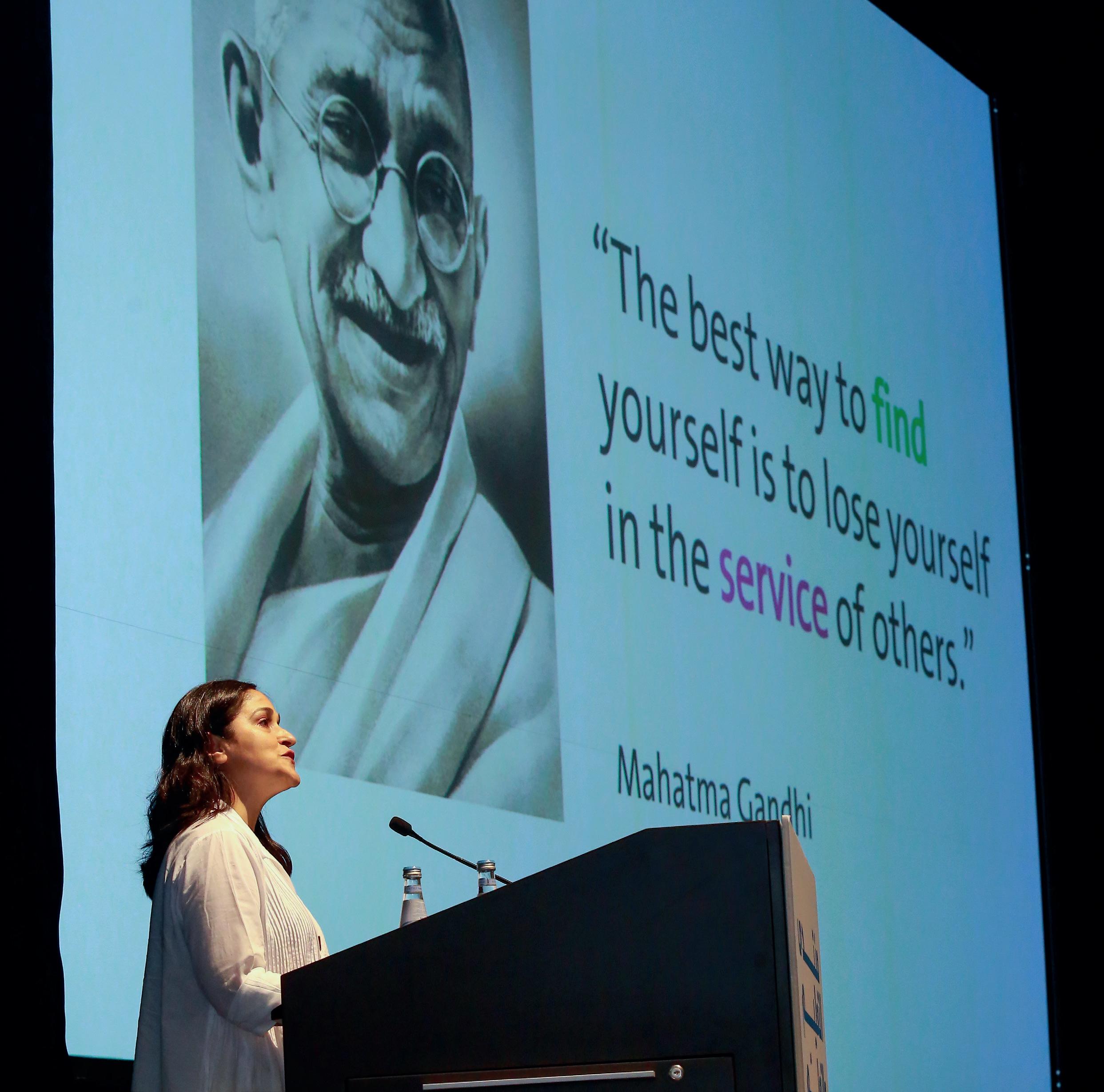
Amidst the bustling energy and eager anticipation of a professional conference, educators from all corners of the globe come together collectively to pursue growth, development, and innovation in their field. Conferences provide opportunities for re-energizing, networking, and interacting with thought leaders. In the words of Stephen Covey (1990), a conference is an opportunity to ‘sharpen the saw’. Participating in conferences and workshops is a common experience for many educators, yet how often do we have the opportunity to consider the making of these professional learning experiences? For the professional learning designer, a conference also provides many opportunities: opportunities to catalyze change, create collective understanding, and nudge educators to consider new approaches.
Principles for Change
The Teaching and Learning Forum, hosted by Qatar Foundation’s Education Development Institute, is an annual professional learning conference for local and international educators. During the Teaching and Learning Forum 2022, educators from Qatar Foundation, local and global organizations, keynotes, accelerators, and educational leaders from Qatar and across the world shared innovative approaches to service learning. The 2022 Forum theme chosen by the directors of Qatar Foundation’s schools targeted an identified common need: service learning. In selecting this theme, school leaders hoped to spark a conversation around best practices as well as to connect educators with relevant and potential partner organizations. The first step in creating a professional learning conference is creating a call to action – transforming a critical area for exploration, such as service learning, into an invitation for educators, potential workshop leaders, and keynote speakers. The Education Development Institute pinned the 2022 Teaching and Learning Forum theme as ‘Learning in Service and Action: Creating meaningful connections, developing local and global learning communities’.
Inspiring Change
The ultimate goal of the conference was to inspire change and provide educators with innovative approaches to service learning, striving to create opportunities
for learners to address societal, ecological, and community needs both locally and globally through authentic experiences. Change and innovation are related. Change is continuous when a growth mindset supports it. Many factors influence change, including fostering a disposition for constant learning. ‘Innovation’ is derived from the Latin verb ‘innovare’, which means to renew. Innovation can refer to something new or to a change made to an existing product, idea, or field. Innovation is really about responding to change creatively. Innovation adds value by applying novel solutions to meaningful problems. According to the Diffusion of Innovation (DOI) Theory, developed by E M Rogers in 1962, the speed of diffusing innovation is dictated by the time required to progress through the five different adopter categories: innovators, early adopters, early majority, late majority, and laggards. To promote change, the Teaching and Learning Forum organizers brought together ‘innovator’ keynote speakers, accelerators categorized as early adopters, and the educators in the audience – who fall into the full range of DOI categories. To achieve the ambitious goal of inspiring educators, thirteen local organizations and eleven global organizations participated in the forum alongside 40 educators serving as presenters. Additionally, because the forum was hybrid, several presenters contributed to the event from Bangladesh, Belgium, Canada, South Africa, Australia, the United States, and Kenya.
Impact for Change
In terms of assessing professional learning, conferences and forums tend to receive relatively low ratings. Assessing newly acquired understandings of participants, their skills, or the impact on their learners due to professional learning is challenging. Guskey’s five levels of evaluating professional learning (2011) provide a comprehensive framework for assessing the effectiveness of professional learning engagements. At Level 1, Participants’ Reactions, the focus is gauging attendees’
immediate responses or reactions to the training. Level 2, Participants’ Learning, assesses the extent to which participants have acquired the intended knowledge, skills, and competencies. Level 3, Organization Support and Change, examines how the organization has provided participants with the necessary support and resources to apply their new learning. Level 4, Use of New Knowledge and Skills, assesses the practical application of acquired competencies, while Level 5, Student Learning Outcomes, evaluates the ultimate impact of the professional learning they engaged with on students’ achievement. So, what can organizers of conferences or forums do to enhance the potential impact?
Definitions and principles
Constructing principles derived from the conference theme enhances the impact of conferences and forums. Defining principles for an education conference can provide a range of benefits for the organizers, participants, and the broader educational community. Defining principles clarifies the conference’s vision and focus. Clearly stated principles guide decision-making processes during conference planning, from selecting speakers and panelists to choosing session topics and formats. They serve as a reference point to maintain consistency and coherence throughout the conference, ensuring that all sessions and presentations align with the overarching goals and themes. Moreover, establishing principles can help organizers measure the impact of the conference by providing benchmarks against which to measure outcomes, such as increased knowledge or changes in practice within the educational community. Therefore, the organizers formulated six principles that support service learning, as shown in the table. The meaning of each principle was clearly articulated to ensure shared meaning for all educators. Defining the principles of service learning helped ensure that it would be carried out in a meaningful, cohesive, and effective way that benefited both students and communities. ►
Summer 2023 | International School | 15 Features
Change and innovation are related. Change is continuous when a growth mindset supports it.
Principles of Service Learning
Agency One can make a positive change in the world through consciously enacting deeply rooted values.
Belonging Meaningful relationships strengthen local and global communities and ecosystems.
Empathy Valuing all living things and understanding the struggles of others is a catalyst for change.
Mobilization Creating meaningful connections and networks increases resources and capacity to problem-solve and enact change.
Privilege Analyzing the advantages and disadvantages for individuals and groups within a social/ ecological system reveals pathways for change.
Courage Accepting responsibility to tackle complex problems together.
connect with organizations around the topic of service learning.
According to the feedback survey, when asked about learning that occurred as a result of attending the forum sessions on service learning 95% of the 647 respondents agreed that they acquired learning as a result of attending the forum. When asked about the extent to which the forum inspired them to apply the principles of service learning in their context, 99% of the respondents reported that they felt inspired to apply the principles of service learning. The reported numbers demonstrate that the conference impacted participants’ willingness to engage in service learning as a result of attending the conference.
Conclusion
Active participation
The organizers worked with the accelerators and presenters to ensure they designed interactive sessions that encouraged participants to engage with the content and with their peers. This included group discussions, Q&A sessions, or hands-on workshops.
Networking opportunities
The logistics of the conference provided ample time and space for attendees to connect and collaborate. This included designated networking breaks, roundtable discussions, or social events that foster interaction.
Accessibility and inclusivity
The organizers ensured the conference was accessible to a range of diverse participants, including monolingual attendees, by offering accommodations such as live translations, captioning, and bilingual sessions. Additionally, the organizers included diverse speakers and panelists to foster an inclusive environment.
Champions/Early Adopters
Connecting the conference’s content to specific school initiatives and context enhances the potential impact. Service as action is foundational to the International Baccalaureate (IB) Diploma Programme through Creativity, Activity, Service (CAS) activities and other inquiry projects.
The conference purposefully highlighted connections with service learning in IB. CAS coordinators participated as champions of service learning, as early adopters, and therefore as resources for other educators. Education institutions need to capitalize on their early adopters and work with them to sustain innovation. Typically, conferences and forums generate short-term change. Long-term change happens when the new learning is assimilated and integrated into the current knowledge and skills of the individual. It could also be supported by coaching mentoring practices, by promoting agency and by giving individuals voice and choice.
Mobilization Guide
Another tool for enhancing impact was to provide resources to the conference participants even after the forum was over, and in order to make it easier for the audience to access various service learning communities for their students, a Mobilization Guide that listed the organizations represented at the Teaching and Learning Forum was created. The Mobilization Guide helped educators
References
The 2022 Teaching and Learning Forum successfully brought together educators from around the world to engage in meaningful conversations and explore innovative approaches to service learning. By focusing on clearly defined principles, active participation, networking opportunities, accessibility, inclusivity, and leveraging early adopters, the forum created a lasting impact on participants. The overwhelmingly positive feedback received from attendees highlights the effectiveness of this approach in inspiring change and empowering educators to integrate service learning into their classrooms.
The forum also demonstrated the value of creating post-conference resources, such as the Mobilization Guide, to support educators’ continued growth and collaboration after the event. This holistic approach to professional learning enriched the conference experience and increased the likelihood of long-term change and implementation of service learning in educational institutions. ◆
•Covey S R (1990) The Seven Habits of Highly Effective People : restoring the character ethic. London: Simon and Schuster.
•Guskey T R (2011) Evaluation : critical to professional development. Principal Matters. (87): 44–48.
•Rogers E M (2003) Diffusion of Innovations. (5th ed) London: Simon and Schuster.
16 | International School | Summer 2023 Features
Vanessa Miller is a Curriculum Designer at the Education Development Institute, Qatar Foundation.. ✉ vmiller@qf.org.qa
Margareta Tripsa is a Professional Learning Designer at the Education Development Institute, Qatar Foundation. ✉ mtripsa@qf.org.qa
CAS Coordinators participated as champions of service learning, as early adopters, and therefore as resources for other educators
Meet students where they are with digital titles













The Sora student reading app offers an extensive catalog that spans the interests and reading levels of every student, and includes titles in over 100 languages. With ebooks for visual learners, audiobooks for auditory learning and diverse subject matter, Sora helps makes sure every child feels included and empowered.

Learn more at company.overdrive.com/international-schools
Teaching in International Schools: a Passport to Freedom?
By Cherry Atkinson
Ilove being a teacher. It is, without doubt, the very best job in the world. No two days are ever the same, there is always something new to learn, and there is always someone who will bring a smile to your day. Yes, there are days when things don’t go right. Yes, there are days when I feel frustrated, but still – the love of my profession remains. It has been like this, for me, for over 20 years. But would I still feel this way if I had remained teaching within a national state system? The sad likelihood is that I might have burned out and be doing something else by now.
I know a growing number of former teachers in the UK who have fallen out of love with the profession. You may know some too; teachers for whom the very thought of continuing (or returning) to work in schools has them reaching for the Prozac. There are record numbers of vacancies in schools, and government recruitment targets
are routinely missed; only 59% of the target for initial teacher training was achieved last year (UK Parliament Education Committee, 2023).
Meanwhile, there seems to be a growing symbiosis between the burgeoning numbers of teachers leaving UK schools and the ever-expanding international schools market. Just as the number of teachers leaving UK schools grows, there is a growing number of schools overseas that are ready to welcome them with open arms. The international school sector has expanded at an almost unbelievable rate since the turn of the century, and it is clear that a large number of teachers moving to work in these schools are UK-trained, looking beyond national borders to reap their rewards.
My recent doctoral research indicated that some UK-trained teachers in international schools are what I call ‘pragmatic idealists’: professional educators who have navigated their way into positions of privilege by trading their personal, professional and cultural capital within a global marketplace. These are people who have an affinity with learning and teaching, who have a passion for their job and wish to develop their career in the best way possible, but who also wish to enjoy a good quality of life outside of their professional interests.
There are international teachers around the world who enjoy a much-improved quality of life as a direct result of their decision to move overseas. Such teachers are aware of the sacrifices they must make in being away from their families and home nations, but nonetheless choose to remain working in international schools due to an improved sense of
Features
I love being a teacher. It is, without doubt, the very best job in the world
personal and professional freedom and wellbeing. The canvas upon which an international school teacher can paint is vast –literally as big as the planet – and the restrictions and limitations placed upon their classroom practice by meddlesome directives and oblique political agendas are not present. One international school teacher I interviewed stated: ‘I remember my last year in the UK: I think that every single day I had a new initiative, either from the local authority, from curriculum, or from the government to deal with’.
Teachers working in international schools may enjoy an improved income, along with a level of privilege and social status that they were unable to achieve back home, no matter how hard they worked. Some academics argue that such privilege is precarious; any teacher who was left homeless and jobless after recent high-profile crises such as the war in Ukraine or the global pandemic would certainly agree with them. However, I believe there is a silent majority of international school teachers who – regardless of their initial motives for moving into the field – are actively developing their careers, playing to their strengths and enjoying a level of personal and professional freedom unknown to them in their home nation.
There is a body of work that suggests teachers in international schools are driven by motivating factors such as a desire to travel and see the world, or to ‘ride the gravy train’ of working in highly paid jobs in the emerging markets of the world; my research indicates that such incentives are not the greatest or most significant factors. The teachers in my study were fully cognisant of the economic benefits and opportunities for travel and exploration that their international career had given them, but more important to them was the freedom to teach. These educators genuinely love their work, and have an affinity with education that could be considered a vocation. All spoke with passion about professional opportunities within their daily practice: to diversify rather than being pigeonholed within one area; to try new things in their classrooms without fear; to hone skills over a number of years without being branded a ‘coasting teacher’.
Whilst some international school teachers may unwittingly fall into a life of precarious privilege and subsequently become trapped in the gilded cage of that privilege, the teachers I listened to were very clear about their professional commitment and personal freedom. The majority believed that the reduction of scrutiny and administrative workload allowed them
to sustain a professional approach whilst still having time for themselves and their families and friends. One teacher described how her years spent teaching in the UK had been ‘work to the brim and I don’t mind that... I love being [busy], but I don’t think it’s sustainable’. As described by Fiona Rogers in the Autumn 2022 issue of this magazine, feedback from teachers in international schools regarding their job satisfaction and personal wellbeing is overwhelmingly positive.
It seems to me that there are lessons to be learned here: lessons for international school leaders who wish to recruit and retain the best teachers for their schools, and lessons for home nation policy-makers who wish to address the recruitment and retention crisis in their schools. Tinkering with curriculum content and wresting control of training provision is unlikely to address the shortfall. What is needed in the first instance is a long hard look at why so many talented and inspirational teachers are leaving the UK for a career in the international school sector. The answers might not be particularly comforting, but once recognised, they will surely help to inform a strategy that can make real and lasting positive change. ◆
References
•Rogers F (2022) Teacher Wellbeing and Perceptions of International School Experience. International School. Autumn 2022. pp 38-39.
•UK Parliament Education Committee (2023) Education Committee launches new enquiry into teacher recruitment, training and retention. https://committees.parliament.uk/committee/203/ education-committee/news/194283/education-committee-launchesnew-inquiry-into-teacher-recruitment-training-and-retention/
Summer 2023 | International School | 19
Cherry Atkinson teaches Geography and Economics at an IB international school in Oman. ✉ cherryatkinson@hotmail.com
EMPATHIZE DEFINE


IDEATE PROTOTYPE TEST
Authentic Learning through Design-based Education
By Debra Williams-Gualandi
It’s a common feeling. We are faced with a task, a problem to solve, a daunting todo list. We roll up our sleeves. We want to ‘tackle’ the problem, ‘do’ the to-do’s and get down to work. John Dewey (1938) recognised this very human tendency as problematic when he wrote ’The crucial education problem is that of procuring the postponement of immediate action on desire until observation and judgement have intervened’.
We frequently see evidence in our classrooms of the mind’s desire to run ahead to the solution as quickly as possible, whether this is driven by the excitement of actually finding an answer to the problem, or by the desire to finish and move on to more exciting activities, or by the sense of frustration some feel when asked to slow down and engage with complexity.
Daniel Kahneman famously illustrated the ways in which humans have developed different types of thinking appropriate to different contexts. What he calls System 1 thinking is fast, associative, intuitive and cognitively easy. It uses the most recent ideas that we
have been exposed to, our memories of what has worked before, and is essential for navigating our complex world as it automatises much of our decision-making. It is the type of thinking that allows us to arrive at work without remembering anything about the drive itself. System 2 thinking instead is deliberative, slow and comes at cognitive cost. For some, it is the type of excruciating thinking involved in assembling IKEA furniture.
When we use the design cycle, we are actually being asked to use both systems.
In the empathising phase, we are seeking to step into the shoes of as many people as we can who may have a point
of view on the issue we are looking at. We are practising deep, active listening, without judgement or hidden objectives – we aren’t just waiting for the person to stop talking so we can get on with our own ideas. We create space, put assumptions on hold. It’s a phase where curiosity is at the forefront and we are looking for expansion and divergent viewpoints. The information gathered, which is necessarily not ‘the way I see things’, needs to be integrated slowly, in a deliberative, System 2 type of way.
Sanders and Strappers (2008) help us visualise what, in the design process model, we could call the empathising stage. They describe this moment with the very technically termed ‘fuzzy front end’, illustrating a non-linear, exploratory phase (see figure on next page).
The defi ning phase of the design cycle pulls the experiences and learning from the empathising stage into focus.
20 | International School | Summer 2023 Leading, teaching and learning
Daniel Kahneman famously illustrated the ways in which humans have developed different types of thinking appropriate to different contexts.
The question that we are seeking to answer is formulated. This is followed by another moment of expansion with the ideating phase. When we ideate, we generate new ideas creatively, often using intuition and association: System 1 type thinking. Sometimes these sessions are bubbling over with ideas. They come fast and furious – the whiteboard is full – the stickies are overlapping on the table. Yet, we are simultaneously asked to withhold judgement and stop our minds from grabbing onto a solution and running with it. In Dewey’s terms, we are postponing immediate action.
What makes design-based education authentic and meaningful, however, is not the techniques and strategies that we scaffold to support different types of thinking, but the question, which is at the heart of the design process. Empathising only teaches us something if it takes us out of our own mind and into that of another. Ideating only becomes meaningful when we are trying to find an answer to a question that matters, and touches our worlds.

An example of the shift away from what I would call an Andy Warhol can-of-soup approach to design-based education occurred recently in a primary classroom in The Netherlands. The ‘students’ in this case were two student-
teachers who were working in two Year 4 classrooms, and were required to design a teaching resource during their internships for their teacher training program. For reasons of efficiency, they came to the situation with a design question in mind (skipping, for the reasons outlined above, any authentic empathising).
Their question was: How might we create a classroom tool to support mathematics learning in a primary classroom? They soon realised that this question wasn’t helpful in getting them anywhere, and accepted that System 2 thinking was required. Through the process of empathising – with the ►
Summer 2023 | International School | 21 Leading, teaching and learning
What makes design-based education authentic and meaningful, however, is not the techniques and strategies that we scaffold to support different types of thinking, but the question, which is at the heart of the design process.
classroom teacher, language specialists, the students and the parents – they recognised that there was a pressing need for a group of students who had recently arrived in the class, had very limited knowledge of the language of instruction, and were unable to connect their prior mathematical knowledge to their current learning in order to take forward their understanding of measurement and conversion. The design question became: How might we create a classroom tool to support learning about measurement and conversion for children with varying language levels in a play-based, scaffolded and inclusive way in a Year 4 classroom?
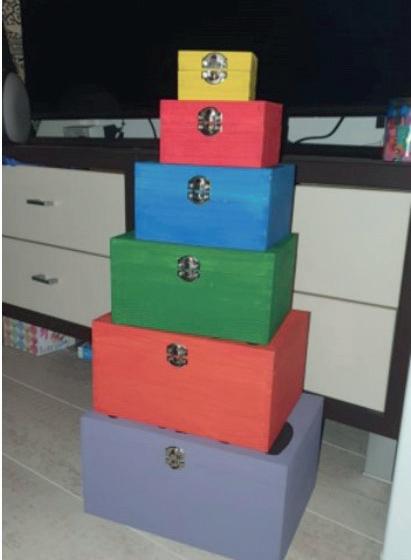
The final product was a series of coloured boxes (see photo) which contained everyday objects corresponding to different units of measurement. Students learned the names of the objects, and conducted treasure hunts in the classroom, at home and outside, to develop mathematical skills of metric conversion and literacy skills focused on the objects and the unit names. The point of the example is not the product, but the process. Authentic learning through design-based education relies on engagement with the context we find ourselves in and a willingness to allow for the ‘fuzzy front end’ in all of its open-ended unpredictability. Understanding the ways in which our thinking systems can help or hinder the phases of the design process is one way of ‘keeping it real’.
References
• Dewey J (1938) Experience and Education. London: Macmillan.
• Kahneman D (2011) Thinking: Fast and Slow. London: Penguin Books Ltd.
• Sanders E B-N and Strappers P J (2008) Co-creation and the new landscapes of design. Co-Design: International Journal of Co-Creation in Design and the Arts. 4(1): 5–18.
Dr Debra Williams-Gualandi is Programme Manager of the International Teacher Education Programme (ITEPS/ITESS/MITE) at NHLStenden University of Applied Sciences, The Netherlands.
✉ debra.williams.gualandi@nhlstenden.com
22 | International School | Summer 2023 Leading, teaching and learning
◆
THE HOME OF INDEPENDENT AND INTERNATIONAL SCHOOL JOBS AND CAREERS
Recruit the best teaching talent with us

ONLINE INDEPENDENT AND INTERNATIONAL JOB BOARD







STANDARD LISTING

45,000+ independent & international professionals
15,000 social media reach accross six channels
Included in weekly jobs newsletter
FEATURED
Standard listing PLUS








































Featured listing at the top of the Careers Section












































































Advertising alongside relevant content throughout the site


ATTRACT THE BEST STAFF WITH THE LEADING DIGITAL PLATFORM FOR INDEPENDENT AND INTERNATIONAL SCHOOL PROFESSIONALS WORLDWIDE

School Management Plus is the leading print, digital and social content platform, for leaders, educators and professionals within the independent and international education sector worldwide.






Our readership spans every stakeholder within fee paying education worldwide from Heads, Governors, Bursars, Admissions, Marketing, Development, Fundraising and Educators – to catering, facilities and sports. Our jobs & careers center is the natural meeting point for those already in the sector, aspiring to join it, or hiring from within it.
office@schoolmanagementplus.com
PREMIUM



Featured listing PLUS Free listing if the vacancy is not filled
Included on magazine digital distribution to 150,000 readers
Included in school directory




























































Listing experience hosted on Kampus24
UNLIMITED

Premium listing PLUS Unlimited job listings throughout the year to our audience
Newsletter presence every month for your school


Exposure and features on your school in main careers section
Print adverts for your listings each term
Listing experience hosted on Kampus24






The rst 100 schools to sign up will receive 20% o a year’s unlimited package
• Social following of 15k across 6 channels
















• 60% annual growth in web tra c



















• Core readership of Heads, Senior Leaders, Heads of Department, Bursars and Finance managers, Marketing and Admissions, and Development across the sector

Summer 2023 | International School 23 Leading, teaching and learning MANAGEMENT SCHOOL
plus
WWW.SCHOOLMANAGEMENTPLUS.COM/RECRUITMENT
POPULAR
POPULAR
Personalised Learning An Emerging Approach in a Technologyenhanced Learning Environment





















































 By Naaz Kirmani

This article discusses the transformation in teaching and learning arising from the rapid pace of technological developments in recent times. This transformation is driven by the quest to develop new ways of learning and augment the classroom environment by including new technologies and methods. The enormous growth in digital technology and the impact of the global pandemic has propelled profound changes in the way education is viewed, imposing the need to examine the trends that influence classroom practices, new emerging skills, and the potential of human resources to meet the challenges of living and working in the present times. Additionally, learners across the world have become increasingly reliant on social networking technologies to connect, collaborate, and create new learning experiences which stressed the need for the learning environments to undergo a change and integrate new technologies in teaching and learning.
Personalised learning is a developing approach that focuses on customising instructional and academic support to offer an exclusive learning experience based on the individual needs, strengths, interests and skills of each learner. The central tenet of this approach underpins diversity, inclusion and differentiation with a focus on developing learners’ autonomy and individualised learning path. The key focus, therefore, is on the instructional approach, lesson content and activities, the pace of learning which draws upon individual learners’ skills and interests. Personalised learning changes the role of the learner in the classroom from being a passive recipient of knowledge imparted by the teacher to becoming an active participant in co-constructing their learning. This active participation in the learning process is based on the understanding that students will be self-directed, motivated and highly engaged. Research and conversations recognise the benefits of personalised learning approaches for student motivation, and support to maximise learners’ potential which has resulted in enhanced learning outcomes, self-confidence and selfesteem for the learners.
| International School | Summer 2023 Leading, teaching and learning
The last decade has witnessed an escalated trend in the amount of published data on both the organisational and personal front. This includes large organisational datasets to provide performance indicators, and access to personal data through different social networking sites. This trend has also carried innumerable opportunities and promises to improvise, measure, and evaluate the learning processes in educational settings (Retalis et al, 2006; Johnson et al, 2011). The term ‘learning analytics’ in educational settings is used quite often in the monitoring and assessment of students’ progress, the prediction of future performance, and the identification of potential problem areas in learning using student performance data (Johnson et al, 2011).
Academic progress, attitudes, and behaviour of the learners are now tracked using large datasets in educational settings that enable identifying sources of assistance and interpreting learners’ context. This application of learning analytics has grown rapidly in educational settings in the last decade, a notable example being the focus on research in personalising learning environments to improve the quality and efficiency of the learning processes (Manouselis et al, 2010).
Research and new technological developments provide innumerable opportunities for offering personalised instruction in present times. The significant progress made by the adaptive learning models in education in recent times makes it possible to personalise instruction and encourage self-paced and self-directed learning. The adaptive learning system supports the personalised learning process. The term adaptive is defined as ‘able to change, when necessary, in order to deal with different situations’ (Fröschl, 2005: 11). The adaptive learning system is tailored to facilitate interaction between learners and computers. This provides individual tutoring and support for learners, an area which can be challenging for the teachers when there are large numbers of students in a classroom and an enormous number of administrative tasks for teachers to complete. An adaptive learning platform identifies student strengths, weaknesses, and gaps in knowledge through diagnostic tests, formative assessment and structures appropriate for support and scaffolding. This results in effective support for teachers as data analytics provide insight into individual students’ progress which in turn enables teachers to adjust feedback, assignments and teaching content in order to extend more effective and personalised support. It also offers the potential to play a key role in addressing educational access issues in regions where there is a paucity of qualified staff or in scenarios such as the recent pandemic.
The recent pandemic and shift to online learning has further reinforced the necessity to consider a broad range of learning characteristics, such as student

autonomy, self-regulation, motivation and active engagement, which is feasible in a technologically personalised learning environment. However, several factors obstruct the implementation of personalised approaches, some of which include access to adequate technology infrastructure, the readiness of the teachers, student motivation and engagement, access and inequalities in learning opportunities, quality content, student-friendly instructional aids, online assessment models and tools for customising assessment tasks in relation to the ability of the learners. As Anthony Seldon
and Oladimeji
Abidoye have remarked in their book titled The Fourth Education Revolution, Will Artificial Intelligence Liberate or Infantilize Humanity?, ‘The “Holy Grail” would be for every student to have the benefits of personalised tuition for at least part of every lesson, which would ensure that their own needs were individually addressed, and then to have time for group work, when the student can offer contributions and listen to those made by fellow students and by the teacher’ (2018: 73).
While at implementation level, technology-enhanced personalised learning may be obstructed due to contextual challenges, lack of affordances, infrastructural and resource support and absence of initiatives, yet it offers promising potential and an encouraging opportunity to augment learning environments. While envisioning the implementation of these new approaches, the ethical implications of the governance of personal data must be carefully considered by different stakeholders. ◆
Naaz Kirmani is an International Baccalaureate Educator and full-time PhD student at the University of Bath, UK. ✉ nfkk20@bath.ac.uk
References
• Fröschl C (2005) User modeling and user profiling in adaptive e-learning systems. Available from: https://www.researchgate.net/publication/238685545_ User_Modeling_and_User_Profiling_in_Adaptive_E-learning_Systems [Accessed 9 November 2022].
• Johnson L, Smith R, Willis H, Levine A and Haywood K (2010) The 2011 Horizon Report. New Media Consortium. Available from: https://eric. ed.gov/?id=ED515956 [Accessed 8 November 2022].
• Manouselis N, Drachsler H, Vuorikari R, Hummel H and Koper R (2010) Recommender Systems in technology enhanced learning. Recommender Systems Handbook. Available from: https://www.ise.bgu.ac.il/faculty/liorr/ recsyshb/chLearning.pdf [Accessed 6 December 2022].
• Retalis S, Papasalouros A, Psaromilogkos Y, Siscos S and Kargidis T (2006) Towards networked learning analytics – a concept and a tool. Available from: https://www.researchgate.net/publication/291980910_Towards_networked_ learning_analytics_-_A_concept_and_a_tool [Accessed 24 November 2022].
• Seldon A and Abidoye O (2018) The Fourth Education Revolution – Will Artificial Intelligence Liberate or Infantilise Humanity? Buckingham: University of Buckingham Press.
Summer 2023 | International School | 25 Leading, teaching and learning
Finding Purpose through CAS
 By John Haakon Gould
The IB Diploma curriculum comprises 6 subject groups, along with the Extended Essay (EE), Theory of Knowledge (TOK), and Creativity, Activity, Service (CAS): three elements collectively known as ‘The Core’. A dictionary definition of ‘core’ is the part of something that is central to its existence or character. It is clear throughout the programme’s standards and practices, as well as subject briefs, that the IB intends for these core elements to be seamlessly integrated for students to ultimately fulfill the broader IB mission of ‘developing inquiring, knowledgeable, and caring learners who help to create a better and more peaceful world’.
This article will focus on CAS, and its process of self-discovery that helps students counterbalance academic rigor with personal and interpersonal

growth across three ‘strands’. Students will use their creativity to produce an interpretative or original product (Creativity), engage in physical activity to cultivate healthy habits (Activity), and meaningfully collaborate with their communities to effect positive change (Service). Additional guidance is also given on how students may demonstrate the intended learning outcomes.
At Shanghai Community International School (SCIS), CAS is the culmination of a student’s experiential learning journey through the growing and robust programs of Action (IB Primary Years Programme) and Service As Action (IB Middle Years Programme). These foundations include our approach of Flexible Frameworks for Service Learning, as described in the Spring 2022 issue of this magazine.
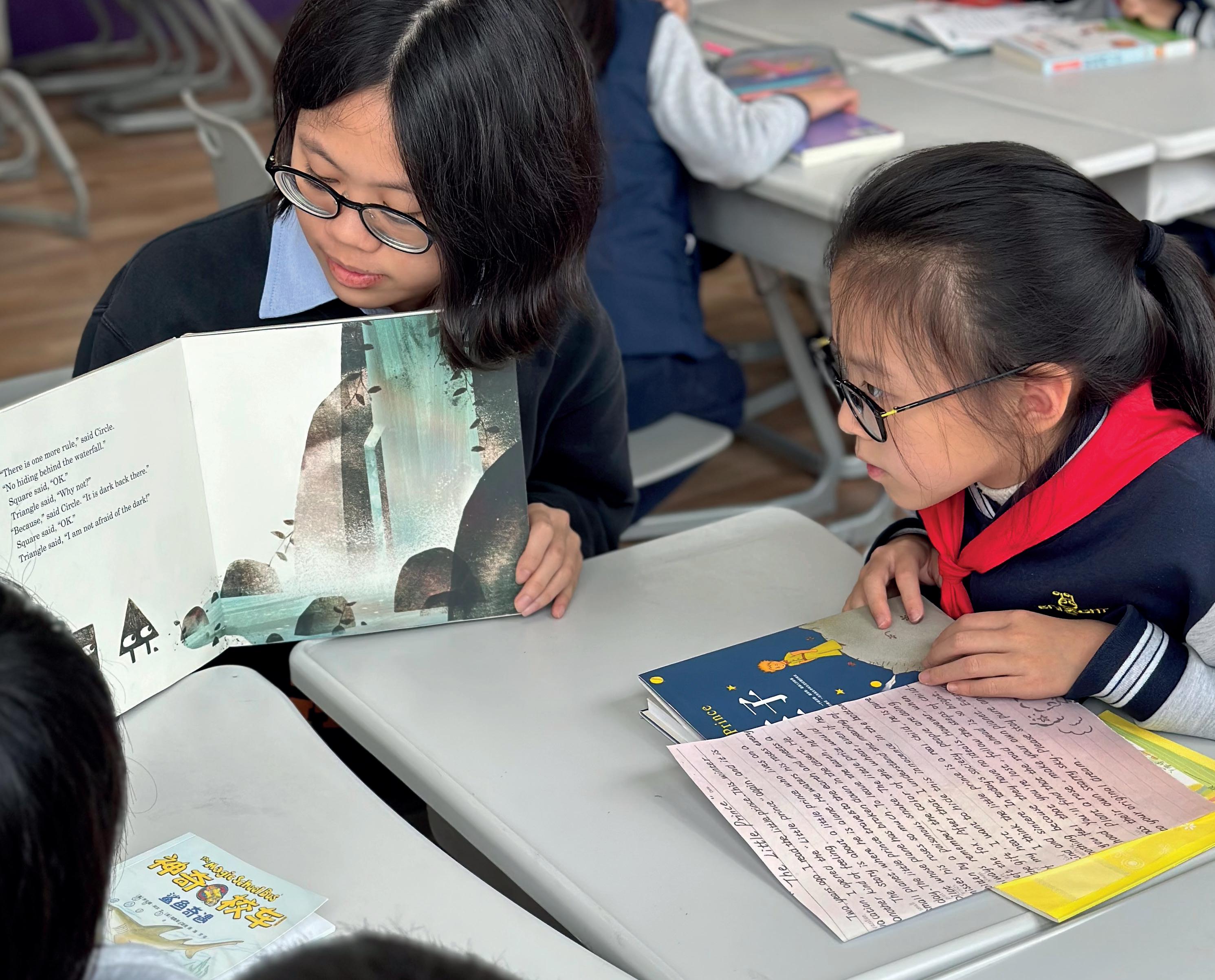
Still, the purpose of CAS runs deeper. While the IB provides overall guidance as to the ‘aims’ and ‘nature’ of the program, each individual student ultimately
develops their own ‘Why’. In this article we’ll look more closely at how purpose is developed, using subheadings in red and verbatim quotes that arise from SCIS CAS student input, and paying close attention to how each of the seven intended outcomes (in green) may be achieved.
Reflective
As stated by John Dewey, ‘We don’t learn from experience. We learn from reflecting on experience’. Before the audible collective groan of uploading to a Learning Management System (LMS), or quantitative inquiries like ‘How many do I need?’, this is about personalizing the process. Knowing oneself as a person with clear areas of strength and progress is a critical beginning point in CAS. Ji Yun was not only conscious of her linguistic and artistic talents for her project that coincided with her interest in Arts Therapy, but she also demonstrated
26 | International School | Summer 2023
openness and vulnerability in sharing her original or cover poetry and music with others through videos and a social media account: ‘I developed my guitar and piano skills. I analyzed lyrics and a range of prose. I explored blending Korean and English into my creations. The comments and feedback motivated me to practice and improve, and overall had me deeply reflect on my identity and whether I live a life of “love”, which is the most important value for me.’
Empowered
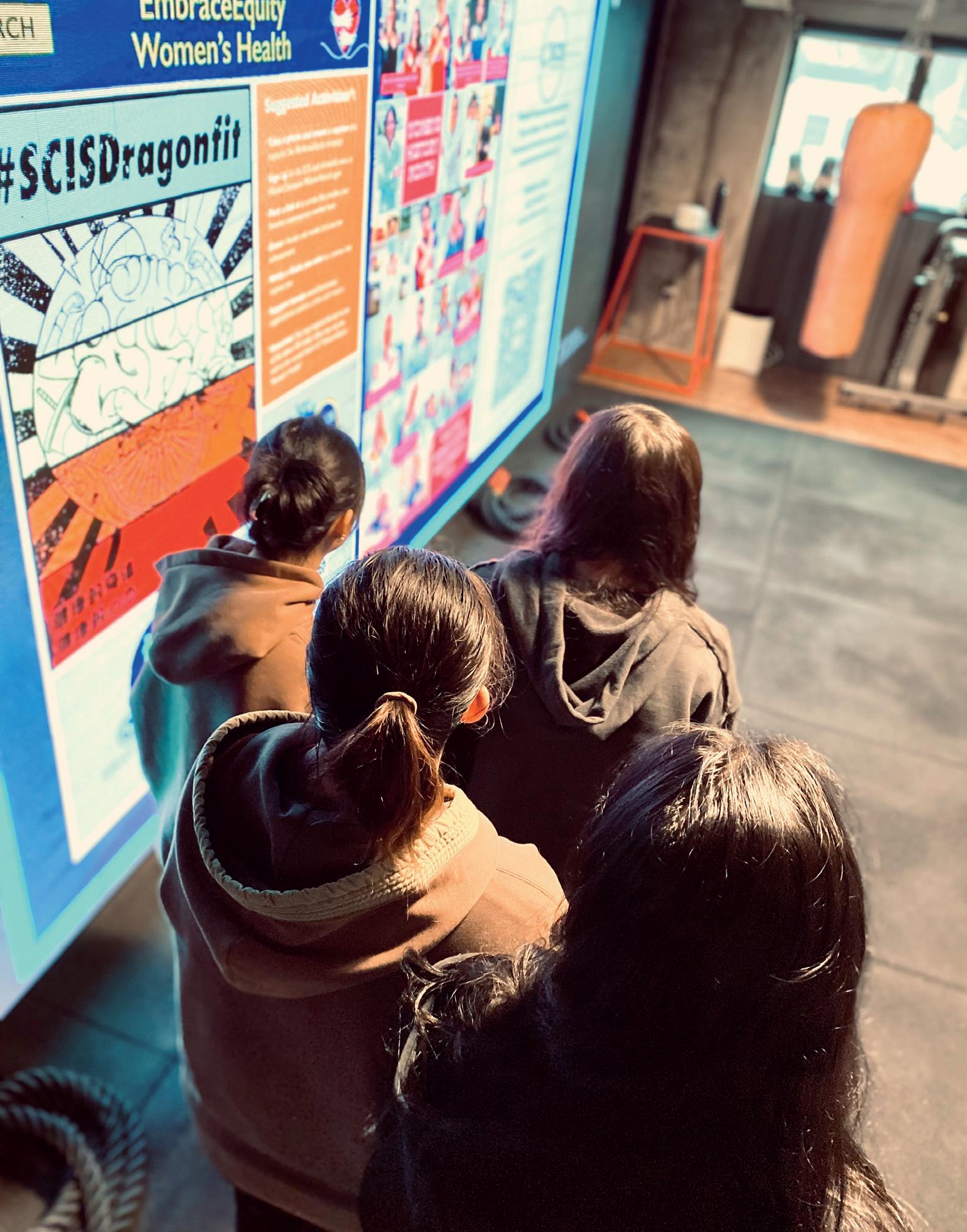
During students’ formative years, adults in their lives may make the majority of day-to-day decisions. It’s also a time when their identities are malleable and fluid. Demonstrating the ability to initiate and plan a CAS experience comes with its own set of obstacles. For larger projects, being able to recognize the benefits of working collaboratively is a way to address this range of challenges. ‘Our CAS project involved directly working with World Champion Boxer Michele Aboro’, a group of students said. ‘It was incredible to arrange an event for our community centered on gender equality, which included a movie discussion, meditation session, and basic boxing fundamentals. We learned a lot about event planning. When it came to marketing or agenda creation, we needed to draw on each other’s skills. We needed to communicate while avoiding micromanagement. Finally, it was about leaving room for spontaneity, as here is where memorable moments happen.’
Balanced
‘CAS is about harmony’, says Noemie. That word, harmony, is profound and has multiple meanings across cultures and fields. The concept of various parts bringing wholeness can be considered as a significant revelation. ‘All three strands contain skills that are developed
in different ways. Whether it’s the freedom of flowing creativity, engaging in social responsibility, or the endorphins from physical movement; this balance is important.’ In terms of balance across the strands, each student’s portfolio may seem different. However, one unifying goal is the ability to demonstrate commitment and perseverance in whatever experiences are undertaken. ‘Setting goals, tracking progress, and action planning
required dedication. Managing my time became an area of growth as I worked on how to balance my passion project of developing a clothing brand, taking part in sports teams, and attending servicerelated conferences, among other things.’
Leadership
Trust the students. Building opportunities for their voices to be heard can instill confidence and strengthen the community. Sharing experience of transition can be an especially opportune time for a collective reflection on how challenges have been undertaken, and new skills were developed in the process. ‘Although we’ve only experienced one year in the DP, our CAS Project was to directly interact with the Grade 10’s and share our personal stories’, Ashika and Yee Shin begin. ‘We wanted it to be practical, but also give the message across that as students, we’re always looking out for one another. Create that bond’. The planning ►
Leading, teaching and learning
Sharing experience of transition can be an especially opportune time for a collective reflection on how challenges have been undertaken, and new skills were developed in the process.
of this experience was a way for students, coordinators, and teachers to collaborate in a meaningful way.
Connection
Mental health is undeniably a global concern; nonetheless, one could wonder how we might connect with it in an honest and meaningful way. At the April 2023 ACAMIS Spring Leadership Conference, keynote speaker Dr Jane Larson (Executive Director of the Council of International Schools) underlined the importance of education for wellbeing and flourishing by citing substantial research. She also asked how schools include student voice.
‘This topic has always been important, especially for young people. The pandemic brought the importance of this issue to the forefront even more’, states Suhani C. It became clear that a network was vital, but what objectives would it serve? She continues by saying ‘Triple A, a student mental health group initiative, really started as a way to connect; not only with each other – but also ourselves. It’s grown into a team of 25 student ambassadors
from all over the world. Incrementally, we’ve begun to pilot smaller projects at our own schools and report to each other the struggles and successes that we’ve faced’.
We are curious to see how this legacy project evolves, whether through collaboration with ongoing whole-school programs like #SCISDragonfit or by providing a safe space for dialogue.

Positionality
In a recent TES Article the IB Director General, Olli-Pekka Heinonen, states ‘International schools can play a big role in solving global problems – but to wield this power they must embed themselves in their local culture ... Acknowledge the value of each individual, and respect that we are all equal in our uniqueness ... Learn the richness of different views in making better decisions.’ One should also note that direct service, including volunteering, brings about a myriad of ethical choices and decisions. While mistakes may occur and are learning opportunities in and of themselves, we at SCIS take pride in modeling what
this means in terms of reducing harm in international school service learning. Creating a school culture of service and international mindedness has been lengthy, incremental, and intentional. Before externalizing in the community, there is an emphasis on analyzing impact and action on campus. A recent community connection with a local Chinese School has placed cultural context in the center when carrying out a language exchange. ‘Power and privilege are factors to consider if you’re going to volunteer’, the students concur. ‘These are significant areas. Also, what drives you? Are you helping others out of a selfless motive?’
Final Thoughts
This period in a high schooler’s life can be stressful to say the least. It cannot be overstated that CAS is also supposed to be fun. Catherine Price, a prominent lecturer and science journalist, defines fun as ‘a feeling – not an activity ... It is the junction of playfulness, connection, and flow ... One must eliminate distractions, increase face-to-face human interaction, and make it a priority.’ Advisors can remind students of this not only informally, but also at interviews, throughout the program. The interviews themselves can be framed in ways that inspire conversation, such as choice boards, presentations, and ‘socials’ to reflect on both the achievement of the outcomes and the joy experienced. CAS requires collective effort in supporting the individual’s journey of becoming a well-rounded citizen of tomorrow. ◆
References
• Heinonen O-P (2023) Why international schools must embrace their local communities. TES. 25 January 2023. https://www.tes. com/magazine/analysis/specialist-sector/ how-international-schools-embrace-localcommunities-baccalaureate
• Price C (2022) Why having fun is the secret to a healthier life. TED Talk. https://www.ted.com/ talks/catherine_price_why_having_fun_is_the_ secret_to_a_healthier_life/no-comments
28 | International School | Summer 2023 Leading, teaching and learning
John Haakon Gould is Service Learning Coach and IB Diploma CAS Coordinator at Shanghai Community International School Hongqiao, China. ✉ jgould@scis-china.org
Unlock your teaching potential with White Rose Education
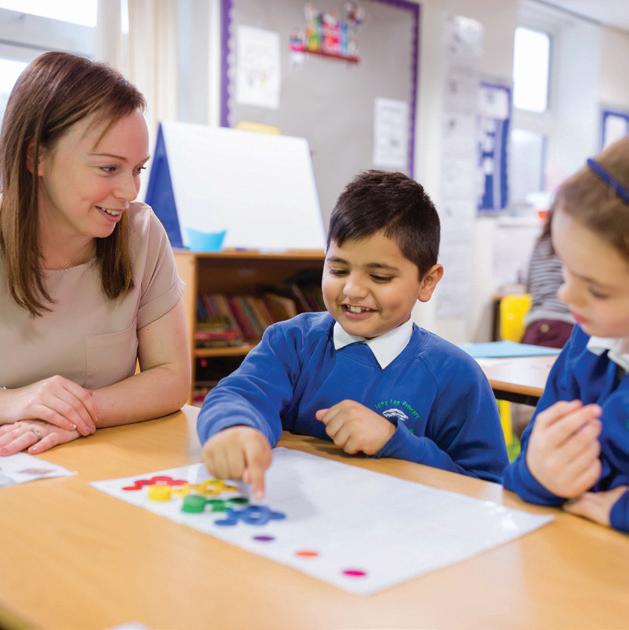






Discover the power of White Rose Education, your go-to resource for all your maths and science curriculum resources and training at primary and secondary level. Explore effective teaching strategies crafted by specialist teachers. Engage, challenge, and inspire your students with our innovative approaches.
Resources
Access a comprehensive library of British curriculum-aligned materials, including schemes of learning, worksheets, and teaching slides.



Professional development
Enhance your skills with expert-led training through multiple mediums; including faceto-face training, webinars and our on-demand videos which help you perfect your skills in the classroom.
Summer 2023 | International School | 29 Learn more about MATERIALS AND TRAINING Visit whiteroseed.com Get social with us
LEARN MORE HERE
“High quality and ready to use in the classroom” Lorenza Elli, Primary Maths Specialist, Concordia School, Paris.
Differentiation and Inclusion Different or Included?
By Martha Ross
What motivates us to adapt or differentiate learning to create equity in our classrooms?
The inclusive education context that we experience every day is likely to differ across the diverse contexts of international schools. As national systems and accrediting agencies seek policy and practice that promote diversity, equity and justice in education, inclusion is the term that we use to describe and foster this practice.
Daniel Sobel, in his paper entitled Inclusion is a verb: Belonging and schools, highlights the characteristics of an inclusive school as including where students are equally important in the community, students are heard and respected, all school facilities are accessible to all students, and access to quality education is available for all students (Sobel, 2022). It is important to recognise who is in our student population, and to ask how we can strive for equitable school experiences and make this a priority.
Then comes the operational question: what is it that motivates everyone in an international school community to adapt their practice to include a wide range of divergent students? Currently, the answer to this question is a requirement for teachers to differentiate learning. Essentially we ask teachers to design and create learning for the majority of students, and then consider different learning experiences for individual students. The pressure of curriculum coverage however can drive us to consider deficits in learning development before we make time to look for
individual strengths. If we could reframe the process of differentiation, and balance student strengths and learning needs, we could create more inclusive practices. What motivates us to adapt or differentiate learning to create equity in our classrooms is never more important than now. Sufficient knowledge about our learners is fundamental to our understanding of effective inclusion. Ellis et al (2023) recently published an insightful book, Neurodiversity and Education, which clearly outlines the opportunity to address cognitive differences. This work gives us the opportunity to understand how to support and promote our neurodivergent students, knowing that they bring with them unique skills and competencies. Using the model of Universal Design for Learning, the book illustrates how to create inclusive and therefore more equitable learning contexts:
‘Many of the challenges that our neurodivergent students face are not distinctly different to the challenges that we all face, but tend to be more exaggerated.´

Researchers such as Daniel Sobel open our minds to the reality of school life as a highly sensory experience. Educators who share the experience as neurodivergent learners themselves can be powerful motivators to colleagues and students for successful learning.
Inclusion, or the process of successfully including all students, provides an opportunity to consider education and schools from a new perspective. We can learn from
30 | International School | Summer 2023
What motivates us to adapt or differentiate learning to create equity in our classrooms is never more important than now.
Who does inclusion protect?

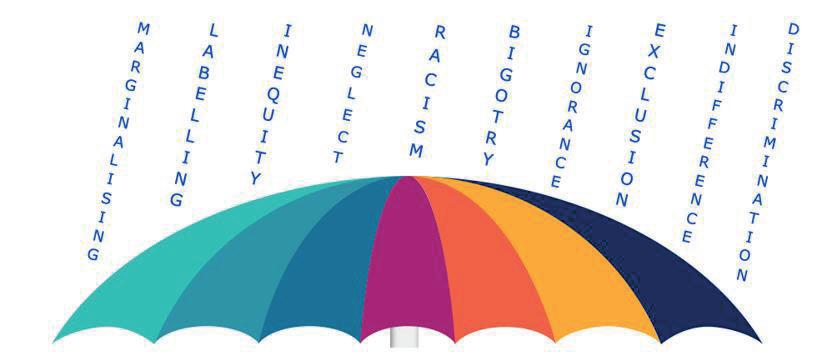


our communities, from the individuals that we strive to include, and then reframe our perspective accordingly. The inclusion model by Thompson (2022)(above) provides a visual representation of the importance of knowing whom we are supporting in our school communities.
In addressing our motivation toward inclusion and equity in the classroom, we should ask:
• Can we reframe support for neurodivergent learners by identifying skills and learning support needs?


• Can we address our perception of differentiated learning and work towards collaboration and not separation?
• Can we as teachers, SEN and Inclusion coordinators draw students into the group, to share, collaborate or contribute towards learning, according to interest and ability?

Instead of focusing on learning differences, we are considering experiences so that all individuals contribute to a community of learners. The adapted inclusion model (right) shows how we can come together and protect everyone by fostering a culture of belonging, empathy, and support.
The answer to the question relating to teacher motivation is perhaps best addressed with training for teachers in Universal Design for Learning. Ellis et al (2023) describe this process as: The Why (engagement) – how can we motivate students and sustain their interest?, The What (representation)


– providing information in different formats, and The How (action and expression) – how will the student demonstrate learning and understanding to others and for themselves? These are all vital skills for inclusion to take place in international schools.
At the March 2023 ECIS conference, Leading Inclusion by Example, hosted by the American Community Schools Athens, insightful keynote speakers led a conversation centered on the school experience of all students. This conversation became focused more specifically on our neurodivergent students and their learning contexts, and led conference participants to consider carefully strategies that could help teachers connect with all learners. Dr Judy Willis shared strategies to reduce boredom and frustration by considering neuroscience research and ways to open the attention filter and tap into the motivation of students. We learned to share the task of addressing attention and focus by talking to students directly. There is an opportunity to establish a shared understanding of what distractions there are in our learning environments and how to eliminate them by asking those who experience it.
Daniel Sobel described the whole group of conference participants as ‘Inclusionists’. He modeled how we can actively try to understand student behaviours ►
Summer 2023 | International School | 31 Leading, teaching and learning Enable others Protect the vulnerable Support Needs Race Culture & Ethnicity Gender, Age & Identity Socioeconomic status Language Religion & Perspective Other + ? Neuro & Physical diversity Belonging
Inclusion umbrella ©Leo Thompson 2022 Please share freely Embrace our diversity Trauma & psychological
by learning more about students’ life experiences and about how their neurodivergence impacts the learning environment. This focus led conference participants to understand the importance of the learning environment from the perspective of the student. Nicole Demos created a moment in time by sharing her life experience as a disabled member of a school community, and as an adult living internationally in different societies. We learned who were the inclusionists in her life, those who championed her success and achievements. Nicole shared where she wishes she had sought greater access
to the whole school experience. This led her to bravely share her story and acceptance of her disabled identity. These messages can and should reach far into our classrooms to ensure all our students have equitable access to all aspects of school life. This is illustrated in the final model (above) where the Inclusion umbrella protects the school for all students enjoying all school experiences. In reframing how we approach equitable learning environments, a call to school leaders will be required to redistribute time and create space to consider Inclusion and to promote Belonging, Empathy and Support for the whole community. ◆
Dr Martha Ross is Inclusion Coordinator at International School Carinthia, and a member of the ECIS Special Interest Group Committee for Inclusion. ✉ marthaross@hotmail.com
References
• Demos N (2023) Keynote presentation. ECIS Inclusion Conference, American Community Schools Athens. March 2023.
• Ellis P, Kirby A & Osborne A (2023) Neurodiversity and Education. London: Sage Publications.
• Sobel D (2022) Inclusion is a verb: Belonging and schools. https://www.sec-ed. co.uk/best-practice/inclusion-is-a-verb-belonging-and-schools-send-vulnerablestudents-mental-health-wellbeing-safeguarding-children-young-people/ Sourced October 2022

• Sobel D (2023) Keynote presentation. ECIS Inclusion Conference, American Community Schools Athens. March 2023.
• Thompson L (2022) Inclusion Umbrella. Who does InclUSion protect?
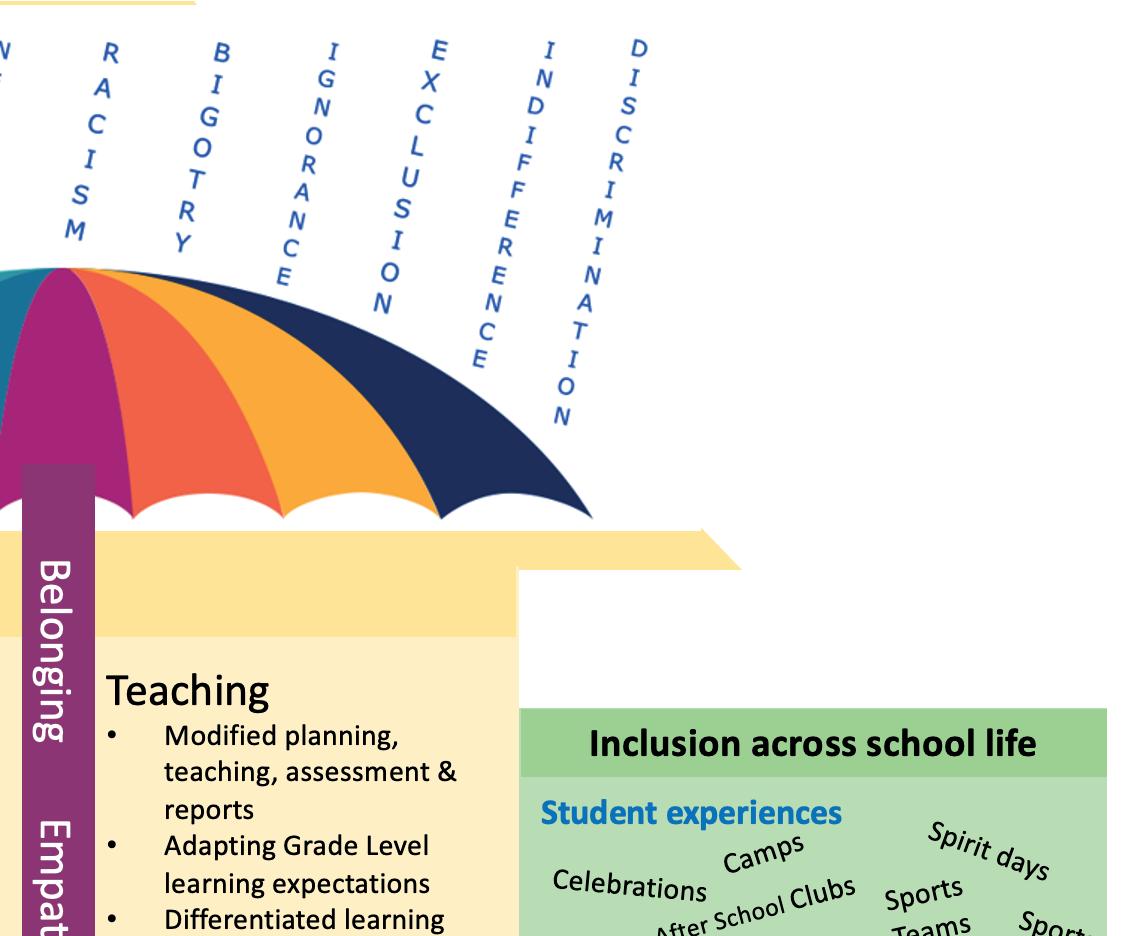
• Willis J (2023) Keynote presentation. ECIS Inclusion Conference, American Community Schools Athens. March 2023.
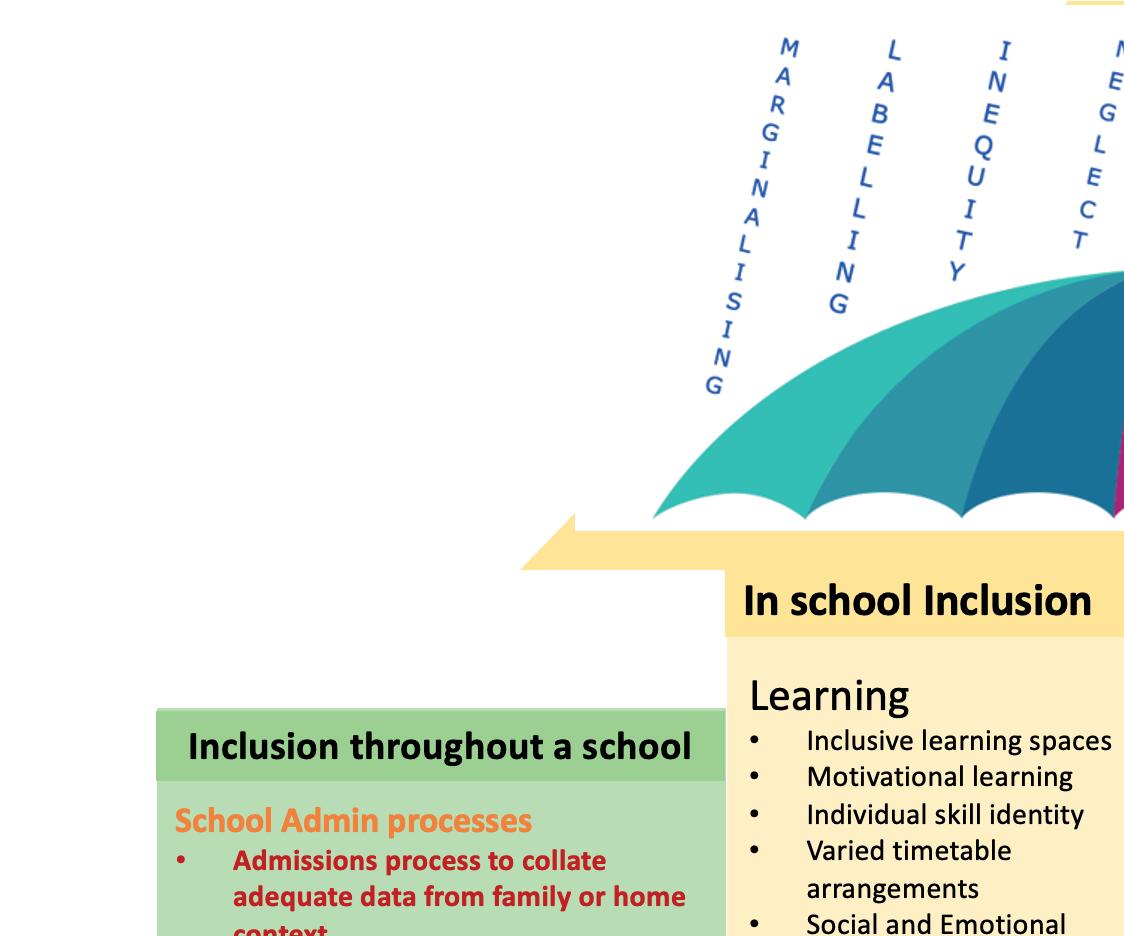
32 | International School | Summer 2023 Leading, teaching and learning
There is an opportunity to establish a shared understanding of what distractions there are in our learning environments and how to eliminate them by asking those who experience it.







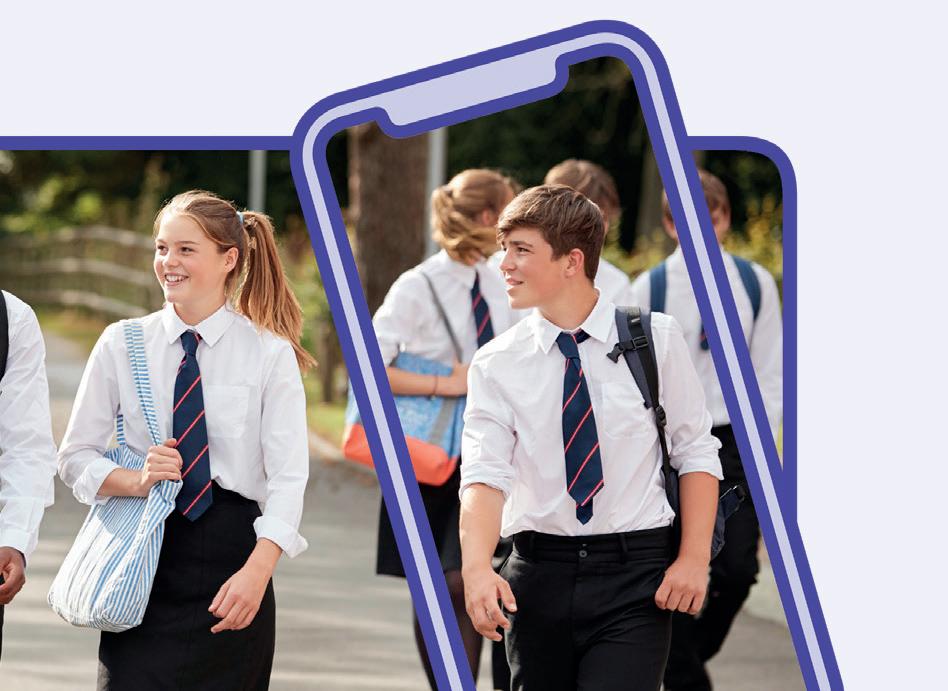






Summer 2023 | International School | 33 Leading, teaching and learning Personalised Digital Prospectus Open Events Event Follow Up Staff Recruitment Agent tool Make your school personal Personalised school admissions and recruitment “This is the future of school admissions.” UK boarding school Register to watch a demo kampus24.com
AI in Education: We Are All Explorers…
 By Stephen Taylor
The public release of OpenAI’s ChatGPT in November 2022 might be remembered as a watershed moment, akin to the emergence of calculators, the internet and search engines in terms of its impact on how the world works with information. How might we adapt to this new reality, how could it shape our learners’ futures, and what do we need to be aware of in this rapidlydeveloping space?
We have already been living with some forms of AI for many years, including smartphones, watches, shopping algorithms, home assistants and more, but the pace and scale of proliferation of large language models (LLMs) and other AI technologies over the last year has been incredible.
The insertion of AI capabilities into core systems and applications has been almost instantaneous, breeding opportunities and challenges with each new iteration or innovation. It will get more powerful, and might well outpace our ability to understand it fully, and to adapt accordingly. This can be a concerning proposition for educators, parents, students and agencies, yet the impacts of AI on our learners’ futures could be dramatic. We will need to adapt and to support the development of competencies, literacies and attributes to thrive in an increasingly uncertain world.
Ethics and Safety
In the rush of AI-related excitement, it is critically important to pay attention
to issues of safety and ethics in these emerging technologies. Security and privacy concerns are key considerations, and before promoting any tool to students, schools should check carefully the terms and conditions (including age restrictions). Due to GDPR (or equivalent) legislation, some tools might be blocked in your context, and many that offer ‘freemium’ access can come with hidden costs, or may incur subscription fees after a trial period. Issues around misinformation, ‘deepfakes’ and hallucination – the phenomenon of LLMs inventing information or attributions –can lead to information or resources that are unreliable and misleading. Outputs from AI tools are quickly becoming more
Leading, teaching and learning
Photograph created by AI
sophisticated and convincing, adding further complexity to making sense of information and media in an already challenging global landscape.
Ethical issues also exist in the creation of LLMs, image generators and other AI tools. The training of AI tools requires large amounts of data, harvested from across the internet. LLMs can demonstrate the inherent biases in their training data, and some have relied on free labour or underpaid work for training and development. Issues of appropriation of artists’ work in the training of image generation models have led to complex copyright cases, and there are significant environmental impacts of computation at such a large scale.
Academic Integrity
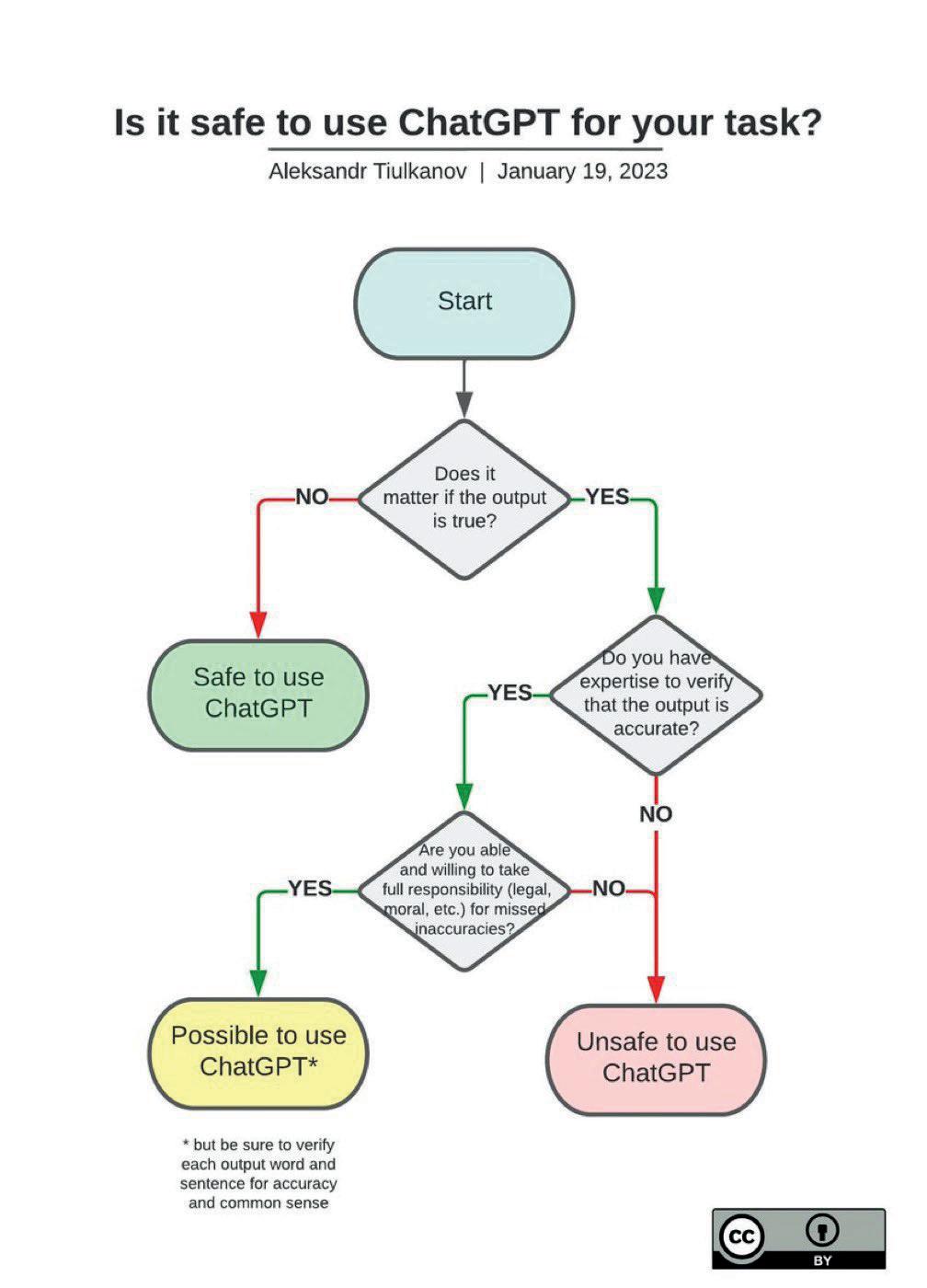
An immediate concern of educators with AI has been the potential for academic misconduct, or ‘getting ChatGPT to write our assignments’. AI writing

assistants existed before ChatGPT, but the scale of implementation and accessibility since its release has led to widespread concerns and some misuses. Institutions are taking time to adapt to AI, with some embracing it as a new tool and others issuing blanket bans. A new marketplace for AI-detection tools has opened up, though there are risks with falsepositive results and the scale of policing needed where there is not a culture of integrity or care. Dr Sarah Elaine Eaton proposes that we are in the age of ‘postplagiarism’, and has published six tenets for adapting to AI writing, which might support schools in their work towards academic integrity. The International Baccalaureate (IB) has stated that they will not ban ChatGPT, and they, the MLA and APA have all issued guidance on how to cite work generated or assisted by AI.
AI for Good
Where the rush of news can be confusing, it can be helpful to see powerful examples of hopeful actions using AI. Machine learning is already being used to help preserve languages, protect rainforests, monitor reefs and develop new medicines. Google’s AI for the SDGs resources share many examples of communities using AI tools to take action on global issues in their local contexts. As pressure builds on organisations around privacy, safety and ethics, frameworks and legislation are being developed to ensure more positive outcomes moving forwards – as long as they are actioned effectively. As the costs of computing plummet and models become open-sources, there is potential for shifting power structures in learning and knowledge creation, opening-up opportunities for marginalised
communities or those without access to expensive education or resources. Organisations such as HuggingFace are committed to inclusion and ethical approaches to AI, supporting developers from all backgrounds, and making clear commitments to reducing harm and bias in AI, while recent guidance from UNESCO has provided some excellent starting points for safe and ethical approaches to working with these tools (see Tiulkanov’s flowchart (above): UNESCO, 2023).
Leaning-In To An AI Future... Now
Schools that have strong beliefs in high-quality teaching and learning, a culture of thinking, trust and inquiry, can leverage these to adapt to AI in alignment with their values. In December 2022, I proposed (If You) USEME-AI, and associated guiding questions for students, as a model to support conversations and actions related to AI in learning:
- Understand the technology we are using; its purposes, power and limitations.
- Supplement & Support Learning, to augment and not replace the expert teacher, through making adaption, differentiation and administration more efficient. ►
Summer 2023 | International School | 35 Leading, teaching and learning
Institutions are taking time to adapt to AI, with some embracing it as a new tool and others issuing blanket bans.
- Expectations for Learning that are based on growth, integrity, and shared responsibility.

- Modeling & Motivating positive interactions with AI, and between peers, creating discussions and demonstrations of the learning process in action.
- Evaluating Ethical Implications of AI, centering interactions on ethical use of AI, ethical issues and critical literacies. - Authentic Applications, using AI for personalised inquiry into real-world problems, and creating opportunities for learning that cannot be easily replicated by AI.
- Inspiring Innovation by designing learning that allows learners to leverage AI and other tools in interesting, new and possible unpredictable ways, learning as innovators.
We will need to explore, experiment, adapt and curate to find the best tools for teaching and learning, and work with edtech integrators, librarians and each other to share best practices, interesting applications and powerful ideas. AI tools can already be used to support inclusion and multilingual learners, give guidance on curriculum development, provide targeted feedback on student drafts, and act as a powerful research assistant. As fiction becomes harder to discern from reality, we must enhance our teaching and learning of information and media literacy skills, supporting learners in identifying quality resources and adapting to using AI tools for good, rather than harm.
We must teach with and through ethics, taking a critical eye to AI development and outputs. Students might also feel worried about the impacts of AI on their future career prospects, and we should show them opportunities to adapt their thinking and skills to be able to thrive as they move beyond school.
The potential scale of disruption to traditional learning structures posed by AI will undoubtedly be huge, and we are seeing now only the tip of the iceberg. As schools, we can keep an open mind, stay true to our guiding statements and principles of high quality teaching and learning, learn from each other and realise that on this adventure, we are all explorers.
Dipping Your Toes In The AI Stream
Some easy-access AI tools that might be
References
useful to educators are as follows:
• PerplexityAI (perplexity.ai) is a GPT-powered search engine connected to Microsoft’s Bing, with an app and web interface. It can be used without an account, gives concise and detailed responses, and includes links to working sources. It will suggest follow-on research questions, and queries can be saved and shared.
• Poe.com, by Quora, is an app and web interface that includes bots from OpenAI (ChatGPT) and AnthropicAI. You can also create custom bots to respond in a style you prefer. This allows you to try and evaluate different models, and see how they respond to the same prompt.
• Elicit (elicit.org) is an academic research assistant that searches and summarises published papers, using Semantic Scholar. This can be a great help to students searching for academic references in advanced projects. ◆
Stephen Taylor is Director of Innovation in Learning & Teaching at the Western Academy of Beijing (WAB), and has been an international educator and leader since 2005, with posts in Indonesia, Japan and China. Twitter and LinkedIn: @sjtylr See also sjtylr.net, and WAB resources to support AI in Education via learn.wab.edu/innovation/ai
✉ stephen_taylor@wab.edu
• Bali M (2023) What I Mean When I Say Critical AI Literacy. https://blog.mahabali.me/educationaltechnology-2/what-i-mean-when-i-say-critical-ai-literacy/
• Eaton S E (2023) Six Tenets of Postplagiarism: Writing in the Age of Artificial Intelligence. https:// drsaraheaton.wordpress.com/2023/02/25/6-tenets-of-postplagiarism-writing-in-the-age-of-artificialintelligence/
• Furze L (2023) Teaching AI Ethics: outline and resources. https://leonfurze.com/2023/01/26/teaching-aiethics/
• Hugging Face (2023) https://huggingface.co/
• Taylor S (2023) (If You) USEME-AI model for adapting to AI in schools. https://sjtylr.net/if-you-useme-ai/
• UNESCO (2023) Guide to ChatGPT and Artificial Intelligence in Education Quick Start Guide. https:// www.iesalc.unesco.org/wp-content/uploads/2023/04/ChatGPT-and-Artificial-Intelligence-in-highereducation-Quick-Start-guide_EN_FINAL.pdf
36 | International School | Summer 2023 Leading, teaching and learning
Revolutionise Your School Report Writing with AI 111
Teachers often dread reportwriting season. Crafting detailed, personalised reports for each student can be time-consuming, and the checking and correction process can be taxing on the wider school system.

Real Fast Reports, an AI-powered report writing tool, streamlines the entire process. It allows teachers to focus on supporting their students' growth and concentrate on providing meaningful feedback instead of struggling with phrasing.
Harnessing the power of AI, Real Fast Reports enables teachers to write accurate, personalised reports in record time. Teachers simply input a series of brief bullet points about each student, and the platform converts them into perfect prose.
The system automatically compiles a personal comment bank for each teacher, enabling them to find and reuse relevant bullet points easily. This speeds up report writing significantly, while still ensuring each report is unique and individual.
Real Fast Reports always uses the correct name and gender pronouns for each student, avoiding embarrassing mistakes that can arise from copy and pasting. Additionally, the platform checks reports against your school’s style guide, reducing common errors and saving hours of proofreading and correction.
Parents appreciate the tailored reports generated by Real Fast Reports, which reflect their child's unique progress and achievements. Students love that their reports are completely unique, without verbatim repetition of phrases found in their classmates’ reports.
The best part? Teachers save precious hours that can be reinvested in other activities or in improving workload and staff wellbeing.
Tired of writing and checking hundreds of school reports?

Real Fast Reports is trusted by top UK and International independent schools, with robust security and data protection in place. Primary and secondary schools alike have lauded its transformative impact on report writing. Testimonials highlight time-saving benefits and ease of use, with some teachers saving as much as 2-3 hours on a single set of reports.


Real Fast Reports offers school subscriptions, and with annual packages costing as little as £10 per teacher, it's an investment that quickly pays for itself in time saved and improved report quality.
Embrace the future of report writing with Real Fast Reports. Give your teachers the gift of time and efficiency while delivering high-value, personalised reports that parents and students will cherish.
I

Summer 2023 | International School | 37
REAL FAST REPORTS YOUR AI REPORT WRITING ASSISTANT
Our staff were aboslutely blown away! The best tech investment we have made as a school recently. It has totally transformed our experience of report writing!
What peoplesay:
reports
TRYFREE FOR Let AI help you and your team write better reports in a fraction of the time Free trial for teachers and schools. Visit realfastreports.com/ism or scan the QR code
saved 2-3 hours on my Y7
alone.
◆ Advertorial Feature
E-Acharya: Learning Simplified


 By Arnav Pandey and Keya Sanghvi


Education in its essence has undergone a major transformation over the past two decades due to the emergence of the Internet. International schools have understood this transformation, and have incorporated the Internet into their style of education by using virtual simulations, videos, and articles in teaching. However, this has not been the case for millions of students in rural parts of India, a situation worsened by the pandemic, when schools were shut down and in several parts of rural India no online alternative was offered. We saw this impact the education of students, and we also observed through interactions that several of these students were unaware of the amazing tools the Internet offers to help with their learning. Many times too, even when students came across them, language barriers
and lack of fluency in English prevented them from utilising such tools. In order to counter this we started working towards a larger goal, one that we will possibly not achieve any time soon but that we have aspired to for the past three years. It is to revolutionise education in rural India,
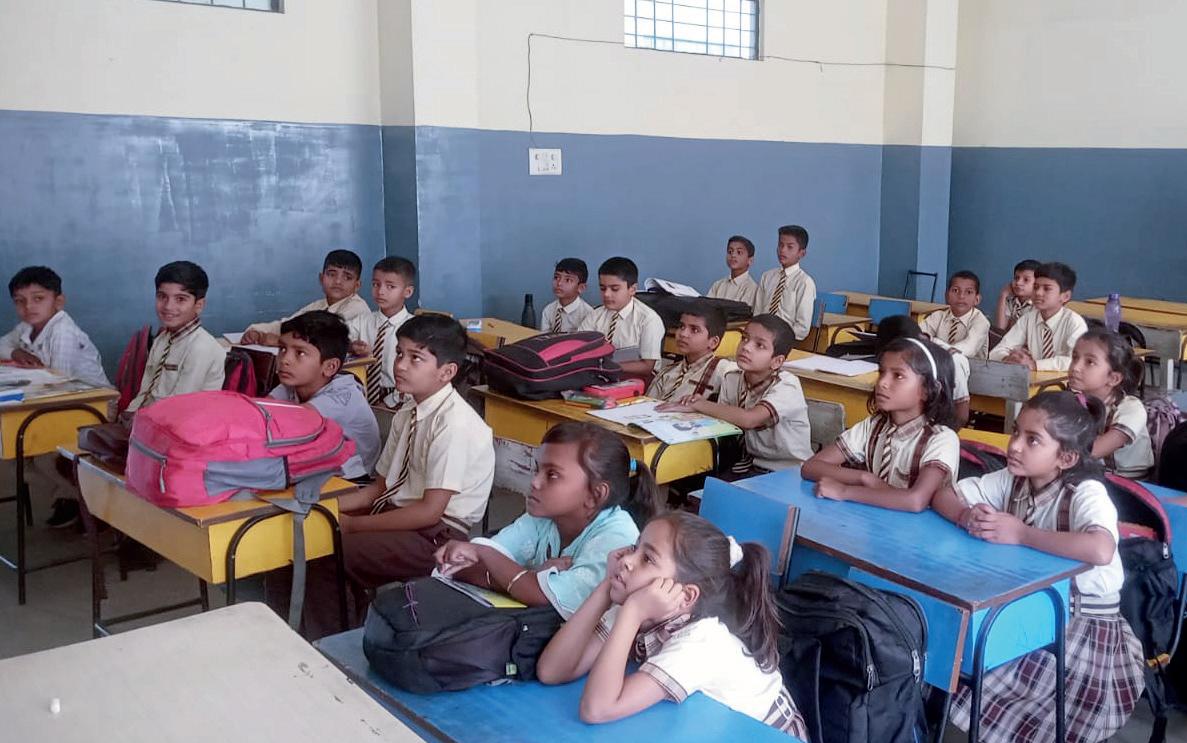
by increasing accessibility to the amazing resources present online. We started e-Acharya with this belief at the core of our organisation.
Anyone who isn’t familiar with Hindi, the national language of India, may be wondering what is an ‘Acharya’. Well, it is a concept that goes back several millennia. To put it simply, an ‘Acharya’ is a teacher with a true passion to make an
38 | International School | Summer 2023
impact in their students’ lives. And that’s who we are! Our project started out with only a few Acharyas, but has since grown to a team of over 40 Acharyas from all over India, working towards the same cause. By using virtual tools such as simulations, experiments, articles, and much more … we started to create videos in Hindi. We ensured the videos were engaging and interactive, covering the same concepts that the students would be learning in school. We then reached out to schools in regional rural areas and shared these resources with them in order to meaningfully impact students, while assessing strategies to improve. A challenge we faced in some places was the lack of personal devices for students. We overcame this by presenting some of our videos in classrooms via projectors and screens. By March 2022 we had successfully impacted around 400 students from over 10 schools, but we knew this was just the beginning.
Assessing our impact, we realised that, since India is such a diverse and vast nation where a myriad of cultures is present, creating videos in simply one language would not achieve our goal of inclusion. Hence, we expanded to other regions and languages including Marathi in Maharashtra, Telugu in Andhra Pradesh, Tamil in Tamil
been fortunate enough to experience ourselves. Due to this, we feel it is our responsibility to share our learnings with people from parts of the world that have not been so privileged.

Nadu, and Gujarati in Gujarat. Since then our team has expanded to many more students who are language experts in these languages and more to truly make this an effort across cultures and languages. A crucial part was understanding where impact was necessary through in-depth research on the schools and regions where such challenges are frequently faced by students, and hence branching out to the regions named above.
We have attempted to enlist some of the brightest students in India from the fields in which they are proficient, including physics, chemistry, biology, and mathematics – and it doesn’t stop there, we plan to incorporate more subjects too! These students as Acharyas share a passion for the subjects they teach, which allows for a teaching style that is not only intuitive but also supported by a passionate interest in their respective fields of interest. These interests are often fostered by the application-oriented education we have
We firmly believe that sharing and enabling accessible education is fundamental for equitable growth in our modern society. Development is crucial, but if it happens at the cost of furthering divides based on geography, language barriers and education levels, it may be meaningless to humanity as a whole. Hence we have been working to further our impact to even larger scales by expanding to other regions of the world where similar issues persist. We urge schools to share our resources with their students and collaborate with us. Students from across the world can contribute even without experience in any regional languages. We are expanding our team for researchers, scriptwriters, video editors, and even designers. There are opportunities for everyone!
Together we can work towards ensuring that accessible education is a reality for everyone, everywhere. If you would like to explore some of our work or be a part of the initiative, please check our website (www.e-acharya.org) and/or reach out to either of us for more information on e-Acharya.
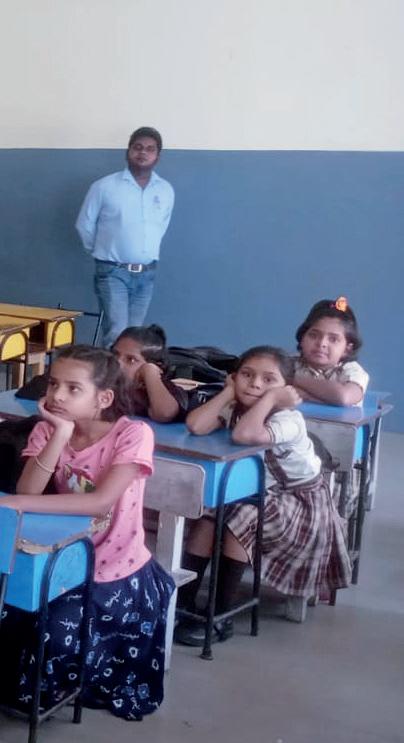
Arnav Pandey is a student at The International School of Bangalore and is in the first year of the IB Diploma Programme.

✉ arnav.p1003@gmail.com
Keya Sanghvi is a student at Oberoi International School, Mumbai and is in the first year of the IB Diploma Programme.
✉ keyaasanghvi@gmail.com


Summer 2023 | International School | 39
Our team has expanded to many more students who are language experts in these languages and more to truly make this an e ort across cultures and languages.
◆ From the Schools
Do Awards Matter for Schools? And why the International School Awards are Evolving
By Nalini Cook
Discussions around awards and competitions in schools and for schools elicit extreme views, particularly so as we struggle to address diversity, equity, inclusion and justice in a truly authentic way. While many educators agree that what matters is moving away from rankings and towards supporting the individual and personalised growth and learning of students, the same is true for schools. No one school can be meaningfully compared to or ranked against another, particularly so within an international school context where differences between one school and another may be profound.
So why do the International School Awards continue, and who do they serve? These are conversations that have been going on for some time and that have led to this year’s International School Awards (ISAs) being very different from the Awards of the past.
From competition to collaboration
Much has changed within the international schools market in recent years. Many schools are looking within; at their history, at how and why their school emerged and developed in the way it has, and at the prejudice and bias that may have surfaced as a result. Most early international schools were established for the children of the expatriate elite and often excluded the children of local families. Although admissions for many international schools may have changed significantly since earlier days, the staffing and ethos may look very similar, and the biases may not have moved. Learning and unlearning about inequity, bias, bigotry and unfairness is happening and needs to continue to happen everywhere.
Through our own learning at ISC Research, we have moved the focus of the International School Awards away from competition and towards improvement that values different contexts, acknowledges differences, opens up opportunities for all schools, and inspires good practice. We have also moved the focus of award initiatives to those that should be central for all international schools today. This year’s criteria for judging of awards consider how a school initiative is rooted in intercultural understanding and is supporting diversity, equity, inclusion and/or justice for all students within the school. They also evaluate how the initiative is centred around one or more of the 17 United Nations Sustainable Development Goals (UNSDGs). Considered a blueprint for peace and prosperity for our planet and its entire population now and into the future, the UNSDGs represent a global collaborative plan for all people to end poverty, tackle climate change, reduce inequalities, improve health and education, and support economic growth. Also assessed within the judging criteria will be the continuity of an initiative through staffing and student changes, and the sharing of an initiative beyond the school to guide and inspire others.
Inspiration and opportunity for more international schools
At the heart of the International School Awards is inspiration. Details of all previous shortlisted and winning initiatives are publicly accessible and many have been published in International School magazine, International School Leader magazine, and other media. Past award recipients have made presentations
40 | International School | Summer 2023
From the Associations
about their initiatives at global conferences including BETT London and the World Education Summit, as well as the ISC Research Edruptors Conference.
Inspiration remains an outcome for the 2024 ISAs and we are aiming to expand upon it and offer the opportunity for many more schools to succeed, regardless of their budgets. The breadth of tuition fees across the international schools market means that what is achievable, and expected, for one school may be impossible for another. A similar challenge arises in judging schools with vastly differing provisions. Therefore, this year’s International School Awards are being made within three categories of school according to three tuition fee bands. These fee bands are relative to the average international school tuition fees within each country. Such school types have emerged as distinct groups within the international schools markets in most countries of the world as the sector has expanded, and all 13,000 international schools recorded by ISC Research fall into one of these fee bands, according to whether they charge tuition fees identified as:
• low within their country
• average within their country
• high within their country
This in no way reflects on the standard of teaching and learning, but allows schools within each fee band to be judged fairly, encouraging more low-fee and medium-fee international schools to realise they will be treated as equals. Recognising, nevertheless, that no two schools and no two initiatives are the same, all schools within each fee category that meet the judging threshold against all criteria will now receive an International School Award.
Does an International School Award matter?
Beyond a mark of recognition, what does an International School Award mean for a school? Nord Anglia International School Dubai received an International School Award in 2022. One year on, Elfyn Wyn Jones, Director of Design and Innovation, and Daniel O’Hara, Middle East Regional STEAM Lead, say the Award had a big impact on the school in many ways:
‘The International School Award has been a tremendous achievement for our school, filling us with immense pride and motivation to continue striving for excellence. It has created numerous opportunities for our students and staff to showcase their creativity, problem-solving abilities and innovation.
The award has had a significant impact on the reputation of the school and helped to strengthen our relationship with the wider international school community. Our award-winning DICE (Design, Innovation, Creativity and Entrepreneurship) curriculum has garnered attention and praise from other schools who recognise the value of incorporating the SDGs at the core of their curriculum. As a result, we have received several requests from schools around the world who are
interested in learning more about the curriculum and its successful implementation. We’ve been invited to present at several conferences including the COBIS Annual Conference in London and the STEM Best Practice Awards in Dubai. These events offer a valuable platform to network with other educators and showcase our experiences and achievements with the DICE curriculum.
In summary, winning the International School Award has helped to raise awareness of our school and the DICE curriculum, leading to numerous collaborations. These partnerships have allowed us to share our knowledge and expertise, and work together towards a common goal of equipping students with the knowledge and skills necessary to create a sustainable future.’
Another ISA recipient from 2022 was The Harbour School in Hong Kong. Head of School, Jadis Blurton, explains what an award has meant to them:
‘We are a tiny school in a city that is full of big and prestigious schools. Winning the ISA was tremendously impactful, giving us a bit of a ‘mouse that roared’ reputation and solidifying our role as one of Asia’s top schools. It is hard to quantify whether it affected admissions because there were so many other factors this year, but we have heard from several teachers and a recruiting agency that it played a definite positive role in attracting new teachers.
Because of the ISA, we have been invited to speak at several local and online conferences, and at the Outstanding Schools Asia Conference we connected with International College Hong Kong which is another ISA winner. Despite being quite distant from each other, we have now visited each other and begun talks about possible collaborations and extensions, and other schools in Hong Kong have been interested in learning more.’
The 2024 International School Award applications are now open, and all international schools are welcome to apply (iscresearch.com/international-school-awards/). We hope your school will consider participating – to share how you are supporting the needs of a changing world. ◆
Nalini Cook is Head of Global Research at ISC Research (iscresearch.com) which has produced comprehensive and independent data and intelligence on the world’s English-medium international schools market for 29 years.
✉ nalini.cook@iscresearch.com
Summer 2023 | International School | 41
From the Associations




















42 | International School | Summer 2023
School Leaders Matter Preventing Burnout, Managing Stress, and Improving Wellbeing
 by Helen Kelly
London: Routledge, 2023 | Reviewed by Paul Regan

The tragic suicide in January 2023 of Ruth Perry, Headteacher of Caversham Primary School in England, attributable to a downgrading of her school to inadequate by the school inspection service Ofsted, caused a great deal of righteous indignation and hand-wringing. The immediate reaction
for avoiding stress-induced sickness and burnout and, thereby, improving outcomes for schools, students, staff and governors in addition to the leaders themselves.
Dr Kelly writes with authority because her departure point is her own personal case study. During a successful and long career as a school leader she recounts
finally total burnout. Dr Kelly returns frequently in her book to her own experience, and is disconcertingly honest in detailing her vertiginous fall from confident ‘circus performer’ to victim of the unreasonable demands that the job of headship exerts. But her story is a warning, and that is the whole point of this book.
I have my own burnout story that follows Dr Kelly’s downwards trajectory with uncanny similarity. As with her, after several highly demanding headships my self-image of invincibility (the all-round circus performer) was concealing a growing list of maladies ranging from headaches and breathlessness to nose bleeds and sensitivity to light. Waking up in the middle of the night in order to search for solutions to squaring the circle became the norm, as were the weekend lethargies and growing sense of isolation. With grim predictability, the trigger came in 2014 on a night flight from Delhi to Kolkata where I was working at that time, when a blood clot broke behind my eye causing permanent damage to my sight. And that was only the beginning of a two year descent into burnout and the climb back out to normality, involving the whole gamut of denial, withdrawal and weakness, followed by renewal and total recovery. ►
of horror and calls for accountability over her death were predictable; equally predictable however was the reasonable scepticism as to whether any important lessons will be learned, and whether effective remedies to avoid such terrible outcomes will ever be implemented.
Dr Helen Kelly’s book School Leaders Matter, therefore, devoted to highlighting the wellbeing of school leaders or the lack thereof, could not be more timely. By cleverly weaving a panoramic overview of the challenges of leadership with a forensic evidence-based focus on individual and school-based case studies, she rightly highlights the appalling toll that modern school leadership can exert. Having set the scene, as it were, and filled the stage with real-life actors, she goes on to make sensible recommendations
amusingly having evolved from ‘a plate spinner, running frantically between poles’ to ‘a circus ringmaster … directing performers and linking acts together’, to finally an ‘allround circus performer’, including tightrope walker and trapeze artist. Alas, to continue the author’s metaphor, the tightrope snapped and the walker came crashing to the ground without a safety net. Chest pains, heart palpitations, negative emotions and panic attacks, once begun, grew in intensity, with the predictable cycle of denial followed by sickness and
Summer 2023 | International School | 43
Book Review
She rightly highlights the appalling toll that modern school leadership can exert.
How many school leaders have similar stories? Dr Kelly promises us a quantitative and qualitative analysis of the problem of burnout, and she delivers superbly. Her book bristles with statistics drawn from multiple studies across jurisdictions and regions which paint a picture of harms and ambushes on the unwary school leader, ranging from creeping dissatisfaction and alienation through to full burnout, via professional disappointments and physical and mental scarring. These figures are repeated in slightly different formats throughout the book, at times bordering on superfluity and overload, but intended no doubt to drive home the central theme of the book, which is that the problem is endemic and universal and does not correlate with type of school or school’s host country, or even different governance models.
The book is divided equally into two distinct sections with each chapter helpfully summarised in brief notes. The first half details the changing nature of school leadership and the often unreasonable emotional and professional demands that the modern Head is expected to juggle – often, but not always, without sympathy and understanding from other stakeholders. The section ends with a chapter on the nature of burnout. What is burnout exactly, given that it manifests itself in different ways and is not as yet recognised as a treatable medical condition? According to Dr Kelly, burnout sits on a continuum bookended by initial engagement and final burnout, with three stages in between: overextension, disengagement and ineffectiveness. The individual will of course respond in different ways depending on their role, their psychology and the level of

colleague support. So full burnout is not inevitable, which makes it important that the early warning signs are heeded and steps are taken to mitigate the risks.
Having diagnosed the condition, as it were, the second section details the remedies available from the point of view of governments, schools and school leaders themselves. The recommendations are comprehensive, although readers must judge for themselves just how practical and affordable many of them are. The most interesting chapter for me in this section was about selfsabotage. All school leaders should recognise themselves in at least one of the examples given, including imposter syndrome, perfectionism and crowdpleasing, amongst many other types of behaviour which can be the undoing of a leader when pushed to extremes. So yes, all stakeholders can do more to save the Head from moving along the burnout continuum, but who better than each individual to make a self-diagnosis and change behaviour accordingly? That is of course what many school leaders actually do.
This book is essential reading not only for school leaders, but also for anyone
whose decisions might impact on those leaders. Dr Kelly helpfully suggests that the reader might wish to cherry-pick from the chapters to suit their curiosity, and this is how I would recommend it to be read. The book is intriguing in itself as a study of the effects of burnout and how it can be avoided. It is also an urgent appeal to governments and school authorities everywhere, in both national and international jurisdictions, to take the matter more seriously and to put in place practical measures to alleviate the burdens of modern school leadership.
Unlike Ruth Perry, Dr Kelly tells us that her journey had a happy ending –although it involved her relinquishing her headship career and starting over as a writer and wellbeing consultant. But how many other school leaders have had to retire from the job they love because of stress levels and fear of sickness? That is the lesson that she wants us to learn and she does it emphatically and convincingly.
Dr Kelly’s final words are, however, somewhat ironic. She ends the book by telling us that without having come through burnout, she would not have found peace of mind. Her story is a classic case of recovery and greater selfknowledge following on from sickness and self-doubt. The reader is left to ponder a dilemma: is burnout followed by a possible, but not guaranteed, journey of renewal worth the risk? Or is it wiser to try a less harmful route to self-discovery, better performance and wellbeing? This book will serve as a guide to help the reader to take the safer route. ◆
Paul Regan has been headteacher of four international schools and is now an educational consultant for an Indian educational group.
Book Review
Her book bristles with statistics drawn from multiple studies.