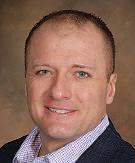
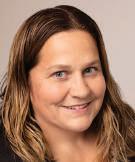
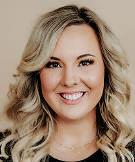
Meet the new faces on the WFBF Board of Directors.
DELEGATES SET POLICY
Learn the policy initiatives guiding the next year of Farm Bureau.
WFBF ANNUAL MEETING
Revisit favorite memories from the 2024 WFBF Annual Meeting and YFA Conference.
FARMING FOR FLAVOR
Schnadt family grows food and traditions.
MEMBER BENEFITS
Learn how benefits have impacted members this past year.
VOICES
Columns from Olson, Duvall, Uken and Black.
MENTAL HEALTH
Tips for prioritizing mental health in the new year.
GATHER AROUND THE TABLE
Delight your holiday guests with the flavors of Heartland Craft Grains.
AG IN THE CLASSROOM
Teachers, volunteers and FFA Chapters to be honored by Wisconsin Ag in the Classroom.
FOUNDATION
Members support the WIsconsin Farm Bureau Foundation during WFBF Annual Meeting.
RURAL MUTUAL
Tips
during the winter cold.
EDITOR’S NOTE
One of the best smells of the holidays is Christmas cookies. The aroma paired with Christmas music and lights is hard to beat.
My mom and I have done holiday baking for as long as I remember. It all started with my grandma. My grandma started baking candy and cookies around Thanksgiving and I swear didn’t stop until Christmas Eve.
As a kid I remember helping frost the hundreds of sugar cookies to give friends and neighbors. I was never sad when I broke one because we were allowed to eat the damaged goods. Sure, the cookies were delicious but the part that I remember most was how happy people were when we shared them. For some neighbors and friends, it was the one time of year we took some intentional time to catch up and check in. This small handmade gift seemed to be something that just about everyone looked forward to.
As I reflect on that as we head into another year of gifting sweet treats, the concept of Christmas cookies really should spread to the whole year. Thinking of others and delivering kindness are things that really should not be just a Christmas thing.
Besides Christmas baking, the annual kick off to the holiday season is the WFBF Annual Meeting and YFA Conference. It’s a tradition for many and always takes place in early December. You’ll see many highlights in this issue as we recap the jam-packed weekend of events.
Our feature story can be found on page 20. The Schnadts are finding a way to connect to their customers through taste by growing and harvesting unique heirloom grains. This couple has found their niche in agriculture and it’s a fantastic farm-to-table journey.
If you are looking for recipes during this season, be sure to visit Gather Wisconsin’s website. There are some recipes on page 33 but you can find many more at GatherWisconsin.com.
I hope you enjoy your holiday traditions, whether it is baking or doing something else with family and friends. However you spend time with your community this season, be sure to remember to share those sprinkles of kindness, love and joy.
Sending holiday greetings and warm wishes for a blessed new year.
As always, thanks for reading.
Amy Eckelberg Rural Route Editor
Wisconsin Farm Bureau Federation
Wisconsin Farm Bureau Federation PO Box 5550 1241 John Q. Hammons Dr. Madison, WI 53705-0550
Postmaster: Send address changes to Wisconsin Farm Bureau Federation PO Box 5550 Madison, WI 53705-0550
Contact Information
608.836.5575
800.261.FARM (3276) wfbf.com info@wfbf.com
WFBF Board of Directors
Brad Olson, Frederic (President)
Joe Bragger, Independence (Vice President) Jim Renn, Hartland
Arch Morton Jr., Janesville
Robert Nigh, Viroqua
Kevin Krentz, Berlin
Dan Meyer, Kiel
Brian Preder, Weyauwega Kim Bremmer, Loyal Pete Badtke, Ripon
Steve Mueller, New Richmond (Promotion and Education Committee Chair) Kendall Riskedal, Johnson Creek (Young Farmer and Agriculturist Committee Chair)
Wisconsin Farm Bureau Federation’s Rural Route (ISSN 1082-1368) (USPS 39940), the official publication of the Wisconsin Farm Bureau Federation, is published six times per year in February|March, April|May, June|July, August|September, October|November and December|January. Subscription of $5 is included in Farm Bureau dues. Periodical postage is paid at Madison, Wisconsin. All rights reserved. No portion of this magazine may be reproduced in whole or part without written consent.
For advertising rates and information:
Wisconsin accounts contact Slack Attack at 608.222.7630 or barbara@slackattack.com. National accounts contact Casey McNeal at 800.798.2691 ext. 334 or casey@iafalls.com.
Olson Re-elected President of WFBF, Preder Elected President of Rural Mutual Insurance Company
Brad Olson was re-elected president of the Wisconsin Farm Bureau Federation.
Olson is a crop farmer near Frederic in Polk County. Joe Bragger from Independence in Buffalo County was re-elected to serve as WFBF Vice President.
Brad and his wife, Vicky, farm more than 600 acres of crops and are members of PolkBurnett Farm Bureau. They have two children and two grandsons.
Olson was first elected to the WFBF Board of Directors in 2022 to represent District 9 (Barron, Dunn, Chippewa, Pierce, Polk Burnett, Rusk, St. Croix, Sawyer and Superior Shores Farm Bureaus). He was elected WFBF President in 2023.
Brian Preder from Weyauwega in Waupaca County was elected president of Rural Mutual Insurance Company.
Robert Nigh from Viroqua in Vernon County was elected first vice president of the Rural Mutual Insurance Company Board.
Preder was first elected to the Board of Directors in 2019 to represent District 7, which includes: Langlade, Marinette, Oconto, Outagamie, Shawano and Waupaca counties. As a land owner and custom harvester, Preder harvests hundreds of acres in Northeast Wisconsin.
Nine of the 11 members of the WFBF Board are elected in each of Farm Bureau’s nine districts. These nine individuals also make up the Board of Directors for the Rural Mutual Insurance Company. Rounding out the WFBF’s Board are the
chairs of WFBF’s Young Farmer and Agriculturist and Promotion and Education Committees, both of which are elected to serve a one-year term on the board.
Jim Renn of Waukesha County was elected to a three-year term in District 1 (Jefferson, Kenosha, Milwaukee, Ozaukee, Racine, Walworth, Washington and Waukesha counties).
Jim is a beef and crop farmer near Hartland. He succeeds Dave Daniels of Kenosha County.
Pete Badtke of Green Lake County was elected to a three-year term in District 5 (Adams, Fond du Lac, Green Lake, Juneau, Marquette, Waushara and Winnebago counties). Pete is a beef and crop farmer near Ripon. He succeeds Kevin Krentz of Waushara County.
Robert Nigh of Viroqua was re-elected to a three-year term representing District 3 (Crawford, Grant, Iowa, Lafayette, Richland and Vernon counties). Robert is a dairy farmer near Viroqua.
Steve Mueller from St. Croix County was elected to a one-year term as the chair of the Promotion and Education Committee and will serve as the representative on the WFBF Board. He succeeds Brenda Dowiasch of Eau Claire County as Promotion and Education chair.
Kendall Riskedal from Jefferson County was elected to a one-year term as the chair of the Young Farmer and Agriculturist Committee and will serve as the representative on the WFBF Board. She succeeds Kat Peper of Sauk County as YFA Chair.
Board members who were not up for re-election included: Joe Bragger of Independence in Buffalo County, Arch Morton, Jr. of Janesville in Rock County, Dan Meyer of Kiel in Manitowoc County, Brian Preder of Weyauwega in Waupaca County, Kim Bremmer of Loyal in Clark County and Brad Olson of Frederic in Polk County.
Olson
Preder
Nigh
Renn
Badtke
Mueller Riskedal
Bragger
Wisconsin Farm Bureau
Delegates Set Policy for 2025
On Dec. 9, more than 230 delegates at the Wisconsin Farm Bureau Federation’s 105th Annual Meeting established new policy directives for the organization. Wisconsin Farm Bureau delegates adopted the policies that will be included in the organization’s policy book in 2025. Resolutions were submitted by delegates as part of the organization’s annual grassroots policy development process. Topics discussed on the delegate floor included dairy, energy and transportation.
During the dairy discussion, delegates voted in support of increased transparency in milk pricing by requiring all entities that purchase milk to provide detailed and accessible breakdowns of milk checks to their producers. Delegates updated WFBF policy to no longer include support for the sale of raw milk. Delegates also voted in support of uniform clarification of regulations and restrictions on dairy farmers and requiring dairy inspectors to sign off with farm owners to clarify any marks. In federal dairy policy, delegates supported mandatory price reporting from all processors for federal orders.
During the education discussion, delegates voted to support Farm Business Management training at the local technical college level, with specific training geared towards beginning farmers, including financial and business management training, and beginning farmer support groups. Delegates also voted to support increase youth tractor safety class offerings across the state and utilizing qualified instructors or safety professional to provide more opportunities for students.
Delegates from the Wisconsin Farm Bureau’s 61 county Farm Bureaus also voted to:
• Support the Wisconsin Youth Apprenticeship Program.
• Support the use of biofuel blended fuels year-round.
• Support the creation of a program to connect farmers and agricultural service professionals wishing to transition out of production agriculture and agribusinesses with beginning farmers and service professionals.
• Oppose efforts to allow unrestricted foreign ownership of Wisconsin farmland.
• Support limiting restrictions and regulations on direct marketing of ag products, cottage food producers, farmers markets, etc.
• Support the development of cost share programs designed to aid livestock producers in implementing or updating biosecurity measures.
• Support increased investment in research and development aimed at identifying sustainable and environmentally beneficial solutions for agricultural plastics, ensuring responsible management and reduction of environmental impact.
On the federal level, delegates voted to:
• Oppose NRCS inflexibility in EQIP contracts.
• Support lowering Dairy Margin Coverage tier 1 coverage to 6 million pounds or less.
• Support the implementation of the Dairy Revitalization plan.
• Support GPS mapping services designating a difference between primary commercial routes and other secondary roads to increase safety and decrease the pressure on secondary roads caused by “shortest distance or fastest” mapping.
The federal resolutions will be forwarded to the American Farm Bureau Federation for consideration at its annual convention next month.
Dr. Mark Stephenson Receives ‘Distinguished Service to Wisconsin Agriculture’ Award
On December 8, Dr. Mark Stephenson received the Distinguished Service to Wisconsin Agriculture award for his outstanding contributions to Wisconsin’s agriculture community during the Wisconsin Farm Bureau Federation’s 105th Annual Meeting in Wisconsin Dells on December 8.
Dr. Stephenson’s lifelong commitment to advancing Wisconsin agriculture has been a defining hallmark of his career and service. Dr. Stephenson received his Bachelor’s and Master’s degree from Michigan State University in dairy science and later, a second Master’s and PhD in agricultural economics from Cornell University.
demonstrated exceptional leadership in education and research focused on dairy policy and market analysis and made significant contributions to the dairy industry.
“Dr. Stephenson’s commitment to Wisconsin agriculture has left a mark on our state and its farmers,” said Wisconsin Farm Bureau Federation President Brad Olson. “His leadership and passion are testaments to the impact one individual can have in shaping the future of Wisconsin agriculture."
Dr. Stephenson has built a distinguished career through a variety of roles at renowned institutions. He spent three years as a faculty member at the University of Wisconsin-River Falls, 17 years as a dairy economist at Cornell University and served as the Director of Dairy Policy Analysis and the Center for Dairy Profitability at the University of WisconsinMadison. Throughout these positions, Dr. Stephenson
Dr. Stephenson played a crucial role in helping Wisconsin dairy farmers navigate the risk management changes introduced in the 2018 Farm Bill. He traveled extensively across the state to educate farmers about the Dairy Margin Coverage program, providing practical insights on how it could be utilized effectively for risk management. In addition, he partnered with Dr. Bob Cropp to launch a podcast focused on dairy markets, offering farmers a reliable resource to stay informed and make datadriven decisions for their operations.
“Dr. Stephenson’s expertise is known nationally and his relationship with Wisconsin has kept us as America’s Dairyland,” said nominator and Wisconsin Farm Bureau Federation Board member Dave Daniels.
Though Dr. Stevenson has retired, his impact on Wisconsin agriculture and farming communities around the country will continue on.
Mike Strupp Receives ‘Distinguished Service to Farm Bureau’ Award
Washington County Farm Bureau member Mike Strupp received the highest award Wisconsin Farm Bureau Federation bestows on its members.
Mike Strupp was presented the Wisconsin Farm Bureau Federation’s ‘Distinguished Service to Farm Bureau’ award during the organization’s 105th Annual Meeting in Wisconsin Dells on December 8.
“Mike is admired for his humble spirit, work ethic, leadership and passion for agriculture,” said Washington County Farm Bureau member Peter Muth. “He brings it all to Farm Bureau and our organization has benefitted greatly for it.”
Mike Strupp has been a devoted member of the Washington County Farm Bureau since 1994, serving in numerous leadership and committee roles. As a past Washington County Farm Bureau board member, his contributions have consistently exceeded expectations.
Beyond membership, Mike chaired the Building Committee, overseeing maintenance, tenant relations and lease updates, demonstrating his meticulous attention to detail. His passion for agriculture shines through his involvement in the Agriculture in the Classroom Committee, where he actively participates in farm tours and educational programs. As a member of the Promotion and Education Committee, he shares his enthusiasm and expertise to connect others with the industry.
“Mike exemplifies the heart and dedication that makes our organization strong,” said Wisconsin Farm Bureau Federation President Brad Olson. “His commitment to advancing agriculture serves as an inspiration to all of us in the Farm Bureau community.”
Mike excelled as the Membership Chair, signing 199 new members and earning recognition as a Top 10 membership worker at the state level for many years. His leadership has been instrumental in helping Washington County achieve its membership goals and maintain a strong presence in the community.
Mike’s dedication extends to policy development and event leadership, notably chairing the annual Farm Bureau Food Stand at the county fair with precision and positivity. He has represented Washington County as a voting delegate at numerous WFBF Annual Meetings, participated in panel discussions on membership and engaged with media to promote agriculture. His efforts embody the mission of the Farm Bureau and leave a lasting impact on the agricultural community.
Adamski Family Receives Wisconsin Leopold Conservation Award
The Adamski family of Seymour has been selected as the 2024 Wisconsin Leopold Conservation Award® recipient.
Given in honor of renowned conservationist Aldo Leopold, the $10,000 award honors farmers, ranchers, and forestland owners who go above and beyond in their management of soil health, water quality and wildlife habitat on working land.
The 240-acre Shawano County farm is covered with a green, protective blanket year-round thanks to a managed grazing system. Rick Adamski and Valerie Dantoin have followed the guidelines for biodiversity, soil, and water conservation to maintain their farm’s organic certification since the 1990s.
Since retiring from milking dairy cows in 2014, they rotationally graze a herd of 100 beef cattle. For 25 years they have composted all their cattle’s winter manure.
At Rick and Valerie’s aptly named Full Circle Farm, their son Andrew and his partner Heather Toman are helping usher in its next life stage, a return to a diversified farm. They manage about 60 pigs and a flock of laying hens on pasture, raise 10 acres of vegetables, and have established a Community Supported Agriculture (CSA) business.
“Wisconsin farmers are on the frontlines of progress when it comes to preserving the future of agriculture,” said Wisconsin Farm Bureau President Brad Olson. “We appreciate Full Circle Farm’s well-founded conservation approach, and we congratulate them on their efforts.”
Among the outstanding Wisconsin landowners nominated for the award were finalists: Bartling’s Manitowish Cranberry Co. of Manitowish Waters in Vilas County, Glacial Lake Cranberries of Wisconsin Rapids in Wood County, and Joe Hovel of Conover in Vilas County.
Sand County Foundation and national sponsor American Farmland Trust present Leopold Conservation Awards to private landowners in 28 states. In Wisconsin the award is presented with Wisconsin Farm Bureau Federation and Dairy Farmers of Wisconsin.
Find the full article here: bit.ly/WILeopoldConservationAward24.
CONGRATULATIONS FINALISTS
THIRTY-FIVE INDIVIDUALS HAVE BEEN SELECTED AS WISCO NSIN FARM BUREAU’S 35 UNDER 35 AWARD FINALISTS. THE 35 UNDER 35 PROGRAM RECOGNIZES THE CREATIVITY A ND INNOVATION OF YOUNG FARMERS AND AGRICULTURISTS WHO ARE PRESERVING AGRICULTURE THROUGH LEADERSHIP IN ENVIRONMENTAL, SO CIAL AND ECONOMIC ACTIVITIES. FOR MORE INFORMATION VISIT HTTPS://BIT. LY/WFBF35UNDER35.
SUSTAINABLE ENVIRONMENT | TOP INDIVIDUAL: WILLIAM WALLESER
LAUREN BREY, DOOR COUNTY; EMILY HERNESS-OATES, TREMPEALEAU COUNTY; CODY MULLIKIN, SHEBOYGAN COUNTY; BEN SOSNOVSKE, LINCOLN COUNTY; WILLIAM WALLESER, VERNON COUNTY
SUSTAINABLE SERVICE | TOP INDIVIDUAL: LILY SCHUSTER
AMY AUSTIN, GREEN COUNTY; KORI BLANK, MONROE COUNTY; ISAAC CHRISTENSON, POLK-BURNETT COUNTY; ALLISON GORR, GREEN COUNTY; LILY SCHUSTER, DODGE COUNTY; AMANDA WILLIAMS, SHAWANO COUNTY; ERIC WUTHRICH, GREEN COUNTY BETH YANKE, SAUK COUNTY
SUSTAINABLE SELF | TOP INDIVIDUAL: TESS ZETTLE
ANDREW DAL SANTO, GRANT COUNTY; NIKI PETERSON, DOOR COUNTY; KATIE REINEKING, SHEBOYGAN COUNTY; EMILY STRAHOTA, GREEN LAKE COUNTY; TESS ZETTLE, GREEN COUNTY; KATIE ZIMMER, RUSK COUNTY
SUSTAINABLE STORYTELLING | TOP INDIVIDUAL: CHARITEE SEEBECKER
KENDRA GOPLIN, TREMPEALEAU COUNTY; JOANNA GUZA, BROWN COUNTY
KENDRA JENTZ, GRANT COUNTY; BRITTANY OLSON, BARRON COUNTY; CHARITEE SEEBECKER, JUNEAU COUNTY
SUSTAINABLE FUTURE | TOP INDIVIDUAL: SAWYER AND JILLIAN TIETZ
CHAD BRUSS, GREEN LAKE COUNTY; SYDNEY FLICK, COLUMBIA COUNTY; COSETTE HENTHORNE, VERNON COUNTY; KAROLINE HOMAN, DODGE COUNTY; TYLER MEINNERT, SHEBOYGAN COUNTY; SAWYER AND JILLIAN TIETZ, POLK-BURNETT COUNTY; SAM OLSON, BARRON COUNTY; SERENITY PALMER, RUSK COUNTY; JOSH ROOS, POLK-BURNETT COUNTY; BRADY NIGH, VERNON COUNTY; TAMMY WIEDENBECK, GRANT COUNTY
GRANT COUNTY
Outstanding Collegiate and YFA Members Recognized
Bobolzes Win Farm Bureau’s Farming for the Future Award
Jacob and Eliza Bobolz were selected as the winners of Wisconsin Farm Bureau’s Young Farmer and Agriculturists Farming for the Future Award at the organization’s 105th Annual Meeting and YFA Conference on December 8.
Jacob and Eliza Bobolz farm in rural Janesville. They raise Simmental beef cattle, corn, soybeans and hay. In addition, Jacob farms with his parents, Loren and Jan Bobolz. Eliza works in marketing for Broaster Company in Beloit. They have one daughter, Sadie.
“The Farming for the Future Award honors young farmers with a clear vision, strong leadership, and active participation in Farm Bureau and beyond,” said WFBF President Brad Olson. “Jacob and Eliza are inspiring advocates and voices for Wisconsin’s rural families.”
The Farming for the Future Award is presented to a Farm Bureau member between the ages of 18 to 35 who derive a majority of their income from on-farm production.
The Bobolzes will receive $1,500 courtesy of GROWMARK, Inc., will have the opportunity to attend the 2025 American Farm Bureau Federation FUSION Conference in Denver, Col., will be eligible to participate in the 2025 YFA Washington, D.C. Fly-In and be a guest of WFBF at the 2025 YFA Conference.
Other finalists included Jake and Jennifer Hoewisch of Waupaca County, Josh and Kristen Joseph of Richland County and Tiffany Kohlmann of Manitowoc County.
Wiedenbeck Wins Farm Bureau’s Outstanding Ag Professional Award
Tammy Wiedenbeck was selected as the winner of the Wisconsin Farm Bureau’s Young Farmer and Agriculturists Outstanding Agriculture Professional Award.
Tammy is a partner on her family’s seventh-generation farm, overseeing 200-head of cattle while also spearheading Traveled Acres Media, a company dedicated to sharing the global story of agriculture. Her leadership extends to the National Beef Board, where she has served on the Executive, Operating and Nutrition and Health committees. She is a proud lifetime member of the Grant County Cattlemen’s Association and Lancaster FFA Alumni.
“Awarded to young leaders in agriculture, the Outstanding Agriculture Professional Award celebrates commitment and community,” said WFBF President Brad Olson. “Tammy represents the profound influence Farm Bureau members have on rural Wisconsin.”
Tammy is a graduate of the WFBF Leadership Institute and AFBF Communication Boot Camp, and a member of the AFBF GO Team and Grant County Farm Bureau. She was the recipient of the WFBF’s 35 Under 35 Sustainable Self Award in 2022 and received the Outstanding Alumni Award from UW-Platteville in 2023. Tammy credits agriculture as her life’s cornerstone and aims to inspire appreciation for the industry providing food, fuel and fiber.
The Outstanding Agriculture Professional Award is presented to a Farm Bureau member between the ages of 18 to 35 who excels in their leadership abilities, agriculture involvement, and participation in Farm Bureau and other civic and service organizations. Applicants are agriculturists who have not derived a majority of their income from a farm (that they own) in the past three years.
Wiedenbeck will receive $1,500 courtesy of GROWMARK, Inc., will have the opportunity to attend the 2025 American Farm Bureau Federation FUSION Conference in Denver, Col. will be eligible to participate in the 2025 YFA Washington, D.C. Fly-In and be a guest of WFBF at the 2025 YFA Conference.
Other finalists included Kat Peper of Sauk County, Travis and Bethany Senn of Polk-Burnett Farm Bureau, and Brooke Trustem of Rock County.
Coates Wins Farm Bureau’s YFA Discussion Meet
Kallie Jo Coates of Racine County was selected the winner of the 2024 Wisconsin Farm Bureau Young Farmer and Agriculturist Discussion Meet.
The Discussion Meet is a panel discussion in which Farm Bureau members between the ages of 18 and 35 are judged on their ability to express their ideas and opinions and reach a solution on current issues affecting agriculture.
Coates works for Harry Hansen Meat Service and is a marketing freelancer with Briar Marketing. Her and her husband, Devin, own Coates Farm where they raise 150 laying hens in addition to corn and forage crops. She graduated from UW-Platteville with a degree in agricultural education before receiving her masters degree in agricultural communications from Texas Tech.
Coates will represent Wisconsin during the American Farm Bureau Annual Convention in January. She will receive $1,500 courtesy of GROWMARK, Inc., is eligible to participate in the 2025 YFA Washington, D.C. Fly-In and will be a guest of WFBF at the 2025 YFA Conference. Along with awards from Farm Bureau, Rural Mutual Insurance and GROWMARK, Inc., the winner was presented with a chainsaw courtesy of Blain’s Farm and Fleet.
Other finalists included Isaac Christensen of PolkBurnett Farm Bureau, Stephanie Hoff of Dane County and Collin Weltzien of Buffalo County.
Thank you for your generous sponsorship and support of
Amy Jentges, a student at UW-River Falls, was selected the winner of the Wisconsin Farm Bureau’s Collegiate Discussion Meet contest.
Jentges is a junior at UW-River Falls studying Agricultural Education. She grew up in Ozaukee County on her family’s dairy farm and has showed dairy and livestock at the local and state levels. She was active in 4-H and FFA, holding many leadership roles including 2023-2024 Wisconsin FFA Secretary. She has worked as a Farm Camp Counselor at Roden Barnyard Adventures LLC since 2019, helping guide and educate youth about agriculture. Amy is passionate about hands-on learning and is dedicated to fostering agricultural literacy and student success as a future agricultural educator.
The Collegiate Discussion Meet is a panel discussion in which collegiate members are judged on their ability to lead a committee discussion on current issues affecting agriculture and to develop consensus on an action plan to effectively address issues.
By participating, members build basic discussion skills, develop a keen understanding of important agricultural issues and explore how groups can pool knowledge to reach a consensus and solve problems.
Jentges will receive a $1,500 scholarship courtesy of GROWMARK, Inc., will represent Wisconsin in the national Collegiate Discussion Meet held in conjunction with the American Farm Bureau FUSION Conference in Denver, Col. And will be a guest of WFBF at the 2025 YFA Conference.
Other finalists included Dafney Yates from UW-River Falls, Brandon Boyd and Samuel Mell from UW-Madison, and Carter Conderman and Isabelle McReath from UWPlatteville.
Memories from the 105th Annual Meeting
and yfa conference
members enjoyed networking and socializing during Friday evening's banquet.
YFA members participated in line dancing lessons on Friday night.
sponsored Friday
YFA
Farm Bureau Proud club members enjoyed a steak dinner and celebrations during Saturday evening's Farm Bureau Proud banquet.
Bingo was a hit during Sunday night's reception.
Jolene Brown shared memorable stories from life of the farm alongside her family during Saturday morning's keynote. The Mid-West Farm Report team
evening's Cowpoke Corral to kick off YFA Conference.
A variety of workshops were presented on Saturday and Sunday on topics ranging from social media to virtual farm tours to succession planning.
Damon West shared his story and encouraged attendees to be a coffee bean during Sunday's brunch.
YFA members played some cornhole on Friday evening.
Felix & Fingers Dueling Pianos entertained attendees during Saturday evening's live auction benefiting the Wisconsin Farm Bureau Foundation.
YFA members broke the ice during Friday evening's District YFA meetings.
Wisconsin Farm Bureau Foundation Board of Trustee member Andrew Dal Santo encouraged bids during Saturday evening's live auction.
Farm Bureau Grows By More Than 2,700 Members
The Wisconsin Farm Bureau Federation wrapped up the 2024 membership year on September 30 with total membership of 51,179 members, a gain of 2,783 members over 2023. All 61 county Farm Bureaus achieved membership growth, resulting in WFBF’s largest membership gain since 1992.
Farm Bureau membership is comprised of voting and associate members. Voting members are farmers, people with direct involvement in production agriculture and owners of agricultural property. Associate members are individuals and businesses who join Farm Bureau to utilize services and benefits and to support the work of the organization.
WFBF finished the year with 23,092 voting members and 28,087 associate members.
County Farm Bureaus achieving the largest membership gains included Portage, Dane and LaCrosse counties. Fifty-seven county Farm Bureaus also reached a gain in voting members. The largest increases in voting membership came in Clark, Portage and Marinette counties.
Farm Bureau membership volunteers across the state signed up more than 550 new members and helped WFBF surpass the 50,000-member mark for the first time since 1994.
Wisconsin Farm Bureau Federation wrapped up the 2024 membership year on Sept. 30 with total membership of 51,179 members.
ISSUES
2024 Election Recap
Volunteers for Agriculture® Has Large Success Rate
The Volunteers for Agriculture (VFA) PAC, which is run by a committee of farmers from across Wisconsin to direct Farm Bureau's political advocacy and engagement, achieved a significant impact this election cycle with a 94.6% success rate at the state level. Of the 74 candidates endorsed by the VFA PAC, 70 secured victories, reflecting the PAC’s strong alignment with agricultural and rural priorities. The VFA PAC worked extensively to identify and support candidates who champion policies vital to the sustainability and prosperity of Wisconsin agriculture.
Additionally, for federal races, endorsements are part of a separate process, managed by Wisconsin Farm Bureau Federation Board of Directors in partnership with American Farm Bureau.
This cycle, six federal candidates received endorsements from the Board, and each won their races, raising the total success rate to an impressive 95% across all endorsed candidates—76 wins out of 80 endorsements.
Baldwin Narrowly Reelected
The one U.S. Senate seat on the ballot in Wisconsin drew national attention and, with 98.6% of the vote counted, incumbent Democratic Sen. Baldwin claimed victory with a 49.3% to 48.6% win over Republican businessman challenger Eric Hovde.
Heading into election day, the race was considered as a “toss-up”. Those predictions for a tight race proved to be true. But, despite Baldwin prevailing in Wisconsin, Republicans flipped the majority in the U.S. Senate and will start the session with a 53 to 47 majority.
U.S. House of Representatives
The Republicans have controlled the U.S. House of Representatives since the midterm elections in 2022 but, according to polls, they were at risk of losing control of the chamber in the 2024 races. When the final votes were totaled, Republicans retained a slim 220 to 215 vote majority in the house, made slimmer by the departure of Congressman Matt Gaetz, who was nominated for Attorney General before withdrawing, and the appointments of Republicans Mike Walz as National Security Advisor, and Elise Stefanik as Ambassador to the United Nations. Republicans are expected to retain these three seats, but they will start the session with a 217seat majority. Wisconsin results ran as follows:
Republican incumbent Bryan Steil defeated Democratic challenger, Peter Barca.
Republican incumbent Derrick Van Orden prevailed over Democratic challenger, Rebecca Cooke.
Republican incumbent Tom Tiffany won reelection against Democratic challenger, Kyle Kilbourn.
State Assembly
All 99 seats in the Wisconsin State Assembly were on the ballot on November 5. The effect of the new legislative maps was expected to be seen most notably in the State Assembly this cycle but the Republicans will maintain control of the chamber for the 2025 session with 54 of 99 seats. Under the previous maps, the Republicans won the chamber with 64 of 99 seats.
State Senate
Of the 33 seats in the Wisconsin State Senate, the evennumbered seats were up for election this cycle. At the end of the night, the Republicans maintained control but their majority was reduced from 22 to 18 of 33 seats. The changes include the loss of Senator Joan Ballweg, longtime chair of agriculture committees in both the Senate and Assembly, and steadfast supporter of farmers and Farm Bureau. Her leadership and partnership will be missed.
A loss of Republican control of the State Senate was seen as unlikely given the makeup of the seats up for election this year, but 2026 may present a different dynamic.
SAVE THE DATE
FFA FARM FORUM
FUSION CONFERENC E
Denver, Colorado
Feb. 13
Rothschild, Wisconsin
More info: wfbf.com/events/ffa-farm-forum
FFA Farm Forum is a learning and leadership conference open to high school juniors in Wisconsin. More than 300 students, advisors and guests attend this annual conference. For over 50 years, Wisconsin Farm Bureau has sponsored an inperson FFA Farm Forum for Wisconsin youth.
Mar. 7-10
More info: fb.org/event
Volunteer leaders from the three Farm Bureau program areas--Promotion & Education, Women’s Leadership and Young Farmers & Ranchers--will gather to learn, share and grow together to build a stronger Farm Bureau. There will be great speakers, breakout sessions and evening events that offer opportunities to grow, exchange ideas, sharpen leadership skills and network with members from across the country. You'll leave the conference inspired with new ideas and new energy for your farm and Farm Bureau.
CULTIVATE AND CONNECT DeForest, Wisconsin
Feb. 15
More info: wfbf.com/events/cultivate-and-connect
FARM TRANSITION SEMINARS
Cultivate & Connect is the Promotion and Education Committee’s initiative to inspire, educate and empower Farm Bureau members and agriculture leaders by providing innovative learning experiences, networking opportunities and actionable insights for advancing Wisconsin’s agriculture industry. The Promotion and Education Committee implements Cultivate & Connect concepts year-round culminating with the flagship event held each February.
Appleton, Eau Claire, Madison
Mar. 6, Mar. 7
More info: www.bit.ly/farm-transition-seminar
Is your legacy protected for future generations? Join us for a meal and educational session to:
• Map a strategy for successful farm transition
• Address financial, emotional and family dynamics
• Gain insights on documents needed to get started
AG DAY AT THE CAPITOL
Madison, Wisconsin
Mar. 26
More info: wfbf.com/events/ag-day-at-the-capitol March Ag Day at the Capitol is an annual event open to Wisconsin farmers and agriculturists to learn more about state issues affecting agriculture and meet with their state legislators. Rural Mutual Insurance Company and GROWMARK, Inc., are major sponsors of the event. Co-sponsors of the event, with Wisconsin Farm Bureau, include a variety of dairy, beef, pork, horse, corn, soybean, cranberry, potato and vegetable groups.
Dominate your residue with the Versatile Fury. Fast and flexible, the Fury is designed to cut, chop, size and mix your residue at speeds of 5-12 mph (7.5-20 km/h).
Dominate your residue with the Versatile Fury. Fast and flexible, the Fury is designed to cut, chop, size and mix your residue at speeds of 5-12 mph (7.5-20 km/h).
Dominate your residue with the Versatile Fury. Fast and flexible, the Fury is designed to cut, chop, size and mix your residue at speeds of 5-12 mph (7.5-20 km/h).
The Fury has a narrow 12’ transport width and is fully configurable adapting to any field condition with a choice of blade sizes and three rear finishing attachments.
The Fury has a narrow 12’ transport width and is fully configurable adapting to any field condition with a choice of blade sizes and three rear finishing attachments.
The Fury has a narrow 12’ transport width and is fully configurable adapting to any field condition with a choice of blade sizes and three rear finishing attachments.
www.versatile-ag.com
www.versatile-ag.com
www.versatile-ag.com
Farming for Flavor
Schnadt Family Grows Food and Traditions
Story by Amy Eckelberg, Photos by Raegan Statler
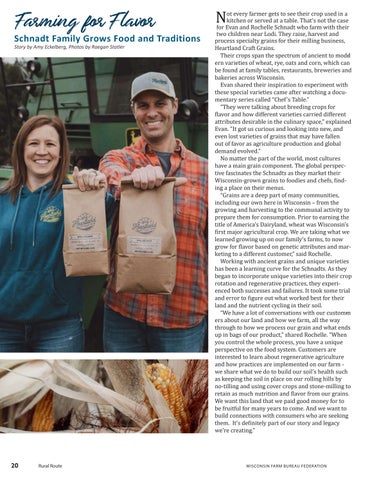
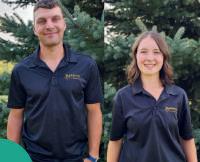
Notevery farmer gets to see their crop used in a kitchen or served at a table. That’s not the case for Evan and Rochelle Schnadt who farm with their two children near Lodi. They raise, harvest and process specialty grains for their milling business, Heartland Craft Grains.
Their crops span the spectrum of ancient to moddern varieties of wheat, rye, oats and corn, which can be found at family tables, restaurants, breweries and bakeries across Wisconsin.
Evan shared their inspiration to experiment with these special varieties came after watching a documentary series called “Chef’s Table.”
“They were talking about breeding crops for flavor and how different varieties carried different attributes desirable in the culinary space,” explained Evan. “It got us curious and looking into new, and even lost varieties of grains that may have fallen out of favor as agriculture production and global demand evolved.”
No matter the part of the world, most cultures have a main grain component. The global perspective fascinates the Schnadts as they market their Wisconsin-grown grains to foodies and chefs, finding a place on their menus.
“Grains are a deep part of many communities, including our own here in Wisconsin – from the growing and harvesting to the communal activity to prepare them for consumption. Prior to earning the title of America’s Dairyland, wheat was Wisconsin’s first major agricultural crop. We are taking what we learned growing up on our family’s farms, to now grow for flavor based on genetic attributes and marketing to a different customer,” said Rochelle.
Working with ancient grains and unique varieties has been a learning curve for the Schnadts. As they began to incorporate unique varieties into their crop rotation and regenerative practices, they experienced both successes and failures. It took some trial and error to figure out what worked best for their land and the nutrient cycling in their soil.
“We have a lot of conversations with our custommers about our land and how we farm, all the way through to how we process our grain and what ends up in bags of our product,” shared Rochelle. “When you control the whole process, you have a unique perspective on the food system. Customers are interested to learn about regenerative agriculture and how practices are implemented on our farmwe share what we do to build our soil’s health such as keeping the soil in place on our rolling hills by no-tilling and using cover crops and stone-milling to retain as much nutrition and flavor from our grains. We want this land that we paid good money for to be fruitful for many years to come. And we want to build connections with consumers who are seeking them. It’s definitely part of our story and legacy we’re creating.”
As young farmers, they hope to successfully manage the land they have now and continue to expand as they are able. Though they both have off-farm jobs, the goal is to continue scaling their business.
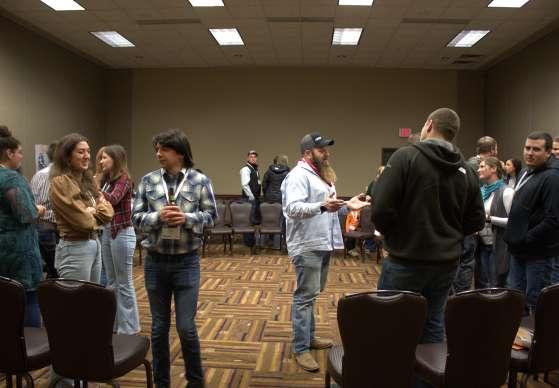
A useful tool in their journey has been networking. Learning from other farmers has helped them figure out some things faster.
Sitting down at a table together with other farmers at events to share stories and pick each other’s brains have been valuable learning opportunities for the Schnadts. They recognize that no one has all the answers, but working with other farmers brings together a lot of great tools to come up with solutions.
“We’ve met a lot of people within the non-traditional space and have strong connections to conventional farming because that’s what our families do,” explained Evan. “We don’t consider ourselves in any one bucket but are following guidance of all kinds to find what works for us and our goals. We can take the best from the past and mash it up with modern agriculture – then grab what works for traditional and organic production systems to create the best outcomes for our land, our crops and our customers. There is something to learn from everyone. Not everything will work for us on our land but some things can challenge what we are doing in a good way and make us better farmers.”
Their products are something they are proud of but they can entail a learning curve for new buyers and potential customers.
“Along with telling a really compelling story about our farm and the grains we’ve selected to grow, we also have to help people understand our products and how to use them in the best ways possible,” explained Rochelle. “That’s part of the fun, too – getting to know your customers and helping their business be successful.”
"Our family has a love for pie," laughed Rochelle. "One night when we first started dating Evan brough an apple pie he made and a bottle of wine to a dinner we made. The rest is history."
The family enjoys their harvest just as much as their customers. Baking was part of Evan and Rochelle’s story from the start. And an ironic foreshadowing for their farming story.
Rochelle added, “The irony lives on because we also had one of our kids born on National Pi Day!”
The Schnadts acknowledge that it’s special to be part of a family’s favorite recipes and have a chance for their farm to be baked into traditions passed down for generations.
“We obviously have our own family traditions, but to be part of other families’ through both our business clients and direct customers is really something special,” Rochelle said.
You can visit HeartlandCraftGrains.com for the Perfect Pie Crust and more or follow their farmstead mill on Instagram and Facebook.
Evan milled some flour in their milling room. Each order is milled with precision from their specialty grains.
The Schnadts' products showcase a true farm-to-table product. They enjoy learning how their customers use their various products.
Once milled, the final product is weighed and put into a branded bag. Sometimes their kids even help with the labeling and packaging.
*WFBF member benefits may be changed or discontinued at any time without notice.* Learn more about your Farm Bureau member benefit savings by scanning the QR code or visiting wfbf.com/membership/member-benefits.
MEMBER BENEFITS
Farm Bureau Member Benefits Year in Review
HERE IS A 12-MONTH GLANCE INTO MEMBER BENEFIT NUMBE RS. This data was taken between Oct. 1, 2023, to Sept. 30, 2024.
97 members’ renewal dues were paid by Farm Bureau Bank rewards credit card
24 money-saving member benefits available to members
Members participated in 3,908 Life Line preventative screening tests
Members saved a total of $74,000 with the Ford exclusive cash reward
Members used their Choice Hotels discount in 46 states
Members saved an average of 35% using the ODP Business Solutions discount
65,900 member benefit buck slips and flyers distributed
97 24 $74,000 46 35% 65,900 3,908
N EW MEMBER PORTAL
Member benefits are now located within a private member portal. In addition to member benefits, this interactive portal gives you access to update your account information, verify communication preferences, view your membership card and sign up for automatic renewal. Log in or create your account at wi.fbiris.com/user/login
N EW BENEFITS ADDED
• KEY APPAREL – Save up to 20%
• FOOD FINANCE INSTITUTE – Save 20% on training courses
• GREAT LAKES AG LABOR SERVICES – Access support for seasonal workforce needs
• ACTIVE&FIT DIRECTTM – Join a participating gym for $28/month
E - NEWSLETTER
Get the MOST out of EVERY DOLLAR with your FARM BUREAU MEMBER BENEFITS
Learn more about your Farm Bureau member benefit savings by scanning the QR code or visit wfbf.com/membership/member-benefits.
A member benefits e-newsletter is sent quarterly and as-needed when new benefit information is available. This keeps you up-to-date on the many ways you can get the most out of your Farm Bureau membership. Not receiving the quarterly member benefits e-newsletter? Log in to your member portal to add an email address to your account profile or contact the WFBF office to provide your email.
MEMBERSHIP TESTIMONIAL
"Farm Bureau benefits make it easy to receive partial or even all of your money back on your dues by using the member benefits program. If you make use of it, the benefits program pays for your membership."
- Dave Daniels
WITH JUNEAU COUNTY'S
SALLY TURPIN 5MINUTES
Tell us a little about yourself.
After growing up on my family’s dairy farm in southwestern Wisconsin, I went to UW-Madison to major in agronomy and animal science. I worked for a decade in agricultural consulting, first on the crops side and then as a dairy nutritionist. While I am now working with the electric utilities, I have many opportunities to share the farming story with those outside of agriculture. I love the outdoors, whether that’s hunting, fishing, hiking, biking, camping, whitewater kayaking or cruising trails with my Jeep. I hope to start my own rotational grazing beef farm in the future.
Tell us more about AFBF’s Women’s Communication Bootcamp and why you chose to participate.
Women’s Communication Boot Camp is a training program for women from across the country that helps to improve public speaking and advocacy skills through speaking and media training, with an opportunity to try out those new skills during congressional visits on Capitol Hill. Having heard how great the program was from a couple of Farm Bureau friends who were previous participants, I saw it as an excellent opportunity to take my communication skills to the next level.
What did you gain through your participation?
This program has been such a confidence boost! The trainers really know their stuff and did an excellent job of simulating realworld situations to practice your skills. I also have a bunch of new friends from across the country! It was fun connecting with and learning from other like-minded women.
What advice would you give to fellow Farm Bureau members who want to strengthen their advocacy skills?
Get outside of your comfort zone and take advantage of the opportunities that arise. You might be thinking “I’m not good enough for that,” but you have zero chance of success if you do not try or apply. Also, pay attention and stay informed on current issues.
What is a Farm Bureau experience that you are most proud of and why?
While serving on the AFBF YF&R Committee, I was selected as the Leadership Subcommittee Chair, which entailed being the point person for planning our 2022 YF&R Leadership Conference. Being part of such a great team to facilitate a national conference and providing an elite experience for attendees was remarkable. It was incredibly rewarding to provide such a meaningful experience for Farm Bureau members from across the country.
Leadership Boot Camp Focuses on Consumer Engagement
Farm Bureau members gathered in Tomah for the Leadership Boot Camp held on October 26. Boot Camp was hosted by the Promotion and Education Committee as a fast-paced training session with a focus on equipping members with resources and tools to promote agriculture. Leadership Bootcamp is presented by the Wisconsin Farm Bureau Promotion and Education Committee and supported by the Wisconsin Farm Bureau Foundation.
County Promotion and Education leaders shared practical advice for planning and promoting consumer-focused events.
Kelsey Henderson, Wisconsin Fairest of the Fairs, shared tips for building meaningful connections and memorable experiences.
Leadership
Training Series
Lois Federman highlighted ways to connect with consumers through the Something Special from Wisconsin™ program.
Members competed in a game-show style “Field to Fork Face-Off” activity.
New Members Appointed to State Committees
Hedrich, Schoenike Reappointed to WFBF’s Promotion and Education Committee
Kari Schoenike of Dodge County and Clara Hedrich of Calumet County have been reappointed to the Wisconsin Farm Bureau’s Promotion and Education Committee by the organization’s Board of Directors.
Kari Schoenike grew up on her family’s crop farm in rural Dodge County. There she developed passions she combined into her role as a teacher while connecting students to agriculture. She is the Agriculture Education Manager at
Appointees to Young Farmer and Agriculturist Committee
Eric and Kadence Senkowski of Dane County, Amanda Williams of Shawano County and Jason Behrend of Wood County have been appointed to Wisconsin Farm Bureau’s Young Farmer and Agriculturist Committee by the organization’s Board of Directors.
Eric and Kadence Senkowski reside in Poynette with their son, Bennett. Kadence is a stay-at-home mom, focusing on raising their son and caring for livestock. Eric is the Supervisor of the Steel Fabrication Shop at Poynette Ironworks. Kadence has been involved in Farm Bureau for over seven years and currently serves on the Dane County Farm Bureau board of directors.
Amanda Williams and her husband, Scott, live in Shawano and have three children. She is a dairy nutritionist helping her clients increase milk production and overall farm profitability. She is also a part-time dairy farmer and owns a small herd of Holstein show cattle. She is in her third year on the Shawano County Farm Bureau board of directors and serves on several committees.
Wisconsin State Fair, working to promote agriculture-focused educational opportunities for exhibitors and fairgoers. Kari is a Dodge County Farm Bureau member and has helped implement a variety of educational activities for her community.
Clara Hedrich grew up on a dairy farm in Northeastern Wisconsin before teaching high school agriculture for 39 years. Clara, her husband and four of their five adult children, founded LaClare Family Creamery in Malone specializing in goat milk cheeses. Clara coordinates the creamery’s agritourism events while also owning and operating KIDFARM, LLC with her husband. Clara serves as secretary of the Calumet County Fair Board as well as on the Wisconsin Agricultural Tourism Association Board.
The Promotion and Education Committee is a group of nine leaders who represent the nine Wisconsin Farm Bureau districts. Committee members develop, implement and promote projects and programs that build awareness and understanding of agriculture and provide leadership development for the agricultural community. The Promotion and Education Program is funded by the Wisconsin Farm Bureau Foundation.
Jason Behrend was reappointed to the committee for 2025. He is a fourth-generation farmer raising hogs and rotationally grazing cattle. He enjoys learning new soil-building farming practices and has been as active member of Farm Bureau for over a decade. Jason serves as the Wood County Farm Bureau YFA Chair.
The WFBF YFA Committee consists of nine couples or individuals (ages 18-35) from around the state. Its goal is to get more young farmers and agriculturists acquainted with and involved in Farm Bureau. The YFA Program is funded by the Wisconsin Farm Bureau Foundation.
Kari Schoenike
Amanda Williams
Eric and Kadence Senkowski
Clara Hedrich
Jason Behrend
N C A M P U S with Collegiate Farm Bureau
Collegiate Farm Bureau chapters at UW-Madison, UW-Platteville and UW-River Falls had busy fall semesters. The students hosted recruitment events, participated in fundraisers, homecoming, social activities and conducted their respective collegiate discussion meets. Our collegiate members do an impressive job representing agriculture and Wisconsin Farm Bureau.
The Cheese Stand at World Dairy Expo is coordinated by UW-Madison Collegiate Farm Bureau and the Badger Dairy Club. Each year they sell tens of thousands of grilled cheese sandwiches. This year, they received a special visit from American Farm Bureau President Zippy Duvall who is seen here flipping sandwiches and visiting with Amanda Bender, UWMadison Collegiate Farm Bureau President. The money raised is used to help fund their educational spring trip. Members will be traveling to Tennessee in March.
Collegiate Farm Bureau students from UW-Madison traveled to Indianapolis to attend the 97th National FFA Convention where they each received their American FFA Degrees, the highest honor awarded to FFA members. Pictured (Front, from left): Sadie Goettle and Claire Esselman. (Back, from left): Gage Anderson, Ethan Jackowski and Brandon Boyd.
Brag About Ag has become an annual event at UWPlatteville. Hosted by the Collegiate Farm Bureau chapter, students enjoy an evening of camaraderie and hearing from industry professionals. This year’s speakers were Laura Daniels of Hitch Pin Consulting and Ashley Hagenow, the 76th Alice in Dairyland.
UW-Platteville students had a fun time representing Collegiate Farm Bureau in their homecoming parade.
UW-Platteville members (from left) Carter Conderman, Jenna Brogley and Lily Mitchell participated in WFBF’s Leadership Boot Camp hosted by the Promotion and Education Committee. They spent the day learning strategies for engaging their consumer audience which included insights on direct marketing and tips for building meaningful connections.
In October, UW-River Falls Collegiate Farm Bureau hosted their annual Fall Barn Dance at White Pine Berry Farm. Students collected canned food items for the local food pantry in addition to line dancing the night away.
Each collegiate chapter hosted a competitive Discussion Meet in October. UW-River Falls students (from left) Dafney Yates, Booke Beardsley and Amy Jentges did a great job discussing how county Farm Bureaus can encourage involvement from young members and how actively engaged young board members can help the organization plan for the future.
In November, UW-River Falls members visited LaCrosse to tour Kwik Trip’s state-of-the-art sweets bakery and dairy plant. The tour was led by former UW-River Falls Collegiate Farm Bureau president, Kendra Jentz. Attendees had a fantastic time learning about the complex processes involved in producing many of their favorite snacks. From baking to bottling, they saw it all.
Woven in Tradition, Strengthening Community
A Message from WFBF's Brad Olson
InApril, the WFBF Board was joined by Ohio Farm Bureau CEO Adam Sharp who said, “Don’t be afraid to fail; be afraid not to try.”
Those words echo the spirit of resilience and innovation that has long been a cornerstone of Wisconsin agriculture. Just as our ancestors passed down knowledge and traditions, we, too, strengthen our community by weaving experiences of past, present and future farmers into one unbreakable cord.
WFBF has had a record-breaking year. For the first time in three decades, WFBF surpassed 50,000 members, reaching over 51,000 members. We saw the largest voting membership gain since 2008 and, for the first time in 35 years, every county in Wisconsin saw membership growth – a testament to the strength of our community and the value of working together.
We initiated the inaugural WisGO Team, a group of 15 members who are
the first line of contact in speaking on agricultural issues. We also embraced a new membership database to get you information more efficiently than ever before.
We also expanded our networks. We welcomed EPA Region 5 Director Debra Shore to Wisconsin in July, took our consumer-facing brand, Gather Wisconsin, to the Wisconsin State Fair in August, and introduced agriculture to new audiences by hosting tours with Aldi Food’s Sustainability Division and collaborating with the Green Bay Packers in promoting the 2025 Draft.
WFBF is also driving change in the state’s agricultural policy. This past legislative session, Farm Bureau led on major victories, including the $150 million Agricultural Roads Improvement Program (ARIP) to strengthen rural infrastructure—the first program of its kind—and achieved the first increase in farmland preservation tax credits in decades, amongst others.
Through our work with the Wisconsin Ag Coalition, now more than 30 members strong, Farm Bureau has led in unifying industry partners to ensure agriculture speaks with a powerful voice and creating initiatives like the “Engage with Ag” series, which showcased agriculture to legislators and candidates across the state. These victories honor the legacy of those who came before us while building a strong foundation for those who will come after.
We aren’t slowing down, either. Farmers deserve policies that protect the well-being, profitability and legacy of Wisconsin agriculture, and Farm Bureau is committed to that mission. We look forward to advancing a focused agenda in the coming year, including pushing
for a new farm bill in D.C., the creation of Farm Bureau Health Plans to provide affordable healthcare in Wisconsin, securing stronger wildlife damage programs, and defending farmland from foreign adversaries and unchecked solar development.
It’s been an exciting year for Farm Bureau filled with meaningful impact –and even more lies ahead. As an entire organization, we will embark on a new strategic plan in the coming year. A 12-member task force from all around the state has been assembled to make sure your voice is heard and meetings in each district will be held.
I urge you to be involved in this process as it continues Farm Bureau’s proud tradition of grassroots leadership, ensuring our collective voice shapes the future of Wisconsin agriculture.
It is a pleasure to visit various parts of the state and meet you, our hardworking members. Our organization is like a rope, not one strand but many. We are strong because we are woven together. One strand cannot withstand, but many woven together are unbreakable.
The future holds challenges, no doubt, but WFBF is strong and like a rope we will stay woven, stay together and stay strong, the future is ours. With your help we at WFBF will keep agriculture strong and safe now and into the future.
Olson was first elected President of Wisconsin Farm Bureau in 2023. He is a crop farmer near Frederic in Polk County.
Good Agricultural Policy, Good for the Country
A Message from AFBF's Zippy Duvall
It’s a new day. No more campaign text messages. No more political ads. We open a new chapter and prepare for a new dialogue with a new Congress and new president come January. In full disclosure, I’m writing this column before we have election results, which I realize may take days of tallying, but regardless we can set our sights on some basic truths.
Wherever this day finds you, whatever your job may be, we all rely on U.S. agriculture. Whether or not you gave agricultural policy much thought when you filled out your ballot this election, you can be sure that the policy affecting America’s farms and ranches will have an impact on you, your family, and the nation.
Farmers are a slim percentage of the population at just 2%, but our work is critical to the security and well-being of 100% of our nation.
Ag Policy Matters for Food Security Farming is tough under the best circumstances, and as we all know, life rarely comes at us with only the best circumstances. When a storm whips through, markets take a downward turn, or costs and regulatory burdens pile up, farmers and ranchers need sound policy that helps them hang on from one season to the next.
Our nation has a long history of prioritizing policies and programs that keep our nation’s food supply stable. Going all the way back to World War II, in fact, when President Roosevelt called on
farmers to continue their patriotic duty of growing food for our nation and allies.
At the American Farm Bureau, we unite around our goal to strengthen agriculture and support our communities.
Through our greatest hardships as a country, one of our greatest strengths has been, and continues to be, our ability to grow our own food, fiber, and renewable fuel. But that ability is only as strong as the policies that ensure farmers have the tools they need to stay in business, reinvest in their farms, hire skilled workers, and keep their farms running from one generation to the next.
Ag Policy Matters for Sustainability America’s farmers and ranchers lead the world in climate-smart practices, with our overall greenhouse gas emissions around just 10% of total U.S. emissions. We are growing more with less thanks to innovation and technology that help us conserve resources and keep the soil healthy.
2025 Annual Convention
Farmers are caretakers of the land, preserving green spaces, providing wildlife habitats, and managing forest land. This means farmers are not only growing the products we all rely on, but they’re also playing a role in absorbing carbon and reducing emissions. We need to see policy changes that treat farmers as partners in sustainability and promote voluntary, incentive-based programs to take farmland conservation to the next level.
Farmers want to keep their land healthy and ready for production for the next generation, and we need policies and programs that give us the flexibility to make the best decisions for the health of our farms and ranches.
Ag Policy Matters to Our Economy
When we talk about sustainability in agriculture, we also mean economic sustainability. Did you know that agriculture supports more than 48 million jobs in the U.S.? Farmers and ranchers are growing more than the food for Americans’ pantries, they are growing jobs right here on our soil.
That also means there can be a ripple effect when a farm goes out of business. It is not only heartbreaking for the farm family but also worrisome for those relying on that farm business. The impact
starts locally, maybe with their suppliers like the local feed store and equipment dealer. Even if one farm doesn’t ripple far, what about one hundred? A thousand? Over a five-year-span, we lost more than 140,000 farms in the U.S., per USDA’s 2022 Census of Agriculture. We need policy changes that work to reverse this trend and ensure economic resilience for farm businesses today, as well as for the next generation.
Millions of Americans are counting on us. Fewer farms mean fewer jobs, and even higher costs at the grocery store. Helping family farms stay in business begins with sound agricultural policy. It begins with each of us understanding how critical agriculture is to our nation, and then calling on our leaders to make agriculture a top priority.
I can also say with certainty that our elected leaders will need to make agriculture a top priority as we wrap up 2024. Even as we prepare for new political dynamics in January, we are urging lawmakers to address important and consequential priorities before closing out this year and this Congress. From passing a 5-year farm bill to mitigating the impacts of the current farm labor crisis, much work needs to be done, and we know the election results will have a big impact on the will of Congress to act.
Whomever you voted for in this election, whether your candidates won or lost, whether your party is in the minority or majority, we can all agree on the importance of keeping our food supply secure. At the American Farm Bureau, we unite around our goal to strengthen agriculture and support our communities. Whatever today holds, I am confident we will continue this work as we drive forward for our farms, our communities, and our country.
President of the American Farm Bureau Federation, Duvall raises beef cattle, hay and poultry in Greshamville, Georgia.
Takea moment to think back to life in 2021: “Coronavirus” was a term in our daily vocabulary, the Tokyo Olympics was held without spectators, and TikTok was the latest and greatest platform in social media.
While the world was navigating unprecedented change, Wisconsin Farm Bureau was steadfast in its mission, grounded in the traditions of grassroots leadership and the strength of our agricultural community.
In the same year, Wisconsin Farm Bureau embarked on a new strategic plan with five key focus areas determined by our members’ insight. As 2024 comes to a close, so does the lifespan of this strategic plan, and reflecting upon all we have accomplished is truly eye-opening as we consider the growth of our organization.
The achievements of the past four years are a testament to the dedication of our members working together to strengthen Wisconsin agriculture.
The focus area Grassroots Policy Guides Engagement carries forward the tradition of member-led policy development that has been the backbone of our organization since its inception. Since 2021, we’ve streamlined the policy development process with electronic voting, trainings and committee input. We strengthened legislative relationships by hosting agriculture tours, participating in Farm Bill listening sessions and holding Campaign School for those interested in running for public office. Additionally, the WisGO Team has enhanced our ability to connect with elected officials and media representatives swiftly and effectively, ensuring our voice is heard.
Our focus on Raising Public Awareness has expanded Ag in the Classroom through $50,000 in new funding, a revamped website, an Educator Ambassador team and updated teacher materials. We’ve also provided training for members and staff to enhance media engagement strategies. In 2023, we launched Gather Wisconsin, a valuable platform for connecting members with consumers and fostering meaningful conversations about agriculture. The website has already received national recognition from American Farm Bureau Federation as Best Website in the 2024 Communications Awards. Through these initiatives, we’re sharing information and fostering stronger connections between farmers and consumers.
Another focus area was set to Retain, Grow and Develop Members. Through this initiative, we have found new ways to engage, support and develop members across all stages of their Farm Bureau membership. This includes growing opportunities for Collegiate Farm Bureau chapters, expanded Farm Bureau programming and increased efforts to support struggling farmers through the Farm Neighbors Care campaign. We also
welcomed a new membership database in the past year to help us reach our members more effectively.
Our Environmental Stewardship initiatives have showcased sustainability through farm and agribusiness tours, and celebrated members' efforts via the Stewards e-newsletter, the 35 Under 35 program, and a statewide Sustainability Committee. Under the guidance of a dedicated staff lead, we’ve also provided members with resources on renewable energy, carbon learning sessions and solar energy opportunities, ensuring they stay informed and engaged in sustainable practices.
We grew the Economic Viability for the Organization by growing our member benefit offerings and strengthening the Wisconsin Farm Bureau Foundation. We hired a Foundation Director, established a Board of Trustees, and have expanded our sponsorship opportunities with the creation of a legacy giving society and hosting three successful online Giving Days. We continue to growth the Foundation through communication support and an expanded presence across WFBF communication channels.
As you can see, Farm Bureau has changed significantly since 2021. As we close the door on our current strategic plan, we seek and encourage your input as we set our next initiatives. Your voice and engagement are vital in growing our traditions and building our community for years to come. Watch for details regarding strategic planning feedback sessions happening in each Farm Bureau district in the early part of 2025.
As we close this chapter, we celebrate the deep-rooted traditions and strong community that make Farm Bureau unique. Together, we are building a legacy of growth, connection and shared purpose for generations to come.
Uken is WFBF's Chief Administrative Officer.
As H-2A’s Importance Grows, so do the Challenges and the Need for a Trusted Partner
A Message from Sarah Black
The shortage of skilled, reliable labor on today’s farms and ranches continues to plague operations nationwide and represents the single greatest obstacle to the next generation continuing that family business.
It’s complicated, expensive and overrwhelming, but H-2A can be a solution. Sadly, it can also be fraught with litigation and fines if not done correctly. So, it’s vital to know and trust your service provider, and feel comfortable that they have your farm - and your workers’ - best interests at heart.
Great Lakes Ag Labor Services (GLALS) is that trusted, experienced partner helping your farm navigate H-2A with application filing and worker recruitment, scheduling, orientation and onboarding. An affiliate of Michigan Farm Bureau, we
were launched by our own grassroots membership and now have 10 years of experience. In 2024 we successfully supplied more than 2,400 workers for farms in Michigan, Indiana and Ohio. We exist to help your farm succeed with H-2A, and we’re excited to partner with Wisconsin Farm Bureau as a new member service.
Like with everything else on the farm today, there is no “easy button” with H-2A. There are a lot of steps, regulations, requirements and rules employers need to understand.
H-2A is designed to supplement the labor on your farm with contracts of up to 10 months. It can provide legal, non-immigrant guestworkers for a variety of on-farm jobs; there is no minimum or cap on the number of workers you can petition for. Workers must be paid at least the local, state or federal minimum wage — or the program’s Adverse Effect Wage Rate (AEWR) — whichever is highest. In every state the AEWR is the highest, and in Wisconsin in 2024 that is $18.50 per hour. The employer must also pay to transport workers from and back to their home country, cover subsistence costs during travel and provide free housing and transportation for the duration of the contract.
In just in the last two years, the federal government has issued more than 3,000 pages of new regulations affecting H-2A. The AEWR continues to rise faster than inflation and is outpacing all other wage indexes. Farm Bureau has worked aggressively to freeze or pause AEWR’s growth — at least until a different mechanism
can be created — as its inflation is unsustainable for many farms.
H-2A use has grown dramatically over the past decade, from about 80,000 workers nationwide in 2010 to nearly 400,000 today. Wisconsin had nearly 3,000 H-2A workers in 2023, up 7% from the previous year — and that growth trend is expected to continue.
If you’ve read this far, you might think this is too much for your farm — but GLALS is here for you, to help ensure you have the information necessary for good decisions, to ensure it’s done right and ultimately to help solve some of your labor challenges. We are here to serve the farmer and be your trusted partner throughout the process.
The future of our family farms and the food security of our nation is at risk. Farm Bureau and GLALS can help you make the most of H-2A and help preserve our family farms into the future.
Black is the General Manager of Great Lakes Ag Labor Services. Great Lakes Ag Labor Services, LLC was added as one of WFBF's member benefits in 2024. The company helps farmers utilize the federal H-2A Temporary Agricultural Employment of Foreign Workers program to bring in workers from other countries who have the necessary skills.
Prioritize Mental Health in the New Year
As we embark on a new year, it’s a perfect time to reflect on one of the most essential aspects of personal wellbeing: mental health. For many in rural communities, particularly farmers and their families, the weight of daily responsibilities can be overwhelming. The agricultural profession, with its unique blend of unpredictability, physical demands and financial pressures, places a heavy burden on those in the field. This is why the Wisconsin Farm Bureau's Farm Neighbors Care initiative has been a valuable resource dedicated to farmer wellness and mental health support.
Mental Health Tips for the New Year
Farm Neighbors Care is committed to supporting the mental health of rural residents across Wisconsin. The initiative aims to create awareness and provide resources tailored to the agriculture community. Farm Neighbors Care offers access to mental health resources including hotlines and wellness programs that are familiar with the farming lifestyle. It also offers awareness and community support helping to open conversations about mental health and offering avenues for friends, family and neighbors to connect, check in and support one another.
While the new year is often a time to set fresh goals, it's essential for those in the farming community to prioritize mental wellness among their resolutions. Here are some ways farmers can approach mental health proactively in the year ahead:
1. Connect with your Community: Isolation can worsen mental health struggles. Make time for social activities, whether it's grabbing coffee with a friend or attending local events. Small, regular social interactions can make a significant difference.
2. Seek Professional Support: If you're feeling overwhelmed, reach out for professional help. Farm Neighbors Care provides information on rural mental health resources that are familiar with the unique pressures farmers face.
3. Prioritize Self-Care: Long hours on the farm often mean neglecting personal needs. MAke time for activities that bring you joy or relaxation – whether it's reading, walking or simply taking a moment for yourself.
Reaching Out Makes All the Difference
4. Check in with your Neighbors: Supporting each other is essential in farming communities. A quick chat or visit can lift spirits on both ends, building a culture of mutual care.
5. Be Aware of your Limits: Recognize when you're overextended and allow yourself to ask for help or take a step back. Farming demands are intense, but giving yourself space to rest will ultimately make you more resilient.
The Farm Neighbors Care campaign encourages everyone in farming communities to take part in building a supportive network. Sometimes, a simple gesture—a call, a friendly check-in or a helping hand—can make a world of difference to someone struggling.
WFBF and Badger State Sheriffs’ Association Partner to Promote Rural Mental Health
The Wisconsin Farm Bureau Federation and the Badger State Sheriffs’ Association (BSSA) are proud to announce a new partnership addressing the critical issue of mental health in rural communities. This collaboration will expand the reach of the Wisconsin Farm Bureau’s Farm Neighbors Care campaign, which focuses on promoting wellness and supporting farmers and their families in times of need.
“Farmers are the backbone of Wisconsin, but they face unique challenges that can take a toll on their mental health,” said WFBF President Brad Olson. “This partnership is critical in extending our Farm Neighbors Care message to rural areas. By joining forces, we are committed to breaking down the stigma surrounding mental health and providing support to those working tirelessly to feed our communities.”
raise awareness of mental health challenges and provide practical tools to those in need.
“The Wisconsin Badger State Sheriffs’ Association is honored to team up with the Wisconsin Farm Bureau’s Farm Neighbors Care campaign to assist as a conduit and ensure those in need of mental health services are identified and given the resources they need.” said Executive Director of the Badger State’s Sheriffs’ Association John Gossage. “Wisconsin sheriffs serve a large rural population and interact with many citizens on a daily basis.”
Through this partnership, county sheriffs across the state will have access to resources for those who may be facing mental health struggles including farmers, veterans and children. Together, they will help
WFBF’s Farm Neighbors Care campaign aims to provide easily accessible resources and foster a supportive community for farmers. With the added support of law enforcement, the campaign will be able to further promote mental health resources and connect individuals with mental health professionals and local services.
For more information about the Farm Neighbors Care campaign, visit wfbf.com/programs/ruralresilience/farm-neighbors-care-campaign.
Grassroots in Action
Farm Bureau prides itself on being a grassroots organization. Members belong to one of the 61 county Farm Bureaus. Throughout the state, local members advocate for Farm Bureau and agriculture in a variety of ways. Here are some of the activities and projects happening locally.
Sauk County Farm Bureau Farm Neighbors Care committee handed out bags of treats to farmers at the local coop during harvest.
October is National Pork Month, and the Winnebago County Farm Bureau celebrated with a "Porktober Shoot Out" at a local trap club on October 12 (also National Pulled Pork Day). More than 75 people participated in 20 rounds of shooting contests. A variety of pork meat prizes were awarded to participants. The county also provided a pulled pork meal and raffled off gift baskets.
County Farm Bureau was an event sponsor and hosted a booth at the Wine and Harvest Festival Giant Pumpkin Weigh-Off on September 21 in Cedarburg. The county Farm Bureau partnered with the Ozaukee County Dairy Promotion to provide cheese samples and played their agriculture
Adams County Farm Bureau received a Farm Neighbors Care $250 grant. They used the grant to put together care packages that included juice and a variety of snacks. Some of the care packages were distributed to healthcare workers in the county.
Price County Farm Bureau's annual Horse Pull and Beef Cookout joined with the Ogema Christmas Tree Festival this year, blending two great traditions! After more than 20 years as a summer stand-alone, the organizers teamed up to make the joint event even more memorable for the community.
The Dodge County Farm Bureau Young Farmer and Agriculturist Program had a great turnout for their wine tasting and tour at Edwin Brix Vineyard in Juneau. Participants had the opportunity to sample eight of Edwin Brix's wines. After the tasting, participants went on a tour of the property and learned about the process of winemaking.
The
Ozaukee
education video.
Ozaukee County Wine & Harvest Festival
Dodge County Farm Bureau Vineyard Tour & Wine Tasting
Winnebago County Porktober Shoot Out
Sauk County Farm Neighbors Care Event
Adams County Farm Neighbors Care
Price County Horse Pull and Beef Cookout
As agriculture has evolved, the nature of the industry has become more complex and regulated. At Ruder Ware our attorneys act as legal counsel for producers and businesses providing products and services for the agriculture industry, and partner with a client’s current trusted advisors, such as accountants and lenders. Contact us today to see how our team approach yields the best results for your farm or business.
Visit gatherwisconsin.com for more recipes.
Rye Chocolate Chip Cookies
INGREDIENTS
• 1/2 cup packed dark brown sugar
• 1/2 cup granulated sugar
• 1/2 cup unsalted butter, room temp
• 1 large egg
• 1 tsp vanilla extract
INSTRUCTIONS
Recipe and Photo from Heartland Craft Grains
• 1 3/4-2 cups Heartland Craft Grains Rye Flour
• 1 teaspoon baking powder
• 1/2 teaspoon kosher salt
• 1 cup chopped chocolate or chips
1. Preheat the oven to 375˚F. Line baking sheet with parchment paper.
2. Cream butter and sugars in a bowl. Stir in the egg and vanilla extract until smooth. Add the flour, baking powder and salt. Mix until combined. Lastly, mix in the chopped chocolate.
3. Portion the cookie dough into balls and place onto baking sheet 2 inches apart and press gently into a puck.
4. Sprinkle with sea salt and bake until the cookies have spread and are browned on the bottom, about 10 to 12 minutes. Let cool on the baking sheet before transferring to a wire rack to cool completely. Enjoy!
Pie Crust AROUND THE TABLE
INGREDIENTS
• 2 1/2 cups (325g) Heartland Craft Grains flour
• 1 cup (224g) salted cold butter
• 1 tsp (6g) salt
INSTRUCTIONS
1. Whisk flour and salt together in bowl.
2. Dice cold butter into small cubes.
Recipe and Photo from Heartland Craft Grains
• 1 egg
• 5 Tbsp water
• 1 tsp vinegar
3. Incorporate butter into dry mixture with pastry blender or two forks until butter is the texture of small peas.
4. Whisk egg, water and vinegar in separate bowl.
5. Add liquid ingredients to dry mix.
6. Stir until dough comes together (don’t overwork the dough). If dough is dry, add extra water 1 Tbsp at a time.
7. Wrap dough ball in plastic wrap and put in fridge for 30 minutes.
8. Remove from fridge, divide dough in half and roll out for your favorite pie recipe!
9. Brush the crust with a mixture of 1 egg white and 1 Tbsp of water then sprinkle turbinado sugar on top before placing the pie in the oven.
*We recommend covering the edge of the crust with tinfoil or a pie crust shield removing for the last 15 minutes of bake time. *Bake at 375˚F for 45-60 minutes
Meet the Finalists for the 2024 Outstanding Teacher Award
Three finalists have been announced for the 2024 Outstanding Teacher Award presented by Wisconsin Agriculture in the Classroom. This annual award honors a teacher who demonstrates outstanding integration of agricultural topics into core curriculum to engage students in learning.
Mary
Cooper,
Richland Center
Mary Cooper is a seventh-grade teacher and middle school science instructor at St. Mary School in Richland Center. With a passion for agriculture, she integrates STEM and agricultural education through engineering and design challenges, overseeing an all-school garden and integrating hands-on projects while growing student literacy by using accurate agriculture books and resources. Mary has received multiple grants from Wisconsin Agriculture in the Classroom and is currently serving as a member of the Educator Ambassador Team.
“From caring for the environment, the plants and animals that are grown for food, fiber and energy, our lifestyles, the economy and even geography... We are all connected by the basic need for food, fiber and energy, and being agriculturally literate is the foundation. How can this not be important?” - Mary Cooper
Joshua Gonzalez, Milwaukee
Joshua Gonzalez is a second-grade teacher at River Trail School of Agricultural Science in Milwaukee Public Schools, where he integrates agriculture into his all-subject curriculum. As the Agriculture Committee Chairman, he plays a vital role in promoting agricultural education within the school. He also leads his second-grade students in utilizing the school's hydroponics towers, teaching them how to grow fresh produce while fostering an understanding of sustainable agriculture. Josh is currently serving as a member of the state-wide Educator Ambassador Team.
“The students I work with in the city may not be wealthy, but with some education, I can teach them how to end food deserts, be
more self-reliant and support the community. My students can use traditional and non-traditional agricultural methods to be urban farmers and improve their lives by eating healthier, helping their money stretch further and improving their community.” - Joshua Gonzalez
Sheila Kroseberg, Waupaca
Sheila Kroseberg is a Family and Consumer Sciences teacher at Waupaca High School in Waupaca. Sheila has integrated agriculture into her curriculum to engage her students in lessons on food safety, meal preparation, nutrition and farm-totable processes. She has presented virtual workshops to her peers and has been a recipient of multiple AITC grants. In 2024, Kroseberg was a CHS Foundation Scholarship recipient and was recognized at the 2024 National Agriculture in the Classroom Conference.
“Integrating agriculture into the curriculum has significantly enhanced both academic success and classroom culture for both educators and students. By incorporating agriculturally focused lessons and activities, students have demonstrated improved engagement and motivation in their learning.” - Sheila Kroseberg
These three educators are truly outstanding in their work to bring their classroom lesson to life with the agricultural contexts and applications. The state winner will be announced in December. The 2024 winner will be nominated for the 2026 Excellence in Educating about Agriculture Award from the National Agriculture in the Classroom Organization. Emily Kamps, 2023 Wisconsin Outstanding Teacher Award winner will be representing Wisconsin as the 2025 Excellence in Teaching about Agriculture Award nominee.
The Wisconsin Outstanding Teacher Award is supported by the Wisconsin Farm Bureau Foundation with support from leading sponsors Compeer Financial, Wisconsin Soybean Marketing Board, AgCountry Financial, and the National Agriculture in the Classroom Organization.
Honoring Agriculture Literacy Leaders: 2025 ALL Award
The 2025 Agriculture Literacy Leader (ALL) Award celebrates outstanding individuals and organizations advancing agricultural literacy in Wisconsin. This award recognizes Agriculture in the Classroom volunteers, agriculture teachers and agriculture literacy organizations that inspire agricultural understanding among students and educators.
Nominees are evaluated on their role, impact, reach, engagement, challenges and ability to inspire others. Ideal candidates have made lasting contributions or provided creative solutions to agriculture literacy through events, programs and community service, with a focus on collaboration and sustainability. Judges will assess how nominees have addressed educational priorities, overcome challenges and created meaningful change in their communities.
Award winners will be honored during the 106th Wisconsin Farm Bureau Annual Meeting at the Kalahari Resort in Wisconsin Dells in December 2025. Recipients will receive complimentary conference registration, hotel accommodations and meals, as well as recognition through press releases, social media and the Rural Route magazine. Award recipients will also be nominated for the National Partner in Agricultural Literacy Award, from the National Agriculture in the Classroom Organization.
Self-nominations and third-party nominations are welcome, and applicants must secure an endorsement from a county Agriculture in the Classroom coordinator or county Farm Bureau president.
Applications are due by February 15, 2025, at 11:59 p.m.
For more information or to apply, visit wisagclassroom.org/ awards or contact Beth Schaefer at 608.828.5644 or bschaefer@ wfbf.com.
Celebrate agriculture literacy by nominating a leader who makes a difference in your community!
FFA Chapters Awarded Agricultural Literacy Grants
TenWisconsin FFA chapters are being recognized for their innovative agricultural education efforts with $500 grants through Wisconsin Agriculture in the Classroom’s FFA Food for America Agricultural Literacy Grant program. These grants aim to support chapters in designing, delivering and evaluating engaging agricultural literacy activities as part of the Wisconsin FFA’s Food for America initiative.
During the 2023-24 school year, FFA chapters across the state reached over 133,665 Wisconsin K-12 students and community members through creative and impactful programs. This collaboration with Wisconsin Agriculture in the Classroom and the Wisconsin Association of FFA highlights the shared commitment to fostering agricultural understanding from preschool to high school.
“The Food for America program offers a unique learning experience for students of all ages,” said Beth Schaefer, Wisconsin Agriculture in the Classroom Coordinator. “FFA members not only teach their peers but also gain essential communication and leadership skills. Peer-to-peer education creates meaningful connections and makes learning about agriculture memorable.”
Grant recipients include FFA chapters from Reedsville, Portage, Wisconsin Dells, Verona, Manawa, Glenwood City, Viroqua, Argyle, Clayton and Athens. Each chapter will use the funds to enhance programs such as farm days, hands-on activities and agricultural commodity education.
Visit wisagclassroom.org to learn more about these initiatives.
2023 ALL Award recipient, Envision Greater Fond du Lac Agribusiness Council Ag Ambassador Program.
Rooted in Tradition, Growing Together
Thank you to our donors, bidders and buyers for your generous support of the Wisconsin Farm Bureau Foundation.
50/50: $1,800 RAISED FROM RAFFLES
SILENT AUCTION: $14,251 RAISED FROM 165 LOTS
LIVE AUCTION: $12,050 RAISED FROM 12 LOTS
• Douglas Mittelstaedt
• Lester Buchholz
• Dan and Anne Adams
to the Following Wisconsin Farm Bureau Foundation Donors: (Donations were made between September 16 and December 6, 2024)
• John Deere
• Benevity Community Impact Fund
• Charities Aid Foundation America
• Jesse Singerhouse
• John Koeller in memory of Clarence and Mrytle Koeller
• Mary Benisch in memory of Jerome Benisch
• Randall Mitchell in memory of Aaron Gettelman
The Wisconsin Farm Bureau Foundation was established in 1988 to provide support for agricultural education and leadership programs. Through donations and other contributions, the foundation invests time and resources to support the next generation of agriculturists.
Exclusive Cash Reward*
CHIPPEWA FALLS TOYCEN FORD, INC. 715-723-6060 www.toycenford.net
CLINTONVILLE CLINTONVILLE MOTORS, INC. FORD 715-823-3154 www.clintonvilleford.com
FOUNTAIN CITY FOUNTAIN CITY FORD INC. 608-687-4131 www.fcford.com
MANITOWOC
MARITIME FORD-LINCOLN, INC. 844-207-0760 www.maritimeford.com
MONROE ALPHORN FORD 608-325-9191 www.alphornford.net
MONTICELLO SYMDON FORD OF MONTICELLO 608-938-4345 www.symdonfordofmonticello.com
MUKWONAGO LYNCH FORD OF MUKWONAGO 262-363-3085 www.lynchfordofmukwonago.com
ONALASKA DAHL FORD ONALASKA 608-779-2886 www.dahlfordonalaska.com
OSSEO OSSEO FORD SALES & SERVICE INC. 715-597-3185 www.osseoford.com
RIPON HOMAN FORD INC. 920-748-7777 www.homanford.net
WISCONSIN RAPIDS RAPIDS FORD LLC 715-422-0050 www.rapidsfordllc.com
Tips for Aging in Your Home
You’ve worked hard your whole career and are enjoying retirement. You get out and walk or go for a bike ride nearly every day, you travel a lot and you’ve been enjoying caring for your grandchildren a couple of days each week. You hope your good health continues to allow you to fulfill these dreams for years to come, but we know life is unpredictable.
Many people have the goal of aging in their home. However, in rural farmhouses, that may be easier said than done. Fortunately, there are Certified Aging-in-Place Specialists (CAPS) in Wisconsin that can help you. The CAPS program teaches the technical, business management and customer service skills essential for home modifications for aging-in-place.
The baby boomer generation has many choices to face as they consider where to live. Overwhelmingly, seniors prefer to stay in their own homes. There are adjustments rural Wisconsinites can make to their current living space to make it friendly for future mobility challenges they may face.
3 REASONS TO SEEK HELP FROM A PROVIDER
1. Homeowners want an improved kitchen or bathroom. Kitchens and bathrooms are often considered the most important rooms in a home because they’re frequently used, have a big impact on a home's value and are central to daily life. These two rooms can be a big undertaking to adapt.
2. There has been an injury that limits mobility. This might mean the individual can no longer walk upstairs or get a walker through the doorway.
3. The homeowners have “seen writing on the wall” – meaning, they know they’re having a hard time getting around already, whether they’re using a cane or having difficulty stepping into the bathtub and predict future mobility concerns to come.
Rural Mutual Earns 2024 “Best Place to Work” Distinction
Rural Mutual Insurance has been recognized again as a “Best Place to Work” by Madison Magazine.
Each year, Madison Magazine opens nominations for this recognition in the spring. Earlier in 2024, one of Rural Mutual’s employees voluntarily nominated the company to take part in this year’s survey.
Once nominated, Madison Magazine sends survey questions to company employees to get a read on the workplace environment. Questions touch on things like benefits, satisfaction, opportunities, management, co-workers and trust.
“Because we were nominated and voted on by our employees, it truly is the ultimate compliment,” said Rural Mutual Executive Vice President and CEO Dan Merk.
Based on the survey results, the names of the top 10 businesses are published in the November 2024 issue of Madison Magazine, in three size categories:
• Small (10-50 employees)
• Medium (51-100 employees)
• Large (101+ employees)
With more than 200 employees, Rural Mutual earned a top 10 distinction in the large category.
Supplied Photo
Peace of mind for life.
Peace of mind for life.
Using Your Wood Stove Safely
Wisconsin winters bring harsh conditions. And as the prices of heating oil, propane and natural gas have risen, wood boilers have become a popular way to provide heat and/or hot water to homes and other buildings. In fact, 9% of Wisconsin homes use solid fuel as either a primary or secondary fuel source. That’s a surprisingly high percentage.
WHAT IS A WOOD BOILER?
Wood boilers include any furnace, stove or boiler designed to burn wood. Outdoor wood boilers typically feature a firebox that is enclosed in a water jacket, surrounded by insulation and vented through a chimney stack.
ARE WOOD BOILERS SAFE?
While wood burners are a cost-effective way to heat your home, they can also cause health problems, as wood smoke contains a variety of pollutants. People exposed to smoke from wood boilers may experience eye and nose irritation, difficulty breathing, coughing and headaches.
Individuals with heart disease, asthma, emphysema or other respiratory diseases are especially sensitive to wood smoke. It also can be harmful to the elderly, babies, children and pregnant women.
10 TIPS TO MAINTAIN HEALTH AND SAFETY WHEN USING A WOOD BURNER
1. Don’t install in garages or shops where gasoline fumes may be present.
2. Enforce a minimum chimney height of:
• 15 feet from the ground, or
• Three feet taller than its roof and at least two feet taller than the nearest building
3. Install a spark arrestor on top of the chimney.
4. Only burn clean wood to avoid pollutants.
5. Never burn trash, which releases emissions and chemicals that pose serious health risks.
6. Place wood stoves on a concrete pad or other nonflammable surface.
7. Keep outdoor wood boilers:
• At least 25 feet from the nearest building
• At least 30 feet from liquified petroleum (LP) or fuel tanks
• 500 feet from the nearest building on neighboring property
8. Store wood at least four feet from the wood furnace, and do not store wood between the unit and nearby buildings.
9. Clean out ashes regularly, place them in a metal container with a tight-fitting lid, and keep the container away from combustible materials until disposal.
10. Check with your local government before purchasing a wood burner – outdoor wood boilers aren’t regulated by the State of Wisconsin, but some towns, villages and municipalities have ordinances that ban or limit their use.
Rural Mutual agents have a thorough understanding of word burners and their proper usage. Meet with a local Rural Mutual agent to learn more about wood stove regulations to make sure you and your home are properly protected.
Connect with Rural Mutual Insurance
Celebrate life’s moments.
Big moments in life, they have a way of changing everything, including your need for life insurance. Together, we can make sure you have the right coverage in place.
Contact your local agent to see how life insurance can help you protect what matters most.
Your Farm, Our Focus
As the sun sets on another year, we’re grateful you chose Rural Mutual to protect your farm, your family, and your future. Wishing you a safe and joyful season filled with moments that matter most.