
2 This issue is sponsored by — Endress+Hauser — www.au.endress.com/en

4
16
21
Machine health check: automating maintenance
Detecting organic contamination in cogeneration water
A quiet revolution in industrial control systems
28 Diversifying level measurement technology in the LNG industry
38 Before investing in new technology, consider its holistic value
In the development of Endress+Hauser’s next generation of 80 GHz radar measuring instruments, one thing was paramount: the customer’s requirements.
These revolved around three main pillars: ease of use, smart safety and increased productivity.
In terms of ease of use, Endress+Hauser’s customers wanted the user interface to be intuitive to operate. As a result, it was made easily accessible, with wizards added to guide users and to minimise training. Additionally, in the event of an error condition, the device immediately displays the cause and recom mended remedial measures in accordance with NAMUR standards.
In industries that require high safety standards, Endress+Hauser’s customers needed the new radar sensors to offer smart guided operating sequences for commissioning, SIL locking and SIL proof testing. Other benefits include utilis ing an automatically generated checksum to eliminate systematic errors and backlighting of the display that will change colour in the event of an error.
In order to increase productivity, customers are always looking for data-based insights to help them optimise their processes. Heartbeat Technology provides the user with transparency regarding the condition of their measuring devices and processes. For example, irregulari ties such as foam formation or build-up can be detected at an early stage and addressed before they cause major issues.
This issue is
Proudly
to
Endress+Hauser Australia Pty Ltd www.au.endress.com

The sci-fi-sounding, near-magical benefits promised by Industrial Internet of Things (IoT) advocates are fast becoming a reality, and one place they’re taking hold is on the plant floor for maintaining equipment. The transition is bringing unheard-of capabilities, includ ing autonomous maintenance in which the system essentially determines and carries out all aspects of maintenance.
Industrial IoT-based maintenance systems can potentially reduce downtime to near zero and eliminate unnecessary maintenance and the need to stock expensive replacement components, while shortening the time re quired to identify the root cause of machine failures. At a higher level, they help industrial organisations boost asset availability while also infusing greater automation into the process. Put simply, the latest approach, dubbed prescriptive maintenance, solves the age-old problem of ensuring plants operate efficiently and productively.
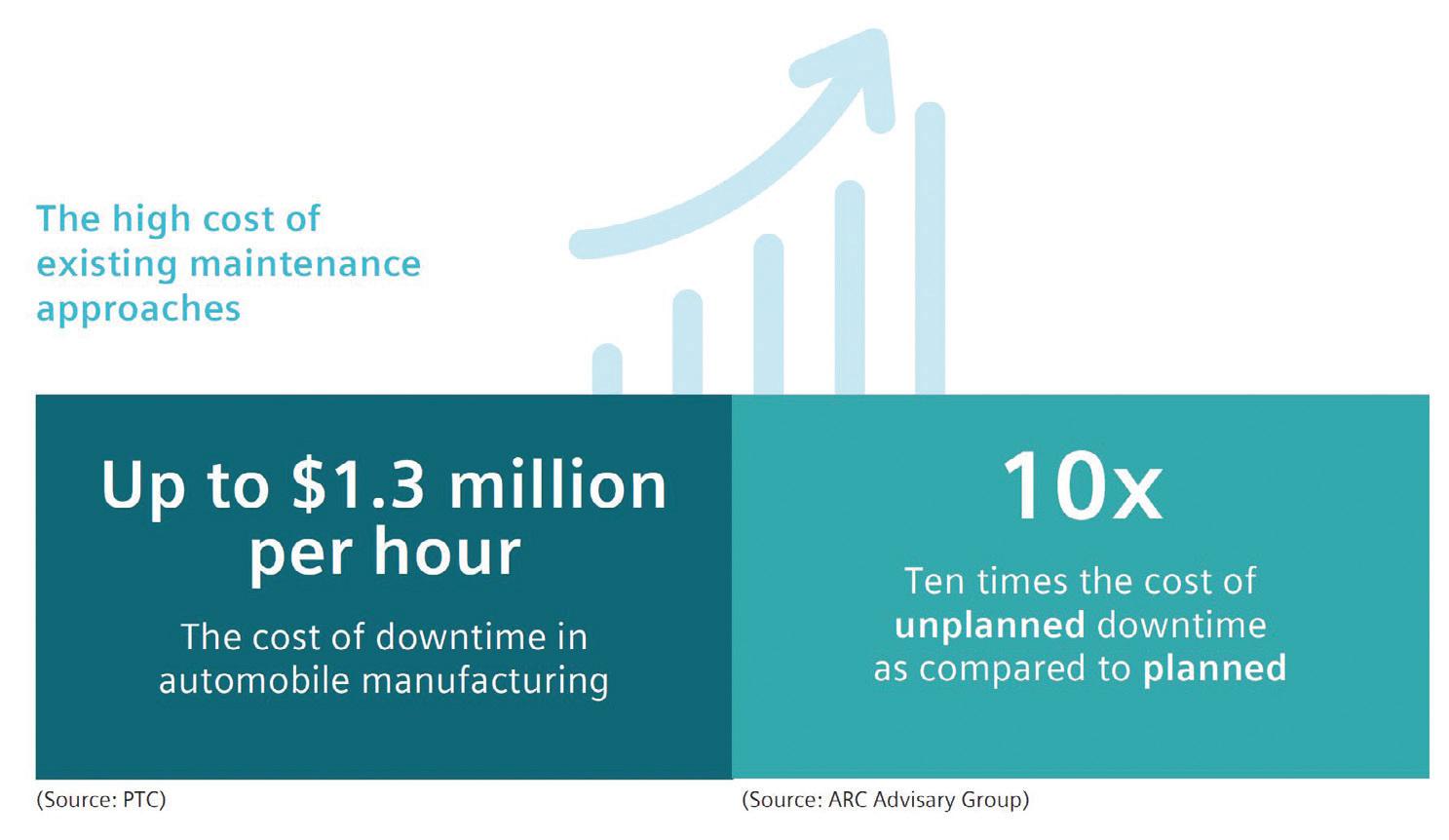
From a financial perspective, there is a dire need to shift to more effective mainte nance practices. Recent research from PTC calculates the cost of downtime in automo bile manufacturing at up to US$1.3 million per hour, while the ARC Advisory Group estimates the cost of unplanned downtime is 10 times that of planned downtime.
However, even as most manufacturers are generally aware of what’s possible with an Industrial IoT-based approach to mainte nance, the question remains for most: How do I transition from my current maintenance routine to an IoT-based approach as quickly and inexpensively as possible?

To understand how manufacturers transition from reactive to prescriptive maintenance, it’s useful to understand each stage of the journey.
The most rudimentary form of maintenance is reactive. With this approach, also known as ‘run to failure’, maintenance and repairs are made, or the equipment is replaced, only
How the Industrial IoT facilitates predictive and prescriptive maintenance.when necessary; that is, when it fails. The process is inefficient and results in produc tion and productivity losses from unplanned downtime and, more seriously, costly mechanical failures. Using this method, it is difficult — if not impossible — to track down the root cause of failures. Also, manufacturers must stockpile replacement parts, which ensures quick repairs but also increases maintenance costs.
Moving to the next stage, maintenance is scheduled at specific intervals — regardless of machine health or performance — to re duce the frequency of reactive maintenance, including unpredictable, unplanned downtime and equipment breakdowns. Instead, the goal is to keep equipment operating at peak efficiency.
However, schedules rely on information provided by the manufacturer or are based on a calculated average or expected lifetime, which doesn’t reflect what is really occur ring. Some manufacturers learned to listen to their long-tenured operators who had developed a keen sense of the signals — for example, the smell of an overheated part, the unusual vibration or sound emanating from a worn component — that signalled a potential stoppage. An attentive, knowledge able operator considers actual conditions, but that person is not scalable.
Scheduling maintenance introduces new problems. It is expensive because parts are
replaced or serviced before they need to be, and spare parts must be kept in inventory. It’s time-consuming because equipment must be repeatedly taken offline, interrupt ing production. It’s error prone because it relies on outdated information.
Some manufacturers at the more mature stage of scheduled maintenance address these issues by deploying modest amounts of automation. For example, companies have deployed enterprise asset management (EAM) or computerised maintenance man agement systems (CMMS), which maintain a computer database of information about an organisation’s operations and enable some preventative maintenance techniques. Although these systems maintain informa tion that helps plan, optimise, execute and track needed maintenance, they still require significant manual work to retrieve, compile and analyse data — a daunting, resourceintensive task.
Often confused with preventative mainte nance, predictive maintenance begins to make use of IIoT capabilities to identify more precisely when equipment requires maintenance — as close to failure as pos sible — to get maximum uptime and reduce maintenance costs. Predictive maintenance uses data gathered from IoT-connected equipment continuously over time and provides a far more precise trend profile based on performance. Data is collected
as the equipment is running, so it doesn’t need to be taken offline.
Deploying effective predictive mainte nance requires an IoT system to integrate several crucial components, including wireless-enabled sensors on equipment to produce data, and network capabilities to share it with the ability to do advanced analytics.
With data from sensors monitoring equipment and performing automated data analytics governed by an IoT-based predic tive maintenance solution, manufacturers eliminate the guesswork that character ises scheduled maintenance and instead can leverage insights based on real-time measurements, reducing and often elimi nating errors.
Higher-end IoT-based predictive mainte nance schemes leverage artificial intelligence (AI) and integrate CMMS capabilities. As an example, a machine senses a drill bit wearing out, orders a new one, alerts the service department to send someone to install it, and forwards the purchase request for the new part to the CMMS. All this information is stored in the CMMS, which performs a variety of functions, including maintain ing and organising regulatory compliance data, tracking completed tasks, compiling labour cost, managing vendors, performing purchasing activity, monitoring assets and producing data needed for budgeting.
With such an IoT system, manufactur ers can incorporate additional advanced
Figure 1. Unplanned downtime is a significant driver of maintenance costs.analytics capabilities into their predictive maintenance solutions, which allow them to create insights that drive significant performance improvements, including:
• Asset management, which models the structure of an industrial process and enables manufacturers to track specific data sources that are relevant to deter mining machine performance
• Fleet management, which provides an overview of manufacturers’ assets by allowing users to establish performance parameters and set an alarm to go off when performance deviates from them.
US Department of Energy statistics show predictive maintenance can:
• Achieve 25–30% return-on-investment (ROI) with lower maintenance cost
• Decrease failures 70–75%
• Reduce equipment downtime 35–45%
Reactive maintenance costs four to five times as much simply because failed equipment reduces overall plant productiv ity, causes inventory backup and reduces overall efficiency.
Although predictive maintenance enables smarter and faster root-cause analysis, reduces unnecessary downtime and provides visibility into the health of remote machines, prescriptive maintenance moves facilities to a more automated approach. With an IoT-based prescriptive system, industrial facilities gain the ability to have the maintenance system resolve issues autonomously.
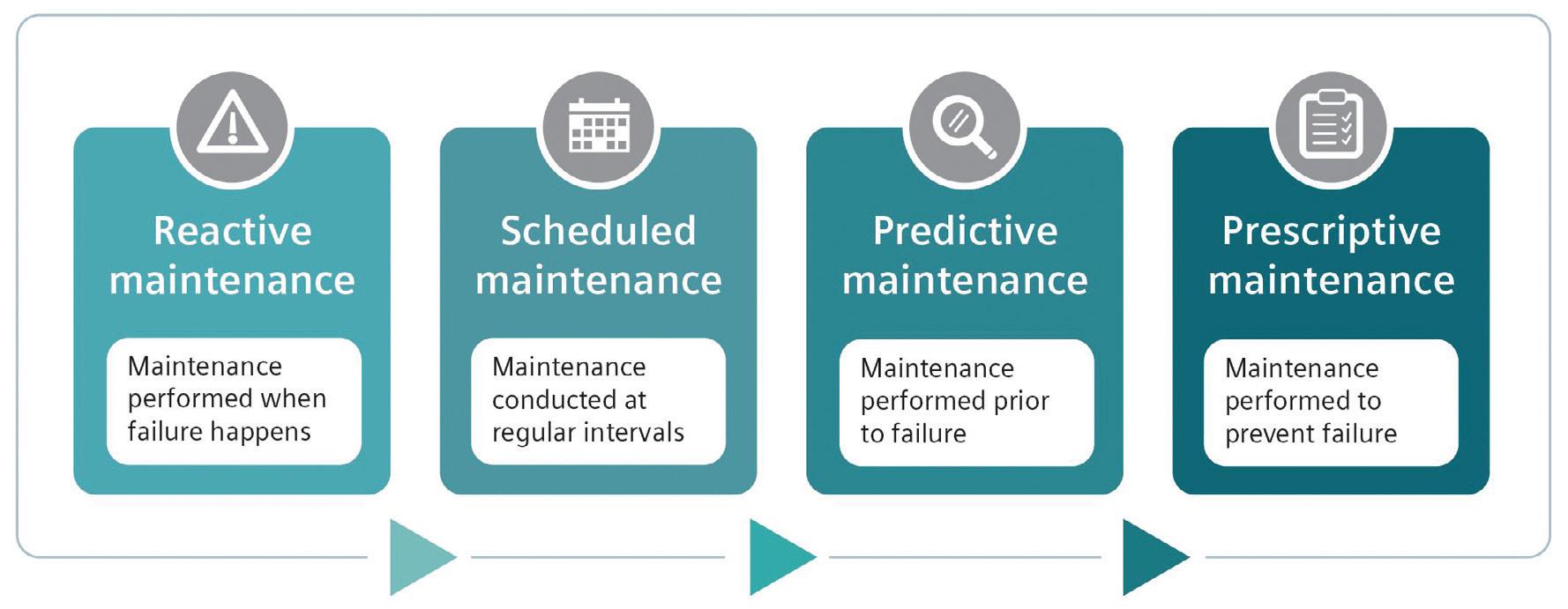
With the IoT, manufacturers can further augment the power of prescriptive main tenance using AI and machine learning in combination with sensors to diagnose the root cause of problems, indicate appropri
ate remedial actions and manage the entire maintenance process. Manufacturers that integrate their systems with the IoT can build a prescriptive maintenance approach that not only knows when maintenance must be undertaken, but also who should perform the work and at what cost. An IoT-based prescriptive system also allows manufacturers to automate all aspects of maintenance, including ordering the required parts, scheduling the service, accounting for the time and cost, keeping track of parts on hand and ensuring that the job is informed. All these steps can be performed by the system autonomously in a fraction of the time required by any previous maintenance scheme.
Prescriptive maintenance also enables industrial teams to review and simulate the system’s suggested remedial actions, so they can choose the resolution that aligns with their operational and financial goals. Additionally, it helps operators understand when operating conditions, such as running a pump at a supplier’s recommended dis charge pressure or temperature, are leading to suboptimal health or performance so they can proactively correct them.
The accuracy of prescriptive maintenance systems becomes better over time based on the accumulation of data and analysis of equipment characteristics and behaviour, failure modes and many other events that occur during operation.
Ultimately, prescriptive maintenance delivers more significant insight into the health and performance of critical assets, so industrial teams are better able to pre dict asset failure and act before downtime occurs. Because they can maintain assets on a needs-only basis, virtually eliminat
ing unplanned downtime and unnecessary maintenance, manufacturers that deploy a prescriptive maintenance solution signifi cantly reduce costs, prolong asset life and optimise factory production.
Further, a prescriptive approach to maintenance that leverages the IIoT results in greater transparency into the health and performance of critical assets, which can be used to optimise manufacturers’ mainte nance approach. For example, maintenance can be customised to serve specific machines and operational scenarios.
As the Industrial IoT becomes mainstream, manufacturers that fail to implement IoTbased prescriptive maintenance capabilities will not be able to meet the new industrial maintenance benchmark: zero unplanned downtime. To remain competitive, manu facturers must optimise asset performance and minimise failure, as even brief periods of downtime can result in reduced revenue, excessive overhead and strained resources. Margins are razor thin in manufacturing, so excessive maintenance costs and lost production time are unacceptable. During unplanned downtime, no value is produced even as overhead continues to grow and employees, from the factory floor to infor mation technology (IT) to customer service, must scramble to mitigate damage to assets, revenue and public perception.
Modern industrial cloud-based IoT sys tems offer a path to a maintenance program that is even more automated than manu facturers that are relatively knowledgeable might imagine. Siemens Ltd www.siemens.com.au
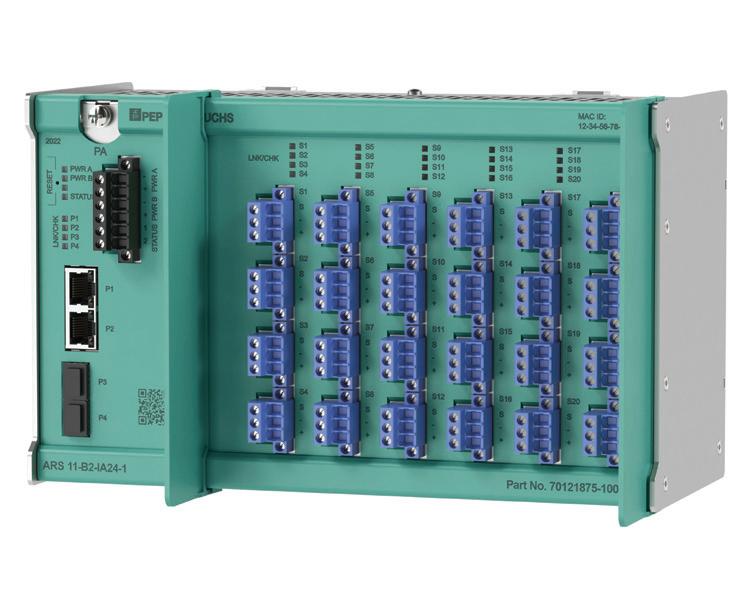
Figure 2: The four stages of industrial maintenance maturity.The Ethernet-APL Rail Field Switch is a ruggedised, man aged field switch offering connectivity for Ethernet-APL devices to Ethernet networks via any protocol.
Pepperl+Fuchs (Aust) Pty Ltd
https://bit.ly/3QXg9DG
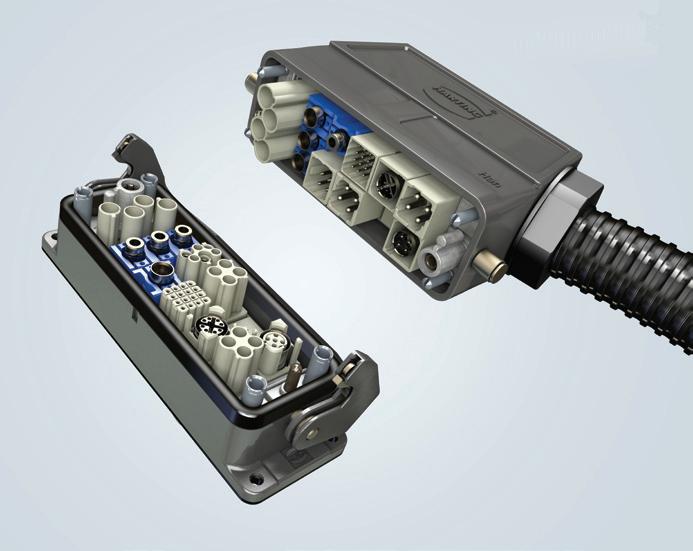
Han-Modular Domino modules offer new possibilities for op timisation, including space and weight savings of up to 50%.
HARTING Pty Ltd
https://bit.ly/3C3t4A4
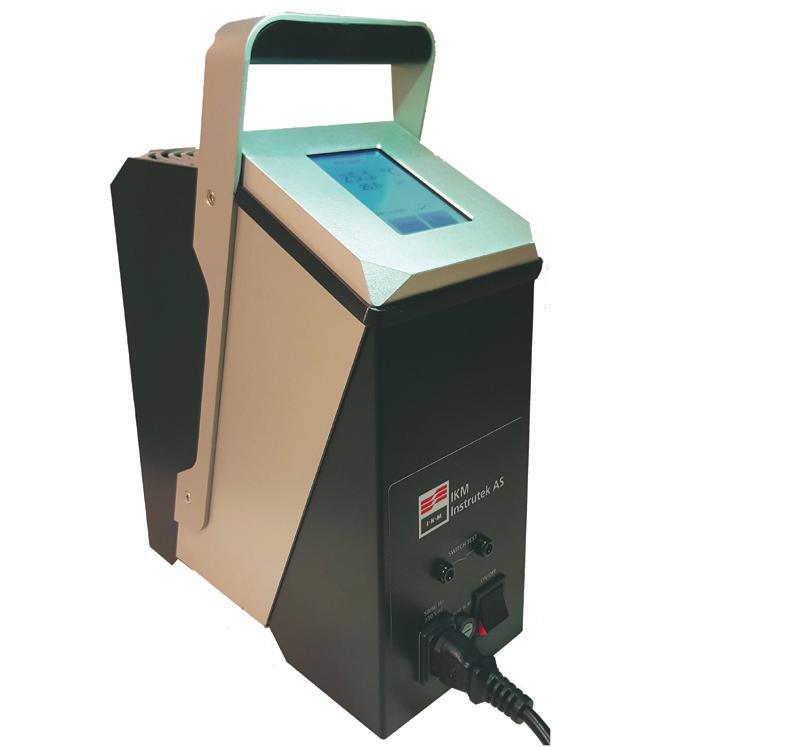
The calibration interval of the TC65 temperature calibrator has been extended to up to three years.
AMS Instrumentation & Calibration Pty Ltd
https://bit.ly/3SjpzuM
For flexible configuration and deployment, the com pact UNO-2271G V2 edge IoT gateway features a modular design with optimised I/O.
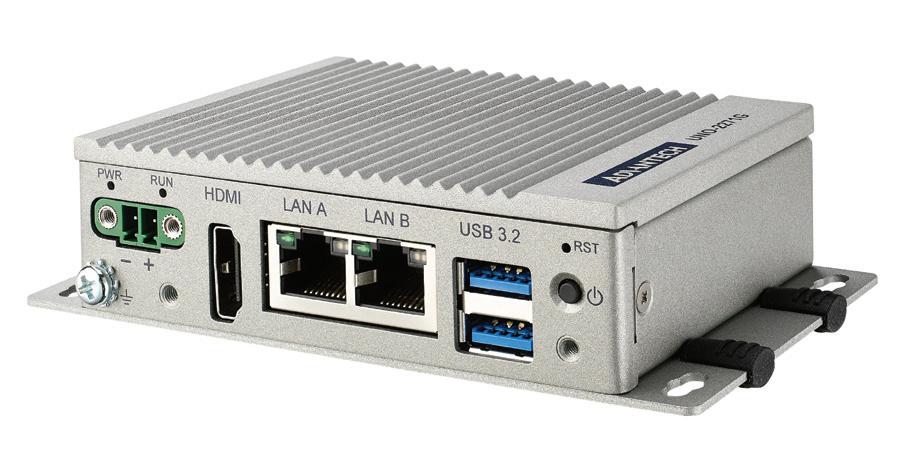
Advantech Australia Pty Ltd
https://bit.ly/3Ssr9ds
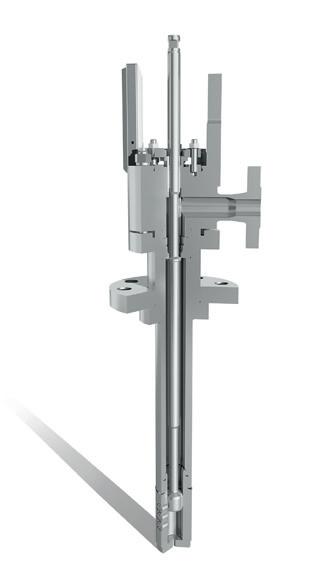
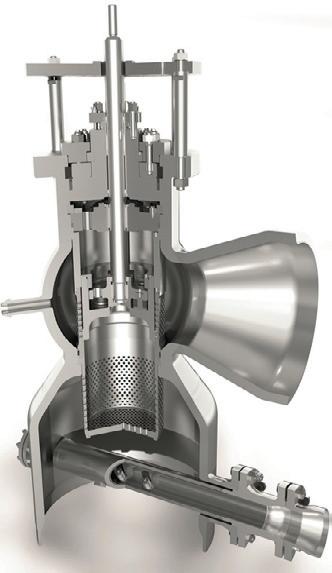
Engineered for the most difficult of applica�ons, HORA POWER PLANT Control Valves are custom-built for long-term reliable service life, with unmatched turndown, ease of service (as a result of our unique capsule trim design) and control performance.
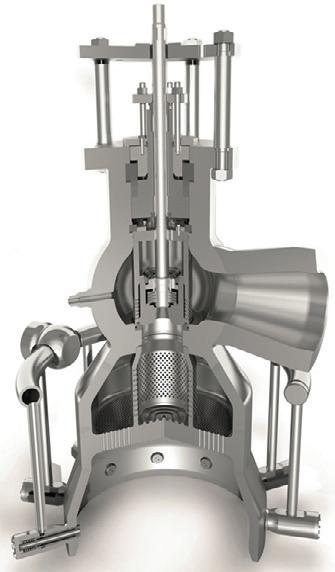
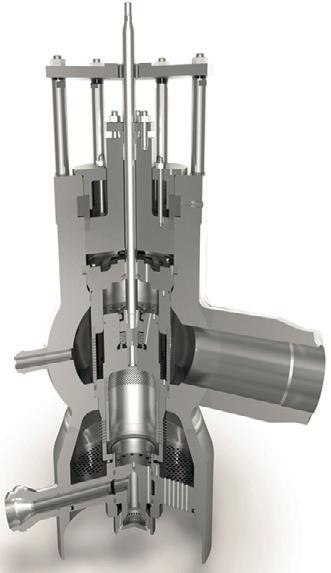
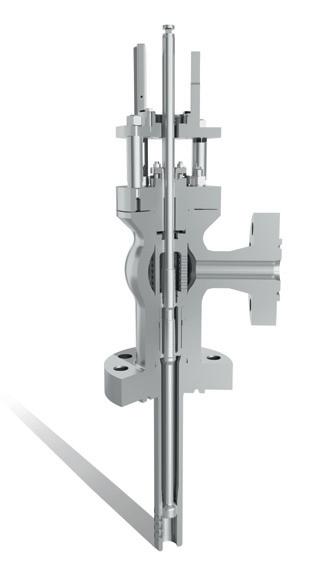
Whether it be for Coal-fired, Geothermal, CST, Biomass, WTE, Hydrogen or other types of Renewable Energy Power Plants, we can deliver a PRDS solu�on with proven reliability and genuinely, a low cost of ownership. Proven in applica�ons of over 500 Bar Differen�al Pressure drop, within a single Control Valve. Your cavita�on and noise issues will be eliminated!
Contact us at POWERFLO SOLUTIONS for local technical support and all aspects of After-Market service.

Unitywater was established in 2010, when the water operations of Moreton Bay Regional Council, Sunshine Coast Regional Council and Noosa Shire Council were amalgamated.
From the start, reducing non-revenue water (NRW) was a priority. As a first step, Unitywater created 200 district metered areas (DMAs) across the network and connected flowmeters and pressure sensors. Along with that, it sought a management solution to enable it to efficiently utilise the information provided by the sensors.
In 2013, Unitywater began working with TaKaDu to provide a Central Event Management (CEM) solution with the aim of reducing water loss, shortening repair cycles, improving customer service and increasing operational efficiency.
Unitywater CEO George Theo noted that with 65% of Queensland drought-declared and the South East Queensland combined water grid dam levels hovering around 55%, water conservation and efficient water management were among the utility’s most important undertakings.
Leveraging big data analytics, the TaKaDu solution is designed to enable water network owners to respond to network problems in near real time and manage the full event lifecycle: from event detection, through classification, prioritisation, resource allocation, until event closure.
“TaKaDu provides the technology and some best practices, but what Unitywater does so well and has perfected over the years is the processes, and they have the people that know how to use it and to make a real difference,” said Amir Peleg, TaKaDu CEO. “All the benefits of network efficiency and improved water management lead to real value, with higher uptime of the water service and reduced cost of operations.
“Reviewing performance data from utilities across the world, we have established industry benchmarks against which Unitywater can objectively evaluate its performance,” Peleg added. “It’s enlightening to see how they lead in multiple areas and to work with them to prioritise areas for further improvement.”
Unitywater’s partnership with TaKaDu since 2010 has delivered significant customer service improvements and helped save thousands of megalitres of water and millions of dollars for the utility’s service region in South East Queensland.
Since 2013, TaKaDu has detected more than 10,413 ML of water leakage and unauthorised use in the Unitywater network — equivalent to 4160 Olympic-sized swimming pools of water saved, had the hidden leaks or unauthorised use gone undetected for 12 months. The reduction in NRW loss equates to $27.9 million of savings over the period.
In the 2020–21 financial year alone, TaKaDu helped Unitywater detect 1400 ML of potential water loss at an annualised savings of $4.2 million. That year it recorded just 3.6 water main breaks and leaks per 100 km of mains — significantly below the industry median of 25.1 water main breaks and leaks per 100 km of mains.
The partnership has led to other benefits, with Unitywater’s average repair time for leaks being cut from 11 days to 2 days, more than $11 million in savings from operational improvements, better pressure monitoring and reduced knowledge loss from an ageing expert workforce.
Additionally, Unitywater has been able to improve data availability by efficiently detecting and fixing meter issues, and it now typically knows about problems before customers report them. Unitywater can now intelligently prioritise events and take a planned evidence- and risk-based approach to maintenance, with less need for an emergency response. All this has had flow-on benefits for improved customer service and has led to water and sewerage usage charges frozen for several consecutive years as part of the utility’s ongoing commitment to keeping customers’ bills low.
“We aim to continuously reduce water lost due to leaks and bursts across our extensive network wherever we can,” Theo said. “Not only does this help us to conserve and protect this precious resource, but it also helps keep our prices as low as possible for our customers. There’s no question that our … TaKaDu partnership has helped us deliver on this ongoing commitment.
“Our focus is to adopt a data-driven approach to our decisionmaking and utilise our digital assets to solve complex problems by delivering customer benefits and better environmental outcomes while continually improving our operations,” he continued. “TaKaDu has been instrumental in helping position Unitywater as an industry leader in innovation and technology, which has delivered exceptional outcomes for our environment and our customers.”
As Unitywater continues its digital journey, it is investigating additional ways to work with TaKaDu to gain more visibility in its water network and beyond. It is considering adding new systems such as pressure transient sensors, acoustic loggers and advanced metering infrastructure (AMI), and integrating them into TaKaDu. It is also exploring options for using the TaKaDu system to monitor the Unitywater sewerage network.
Additionally, water scarcity and security across Queensland has motivated Unitywater to leverage its long-time experience with TaKaDu CEM to help other regional utilities in Queensland overcome challenges in starting their own digital journey.

TaKaDu
www.takadu.com


The Wenglor INTT inductive sensors for extreme temperature ranges detect metallic objects contactlessly at ambient temperatures of up to 250°C. For dynamic applications in hot areas, system builders can now choose from flexible cables and simple push/pull con nectors, making the plug-in sensor heads easy to replace. The analysis module is also located directly in the M12 sensor plug.
The inductive sensors for extreme temperature ranges are said to have a long service life of up to five years. If the sensors need to be replaced due to mechanical damage, the sensor can be replaced in just one simple movement, even at high heat. The exchangeable sensor heads are connected to the system via a plug-in cable; hot systems such as drying ovens therefore do not need to be switched off for sensor replacement.
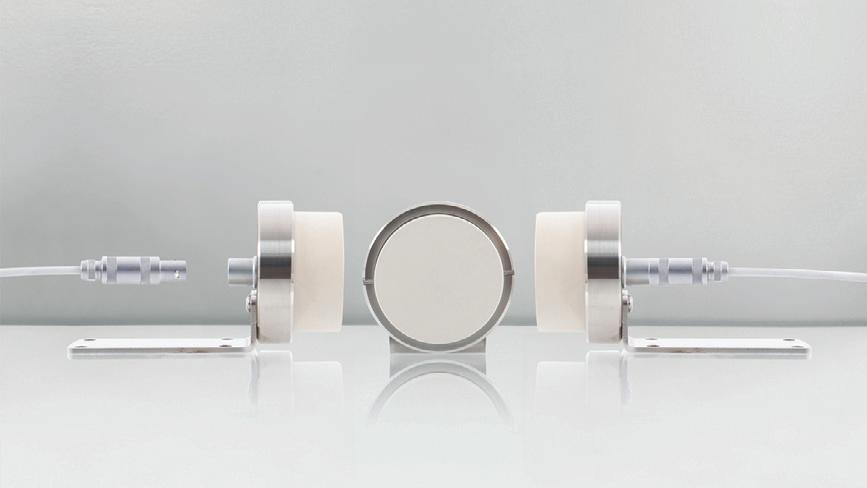
The cable range now also includes an option for dynamic applications. Despite the high temperatures of up to 250°C, the cables are flexible and therefore suitable for dynamic applications on lifting platforms or elevator systems with skid beams. The analysis module of the sensors is not integrated in an external housing but directly in the plug with its small and compact design, saving additional installation work.
The sensors offer a large switching distance of between 15 and 40 mm and they can be parameterised via an IO-Link interface. Due to the integrated weproTec technology, several sensors can be installed directly next to each other in a tight space without interfering with each other.
Treotham Automation Pty Ltd www.treotham.com.au
Bronkhorst has released a new model of the ES-FLOW family: the ES-1x2C. This flow meter will cover the flow range just below the existing ES-1x3I or ES-1x3C.
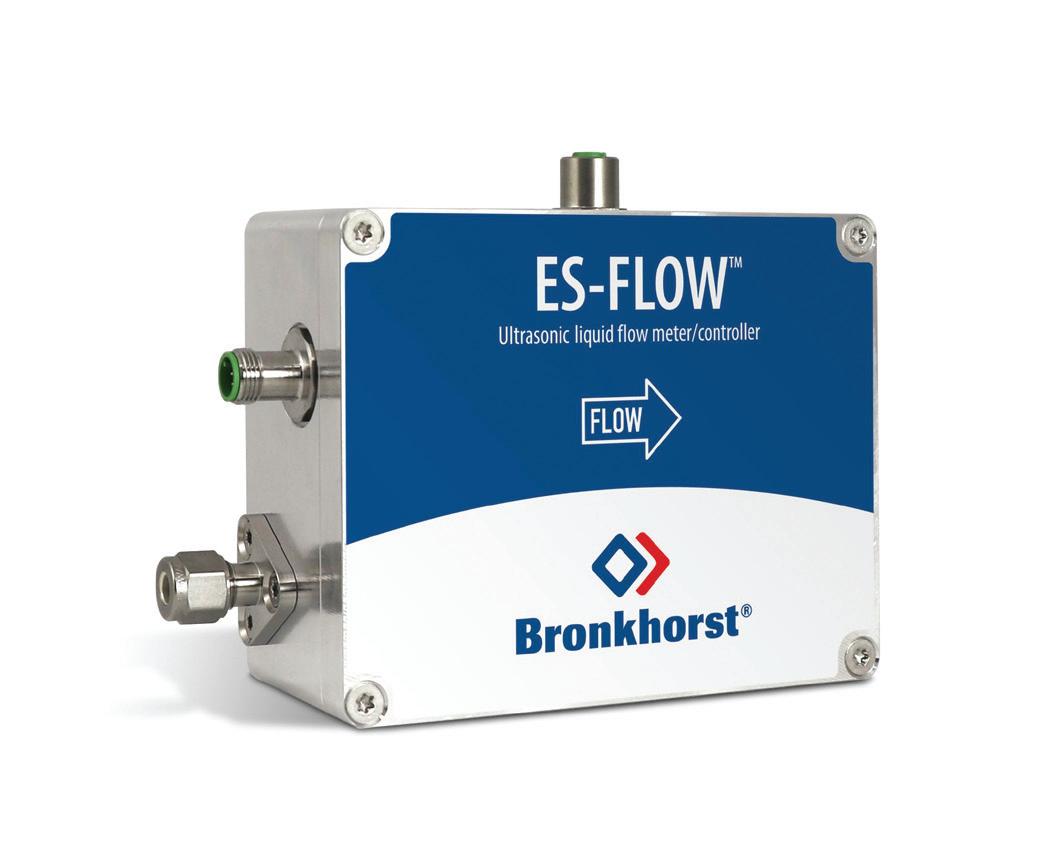
The market for low liquid flow range of ≤1000 kg/h or L/h measurement and control is an important section to Bronkhorst, due to its size and the expected future growth.
The ES-FLOW product series offers a good performance of ≤0.8% Rd at an economic price level. Mini CORI-FLOW offers a higher performance, but this high-performance level at ≤0.2% Rd is not always required. Both flow meter series always include the same Bronkhorst features such as onboard PID-controller, totaliser and alarm functions, and many communication buses.
The ultrasonic flow meters ES-1x2C and ES-1x3C are compact, versatile (eg, liquid independent), provided with a straight sensor tube, eg, low internal volume, easy to clean, low-pressure drop in relation to sensor diameter and equipped with advanced signal processing (eg, dosing functionality).
AMS Instrumentation & Calibration Pty Ltd www.ams-ic.com.au
Turck’s range of fluid sensors with IO-Link now includes TS+ sensors. The TS700 models are compact devices with an integrated temperature probe and the TS720 models are processing and display units for connecting resistance thermometers or thermocouples.
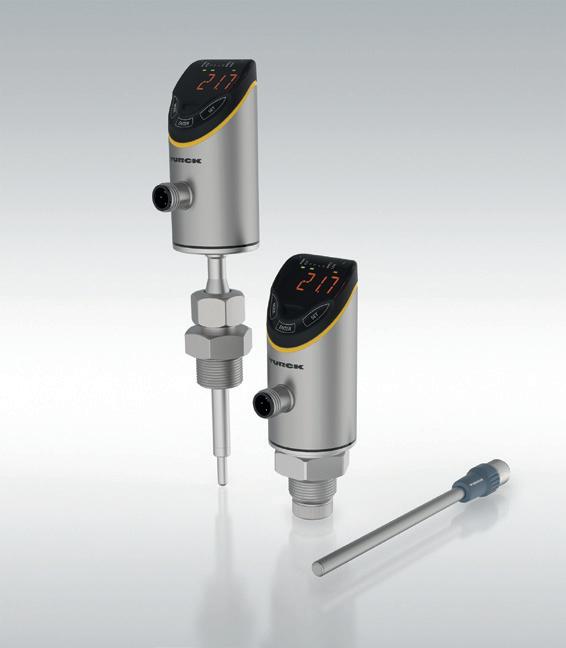
The sensors have a robust stainless steel housing with touch operation and IP67 and IP69K protection. Besides process values, the IO-Link interface provides the user with condition monitoring data for smart IIoT applications.
To simplify commissioning, the TS+ devices also feature automatic detection of the output type (PNP/NPN or current/voltage), as is already offered by the existing Fluid+ sensors. The processing units of the TS720 series also detect the type of temperature probe (TC or Pt), thus eliminating a fre quent source of errors. If the TS+ needs to be integrated into existing installations or replace existing sensors, the selection of different IO-Link process data profiles makes it possible to adapt the device quickly without the need for laborious modifications in the controller.
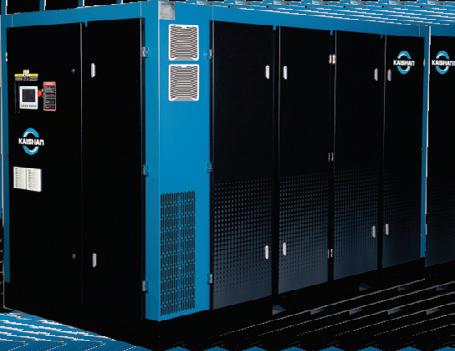
The TS+ sensors are typically used in machine and plant building applications as well as in the process industry.
Compact TS700 devices operate in a measuring range from -50 to +150°C. Depending on the temperature probe connected, type TS720 processing and display units can cover temperature ranges between -200 and 1800°C.
Turck Australia Pty Ltd www.turck.com.au

With the pallet detector, Pepperl+Fuchs is providing an application-oriented solution for pallet detection on chain and roller conveyor systems that consists of a combination of sensor and bracket developed specifically for the application.
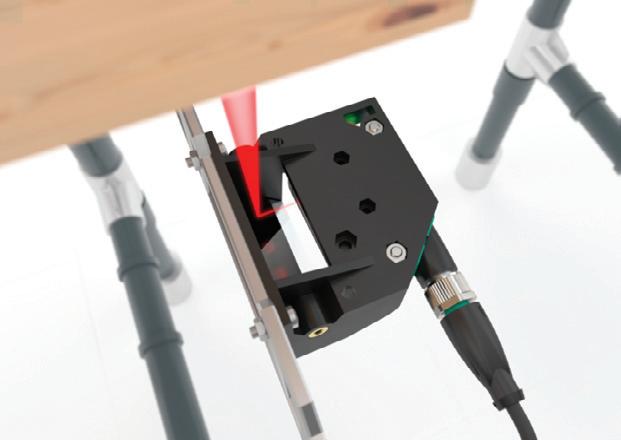
The part-reduced solution is easy to pre-assemble and offers increased work safety during operation due to its installation within the conveyor line. The special bracket design and a software algorithm also make the solution particularly resistant to dirt. For plastic pallets that are difficult to detect, an ultrasonic version can be used instead of a photoelectric sensor.
Unlike conventional systems, the pallet detector is not mounted on the side, but integrated into the conveyor line. This minimises the installation effort and at the same time increases occupational safety. It is designed to not only reduce logistics and assembly costs, but also increase occupational safety: since the sensor solution is integrated into the conveyor line, there are no protruding bars that would pose a safety risk to employees.
Pepperl+Fuchs (Aust) Pty Ltd www.pepperl-fuchs.com
This issue is sponsored by — Endress+Hauser
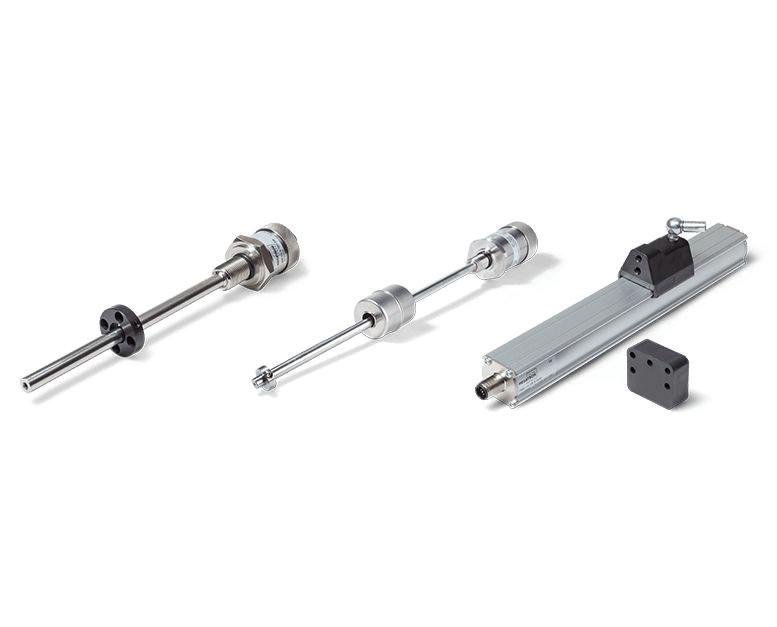
Megatron magnetostrictive linear sensors are robust, absolute measur ing systems with a resolution down to 2 µm. The measured values are recorded without any contact; hence the sensor life is unlimited and they are wear- and maintenance-free. The effects of shock, vibration and EMC influences have been reduced to a minimum due to shear wave technology.
The Megatron magnetostrictive sensors detect mechanical measuring distances up to 2000 mm, with longer measuring distances available on request. They are used in hydraulic applications with high pressure up to 500 bar as well as in automation or level measurement.


Megatron PMS2 series linear transducers have measuring strokes from 50 to 2000 mm with no push rod and high accuracy with IP67 protection. They have mechanical connection by ball coupling to com pensate for the angular offset of the free position sensor.
The Megatron OMS2 series linear transducers are flat design, IP67-rated, high-resolution analog displacement sensors for 50 to 1500 mm measuring strokes. They provide good linearity due to their high resolution.




The Megatron HMA2 series linear transducers are IP67, rod-design stainless steel magnetostrictive linear position sensors with strokes from 500 to 2000 mm. They are designed for industrial hydraulics applications with operating pressure up to 350 bar.
Megatron IMS series absolute linear transducers are IP67, roddesign magnetostrictive linear position sensors with strokes from 50 to 2000 mm. They are designed for heavy-duty industrial applications with operating pressure up to 500 bar.
Slentech Pty Ltd

www.slentech.com.au



Endress+Hauser has announced the Promass Q Coriolis flowmeter with intelligent 4-tube technology for precise measurement of large flows. This device is now also avail able for larger pipe sizes DN 150 to 250 with maximum flow rates between 850 and 2400 t/h (6700 and 18 900 bph).
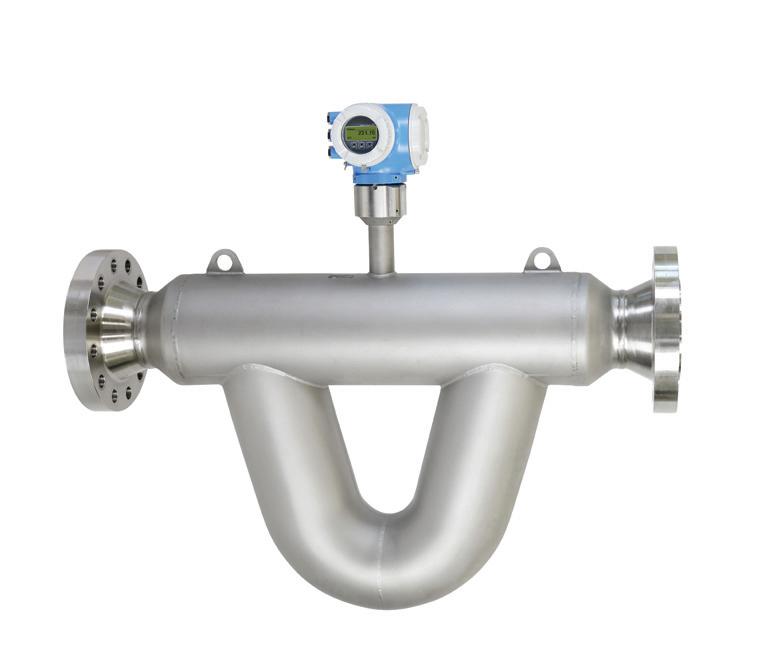
The implementation of 4‑tube technology opens up numerous applications in the oil and gas industry — for example, as an accurate duty meter for custody transfer and fiscal metering, or as a precision reference device (master meter) for onsite verification measurements.
In addition to mass and volume flow, Promass Q also records density and process temperature. This enables fluctuating process and ambient conditions to be incor porated into the measurement and compensated for. This way a measuring accuracy of ±0.05% for mass flow can be achieved.
Using four tubes allows up to 25% higher flow rates. This speeds up transactions in the oil and gas business and lowers pressure losses due to the larger flow cross-section, enabling plant operators to use smaller pumps and avoid unwanted cavitation effects or gas breakout.
Promass Q sensors are available in stainless steel and in IP66/67, and can be used for process temperatures up to 205°C or down to –196°C for measuring cryogenic fluids. Due to the SIL-compliant device development in accordance with IEC 61508, Promass Q is also suitable for safety-related applications.




Endress+Hauser Australia Pty Ltd www.au.endress.com



QED Environmental Systems has announced its LANDTEC BIOGAS 3000 fixed gas analyser, which offers gas continuous monitoring. The compact, self-contained BIOGAS 3000 system offers online monitoring that is suitable for anaerobic diges tion, biogas monitoring and landfill gas monitoring applications.
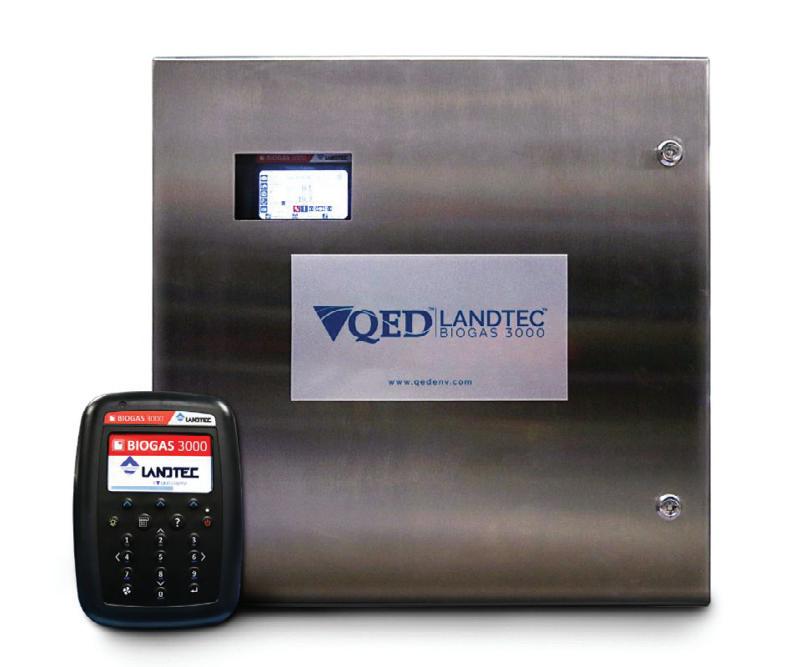
The BIOGAS 3000 can utilise up to four sample ports to monitor methane (CH 4), carbon dioxide (CO2) and oxygen (O2), with optional monitoring of hydrogen sulfide (H2S), hydrogen (H2) and carbon monoxide (CO) levels. Operators can choose up to five gases to monitor. The device features easy self-installation and maintenance, and QED provides a temporary replacement unit during service. The BIOGAS 3000 system offers simple user calibration and an easy-to-operate system. The system is calibrated to ISO/IEC 17025 standards for accuracy.
The BIOGAS 3000 fixed gas analyser is available with a continuous monitoring option for CH4, CO2 and O2, and by incorporating external H2S sensors in ranges from 50 ppm to 10,000 ppm it can be used to monitor before and after desulfurisation. In addition, pre-calibrated sensors that prevent system downtime are available to users as required. A built-in liquid level monitoring with dedicated alarm and moisture removal drain or the option for an automatic drain which empties the catchpot without manual intervention.
Built with an IP65-rated enclosure, the BIOGAS 3000 system is certified for use in ATEX and IECEx Zone 2 areas. Various communication options are available, including six configurable 4–20 mA outputs with the Modbus RTU com munication protocol, and Profibus, Profinet and Ethernet communication protocols are also available.
Thermo Fisher Scientific thermofisher.com
Effective TOC measurement is necessary if organics are present in cogeneration process water.

While most efforts at producing pure water are aimed at removing minerals, these purifying processes do not necessarily remove organic compounds. There is an increasing awareness of the operational risks and damage that organics can cause in power generation equipment and this is driving changes in water treatment methods. Controlling organics is especially critical in cogeneration power/steam cycles, where the purified condensate water returning from production processes is subject to organic contamination. Key to confirming and troubleshooting organics removal is reliable online total organic carbon (TOC) measurement.
Organic contamination of pure power plant waters can cause a number of costly problems, including fouling of resins in make-up and condensate deionisers that requires frequent resin cleaning and replacement; breakdown of organics to acids that lower the pH of condensate and cause boiler and turbine corrosion; deposi tion onto heat exchange surfaces leading to significantly reduced efficiency; and foaming in the boiler that can increase carryover
of other contaminants into the steam. The occurrence of any of these problems can be a major concern in plants.
In the power/steam cogeneration cycle, steam is generated to drive turbines to produce electricity. It is then diverted to production processes to provide heat before being condensed and circulated back to the boilers to be reused in power generation. It is the purified condensate water returning from the production processes that is most likely to be subject to organic contamination from leaks while the steam is being used for heat.
Depending on the production process, organic contamination may exceed acceptable limits and disrupt the cogeneration cycle. The treatment system to remove such contamination needs to be carefully designed to ensure it can withstand any organics spikes caused by plant disturbances or in-leakage events.
The second most significant source of organics is make-up water. Surface waters have higher levels of naturally occurring organics than groundwaters. But groundwater sources are being depleted in many areas. As a result, there is greater reliance on
DEPENDING ON THE PRODUCTION PROCESS, ORGANIC CONTAMINATION MAY EXCEED ACCEPTABLE LIMITS AND DISRUPT THE COGENERATION CYCLE.

surface water, reclaimed water and even municipal wastewater as the raw source for high purity make-up water for the water/ steam cycle. A further complication is that surface water sources typically have substantial seasonal variations in concentration and types of organics. A treatment system that uses source water with low organics during one season may be seriously challenged in another season. Even greater changes in source water composition can strain a treatment system if it must alternate between surface water high in organics during wet seasons and groundwater high in minerals in dry periods.
Another source of organics is ion exchange resins in the treat ment system as the beads themselves are composed of organic polymers. Resin fines from physical breakdown of the beads can find their way into the steam cycle if they are not fully trapped. Chemical breakdown of resins produces trace contaminants: sul fonic acids from cation resins and amines from anion resins. In addition, traces of processing solvents may also be released. These contaminants may include inorganic constituents in their structure such as chloride and sulfate that are released in the steam cycle through thermal degradation and become even more corrosive.
Additional sources of organic contamination are present directly in the steam cycle, including pump lubricants, condenser leaks and condensate polishing resins. Organic cycle chemistry additives, where used, represent a further potential source that must be compatible with the overall cycle and closely monitored to prevent unintended negative consequences.
Condensate purity is normally monitored by conductivity measure ments, with resistivity measurements becoming effective earlywarning systems1. The effectiveness of resistivity measurements is due in part to its sensitivity at ppb levels 2. However, as discussed, organic compounds from production processes may contaminate the condensate. These organics are generally non-conductive and therefore cannot be detected via conductivity measurement. For detection of these organics, they must be converted to a form that produces conductive species in pure water. In TOC measurements, organics are oxidised and produce carbonic acid (a conductive species). The conductivity of the carbonic acid generated is then measured and correlated to the amount of organic contamination present in the water.
The primary means of oxidation is the use of ultraviolet (UV) radiation at 185 nm and 254 nm. It is impossible to describe the detailed photo-oxidation mechanism of every conceivable organic oxidation reaction and, in many cases, it is not clearly known at the molecular level. Regardless of the organics involved, the end result is normally a reaction that can be summarised in the fol lowing equation:
C x H y O z + [O] + UV xCO2 + H2O Eq (1)
where C x H y O z is the organic contaminant and [O] is an oxidation source, usually oxygen or persulfate.
The oxidation of the organic carbon to carbon dioxide (CO 2) results in the formation of dissolved CO 2 in water. This leads to the formation of an unstable intermediate, carbonic acid (H 2CO3), which is a weak acid and partially dissociates to ionic species.
CO2 + H2O (H2CO3)
H+ + HCO3 Eq (2)
The extent of the formation of ionic species is controlled by physical-chemical equilibria 3 and is described according to Eq (3).
K1 = ([H+] [HCO3 ])/[CO2]aq = 4.45 x 10⁻⁷ at 25°C Eq (3)
The strategic reason to form CO 2 is based not just on the relative ease of oxidising organic contaminants, but on its detectability and quantification by various analytical methods, including conductiv ity. When ionic species are present in pure water, conductivity represents the most sensitive real-time means of detection. The reaction products described in Eq (2) are not only detectable by conductivity, they are also optimised for detection due to the formation of highly conductive H +. Figure 1 shows the relationship between conductivity and concentration of carbon (as CO 2) at 25°C.
Based on Eq (3), known chemical equations for conductivity and the chemical equilibria for this system, the amount of carbon can be determined. This is usually expressed in ‘ppb’ (µg/L).

As an example of cogeneration processes where TOC monitoring is crucial, Figure 2 outlines a basic layout of a raw sugar produc tion process. A similar need for TOC monitoring is also evident in cogeneration cycles in other production processes.
During raw sugar production the juice from the sugar cane is heated using steam to remove excess water. The condensed steam from the evaporation process is then fed into a series of boilers to regenerate pure steam in the boiler house. If organics contaminate the condensate during the evaporation process, this can be catastrophic to the power generation cycle. In the boilers, the organics can be deposited onto heat exchange surfaces, which significantly reduces their efficiency.
Organics can also cause foaming and carryover of other con taminants into the steam which can corrode expensive turbines. When organics are present in the condensate and are exposed to elevated temperatures in the boilers, partial thermal degradation and oxidation of the organic contaminants occurs. This process produces organic acids that can lower pH and lead to additional corrosion and inefficiencies in power generation. Early quality
control of the initial condensate produced from the evaporation process by measurement of key parameters such as total organic carbon (TOC), pH and conductivity guards against contamination, subsequent deposits and corrosion.
Cogeneration plant records of conductivity and TOC measure ment have shown that organic and inorganic contamination do not always coincide. It is possible for the water to be contaminated with organic compounds without being contaminated with conductive substances. Therefore, online TOC measurement is a key monitoring parameter to protect power generation equipment.
To ensure that TOC contamination is quickly detected and meas ures are taken to control it, it is highly beneficial to have a TOC sensor that continually monitors and rapidly responds to changing levels of contamination. It should also offer features that constantly provide diagnostics of the sensor’s performance, to ensure that the measurement is reliable and accurate while also providing notice to the user regarding the need for maintenance.
Figure 3 shows a simplified layout of a typical TOC sensor, with oxidation and detection processes outlined.
The fastest responding instruments using this technique have a high-intensity UV lamp with a continuously flowing sample through the sensor. Such designs operate without any moving parts, membranes or chemicals, which increases reliability and reduces running costs.
The conductivity measured at Sensor 1 is background conductivity due to dissolved carbon dioxide and any minerals already present in the water. The change in conductivity measured by Sensor 2 is due to any organics that were oxidised by the UV lamp and converted into carbonic acid.
If the temperature of the condensate is too high, a sample conditioning coil may be placed at the sensor inlet to reduce the temperature to near ambient conditions. Where particulates are present, sample filtration may also be required.
This technology does have application limitations. It is used only on pure water samples with conductivity around 2 µS/cm and TOC of 0.05 to 2000 ppb. However, conductivity can easily be kept within range with the use of a cation resin column: the same
Figure 1: The relationship between conductivity and carbon concentration.type of column that is commonly used in water sample panels to measure cation conductivity.

Considering that organic contamination is capable of causing pro cess disruptions as well as damage to expensive capital equipment, it is essential to continuously measure TOC in the cogeneration cycle. TOC monitoring and control will not only ensure effective operation of the cycle, but also avoid any unplanned shutdown of production processes due to disruption in steam/heat. To effectively implement such monitoring, online measurement of TOC is critical in obtaining a real-time assessment of water/steam quality. With online measurements being increasingly used for decision-making,

instrument capabilities and performance must be commensurate with this responsibility.
1. Morash KR, Thornton RD, Saunders C H, Bevilacqua AC, Light TS 1994, “Meas urement of the Resistivity of High-Purity Water at Elevated Temperatures”, Ultrapure Water, December 1994.
2. Bevilacqua AC 1998, “Ultrapure Water - The Standard for Resistivity Meas urements of Ultrapure Water”, 17th Annual Semiconductor Pure Water and Chemicals Conference, 2-5 March1998.
3. Light TS, Kingman B, Bevilacqua AC 1995, “The Conductivity of Low Concen trations of CO2 Dissolved in Ultrapure Water from 0-100°C”, 209th American Chemical Society National Meeting, 2-6 April 1995.
Mettler-Toledo Ltd www.mt.com
issue Figure 2: The raw sugar production process. Figure 3: Flow path of a direct conductivity TOC sensor.Turck has added the TBEC series to its range of RFID solutions to enable a fast interface with EtherCAT networks. The TBEC module has a fully potted plastic housing, is rated at IP67/IP69K and is suitable for temperature ranges from -40 to +70°C. The EtherCAT RFID module can run high-frequency (HF) and ultrahigh-frequency (UHF) read/write heads at the same time, thus simplifying applications with different bandwidths and reducing the range of inventory needed. It supports RFID applications with frequent, fast-moving tags and up to 128 read/write heads.
The product also supports the HF continuous bus mode, allowing up to 32 bus-capable HF read/write heads to be connected to each of the four RFID channels. In applications with many write or read positions, this should reduce wiring effort, costs and commissioning times. Sen sors, lights or other actuators can be connected to the eight universal input or outputs. All I/O ports are 5-pin M12 male connectors, and the power connectors use futureproof L-coded M12 power technology.

Due to the integrated RFID U data interface with cyclical process data transmission, the user benefits from fast and easy access to HF and UHF functions such as Idle mode. The EtherCAT module is thus suitable for use in RFID applications where tags must be read in rapid succes sion, such as identifying hanging goods in materials handling applications.
Turck Australia Pty Ltd www.turck.com.au
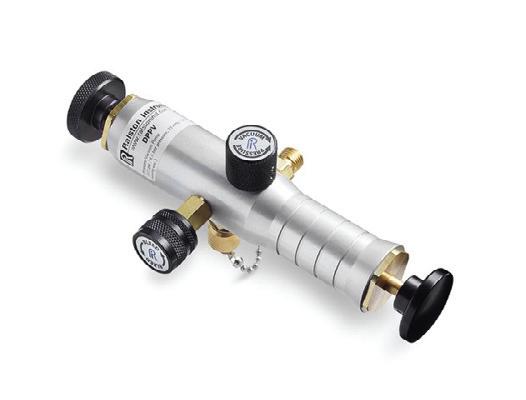
Ralston Instruments offers a range of pneumatic pressure/vacuum calibration test pumps designed to generate low pressure up to 125 psi or draw a vacuum to -15 psi for calibrating low pressure or vacuum instrumentation. A simple direct-acting pump action with fine adjustment piston is designed to give users precise control, even at very low pressures. The pump bodies are made from anodised aluminium so they’re lightweight and portable, won’t rust or corrode, and can easily handle sand, sticks or other contaminants in the field.
Three options are available — the DP0V pneumatic pressure pump, the DV0V pneumatic vacuum pump and the DPPV pneumatic pressure/vacuum pump that lets users switch from pressure to vacuum with the twist of a knob.
An economical choice for measuring differential pressure on pipelines and other vital industrial process systems, they are suitable for performing the low-side calibration of pressure transmitters or pressure switches for clean rooms, HVAC and similar applications.

Ralston Instruments LLC
www.ralstoninst.com
ABB has expanded its FlexPicker Delta robot range with the IRB 365, which it claims is the fastest in its class for reorientating pack aged lightweight products such as cookies, chocolates, candies, small bottles and parcels.

Responding to the rise in ecommerce and growing demand for shelf ready-packaged goods, the IRB 365 has been developed for applications including food and beverage, pharmaceuticals and consumer goods, where produc tion line speed and adaptability are essential. The IRB 365 can pick, reorientate and place 1 kg products at 120 picks/min.
From product reorienting, toploading and secondary packaging, to bottle handling, unscrambling, 3D picking, feeding and parcel sorting, the IRB 365 is designed to meet a wide variety of applications.
Powered by the OmniCoreTM C30 controller, the system offers built-in digital connectivity and more than 1000 additional software/hardware functions ready to meet future demands and requirements.
Through ABB’s PickMaster Twin software, the IRB 365 can be in tegrated into packaging lines in a matter of hours rather than days, using digital twin technology, which also reduces changeover times.
ABB Australia Pty Ltd
www.abbaustralia.com.au

The industrial control system (ICS) market has been dominated by PLCs ever since they burst onto the scene in 1969. And with good reason: being small and programmable meant PLCs were a significant step up from the hard-wired circuits they replaced. They soon proved themselves to be highly robust, reliable and available at reasonable cost. These factors in combination made them a huge success.
Much has changed in the intervening years. The demands on a modern ICS have increased sharply, as they now need to handle many additional aspects of automation, such as func tional safety and motion control as well as serving up data for visualisation and the cloud — and all this needs to be done at ever greater speed.
PLCs have always used their own proprietary hardware, with each vendor creating their own unique system. Such closed platforms restrict users to whatever software tools the PLC supplier provides. Also, any product development needs to come from the one vendor.
As the world has become ever more connected and dig itised, calls for open controller systems that can keep pace with technological advancements have come loudly. It’s into this environment that the industrial PC (IPC) has emerged.
But why this trend? Are IPCs genuinely better at perform ing control tasks, such as ladder programs, than traditional PLCs, which have proven themselves over many years? What advantages do IPCs really bring to the table?
IPCs, as their name suggests, utilise the ubiquitous PC format as their hardware platform. While encased into an industrially hardened format, IPCs are essentially the same as the laptops and desktops we all use. And like them, IPCs have abundant computer resources with plentiful memory — far more than PLCs. Considerable investment continues to be made in PC architecture, which IPC producers can leverage for their products.
IPCs implement a ‘software model’, where functionality is provided by loading a series of software modules. This offers great flexibility as both updates and additional functions can be installed at any time. PLCs, on the other hand, utilise a more rigid ‘hardware model’, where firmware is often fixed. It’s also often difficult to access new functionality, as it normally requires hardware changes.
Questions have been raised about the robustness of IPCs. But IPCs, like PLCs, are microprocessor-based, and have adopted the same ruggedised design principles.
Most IPCs come with the popular Windows operating system, although they execute their control code independently, within

a real-time kernel. Windows offers a huge array of programs, as well as functionality such as Visual Studio, .NET program ming, large support communities and much more. This allows users to access modern programming techniques, such as object-oriented programming. Giving users access to this sort of power is a massive advantage for IPCs.
Some doubt the reliability of Windows, pointing to ‘blue screens of death’. However, IPC vendors set the standard for their own hardware and test their systems thoroughly, includ ing quality control for their drivers. Also, most IPCs only use embedded, long-term servicing channel editions of Windows, which rarely need to be updated.
In contrast, PLCs for many years had no security protection at all, as it was believed the ‘air gap’ to the outside world kept them immune from cyber threats. But the connectivity demanded of a modern ICS means the air gap has evaporated. While many PLCs now provide security features, giving users a ‘sandpit’ to work in, cybersecurity specialists, such as Fortinet and Team82 from Claroty, regularly report breaches. The situation is not helped by the persistent use of unprotected protocols such as Modbus.
With the merging of the once divergent OT and IT worlds, the call for a single standardised platform for all networked devices has grown ever louder. The IT community in particular sees advantages in having one common platform.
But perhaps the biggest advantage of IPCs is the fact that virtually every industrial site already uses PCs running Windows. These PCs run a host of applications, anything from spread sheets, HMI/SCADA, web serving and much more.

So it makes a good deal of sense to combine the functions of a PLC with a PC, into a single unit: an IPC. This reduces the hardware required and improves communication links. It also enhances reliability and reduces overall costs.
The prevalence of IPC offerings in the market, including some by the traditional PLC vendors, may explain their meteoric rise in sales.
Harry Mulder is the principal automation engineer at Beckhoff Automation. He’s been involved in industrial automation for over 30 years and is fascinated by how new innovations keep affect ing the direction of the industry. He really enjoys the practical element of his job, where he has a chance to get his hands dirty!

Leading-edge safety system helps meet compliance and improve safety.
Fuel transportation, storage and handling is a highly regulated industry that could result in serious consequences if a safety incident were to occur. Meeting these stringent safety requirements is a key priority for businesses that transport and store fuel.
Z Energy is a New Zealand company that supplies fuel to retail customers and large commercial customers including airlines, trucking companies, mines, shipping companies and vehicle fleet operators. Their safety system drives them to proactively focus on the risks that matter most and helps to ensure the continual improvement of their operations.
With a strong commitment to safety and sustainability and to meet the new requirements resulting from the Buncefield incident in the UK, Z Energy recently implemented an innovative automation and safety solution to avoid overfilling their fuel storage tanks while also providing safety function monitoring.

Z Energy called on Pilz for their safety and automation expertise to deliver this turnkey project. A project of this importance would require high-level integration capabilities to meet its unique requirements, so Pilz called on their Authorised Systems Partner, DRE Systems, for this implementation.
Z Energy transports offshore fuel to their tank farms, which can be many kilometres away from the original location. The scope of the project was to install an automated system that monitors the level of the storage tanks to avoid overfilling. If the fuel level was to exceed the safe limit, the safety system would
then automatically shut down the site and close the valves on the storage tanks.
“Prior to the upgrade, we were relying solely on radio communications between the boat and the receiving tank but if that communication were to be interrupted or break down there would be a high likelihood that we could overfill the storage tank which would then cause significant issues onsite,” said Duncan McIntyre, Project Engineer, Z Energy.
“Although we can halt the product movement coming into our site, it poses a risk in that the ship may not be aware that we have stopped receiving the fuel and they can continue pumping, which could then lead to a pipeline fracture which would be a major failure for us,” he explained.
To address this, Pilz and DRE Systems designed a SIL 2 safety instrumented system involving safety PLCs communicating via radio. Providing a safe automated solution removes the human factor ensuring that in the event a high limit is detected within the tanks onsite, signals are sent to the berth automatically. This sends alerts via alarms, lights and sounders for the wharf staff to attend to the system.
The challenge of the distances and terrain involved at the Seaview site required an innovative approach to the solution. DRE Systems was tasked with solving the site-specific challenges.
The SIL 2 solution was based on the Pilz PSS 4000 safety PLC system, which is highly configurable with the SafetyNET p protocol. DRE researched and discovered a local supplier
of state-of-the-art Ethernet radio links for industrial use. 4RF were able to provide their hardware and expertise to develop a reliable communication link.
“With this safety integrated system, the compliance is largely performed through the documentation, which provides flexibility in relation to how the solution is delivered. Using the SafetyNET p protocol, the PSS 4000 safety PLCs can be configured to communicate at different transmission rates, whether it is 10 milliseconds or 30 seconds, depending on the application,” said Tony Catterson, New Zealand Manager, Pilz.
“The ability of the PSS 4000 to work with variable transmission rates made it the natural choice when selecting the control technology. This allowed the use of radio communication between the wharf and the terminal with a range of up to 300 km. In fact, this application is one of the first in the world to use radio communications for safety — it is not something we have seen anywhere in the industry and is very much a leading-edge solution,” he added.
This modular system provides the ability to control both automation and safety functions, meeting all relevant safety standards. DRE Systems worked closely with Pilz to supply the equipment, build the panels, develop the PLC software and generate the test documentation and commissioning onsite.

“The radio system operates similar frequencies to a handheld system but with safety rated Ethernet communication. For example, if operators need to send a signal to the wharf without intervention within one second, the PSS 4000 PLC communication can be guaranteed to meet these requirements.
The robustness of the communication link was critical to the project, even if there was a tanker parked in front — the radio system is able to perform adaptive modulation, where it actually changes its frequency to ensure 100% uptime,” said Dan McNicholas, Managing Director of DRE Systems.

The solution exceeded Z Energy’s project requirements and given the flexibility of the PSS 4000 system, DRE Systems was able to integrate with Z Energy’s SCADA system, external communications and radio signal to the wharf. It eliminates the requirement for human intervention and provides reliable communication to the wharf with safety rated SIL.
The radio system together with the adaptiveness of the Pilz safety and automation system provided the capability for an innovative and robust solution which will now also be implemented at additional Z Energy sites.
 Pilz Australia Industrial Automation
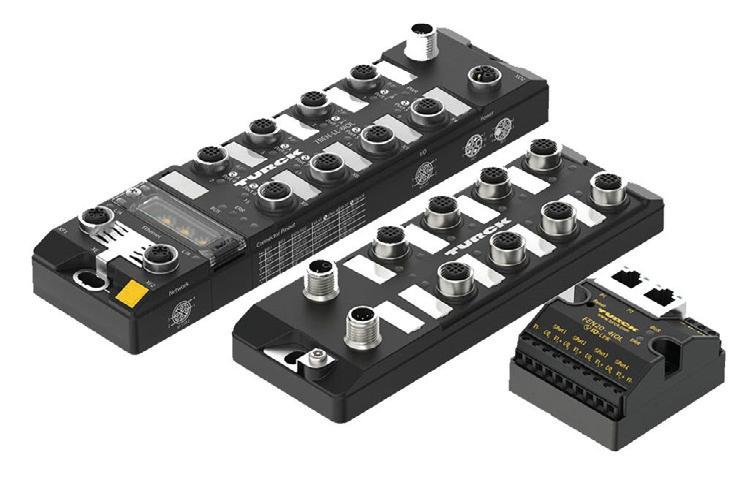
Turck has expanded its IO-Link range with an 8-port master with M12 power, a compact 4-port master in IP20 and I/O hubs with an external power supply.

The TBEN-L-8IOL IO-Link master is now also available with an L-coded M12 power supply enabling currents of up to 16 A. The high-power ports of the 8-port master allow power-hungry equipment such as grippers to be fed with up to 4 A of power. The IP69K, -40 to 70°C rugged block modules are therefore suitable for field installation on the machine.


The compact IP20 FEN20-4IOL master for connecting four IO-Link devices is designed for use in restricted spaces.
Both masters simplify the integration of IO-Link devices in Profinet applica tions due to Turck’s Simple IO-Link Device Integration (SIDI). This enables devices to be integrated directly in the engineering tool — including the storage of parameters in the project. Masters with integrated programming logic can also manage decentralised small-scale tasks in the field. Data can also be queried and processed via Modbus TCP in parallel existing PLC communication.
The TBIL-L-16DXP-AUX I/O hub with an additional power feed for applications is an IO-Link device for increased power requirements. The consistent galvanic isolation of voltage groups V1 and V2 enables actuators to be switched off safely in an emergency while the sensors remain activated. The I/O hub links up to 16 digital inputs or out puts with universal ports to an IO-Link master. The I/O hubs are available with a 7/8 inch or M12 power supply.
Turck Australia Pty Ltd
www.turck.com.au
The ASC ECO-x311 capacitive accelerometers are specially developed for cost-efficient and battery-powered applications with limited instal lation space. The inertial sensors meet the demands of numerous industrial measuring applications.
The ASC ECO series features an analog, differential voltage out put (±2.4 V FSO) for measuring ranges from ±2g to ±40g and a frequency response range from DC to 1 kHz (±5 %).
The ASC ECO-x311 is an alternative to standard low noise or me dium frequency sensors, which provide a level of performance that is not required by all applications. A feature of the ASC ECO series is the low power consumption of <250 µA in continuous operation. This makes the accelerometers suitable for mobile, battery-powered applications such as automated guided vehicles (AGV) or remote operated vehicles (ROV). The flat design of the ASC ECO-x311 also allows fast and easy installation even in hard-to-access spaces.
Applications include condition monitoring of machines, systems, infrastructures or vehicles. ASC provides not only single sensors, but also custom-tailored solutions to suit the application. ASC ECO-x311 capacitive accelerometers are available in a uniaxial, biaxial or triaxial version, and can be custom tailored to individual requirements, includ ing in lot size one.
Slentech Pty Ltd
www.slentech.com.au
The ARCHMI-921B 21 ″ rugged industrial all-in-one HMI panel PC from Aplex Technology is housed in a fanless silver alu minium case that provides IP66 front panel protection. This design makes it easy to clean, reduces maintenance cost and provides a long-lasting rugged enclosure.

The ARCHMI-921B features an 8th generation energy-efficient Intel Core i3/i5 processor with up to 32 GB of DDR4 RAM. The optional projected capacitive touch screen with multi-touch support and anti-scratch surface helps to improve usability, while also providing the screen with tough protection.
The ARCHMI-921B comes in a screen size offering 16:9 wide screen full HD. Optional auto dimming, 1000 nits high brightness and optical bonding with AR coating makes the ARCHMI-921B suitable for a range of applications, no matter the environment or weather.
The ARCHMI-921B offers a wide range of optional expansion including, PoE, 4G, Wi-Fi and CANbus, as well as additional serial, LAN or USB ports that can be added.
The ARCHMI-921B also offers an optional smart battery backup feature. This provides up to 30 min (depending on usage) of emergency backup power for any unexpected power interruptions. The ARCHMI-921B can be panel or VESA mounted, allowing the system to be ergonomically positioned for operator convenience.


Interworld Electronics and Computer Industries www.ieci.com.au
 issue is sponsored by
Endress+Hauser
issue is sponsored by
Endress+Hauser
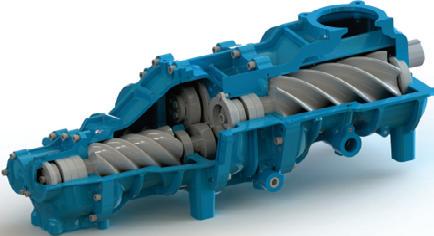
Kaeser has announced the GBS series of rotary screw blowers. Available in the 75 to 160 kW power range, the series offers flow rates from 22 to 104 m3/min and differential pressures up to 1100 mbar. Power transmission from the motor to the com pressor is via loss-free, maintenance-free gearing, which means the GBS series models offer improved efficiency and have low maintenance requirements.
For fixed-speed operation, Start Control (STC) versions are available. They feature an integrated star-delta starter equipped with a premium contactor, overcurrent relay and phase monitor ing. The STC versions additionally feature an energy-saving IE4 Super Premium Efficiency motor.
Sigma Frequency Control (SFC) versions are also available, and feature an integrated frequency converter for dynamic adjustment of the flow rate to demand, with the frequency converter and motor matched to deliver optimised overall efficiency. For power outputs up to 110 kW, synchronous reluctance motors are used.
Kaeser says it guarantees the power consumption per unit of flow rate (specific power consumption in kW per m3/h) in accordance with the narrow tolerances of ISO 1217, Annexe E.

Kaeser Compressors Australia au.kaeser.com

ABB has announced the launch of ABB Ability NGX Hoist Control, a control system designed to enable mining companies to achieve maximum performance and safety of hoist operations. The company says it brings new levels of reliability, flexibility and ease of use to smaller companies on greenfield projects or upgrades. It can also help larger companies reduce costs and improve efficiencies through standardisation of control systems.
ABB Ability NGX Hoist Control is said to be adaptable to any type of hoist and can be used in upgrade projects replacing third-party control systems. The NGX Hoist Operating Station was designed with the latest ergonomic and human factors engineering guidelines and is based on the latest human machine interface (HMI) insights, offering a modern and intuitive operator interface.
It can be easily integrated with other ABB technologies including ABB Ability Safety Plus for hoists — the company’s first fully SIL 3 certified hoist solution — which was first commissioned in 2019. It is also compatible with the digital monitoring service ABB Ability Per formance Optimization for Hoists, which is designed to continuously track the status of a mine hoist and improves uptime, availability, performance and productivity by providing actionable information on KPIs and provides remote access to ABB experts at all times.
ABB Australia Pty Ltd www.abbaustralia.com.au

Powered by a Rockchip RK3399 SoC and the Mali-T860 GPU, the PPC-100 series panel PCs are designed to provide widescreen computing options.
The PPC-115W features a 15.6 ″ panel display, with multi-touch P-CAP control for convenient operation. The 16:9 widescreen aspect ratio offers an enhanced visual experience, making it suitable for industrial digitalisation, informatisation and data visualisation applications. With the pre-installed memory, storage, I/O and system software, the PPC-115W is designed to enable system integrators and independent software vendors to build comprehensive systems easily and rapidly.

Designed for scalable computing performance, the PPC-115W is built with a Rockchip RK3399 SoC that features a dual-core ARM Cortex-A72 and quad-core Cortex-A5 processor, and ARM’s big.LITTLE core architec ture for optimal integer and floating point processing, as well as improved memory access speeds.

The PPC-115W is equipped with the Android 10 operating system and all memory, storage and driver com ponents are preconfigured. In addition, the panel PCs are pre-installed with Advantech’s WISE-IoTSuite/AppHub web-based solution for remote device management.
Advantech Australia Pty Ltd www.advantech.net.au
 This issue is sponsored by — Endress+Hauser —
Natural gas continues to be a part of the energy puzzle that powers our world, and reliable, accurate level measurement is a part of the solution.
Cryogenic processes and applications place high demands on level measurement instrumentation. Any sensor or transmitter must be robust enough to handle low dielec tric fluids and volatile liquid surface conditions, as well as having the ability to withstand the high demands of potential thermal shock. The liquefied natural gas (LNG) industry experiences these challenges every day.
Considered to be a cleaner, more environmentally friendly alternative to oil, natural gas has seen a recent boom thanks to technological developments in production, storage, and transpor tation. As infrastructure and new innovations have made natural gas a more economically feasible energy source, worldwide de mand and production have grown. Fortunately, level measurement technology has grown with it, enabling upstream, midstream, and downstream companies to safely maximise vessel usage and op timise their processes.
The LNG industry has traditionally relied on floats, displacer technologies, and differential pressure for level measurements. However, these devices are prone to measurement errors because
of mechanical wear and tear as well as fluid density changes. As a result, newer facilities are being engineered and built with newer, more modern level measurement technologies and at the same time, older facilities are upgrading and adapting.
Since natural gas extraction, processing, and transportation use complex processes involving extreme temperatures, pressures, or both, level measurements are rarely a one-size-fits-all. A single facility may need to employ multiple different technologies for level measurements throughout its operation. This article highlights a few of those technologies, their uses, and advantages: 80 GHz radar, guided wave radar, and vibration point level switches.
Isolated, non-contact level measurements in storage tanks
Filling and emptying large LNG storage tanks are lengthy processes, so any downtime is time and money lost. Since mechanical level measurement instrumentation is often associated with high main tenance costs, they reduce the efficiency of any operation.
 Tai Piazza, Refining Industry Manager, VEGA Americas
To further complicate matters, natural gas is stored in its liquid form at temperatures of –162°C or colder. Variations from this temperature alter the product’s density, and any change in density can result in measurement errors when using pressure measurements for level.
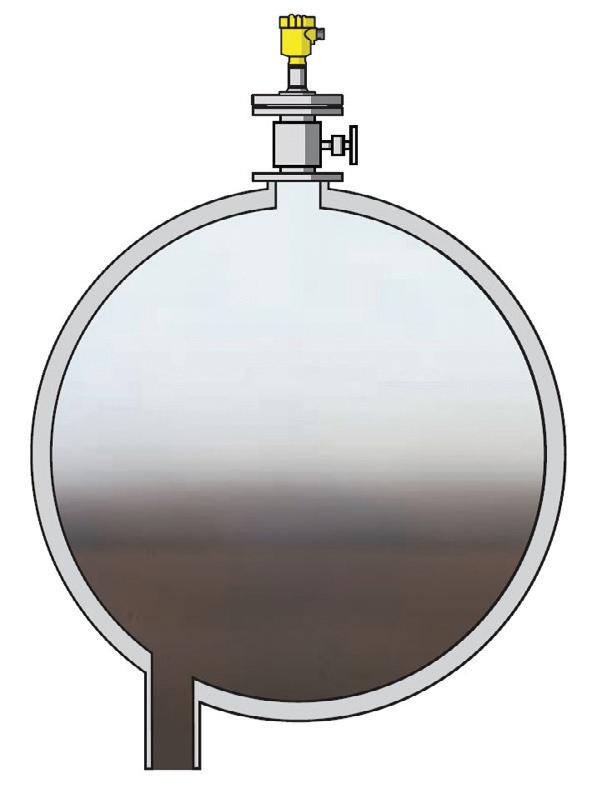
These obstacles can easily be overcome with an electronic 80 GHz radar sensor mounted on a ball valve for isolation. Radar sensors make accurate level measurements despite any changing densities, and radar sensors with 80 GHz transmission frequencies use a narrow-focused signal to deliver a level measurement in tight spaces, including ball valves. Such radar sensors also utilise more sensitive electronics, which enable the sensor to detect a wider range of signals, including those returning from a poorly reflective product like LNG.
The ball valve on an LNG storage tank serves to isolate the instrument from an ongoing, potentially hazardous process. In the event that the radar sensor requires maintenance, operators can simply close the ball valve and remove the sensor — all while the storage tank continues to fill or empty without interruption.

Surge drums are scattered throughout any LNG processing facil ity, guaranteeing a steady flow between process units, all while separating liquid out of gas. A level measurement in this vital application ensures the surge drum continues to operate at peak capacity without any liquid carryover that could potentially damage downstream equipment.
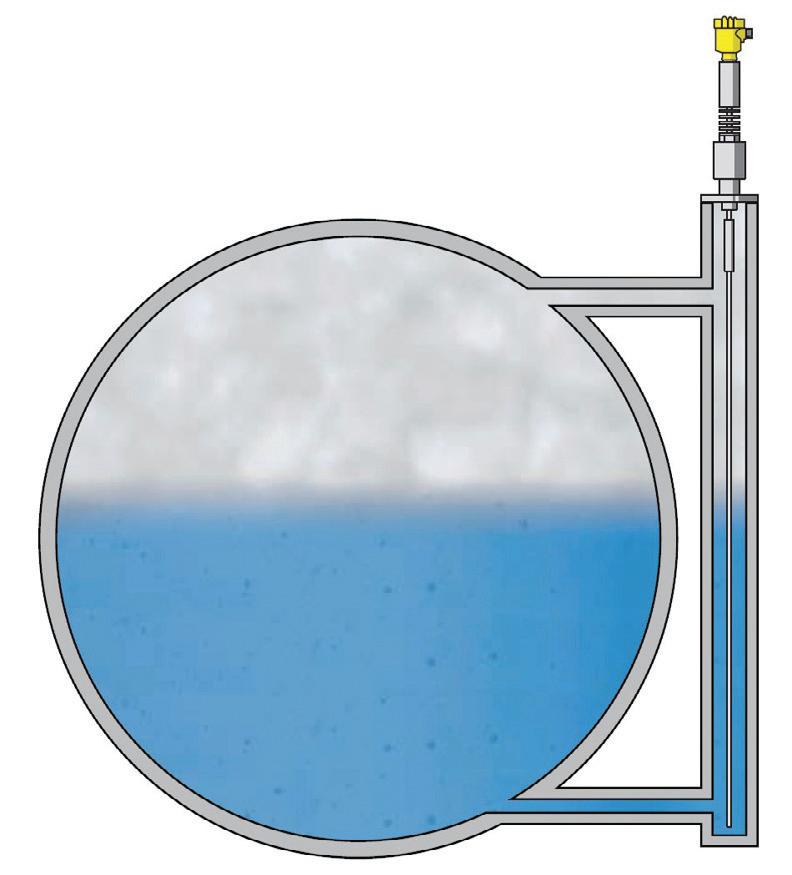
The environment inside a surge drum is volatile, and rapid level changes are the norm. Heavy vapours and an array of liquids are constantly entering the vessel, causing temperature and pressure changes in addition to liquid density fluctuations. Guided wave radar technology has proved to be most effective at outputting accurate, reliable level measurements in this type of application.
Guided wave radar sensors have no moving parts, which elimi nates the possibility of any mechanical failure. The technology has the added ability to measure interface applications if necessary. Measurements are immune to any vapours in the air as well as changing temperatures, pressures and densities. Installation is relatively simple, with flexible mounting options, either inside the
vessel itself or inside a bypass chamber or bridle for an isolated measurement that doesn’t affect the process.
A little preparation in selecting the right guided wave radar sensor can save time during start-up. First and foremost, techni cians should confirm they select a sensor capable of withstanding the surge drum’s high pressures. If the required process data is available, some instrument vendors can supply these sensors preassembled, pre-adjusted, and ready for installation.
In any LNG operation, boil-off gas (BOG) is inevitable, and efficient operations send this BOG to a recondenser. The recondenser liq uefies the BOG and uses a special pump to recirculate the LNG back into storage.
Without any level measurement controls, overfills can result in severe safety risks to personnel, environmental damage and economic losses. Because of the risks associated with the re condenser, all instrumentation must comply with overfill safety rules and regulations.
When recondenser levels drop too low, the pump runs dry, resulting in damages. Repairing or replacing the pump are costly and time-consuming exercises. And without a pump on the recon denser, the complete processing unit could be forced to shut down.
Any point level sensor must be able to withstand the high pressures and cryogenic temperatures associated with the recon denser. The right type of vibrating fork point level switch that is robust enough for this task, and that complies with all API 2350 guidelines for overfill safety, should be selected.
The point level switch, when paired with the right controller, can provide overfill alarming along with proof testing that can provide
online function tests, confirming the switch is still operating properly. Such controllers matched to the sensor can provide test functions to evaluate any damage to the vibrating forks, their frequency and amplitude, and even the incoming power. Testing functions like these eliminate the need for manual instrumentation inspections, giving operators peace of mind and keeping the recondenser — and by extension, the entire LNG terminal — operational.
As the world continues to search for energy sources with fewer emissions, natural gas will continue to be a part of the energy puzzle that powers our world. It’s crucial for every operation in the supply chain — from extraction to processing to transporta tion — to be as efficient as possible to meet the world’s energy needs. Reliable, accurate level measurement instrumentation is a part of this solution.
With diverse processes and conditions, it only makes sense for operators and technicians to take advantage of the diverse level measurement technologies available today. Some level measure ments may be better suited for non-contact radar, so the sensor can more easily be isolated from the process using a ball valve. Measurements in bypass chambers may require guided wave radar technology. And sometimes, robust vibrating point level switches can provide overfill protection and vital pump controls.
When choosing a measurement technology for a specific applica tion, consulting level measurement experts can provide insight and experience to help operators make better decisions.
VEGA Australia Pty Ltd www.vega.com
Figure 1: 80 Ghz non-contact radar instruments are useful for level measurement in storage tanks. Figure 2: Guided wave radar can be used fir level and interface measurements in surge drums.Emerson’s PACSystems RXi HMI is a machine visualisation solution designed to help users overcome the limitations of lower budgets, fewer people and higher productivity demands. It offers easy-to-use, smartphone-like graphical displays without sacrificing rugged, indus trial design.
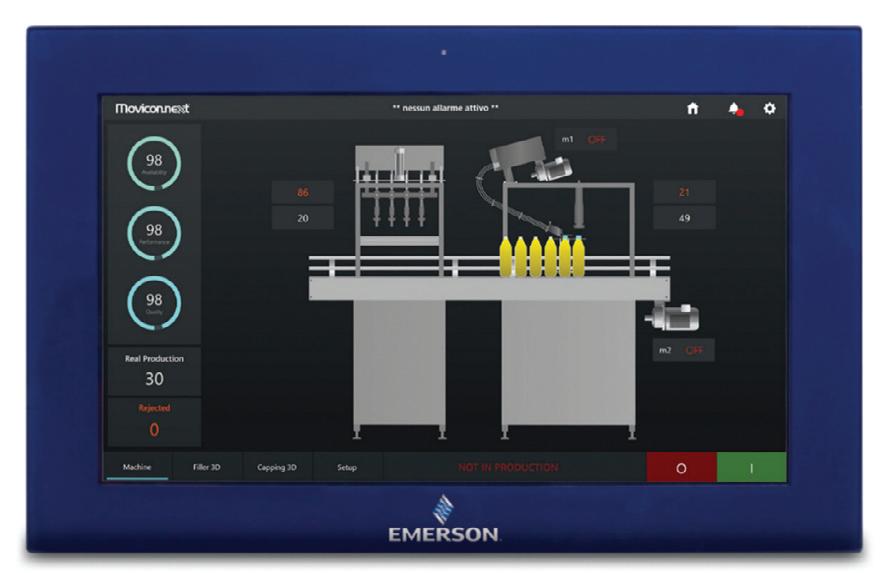
The PACSystems RXi HMI is designed with projective capacitive touchscreen technology that allows users to interact with the visual display with 10-point multitouch capabilities like swipe, pinch or zoom to move to the next screen or expand a chart, enabling easy opera tion by a wide range of personnel with varying levels of training and experience.
PACSystems RXi HMI comes pre-loaded and pre-licensed with Emerson’s Movicon WebHMI software, so the device is ready to operate out of the box, saving deployment time. It is also HTML5-ready, which allows users to collaborate from anywhere, so that the operations, management and maintenance teams can all view the same screen at the same time, no matter the distance. This immediate sharing of information and access to expertise reduces maintenance costs and improves productivity. In addition, it provides extensive protocol sup port with OPC UA for better data contextualisation and MQTT for easy cloud connectivity.
It offers protection in wet applications with an IP66 water resistance rating, as well as being approved for use in a wide range of temperatures from -20 to 65°C. In addition, the device is resistant to chemicals, impact, scratches and dust. It is also designed in accord ance with IEC 62443 Global Automation Cybersecurity Standards to support end users’ overall digital security strategy.
Emerson Automation Solutions www.emerson.com/au/automation
SMC Corporation’s LSP series of liquid dispensing pumps dispenses fluids with high precision, even at low flow rates. This compact, solenoid-type diaphragm pump dispenses volumes between 5 and 20 µL with a repeatability of ap proximately 1%.
The LSP series is self-contained and does not require priming. Features include an adjustable dispense volume control, a buffer that protects the movement of the pump diaphragm and built-in shutoff valve.
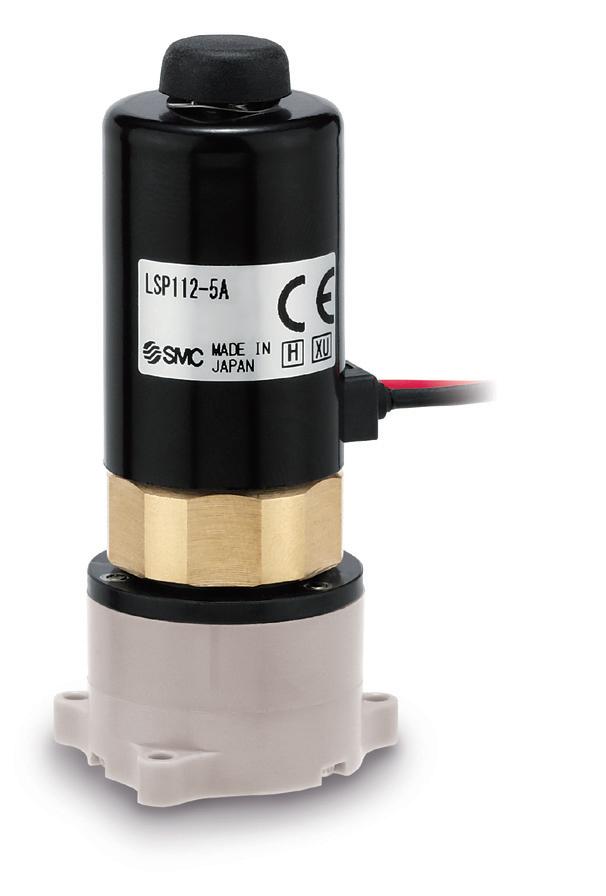
Designed to handle a range of fluids at temperatures between 10 and 50°C, including reagents and cleaning liquids, the LSP series is available in two configurations: body ported and base mounted. It is suitable for use in medical or biomedical analysers, in decontamination ap plications using hydrogen peroxide, in ink jet printers or in applications using semiconductors or solar cells.
SMC Australia | New Zealand www.smcanz.com
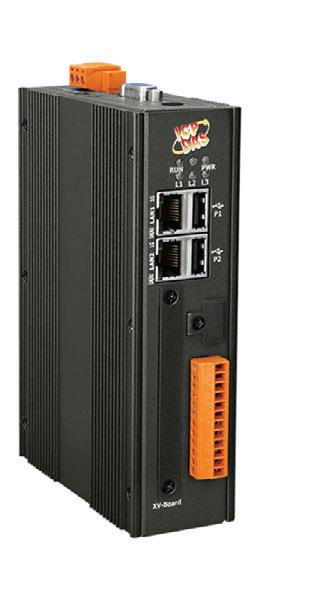
The ICP DAS UA-2641M is an IIoT communication server to be used for integrating OT and IT systems. An IIoT gateway function allows users to access remote I/O modules and controllers via Modbus TCP/RTU/ASCII, MQTT and Ethernet/IP communication protocols.
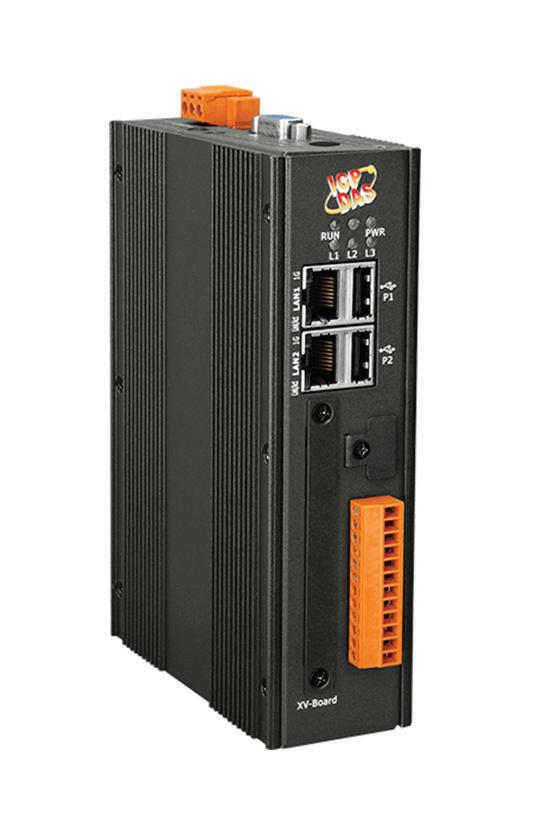
The IIoT gateway function can also convert the I/O data to OPC UA or MQTT protocols for connecting to MES, ERP, SCADA, and cloud services. A data logging function also allows us ers to write the I/O data directly into a remote database and save it to a local file as historical records.
The UA-2641M supports connections to Amazon AWS, Microsoft Azure or other cloud platforms and supports the cloud logic service platform IFTTT, which can connect web apps that allow users to receive first-hand notification messages through commonly used mobile apps when an event is triggered.
It has a 1 GHz ARM quad-core CPU, 1 GB RAM and 8 GB of eMMC flash memory, as well as four RS-232/ RS-4985 serial ports.
ICP Electronics Australia Pty Ltd www.icp-australia.com.au
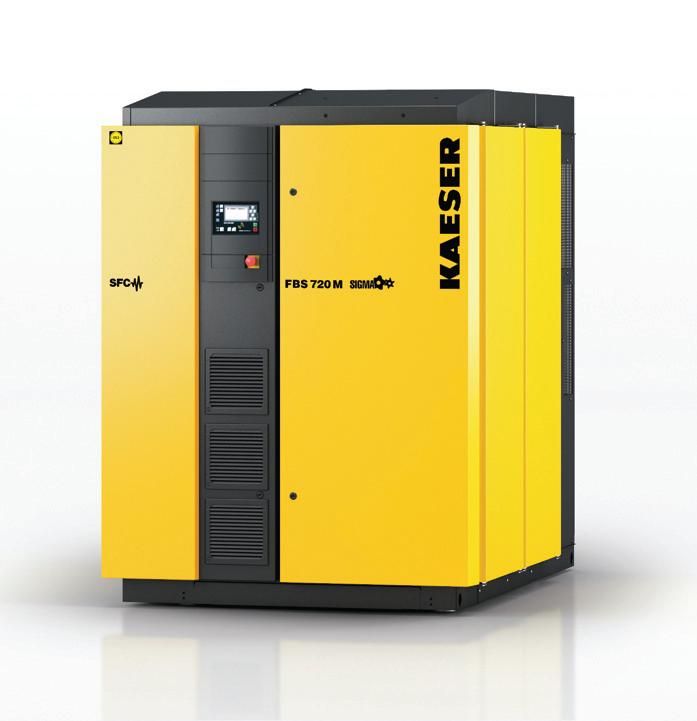
Kaeser recently expanded its FBS series of rotary screw blowers with the inclusion of the FBS 720 model.
The FBS series offers flow rates of 18 to 72 m3/min and pressure differentials from 0.3 to 1.1 bar, as well as a selection of motors ranging from 45 to 110 kW.

The SFC version is equipped with a frequency converter and a synchronous reluctance motor — a slip-free design that combines all the advantages of highefficiency permanent-magnet motors with those of robust, service-friendly asyn chronous motors. Thanks to variable speed control, the flow rate can be adjusted as required and a control range of 1:4 is achieved, allowing dynamic operation.
The STC version is now equipped with an energy-saving IE4 Super Premium Efficiency motor, which reduces energy consumption.
On both versions, power transmission from the motor to the airend takes place via loss-free and maintenancefree gearing, which results in an improvement of up to 7% in specific package input power as compared to the previous model. In order to ensure that the specified performance figures are translated into reality, Kaeser says it guarantees performance in accordance with the strict tolerances of the ISO 1217-C/E standard.
Despite the compact dimensions of the FBS, Kaeser has succeeded in dispensing with the requirement for maintenance access from one side, thereby permitting side-by-side installation. This results in considerable space savings, particularly when operating multiple blower systems. Kaeser Compressors Australia au.kaeser.com
Acromag’s latest addition to the Busworks NT Series of expand able remote Ethernet I/O mod ules is the NT2620 Series RTD/ resistance module. Designed to be a cost-effective modular solu tion, it supports four RTD/resist ance inputs and two bidirectional discrete digital I/O channels to monitor temperature limits with conditional logic.
NTE Ethernet I/O models have dual RJ45 ports and a web server with Modbus TCP or EtherNet/IP communication to monitor or control the internal I/O channels.
The Modbus TCP or EtherNet/IP communication is field selectable, saving the cost of additional modules. An integrated DIN rail bus allows connection of up to three NTX expansion I/O modules. The space-saving design requires only 25 mm of DIN rail per module. Ethernet I/O modules distribute 9–32 VDC power along the DIN rail bus to expansion modules.
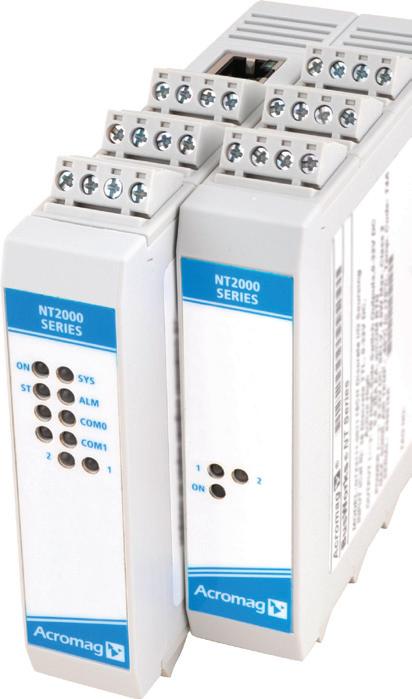
Hazardous location approvals, high noise immunity and -40 to 70°C operation make this I/O suitable for use in harsh environments. Profinet communication is planned for release soon.
Protocol support is selectable using a web browser to configure the network settings and I/O operation. The modules typically func tion as a network slave, but also offer Acromag’s i2o peer-to-peer communication technology to transfer data between modules directly without a host or master in between.
Metromatics Pty Ltd www.metromatics.com.au
The IO-Link digital protocol ensures measurement accuracy, by reducing the number of conversions between analog and digital signals.
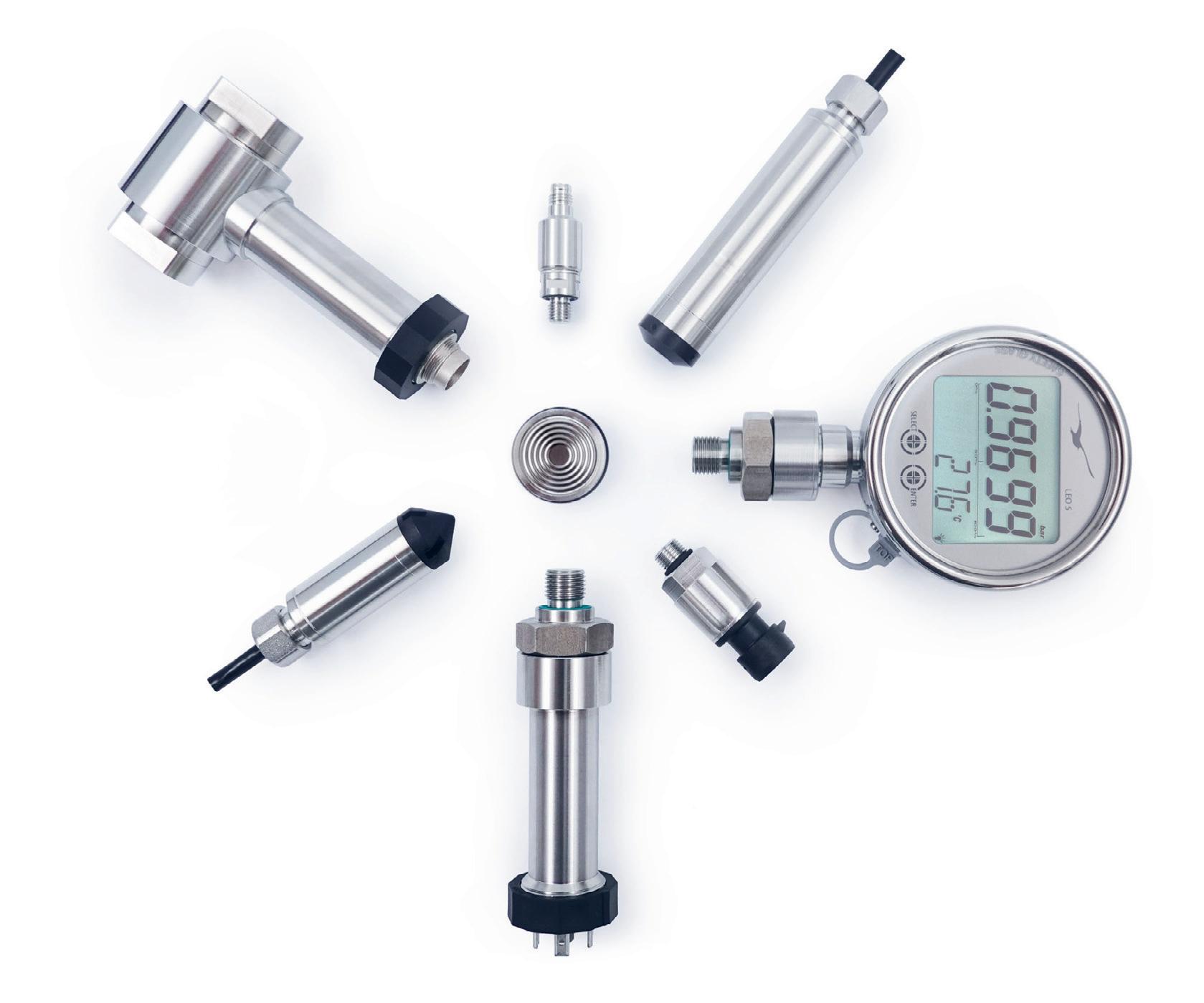
Inpressure sensors supplied by HYDAC, a Wheatstone bridge measures deflection when fluid comes into the sensor through an orifice and pushes up against the cell. The bridge has an array of resistors so that when the cell deforms the resistance value changes.
The change in resistance value goes through an amplifi er into an analog to digital converter, and from there goes to a microprocessor. The real-world value or physical property can be converted and compensated in the sensor’s microprocessor, and it is also possible to move from analog to digital and then make a conversion back into an analog value to send to a PLC.
Every time a value is converted, there is loss of accuracy in the measurement.
Often a sensor’s display may show for example 35.3 bar but the measurement comes up as 35.2 bar or 35.4 bar after the value has been transmitted to a PLC. This is because the analog to digital conversion from the sensor in the PLC depends on the quality of the analog input card and other such factors.
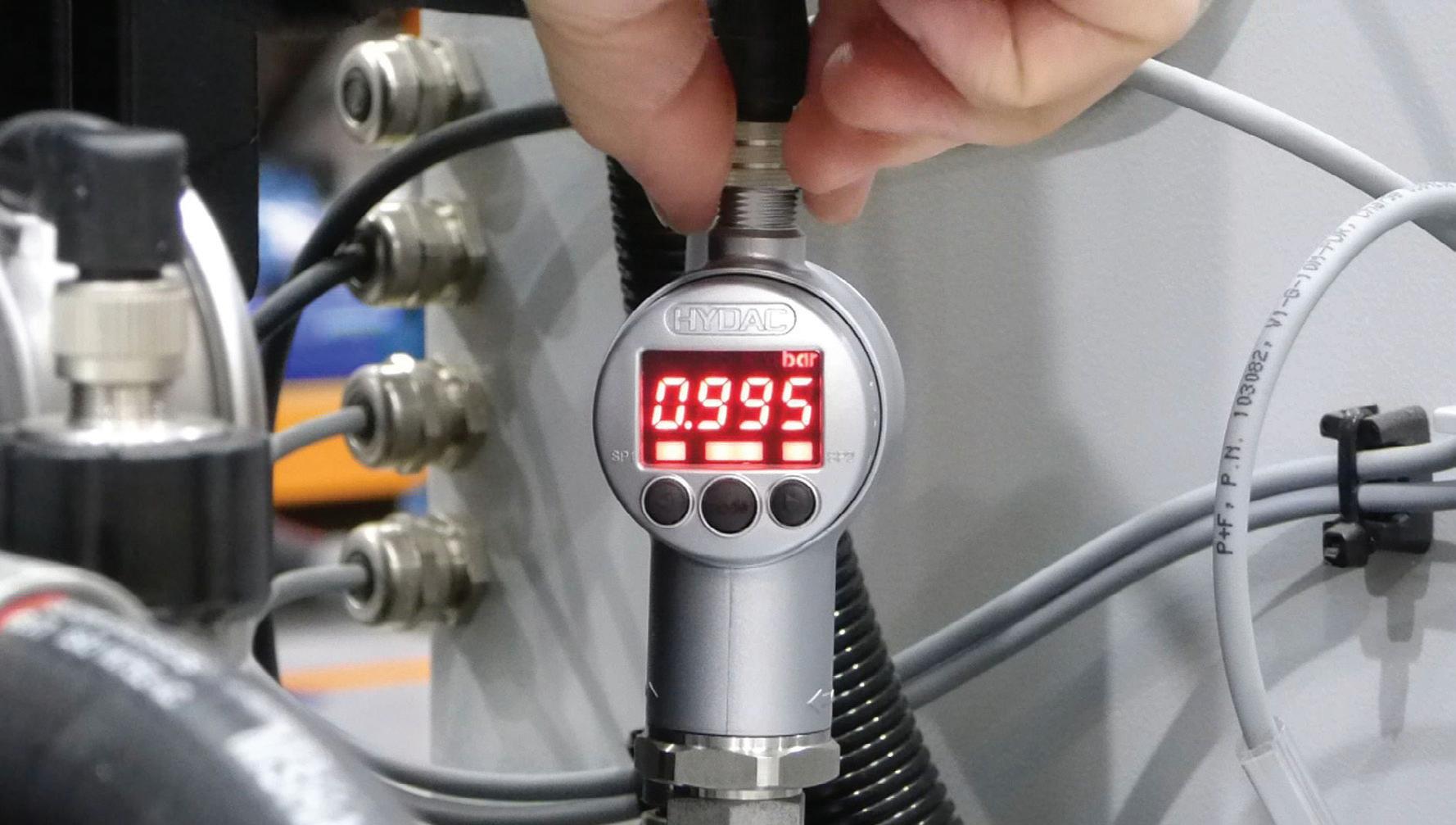
When the IO-Link smart protocol is used rather than analog transmission, a higher measurement accuracy is maintained, because the IO-Link protocol allows the sensor’s digital conversion of the physical property value to be communicated directly.
There is still the requirement to convert the analog measurement to digital and to apply temperature compensation or linearisation. However, the difference is in the way information is transmitted to the PLC via a communication chip in an IO-Link protocol and sent as a signal to the PLC.
It’s also important to note that the IO-Link protocol is based on an open standard, and IO-Link devices are produced by hundreds of vendors.
An IO-Link master is used to connect IO-Link sensors to the PLC. The IO-Link master communicates to the PLC via a fi eldbus protocol such as Profi net, Modbus TCP, EtherNet/IP, EtherCAT or OPC UA.
The analog output types that are available in the HYDAC range of pressure sensors include 4–20 mA, 0–20 mA, 0–10 VDC, 0–5 VDC, and 0.5-4.5 VDC.
HYDAC also supplies relay switch or digital output sensors. These sensors come in two type relay types: normally open (NO) or normally closed (NC) as well as transistor outputs (PNP/NPN).
HYDAC has an extensive range of AMR pressure sensors on offer, including:
• EDS 3400 IO-Link pressure switch/transmitter
• EDS 820 IO-Link pressure switch
• EDS 8000 electronic pressure switch
• HDA 7446 pressure transmitter
• HPT 1400S smart IO-Link pressure sensor
To navigate the pressure sensor selection maze, please contact HYDAC on info@hydac.com.au or call 1300 449 322.
HYDAC International www.hydac.com.au
This issue is sponsored by —

Adelaide’s largest water treatment plant at Happy Valley uses a reliable treatment process to ensure the drinking water produced is high quality and meets the Australian Drinking Water Guidelines.
Operating now for more than six months, Xylem’s ultraviolet disinfection system has kept pathogens at bay to protect the supply of safe, clean drinking water for nearly half a million South Australians.
Commissioned in December 2021, the system was retrofitted to SA Water’s Happy Valley Water Treatment Plant as part of a $26 million upgrade to ensure the utility’s continued compliance with Australia’s world-leading drinking water standards, while enabling community access to green open spaces.
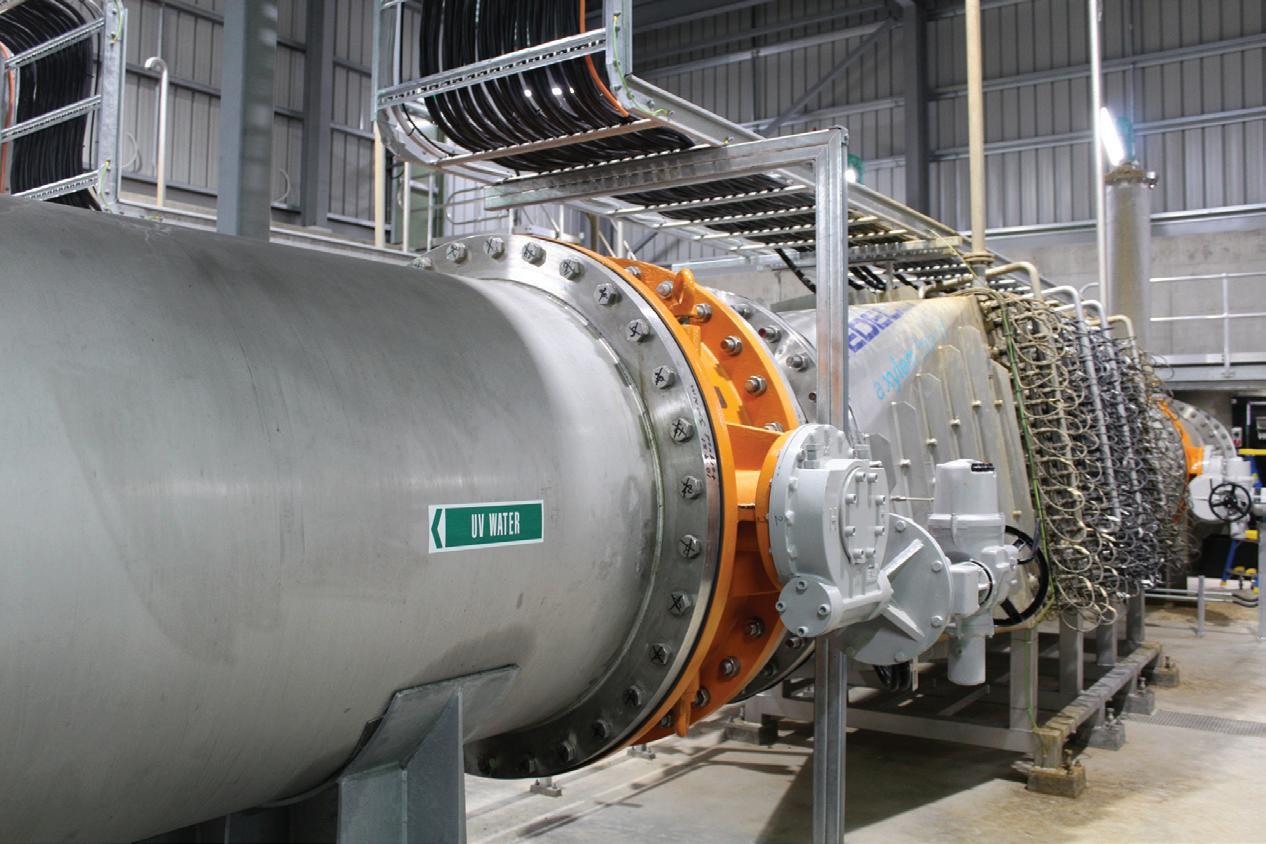
Four reactors with a combined 624 ultraviolet (UV) lamps enable the system to treat up to 600 ML of water each day instantaneously — designed with additional treatment capacity to maintain network flexibility and support demand changes.
SA Water’s Senior Manager of Capital Delivery Peter Seltsikas said secondary disinfection with ultraviolet light provides an additional layer of water quality protection against potentially harmful pathogens.
“Our new UV disinfection system at Happy Valley is another line of defence protecting the quality and safety of our largest drinking water supply to metropolitan Adelaide, while enabling kayaking and fishing at the adjoining reservoir,” Seltsikas said.
“Pathogens come in a range of forms and can be found naturally in water sources. The catchment area that supplies Happy Valley Reservoir, via Mount Bold Reservoir, is significant and covers the Mount Lofty Ranges.
“From a water quality perspective, this particular catchment is challenging given the presence of agriculture, so there’s an everpresent risk of pathogens, such as cryptosporidium, finding their way into our reservoirs.
“To manage these risks, our Happy Valley Water Treatment Plant adopts a series of conventional treatment processes including coagulation, flocculation and filtration to trap and remove dissolved organic matter or other solid particles.
“Disinfection of the water with chlorine occurs after filtration, to destroy any microorganisms that may not have been captured, however cryptosporidium can be resistant to chlorine and evade treatment.
“When pathogens like cryptosporidium and giardia are exposed to and absorb the high-powered ultraviolet light, it destroys their structures and inactivates the microorganisms’ cellular function.
“Each reactor has 13 independent rows of 12 UV lamps, which are automatically operated and are capable of turning themselves off based on the instantaneous treated flow and incoming water quality.
“The lamps are powered by the latest electronic ballast technology — regulating the lamps’ output from 50 to 100% — and harness a sophisticated UV intensity sensor that significantly reduces energy consumption.
“These two features make it one of the most energy-efficient UV systems, and when combined with our solar array at Happy Valley capable of producing more than 17,000 megawatt hours of energy per year to help power the wider plant, ensures we’re meeting the system’s energy demands and operating it sustainably.”
More than 200 people worked on the project across SA Water and its construction partner, John Holland Guidera O’Connor joint venture, with 60 full-time employees working onsite at the height of construction.
Seltsikas said the team’s agility and innovation came to the fore amid global shipping delays last year.
“While the impact of last year’s Suez Canal incident sparked delays across the global supply chain, including with our UV system en route inside a shipping container, we initiated swift changes to our project design and condensed the construction schedule to maintain our delivery program,” her said. “Our team reviewed the design of the inlet duct, which required a new weir to be cut into the existing wall, and the initial design included manual concrete demolition and a significant amount of structural steelwork.
“Harnessing creative thinking, we used a robotic cut saw to remove the concrete more efficiently and poured a large concrete beam, eliminating the need to install steel to structurally support the new weir.
“It was imperative we remained on schedule despite the delay in receiving the infrastructure, and these design variations removed six weeks of work from the program to ensure we could complete the project on budget and on time.”
Datalogic has introduced an image-based code reader designed to assist with intralogistics traceability of products and components. The Matrix 320 5MP reader features an extended lens and lighting options to support a broad range of applications, including those with a large depth of field (DoF) or field of view (FoV).
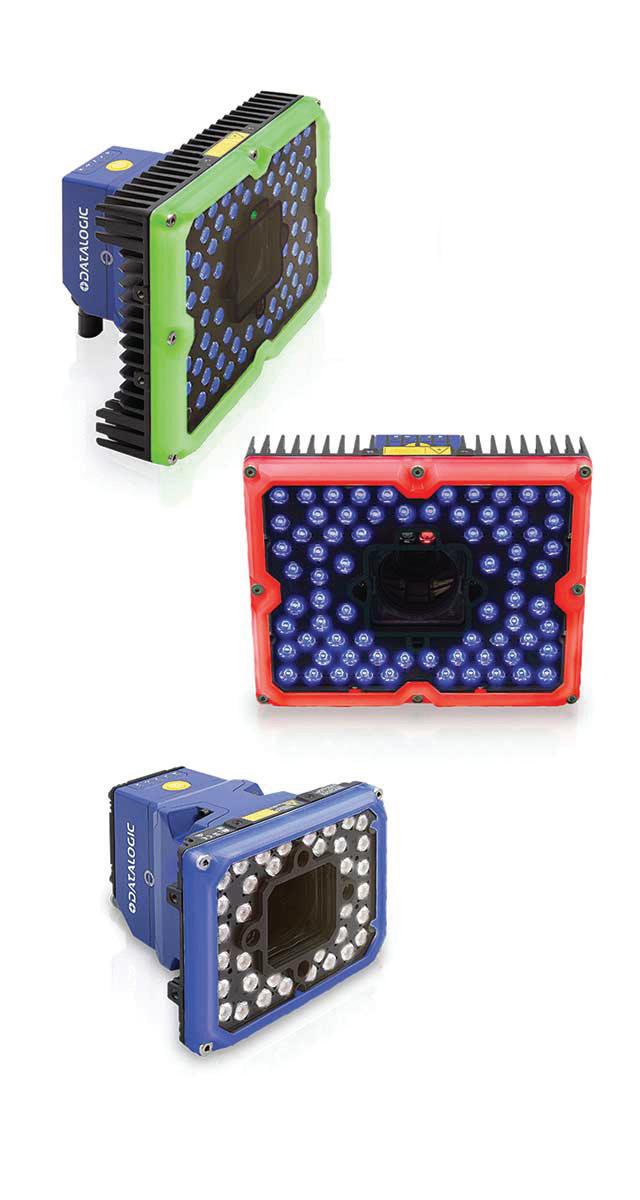
Datalogic’s latest reader in the Matrix range is Industry 4.0 ready, featuring embedded industrial connectivity (including OPC UA) which helps to reduce the cost of integration. It is suitable for intralogistics, e-commerce, retail, manufacturing and logistics automation tasks.
Illumination has been enhanced with a Very High Power (VHP) illuminator, featuring 36 LEDs, or an Ultra High Power (UHP) illuminator, featuring 72 LEDs, to enhance productivity for applications with demanding speed, distance and DoF.
The scanner features an embedded distance sensor, with time-of-flight technology that automatically detects reading distance to dynamically optimise scanning performance. Simple aiming systems, with cross-projection and a grid pattern, allow the scanner to project visible read feedback on the label for an easy-to-see visual reading area, improv ing manual performance.
Modular assembly C-Mount models provide a high level of flexibility and combination of parts, to enable system integrators to service a large variety of industrial applications.
In addition to the two power versions, a broad range of accessories includes a full set of interchangeable lenses (8, 12, 16, 25, 35 and 50 mm) and two illuminator colours (blue and white).
Datalogic Automation Pty Ltd www.datalogic.com
Reduce system downtime with more accurate measurement of critical flow and temperature conditions with the FS+ sensor. Detect leaks or blockages with this easy-to-use sensor. Not only does the FS+ measure the flow rate of liquids in pipes, it also monitors temperature. Plus, no moving parts or rotating sensor components reduce the chance of failure or introducing contamination into the system.
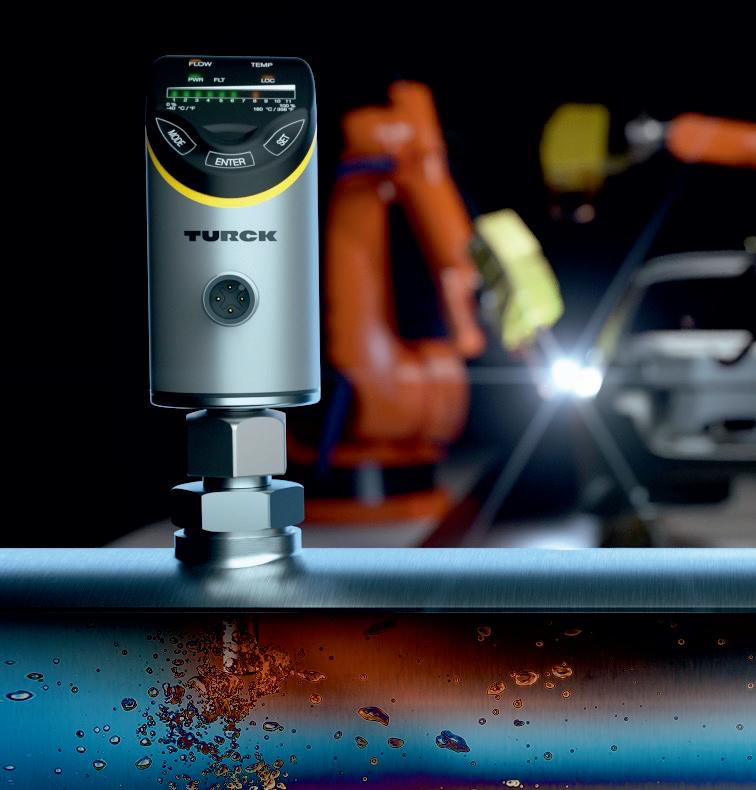
Contact your local sales representative to learn more.
www.turck.com.au 1300-132-566
2
2022
The Institute of Instrumentation, Control and Automation runs expos all around Australia, and after a 2-year hiatus, will be back in Toowoomba this year.

The IICA Toowoomba Technology Expo will be on 2 November at the Empire Theatres.
Toowoomba, famous for its agricultural base, has transformed into a diverse and strong economy through various industries. The fertile farming land contributes over $700 million to the Toowoomba Region economy. In addition, health care and social assistance are the second-largest employing industry and contributor to the GRP. This offers a perfect opportunity for the automation industry to corroborate and join forces in Toowoomba, benefiting the top two productive industries in the region.
In addition, manufacturing is well implemented in the region as the second-largest exporter, driven by food production, transport equipment, metal (primary and fabricated), machinery, and equipment production and manufacturing. Other main industries in Toowoomba include aviation, construction, education, renewables and tourism.
Toowoomba is a regional capital city, agricultural hub, knowl edge and research centre, and freight and logistics hub with bold ambition. With over $13.1 billion in its infrastructure pipeline, the region is unlocking significant productivity, accessibility and amenity through accelerated transitions and investments.
The Toowoomba Region’s strategic location also gives it an advantage as the western gateway to the $237 billion South East Queensland economy, proximity to the Surat and Cooper Basins, and prime position on the Melbourne to Brisbane freight route. This strategic location enhances the trade role for domestic and international import and export markets.
Two new hydrogen clusters have recently been flagged for development in Gladstone and Toowoomba. The Minister for
Energy, Renewables and Hydrogen, Mick de Brenni, shared that the Queensland Government will fund Gladstone Engineering Al liance (GEA) and Toowoomba and Surat Basin Enterprise (TSBE) with a total of $100,000. Toowoomba has been announced as commercially viable for domestic and export-scale renewable hydrogen.
According to a 2019 Deloitte report, Queensland could create thousands of jobs and increase Australia’s GDP by up to $26 billion. The current industry is building the skills capacities and commercialisation opportunities necessary to unlock Australia’s enormous potential.
An IICA expo is a one-stop shop to find out what’s new in the automation industry, make valuable new business connec tions and to catch up with friends. Everyone is welcome to attend, including electricians, engineers, maintenance managers, production planners, operational staff, instrument technicians, health and safety officers, managers, apprentices and students.
There will be 45 exhibitors, including Pilz, Weidmüller, ifm efector, Endress+Hauser, Phoenix Contact, Yokogawa and HYDAC to show the latest in instrumentation, automation and control.
Doors will open at 2 pm, and there will be lucky door prizes to be won throughout the day. Attendees are invited to join the IICA and our exhibitors for a complimentary Happy Hour at 5 pm.
Entry to the expo is free, and those interested in attending can register online at https://bookings.iica.org.au/bookings/ events/event.asp?bookingid=1363.
Registrations before the event day go in the draw to win one of three Amazon Echo Dots.
IICA (Institute of Instrumentation Control & Automation) www.iica.org.au
year, Weidmüller has been celebrating its 50th year in business in Australia. The company has been operating in Australia since 1972 and celebrated the anniversary in midJune with a large group of guests at the Taronga Zoo Function Centre in Sydney. Process Technology caught up with managing director Rafael Koenig to ask some questions about the anniversary.
This
Can you tell us how Weidmüller got its start in Australia and what it was like in the beginning?
Weidmueller’s parent Company is part of the German ‘Mittelstand’, founded in 1850, family-owned and invested in the Australian electrical engineering industry since 1972. The local operations include R&D, production and assembly, sales and marketing. Weidmüller today is an expert in connectivity solutions for power, signal and data in manufacturing, process control and new and existing energy industries. Enabling technologies such as IIoT, condition monitoring, analytics and ‘Sensor to the Cloud’ connectivity are fast becoming core to our contribution to the sustainable development of the industries we serve.
Briefly what is the history of the global Weidmüller organisation?
When founded in 1850, Weidmüller originally manufactured press studs for the textile industry. Since 1948 the company has been active in the electrical industry and known as a pioneer in railmounted terminal blocks. With well over 30 fully owned group companies, 10 production locations and multiple representations in many countries, Weidmüller today is on the forefront of digitalisation.
What is the Australian company’s place in the larger global organisation?
The Australian business is an integral part of the global Weidmüller network. Apart from close collaboration with its local distribution partners to ensure coverage in the unique Australian geographical challenges, the business produces specialist products for the global company network and consider engineering and R&D as key components in contributing to the local industry. In particular, in the field of renewable energy, hydrogen and decarbonisation, the Australian Engineering and R&D competence centre is a vital part
of Weidmüller’s global focus on green energy and sustainability. Klippon Engineering as a Weidmüller brand is in addition servicing the process industry and is a contributor to the successful transition to low emissions technologies.
What have been some major milestones and successes for Weidmüller Australia over the last 50 years?
Soon after Weidmüller commenced operation in Australia in 1972 the company grew rapidly, building on its international reputation. Quickly achieving industry-wide specification for many of its terminal and connector products was due to Weidmüller’s values placed on the highest quality, reliability and adherence to international standards.
Over the years Weidmüller’s products have been ‘designed in’ to critical applications in many power stations, water supply and treatment, rail and traffic signaling as well as countless other applications where absolute reliability is paramount.
By the mid eighties the ability to provide locally designed and manufactured custom specific interface solutions was established. This led to developing many products in conjunction with specific customers and industry partners.
Today our vast portfolio of locally made electronic and electrotechnical products include many innovative solutions that are unique to Weidmüller.
Some of these products interconnect millions of solar panels or monitor the blades of wind turbines, enabling reliable cost effective renewable energy. Weidmüller even designed and patented the first LED headlights that today light the way for Australia’s trains such as the Indian Pacific and the Ghan.
For fifty years almost everywhere you look, in all areas of industry, a Weidmüller product is inside doing the job it was very well engineered to do.
Weidmuller
This issue is sponsored by —
Westwick-Farrow Media A.B.N. 22 152 305 336 www.wfmedia.com.au
Head Office
Unit 7, 6-8 Byfield Street, North Ryde Locked Bag 2226, North Ryde BC NSW 1670
AUSTRALIA ph: +61 2 9168 2500

Predictive maintenance — to catch equipment breakdowns before they appear and reduce downtime — is becoming a priority for manu facturers. As evidence of this, Balluff was recently asked by a Melbourne manufacturer to deliver a solution that proactively manages maintenance on press tools.
Predictive maintenance was achieved by recording how many cycles each individual tool has made and recording the data on an RFID tag which stays with the tool. This means that as tools are changed in and out of the press, the usage data stays with the tool, is always available and can be presented in a format that is easy to read by the IT department without the requirement to fully integrate the system into the machine PLC controller.
Following the implementation and the successful conclusion of the project, we decided to take note of these learnings by writing a case study from the perspective of the production team who sponsored the project and got some great feedback. We also took the unusual step of repeating the case study for collaborative group Open IIoT. Balluff is a member of the Open IIoT Group whose purpose is to break through the jargon and consider practical benefits of Industry 4.0 implementation.
This time rather than the production/ maintenance perspective, we wrote the case study from the perspective of the IT department which was responsible for the integration of data.
I was pleasantly surprised to discover that taking a different perspective on the
same project resulted in a unique overview of the benefits for different departments. It highlighted increased value to the installation with faster return on investment.
This got me thinking about how often we stop to consider the benefits of projects from different stakeholders to truly understand the value both as a customer and a supplier. Even the simplest of automation solutions can be viewed from different perspectives.
For example, if something very simple like an unreliable sensor is replaced with one that is better suited to the application, we would obviously consider the cost of hardware and integration, but what is the real value to the maintenance engineer who will be called out to fix a problem with the old sensor? What is the value to the produc tion supervisor who sees lost production every time that the machine stops? What is the value to the logistics department who are waiting on production to complete their deliveries and so on and so on until you’ve considered the total holistic value of the solution across all verticals.
I think that if we can consider all of these perspectives for such a simple example, it is easy to see how considering this on a larger scale automation project could deliver benefits. Truly understanding the value of a project makes the investment decision easier. In my opinion it is our responsibility as suppliers and as customers to consider the investment holistically and to make that extra effort to understand the outcomes for different stakeholders.
Editor
Glenn Johnson pt@wfmedia.com.au
Publishing Director/MD Geoff Hird

Art Director/Production Manager Julie Wright
Art/Production Colleen Sam, Linda Klobusiak
Circulation
Dianna Alberry circulation@wfmedia.com.au
Copy Control
Mitchie Mullins copy@wfmedia.com.au
Advertising Sales National Group Sales Manager
Nicola Fender-Fox – 0414 703 780 nfender-fox@wfmedia.com.au
Sandra Romanin – 0414 558 464 sromanin@wfmedia.com.au
Tim Thompson – 0421 623 958 tthompson@wfmedia.com.au
If you have any queries regarding our privacy policy please email privacy@wfmedia.com.au
Printed and bound by Bluestar Print Print Post Approved PP100007403 ISSN No. 0819-5447
All material published in this magazine is published in good faith and every care is taken to accurately relay information provided to us. Readers are advised by the publishers to ensure that all necessary safety devices and precautions are installed and safe working procedures adopted before the use of any equipment found or purchased through the information we provide. Further, all performance criteria was provided by the representative company concerned and any dispute should be referred to them.
Information indicating that products are made in Australia or New Zealand is supplied by the source company. Westwick Farrow P/L does not quantify the amount of local content or the accuracy of the statement made by the source.
Contact the editor Jim Wallace is National Sales Manager at Balluff and an Open IIoT contributor. As an Industry 4.0 and digitisation advocate, Jim has extensive knowledge in networking, RFID, identification products, object detection sensors, ultrasonic sensors, systems and training. Jim is focused on generating data from sensors and RFID, while analysing and automating the value that can be delivered from that data. He is especially interested in IOlink connectivity to help automate format changes. Jim has worked for Balluff since 1997, both in Australia and abroad.
The magazine you are reading is just one of 11 published by Westwick-Farrow Media. To receive your free subscription (magazine and eNewsletter), visit the link below.










KELLER products available at