Our Services throughout your Machine’s Operational Lifecycle
The Pilz team of experienced safety consultants and engineers can support both Machine Builders and Machine Users throughout the entire Safety Life Cycle of their machines, from risk assessment and design to implementation, validation, and ongoing maintenance, ensuring comprehensive safety and compliance at every stage.
Safety Lifecycle for Machine Builders
• Design Risk Assessment (DRA)
• Machine Risk Assessment (RA)
• Security Risk Assessment (SRA)
• Safety Concept (SC)
• Safety Requirements Specification (SRS)
• Safe Design (SD)
• Post-Measures Risk Assessment (PMRA)
• Safety Validation / Safety Verification (SV)
• Compliance with Local and International Legislations & Regulations (e.g. CE Marking, AS/NZS 4024)
• Site Audit (MSE)
• Machine Risk Assessment (RA)
• Security Risk Assessment (SRA)
• LOTO Assessment (LA)
• Safety Concept (SC)
• Safety Requirements Specification (SRS)
• Safe Design (SD)
• Functional Safety Management (FSM)
• Project Management (PM)
• Engineering Services (ES)
• Post-Measures Risk Assessment (PMRA)
• Safety Validation / Safety Verification (SV)
• PilzCare Annual Support
• Stop-Time measurements
• Force and Pressure testing for Collaborative Robot applications
• Compliance with Local Legislations & Regulations (e.g. AS/NZS 4024)
welcome COVER FOCUS
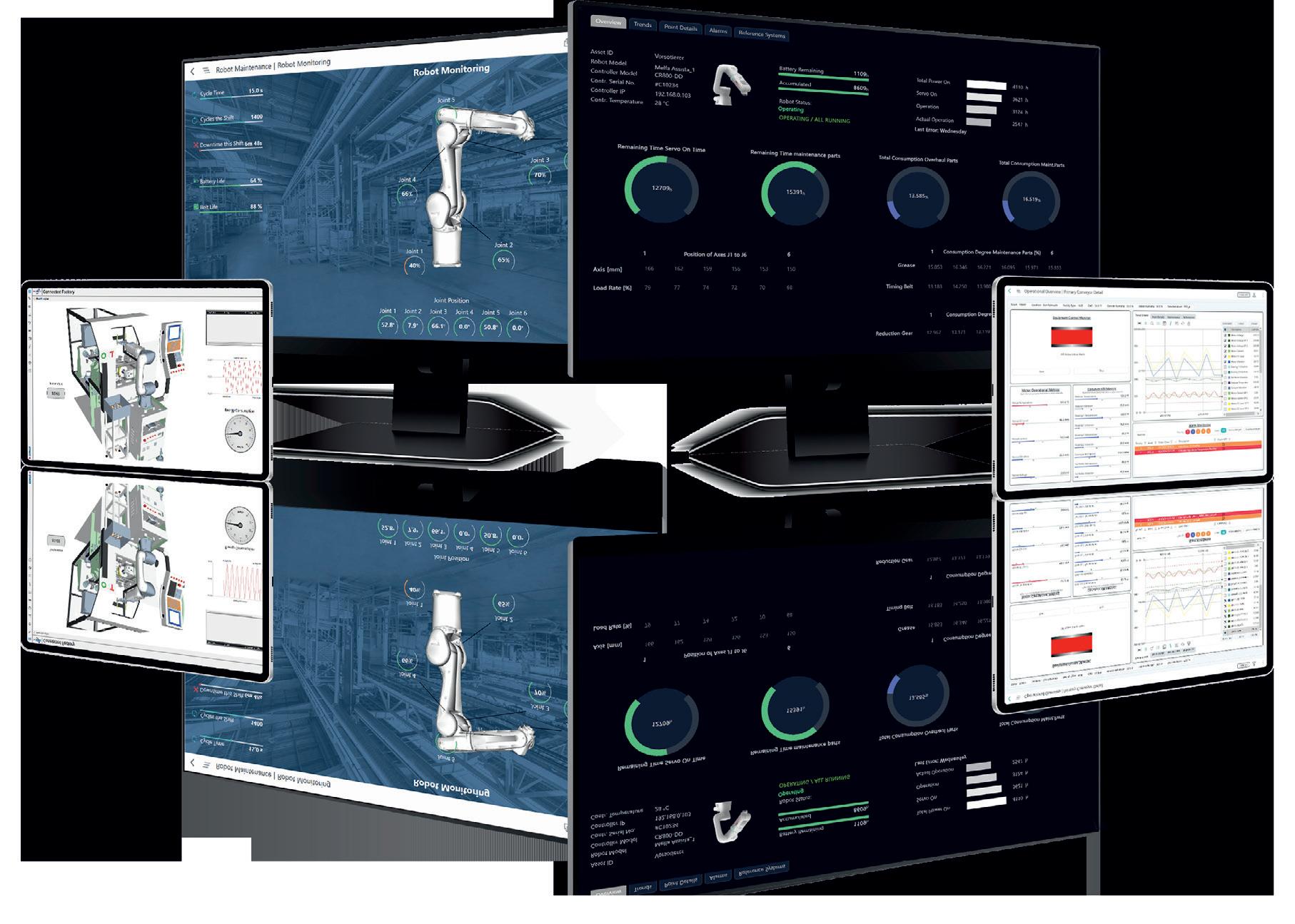
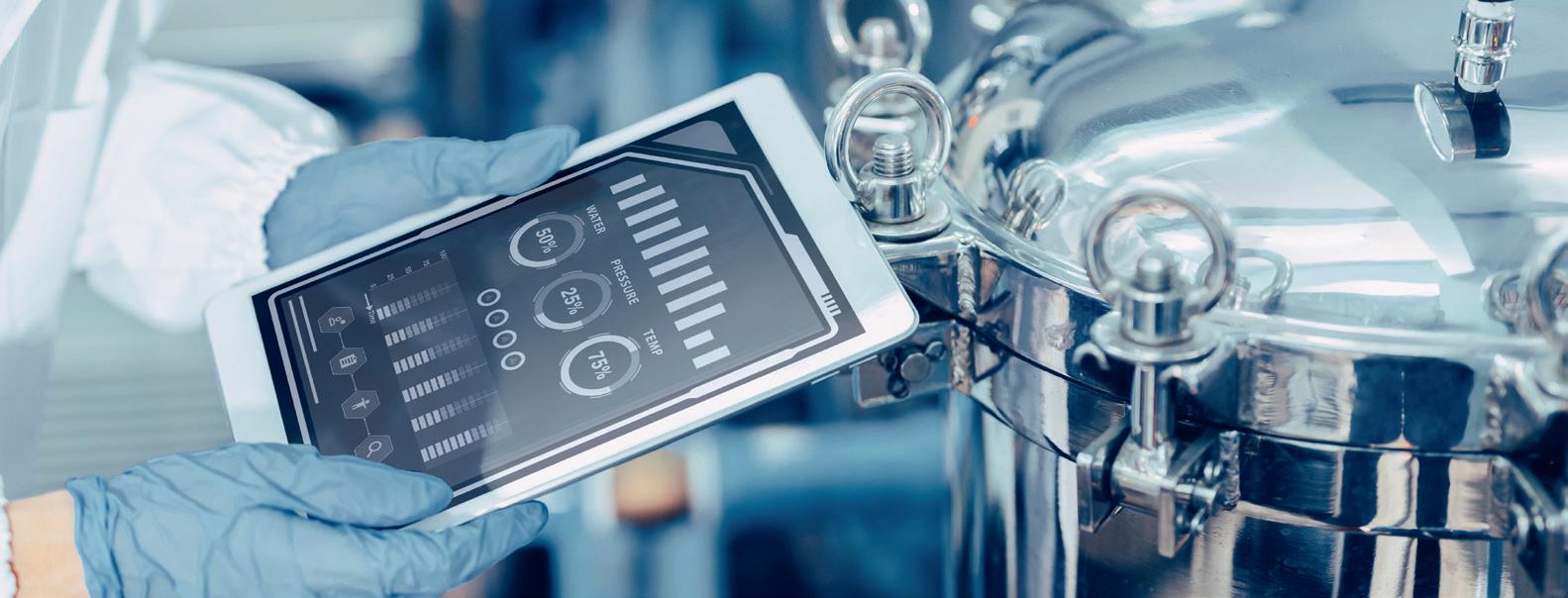
GENESIS version 11, the flagship SCADA platform from Mitsubishi Electric Iconics Digital Solutions, delivers transformative new capabilities for manufacturers in the process and life sciences industries seeking to accelerate automation and digital transformation. Purpose-built for regulated, high-performance environments such as pharmaceutical, biotech, and food and beverage production, GENESIS combines speed, scalability and security in a single software platform.
Engineered to simplify deployment and reduce engineering time, GENESIS offers rapid development tools, a no-code configuration environment, and unlimited licensing to support systems of any size. A built-in industrial historian captures and contextualises process data in real time, helping teams improve overall equipment effectiveness (OEE) — a key metric for maximising asset productivity — while enhancing traceability and enabling proactive maintenance to reduce downtime.
The platform’s advanced visualisation, alarm management (ISA 18.2 compliant) and broad protocol support — including OPC UA, MQTT and BACnet — enable seamless connectivity across both Mitsubishi Electric and third-party systems. With native web-based clients, integrated analytics and an architecture designed to evolve with changing operations, GENESIS enables manufacturers to build smarter, faster and more resilient operations — with built-in redundancy and high availability to minimise downtime.
Whether the goal is to streamline production, improve traceability or scale digital infrastructure across sites, GENESIS version 11 delivers the foundation to do all of these — with clarity, confidence and control.
Australia’s food and beverage manufacturers are increasingly needing to adopt more advanced robotics and automation technologies to enable more flexible and sustainable production. No longer confined to packaging lines or palletising stations, modern robotics and automation systems — now driven by artificial intelligence, machine vision and smart data analytics — are being integrated into every aspect of food and beverage manufacturing, in order to keep up with the changing demands being placed on the industry.
Of course, AI is cropping up everywhere, but have we ever stopped to think what industrial control systems have been doing all along? Those of us who studied electrical engineering some years ago (I won’t give away my age) will remember being schooled in control systems and the seminal work of Rudolf Kálmán. His approach made it possible to calculate an optimal control strategy for multiple loops, and even look into the near future of the behaviour of a process. In many ways, process control loops were like a primitive form of machine learning — only now with AI we have the processing power to take process feedback and adapt to fluctuating conditions in almost real time.
Mitsubishi Electric Australia Phone: (02) 9684-7777 www.mitsubishielectric.com.au/products/ industrial/automation-software
In this issue we have an article about how the European Union is moving from Machinery Directives to the Machinery Regulation, making machine safety standards more strictly enforceable, which could have an impact on Australian technology developers who seek to sell their technology and services to EU customers.
From a practical point of view, we also have an article explaining the effect of hysteresis in pressure calibration and how to deal with it.
As always, more detailed daily news and new automation products can be found on processonline.com.au and by subscribing to our twice-weekly email newsletter.
Glenn Johnson Editor pt@wfmedia.com.au
INDUSTRY NEWS
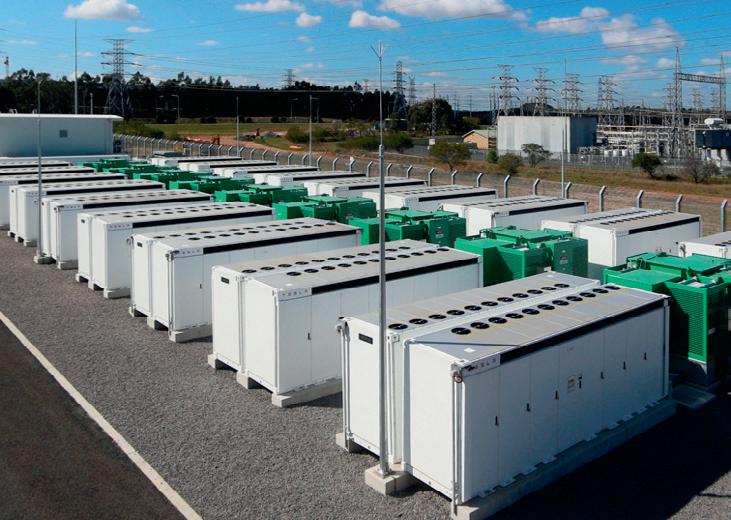
Transgrid finalises system strength plan
Transgrid says it has finalised its system strength plan for New South Wales, defining solutions it will use to maintain grid stability as the state transitions away from coal-fired power generation.
The company says that grid-forming batteries and synchronous condensers will underpin “an innovative portfolio of solutions designed to bolster the strength or ‘heartbeat’ of the NSW power system so that it can more rapidly accommodate renewable energy generation”.
Transgrid says it selected the solutions after assessing more than 100 individual solutions over a three-year process.
“The NSW grid has traditionally relied upon coal generators to provide system strength as a by-product of their typical operation,” said Transgrid Acting Executive General Manager of Network Jason Krstanoski. “There is now an urgent need to maintain this heartbeat, as we accelerate the transition to wind and solar and as 80% of the coal capacity in NSW retires in the next decade.”
Suntory Oceania’s $3bn beverage business launched in Qld
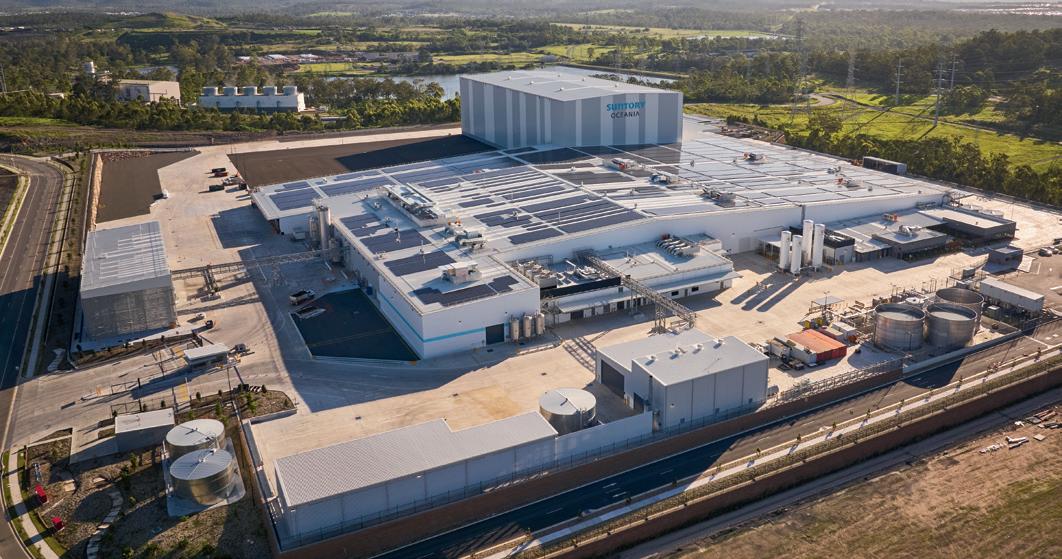
On 7 July 2025, Suntory officially launched its new $3 billion multi-beverage business in the Australian marketplace — Suntory Oceania — at its $400m+ carbon-neutral facility in Ipswich, Queensland.
The Ipswich facility will produce a portfolio of beverages including premium spirits, RTD (ready-to-drink) alcohol beverages, juice, water, soft drinks, coffee, energy and sports drinks. Initially capable of producing 20 million cases per annum, the facility has the capacity to expand to 50 million cases in the future.
“Our team has delivered incredible results in just over two years – the transformation of a greenfield site to a $400 million state-of-the-art, carbon-neutral facility and the establishment of a new supply chain and commercial model,” said Dai Minato, CEO — Suntory Beverage & Food Oceania.
Suntory Oceania’s 40 brands include premium Japanese whiskies, Suntory-196 RTD, Jim Beam, Maker’s Mark, Canadian Club, V Energy, Maximus and Suntory BOSS coffee.
LAPP Australia launches Harnessing Solutions division
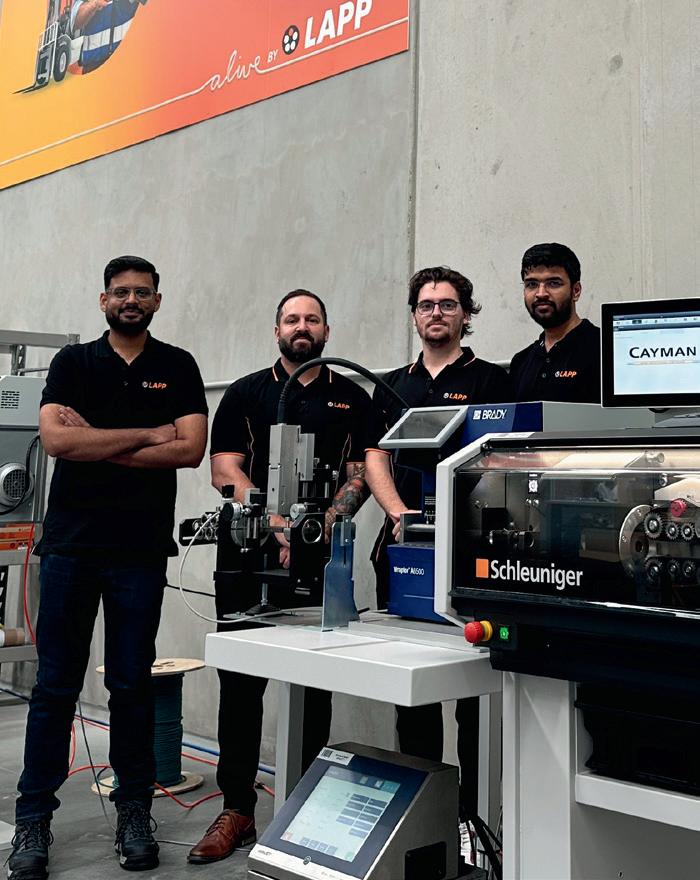
LAPP Australia has announced that it is introducing a dedicated Harnessing Solutions Division in Australia, which it says will help industries achieve automation and digitalisation faster, more efficiently and with OEM standards of quality control, safety and traceability.
LAPP Australia Managing Director Simon Pullinger said the new LAPP Harnessing Solutions business — with its own dedicated technology team — is the next logical step in the expansion of LAPP Australia.
“We are advancing our service from being an outstandingly successful supplier of tens of thousands of world-class cables and components, to becoming an integrated system supplier structured to assist a broad and growing range of industries in assembling the best integrated solutions tailored to their specific needs,” he said.
Pullinger said demand for integrated harnessing solutions is coming particularly from high-demand, time-poor and market-responsive companies for which delay and downtime cost money.
Image: Supplied.
ROBOTICS AND AUTOMATION: TRANSFORMING THE FOOD AND BEVERAGE INDUSTRY
Glenn Johnson, Editor
Food and beverage manufacturers are increasingly adopting more advanced robotics and automation technologies to enable more flexible and sustainable production.
The food and beverage manufacturing industry is in the midst of a technological revolution. Faced with rising consumer expectations, labour shortages, stringent safety regulations and sustainability demands, manufacturers are turning to robotics and automation to enhance productivity, ensure quality and futureproof their operations.1 No longer confined to packaging lines or palletising stations, modern automation systems — now driven by artificial intelligence, machine vision and smart data analytics — are being integrated into every aspect of food and beverage manufacturing.
SMART ROBOTICS AND AUTOMATION IN PRIMARY AND SECONDARY PROCESSING
Historically, the use of robotics in food manufacturing was limited to the packaging and palletising end of the process. Today that is changing rapidly.
Soft robotics and AI-driven machine vision systems have made it possible for robots to handle delicate, irregularly shaped and perishable food items with precision. In meat processing, for example, robots equipped with pressuresensitive grippers and real-time imaging can now identify muscle groups, detect fat content and make precise cuts. These systems improve yield consistency, reduce waste and improve worker safety by removing humans from dangerous cutting operations.2
In dairy and beverage manufacturing, automated systems can now handle tasks such as inline blending, homogenisation and aseptic filling with near-zero human intervention. PLCs and advanced HMIs ensure accuracy in complex operations such as pH adjustment, enzyme dosing or temperaturecontrolled fermentation.3
QUALITY ASSURANCE AND INSPECTION WITH MACHINE VISION
Modern vision systems can now go beyond traditional defect detection. Using multispectral and hyperspectral imaging, they can detect foreign objects, check the internal quality of products and assess freshness. In bakery operations, for instance, vision-guided systems can evaluate the browning and volume of baked goods and reject items outside acceptable ranges.4
It is now also possible to apply AI-powered anomaly detection to learn what normal product variation looks like and identify outliers. This capability reduces false rejects and helps operators quickly pinpoint process deviations, improving overall efficiency and reducing waste.
COBOTS ON THE FACTORY FLOOR
One of the most significant shifts in manufacturing automation is the widespread deployment of collaborative robots. Because cobots are designed to work safely alongside human operators, they are ideal for high-mix, low-volume production environments common in many food and beverage facilities. Cobots are now used in applications such as:
• feeding ingredients into machines; packaging and end-of-line palletising (where weight is not as much of a consideration);
• labelling and inspection; and repetitive handling of trays or crates. Their flexibility and ease of programming mean they can be redeployed quickly to different tasks, making them especially valuable in facilities producing seasonal or short-run products. Cobots also help address labour shortages by taking over repetitive or ergonomically hazardous tasks, freeing up human workers for higher-value roles.
AUTOMATED CLEAN-IN-PLACE AND SANITATION
Cleaning processes have traditionally been labour-intensive and time-consuming, but in more recent years automated CIP systems have enabled manufacturers to clean tanks, pipes and other process equipment with minimal manual involvement.
Ensuring food safety and consistent product quality is an imperative in food and beverage manufacturing. Automation systems with advanced machine vision and AI-based inspection tools have become essential in maintaining these standards. >>
These systems use programmable recipes to control cleaning cycles, water temperature, chemical dosing and rinse times. Sensors
validate cleaning effectiveness in real time by measuring flow rates, turbidity, conductivity and microbial levels.
Now robots are also making inroads into open0-plant cleaning. Some manufacturers are deploying autonomous robots that can clean floors, conveyors and external equipment surfaces using a combination of water jets, brushes and UV light.5 This automation reduces downtime, improves hygiene, and minimises chemical and water use.
AUTONOMOUS MATERIALS HANDLING AND INTRALOGISTICS
The movement of materials within any factory is today a key area of focus for automation. Traditionally reliant on forklifts and conveyors, many food manufacturers are now turning to autonomous mobile robots (AMRs) and automated guided vehicles (AGVs) for intralogistics.
Using onboard sensors, AI-driven navigation and Wi-Fi or 5G networks, AMR systems can dynamically adjust to avoid obstacles, schedule their own routes, and be integrated with warehouse management and ERP systems.
In cold storage environments or hazardous zones, AMRs and AGVs significantly reduce the risk of injury to human workers while maintaining a high throughput.
DIGITAL TWINS AND CYBER-PHYSICAL SYSTEMS
One of the most forward-looking trends in food and beverage manufacturing is the adoption of digital twins — virtual replicas of physical production systems. These digital models use real-time data to mirror production environments, enabling simulation, optimisation and scenario testing, as well as recipe development.
In an automated bakery line, for example, a digital twin can simulate dough flow, oven temperature gradients and cutting speeds, allowing operators to predict how recipe changes will affect product outcomes without interrupting production.
Combined with robotics, digital twins allow seamless commissioning of new lines, real-time process optimisation and faster response to changing market demands. They also support traceability and compliance by linking product attributes with process parameters at every stage of production.
SUSTAINABILITY THROUGH AUTOMATION
Automation is fast becoming a critical enabler of sustainability in food and beverage
manufacturing. Robotics and control systems help reduce energy and water use, minimise raw material waste and improve yield through better process consistency.
Examples of using automation to improve sustainability include:
• automation of HVAC and refrigeration systems to minimise unnecessary energy consumption;
• precision dosing systems that reduce overfilling and product giveaway;
• automated recipe management that ensures consistent batching, minimising rejects and waste;
• energy-efficient motors and smart drives that reduce consumption on conveyors and mixers; and
• real-time data analytics that help identify inefficiencies in resource use.
As ESG (environmental, social and governance) pressures increase, food manufacturers are needing to further leverage automation to meet both regulatory requirements and consumer expectations for responsible production.
EDGE COMPUTING AND DATA-DRIVEN CONTROL
All this automation and robotics has the effect of requiring — and producing — far more data than was previously needed to operate a food and beverage processing plant. Much of these vast volumes of data is also time-sensitive. The result is that it is necessary to implement edge computing, where data is processed at or near the source rather than in a remote cloud service.
Edge-based controllers can make real-time decisions for robotics systems — adjusting speeds, triggering quality checks or rerouting product flow based on immediate sensor feedback. Edge devices equipped with AI can also be used to detect micro-failures or trends invisible to human operators, improving line efficiency and product consistency.
WORKFORCE UPSKILLING AND HUMAN–MACHINE COLLABORATION
All this increasing automation will have a large effect on the food manufacturing workforce, which has traditionally been quite labour-intensive. As automation reshapes the factory floor, the role of human workers is evolving so that future food manufacturing plants will require operators who can work with automation systems, interpret data and maintain robotic equipment.
ONE OF THE MOST SIGNIFICANT SHIFTS IN MANUFACTURING AUTOMATION IS THE WIDESPREAD DEPLOYMENT OF COLLABORATIVE ROBOTS.
Food manufacturers therefore need to invest in training and upskilling programs, often in partnership with vocational institutions, to build a workforce capable of collaborating with automation. Human–machine interfaces are also becoming more intuitive, using touchscreen displays, gesture recognition and even augmented reality to simplify interactions with complex systems. Rather than replacing humans, these advances foster collaborative ecosystems where humans, robots and automation each focus on what they do best — creativity and problem-solving for humans; speed and precision for machines.
CONCLUSION
The convergence of robotics, AI, machine vision and edge computing is propelling food and beverage manufacturing into a new era. From the handling of raw ingredients to final packaging and sanitation, automation is improving productivity, safety and quality in unprecedented ways. While challenges remain — such as integration complexity, upfront capital costs and workforce transition — the longterm benefits are clear. Manufacturers that embrace these technologies are positioning themselves for greater resilience, agility and competitiveness in a demanding global market.
1. Jacob G 2024, Can automation address food & beverage challenges?, Rockwell Automation, <<https://www.foodprocessing.com.au/content/ processing/article/can-automation-address-foodamp-beverage-challenges--408828157>>
2. Meat & Livestock Australia 2018, Sheep processing takes another LEAP forward, <<https://www.mla. com.au/news-and-events/industry-news/sheepprocessing-takes-another-leap-forward>>
3. Tetra Pak Australia & New Zealand 2024, Inline blending takes the guesswork out of plant-based beverages, <<https://www.tetrapak.com/en-anz/ insights/cases-articles/inline-blending-takes-theguesswork-out-of-plant-based-beverages>>
4. BAKERpedia 2024, ‘Optimizing Bakery Quality Control with Vision Inspection Systems’, bakerpedia. com, <<https://bakerpedia.com/optimizing-bakeryquality-control-with-vision-inspection-systems>>
5. What’s New in Food Technology and Manufacturing 2020, Robot that cleans production lines to hygienic standards, <<https://www. foodprocessing.com.au/content/processing/article/ robot-that-cleans-production-lines-to-hygienicstandards-1342090421>>
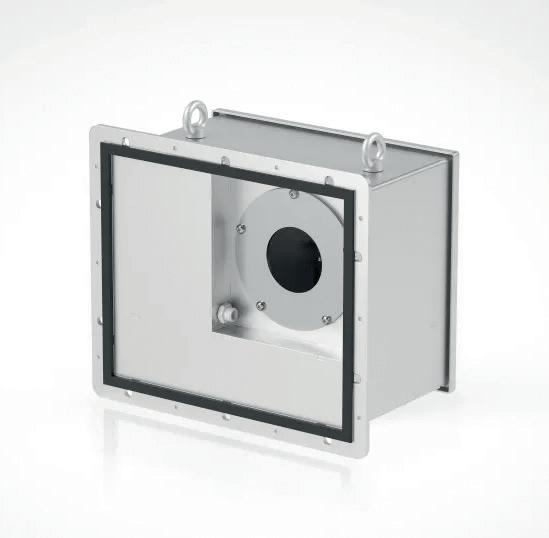
MOTOR PURGE MINI VENT
The Pepperl+Fuchs EPV-6100-MPM Mini Vent is a compact addition to the 6100 Series motor purge and pressurisation system.
Pepperl+Fuchs (Aust) Pty Ltd
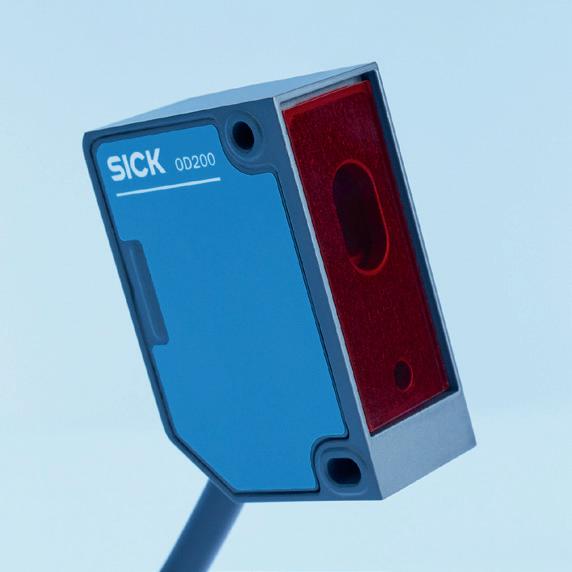
COMPACT DISTANCE SENSOR
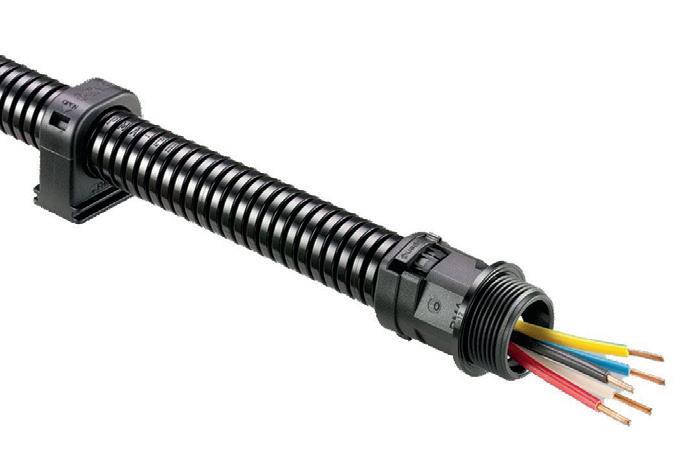
SUSTAINABLE CABLE PROTECTION
PMA EcoGuard PA6 sustainable cable protection solutions are manufactured from 50% recycled polyamide mainly from recovered fishing nets.
Treotham Automation Pty Ltd
The SICK OD200 miniature distance sensor is designed to deliver high measurement stability, even on high-gloss, black or irregular surfaces.
SICK Pty Ltd
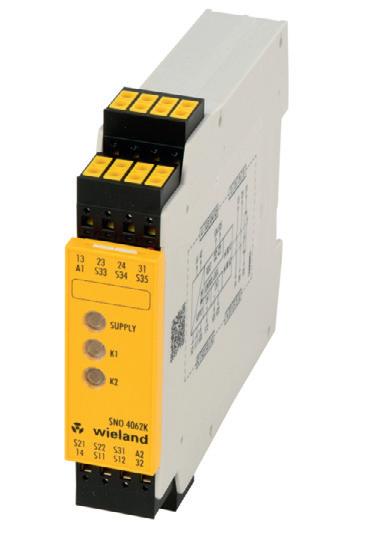
SAFETY RELAY
The Wieland Electric SNO 4062K is a safety relay designed for monitoring safety-related circuits in automation and machinery.
LAPP Australia Pty Ltd
HOT PRODUCTS
Safer, smarter and faster: automation delivers at Coca-Cola’s Brisbane warehouse
Following an open request for tenders for an automated warehousing and palletising system for its 30,000m2 distribution centre in Brisbane, Queensland, Coca-Cola Europacific Partners Australia (CCEP) chose a solution from SSI Schaefer.
Working closely with CCEP, SSI Schaefer created a concept that matched Coca-Cola’s priorities for the site of having a flexible, agile and accurate system that supported the delivery profile of the business as well as the storage capacity and necessary throughput. Providing a system that met the company’s safety culture was also a priority. The concept integrated both case picking with bulk storage and delivers a flexible system, with both high utilisation and availability, picking more than 2.5 million cases annually.
“SSI Schaefer were very collaborative as we moved through the design,” said Anthony Lee, Project Manager Major Works for CCEP. “They brought a lot of their expertise that they gained from around the world in helping us develop this facility.”
The SSI Schaefer design features the company’s SSI Lift&Run technology, which provides high storage density at the same time as high throughput. The SSI Lift&Run high bay warehouse (HBW) receives full pallets via an airbridge directly from the adjacent bottling plant. The system provides for the automatic storage and retrieval of more than 30,000 pallets over seven levels and includes 12 SSI Lift&Run cranes in four aisles, as well as an extensive pallet conveyor system with multiple pallet lifts.
Adjacent to the SSI Lift&Run high bay warehouse, SSI Schaefer installed an automatic case picking (ACP) system. The proximity and direct link to the HBW enables automatic pallet replenishment direct from the HBW. Full pallets are conveyed to the ACP from the automated storage and retrieval system (ASRS) where they are automatically delayered by a depalletising robot, case wheeler and Intralox case singulation. The individual cases are then stored directly in a 3-aisle SSI Cuby trayless shuttle case buffer system.
Required cases are sequenced out of the SSI Cuby case buffer to one of three robots for automatic palletising. The robot palletises the fastest moving top 30 SKUs for the CCEP’s route trade, and is designed to pick over 2.5 million cases annually.
All components are controlled by SSI Schaefer’s WAMAS warehouse control system, which interfaces directly to the on-site SAP host EWM system. This includes SSI SCHAEFER’s Schaefer Pack Pattern Generator (SPPG) module, which is responsible for building stable and dense pallets.
A key aspect to ensuring the best performance of the system is the SSI Resident Maintenance team, which not only maintains the
equipment in direct consultation with CCEP, but also continues to optimise and improve reliability and throughput. Through SSI Schaefer’s computerised maintenance management system (CMMS), all actions by the maintenance team are captured and logged using handheld terminals, building up a database of root causes for all stoppages that then feeds into collaborative continuous improvement actions for the maintenance and operations teams.
The design provided CCEP with a compact yet resilient automated storage solution that allowed it to meet its goal of implementing a new warehouse on the production site, with an airbridge conveyor link directly from production. The solution met all of Coca-Cola’s requirements in terms of storage, throughput, expandability and redundancy.
Complete automation also means greater safety for workers, according to Emily Smeed, Inventory Manager for CCEP.
“It removes the need for a lot of forklift interaction, as well as the need for any manual handling. The more we are putting into the automation the less we are having to expose to our employees on the floor,” she said.
“SSI Schaefer was really committed to making sure the facility worked, and ultimately we have produced a facility that has some of the highest utilisation and availability that I have seen anywhere,” Lee added.
Schaefer Systems International Pty Ltd www.ssi-schaefer.com/en-au
NEWPRODUCTS
EDGE GATEWAY SOLUTION
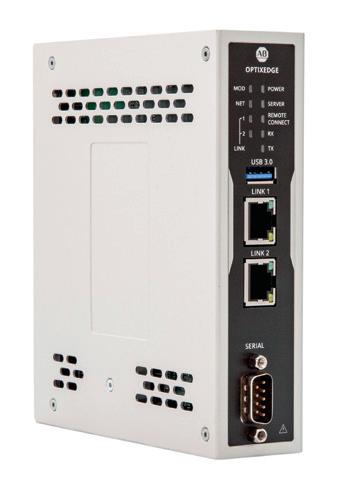
Rockwell Automation’s OptixEdge is an edge gateway solution that connects to the control system through Rockwell’s FactoryTalk Optix software to collect, analyse and send data to the cloud, enabling users to monitor and analyse machine or system data from multiple locations.
A pre-installed FactoryTalk Optix application simplifies the data collection process and allows for easy configuration using only a web browser, cutting down on engineering time. It also offers the ability for users to build and deploy custom applications, if preferred. OptixEdge also allows lightweight applications to run in tandem with included software.
Remote assistance is available through FactoryTalk Remote Access, allowing remote engineers and maintenance teams to program, configure and troubleshoot systems over a secure VPN connection.
OptixEdge can be utilised in conjunction with a plant or machine’s existing Rockwell hardware or third-party graphic terminals and controllers.
Rockwell Automation Australia www.rockwellautomation.com/en-au.html
INDUSTRIAL ROBOTS
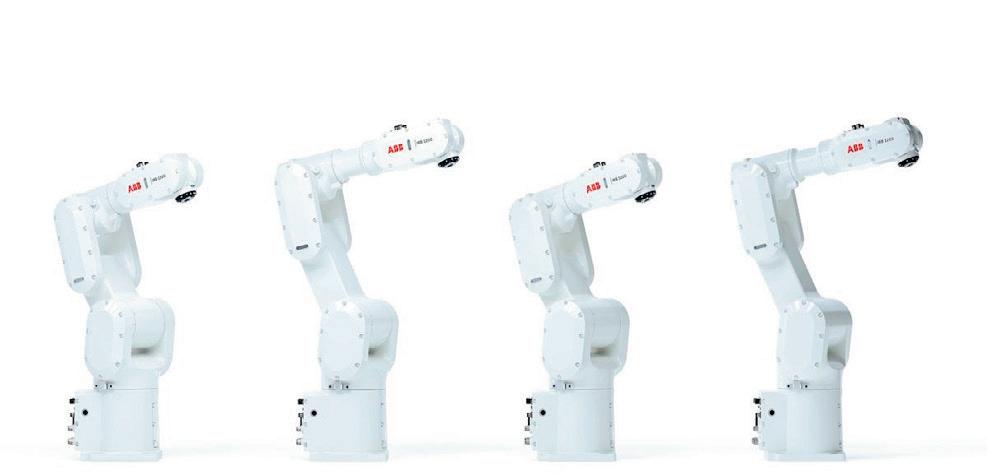
ABB Robotics is releasing a new generation of its IRB 1200 small robot range that it says is faster and more precise, to improve productivity and efficiency in a wide range of applications.
The latest IRB 1200 range comes in four variants — 5, 7, 8 and 9 kg — the latter being suitable for handling larger or heavier parts.
Powered by ABB’s OmniCore controller, the robots achieve improved motion control, with path accuracy to 0.6 mm and pose repeatability down to 0.011 mm, even for multiple robots at high speeds of up to 1.6 m/s.
A 5% faster cycle time means that the IRB 1200 robots can deliver greater productivity, making them more suitable for high throughput, complex applications such as surface finishing, assembly and dispensing, designed for electronics, general industries, automotive electronics, and consumer industries.
With a leaner design, the IRB 1200 range offers more compact and efficient installation, and is 20% lighter than the previous generation, reducing pedestal mounting and energy consumption.
With the OmniCore controller, the IRB 1200 robot range also offers ease of use, through access to ABB’s suite of AI-powered software, such as RobotStudio, RobotStudio AI Assistant and AppStudio.
ABB Australia Pty Ltd www.abbaustralia.com.au
Smart Sensor Technologies
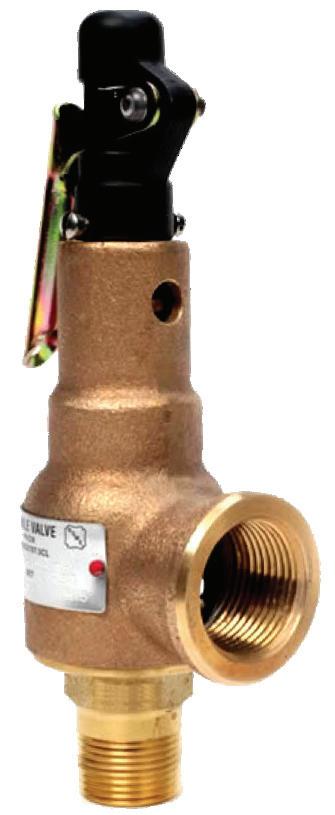
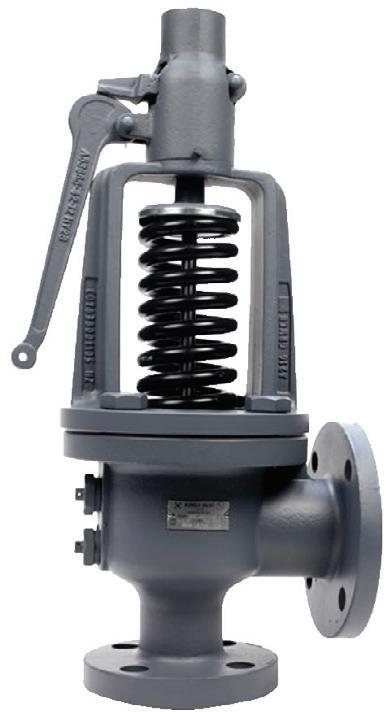
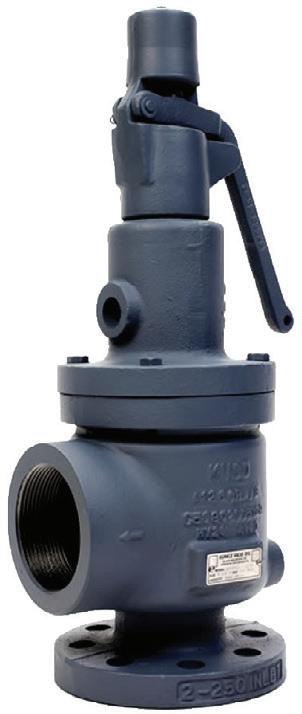
BOILER SafEty VaLVES
NEWPRODUCTS
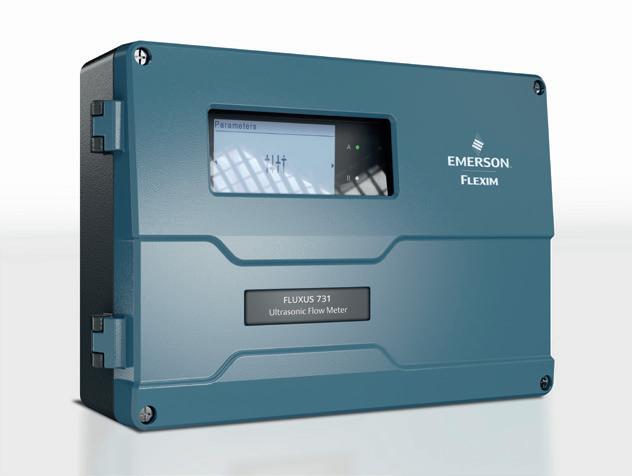
CLAMP-ON ULTRASONIC FLOW METERS
Emerson has announced the Flexim FLUXUS/PIOX 731 series, a range of non-intrusive, clamp-on, ultrasonic flow meters designed to offer good flexibility, convenience and availability. The nine models in the series feature high-performance volumetric and mass flow sensing technologies and a robust, functional design.
Process manufacturers often need to make permanent or temporary flow measurements in areas where penetration into the process media would be problematic because it would typically require a production interruption, along with high costs and downtime. The Flexim 731 series provides non-intrusive volumetric or mass flow measurements with no process media pressure limitations. Modular hardware enables the reduction of assembly time by 20% for faster delivery, the company claims, and integration with most up-to-date software and hardware is designed to be straightforward.
The series provides disturbance correction for enhanced accuracy in challenging conditions, such as disturbed flows. It also provides an Advanced Meter Verification feature to validate meter performance, Wet Gas Correction for accurate gas stream measurements, and the Dynamic Gas Meter feature for mass and volume correction. Various models are available to meet varying application requirements.
All models include an 84 x 45 mm backlit display with 240 x 128 pixel resolution for easy readability, synchronised channel averaging for gas measurements, and a wide power supply range of 0–240 VAC ±10% at 50–60 Hz or 11–32 VDC. A USB-C port is provided as a servicing interface for programming and data extraction.
Emerson www.emerson.com/au/automation
INDUSTRIAL DRIVES
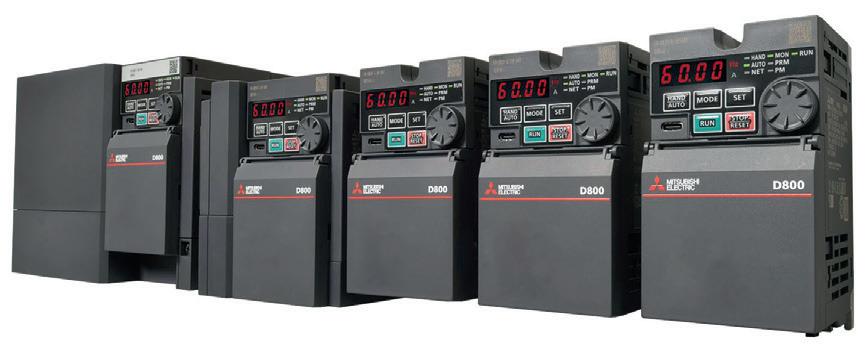
Mitsubishi Electric has launched its FR-D800 series inverters, designed to deliver better performance, easy operation and improved energy efficiency for a wide range of industrial applications.
With a focus on user-friendliness, the FR-D800 inverters feature a door-style surface cover and integrated wiring to make installation faster and easier. The company says the FR-D800 is up to 37% smaller than its equivalent predecessor, reducing enclosure size requirements, allowing for more flexible mounting and reduced installation costs. A USB Type-C interface lets users set parameters directly from a PC without powering up the inverter, streamlining both setup and maintenance.
The FR-D800 series is suitable for a wide range of applications, from conveyors and pumps to food processing equipment and textile machinery. Selected models are also suitable for harsh, corrosive environments, due to circuit board protection meeting IEC 60721-3-3:1994
3C2/3S2 standards. FR-D800 inverters can also be used to control both induction and permanent magnet (PM) motors, eliminating the need for multiple inverters for different motor types. Built-in support for popular Ethernet protocols including CC-Link IE TSN, Modbus/TCP and EtherNet/IP allows for integration into existing industrial networks.
Preventive maintenance functions include lifetime diagnostics for key components like capacitors and fans. Anomaly detection based on current patterns helps reduce the risk of unexpected downtime, and when a fault does occur, analysis functions solve the problem quickly.
Mitsubishi Electric Australia www.mitsubishielectric.com.au
MANAGED ETHERNET SWITCH
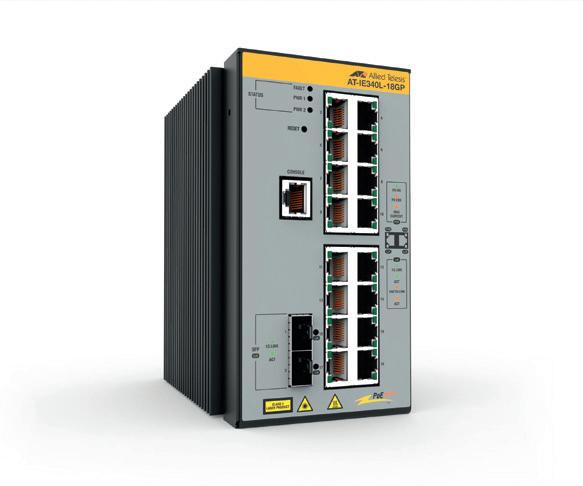
The Allied Telesis IE340L-18GP-80 is a Layer 3 managed industrial Ethernet switch that is equipped with 16 PoE+ Gigabit ports and two SFP uplinks. Its fanless design, vibration-resistant casing and wide temperature tolerance (–40 to 65°C) make it suitable for factories, transport hubs and outdoor installations. Designed with security in mind, it features SSL, SSH and 802.1x authentication to safeguard sensitive data.
With a 36 Gbps switching capacity and 26.7 Mpps throughput, the IE340L is designed for fast performance for latency-sensitive tasks. It supports a broad range of Layer 3 routing protocols — OSPF, BGP, RIP and static routes — along with QoS, VLAN and multicast capabilities.
Allied Telesis’ AMF Plus is designed to simplify network management, while built-in support for Modbus/TCP streamlines integration into industrial automation systems.
LAPP Australia Pty Ltd lappaustralia.com.au
NEWPRODUCTS
INDUSTRIAL EDGE COMPUTER
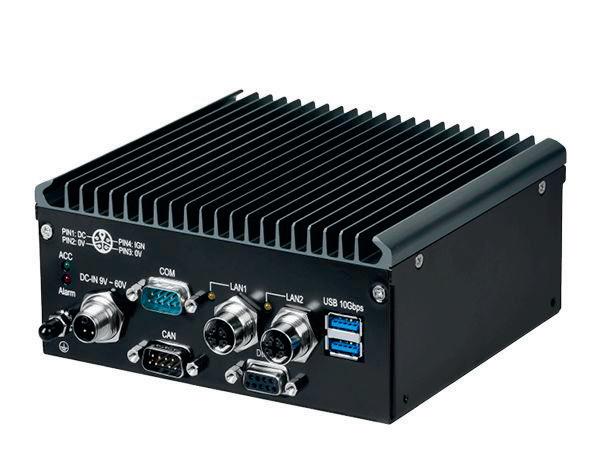
The IBOX-600 Series from Sintrones is a rugged, fanless embedded system designed for edge AI computing. Powered by NVIDIA Jetson Orin NX or Nano modules, the IBOX-600 offers up to 100 TOPS of AI inference performance with 1024 CUDA cores and 32 Tensor cores. Its ARM Cortex-A78AE CPU and onboard JetPack SDK are designed to enable rapid deployment of intelligent applications such as industrial machine vision.
Housed in a compact, durable aluminium chassis, the IBOX-600 features versatile I/O including two LAN ports (2.5 GbE and GbE), HDMI 2.1, USB 3.2, RS-232/422/485, CAN FD, DIO and three M.2/mPCIe slots for SSD, WiFi, WWAN and GPS expansion. It supports wide-range 9–60 VDC input with over-voltage and current protection and includes a UPS back-up battery for power failure resilience. Optional RJ-45 or M12 X-coded connectors ensure deployment flexibility in industrial settings.
Certified to CE, FCC, EN50121-3-2 and MIL-STD-810G standards, and capable of operating from -25 to 70°C, the IBOX-600 aims to combine durability with high-level AI capability. It’s a suitable platform for harsh-environment edge deployments where compact size, reliability and performance matter most.
Backplane Systems Technology Pty Ltd www.backplane.com.au
RUGGED WINDOWS TABLET WITH AI
The RuggON SOL 7 is a 12 ″ fully rugged Windows tablet powered by Intel Arrow Lake Core Ultra 5/7 processors, and is designed for Australian industries that operate in remote, harsh and mission-critical environments.
Purpose-built for sectors such as public safety, mining, agriculture, utilities, warehousing and fleet management, the tablet is designed to combine rugged durability with next-generation AI inferencing capabilities, fast connectivity and advanced data capture in a compact, portable package.
Powered by Intel Core Ultra processors with Intel AI Boost, the product performs AI inferencing on-device. This means it can instantly analyse images, video or sensor data, enabling tasks like defect detection, facial recognition or registration plate matching in real time, even in disconnected environments.
A hot-swappable dual-battery design offers up to 11 h of runtime per cycle, with fast charging. Certified to MIL-STD-810H and IP65, the unit has an operating temperature range of -20 to +63°C, and is engineered to withstand drops, vibration, water, dust and extreme heat. Connectivity is supported with Wi-Fi 7, 5G/LTE, dual SIM (SIM and eSIM) and SATCOM compatibility.
The product also supports 2D barcode scanning (OCR), NFC with FIDO2, UHF RFID, smart card and fingerprint authentication — making it useful for inventory control, security access and regulatory compliance.
Its 12″ QHD (1000 nits) sunlight-readable display with glove and wet touch support is optimised for fast-paced outdoor work. With Thunderbolt 4-certified ports, the tablet offers fast data transfer and integration with industrial peripherals and docked set-ups.
Metromatics Pty Ltd www.metromatics.com.au
MEANINGFUL CONNECTIONS: CONNECTIVITY CHALLENGES IN AUSTRALIA’S PROCESS AUTOMATION LANDSCAPE
Connectivity is the most significant barrier to operational efficiency in Australia’s rapidly evolving processing and manufacturing landscape. However, it’s not the concept of connectivity that is the limiting factor, but the myriad of available protocols and their various abilities.
Food and beverage, mining, and oil and gas are just some industries that require modern technologies to handle complex operations. The benefits that modern connectivity present are extremely powerful and there are extraordinary opportunities in all areas of business, from the factory floor to the ERP department. The challenge for industry professionals lies in the integration and optimisation of these tools to increase output and quality, while reducing risks and costs.
THE GROWING COMPLEXITY OF INDUSTRIAL NETWORKS
Traditional hardwired signals such as 4–20 mA still hold a commanding position across all industries, and these devices will remain relevant for many years thanks to their cost effectiveness and simplicity. But to financially and sustainably maximise processes, these devices need to be smarter. Connectivity is no longer simply a matter of plugging devices into a network. An intricate web of protocols, platforms and standards must work harmoniously to deliver real-time data for informed decision-making.
The adoption of industrial Ethernet and field protocols like IO-Link has expanded rapidly over the last decade, offering increased data and integration potential. However, this explosion has resulted in confusion and a lack of expertise. It is critical, now more than ever, that suppliers have the right resources and expertise in place, and we are positioned to serve in an educational role as industry experts.
THE ROLE OF EXPERTISE AND INNOVATION
The key challenge is choosing the network that best aligns with the strategic goals of the operation — whether that’s reducing downtime, lowering maintenance costs or enabling predictive analytics. Systems like IO-Link are not designed to be a new fieldbus, but an extension of an already rich field I/O landscape. Industrial Ethernet systems built for speed are not intended to be the most effective way of sending data to an ERP system.
While some may view the proliferation of communication protocols as a threat, it also represents an opportunity for industry leaders to demonstrate adaptability and expertise. The key is to present an unbiased, education-driven perspective that empowers users to make informed decisions.
CONNECTIVITY AS THE BACKBONE OF INDUSTRY 4.0
As Industry 4.0 continues to reshape manufacturing, connectivity is the backbone that enables data-driven operations. Australian industries are
increasingly adopting predictive maintenance, autonomous systems and real-time analytics, none of which would be possible without rich data and robust networks.
It is therefore critical to understand the strengths and limitations of each platform within a specific context. Remote mining operations may prioritise network robustness and redundancy, while city-based manufacturing plants might focus on integrating IoT devices for smarter production lines. There is no single ‘best’ solution, but a range of options, each with their own benefits and drawbacks.
Technologies like LoRaWAN are required to help bridge gaps where cellular networks struggle. New technologies like Single Pair Ethernet (SPE) offer a glimpse into what the future holds. These systems will revolutionise process automation in industries like mining, robotics, automotive, water, energy, and oil and gas, and highlight a desire to minimise form factors while enhancing capabilities.
NAVIGATING THE ROAD AHEAD
Balancing experience and embracing innovation are the two key elements as we journey forward. Industry players should approach connectivity challenges with an open mind, recognising that flexibility and continuous learning will be key to staying competitive.
We must foster a mindset of informed decision-making, supported by industry expertise. If we maintain this focus, Australian industries can navigate these complexities and run resilient, efficient operations that are ready for the digital future.
CONCLUSION
Increased connectivity is a pivotal factor in the future of process automation across Australia. While the challenges are genuine and multifaceted, they also offer opportunities for growth and differentiation. Industry experts, suppliers and end-users must collaborate to demystify and integrate meaningful solutions. Only through a collective effort and improved education can Australian industries implement best practices to reap the benefits of a connected future.
*Nicholas Everton is Bürkert’s Regional Business Development Manager for Systems in the East Pacific region. He has seven years of industry experience with Bürkert across several engineering disciplines, a tertiary degree in Computer Science and Networking from UNSW, and a passion for all things related to technology.
DATA-DRIVEN INSIGHTS HOW AI IS TRANSFORMING INDUSTRIAL PROCESSES
Heiko Petersen and Patrick Meade Vargas - ABB Process Automation, and Ruomu Tan - ABB Corporate Research Process Automation
Although most of the underlying mathematics of control systems stems from the 1960s, it has only recently become feasible to apply some algorithms in real time.
Nowadays, artificial intelligence (AI) seems omnipresent. It is a common topic of conversation, bookstores are flooded with literature about it, and few applications seem to do without it. But considering the sheer amount of hype, one may wonder why AI is still so seldom used in the process industries. Or could it perhaps be that it is already used, but just not recognised as such?
Generally, a system is considered to be AI-driven when it performs tasks typically done by humans, such as visual perception, decision making, speech recognition, and translation. As a matter of fact, AI-driven systems can outperform humans in a range of activities such as solving numerical problems, pattern recognition, and retrieving information from a massive number of
sources. Nevertheless, such systems are still in their infancy when it comes to abstract reasoning, social interactions, consciousness, or self-awareness, all of which are routine for humans but out of reach for machines — at least so far.
In view of this, it is important to distinguish between different levels of AI. According to Kaplan and Haenlein1, the evolution of AI can be divided into three stages:
1. Artificial narrow intelligence: the application of AI to specified tasks.
2. Artificial general intelligence: the application of AI to autonomously solve novel problems in multiple fields.
3. Artificial super intelligence: the application of AI to any area that can benefit from scientific creativity, social skills and general wisdom.
Most of today’s AI solutions fall into the first category. In this sense, even James Watt’s flyball governor, a speed regulator for his rotary steam engine of 1768, could be considered AI at stage one. Certainly, it was never marketed as such — and the same can be said for the millions of control solutions operating in the power, refining and chemical industries.
AI AS A SOLUTION
Typically, AI systems not only consist of a brain, or in other words, a sophisticated algorithm; they also must be able to perceive and interact with the world. Vision, hearing, speaking and motion complement the brain and allow AI-based systems to solve real-world problems — tasks very similar to those encountered by process
control systems. While sensors measure process values (dependent variables), such as pressure, flow, temperature etc, the controller takes these inputs and calculates the best way to adjust actuators such as valves, dampers etc (independent variables) to meet certain control objectives. In this scenario the controller’s role is that of a brain, running algebraic calculations and making logical decisions.
WHY NOW?
One of the most obvious reasons why AI is gaining ground now is the exponential increase of available computing power. Some of the constraints data scientists had in the past — such as a limited number of neurons in an artificial neural network (ANN) — basically vanished, thus opening the door to leveraging the full potential of deep learning networks. Furthermore, anybody with a laptop and access to a cloud solution can run a training algorithm. This opens the market for new business models such as self-service model training and software as
a service (SaaS). This not only democratises AI but reduces engineering requirements on control solutions.
In the process industry, digitisation began in the late 1970s with the widespread introduction of programmable logic controllers (PLCs) and distributed control systems (DCS), which replaced analog controllers. Adding new data points and control features became a programming task, rather than a hardware installation and configuration task. This significantly increased the flexibility of the control process while reducing costs. However, adding more control features led to more complex control structures, which were often difficult to understand and maintain. They also required significant engineering effort and process know-how. The need for a leaner and more transparent control approach arose.
ADVANCED PROCESS STEPS
Advancements in mathematics and systems theory, and the increasing availability of computer power, enabled the development
of more advanced process controls. The mathematical fundamentals behind this process can be traced back to the work of Rudolf Kálmán in the early 1960s2 While differential equations describe the dynamics of a physical system in a kind of ‘cleanroom’ scenario, Kálmán added terms for state disturbance and measurement noise, something inevitable in any real-world application. Moreover, he directly formulated his equations using matrix representation, accounting for multiple differential equations with their respective inputs and outputs. This multi-input, multi-output (MIMO) approach made it possible to calculate an optimal control strategy not only for one actuator at a time, but for many simultaneously.
It turned out that Kálmán’s mathematical solution could also be used to look into the future of a process. In contrast to a simple controller, which only calculates the next optimal step for one variable, it was now possible to look multiple steps ahead into the future for multiple variables. The goal remained the same: to minimise the control error, which is the difference between desired and actual process values. But whereas a simple control is ‘driving by sight’, a forward-looking regulator creates a longerterm plan to act upon.
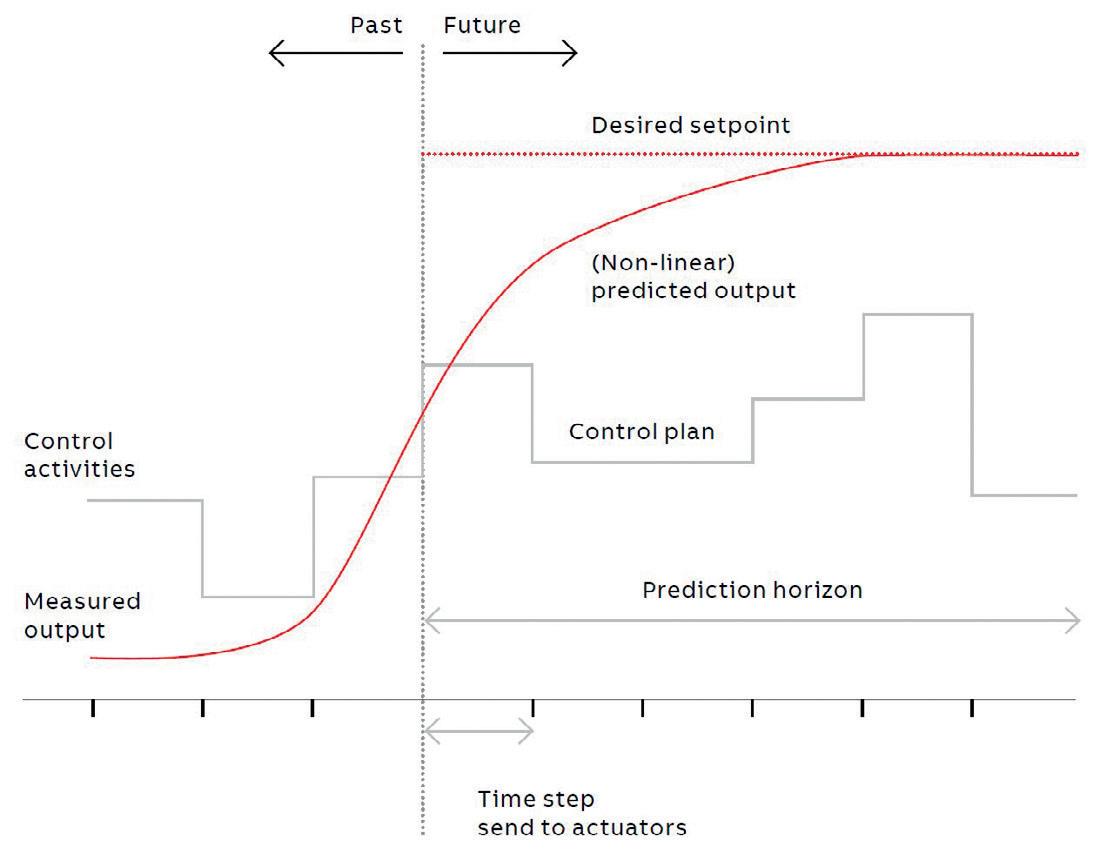
However, as things often do not go according to plan, it became evident that controllers must be able to adjust to changing situations based on feedback from a process. This led to the development of Model Predictive Control (MPC), which generates an optimal control path but triggers only the first step in each iteration. A moment later, once feedback is received, it repeats the process of calculating the optimal path until the desired operating point is reached (Figure 1).
Although these steps have significantly improved many processes, there are multiple areas where process control is still limited.
REAL-TIME FEEDBACK
As described above, controllers require feedback from the process they are controlling, otherwise their performance may suffer. This problem intensifies the longer the delay between action and feedback. Specifically, data with large time gaps compared to the actual process might pose issues. This is typically the case for laboratory data covering product properties that cannot be measured continuously or in real time, such as viscosity or flashpoint.
iStock.com/Just_Super
Adjustments to a process can be performed only after receiving results from the lab, which, because of the inherent delay, might compromise product quality.
One way to overcome this is to estimate the values of a product’s qualities in real time using machine learning (ML) models, such as artificial neural networks (ANN). Here, the accuracy of the models can be continuously improved with each new lab measurement. Predicted qualities can then be used without delay by the control algorithm to adjust the process. In this configuration, conventional and AI-based control algorithms work handin-hand to achieve and maintain desired production goals. This concept can also be applied to processes with long dead times or processes that use sensors that need to be recalibrated regularly and are thus not continuously available.
ADAPTING TO NON-LINEARITIES
Like most systems in the real world, industrial processes are often non-linear. This results in a systemic discrepancy between the real process and its linear process model. In the context of short time horizons and minor process alterations, the resulting error may be negligible. However, on a larger scale it may affect control performance. Although some non-linearities can be offset through transformation of their associated process
ALL IN ALL, IT CAN BE SAID THAT JOINING THE WORLD OF CONTROL TO THAT OF ARTIFICIAL INTELLIGENCE CAN YIELD SIGNIFICANTLY IMPROVED RESULTS IN TERMS OF CONTROLLING INDUSTRIAL PROCESSES.
data — for instance linearisation of a control valve’s characteristic curve — linearisation is not always perfect and can be costly when dealing with many process variables.
AI techniques, on the other hand, can deal very well with non-linearities. ML models can basically adapt to any non-linear behaviour. While most MPC implementations use a linear approach for modelling, the framework itself makes no assumption about the type of process model used or its linearity. Therefore, non-linear models trained with ML algorithms can also be used to reduce modelling errors. This leads to more accurate control and prevents the controller from getting trapped in minor optimisations.
IDENTIFYING THE RIGHT PROCESS BEHAVIOUR
At the heart of any advanced process control system is a process model. However, the
process of identifying the dynamics of a physical system is costly and requires domain know-how and experience.
Traditionally, there are two approaches to model design: a so-called ‘first principles model’, which is based on the design, mechanics and fundamental physics of a system, and a so-called ‘empirical model’, which is based on observations of how a system reacts to stimuli, for example, by means of step-response experiments.
Both approaches can be highly complex, costly, and in some cases — due to the nature of the process — impossible to implement. However, in many cases this burden can be avoided if adequate historical process data is available. During normal plant operation, setpoints are regularly changed and disturbances are continuously happening, both triggering reactions in the process, and thus revealing its dynamic behaviour. These footprints can be used by ML algorithms to easily create accurate models. To accomplish this, the data must be representative and thus cannot be randomly picked. For instance, abnormal process behaviour, or periods with missing data must be removed. Doing this manually would be costly, but for an algorithm this is the perfect task. Selecting, segmenting and clustering vast amounts of data is a home run for machine learning.
CONCLUSION
Process control systems have evolved over time from first principles modelling to proportional integral derivative (PID) loop monitoring, model predictive control, and dynamic optimisation. Today, with the assistance of hardware and machine learning algorithms, it is now possible to complement this with the benefits and opportunities of artificial intelligence.
All in all, it can be said that joining the world of control to that of artificial intelligence can yield significantly improved results in terms of controlling industrial processes. Indeed, the more such hybrid control solutions spread, the more both worlds will converge — an apparently natural process since both share the same theoretical foundations. As this process evolves, continued progress is set to pave the way to the introduction of tomorrow’s fully autonomous production facilities.
1. Kaplan A and Haenlein M 2019, ‘Siri-Siri in my hand, who is the fairest in the Land?’, Business Horizons, vol. 62, no. 1, 2019, pp. 15-25.
2. Kálmán RE 1960, ‘A New Approach to Linear Filtering and Prediction Problems’, Journal of Basic Engineering, vol. 82, no. 1, 1960, pp. 35-45.
Figure 1: The principle of non-linear model predictive control (NMPC).
NEWPRODUCTS
PRODUCT INSPECTION TESTING PROGRAM
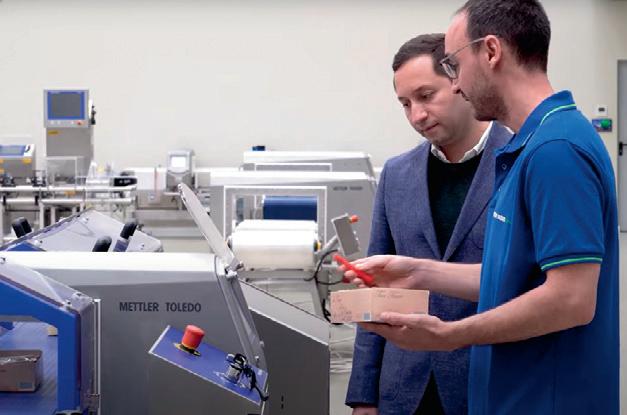
Mettler-Toledo Product Inspection has announced its Test Before You Invest program – a service designed to help food, pharmaceutical and packaging manufacturers make informed product inspection choices through hands-on testing, real performance data and support.
Rather than relying on theoretical specifications or off-the-shelf recommendations, the program allows manufacturers to trial the company’s checkweighers, metal detectors, x-ray systems and vision inspection machines using their own product samples before committing to a purchase. This gives businesses the opportunity to evaluate how product inspection equipment will perform in their specific application and production environment, removing guesswork and helping to avoid costly mistakes.
Each test concludes with a report compiled by the Mettler-Toledo product inspection specialists that provides performance data such as achievable detection sensitivity, weighing accuracy, probability of detection and any production-specific factors that may influence system performance. The ability to compare multiple system configurations or technologies side-by-side further supports smarter, faster decision making.
In many cases, manufacturers benefit from validating a system directly in their own facility. For these scenarios, Mettler-Toledo offers short-term rental equipment as part of the Test Before You Invest program. Manufacturers in Asia and Australia are encouraged to contact their local Mettler-Toledo representative to explore testing and rental options tailored to their region.
After testing is complete, manufacturers can speak directly with Mettler-Toledo engineers to discuss the results in detail, ask questions about integration and explore additional tools that can support performance in the long term.
Mettler-Toledo Ltd www.mt.com
NEWPRODUCTS
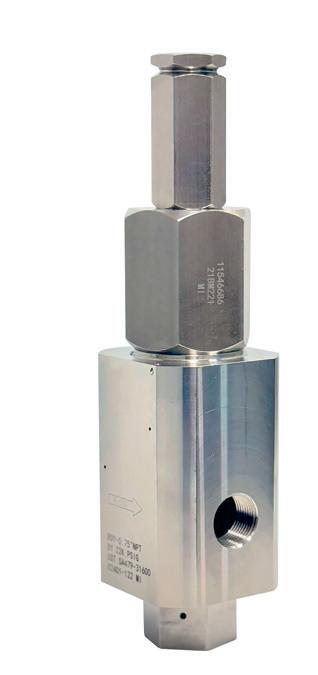
PRESSURE RELIEF VALVE
Emerson has introduced the Anderson Greenwood Type 84 pressure relief valve (PRV), specially designed to protect tanks and vessels used in hydrogen and other high-pressure gas applications. With Arlon 3000XT thermoplastic seating and ASME SA-479 Type S21800 stainless steel spindle material, the Type 84 PRV is designed to provide leak-tight performance, resistance to embrittlement, optimum seat tightness, high reliability and long service life.
PRVs are frequently used in traditional applications, but they are not designed to handle extremely small molecules at very high pressures. Therefore, they are not ideal for hydrogen gas, which can diffuse into metals and cause embrittlement of PRV internals, increasing the risk of leaks, failures and safety problems.
To address these and other issues, Type 84 PRVs are constructed for high-pressure gas applications, with a range of 6000 psig (413 barg) to 20000 psig (1379 barg) for H2 and He, and a range of 6000 psig (413 barg) to 21,756 psig (1500 barg) for all other gases. They reach full lift at less than 5% overpressure to protect the vessel or tank to which they are affixed, with zero leakage at 90% of set pressure.
Type 84 valves feature a cartridge assembly design to apply uniform spring pressure, resulting in secure seat sealing and leak-tight performance. They are factory tested with helium and nitrogen, both accepted industry-wide as a substitute for hydrogen.
Emerson www.emerson.com/au/automation
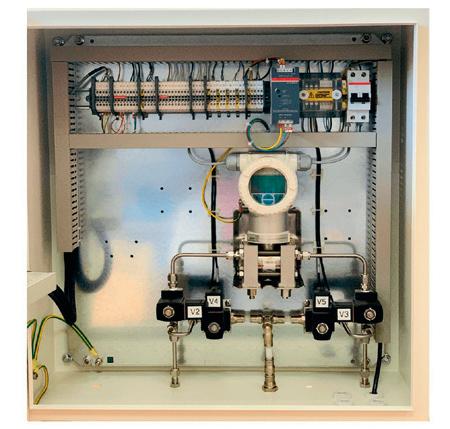
FLUE EMISSION MONITORING SYSTEM
The McMenon Emission FlowGenie is a flow metering system designed specifically to monitor flue and stack emissions. With an increased focus on accurately reporting these flowrates worldwide to curb greenhouse gas emissions, the Emission FlowGenie is designed help end users to meet their regulatory and legislative requirements.
With MCERTS and TÜV approvals showing compliance with EN 14181 and EN 15267-3, the Emission FlowGenie has been certified as fit for purpose for the flow measurement of stack and flue gases.
It is also available with options to suit individual application needs including automatic purging systems, zero/span checks, flexible communication outputs and enclosure heater.
Applications can be sized and customised using McMenon’s Solve software.
The McMenon Emission FlowGenie arrives on site fully configured based on user application details. Installation is quick and easy, requiring only one or two holes for insertion into the process.
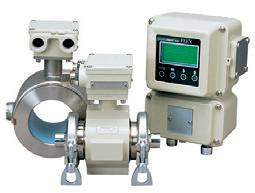
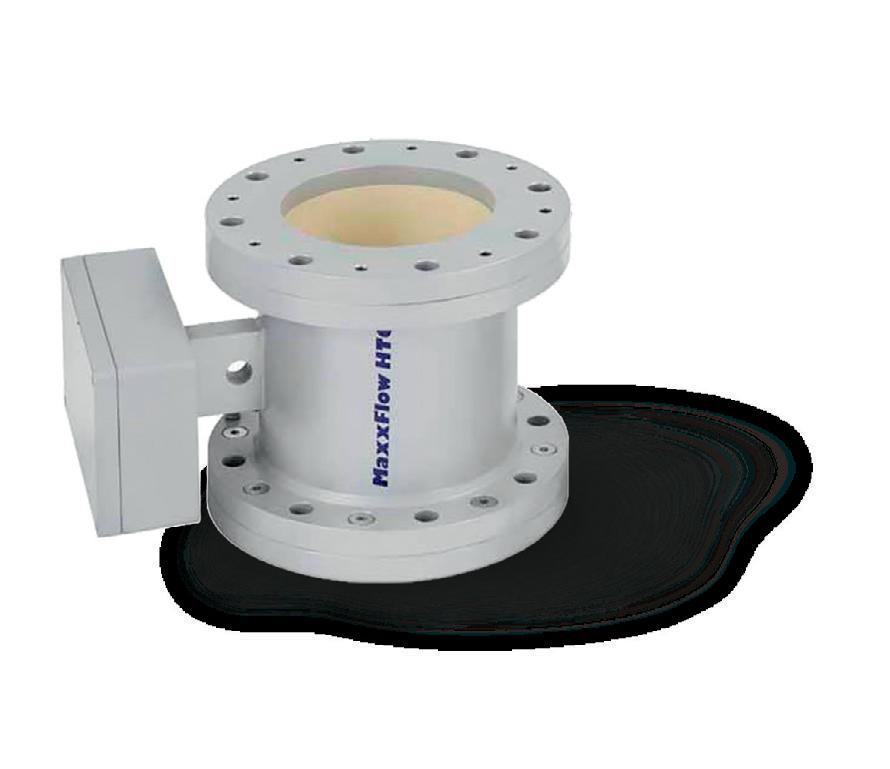
Electromagnetic flowmeter, designed to measure bulk material flows up to 300 t/h.
The meter has no mechanical parts in the flow, is 100% dustproof and erosion free because of ceramic inner pipe.
arbitrary mounting position (inclined/free fall) low headroom required easy to calibrate
EFFICIENCY IN INTRALOGISTICS AMRs AND INDUSTRIAL 5G
How industrial 5G enhances AMR applications and performance.
Anew day is dawning in the Fourth Industrial Revolution as the 5G mobile wireless standard brings long-awaited capabilities to the Industrial Internet of Things (IIoT).
Autonomous mobile robots (AMRs) too are reaping the rewards of the next-generation high-speed network.
AMRs are already often deployed where there is a need for the independent,
automated and highly reliable performance of recurrent transport assignments. Acting in concert with sensors, cameras and sophisticated software, they deliver efficient material flows in production and automate cost-efficient internal logistical processes.
This triumphal march of AMRs in the context of the Fourth Industrial Revolution is no coincidence: short product lifecycles, complex workflows and tight margins are all forcing companies to accelerate manufacturing processes while guaranteeing high product quality. Yet with specialist labour in short supply, squaring this circle often presents a paradoxical challenge indeed. At the same time, another trend is also driving changes in the digitalisation arena: private and corporate
consumers’ demands for individualised products and tailor-made services.
GREATER EFFICIENCY, LOWER COSTS
All these developments point in the same direction: companies must leverage process innovations to become more efficient and more profitable if they want to stay competitive. Which is where the high-speed 5G network comes into play. In industrial contexts (industrial 5G), the fifth-generation mobile wireless standard will trigger a veritable technological revolution as production equipment and internal logistical processes become significantly more flexible, autonomous and efficient — accompanied above all by superior performance. Business-
critical and time-critical AMR scenarios will thus become viable in practice and smart factories a present reality.
Another important market trend is the use of a digital twin, which frequently requires the exchange of large amounts of data in real time to a cloud or edge server, increasing the need for secure real-time communication with high bandwidth as well. With the use of wireless technology, the traditional Automation Pyramid can be reduced, as the ERP layer moves to the cloud, whereas the MES/WMS and control layers move to the edge.
5G means more real-time and secure communication, higher speeds, and increased capacity, which is why companies can create an alternative to cabling and take advantage of the flexibility that wireless connections provide. 5G technology enables the operator to prioritise the network, so that part of the network capacity (a slice) can be reserved for one user, who can be guaranteed a certain service quality.
AMR s IN ACTION IN MANUFACTURING AND LOGISTICS SITES
Currently, Wi-Fi is used to handle communication between robotic control systems and AMRs, and today’s AMRs work well with Wi-Fi.
In the same way that 5G has progressed from 4G, Wi-Fi is also still being developed and updated via different standards. More than just faster speeds, each new revision of Wi-Fi gets more features and better security. The most common Wi-Fi standard is currently Wi-Fi 5, but Wi-Fi 6 is already available and used widely, and Wi-Fi 7 is being developed. Wi-Fi 6 offers at least four times faster speed than Wi-Fi 5 under certain conditions, but it also brings improvements in efficiency and capacity designed to keep up with the increasing number of internetconnected wireless devices, like AMRs. So, Wi-Fi is still (and will be) for many years ahead, a valid and good option for AMRs to work efficiently, especially because many AMRs still do not use the full capabilities of the existing Wi-Fi standards.
There are, however, many reasons why local onsite 5G connectivity will improve the performance of AMRs. In some cases, AMRs are deployed over all-purpose Wi-Fi infrastructures that share resources with other users, which limits the network performance. Other newer AMR capabilities increase the need for more bandwidth and better response times; for
FOR THE FIRST TIME IN INDUSTRIAL HISTORY, DATA RATES OF UP TO 10 GB/S NOW ENABLE INFORMATION TO BE TRANSMITTED ALMOST IN REAL TIME, PROVIDING POWERFUL SUPPORT FOR CRITICAL APPLICATIONS.
example, deeper application automation from semi- to fully automated intralogistics processes and interoperability between different AMR systems.
As Wi-Fi networks become loaded, and in some cases overloaded, when they are used for too many different purposes, they may remain sufficient for non-critical applications, but real-time functionality can suffer. Some users have to confront Wi-Fi challenges like high latency, insufficient bandwidth, limited coverage, insufficient cybersecurity or insufficient reliability. Wireless connectivity was designed primarily for office and home use, but its performance can deteriorate when the number of users increases when sharing the same channel. The Fourth Industrial Revolution — complete with seamless value and supply chains, the widespread sensor-based monitoring of production equipment, robots that interact with each other and innovations in the cloud — needs superior communication performance. All mobile robots can therefore benefit from 5G. When AMR fleets increase in size and functionality, they typically will require a dedicated network solution for these mission-critical applications.
HIGH SPEEDS FOR REAL-TIME COMPUTING
For the first time in industrial history, data rates of up to 10 Gb/s now enable information to be transmitted almost in real time, providing powerful support for critical applications. Coupled with extremely low latency of just a millisecond, this acceleration lays the foundation for a modern ecosystem that guarantees full connectivity with smart devices and machines. As such, it opens the door to completely new IIoT applications. The ability to transmit data instantly makes
warehouse and production processes more efficient while also reducing defects and scrap, for example.
A typical example of the benefits of real-time communication in logistics is the increased focus on interoperability between AMRs from different vendors and other types of automated vehicles. Direct, latency-free communication facilitates the possibility to have cloud-based interfleets that connect different AMRs and control the traffic efficiently. Another benefit is that, for the first time, 5G-connected AMRs can now draw on cloud-based AI platforms to make faster decisions and execute tasks more efficiently. In return, the companies that deploy them enjoy a better quality of order picking and punctual order handling. The lead times needed to reconfigure production, modify layouts and make structural conversions can likewise be slashed.
CONCLUSION
One thing is for sure: tight margins, fierce competition, labour shortage and changing customer demands are putting production and logistics companies under high competitive pressure. Coupled with the newgeneration networks, AMRs will facilitate the design of more efficient processes but also allow completely new business processes to be defined.
As the Industrial IoT comes of age and new initiatives progress, it is natural for users to implement advanced data gathering and new advanced fleet management tasks into their AMRs. For industrial operations, 5G private wireless networks deliver fast data rates and low latency to meet the needs of current and future AMR deployments.
NEWPRODUCTS
SIGNALLING SOLUTIONS
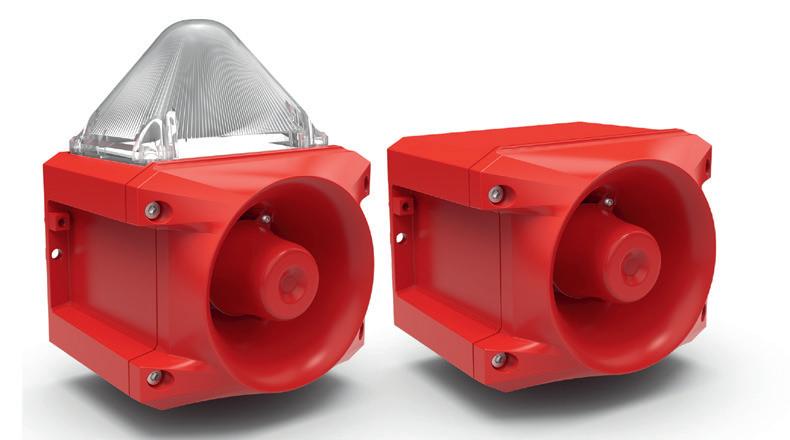
Pfannenberg has launched its PROTECT Series signalling solutions, which it says are engineered for the most demanding industrial and outdoor environments.
With a strong die-cast aluminium housing, the PROTECT series is designed to withstand harsh conditions across a broad spectrum of industries, including fire alarm, marine, machine safety, functional safety and hazardous areas. The series includes both sounders and combined sounder-light devices with six different lens colours, with options for Xenon or LED visual signalling.
PROTECT devices offer 80 selectable tones and four externally selectable additional tones. DIP switch settings offer control over the sound, providing seven different adjustments from 86–116 dB.
The PRO 10 offers a pre- and main alarm function to help prevent shock reactions by starting with a reduced sound pressure level before escalating to the main alarm with a maximum SPL of 116 dB (A). The PRO 10 is certified for MED/MER marine use,
SIL 2/PL d functional safety, and explosion-proof requirements for hazardous zones (ATEX Zone 2/22 & UL Class 1 Division 2 Class I, Groups A, B, C and D, Div. 2, Class II, Groups F and G, Div. 2 Class III).
The PRO X 10-05 is a combined audible and visual signalling device. Along with the same features as the PRO 10, it also features a Xenon flash light (5 Joules, 56 cd) to ensure that alarms are both seen and heard, even over large areas and through obstacles.
IPD Group Limited www.ipd.com.au
WHAT IS NEW WITH THE EUROPEAN MACHINERY DIRECTIVES?
Harry Mulder, Beckhoff Automation*
The EU Machinery Directives are currently being superseded in favour of the Machinery Regulation, which comes into force in January 2027.
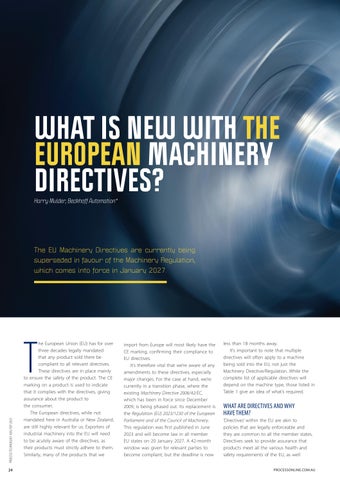
The European Union (EU) has for over three decades legally mandated that any product sold there be compliant to all relevant directives. These directives are in place mainly to ensure the safety of the product. The CE marking on a product is used to indicate that it complies with the directives, giving assurance about the product to the consumer.
The European directives, while not mandated here in Australia or New Zealand, are still highly relevant for us. Exporters of industrial machinery into the EU will need to be acutely aware of the directives, as their products must strictly adhere to them. Similarly, many of the products that we
import from Europe will most likely have the CE marking, confirming their compliance to EU directives.
It’s therefore vital that we’re aware of any amendments to these directives, especially major changes. For the case at hand, we’re currently in a transition phase, where the existing Machinery Directive 2006/42/EC, which has been in force since December 2009, is being phased out. Its replacement is the Regulation (EU) 2023/1230 of the European Parliament and of the Council of Machinery
This regulation was first published in June 2023 and will become law in all member EU states on 20 January 2027. A 42-month window was given for relevant parties to become compliant, but the deadline is now
less than 18 months away.
It’s important to note that multiple directives will often apply to a machine being sold into the EU, not just the Machinery Directive/Regulation. While the complete list of applicable directives will depend on the machine type, those listed in Table 1 give an idea of what’s required.
WHAT ARE DIRECTIVES AND WHY HAVE THEM?
‘Directives’ within the EU are akin to policies that are legally enforceable and they are common to all the member states. Directives seek to provide assurance that products meet all the various health and safety requirements of the EU, as well
as environmental concerns and energy efficiency levels mandated by the EU.
The implementation of consistent directives across all member states has had numerous advantages: it has provided cohesion across the EU and provided a means of implementing common policies, such as safety for workers and environmental protections. This allows all member states to work towards common objectives.
Consistent directives also encourage commerce within the EU, by removing trade barriers. It makes the EU a single market and encourages the free movement of goods between countries. Similarly, those who export machinery into multiple European countries only need to contend
with one set of regulations. This will ultimately lead to increased competition from international sources.
Legal certainty is also provided across member states by having a single set of rules to abide by, which is important for maintaining consumer rights.
FROM ‘DIRECTIVE’ TO ‘REGULATION’
Given the significant advancement in technology since 2009, it’s hardly surprising an update to the Machinery Directive was deemed necessary. The new Regulation seeks to increase safety and address numerous shortcomings in product coverage and conformity assessment procedures that became apparent with the Directive.
While the thrust of the Regulation remains the same, its application area has been extended to include machinery and “related products”. It has been lengthened considerably and contains almost double the number of articles. The content has also been reorganised and expanded where deemed necessary.
But perhaps the biggest single difference is the change from a ‘Directive’ to a ‘Regulation’. The main difference is that directives only set out goals that need to be achieved, which still allows individual countries to formulate their own national laws to apply them. This has led to some divergence in interpretation and variances in laws between the states.
‘Regulations’, on the other hand, must be transposed verbatim into national law by each country, making them legally binding. There is no possibility for amendments, meaning one consistent law throughout the EU.
WHAT IS NEW?
We will now briefly look at some of the changes that will be ushered in by the new Machinery Regulation.
Clarification of definitions
There were some legal ambiguities due to the lack of clarity on the scope and definitions of certain terms in the Directive, leaving open the possibility of safety gaps. Below are some of the terms whose definitions have been reworded.
Safety components have been identified as being either a physical component (hardware) or digital (software) or a combination. Software implementations can now also be recognised as a standalone safety product.
The term ‘substantial modification’ of a machine has been clarified to mean if new hazards are created, or if its existing safety concept is inadequate. These modifications can also be software-driven. In these cases, the machine must undergo a renewed risk assessment and safety audit.
An ‘authorised representative’ has been defined as a person or legal entity that represents the manufacturer in the European market. The role includes being the provider of documentation, such as the Declaration of Conformity (DoC), manuals, test reports and the CE mark. However, design-related work cannot be completed by the authorised representative.
iStock.com/Liuhsihsiang
Directive Number
Machinery
Low Voltage
Electromagnetic Compatibility (EMC)
Pressure Equipment
ATEX (ATmospheres EXplosibles)
RED (Radio Equipment Directive)
RoHS (Restriction of Hazardous Substances)
2006/42/EC
2014/35/EU
2014/30/EU
2014/68/EU
2014/34/EU
2014/53/EU
2011/65/EU
Table 1: Some of the additional product directives a machine may be subject to, if it’s to meet CE Mark requirements.
Specific roles have also been assigned to ‘economic operators’, namely the importer and distributor of machinery. They are given extensive obligations for the health and safety of machinery users. If a product has no authorised representative, then economic operators must assume responsibility for providing documentation and product tracing, for reportable safety issues.
Strengthening machinery type classifications
A formalised definition of ‘machine’ has been established, allowing segregation into two groups, depending on hazard levels. These categories have been considerably strengthened to clarify the need for inspection.
The Regulation works with the New Legislative Framework (NLF) for its conformity assessment procedures. The NLF uses a modular approach to determine how products are to be assessed. Modules A and C allow self-assessment, whereas Module B must involve a notifying body for certification. Module H and the new Module G are for higher-risk products, requiring more rigorous testing by third parties.
Software – driven, emerging technologies
The Machinery Directive understandably didn’t cover the risks that could stem from emerging technologies, especially those that are software driven. But softwareimplemented functionality is now far more prevalent, so the Regulation has been expanded accordingly.
The term ‘AI’ (artificial intelligence) isn’t specifically mentioned in the Regulation, although the expression “fully or partially self-evolving behaviour using machine
learning approaches” is used when categorising machinery. Risk assessments must include hazards that could be generated by any self-evolving behaviour during the life cycle of the machine.
AI can be used for functional safety but needs to be accompanied by established safety measures to mitigate potential risks. Conventional safety must still be able to override AI functionality.
Industrial security has become an integral part of machinery and thus the Regulation includes new sections covering ‘protection against software corruption’. It mandates that every intervention with the machine’s software, be it legitimate or illegitimate, be recorded as evidence and that these records be kept for at least a year.
Furthermore, machinery must be reliable enough to “withstand malicious attacks from third-parties”. These cybersecurity attacks must not lead to hazardous situations. The machine must also be protected against data corruption, be it accidental or intentional.
The Regulation is always looking to harmonise with other standards. Two candidates relevant to security are the European Cyber Resilience Act (CRA) and the Network and Information Systems (NIS 2). Both were adopted by the EU in October 2024, but neither has yet to be formally harmonised into the Regulation.
Testing of safety functions
A ‘safety function’ is defined as a function that serves to fulfil a protective measure designed to eliminate (or at the very least reduce) a risk, which, if it fails, could increase that risk. The Regulation stipulates that a
safety function in a machine should, where possible, be testable by the end user. The manufacturer is to provide descriptions for test procedures, as well as adjustment and maintenance for safe usage.
Softcopy documentation is now acceptable
Machines can now be delivered with digitised documentation only, according to the Regulation. This includes the EC Declaration of Conformity. Online access can be via a barcode on the machine and must remain available for a minimum of 10 years.
This long-awaited change has been brought about for environmental and monetary reasons. Paper-based documentation must still be freely available on request for the first month, after which it may become a chargeable item.
Additional material in the Regulation
The Regulation has been expanded to include autonomous mobile machinery,
THE EUROPEAN DIRECTIVES, WHILE NOT MANDATED HERE IN AUSTRALIA OR NEW ZEALAND, ARE STILL HIGHLY RELEVANT FOR US.
reflecting increased use by industry. It states a risk assessment must be done for the areas where autonomous vehicles operate. There also needs to be a defined supervisory function specific to autonomous mode, and safety functions that perform independently of the supervisory function. Failure of the steering system cannot impact on safety.
CE MARKING
‘CE’ stands for Conformité Européenne, which translates to European Conformity. CE marking is not a product standard, but a label of conformity for products supplied into Europe. When affixed to a product, it signifies that it complies with every single EU directive that applies to that product.
In the case of machinery, it’s normal that numerous directives will apply, including the Machinery Directive. There are also some very general directives, such as Units of measurement (80/181/EEC), which stipulates the use of SI units and precludes the usage
of non-metric components in machinery. It’s important to note that the CE mark was never intended to be an indication of the quality of the product, nor can the country of origin be determined from CE marking. CE merely signifies that it meets European standards.
Compliance to CE marking is enforced by all the EEA member states. Government authorities can at any time request to see supporting documentation and can even request samples to conduct lab testing. If a product is found to be non-compliant, it will be withdrawn from the market and the manufacturer or distributor face penalties.
CONCLUSION
All machinery sold into Europe has, for the last three decades, needed to comply with the Machinery Directive. This Directive is currently being superseded in favour of the Machinery Regulation, which comes into force in January 2027.
European directives are not mandatory in Australia, so the impact will be indirect but still significant. The primary aim of EU directives is to ensure product safety for users, with product compliance being confirmed by a CE mark being affixed to that product.
Reference
European Commission 2025, Internal Market, Industry, Entrepreneurship and SMEs: Machinery, <<https://singlemarket-economy.ec.europa.eu/sectors/mechanicalengineering/machinery_en>>
*Harry Mulder is the Principal Automation Engineer at Beckhoff Automation. He has been involved in industrial automation for over 30 years and is fascinated by how new innovations keep affecting the direction of the industry. He really enjoys the practical element of his job, where he has a chance to get his hands dirty!
Encore Tissue improves plant reliability with new DCS
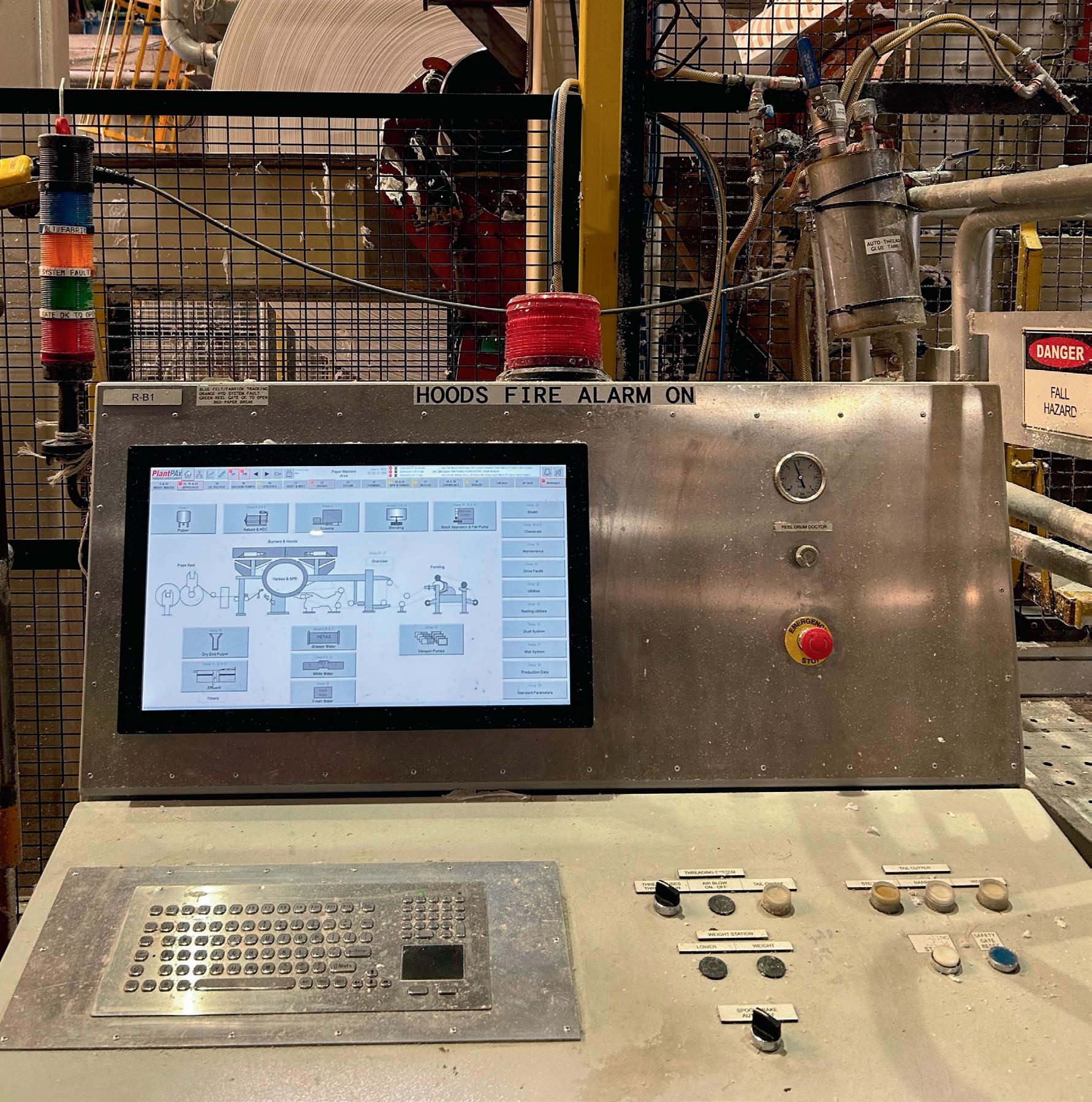
Encore Tissue, a leading Australian manufacturer of toilet paper and paper towels, is an Australian family-owned business with a vision to provide quality tissue product to the Australian market, while endeavouring to be socially, economically and environmentally sustainable.
With production ramping up, the company sought a modern DCS solution that would deliver productivity gains, offer a user-friendly interface, and include long-term support. In addition to new functionality, Encore Tissue also wanted the new DCS solution to have a user-friendly software interface that could be used by multiple teams.
“Our existing DCS had become outdated, and was no longer supported,” said Mark Camilleri, project manager at Encore Tissue. After thorough review, Encore Tissue selected Rockwell Automation’s PlantPAx DCS to replace the older solution.
Rockwell has worked with Encore Tissue — which produces household brands like icare toilet paper — for more than 20 years, first working on the tissue machine’s DC drive system in the early 2000s, then converting half to AC in 2014 and the other half in 2017. The AC drive system is based on Rockwell’s PowerFlex 755.
“Rockwell has extensive knowledge of our machinery and plant through our long relationship, so we engaged them to look at upgrading our DCS,” Camilleri said.
“PlantPAx is an open DCS, which means partner companies, such as system integrators with knowledge of the system, can provide support, too,” explained Adrian Giecco, Regional Director – South Pacific, Rockwell Automation. “The PlantPAx software also shares the same platform as the Rockwell drive system already in use at Encore Tissue, so the staff was already familiar with how to use it, which meant there was a smaller learning curve for the migration to PlantPAx.”
To allow for a smooth transition, Rockwell was able to extract the code and logic configuration from the existing DCS and remap it to PlantPAx logic, thereby ensuring object alarms, limits, tuning, references and other setups remained the same without the need to re-commission or re-tune.
“This is a proven approach to quickly migrate the process functionality to the PlantPAx standard and minimise risk,” Giecco said. “Another way Rockwell minimised risk on this project was by re-using existing wiring. The existing control systems use Allen-Bradley ControlLogix hardware
and, as such, the I/O modules can be replaced as a ‘like-for-like’ system while keeping the existing terminal modules and wiring looms intact, significantly reducing risk of migration and reducing commissioning time.” By implementing PlantPAx, Encore Tissue now has a unified system. A Rockwell DCS is communicating with a Rockwell safety controller, which controls the PowerFlex drives. This simplifies integration with the drives system, as well as enabling simple upgrades in the future.
“We needed to upgrade the hardware due to its age, so selecting Rockwell meant we were given better support from a company with dedicated and proven process automation experience,” Camilleri said. “Encore Tissue also takes care of critical spares via the Rockwell Automation Inventory Parts Management Agreement.”
The new system also reduces the physical footprint, requiring only two controllers instead of four and occupying less panel space.
To make commissioning and start-up as smooth as possible, Rockwell undertook an extensive factory acceptance testing (FAT) period of several weeks.
“FAT is usually just a couple of days, but we wanted everything to run smoothly for Encore Tissue, so we went into meticulous detail with our testing,” Giecco said. “As a result, the entire migration — from the start of commissioning to production — was completed in just four days, making it a highly efficient transition.
“The steps that needed to be taken while the machine was offline were all completed within a 72-hour window from paper off to paper on, thereby achieving a successful result in a tight window.”
Rockwell Automation Australia www.rockwellautomation.com/en-au.html
Australia's International Mining Week
The International Mining and Resources Conference + Expo (IMARC) is Australia's largest and most influential mining event, serving as the country's leading platform for the global mining industry to come together, deliver ideas, and ignite discussions. With a high-calibre conference, an extensive showcase of leading suppliers, and a variety of networking opportunities, IMARC highlights the latest trends and technologies driving the entire mining value chain forward. Technology Managers will gain valuable insights at IMARC through conference sessions focused on modernising machinery, digitalisation, AI, simulation, optimising operations, and more.
Pressure calibration is crucial for ensuring the accuracy and reliability of process instruments used across various industries.
HYSTERESIS IN PRESSURE CALIBRATION WHAT YOU NEED TO KNOW
Heikki Laurila, Product Marketing Manager, Beamex
One often-overlooked but critical factor in the pressure calibration process is hysteresis. Understanding hysteresis and its implications can help improve the accuracy and consistency of your pressure measurements. While hysteresis can be found in various types of measurements, such as temperature and electrical signals, this article focuses on its impact on pressure calibration, where hysteresis is most significant.
WHAT IS HYSTERESIS?
Hysteresis is a phenomenon where the output of a system depends not only on its current input but also on its history of past inputs. In simpler terms, it means that a pressure sensor might not return to its original state after being subjected to varying pressures. This lag or difference can affect the accuracy of the measurements.
For example, if you increase the pressure to a certain value and then decrease it back to the same value, the instrument might show a different reading compared to the initial one. This difference is hysteresis.
For a practical example, if you calibrate a 100 kPa pressure instrument at a 50 kPa point, it may show 49.95 kPa with increasing pressure. With decreasing pressure, at the same 50 kPa point, it may show 50.05 kPa. This difference between 49.95 kPa and 50.05 kPa is caused by hysteresis.
HYSTERESIS IN PRESSURE CALIBRATION
In the world of process instruments, hysteresis can have a significant impact on calibration. Pressure instruments — such as transmitters, sensors and gauges — are expected to provide precise and repeatable readings. However, due to hysteresis, the readings can vary based on the instrument’s past pressure exposures. This can lead to errors and inconsistencies in your pressure measurements, which can be critical in processes where precision is key.
CAUSES OF HYSTERESIS IN PRESSURE INSTRUMENTS
Several factors can contribute to hysteresis in pressure instruments, such as:
• Material properties: The materials used in the construction of pressure-sensing elements can cause hysteresis due to their inherent properties.
• Design factors: The design and construction of pressure-sensing elements, including their mechanical components, can influence the level of hysteresis. Often in pressure sensors, the pressure stretches mechanical parts that can have a mechanical hysteresis, causing pressure measurement hysteresis.
• Contamination: Dirt or other contaminants inside the instrument can cause hysteresis by obstructing the movement of mechanical parts, leading to inaccurate readings.
• Environmental influences: Temperature changes, humidity and other environmental conditions can affect the hysteresis behaviour of pressure instruments.
IDENTIFYING HYSTERESIS
To manage hysteresis effectively, it’s essential first to identify and measure it accurately. Below are some techniques.
Up and down calibration
Conduct calibration by increasing and decreasing the pressure to identify any differences in the readings at the same pressure points. Please note that if you don’t wait long enough for the readings to stabilise, any delay or lag in the measurement instrument can look like hysteresis. If you generate pressure with a hand pump, you need to be careful not to overshoot (or undershoot) when generating calibration points, or you may lose some of the hysteresis effect. For example, you need to approach the increasing points from below, and not overshoot and come back down.
Calibration cycles
Perform multiple calibration cycles to observe any discrepancies or repeatability issues in the readings. If there are any repeatability issues with the instrument, it may look like hysteresis. Therefore, it is good practice to perform several calibration repeats to reveal repeatability issues.
Fully automated pressure calibration obviously makes it easier and saves time when performing multiple repeats.
Graphical analysis
Plotting the pressure input versus output readings can help visualise hysteresis. It may be very difficult to see the hysteresis in numerical results. If you have a pressure calibrator that displays the calibration results in graphical format, it is much easier to identify hysteresis.
Sending calibration results to calibration software also helps, as the software often offers graphical presentation results.
MITIGATING HYSTERESIS
While hysteresis cannot be completely eliminated, it can be managed and minimised. Here are some best practices to help you do this:
• Regular calibration: Calibrate regularly, with up and down cycles, to identify hysteresis.
• Instrument selection: Choose highquality pressure instruments with low hysteresis characteristics for critical applications.
• Consistent procedures: Follow consistent calibration procedures to ensure the repeatability and reliability of results.
• Instrument cleanliness: Ensure that instruments are clean and free from contaminants that could affect their performance.
conditions during calibration to reduce external influences, although this is not always possible when calibrating instruments in field conditions.
HYSTERESIS IN PRESSURE SWITCHES
With any switches, including pressure switches, there is a hysteresis-like feature called ‘deadband’. This means that the switch has been designed so that there is some difference between the opening and closing points with increasing and decreasing pressure. This may seem a lot like hysteresis, or even be called hysteresis, but it is not actual hysteresis.
This deadband is needed and important in pressure switches; otherwise, the switch could start oscillating between open and closed when the pressure is at a certain value. Because switches are used to control specific operations, this is undesirable.
CONCLUSION
Hysteresis is a critical factor to consider in pressure calibration — especially in the world of process instruments, where precision is paramount. By understanding what hysteresis is, identifying its causes and implementing best practices to manage it, you can ensure more accurate and reliable pressure measurements.
This article was originally published on the Beamex blog at https://blog.beamex.com/hysteresisin-pressure-calibration. Beamex products are distributed in Australia by AMS Instrumentation & Calibration Pty Ltd.
Hysteresis
Figure 1: A simplified illustration of hysteresis.
IMARC 2025 TURNS UP THE INNOVATION SPOTLIGHT
Digital, automation, sensing and other technologies are driving improved efficiency and safety outcomes in mining. They are also increasingly influencing mine design and the industry’s recruitment and training focus. Nowhere will these trends be more apparent than at this year’s International Mining and Resources Conference + Expo (IMARC) at ICC Sydney from 21–23 October.
The major event will bring mine owners, operators and contractors together with a line-up of the industry’s leading technology and equipment suppliers, including fastgrowing startups from around the world.
Eddy Zhang, a mining engineer and Business Development Manager at Evolution Mining — who will be speaking at IMARC 2025 — says underground operations, where he has spent his career, are going deeper and becoming increasingly complex.
“These growing challenges demand smarter, more adaptive mine designs as the decisions we make today will shape our operations for decades to come,” he said. “IMARC brings together a diverse mix of industry leaders, innovators and decisionmakers. It’s a unique opportunity to learn
from peers, challenge assumptions and collaborate across disciplines — exactly what we need to drive meaningful progress in mine design.”
From technology- and innovationthemed conference streams to an exhibitor floor featuring mining’s major brands — FLS, Sandvik, Epiroc, IMDEX, Hexagon, BP, Schneider Electric, Thiess, Continental and Wabtec among them — IMARC will offer attendees access to leaders and experts at the centre of technology deployments across the industry, as well as the mining and contracting professionals steering vital workflow, process and cultural change.
“I truly think the future is not only about machines and technology but also how we train our people to be open-minded, with more creative thinking and with energy to solve problems in new ways,” said first-time IMARC speaker Barbara Santana, a Brazilbased innovation leader at Vale.
Josh Savit, Principal Advisor Safety at mining automation and software leader Hexagon, said: “The industry is growing massively. We have a massive opportunity, but we also have a massive duty to work — not just as technology providers, not
just as engineers, but as people — to be there for our people who are in the mines to make sure that they come home on a daily basis.”
Heavyweight miners such as BHP, Glencore, Rio Tinto, Newmont, Zhejiang Huayou Cobalt, Vale, South32, Evolution and PLS will share the innovation spotlight with leading suppliers and service companies at IMARC 2025.
BHP Group Procurement Officer Rashpal Bhatti, a keynote speaker, said his company is working closely with technology frontrunners to advance towards its decarbonisation, sustainability and safety goals.
“We are seeking solutions to help shape a more productive and more sustainable resources industry of the future,” he said.
Showcasing technology at the centre of mining’s future, IMARC’s Innovation & Investment Alley is a dedicated zone showcasing innovators, startups, research teams and technology developers. It is expected to be a prime meeting point for investors, miners, venture capital providers and industry leaders at this year’s show.
Readers can register for IMARC 2025 at imarcglobal.com.
Compliance, carbon and control: how automation is transforming the mining and energy sectors
Ella Averill-Russell, IICA Sydney Branch Manager
As Australia’s energy and mining sectors evolve to meet complex regulatory, operational and sustainability demands, automation has become the central enabler of compliance, performance and futurereadiness. From emissions reporting and cybersecurity to autonomous machinery and intelligent analytics, automation underpins how these critical industries adapt — and thrive — under growing pressure.
The regulatory environment has become more stringent, data-driven and time-sensitive. Whether you’re an energy operator tied to the National Electricity Market (NEM) or a mining company reporting under the National Greenhouse and Energy Reporting (NGER) scheme, your obligations are expanding — and so is the need for accurate, real-time data.
This includes compliance with grid and dispatch rules, emissions accounting, cybersecurity (particularly under CIRCIA), OH&S obligations and audit-ready traceability. Managing these requirements manually is no longer viable — not at scale, and not under increasing scrutiny.
At the heart of compliance is visibility: knowing what’s happening in real time and being able to prove it later. Automation platforms, smart control systems and AI-enhanced analytics give operators this edge. These technologies enable automated data capture, real-time monitoring, autonomous fault response, predictive risk modelling and integrated reporting that spans operational and regulatory requirements.
In mining, automation extends from the pit to the plant. Operators use AI, machine learning and advanced control systems to optimise resources, reduce downtime and minimise environmental impact. Autonomous haulage fleets, smart drill rigs and AI-optimised control systems deliver consistency, safety and compliance. Predictive maintenance reduces equipment failure, while integrated emissions and fuel tracking streamline NGER and ESG reporting.
Data is captured, processed and reported faster and more accurately — enabling mines to meet compliance thresholds, satisfy investor expectations and avoid costly penalties or shutdowns.
Cybersecurity is also now a compliance imperative. Under the Security of Critical Infrastructure Act (SOCI) and CIRCIA, companies must report cyber incidents and maintain secure systems. Automation enables AIdriven threat detection, secure event logging, OT/IT segmentation and automated incident workflows aligned with notification requirements.
With decarbonisation firmly on the agenda, automation also supports environmental goals. Real-time emissions data, carbon intensity metrics and automated reporting tools help organisations stay compliant without compromising production. The convergence of automation and sustainability ensures companies remain competitive and credible.
Across mining and energy, compliance is no longer about ticking boxes; it’s about managing live risk. Automation brings the control, transparency and adaptability needed to meet evolving regulations, improve resilience and support a lower-emissions future. In a sector where every decision counts — for safety, for performance, for the planet — automation is no longer optional. It’s essential.
SKILLS ARE MORE CRITICAL THAN EVER IN TODAY’S AI WORLD
An increasing and unchallenged trend is the use of Artificial Intelligence (AI) to undertake the work of engineering professionals. Application tools, such as ChatGPT, are retrieving data, preparing documents, writing code, providing advice, undertaking research and summarising it.
There is a pervasive belief that all existing knowledge is now on-tap, and as with a calculator, the results can be trusted implicitly with minimal knowledge or acquired skills. Many believe AI will merely need an engineer to proficiently prompt it. The results vary wildly however, from reasonably coherent to unadulterated nonsense.
The respected Professor Barbara Oakley and her colleagues have dissected what they call ‘The Memory Paradox’.1 It explores another reason why engineering professionals should use AI prudently.
THE MEMORY PARADOX
Our increasing reliance on AI to offload cognitive tasks weakens our memorising systems and skills. Both declarative (fact-based: why) and procedural (skill-based: how) memory have been responsible for strengthening neural pathways and enhancing our ability to learn and apply knowledge. Their underutilisation, alongside our diminishing cognitive engagement, may be contributing to the Flynn Effect: the recent decline in IQ scores in developed countries.
Modern educational practices have compounded the issue by de-emphasising memorisation and foundational knowledge. The authors of The Memory Paradox, along with neuroscientific research, suggest that this approach undermines mental flexibility, which then hinders the development of robust internal schemata or frameworks. Without these we may struggle with understanding, complex reasoning, and adaptability.
WHAT WE SHOULD DO
Are we to abandon AI? On the contrary, we should engage actively in its use, but not to the detriment of our mental acuity and skill development. The research recommends an active engagement with knowledge, including deliberate memorisation, to reinforce these systems.
In the fast-evolving fields of industrial automation and instrumentation, engineers and technicians must continuously adapt to new tools, platforms, and AI-driven systems. However, as The Memory Paradox highlights, over-reliance on digital aids can erode the very cognitive frameworks needed to innovate and troubleshoot effectively.
Training strategies should focus on building deep, retrievable knowledge — integrating cognitive effort with active learning — not merely procedural familiarity with software or equipment. Spaced retrieval practice, troubleshooting exercises, and scenario-based learning all help reinforce declarative and procedural knowledge. For example, manual loop tuning exercises rather than auto-tuning, or designing and simulating entire control architectures from scratch before deploying them into SCADA or DCS systems. Embedding knowledge will enable engineering practitioners to diagnose and solve problems even when systems behave unexpectedly or when automated aids fail.
Another approach is to regularly reflect and explain why a system behaves in a certain way. Walking through an operational process plant to understand and articulate how all the components work together can achieve this. Human expertise must complement AI-driven automation, rather than being a slave to it.
Engineers and technicians should aim to become adaptive problem-solvers, equipped with robust internal schemata that empower them to lead in an increasingly automated world. AI tools should support, not drive their endeavours.
1. Oakley B, Johnson M, et al 2025, The Memory Paradox: Why Our Brains Need Knowledge in an Age of AI, <<https://papers.ssrn.com/sol3/papers.cfm?abstract_id=5250447>>
*Dr Steve Mackay has worked in engineering throughout Australia, Europe, Africa and North America for over 40 years in the mining, oil and gas, and power industries. A registered professional engineer in electrical, mechanical and chemical engineering, he believes university engineering programs need to be strongly focused on industry. He has been the author or editor of over 30 engineering textbooks sold throughout the world.
Westwick-Farrow Media
A.B.N. 22 152 305 336 www.wfmedia.com.au
Head Office Unit 5, 6-8 Byfield Street, North Ryde Locked Bag 2226, North Ryde BC NSW 1670
Tim Thompson – 0421 623 958 tthompson@wfmedia.com.au
If you have any queries regarding our privacy policy please email privacy@wfmedia.com.au
Westwick-Farrow Media is committed to using environmentally responsible print services to produce our publications. This edition is made with a mixture of materials from FSC-certified forests, recycled materials, and/or FSC-controlled wood. While controlled wood doesn't come from FSC-certified forests, it mitigates the risk of the material originating from unacceptable sources . It is delivered in a totally degradable plastic wrapper.
Mains Calming
Reliable, powerful, robust. REDUCE WATER HAMMER IN PIPES
For several decades, AUMA actuators have proved their reliability in automating sluice gates, butterfly valves and gates in weirs, fish ladders, locks and hydro-power plants.
AUMA’S comprehensive portfolio covers torques ranging from 10 Nm to 675,000 Nm offering homogenous automation schemes throughout the plant: from simple OPEN-CLOSE applications to level control using an integral PID controller.