
May/June 2023 Vol.42 No.6 PP100007394








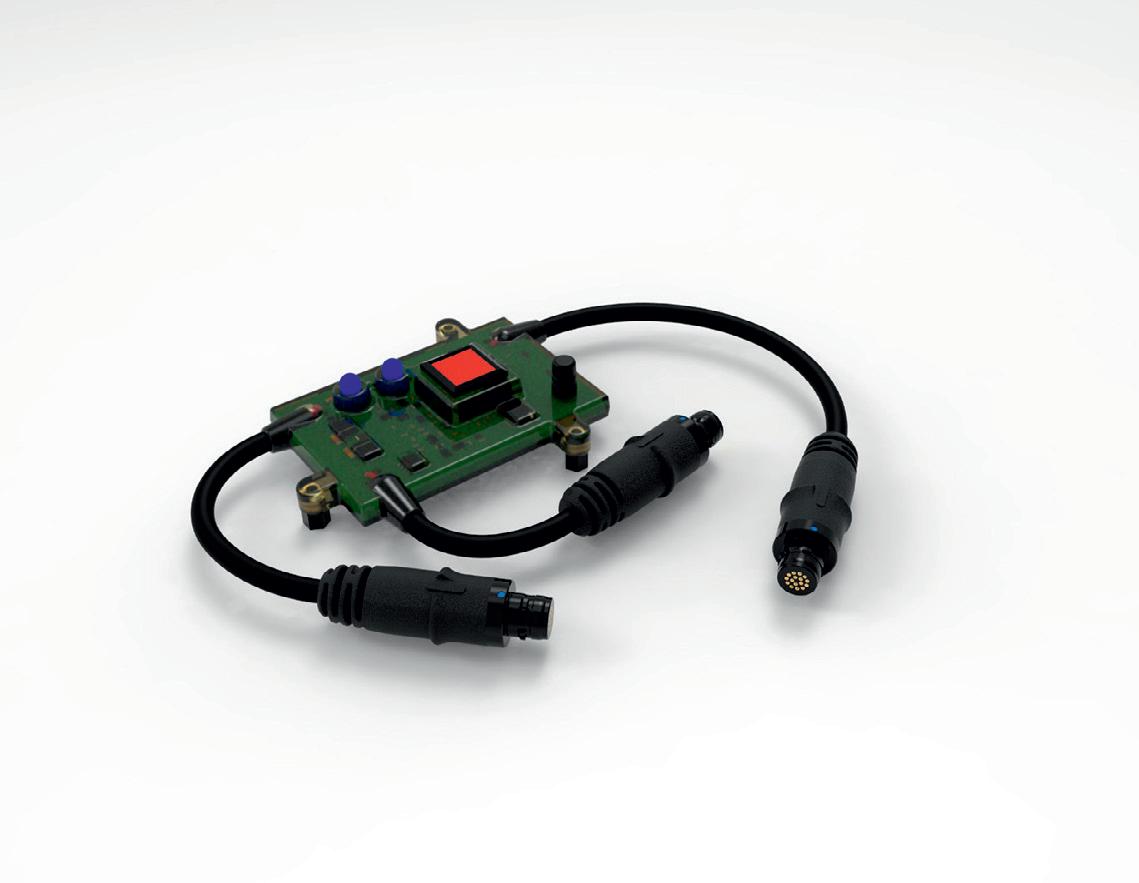
Modifying a car’s electrical system is one of the most common changes introduced by vehicle owners. It is often a necessary step if you wish to upgrade your car or adapt it to specific tasks, such as offroad driving, which involves installing additional lighting and winches. In order to make interventions in the factory-fitted power supply systems that are both safe and pleasing to the eye, it is advisable to go with components that are designed precisely for such a purpose.
The need to customise the car’s electrical system may arise for a variety of reasons. One of them may be the necessity to adapt the vehicle to make it suitable for a specific function (taxi, cargo transport), to attach retrofitted equipment (towing winch, trailer), or to adapt it to the owner’s individual preferences, eg, the desire to modify the cockpit. Whichever the case, the modifications involve interfering with the original circuitry, and often reworking of the panels. Specially designed power supply accessories like AUX/USD adapters, car cigarette lighter sockets and extension cables, ammeters and voltmeters ensure that such modifications are durable, fault-free, safe and don’t compromise the appearance of

vehicle.

WWW.ELECTRONICSONLINE.NET.AU MAY/JUNE 2023 3
Maybe it’s time to jazz your car up? CONTENTS COVER STORY WHAT'S NEW IN ELECTRONICS MAY/JUNE 2023 Your copy of What's New in Electronics is available as an online eMag. READ ONLINE! www.electronicsonline.net.au/magazine 4 Eavesdropping on the Earth itself 14 Photonic filter to support future 6G wireless communication 20 Connectivity a driving force to standardise EV infrastructure 23 From sheets to stacks: researchers develop next-gen nanostructure 26 Nanowire networks learn and remember like a human brain 29 Researchers design battery prototype with fibre-shaped cathode 30 The correct click: audio technology tests connectors used in automobile production 33 High-performance detectors to combat spies 34 Silicon photonic MEMS developed for semiconductor manufacturing Transfer Multisort Elektronik www.tme.com/au/en/
the
EAVESDROPPING ON THE EARTH ITSELF
 Nancy Bazilchuk
This summer, a coalition of researchers led by the Norwegian University of Science and Technology reported the first-ever use of a fibre-optic cable network to eavesdrop on whales in the Arctic. Now they suggest these networks be used to establish a low-cost global ocean–Earth observatory.
4 MAY/JUNE 2023 WWW.ELECTRONICSONLINE.NET.AU
The more-than 1.2 million km of fibre-optic cables that criss-cross the planet carry the world’s phone calls, internet signals and data. But this summer, researchers published the eerie sounds of blue and fin whales detected by a fibre-optic cable on the west coast of Svalbard — a first.
Now the researchers want to eavesdrop on an even larger beast — the Earth itself.
Combining the world’s fibre-optic network with existing remote-sensing systems, like satellites, could create a low-cost global real-time monitoring network, said Martin Landrø, a professor at NTNU’s Department of Electronic Systems and head of the Centre for Geophysical Forecasting.
“This could be a game-changing global observatory for ocean–Earth sciences,” he said. Landrø was lead author for an article about how such a system could work, published in Nature Scientific Reports

FIBRE OPTICS
mation from these networks. The tool in question has the rather alarming name of an interrogator.
The interrogator can be hooked up to a fibre-optic cable network to send a pulse of light through the cable. Any time a sound wave or an actual wave hits the underwater cable, the fibre flexes, just a little bit.
“And we can measure the relative stretch of the fibre extremely precisely,” Landrø said. “It has been around for a long time, this technology. But it has made a huge step forward in the past five years. So now we are able to use this to monitor and measure acoustic signals over distances up to 100 to 200 kilometres. So that’s the new thing.”
Tiny
changes in a fibre the diameter of a hair
Fibre-optic cables are nothing new. They’re probably carrying the information your computer is decoding so you can read this article.
What has changed, however, are the tools that can be used to extract infor-
Landrø’s team — including researchers from Sikt, the Norwegian Agency for Shared Services in Education and Research, and Alcatel Submarine Networks Norway, AS, which provided the interrogators, used a 120 km-long fibre-optic cable between Longyearbyen, the largest settlement in Svalbard, and Ny-Ålesund, a research outpost on the south-west coast of the largest island in the archipelago. They monitored the cable for 44 days in 2020, and tallied up more than 800 whale vocalisations.
“The fibre cable between Longyearbyen and Ny-Ålesund, which was put in production in 2015 after five years of planning and pre-work, and mainly funded
WWW.ELECTRONICSONLINE.NET.AU MAY/JUNE 2023 5
iStockphoto.com/andrej67
Waves generated by big storms resulted in a specific, initially puzzling signal that was detected by the fibre-optic network.
FIBRE OPTICS
earthquakes, called seismometers. These instruments are sensitive and provide a great deal of detailed information, Landrø said.
However, seismometers are expensive, and they aren’t nearly as widely distributed as the world’s fibre-optic cable network.
The one drawback with the fibre-optic network is that it has a lower signal-tonoise ratio. That means there’s a lot of background noise, and the signal — from the earthquake — isn’t as clear or strong against the background noise.
But the advantage of the fibre network is that it is widespread, and already in place, which means it could provide additional information to existing seismometers. The idea wouldn’t be to replace the existing system, but to complement it.
by our ministry, was intended to serve the research community and the geodetic station in Ny-Ålesund with high and resilient communication capacity,” Olaf Schjelderup, head of Sikt’s national R&E network, said in an earlier article about the monitoring project. Schjelderup was also a co-author on the new paper.
“The DAS sensing and whale observation experiment shows a completely new use of this kind of fibre-optic infrastructure, resulting in excellent, unique science,” he said.
The technology is good, but range continues to be a limitation. The hope is it will get even better as the technology improves, Landrø said.
“Although current interrogators are not yet able to sense beyond the repeaters typically used in long fibre-optic cables, the technology is developing very quickly and we expect to be able to overcome these limitations soon,” Landrø said.
Ships, earthquakes and a strange pattern of waves

In the process of detecting whale calls, the researchers were also able to detect ships passing over or near the cable, a series of earthquakes, and a strange pattern of waves that they eventually realised was due to distant storms.
The measurements were precise enough that they could correlate their measurements with each exact event that had happened — including a big earthquake in Alaska, Landrø said.
“We saw a lot of ship traffic, of course, and a lot of earthquakes, the biggest of which was from Alaska,” he said. “That was a big one — we saw it on every channel (in the cable) for all 120 km. And we also saw that we could detect distant storms.”
One example of how the system was able to detect ships involved the Norbjørn, a general cargo ship that was detected crossing the fibre-optic cable about 86.5 km from Longyearbyen. The researchers were able to estimate the ship’s speed from its track across the cable, and then could verify it with the ship’s Automatic Identification System (AIS) track.
A key publication from 1963
Researchers were initially puzzled by the dozen series of waves they detected during the monitoring period. Each wave event lasted between 50–100 hours, where the frequency of the waves increased monotonically during the event. But eventually they realised that the mystery signals were the swells sent by distant storms.
“These are the physical ocean waves that travel on the sea surface,” Landrø said.
The lowest frequency waves travel the fastest, followed by higher frequency waves that arrive as much as six days later. It’s a pattern that was recognised in 1963, when the oceanographer Walter Munk published a paper describing how scientists could figure out where the waves generated by storms were coming from, by measuring the slope of the frequency-time plot of the waves and doing some calculations.
Using these calculations, Landrø’s team identified Tropical Storm Eduardo, which was 4100 km from Svalbard in the Gulf of Mexico. They also identified a big storm off of Brazil, 13,000 km away from the Svalbard cable.
More information on earthquakes
Geologists already have a network of sensors that help them monitor and measure
“The question then is, what can we learn from a method that has lower signal-to-noise ratio, but has better spatial coverage? How could we use that extra information, even though it is lower quality, to learn more about the earthquake and its properties?” Landrø said.
Monitoring pipelines for potential sabotage
There’s also the question as to whether existing fibre-optic networks could be used to monitor undersea pipelines — which is especially important given the explosion in late September that damaged the Nord Stream 1 and 2 pipelines.
“Can we use this fibre-optic technology to monitor and protect infrastructure on the seabed? That’s an important question,” he said.
The challenge with pipelines is that they make noise, as gas flows through the pipe.
“With the background noise, we have to characterise the natural variability. And then if you have something coming close to that pipeline, what is the threshold? When do you act, what can you detect? And we don’t know,” he said. “So the plan is to conduct dedicated tests on this.”
Eventually, the idea could be to have real-time monitoring of pipelines to make sure they are safe. Already, researchers have a real-time stream of acoustic data from the Svalbard fibre network.
You can see a short video of a fin whale that cruised by the cable below. The ‘image’ appears and then disappears at the bottom of the video towards the middle, and is actually a record of the frequency of the whale’s vocalisation, at 20 Hz. This is a typical frequency for fin whale vocalisations, which is how the researchers can identify it.
6 MAY/JUNE 2023 WWW.ELECTRONICSONLINE.NET.AU
The Nord Stream gas leak in the Baltic Sea photographed by Swedish Coast Guard aircraft on 27 September 2022.
Image credit: Swedish Coast Guard
New STM32H5 MCU series
High performance and scalable security
The best combination of performance and security, in an affordable way.
• Industry-first 32-bit MCU with Arm® Cortex®-M33 core running as high as 250 MHz
• A strong, scalable security offer
• From the most essential security building blocks to fully certified services maintained by ST
• The first MCU supplier to offer a certified and maintained TEE solution, the STM32Trust TEE
Secure Manager
• PSA and SESIP level 3 certification targets
• Large and robust embedded memory
• up to 2 Mbytes of flash memory in dual bank
• up to 640 Kbytes of SRAM
• Extended connectivity (Ethernet MAC, FD-CAN, MIPI-I3C and USB)
• Temperature range up to 125°C
• Many package options from 25 to 176 pins
STMicroelectronics Suite 703, 247 Coward Street, Mascot, 2020, NSW Australia Tel: +61 2 9158 7201 Email: clifford.shi@st.com Authorized Distributors ARROW Electronics Australia Pty Ltd - Tel +61 2 9737 4900 Future Electronics - Tel: +61 2 8064 0000 Avnet Electronics (Australia) Ltd - Tel: 1300 791 695 www.st.com/stm32h5
SHORTcircuits
RESEARCHERS CREATE 3D ANALYTICAL MODEL FOR AFPMs
Axial-flux permanent magnet motors (AFPMs) could be used as a potential next-generation mobility device due to their advantages, such as flat geometry, low energy consumption, high efficiency, and high torque. Researchers at Epson have developed a 3D analytical model for AFPMs with an arbitrary number of poles and arbitrary arrangement of the permanent magnet (PM). Details of the model were published in the journal IEEE Access.
The AFPM is a class of PM-synchronous motor in which PMs are periodically arranged on the plane of rotation such that magnetic fields are aligned parallel to the rotation axis of the machine. In contrast to the ordinal radial-flux PM motors, which are already in widespread use, the AFPM has the potential for realising flatter geometry, among other benefits. The AFPM’s combination of high-performance and convenient form factor is expected to find use in various industrial areas, such as servo-actuation for multi-joined robot arms, and inwheel drive for future electric vehicles and other mobility devices.
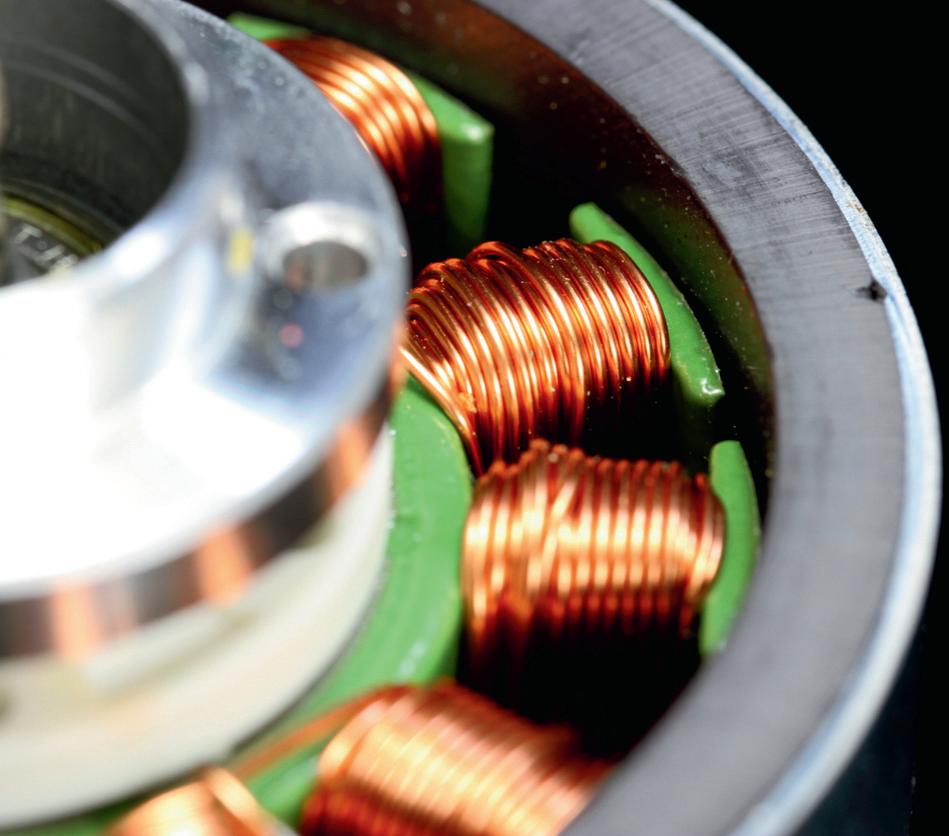
Development of devices that achieve the full potential AFPM has thus far been hampered by insufficient simulation technologies: researchers have been forced to choose between using 2D models with simple PM arrangements that provide a poor approximation of real devices or using commercial simulation software, which requires lots of computation time.
In response to the lack of adequate simulation tools, researchers developed the 3D analytical AFPM model that accommodates an arbitrary number and configuration of magnetic poles. The model includes the number of magnetic poles, variables expressing the configuration of the magnetic poles, the number of coils, device dimensions, and others. Physical phenomena in the motor can be analysed using the derived formulae. These findings are expected to contribute to the realisation of next-generation, high-performance and high-efficiency motors.
USING MECHANICAL VIBRATIONS TO POWER IoT NETWORKS

Engineers have created a new material that converts simple mechanical vibrations into electricity to power sensors in everything from pacemakers to spacecraft. The product of a decade of work by researchers at the University of Waterloo and the University of Toronto, the novel generating system is compact, reliable, low-cost and very green. Asif Khan, a Waterloo researcher and co-author of a new study on the project, said the material will have a significant social and economic impact by reducing reliance on non-renewable power sources. “We need these energy-generating materials more critically at this moment than at any other time in history,” Khan said.
The new system the researchers developed is based on the piezoelectric effect, which generates an electrical current by applying pressure — mechanical vibrations are one example — to an appropriate substance. The effect was discovered in 1880 and since then, a limited number of piezoelectric materials, such as quartz and Rochelle salts, have been used in technologies ranging from sonar and ultrasonic imaging to microwave devices. The problem is that until now, traditional piezoelectric materials used in commercial devices have had limited capacity for generating electricity. They also often use lead, which Khan describes as “detrimental to the environment and human health”.
The researchers grew a large single crystal of a molecular metal-halide compound called edabco copper chloride using the John-Teller effect, a chemistry concept related to spontaneous geometrical distortion of a crystal field. The highly piezoelectric material was then used to fabricate nanogenerators with a record power density that can harvest tiny mechanical vibrations in any dynamic circumstances, from human motion to automotive vehicles, in a process requiring neither lead nor non-renewable energy.
The nanogenerator measures 2.5 cm2 and is about the thickness of a business card, and could be conveniently used in countless situations. It also has the potential to power sensors in a range of electronic devices, including billions needed for the Internet of Things. Dr Dayan Ban, a researcher at the Waterloo Institute for Nanotechnology, said that in future, an aircraft’s vibrations could power its sensory monitoring systems, or a person’s heartbeat could keep their battery-free pacemaker running.
“Our new material has shown record-breaking performance. It represents a new path forward in this field,” Ban said.
The research findings were published in the journal Nature Communications
8 MAY/JUNE 2023 WWW.ELECTRONICSONLINE.NET.AU
iStock.com/BrendanHunter iStock.com/Andrey Suslov

SHORTcircuits
GATE DRIVER DEVELOPED FOR CIRCUIT BIPOLAR TRANSISTOR ELECTRONIC SWITCHES
The precise control of larger electrical devices requires sophisticated electronics where electronic timers may not suffice. Scientists from the Institute of Industrial Science at the University of Tokyo have developed a programmable gate driver for solid-state electronic transistor switches. Empirical tests showed reduced switching loss even under changes in input current and temperature fluctuations.
Insulated-gate bipolar transistors (IGBTs) are semiconductor electronic elements that can be used in rapid electronic switches of high-powered devices. Because they can control electric loads up to hundreds of kilowatts, IGBTs are suitable for operating power supplies, traction motors, or induction heaters. In addition, due to their ability to switch on and off quickly, IGBTs can also be used for control systems in industrial applications. However, these switches can experience switching loss based on variations in the input current or temperature. Creating a device with automatic timing would help improve the reliability of these systems.
ULTRACOLD ATOMS SHED LIGHT ON PROPERTIES OF QUANTUM SYSTEMS
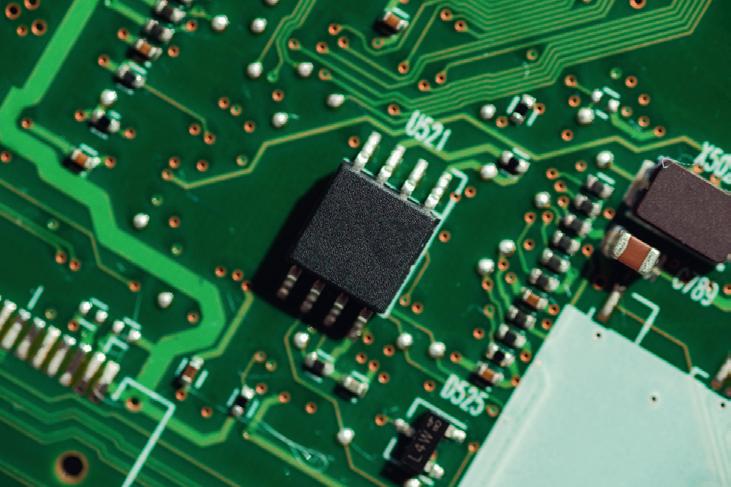
The researchers from the University of Tokyo have developed an active digital gate driver integrated circuit (IC) with a fully integrated automatic timing control function that achieves both single-chip integration and real-time control. First author Dibo Zhang said the IC includes a 6-bit programmable gate with closedloop active gate drivers. An important feature of the IC was the inclusion of real-time automatic control functions on a single chip. This is done by detecting the rate of change of the current as a function of time by sensing the voltage of the parasitic inductance, which is an unavoidable effect present in electronic devices.
The researchers tested the performance of the new device over a range of temperatures. Their single-chip integration of a timing mechanism allowed for lower cost while maintaining precise control. The fact that it remained stable under fluctuating operating conditions allowed a single programmable device to replace a collection of different products optimised for different situations.
“Being able to provide programmable, real-time control at low cost should hasten adoption of this type of device,” said Makoto Takamiya, senior author. This work may lead to more flexible and reliable control of large electrical currents, and future designs may be extended to include more complex programming features.
A team of physicists has illuminated certain properties of quantum systems by observing how their fluctuations spread over time. The research offers a new understanding of a method that can perform certain calculations more efficiently than conventional computing. Dries Sels, an author of the paper, which appeared in the journal Nature Physics, said the new research reconstructs the full state of a quantum liquid, consistent with the predictions of a quantum field theory — similar to those that describe the fundamental particles in the universe. “In an era of quantum computing it’s vital to generate a precise characterisation of the systems we are building,” Sels said.
The breakthrough offers promise for technological advancement. “Quantum computing relies on the ability to generate entanglement between different subsystems, and that’s exactly what we can probe with our method. The ability to do such precise characterisation could also lead to better quantum sensors.” Sels said.
The research team, calculated quantum information measures of a quantum system using a tomography procedure — the reconstruction of a specific quantum state with the aim of seeking experimental evidence of a theory. The quantum system consisted of ultracold atoms — slow-moving atoms that expose the quantum aspects of matter because of their near-zero temperature — trapped on an atom chip.
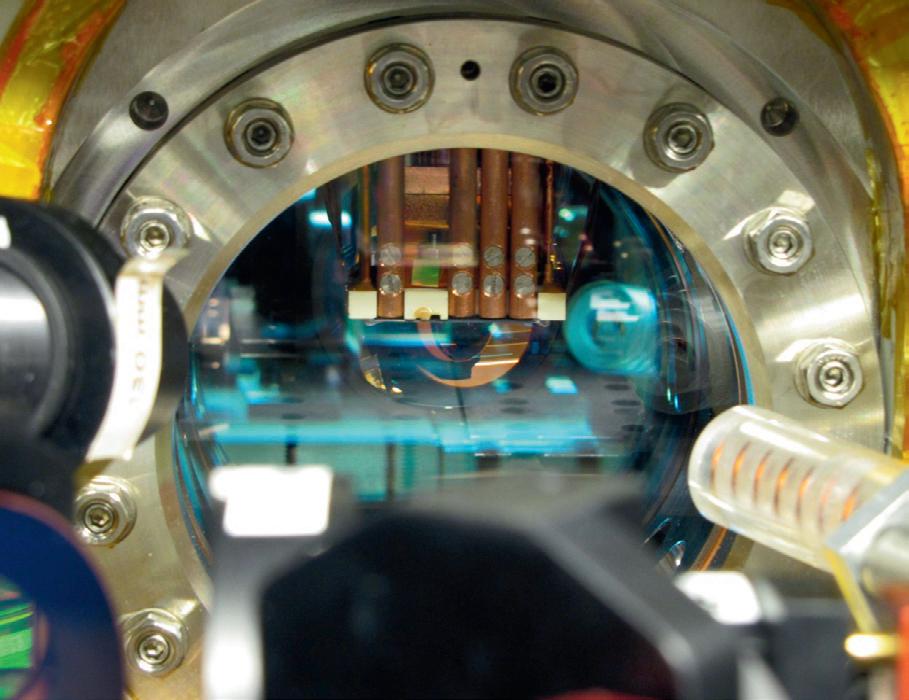
The scientists created two ‘copies’ of this quantum system — cigar-shaped clouds of atoms that evolve over time without influencing each other. At different stages of this process, the team performed a series of experiments that revealed the two copies’ correlations. By constructing an entire history of these correlations, the researchers were able to determine the initial quantum state of the system and extract its properties.
“Initially, we have a very strongly coupled quantum liquid, which we split into two so that it evolves as two independent liquids, and then we recombine it to reveal the ripples that are in the liquid. It’s like watching the ripples in a pond after throwing a rock in it and inferring the properties of the rock, such as its size, shape, and weight,” Sels said.
10 MAY/JUNE 2023 WWW.ELECTRONICSONLINE.NET.AU
Image credit: Thomas Schweigler.
An atom chip, in a laboratory at TU Wien (Vienna), created by physicists in order to trap ultracold atoms and study the properties of quantum systems.

AUSSIE ULTRACAPACITOR TECH ACHIEVES UP TO DOUBLE ENERGY DENSITY
Melbourne-based company enyGy has developed graphene technology that enables ultracapacitors to achieve up to double the amount of energy density. This development could lead to benefits in a number of areas, including cost savings for public transport systems, enhanced use of personal technology devices and reduced environmental impact. enyGy aims to enhance ultracapacitor technology and develop graphene-based technologies to facilitate production of next-generation energy storage solutions.

Dr Alastair Hick, Monash University Chief Commercialisation Officer, said ultracapacitors are a key part of Monash University’s commitment to support new energy innovation and commercialisation in the transition to net zero, and added that advances like this, achieved by enyGy, are paving the way.
Increasing the performance of ultracapacitors is vital in the energy market as it continues to seek out innovative and environmentally conscious electrical applications. For this reason, graphene has long been sought as a replacement for activated carbon. enyGy has access to patents from Monash University covering the preparation of graphene hydrogel membranes and their applications in energy storage areas. enyGy graphene-based electrode films can reduce the size of marketleading ultracapacitors while maintaining the same energy stored, or increase the energy stored using the same volume or mass.
enyGy was able to double the energy density by preserving graphene’s outstanding properties of high electrical and thermal conductivity, and high surface area by finely controlling its structure and chemistry at nanometre scale. The successful implementation of graphene in the electrode film within ultracapacitors presents a challenge, which enyGy has been successful in achieving. Key inventor of the enyGy IP portfolio Professor Dan Li said that enyGy’s strategy achieves graphene-based compact energy storage.
“A unique nano-engineering strategy has been developed to manipulate the individual graphene sheets and to control the intersheet spacing and interactions down in sub-nanometre scale. This achieves compact energy storage capability by graphene-based electrode films,” Li said.
Guy Carroll, Chief Executive Officer of enyGy, said that independent testing has confirmed the performance of the enyGy product. The development of this product over the past seven years has resulted in a technology that is ready to move from the laboratory and has the potential to transform the ultracapacitor energy storage industry and its role in the future of clean energy.
PHYSICISTS DEVELOP TRANSFORMABLE NANOSCALE ELECTRONIC DEVICES
The nanoscale electronic parts in devices like smartphones are solid, static objects that once designed and built cannot transform into anything else. Physicists from the University of California, Irvine have developed nanoscale devices that can transform into many different shapes and sizes even though they exist in solid states. This finding could change the nature of electronic devices, as well as the way scientists research atomic-scale quantum materials. Javier Sanchez-Yamagishi, an assistant professor of physics and astronomy whose lab performed the research, said the researchers discovered that for a particular set of materials, you can make nanoscale electronic devices that aren’t stuck together. “The parts can move, and so that allows us to modify the size and shape of a device after it’s been made,” Sanchez-Yamagishi said.
The electronic devices are modifiable much like refrigerator door magnets — stuck on but can be reconfigured into any pattern. Ian Sequeira, a PhD student in Sanchez-Yamagishi’s lab, said the research is significant, because it demonstrates a new property that can be utilised in these materials that allows for fundamentally different types of device architectures to be realised, including mechanically reconfiguring parts of a circuit.
Sanchez-Yamagishi and his team, reportedly did not set out to develop transformable nanoscale devices. “It was definitely not what we were initially setting out to do. We expected everything to be static, but what happened was we were in the middle of trying to measure it, and we accidentally bumped into the device, and we saw that it moved,” Sanchez-Yamagishi said.
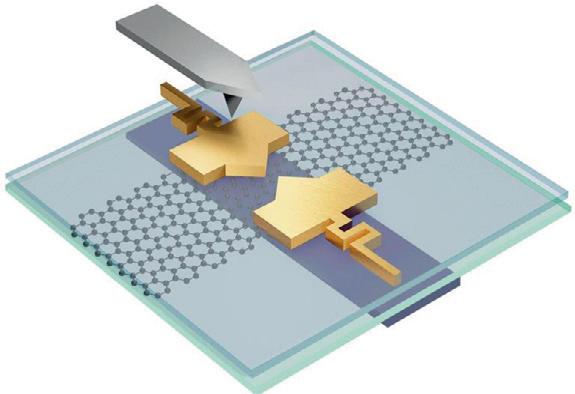
What the researchers saw was that tiny nanoscale gold wires could slide with very low friction on top of special crystals called ‘van der Waals materials’. Taking advantage of these slippery interfaces, the researchers made electronic devices made of single-atom-thick sheets of a substance called graphene attached to gold wires that can be transformed into a variety of different configurations on the fly. Because it conducts electricity so well, gold is a common part of electronic components. However, it is still unclear how the discovery could impact industries that use such devices.
“The initial story is more about the basic science of it, although it is an idea which could one day have an effect on industry. This germinates the idea of it. It could fundamentally change how people do research in this field,” Sanchez-Yamagishi said.
The researchers believe that their work could help advance quantum science research.
The golden parts of the device depicted in the above graphic are transformable, an ability that is “not realisable with the current materials used in industry”, said Ian Sequeira, a PhD student who worked to develop the technology in the laboratory of Javiar Sanchez-Yamahgishi, UCI assistant professor of physics & astronomy.
12 MAY/JUNE 2023 WWW.ELECTRONICSONLINE.NET.AU ENERGY STORAGE
SHORTcircuits
iStock.com/Rost-9D
NEW QUANTUM SENSING METHOD FOR GREENHOUSE GAS DETECTION
A University of Bristol physicist has proposed an innovative technique to detect and characterise molecules with greater precision, paving the way for advances in environmental monitoring, medical diagnostics and industrial processes. The new quantum sensing method builds on the work of 2005 Nobel laureates in physics John Hall and Theodor Hänsch, who developed a frequency comb technique to accurately measure optical frequencies. Frequency combs are used in many areas of science and industry to characterise matter based on the unique way light is absorbed. However, the precision of optical comb spectroscopy is limited by a fundamental level of noise present in all lasers and other classical sources of light. A quantum state with reduced noise called ‘squeezed light’ can overcome this limitation and has been harnessed to improve the sensitivity of gravitational wave detectors. In a paper published in Physical Review Letters, squeezed light is shown to suppress noise over a broad set of comb frequencies used to probe an absorbing molecule.
Author Alex Belsley, quantum engineering PhD student, said the research proposes a new method for monitoring gas species
in situ and with high precision. “Quantum advantage in sensing can be realised today and I’m excited for the transformative impact quantum-enhanced sensors will have on our society in the coming years,” Belsley said. This approach could potentially achieve a significant improvement in detection limits. In addition to allowing different types of gases to be characterised at ultra-low concentrations, it can also determine properties such as temperature and pressure with high sensitivity. Professor Jonathan Matthews, Belsley’s PhD advisor, said better sensors are important to our future, as health care, manufacturing, environmental monitoring and new science can all benefit from advances in how physical properties are measured.

“Alex’s work shows how squeezed light can improve frequency comb spectroscopy — the next step is to explore further with experiments in the lab,” Matthews said.

WWW.ELECTRONICSONLINE.NET.AU MAY/JUNE 2023 13
Illustration of an optical frequency comb probing gas molecules.
Image credit: Alex Belsley
PHOTONIC FILTER TO SUPPORT
FUTURE 6G WIRELESS COMMUNICATION
Researchers have developed a chip-sized microwave photonic filter to separate communication signals from noise and suppress unwanted interference across the full radio frequency spectrum.

The device could help next-generation wireless communication technologies efficiently convey data in an environment that is becoming crowded with signals from devices such as cell phones, self-driving vehicles, internet-connected appliances and smart city infrastructure.
Researcher Xingjun Wang from Peking University said the microwave filter chip could improve wireless communication, such as 6G, leading to faster internet connections, better overall communication experiences and lower costs and energy consumption for wireless communication systems. In the Photonics Research journal, the researchers described how their photonic filter overcomes the limitations of traditional electronic devices to achieve multiple functionalities on a chipsized device with low power consumption. They also demonstrated the filter’s ability to operate across a broad radio frequency spectrum extending to over 30 GHz, showing its suitability for envisioned 6G technology.
“As the electro-optic bandwidth of optoelectronic devices continues to increase unstoppably, we believe that the integrated microwave photonics filter will certainly be one of the important solutions for future 6G wireless communications. Only a welldesigned integrated microwave photonics link can achieve low-cost, low-power consumption and superior filtering performance,” Wang said.
6G technology is being developed to improve upon current 5G communications
networks. To convey more data at a faster rate, 6G networks are expected to use millimetre wave and terahertz frequency bands. As this will distribute signals over a wide frequency spectrum with increased data rate, there is a high likelihood of interference between different communication channels. To solve this problem, researchers sought to develop a filter that can protect signal receivers from various types of interference across the full radio frequency spectrum. To be cost-effective and practical for widespread deployment, the filter had to be small, consume little power, achieve multiple filtering functions and be able to be integrated on a chip. However, previous demonstrations have been limited by their new functions, large size, limited bandwidth or requirements associated with electrical components.
For the new filter, researchers created a simplified photonic architecture with four main parts. First, a phase modulator serves as the input of the radio frequency signal, which modulates the electrical signal onto the optical domain. Next, a double-ring acts as a switch to shape the modulation format. An adjustable microring is the core unit for processing the signal, and a photodetector serves as the output of the radio frequency signal and recovers the radio frequency signal from the optical signal.
“The greatest innovation here is breaking the barriers between devices and achieving mutual collaboration between them. The collaborative operation of the double-ring
14 MAY/JUNE 2023 WWW.ELECTRONICSONLINE.NET.AU
and microring enables the realisation of the intensity-consistent single-stageadjustable cascaded-microring (ICSSA-CM) architecture. Owing to the high reconfigurability of the proposed ICSSA-CM, no extra radio frequency device is needed for the construction of various filtering functions, which simplifies the whole system composition,” Wang said.
Researchers tested the device using highfrequency probes to load a radio frequency signal into the chip and collected the recovered signal with a high-speed photodetector. They used an arbitrary waveform generator and directional antennas to simulate the generation of 2 GB/s high-speed wireless transmission signals and a high-speed oscilloscope to receive the processed signal. By comparing the results with and without the use of the filter, the researchers were able to demonstrate the filter’s performance. The findings showed that the simplified photonic architecture achieves comparable performance with lower loss and system complexity compared with previous programmable integrated microwave photonic filters composed of hundreds of repeating units. This makes it more robust and more energy-efficient.
The researchers plan to further optimise the modulator and improve the filter architecture to achieve a high dynamic range and low noise while ensuring high integration at the device and system levels.


WWW.ELECTRONICSONLINE.NET.AU MAY/JUNE 2023 15
PHOTONICS
Illustration of how the integrated microwave photonic filter helps to separate signals of interest from background noise or unwanted interference in complex electromagnetic environments.
iStock.com/Oselote
Image credit: Peking University research team
OPEN FUSE HOLDER
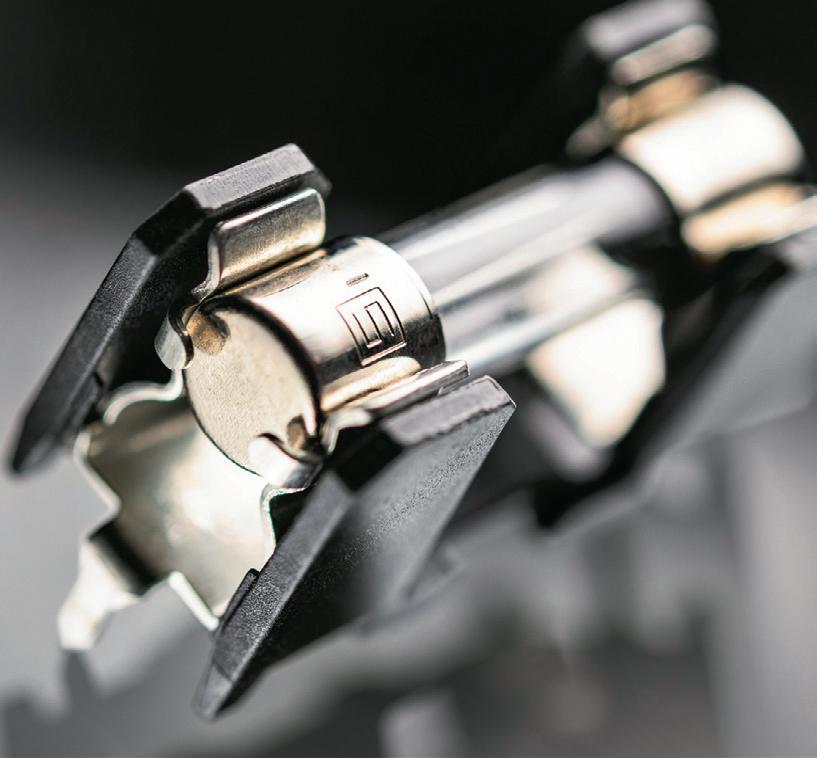
The SCHURTER OGN series open fuse holder is compatible with throughhole reflow (THR) solder processes, in addition to the existing THT and SMT versions, to facilitate fully automated PCB assembly.
The solution is THR components, combining the features of PCB THT mounting with a component capable of withstanding the high thermal stress of a reflow oven. The THR component is first printed into the pin vias and then pushed through the solder paste. As the paste melts in the reflow oven, the liquid solder retracts into the vias to form the solder joint.
The open fuse holder’s THR is designed for various types of 5x20 mm fuses. The series is rated 16 A at 500 VAC/VDC according to UL and CSA and 10/16 A at 500 VAC according to VDE. The series can be enclosed with an optional cover and rated power acceptance according to IEC is 4 W/16 A at Ta 23°C without cover. A black cover offers a power acceptance of 4 W/10 A and a transparent cover is approved at 2.5 W/10 A. Admissible ambient air temperature range is -40 to 85°C.
SCHURTER (S) PTE LTD
www.schurter.com
TEMPERATURE MEASUREMENT DEVICE
The MCC USB Temp from Digilent is a temperature measurement device that enables users to monitor temperature data. The USB-TC features eight, 24-bit analog inputs for thermocouple measurements, 2 S/s/ch sample rate and eight digital I/Os that support thermocouple, RTD, thermistor and semiconductor sensor types. Four channels can be configured to measure various temperature sensors. The last four channels are capable of measuring voltage and offer the following input ranges; ±10, ±5, ±2.5, ±1.25 V. Eight digital I/Os and one counter input are also provided.
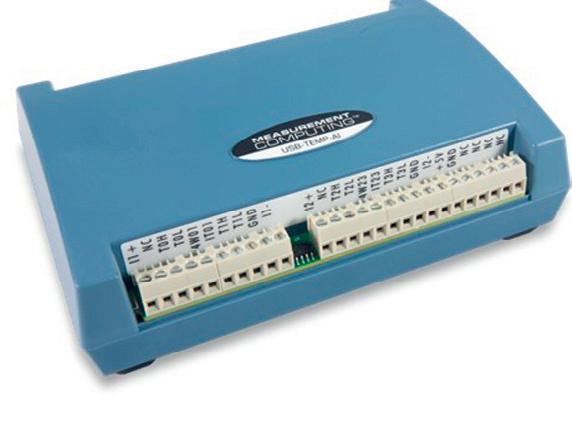
The device connects to computers via USB, making it easy to transfer temperature data in real time. The included software is designed to be user friendly and provides a range of features, including the ability to display temperature data in either Celsius or Fahrenheit, set alarm thresholds and log data. Software support includes DAQami, an out-of-the-box application for data logging, visualisation and signal generation. Data can be viewed in real time or post-acquisition on user-configurable displays. Drivers are included for the most popular applications and programming languages including Visual C++, Visual C#, Visual Basic.NET, DASYLab, LabVIEW, MATLAB, Linux and Python.
The temperature measurement device is compact and portable, making it easy to transport, and its rugged design enables it to withstand harsh environments and tough conditions.
Digilent Inc
www.digilent.com
POWER AMPLIFIER
Mouser Electronics now stocks the QPA1314T power amplifier (PA) from Qorvo. Manufactured using Qorvo’s production 0.15 µm gallium nitride-on-silicon carbide (GaN-on-SiC) process (QGaN15) and mounted to a high thermal conductivity tab, the power amplifier is a highpower MMIC amplifier suitable for commercial and defence RF communication applications.
The power amplifier features an extended frequency range of 12.75 to 15.35 GHz and achieves 55 W of saturated output power in its standard range of 13.75 to 14.5 GHz. The device integrates DC blocking capacitors on both the input and output ports and is fully matched to 50 ohms to simplify system integration. The power amplifier’s RF ports are also DC coupled to ground to achieve enhanced ESD performance.
Designed for RF satellite and radar communications and datalinks in commercial and military markets, the power amplifier is lead-free, halogen-free, RoHS compliant and 100% DC and RF tested on-wafer for compliance to electrical specifications. For evaluation and development, Mouser also offers the QPA1314DEVB evaluation board.
Mouser Electronics au.mouser.com
16 MAY/JUNE 2023 WWW.ELECTRONICSONLINE.NET.AU
AI COMPUTING SYSTEM
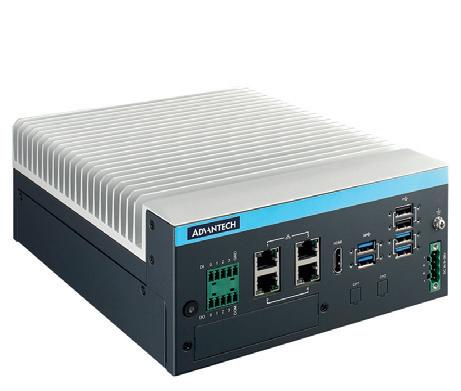
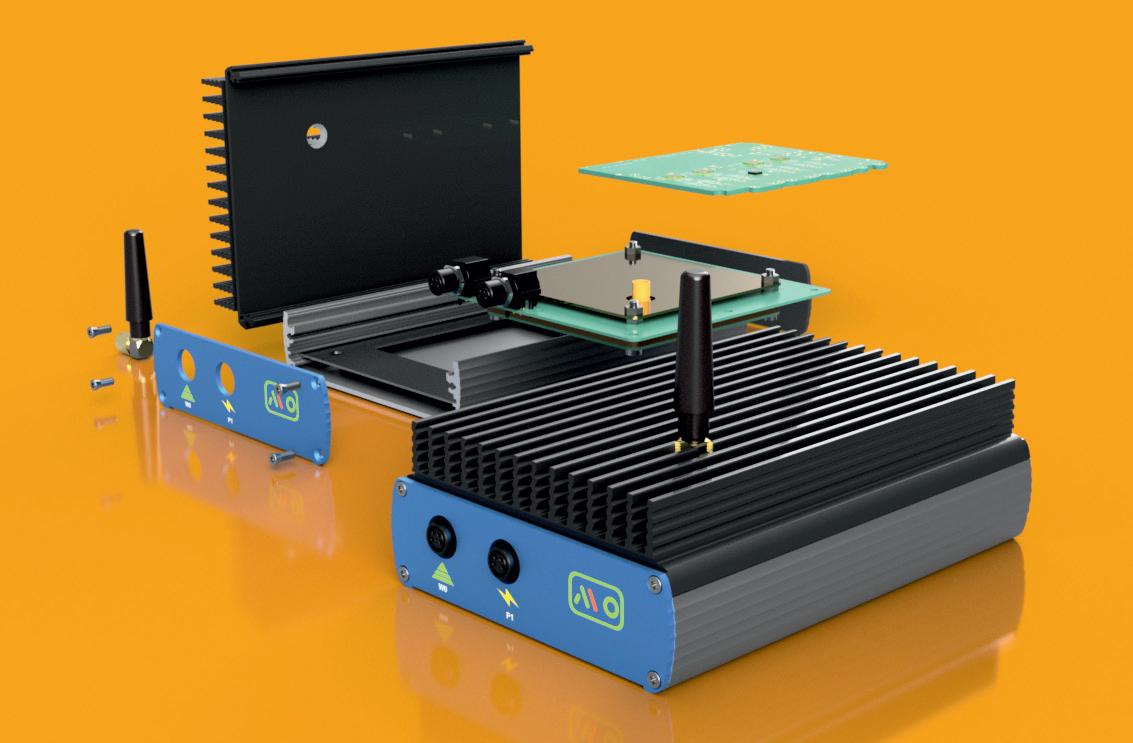
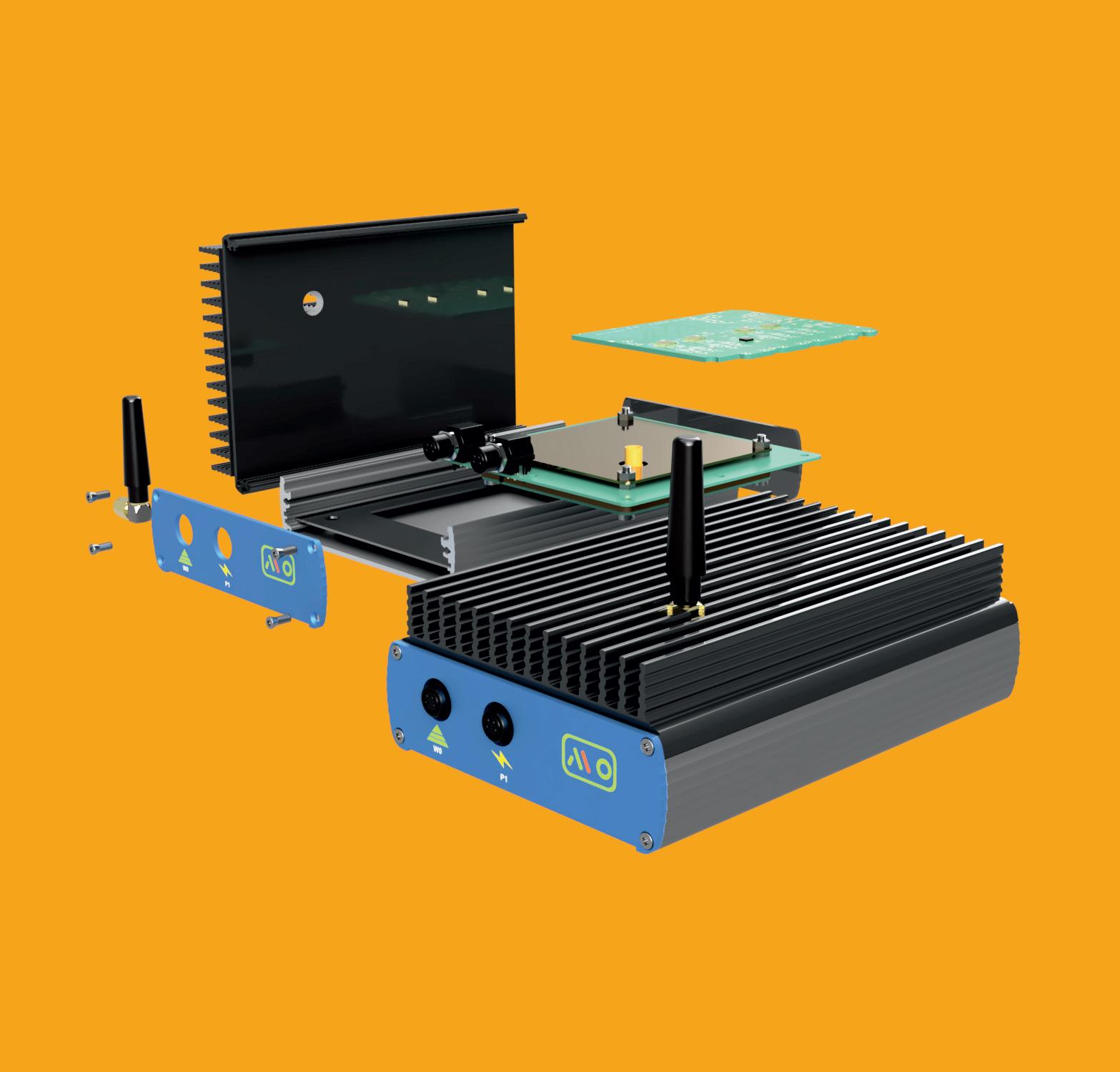
Advantech has released the MIC-733-AO, a NVIDIA Jetson AGX Orin-based AI computing system. Designed for the growing trend on Video + AI + 5G application, the computing system features flexible video input support and wireless communication. With 24/7 remote management support, the computing system is suitable for AMR/AGV applications, and it is ready for the coming opportunities in smart agriculture and smart transportation.
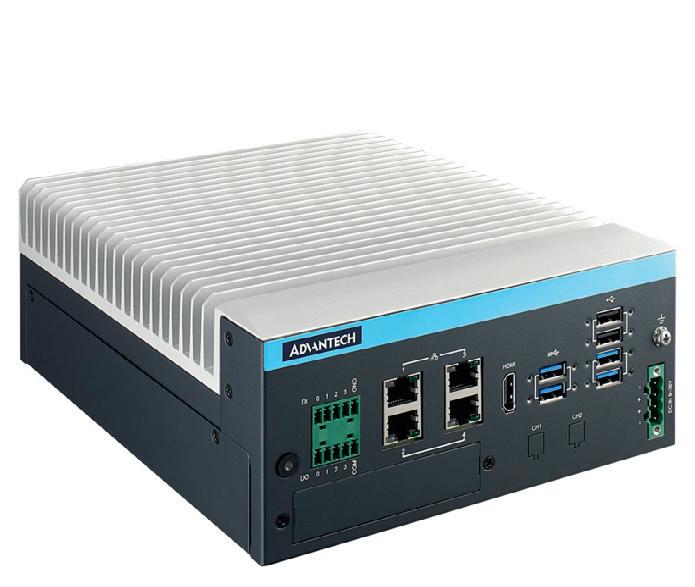
The computing system is a compact fanless system designed to endure wide operating temperatures (-10 ~ 60°C; 14 ~ 140°F) found in outdoor/harsh environments. It delivers a flexible array of expansion slots and multiple I/O — including 4 x USB 3.2, 2 x Mini-PCIe and 2 x M.2. It also offers iDoor and iModule expansion and support for diverse peripherals. There is also I/O module customisation available through the Mini-PCIe and full PCIe interfaces.
The computing system is aimed at helping developers with high-performance AI applications at the edge, large-scale deployment and data security during implementation. Advantech collaborates with Allxon to provide a 24/7 remote management service on the NVIDIA Jetson edge AI and robotics platform, enabling large-scale deployment and device management through over-the-air (OTA) and out-of-band (OOB) service. The computing system is also Azure IoT certified with the Microsoft reference configuration. In addition, the Azure Edge Managed Program, Microsoft Defender for IoT, delivers threat detection to the device’s operating system and applications.
The computing system is also capable of empowering video + AI + 5G computing at the edge.


Advantech Australia Pty Ltd
www.advantech.net.au


WWW.ELECTRONICSONLINE.NET.AU MAY/JUNE 2023 17
MOTION CONTROLLER
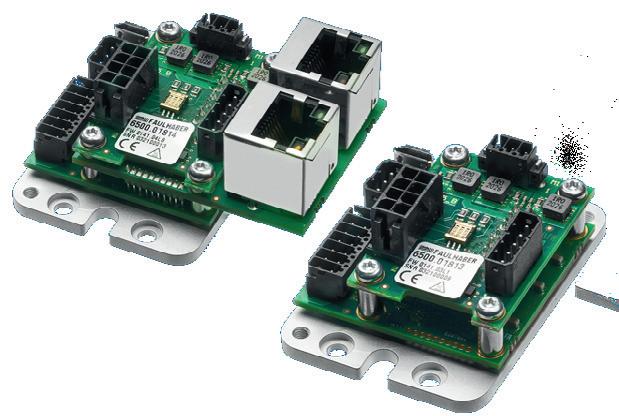
FAULHABER has launched the MC3603 Motion Controller, a compact and housing-free solution suitable for equipment manufacturing and medical technology applications. FAULHABER’S current Motion Controller line-up covers a range of power options, catering to miniature motors and micromotors. Starting with the compact MC3001, providing 30 W and 1 A (with a peak current of 2 A), and extending to the MC5010, the largest member of the family offering 10 A (with a peak current of 30 A), these controllers serve diverse applications. The MC5010 is designed for industrial use and installation in switching cabinets.
This latest offering covers a power range of approximately 100 W, delivering 36 V and 3 A (with a peak current of 9 A). The MC3603 is versatile, supporting various motor types such as DC motors with encoders, brushless drives and linear motors.
The motion controller features an array of I/O options and encoder interfaces, including USB, RS232, CANopen and EtherCAT, enabling communication and integration within different set-ups. With the latest firmware version “M”, the motion controller is equipped with advanced features and functionality. To simplify system set-up, users are encouraged to utilise the updated FAULHABER Motion Manager software, version 6.9.
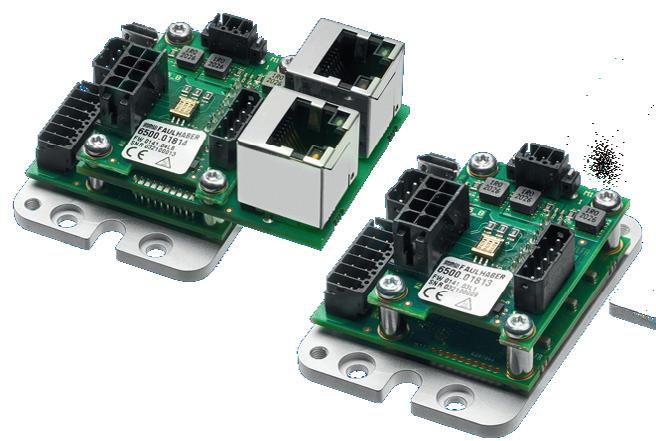
Addressing electromagnetic compatibility (EMC) concerns, all FAULHABER motion controllers comply with EMC regulations, delivering performance while meeting industry standards. The company has also invested significant efforts in enhancing its hardware and documentation to support users in achieving certification for their own devices.
With its range of power op tions, I/O interfaces and compliance with EMC regulations, FAULHABER is designed to provide a reliable and efficient motion control solution for various industries.
ERNTEC Pty Ltd
www.erntec.net
HIGH POWER PoL DC/DC MODULE
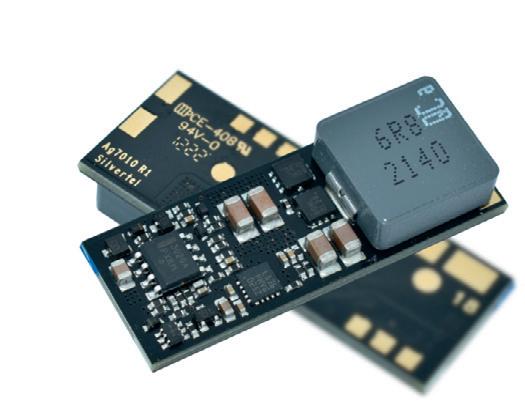
Silvertel’s Ag7010 High Efficiency Point of Load (PoL) Buck Converter Module operates over a broad input voltage range. Silvertel also supplies the EvalAg7010 evaluation board to support simple testing and evaluation of the Ag7010. The PMBus-enabled buck converter module features a wide input voltage range from 8–24 V and an output range from 3–12.7 V. It also features a low heat output and low output of ripple and noise.
The converter module features configurable UVLO and OVLO, and overload, short-circuit and thermal protection. Minimal external components are required for the module, and it comes in a low-profile SMT package size — 37.4 (L) x 14.4 mm (H).
As a next-generation low noise DC/DC buck converter with integrated PMBus commands through I2C, the Ag7010 is a suitable solution for a variety of USB-C converter applications, including USB powered devices, Apple lightning and distributed power systems.
Fairmont Marketing
www.fairmontmarketing.com.au
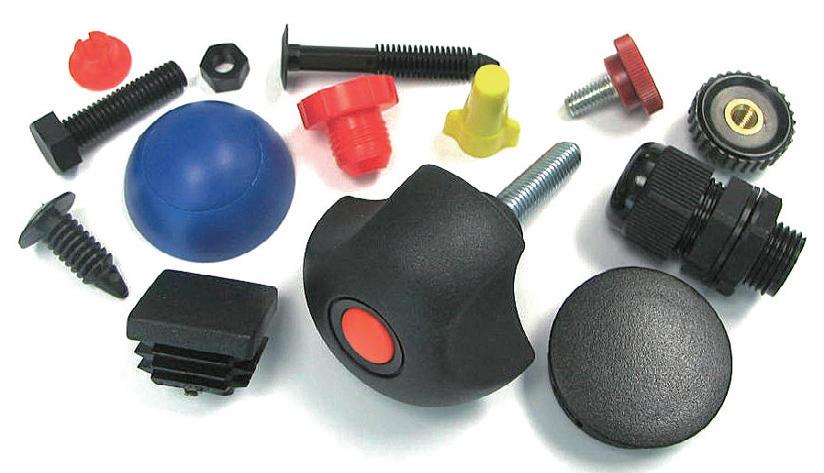
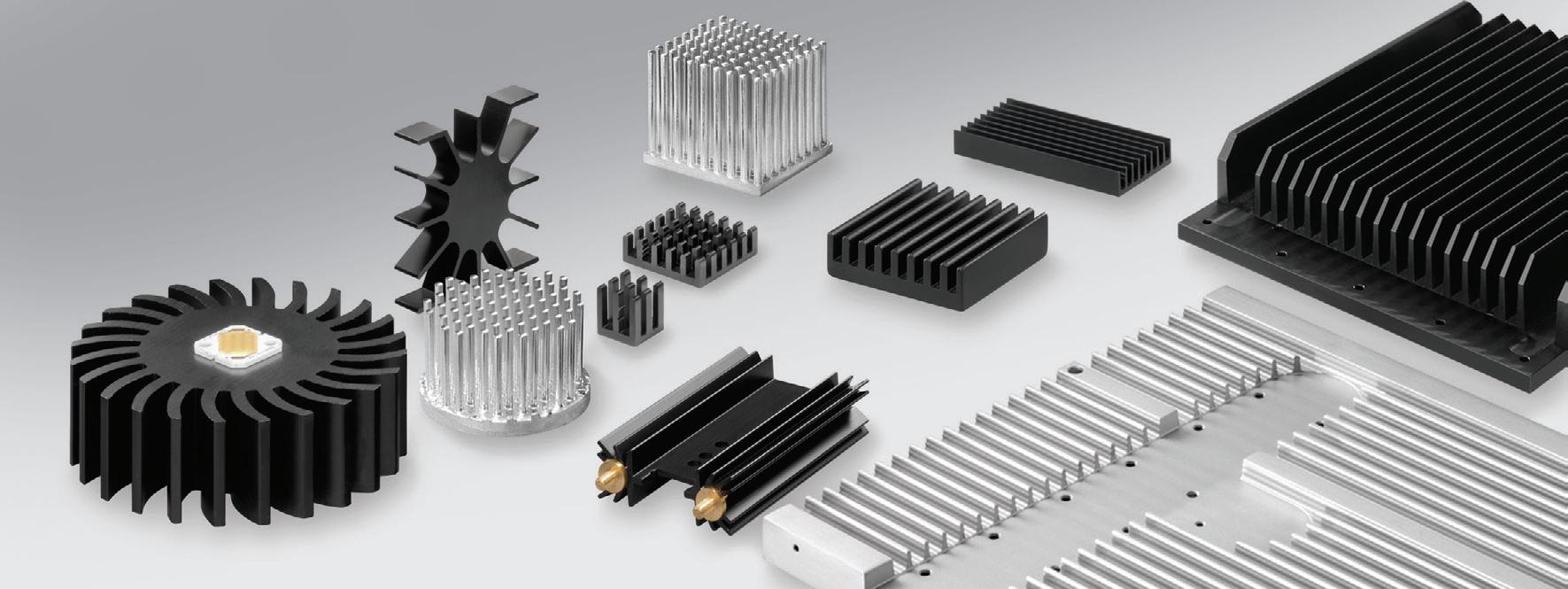
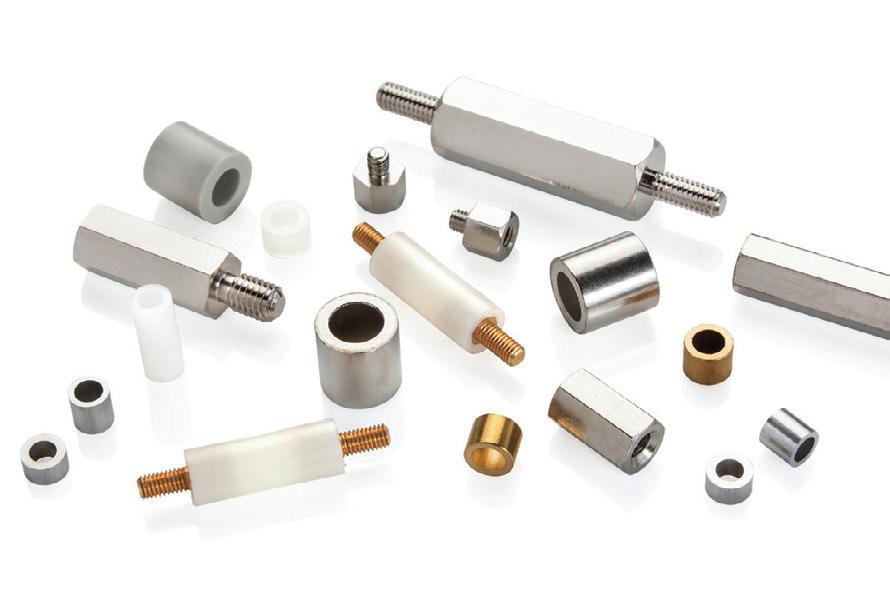
18 MAY/JUNE 2023 WWW.ELECTRONICSONLINE.NET.AU Limited Electronics Hi-Q from Available nz co sales@hiq NZ 0800 800 293 www.hiq.co.nz We Stock 1000’s of Plastic Parts for Industry • Nylon Fasteners • Screws & Nuts • Washers & Spacers • Rivets & Clips • PCB Hardware • Caps & Plugs • Knobs & Handles • Hole Pugs & Bushes • LED Mounts & Light Pipes • Cable Ties & Mounts
HANDHELD PLASTIC ENCLOSURES

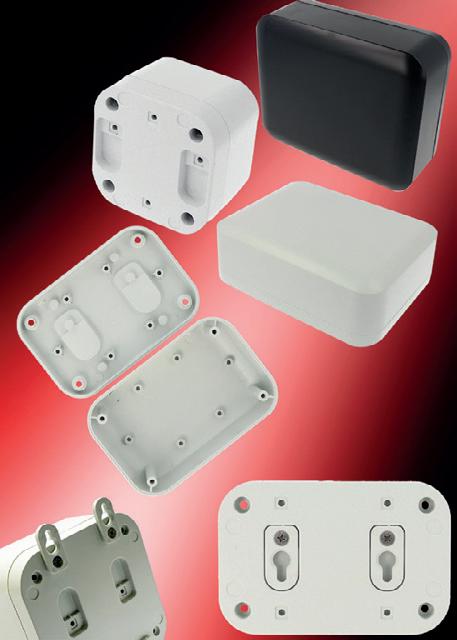
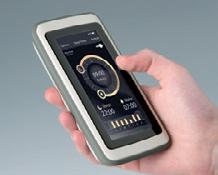
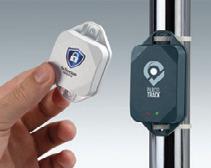
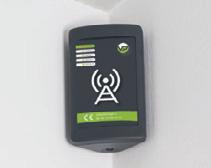
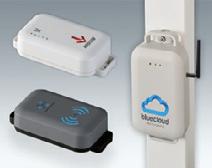
OKW has added the slimline S size to the CONNECT range of handheld plastic enclosures for wired electronics. Versatile CONNECT is designed for data systems engineering, networks, building services technology, safety engineering, IoT/IIoT sensors, medical devices, and measurement and control applications.
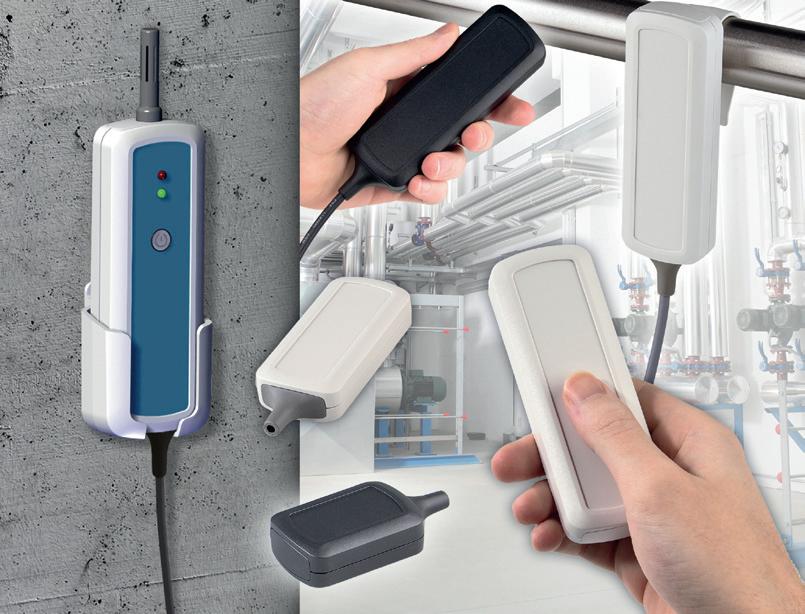

The enclosures comprise two sections — one flat and recessed for a membrane keypad, the other curved and tactile. Rounded corners add further ergonomic comfort. The enclosure’s two shells snap together; there are no fixings screws — reducing assembly time and giving designers a choice of two ‘fronts’. Apertures at both ends can be fitted with either a cable gland or end panel.
The enclosures offer plenty of space for compact displays, LEDs and USB connectors. Inside, the flat section has pillars for fitting PCBs and other components.
The enclosure is 42 mm wide, 22 mm high and available in three lengths: 60, 90 and 120 mm. (Existing size M is 54 x 22 x 76/116/156 mm.) All the housings are moulded from UV-stable ASA+PC-FR (UL 94 V-0) in either off-white (RAL 9002) or black (RAL 9005). Accessories include rail holding clamps, cable gland kits, end panels, wall holders and PCB mounting screws.
OKW can supply the enclosures fully customised. Services include machining, lacquering, printing, laser marking, decor foils, EMC shielding and installation/assembly of accessories.
ROLEC OKW Australia New Zealand P/L www.rolec-enclosures.com.au

WWW.ELECTRONICSONLINE.NET.AU MAY/JUNE 2023 19
CONNECTIVITY A DRIVING FORCE TO STANDARDISE EV INFRASTRUCTURE
 Martin Lesund, Technical Marketing Manager – Cellular IoT, Nordic Semiconductor
As the world transitions away from internal combustion engine (ICE) vehicles to help meet climate targets, the rollout of electric vehicles (EVs) as a viable, more sustainable transport alternative is increasing.
Government mandates and regulatory incentives have been a key driver of the growth in EV adoption. The US Government is aiming to make EVs half of all new vehicles sold by 2030. And the EU’s Green Trucking Directive calls for 50% toll discounts for EVs from 2023 and air pollution charges for gas vehicles from 2026.
But deployment schedules around the world are still patchy. According to the
Global EV Outlook from the International Energy Agency, Europe’s Nordic nations — with Norway (86%) and Iceland (72%) at the top — led the world in global EV market penetration in 2021, while the US barely made the top 20 with 5% EV sales as a percentage of overall car sales.
One roadblock to faster EV adoption is that infrastructure and customer experience challenges remain. The drivers of EVs rely on the availability of dedicated EV charging stations to efficiently plan their journeys. While traditional fuelling stations for ICE vehicles are readily available, a much smaller network of operational EV charging stations has prevented many people from making the
switch to electric. And the charging stations that do exist must be kept reliably up and running. Companies also need to continue to invest in smart charging technologies to generate faster charging options, while also reducing potential grid overload during peak charging times, says analyst ABI Research.
According to a new report, Connected EV Charging, from global telco infrastructure leader Ericsson, “EV charging stations are critical to ensure a steady adoption, and there are significant business opportunities for EV charging companies and the related ecosystem.”
Despite these challenges, there are signs of movement with a recent study by Berg
20 MAY/JUNE 2023 WWW.ELECTRONICSONLINE.NET.AU
Insight forecasting 9.7 million charging points in Europe by 2024.
The need for connectivity
As in so many other industry sectors, reliable, secure wireless connectivity to EV charging stations enhances their value proposition. Connectivity enables data to be gathered on how customers use the station, as well as the availability and condition of charging sockets. Data can be relayed to a central platform for staff to respond to disruptions or problems remotely. Avoiding potential technical issues can improve maintenance and uptime at the electrical outlet. It can also help charging companies plan when
and where to scale their charging network based on demand. Data gathered can even be used to provide real-time visibility of all stations to drivers directly, helping them map out their journey.
Cellular IoT will be a driving force for the fledgling EV charging market, according to the Ericsson report. The report suggests LTE-M/ NB-IoT connectivity can help EV charging companies manage the complex ecosystem of stakeholders including drivers, hardware and connectivity providers, utility companies, automotive OEMs and asset owners like parking operators, cities and homeowners.
“By connecting charging stations with cellular IoT, EV charging companies are

CONNECTIVITY ENABLES DATA TO BE GATHERED ON HOW CUSTOMERS USE THE STATION, AS WELL AS THE AVAILABILITY AND CONDITION OF CHARGING SOCKETS.
better positioned to effectively manage their orchestration, administration and maintenance, offering a smoother driving and customer experience,” the Ericsson report stated.
A flexible approach
Cellular IoT is not the only wireless tech with a role to play in the future of EV charging. Bluetooth LE, Wi-Fi and cellular connectivity are all needed to enable a flexible approach for EV charging stations. With the ability to seamlessly integrate short-range, Wi-Fi and cellular devices using the same Nordic nRF Connect SDK (software development kit), developers can create innovative and reliable charging solutions that meet the evolving needs of the EV industry.
An example comes from India-based tech company Intellicar. The firm’s multiprotocol edge intelligence solution has been developed for the EV value chain. The Nordic nRF52833 SoC-powered Flashµ gateway with a cellular modem enables customers to deploy edge analytics on their remote assets including batteries, swap stations, charging infrastructure and vehicles. The SoC provides seamless Bluetooth LE connectivity for connecting assets and data to the cloud in the absence of cellular coverage.
The use of multiple wireless technologies will also be beneficial when EV owners are charging their cars at home. We need to futureproof applications by adding EV charging stations to the Matter-enabled networks of tomorrow’s smart homes. In residential building use cases where apartments have shared parking spaces, several hundred EV charging stations might need to communicate together for different reasons. Matter is a smart-home standard that brings interoperability to Wi-Fi and Thread products.
This article is republished from Nordic Semiconductor’s Wireless Quarter with permission.
www.nordicsemi.com/News/WirelessQuarter
WWW.ELECTRONICSONLINE.NET.AU MAY/JUNE 2023 21
WIRELESS CONNECTIVITY
iStock.com/Ralf Hahn
LIQUID ATOMISING SPRAY NOZZLE
EXAIR’s 1/2 NPT HollowStream liquid atomising spray nozzle provides a hollow cone spray pattern for pressurised liquids. The nozzle can be applied to solve many problems including cooling, cleaning, rinsing and dust suppression applications for industry. The tangential flow design is vaneless, with wide open internal features to resist clogging and work well with liquids containing particulate. These liquid nozzles are designed to produce a uniform distribution of liquid in a ring pattern with medium to large droplets. Their right-angle design is compact and can fit in small areas. Liquid operating pressure is up to 250 PSI.
With the liquid atomising spray nozzles, the liquid is supplied into the body of the nozzle creating a swirling action within a vortex chamber. This vortex produces the hollow-cone spray pattern when the precision nozzle breaks the liquid surface tension as it exits the orifice into a controlled spray angle. With an adjustable flow rate, it’s suitable for dust mitigation, pollution scrubbers, foam breaking and more.
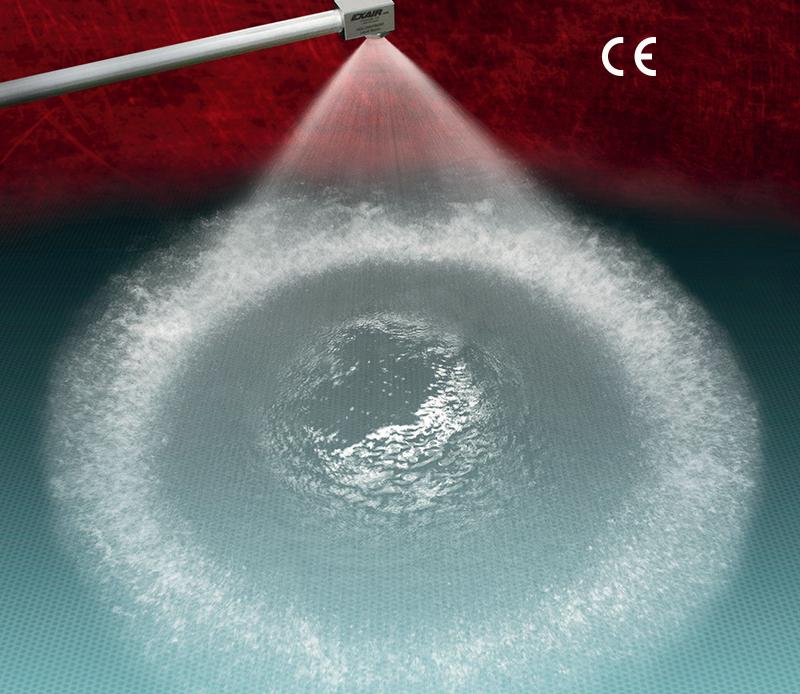
Available from Compressed Air Australia, the type 303 stainless steel construction of liquid atomising nozzles adds to their corrosion resistance. HollowStream nozzles are CE compliant and available in a variety of flow rates.
Compressed Air Australia Pty Ltd

www.caasafety.com.au
TRANSISTOR FOR C-BAND RADAR SYSTEMS
Richardson RFPD, Inc., an Arrow Electronics company, has launched a gallium nitride RF device from Wolfspeed. The CGHV59350F GaN MMIC transistor is 350 W, 5.2–5.9 GHz, 50Ω input/output matched, GaN on SiC HEMT designed with high efficiency, high gain and wide bandwidth capabilities.
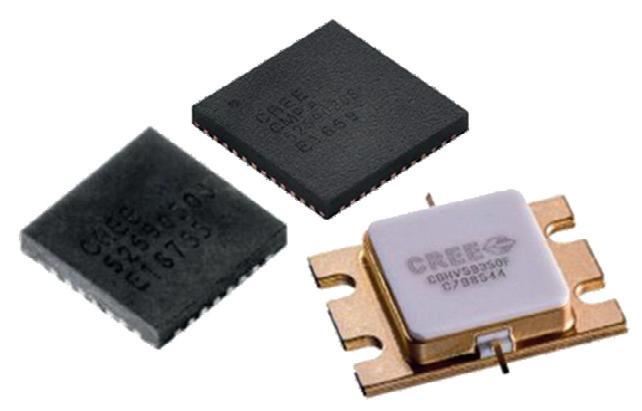
The transistor is supplied in a ceramic/metal flange package and features a typical output power of 470 W, with a power gain of 10.7 dB. It also has a typical PAE of 60%, with a pulsed amplitude droop <0.3 dB. Evaluation boards and test fixtures are also available.
Richardson RFPD www.richardsonrfpd.com
MOTION SENSOR
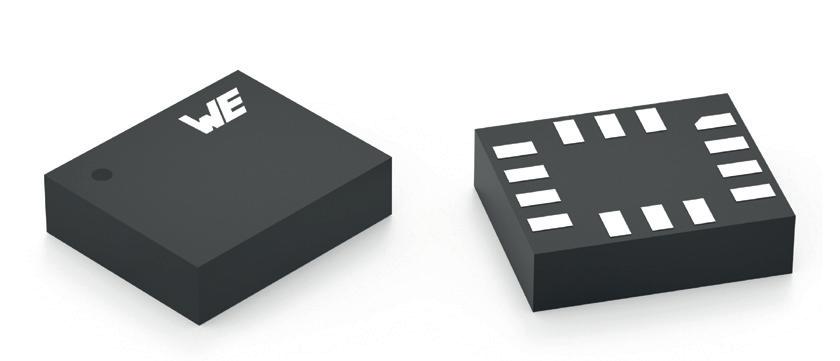
Würth Elektronik has expanded its range of compact MEMS-based sensors with a 3-axis accelerometer and integrated gyroscope. The motion sensor is also versatile, due to its selectable measuring ranges and data rates. To facilitate integration, the sensor outputs pre-calibrated, processed data for application-specific functionalities of free-fall, wake-up, tap, activity, motion, tilt and orientation detection. The 2.5 x 3.0 x 0.86 mm sensor in an LGA package provides digital I²C and SPI interfaces as well as a FIFO buffer for storing output data.


The compact accelerometer and gyroscope has a range of applications, from localisation and navigation solutions, to automation, industrial devices and machines, antenna and platform stabilisation, through to industrial IoT devices, robots and drones. Linear and angular acceleration measurement extends from single-event registration to high frequency continuous vibration monitoring. Data rates can be selected up to 1400 Hz for the accelerometer and up to 937 Hz for the gyroscope. The output data rate extends to 6.66 kHz. The module draws 0.69 mA in high-power mode, but this goes down to 0.28 mA in low-power mode to capture single pulses.
The user can select different measuring ranges depending on the level of acceleration the motion sensor is to detect. Here, Würth Elektronik offers the ranges ±2 g, ±4 g, ±8 g, ±16 g for linear acceleration and ±250 dps, ±500 dps, ±1000 dps, ±2000 dps for the change of angular velocity. The sensitivity accuracy is ±3%.
Wurth Electronics Australia Pty
www.we-online.com
22 MAY/JUNE 2023 WWW.ELECTRONICSONLINE.NET.AU Bayswater Accredited testing and global product approvals since 1992
1 10/05/2023 10:32:41 AM
EMC_ad_2019.pdf
FROM SHEETS TO STACKS:
RESEARCHERS DEVELOP NEXT-GEN NANOSTRUCTURE
Researchers have developed multilayered in-plane transition metal dichalcogenide (TMDC) junctions, demonstrating their potential use in tunnel field-effect transistors (TFETs). Scientists from Tokyo Metropolitan University have engineered multi-layered nanostructures of transition metal dichalcogenides which meet in-plane to form junctions. They grew out layers of multi-layered structures of molybdenum disulfide from the edge of niobium doped molybdenum disulfide shards, creating a thick, bonded, planar heterostructure. The researchers demonstrated that these may be used to make new tunnel field-effect transistors (TFET), components in integrated circuits with ultra-low power consumption.
Field-effect transistors (FETs) are a crucial building block of digital circuits. They control the passage of current through circuits depending on the voltage which is put across. While metal oxide semiconductor FETs (or MOSFETs) form the majority of FETs in use today, researchers are searching for the next generation of materials to drive increasingly demanding devices using less power. This is where tunnelling FETs (or TFETs) come in.
TFETs rely on quantum tunnelling, an effect where electrons are able to pass usually impassable barriers due to quantum mechanical effects. Though TFETs use less energy and are proposed as an alternative to traditional FETs, scientists have yet to come up with a way of implementing the technology in a scalable form.
The scientists from Tokyo Metropolitan University, led by Associate Professor Yasumitsu Miyata, have been working on making nanostructures out of transition metal dichalcogenides, a mixture of transition metals and group 16 elements. Transition metal dichalcogenides (TMDCs, two chalcogen atoms to one metal atom) are a promising candidate for creating TFETs. The researchers stitched together single-atom-thick layers of crystalline TMDC sheets over “unprecedented” lengths and have now turned their attention to multilayered structures of TMDCs.
By using a chemical vapour deposition (CVD) technique, the researchers showed that they could grow out a different TMDC from the edge of stacked crystalline planes mounted on a substrate. The result was an in-plane junction that was multiple layers thick. Much of the existing work on TMDC
junctions uses monolayers stacked on top of each other; this is because, despite the strong theoretical performance of in-plane junctions, previous attempts could not realise the high hole and electron concentrations required to make a TFET work.
After demonstrating the robustness of their technique using molybdenum disulfide grown from tungsten diselenide, the researchers turned to niobium doped molybdenum disulfide, a p-type semiconductor. By growing out multi-layered structures of undoped molybdenum disulfide, an n-type semiconductor, the researchers realised a thick p-n junction between TMDCs with a high carrier concentration. Furthermore, they found that the junction showed a trend of negative differential resistance (NDR), where increases in voltage lead to less and less increased current, a key feature of tunnelling and a significant first step for these nanomaterials to make their way into TFETs.
The method employed by the team is also scalable over large areas, making it suitable for implementation during circuit fabrication. The researchers believe that this development could find its way into many applications for electronics in the future.

WWW.ELECTRONICSONLINE.NET.AU MAY/JUNE 2023 23
TRANSISTORS iStock.com/ansardi
Root cause analysis to enhance switch display development
New customer projects are not always easy to realise — customised, optimised processes can help and lead to even greater success in series production. Human machine interface (HMI) solutions can be demanding; the specifications for the input system for such projects are challenging. Therefore, it is vital to work with an experienced manufacturer to optimally realise these high-end solutions.
For a customer from the automotive high-end vehicles sector, SCHURTER started with the series production of a ‘switch display’ as a component of the central control console with independent functions. In this specially designed input system, the display integrated into the housing shows the symbol of the selected function.
For each project, various specifications can be agreed upon with the customer. Rejects and error rates that are found within a defined tolerance are also part of this. A qualitative 100% realisation does not exist in reality due to various parameters, but is still strived for. In this case, the formation of bubbles between the display and the housing posed the greatest challenge due to the complexity of this customised HMI solution.
SCHURTER strives to manage, monitor and improve excellent processes. Its management systems and certifications according to ISO 9001, ISO 14001, ISO 13485 and ISO 45001 are regularly monitored and practised. As a result, it is constantly improving products and processes in order to offer the best possible solution.
In this project, a working group for root cause analysis and process improvement was formed. The starting point was the root cause analysis according to Ishikawa and other models. This identified several potential causes for bubble formation, including residual traces of powder in laser processes, reduced adhesive properties of display/housing, dust inclusions, and fixture and process parameters.
With the help of this root cause research and the set-up of various test series, methods and measures were systematically developed for improvement within a short period of time. Nothing was left out, with all influencing factors such as machine, operator, environment, material, method and measurement considered. The entire process chain and supply chain were also thoroughly re-examined. Since SCHURTER has an in-house qualification laboratory with a range of test equipment, various sources of error could be identified and eliminated. The in-house engineering team in the area of process and mechanical engineering was also able to contribute to the implementation of the optimisation measures.
To improve adhesion, the individual components were specially pre-treated. Dust inclusions were also minimised to a regulated level by optimising production in the cleanroom, including personnel and secure premises. The bonding process was also optimised by adapting the fixtures used.

For such fine optimisations, the extensive knowledge of SCHURTER’s engineers from the engineering and quality departments was crucial, as it meant that SCHURTER had the ability and knowledge in-house. This allowed it to achieve such process and quality improvements. The company also looked beyond, to the entire supply chain, which enabled it to initiate an improvement measure with the supplier of the housing. In cooperation with the supplier, the laser process there was optimised, this reducing the traces of powder.
At SCHURTER, the quality of products and services is considered a key factor for success. Expert knowledge is vital to realise such challenging projects. After making these small adjustments and implementing various measures, the error rate for bubble formation was reduced by ~70%. This illustrates that SCHURTER’s high standards of quality, products and services offer great potential for improvement. The use of in-house specialists and sharing of ideas means a profitable analysis and implementation of measures is possible.
This also shows that high quality standards and the achievement of 100% solutions have great potential. SCHURTER is constantly improving and optimising, in order to offer the best possible solution. In a team, both internally among the SCHURTER specialists but also with direct exchange with the customer and suppliers, optimal solutions can be created which lead to success.
24 MAY/JUNE 2023 WWW.ELECTRONICSONLINE.NET.AU
(S) PTE LTD www.schurter.com
SCHURTER
Image credit: SCHURTER
VOLTAGE ATTENUATOR
ICP Electronics Australia has introduced the ICP DAS DNM-843VI-800V, a 3-channel voltage attenuator designed to measure high-voltage inputs. This attenuator features a maximum input range of ±800 VDC, which can be attenuated down to ±10 V with a linear attenuation ratio. It also features high input impedance and wire connection capabilities.
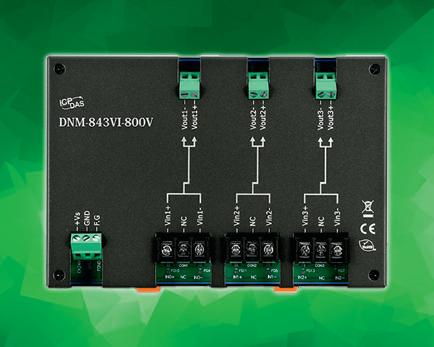
The ‘I’ version of the attenuator series provides 3000 VDC intra-modules isolation and 3000 VDC channel to channel isolation, so that that there is no noise interference from inputs to outputs or channel to channel. This makes it a suitable choice for high-voltage measurements with analog input modules such as I-7017 and I-87017.
The attenuator is equipped with AC/DC source input and is built to provide accurate voltage measurements with high precision. The attenuator’s compact size and easy wiring feature make it easy to install and maintain.
The voltage attenuators from ICP DAS are designed for high-voltage input measurements due to their linear attenuation ratio, high input impedance, easy wire connection and isolation capabilities. The attenuators are suitable for industrial, automotive and electrical applications.
ICP Electronics Australia Pty Ltd
www.icp-australia.com.au
INDUSTRIAL MODULE
STMicroelectronics’ ST87M01 low-power modules combine NB-IoT data communication with GNSS geo-location capability for IoT devices and assets. The fully programmable, certified LTE Cat NB2 NB-IoT industrial modules cover worldwide cellular frequency bands and integrate advanced security features. The industrial module provides extended multi-regional LTE coverage. The integrated native GNSS receiver with multi-constellation access is designed to provide enhanced localisation along with a power savings feature while operating during NB-IoT sleep time slots.
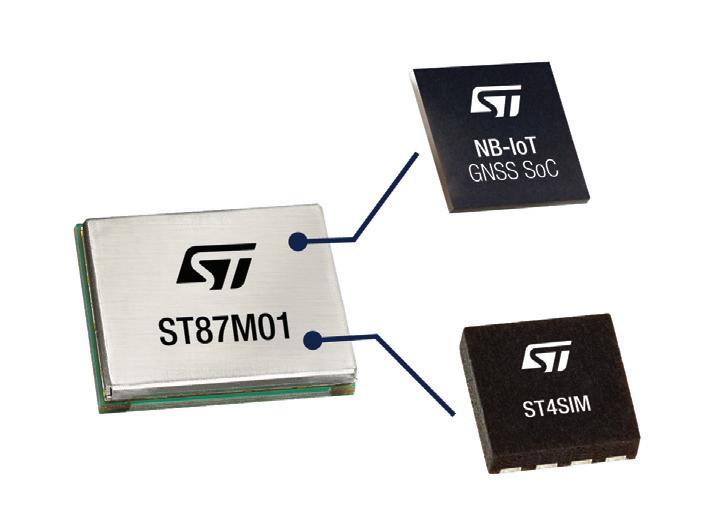
The module itself and all the internal ICs are conceived, designed and industrialised by ST, for the complete control and management of the bill of materials and supply chain. The complete module has a 10.6 x 12.8 mm LGA footprint, making it suitable for applications where a small form factor is needed.
Qualified over the industrial temperature range (-40 to +85°), with ultra-low power consumption — less than 2µA in low-power mode — and transmit output power up to +23 dBm, the industrial module targets wide-ranging IoT applications that require Low Power Wide Area Network (LPWAN) connectivity. These include smart metering, smart grid, smart building, smart city and smart infrastructure applications, as well as industrial condition monitoring and factory automation, smart agriculture and environmental monitoring. It is also suited to tracking applications such as locating pets, children and elders; safety monitoring for remote workers; asset tracking for equipment such as power tools; and general intelligent logistics.
The industrial module offers flexibility for product developers, presenting a fully programmable IoT platform that lets users embed their own code directly in the module for simple applications. Alternatively, the module can be combined with a separate host microcontroller, permitting many more sophisticated use cases. A variety of protocol stacks is available to handle popular IoT use cases, including IPv6, TCP/UDP, CoAP/LWM2M, MQTT, HTTP/HTTPS and TLS/DTLS. The industrial module is designed to support both standardised 3GPP AT commands, along with ST enhanced AT commands.
STMicroelectronics Pty Ltd
www.st.com
WWW.ELECTRONICSONLINE.NET.AU MAY/JUNE 2023 25 new! 1556 FR ABS IP54 enclosures Learn more: hammfg.com/1556 ausales@hammfg.com • 08 8240 2244
NANOWIRE NETWORKS LEARN AND REMEMBER LIKE A HUMAN BRAIN
An international team led by scientists at the University of Sydney has demonstrated nanowire networks can exhibit both short- and long-term memory like the human brain.
The research has been published in the journal Science Advances , led by Dr Alon Loeffler, who received his PhD in the School of Physics, with collaborators in Japan.
“In this research we found higher-order cognitive function, which we normally associate with the human brain, can be emulated in non-biological hardware,” Loeffler said.
“This work builds on our previous research in which we showed how nanotechnology could be used to build a brain-inspired electrical device with neural network-like circuitry and synapse-like signalling.
“Our current work paves the way towards replicating brain-like learning and memory in non-biological hardware systems and suggests that the underlying nature of brain-like intelligence may be physical.”
Nanowire networks are a type of nanotechnology typically made from tiny, highly conductive silver wires that are invisible to the naked eye, covered in a plastic material, which are scattered across each other like a mesh. The wires mimic aspects of the networked physical structure of a human brain.
Advances in nanowire networks could herald many real-world applications, such as improving robotics or sensor devices that need to make quick decisions in unpredictable environments.
“This nanowire network is like a synthetic neural network because the nanowires act like neurons, and the places where they connect with each other are analogous to synapses,” senior author Professor Zdenka Kuncic, from the School of Physics, said.

“Instead of implementing some kind of machine learning task, in this study Dr Loeffler has actually taken it one step further and tried to demonstrate that nanowire networks exhibit some kind of cognitive function.”
To test the capabilities of the nanowire network, the researchers gave it a test similar to a common memory task used in human psychology experiments, called the N-Back task.
For a person, the N-Back task might involve remembering a specific picture of a cat from a series of feline images presented in a sequence. An N-Back score of 7, the average for people, indicates the person can recognise the same image that appeared seven steps back.
When applied to the nanowire network, the researchers found it could ‘remember’ a desired endpoint in an electric circuit seven steps back, meaning a score of 7 in an N-Back test.
“What we did here is manipulate the voltages of the end electrodes to force the
HUMAN-LIKE INTELLIGENCE COULD BE PHYSICAL University of Sydney
pathways to change, rather than letting the network just do its own thing. We forced the pathways to go where we wanted them to go,” Loeffler said.
“When we implement that, its memory had much higher accuracy and didn’t really decrease over time, suggesting that we’ve found a way to strengthen the pathways to push them towards where we want them, and then the network remembers it.
“Neuroscientists think this is how the brain works, certain synaptic connections strengthen while others weaken, and that’s thought to be how we preferentially remember some things, how we learn and so on.”
The researchers said when the nanowire network is constantly reinforced, it reaches a point where that reinforcement is no longer needed because the information is consolidated into memory.
“It’s kind of like the difference between long-term memory and short-term memory in our brains,” Kuncic said.
“If we want to remember something for a long period of time, we really need to keep training our brains to consolidate that, otherwise it just kind of fades away over time.
“One task showed that the nanowire network can store up to seven items in memory at substantially higher than chance levels without reinforcement training and nearperfect accuracy with reinforcement training.”
This article was originally published by the University of Sydney.
26 MAY/JUNE 2023 WWW.ELECTRONICSONLINE.NET.AU
iStock.com/koto_feja NETWORKS
INDUSTRIAL MOTHERBOARDS
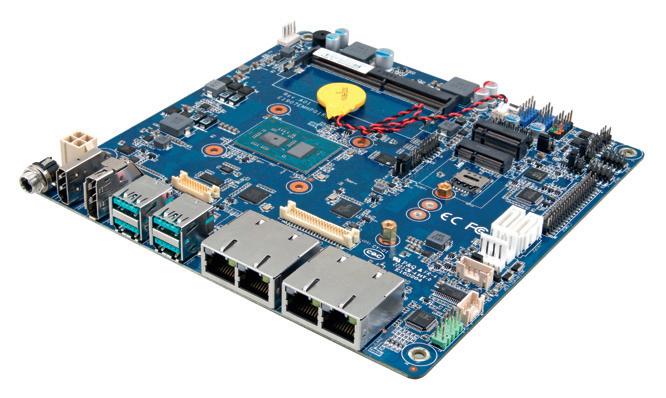
Avalue Technology Inc. has launched the EMX-EHLP Intel Atom Embedded industrial motherboards with Intel Celeron/Atom SoC BGA Processor (Elkhart Lake Platform 4.5~12W). The motherboard is designed to improve performance and bug step with Intel UHD Graphics, for the entry level application market. With improved performance, I/O capability and security features, the industrial motherboard is suitable for gaming, retail, digital signage, ATM machine, surveillance and parking management systems.
The Thin Mini ITX motherboard features flexible I/O supports 2 x USB 3.1 Gen.2 and 2 x USB 3.1 Gen 1 at I/O, 4 x USB 2.0, 4 x RS-232, 2 x RS-232/422/485 with DC power input 12~24 V. It supports one DP and one HDMI display and LVDS co-lay with DP for all kinds of applications. This motherboard design with two M.2 slot: M.2 B-Key SATA/PCIe/ USB supports WWAN+GNSS or SSD and E-Key support Wi-Fi module, PCI-e x1 and USB2.0 signal. Also, EMX-EHLP offers four Intel 2.5 Gigabit Ethernet with TPM2.0.
The industrial motherboard supports one 260-pin DDR4 3200MHz SO-DIMM socket, with up to 32 GB Max. It also features four Intel I225/226LM 2.5 Gigabit Ethernet, audio Codec and TI TPA3113D2 Stereo Class-D 8 Ω/6 W, and two audio amplifiers. The motherboard also features one M.2 Key E 2230 support Wi-Fi module and one M.2 Key B support WWAN+GNSS or SSD.
Avalue
www.avalue.com.tw

WI-FI HaLow MODULE
Quectel Wireless Solutions has launched the FGH100M Wi-Fi HaLow module, providing long-range data transmission, low power consumption, less complexity as well as enhanced penetration through walls and other obstructions for a range of IoT applications. Adopting IEEE 802.11ah wireless networking protocol, also known as Wi-Fi HaLow, operating in the licence-exempt Sub-1 GHz range, the module meets the requirements of the Internet of Things (IoT) with its Sub-1 GHz signal coverage, allowing users to control IoT devices in one kilometre radius. It is suitable for both indoor and outdoor IoT scenarios such as home and industrial automation, smart agriculture, smart city, smart building, warehouse, retail store, campus and more.
Based on Morse Micro’s MM6108 Wi-Fi HaLow SoC, the module is compliant with the IEEE 802.11ah Wi-Fi standard and operates in 850–950 MHz bands with 1/2/4/8 MHz channel width. It features 21 dBm maximum output power and a 32.5 Mbps maximum transmission rate.
The module enables lower power connectivity than previous Wi-Fi technologies and is able to support coin cell battery devices operating for months or years. Wi-Fi HaLow also supports native IP and does not require proprietary gateways, controllers or hubs, which streamlines the installation process.

With its compact size of 13.0 × 13.0 × 2.2 mm, the module optimises end-product size and design cost, and meets the demands of size-sensitive applications. Additionally, the module provides a wide range of interfaces including UART, SPI, I2C, SDIO 2.0 and PWM. The module meets the latest Wi-Fi requirements for authentication and encryption including WPA3 and AES for over-the-air (OTA) traffic. It also supports SHA-256, SHA-384, SHA-512 encryption algorithms to better protect transmission data.
Quectel www.quectel.com

WWW.ELECTRONICSONLINE.NET.AU MAY/JUNE 2023 27 ROLEC OKW Australia New Zealand Pty Ltd Unit 6/29 Coombes Drive, Penrith NSW 2750 ENCLOSURES AND TUNING KNOBS FOR TODAY‘S ELECTRONICS EQUIPMENT! www.okw.com.au Phone: +61 2 4722 3388 E-Mail: sales@rolec-okw.com.au
RUGGED LAPTOP
The Winmate L140TG-03 is a robust laptop with an IP65 rating and is certified to MIL-STD-810H for shock, drop and vibration.
The heavy-duty laptop has optical bonding technology and its bright FHD 13.3 ″ display can enable daylight readability. Additionally, it has customisable multi-touch gestures and a variety of touchscreen modes, including fingertip, pen and glove controls for quick access to frequently used Windows features and functions.
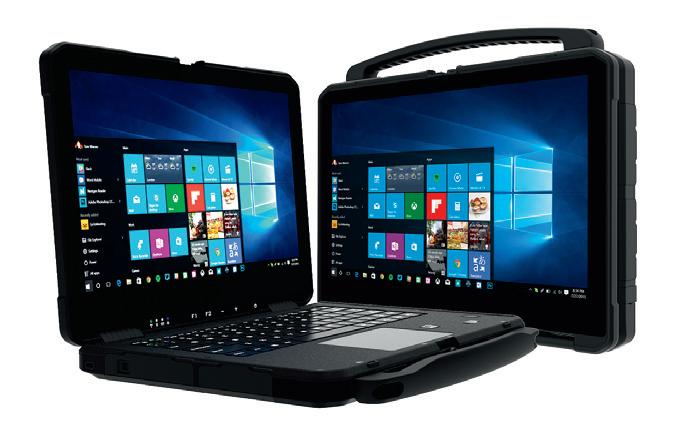
The 80-key, spill-resistant keyboard has a full-scale QWERTY layout and offers good tactile feedback and backlighting. Long battery life is achieved with hot-swappable dual batteries.
The computer has a user-friendly projective capacitive touchscreen and has a 1920 x 1080 resolution. Based on an Intel Core Tiger Lake processor, it also has wireless connectivity choices that include Wi-Fi and BT compatibility, GPS/GLONASS and 4G LTE (optional).
Backplane Systems
Technology Pty Ltd
www.backplane.com.au
INDUSTRIAL GATEWAY
D-Link Australia has launched the DWM-3010 5G NR M2M Dual SIM Industrial Gateway, the latest in its range of 4G/5G network innovations, designed for enterprises and SMBs to address critical IoT connectivity demands and to help drive new efficiencies in the current digital revolution known as Industry 4.0.
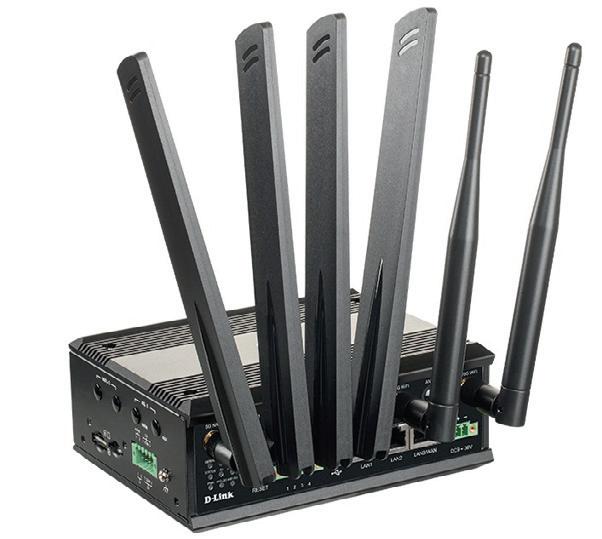
Industry 4.0 requires large-scale deployment of sensors and monitors throughout smart factories, warehouses, transportation fleets, EV charging stations and other industrial settings. The industrial gateway facilitates private network deployments to provide low latency for near-instantaneous M2M communications.
The industrial gateway features dual SIM slots as well as band support for all major 5G networks in Australia and New Zealand, along with support for industry standard IoT/M2M field communication protocols such as Virtual COM, Modbus and MQTT. As such, the industrial gateway enables a range of IoT devices to communicate with one another.
Featuring a rugged design, the industrial gateway is suitable for smart industrial applications and can withstand temperature ranges from -30°C, suitable for use in cold storage facilities, to 60°C, suitable for use in hot transportation, energy, mining or agricultural environments.
D-Link’s 5G fixed wireless access (FWA) is a competitive option against traditional fixed-line broadband services, which can be challenging to manage and expensive to deploy in many environments. 5G FWA also opens up new opportunities for mobile operators to deliver managed voice, video, data and IoT services.
D-Link Australia Pty Ltd
www.dlink.com.au
SOFTWARE DEVELOPMENT KIT
After launching its beta version in September 2022, Intel has released version 1.0 of the Intel Quantum Software Development Kit (SDK). The SDK is a full quantum computer in simulation that can also interface with Intel’s quantum hardware, including Intel’s Horse Ridge II control chip and Intel’s quantum spin qubit chip. The kit allows developers to program quantum algorithms in simulation, and it features an intuitive programming interface written in C++ using a low-level virtual machine (LLVM) compiler toolchain. As a result, the SDK enables interfacing with C/C++ and Python applications, making it versatile and customisable.
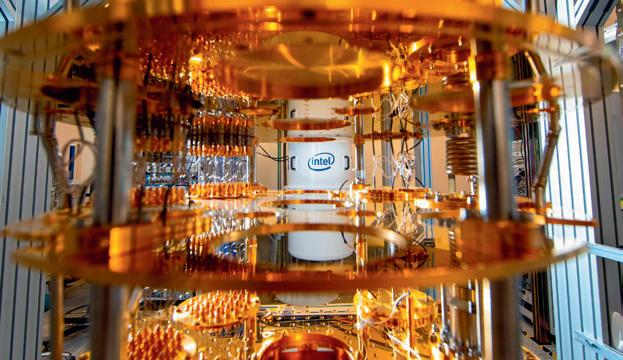
Version 1.0 of the SDK includes an intuitive programming interface based on C++, providing a programming language that’s familiar to classical computing developers, enabling collaboration between them and quantum developers. The kit also features a quantum runtime environment designed for executing hybrid quantum-classical algorithms. Developers have the choice of two target back ends for simulating qubits to either represent a higher number of generic qubits or Intel hardware.
The first backend is a high-performance opensource generic qubit simulator, Intel Quantum Simulator (IQS). IQS has a backend capable of 32 qubits on a single node and more than 40 qubits on multiple nodes. The second is a target backend that simulates Intel quantum dot qubit hardware and enables compact model simulation of Intel silicon spin qubits. The SDK enables users to develop small workloads to determine what functionalities are needed from the quantum computer’s system architecture to run algorithms efficiently and accurately on qubits.
The SDK provides for users to compare compiler files, a standard feature in classical computing development, to discern how well an algorithm is optimised in the compiler. It allows users to see the source code and obtain lower levels of abstraction, gaining insight into how a system stores data.
Intel Australia Pty Ltd www.intel.com.au
28 MAY/JUNE 2023 WWW.ELECTRONICSONLINE.NET.AU
RESEARCHERS DESIGN
BATTERY PROTOTYPE WITH FIBRE-SHAPED CATHODE
In a new study, North Carolina State University researchers made a cathode, or the positive end of a battery, in the shape of a thread-like fibre.
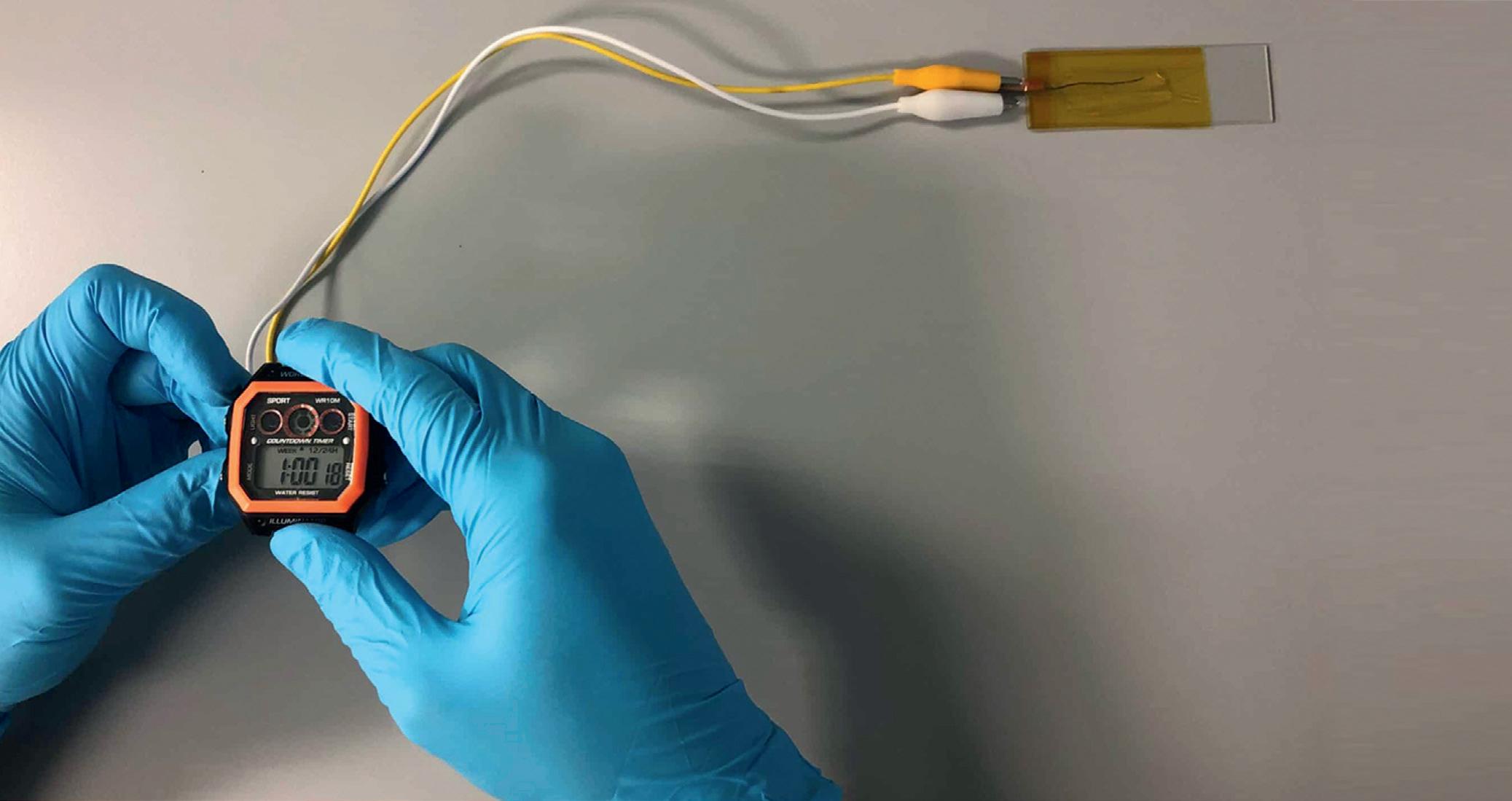
The researchers were then able to use the fibre to create a zinc-ion battery prototype that could power a wrist watch. Published in the journal ACS Applied Materials and Interfaces , the proof-of-concept study is a step forward in the development of a fibre-shaped battery that could ultimately be integrated into garments.
“Ultimately, we want to make a yarnshaped battery, so we could put it in a real garment, and preferably hide it,” said the study’s corresponding author Wei Gao, associate professor of textile engineering, chemistry and science at NC State. “In this study, we created a yarn-shaped cathode. Our findings were pretty promising for such a short strip of fibre, and we hope to continue this work to improve the performance, safety and mechanical properties of our designs.”
To create the cathode, the researchers utilised the unique properties of graphene — a strong material with a high surface area and good conductivity — to make a yarn-shaped zinc-ion battery.
In their study, the researchers created different manganese dioxide microparticles in various shapes and sizes. Then, they
used a solution-spinning process to form a fibre made of graphene oxide, with manganese dioxide particles embedded within. They studied the electrochemical and other properties of the fibres.
“Since we are trying to make a fibreshaped zinc-ion battery, we care not only about the battery performance, but also about the mechanical properties — we need the fibre to be strong, and also flexible,” Gao said.
Researchers found the shape of the graphene oxide and manganese dioxide materials that they used to make the cathode affected its electrochemical function. Specifically, they found the shorter, rodshaped manganese dioxide components mixed homogeneously with the graphene, allowing researchers to make a fibre that could operate as a functional battery prototype. Comparatively, they found that when the manganese dioxide had a ‘sea urchin’ shape, the fibre couldn’t be used in a functional battery.
“When the graphene and manganese dioxide were well mixed, you can use the fibre to create a functional battery,” said the study’s first author, Nakarin
Subjalearndee, a former graduate student at NC State. “If the manganese dioxide was shaped like a sea urchin, it meant the cathode thread had a rough surface and could not be used.”
“The rod-shaped manganese dioxide gave us the best performance,” Gao added. “These particles mimicked the configuration or geometry of the fibre, as compared to the sea urchin-shaped particles, which were round with all kinds of edges pointing out. They disturbed the stacking of the graphene oxide nanosheets within the fibre.”
Though the battery’s performance was low, the researchers were able to use it to power a wrist watch. The team wants to continue their work to improve the design’s performance.
“This study shows that the shape and size of the additives in the fibre affected the fibre formation process of graphene oxide,” Gao said. “We hope to keep developing this system; we want our design to be comparable to a commercial battery.”
The study, ‘Wet Spinning of Graphene Oxide Fibers with Different MnO2 Additives’, was published online in ACS Applied Materials & Interfaces. Co-authors included Nanfei He, Hui Cheng, Panpanat Tesatchabut, Priew Eiamlamai, Somruthai Phothiphiphit, Orapan Saensuk, Pimpa Limthongkul, Varol Intasanta and Xiangwu Zhang.
WWW.ELECTRONICSONLINE.NET.AU MAY/JUNE 2023 29
Laura Oleniacz, NC State University
POWER
Image credit: American Chemical Society, 2023
Battery prototype with thread-like cathode.
THE CORRECT CLICK:
AUDIO TECHNOLOGY TESTS CONNECTORS USED IN AUTOMOBILE PRODUCTION

Fraunhofer Institute for Digital Media Technology IDMT
Manufacturers often rely on practical plug connections during the production of automobiles. However, time and money are wasted if an incorrectly plugged-in connection goes unnoticed. The Fraunhofer Institute for Digital Media Technology IDMT in Oldenburg has therefore developed a solution. An audio-based technology analyses the clicking noise that is generated when a connection is plugged in. Should a connection fail to click into place, employees or the ‘colleague robot’ will be alerted via an error message.
When it comes to modern industrial production, particularly in the automotive industry, many connections between individual components are no longer screwed, glued or welded, but are instead held together by plug connections. But are all these connections really plugged in correctly? Researchers from the Oldenburg Branch for Hearing, Speech and Audio Technology HSA at Fraunhofer IDMT are presenting a new way to check this at the Hannover Messe. An innovative test system detects whether
30 MAY/JUNE 2023 WWW.ELECTRONICSONLINE.NET.AU
This demo device for click detection illustrates the reliable engagement of plug connections. The industrial traffic light indicates incorrect or correct engagement.
Fraunhofer IDMT's click detection can be integrated into the reporting system and be displayed via an interface. The microphone can be integrated into a work glove and can also be combined with a smartwatch.
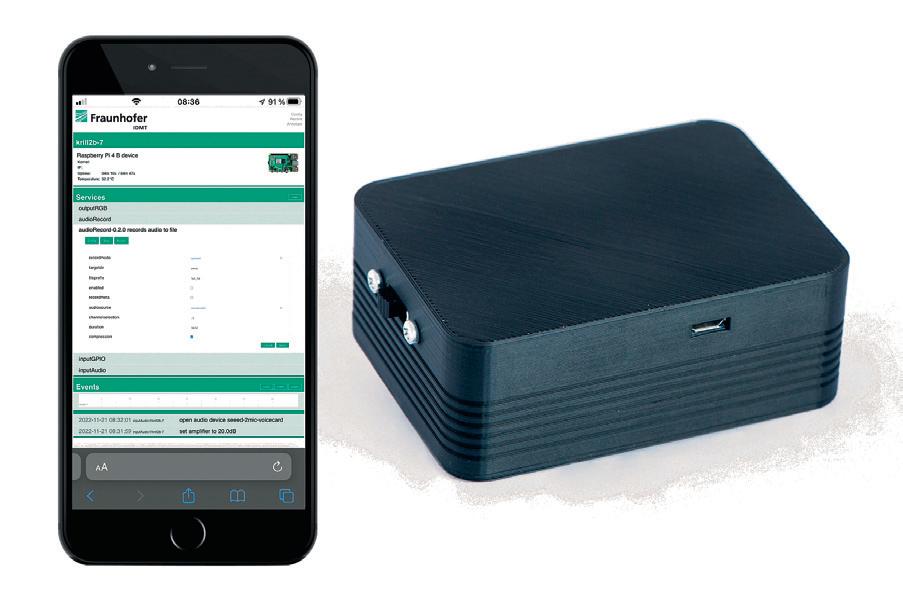
parts are correctly connected based on the noise that occurs whenever they are plugged in. Microphones first record the noise, which is then analysed by software algorithms. Finally, the system provides positive feedback or sends a warning if it has not clicked correctly. This will have benefits for both employees and automated robotic systems. A human can receive the feedback via acoustic, visual or even tactile means, for example via vibration. A robot then receives the necessary information directly from the sensor system.
“This technology addresses a common challenge in automobile assembly,” said Danilo Hollosi, head of Acoustic Event Detection. “Automobiles usually have several hundred connectors. If any one of these connections doesn’t engage properly during production and it’s not noticed until after the car has been delivered to the customer, then the car has to be returned for repair. That’s frustrating for the owner, and the car manufacturers end up wasting time and money. Given the low margins
in mass production, this turns into a serious problem.” This is where audio-based monitoring can help.
Innovative acoustic processes
The HSA team’s audio technology revolves around sophisticated software algorithms. These can even isolate and analyse individual clicks within the noisy and dynamic environment of a factory floor.
This was a great challenge for the researchers since clicking noises often sound very similar. “We have been developing acoustic methods for noise detection and analysis for many years. Our system is now able to reliably differentiate and examine acoustic signals that are very similar to each other,” Hollosi explained. The specialists from Oldenburg have also further developed the noise reduction function so that ambient noise is effectively filtered out without impairing the signal quality of the click noise. Additional sensors can be added for an even more reliable detection, if required.
The test technology can be integrated into production in a number of ways. On one hand, it can be a component of the sensor system in the automated factory, for example, on the arm of a robot. On the other hand, a compact hardware box equipped with a microphone and an integrated mini PC for processing audio data could be installed at the respective workstation. But the microphone could also be integrated into a worker’s work glove. “It could even be combined with a dedicated smartwatch,” Hollosi explained.
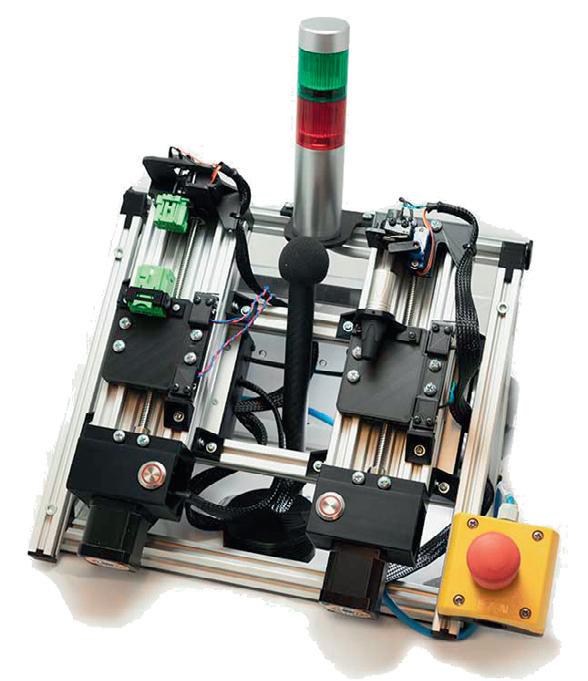
Customised audio monitoring for industrial customers
The system can be configured as desired and adapted to individual needs in the case of industrial customers. Not only does audio-based technology fit into the trend of using sensors to monitor manufacturing steps in production, making them safer and more reliable, but it also makes a noticeable difference in increasing efficiency and reducing costs. Customers are also pleased when their eagerly awaited car leaves the factory in perfect condition.
WWW.ELECTRONICSONLINE.NET.AU MAY/JUNE 2023 31
iStock.com/kynny
Image credit: Fraunhofer IDMT/Hannes Kalter
Image credit: Fraunhofer IDMT/Anika Bödecker.
PLUG CONNECTIONS
REDUCED CAPABILITY MODULE SERIES
Quectel Wireless Solutions has launched the 5G RedCap (Reduced Capability, also known as NR-Light) modules, the Rx255C series. Based on the Snapdragon X35 5G Modem-RF System from Qualcomm Technologies, Inc., the module is designed to provide enhanced wireless performance and low latency communication with 5G while providing optimisation in size, energy savings and cost-effectiveness. The modules offer a balance between cost and performance and are designed to support the large-scale deployment of 5G into sectors where high bandwidth is not needed, but low cost and power consumption are critical.
Meeting the 3GPP Release 17 standards, the modules support 5G standalone (SA) mode and a maximum bandwidth of 20 MHz on the sub-6GHz frequency band. Targeting all markets worldwide, the 5G modules are backward compatible with LTE networks and cover nearly all the mainstream carriers worldwide. They provide a theoretical peak downlink data rate of around 220 Mbps and uplink data rate of around 100 Mbps, sufficient to meet the demand for data speeds in IoT applications such as robotics, DTU, drones, smart ports, smart grid, AR/VR wearables and educational laptops as well as other entry level mobile broadband devices.
RedCap technology allows the modules to optimise the number of antennas, reduce the transmitting and receiving bandwidth, and provide 64QAM/256QAM (optional) modulation to enhance the size. The high level of integration and architecture of Snapdragon X35 provides a low power consumption for the modules, which drives 5G adoption in an entirely new category of devices. The modules support L1+L5 dual frequency GNSS for improved positioning services. The modules also provide a range of interfaces such as PCIe 2.0, USB 2.0 and supplementary functions including VoLTE and DFOTA.
Quectel offers a variety of high-performance 5G antennas which boost wireless connectivity. IoT developers can bundle the Rx255C modules with Quectel’s antennas and pre-certification services, reducing time-to-market for their 5G devices.
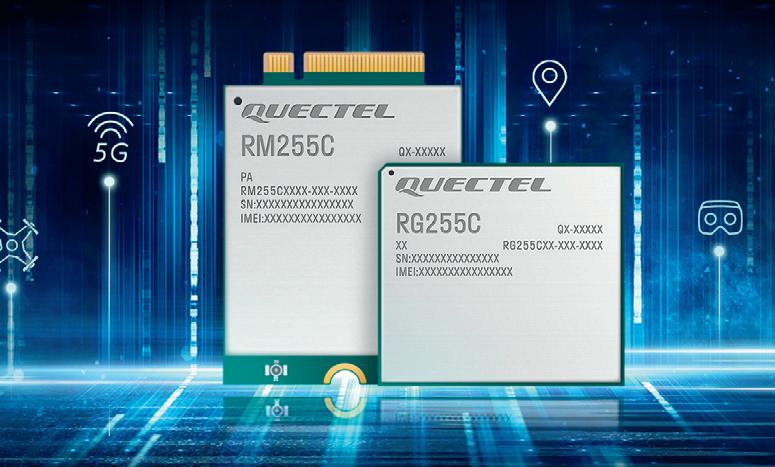
Quectel
www.quectel.com
EMBEDDED SINGLE BOARD COMPUTERS
Avalue Technology Inc. has launched the 2.5″ embedded single board computers EPX-EHLP with Intel Pentium/ Celeron/Atom SoC BGA Processor (Elkhart Lake Platform 4.5~12W), CPU bottom mounted, with performance and bug step improvements. The SBCs feature Intel UHD Graphics for the entry-level application market. With improved performance, I/O capability and security features, the SBC is suitable for industrial automation, retail, smart city and IoT solutions.
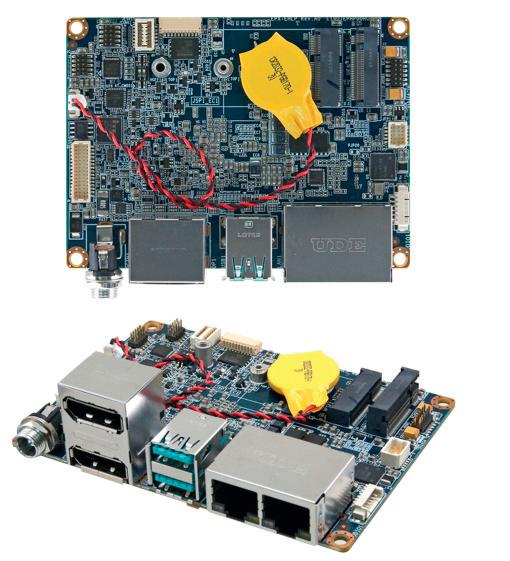
The SBC features flexible I/O supports, 2 x USB 3.1 Gen.2, 4 x USB 2.0, 1 x RS-232, 1 x RS-232/422/485 with DC power input 12 V. It supports dual stack DP display and LVDS for a range of applications. This SBC design comes with one M.2 expansion slot: M.2 B-Key SATA/PCIe/USB supports storage and E-Key support Wi-Fi module, USB2.0 signal. The SBC also offers dual Intel 2.5 Gigabit Ethernet.
Avalue
www.avalue.com.tw
ENCLOSURE RANGE
The SOLID-BOX enclosure range by OKW Gehäusesysteme is suitable for modern electronics packaging in industrial environments or in protected outdoor areas. Flush-fitting, snap-on design trims conceal all the fixing screws and, together with the polished enclosure surface, provide a streamlined appearance.
The two-part robust industrial enclosure is available from stock in the two standard colours anthracite grey (RAL 7016) and light grey (RAL 7035). Three standard sizes are offered: 135 x 115 x 50 mm, 180 x 145 x 60 mm and 225 x 175 x 70 mm (L x W x H) giving a visually uniform enclosure series. A recessed area in the top panel provides a location for a membrane keypad, decor foil or product label. The enclosure range is made of flame-retardant V0 material (PC+ABS-FR) with an improved heat distortion temperature (Vicat/B 120 = 110°C). To protect the electronics from moisture, dust and dirt, the interior is sealed to IP 66 and IP 67. The enclosure design also allows increased resistance to impact and shock stress according to IK 08.
The top and bottom parts are assembled using rust-proof and captured Torx screws outside the sealed interior. The enclosure bottom part has two deeply recessed surfaces for installing and protecting interfaces and cable connections. To match the appearance, black cable glands and bushings in various designs (M12-M20, Quick-Fix assembly, easy-to-pierce membrane etc) and a cable gland with integrated pressure compensation are available as accessories.
The wall-mounted and desktop enclosure is suitable for robust electrical and electronic applications. Typical applications are, for example, smart factory automation, IIoT, HVAC, plant and safety engineering, building management systems, and test and measurement. For desktop use, a set of non-slip rubber enclosure feet is also available.
ROLEC OKW Australia New Zealand P/L www.okw.com.au
32 MAY/JUNE 2023 WWW.ELECTRONICSONLINE.NET.AU
HIGH-PERFORMANCE DETECTORS TO COMBAT SPIES
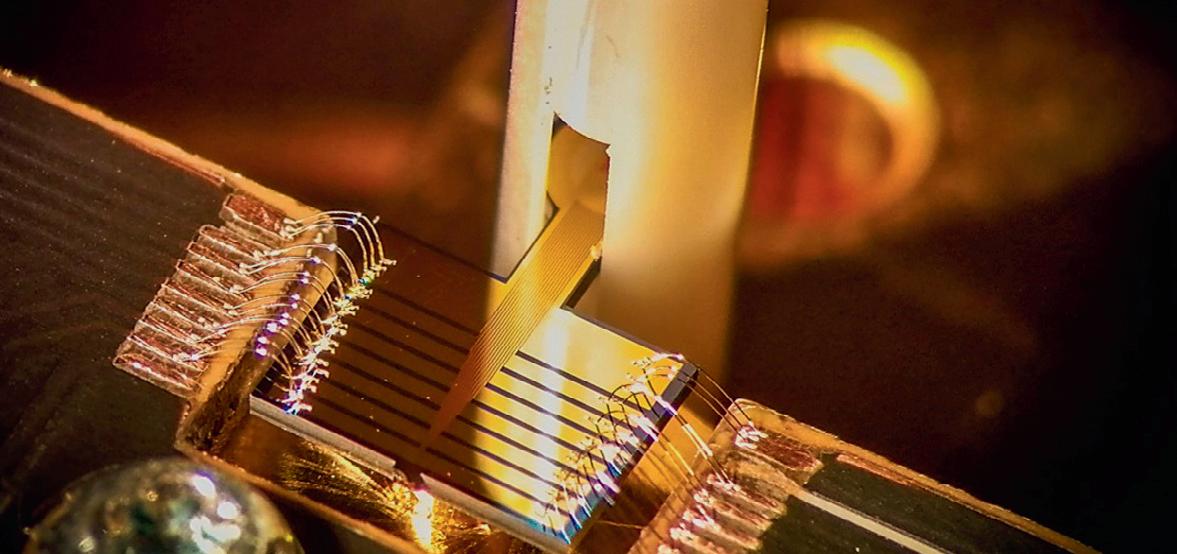
How can we combat data theft, which is a real issue for society?
‘‘Currently, the fastest detectors for our application are superconducting nanowire single-photon detectors,’’ explained Fadri Grünenfelder, a former doctoral student in the Department of Applied Physics at the UNIGE Faculty of Science and first author of the study. ‘‘These devices contain a tiny superconducting wire cooled to –272°C. If a single photon hits it, it heats up and ceases to be superconducting for a short time, thus generating a detectable electrical signal. When the wire becomes cold again, another photon can be detected.’’
Record performance
Its theories make it possible to encode information (a qubit) in single particles of light (a photon) and to circulate them in an optical fibre in a highly secure way. However, the widespread use of this telecommunications technology is hampered in particular by the performance of the singlephoton detectors. A team from the University of Geneva (UNIGE), together with the company ID Quantique, has succeeded in increasing their speed by a factor of 20. This innovation, to be discovered in the journal Nature Photonics, makes it possible to achieve unprecedented performances in quantum key distribution.
Buying a train ticket, booking a taxi, getting a meal delivered: these are all transactions carried out daily via mobile applications. These are based on payment systems involving an exchange of secret information between the user and the bank. To do this, the bank generates a public key, which is transmitted to their customer, and a private key, which it keeps secret. With the public key, the user can modify the information, make it unreadable and send it to the bank. With the private key, the bank can decipher it. This system is now threatened by the power of quantum computers. To resolve
this, quantum cryptography — or quantum key distribution (QKD) — is the best option. It allows two parties to generate shared secret keys and transmit them via optical fibres in a highly secure way. This is because the laws of quantum mechanics state that a measurement affects the state of the system being measured. Thus, if a spy tries to measure the photons to steal the key, the information will be instantly altered and the interception revealed.
Current limitations
One limitation to the application of this system is the speed of the single-photon detectors used to receive the information. In fact, after each detection, the detectors must recover for about 30 nanoseconds, which limits the throughput of the secret keys to about 10 megabits per second. A UNIGE team led by Hugo Zbinden, associate professor in the Department of Applied Physics at the UNIGE Faculty of Science, has succeeded in overcoming this limit by developing a detector with better performance. This work was carried out in collaboration with the team of Félix Bussières from the company ID Quantique, a spin-off of the university.
By integrating not one but 14 nanowires into their detector, the researchers were able to achieve record detection rates. ‘‘Our detectors can count 20 times faster than a single-wire device,’’ Zbinden explained. ‘‘If two photons arrive within a short time in these new detectors, they can touch different wires and both be detected. With a single wire this is impossible.’’ The nanowires used are also shorter, which helps to decrease their recovery time.
Using these sensors, scientists were able to generate a secret key at a rate of 64 megabits per second over 10 km of fibre optic cable. This rate is high enough to secure, for example, a videoconference with several participants. This is five times the performance of current technology over this distance. As a bonus, these new detectors are no more complex to produce than the current devices available on the market.
These results open up new perspectives for ultra-secure data transfer, which is crucial for banks, healthcare systems, governments and the military. They can also be applied in many other fields where light detection is a key element, such as astronomy and medical imaging.
WWW.ELECTRONICSONLINE.NET.AU MAY/JUNE 2023 33
QUANTUM CRYPTOGRAPHY
Quantum physics has the solution.
Using these sensors, scientists were able to generate a secret key at a rate of 64 megabits per second over 10 km of fibre optic cable.
Image credit: M. PerrenoudG. Resta/UNIGE
MICROCHIPS
SILICON PHOTONIC MEMS
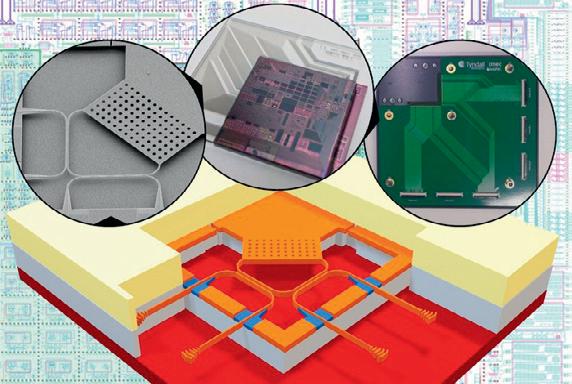
DEVELOPED FOR SEMICONDUCTOR MANUFACTURING
Ateam of researchers led by the University of Sydney’s Associate Professor Niels Quack has developed technology to combine optics and micro-electromechanical systems (MEMS) in a microchip, paving the way for the creation of devices like micro-3D cameras and gas sensors for precision air quality measurement, including their use in mobile phones. Published in Nature: Microsystems and NanoEngineering , the new microfabrication process builds on silicon photonics and uses semiconductor manufacturing techniques to enable a new, more energy-efficient generation of devices for fibre-optical communications, sensors and future quantum computers.
Quack said that the photonic MEMS are unique in that they are compact, consume little power, are fast, support a range of optical carrier signals and have low optical loss. Quack said that this is the first time that nano-electromechanical actuators have been integrated in a standard silicon photonics technology platform.
“It is an important step towards mature large-scale, reliable photonic circuits with

integrated MEMS. This technology is being prepared for high-volume production, with potential applications in 3D imaging for autonomous vehicles or new photonic-assisted computing. Current similar technologies consume a lot of power and occupy a large area on-chip. They also have high optical losses. This makes the integration of a large number of components on a single chip challenging,” Quack said.
The researchers’ silicon photonic MEMS technology overcomes these shortcomings and provides a route for efficient scaling of photonic integrated circuits. “The technology will advance knowledge in the field of micro- and nanofabrication, photonics and semiconductors, with a wide range of applications. These include beam steering for LIDAR 3D sensing in autonomous vehicles, programmable photonic chips or information processing in quantum photonics,” Quack said.
Westwick-Farrow Media
A.B.N. 22 152 305 336 www.wfmedia.com.au
Head Office Unit 7, 6-8 Byfield Street, North Ryde Locked Bag 2226, North Ryde BC NSW 1670 Ph: +61 2 9168 2500
Senior Editor Lauren Davis Editor Ashna Mehta wnie@wfmedia.com.au
Acting Publishing Director/MD Janice Williams
Art Director/Production Manager Julie Wright
Art/Production Linda Klobusiak, Marija Tutkovska
Circulation Dianna Alberry circulation@wfmedia.com.au
Copy Control Mitchie Mullins copy@wfmedia.com.au
Advertising Sales
Account Manager Sandra Romanin – 0414 558 464 sromanin@wfmedia.com.au
Asia Tim Thompson - 0421 623 958 tthompson@wfmedia.com.au
If you have any queries regarding our privacy policy please email privacy@westwick-farrow.com.au
Printed and bound by Dynamite Printing
Print Post Approved PP100007394 ISSN No. 0728-3873
All material published in this magazine is published in good faith and every care is taken to accurately relay information provided to us. Readers are advised by the publishers to ensure that all necessary safety devices and precautions are installed and safe working procedures adopted before the use of any equipment found or purchased through the information we provide. Further, all performance criteria was provided by the representative company concerned and any dispute should be referred to them. Information indicating that products are made in Australia or New Zealand is supplied by the source company. Westwick-Farrow Pty Ltd does not quantify the amount of local content or the accuracy of the statement made by the source.
34 MAY/JUNE 2023 WWW.ELECTRONICSONLINE.NET.AU
iStock.com/metamorworks
MEMS technology could enable more efficient fiber-optical telecommunications, datacentres and future quantum computers.
Image credit: Neils Quack, University of Sydney.










www.WFMedia.com.au/subscribe FREE to industry and business professionals The magazine you are reading is just one of 11 published by Westwick-Farrow Media. To receive your free subscription (magazine and eNewsletter), visit the link below.