CHALLENGES AND OPPORTUNITIES FOR THE ELECTRONICS SECTOR
APPS TO IMPROVE ENERGY INDUSTRY PROCESSES
PRINCIPLES OF PV CELL OPERATION
SOFTWARE AND ELECTRONICS OBSOLESCENCE
July/August 2023 Vol.43 No.1 PP100007394

After facing many challenges and changes through the first half of the year, the global electronics industry is set for more transformation. 2023 is slated to be a big year for innovation, with Australia and New Zealand witnessing many changes in the market. In the lead article of this magazine, Tony Ng, Vice President, APAC, of DigiKey, forecasts that wireless connectivity, industrial automation and electrification, and smart sensors will all be key trends this year.
This issue will also delve into the risks posed by software obsolescence to the longevity of electronic devices and the advances in technology that could lead to the development of computer memory devices with higher performance and lower energy consumption. As per usual, you will also find some case studies and innovative new products in this issue of the magazine, with content on all you need to consider about software, componentry and embedded devices.
Long-time readers may have noticed an editorial change at What’s New in Electronics . I am thrilled to be taking over the reins from Lauren Davis, who has moved on to another title within the WF Media family, and I look forward to delivering the latest news and information from Australia and around the globe.
I hope you enjoy this issue.
Best wishes,
Ashna Mehta Editor wnie@wfmedia.com.au

WWW.ELECTRONICSONLINE.NET.AU CONTENTS EDITORIAL COMMENT WHAT'S NEW IN ELECTRONICS JULY/AUGUST 2023 Your copy of What's New in Electronics is available as an online eMag. READ ONLINE! www.electronicsonline.net.au/magazine 4 Challenges and opportunities for the electronics sector 14 ASIC, SoC and SiP: perfect partners 18 Open-source software to speed up quantum research 24 Blame the software: study reveals new risks to the longevity of electronic devices 31 Computer memory tech could power AI of the future 32 Photovoltaic modules — the principle of photovoltaic cell operation 34 New source-gated transistors to create flexible displays Cover image: iStock.com/kynny
CHALLENGES AND OPPORTUNITIES FOR THE ELECTRONICS SECTOR
Industry veteran Tony Ng, Vice President, APAC at DigiKey Electronics, shares his insights with What's New in Electronics about the market challenges facing the electronics industry and the opportunities that DigiKey Electronics has observed — including his thoughts on ongoing supply chain turbulence and other recent trends.
4 JULY/AUGUST 2023 WWW.ELECTRONICSONLINE.NET.AU
iStock.com/hh5800
Is 2023 set to be a profitable year for the Australian and New Zealand electronic components market?
DigiKey is looking at 2023 as an investment year where we are preparing for the next cycle of future growth. This is true in all global regions, including Australia and New Zealand. We are witnessing a huge amount of innovation this year and know that it will be a big year for new product launches, and we’re thrilled to help support that growth in the Australia and New Zealand regions.
From an Australian/New Zealand point of view, we are seeing changes in the market. In the last two years, design engineers/ buyers were looking for alternative parts to make their designs with so that they could continue their manufacturing.
But with the market getting back to normal right now, more and more activities are coming back to innovation. And that’s why continuing to bring in new suppliers and increasing our SKU count remains at the top of our focus.
The threat of recession looms over the market as inflation continues to rise. Do you believe that the high degree of uncertainty around the ongoing recession could have a significant impact on the electronic components market over the next few years?
While there’s been a downturn in smartphone and PC demand over the last couple of years, many suppliers are still very confident in the other industries. There’s a need for products in data centres, industrial, automotive, medical and aerospace. The supply to those five specific areas will continue to grow and there will be demand.
As a distributor for electronic components and automation products, DigiKey has been in a unique position during the pandemic. Overall, our industry has been in an upcycle and now, along with the rest of the world, we’re looking at a downturn. However, while we may be in a slower growth period, at DigiKey we don’t pull back during these times, we build for the next cycle understanding it’s exactly that, just a cycle.
In my business development role, I have the opportunity to talk to and hear from customers, suppliers and rep organisations. So, I’m going to share what I’m seeing and hearing from people who have been on the frontlines of the industry.
Over the past 40 years, the semiconductor industry has gone through many cycles, just like any industry. While the past three years have felt anything but average, when you look at the last upturn cycle, or when billing overall was going up, it was actually pretty average.
On the flip side, since October 2022, the United States has been in a downturn. In contrast to the upcycle, this downturn has been more dramatic than previous downturns. The only downturn during the last 40 years that’s been stronger has been the one coming out of 2018.
What industry trends are you most excited about in 2023?
What industry challenges does the company anticipate for the latter half of the year?
Wireless connectivity, industrial automation and electrification, smart sensors, cross architecture solutions and rapid prototyping will all be key trends this year. In the past year alone there has been a surge in new product introductions in every industry from automotive to medical, industrial automation to consumer devices and everything in between, driving business across the board.
I wouldn’t call them challenges but there are always opportunities to improve our customers’ experience to feel more local in the 180 countries where engineers and purchasing professionals engage with us. We want everything from the search, ordering and payment processes to be as frictionless as possible.
How has the rising popularity of the Internet of Things following the pandemic impacted DigiKey’s range of product offerings?
IoTe stands for IoT enabler and at DigiKey, that’s where we can make the biggest impact with our customers. With 20+ years of experience in this realm, we're bringing the pieces of IoT together to make that ecosystem more accessible for our customers. We also know this technology continues to evolve, and quickly, and may look completely different in two to three years. That’s how fast this technology is changing, and the architecture continues to evolve.
We see a great opportunity for DigiKey to provide guidance in a complex space, simplifying IoT and making the IoT ecosystems work for our customers. We’re working hard to identify where there are opportunities so we can help our customers navigate what IoT will look like tomorrow. >
WWW.ELECTRONICSONLINE.NET.AU JULY/AUGUST 2023 5 INDUSTRY INSIGHTS
At DigiKey we’ll continue to offer IoTrelevant products and services including hardware, software, cloud and connectivity solutions. We are working hard to bring together innovative and relevant technology that integrate to empower our customers to build, develop and deploy complete solutions. Which countries do you think will see the most growth in electronic component manufacturing in 2023 and beyond?
Overall, we’re seeing strong growth in the Eastern Europe region, especially in Poland. Australia and New Zealand are also both up this year, as is India.
In what ways will DigiKey continue to support engineers in Australia and New Zealand?
Beyond the products that drive technology innovation, DigiKey supports engineers in Australia and New Zealand with a wealth of digital solutions and tools to make their jobs more efficient. For ANZ, driving the digital transformation of our technical support model as well as promoting our B2B solution and service capabilities also remain as the centre of our regional strategy development. For engineers, DigiKey also offers:
• Our Tech Forum to help address FAQs from engineers.
• Parametric search to help engineers on technologies and product selection.
• An alternative sourcing tool which can help engineers and buyers with their design and purchasing needs.
• The PCB builder, which goes beyond electronic components and can effectively support ultra/small volume demand.
• Datasheet and EOL info to support engineering from fresh design through legacy production demand.
Last year we officially opened the doors to our 2.2 million square foot Product Distribution Centre expansion (PDCe) which will allow DigiKey to scale capacity to keep up with skyrocketing demand.
We frequently invest in technology and innovations that help connect us more automatically and electronically with our customers and suppliers, such as Advance Shipping Notifications (ASNs) which provide real-time, automated updates to the DigiKey system about when product will be shipping. This provides the most up-to-date information from our supplier partners to our customers.
Visibility to real-time movements of both inbound and outbound shipments is critical to replenishing stock and ensuring customers receive orders on time. Visibility into costs is also becoming even more important than ever before as shipping costs are increas -
ing. If it’s possible to pivot and find a less costly and faster way to ship, we’ll find it. DigiKey was recently awarded 17 recognitions from its supplier partners during the 2023 EDS Leadership Summit and was recognised for its sales results and breadth of products. In what ways does DigiKey plan to engage with its suppliers to support engineers and designers going forward?
We are coming off a great couple of years where we experienced more than 80% growth over the past two years thanks to tremendous support from our 2400 supplier partners. We continue to nurture our strong relationships with our suppliers and engage on a regular basis to understand their evolving needs, challenges and goals. This open communication allows for collaborative problem-solving and brainstorming to help our mutual end users, the engineers and designers, to receive the best possible quality and breadth of product.
DigiKey invests significant time and effort in building trust, demonstrating reliability and honouring our commitments to suppliers to solidify our relationships. We also seek opportunities to provide value-add services like sharing market insights, offering training and educational resources and content, and implementing efficient supply chain solutions for our suppliers. By nurturing these relationships, not only do we ensure a reliable, diverse and broad range of highquality products, but it also establishes a network of trusted partners who can collectively adapt and support customer needs in an ever-changing business landscape.
In 2022, DigiKey expanded its portfolio by adding 550 new suppliers across its core business. Does the company have any plans to introduce new suppliers to its range in 2023?
Absolutely, in fact we just announced in June that we added 175,000+ new SKUs already this year, coming both from existing and new suppliers on our line card. While there is no single industry or application
driving significantly high impact or growth, we are excited to see the unstopped innovation and demand for new technologies right now. Out of the 500+ new suppliers and 75K+ new SKUs introduced last year, we continue to see ANZ being one of the first regions selecting them.
And as a region, ANZ continues to search for new products to support a wide scope of industries which complement our supplier and product expansion strategies well. Which market segments (automotive, communications, industrial, military, etc.) do you believe will present the biggest growth opportunities for DigiKey, in 2023 and beyond?
The emergence of modules and semi-finished products is generating new opportunities for us. This also gives another reason to engineers that DK’s platform is a great platform for sourcing given the high speed of supplier and SKU additions. Out of the 500+ new suppliers we have been adding in the past years, the majority are module makers. We continue to listen to our customers’ voices and watch out for new technologies. With the completion of our PDCe, we now have even more space to house these products. Looking ahead, what is DigiKey’s capital investment priority for 2024?
Driving our growth will be our continued investment and focus on inventory and NPI, exploring and entering new markets and geographies, supplier services (such as hosted cart) and growing our eCommerce capabilities.
Tony Ng is responsible for driving digital engagement with customers across Asia and Pacific countries. He leverages DigiKey’s capabilities — product breadth, stock availability, superb customer service, connectivity and supply chain solutions — to help customers reach a new level of efficiency. With more than 20 years of electronics industry experience, and over a decade spent with DigiKey, Ng can speak to a variety of topics within the electronics industry.
6 JULY/AUGUST 2023 WWW.ELECTRONICSONLINE.NET.AU
INDUSTRY INSIGHTS
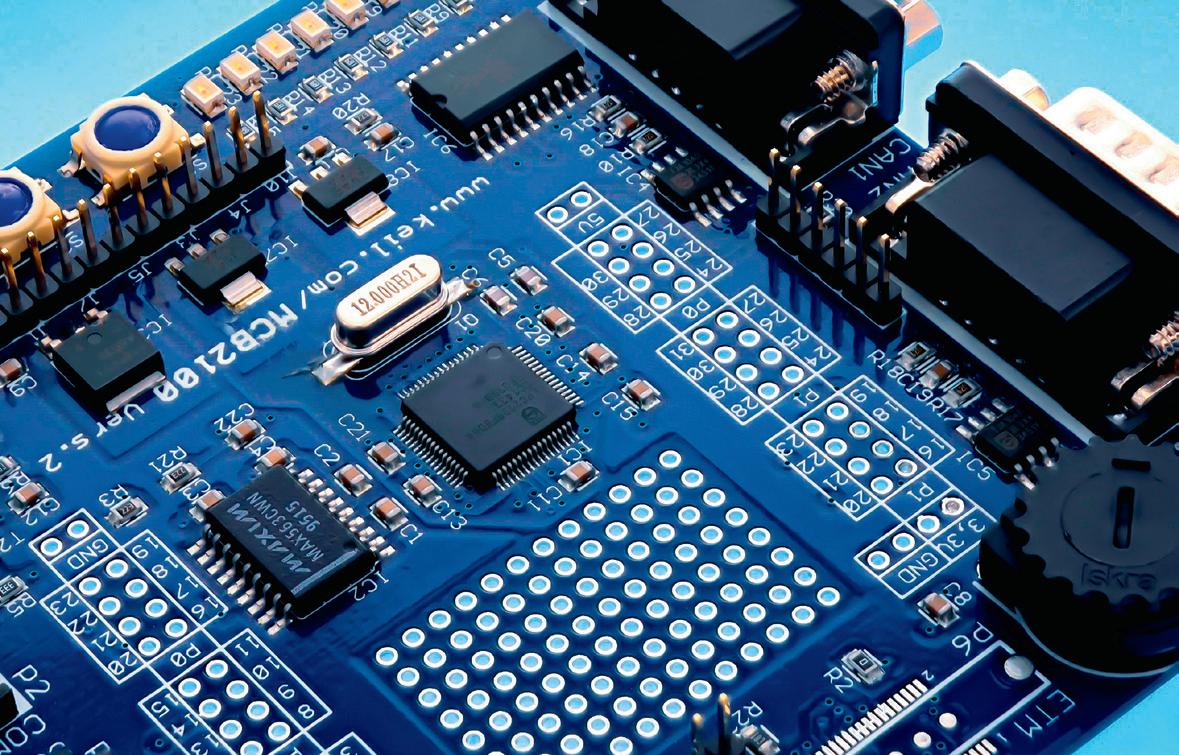
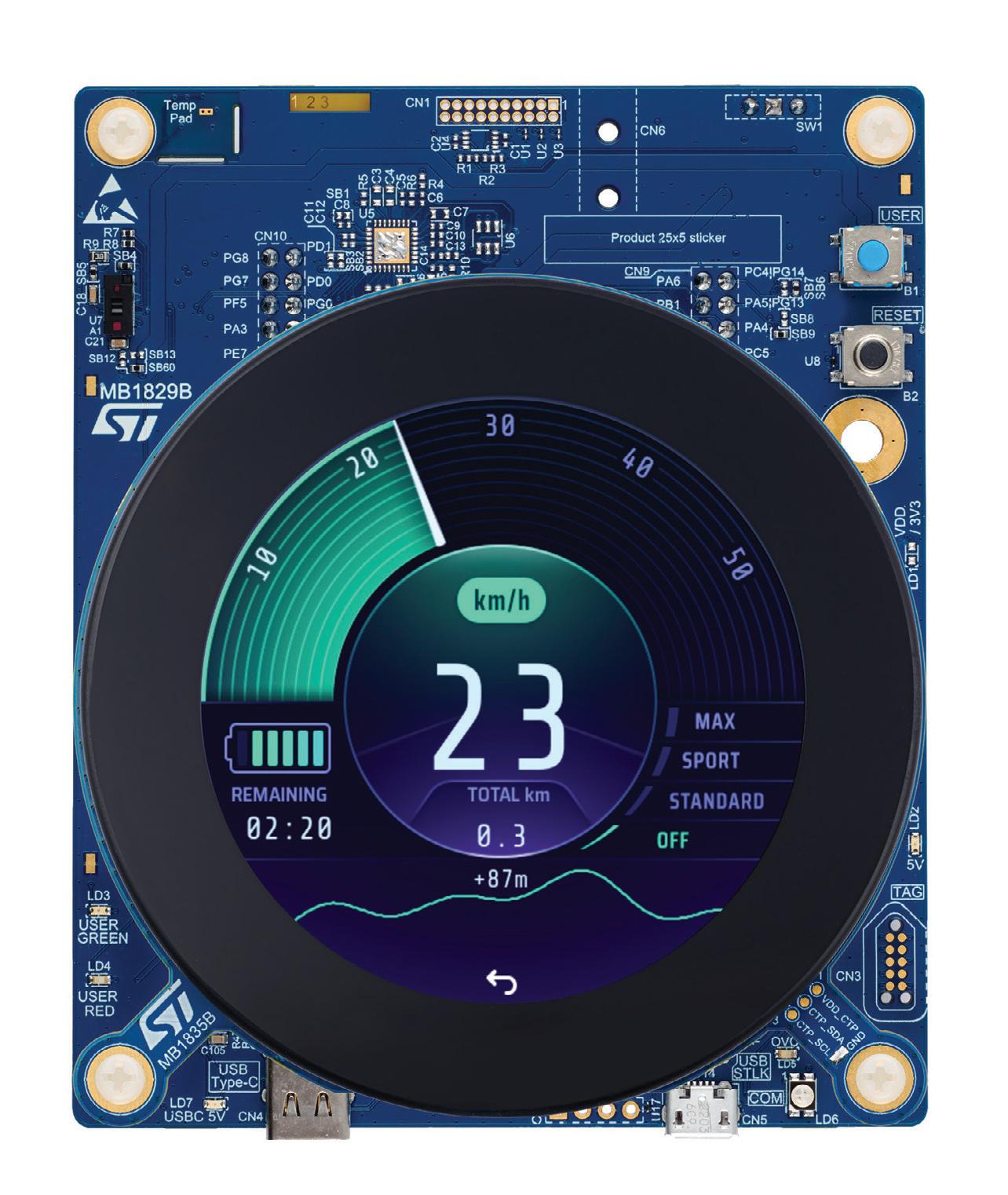
DigiKey offers a wide variety of development, evaluation and demonstration boards, and also provides resources for engineers and designers to help select the appropriate board and components for their next design. Image credit: DigiKey Electronics
SHORTcircuits
MULTI-MATERIAL 3D PRINTING METHOD FOR FLEXIBLE ELECTRONICS
Scientists from Nanyang Technological University, Singapore, Panasonic and the Singapore Centre for 3D Printing have developed a multi-material printer using multi-wavelength high-power lasers, for quick and easy printing of smart, flexible devices. The multi-material printer works by utilising varying wavelengths of laser, creating thermal and chemical reactions capable of transforming common carbon-based materials (polyimide and graphene oxide) into a new type of porous graphene. The resulting structure printed with this graphene is light and conductive, and can also be printed or coated onto flexible substrates like plastics, glass, gold and fabrics, creating flexible devices.
Associate Professor Murukeshan Vadakke Matham, co-leader of the project, said the project aims to find a way to 3D print new materials like organic polymers and carbon-based materials like graphene, which has properties that allow them to be printed or coated onto flexible substrates like plastics or fabrics, creating flexible and stretchable circuits. “3D printed flexible electronics paves the way for more comfortable and mobile wearable devices as it can be lighter and smaller. We can now create unique structures that were previously impossible with traditional rigid electronics,” Murukeshan said.
The researchers also tested the possibility of integrating 3D printed components into the fabrication of high-performing electronics like pressure sensors and heaters. Co-leader of the project Dr Low Mun Ji, General Manager of Panasonic, said their technology allows the creation of highly porous and conductive graphene-based material for use in different applications. “Compared to traditional graphene manufacturing methods, our method is faster, cheaper and highly compatible with a wide range of materials,” Low said.
The 3D printer offers a high level of flexibility and functionality, with project members saying that the innovation could revolutionise the field of 3D printing and open new possibilities for product design and innovation.

For its next steps, Panasonic has set up a new facility for laser-based manufacturing systems at its research hub in Singapore, to enable further trials of concepts using components fabricated by the multi-material printer, as part of “Autonomous Factory” — a Panasonic concept for smart factories of the future.
RESEARCHERS FIND WAY TO CUT OVERHEATING OF SEMICONDUCTORS
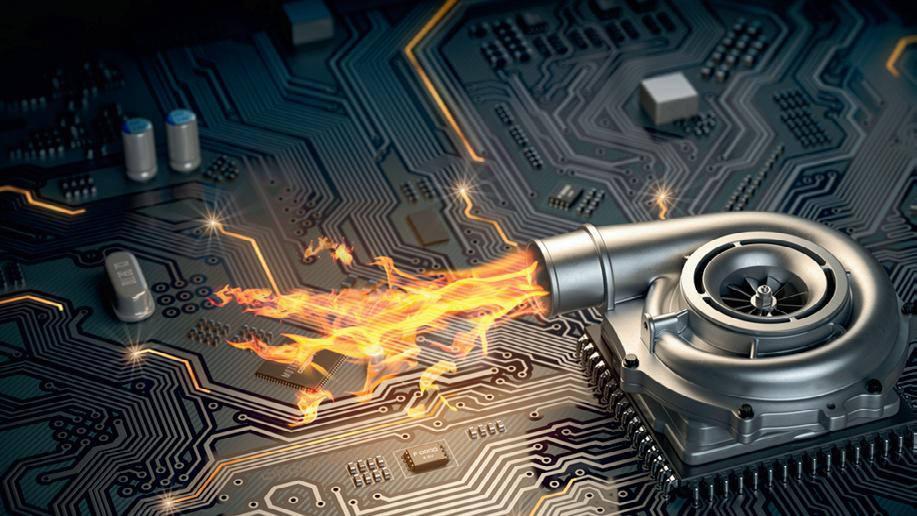
The demand to decrease the size of semiconductors coupled with the problem of heat generated at the hot spots of the devices not being effectively dispersed has negatively impacted the reliability and durability of modern devices. Researchers from the Korea Advanced Institute of Science and Technology (KAIST) have found a new way of dispersing heat by using surface waves generated on the thin metal films over the substrate.
KAIST President Kwang Hyung Lee announced that Professor Bong Jae Lee’s research team succeeded in measuring a newly observed transference of heat induced by ‘surface plasmon polariton’ (SPP) in a thin metal film deposited on a substrate. Surface plasmon polariton (SPP) refers to a surface wave formed on the surface of a metal as a result of strong interaction between the electromagnetic field at the interface between the dielectric and the metal and the free electrons on the metal surface, along with similar collectively vibrating particles.
The research team utilised SPPs, which are surface waves generated at the metal–dielectric interface, to improve thermal diffusion in nanoscale-thin metal films. Since this heat transfer mode occurs when a thin film of metal is deposited on a substrate, it is highly usable in the device manufacturing process and can also be manufactured over a large area. The researchers showed that the thermal conductivity increased by about 25% due to surface waves generated over a 100 nm-thick titanium (Ti) film with a radius of about 3 cm.
Bong Jae Lee said the new heat transfer mode can be applied as a nanoscale heat spreader to efficiently dissipate heat near the hot spots for easily overheatable semiconductor devices. “The significance of this research is that a new heat transfer mode using surface waves over a thin metal film deposited on a substrate with low processing difficulty was identified for the first time in the world,” Lee said.
The result has great implications for the development of highperformance semiconductor devices, as it can be applied to rapidly dissipate heat on a nanoscale thin film. This new heat transfer mode is also expected to solve the problem of thermal management in semiconductor devices as it enables more effective heat transfer at nanoscale thickness while the thermal conductivity of the thin film usually decreases due to the boundary scattering effect.
This study was published online in Physical Review Letters.
8 JULY/AUGUST 2023 WWW.ELECTRONICSONLINE.NET.AU
iStock.com/Bet_Noire iStock.com/Михаил Руденко
SHORTcircuits
“SWEATAINER”: A 3D-PRINTED SWEAT ANALYSIS HEALTH MONITORING DEVICE
Researchers at the University of Hawai'i have taken a step forward in sweat analysis with an innovative 3D-printed wearable sweat sensor called the “sweatainer”.
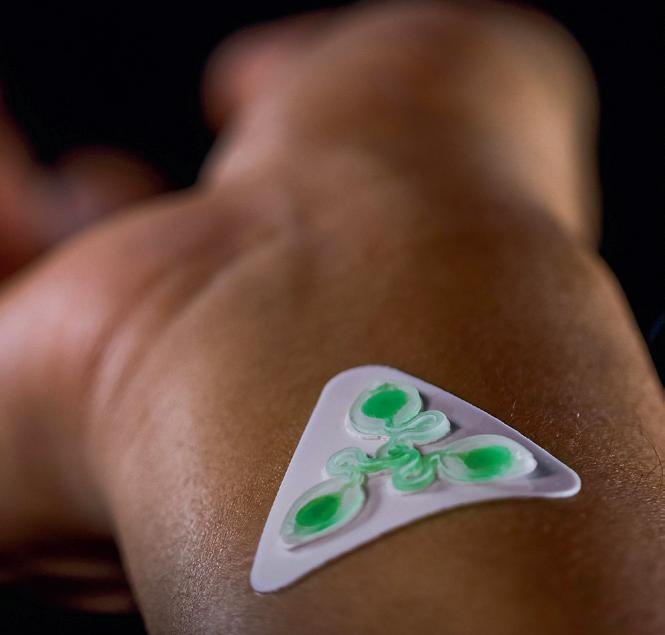
Harnessing the power of additive manufacturing (3D printing), the researchers developed a wearable sweat sensor that expands the capability of wearable sweat devices. The sweatainer is a small, wearable device similar in size to a child’s sticker that collects and analyses sweat. By incorporating various sensors, the sweatainer can analyse sweat in a mode similar to previous wearable sweat-sensing systems.
Tyler Ray, Assistant Professor at the Department of Mechanical Engineering, said 3D printing enables an entirely new design mode for wearable sweat sensors by allowing researchers to create fluidic networks and features with enhanced complexity. “With the sweatainer, we are utilising 3D printing to showcase the vast opportunities this approach enables for accessible, innovative and cost-effective prototyping of advanced wearable sweat devices,” Ray said.
Traditional approaches for sweat collection use absorbent pads or microbore (very narrow) tubes pressed against the epidermis using bands or straps to capture sweat as it emerges from the skin. These techniques require trained personnel, special handling and costly laboratory equipment. The recent emergence of wearable sweat sensors has addressed some of these challenges, but these devices still remain single-use. When the device is full, it must be removed and the sweat collection be stopped.
The sweatainer features a “multi-draw” sweat collection method, which allows for the collection of multiple, separate sweat samples for analysis either directly on the device or sent to a lab. This advancement makes sweat collection more efficient and opens up new possibilities for at-home testing, storing samples for future research and integrating with existing health-monitoring methods.
Field studies of the sweatainer system highlight the real-world potential of this technology. Through the blueprint established in the sweatainer, the researchers hope that this will continue to drive innovation to create a future where personal health monitoring is more accessible, convenient and insightful.
BREAKING THE LIMITS OF STRETCHABLE POLYMER SEMICONDUCTORS
Like the brakes that stop cars, a molecular brake can prevent semiconductor chains from slipping, enabling the creation of more innovative devices. A joint research team led by Professor Kilwon Cho and PhD candidates Seung Hyun Kim and Sein Chung from the Department of Chemical Engineering at POSTECH, and Professor Boseok Kang from Sungkyunkwan University (SKKU) have developed a technology for highperformance organic polymer semiconductors that exhibit stretchability and electrical functionality.
Researchers have been exploring methods to preserve semiconductor performance under deformation, but a definitive solution to this challenge remains elusive.

The POSTECH and SKKU researchers created a flexible molecular photocrosslinker featuring azide reactive groups at both ends. Photocrosslinking refers to the formation of intermolecular covalent bonds that act as crosslinking bonds between molecules, which are initiated by exposure to light. Azide is an ion with three nitrogen atoms and a negative charge, which is highly reactive and used as an intermediate in medical reactions due to its ability to form covalent bonds with other molecules.
When exposed to ultraviolet light, this photocrosslinker forms a network structure with the polymer semiconductor, acting as a brake that prevents slipping, even under stretching conditions. In contrast to traditional semiconductor materials, where polymer chains become intertwined and slip and fracture when stretched, the presence of this ‘brake’ allows the polymer chains to retain their stretchability and performance without any slipping.
Using this approach, the researchers preserved up to 96% of the electrical performance of the polymer semiconductor, even when it was stretched up to 80%. The semiconductor also exhibited enhanced stretchability and durability compared to conventional semiconductors, demonstrating the effectiveness of the developed technology.
“This simple approach significantly enhances the stretchability and UV-patternability of organic semiconducting polymers, making it highly valuable for industries requiring large-area production and photolithography for the development of next-generation flexible electronics,” Cho said.
10 JULY/AUGUST 2023 WWW.ELECTRONICSONLINE.NET.AU
Sweatainer on a person’s arm.
iStock.com/krystiannawrocki
Image credit: Roxanne Kate Balanay, Tyler Ray.

ALUMINIUM ENCLOSURES
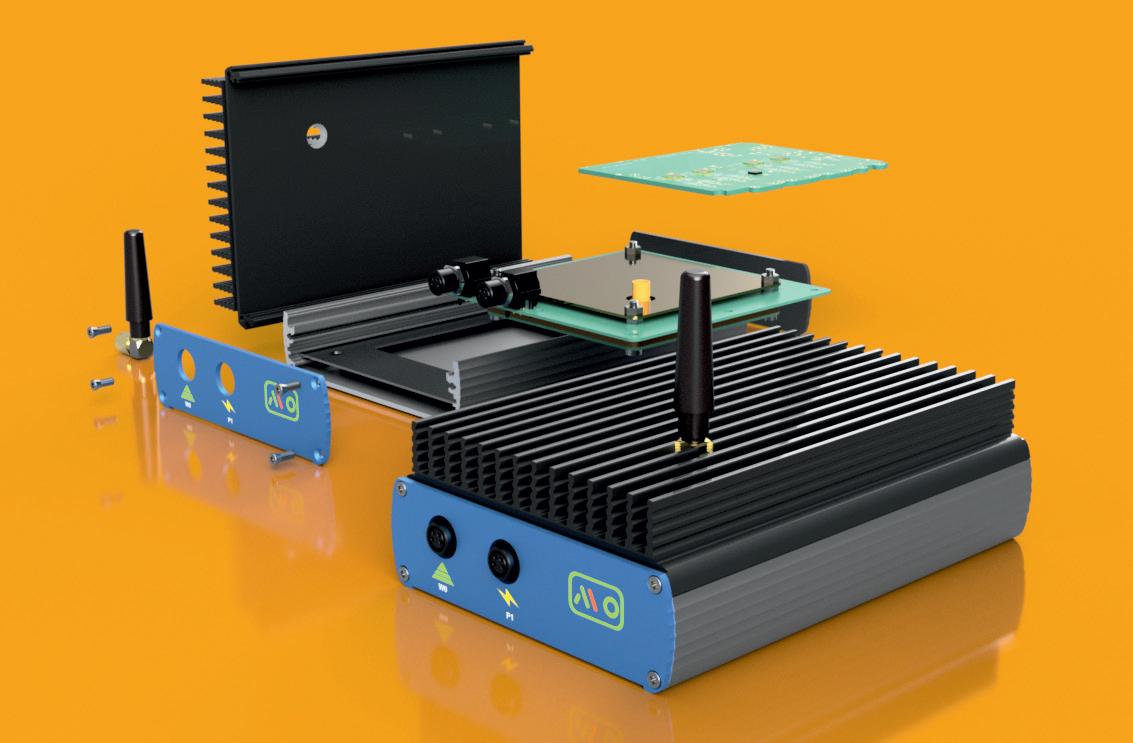
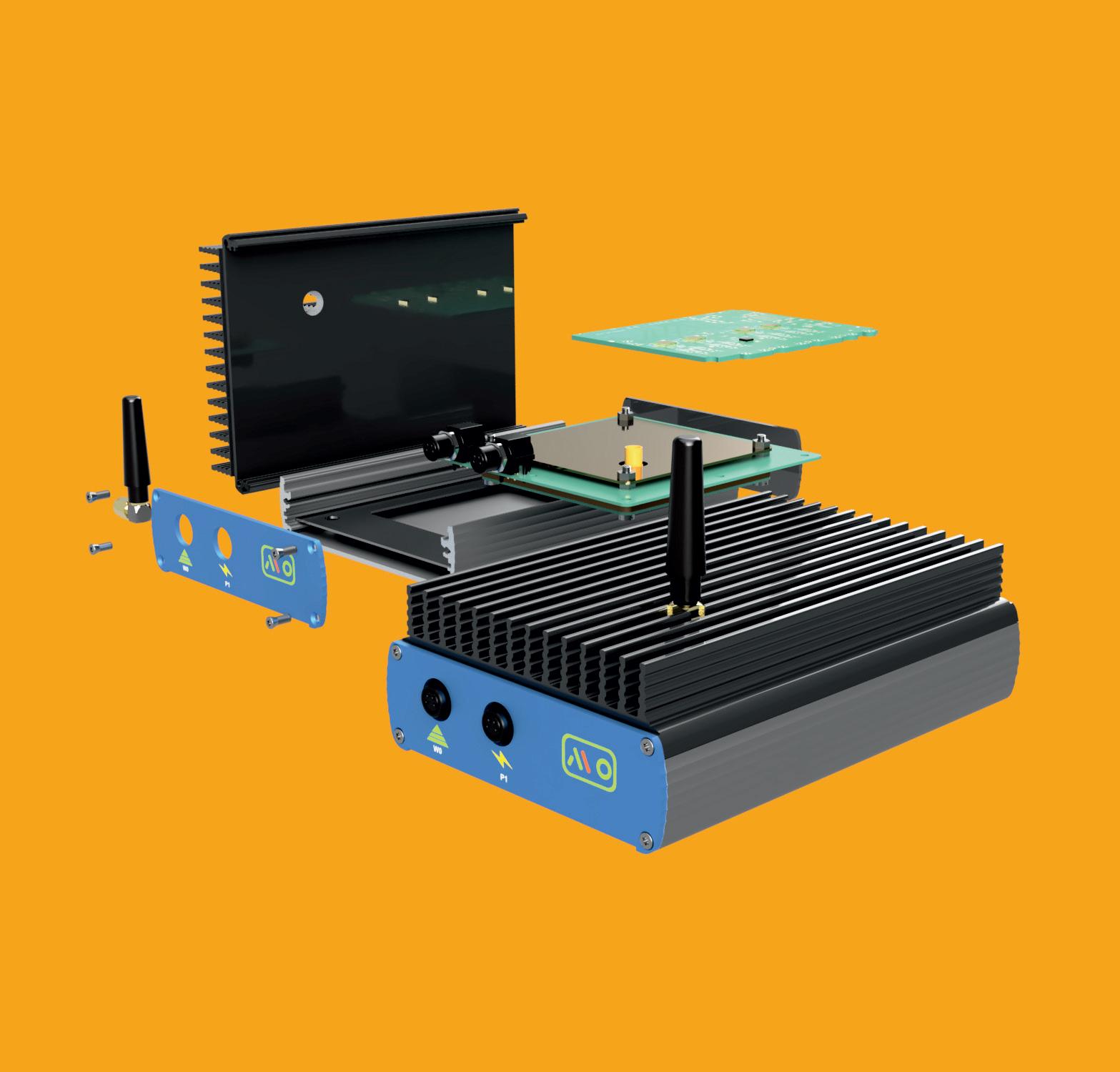
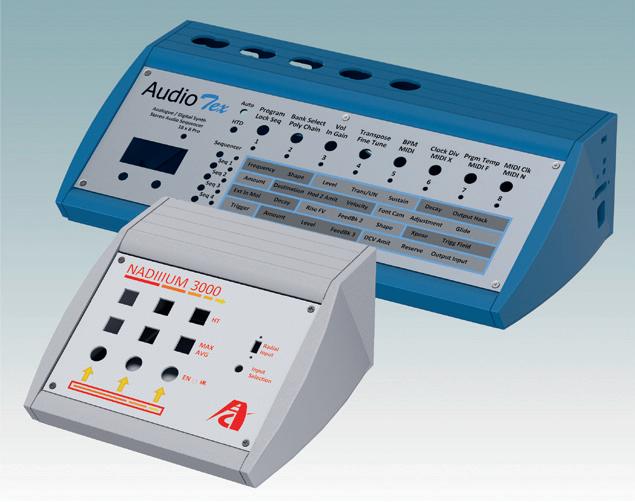
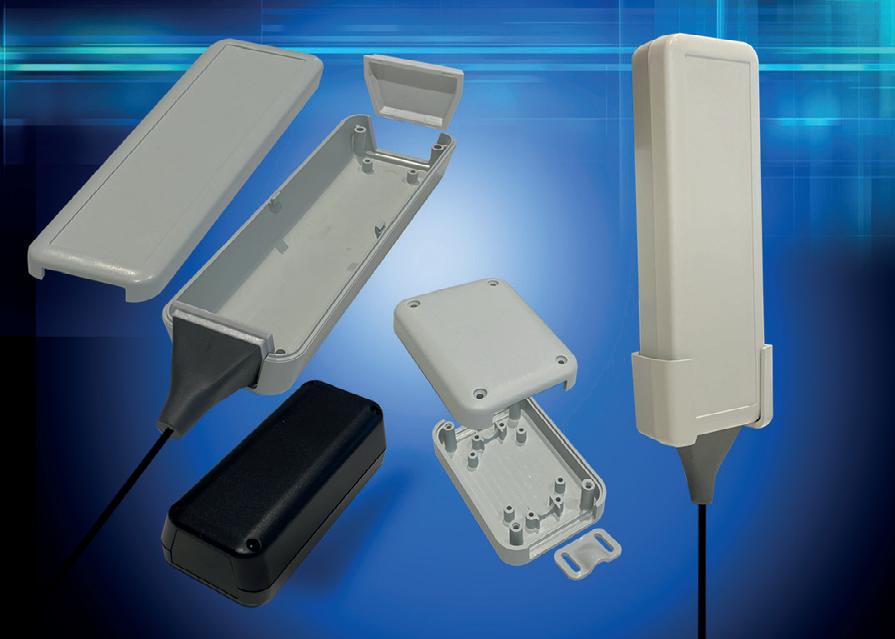
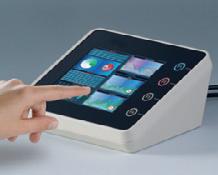
The METCASE UNIDESK sloping front aluminium enclosures are ergonomic for industrial/ machine control and security/access control. They are also suitable for a range of other applications including office systems, point-of-sale and medical devices.
The enclosure’s large front panel (accessory) is recessed for a membrane keypad. The flat rear panel can be machined to accommodate connectors, switches and power inlets. Pre-punched fixing points in the base make it easy to install PCBs.
The enclosure is available either in three standard widths — 200, 300, 400 mm (x 200 x 102 mm) — or in custom widths. The enclosures can be supplied either with or without an IP 54 sealing gasket. For IP 54 protection, PCB pillars (accessory) are also required.
The enclosures can be specified in two standard colours: light grey (RAL 7035) and black (RAL 9005). Custom colours are also available on request. The enclosures are supplied pre-assembled with four non-slip rubber feet, stainless steel M3 Torx T10 and mild steel M3 Posidrive fixings.
Accessories include front panels, wall mounting kits, a PCB mounting kit and M3 PCB/ panel fixing screws.
Like all METCASE enclosures, UNIDESK can be supplied fully customised. Services include custom front panels, CNC machining, fixings and inserts, painting/finishing and photo-quality digital printing of graphics, legends and logos.
ROLEC OKW Australia New Zealand P/L www.metcase.com.au
INDUSTRIAL AI COMPUTER
Backplane Systems Technology has launched the iBase SI624-AI industrial AI computer powered by 12th Gen Intel Core processors. It is designed for AIoT applications in various industries such as automation, smart retail and education. With its compact form factor the AI computer is suitable for space-constrained and harsh environments.
The AI computer supports NVIDIA Ampere Architecture MXM GPU cards. These GPUs enable advanced image processing and parallel computing. With multiplexed capabilities and enhanced image processing, this industrial AI computer is designed to provide enhanced performance for complex AI workloads.
The industrial AI computer features a range of connectivity options with four 4K display outputs, allowing for immersive visual experiences and live video content. Additionally, it supports 5G, LTE, Wi-Fi and Bluetooth, enabling communication and data transfer in diverse networking environments.
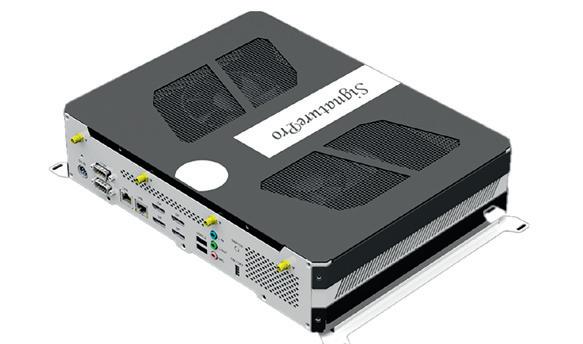
The device also incorporates iSMART intelligent energy-saving technology and Observer remote monitoring technologies. These features enhance power consumption and provide realtime system monitoring, thereby improving overall system performance. Furthermore, the device supports TPM 2.0 for enhanced data security, making it suitable for applications that require data protection. The AI computer also features one M.2 B-Key (3052) for 5G or LTE options, one M.2 E-Key (2230) and two M.2 M-Keys (2280) for Wi-Fi, Bluetooth, capture or storage options. With its advanced features, compact design and connectivity options, the industrial AI computer is suitable for AIoT applications, enabling businesses to leverage AI capabilities and deliver content in demanding environments.
Backplane Systems Technology Pty Ltd
www.backplane.com.au
SBC
Advantech has launched the MIO-5376, an SBC designed for EV chargers. With the growing popularity of electric vehicles (EVs) despite limited infrastructure, the demand for reliable and efficient chargers has increased. To meet this demand, Advantech has developed the MIO-5376, an industrial 3.5 ″ SBC powered by AMD Ryzen Embedded R2000 Processors, offering diverse I/O options for integration and system design.
Fast EV chargers require high computing performance and image capabilities. The SBC leverages AMD Ryzen Embedded R2000 Processors to optimise performance while maintaining a balance between image processing and computing capabilities. It supports up to three simultaneous displays in 4K resolution, facilitating information conveyance.
The SBC features multiple serial ports, including CANBus for charging, M.2 B-Key slots for OTA 5G and Wi-Fi, M.2 slots for storage, and various RS-232 and RS-485 ports for additional device integration. Moreover, the SBC incorporates Power over Ethernet (PoE) technology, enabling power and data delivery to PoE devices like IP cameras, simplifying deployment and reducing installation costs by utilising a single cable.
With outdoor deployment and rugged environments in mind, the SBC is designed to operate within a temperature range of -40 to 85°C and supports a power input range of 12–24 V. To further expedite system integration, Advantech offers full-coverage peripherals such as high-brightness panels for outdoor use, interface converters and isolators, and Ethernet switches.
12 JULY/AUGUST 2023 WWW.ELECTRONICSONLINE.NET.AU
Australia Pty Ltd
Advantech
www.advantech.net.au
USB OSCILLOSCOPE, ANALYSER AND SIGNAL GENERATOR
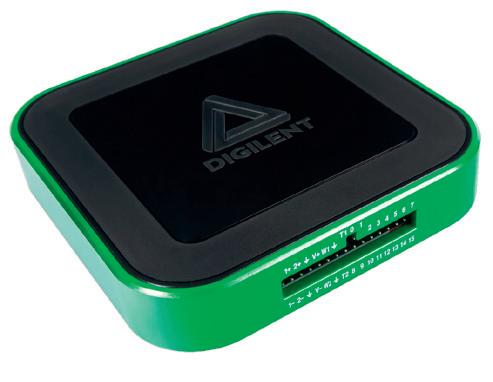
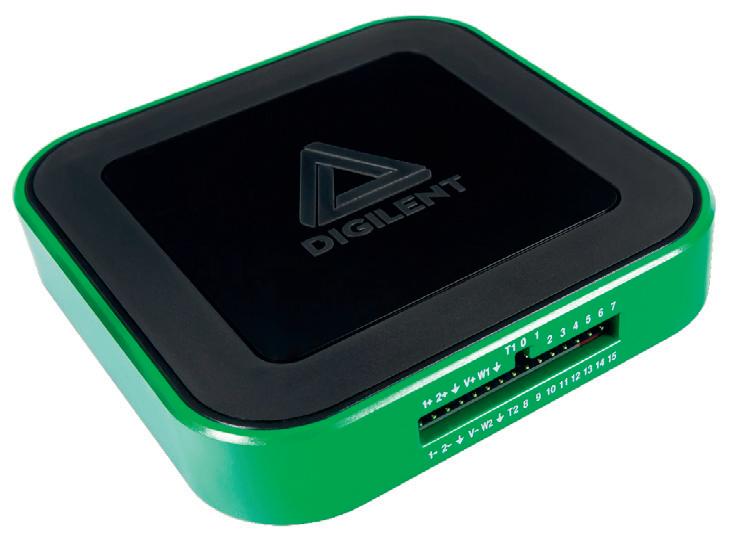
The Analog Discovery 3 is a pocket-sized mobile digital oscilloscope, logic analyser, waveform generator and pattern generator. Using the free flexible WaveForms software (supported by Windows, Mac and Linux), the device can be used in the lab, in the field or even at home, with users no longer tied down to a traditional benchtop and expensive test instruments.
The mixed-signal USB oscilloscope features two differential channels with 14-bit resolution at up to 125 MS/s per channel with a ±25 V input range and a 30+ MHz bandwidth with BNC Adapter. It also features FFT, Spectrogram, Eye Diagram and XY Plot views.
The arbitrary waveform generator provides standard waveforms, amplitude and frequency modulated signals, direct playback from analog inputs, custom waveforms and more. It features two channels with 14-bit resolution at up to 125 MS/s per channel with a ±5 V output range and a 12 MHz bandwidth with BNC Adapter.
The logic analyser and pattern generator features 16 digital I/O channels at up to 125 MS/s per channel, along with SPI, I2C, UART, CAN, JTAG, ROM logic, custom protocols and more.
Digilent also offers additional software instruments including a spectrum analyser, a network analyser and an impedance analyser. It also offers support for LabVIEW and MATLAB.
WWW.ELECTRONICSONLINE.NET.AU JULY/AUGUST 2023 13
Digilent Inc www.digilent.com
ASIC, SoC AND SiP: PERFECT PARTNERS
According to Fictiv’s 2022 State of Manufacturing report, 90% of manufacturers are using digital processes.
Sitting at the heart of any digital strategy is a smart sensor that converts real-world variables into digitised data. But, as sensor technology grows in sophistication, how can we get all of this extra functionality into a miniature device for a reasonable cost?
Here, Richard Mount, Director of Sales at ASIC design and supply company Swindon Silicon Systems, breaks down the ASIC, SoC and SiP integrated circuits (ICs) integral to intelligent sensors.
The majority of sensors convert a physical change into an electrical one. Understanding what this change means is a task for a higher-level control system. Once a manufacturer knows they want to integrate a smart sensor into their applica -
tion, they’re bound to have some follow-up questions: What if the sensor can be made more sophisticated? How about conditioning the data and making the sensor response more linear? Calibrating the data to counter the effects of temperature, for example? Could the sensor filter unimportant events and only communicate changes that were relevant to the wider system?
Equipping a sensor with such functions doesn’t need to come at a cost that’s unfeasible for most manufacturers, and there are many forms of custom IC that can help achieve these ambitions.
ASICs
An ASIC is a custom chip that has been designed specifically for a customer’s individual application. This ensures that the ASIC is unique to any other offering on the market in terms of performance and differentiates the customer’s product from the competition.
ASICs are complex devices containing many functions. As well as including the
processing, conditioning and communication functions required for sensor interfacing, designers working on today’s Industrial Internet of Things (IIoT) related products and systems find an ASIC will incorporate a number of cost and performance benefits.
While there is a short-term cost associated with ASIC development, the return on investment is high. By integrating functionality such as the analog front end, signal processing and IoT connectivity into one system, the overall cost of the final product is much lower compared to its loaded PCB equivalent. Furthermore, because of its size and the fact that an ASIC replaces most of a PCB full of components, the user can expect a much higher efficiency and lower power consumption than they would receive from an off-the-shelf alternative.
Customers also choose the ASIC route to guarantee component supply for the lifetime of their product with no gaps in availability. Swindon, for instance, provides assurances that the device will be available until the customer end-of-lifes its product
14 JULY/AUGUST 2023 WWW.ELECTRONICSONLINE.NET.AU
manufacture. This is in sharp contrast to a solution built using standard components, which are often at risk of obsolescence once the part no longer makes financial sense to the supplier.
SoC
When designing an ASIC, it often makes sense to integrate other parts of the circuit schematic onto the same silicon die. This is known as a system on chip, which combines all the required analog and digital functions of a typical IC, along with an embedded microprocessor. This means the SoC is a complete electronic substrate system that may contain analog, digital, mixed-signal and radio frequency functions with the added advantage of a powerful processor at its core.
The main driver for this level of integration in a sensor is reduced size and lower bill of materials cost. To illustrate this, let’s look at proximity sensors as an example. Many of these sensors are no bigger than a finger, including sensor element and PCB
SMART SENSORS
embedded system on a single chip, thereby producing a system that is smaller, faster and can be easily integrated into its destined environment.
SiP
However, sometimes it is not possible to integrate all the system features into a single die and this is where a system in package (SiP) comes to the fore. A SiP is typically an ASIC in bare die form that’s integrated with another IC, for example, a microelectromechanical sensor (MEMS) or a communications die such as BLE, all in a single package. The ASIC provides the signal processing and sensor interface, while the MEMS acts as the sensing element and the BLE for a complex communications protocol.
Where an SoC refers to the encapsulation of CPUs, micro-controllers and other supporting hardware onto a single chip, a SiP is a further level of integration where multiple dies are integrated inside a single package. While an SoC contains all the required electronic elements, a SiP comprises individual chips accommodated in one package, each with a specific functionality. The result is a chip that provides considerable space savings and lower installation costs.
sealed in a waterproof enclosure. Some 20 years ago, this level of integration would have been very challenging and out of reach for most companies, due to its cost and complexity. Now, alternatives such as SoC make fabricating these sensors far more accessible.
An SoC usually contains a variety of components that include, but are not limited to, software and programming, voltage regulators and power management circuits, analog interfaces such as digital-to-analog converters and vice versa, a microprocessor and RAM and ROM memory. It comes with predesigned and pre-verified blocks, often called intellectual property (IP) blocks, obtained from either from the chip manufacturer themselves or from verified third parties and combined on a single chip.
Because an SoC includes both the hardware and software, it often uses less power, has better performance, requires less space and is more reliable than having multi-chip systems. Ultimately, an SoC product is designed to implement an entire

Dies containing the ICs can be stacked vertically on the substrate, connected by fine wires bonded to the package. Where a manufacturer would have needed multiple specialised IC devices to be assembled and connected on a PCB, that level of connectivity can be integrated into the package itself with a SiP.
One of the most notable advantages of using a SiP is its small size. Since a SiP uses IC manufacturing processes along with bare silicon die, it significantly reduces the size of the subsystem. This reduction in size allows designers to reduce the size of their PCB, supporting form factors that wouldn’t otherwise be possible. Furthermore, reduced assembly, PCB and materials costs will also make SiP more affordable, further increasing its accessibility.
For a manufacturer wanting to integrate more sophisticated, sensor-driven technology into their product, they may be pleased to know there are several options available at their fingertips. ASIC, SoC and SiP can all offer a multitude of performance gains that will help a product stand out from the competition. Knowing which option to choose, however, will require guidance from an expert in the design, test and supply of these integrated circuits.
WWW.ELECTRONICSONLINE.NET.AU JULY/AUGUST 2023 15
iStock.com/sdecoret
MICROCONTROLLER
The STM32H5 is a powerful Arm Cortex-M33 microcontroller (MCU), running as high as 250 MHz. The series has been designed to enable the next generation of smart connected devices, offering more intelligence ‘in the edge’ and better defences against attacks on IoT assets.
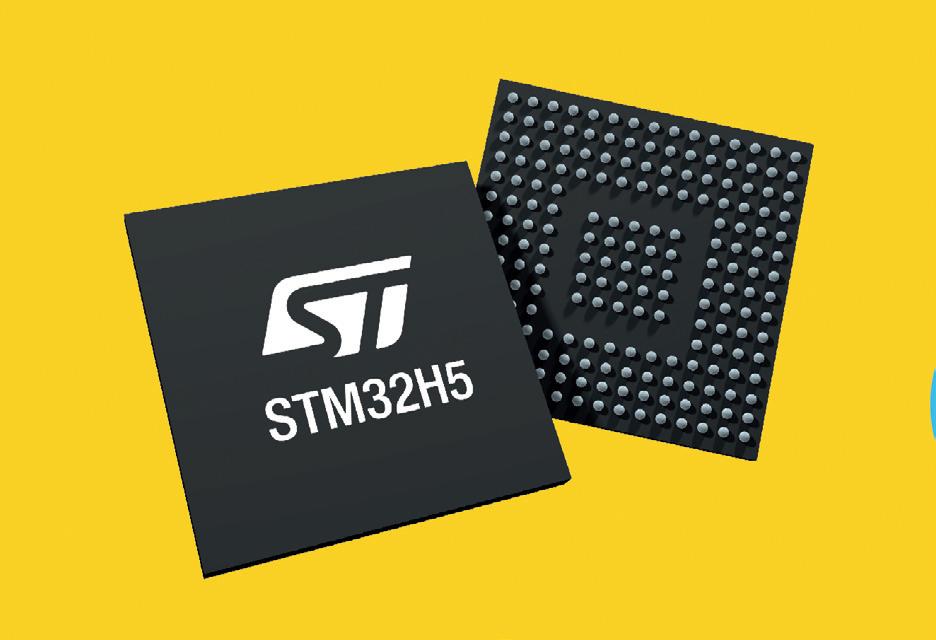
The industrial-grade MCU series supports up to 125°C ambient temperature and comes with a large and robust memory as well as extended connectivity features, such as I3C, FDCAN and Ethernet. The STM32Trust TEE Secure Manager saves developers writing their own code while providing security services developed according to the best practices. It simplifies development while providing protection.
STMicroelectronics Pty Ltd
www.st.com
EDGE COMPUTER
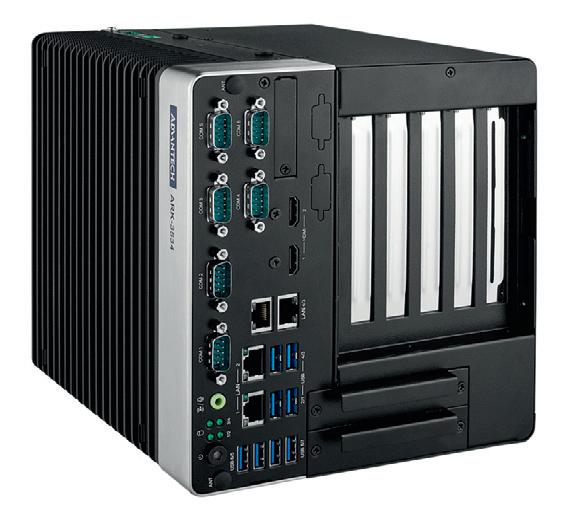
Advantech has launched the ARK-3534 highperformance edge computer, a versatile solution powered by 12th and 13th Gen Intel Core i processors. With its range of I/O options, the edge computer can support up to 25 device connections, making it suitable for various applications. The series also features up to four PCIe/PCI slots that can accommodate GPU, data acquisition and communication cards, enabling tasks like AI analytics, equipment monitoring and motion control.
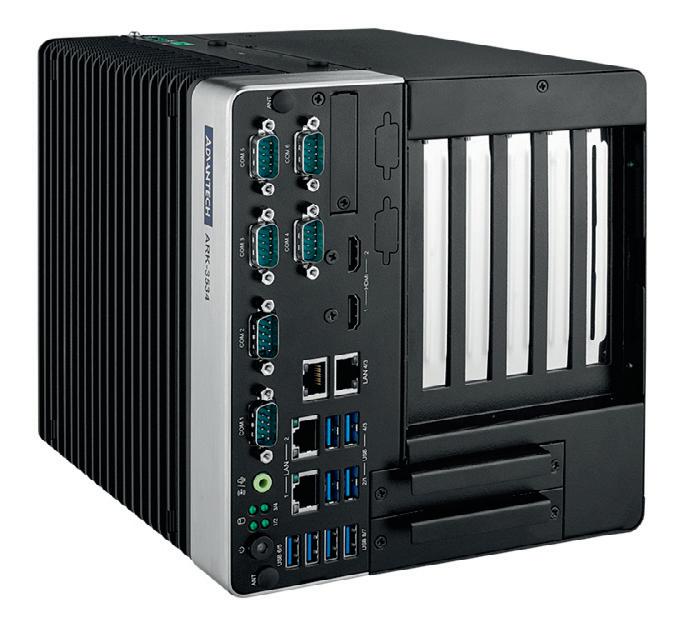
Through the integration of hardware and software, the edge computer enables efficient remote management and enhances overall equipment effectiveness with Advantech’s DeviceOn, Codesys and TSN functions. Designed to meet diverse automation requirements, the edge computer is targeted at AOI, semiconductor equipment and collaborative robot applications. Equipped with 12th and 13th Gen Intel Core i3/i5/i7/i9 65W processors and Intel UHD Graphics 770, the edge computer delivers enhanced computing power, high-speed image analytics and real-time capabilities for advanced AI and industrial applications. Supporting simultaneous connection to 25 devices, it offers a range of interfaces, including USB, COM, CANBus, GbE, audio, GPIO, HDMI and optional DVI/HDMI/DP modules. Additionally, it supports LAN up to 2.5G with real-time TSN/TCC for efficient operation and motion control.
Designed for multitasking applications, the edge computer provides expandable PCIe and PCI slots for data acquisition, communication, serial communication and GPU cards. It also offers advanced connectivity options with M.2 B key and M.2 E key for 5G and Wi-Fi capabilities. With its wide operating temperature range, vibration and shock resistance, and support for 9–36 VDC power input, the edge computer is well suited for harsh industrial environments.
The edge computer includes integrated Advantech DeviceOn software, offering centralised management, data integration, real-time computing, edge analytics, OTA updates and remote monitoring through a dashboard UI. Preconfigured with Advantech ROS2 and supporting Edge AI Suite, it accelerates AI and robotics application development. Moreover, it enables protocol communication via iEdge software and provides an optional Codesys software platform for industrial control and automation solutions.
Advantech Australia Pty Ltd
www.advantech.net.au
ENCLOSURES
The flame-retardant UL94-V0 ABS IP54 1556 family of enclosures is inspired by the IP68 polycarbonate 1557 series. It features the same modern rounded corners and top face styling and introduces rectangular versions to complement the square formats derived from the 1557 series. IP54 sealed for general-purpose indoor use, the ABS material gives a lower price point than the polycarbonate used in the 1557, which is designed for installation outdoors and in aggressive environments. Selftapping screws secure the lid to the base, for applications where repeated access is not required. There are multiple PCB mounting standoffs in both the lid and the base.
There are four square sizes from 80 x 80 to 200 x 200 mm and three rectangular ones from 120 x 80 to 200 x 160 mm. All are available in black, RAL 7035 grey and white and there are two heights: 45 and 60 mm for the smallest size and 45 and 70 mm for the larger ones. The enclosure is suitable for desktops when fitted with the supplied feet; it can also be wall-mounted with four visible brackets or two hidden ones. Also available as an option are 2 mm thick aluminium internal panels.
Hammond Electronics Pty Ltd
www.hammfg.com
16 JULY/AUGUST 2023 WWW.ELECTRONICSONLINE.NET.AU
THERMAL CAMERA
Teledyne FLIR has launched the Boson+ thermal camera module with its factory-integrated 14–75 mm continuous zoom (CZ) lens. With seamless optomechanical integration, the thermal camera is designed to reduce development and operational risk and costs. The thermal camera is suitable for unmanned aerial vehicles, perimeter surveillance, light armoured vehicle situational awareness and targeting, and soldier sighting systems.
The thermal camera features flexible and advanced lens control electronics, 20 MilliKelvin (mK) thermal sensitivity and US-based integration support, to streamline development for applications requiring high-performance infrared zoom capability.
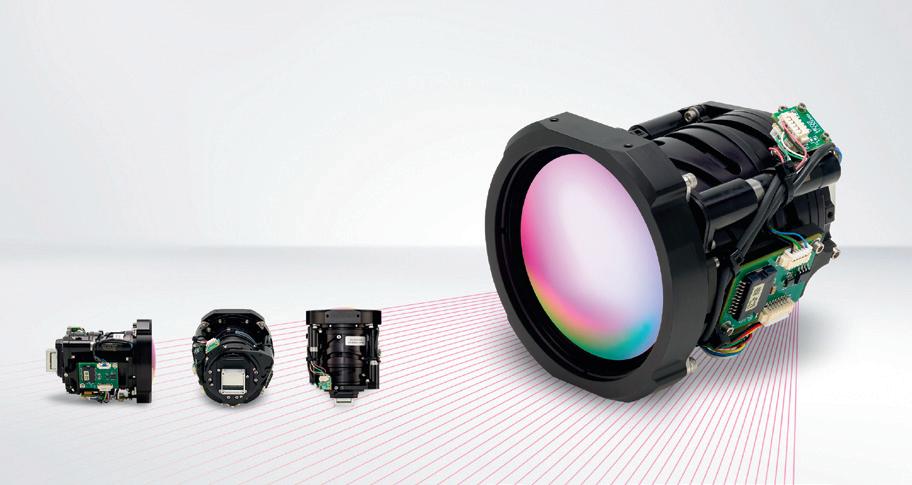



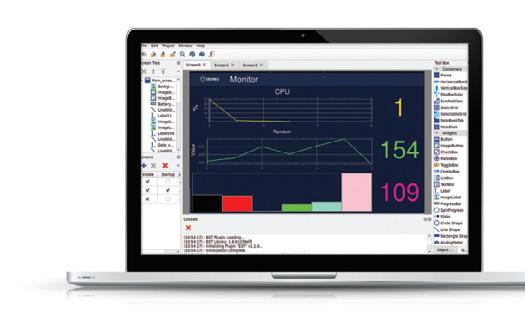
By completing the factory alignment at Teledyne FLIR, integrators receive a thermal zoom solution that eliminates boresight wander and other image artifacts while zooming. Critical to dynamic missions, Teledyne FLIR’s advanced lens control electronics provide thermal gradient compensation to maintain focus across the full operational temperature range while object range compensation maintains focus through zoom, even for near targets. Built-in tests (BIT) run at startup, continuously, or are commanded to provide real-time notification of issues.
The thermal camera also features the 12-micron pixel pitch 640x512-resolution thermal detector offering enhanced detection, recognition and identification (DRI) performance, especially in low-contrast and low-visibility environments. Customers also have access to the US-based Teledyne FLIR Technical Services team for integration support. The thermal camera is dual use and classified under the US Department of Commerce jurisdiction as EAR 6A003.b.4.a.
The Teledyne FLIR Boson+ CZ 14-75 is available for purchase globally.
Teledyne FLIR
www.flir.com.au

WWW.ELECTRONICSONLINE.NET.AU JULY/AUGUST 2023 17
OPEN-SOURCE SOFTWARE TO SPEED UP QUANTUM RESEARCH
Ateam of researchers at Chalmers University of Technology in Sweden have now developed open-source, freely available software that will pave the way for new discoveries in the field and accelerate quantum research significantly.

Within a few decades, quantum technology is expected to become a key technology in areas such as health, communication, defence and energy. The power and potential of the technology lie in the odd and very special properties of quantum particles. Of particular interest to researchers in the field are the superconducting properties of quantum parti-
cles that give components perfect conductivity with unique magnetic properties. These superconducting properties are considered conventional today and have already paved the way for entirely new technologies used in applications such as magnetic resonance imaging equipment, maglev trains and quantum computer components. However, years of research and development remain before a quantum computer can be expected to solve real computing problems in practice, for example. The research community is convinced that there are many more revolutionary discoveries to be made in quantum technology than those we know today.
18 JULY/AUGUST 2023 WWW.ELECTRONICSONLINE.NET.AU
Quantum technology is expected to fundamentally change many key areas of society. Researchers are convinced that there are many more useful quantum properties and applications to explore than those we know today.
Open-source code to explore new superconducting properties
Basic research in quantum materials is the foundation of all quantum technology innovation, from the birth of the transistor in 1947, through the laser in the 1960s to the quantum computers of today. However, experiments on quantum materials are often very resource-intensive to develop and conduct, take many years to prepare and mostly produce results that are difficult to interpret. Now, however, a team of researchers at Chalmers have developed the open-source software SuperConga, which
is free for everyone to use, and specifically designed to perform advanced simulations and analyses of quantum components. The program operates at the mesoscopic level * , which means that it can carry out simulations that are capable of ‘picking up’ the strange properties of quantum particles, and also apply them in practice. The open-source code is the first of its kind in the world and is expected to be able to explore completely new superconducting properties and eventually pave the way for quantum computers that can use advanced computing to tackle societal challenges in several areas.
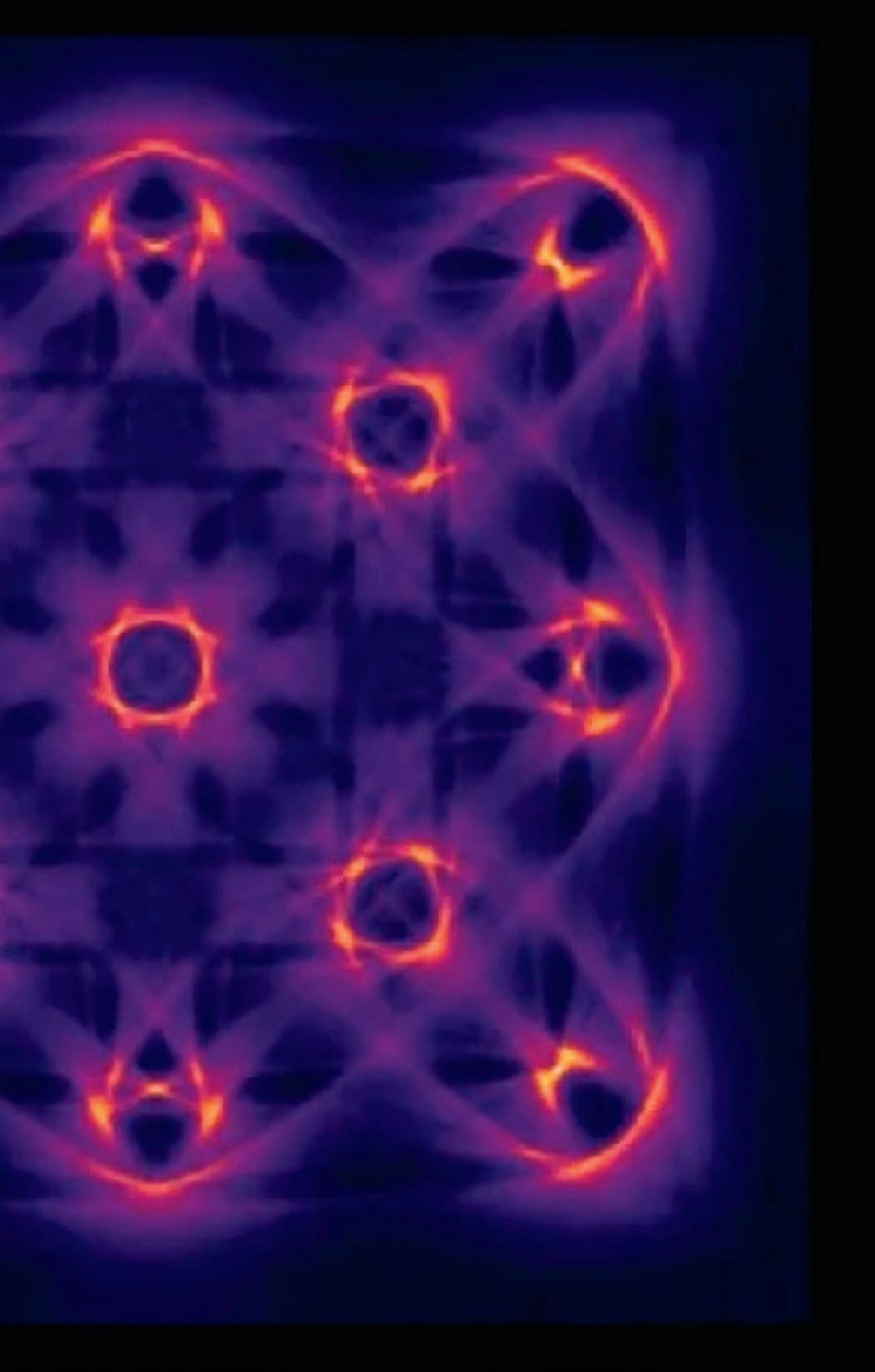
A team of researchers in Sweden have developed open-source, freely available software that will pave the way for new discoveries and accelerate quantum research significantly. The image shows the local density of currentcarrying particles in a mesoscopic vortex lattice in a small mesoscopic superconductor.
“We are specifically interested in unconventional superconductors, which are an enigma in terms of how they even work and what their properties are. We know that they have some desirable properties that allow quantum information to be protected from interference and fluctuations. Interference is what currently limits us from having a quantum computer that can be used in practice. And this is where basic research into quantum materials is crucial if we are to make any progress,” said Mikael Fogelström, Professor of Theoretical Physics at Chalmers.
These new superconductors continue to be highly enigmatic materials — just as their conventional siblings once were when they were discovered in a laboratory more than a hundred years ago. After that discovery, it would be more than 40 years before researchers could describe them in theory. The Chalmers researchers now hope that their open-source code can contribute to completely new findings and areas of application.
“We want to find out about all the other exciting properties of unconventional superconductors. Our software is powerful, educational and user-friendly, and we hope that it will help generate new understanding and suggest entirely new applications for these unexplored superconductors,” said Patric Holmvall, postdoctoral researcher in condensed matter physics at Uppsala University.
Desire to make life easier for quantum researchers and students
To be able to explore revolutionary new discoveries, tools are needed that can study and utilise the extraordinary quantum properties at the minimal particle level, and can also be scaled up large enough to be used in practice. Researchers need to work at mesoscopic scale*. This lies at the interface
WWW.ELECTRONICSONLINE.NET.AU JULY/AUGUST 2023 19
QUANTUM RESEARCH
Image credit: Patric Holmwal
THE OPEN-SOURCE CODE IS THE FIRST OF ITS KIND IN THE WORLD AND IS EXPECTED TO BE ABLE TO EXPLORE COMPLETELY NEW SUPERCONDUCTING PROPERTIES.

between the microscopic scale, ie, the atomic level at which the quantum properties of the particles can still be utilised, and the macroscopic scale which measures everyday objects in our world that, unlike quantum particles, are subject to the laws of classical physics. On account of the software’s ability to work at this mesoscopic level, the Chalmers researchers now hope to make life easier for researchers and students working with quantum physics.
“Extremely simplified models based on either the microscopic or macroscopic scale are often used at present. This means that they do not manage to identify all the important physics or that they cannot be used in practice. With this free software, we want to make it easier for others to accelerate and improve their quantum research without having to reinvent the wheel every time,” said Tomas
Löfwander, Professor of Applied Quantum Physics at Chalmers.
More about the research:
The scientific article SuperConga: An opensource framework for mesoscopic superconductivity has been published in Applied Physics Reviews and was written by Patric Holmvall, the Department of Physics and Astronomy, Uppsala University, and Niclas Wall Wennerdal, Mikael Håkansson, Pascal Stadler, Oleksii Shevtsov, Tomas Löfwander and Mikael Fogelström, the Department of Microtechnology and Nanoscience at Chalmers University of Technology, Sweden. SuperConga is open-source software and is free to download.
*More on the microscopic, mesoscopic and macroscopic scales
The mesoscopic regime is at the interface between the macroscopic and microscopic regimes. In the macroscopic regime (typically
millimetres and larger), classical physics dominates, describing everyday objects such as footballs, cats or perhaps a coffee maker. This contrasts with the microscopic regime, where quantum physics prevails, and much smaller objects can be measured, such as electrons, atoms and other particles. The odd properties of quantum particles can be explored on this tiny scale — properties that allow them to be in two places at once or to be perfectly conducting. Mesoscopic quantum components (typically micrometres down to nanometres) are so small that the strange properties of quantum particles can be accessed and used, but also large enough that they can be applied in practice. Open-source codes already exist for simulations at either the microscopic or more macroscopic level. SuperConga is the first freely available software in the world capable of simulating superconductors at the mesoscopic level.
20 JULY/AUGUST 2023 WWW.ELECTRONICSONLINE.NET.AU
QUANTUM RESEARCH
iStock.com/Just_Super
RADIO TEST SYSTEM
Viavi Solutions Inc. has launched the CX700 ComXpert Radio Test System. This radio test solution enhances testing for radio manufacturers as well as depot-based and field-deployed military personnel by delivering all-in-one synthetic instrumentation for production, depot-level and field test of current and future radios and waveforms. Engineers, manufacturers and technicians responsible for designing or maintaining RF systems and radios often have to use multiple pieces of test and measurement equipment for accurate test and verification. The radio test system is designed to provide a comprehensive all-in-one communications test system that includes 100 MHz of instantaneous bandwidth, high phase noise performance from 9 kHz to 6 GHz, fast industry-standard data transport mechanisms and a built-in power supply for the devices under test.
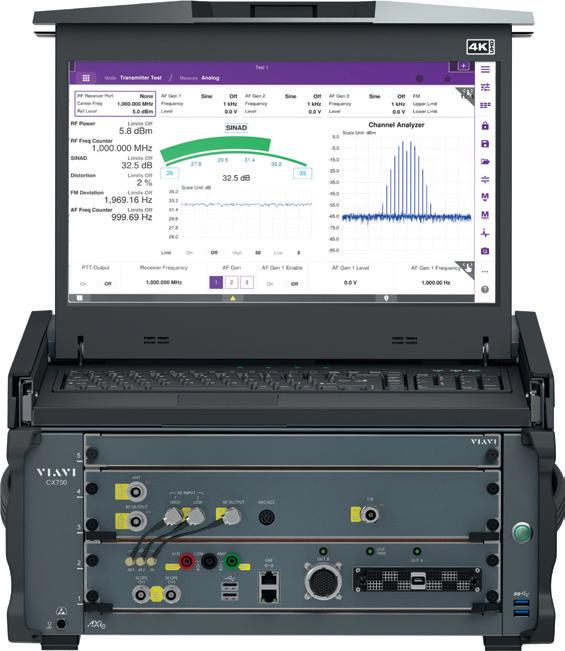
The radio test system also meets MIL-PRF-28800 Class 3 environmental requirements and has a GNSS-enabled ‘no-cal’ chassis time base, user-replaceable modules and an integrated ruggedised keyboard, touchscreen and trackpad to enable comprehensive system testing in remote-deployed environments.

The radio test system also leverages the intuitive GUI first introduced on the VIAVI CX300 ComXpert, supports native on-box Python scripting as well as remote commands over Ethernet and interfaces with VIAVI StrataSync and Smart Access Anywhere to deliver an integrated user experience.


VIAVI Solutions Inc





Format: 180 x 135 mm


www.viavisolutions.com.au



WWW.ELECTRONICSONLINE.NET.AU JULY/AUGUST 2023 21
BOARD
AAEON has launched the de next-TGU8, a small board featuring an onboard Intel Core i-level processor, measuring just 3.38 x 2.17 ″ (86 x 55 mm).
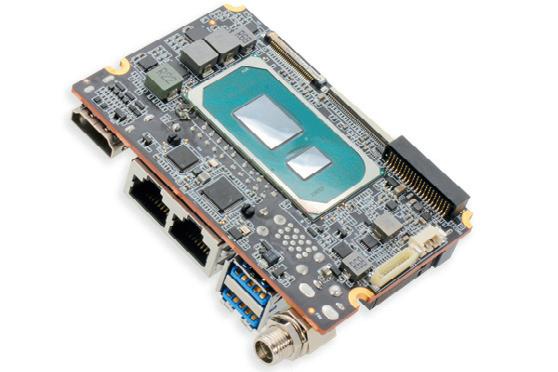
Offering up to 4 cores, with 8 threads, the 11th Generation Intel Core i7/i5/i3 Processors (formerly Tiger Lake-UP3) provide the board with high-performance power.
This power enables users to utilise the potential of the board’s 16 GB onboard LPDDR4x memory and expandability, for which it has an M.2 2280 M-Key (PCIe [x2]) to enable AI acceleration, Wi-Fi and 4G modules. The board also provides an FPC slot for PCIe Gen 3 [x4] with Riser Kit, for additional storage or more advanced graphics options to go along with its Intel UHD Graphics.
The board is equipped with an innovative interface featuring dual RJ45 Ethernet ports, two USB 3.2 Gen2 and four USB 2.0 via pin header, along with a dual display interface via HDMI and eDP ports.
AAEON Technology Inc.
www.aaeon.com
SECURE AUTHENTICATION ICs
Microchip has expanded its secure authentication device portfolio with six new products in its CryptoAuthentication and CryptoAutomotive IC families that meet Common Criteria Joint Interpretation Library (JIL) High rated secure key storage and support certified algorithms that comply with the Federal Information Processing Standard (FIPS). This range of secure authentication devices lowers the barrier to entry and enables developers of products for new segments and applications to implement authentication to prevent counterfeiting, improve quality control and safeguard the user experience.
The devices are supported by the Trust Platform Design Suite, a dedicated software tool used to onboard these ICs with Microchip’s key provisioning service. The scalable service enables cryptographic assets to be provisioned for projects of virtually any size, ranging from tens of devices to large-scale deployments across a variety of industries such as consumer and medical disposables, automotive and industrial accessory ecosystems, wireless charging and data centres.
Microchip added five new products to its existing portfolio of CryptoAuthentication ICs. Those ICs are hardware-based secure storage that is intended to keep secret keys hidden from unauthorised attackers. The devices include: ECC204 (ECC-P256 signature and Hash-based Message Authentication Code (HMAC)), ECC206 (Two-pin parasitic power, ECC-P256 signature and HMAC), SHA104 (Client SHA256 MAC), SHA105 (Host SHA256 CheckMAC), and SHA106 (Two-pin parasitic power and client SHA256 MAC).
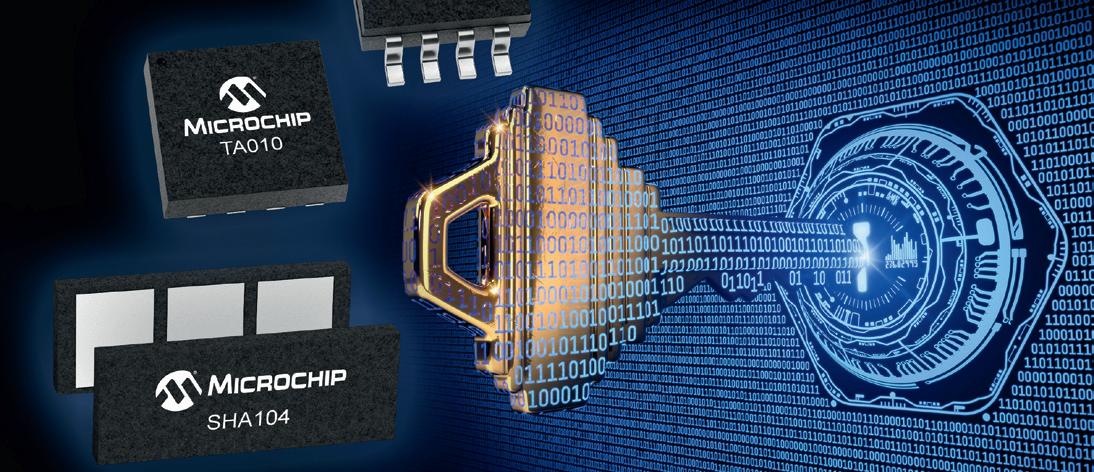
The sixth new device is designed for the automotive market. The TA010 with ECC signature and HMAC is an AEC-Q100 Grade 1-qualified CryptoAutomotive IC that enables OEMs to implement secure authentication into their design to meet security requirements for future generations of their vehicles.
Microchip’s security products are compatible with any microprocessor (MPU) or microcontroller (MCU) and can be used as companion devices to Microchip’s AVR MCUs and Arm core-based MPUs and MCUs. These secure authentication ICs provide users with a versatile solution that adheres to evolving industry standards and practices. Microchip Technology Hong Kong Limited www.microchip.com
POWER INDUCTOR SERIES
Würth Elektronik has launched the WE-HEPC, a small NiZn-ferrite-based self-shielded power inductor. Thanks to an automated manufacturing process, these inductors are designed to provide high quality and a high saturation current. In all, there are 15 models available with different attributes (L: 3.3~100 µH; ISAT: 1.3~3.3 A) and in package sizes 5030 (4.8x4.8 x1.8 mm) and 6030 (5.9x 5.9x2.85 mm).
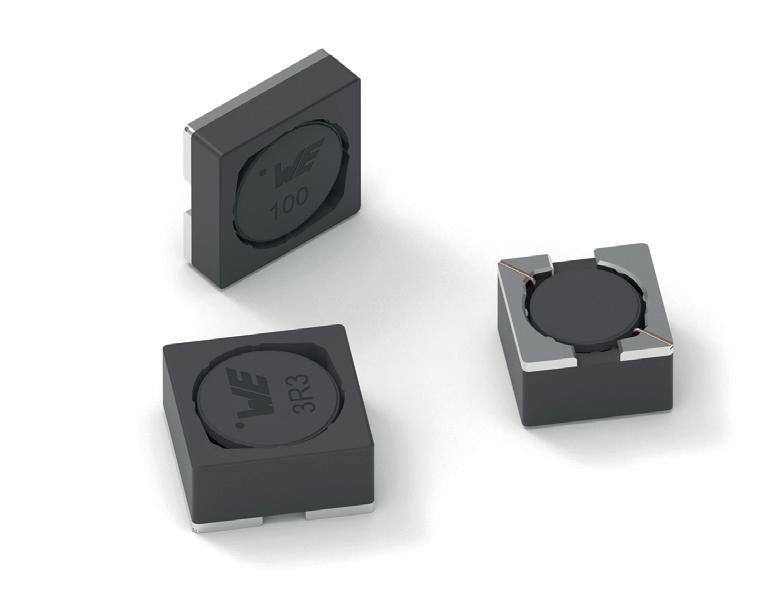
The power inductor series is suitable for DC/DC converters, filter applications, embedded computers and other compact design applications. Due to its AEC Q-200 Grade 1 rating, it can also be used for some automobile applications. The operating temperature range spans -40 to +125°C. The land pattern is compatible with older WE-SPC and WE-TPC inductors, giving customers a large amount of design flexibility.
Wurth Electronics Australia Pty
www.we-online.com
22 JULY/AUGUST 2023 WWW.ELECTRONICSONLINE.NET.AU
WIRELESS MICROCONTROLLERS
The STM32WBA 32-bit Wireless series from STMicroelectronics brings designers the performance, efficiency and security required for Bluetooth Low Energy 5.3-enabled applications.
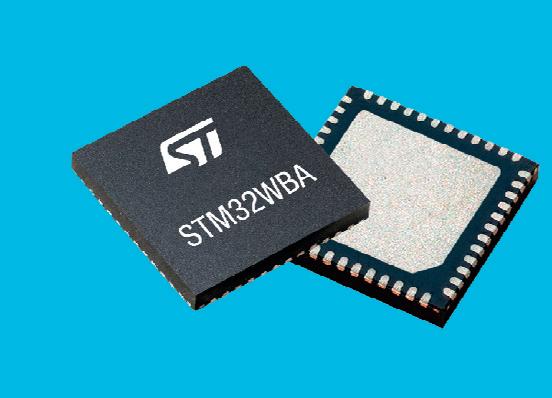
The device offers the necessary features for wireless IoT devices including a high data rate to provide fast data transfer; long range capability to enlarge the communication range; +10 dBm of output power to increase the communication range; and low-power messaging capability to extend battery lifetime.
Based on the Arm Cortex-M33 core running at 100 MHz with TrustZone technology, the device series provides a high level of security, protecting data, IPs and preventing hacks or device cloning.
Focusing on the Bluetooth Low Energy 5.3 protocol, the STM32WBA series allows non-expert developers to add wireless communication to their device. Leveraging the STM32U5 architecture, the device provides an ultra-low power platform and offers inherited digital and analog peripherals, suitable for many applications, from industrial, to smart home and consumer markets. The STM32WBA wireless MCU embeds large memory to sustain both applications and connectivity activities, coming with up to 1 MB of flash memory and 128 KB of RAM. A smart set of peripherals like ADC, touch sensing and times make this product a self-sufficient application wireless MCU. The device facilitates efficient application processing based on a 407 CoreMark score and is designed to protect users’ IPs and increase privacy protection based on SESIP3 device compatibility.
STMicroelectronics Pty Ltd
www.st.com
BOX PC
Backplane Systems Technology has launched the APLEX AVS-320 box PC. Powered by Intel’s Elkhart Lake Processor, the AVS-320 is a compact, fanless box PC designed to streamline machine vision applications.
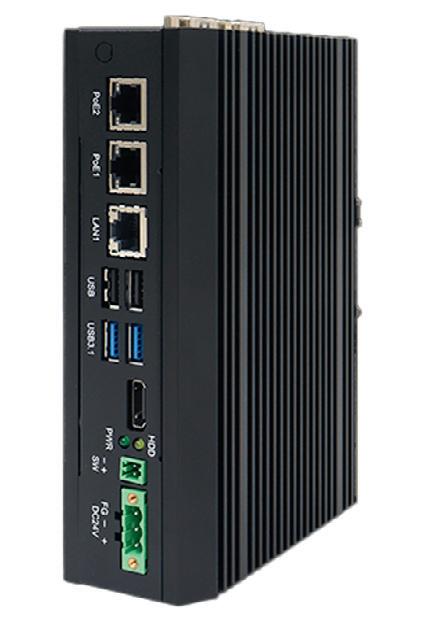
Equipped with up to 32 GB DDR4 system memory, the AVS-320 features a range of I/O interfaces, including 2 USB 3.1, 2 USB 2.0, 2 COM, 1 VGA, 1 HDMI and 3 LAN ports with dual PoE. Its expansion bus further supports 1 M.2 B-Key and 1 M.2 M-Key. This makes it adept at integrating with cameras and peripherals for real-time image data collection and analysis.
With an embedded aluminium heatsink and steel chassis, the box PC is designed to operate across a wide temperature range (-20 to 70°C). Its lightweight design, coupled with a 24 VDC input, makes it versatile and easy to install.
The box PC’s combination of high computing performance, rich graphical capabilities and robust I/O interfaces makes it suitable for AI and deep learning applications. The APLEX AVS-320 is designed to lead manufacturing automation into the realm of IIoT and Industry 4.0.
Backplane Systems Technology Pty Ltd
www.backplane.com.au
WWW.ELECTRONICSONLINE.NET.AU JULY/AUGUST 2023 23
BLAME THE SOFTWARE
STUDY REVEALS NEW RISKS TO THE LONGEVITY OF ELECTRONIC DEVICES
Fraunhofer Institute for Reliability and Microintegration IZM
Open your garage door by smartphone. Dim your lights with a simple swipe. Control your home’s heating on your way back from the office. More and more aspects of our lives are governed by smart, connected electronic devices. Many functions can be controlled and information shared only if the hardware works seamlessly with the operating systems under the hood.
When a product is purchased, the buyer typically expects it to work for as long as possible. But what if it stops working even if the hardware is still fine? In a study commissioned by the German Environment Agency, Fraunhofer IZM and its partners explored the mechanisms behind software obsolescence to come up with practical recommendations for political decision-makers.
The scientific community exploring the live expectancy of electronics have long focused on how electronic components age and wear out. Software was not on their radar, but software can be a key factor for reducing the lifespan of electronic devices and adding to the ever-growing mountain of electronic waste. To understand and define the fraught term of software obsolescence, researchers at the Technical University of Berlin, the Oeko-Institut, and the Fraunhofer Institute for Reliability and Microintegration IZM were tasked by the German Environmental Agency with a special study. Their mission: to record the status quo, research different product groups, conduct consumer surveys and come up with practical recommendations for users and, above all, for tackling the root causes of the issue. Their pioneering work on software-caused obsolescence is helping fill the gap in our knowledge about how software, product design and a product’s environmental footprint affect each other.
The basic thinking is: software has a certain quality and a certain set of functions
it is supposed to fulfil. If the requirements change, eg, when devices change or new safety standards come in, this can affect quality or functionality — in many cases, negatively.
The team took on individual instances of software obsolescence from a range of product categories, ranging from the incompatible software narrowly developed for one specific smart thermostat to smartphone software updates that allegedly helped protect the health of the batteries in older smartphones. As the scandal soon called Battery Gate revealed, the updates often caused the performance of the devices to suffer as a whole.
Three key aspects were defined by the researchers: the security, functionality, and compatibility of the systems in question. Software obsolescence is what happens if one of these aspects is affected negatively. The case studies they surveyed revealed to the researchers that there is a conflict of interest at work: requirements and expectations of what devices can do are constantly evolving, leading to the software and the entire systems being in a constant state of flux. And it is that flux that often lets invisible flaws creep in.
At the start of their research, the team surveyed actual consumers and found out that no less than 60% of the respondents would like to know more about the concrete obsolescence risks of software. Why software as a catalyst for obsolescence has long been such a blind spot seems due to

24 JULY/AUGUST 2023 WWW.ELECTRONICSONLINE.NET.AU
a simple explanation: up until recently, most electronic devices were not as extremely software-dependent as they are now. And trends indicate that the situation is changing and will continue to change rapidly — the fast-growing market for home automation or the introduction of driverless cars will lead to even more devices offering additional functionality that is heavily dependent on software. The public space, too, will become more and more interconnected, eg, with digitally controlled lights or smart traffic controls.
One thing is certain: updates that one can usually assume to improve the user
experience of a device can potentially lead to a loss of performance or even removal of individual features in the long run. “People tend to think that software cannot become obsolete. It won’t get rusty. But if a smartphone’s software is not supported anymore after only two years of use that is a genuine disaster from an engineering standpoint. We need to apply the principles of eco-design to software as well to slow down the pace of waste and make our devices work for longer,” said Erik Poppe, project manager at the TU Berlin.
Marina Köhn, scientific assistant at the German Environment Agency with respon -
sibility for green IT, would put it in even starker terms: “The study by Fraunhofer IZM, the TU Berlin and the Oeko-Institut is a clear sign of the problems we can expect to come with the connected products of tomorrow. Software must not be allowed to contribute to our products becoming unusable and ending up as waste. We should get manufacturers to design their products in such a way that they can be used for a meaningfully long time. Any business models that rely on the opposite should be illegal. Consumers should also be informed, before they buy a product, how that product depends on other devices or services, and manufacturers should be forced to get their customers’ consent when they want to change anything about that.”
The researchers also came up with pragmatic proposals for official regulations that can help extend the lifespan of products by way of their software, instead of artificially reducing it. Three aspects stand out from the many ideas: there should be minimum standards before allowing products in the market, including a minimum term of use; devices should be able to work without depending on anything external; securityrelevant updates should be offered for at least 10 years. And interfaces should be available to improve the compatibility and interoperability between systems.
The second aspect concerns transparency — manufacturers should be made to disclose any dependencies affecting their software-driven products as well as the guaranteed support period. Finally, there should be support for green innovations like more sustainable software development.
“On top of the recommendations for the Federal Environment Agency, our ambition for the project was to spark a debate in the community. Software obsolescence should be understood as a problem for sustainable electronics. And this is not limited to the professional community — actual users need to be more aware of the issue and be able to know before they buy anything what will happen after their purchase,” said Jan Druschke, sustainability expert at Fraunhofer IZM.
The scientific findings of the study will now feed into the political debate to come up with practical recommendations and create new common ground between electronics manufacturers, consumers and experts.
WWW.ELECTRONICSONLINE.NET.AU JULY/AUGUST 2023 25
SOFTWARE OBSOLESCENCE
ADAPTER SYSTEM
igus has developed an extender crossbar design for its E4Q modular energy chain series, in order to safely guide large hoses. With the help of an adapter system, the chain can be individually adapted to the hose diameter. The tool-free E4Q opening mechanism facilitates easy installation and filling of the energy supply.
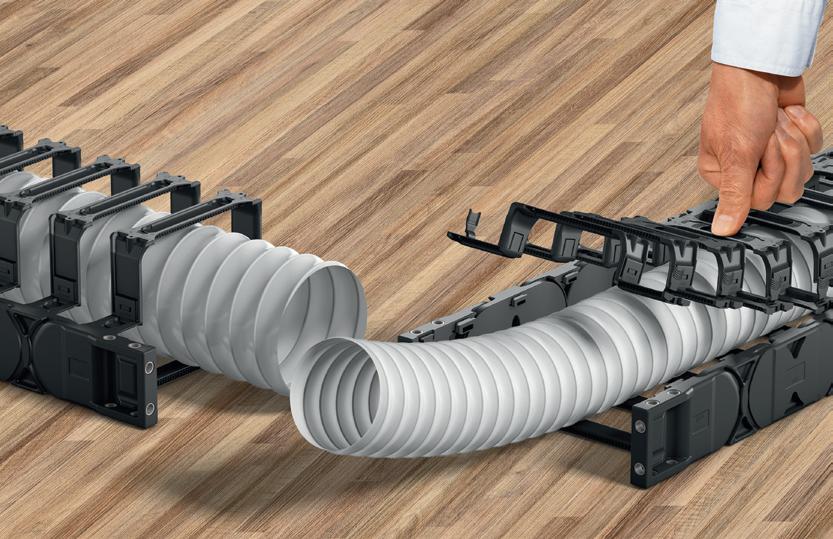
The extender crossbar can be mounted on the energy chain with an adapter system. For inserting hoses, eg, those used in the wood industry, igus relies on the E4Q crossbars. These can be opened and closed without any tools and are available in 15 different widths. This offers users a high level of variability when configuring their energy supply.
RUGGED PANEL PC
Avalue Technology Inc. has introduced the ARC-1738, a 17″ fanless multi-touch panel PC with rugged design, suitable for various industrial automation applications, human–machine interface applications and self-service kiosks. The multi-touch panel PC features a full-flat front panel design, with an Intel 11th Generation Tiger Lake U Core i5/i3 processor platform, and a maximum TDP of up to 15 W. The Intel 11th generation Tiger Lake U processor is a product designed for the non-embedded market and specifically for IoT-related applications.
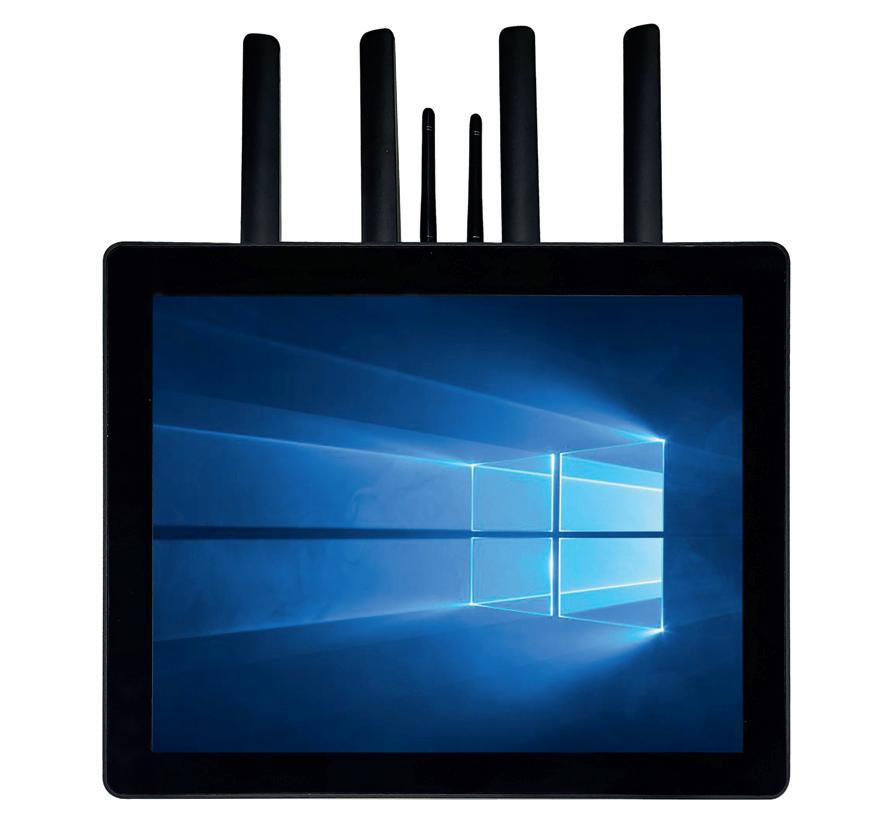
igus has created two different widths and heights of the adapters, to give customers the option of adapting the extender crossbar to the hose diameter. By using the extender crossbars, the interior space of the energy chain increases significantly. In addition to the hoses, other cables can also be accommodated and routed that way. With the product range of cable-friendly interior separation elements, the energy chain can be divided so that customers can lay out their cables and hoses as desired.
Treotham Automation Pty Ltd
www.treotham.com.au
EMC_ad_2019.pdf 1 10/05/2023 10:32:41 AM
The panel PC is designed with a fanless structure, which reduces operating noise and maintenance requirements. The front panel adopts a full-flat die-casting process and 7H hardness surface glass with a projected capacitive touch panel (PCAP) touch function, supporting 10 points multiple-touch even with rubber gloves, providing a smoother and more intuitive user experience. The back of the device is made of aluminium to provide durability and ease of maintenance.
The panel PC supports up to 64 GB 32 GB 3200 MHz DDR4 memory and provides a diverse I/O port with high flexibility for expansion, including 2 x Display Port, 4 x USB3.2 Gen2, and 3 x COM ports. It also provides optional 3 x COM/GPIO/USB. In addition, to meet the needs of the IoT applications, it also provides 1 x 2.5G LAN, 1 x Gigabit LAN, 2 x Antenna for Wi-Fi 6/BT (optional), 4 x Antenna for 5G (optional) for high-speed transmission providing faster speeds, lower latency, and higher device density. For data storage, it provides 1 x SATA III 2.5-inch storage space and 1 x M.2 Key-B, 1 x M.2 Key-E expansion slot, increasing the flexibility of operation for the panel PC in harsh environments.
26 JULY/AUGUST 2023 WWW.ELECTRONICSONLINE.NET.AU
Accredited testing and global product approvals since 1992
Bayswater
Avalue www.avalue.com.tw
MINIATURE PRESSURE CONTROLLERS

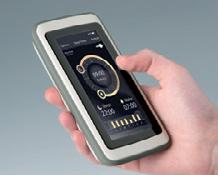
The Bronkhorst IQ+FLOW series of miniature mass flow and pressure meters and controllers is suitable for equipment manufacturers in the analytical, biotechnology and life science market. Due to the application of chip sensors and mini-valves, the footprint of single-channel instruments is only 20 x 40 mm. This is advantageous for manufacturers of desktop equipment, who are looking to optimise space efficiency.
The product line for miniature pressure controllers has been extended with pressure instruments with media-isolated pressure sensors. The sensor chip is protected by a stainless steel diaphragm and oil-filled compartment. With this option, the instruments can handle a wide variety of media, including thin gases such as hydrogen and helium. According to the requirements of the aforementioned markets, the instruments have low-outgassing and clean wetted parts.
The IQ+ FLOW series is available in three configurations: single-channel versions for either inline or topmount integration and multi-channel versions. Compact 2- or 3-channel instruments can be configured on customer specification to measure or control the mass flow and/or the upstream or downstream pressure in a system.

AMS Instrumentation & Calibration Pty Ltd

www.ams-ic.com.au


PORTABLE CABLE DRUM STAND
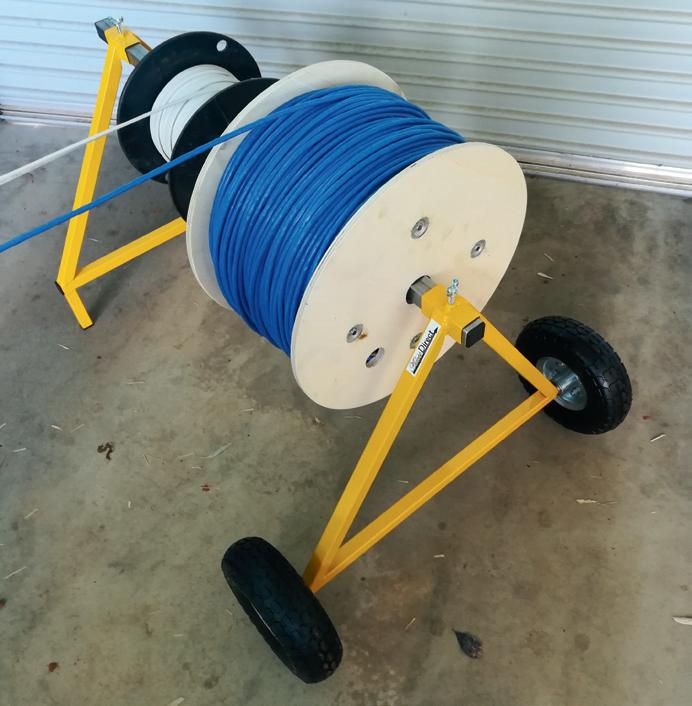
The Adept Direct Portable Cable Drum Stand provides a versatile means of transporting drums of heavy cable across building sites.
The cable stand enables reels of cable to be correctly positioned to allow cable to pay out smoothly from each drum, without tangling.
The bright yellow powder-coated frames can be dismantled off the axle for transport and the 6" pneumatic tyres can handle most construction site obstacles.
While the portable cable drum stand is mostly used for drums of cable, customers have advised they are also suitable for unrolling anything off a drum: chain, rope, hose, air lines and more.
Adept Direct www.adeptdirect.com.au
WWW.ELECTRONICSONLINE.NET.AU JULY/AUGUST 2023 27 ROLEC OKW Australia New Zealand Pty Ltd Unit 6/29 Coombes Drive, Penrith NSW 2750 ENCLOSURES AND TUNING KNOBS FOR TODAY‘S ELECTRONICS EQUIPMENT! www.okw.com.au Phone: +61 2 4722 3388 E-Mail: sales@rolec-okw.com.au
CPU MODULE
Backplane Systems Technology has launched the iBase ET880 COM Express CPU module, designed for embedded applications that require low power consumption and fanless operation. It features Intel Atom x6000 series processors and supports clock speeds of up to 3.2 GHz, for efficient performance.
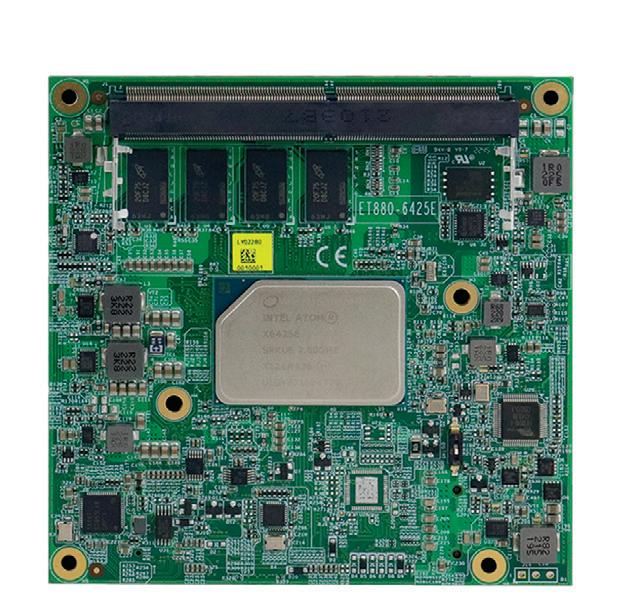
With onboard 8 GB DDR4 memory and an additional DDR4 SO-DIMM slot, the module provides RAM capacity of up to 24 GB. It offers a range of connectivity options, includ
ing a high-speed I226IT PCI-E 2.5 G LAN controller, multiple USB ports, SATA III interfaces, and UART ports. The module also supports three independent displays through the DisplayPort, DVI-D, LVDS, or eDP interfaces on the IBASE IP419 carrier board.
The module is built to withstand harsh industrial environments, with an operating temperature range of -40 to +85°C, to facilitate operation in challenging conditions. It is compatible with both Windows 10 and Linux operating systems, providing flexibility for various applications.
Manufactured with industrial-grade components and designed for long-term availability, the module is a durable solution for industrial and IoT applications. Its low power consumption and fanless design make it suitable for industries such as transportation, automation, and health care, where efficient computing is essential.
Backplane Systems Technology Pty Ltd
www.backplane.com.au
MICROPROCESSORS
STMicroelectronics has launched the second generation of its STM32 MPUs (microprocessors), coming with a new architecture built upon the same ecosystem and raising performance and security for applications at the industrial and IoT edge.

The STM32MP2 Series devices combine 64-bit cores with Edge AI acceleration, advanced multimedia features, graphics processing and digital connectivity. The microprocessors also integrate advanced security features in hardware.
The STM32MP25 is available with single or dual 64-bit Arm Cortex-A35 cores running at 1.5 GHz, complemented with a 400 MHz Cortex-M33 embedded core that handles real-time processing. A dedicated neural processing unit (NPU) adds up to 1.35 TOPS (tera-operations per second) of computing muscle for Edge AI acceleration in applications such as advanced machine vision and predictive maintenance. With support for 32-bit DDR4 and LPDDR4 memories, the STM32MP25 is designed to provide long-term support for cost-optimised designs.
Also featuring Gigabit time-sensitive networking (TSN) support and a two-port Gigabit Ethernet TSN switch, with PCIe, USB 3.0 and CAN-FD peripherals, the microprocessor product line provides intensive connectivity for real-time industrial applications, data concentrators and gateways, and communication equipment. Combined, the processing and networking capabilities enhance detection and feature recognition for security applications and industrial automation.
STMicroelectronics Pty Ltd
www.st.com
28 JULY/AUGUST 2023 WWW.ELECTRONICSONLINE.NET.AU Limited Electronics Hi-Q from Available sales@hiq.co.nz NZ 0800 800 293 www.hiq.co.nz We Stock 1000’s of Plastic Parts for Industry • Nylon Fasteners • Screws & Nuts • Washers & Spacers • Rivets & Clips • PCB Hardware • Caps & Plugs • Knobs & Handles • Hole Pugs & Bushes • LED Mounts & Light Pipes • Cable Ties & Mounts
-
A guide to implementing remote monitoring
Remote monitoring technology makes data collection possible from anywhere globally. This includes measuring radiation levels in and around nuclear facilities, temperatures in ultracold cryogenic storage or any process data from oil, petrochemical or gas refineries. Here, Gary Bradshaw, Director of Omniflex, describes best practice when implementing remote monitoring.
Remote monitoring enables people and companies to collect data from locations where conventional methods would be very costly, inefficient or even unworkable.
The priority for remote monitoring system design is understanding the needs of the customer and their business. Typically, the fundamental questions in each discovery session will be the same: What sort of data do you wish to collect? How many data points do you wish to measure? What are the locations of these data points? Where do you want to monitor this data from?
Once these questions are answered, a discussion about the right network type can begin. Traditionally, hardwired cables would be installed between the data points. However, the costs and disruption associated with new cable installation are significant: digging and construction of infrastructure, cable containment, risk assessments and method statements, and avoiding pre-installed external utilities pipelines can all inhibit progress.
For this reason, using existing cable networks is a viable cost-benefit solution. This is why Omniflex developed CONET, a technology that allows businesses to reuse existing two cores in any grade of copper cabling to create a new industrial local area network (LAN). Any spare cores in multi-core bundles or even unused telephone wiring can be repurposed, potentially saving money.
Although this can be beneficial, LANs do have their limitations. For distances longer than 10 km, other approaches are necessary. There are multiple wireless data collection options, each best suited to different circumstances, including satellite, radio and cellular GSM. The choice usually comes down to geographical factors.
It’s also important to consider the difference between licensed and unlicensed radio frequencies. Many facility managers will be deterred by exclusive transmission rights fees, opting instead for licence-free bands open to the public. While these come with more competition for bandwidth, managed wireless protocols can help make the best use of the effective radiated power available.
The next technology, GSM, offers global coverage, from any device, including your own smartphone or tablet, and is a cheap option to access your data securely from the cloud. Omniflex used GSM technology in a customer application in Victoria, Australia. Here, the government deployed a cathodic protection system to mitigate corrosion in a highway bridge. Close monitoring of the chloride-induced corrosion was made possible globally, meaning spending on site visits was greatly reduced and all its data reporting was collated to be accessed from a secure web browser.
Finally, there is satellite data transmission. Although satellite technology has been around for decades, it has now evolved, is being used more and could be seen as the future of remote monitoring. An astonishing 90% of the Earth’s surface doesn’t receive a mobile signal and within that space there are plenty of remote sites to be monitored. Deep desert solar panel farms and oil rigs in the middle of the sea are examples of where satellite signal communication feeds data back to a control centre from the most isolated parts of the planet.
Clearly, the diverse array of remote monitoring options will enable these technologies to shape the way industrial processes and logistics are conducted well into the future. Isolated or critically dangerous areas will be made usable, saving on man-hours and costs, and boosting efficiency for the businesses involved.

Omniflex (Australia) Pty Ltd
www.omniflex.com.au
WWW.ELECTRONICSONLINE.NET.AU JULY/AUGUST 2023 29
Stock.com/metamorworks
MOTHERBOARD
ICP Electronics Australia has introduced the iEi IMBAR680 ATX motherboard, designed to meet the needs of industrial applications that require massive data processing and high-performance computing. The motherboard is equipped with a 12th Gen Intel processor that comes with up to 16 cores and 24 threads, providing a performance boost for computer-intensive workloads.
The motherboard supports dual-channel DDR5 4400MHz memory, offering high data transmission quality. It also features seven PCIe slots, including three that are connected directly to the CPU, bypassing the bottleneck between the CPU and chipset and reducing latency. The latest PCI Express Gen5 technology provides higher bandwidth and future upgrade capability.
TOOLCHAIN AND SOFTWARE PACKAGE
STMicroelectronics has released a toolchain and accompanying software package for programming the intelligent sensor processing unit (ISPU) embedded in the latest-generation intelligent MEMS IMUs, ISM330IS and LSM6DSO16IS. The toolchain and software help employ the ISPU to handle motion-related workloads such as activity recognition and anomaly detection directly in the sensor. This permits reducing system power and latency, offloading the local microcontroller and specialising the behaviour of the sensor to the application.
Using the ISPU toolchain, developers can program the sensor’s intelligent processing unit using C programming. Users can choose to work from a command line interface (CLI) or an Eclipse-based environment like STM32CubeIDE, and to use a graphical user interface (GUI) such as AlgoBuilder and Unicleo.
The motherboard has four SATA 6 GB/s interfaces that enable fast data transfer, and the equipped Intel R680E chipset provides high-performance hardware RAID protection. Additionally, the motherboard has two M.2 M key sockets that support up to 32 Gbps data-transfer speeds, making them suitable for installing NVMe SSD for fast data access in rugged environments.
The motherboard supports triple independent displays with 4K resolution, making it suitable for applications that require high-image resolution and colour realism. It also comes with dual 2.5GbE LAN ports that provide highbandwidth and low-latency data transmission.
The high-performance ATX motherboard also features LGA1700 Intel 12th/13th Generation Core i9/i7/i5/i3, Pentium and Celeron processor (125 W), and supports DisplayPort 1.4a, HDMI & iDPM modules. The motherboard is also designed to support two M.2 M key for NVMe storage.
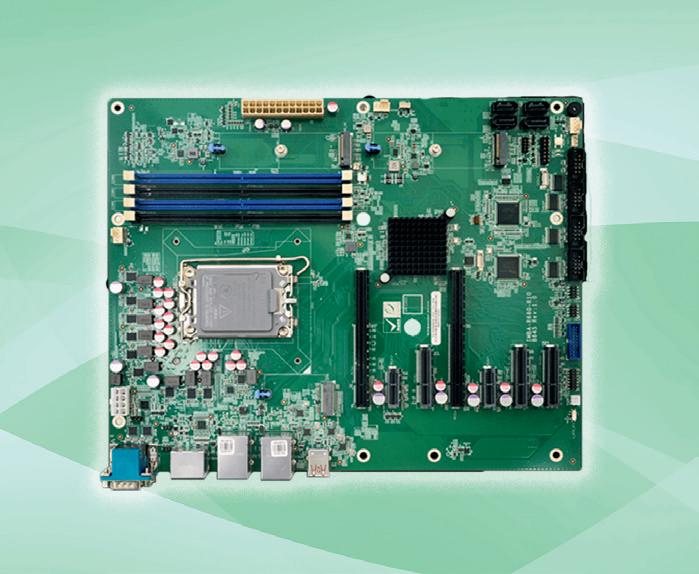
ICP Electronics Australia Pty Ltd
www.icp-australia.com.au
The X-CUBE-ISPU software package contains templates and example projects as well as ready-to-use libraries that help developers understand how to use and program the sensors’ ISPU and can be used as a starting point to implement custom algorithms. Pre-built files are also available, which lets users load the X-CUBE-ISPU examples directly into the sensor using one of the GUIs, with no coding required. In addition, a GitHub repository is available providing more examples, tutorials, and other development resources.
Using these resources helps make short work of developing applications such as personal electronics, including wearable devices for activity recognition and health monitoring, as well as industrial devices such as asset trackers, equipment-condition monitors, robots and machine controllers.

ST’s ISM330IS and LSM6DSO16IS inertial modules contain an always-on 3D accelerometer and 3D gyroscope with the embedded ISPU. They feature low power consumption, drawing 0.46 mA in low-power mode, and low noise at 70 µg/ √Hz in high-performance mode. Sensor hub functionality allows them to collect data from up to four additional external sensors. An embedded temperature sensor is also included, and each device is housed in a 2.5 x 3 x 0.83 mm plastic land grid array (LGA) package.
STMicroelectronics Pty Ltd www.st.com
30 JULY/AUGUST 2023 WWW.ELECTRONICSONLINE.NET.AU
COMPUTER MEMORY TECH
COULD POWER AI OF THE FUTURE
The researchers, led by the University of Cambridge, developed a device that processes data in a similar way as the synapses in the human brain. The devices are based on hafnium oxide, a material already used in the semiconductor industry, and tiny self-assembled barriers, which can be raised or lowered to allow electrons to pass.
This method of changing the electrical resistance in computer memory devices, and allowing information processing and memory to exist in the same place, could lead to the development of computer memory devices with far greater density, higher performance and lower energy consumption. The results are reported in the journal Science Advances
Our data-hungry world has led to a ballooning of energy demands, making it ever more difficult to reduce carbon emissions. Within the next few years, artificial intelligence, internet usage, algorithms and other data-driven technologies are expected to consume more than 30% of global electricity.
“To a large extent, this explosion in energy demands is due to shortcomings of current computer memory technologies,” said first author Dr Markus Hellenbrand, from Cambridge’s Department of Materials Science and Metallurgy. “In conventional computing, there’s memory on one side and processing on the other, and data is
shuffled back between the two, which takes both energy and time.”
One potential solution to the problem of inefficient computer memory is a new type of technology known as resistive switching memory. Conventional memory devices are capable of two states: one or zero. A functioning resistive switching memory device, however, would be capable of a continuous range of states — computer memory devices based on this principle would be capable of far greater density and speed.
“A typical USB stick based on continuous range would be able to hold between 10 and 100 times more information, for example,” Hellenbrand said.
Hellenbrand and his colleagues developed a prototype device based on hafnium oxide, an insulating material that is already used in the semiconductor industry. The issue with using this material for resistive switching memory applications is known as the uniformity problem. At the atomic level, hafnium oxide has no structure, with the hafnium and oxygen atoms randomly mixed, making it challenging to use for memory applications.
However, the researchers found that by adding barium to thin films of hafnium oxide, some unusual structures started to form, perpendicular to the hafnium oxide plane, in the composite material.
These vertical barium-rich ‘bridges’ are highly structured, and allow electrons to pass through, while the surrounding hafnium oxide remains unstructured. At the point where these bridges meet the device contacts, an energy barrier is created, which electrons can cross. The researchers are able to control the height of this barrier, which in turn changes the electrical resistance of the composite material.
“This allows multiple states to exist in the material, unlike conventional memory which has only two states,” Hellenbrand said.
Unlike other composite materials, which require expensive high-temperature manufacturing methods, these hafnium oxide composites self-assemble at low temperatures. The composite material showed high levels of performance and uniformity, making it highly promising for next-generation memory applications.
A patent on the technology has been filed by Cambridge Enterprise, the university’s commercialisation arm.
“What’s really exciting about these materials is they can work like a synapse in the brain: they can store and process information in the same place, like our brains can, making them highly promising for the rapidly growing AI and machine learning fields,” Hellenbrand said.
The researchers are now working with industry to carry out larger feasibility studies on the materials, in order to understand more clearly how the high-performance structures form. Since hafnium oxide is a material already used in the semiconductor industry, the researchers said it would not be difficult to integrate into existing manufacturing processes.

WWW.ELECTRONICSONLINE.NET.AU JULY/AUGUST 2023 31
iStock.com/KENGKAT
MATERIALS
ADVANCED
Researchers have developed a new design for computer memory that could both greatly improve performance and reduce the energy demands of internet and communications technologies, which are predicted to consume nearly a third of global electricity within the next 10 years.
PHOTOVOLTAIC MODULES —
THE PRINCIPLE OF PHOTOVOLTAIC CELL OPERATION
Nowadays, it is a common situation for household illumination systems or even electric cars to be supplied with solar energy provided by photovoltaic cells.
However, it does not mean that everybody, including PV system users, knows the principle of operation of such systems and recognises the processes transforming solar energy into electric power. In this article, most of these issues are precisely explained.
What is photovoltaics?

Photovoltaics is the technology of converting solar radiation into electric power through the use of photovoltaic panels and DC-to-AC converters to supply energy to consumers connected to a power network or to store energy in batteries. This is the simplest and most narrow definition, so it is worth adopting a slightly broader perspective and going back to the beginnings of this technology.
By definition, “photovoltaics” is a science interested in converting solar energy into electric power that has evolved into an important field of technical engineering that is now present in the majority of highly developed countries. In parallel,
numerous technologies related to obtaining energy from renewable energy sources have been developed. However, obtaining energy from the sun’s radiation is the most important and remains the leading method of providing ‘free-of-charge’ and infinite energy. Moreover, note that solar energy could completely replace fossil fuel-based energy sources, which would significantly reduce air pollution levels. However, there is one major drawback to it, namely the demand for a large surface area resulting from a PV panel size.
Photovoltaic panels — principle of operation
The process of converting solar energy into electric power taking place in the internal cell layers starts under the reflective layer, where two silicon plates are located, ie, the upper one acts as a negative conductor made of silicon with a phosphorus admixture. The lower plate acts as a positive conductor and is made of silicon with a boron admixture.
When a photon strikes a silicon atom, it knocks the electron out of its place and forces it to move. Since there are a lot of photons and such knocks, the electrons attempt to pair up with the vacant places left by the previously knocked out neighbouring electrons, and, as a result, they begin to circulate between the plates and in this way generate electric charge movement. However, the electric field present at the contact point of the positive and negative layers separates the electron-vacant space pairs, which results in arranging the electron movement and generating voltage.
This process is easy to connect with a local power grid; however, the system must be provided with a frequency converter to transform DC into AC. As mentioned above, silicon is used as a basic material of PV cells, as the photon energy is equivalent to the energy required to move one electron in a silicon atom. Despite the fact that pure silicon is not a perfect conductor, the best solution is obtained when it is mixed with
32 JULY/AUGUST 2023 WWW.ELECTRONICSONLINE.NET.AU
phosphorus and boron. Manufacturers also offer panels made from other materials, eg, cadmium combined with tellurium, copper, indium, gallium and selenium. However, regardless of the elements used, photovoltaic panels always consist of photovoltaic cells, which are their smallest components and can be connected in series or in parallel.
Main PV cell types
Currently, there are two basic photovoltaic cell types available on the market. These are:
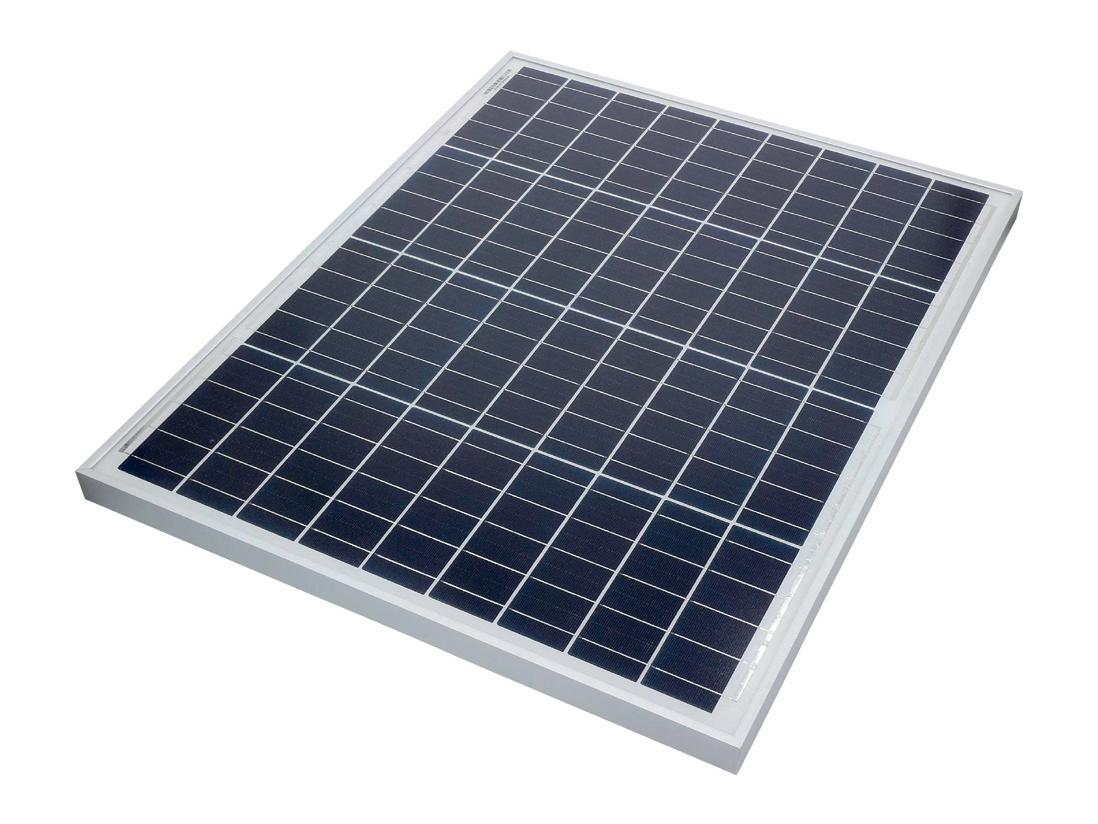

• silicon-based cells (panels) (monocrystalline, polycrystalline and amorphous)
— market share is definitely dominant
• cells (panels) made of other elements (CdTe and CIGS).
Silicon-based panels are most common due to their simple design and high efficiency, ie, 17–23% for monocrystalline panels and approx. 14–18% for polycrystalline panels. Monocrystalline panels are characterised by the highest efficiency, but they are also most expensive. They are made of circular
silicon plates that are trimmed to a square shape with chamfered corners. Polycrystalline panels (efficiency: 14–18%) are made from multicrystalline silicon, in the form of a compressed block with a non-uniform surface, cut into thin square bluish plates. Matt amorphous panels are made of very cheap non-crystallised silicon, which results in their lower efficiency (8–10%), but also the lowest price.
The other group of PV cells includes products made from elements other than silicon. This group includes CdTe and CIGS cells with a negligible photovoltaic layer thickness and lower efficiency as compared to silicon-based panels.
CdTe panels comprise a single cell, with a thickness of a few microns, made of cadmium telluride, and their efficiency is slightly higher (10–12%) in comparison with CdTe panels (12–14%), whose design is based on four elements, ie, copper, indium, gallium and selenium.
Factors influencing PV panel efficiency
Although PV cell manufacturers usually do not disclose any proprietary manufacturing process details for reasons of commercial confidentiality, it can be assumed that the quality of these cells is determined by the cutting conditions of the crystals and quartz blocks, as well as the monocrystalline crystal culture conditions. Other factors affecting quality include conditions in which the panels are polished, as well as cleanliness, ventilation and temperature of the rooms where the key processes are run. However, it is easiest to compare the efficiency and performance of identical panels supplied by different manufacturers, as they largely depend on the manufacturing process quality and materials used in production. To obtain
objective results, tests must be conducted under identical real-world conditions which are constantly influenced by diverse factors common to all the panels (cells) affected by a test.
However, regardless of whether a comparative test is conducted or real-life PV system operation is analysed, there is always the same group of factors influencing the end results:
• roof surface area
• roof inclination in relation to sunlight
• season of the year, ie, sun radiation intensity
• sunlight absorption time in hours
• operating temperature of the cells.
The latter is quite problematic, as the efficiency of cells decreases when they reach their temperature limit, which happens during very hot and sunny days. This is therefore a paradox situation, as these are the days with the most solar radiation intensity. The other factors mentioned above, including the lack of shade in panel operating locations, also directly affect the amount of electric power obtained. Seasons of the year are also important, as in spring and summer the number of sunny days is greater, and the intensity of the sunlight is at its highest, which, together with the right angle of cell inclination, gives much better results.
PV cells in the TME product catalogue
The range of PV cells offered by TME includes products provided by three manufacturers: Panasonic, Green Power and Cellevia Power. The products offered by the first one are mini-amorphous cells for internal use (clocks, minor electronic equipment) and the range provided by the other two manufacturers includes larger mono- and polycrystalline cells for outdoor applications.
Transfer Multisort Elektronik www.tme.com/au/en/
WWW.ELECTRONICSONLINE.NET.AU JULY/AUGUST 2023 33
SOLAR ENERGY iStock.com/andreswd
Cell with polycrystalline silicon offered by Cellevia Power. Image credit: Transfer Multisort Elektronik
NEW SOURCE-GATED TRANSISTORS TO CREATE FLEXIBLE DISPLAYS
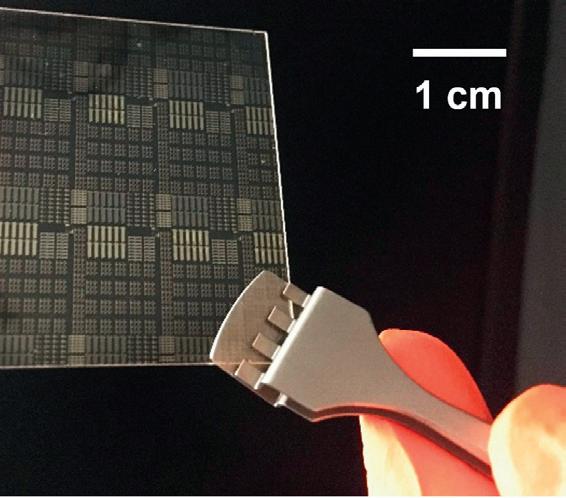
Researchers from the University of Surrey have developed a device that could help facilitate the innovation of low-cost, flexible displays that use little energy.
The device solves a problem that effects source-gated transistors (SGT), a special type of transistor that combines two components of electronics — a thin-film transistor and a carefully engineered metal-semiconductor contact. Dr Radu Sporea, project lead from the University of Surrey, said the researchers used a semiconductor material called IGZO (indium-gallium-zinc-oxide) to create the next generation of source-gated transistors. Through nanoscale contact engineering, the researchers obtained transistors that are more stable with temperature than previous attempts.
“Device simulations allowed us to understand this effect. This new design adds temperature stability to SGTs and retains usual benefits like using low power, producing high signal amplification, and being more reliable under different conditions. While source-gated transistors are not mainstream because of a handful of performance limitations, we are steadily chipping away at their shortcomings,” Sporea said.
SGTs have many advantages over traditional transistors, including using less power and being more stable. They are also suitable for large-area electronics and are promising candidates to be used in various fields such as medicine, engineering and computing. Salman Alfarisyi performed the simulations at the University of Surrey, and said that SGTs could be the building block to new power-efficient flexible electronics technology that helps to meet energy needs without damaging the health of the planet.
“For example, their sensing and signal amplification ability makes it easy to recommend them as key elements for medical devices that interface with our entire body, allowing us to better understand human health,” Alfarisyi said.
The study has been published by IEEE Transactions on Electron Devices
Westwick-Farrow Media A.B.N. 22 152 305 336 www.wfmedia.com.au
Head Office
Unit 7, 6-8 Byfield Street, North Ryde Locked Bag 2226, North Ryde BC NSW 1670 Ph: +61 2 9168 2500
Senior Editor Lauren Davis Editor Ashna Mehta wnie@wfmedia.com.au
Acting Publishing Director/MD Janice Williams
Art Director/Production Manager
Julie Wright
Art/Production
Linda Klobusiak, Marija Tutkovska
Circulation Dianna Alberry circulation@wfmedia.com.au
Copy Control Mitchie Mullins copy@wfmedia.com.au
Advertising Sales
Account Manager
Sandra Romanin – 0414 558 464 sromanin@wfmedia.com.au
Asia Tim Thompson - 0421 623 958 tthompson@wfmedia.com.au
If you have any queries regarding our privacy policy please email privacy@westwick-farrow.com.au
Printed and bound by Dynamite Printing
Print Post Approved PP100007394
ISSN No. 0728-3873
All material published in this magazine is published in good faith and every care is taken to accurately relay information provided to us. Readers are advised by the publishers to ensure that all necessary safety devices and precautions are installed and safe working procedures adopted before the use of any equipment found or purchased through the information we provide. Further, all performance criteria was provided by the representative company concerned and any dispute should be referred to them. Information indicating that products are made in Australia or New Zealand is supplied by the source company. Westwick-Farrow Pty Ltd does not quantify the amount of local content or the accuracy of the statement made by the source.
34 JULY/AUGUST 2023 WWW.ELECTRONICSONLINE.NET.AU FLEXIBLE ELECTRONICS
Image credit: University of Surrey
iStock.com/Foryou13








www.WFMedia.com.au/subscribe FREE to industry and business professionals The magazine you are reading is just one of 11 published by Westwick-Farrow Media. To receive your free subscription (magazine and eNewsletter), visit the link below.