PROTECTING THE GRID WHY ELECTROMECHANICAL SYSTEMS MATTER FOR THE ENERGY TRANSITION
MANAGING SUPPLY CHAIN RISK
MEETING SWITCHBOARD DEMAND IN SOUTH AUSTRALIA
Shop Safely & Conveniently - Anytime, Anywhere
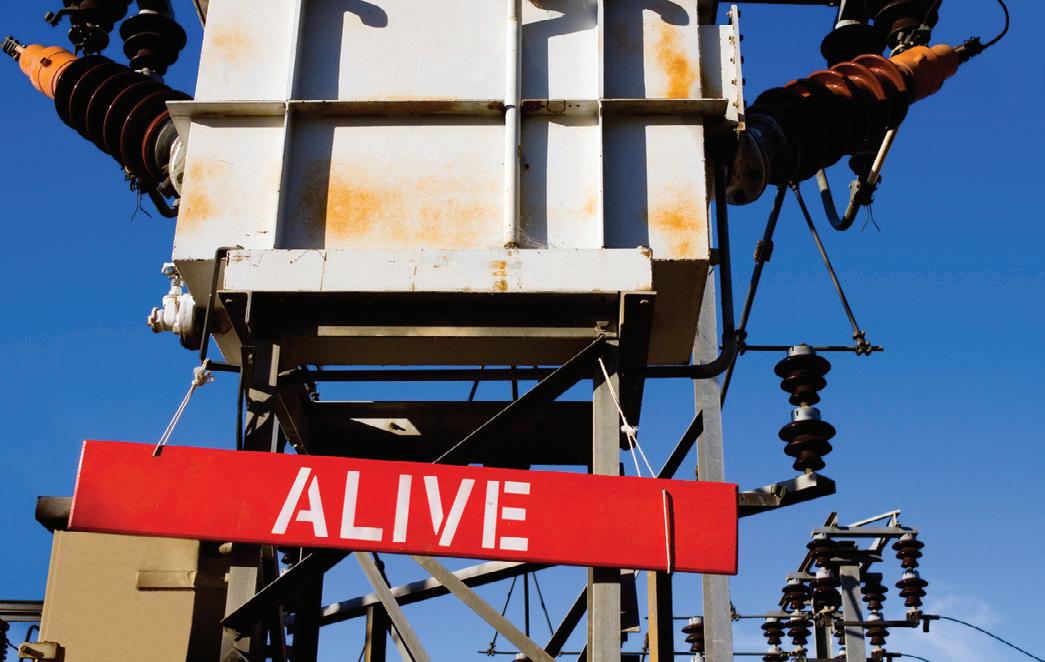
How can we protect the grid and ensure it remains resilient in the face of energy transition, climate change, workforce shortages and disruptive new technologies? These are some of the questions addressed throughout ECD’s June edition, which has a running theme of future-proofing and risk-mitigation.
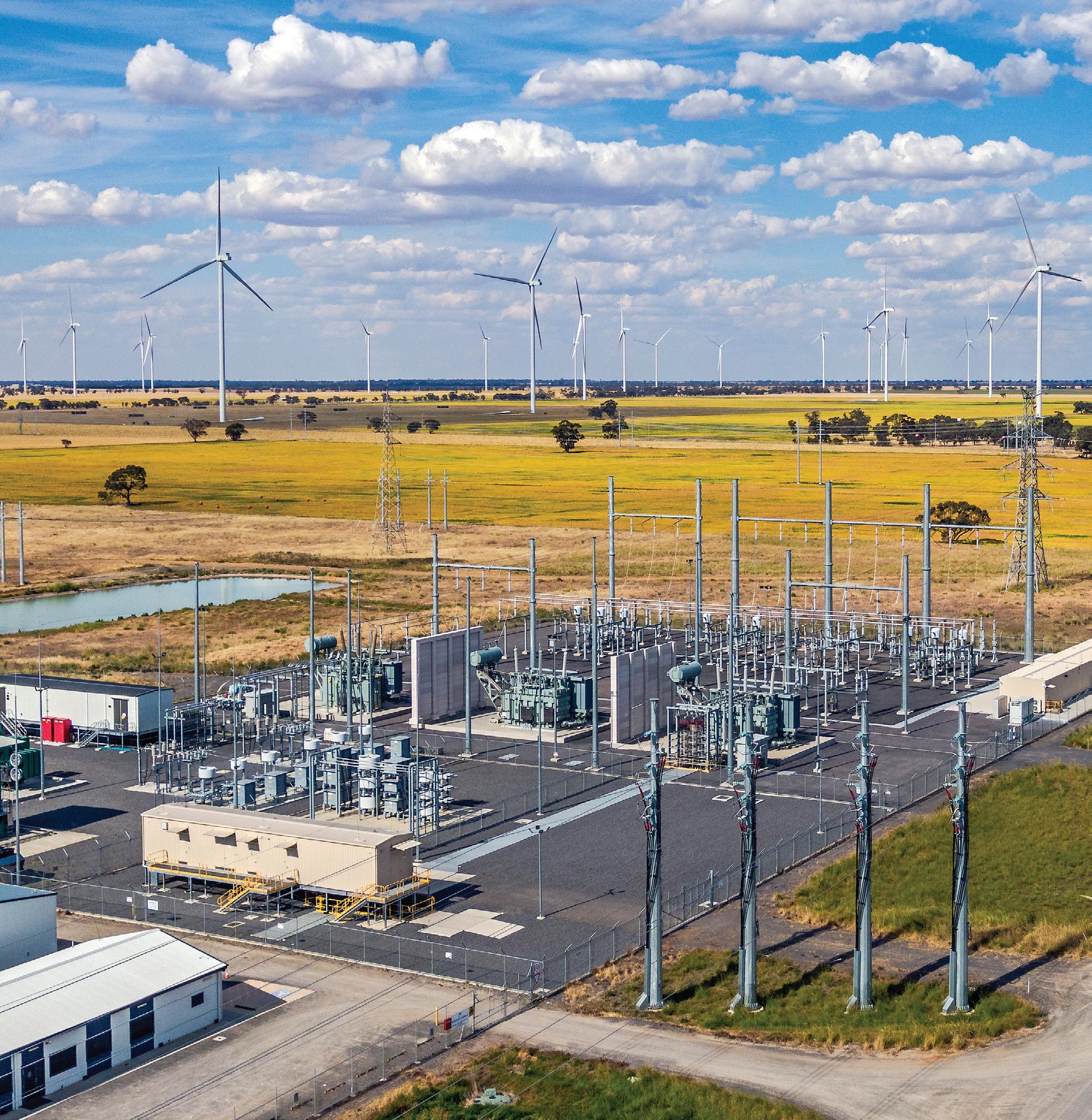
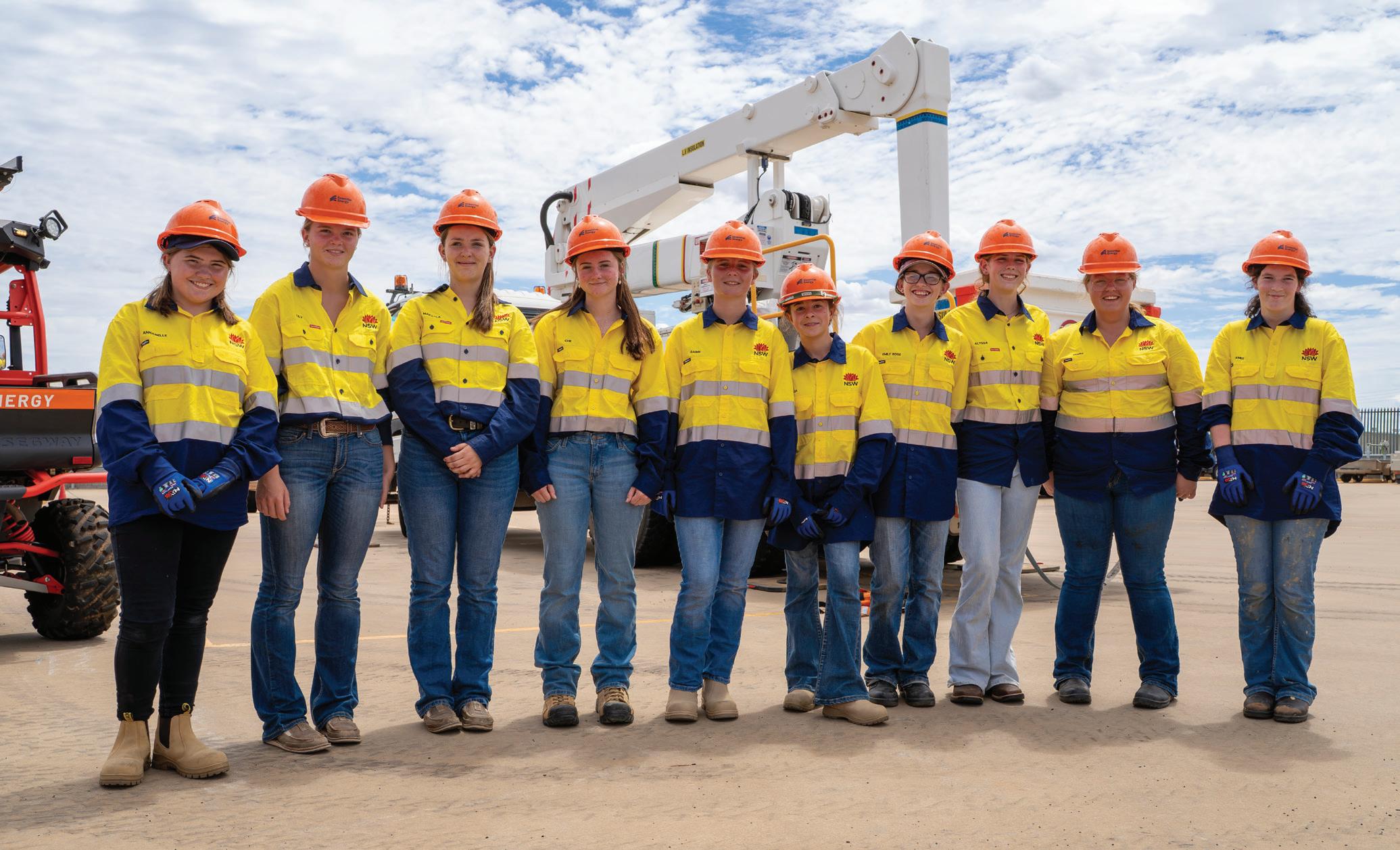
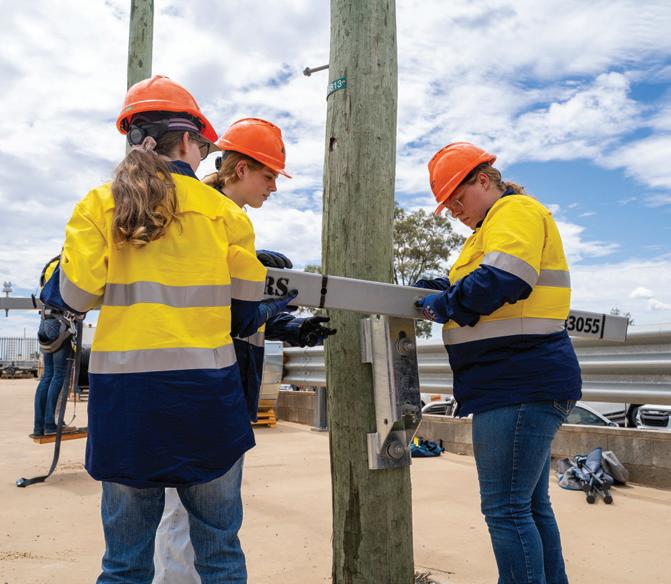
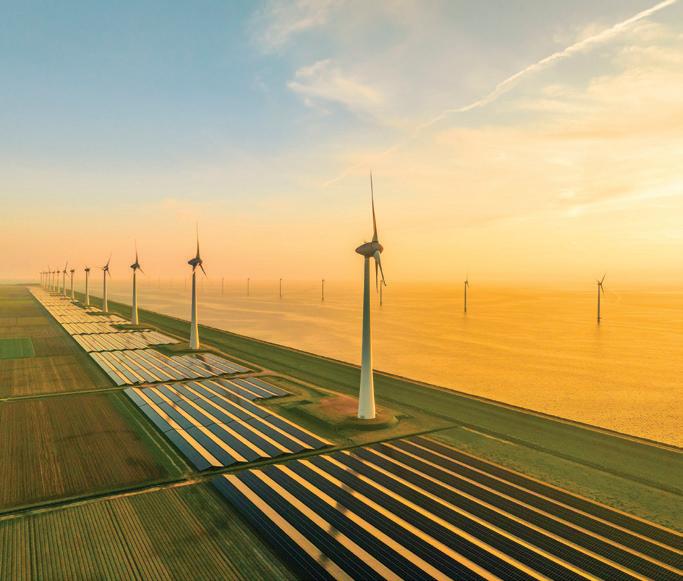
In this issue’s feature, Chris Page from Sulzer draws our attention to a fundamental part of energy infrastructure: electromechanical systems. There’s a pressing need to maintain these systems, not only in aging coal plants, but also in renewable infrastructure such as wind turbines. Page’s article is one of a number of practically focused pieces in this issue, including Adam Amato’s page 9 analysis of supply chain vulnerability for ambitious electrical and data projects, a profile of an expanding Australian switchboard manufacturer (page 17), and the snapshot on page 29 of Endeavour Energy’s regional training initiative for future female sparkies.
On a more speculative level (though backed by strong industry consultation), a fascinating new report from Monash University has explored how large-scale tech trends, such as AI, automation and electrification, might transform everyday life in Australia (page 14). Crucially, this includes the risks posed to these energy-intensive systems by climate change, and the resulting impact to the grid.
No discussion of future tech, energy strain and climate change is complete without mention of data centres, and we’ve got you covered in this issue. On page 12, Schneider Electric’s Farokh Ghadially makes the case for sustainable future data centres that contribute to the grid rather than draining it, while the article on page 22 calls for more strategic environmental monitoring as a vital part of data centre operation.
Finally, for an optimistic story, turn to page 21 to learn about innovative Australian-developed HVAC that has helped a regional Victorian hospital to maintain pandemic-level air quality during bushfire season — while at the same time using less energy than a conventional system.
WHY ELECTROMECHANICAL SYSTEMS MATTER IN AUSTRALIA’S ENERGY TRANSITION
Chris Page, Head of Services, Australia, Sulzer
Australia’s energy transition depends as much on reliability as on ambition.
Coal and gas plants are being phased out, yet they remain the backbone of supply, even as renewable energy generation accelerates. The challenge is that many of these stations are well past their intended lifespan while reliability concerns have intensified.
Between October 2024 and March 2025, coal-fired power stations across the National Electricity Market recorded 128 unplanned breakdowns, according to Reliability Watch. On average, about 5.1 GW of coal capacity, or roughly one-fifth of average demand, was
AS AUSTRALIA'S RENEWABLE PORTFOLIO GROWS, THE SAME ELECTROMECHANICAL CHALLENGES ARE RESURFACING IN NEW FORMS.
offline across New South Wales, Queensland and Victoria, with several units out of service for more than 1000 hours. These failures contributed to price spikes and renewed questions about how long aging assets can sustain supply security.
The Australian Energy Market Operator (AEMO) has highlighted rising reliability risks as aging coal-fired units retire and outages increase, particularly if new capacity and transmission are delayed. It also notes that extreme-weather demand peaks are becoming more challenging to manage under these conditions. Maintaining reliability through this decade, therefore, is not only a matter of adding new capacity. It also depends on how well existing plant assets are managed.
Electromechanical systems at the core of power reliability
Here’s the key: inside every power station lies an intricate network of electromechanical systems (EMS) that form the functional backbone of thermal power plants. Generators convert mechanical energy into the electricity feeding the grid; motors drive the pumps, fans and compressors that keep plants running efficiently; and gearboxes ensure reliable transfer of power across equipment. Many of these were designed for about 30 years of service, but some have now exceeded 50. When any of these fail, the impact can cascade rapidly across the entire plant, and ultimately the grid.
As assets age, problems such as vibration issues, thermal stress and insulation erosion could surface, especially when supported by outdated asset tracking or limited diagnostic tools. If left unaddressed, these issues could derail overall system reliability and trigger a series of failures across interconnected units.
Fast action is required — and not just in coal plants. As Australia’s renewable portfolio grows, the same electromechanical challenges are resurfacing in new forms. Whether in a thermal plant or a wind farm, EMS assets are central to every megawatt delivered. And just as aging coal units struggle with worn generators and outdated diagnostics, renewable fleets are now facing their own challenges as wind turbines clock up decades in service.
As Australia scales up wind power, it’s important to consider specialised servicing of wind turbine generators, pitch drive motors, yaw motors and gearboxes. Fleet operators will require conditionbased maintenance, coil rewinds and predictive analytics to maximise uptime and performance. Inconsistent servicing of these components has already led to lost megawatt-hours, unstable output and failures, especially with older turbine models that have been operating for over two decades.
Preventive maintenance, guided by asset health diagnostics and lifecycle planning, or interventions, is also essential to reduce failure and to safeguard uptime, revenue and worker safety.
For example, Sulzer supported a major Australian wind generator facing a series of failures with innovative repair diagnostics and solutions. Our local team carried out full refurbishment and dynamic balancing for a 3 MW wind generator unit, eliminating overseas lead times for spare parts and ensuring the unit returned to service quickly. The intervention not only avoided extended downtime, but showcased how timely, in-country diagnostics and engineered repairs are critical for aging assets across both traditional thermal plants and newer renewable fleets.
Addressing EMS reliability also supports decarbonisation. Each avoided outage reduces the need for partial load operations and increased reliance on aging coal units, both of which raise emissions intensity. Proactive maintenance and targeted upgrades ensure that thermal plants can operate closer to optimal efficiency, while enabling wind assets to deliver.
Opportunities for the industry
The International Energy Agency (IEA) notes that motor-driven systems in industrial and infrastructure settings consume about 53% of global electricity, yet their energy demand could be reduced by 20–30% through modernisation and optimisation. That potential translates directly to the auxiliary systems of thermal and renewable power plants, where efficient drives and modern controls reduce internal losses and strengthen reliability.
Meanwhile, according to the IEA Energy Efficiency 2024 report, while global energyefficiency improvements are slowing to just 1% this year, EMS represents one of the few areas where gains of 20–30% remain achievable. In other words, the reliability benefits from looking under the hood of existing assets are still enormous.
Energy asset owners, operators and service providers have a clear opportunity to address these hidden risks, with proactive focus and investment in EMS resilience. This includes the following actions:
Embed asset management principles
Routine condition assessments, preventive and scheduled maintenance, and predictive diagnostics, including particle discharge testing to assess insulation health for highvoltage motors and generators, can help flush out potential risks and prompt fixes before issues surface.
Audit and prioritise critical EMS components
Motor and generator audits help target refurbishment or upgrades for maximum impact before failures occur. For example, comprehensive generator overhaul programs across Asia–Pacific coal and industrial facilities have demonstrated how targeted maintenance can rapidly return high-voltage units to service. In several recent projects, coordinated interventions restored critical generation assets within tight outage windows of just over two weeks, while proactive inspection and refurbishment strategies identified early wear patterns and extended operational life by well over a decade.
Track motor/generator health KPIs to inform maintenance decisions
Incorporating key indicators into reliability reporting helps maintenance teams make evidence-based decisions. In a recent Sulzer case study, an oil and gas facility reduced motor downtime from seven days to just 24 hours, using predictive fault analysis.
Adopt fast-turnaround repair and coil replacement services
Preventive maintenance programs, supported by smart diagnostics, in-house rewind capabilities and component stockpiles can minimise downtime and extend asset life.
Close the skills gap
Supplement internal capabilities in highvoltage rotating equipment by working with trusted and specialised service providers or upskilling technicians for upgrades and resolving faults efficiently, particularly in critical regions with older infrastructure and high EMS dependency.
Collectively, these actions can reinforce grid resilience and reliability while ensuring the mechanical systems that power Australia’s energy backbone are not left behind.
AEMC ACTS TO SUPPORT METERING COORDINATORS
The Australian Energy Market Commission (AEMC) has published a new draft rule that’s intended to make work conditions less challenging for metering coordinators (MCs).
The action comes in response to rule change requests from Yurika, PLUS ES, the Australian Energy Market Operator (AEMO) and Intellihub. These organisations are asking the AEMC to make it easier for MCs to comply with:
• testing and inspecting obligations under the National Electricity Rules (NER); and
• repairing metering installation malfunctions within timeframes specified in the NER and AEMO’s Malfunction Exemption Procedure.
The draft rule recognises that MCs can find it difficult to meet their obligations to test and inspect metering installations and repair malfunctions within the NER timeframes in certain circumstances that are beyond their control. This specifically applies to circumstances where MCs require support from retailers and large customers to carry out their work and/or there are site issues, including a lack of site access and defects at metering installations.
The draft rule also recognises that the current process for MCs to obtain test certificates for high-voltage (HV) voltage and current transformers (VTs and CTs) is inefficient and costly.
To help resolve these challenges and improve compliance, the draft rule would amend the NER to:
• Introduce an obligation on the person who appoints an MC (generally, retailers or large customers) to support MCs in meeting their meter maintenance obligations.
• Expand the exemption framework for meter malfunctions and introduce an exemption framework for testing and inspections to allow MCs greater flexibility to manage situations where a metering installation is not accessible, safe or ready.
• Introduce an obligation for previous MCs to share the most recent test certificate, where available, with the new MC at a metering installation.
As a whole, the draft rule aims to enhance the efficiency of meter maintenance arrangements, while improving the accuracy of energy data across the NEM.
ENDEAVOUR ENERGY DEPLOYS DRONES BEFORE BUSHFIRE SEASON
Endeavour Energy is preparing for the next Australian summer by deploying drones to inspect more than 160,000 poles in bushfire-prone areas.
During this annual inspection, drones equipped with high-definition cameras are flown directly above powerlines in order to identify equipment in need of repair, making sure the network is prepared in the event of bushfires.
“Endeavour Energy switched from helicopter to drone inspections in 2024, with the shift leading to greater efficiency, speed and precision, while also significantly reducing any impact on customers and the environment,” said Steve Lette, Head of Digital and Insights at Endeavour Energy.
Lette said the technology allowed the utility to conduct inspections more effectively by reducing noise and disruption for local communities, enabling faster and more accurate assessment of powerlines, poles and other assets, and improving visibility of hard-to-reach equipment in bushfire-prone areas.
“The use of drones has also enabled more precise, risk-based targeting of poles in high-risk locations, further reducing bushfire risk,” Lette added.
“These aerial patrols are one of the most visible parts of our year-round bushfire preparedness program — identifying potential risks early so we can carry out maintenance before summer peaks.”
During an inspection, the bright orange drones fly directly along powerlines, accompanied by an Endeavour Energy pilot on the ground.
Drones will be flying in bushfire-prone areas within the Endeavour Energy region over the next six months.
One of Endeavour Energy’s bright orange drones.
SCHNEIDER ELECTRIC LAUNCHES ELECTRICAL TRAINING ROADSHOW
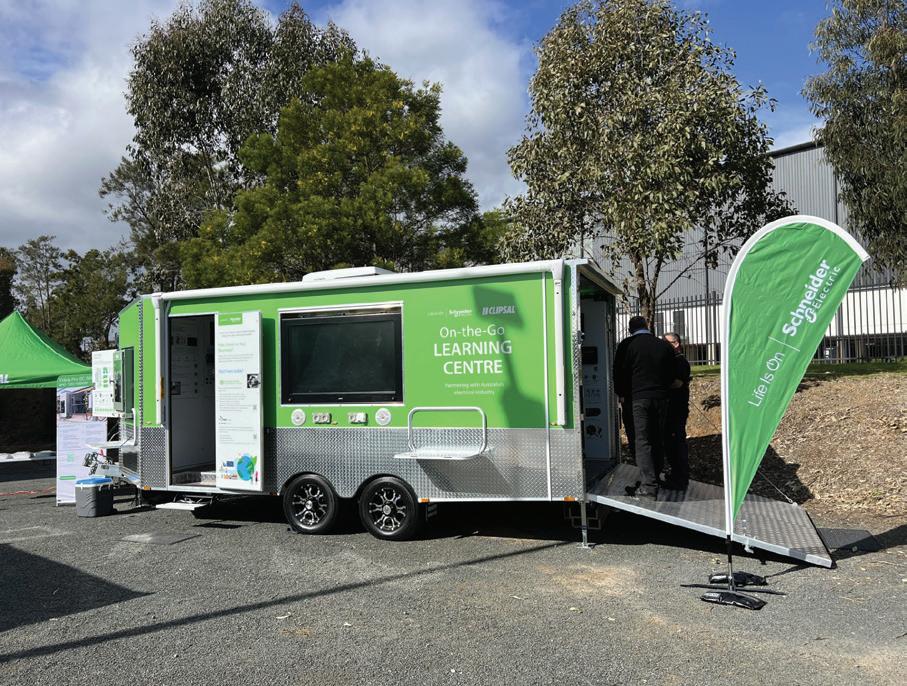
Schneider Electric and Clipsal by Schneider Electric have launched a national roadshow to bring hands-on training and the latest electrical innovations directly to contractors and electricians in 2026.
The mobile training initiative, a revival of Schneider’s On the Go Learning Centre, will be visiting more than 80 locations across Australia, including metro and regional areas. The intention is to offer a flexible, drop-in experience that brings training, product demonstrations and technical expertise directly to where electricians work.
Inside the mobile centre, attendees can explore innovations across electrification, automation and digital solutions, including EV charging, digital switchboards, smart home technologies and industrial equipment.
Chris Kerr, Vice President and CEO of Clipsal by Schneider Electric, said the initiative reflects the changing needs of the electrical industry as it navigates new technologies and rising customer expectations.
“The pace of change across the electrical industry is accelerating, driven by electrification, digitisation and new energy demands. For contractors and electricians, staying current is essential to staying competitive,” Kerr said.
“The On the Go Learning Centre makes that access to knowledge practical and immediate. We’re bringing the latest technologies, tools and expertise directly to where people work, so they can build skills, improve efficiency and deliver better outcomes for their customers.”
Attendees will be able to engage directly with technical specialists, to learn how new technologies can be applied across residential, commercial and industrial environments. To find out more or to register, visit: www.clipsal.com/on-the-go.
COULD QUANTUM TIMING SUPPORT A MORE RESILIENT GRID?
Together with Swinburne University of Technology, Siemens is conducting research into whether quantum-enhanced timing can help future-proof the energy grid and increase grid stability.
At present, grid functions rely on satellite-based timing signals, including global navigation satellite systems (GNSS), which can be vulnerable to disruption, interference or cyberthreats. At the same time, the shift towards renewables, necessitating distributed energy resources and inverterdominated networks, is leading to a more decentralised grid.
For this complex grid of the future, precise timing will be critical for system protection, monitoring and continuous power supply.
The research will examine how quantum-enabled timing technologies could provide a more resilient approach for future grid architectures and a reliable alternative to current satellitebased timing technologies.
The project will deploy QuantX Labs’ advanced quantum clock and quantum-secured time transfer capabilities together with Siemens’ PSS E technology and the Siemens Swinburne Energy Transition Hub — a real-time digital twin of Australia’s energy system.
“The research sits at the intersection of next-generation quantum technologies and future energy systems,” said Jose Moreira, head of Grid Software for Siemens in the region.
“It explores how ultra-precise timing can shape the future grid. By combining Siemens’ leadership in grid simulation with Swinburne’s energy industry research capability, we are helping the industry address today’s challenges while preparing for the next generation of energy networks.”
The Siemens Swinburne Energy Transition Hub, launched in 2023, is a future energy grid laboratory open to students, academia and industry. It uses some of Siemens’ most advanced digital technology to address Australia’s renewable energy transition challenges.
“This research is exploring an area that is still largely uncharted globally,” said Professor Mehdi Seyedmahmoudian, Director of the Siemens–Swinburne Energy Transition (SSET) Hub. “As power systems become more distributed, dynamic and complex, precise and resilient timing will play an increasingly important role in maintaining stability.
“Through our collaboration with Siemens, we are investigating how emerging quantum technologies can support nextgeneration energy networks, while also demonstrating how the SSET Hub translates ideas into real-world impact.”
Professor Allison Kealy, another expert from Swinburne’s team of researchers, added, “Advancements in quantum technologies will bring greater confidence in precision, timing and trust in critical infrastructure, including energy systems.”
MANAGING SUPPLY CHAIN RISK IN ELECTRICAL AND DATA PROJECTS
Adam Amato, Senior Account Executive at Shippit
AI is driving the largest infrastructure build-outs in decades. But behind the US$57 billion data centre construction industry — which analysts expect to almost double by 20301 — there’s a vulnerability that can derail entire projects: supply chain reliability.
As demand surges, these facilities must be built, commissioned and maintained faster than ever. Electrical switchgear, cabling, network hardware, plant equipment and other specialist components must arrive at the right place, at the right time; and often across complex multi-site projects.
When that supply chain falters, the impact ripples through schedules, labour utilisation and project costs. For the supply chain operators responsible for moving these materials, improving speed, reliability and visibility across their delivery fleets is critical in keeping projects on track.
When supply delays halt progress
Electrical and data infrastructure projects operate on tightly coordinated schedules. Initial construction, electrical installation, network deployment and commissioning phases are all interdependent, meaning a single delayed component can stall multiple teams.
A delayed transformer or switchboard doesn’t simply delay installation by a day or two. It can leave contractors idle, disrupt sequencing across subcontractors, and delay testing and commissioning milestones. The associated costs quickly blow out.
In large infrastructure builds, when delivery schedules slip or contractors have no visibility on their materials, the effect compounds. For supply chain operators, delivery is no longer just a transport task, it’s an operational input
that directly affects timelines, budgets and overall project performance.
For distributors managing their own delivery fleets, this means logistics decisions increasingly influence whether projects stay on schedule or fall behind. And their ability to do so directly affects whether they’re retained for future projects.
Speed, visibility and coordination reduce costly downtime
The biggest drivers of disruption are the lack of speed and real-time visibility across the delivery process. Contractors might know when materials are dispatched but have limited insight into their location, delivery timing or potential delays thereafter.
This uncertainty creates friction. Site managers cannot confidently schedule
TODAY'S PROJECTS REQUIRE SUPPLY CHAINS THAT OPERATE AS PART OF THE PROJECT, NOT ADJACENT TO IT.
installation crews if they cannot trust delivery timelines. Improving delivery visibility helps supply chain operators become active partners in project delivery rather than passive logistics providers.
Wholesalers such as Mitre 10, which supply a wide range of electrical materials, construction supplies and site equipment, increasingly recognise the importance of this coordination. The company’s ‘Truck Tracker’ application provides real-time tracking, proactive delay notifications and coordinated delivery scheduling that support the completion of projects on time and budget.
As Julian Yule, Digital IT Program Delivery Manager at Metcash — which owns Mitre 10 — explains: “If a truck carrying materials arrives late or incomplete, trades can’t start work. That creates a cost for the contractor. With dynamic route planning and live tracking, we can keep customers informed with accurate ETAs so they know exactly when materials will arrive.”
In the tightly scheduled world of electrical and communications projects, speed is just as critical as visibility. When deliveries are slow, crews can be left waiting onsite, driving labour inefficiencies and delaying downstream work. For supply chain operators, moving materials quickly from warehouse or store to site is a key part of keeping projects on schedule.
Supply chains must move from reactive to proactive
For many years, construction supply chains operated on a relatively simple model. Receive an order, dispatch materials and deliver them to site. But the scale and complexity of modern infrastructure projects — and the expectations of those end recipients — means that model is no longer enough.
Today’s projects require supply chains that operate as part of the project, not adjacent to it. That means closer coordination between contractors and wholesalers so that deliveries align with installation schedules, labour availability and site constraints.
Instead of reacting to orders, supply chain operators increasingly need to anticipate project needs and provide contractors with accurate delivery windows they can plan around. This shift requires stronger delivery visibility, faster dispatch capability and systems that allow project teams to track and coordinate incoming materials.
Adaptability is key, too. If a non-urgent order scheduled as the final drop of the day is suddenly critical, operators must be able to reprioritise in seconds. We built NowGo by Shippit specifically for this — giving supply chain teams the ability to dynamically reroute vehicles, rebalance workloads and keep contractors informed with accurate ETAs.
As projects become larger and more technically complex, the supply chains that succeed will be those that integrate most closely with how projects are actually delivered.
Building the supply chains behind digital infrastructure
The sector is entering a new phase of growth as AI accelerates the construction of data centres and digital infrastructure. But this growth also exposes a key vulnerability in the complexity of modern supply chains.
Electrical contractors, engineers and infrastructure developers increasingly depend on coordinated logistics networks capable of delivering thousands of components across highly synchronised project timelines.
For the supply chain operators supporting these projects, the opportunity is significant. By improving delivery visibility, strengthening coordination with contractors and embracing real-time logistics technology, they can move from simply transporting materials to actively enabling faster project delivery.
As AI accelerates infrastructure demand, the competitive advantage won’t just come from better engineering or deeper capital — it will come from supply chains that can match the speed and complexity these projects require.
1. Kimberly Steele, ‘Global data center sector to nearly double to 200GW amid AI infrastructure boom’, https://www.jll.com/en-uk/newsroom/global-datacenter-sector-to-nearly-double-to-200gw-amidai-infrastructure-boom
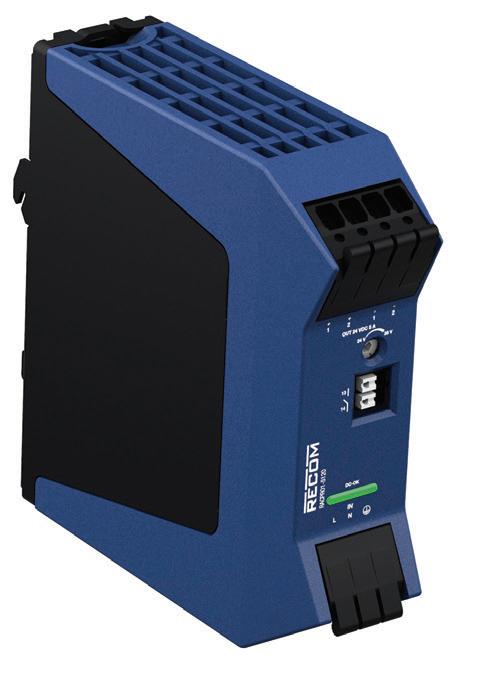
Power supply unit
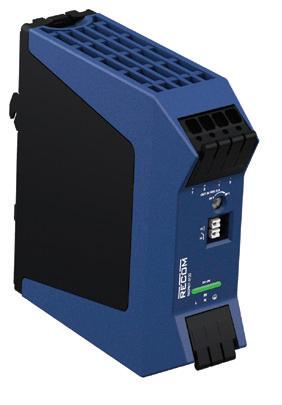
The RECOM RACPRO1-S120 DIN-rail AC/DC power supply delivers 120 W of output in an ultra-slim, space-saving design, making it suitable for compact industrial control cabinets and modern automation systems. With dimensions of 100×28×112 mm, it is designed to help engineers maximise panel density without compromising performance.
The power supply unit features a wide 85–277 VAC input range and offers regulated output voltages of 12, 24 or 48 V, adjustable to suit diverse application needs. High-efficiency operation enables full 120 W power delivery with convection cooling, eliminating the need for forced airflow and reducing system complexity.
Built for demanding industrial environments, the unit includes comprehensive protection features such as overvoltage, overload and short-circuit protection, thereby enabling long-term usage. With international safety approvals and robust thermal performance, the power supply unit is suitable for applications across Australia.
RECOM Asia Pte Ltd www.recom-power.com
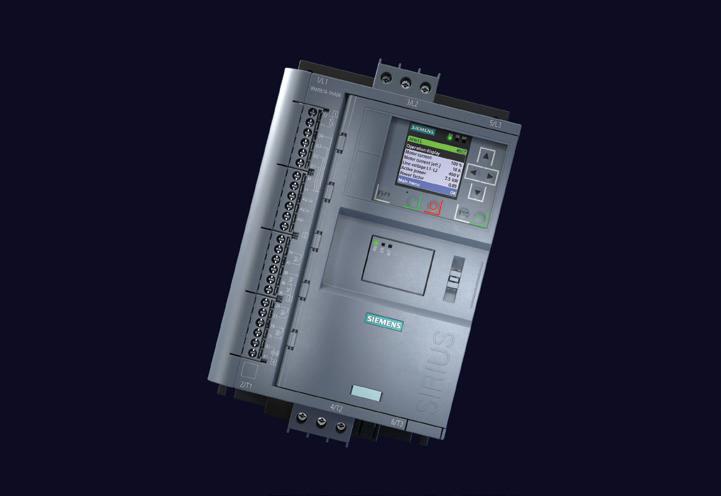
Soft starter
SIRIUS 3RW5 -Z R11 refurbished soft starters are circular by design. Each soft starter is created through a controlled refurbishment process of used soft starters, resulting in a CO2 emission reduction of typically up to 50% compared to a new device, thanks to reduced resource consumption. The process is transparently documented with Environmental Product Declarations (EPDs).
During refurbishment, used devices are thoroughly tested. Critical components are replaced and all functions are tested to meet new device quality standards. The result is a soft starter technically equivalent to a new one, fully compatible in installation, parameterisation and functionality, allowing seamless integration. Devices have CE certification, with CCC, UL/CSA and ATEX certifications pending.
The device’s modularity allows easy dismantling and repair, with identifiable components for efficient refurbishment. As a smart device, it provides usage and condition data from its first life cycle, enabling targeted remanufacturing for a second.
The ID Link, a unique QR code, enables traceability for both first- and second-life products. This ID Link, and a data architecture currently under development using Asset Administration Shell (AAS) and Distributed Ledger Technology (DLT:IOTA), pave the way for a Digital Product Passport (DPP) in line with the EU’s Ecodesign for Sustainable Products Regulation (ESPR), providing transparency and audit-proof lifecycle information.
Siemens Ltd
www.siemens.com.au
Utility-scale battery system
Elementa 3 is Trina Storage’s latest-generation utility-scale battery energy storage system. Built on advanced 587 Ah liquid-cooled cells, the 6.25 MWh system reduces the levelised cost of storage (LCOS) by 12.5% compared to its predecessor, while boosting energy density, efficiency and safety.
In Australia, Trina offers full AC storage system integration, including R1 and R2 scopes and responsibilities. According to the company, these solutions are fully compatible with leading inverter brands in the Australian market — helping to provide seamless delivery and good performance.
Trina Solar Australia
www.trinasolar.com/au
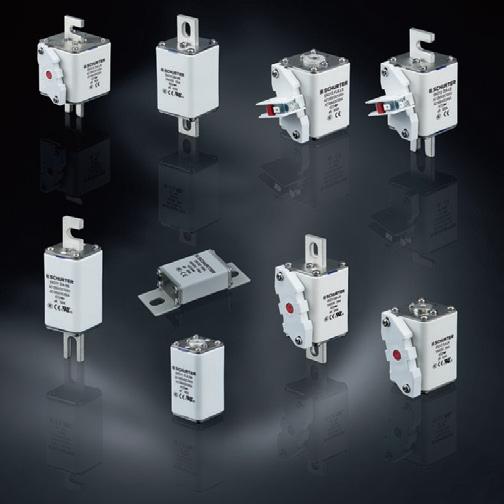
High-voltage fuses
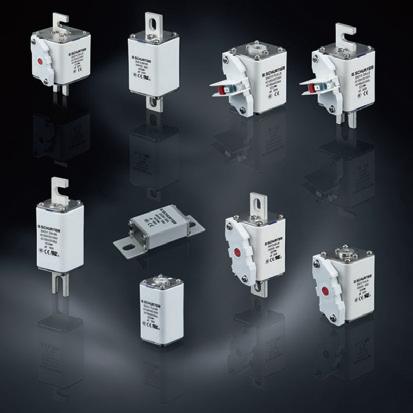
The EKO series of HV fuses is engineered for demanding high-voltage environments, offering protection up to 1000 VDC (and 1250 VAC for selected models) and current ratings from 50–1100 A. With a breaking capacity of up to 50 kA DC, these square-body fuses are designed to provide safety and reliability.
The EKO series can withstand mechanical vibration, shock, chemical exposure and temperatures from –40 to +125°C. Its ceramic housing and tin-plated copper alloy terminals facilitate durability and stable electrical characteristics even under harsh conditions.
Users can choose from Flush End, DIN-Rail, US Style Bolted Tag or Bolt-on to simplify integration into diverse systems. Optional indicators and microswitches also enable easy status monitoring.
The fuses are suitable for charging infrastructure, energy storage systems (BESS), manual service disconnectors, power conversion devices (UPS, inverters, drives) and heavy industrial equipment.
The EKO series meets IEC, UL and GB/T standards and complies with CE, RoHS and REACH directives, for global acceptance.
SCHURTER (S) PTE LTD www.schurter.com
MAKING THE CASE FOR SUSTAINABLE DATA CENTRES
Farokh Ghadially, Vice President – Secure Power, Schneider Electric
A two-way energy conversation
The data centre industry has progressed through waves of innovation, from virtualisation to cloud computing, and now AI. This latest phase brings unprecedented computational power alongside a significant rise in energy demand.
Bloomberg projects the generative AI market will reach US$1.3 trillion by 2032, with AI workloads consuming around 36% of global data centre capacity, adding more than 150 GW of demand.
The relationship between AI and energy is now two-way: data centres must power AI, while AI can optimise energy use, support decarbonisation, and ensure digital growth remains sustainable.
Intelligent power: from energyhungry to energy-aware
AI training racks can draw between 100 and 140 kilowatts each, creating unpredictable, high-density loads. Increasing power supply alone is not a viable solution. Instead, energy management must become more intelligent.
Predictive algorithms now enable operators to forecast energy spikes, adjust dynamically, and smooth load variability to protect grid stability. Smart scheduling allows energyintensive tasks to run when renewable supply is abundant, reducing emissions and operational costs. Flexible power management also allows workloads to scale according to demand, aligning performance with sustainability goals.
When guided by AI, data centres can evolve from energy-hungry to energy-aware ecosystems, balancing performance, resilience and responsibility.
AI’s capacity to optimise energy systems, from microgrids to industrial processes, enables smarter, faster and more precise decision-making, turning data centres into active contributors to energy efficiency and decarbonisation.
Cooling as an energy resource
Cooling has always been one of the most energyintensive aspects of data centre operations, and AI’s high-density workloads have made it even more critical. As power densities rise, traditional air systems are reaching their limits, driving the shift towards liquid cooling, a method that removes heat directly at the chip level more efficiently than air.
Effective cooling design must balance efficiency, water stewardship and circularity, turning a traditional energy cost into an opportunity for recovery. Waste heat can be repurposed for nearby industrial or agricultural use, while closed-loop systems help minimise water consumption and support continuity in resource-constrained environments.
As the industry moves towards nextgeneration workloads, this integrated approach will define how data centres maintain both performance and responsibility.
Resilience in the AI era
In the age of AI, resilience extends beyond uptime. It’s about adaptability to variable power profiles, evolving regulations, and changing customer expectations.
Through geo-shifting, AI workloads can pause in one region and resume in another where renewable energy is more abundant or affordable. AI-driven orchestration tools allow workloads to migrate across locations while maintaining performance.
Integrating grid supply with onsite renewable generation and battery storage strengthens resilience and reduces environmental impact. Close collaboration between data centres and utilities will be critical in addressing grid constraints and aligning new capacity with available infrastructure.
AI-ready by design: from grid to chip and chip to chiller Meeting AI’s power and performance demands requires a unified architecture
where power, cooling and digital management operate in alignment.
Reference designs developed with industry partners illustrate this integrated approach, combining advanced cooling with power management to support high-density environments while maintaining efficiency and reliability.
By embedding intelligence across every layer, from grid to chip to chiller, data centres can scale for accelerated computing without letting energy consumption spiral. Research, including Schneider Electric’s White Paper 212: ‘Bending the Energy Curve’, shows that even modest improvements in efficiency can collectively reduce overall energy growth, helping to decouple digital expansion from rising demand.
The long view: data centres as energy ecosystems
The data centre of the future will not be defined only by computing capacity, but by how it contributes to broader energy systems. AI-ready facilities are positioned to act as partners to the grid, balancing demand through flexible operations and load shifting, while supporting decarbonisation through more efficient energy use.
Circular thinking, prioritising efficiency, reuse and adaptability, will define the next generation of data centres. The leaders will be those who successfully align energy for AI with AI for energy, achieving competitiveness, sustainability and resilience together.
Sustainable intelligence at scale
AI is reshaping the data centre landscape, driving energy demand while also providing the intelligence to manage it more effectively. Sustainability must be embedded across every dimension, from power distribution and cooling to grid collaboration and system design. Through continued innovation and integration, AI-ready data centres can achieve sustainable intelligence at scale and support the growth of digital infrastructure, while ensuring progress aligns with long-term energy and climate goals.
THE CLIMATE RISKS OF FUTURE TECH
Will large-scale technology developments such as AI-driven systems and electrified homes create a sustainable, equitable future for Australians? Or will they place a dangerous strain on the electricity grid, be vulnerable to climate change and result in greater inequality?
These are among the questions canvassed by a new report from Monash University, ‘Scenarios for Future Living: Emerging technology innovation and development’. The research drew on 93 reports, expert interviews and industry observations to identify trends that are expected to shape the future, including the rise of AI and automation; an aging population and changing healthcare needs; and growing inequalities in access to housing and technology.
The report compiled a list of large-scale technology trends that includes AI, home use of the Internet of Things (IoT), 6G, digital twins, and energy technology breakthroughs such as those in solar materials, battery tech and wind turbine design.
Under ‘Energy and the Environment’, it lists trends such as home electrification, rapid growth of consumer energy resources, widespread future adoption of energy-efficient households, and the increasing severity and frequency of climate change.
Impact on home life
The report predicts that demand for heating and cooling will rise significantly with climate change and household electrification, driving a need for integrated, smart and energy-efficient solutions across building design, materials and technologies.
To meet this need, future technology trends will potentially include climate-driven demand for cooling; adaptive and dynamic building materials; efficiency in building design; smart
energy technologies; electrification of heating; and smarter HVAC systems.
Future transport: electrified, connected and multimodal
Shaped by advances in automated vehicle technologies, electrification and aircraft, trends identified in the report include accelerated EV adoption; integrated, bidirectional and fast EV charging; micro-mobility; eVTOLs (vehicles that perform electric vertical take-off and landing); and drones.
The report observed that EVs in areas highly vulnerable to climate shocks could lead to a requirement for critical infrastructure to support high demand during times of climate emergency. However, it added that EVs could also become integral
components of adaptive infrastructure, serving as mobile energy storage units that stabilise local grids.
Risks posed by a changing climate
The researchers looked at climate risks identified in the National Climate Risk Assessment, then examined how climate change could influence and disrupt emerging technologies and practices.
They found that the risks are not evenly distributed, with older Australians, Aboriginal and Torres Strait Islander peoples, regional and remote communities, and lower-income households most exposed due to greater reliance on energy systems and unequal access to resilient technologies.
MUCH OF TODAY'S TECHNOLOGY
INNOVATION DOESN'T SERIOUSLY CONSIDER THE ENERGY SYSTEM IMPLICATIONS OF THE TECHNOLOGY.
— DR KARI DAHLGREN
Industries including health care, aged care, agriculture, construction, logistics and energy are also likely to face increased disruption, with climate impacts reducing workforce capacity, straining infrastructure, disrupting supply chains and increasing demand on already pressured systems.
“Much of today’s technology innovation doesn’t seriously consider the energy system implications of the technology,” said social anthropologist and lead author Dr Kari Dahlgren, from Monash’s Faculty of Arts.
“As climate risks intensify, technologies that depend on continuous power and connectivity may face greater challenges to how they function in everyday life.”
These challenges will likely play out in the rising demand for cooling technologies in a warming climate, the need for more resilient digital and energy infrastructure, and the risks posed to home-based healthcare and remote monitoring systems during power outages.
“These technologies are often framed as solutions to climate challenges, but they are deeply dependent on the very systems that are under increasing stress,” said Monash Energy Institute Director (Research) and coauthor Professor Yolande Strengers.
“We need to be considering these technological innovations and how they are likely to unfold in everyday life, to ensure the system continues to be resilient to these future changes.”
Six visions of the future
Based on its analysis and the interviews conducted, the report also developed six industry ‘visions’ of the future demonstrating how the identified trends may play out in everyday life.
Among the scenarios depicted are hightech smart homes that function as immersive digital environments powered by AI and extended reality, where households operate as highly automated, energy-optimised systems.
Alternatively, some visions imagine modular, mobile homes that adapt to climate pressures, demonstrating a shift towards more energy-conscious living with fewer digital devices in response to environmental and social concerns. Across each scenario, however, increasing reliance on electricity and connectivity heightens exposure to climaterelated disruptions.
Co-author Dr Fareed Kaviani from Monash’s Faculty of Information Technology said addressing these disruptions will require a shift in how technologies are designed and deployed.
“There is a growing need to design technologies that are not only efficient and advanced, but also resilient to disruption,” Kaviani said.
“That includes building systems that can respond to increasingly volatile environments.”
While this particular report focused on findings from industry experts and organisations, the researchers intend to work directly with Australian households in the future to better understand how these expected trends will likely be experienced in everyday life. Their ultimate aim is to inform the development of more resilient, equitable and accessible technologies and energy systems.
The report was developed by a cross-disciplinary team of researchers from Monash University, including Dr Kari Dahlgren, Dr Fareed Kaviani and Professor Yolande Strengers, in collaboration with Dr Rex Martin and Dr Mike Roberts from the University of New South Wales. It was funded by the RACE for 2030 co-operative research centre.
Delivering switchboards for a major healthcare precinct
The NSW Government’s $835 million John Hunter Health and Innovation Precinct (JHHIP) — an expansion and redevelopment of the existing John Hunter Hospital in Newcastle — is one of the state’s most significant healthcare infrastructure projects.
According to the government, the expanded facility will deliver a 60% increase in intensive care unit (ICU) capacity and almost 50% more theatres to the already busy hospital. Home to a major emergency department and critical acute services, the precinct demands exceptional electrical infrastructure — delivering reliability, safety and long-term performance.
Australian company Star Group was the lead electrical contractor, responsible for sourcing switchboards capable of supporting continuous hospital operations while also meeting strict compliance, delivery and budget requirements across the multi-year project. The company, which has more than 60 years of experience across complex electrical installations, opted for local switchboard manufacturer Fuji SMBE Macquarie.
“We chose to source all switchboards for the JHHIP project from Fuji SMBE Macquarie because we consider them a tier-one board builder that can deliver high-quality product at scale, within tight timeframes,” said Robbie Peel, Project Manager – Construction at Star Group.
All switchboards supplied by Fuji SMBE Macquarie were manufactured and assembled in Australia and designed and verified in accordance with AS/NZS 61439. In total, the project included approximately 14 large lowvoltage main switchboards and more than 130 miscellaneous distribution boards installed throughout the eight-level facility.
“AS/NZS 61439 mandates rigorous design verification to ensure safety, reliability and performance,” Peel explained. “For a major government healthcare project of this importance, compliance with the standard was essential.”
The primary equipment supplied was a commercial low-voltage main switchboard (LV MSB), used for the distribution, control and protection of electrical power throughout the facility. The switchboards supply downstream distribution boards and final subcircuits while supporting safe operation, coordinated protection and maintainability within a high-fault-level environment.
Designed specifically for healthcare applications, these switchboards incorporated formed construction, fully type-tested switchgear, shortcircuit withstand ratings suited to site conditions, and clear circuit identification to support safe installation, commissioning and ongoing maintenance. These features help minimise downtime and ensure operational continuity in critical clinical environments.
Beyond technical compliance, Peel praised Fuji SMBE Macquarie’s responsiveness during the project.
“We’ve worked with Fuji SMBE Macquarie on demanding projects in the past, and what sets them apart is their willingness to support us throughout the project,” he said.
“They were always available to respond to technical queries, provide additional information or supply components when requirements changed.”
Critical flexibility
For a project of this scale and duration, flexibility was a necessity. Fuji SMBE Macquarie supplied modular switchboards that allowed Star Electrical to accommodate evolving clinical and operational needs without disruption to the overall program.
“The project started around four years ago and is now nearing completion,” Peel said. “Over a timeframe like that, requirements are developed. The modular construction made it straightforward to implement changes as the client’s needs developed.”
Customisations delivered by Fuji SMBE Macquarie included bespoke compartment layouts and dimensions, integration of metering and monitoring equipment, site-specific ingress protection ratings, interface provisions for building management systems, and allowances for future load growth. It was important for all custom features to be implemented without compromising compliance with relevant Australian and New Zealand standards.
“Hospitals have very specific operational requirements, both now and into the future,” Peel said. “Having switchboards that are adaptable, while still meeting stringent safety and compliance obligations, was essential for this project.”
Australian manufacture: a key benefit
Local manufacture played a prime role in meeting project and wholeof-life objectives. The fact that Fuji SMBE Macquarie manufactures and assembles its switchboards in Australia means there can be more consistent quality control, reduced supply-chain risk, and long-term access to technical support and spare parts.
In addition to manufacturing and supply, Fuji SMBE Macquarie provided technical assistance during installation and commissioning, comprehensive as-built documentation, and test reports to support compliance, maintenance and future modifications.
Fuji SMBE Macquarie www.smbmacquarie.com.au
Fuji SMBE Macquarie supplied hundreds of switchboards with customised functions to Star Electrical, the lead contractor for the John Hunter Health and Innovation Precinct.
Image: Supplied
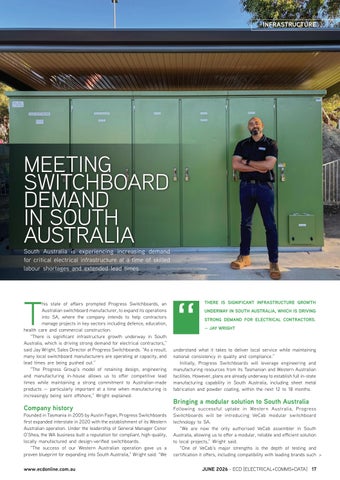
MEETING SWITCHBOARD DEMAND IN SOUTH AUSTRALIA
South Australia is experiencing increasing demand for critical electrical infrastructure at a time of skilled labour shortages and extended lead times.
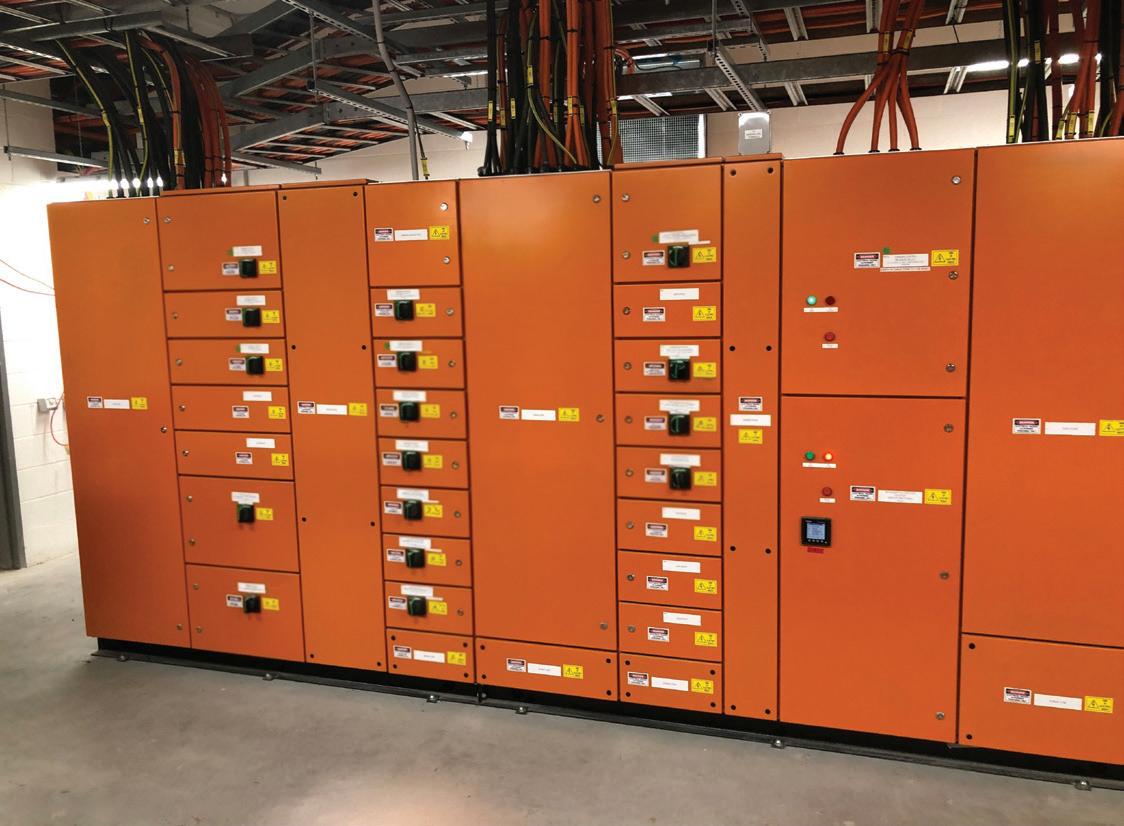
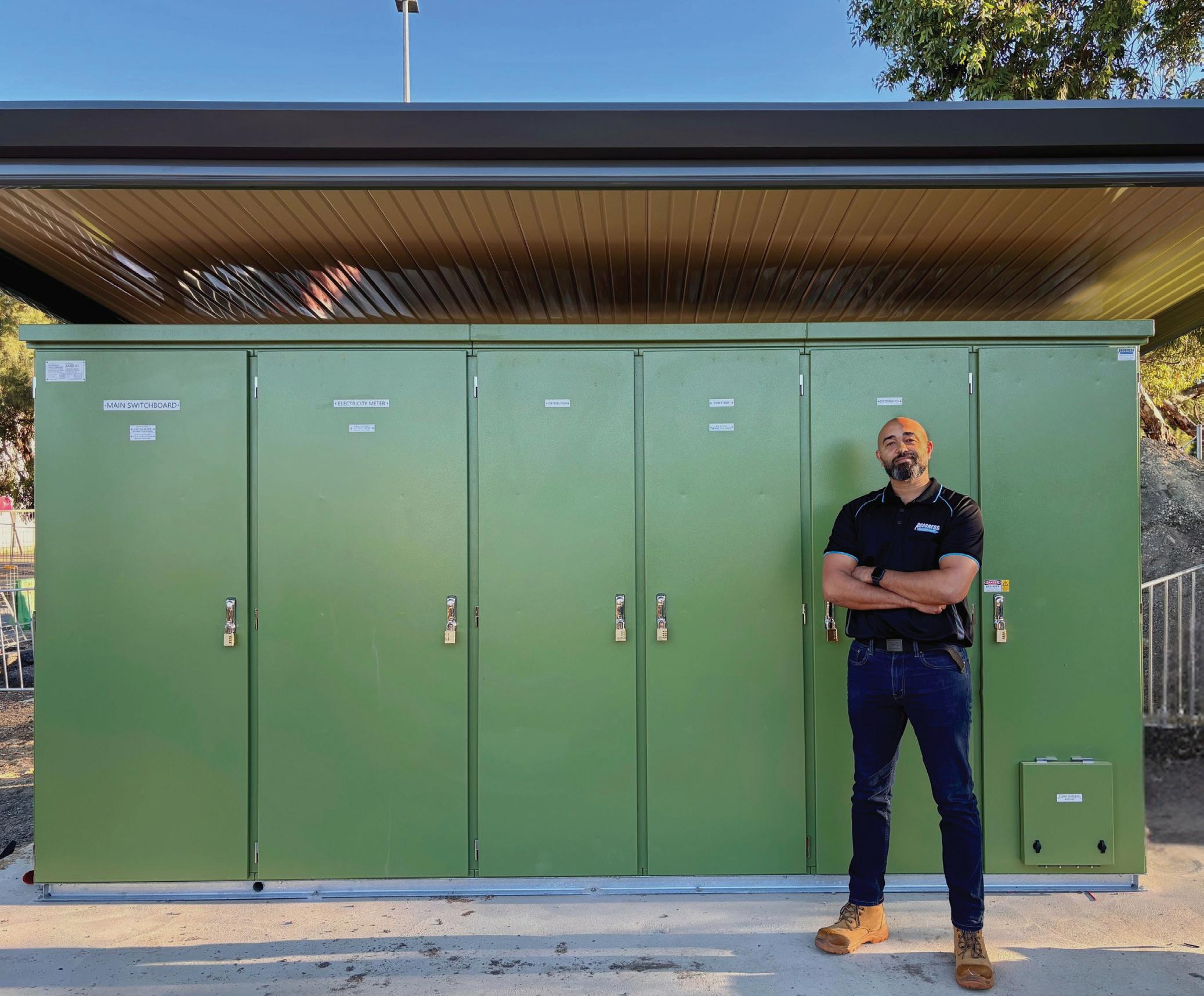
This state of affairs prompted Progress Switchboards, an Australian switchboard manufacturer, to expand its operations into SA, where the company intends to help contractors manage projects in key sectors including defence, education, health care and commercial construction.
“There is significant infrastructure growth underway in South Australia, which is driving strong demand for electrical contractors,” said Jay Wright, Sales Director at Progress Switchboards. “As a result, many local switchboard manufacturers are operating at capacity, and lead times are being pushed out.”
“The Progress Group’s model of retaining design, engineering and manufacturing in-house allows us to offer competitive lead times while maintaining a strong commitment to Australian-made products — particularly important at a time when manufacturing is increasingly being sent offshore,” Wright explained.
Company history
Founded in Tasmania in 2005 by Austin Fagan, Progress Switchboards first expanded interstate in 2020 with the establishment of its Western Australian operation. Under the leadership of General Manager Conor O’Shea, the WA business built a reputation for compliant, high-quality, locally manufactured and design-verified switchboards.
“The success of our Western Australian operation gave us a proven blueprint for expanding into South Australia,” Wright said. “We
THERE IS SIGNIFICANT INFRASTRUCTURE GROWTH UNDERWAY IN SOUTH AUSTRALIA, WHICH IS DRIVING STRONG DEMAND FOR ELECTRICAL CONTRACTORS.
— JAY WRIGHT
understand what it takes to deliver local service while maintaining national consistency in quality and compliance.”
Initially, Progress Switchboards will leverage engineering and manufacturing resources from its Tasmanian and Western Australian facilities. However, plans are already underway to establish full in-state manufacturing capability in South Australia, including sheet metal fabrication and powder coating, within the next 12 to 18 months.
Bringing a modular solution to South Australia
Following successful uptake in Western Australia, Progress Switchboards will be introducing VeCab modular switchboard technology to SA.
“We are now the only authorised VeCab assembler in South Australia, allowing us to offer a modular, reliable and efficient solution to local projects,” Wright said.
“One of VeCab’s major strengths is the depth of testing and certification it offers, including compatibility with leading brands such
Robotic cable for 360° twisting applications
LAPP’s ÖLFLEX ROBOT 900 P 18G0.5 cable is engineered to meet the precision and durability requirements of robotics and automation applications.
Designed for continuous flexing and torsional stress, the cable can twist 360° every metre, making it suitable for multiaxis articulated robots and automated handling systems. Its robust PUR outer sheath provides resistance to abrasion, oil and chemicals, supporting longevity even in harsh environments.
With a compact design and fine copper strands, the ÖLFLEX ROBOT 900 P 18G0.5 cable facilitates space-saving installations without compromising on flexibility or performance. It’s suitable for horizontal travel distances up to 10 m, making it versatile for various industrial applications.
Installation and maintenance are simplified with a smooth surface and flexible construction, reducing downtime and enhancing operational efficiency. From automotive manufacturing to material handling or advanced robotics projects, the cable helps provide a high-performance connection wherever continuous movement is involved.
LAPP Australia has extensive local stock of ÖLFLEX ROBOT cables, with service and support nationwide.
as Terasaki, ABB, Siemens and Schneider. This gives customers flexibility and confidence that their switchboards are fully compliant to Australian standards.”
The benefits of NESMA membership
As a member of NESMA — the National Electrical Switchboard Manufacturers Association — Progress Switchboards received additional guidance for its South Australian expansion.
“Before establishing operations in South Australia, we spoke with NESMA SA President Anthony Spadavecchia, who provided valuable insight and advice on expanding into the state,” Wright said.
“NESMA membership positions us in a higher bracket of board builders — one that prioritises quality, safety, compliance and local manufacturing,” he added.
“It also keeps us closely connected to industry developments and best practice.”
Challenges and opportunities
Like many manufacturers across Australia, Progress Switchboards sees skilled labour shortages as the industry’s biggest challenge.
“It’s not unique to South Australia, and it’s not unique to us — it’s a national issue that NESMA members regularly discuss,” Wright said.
“One advantage of operating across multiple states is our ability to move skilled workers internally. This allows team members to relocate and experience new parts of Australia while maintaining secure employment.”
Early momentum in South Australia has been strong, with Progress Switchboards already securing projects across the education, defence, commercial and health sectors.
“This early traction reflects the demand for locally manufactured, high-quality switchboards delivered by experienced, qualified teams,” Wright observed.
“With strong leadership, a growing state economy, and the support of NESMA, Progress Switchboards is well positioned to contribute to South Australia’s next wave of infrastructure development.”
LAPP Australia Pty Ltd lappaustralia.com.au
Configurable outdoor cabinets
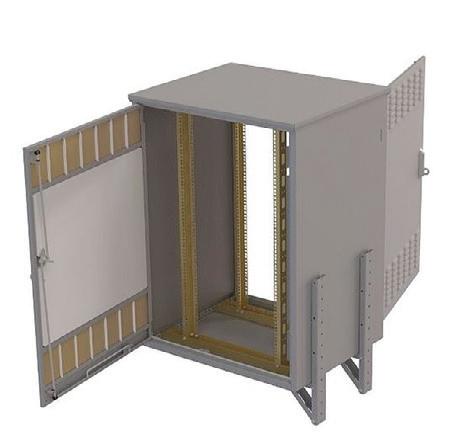
The Cable Ways Silver Star outdoor equipment cabinet series is manufactured in New Zealand from marine-grade aluminium or optional 316 stainless steel, and is designed to provide a standardised yet highly configurable solution for outdoor network infrastructure. Cabinet dimensions, mounting configurations, thermal management systems, locking arrangements and equipment mounting options can be selected within a predefined platform, reducing engineering lead times while maintaining application flexibility.
The series supports 19 ″, 21 ″ and 23 ″ EIA/ETSI equipment mounting and includes thermal management options ranging from sealed IP65 plain door configurations to natural convection and forced convection cooling systems.
Designed for telecommunications and remote infrastructure environments, Silver Star cabinets are suitable for fibre distribution nodes, GSM base stations, traffic management systems, remote monitoring sites, water management infrastructure and battery storage applications.
A key advantage of the Silver Star series is its ability to provide configurable solutions with faster delivery compared to fully custombuilt cabinet projects, helping network operators and integrators respond more efficiently to rollout and upgrade requirements. Cable Ways Ltd www.cable-ways.co.nz
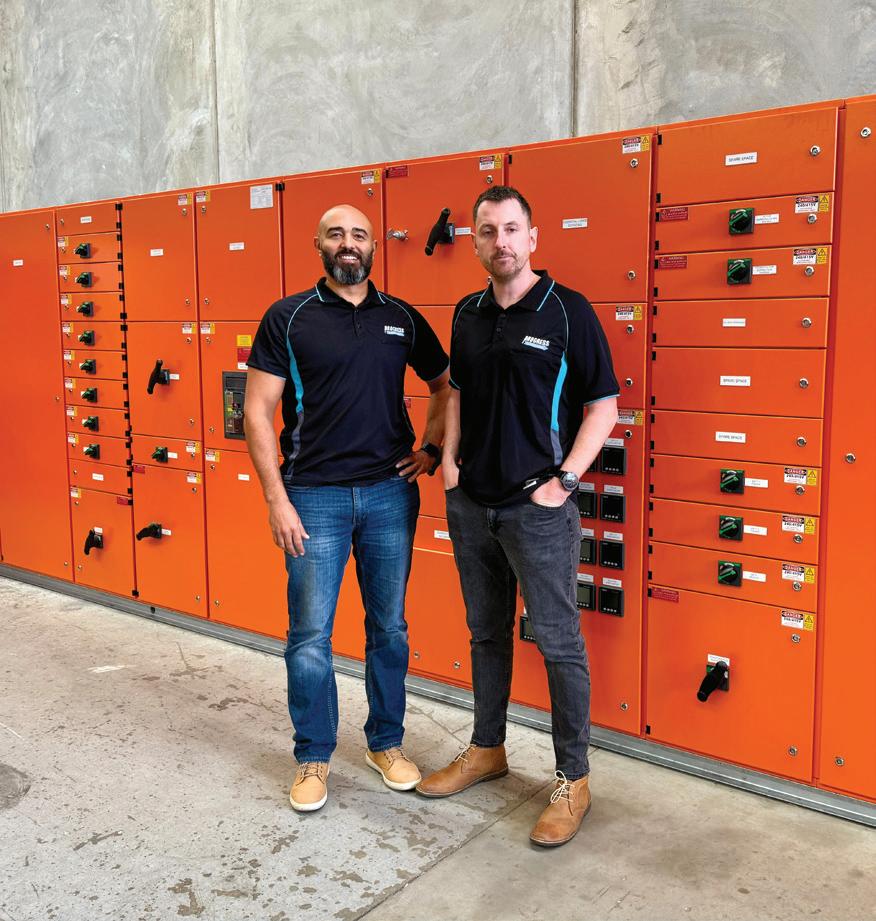
Progress Switchboards Sales Director Jay Wright, left, with General Manager Conor O’Shea, right.
Data centres under pressure: the impact of heat in Australia
When data centre uptime is discussed, attention often turns to power redundancy, connectivity or cybersecurity. Yet one factor continues to operate in the background: thermal management, which is critical to avoiding thermal throttling, hardware degradation and unplanned downtime.
In Australia, this factor carries even greater weight. Unlike colder regions where ambient air can support “free cooling” for large parts of the year, many Australian locations face consistently higher temperatures and prolonged summer heat. In cities like Brisbane and Perth, the number of hours where outside air can assist cooling is significantly lower than in cooler climates such as Melbourne or Canberra.
e rapid adoption of high-density computing, particularly CPUs, GPUs and AI accelerators, is pushing thermal output beyond what traditional air-based systems were designed to handle, driving a shift towards more advanced cooling approaches.
Why traditional cooling approaches are reaching their limits
Conventional air cooling has long been the backbone of data centre design. However, its effectiveness depends heavily on environmental conditions and airflow efficiency. In hotter climates, air cooling becomes less efficient as the temperature difference between supply air and equipment decreases. This forces systems to consume more energy to achieve the same cooling effect, therefore increasing both operational costs and actual Power Usage Effectiveness (PUE).
Additionally, many Australian facilities rely on evaporative cooling systems, which introduce further considerations such as Water Usage E ectiveness (WUE) and long-term resource management.
As data centres continue to scale exponentially to support AI and high-performance computing, the physics-based limitations of traditional air-based cooling technologies are becoming more evident.
Designing for reliability in a changing environment
Addressing these challenges requires a shift from collating isolated cooling components to integrating a holistic thermal management strategy. e HYDAC Group owns several companies with thermal management technologies and delivers end-to-end solutions, owning the technology and manufacturing processes at the component level. As a vertically integrated provider, HYDAC ensures performance, reliability, and uid cleanliness expertise.
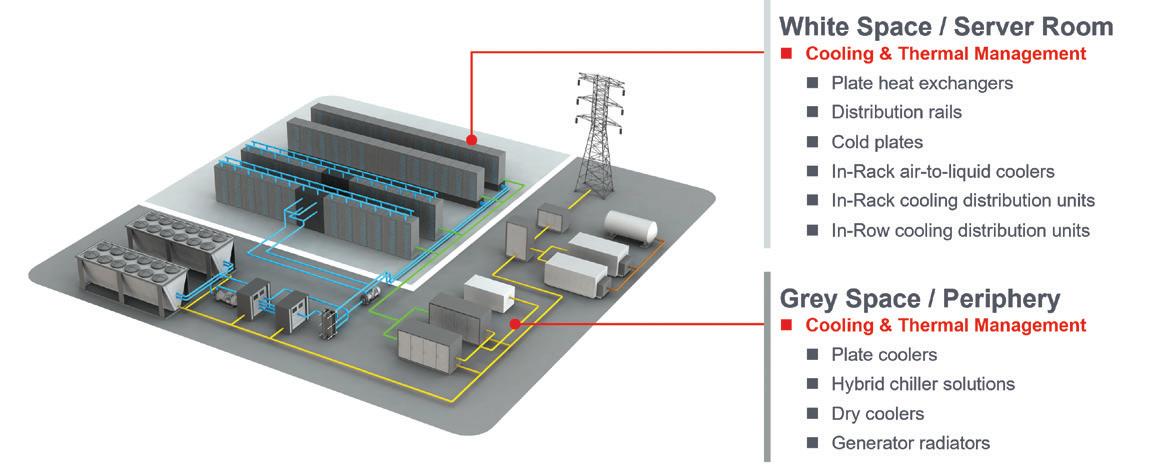
Leveraging group-wide capabilities and knowhow, HYDAC is uniquely positioned to support this transition, delivering solutions across white and grey space as a holistic thermal management partner for data centres.
In the grey space, where supporting infrastructure such as generators and auxiliary systems operate, HYDAC delivers proven cooling technologies, including plate heat exchangers, hybrid chiller solutions, dry coolers and genset radiators, ensuring reliable and e cient thermal management.
In white space, HYDAC works in collaboration with COOLTECH to deliver advanced cooling systems tailored to high-density IT environments. A central component of this approach is liquid cooling.
By using cold plates and water blocks to cool CPUs, GPUs and other high-dissipation components directly, liquid cooling significantly improves heat transfer efficiency compared to
air. This enables stable performance even under extreme computational loads, while reducing overall energy consumption.
Complementing this, Coolant Distribution Units available in both liquid-to-liquid and air-to-liquid configurations, provide precise temperature control and scalable system architecture. These systems allow operators to adapt to increasing heat densities without redesigning entire facilities.
An all-in-one approach
For Australian data centres, thermal management is no longer a background consideration, it is a defining factor in operational resilience.
HYDAC offers a complete, all-in-one approach including thermal management, filtration and system integration expertise from a single partner. This unified capability helps data centres reduce complexity, improve efficiency and achieve more reliable, optimised performance.
HYDAC’s global expertise further supports this approach. As a member of the German Datacenter Association, HYDAC Germany contributes to industry best practices and ongoing innovation in data centre infrastructure.
For more information, please visit hydac.com.au.
How Canberra’s grid is being digitally transformed
Canberra’s electricity network is being stretched by rising demand and a growing uptake of customer energy resources (CER) such as rooftop solar, batteries and electric vehicles.
To address this issue, local distributor Evoenergy has partnered with Schneider Electric to lead a digital transformation of the ACT grid. The resulting program aims to progressively introduce scalable infrastructure and advanced network management capability to handle increasingly complex energy flows — while at the same time maintaining safety, reliability and system resilience.
Schneider Electric has contributed a kiosk-based solution featuring intelligent and remotely accessible components, including KPX kiosks, ring main units (RMU), low-voltage switchgear and on-load tap changers to support improved voltage regulation and overall quality of supply. These connected field assets provide enhanced grid connectivity and support real-time monitoring across the network.
The deployment is integrated with the company’s EcoStruxure Advanced Distribution Management System (ADMS), providing endto-end operational visibility and control. This creates a more responsive and data-driven network that supports improved reliability and safety, as well as enabling future smart grid functionality.
Evoenergy supplies more than 225,000 customers across the ACT. “Our priority is to deliver safe, reliable and responsive energy services that meet the evolving needs of our customers,” said Tomas Keraitis, Evoenergy’s Group Manager Asset Management.
“As our network supports increasing electrification, new technologies and changing patterns of energy use, we are investing in advanced engineering, digital capability and operational practices which improve visibility, resilience and performance.
“This ensures we can provide dependable supply, enable customer choice and support the ACT’s energy transition.”
The program helps address key challenges facing modern distribution networks, including managing peak demand, improving reliability to reduce the risk of outages, and increasing grid capacity as more CER connect to the system. It also supports Evoenergy’s focus on sustainability and future readiness, enabling advanced capabilities such as fault location, isolation and service restoration (FLISR), distributed energy resource management systems (DERMS) and volt/ var optimisation (VVO).
“Evoenergy is building a more intelligent and resilient electricity network to support the evolving needs of the Canberra region,” said Thomas Deschler, Vice President Power Systems, Schneider Electric.
“By combining connected infrastructure with advanced digital capabilities, we are helping Evoenergy strengthen operational visibility and enable faster, smarter decision-making across the grid. This is a strong example of how digital infrastructure can support reliability today while preparing for the energy system of the future.”
Schneider Electric www.se.com/au
Images courtesy of Evoenergy and Schneider Electric.
EFFICIENT HVAC PROTECTS AUSSIE HOSPITAL DURING BUSHFIRES
Maintaining excellent air quality in a hospital during bushfire season is a challenge — especially if the aim is to also reduce energy consumption. Impressively, this is what a recent hospital trial in northern Victoria has achieved.
The project, ‘Sustainable Solutions for Pandemic and Bushfire Resilience in Healthcare Facilities’, was conducted at Echuca Regional Health during the January 2026 bushfires, when smoke persisted across the region for several days and outdoor air quality deteriorated sharply.
Led by Adelaide University researchers in partnership with Echuca Regional Health and Australian clean-tech company Plasma Shield Ltd, with funding from the Victorian Health Building Authority and industry research centre RACE for 2030, the trial resulted in pandemic-mode air quality along with a 34% energy saving for the hospital.
“This project shows we can reduce hospital energy use while protecting indoor air quality, all with Australian made technology that remains robust through bushfire events,” said Tosh Szatow, Business Innovation & Policy Lead at RACE for 2030.
“That is a critical insight for urban and regional hospitals facing rising energy costs and more frequent smoke threat through summer.”
The energy impact
For pandemic mode, hospitals typically rely on high volumes of outdoor air to manage infection risk. However, this approach can significantly increase fan energy and cooling demand, particularly during extreme weather events.
The researchers set up two side-by-side air handling units so that they could compare the performance of a regular unit with an alternative system that used advanced air filtration. Energy modelling based on this data showed that the alternative system — operating with reduced outdoor air supported by a bioHEPA
air treatment medical device — used 34% less total energy than a full outdoor-air operation.
The reduction was largely driven by lower fan power and reduced heating demand.
“Traditionally, building operators have faced a trade-off between energy consumption and indoor air quality,” said the project’s Chief Investigator, Dr Tim Lau from Adelaide University’s School of Electrical and Mechanical Engineering.
“Early findings from this project indicate that advanced air filtration systems can improve air quality while also lowering the energy requirements of air conditioning systems.”
Air quality findings
The energy savings did not lower the air quality — instead, the number of particles in each cubic metre of supply air reduced from a peak of 4.4 million to less than 5000.
Echuca Regional Health CEO Carol-Anne Lever said the hospital was delighted to be involved in such an innovative project.
“As a regional health service, we understand the challenges and importance of air quality for maintaining safe and comfortable environments for patients and staff,” she said.
“This research helps demonstrate how hospitals can adapt ventilation strategies to protect indoor air quality while also reducing energy use.”
Bushfire smoke and hospitals
Given Echuca Regional Health often deals with the impact of bushfire smoke, it was encouraging that the project’s air quality and energy results were maintained during the
January 2026 bushfires in the region.
During the bushfire smoke period, particle levels in incoming outdoor air increased by up to 30-fold. Despite this, air supplied to the hospital ward using the alternative system remained consistently clean. In fact, the findings noted a 1000x drop in the level of contaminants via bioHEPA, compared with other wards using conventional filtration approaches.
Professor Dino Pisaniello from Adelaide University’s School of Public Health said the real-world context strengthened the findings.
“What makes these results compelling is that performance was measured during a prolonged bushfire smoke event in an operating hospital, not under laboratory conditions. That provides confidence in how these systems perform when they are most needed.”
Ben Gill, CEO of Plasma Shield, the Australian company that designs and manufactures the bioHEPA device used in the trial, said the findings point to opportunities for a rethink of ventilation strategy.
“We now know that any hospital in Australia can make any patient ward a pandemic-proof space, without increasing their energy burden. That is a vital tool for healthcare designers and practitioners.”
Future applications
Although this trial is being conducted in a healthcare setting, the researchers said the underlying challenge — maintaining safe indoor air while reducing reliance on energyintensive outdoor air — is increasingly relevant to other building types, such as commercial offices, schools and public facilities.
Energy and air quality monitoring will continue at the hospital throughout 2026.
iStock.com/Phillip Wittke
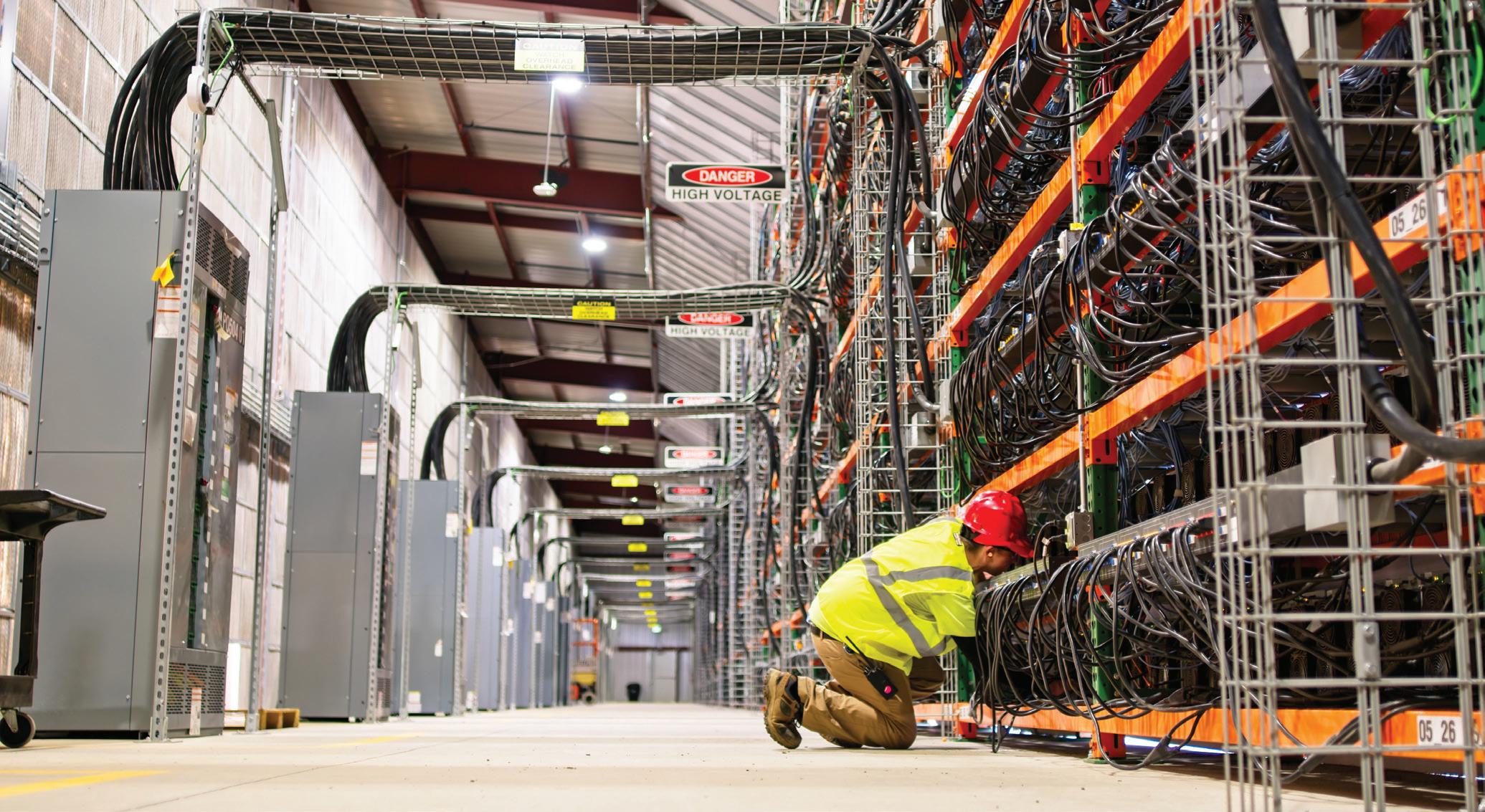
Data centres have become a critical part of modern industrial and commercial infrastructure. From enterprise IT and financial systems to cloud platforms supporting process industries, these facilities are expected to operate continuously, often with very little tolerance for disruption. Yet in many designs, environmental monitoring still receives less attention than power redundancy or cybersecurity.
That’s a mistake.
Temperature and humidity control are not secondary concerns. They are fundamental to equipment reliability, energy performance and long-term operating costs. In practice, many data centre issues trace back not to dramatic failures, but to gradual environmental drift that went unnoticed for too long.
Heat and humidity: familiar risks, real consequences
Heat management is a growing challenge as rack densities increase. While overall room temperature may appear acceptable, localised hot spots at rack inlets or exhausts can push equipment beyond safe limits. These conditions rarely trigger immediate alarms but often show up later as reduced performance, unexplained resets or shortened hardware life.
Humidity creates a different kind of risk. High humidity raises the likelihood of condensation, corrosion and insulation breakdown. Low humidity increases the chance of electrostatic discharge, particularly during maintenance or equipment changes. Both conditions are well understood, yet still underestimated in day-to-day operations.
Energy efficiency also enters the equation. Overcooling remains a common response to uncertainty, particularly where environmental data is limited or unreliable. This approach
PRECISION ENVIRONMENTAL MONITORING THE OFTEN-OVERLOOKED FACTOR IN DATA CENTRE UPTIME
may feel safe, but it drives up energy use and operating costs without necessarily improving reliability.
Standards are useful — measurement is essential Guidelines such as those published by the American Society of Heating, Refrigerating and Air-Conditioning Engineers (ASHRAE) provide a solid framework for acceptable operating ranges. Typical targets place temperatures between roughly 18 and 27°C, with relative humidity maintained between 40% and 60%. These ranges are widely referenced, but they only matter if conditions are actually measured where equipment operates.
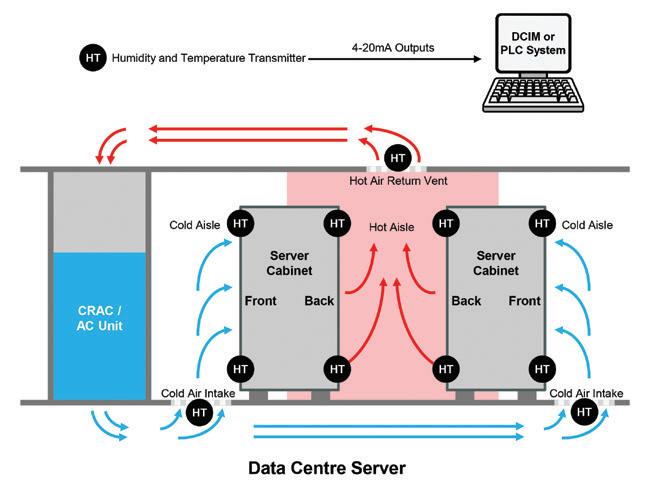
Room-level sensors alone are rarely sufficient. What matters is the air entering and leaving the racks, the performance of cooling delivery paths, and the stability of supporting spaces such as UPS and battery rooms.
Practical monitoring, not just more sensors
Effective environmental monitoring is less about the number of sensors and more about placement and integration. Rack inlets and outlets, hot and cold aisles, underfloor plenums and return air paths provide far more actionable data than a single average room reading.
Equally important is how that data is used. Temperature and humidity measurements should integrate into existing control, building management or DCIM systems using standard industrial signals and protocols. When environmental data is isolated, it becomes easy to ignore. When it is visible alongside power and airflow data, it supports better operational decisions.
Why continuous visibility pays off
Real-time environmental monitoring allows operators to spot developing issues before they affect uptime. It supports more precise cooling control, reduces unnecessary energy use and helps explain performance anomalies that might otherwise be attributed to IT hardware alone.
Over time, facilities with good environmental visibility tend to experience fewer unexplained failures, lower maintenance effort and more predictable operating conditions.
Conclusion
Environmental monitoring may not be the most visible part of a data centre, but it is one of the most influential. As facilities grow more complex and energy constraints tighten, relying on assumptions rather than measurement becomes increasingly risky. For engineers responsible for reliability and efficiency, precise temperature and humidity monitoring is no longer optional, it is part of doing the job properly.
Moore Industries
Compliant cabling for innovative HVAC
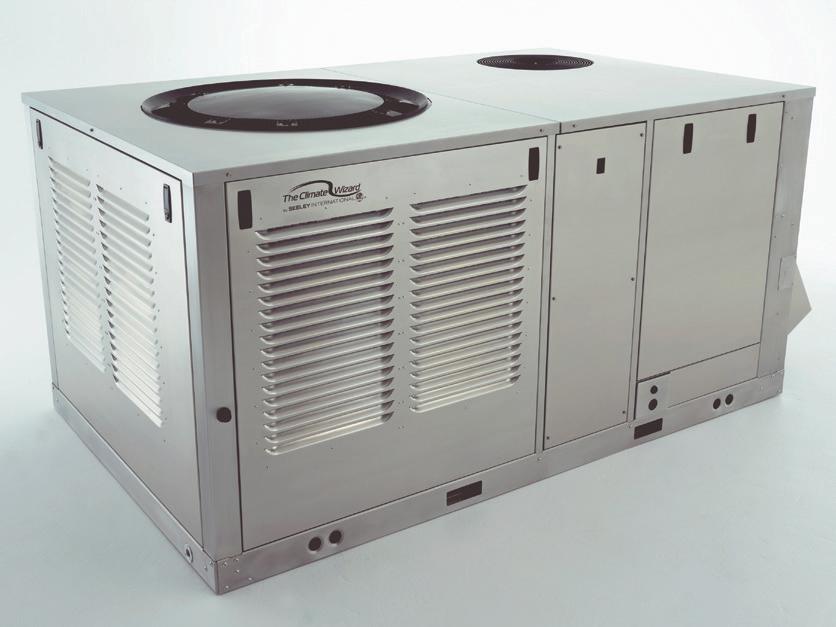
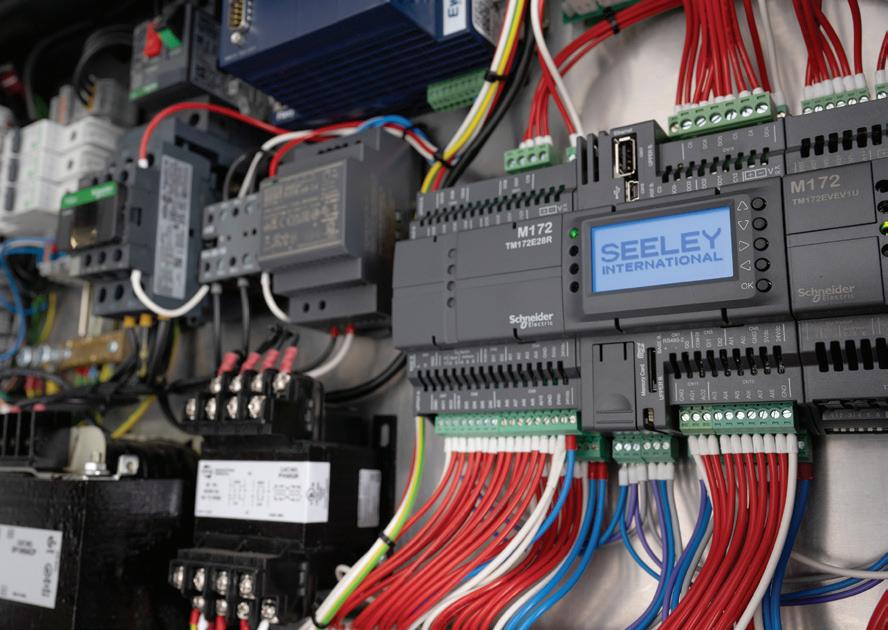
When the Australian division of HVAC manufacturer Seeley International was looking for a cable harnessing solution for a new hybrid rooftop system, it turned to LAPP Australia.
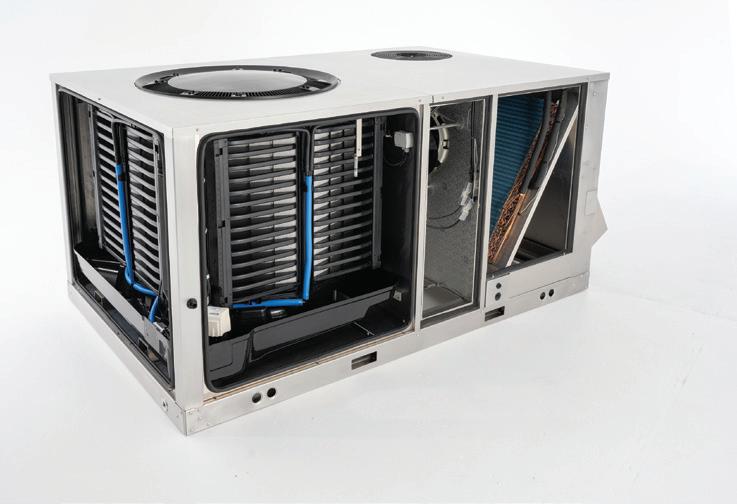
In exporting its innovative rooftop package unit to the United States, Seeley needed to optimise reliability and meet crucial UL standards. The hybrid unit combines two technologies — indirect–direct evaporative cooling (IDEC) and a streamlined integrated heat pump — into a single system.
“The majority of cooling is done by the indirect evaporative component, but in extreme weather conditions the air conditioning can provide the necessary additional support,” said Leon Minnie, Product Manager – IDEC Commercial and International, Seeley International.
“The result is a solution that’s around 70% more energy efficient and delivers greater volumes of freshly filtered outside air than most other systems available.
“This new system is manufactured in Australia and has been specifically designed for the US commercial market, so having as many UL-certified components as possible significantly simplifies the export process,” Minnie added.
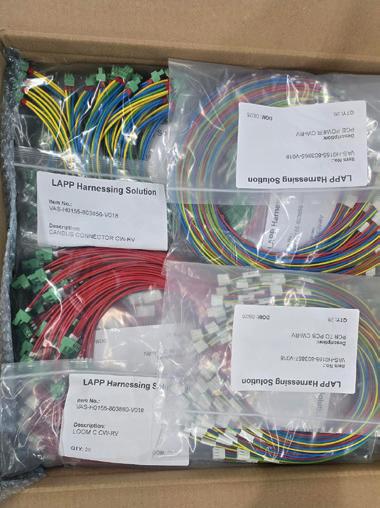
Having previously used LAPP Australia’s multi-standard cables, Seeley sought to expand the partnership by engaging LAPP’s newly established Cable Harnessing Solutions division.
“When we discovered LAPP now had a local manufacturing site for cable harnesses, we saw great potential for faster assembly, consistent quality and UL standards compliance, and we’ve been impressed with the service,” Minnie said.
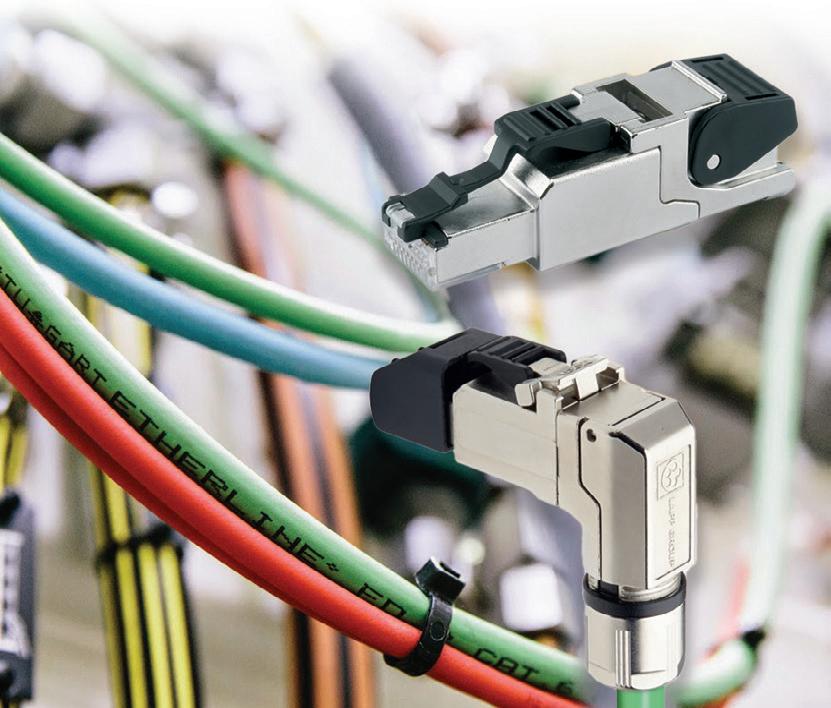
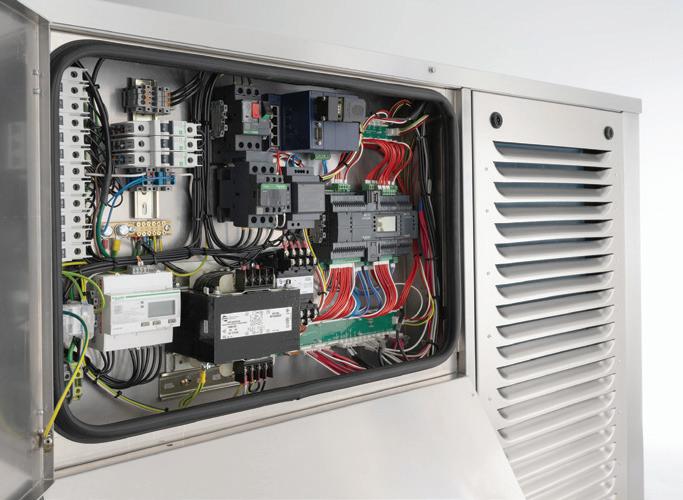
The LAPP cable harnesses include a combination of multistandard UL-certified single-insulated switchboard flex cables, ETHERLINE CAT.5E Ethernet cables, UL-certified end sleeves, and WAGO conductors and connectors, for which LAPP Australia is an authorised distributor.
“Not only has the LAPP team been very responsive, but they all have a great eye for detail, often identifying issues in drawings that have helped us prevent potential problems later on,” Minnie said.
“Additionally, the fact that LAPP holds local stock of all the cable ranges is a huge benefit to us. It means faster delivery, and allows us to select customer-specified cable colours, without adding delay to the project.”
Seeley’s hybrid product had some intricate technical requirements.
“To make this solution function seamlessly and harmoniously, we needed a more complex cable configuration, so knowing we have the reliability of LAPP’s German-engineered cables, backed by local service, gave us peace of mind for this new system,” Minnie said.
“To make things even more efficient, one LAPP cable harness can be used across three of our units — some being used in Australia and some in the US,” he added.
“There are sensors that enable automatic switching when outside air quality deteriorates, such as a scenario where there is bushfire smoke in the air, so that the indoor air quality is not affected. For such an elegant system, cable reliability was essential.”
LAPP Australia Pty Ltd lappaustralia.com.au
Images courtesy of LAPP Australia.
Seeley hybrid HVAC unit with LAPP cable harnessing solution.
Compact industrial PCs
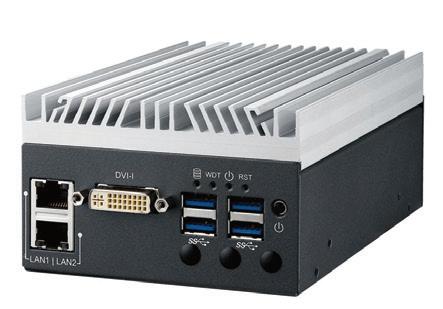
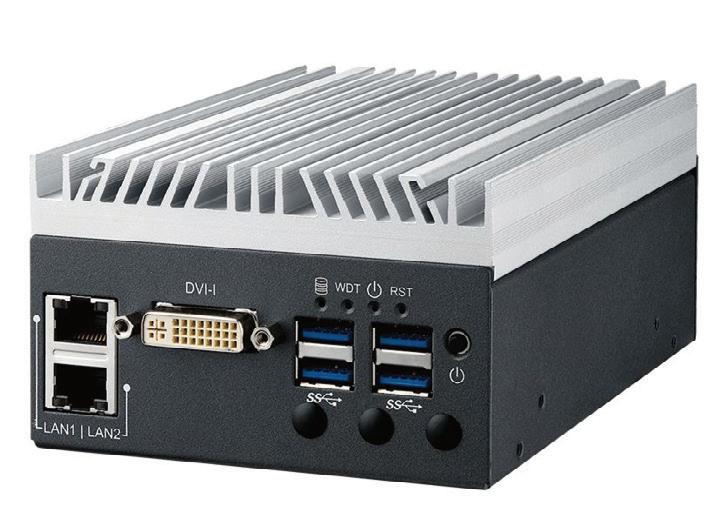
Vecow Ultra-Compact industrial PCs — available from LAPP Australia — are a versatile computing solution engineered for the most demanding industrial environments. These systems combine high-performance processing with a rugged, space-saving design, making them useful for factory automation, machine vision, IoT edge computing and real-time data acquisition.
Vecow industrial PCs deliver powerful processing capabilities with Intel Celeron, Atom, i5 and i7 CPU options. Their fanless, industrial-grade construction supports stable operation in challenging conditions, including high temperatures, dust and vibration.
The Ultra - Compact series also offers flexible I/O connectivity, enabling seamless integration with a wide range of sensors, controllers and peripheral devices. This makes them suitable for embedded applications where reliability, performance and adaptability are critical.
For engineers and system integrators seeking a compact yet robust computing solution, Vecow’s Ultra- Compact industrial PCs provide a good balance of power, durability and flexibility. With their minimal footprint, these PCs can be deployed in tight spaces without compromising performance, helping businesses optimise industrial processes and improve efficiency at the edge.
LAPP Australia Pty Ltd lappaustralia.com.au
Power distribution units
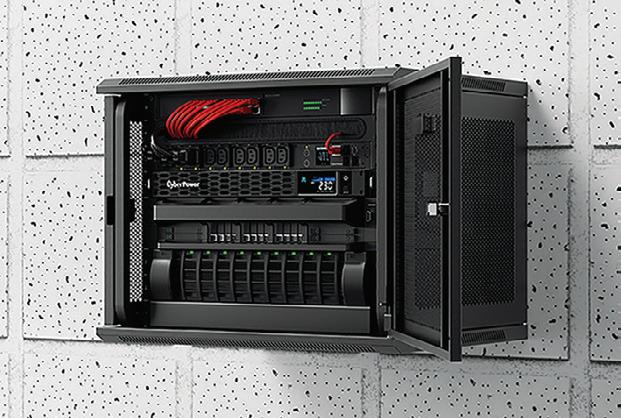
As server racks become more densely populated and edge computing deployments expand, CyberPower Systems’ expanded range of power distribution units (PDUs) is designed to meet growing demand for space - efficient power delivery that minimises complexity.
The PDU41004, PDU41005, PDU44004 and PDU44005 models provide scalable solutions for IT managers, systems integrators, managed service providers and data centre operators who require rack power for comms rooms, network cabinets and data centre racks.
Pairing compact design with single-phase input support and durable metal construction, these 32-amp variants offer higher load capacities across wider network deployments. They also include multiple IEC output sockets for server and network hardware. By aligning with CyberPower’s UPS range, the new models enable standardised, end-to-end rack power infrastructure, simplifying procurement and long-term maintenance. CyberPower www.cyberpower.com/au/en
ATEX-certified M12 connectors
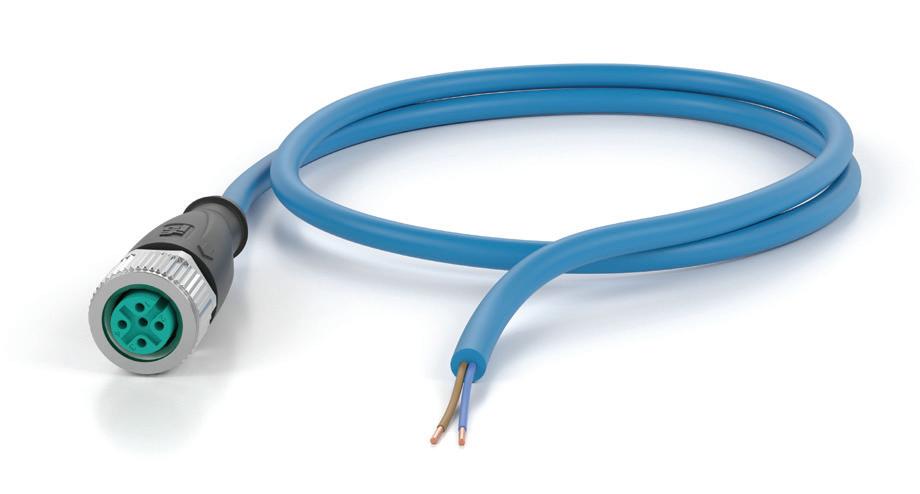
Pepperl+Fuchs’ ATEX-certified M12 connectors are designed for hazardous areas. Engineered to meet EN 61076 standards for intrinsically safe applications, these connectors combine high levels of safety, mechanical durability and simplified installation.
M12 connectors are the trusted standard for industrial automation, offering compact design, high protection ratings and easier installation. Made for challenging industrial settings such as chemical, oil and gas plants, these connectors feature built-in vibration protection that prevents hex nuts from loosening under shock or vibration. The result is long-lasting, secure connections, increased system availability, longer maintenance intervals, and enhanced operational safety.
Certified M12 cables and cordsets reduce the extensive verification efforts required for intrinsically safe circuits under IEC/EN 60079, NEC and CEC standards. With EU type-examination certificates, installers can save time, minimise errors and accelerate commissioning.
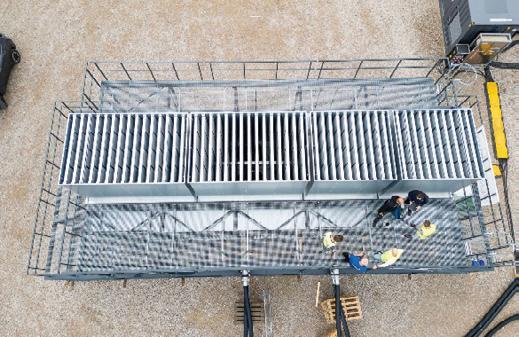
As data centre power densities rise, cooling system design is expanding beyond capacity and energy efficiency to include another critical factor — noise.
The sounds produced by larger, more powerful cooling systems could become a serious issue for data centres — especially when they’re located in urban areas with strict noise regulations.
Seeking to address this problem, missioncritical air conditioning company STULZ teamed up with Merford, which specialises in noise control, doors and custom acoustic solutions, to establish a new benchmark for validated noise performance in data centre cooling. The companies conducted a unique acoustic test on a newly developed chiller for a project in Valeggio sul Mincio, Italy, which was conducted under realistic operating conditions using a fully validated measurement methodology.
The evaluated project had to comply with maximum night-time noise limits of 80.2 dBA; this required acoustic considerations to be incorporated into the early stages of equipment design.
“The challenge was not only to guarantee efficient cooling but to comply with extremely strict noise limits,” said Davide Mazzi, head of the STULZ Application Team at STULZ SpA.
“The installation is located on a rooftop in a densely built urban environment. Our task was to deliver the required performance without disturbing the surroundings and without compromising the operational reliability of the data centre.”
Since comprehensive acoustic validation of large cooling equipment is rarely conducted, STULZ and Merford developed an integrated noise attenuation system designed specifically for this chiller configuration. The acoustic
measurements were conducted according to EN ISO 9614-2:1997, which determines sound power levels using sound intensity measurements.
Prior to testing, a detailed environmental analysis was carried out. Using a threedimensional acoustic model in SoundPLAN, which is specialised software for sound propagation calculations based on ISO 96132, the team optimised the test configuration.
Background noise levels had to be at least 10 dB below the sound emitted by the chiller itself. A measurement location was established at the production site, with supporting equipment such as transformers, boilers and pump skids deliberately positioned to ensure their operation would not interfere with the measurement process.
The team trialled two different noise attenuation concepts, both comprising steel frame structures surrounding the chiller with integrated acoustic attenuators to mitigate both airborne and structure-borne noise. The first configuration served as a baseline to deliver broad spectrum noise reduction, while the second incorporated additional acoustic optimisation and enhanced source
control measures to further reduce total sound power levels. While the second configuration introduced additional weight and structural complexity, it led to demonstrably greater noise reduction.
To verify the effectiveness of the system, engineers measured the chiller’s sound power level both with and without the attenuation structure in place. This comparative approach enabled the team to objectively quantify the noise reduction achieved and confirm regulatory compliance.
“We were delighted to find that the chiller equipped with the developed attenuation system successfully met the stringent noise requirements,” Mazzi concluded.
“This project demonstrates that data centre cooling and acoustic compliance can be achieved simultaneously when engineering, acoustic design and validation are approached as an integrated process. As data centres continue to expand into urban environments, such integrated approaches are likely to become essential for balancing performance, sustainability and community impact.”
Structural underside of the elevated cooling installation prepared for acoustic testing and airflow validation.
Network provider opts for unified cybersecurity platform
SA Power Networks is South Australia’s main electricity supplier, delivering power to more than 900,000 homes and businesses across the state.
As a critical infrastructure provider, it has to manage the risk of cyberthreats as well as keeping on top of evolving security-focused regulatory obligations. A major cyber incident could disrupt essential services and affect communities statewide, as well as resulting in data breaches, financial loss and a hit to reputation.
Until recently, SA Power Networks managed patching across separate tools, with its cyber, endpoint and server teams all looking at different screens. This created inefficiencies and delays and made it challenging to keep up with the extreme volume of vulnerabilities and subsequent patching required as a critical infrastructure provider.
This prompted the organisation to adopt software company Tanium’s Autonomous IT platform to unify and automate its cybersecurity processes.
“Merging everything into one tool just made sense,” said Lindbergh Caldeira, cybersecurity operations manager at SA Power Networks. “We chose Tanium not only for the technical acumen of the people, but also because of the continuing growth of the platform and the ability to manage everything under one banner.
“Even though we have three different teams, now they are better equipped to tackle the increasing volume of vulnerabilities and patching, be more efficient with their time and are all talking the same language.”
improve operational efficiencies and vulnerability management by:
• reducing manual effort and after-hours work for patching;
• more efficiently managing software licensing and reducing costs by removing unused licences;
• improving visibility and reporting across server and endpoint environments.
Tanium has already helped SA Power Networks by identifying a Windows Server Update Service vulnerability and enabling the utility to remediate affected systems within hours. Previously, the same workflow would have taken the organisation days.
“The move to a unified platform has eliminated data lag inherent in legacy systems, and provides near-instant visibility across our entire server estate,” said Phil Manning, technology design manager at SA Power Networks.
“Now, with Tanium, everything happens seamlessly at the push of a button, and we have confidence in the platform and how it’s enabling business resilience. We are now faster and more efficient when a vulnerability hits, removing stress from our team, reducing costs and keeping our systems even safer.”
Tanium www.tanium.com
By using Tanium’s platform, SA Power Networks aims to further
High voltage powerlines on Garden Island mangrove wetlands with Adelaide foothills in the background.
CREATING AN OPTIMAL THERMOELECTRIC GENERATOR — WITHOUT HUMAN INPUT
Voyager probe explores Jupiter. (3D rendering with elements furnished by NASA.) NASA uses thermoelectric generation to power its space probes.
The process of thermoelectric power generation can produce electricity from nothing more than a temperature difference, without requiring any additional fuel. It’s the principle used by NASA to power deep-space probes, and is regarded as a promising source of sustainable energy.
While waste heat is plentiful, produced in vast amounts by industrial sites such as steel mills and semiconductor plants, the performance of thermoelectric generators in real-world operating environments has often fallen short of expectations. This is because efficiency depends not only on the material itself but also on the device structure. A wide range of factors — including the path of heat flow, the distribution of electrical resistance, contact losses, and load conditions — must work together in a highly coordinated way for the device to perform at its full potential.
Until recently, most thermoelectric generator designs have been developed largely through human intuition and repeated experimental testing. Now, however, South Korean researchers have developed a general design framework that enables computers to autonomously identify the optimal structure of thermoelectric generators.
The joint research team was led by Professor Jae Sung Son of the Department of Chemical Engineering at POSTECH (Pohang University of Science and Technology), in
collaboration with Professor Hayoung Chung of the Department of Mechanical Engineering at UNIST (Ulsan National Institute of Science and Technology).
“This technology can derive optimal structures directly from input conditions without human trial and error, and its range of applications and impact could expand further through integration with AI,” Chung said.
The researchers deployed topology optimisation, a computational design method that allows the computer to determine the most efficient three-dimensional geometry. Instead of starting from a preconceived shape, the computer evaluates the design conditions and generates structures that maximise efficiency while taking into account realistic operating parameters such as the thermal environment, material properties, contact resistance and electrical load.
The computer produced some surprising designs. While traditional thermoelectric generators are typically built in simple rectangular shapes because they are familiar and easy to fabricate, the computer came up with highly unconventional geometries, including I-shaped and asymmetric hourglassshaped structures. These designs were found to enhance overall system efficiency by precisely controlling heat flow, increasing the temperature difference across the device and simultaneously minimising electrical resistance and contact-related losses.
Scheme for topology optimisation-based design of thermoelectric generator and experimental validation by 3D printing.
Using 3D-printing technology, the team fabricated these optimised structures and experimentally evaluated their performance. The best-performing design achieved up to 8.2 times higher power-generation efficiency than a conventional rectangular generator. The experimental results also showed strong agreement with the computational predictions, confirming the validity of the framework.
The work points to a future in which wasted heat can be more effectively converted into useful electricity.
“This study is significant in that it moves beyond the conventional focus on discovering better materials and introduces a new pathway for improving performance through designdriven optimisation tailored to real thermal environments,” Son said.
The research has been published in Nature Communications (DOI 10.1038/s41467-02669901-3).
Levers for 21.21 compact enclosures
In industrial environments with limited space, compact design is essential to streamline operations and improve installation efficiency, even under application constraints.
ILME’s latest 21.21 compact enclosures have evolved to meet these needs, further enhancing the range’s reliability and usability.
The new design for both rigid and plastic levers used in the 21.21 enclosures’ locking mechanism features a smoother, more refined shape compared to previous versions — delivering improved strength, consistent performance and faster set-up.
For zinc die-cast enclosures, the range offers a rigid galvanised steel lever for MKAXX and a rigid stainless steel lever for MKA. These feature reduced peg wear, easy opening thanks to an ergonomic handle, improved hood coupling with folded edges, and increased thickness (1.2 mm) for greater corner robustness.
The self-extinguishing thermoplastic material lever for MK (grey or black version) is designed for insulating enclosures. It is characterised by improved strength thanks to a closed-hole design replacing the previous open version, and easy opening provided by the ergonomic handle.
Treotham Automation Pty Ltd www.treotham.com.au
Direct current protection and switching solutions
The global energy transition has created a shift away from widely used alternating current (AC) systems towards direct current (DC) technology.
Siemens Smart Infrastructure’s DC protection and switching solutions are designed to meet the resulting demand for sustainable, efficient and reliable low-voltage power distribution and industrial switching technology.
This portfolio of solutions includes the SENTRON 3QD2 semiconductor circuit breaker and the SIRIUS 3RF5 solid-state switching device. When integrated in power distribution systems such as SIVACON S8 low-voltage switchboard and SIVACON 8PS busbar trunking systems, these devices support high-performance applications such as data centres, production facilities and battery storage systems. They also enable the direct integration of renewable energy sources.
Based on semiconductor technology and smart protection algorithms, the SENTRON 3QD2 semiconductor circuit breaker enables ultra-fast interruption of short circuits in the microsecond range. This is mandatory for DC grids and offers increased protection and system availability.
The SIRIUS 3RF5 solid-state switching device is designed for high-frequency switching of resistive loads, offering a low-wear and durable solution that enhances the efficiency and availability of industrial plants. It also carries the Siemens EcoTech Label, indicating sustainable and transparent product design. Siemens Ltd
www.siemens.com.au
Hardware-agnostic firewall for data centres
Belden’s TBF-800V Virtual Firewall can be deployed wherever it is needed as a hardware-agnostic solution in data centre, industrial or OT environments. Designed for maximum flexibility, it enables organisations to scale security seamlessly as operations expand, architectures evolve, or risk profiles change.
Built with security-by-design principles and designed for compliance with CRA and IEC-62443-4-2 standards, the virtual firewall delivers deep packet inspection for industrial protocols, application-aware filtering, and intrusion prevention to stop real-time attacks. Three licensing tiers offer flexibility to scale protection as needs evolve. Belden Australia Pty Ltd www.belden.com
Non-contact voltage detector
The Flir VP54 Non-Contact Voltage Detector helps professionals to safely verify energised circuits before starting work. Featuring triple alarm feedback — visual, audible and vibration alerts — the VP54 is designed to ensure voltage presence is clearly communicated even in noisy or low-light environments.
Additional features include: bright LED flashlight and tip light for improved visibility; ability to differentiate live wires from neutral or ground; and CAT IV safety rating and compliance with UL1436 standards. The device also has a rugged, drop-tested design for demanding field use.
Teledyne FLIR www.flir.com.au
TAKING ENERGY TRAINING TO THE REGIONS
With an eye to creating the energy workforce of the future, Essential Energy has partnered with the NSW Government to bring practical work experience to students across regional communities.
The training is facilitated through the NSW Government’s Regional Industry Education Partnerships (RIEP) program, which works with employers and schools across NSW to connect students with industries, helping them better understand career pathways, training options and the skills required for future jobs in regional communities.
It’s not the first time Essential Energy has worked with RIEP, having hosted 24 events via the program in 2025. With the energy sector looking to fill a shortfall of 42,000 trades roles across Australia by 2030, the utility is committed to further boosting engagement with students in 2026.
Essential Energy Chief Executive Officer John Cleland said the industry needs to do everything it can to promote itself to the next generation of energy workers.
“To create that pipeline of prospective tradespeople, we need good programs such as RIEP to give young people, and women in particular, a feel for the careers they can pursue so they understand that the energy transition is delivering economic benefits to regional Australians,” he said.
To fill the specialised roles required in an increasingly complex industry, the utility has also created the Essential Energy Training Academy, which launches later this year.
“We have had a very successful apprenticeship program for years, but the skills shortage is so large that we started the Essential Energy Training Academy to help grow the broader industry — training people from outside our organisation,” Cleland said.
“The Essential Energy Training Academy is partnering with industry stakeholders keen to build the skills capabilities needed to drive the energy transition and meet growing workforce demand.”
RIEP Regional Manager Fiona Forrester said the Essential Energy Training Academy’s footprint across six sites in regional NSW would significantly expand access to training and career pathways for young people.
“Having campuses located across regional communities means more students can see what a future in the energy sector looks like while staying close to home, so we’re quite keen to work closely with the Training Academy to reach more young people,” Forrester said.
Essential Energy hosted a RIEP NextGen Women in Trades event at its Dubbo depot in February, giving 10 secondary school students exposure to trade roles and a clear view of career pathways in the energy industry.
The Year 9 and 10 students from Coolah Central School, 135 km north-east of Dubbo, spent an afternoon at the depot, hearing from skilled tradespeople before trying some of the jobs themselves.
“It has really given me a look into the energy industry. I’ve learnt so much and I’m very keen on it,” said student Lily Richard.
“This has really opened my mind. I got to experience what it was like to climb a (power) pole. I’ve really enjoyed it.”
Cleland said diversity was vital to creating a stronger, more sustainable energy workforce.
“Exposure and visibility drive possibility — when we show women the fulfilling and varied careers available in the energy sector, young people like those I met in Dubbo can see what’s possible for their future,” he said.
“I am proud that Essential Energy is an industry leader in diversity, and women are increasingly entering our industry. Programs such as the NextGen Women in Trades program are vital to showing them early in their lives that they are not only welcome, but their skills are needed.”
Coolah Central School students at Essential Energy’s Dubbo depot.
Images courtesy of Essential Energy.
CREATING THE ‘HOLISTIC’ GRID OF THE FUTURE
A research team led by Colorado State University has come up with a novel framework for shaping the electric power grid of the future.
The proposed method helps different parts of the grid — transmission and distribution operations — work together to make holistic decisions without requiring system centralisation. The study has been published in Scientific Reports
The research could assist the energy sector at a challenging time, as power industry leaders and consumers grapple with the impacts of weather-related outages, rising energy costs, and demand driven by population growth.
Increasingly, electricity grids must accommodate renewable energy sources such as wind and solar, in addition to smart technologies. Building these complex grids of the future also opens the door to new risks, such as cybersecurity threats and vulnerabilities to natural disasters like wildfires and hurricanes.
Professor Zongjie Wang, a co-author of the paper, is the director of the new Grid Modernization Initiative at CSU’s Energy Institute and a faculty member in the Department of Electrical and Computer Engineering. Her research findings are part of a broader effort to create smarter, more efficient and reliable power systems to benefit everyone, from utilities to everyday customers.
For decades, the US power grid has operated in silos, meaning utility companies manage electric distribution systems while local and regional operators handle transmission systems, with little coordination between the two.
“As distributed energy resources grow, the traditional separation between transmission and distribution operations becomes increasingly inefficient,” Wang explained. “Industry leaders often lack system-level visibility into how distribution-level resources impact transmission operations.”
The paper details a solution to bridge the gap between distribution and transmission operations.
“As more people adopt solar panels, electric vehicles and other distributed energy resources, we’re pulling together many pieces to simplify these systems and ensure they work together seamlessly,” Wang said.
Drawing on Wang’s background in theoretical optimisation, the new framework shows how reduced distribution network models can be used to combine data from transmission and distribution systems. According to the researchers, this method provides more accurate and operationally feasible dispatch information to electricity providers.
By harnessing AI-powered modelling to account for uncertainties and complexities, the team’s approach enhances situational awareness and streamlines coordination. The holistic framework facilitates the integration of new energy sources while mitigating threats to grid reliability and resilience.
“This work offers a path forward for a big problem many of us are trying to solve,” Wang said. “By improving coordination and reducing inefficiencies, it has the potential to lower system costs, which ultimately flow through to consumers.”
The paper can be read at DOI: 10.1038/ s41598-026-39014-4.
Westwick-Farrow Media
A.B.N. 22 152 305 336 www.wfmedia.com.au
Head Office
Unit 5, 6-8 Byfield Street, North Ryde
Locked Bag 2226, North Ryde BC NSW 1670 Ph: +61 2 9168 2500
Editor: Katerina Sakkas ecd@wfmedia.com.au
Publishing Director/MD: Janice Williams
Art Director/Production Manager: Linda Klobusiak
Art/Production: Kate Atkinson
Circulation: Alex Dalland circulation@wfmedia.com.au
Copy Control: Ashna Mehta copy@wfmedia.com.au
Advertising Sales: Tim Thompson Ph: 0421 623 958 tthompson@wfmedia.com.au
Liz Wilson Ph: 0403 528 558 lwilson@wfmedia.com.au
If you have any queries regarding our privacy policy please email privacy@wfmedia.com.au
ECD [ELECTRICAL+COMMS+DATA]: ISSN 2201-2702
Printed and bound by Dynamite Printing
All material published in this magazine is published in good faith and every care is taken to accurately relay information provided to us. Readers are advised by the publishers to ensure that all necessary safety devices and precautions are installed and safe working procedures adopted before the use of any equipment found or purchased through the information we provide. Further, all performance criteria was provided by the representative company concerned and any dispute should be referred to them. Information indicating that products are made in Australia or New Zealand is supplied by the source company. Westwick-Farrow Pty Ltd does not quantify the amount of local content or the accuracy of the statement made by the source.