Westwick-Farrow Media
A.B.N. 22 152 305 336 www.wfmedia.com.au
Head Office
Unit 5, 6-8 Byfield Street, North Ryde
Locked Bag 2226, North Ryde BC NSW 1670 AUSTRALIA
ph: +61 2 9168 2500
Editors
Carolyn Jackson sm@wfmedia.com.au
Glenn Johnson pt@wfmedia.com.au
Katerina Sakkas ecd@wfmedia.com.au
Managing Editor
Carolyn Jackson
Publishing Director/MD
Janice Williams
Art Director/Production Manager
Linda Klobusiak
Art/Production
Marija Tutkovska
Circulation
Alex Dalland circulation@wfmedia.com.au
Copy Control
Ashna Mehta copy@wfmedia.com.au
Advertising Sales
Sandra Romanin – 0414 558 464 sromanin@wfmedia.com.au
Tim Thompson – 0421 623 958 tthompson@wfmedia.com.au
If you have any queries regarding our privacy policy please email privacy@wfmedia.com.au



Glenn Johnson, Editor, Process Technology
AI in the industrial sector offers substantial advantages, but it is not without its challenges.
In recent times it has been hard to avoid the discussion around artificial intelligence (AI) and its impact on our daily lives. By now most of us will also have experienced generative AI (GenAI) in some form — the most well-known example being OpenAI’s ChatGPT — and have been maybe surprised by its abilities or perhaps underwhelmed. But these tools are general in application, and may not be useful in many circumstances. However, AI that is focused, with specific relevant data to learn from, has shown it can be truly useful.
The industrial face of AI has been under development for some years — as an important aspect of the Fourth Industrial Revolution — but we are only now beginning to see it become more than just a tool for only the very large companies.
Until now, only very large, technology-focused companies have been able to make good on the promise of Industry 4.0. They are part of what the World Economic Forum calls its Global Lighthouse Network1 that showcases how digital transformation and cuttingedge technologies like machine learning and digital twins are able to achieve the automation dream. Among the 153 factories of the Network are various offices of companies like Siemens, GE Healthcare and Foxconn: companies that have the resources to focus on advanced automation.
>>
According to McKinsey, there is a ‘chasm’ between the Lighthouse factories and everyone else in terms of technological maturity — they tend to be three to five years ahead of everyone else.2 This was particularly evident after the COVID-19 pandemic: 85% of Lighthouse factories only saw a 10% or less reduction in revenue, while this was true of only 14% of others. Although they faced the same supply chain risks, 65% of Lighthouses were already dual-sourcing and increasing inventory by 2022, compared with only 24% of other companies.
In the last two years however, the readier availability of AI-based technologies is beginning to make it possible for smaller companies to begin to take advantage: lowercost industrial IoT and associated cloud-based AI mean that a broader range of businesses can begin to realise some of the benefits.
Industrial businesses can now deploy lowcost sensor networks and take advantage of cloud-based applications incorporating AI to predict maintenance needs in advance, reducing wasted time and cost on unnecessary maintenance and preventing unforeseen downtime.
Where such companies are already using a manufacturing control system (SCADA or DCS) from an automation vendor, these systems are now being upgraded with AI-based tools to help optimise production. Many vendors are now also providing GenAI-based support tools for operators and technicians to help improve efficiency and learning. Such tools are not like ChatGPT: instead, they are using large language models (LLMs) specifically based on real and site-specific automation and process knowledge.
Current research in robotics is focused mainly on making robots work better. Industrial robots tend to be large and expensive, and very inflexible — they need to be manually reprogrammed when the process needs to be changed, and are difficult to coordinate to work together.
Robotics researchers are working to enable better robotic vision, coordination and flexibility through the use of AI and machine learning. This is taking time however; we might assume that since AI can now beat champions of chess or Go,
that AI must be able to do everything well — but some of the simplest tasks for humans can often be enormously difficult for an AI-driven machine. We evolved for millions of years to be able to do the things we do and teaching an AI-driven robot to do these things has proven to be a difficult problem to solve.
AI can significantly enhance environmental sustainability efforts by helping to optimise resource use, reduce waste and improve efficiency in various sectors.
The chief benefit of AI is in being able to analyse large amounts of disparate data quickly. AI systems can therefore be used to optimise energy usage in buildings, factories and even entire cities. The idea of a ‘smart grid’ has been discussed for many years, but AI will enable easier balancing of electricity demand and supply, reducing energy wastage. AI-based predictive models are being tested that can increase the reliability of renewables, integrating them better into the energy grid and reducing dependence on fossil fuels.
In manufacturing, AI can help minimise energy-intensive practices and cut down overall energy consumption, while in agriculture, AI can manage irrigation and distribution to ensure water conservation. By monitoring soil moisture levels, predicting rainfall and analysing water flow, AI can help reduce water usage and prevent resource over-extraction, especially in drought-prone areas.
In the recycling industry, AI-driven vision systems akin to those in advanced manufacturing plants can use computer vision to identify and sort recyclables and separate them from waste, improving recycling rates.
The other side of the environmental coin Although AI can contribute to sustainability, the massive computing power that is being used to sustain AI systems has an energy demand and environmental footprint that must be carefully managed to ensure net positive impacts. Balancing these benefits and risks is essential as AI becomes increasingly integral to industrial processes.
According to Forbes3, “AI’s projected water usage could hit 6.6 billion m3 by 2027, signalling a need to tackle its water footprint.” The water need for cooling data centres due to the escalating demand for online services and GenAI systems has been estimated at 9 litres of water per kWh of

energy used — a problem that should not be overlooked when assessing the use of AI for sustainability objectives.
The cybersecurity risks of industrial AI primarily stem from increased connectivity and reliance on digital infrastructure, although this migration to digitalised systems has been underway for some time. What AI adds to the equation is its dependence on learning data. If an attacker can compromise the data that AI is being trained and updated from, it could be induced to make erroneous decisions, which could be catastrophic in a number of ways if the AI is heavily relied upon in the future. It is therefore necessary for cybersecurity protections to apply to the data itself, and raises questions about how and where an organisation stores and processes the data.
Meanwhile, cybercriminals are already utilising AI in their attack methodologies, but cybersecurity defenders are also using AI to speed up their response to incidents: in the future it may become an AI vs AI battle.
The fear that AI will lead to job losses is understandable, especially as automation advances rapidly. Many routine tasks across

various industries are increasingly automated, which has already led to shifts in certain job types. However, AI’s impact on jobs is complex and multifaceted, leading to both displacement in some areas and new opportunities in others.
Eliminating routine and low-skilled work AI and automation often replace repetitive and manual tasks, especially in manufacturing, logistics and data processing. For example, robots in manufacturing and automated sorting in logistics have reduced the need for human labour in these specific roles, but at the same time have reduced injury risk by eliminating heavy physical work. However, in fields like finance, automated processes handle data entry and simple accounting tasks, reducing demand for these types of jobs with no specific human benefit.
The positive side AI is creating demand for new types of roles, especially those related to designing, programming, maintaining and improving the AI systems themselves. Positions such as data scientists, machine learning engineers, cybersecurity professionals, AI ethicists and robotics technicians have grown as AI adoption increases. Many AI-related jobs require specialised skills in programming, data analysis and machine learning; this shift can
pose a challenge for workers without these skills, but it also opens up opportunities for people willing to retrain or upskill.
AI can also serve as a tool to augment rather than replace human capabilities. For example, AI can helps automate data analysis or generate reports from structured data, enabling human workers to focus on more complex work, and avoid tedious activities.
As McKinsey 2 put it: “What steam was to the first Industrial Revolution is what AI will be to the fourth. And much as coal supply chains and factory infrastructure were the tipping point that enabled steam power to race up the adoption curve, data collection and data infrastructure are doing the same in the fourth.”
AI in the industrial sector offers substantial advantages, particularly in enhancing productivity, quality control and operational efficiency. By automating repetitive tasks and enabling predictive maintenance, AI reduces downtime and optimises the use of resources, helping to lower costs, improve environmental sustainability and minimise waste.
However, the rapid adoption of AI also brings challenges. Job displacement is a
... AI’S IMPACT ON JOBS IS COMPLEX AND MULTIFACETED, LEADING TO BOTH DISPLACEMENT IN SOME AREAS AND NEW OPPORTUNITIES IN OTHERS.
concern, as automation replaces certain manual roles, creating a need for retraining and upskilling. Additionally, implementing AI can require significant initial investments, and the technology introduces cybersecurity risks, as highly connected systems become more vulnerable to cyberthreats, and while AI can contribute to sustainability, its energy and water demands are very high. Balancing these benefits and risks is essential as AI becomes increasingly integral to industrial processes.
1. World Economic Forum 2024, Global Lighthouse Network, <<https://initiatives.weforum.org/globallighthouse-network/home>>
2. McKinsey & Company 2024, Adopting AI at speed and scale: The 4IR push to stay competitive, <<https://www.mckinsey.com/capabilities/ operations/our-insights/adopting-ai-at-speed-andscale-the-4ir-push-to-stay-competitive>>
3. Forbes 2024, AI Is Accelerating the Loss of Our Scarcest Natural Resource: Water, <<https://www. forbes.com/sites/cindygordon/2024/02/25/ ai-is-accelerating-the-loss-of-our-scarcest-naturalresource-water/>>


What growth opportunities do you predict for your industry in 2025?
As industries evolve, there will be a growing demand for effective and highly customisable automation solutions. Manufacturers will seek solutions tailored to their unique operational needs, allowing them to quickly adapt to changing consumer demands. This trend will drive modular automation solutions, where systems can easily be reconfigured or expanded.
We are also seeing the rise of sustainable automation solutions gaining traction as industries strive to reduce their environmental impact. These products and systems focus on optimising energy use and minimising waste. Manufacturers that adopt green automation will reduce their carbon footprint and meet growing consumer demand for environmentally responsible products.
As a global leader in fluid control technologies, Bürkert designs products on an open control platform that can easily integrate into existing systems or operate as a turnkey solution. Our flexible system capabilities will be at the forefront of this shift, offering customised solutions that cater to our focused core industries: food and beverage, pharmaceutical, lab and medtech, and energy. This customisation will extend beyond our products and into sustainability development goal standards.
What are the three biggest challenges or threats facing your industry in 2025?
With the recent US election, the anticipation of a broader war in the Middle East, and continued Ukraine and Russia unrest, it is no surprise that political disruption is high on the list.
Due to these macro influences, worries concerning inflation and technological advancements remain major concerns for manufacturers here. The right time for investments is uncertain, as many are waiting for stabilisation within the economy. Together with labour shortages and climate change, these are the major challenges for the years ahead.
To address these concerns, Bürkert promises to continue to meet the demands of our customers’ operational needs faster than ever before. We know the best approach is our ‘smart’ consultation process. We do this by taking the time to understand their challenges, navigating their business processes and adjusting how our solutions can meet their needs.
Bürkert’s recent investments in building our new manufacturing centre in India and modernising our global factories have shown that we recognise the need to bring our production closer to our customers and prepare for the economic upturn.
How is your company reskilling its workforce in new technologies in 2025?
The conversation around workforce talent has shifted towards how to ‘future-proof’ workforces. While past concerns centred on labour shortages, recent rises in unemployment have revealed a different challenge: aligning workers’ skills with the demands of new and advancing technologies.

In some instances, the real obstacle for companies isn’t the number of available workers but instead equipping them with the right expertise to thrive in new roles shaped by advanced manufacturing and automation. The focus now is on upskilling and reskilling, adaptability, and creating an agile, future-proof workforce.
At Bürkert, one of our key breakthrough goals is cultural evolution. The aim is to improve the diversity of our team’s composition and provide a change of perspective. We see the need to shift our mindset as part of reskilling and adapting to our future growth. We value individuality as a strategic advantage and support those competent enough to take on more responsibilities.
How do you see artificial intelligence (AI) influencing your industry in 2025 and beyond?
It’s hard not to talk about the impacts of AI and how it’s shaping our industries for the next decade, both in a positive and potentially negative sense. Most companies are only using AI to enable modest improvements in their back-end operation, but the real value is to improve the customer experience. Manufacturers will harness AI to anticipate needs, personalise interactions and provide proactive support. From chatbots offering real-time assistance to advanced analytics understanding customer behaviour, AI will transform how companies engage with customers. Predictive models will enhance product recommendations, while AI-driven sentiment analysis will ensure tailored responses to feedback. Voice and natural language processing will refine communication, making customer interactions seamless and intuitive.
At Bürkert, we’ve recognised the importance of leveraging AI to drive customer-centricity. We’re already undertaking a number of projects to implement AI tools to execute tasks such as onboarding a client, customer service projects, and chatbots that can answer FAQs, track orders and provide personalised product recommendations. Also, cyber protection with fraud detection tools to uncover suspicious activity in real-time and protect our customers’ data is an essential step towards AI improving our user experiences.

Cuong Vo, General Manager at Bürkert Australia, boasts over 20 years in process control and automation. Specialising in guiding medium-sized organisations through transformative changes, he prioritises customer-centric approaches for sustainable growth.



What growth opportunities do you predict for your industry in 2025?
Firstly, 5G networks will continue to be rolled out, as faster and more reliable connectivity is required for enhanced mobile broadband, IoT and smart cities. Our wide range of connectivity products will support this activity, as well as developing novel solutions for futureproofing the network.
Products for fixed wireless access (FWA) will also be developed as an alternative to traditional wired broadband. This technology relies on 5G networks to provide high-speed internet access in areas where optical fibre is not available or feasible to install.
Thirdly, there is high demand for efficient cooling technologies and the need to reduce energy consumption in data centres. Opportunities exist to develop advanced cooling technologies, such as immersion/liquid cooling, or free cooling.
What are the three biggest challenges or threats facing your industry in 2025?
1. Rising geopolitical risks and the escalation of trade wars between the USA, China and Western countries.
2. Global economic uncertainties which may cause sudden changes in industry regulations and local policies.
3. Rapid advances in technology, such as the rollout of 5G and the integration of AI, are both opportunities and challenges. Telecom companies must continuously innovate to stay competitive, which requires significant investment in R&D and new technologies.
What plans does your company have in terms of the energy transition, electrification and replacement of gas?
In 2020, Warren & Brown Technologies (WBT) signed up as a member of the Carbon Disclosure Project (CDP) and annually, the company reports on its greenhouse gas (GHG) emissions and initiatives to reduce carbon emissions from its assembly plant and head office in Melbourne. The Carbon Disclosure Project reporting module has placed WBT in the top 22% of similar organisations in the Oceania region, which is also comparable to the global average for similar companies.
Approximately 70% of our emissions come from the goods and services we purchase for our own operations as well as subcontracting services. To drive the transition to a low-carbon economy through our relationships with suppliers, we are developing a supplier engagement plan.
How is your company tracking with its net zero emissions by 2050 targets?
WBT is committed to transitioning to a low-carbon economy and promoting sustainable growth as a fundamental aspect of our business. As we reach a critical juncture in addressing climate change, it is essential that we persist in our efforts to limit global warming to 1.5°C.
Our climate transition plan outlines our GHG emissions reduction targets, our net zero commitment and the key strategies we will implement to achieve these goals. WBT is dedicated to ambitious climate action, aiming to achieve net zero emissions across our value chain by 2050, supported by science-based GHG emissions reduction targets.
What resource recovery initiatives are your company planning to implement in 2025?
Helping clients lower their emissions is the most substantial contribution we can make. Through innovative designs and guidance, we can significantly influence the reduction, avoidance or mitigation of their emissions, which often exceed WBT’s own emissions by a large margin.
Key strategies for managing value chain emissions include: establishing supply chain engagement programs to educate partners on measuring and managing GHG emissions, while assisting suppliers in setting and reaching their own climate science-aligned goals; conducting life cycle assessments for specific products and services to generate detailed information that contributes to emissions footprint calculations; and compiling data to bolster resilience strategies in response to growing shocks and vulnerabilities within global supply chains.
How will your company step up its cybersecurity in 2025?
Over the past few years, we have implemented a variety of technologies to enhance our cybersecurity posture. Additionally, we operate a 24/7 Security Operations Centre that monitors our platforms, devices and users.
We believe that technology and processes are crucial components of our security strategy. In the coming months and year, we will place greater emphasis on educating our staff about cybersecurity, phishing and other threats that may impact them both personally and professionally. Our employees are our most valuable asset in maintaining cybersecurity.

is a skilled mechanical engineer with a diverse background, ranging from military engineering in Bosnia to developing cutting-edge telecommunications solutions in Australia. With over 20 years at Warren & Brown, Miki has played a key role in innovations in cable storage systems and fibre-optic technology, currently serving as the Research and Development Engineering Manager. His work has significantly contributed to the company’s success, including the development of industryleading fibre-optic storage solutions.
The Pepperl+Fuchs R200 series photoelectric distance sensors integrate pulse ranging technology (PRT) in a compact standard housing to enable precise measurement results at distances of up to 60 m. The technology allows for high-precision distance measurements in limited spaces. By emitting over 250,000 laser pulses per second, PRT is designed to provide highly precise and reliable distance measurements, achieving a repeat accuracy of ≤3 mm.

The R200’s compact design allows easy integration into confined machine designs. Additionally, swivel connector plugs provide extra flexibility during installation in small spaces.
The R200 with pulse ranging technology is the latest addition to the R10x/R20x series from Pepperl+Fuchs, combining all photoelectric functional principles in five standard housings. Users benefit from an intuitive operating and display concept standardised across the entire series. The distance sensor is equipped with a standardised IO-Link interface in the latest version 1.1.3, including smart sensor profile, so that the R200 with PRT can be easily integrated into Industry 4.0 environments.
Pepperl+Fuchs (Aust) Pty Ltd www.pepperl-fuchs.com

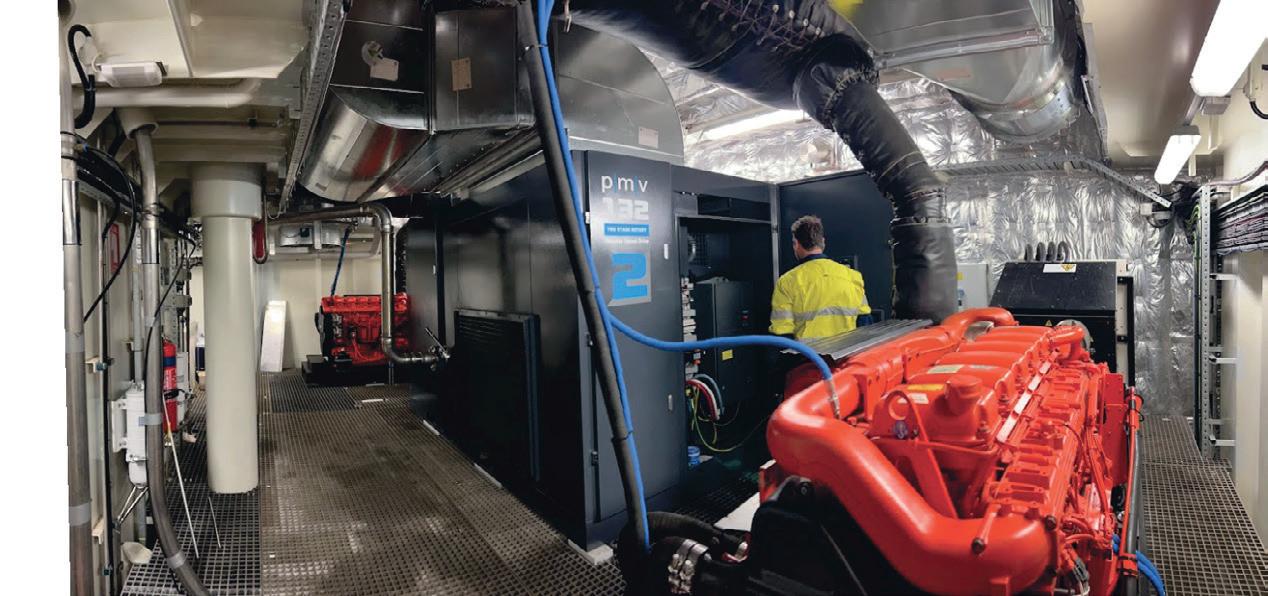
The newest addition to ELGi’s EG family of energyefficient compressors is the PM VFD Series.
The EG PM VFD Series (permanent magnet variable frequency drives) is designed to provide the best-in-class life cycle cost, enhanced performance and energy efficiency even at 100% load conditions.
Designed to achieve savings, the ELGi EG Series compressors also come with a warranty program of up to 10 years.
The company’s experts can provide a tailored solution to meet user requirements.
ELGi Equipments Australia www.elgi.com.au
LAPP Australia’s range of ÖLFLEX Heat 180 Silicon cables are built to handle the heat, in temperatures up to 180°C.
These robust control cables are made with silicon insulation and sheath compounds, which makes them suitable for much higher ambient temperatures. However, because it is made of silicon, the sheath is softer and easier to damage compared to a traditional PVC cable.
The ÖLFLEX Heat 180 Silicon cable range is suited to machine and plant construction, as well as tool-building and manufacturing applications that require flexibility of movement, with high temperature resistances. Other applications include steel, ceramic and iron works; bakery and industrial furnaces; electric motor manufacturing; HVAC and ventilator technology; and galvanisation technology.
The flexibility of these cables simplifies installation where spaces are limited. Additionally, the cables possess insulating properties after combustion due to remaining SiO2 ash on the conductor.
According to the company, the cables perform well in applications with high ambient temperatures where insulating and sheath materials of conventional cables will embrittle after a short while, but silicon does not.
The cables are also halogen-free and flame retardant, and they contain no corrosive gases. They are resistant to a range of oils, alcohols, vegetable and animal fats, and chemical substances.
LAPP Australia has local stock of the ÖLFLEX Heat 180 range, as well as a local team to support with product specification Australia-wide. LAPP Australia Pty Ltd lappaustralia.com.au


Two of the decade’s defining issues appear to be on a collision course to cancelling each other out.
On the one hand, achieving sustainability goals and reducing power consumption has never been more important. On the other hand, AI has captured the imagination of business leaders — along with the data and energy-intensive infrastructure required to run it.
As AI becomes more pervasive, its carbon footprint could be a major drag on net zero ambitions. These algorithms have ever-increasing demands for data, placing enormous pressure on data centres to keep up.
By 2027, 1.5 million AI server units are expected to ship annually. When running at full capacity, these would consume at least 85.4 terawatt-hours of electricity annually — enough to power approximately 16.5 million Australian households.
While AI and sustainability seem worlds apart, advances in data centre and cloud infrastructure can bring them together. With data consumption increasing exponentially, recent research suggests organisations are starting to realise the significant impact infrastructure modernisation has on their sustainability goals.
According to the 2024 Enterprise Cloud Index, APAC organisations have shifted their focus towards being more data-driven in their approach to sustainability. An impressive three in five organisations said they have modernised their IT infrastructure to improve sustainability.
This trend is not just about reducing carbon footprints or achieving regulatory compliance — though these are massive benefits to any modernisation strategy — it’s also about futureproofing businesses and driving long-term growth.
Modernising IT infrastructure plays a crucial role in reducing an organisation’s environmental impact.
A modern IT infrastructure can improve energy efficiency, reduce waste and promote more sustainable practices. For example, transitioning to cloud-based services from providers who leverage increased efficiency or renewable energy sources can help reduce
an organisation’s energy consumption and carbon footprint. Similarly, adopting virtualisation technologies can minimise hardware waste while slashing power consumption.
For example, the University of Canberra reduced its data centre footprint by 78% by implementing virtualisation and hyperconverged infrastructure (HCI). So much so that the university was able to decommission a backup data centre it had built on campus, reducing its IT carbon footprint.
These benefits are part of the reason HCI is fast becoming the infrastructure of choice for many organisations as they modernise their data centres. It streamlines operations by collapsing compute, storage, networking functions and AI accelerators, reducing hardware footprint and enhancing energy efficiency.
While infrastructure modernisation can make a significant impact towards sustainability goals, the key could lie in fostering a culture of sustainability within the organisation. It is not merely a technological endeavour. It requires a cultural shift that prioritises environmental responsibility throughout the organisation.
Leadership plays a crucial role in steering this cultural shift. Leaders must set clear, measurable sustainability goals and demonstrate a consistent commitment to achieving them. The 2024 Enterprise Cloud Index report also found 60% of businesses across the region adopted remote-work initiatives to reduce the organisation’s carbon footprint, while more than half (55%) had committed to reducing waste products.
Organisations that succeed in transforming their technological capabilities and driving a deep-rooted cultural change will not only reduce their environmental footprint but also gain a competitive edge in an increasingly eco-conscious market. By prioritising sustainability at every level of the organisation, right down to the data centre, businesses can drive meaningful change and contribute to a more sustainable future.
Aaron White, General Manager and Vice President, Nutanix APJ


What growth opportunities do you predict for your industry in 2025?
Population growth and urban sprawl will prompt high demand for projects that relate to infrastructure. This will include road infrastructure and tunnels, water treatment and desalination plants, as well as steelmaking — especially when you consider the government’s ambitious housing targets.
This also leads to more opportunities in the power sector with renewables being a key focus on the agenda. This presents an opportunity for us to provide specialised solutions, especially customised and tailored solutions that meet unique application requirements. Of course, resources and mining, food production and the meat industry remain top performers and Bonfiglioli is well placed to supply products into all of these industries as well.
With all of these projects there will be a higher demand for customised and tailored solutions that meet unique application requirements. There will also be increasing demand for Industry 4.0-ready solutions.
What are the three biggest challenges or threats facing your industry in 2025?
I would say there are four significant challenges facing our industry. The first of these is rising costs — including the cost of energy, inflation and interest rates, as well as labour. The second would be increasing competition.
There is also increasing customer demand for solutions that reduce their costs, while also enhancing productivity, efficiency and flexibility.
Finally, there is the need to modernise, including the updating of equipment to facilitate the adoption of new technology, as well as the re-skilling or upskilling of staff.
How do you see artificial intelligence influencing your industry in 2025 and beyond?
I expect it will impact the power transmission sector in much the same way it is impacting other industries: it will enable more efficient, productive and cost-effective operations, as well as datadriven business strategy, design of solutions and customer service.
AI is totally pervasive in our business environment and sometimes incorporated in ways you hardly even realise — if you even just think about the software we use every day.
So there is no question that it will influence us and better the way in which we do business.
How is your company tracking with its decarbonisation targets and ESG reporting requirements?
Earlier this year, the Bonfiglioli Group announced the development of its new Sustainability Policy — a document that underscores our steadfast dedication to sustainability, transparency and responsible business practices. It also serves as a beacon to guide the Group’s efforts towards a more sustainable and resilient business model. It’s aligned to the United Nations Sustainable
Development Goals (SDGs), as well as the Group’s core values of Challenge, Respect, Accountability and Winning Together.
The target commitments expressed in this policy include the design and creation of sustainable workplaces and the reduction of the environmental impact of the Group’s activities, processes and products.
The company is making good progress on these goals, having already achieved environmental certifications for our buildings and plants, such as the Energy Management System certification according to ISO50001:2018, obtained in 2021 for the Italian plant in Forlì and extended to the EVO plant in 2022. In addition, in the same year, we obtained ISO 14001 certification for the environmental management systems at the Calderara di Reno plant and the Mannur plant in India.
How will your business assist with Australia’s mission of reshoring our manufacturing capabilities?
Bonfiglioli Australia and New Zealand recently completed the expansion of local facilities, enabling us to support local manufacturers with ample stock of specialised geared products, faster delivery, and comprehensive service and technical support.
In Sydney, this expansion included the purchase of a new HD machine from Italy. This fully automated machine enables faster build and delivery of gearboxes, enabling Bonfiglioli to double its output, meeting customer demand for fast turnaround. In addition, we have invested in developing our local presence and stockholding, ensuring our customers receive exceptional support and service.
Meanwhile, the team in New Zealand relocated to larger facilities in Auckland. The new facility features a wide shop floor area of 1200 m2 for warehouse, assembly and aftersales activities plus a 180 m2 modern office area, allowing for business expansion and improved

Our established local presence allows us to bring high-quality global solutions and expertise to local manufacturers, supporting the Martin Broglia was appointed as Managing Director for Bonfiglioli Australia and New Zealand almost six years ago. He holds an Electronic Engineering degree from his home country, Argentina, and an MBA from the University of Sydney. Martin has extensive experience in sectors ranging from mining and bulk materials handling, to packaging, logistics, and food and beverage manufacturing.

Today, more than ever, enzymes and microorganisms are being used to increase sustainable production. This is particularly true in industries such as pharmaceuticals and (bio)chemicals. In these and other industries, researchers within universities, R&D organisations and other institutes, as well as within industry want to know under which conditions these biological cells grow. While it is essential and important to know how and under what conditions they grow faster, researchers need the full story. That means they are just as interested in what makes them grow slower or abnormally. It is also essential to learn about the influence of nutrients or additives to understand the underlying biological processes.
For research organisations the accurate measurement and control of low flows of liquids and gases is often required. What is low flow? The real values will be application dependent but might be as low as 0.014 to 0.7 mL/min of N2 to around 600 kg/h in liquid applications.
Bronkhorst excels in this arena and their customers are many and varied. In the area of biological cell growth, for one recent application the organisation sought to learn more about the conditions under which a population of microorganisms will grow. Flow control was used to give
an accurate and steady flow of aqueous liquid while they varied an array of other parameters.
It was essential for them to investigate under which conditions a population of microorganisms can grow. For this they would vary one typical parameter, whilst other parameters, such as temperature, pressure and nutrient concentration, needed to be kept constant.
For this recent application, a research organisation contacted Bronkhorst. They had an application where they were struggling to stabilize the low flow in an aqueous stream — in this case their range was 30 to 200 mL/min. They had two reactors that needed to be kept in balance. They had tried to find a balance but were regularly emptying one of the reactors. To that end, their desire was that the liquid levels of two reactor vessels containing these microorganisms needed to be accurately and repeatably kept at a stable, constant value using flow control.
After consideration, Bronkhorst supplied two of their liquid mass flow instruments. In this case it was their mini CORI-FLOW series. The CORI-FLOW series uses the Coriolis effect which was first postulated as an explanation of the deflection of flowing air moving
in a rotating system. In fact, the Coriolis effect is a mass inertia effect. A Coriolis-based mass flow meter is particularly suitable when you want to measure the mass flow of varying or unknown gas or liquid mixtures or for measuring supercritical gases. Besides measuring direct mass flows which eliminates inaccuracies due to the physical properties of the fluid, these devices are highly accurate and have a high repeatability. The Coriolis flow meter is the ultimate flexible, reliable and extremely accurate flow meter.
In this application, each CORI-FLOW was inserted in the circulation system in between the reactor vessels, with the aim to provide a continuous flow of aqueous liquid.
The main reactor was approximately 1 litre and the researchers allowed the micro-organisms to grow in the reactor within an aqueous environment. Regular sampling of the main reactor gave them information of the number of cells and the cell growth rate. The researchers also identified temperature as an important parameter. Too low temperatures will hold back the microorganisms and slow or stop them from growing, and too high temperatures are detrimental to the longevity of the microorganisms themselves.
For this sophisticated application, the liquid mass flow instrument with a control valve provides a signal to a control unit. That control unit is ‘in charge’ of a pump. The pump speeds or slows in response to the flow measurement and the control action, making for a very precise flow in this line. From there the liquid then flows from the main reactor to a second reactor. In this case the second reactor

is much smaller than the main reactor and has a volume of about 200 mL. Using the same methodology, the fluid is again moved via the direct control pump scenario, described above, back to the main reactor. What is now set up is a continuous circulation, in which the flow is very steady. The process continues day and night for as long as the research requires.
While it sounds like smooth sailing, a further complication was identified. The microorganisms in this experiment were approximately 3 µm diameter. That provided a further challenge as all the microorganisms needed to be kept alive and they needed to be in perfect health (without any damage) during the process of circulation. For this Bronkhorst advised the researchers to use peristaltic pumps in their process to keep their microorganisms fit and healthy.
The Control Unit/s and setpoints were run within the research organisation’s systems; however, it was further determined that, in this application both the flow controller and pump combinations would best have the same capacities. This simplified the operation and helped the levels in both reactors remain at the same, stable value.
Bronkhorst’s flow meter range includes:
• Thermal Mass Flow meters & controllers for gases and liquids
• Coriolis Mass Flow Meters & Controllers for gases and liquids
• Ultrasonic Meters for liquids
• Pressure Controllers for gases and liquids
• Control Valves and Control Electronica and accessories
In this case the correct flow meter was a Coriolis-based mass flow meter. This technology is particularly suitable when you want to measure the mass flow of varying or unknown gas or liquid mixtures or for measuring supercritical gases. The fundamental theory for a Coriolis meter is direct mass flow measurement. There are no estimations or assumptions or inaccuracies due to the physical properties of the fluid. A CORI-FLOW from Bronkhorst is thus highly accurate and they have high repeatability. For many users, the Coriolis flow meter is the ultimate flexible, reliable and extremely accurate flow meter.
The original article was published as an Application Note by Bronkhorst High-Tech B.V.

APS Industrial has announced the release of the APS Power 3 Phase and Neutral RCBO that has been purpose-built for Australian industry and use in the APS DB family of distribution boards.
Compliant to AS/NZS 61009.1 and complete with 10 kA interrupting capacity and type A RCD tripping characteristics, the APS Power range of 3P RCBOs comes in nine models ranging from 6–63 A (each with C curve overcurrent protection).
With a fixed 30 mA residual current sensitivity setting and toggle-free operation, the compact 3P RCBOs are supplied with a 900 mm-long neutral reference lead (blue) and are just 54 mm in width for maximum space saving in a distribution board.
APS Industrial www.apsindustrial.com.au

The DCR 1048i OCV from Leuze can read 1D or 2D codes within one application and also check quality using the OCV process. This makes it possible to determine whether the best-before date, batch or other printed information is present, complete and legible.
Using optical character verification (OCV), users can teach-in the vision sensor for print quality verification easily, quickly and without complex parameters. All that is needed is to present it with a reference image of the optimum print. The DCR 1048i OCV then detects defective printing, for example, clogged print heads, low ink cartridges or adhesion problems. Once the threshold value is set, products recognised as defective can be rejected.
Leuze electronic Pty Ltd www.leuze.com.au


Drag chains are made for tough environments, so they need cables that are equally tough.
LAPP Australia’s ÖLFLEX ROBUST FD range of drag chain cables is designed for the harshest industrial environments, including those found in manufacturing, materials handling, food and beverage, chemicals, medical technology, car washing, machine tool building, composting, sewage works and more.
These rugged cables are available in screened or unscreened versions, with screened cables using copper screening to comply with electromagnetic capability (EMC) requirements and protect against electromagnetic interference.
All cables in the range have good weather, ozone and UV resistance, and can be used across a wide range of temperatures (down to -40°C) indoors and outdoors. They are also halogen free, which makes them a safer choice when used in public areas.
They also have resistance to organic oils, greases, waxes, ammonia compounds, biogases, cold and hot water, ester-based hydraulic fluids and water-soluble cleaning and cooling agents. The ÖLFLEX ROBUST range comes with certified resistance to disinfection and cleaning solutions used in the food and beverage industry, including factories specialising in milk and meat products.
For drag chains, assembly lines, power chains, moving machine parts, production lines and all kinds of machines, ÖLFLEX ROBUST FD cables are designed to provide a durable and reliable solution to minimise downtime and keep production running.
LAPP Australia Pty Ltd lappaustralia.com.au

The Australian Renewable Energy Agency (ARENA) has opened the first phase of the $1 billion Solar Sunshot program to support innovation in Australia’s solar photovoltaic (PV) manufacturing industry.
Solar Sunshot was announced by the Australian Government in March and the program guidelines have been designed following a period of extensive consultation.
ARENA CEO Darren Miller said the program aims to uncover and support innovation to drive scale and diversity in a critical industry.
“Solar electricity will be the foundation of Australia’s future energy supply and the key to our net zero and renewable energy superpower ambitions,” Miller said.

“We need to build on our history of innovation and extend this into manufacturing across the solar supply chain. The demand for solar required to meet our net zero and renewable energy superpower goals is immense and Australia has the opportunity to build resilience and unlock long-term economic opportunity.
“ARENA is known as Australia’s renewable energy innovation agency, so we’re looking forward to seeking out that innovation in the solar manufacturing space. Australia is a recognised leader in solar research and deployment, and this gives us the opportunity to play a greater role in manufacturing.”
Two funding rounds have now been launched, with a total of $550 million available. Round 1A aims to support solar PV manufacturing innovation with a focus on modules, inputs to modules, and deployment systems with an allocation of $500 million. Round 1B will provide funding for solar PV manufacturing studies, including feasibility and engineering studies, from a $50 million pool.
Applications are now open, with ARENA running an information webinar for potential applicants in the coming weeks.
For webinar dates or more information on Solar Sunshot, including program guidelines, eligibility requirements, and key dates, visit arena.gov. au/funding/solar-sunshot.
ARENA expects to announce future funding rounds under the Solar Sunshot Program from mid-2025.
Australian Renewable Energy Agency (ARENA) www.arena.gov.au
Port Authority of NSW, on its journey to net zero by 2040, has installed its first major rooftop solar panel system at its Newcastle Port Centre.
Port Authority’s Principal Environmental Planner Fiona McKay said 81 solar panels were installed to reduce the reliance on grid electricity. Rooftop space is efficiently used to generate power for onsite maritime operations.
“This investment in renewable technology is just one way Port Authority is meeting its own sustainability goals, while also actively offsetting increasing energy costs within our port facilities,” McKay said.
“This 35.6 kW solar system provides, on average, 150 kWh/day of electricity, which will be used to offset electricity use within the Newcastle Port Centre.
“The added benefits will see an estimated $170,000 in electricity savings over the life of the system which equates to around $9000 per year.
“It is great to see this solar panel installation now complete, as this is the first major step in reducing the consumption of grid electricity for our operations in Newcastle.”
Port Authority already offsets 100% of its electricity usage statewide with renewable electricity generation through a power purchase agreement linked to a NSW solar farm and a NSW wind farm; this is the next step, supplying its own renewable energy.
McKay added that Port Authority’s Sustainability Plan 2020 has embedded sustainable practices across the business with a focus on

improving efficiencies, optimising service delivery to reduce environmental impacts, and enhancing long-term sustainability outcomes.
The installation of the rooftop solar panel system is part of Port Authority’s Sustainability Plan and Net Zero targets, committing to reduce carbon emissions to reach net zero by 2040, with a 75% reduction in Scope 1 and 2 emissions by 2030.
Using hydrogen to generate electricity does not cause any climate-damaging emissions, but storing and transporting the gas poses technical challenges. With this in mind, Fraunhofer researchers are using ammonia as a starting material. Ammonia is cracked in a high-temperature fuel cell stack, and the hydrogen produced in this process is converted to electricity. The waste heat can also be utilised.
A team of researchers with Professor Laura Nousch from the Fraunhofer Institute for Ceramic Technologies and Systems IKTS in Dresden has developed a demonstrator based on a hightemperature fuel cell stack (solid oxide fuel cell, SOFC) that can use ammonia to generate electricity directly and with high efficiency. Electricity and heat are generated in a single compact system — without CO2 emissions or other harmful by-products.

“Ammonia has been used in the chemical industry for decades, to produce fertilisers for example, so there are established and familiar processes of handling this substance,” Nousch said. “As a hydrogen carrier, ammonia offers high energy density, and at the same time it is relatively easy to store and transport. It is therefore an ideal starting material for climate-friendly generation of electricity and heat energy.”
In the process, ammonia (NH3) is first conditioned and fed into the cracker, where it is heated to temperatures of 300°C or higher. In response, it breaks down into hydrogen (H2) and nitrogen (N2). When the process is completed, the nitrogen can simply be released together with water vapour as harmless exhaust gases. The hydrogen is fed into the high-temperature fuel cell. In a ceramic electrolyte, it flows over the anode, while air streams pass the cathode. Splitting the hydrogen releases electrons that move from the anode to the cathode, generating electricity.
In addition to water vapour, the electrochemical reaction also produces thermal energy and the afterburning also generates heat.
“The heat is used to maintain the high temperature inside the cracker and is also released as waste heat. The latter can then be used for purposes like heating buildings,” Nousch said.
When designing the system, the researchers at Fraunhofer IKTS drew on their decades of expertise in working with ceramic fuel cell stacks. The team was able to build a fuel cell demonstrator that handles the entire process of breaking ammonia down into hydrogen and subsequently generating electricity from it all in one device. The efficiency of this method, just like those based on natural gas, stands at 60%, but with the difference that

ammonia SOFC systems are comparatively simple and robust in structure.
The system is suited to smaller industrial companies that want to generate electricity without carbon emissions, or for municipalities and local utility companies looking to supply green heat to their customers. Even large ships can be equipped with ecofriendly drives based on ammonia/hydrogen in this way.
“Targeted design and smart thermal management are combined with other modifications to aspects such as the power and the size of the fuel cell stacks,” Nousch said. “We are then able to devise customised solutions for climate-friendly generation of electricity and heat, especially for small and medium-sized enterprises.”
Fraunhofer Institute for Ceramic Technologies and Systems IKTS www.ikts.fraunhofer.de/en.html
Designed for the most demanding data centres and telecom networks, WBT’s 7106 Series Ultra HighDensity Fibre Termination Panel (FTP) has a capacity of 144 LC or LC/A ports in just 1 RU. As data traffic continues to rise, the 7106 Series offers a solution to future-proof a business’s network infrastructure.
Innovative design is a feature of the 7106 Series. The single-row fibre access and double-pivot function make port access and splicing faster and easier, allowing network administrators to maximise space efficiency while maintaining full control of their infrastructure.
Supporting ultra high-density rollable ribbon fibre, the 7106 Series is compatible with configurations such as 864 F, 1728 F and 3456 F. Its ability to directly splice onto MTP connectivity reduces the need for additional connectors, streamlining fibre management and cutting down on complexity.
Each 1/4 RU panel row pivots and slides out independently, supporting 36 fibres per row and totalling 144 fibres in a single RU. This future-ready design supports fibre infrastructure to grow seamlessly while simplifying maintenance and deployment.
Integrating with WBT’s optical distribution frames (ODFs) and patch cords, the 7106 Series offers a complete solution for both existing and new network installations. With a depth of 300 mm, it easily fits into compact racks, offering a space-saving advantage over deeper alternatives.
With its generous capacity, smart design and high efficiency, WBT’s 7106 Series Ultra High-Density FTP suits data centres or telecom networks looking to stay ahead of growing data demands.
Warren & Brown Technologies

The Michell Instruments XPM601 paramagnetic oxygen analyser is designed for the monitoring of oxygen levels during the production of hydrogen, particularly in challenging and hazardous conditions.

The XPM601 employs paramagnetic measurement technology in a rugged and compact design and has worldwide and IECEx certifications for its safe operation in flammable gas compositions and hazardous areas. The analyser adheres to IEC 61508 standards and has SIL2 capability.
The XPM601 offers a broad measurement range, capable of measuring 0–5% O2 in H2 — with minimal interference — with an accuracy of better than ±0.1% O2 full scale. A through-glass display means operation and calibration can be performed without a hot works permit. Output options include both analog and digital for integration with existing systems.
AMS Instrumentation & Calibration Pty Ltd www.ams-ic.com.au

Richard Fechner* and Dr Tej Gidda** at COP29 in Baku, Azerbaijan

As Asia faces mounting climate challenges and rising energy demands, the push to shift from coal dependency to clean energy is at a critical juncture. The region’s progress in this transition is seen as essential to achieving global climate goals, with nations like Indonesia and Vietnam among the most coal-dependent economies that urgently need to pivot towards renewables.
With world leaders, climate and environmental scientists and business leaders having gathered in Baku for COP29 — the 29th Conference of the Parties to the United Nations Framework Convention on Climate Change (UNFCCC) — we’ve been advocating that this transformation poses significant challenges
while simultaneously providing opportunities for growth, resilience and innovation.
Coal remains the largest contributor to climate change, generating 35% of global electricity as of 2023. The International Energy Agency’s (IEA) net-zero scenario calls for OECD countries
to reduce coal’s share in power generation to 14% by 2030, with a complete global phaseout of unabated coal by 2040.
This underscores the fact that achieving global climate goals hinges on a viable energy transition strategy, particularly in Asia, where demand continues to surge.
The need for decarbonisation is stark: Asia’s carbon emissions now account for over half of the global total. The young age of Asia’s coal fleet — about 13 years on average — complicates the shift to renewables, with significant investments still tied up in coal plants. According to the World Economic Forum, policies that streamline and incentivise plant closures or conversions can accelerate the pace of transition.
Transitioning to renewables in Asia requires not only technological shifts but also robust financial mechanisms.

We need financing models that incorporate public and private capital, with mechanisms like loans and grants making clean energy more accessible and competitive.
Countries like Vietnam face hurdles such as rigid power purchase agreements that protect coal plants from competition. Overcoming these barriers demands innovative financing, potentially reducing the cost of capital to make renewable projects more viable and less risky.
The move from coal to renewables also requires securing grid stability and resilience. The diversity of resources across Asia — from hydropower in Southeast Asia to solar in China — necessitates tailored strategies for integrating these resources into a cohesive and stable energy grid. GHD is actively involved in helping clients to navigate these complexities by advising on technical planning, decommissioning and the use of renewables like solar and wind.
• Develop robust financing models: Facilitate access to capital with a mix of loans, grants and public–private partnerships to make renewable energy more competitive and scalable.
• Strengthen policy frameworks: Governments should adopt supportive policies to encourage investment, ease regulatory restrictions and provide incentives for renewable energy projects.
• Invest in grid resilience and smart technology: Modernising grid infrastructure, including smart grids, is essential for integrating renewables and managing intermittent supply efficiently.
• Encourage regional knowledgesharing and collaboration: Cross-border partnerships can accelerate technology transfer, innovation and the development of best practices for transitioning from coal.
• Support local workforces and communities: Implement training programs, workforce transition initiatives and local engagement strategies to ensure a fair and equitable transition for coal-dependent communities.
Based on this, there are three critical pillars for a successful transition: stable technical solutions, sustainable stakeholder engagement and a strong business case. Every project requires bespoke planning that

*Richard Fechner is GHD’s Enterprise Business Advisory Leader, leading the global business in providing strategy, commercial, economic, business case, logistics, policy, regulatory, asset management and transaction services. With over 30 years of experience, Richard has held senior roles in both the private and public sectors, contributing significantly to infrastructure development, investment and delivery across various sectors including ports, agriculture, energy, government and defence. He has advised on approximately AU$150 billion in infrastructure transactions and is a highly skilled infrastructure and business professional with expertise in strategic planning, business management and project engineering.
integrates stakeholder interests, addresses environmental impacts and leverages technical expertise to ensure grid reliability.
A well-defined transition strategy that supports all stakeholders and secures financial backing is essential for a viable energy future.
Creating such a strategy involves evaluating the potential of each project and exploring repurposing opportunities, from battery storage to hydrogen production.
A successful transition will rely on supportive policies that facilitate investment and foster technological advancements. We need to understand the importance of a ‘just transition’ that balances environmental goals with economic equity, especially in coalreliant communities.
Communities cannot be sidelined; local stakeholders need to benefit from new economic opportunities in renewables. At COP29 in Baku, GHD has been advocating for a holistic approach, including policy alignment, financial innovation and active community engagement.
The shift from coal to clean energy isn’t merely a goal — it’s an urgent necessity. Through collaboration, innovation and commitment to sustainable development, we can achieve a cleaner, greener future for Asia and beyond.

**Dr Tej Gidda is a distinguished expert in clean energy transitions and currently serves as the Global Leader for Future Energy at GHD. With over 20 years of industry experience, Dr Gidda holds a PhD in Environmental Engineering and is a registered Professional Engineer in Ontario. His work focuses on integrating clean energy technologies into existing systems and developing innovative strategies to overcome challenges related to reliability and affordability. Dr Gidda’s expertise spans hydrogen, renewable natural gas, traditional renewables, energy from waste, energy security and planning. He is also an adjunct professor at the University of Waterloo.

Alfa Laval has released the ThinkTop V55 diaphragm valve sensing and control unit with a durable, tamper-proof and maintenance-free design and built-in self-diagnostics.
Designed for Alfa Laval diaphragm valves, the slim profile of the ThinkTop V55 is designed to optimise space utilisation, making integration into new or existing installations easier. It also provides a 360° LED visual status indication, making the valve position clearly visible from the factory floor.
Real-time diaphragm valve monitoring is provided through digital, ASI 3.0, or IO-Link interfaces, for accurate valve position readings. Its point-to-point IO-Link communication protocol integrates sensors and actuators into any automation system, regardless of fieldbus. This integration makes it easier to capture, store, analyse, and act upon meaningful real-time data thereby supporting Industry 4.0 initiatives, and streamline configurability and process control.
Alfa Laval Pty Ltd www.alfalaval.com.au
The Vecow RCX-3750 PEG is an expandable GPU-accelerated system, built to handle AI, edge computing and industrial tasks. It is powered by Intel Core i9/i7/i5/i3 processors from the 14th generation (RPL-S Refresh/RPL-S/ADL-S), offering scalability and performance suited for AI inferencing and high-speed industrial applications.
The RCX-3750 PEG supports up to seven PCIe slots, allowing for the integration of dual 900 W NVIDIA or AMD 2-slot full-length graphics cards. This gives the system a maximum power budget of 1800 W, making it suitable for AI workloads and inferencing processes that require significant GPU power. I/O includes two GigE LAN ports with TSN, four USB 3.2 Gen 2 ports, four COM ports, and 32 isolated digital I/O, providing a broad range of connectivity options.
Additionally, the system offers four SATA trays for 2.5 ″ SSD/HDD, two front-access M.2 SSD trays, and three SIM card sockets for enhanced data storage and network capabilities. It operates in industrial environments with temperatures ranging from -25 to 45°C, and features flexible power input options of 16–50 VDC and 90–220 VAC.
Backplane Systems Technology Pty Ltd www.backplane.com.au


The Lumberg Automation Inner M12 Push Pull Connectors conform to IEC standard 610762-010 and feature a fast-locking contacting method. Their ingress protection and vibration resistance makes them suitable for use in harsh environments to prevent accidental disconnects that cause downtime, disrupt data gathering or create safety hazards.
The connectors are designed to provide secure contact without tools for torque even in tight spaces, such as on input/output (IO) modules or switches. Installation and maintenance are simplified through elimination of the need to screw in connectors.

With its portfolio of X-coded, D-coded and A-coded variants, the M12 Push Pull Connector suits a wide range of industrial and transport sectors, including railway rolling stock, harbours, intralogistics organisations, supply chain and material handling operations, and classic automation environments.
Belden Australia Pty Ltd www.belden.com
The Rosemount 802 Wireless Multi-Discrete Input or Output Transmitter has eight discrete I/O channels, each one configurable as an input or an output. WirelessHART capability allows the transmitter to connect to a wireless gateway, which can in turn link to a host — such as a control system or asset management system — via a wired connection. This allows the host to monitor and control assets remotely over a WirelessHART network.
The wireless capabilities of the Rosemount 802 reduce the costs associated with monitoring and controlling fieldinstalled assets, such as motors, valves and pumps, which traditionally require time-consuming field visits from technicians or a hardwired connection.
Power options include 10–30 VDC external line power or an Emerson SmartPower module. The latter option requires no wiring, provides up to eight years of maintenance-free operation, and can be quickly and easily replaced in the field.
The Rosemount 802 transmitter is certified according to safety standards ATEX Zone 2 Intrinsically Safe, USA Division 2 Non-Incendive and Zone 2 Intrinsically Safe, Canada Division 2 Non-Incendive and Zone 2 Intrinsically Safe, and IECEx Zone 2 Intrinsically Safe. The device enclosure is rated according to NEMA 4X and IP66. Emerson www.emerson.com/au/automation




Siemens has launched SIMOCODE M-CP motor management system designed for motor control centres (MCCs). The latest series complements the existing SIMOCODE range and introduces a more compact design, more advanced functionality, and compatibility with Ethernet-based communication. In the future, SIMOCODE M-CP will be adaptable to different operational requirements by purchasing licenses that enable additional functions depending on the application.
Motor control centres are designed to efficiently distribute power to motors, enable precise control and monitoring, and offer protection against overloads, short circuits, and other electrical faults.

The SIMOCODE M-CP is optimised for withdrawable units in switchboards. With the ability to choose between front panel mounting and mounting on a DIN rail, the device allows for optimising space and reducing installation expense, while more integrated functions in the basic unit result in less variance. Six digital inputs and four relay outputs eliminate the need for additional modules.
SIMOCODE M-CP uses single-pair Ethernet (SPE) technology to provide uninterrupted Ethernet communication and fulfil the needs of switchboard operations, while reducing wiring complexity with its thin, two-core cables.
With its diagnostic functions, SIMOCODE M-CP can provide early warnings in the event of irregularities. Long-term firmware updates also allow SIMOCODE M-CP to remain functional and up to date.
Siemens Ltd www.siemens.com.au
The Pilz IndustrialPI industrial PC is designed to be used in many ways, whether as a pure industrial PC, industrial controller (soft-PLC) or as an IIoT gateway. It is therefore suitable for realising IIoT, automation and motion projects in industrial automation environments.

Based on the well-known Raspberry Pi, the computer module has been installed in a housing designed for industrial use, along with an expansion board for industrial-grade interfaces and connections. The base module can be seamlessly expanded with suitable digital and analog I/O modules as required.
As an IIoT gateway, the IndustrialPI can be used to collect data in the immediate vicinity of machines and systems and connect them with cloud services. For example, it can send data from the PNOZmulti small controller to the cloud. It is also possible to set up interfaces to internal own IT systems as well as to cloud solutions.
As an automation controller as it can be used as a modular soft-PLC for a variety of automation tasks — whether for pure control applications such as reading inputs and switching outputs, or for synchronous axis movements and in the drive train of a machine.
Pilz Australia Industrial Automation LP www.pilz.com.au
The REDWAVE TEX is a flexible sorting solution designed specifically for the textile industry. Designed to identify and sort textiles, it is suitable for enhancing the efficiency and sustainability of the sorting process.
From G-strings to jackets, the device sorts materials according to predefined parameters and can handle two primary tasks: sorting whole garments for reuse and sorting shredded textiles for industrial processing. Features include: sensor technology for identification and sorting of textiles according to predefined criteria; can process large volumes of textiles quickly and efficiently; customisable to meet specific user requirements; and sorting criteria can be easily and quickly adjusted. By automating the sorting process, the solution can help to reduce the need for manual intervention.
REDWAVE www.redwave.com
Building a renewable energy system for a telescope in Chile’s isolated Atacama Desert could also cover 66% of a nearby community’s energy needs.

This is the finding of recent research, published in Nature Sustainability, that examined the impact of integrating renewable energy sources into the design of the AtLAST telescope on the Chajnantor plateau — a global astronomical hotspot.
The Chajnantor plateau is home to observatories like the Atacama Pathfinder Experiment (APEX) and the Atacama Large Millimeter/submillimeter Array (ALMA). Due to their remoteness, astronomical facilities like these are often disconnected from the national electricity grid, relying on diesel and gas generators to supply their powerintensive operations.
The researchers found that the renewable energy infrastructure brought in to power the AtLAST telescope could also be used by the astronomical community and nearby residential areas, thus reducing local reliance on fossil fuels.
Additionally, they showed that replicating similar energy systems at nearby telescopes could reduce fossil fuel-based energy generation by 30 GWh annually, cutting emissions by 18–24 kilotonnes of carbon dioxide equivalent while contributing to access to affordable renewable energy for surrounding communities.
While the Atacama Desert is a prime location for solar energy projects, holding the highest levels of solar irradiation globally, Atacameños don’t tend to benefit from this abundance. Instead, most renewable energy generated in the region is used to power lithium mines and exported to other provinces. The area hosts 85% of Chile’s solar energy developments, but Atacameños pay more for their energy than residents of the capital.
Chile’s national electricity grid ends 100 km from the town of San Pedro de Atacama, a tourist drawcard in the Atacama Desert. Until 2022, the town and its surrounding areas were powered solely by diesel and natural gas generators, and suffered frequent power outages.
The researchers identified the feasibility of using surplus energy from the AtLAST telescope’s energy system to supply San Pedro de Atacama.
“A solar renewable energy system sized to supply the telescope could cover 66% of the electricity demand of San Pedro de Atacama without additional capacities in PV or battery,” said co-author of the study Luis Ramirez Camargo, an assistant professor at Utrecht University’s Copernicus Institute of Sustainable Development.
Sharing surplus energy from infrastructure is based on the concept of ‘energy communities’ — unions of public, private and commercial entities that jointly invest in or share energy infrastructure, or provide energy services. The process is founded on open and fair decision-making.
The researchers created spaces where local residents and other affected parties could share their views on the challenges and opportunities for a more sustainable energy system in the San Pedro de Atacama area.
“Allowing those who are truly affected to participate in the discussion and be able to influence decision-making is essential to arrive at just, locally applicable solutions for the energy transition,” said lead author Guillermo Valenzuela Venegas, a researcher at the University of Oslo.
Camargo added that distributing benefits to multiple stakeholders through an energy community could lead to a more socially accepted and just energy transition.
“Our research shows that astronomy can lead by example in the urgent transition to an equitable net-zero world, keeping our planet habitable and ensuring no one is left behind,” he said.
Are you looking for a smart, flexible, reliable and cost effective drive?
Look no further than Parker AC30’s
From the designers of Eurotherm and SSD (made in Germany)
With 40 years experience of designing and building AC and DC drives and systems, Parker has a wealth of expertise in a host of different industries. The AC30 has been built on this experience and incorporates many flexible and innovative features, making it ideally suited for use in many industrial and commercial applications. Additional communications, expanded I/O and pulse encoder / resolver feedback option modules extend the capabilities of the AC30 still further, making it an extremely flexible and capable solution for all types of openand closed-loop motor control requirements.
Typical applications for AC30 include…
• Industrial Pumps
• Packaging Machines
• Textile Machine
• Machine Spindles

• Hydraulic Power Units
• Wire Drawings
• Converting Machines
• Printing Machines
• Test Stands
• Rolling Mills
• Crane Hoist Equipment
• Marine Winches
• Extruders
The AC30 series has been designed from the ground up as a modular product, offering outstanding flexibility through a range of interchangable and upgradable user options, including control modules, communications and I/O.


With more data centres transitioning to renewable energy sources, Scope 3 emissions become a data centre’s largest contributor to its greenhouse gas (GHG) emissions. This category of emissions is also the least reported and understood.
The focus on quantifying Scope 3 emissions in the value chain is part of a broader effort by organisations to assess and manage their environmental impact comprehensively. However, it requires a data-driven approach to helping data centre operators identify and categorise emissions from operations and the supply chain, then prioritise efforts to make impactful carbon reductions. This includes outsourced IT services from cloud and colocation service providers. Undertaking this process allows for more
informed decision-making and targeted efforts to reduce carbon emissions throughout the value chain. Developing a strategy that identifies the biggest source of carbon emissions in the value chain is quickly becoming a data centre industry priority, alongside the urgency to establish easy-to-use frameworks.
The effort to quantify and manage Scope 3 emissions aligns with broader trends in sustainability and corporate responsibility. Many organisations are recognising the importance of transparently addressing their environmental impact as part of their commitment to sustainable practices, but they don’t know where to start,
which reporting framework to use, or how often they should be collecting and reporting data.
However, quantifying and reporting on Scope 3 presents a significant challenge for data centre operators. This is mainly due to a lack of three resources: reliable supplier data, quantitative tools, and an accounting and reporting methodology.
Establishing and implementing a framework that incorporates accurate carbon counting and target setting, while systematically reviewing company data and emission sources, is the foundation to creating an achievable reduction plan.
Electricity generation, GHG emissions and water consumption determine the carbon and water footprint of data centres, including that of its suppliers. To be successful, suppliers must


concerns become more prominent, companies are recognising the need to align their operations across the value chain with climate goals to meet the expectations of a diverse range of stakeholders including customers, investors and vendors, and contribute to a more sustainable future.
Aside from being a compliance necessity, GHG reporting encompassing Scope 3 emissions is increasingly being recognised as a strategic and beneficial practice for the data centre industry. It aligns with the growing emphasis on sustainability, helps manage risks, and positions companies as responsible and forward-thinking entities in an environmentally conscious market.
Robust emissions reporting can enhance investor confidence and attract investment from those seeking sustainable and responsible opportunities. Data centres that prioritise emissions reduction and extend their sustainability efforts to their supply chains can provide a competitive edge. A resilient and sustainable supply chain can contribute to business continuity and enhance the overall reputation of a company.
The call for transparency and the availability of environmental product information further enhances the ability to make sustainable choices in the selection of data centre equipment.
Many organisations have focused on measuring and reporting Scope 1 and 2 emissions associated with their IT resources and implementing strategies to reduce them. Knowing where to start on your Scope 3 emissions metrics journey can be daunting. By quantifying Scope 3 emissions from their value chain, organisations can measure their total carbon footprint, including outsourced IT services from cloud and colocation service providers. Organisations can then prioritise their efforts to make impactful carbon reductions.
Schneider Electric offers many resources and tools to help organisations define Scope 3 emissions, including an inventory of nine emissions source categories and their data centre-specific subcategories for accounting and reporting purposes. This includes a modelling tool to simulate and model energy consumption within data centres that can help to estimate associated CO2 emissions. It also considers other factors such as power consumption, cooling systems, and overall data centre efficiency.
provide data centre operators with their own Scope 3 emissions data, related to the products used in their data centres.
These emissions vary significantly depending on many factors including data centre size, redundancy level, location, electricity emission factor, core and shell construction, IT equipment configuration, energy efficiency, equipment lifespan and replacement frequency, and value chain activities.
The proactive stance of data centre operators towards achieving net-zero climate goals reflects a broader shift in business attitudes toward sustainability. As environmental
Scope 3 emissions are by far the most challenging to report for data centre operators who should integrate sustainability into their evaluation criteria when selecting data centre equipment suppliers and service providers to minimise Scope 3 value chain carbon footprint.
Vendors need to commit to reducing the embodied carbon of their product portfolio. Finally, data centre equipment suppliers must make environmental product disclosure documents freely available and easily understandable for their products.
By actively seeking equipment suppliers and service providers committed to reducing their environmental impact, data centre operators can play a crucial role in mitigating the overall carbon footprint associated with their operations related to Scope 3 emissions.
Its supply chain decarbonisation services help users leverage technology to measure and model resource use in the supply chain, educate and engage supplier partners, and support actions to decarbonise supplier operations.
By following these initial steps, data centres can expand their understanding of Scope 3 emissions and implement the right tools and measurement practices to work towards reducing their overall environmental impact and meeting reporting requirements with improving results.


A novel battery component that uses food-based acids found in sherbet and winemaking could make lithium-ion batteries more efficient, affordable and sustainable, according to research from the University of New South Wales (UNSW).
The prototype, developed and patented by UNSW chemists, is designed to reduce environmental impacts across its materials and processing inputs while increasing energy storage capability.
The single-layer pouch cell currently being optimised is similar to what is used in a mobile phone, only smaller, said lead researcher Professor Neeraj Sharma from UNSW Science.
“We’ve developed an electrode that can significantly increase the energy storage capability of lithium-ion batteries by replacing graphite with compounds derived from food acids, such as tartaric acid [that occurs naturally in many fruits] and malic acid [found in some fruits and wine extracts].”
Sharma said food acids are readily available and typically less aggressive, as well as containing the necessary functional groups or chemical characteristics.
“[Our battery component] could potentially use food acids from food waste streams. Its processing uses water rather than toxic solvents, so we’re improving the status quo across multiple areas.
“By using waste produced at scale for battery components, the industry can diversify their inputs while addressing both environmental and sustainability concerns,” Sharma said.
Sharma leads the solid state and materials chemistry group, part of the cross-faculty batteries research community of practice at UNSW. They work with government and industry partners across all aspects of battery life.

“Our focus is to really understand the materials [used in batteries] and their mechanism during battery operation, and using this understanding we can design better materials,” Sharma said.
“Our research ranges from synthesising new materials, characterising new and commonly used materials and devices, to recycling and end-of-life degradation challenges.”
The need for batteries has increased in recent years as we continue to transition to renewable energy. However, despite many advances, less than 10% of predicted global renewable energy storage requirements have been met.
“Using food acids to produce water-soluble metal dicarboxylates [electrode materials] presents a competitive alternative to graphite used in the majority of lithium-ion batteries that can, as we’ve demonstrated, optimise battery performance, renewability and cost to better support battery demand.”
The team is currently upscaling the technology, increasing production quantities, and transitioning from small coin cell to larger pouch cell capability. The next step will be running use/re-charge cycles at different temperatures to demonstrate industry viability and allow for further optimisation.
The technology is also applicable to sodium-ion batteries, which present a less expensive, greener alternative to lithium-ion batteries.


D-Link ANZ has expanded its Aquila Pro range with the new AQUILA PRO AI M60 AX6000 Dual-Band Wi-Fi 6 Mesh Systems, available as a single/add-on unit, a 2-pack and a 3-pack.
The systems have a streamlined, wall-mountable design and five upgraded internal antennas designed to extend a stronger Wi-Fi signal, boosting spherical coverage and minimising dead zones. The single/addon M60 provides coverage up to 280 m2, the 2-pack M60 Wi-Fi- Mesh System covers up to 510 m2, and the 3-pack M60 AX6000 Wi-Fi Mesh System is designed to deliver connectivity to the largest of homes at 740 m2
Powered by Wi-Fi 6 technology, the AQUILA PRO AI M60 delivers speeds of up to 6 Gbps, supporting 160 MHz bandwidth, along with a 2.5G Internet WAN port and four Gigabit LAN ports supporting wired devices such as smart TVs, gaming consoles and PCs. Home network security features include advanced parental controls, ETSI EN 303 645 cybersecurity certification and WPA3 encryption.
The AQUILA PRO AI M60 aims to adhere to green design principles, with sustainable packaging and a chassis made from post-consumer recycled (PCR) material. The M60 also leverages the WiFi 6 Target Wake Time (TWT) feature to reduce power consumption and offers a health mode that automatically turns the router into an ultralow-power standby mode during the night for energy efficiency.
The AQUILA PRO AI app guides users through setup and monitors the network to enhance its performance.
D-Link Australia Pty Ltd www.dlink.com.au


Engineers from the Massachusetts Institute of Technology (MIT) have built a solar-powered system that removes salt from water at a pace that closely follows changes in solar energy. As sunlight increases through the day, the system ramps up its desalting process and automatically adjusts to any sudden variation in sunlight, for example by dialling down in response to a passing cloud or revving up as the skies clear.
Because the system can quickly react to subtle changes in sunlight, it maximises the utility of solar energy, producing large quantities of clean water despite variations in sunlight throughout the day. In contrast to other solar-driven desalination designs, the MIT system requires no extra batteries for energy storage, nor a supplemental power supply, such as from the grid.
The engineers tested a community-scale prototype on groundwater wells in New Mexico over six months, working in variable weather conditions and water types. The system was able to produce up to 5000 litres of water per day despite large swings in weather and available sunlight.
“Conventional desalination technologies require steady power and need battery storage to smooth out a variable power source like solar. By continually varying power consumption in sync with the sun, our technology directly and efficiently uses solar power to make water,” said Amos Winter, the Germeshausen Professor of Mechanical Engineering and director of the K. Lisa Yang Global Engineering and Research (GEAR) Center at MIT. “Being able to make drinking water with renewables, without requiring battery storage, is a massive challenge — and we’ve done it.”
The system is geared towards desalinating brackish groundwater — the researchers see groundwater as a huge untapped source of potential drinking water, particularly as reserves of fresh water are stressed in parts of the world.
Electrodialysis and reverse osmosis are two of the main methods used to desalinate groundwater. With reverse osmosis, pressure is used to pump salty water through a membrane and filter out salts. In contrast, electrodialysis uses an electric field to draw out salt ions as water is pumped through a stack of ion-exchange membranes.
The MIT engineers and their colleagues focused on electrodialysis, seeking ways to make a more flexible, ‘time-variant’ system that would be responsive to variations in renewable, solar power.
In their latest work, the researchers looked to eliminate the need for batteries. To do this the system updates its desalination rate three to five times per second. The fast response time enables the system to adjust to changes in sunlight throughout the day, without having to make up any lag in power with additional power sources.
The key to more nimble desalting is a simpler control strategy, devised by Bessette and Pratt. The new strategy is one of “flow-commanded current control”, in which the system first senses the amount of solar power that is being produced by the solar panels. If the panels are generating more power than the system is using, the controller automatically commands the system to increase its pumping, pushing more water through the electrodialysis stacks. Simultaneously, the system diverts some of the additional solar power by increasing the electric current delivered to the stack, to drive more salt out of the faster-flowing water.
“We’re able to closely match our consumed power with available solar power really accurately, throughout the day. And the quicker we loop this, the less battery buffering we need,” Winter explained.
The engineers incorporated the new control strategy into a fully automated system that they sized to desalinate brackish groundwater at a daily volume that would be enough to supply a small community of about 3000 people. They operated the system for six months on several wells at the Brackish Groundwater National Desalination Research Facility in Alamogordo, New Mexico. Throughout the trial, the prototype operated under a wide range of solar conditions, harnessing over 94% of the solar panels’ electrical energy, on average, to directly power desalination.
“Compared to how you would traditionally design a solar desal system, we cut our required battery capacity by almost 100%,” Winter said.
A longer, more detailed version of this story can be read online at: https://bit.ly/4gpuypD
The HYDAC HVT 1000 digital camera is designed for process control viewing and production line monitoring.
A rugged design makes it suitable for harsh environments, whether in a freezer or monitoring high-temperature plant equipment. The HVT 1000 operates across a wide temperature range from -40 to +85°C. It offers horizontal fields of view of 30°, 60°, 90°, 120°and 180° (with further digital adaptations possible), delivering high-resolution imagery at 1344 x 968 pixels.

Built with automotive-grade components, including an image sensor and processor, the HVT 1000 is said to provide high reliability. Its large selection of optics makes it suitable for various applications, while its robust design allows it to withstand harsh industrial environments.
In addition, the camera offers the flexibility to integrate user- and application-specific overlays into the image, providing greater customisation. Further user-specific adaptations are available, such as connectors and mounting options, making the HVT 1000 a versatile solution for industrial use.
HYDAC International www.hydac.com.au

Version 3.0 of the NORDCON Windows app offers users additional functions to further facilitate the setup and monitoring of their drives. In the updated software tool, a customisable dashboard, a context-sensitive help function and a revised oscilloscope support application-specific control of NORD drive technology. The software supplements the NORDCON mobile app, NORD’s parameterisation solution for smartphone or tablet.
The NORDCON Windows app now features a customisable dashboard that allows the display of drive data and its monitoring to be adapted to the specific application and to be displayed in real time. Available modes are the text display, progress bar or trend visualisation modes.
A context-sensitive help function enables users to call up information directly from the current work area regarding the action that is being carried out. This makes it easier to understand the parameters and tasks without having to exit the work area or use manuals.
In addition the revised oscilloscope function can now be individually configured — measurement values can be both displayed graphically and exported for subsequent analysis. The stored mathematical formulas enable quick calculation and evaluation of all relevant drive data.
The NORDCON Windows app is available for Windows 10 and higher. The NORDCON mobile app is available for Android from version 11.0 and for iOS from version 6.0.
NORD Drivesystems (Aust) Pty Ltd www.nord.com



As new technologies continue to proliferate, our capacity for adaptation is constantly being tested. From sustainable hydroelectric schemes and electric vehicles (EVs) to digital transformation, there has been an observable movement towards new, sophisticated systems. Nevertheless, it’s important to remember that beneath these emerging ideas lie common roots.
Despite the complexity of these exciting new technologies, there is a shared connection to Australia’s grid infrastructure.
The grid refers not only to the network that distributes the electricity, but also to all the constituent assets that produce the electricity, transmit and distribute it.
While there are new avenues to produce electrical power, our ability to efficiently generate and distribute this power remains a complex task.
As national demand for electricity continues to grow, there are still questions surrounding our ability to manage this need, as well as the assets that form our electrical networks.
Do we have the tools to effectively manage these emerging technologies and best support our grid networks nationally?
Software and digital solutions emerge to answer this question, allowing project managers to manage their operations more effectively and develop a more comprehensive understanding of their projects.
Renewable technologies and sustainable systems will undoubtedly continue to be a feature of Australia’s energy landscape.
According to the Australian Automobile Association, EVs made up more than 8% of all new cars sold in the three months to 30 June 2024. Compared to 4.5% in December 2023, it’s evident that the nation’s interest has been piqued.
However, this does bear associated costs. The average Australian household uses approximately 20 kilowatt hours a day. A battery in a typical sedan would be at least three times this amount.
Across industry and consumer applications, continued interest in areas such as EVs continues to raise the question of how, as a nation, we can support these new developments.
Investment bank UBS recently released findings which projected that domestic data centre demand could require up to five gigawatts of additional capacity by 2030, which equated to roughly 15% of our grid’s total load capacity.
Of course, data centres will form a crucial part of Australia’s efforts towards AI integration, and digital transformation more generally.
Not only will this require a concerted effort towards the efficient generation of additional power, but it could lead to equally large spikes in energy prices nationwide.
To manage the rapid pace at which our demand for energy increases, Australia must look to strategies that increase efficiency in our use of energy, and to better manage our assets that produce it.
When confronted with challenges of this scale, breaking the issue down into individual assets provides the necessary perspective to meaningfully address them.

Asset performance management (APM) solutions can help us monitor our businesses’ efficiency, avoiding the unnecessary expenditure of energy and lessening reliance on an already overloaded grid.
Using IoT devices, an APM solution can monitor assets of all kinds, from escalators to excavators. Observing vibrations, sound, changes in temperature and even stress, software of this nature will intelligently feed key insights and information directly from the source to the fingertips of decision-makers.
Opening the doors to a new, data-driven perspective on operations, APM software can increase uptimes, manage risk, predict necessary maintenance, detect trends and improve operational efficiency.
As business leaders, we ought to be prepared for the eventuality that Australia’s grid infrastructure is unable to satisfy our energy needs at a low cost.
Finding strategies to support a degree of self-sufficiency will improve business outcomes and reduce load and reliance on an already overloaded network.
However, reducing national demand is only part of the issue facing Australia’s grid.
The question of Australia’s options when it comes to the generation of our power has become something of a political football, leading to delays in the development of several projects.
In lieu of faster development, APM solutions can make a difference by promoting the efficiency of our existing sources of energy.
Wind turbines, both on- and offshore, hydroelectric facilities, gas fields and solar farms can be considered, at the most basic level, as assets to be managed.
Often in remote areas, these facilities stand to benefit from efficient field service management solutions.
In applying these technologies, we can not only reduce the downtime of these assets, effectively increasing their output, but also develop strategies for lowering costs of operation.
At both ends of Australia’s grid, in power generation and use, there are still opportunities for leaders to take action and make a positive contribution to our shared energy futures.
Simone Doolan is the Industry Director for Utilities and Telecommunications at IFS Australia and New Zealand. With over 25 years of experience in asset-intensive industries, Simone specialises in helping organisations transform and optimise their operations through digitalisation, focusing on delivering world-class solutions that empower businesses to perform at their peak.

The ICP DAS DLW-1120 from ICP Electronics Australia is a compact yet powerful mini weather station designed for real-time measurement of weather conditions and air quality. This robust device can monitor wind speed, wind direction, pressure, humidity, temperature, precipitation and sea level, making it suitable for outdoor weather monitoring in various industries.
In addition, the DLW-1120 assesses air quality by measuring particulate matter (PM1, PM2.5, PM10) and hazardous gases. With IP54-rated protection and replaceable filter patches, this weather station is built to withstand harsh environmental conditions.
The DLW-1120 supports RS-485 and Ethernet (PoE) communication interfaces and is compatible with Modbus RTU/TCP and MQTT protocols, allowing for seamless integration with existing IoT networks. It can be paired with the WISE controller for remote monitoring and alarm notifications, to inform users of critical changes in environmental conditions.
The device is suitable for smart agriculture, industrial air quality monitoring, and marine and port applications.
ICP Electronics Australia www.icp-australia.com.au


The Solis range from Clipsal by Schneider Electric is a series of light switches and sockets designed in consultation with electricians, architects, interior designers and residential homeowners.
Featuring an asymmetric design, the range is manufactured with industrial ceramic for durability against dirt, fingerprints and scratches.
Solis is available in two series. The more minimal Solis series features a fine matte texture in black and white, while the Solis T-series is available in brushed brass, anodised aluminium and white ceramic.
The Solis range is available Australia-wide through electricians and Clipsal’s authorised wholesalers.
Schneider www.clipsal.com

The KES-R M cable entry system from Conta-Clip enables fast, tool-less routing of non-assembled electric cables and pneumatic tubes into control cabinets or housings. The sealing membrane is simply pierced with a screwdriver at one of the marked centring points; then, 1.5–22.2 mm wide pneumatic tubes and electric cables without plugs are inserted. This enables higher packing density than conventional cable glands.
Featuring a dodecagonal design, the KES-R M system can be mounted in standardised metric openings from M25 to M63. It is designed to provide sealing up to IP54. To achieve IP66 protection and for enclosure walls thicker than 2.5 mm, the entries can also be screwed tight with a lock nut. The silicone- and halogen-free material mix of TPE and fibreglass-reinforced polyamide 6.6 provides tightness and stability. The KES-R M range includes 16 different variants in the sizes M25, M32, M40, M50 and M63.
Conta-Clip conta-clip.com/en


An LED lighting upgrade at Adelaide Oval has taken out a top award from the National Electrical and Communications Association (NECA).
Local company CME Group won the Perpetual award for best South Australian project as well as the Lighting Design & Construct award in the South Australian division of the NECA Awards.
The NECA Awards recognise outstanding achievement and innovation at both a state and national level. As the winner of the state award, CME Group will now progress to the national NECA Awards, to be held on 28 November in Melbourne.
During an eight-week lights-out period, the CME team switched the stadium’s aging high-intensity discharge (HID) tower lighting system to LED — making Adelaide Oval the only major stadium in Australia equipped with both white broadcast sports lighting and full-colour light show capabilities, the company said.
The new lights are also approximately 40% more energy efficient, aligning with Adelaide Oval’s sustainability goals.
CME Group CEO Chris Mattner said the award recognised his team’s ability to deliver world-class outcomes for world-class venues.
“This project is a testament to CME Group’s commitment to innovation and excellence in stadium lighting,” Mattner said.
“Our goal was to not only complete a seamless upgrade of the technology, but to enhance the Adelaide Oval fan experience while also contributing to the venue’s sustainability goals.
“We are thrilled to have been recognised by NECA SA/NT, highlighting our team’s hard work and dedication to complete such a high-profile project in a short delivery timeframe,” he said.
The new system has instant switching ability (known as dynamic lighting control), elite uniformity lighting levels across the field, and crowd-pleasing features such as colour, flash and animation.
The full-colour lighting capabilities had their debut during the New Year’s Eve Big Bash League fixture, where the Adelaide Strikers faced off against the Melbourne Stars.
“We undertook this major upgrade because we are committed to continually reinvesting in our fan experience, while also delivering on our goals across technology and sustainability,” said Adelaide Oval Chief Financial & Commercial Officer Tommy Pavic.

“CME Group aligned to those goals from day one and worked tirelessly to ensure the project was delivered without disrupting game days or daily operations.
“It’s been fantastic to see the awe on fans’ faces at events such as the Strikers’ New Year’s Eve game, AFL Gather Round and Matildas vs China PR fixture as the new light show takes over the venue.”
South Australian owned and operated, CME Group was established by the Mattner family in 1985 and specialises in integrated electrical solutions, including stadium lighting, sustainable energy and electrical services.
Under Mattner’s leadership since 2012, the company has reportedly increased its revenue by 17 times, illuminated over 400 sports fields and installed over 40 MW of renewable energy.
Mattner was recently named winner of the Inspiring Future Leaders Award at the InDaily 40 Under 40 Awards, which celebrate young leaders who demonstrate exceptional vision, thought leadership and achievements in the public or private sector.
Veolia has delivered a solution to Sydney’s Overseas Passenger Terminal that has cut weekly waste collections by almost 66%.
The Port Authority of NSW turned to Veolia to help reduce waste operations at the Terminal, which has only one small shared garbage room to deal with the waste from its three restaurants.
The Veolia team responded to the problem by creating a customdesigned solution that was compact enough to fit in the room, consisting of a 10 m hook compactor unit and a baler for cardboard.
“It’s not unusual for waste rooms to be included as an afterthought in commercial buildings, so our team has mastered the ability to develop creative solutions for difficult waste problems,” said Veolia’s NSW Environmental Services Manager, Brett Jones.
“We worked with our supplier to design a bespoke unit that could fit within the constraints of the site. This compactor can accept up to 3.5 tonnes of waste at a time, which has made an enormous difference to how often it needs to be collected.
“Previously, the Terminal’s general waste was collected twice a day and cardboard was a daily service,” Jones explained. Thanks to the new compactor and baler, general waste now only has to be collected once a week and cardboard bales three times a week.
“That’s a reduction of 17 truck movements every week, or 884 truck movements every year,” Jones said.
According to the Port Authority of NSW, the installation of the new compactor and baler has translated into a 50% reduction in waste operation costs at the Terminal, furthering the Authority’s ambition to embed sustainable practices across its business.
Jones said the compactor and baler for the Overseas Passenger Terminal is just one of the many solutions that Veolia can design to help businesses large and small meet their sustainability goals.
“As a company with a global footprint, we understand that there is no such thing as a one-size-fits-all model to reduce waste and improve the sustainability of any enterprise and are always prepared to develop creative solutions,” he said.
“Whether we deploy new technology like the bespoke compactor, a dashboard to monitor waste in real time to the see the immediate impact of sustainability changes, or develop streamlined systems to make recycling and resource recovery easier, Veolia has a multitude of unique solutions to help everyone, from a small business right up to an ASX-listed company, meet and surpass their sustainability targets.”
Veolia Australia and New Zealand www.veolia.com.au

KPMG has launched the KPMG ESG Academy, which is designed to help organisations support ESG initiatives, in collaboration with Microsoft and leading universities and institutions.
Available as a standalone virtual tool or integrated into users’ in-house systems, it uses the KPMG Learning Enablement and Analytics Platform, a preconfigured platform enabled by Microsoft 365, Azure, Teams and Microsoft Viva Learning.
The course material is structured around business thought leadership in environmental, social and governance (ESG) topics, with content developed by globally recognised ESG specialists from leading universities and institutions. The material complements recent work by KPMG Australia to create customisable ESG learning pathways that address specific needs, in conjunction with Monash University’s Climateworks Centre.
The course content is customisable and scalable. Anyone from executive-level leadership to non-management learners can be engaged in the basic-level ESG training, comprehensive training and/or advanced ESG-focused training in specific topics of interest, such as circularity, reporting and risk.
The KPMG ESG Academy is a part of a range of digital solutions KPMG and Microsoft have launched to support businesses on their ESG journeys. Earlier this year, the KPMG Circularity Tracker was released, which is designed to provide greater depth of ESG understanding for users, including automated data collection and model-based data calculations using standards, regulatory reporting metrics and universally accepted measurement frameworks for circularity performance.
KPMG Australia www.kpmg.com.au


VECOW’s AIC-110 is an industrial-grade IoT gateway engineered to facilitate seamless and secure data communication in challenging environments. At the heart of the unit is the NXP i.MX6ULL Arm Cortex-A7 processor that supports the gateway’s connectivity and processing capabilities, making it suitable for industrial automation and smart city applications.

The unit is designed to withstand a range of power supply conditions, with a 9 V to 50 VDC power input tolerance. It features a variety of communication interfaces, including two LAN ports, one USB 2.0 and two RS-232/485 ports for versatile connectivity options. Additionally, the unit has a 12-bit isolated DIO with eight digital inputs and four digital outputs, alongside two CANbus interfaces.
For wireless communication, it includes a Mini PCIe with a SIM socket supporting multiple protocols such as 4G/LTE, Wi-Fi, BT, GPRS, UMTS and LoRaWAN, providing good coverage and connectivity options. The gateway comes pre-installed with Debian Stretch R01. Its compact, cableless design and low power consumption make it suitable for modern industrial applications.
Backplane Systems Technology Pty Ltd www.backplane.com.au


The NSW Government recently signed off on the Master Plan for the new aerotropolis of Bradfield, which is being hailed as Australia’s first 22nd-century city and Sydney’s third city. Located in South Western Sydney, the area has just witnessed the first plane taking off from the new Western Sydney International Airport.

International urban design firm Hatch led the Master Plan for Bradfield and has commented on the measures that will be taken to make the upcoming city truly sustainable at a time of increasingly severe and prolonged heatwaves.1
Stephen Moore, a Partner at Hatch, developed Bradfield’s award-winning team and provided strategic leadership throughout the project. “Since the beginning we knew the project had incredibly high expectations, and rightly so,” he said.
“The new airport alone has been discussed for 20 years. Its announcement came with support across three tiers of government and unprecedented investment in infrastructure in Western Sydney.
“Sydney is facing enormous growth pressure as one of the world’s global destination cities. At the same time, Western Sydney is increasingly experiencing high heat, drought and flood levels and has historical inequalities across jobs, housing,
transport, urbanity, greenery, health and more,” Moore explained.
“To address the complex issues while maintaining the grand vision, we used our Great Places Framework to drive innovation and world’s best practice.”
Over 30% of the city will be dedicated to parklands, with double the tree canopy coverage of Sydney. The blueprint for Bradfield offers walkability, jobs, futureproof infrastructure and a strong connection to Country.
Hatch Principal Sam George coordinated the Master Plan, which was a four-year process.
“There were many voices to hear and learn from — from Traditional Custodians and the community to the many state and local government agencies and intra-agency sectors, as well as our project partners and experts across planning, transport, engineering and economic sectors,” George said.
“We prepared hundreds of design studies, options and iterations across hundreds
of meetings and workshops to reach the agreed master plan. This inclusive process with lots of dialogue, evidence and testing has helped to create a robust master plan with global innovations.”
George said input and collaboration with First Nations consultants, Traditional Custodians and knowledge holders shaped Bradfield from the beginning, with workshops and an iterative design process merging knowledge from the world’s oldest living culture with contemporary planning.
As a result, Bradfield will be linked by a 2.2 km First Nations ‘green loop’ cultural trail with natural materials, endemic plantings, and Indigenous art and stories to provide a connection with Country in an urban setting.
“This has been done in a way and to an extent that’s never been seen before,” George claimed. “This could create a model ... for Australian cities that values First Nations culture and knowledge.”
The Master Plan identifies dedicated First Nations health, education and community facilities and the Bradfield Development Authority is pursuing strategies for First


Nations employment, procurement, business incubators, education and housing to help support self-determination.
Along with allocating 31% of the city to parks, the Master Plan allocates 20% to green streets. This includes the restoration of vital ecosystems such as the Thompsons Creek regional park and the Wainamatta Creek corridor to boost local biodiversity.
“We aim to create a cooler, more livable environment,” George said. “This is in an area that is experiencing increasing heatwaves of up to 10 degrees greater than
the coastal parts of the city. The greenery is also critical for habitat, waterways, human health and amenity.”
In addition, a minimum of 80% of roofs must be covered with bio-solar surfaces to boost passive cooling and clean energy generation. Hatch said these metrics exceed what has been achieved in any urban centre in Australia to date and will create the greenest urban city centre in Australia.
Inspired by walkable European cities such as Copenhagen, Bradfield will comprise ‘microneighbourhoods’ of 200–300 metres across.
Each of these will have a distinct identity, with ‘main street’ boulevards at their edges for buses, traffic and bike lanes. The internal areas will have smaller, slower local streets, lanes and spaces for people.
“We’re building Australia’s most bikefriendly city, with extensive cycleways that will rival cities like Rotterdam,” George said.
The NSW Government is investing in and delivering infrastructure to support a sustainable Bradfield, with a goal of having the metro line and supporting rapid bus network operational from the first day people live and work there. Hatch said key green streets and separated bike lanes are also being delivered now.
The city’s central two-hectare park, a feature proposed since inception, will also be ready for opening day to provide the amenity, recreation, art, stories, civic pride and social space to start creating a sense of community from the outset.
With regard to employment opportunities, George said that in addition to the business parks associated with the airport, the Authority has been planning for new, highvalue professional sectors in Bradfield such as advanced manufacturing, aerospace and defence electronics, and research and education. The first buildings to be completed are purposely designed for this.
“There will also be entertainment, culture, dining, shopping, recreation, schools, community uses and housing to create an ‘innovation ecosystem’ that attracts everyone from executives to professionals, tradies, students, families and tourists,” George added.
Bradfield’s location in an area prone to extreme heat will be a true test of its sustainable infrastructure. However, Moore and George are confident that the Western Parkland City will deliver on its promise of being a supremely sustainable and livable hub for its workers, visitors and local community.
“This is more than just a city. It’s a model for how Australia can lead in sustainable urban development,” Moore said.
“From the embedded First Nations knowledge, greenery, neighbourhood design, transport and infrastructure investment, Bradfield has all the ingredients to become the most sustainable city in Australia, or even the world,” George added.
1. https://www.climatechange.environment.nsw.gov. au/evidence-climate-change/australian-climatechange-observations
The Wieland samos PRO COMPACT safety controller can implement safety functions efficiently and in a customised manner, due to its modular system structure. With pluggable expansion modules, the safety controller is also suitable for large systems.
The flexibility of the system means the samos PRO safety controller can be used in a wide range of industrial applications, and can easily be adapted as business needs change in the future.
Safety functions are parameterised in compliance with standards via the intuitive and licence-free samos PLAN 6 software. The focus is on user-friendly, standards-compliant implementation and simple integration into higher-level systems.
The samos PLAN 6 safety software, which is provided free on the Wieland website, comes with a pre-loaded library of TÜV-certified safety function blocks, system validation and verification, and documentation.
LAPP Australia Pty Ltd lappaustralia.com.au


The MIC-770 V3 Extreme SKU is a compact modular IPC designed to provide high performance in environments where traditional airflow-based cooling systems are not feasible.
In challenging spaces — such as high-precision inspection equipment or welding areas with iron filings — reliable, ruggedised solutions are essential. Featuring the latest 12/13/14th Gen Intel Core processors, the MIC-770 V3 Extreme SKU is designed to deliver high computing power to handle demanding multitasking workloads, such as factory automation, machinery control and process automation.
With Advantech’s thermal solution, it is capable of operating at up to 35°C with a 65 W CPU, and up to 50°C with a 35 W CPU. This design provides stable performance in environments that lack airflow, maintaining optimal CPU functionality: crucial for machine vision and automation inspection tasks.
The system also supports Windows 11, including Windows 11 IoT Enterprise LTSC with 10-year support and enhanced security, offering easy management and system protection.
Advantech Australia Pty Ltd www.advantech.net.au
Fortress Safety has announced an upgrade to the connectivity capabilities of its tGard range of configurable access and control solutions, which is now compatible with IO-Link Safety. This development is designed to offer improved connectivity, faster integration and more versatility in industrial applications.
tGard with IO-Link Safety reduces cabling and installation cost since a single M12 connector, for both data and power, results in fewer cables and faster set-up, and offers increased data availability and accuracy through real-time access to process data, diagnostic data and device information.
Plug-and-play capability reduces downtime and means the system is back up and running as quickly as possible, and the incorporation of safety devices on IO-Link means that functional safety devices like tGard interlocks communicate directly with the IO-Link Safety Master. Colterlec Pty Ltd www.colterlec.com.au


Boosting technologies and manufacturing for a Future Made in Australia could get off to a healthy start if we focus on water security solutions, according to Kristi McLachlan, Regional Director of Water Australia Asia for Hatch.
McLachlan is urging a whole-of-society perspective to ensure adequate water supplies for drinking as well as industrial, agricultural, mining and general commercial needs.
“Ramping up Australian manufacturing is much-needed blue-sky thinking, but as part of that discussion we need to be talking about how we manage water today and into the future. The average person would be stunned to know how much water is needed for manufacturing processes: clothing, food production and mining extraction, for example,” McLachlan said.
“Our country already harnesses a range of approaches and technologies — from desalination to water treatment plants, rainwater tanks to recycling — but the way we use water for discrete activities often shifts risks rather than solves problems. There’s an opportunity to take a circular economy lens to water use in Australia by focusing beyond individual use cases.”
McLachlan said some water resources in Australia are considered ‘waste’, but there are opportunities to use technology and treatment processes to repurpose that water, delivering better overall environmental outcomes. “That means exploring the potential for reuse of water after treatment, rather than discharging to the environment or storing unusable water in large dams.”
She sees desalination plants as a viable option within a holistic water security and regional water management profile. “While we acknowledge the energy required for production, the thermal heat generated and the discharge of salt into the ocean, desalination plants do play an important role in producing drinking and process water, especially during droughts. There is potential to harness the thermal load for other uses, but the process hasn’t yet been scaled to industrial levels.”
Another impetus to think differently about water management is Australia’s foray into hydrogen as a clean energy source, such as for
vehicles. McLachlan said it takes nine litres of water to create just one kilogram of hydrogen, which has thrice the power of petroleum. We will need to consider the source of this water — which is where repurposing wastewater could come in.
McLachlan also points out the negative consequences of isolated water management practices. For instance, in the mining sector, an operator might source water from regional councils, using clean water for the extraction process. Used water is then left in large ponds which can impact the surrounding environment by leaching into the ground or impacting surface waters. Hatch and partners are looking at ways to increase the quality, efficiency of use and process of recycling water from resource and state utility sectors to increase accessibility to water previously considered irredeemably contaminated. These types of water management solutions can make a huge difference to regional water quality and security.
McLachlan said: “Someone mismanaging water in one area can impact significantly on other communities. For instance, residential developments being affected due to groundwater pollution moving under their homes or water-soluble chemicals being drawn up into the water cycle and raining on other parts of the world. It’s all connected.”
However, taking a regional — or broader — perspective helps incentivise one business to speak to others about how they can create a circular economy around water. McLachlan suggests business leaders and regulators could lead the way in setting up collaborative frameworks for responsible water use — within a circular economy.
“Can Australia have water security? It absolutely can — we’re girt by sea and as long as we have power, we can have water security. We need to be smart about it and have the long-range view in mind,” she said.
Hatch is a specialist in urban solutions, engineering, operational and development projects in metals, energy and infrastructure.
Bürkert Fluid Control Systems has launched the Type 2111 pneumatically actuated 2/2-way globe valve. This direct-pressure-operated valve, with its robust poppet design, is engineered for high-pressure applications up to 1000 bar, providing high performance, reliability and safety, particularly in demanding environments and hydrogen applications.
In handling pressures up to 1000 bar, it expands application possibilities in high-pressure industries such as chemical processing, hydrogen fuelling stations, and oil and gas.
Built with durable stainless steel 1.4404 and PEEK materials, it has an extended operational lifespan, and its compact, space-saving design makes it suitable for integration into decentralised automation systems.
Designed for reliable sealing with PEEK metallic seals, it is engineered for consistent performance and minimised leakage. Regular maintenance (seal replacement every six months) helps to optimise performance.
The Type 2111 is suitable for use with gaseous hydrogen, in accordance with standards ISO 19880-3, SAE J2601, ISO 14687, DIN 17124 and SAE J2719.
The design of the Type 2111 also incorporates features for easy leak detection and includes comprehensive safety instructions emphasising the importance of qualified personnel for installation and maintenance. The valve should only be used with compatible media. It features a sleeve connection (13/16-16 UNF) and clear operating instructions that simplify installation and maintenance procedures.
Burkert Fluid Control Systems www.burkert.com.au


IDEC Corporation has announced the SX8R bus coupler module, supporting the industry design trend of using smaller, decentralised control panels to simplify installations and reduce wiring complexity.
The IDEC SX8R bus coupler helps design distributed remote I/O systems or to expand the I/O count for controllers with limited base unit I/O points. Each SX8R supports up to seven I/O modules on the base unit and up to eight additional modules with the use of an expansion power supply, for a total of up to 15 I/O modules. A single SX8R can therefore support up to 480 discrete points (input or output), 120 analog inputs and 60 analog outputs, depending on the configuration.
The SX8R bus coupler module supports major open networks, including EtherNet/IP, Modbus TCP and CC-Link IE Field Basic. This means the SX8R works well with a current set-up without the need to replace other PLC makes and models, if the host device supports these major open networks. Multiple protocols are supported simultaneously.
The SX8R features one Ethernet port for the uplink connection to the host network and a second local Ethernet port for configuration purposes.
A compact form factor with direct or DIN rail mounting means minimal installation space. The 24 VDC power connector block is detachable and users can choose push-in or screw terminals. With a wide operating temperature range of -25 to +65°C, the SX8R is suitable for installation in challenging environments.
IDEC Australia Pty Ltd www.idec.com/australia
Australian engineers have come up with an unexpected use for discarded carpets and other textiles: as a means to make concrete stronger and resistant to cracks.
This innovation, led by scientists at RMIT University, addresses a major challenge in the construction sector, where the annual cost of repair for cracks in reinforced concrete structures in Australia is about $8 billion. In the US, the cost is estimated at US$76 billion per year.
The research team is working with partners including Textile Recyclers Australia, Godfrey Hirst Australia and councils in Victoria to conduct field studies of on-ground slabs made of reclaimed textiles.
Lead researcher Dr Chamila Gunasekara, from RMIT, said the team had developed a technique using waste carpet fibres to reduce early-age shrinkage cracking in concrete by up to 30%, while also improving the concrete’s durability.
Using the state-of-the-art textile research facilities at RMIT, the team of civil engineers and textile researchers has also been able to test other discarded textiles, including clothing fabrics, in strengthening concrete.
“Cracking in early-age concrete slabs is a longstanding challenge in construction projects that can cause premature corrosion, not only making a building look bad but also risking its structural integrity and safety,” said Gunasekara, an ARC DECRA fellow from the School of Engineering.
“Scrap carpet fibres can be used to increase concrete’s strength by 40% in tension and prevent early cracking, by reducing shrinkage substantially.”
Laboratory concrete samples have been created using the various textile materials and shown to meet Australian Standards for engineering performance and environmental requirements.
Gunasekara said the disposal of carpets and other textiles poses an enormous environmental challenge.
“Australia is the second largest consumer of textiles per person in the world, after the US. The average Australian purchases 27 kg of new clothing and textiles every year, and discards 23 kg into landfill,” he said.


“Burning carpet waste releases various toxic gases, creating environmental concerns.”
Dr Shadi Houshyar, a textile and material scientist at RMIT, said that discarded firefighting clothes are a particularly challenging waste issue. This is because the same qualities that make these materials ideal for firefighting also make them difficult to recycle.
“Up to 70% of textile waste would be suitable for conversion into usable fibres, presenting an opportunity in the materials supply chain,” said Houshyar, from the School of Engineering.
Bringing fabric-reinforced concrete into
To capture the unexpected conditions encountered in real-world construction projects, the team will conduct field trials with support from industry and local government partners. These trials, as well as computational modelling, will be funded by the ARC Industrial Transformation Research Hub for Transformation of Reclaimed Waste Resources to Engineered Materials and Solutions for a Circular Economy (TREMS) and an early-career research grant. TREMS is led by Professor Sujeeva Setunge from RMIT.
The team is collaborating with Professor Andrzej Cwirzen from Luleå University of Technology in Sweden on the computational modelling.
Their paper, ‘Enhancement of concrete performance and sustainability through incorporation of diverse waste carpet fibres’, has been published in Construction and Building Materials

George Dragatsis, ANZ Chief Technology Officer at Hitachi Vantara
Following a warmer than expected winter and high fuel loads in many areas, Australian authorities are bracing for a destructive bushfire season.
Steps are being taken to reduce the risk of outbreaks and ensure fire crews have trained personnel, as well as all the relevant proactive and reactive training and equipment needed to effectively respond. If the Northern Hemisphere summer was any guide, it’s going to be a tough season Down Under.
The bushfire challenge comes at a time when overall temperatures are rising. Indeed, research by scientists at NASA confirmed that 2023 was the hottest year on record.1

Recently the National Council for Fire and Emergency Services released its bushfire forecast for spring 2024. It predicts there will be an increased risk of fires across large parts of Queensland and the Northern Territory as well as far-west Victoria and south-east South Australia.
Unfortunately, there is no single solution to the bushfire problem. Rather, it will require a combination of human effort and multifaceted capabilities, including technologies to lower threat levels and losses.
One example of how this combination can make a difference relates to fires started by Australia’s electricity grid. The vast majority of the grid is above ground and, if sparks are created, they can light nearby dry fuel such as trees and grasses.
The deployment of surge arresters on transmission lines and associated equipment can protectively divert excess voltage from
electrical surges or lightning to the ground. A device known as a spark prevention unit (SPU) can monitor the surge arrester’s current and thermal load.
If an overload is detected, the SPU interrupts the current flow and disconnects the surge arrester. This prevents any arcing, sparking or ejection of hot particles that can start a bushfire.
Some SPUs are equipped with wireless capabilities that can transmit details of any surges back to a central control room. This allows human operators to check the area and ensure that no fire was sparked.
The chance of destructive bushfires being caused by powerlines can be further reduced with the use of drones. When deployed in repeated patterns to capture images and data, their analytics-based inspection software can quickly identify defects in powerline and grid assets by leveraging customised artificial intelligence (AI) and machine learning (ML) models.
The software can automate what were previously manual defect assessments and instantly analyse thousands of multi-angle images from different sources including photographic, video, LiDAR, thermal and satellite images.
The software can also conduct identification, cataloguing and health evaluation. Associated computer vision algorithms and ML can determine the failure potential of granular assets like dampers, ceramic disks, pins, insulators and wooden poles. When required, humans can become involved with inputs that further train the AI models.
It’s important for electricity operators to have in place an effective data system capable of processing and analysing the massive amounts of visual data collected. This data will also need to be combined with sensor data and historical data, to get the most accurate view of what’s happening — and what likely will happen — on the ground.
When it comes to detecting and fighting bushfires, fast data processing that gets the right alerts to the right people who can make proactive decisions is vital.
As well as helping to stop bushfires before they get out of control, multifaceted technologies can also be used to better understand the impact of the associated
smoke on people and animals. In late 2023, Sydney residents woke to find the city blanketed in thick smoke generated by a large bushfire in northern New South Wales, and similar events are likely to occur this summer.
For this reason, authorities need end-toend systems capable of ingesting air-quality data from Internet of Things (IoT) sensors, meteorological sources, and other tools. Finely tuned AI/ML and advanced data analytics can then be applied to build rigorous predictive models for air quality.
There are a range of other multifaceted technologies that can offer further support when it comes to preventing or managing bushfires. For example, there is new mapping software available designed to monitor factors such as vegetation growth and encroachment on assets like homes and public infrastructure.
There is also satellite technology that can pinpoint the unusual heat of bushfires as they occur, and solar-powered sensors on trees that can measure gas and humidity and report this back to a control centre. AI tools can also help battle the fire itself by predicting its movement, so firefighters can determine the best placement of equipment and firebreaks.
Bushfires are going to remain an unfortunate feature of Australian summers for the foreseeable future. However, by taking advantage of a range of rapidly evolving multifaceted technologies, authorities and private-sector organisations can be in a much stronger position to respond.
1. https://www.usatoday.com/story/news/ nation/2024/01/01/2023-was-earths-hottest-yearexperts-say/71882923007/

George Dragatsis has more than 25 years’ experience in the IT industry and is currently ANZ Chief Technology Officer of Hitachi Vantara, based in Sydney. He previously worked in solutions architecture roles for organisations including Nimble Storage, Dimension Data, VMware and Data#3.

gration between our critical infrastructure and the digital systems we rely on daily — whether for communication, transportation, or in the way we live and work.
In the last three decades, what were previously mechanical processes have become automated. This has driven major growth for essential industries such as energy, telcos, water and now data centres.
However, automating critical infrastructure also exposes these services to heightened risks of cybercrime. That is why it’s essential to have a strong cyber strategy, as all corners of the business must be aware of safety practices and leaders must be across the high-level strategy.
The Security of Critical Infrastructure (SOCI) Act is a cornerstone of the Government’s planned Cyber Security Act to keep potential risks at the forefront for Australian businesses. This puts new requirements on our most critical sectors to identify and protect assets and report vulnerabilities. To adhere to the SOCI Act and the new expectations surrounding critical infrastructure, organisations need to start building an operational technology (OT) security dream team. This can be done by incorporating myriad skills and strengths, while figuring out who leads, who buys and who follows.
Let’s take one of Australia’s favourite dream teams as an example: the women’s swimming quartet of Mollie O’Callaghan, Shayna Jack, Emma McKeon and Meg Harris, who won four consecutive relay gold medals at this year’s Paris Olympic Games. Individually, the team is impressive. But collectively, they are unstoppable — despite being fierce rivals in their individual events.
You certainly don’t need world-class athletes to launch your security program. However, you do need a team with complementary skills who work well together.
For operational technology — somewhat different to traditional IT security requirements —his would include plant managers, engineers and operators who understand industrial control systems inside and out, even if they might not be experts in, and could even be sceptical of cybersecurity.
Ideally, these people would also be able to interpret the consequences of possible actions and quantify that in terms of business disruption.
On the cyber side, you’ll want to recruit security and network managers, analysts and administrators, even if several of them have never set foot on the plant floor. You need someone that can interpret context and relate cyber health conditions, while being able to communicate in plain terms to non-technical staff.
To adhere to cybersecurity regulations, a compliance expert is an important team member. To ensure the solutions you install cover key requirements including mandated reporting.
In order for the team to gel, each personnel should understand their role ahead of time. Like the women’s relay team, Mollie O’Callaghan, Shayna Jack, Emma McKeon and Meg Harris all know what order they are racing in, their strategy, and what role this placement plays for the overall relay plan.
Ideally, the team would also have an understanding of what third-party supplier relationships are in place, what skills they can provide, and have an ability to bring these third parties in when needed.
Now let’s assume your team successfully selects a cybersecurity solution and gets it implemented, with finely tuned controls backed by well-documented policies. Now it’s time to ensure all those hours of practice — in this case, learning how to devise joint strategies and work together — pay off with long-term product and process ownership.
To have successful enterprise risk management in place, data from your OT environment must be fed into your existing IT security platforms so the security operations centre (SOC) or managed security services provider (MSSP) can identify issues.
It is essential that OT specialists — those with OT security expertise — are on the team. They’re needed to educate and continuously advocate OT network sensitivity to other skilled workers and explain why remediation efforts should include personnel who understand your industrial processes and network intricacies. This way your team can front-foot potential threats and draw on the complementary expertise within the team, in turn gaining greater confidence in the organisation’s security resilience.
In the end, it is the variety of skills that make up the team that will keep our critical infrastructure secure, alongside their advocacy for OT security. From the floor manager or line worker to the experts in cybersecurity, encouraging and sharing knowledge among all team members will create immeasurable value and instil confidence in a secure network.
Although the creation of a dream team may seem like a daunting investment, at the end of the day, when hacks, outages, ransomware and other potential impacts can cost millions of dollars, cyber resilience is good business, and can help to keep people safe and essential services running in the world of critical infrastructure.

*Dean Frye is Solutions Architect for Nozomi Networks, based in Sydney.