In partnership with DE C 202 2 VO L .21 N O.4 INSIGHTS 2023


Westwick-Farrow Media
A.B.N. 22 152 305 336
www.wfmedia.com.au
Head Office
Unit 7, 6-8 Byfield Street, North Ryde Locked Bag 2226, North Ryde BC NSW 1670 AUSTRALIA ph: +61 2 9168 2500
Editors
Carolyn Jackson
sm@wfmedia.com.au Glenn Johnson pt@wfmedia.com.au Katerina Sakkas ecd@wfmedia.com.au
Publishing Director/MD Geoff Hird
Art Director/Production Manager
Julie Wright Art/Production Linda Klobusiak, Marija Tutkovska Circulation Dianna Alberry circulation@wfmedia.com.au
Copy Control
Mitchie Mullins copy@wfmedia.com.au
Advertising Sales

Liz Wilson – 0403 528 558 lwilson@wfmedia.com.au
Sandra Romanin – 0414 558 464 sromanin@wfmedia.com.au Tim Thompson – 0421 623 958 tthompson@wfmedia.com.au
privacy@wfmedia.com.au
Information indicating that products are made in Australia or New Zealand is supplied by the source company. Westwick Farrow P/L does not quantify the amount of local content or the accuracy of the statement made by the source.
INSIGHTS 2023 3 CEO INSIGHTS 11 BEN CIARDULLO, WARREN & BROWN TECHNOLOGIES 13 JUSTIN ELLIS, EMERSON AUTOMATION SOLUTIONS 19 FRANK BALDRIGHI, GETAC 21 LINA GOODMAN, TYRE STEWARDSHIP AUSTRALIA 27 GLEN THORNTON, IFM 29 GARETH MCKAY, VALEN POWER 33 MARK FERGUSON, KAISHAN AUSTRALIA 35 CARLOS URBANO, SCHNEIDER ELECTRIC 36 MARIO MACRI, ABB AUSTRALIA 43 RUSSELL PALMER, YOKOGAWA AUSTRALIA & NEW ZEALAND
Printed and bound by Blue Star Print Process Technology: ISSN No. 0819-5447 ECD [Electrical+Comms+Data]: ISSN 2201-2702 Sustainability Matters: ISSN No. 1834-917X All material published in this magazine is published in good faith and every care is taken to accurately relay information provided to us. Readers are advised by the publishers to ensure that all necessary safety devices and precautions are installed and safe working procedures adopted before the use of any equipment found or purchased through the information we provide. Further, all performance criteria was provided by the representative company concerned and any dispute should be referred to them.
For unregistered readers price on application. If you have any queries regarding our privacy policy please email
cover image iStock.com/violetkaipa 4 Now is a good time to circle back 14 Future resilience through digital twins 24 ‘The father of modern photovoltaics’ honoured 30 How companies can (actually) achieve their net zero goals 49 How to rally support for your sustainability strategy CONTENTS YEARS CELEBRATING Welcome to the 2023 Insights issue where we’ve asked industry leaders to provide you with their views on what challenges and opportunities lie ahead. The issue combines content from three magazines in one — Process Technology, Sustainability Matters and ECD.
Subscriptions
NOW IS A GOOD TIME TO CIRCLE BACK
Glenn Johnson, Editor, Process Technology
Global conditions are forcing Australia to seriously consider its onshore capabilities in order for industry to become more resilient, localised, sustainable and socially responsible.

iStock.com/Olivier Le Moal 4 INSIGHTS 2023
Since the COVID-19 pandemic, Australian businesses have had to learn some important lessons about resilience and flexibility — and also how to manage disruptions to their supply chains. Other global events in 2022 — the war in Ukraine and ongoing tensions over Taiwan — have since added to the challenges faced by Australian businesses and the economy. Australia’s long-term reliance on imported fuel and overseas manufacturing has presented a need for radical new approaches to onshoring several key industries for strategically important goods that are essential for national resilience, and to reduce our reliance on fossil fuels.
Traditionally, the main barrier to making things in Australia or to entering into new business opportunities is the high cost of doing so, and the inability to compete on the global market, due to those high local costs. But if the supply chain crisis has shown us anything, it is that the savings achieved by sourcing products or services overseas can evaporate very quickly when global supply chains are constrained. For this reason, there is a growing impetus to expand Australia’s onshore capabilities and reduce dependence on overseas supply chains.
There will of course always be products and materials for which we will remain dependent on overseas suppliers. The most significant among these are fossil fuels other than natural gas and coal — and even though we have an abundant supply of natural gas, the political and business situation at the moment is forcing Australians to pay global prices for it.
Removing fossil fuel dependence

Many would agree that the way forward is to work towards removing all dependence on fossil fuels, not only for the cost, but for the environmental benefit this also brings. It is becoming increasingly clear that fossil fuels have a limited future.
For this reason there is also much talk about the possibility of Australia becoming a “renewable energy superpower”; however, the abovementioned factors also present a significant challenge in this regard. Batteries and solar cells manufactured overseas (mostly China), and imported steel used for wind turbines are notable examples: all a legacy of insufficient local investment in manufacturing over the last 4–5 decades. The salient example is that the current technology in solar cells was developed right here in Australia, but almost none are manufactured here: Australian research was put to use by overseas entrepreneurs.
The decline in local manufacturing
In the same way as for energy, we export our raw materials to buy back finished goods we no longer manufacture ourselves. The loss of our car manufacturing industry was significant, both for jobs across a wide supporting industry and for the loss of its potential to provide ongoing support for a modern, digital and more technologically advanced manufacturing sector.
There is some potential for a resurgence however: the lower barriers for entry into manufacturing presented by electric vehicles mean that a number of small entrepreneurial businesses are already manufacturing special electric vehicles in Australia now. Good examples are Applied EV — now showcasing a number of practical autonomous electric industrial vehicles it has developed — and ACE Electric Vehicles, already producing locally made commercial vehicles.
Circularity and product stewardship
There is also a significant need to make better use of what we have, and to waste less: resource recovery and product stewardship have never been more important. According to the Waste Management and Resource Recovery Association (WMRR), in order to support Australia’s stated emissions reduction target, it will in fact be necessary to create a roadmap for circularity in Australia which requires a complete re-think of how we extract and manage materials to mitigate GHG emissions.1
Over recent years, there has been a growing awareness that our waste recycling industry is in a sorry state. While we would all like to be more environmentally responsible with our waste, there is still far too much of our waste ending up in landfill and in the oceans. Without smart automated technology, the cost of processing mixed waste materials is costly and labour-intensive, and therefore not profitable or cost-effective for companies that might like to take part.
It is not an unsolvable problem however. With the right technological investment, and public policy, Australia can accelerate its green manufacturing capabilities, according to Dr Veena Sahajwala of the UNSW Centre for Sustainable Materials Research and Technology (SMaRT@UNSW).
“Many of the commodities and critical materials needed for global electrification can come from waste, and metals can be recovered and used many times over,” she said in a recent opinion piece 2. “Even many plastics can be used multiple times, or used in completely new ways, such as being reformed into plastic filaments for 3D printing to save on creating original plastic.”
An example she cites is a recent breakthrough at the SMaRT Centre on using carbon and hydrogen from various wastes for steelmaking, leading to efficiency gains.
“Our first generation of Green Steel is well known for using millions of waste rubber tyres destined for landfill as an alternative source for partial replacement coke and coal in electric arc furnace steelmaking,” she said. “This technology locks the carbon from waste resources into the steel, hence causing no emissions by creating a form of carbon capture.”
INSIGHTS 2023 5
Onshoring
Batteries and electronics
Another factor, which is difficult to avoid, is the current political rhetoric over the future of Taiwan. A major reason that China’s claims over Taiwan are a concern for the rest of the world is the global dependence on Taiwan for semiconductor chips.
Taiwan’s position in the world of semiconductor manufacturing is akin to Saudi Arabia’s status in OPEC.3 One company alone, Taiwan Semiconductor Manufacturing Corporation (TSMC), has a 53% share of the global foundry market (factories contracted to make chips designed in other countries), according to a report from the White House.4 Other Taiwan-based manufacturers claim a further 10% of the market. After TSMC, the only other company that can make the most advanced semiconductors (five nanometres in size) is Samsung in South Korea.
Electronics production depends on a number of critical minerals — the supply chains for which are also a global issue.
As of 2021, Australia had the largest share of lithium production, at 55% of the world supply; however, when it comes to other critical minerals, China totally dominates.5 Although Australia mines and processes so much lithium, it is nearly all exported to China to make the batteries that our renewable energy transformation relies on. This is now beginning to change however, with companies such as the Tomago-based Energy Renaissance now producing large storage capacity smart battery systems with more than 90% Australian content.
Geopolitical challenges aside, there is clearly a need for Australia — with our wellresourced and experienced mining industry — to become a net supplier of the other
critical minerals needed by the electronics industry worldwide, since critical minerals other than lithium are needed for most of our modern electronics. To that end the federal government has recently announced major initiatives to support growth in this area.
Digital transformation to the rescue
One of the factors that can work in our favour is the rapid development of technology that can have a significant impact on the cost of achieving all these goals: digital transformation.
When applied the right way, modern digital technologies have the potential to make businesses more efficient and more competitive. Transformative technologies such as artificial intelligence (AI), the internet of things (IoT), virtual and augmented reality (VR/AR), cloud computing, and super-fast network protocols like 5G are beginning to be applied in more areas of industry.
In the coming years there will not be very much excuse for being in business and not having an understanding of how AI and the other technologies will impact business and industry.
The Industrial Internet of Things (IIoT) makes it easier to collect data that can then be used to enhance the manufacturing process. Data gathered from sensors in the manufacturing process can help manufacturers understand how machines are performing, optimise the maintenance process, reduce machine downtime, and even predict when things will go wrong.

The penetration of 5G networking into manufacturing is also predicted to enable manufacturers to more easily connect their
IIoT technology and leverage the data collection and data processing within devices using private 5G networks on their premises. Together these technologies enable beneficial outcomes in a number of ways, the most likely first outcome being in the form of predictive maintenance — where AI can be used to detect failure patterns in machinery and components.
Then there are digital twins, which can be used to simulate any physical process or object, including the manufacturing process itself. Digital twin technology can even be used to visualise and simulate an entire supply chain.
Of course one of the well-known enablers of automation is the use of robots. Robots and cobots have been shown over many years to help manufacturers achieve greater efficiencies, and will be one of the many technologies that will enable the future development of ‘dark factories’ — fully automated sites where production can occur without human intervention.
Bringing it together
There will always be events and conditions that will present challenges, and the current global situation is an opportunity to learn lessons and to invigorate Australia’s manufacturing, resource recovery, product stewardship and energy transition goals.
To do so will require greater investment in the latest technologies and the policy settings and support from government that will enable manufacturers to do so. It has never been more possible to make Australian manufacturing more competitive through automation.
1. WMRR 2022, Let’s talk Carbon and WARR (again)….., <<https://www.wmrr.asn.au/Web/ Media/Media_Release/2022/From-the-CEO-sdesk--September-2022-Wrap-Up.aspx>>
2. Sahajwala V 2022, ‘Building momentum for green manufacturing’, The Policymaker, James Martin Institute for Public Policy, <<https://thepolicymaker. jmi.org.au/building-policy-momentum-for-greenmanufacturing/>>
3. The Conversation 2022, Taiwan dominates the world’s supply of computer chips – no wonder the US is worried, <<https://theconversation.com/ taiwan-dominates-the-worlds-supply-of-computer-chips-no-wonder-the-us-is-worried-188242>>
4. The White House 2021, Building resilient supply chains, revitalizing American manufacturing, and fostering broad-based growth, <<https://www. whitehouse.gov/wp-content/uploads/2021/06/100day-supply-chain-review-report.pdf>>
5. Statista 2021, Production share of critical minerals worldwide as of 2021, by majority producing country, <<https://www.statista.com/statistics/1127203/ critical-minerals-production-share-by-majorityproducing-countries-global/>>
6 INSIGHTS 2023
Onshoring
iStock.com/metamorworks




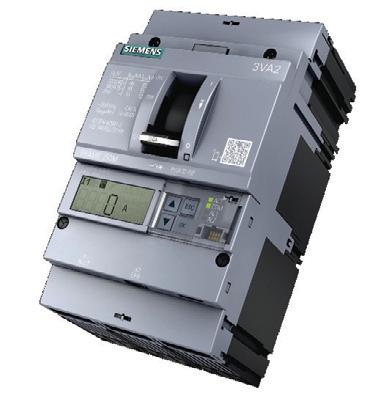
AS/NZS 61439 COMPLIANT DISTRIBUTION BOARDS
The ‘DB Ultimate’ range of competitively priced distribution boards is exclusive to APS Industrial, purpose-built for compatibility with Siemens circuit breakers, AS/NZS 61439 compliant and features an enclosure by a leading supplier of innovative enclosure technology, Rittal. Combining the shared expertise and experience of these leading global manufacturers while also drawing on KATKO switching technology and Weidmüller surge protection, the DB Ultimate provides quality, flexibility, compliance and intelligence.

APS Industrial www.apsindustrial.com.au
FANLESS COMPUTERS
The ARK-1221L and ARK-1250L computers feature compact, rugged and fanless designs that support wide operating temperature ranges of -40 to 60°C. Both the ARK-1221L and ARK-1250L support 5G/LTE integration, enabling higher efficiency and increased productivity when used in factory applications. They also support Windows 10 and Ubuntu for easy deployment and integration. In addition, by adding TPM chips on request, they enable high-level hardware-based security. The series is designed with front-facing I/O that supports integration in cabinets and space-limited environments common in machine vision, equipment control and smart factory applications.
The ARK-1221L features the Intel Atom x6413E Quad Core CPU (Elkhart Lake) and supports up to 32 GB of DDR4-2666 memory for computing-intensive IoT operations. It also leverages WISE-DeviceOn to provide a 5Gready IoT gateway for remotely managing edge devices, reducing downtime and maintenance costs, and increasing processing efficiency and productivity.
Powered by an 11th Gen Intel Core i5/i3 processor (Tiger Lake), the ARK-1250L is said to offer responsive, high-performance computing power with AI deep learning capabilities and low power consumption. ARK-1250L supports versatile I/O connections and over 10 selected iDoor I/O expansion modules. These modules engender high flexibility for a diverse range of AI, AGV/AMR and industrial equipment control applications. It also features four RS232/422/485 ports for motor and radar sensors, an optional CANbus for robotic arms, three USB 3.2 ports for peripherals like vision cameras and three GbE ports, with two supporting up to 2.5 Gb/s.

Advantech Australia Pty Ltd www.advantech.net.au
AIR KNIFE
The compact EXAIR Super Air Knife provides a uniform, highvolume, high-velocity sheet of laminar airflow across the entire length that is adjustable from a gentle blowing force to a hard-hitting blast of air. The energy-efficient design minimises compressed air use by entraining 40 parts room air to one part compressed air, providing an efficient way to blowoff, clean, dry or cool parts, webs or conveyors.
Designed to use only one-third of the compressed air of typical blowoffs used in cleaning, cooling and drying operations, the air knife can be instantly cycled on and off, further reducing compressed air usage and costs.
Even at high pressures of 80 psig (5.5 bar), the sound level is quiet at 69 dBA for most applications. The air knife is CE compliant and meets WorkSafe Australia and OSHA dead-end pressure and noise requirements.
Available in many lengths from 3 ″ (76 mm) up to 108 ″ (2743 mm), the air knife comes in a variety of materials that include aluminium, type 303 stainless steel, type 316 stainless steel and PVDF plastic.
Applications include part drying after wash, sheet cleaning in strip mills, conveyor cleaning, drying food products, cooling hot materials and parts, web drying or cleaning, environmental separation, pre-paint blowoff, bag opening/filling operations and scrap removal on converting operations.
Compressed Air Australia Pty Ltd www.caasafety.com.au

8 INSIGHTS 2023
NEW PRODUCTS


BEN CIARDULLO
HEAD OF SALES & MARKETING, WARREN & BROWN TECHNOLOGIES
The three biggest challenges facing the ICT and manufacturing industries, which is probably consistent across many industries and businesses, are supply chain disruptions, cost increases and employee satisfaction.

The first two issues impact manufacturers and their ability to remain competitive in a dynamic and global environment. Even though many of our finished products are made locally, there are some components or raw materials that need to come from overseas or local suppliers. Delays from suppliers, freight and shipping delays, as well as trying to source materials in a global environment, all create challenges.
In addition, inflation and cost increases have been seen on a regular basis on many raw materials, from sheet metal to plastic components. This is compounded by the additional cost of moving freight, which is having a big impact.
We’ve been able to absorb some of these costs, as well as find efficiencies in the business; however, some of these cost increases need to be passed on, which affects our customers and other end users.
The other issue, which I feel sometimes doesn’t get talked about enough, is how all employees are feeling and coping during these times. At WBT, we prioritise the health and wellbeing of our employees, but after having conversations with many others in the industry, this is a general comment that we need to care more about people. No matter where you are, or what you do, people are the business and people are our customers.
In the drive and quest for profits and efficiencies, we need to be aware and alert to how our employees are coping, inside and outside of work. We don’t want to see people breaking apart and burning themselves out, as there are a lot of other pressures in life. Being genuine in our concern for one another, having flexible working arrangements, providing constructive feedback and having an open dialogue all help contribute to employee satisfaction, regardless of what you do for work.
Ensuring that all employees are healthy physically and mentally helps businesses to thrive, as happy and successful employees will perform better!
Discuss the ongoing impact of the skills shortages on your industry and solutions being implemented in 2023.
The skills shortage gets spoken about a lot in every industry and various reasons are provided. For example, lack of training, people leaving the workforce, retirements, not enough immigration and incoming skilled labour, etc.
However, as alluded to in my previous response, I think that ensuring that our employees are happy and healthy is an important part of keeping them in the workforce. Providing a caring culture will help attract and retain the right people. Technical skills can always be learnt.
We are putting in place various programs, as well as providing access to training for many of our staff. We have discussed this as a management team, and we are looking for ways to continue improving our employee satisfaction.
What opportunities do you predict for the growth of your industry in 2023?

The ICT industry is always full of opportunities and we will always see a need and growth for more telecommunication services. Here’s a couple that come to mind.
Firstly, the growth and expansion of data centres are a major opportunity and have been for the last few years. There are many opportunities for suppliers, as well as jobs for facilities technicians, who want to break into the industry. This is being driven by the requirements for cloud computing (cloud software systems, streaming video content, social media, banking and finance, etc).
Secondly, there will be further growth in wireless infrastructure, both macro sites (more infrastructure being deployed on mobile phone towers), as well as micro sites or small cells. In building, wireless coverage is another area where we are seeing further growth.
Finally, a lot of market research points to ongoing developments for 5G mobile services and further uptake, and development and research has already begun on the next-generation 6G! We will have to wait and see what that looks like.
How are you ensuring supply chain resilience during times of global uncertainty?
Sourcing local and keeping manufacturing local is key for us. When you manufacture locally and run your own facilities, you have greater control over the costs, quality and lead times. We have also built resiliency into the supply chain by utilising other facilities we own offshore, such as the Philippines, which has many of the same capabilities that we do in Melbourne.
We sometimes don’t know what’s around the corner or what other challenges may arise; however, I think that we are well equipped as a business to prosper into the future.
INSIGHTS 2023 11
Ben Ciardullo is Head of Sales & Marketing at Warren & Brown Technologies. Ben leads the marketing strategy, brand and communication management, product marketing and digital marketing for Warren & Brown Technologies. Furthermore, he is responsible for sales, technical solution development, account management and customer service across the Enterprise, Telecom Carrier, Data Centre, Infrastructure and Telecommunications markets.
What are the three biggest challenges or threats facing your industry in 2023?
insights 2023


JUSTIN ELLIS
BUSINESS DIRECTOR — MEASUREMENT SOLUTIONS AUSTRALIA & NEW ZEALAND AT EMERSON AUTOMATION SOLUTIONS

What are the three biggest challenges or threats facing your industry in 2023?
I think three areas industry is really grappling with at the moment are: decarbonising and building a more sustainable industry as part of the commitment to manage the issues of climate change; implementing more flexible, hybrid and connected workplaces as part of the working remote revolution; and lastly, building more diverse, inclusive and equitable organisations that deliver better business outcomes and make people feel comfortable to bring their whole self to work.
Discuss the ongoing impact of the skills shortages on your industry and solutions being implemented in 2023?
Australia has many highly talented people but we are a small population. We have relied at times on international talent to help top up gaps but that was very difficult to access during the pandemic period. I think there are two key areas that companies can think about to address skills shortages. One is to use automation to reduce the reliance on human intervention to manage business, processes and operations. Digital transformation plays an important role here and we have been working with many Australian operations to build unique technology-enabled automation solutions. The second is to collaborate with organisations that have specialist skills and can help cover those gaps, for example, engineering, services, technology advisors, etc.
What opportunities do you predict for the growth of your industry in 2023?
I see two major growth areas emerging in industry at the moment and both are related to climate change. Firstly, there is a wave of new investment around building a more sustainable energy supply using hydrogen and renewable electricity. Secondly, for many companies in hard-to-abate sectors new technology solutions are critical to help reduce their carbon emissions. Emerson is excited to have been a partner to many companies over the last two years on some of these technology pilot projects in both scenarios and it is a major focus for our businesses.
How are you ensuring supply chain resilience during times of global uncertainty?
Supply chains have seen unprecedented challenge over the last few years due to the pandemic, war in Ukraine and more recently due to a series of natural disasters. Globally our organisation has done a lot of work around sourcing additional components as well as redesigning certain products to gain access to more reality available components. We are also fortunate that we built a manufacturing facility for a range of our Rosemount products in Melbourne back in 2012, which we have been able to leverage for urgent situations where we need to keep customer operations up and running.
What plans do you have in 2023 for an energy transition to renewables?
Emerson was quick to move a few years ago and implemented a Chief Sustainability Officer in charge of leading programs globally around three key pillars — GREENING OF Emerson is our series of internal programs to achieve our net zero ambitions; GREENING BY Emerson are the collaborations and technology solutions we have been developing and implementing to help industrial operations achieve their net zero goals; and GREENING WITH Emerson are the industry partnerships with research bodies that we have developed to help build expertise. In all three areas I am pleased we have made significant progress both globally as well as in Australia.
What are your carbon emission reduction goals for 2023?
Emerson has aligned its sustainability approach to the Net-Zero Standard set by the Science Based Target initiative (SBTi), the leading organisation driving science-based target adoption. By 2030, Emerson plans to reach net zero across its own operations for Scope 1 and Scope 2 emissions. I am pleased to say that in a recent corporate review we are making progress on our GREENING OF Emerson activities towards achieving our company goals.
Justin Ellis has been in industry for 25+ years in a range of service, operations, marketing and business leadership roles. He is Director of the Measurement Solutions group of instrumentation products, systems and services for Emerson which encompasses such innovative brands as Rosemount and MicroMotion. He is passionate about developing solutions to industry challenges as well as personal development and growth and a few years ago graduated with an Executive MBA from Melbourne Business School.
INSIGHTS 2023 13
insights 2023
FUTURE RESILIENCE THROUGH DIGITAL TWINS
Katerina Sakkas
“The data-sharing aspect of Digital Twin cityscapes, precincts and countries can be used to plan for, prevent and support recovery from natural disasters and climate change.”1

At this year’s Energy Networks Australia (ENA) awards, the top prize for innovation went to Endeavour Energy for its digital twin technology that was put to the test during extreme periodic flooding of the Hawkesbury River in NSW between March 2021 and July 2022.
In basic terms, a digital twin is a virtual model of an actual physical object, process or system. It integrates and synchronises a variety of data, eg, real-time and historical satellite imagery, weather patterns and elevation measurements, in order to simulate and thus gain dynamic, detailed insight into a real-world system, enabling decisive, strategic action — something that’s of obvious
value in the context of disaster mitigation.
During an ENA webinar showcasing the Innovation Award finalists, Dominic Adams, GM Networks, Energy Networks Australia (ENA), who was on the judging panel for the award, said this sort of innovation was becoming business-as-usual for energy companies in a changing landscape involving the mass rollout of SAPS (standalone power systems), businesses becoming more data-centric in preparation for DER (distributed energy resources) integration and an increasing response to customer needs around climate change resilience.
Endeavour Energy’s Edmund Li reiterated this during the webinar: “Endeavour Energy’s franchise area covers 24½ thousand km 2
14 INSIGHTS 2023
of New South Wales, and we’ve got a very diverse geographic climate and environment. We’ve got 80% of the area that’s considered bushfire-prone and we cover 160 km of the east coast coastline.
“That’s really prompted us to rethink how we build, operate and maintain a network that’s resilient to climate change, and like most businesses across the world we’re already seeing those impacts of climate change and extreme weather events on a more frequent basis.
“When disaster does strike, we’ve been rethinking how we can use insights from tools like the digital twin to enable us to better communicate with our customers and coordinate our recovery methods.”

Endeavour Energy used software company Neara’s platform to deliver a structural digital twin that was able to perform “complex engineering-grade analysis, automatically, at a whole-of-network scale”. The Neara platform enabled the company to combine a variety of different data sources, including GIES (Geospatial Information Extraction Services), asset-management data, LiDAR (Light Detection and Ranging) and geographical/environmental information.
When the worst flooding in 30 years struck the Hawkesbury in March 2021, Endeavour decided to put the digital twin to the test, by gathering information on how the flood was affecting Endeavour’s customers and assets in near real time.
Digital twin in action
Initially, an incident management team was set up to organise the response. Such a team typically conducts on-the-ground inspections to find out what assets have been affected, but when floodwaters affect accessibility, the recovery process becomes complicated and prolonged, as frontline workers need to regularly assess whether they can access sites to scope the damage.
“This is where the digital twin came into the picture, as a means of improving emergency response and providing situational awareness to ensure the customers would be safe from the dangers of electricity during the flood,” said Endeavour Energy’s Lee Wiggins.
“Ingesting the digital elevation model, pre-computed flooding events from the NSW Government and real-time river height feeds from the Bureau of Meteorology, we were able to compute in near real time the flood extent across the Hawkesbury area and overlay this into the digital twin network.”
The model went through multiple iterations and its accuracy was confirmed through on-the-ground inspections and drone footage. This allowed the company to improve community safety by turning off power at parts of the network that would be too close to the floodwaters.
“As every flood is different, having the hyper-local awareness with scale meant that we were able to keep customers ‘on’ as long as we could, and that the control room didn’t have to necessarily act reactively on feedback on the ground to inform of differences between reality and the flood plans,” Wiggins said.
The digital twin also facilitated a better allocation of field resources and accelerated restoration time by narrowing down the scope of assets to be inspected by 80%.
What’s next for Endeavour?
“We’re looking to go further by using the digital twin to design a more flood-resilient network,” Wiggins said. “We’ve now designed and physically raised the height of the 33 kV feed going across the Windsor Bridge to withstand a 17 m AHD (Australian Height Datum) flood level. This means we can keep the lights on for 3000 customers up to a one-in-a-100-year flood level.”
Endeavour is also exploring the use of the digital twin for vegetation management and bushfire response.
INSIGHTS 2023 15
iStock.com/metamorworks Disaster resilience
A national perspective
How important will digital twins be in future disaster mitigation? Very important, if a recommendation by the Australian Information Industry Association (AIIA) that the federal government create an Office of National Digital Twin2 is taken up. While the AIIA’s nationally coordinated vision has not yet become a reality, the CSIRO and two state governments are forging ahead with ambitious digital twin initiatives.
NSW Spatial Digital Twin Launched March 2020, and the largest 3D modelling project ever undertaken at the time 3, the NSW Spatial Digital Twin was built by CSIRO’s digital research network Data61, in partnership with the NSW Department of Customer Service’s (DCS) Spatial Services. It is designed for many uses, including disaster planning, recovery and prevention. Following the NSW Independent Bushfire Inquiry on the 2019/2020 bushfires, which emphasised a critical lack of telecommunications and utility infrastructure data (especially spatial
DISASTER
data), DCS Spatial services is developing a dataset of Government Radio Network (GRN) telecommunications towers and assets across NSW to assist with emergency management and response.
Spark Operational Also developed by Data61, this time in partnership with AFAC, the National Council for Fire and Emergency Services, Spark Operational is an extension of the CSIRO’s bushfire-modelling tool Spark, which dates back to 2015. Designed to be user-friendly and adaptable to different locations and circumstances, Spark Operational aims to provide a nationally consistent bushfire modelling and prediction capability, with the potential to be used by emergency services overseas. With phase 1 of its implementation having begun in 2021, it is intended to be fully operational by 2024.
Digital Twin Victoria Incorporating seven streams of work, including Enhanced Disaster Response, the Victorian Government’s digital twin “aims to create Victoria online” with $37.4m invested
over four years. The disaster response stream applies machine learning to Vicmap Imagery — a statewide resource of aerial photography spanning many decades — in order to address complex environmental data problems and build “a proof of concept of a Routable Vicmap dataset designed to improve outcomes for bushfire and emergency response”.
Along with Endeavour’s digital twin, these initiatives indicate DTs have a vital part to play in Australian disaster mitigation. For the AIIA, however, the long-term success of DT technology lies in a national DT ecosystem where data-sharing is paramount — subject to appropriate security rules and authorisation processes — ensuring clear, consistent standards, better coordination and the avoidance of siloed data.
1. CSIRO website, https://data6csiro.au/en/Our-Research/Our-Work/Future-Cities/NSW-Digital-Twin
2. https://www.govtechreview.com.au/content/ gov-digital/news/digital-can-help-reduce-naturaldisaster-impact-aiia-49890182
3. Australian Information Industry Association, ‘Growing Globally Competitive Industries’, https:// aiia.com.au/, 2021.

16 INSIGHTS 2023
WHEN
DOES STRIKE, WE’VE BEEN RETHINKING HOW WE CAN USE INSIGHTS FROM TOOLS LIKE THE DIGITAL TWIN TO ENABLE US TO BETTER COMMUNICATE WITH OUR CUSTOMERS AND COORDINATE OUR RECOVERY METHODS. – EDMUND LI
Disaster resilience
iStock.com/Jaykayl


FRANK BALDRIGHI
BUSINESS DEVELOPMENT MANAGER, GETAC
The industrial sector will continue to face heightened risk from increasing cybersecurity threats in 2023, which include potential attacks on critical infrastructure and possible data security breaches. It will also experience continued system fragmentation linked to hybrid workplaces and bring-your-own-device (BYOD) strategies. Lastly, the ongoing skills shortage across Australia will continue to place pressure on industrial organisations as they struggle to find skilled workers to ensure they can deliver to their customers.
Mobile computing solutions will be critical conduits in optimising workflows to help counter this. Examining underlying processes will be important to ensure only best practices become part of the new way of doing things and digital transformation will help organisations reduce their reliance on manual processes and outdated solutions that may fail when things don’t go according to plan.
able to rest assured that all systems are functioning smoothly and intervene only as and when necessary. IoT complemented by visualisation platforms will also help workers keep a remote eye on processes across multiple portfolios. Rugged devices will be critical in helping frontline industries access that data from wherever they need to.
How are you ensuring supply chain resilience during times of global uncertainty?
Getac invested much effort and resources to make its offerings flexible, while still delivering quality devices, on time. It works closely with its supply chain partners and monitors key material inventories to meet demands. Even under difficult circumstances, Getac has maintained swift shipment lead times, which are better than the industry average. In Australia and New Zealand, all Getac products are airfreighted to avoid slow port turnaround times due to port congestion to ensure that lead times can be met.
The ongoing skills shortages in the industrial sector have meant that organisations have turned away new work and halted digital projects. This has been further exacerbated by constrained economic growth.
In 2023, frontline industries will need to transform and adopt ways of working that include: continuing to keep employee health front and centre; working from anywhere at least a significant portion of the time; minimising the need for human intervention in machine operation; using existing human talent more efficiently in more complex tasks; and making necessary data available to the worker on the road, as and when needed.
Workers will remain a vital resource, complemented with data insights and automation. Technology, through digital transformation, will help deliver the right data to workers, making work more innovative for increased productivity.
What opportunities do you predict for the growth of your industry in 2023?
Machine learning (ML) will help industrial organisations use talent more efficiently. Users can train ML models on historical data to detect and learn patterns. When used on incoming data, these systems can detect and flag anomalies in machines or behaviours to proactively solve problems.
The Internet of Things (IoT) to minimise human supervision and facilitate remote oversight will continue to grow by letting sensor-embedded equipment relay live information about equipment health. Users can program these data points to be as frequent as needed, and, by analysing this information, workers will be
For the industrial sector more broadly, a connected supply chain, which uses digital technologies to deliver end-to-end supply chain visibility and enhanced business operations, is a critical piece of the puzzle. Mobile computing solutions represent a critical platform to connect mobile transportation workers, from the warehouse to the delivery vehicle, to provide the information that workers need to make informed decisions in real time. Evolving data capture requirements to support unique item level identification or more significant traceability efforts will benefit from automating repetitive processes and free up labour for other tasks.
Frank Baldrighi is a business development manager at Getac, responsible for managing key relationships in Australia and New Zealand. Frank’s focus is on building brand awareness and providing rugged technology across some of the most demanding professional environments. Frank has more than 15 years’ experience working in multinational companies across multiple geographies.

INSIGHTS 2023 19
What are the three biggest challenges or threats facing your industry in 2023?
Discuss the ongoing impact of the skills shortages on your industry, and solutions being implemented in 2023?
insights 2023

LINA GOODMAN
CHIEF EXECUTIVE OFFICER AT TYRE STEWARDSHIP AUSTRALIA
The tyre has become a valuable resource. The opportunities for using TDM are an exciting new frontier. If Australia can unlock these, we can become global leaders.
There is no doubt that Australia’s circular tyre economy, which spans a number of industries, is feeling the impact of current global and local economic, political and environmental volatility.
Vagaries associated with shipping; inflation; shifting workforces; natural disasters; the cost of living; energy and food security; and consumer uncertainty — all these challenges are forcing us to focus on survival in the short term, sometimes at the expense of longerterm sustainability goals. The risk is we lose hard-won traction on reducing waste and ultimately greenhouse gas emissions that could put us years out from the 2050 target the government has set for us.
This perfect storm is shining a light on Australia’s economic and environmental interdependencies, and what is needed for us to remain resilient — such as fit-for-purpose product stewardship schemes that can harness those interdependencies through circulareconomy thinking and regulations that do not inhibit legitimate businesses from contributing to circularity.
An independent review of the Tyre Product Stewardship Scheme this year showed it has reached a plateau of what it can achieve. As a result, used tyre recovery has been listed on the Minister’s product stewardship priority list. This puts the makers and importers of tyres on notice that they must take responsibility for the impacts of their products on the environment across their entire life cycle. If they do not, then government will act.
Hanging in the balance are regional, rural and remote Australian communities missing out on commercial opportunities, jobs and environmental resilience, because of the cost and logistics of recovering big, off-the-road (OTR) tyres.
The current Scheme does not make a distinction between size and geographic use of tyres, and therefore does not recognise the unique constraints around big OTR tyres used by mining, agriculture and construction outside metropolitan areas. What works for the recovery of passenger car, bus and truck tyres, where we have an average of 89% recovery rate, does not work for the large, OTR tyres where we have only been able to achieve an average of around 12% recovery rate.
We must address the tyranny of distance between big OTR tyre users and metropolitan processing centres, to leverage opportunities for people living and working in regional, rural and remote Australia; and make sure no one is left behind.
To do that, we need to close the consumption loop by further developing a pipeline of end markets for TDM.
This is something we can fix now.
Doubling down on end-market development means that, when we can span the tyranny of distance to recover that TDM from OTR tyres, we will have ready-made markets to consume this valuable resource.
So, over the next year, we will be backing Australia’s brightest minds, with funds and support, to develop the next big, outside-thesquare idea that will help reinvent the tyre in Australia for Australians.
Commercialisation is key, and we will continue to work hard at it.
How are you ensuring resilience to climate change and associated extreme weather and natural disasters?
Extreme weather and natural disasters can only be understood through a local community lens. One solution does not fit all.
So, we put a lot of emphasis on supporting Councils to deal with the challenges on a local level, in three ways.
The first is to fund and support the use of rubber crumb and other products such as permeable pavement, in the construction of civil infrastructure, such as roads, pavements, playgrounds and sporting fields, which are more resilient to extreme weather.
The second is to undertake research, such as our 2022 Tyre Particle Health, Environment and Safety Report, that builds the knowledge bank Councils can draw on to make informed decisions around the use of TDM.
Finally, we offer technical support and guidance for all Councils to undertake due diligence for civil works, evolve their procurement model and set quotas for use of rubber so they gain the most benefit for their community from both an environmental and economic standpoint.
Many opportunities for growth lie outside our cities — In the potential applications of Tyre Derived Material (TDM) we can recover from the big, OTR tyres used in mining, agriculture and construction.
They also lie within the brains of manufacturers who have the appetite to think big and think differently.
Then there are the Government departments acting seriously on procurement policies to drive greater consumption of TDM and reduce ‘green tape’ inhibiting the uptake of proven and tested products.
Finally, we know tyre processors are ready to take the plunge.
Lina Goodman, Chief Executive Officer (CEO) at Tyre Stewardship Australia has over 20 years’ experience in resource recovery and environmental innovation, bringing together projects and partners to deliver business and environmental improvements. She started her career at Visy Recycling, later joined Honeywell and then at TIC Group she was instrumental in delivering circular economy benefits through TIC’s Mattress Recycling, Reverse Logistics and Solvup businesses. In Lina’s time at TSA, she has implemented a strong strategic and operational direction both locally and internationally.

INSIGHTS 2023 21
What are the three biggest challenges or threats facing your industry in 2023?
What are the opportunities you predict for the growth of your industry in 2023?
insights 2023
BRONKHORST FLOW
METERING FOR LOW FLOWS
In control and measurement, ‘low’ and ‘high’ flows are often arbitrary. At Bronkhorst, ‘low flow’ is our business.
For us, ‘low flow’ is less than 100 g/h and ultralow flows are below 5 g/h (100 g/h is equivalent to about 2000 water droplets/hour, while 100 drops is around 5 grams).
Where do we need accurate instruments for low liquid flows up to 100 g/h?
• Chemical catalysts: Low liquid flows of hydrocarbon compounds, at high pressure, are dosed at a stable flow.
• Biotechnology and pharmaceutical: Labs-on-a-chip and other microfluidic devices significantly reduce chemical use and experimental time.
• Odorising of gases: Injecting small but continuous amounts of liquid additive causes ‘warning’ odours.
• Where performance of an experiment is determined by measuring the correct amounts of liquid.
What is different about liquid flows of less than
100 g/h?
Laboratory-based low-flow applications involve phenomena not observed in, or not relevant to, larger flows. Due to the amount of liquid transferred, they are sensitive to even the tiniest disturbances in process or ambient conditions. Key is minimising the influence of external conditions on flow stability.
For example, a small leak of gases or liquids within the process can considerably influence the intended liquid flow; particles or contamination cause obstructions that can change the flow in an undesired way; and inconsistent pressures, excessive pump stroke pulsations and pressurised gases in a liquid all lead to instability.
Bronkhorst excel at optimising complex low-flow applications. An in-depth knowledge of fluid characteristics and system components in a wide range of circumstances ensures best practice.
Measurement options also help. Bronkhorst’s portfolio includes thermal-based, ultrasonic and Coriolis flow meters and controllers. All are suitable for low- and ultralow-flow applications. To reflect, a flow meter consists of a sensor that measures the medium’s flow rate; a controller combines that sensor with a control valve that controls the medium’s flow rate.
Reiterating, optimal performance requires much more than just an excellent flow meter/controller. By eliminating leaks and dissolved

gases, keeping tubing volumes small, the flow controllers can generate a stable flow.
The different working principles offers choice. With thermal-based mass flow devices, a constant temperature difference is created along the flow tube. The energy needed to maintain that temperature difference while liquid flows is proportional to the mass flow rate.
For Coriolis flow meters, flow is through a thin vibrating tube, causing it to twist. The change in deflection is a measure of the mass flow. Interestingly, the change in vibration frequency of the flow tube gives the density of the product/medium.
When to choose a Coriolis flow meter/controller? Most applications! Specifically, where absolute accuracy and stability are essential; where thermal sensitivity issues exist; where the product density needs to be monitored. Coriolis meters are useful on liquids with unknown properties. That said, Coriolis meters might need installation measures to reduce shock and vibrations.
When to choose a thermal flow meter/controller? The economical choice. Specifically, where the fluids are stable (constant liquid density, viscosity, thermal conductivity and heat capacity); reproducibility is excellent; they generally have small pressure drop, which can help where there might be dissolved gas, helping to keep the flow stable.


Tips ‘n’ tricks
The following can be expanded but might help in respect to low liquid flows:
• Tip 1: Choose a flow meter that suits the process and conditions.
• Tip 2: Ensure a stable (inlet) pressure.
• Tip 3: Minimise the containment or dissolution of gas in the medium.
• Tip 4: Use piezo control valves on low flows.
• Tip 5: Minimise volumes between the flow device and process.
• Tip 6: Purge well before operation.
22 INSIGHTS 2023
SPONSORED CONTENT
Instrumentation & Calibration Pty Ltd www.ams-ic.com.au
What do micro reactors, catalyst research and additive dosing have in common? They all require handling low-liquid flows.
AMS


‘THE FATHER OF MODERN PHOTOVOLTAICS’ HONOURED
UNSW Sydney Scientia Professor Martin Green has been awarded the 2022 Millennium Technology Prize for his leadership in the development of the Passivated Emitter and Rear Cell (PERC) — which is claimed to be the world’s most commercially viable and efficient silicon solar cell technology.
Presented by Technology Academy Finland, the biennial prize highlights the impact of science and innovation on society and is worth ¤1 million (approx. AU$1.54m). Prize patron and President of Finland Sauli Niinistö conferred the prize upon Green at a ceremony in Helsinki.
Green said he was honoured to receive the prestigious prize. “The Millennium Prize not only recognises my contribution to photovoltaics, but also the achievements of my students and research colleagues at UNSW, as well as those of the broader photovoltaic research and commercial community.
“I believe the prize will increase my credibility as a spokesperson for what needs to be done to address climate change. We need to switch from fossil fuels to renewable energy to sustain the trajectory of human civilisation on our shared planet. The pace of change is accelerating and the world will shift to solar and wind energy over the com -
ing decade. I believe a huge transformation of historic significance is underway.”
The 2022 Prize drew 40 nominations from the fields of life sciences, energy and the environment, ICT and smart systems, and new materials, processes and manufacturing. A record number of women were nominated this year. It is regarded as one of the world’s top academic awards rated by the IREG List of International Academic Awards and has a reputation score of 0.5 compared to a Nobel Prize.
Green is often described as “the father of modern photovoltaics” and was recently referred to by Australia’s federal Minister for Climate Change and Energy, Chris Bowen, as a “national treasure”.
He led the teams at UNSW that developed the PERC technology, improving the quality of both the top and the rear surface of standard silicon solar cells. When sunlight — in the form of particles called photons — enters a cell, it excites the electrons within the silicon. In this excited state, electrons can move through the cell, creating electric current. The improved surface of the PERC cell allows the electrons to maintain this excited state — or move freely — for longer, resulting in greater and more efficient energy generation. The PERC cell technology has
helped increase the conversion efficiency of standard solar cells by over 50% in relative terms from 16.5% in the early 1980s to 25% in the early 2000s.
As a result of Green’s innovations and advances in PV technology, solar energy is considered instrumental in the global transition to renewable energy and decarbonisation. Last year, PERC cells accounted for over 91% of the worldwide production of silicon solar modules.

Green and his team are now working on combined cell technologies to reach 40% solar cell efficiency by exploring options such as stacking cells on top of each other.
“Solar cells are increasingly being used to replace large power stations that use fossil fuels. In 2021, 20 countries or regions including Australia, Chile, Germany, Greece, Italy, Netherlands, Spain, Vietnam and California generated between 8% to 25% of their total electricity supply from solar energy, with this number growing quickly,” Green said.
“The rapid cost reductions in solar energy that my work has facilitated have come just in time, right at the point when the importance of acting immediately to address climate change has become overwhelmingly obvious.”
24 INSIGHTS 2023


INSIGHTS 2023 25
technology leader
SOLAR
IS CONSIDERED
THE GLOBAL
TO RENEWABLE ENERGY
DECARBONISATION.
PERC
PRODUCTION OF SILICON
iStock.com/lovelyday12
Photovoltaic
Image credit: Anna Kucera AS A RESULT OF GREEN’S INNOVATIONS AND ADVANCES IN PV TECHNOLOGY,
ENERGY
INSTRUMENTAL IN
TRANSITION
AND
LAST YEAR,
CELLS ACCOUNTED FOR OVER 91% OF THE WORLDWIDE
SOLAR MODULES.
Moneo gives you the pre-packaged smarts to set up predictive maintenance at your plant. We’ve made it easier to protect your critical assets – both now and in the future.


LIVE STREAM monitoring with moneo
real time insights to your decision-making toolbox with live stream monitoring
Add
The path to predictive maintenance just got easier with ifm.
How much does it cost per hour for your machine to be offline?
Knowing the condition of your machinery gives you peace of mind. It also allows you to perform maintenance at optimal times. The smart way to monitor your equipment 1300 365 088
| www.ifm.com/au
sales.au@ifm.com
mind.
GLEN THORNTON
NATIONAL PRODUCT AND BRAND MANAGER, IFM
for 2023?
At ifm we look many years ahead within the industries we service to not only predict but to understand industry needs. We see companies that are adaptable, flexible and ambitious have already been working extremely hard on understanding their own strengths and possible weaknesses to remove businesses risk.
The present needs are to maximise the available time for better throughput with higher product quality — which in turn brings more business. It’s all about futureproofing business. This is where we spend a lot of our time learning from these needs so we provide the best solution to not only automate but to provide product surety and brand security.
With the pandemic, we saw a large increase in online purchasing which in turn increased the need for larger warehouses and automated logistics.
Another key area for Australia is the ever-growing agriculture and aquaculture industries. These key industries require greater visibility on their production and processes, which means a move towards a higher level of automated connectivity and cloud services.
What are the three biggest challenges or threats facing
We know and understand the difficult times our local manufacturing, production and processing is going through. The need for higher efficiencies, increased production, improved quality, and competing globally are just a few of the factors effecting industry.
From our view of the market, we see the biggest threat is in not modernising. Older manual processes slow down product throughput and can have onflow effects on product quality and traceability.
Companies should therefore be investigating in the opportunities available to ensure their business viability. Applying modern technology may appear daunting, or maybe there is the basic notion that ‘someone else will take care of it’, but ignoring the issue puts businesses at risk of not being at the leading edge of their industry.
At ifm, we have many and varied discussions with companies about their manufacturing and processes. Many of them are advanced in their thinking with some taking great steps forward into a phase of advanced data-based manufacturing, while others feel quite overwhelmed by the technology discussions. If business owners, production managers and quality assurance staff focus on the application and not the connecting technology, the solution is quickly resolved with the technology.
What impacts have the pandemic had on your industry and how does this effect business strategies for 2023?
ifm Australia and ifm globally were very quick to act on the emerging pandemic by setting up remote offices to make sure we didn’t let our key customer base down.
We are an essential supplier of automation sensing equipment to all industries including food and beverage, pharmaceuticals,
manufacturing, water and wastewater, agriculture, mining and other key industries. The quick pace of setup was of key importance knowing this could be for a prolonged period.
From our point, we didn’t miss a beat with supply of the important sensing and solution connectivity needed by the Australian market.
How is your industry preparing for AI developments and advanced manufacturing?
Globally, our product portfolio is classed as one of the best in industry with high levels of sensing technology and connectivity solutions. The next steps for industry will be to embrace newer sensing technologies which will enhance and grow the total production process.
Our software is at the beginning of the AI journey, where having live-stream data gives immediate access to all production including throughput, quality and pending machine breakdown.
For many years now, ifm has incorporated IO-Link within our sensors, which opens up completely new possibilities for the user. From easy and quick setup to additionally available machine monitoring data, it enables process transparency from the machine level to the ERP software. Process data from intelligent sensors allows for the automation technology to be integrated in a simple and economic manner. IO-Link offers convincing efficiency gains and cost savings with higher levels of process monitoring, energy monitoring, quality assurance monitoring, track-and-trace and condition monitoring.
Being fully aware makes you fully engaged which can mitigate issues even before they arise. Our aim is to help industry learn that it’s not that hard to begin and not that expensive. As we say, start small and grow as you know.
Glen Thornton is an experienced National Product and Brand Manager with a demonstrated history of working in the industrial automation industry. He is skilled in sales, motion control, industrial control, account management, and product marketing, and graduated from Preston Technical School. ifm provides German-engineered solutions for automation, including vibration diagnostic systems, position and fluid sensors, bus and identification systems, and control and connection technology.
INSIGHTS 2023 27
What opportunities do you predict for the growth of your industry
your industry in 2023?
insights 2023
Valen ModX pre-engineered Modular Solar Systems are ready to go!
Valen ModX is the brainchild of accumulated years of experience supporting clients with their remote power requirements.
As the world continues to evolve into the AI space, power in remote locations is becoming increasingly essential.
Valen ModX is designed utilising a tried and tested range of Valen core products, allowing the ModX to perform in perfect synchronisation. Valen EnduroGel battery system, Valen Industrial Field Cabinets,
Valen Solar Panels and Victron MPPT Solar Controllers all come standard, with optional extra’s able to be added to retrofit to your project requirements.
ModX is modular, maintenance-free and easy to install and use making it an ideal solution for the remote high temperature regions of Australia.

We have stock on hand ready to deliver for urgent jobs, with warehouses strategically located around Australia and New Zealand to shorten critical lead times.
Reach out to the Valen team today to discuss your next project.


AUSTRALIA 1300
NEW ZEALAND 0800 734 253 sales@valen.co.nz www.valen.co.nz PRE ENGINEERED MODULAR SOLAR SYSTEM
VALEN ModX
734 253 sales@valen.com.au www.valen.com.au
GARETH MCKAY
MANAGING DIRECTOR, VALEN POWER

are
three biggest challenges or threats facing your industry in 2023?
One of the biggest challenges facing the industry stems from one of the biggest opportunities: the interest and demand in renewables from both a domestic and commercial standpoint. The biggest challenge with this is ensuring the supply chain is solid enough to meet demand.
Another challenge which stems from the exponential demand curve we are experiencing in the short term is the range of new and emerging technologies entering the market. Decades of coal and gas power provision to the population is making way for renewables and as these are all new to the market, there has been no ‘gold standard’ set. In addition to this, it is simple to predict that these technologies will look completely different in years to come.
With the rate of demand not meeting supply of current, proven products from reputable dealers, the threat to the market comes from new entrants taking advantage of a booming industry. These new entrants lack the experience, capability and track record to provide quality solutions that will perform in Australia’s unique environment.
Discuss the ongoing impact of the skill shortages on your industry and solutions being implemented in 2023?
The skills the industry is currently lacking are technical and research skills required to better develop and test emerging technologies. Not only that, but having the skills to then commercialise these products to form a sustainable global standard. Australia should be at the forefront of research into these avenues but I fear we are falling behind.
Solutions Valen is implementing include investing in new products and developing packaged solutions, while continuing to commit to developing our team to technical experts who can educate and provide energy storage solutions to our customers.
What opportunities do you predict for the growth of your industry in 2023?
The growth of battery manufacturing in Australia is a key opportunity to support growth of the industry in 2023. With Australia being the largest producer of lithium metal, we have an opportunity to be at the forefront of changes. We believe the development of cell and BMS manufacturing for lithium batteries and other products will support jobs and the specialisation of new technologies, and will make renewables even more accessible for the local market.
Other opportunities exist with the decarbonisation of the mining sector, moving away from fossil fuels as primary energy generation. Mining is and will continue to be an essential component of our renewable future, and Valen Power relishes the opportunity to help support mining operations across Australia to convert to all-electric operations.
How are you ensuring supply chain resilience during times of global uncertainty?
The Valen Power team is committed to supporting our customers, and one of these measures is to keep stock on hand. As global supply chains became more uncertain over the last few years, Valen has continued to hold large stock holdings in strategic locations around Australia and New Zealand.
Valen Power’s purchasing team also ensures supply chain resilience by sourcing products from multiple geo-political regions, spreading our political risk.
In addition to this, Valen Power supports Australian manufacturers by having an Australian-first purchasing policy for our com ponentry.
What plans do you have in 2023 for an energy transition to renewables?
Valen has committed to be 100% carbon neutral by 2030 and we have a program in place to support our employees to transition to living carbon neutral lifestyles by 2030. Some aspects of this plan include powering our head office 100% by battery and solar energy, providing a battery recycling program for our customers and supporting our employees with knowledge and the means to support carbon neutral choices in and around their homes.
To support this, 2023 will see the introduction of WeCo — an Italian-designed lithium battery that can be scaled up to grid-scale solution. We look forward to sharing this product with new and existing customers as yet another quality solution for their energy storage needs
Gareth McKay is Managing Director for Valen Power. Operating since 1999, Valen Power provides energy storage solutions across Australia and New Zealand. A highlight of Gareth’s tenure has been introducing ModX — Valen’s pre-engineered solar package. A salesperson at heart, Gareth enjoys connecting with Valen’s clients and helping them solve their challenges.
INSIGHTS 2023 29
What
the
insights 2023
HOW COMPANIES CAN (ACTUALLY) ACHIEVE THEIR NET ZERO GOALS

Companies are announcing bold plans for decarbonisation. Ten-year emissions reduction plans have been developed into abatement curves and waterfall charts, with aspirations transformed into high-level roadmaps and communicated with stakeholders — giving everyone a sense of comfort that there is a clear pathway to action and decarbonisation.
However, the unfortunate reality is that decarbonisation could be happening much faster than this. We frequently hear that annual capital allocation processes favour highly attractive growth projects, which seem to squeeze out and defer decarbonisation projects to next year. At the same time, projects that are approved often become mired in slow-moving approval processes, resulting in limited to no progress on the decarbonisation scorecard.
In our experience, breaking through standard processes to accelerate decarbonisation and capture its vast potential value, takes five results-focused steps.
Step one: Break the ‘2030 plan’ down into annual targets
Abatement curves and waterfalls show the ‘big picture’, but it spans almost a whole decade. A great first step is translating into realistic, yearly improvements, to ensure annual targets collectively deliver more than marketplace commitments. With market expectations likely to increase, organisations should aim for more significant reductions each year in order to meet global climate change objectives.
Step two: Bake annual decarbonisation targets into executive compensation
Incentives for achieving operational excellence, and targets, are a great driver and the same approach can be used to meet decarbonisation objectives.
Embedding targets into executive compensation, at least in the short term, can help gain organisational attention — management will be forced to pursue decarbonisation with a vigour that compares to their focus on immediate objectives and short-term profitability. Of course, this also means that management processes must be established to ensure managers have full visibility into their monthly progress towards corporate decarbonisation targets.
30 INSIGHTS 2023
iStock.com/NiseriN
Skipp Williamson*, Managing Director, Partners in Performance and Keith Russell**, Director and Head of North America, Partners in Performance
Step three: Identify profitable projects that are critical to achieving decarbonisation targets
Organisations can fully expect to meet their 2030 targets with net present value (NPV) positive projects. Once identified, these projects should be prioritised within the capital allocation process and become the first projects to get access to capital. Every organisation’s pathway will be different, reflecting their specific priorities. To achieve this, it is important to: Create a ring-fenced capital pool to fund high-priority projects If the equivalent of 20% of your sustaining capital expenditure budget is allocated to decarbonisation projects, for example, there will be a natural bias towards ensuring these projects are completed. Managers are true wizards at ensuring their asset gets all the capital it can, and if this is viewed as being an ‘extra pool’ they will likely be fighting for it.
Ensure aggressive financial metrics
Some organisations will discount their decarbonisation projects using a ‘green funding rate’, which is often around 6%, rather than the 15% required from growth projects, improving the comparative NPV of decarbonisation projects.

Build in a shadow price of carbon In many jurisdictions, there is a tangible price of carbon. In others, some companies are using a shadow cost with the expectation they will soon face a real price of carbon in their products (and we anticipate this will increase with continuing focus on emissions reduction).
Step four: Adapt capital processes to accelerate delivery
It is critical to deploy appropriate processes for individual capital projects. Some will be of high risk and with high technological uncertainty (for example, hydrogen is showing promise if appropriately targeted, but it is not yet fully tested technology), and should move through traditional project development processes. Meanwhile others, like solar farms, are based on mature technologies which can be implemented with speed. Ensure the right processes are being used at the right time.
Step five: Manage decarbonisation projects aggressively
Project implementation should be, and should remain, fully visible and collectively reviewed by the senior executive team on an ongoing basis.
When the leadership team has full transparency across critical projects, the full support of the organisation can be ensured, towards accelerating implementation.
Pre-established management processes and cultures in organisations typically bias their primary objectives over all other considerations. However, stakeholder expectations have risen to the point where delivery against decarbonisation targets is now considered table stakes for market support. By restructuring existing systems, organisations can align their processes to deliver real progress towards decarbonisation goals (usually without any adverse impacts on operations).
Driving this change should be a priority for every executive leadership team, in order to meet organisational net zero targets.
*Skipp Williamson has over 30 years’ experience assisting companies to unleash their potential. She has worked in Australasia, Africa, Europe and North and Latin America, spanning mining and most metals and minerals processing. She worked for five years on strategy and performance at McKinsey and then formed Partners in Performance International in 1996. Her work has spanned volume, safety, costs, procurement, logistics, contractor management, maintenance and capital.
**Keith Russell has over 30 years of experience in management consulting. He specialises in operational improvement and transformation in mining, natural resources and heavy industrials. In addition to his client partnerships, Keith heads Partners in Performance’s Global Energy Transition Practice.

INSIGHTS 2023 31
Net zero goals





MARK FERGUSON
CEO, KAISHAN AUSTRALIA
major product lines, parts and accessories in our warehouses around the country.
One of our biggest challenges right now is the recruitment of skilled personnel. We are actively training our next generation of technicians through apprenticeship programs but it’s a slow process. We need ready-to-go, skilled technicians to service our growing customer base.
Rising energy costs are also a challenge, putting pressure not only on our business but those of our customers. With constantly rising energy costs, viability of compressed air as a major power force for industry is under some question. We at Kaishan are totally focused on improving the energy in to air power out ratio to reduce the cost of producing compressed air for a sustainable future.
There is also some uncertainty around industrial relations at the moment. Government planned IR reforms are a concern as it seems this could put further pressure on expenses and therefore profitability. We already have a massive problem with the skills shortage causing wages to rise. Business needs certainty to encourage investment. These IR law changes may dampen future business development, in my opinion.
Kaishan’s network of offices and distribution centres around Australia, plus a global manufacturing capacity that currently produces 95,000 compressors per year, helps maintain ready supply significantly.
How are you ensuring resilience against climate change and associated extreme weather and natural disasters?
Nobody can predict the future, but we are getting ahead of the game through our energy-efficient variable speed products that can save customers around 50% of their energy costs compared to conventional machines.
Our growing mobile service divisions are also on call to handle any downtime emergencies with all types and brands of air compressors and systems.
What plans do you have in 2023 for an energy transition to renewables?
An ageing workforce is a risk both from a health perspective as well as in a succession planning process. Attracting and retaining skilled personnel is an ongoing challenge for all industries but especially in expanding businesses like ours.
As our customer base continues to increase, we are constantly faced with expanding our service division to cope with growing demands. This requires a structured recruitment processes, robust training programs and personnel retention strategies.
What opportunities do you predict for the growth of your industry in 2023?
I see a massive shift in demand for more energy-efficient products. As energy prices keep skyrocketing and emission reduction targets increase, government and industry pressure falls on us to deliver more efficient products into the future.
We are already seeing this with demand for variable speed drive compressors growing rapidly. We took the decision to focus on our variable speed drive PMV products as our frontline offering.
Customers are fast realising that you only pay for the compressor once, but have to continually pay power costs for the life of the unit. It is therefore good business sense to utilise compressors that offer the most energy saving technologies.
How are you ensuring supply chain resilience during these times of global uncertainty?
We hope to ensure resilience through forward planning and predictive sales management. We will maintain adequate stocks of
It’s going to be more difficult for our industry as compressed air requires a lot of input energy to produce and deliver, but it is the safest, most convenient and efficient energy source available to industry. We will continue our focus on improving compressor and system efficiency, therefore giving industry the best opportunity to reduce overall energy usage now and in years to come.
What are your carbon emission reduction goals for 2023?
This is something we are constantly working on as an industry group. There are many things we can do including reducing packaging, greater use of recyclable materials through to better service planning and programs. Our company also manufactures power generators that convert waste energy into usable electricity allowing companies to produce a growing percentage of in-house power whilst reducing emissions.
Our products are currently producing more renewable energy than the energy our compressors take from the worldwide grid. That’s definitely good news!
For over 35 years Mark Ferguson has worked with a myriad of compressed air equipment applications across Australia. Starting in the industry as a Graduate Engineer, Mark has been involved in all aspects of compressed air including sales and marketing, design and manufacture through to business leadership.

INSIGHTS 2023 33
What are the three biggest challenges or threats facing your industry in 2023?
Can you discuss the ongoing impact of skills shortages on your industry and solutions being implemented?
insights 2023

Make it digital. Make it for life. EcoStruxure™ for industry improves operational efficiency with digitisation. Learn more
CARLOS URBANO
 VICE PRESIDENT OF INDUSTRY, PACIFIC ZONE, SCHNEIDER ELECTRIC
What opportunities do you predict for the growth of your industry in 2023?
Digitisation is the single most important opportunity for our industry in 2023. The impacts of recent natural disasters and the pandemic have been a reminder of how adaptability and resilience are key to our survival and success. This reminder, and recognition among businesses of the role of technology, will be an important catalyst for change.
Compared to its global counterparts, Australia has been relatively slow in its uptake of technological developments. Yet the operational, economic and environmental benefits are far reaching. Digitising electrical systems is already having an exponential positive effect on operations. In fact, the more digitised an operation is, the more control it has over its energy usage and thus better capacity to optimise production while minimising energy consumption and operating costs.
This year, business leaders have an opportunity to lead by example. Sharing experiences is key to generating sector-wide success, which is why Schneider Electric places great importance on sharing its experience, learnings and wins with customers and other industry stakeholders.
Discuss the ongoing impact of the skills shortages on your industry, and solutions being implemented in 2023.
It’s no secret that the pandemic brought chaos to supply chains globally, with unprecedented talent shortages. To plug the gap, and build a more resilient workforce, there are three main areas organisations should focus on. Firstly, educating and upskilling the current workforce, then attracting new talent, and leaning on technology partners and innovation to drive efficiencies.
The pace of change in our industry is relentless. Ensuring the talent that we already have is supported in the right way, so that they can be educated on new processes and innovations, ensures we don’t experience an even greater knowledge exodus. Active recruitment is also a clear priority. In particular, diversity and inclusion is imperative to diversifying a traditionally homogenous workforce, bringing with it the potential for increased creativity and innovation.
Finally, incorporating technology and software solutions can allow people to upskill through freeing up time for training and relieving the workforce from outdated and inefficient processes.
There is no single quick fix to the talent shortages within our industry but if we focus on these three important steps, we can at least start to bridge the gap in 2023.
What plans do you have in 2023 for an energy transition to renewables?
Schneider Electric is a global leader in the digital transformation of energy management and automation. As such, energy transition is at the core of our organisation and ethos.
As the pressures of climate change and the energy crisis peak, both sides of the energy equation are equally important to achieving the path to net zero: the supply side (energy transition) and the demand side (energy efficiency).
The demand side is split between optimisation and process changes. Demand optimisation includes behavioural shifts such as efficiency in buildings, modal shifts in transport, circularity and the impact of other sectorial transformations. Process changes include the electrification of the energy system. These transformations of demand come at net benefit for consumers, bridging climate change mitigation and human progress. Furthermore, the technology exists today in the form of digital software and renewables, but we need to deploy it.
To assess the current state of play among Australian businesses, we conduct annual research in the form of the Sustainability Index: transforming intention to outcomes , which recently revealed that (among other things) a skills gap is holding companies back. The 2022 report showed that without proper support and intelligence a significant proportion of companies struggle to make any impact on emissions reduction.
At Schneider Electric, we help organisations to identify the challenges, set their intentions and create the efficiencies to help reach their sustainability goals.
What are the three biggest challenges or threats facing your industry in 2023?
Decarbonisation, the current economic climate and the impact of the pandemic will all present new challenges in the year ahead. Businesses must be able to adapt, innovate and lean on new technologies and data to drive industry forward. This will require strong leadership and a collective effort from the industry. For many businesses, leaning on partners will be key to their success.
In fact, our own 2022 research shows that over a third (38%) of organisations are receiving external partner support when it comes to decarbonising, and this included over half (55%) of Australia’s companies with more than 200 employees.
Companies engaging third-party experts were more likely to have implemented energy management systems (41%), IoT assets (40%) and specific software (35%), while companies that hadn’t gained assistance had lower levels of adoption.
Ultimately, tomorrow’s challenges require the intelligent application of software-based technologies. This digital paradigm has the potential to provide unprecedented operational capabilities and support new business opportunities for all enterprise stakeholders.
INSIGHTS 2023 35
Carlos Urbano is Vice President of Industry, Pacific Zone at Schneider Electric, with responsibility for the continuing growth of the Industrial Automation and Process Automation businesses. Carlos has held multiple roles in Schneider Electric over the past 15 years, most recently as Industry Business Director at Schneider Electric Brazil.
insights 2023
MARIO MACRI
HEAD OF SMART BUILDINGS & SMART POWER, ELECTRIFICATION, ABB AUSTRALIA
It is now more important than ever to aim towards building smart cities that are truly sustainable, have cleaner transportation and feature more efficient buildings and infrastructures that serve essential human needs such as homes, water, electricity and connectivity.

Digitalisation and connectivity are key enablers of building cities that are truly sustainable. These technologies give us access to deeper insights into the performance of assets. They unlock the potential of creating cost-efficient, flexible and futureproof solutions for safer and more reliable systems. We see huge growth opportunities in the implementation of these technologies available today that can achieve energy efficiency and cut electric consumption and costs in industrial, commercial and residential environments.
Smarter buildings
The world is going digital and the buildings segment is no exception. Applied to buildings, digital technology can increase overall transparency and help optimise building system performance for better occupant comfort and reduced energy use.
When we aim to minimise energy consumption, while still optimising the living conditions in buildings, we need to rethink the whole system from the ground up. Every possible way to save energy must be considered, and the most energy-efficient technologies and techniques must be applied. Together with renewable energy sources like wind and solar power, it is possible for buildings to generate surplus energy, which will create extra revenue for the owners when the surplus energy is sold back to the grid.
An energy-efficient building with smart management systems can be a tempting dealmaker on many levels for many different target groups. In the commercial world, investors, developers, buyers and tenants are increasingly aware of how an energy-efficient building can boost the positive reputation of their company as well as create a competitive advantage and making strong economic sense.
Smarter buildings of course also allow their owners, managers, users, tenants and communities to have greater connection,
insight and convenience with their buildings and infrastructure. An ecosystem of interconnected assets, infrastructure and people at their core allowing an improved experience for those building users and groups.
Just as e-mobility is an integral part of a ‘smart’ habitat because the infrastructure and vehicles are all connected, meaning power loads can be managed according to demand, the same applies to smart buildings. ABB has developed a cost-efficient, cloud computing-based energy monitoring and management system to help cut waste and improve the energy efficiency of buildings and small industrial sites. Our ABB Ability Energy and Asset Manager solution can help to scale energy consumption analysis to cover most buildings, including those of a smaller size, and thus, make a first step in eliminating sources of energy waste in a cost-efficient manner.
Smarter industry
It has become essential for companies to reduce energy costs and shrink their carbon footprints as their stakeholders become increasingly concerned about sustainability. Take mining as an example. Australia is leading the charge on the sustainability front in mining. We are seeing miners make strong commitments to the zero emissions target; for instance, FMG has brought forward their net zero target by 10 years to achieve this by 2030.
This greatly impacts decision-making around technology investment and modernisation. It needs to start with a definition of what an organisation’s carbon footprint is, and what falls within their scope of decarbonisation. The next step is to examine the technology and what is currently possible to decarbonise. If companies graph this versus the benefit, the low-hanging fruit should stand out — such as light commercial vehicles moving to electric or seeking to digitalise and electrify assets allowing renewable energy sources to be used or already electrified assets to be further optimised.
Smarter mobility
The Grattan Institute’s policy research shows that zero-emissions vehicles are the best option for cutting transport emissions.
36 INSIGHTS 2023
What opportunities do you predict for your industry’s growth in 2023?
Considering it takes time to replace a nation’s vehicle fleet — for example, it’s a 20-year cycle in Australia — the transition starting line needs to be now. Australia’s National Transport Commission has found that if buyers of new vehicles in 2020 had focused on ‘best-in-class’ emissions performance, the country’s average carbon emissions intensity would have dropped dramatically — 93% for passenger cars and light SUVs and 50% for heavy SUVs and light commercial vehicles.
This is the domain of immediate wins. As targets grow closer in our windscreens — and, for some, even zoom past their rear-view mirrors — the sustainability value of e-fleets will increasingly be part of how performance is measured.
Urgency will be compounded as demand picks up. Even in the Australian market, where electric vehicle uptake lags behind most developed economies globally, the Electric Vehicle Council has confirmed that up to September 2022, 26,356 EVs were sold in Australia, making up 3.39% of all new cars — a 65% increase from EV’s market share of 2% in 2021. New models are entering the market, albeit at a slower rate than other countries. As fleet emissions standards are introduced, with the likelihood that future internal combustion sales will be blocked at some point, the impetus for transitioning to e-fleets will become even more essential…and influential to performance.
Furthermore, ABB in collaboration with Amazon Web Services is developing a cloud-based digital solution for the real-time fleet management of EVs to optimise the efficient use of EVs and speed up the electrification of transport fleets. Using machine learning and analytics, it will include a compelling set of features including charge planning and real-time monitoring with insight and actions for vehicle health and servicing, along with EV route optimisation based on time of day, weather and use patterns.
world’s most potent greenhouse gas with a global warming potential 23,500 times that of CO2 and an atmospheric lifetime of 3200 years. As the world accelerates its electrification, more and more SF6 continues to leak into the atmosphere and it is accumulating. Since 2002 the SF6 concentration in the atmosphere has doubled!
The good news — ABB launched proven SF 6-free gas insulated switchgear to empower utilities, industries and infrastructure customers to make greener choices in a world of evolving regulations and standards. Because of its benefit to society, the basic patents have been opened to be used by anybody for free, thus enabling more switchgear manufacturers to use this technology. With our ecoGIS portfolio, ABB is helping customers make the transition to SF6-free technology and significantly reduce the carbon footprint in energy distribution.
On top of this, we aim to innovate towards new circular business models by cutting waste, increasing recyclability and reusability, and making our products more durable. Going well beyond traditional recycling, circularity also focuses on durability and reusability across value chains and industries. For instance, following the circularity approach, thousands of ABB industrial robots have been refurbished and upgraded to have a second life.
We work closely with customers and suppliers to embed circularity across the value chain. By 2030, at least 80% of ABB’s products and solutions will be covered by our circularity approach and evaluated against a clear set of key performance indicators (KPIs), corresponding to each stage of the product lifecycle.
To learn more about how ABB is electrifying Australia and enabling a low-carbon society, scan the QR code or visit new.abb.com/au/ electrify-australia.

With global technology sectors accounting for three-quarters of global energy consumption, carbon reduction is an issue that ABB can do something about. Not only is ABB reducing its own operational carbon footprint by continuing to transition to renewable energy and vastly improving energy efficiency inhouse, but it is also undertaking everything it can to help customers reduce theirs, without diminishing productivity.
For example, ABB has secured Ecopassport accreditation for two power conditioning products: SureWave SFC and HiPerGuard MV UPS that achieve superior results in their specific target industries. Each of these products provides the end customer with the means to use cleaner power, reduce CO 2 emissions and lower their energy costs throughout the products’ entire life cycle — all without having to sacrifice reliability, productivity and overall cost-effectiveness.
Embedding sustainability into the distribution of energy is a crucial step. For over 50 years gas insulated switchgear (GIS) has used sulfur hexafluoride (SF 6) as insulation gas, due to its excellent insulation and arc quenching qualities. But SF 6 is the
Mario Maci has more than 20 years of experience working across oil & gas, chemicals and energy sectors throughout the Asia Pacific region. As head of both the Smart Buildings and Smart Power divisions, Mario oversees a significant product portfolio providing electrification solutions for buildings, industry, manufacturing and infrastructure. This includes low-voltage electrical distribution, power protection, emergency lighting and building automation products and solutions. This portfolio also encompasses the ABB Ability range of digital smart products and solutions.

INSIGHTS 2023 37
insights 2023
What are your carbon emission reduction goals for 2023?
case study
3D-printed energy storage design options
UNSW Sydney engineers have developed a process to 3D print solid-state polymer electrolytes into any shape desired for use in energy storage.
The process could be particularly useful in future medical devices where small, intricately designed energy storage offers several benefits, according to the research team from the School of Chemical Engineering — led by Professor Cyrille Boyer and including Dr Nathaniel Corrigan and Kenny Lee.
Solid-state electrolytes are a key component in solid-state batteries, but they have traditionally suffered from poor performance due to low ionic conductivities or poor mechanical properties.
UNSW researchers claim that their 3D printed solid polymer electrolyte (SPE) offers high conductivity, as well as robust strength, which means they can potentially be used as the actual structure of a device.
Designing storage on a micro-scale level
“Nobody has 3D printed solid polymer electrolytes before. Traditionally they have been made using a mould, but previous processes did not offer the ability to control the strength of the material, or to form it into complex shapes,” Lee said.
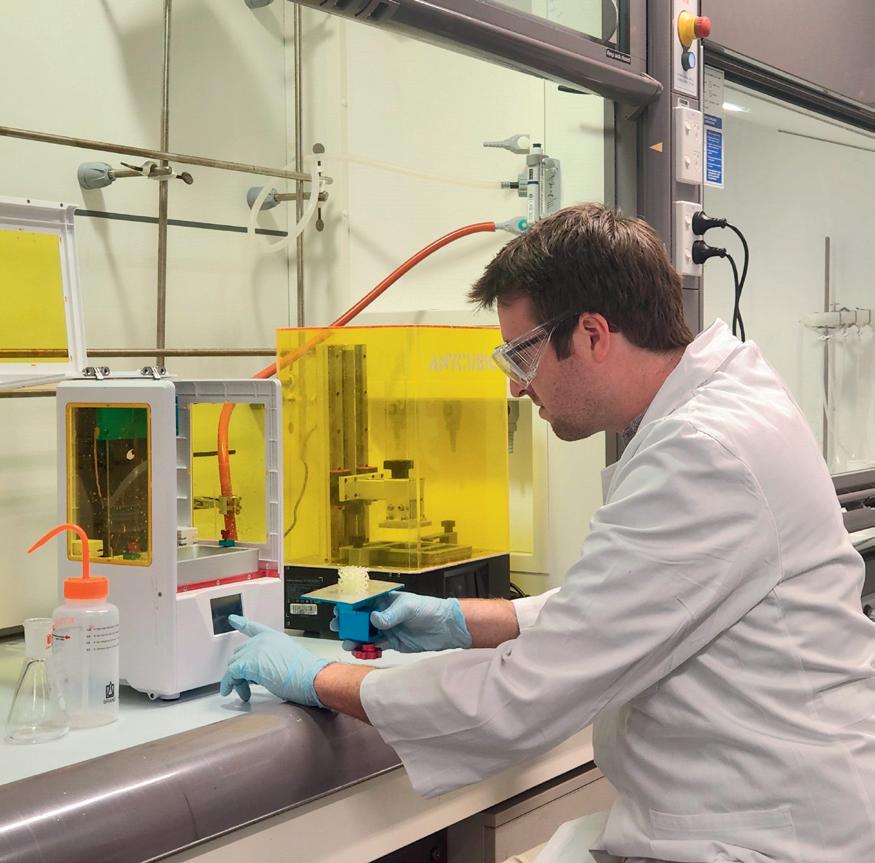
“With existing solid-state electrolytes, when you increase the mechanical strength of the material, you sacrifice a lot of the conductivity. If you want higher conductivity the material is much less robust. What we have achieved is a simultaneous combination of both, which can be 3D printed into sophisticated geometries.
“This polymer electrolyte has the potential to be a load-bearing energy storage material. Because of its strength, it could be used as the actual structure of small electronics, or in aerospace applications, or in small personal medical devices given our 3D printing process can be very intricate and precise.
“We can create really tiny structures with the kind of systems we’re using. So it has fantastic application in nanotechnology and anywhere you need to design energy storage on a micro-scale level,” Lee said.
Increased cycling stability
Although the solid polymer electrolyte developed by the UNSW team is regarded as a high-performance material, the researchers say it can be manufactured using inexpensive and commercially available 3D printers, rather than sophisticated engineering equipment.
The SPE described in the paper is composed of nano-scale ionconducting channels embedded in a rigid crosslinked polymer matrix. It is produced via a process known as polymerization-induced microphase separation (PIMS).
To showcase the versatility of the material, the researchers 3D printed an intricate map of Australia which was then tested as an energy storage device.

“One of the other benefits of this SPE in energy storage devices is the fact it increases the cycling stability — that is the number of charging and discharging cycles until its capacity is reduced to a certain amount,” Corrigan said.
“In our paper, we show that this material is very stable and has the ability to charge and discharge over thousands of cycles. After 3000 cycles there was only roughly a 10% drop.”
High energy storage density
In future, product designers could use their SPE to create items with a much higher energy storage density, according to the researchers.
“Imagine an earpod predominantly made out of this material, which is also acting as the battery. The storage density will be much higher and the power would therefore last longer,” Boyer said.
“We really hope to be able to push forward in terms of commercialisation because we’ve created some really incredible materials and processes.”
Findings of the study have been published in Advanced Materials.
38 INSIGHTS 2023
Researchers used a standard 3D printer to produce an intricate map of Australia made of solid polymer electrolyte which was then tested as an energy storage device. Photo from Dr Nathaniel Corrigan.
UNSW researcher Dr Nathaniel Corrigan working with a 3D printer in the laboratory. Photo from Dr Corrigan.




Y
case study
Long-range drone technology for power grid maintenance
Australian drone manufacturer and solutions provider Carbonix has partnered with SA Power Networks and Nokia to advance the use of long-range uncrewed aerial vehicles (UAVs) in aerial inspection work and flood monitoring on remote electricity distribution network assets.

A Carbonix Volanti UAV was used to prove the beyond visual line of sight (BVLOS) capability using a Nokia private wireless solution and Nokia Digital Automation Cloud (DAC) for industrial-grade long-range wireless network connectivity in the initial phase of the partnership. This paved the way for a continuation of the partnership in which Carbonix UAVs demonstrated LiDAR capabilities for maintenance and floodwater monitoring at remote asset locations.
South Australia’s electricity distribution network covers an area of nearly 180,000 km2, with 30% of customers living in regional and remote areas of the state. Carbonix UAVs with BVLOS capability may be used to assist in speeding up the utility providers’ response times to outages affecting these customers, asset inspection cycles, fault finding, bushfire preparedness, maintenance work and line re-stringing while improving safety and efficiency for employees.
“Carbonix long-range UAVs will enable asset owners and operators to carry out inspections on remote linear infrastructure by providing an extended flight range of over 500 km on par with helicopters at significantly reduced cost and impact on communities and the environment. The partnership with SA Power Networks and Nokia is a great testament of driving innovation in a traditionally conservative industry and we are honoured to be working with these two great companies,” said Phillip van der Burg, CEO, Carbonix.
Specialised multi-rotor drones have been used for some areas of maintenance, including to help re-string powerlines over an area of sensitive native vegetation, but SA Power Networks continues to rely on helicopters for overhead line inspections. Drones provide an alternative when helicopters would not be suitable or safe to operate.
The operational and environmental benefits of replacing helicopters with Carbonix drones could see up to 80% reduction in operating cost and up to 98% reduction in CO2 output compared with conventional manned aircraft.
Paul Roberts, Head of Corporate Affairs, SA Power Networks, said the business had been developing drone capability with 30 trained pilots across 30 depots already able to operate limited visual line of sight missions.
“Drones have proven themselves in a range of our operations. We believe the full value of drones to enhance the safety of our people and improve our efficiency will come with BVLOS capability,” Roberts said. “This trial will help us demonstrate the value of BVLOS to aviation authorities in Australia, who currently do not approve beyond the horizon drone use.”
The successful integration of 4.9G/5G modems into Carbonix drones’ communications systems has resulted in greater redundancy, higher bandwidth, increased coverage and lower costs to obtain real-time data from drones engaged in long-range BVLOS operations.
Rob McCabe, Head of Enterprise for Australia and New Zealand, Nokia, said, “We are proud to bring our industrial-grade private wireless leadership to South Australia enabling exciting new use cases that we’re developing here at our 5G Industrial Incubation Lab. Together with our technology partners, SA Power Networks and Carbonix, we’re exploring the advanced use of long-range connected drones for inspection and maintenance of electricity distribution networks, which will bring safer, more efficient and more sustainable operations.”
“BVLOS certification is a prerequisite for long-range UAV missions, allowing for more effective critical data collection, which enables better and preventative measures to enhance the safety for all stakeholders,” van der Burg said.
Carbonix www.carbonix.com.au
40 INSIGHTS 2023


RUSSELL PALMER
MANAGING DIRECTOR, YOKOGAWA AUSTRALIA & NEW ZEALAND

There are various reasons for the engineering skills shortage in Australia, ranging from the aging population entering their retirement stage, to the rapid advancement and prevalent use of technology today. The skills shortages we are currently facing in the industry are an unfortunate and undesirable outcome; however, Yokogawa have long-term solutions to combat this.
One of the solutions we are, and have been, implementing is our graduates program. We recognise the importance of developing young minds to becoming the next generation of managers, operators and engineers, in a world where sustainability and corporate social practices become the forefront of every industry.
Yokogawa is also paving the way for a future where industries will transition from industrial automation to industrial autonomy (IA2IA). Industrial autonomy will allow plant assets and operations to learn and adapt with minimal human interaction, allowing operators to perform higher-level optimisation tasks. This can be achieved through a range of smart manufacturing solutions and digital consultancy services, designed to help end users on their digital transformation journey towards autonomous operations.
zero emissions by 2050, Yokogawa aims to achieve a 100% reduction in its greenhouse gas emissions and enable the transition to affordable, reliable and sustainable forms of energy. We currently have a number of measuring instruments for renewable energy development and solutions for water environment improvement.
Yokogawa strongly encourages and promotes the use of CO 2-free energy and will make the switch to electric vehicles. Greenhouse gas emissions in all business activities will be reduced by increasing the ratio of cloud and consulting services, visualising the energy efficiency of each business and promoting energy conservation.
We continue to be ranked as a leading driver of social and environmental responsibility and strive to ensure a healthy and flourishing planet for the future.
What opportunities do you predict for the growth of your industry in 2023?
Over the last couple of years the world has changed drastically, and as we settle into the new normal of a post-pandemic world, the changing market dynamics, environmental and social challenges have revealed many new priorities and an updated business direction.
What plans
have in 2023 for an energy transition to renewables?
PXiSE (pronounced ‘pice’) Energy Solutions from Yokogawa provides next-generation grid control technology and is a vision for making the electrical grid work by managing unlimited renewables and distributing energy resources (DERs) whilst providing safe and reliable power. With decades of utility management, field engineering and software development skills, our grid control solution solves today’s problems and creates a technology roadmap for the future. PXiSE maximises the efficiency and production of energy generation from solar, wind and energy storage to deliver advanced control functionality and economic optimisation in real time.
We are also excited to be a part of the Australian Yuri Green Hydrogen Project, one of the world’s largest renewable hydrogen projects, as we have been selected as the Integrated Control Systems supplier for Engie. Our decades-long expertise in delivering leading-edge technological solutions to the energy industry was a key contributing factor when we were selected for this opportunity.
What are your carbon emission reduction goals for 2023?
A sustainable planet starts with us, and it must start now. Here at Yokogawa, we address social and environmental issues through strategies that align with the United Nations Sustainable Development Goals.
We have set out three sustainability goals to achieve by the year 2050: achieve net-zero emissions, ensure the wellbeing of all and make a transition to a circular economy — ultimately making the world a better place for future generations. In order to achieve net
2022 saw a growing concern with the global energy crisis caused by a variety of factors such as the post-pandemic economic rebound. With rising energy prices and an urgent call for the transition to clean energy, I believe we will see an increase in more sustainable practices in many industries, as well as the promotion and usage of renewable energy.
Cybersecurity is another major area for growth in the near future. In a world where technology is evolving rapidly, as are cybersecurity threats, management of these threats is vital. There is an opportunity here to provide state-of-the-art solutions to risk management and enhance organisational resilience for long-term stability.
Yokogawa aims for a growing diversity within the company, and the industry itself is aiming for the same. It is shocking to see that in today’s society, where equality and diversity should be at the forefront of all industries, less than 15% of engineers are women. There is a major opportunity here for more representation and support of these women in order to resolve the issue of Australia’s growing demand for engineers.
Russell Palmer is the Managing Director of Yokogawa Australia & New Zealand and has been with Yokogawa Australia for 25 years. Russell has held roles from frontline engineering sales to Sales and Marketing Director — a position he held for 10 years. Russell’s focus is on collaborating with customers to make possible new solutions to the problems faced in industry.
INSIGHTS 2023 43
Can you discuss the ongoing impact of the skills shortages on your industry, and solutions being implemented in 2023?
do you
insights 2023
MANAGED ETHERNET SWITCHES
Pepperl+Fuchs has introduced the RocketLinx managed Ethernet switches. Featuring a rugged metal housing, these switches offer a range of performance, management and security features including VLANs, Quality of Service, redundant ring topologies and event notifications. In addition to standard copper connections, the managed switches also offer optical fibre SFP ports.
With Gigabit speed on all ports, the RocketLinx managed switches enable efficient data transfer over long distances or when immunity to electromagnetic interference is required.
Conventional Ethernet switches usually have copper connections that transfer data up to 100 m with no loss in performance. However, these types of connections are susceptible to electromagnetic radiation, making them unusable for certain applications. SFP fibre connectors provide compatibility with small form-factor pluggable (SFP) transceivers. These fibre connectors are not affected by electromagnetic radiation and enable efficient data transfer at Faster Ethernet or Gigabit speeds across distances of up to 120 km.
Pepperl+Fuchs (Aust) Pty Ltd www.pepperl-fuchs.com
MODULAR SAFETY RELAY
The Pilz myPNOZ modular safety relay is produced individually according to customer requirements in batch size 1, and can be used for the monitoring of machine parts in independent safety zones.


It consists of a head module and a maximum of eight expansion modules to provide safe monitoring of 2 to 16 input functions such as emergency stop, safety gates, safety light curtains, two-hand IIIA/C controls and enabling switches.
Higher-level safety functions and power supply are provided via the head module and four input modules, four output modules and four input/output modules are available, with modules connecting via a BUS connector.
Two safety inputs are available per input module, and can be AND-/OR-linked as an option. Output modules can have relay or semiconductor outputs, with or without time delay. Module expansion and replacement can be performed after installation, and diagnostics are available via an LED display.
The myPNOZ modular safety relay was the winner of the German Innovation Awards 2021, RedDot Design Award 2022 and made Pilz the first company to receive the UKCA (United Kingdom Conformity Assessment) certificate from TÜV SÜD. Pilz Australia Industrial Automation LP www.pilz.com.au
FIFTH GENERATION SOLAR PANELS
REC Group has announced the production of the REC TwinPeak 5 Series, the fifth generation of its TwinPeak solar panels.
The solar panels have an improved power output of up to 410 Wp, designed to provide users with higher savings on electricity bills and carbon emissions. Available in both white and black backsheet variants, the series features 120 half-cut monocrystalline p-type cells with multi-busbar connections. REC’s 30 mm thin frame and support bars in the back allow the panel to withstand heavy loads of up to 7000 Pa, built for strong longevity even under rough climate conditions.
Production of the solar panel recently started at REC’s Industry 4.0 manufacturing site in Singapore, with the first shipments expected to arrive in Australia in December 2022.
REC Group www.recgroup.com
44 INSIGHTS 2023
LAPP Etherline®cables and EPIC DATA connectors for industrial ethernet applications.
1300 65 75 64
Treotham Automation Pty Ltd
www.treotham.com.au info@treotham.com.au
100%Australian Owned and Managed
Celebrating 30 years -1992-2022
NEW PRODUCTS
MQTT BROKER
The MQTT.box from Wiesemann & Theis is a Mosquitto MQTT broker for DIN rail mounting. It can operate as a standalone Mosquitto MQTT broker in the network and enables secure communication between network-capable automation components using MQTT protocol.

The unique feature of MQTT is that two communication partners exchanging data with each other never have a direct connection. Instead there is a central data broker. The broker is a kind of turntable for data — it receives data from an MQTT user and passes it on to others.
For example, the two communication partners (clients) may be a PLC and Kepware software. They don’t communicate directly with each other, and so there is no direct connection. Instead they both open a connection from within the local network to the central data broker in the internet. The PLC acts as publisher and sends an input status to the broker. The Kepware software can then request the data as a subscriber.

Due to a second network interface on the MQTT.box device, data can also be made available for an additional network segment without allowing access from one network to the other. An additional feature is the user-management function, which together with the optional configuration of an Access Control List (ACL) enables control of access rights. There is no limitation with regards to the number of tags that can be configured to be passed.
TE Automation Pty Ltd www.teautomation.com.au

INSIGHTS 2023 45
NEW PRODUCTS
DISINFECTION AND WATER TREATMENT SENSORS

Endress+Hauser has released Liquid Analysis disinfection sensors and accessories for measurement in more applications, adding the CCS55D Memosens Free Bromine sensor, CCS58D Memosens Ozone sensor and Flowfit CYA27 assembly to its product family.
The CYA27 assembly is designed to be freely configurable, accommodating a wide range of sensors, including disinfection, pH, conductivity and dissolved oxygen. It also offers flow monitoring and diagnostic indicator options, covering a wide range of disinfection applications.
The Memosens CCS55D is used for measuring free bromine in seawater, swimming pools, process and cooling water, fish farming applications and more.
CCS58D Memosens Ozone sensor is capable of measuring ozone concentrations in the range of 0.1 to 2.0 mg/L, with an error of ±2% or ±5 µg/l. This range is suitable for monitoring ozone levels in drinking water, wastewater and utilities.
The CYA27 Flowfit assembly flow assembly is used for the measurement of up to six parameters in process and drinking water, enabling adaptation to many process requirements. It provides a flexible basis for the measurement of disinfection parameters, including chlorine, chlorine dioxide, ozone, bromine and further parameters of liquid analysis, such as pH, ORP, dissolved oxygen and conductivity.
Endress+Hauser Australia Pty Ltd www.au.endress.com
ENCLOSURE WITH VIEWING WINDOW
The Pepperl+Fuchs GR series enclosure with viewing window and spring-loaded flap, which has been developed for customised solutions with increased safety (Ex e) and intrinsicallysafe (Ex i) protection, is available for various products in the Pepperl+Fuchs range, and includes certification for global use.

The rugged GR series GRP enclosures can withstand temperatures down to -60°C, and can serve in place of stainless steel housings in many applications.
Being designed with features that enable convenient one-person mounting, maintenance and flexible extensions, the enclosures save time and make handling easier. The glass inspection window provides for time-efficient routine maintenance and the GRP flap reduces heat transfer, minimising the formation of condensation.
Pepperl+Fuchs (Aust) Pty Ltd www.pepperl-fuchs.com
HEATING AND VENTILATION SYSTEM
Mitsubishi Electric Australia has launched its newest mechanical ventilation with heat recovery (MVHR) system, which recovers heat from the air inside a home, and transfers it to fresh, dry air introduced from outside, providing energy efficiency in winter and energy recovery in summer.
Suited to residential buildings, including multistoreys or homes located in inner-city locations concerned with localised air quality, the LOSSNAY technology continuously removes stale interior air from bathrooms, kitchens, toilets and the laundry. Heat is then transferred to the incoming fresh air to warm the home on a cool day. This enables energy efficiency of ventilated air while reducing the demands on air conditioning for heating.
The Vertical LOSSNAY has several new features including a compact slimline design (small enough to fit inside a cupboard), low noise output, and both left and right configurations.
Using onboard temperature sensors, the unit automatically enters bypass mode when it detects the space is hotter than desired and the outside air is cool enough. Bypass mode allows the unit to bring in fresh air from outside without recovering the heat, helping to reduce the need for air-conditioning cooling, such as overnight in summer.

A third filter slot can hold an optional NOx (nitrogen oxides) filter on the supply side of the unit to clean incoming air in polluted environments. The third filter slot can alternatively hold an optional PM2.5 (particulate matter 2.5) filter providing a high standard of fresh air filtration.
The Vertical LOSSNAY can contribute to as much as 40–46% in energy savings on reduced air-conditioning loads depending on conditions. Full energy consumption, CO2 emissions and electrical expense calculations are available on request.
Mitsubishi Electric Australia www.mitsubishielectric.com.au
46 INSIGHTS 2023
NEW PRODUCTS
SSD SOLUTIONS
Advantech has announced a pair of SQFlash PCIe Gen.4 SSD solutions: the SQF 930 and SQF ER-1.

The Advantech SQF 930 and ER-1 series are designed with PCIe Gen. 4 specifications, delivering double data streaming performance when compared with Gen. 3 solutions. In addition, these solutions are also available in M.2 2280 and U.2 (SFF-8639) sizes to accommodate diverse requirements. In order to fulfil various industrial applications, SQFlash provides different types of general, read-intensive and mixed-use options that enable edge storage devices to keep up with numerous, diverse real-time streaming data sources. In addition, the SQF 930 and ER-1 series support 3 x drive writes per day (DWPD) and 1 x DWPD levels to meet different industrial requirements. They also support wide temperature capabilities (-40 to 85°C) for mission-critical applications. Finally, the Advantech ER-1 series is built with low power consumption credentials that meet modern ESG high-power and low-carbon expectations.
The SQF 930 and ER-1 series adopt thermal glue with high mechanical flexibility to avoid the risk of physical damage to SSD components during sudden temperature changes. The combination of thermal throttling design and real-time I/O adjustment can effectively balance temperature and performance. In addition, the adoption of IoT has led to unprecedented interconnectivity and increased security concerns. Accordingly, the SQF 930 and ER-1 series are said to meet these challenges by protecting data stored on the SQFlash SSD by providing support for real-time monitoring and using a complete security solution at the SSD firmware level.
Advantech Australia Pty Ltd www.advantech.net.au

INSIGHTS 2023 47
NEW PRODUCTS
Novel waste treatment converts sludge to biogas
A Washington State University research team has developed a new method to treat sewage which can convert leftover sludge into biogas. The method could help wastewater treatment plants reduce waste while also generating electricity.
The research team tested a pretreatment technology using oxygen-containing, high-pressure steam that acts as a catalyst to break down sewage sludge. They found that they were able to convert more than 85% of the organic material to biogas, which can be used to produce electricity or upgraded to renewable natural gas (RNG) for the natural gas grid or for local use.
Adding the pretreatment step improved the anaerobic conversion of sewage sludge at the wastewater treatment facility from the current less-than-50% conversion rate, and they produced 98% more methane overall compared to current practice.

“It was shown to be extremely efficient, and that’s very exciting,” said Birgitte Ahring, professor in the Gene and Linda Voiland School of Chemical Engineering and Bioengineering, who led the work. “This can be applicable and something we could begin to explore in Washington state. Not wasting waste but using its potential instead has major advantages.”
The WSU researchers have been studying this pretreatment process for several years, using it to break down straw and woody materials. They weren’t sure the process would work with the different composition of sewage sludge, such as lipids and proteins, but were positively surprised.
“This is not a very high-tech solution,” Ahring said. “It’s actually a solution that can be useful even at small scale. The efficiency has to be high or else you cannot warrant adding the extra costs to the process.”
The technology could be particularly helpful for smaller communities, many of which are motivated to reduce waste and their climate impact, she added.
The researchers are now scaling up the work in their pilot facility located at WSU Tri-cities to further demonstrate the process. They are also studying how to efficiently convert the biogas to more valuable renewable natural gas by a new bioprocess. While the biogas can be used to produce electricity, producing renewable natural gas could allow rural communities to produce local transportation fuel for fuelling their municipal vehicles.
The findings were reported in the journal Waste Management.
case study case study
Charging energy resilience to storms and bushfires in Vic

Victorian Minister for Energy Lily D’Ambrosio has announced $7.5 million for crucial back-up power systems in 24 towns hit by major storms in 2021 — including batteries and rooftop solar on community buildings.
The energy systems will provide power to community hubs when damage to the network causes a widespread outage, allowing residents to shower, heat food and charge devices.
The government identified 24 towns and will now begin to work with energy providers, local governments and emergency services organisations to deliver the new energy solutions.
Work is also underway to secure communities at risk of outages caused by bushfires, after the 2019–20 fires left areas in East Gippsland disconnected from the state’s grid. Through the Community Microgrids and Sustainable Energy Program, Victoria is funding new energyresilient infrastructure with AusNet.
The Labor Government is also investing $9.8 million to deploy a mix of solar panels, batteries, heat pumps and generators to the three towns — Mallacoota, Omeo and Corryong.
The microgrids will enable the provision of crucial back-up power in the event of a power outage caused by a bushfire.
48 INSIGHTS 2023
iStock.com/Daniiielc
iStock.com/Bilanol
FOR YOUR SUSTAINABILITY STRATEGY
Developing a credible sustainability strategy with bold aspirations, clear goals and defined programs is a big achievement for any sustainability leader. The real test of a strategy, however, lies in its ability to deliver progress. Progress that involves big leaps forward to benefit people, the planet and the organisation — not incremental moves of arbitrary milestones year-on-year.
To deliver progress like that, rallying stakeholder support is critical. Critical because so much of what’s outlined in a sustainability strategy is reliant on the actions of others. The actions of consumers to buy sustainably. The actions of employees to embrace new ways of working. The actions of supply-chain partners to adapt how they run.
Influencing behaviour change is critical, and a lot of what’s required to drive change starts with building belief. Belief in the business’s ambitions for transformation. Belief in its plan to adapt. Belief in the progress being made.
Creating a credible and robust sustainability strategy helps build that belief but so too does compelling engagement. On that, clarifying the ambition, unifying commitments and demonstrating progress are good places to start.

1. Clarifying the ambition
The complex and long-term nature of sustainable transformation can make it difficult for organisational leaders to build belief in their ambition for change. Vague plans to
deliver against commitments in sustainability strategies don’t help. Particularly on the emissions front, where many leaders have set long-term net zero goals but few have articulated how they’ll achieve them.
Painting a compelling picture of how leaders envisage organisational transformation shaping up can bring ambitions to life. UK retailer Selfridges did this well recently when it launched its first annual ‘Project Earth’ report. The launch saw the retailer offer specifics about its vision to reinvent retail. A key message was its goal for 45% of transactions to come from circular products and services by 2030. The message made its sustainability vision tangible and became the focus of countless media stories.
2. Unifying commitments
The scale and diverse nature of action needed to fuel a sustainable transformation makes it challenging for organisations to communicate a coherent story of change. That’s a problem because businesses need to make it clear how various initiatives interconnect and serve a bigger purpose.
Carrefour’s Act for Food initiative is a good example of a brand that’s created a common thread to engage audiences. The French grocery retailer’s program brought together several global acts to help customers and employees eat better. The initiatives included doubling the number of products in its vegetarian range and guaranteeing fish are responsibly sourced. By uniting a diverse range of concrete acts under a single
umbrella, Carrefour found a creative way to rally internal and external stakeholders about its sustainable transformation.
3. Demonstrating progress
With so many sustainability commitments and pledges, stakeholders are rightly cynical about corporate promises. Ensuring what a business does is authentic and meaningful is important, but so too is reporting on outcomes. To build belief in a sustainability strategy, business leaders must prioritise transparent and regular communication about the progress being made, and where there is more to do.
Officeworks did this well in its FY22 sustainability report. In a section titled ‘Our Progress’, the retailer openly communicated the state of progress against its 2025 sustainability commitments. This included acknowledging whether the business is ‘at the beginning’ or ‘on track’ regarding various people and planet actions. In doing so, Officeworks shows it understands sustainable transformation is a constant work-in-progress.
Ensuring sustainability strategies are credible and creative is quite the challenge. Making the complex simple and engaging generally is. Crack that challenge, however, and sustainability leaders will find themselves well placed to help their organisation build the belief, support and progress that’s needed.
Salterbaxter Australia www.salterbaxter.com
INSIGHTS 2023 49
iStock.com/Drs Producoes
Sustainability strategy
HOW TO RALLY SUPPORT
Stu Wragg, Client Partner at Salterbaxter Australia
ODOUR CONTROL SOLUTION
The V12so Odour Control Cannon combines four different functions in one machine. Originally designed to eliminate odours, the machine can also provide a solution for dust suppression, cooling and most recently, disinfection. While these functions may seem different, the low water consumption and dosing pump is the common feature that has made this machine adaptable for all solutions.
Working at two speed levels, the machine has a water consumption of only 4 Lpm and a throwing range of up to 50 m. Recent research with the independent laboratory SEA in Toronto concluded that the V12so could reduce the bacterial load by 95%.
With automated and remote control functionality, the machine is suitable for recycling plants and landfill sites for dust, odour and disinfection control. It is also suitable for large halls and warehouses for both cooling and disinfection, as well as production facilities (including food).

Due to the turbine used in the machine, large areas can be disinfected quickly and with its low sedimentation speed, the fog reaches hidden corners and angles.
Tecpro Australia is the exclusive distributor of the V12so in Australia.
Tecpro Australia www.tecpro.com.au

IoT ENERGY MANAGEMENT PLATFORM
The iBase OFP-151-PC-NVK is an open-frame 15 ″ panel PC and a SCADA (supervisory control and data acquisition) management solution. It displays the real-time status of equipment such as freezers, air conditioning, lighting systems and power meters, and serves as a communication bridge between sensors and the cloud to instantly transmit equipment operating status.

The platform features modularised functional blocks for customisation across all venues in the retail industry. The upgradeable OFP-151-PC-NVK panel PC comes with an easy-to-mount, openframe modular design with optional coloured frames. It supports IP65 front panel protection against dust and water and is built with industrial-grade components to enable good performance with fanless operation in temperatures of up to 50°C.
OFP-151-PC-NVK is installed with the Novakon iFACE Designer, an object-oriented UI/UX graphics editing tool that utilises many industrial automation standard protocols, mainstream brand name PLC drivers and universal IoT cloud protocols. This allows the platform to provide connectivity among diversified industrial equipment and devices, such as sensors, power meters, controllers, PLCs, IO modules and IoT cloud platforms.
Backplane Systems Technology Pty Ltd www.backplane.com.au
50 INSIGHTS 2023
NEW PRODUCTS
ROTARY SCREW BLOWER

Kaeser recently expanded its FBS series of rotary screw blowers with the inclusion of the FBS 720 models. The oil-free compression blower technology is designed especially for water industry applications.
With a flow rate of 18 to 72 m³/min and pressure differentials from 0.3 to 1.1 bar, as well as a selection of motors ranging from 45 to 110 kW, the series has good energy efficiency, space-saving design and automation.
The SFC version is equipped with a frequency converter and a synchronous reluctance motor — a slip-free design that combines all the advantages of high-efficiency permanent-magnet motors with those of robust, service-friendly asynchronous motors. Thanks to variable speed control, the flow rate can be adjusted as required and a control range of 1:4 is achieved, allowing good dynamic operation.


The STC version is now equipped with an energy-saving IE4 Super Premium Efficiency motor, which reduces energy consumption and therefore costs.
On both versions, power transmission from the motor to the airend takes place via loss-free and maintenance-free gearing, which results in an improvement of up to 7% in specific package input power as compared to the previous model.
Furthermore, efficiency remains constant across the entire control range and flow rate is virtually unaffected by pressure fluctuations. This allows the blowers to be regulated and adjusted at all times via the master control system.

Despite the compact dimensions, Kaeser has dispensed with the requirement for maintenance access from one side, thereby permitting side-by-side installation. This results in space savings, particularly when operating multiple blower systems.

The units are delivered ready for immediate connection, including controller and frequency converter or star-delta starter. All units are CE and EMC-certified, thereby minimising the planning, construction, certification, documentation and commissioning costs for planners, operators and plant manufacturers.
Kaeser Compressors Australia au.kaeser.com

INSIGHTS 2023 51 Tel: (03) 9699 7355 www.pressureandsafetysystems.com.au 9454P&SS-WNIPT We handle Pressure ® lnline Deflagration Flame Arrestor lnline Detonation Flame Arrestor STOPPED in iTS TrackS! FlAme Arrestors & tAnk protection Devices • vacuum/pressure relief • inert gas blanketing end-of-line Deflagration Flame Arrestor Flame front is extinguished by the arrestor
NEW PRODUCTS
SIMPLE TECHNOLOGY FOR SOLIDS REMOVAL FROM INDUSTRIAL AND MUNICIPAL WASTEWATER
Michael Bambridge*
Simple, efficient, easily operated and maintained screening is the first and very critical stage in municipal and industrial wastewater treatment, as engineers and operators of food and beverage processing plants and abattoirs keenly appreciate.
Horizontal and Rotary Drum Screens are the ideal first line defence, because they capture suspended and floating solids that would otherwise flow through into the wastewater treatment plant. They reduce load and potentially recover valuable material and prevent downstream equipment damage and blockages.
Typical industrial applications using Rotary Wedgewire Drum Screens include general food processing (vegetables, fruit, coffee, starch processing), beverages (beer, wine, juice, soft drinks), slaughterhouses and abattoirs, tanneries, pulp and paper mills, textile plants, plastic manufacturers, or any industry where solids removal or recovery is needed.
In all these applications, there is a variety of materials that can clog downstream systems and wreak havoc — in some cases this material can be recovered as a valuable by-product as well as reducing load to the treatment process.
Rotary Drum Screens are the first line of defence to help prevent such clogging and associated issues. While it is true that most pumps and other systems are engineered to handle these, they still are the major cause of equipment and process failure, resulting in high wear, downtime, and cost.
Unless solids are efficiently separated out from wastewater at the start of the purification process, you are inviting trouble into the system. This can cost dearly in terms of downtime, environmental risk, clean-up costs and OH&S hazards for the operator teams involved.
A heart of stainless steel in the CST Wastewater Solutions wastewater horizontal drum screen, which can withstand shock loads and larger solids most other screens using lighter mesh construction cannot –and which and may cause them to fail prematurely in flood or high variable flow conditions common throughout the Asia-Pacific
This means ease of maintenance of headworks is a key consideration in preventing trouble, especially for municipalities and smaller industrial concerns operating on tight budgets. These entities also do not have the financial resources or large engineering teams to implement complex technologies for wastewater treatment.
Flexibility is also key to ongoing efficiency in handling diverse inputs and flows, regardless of the location and input. Headworks that are efficient over diverse conditions — that don’t fail when you need them most, such as under high load or flow — are vital to all the downstream purification and recycling process stages in a properly engineered wastewater treatment plant.
As a result of our experience over more than 30 years of wastewater installation and operational experience throughout the Asia-Pacific region, we have taken a different path to many in producing our different headworks designs for municipal and industrial applications to prepare for a future that is already arriving.

Horizontal In-Channel Drum Screen Advantages
Our engineering approach is not one-size-fits-all, because one size (or type) does not. Our horizontal in-channel rotary drum screening technology is primarily used on municipal applications and built to be both robust, reliable, and adaptable. They may not to be the cheapest up front, but do not end up transferring cost and problems down the line.
This whole-of-life cost, as distinct from a race to the bottom on sticker price, is the mature engineering approach to meet clients’ long-term objectives.
52 INSIGHTS 2023 SPONSORED CONTENT
The screens are designed with all parts located above the wastewater flow, for simple operation and maintenance, with routine servicing possible without removing the drum.
Robust engineering, design, and stainless-steel construction all mean that these rotary drum screens have long service lives with low maintenance requirements. No mechanical components come into contact with screened solids, so there is no opportunity for premature wear from solids impacting internal workings of the screen.
Some non-technical people, who don’t have to live with the results of their decisions, might say “So what?”. We are not addressing them but the guys on the front line, the operators, and engineers, who will have a different view. That’s why we present our engineering and operational principles for a mature and timely discussion.
There are common features we embrace that are universally beneficial to WWTPs expected to perform and keep on performing.
Compared with typical traditional screening at wastewater treatment plants, for example, our in-channel technology has a low hydraulic profile and head loss at peak flows to increase solids removal efficiency.

When dealing with fine screening of larger flows, this technology has the advantage of mechanical simplicity, self-cleaning and high-efficiency screening. This results in reduced maintenance and cheaper whole-of-life costs compared with other types of screens, such as band and inclined drum screen designs.
Rotary Drum Screen advantages
CST’s above channel Rotary Drum Screens are traditionally used for the more heavily loaded industrial applications, although they are also used for municipal duty using 0.5–3 mm or finer screening.
Most industrial installations such as paper mills, food, beverage, and abattoirs, commonly use wedgewire apertures of 0.5–1 mm, whereas municipal would more commonly use 3 mm for primary treatment. They are also available with 2.0 mm holes on pre-MBR secondary fine screening for membrane protection.

Robust engineering, design, and stainless-steel construction all mean that these rotary drum screens have long service lives with low maintenance requirements. No mechanical components come into contact with screened solids, so there is no opportunity for premature wear from solids impacting internal workings of the screen.
Local manufacturing
One final way in which we have a different approach is our move to local manufacture closer to the place of use throughout the Asia-Pacific.
This move comes as intensifying supply chain issues interrupt, delay and lessen the supply of some of vital wastewater treatment technology, which is key to the sustainability and environmental performance of industrial and municipal wastewater treatment plants and key to their overall reliability in delivering services.

Not only does local manufacture deliver a more robust and low-maintenance product — and better whole-of-lifecycle value — but it places the customer next to the source of supply for spare parts, future extensions, and retrofits to boost performance long-term.
The switch to local production also enables us to offer full stainless-steel products with world-respected standards
of Australasian metals engineering, replacing carbon steel components and further improving corrosion resistance in harsh local environments.
So if you are interested in the future, if our different engineering approach attracts you, we would value your observations and experience. Good engineering is an ongoing discussion, which we are keen to extend and develop in the light of real experience and vision.
CST Wastewater Solutions www.cstwastewater.com
INSIGHTS 2023 53
*Michael Bambridge BE, ME, is Managing Director of CST Wastewater Solutions. His experience over more than 30 years in Australasia and Asia spans hundreds of municipal and industrial WWTPs throughout Australasia and internationally, particularly into Asia and China.
Typical discharges from Industrial Rotary Drum Screen Installations.
CALIBRATION MANIFOLD
The Ralston calibration manifold is a handheld compressed gas controller that makes it possible to fine-tune pressure directly at the device under test. The user connects a compressed gas cylinder at one end, a device to be calibrated on the other, and a gauge in the middle.

A fine-adjust piston with precision fill and vent valves gives precise control over an external gas source, and all ports and hoses are Ralston Quick-test for no-tool, no-thread tape, leak-free connections.
The calibration manifold is designed to be a straightforward, intuitive tool that replaces bulky DIY set-ups using a pressure regulator and needle valve.

The Ralston calibration manifold is available in solid brass for pressure calibration from 0–3000 psi, or stainless steel, for pressure calibration from 0–5000 psi and greater chemical compatibility. Ralston Instruments LLC www.ralstoninst.com
ETHERNET CABLE RANGE AND CONNECTOR
4-CHANNEL ISOLATING SWITCHING AMPLIFIERS
The Turck IM18-4DI is a compact, four-channel isolating switching amplifier for non-Ex areas, while the IMX18-4DI is for IECEx areas. Packing four signals into an 18 mm module, the devices offer high channel density, making a difference for installations in small control cabinets and decentralised or modular automation systems. Users also benefit from the flexibility of a configurable dual 1:2, 1:3 or 1:4 splitter and reversible switching outputs.
With a width of 18 millimetres for four channels, the IMX18-4DI devices need almost a third less space on the DIN rail than similar installations with two-channel devices. The SIL2 certification of the devices together with Turck’s SIL proximity switches enables the creation of safety-rated applications.

Signal cables are connected with spring-loaded or screw terminals. The Power-Bridge variants can also be supplied from the rear via the DIN rail. A group fault signal contact makes it possible to indicate error messages.
Turck Australia Pty Ltd www.turck.com.au
The Lapp Group’s ETHERLINE product range includes Cat5, Cat6 and Cat7 industrial Ethernet cables and connectivity products. Available from Treotham Automation, the ETHERLINE range of cables provides reliable network communications in demanding industrial and communication environments where difficult EMI conditions are prevalent. ETHERLINE is available with PVC or PUR outer sheath which meets the highest service life requirements, even under harsh climatic conditions. ETHERLINE offers premium screening against electromagnetic interference and is suited for use in drag chains and moving machinery parts in dry or damp rooms or plant engineering and machinery manufacturing.
Treotham also provides the EPIC DATA 90 RJ45 connector which was designed to complement ETHERLINE cables. The connector is made up of two parts, with the rear part being able to be fitted in four positions. Installation engineers are increasingly demanding angled connectors for Ethernet cables, so the EPIC DATA 90 RJ45 connector offers the versatility to rotate or change cable outlets in 90-degree increments easily in the field. It is designed to ensure reliable network cabling even in restricted spaces, avoiding strain on the bending radius of data network cables.
Treotham Automation has thousands of locally stocked products available for next-day delivery.
Treotham Automation Pty Ltd www.treotham.com.au
54 INSIGHTS 2023
NEW PRODUCTS

GEARED MOTOR FOR HYGIENIC APPLICATIONS
Automatic bottling and conveyor systems in beverage and liquid food production set high requirements for energy efficiency, operational reliability, washdown capability and corrosion protection.
The DuoDrive geared motor from NORD Drivesystems integrates a high-efficiency IE5+ synchronous motor into the housing of a single-stage helical gear unit, offering a system efficiency of up to 92%. Constant motor torque over a wide speed range allows for consistent version reduction and reduction of operating costs. The unventilated, washdown design with smooth surfaces also meets hygiene requirements and helps ensure optimum cleaning.

NORD’s nsd tupH surface treatment is available for DuoDrive, making the surface corrosionresistant and harder. The treatment creates a protective layer that is permanently bonded to the substrate material so nothing can detach or flake off. The drives are easy to clean and largely resistant to acids and alkalis. It is even possible to use high-pressure cleaners or apply aggressive media. nsd tupH treatment is available for most NORD modular drive systems made from aluminium.
NORD Drivesystems (Aust) Pty Ltd www.nord.com
FANLESS COMPUTER
The Neousys Nuvo-2600 series is an Intel Elkhart Lake Atom fanless computer with flexible expansion to fulfil various factory automation and machine vision applications. It offers a compact footprint, Gigabit PoE+ capability and front-accessible data storage with CPU performance at 12 W of low power consumption.

Powered by the Intel Elkhart Lake Atom x6425E quad-core CPU, the Nuvo2600 series delivers 320% CPU performance improvement compared with the previous Nuvo-2500E series. The Nuvo-2600 has four Gigabit PoE+ ports and one USB 3.1 port with screw-lock mechanisms to secure connections. In addition to its internal M.2 2280 SATA SSD for system storage, the Nuvo2600 has one front-accessible 2.5 ″ HDD tray accommodating a 2.5 ″ SSD or HDD up to 5 TB in capacity. It also has one isolated RS-485 port and isolated digital I/O to provide robust connections with industrial devices. For internal expansion, the Nuvo-2600 series provides two mini-PCIe sockets and one M.2 3042/3052 B Key socket to support 4G/5G mobile broadband.
The Nuvo-2600 series comes in two variants: the Nuvo-2600E has a PCIe Cassette for an additional PCIe card, such as USB or GbE frame grabber, isolated digital I/O or industrial communication card.
The Nuvo-2600 has an 8–35 VDC power input with remote control and optional ignition power control, and has an operating temperature range of -25 to 70°C.
Backplane Systems Technology Pty Ltd www.backplane.com.au
IIoT GATEWAY

The ASi-3 gateway from Pepperl+Fuchs enables parallel cloud communication and therefore simple data access for more process transparency. The REST API interface allows parallel implementation of IIoT applications and PLC communication. The multiprotocol-capable AS-Interface 3 gateway supports both Profinet and EtherNet/IP. All configuration and diagnostics are performed via a standard web browser, and deep knowledge of PLC programming is not required. The device also includes an SD card for data backup, on which all parameters are stored. It is designed to enable timesaving gateway configuration in the event of replacement, ensuring high plant availability through minimised downtime.
The ASi-3’s narrow housing design of 37.9 mm width saves space in the control cabinet and reduces associated costs. The gateway is available as a single or dual master for two ASi lines. A total of 31 (standard addressing) or 62 (extended address assignment) devices can be connected to one gateway. The devices can be flexibly connected to the gateway via a flat cable, providing power supply and communication.
Pepperl+Fuchs (Aust) Pty Ltd www.pepperl-fuchs.com
56 INSIGHTS 2023
NEW PRODUCTS
case study
Wastewater facility uses AI to meet sustainability goals
The Eastern Municipal Water District (EMWD) serves nearly one million people living and working within an area of 1445 km2 in Riverside County, California. As the state’s sixth-largest retail water agency, its mission is to provide “safe, reliable, economical and environmentally sustainable water, wastewater and recycled water services”.
“We strive at all times to produce the highest quality water possible,” said Matthew Melendrez, Assistant General Manager, Operations and Maintenance, “and to do that as economically as possible for our customers to help keep their costs down.”
But a growing population and an expanding service area have put increased demands on the district. Its four reclamation plants currently treat about 182 million litres of wastewater a day, removing impurities.
“The two main things we’re trying to remove are organics and ammonia,” Melendrez noted. “If we don’t clean those up, they have a large impact on the environment.”
Aeration is a key step in wastewater treatment, and one of the most energy-intensive. EMWD plants spend nearly half of their electricity bills on dissolved oxygen used to biodegrade waste.

“The industry has struggled for a long time with aeration control and finding better ways to operate the basins,” Melendrez explained. “Process parameters change practically every minute of the day as flow rates and volumes of ammonia and organics fluctuate quickly, making it difficult to program a typical PID setpoint to hit its dissolved oxygen (DO) targets.”
Setting the target too high requires an increase in electricity to provide unnecessary air. Setting it too low inhibits ammonia oxidation, which then requires disinfection and larger amounts of chlorine.
“We typically use a simple PID control system that slowly opens and closes the air valves as the DO climbs or dips. Everything is reactive and feedback-based, and operators usually intervene daily to make manual adjustments,” Melendrez said. “But there’s a lag from the time adjustments are made until we see results because the tanks are so large, and conditions continue to change. All of this makes it hard for a regular PID to handle and why this is one of the biggest opportunities to improve efficiency.”
Better aeration performance would also positively impact downstream processes where the plant could improve disinfection and lower chemical costs.
EMWD approached Rockwell Automation, one of its long-time technology providers, to develop and test an AI application that learns the current state of aeration operations and, with minimal staff intervention, optimally adjusts PID response as conditions change.
Together with the Rockwell Automation Water Wastewater, Solutions & Services and Advanced Analytics teams, EMWD piloted an AI-enabled control system at its San Jacinto Valley reclamation facility, which treats 26 million litres of water a day. Plant staff installed an Allen-Bradley CompactLogix 5480 controller on the existing automation network allowing it to interface with other processes as needed.
Two Logix cores connect to the control system while two other processors execute the Rockwell Automation AI software. The AI controls the amount of air fed into the aeration basin by continuously monitoring and updating the PID response. The data is then used to adjust the air valves and the amount of oxygen delivered before the DO deviates too far from the setpoint.
“Using machine learning, Rockwell Automation data scientists determined wastewater flow and ammonia load have the biggest impact on oxygen performance,” Melendrez explained. “They built a model that was quite accurate at predicting the DO demand for any given rate and load, and remotely programmed the AI software.”
With the AI-enabled control, EMWD reduced the amount of air delivered to the aeration basin by as much as 31%. The plant was not only more successful in running the DO closer to its setpoint, but it was also able to lower the DO target. Better DO control also led to improved effluent quality with less ammonia bleed-through, reducing the need for disinfectants.
“It was exciting to see it go from something that didn't really function … to something that was fully automated and provided substantial improvement in performance, financial benefits and reduced carbon footprint,” Melendrez said.
He estimates the improved DO control will reduce the plant’s energy consumption by 960 kWh of electricity a day. Additionally, the ability to lower the DO setpoint will unlock further daily electricity savings of 1370 kWh.
EMWD continues to use the AI-enabled control system and hopes to work with Rockwell Automation to expand its application to the district’s other aeration basins. Looking ahead, Melendrez spies another opportunity to apply the AI solution: disinfection. Rockwell Automation Australia www.rockwellautomation.com/en-au.html
INSIGHTS 2023 57
©iStockPhoto.com/Vladimir Zapletin
case study
Collaboration key for development of smart recycling solutions
Container Deposit Systems (CDS) is an Australian company offering a range of technology solutions to recycling depot facilities, helping to drive productivity improvements and transition traditional recycling facilities into modern, technically advanced operations. With a vision to improve the recycling process and enable improved resource recovery, CDS saw an opportunity to increase the efficiency of container recycling through technology, enabling recycling facilities to improve the return process for customers.
Following extensive research into overseas automated recycling solutions, it was discovered that these systems weren’t quite hitting the mark, as they could only scan containers with intact barcodes. This meant crushed and damaged containers, as well as those with no labels, couldn’t be refunded.
CDS approached SAGE Automation with an idea to improve the recycling process with an innovative solution that avoided the challenges encountered with international designs and fully automated the return and refund processing of containers. A partnered approach with industry experts saw the development of a solution that both provides a viable business opportunity for container deposits and contributes to the circular economy.
SAGE Automation collaborated with CDS, mechanical partner Macweld Industries, the University of South Australia (UniSA) and Nukon to design an Automatic Redemption Terminal (ART) that automates the sorting of containers to a high level of accuracy, while also providing a refund point for customers.
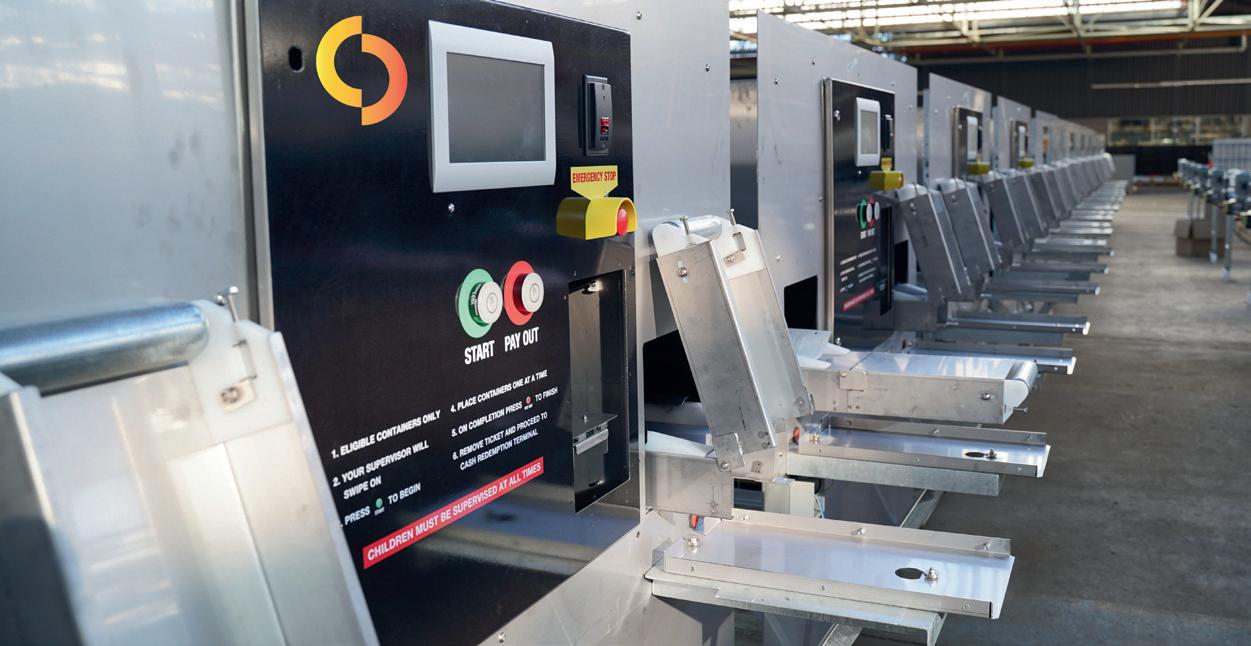
To provide an end-to-end solution for depots, a solution was also needed for the cash redemption and container counting side of the process.
In addition to the ARTs for collecting and sorting the containers and providing a receipt for clients to claim back the refund, the collaboration also developed a Manual Input Station (MIS) for depots to count the containers and process refunds electronically, a Cash Redemption Terminal (CRT) for processing refunds, and a Remote Access Panel (RAP) to enable remote support and upgrades.
SAGE Automation worked with CDS and professors from UniSA to develop the ART for the automated sorting, counting and processing of deposit legislation containers. The terminal uses a unique smart vision system, developed by UniSA, to identify the types of containers, including those which have damaged labels.
As sister companies, SAGE and Nukon worked together on the delivery. While SAGE delivered the control systems, Nukon took care of the IT and customer-facing solution, utilising IIoT technology. Making use of inexpensive computers, Amazon Web Services (AWS) and IIoT, the cloud infrastructure ensured costs were kept down, allowing the system to be easily expanded where needed.
The idea underwent a proof-of-concept and rapid prototyping phase to ensure it would enable the return of bulk containers in any condition. The final solution is a secure, robust, cost-effective alternative to reverse vending machines.
Working with UniSA and Macweld Industries, and following an agile project delivery method, SAGE and Nukon were able to reduce development costs and the client was given opportunities to review, test and adjust the solution during the prototyping stage.
New features were added even after the solution went live, via remote updates and enhancements. This allowed CDS to respond quickly to customer feedback and new challenges.
As part of the product development process, SAGE Automation ensured CDS could scale the manufacture of machines as required, enabling rapid expansion particularly as new container deposit schemes are launched in other states.
While SAGE manufactured the ART control systems in its Tonsley Manufacturing Centre, there was also a requirement to do final assembly and factory acceptance testing prior to shipping to CDS’s customer sites. To achieve this capability, SAGE expanded into extra manufacturing space within the Tonsley precinct.
As further container deposit schemes have rolled out, SAGE Group has been able to support this growth and continued innovation.
CDS has an ongoing support contract with SAGE Automation and Nukon to ensure smooth operation of technology and that depot managers have 24-hour access to technical support when needed. This model minimises the risk of downtime for depot operators and managers.
“The solution makes the returns process quicker and easier for customers, provides probity of information between members of the returns scheme, and it is a viable business opportunity for container depots, both existing and new — encouraging increases in Australia’s recycling rates,” said Brett Duncanson, Executive Chairman, Container Deposit Systems.
SAGE Automation www.sageautomation.com
58 INSIGHTS 2023





www.WFMedia.com.au/subscribe FREE to industry and business professionals The magazine you are reading is just one of 11 published by Westwick-Farrow Media. To receive your free subscription (magazine and eNewsletter), visit the link below.