W EST S IDE S TORY
WSS explores the implications of ChatGPT on the future of education and the workforce.


WSS explores the implications of ChatGPT on the future of education and the workforce.
 Jordan Smith ‘25, Ashley Niemiec ‘25, Ayden
Devore ‘25, Jay Sansbury ‘25 and Jakari
Forrest ‘25 protest House Joint Resolution
8, which proposed an amendmevnt to the
Iowa Constitution to criminalize same-sex
marriage. SACHIKO GOTO
Jordan Smith ‘25, Ashley Niemiec ‘25, Ayden
Devore ‘25, Jay Sansbury ‘25 and Jakari
Forrest ‘25 protest House Joint Resolution
8, which proposed an amendmevnt to the
Iowa Constitution to criminalize same-sex
marriage. SACHIKO GOTO
As we reach the home stretch of the school year, what better way to spend a spring day than reading the latest edition of the West Side Story?
Throughout the year, students have found their niches and passions. Check out page 18 to read about senior Deuce McClanahan’s musical journey and the band Skarlett Roxx.
This issue’s cover explores the growing use of Chat GPT, an artificial intelligence chatbot that provides detailed responses to various prompts. Flip to page 22 to learn more about the future implications of this revolutionary technology.
While many wrap up a year of in-person learning, there are still students ending their year in the ICCSD Online Learning Program. On page 40, guest columnist Sylvia De Young ’26 details her experience with virtual learning.
As our last issue as Co-Editors-in-Chief before the senior issue, we hope our work inspired you to build and embrace your community.
KRISHA KAPOOR (she/her)
Mailing address: 2901 Melrose Ave., Iowa City, IA 52240
Website: wsspaper.com
Email: westsidestorypaper@gmail.com
KATHERINE SHOPPA (they/them)
West Side Story reflects the views of the staff and does not necessarily represent the opinions of the school administration, faculty or student body. Students who want to join WSS should enroll in Foundations of Journalism. For more information, go to wsspaper.com/join.
Mailing address: 2901 Melrose Ave., Iowa City, IA 52240
Website: wsspaper.com/ads
Email: westsidestorybusiness@gmail.com
Letters to the editor may be submitted to room 111, emailed to westsidestorypaper@gmail.com or mailed to the school. All letters must be signed. Names will be published and identities verified by the opinion editor. Letters must not contain personal attacks against an individual and may be edited.
The WSS strives to correct its errors. If you notice any inaccuracies, contact westsidestorypaper@gmail.com.
It is the policy of the Iowa City Community School District not to discriminate on the basis of race, creed, color, religion, national origin, gender, age, martial status, sexual orientation, gender identity, veteran status, disability, or sociaeconomic programs, activities, or employment practices. If you believe you have (or your child has) been discriminated against or treated unjustly at your school, please contact the Equity Director, at 509 Dubuque Street, 319-688-1000. Please contact westsidestorypaper@gmail.com for questions or comments.
Instagram: @wsspaper & @westhighathletics
Twitter: @wsspaper
Facebook: @wsspaper
Tiktok: @wsspaper
YouTube: West Side Story
*Editorial Board Member
Zaira Ahmad* (she/her) Profiles Editor

Jack Alden (he/him) Reporter
Defne Bayman (they/she) Artist, Photographer, Designer
William Cheng* (he/him) Visual Editor
Maya Chu* (she/her) Feature Editor
Ella De Young* (she/her) Managing Editor
Heidi Du* (she/her) Copy Editor
Sila Duran* (she/her) Assistant Design Editor
Jack Furlong* (he/they) Reporter
Sachiko Goto* (she/they) Design Editor
Lilly Graham* (she/her) News Editor
Camille Gretter (she/her) Online Editor-In-Chief
Eva Jordan* (she/her) Entertainment Editor
Krisha Kapoor* (she/her) Print Co-Editor-In-Chief

Reem Kirja (she/her) Photographer, Reporter
Kamakshee Kuchhal* (she/her) Assistant Copy Editor
Jane Lam (she/her) Reporter
Jessie Li (she/her) Reporter
Gianna Liu (she/her)
Photographer, Reporter
Jay Mascardo (she/he/they) Photographer, Reporter
Ginger McCartney (she/her) Artist, Designer
Helen Orszula (she/her) Artist, Designer
Esther Park (she/her) Artist, Designer
Lily Prochaska* (she/her) Sports Editor
Mrudani Ramkumar (she/her) Reporter
Katherine Shoppa* (they/them) Print Co-Editor-In-Chief

Anna Song (she/her)
Artist, Designer
McKenna Stephens (she/her) Designer, Photographer
Marie Stier (she/her) Reporter
Rosemary Timmer-Hackert* (she/they) Opinion Editor
Erinn Varga (she/her) Artist, Designer
Angel Wells-Lu (she/her) Artist, Designer
Sara Whittaker (she/her) Adviser
Athena Wu (she/her) Artist, Designer
 FRONT COVER DESIGN BY ERINN VARGA
Read on to learn about the activities and events blossoming in the West community this spring.





Girls and boys soccer both played in their first soccer games of the year against Cedar Falls April 6. The girls lost 0-1 and the boys won 2-0 with goals from Daniel Fuentes ’25 and Nate Heenan ’24.

Over 50 students representing 30 different countries participated in West’s annual multicultural fashion show, Walk it Out, April 8 in the North Band Room. Before the runway fun began, participants and attendees enjoyed a dinner featuring cuisines from around the world and a gallery walk with artifacts from each of the six regions.

The Iowa City Athletic Booster Club held its annual pancake booster breakfast April 1. From 6:30 a.m. to 2:00 p.m., student and parent volunteers made and served pancakes to community members to raise money for ICCSD junior high and high school
West’s World Language Department organized two trips — one to Spain and one to France — for foreign language students to be immersed in native-speaking countries March 10-18 by staying with host families and touring historic sites.
PHOTO COURTESY OF JACLYN CEURVORST PHOTO BY GIANNA LIU PHOTO BY ALLISON KUENNEN PHOTO BY ELENA GARCIA VAN AUKENWest’s Mock Trial Club concluded their first season at the Hyatt Hotel in Coralville March 22. Coached by social studies teacher Michael Mittenberg, the team competed in two trials this year, and members Reem Kirja ’25, Allison Reed ’25, Franny Jordan ’26 and Holden Rebich ’25 all received individual awards.
Both the boys and girls track teams hit the Trojan track to compete outside for the first time this season. Cindy Wang ’24 placed first in the 3200m and Meena Tate ’23 cleared 5’3.5’’ on the high jump for a first-place finish March 28. Todd Rent ’24 and Izaiah Loveless ’24 placed first in the 100m and
The reigning state champion boys tennis team had their first meet of the season at the University of Northern Iowa courts April 8. The Trojans went 1-1, winning the first match against Bettendorf 9-0 and losing the second against Waukee Northwest 1-8.



Theatre West performed Beauty and the Beast April 13-16. Tess DeGrazia ’23 starred as Belle and Andreas Warren ’24 starred as the Beast. Additional cast members include Ahmed Elsheikh ’24 as Maurice, Eli Asper ’25 as Lefou, Xion Owens-Holst ’24 as Gaston and Ella Vakiner ’25 as Mrs. Potts.


 BY LILLY GRAHAM & MARIE STIER PHOTOS & DESIGN BY GINGER MCCARTNEY
Roughly 20% of adolescents aged 12-17 in Iowa were medicated for “difficulties with emotions, concentration or behavior,” according to the 2018-2019 National Survey of Children’s Health. Adjusting to life on medication involves determining the right dosage and drug, tolerating side effects and navigating the stereotypes and misconceptions that accompany being medicated.
Olivia Harris ’23, who takes Zoloft for depression and buspirone for anxiety, requires medication to simply feel normal.
“[Taking medication is] just a way that some people have to exist, what they have to do to be able to operate how they want … in a way that they feel represents them and allows them to do the things they love and want,” Harris said
Approximately half of children and teens in the U.S. with mental health disorders were untreated or did not receive necessary care or counseling from a healthcare professional, according to a 2016 University of Michigan study. Dr. Kerri Husman, a psychiatrist at Vitality Psychiatry in Iowa City, cites a shortage of healthcare providers in Iowa as the primary reason young adults struggle with access to necessary mental health treatments.
“When the National Alliance for Mental Illness has rated different states, [Iowa has] scored an F multiple times, and it’s primarily because of the shortage of providers,” Husman said. “There’s generally an undertreatment [of mental disorders], whether it be not seeking therapy or not being allowed to seek therapy, or not seeking medication management.”
Before being treated with medication, patients must be diagnosed with a specific disorder by a medical professional. This often entails clinical interviews, screening tools and psychological testing.
“[Getting diagnosed] was a lot. I had to talk to my therapist, my doctor, the University, but the waitlist [at the University of Iowa hospital] was a mile long, so then [I] had to go to a separate establishment with a shorter waitlist,” Harris said. “But then, it was also hard because it’s not just through the hospital.”
Grace Vignato ’26, who takes medication for ADHD, anxiety and depression, also agrees that the process of receiving the diagnosis required for a prescription can be lengthy and complex.
“It’s a very long process. It’s not easy because
they can’t just be handing out medications like candy on Halloween,” Vignato said. “First you have to get your diagnosis, which the waiting list can take anywhere from a month to a year.”
Despite the barriers to receiving a diagnosis, Husman stresses the importance of obtaining a clinical diagnosis and doctor-sanctioned prescription for mental disorders instead of relying solely on self-diagnosing.
“We all have quirks. That is being human. That does not mean we have a disorder causing impairment across multiple situations and circumstances. This is why a careful assessment with a licensed provider is essential,” Husman said. “That’s why [psychiatrists] go to school for 13 years, instead of being subscribed to TikTok.”
Once a patient is diagnosed with a mental disorder, determining the proper medication and dosage requires psychiatrists to consider a patient’s family history, medical risk factors and previous prescriptions. Patients may try multiple different prescriptions before finding the right fit. The first medication Vignato tried to treat her depression actually worsened her suicidal ideation.
“Most people don’t have any side effects. Whereas, [in] my case, it caused me to become more suicidal. So I wasn’t on that one for very long,” Vignato said.
Even once the right medication has been prescribed, finding an ideal dosage can involve constant adjustment. For Harris, their medication was slowly bumped up in 50-milligram increments until they reached a place where
their medication worked as intended. Quinn Abbott ’24 has been taking methylphenidate and guanfacine since age seven for both ADHD and ADD. Unlike Harris, he has decreased his dosage over time.

“As I’ve gotten older, we’ve lowered the dosage. I [now] have more control over myself and I’ve gotten more mature,” Abbott said. “I’ve gone from an insanely high dosage to a pretty low dosage.”
Husman describes how titrating, or changing medication dosage to obtain a patient’s optimized response, is an involved process that varies by drug.

“Sometimes [titrating] is very complex, it takes a long time. Sometimes it’s very simple because some meds can be stopped abruptly. Other meds have to be carefully very slowly titrated,” Husman said. “It’s a really wide range, and some meds require blood work and monitoring.”
Although medication can be essential to teens’ wellness and health, it comes with misconceptions about what living with it is like.
“A lot of people think that antidepressants make you happy, and they don’t, they just make

[TAKING MEDICATION IS] JUST A WAY THAT SOME PEOPLE HAVE TO EXIST, WHAT THEY HAVE TO DO TO BE ABLE TO OPERATE HOW THEY WANT.
-OLIVIA HARRIS ‘23
you, for lack of a better term, normal. They make you less irrationally sad,” Harris said.
Harris has found her medication to be successful in mitigating negative emotions, which is a primary reason that they have continued to take it.
“I only feel that intense, emotional distress when I’m off [medication] and I feel normal when I’m on them,” Harris said. “That’s what to me is the biggest sign that yes, they do work, they do make a difference.”
Vignato also notices when she doesn’t take her medication, negative side effects culminate into situations that feel uncontrollable.
“It is [hard to function without medication] because with anxiety and depression, I’m not motivated to do a lot of things … I’m worried that I’m not gonna get my grades turned in. [With] my depression, I don’t have the motivation to even attempt to do the assignments, and to turn [them] in [for] my grades,” Vignato said. Abbott finds that taking medication is worth it due to the stability it provides him.
“The days that I don’t [take medication], those tend to not be the greatest days. I’m crazy energetic but then get to a point in the day where I get really quiet and get irritated easily,” Abbott said.
Harris has gone through cycles of feeling better and wanting to go off medication but ultimately
have realized it is responsible for helping them feel better.
“I go off [medication] and then I decline a lot. My family and friends notice and usually that ends up culminating in a big problem with a lot of emotional distress,” Harris said. “It’s only at that point I realized, ‘Oh, this is because I haven’t taken my meds and this is what life has been like before I was on them.’”
Though it can be a struggle to maintain regular habits of taking medication, Harris believes its benefits outway the inconveniences.
“The results [of not taking my medication] were, for lack of a better term, disastrous,” Harris said. “I’m much better and happier and can operate at a desirable level on the medication. If that’s what I have to do for the rest of my life to operate at a good level, then I’m okay with that.”
In addition to taking medication, there are other coping strategies Harris employs.
“I definitely don’t [agree with] the idea that you can just take medication and go be fine. I don’t believe that,” Harris said. “I think that you definitely need to have intervention on multiple fronts.”
Apart from medication, Harris meets with a therapist and psychiatrist, along with practicing Dialectical Behavioral Therapy, or DBT.
“[DBT focuses on] reframing and mindfulness,” Harris said. “One of the big things that

they talked about is identifying what you’re feeling, acknowledging that and respecting that feeling and then letting it go, and not getting stuck on things.”

In elementary school, when Vignato first considered taking medication to treat her anxiety and depression, she was against the option because she didn’t want to be different and judged by her peers.
“When I was younger, I didn’t want anyone to know I was using medication because I felt like I was the only one,” Vignato said. “There’s honestly no reason to be ashamed. [Medication] has helped me significantly, and I’ve been able to improve a lot. There’s going to be ups and downs … but once you find the right medication that works for you, it improves your life significantly.”
Vignato has noticed that the stigma surrounding taking medication has lessened as she’s grown older, partly due to a better understanding of mental disorders. Additionally, Harris believes having mental health concerns taken seriously by healthcare professionals has also been key to destigmatizing mental disorders.
“The difference is that people who are mentally ill are living longer, not just being seen as cra-
THERE’S HONESTLY NO REASON TO BE ASHAMED. [MEDICATION] HAS HELPED ME SIGNIFICANTLY, AND I’VE BEEN ABLE TO IMPROVE A LOT.
-GRACE VIGNATO ‘26
zy and locked away, and are actually taken seriously and given a space to be helped,” Harris said. “[Health care professionals] will medicate people instead of trying to wait as long as possible and then see that [a patient] actually cannot continue on [unmedicated].”
In the 1950s, over 500,000 Americans occupied state psychiatric institutions, oftentimes for life. Today, that number has dropped to around 37,000, with most psychiatric beds being used for short-term, acute inpatient care in medical hospitals. Some, including Husman, have seen changes like these made possible by the lessened stigma surrounding mental health struggles. Husman finds that when public figures are open about their mental health struggles, it helps alleviate the shame surrounding seeking help.
“Every time a known person, like an athlete, political figure or entertainer, speaks up about their mental health care and takes time away to improve their health, it helps diminish the stigma,” Husman said. “It normalizes it for the average person who’s not one of those things and [helps them] realize it’s okay to get treatment.”
Husman holds that the societal stigma around caring for mental health can be exacerbated by families who don’t support mental health treatment and believe that mental disorders are a character deficit. Although Harris’ parents are
now supportive of her mental health, they were initially wary.
“At first my parents were a little hesitant about the idea of being mentally ill. They were very much raised in a culture of not taking mental illness seriously,” Harris said. “But it was when a close family member of mine was really struggling … [that] they realized this is an actual thing that’s serious.”
Vignato thinks that even though the discussion of mental health disorders has become more prevalent, students can still be fearful of asking for help, as they may be met with accusations of faking their distress for attention.
“Saying, ‘Oh, you’re just doing it for attention and that’s why we’re not going to support you,’ I find it horrific,” Vignato said. “I find that a lot of students at West High face that from adults.”
Abbott acknowledges that although some who take medication may not receive the support they need, he has been fortunate enough to be supported by both his parents and friends.

ADHD
Adderall, Ritalin and Concerta
Anxiety
SSRIs, SNRIs
Benzodiazepines – Xanax, Librium, Tranxene


Depression
SSRIs (selective serotonin reuptake inhibitors) – Prozac, Lexapro, Sertraline/Zoloft
SNRIs (serotonin-norepinephrine reuptake inhibitors) – Cymbalta, Venlafax, Effexor
Sources:NationalInstituteofMentalHealth,CenterofDiseaseControl,AnxietyDepression Association of America
“In my case, it’s been only support. My friends get on me if I forget my medication, and my parents have been supportive,” Abbott said. “They all know that [my medication] helps me to be a better version of myself.”
Harris echoes that taking medication is what some people must do to be their preferred version of themselves and emphasizes that it should not be seen as a big deal.
“We are all different people. And we’ll all do and need different things to be ourselves and people should just recognize it,” Harris said. “Not stigmatize it, not glorify it, just normalize it and move on.”
Colorful boxes full of intricately-crafted treats indicate that Girl Scouts are selling signature cookie flavors like Caramel Chocolate Chip and Raspberry Rally around the neighborhood. Similarly, Scouts BSA members hand out bags of buttery, crunchy Trail's End popcorn to customers. Although these fundraisers make the clubs well-known, there's more to the two organizations than selling snacks.
The Boy Scouts of America aims to prepare individuals aged 11-17 to venture on their life journeys using the Scout Oath and Law values as their moral compass. With approximately 2.2 million youth members currently, Scouts BSA emphasizes real-world skills such as swimming and personal finance in their lessons.
Likewise, Girl Scouts of the United States of America empowers girls to discover new talents and, through various enriching experiences, develop life skills. Formerly known as Girl Guides, Juliette Gordon Low founded Girl Scouts in 1912 after taking inspiration from the newly established Boy Scouts institution. Today, the organization has around 2.5 million members. Sisters Kaitlyn Schmidt-Rundell ’23 and Erin Schmidt-Rundell ’24 have been members of Girl Scouts since kindergarten, with the program having instilled a legacy in their family.
“My mom was already a troop leader for my oldest sister and then my older sister, so it was kind of already planned [that I would join],” Erin said.
Star-ranked Eyad Ali ’25 joined Scouts BSA about four years ago.
“I wanted to try something new, and [Scouts BSA] is all about adventures and new experiences,” Ali said. “It's a lot of fun.”
City High graduate Trina Surratt ’96 has been a part of Girl Scouts for as long as she can remember. Currently, she leads her daughter’s fourthgrade troop. Surratt believes scouting now is different than when she was a member.
“There's more of a focus [now on things] other than the sales,” Surratt said. “Girls can do more science and math than I remember ever being taught when I was little.”
ART & DESIGN BY HELEN ORSZULAIn 2017, Scouts BSA aimed to become more inclusive by rebranding its program to accept all applicants, regardless of gender. Tiff Lieberman ’25 has been a member of Scouts BSA since first grade. She believes this change is for the better.
“I think it should always have been that anyone could join Scouts because everywhere else in the world, Scouts is for everyone and not just for boys,” Lieberman said. “[However], it's still called Scouts BSA, and BSA is Boy Scouts of America. I feel like they could have done a better job, but I'm glad they did at least this.”
The members’ moral compass is built upon the Girl Scouts’ Code of Conduct and the Scouts BSA Scout Oath and Law. Scouts BSA members apply the pacts to improve their neighborhoods and themselves.
“Throughout our lives, we use [the Scout Oath and Law]. I also apply them [every day] because I'm a Muslim too, and [the] morals connect,” Ali said. “We stay kind, and we are very safe in our community. Scouts [members] have a lifelong benefit from it.”
Erin states that Girl Scouts teaches her to better her environment, whether that be picking up trash or simply respecting her surroundings.
“One of the mottos of Girl Scouts is to ‘leave it better than you found it,’” Erin said. “So even if there's no trash, you can try to take it up a notch by wiping down tables or just trying to make it the cleanest that it could be in the time that you have.”
In addition to the life lessons a scout imparts, scouts collect tokens for their achievements, called merit badges. There are 135 badges one can earn that encompass tasks such as mastering chess or learning first aid techniques.


“You learn lifelong skills,” Ali said. “Merit badges are the building blocks to your advancement in scouts and your skills in life.”
Becoming an Eagle Scout is the highest rank one can achieve in Scouts BSA. To receive this honor, a Scout must meet a plethora of requirements, including completing a comprehensive community project. Lieberman’s service project involved creating a mental health website called Center for Wellness for West High students.

“It has resources for people to understand
about different mental health conditions and get help,” Lieberman said. “There’s also things to distract people like music and different relaxing games.”
The Girl Scouts’ equivalent of the Eagle Scout rank is the Gold Award. With only 5.4% of eligible Girl Scouts successfully earning this achievement, the Gold Award represents a member’s leadership commitment to themselves and their community. Ambassador-ranked Kaitlyn plans on utilizing her community project to help individuals gain knowledge about the prairie near St. Andrew Presbyterian Church.
“I'm going to be making signs … about what you can find in the prairie, what not to touch in the prairie, how the prairie helps our environment and the animals that you might see around you,” Kaitlyn said.
Girl Scouts also help the community by do-

nating a percentage of money earned through cookie sales to charity.
“We've made it a little tradition in our troop that before Christmas, we go out and we shop for different people in need in the community,” Surratt said.
Scouts BSA members sell popcorn as a way of financing their troops, and they give back by collecting food during Halloween for food drives.
“It's ridiculous the amount of food that gets brought in, like hundreds of pounds,” Lieberman said. “It helps out local food kitchens, and it gets a lot of people food that they need.”
Members of Girl Scouts and Scouts BSA engage in weekly meetings and activities with their troops, such as canoeing and horseback riding. Although both organizations participate in an assortment of projects, Girl Scouts is sometimes viewed as lesser than.


“I think people believe that for Girl Scout camps, we don't do as much, but we go swimming, we do archery, we get to zipline. A stereotype … is [that] Girl Scouts is a super girly thing, but we work on a lot more than just the stereotypical girly stuff,” Erin said. “I wish people would see how much effort Girl Scouts themselves put into being a Girl Scout.”
While she enjoys being a part of the organiza-
Source:mygs.girlscouts.org
tion, Kaitlyn notices that when people find out she’s a Girl Scout, their reactions tend to be negative.
“They're surprised every time; they're like, ‘You're still in Girl Scouts? You're a senior in high school,’” Kaitlyn said.
Lieberman wishes individuals were more open-minded about being a part of Scouts BSA or Girl Scouts.
“I wish people didn't go into it with any stigma because I feel like a lot of people don't do it just because of stereotypes or things they've seen in movies or TV shows,” Lieberman said.
Members within the two organizations work together to combat stereotypes as they enjoy partaking in adventures with their troops and creating memories together. Ali feels the respect his troop members give to each other is a large part of what brings the group together.
“They respect each other's religions. For meetings, if I have dietary restrictions, like pork, they would be considerate and not have that, or they would get [alternatives] like turkey or beef,” Ali said. “We all find a way to reconcile with that, plan differently and just be considerate.”
Similar to Ali, Erin views her troop as a valuable addition to her life.
“It's a smaller second family almost because I've known them for so many years, and we've had so many different experiences together,” Erin said.
Source:scouting.org
Grades 6–8
Grades 2–3
Grades 9–10
Grades 4–5
Grades 11–12
I WANTED TO TRY SOMETHING NEW, AND [SCOUTS BSA] IS ALL ABOUT ADVENTURES AND NEW EXPERIENCES. IT'S A LOT OF FUN. -EYAD ALI ‘25
As graduation grows closer by the day, juniors and seniors may find themselves needing guidance in what they want to do after high school. With societal pressure to make the decision early, the task may become all the more daunting. To help students navigate this process, Iowa Jobs for American Graduates, or iJAG, provides a learning environment designed to make the transition to adulthood easier.
iJAG is a year-long elective that students apply and interview for. The class covers core topics in work, school and life success by connecting students to community service opportunities and employers in the area. Instead of following a traditional classroom structure, iJAG takes a more personalized one-on-one approach to meet every student’s individual needs.
West High Education Specialist and iJAG
teacher Shenika McGill notes the benefits and importance of direct engagement with students, providing them with in-depth support.
“When I was kid, you sat in some rows in a classroom, and then there’s the teacher who’s the head of the class, and you’re just supposed to sit there and listen for the most part,” McGill said. “But there also has to be some type of balance, and so we’re there for support. We apply the ACEs model, Adverse Childhood Experiences, to engage with our students.”
All iJAG teachers are trained in the ACEs model, which acknowledges any childhood adversities or traumatic events that may make it difficult to participate in a traditional classroom setting.
“What we do is provide additional support to overcoming barriers, real or perceived, as far as getting through traditional class coursework,
98% of iJAG students graduate high school, higher than the statewide average.
and then we strategically expose the kids to things outside the classroom setting — for example, job shadows,” McGill said.
iJAG teachers aim to personalize the curriculum around what specific students need to excel at West and after graduation. To help form this curriculum, teachers get to know each student on a deeper level.
“It’s almost like when you go to the hair salon and you just start talking to your beautician and you’re engaging. They’re the support, it’s more than just getting your hair done. It’s an interaction, right? [There’s] a relationship-building component to that,” McGill said. “That may not always be true in a traditional classroom setting.” Students join iJAG for all kinds of different reasons to learn about various post-high school opportunities. However, students may not be informed about what the class really/actually is.
Source:ijag.org~60% of iJAG graduates are the first generation to attend any kind of postsecondary education.
80% of iJAG students reach full-time employment, military enlistment, or enrollment in secondary education.
76% of iJAG students receive firsthand experience with local employers to develop workforce skills and prepare for life after high school.
iJAG is a class designed to help students look toward the future and prepare for life after high school.
Heisy Ayala ’23, a student in iJAG, addresses the stereotypes associated with the class.
“I feel like people think that you have to be non-white to get in there, or that it’s basically mostly for troubled kids when that really isn’t the case,” Ayala said. “In reality, it’s just a bunch of kids just wanting to learn [about] jobs outside of going to college, or just wanting help with college.”
One way iJAG helps students figure out their path is by providing early connections to different lines of work in the community. Ayala finds value in having more in-depth interactions with various professionals.
“[We had] firefighters come in and talk about their jobs,” Ayala said. “It kind of just helps to know what they do, how they do it and talk to them on a personal level, more than like when a school brings them [in]. With iJAG, you get to have that one-on-one.”
By engaging in various career options, students get a better sense of what future best suits them, whether it be college, the military or entering the workforce.
“[iJAG] taught me that even if I don’t want to pursue college, there are still opportunities outside of college, like maybe just [going] into the workforce instantly,” Ayala said.
McGill understands the potential pressure to attend college immediately after high school and wants students to learn about all possible alter-
natives.
“Usually people think, ‘Well, right after high school is college, but I don’t want to go to college.’ They don’t realize that there are countless opportunities and resources out there that extend beyond college or military,” McGill said.
One example is AmeriCorps, a federal agency that works with and funds organizations to create a positive impact and strengthen communities across the country. McGill describes how the AmeriCorps program, which helps with education, disaster relief, environmental conservation and more, is an example of an opportunity for post-secondary students.
“After you do your one year of service you get a monthly stipend, and depending on where your host site is, medical benefits. A lot of people say, ‘Well, I don’t really want to go to college right away, but I don’t want to really work 40 hours a week.’ Well, something like AmeriCorps would be an option.” McGill said.
When these countless post-secondary options become overwhelming, iJAG helps to alleviate the stress and give students a better idea of what they want to do next. For those interested in discovering a wide array of career options or want extra guidance, iJAG is looking to recruit more students for the 2023-24 school year.
[PEOPLE] DON’T REALIZE THAT THERE ARE COUNTLESS OPPORTUNITIES AND RESOURCES OUT THERE THAT EXTEND BEYOND COLLEGE OR MILITARY.
-SHENIKA MCGILL, WEST HIGH IJAG SPECIALIST
Members of the West community discuss their experiences with manifestation culture.
BY ESTHER PARK & JESSIE LICrystals, angel numbers, vision boards and tarot cards — one may wonder what these seemingly separate things have in common. The answer lies in the manifestation culture recently gaining popularity on TikTok. Manifestation is a practice used to claim a future reality, whether it’s fortune, love, good grades or anything else one desires. One theory of how it works is through a process called neuroplasticity, which is the ability of the nervous system to grow and adapt in response to stimuli. For instance, repeating positive phrases aloud triggers the brain, leading to changes in one’s thoughts and actions. For those who frequently practice, manifestation can strongly impact




The idea of manifestation was first popularized by Rhonda Byrne’s 2006 novel, “The Secret,” which discusses how one’s mindset can directly affect their life. Byrne states in the novel that the Law of Attraction is the force responsible for manifesting our beliefs. She suggests that the energy of one’s everyday thoughts influences their life experiences. For instance, if the mind is filled with positive thoughts, it will bring positive results into a person’s life.

This is where the Placebo Effect comes into play, a phenomenon where the brain is powerful enough to convince the body that it is receiving treatment, which in turn improves a person’s physical condition and mental health. It is traditionally used to understand the effects of newly invented medical drugs and treatments, but it also plays a significant role in manifestation. When applied to manifestation, positive selftalk and affirmations trigger the brain into be-
“I think people do it just to put good, positive
YOU CAN MANIFEST THAT YOU’RE IN CONTROL, YOU CAN MANIFEST THAT EVERYTHING WILL WORK OUT.
bad luck,’” Douglas said. “I like to think it helps because you can’t really control what’s going to happen in the future. [When] you can manifest that you’re in control, you can manifest that everything will work out.”
Along with social media interaction being a means of manifestation, many individuals turn to using crystals. They believe these special rocks give off positive energy, providing them with a sense of personal empowerment and healing powers for the body, mind and soul. Nowadays, having a tangible object that embodies faith, spirituality and security ultimately draws people to crystal manifestation.


“I believe that they make me happy because they radiate good energy. And once I start thinking it’s not working out, I will switch out my necklace or carry different crystals with me,” Douglas said.

While acknowledging there are many factors outside of people’s control, for many individuals, manifestation creates a greater sense of happiness. Douglas considers belief in the process to be essential to manifestation.
“I know a lot of people who think it’s just nothing. I think that to an extent, crystals aren’t going to heal a bullet wound or anything, but they can heal your energy,” Douglas said. “A lot of these kinds of energies and manifestations [are things] that you have to believe in before it works, and if you don’t believe in it, you won’t really see results.”
AP Psychology teacher Camille Crossett believes that people should be cautious about rely-
ing too heavily on manifestation.
“If you are hoping that everything’s going to work out for you just simply because you manifested it, that might be problematic because I don’t think that’s accurate,” Crossett said. “Maybe it will work out exactly the way you want, but I think it’s an error in judgment to say, ‘If I hope for this, then it’s going to happen.’ I think that is powerful, but you shouldn’t rely on it.”

Despite manifestation not having substantial scientific claims as to exactly how and why it works, King believes that manifestation is healthy when maintaining a balance between believing and working towards your goals.
“I think a lot of people see manifestation as just ‘I don’t have to do any work because the universe will make it happen for me,’ and I think some people who manifest think that way,” King said. “I can’t say ‘I will pass my test, but I’m not going to study at all.’ You’ve got to do a little bit of
SAY, ‘IF I HOPE FOR THIS, THEN IT’S GOING TO HAPPEN.’ I THINK THAT IS POWERFUL, BUT YOU SHOULDN’T RELY ON IT.
-CAMILLE CROSSETT, SOCIAL STUDIES TEACHER
During the five minutes of passing time, West hallways are typically packed with the chaotic energy of students rushing to classes and teachers urging crowds to move. Sometimes, amidst this chaos, iJAG teacher and cross country coach Josh Kidman plays his guitar as people pass by — a calm in the middle of a storm.
“It’s not every day you see someone with a guitar playing a little jingle, so I figured it’s fun for me,” Kidman said. “The kids usually smile or stop and listen for a second. If you’re gonna stand in the hallway, you might as well bring a smile to someone’s face. It’s even just a little conversation piece, maybe a kid out there plays guitar … It’s a way to break down walls and personalize [my] approach to students.”
Kidman began playing the guitar in 2019 to learn how to play the music he listened to — country folk music. He spends his nights strumming by a fire outside, finding that it often provides him a moment to clear his head. Now, Kidman keeps two guitars in his classroom: one for himself and one for any student who wants to learn to play.

“When the students pick [the guitar] up, I hope that they can appreciate and slow down and kind of imagine themselves in other avenues … if you want to do something cool, you can’t just pick it up and be able to strum and make it perfect, you got to really work at it,” Kidman said.
From an early age, music has been an important part of Kidman’s life. He grew up listening to genres ranging from punk to classic rock to country, as well as rap and pop music. Kidman has discovered that music plays a major role in students’ lives as well as creating community within his own classroom.
“I’ll just be playing some of the old-time country music, and [students] are like, ‘Oh, this is a great song. I’ve never heard this.’ And then I’ll catch them listening to it later. Music is a good conversation piece,” Kidman said. “I’ve had students tell me that an artist that they heard through me is coming to town [for a show], and that’s super cool.”
Throughout his time as a photographer, Kidman has taken photos of sports, live music, weddings and senior portraits. He often brings his camera to cross country and track and field meets to take pictures of the athletes.


“Maybe the one thing people love more than music is a good photo of themselves, whether they like to admit it or not … There have been some very special moments through the lens of my camera that I know kids still look back on and show their family,” Kidman said. “The other coaches are even really grateful. Sometimes I’ll catch a moment with a coach when the race finishes and two coaches are celebrating or a coach and an athlete are celebrating.”
Kidman first began running cross country at his high school in Dallas Center, Iowa. He continued his athletic career at North Iowa Area Community College but due to an injury, transferred to the University of Iowa to focus on his education. Knowing he still wanted to be involved with cross country, Kidman began working as a volunteer assistant coach at West in 2014.
“Coaching at West has been one of the most important things to me,” Kidman said. “When I came to Iowa City, the first thing I did was start coaching. I’ve met probably some of my greatest lifelong friends [here], be it the coaches, the ad-
ministrators or employees.”
After coaching at West for four years, Kidman planned on moving to Des Moines with his wife due to her job. Just two weeks after his move, West’s former head cross country coach Brian Martz called Kidman to let him know he was vacating his position. Kidman applied for the job and was given the position shortly after. One week later, Kidman and his wife moved back to Iowa City and he began coaching at West once again.
“My wife quit her job and we moved back to Iowa City — it sounds kind of silly — just [so I could] be the cross country coach here at West High. We pretty much uprooted our whole plan; I don’t know if that tells you how important [coaching] was to me,” Kidman said.


Throughout his time as a coach, Kidman has instilled values in his athletes to help them grow in all avenues of life. Cross country and track runner Moustafa Tiea ’25 notes Kidman’s impact on his life as an athlete and student.
“He didn’t just make me a good runner, but a good person in general. He motivates me to stay on top of my grades and not do anything stupid,” Tiea said. “For meets, I feel like we’re not training for [the upcoming meet], we’re training for the one in May, the state meet or the one in October for cross country. That makes me feel a lot better, it makes everyone feel a lot better because it shows that it’s okay to have a bad race every once in a while.”
Watching students and athletes grow has brought Kidman pride through his years at West. Whether he is on the track or in the classroom, Kidman knows the camaraderie at West is what encourages him to embrace and share his passions.
“There’s no award for how excellent the kids really are, I just can’t say it enough,” Kidman said. “I think that’s why I’m at West — it is just the depth of everything, from academics to athletics, that diversity. I think a lot of folks are really progressive and open to all sorts of vantage points in life and that’s kind of the way that we wanted to be and raise our kids. The culture of not only the team but also the school and the community, that’s something that I’m proud to be a part of.”
I THINK [PHOTOGRAPHY] HELPS YOU SLOW DOWN A LITTLE BIT AND BE IN THE MOMENT AT TIMES.
-JOSHKIDMAN, IJAG TEACHER AND CROSS COUTNRY COACH Kidman takes a variety of photos, including: 1. A barn in rural Iowa 2. The Jingle Cross bike race 3. The Arc de Triomphe in Paris, France
’23 recounts his journey as part of the rock band Skarlett Roxx.
 BY ROSEMARY TIMMER-HACKERT
on stage, performing is one of the most natural things that comes to me,” McClanahan said. “Something about just being able to control an entire crowd’s emotions, it’s just food for me. I love it.”
Growing up with stage fright, McClanahan was surprised by how easy performing came to him. Jim McClanahan, his father and the band’s manager, saw the change firsthand.
“He went to a Kiss concert probably when he was five or six, and he wore a Gene Simmons costume with the makeup all the way, the whole thing … He probably had his photo taken more than the band did that night,” Jim said. “[That] was a little much for him; he didn’t want all that attention. But as soon as he started doing shows through his junior high class, doing live performances, he couldn’t get enough of it.”
Despite his love for the stage, McClanahan is content staying out of the spotlight when he’s not performing.
“It’s really kind of a Jekyll and Hyde personality with him. It seems like he’s pretty laid back, but when he takes the stage: it’s a rush [he] gets,” Jim said.
McClanahan’s first band was a cover group comprised of North Central Junior High students he met in Flex Music class.
“I wound up taking the music tech class. It was either people who were interested in music and actually wanted to take a music class … or people who were there because they were forced to be there,” McClanahan said. “[The teacher] saw there were kids who didn’t have a music class to create, so she created a class called Flex Music that was basically a free open period for you to explore whatever instruments that you wanted to. For me, it was guitar.”
He presents a striking figure. A black spider rests atop his right eye, painstakingly drawn on with eyeliner. His long locs reflect the lights as they flick from red to blue to purple and back again. As the song kicks into gear, colored smoke erupts from the front of the stage, briefly obscuring his face from the audience. Striding up to the mic, Deuce McClanahan ’23 takes his position, ready to start the first verse. Meet the lead vocalist and rhythm guitarist of Skarlett Roxx: Deuce Mac.
“I’m still an antisocial person as far as regular life, but as soon as I get into character and get
McClanahan had taken a few guitar lessons as a child but didn’t feel they were very engaging. He found teaching himself to be much more effective.
“You play something and if it doesn’t work out and you’re not at that level yet, you just kind of put it to the side and try at it a couple [of] months later,” McClanahan said. “It’s like completing a jigsaw puzzle. It’s the sense of, ‘Yeah, I did it,’ that keeps you going into the next piece. That’s kind of how I [stayed motivated] with guitar.”
McClanahan’s first band separated during his freshman year of high school as members became busier, but he was still hungry to perform.
He reached out to Lizzy Jaxx, a family friend who McClanahan knew was active in the music scene, to join Jaxx’s jam sessions. After playing with the group a few times, they decided to form the band, Skarlett Roxx.

Skarlett Roxx’s music is hard rock with elements of metal, glam and punk, with Mclanahan being heavily influenced by 1970’s rock artists like KISS and Alice Cooper. While the group had worked on a few original pieces before McClanahan, the pace picked up rapidly after he joined.
“You can’t really force a good song out of yourself. It just has to come to you,” McClanahan said. “I write about 90% of the material on my own. And then I’ll record a quick demo of the structure of the song and how it’s gonna go. I’ll send it to the other guys, and then they’ll modify their parts.”
McClanahan is also the main lyricist of the group. He usually draws inspiration from personal experiences or other works of art.
“I remember watching the first ‘Scream’ movie, and thinking, ‘This movie isn’t the best, but writing out a horror-type song would be cool.’ And that’s how our second single came about, ‘King of the Dead,’” McClanahan said.
As Skarlett Roxx’s ambitions grew, Jim went from giving McClanahan rides to practice to stepping into a bigger role and becoming the band’s manager.
“I started helping the band find shows, meeting with different venues. And from there, I’ve helped them get their music video recorded and worked to get them on some bigger shows
with bigger name acts and the national acts that they’ve gotten to open for,” Jim said.
Currently, Jim is working on moving Skarlett Roxx from a regional act, performing at venues like NewBo and Wildwood Saloon, to an act that does tour support for a headliner, the main performance. McClanahan is grateful to his father for passing down his music taste and being incredibly supportive.
“My dad has done a ton for this band,” McClanahan said. “He kind of funded the production for the albums, specifically the CDs and vinyl, but other than that, the band has been pretty financially independent.”
One big project the band had to save money for was the recording of their debut album “Skarlett’s Web,” which they released Nov. 25, 2022. It can be streamed on Spotify and Apple Music, and physical copies can be ordered from the band’s website. Recording the album took many hours in the studio, and they also paid for it to be professionally mixed.
“The most rewarding [aspect] would be a mix
between being able to hold my own album in my hands … and having people buy [our vinyl] all around the world. I think we’ve sold albums in Norway, Belgium, the UK; I think we [even] sold one in Argentina,” McClanahan said.
The band also spends money on their stage setups, investing in custom guitar picks, pawn shop guitars and low-grade pyrotechnics, such as firework fountains.
“We go through probably 60 to 70 guitar picks a show just because they’re made of plastic. They’ll get scuffed, you throw them on the crowd [and] people love them,” McClanahan said. They’re essentially business cards too ... Especially when you have a goofy way of spelling [your name], like us, with a guitar pick, they know they have your band name and they can go look it up and follow you after.”
McClanahan also smashes a guitar at the end of every show, a tradition he picked up from KISS.
“Just more ways to make our show interesting, more theatrics. You can’t be a boring band and expect people to show up,” McClanahan said. “[People] want it to be good for your ears and your eyes, so whenever I go and see other bands play, I’m always the biggest critic there because I’m saying, ‘Well, they’re not doing this, and we do that.’ Whenever I see people playing and they’re not moving, it just strikes me as crazy because I move so much on stage.”
McClanahan’s dedication to performing has paid off; promoters frequently seek Skarlett Roxx to open for other rock bands, such as Hinder and the Texas Hippie Coalition, when they come to Iowa, to help boost ticket sales. McClanahan and the other band members are eager to keep growing their audience and doing bigger shows.
“I would most definitely like to travel the country playing. And that’s definitely not that far out,” McClanahan said. “A couple years ago, I was like, ‘I want my own album,’ and that seemed very far away. But now I have that, so now I know I can do the next thing. I know anything that I can set my mind to, I can definitely achieve because I want it that bad.”
DESIGN BY EVA JORDAN


Write me a 1000-word essay analyzing the Hero’s Journey in “The Odyssey.” Can you explain meiosis to me in simple terms? Give me a programming function to loop through a file. How about writing a WSS article on the implications of ChatGPT?
Since Alan Turing developed the Turing Test to measure computer intelligence in 1950, artificial intelligence has rapidly evolved and is now impacting human lives more than ever. Most recently, AI has captured the world’s attention through ChatGPT, a chatbot featuring functions from answering simple questions to summarizing entire textbooks.
When people think of AI, the first things that come to mind likely include self-driving cars, Siri and Alexa, and a stereotypical robot. From driving to making grocery lists and working in a factory, AI systems are made to perform tasks associated with human cognitive functions. These systems learn how to perform complex tasks by processing massive amounts of data and replicating human decisions.
ChatGPT, or Chat Generative Pre-trained Transformer, is a language model designed to have conversations with a user. It creates its responses based on information from the web gathered prior to September 2021.
ChatGPT was developed by OpenAI, an AI research laboratory based in San Francisco and founded in 2015. It follows several other Gen-

erative Pre-trained Transformer models made by OpenAI, the first of which was released in June 2018. Launched Nov. 30, 2022, ChatGPT is based on a model in the GPT-3.5 series and has caught the eyes of the tech community and the general public alike, garnering 100 million users in two months.
GPT-3 is free to use, while GPT-4, a new version released in March, requires a $20/month subscription. The new version has heightened abilities: it can analyze and create captions for images and graphics, has better text comprehension abilities and can solve more advanced math problems.
University of Iowa Associate Professor of Engineering Ibrahim Demir has worked with artificial intelligence throughout his career. According to Demir, ChatGPT’s novelty lies in its ability to rapidly gather, analyze and generate vast amounts of data.
“In the past, whatever model you’re building has limited computational power to train and learn from that amount of data. But recent developments in graphical processing, unit-based computing and all the extensive data that we collect today … has allowed us to create bigger and bigger models,” Demir said. “As the model grows, [it] becomes more intelligent and more knowledgeable in the domain of everything around itself.”
The tech industry has jumped to capitalize on this expansion of AI. Since 2017, Google has also been developing a language learning model, an AI-powered conversational chatbot, Bard,
which is currently in experimental form. Bard can connect directly to the Internet, meaning it has access to current information. Once the testing process is complete, Google plans to integrate Bard into Google Search.
ChatGPT can also pass tests such as the LSAT, the SAT, AP exams and medical licensing exams: on the LSAT, it scored 157 on a scale of 120-180, with 151 being the rough average for human test-takers. It scored a 1410 out of 1600 on the SAT, landing in the 94th percentile.
With AI chatbots marking a milestone in the history of artificial intelligence, their rapid expansion brings a mix of positive and negative impacts.
“I think there are many, many potential positives and at least as many potential negatives with ChatGPT,” Juan Pablo Hourcade, a professor at the University of Iowa’s Department of Computer Science, said. “Computing [has] become more and more prevalent in our lives. The big change in the last 10-15 years has been that this broadening of computing has come at a cost for people in terms of control.”
From homework-sharing group chats to the classic peek over a classmate’s shoulder, cheating methods have always been present. Recently, however, ChatGPT has emerged as a powerful tool for academic dishonesty. With
ChatGPT, an artificial intelligence chatbot, has the potential to transform both the education system and the workforce.
A prompt is sampled from the OpenAI database and a labeler demonstrates the best output. This data then fine-tunes the learning system’s policy.
A new prompt is selected. The RM calculates and picks the best output. This new data updates the policy.
ChatGPT’s research abilities and text-generating function, students are only a few clicks away from plagiarizing entire sections of AI-written work.
This reliance on AI can have detrimental effects on both students’ understanding of the material and the development of skills.
“There’s the obvious problem of [students] not learning about the topic at all … but it goes deeper than that,” Taylor Ajax ’25 said. “After a project … the teacher will be giving [students] feedback that isn’t actually what they need. Even if they understand the topic really well, they won’t be getting better at writing.”
English teacher John Boylan recognizes the risks of ChatGPT but believes it ultimately won’t pose a huge problem.
“I wasn’t too worried about it because I feel like in the past … plagiarism has been so easy to detect,” Boylan said. “I’ve always believed that my best teaching requires original student thought.”
Boylan believes offering his support and guidance as a teacher throughout the writing process
can reduce the likelihood of a student resorting to ChatGPT.
“I think students use tools like ChatGPT, SparkNotes or Googling essays when they feel a certain amount of desperation,” Boylan said. “If I can minimize that as much as possible, I’m not too worried about it.”
According to a survey by Study.com, an online learning platform, 26% of teachers have caught a student cheating using ChatGPT. When it comes to written assignments, plagiarism detectors like Turnitin and OpenAI’s Text Classifier can find cheating. However, there are already methods students can use to bypass these checks, whether it’s manual alterations of AI-generated texts or paraphrasing tools like QuillBot.
“If you put [the text] through QuillBot and … Grammarly or something, and then use synonyms for a bunch of words, all of sudden [teachers] can’t detect AI anymore,” Ajax said.
Built by Princeton University senior Edward Tian, GPTZero is a highly-publicized AI detec-
tion tool that has been released to the public in the beta stage. It works by measuring two variables, “perplexity” and “burstiness,” that appear at higher levels in human-produced writing. Still, the tool is not entirely accurate. In a study conducted by a science and technology website called Futurism, GPTZero correctly identified the ChatGPT text in seven out of eight attempts and the human writing six out of eight times.
Without a 100% accurate AI detection tool, schools may have to implement other strategies to keep students from cheating. Patrick Fan, the Tippie Excellence Chair in Business Analytics at the University of Iowa, details one possible approach.
“I think we need to try to educate students,” Fan said. “What is the purpose for [students] to go to high school to learn to write? You want to know how to write properly, how to communicate, how to better position yourself for college studies. And if [students] say, ‘I’m gonna use ChatGPT to finish all my assignments,’ I think that’s gonna be a wrong attitude.”
Hourcade thinks that ChatGPT can be helpful during brainstorming.
“It can be a really useful tool to partner with,” Hourcade said. “And I think its greatest potential [in] education is if you use it as a tool to give you ideas … to help you get started with something.”
Ajax, however, believes many students won’t be convinced to limit their ChatGPT usage.
“If [teachers] try to say, ‘Just use it for an outline,’ you don’t know if students are going to follow that,” Ajax said. “If we could get a version of [ChatGPT] that will just answer your questions about outlining and brainstorming … it would
I’VE ALWAYS BELIEVED THAT MY BEST TEACHING REQUIRES ORIGINAL STUDENT THOUGHT. - JOHN BOYLAN, ENGLISH TEACHER
“ “
labeler ranks sample outputs of a prompt from best to worst. A reward model is trained using the ranking data.

Similar to Demir’s teaching assistant, Khan Academy announced in March that it would pilot “Khanmigo,” an experimental AI guide that mimics one-on-one tutoring using GPT4 technology.
Taking advantage of AI’s educational benefits requires knowing how to use the tools. According to ICCSD Director of Technology & Innovation Adam Kurth, courses specifically focused on AI are already being designed at the high school level.
“Implementing coursework in this area makes a lot of sense,” Kurth said. “I think that ultimately, one of the things that we need to do is work with teachers to develop new approaches to education in AI in today’s world, that acknowledge AI and even leverage it where appropriate.”
Hourcade believes computer literacy courses should also be a regular part of education.
be one of the best learn- ing tools they could [make] for stu- dents.”
Various people and or- ganizations are looking to ex- pand on AI’s educational benefits.
Along with three other University of Iowa researchers involved in AI, Demir published a research paper in February designing an AI teaching assistant to use at the University. Using GPT-3 technology, the teaching assistant system would answer course-specific questions and provide services such as summarizing readings and explaining classroom material, much like a study partner.
“It could potentially use student information, like their grades and their exams and work,” Demir said. “[We] don’t need to worry about [students] asking [instructors] the same questions five times in different ways. TAs can spend more quality time with students and provide more advanced support rather than simple basic questions.”
“I think computer literacy — to understand how the systems work, even just how data gets collected from you, all the time — will be important for people to know,” Hourcade said. “We’re not [all] going to be computer science majors, [but] I would make [computer literacy] a requirement at the high school [level].”
The education system’s expansion of technology-specific courses could address the issue of digital equity, the ability of individuals to fully participate in society, democracy and the economy by having sufficient information and technological ability, as defined by the National Digital Inclusion Alliance.
Hourcade believes government intervention may be necessary to prevent further exacerbation of digital inequity due to the expansion of AI.
“Some folks [who are] better informed and better educated are the ones who are going to likely benefit more from these systems because they’re aware of how they work …
ITS GREATEST POTENTIAL [IN] EDUCATION IS IF YOU USE IT AS A TOOL TO GIVE YOU IDEAS … TO HELP YOU GET STARTED WITH SOMETHING.
- JUAN PABLO HOURCADE, PROFESSOR

ing bias overall. Also, the bias getting into the system really has to be accounted for and actively corrected so that the information that we put out is not only accurate, but it actually makes sense,” Karandikar said.
As a professor and researcher, Demir adds that ChatGPT and other AI tools can help humans make great leaps in the scientific research process.
“I expect significant advancements in science,” Demir said. “Both students and faculty [can] work on more quality research rather than repetitive activities [like] data collection, analysis and basic stuff, which could take weeks or months. The student can do that work potentially in hours or maybe minutes with these AI systems.”
ChatGPT. So, what is the key difference between these two boundaries — the two pillars of the fields?” Fan said. “If you have a lot of … human creativity involved, we doubt that ChatGPT is

Additionally, Ashwini Karandikar, entrepreneurial executive and board member, feels that the possibility of inaccuracy requires humans to be cautious when looking at the output.
“[We need] more fact-checking, more validation or more human checking. And in my work, we already do that extensively,” Karandikar said. “[ChatGPT] is spitting out stuff based on what it has learned, so the person reading it needs to know and be able to decipher right from wrong.”
Additionally, bias in the workplace — already a current issue — may be exacerbated by technol-
“I think we need to watch out for anything that is generative to really sift through any underly-
In addition to revolutionizing the research process, learning how to work with ChatGPT could create a stronger workforce.
“It’s less about taking the job away and more about becoming smarter at that job,” Karandikar said. “I think ChatGPT is probably just the first of many, many such developments that we want to see and it definitely has a promise of making all of us smarter.”
Demir holds that while ChatGPT marks a new transition in the intersection of technology and human interaction, it has the potential to be used as a safe and beneficiary tool if approached with the right mindset.
“I think we should be leveraging these tools for our work, for our life and many other aspects. We just need to accept and then potentially benefit from this, rather than being afraid,” Demir said. “It’s [a] transition process and [a] new era for us.”


Seller: World Market
WSS joins the trend of fast-paced and overlysaturated reviews on TikTok as students give their ratings of products the app convinced them to buy.


A white ceramic mug with four different-colored lids painted to resemble a mushroom. It is microwave and dishwasher-safe with a 10 oz. capacity.
Kevy Huynh ‘23
“It’s good quality; it’s functional. It met all my expectations I had when I clicked on it the first time.”


Seller: Cirkul
A bottle that flavors the water. After choosing from over 50 flavor options, a cartridge is inserted into the water bottle lid which allows for adjustable flavor intensity.


Ahmed Elsheikh ’24
“The way it’s advertised is it flavors your water. But it’s not that sustainable because the filters don’t last that long or the flavor cartridges … You have to throw them away, and it’s a bit expensive. [But] the flavors are really good, [and] you choose how much [flavor] you want.”
Seller: Aurola
Shorts made with moisture-wicking, four-way stretch material. They are available in a wide range of colors.

Violet Baumann ’24
“Very buttery soft but super long since I’m short.”


“I really like [it], but it’s not very practical because of the price tag. I only found out about it because of TikTok, and if I didn’t know anything about it from TikTok, I would’ve looked at the price and thought [it] was not worth the $35.”


Seller: Amazon
An LED lamp featuring multiple color settings that come together to project a sunset across any room.
Jade Spicher ‘23
“The colors are amazing and vivid, but only for a certain distance. The half sphere inside isn’t wide enough to cover my whole room, but it does get [the] majority of it with amazing colors … Overall, this is an amazing lamp, and it didn’t cost all that much.”
 Ella Vakiner ’25
At the end of the school day, Michelle Wikner slyly flips the ‘M’ of her first name so her classroom door reads “WW.” The lock clicks. She immediately starts preparing for her experiment. Inside the classroom, beakers and flasks are scattered on every countertop, filled to the brim with bubbling fluorescent liquids. As they start to sizzle, she cackles maniacally, years of work culminating in her final act.
WSS noticed the foul odors and asked chemistry teacher Carolyn Walling what the smell could be.
“I’m honestly not sure. You never know with Michelle,” Walling said. “She’s been cooking up something for years. Now that she’s almost retired, she’s hoping to go out with a bang.”
Back in the chemistry room, flames lick up to the ceiling, quickly catching onto Wikner’s students’ final papers. The fire alarm goes off, wailing sirens echoing in the empty hallways. The last departing students turn back, shocked as they watch West be consumed by fire.

“I swear I’ve seen this before on TV,” Heisen Berg ’24 said. “Wikner’s always reminded me of a mad scientist with a secret identity.”
As the school burns down, horrified eyewitnesses hear a terrible cackle. Police are still formally investigating the cause of the fire. They found traces of suspicious substances; Michelle Wikner is nowhere to be seen.
As the weather becomes warmer, instead of being excited for summer, students are reminded of intense study sessions in preparation for AP tests. To weed out the students who don’t thrive, College Board released a statement warning students against the use of AI in their essays, digital portfolios and multiple-choice answers. It seems like Khan Academy, The Organic Chemistry Tutor and Heimler’s History are here to stay.
“Gosh darn it. One of the skills we’ve worked really hard on this year is learning how to use our resources,” AP Seminar teacher Cap Stone said. “The recent updates with ChatGPT are why I had opted for the digital exam for my students in the first place.”
As students logged into College Board later that day to take a practice test, they were met with an unexpected surprise.
The cursor of the prompt types out the following: “How would ChatGPT fare in a debate against a 5th grader who had just discovered Wikipedia? Use evidence from at least three sources (and be careful not to plagiarize) to support your argument. Bonus points if you can convince ChatGPT to grade its own AP exam!”
At the bottom of the letter, in tiny letters, is written: “Produced by OpenAI’s ChatGPT AI language model.”

For more tips and tools on finishing your essays on time and enraging your teacher, refer to pages 22-27 of the WSS.

Warning: the contents of these pages are entirely satirical. These stories should not be taken seriously as they bear a faint resemblance to reality. Unless…
For its April 20 issue, distribution day for West Side Story has taken on a new meaning. Gone are the fresh copies of newspapers and in their place are clumps of grass and fresh mud. Furthermore, the West High lawn has been completely wrecked. Potholes and soil are strewn everywhere and smeared onto the West High sign is a new motto: WEST — Where Every Substance Thrives. It seems that WSS staffers are now distributing weeds. Students seemed to have differing opinions on the changes.
“Personally, I think it’s kinda … weird. Someone handed me a clump of grass. Dirt got all over me, and the lawn looks like a massive crater. I saw three kids fall into this huge hole in the ground,” Soe Bur ’26 said.

Clem Sea ’23, one of the three victims, spoke out.
“Man, it came out of nowhere. I was walking my usual shortcut across the field when the ground caved beneath me. Suddenly, I was in a pothole. I had to claw my way out. Now that I think about it, I think it used to be a tree.”
Despite new personal injury lawsuits being filed, WSS stands behind these new changes. The editorial board released this statement: “Weeds are like really cool, man. We need to go with nature man. Just like vibe, you know? They persist through harsh conditions, which we clearly need if we are going to survive this upcoming finals season.”
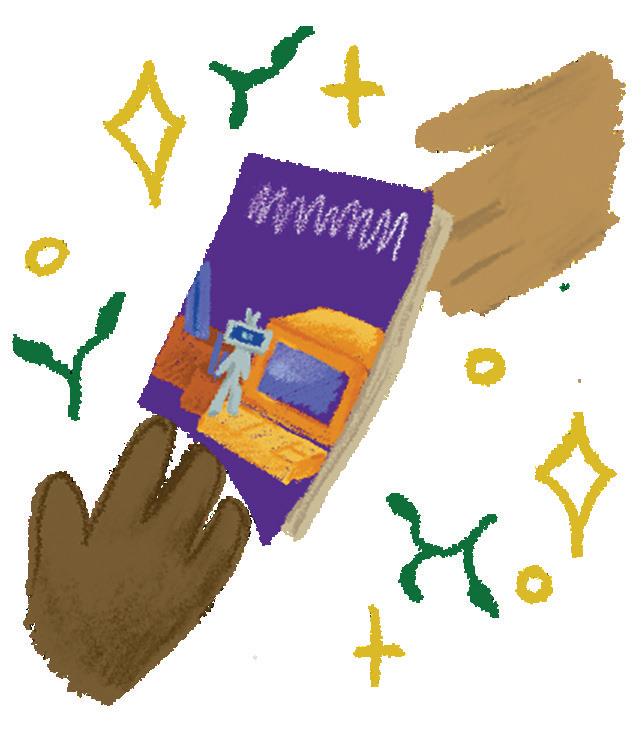
Des Moines, Iowa — It was a rainy day when Iowa legislature passed House Bill 69, a ban on gay marriage. Gov. Kim Reynolds declared it a monumental day for progress.
The reasoning behind the bill was simple.
“In accordance with the laws of nature and God’s daughter, Kim Reynolds, the state of Iowa recognizes the definition of gay marriage to be a happy marriage … which is clearly unacceptable. We don’t say g-a-y here,” Sen. Homè Phobeec said.
When asked to comment on their rationale for voting in favor of the bill, Sen. Dore Matt said, “I was just scared. I literally saw her stomping the life out of a rainbow flag, and she chucked her wedding ring at me. Apparently, rainbows look too happy. She’s going off the rails.”
Rainbows aren’t the only thing that seem to be upsetting Reynolds. Witnesses saw her arguing with her husband minutes before the ban on happy marriages.

“The only marriage she’s truly unhappy with is her own. She’s just jealous,” Rep. Hae Tur said. “I saw her shred a Republican sign with her teeth; she saw red with some orange and yellow and immediately classified it as ‘too g-a-y’.”
As the sun started to shine after the congressional meeting, a rainbow appeared in the distance, glistening against clear skies. Terrified onlookers saw Reynolds skidding out of the parking lot blaring “Somewhere Over The Rainbow.” They claimed she was weeping while singing along to, “If happy little bluebirds fly beyond the rainbow, why, oh why, can’t I?”
When one door closes, another one opens. This is the mindset Aidan Jacobsen ’24 carried into his sophomore high school track season after an injury caused him to shift paths.


“I always saw basketball as my main sport until last year when I injured my shoulder and missed the season,” Jacobsen said. “All I could focus on at that time was track, so sophomore year was really my breakthrough year.”
Transitioning from viewing running as merely a second sport to the sport he now prioritizes was unexpected for Jacobsen. However, running has always been a part of his life. Jacobsen’s career started at a young age when he began to run for fun.
“I pretty much always ran because my dad used to run,” Jacobsen said. “I remember running at the Iowa Games, which is just a meet where little kids can compete. They have a track meet with all of the elementary schools … , and it was real-
ly fun to runwith all of my friends at that.”
During Jacobsen’s sophomore year, he met coach and mentor Austin West ’18 during winter conditioning. They grew closer as West continued to coach during the regular track season.
“He’s just a really down-to-earth guy. He was there helping out all of the kids at winter training sessions. I don’t think he was getting paid or anything; he just came to help out because that’s just the kind of guy he is,” Jacobsen said.
During his high school career, West set three school records in the long jump, 400 hurdles and sprint medley relay. Now competing as a Division I track athlete at the University of Iowa, West participates in a 10-activity event known as the decathlon.
“My track story started in high school. I really started taking it seriously in my sophomore year. I was a sprinter and ran 200s and 400s. It seemed like every year after that, I added one event,” West said. “I learned how to hurdle my junior year and then added the long jump my senior year. I didn’t want to just run every single
day, so I figured that the decathlon would be a good stepping stone … It’s worked out so far.”

With West being a well-known figure in the track and field program at West High, Jacobsen was already familiar with the name ‘Austin West’ prior to meeting him.
“I had seen his name in the [West High] record books a lot. I looked up to him already and started chasing his marks. But I had never met him before,” Jacobsen said.
With his return to the Trojan track, West has big plans for Jacobsen.
“ I want him to take down my school record. Last year was fun because he was learning the event, but now, we can actually compare. It’s a competition where we’re both trying to take down Austin from 2018 or 2017,” West said.
After hosting a speed clinic for West High athletes, West became more passionate about coaching while Jacobsen was looking for a mentor.
“Aidan reached out to me and told me he was really interested in becoming a 400 hurdler. That got me more interested in coaching and
being around all the kids because they’re really talented,” West said.
During last year’s season, Jacobsen’s hard work paid off. At the Hollingsworth Relays, he set the sophomore record for the 400 hurdles at 53.82 seconds, ranking fifth in school history.
“I wasn’t really thinking about the [sophomore] record. I did set it early on in the year, which felt really good,” Jacobsen said. “I was more focused on the overall school record than the sophomore one. It’s definitely nice to have your name on the record [board], though.”
West noticed improvement in both Jacobsen’s speed and mindset.
“He matured a lot. You can see him get older and take a better mental approach,” West said. “He realizes that kids on his own team look up to him.”
With Jacobsen reaching this milestone at such a young age, West’s successes continue to fuel Jacobsen’s drive to achieve more.
“It’s really inspiring because he’s won multiple state championships and went on to the collegiate level while being an All-American and a decathlete,” Jacobsen said. “It makes me want to do the same.”


Jacobsen also sees West’s coaching as beneficial for his overall fitness and athletic goals. His experience with high-pressure meets is also helpful for Jacobsen.
“It’s really nice to have Austin’s experience running in big meets,” Jacobsen said. “Last year as a sophomore, I had never run at Drake Stadium or the state meet. It’s really helpful to have him because he’s been in those meets, and he can
talk me through the nerves and the pressure and how to deal with those types of things.”
West uses his experience as a college athlete to influence his coaching style. Having a valuable coaching figure in his own life, he tries to take on that role with Jacobsen.
Coach [Joey] Woody is probably my biggest inspiration; he’s one of the biggest coaches in the country so I might steal a thing or two from him,” West said. “The aspect of coaching I try to take with Aidan [isn’t] really a dictatorship, it’s more of a democracy. I want him to play an active role in what we’re doing.
Since last season, Jacobsen and West’s relationship has extended further than the track.
“Beyond a coach, he’s kind of like a big brother to me. We talk about a lot of things outside of track too, and it’s really nice to always have him there,” Jacobsen said.
Likewise, West sees Jacobsen as a younger brother and takes comfort in the bond that has formed between them.
“He really trusted me. With [me] being so young, he could easily not have bought in as much as he has, [but] he believes in what we’re doing. I trust him to give me his best effort — to execute — and he trusts me to put him in a position to succeed,” West said.
With West’s guidance, Jacobsen hopes to also compete for a Division I school. Yet, with two more seasons to go, Jacobsen likes to remind himself of why he started.
“I really like track because it’s something that you can work for and really see results; you can see your times improve in front of your eyes,” Jacobsen said. “I enjoy working harder at practice every day and seeing the results pay off when it shines on the track.”
 BY ELLA DE YOUNG DESIGN BY ANGEL WELLS-LU
From California to Minnesota, New Hampshire and Indiana, news stories nationwide detail a shortage of officials for various sports at different levels within the past year. Iowa is no exception — a noticeable lack of officials, specifically at the high school level, is prevalent in the state.
Executive Secretary of the Iowa City Athletic Officials Association John Mathias is in charge of assigning officials to junior high and high school football, basketball, baseball and softball games in Iowa City and surrounding towns. Although Mathias cites many reasons for a shortage of officials, one factor sticks out to him in particular — bad sportsmanship.
“With social media, there is so much scrutiny and pressure, and I think we can tend to dehumanize and depersonalize things a little bit too easily sometimes,” Mathias said. “Temperatures get a little hot, and fans, and sometimes coaches or players, can take it too far.”
Jeremy Cohen, a U.S. Soccer referee, referee instructor and referee assignor, also acknowledges that bad sportsmanship is an issue.
“I hear the horror stories; I read the horror
stories. Soccer referees love to gossip, especially about the stuff that is amusing, frustrating, problematic,” Cohen said. “So when things don’t


tions between high school basketball players and referees play out.
“We get very defensive when some play is made on us. I feel like there is a little bit of distance between the players and the refs,” Wolf said. “The refs are just trying to do their job, but also it’s frustrating sometimes because they have control over the game, and I don’t know if players necessarily like that a lot.”
Additionally, Wolf recognizes that fans and parents can play a significant role in the actions of referees.
“I think fans, even my parents, get so into [games]. It definitely does not help when parents are yelling at the refs because then [the referees] just get frustrated with that, and that can sway their calls,” Wolf said.
As a U.S. Soccer referee and a University of Iowa varsity women’s soccer player, college senior Sam Cary understands that players and fans can be frustrated with particular calls. However, Cary feels that not only is certain player and fan behavior unacceptable, but also this scrutiny is unfairly applied to female referees compared to male referees.
“During an [Under-19 men’s] state cup game, a parent didn’t like one of my decisions, and the parent jumped over a fence and started charging at me, screaming ‘I’m gonna get her.’ I think a lot of that’s because I, compared to the [other] people that were reffing, seemed fragile and weak,” Cary said. “I gave a red card at a state cup once because a male player looked me up and down and asked me, ‘Since when are women allowed to be referees?’”
go well, especially in terms of coach or spectator behavior, we hear about it.”
West High varsity girls basketball player Lucy Wolf ’24 addresses how she sees many interac-
According to Indeed, a worldwide job site based in the U.S., the average base salary for referees in the U.S. is $18.38 per hour. Mathias expresses that the low pay and the required time
WSS delves into the reasons behind the local shortage of sports officials.
I LEARNED SO MUCH FROM BEING ON THE FIELD WITH THE WHISTLE IN MY MOUTH THAN I EVER COULD HAVE WITH THE BALL AND MY FOOT.
-SAM CARY, U.S. SOCCER REFEREE
can be challenging elements of the officiating job.
“People just don’t have much spare time to take on these kinds of activities. Also, I think it’s a little bit of a money issue as well. I don’t officiate for the money, but I certainly wouldn’t do it for free,” Mathias said. “It definitely needs to be worth your time, and people’s time is important to them. Sometimes it’s enough for folks and sometimes it’s not, and that’s a decision that everybody has to make.”

Despite having an officiating job since 1995, Mathias works full time at the University of Iowa College of Pharmacy. Mathias sees the vast majority of high school officials in the area using officiating as a part-time job like him.
“I would say definitely 99% of the time, it’s a side job,” Mathias said. “People who are fulltime officials are probably working at the highest level of Division I college basketball, and they’re working 40 nights in a row throughout the winter. They make good money doing that, but it’s a grueling kind of season.”
Eight years ago, as a high school freshman, Cary started refereeing as a flexible way to make money while managing a busy competitive soc-
cer schedule. Cary quickly developed a deep appreciation for the job. She was recognized for her skills as a referee during her senior year of high school when she was picked to be one of twenty people to officiate U.S. Soccer youth nationals. Now, she referees to show other young females that it is an opportunity available to them.
“As a female referee right now, I do it mainly so that the freshmen in high school see that that’s an option — there’s an opportunity to be a female referee, and this isn’t a man’s space,” Cary said.
Mathias’s primary reason for becoming an official centers around his love for sports.
“I’ve always been involved in sports since I was young. I wasn’t very good, but I always enjoyed being around sports,” Mathias said. “When I was in college, I did work a little bit of intramurals, and I found it was an easy way to stay involved with the sports I love.”
Along with wanting to be closer to a game he enjoys watching, Cohen was inspired to become a referee because he wanted to improve the refereeing in his area.
“When I was watching [my kids] play [recreational soccer], I was seeing things happen that
I knew didn’t fall within what was allowed, but I didn’t know the exact reason why or the justification. So, I became interested in the rules that govern that sport in particular, and I found out that there was a [referee] course near where I lived,” Cohen said.
While referee training and certification requirements differ from sport to sport, the valuable life lessons learned from refereeing, especially at a young age, remain the same.


“Being a referee at those critical developing moments of my life — when I was developing my confidence, my stature, my posture, my verbal and nonverbal communications — I learned so much from being on the field with the whistle in my mouth than I ever could have with the ball and my foot,” Cary said.
Mathias shares what he wishes others would consider when interacting with referees.
“I think the important thing to remember is that we’re humans just like everybody else, like all the players, coaches and fans, and we’re going to have good days and bad days, and sometimes we’re not going to get it right,” Mathias said. “We hope that you don’t take it personally. We’re just happy to be part of the game with you.”
You may have seen me walking down the hall with my cotton candy hair and flowered face mask, giving out compliments. I’m a club leader, an Eagle Scout, enrolled in four AP classes and still maintain above a 4.0 GPA. I try my best to make others smile. What you may not know, though, is how surprised I am to be here.
When I was in sixth grade, 11 years old, I almost killed myself after realizing I was not straight. And whether it was because the only times I heard about the LGBTQ+ community were in hushed tones or whether it was something society had taught me without words, I thought that not being straight meant I deserved to die. However, not only am I alive today, but I proudly lead Colors Club, which celebrates and supports the LGBTQ+ community.
In sixth grade, though, I believed that being gay made me innately evil and that if I were allowed to live, I would end up causing harm to others. I was bullied throughout elementary school, so I knew how much pain could hurt and resolved to never hurt anyone else. The idea that there was a possibility my existence could cause harm to others made me hate myself. I felt it would be better to kill myself than allow even the possibility that I could hurt someone someday.
Every day, I struggled to wake up and go to school, ask and answer questions in the classroom, go to recess, eat lunch, return to class, answer more questions and go home. Then every night, I would struggle to get my homework done, trying to distract myself from the thoughts of
deserving to die that invaded my head. When falling asleep, I was surrounded by empty space that my mind insisted on filling with questions of moral obligation. Was I morally obligated to die? Did I have a right to exist if my mere existence could cause others pain? How would my existence even harm others?
I escaped with books. I could focus on the words, thinking about the paths the story could take and other what-ifs. When I was reading, I didn’t have to be “Jack Alden”; I could be “Leo Valdez,” cracking jokes and fixing things, or “Annabeth Chase,” the outgoing genius who knows the solution to every problem. I could be a hero saving the world, not feeling like I would end it. You may have guessed from the names of the characters, but in sixth grade, I was reading “The Heroes of Olympus” series by Rick Riordan. The fourth book, “The House of Hades,” is the reason I am alive today.
What saved me from my suicidal thoughts wasn’t my classmates, a teacher or my family. It was one line in the fourth book of a sequel series. “‘I had a crush on Percy,’ Nico spat.” That one line told me that there were people like me, people that I looked up to and idolized. The book never suggests that Nico being gay is bad; instead it addresses his internalized homophobia and shows his journey to acceptance. Many kids never found this quote; some of them were fortunate enough to find other books showing them they are not evil, others are in graves. Some lucky kids never thought they deserved to die for being gay. Maybe I would have been one of those lucky kids if I had gotten the chance to read books with characters like me when I was younger.
People across the country are trying to ban books with LGBTQ+ representation, claiming

they are not child appropriate. Books that save children’s lives are not appropriate for children?
And it isn’t just small, powerless groups trying to ban these books. It’s state legislatures too. States, including Iowa, are trying to and succeeding at passing anti-LGBTQ+ legislation. Some of the bills they have proposed would ban books at school libraries, while many other bills reach even further. These bills are trying to do things like preventing any acknowledgment of the LGBTQ+ community until middle school and outing trans kids to parents; one law that was passed March 22 controls where kids pee.
Without that one line from “The House of Hades,” I might not be alive today. How many lives will lawmakers be putting in danger by supporting these bills and laws? They are not just preventing access to knowledge about the LGBTQ+ community, but also sending a message that being LGBTQ+ is bad. Two of the proposed bills in the Iowa legislature this session would have banned gay marriage, despite our state, Iowa, being one of the first states to legalize it.
Being told you do not exist and deserve fewer rights sends the message “you are bad.” It does not need to be said out loud to be heard; the silence speaks louder than words. These bills will cause deaths, some out of shame, guilt and self-hatred, and others out of fear of the future and of never being treated as human. You will be unable to notice or do anything to prevent each individual death, but you can prevent more laws like these from being passed and show your support for LGBTQ+ kids.
To put it into perspective, I was 11. How much can an 11-year-old mask their emotions? How well can they fake a smile to the point of believing it themself? Are puffy eyelids, from crying one’s self to sleep, assumed to be from aller-
Across the country, anti-LGBTQ+ bills are being proposed and passed. This is my story of how even a small thing, such as a book being banned, could change the course of a life.
gies?
Not a single person noticed my deteriorating mental state, or if they did, they never once mentioned it to anyone. So don’t pretend like you can stop these deaths yourself by noticing suicidal behavior. If a child can trick everyone close to them into thinking they are okay, there is no hope for someone on the outside to recognize their hurt and help them.
Books can save lives when someone doesn’t feel comfortable talking. Education can teach people to accept themselves and spread love. Having an accepting adult who will not out you provides kids with a person to confide in without fear.
I urge kids to share their own stories and spread mine to inform people that these bills will cause deaths if passed.
I urge parents to look at their kids and decide which is worse: their child with a pride flag or their child in a grave.
Truly, which is worse? Having kids live happy lives as themselves, or having kids taught to hate and hide themselves, kill themselves, so you won’t have to acknowledge their existence. I hope you’ll agree with me that the worse outcome is the latter.
Senate File 482
Signed into law March 22 Requires students and staff to use the bathroom corresponding to their biological sex, as stated on their birth certificate.

House File 623
Signed into law March 22
Bans gender affirming health care for anyone under 18 including puberty blockers, hormone replacement therapy and top and bottom surgery.
Senate File 496
Would not allow education about LGBTQ+ identities from grades K-6, require schools to inform parents if a student may be transgender and mandate that schools list all books available to children in classrooms, libraries and curricula.


House File 190
Would remove gender identity as a protected class in the Iowa Civil Rights Act, allowing Iowans to be discriminated against on the basis of gender identity in housing, education, employment and more.
Text START to 678-678 or Call 1-866-488-7386 to talk to a Trevor Project Cousolor.
Visit Temp 9 (you do not need a pass).
Come to Colors Club in Room 104 Wednesdays after school where everyone is welcome and accepted.
“Oh, so you just sit around in your pajamas all day staring at a screen with no one to talk to?” This is the common assumption made when another teenager hears that I am in online school. Yet, my presence on camera in class every day discounts the critics.
Much fewer people are involved in online school both nationwide and within ICCSD as the COVID-era has passed. However, this doesn’t mean that online school isn’t still a valid form of education or that people shouldn’t choose it. I chose it.
The ICCSD Online Learning Program is a fully online school offered by the district. Similar to the schedule from 2020, school days are split in half — one asynchronous half and one live half on Zoom. Each class is only offered during one period due to low enrollment.
Classes start off with students messaging ‘hello’ and ‘how are you’ to each other in the chat, and then many teachers ask a question of the day before taking attendance. As the side conversations in the chat settle down, the teacher begins going over the material. Once a student finishes their in-class work, they may be allowed to leave the class early and have a few minutes to themself before their next class.

or what I need to be doing.
I only have to be in class for about four hours each day and spend about two hours on homework — this rarely exceeds the allotted time for an in-person school day. With my extra time, I’m able to go for walks with my dog, spend time with my family, read, learn languages and help out my neighbors with odd jobs.
to in-person learning, the district hasn’t put as much attention into online learning as it did in 2020. There aren’t as many class options to choose from outside of the required courses, and if an elective that could be taught live overlaps with a required class, one has to take the elective through an entirely asynchronous program. However, the asynchronous program doesn’t give students more elective options because solely asynchronous classes are only allowed if there are scheduling issues or a class needs to be retaken. All advanced classes, such as AP and honors courses, aren’t taught online; if a student wants to take one, they have to go in person for that specific class. Music electives follow this guideline as
BY SYLVIA DE YOUNG ART & DESIGN BY WILLIAM CHENGGoing to school online has made me feel less restricted than I did at an in-person school. When I was in person, teachers would monitor my whereabouts and constantly make sure that I was following the rules. In online school, I feel like it’s my choice to go to school and learn each day rather than simply going to school because it’s an obligation. I have to stay on top of all my homework and get to all my classes on time; no one is there to remind me of where I need to be
I’m also able to be in the comfort of my own home. It’s easier for me to focus because I’m able to work independently rather than having to be in a group setting. Being in my own space allows me to do many things that may not be allowed in person or would bother others. I can listen to music out loud, curl up in my chair, open a window, read things aloud to myself and grab snacks during classes. Teachers are easy to reach, and I can always go to office hours if I have questions or need a quiet place to work and be held accountable.
Since the majority of students have returned

Even though I enjoy going to school online, it can be difficult to interact with others. I find opportunities to socialize by regularly volunteering, running errands and visiting with family and friends. Although I haven’t made any new friends through the OLP, I’ve watched friendships develop between students of different home schools, which probably wouldn’t have happened if we were all in separate in-person schools.
Every day, I walk my dog at a time that may seem odd for a high school student to be out and about. On these walks, it’s typical for my neighbors to ask me why I choose to be in online school rather than go in person. A teenager deciding to be at home by themself instead of socializing and having the experiences that high school offers may come off as weird and unusual to some people. However, I choose online school because it makes me happy to be in my home with less people around and in a school with a flexible schedule where I am provided more time to do the things I love. Online school isn’t the right fit for everyone, but it is for me.
Sylvia De Young ’26 shares why she chose the Online Learning Program over returning to learning in person.
Hi, I’m Janet, the Ombuds. “I’m sorry, what was that?” “You’re who?” “Omswhat?” These are typical responses I receive when I introduce myself as the Ombuds for the ICCSD.
Most people have never heard of an ombuds, let alone have been asked to pronounce it. It is a unique role with an uncommon name. I have heard anything from “omsbuds” to “omnibus,” but it is actually pronounced, “awm-budz.” As defined by Merriam-Webster, the term ombuds roughly translates to “appointed official.” When the role “classical ombuds” originated in Sweden, it was considered a formal position that investigated complaints. However, my role is quite different from a classical ombuds, which often leads to confusion. I am an “organizational ombuds,” an informal role where one does not participate in any formal processes, investigations or complaints. Organizational ombuds are typically more common at colleges and universities as well as private corporations. For example, the University of Iowa, American Red Cross and Pinterest all have organizational ombuds, like me. The main purpose of my role is to build trust, enhance relationships, improve communication and promote continuous improvement within the organization.
The Ombuds Office is best described as a
general concern office and conflict resolution resource. This means that students, parents/ guardians and employees may contact me with any school or district-related conflict or concerns. I can help by discussing options, providing resources and sharing general district information. I also assist individuals by sharing the best conflict resolution practices and by serving as a neutral, impartial party to facilitate difficult conversations and open communication between parties.
The International Ombuds Association Code of Ethics provides core values that are essential to the work of an ombuds. The following core values are priorities in the work I do every day: act with honesty and integrity, promote fairness and remain non-judgemental, and act with empathy and respect for individual differences.
There are also four guiding principles, established by the IOA Standards of Practice: independence, impartiality, informality and confidentiality. These principles describe the critical elements and requirements for operating a sound ombuds program.
The IOA Code of Ethics states, “Confidentiality is the defining characteristic of the Ombuds practice.” The Ombuds cannot share the identity of anyone who contacts the office, disclose information shared with them or take any action

without the express approval of the visitor. The exceptions to confidentiality are issues requiring mandatory reporting, sexual harassment/assault concerns and concern for imminent harm to oneself or others. As one can see, the guiding principles of confidentiality and impartiality particularly make the ombuds position unique. I am often asked what types of concerns come through my office. It is truly a wide array of school and district-related issues and conflicts. In general, reasons someone may contact the Ombuds Office are: they don’t know where to go for help, they are having trouble finding the information they need, they prefer to work with a neutral party or they feel their voice is not being heard. Conflicts may also be taken to my office if there is a lack of trust, breakdown in communication, power imbalance, or concern over confidentiality and/or retaliation.
My annual report, which can be found on the Ombuds Office page of the district website, summarizes the topics of concern I receive in a given year. When someone contacts the Ombuds Office, it is my general process to engage, clarify and ultimately explore options to address any given concern. As the introduction video on my webpage states, “I’m here to help.”
DESIGN BY ANNA SONGPhone: (319) 688-1312
Cell: (319) 777-9558
Designing the lunch menu is an intricate balancing act between cooking and transportation logistics, federal requirements and student demand. With all this to consider, additional vegetarian options end up slipping through the cracks. Students are always guaranteed at least one vegetarian choice, but only in the unhealthy form of Domino’s cheese pizza. However, this option is overused, being the sole vegetarian entree at West for about 42% of school days. This is too frequent. Vegetarian students should be able to enjoy a variety of entrees, instead of eating pizza twice a week. For that reason, it is necessary for West High to provide a vegetarian alternative every day and increase the diversity of the vegetarian entrees.
When coordinating meals, the ICCSD follows the United States Department of Agriculture’s school lunch nutrition standards. These guidelines require all food groups to be present and the rotation of different vegetable subgroups. Additionally, meals must meet certain sodium levels, stay under the calorie limits for various age groups and eliminate trans fat from the cooking process. After the district’s Nutrition Services creates a draft of the menu that complies with the regulations, West kitchen staff members also contribute to the plan, providing input on the feasibility of the recipes and insight on student preferences.
The USDA also requires schools to provide a diet modification request form for students with

a medical need for certain dietary restrictions. This form is not available for students with religious or cultural dietary limitations, with those being considered preferences. However, the district takes some religious dietary restrictions into account during the creation of the menu. The district avoids serving beef and pork options on the same day to accommodate those who are Muslim, Jewish or Hindu and cannot eat certain meats. This is not enough, religious dietary limitations aren’t preferences, and should not be treated as such. Providing an assortment of entrees is necessary to accommodate not only religious restrictions but also vegetarians. Even if it is a lifestyle choice for some, vegetarians deserve to be given healthy, diverse and tasty options like those without dietary preferences and restrictions.
The diversity of vegetarian-friendly meals offered at West High is lacking. Non-vegetarian students have an incredible amount of variety in their lunch choices, from chicken dumplings to turkey corn dogs to beef chili. In the first 100 days of school, there were 74 distinct non-vegetarian entrees but only 16 vegetarian options. This data was collected from MealViewer, an application the ICCSD uses to post the meals and nutritional information for breakfast, lunch and a la carte products. Around 87.5% of the vegetarian entrees in the 2022-23 school year were cheese-based, with the most common being cheese pizza cruncher, school-made cheese
pizza and breaded mozzarella cheese sticks, appearing 10, eight and eight times, respectively. This could be a struggle for lactose-intolerant students and makes it almost impossible for vegan students to ever consume school lunches. The absence of variation in the vegetarian alternatives is disappointing because everyone deserves to look forward to their lunch, something that is hard to do if it’s the same few choices the majority of days.
Something that could add variety is the a la carte options. The vegetarian products sold are Uncrustables, a veggie bagel and a vegetarian salad, but besides the Uncrustables, the bagel and salad options cannot be relied upon as they aren’t always in stock. Most of the salad options are sold with chicken, and the veggie bagel is seldom present. The unpredictability and expensiveness of the a la carte choices makes it even more vital that the hot lunch lines consistently carry a vegetarian entree.
With the diversity of the ICCSD student body that has dietary restrictions, it is necessary to accommodate all students and go beyond the bare minimum. It is essential to include a main entree every day that is meat-free for the enjoyment of all individuals. West High should also seek to vary its vegetarian choices, going beyond cheese-based meals to entrees containing other healthy protein options, such as beans, tofu and tempeh. Alternate choices are a necessity to make our food services more equitable for vall students.
There should be a wider selection of vegetarian lunch options to accommodate the diverse diets of the West High student body.
This is an editorial. While based on facts, its purpose is to share the conclusions and opinions derived by the WSS editorial board.
During the Women of Troy Relays on March 28, Ava Bruxvoort ‘25 clears 5’0” for a new personal record, placing second overall. CECI DE YOUNG

Spring has sprung — fill your day with joy by doing this spring scavenger hunt! Find 20 easter eggs and scan the QR code for the answer key.
 ART BY ANNA SONG