DIMENSIONS
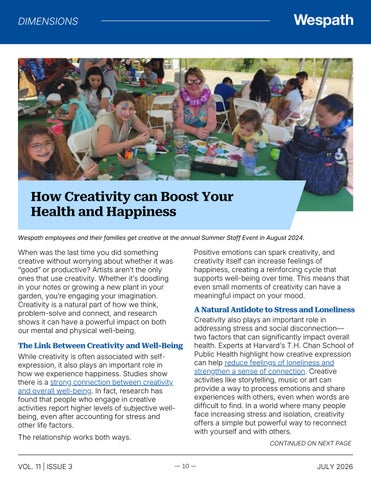
How Creativity can Boost Your Health and Happiness Wespath employees and their families get creative at the annual Summer Staff Event in August 2024.
Positive emotions can spark creativity, and creativity itself can increase feelings of happiness, creating a reinforcing cycle that supports well-being over time. This means that even small moments of creativity can have a meaningful impact on your mood.
When was the last time you did something creative without worrying about whether it was “good” or productive? Artists aren’t the only ones that use creativity. Whether it’s doodling in your notes or growing a new plant in your garden, you’re engaging your imagination. Creativity is a natural part of how we think, problem-solve and connect, and research shows it can have a powerful impact on both our mental and physical well-being.
The Link Between Creativity and Well-Being While creativity is often associated with selfexpression, it also plays an important role in how we experience happiness. Studies show there is a strong connection between creativity and overall well-being. In fact, research has found that people who engage in creative activities report higher levels of subjective wellbeing, even after accounting for stress and other life factors. The relationship works both ways.
VOL. 11 | ISSUE 3
A Natural Antidote to Stress and Loneliness Creativity also plays an important role in addressing stress and social disconnection— two factors that can significantly impact overall health. Experts at Harvard’s T.H. Chan School of Public Health highlight how creative expression can help reduce feelings of loneliness and strengthen a sense of connection. Creative activities like storytelling, music or art can provide a way to process emotions and share experiences with others, even when words are difficult to find. In a world where many people face increasing stress and isolation, creativity offers a simple but powerful way to reconnect with yourself and with others. CONTINUED ON NEXT PAGE
— 10 —
JULY 2026