HOLLYWOOD.WESTENGAGE.COMMUNICATE. West Hollywood Communications and Community Engagement Strategic Plan
THESEE PICTURE.BIG West Hollywood Communications and Community Engagement Strategic Plan EXECUTIVE SUMMARY

1
THESEE
PICTURE.BIG West Hollywood Communications and Community Engagement Strategic Plan EXECUTIVE SUMMARY
We were the nation’s first city to have a majority openly gay governing body, a landmark development in LGBT rights.
Today’s openly gay City Councilmembers still receive international media attention. West Hollywood has consistently been the most outspoken city around in advocating for LGBT legal rights and recognition.
3
LET’S BEGIN AT BEGINNINGTHE
West Hollywood’s iconic destinations— including The Sunset Strip, Historic Route 66, Santa Monica Boulevard’s LGBT businesses and entertainment venues, and the West Hollywood Design District— draw tourists from all over the globe. Our thriving creative and entertainment communities set trends in design, dining, music, fashion, art, and architecture. Our community is a robust economic and cultural center brimming with idealism, creativity, innovation, and civic pride. For the past 30 years, the City has effectively used traditional media relations and public outreach to communicate with the people who live, work, and play here. But media is changing. New technologies have gone mainstream and marketing has grown more sophisticated. Our stakeholders are inundated by advertising, marketing, and media efforts from all directions. We must find new ways to compete for attention and engage with members of our community. To that end, the City’s Communications Division contracted with Kearns & West to develop a Communications and Community Engagement Strategic Plan. First, Kearns & West conducted formal and informal research to gather information about the effectiveness and perceptions of the City’s current efforts. Then we worked together to examine our current practices and recommend next steps. This comprehensive plan includes goals, objectives, tools, and strategies for expanding our communications and community engagement capacity and effectiveness.
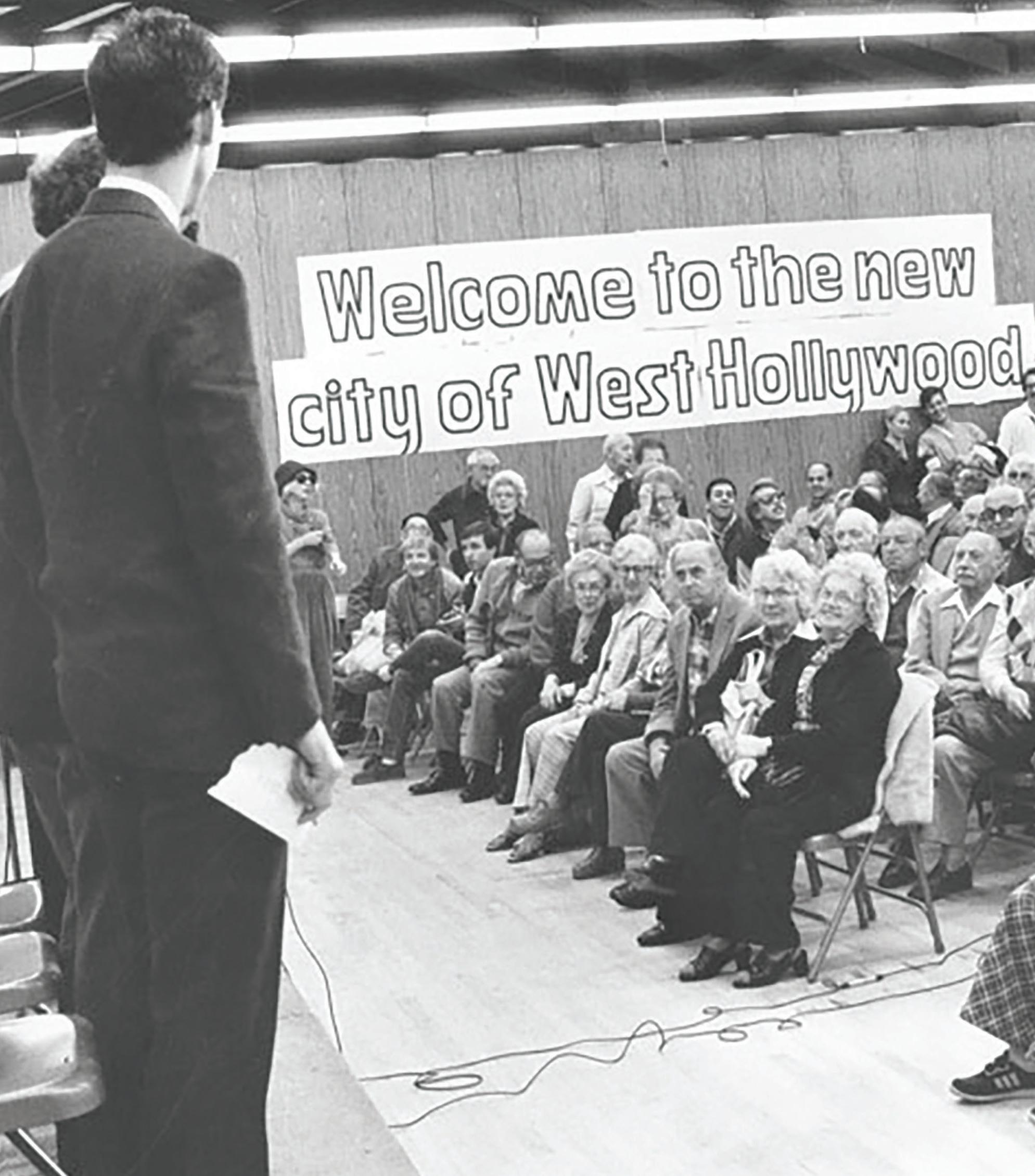
West Hollywood has a strong progressive political voice and a rich history of community activism and involvement. It’s a city as distinctive as the people who live, work, and play here. In 1984, the City of West Hollywood was founded by an unlikely alliance of seniors, LGBT activists, former Soviet immigrants, and advocates for rent control and affordable housing. Since then our small community—with about 35,000 residents in 1.9 square miles—has made a huge impact on politics and society, both nationally and globally.
5 ALL OF TOGETHERWORKINGUS, If you’re a member of the West Hollywood City Council or City staff, or a representative working to communicate and increase engagement with members of our community, this document is for you. The Communications and Community Engagement Strategic Plan includes individual sections covering: • Communications • Community Engagement • Media Relations Policy • Media Relations Protocols • Crisis Communications You’ll find best practices, approaches, and tools to support more effective communications from the City and a higher level of engagement from our community. You’ll also get support from the Communications Division. We will assess each scenario individually and tailor strategies and plans as needs arise. If you have questions about using this Communications and Community Engagement Strategic Plan, please contact the Communications Division.
76 Our first-ever Communications and Community Engagement Strategic Plan is a model for how best to support two-way communications between the City and the people who live, work, and play here. The Plan outlines a new vision, framework, and implementation strategy that will guide our communications for the next several years. It’s based on industry benchmarks, market research, and current communications trends, as well as input from internal and external stakeholders. A AWITHCITYPLAN Two-Way Communication
The specific goals of the Plan are to:
Aalreadymaintainstakeholders.externalThisprovidedtheinformationneededtoincorporatebestpractices,effectiveoutreachtechniques,andcapitalizeonresourcesandprotocolsthatexist.fullsummaryoftheAuditProcessandDataCollectioniscontainedin
9
There are many types of stakeholders: Residents, property owners, businesses, city staff, schools and childcare facilities, visitors, news media, nonprofit organizations, public utilities, neighboring communities, regional and state-level agencies
The first step in developing the Plan was a process of gathering and evaluating information. This effort was spearheaded by Kearns & West leadership and focused on the following priorities: • Collecting information about existing communications and community engagement practices;
• Provide a consistent and genuine approach for increasing and communicationsenhancingwithCityOfficials,Citystaff,andmostimportantly,Citystakeholders.
The purpose of the Communications and Community Engagement Strategic Plan is to ensure that the City of West Hollywood is well positioned in our communications and community engagement work and that the Communications Division has the needed tools and resources to effectively meet goals.
• Identifying gaps in the City’s current communication and engagement strategies. The audit process included surveying and interviewing internal and
GOALS
Appendix 1: Audit Process .
• Explore opportunities to consolidate information and streamline communications.
• Create a pathway to understanding the public’s interests and needs and develop tools to address them.
• Identifying redundancies and duplicative tasks; and
Proactively reaching out to media and bringing cross sections of the community together requires us to redefine how we interact. This moment in time finds the City at the intersection of traditional and new methods of communication and interaction. We must provide twoway communications, both pushing out information and pulling in feedback, to involve more of the community in collectively shaping our city.
How we got here: audit process and data collection
The main objectives of the Plan are to: 1. Provide a framework for the City to best exchange information with the public; 2. Maximize the use of technology and build upon the explosion of social media, new media channels (digital, web, mobile); and 3. Align withpreferencesprotocolscommunicationswithstakeholders’forcommunicatingtheirlocalgovernment. & OBJECTIVES
TECHNOLOGY COMMUNICATIONSFOR AND ENGAGEMENT: The City has a robust web and social media presence, and tools are available for staff to track a variety of stakeholder information. However, information is siloed. Opportunities exist to improve data capture and sharing.
What We Learned: Specific Feedback Through interviews, surveys, polling, and focus groups, several key themes emerged from the audit process: “KEEP UP THE GOOD WORK”: Peer cities consider West Hollywood at the leading edge of community and social engagement. Our commitment is demonstrated by a series of projects to better understand the community; especially noteworthy is the award-winning 2013 City of West Hollywood Community Study, one of our most intensive community engagement projects in recent years. This study updated the City’s demographic data and helps inform funding priorities for social services initiatives. Ninety percent of respondents rated their quality of life as excellent or good, citing pedestrian orientation, central location, safe and quiet neighborhoods, amenities, and well-kept infrastructure.
CONSISTENT BRANDING FOR THE CITY: Stakeholders react positively to the City’s branding; however, there are a number of visual inconsistencies in collateral materials. WE
COMMUNICATE AND ENGAGE PROACTIVELY: Community members shared interest in more differentcommunications,proactiveincludingtailoredengagementforcommunitysegmentsandimprovedoutreachtohard-to-reachcommunities.
WHAT
What We Learned: Key Findings and Overall Direction
1110
In addition, the Communications Division can work more effectively with the City Council, City Manager, and City departments and divisions to promote the City’s core values, institutional priorities and ongoing programs, and to instill a greater sense of community and shared purpose. With more consistent and effective messaging, we can give stakeholders a better understanding of City issues and empower them with information to act upon.
IMPROVE CAPACITY, STAFFING, AND COORDINATION: City staff has a vested interest in increasing overall engagement. To that end, opportunities exist to enhance coordination and capacity between and within departments and divisions. The Communications Division’s role can be clarified and strengthened, and staffing can be increased. Current staffing is sufficient only for traditional communications efforts; additional staff positions and support structure, housed within a single division, could provide critical efficiencies and capacity for ad-hoc, regular, and crisis communications, and community engagement activities, and provide consistency in City activities.
Customized, audiencespecific marketing materials and communications tools— along with a more proactive media relations program—are needed to develop a robust public participation model that includes deliberative stakeholder involvement, planning, and visioning community’ssolvingInclusivityprocesses.inproblem-anddecision-makingisinstrumentaltothesenseoftrustintheCity.ThisCommunicationsandCommunityEngagementStrategicPlanwillhelpguide us to communicate more effectively and increase transparency and credibility. Also critical is development of communications and engagement tools that invite and maintain stakeholder participation and highlight the City’s positive work. Tapping into a diverse pool of talent and finding skilled writers and critical thinkers inside and outside City Hall are key to this new paradigm. We have a organizationalouropportunityuniquetoenhancecommunicationsandcommunityinvolvementstrategies,capitalizeonourresources,andtrainoutreachandsubject-matterexperts.
LEARNED
The City has done a great job over the past 30 years with the fundamentals of media relations and public outreach. But communication to date has been led without the benefit of strategic direction, formal policies and protocols, or key messaging and common themes. The result is a lack of clarity and some misperceptions among key stakeholders, and opportunities have been lost. We must rethink how we design and engagementcommunicationsdeliverandmodelstoreacheverymemberofourcommunitywheretheylive,work,andplay.
MESSAGE: Establish a baseline of themes and key messages that communicate our City’s core values, initiatives, and City Council directives and goals. Provide guidelines, policies and protocols for media relations and crisis communications.
WHAT’S NEXT
Target various audiences and reach them where they live, work, and play
1312
BRAND: Develop a universal branding guide including protocol for logo placement, layouts, and fonts to streamline development of collateral material and position the City’s brand for consistency, clarity, and effectiveness.
INNOVATE: Keep identifying and piloting innovations in technology deployment and moving ahead with more robust contact and relationship management, broader data capture and analysis, and digital communications and social media capacity.
ARTICULATE: In clear and distinct ways, communicate the City’s primary strategic goals and activities in support of those goals to our stakeholders and the media.
The City of West Hollywood has a robust foundation for communications and community engagement—but it must evolve to adopt new tools, techniques, and best practices.
What’s Next: Key Recommendations
ENGAGE: Target audiences with graphically engaging and diversified outreach materials and multi-lingual content. Materials should be produced in English and Russian, and perhaps Spanish, to reach targeted audiences where they live, work, and play.
Recommendations include: ORGANIZE: Provide resources for communications and community engagement, as well as clarity regarding the role of the Communications Division. This should include creating an Administrative Analyst position to focus specifically on community engagement. As the division takes on more responsibilities, new staff positions should be determined to address the large workload. Coordination between departments and divisions should be streamlined, with frequent trainings to involve City staff on communications and community engagement.
• Coordinated crisis communication efforts
• A technology assessment to capture the current status of internal and publicfacing technologies
• Solicitation of public involvement early and often
The Plan includes guidelines for public participation and interaction between the City and members of our community. It will help us to more effectively share information with, and solicit input from, our stakeholders regarding City services, programs, and initiatives. This will help ensure the broadest possible community awareness of and representation in decision-making.
The Plan calls for:
• Clarification of internal communications and community engagement roles
15
• Greater efforts to ensure that our narrative is conveyed clearly and with consistency Development of the Plan included:
• Standardization of communications
HOW REALITYBECOMESVISIONOUR
• Improved, proactive media relations
As the Communications and Community Engagement Strategic Plan becomes an integral part of our day-today operations, it will help strengthen communication efforts throughout the City.
• A visual materials audit to assess visual branding and logo usage across a wide range of existing collateral
• An audit process that evaluated the City’s communications and outreach procedures and activities targeting both internal and external audiences

17 JUST WHO ARE TALKINGWE ANYWAY?TO, We want to communicate with and engage all of the City’s diverse stakeholders. This includes any person, group, or organization that has an interest or concern in, or may be directly affected by, the City’s actions, objectives, and policies. Our stakeholders are residents, businesses, visitors, vendors, developers, employees, the media—essentially, anyone who lives, works, and plays here. Depending on the issue, due weight may be given to a stakeholder group that holds a significant interest in a particular topic. There are many approaches to designing and managing communications and community engagement efforts. initiativesDifferentrequire different approaches, balancing needs for clear and efficient communications and engagement, effective internal coordination, and transparency and interaction with the public. POPUL ATION COMMUNITY GROUPSWHO LIVES IN HOLLYWOOD?WEST E THNICI T Y EDUC ATIONAL AT TAINMEN T L ANGUAGE HOMEOWNERSHIPSPOKEN AGE GROUPS 56% Men1 44% Women1 41% Gay or bisexual men2 15% Seniors1 11% Immigrants from the former Soviet Union1 5% Peope living with disabilities1 5% Lesbians or bisexual women2 1% Transgender community members3 78% White 11% Hispanic/Latino 5% Asian or Pacific Islander 3% Black or African American 3% Other 34,399 people1 22,511 households1 1.53 average household size1 14 average years lived in West Hollywood2 1 2010 Census Data, 2 2013 Survey Data, 3 Social Services Data 1 2010 Census Data, 2 2013 Survey Data 2010 Census Data 2010 Census Population,Datahouseholds, and average household size have all decreased since 2000. Since 2000, the proportion of white population has decreased by 3%, the proportion of Hispanic/Latino has increased by 2%, and the proportion of Asian or Pacific Islander has increased by 1%. City residents are more educated than those in the County as a whole. 2010 Census Data The 25-34 age group is the largest in both the 2000 and 2010 census. 0-24 27% 12% 20% 16% 11% 9% 5% 25-34 35-44 45-54 55-64 65-80 80+ 0 10 20 30 40 50 60 70 80 18% high graduateschooleducation some college or degree64%18% 89% English 4% Russian 3% Spanish 4% Other 2010 Census Data The percentage of residents who speak Russian or other Indo-European languages has decreased. 2010 Census Data The proportion of renter and owner occupied housing units has remained the same since 2000. 78% rent 22% own
THE VISION, MISSION, AND PRINCIPLES THAT GUIDE US WHY THIS PLAN IS SO IMPORTANT TO WEST HOLLYWOOD
This is an extraordinary City— aspirational, influential, and proud. Its people are deeply committed to social services, the environment, full equality for LGBT people, women’s rights, and animal welfare. It began with an unlikely coalition: gays grappling with the early days of the AIDS epidemic, non-Englishspeaking Russian immigrants who fled oppression in the former Soviet Union, and renters facing massive rent increases and evictions. Our community is diverse, vibrant, and creative. City Hall must raise the bar and reflect that back to the community in order to heighten public awareness, boost participation, increase transparency and accountability, and earn public trust.
• Set the tone for exploring opportunities to consolidate information, engagementawarenessincreasecommunications,streamlineandlevelsofpublicandcommunity
values.andreflectingprojects,buildincreasechannelscommunicationsthatfosterawareness,understanding,andsupportforCitygoals,andinitiativeswhilecommunityconcernssupportingcommunity
• Help ensure consistency and authenticity in our approaches • Create a pathway to understanding the community’s interests and needs and how to address them
As we work to guidingthisofficials,communicationsenhancewithCitystaff,andstakeholders,setofvision,mission,andprincipleswill:
The story of West Hollywood is made up of countless individual stories. How we tell these stories—and how we engage with those who live, work, and play here—are of vital importance. The effectiveness of our communications and engagement directly impacts how the community perceives our efforts.
Vision Transparent and consistent dialogue between City officials and the public and increased capacity to bring diverse perspectives together, allowing the City to be more responsive, build trust, reduce the potential for conflict, and provide for better-supported and sustainable solutions and greater civic satisfaction. Mission Establish greater public awareness and boost public participation in the City. Identify and use
Inclusiveness: Engage and accommodate diverse populations. Involving the full cross-section of the public requires a community engagement process that is accessible and easily understood, and that represents the City’s demographic diversity—including many non-native English speakers. Using a collaborative and inclusive approach will provide interested parties throughout the community with opportunities to become equally involved in City projects, policies, and issues.
Early and involvement:ongoing Involve stakeholders early in decision-making processes to help identify issues and set priorities before any conclusions are made. Early and ongoing stakeholder outreach can help reduce public anxiety, identify significant issues and concerns relevant to each initiative, and provide the City with qualitative and quantitative data and feedback to address community concerns.
Accessibility participation:and Provide a variety of methods (in-person, online, mail, phone, as appropriate) through which community members can participate in and become educated about a project. Outreach materials should be concise and provide relevant and specific information to the public. This is necessary to clearly convey project goals and involvement opportunities, and to reduce misperceptions and misinformation.
2120
andAccountabilityadaptability: Work in partnership with community members to periodically assess various processes and document lessons learned, and identify strategies for improving future communications and community engagement efforts, adapting to emerging technologies and trends, and evolving community priorities. Innovation and best practices: Seek to use innovations and new technologies, try new methods of interaction, and learn from other organizations— public and private-sector alike—to continuously discover successful strategies for communications and community engagement.
The City should use the following values in its andEngagementandCommunicationsCommunityplanningimplementation:
PRINCIPLESGUIDING
Transparency and trust: Provide the highest level of transparency and ensure that the community can access relevant information in a timely manner in order to participate in effective and meaningful ways. Transparency and open communication between the City and its stakeholders are crucial to building genuine relationships, and they demonstrate the City’s commitment to the community and its values.
23
Next steps will include policy and program development, implementation and training, assessment and evaluation, and revisions to the plan in order to realize its objectives and Thisgoals.planis a living document and is adaptable. It will be reviewed on an ongoing basis to measure progress and alignment with the City’s organizational goals and objectives.
The City of West Hollywood and its City Council, staff, and community value communication and community engagement.
The community wants to be involved early and often in City decision-making and provided with information that is timely, transparent, consistent, accessible, and effective. This is evident from feedback gathered in the communications and community engagement audit, and is recognized by the City. Significant time and resources have been dedicated to cultivating existing tools and practices. With this as our foundation, we can embark on a more robust, comprehensive, and coordinated communications and community engagement effort. This Communications and Community Engagement Strategic Plan serves as a roadmap by laying out the Objectives, Goals, Priorities, Themes, Findings, and Recommendations for the City to make a profound shift in communications and community engagement strategy and embrace a more cohesive and comprehensive approach. A strategic approach to the City’s communications and community engagement efforts ensure that we reach more people, engage more stakeholders, and function in the most open and transparent manner possible.
A
WORDFINAL
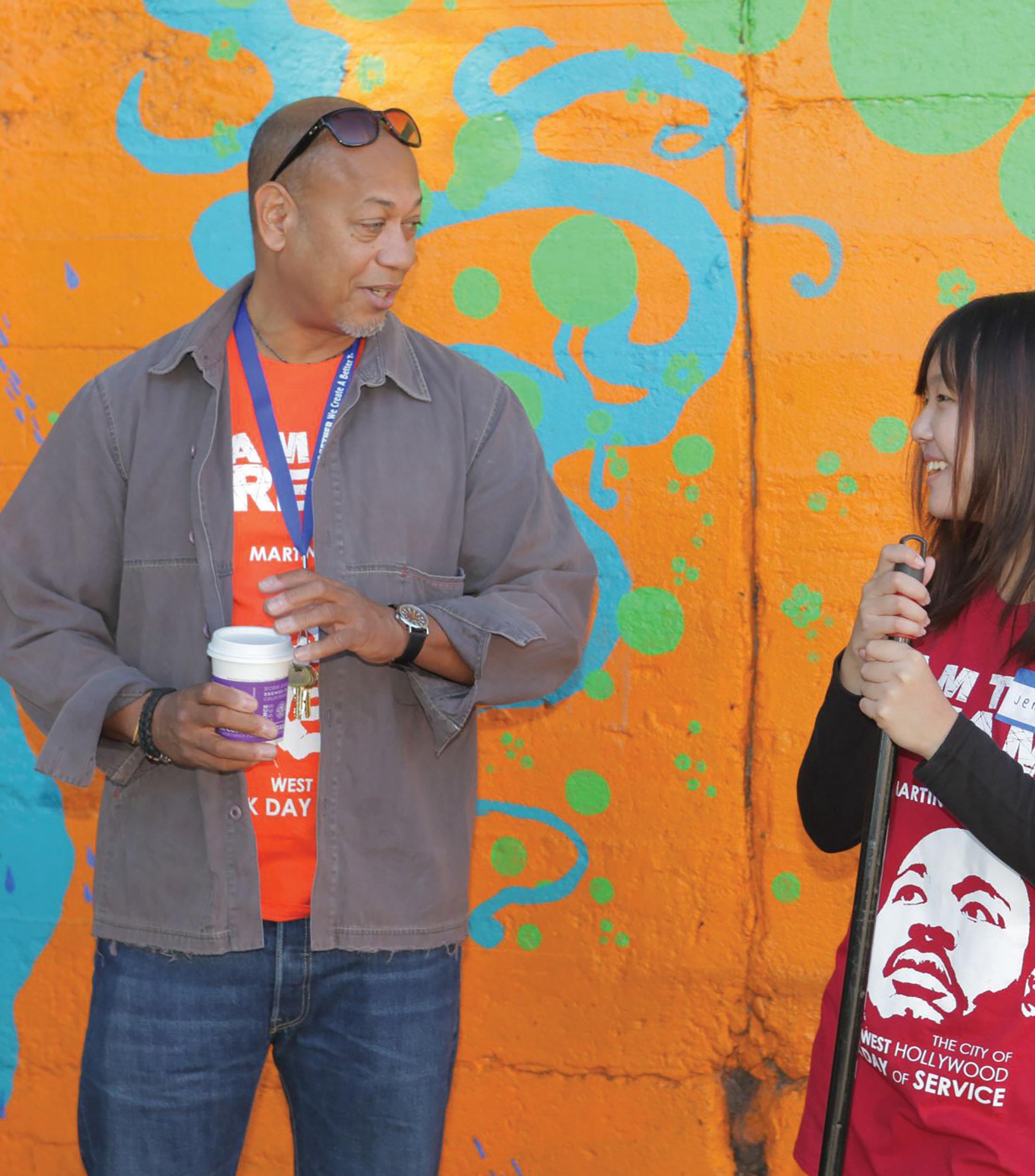

Our first-ever Communications and Community Engagement Strategic Plan is a model for how best to support two-way communications between the City and the people who live, work, and play WEHO.ORG/COMMUNICATIONShere.
PLAN.THEKNOW
West Hollywood Communications and Community Engagement Strategic Plan FINDINGS & RECOMMENDATIONS


1 West Hollywood Communications and Community Engagement Strategic Plan FINDINGS & RECOMMENDATIONS
PLAN.THEKNOW
• Interviews and focus groups were conducted with Councilmembers, City staff, and stakeholders. This included representatives from every City department and division.
• The City’s internal and external communications were evaluated to determine the effectiveness of past and current practices.
• A cross-section of the City’s stakeholders was solicited through online and in-person surveys, mobile polling, and input sessions conducted—to better understand how they would like to be involved and engaged with the City.
Specific approaches or next steps are recommended to improve communications and community engagement.
The aim of these recommendations is to help us streamline communications and engagement efforts, enhance current approaches, and create a blueprint for future community outreach. Findings and recommendations are based on a synthesis of input on important issues, challenges, solutions, and opportunities:
LEARNEDLESSONS AND STEPS TO TAKE
3

EMBRACE “COMMUNICATIONS” DIVISION: The Communications Division was formerly called the Public Information Division. While public information is a key part of what the division provides, it has many additional functional roles including marketing, advertising, social marketing, community engagement, and public awareness efforts. The term Communications Division better communicates and clarifies the division’s functions.
This report reflects a Citywide interest in expanded capacity for communications and community engagement. In 2014, with the adoption of the City budget, Council approved the addition of a Social Media Intern position. Still, the Communications Division is staffed in a manner suitable only for traditional public relations, and is overwhelmed with work just to keep up. The City should create an Administrative Analyst position to focus specifically on community engagement. Additional staff positions should be determined to help the division more effectively address its growing community engagement role in the shortand long-term future.
ENHANCE COORDINATION WITH THE COMMUNICATIONS DIVISION: The Communications Division should develop and share clear protocol for how City staff members can work with the division, focusing on services and capacities. Stemming from this, the division should seek to communicate clear protocols for media relations and for crisis communications.
Findings: Councilmembers and City staff expressed confusion about the role of the Communications Division. There has been a lack of understanding about the distinctions opportunitiesexpressedengagementcommunitycommunicationsbetweenandengagement,includingaboutspecificapproachesandCityresourcesintheseareas.TherealsoisalackofawarenessabouthowCitystaffmemberscanseeksupportforcommunityeffortsandhowtheCommunicationsDivisioncanhelp.Internalintervieweesinterestinmorerobustcommunicationsbetweendepartmentsanddivisionsregardingnewprojects,issues,andtocoordinate.
STRENGTHEN MEDIA RELATIONS: The Communications Division provides more than 200 regular press releases to the media each year. Efforts also should be made to work with reporters and editors to provide information about issues that media outlets would like to cover. A good start has been the addition of Vocus/Cision media relations software, which is helping the division tailor the City’s pitches.
PROVIDE TRANSPARENCY: Publish as much information as possible on the City’s website and, as appropriate, through other media outlets. This should include more than the legal requirements for information. Access to graphicsandwebsiteinformationrequestingviatheCity’sshouldbeimproved,informationshouldbepresentedinwaysmoreuser-friendlythantext,includingandvideos.
5
INCREASE COMMUNICATIONSINTERNALBETWEENDEPARTMENTSANDDIVISIONS: To improve information access, the City should take actions to break down silos between departments and divisions. The Communications Division should have a stronger role in capturing, sharing, and identifying communication synergies between the City’s various departments and divisions, and should help different areas of City Hall share information so there is a unified approach to external relations.
Recommendations:GROWCOMMUNICATIONSDIVISIONCAPACITY:
DIVISIONCOMMUNICATIONS
DEVELOP TEMPLATES:WORKFLOW Digital content templates should be created to support content creation for websites, calendars, newsletters, and social media. Templates could be linked to forms (possibly hosted on the Intranet) that assist staff in developing content. This approach would help streamline communications.
INCREASE OUTREACH AND COMMUNITY ENGAGEMENT TRAINING: Provide outreach and community engagement training for City staff across all departments and divisions. Consider providing community engagement training and digital media training for members of the public as well, as both a capacity and relationshipbuilding exercise.
Findings: The City lacks clear and consistent messaging and branding. Materials are missing key elements that create a consistent, universal brand including logo use, typeface choices, themes, color schemes, and other attributes. Most collateral materials feature a City logo; however, usage is inconsistent and there seems to be no clear usage standard for typefaces. City letterhead has a dated look and feel.
OUTREACH ENGAGEMENTAND
UNIVERSAL LOGO: Designate a universal logo for all materials produced by the City and develop a consistent usage of the official City logo for departments, divisions, City Council, Commissions, Advisory Boards, and any official body governed by the Brown Act. The City logo should be visible and used in the same location on all documents, where possible.
&CONSISTENCYBRANDING
Recommendations:STYLESHEET/BRANDINGGUIDE: Create guidelines to ensure that all brochures and fact sheets produced by the City use similar typefaces and formatting.
7
Findings: A small number of stakeholders are consistently engaged in issues affecting the City. Interviewed stakeholders feel these engaged community members are primarily homeowners and seniors— and that renters and younger people do not engage the City to the same degree. In general, stakeholders engaged the City only as issues came up (as opposed to a more proactive relationship). Interviewees expressed a need for outreach to meet the people where they are—and early in processes as projects or initiatives are developed. It is important that stakeholders are engaged often, and not just after something arises. There should be an effort to engage all stakeholders through a variety of platforms, and to have each interaction acknowledged or responded to by the City. Despite successful general engagement efforts to seniors, outreach should improve to non-Englishspeaking communities, many of whom are seniors.
Recommendations:DIVERSIFYSTRATEGIES: Implement a variety of engagement strategies and platforms focusing on different stakeholder segments. Use a combination of print, media, and digital materials and translate materials into other languages to broaden the outreach. Maintain a commitment to new trends and to best practices.
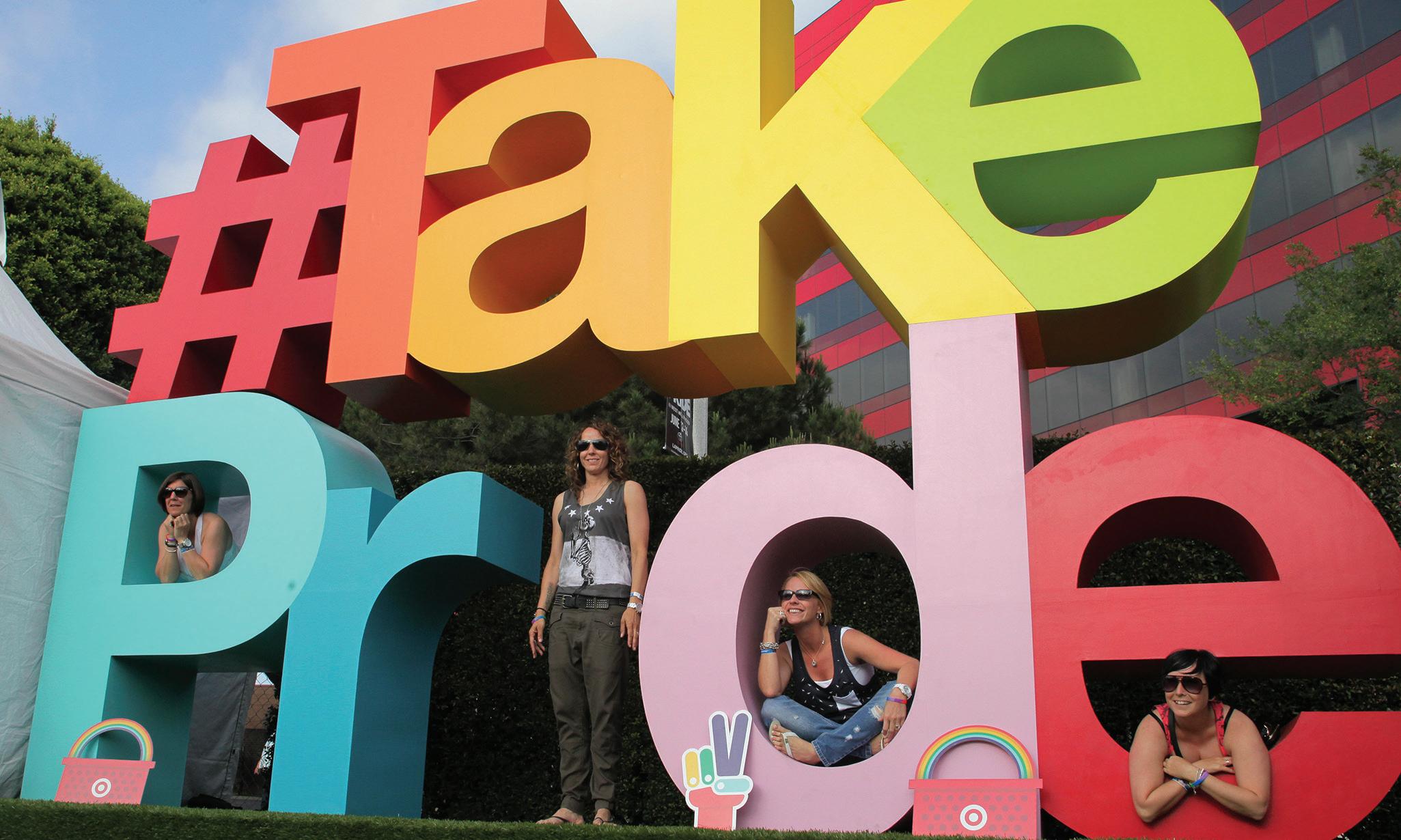
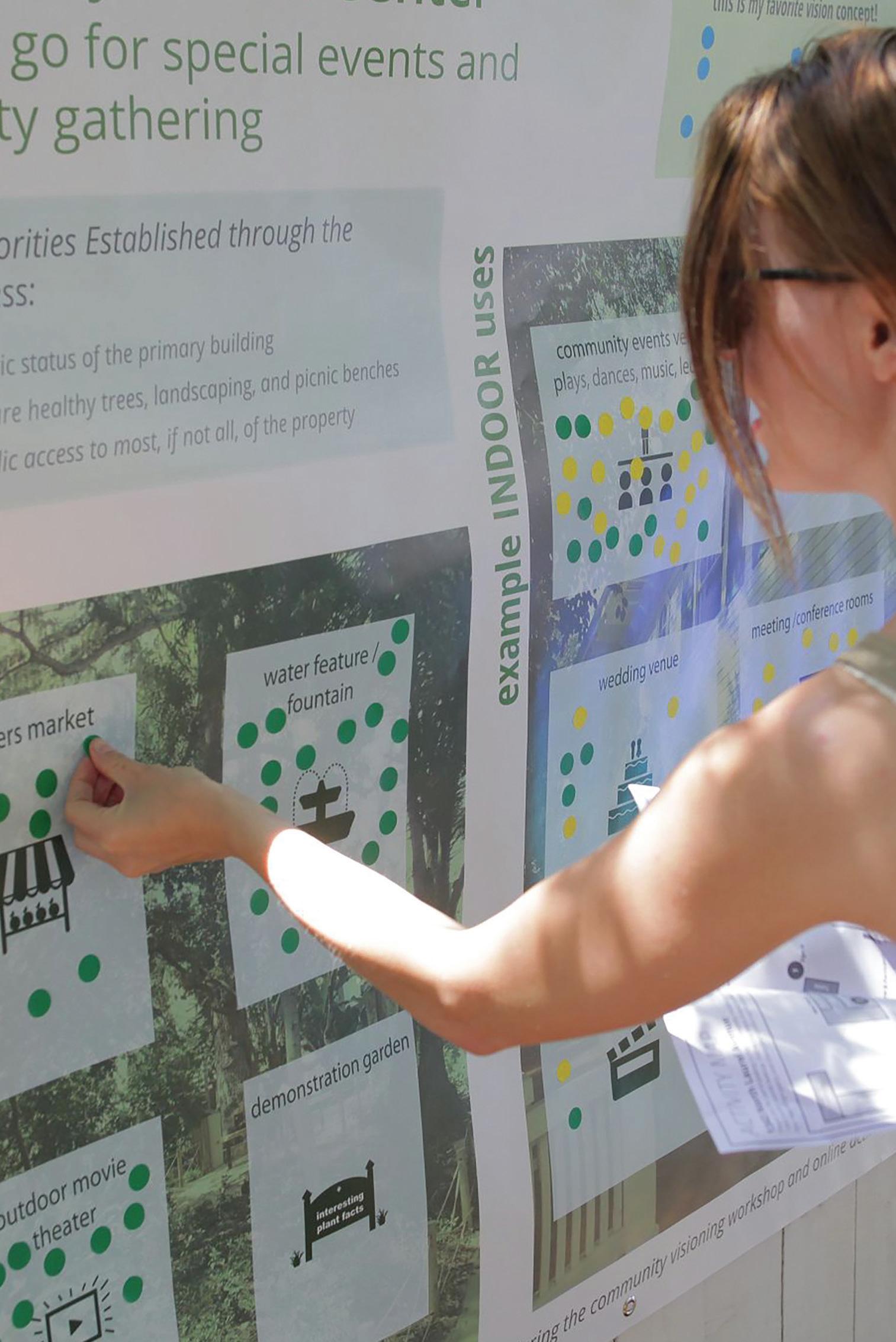
CREATE ENGAGING EVENTS: Meet stakeholders where they are. People tend to be attracted to fun and vibrant places such as parks, cafes, galleries, bars, and restaurants. Community events and block parties are also great ways to engage members of the public. Communications should be framed for specific audiences rather than the general public whenever possible.
DEVELOP OUTREACHPROACTIVEMODEL:Develop a model system for community outreach that can be used across functional areas, including City Council, Commissions, Advisory Boards, and any official body governed by the Brown Act.
Findings: While digital communications present a unique opportunity and reflect the preference of a growing number of stakeholders, there are still large, active groups in the community who do not prefer or use digital communication channels. The City’s 2013 Community Study noted a sizeable percentage of respondents who said they would like to receive traditional print communications. Existing online communication channels do not have an easy option to duplicate communications for offline distribution or archival, requiring an additional set of communication methods to reach these audiences.
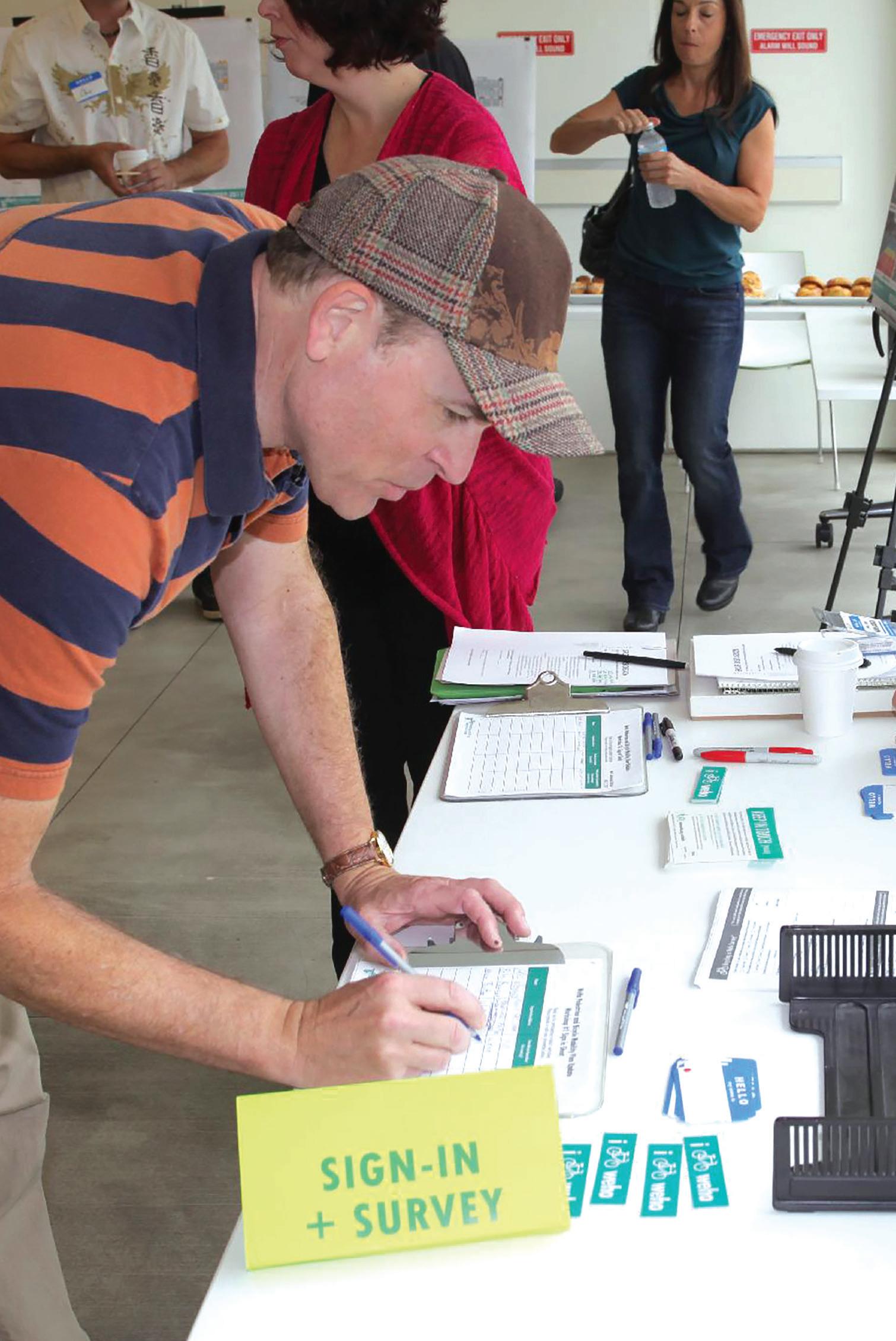
TARGET OUTREACH TO LESS ENGAGED RESIDENTS: Provide engagement opportunities for stakeholders who are not usually engaged. Empower people to become more civically involved with a combination of tools, such as electronic voting systems, written comment forms, verbal comments, and customized opportunities for those who are less vocal. PAY ATTENTION TO RUSSIAN-LANGUAGECREATINGMATERIALS: The Audit of printed materials revealed inconsistent usage of Russian. Some materials had Russian versions, others did not. The City should ensure that relevant materials are created with Russian translations.
Recommendations:MAINTAINTRADITIONALCOMMUNICATIONSCHANNELS,SUCHASNEWSLETTERS: As we enhance ofThedigitaleffortscommunicationdigitalcapacities,shouldbemadetoprovidethesamecommunicationsinbothandnon-digitalformats.Cityshouldplantoaddanewsletter,withafreshformat,backintoitsworkflowtoreachmorepeoplewithabroadrangecommunicationchannels.
MATERIALSCOMMUNICATIONS
DON’T LEAVE TRADITIONAL OUTREACH MATERIALS BEHIND: Incorporate a variety of different outreach channels to help engage members of the public. This should include a combination of local newspapers, newsletters, increased television presence, information kiosks, and signs and banners.
Recommendations:PROVIDECONCISEANDDIRECTMATERIALS: Information provided to the public should be more comprehensive than basic fact sheets or news releases, and should convey clear and concise messages. Messaging should consider shifting demographics and should take advantage of new forms of technology and social media.
COMMUNICATIONSANALOG
98
Findings: Some interviewees felt that they do not receive pertinent information from the City tailored to their specific issues or needs. Not all information is available in a clear way on the City website. Some members of the public preferred email to other forms of City outreach, noting the efficiency of this communication channel. Many stakeholders also expressed the desire to receive text messages with City status updates. Several noted that the Constant Contact tool lacks robust design and is missing features such as an interface for people to manage their email subscriptions.
11
ISSUE A REQUEST FOR INFORMATION: Share the results of this Communications and Community Engagement Strategy Plan with technology firms as a Request for Information (RFI). Responses to the RFI could include valuable information about tools that match the specifications of the RFI and/or inform the development of a proposal for a specific technology solution for organizational contact management.
Recommendations:INTEGRATECONTACTANDRELATIONSHIPMANAGEMENT: Assess existing contact list and relationship management needs to specify designs for a fully integrated contact and relationship management platform. This platform could track stakeholders across all departments and divisions, media interests, and even vendors for project management purposes. The platform also could be used by departments and divisions to track internal communications and requests.
Findings: The City has dispersed contact management resources. Departments and divisions within City Hall manage databases and contact information Intervieweesseparately.identifieda variety of independent, segmented data capture tools within different City departments and divisions. This approach may miss efficiencies in stakeholder engagement as well as monitoring and evaluation. At the same time, interviewees shared concerns about a possible Citywide solution, as some contact information and existing lists include sensitive data. Managing the flow of correspondence could become overwhelming, and a more centralized tool could lead to unfocused “blanket” outreach. All City staff interviewed noted a need, at some point in the future, for a more robust and allinclusive contact management tool. A stronger data capture and analysis platform would benefit all departments and divisions, creating a shared resource and body of information. The benefits include cost efficiencies, greater accuracy, and reduction of duplicative work in keeping contacts in different areas.
MANAGEMENTCONTACTORGANIZATIONAL
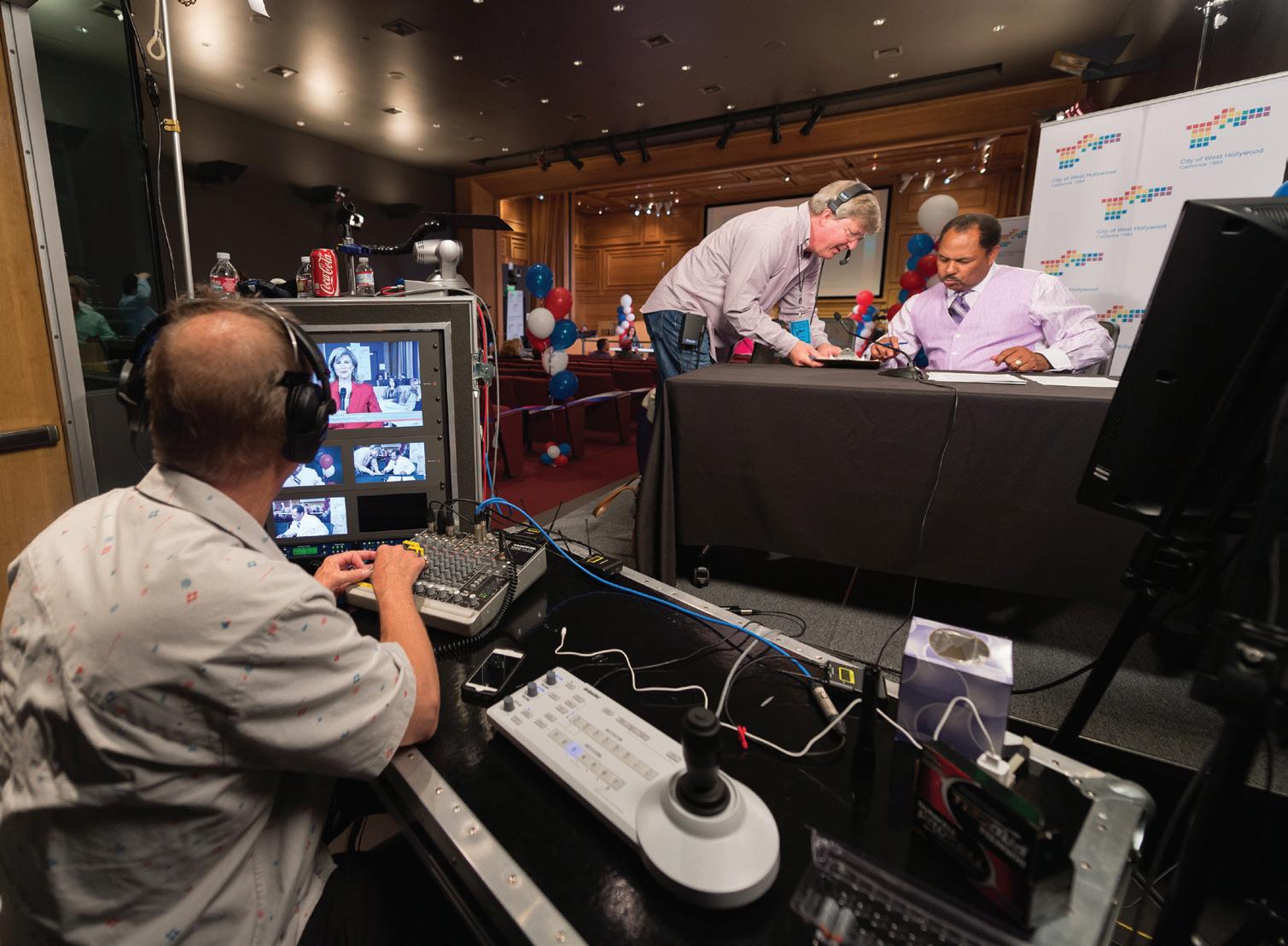
Recommendations:DEVELOPAWEHOTVSUPPORTSTRUCTURE: Create and share a transparent decision-making process for deploying WeHoTV resources. The process should also include procedures and forms to streamline support request and coordination in advance of an event.
Currently, much of the news reporting on WeHoTV takes place in studio. With an area of 1.9 square miles, West Hollywood can get out into the community with “location” shoots for news and public affairs programming. E
HOTV
W
PROVIDE NEW WAYS OF SHARING CONTENT: Current WeHoTV workflows do not allow for a substantial shift in technology to short-form content on digital platforms. Opportunities exist to expand reach by creating and editing new content in short clips, which can enhance current web, communications, and engagement efforts. Content should be produced and edited with a focus on sharing in social media such as YouTube and Vimeo.
12 Findings: We have a valuable resource in WeHoTV, which has been used with great success. Existing resources are sufficient for the status quo. However, interviewees noted that allocating additional resources to WeHoTV would help to increase reach. Some staff members noted a potential to clarify the processes for coordinating WeHoTV resources and planning for individual events, and to improve transparency in the decision-making process for allocating resources.
ADD PRODUCTION:LOCATION-BASED

1514
WEB SOCIALANDMEDIA
Findings: Each City department and division has the flexibility to establish and maintain a unique web presence, with general oversight by the Communications AtAdministrative-levelDivision.supportandresourcesaredispersedacrosssomedepartmentsanddivisionsbutdonotexistinothers.Intervieweeshadquestionsaboutexistingresourcestosupporttheseactivitiesandnotedthatstaffwithindepartmentsanddivisionswouldbenefitfromtrainingtoundertakethesetasksindependently.ThemajorityofintervieweesnotedthatsocialmediamonitoringoccursonlywithintheCommunicationsDivision;trainingcouldbeprovidedtodepartmentanddivisionstafftoincreasemonitoringcapacities.thesametime,thereisaneedforcentralizedtoneandmessagingtoensureintegratedcommunicationsfromtheCity.
TRAINING,Recommendation:IMPROVEINTRANETDESIGN,ANDSUPPORT: Training and centralized support are needed to increase Intranet usage across departments and divisions. Intranet design and architecture should be evaluated for opportunities to make it more intuitive and visual, simplifying use for non-technical users. Dedicated Intranet support staff should be identified, along with a plan to capture and triage support requests as use increases.
TRAININGRecommendation:IMPLEMENTSOCIALMEDIAANDMONITORING: A robust social media monitoring solution would support increased social media awareness across departments and divisions. An improved social media platform would also ensure that use can be monitored individually for specific department, division, or initiative needs and centrally to ensure consistency and to track overall City trends and social media value. Monitoring should include report generation and customizable alerts to proactively identify and share the appropriate level of detail. Social media trainings for both elected officials and City staff—including platformspecific templates, guidance documentation, and centralized support resources—are needed to support expanded social media use.
Findings: Staff noted that the Intranet has strong potential value, but is not used to its full capacity. Interviewees expressed concern about the level of support available. Additional training would increase Intranet use. The Intranet is particularly valuable for new staff. Some suggested that responsibility for updating and maintaining Intranet content should be dispersed among individuals, departments and divisions as a shared resource rather than a centrally maintained resource.
INTRANET
ADOPT RECOMMENDATIONS FROM INNOVATIONS ANNUAL REPORT: The WeHoX program resulted in the first City of West Hollywood Innovations Annual Report, which proposes a broad range of programs and projects, and sets goals for the City’s innovation initiatives in 2015 and beyond.
INNOVATION
Findings: The Innovation Catalyst Group has had success in identifying areas for innovation and exploring options to increase the City’s capacity. Several interviewees noted this group as a valuable resource for addressing challenges across and between departments and divisions. The City implemented a Geographic Information System (GIS) plan, which addressed some of the capacity concerns shared during the interview process. Several interviewees noted that mapping adds significant value for community development projects, and encouraged the sharing of (non-technical)simplifiedGISgoals and approaches with all City staff. The City also is developing and implementing open data goals. Additional support, tools, and vendors would help the City achieve open data goals. In the fall of 2014, City of West Hollywood launched WeHoX, a civic innovation program to apply innovative, collaborative thinking to civic challenges both inside and outside City Hall.
Recommendations:CONTINUEINNOVATIONCATALYSTGROUP:Continue supporting this group and consider expanding its activity in terms of meeting frequency and issues addressed, and opening the meetings to additional staff as appropriate.
DEVELOP DATA SHARING AGREEMENTS: Data acquisition and sharing agreements with key data sources would support continued advancements toward open data goals. Legal consultation should be included in exploring options and creating these agreements.

WEHO.ORG/COMMUNICATIONS
The aim of these recommendations is to help us streamline communications and engagement efforts, enhance current approaches, and create a blueprint for future community outreach. Findings and recommendations are based on a synthesis of input on important issues, challenges, solutions, and opportunities.
WORD.THESPREAD West Hollywood Communications and Community Engagement Strategic Plan COMMUNICATION TOOLS


WORD.THESPREAD
West Hollywood Communications and Community Engagement Strategic Plan COMMUNICATION TOOLS
1
The City must work harder than ever to keep up with rapidly emerging resources and norms. And we must employ more tools in supporting the City’s communications and community engagement efforts. LINES
Over the past 15 years, however, there has been a dramatic shift in the ways people communicate. On-demand programming, 24-hour television news networks, and the “600-channel” home entertainment landscape have changed how news is covered and reported. Newspaper readership drops year by year and many print publications have disappeared. Highspeed internet access and revolutions in computers and digital technologies have signaled a lasting change in how people access information.
OURTHATCOMMUNICATIONOFCONNECTCITY
Communication involves the sharing of ideas and information about an organization, the issues it deals with, and its accomplishments within the community. For 30 years, the Communications Division has been built on a highly successful public-relations model. We have an excellent media relations function that produces a wide variety of printed materials, a robust web and social media presence, and a great resource in our WeHoTV programming.
3
THE
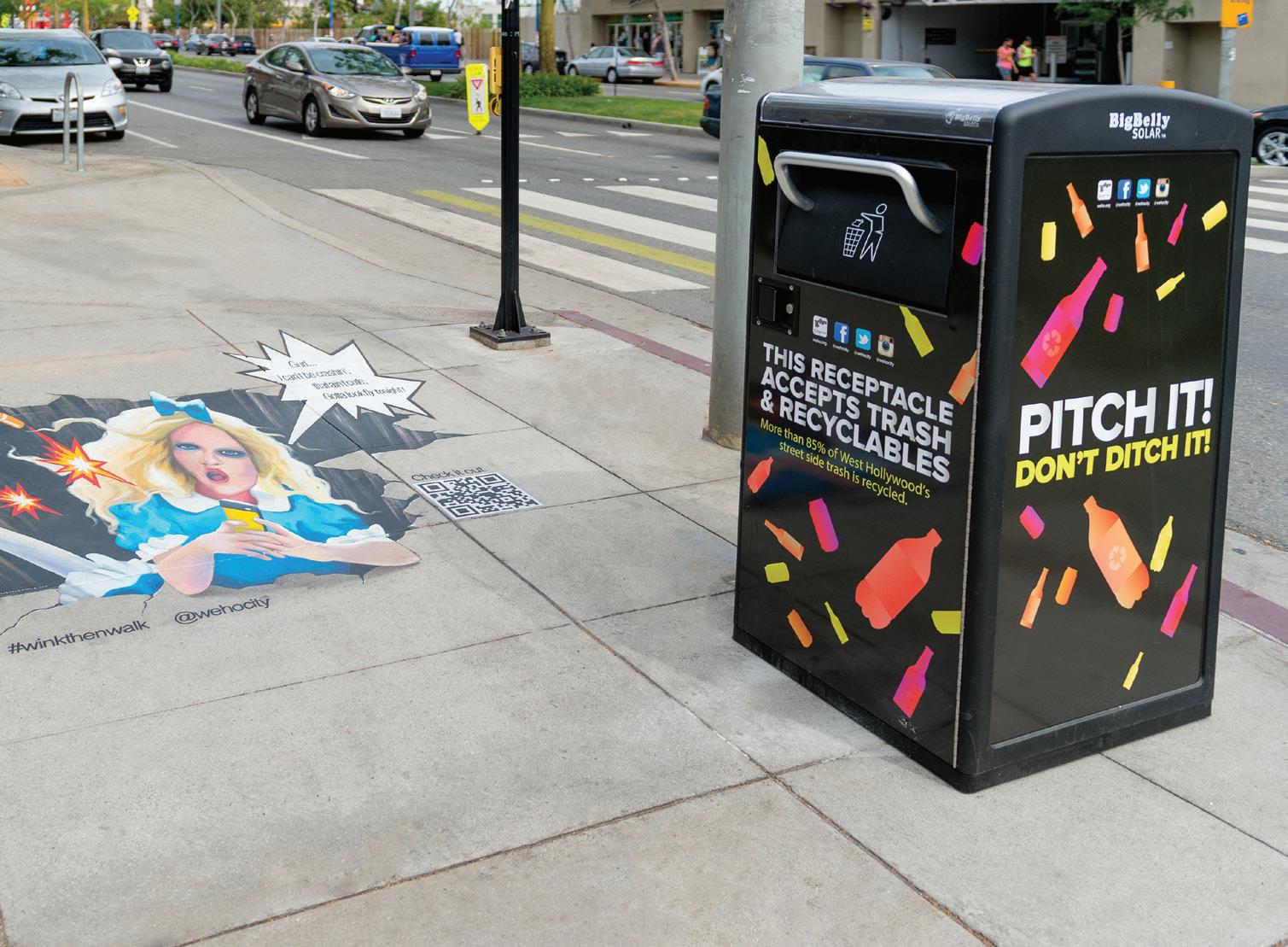
of campaigntrian2014HollywoodWestpedes-safety
Advertising is the use of paid media space for promotion. In traditional print advertising, this includes use of broadsheet newspapers, community newspapers, magazines, and other printed publications. It also can include outdoor media such as signage, fixed billboards, banners, bus shelters, and transportation billboards; broadcast media such as television and radio; and digital publications and social media. Advertising can increase awareness within a broad audience, but some advertising outlets are very expensive and costs can rise quickly for coordinated campaigns. Brand Positioning Branding, or Brand Positioning, is the ongoing process of distilling and projecting a distinct voice and personality. Developing a concrete set of agreed-upon attributes helps a brand differentiate itself. Branding involves creating a consistent look, color palette, feel, tone, voice, and design across all materials.communications Crisis Communications Crisis Communications planning helps to outline the roles, responsibilities, and protocols that guide the City in promptly sharing information with all of our audiences during an emergency or crisis. The general public will turn to the City and the media for information, instructions, and reassurance during a crisis, emergency, or controversy. Our first responsibility in a crisis is to define and cultivate a range of applicable messages to talk about the emergency or issue and inform the public and media. Direct Mail or Email Direct mail or email can be a fast and efficient way to inform specific targeted audiences. It also can be used to solicit a specific action. Newsletters can help the City frame issues and publicize events and initiatives. Email tools can allow for distribution analytics to inform ongoing engagement. Other tools, such as postcards, fliers, and fact sheets, can be very effective forms of targeted communications. Messaging Messaging involves distilling complex issues into accessible information. Press releases authored by the Communications Division support the City’s messaging, as do fact sheets, talking points, presentations, and other tools we create and edit. Consistent messaging helps the City to communicate with one voice.
4 Clear, concise, community.tothechange,ofpersonality.andcreateourtonality,ThroughpublicatcommunicationscomprehensiveandarethecoreofhowtherelatestotheCity.messaging,anddesign,communicationspublicawarenessdefinetheCity’sAsmethodscommunicationwemustadaptwaywecommunicateandengagewithour
METHODS COMMUNICATIONOF
(PaidAdvertisingMedia)
City




Printed CollateralMaterials/ Printed web-basedwhichalsoThevarietytopics.abouteffectivetoprovideinformationalbrochures,materials—includingpamphlets,andmaterialsthattailoredinformationstakeholders—areahighlywayofcommunicatingspecificprogramsorTheCityproducesawideofcollateralmaterials.CommunicationsDivisionproducestheCityCalendar,isaprintedversionofthecalendar.
Coverage gained through media relations often reaches a very large audience and positions the City in the eyes of the broad public. News conferences are organized on important topics and issues, as needed. We also monitor media and work to ensure accurate coverage by disputing reporting errors and working with reporters to provide access to subject matter experts and data. Social Media Today news travels at the speed of 140 characters. Our City has a comprehensive social media program: we communicate directly to stakeholders about events, projects, news, and meetings through Facebook and Twitter, and provide access to thousands of photos via Flickr. You’ll find the City’s full Social Media Policy in Appendix 5 of this Communications and Community Engagement Strategic Plan.
Website The City’s award-winning website, weho.org, is a rich digital resource that regularly receives 150,000 monthly page views. It contains comprehensive information about the City and is one of our most important tools for effectively communicating to stakeholders. The website allows us to instantly and dependably disseminate—and the public to easily anythinginformationaccess—detailedaboutalmosttheCityisworking on.
WeHoTV WeHoTV is the moniker of West Hollywood’s government and public access television programming. WeHoTV produces and presents programs providing information, cultural presentations, and other programming, such as City Council meetings. Programs are available to Time Warner Cable customers within the City of West Hollywood and to AT&T U-verse customers in the greater Los Angeles area. WeHoTV also serves stakeholders with programming on YouTube and live-streaming on the City’s website.
facebook.com/ wehocity twitter.com/ wehocity flickr.com/ photos/weho instagram.com/ wehocity wehocity. tumblr.com youtube.com/ wehotv pinterest.com/ wehocity foursquare.com/ wehocity SEEK IMMEDIATELYHELPFixleakyfaucetsandsaveupto140gallonsperweek.#bethesolution weho.org WISELYWASH Wash only full loads of laundry and dishes and save up to 50 gallons per week. #be the solution weho.org City of campaignconservation2014HollywoodWestwater 76 We currently use more than a dozen social media outlets: Marketing Marketing involves the process of strategizing and using tools to reach our “market”—the City’s stakeholders. In the past, governmental organizations did not usually engage in formalized marketing functions, but that is changing as communications in every sector become sharper and attention spans become shorter. Successful incommunicationstools;organizationspublic-sectorusemarketingallofthemodes/areasofcanbeusedmarketingplanning.
Media Relations
The Communications Division writes and distributes more than 200 press releases each year. Our media contacts work in local, regional, national, and even international print, web, and broadcast media. Highquality, timely press releases are essential to help frame information about the City to reporters and to demonstrate the City’s responsiveness.



PHOTOGRAPHYDESIGNGRAPHICSERVICES:CREATIVEAND
8
The Communications Division serves as gateway and technical advisor to City staff to help access professional graphic design and photography services. A pool of professional graphic designers and photographers has been developed to ensure fairness and to ensure an ongoing standard of professionalism in all City materials across departments and divisions. In 2014, the City sought Qualifications submissions from a diverse pool of graphic design professionals and professional photographers. A cross-section of staff representing departments and divisions from throughout the City participated in the selection process. From this process, the City developed a vendor list of very highly skilled graphic designers and photographers.

Projects using graphic design may include, but are not limited to: • Brochures • Letterhead • Flyers • Postcards • Posters • Public outreach materials • Logo design • Infographics • Web design • Billboard design • Photo imaging • Document layout • Prepress/print coordination • General design consultation Photography projects may include, but are not limited to: • Documenting special events, meetings, and community gatherings • Building collections of architectural, urban landscape, street scene, and site-specific images • Headshots, portraits, group shots, documentary images, and art-directed campaign images The portfolios of each graphic design professional and professional photographer are on file and on the Intranet with the Communications Division. These are available to City staff when making decisions about creative Assistancevendors.withother areas of creative services is available from the Communications Division on an as-needed basis. An example of this is the production roles assumed by the division in overseeing the Alice in WeHoLand crosswalk safety video in late 2014.
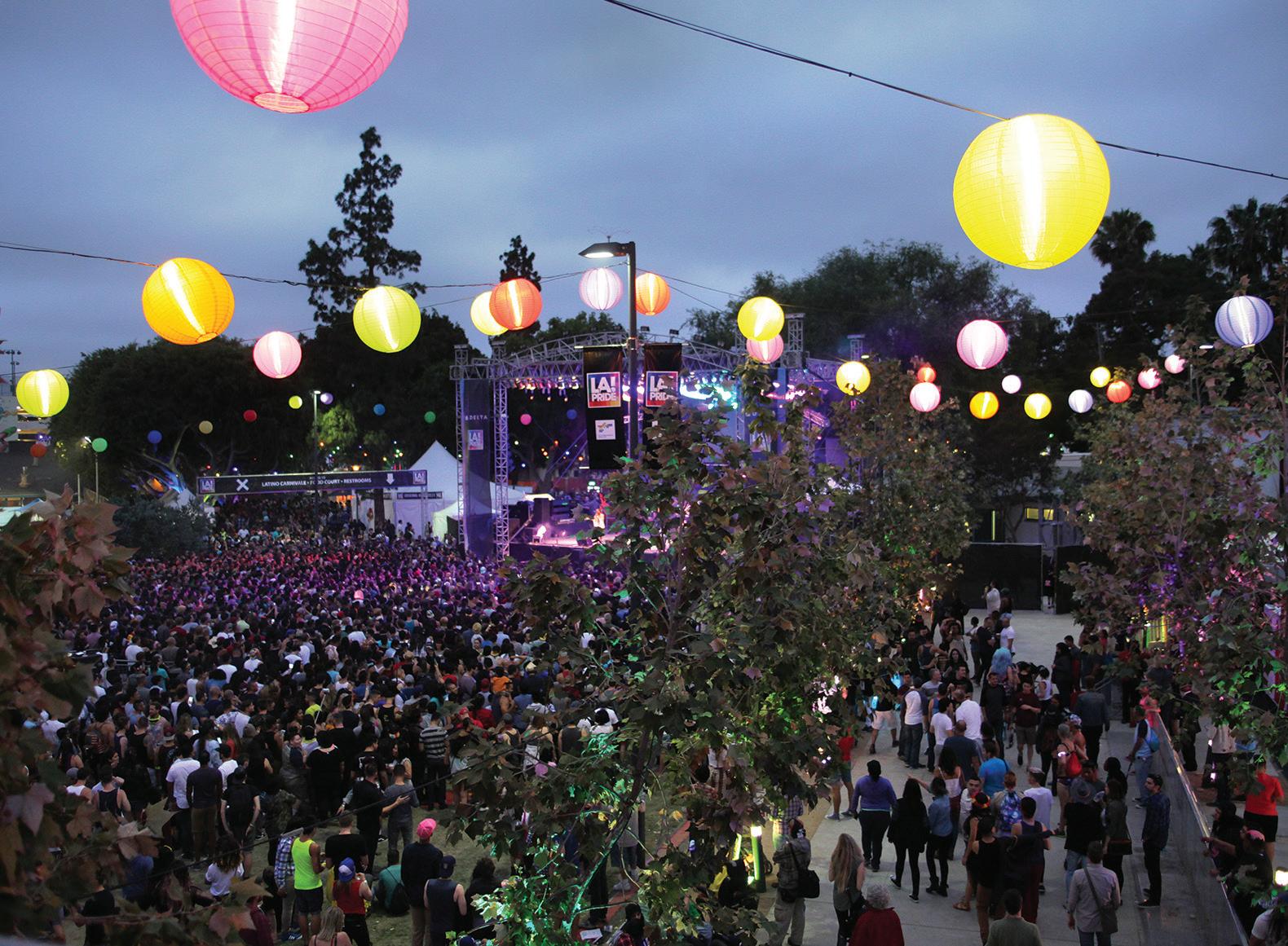

Communication involves the sharing of ideas and information about an organization, the issues it deals with, and its accomplishments within the WEHO.ORG/COMMUNICATIONScommunity.
BRIDGES.BUILD West Hollywood Communications and Community Engagement Strategic Plan COMMUNITY ENGAGEMENT TOOLS


116 BRIDGES.BUILD West Hollywood Communications and Community Engagement Strategic Plan COMMUNITY ENGAGEMENT TOOLS
Community Engagement refers to the ways our stakeholders participate in public life to improve conditions, shape decisions, and help set policies that ensure a better future. Community Engagement involves practices and strategies that empower stakeholders and enable them to participate— thoughtfully, constructively, and effectively. Engagement creates a stronger City where community members share common goals and Today,aspirations.peopleare more digitally connected than ever before. But with that virtual connectivity comes physical detachment from the “town square” and community gathering places. The growing disconnect between stakeholders and local governments has led many cities to explore new, expanded engagement strategies and to reach out to a larger cross-section of stakeholders.
STRONGERMAKESENGAGEMENTCOMMUNITYSTRONGACITY
3
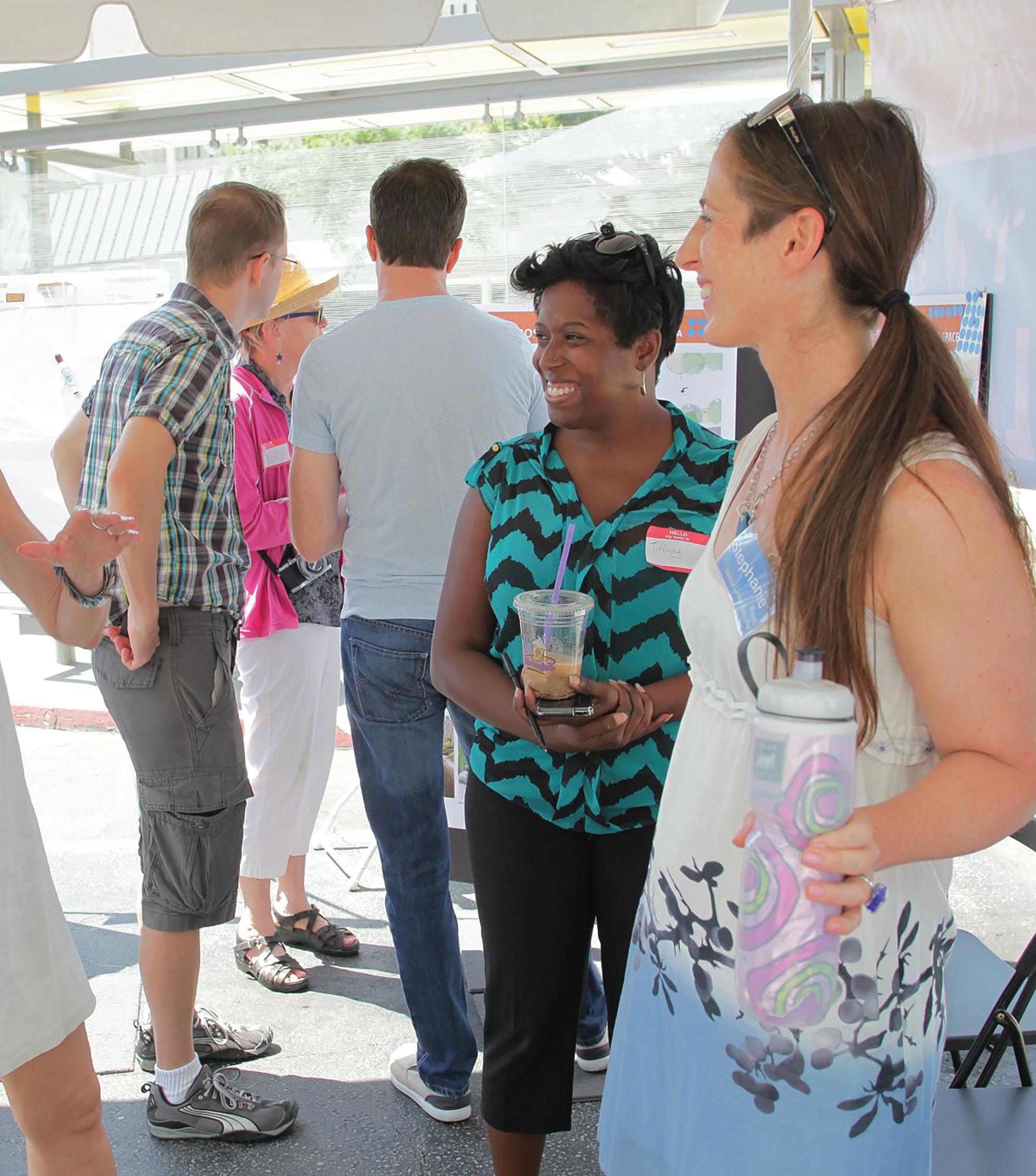
• Empowers participants to take ownership of programs and initiatives;
The following strategies have been effective for West Hollywood in strengthening Community Engagement: • Digital platforms such as websites, community surveys, and online forums •“Live and in-person” events such as Neighborhood Watch meetings, participatory budgets, town hall meetings, and visioning exercises Our goal is to broaden participation in civic life and public decisionmaking by using a variety of engagement tools and methods.
• Results in smarter policies and programs;
• Solves complex issues;
• Ensures that diverse voices have a place at the table.
While these efforts entail the commitment of staff time, skills, and City resources, they also offer numerous benefits. Effective community engagement:
• Informs policymakers;
Community members and City leaders partner to come up with new solutions
• Creates a shared purpose;
• Promotes cooperation and collaboration; • Promotes interaction community-building;andand
• Builds community;
• Taps into the knowledge and creativity of the community;
• Builds broader public support;
5
The City of West Hollywood is like many small cities: we have a small number of highly involved stakeholders. Many people, though, do not get involved in civic life. Although the majority is better educated, more sophisticated, and more politically savvy than in some other municipalities, they do not make a strong effort to engage with City Hall. We should find ways to reach those stakeholders in an everchanging world of technology and constant distractions— reaching them where they live, work, and play. This paradigm shift is necessary to tap into our community’s diverse pool of talent and critical thinkers to make West Hollywood stronger.

7 8
To help staff design an appropriate CEP, and to simplify the planning process, the City has identified an adaptable 8-step approach. Each step in the CEP should lead to action, results, and measurable outcomes. The Communications Division can help address specific project needs and provide guidance on developing a successful engagement strategy.
The goal of any CEP is to develop outreach that is accessible and results-oriented. Every significant City activity and project requires its own outreach plan—but there should always be a consistent approach to these plans. Consistency helps unify City staff around which efforts will be used for community engagement and will support a unified “City voice” and mode of engagement. A Community Engagement Plan can help reduce the potential for public concerns, project delays, and budget increases due to unforeseen stakeholder issues.
This Engagement Strategy serves as a guideline for City staff to use in developing a project’s EngagementCommunityPlan(CEP).
WEHOENGAGEDTOSTEPSAN
Always build lists of program or project stakeholders that can evolve over time or be used for future outreach programs.
Define measurables and Plansuccesses.promotion and engage (early and often). Prepare engaging content to report results. Wrap-up!
• Identify key stakeholders with the potential to invite others to join the process.
4. Break it down into phases A plan should include a number of phases for: a) Outreach b) Consultation c) Recommendations d) Implementation Each phase or major milestone of the project should include a broadcast message with clear, coherent information for the public and, most important, the stakeholders who have been involved in the process. Each phase should also include clearly communicated outcomes (for example: making the public aware of a change in public policies or securing public comments on a planned development). Identifying these outcomes for each phase will help in selecting the appropriate level of engagement.
THE PLAN:ENGAGEMENTCOMMUNITY8-STEP
Define objectives, goals, and phases.BreakkeyDevelopIdentifytimeline.stakeholders.backgroundandmessages.itdowninto Define measurables and Plansuccesses.promotion and engage (early and often). Prepare engaging content to report results. Wrap-up!
Define objectives, goals, and
2. Identify stakeholders Identifying interested parties and evaluating their issues and concerns will help guide the engagement strategy. Broadranging points of view, based on different experiences and sources of knowledge, can lead to richer discussion and more sustainable solutions. In addition, more involvement can lead to wider community support and, therefore, make it easier to implement projects. Make sure to identify cross-cutting areas of interest, which can serve as shared interests for stakeholders.
• Evaluate stakeholders’ values to gain an understanding of how they might perceive the project and possible outcomes.
Clearly defining objectives, goals, and timeline are critical first steps, as it is these aspects that will be presented to stakeholders to garner interest and inspire action. Objectives should include what may change as a result of the process, and what the positive and negative impacts of those changes might be.
3. Develop background and key messages Each CEP should begin with collecting and providing background information on the subject. This may include reports, historical records, maps, and scientific or technical documentation. Background information can be used throughout the process to establish a baseline for community knowledge. Since some stakeholders may know substantially more than others about a particular subject, providing background information will help to encourage broader participation, particularly from those who may be new to the subject Developmatter.anaccurate, clear, and concise message to help people understand the issue and to comprehend project goals. Design a communications plan that shares the information necessary for people to participate in meaningful ways.
• Develop community liaisons and advocates for the process.
• Seek to understand any community, cultural, or organizational issues that might be represented.
phases.BreakkeyDevelopIdentifytimeline.stakeholders.backgroundandmessages.itdowninto
1. Define objectives, goals, and timeline
98
• Identify all stakeholdersrelevantandorganizationsthatmayhaveaninterestintheproject’soutcome.
Welcome input on the process from
5. Define measurables and successes Identify what success will look like for the engagement process. Define the measurable(s): website visitors, public numbercomments,of meetings, ideas submitted, downloads, etc. With quantitative assessments, use detailed targets against the measurables (for example: 250 website visits, 30 attendees at three monthly meetings, etc.). What, ultimately, does a successful engagement mean?
11 If you want to collect quantitative data, use a Survey or an Instant Poll (either online or in person). To solicit suggestions about how funds or budgets should be allocated, use a tool that allows them to actually provide allocations such as Engage WeHo. If you want to encourage dialogue, use a Forum or Town Hall.
6. Plan promotion and engage (early and often) Once the outcomes have been selected for each phase of the outreach process, it’s time to plan the promotion strategy and engagement roadmap. Choose the right tools for the job and engage with the targeted stakeholders early and often. Many of these tools can be implemented with help from the Communications Division. Make all meeting materials accessible to diverse stakeholders by providing them in different languages and formats, as appropriate. Consider the frequency of communications in the overall plan, and beware of engagement fatigue (when stakeholders become disinterested because of too much communication or too much detail).
orcontributedthatarehaveinterestedItanstakeholdersreachedparticipantsmakeTheandinformationstakeholdersnextBeormeetingengagementabuildingforsupportaMaintainingthestakeholdersinteraction.during,participants—before,andaftereachIt’simportantthatunderstandhowprocesswasdesigned.transparencyiscorecomponentinbuildingwithinthecommunityanyproject.Continuesupportbyprovidingdetailedrecordoftheprocessincludingminutes,recordings,videocoverageofevents.suretoprovideclearsteps,includingwherecangotoforonfuturemeetingsexpectedoutcomes.mainobjectiveistoitcleartothetargetedthattheCityoutto—andinvolved—forinputbeforeoutcomewasformulated.isvitallyimportantthatallpartiesknowtheyaplaceatthetableandinvitedtoparticipate,andthosewhodidparticipatetothefinaloutcomerecommendation. 7. Prepare engaging content to report results Each engagement plan should include an evaluation and a report back to stakeholders. Prepare high-quality, simpleto-understand reporting that breaks content down into sections and categories that make the most sense to stakeholders. The use of infographics, videos, slide shows, and image galleries are all highly recommended over text-heavy reports. 8. Wrap up! Wrap up the engagement process and report the results and final recommendations for the project. Extract all of the great quantitative and qualitative data from outreach efforts, and turn it into a detailed feedback report that describes the entire process of the participate.evenavailableefforts.engagement/outreachMakethereporttoallstakeholders,thosewhodidnotTo solicit ideas, use a tool that allows participants to provide feedback such as Engage WeHo. If you want to manage issues, use a Q&A (either online or in person).
13
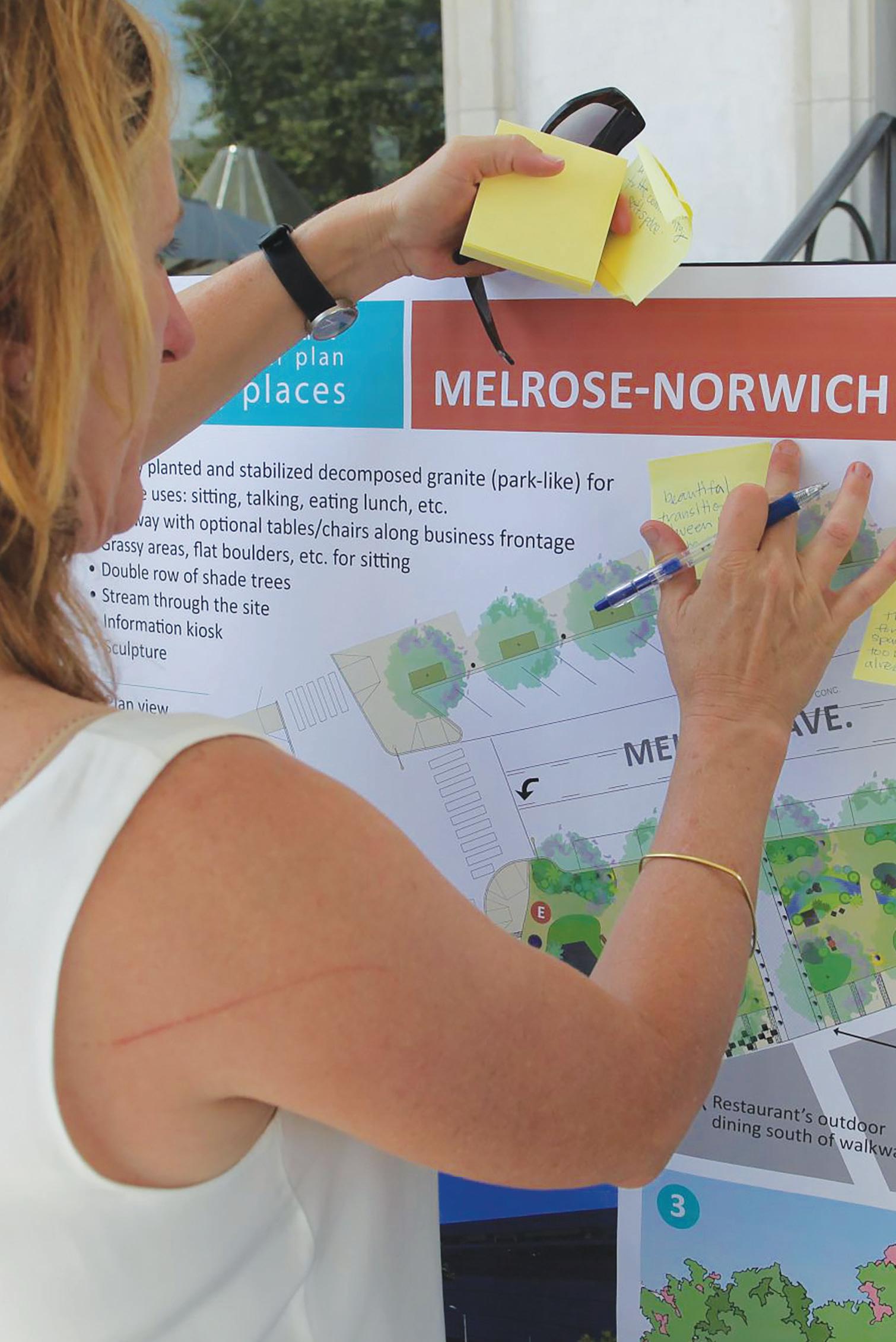
14 Community Engagement refers to the ways our stakeholders participate in public life to improve conditions, shape decisions, and help set policies that ensure a better WEHO.ORG/COMMUNICATIONSfuture.
116
West Hollywood Communications and Community Engagement Strategic Plan MEDIA RELATIONS STRATEGY
UP.SPEAK
The City of West Hollywood is committed to providing timely, accurate, and factual information to all of its stakeholders and to the general public. To that end, the City seeks to facilitate the communication of information through an array of channels outside the City’s purview. To make sure that the City communicates effectively with members of the media, the following procedures have been developed for City Officials (City Council, Commissions, Advisory Boards, or any official body governed by the Brown Act and the members thereof) and City staff (including permanent and temporary staff and contractors).
3 THE POLICYRELATIONSOURSPEAKS:CITYMEDIA

MEDIA LIAISONSMEDIA INQUIRIES
a media inquiry
Due to the time-sensitive nature it is incumbent upon any person receiving to
General or Routine Media Requests (Events, Meetings, etc.) After providing the appropriate notifications, routine media requests may be handled by any City Official or City employee if the information provided is of a factual, incidental or inconsequential nature such as confirming a meeting time or providing scheduling, location or other routine information about a City event or activity. General or routine information released to the media by a City Official or a City employee shall be immediately communicated via email to the Public Information Officer or Communications Division Manager and the appropriate Division Manager(s) and Department Director(s), if related to a specific subject matter. The email should contain a brief synopsis of the information communicated, the reporter’s name and contact information, and the name of the media outlet.
City-Initiated DistributionContacts/InformationMedia
Media Inquiries
54
The City Manager, City Attorney, Assistant City CitycommunicateUnlessManager.orthepolicyanyAllresultandtopicssensitiveansweringprofessionalherthehandleDesignatedrespondCommunicationsmustDesignatedAllanprovidedbasis.mediamayorliaisons.”DirectorsOfficer,Manager,CommunicationsManager,DivisionPublicInformationandallDepartmentare“designatedmediaTheCityManagerAssistantCityManagerdesignateotherstaffasaliaisononacase-by-caseAllmedialiaisonswillbewithmediatrainingonongoingbasis.staff,includinganyMediaLiaisons,notifyandworkwiththeDivisiontotomediainquiries.MediaLiaisonsmayroutinerequestsfrommediathatarewithinhis/areaofexpertiseandfunction,includingquestionsregardingorcontroversialissues,thatmayaffectCitypolicy,mattersthatmayultimatelyinCityCouncilaction.otherpartiesshouldrefermediainquiriesaboutCityandsimilarmatterstoPublicInformationOfficerCommunicationsDivisionauthorized,staffshallnotwiththemediaonmatters—verbalorwritten.
Media requests that are lengthy, include detailed questions, or require a response beyond a brief statement of fact, shall immediately be referred to the appropriate Division Manager(s) and Department Director(s), who will confer with the Communications Division to coordinate a timeline for a response to the reporter. If the request is not routine, or seeks information that does not currently exist, or requires an inordinate amount of staff time to compile large amounts of information and documents, a public records request may be required. The Communications Division will consult with the City Clerk’s Office to determine the appropriate response.
take all actions necessary and appropriate to ensure a timely and appropriate response.
Detailed or Non-Routine Media Requests
Any City Official, City employee, or City contractor/ consultant must work with the Communications Division to respond to media inquiries regarding City policy, programs, initiatives, facilities, infrastructure, vendors, contracts, or special events. Notification Media inquiries regarding controversial or sensitive materials and/or matters relating to public safety should be brought to the immediate attention of the City Manager and the Assistant City Manager. All media inquiries—written or verbal—shall be immediately communicated by the individual with whom the inquiry is initiated with via email to the Public Information Officer or Communications Division Manager and the appropriate Division Manager(s) and Department Director(s), if area specific. The email should contain a brief synopsis of the inquiry, the reporter’s name, the name of the media outlet, the date of the inquiry, and the deadline to respond.
Proactive media contact will be regularly made by the Public Information Officer, Communications Division Manager, or the City Manager’s designee, and includes issuing news releases and media advisories as well as making proactive, personal contact with news reporters and editors in an effort to build collaborative, mutually beneficial relationships.
of media reports,
Designated Media Liaisons
On a case-by-case basis, the City may issue a statement regarding Sheriff and Fire investigations and/or emergencies. The roles, responsibilities, and protocols that guide the City in sharing information during an emergency or crisis are detailed in the Crisis Communications Strategy section of this plan. Format All official City news releases, media advisories, and official statements shall use standard City of West Hollywood news release formatting and follow City news release distribution procedures. News releases shall include the name and telephone number of a spokespersondesignatedtocontact for additional information. City Council Notification News releases containing controversial or sensitive materials and/or matters relating to public safety shall be distributed to the City Council prior to release to the media if practical. All-Staff Notification All news releases shall be distributed to all City Officials and City staff, and posted to weho.org/news and the City’s main social media accounts when released to the media.
The City does not approve requests for City social media accounts for the City Council, Elected Officials, Commissions, Advisory Boards and other City Council-approved committees and/or task forces. These official City bodies are governed by the Brown Act and are subject to Brown Act rules, which limit topics that can be posted and interacted with on social media sites as referenced in the City’s Social Media Policy, Section 3.7. The aforementioned City Officials are discouraged from liking, sharing, tweeting or otherwise participating in any postings that fall within the subject matter jurisdiction of the body on which they serve in order to maintain consistency with Brown Act laws regarding serial meetings. The City of West Hollywood has a StrategicisSocialcomprehensiveMediaPolicy,whichavailable,infull,intheCommunications and Community Engagement Plan in Appendix 5
The City incorporates the use of more than a dozen social media platforms including Facebook, Twitter, Flickr, and YouTube, among others. Social media is a powerful tool for communications and community engagement that works at lightning speed. Due to its unique nature—it functions instantaneously and creates the appearance of highly official two-way dialogue between the City and very large groups of people, including media and stakeholders—messaging for social media must be very carefully managed. Social media is a primary “public face” of the City and it must be tightly
Thecontrolled.Communications Division is the lead on all social media activities; the Digital Media Coordinator is responsible for all City social media-related content and decisions are made in concert with the Public Information Officer and Communications Division Manager. Information that is appropriate for social media involves events, City Councilapproved initiatives and priorities, and official responses to newsworthy issues. Social media is also a hub for crisis communications, when needed, and is detailed in the Crisis Communications section in the Strategic Communications and Community Engagement Plan.
76 Approval For ongoing City initiatives, the Communications Division shall be consulted in a timely manner—four to six weeks in advance—to determine whether a full news release and/or alternative tool is appropriate.
Relevant Department Director(s) and Division Manager(s) shall be consulted as well, and should be copied in communication regarding news releases. News releases shall be prepared in coordination with the Public Information Officer. Draft releases will be routed to the appropriate Division Manager(s) and Department Director(s) based on subject matter for review and approval before release to the media. The Communications Division Manager will have final approval on all news releases. Exception Sheriff and Fire responses to investigations and/or emergencies in the community shall be handled directly by the Los Angeles County Sheriff Department and by the Los Angeles County Fire Department. All such news releases should be copied to the City Manager, the Assistant City Manager, the Public Safety Director, the Communications Division Manager, and the Public Information Officer.
NEWS RELEASES SOCIAL MEDIA
• Media inquiries regarding pending or ongoing litigation shall be referred to the City Attorney’s Office and/or the City’s Legal Services and Legislative Affairs Division as appropriate.
GUIDELINESGENERAL
Any request for information related to litigation, personnel or election issues must immediately be referred to the appropriate department or division as identified below. This information includes: private employee information, employee disciplinary actions, matters considered in closed sessions of City Council, law enforcement records, Fire and EMS records, matters related to internal and external security, privileged communication records and work products of the City Attorney’s Office or special legal counsel, draft correspondence or documents, and records pertaining to litigation to which the City is a party.
• Questions regarding personnel issues or matters should be referred to the Human Resources Division.
InformationConfidential News Releases shall not contain information that is confidential or privileged pursuant to provisions of State or Federal statutory or decisional law or was received by the City pursuant to a representation of Clerk’sshouldPublicAnyofinterpretinganyAct,PublicthereleaseNoAttorney’snewsshallCaliforniapursuantexemptDocumentsconfidentiality.orinformationfromdisclosuretoprovisionsofthePublicRecordsActnotbecontainedinanyreleasewithouttheCityapproval.CityrepresentativeshallinformationcontrarytoprovisionsoftheCaliforniaRecordsAct,BrownCaliforniaPenalCodeandotherapplicablelaw,casesthoselaws,orCityWestHollywoodpolicy.questionsrelatedtoRecordsActrequestsbedirectedtotheCityOffice.
• Any inquiries regarding election or campaign issues shall be referred to the City Clerk’s Division.
• Any inquiries regarding Sheriff, Fire or EMS shall be immediately referred to the Public Safety Department Director, who will refer the inquiry to the Los Angeles County Sheriff’s Department and/ or the Los Angeles County Fire Department.
Reports Reports (staff reports, studies, plans, etc.) prepared by City staff for submission to City Official(s) shall not be shared with the media or the general public until they have first been provided to the intended City Official(s). In addition, reports that are in draft form shall not be shared with the media or the general public; only final version may be released.
RELEASE INFORMATIONOF
Litigation, Personnel, Election Issues

The Media Relations Protocols apply to all City Officials (City Council, Commissions, Advisory Boards, or any official body governed by the Brown Act), City staff, including permanent and temporary staff, consultants, and contractors when representing the City in the media. City staff managing contracts with consultants and contractors shall be responsible for providing consultants and contractors with the City’s Media Policy. This policy also applies to verbal and written comments in the media, all public speaking engagements, news releases, and the use of social media. These Media Relations Protocols have been developed as part of the Communications and Community Engagement Strategic Plan, which outlines the procedures to be followed by all City Officials (City Council, Commissions, Advisory Boards, or any official body governed by the Brown Act) and City staff, including permanent and temporary staff, consultants, and contractors when interacting with the media. These protocols are intended to ensure that any comments made to the media are consistent, factual, and
The City of West Hollywood’s Media Relations Protocols ensure that the interface between the City and the media is managed appropriately to maximize the benefits for the City and to minimize the risk of adverse publicity, public anxiety, and misunderstanding due to release of inaccurate or inappropriate information.
Theaccurate.term “media” includes, but is not limited to, newspapers, magazines, journals, bulletins, newsletters, radio programs, television programs, and electronic media such as online journals, online news websites, alternative news websites, journalism schools, blogs, podcasts, electronic newsletters, and electronic notice boards.
PROTOCOLSRELATIONSVOICE:COORDINATEDOURMEDIA
1110 In all cases, the City Manager, Assistant City orquestioninquiry,notifiedInformationManagerCommunicationsManager,DivisionandPublicOfficershallbeimmediatelyabouttheespeciallyifthereisanyastowhichdivisiondepartmentshouldrespond.
Personal Points of View City Officials and City employees have a right to their personal points of view and the freedom to express their personal opinions. Any City Official or staff member who identifies him/ herself as a City Official or an employee of the City of West Hollywood must clearly indicate that his or her opinions do not represent those of the City, but are the City Official’s or employee’s personal opinions. In addition, City resources, including but not limited to work hours, City stationery and City equipment may not be used to contact the media as a private citizen.
Errors in Reporting Reporting errors should be brought to the attention of the beenerrorsheadthetherequested.factualaboutreporterwillappropriateAssistantwithManager,CommunicationsDivisionCommunicationsManager.TheDivisioninconjunctiontheCityManager,theCityManagerorthedepartmenthead,determinewhethertheshouldbecontactedtheerrorandwhetheracorrectionshouldbeTheCityManager,AssistantCityManagerorappropriatedepartmentshallbenotifiedofanyinreportingthathaverequestedforcorrection.
• All comments to the media shall be presented positively, reflect on the values of the City, and not promote community groups or businesses unless the City is directly involved in a partnered activity or event.
• Notification and coordination of all media inquiries must be immediately directed to the Public Information Officer or Communications Division Manager to be handled per these protocols.
13
• Most media work under stringent deadlines requires prompt responses; therefore, media inquiries must be handled efficiently.
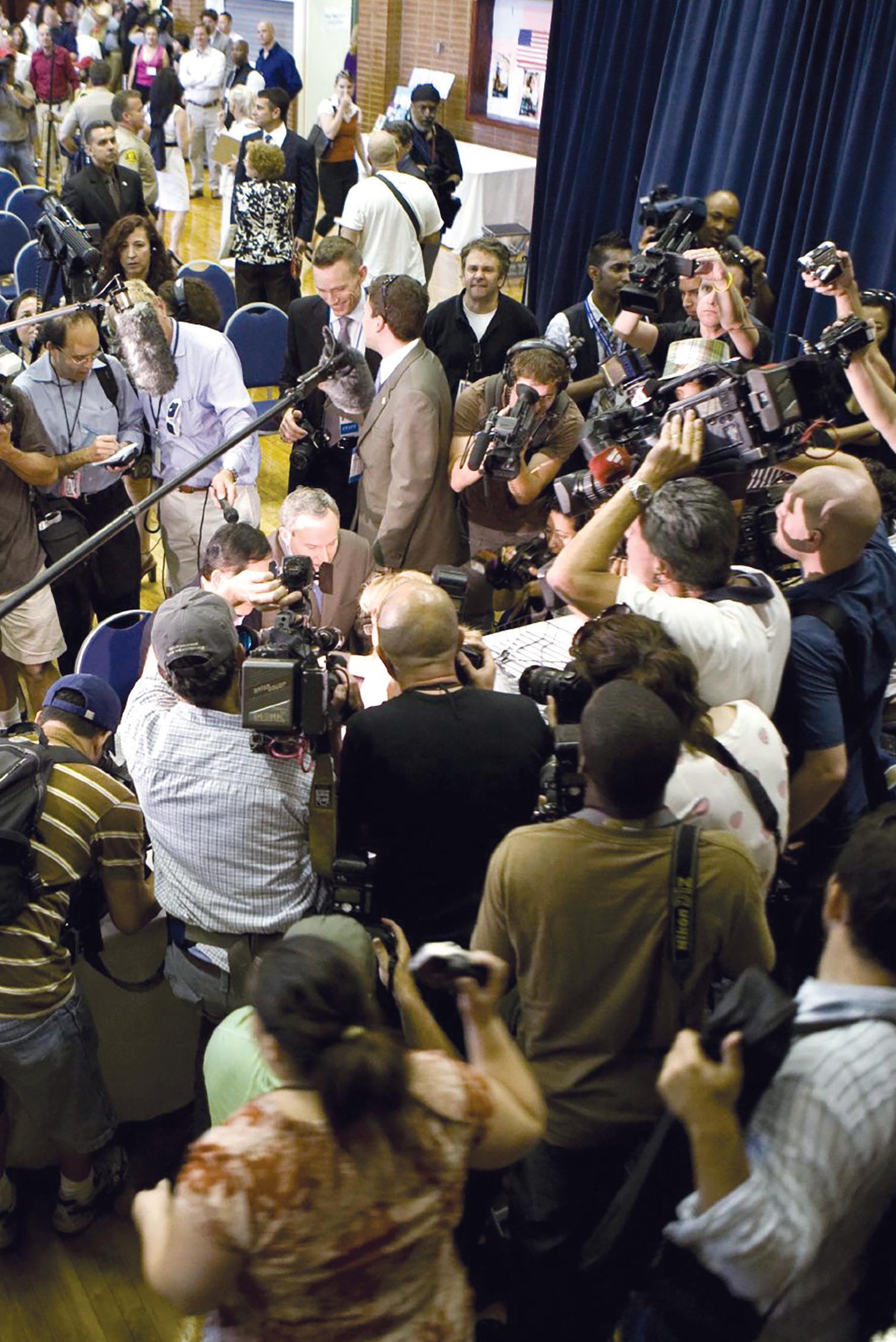
Media coverage about the City of West Hollywood can provide a valuable opportunity to promote the work and ideals of the City and community. However, contact between City Officials, City staff, and the media also heightens the need for a transparent and coordinated approach to media relations.
• The Mayor or a City Council delegate shall be the spokesperson for requests for City Council comment or City Council interviews unless the reporter asks specifically for an individual Councilmember.
• The Communications Division Manager must approve all media releases and in-depth responses to the media.
PROTOCOLSGENERAL
• The City Manager or his/her delegate shall be the spokesperson for requests for comment or interviews regarding a staff or organizational issue, unless the inquiry requires in-depth or technical knowledge, in which case the City Manager shall designate an appropriate subject matter expert for comment or interviews.
• Any spokesperson or delegate must ensure that they are available to be contacted for interviews.
The Communications Division is responsible for managing communications between the City and the media. Questions about Media Relations Protocols, identification of designated spokespersons and media liaisons, and requests for media training should be directed to the Communications Division Manager.
CITY PROTOCOLSMEDIACOUNCIL
• Whenever Councilmembers are contacted by media directly for the Councilmember to provide an interview or comment on behalf of the City, they should inform the Public Information Officer or Communications Division Manager prior to responding to the request.
• OTHER ISSUES: For all other issues, the Communications Division shall coordinate responses to the media, advise the Mayor, Mayor Pro Tempore and individual Councilmembers as appropriate, and may designate the Mayor, Mayor Pro Tem or individual Councilmembers as secondary spokespersons on an as-needed basis.
Positive and communicationcoordinatedbetween City and the media is essential in order to maximize the benefits of media coverage in informing the public of civic matters. To that end, the Communications Division frequently prepares communications strategies and key messages regarding specific issues, which are provided to Councilmembers. When messaging is created, the Communications Division will make this messaging available to Councilmembers; it is essential that Councilmembers take into account this messaging when speaking on behalf of the City. News reporters and other media representatives should be advised that requests to photograph, interview, and/or videotape Councilmembers must be made to CommunicationstheDivision.
• Councilmembers who speak to the media shall make it clear to journalists that their statements are their own, unless it is determined in advance through coordination with the Communications Division that specific statements are to represent the City or City Council in its entirety.
• Note: When a media outlet requests an interview with more than one Councilmember, it is not a practical expectation that all Councilmembers requested will be interviewed jointly.
• LEGISLATIVE POLICIES OR SPECIAL EVENTS: For issues related to legislative policies or special events the spokesperson is most often the Mayor, if the Mayor is unavailable to perform this function, the role will follow the order of Mayoral rotation.
• Whenever Councilmembers are contacted by media directly to provide an interview or comment that represents his/ her own personal view or opinion, they should inform the Public Information Officer or Communications Division Manager as soon as it is practicable.
Order of Mayoral Rotation
15
The City Council has an order in which the role of Mayor and Mayor Pro Tempore is rotated on an annual basis. Media requests for interviews, comment and quotes, and speaking order for press events shall follow the order of Mayoral rotation. Interviews
• NATIONAL ISSUES: For national issues the spokesperson is most often the Mayor, followed by the order of mayoral rotation as appropriate.
• CITYWIDE ISSUES AND SIGNIFICANT COMMUNITY MILESTONES: For Citywide issues or significant community or constituency milestones, quotes will be requested from the Mayor and the Mayor Pro Tempore.
Interview Topics
• GOVERNANCE: The Mayor speaks to the media on behalf of the City Council on matters related to the governance of the City except when the Mayor is unavailable to perform this function, in which case, the role will follow the order of Mayoral rotation.
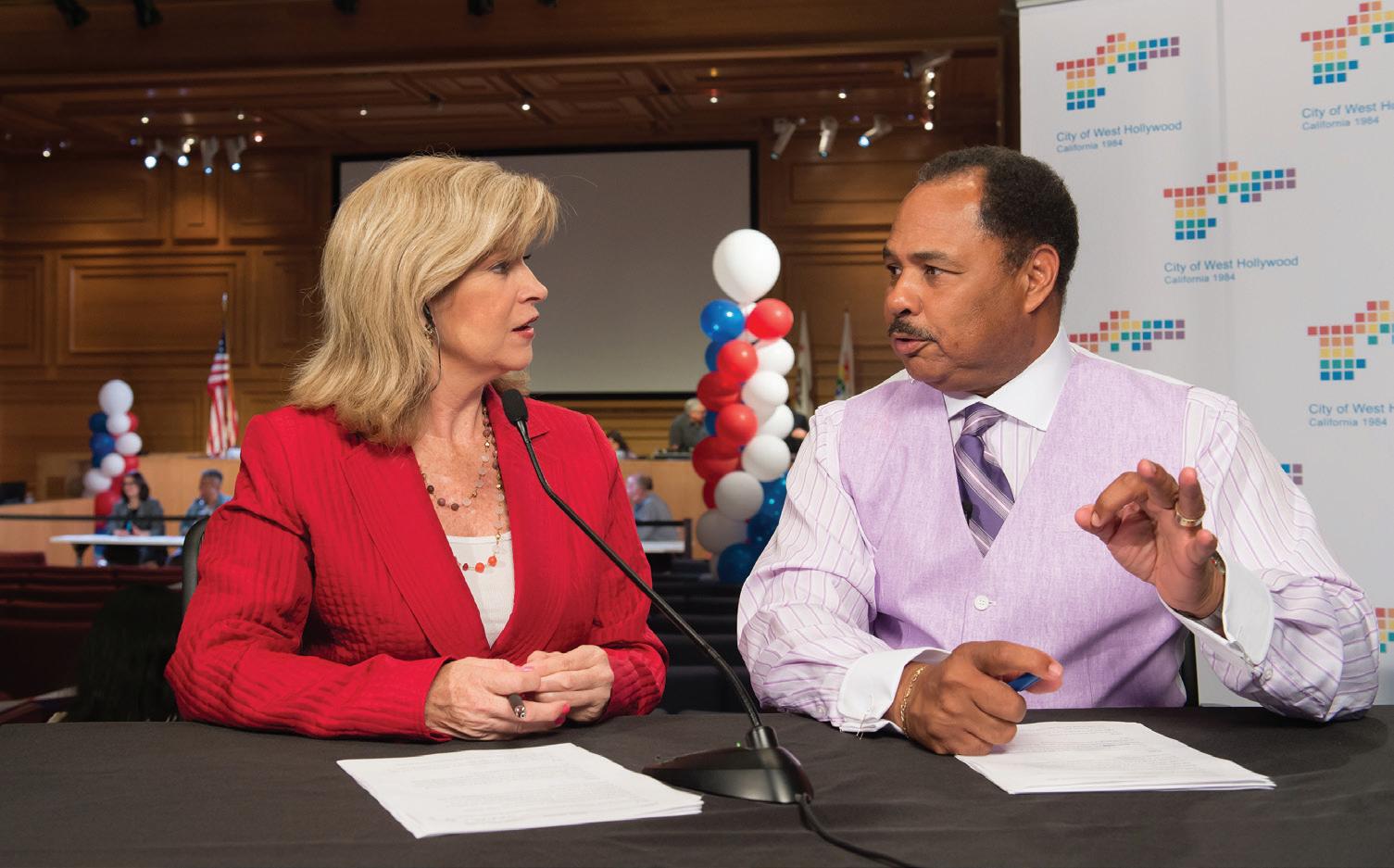
Press Conferences
• If a City Councilmember does not provide a timely response to a request for a quote, the Communications Division Manager will authorize the Public Information Officer to distribute a release without a quote from the Councilmember.
• If the subject matter is outside the City’s purview, the City has no jurisdiction or is or inconsistent with existing City policies, City employees and City resources shall not be utilized to draft or disseminate the news release and the Councilmember must clearly indicate that his or her statements and opinions do not represent those of the City, but are the Councilmember’s personal views.
• The Public Information Officer shall send email prompts to Councilmembers with deadlines for responding to requests for quotes.
• The Mayor and Mayor Pro Tempore may defer to another Councilmember(s) who is understood as the program initiator or most appropriate subject matter spokesperson to provide a quote.
• For new programs, events and initiatives, a quote will be requested from the Councilmember(s) that initiated the program, event or initiative.
• For citywide issues or significant community or constituency milestones, quotes will be requested from the Mayor and the Mayor Pro Tempore.
• For press conferences, media briefings and media events, the spokesperson is most often the Mayor; however, if the Mayor is unavailable, the Mayor Pro Tempore may perform this function, followed by the Councilmembersremainingintheorder of mayoral rotation as appropriate.
• If a Council Office requests a news release that is not part of a City Council withthereleasesubjectdecisionManagerawithrecommendation,approveditmustconfertheCityManagertorequestnewsreleaseandtheCitywillmakethefinalastowhetherornotthematterwarrantsanewsandisamatterwithinCity’spurviewandconsistentexistingpolicies.
• The City Manager may determine that the entire City Council should be invited to provide a quote on a significant issue or topic, in which case invitations will be extended in the order of mayoral rotation.
• The Mayor and Mayor Pro Tempore may invite another Councilmember(s) who is understood as the program initiator or most appropriate subject matter spokesperson to act as the spokesperson for the media event.
The Communications Division writes and distributes more than 200 news releases each calendar year and includes quotes only when appropriate. When a quote from a Council Office is deemed as being helpful to the framework of a news release or a quote is requested by the media, the following protocols apply:
• For ongoing programs of significance, large-scale Citysponsored special events and major initiatives, a single quote will be requested from the Mayor. If the Mayor declines or is unavailable, the Mayor Pro Tempore will be asked.
• If the City Manager determines a subject matter is outside the City’s purview, a matter in which the City has no jurisdiction or is or inconsistent with existing City policies, City staff cannot participate in the event or its preparation. Further, the Councilmember(s) must clearly indicate that their statements and opinions do not represent those of the City, but are the Councilmember’s personal views. On a case-by-case basis, City facilities other than City Hall may be utilized as a courtesy to an elected official.
• An individual Councilmember requesting a press conference, media briefing or media event must confer with the City Manager, who will make the final determination as to whether the subject matter warrants a press event and is a matter within the City’s purview and consistent with existing City policies.
16 Quotes
News Releases
• Staff reports with recommendations approved by the City Council may direct that the Communications Division issue a news release.
• Councilmembers that periodically write and distribute their own news releases or press statements must notify and coordinate with the Communications Division.
• The spokesperson shall be the Councilmember(s) who initiated the media event followed by the Mayor, Mayor Pro Tempore, and remaining Councilmembers in the order of mayoral rotation.
• If the City Manager is unavailable, the City Manager may delegate this responsibility to the Assistant City Manager or a Department Director.
• Avoid providing commentary (as opposed to factual information) or “background,” to the media, whether “on” or “off” the record. Under no circumstance is providing an “off the record” comment appropriate. All comments are part of an official record and a spokesperson should not make a comment that he or she is unwilling to be attributed to.
• Do not provide private personnel information or comment about pending or ongoing litigation or election issues.
• The Communications Division must be notified of any inaccurate quotations relating to the interview so that an appropriate response can be determined. Press Conferences
• City employees are responsible for reporting any such instructions or requests to the City Manager and shall wait for appropriate approval before proceeding with any work.
• Do not provide personal comment or speculation about decisions, policy or issues of the City Council, Advisory Boards, Commissions, or any official body governed by the Brown Act.
• Answering a question with “no comment” is unacceptable. If a spokesperson is unsure how to answer a question, he or she should inform the journalist that the City will follow up with a response where possible.
• City staff should not proceed with media relations work at the direction of a Councilmember without first informing the Communications Division Manager or City Manager and obtaining the appropriate approvals.
1918 General In order to ensure fairness and to control workflow, City Councilmembers must refrain from instructing City staff to perform media-related activities without consulting with the City Manager. The nature of a specific request or an individual City viewpointCouncilmember’sorthenature of the instruction may not always represent the shared viewpoint or position of the full City Council. This can lead to inappropriate messaging that may not be in keeping with the City’s communications policies, protocols and strategies.
• Staff who become aware of issues or potential issues that could lead to adverse media outcomes for the City must contact the Public Information Officer or Communications Division Manager immediately so that an appropriate response can be developed.
Interviews News reporters and other media representatives should be advised that requests to photograph, interview, and/ or videotape City staff must be directed to the Communications TheDivision.following protocols apply to any authorized media spokespersons for media interviews and requests:
• At all times, stick to the interview topic and the facts; avoid speculation and commentary.
• No City employee, other than the Communications Division Manager and the Public Information Officer, has the authority to speak to the media without prior authorization from the City Manager.
• Per Chapter IV, Section 1.1* of the Code of Conduct for Elected and Appointed Officials, Officials shall not direct or make demands on any City employee, other than inquiries that can be answered routinely and without research. “Elected and Appointed Officials have no authority to direct employees. Officials are not authorized directly to give work assignments to employees.”
• Be open, honest and cooperative.
• Consult and coordinate with the Communications Division to ensure adequate preparation for the interview.
• The City Manager shall be designated as the media spokesperson on all operational matters and personnel matters.
• A department head may request a City press conference, media briefing and/or media event to promote a City project, program, or initiative; the City Manager will make a determination as to whether a press event is warranted.
CITY MANAGER & CITY STAFF PROTOCOLS
• Where possible, all inquiries must be responded to in a timely manner in the spirit of cooperation and collaboration.
• Media deadlines and expectations should be respected; however, if it is not possible to meet media deadlines, the spokesperson must work with the Communications Division to set a timeline that is achievable.
• If a press event is approved by the City Manager, City Council Media Protocols for press events shall be followed.
• If granted permission to speak to the media, the employee must consult with the Public Information Officer or Communications Division Manager to prepare the information that is to be provided.
• Intentionally providing misleading or inaccurate information to the media is considered a breach of this policy.
• Staff may be granted permission to speak to the media on matters related to their area of expertise; however employees must be obtain approval from his/her Division Manager and Department Director in advance.
• The number of proposals received by the City, the names of companies that submitted proposals and the date that City Council is expected to make a decision regarding the contract award.
• In order to maintain the integrity of the City’s contracting process, no further comment will be made.
• The matter has not previously been considered by the City Council, Advisory Boards, Commissions, or any official body governed by the Brown Act and no policy direction is included in the report.
• The report is confidential.
• The issue is of a contentious/ political nature.
2120 News Releases
• A department head may request a news release to promote a City project, program, or initiative; the City Manager will make a determination as to whether a news release is warranted.
• If a news release is approved by the City Manager, City Council Media Protocols for news releases shall be followed. Agenda Items Requests from the media for staff to publicly comment on a particular item in upcoming agendas, other than to seek clarification on information contained in a report, must be brought to the attention of the City Manager, Assistant City Manager, Communications Division Manager, and Public Information Officer. Unless expressly authorized by the City Manager, City staff shall not comment publicly on information and recommendations contained in reports that are to be considered by the City Council, Advisory Boards, Commissions, or any official body governed by the Brown Act in the following circumstances:
Requests for (RFP/RFQ)QualificationsProposals/ It is inappropriate to comment on proposals or contracts until an award has been made by the City Council. When media interest in a proposal exists, the Communications Division may, in conjunction with the City Clerk’s Division, advise the media of the following:
• The request for proposals/ qualifications closing date and project details.
22 The City of West Hollywood is committed to providing timely, accurate, and factual information to all of its stakeholders and to the general WEHO.ORG/COMMUNICATIONSpublic.
124 CALMKEEP ON.CARRY& West Hollywood Communications and Community Engagement Strategic Plan CRISIS COMMUNICATIONS
The public will turn to the City and the media for information, instructions, and reassurance during a crisis, emergency, or controversy. By disseminating critical information in a timely manner, we can help safeguard public safety and uphold public confidence in response efforts. If the media or public perceive that the City does not respond appropriately, additional crisis situations could develop.
The Public Safety Department is the City’s lead in all crises that involve a response from law enforcement, fire, or emergency medical personnel. Our first responsibility in a crisis is to define and cultivate a range of messages to inform the public and media. It is vitally important that all messaging be developed as part of a coordinated response, and proper dissemination is crucial to effectively deliver information and provide adequate resources.
3
BE PLANCOMMUNICATIONSOURPREPARED:CRISIS
The City is responsible to provide timely information. It is unreasonable and irresponsible, however, to expect the City to respond in kind with media. In an unfolding crisis, initial reports often are inaccurate and include speculation rather than verifiable information. We must be strictly disciplined in crisis messaging and avoid, at all costs, the release of information that has not been thoroughly vetted by all parties managing the incident. It is more important to be factual than to be first. The City must take into account a broad array of internal and external stakeholders, both within and outside of the City. It must also communicate the scope and scale of a crisis with clarity.
This Plan outlines the roles, responsibilities, and protocols that will guide the City in promptly sharing information with all of the City’s audiences during an emergency or crisis.
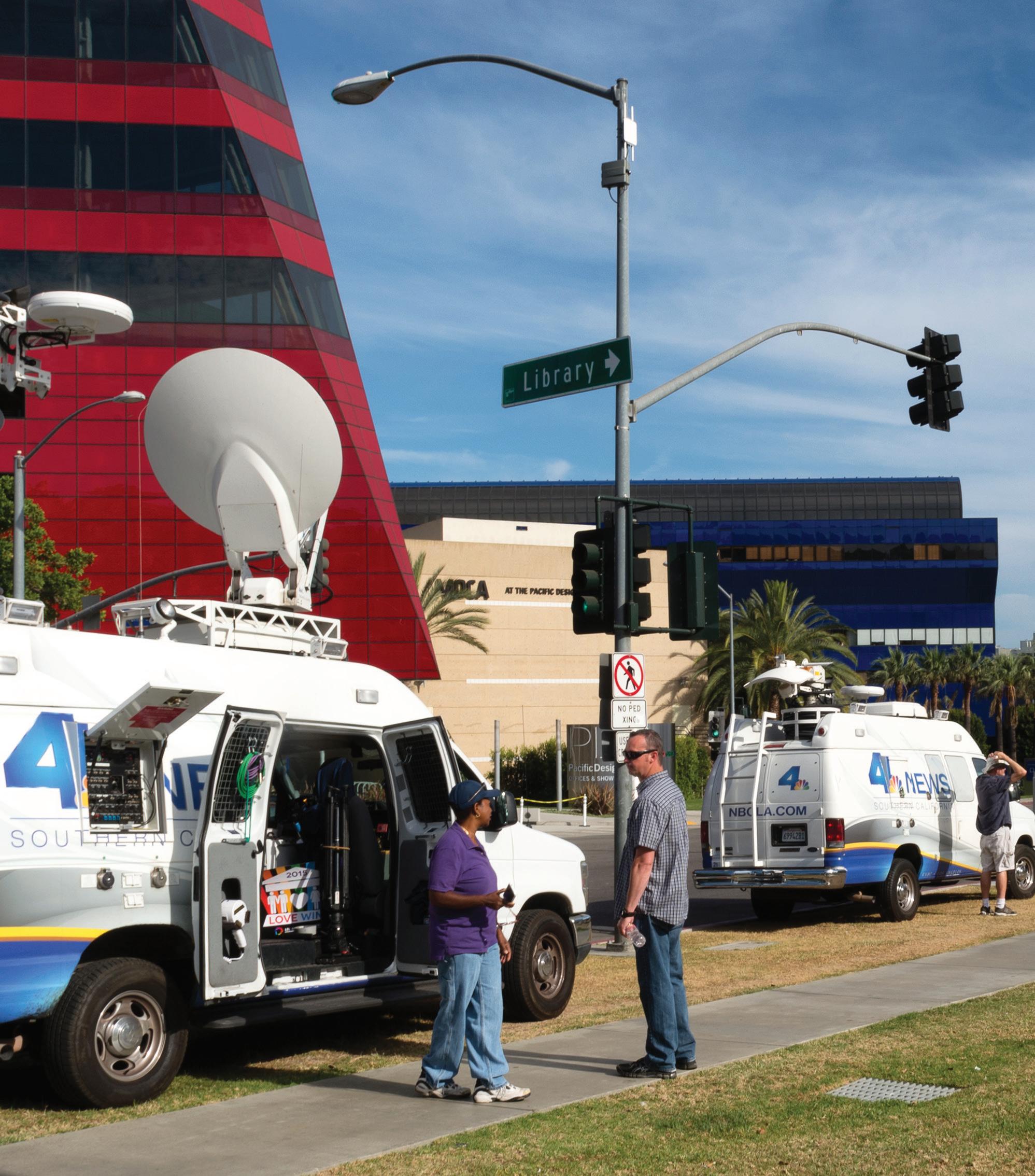
• Draft “key messages” for a variety of scenarios. emergency (epidemic outbreaks such as influenza, meningitis), crime spree or other event that presents a clear, imminent threat and typically involves a response from law enforcement, fire and/or emergency medical personnel.
CONTROVERSY: Events of broad-based, communitywide concern, such as political malfeasance or employee misconduct. Action Plan
• Designate a dependingspokesperson,singletypicallytheCommunicationsDivisionManagerorPublicInformationOfficer,onthesituation.
• List all the emergenciespotentialandcrises that could occur and possible responses, consider bestcase/worst-case scenarios, etc.
• Define the roles of all other agencies in any multi-agency, coordinated communications response.
DefinitionsCRISIS: An event that prompts significant, often sustained, news coverage and public scrutiny and has the potential to damage the City’s reputation, image, or financial stability. A crisis could be triggered by an emergency or a controversy.
• Identify and spokespersonstrainwithin the organization.
Objective This Crisis Communications Plan will help us to ease public concern during a crisis, distribute accurate information about the magnitude of the situation, and disseminate instructions to keep the public safe. Adherence to the plan will position the City as a credible source of information—even if that information is slow to be provided. The City will define its role in the crisis for the media and the general public, provide regular updates, deliver new information when it is available, and coordinate public response with other appropriate agencies or communities as necessary.
54
• Maintain robust media monitoring systems.
• Establish and convene a Crisis Communications Team.
• Establish that the designated spokesperson will be the primary contact for the duration of the emergency.
SCOPE STAKEHOLDERSAND
• Determine what other agencies may need to be involved and decide which shall be the lead agency during the crisis.
There are many internal and external stakeholders that the City must take into account, including residents, property owners, businesses and their employees, city staff, schools and childcare facilities, visitors, news media, non-profit organizations, public utilities, neighboring communities, and regional and statelevel agencies
EMERGENCY: A natural (earthquake, flood, fire) or manmade disaster or technological hazard (infrastructure fail, hazardous materials), an act of terrorism or homeland security event, a public health
• Maintain efficient emergency notification systems.
• Develop “holding statements” for a variety of scenarios.
• Assistant
76
Identify and SpokespersonsTrain Only the orashouldspokespersonauthorizedorspokespersonsspeakfortheCityduringcrisis.MembersoftheCity’sCrisisCommunicationsTeamshouldbepre-screenedandtrainedtobetheleadand/backupspokespersonsfordifferentchannelsofcommunications.Trainingiscritical;spokespersonsmustbefullypreparedandadequatelyequippedtoreplytomediainamannerthatcommunicatesclearlytoallstakeholders,minimizesescalationandreducespublicanxiety. TEAMCOMMUNICATIONSCRISIS Robust and ourTheTheessentialmultiplenotificationwell-establishedsystems,usingmodalities,arefortheCitytonotifystakeholdersinacrisisscenario.PublicSafetyDepartmentistheCity’sleadinallcrisesthatinvolveemergencynotifications.Citycanreachinternalandexternalstakeholdersusingseveralmodes.Forlarge-scaleregionaldisasters,LosAngelesCountyhasanemergencynotificationsystemthatitcandeploytoreachmillionsinstantlyviatelephoneandmobiledevices.Forsmaller,localemergenciesspecifictotheCityofWestHollywood,PublicSafetyDepartmenthasaccesstotheLosAngelesCountySpecificNeedsDisasterRegistryprogramviatheWestHollywoodSheriff’sstation.Inaddition,theCityhasaccesstotheCounty’sauto-dialalertsystem,whichcanbetargetedexclusivelytoWestHollywood.Socialmediaanddigitalmedia,suchastheCity’swebsite,reachacrossmultipleplatformsandmaybethefastestwaytoreachsomeofourstakeholders.Settingupsocialmediaaccountstodeployinacrisisscenarioanddevelopingabroadrangeoffollowers/friends/contacts,however,
SYSTEMSANDNOTIFICATIONMONITORING
• City Attorney • Public Safety Director • Legal Services and Legislative Affairs Manager • Communications Division Manager • Public Information
A small group from the City’s Executive Team should be identified to serve as the City’s Crisis Communications Team. This team will identify appropriate actions to be taken following any emergency or crisis and will serve as the City Manager’s chief advisors. Ideally, the City Manager will lead the team. If the City Manager is unavailable, an alternate will be designated. The team should include, but not be limited to: City Manager Officer Since any situation that rises to crisis level will affect the entire organization, the Crisis Communications Team also should include directors of the City’s departments as well as key staff with specific understanding of the issues involved. Other team members may be individuals involved in the crisis response, such as the Sheriff’s Captain, Fire Chief, officials from the Los Angeles County Department of Health and other agencies, as appropriate. cannot be achieved after a crisis breaks. News of a crisis spreads rapidly on social media and can gain momentum and spiral out of the City’s control while crisisspecific accounts gain followers. Therefore, existing social media accounts will be used for emergency notifications during an emerging crisis. Information gathering is a critical element of crisis prevention and crisis response. Monitoring of mentions and content about the City on social media and in traditional media allows the City to catch any negative content that may become a “trend.” Content that is trending on the negative can turn into a broader crisis if it is not addressed. Similarly, monitoring feedback during a crisis allows the City greater flexibility to adapt crisis strategies and tactics. The City employs multiple traditional news media and social media monitoring systems with the ability to report results in a number of formats. The current monitoring systems are comprehensive, but the City should be on the lookout for new systems in the marketplace to increase efficiency and enable greater data capture and analytics.
With holding statements in hand, the ofcategorically,CommunicationsCrisisTeammustdevelopcrisis-specificmessages.Wealreadyknow,whattypeofinformationourcommunitywillbelookingfor.Theteamshoulddevelopinformationandresourcesthatstakeholdersshouldknowaboutthecrisis.Keymessagesmustbesimple;nomorethanthreecoremessagesshouldbedistributedtostakeholders.Audience-specificmessagesforgroupsstakeholderssuchasseniorsandRussian-speakingcommunitymembersshouldalsobedeveloped.
8
After any crisis, a post-event analysis is critical to assess the efficacy of the response and the best method to prepare for the next crisis situation. The Crisis Communications Team should gather at the earliest opportunity to fully evaluate what went well and what did not. The group should make recommendations for future crisis response based on lessons learned in the field.
ANALYSISCRISISPOST-
Crisis-SpecificMessages
Although complete message development must wait for a crisis to occur, statements”—messages“holdingintendedforimmediateuse as soon as a crisis breaks—should be drafted well in advance. The Crisis Communications Team should regularly brainstorm potential emergency and crisis scenarios and develop holding statements for each. An example of holding statements by the City hit by a natural disaster, before the organization has any hard factual information, might be: “The City of West Hollywood is aware of the current __________ situation. First responders from the West Hollywood Sheriff’s Station and Los Angeles County Fire Department and __________ are responding to critical life and safety issues.”
“The City of West Hollywood has declared a local emergency and has activated its Emergency Operations Center (EOC). Information is consistently being gathered to disseminate to the media and to the public to aid West Hollywood residents and businesses during this evolving situation.”
STATEMENTSHOLDING
“Please check the City’s website regularly for updates and follow the official City Twitter @wehocity and official City Facebook Page at City of West Hollywood Government for up-to-the-minute information and resources.” An example of holding statements by the City in response to a tragic accident or law enforcement incident, before the organization has any hard factual information, might be: “The City of West Hollywood is deeply saddened by this tragic ____________ and extends its sympathies to friends and family of “This______________.”investigation is active and ongoing, and we expect it may continue for a number of months. As such, the City of West Hollywood will refrain from providing additional comments at this time.”
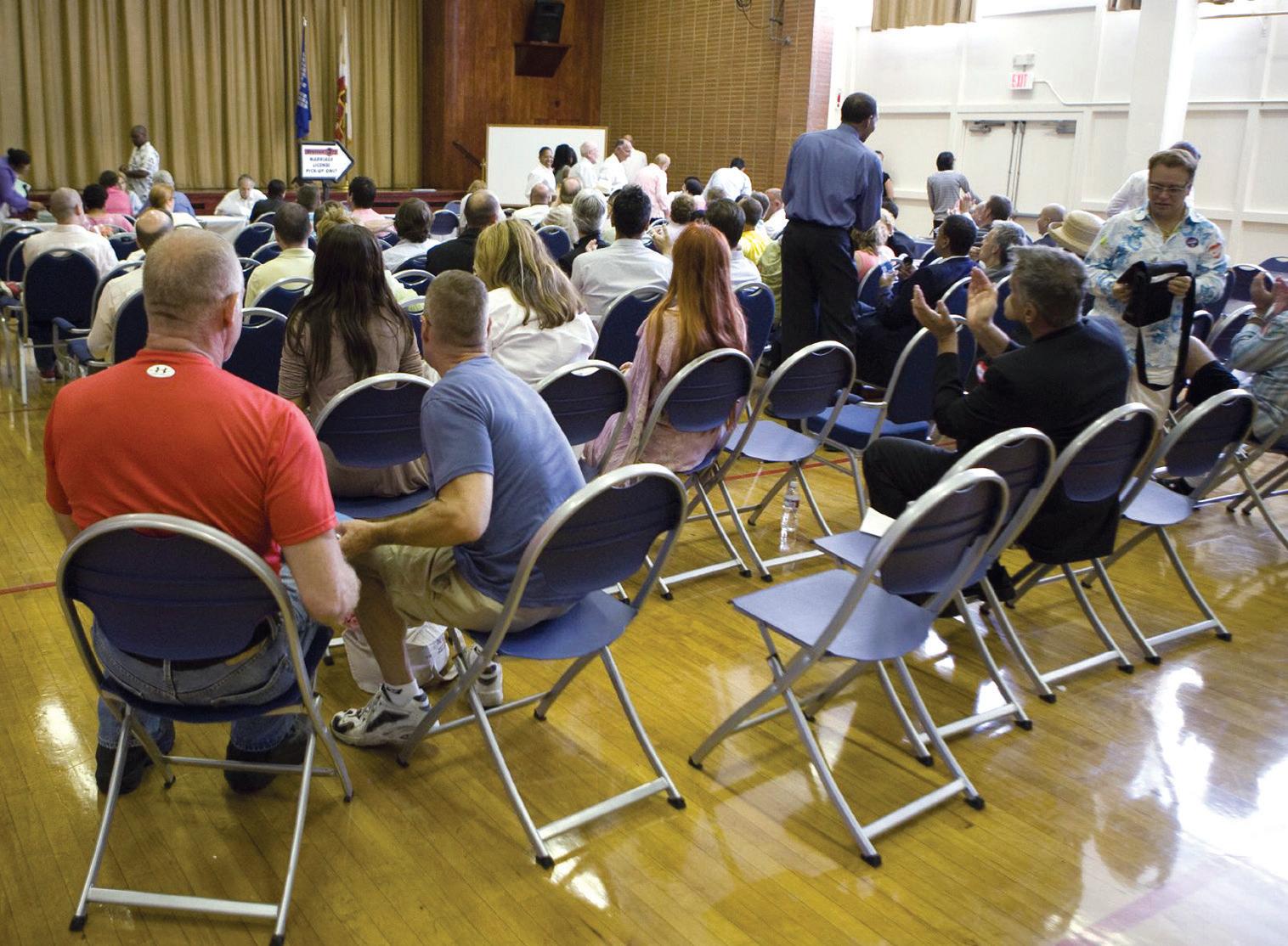
Themitigations.primary responsibilities of the Communications Division during EOC activation are:
• Public statements,information,andnews releases
• Advising
inquiries as a part of the official
record •
• Media contact and coordination
and emergency communicators can find relevant information • Direction of
or
The rapid dissemination of information is critical in active EOC operation. The information should advise the general public of any probable dangers and the nature of the threat, the locations involved, possible evacuations and traffic
are
• Creation or implementation of any special data structures to enhance the
• Posting of accountswebsiteinformationapprovedviatheCity’sandsocialmedia ease media, representativesmediatoa Crisis Communication Team member comment a specific area Logging media incident Accompanying news media representatives any time they in the EOC or any incident area facility (Large scale or high profile incidents within the City of West Hollywood may attract media personnel directly to the scene, if media control becomes a serious field concern, the media team will also include Sheriff’s escort.) of EOC team members when there are representatives of the news media present in the EOC or any incident area or facility (for (if Road, bridge, freeway out-of-area
1110
• Coordination of media releases with all other agencies involved in the emergency response
media that people should NOT telephone into the area • Lines must be kept open for emergency calls • aboutInstructions/precautionsutilityuse,sanitation,howtoturnoffutilities • Essential services available: hospitals, grocery stores, banks, pharmacies, etc. • Food, safe water • Weather hazards/health risks (if appropriate) • Evacuation: InstructionsRoutes (including what to do if vehicle breaks Arrangementsdown) for persons without transportation Status of hospitals Location of mass care/ medical care facilities Coroner facilities ANDCENTEROPERATIONSEMERGENCY(EOC)ACTIVATION
parents) on status and actions of schools
for
in session) • congestedHazardous/contaminated/areastoavoid • Curfews •
• Correction of factual inaccuracies misinformationand
in which the public,
THE FOLLOWING INFORMATION SHOULD BE RELEASED TO THE PUBLIC WHEN PROVIDING EMERGENCY Instructions:PreservationLifesaving/HealthINFORMATION: • What to do (and why) • What not to do (and why) • Information
• Monitoring of media outlets (including broadcast outlets, print media, websites, etc.) to make certain that disseminated information is correct and to determine where additional information may be needed
While the City’s Emergency Operations Center (EOC) is activated, the Communications Division Manager and Public Information Officer are the primary liaisons to the news media. They will provide news releases and other information as approved by the Executive Policy Group, and all media inquiries will be referred to them. The City’s responsibilities when the EOC is activated are emergency notification, instructions and advisories. During the initial emergency phase, the Public Information Officer will assist in warning the public against dangers and provide emergency guidelines including steps to take to avoid injury and protect property. These types of notifications should be made as quickly as possible to allow for rapid response and adoption. The Communications Division will release provideinformationemergencylocallyandstatusinformation to Public Information Officers at higher levels of government. This information should be coordinated with all agencies involved in the incident.
overpass, dam conditions, and alternate routes to take • First aid information • Emergency telephone number (otherwise request people not to use telephone) • Stress to
at
• Coordination with EOC management
of all public and
of expertise or information •
on
1312 Emergency InformationStatus Before release, clear all information with the Director of Emergency Operations. • Verify all information before release • Provide all hotline numbers • Description of the emergency situation, including: Number of deaths and Propertyinjuries damage to city and businesses and dollar value Persons Where(massandDescriptionMagnitudedisplacedofearthquake,numberoffires,etc.ofgovernmentprivateresponseeffortscare,medical,searchandrescue,emergencyrepair,debrisclearance,fire/floodfighting,etc.)StatusofLocalProclamation,Governor’sProclamation,andPresidentialDeclarationpeopleshouldreport/calltovolunteer Other InformationUseful Usually this type of information will be released in the Recovery Period because of lack of time and other priorities during other phases. • State/Federal assistance available • Disaster Application Center opening dates/times • Historical events of this nature • Charts/photographs/statisticsfrompastevents • Human interest stories • Acts of heroism • Historical value of damaged/destroyedproperty • Prominence of those killed/ injured Staff and EOC team members may have incidental contact with the media when the Public Information Officer or other approving authority is unavailable and/or when the PIO recommends contact for their particular expertise. When this occurs, staff will use the following guidelines and limitations: • Return media calls ASAP; responding to media inquiries by EOC team members is authorized when timely reply is necessary. • Observe sensitive information handling policies at all times. • Do not speculate or assume, and do not comment on what the City “thinks.” • Restrict comments to known facts (first-hand knowledge associated with the City team assignment and expertise). • Refer to officially prepared statements or releases, if any. • Decline any discussion of policy matters; refer to EOC command. • Make no comments“off-the-record”whatsoever. • Respectfully decline comment on any requests beyond the City knowledge or expertise. • Keep a detailed log of all contact with the media. • Advise the Public Information Officer or Director of Emergency Operations as soon as practical.
14 The public will turn to the City and the media for information, instructions, and reassurance during a crisis, emergency, or controversy. By disseminating critical information in a timely manner, we can help safeguard public safety and uphold public confidence in response efforts. WEHO.ORG/COMMUNICATIONS
15 APPENDIX.
116 APPENDIX. West Hollywood Communications and Community Engagement Strategic Plan
The Communications and Community Engagement Audit is a process involving research, discussion, and benchmarking for existing communications and community engagement capacity. For this audit, Kearns & West researched City approaches, examples, and policies, conducted interviews with City staff, elected officials, and selected stakeholders, and engaged the broader City community through an online survey, mobile polling at public events, and input session facilitation.
32
Elected Officials City Councilmembers serve as the face of the City and of its stakeholders. Therefore, interviews conducted with all City Councilmembers were an important tool for understanding how to strengthen direct
APPENDIX 1: AUDIT PROCESS
Cityorandstrengthensmoredepartment.centralallratherdivisionsCitybetweencommunicationelectedofficials,departmentsandwithstakeholders,thantryingtofunnelinformationthroughapointofcontactorThisprovidesforknowledgeablediscourse,accountability,makesiteasiertoaccessprovideinformationonactivities.
Approach In order to determine the effectiveness of its communication procedures, strategies, activities, and messaging, an evaluation was conducted on how the City communicates both internally and externally. Interviews were conducted with City staff and elected officials between January 2014 and May 2014. Staff Kearns & West conducted interviews with more than 75 City staff members including representatives from every City department and division. This allowed for a greater understanding of each department’s and division’s individual needs, forms of informationtherefore,andcommunicationhasEachcommunicationcommunication,interdepartmentalandpublicstrategies.departmentanddivisionauniquewayofmanagingamongstaffthepublicwhenapplicable;abroadrangeofwasgathered.
STAFF ELECTEDANDOFFICIALS
The Audit Process Appendix provides an overview of existing City communications and community engagement capacity, and informed the development of communications plans, a community engagement plan, and recommendations for expanding the City’s communications and community engagement platform.
ENGAGEMENTSTAKEHOLDER
During the improvement.consideredareasefforts,engagement,excellentthingsstartedofTwitter).(e.g.,participantsofwithcommunityuninformedlevelsDiscussionengaged”scalesolicitingtheinterestaboutimprovement.areasforwithaboutquestionsparticipantssessions,wereaskedinvitingdiscussiontheirengagementtheCity,methodscommunication,andofexcellenceandforDiscussionparticipants’levelofandengagementwithCitystartedwithaquestionresponsesalongafrom“veryinterestedandto“notinterested.”aboutincreasingofcivicparticipationforanduninvolvedmembersstartedaquestionaboutmethodscommunication,askingtosuggesttoolsCityemails,newspapers,Discussionaboutareasexcellenceandimprovementwithaquestionaboutthatstandoutascommunication,andoutreachandaquestionaboutthatparticipantsasneeding
Approach A cross-section of the City’s stakeholders was solicited, through online and in-person surveys, mobile polling, and input sessions, to better understand how they would like to be involved and engaged with the City. Feedback was derived from nearly 300 of these interactions. Input Sessions Approximately 45 stakeholders participated in the input sessions. The group was selected with careful intention to include people with a high degree of awareness about civic life. In an effort to ensure proactive and creative discussions, session attendees were invited from a variety of stakeholder groups to participate in the day’s event. Nearly all the stakeholders present were City residents representing local businesses, nonprofit organizations, advisory boards/commissions, and the community at large.
54 Range of QuestionsInterview Although each conversation was different, every interview conducted was structured around interview questions grouped into five general themes: engagementintheQuestionsandengagementtoengagementforeachonTechnologytrainingtheprotocolsTraininganddepartmentseffortstheincludedCommunicationsandCommunityTraining,Communications,Technology,Engagement,ElectedOfficials.questionstheexpectedroleofCommunicationsDivision,onthepartofotherCityanddivisions,areasforimprovement.questionsincludedforinteractingwithmediaandareaswherecanbeimproved.questionsfocusedwhatwasisbeingusedindepartmentandareasimprovement.Communityquestionssoughtdetermineprotocols,pastsuccesses,areasforimprovement.wereaskedregardingroleofelectedofficialscommunicationsandprocesses.
Visual Materials Audit A visual audit was conducted to assess visual branding and logo usage across a wide range of existing collateral materials supplied by the City. Nearly 50 collateral materials were reviewed including flyers, letterhead, and brochures.
Survey In an effort to involve stakeholders early in the audit process, and to help inform the development of the City’s new engagement strategy, a survey was developed to assess how and when stakeholders like to be engaged by the City. The survey included questions about how stakeholders currently receive information and engage with the City, how the City can improve communication and engagement in the future, and preferences for receiving information from the City. This information assisted in creating a blueprint for communicating with City residents. The survey was launched online and contained more than two dozen questions; 30 responses were received to the survey. Community Events Existing community events were used as opportunities to obtain feedback from members of the public about their level of interest and engagement in the City and their preferred communication methods.
Technology Audit As part of the audit process, City staff, elected officials, and members of the public were interviewed about the current use and effectiveness of technology as a means of engagement. The technology audit included additional questions for all communications and community thatsoftwareconsiderations,services,focusedquestionsimprovement.intoprovidinginpracticesconductedandtoadditionalinterviewees,engagementalongwithinterviewsdedicatedtechnologyuse.Interviewsresearchwerealsotocapturebestfortechnologyusesimilarmunicipalities,additionalinsightopportunitiesforInterviewandresearchareasontechnology-relatedprotocolsandlegalhardwareandcapacity,andareasneededimprovement.
National Night Out The City participated in the 31st annual National Night Out, held in neighborhoods throughout the city in August 2014. The National Night Out is an evening of events and social gatherings including block parties, mobileresponsesmethods.theirengagementtheircommunitycollectedtheDuringDepartment.LosandBoard,HollywoodSafetyCityincludedmoviefamily-friendlybarbecues,fun,andascreening.ParticipantsmembersoftheCouncil,thePublicCommission,theWestRussianAdvisorySheriff’sDeputies,FirefightersfromtheAngelesCountyFiretheevent,stafffromCommunicationsDivisionfeedbackfrommembersaboutlevelofinterestandintheCityandpreferredcommunicationSeventy-ninewerecollectedusingpollingoniPads.
Budget Fair In April 2014, the City hosted a Budget Fair in Plummer Park. The Budget Fair was an opportunity to learn about the City 2014-2016 Operating Budget and Capital Work Plan. The event included a booth for each City division, and offered opportunities for the community to provide input and have a general discussion regarding division work plans. During the event, the Communications Division hosted a polling exercise to collect feedback regarding participants’ communicationpreferredmethod with the City. Responses were collected using mobile polling on iPads, and results were posted in real-time. LGBT Pride Festival In June 2014, the City hosted a booth at the Annual Christopher Street West Lesbian, Gay, Bisexual and Transgender Pride Festival. During the festival, an outreach team hosted a polling exercise to collect feedback regarding participants’ preferred communication methods with the City. Other attendees were directed to the online survey and the survey’s web address by collateral materials that included a QR reader. A total of 117 responses were collected using mobile polling on iPads.
76
98 APPENDIX 2: VISUAL INVENTORYMATERIALSAUDIT Brochure / Guide •“Old Sherman” Walking Tour Information Guide • Code Compliance Brochures •“Get Involved in InvolvementHollywood”–CivicWestBrochure • Guide to Historic Sites and Cultural Resources • Historic Preservation Q&A • Library Murals Brochure • Museum of Neon Art Brochure • Transportation–Maps & Brochure • Trees of WeHo Information Brochure • WeHo Celebrates Pacific Standard Time–Event Brochure Brochure / City Services •“Live Work Play Be Safe!”–Folder and Brochures • Code Compliance for Residential Units • Parking Permit Brochures • Recycling Guide • Rent Stabilization Guide (in multiple languages) • Transgender Resource Guide • Transportation Programs •“What You Need to Know About Noise”–Code Compliance • Youth Scholarship Program–Program Information and Guidelines Directory • City of West Hollywood Resource Card Magnet)–Directory(Refrigerator • HIV/AIDS Prevention and Substance Abuse Resources • Senior Savings Guide/DirectoryPassport • Social Services Directory • Substance Abuse Services Guide •“WeHo Direct–Fact Sheet” and Directory •“West Hollywood On Call”–Guide to City Services Directory Cards / Flyers • Arts & Cultural Affairs Commission: Cosmo Cavallaro’s Love Your Bean Exhibit Flyer • Arts & Cultural Affairs Commission: Gustavo Godoy’s Abandoned Relics Exhibit Flyer • Bike WeHo Bookmark • City Council Reorganization and Installation Event Flyer • InformationHomelessnessCard • Neighborhood Watch • Plastic Bag Bookmark/CardBan • Prescription Discount Card • Communications Postcard: Needle Disposal Program • Rock ‘n’ Roll Billboards of the Sunset Strip • Social Services Poster • Public Comment Card • Winter Sounds–Free Indoor Concert Series Schedule Letterhead / Forms • City of West Stationery/LetterheadHollywood • Housing Information Sheets and Forms • Permit Applications Miscellaneous • Bag from Book Fair • WeHo Recreation Reader–Recreation Guide • WeHoDirect Communications Program Information • Logos: City of West Hollywood, WeHo Cares, Art on the Outside During the visual materials audit, the City reviewed the following collateral materials:
• AD-HOC INBOUND AND COMMUNICATIONS:OUTBOUND Each inbound and forcommunicationsstakeholderdecisionswhichcommunicationoutboundclassificationcommunicationtodatathat,includescommunicationsoutboundexchangeavarietyofmetadatawhenanalyzedasalargeset,revealsopportunitiesreinforcesuccessfulchannels.Theofinboundoralsorevealshowthewasinitiated,caninformresourcingforcontinuedengagementorplanningfutureinitiatives. This information can be used to assess level of interest among stakeholders, and the utility and opportunities to improve regular or scheduled communications.
• (REGULARCOMMUNICATIONSOUTBOUND/SCHEDULED):
Each communication from City staff to stakeholders represents not only a communications opportunity, but also a valuable source of information. This information can be analyzed to crossreference recipient lists and open and click-through statistics, and to consider scheduling for communicationscommunicationssimilartoavoidfatigue.
1110
• ACTIVE NET: Active Net is managed by the Department of Human Services and Rent Stabilization. The resource includes more than 5,000 users registering and managing their recreational activities with the City. This information can be used to cross-reference stakeholder interests to identify a focused audience for an outreach activity, or to explore stakeholders who may be affected by a new initiative (e.g., adding new recreation programs).
APPENDIX 3: DATA
The City has a number of data sources available within and across departments and divisions. As the City uses new tools, additional data sources will be available. The sources identified below were mentioned in staff interviews and subsequent research.
&
• INBOUND (PLANNEDCOMMUNICATIONS/SOLICITED): Regular communications,inbound such as surveys or registration forms, provide insight into stakeholder interests and level of engagement. This information could be used to assess the frequency with which an audience segment or stakeholder shares information about an issue, an indicator of level of importance for the sender. Many inbound communications also include explicit positions (e.g., supporting, not supporting). SOURCES CATEGORIES
• STAFF REPORTS: Staff reports capture vital information about project status and department activities. This information can be used as part of a benchmark between City activities and public perception.
• HOUSING / STABILIZATIONRENTDATA: This data set provides valuable insight into socioeconomic indicators for individual stakeholders or audience segments. While the data can be informative for other city initiatives, the Petris Act governs confidentiality and how this data is accessed, stored, and shared. The mailing and email lists provide insight into audiences already receiving housing– and rent outreachaudienceinformation,stabilization-relatedwhichcaninformsegmentationforinitiatives.
• INTERNAL ENGAGEMENT REPORT: The internal engagement report is used by staff to capture and synthesize engagement for any multistakeholder processes. This information can be used to add internal-facing qualitative records as a new data layer to quantifiable data captured through other channels.
1312
• MEETING EVALUATIONS: Meeting evaluations typically capture basic attendee information, along with feedback regarding the meeting design, objectives, and additional questions or comments. This information can be used to confirm stakeholder records and to inform invitation lists or topics of interest for stakeholders.
• OFFICIAL CITY APP: The City’s downloadable mobile app provides a tool for people to report issues for the city to address, with a number of service categories ranging from broken parking meters to water usage violations. This information can be used to prioritize issues and inform proactive communications from the city regarding planning and policies.
• PRESS RELEASES: Press releases provide a written record of an update or city position on an issue of importance. This information can be used as an addendum to a previous data point, and to capture the contacts and city staff with expertise of the item of note.
How a stakeholder chooses to receive or share information can inform resource decisions for future outreach plans and improve the success of existing group communications.
• SOCIAL MEDIA: Social media data provide both broad and deep information about stakeholder interests and positions. Metadata, including the user, time of posting, relationship to other social media or specificCityvariablefeel,captureprovidesrecords.achannels,communicationsandmore,addslayerofdetailtomanySentimentanalysisanopportunitytohowstakeholderstypicallyonarangeorscore,abouttheingeneraloraboutaissue. This information can be used to audiencecommunications,prioritizetosupportsegmentation,and for tracking engaged stakeholders who can serve as liaisons for digital and in-person information sharing activities.
COMMUNICATIONASYNCHRONOUS CHANNELS: The channel used to share or receive communications when not interacting in real time with a stakeholder includes data useful in tailoring future outreach plans and informing audience andphone,includeCommunicationsegmentation.channelsin-person,online,email,socialmedia,others.
• MEDIA (TRADITIONALMONITORINGMEDIA): Media mentions are an indicator of real and perceived public interest. Data available includes the time of publication, headline, reporter, media outlet, public response or comment, and related coverage. This information can be used to identify media contacts for future outreach, assess value of ad placement in different media outlets, and gauge public interest.
•
• Provides advice and consultation on media relations to support the City Council, the City Manager, Department Directors, Division Managers, and key staff in these efforts.
DivisionCommunicationsManager
• Acts as primary liaison to news media for the City.
FUNCTIONALDESCRIPTIONS,DIVISION,COMMUNICATIONS4:JOBANDROLES
• Plans the media relations effort, in conjunction with staff from other departments and divisions and Council staff as necessary, from news releases and press kits to briefings with reporters and follow-up; spokesperson(s).determines
1514
• Develops key messaging and a specific communications plan for media inquires.
Public OfficerInformation Supervises staff and coordinates and performs complex professional functions related to supervising public information and communications functions, including: coordinating the City’s media relations; developing and writing various publications and promotional materials promoting the City’s various special events; overseeing the development of publications through contracted services; providing information to the general public; developing and writing scripts for cable television programming; and working with City departments and divisions on programscommunications-relatedandactivities.
APPENDIX
• Acts as City Spokesperson when designated by the City Manager.
• Develops collateral materials, marketing materials, and public notices.
Under general direction of the Assistant City Manager, the Communications Division Manager manages staff and administers the City’s communications and television operations; coordinates and supervises all activities of the City’s Communications Division; manages the City’s WeHoTV operations and manages franchise contracts; oversees the City’s website and social media presence, all aspects of production, post-production and cablecasting; and regulates and oversees film permits and filming and related productions within the City.
Under the leadership of the Assistant City Manager and the Division Manager, Communications Division staff works as a team with the understanding that each person has an important role to play in the coordination of the City’s communications efforts.
• Coordinates all media inquiries with City Council the City Manager and staff.
• Oversees the internal collaborative efforts of the Communications Division team.
• Promotes City news on social media sites.
• Collaborates on vision and format for all news-related segments and plan the implementation.
• Provides support to Communications staff as needed in carrying out the dissemination of news releases, the coordination of media inquiries, and the preparation of press kits.
enteringsupplies;issuingvariousofandtrackingprocessingmaintainingmeetingscoordinatinginformation/statistics;andattendingandtakingminutes;personnelfilesandrelatedpaperwork;budgetexpendituresassistinginthepreparationthebudget;processingfinancialdocuments;permits;orderingandpreparingpayroll/information.
Performs a variety of complex technical and professional functions related to communications including: managing the City’s digital, online, social and emerging media andcommunicationsofassistingcablemaintainingandemergingmanagingdevelopment,includingmanagingcommunications;theCity’swebsiteoperations,andinfrastructure;theCity’ssocial/mediapresencestrategies;designingandcontentonthestationchannels;andinthecompletionotherfunctionsrelatedtoprogramsactivities.
• Adds information about the news releases or press statements to the City website; determines the prominence of placement.
• In partnership with the Public Information Officer, plans the social media placement for the news release that includes key messaging.
WeHoTV Supervisor Supervises staff and performs a variety of professional and technical functions related to the operation of the City’s government channels and public access channel, including: overseeing on-air operations and production; developing long-term plans and schedules; developing policies and procedures; selecting programming; and monitoring compliance and operations by cable television operators.
• Reads over the key messaging and communications plans to have a clear understanding of news releases.
• Develops and helps implement community engagement efforts with City departments and divisions.
• Coordinates with the PIO and digital media coordinator to ensure that messaging is appropriate.
Administrative Specialist Serves as lead staff member and performs a variety of complex administrative functions in support of an executivelevel position or department director, including: managing the administrative and clerical aspects of various programs; assigning cases to staff and coordinating schedules; composing correspondence; developing various complex reports by researching and gathering
• Develops collateral materials, marketing materials, and public notices.
• Posts related WeHoTV news video(s) on YouTube and promotes the video(s) on other social media sites.
1716 Digital CoordinatorMedia
Administrative Analyst May serve as lead staff member and performs a variety of complex professional functions related to City operations, including: conducting technical and administrative analyses; initiating, researching, and drafting contracts, agreements, ordinances, and other legal materials; developing and coordinating special projects; researching and preparing reports and recommendations; preparing the Department or City’s budget; providing highly responsible and complex administrative support to Executive Staff; and coordinating assigned activities with other City departments and divisions and constituents.
• Assists in the development of program ideas/concepts, including creation.musicstandards,productionprogramresearch,selection,andgraphics
Public CoordinatorAccess Serves as lead staff member and performs technical functions related to the operation of the public access facility and programs, including: overseeing and scheduling use of the studio and facilities; providing instruction in the use of production facilities; creating and teaching production courses; overseeing equipment maintenance and repair; and maintaining related records.
• Coordinates the marketing and promoting filming in the city.
Film Coordinator Performs various technical and administrative functions related to the operations for the permitting and logistical planning of film permits for the City; implements policy and regulations relating to film permits and assists in ensuring their enforcement; serves as liaison between the City and film production companies and assists crews and cable programming activities, including analyzing requests for filming and issuing permits; determines and assures compliance with special conditions; assists in acquiring and producing cable television programming; and performs clerical and administrative support tasks for division operations.
Senior Video Production Specialist Serves as lead staff member and performs a variety of complex professional functions related to video production, including: developing, writing, producing, and editing television broadcastsprograms;productions;and/orvideotapingprogramming;andconductingdirectingliveortapedproducingandmonitoringforqualitycontrol.
• Oversees scheduling and use; organizes, instructs, and monitors the use of facilities and equipment; maintains and configures equipment.
• Coordinates and performs functions related to live television broadcasting.
• Coordinates public access studio, equipment, and facility functions.
• Responsible for all functions required for the issuing of film permits and filming and related productions within the city.
1918
• Develops, writes, produces, edits, and reviews programs in a variety of formats.
• Analyzes requests to determine impact and special conditions.
• Creates and teaches basic production, linear and non-linear editing; creates instructional materials.
SOCIAL MEDIA POLICY
2120
“City social media sites” means social media sites that the City establishes and maintains, and over which it has control of all postings, except for advertisements or hyperlinks by the social media site’s owners, vendors, or partners. City social media sites shall supplement, and not replace, the City’s required notices and standard methods of communication. “Posts” or “postings” means information, articles, pictures, videos or any other form of communication posted on a City social media site. General Policy 3.1. The City’s official website at weho.org (or any domain owned by the City) will remain the City’s primary means of internet communication.
3.7. City social media sites shall be managed consistent with the Brown Act. Members of the City Council, Commissions and/or Boards shall not respond to, “like,” “share,” retweet or otherwise participate in any published postings, or use the site or any form of electronic communication to respond to, blog or engage in serial meetings, or otherwise discuss, deliberate, or express opinions on any issue within the subject matter jurisdiction of the body.
3.3. Content on City social media sites is subject to oversight by the CommunicationsCity’sDivision.
Definitions “Social media sites” means content created by individuals, using accessible, expandable, and upgradable publishing technologies, through and on the internet. Examples of social media include, but are not limited to, Facebook, Twitter, Blogs, RSS, YouTube, LinkedIn, Delicious, and Flickr.
3.5. City social media sites shall link back to the City’s official website for forms, documents, online services and other information necessary to conduct business with the City whenever possible.
3.2. The establishment of City social media sites is subject to approval by the Communications Division Manager or his/her designee. Upon approval, City social media sites shall bear the name and/or official logo of the City.
3.9. City social media sites shall comply with usage rules and regulations required by the site provider, including privacy policies.
3.10. The City’s Social Media Policy shall be displayed to users or made available by hyperlink.
3.8. The City reserves the right to terminate any City social media site at any time without notice.
This Social Media Policy (“Policy”) establishes guidelines for the development and use by the City of West Hollywood (“City”) of social media sites as a means of conveying information to members of the public. The intended purpose of City social media sites is to disseminate information from the City about the City’s mission, meetings, activities, and current issues to members of the public. The City has an overriding interest and expectation in protecting the integrity of the information posted on its social media sites and the content that is attributed to the City and its officials.
APPENDIX 5:
3.4. City social media sites shall clearly state that such sites are maintained by the City and that the sites comply with the City’s Social Media Policy.
3.6. The City’s Communications Division shall monitor content on City social media sites to ensure adherence to both the City’s Social Media Policy and the interest and goals of the City.
3.13. Employees representing the City on City social media sites shall conduct themselves at all times as a professional representative of the City and in accordance with all City policies.
3.16. The City reserves the right to change, modify, or amend all or part of this policy at any time. Content Guidelines 4.1. The content of City social media sites should only pertain to City-sponsored or City-endorsed programs, services, and events. Content includes, but is not limited to, information, photographs, videos, and hyperlinks.
3.14. All City social media sites shall utilize authorized City contact information for account set-up, monitoring, and access. The use of personal email accounts or phone numbers by any City employee is not allowed for the purpose of setting up, monitoring, or accessing a City social media site.
4.5. Any employee authorized to post items on any of the City’s social media sites shall review, be familiar with, and comply with the social media site’s use policies and terms and conditions.
4.3. The City shall have full permission or rights to any content posted by the City, including photographs and videos. 4.4. Postings shall be made during normal business hours. After-hours or weekend postings shall only be made with approval of the City’s Communications Division Manager or his/her designee.
4.13. All of the content on City social media sites is subject to oversight by the City’s Communications Division.
2322
3.11. All City social media sites shall adhere to applicable federal, state and local laws, regulations and policies.
3.12. City social media sites are subject to the California Public Records Act. Any content maintained on a City social media site that is related to City business, including a list of subscribers, posted communication, and communication submitted for posting, may be considered a public record and subject to public disclosure.
3.15. City social media sites may contain content, including but not limited to, advertisements or hyperlinks over which the City has no control. The City does not endorse any hyperlink or advertisement placed on City social media sites by the social media site’s owners, vendors, or partners.
4.2. Content posted to the City’s social media sites must contain hyperlinks directing users back to the City’s official website for in-depth information, forms, documents or online services necessary to conduct business with the City of West Hollywood, whenever possible.
4.6. Any employee authorized to post items on any of the City’s social media sites shall not express his or her own personal views or concerns through such postings. Instead, postings on any of the City’s social media sites by an authorized City employee shall only reflect the views of the City. 4.7. Postings must contain information that is freely available to the public and not be confidential as defined by any City policy or state or federal law. 4.8. Postings may NOT contain any personal information, except for the names of employees whose job duties include being available for contact by the public. 4.9. Postings to City social media sites shall NOT contain any of the following: 4.9.1. Comments that are not topically related to the particular posting being commented upon; 4.9.2. Comments in support of, or opposition to, political campaigns, candidates, or ballot measures; 4.9.3. Profane language or content; 4.9.4. Content that promotes, fosters, or discriminationperpetuatesonthe basis of race, creed, color, age, religion, gender, marital status, or status with regard to public assistance, national origin, physical or mental disability or sexual orientation, as well as any other category protected by federal, state, or local laws; 4.9.5. Sexual content or links to sexual content; 4.9.6. Solicitations of commerce; 4.9.7. Conduct encouragementorof illegal activity; 4.9.8. Information that may tend to compromise the safety or security of the public or public systems; or 4.9.9. Content that violates a legal ownership interest of any other party. 4.10. These guidelines shall be displayed to users or made available by hyperlink on all City social media sites. Any content removed based on these guidelines must be retained, including the time, date, and identity of the poster, when available. 4.11. The City reserves the right to implement or remove any functionality of its social media sites, when deemed appropriate by the otherdesignee.DivisionCommunicationsManagerorhis/herThisincludes,butisnotlimitedto,information,articles,pictures,videos,oranyformofcommunicationthatispostedonaCitysocialmediasite.
4.12. Except as expressly provided in this Policy, accessing any social media site shall comply with all applicable City policies pertaining to communications and the use of the internet by employees, including email content.
Core RESPECTValuesANDSUPPORT FOR PEOPLE: We recognize and celebrate the diversity of our community by treating all individuals with respect for their personal dignity and providing a wide array of specialized services. We promote mutual respect, courtesy, and thoughtfulness in all interactions.
RESPONSIVENESS TO THE PUBLIC: We hold ourselves accountable to the members of our community and are committed to actively seeking public participation. We promote a public process
WEST STRATEGICVISIONHOLLYWOOD2020PLAN
2524 APPENDIX 6: THE STUDYCOMMUNITYANDPLANGENERAL2020,PLAN:STRATEGICCITY’SVISIONTHE2035,THE2013
In 1990, the West Hollywood City Council directed staff to develop its first strategic plan, Vision 2000, which specified the projects, programs, and services the City has been delivering since. In the fall of 2001, Council asked the City Manager and staff to develop a new strategic plan. Through ongoing meetings with all elements of the community, a new Mission Statement and Core Values were developed and five Primary Goals defined, based on what emerged as the most important issues facing the City. An additional list of Ongoing Strategic Programs— programs that the City had already established as being vital to the diversity and nature of the community—was also redefined and maintained. In June of 2003, Vision 2020 was completed. It was distributed to all residents, businesses, social service providers, staff, and other key stakeholders who participated in the process.
The principles in the Communications and Community Engagement Strategic Plan are also derived from the overall vision identified in the City’s Strategic Plan: Vision 2020, the General Plan 2035, and the 2013 Community Study.
The Primary Goals and Ongoing Strategic Programs are the focus of staff’s work plans and have been established as guidelines in Council Staff Reports, the Boards and Commissioners Handbooks, and the Budget. Vision 2020 is the blueprint for West Hollywood’s direction over the next 12 to 20 years. Mission Statement As a premier city, we are proactive in responding to the unique needs of our diverse community, creative in finding solutions to managing our urban environment, and dedicated to preserving and enhancing its well-being. We strive for quality in all our actions, setting the highest goals and standards.
IDEALISM, CREATIVITY, AND INNOVATION: We value our artistic richness and support idealism and creativity. We are dedicated to consistently finding innovative and better solutions to provide the best public service possible.
PROGRAMSSTRATEGICONGOING
PUBLIC SAFETY: We protect the personal safety of our constituents and safeguard the community from the threats of natural, technological and other man-made hazards. Through preparation and planning, we minimize the effects of these disasters. RESPONSIBILITY FOR THE ENVIRONMENT: We make it our responsibility to protect and improve our natural and built environments, pursuing opportunities to preserve and create open and green space in our urban setting. We initiate partnerships with other cities and agencies to address regional and global environmental challenges.
Primary Goals of Vision 2020 MAINTAIN THE CITY’S UNIQUE URBAN BALANCE WITH EMPHASIS ON NEIGHBORHOODRESIDENTIALLIVABILITY: Recognize diverse and competing interests, and work to find balance. DEVELOP OPPORTUNITIES:PARKINGExplore the creation of off-street parking opportunities near all business districts. AFFORDABLE HOUSING: Protect and enhance affordable housing opportunities, with emphasis on Rent Stabilization laws. FISCAL SUSTAINABILITY: Monitor, protect, and increase City resources. MOVE FORWARD ON CITY PARKS AND LIBRARY, AND EXPAND AND ENHANCE CITY’S GREEN AND PUBLIC SPACES: Complete the Park(s) Master Plan process and Library Project, and create and encourage more public spaces wherever feasible.
COMMUNITY EDUCATION: Encourage engagement.community ACTIVELY PARTICIPATE IN REGIONAL ISSUES: Effectively work and partner with our neighboring governmental agencies. SUPPORT PEOPLE THROUGH SOCIAL SERVICES: Continue and expand social services programs as appropriate to needs and demographics.changing VALUE AND ENCOURAGE THE BROAD DIVERSITY OF CULTURES: Ethnicity, age, and sexual orientation—that uniquely defines the West Hollywood community. COLLABORATIVE PUBLIC SAFETY: Promote traditional and non-traditional approaches to public safety; recognizing diversity and community involvement. ENHANCE TECHNOLOGY AND ACCESS FOR THE CITY AND ITS STAKEHOLDERS: Recognize the need to maintain City’s technology infrastructure and expand access of resources to our stakeholders. ENHANCE AND EXPAND DISABILITY THROUGHOUTACCESSTHE CITY: Encourage greater awareness and implementation of access regulations.
2726 whereby we can respond to the community’s needs while balancing competing interests and diverse opinions.
PROMOTE DEVELOPMENT:ECONOMIC We recognize that economic development is essential to maintaining quality of life for the total community. We support an environment where our diverse and eclectic businesses can flourish, and seek mutually beneficial relationships with the business community.
QUALITY OF RESIDENTIAL LIFE: We maintain a balanced sense of community by protecting quality of life, conserving our historic andgoverningaffordability,safeguardingneighborhoods,housingandproactivelygrowthwithcarethought.
PROMOTE VITALITYMAINTAININGDEVELOPMENTECONOMICWHILEBUSINESS&DIVERSITY: Recognize the strength of our diverse business base. UPGRADE EXISTING BUILDINGS INFRASTRUCTURE: Recognize the need to shore up aging housing and other private improvements, as well as invest in City’s aging infrastructure. TRANSPORTATION SYSTEM IMPROVEMENT: Work to improve vehicular and pedestrian traffic. EAST SIDE REVITALIZATION: Through the Community Director’s Commission and the PAC, continue to explore opportunities to enhance the East Side. ADAPTABILITY TO FUTURE CHANGE: Through strategic planning, anticipate and plan for the future to ensure that we are providing relevant programs and policies. INSTITUTIONAL INTEGRITY: Maintain and enhance government integrity in all City operations.
The 2013 Community Survey respondents indicated their communication experiences and preferences in West Hollywood in the CommunityWide Key Findings Section: Communication and Resources Needs 2.50. In addition to the community survey, participants in the public outreach and engagement activities provided input on communication with the City and tools to disseminate information.
• GOAL G-1.7: Host periodic public forums on issues important to the community, facilitating these forums with the purpose of guiding City policy.
GENERAL PLAN
Goals from the General Plan regarding communications, public outreach and engagement activities include:
• GOAL G-1.2: Continue to make public meetings accessible to the community.
2928
• GOAL G-3.5: As feasible, expand the use of document imaging to maintain and provide access to vital records.
• GOAL G-1.1: Continue to be responsive to community inquiries, providing public information and recording feedback from community interactions.
• GOAL G-1: Ensure that the community is active and engaged in the decisionmaking process. Intent: To engage a diverse cross-section of the community in the City’s decision-making process related to policies, ordinances, and funding priorities, ensuring that the actions taken by the City reflect the needs and interests of the community as a whole.
• GOAL G-3.1: Strive to provide access to facilities, programs, and services at times and locations that are convenient for residents and businesses.
• GOAL G-1.5: Consistently engage in community outreach neighborhoodthroughforums, social media, the latest technologies, personal interaction, and other methods on a regular basis, and by utilizing special events to engage the public.
• GOAL G-3.2: Make use of social networking tools to communicate with constituents.
CONSIDER DESIGN SOLUTIONS TO COMMUNICATE CITY INFORMATION: Participants shared that they receive so much information in many different forms that it is difficult to determine what is important and less important. 2035
SURVEYCOMMUNITY2013
The West Hollywood General Plan 2035, adopted by the City Council in 2011, provides a roadmap for the City to continue building on its success. It is intended to provide guidance for the next 25 years, with longterm strategies that address the unique characteristics and needs of West Hollywood.
• GOAL G-3: Provide excellent customer service, including utilization of constituents.betweensharingandprofessionalismservetechnologies.emergingIntent:Tothecommunitywithandcourtesy,tostrengtheninformationandcommunicationtheCityandits
Key themes from the public outreach and engagement activities include: EXPLORE OPPORTUNITIES TO CONSOLIDATE INFORMATION AND COMMUNICATIONS:STREAMLINE
• GOAL G-3.3: As feasible, continue to expand the City’s website with data and materials for residents and people doing business with the City, including City Council and Commission agenda packets, permit application forms, web-based GIS systems, and use of new technologies as appropriate.
Participants noted the large amount of information they receive from various City entities and the number of different places where the information is available. Community members suggested the City develop one central calendar, a biannually mailed central directory of services and resources, and a search tool on the website to access community group-specific information. Participants suggested developing a strategic plan for City communications.
EXPLORE OPPORTUNITIES TO USE NEW AND COMMUNICATIONINNOVATIVEMETHODS: Participants suggested the City use additional communication methods such as: new technology tools, social media including Twitter and Facebook, text messages, communication kiosks, directional and informational signage, bus and shuttle advertisements, and large billboards.
CONTINUE TO USE EXISTING AND EFFECTIVE METHODS OF COMMUNICATION: Community members appreciate the City’s efforts to communicate information to them using the newsletter, mailings, mobile applications, the City calendar of events, and email blasts. Participants suggested using the cable TV station and topic-based email lists more effectively.
3130
CONTINUE TO REACH OUT TO COMMUNITY MEMBERS. Participants appreciate the City’s efforts to communicate with residents, but expressed concern that people still do not know about City-related events, resources, and programs.
32 WEHO.ORG/COMMUNICATIONS
If you’re a member of the West Hollywood City Council or City staff, or a representative working to communicate and increase engagement with members of our community, this document is for you. WEHO.ORG/COMMUNICATIONS