




As a service organization, the San Joaquin County Office of Education (SJCOE) strives to educate, innovate, and inspire. Under that umbrella, the SJCOE plays many roles.
We work in collaboration with the school districts and charter schools serving our county’s approximately 153,000 students by providing leadership, services, and support. We also provide direct services to students and families in our alternative education, special education, and charter school programs. And we identify needs in our county, recognizing ways to make our community stronger by creating new programs and services for students and families of all ages, to support those needs.
The thread running through it all is service. It’s the core of all we do at the SJCOE, and it is the heart of our organization.
That is why Building to Serve is the title of our five-year strategic plan. Building to Serve reflects the work we have done over the years and builds on it, allowing us to align future work as we reach for common goals.
Building to Serve consists of five strategic priorities. Each one of those priorities makes up a section in this year’s annual report to show what the SJCOE has been doing in these important areas. For example:
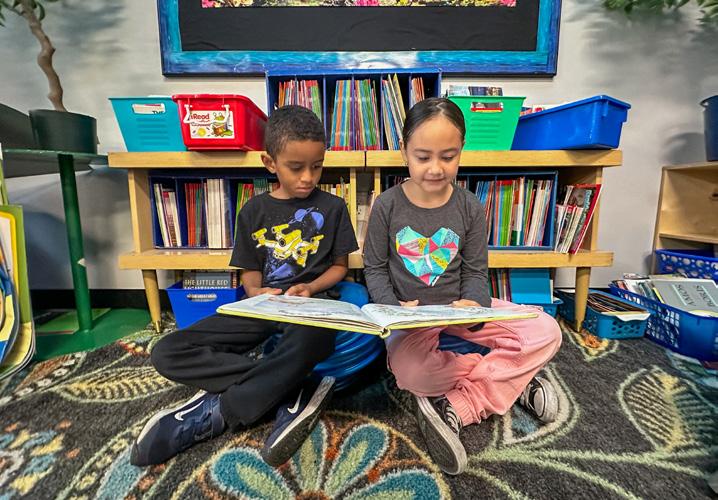
The SJCOE is coordinating a new countywide Early Literacy Community of Practice. It reflects a declaration of support made in October 2023 by the SJCOE, our Teachers College of San Joaquin, San Joaquin Delta College, and all 14 San Joaquin County school districts to affirm our commitment to ensuring students become proficient readers by the end of third grade. Through the community of practice, educators throughout the county meet regularly to learn with and from one another to improve literacy education in our schools. This work aligns with the science of reading to ensure literacy instruction is effective and supports students.
This year we celebrated the first student to complete the Apprenticeships Reaching Career Horizons (ARCH) program, a unique high school apprenticeship in California that began in our county.
Educational equity means that each child receives what they need to develop to their full potential. It is part of the foundation of our long-standing one.Program and drives the work of our Diversity, Equity, Inclusion, and Access department moving us forward as an organization.
Employee Connection and Development
At the SJCOE, we encourage and support our team to grow within our organization. The principal of our Redwood School, Enrique Lopez, followed his calling in the SJCOE from substitute instructional assistant to teacher to Special Education Programs administrator.
Exemplary Support and Service
To strengthen defenses against the growing threat of cyberattacks against educational institutions, our Information Technology department organized our second annual Cybersecurity Symposium for school districts and other agencies.
The SJCOE is part of the wider education community in our county, too. This annual report also includes a sampling of the amazing students, dedicated educators, and accomplishments seen in San Joaquin County schools throughout the year. Listening to their stories will inspire you.
I hope you enjoy this annual report, and that you learn something new about the San Joaquin County Office of Education in the following pages. I would also like to thank the inspiring and innovative staff, teachers, and administrators of the SJCOE who make it all happen. We have amazing programs because we have amazing people.
Your partner in education,

Troy A. Brown, Ed.D. San Joaquin County Superintendent of Schools


TERRELL MARTINEZ
DEPUTY SUPERINTENDENT
Business Services
JANINE KAESLIN
ASSOCIATE SUPERINTENDENT
Student Programs & Services
JANE CHAMBERLAIN
ASSISTANT SUPERINTENDENT
Educational Services
BRANDIE BRUNNI
ASSISTANT SUPERINTENDENT
Special Education & SELPA
MELANIE GREENE
ASSISTANT SUPERINTENDENT
County Operated Schools & Programs
PETER FOGGIATO
ASSISTANT SUPERINTENDENT
Business Services
We care for and educate our county’s youngest learners through early education programs, and provide direct instruction to students and adults through our charter schools, special education programs, and court and community schools. Plus, we coordinate and provide services to migrant, foster, and homeless children and youth.
We support San Joaquin County school districts by providing financial oversight, overseeing compliance with state and federal mandates, assisting with the development of Local Control and Accountability Plans (LCAP), facilitating professional learning opportunities, credentialing, coordinating countywide student events and academic competitions, providing continuous improvement and support, processing payroll, developing technology, maintaining and supporting information technology infrastructure, and more!
We collaborate with community, industry, and education leaders to address countywide educational issues, and we advocate at the state level.
We go above and beyond the mandated role of a county office of education to meet the needs of our community by developing innovative programs and services that educate and inspire children, students, and adult learners.

California has a three-level public education system, including the California Department of Education, county offices of education, and local school districts.
Regulations, funding, and policy decisions are generally established at the state level. At the same time, the day-to-day delivery of instruction is the responsibility of approximately 1,000 school districts throughout the state.
The 58 county offices of education are the intermediate level of the public education system. County offices provide a support infrastructure for local schools and districts.
CHRISTINA TORRES-PETERS
CHIEF HUMAN RESOURCES OFFICER
Business Services
County offices of education also fulfill state mandates to approve school district budgets and Local Control and Accountability Plans (LCAPs), register teacher credentials, complete employee background checks, certify school attendance records, and develop countywide programs to serve students with special needs.

THE SAN JOAQUIN COUNTY OFFICE OF EDUCATION (SJCOE) IS ONE OF 58 COUNTY OFFICES OF EDUCATION IN CALIFORNIA.
From our Stockton campus to our outdoor education centers in San Joaquin County and the Tahoe National Forest to our school sites and classrooms throughout the county, we educate, we innovate, and we inspire. Our work is guided by the priorities of Building to Serve, our five-year strategic plan. The five priorities are: Exemplary Support and Service, Employee Connection and Development; Diversity, Equity, Inclusion, and Access; Instructional Leadership; and Workforce Development.
OFFICE OF THE SUPERINTENDENT
Administrative Services
CodeStack
Diversity, Equity, Inclusion, and Access
Grant Development Office
Public Information Office
Student Programs & Services
BUSINESS SERVICES
County Office Business Services
District Business Services
Human Resources
Information Technology
Joint Powers Authority
Operations & Support Services
Payroll Services
SPECIAL EDUCATION LOCAL PLAN
AREA & SPECIAL EDUCATION
Special Education Regionalized Programs
Program Specialists
Related Services
WorkAbility I
Vocational Skills Lab
COUNTY OPERATED
SCHOOLS & PROGRAMS
Academic Resources
Career Technical Education
Discovery ChalleNGe Academy
Foster Youth & Homeless Services
Greater Valley Conservation Corps
one.Charter Academies
one.Program
Student Services
Venture Academy Family of Schools
EDUCATIONAL SERVICES
College & Career Readiness
Comprehensive Health
Continuous Improvement and Support
Early Education and Support
Language & Literacy
Mathematics
Migrant Education
Student Engagement & the Arts
STEM Programs
Teachers College of San Joaquin
CODESTACK ACADEMY
An affordable and immersive coding school located in Stockton, California
DISCOVERY CHALLENGE ACADEMY
A five and a half month quasi-military residential program located in Lathrop
HEAD START SAN JOAQUIN
70 sites and 124 classrooms across the county
one.ALTERNATIVE EDUCATION
27 sites and 67 classrooms across the county
one.CHARTER ACADEMIES
Academy of Visual & Performing Arts
Building Futures Academy
Career Readiness Academy
Come Back Kids
Elementary Academy K-6
SPECIAL EDUCATION PROGRAMS
McFall and Redwood schools, plus 81 classrooms on satellite sites at various school district campuses
TEACHERS COLLEGE OF SAN JOAQUIN
The only regionally accredited institution of higher education that is a department within a county office of education
VENTURE ACADEMY FAMILY OF SCHOOLS
13 specialized academies: Academic Performance Excellence (APEX); BrainWorX; Delta Visionary Integrated Science, Technology, and Academics (Delta Vista); Durham Ferry; Excel; Foundations; ImagineIT; Independent Study; Keystone; Synergy; Teacher Education and Early College High (TEACH!); Venture Integrated School of the Arts; and Ventureland
843 SUBSTITUTE AND TEMPORARY* 651
*Includes students in paid work experience.
14 SAN JOAQUIN COUNTY SCHOOL DISTRICTS

254 PUBLIC SCHOOLS & PUBLIC CHARTER SCHOOLS
152,956 STUDENTS ENROLLED IN SAN JOAQUIN COUNTY K-12 PUBLIC SCHOOLS
WHERE FUNDS COME FROM
Total Revenues
$2,523,104,690
Local Control Funding Formula (65%)
Federal (9%)
Other State (22%)
Other Local and other Sources (4%)
San Joaquin County is home to 14 public school districts with 245 schools, including charter schools, and a total of 152,956 students. Each independent school district is governed by an elected board of trustees. The San Joaquin County Office of Education (SJCOE) provides a variety of services to support students and educators. Collaborative efforts between the SJCOE and school districts ensure students have access to a high-quality education.
(51%)
Benefits (24%)
and Supplies (6%)
(12%)
Outlay (2%) Other (5%)
Schools in the state Model Continuation High School Recognition Program provide comprehensive services to at-risk youth through the use of exemplary instructional strategies, flexible scheduling, and guidance and counseling services. Thirty one schools throughout California were recognized as model continuation high schools for 2024.
Continuation schools provide a high school diploma program for students who have not graduated from high school, are required to attend school, and are at risk of not completing their education, according to the California Department of Education when announcing this year’s list of schools. Two of these Model Continuation High Schools are located in San Joaquin County.
LIBERTY HIGH SCHOOL
Lodi Unified School District
GEORGE AND EVELYN STEIN HIGH SCHOOL
Tracy Unified School District
Middle College High School at San Joaquin Delta College was one of only 33 schools in California and 353 nationwide to receive the prestigious National Blue Ribbon Schools award.
“The honorees for our 2023 National Blue Ribbon Schools Award have set a national example for what it means to raise the bar in education,” said U.S. Secretary of Education Miguel Cardona when the U.S. Department of Education announced this year's awardees.
The recognition is based on a school’s overall academic performance or progress in closing achievement gaps among student groups on assessments. National Blue Ribbon Schools serve as models of effective and innovative school practices for state and district educators and other schools throughout the nation.
Located on the campus of San Joaquin Delta College, Middle College High School is part of the Lodi Unified School District. The school enables students to experience a rigorous college preparatory high school education with direct access to college.

Of the thousands of schools in California, only 293 earned the title of 2024 California Distinguished School. Four of those schools call San Joaquin County their home.
Established in 1985, the California Distinguished Schools Award remains one of the important ways to celebrate exceptional schools, districts, teachers, and classified employees for their innovation, talent, and success in supporting students, according to the California Department of Education when announcing this year’s list of schools.
JEFFERSON SCHOOL
Jefferson Elementary School District
MANTECA HIGH SCHOOL
Manteca Unified School District
HEALTH CAREERS ACADEMY
Stockton Unified School District
STOCKTON EARLY COLLEGE ACADEMY
Stockton Unified School District


Isaac, a freshman at River Islands High School (Banta Unified School District), was just 11 years old when diagnosed with an extremely rare form of jawbone cancer. He underwent a complex 12-hour surgery and several subsequent surgeries. As of last winter, Isaac can now say he has beaten cancer and is pursuing his passion for performing arts and singing.
Alexander, a freshman at Venture Academy Family of Schools (San Joaquin County Office of Education), lost the ability to speak during his battle with a brain tumor in eighth grade. Determined to be able to communicate, he taught himself sign language in both English and Spanish. When asked why, he said one reason was that he wanted to be able to say ‘thank you’ to everyone helping him.
Isaac and Alexander were just two of the fifteen exceptional students presented with the Every Student Succeeding Award from the San Joaquin chapter of the Association of California School Administrators. The award honors inspirational students who have succeeded against all odds and beyond all expectations.
Nominated by school administrators and staff, the award honors inspirational students who have overcome adversity, such as medical issues or disabilities, family tragedy, or inner challenges like depression and anxiety.
“No matter the struggle, all the students here today are the heroes of their own amazing stories of perseverance and achievement,” said Terrell Martinez, deputy superintendent of Business Services at the San Joaquin County Office of Education (SJCOE).
Students were honored during a special breakfast event organized by the SJCOE College and Career Readiness team.
Isaac Basurto
Banta Unified
Andrea Hernandez
Rachel McDonald
Escalon Unified
Ky’Anna O’Rear
Lincoln Unified
Alexis Leanos
Ishmael Peoples
Linden Unified
Kendra Temgo
Manteca Unified
Nicholas Shareghi
New Jerusalem Elementary
Lisa Jimenez
Skyler Ortiz
Ripon Unified
Alexander Rodriguez Garcia
Gabriella Saucedo SJCOE
Yamilet Nolasco-Lopez
Stockton Unified
Adrian McCullar
Camila Reyes Minero
Tracy Unified
Each year, the San Joaquin County Office of Education (SJCOE) celebrates education and educators at the annual San Joaquin County Classified Employees, School Counselor, and Teacher of the Year Awards Celebration Dinner. It's the culmination of a selection process, which begins with local schools and districts nominating employees to the SJCOE for final selection.
The 2024 event saw the date of the dinner move from June to April. Because of the move, the SJCOE is celebrating two years of excellence in education in this year's edition of the Annual Report.

LODI UNIFIED TEACHER DEBBI CRAWFORD EARNED TOP HONOR
As a child, Debbi Crawford would bring home extra papers at the end of the school year so she could ‘play school’ during summer vacation. Inspiring educators and a love of education led her to become a teacher when she grew up.
When Wagner-Holt Elementary School (Lodi Unified School District) first welcomed students in 1989, Crawford was one of the school’s founding teachers. The fifth grade teacher had more than four decades of teaching experience when she became the 2023 San Joaquin County Teacher of the Year.
“Ms. Crawford once told me that teaching is hundreds of small victories,” wrote the Wagner-Holt Elementary principal who nominated Crawford. “These small victories, accumulated over the course of her 41-year career, have positively touched and changed the lives of generations in our school community.”
Crawford is also a leader. In 2008, she became one of the first AVID (Advancement Via Individual Determination) elementary teachers in California and encouraged colleagues to do the same, making Wagner-Holt Elementary one of the first schools to implement the schoolwide AVID elementary program.
KAREN VENTURA CLERICAL AND ADMINISTRATIVE SERVICES
Linden Unified
GUSTAVO ALBISU CUSTODIAL AND MAINTENANCE SERVICES
Manteca Unified
JOSEPH CAMACHO PARAPROFESSIONAL
Tracy Unified
CHAD SIMAS SECURITY SERVICES
Manteca Unified
PETER LILIENSTEIN SKILLED TRADES
Lodi Unified
PAMELA MENDOZA TECHNICAL SERVICES
SJCOE
ENNA BLACK TRANSPORTATION SERVICES
Manteca Unified
SCHOOL COUNSELOR OF THE YEAR

ERICA SUAREZ
Lodi Unified

MANTECA UNIFIED TEACHER MARIA RAVELO EARNED TOP HONOR
Maria Ravelo grew up in two countries, and her education began in the migrant camps in San Joaquin County, in French Camp. She continued to learn as a student of Lathrop Elementary and East Union High schools (Manteca Unified School District) and the University of the Pacific.
In 2024, she was named the county Teacher of the Year. Ravelo is a veteran educator with about 30 years of experience. She teaches seventh graders at Mossdale Elementary School, in the same school district where she, herself, was a student. “This love of education has led Maria to a life of service, giving back to the community that raised her,” wrote Mossdale Elementary Principal Anthony Chapman when nominating Ravelo. “She has served in countless leadership and mentorship roles for both students and staff, using her quiet, yet powerful, demeanor to inspire those around her.”
In her classroom, students feel safe, respected, and supported, Chapman wrote. “Simply stated, she cares about kids and dedicates everything she has to help them succeed.”

Jason Cheeseman was named the 2024 California Classified School Employee of the Year in the Custodial and Maintenance Services category. Jason was one of nine classified school employees to receive an award from the California Department of Education. He takes pride in ensuring North Elementary School (Tracy Unified School District) is a clean and safe environment for all students and staff to thrive.
MIRIAM SOTO CLERICAL AND ADMINISTRATIVE SERVICES
Ripon Unified
JASON CHEESEMAN CUSTODIAL AND MAINTENANCE SERVICES
Tracy Unified
SHERRY HURD PARAPROFESSIONAL
Tracy Unified
LORENA CASILLAS SECURITY SERVICES
Stockton Unified
MICHAEL LEHR SKILLED TRADES
Manteca Unified
FAVIAN MORENO TECHNICAL SERVICES
SJCOE
TRICIA JOHNSTON TRANSPORTATION SERVICES
Linden Unified
JEFFREY IRVING FOOD AND NUTRITION SERVICES
Stockton Unified
RENEÉ VILLARREAL HEALTH AND STUDENT SERVICES
SJCOE
SCHOOL COUNSELOR OF THE YEAR

JORDAN BLEVINS
Stockton Unified


We will recruit the best talent possible, invest in relevant professional learning, foster career advancement opportunities, and value employee voice.

Meeting the students at Redwood School changed Enrique Lopez’s life.
Now the principal of the school, which is part of the San Joaquin County Office of Education (SJCOE) Special Education Programs, Lopez started his career in special education as a substitute instructional assistant for the SJCOE in 2006.
At the time, he thought it would be a temporary stop on his way to entering a career in law enforcement. But working with students changed that plan, starting with the first student he worked with as an instructional assistant. “We were basically like brothers,” Lopez said about the student.
Lopez became a teacher at Redwood School. After he made the decision to stay in special education, he went back to school to get a master’s degree in education. His range of experience helps shape the school culture. He models how he wants his staff to work with students because he’s been there, he said.
Lopez says building relationships is an important part of the job, especially when it comes to the students. “It’s the love in my heart that I can provide to them, and I think building those relationships is what keeps me coming to work every day.”
The SJCOE provides opportunities for employees to grow within the organization. At least 12 classified employees have been hired as teachers for the 2024-25 academic year. And from July 2023 through April 2024, 151 temporary or permanent SJCOE employees made the move into a new permanent role at the SJCOE.

For the third year in a row, the San Joaquin County Office of Education (SJCOE) campus was turned into superhero headquarters for the Superhero 5k Run and Walk fundraiser.
The annual fundraiser is held in support of the Child Abuse Prevention Council of San Joaquin County and their Court Appointed Special Advocate (CASA) program, which advocates and supports youth living in foster care across the county. This year, participants collectively raised over $2,200 in support of this great cause.
Music played across the campus and staff “sidekicks” cheered as superheroes made their way along the SJCOE connectivity path. Witnesses were awestruck by the superhero team shirts, capes, and flashy outfits worn by participants – such as the custom “Captain EESD” costume worn by Irene Hetterviik, Early Childhood Education program manager. Some staff participated alone, while others joined forces with their colleagues, like the “Up and Atom” team from SJCOE STEM Programs and the Culinary Arts “Incredibles” from the one.Program.
To learn more about volunteering as a CASA and supporting youth living in foster care, visit nochildabuse.org/casa/.
The San Joaquin County Office of Education (SJCOE) goes above and beyond the mandated duties of a county office of education to offer unique programs and learning opportunities for students and adults across the county. To teach employees about these offerings and foster opportunities for career advancement within the organization, the SJCOE holds an annual Know and Grow program for new, unrepresented classified staff.
Spanning eight months and nine learning sessions, Know and Grow includes a tour of buildings along the Transworld Drive campus, presentations from various departments and programs, and opportunities for staff to learn more about themselves with a personality test.
meet others from outside his department. “It was great to see what people do in other buildings and how the departments work together,” he said.
The 2023-2024 program concluded with a graduation ceremony, attended by County Superintendent of Schools Dr. Troy Brown and other Cabinet members, who shared more about themselves and congratulated graduates. This school year, 55 employees graduated from Know and Grow.
Know and Grow is organized by the SJCOE administration. As a priority in the strategic plan, Building to Serve, the SJCOE is proud to foster employee connection and development through programs like Know and Grow.

In line with the San Joaquin County Office of Education’s (SJCOE) Building to Serve Workforce Development priority, the SJCOE offers a year-long catalog of courses titled YOUniversity to staff. The 2023-2024 school year was the seventh year the SJCOE has offered professional development courses organization-wide to employees.
The SJCOE YOUniversity program has seen much growth since it was first piloted to clerical support staff in 2017. Due to the program’s popularity, YOUniversity expanded in 2018 to include certificated and classified management. Each year, more employees began taking advantage of these free trainings to learn something new, connect with colleagues, and grow professionally. In the 2023-2024 school year, those numbers increased to over 300 staff members participating in YOUniversity

Bridget Watson, who serves as the executive assistant to Assistant Superintendent Jane Chamberlain, is proud to facilitate the courses for staff. “It is our hope that YOUniversity will contribute to building confidence and networking in the workplace to foster employee relationships and professional growth,” said Bridget. “YOUniversity embodies all that SJCOE stands for by being innovative, inspiring, and educational.”
Trainings vary from professional development skills – like Microsoft Excel for Beginners; Diversity, Equity, Inclusion, and Access resources; or Canva graphic design essentials – to Lunch with Leadership, where employees can eat lunch and connect with members of the SJCOE Cabinet. There are also a number of classes to ensure wellness across the SJCOE from mindfulness and stress management classes to suicide prevention to Red Cross CPR Certification courses. These trainings are all at no cost to employees and strive to invest in the SJCOE’s talented and dedicated staff.
Anthony Alejandre, an intervention and prevention specialist in the SJCOE County Operated Schools and Programs division, valued the opportunity to

We will provide highlevel customer service with integrity while maintaining the highest standard of knowledge and resources.


The San Joaquin County Office of Education (SJCOE) aims to educate, innovate, and inspire students, staff, and the community alike. And oftentimes, innovative ideas spur lofty goals, which require support in the form of funding, technology assistance, or a review of policies in order to move forward to best serve our community. Business Services team members are pillars of customer service and problem-solving. On any given day, the department is maintaining network services for twelve of our county’s fourteen school districts, processing purchase orders and reimbursements to programs, onboarding new employees and participating in recruitment efforts, or managing emergency preparedness and safety initiatives for SJCOE schools and offices.
Business Services, led by Deputy Superintendent Terrell Martinez, also provides services and support to SJCOE programs and local school districts ranging from payroll and accounting to auditing and benefits management to fiscal oversight and facility management. Business Services also operates a number of joint power authorities and consortia, which combines the SJCOE with multiple local school districts to secure reduced rates for property insurance, workers’ compensation coverage, legal services, and information technology.
“I am most proud of Business Services for their continued input and adaptability with other departments to ensure we are serving our community at the highest level,” said Terrell Martinez, deputy superintendent of Business Services. “Our collaboration allows the SJCOE as a whole to embody our mission – to educate, to innovate, and to inspire.”
Due to the diligence and dedication of the Business Services staff, the SJCOE and local school districts are able to provide necessary programs to students and families to directly benefit our community as a whole. To learn more about how the department serves our community, visit sjcoe.org/businessservices.
Cyberattacks have increasingly targeted school districts across the country in recent years.
To strengthen defenses against cyberattacks, representatives from school districts and other agencies from across San Joaquin County and beyond gathered at the San Joaquin County Office of Education (SJCOE) for the second annual San Joaquin County Schools Cybersecurity Symposium in September.
“We are all working together to make sure our schools don’t become a victim,” SJCOE Information Technology Division Director Ed Babakhan said.
Organized by the SJCOE Information Technology (IT) department, the symposium allowed attendees to network and learn from one another while also hearing from experts in the field and the FBI. It also gave attendees a chance to learn from real-world examples of organizations that have experienced a cyberattack. The symposium is part of the SJCOE IT department’s continued efforts to raise cybersecurity awareness.
It’s a focus the technology professionals from school districts shared. “Everything we do points back to cybersecurity,” Escalon Unified School District IT Director José Sanchez said. He joined other attendees and agreed on the importance of staying up to date on new tricks used by cybercriminals.
Attendees also talked about hardening schools against attacks by training staff to be able to recognize attempts at phishing or other methods criminals use.
A Sesame Street theme throughout the day kept the focus on the children impacted by school cyberattacks.
The San Joaquin County Office of Education (SJCOE) is dedicated to supporting our county’s educational community with their needs, including assistance with filling staffing vacancies. To help in this endeavor, the SJCOE’s Human Resources department hosts an annual Educator Job Fair, a one-stop event that allows participating districts, charter schools, non-public schools, and SJCOE programs to meet and hire qualified candidates. It also allows the talented pool of applicants to easily navigate the available opportunities in San Joaquin County.
In March 2024, more than 240 educators walked the halls of our Teachers College of San Joaquin, seeking to meet and learn about the 22 prospective employers who participated. Employers shared more about what makes their organizations unique and held on-the-spot interviews. For support with online applications, attendees were encouraged to visit the EdJoin Lab, where an expert from the SJCOE Codestack team could answer any questions. In all, nearly 100 talented individuals were hired during the event.
The SJCOE Human Resources department serves more than 2,000 employees in the organization and each of the county’s 14 school districts. Professional services include:
• Fingerprinting/Live Scan services
• Credentialing services
• Background checks, in partnership with the FBI and Department of Justice
• Support, guidance, and training for all SJCOE staff and districts
More than 150 students in fourth through eighth grade spent time expanding their art skills with numerous exercises and art sessions led by talented highschool instructors during the Color the Summer Art Camp, hosted at the San Joaquin County Office of Education’s (SJCOE) Sky Mountain Outdoor Education Center.
Students were guided through 12 activities during the sleepaway camp, which ranged from making resin jewelry and wire sculptures to using watercolors and bubble art. Each activity was strategically implemented to ensure students learned key art lessons and specific techniques like 2D-to-3D building, color exposure, and the seven elements of art. In between, students had free time to swim, canoe, sing campfire songs, and play games with fellow campers.
“I have a love of art in general – the expression of drawing characters and backgrounds,” said Sirius, an eighth-grade student. “I hope to apply as a student leader next year.”
Whether it is an opportunity to showcase student artistic talent, an academic competition, a time to celebrate student achievement, or a camp to learn new skills – the SJCOE is proud to provide a wide array of events for students. Other events and competitions organized by the SJCOE include:
• Academic Decathlon
• County STEAM Fair and Expo
• Dinner with a STEM Professional
• H20 Hackathon
• Honors Concerts
• Math Tournaments
• Mock Trial
• Pinnacle Awards
• Science Olympiad
• SJCOE Art Show
• Spelling Bees
• State Seal of Biliteracy
• Youth in Government Day
• Recruitment and job fairs for classified and certified staff
• Information sessions for individuals interested in joining the SJCOE


• And more! 1 2 3



We will ensure every student and staff member has access to support and services to ensure opportunities for success. We will demonstrate an appreciation for diversity, equity, and inclusion by embedding equity in policies, practices, and planning.

In 2022, the San Joaquin County Office of Education (SJCOE) founded the Diversity, Equity, Inclusion, and Access (DEIA) department to provide leadership and program guidance to SJCOE programs and the county’s 14 school districts to ensure the sustainability of change initiatives regarding equity, access, culturally and linguistically responsive learning and work environments.
At the SJCOE, it is imperative to ensure each child received what they needed to develop to their full academic and social potential. DEIA work was also identified as one of the five priorities in SJCOE’s strategic plan, Building to Serve. Since the inception of the steering committee – formed in 2023 – the DEIA department has hosted the Around the World on Transworld Drive, an event dedicated to showcasing cultural diversity and representation of students and staff. Additionally, affinity groups and DEIA learning labs to educate administrators and staff on how to examine their own biases while also dismantling barriers that have been implemented organization-wide. The department also collaborates with each SJCOE department to identify smart, measurable, achievable, relevant, time-bound, inclusive, and equitable – SMARTIE – goals, provides support, as needed, and then monitors the progress with routine check-ins during the year.
“The intentionality to include DEIA work at the forefront of Building to Serve speaks volumes of SJCOE as an organization,” said Jacalyn Davis, DEIA director. “It is an acknowledgement of the work being done, and highlights how we are willing to grow and lead by example.”
The DEIA department equity toolkit and resources for school districts can be found at sjcoe.org/StudentProgramsServices/equity.aspx

A group of 36 dedicated students from high schools across the county joined the first Youth Mental Health Development Academy (YMHDA) – a peer leadership program in San Joaquin County that provides training around mental health, suicide prevention, human trafficking, substance abuse, and school violence.
The academy was developed by the SJCOE Comprehensive Health department and funded through a Mental Health Services Oversight and Accountability Commission grant to address and implement school-based mental health services and resources. The grant was awarded in 2022 through a partnership of the SJCOE and San Joaquin County Behavioral Health Services.
To learn to become peer advisors at the academy, students first had to apply and commit to thorough training by mental health professionals, as well as monthly training and meetings throughout the school year. Last summer, students were on the SJCOE campus for one week, followed by a week at the Sky Mountain Outdoor Education Center to practice their skills. Instructors from the Mind Body Awareness Project led sessions that included mindfulness techniques, guided meditation, selfacceptance, and destigmatization of mental health services.
“It is incredibly uplifting to hear these students’ ideas and understand how attuned they are with the issues plaguing their schools and students around them,” said Nora Hana, director of Comprehensive Health. “This year’s academy participants will change the world, of that I have no doubt.”
Daisy Becerra, a senior from Liberty High School in Lodi Unified School District, was deficient in school credits and at risk of not graduating on time when she discovered Discovery ChalleNGe Academy (DCA).
The 22-week residential program gives high school students at risk of not graduating the chance to earn up to 65 credits and return to their school, or graduate with their diploma.
“I knew it was going to be hard being away from home for so long, but I made the decision to do it for myself,” said Daisy. The experience was unforgettable, she said.
Some had never been to these mountains before. None had ever had an experience quite like this.
This is an example of a Quest, an out-of-classroom experience that is available to students in the one.Program, the San Joaquin County Office of Education (SJCOE) alternative education program.

Daisy worked hard in classes, workshops, and activities offered by the school to earn her rank as Sergeant First Class and serve as a platoon guide. Her most memorable experience was seeing her family for the first time after 10 weeks during DCA Family Day – their first time seeing her transformed into Cadet Becerra.
Daisy graduated from the program with DCA Class 15 in June 2024 and joined a group of fellow seniors to also receive their high school diplomas. “DCA taught me a lot of life skills and discipline,” she said. “It was hard, but I always reminded myself that it was going to be worth it.”
DCA is offered in partnership between the California National Guard and San Joaquin County Office of Education for youth between the ages of 16 and 18 who are at risk of not graduating high school. DCA is part of the National Guard Youth ChalleNGe program, the third in the state and the first in Northern California.
For more information, visit iamdiscovery.org.
Last fall, a group of high school students rode bicycles through mountain meadows and along Lake Tahoe shoreline before camping for the night.
Quests for one.Program can focus on the arts, bring students to a zoo, or give them a chance to get in a kayak for the first time and paddle around Lodi Lake.
They provide access to new, challenging experiences that promise future challenges can be overcome, too.
“It’s like going on different adventures,” said Macie, a student from one.Main in Manteca.
It’s what a one.Program Quest is meant to do.
“The Quest is important to students because it allows them to experience something that is a little bit bigger. It gives exposure to the world, and it gives opportunities for relationship-building,” said Lucas Homdus, one.Program coordinator. “It’s kind of the essence of who we are in the one.Program.”
Through small-school settings and a dedicated team of educators and support staff – the one.Program puts a premium on building relationships with students to help them find success that might have been elusive in other school environments.


We will use data to drive countywide instructional change to improve student learning outcomes. We will be an exemplar of highleverage strategies and instructional practices.


It’s official. In its policies and practices as an organization and as leader for the community, the San Joaquin County Office of Education (SJCOE) is doing its part to make the world a cleaner and greener place.
In the spring of 2023, the SJCOE was included among a short list of schools and districts receiving recognition through the California Department of Education (CDE) California Green Ribbon Schools program. Specifically, the SJCOE was named a 2023 California Green Ribbon School County Office of Education Sustainability Honoree. And one year later, the CDE announced the SJCOE would receive the distinction in 2024.
“Our organization is committed to reducing environmental impacts and costs of our operations while also embracing efforts to improve the health of students and staff,” San Joaquin County Superintendent of Schools, Dr. Troy Brown said. “The SJCOE is also committed to increasing environmental literacy in our region through educational programs and building a network of students, educators, and community partners who share in this goal.” These networks ultimately enhance the environmental literacy lessons students are learning in the classroom.
The SJCOE received “silver” status because of progress made toward reaching goals in three different areas reflecting a multipronged approach to achieving sustainability. It was due to strategic efforts made by the SJCOE STEM Programs department, Operations department, Greater Valley Conservation Corps, and the Teachers College of San Joaquin.
To celebrate the 2023 award, the SJCOE planted a Valley Oak tree sapling on its Stockton campus. Native to the county, the drought-resistant species will serve as a reminder of a continued commitment to reducing the SJCOE’s environmental impact and improving environmental literacy across the region.

Early childhood educators participating in the Language ENvironment Analysis (LENA) Grow professional development program are making gains toward improving child language development. Data results from classrooms in San Joaquin County using LENA devices have shown that students who were less verbal before using the devices made significant gains in verbal engagement.
LENA devices are small “talk pedometers” worn by children to measure back-and-forth exchanges – called conversational “turns” – between children and adults. Rises in these conversational turns are correlated to increases in brain growth and scores on language, executive function, and reasoning assessments.
In the past school year, students in LENA Grow classrooms averaged a 27% increase in conversational turns per hour. Students who were less verbal during the school day compared to other peers experienced a 64% increase in conversational turns on average. Even more impressive, students who began with fewer interactive talks than the national medium had a 129% increase in conversational turns.
The devices use cloud-based software to share detailed data each week to help adults make measured shifts to boost interactive talk and conversational turns. This data analysis is coupled with strategic strengths-based coaching from experts through the San Joaquin County Office of Education (SJCOE) Early Childhood Education department to provide LENA Grow educators with additional resources and support needed to individualize instruction, strengthen relationships, and improve language skill development.
LENA Grow is administered by the SJCOE Early Education and Support department and is made possible through grant funding received from the SJCOE Quality Rating Improvement System (QRIS). LENA Grow is offered to sites participating in the QRIS.
campuses to create inclusive and equitable learning experiences for each and every student.
Every student has different strengths and challenges. UDL values each one, recognizing that variability is the norm. As a research-based approach to teaching, UDL minimizes barriers and maximizes learning for all students by providing them with multiple ways to represent their knowledge, express themselves through action, and engage.
With these principles, educators can create flexible learning environments, curricula, and assessments that accommodate the diverse needs of all learners, including those with disabilities, different learning styles, and different cultural backgrounds. In a classroom, this looks like providing students with multi-sensory lessons, differentiated instruction, several options to demonstrate their learning, and more.
The event featured a keynote by Sam Drazin, executive director of Changing Perspectives, and sessions on topics like cultivating creative spaces, strategies for conducting instructional rounds, addressing barriers to UDL implementation, and more. This year’s event was supported by the Capital Central Area Foothill Consortium and the California UDL Coalition, as well as event sponsors UDL Goalbook and Texthelp. The next California UDL Summit will be held on January 30-31, 2025, at the SJCOE. Learn more at www.bit.ly/CAUDL2025.
In October 2023, the superintendents of all 14 San Joaquin County school districts, the president of Teachers College of San Joaquin, and the superintendent-president of San Joaquin Delta College joined County Superintendent of Schools Dr. Troy Brown in signing a declaration of support for a new countywide initiative to lift up students and the community by working to advance early literacy.

The San Joaquin County Office of Education (SJCOE) hosted hundreds of educators from across the state for the first-ever California Universal Design for Learning (UDL) Summit. The sold-out event aimed to create awareness of UDL principles and provide immediate strategies for incorporating them into
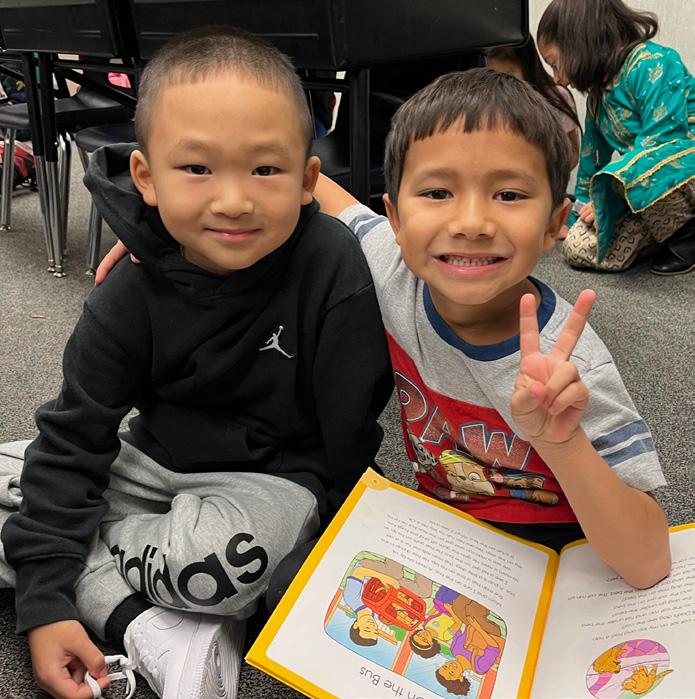
The declaration was the first step in creating a countywide Early Literacy Community of Practice (COP), a workgroup to foster professional development, guide countywide efforts, and collaborate on best practices.
The goal of the COP is to recognize and support individual district goals and early literacy actions for students in the TK- third grade, as well as embrace new standards. Through the COP, educators throughout the county meet regularly to learn with and from one another to improve literacy education in schools, as well as investigate how to utilize community partners and engage families.
The declaration affirmed each district’s commitment to aligning literacy instruction with the science of reading – an interdisciplinary body of scientifically-based research about reading and issues related to reading and writing – to ensure students are proficient by the end of the third grade.
To read the full Early Literacy Declaration of Support and learn more about the developing Early Literacy Community of Practice, visit sjcoe.org/Superintendent/earlyliteracy.aspx.

We will elevate academic programs and community partnerships designed to produce positive community members and workforce-ready graduates.


The San Joaquin County Office of Education (SJCOE) and the Ripon Unified School District held a recognition ceremony in October to celebrate the achievement of Carter Lacey, the first student to complete the ARCH (Apprenticeships Reaching Career Horizons) program, the state’s first registered apprenticeship program for high school students.
“It takes courage to be the one who goes first,” said Dr. Troy Brown, San Joaquin County Superintendent of Schools. “You have paved the way for others to follow.”
ARCH students earn college credit while receiving on-the-job training in paid positions as a state-registered apprentice while attending high school. Before ARCH, state-registered apprenticeship programs were not available in high schools.
Apprenticeships are the highest form of work-based learning for our high school youth, combining dual-enrollment, college credit with paid, hands-on training.
“This has been a great first job experience for me,” Lacey said. “I really feel that I have learned a lot that I’ll take with me to future jobs and future careers.”
Coordinated by the SJCOE’s College and Career Readiness department, ARCH was made possible through a California Apprenticeship Initiative (CAI) grant from the California Community College Chancellor’s Office. Now, ARCH students are registered apprentices in the occupations of information technology support specialist, teacher’s aide/ paraprofessional, assistant farm manager, and hospitality/marketing specialist.
More information at sjcoe.org/CollegeAndCareer/.

Students explore future careers at the new Vocational Skills Lab at the San Joaquin County Office of Education (SJCOE).
In the lab, students perform tasks that translate to on-the-job skills. And through assessment tools, students can document how adept they are at a particular kind of task.
Students clock in, clock out, earn a paycheck, and learn about everything else that comes with holding a job – from what is appropriate workplace behavior to how to interact with their coworkers and managers.
Designed for students with special needs, the skills lab is a program of the San Joaquin County Special Education Local Plan Area (SELPA), which is part of the SJCOE.
The lab prepares students for what will come after high school. That could be a first job or a career path. It will also better prepare students to enter the WorkAbility I program. This well-established program places students in jobs with community employers.
Jordy, a high school junior, loves the opportunity to explore in the Vocational Skills Lab.
“I don’t know what job I really want to do. So, here, I can see the kind of jobs I like,” he said. “I can try something that I’ve never even heard of or tried in my life, and maybe I can see I might want to do this as a career.”
Money was tight at home when Irene was a child, so she took a nighttime job as a janitor. Education wasn’t her focus. She bounced from school to school and never graduated.
As an adult, not having that high school diploma made it harder to find work.
She decided to do something about it. She enrolled in the SJCOE’s Come Back Kids (CBK) program and graduated in 2024 at the age of 30. Her postgraduation plan is to work part time, go to cosmetology school, and start her own business.
CBK is a free, mostly online program, offered through the County Operated Schools and Programs division, that can help anyone 18 years and older earn their high school diploma.
It offers the kind of flexibility and support that allowed Irene to take care of her academics while balancing work and raising four children.
CBK helped Irene through difficult times, too. When she experienced homelessness, CBK staff was able to connect her with resources to obtain temporary, then permanent, housing. Through it all, she kept up on her schoolwork, too.
A great teacher and team at CBK made getting her diploma possible, Irene said. “I don’t think there is another school like CBK. It’s a second chance at life and doing what you want to do.”
The San Joaquin County Office of Education (SJCOE) hosted the first-ever Career Quest to prepare students for a career and provide an opportunity to explore career options offered at the SJCOE. The event welcomed 100 high school students from the Greater Valley Conservation Corps (GVCC), Venture Academy Family of Schools, the one.Program, and the Discovery ChalleNGe Academy (DCA).
The day began with a presentation from guest speaker, David Edward Garcia. An educator and comedian, Garcia shared his own story of his challenges growing up on the Texas-Mexico border to show students how they could also defy expectations, discover what they excel at, and write their own success stories in life.
Students then attended workshops, led by the SJCOE Human Resources department, focused on helping students obtain a job by teaching practical skills, like how to write their resume and what to expect in a job interview. Students were also able to visit various informational career booths hosted by several SJCOE departments, community partners, GVCC, Codestack, and more.
The event was successful in connecting students with opportunities. Following the event, DCA senior Daisy Becerra shared that she was starting on the path to joining the SJCOE in the fall as an instructional assistant – an opportunity she learned about during the event.
The SJCOE has long emphasized preparing students for jobs in the real world. This is why Workforce Development is one of the five priorities listed in Building to Serve, the SJCOE’s five-year strategic plan. The Career Quest was organized by the SJCOE Workforce Development steering committee, a group of SJCOE staff members who help keep a focus on the SJCOE’s strategic plan.


1 3 2


The San Joaquin County Office of Education serves students of all ages by providing direct education services – from close-knit charter academies to unique programs for students who have fallen behind to adults seeking a flexible way to earn their high school diploma –for success in school, college, careers, and life.


Whether you are looking to pursue or advance your career in education, Teachers College of San Joaquin (TCSJ) is the place for you. The college is passionate about developing teacher leaders and creating innovative opportunities for development. One of these opportunities includes the EduGrowth Conference, a conference for educators by educators held for the first time in July 2023.
The event helped educators build their network of professional development opportunities, supports, and resources while also inspiring them for the school year. More than 80 educators from across the Central Valley attended the first-ever conference, which featured over 30 unique sessions and a keynote address from Rushton Hurley, founder and executive director of Next Vista for Learning. Session topics were grouped to align with TCSJ's core values: rigor, relevance, relationships, and reflection.
“EduGrowth 2023 represents our college’s commitment to empower educators with the tools and strategies they need to shape the minds of tomorrow's leaders,” said Dr. Girlie Hale, TCSJ president. “Our goal is to inspire and prepare educators for the upcoming year so they can nurture the talents and potential of every student."
TCSJ was founded in 2009 by the San Joaquin County Office of Education and is the only regionally accredited institution of higher education that is a department within a county office of education. TCSJ provides a variety of options for those who wish to pursue a career in the field of education and opportunities for educators seeking to advance their skills.
THE COLLEGE CURRENTLY SERVES OVER 1,000 STUDENTS WHO WORK ACROSS 60 DISTRICTS IN EIGHT COUNTIES. DURING THE 2023-2024 SCHOOL YEAR:
206 students were earning a master of education
585 students were earning a preliminary teaching credential
68 students were earning a preliminary administrative services credential
The 2024 EduGrowth conference will be held on June 22, 2024.

149 students were participating in other TCSJ programs

The work Greater Valley Conservation Corps (GVCC) does in cities and in wilderness areas makes a difference. Neighborhoods are cleaner, wildfires have less fuel to burn, and recyclable materials are kept out of landfills.
For young adults ages 18 to 26, GVCC offers a place where they can earn a wage while gaining work experience and other skills to help reach their career and life goals.
And each year the GVCC recognizes two corps members who reflect the GVCC values and mission with a $1,500 scholarship to accelerate attaining their dreams.
“Once I entered the program, things started getting on track,” said Jason Ochoa, scholarship winner. Based in the GVCC’s Stockton headquarters, Ochoa has learned to appreciate the environment, while doing the work to improve it, on a variety of projects such as working on a Cal-Trans highway project and putting in pipe and wire for a sprinkler system in a neighborhood park.
Along the way, he learned how to operate specialized equipment and develop new skills. His view of his future changed, and he has his sights on becoming a firefighter after obtaining his high school diploma and enrolling in San Joaquin Delta College.
"This is something I didn't think was possible in the past."
Carson Cavanagh, the second scholarship winner, also sees firefighting as an option for his future. But the experience he gained in the GVCC has him also considering careers in forestry and construction. He also plans to attend college.
"My time at GVCC has helped me find who I am and who I want to be," he said.
GVCC provides services to businesses, schools, nonprofits, municipalities, and other organizations in five counites while providing corps members with paid work experience and support with academic instruction, employment opportunities, green-job training, life skills, and more.


TheGreaterValleyConservationCorps(GVCC) hiresyoungadultsages18to26.GVCCmembers canworkupto40hoursaweekandearn$17 anhour.Thejobcomeswithaccesstotraining, education,andprogramstoconnectmembersto careersaftertheGVCC.TheGVCCprovidesflexible schedules to work around school schedules. TheGVCCheadquartersisincentralStockton. AsecondfacilityinSonoraextendsthereachof GVCC’sservices,whileprovidingaprimelocation forcorpsmemberstoworkwithpartnerstobuild theirforestryandconstructionskills.
2022-2023 PROGRAM DATA
380,780 POUNDS
E-WASTE COLLECTED
98,517 POUNDS
CRV COLLECTED
8,929
ILLEGALLY DUMPED TIRES COLLECTED
125,000 SQ. FT. BLIGHT/LITTER REMOVED
150,000 SQ. FT.
GRAFFITI ABATED & REMOVED
1,248
MATTRESSES COLLECTED
68
RECYCLING AMNESTIES & COLLECTION EVENTS
Whether it is a coding camp in the FabLab, attending science camp at Sky Mountain Outdoor Education Center, or learning archery during the Let’s Play Outside summer camp at Durham Ferry Outdoor Education Center, students and educators are invited to explore and innovate the world of sceince, technology, engineering, and mathematics (STEM) education at the San Joaquin County Office of Education (SJCOE).
The FabLab is a unique engineering experience where students and educators come to learn, create, and play. This makerspace is equipped with high-end equipment like laser cutters, 3D printers, CNC mills, robotics arenas, augmented-reality workstations, and more than 100 computers. The FabLab offers field trips, events, and summer STEM camps for students, professional learning opportunities for educators, and graduatelevel classes through Teachers College of San Joaquin.
The SJCOE STEM Programs department hosts an annual Dinner with a STEM Professional for middle and high school students across the county. The main goal is to expose students to the vast careers within science, technology, engineering, and mathematics fields. This year, the SJCOE connected over 100 students with professionals in varying STEM careers from engineering to coding, researchers to sustainability experts, and college professors to physicians.
Each year, STEM Programs hosts the STEAM Fair competition to engage and inspire students to become interested in pursuing science, technology, engineering, art, and mathematics (STEAM). The SJCOE awards thousands of dollars to San Joaquin County students who exhibit superior levels of articulation in STEAM-related projects. Students present their projects to judges, with the top award recipients proceeding to the California State Science and Engineering Fair.


HeadStart(HS)programsprepare
America’smostvulnerableyoung children to succeed in school and lifebeyondschool.Toachievethis, HSprogramsdeliverservicesto childrenfrombirthtoage5and theirfamiliesincoreareasofearly learning,health,andfamilywellbeing.HSservicesareprovidedin centersorthefamily’sownhome. In2015,theSanJoaquinCounty OfficeofEducation(SJCOE) wasawardedafederalgrantto providethesevaluableservices toeligiblechildrenandfamilies inSanJoaquinCounty.Through apartnershipwithLodiand Stockton unified school districts andnonprofitorganizationsChild Abuse Prevention Council and Creative Child Care, Inc., Head StartSanJoaquinprovidesEarly HS and HS services to 1,577 children frombirthtoage5,pregnant women, and their families.
EDUCATION
HEALTH DEVELOPMENT
BEHAVIOR SCREENING
SOCIAL AND EMOTIONAL HEALTH
NUTRITION
FAMILY GOAL SETTING
SOCIAL SERVICES
TRANSITION SERVICES
DISABILITY SERVICES

Head Start San Joaquin (HSSJ) and its educational partners are committed to preparing children for kindergarten and beyond. The approach to school readiness means that children are ready for school, families are ready to support their children’s learning, and schools are ready for children. HSSJ and its educational partners utilize a research-based curriculum to support the social and academic skills that are foundational for school readiness.
HSSJ has developed school readiness goals that align with the Head Start Early Learning Outcomes Framework and California Infant/Toddler and Preschool Learning Foundations. The Desired Results Developmental Profile (DRDP) is used to measure children’s developmental progress across all five learning domains and is designed for use with all children from early infancy to kindergarten entry, including children with disabilities and dual language learners. The DRDP is used in natural settings through educator documentation, family observations, and examples of children’s work. Children’s developmental progress is assessed three times per year, and the data is analyzed and used to promote school readiness efforts.
Educators use information from the DRDP to work with families to support school readiness in the home and individualized support in the classroom. The DRDP data is used to determine school readiness goal progress and prioritize coaching, training, and professional development opportunities focusing on intentional teaching practices that lead to greater child outcomes.
Head Start (HS) programs primarily serve 3- and 4-year-old children, and Early Head Start (EHS) programs serve children from infancy to age 2, and pregnant women.

Guided by the belief that parents and guardians are a child’s primary caregivers, teachers, and advocates, Head Start San Joaquin empowers families by providing equitable opportunities and accessible resources to enhance their understanding of their child’s development and how to support and advocate for their child.
As part of the Head Start Act, the Secretary of Health and Human Services conducts the federal monitoring review for all HS programs. Head Start San Joaquin (HSSJ) did receive a review in the 2022-2023 fiscal year. There were no deficiencies noted. The annual independent audit conducted by Christy White Associates Firm noted no major findings or deficiencies in internal controls related to HSSJ.
The commitment to personalized support includes offering families the opportunity to connect with a dedicated family service worker. This professional assists in setting and achieving goals and provides essential resources and referrals related to inclusive practices, continuing education, employment, health, housing, and parenting.
Head Start San Joaquin prioritizes family engagement because every family has a unique perspective and valuable contributions to make. The program offers numerous opportunities at all levels for family involvement, from volunteering in the classroom to participating in the program’s governance. Family opportunities for leadership include getting involved with a partner agency’s Parent Advisory Committee and representing partner agencies on the Head Start San Joaquin Parent Policy Council.
Empowered families help guide Head Start San Joaquin and strengthen the program.

Includes EHS, HS, and One-Time funding. Financial figures are from the 2023-24 grant fiscal year, February 2022-January 2023 and COVID grant period, July 2020-December 2023. All other
are from the 2022-23 program year, July 2022-June 2023.
- Daniella, Head Start San Joaquin parent


CodeStack Academy is Stockton’s first immersive and accelerated coding academy offered by the San Joaquin County Office of Education (SJCOE). Established in 2018, the program works to foster a flourishing community of skilled software engineers in our area, ready to meet the demand of employers, and ultimately change the landscape for technology in Stockton and the greater San Joaquin County.
CodeStack Academy offers both day and night classes that provide a combination of hands-on workshops, oneon-one mentoring with career-experienced developers, peer-to-peer learning, and real-world project experience. CodeStack Academy also prepares students to be leaders in their field by providing opportunities to support student events, such as the annual Girls Coding Collaboration.
Hosted in partnership between CodeStack Academy and SJCOE STEM Programs, the Girls Coding Collaboration welcomes over 80 students in grades 3-8 from across San Joaquin County for activities centered around STEM (science, technology, engineering, and mathematics). The event is part of a growing movement to encourage girls’ interest in STEM and prepares participating students to succeed and embark on traditionally male-dominated careers by creating clear pathways and strong support networks.
Women coders from CodeStack Academy proudly support the event by answering questions about their journey into the field and assisting students with activities. During the 5th annual event, activities included designing aquatic life using the TinkerCAD app, loading their creations onto small scannable chips, and viewing them using augmented reality technology. Students also used the coding language Python and a circuit board to illuminate small glowing sea life structures.
CodeStack Academy curriculum includes career assistance and participation in meaningful and demonstrable portfolio-building projects. In the previous 2 years, all CodeStack Academy graduates who looked for jobs in the industry acquired one.
CodeStack Academy is operated by CodeStack, a technology department of the SJCOE focused on web, mobile, and software application development; graphic and multimedia design; and video production. CodeStack provides software engineering services to public agencies across the nation, including the California Community College Chancellor’s Office, California State University Chancellor’s Office, California Department of Education, California Department of Corrections and Rehabilitation, and more. CodeStack has developed over 20 applications used by over 5,000 school districts nationwide, including Edjoin – the go-to website that connects job seekers to careers in education which has over 2 million applicants with 10 million hits per week.

While searching to do its part in providing our children with additional educational opportunities, the San Joaquin County Office of Education (SJCOE) founded an the SJCOE Educational Foundation in January of 1995. Foundation funding supports countywide academics, student events, and other valuable programs.
The Foundation’s support would not be possible without the donations made by the community. Sponsors mentioned on the Honor Roll of Sponsors list reflect donations of $250 and above to the Foundation and SJCOE from July 1, 2022, through June 30, 2023. The foundation is appreciative of all of our sponsors, including the businesses and individuals that donate between $1 and $249 annually.
TROY A. BROWN CHAIRMAN OF THE BOARD
JANE CHAMBERLAIN PRESIDENT
TERRELL MARTINEZ
CHIEF FINANCIAL OFFICER
MARLENE ACOSTA SECRETARY TO THE BOARD
JACALYN DAVIS BOARD MEMBER
JANWYN FUNAMURA BOARD MEMBER
DYLAN GEORGE BOARD MEMBER
CHARLYNN HARLESS BOARD MEMBER
RAYMOND MCCRAY BOARD MEMBER
GREG MCCREARY BOARD MEMBER
ELIZABETH SANCHEZ BOARD MEMBER
WILLIAM TREZZA BOARD MEMBER
BENEFACTOR SPONSOR
$10,000 - $34,999
Amazon
Albert & Rina Brocchini Family Foundation
Heartworks Early Education Inclusion Preschool
Self-Help Credit Union
Synopsis SV Sci & Tech Outreach Foundation
PLATINUM SPONSOR
$5,000 - $9,999
Blackwing Foundation Foundation for Sustainability & Innovation
Legacy Enterprises
PG&E Corporate Foundation
Raymus Foundation
Valley Strong Credit Union
YouthBuild USA
CORPORATE SPONSOR
$3,000 - $4,999
Keenan & Associates
Teichert Foundation
Tom and Anna Marie Winkler
United Way
GOLD SPONSOR
$2,000 - $2,999
ARCHITECHNICA
Calaveras County Chamber of Commerce
Collins Electrical Company, Inc.
EMCOR Services/Mesa Energy Systems, Inc.
First Student
Janwyn and Jack Funamura
NECA/IBEW 595 LMCC
Progressive Designs
Roebbelen Contracting, Inc.
San Joaquin Audubon Society
Simpson Strong-Tie
SONITROL
Visionary Home Builders of CA, Inc.
WARDEN’S
SILVER SPONSOR
$1,500 - $1,999
CB Merchant Services Charitable Fund
San Joaquin Community Foundation
JaniTek Cleaning Solutions
Staples
BRONZE SPONSOR
$1,000 - $1,499
ARC Document Solutions
Atkinson, Andelson, Loya, Ruud & Romo
Delta Sierra Group - Sierra Club MLC
Derivi Castellanos Architects
Division 01 Construction Management Services
Estes Ranch
Kory Brown
Mimms Electric Inc.
New York Life
Sharlene Dickens
Terracon Consultants, Inc.
Tina Talamantes
EXECUTIVE SPONSOR
$500-999
A.J. Building Specialties
AM Stephens Construction Co., Inc.
AMS.NET
Bank of Stockton
Brig Summers of First Student
CDW-G
Cindy Layland
Clark/Sullivan Construction
Diane and James Mousalimas
Diede Construction, Inc.
Grupe Operating Co.
Henry & Associates Architects
Korean Professional Building Maintenance
Port of Stockton
PVS Vending
San Joaquin County Bar Foundation
Sheri Coburn
CENTURY SPONSOR
$250 - $499
American Fidelity Assurance Co.
Angelina’s Spaghetti House
Black Oak Casino Resort
Brookside Country Club
Dan and Annie Cunial
Delicato Family Wines
First Commercial Real Estate & Advisory Services
Gustavo Nunez and Luz Maria Nunez
Hillier Ford of Escalon
Housing Authority County of San Joaquin
Jim and Carol Thomas
Kathleen Skeels
Keith’s Trophy Supply, Inc.
Meagen Drunmiller
Richter Fence, Inc.
San Joaquin County Music Ed Assoc.
San Joaquin Delta College Athletics
Sandra Loheide
Troy and Cindy Brown
USA Shade & Fabric Structures
VSP Vision Care

** We would also like to thank the individuals and businesses that donate annually between $1 and $249. Thank you for all your support.**
23 WHERE FUNDS COME FROM
WHERE FUNDS COME FROM TOTAL REVENUE
$371,102,323
• LOCAL CONTROL FUNDING FORMULA 23%
• FEDERAL 15%
• OTHER STATE 30%
• OTHER LOCAL AND OTHER SOURCES 32%
The five members of the San Joaquin County Board of Education each represent a geographic area of San Joaquin County. Board members are elected into office and serve six-year terms. The Board of Education approves the SJCOE’s annual budget and serves as an appeal board with such actions as interdistrict transfers, student expulsions, and charter school petitions. The Board of Education also serves as the county committee on school district organization, which addresses changes in school district boundaries and areas represented by school district governing board members. Regular meetings of the San Joaquin County Board of Education are held the third Wednesday of each month, at noon, in the Board Room at the Gaylord A. Nelson Administration Center, 2922 Transworld Drive, Stockton, unless otherwise posted.
13 HOW FUNDS ARE USED 20 EXPENDITURES BY SJCOE PROGRAM
HOW FUNDS ARE USED TOTAL EXPENDITURES
$334,209,641
• SALARIES 31%
• EMPLOYEE BENEFITS 13%
• BOOKS AND SUPPLIES 2%
• SERVICES 26%
• CAPITAL OUTLAY 2%
• OTHER 26%
• COURT AND COMMUNITY 20%
• SPECIAL EDUCATION AND SELPA 40%
• CAREER TECHNICAL EDUCATION 1%
• MIGRANT EDUCATION 1%
• RESTRICTED SPECIAL PROGRAMS 16%
• UNRESTRICTED PROGRAMS 3%
• CHILD DEVELOPMENT 12%
• LOTTERY <1%
• ADULTS IN CORRECTIONS <1%
• DESIGNATED SPECIAL PROGRAMS 8%


JANET D. DYK
AREA 1 | BOARD MEMBER
Includes parts of Banta, Escalon, Lammersville, Ripon, Manteca, and Tracy unified and Jefferson and New Jerusalem elementary school districts.
KEN VOGEL
AREA 2 | PRESIDENT
Includes parts of Lincoln, Lodi, Manteca, Ripon, Stockton, Linden, and Escalon unified school districts.
DOUGLAS I. VIGIL
AREA 3 | BOARD MEMBER
Includes parts of Manteca and Stockton unified school districts.
VERNON J. GEBHARDT
AREA 4 | BOARD-MEMBER
Includes parts of Lincoln, Lodi, Manteca, Stockton, and Tracy unified school districts.
GREG CLARK
AREA 5 | VICE-PRESIDENT
Includes parts of Lodi and Linden unified and New Hope and Oak View Union elementary school districts.


