Working with diverse-owned small businesses creates so much opportunity. It enhances our client experience and strengthens our business operations. And it supports our purpose to inspire and build better lives and communities.
Care to join us? Visit Truist.com/who-we-are/suppliers to learn how to register your diverse-owned business in our supplier diversity program.

CATS invites minority, women, and socially and economically disadvantaged businesses to become Disadvantaged Business Enterprise (DBE) certified. As a DBE, you may have the opportunity to provide essential goods & services supporting CATS in delivering public transit services to the Charlotte-Mecklenburg region.
Whether you specialize in:
• Legal services

• Structural steel
• Electrical work
• Geotechnical services
• Interior finishes
• Engineering
• Welding
• Construction
Expand your horizons and make a difference in the Charlotte-Mecklenburg community.
Access new opportunities, connect with professionals, and receive the support you need to succeed.
Join us in building a stronger community.
The City of Charlotte does not discriminate on the basis of disability. To request a reasonable accommodation or modification please email telltransit@charlottenc.gov or call 704.336.7433.
To learn more about the DBE program, visit ridetransit.org and click on Civil Rights.
Scan the QR code to learn more about current opportunities at CATS:



Make Novant Health your home for healthcare in Charlotte. Find your care team at NovantHealth.org/Doctors
Novant Health is here for you with a network of award-winning hospitals and physician clinics.
Trusted experts: Our primary care and specialty doctors work together to ensure you get all the care you need, from routine to advanced.
Compassion: We connect with you to understand and deliver what is important to you and your family.
Access for all: Our 24/7 virtual care options, extended clinic hours, walk-in care and same-day appointments help you get the care you need, the way you need it.
CEO/Publisher
Dee Dixon
Editor
Alicia Benjamin
Copy Editor
Sonja Whitemon
Lead Writer
Angela Lindsay
Creative Director
Larry Preslar
Design & Production
SPARK Publications
www.SPARKpublications.com
Distribution
©Watch Dog Entertainment® LLC
Digital Content Distribution
Account Executive
Nikelle Fesperman
Public Relations
Nepherterra Estrada Best
Subscribe to Pride
$13.25. Please subscribe online at www.pridemagazineonline.com, mail to P.O. Box 30113, Charlotte, NC 28230 or call 704-375-9553
Letters to the Editor
Please send an e-mail to info@pridemagazine.net fax to 704-375-9550 or mail to Pride Magazine 8401 University Executive Park Drive, Ste. 122, Charlotte, NC 28262 www.pridemagazineonline.com

Copyright© 2024 Pride Magazine
All rights reserved. Copying or reproduction, in part or in whole, is strictly prohibited.
Pride Magazine reserves the right to deny any advertisement, listing or feature that does not meet Pride Magazine standards or that is outside the scope or mission of our magazine. Pride Magazine assumes no responsibility for information, products, services, or statements made by advertisers or editorial contributors.

Pride Magazine prints with soy ink.
Vol. 32 No. 4 July-August 2024
All rights reserved for PRIDE Communications Inc.


Find us on Facebook: Facebook.com/PrideMagazineNC Find us on Instagram: @pridemagazinenc Find us on LinkedIn: Pride Communications, Inc.

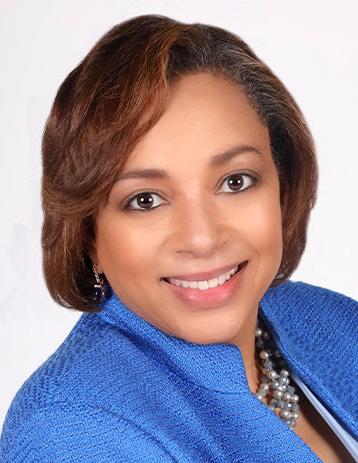
By Dominique Simpson Milton, President and Chief Engagement Officer, Carolinas-Virginia Minority Supplier Development Council
There is much chatter and angst over the recent actions taken to dismantle diversity equity and inclusion departments and affirmative action legislation.
Supplier.io research shows there is a 330-year wealth gap in America today. That means if we are not intentionally focused on DEI and supplier diversity initiatives, it will take 330 years to close that gap.
To paint a more dramatic picture, with the browning of America — the minority becoming the majority — a wealth gap of that magnitude would create more drains on our social systems. By creating and supporting self-sustaining, minority-owned businesses through DEI and supplier diversity programs, we build a more equitable economy. The result is that successful business owners can buy goods and services, pay taxes, hire employees, and strengthen their local economies.
Don’t allow DEI and supplier diversity to get lost in the new buzz of sustainability or environmental, social and governance efforts.
The push for sustainability has become increasingly urgent. Businesses, governments and communities are recognizing the profound impact of their actions on the environment, society and the economy. However, sustainability is not just about environmental conservation; it encompasses a broader spectrum, including DEI along with supplier diversity. This holistic approach is essential for fostering a truly sustainable future.
DEI and supplier diversity sustainability go hand in hand, representing a commitment to creating a fair, equitable and inclusive environment within organizations, while also promoting economic opportunities for underrepresented groups.
Diverse perspectives are invaluable assets when it comes to problem-solving and innovation. By embracing diversity in all its forms — whether it be racial, ethnic, gender, or socioeconomic — organizations can tap into a rich pool of ideas and experiences. This diversity of thought fosters creativity and innovation, enabling companies to develop more effective solutions to complex challenges.
Supplier diversity plays a significant role in this process by providing opportunities for small and minority-owned businesses to participate in the supply chain. These businesses often bring unique products, services and perspectives to the table, driving innovation and enhancing the competitiveness of the overall market.
DEI and supplier diversity initiatives contribute to the economic empowerment of marginalized communities. By providing opportunities for minority-owned businesses to thrive, organizations can help create jobs, stimulate local economies and promote upward mobility. This not only fosters social cohesion, but also helps address systemic inequalities and reduce disparities in wealth and opportunity. Furthermore, investing in diverse suppliers can have a multiplier effect, as these businesses are more likely to reinvest in their communities, thus creating a virtuous cycle of economic development and prosperity.
Consumers are increasingly prioritizing social and environmental
responsibility when making purchasing decisions. Companies that demonstrate a commitment to DEI and supplier diversity are not only seen as ethical and socially conscious but also appeal to a broader customer base. A strong focus on diversity and inclusion can enhance brand reputation, foster customer loyalty and drive long-term sustainable growth.
Conversely, organizations that neglect DEI and supplier diversity run the risk of alienating customers, facing reputational damage and missing out on valuable business opportunities.
Incorporating DEI and supplier diversity into sustainability strategies can help mitigate various risks and challenges. By building diverse and inclusive workforces, companies can reduce turnover rates, enhance employee satisfaction and productivity and attract top talent from diverse backgrounds. Similarly, diversifying the supply chain can mitigate risks associated with overreliance on a single supplier, increase resilience to disruptions and drive cost efficiencies.
Moreover, organizations that prioritize DEI and supplier diversity are better positioned to navigate evolving regulatory landscapes, respond to changing consumer preferences and adapt to shifting market dynamics, thus driving longterm sustainable growth.
Embracing diversity and inclusion isn’t just the right thing to do — it’s also a strategic imperative for businesses looking to thrive in an increasingly complex and interconnected world. By prioritizing DEI and supplier diversity, organizations can not only create value for themselves but also contribute to a more equitable, resilient and sustainable future for all. P

Mills Automotive Group is a family-owned company th at takes great pride in our position as one of the leading dealership groups in the United States. With a constantly expanding portfolio of over 30 dealerships and a di verse range of brands under the Mills Auto umbrella, we’re well-equipped to cater to cons umer’s automotive needs.
What truly distinguishes us is our unwavering commi tment to our clients. Our experienced sales and service team possesses years of industry experience - all dedicated to delivering a best-in-class customer ex perience.



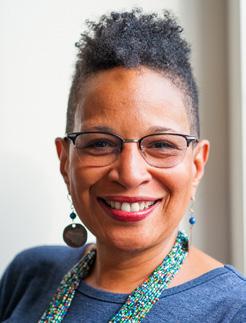
By Angela M. Haigler
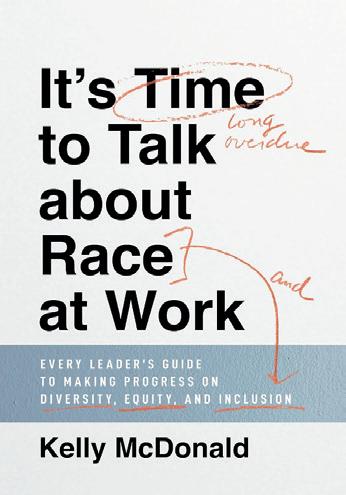
“It’s Time to Talk About Race at Work”
by Kelly McDonald
As we witness the rolling back of diversity, equity and inclusion (DEI) initiatives across the country, there are still some companies and corporations that recognize the importance of DEI. For those companies, actionable, impactful, and no-cost strategies are needed to increase and nurture diversity and inclusion in the workplace. Kelly McDonald provides a roadmap to assist by showing leaders exactly what to do and how so that real progress can be made, regardless of organization size.
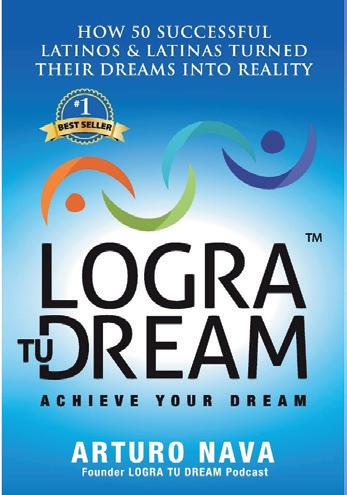
“Logra Tu Dream (Achieve Your Dream)”
by Arturo Nava
Do you have a dream and the drive and desire to pursue it but lack the roadmap, inspiration, and Latino role models to assist? This question and others are answered in this innovative collection of stories by self-made Latino leaders. From White House officials to tech innovators to millionaire entrepreneurs, these men and women show what it takes to overcome the odds and achieve the American Dream.
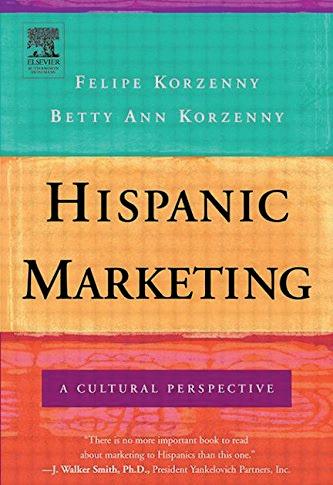
“Hispanic
by Felipe Korzenny and Betty Ann Korzenny
This is the book that has stood the test of time to assist with reaching Latino consumers and it is now in its third edition. The latest version includes 27 new case studies which emphasize digital marketing, theories and discussions on recent changes to Hispanic culture. Also included is a new companion website for course instructors with PowerPoint slides, videos, test bank questions and assignment examples.
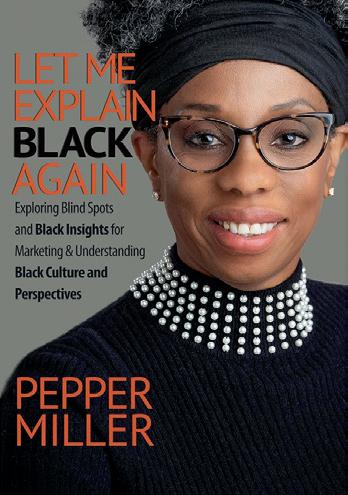
“Let
by Pepper Miller
Pepper Miller is a Black American subject matter expert, speaker, and mainstay in market research. Her latest book prompts us to dig even deeper to grasp the importance of the Black footprint on American culture. She does this by sharing seven blind spots preventing business leaders from truly understanding the populations they wish to serve — five shape-shifting segments frequently overlooked, five+ important sectors key to showcasing the steps still left to take and many eye-popping statistics, contrary to popular stereotypes, assumptions and beliefs. Our very own Pride Magazine, founded by Dee Dixon, is showcased as an example of successful and enduring Black Media.
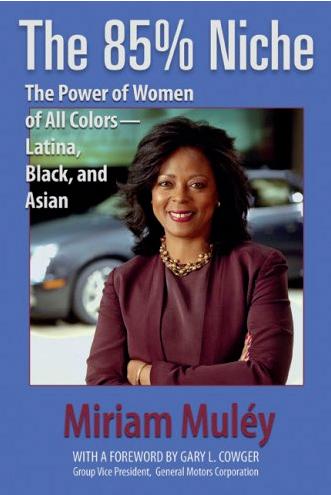
“The 85% Niche: The Power of Women of All Colors — Latina, Black, and Asian”
by Miriam Mulèy
Women of color generate nearly $1 trillion in consumer spending and another $230 billion as entrepreneurs. With such powerful numbers, you’d think companies would be bending over backwards to court women of color, but most companies market to women as a monolith, aiming primarily at white women. Miriam Mulèy’s research explores how cultural and ethnic differences shape the way women respond to life experiences. The result is a concise and practical guide to what drives women of diverse backgrounds to consider brands for future purchase decisions. She provides practical insights into these findings and effectively translates these these into compelling marketing best practices. P


By Dawn Hilton-Williams
Multicultural communities have a rich history of whole food, plant-based (WFPB) eating that’s rooted in ancestral tradition. From the nutrient-rich crops of the African diaspora to the “Three Sisters” of Indigenous Native American agriculture, these practices offer inspiration for anyone seeking to improve wellness and embrace our history.

forced onto slave ships. These seeds were then planted in the new land, allowing retain a bridge home though the growing of African crops.
2 Oral traditions — Through stories, songs and instructions to children and other enslaved people, African women ensured the passing down their knowledge.
driven chronic diseases, here are five more reasons to adopt a WFPB lifestyle:
1 Prevention, arrest and reversal of our top chronic diseases
2 Saves an average of $750 annually per household member on groceries
3 Increases energy levels and significantly improves quality of life
4 Supports animal welfare and reduces harm

African Americans, in particular lead the nation in the adoption of veganism, with 8% identifying as vegan or vegetarian compared to just 3% of the overall U.S. population. Our growing embrace of veganism and WFPB living is primarily driven by a deep yearning to take charge of our health outcomes and a desire to align with a compassion-driven collective that’s already active in the battle for humane justice.
Forcibly brought to the Americas in the most detestable conditions, enslaved Africans managed to carry with them knowledge of foods, cooking techniques, and agricultural practices, which they kept alive through:
1 Seeds — During the transatlantic slave trade many women cleverly braided a variety of seeds such as: watermelon, rice, sesame, okra, black-eyed peas and yams into their hair or hid what little, if any, clothing they had, before being
3 Foraging — Enslaved women often searched for wild plants and herbs to supplement their inadequate food rations. They drew upon their knowledge of African plants to identify edible and medicinal plants in their new environment.
Similarly, the Three Sisters, which are corn, beans and squash form the foundation of many Indigenous Native American agricultural and culinary traditions; providing balanced nutrition and profound cultural significance. Unfortunately, because of the merciless relocation of indigenous communities, many struggle to grow their heritage foods and have little to no access to fruits and vegetables.
In addition to the fact that Black and Brown communities lead in death and disability from our top preventable, treatable, and in many cases, reversible diet and lifestyle-
5 Conserves 200,000 gallons of water annually per person
1 Explore 100% WFPB dishes and experiment with new recipes that are available online.
2 Shop for fresh, whole foods at local farmers markets or your favorite grocer; prioritizing the perimeter of the store where the produce and bulk bins reside.
3 If you’re 55 or over, Mecklenburg County provides a free mobile market program traveling to 12 designated site locations across Charlotte that share fresh produce and groceries.
As you embark on your plantbased journey, remember that you’re part of a rich tapestry of multicultural wisdom and resilience. By embracing the nourishing traditions of our ancestors, you can reclaim your health while honoring legacy.
Remember, local nonprofit organizations like Power Is Giving, Inc., are available to support you on your path with free, culturally resonant and BIPOC-focused yearround programs. P
Fondly dubbed the Vegucator, Dawn Hilton-Williams is a whole food, plant-based (WFPB) certified nutrition professional, a clinically-endorsed, vegan chef and author and a wellness equity activist.
This is what life is supposed to feel like. When you aren’t held back. When you have a health partner that doesn’t just treat part of you – they care for all of you. That’s why more people prefer Atrium Health, with the most complete care that lets you get back to the moments that matter. That’s what it’s like to live fully. live fully

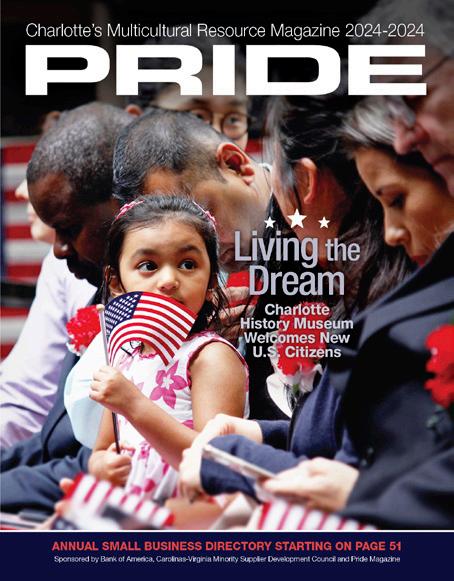
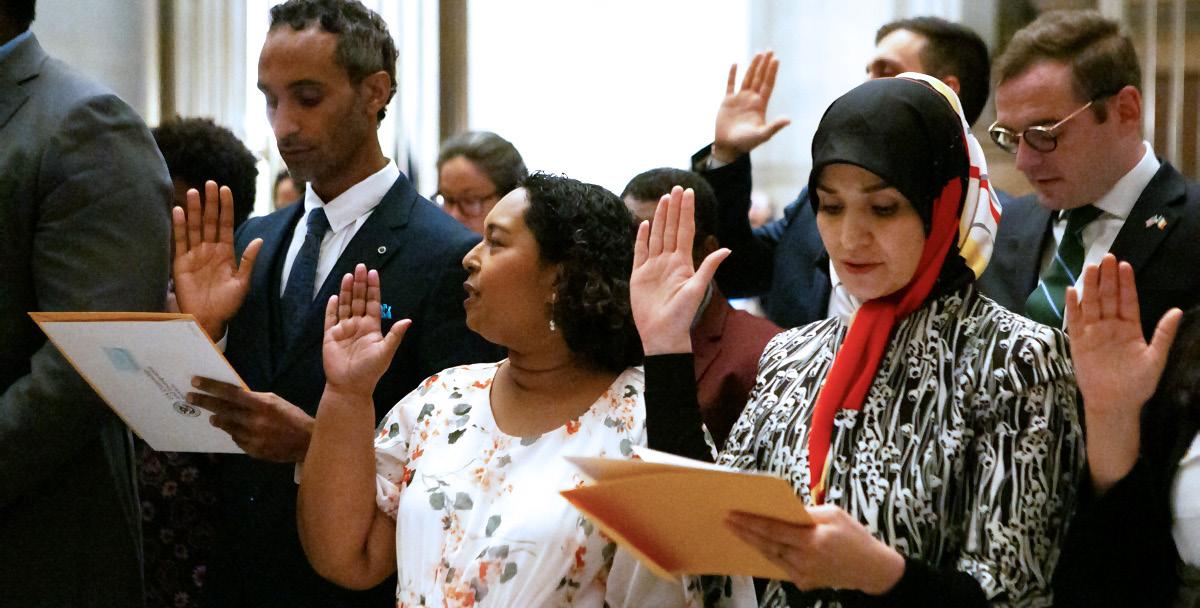
hose of us born in the United States may sometimes take our citizenship for granted. However, for the hundreds of thousands of people who are naturalized as citizens of this country every year, it can be the most exciting moment of their lives. That is the sentiment shared by Rohit Ghule and his wife Neha when he describes how they felt last July 4th during the naturalization ceremony at the Charlotte Museum of History (CMH).
For eight years now, the CMH has hosted a naturalization ceremony on Independence Day beginning in 2015 (with the exception of a one-year covid interruption). While the museum is not formally a part of the official naturalization
process, as that is the domain of the U.S. Citizenship and Immigration Services (USCIS), this local tradition is something new citizens look forward to each year, according to Charlotte Museum of History President and CEO, Terri L. White.
“It’s important for several reasons. First, we are a museum that focuses on American history, so celebrating those who have done the work and chosen to become a part of that story is vitally important to our mission,” said White. “Second, we want everyone to feel welcomed to Charlotte, and we want them to associate us with a place they can feel comfortable and seen. We’d love for them to return and bring their families back with them and participate in our public programs and exhibits.”
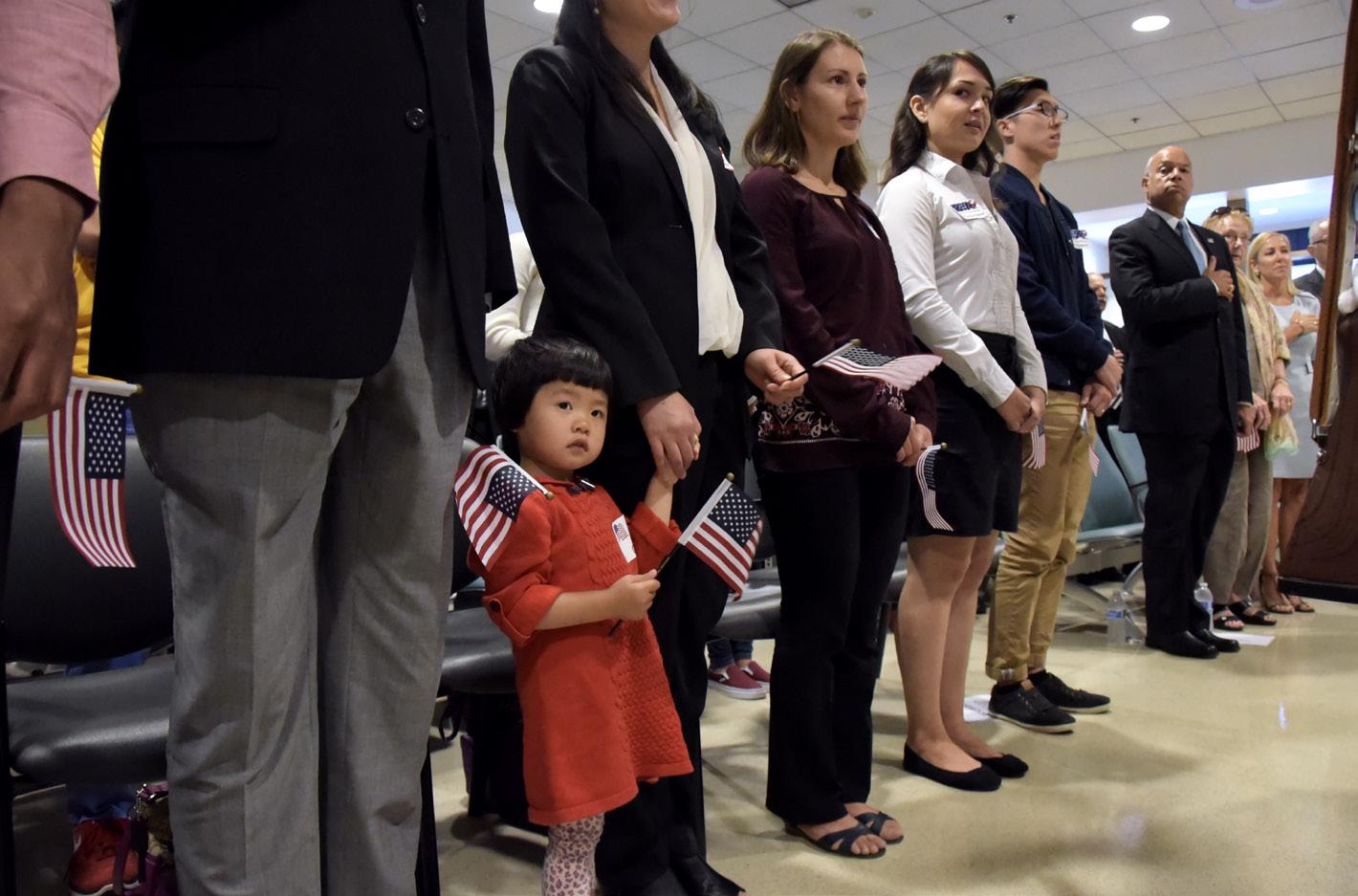

The USCIS welcomed 878,500 new citizens in fiscal year 2023 during naturalization ceremonies held across the U.S. and around the world, according to USCIS.
The Charlotte History Museum participates by offering a program with guest speakers and entertainment for the newest citizens and their families. The day includes musical performances, such as the singing of the national anthem, as well as reciting the Pledge of Allegiance, watching videos from government officials and hearing remarks from the USCIS and a local speaker who works with or represents the immigrant community in some capacity, White explained. The event is free and open to the public.
While both of their children were born here, the Ghules are natives of India and came to the U.S. in September 2012. They were naturalized in North Carolina in the summer of 2023, after a long 11-year journey which began with a road trip to Las Vegas in 2011 from when they lived in Canada.
“We felt love for the country, people, freedom, and much more,” said Ghule. “In 2012, we went to India and applied

for the L-1A managerial visa. It took 2-3 months from start to end and almost a month after we landed at our new home. The visa process was challenging, and a lot of documentation was needed, then an interview, and so on. We enjoyed every small step during this process.”
Ghule initially arrived in the U.S. to work in Delaware and eventually landed in Charlotte through Accenture, working as an information systems manager supporting U.S. operations for large utilities companies like Exelon Energy and Duke Energy. After a couple of years, the Ghules bought their first U.S. home in Charlotte.
“Charlotte has a diversified culture, a banking hub, a major Indian community, (the Panthers football team), an American (Airlines) hub, a short drive to mountains or beaches. So, it was a dream place to settle down,” he said.
In 2017, the Ghules applied for green cards which they received on the first day of 2018. In December 2022, they submitted documents to obtain U.S. citizenship.
The Ghule’s complex naturalization experience isn’t unique. Becoming a citizen
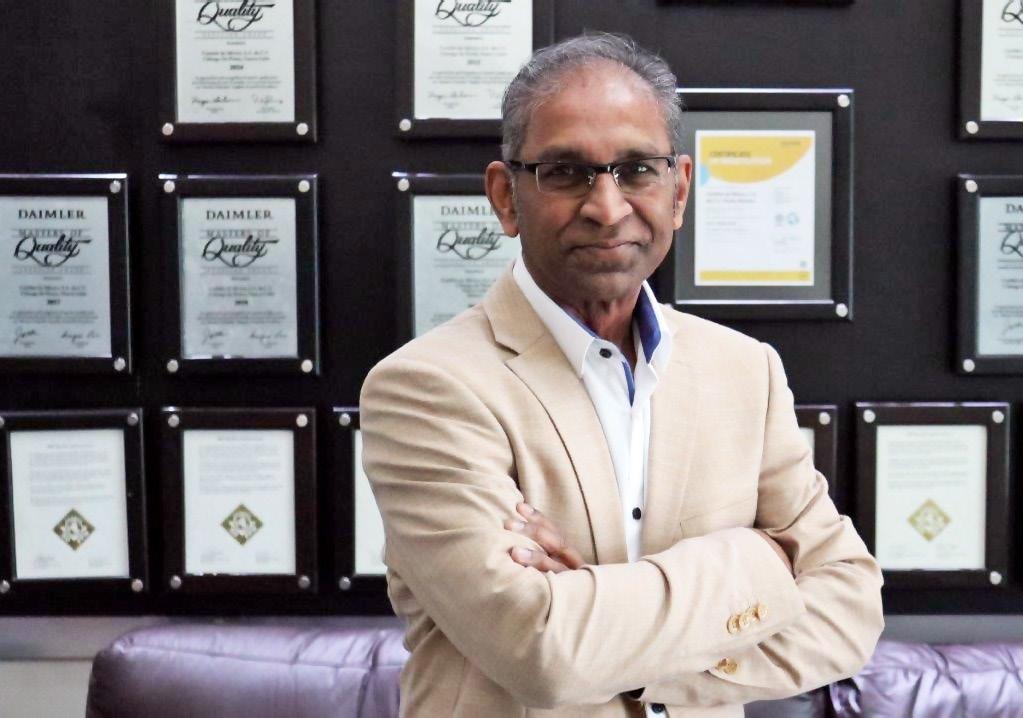
of America was a “challenging and taxing process” requiring meticulous documentation of every detail of Malaysia native Noel Somasundram’s 43-year stay in the U.S. before he finally obtained citizenship.
“This experience felt tedious and stressful, requiring thorough attention to ensure all requirements were met and all
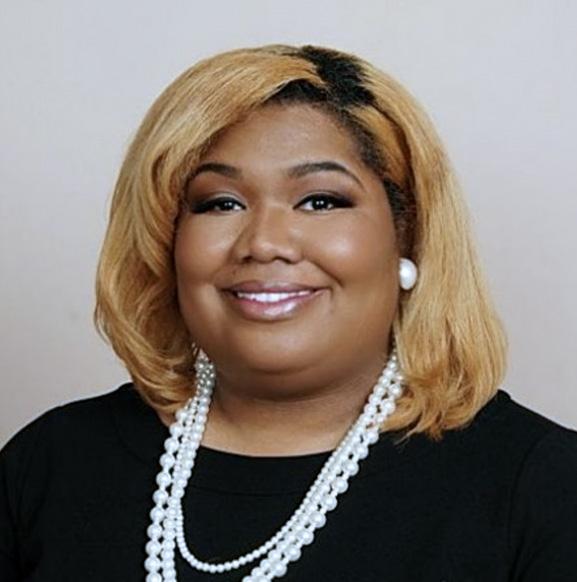
“[We] are a museum that focuses on American history, so celebrating those who have done the work and chosen to become a part of that story is vitally important to our mission.”
—Terri L. White
aspects of my residency were accounted for,” Somasundram explains.
Somasundram decided to come to the U.S. in 1980 because of his fascination with American culture and his interest in TV shows like “Dallas” and “Peyton Place” during his teenage years. He said while the prospect of new experiences in an unfamiliar land sparked excitement, the unknown made him feel curious about what lay ahead. Despite these mixed emotions, Somasundram was ready to embark on a journey of exploration.







“This fascination, coupled with the reputation of the U.S. as a hub for engineering and technology since the 1970s, led me to choose the U.S. as the destination to pursue my engineering studies,” he said.
In 2019, Somasundram was offered employment by ConMet of Amsted Industries in Canton, North Carolina and eventually settled in Charlotte, near ConMet’s Monroe, North Carolina branch. Still, his most cherished accomplishment eluded him for decades.
Recognizing the importance of professional guidance in navigating the complexities of immigration law, Somasundram’s wife found an immigration lawyer in Charlotte at Patel & Samatova, PLLC, who provided “invaluable support and expertise” and ultimately facilitated a successful naturalization process for him, which culminated in 6 months on July 4, 2023.
“It was a moment of great honor and joy as I embraced my new status as an American citizen,” said Somasundram of the CMH ceremony. “The significance of becoming a citizen on this historic day, 4th of July 2023, added to the emotions, highlighting the values of freedom, democracy and opportunity that America stands for.”
Ghule said he and his wife feel proud to be U.S. citizens, adding that the first thing they did afterward was apply for “the most powerful document — U.S. passports.” They also cherish their right to vote now, he said.
As a new U.S. citizen, the first thing Somasundram did was purchase a U.S. flag and proudly display it at the front of his house.
“My wife and I adorned our home with decorations representing American Independence Day, creating a festive atmosphere. Later that night, we celebrated the 4th of July with a memorable dinner and fireworks display on Lake Wylie surrounded
by neighbors and the spirit of patriotism,” he said.
The most significant aspect of his new status as an American citizen is the profound sense of belonging and identity it offers, Somasundram said. “As an American citizen, I am granted invaluable rights, opportunities and responsibilities that enable me to … make positive contributions to this nation.”
Despite the lengthy procedure and laborious paperwork, both Ghule and Somasundram maintain the process is worth it for anyone who dreams about becoming an American citizen.
“I would wholeheartedly encourage anyone considering immigrating to the U.S. because it’s known as the land of opportunities, freedom and liberation,” Somasundram said. “I would share my experiences of the beauty of this country and the opportunities it offers for personal and professional growth.”
“Nowadays, immigration is a timeconsuming process due to laws or rule(s) chang(ing) frequently, a big wait time, family challenges, etc. If you trust yourself, the U.S. immigration process, and you are patient, you will be the next citizen,” Ghule said.
Although the naturalization ceremony at the CMH is to honor and celebrate the newest citizens, White invites the entire community to come out and share in the celebration. She said, attendees will learn a little bit about how the country’s immigration process works and also “make people feel really special on their big day.”
“Becoming a citizen of the U.S. has provided me with a sense of security, freedom, independence and assurance,” Somasundram said. “I feel empowered knowing that I have the rights and privileges afforded to citizens, allowing me to fully participate in society and pursue opportunities without limitations.”




By Rosanny Crumpton
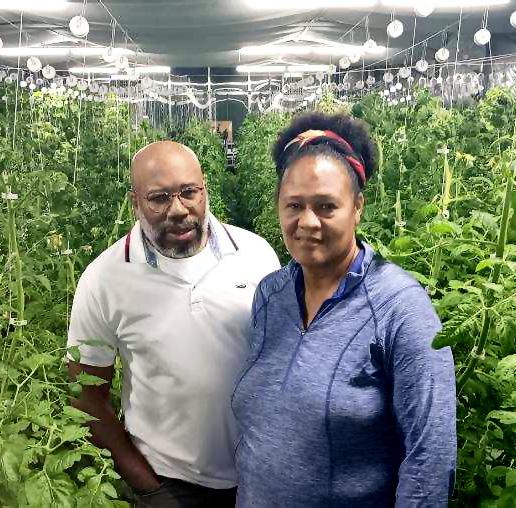
Pascuales’ Farm, a family-owned urban farm, is located in Northeast Charlotte and is owned and operated by husband-and-wife duo, Eliseo and Wendy Pascual. The Pascuales are passionate about planting and growing healthy food responsibly, connecting people and offering memorable experiences in their event space. They host educational events for children and adult visitors about chickens and all things farming.
farmers who want to start growing their own produce.
Eliseo’s love of agriculture began in the Dominican Republic where he earned a degree in agriculture and later obtained degrees in finance and economics. He had a farm in the Dominican Republic, and he also worked in agriculture on the finance side.
Eliseo moved to North Carolina in 2001 from the Dominican Republic. The idea for Pascuales’ Farm started when he walked the supermarket aisles in Charlotte, paying Eliseo and Wendy Pascual, onwers of Pascuales’ Farm
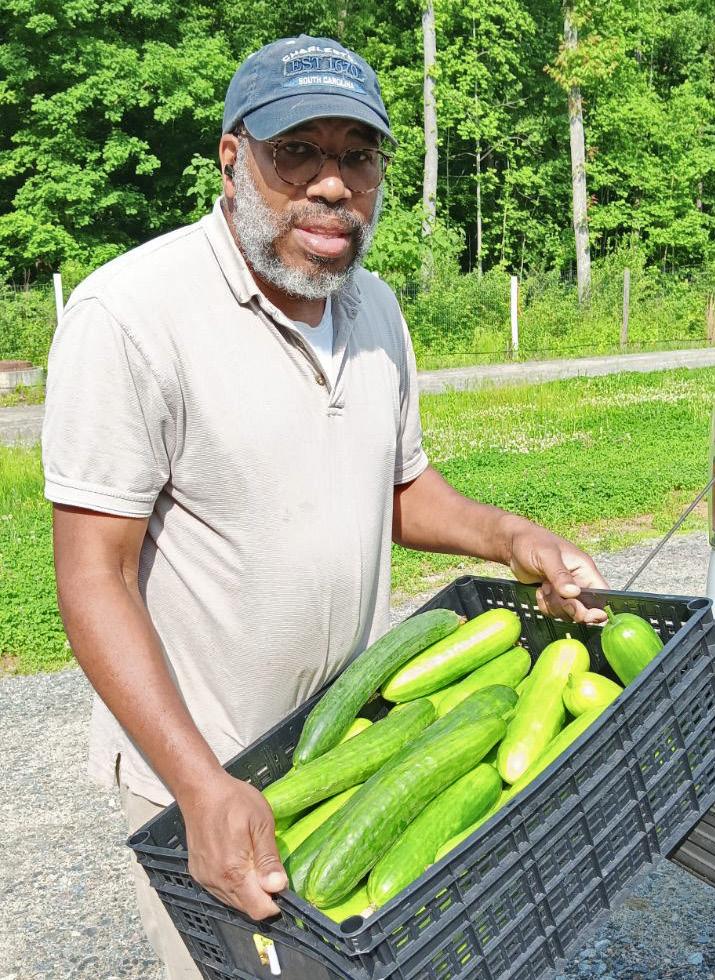
Pascuales’ Farm currently produces eggs and local produce including cucumbers, tomatoes, peppers, different types of pumpkins, strawberries and more. Customers purchase directly from the farm and the Pascuales have regular weekly and bi-weekly customers.
One of the Pascuales’ goals is to inspire other people to farm locally. They want people to visit Pascuales’ Farm to purchase their weekly produce, and they also want to serve as a reference and support for future
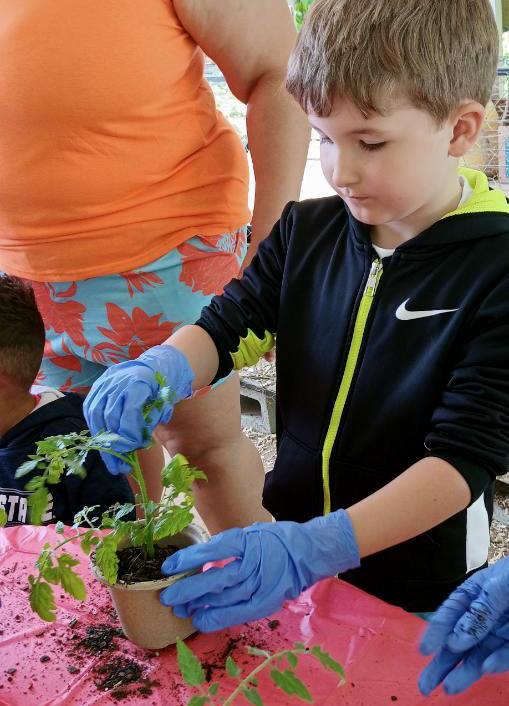
Left: A boy is participating in the Pascuales’ Farm “The Plant in Me” workshop which provides an opportunity for children to connect with nature and discover the beauty of plants. Right: Eliseo Pascual working on the farm

attention to where the food we consumed was coming from — California, Canada, Florida and Mexico. He wanted to find a way to grow food in this region.
He wanted to have a share in that market and knew that locally produced food is better for consumers. Not only is it important to make a region selfsustaining, but transporting food takes time and requires added chemicals to withstand transportation. He believes we can source food locally and eat fresh produce that tastes exactly like it’s supposed to without the added chemicals.
Environmental safety and technology is important at Pascuales’ Farm, Eliseo said. “We believe in responsible production. We think that we have to approach the production in a way that we guarantee the safety for the final consumer but also to protect the environment,” he said.
“We don’t use anything that will harm the soil or people. That’s our policy in safety and preservation.”
For Eliseo, environmental safety is important because it’s simple. “If you don’t take care of the land, then you are losing your main resource. That’s very important for anybody working in agriculture,” he said.
Eliseo’s responsibility, seriousness of the profession and respect for the land is evident when talking to him. He said, “If we don’t take care of our environment, we won’t have anywhere to live. How can we stay here in this planet if we cannot preserve it?”
The Pascuales believe in educating people, especially children, about farming because what they learn is a skill they can keep forever. They are hosting summer camps this summer to teach kids about farming. Eliseo explained that when kids learn a whole plant cycle outside the school setting, they have a great appreciation for the final product.
He said children need to understand that food doesn’t come from supermarket shelves. “If people understand the connection between what they eat and the environment, their behavior would be different,” he said. “We need to plant that seed in children because if we do, they will grow up with that. That will be, I think, a better future for them and everybody around.”
Eliseo and Wendy plan to educate and support people interested in farming to support local production. They are part of a grower’s network in Mecklenburg County, and they also participate in a North Carolina State University class for farmers that helps maintain farm regulation and the business of farmers.
Pascuales’ Farm is more than a farm. It’s a place for the community to gather in a farm/country setting and to be in touch with nature. It’s a place to learn about agriculture and production, and for children to learn where food comes from.
“[Farming] is a noble and important occupation that someone can have. In some way you are tied to the lives of the plants and people,” Eliseo said. “To produce something, you need to create the right environment for the plants to be able to produce. It keeps life in our environment.”
Eliseo wants people to know that there are farmers working to produce fresh product that is locally sourced to sustain local communities. This is important and only possible when we support local farmers.
For more information on Pascuales’ Farm, visit pascualesfarm.com P
“If people understand the connection between what they eat and the environment, their behavior would be different.”
—Eliseo Pascual



Charlotte’s dazzling and accessible cityscape is ready to level up your next meeting, big or small.
Charlotte’s dazzling and accessible cityscape is ready to level up your next meeting, big or small.
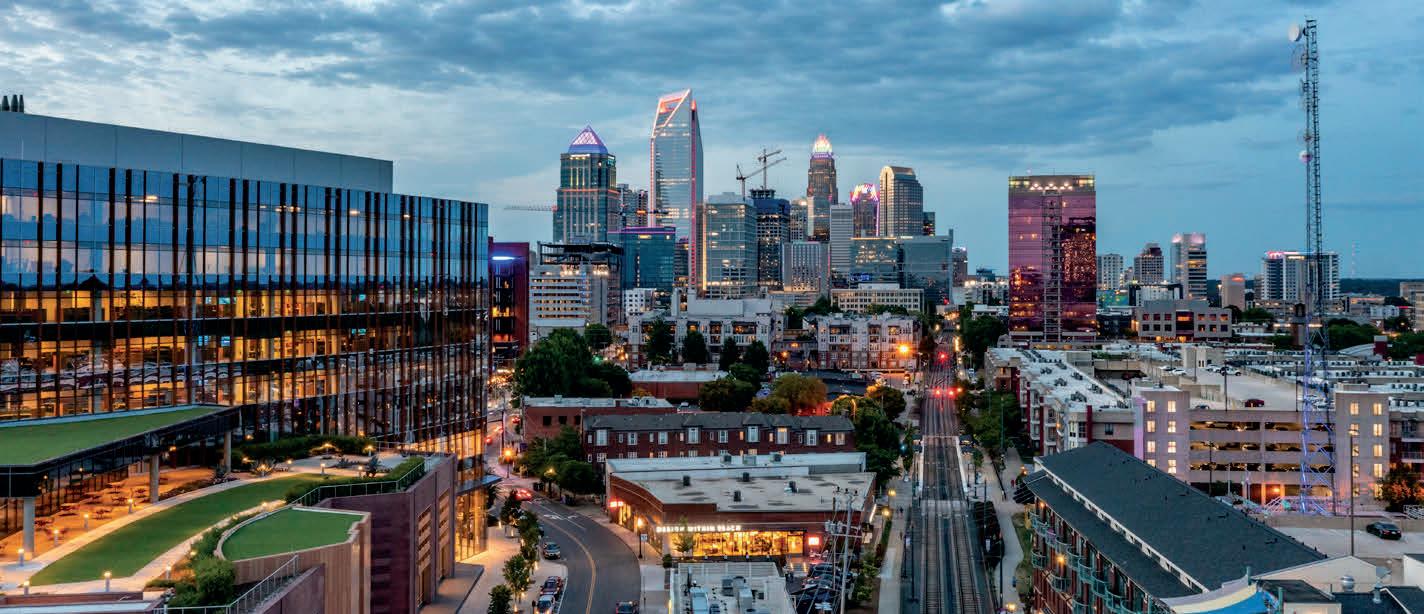
Why the Queen City Stands Out as a Jewel for Meetings & Events
Charlotte has become a destination not just for bankers, but for artists, visionaries and travel trendsetters. The city’s magnetic growth has attracted attention from locals and visitors alike looking to host an unforgettable experience in an inclusive, welcoming city. Here are just a few of the Black-owned businesses and places celebrating Black excellence putting Charlotte on the map as a go-to city for conventions, meetings and events.
Eat & Drink
Abugida Ethiopian Café & Restaurant
A bugida’s friendly staff are on hand to walk you through a menu that includes authentic Ethiopian cuisine with a terrific selection of top-quality cuts of meat and vegetarian dishes.
Hippin Hops Brew-Stillery
P art brewery, part distillery, Hippin Hops hosts Black-owned food trucks every Friday, so you can pair a house-made beer or spirit with local bites.
Leah & Louise
H elmed by James Beard-nominated chef Greg Collier, the menu changes frequently based on seasonality, but favorites like the River Chips chicken skins and Mud Island catfish stew remain constant.
Sol’Delish
Enjoy seafood entrees like crab cakes, along with creative, soul-food inspired options like the Everything Green Dip, with a refreshing cocktail on Sol’Delish’s outdoor patio.
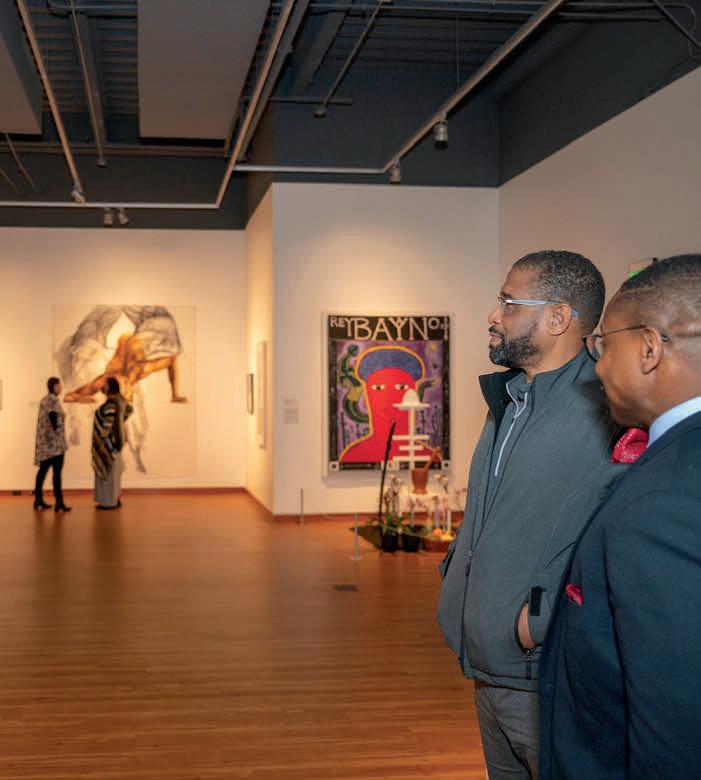
Explore
Charlotte NC Tours
This locally owned, full-service tour company offers visitors a chance to see a different side of Charlotte. Explore the Queen City by bike, segway or foot with tour topics spanning African American history, holiday lights, food, city history and ghost tours.
Charlotte Joy Rides
Th e Queen City’s nonprofit bike share system with 343 e-bikes and 34 stations s pread throughout Charlotte’s Center City area. These bicycles feature original work by seven Charlotte artists.
Harvey B. Gantt Center for African-American Arts + Culture
Named in honor of Charlotte architect Harvey B . Gantt, the museum aims to present, preserve and promote African-American art, culture and history for the enlightenment of all.
Camp North End
A 76-acr e open-air property serving as a hub for shopping, dining and Black creatives. Visit local artist shops Dupp & Swat and BLKMRKTCLT, browse screen-printed looks from MacFly Fresh Printing Co. and find streetwear fits from Current Nostalgia.
Shop
The Brown Sugar Collab
A curated shopping experience that offers unique and high-quality natural products, handcrafted by over 20 BIPOC women suppliers. Shop a range of items for your home, bath and body, hair and skincare.
Five13 Studio
Step outside of your style box and step into this glamourous women’s fashion boutique in South End. Wardrobe consultations and personalized boutique appointments are available.
A fixture in the Plaza Midwood neighborhood since the 1990s, House of Africa is a one-of-a-kind Charlotte landmark that features African clothing, jewelry and art from the 17th to the 20th centuries.
The ultimate custom lip workshop experience in Charlotte. Make an evening out of creating your perfect lip shade with expert guidance.
A high-end, bespoke men’s fashion retail destination in Uptown, helmed by international designer Nyonisela Sioh. Born in Monrovia, Liberia, Nyoni’s concepts are inspired by his African heritage, fused with Western styles.
S ip handcrafted cocktails, from a menu curated by award-winning mixologist Justin Hazelton, in this cozy listening bar that plays a range of relaxing tunes.
Cocktail lounge and event space with a $10 annual membership fee, owned by Johnson C. Smith University business marketing grad Kimberly Wilkinson. Try The Members Only, a Luc Belaire sparkling wine topped with cotton candy.
One of Uptown’s “best kept secrets,” Middle C Jazz offers premium craft cocktails, small plates and a luxurious, intimate backdrop for local, regional and national performers.
Natalie Carr is a cross-genre Pop/R&B Charlotte-based singer/songwriter She writes and engineers songs for herself as well as other artists. Carr began releasing music in late 2019 and has been featured on MTV, Billboard Magazine, iHeart Radio and Sirius XM. She has written songs that have had sync placements in film and television.
Carr’s recent release, “Cowboy,” is a song about women empowerment and standing strong despite societal hurdles. She plans to release several more singles leading into her debut EP and her performance at Lovin’ Life Music Festival.




By John Burton Jr.
“
Any work of art must first of all tell a story.” This quote by Robert Frost epitomizes famed contemporary artist Whitfield Lovell. Recognized as one of the world’s leading artistic interpreters of lost African American history, his artistry is based on found images of African American people who lived during the Emancipation Proclamation through the Civil Rights Movement.
His six-state traveling exhibition “Whitfield Lovell: Passages,” will be on display at The Mint Museum Uptown starting June 29, 2024. Lovell’s compelling multi-sensory journey pays homage to Black ancestry from slavery to the present day. Consisting of two immersive installations and approximately 30 additional

Above: Artist Whitfield Lovell
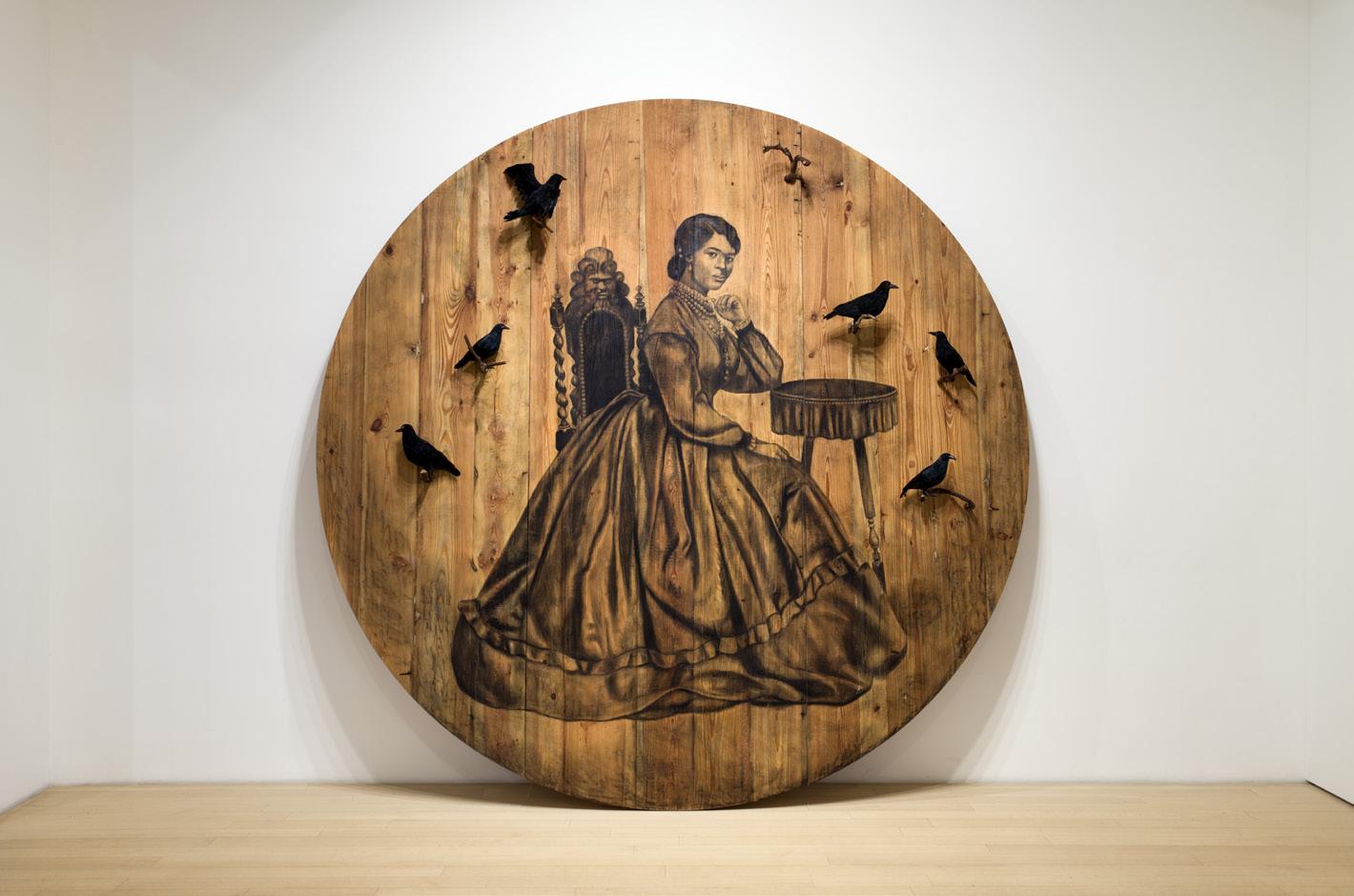
Left: Whitfield Lovell’s “Because I Wanna Fly,” (2021, Conté on wood with attached found objects.
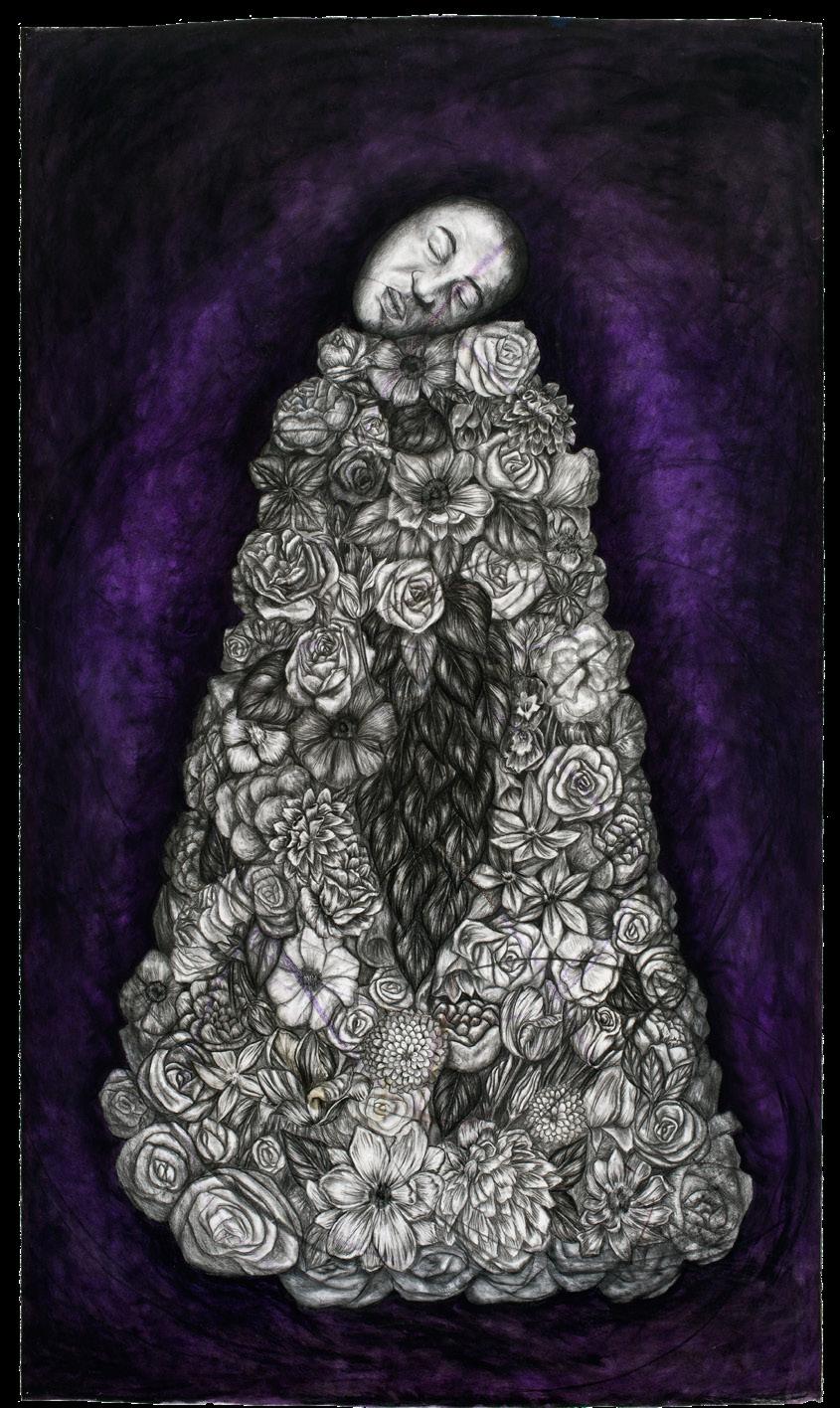
Below: “Head with Flowers” by Whitfield Lovell (1992, oil stick and charcoal on paper)
works, “Passages” is the most comprehensive exhibition of works by Lovell.
Born in the Bronx, New York from Barbados paternal roots and Southern U.S. maternal roots, Lovell’s upbringing was a cacophony of culture. He attended the High School of Music and Art in New York and later attended the Maryland Institute of Contemporary Art and Parsons School of Design before receiving a BFA from Cooper Union in 1981. Works by Lovell have been featured in major museum collections including The Whitney Museum of American Art, the Smithsonian American Art Museum, The Brooklyn Museum, The Studio Museum in Harlem, and the Seattle Art Museum. In 2007, Lovell was awarded a MacArthur Fellowship Genius Grant.

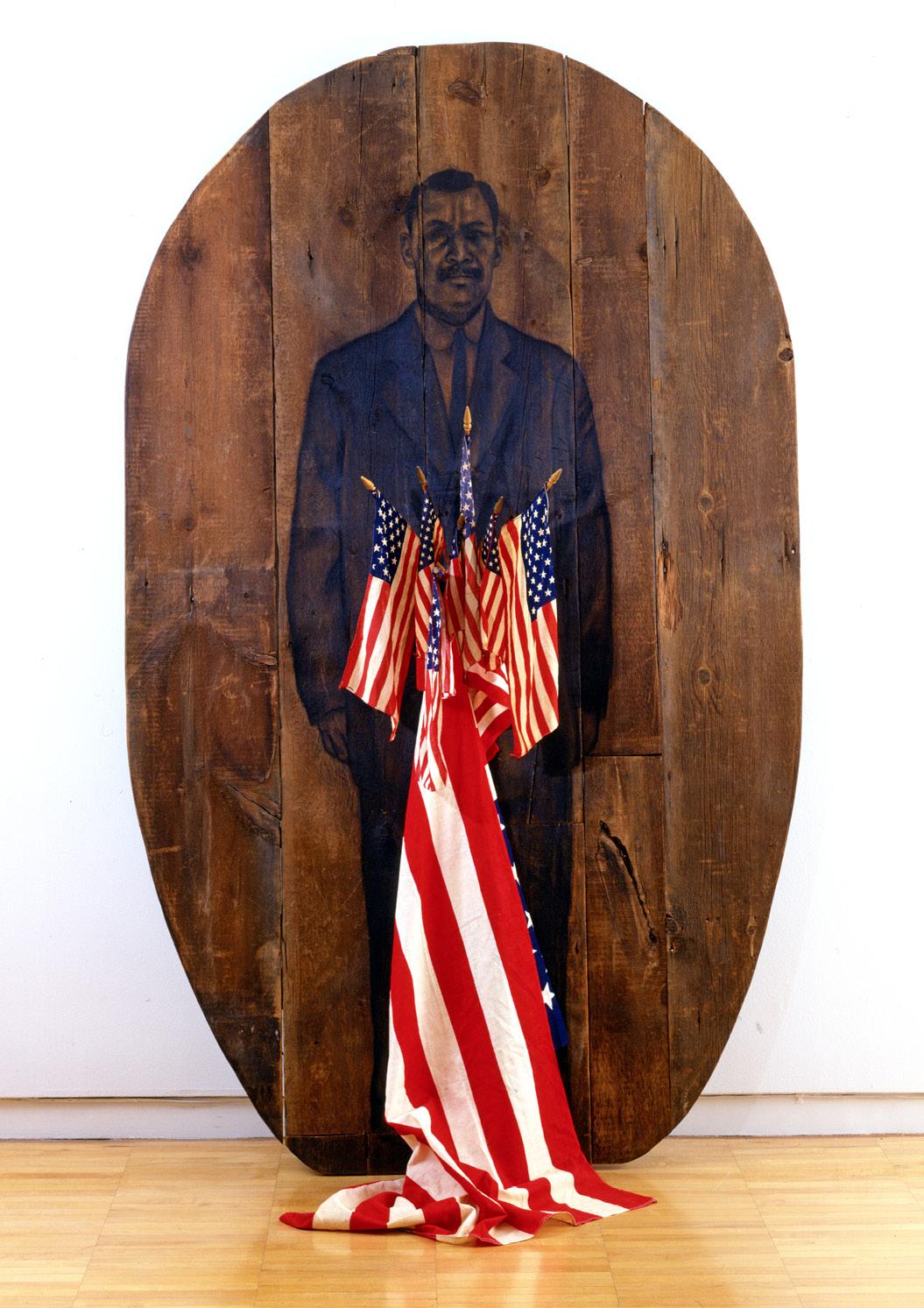
At The Mint, the “Passages” exhibition brings together two of Lovell’s major installations, “Deep River” (2013) and “Visitation: The Richmond Project” (2001), with a selection of freestanding tableaux and works on paper from his acclaimed “Kin” series (2008–2011) and “Spell Suite” (2019–2020).
Also featured is the premiere presentation of his forthcoming “Card Pieces II,” captivating portraits that use found objects such as antique photos from discarded family albums, mug shots and archives found in flea markets. Even the wood comes from old homes where old souls once inhabited. Attendees can
prepare themselves to be riveted by the hidden histories and cultural memories of the African American experience through the collection.
“Passages” delves into the rich tapestry of the African American experience, touching on themes of equality, physical migration, social progress, and selfsufficiency. The artworks are strikingly presented on luscious, deep crimson paper, evoking a sense of warmth, passion, and vitality.
Museumgoers will also encounter two functional telephones that, when lifted, emanate the stirring and familiar melody of “Lift Every Voice and Sing,” the iconic hymn penned and set to music by brothers James Weldon Johnson and J. Rosamond Johnson. “We’re so excited about this exhibition. There is a vulnerability and sincerity in (Lovell’s) work. You cannot leave his space feeling uncaressed,” said Jennifer Sudul Edwards, PhD, chief curator and curator of Contemporary Art at The Mint Museum. “You fall into the works’ arms because you have no other choice,” Edwards added.
A 2022 analysis of almost 350,000 works acquired and nearly 6,000 exhibitions staged at 31 museums across the U.S. between 2008 and 2020 reveals how drastically

underrepresented female-identifying and Black American artists remain. Times are changing. Diversity among arts executives, curators and board leadership is broadening. More women and people of color are helming the once segregated art spaces which shines a brighter spotlight on diversity.
Change in leadership, the U.S. cultural landscape, and a mounting curiosity about unfamiliar cultures are byproducts of the new art revolution. “There is a shift of desire to understand cultural stories,” Edwards said.
This cultural conversion may be easy for some to accept whereas difficult for others to navigate. “It could be terrifying for some to realize their elders lied and didn’t tell them the whole story. Yet there are beautiful stories (some) people could appreciate and learn from,” Edwards explained.
As the pivoting occurs, it is making an impact. According to a recent report from the art market website ArtNet, the market for work by African American artists grew by nearly 400% between 2008 and 2021.
“There is a certain hunger to see what they heard about but don’t know,” Edwards said. “Lovell’s Passages aids in the evolution. He meticulously articulates honor of the African-American experience through ingenious glimpses into the turbulent past while challenging the viewer to reimagine the future. It is an artful passage worth (seeing).”
Organized by the American Federation of Arts in collaboration with the artist, the exhibition is supported by the National Endowment for the Arts and the Terra Foundation for American Art. The exhibition will fill galleries on Level 3 and Level 4 of the Mint Museum Uptown. P

for the
the American Federation of Arts in collaboration with Whitfield
for the national tour and exhibition catalogue
and the Terra
by the North
by
for
500 South Tryon Street, Charlotte, NC 28202 704.337.2000 | mintmuseum.org | @themintmuseum
At Tryon Medical Partners, you have more than a doctor in your corner. You have our entire team.
From primary care to specialty areas, our doctors and care teams work closely together to assess your immediate health needs and long-term goals.
This is why we created a patient-centered, multispecialty practice – so that the expert care you need is literally down the hall.
Coordinated care with a personal touch. It’s the Tryon difference. Experience it today. tryonmed.com

CARDIOLOGY
DERMATOLOGY
ENDOCRINOLOGY
FAMILY MEDICINE
GASTROENTEROLOGY
GYNECOLOGY & SEXUAL HEALTH
INTERNAL MEDICINE
PULMONARY
RHEUMATOLOGY
SLEEP MEDICINE
By Brenda Porter-Rockwell
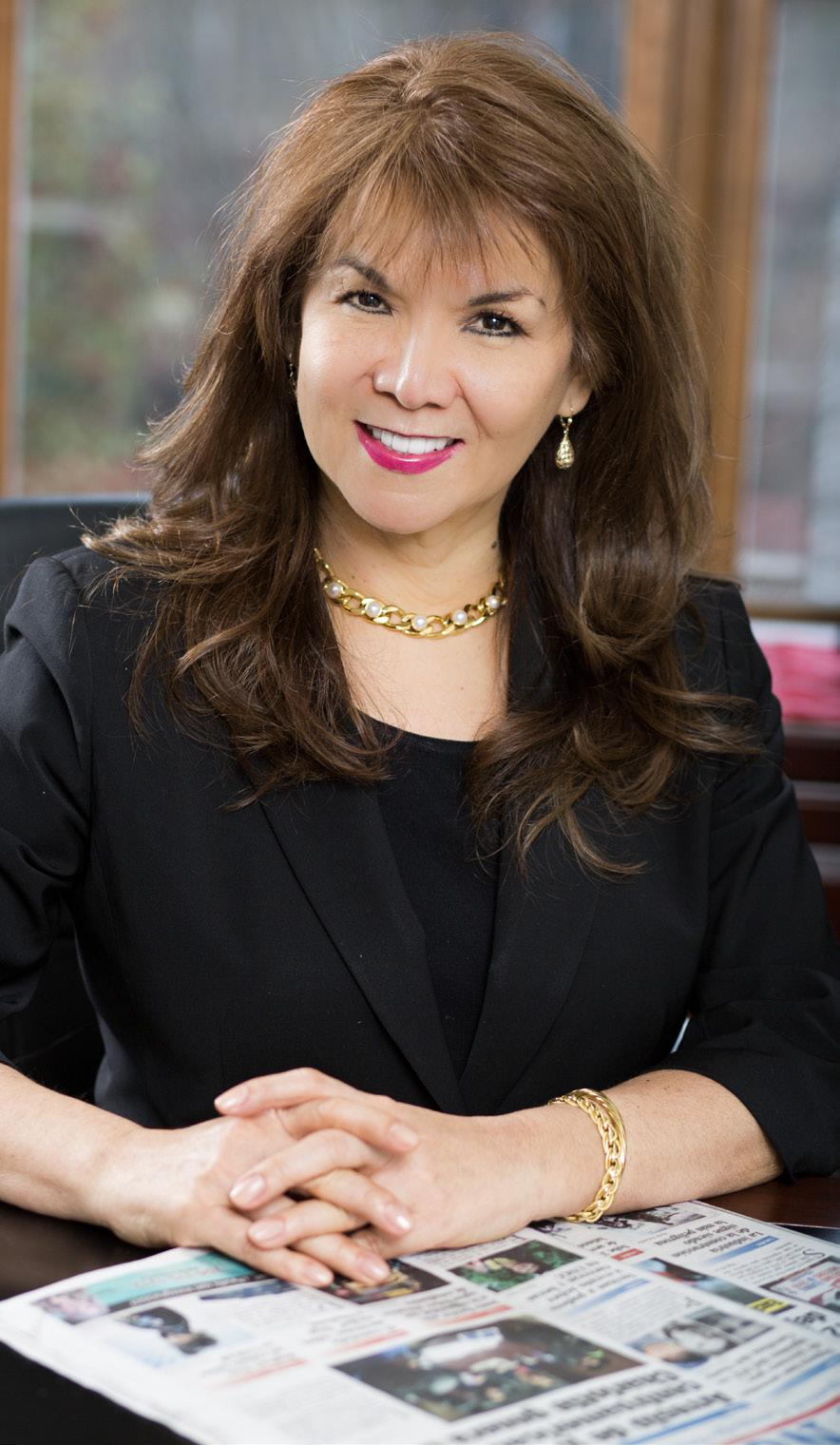
Hilda H. Gurdian has held many titles, including publisher, CEO, mom, wife, friend, community leader, success coach, faith leader, speaker and author. But behind the titles is simply a hard-working woman who is passionate about helping others manifest the same success she’s seen over more than three decades.
Whether it’s helping inform her Spanish-speaking community in the Charlotte area about the important issues of the day through her media company La Noticia, sharing her faith with her church parishioners or counseling professionals as a
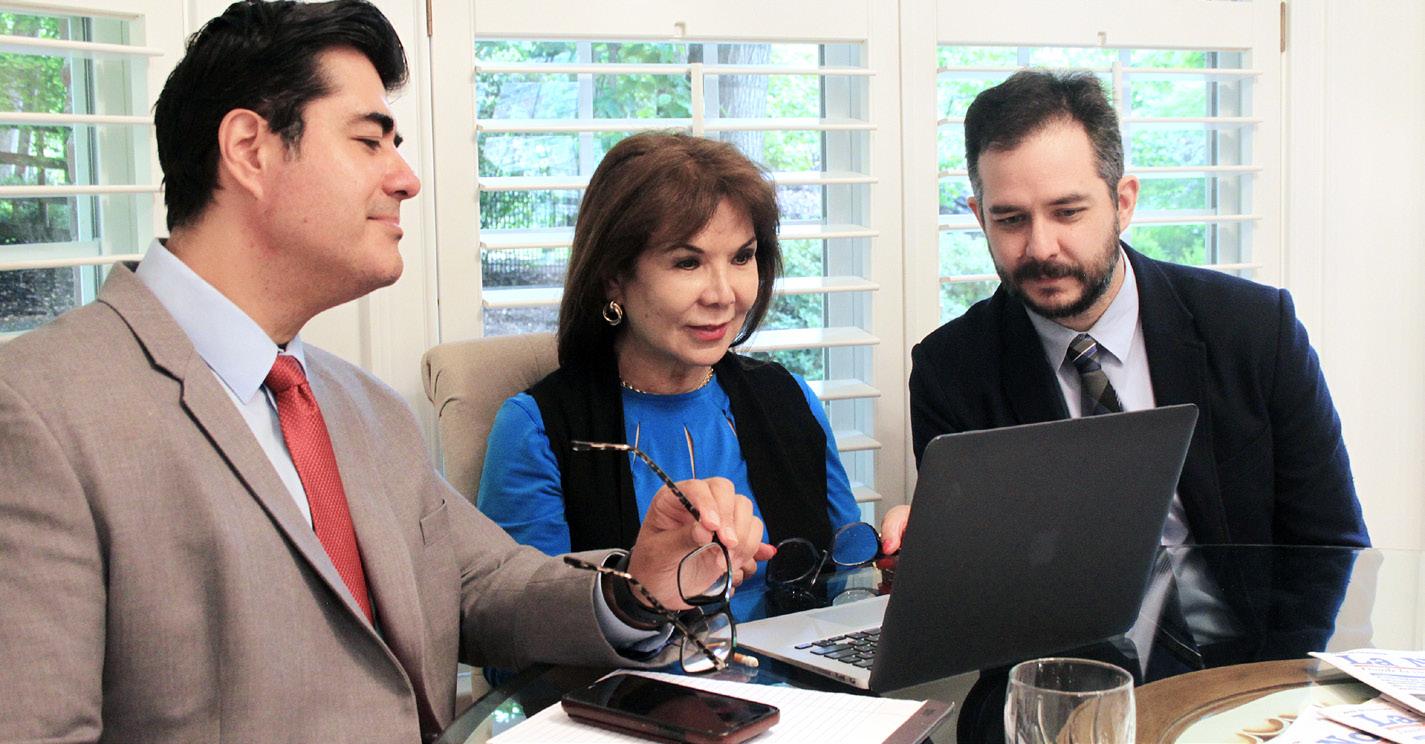
Left: Hilda H. Gurdian, publisher and CEO of La Noticia
success coach so they can take their talents to the next level, Gurdian is always there for those in need.
“I believe in paying it forward. I have been blessed with the best mentors, so I want to help others in the same way others helped me,” said Gurdian.
Born in Venezuela to a family that had already had a successful media business, Gurdian didn’t choose the easy route. Instead of graduating college and returning to help steer the family business, she started her own advertising and marketing agency. As a solopreneur she helped clients create ad campaigns that would run in the family publications, generating revenue for herself and her family.
“I was always inclined to continue in journalism and publications. I love the opportunity to serve my audience with valuable news and information that they can use,” said Gurdian.
By 1986, Gurdian was ready to reinvent success. She closed her advertising business in Caracas, Venezuela and moved
La Noticia is a 30-year-old
Spanish language newspaper
La Noticia prints four Spanish-language papers that serve more than
300,000 readers across North Carolina
to the U.S. with her husband and their two sons. In 1992, Gurdian launched, La Noticia newspaper in Charlotte. Ten years after that she proudly became an American citizen.
Today, Gurdian is the publisher and CEO of La Noticia, her family-owned 30-year-old Spanish language newspaper. La Noticia prints four Spanish-language papers that serve more than 300,000 readers across North Carolina. The paper — soon to be a digital-first publication thanks to her son, Alvaro Jose — has been recognized by the National Association of Hispanic
Publications as the “Outstanding SpanishLanguage Newspaper in the Country.”
She credits her family’s success to their passion for the work and to the advice and support of community members who believed in the vision of La Noticia
“We were determined to succeed. This included sacrifices like getting up early, working for 10 to 12 hours every day and being happy about it. No complaints!” Gurdian said.
“We have also been blessed with the best mentors anybody can have,” she said. ”Prominent and kind members of our community who believed in us. They supported us with sound advice at the right time and opened doors of opportunity for us,” she said.
And it’s that early kindness and community support for La Noticia that lives in Gurdian’s heart and plays a leading role in her promise to maintain close ties to her Latino community.
“Our mission is to keep our Latino community informed, so they can make informed decisions. We strongly believe that an informed community is a community that feels they belong in the larger community







and therefore act with confidence and participate,” Gurdian explained.
Now more than ever, she said, local media like La Noticia need to be at the forefront of telling impactful stories.
“An informed community will participate in the growth and well-being of the entire community, including showing appreciation for the democracy that we are blessed to have,” said Gurdian.
Between 2004 and 2005, she also served as on-air host of the local PBS affiliate WTVI “Charlotte Hoy” Spanish television show interviewing prominent members of Charlotte’s Latino community, sharing news and important topics with viewers.
For the last five years, Gurdian has taken her know-how off the pages of her book, Discover Your Path to Success, and translated that into a second career as a success coach.
“I love the opportunity to advise aspiring entrepreneurs on how to become successful,” she said. A Certified Jack Canfield Trainer of The Success Principle and Certified Living Your Strength Coach,







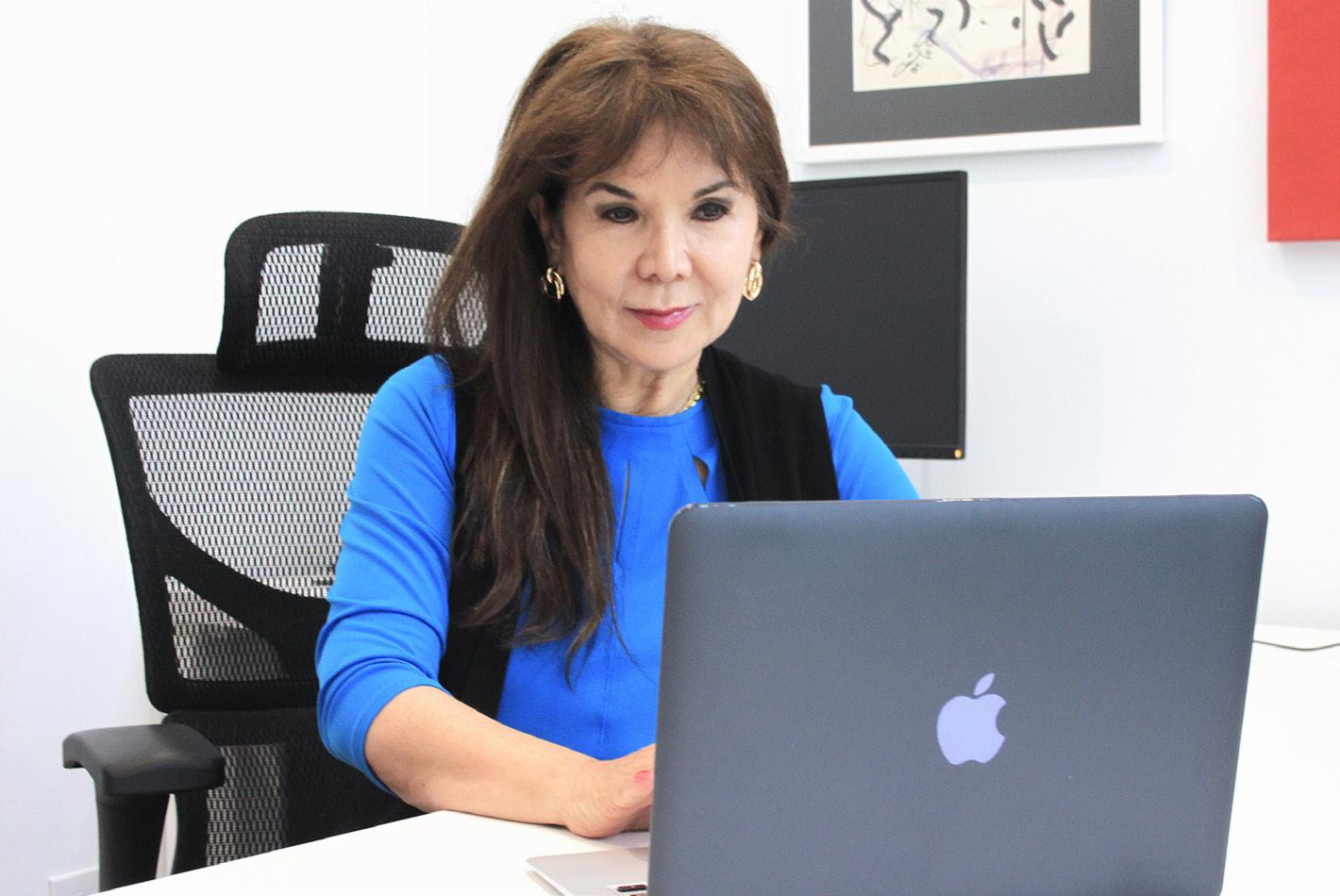
Gurdian teaches success principles to people at any stage in their career. Canfield, a writer and motivational speaker, focuses on 12 principles said to lead to greater success.
“These are the same 12 principles I used in my journey towards success and continue
to use in my life,” said Gurdian. She said she’s focused on helping those, “who believe in the importance of being a student for life and are ready to come to a success principle class ready to learn new things or refresh a [skillset] they knew but forgot or have not used in a while.”

Her coaching business tag line — #MakeItHappen — aptly reflects the advice she shares in her coaching sessions.
“Work hard every day. Be prepared, so you can take advantage of any opportunity that would come your way. Always strive for growth, but also be grateful for what you have,” Gurdian said.
In addition to finding inspiration from business leaders, Gurdian lets her faith influence her pursuit of success. “Believe in this verse from the Bible — Luke 6:38: ‘Give and it will be given to you.’ Share your talent, time and treasure with others in your community without expecting anything in return,” advised Gurdian.
For the last 23 years she has served as Eucharist Minister at St. Gabriel Catholic Church in Charlotte, assisting church leaders in delivering Holy Communion and volunteered as an usher greeting parishioners and collecting the weekly offering.
Even with a thriving profession, Gurdian doesn’t plan to slow down. She sees her future doing the same work at the paper and in her coaching business — helping others succeed. P

By Alicia Benjamin
Anew children’s book, “My Lost Freedom: A Japanese American World War II Story,” by Star Trek actor George Takei reveals the trauma Takei and his family experienced while living in incarceration camps in California during World War II. Like over 127,000 other Japanese Americans, Takei’s family was taken from their home when he was four years old and forced to live in those camps for three years.
Then-president Franklin D. Roosevelt had issued an Executive Order in 1942 creating the concentration camps to house Japanese Americans, fearing they would become spies for Japan. Takei is recognized internationally for his role as Hikaru Sulu in the 1960s “Star Trek” TV series and films. As an actor and activist, Takei has greatly influenced American culture.
In many other ways, Japanese people and culture have influenced the Western world.

According to the 2020 U.S. Census Bureau report, 1.6 million people of Japanese descent live in the U.S. and 19,367 live in North Carolina. The top five U.S. cities with the highest Japanese population, according to a 2019 Pew Research Center report, are Honolulu, Los Angeles, San Francisco, New York and Seattle.
The Japanese animated TV series “Speed Racer,” about a young race car driver who drives a super-fast advanced car called Mach 5, originally aired for a few years in the late 1960s. Through syndication, the show was very popular in the U.S. through the 1970s


War II, as a child, Yuri Kochiyama and her family were taken from their California home to live behind barbed wire in a camp in Arkansas. A year before that, her Americanborn father was arrested after he had undergone surgery in the hospital. He died shortly thereafter.
These traumatic experiences led Kochiyama to become a political and civil rights activist. After she moved to Harlem in the 1960s, she met Malcolm X and was influenced by his passion to liberate Black people. She worked with Malcolm’s Organization for Afro-American Unity to fight for African Americans’ human rights. Photos from the day Malcolm X was shot at the Audubon Ballroom in Harlem in 1965 show Kochiyama cradling Malcolm’s head as he was dying.
and drew an estimated 40 million viewers during that time. It started as manga (a graphic series) and writer/producer Tatsuo Yoshida adapted it as an anime (animated) TV show.
The word “anime” wasn’t actually used until the 1990s. Wildly popular, anime films have captured the attention of the world with award-winning projects like “Spirited Away” and “Ghost in the Shell.”
Like George Takei, after President Roosevelt ordered Japanese Americans to live in concentration camps during World
Kanso is a Japanese interior design concept that values decluttering and calls for a minimalist approach to home décor. Modeled after Zen principles, Kanso favors asymmetry, austerity, naturalness, decluttering and other features. Although similar to the Chinese design aesthetic, feng shui, Kanso emphasizes the overall design and flow of energy in your home to foster calmness and peace. Feng shui focuses on the placement of objects in your home to create good energy.
From self-defense training to character development, various styles of Japanese martial arts have influenced Americans of all backgrounds. The Japanese styles, Judo, Karate and Jujitsu, are among some of the most popular martial arts forms studied in the U.S., according to The National Karate Kobudo Federation. A whole genre of action films wouldn’t exist without the use of martial arts fighting techniques from several Asian traditions. P



You volunteer and donate to your favorite nonprofits because giving back is important to you.
You volunteer and donate to your favorite nonprofits because giving back is important to you.
But did you know that by partnering with your local community foundation, your gifts can make an even greater impact?
But did you know that by partnering with your local community foundation, your gifts can make an even greater impact?
As our community’s go-to philanthropic resource and partner, Foundation For The Carolinas helps individuals, families and companies achieve their unique charitable goals.
As our community’s go-to philanthropic resource and partner, Foundation For The Carolinas helps individuals, families and companies achieve their unique charitable goals.
Want your gifts to build on the long tradition of Black philanthropy in our local community?
Want your gifts to build on the long tradition of Black philanthropy in our local community?
Join others who share your passion for giving by partnering with our affiliate — Foundation For Black Philanthropy — which is celebrating its 30th anniversary this year.
Join others who share your passion for giving by partnering with our affiliate — Foundation For Black Philanthropy — which is celebrating its 30th anniversary this year.
By Angela Lindsay
What started as a small one-day affair at Spirit Square in 1995 has blossomed into a sprawling weekend of vibrant sights, sounds and events. It’s Festival of India — and it’s spectacular.
At its current scale, Festival of India hosts more than one thousand participants — artists and volunteers who all play vital roles in the event’s continued success. Last year, the festival drew more than 20,000 visitors Uptown.
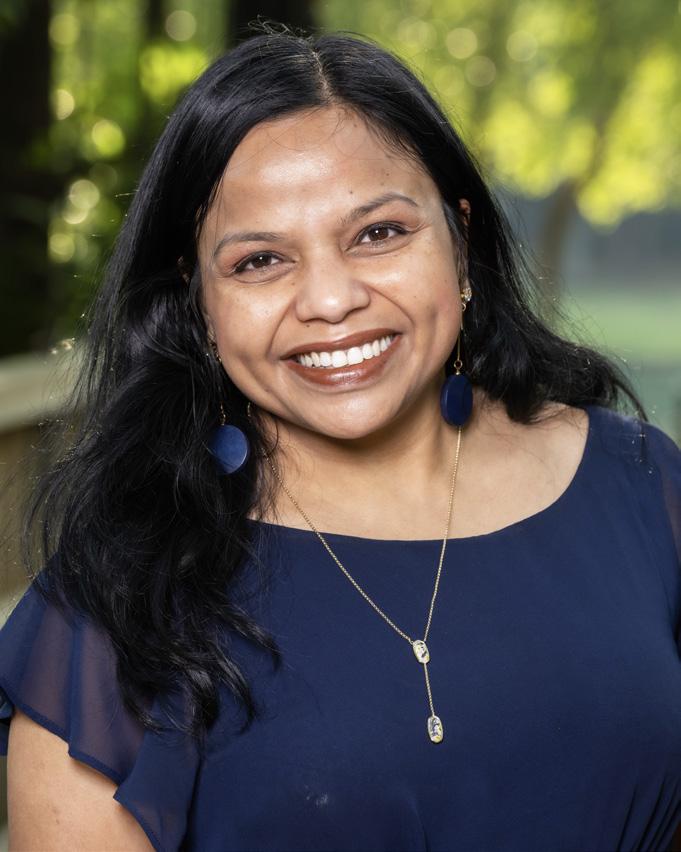
“It’s a family-friendly event that has captivated and educated thousands from the greater Charlotte area, by offering a glimpse into the rich diversity of India’s culture,” said Niketa Mittal, chair of Festival of India and a New Delhi, India native who has been involved with the festival for over 10 years.
Festival of India is organized by the India Association of Charlotte, a nonprofit cultural organization established to serve the large Indian community in the Charlotte region. Its core mission is to highlight and share the rich cultural diversity of the land of their birth with their friends and neighbors around the Carolinas.
Festival of India has become one of the key cultural events in Charlotte and is considered the Indian community’s major contribution to the city, Mittal said. In recognition of that, Charlotte Mayor Vi Lyles (as past Charlotte mayors have done) will proclaim the opening day, September 14, as India Day of Charlotte, she added.
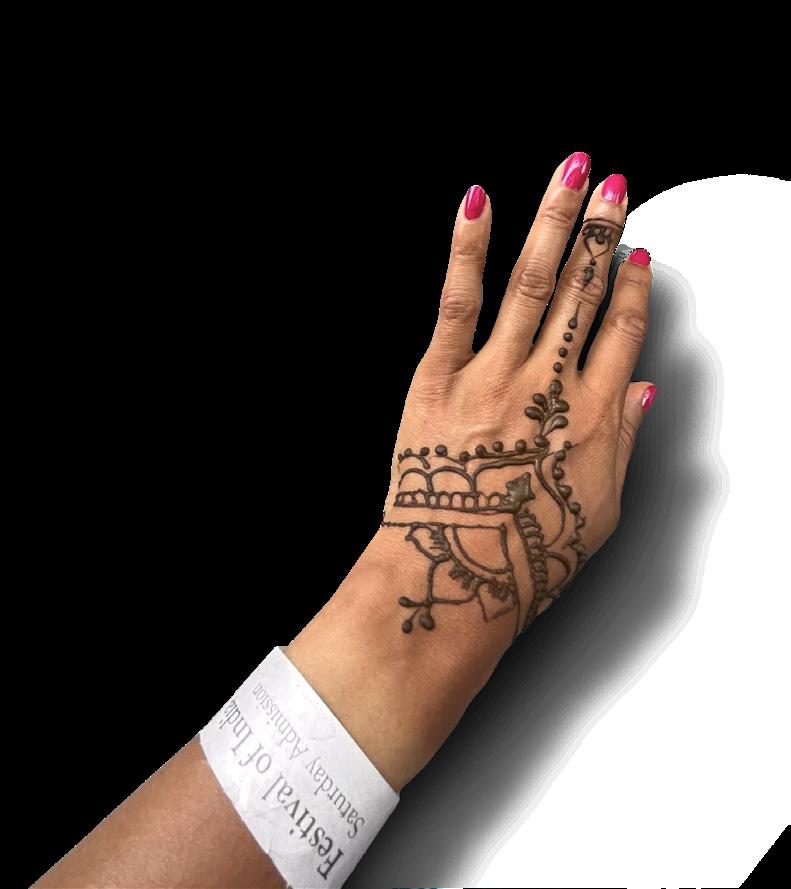
Attendees can immerse themselves in Indian culture by indulging in Indian cuisine such as samosa chaat, chicken tika masala and dosa, receiving intricately designed henna tattoos, dancing to Bollywood music, exploring yoga, watching classical dance performances, admiring fashion displays, and shopping at the bazaar with vendors offering traditional Indian clothing, jewelry, crafts and other items.
Additional festival highlights include: an Indian art gallery displaying paintings, pottery and handicrafts by local Indian American artists, as well as lessons in traditional Indian painting styles for kids and an art competition for young people.
Exhibits showcase cultural festivals celebrated by Indians, ancient India’s contribution to science and technology, and project submissions by Charlotte-area students based on themes that touch on the ethos of the Indian American experience. Many new exhibits this year focus on Indian history and information on various regions in India.
The festival also includes opportunities to try on traditional Indian attire for women called sari and also the turban, which is the male headgear worn in some areas of India.
Scheduled dance performances take place at Belk Theater and include a medley of classical, modern fusion and Bollywood beats performed by local choreographers and dancers in colorful costumes associated with

The importance and ever-expanding reach of this event is evident in the fact that in 2022, after two turbulent years of Covid with many attempts to restart the festival, Matthews, North Carolina representatives requested that the Festival of India group s cultural diversity initiatives. The result was an agreement to collaborate with Matthews to present a Regional Festival of India, a one-day event in downtown Matthews with a focus on live performances of Indian dance forms in
In addition, this year, as part of its growing partnership with the Charlotte International Arts Festival, Festival of India will host its Saturday event on September 14 at Belk Theater and on Tryon Street from noon to 8 p.m., and the Sunday, September 15 event will be held at Ballantyne’s Backyard from noon to 6 p.m.
“The organization would
involving them in the planning, organization, and execution of events,” Mittal said. “This could create opportunities for grassroots initiatives, skill-building workshops and economic empowerment through cultural
The free MHA Counseling Center: Where Mental Health Matters, offers no-cost counseling and aims to serve uninsured or underinsured individuals in Mecklenburg County. Services are provided by graduate students under the supervision of a licensed Clinical Director. In-person and telehealth options are available.
Free Short-term Counseling is available for uninsured or underinsured Cabarrus and Mecklenburg County youth and adults. MHA will match eligible community members with local licensed professionals to receive a clinical assessment plus an additional six sessions of counseling. In-person and telehealth options are available.
Call our bilingual Mental Health Navigator Monday - Friday at 704-565-3315 to set up an appointment.




By Ruby Durham
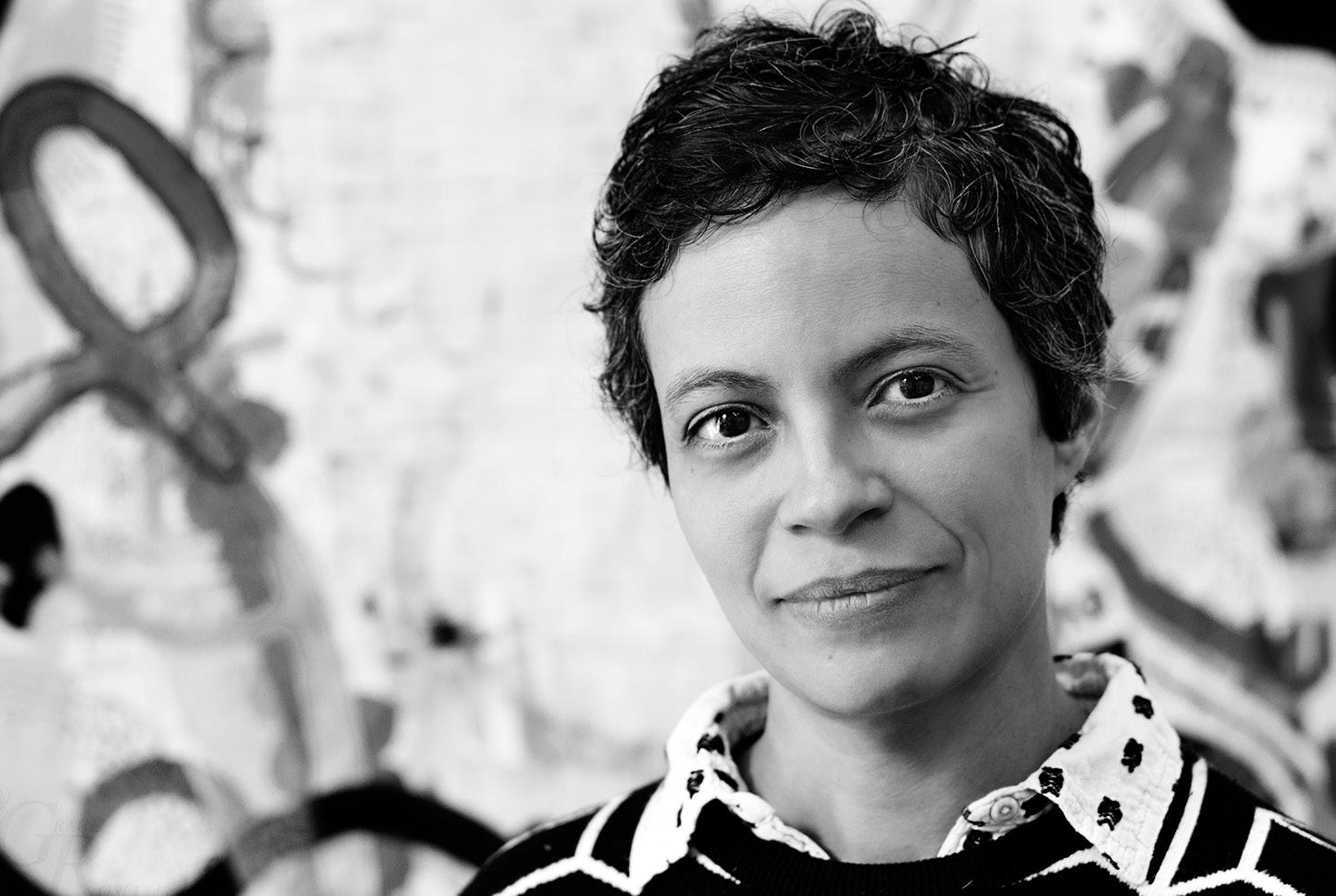
For Jackie Milad, art is not just a means of creative expression — it’s personal. It’s a tool for conversations, a way to bridge heritage and an invitation for viewers to embrace the richness and diversity of multiculturalism.
“Buscando la sirena,” at Mint Museum Randolph, is just one of Milad’s latest installations that she hopes foster crosscultural dialogue.

“With my parents being immigrants and in most cases being isolated from their heritage, going to the museums is a way to connect me to … where the people in my family are from.”
— Jackie Milad
While she uses materials like acrylic, paper, canvas and chiffon on hand-dyed canvas to weave together her favorite collages, Milad is ultimately taking viewers
on an artistic journey deeply rooted by her identity as a first-generation American citizen born to parents who are immigrants from Egypt and Honduras.
“In migration, cultural property and traditions are what people take with them.”
— Jackie Milad
From Baltimore, Maryland, Milad grew up wanting to be a creative. Originally studying at Parsons School of Design for fashion led her to study fine arts at Tuff Museum in Boston while simultaneously working with her dad at their familyowned jewelry store.
Attending a fine arts school provided Milad with the opportunity to explore and refine her creative voice.
The University of Maryland was Milad’s next stop as a Gallery Director and Curator. She then worked as a mentor at the Maryland Institute College of Arts. Milad received her Bachelor of Fine Arts from the School of the Museum of Fine Arts at Tufts University and a Master of Fine Arts from Towson University.
Milad was a Janet & Walter Sondheim Prize Finalist and a Robert W. Deutsch Foundation Ruby Grantee in 2019. She
business, marketing and finances while I learned to make my own art,” Milad said.
When Milad is not traveling, she is nestled at her studio inside a large old industrial building in Baltimore with a community of other artists who share her same passion for art.
“I would describe my space as a place where I have a lot of archives of older work that are scraps that I also use for my newer work,” Milad said. “Sometimes I’m overwhelmed with my own stuff as I do a lot of reading and research.”
Milad’s inspiration for her artwork stems from answers she did not have as a younger child. This quest for understanding often takes her on journeys to museums from the United States to the United Kingdom.
“With my parents being immigrants and in most cases being isolated from their
“I took a trip to Charlotte after receiving an invitation to go to the museum to look at an existing collection and made work in response to it,” Milad said.
At the Mint Museum Randolph, objects from the Meso American Collection is what inspired one of her collages from her “Buscando la sirena” collection, but it didn’t come easy. Milad’s mother is an immigrant from Honduras who was born on Tiger Island with a small amount of recollection to help Milad paint the bigger picture she visualized.
To help bring her vision to reality, Milad sought the expertise of an archaeologist who served as a guide to unravel the mysteries of the indigenous people and settlers from Tiger Island.
“In Buscando la sirena, my work reflects the collision of all of the information, icons, patterns and symbols that make up my Honduran side,” Milad said.
Milad’s art will remain on display at the Mint Museum until October 2024. While working with the Mint, she will also revisit Egyptian art, she said.
A trip to The British Museum motivated her to create a commission for the Walters Art Museum in Baltimore, said Milad. It was the vast collection of Egyptian art that she discovered at The British Museum that inspired her, she said.
As Milad continues her artistic journey, she remains committed to bridging heritage and fostering crosscultural dialogue through her work. In doing so, she reminds us that art has the power to break barriers and also unite those on a quest to understand their heritage.
“My audience is that little girl or kids who are trying to bridge the gap between the history of their ancient ancestors and















By Kurtavia Burton
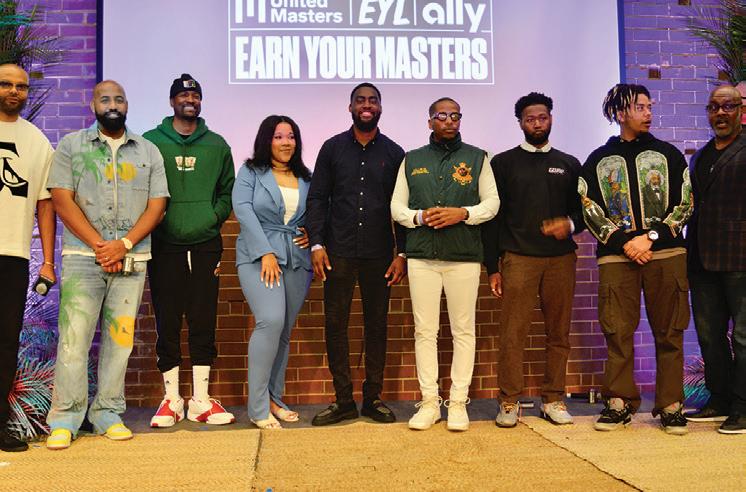
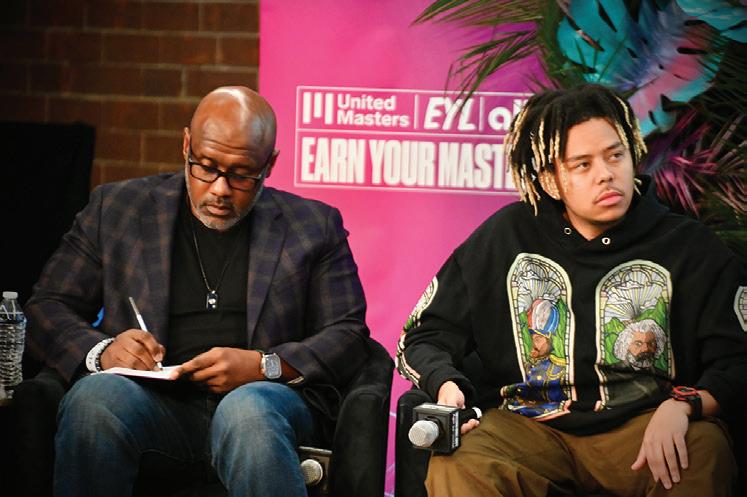
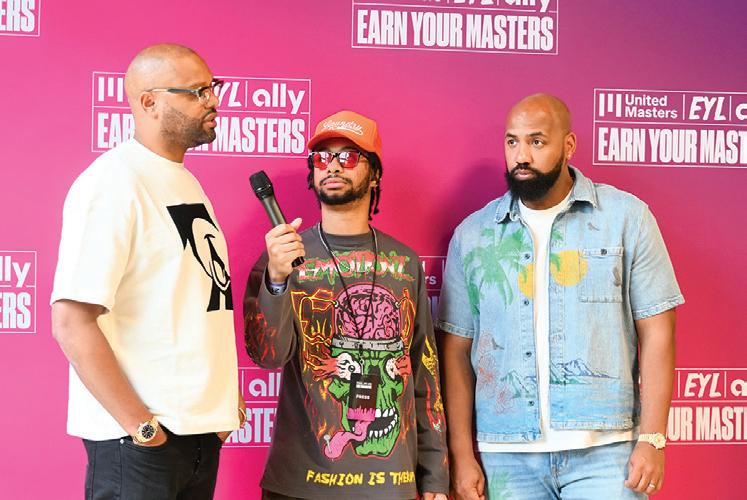
Earn Your Masters is a collaboration among three companies: UnitedMasters — a digital music distribution company; Earn Your Leisure — a media outlet for business, entrepreneurship and investing; and Ally Financial, recently named Best Online Bank of 2024. Their goal is to provide independent music artists with lessons in entrepreneurship and financial literacy to broaden their knowledge of the business of music.
Pride Magazine’s Kurtavia Burton caught up with representatives from all three businesses at their recent pitch competition in Charlotte where businesses pitched their ideas to a panel of judges for a chance to win $5,000. Winners from pitch contests held around the country will meet in Miami in December for the opportunity to win a $50,000 grand prize.


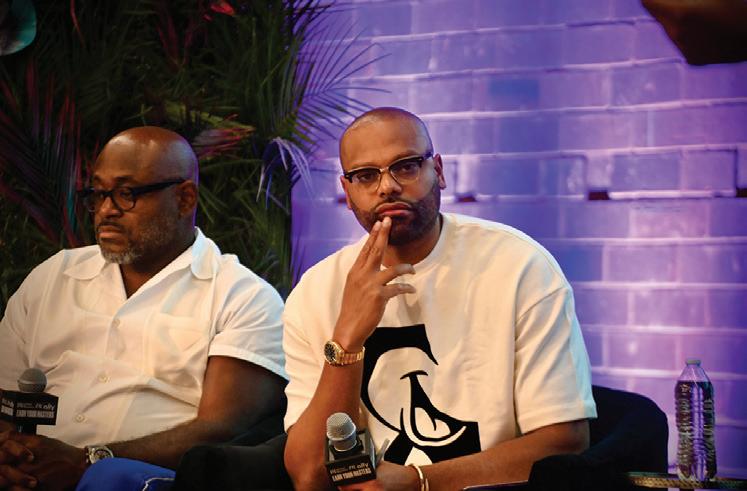

Steve Stoute, CEO of UnitedMasters
Kurtavia Burton: Steve, what was your vision for Earn Your Masters and how is it progressing?
By Kurtavia Burton
Steve Stoute: Things are progressing well. When I first started talking about building UnitedMasters several years ago, one of the early things that was the foundational truth, was that I wanted artists to earn, or rather learn, that they should never give their masters away to record companies. It’s something that was valuable to them and that they should hold on to that. And it’s something they could pass on to their kids. Having great partners like Ally working with Earn Your Leisure, all the work that we do in spreading the word has helped over the last several years. A generation is changing in which artists are now coming into music, saying, “I want to be owners. I want to own my rights.”
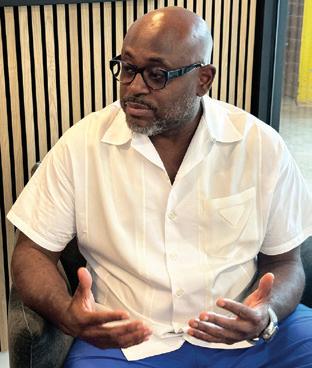
Earn Your Masters is a collaboration among three compa nies: UnitedMasters — a digital music distribution company; Earn Your Leisure — a media outlet for business, entrepreneurship and investing; and Ally Financial, recently named Best Online Bank of 2024. Their goal is to provide independent music artists with lessons in entrepreneurship and financial literacy to broaden their knowledge of the business of music.
Steve Stoute, CEO of UnitedMasters
Kurtavia Burton: Thank you for speaking with us. This has been great. What can you tell us about the vision — how it started and where it is now?
Pride Magazine’s Kurtavia Burton caught up with representatives from all three businesses at their recent pitch competition in Charlotte where businesses pitched their ideas to a panel of judges for a chance to win $5,000. Winners from pitch contests held around the country will meet in Miami in December for the opportunity to win a $50,000 grand prize.
Kurtavia Burton: Yes, that’s wonderful. Just hearing it is exciting. What are you expecting to see here today? What is something you may be looking forward to?
Steve Stoute: We’re taking this pitch competition around the country, allowing entrepreneurs to pitch an idea and win $50,000 to help bring that idea to life. That’s one. Two, that there’s a small group of people that walks away from this and aspires to do something different. Instead of sitting on an idea, they take action with that idea. What unlocks something that they were thinking about, or confirms something that they thought about, and they go, “Oh, it’s a sign, let me go do it.” There’s something that leads to an action. That’s what my hope is.
Erica Hughes, Senior Director of Multicultural Marketing, Ally Financial
Kurtavia Burton: Can you tell us a little about your role with Ally?
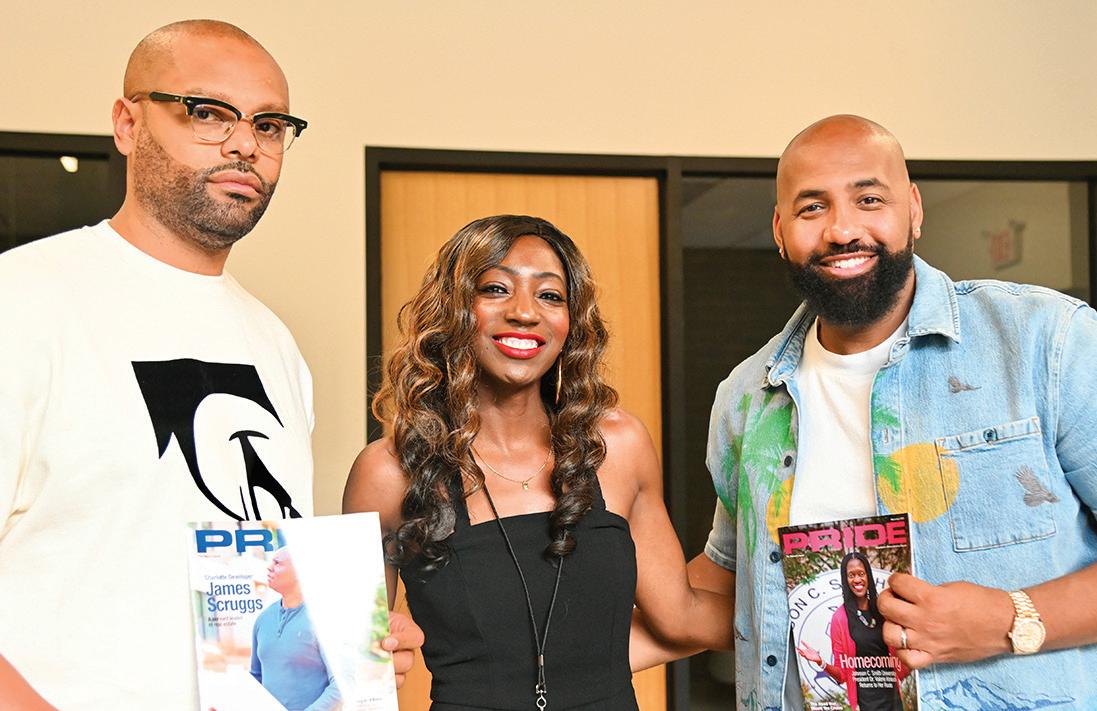
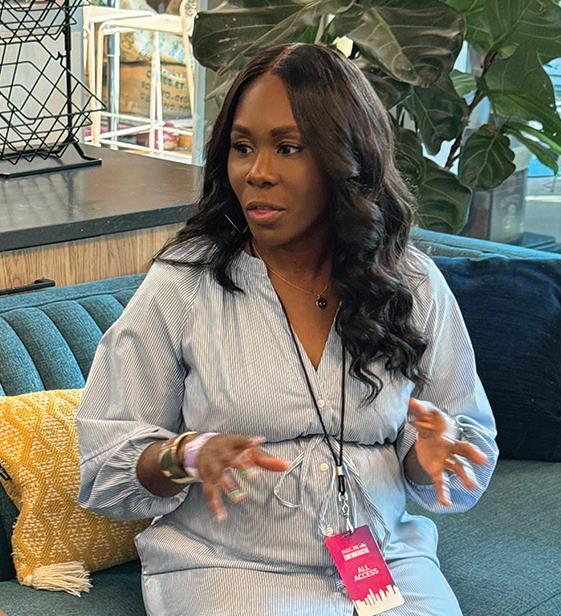
Erica Hughes: My role is to build programs and content media that help connect Ally with multicultural consumers. We operate out of this mantra to do it right by our communities, our customers and everyone that we’re serving. My team has this mission to bridge the gap between culture and finance. We are at these events to find the best places in culture to bring financial education to communities who often don’t get this education at their dinner tables or in their social networks. We’re excited to be in Charlotte.
Erica Hughes, Senior Director of Multicultural Marketing, Ally Financial
Kurtavia Burton: What are some new innovations or practices you are trying?
Erica Hughes: I’ll say that part of my team’s mission is to be authentic to the communities that we’re serving. You’ll see my team is all here today from different communities. We have people who went to HBCUs and people who went to predominantly white institutions.
We have people from the LGBTQ+ community as well as bilingual persons on the team. When we’re creating these events, it’s from an authentic place on what do we think we would have wanted to know if we were in those chairs of creators, of artists, of musicians and how we curate run-of-show and content to help meet the needs of our community. I think it’s important to me to make sure that we’re reflecting the communities we’re serving.
Troy Millings: First, I want to just congratulate our partners at Ally and UnitedMasters. We created this Earn Your Masters imprint about three years ago. It was to uplift our people through music and through entrepreneurship and through education. For the third year, we said, “let’s just do something different. Let’s hear from entrepreneurs about their visions. Let’s hear about their businesses and give them opportunities to win money to invest in their businesses. We were thinking about cities where we should start that are underrepresented, but there’s so much talent, so many resources, and it’s the number two financial capital in America, especially when you’re talking
about businesses. So, Charlotte was a no-brainer, and I’m glad we chose it because they came, they showed up. It was an amazing turnout.
Kurtavia Burton: That’s so good. How do you feel that you are both walking in your purpose and using your passion to connect others through culture and showing up and being present?
Rashad Bilal: We’re relaying the message of entrepreneurship and investing in providing people with real-life information and examples. This is something we’ve championed from day one and that’s the way that we are. We’re all about our purpose and providing value.
Troy Millings: Yeah, I totally agree. We’re liberating people and giving a world of financial education. It’s been aligned, it’s been destined since day one. And we take the mission very seriously and we’re very blessed to be at the forefront of it.
Kurtavia Burton: Yes, that’s great. Regarding your partnership with Ally and UnitedMasters, do you feel that you are going in the direction that you expected?
Rashad Bilal: It’s a great partnership. It’s one of those things, it gets bigger every time, right? We started and it was panel discussions. Now we’re doing a pitch competition. As we progress and grow, it’s something that I think is adding a lot of value.
Troy Millings: Yes, and we must give credit to both UnitedMasters and Ally. When we started our mission, they saw it early. After sitting down with them, two or three meetings, Earn Your Masters was birthed. A lot of credit to them for having the foresight to see what we have here now.
Kurtavia Burton: Do you all feel you will pick the best talent come December?
Troy Millings: If this is any indication, we’re off to a great start. By the time we get to Miami, we will have had 2,000 applicants, so we’re getting the best of the best. And we’re taking our time in the process of figuring out who’s going to make it.
By Sonja Whitemon
The CDC reports that Americans who have experienced adverse childhood experiences are at a higher risk of dying from five of the top 10 leading causes of death with heart disease and cancer consistently leading the list.
Among these experiences are exposure to violence as a witness or victim or emotional and/or physical bullying. Traumatic childhood experiences could also include the loss of a parent through neglect, abandonment or death.
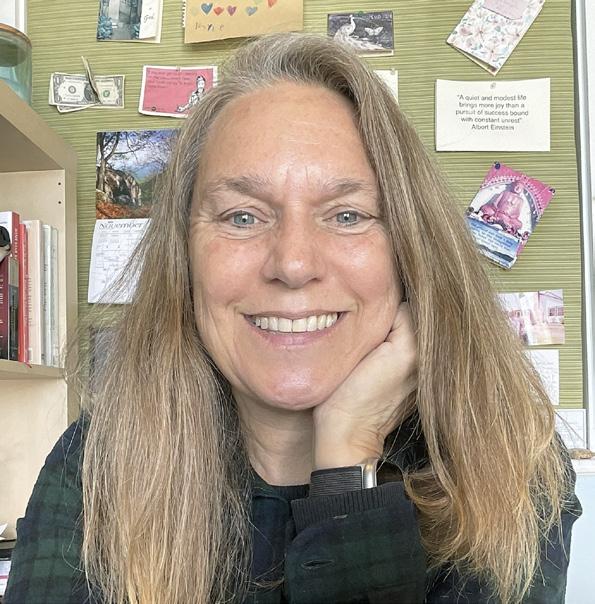
In her book, “The Silent Suicide: The Link Between PTSD, Addiction and Breast Cancer,” author Margot Dragon connects the dots between childhood trauma and cancer, particularly breast cancer, from the perspective of traditional Chinese medicine (TCM), Western medicine and emotional factors.
Margot, a graduate of the American College of Acupuncture and Oriental Medicine in Houston, is a licensed acupuncturist, a hypnotist and an NLP practitioner. She participated in clinical research with the Baylor College of Medicine and Texas Woman’s University and now owns Whitespire Center of Oriental Medicine in Concord, North Carolina.
“The Silent Suicide” primarily considers the causes of breast cancer. “I chose breast cancer because it’s the cancer that can best be traced to its emotional roots,” she said. “The breast is literally the nourishment between mother and child. And [breast cancer patients] have a disconnect with their mothers … adoptees and birth moms get a lot of breast cancers. People that have been left in orphanages, or if they had to live with their grandparents versus their mother, they have a lot of breast cancer issues.”
Dragon was awarded a full scholarship to medical school but passed it up in favor of studying TCM, which considers more

than just the physical condition associated with disease.
Unlike Western medicine, TCM involves the body, mind and spirit. “When we look at diseases, the physical will always be equal to the emotional,” said Dragon.
Her own personal experiences drove her interest in the TCM approach to health care. She describes her upbringing as dysfunctional and fraught with medical
issues that were not resolved with the Western style of health care.
A turning point occurred when a teammate on her softball team developed what turned out to be a xanthoma, or stye, on his eyelid. A few years later, he went to the hospital with back pain. Two hospital visits later, doctors discovered the cause of his pain — a grapefruit-sized tumor in his abdomen. That tumor ended up taking his life.
This experience led her to read “The Cancer Prevention Diet” by Michio Kushi. In the book, there was a diagram of the eye that showed the location of her teammate’s stye. Kushi explained that the stye on his eyelid was an indication that his organs were not functioning at full capacity and that there was a propensity for tumor growth in the abdomen. “ So, I got the book thinking that I could have saved his life.”
Her journey with TCM started with studying the diet and the Japanese philosophy of Yin and Yang. She studied how foods function as medicine and they can rebalance the body and help it heal, even with cancer.
Dragon believes that Western medicine should begin to look at cancer from a broader perspective than it currently does because the mind, body and spirit are all interconnected. “[Doctors could] radiate or cut out or chemo the cancer. But if [they] don’t deal with the emotional trauma that is unresolved, the inner child will go right back and pick the same foods that it picked before,” she said.
“I always say everybody is a drug addict. You know, everybody has their drug of choice, whether it’s food or some kind of addiction,” Dragon said. “And if we don’t sober up … and take responsibility, we’re never going to learn how to heal cause our parents are broken parents. They’re broken inner children, and they can’t teach us two major things, and those two major things are not to abandon ourselves and how to learn how to love ourselves.” P


By Rosanny Crumpton
International Minority Coalition
Founder, Willie Fleming, had a vision in 2017 to create a group of community members that would help change the negative narrative about Black and Brown communities.
At the time, having experienced a term as county president for the African American Caucus of the North Carolina Democratic Party (AAC-NCDP) and freshly


Get expert guidance from a Southern First Mortgage Executive and find the right mortgage for you with up to 100% financing and low down payment options available.
*Loan originations are subject to underwriting and credit approval. Other terms, conditions and certain fees may apply.
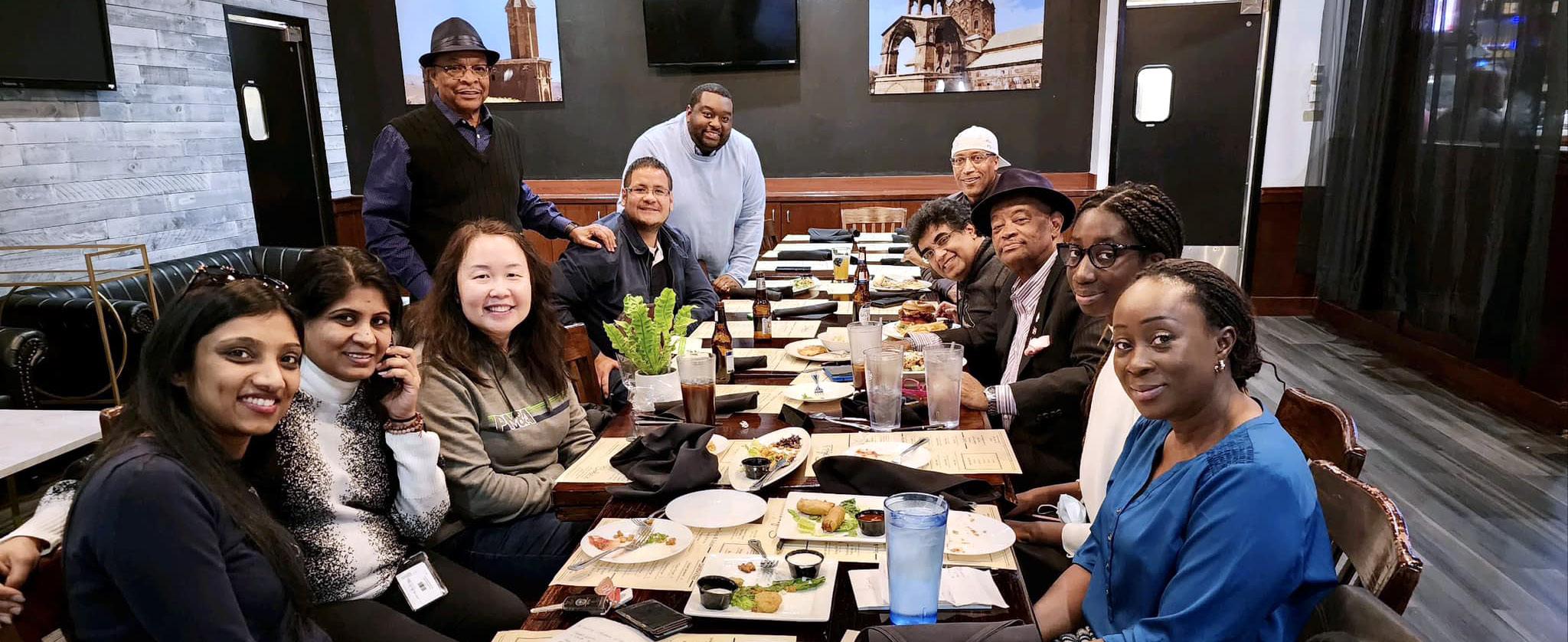
International Minority Coalition members and ambassadors meeting to plan for the group’s 2024 events.
rolling off two terms as state president for the caucus, he felt energized to start something new and internationally inclusive. The new mission would be to unite and represent those who are often underrepresented.
The International Minority Coalition (IMC) is a diverse group of approximately 130 members who meet every month to discuss community concerns and support one another in celebrating international cultures across the Charlotte region. Several members of the IMC are elected city, county and state officials.


While it is not a requirement to be a minority to be an IMC member, the group includes African Americans, Asian Americans, Hispanic Americans, Native Americans and other ethnic groups. Some of the International countries represented within the IMC include Afghanistan, Cuba, Ghana, the Dominican Republic, Indonesia, Jamaica, Liberia, Nigeria, Pakistan and the Philippines.
While Fleming felt inspired to ensure that concerns of the minority community are presented and addressed, he said a major area of focus is creating a sense of community.
“It wasn’t created to be about race. It’s to bring people together. When people come together, there’s no way we can lose,” he said.
Fleming began sharing his vision of uniting as one organization in 2017. As people seemed interested, he began to organize meetings. “At first, I had nowhere
to meet. I went out to Jyoti’s, on Albemarle Road, and spoke to them. We reserved two tables at first, and by the end of that year, we filled the whole restaurant,” he said.
Ninety-five percent of the members that were there when IMC first started are still members today, said Fleming. While the concept has evolved over the last few years, the IMC mission stands: to ensure the concerns of minority communities are addressed and presented to elected officials, and to come together and unite.
IMC members support one another at events held by various international groups and cultures across the region. They host information sessions to learn about different cultures, and they can be spotted at candidate meet and greets. They also band together with other community organizations to help spread the word about the importance of voting and other issues.
Fleming is most proud of the collaborative work that IMC does with community partners which includes, but is not limited to feeding and providing clothes to the unhoused population, hosting food drives, providing tennis camps to youth for free, providing covid testing and covid vaccines, championing elected officials, and supporting one another through
Willie
international celebrations. The IMC has signature annual events that include a summer picnic and a fall Gala among others.
Fleming is looking forward to helping to uplift minority communities, uniting people of all communities, and ending the myth that we can’t all work together.
“Our motto is, ‘We’re stronger together,’ and that’s what I truly believe. If we can focus on the mission, we can get things done,” he said.”
IMC members are interested in making our communities safer and better places to live and work in, and IMC invites people to join the movement, Fleming said.
IMC meets monthly on the second Sunday of each month at Club Nile in Charlotte. For more information, visit ncimc.org. P










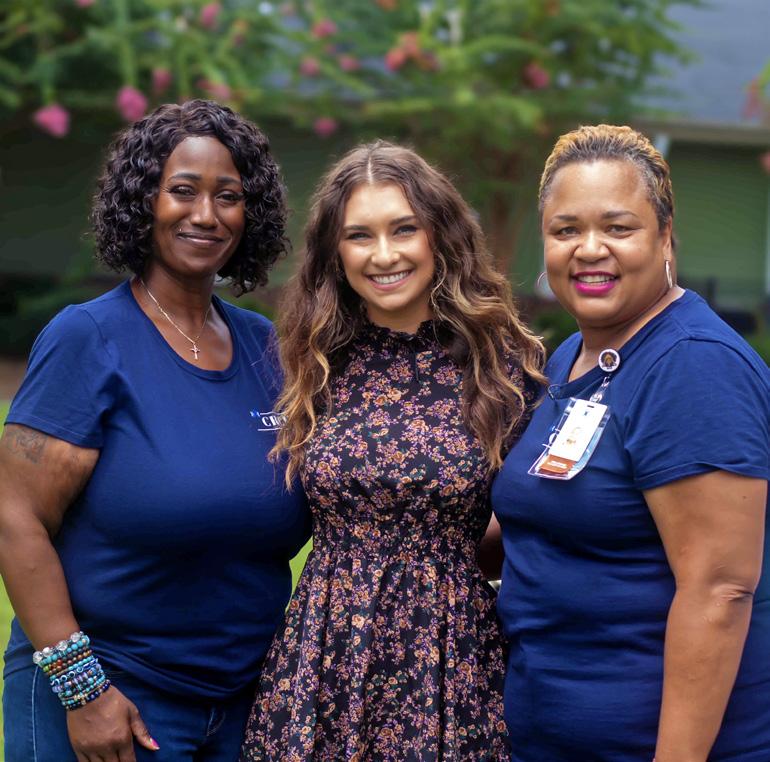
Cabarrus Rowan Community Health Centers recently announced the opening of its newest health facility, the Sugar Creek Health Center in North Charlotte. The private, nonprofit organization provides prescription assistance and high-quality health care on a sliding pay scale.
Unlike traditional health care, CRCHC is a Federally Qualified Health Center that welcomes all community members, focusing on serving low-income, uninsured or indigent patients. The new Sugar Creek Health Center, located at 721 W. Sugar Creek Road in Charlotte, is CRCHC’s ninth location.
After 90 days of renovations, a ribbon-cutting ceremony was held in May. Presentations and guest speakers included the CRCHC Board of Directors, senior leadership, and the Mecklenburg County Public Health Department. Dental and mobile units were also on-site for community tours.
Chief Administrative Officer Brittany Payne explained ramping up to open was a community effort. “Once we identified a new location, we began increasing our partnerships in the community, ordering office and clinical supplies and completing any needed renovations,” she said.
Sugar Creek Health Center will provide all three of CRCHC’s services in one place: dental services, primary care and behavioral health. “A community member could receive all three services on the same day if preferred,” said Payne.
She also explained some patients have transportation challenges. Providing multiple types of care options under one roof helps eliminate this concern. Conveniently located in a neighborhood, patients are within walking distance of care and follow-up appointments.
Health education and preventative care are the foundation of CRCHC. Payne
By Sasha Manley
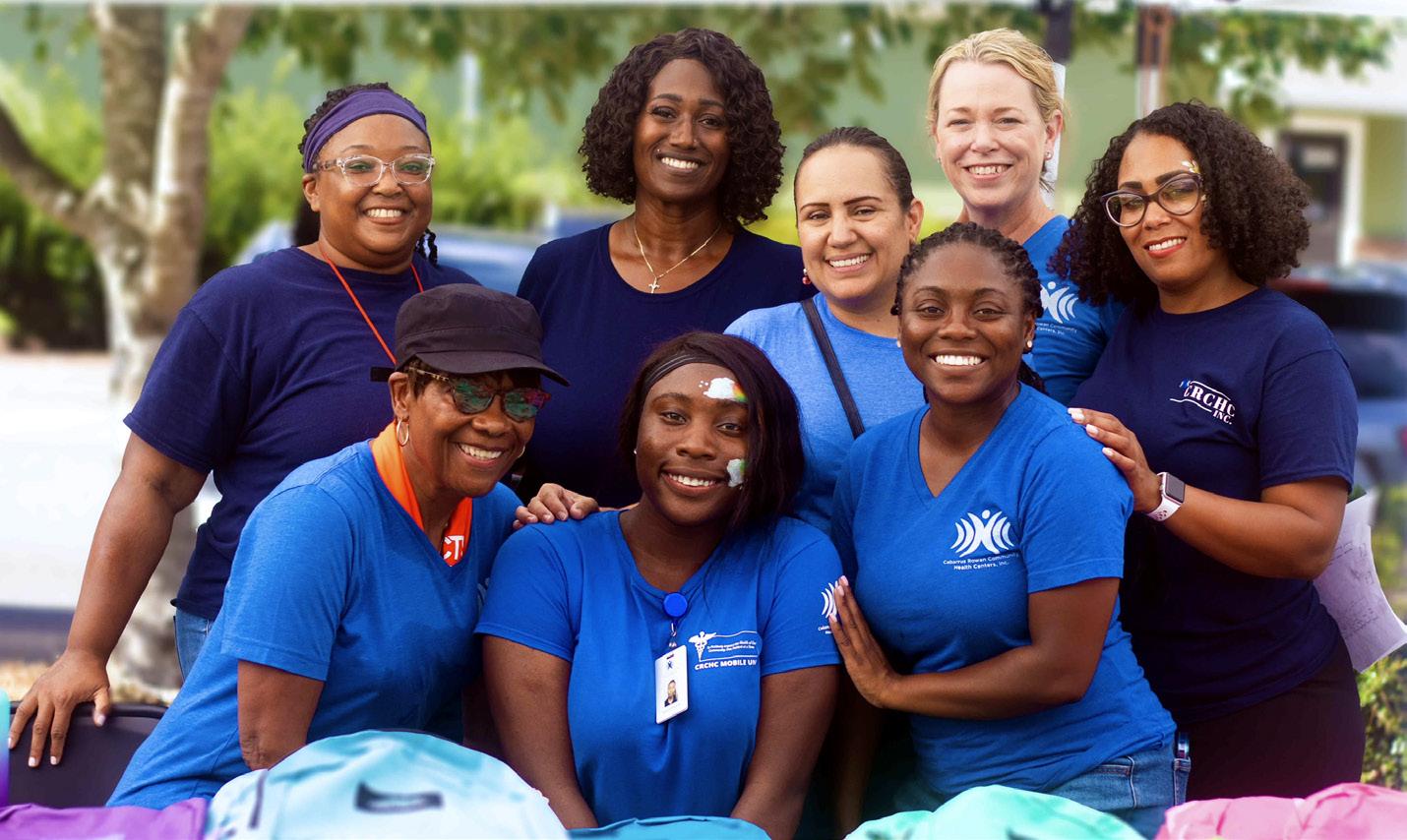
Above: (top row, left to right) Tiffany Mallory, Santana Stewart, Madeline Cordonero, Jenniffer Sass, Christina Echevarria (bottom row, left to right) Dorin Chandler, Kabrina Edwards, Brittany Payne
explained why this service plan is effective for their mission: “This approach reduces the burden on emergency services. This model reduces unnecessary emergency room visits. In our communities … health awarenesses increases by engaging in community health initiatives and education programs.”
Three organizational programs are offered to patients: the Health Coaching Program, Affordable Care Act Services and Medication Assistance Program. Each initiative is crucial in educating the community and providing opportunities to those who need them most.
In addition to these benefits, the CRCHC website provides exercise resources, workout guides and online exercise classes. The diabetes corner shares general care tips.
Other specific services include telehealth services, child and health development, DOT physicals, referral coordination, and mammography services. The complete list is on the center’s website.
Serving over 17,000 patients through a convenient enrollment process, prospective patients can call to make an appointment or stop in. Depending on availability, walkins can also be accommodated on the same day. There are 19 providers across all locations.
According to Payne, the most recent demographics for patients for the fiscal year 2023 are 40% white, 21% African American, 38% Hispanic, and 0.6% other. She further explained that “CRCHC has its own unique demographics. Most of the patients served at Sugar Creek Health Center are Hispanic. Hispanics account for 72% of the patients we serve at the Sugar Creek location, 18% are African American, and 10% are white.”
CRCHC is committed to serving the community and putting wellness first. Payne said, “Our mission is to have a positive impact on the health of our community, one patient at a time.” P
By Kieth Cockrell, Bank of America, Charlotte Market President
At Bank of America, we’re committed to helping our communities thrive, dedicating our resources to address the issues that matter most in the places where we work and live. We’re not just here to help with your everyday banking –we go further. We understand Charlotte’s economy, culture, strengths and challenges and strive to deliver effective solutions and service by matching the right resources to the community’s needs.

When entrepreneurs succeed, our communities do too
Small businesses are the lifeblood of the Charlotte economy, but business owners also need the support of local community members to thrive. Though we’ve made great strides, women and minority business owners continue to face entrepreneurial challenges. Our 2022 Women & Minority Business Owner Spotlight found nearly half of Black entrepreneurs faced issues accessing capital. To help close these gaps, Bank of America works with our partners, such as Seneca Women and Cornell University, to provide women and minority business owners access to educational resources, investment and funding. Our Access to Capital Directory (https://www. accesstocapitaldirectory.com/) helps women, Black/African American and Hispanic-Latino entrepreneurs find and connect with organizations that provide funding for women- and minorityowned businesses.
Additionally, we’ve committed $421 million to over 130 women- and minority-led funds, which are expected to invest in roughly 2,000 companies nationwide, over five years. This sustained commitment helps business owners grow their businesses and generate economic opportunities that create jobs and build wealth for entrepreneurs locally.
One of our top priorities is attracting and retaining the best talent – and that is especially important in our headquarters city of Charlotte. Through our recent investment in UNC Charlotte to support upward mobility and social impact programs, up to 190 students of color and first-generation college students each summer receive resources and support systems to transition to campus life. We also partner with 64 HBCUs, including Johnson C. Smith University, to fill internship and full-time positions, host career insight forums and skill development workshops and offer merit-based funding to undergraduate and first-year MBA students in financial services.
We also have a history of supporting Central Piedmont Community College and created a million-dollar jobs initiative dedicated to helping students of color successfully complete the education and training necessary to enter the workforce and become successful here in their hometown. Bank of America’s $10 million gift and partnership with Atrium Health brought the Meaningful Medicine program to Central Piedmont Community College with the opening of a community-based virtual clinic in September 2022. The clinic provides health opportunities for students and employees, in addition to providing career pathways for students at Central Piedmont.
Charlotte was named the hottest housing market of 2023 by Zillow due to both home value growth and growth in owner-occupied households. While it’s easy to see the appeal of living here,
demand has driven up home prices in the region and created affordability challenges. Amidst the current market, it’s critical Charlotte residents have access to sustainable and affordable paths to homeownership, a key pillar to building personal and generational wealth.
Many prospective homebuyers may be able to afford monthly mortgage payments but struggle with having enough cash reserves for the upfront costs. That’s why the Bank of America Community Homeownership Commitment® (https:// www.bankofamerica.com/homeowner) includes two grant programs to help homebuyers get over that initial hurdle with one of the most generous grants in the industry, providing up to $17,500 in combined down payment and closing costs grants. Clients also have access to low down payment mortgage loans, which are competitive, fixed-rate mortgages with a down payment as low as 3%, requiring lower-cost mortgage insurance.
In 2020, Bank of America celebrated 30 years of commitment to engaging with diverse-owned companies. Through our Supplier Diversity program, we support the growth of minority, women, veteran, disabled, service-disabled veteran, LGBTQ+ and other diverseowned suppliers. Which in turn helps communities thrive through business development and job growth.
Our commitment to supplier diversity initiatives includes Cyber Security barrier to entry initiatives, which continue to be a material barrier to entry for diverse businesses; delivering training to small and diverse businesses with insights on accessing capital and credit, expanding their businesses and creating local economic impact; and supporting non-minority owned businesses use of diverse-owned businesses in their supply chains.
From families creating better lives to communities and coalitions promoting the greater good, we’re committed to supporting all kinds of efforts to build a brighter future, here in Charlotte. P

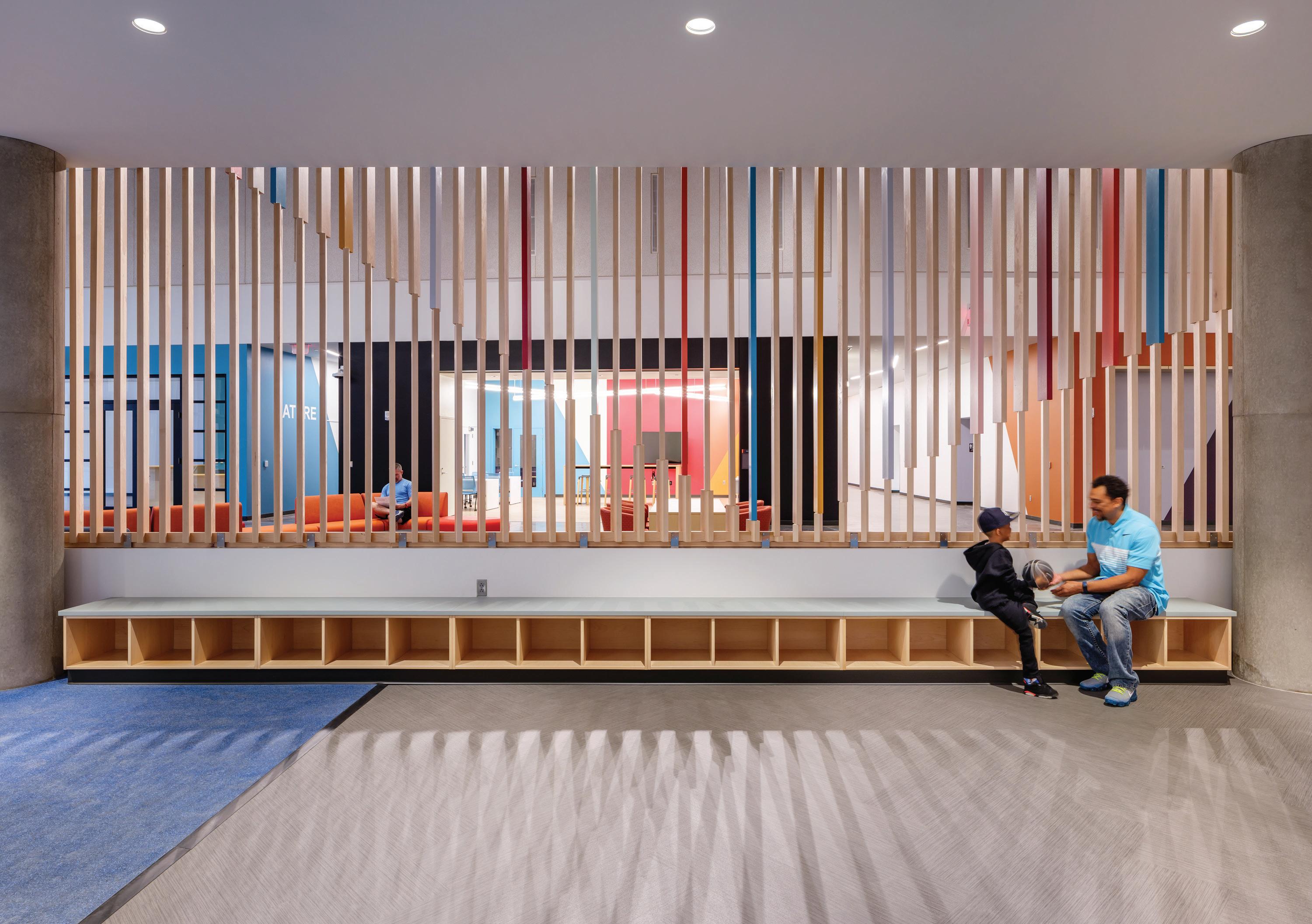

Compiled by John Burton Jr.
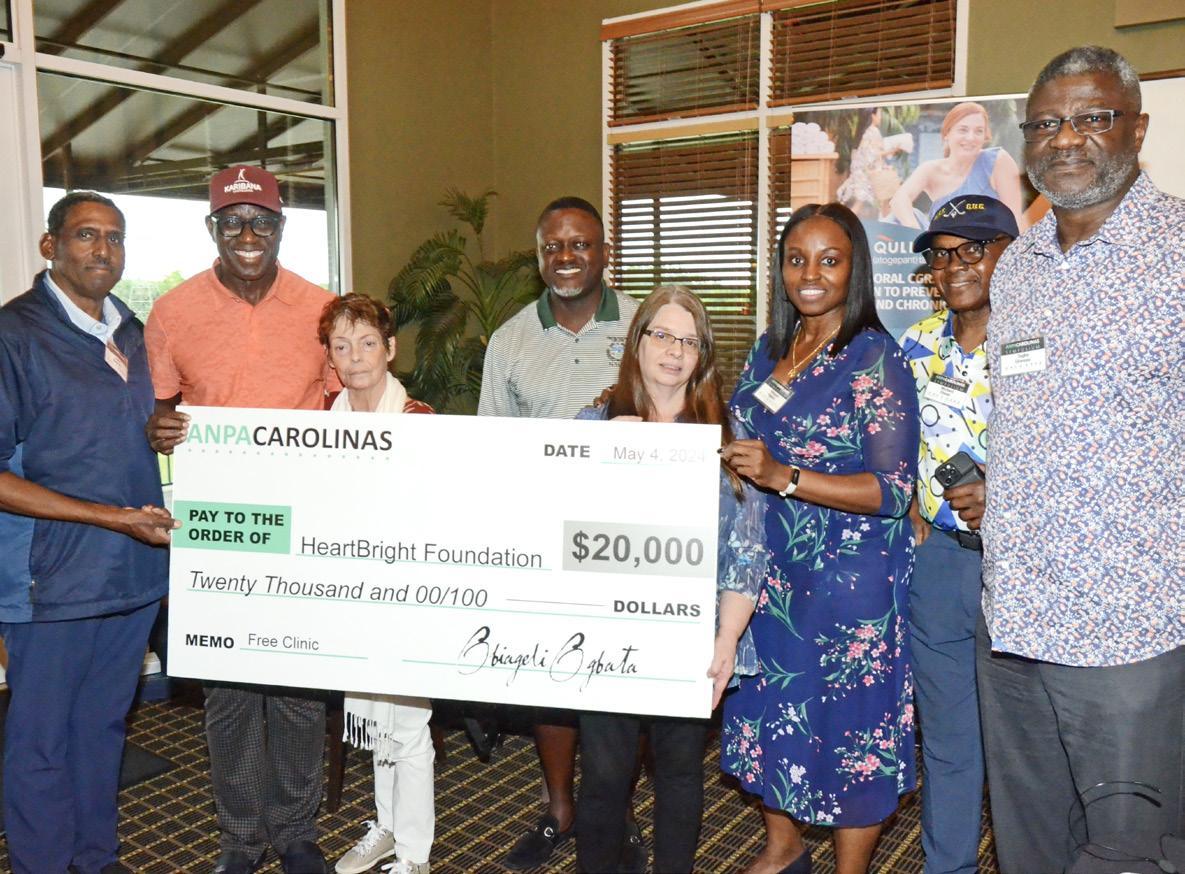
The 2024 Association of Nigerian Physicians in the Americas (ANPA) Carolinas Annual Symposium brought together physicians of all practices — family practitioners, nephrologists, cardiologists, gynecologists, pediatricians, endocrinologists, gastroenterologists, neurologists, dentists and others — for a day of activities and educational sessions.
The organization raised $89,000 to fund college scholarships and provide care for 630 patients for a year at the HeartBright Cardiac Resource Center in Charlotte. In addition, they collected 948 pounds of healthy food and 39 blood pressure machines to help those in need in the local area. They also donated to ANPA Nigerian missions.
ANPA represents the professional interests of more than 4,000 physicians, dentists and allied health professionals of Nigerian birth, ethnicity or empathy in the United States, Canada and the Caribbean. They provide a platform for medical and scientific dialogue on issues of health within North America, the Caribbean and Africa. The ANPA Carolinas Chapter provides medical services to communities throughout the greater Charlotte region and in other North and South Carolina counties. ANPA Carolinas provides community charity support, mentorship and scholarships to high school students interested in professions within the health-care industry.
Heart disease, diabetes and stroke account for 1 in 3 deaths, and access to care are top health issues in Charlotte. HeartBright bridges a critical health-care gap for the working poor sector of our community. Every $50 donation funds treatment of a patient for one year. HeartBright provides treatment, education, and resource programs for patients and early prevention of these issues in our youth. With the ability to have a comprehensive wellness plan that they can use to manage their disease, patients can improve their health, have hope for their future and be inspired to live healthy and productive lives. In 2023 HeartBright saved the local community 13.7 million in medical costs.
Spectrum announced Urban League of Central Carolinas has received a $45,000 Spectrum Digital Education grant for the Urban Digital Literacy Lift program. Funding will support workforce development programs designed to help participants enter and advance in the workplace through digital literacy curriculums focused on computer and online training.
“The importance of expanding access to essential broadband technologies, education and training is profound in our increasingly digital world,” said Rahman Khan, group vice president, Community Impact for Charter Communications, which operates the Spectrum brand of connectivity services. “Through the Spectrum Digital Education grant program, Charter is partnering with valued nonprofits that share our commitment to create better opportunities for the communities we serve.”
The $45,000 grant is the third Spectrum Digital Education grant for the Urban League of Central Carolinas, bringing total Spectrum support for the organization to $95,000 over the past six years.
“This grant is a great opportunity to further the partnership we have with Spectrum,” said Robyn Hamilton, president and CEO, Urban League of Central Carolinas. “It will bring programs to the community to address digital literacy and increase the Urban League of Central Carolina’s ability to empower community and change lives.”
In 2023, Spectrum awarded $1.1 million total to 46 nonprofit organizations through Spectrum Digital Education, which supports broadband technology programs, education, and training in unserved and underserved communities throughout the company’s service area.
Since the program’s 2017 launch, Spectrum has committed more than $9 million total to the initiative and has awarded 261 grants to 143 unique partners.
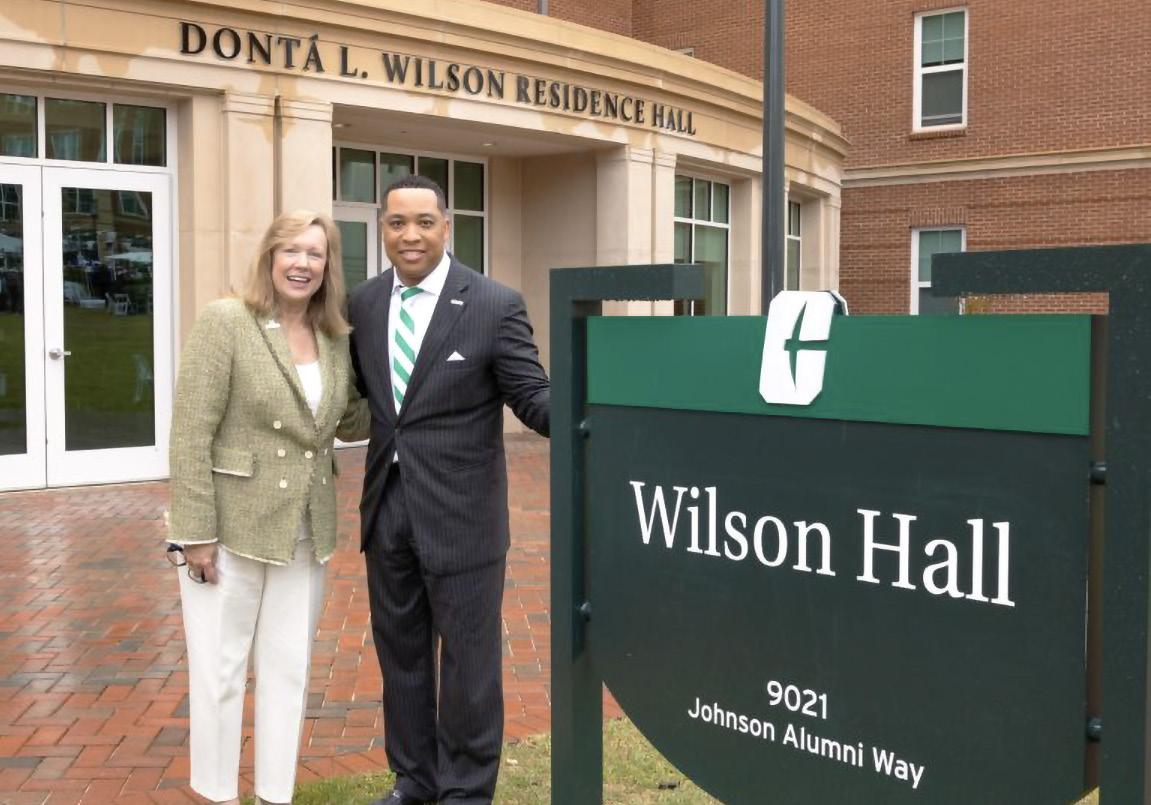
The newest residence hall at the University of North Carolina at Charlotte was renamed Wilson Hall in honor of Dontá L. Wilson, a Charlotte alumnus who serves as the vice chair on the Board of Trustees. Wilson Hall is Charlotte’s first residence hall named after an African American. The freshman-only, traditional-style residence hall boasts six floors and 676 beds, making it the highest-capacity dorm on Charlotte’s campus.
During the dedication ceremony in April, Chancellor Sharon L. Gaber also announced the new Wilson Believe Fund, a scholarship that will target first-generation students pursuing degrees in education and business.
“Thanks to a generous gift, the university is establishing the Wilson Believe Fund, an endowed scholarship fund that will provide scholarships for first-generation college students majoring in business and education at Charlotte,” said Gaber. “This fund has the potential to change the trajectory of the lives of generations of Charlotte students, their families and their communities. What’s more, in recognition of Dontá’s extraordinary generosity and service to his alma mater, I am pleased to announce that our newest residence hall will be named Dontá L. Wilson Hall.”
Wilson hopes that this building and the new scholarship will help support and alleviate anxiety for first-generation students and their families as they navigate the difficulties of college.
“Navigating the funding processes and living arrangements can be overwhelming and all-consuming,” said Wilson. “When students can focus more on enjoying the experience and performing to the best of their abilities, the benefits extend far beyond the students and our 49er community; it also contributes to the success of their families, the city of Charlotte and the global community.”
Wilson, chief consumer and Small Business Banking officer for Truist Financial Corporation and a member of the company’s operating council was named Digital Banker of the Year by American Banker Magazine. P


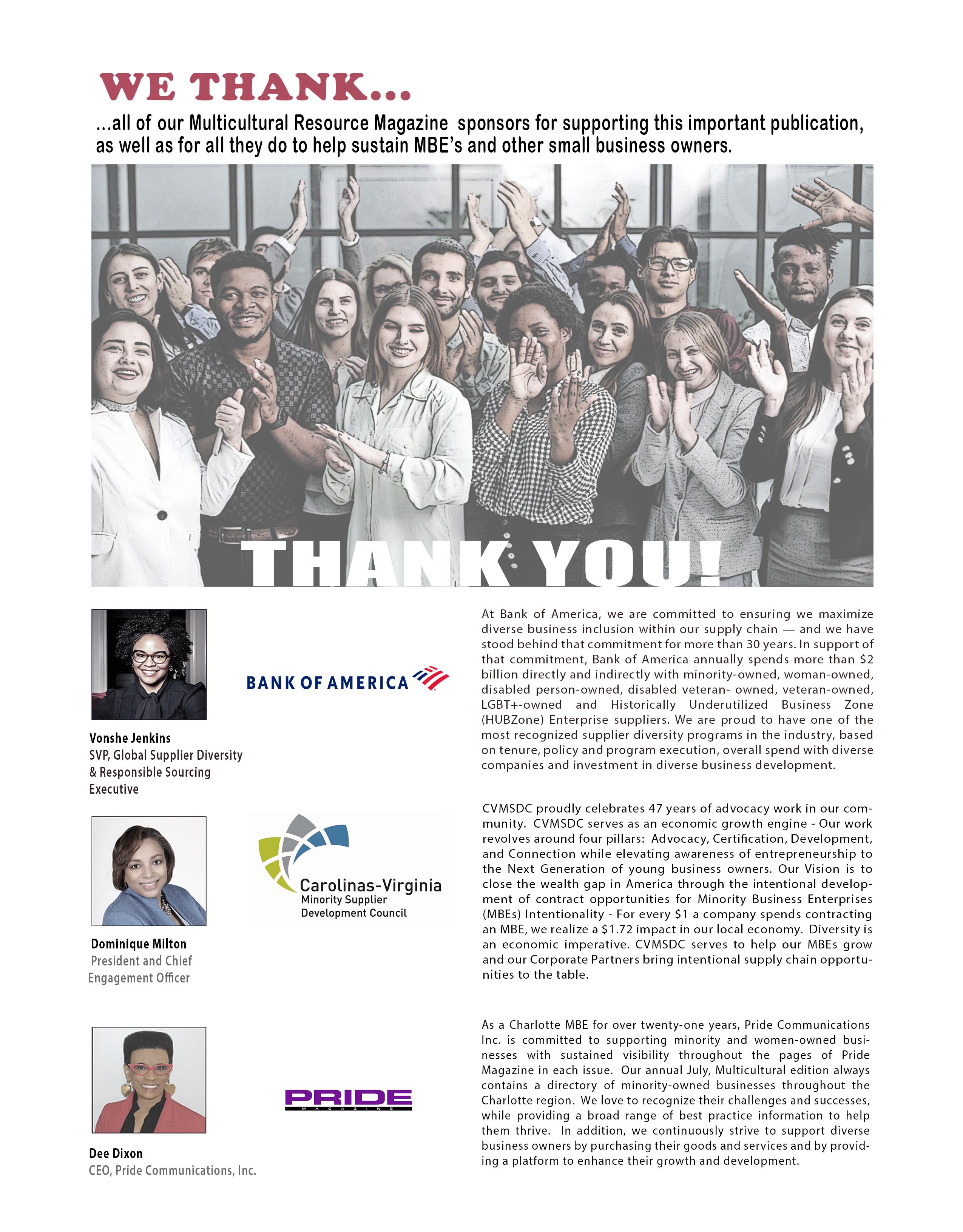

Minority and Womenowned Business Enterprise (MWBE) Training and Support
Minority Business Development Agency
202-482-2332 www.mbda.gov
N.C. Minority and Women Business Enterprise Coordinators’ Network www.mwbecoordinators.org
National Institute of Minority Economic Development 919-956-8889 www.theinstitutenc.org
MWBE Certification
Carolinas-Virginia Minority Supplier Development Council 704-549-1000 www.cvmsdc.org
Charlotte Business INClusion 704-336-4137 www.charlottenc.gov/Growthand-Development/CBI.com
NC Small Business and Technology Development Center 919-715-7272 www.sbtdc.org
Statewide Uniform Certification Program (SWUC)
*N.C. Dept. of Administration Office for Historically Underutilized Businesses 984-236-0130 www.doa.nc.gov/hub
Corporate Supplier Diversity
Advocate Health Supply Chain Alliance www.advocatehealthsupplychainalliance.org
Balfour Beatty Construction
Chad Humphrey Business Development Director 919-233-5137 chumphrey@bbus.com www.balfourbeattyus.com Bank of America www.bankofamerica.com
Compass Group Aleshia McMath VP of Diversity, Equity & Inclusion 704-328-4000 www.compass-usa.com
Duke Energy
Andrew Grier Supplier Diversity Executive 704-382-7690 andrewgrier@duke-energy.com www.duke-energy.com/ partner-with-us/suppliers
Food Lion
Garland Scarboro Manager, Diversity, Equity and Inclusion 704-310-2589 Garland.Scarboro@ RetailBusinessServices.com www.foodlion.com/careers/diversityand-inclusion/supplier-diversity
Novant Health diversityandinclusion@novanthealth.org www.novanthealth.org/ about/our-commitment/ diversity/diverse-suppliers
Piedmont Natural Gas gasadvantage.piedmontng.com/ doing-business-with-us/ Walmart Stores, Inc. www.corporate.walmart.com/ suppliers
Wells Fargo supplierdiversity@wellsfargo.com www.wellsfargo.com/supplierdiversity
Cybertary Charlotte 704-256-4717 www.charlotte.cybertary.com
Global Linking Solutions
704-708-4470 www.gls.com
Advertising Agencies/ Promotional Products
AC&M Group
704-697-4400
www.acmconnect.com
Bitflip Technologies, Inc. 704-293-5049 www.bitfliptech.com
BluePepper Public Relations 704-625-6564 www.bluepepperpr.com
Brand Equity Marketing, LLC 704-372-3982 www.brandequitymktg.com
BrandRPM 704-225-1800 www.brandrpm.com
BRK Global Marketing 704-579-1545 brkmarketing.com
Bullseye Branding and Promotions 704-366-1616 www.bullseyebp.espwebsite.com
CGR Creative 704-334-2232 www.cgrcreative.com
Classic Achievements, Inc. 980-819-9176 www.classicachievements.com
Creative Marketing Ideas 980-938-8555 www.creativemkg.com
Equine Marketing Group 704-663-4487 www.equinemarketinggroup.com
Internet Marketing Charlotte 704-236-6936 www.internetmarketingclt.com Jaunt 704-962-8570 www.ridejaunt.com
KS Image Solutions, LLC 704-786-7763 www.ksimagesolutions.com
Logo Pros 704-545-7408
www.logopros.us
Logo’d Gear 704-334-9333 www.logodgear.com
Lyerly Agency 704-525-3937 www.lyerly.com
MDC Marketing Group, LLC 773-667-2279 www.mdcmarketinggroup.com
Media Power Advertising, Inc. 704-896-0310 www.mediapoweradvertising.com
Motivation Marketing Firm 704-326-2187 www.MotivationMarketingFirm.com
PIA International 704-593-1256 www.piapromo.com
Pride Communications, Inc. 704-375-9553 www.pridemagazineonline.com
QCityMetro.com www.qcitymetro.com
Robinson Thinks www.robinsonthinks.com
S&B Computers and Office Products, Inc. 518-877-9500 www.sbcomputers-office.com
Spark Strategic Ideas, LLC 704-625-2185 www.sparkstrategicideas.com
The Agency Marketing Group 704-564-9694 www.gettheagency.com
The Narmer Group, LLC 678-787-8098 www.thenarmergroup.com
Zuri Creative Services www.zuricreative.com
Architects
CES Group 704-489-1500 www.ces-group.net
“ Success isn’t about how much money you make; it’s about the difference you make in people’s lives.”
— Michelle Obama
FM Supplies 336-391-8653 www.fmsupplies-fms.com
Neighboring Concepts 704-594-7961 www.neighboringconcepts.com
The Wilson Group Architects 704-331-9747 www.twgarchitects.com
Barbara L. White 704-375-9411 www.barbaralwhite.com
Benjamin M. Li 704-527-0878
Bishop, Dulaney, Joyner & Abner, P.A. 704-945-9850 www.bdjalaw.com
Brady & Kosofsky, PA 704-849-8008 www.bandklaw.com
Central Law Group, PLLC 704-248-0949
Closing Carolina Law Offices of Michelle Vereckey, PLLC 704-283-5555 www.closingcarolina.com
Collins Family & Elder Group 704-289-3250 www.collinsfamilylaw.com
DeMayo Law Offices 877-529-1212 www.demayolaw.com
Douglas H. Kim Law Firm 704-504-0962 www.douglaskimlawfirm.com
Ferguson Chambers & Sumter, P.A. 704-375-8461 www.fergusonsumter.com
Gardner Skelton, PLLC 704-335-0350 www.gardnerskelton.com
GPS Law Group 704-549-1950 www.gpslawnc.com
Hands Law Office, PLLC 704-248-7976 www.handslawonline.com
Hoard Law, P.C. 704-954-8094 www.hoardlaw.com
Houston Law Office 704-595-9146 houston-law-office.business.site/ Ken Harris & Associates 704-343-2620 www.khalegal.com
Kimberly Poe Law Office 704-489-8182
Law Offices of Susan D. Brotherton 704-873-7529
Law Offices of T. Michael Todd 704-343-9700
Lori Keeton Law 704-552-3614 www.lorikeetonlaw.com
Mickle & Bass Law Firm 803-929-0029 www.mickleandbass.com
Mitchell & Suhr PLLC 919-944-4668 www.paulsuhr.com
Ramsay Law Firm, P.A. 704-376-1616 www.ramsaylawfirm.com
Roderick G. Davis Attorney & Counselor at Law 704-632-1500 www.rgdavislaw.wixsite.com/ roderick-davis
Starrett Law Firm, PLLC 704-887-4944 www.starrettlawfirm.com
The Corbett Law Firm, PLLC 704-401-5299 www.facebook.com/ thecorbettlawfirm
The Justice Firm, LLC 704-377-4747 www.thejusticefirm.com
The Law Office of Cheryl R. Watkins 704-552-3993 www.crwatkinslaw.com
The Law Office of Lisa A. Dubs 828-323-1926 www.dubslaw.com
The Law Office of Tamela T. Wallace 704-371-4212 www.tamelatwallace.com
The Law Offices of William H. Harding 704-504-7854 www.williamhharding.com
The Montgomery Law Firm, PLLC 704-312-7360 www.charlottemontgomerylaw.com
The Snow Legal Group, PLLC 704-761-7660 www.snowlegal.com
The Wright Law Firm 704-332-2274
Tippens & Zurosky Attorneys, L.L.P. 704-343-0018 www.tandzlaw.com
York Harmon Johnson 704-375-4480 www.yhjlaw.com
Book Stores
Book Buyers
704-344-8611
www.bookbuyerscharlotte.com/home
Park Road Books
704-525-9239 www.parkroadbooks.com
Main Street Books 704-892-6841 www.mainstreetbooksdavidson.com
The Book Rack 704-544-8006 www.facebook.com/ CharlotteBookRack
Julia’s Café & Books 704-295-4585 www.juliascafe.org
KEMETIC Science Institute 704-910-6783 www.kemeticscienceInstitute.com
Communications/ Media-Related Services
ACP, Inc.
704-676-5880 www.goacp.com
Alliance of Professionals & Consultants, Inc. 704-334-3083 www.apcinc.com
Aquent 704-338-9119 www.aquent.com
BC Forward 866-363-1132 www.bcforward.com
CGR Creative 704-334-2232 www.cgrcreative.com
CITI, INC. 704-969-2484 www.citi-inc.com
Jameson Advisory Group 980-285-7146 www.jagclt.com
Mark III Media 704-269-8640 markiiimedia.com/
Media Power Advertising 704-896-0310 www.mediapoweradvertising.com
Network Cabling Systems, Inc. 704-523-8606 www.networkcablingsystems.com
Yellow Duck Marketing, LLC 704-271-9555 www.yellowduckmarketing.com
Computers/ Printers/Web
Action Graphics
704-393-9393 www.actionprints.com
Allegra Marketing, Print, and Mail 704-376-0938 www.allegracharlotte.com
A Cultivated Mindset
704-780-6535 www.acultivatedmindset.com
Applied Data Technologies 704-847-3000 www.applieddatatech.com
Blueline Technologies 704-542-1514 www.BlueLTI.com
Business Policy Solutions, LLC www.bpolicysolutions.com
Computech Consulting, LLC 704-499-8967 www.computech-consulting.us
Computer House Calls 704-549-4334 www.chc-clt.com/
Computel Systems
704-541-8659 www.computelsys.com
Copy Cat Printing 704-529-6606 www.copycatsouth.com
CPI Training Solutions Inc. 704-593-8999 www.solutionsrus.com
Creech Computer Consulting, Inc. 704-827-5979 www.creechcomputers.com
Experienced Recruiting Partners LLC 518-598-6300 www.experiencedrecruitingpartners.com
Geek Choice 704-331-0739 www.computergeeksnow.com
Hardison Cartridge, LLC 704-564-1203 www.hardisoncartridge.com IT-HenHouse 980-393-3400 www.it-henhouse.com
JCMR Technology, Inc. 704-707-3333 www.jcmr.net
Laury Controls & Design 704-785-6788 www.laurycontrols.com
Liberty Laser Solutions 800-570-1987 www.libertylasersolutions.com
Lorven Group, Inc. 704-899-5200 www.lorvengroupinc.com
MPG Consulting Services LLC 704-659-6767 www.mpgcs.com
Mid-Carolina Reprographics 704-529-0612 www.mid-carolinaplans.com
NTT DATA Consulting us.nttdata.com
Neteffect Technologies
704-504-9040 www.ne-t.com
Patriot Technology Solutions patriottechnology.net
Rush Computer Rentals
800-455-5445 www.rushcomputer.com
SMS Tech Solutions, LLC 800-656-7702 www.smstechsolutions.com
Stratagon, Inc
888-506-3466 www.stratagon.com
Sunshine Media Network
704-249-5022 www.sunshinemedianetwork.com
Syntelli Solutions Inc 877-796-8355 www.syntelli.com
The Imagine Group 800-368-1056 www.theimaginegroup.com
UTD Technology Corp 704-612-0121 x101 www.utdtechnology.com
Xtramile Soft, LLC 704-699-9912 www.xtramilesoft.com
A Smile 4U Family Dentistry
704-549-1199 www.Smile4ucharlotte.com
Alliance Dental Group 704-610-3328 www.allianceddentalgroupnc.com
Carmel Commons
Dental & Imaging 704-879-5897 www.carmelcommonsdental.com
Carolina Aesthetic Dentistry 704-793-4211 www.ncaestheticdds.com
Dasling Dentistry
704-594-9250 www.daslingdentistry.com
Dual Image Orthodontics
704-269-8495
www.dualimageortho.com
Eagle Shembo Dentistry
704-503-0202 www.eagleshembodentistry.com
Eastover Dental
704-842-3542 www.eastoverdental.com
Friendly Dental Group of Ballantyne
704-494-7990 www.friendlydentalgroup. com/ballantyne
Jackson Orthodontics
704-464-0696 www.drjacksonsmiles.com
Matthews Periodontics 803-373-9997 www.matthewsperio.com
Orchard Lake Dentistry
704-849-6700 www.orchardlakedentistry.com
OrthoCare Orthodontics
704-509-4999 www.drcooperortho.com
Palmieri Dentistry
704-662-6880 www.palmieridentistry.com
Rolle Oral & Facial Surgery
704-892-9500 rolle-oralfacialsurgery.com
Sandy Stovall, DDS
704-549-5600 www.stovalldentistry.com
Smart Orthodontics
704-549-8878 www.smartorthodontics.com
Smile Pediatric Dentistry & Orthodontics
704-971-7272 www.mykidsmile.com
SouthEnd Dentistry 704-335-8266 www.southendsmiles.com
Steven H. Ghim, DMD 704-935-2700 www.drstevenghim.com
University Pediatric Dentistry
704-688-1664 www.universitypediatricdentistrync.com
U. Phillip Igbinadolor & Associates
704-494-8484 www.upidental.com
Waverly Dental 704-246-7677 www.waverlydentalgroup.com
Webber Dentistry 704-392-9357 www.webberdentistry.com
Young & Polite Children’s Dentistry 704-587-7336 www.youngandpolite.com
Adams Electric Company 704-940-6080 www.adams-electric.com
Beam Electric Company, Inc. 704-333-9094 www.beamelectric.com
Gaylor Electric, Inc. 800-878-0577 www.gaylor.com
Infinity Contractors 704-392-3133 www.infinitycontractors.com
Interstate Electric Company, Inc. 704-333-7149 www.interstateelectriccompany.com
IRV Plumbing, Electric & HVAC 704-544-0200 www.irvplumbing.com
Jenkins Electric, Inc. 866-968-9027 www.jenkinselectric.com
Jim Dickerson Co. 704-727-2155 www.jim-dickerson.com McNaughton-McKay Electric Co. 704-527-6555 www.mc-mc.com
Pike Corporation, Inc. 800-424-7453 www.pike.com
Qwest Electric, LLC
704-662-3900 www.qwestelectricllc.com
Starr Electric Company, Inc. 704-568-6600 www.starrelectric.net
Summit Air and Electric 704-597-0940 www.summitairandelectric.com
Watson Electric Company, Inc. 704-947-5151 www.watsonelectric.com
WB Moore Company of Charlotte 704-331-9300 www.wbmoore.com
White Electric Company 704-594-4612 www.whiteelectriccompany.com
Ethnic Food Items/ Grocery Stores
A1 Stop Food Store 704-347-1747
Caribbean Hut 704-527-9505 www.caribbean-hut.com
Carolina Smoothies 704-358-0006
Central Market 704-567-2071 www.centralmarketcharlotte.com
Charlotte International Market 704-527-5771 www.charlottemarketinternational.com
Compare Foods 704-596-3495 www.compareclt.com
Eloquent Creations Catering & Design Services, LLC 704-200-6883 www.eloquentcreationscatering.com
FutoButa 704-376-8400 www.futobuta.com
Honey Butter Bakery 704-421-1390 www.honeybutterbakery.com
Island Grocery 704-532-0322 www.IslandGroceryandGrill.com
Mr. Jim’s Pizza 704-376-5467 mrjims.pizza
New Century Grocery & Food 704-921-1716
Ole Mexican Foods 704-587-1763 www.olemex.com
Organic Marketplace
704-864-0605 www.facebook.com/ organicmarketplacenc
Oriental Food Market, Inc. 704-537-4281
Patel Brothers 704-509-2305 www.PatelBros.com
Sweet It Is! Bakery 704-351-4668 www.sweetitis.net
Truly Good Foods 704-588-0400 www.trulygoodfoods.com
Uptown Catering Company 704-332-5521 www.uptowncateringco.com
Aisha Thomas Events
704-951-4273
Aishathomas.com
Botanica Lights, LLC 704-737-0962 www.botanicalights.com
Creative Catering 704-373-2900 www.creativecateringinc.net
Extravaganza Events 704-343-9200 www.extravaganzaevents.com
It’s My Affair 704-394-4928 www.itsmyaffair.com
Key Signature Entertainment 704-568-1968 www.keysignatureonline.com
Platinum Events By Andrea 704-458-6234 www.platinumeventsbyandrea.com
The Kee Group 704-726-6838 www.keepingeventsepic.com
The Main Event 704-332-5819 (Main) 704-605-6028 www.themaineventnc.com
Advanced Enclosure Consulting 704-361-8664 www.aeconsulting-usa.com
Atom Engineering, PLLC 980-938-5231 www.atomengineers.com
C2 Engineering Solutions, PLLC 704-266-0942 www.rcengineering.net
Critek Engineering Group 336-348-1889 www.critekgroup.com
Devita, Inc. 877.4.Devita (877.433.8482) www.devitainc.com
DiCon Consulting www.diconconsulting.com
High Performance Building Solutions, Inc. 704-299-1698 www.hpb-solutions.com
Hinde Engineering, Inc. 704-814-4407 www.hindeengineering.com
Jones Civil Design, P.C. 704-412-8523 www.jonescivildesign.com
Little Diversified 704-525-6350 www.littleonline.com
Shultz Engineering Group 704-334-7363 www.shultzeg.com
Smiley Engineering, Inc. 803-548-4111 www.smileyengineering.com
System WorCx, PLLC 704-996-9924 www.systemworcx.com
Watson Electric Company, Inc. 704-393-0220 www.watsonelec.com
Wescott Structures, P.A. 704-921-0504 www.wescottstructures.com
Willis Engineers, Inc. 704-377-9844 www.willisengineers.com
Financial
Accouting-Tax-Governance 704-303-9998 www.atgadvisors.com
AloStar Bank of Commerce 877-738-6391 www.alostarbank.com
Anderson & Associates 704-347-0090 www.andersonexecsearch.com
Apex Business Group, LLC 980-635-0302 www.apexbusinessgroupllc.com
Beacon Wealth Advisors 704-947-8444 www.mybeaconwealth.com
Carter Insurance 704-542-7500 agents.allstate.com/luthercarter-jr-charlotte-nc.html
Cornerstone Wealth Planning Matthews: 704-849-0123 www.cornerstone4planning.com
Financial Compliance Group, Inc. 704-412-8440 www.financialcompliancegroup.com
Freedom Financial Advantage, LLC 704-905-9867 www.freedomfinancialadvantage.com
GM Financial 704-719-3570 www.gmfinancial.com
J & G Legacy Financial Group, LLC 704-557-9786 www.jandglegacy.com
JP Financial Group LLC 704-543-6269 www.jpfinancialgroupllc.com
M&F Bank 704-332-2121 www.mfbonline.com
Ocean Advisors, LLC 704-523-6914 www.oceanadvisors.com
Rose & Associates Southeast 704-896-0094 www.roseassociates.com
Self-Help Credit Union 704-554-7201 www.self-help.org
The Real Money Coach 517-395-7885 www.therealmoneycoach.com
Tucker Boynton Financial Group 704-366-5085 www.tbfinancial.com
Worth Financial Advisory Group 704-731-0121 www.worthadvisors.com
Better Bodies 4 Us, LLC 980-721-1866 www.betterbodies4us.com
Club Fitness
704-295-7900 www.goclubfitness.com
Core Elevation Fitness & Wellness www.coreelevationfitness.com
Discovery Chiropractic and Wellness Center, PLLC 704-946-2054 www.discoverychirowellness.com
Energyve Fitness 704-763-6556
“ It’s not the load that breaks you down, it’s the way you carry it.”
— Lena Horne

Fernando Loor Vera Brazilian Jiu-Jitsu
704-512-9397 www.martialartscharlottenc.com
LBX Fitness
704-281-9251 www.lbxfitness.com
My Gym
704-522-6966 www.mygym.com/charlotte
N’Shape with ’N 704-334-4848 www.nshapewithn.com
Toushea Skincare 980-354-1145 www.tousheabodyboutique.com
Ultimate CrossFit 704-497-4099 www.ultimatecrossfit.com
Cake and Craft Creations 704-577-4400 www.cakeandcraft.com
Carolimas Dessert Boutique 843-900-4467 www.Carolimas.com
Catering by Tara 704-492-3791 cateringbytara.com
Creative Catering
704-373-2900 www.creativecateringinc.net
Essie’s Catering 803-329-2228 www.essiescatering.com
FDY, Inc. 704-523-6605 www.fdyinc.com
Frozen Kups 980-258-0226 www.frozenkups.com
Howard & Howard Event Management and Catering 980-349-5750 www.howardandhowardevents.com
Jewell Treats 980-202-2530 www.jewelltreats.com
Manolos Bakery 704-568-2120 www.manolosbakery.com
Popbar www.pop-bar.com 980-237-9750
Popcorn Heaven 803-216-5197 www.popcornheaven.com
Round The Way Eatery 704-408-7381 www.instagram.com/ roundthewayeatery
Zippy Ice Inc. 980-355-9851 www.zippyicecompany.com
Airboat www.airboatstudio.com
Brinkley Design, Inc. 704-372-8666 leigh@brinkleydesign.com
Cosmopolitan Creative Group 912-507-1708 www.cosmpolitancreativegroup.com
Cynthia Frank Design 704-562-2616 www.artwork.cynthiafrankdesign.com
Goodstuff Creative 704-254-3277 www.goodstuffcreative.com
Moonlight Creative Group 704-332-9918 www.moonlightcreative.com
New Creations
Enterprises, LLC 704-971-7854 www.newcreationsmedia.biz
SPARK Publications 704-844-6080 www.sparkpublications.com
Steele Creek Printing & Design, Inc. 704-697-1755
Steelecreekprinting.com
The Imagine Group 704-597-9015 www.theimaginegroup.com
Virtual Illustrations 704-287-7023 www.virtualillustrations.com
Vistec Graphx, Inc. 704-377-6626 www.vistecmarketing.com
Zuri Creative Services 704-380-0278 www.zuricreative.com
Advantage Vision Center 704-375-3935
www.advantagevisioncenter.net
Americare Health PC 704-535-0400
Arboretum Obstetrics & Gynecology
704-341-1103, 704-841-7225 www.arboretumgyn.com/
Barbara G Green Physical Therapy
704-377-0020
www.barbaragreenphysicaltherapy.com
Brandon Gynecology Associates, PA 705-510-1600
www.brandongynecology.com
Carolinas Eye Center & MedSpa 704-510-3100
Carolina Family Healthcare 704-847-4000
www.carolinafamilyhealthcare.com
Carolina Pediatric Therapy 803-980-4900
Center for Personal Growth 704-655-2828
www.center-for-growth.com
Charlotte Pediatric Dentistry 980-414-6442
www.cltpediatricdentistry.com
Charlotte Speech and Hearing Center 704-523-8027 www.charlottespeechhearing.com
Cynthia Busher 704-522-8300
www.cynthiabusher.com
First Care Medical Clinic 704-225-8548
www.firstcarecanhelp.com
HomeCare for the Carolinas, LLC 704-335-8488
www.homecareforthecarolinas.com
JP Chiropractic & Posture 704-841-1701 www.jpchiropractic.com
Lancaster One Medical 803-286-5700
www.lancasteronemed.com
M.D. Laser Studio 704-664-4247 www.mdlaserstudio.com
Mount Holly Eye Clinic, Inc. 704-822-0099
Planned Parenthood 704-536-7233
www.plannedparenthood.org/healthcenter/north-carolina/charlotte
Premier Pharmacy and Wellness Center 704-496-9182 www.yourwellnesskey.com
PrimeCare Medical Center 704-966-7012 www.primecaremed.org
Speechworks Therapy Services 980-237-6226 www.speechworkstherapy.com
Thuanh Nah Nguyen, MD, PA Internal Medicine & Pediatrics 704-554-8880
Transcendent Accents 704-494-4455 www.transcendentaccents.com
White Diamond Medical Clinic 704-542-9833 www.whitediamondmedical.com
Williams Chiropractic and Wellness, PLLC 980-237-8489 www.drcleyawcw.com
AeroRaq Engineering Inc. 704-469-8463 www.aeroraq.com
Air Diagnostics, Inc. 704-634-1926 www.airdiagnostics.net/
Air One Heating and Cooling, LLC 704-946-2751 www.aironecoolandheat.com
All Systems Restored HVAC & Electrical, LLC 704-909-2826 www.allsystemsrestored.com
AME Consulting Engineers, PC 704-295-4263 www.ame-pc.com
Climate Control of Charlotte 704-588-2066 www.climatecontrolcharlotte.com
Cost Effective Maintenance, Inc. 704-332-9711
E2 Mechanical 704-399-8786 www.catawbamechanical.com
Environmental Controls & Mechanical 704-910-2692
Gordon’s Heating & A/C 704-370-7789
KID Construction Company, Inc. 704-277-4679
Mckenney’s Inc. 704-357-1616 www.mckenneys.com
Mr. Charlotte Comfort 704-512-8096 www.mrcharlotteelectric.com
Native Air & Heat 704-824-0380 www.NativeAirandHeat.com
Performance Air, Inc. 704-394-4748
Premier Diversified Resources 980-944-9068 www.pdresourcesnc.com
Refresco, PLLC 704-293-8011 www.refresco-pllc.com
Superior Mechanical Systems, Inc. 704-335-1942 www.superiormsinc.com
Homecare Services
Advanced Roofing & Exteriors, LLC
704-999-4130
www.advancedroofingandexteriors.com
Alpha Omega Construction Group
844-704-7663
www.alpha-omegainc.com
American Fence
704-523-4936
www.americanfenceclt.com
Apex Exterminating, Inc.
704-573-1197
www.apexexterminatinginc.com
A Devine Lock and Key 704-579-4799
www.adevinelockandkey.com
Bullseye Construction, Inc.
704-889-2855
www.bullseyeconstructioninc.com
Camden Roofing and Construction, LLC
704-858-2141
www.camdenroofinggc.com
Carolina Custom Installations, Inc.
704-568-7277
www.cci-floors.com
Carolina Door Specialties, Inc
704-391-7133
www.carolinadoorspecialties.com
Carolina Lawn Service
919-633-4647
www.carolinalawn.com
Certapro Painters of North Charlotte
704-489-0957
www.certapro.com/north-charlotte
Charlotte Plantscapes, Inc
704-529-1399
www.charlotteplantscapes.com
Environmental Design Landscape, LLC
704-597-2193
www.edlnc.com
Find it K9 Detection (Bed Bug Specialists) 980-505-7878 www.finditk9detection.com
Fresh Bright Corp. 704-763-4229
www.freshandbrightcorp.com
Genesis Construction of the Carolinas 704-266-3737 www.genesiscoc.com
Green Clean Commercial
866-845-4948
www.greencleancommercial.com
HMO Pest Control
704-400-2334
www.hmo-pestcontrol.com
Jiron’s Construction, Inc. 704-626-5395
www.jironconstruction.com
Kim’s Professional Painting 704-349-1810 www.kimsprofessionalpainting.com
Lightning Fast Lawn Care 704-726-4391
MAKK Services Unlimited, Inc. 704-507-1921 www.makkservicesinc.com
Paraclete Incorporated
704-661-2599 www.paracleteinc.co
Queen City Master Services 800-326-5540 www.masterservicescontractor.com
Tillman’s Lawn Care LLC
704-891-7584 altontillman70@yahoo.com
United Painting Services, Inc. 704-684-0357 www.unitedpaintingservices.com
Human Resources/ Executive Search
AccruePartners, Inc.
704-632-9955 www.accruepartners.com
Advocations, LLC. 877-365-9675 www.advocations.io
AF Image Group, LLC 952-240-8228 www.afimagegroup. com/af-image/main
Allegiance Staffing 704-556-1770 www.allegiancestaffing.com
Alpha Labor Contractors, Inc. 704-398-2741 www.alphalaborcontractors.com
Before You Hire, Inc.
704-878-3600 www.beforeyouhireinc.com
Burnett Resources, Inc. 888-273-4108 www.burnettresources.com
BPN Healthcare Concepts 866-623-8880 www.bpnconcepts.com
Career Match Solutions 855-267-6282 www.careermatchsolutions.com
CEO, Inc. 888-242-1755 www.ceoinc.com
Compass Career Management Solutions 704-849-2500 www.compasscareer.com Corestaff Services www.corestaff.com
CRG Workforce 704-665-9555 www.getcrg.com
Be Evolved HR 919-576-9279 www.beevolvedhr.com
Employment Practices Counsel Inc. 980-207-1137 www.epcounsel.com
FirstPoint, Inc. 800-288-7408 www.firstpointresources.com
Galilee Agency, Inc. 704-394-0674 www.galileeagency.com
Greene Group 704-896-3110
HR Unequivocally® 704-644-9152 www.hrugroup.com
Insurance Professional Search, LLC 704-362-5638
Integra Staffing 704-527-9191 www.integrastaffing.com
Jennifer Temps, Inc. 704-510-1556 www.jennifertemps.com
“ To be successful, you must act big, think big and talk big.”
Kavaliro Staffing Services 704-525-3457 www.kavaliro.com
Kforce 704-612-2800 www.kforce.com/find-an-office/ charlotte-north-carolina
Kwin Consulting Inc. 704-287-7653 Ext.101 www.kwinconsulting.com
Language Resource Center Inc 877-322-1244 www.languagerc.net
LeadAdvantage, Inc 501-687-5323 www.leadadvantageinc.com
Link Staffing 888-292-5465 www.linkstaffing.com
Little Gerald Services 704-289-3831 www.lgservicesnc.org
Medical Administrative Solutions 704-944-3571 www.mascodingsolutions.com
Mindseeker Professional Services Inc. 703-466-0474 www.mindseeker.com
Performance Staffing Solutions, Inc. 704-927-1477 www.performss.com
PrideStaff 704-237-4103 www.pridestaff.com
ProLogistix 704-522-9166 www.prologistix.com
Refulgent Technologies Inc. 704-405-4238 www.refulgent-tech.com
Sappenfield Staffing, Inc. 704-332-4710 sappenfieldstaffing.com
Success By Choice 980-282-0982
SourceAbility, Incorporated 704-837-8200
— Aristotle Onassis, Greek Shipping Magnate
Solutions Staffing
704-503-1090
www.solutionsstaffing.com
Staffmark
704-799-3636 www.staffmark.com
Trinity Strategic Consulting, Inc.
704-957-0620
www.trinitystrategicconsulting.com
Vincent Career Training Institute
941-227-2092
www.vincentcareertraining. thinkific.com
VisionCor, Inc.
704-366-7979
www.visioncor.com
Xperience Leadership, LLC
704-896-9881
www.xperienceleadership.com/
ACOP, LLC.
888-508-2267
www.acopprotection.com
Altmann & Porter Insurance
704-795-9001
www.altmanninsurance.com
Art Stover
704-504-0564
Carolina Insurance School, Inc.
704-489-9440
www.carolinainsuranceschool.com
Dawn Johnson Agency
803-980-1414
www.statefarm.com/agent/ US/SC/Rock-Hill/DawnJohnson-Z4JGF1YS000
Group Insurance Solutions, Inc.
704-543-9314
www.groupinsurancesolutions.com
Hayes Insurance Agency
704-545-3337
www.hayesinsuranceagent.com
Moulton Insurance Group 704-633-7283 www.moultoninsgroup.com/
Parks Insurance Group
704-548-0500
www.goparksins.com
Rankin Insurance Group, Inc.
704-896-9393 www.rankininsurancegroup.com
All Things Professional Cleaning, Inc
704-345-3976
www.allthingsprofessional.net
ATL & C Cleaning Service
704-839-0283 www.atlccleans.com
Bucket, Mop, and Broom Cleaning Service LLC
877-784-0781
www.bucketmopandbroom.com
Elite Touch Cleaning Services, Inc.
704-742-2449
www.elitetouchcleaningservices.com
Green’s Commercial Cleaning, Inc.
704-525-5859 www.greenscommercialcleaning.com
JAC Janitorial Services
704-401-7142 www.jacjanitorialservice.com
JC Services Unlimited 980-253-7256 www.jcservicesunlimited.com
Joffie Contracting Services, Inc.
704-392-4442 www.joffie.com
Minit Maids 704-367-9931 www.minitmaids.com
Miriam Davis Cleaning, LLC 704-201-6111 www.miriamdaviscleaning.com
MOLLY MAID of North Charlotte / Matthews 980-342-2350 www.mollymaid.com/n-charlottematthews-concord-huntersville/
Mr. Clean Maintenance Company 980-339-5399
www.mrcleanco.com
Sparkle & Shine Cleaning Co. 314-546-1807
Squeaky Completely Clean www.scclean.net
The Johnson Group 704-522-3544 www.aejohnsongroup.com
Top Pro Cleaners 704-241-6206 www.topprocleaners.com
Latin American Chamber Charlotte
1900 Mexican Grill 704-334-4677 www.1900mexicangrill.com
AC&M Group 704-697-4400 www.acmconnect.com
AFC Custom Granite 704-598-1647 www.afccustomgranite.com
Agua Source, LLC 704-831-8311 www.aguasourcellc.com
America’s Real Estate Group, Inc. 704-540-4646 www.myamericasrealtor.com
Apex Exterminating, Inc. 704-573-1197 www.apexexterminatinginc.com
Arlette Guerra de Hurtado 704-591-1338 www.agpmrealtyinc.com
Avon Products Liz Bell 919-695-6400 Youravon.com/elizabethbell
Avon Products Myriam Gladney 704-814-7318
Baruu Advertising 888-841-0179 www.baruu.com
“ There are no secrets to success. It is the result of preparation, hard work and learning from failure.”
Beauty & Body Rituals 704-568-5458
Bonilla Brothers, LLC 704-737-7124 www.bonillaroofingnc.com
Borealis Language Academy 980-207-3958 www.borealislanguage.com
Cambio Coaching LLC 704-497-2340 www.cambiocoach.com
Carnitas Guanajuato Mexican Restaurant 704-563-1651 www.carnitasmexican.com
Celia Estrada Realtors 704-335-4400
Centro Medico Latino, PC 704-333-0465 www.centromedicolatino.com
Concepcion Barajas Painting 704-557-5072 www.concepcionbarajaspainting.com
CSB Promo 704-708-5088 www.csbpromo.com
Culturati Research & Consulting, Inc. 858-750-2600 www.culturatiresearch.com
Daniela Melendez State Farm 704-733-9022 www.mysfrep.com
Dentist Salud 704-705-4744 www.dentistsalud.com
El Progreso Hispano Newspaper 704-529-6624 www.progresohispanonews.com
El Soplon Deportivo 704-238-0260
Elite Touch Cleaning Services, Inc. 704-389-5014 www.elitetouchcleaning.com
Exotic Landscapes & Irrigation 704-537-0842 www.exotic-landscapes.com
—
Colin Powell
H3 Staffing, LLC
www.h3staffing.com
Heits Building Services 919-249-6840 www.heitsofcentralnc.com/
Hernandez Auto Service 828-310-1326
Into Languages Global 704-408-3132 www.intolanguagesglobal.com
JDCS Home Construction 980-721-2882 www.jdcshomeconstruction.com
Johamar, Tires/Wheels 704-847-0175
LaCa Projects
704-837-1688 www.lacaprojects.com
La Noticia, The SpanishLanguage Newspaper 704-568-6966 www.lanoticia.com
Manolos Bakery 704-568-2120 www.manolos.com
Latin American Coalition 704-531-3848 www.latinamericancoalition.org
Latino Community Credit Union
704-531-0201 www.latinoccu.org
Latorre Insurance Group 844-311-9074 www.latorreinsurance.com
Latorre Law Firm 704-342-1111 www.latorrelaw.com
Mellorinas Catering 704-264-6115
Metro Landmarks
704-526-7600 www.metrolandmarks.com
Mundo Uniforms, LLC 704-287-1527 www.facebook.com/ MundoUniforms/ Precise Translating, LLC 704-606-2869 www.precisetranslating.com
Premier Home Healthcare Services 704-521-4901 www.premierhomehealthcare.com
Promotion Magic 704-596-2300 www.promotionmagic.com
Punta Cana Grill
704-529-3599 www.puntacanagrillclt.com
Que Pasa Media Network 704-319-5044 www.quepasamedia.com/charlotte/ RentMeUSA 980-355-9696 www.rentameusa.com
Sign Connection
704-868-4500 www.signcon.com
USTT, Inc. 704-676-0990 www.usttusa.com
Windsor Jewelers 704-556-7747 www.windsor-jewelers.com
AC&M Group 704-697-4400 www.acmconnect.com
Apple Rock Displays 1-800-478-2324 www.applerock.com
BluePepper Public Relations 704-625-6564 www.bluepepperpr.com
CGR Creative 704-334-2232 www.cgrcreative.com
Compass Career Management Solutions 704-849-2500 www.compasscareer.com
Digital Divas 201-304-2933
Dream Builders Communication, Inc. 704-727-5006 www.dreambuilderscommunication.com
Eaddy, Perry & Associates, Inc. 704-965-6956 www.eaddyperry.com
Fast Signs 704-599-4949 www.fastsigns.com
Finishing Partners, Inc. 704-583-7322 www.finishingpartners.com
Image Solutions 704-619-1539 www.imagesolutions.biz
International Minute Press 704-782-2020 www.concordimp.com
Jason Robinson www.robinsonthinks.com
Jervay Agency, LLC www.thejervayagency.com
KS Image Solutions, LLC 704-786-7763 www.ksimagesolutions.com
Lockman-Brooks Marketing Services 704-944-3188 www.lockmanbrooks.com
Lyerly Agency 704-525-3937 www.lyerly.com
MDC Marketing Group 980-477-5665 www.mdcmarketinggroup.com
Motivation Marketing Firm 704-326-2187 motivationmktg.net
Mythic Advertising & Marketing 980-500-0828 www.mythic.us
Pride Public Relations 704-375-9553 www.pridepublicrelations.com
The Agency 704-564-9694 www.lepragency.com
The LEPR Agency 910-261-5874 www.lepragency.com
Beasley Media Group 704-522-1103 www.BBGI.com
BEI Audio and Video 704-362-5333 www.breidingelectronics.com
Chun Group, Inc. 704-332-4167 www.chungroup.org
La Noticia 704-568-6966 www.lanoticia.com
Lake Norman Currents 704-677-9159 www.lncurrents.com
Lake Norman Woman 704-895-6168 www.lakenormanwoman.com
LaRaza — 106.1FM 704-405-3170 www.larazalaraza.com/charlotte Norsan Media 704-759-4428 www.norsanmedia.com
QCitymetro.com www.qcitymetro.com
QuéPasa Media 704-319-5044 www.quepasamedia.com
Pride Communications/ Pride Magazine 704-375-9553 www.pridemagazineonline.com
Radio One — Old School 105.3, Praise 100.9FM 704-548-7800 www.oldschool1053.com www.praisecharlotte.com
Speak Up Magazine 704-980-9885 www.speakupmag.org
The Charlotte Post 704-376-0496 www.thecharlottepost.com
Essential Assessments & Behavioral Health 980-939-5099 www.EssentialHealthNC.com
Pride in North Carolina 252-321-8080 www.pridenc.com
Symmetry Behavioral Health Systems 704-632-9900 www.symmetrybhs.com
The FMRT Group 336-761-0764 www.fmrt.com
Vaya Health 800-893-6246 www.vayahealth.com
Services
Aaron’s 877-607-9999 www.aarons.com
Beardsley Office Solutions, LLC 704-395-3081 www.beardsleyoffice.com
Bullseye Branding and Promotions 704-366-1616 bullseyebp.espwebsite.com
Office Depot 704-464-0014 www.OfficeDepot.com
Richa Graphics 704-331-9744 www.richa.com
Shred-It, Inc. 800-697-4733 www.shredit.com
UPS Store - Stewart Creek Crossing 704-392-5099 store5926@theupsstore.com
Advantage Vision Center 704-375-3935 www.advantagevisioncenter.com
Fort Mill Vision Center 803-547-5547 www.fortmillvision.com
Photography/Aerial/ Commercial
Avioimage Mapping Services, Inc. 704-573-7080 www.avioimage.com
Boyle 704-676-0778 www.boyleconsulting.com
Color Star Media 980-819-0255 www.colorstarmedia.com
Flawless Capture Photography & Productions, LLC
704-498-2400 www.flawlesscapture.net
Indigo Photography 704-778-5603 www.indigocharlotte.com
JB Long Photography 803-517-7159 jblongphotography.com
Joanna Dehart Photography 704-517-1819 www.joannadehartphotography.com
Kim Brattain Media 888-394-4753 www.kimbrattain.com
Loyd Visuals 704-615-8743 www.loydvisuals.com
Media Arts Collective, LLC 704-771-9927 www.mediaartscollective.com
Moments by Donna 704-364-1215 www.momentsbydonna.com
Origin Land Surveying and Mapping, Inc. 704-506-5225 www.originlandsurveying.com
PPT Photography
704-293-7459 pptphoto.photoreflect.com Sanborn 704-347-4552 www.sanborn.com
TO2 Photography, LLC 704-879-1592 www.to2photo.com
Agua Source 704-831-8311 www.aguasourcellc.com
Crockett Quality Plumbing LLC. 704-231-1531
Qualityplumbing.Crockett@aol.com
Dependable Plumbing 704-982-6938
Heyworth Plumbing Company, Inc. 704-523-2696 www.heyworthplumbing.com
Morris-Jenkins Plumbing 704-357-0484 www.MorrisJenkins.com
National Plumbing Solutions 704-309-9565
Pay Less Plumbing 704-393-9032
Paylessplumbingofcharlotte.com
Reed’s Plumbing Company 704-399-7785
Rooter Man 866-577-1221 www.rooterman.com
Roper Construction 704-332-6737 www.roperconstruction.com
The Boswell Group 704-289-8986 www.theboswellgroup.com
310 Signs Co. 704.910.2242 www.310signs.com
Action Graphics 704-393-9393 www.actionprints.com
Allegra Marketing, Print, and Mail 704-376-0938 www.allegramarketingprint.com
American Labels & Printing 704-633-8005
Brightflow Technologies 704-585-1010 www.brightflow.net
Copy Cat Printing 704-529-6606 www.copycatsouth.com
Fast Signs Pineville/Ballantyne 704-275-9204 www.fastsigns.com/pinevilleballantyne-charlotte-nc/ FSI Office 704-598-8971 www.fsiofficefurniture.com
ImageMark 800-632-9513 www.imagemarkonline.com
Image Solutions 704-619-1539 www.imagesolutions.biz
Lake Printing and Design 704-895-3878 www.lakeprinting.biz
Liberty Laser Solutions 800-570-1987 www.libertylasersolutions.com
Marie’s Print Shop, Inc. 704-633-1125
Mid-Carolina Reprographics, LLC www.mid-carolinaplans.com
Proforma Impressions Group 704-575-2743 www.proforma.com/ impressionsgroup
RR Donnelly www.rrd.com
Richa Graphics
704-331-9744
www.richa.com
Social Ape Marketing 980-288-7804 www.socialapemarketing.com
The Charlotte Post Publishing Co. Inc. 704-376-0496 www.thecharlottepost.com
The Image Group 704-597-9015, 800-368-1056 www.theimaginegroup.com
Underground PrintingCustom T-Shirts & More 980-495-0324
www.Undergroundshirts.com/clt Vision Print Solutions 1-800-200-9797 www.visionenvelope.com
Publishing/CustomPublishing Books
SPARK Publications 704-844-6080 www.sparkpublications.com
Canopy Realtor Association 704-372-0911 www.CarolinaHome.com
Morton Malloy Realtors 704-773-6457
Nettie Lark, REALTOR
Morton Malloy Realty 704-340-3862 704-773-6457
Servant Heart Realty Group 704-748-0922 www.servantheartrealtygroup.com/ our-firm
Valarie R. Brooks Real Estate 704-488-2420 www.valarierbrooks.com
Recycling/Junk Removal/Shredding
All Points Waste Service Inc. 704-821-5424
C & M Recycling, Inc. 704-599-1771 www.gotsomeconcrete.com
Carolina Recycles 704-376-4295 www.carolinarecycles.com
Junk King 704-469-4815 www.charlotte.junk-king.com
Shred-It, Inc. 800-697-4733 www.shredit.com
Anointed Flooring, Inc. 704-510-8906
www.anointedflooring.com
Do It All Interiors, LLC 704-877-1351 www.doitallinteriors.webs.com
Interior Motives by Will Smith LLC 704-523-0935 www.interiormotives.ws
JMC Building Group 704-607-7966 www.jmcpaintingcharlotte.com
Mister Sparky 980-391-2487 www.mistersparky.com
Nance Construction 704-910-5613 www.nancegc.com
ToddCo Builders, Inc. 704-277-6338 www.toddcobuilders.com
Restaurants
Asian Basil Thai CuisineCharlotte, NC 704-332-7212 www.eatatbasil.com
Be-Em Asian Kitchen 704-708-4793 www.be-em.com
Dim Sum Chinese Restaurant 704-569-1128 www.dimsumchineserestaurant.com
Golden Taipei 704-494-8688
House of Leng 704-510-5081 www.houseofleng.com
Ishi Restaurant 704-921-9219 www.sushiishi.com
Nikko Japanese Restaurant & Sushi Bar 704-370-0100 www.nikkosushibar.com
Soho Bistro 704-333-5189 www.sohobistro2go.com
Shun Lee Palace, Inc. 704-366-2025 www.shunleecharlotte.com
Thai House - University 704-717-8006 www.thaihouse.us.com
Thai Orchid 704-364-1134 www.thaiorchidrestaurantcharlotte.com
Thai Taste 704-332-0001 www.thaitastecharlotte.com
Azteca Mexican Restaurant (Woodlawn) 704-525-5110
www.aztecarestaurantcharlotte. com/locations/woodlawn
Bobbee O’s BBQ 704-509-6902 www.bobbeeosbbq.com
Chicken Box 704-566-6000 www.thechickenboxcafe.com
Copper Cuisine of India 704-333-0063 www.copperrestaurant.com
Don Pedro Mexican Restaurant 704-921-2414 www.donpedrorestaurant.com
Los Paisas (Colombian) 704-542-5477 www.lospaisasrestaurant.com
Mr. Charles Chicken & Fish 704-333-0455 www.mrcharleschickenandfish.com
Mr. Charles Chicken & Fish
704-595-7410 www.mrcharleschickenandfish.com
Maharani Indian Cuisine 704-370-2455 www.maharanicharlotte.com
Mert’s Heart & Soul 704-342-4222 www.mertscharlotte.com
Monterrey 704-593-0167 www.monterreyuncc.com
Nana Morrisons Soulfood 704-357-3700 www.nanamorrisonssoulfood.com
Oh My Soul
704-891-4664 www./ohmysoulusa.com
Saffron Indian Restaurant 980-297-7722 www.saffron-cuisine.com
Soul Central 980-349-4015 www.soulcentralfood.com
Three Amigos Mexican Grill & Cantina 704-536-1851 www.threeamigoscharlotte.com
Security Alarms and Services
Alpha Alarm Systems, Inc. 980-495-0306 www.alphasecurity.us
Firestop Carolinas, Inc.
704-662-7720 www.firestopcarolinas.com
JP Investigative Group, Inc. 877-990-2111 www.jpgovernmentinvestigations.com
Keyper Systems 704-455-9400 www.keypersystems.com/global/en
Landmark Security, Inc. 704-771-1146 www.landmarksecurityinc.com
LifeGuard Protective Services, Inc. 704-319-3180 www.lifeguardprotective.com
Professional Protection, Inc. 704-523-1660 www.ppi-inc.net
Professional Security Services 1-888-704-7765 www.pssprotection.com
SAF Technologies, Inc. 704-844-0955 www.saftechnologies.com
Security Solutions Group & Investigative Services 540-205-2087 www.ssgis.com
Southeastern Public Safety Group 704-394-1500 www.southeasternus.org
DAWA, Inc. 704-321-4748 www.dawainc.com
FastSigns - S. Tryon 704-981-8530 www.fastsigns.com/176
Graphical Creations, Inc. 704-888-8870 www.graphi-cal.com
Metrolina Sign Supply 704-343-0885 www.metrolinasignsupply.com
Mohawk Traffic Services, LLC 704-351-5145 www.Mohawktrafficservices.com
Quality Neon, Inc. 704-598-2256 www.qualityneoninc.com
Rite Lite Signs 800-784-5605 www.ritelitesigns.com
Sign Innovations 704-375-2338 www.signinnovations.net
Signs by Tomorrow 844-957-4467 www.signsbytomorrow.com
Signs Now 704-343-9619 www.signsnow.com/uptowncharlotte
Signs, ETC of Charlotte 704-522-8860 www.signsetcofcharlotte.com
Street Sweeping/ Parking Lots
Sweeping Corp. of America 980-225-3109 www.sweepingcorp.com
Tiger Contracting USA 603-760-8575
Return Preparation
ABC Tax Services
704-735-7900 www.abc-taxservices.com
Accounting Associates 704-864-0284 www.accountingassociatesnc.com
Accounting Payroll & Taxes, Inc. 704-482-1722
Accounting-Tax-Governance 704-303-9998 www.atgadvisors.com
Burchett Financial Services 704-549-9401
www.burchettfinancial.com
Bustle Tax Service 704-873-3946
H&R Block 704-503-1502 www.hrblock.com
Hawkins Accounting & Tax Service 704-509-2399 www.hawkinstax.net
Liberty Tax Service 704-373-1343 www.libertytax.com
Lucas Tax & Energy Consulting 704-968-5506 www.lucastaxandenergy.com
M.N.D. Accounting 866-774-9447 www.mndaccounting.com
Next Wave Tax Services 980-245-0589 www.nextwavetaxservices.com
Proctor & Assocs. 704-385-1040 www.proctortaxprep.com
Storey’s Tax Bookkeeping & Secretarial 704-865-0210 www.storeystaxservice.com
TaxPro 1000 Instant Tax Centers 704-596-3400 www.taxpro1000.com
Taxis
Crown Cab Company, Inc. 704-334-6666 www.crowncabinc.com
Luxury Transportation 704-458-9126
Prestige Wheelchair Transportation 704-332-3939
Rose Chauffeured Transportation 704-522-8258 www.riderose.com
Sunshine Transportation Services, LLC 980-335-7511 www.sunshinetransportationservice.com
180 Productions, LLC 704-277-2818 www.180productionsgroup.com
Civilized Films, Inc. 704-904-6368 www.civilizedfilms.com
Color Star Media 980-819-0255 www.colorstarmedia.com
Kim Brattain Media 888-394-4753 www.kimbrattain.com
Rebrand Media 510-862-6757 www.rebrandlifestyle.com
SL Media Productions 704-222-0012 www.bridalshoot.com
Stratagon Inc. 888-506-3466 www.stratagon.com
The Inertia Group 704-301-2551 www.inertia-group.com
Brand Equity Marketing, LLC 704-372-3982 www.brandequitymktg.com
Digital Made Simple 502-377-0138 www.digital-madesimple.com
New Creations Media Group 704-971-7854 newcreationsmedia.biz/
Neonsky Creative Media 704-377-4820 www.neonsky.com
STP Ventures, LLC 704-305-6217 www.stpventures.com
The Agency Marketing Group
704.564.9694 www.gettheagency.com
Zuri Creative Services 704-380-0278 www.zuricreative.com
Nonprofits Chambers of Commerce
Carolinas Asian-American Chamber of Commerce
866-937-2742 www.caacc.com
Carolinas LGBT+ Chamber of Commerce
704-837-4050 www.clgbtcc.org
Charlotte Regional Business Alliance 704-378-1300 www.charlotteregion.com
Charlotte-Mecklenburg Black Chamber of Commerce cltblkchamber.com
Latin American Chamber of Commerce of Charlotte 704-237-0315 www.lacccharlotte.com
Business & Civic Organizations
100 Black Men of Charlotte 704-375-7300
www.100blackmenofcharlotte.org
Altrusa International of Charlotte districtthree.altrusa.org/charlotte Charlotte-Mecklenburg Republican Women 980-355-9604 www.cmrw.org
Chinese-American Association of Charlotte 910-398-4600 www.charlottechinese.com
Democratic Women of Mecklenburg County 704-525-5843
www.meckdemwomen.com
German Language and Culture Foundation 704-906-5850 www.germanfoundation.com
Hmong Southeast Puavpheej www.hmongsoutheastpuavpheej.org
Homes of Hope, Inc 704-982-3634 www.homesofhopestanly.org
InnerVision, Inc. 704-377-5042 www.innervisionnc.org
Internal Revenue Service Charlotte 844-545-5640 www.irs.gov
Junior Achievement of Central Carolinas 704-536-9668 centralcarolinas.ja.org
Latin American Coalition 704-531-3848 www.latinamericancoalition.org
Latin Americans Working for Achievement 704-552-1003 www.lawanc.org
League of Women Voters of Charlotte-Mecklenburg 704-556-4600 goleaguego.org
Metrolina Minority Contractors Association 877-526-6205 www.mmcaofcharlotte.org
N.C. Small Business Administration (SBA) 704-344-6563 www.sba.gov/district/north-carolina
National Association of Women Business Owners (NAWBO) Charlotte 704-900-3067 www.nawbocharlotte.org
National Black MBA Association — Charlotte Chapter 877-732-0314 www.nbmbaacharlotte.org
National Diversity Council 281-975-0626
nationaldiversitycouncil.org
National Hispanic Entrepreneurs’ Organization, Inc. www.nheo.org
Neighborhood Good Samaritan Center 704-605-6723
704-531-9989 www.ngscenter.org
Philipine American Association of North Carolina www.paanc.org
Pride Educational Empowerment Program (PEEP) 980-264-2148 www.peepcharlotte.org
SCORE
704-344-6576
www.charlotte.score.org
The Diversity Forum 704-527-9191
www.thediversityforum.org
Urban LeagueCentral Carolinas 704-373-2256
www.urbanleaguecc.org
Vietnamese Association 704-607-7661
vietcharlotte.wixsite.com/vietcharlotte
Wat Lao Buddharam & Lao Community Center 704-391-9956
Women’s Business Center of Charlotte 704-509-5884 www.linktr.ee/wbccharlotte Women’s Inter-Cultural Exchange 980-355-7000 www.wi-ce.org
A Child’s Place
704-536-0375 www.thompsoncff.org/a-childs-place/
Ascend Non-Profit Solutions 704-943-9400 www.ascendnps.org
Big Brothers Big Sisters of Central Carolinas 704-910-1301 www.bbbscentralcarolinas.org
Carolina Refugee Resettlement Agency 704-535-8803
www.carolinarefugee.org
Center of Hope/ Salvation Army (Shelter for women and children) 704-348-2560
migration.salvationarmy.org/ greater-charlotte/shelter-1 Community Link 704-943-9490 www.communitylinknc.org
Crisis Assistance Ministry 704-371-3001 www.crisisassistance.org
Hope Haven, Inc. 704-372-8809 www.hopehaveninc.org
Mecklenburg County Department of Social Services 704-336-3000 dss.mecknc.gov/
Refugee Support Services 704-458-3245 www.refugeesupportservices.org
Roof Above 704-347-0278 www.roofabove.org
Safe Alliance 704-332-9034 www.safealliance.org
Supportive Housing Communities 704-335-9380 www.supportivehousing communities.org
United Way of Central Carolinas, Inc. 211 (information and referral services) 704-372-7170 www.unitedwaygreaterclt.org
YMCA of Greater Charlotte 704-716-6200 www.ymcacharlotte.org
“ What separates the talented individual from the successful one is a lot of hard work.”
— Colin Powell
If you’ve got big dreams, we’ve got scholarships that can help make them a reality.
Get the education you deserve at a cost you can afford. Find out how a scholarship from Central Piedmont can help you conquer possibility.
cpcc.edu/afford

“
Central Piedmont Scholarship Recipient Being able to go to school without worrying about costs — I’m just grateful.
” Tyler

America’s
America’s #1 business lender, we’re invested in local economies with over $40 billion in business loans. Our commitment includes providing funding to under-resourced business owners and supporting entrepreneurs with the tools and resources to help them



Kieth Cockrell
President,
Kieth
Kieth
President,