A PUBLICATION OF HOLYOKE MEDICAL CENTER
SPRING 2022 I HOLYOKEHEALTH.COM
COLONOSCOPY: GET THE FACTS NEW HOPE FOR DEPRESSION
PREVENTING
AMPUTATIONS Holyoke_Spring22_final.indd 1
3/10/22 2:53 PM
SPIROS HATIRAS President & Chief Executive Officer
CARL CAMERON Chief Operating Officer
CONTENTS
MEET THE VALLEY HEALTH SYSTEMS EXECUTIVE TEAM
12
DEAN VITARISI Treasurer & Chief Financial Officer
3 4 SIMON AHTARIDIS, MD, MPH Chief Medical Officer
AVADHOOT GOKHALE Vice President, Chief Quality Officer
HEALTHY HABITS News and tips for better health, plus hospital events.
SPECIALIZED CARE FOR
PARKINSON'S DISEASE Rani Athreya, MD, is the only movement disorders specialist in Western Massachusetts.
6 C OLONOSCOPY: KNOW THE FACTS 8 B ALANCING ACT
This screening exam can detect—and even prevent—colorectal cancer.
BEVERLY FEIN Vice President, Chief Human Resources Officer
Endocrinologists keep the body in balance by treating hormonal disorders.
10
BEST FOOT FORWARD How intensive wound-care treatment can prevent amputation.
12 NEW HOPE FOR DEPRESSION
Tedd Ackerman, MD, answers questions about transcranial magnet stimulation.
COLLEEN DESAI, RN Chief Nursing Officer, Vice President of Patient Care Services
MARCEL MONIZ, MBA Vice President of Ambulatory Operations
A PUBLICATION OF HOLYOKE MEDICAL CENTER
On the Cover: Rafael Perez alongside the hyperbaric oxygen therapy equipment that helped him avoid an amputation.
ROSEMARIE ANSEL Executive Director of River Valley Counseling Center
14
8 GREAT REASONS TO SEE A PRIMARY CARE PROVIDER Regular
15
THE FACTS ON FLAX Bursting with
COLONOSCOPY: GET THE FACTS NEW HOPE FOR DEPRESSION
AMPUTATIONS SPRING 2022
Holyoke_Spring22_Rev2.indd 2
potential health benefits, flax may be just the seed you need.
SPRING 2022 I HOLYOKEHEALTH.COM
●
H OLYOKE MEDICAL CENTER 575 Beech Street, Holyoke | 413.534.2500
●
H OLYOKE MEDICAL GROUP 15 Hospital Drive, Holyoke | 413.535.4800
●
H OLYOKE VNA HOSPICE LIFE CARE 575 Beech Street, Holyoke | 413.534.5691
●
R IVER VALLEY COUNSELING CENTER P.O. Box 791, Holyoke | 413.540.1234
PREVENTING
2
visits to a big-picture provider can help keep you healthier.
3/11/22 1:38 PM
HEALTHY HABITS FOR YOU AND YOUR FAMILY
WELLNESS EVENTS MANAGING DIABETES
HAY FOR HEART It appears there’s a good heart time to hit the hay. Researchers report that folks who fall asleep between 10 and 11 p.m. have a lower risk of heart disease compared to people who go to sleep both earlier and later.
Managing diabetes is a journey, but not one you have to make alone. Sign up today for a virtual, groupbased distance learning experience and discover what you can do to better manage your diabetes. Topics covered will include: • Your experience with diabetes • Monitoring your blood sugar • Healthy eating and activity • Long-term management To sign up or learn more, please call 413.535.4732.
7 th Annual
—European Heart Journal
GREENS FOR MUSCLE Sure, protein aids muscle function, but a recent study found that leafy green veggies—think kale, spinach and arugula—play an important role, too. The nitrates found in them boosts strength and mobility. —The Journal of Nutrition
POUR ANOTHER CUP Increasing coffee intake from one to two cups daily makes you 8 percent less likely to lose executive brain function, according to researchers. In addition, you’ll enjoy a 5 percent reduction in amyloid protein in the brain, which is associated with Alzheimer’s disease.
REASON FOR 20-SEC WASH
—Frontiers in Aging Neuroscience
—Physics of Fluids
RVCC GOLF TOURNAMENT Tee off for a great cause! Please join us on Friday, September 16, 2022, at East Mountain Country Club in Westfield, Mass., for River Valley Counseling Center’s 7th Annual Golf Tournament, presented by Action Ambulance Services. Funds raised will directly benefit the children, teens and their families who are in need of the mental health programs we offer. The day will include 18 holes, golf cart, lunch, dinner, gift bag, contests and prizes, too. To register as an individual or a foursome, or to learn more about the various sponsorship opportunities, please visit www.rvccinc.org/golf or contact Janet Laroche at Laroche_Janet@holyokehealth.com.
You’ve heard it before: Wash your hands for 20 seconds to stay healthy. But why? A recent study found that bacteria and viruses can get stuck on the surface of hands. Brisk washing for 20 seconds detaches them, washing them away.
VALLEY HEALTH & LIFE
Holyoke_Spring22_final.indd 3
3
3/10/22 2:53 PM
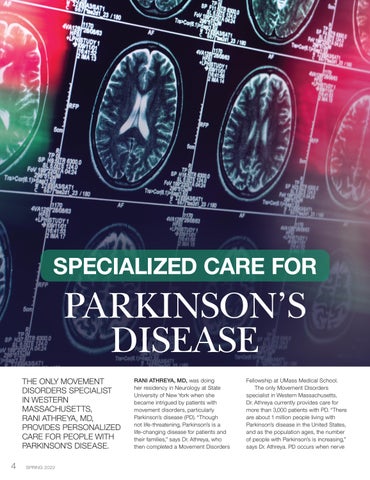
SPECIALIZED CARE FOR
PARKINSON’S DISEASE THE ONLY MOVEMENT DISORDERS SPECIALIST IN WESTERN MASSACHUSETTS, RANI ATHREYA, MD, PROVIDES PERSONALIZED CARE FOR PEOPLE WITH PARKINSON’S DISEASE.
4
RANI ATHREYA, MD, was doing her residency in Neurology at State University of New York when she became intrigued by patients with movement disorders, particularly Parkinson’s disease (PD). “Though not life-threatening, Parkinson’s is a life-changing disease for patients and their families,” says Dr. Athreya, who then completed a Movement Disorders
Fellowship at UMass Medical School. The only Movement Disorders specialist in Western Massachusetts, Dr. Athreya currently provides care for more than 3,000 patients with PD. “There are about 1 million people living with Parkinson’s disease in the United States, and as the population ages, the number of people with Parkinson’s is increasing,” says Dr. Athreya. PD occurs when nerve
SPRING 2022
Holyoke_Spring22_final.indd 4
3/10/22 2:54 PM
cells in the brain that control movement stop working—causing tremors, stiffness, slowness, and walking and balance problems.
RECOGNIZING SYMPTOMS “During my early years in practice, I realized sleep disorders were an integral part of Parkinson’s disease and decided to also specialize in Sleep Medicine,” says Dr. Athreya. In addition to sleep medicine, Dr. Athreya is board-certified in psychiatry and neurology and is a member of the American Academy of Neurology, the International Parkinson and Movement Disorder Society and the Massachusetts Medical Society. She’s the Medical Director of Holyoke Medical Center Neurology and Sleep, formerly Pioneer Valley Neurology and Sleep, which she founded in 2012. Along with sleep and movement issues, people with PD may experience constipation, depression and fatigue, according to the American Parkinson’s Disease Association (APDA). “When I started my own practice, my goal was to provide all management strategies for Parkinson’s disease and the other movement disorders,” says Dr. Athreya, who also treats ataxia, dystonia, essential tremor, Huntington’s disease and Tourette syndrome. “I’ve been in the field for 20 years, so I have a large following of patients. Because it’s a slowly progressive disease, many of my Parkinson’s patients have been with me for a long time. I have built strong relationships as I’ve helped patients navigate the challenging Parkinson’s journey.”
DIAGNOSING THE DISEASE Dr. Athreya says she and her staff, which includes Kristie Harrington, FNP, and Jooyun Shin, FNP, use a family-centered approach. “Parkinson’s is a difficult disease that changes how the entire family lives as a person gets less mobile,” she says. While a general neurologist may be skilled at identifying PD, the APDA recommends consultation with a movement disorder specialist such as Dr. Athreya to avoid misdiagnosis.
Diagnosis is based on a patient’s medical history, a review of signs and symptoms, and a neurological and physical examination. Lab and imaging tests and genetic testing also may be done. “Once we’ve made a diagnosis, we educate patients and families so they fully understand the disease and can plan for the future,” says Dr. Athreya. “We connect patients with local support groups to help them better manage the physical and mental challenges posed by this chronic disease. In addition to PD education, healthy eating and targeted exercise therapies, various medical treatments are available, including medications and Botox injections to help alleviate symptoms." At Holyoke Medical Center (HMC), patients also have access to physical therapy for balance and stretching, speech language pathology to improve speech problems and occupational therapy for daily tasks. PD has gained public awareness through well-known figures like actor Michael J. Fox, who created a foundation to accelerate treatments. Actor Alan Alda, diagnosed with PD more recently, has shown that life can be lived vibrantly with PD. “Movement helps,” he says. “Walking, biking, treadmills. I move to music. I take boxing lessons from a guy trained in Parkinson’s therapy. I do a full workout specifically designed for this disease.”
medication directly to the small intestine, and INSPIRE, an implantable device that stimulates the airway for sleep apnea patients, have both shown great results.” Dr. Athreya says patients with movement disorders receive the same caliber of care at HMC as they would at an academic medical center in Boston. “We offer every treatment available for Parkinson’s disease close to home in a personal community hospital.”
MEET THE TEAM
Rani Athreya, MD
INNOVATIONS IN TREATMENT Though there is currently no cure for PD, researchers are working to better understand the disease—identifying genes and biomarkers linked to it and experimenting with new therapies. Dr. Athreya is enthusiastic about the many promising treatments available for her patients. “Some innovations I'm particularly excited about include deep brain stimulation (DBS), in which electrodes are surgically implanted in the brain to regulate abnormal activity, and focused ultrasound treatment for tremors and Parkinson’s,” she says. “The Duopa Dopamine pump, which dispenses
Kristie Harrington, FNP
Jooyun Shin, FNP
✱ Holyoke Medical Center Sleep and Neurology has two locations: 100 Wason Ave, Suite 360, Springfield, and 10 Hospital Drive, Suite 103, Holyoke. For more information or to make an appointment, call 413.736.1500.
VALLEY HEALTH & LIFE
Holyoke_Spring22_final.indd 5
5
3/10/22 2:54 PM
COLONOSCOPY: KNOW THE FACTS COLONOSCOPY SCREENINGS DETECT— AND CAN EVEN PREVENT—COLORECTAL CANCER. HAVING A COLONOSCOPY may not be pleasant, but it could save your life. Colorectal cancer almost always develops from precancerous polyps in the colon or rectum. Screening tests—including colonoscopy—help locate these polyps so they can be removed before they become cancer. Screening tests, now recommended beginning at age 45, can also find colorectal cancer early, when it’s most treatable.
A PREVENTABLE DISEASE Colorectal cancer is the third most common cancer diagnosed in both
6
men and women in the United States. “Unlike other cancers, colorectal cancer is highly preventable if we find polyps early and remove them,” says Tuyyab Hassan, MD, of Holyoke Medical Center Gastroenterology. Although the overall death rate from colorectal cancer has dropped, thanks to screenings and healthier lifestyles, deaths among people younger than 50 have increased. “This encouraged medical organizations to lower the recommended screening guideline to start at age 45,” says Dr. Hassan. “After
that, most patients can be screened every 10 years.” More frequent screenings may be recommended for those at higher risk, including African Americans, people with a family history of colorectal polyps or colorectal cancer, and those who have inflammatory bowel syndrome, a genetic syndrome or a related cancer, such as uterine or pancreatic cancer.
WHICH TEST IS BEST Medical experts agree that colonoscopy is the most effective colorectal cancer
SPRING 2022
Holyoke_Spring22_final.indd 6
3/10/22 2:54 PM
screening test. Another option, the stoolbased test, looks for microscopic blood in the stool and is done yearly for people of average risk. But if a stool test result is abnormal, a colonoscopy is still needed to complete the screening process. Colonoscopy is also a diagnostic tool, helping doctors find out why symptoms, such as abdominal pain, rectal bleeding or weight loss, are present. Dr. Hassan talks with patients to determine which screening test is right for them, dispelling fears about the colonoscopy procedure. “Sometimes,” he says, “patients are afraid they’ll feel pain during the procedure or remain awake. I explain that we use intravenous sedation, so they’ll sleep comfortably and won’t feel a thing. Once the procedure is over, many who were initially fearful are surprised at how easy it was. Colonoscopy is a very safe procedure with few complications, occurring in less than 1percent of patients.”
DURING A COLONOSCOPY During a colonoscopy, which takes 30 to 60 minutes, a gastroenterologist inserts a colonoscope, a long, thin flexible instrument, into the rectum to obtain magnified views of the rectum and colon. Special tools can be passed through the scope to take a sample (biopsy) or to remove suspicious polyps. Any detected polyps are sent to a lab for testing.
AFTER A COLONOSCOPY Following a colonoscopy, patients must have a ride home because the sedative may impair judgment and coordination. Patients usually can resume their regular diet that day and normal activity the next. Results of the colonoscopy will be reviewed by the doctor and shared with the patient. If no abnormalities are found, the doctor will recommend when to repeat the test based on each individual’s personal risk.
COLONOSCOPY PREPARATION
STREAMLINING THE EXAM
Preparing for a colonoscopy involves emptying out the colon with a laxative before the procedure. “Some people don’t like drinking the prep or following the low-fiber diet the week of the procedure and the clear liquid diet the day before the test,” says Dr. Hassan. “But there’s no way around it, as leftover residue can obscure the view of the colon and rectum during the exam.” Dr. Hassan’s office or the primary care provider will supply a detailed set of instructions and helpful tips to make the preparation easier.
To make scheduling a colonoscopy more convenient for patients, Holyoke Medical Center Gastroenterology is now offering Open Access to colonoscopy screenings. This eliminates the need for a pre-op appointment with a gastroenterologist for low-risk patients, enabling them to go straight to the procedure.
✱
o learn more or to schedule a T colonoscopy, call 413.540.5048.
6 STEPS TO LOWER YOUR COLON CANCER RISK The American Society of Colon and Rectal Surgeons advises taking these steps to lower your chance of colorectal cancer. 1. B eginning at age 45, get regular colorectal cancer screenings. Talk to your doctor about earlier screening if you have a personal or family history of colorectal cancer or colorectal polyps, or a personal history of another cancer or inflammatory bowel disease. 2. E at 20 to 35 grams of fiber each day from fruits, vegetables, whole grains, nuts and beans. 3. Eat a low-fat diet. 4. E at folate-rich foods such as leafy green vegetables. 5. A void excessive alcohol or tobacco use. Together, they’re linked to colorectal cancer and other gastrointestinal cancers. 6. E xercise at least 20 minutes three to four days per week. Moderate exercise, like walking, gardening or climbing steps, may reduce risk.
MEET THE TEAM
Tuyyab Hassan, MD
Ruby Malik, MD
Jeanne McCarthy, PA-C
April Bowers, NP
Lucy Nigro, NP
VALLEY HEALTH & LIFE
Holyoke_Spring22_final.indd 7
7
3/10/22 2:54 PM
Balancing ACT
ENDOCRINOLOGISTS KEEP THE BODY IN BALANCE BY TREATING HORMONAL DISORDERS. HORMONES ARE CHEMICAL messengers that play important roles in the body. Examples include cortisol, which triggers stress reactions; insulin, which helps the body absorb glucose (sugar); and estrogen and testosterone, female and male sex hormones that influence everything from physical development to mood. Hormones are made by a network of glands called the endocrine system. When there’s a problem with the body’s ability to produce or use hormones, the impact can be serious. The medical specialty that manages diseases of the endocrine system is known as endocrinology. Here, Robert Cooper, MD, FACE, FACP, who recently joined the HMC Endocrinology & Diabetes Center,
8
answers common questions about his specialty.
WHAT IS AN ENDOCRINOLOGIST? Endocrinologists are medical specialists trained in the endocrine system, which controls hormones. Hormones travel through the bloodstream to tissues and organs, where they help regulate metabolism, reproduction, movement, sexual development and more. When the glands producing hormones don’t function correctly, diseases can develop.
WHAT CONDITIONS DOES AN ENDOCRINOLOGIST TREAT? Common conditions include: • Diabetes
• Osteoporosis • Calcium disorders • Thyroid disease • FNA for thyroid nodules • Adrenal and pituitary conditions • Polycystic ovary syndrome • Male hypogonadism • Female hyperandrogenism
WHY CHOOSE AN ENDOCRINOLOGIST? Although most primary care providers can address basic hormonal conditions, a referral to an endocrinologist is often needed for more complex cases. Having completed advanced training, they're experts at identifying and treating endocrine problems. Some of these specialists treat a range of disorders,
SPRING 2022
Holyoke_Spring22_final.indd 8
3/10/22 2:54 PM
while others focus in one area.
MEET THE TEAM
ARE THERE FACTORS THAT INCREASE RISK? Yes. Factors that increase a person’s risk of developing an endocrine disorder include: • Elevated cholesterol levels • Family history of endocrine disorder • Inactivity • Personal history of autoimmune disorders • Poor diet • Pregnancy • Recent surgery, trauma or infection
Robert Cooper, MD, FACE, FACP
Pam Ohri Zizzamia, DO
Ana Ronderos, ANP
WHAT ARE SOME COMMON SYMPTOMS? Endocrine disorders can produce an array of symptoms, including: • Severe exhaustion or weakness • Extreme thirst or hunger • Unexplained weight loss or gain • Mood changes • Blood glucose level fluctuations • Frequent urination • Joint and muscle pain • Nausea or stomach pain
HOW ARE ENDOCRINE DISEASES DIAGNOSED? Because symptoms often mimic those of other conditions, endocrine diseases can be challenging to diagnose. In addition to in-depth discussion with patients, doctors use urine tests, imaging studies, genetic testing and hormone testing to make an accurate diagnosis.
ARE THERE TREATMENT OPTIONS? Yes! Treatment depends on the specific disorder, but is focused on relieving symptoms and adjusting hormones with medications. If surgery is indicated, a referral will be made to a surgical endocrinologist. Some issues, such as thyroid nodules, are monitored with regular testing.
✱
The HMC Endocrinology & Diabetes Center is located at 10 Hospital Drive, Suite 104. To make an appointment, please call 413.534.2820.
AN EXPERIENCED ENDOCRINOLOGIST RETURNS TO HMC Robert Cooper, MD, FACE, FACP, who worked at Holyoke Medical Center (HMC) from 2003 to 2012 and was chief of medicine from 2005 to 2009, is happy to be back seeing patients at the HMC Endocrinology & Diabetes Center. An endocrinologist for 25 years, Dr. Cooper brings vast expertise to the HMC community. “My focus has always been on providing academic-type medicine to smaller communities,” says Dr. Cooper. His experience includes temporary positions in underserved locations in South Dakota and Pennsylvania. “Those were fascinating experiences,” he says. “I taught primary care providers more about endocrinology so they could better care for their patients locally.” Dr. Cooper feels strongly that a good physician is a good listener and a good teacher. “Interviewing skills are important when making a diagnosis,” he says. Dr. Cooper has found that, once he determines the cause of a patient’s symptoms, how he communicates is critical. “It’s not just having knowledge about a disease,” he says, “it’s being able to bring that expertise to a level that patients truly understand.” CUTTING-EDGE CARE A graduate of Albert Einstein College of Medicine, Dr. Cooper completed a residency at Long Island Jewish Medical Center. Subsequently, he completed a two-year endocrinology fellowship at Long Island Jewish Medical Center and Winthrop University Hospital. Dr. Cooper holds a teaching position at Tufts University School of Medicine and is a Fellow of both the American College of Endocrinology and the American College of Physicians. “I attend a lot of conferences to keep up with cutting-edge medical treatments,” says Dr. Cooper. “I love bringing what I’ve learned back to my colleagues and patients.” Dr. Cooper enjoys treating all types of endocrine diseases, including osteoporosis and thyroid, adrenal and pituitary disorders. He has a unique niche treating male hypogonadism, a condition in which a man’s body doesn’t produce enough of the hormone testosterone. Dedicated to a multidisciplinary approach, Dr. Cooper collaborates with kidney and cardiac specialists for heart disease and cholesterol management. He’s excited to work with endocrinology specialists Pam Ohri Zizzamia, DO, and Anna Ronderos, ANP, as well as the rest of the team at the HMC Endocrinology & Diabetes Center. Dr. Cooper welcomes both former and new patients. “Medicine allows me to make a positive difference in people’s lives, and that brings great meaning to my own.”
VALLEY HEALTH & LIFE
Holyoke_Spring22_final.indd 9
9
3/10/22 2:54 PM
Rafael Perez talks with Ryanne Whalen, LPN, HBO Technician, while he is undergoing hyperbaric oxygen therapy at HMC's Wound Care Center.
BEST FOOT FORWARD HOW INTENSIVE WOUND-CARE TREATMENT CAN PREVENT AMPUTATION. APRIL IS FOOT HEALTH MONTH, making it the perfect time to remind everyone to be sure they’re taking good care of their feet. For people with diabetes, however, foot health should be top of mind daily. Diabetes can damage nerves in any part of the body, but most often impacts nerves in the feet and legs. Sometimes this damage causes symptoms, but other times it doesn’t, leaving affected people vulnerable to
10
cuts, blisters or sores that go unnoticed and become serious. “One of four people with diabetes develops a foot ulcer, and 40 percent of those with healed diabetic foot ulcers will develop a new one within a year,” says Ann Johnson, Program Director of Holyoke Medical Center’s Wound Care Center. “Daily self-foot exams and getting treatment early are key to healing challenging wounds. The longer a wound is open, the
SPRING 2022
Holyoke_Spring22_final.indd 10
3/10/22 2:54 PM
longer it takes to heal and the lower the likelihood of healing.”
SLOW TO HEAL Last summer, Rafael Perez experienced this firsthand following a swim at the Daughters of the American Revolution State Forest lake in Goshen with his fiancée and her young daughter. “We had a great time,” recalls Rafael. “But a few days later, I became sick—shaking uncontrollably and spiking a fever.” A diabetic since his 20s, Rafael says he’s careful to protect his feet and was wearing water shoes. Despite his precaution, an irritated area on Rafael’s right toe had become infected after exposure to the marshy lake. Rafael went to the Emergency Department at Holyoke Medical Center (HMC) and was admitted for antibiotic treatment. He remained there for one week. Francis Martinez, MD, used surgical debridement to remove the infected skin tissue and hasten healing. “Dr. Martinez was concerned that my toe wasn’t healing,” recalls Rafael. “We were worried I might need an amputation.” In 2017, Rafael had a diabetic foot ulcer that was treated successfully with hyperbaric oxygen therapy (HBOT) at HMC’s Wound Care Center. Determined not to undergo an amputation this time, either, Rafael was eager to try HBOT again. “When Rafael came to us in August, he was suffering from toe pain and was unable to walk,” says Maureen Pendergast Fuller, PA, of the HMC Wound Care Center. Fuller works alongside Savitri Rambissoon, MD, a general surgeon, certified wound care specialist and Medical Director of HMC Wound Care. “Rafael’s MRI showed gas gangrene associated with the wound, which carries a particularly high risk of nonhealing,” says Dr. Rambissoon. He had what’s classified as a grade 4 Wagner diabetic foot ulcer with exposed muscle and tendon, making HBOT appropriate for him.
patients,” says Johnson. “We’re the only wound care center in our area to consistently achieve this award.” The HMC Wound Care Center has two state-of-the-art hyperbaric oxygen chambers. HBOT surrounds the body with 100 percent oxygen at a pressure 1.5 times greater than normal air pressure—equivalent to diving down 50 feet in seawater. This treatment helps heal chronic conditions, including diabetic foot ulcers and circulation ulcers, chronic bone infections, trauma and damage from radiation. HBOT accelerates the body’s healing process by increasing the amount of oxygen in the blood. Rafael participated in 60 “dives,” receiving one 90-minute treatment daily for 60 days. He continued antibiotics and had dead tissue debrided by Fuller at the clinic. “After the initiation of HBOT, we began to see signs of improvement,” Fuller says. “More and more healthy tissue began to grow in the wound, which eventually led to complete healing.” Patients receiving HBOT lie in a chamber on a stretcher with a television mounted on top to pass the time and help them relax. An HBO technician is nearby throughout the treatment. Rafael says the staff at the HMC Wound Care Center made his experience a comfortable one. “I’d watch TV or fall sleep,” Rafael says of his time in the chamber. He was surprised at the quick results. “You could see my toe healing.”
SUCCESS STORY
Fuller describes Rafael as an HBOT success story. “He escaped toe amputation after a very serious infection associated with a diabetic foot ulcer. He participated in all aspects of our care plan, followed our instructions and had the best outcome we could hope for.” Remarking that HBOT is not for everyone, Fuller says: “It carries some risk, which is weighed carefully and individually for each patient. We follow Medicare guidelines and obtain AWARD-WINNING CARE insurance approval for patients to receive advanced therapies. The HMC Wound Care Center has been recognized five In addition to diabetic foot ulcers, we have had success treating times as a Center of Distinction by Healogics, the company osteonecrosis of the jaw and cystitis associated with radiation partnering with HMC to manage the Center. “We have quality exposure for cancer patients.” outcomes that include healing 82 percent of wounds for After being off his feet for so many months, Rafael has returned to work as a driver for Autopart International. He says he’s happy to get back to life again and looks forward to a summer of swimming and fishing for bass and trout. “I’ll be careful!” Rafael Maureen Pendergast Francis Martinez, MD Savitri Rambissoon, MD Ann Johnson, Program Fuller, PA promises. Director
✱
For more information about hyperbaric oxygen therapy (HBOT) or other advanced wound care treatments, call the HMC Wound Care Center at 413.535.4740.
VALLEY HEALTH & LIFE
Holyoke_Spring22_Rev1.indd 11
11
3/10/22 3:57 PM
Tedd Ackerman, MD, Medical Director of Behavioral Health at HMC, and Lori Goshea, TMS Coordinator, with transcranial magnet stimulation (TMS) equipment.
NEW HOPE FOR
DEPRESSION TEDD ACKERMAN, MD, ANSWERS QUESTIONS ABOUT TRANSCRANIAL MAGNETIC STIMULATION (TMS), A NONINVASIVE, DRUG-FREE WAY TO TREAT DEPRESSION
12
SPRING 2022
Holyoke_Spring22_Rev2.indd 12
3/11/22 1:18 PM
FOR MANY PEOPLE living with depression, medication and psychotherapy may not be enough to alleviate debilitating symptoms. Some can’t tolerate the side effects of drugs, and others find they don’t help. Tedd Ackerman, MD, Medical Director of Behavioral Health at Holyoke Medical Center, was excited when a new development in psychiatry offered hope for major depressive disorder. He began offering transcranial magnetic stimulation (TMS) to patients in 2017. Since then, Dr. Ackerman has treated hundreds of people with TMS. Sixty-six percent reported an improved quality of life, and 33% said symptoms were gone completely. Here, Dr. Ackerman answers common questions about the treatment.
periods of rest in between for a total of 3,000 pulses. Treatment is administered by an experienced TMS technician under the supervision of the TMS physician or by the TMS physician.
relapse. If treatment with TMS was effective the first time, it likely will be again. We also have found that medications that were not previously effective may be more helpful after TMS treatment.
IS TMS SAFE?
WILL MY INSURANCE COVER TMS TREATMENT?
HOW DOES TMS WORK?
TMS is generally well-tolerated, and very few patients drop out of treatment. At Holyoke Medical Center, we do everything we can to ensure our patients are comfortable during treatment. This may include changing the parameters of treatment or alternating where the magnetic coil is placed.
During a TMS treatment, an electromagnet delivers targeted magnetic pulses that stimulate cortical regions in the left prefrontal cortex of the brain, an area of the brain involved in regulation of mood and depression. This area is known to be underactive in people who suffer from depression. Research studies with PET scans show that there are changes in brain activity not only in the left prefrontal cortex but in other connected areas of the brain not being directly stimulated.
WHAT DOES A TMS TREATMENT INVOLVE? TMS therapy is a noninvasive treatment requiring 36 sessions of 20 to 30 minutes, five days a week for six weeks. During treatment, the patient reclines in a comfortable chair, and a small electromagnetic coil is placed against the scalp near the forehead. The electromagnet delivers a pulse that stimulates nerve cells in the region of the brain that controls mood. Patients feel a mild tapping Tedd Ackerman, MD sensation with
✱
FDA-cleared to treat depression since 2008, TMS has a proven track record for providing a safe, effective way for patients to achieve relief from depression. TMS does not require surgery or implantation of electrodes. And, unlike electroconvulsive therapy (ECT), TMS doesn’t cause seizures or require sedation with anesthesia. TMS doesn’t have any of the side effects associated with traditional antidepressant medications.
DO TMS TREATMENTS HURT?
WHAT ARE THE SIDE EFFECTS? Side effects are generally mild and may include superficial scalp pain at the site of treatment and occasional headache. Both side effects are temporary and can be alleviated with Tylenol or ibuprofen.
WHAT HAPPENS AFTER A TREATMENT SESSION? After a treatment session, patients can immediately return to their normal routine, including driving.
Massachusetts insurance plans cover TMS when criteria are met. You may have a copay for each treatment.
IS THERE ANYONE WHO SHOULD NOT HAVE TMS? People with implanted metallic hardware in the brain, such as aneurysm clips, or implanted electrical devices, such as pacemakers or cochlear implants, are not candidates for TMS.
IS TMS RIGHT FOR ME? TMS may be a good choice if you suffer from depression that has not responded to traditional treatments, or if you can’t tolerate the side effects of antidepressant medications. My typical patients have failed a minimum of two to four medications. They’re frustrated, trying medications endlessly with diminishing returns. I’m pleased that Holyoke Medical Center offers another treatment option. Our staff will work with each patient’s medical provider to see if TMS is an appropriate and safe choice.
SCAN BELOW To learn whether TMS might be right for you, take our quiz by scanning this QR code.
HOW SOON WILL I SEE RESULTS? Some patients experience positive mood changes within a few sessions, with many seeing changes after 20 treatments. To get the full effect, patients should complete the entire treatment plan.
CAN I HAVE TMS AGAIN? Some patients who undergo TMS have long-lasting results and remain free of symptoms. However, some patients do
o learn more about transcranial magnet stimulation (TMS) or to make an appointment for a consultation T with our board-certified psychiatrists, call 413.535.4930. To learn more, visit www.holyokehealth.com/TMS. VALLEY HEALTH & LIFE
Holyoke_Spring22_final.indd 13
13
3/10/22 2:54 PM
to specific illnesses, your primary care provider can suggest lifestyle changes to reduce your risks and regular screenings to detect any problems that do develop at an early stage.
8
GREAT REASONS TO SEE A PRIMARY CARE PROVIDER REGULAR VISITS TO A BIG-PICTURE PROVIDER CAN HELP KEEP YOU HEALTHIER. WHEN WAS THE last time you saw— or maybe even had—a primary care provider? Research suggests the number of Americans who regularly see one is dropping. But regularly seeing a primary care provider can improve your health for many reasons, including these.
1
You’ll be better off if you get ill. After just one meeting, your primary care provider will know at least some of your medical history and possibly baseline results from a number of routine screening tests. When something goes wrong, your provider will know what “normal” looks like for you, which will help in addressing both your acute and chronic medical problems more effectively.
2
Medications will be managed more effectively. People who use prescription drugs often take more
✱ 14
than one, sometimes prescribed by different doctors. Many take vitamins and supplements as well. A primary care provider can monitor and track all your medications, helping to protect you from drug interactions. He or she can also keep records of any changes in dosages that might cause unwanted side effects and speak with your other providers to help fine-tune your regimen.
3
You’ll receive disease-prevention advice. Seeking out a primary care provider regularly, even when you’re feeling fine, can help prevent you from becoming seriously ill down the road. From your health profile, your provider will be able to recommend tests that can assess your chances of developing heart disease, diabetes, cancer and other seriousbut-common problems. If your medical history and tests indicate that you’re prone
4
Remote consults may be readily available. Baseline health information your primary care provider has may make him or her comfortable treating certain problems over the phone, knowing you can always schedule a follow-up if your symptoms don’t improve. Without a primary care provider, you’ll more likely need to take time out of your schedule to visit a medical office.
5
You’ll have an easier time finding specialists. When you need the care of an expert in a certain specialty, your primary care provider can help you find the right person—not only someone with the proper qualifications, but a doctor who will mesh well with your personality and care preferences. If you're comfortable with aggressive treatments, for instance, you can tell your primary care provider, who can recommend specialists who align with your approach.
6
You’ll get help navigating the Emergency Department. Wondering if you should head to the emergency room? If you have a relationship with a primary care provider, you can touch base with the practice for guidance, potentially sparing you a trip. If you do need to seek emergency care, in some circumstances your provider might be able to call ahead and offer pertinent medical details that could shorten your wait time.
7
You’ll receive better care overall. People with primary care providers tend to receive significantly more highvalue healthcare, such as flu shots and cancer screenings. They often have better patient experiences and better overall access to healthcare as well.
8
You might live longer. Research suggests that, on average, people who live in areas where primary care providers are readily available have longer life spans.
With Adult Primary Care offices in Holyoke and Chicopee, as well as a Family Medicine office in Westfield, Holyoke Medical Group is accepting new patients. To make an appointment, please call 413.535.4800. SPRING 2022
Holyoke_Spring22_final.indd 14
3/10/22 2:54 PM
{ POWER FOOD }
THE FACTS ON FLAX BURSTING WITH POTENTIAL HEALTH BENEFITS, FLAX MAY BE JUST THE SEED YOU NEED. DID YOU KNOW? Egyptian mummies were wrapped in linen made from flaxseeds, and the use of flaxseed for nutritional benefits is almost as old as civilization itself. Cultivation of the seed, which comes from a plant with a stunning blue-violet flower, can be traced back to 3000 B.C., and records show it was used for medicinal purposes in the time of Hippocrates and among the ancient Egyptians. A few centuries later, Charlemagne passed laws requiring its consumption. Today, nutritionists laud its heart-health benefits as well as its potential ability to help ward off certain types of cancer. As an added plus, it’s tasty.
POWER UP For a food with a composition that’s almost one-half oil, flaxseed is relatively low in calories. One serving (a tablespoon of ground flaxseeds) has only 37 calories. With that come 1.3 grams of protein (3 percent of the recommended daily value, or DV) and 2 grams of fiber (8 percent DV). But flaxseed’s greatest claim to fame is its high content of omega-3 fatty acids. The seed is a top provider of these hearthealthy polyunsaturated fats, offering more in a tablespoon than an entire serving of salmon. Flaxseed also contains fiber, which can help control blood sugar, manage cholesterol levels and improve digestion. Additionally, flaxseed contains a small amount of protein. “Protein, fiber and healthy fat can all help you stay fuller longer, and these seeds have all three, says Christina Reardon, a dietitian at Holyoke Medical Center. “We have seen in human and animal Christina Reardon studies that flaxseed consumption
appears to reduce blood pressure and progression of atherosclerosis (plaques in the arteries) by decreasing cholesterol in the blood,” says Reardon. “We also have some research to suggest that those omega-3 fatty acids can play a role in improving brain function.”
BUY/STORE/SERVE For culinary purposes, flaxseed is available whole, ground or pressed into oil, otherwise known as linseed oil. It’s also sold in capsule form to take as a supplement. The seeds can be eaten whole—they add a pleasant texture to soups and salads. “But I’d recommend ground flaxseed,” says Reardon. “It can be difficult for the body to extract the nutrition in whole flaxseed.” The downside is that the ground seeds perish faster. As a solution, buy the seeds whole and grind them yourself in a coffee or spice grinder—they last up to a year in a cabinet whole and only about a month ground. The oil should be kept in the refrigerator, and the expiration date should be heeded—a bitter taste indicates that the oil has gone bad. One of the additional benefits of this power food is its versatility. Flaxseeds’ noticeably nutty flavor is mild, so they can be added to most dishes without altering their taste. Bake them into bread or muffins; sprinkle them in smoothies, on rice and on salads; or use them as a breading for vegetables or protein. You also can use flax as a vegan egg substitute while baking. Mix one tablespoon ground with three tablespoons water to replace one egg in a recipe. Flaxseed oil can take the place of butter on vegetables, and when mixed with an acid, like lemon or vinegar, it makes for a nutritious salad dressing. “Flaxseed has great health benefits,” says Reardon, “but so do thousands of other foods, so it’s really important to eat a general healthy diet and include all food groups.”
VALLEY HEALTH & LIFE
Holyoke_Spring22_final.indd 15
15
3/10/22 2:54 PM
NON PROFIT U.S. POSTAGE PAID Harrisburg, PA Permit #324
575 Beech Street Holyoke, MA 01040
Lose Weight. Live Better.
Call the Weight Management Program at (413) 535-4757.
With our medical help, you can reach, and maintain, your healthiest body weight. Our team of experts has the experience and technology to help you achieve your weight loss goals. Equally important, we are committed to helping you keep the weight off — for life. Call the Weight Management Program at (413) 535-4757.
HolyokeHealth.com
Holyoke_Spring22_final.indd 16
3/10/22 2:54 PM